
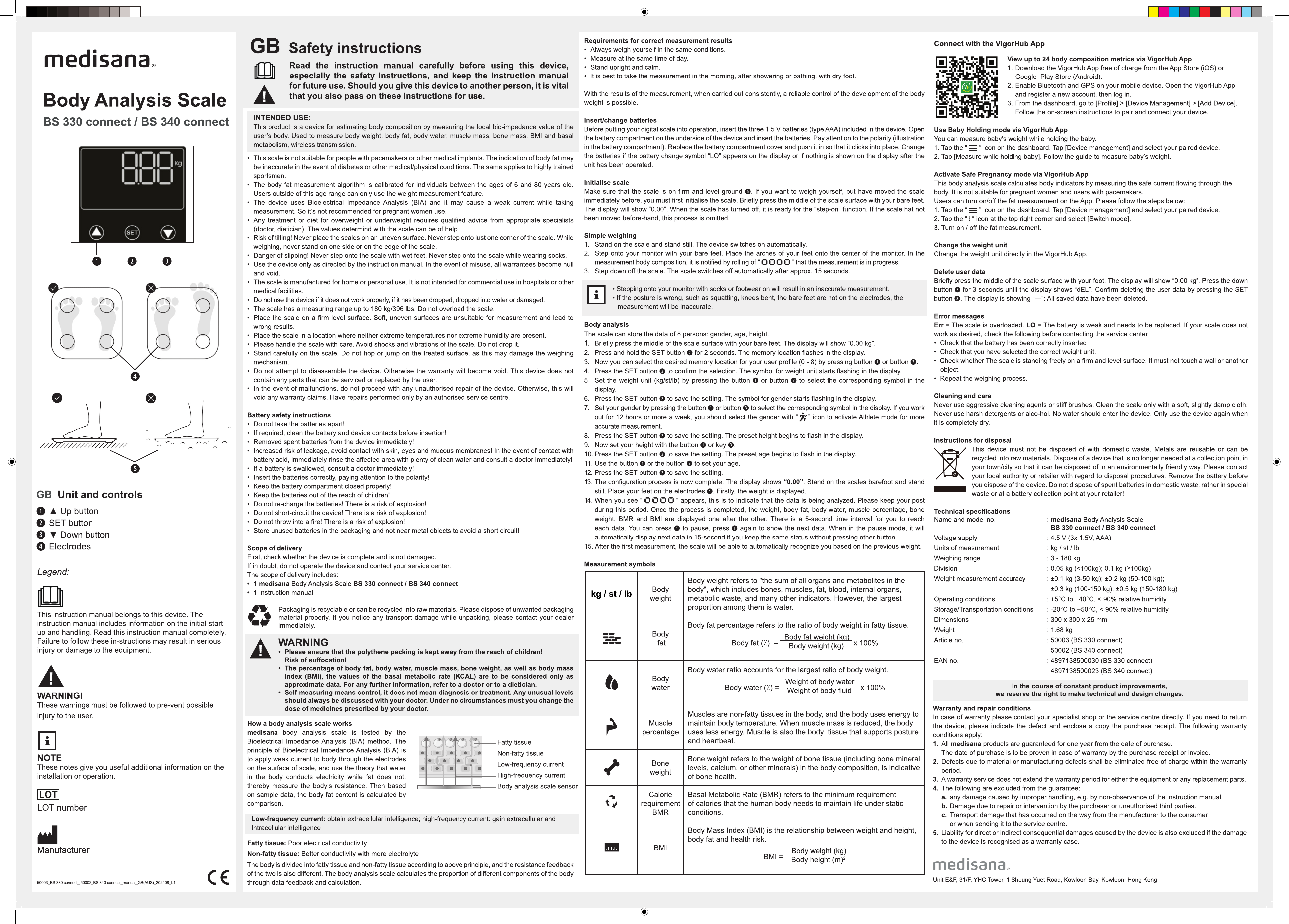
kg / st / lb
Body
weight
Body weight refers to "the sum of all organs and metabolites in the
body", which includes bones, muscles, fat, blood, internal organs,
metabolic waste, and many other indicators. However, the largest
proportion among them is water.
Body
fat
Body fat percentage refers to the ratio of body weight in fatty tissue.
Body fat (
%
) =
Body fat weight (kg)
x 100%
Body weight (kg)
Body
water
Body water ratio accounts for the largest ratio of body weight.
Body water (
%
) =
Weight of body water
x 100%
Weight of body fluid
Muscle
percentage
Muscles are non-fatty tissues in the body, and the body uses energy to
maintain body temperature. When muscle mass is reduced, the body
uses less energy. Muscle is also the body tissue that supports posture
and heartbeat.
Bone
weight
Bone weight refers to the weight of bone tissue (including bone mineral
levels, calcium, or other minerals) in the body composition, is indicative
of bone health.
Calorie
requirement
BMR
Basal Metabolic Rate (BMR) refers to the minimum requirement
of calories that the human body needs to maintain life under static
conditions.
BMI
Body Mass Index (BMI) is the relationship between weight and height,
body fat and health risk.
BMI =
Body weight (kg)
Body height (m)
2