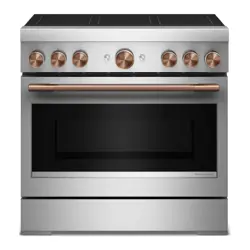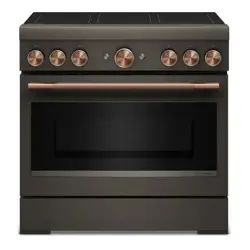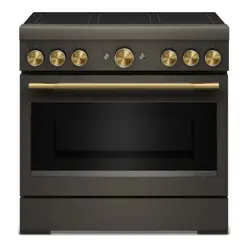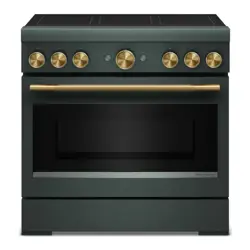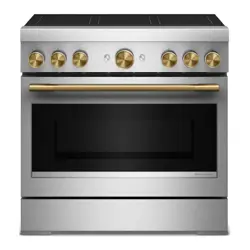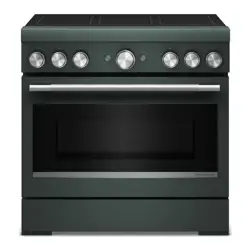

The Future of cooking
User Care Guide

The future is Induction.Clean Energy. Clear Results.

Safe.
Refined.
Ultra-Efficient.
Superior in Every Way.

Thank you for using our digital manuals. Our
goal is to minimize waste and materials that
end up in landfills. This guide will help you get
familiar with your range, from setup to daily
use and maintenance.
User Care Guide

Table of Contents
01.
02.
03.
04.
05.
06.
07.
08.
Safety
Before First
Use & Features
Functions, Settings
& Operation
Baking & Convection
Roasting and Broiling
Care, Cleaning
& Maintanance
Troubleshooting
Warranty
General Safety
SAFETY
Child Safety
Cooking Safety
Utensil Tips
Electrical Safety
Fire Prevention
•Only use this appliance as described in this guide.
•The range must be installed and grounded by a qualified technician.
•Do not attempt repairs unless instructed in this manual.
•Know where the gas shutoff valve is (if applicable), and how to turn it off in an emergency.
•Never use your range for heating the room.
•Do not leave children unattended near the appliance.
•Never let children climb or sit on the oven door.
•Store items they may reach away from the range.
•Always use cookware before turning on burners.
•Turn handles inward to avoid bumping hot pots.
•Use pot holders — not dish towels — when handling hot cookware.
•Keep oven racks in place before preheating.
•Always turn the oven off when finished.
•Use flat-bottomed, stable pans. Avoid warped or oversized cookware.
•Pans should not extend over other burners or edges of the range.
•Never let a pan boil dry.
•Do not use glass or ceramic cookware unless labeled safe for stovetop/oven use.
•Disconnect power before replacing light bulbs or cleaning deep areas.
•Do not touch hot light bulbs with damp cloths—this can cause breakage.
•Never operate the range during a power outage.
•Keep the area around your range clean and clear of flammable items.
•Never store items on top of the range.
•If a fire starts:
On the cooktop: Smother it with a lid or cookie sheet. Do not move flaming pans.
In the oven: Close the oven door and turn it off. Never use water on grease fires.
FEAT URE S
• Up to 8 cooking modes: bake,
broil, convection, defrost,
dehydrate, and more.
• Glass ceramic cooktop:
Durable and easy to clean.
• Split bake and broil elements:
Faster preheat and more even
cooking.
• Large reversing convection
fan: Distributes heat evenly,
even for large batches.
• Four convection settings: For
faster, more consistent results.
• Three broil modes: Including
a gentle low-broil for delicate
tasks.
• Hidden bake element: Easier to
clean the oven oor.
• Sabbath mode certied: Meets
Star-K standards for select
religious observances.
CONTROLS
• Interior Light Switch – Turns the
oven light on/off
• 2–3. Left Burner Controls
– Adjust rear and front left
burners
• Center Burner Control –
Controls center element
• Oven Function Knob – Selects
Bake, Broil, etc.
• Oven Temperature Knob – Sets
your desired temperature
• 7–8. Right Burner Controls
– Adjust rear and front right
burners
COMPONENTS
• Two 5.5” Burners (1,200W) –
Ideal for small potsv
• Two 7.5” Dual Burners
(2,000W) – Adjustable for
medium cookware
• 10.5” Triple Burner (3,200W) –
Best for large pots or high-
heat cooking
• Identication Plate – Contains
model and serial number
• Three Oven Racks – Fit into
six rack positions for exible
cooking
• Backguard – Protects your wall
from heat and splatter
•Range Surface
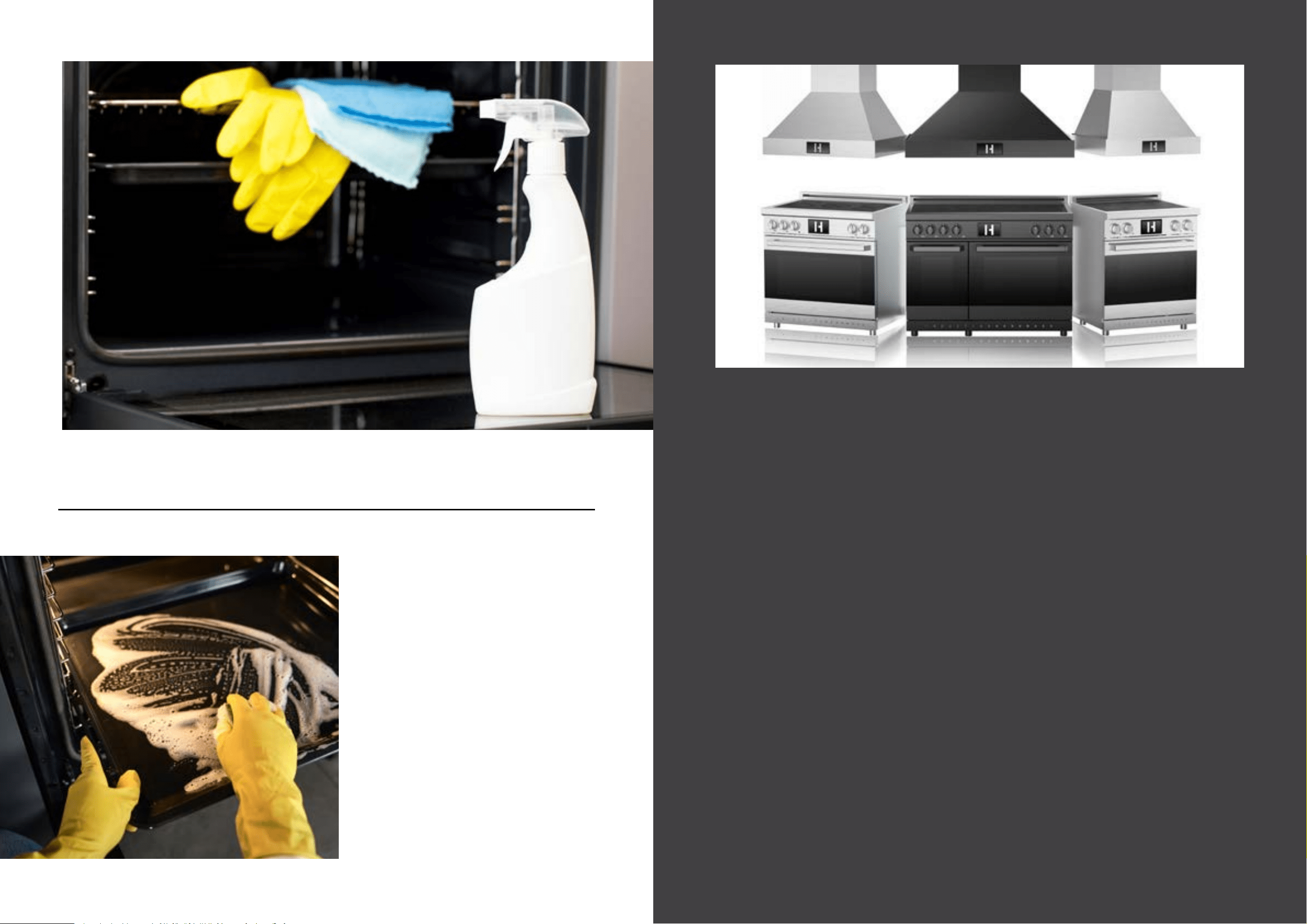
Wash all surfaces with warm, soapy water.
Wipe down with a clean cloth and dry
thoroughly.
•Glass Cooktop
Clean with a glass cooktop cleaner before
first use.
Wipe down with a clean cloth and dry
thoroughly.
•Oven
Wipe the interior with soapy water and dry
completely.
Turn the oven selector to Bake and the
temperature to 450°F. Run the oven for 1 hour
to burn off manufacturing residues. Some
odor or light smoke is normal.
BEFORE FIRST USE & FEATURES
FUNCTIONS,
SETTINGS &
OPERATION
You’ve chosen more than just a cooktop - you’ve chosen peace of mind. With no
flames or combustion, Induction Hardware offers a safer, cleaner alternative to
gas. No harmful emissions, no lingering fumes, just precise heat exactly where you
need it. As you get familiar with your new range, take a moment to appreciate the
quiet confidence of knowing you’ve invested in a healthier, more refined way to
cook; where innovation meets intuition.
Mode:
• Bake
• Convection Bake
• Convection Roast
• Convection Broil
• Hi Broil
• Med Broil
• Low Broil
• Self-Clean
• Convection Dehydrate
• Convection Defrost
What it does:
• Uses bottom and top heat for
traditional baking.
• Adds a fan to circulate air for
even heat.
• Combines convection fan +
broil for fast, juicy roasting.
• Broils with fan circulation to
reduce smoke and improve
browning.
• High-power top broil elements.
• Less intense broil.
• Gentle heat from inner broil
element only.
• High-heat cycle that burns off
residues.
• Circulates warm air to remove
moisture from food.
• Circulates air (no heat) to
safely defrost food.
Best for:
• Cakes, casseroles, roasts
• Baking multiple trays, roasting
meats
• Whole poultry, ham, large
roasts.
• Broils with fan circulation to
reduce smoke and improve
browning.
• Steaks, burgers, dark meats (1”
or less)
• Chicken, pork chops, thick cuts
• Browning meringues or
delicate dishes
• Oven cleaning (see Self-Clean
section)
• Homemade dried fruit or
veggies
• Frozen meals or large items
How to Use the Burners
• (with cookware on burner) Push and turn the burner knob counterclockwise to your desired setting.
• The element cycles on/off to maintain heat.
• Turn to OFF when done.
BAKING AND CONVECTION
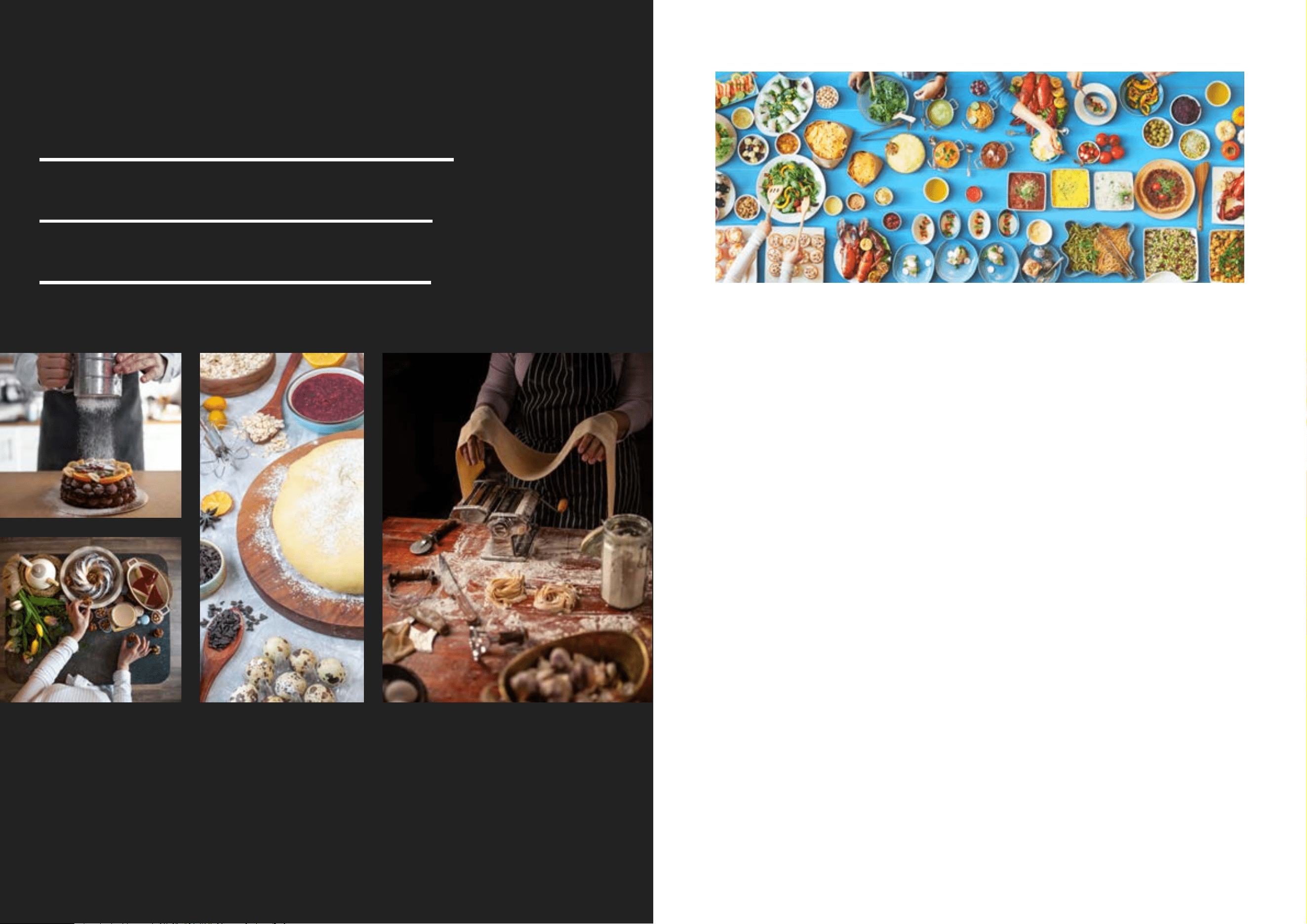
Unfold holiday dinners with ease and elegance. Your kitchen is no longer just
a place to cook - it’s the soul of your home, where the air carries the promise
of a delicious memory. With your new induction range, heat bends to your will.
Instantly responsive; impeccably precise.
BAKING &
CONVECTION
“There is nothing like the smell of something
baking to bring a family back together.”
Michelle Dockery
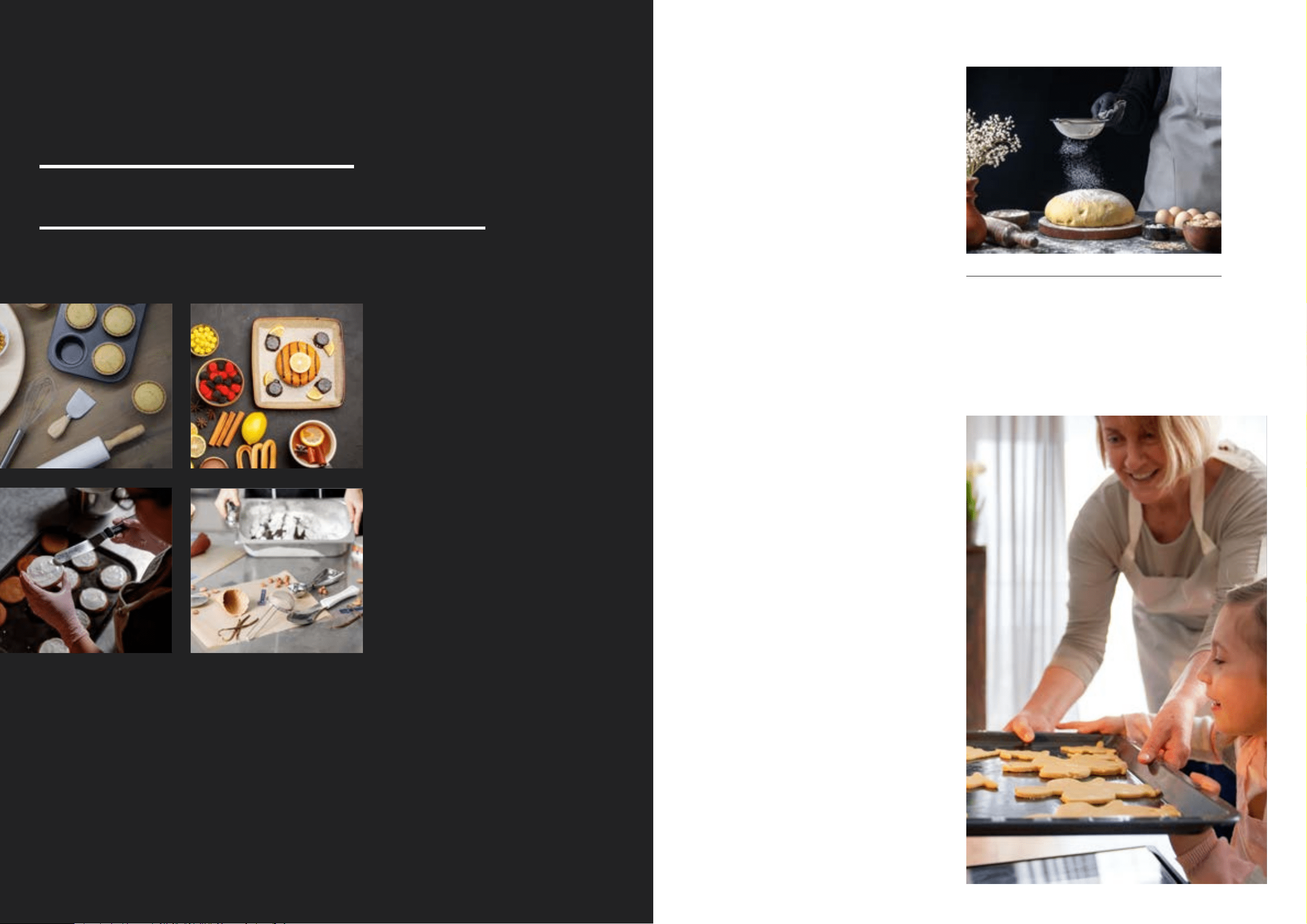
The scent of warm vanilla drifts through the air as
tiny hands press dough onto the tray, giggling with
anticipation. It’s not just about the cookies - it’s the
soft hum of connection, the shared spoon-licking
joy, the golden moment when everyone leans in as
the oven door opens. This is more than baking. This
is a memory being made- sweet, simple, and lasting.
Your oven supports both traditional and
convection baking. Here’s what you need
to know to get great results every time.
Baking mode uses both the bottom and top heating
elements and is ideal for single rack baking.
Convection baking adds a fan to circulate heated
air for more even cooking and is ideal for multi-
rack baking or roasting. Below are a series of tips
to keep in mind when using your induction range:
1. Always allow the oven to preheat fully. Putting
food in too early can lead to uneven rising or
soggy centers.
2. Use the middle rack more often than not
(unless noted otherwise in a recipe). This spot
typically has the most even heat distribution.
3. When using convection mode, reduce
temperature by 25°F and check food 10-15%
sooner than you normally wood.
4. Use shiny, stainless steel pans for more even
browning.
5. Avoid old, dark, or warped pans as they tend
to heat unevenly.
6. When using 2 racks: try positions 2 and 4 or 3
and 5 for even air ow.
7. Stagger pans so air can circulate around each
one.
8. Leave 1-2 inches of space between pans and
oven walls.
9. Rotate pans halfway through cooking. This
will ensure even browning on cookies or
pasteries especially.
10. Let baked goods rest after coming out of
the oven, before cutting. This helps them set
properly, nish baking from residual heat, and
prevent crumbling.
ROASTING
& BROILING
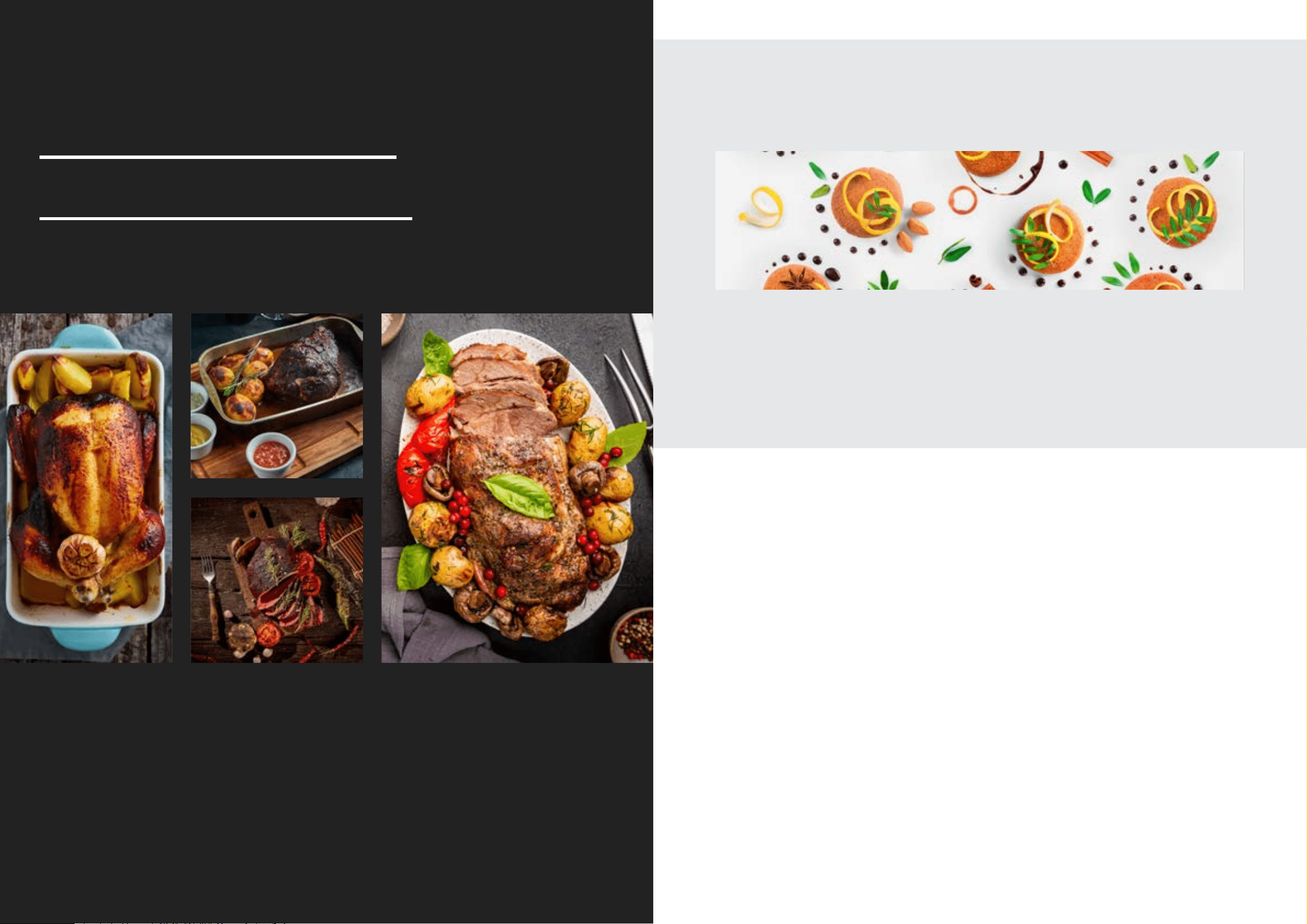
A golden roasted chicken, its crackling skin dripping with butter and herbs.
A deep broiled salmon fillet with a caramalized glaze, anchoring an evening
of laughter, stories and second helpings. With your new induction range,
these aren’t just meals; they’re the settings for birthdays, quiet Sundays, loud
celebrations and everything in between.
There’s something timeless about the
slow, savory magic of a roast in the
oven - the gentle hiss, the deepening
aroma, the way everyone seems to
wander into the kitchen just to “check”
how it’s coming laong. Maybe it’s
a Sunday roast like the ones your
grandmother used to make, or broiled
chops crisped to perfection the way
Dad liked them. There aren’t just
meals; they’re echoes of family rituals,
passed down in the language of scent
and warmth. With every roast or broil,
you’re not just feeding the moment;
you’re honoring the memory.
When roasting, it’s best to use a
broiler pan and rack. This helps air
circulate around the food. Do not
cover the meat - roasting works best
with dry heat. On that same note, do
not add water to the broiler pan, as
this would steam the meat, instead
When roasting, it’s best to use a
broiler pan and rack. This helps air
circulate around the food. Do not
cover the meat - roasting works best
with dry heat. On that same note, do
not add water to the broiler pan, as
this would steam the meat, instead
Roasting combines high-powered convection and broil
elements to cook food quickly while locking in moisture.
When it comes to broiling, here are
some tried and true methods to ensure
the best outcomes:
1. Always use the broiler pand and
grid to catch drips and reduce
are-ups.
2. Brush meats with oil/butter to
prevent drying.
3. Use tongs or spatula - never pierce
the meat with a fork.
4. Broil one side slightly longer than
the other.
5. Remove the pan right after broiling
to avoid baked-on drips.
way to baste the meat. With poultry,
place breast side up on a shallow pan
with a rack. Brush with oil or melted
butter before and during roasting.
Avoid tall sided pans, with roasting,
as they restrict constant air ow.
of roast it. There is no need to bring
the meat up to room temperature
either; with roasting you can cook
directly from the fridge. Another
great tip is to roast large cuts of
meat with the fat side up as this
provides a natural and effortless

No grid? No problem.

www.InductionHardware.com
The Future of Cooking is Now

www.InductionHardware.com