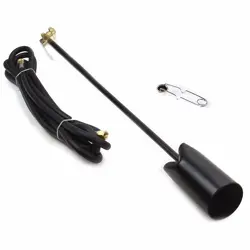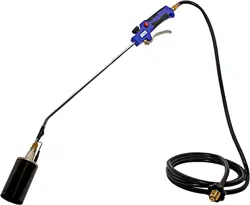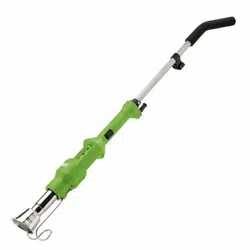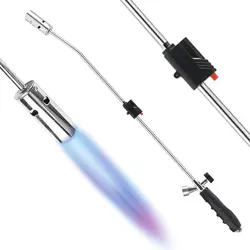
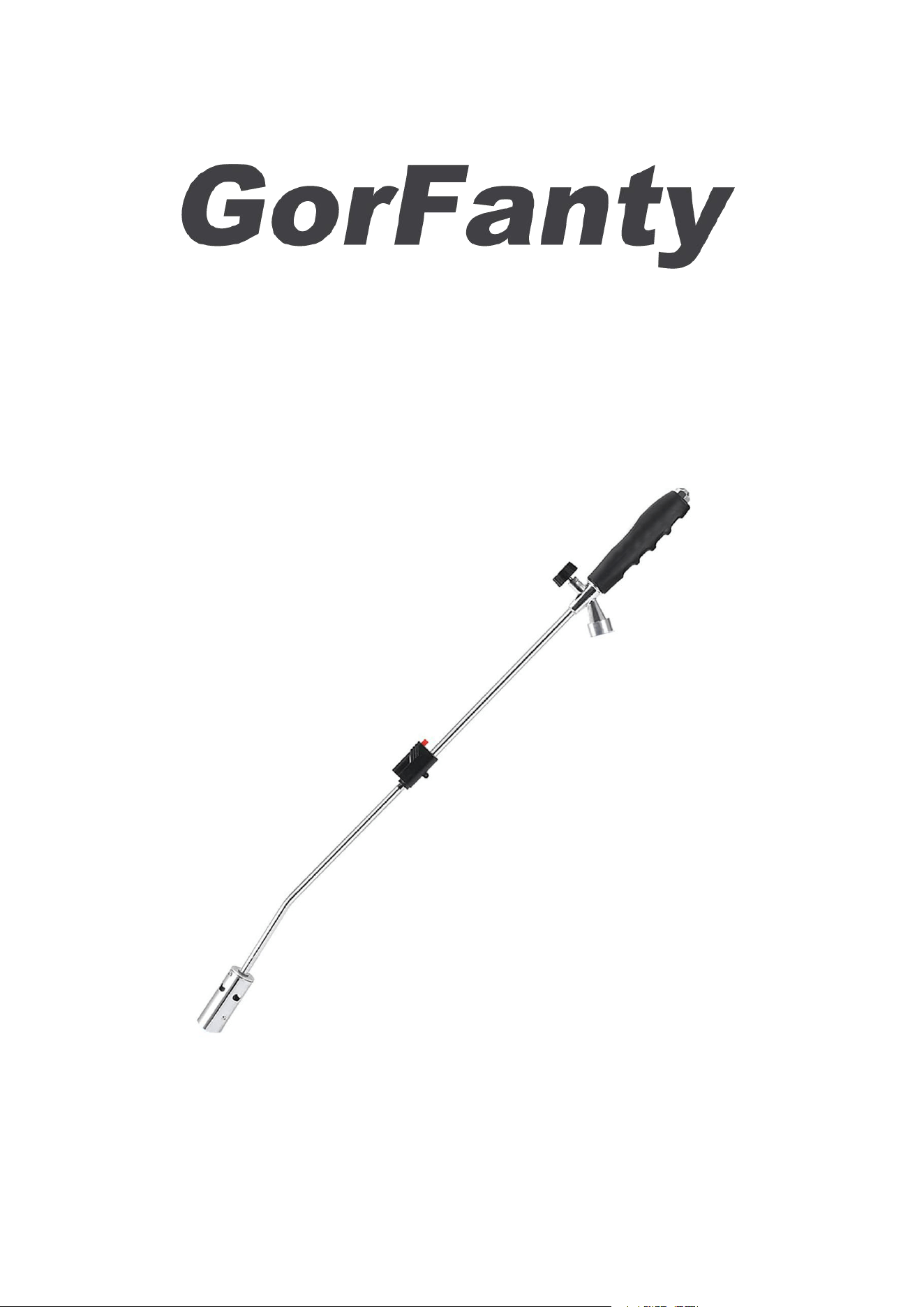
Propane Torch Weed Burner
USER MANUAL
Please Read All Instructions and Save These Instructions For Future Reference.
• This device is intended for outdoor use only.
• Never permit children to use this torch.

Warning
• Flames from this torch can cause serious burn injuries to your skin and body.
• Blocking flame at torch head may cause flame direction to reverse and exit from the
top of the torch head toward the operator.
• Using this torch on or near flammable material or closed containers may cause a fire
or explosion which may cause injury or death.
• Failure to control burning material while using this torch may cause injury or property
damage.
• Burning or heating some materials can produce dangerous fumes which may cause
injury to your lungs or other parts of your body.
• Only use this equipment outside or, if inside, use only to heat materials in a large
area with enough ventilation to avoid the build-up of smoke, fumes and gases. If the
air is not clear and
free of smoke, fumes, and gases, stop using the torch and move the work outside or
improve the ventilation.
• Propane fumes may collect in an unventilated or enclosed area causing an explosive
atmosphere or one in which you cannot safely breathe.
• Never use the torch on materials, coatings, solvents or chemicals which release
toxic fumes when heated or on plants such as poison ivy or poison oak.
• Avoid breathing smoke or fumes from burning material.
• Keep your head out of the smoke or fumes.
• If the smoke or fumes make you uncomfortable, stop using the torch on the material
Personal Protective Equipment
• Always wear eye protection such as safety goggles or glasses, heavy
gloves, leather shoes and heavy cotton clothing treated to be fire retardant. Do not
wear shorts or loose clothing.
Equipment Precautions
• Only use this torch with propane gases. Do not attempt to use fuel gas other than
approved propane fuels.
• Propane cylinders must be kept in an upright position especially when the torch is in
use.
• Before use, check all equipment for leaks with an approved bubble solution. Do not
light the torch until any and all leaks are repaired.
• Light torch only with ignition button.
• Do not permit lighted cigarettes, sparks or open flames near this equipment.
• When not in use, close the torch valve.
• Do not abuse, tamper with or alter the operation of this torch or its parts. Any repairs
must be made by a qualified repair technician.
Operation Instructions
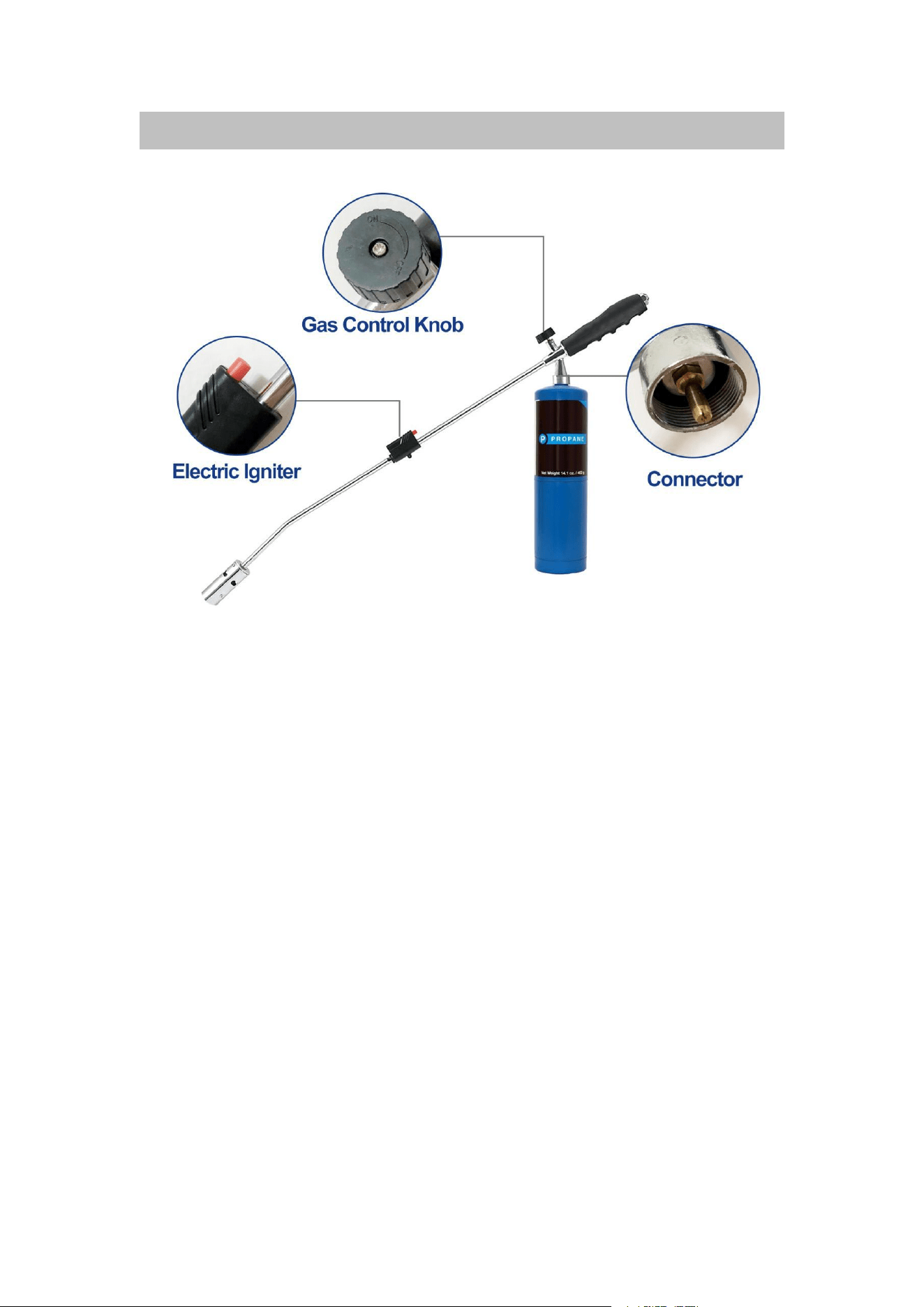
1. Turn the Gas Control Knob off.
2. Threading the propane tank Connector firmly into the torch's connector.
3. Check and smell for gas leaks. Perform a bubble test:
a. Apply warm soapy water over every joint, regulator, fitting, and anywhere else there
may be a possible leak.
b. Observe carefully to see if bubbles expand, indicating a leak. A large leak can blow
the soapy solution away instead of forming bubbles.
c. If leaks are found, do not use the Torch until the leaks have been stopped.
4. Point the Burner in a safe direction, well away from people and combustible
materials.
5. Turn the Gas Control Knob slightly counterclockwise.
6. With the Propane Torch in a vertical position in a safe direction, push the Push
Button Igniter to activate the electric start. It may be necessary to push the Push
Button Igniter several times to ignite the flame.
7. When finished:
a. Turn the Gas Control Knob completely clockwise.
b. Let the torch cool completely on a non-flammable surface.
8. Store propane tank in an area where there is free air circulation, at least 10 ft from
building openings (such as windows and doors), and at least 20 ft from air intakes of
air conditioning and ventilating systems.
9. Store the Torch in a safe, dry place, covered to protect it from dust and dirt.

Use of Equipment
• When operating the torch, always have a helper with proper NFPA approved fire
extinguisher (or other fire fighting apparatus) of a type and size appropriate for the
application and trained in its use nearby to watch and control the burning material.
• Maintain secure footing when holding a lit torch to avoid falling. Shut torch if you are
moving more than a few yards.
• Always direct flame from the torch away from your body, while the torch is lit. Never
point the torch at yourself or other persons while lit or operating. Keep other persons
away from the torch at all times.
• Never leave a lit torch unattended. Turn the gas control knob off to extinguish the
flame before laying the torch down. Do not lay a hot torch down on or near flammable
material.
• Never allow the torch head to contact a surface or block the flow of gas from the
torch head. Lift torch head from surface immediately if this occurs.
• Do not use the torch in areas where combustible gases or vapors may be stored or
otherwise present.
• Do not use this torch on or near flammable material or sealed containers which may
cause a fire or explosion resulting in injury or death. Sealed containers, even if empty,
may explode.
• Only burn in a small area at one time. Do not use the torch near combustibles you do
not intend to burn.
• Do not use the torch in windy or very dry conditions in which the torch flame may
be difficult to control.
• In some locations you may not be permitted to burn without a permit. Contact your
local authorities and fire department about state and local codes or permit
requirements before using the torch.
• Torch head will remain hot for a time after shutdown. DO NOT touch or store the
equipment until it has cooled.
Maintenance
• Surfaces of the torch may be cleaned with soap or detergent and water solutions.
Do not use petroleum-based cleaners to clean any components of the torch or the
torch body.
• Remove any debris and combustible material from the torch. The torch must be kept
clear and free from combustible materials, gasoline and other flammable vapors and
liquids.

Weeding Tips
• Most generally it is not necessary to reduce weeds and undesirable plants to ashes.
Your Torch will generate sufficient heat to kill at a slow walk. Within hours you will
witness green weeds wilting and dying.
• Flaming is not a cure-all. It may be necessary to repeat weeding several times per
year, depending on the plant species and whether seeds germinate during the
growing season. Some weeds are more heat resistant than others and may require
several flamings. Always remain a safe distance from flowers, desirable plants and
trees In time you will determine the range of your torch and may operate in and
around plants with ease. Practice makes perfect!
• Always keep a type ABC fire extinguisher handy.
• Avoid desirable lawn and garden plants as the torch does not distinguish between
desirable and undesirable growth.
• To determine effectiveness, press flamed weed leaf between thumb and forefinger.
A fingerprint usually indicates a good kill.
• Whenever possible, flame small weeds - the more tender, the easier to kill.
• Always remain a safe distance from evergreens, pine needles, and all conifers.
Highly flammable and easily ignited, pine needles are a fire hazard.
• Do not flame poison oak, ivy or any plant capable of causing a skin rash. Smoke will
contain skin irritants if plants are flamed.
Customer Service
GorFanty provided 7x24 hours customer service. Please feel free to contact us.
CUSTOMER SERVICE: service@gorfanty.net