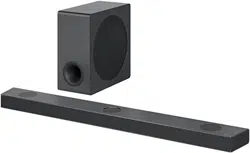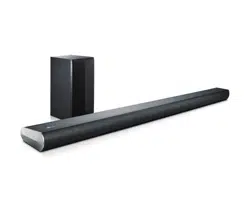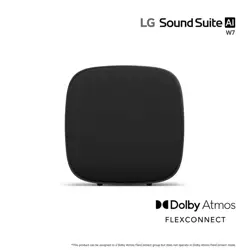
Wi-Fi ACTIVE SUBWOOFER
Safety Information &
Warranty Card
W7
www.lg.com
Copyright © 2026 LG Electronics Inc.
All Rights Reserved.
2603_Rev01
COV31495711
W7.AUSALLK_SPEC_COV31495711.indd 1 2026-03-31 �� 8:37:57
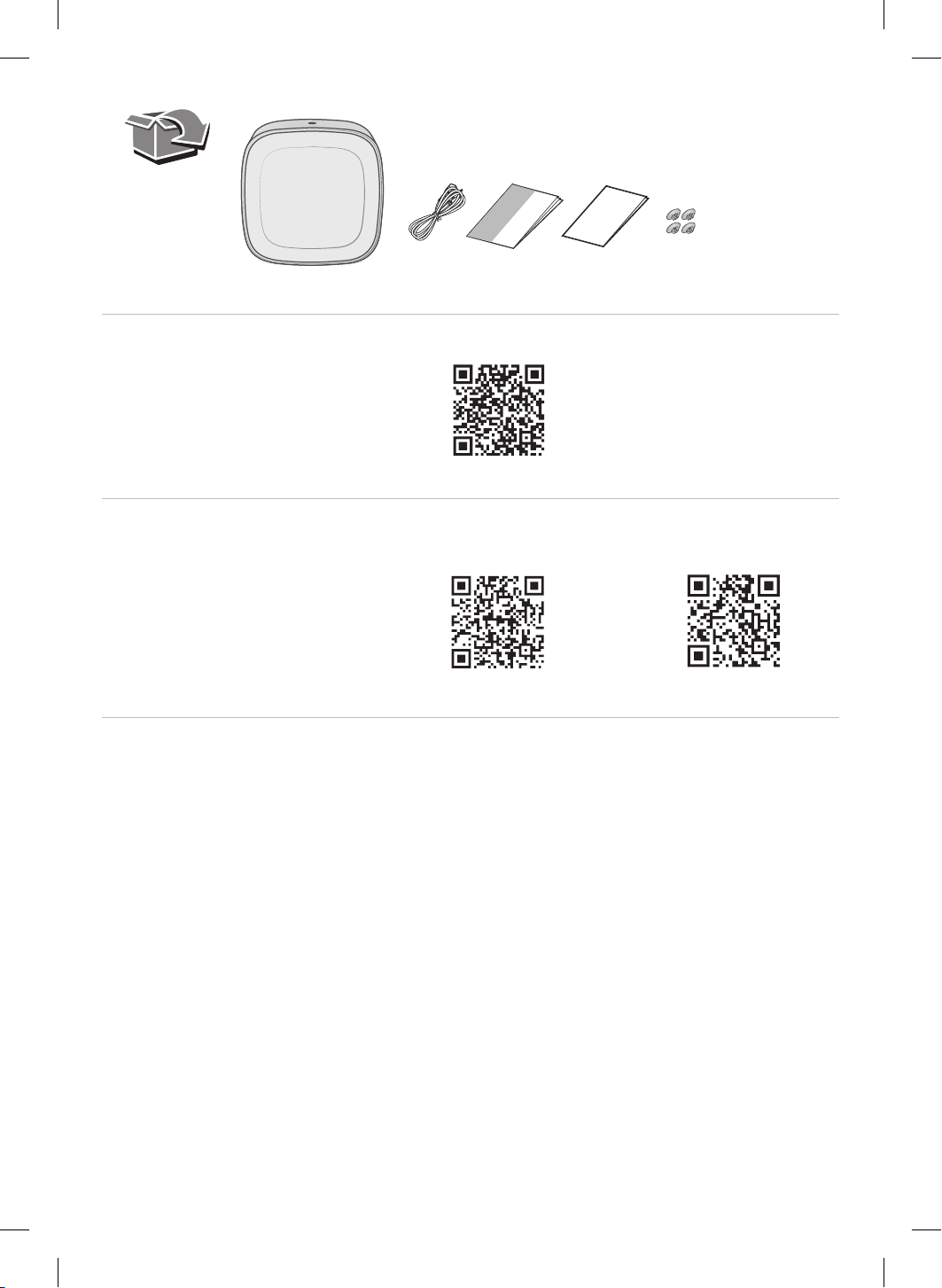
Download Manual
Download App
<Android>
<iOS>
W7.AUSALLK_SPEC_COV31495711.indd 2 2026-03-31 �� 8:37:57
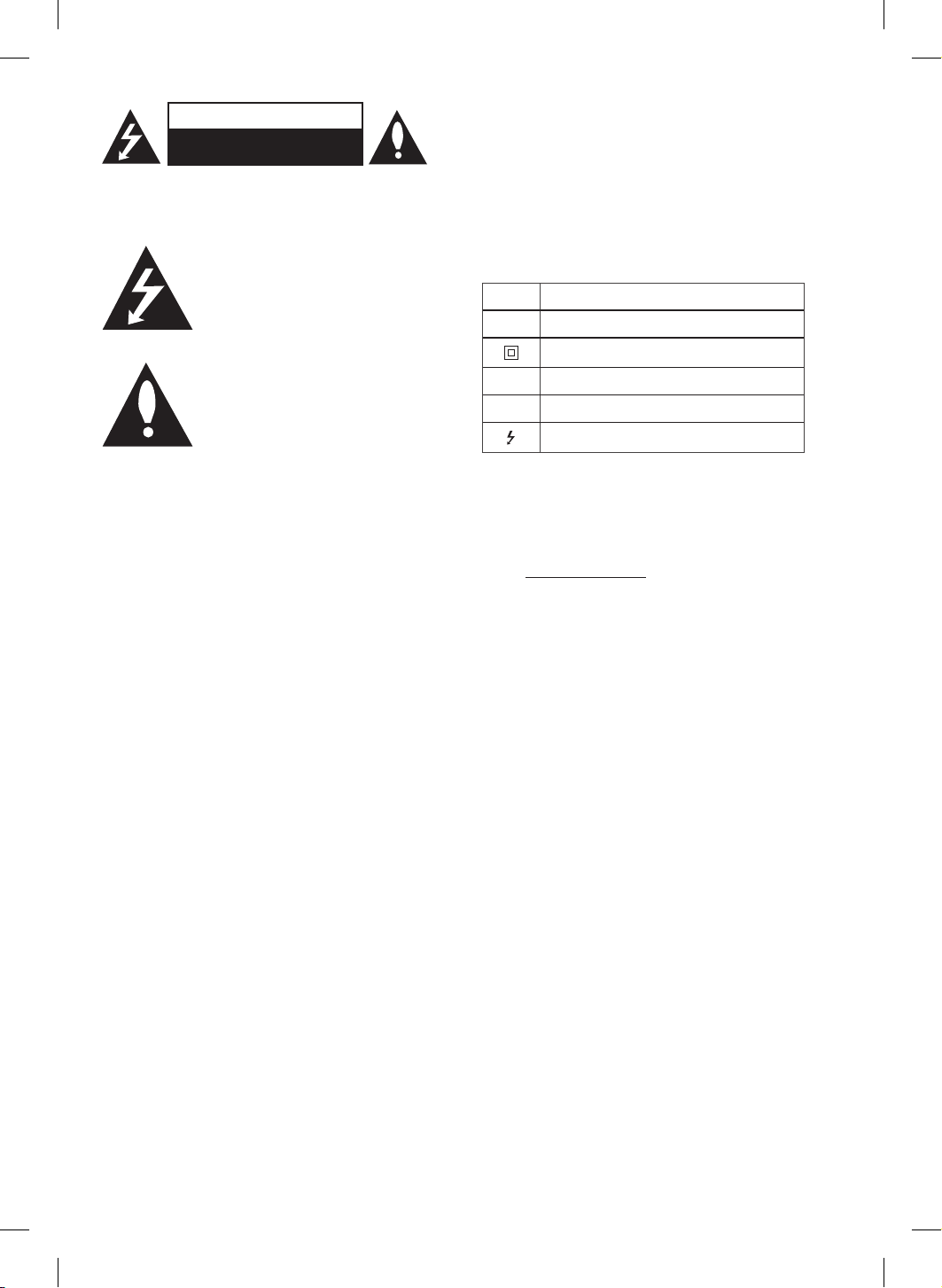
CAUTION
RISK OF ELECTRIC SHOCK
DO NOT OPEN
CAUTION: TO REDUCE THE RISK OF ELECTRIC SHOCK DO
NOT REMOVE COVER (OR BACK). NO USER-SERVICEABLE
PARTS INSIDE. REFER SERVICING TO QUALIFIED SERVICE
PERSONNEL.
This lightning flash with arrowhead symbol
within an equilateral triangle is intended to
alert the user to the presence of
uninsulated dangerous voltage within the
product’s enclosure that may be of
sufficient magnitude to constitute a risk of
electric shock to persons.
The exclamation point within an equilateral
triangle is intended to alert the user to the
presence of important operating and
maintenance (servicing) instructions in the
literature accompanying the product.
WARNING:
y To prevent fire or electric shock hazard, do not expose
this product to rain or moisture.
y Do not install this equipment in a confined space such as
a book case or similar unit.
CAUTION:
y Do not use high voltage products around this product.
(Ex. Electrical swatter) This product may malfunction due
to electrical shock.
y No naked flame sources, such as lighted candles, should
be placed on the apparatus.
y Do not block any ventilation openings. Install in
accordance with the manufacturer’s instructions.
Slots and openings in the cabinet are provided for
ventilation and to ensure reliable operation of the product
and to protect it from over heating. The openings should
never be blocked by placing the product on a bed, sofa,
rug or other similar surface. This product shall not
be placed in a built-in installation such as a bookcase
or rack unless proper ventilation is provided or the
manufacturer’s instruction has been adhered to.
y Install this apparatus in a location where the power plug
can be easily unplugged and plugged in. If there is a fire
or problem with this apparatus, unplug it quickly.
y The apparatus should not be exposed to water (dripping
or splashing) and no objects filled with liquids, such as
vases, should be placed on the apparatus.
y Do not leave the unit on an unstable place such as high
shelves. It may fall down because of the vibration of the
sound.
y For safety marking information including product
identification and supply ratings, please refer to the main
label on the bottom or the other surface of the product.
CAUTION: when using this product in environments of
low humidity.
y It may cause static electricity in environments of low
humidity.
y To prevent static electricity, it is recommended to touch
metal objects before using this product.
For models using a battery
This device is equipped with a portable battery or
accumulator.
CAUTION: Risk of fire or explosion if the battery is replaced
by an incorrect type.
NOTICE: For the safe use of the product, the product
may adjust or block charging if excessive battery capacity
reduction is detected. As the battery is a consumable,
replace it if the usage time has significantly decreased.
Symbols
~ Refers to alternating current (AC).
0
Refers to direct current (DC).
Refers to class II equipment.
1
Refers to stand-by.
!
Refers to “ON” (power).
Refers to dangerous voltage.
USA Only (Product with embedded rechargeable battery
ONLY)
In case rechargeable battery is included in this product,
the entire device should be recycled in compliance with
rechargeable battery recycling standards because of the
internal battery. To dispose of properly, call (800) 822-8837
or visit www.call2recycle.org.
FCC Compliance Statement
This equipment has been tested and found to comply with
the limits for a Class B digital device, pursuant to Part
15 of the FCC Rules. These limits are designed to provide
reasonable protection against harmful interference in a
residential installation. This equipment generates, uses,
and can radiate radio frequency energy and, if not installed
and used in accordance with the instructions, may cause
harmful interference to radio communications. However,
there is no guarantee that interference will not occur in a
particular installation. If this equipment does cause harmful
interference to radio or television reception, which can be
determined by turning the equipment off and on, the user is
encouraged to try to correct the interference by one or more
of the following measures:
y Reorient or relocate the receiving antenna.
y Increase the separation between the equipment and the
receiver.
y Connect the equipment to an outlet on a circuit different
from that to which the receiver is connected.
y Consult the dealer or an experienced radio/TV technician
for help.
This device complies with part 15 of the FCC Rules.
Operation is subject to the following two conditions: (1)
this device may not cause harmful interference and (2) this
device must accept any interference received, including
interference that may cause undesired operation. Any
changes or modifications in construction of this device
which are not expressly approved by the party responsible
for compliance could void the user’s authority to operate
the equipment. For indoor use only, use outdoors or in other
modes not covered by this manual may violate the FCC
regulation and violate the user authority to use the product.
W7.AUSALLK_SPEC_COV31495711.indd 3 2026-03-31 �� 8:37:57
FCC RF Radiation Exposure Statement: This equipment
complies with FCC radiation exposure limits set forth for an
uncontrolled environment. This transmitter must not be co-
located or operating in conjunction with any other antenna
or transmitter.
This equipment should be installed and operated with
minimum distance 20 cm (7.8 inches) between the antenna
and your body. Users must follow the specific operating
instructions for satisfying RF exposure compliance.
(Device for using 5925 - 7125 MHz)
1) FCC regulations restrict the operation of this device to
indoor use only.
2) The operation of this device is prohibited on oil platforms,
cars, trains, boats, and aircraft, except that operation of
this device is permitted in large aircraft while flying above
10,000 feet in the 5.925-6.425 GHz band.
3) Operation of transmitters in the 5.925-7.125 GHz band is
prohibited for control of or communications with unmanned
aircraft systems.
FCC Radio Frequency Interference Requirements:
High power radars are allocated as primary users of the
5.25 to 5.35 GHz and 5.65 to 5.85 GHz bands. These radar
stations can cause interference with and/or damage this
device. This device cannot be co-located with any other
transmitter.
Supplier’s Declaration of Conformity
Trade Name LG
Responsible Party LG Electronics USA, Inc.
Address 111 Sylvan Avenue, North Building
Englewood Cliffs, New Jersey 07632
IMPORTANT SAFETY INSTRUCTIONS
1. Read these instructions.
2. Keep these instructions.
3. Heed all warnings.
4. Follow all instructions.
5. Do not use this apparatus near water.
6. Clean only with dry cloth.
7. Do not block any ventilation openings. Install in
accordance with the manufacturer’s instructions.
8. Do not install near any heat sources such as radiators,
heat registers, stoves, or other apparatus (including
amplifiers) that produce heat.
9. Do not defeat the safety purpose of the polarized or
grounding-type plug. A polarized plug has two blades
with one wider than the other. A grounding type plug has
two blades and a third grounding prong. The wide blade
or the third prong are provided for your safety. If the
provided plug does not fit into your outlet, consult an
electrician for replacement of the obsolete outlet.
10. Protect the power cord from being walked on or pinched
particularly at plugs, convenience receptacles, and the
point where they exit from the apparatus.
11. Only use attachments/accessories specified by the
manufacturer.
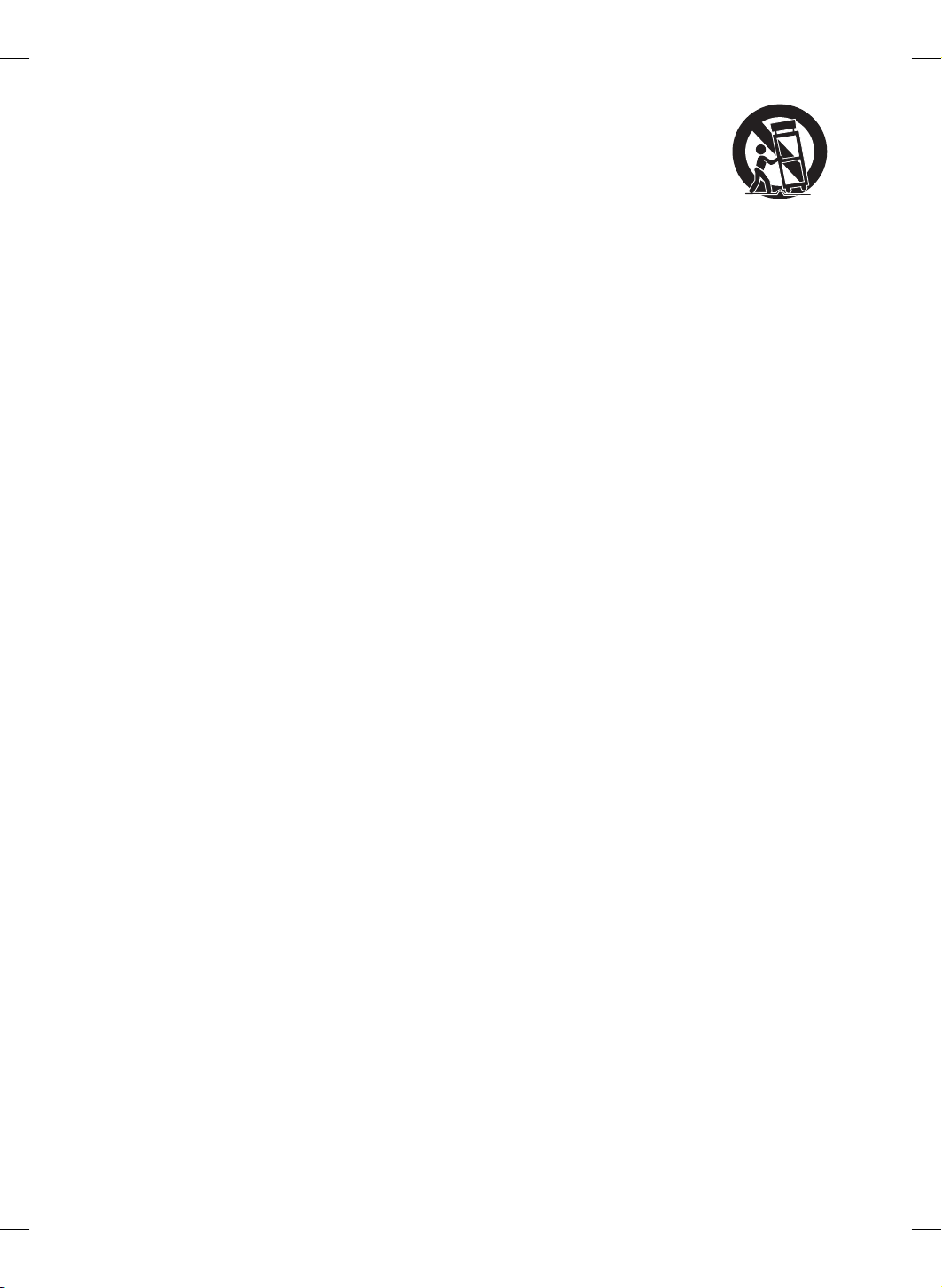
12. Use only with the cart, stand, tripod,
bracket, or table specified by the
manufacturer, or sold with the
apparatus. When a cart is used, use
caution when moving the cart/
apparatus combination to avoid
injury from tip-over.
13. Unplug this apparatus during lightning storms or when
unused for long periods of time.
14. Refer all servicing to qualified service personnel.
Servicing is required when the apparatus has been
damaged in any way, such as power-supply cord or plug
is damaged, liquid has been spilled or objects have fallen
into the apparatus, the apparatus has been exposed to
rain or moisture, does not operate normally, or has been
dropped.
Open Source Software Notice Information
To obtain the source code that is contained in this product,
under GPL, LGPL, MPL, and other open source licenses
that have the obligation to disclose source code, and to
access all referred license terms, copyright notices, please
visit https://opensource.lge.com. LG Electronics will also
provide open source code to you for a charge covering the
cost of performing such distribution upon email request to
opensourc[email protected]. This offer is valid to anyone in receipt
of this information for a period of three years after our last
shipment of this product.
Specification
Power requirements
y Refer to the main label or the other surface of the
product.
Power consumption
y Refer to the main label or the other surface of the
product.
Dimensions (W x H x D): Approx. 410.0 mm x 415.0 mm x
194.0 mm (including the base) (16.1 inch x 16.3 inch x 7.6
inch)
Bus Power Supply (USB): 5 V 0 500 mA (Type-C)
Operating Temperature: 5 °C to 40 °C (41 °F to 104 °F)
Operating Humidity: 5 % to 80 % RH
y Actual features, functionality, and other product
specifications may differ and are subject to change
without notice.
W7.AUSALLK_SPEC_COV31495711.indd 4 2026-03-31 �� 8:37:57
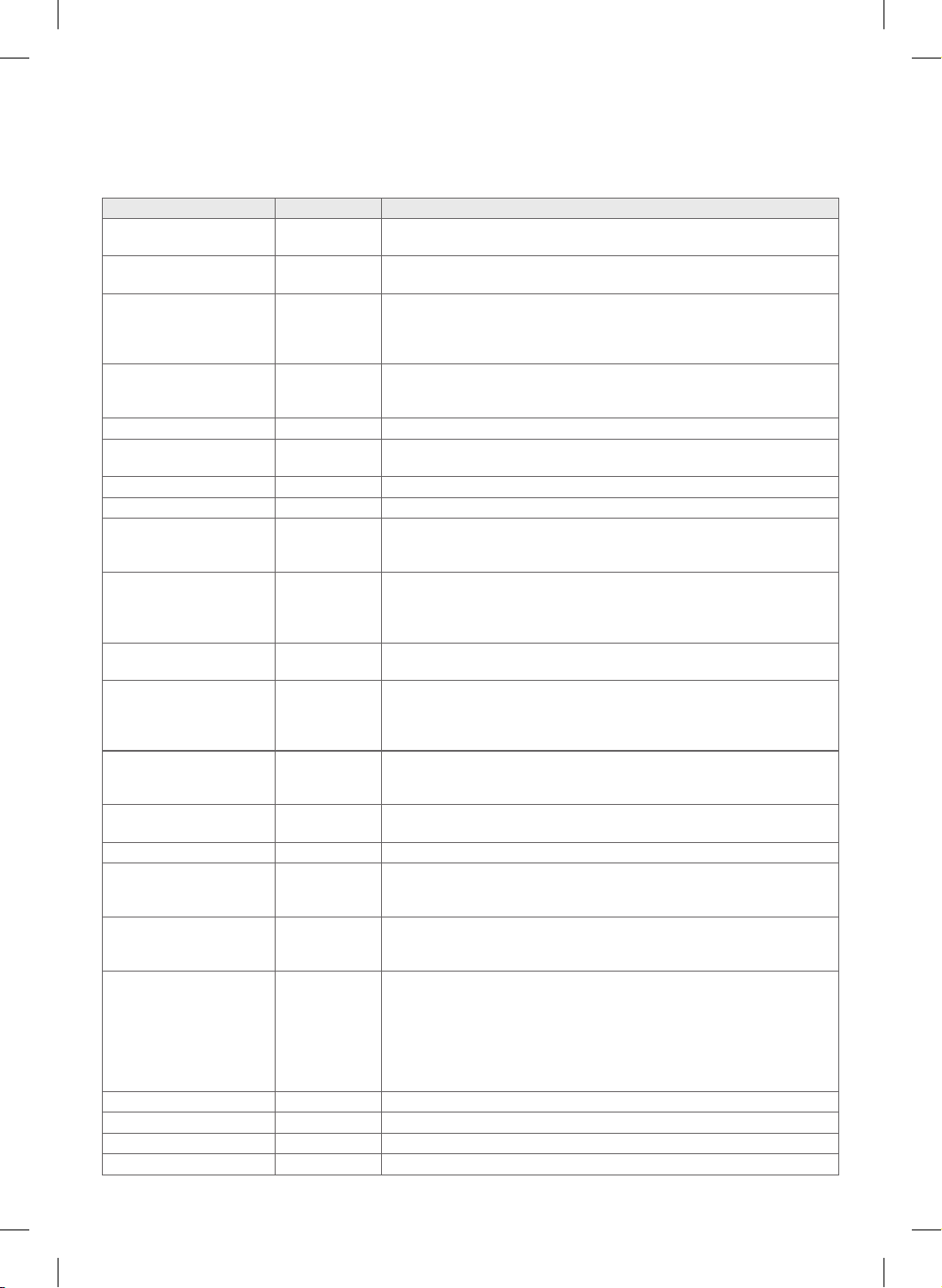
LGE Open Source Software Notice
This product from LG Electronics, Inc. contains the open source software detailed below. Please refer to the indicated open
source licenses (as are included following this notice) for the terms and conditions of their use.
Open Source License Copyright
acl 2.3.1 GPL-2.0
LGPL-2.1
(C) 1999 Andreas Gruenbacher, <a.gruenbacher@computer.org>
Copyright (c) 1998-2006, Jaroslav Kysela <perex@perex.cz>
alsa-utils 1.1.3 GPL-2.0 Copyright (c) 2008-2010 SlimLogic Ltd
Copyright (c) 2010 Wolfson Microelectronics PLC
Copyright (c) 2010 Texas Instruments Inc.
Copyright (c) 2010 Red Hat Inc.
Copyright (c) 2001, 2002, 2003, 2006 Silicon Graphics, Inc.
Copyright (c) 2007 Free Software Foundation
avahi 0.8 LGPL-2.1 Copyright (c) 1994-2017 Free Software Foundation, Inc.
Copyright (c) 2002, 2003, 2004 Colin Watson <[email protected]>
bash 3.2.57 GPL-2.0 Copyright (c) 1985-2007 Free Software Foundation, Inc.
Bellagio OpenMAX IL 0.9.3
LGPL-2.1
bluez 5.64 GPL-2.0
LGPL-2.1
Copyright (c) 1991, 1999 Free Software Foundation, Inc.
Copyright (c) 1989, 1991 Free Software Foundation, Inc.
copyrighted by the Free Software Foundation
BusyBox 1.35.0 GPL-2.0 Copyright (c) 1999-2004 by Erik Andersen.
Copyright (c) 2005-2006 Rob Landley
Copyright (c) 2004 Kay Sievers <kay.sievers@vrfy.org>
Copyright (c) 1991, 1993 The Regents of the University of California.
cairo 1.16.0 MPL-1.1 Copyright (c) 2002 University of Southern California
Copyright (c) 2005 Red Hat, Inc.
Copyright (c) Nathan Neulinger <nneul@neulinger.org>
Copyright (c) 2003, Domenico Andreoli.
Copyright (c) 2008, 2009, 2012 Jan Dittberner <jan@dittberner.info>
e2fsprogs 1.46.5 GPL-2.0 Copyright (c) 1993-1997 Theodore Ts'o.
Copyright (c) 1993 1994 Remy Card <c[email protected]> Laboratoire MASI
Institut Blaise Pascal Universite Pierre et Marie Curie
ell 0.50 LGPL-2.1 Copyright (c) 1991, 1999 Free Software Foundation, Inc.
copyrighted by the Free Software Foundation
fdk-aac FDK-AAC
ffmpeg 4.3.3 LGPL-2.1 Copyright (c) 1989, 1991 Free Software Foundation, Inc.
copyrighted by the Free Software Foundation
Copyright (c) 2007 Free Software Foundation, Inc. <http://fsf.org/>
ffmpeg 5.0.1 LGPL-2.1 Copyright (c) 2015 Paul B Mahol
Copyright (c) 2000 2001 Fabrice Bellard
Copyright (c) 2002-2004 Michael Niedermayer <[email protected]>
flac 1.3.4 BSD-3-Clause
GPL-2.0
LGPL-2.1
Copyright (c) 2002-2009 Josh Coalson
Copyright (c) 2011-2013 Xiph.Org Foundation
Copyright (c) 2001 Edmund Grimley Evans <[email protected]g>
Copyright (c) 2003 Philip Jägenstedt
Copyright (c) 2001 David Robinson and Glen Sawyer
Copyright (c) 1998-2000 Peter Alm, Mikael Alm, Olle Hallnas, Thomas
Nilsson and 4Front Technologies
fribidi 1.0.12 LGPL-2.1 Copyright (c) 1991, 1999 Free Software Foundation, Inc.
gdbm 1.8.3 GPL-2.0 Copyright (C) 1990, 1991, 1993 Free Software Foundation, Inc.
GLib 2.72.3 LGPL-2.1 Copyright (c) 1995-1997 Peter Mattis, Spencer Kimball and Josh MacDonald
glibc 2.35 LGPL-2.1 Copyright (c) 1917-2022 Free Software Foundation, Inc.
W7.AUSALLK_SPEC_COV31495711.indd 5 2026-03-31 �� 8:37:57
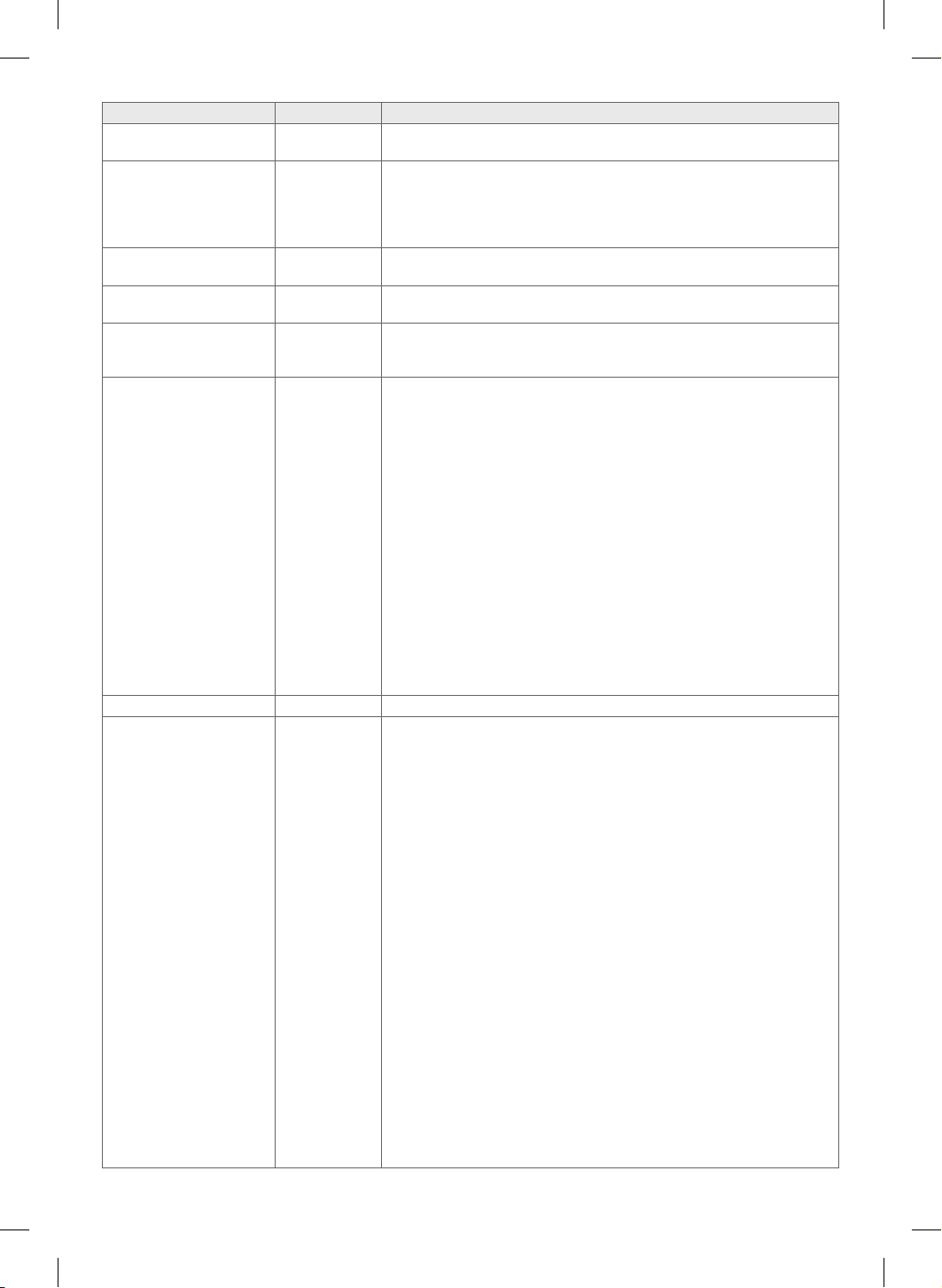
Open Source License Copyright
gobject-introspection 1.72.0
GPL-2.0
LGPL-2.1
Copyright (C) 2005 Matthias Clasen
Copyright (C) 2008,2009 Red Hat, Inc.
Copyright (c) 2009-2016 Thiago Santos <thiago.sousa.santos@collabora.
co.uk>
Copyright (c) 2012-2020 Matthew Waters <matthew@centricular.com>
Copyright (c) 2018-2021 Seungha Yang <seungha@centricular.com>
Copyright (c) 2012-2017 Matthew Waters <matthew@centricular.com>
Copyright (c) 2000-2010 Wim Taymans <[email protected]>
Copyright (c) 2006-2011 Tim-Philipp Müller <tim centricular net>
Copyright (c) 2005-2009
Wim Taymans <wim@fluendo.com>
Gstreamer 1.20.1 LGPL-2.1 Copyright (c) Erik Walthinsen
Copyright (c) Matt Howell
Copyright (c) Brent Bradburn
Copyright (c) Wim Taymans
Copyright (c) Richard Boulton
Copyright (c) Zaheer Abbas Merali
Copyright (c) David I. Lehn
Copyright (c) Chris Emerson
Copyright (c) Jens Thiele
Copyright (c) Thomas Nyberg
Copyright (c) Bastien Nocera
Copyright (c) Christian Fredrik Kalager Schaller
Copyright (c) Thomas Vander Stichele
Copyright (c) David Schleef
Copyright (c) Benjamin Otte
Copyright (c) Ronald Bultje
Copyright (c) Andy Wingo
Copyright (c) Julien Moutte
Copyright (c) Jan Schmidt
i2c-tools 4.3 GPL-2.0 Copyright (c) 1989, 1991 Free Software Foundation, Inc.
iptables 1.8.7 GPL-2.0 Copyright (c) 2000-2001 Netfilter Core Team
Copyright (c) 2006-2013 Patrick McHardy <kaber@trash.net>
Copyright (C) 2000-2002 Joakim Axelsson <[email protected]>, Patrick
Schaaf <bof@bof.de>, Martin Josefsson <[email protected]>
Copyright (C) 2000-2011 Jozsef Kadlecsik <[email protected]>
Copyright (C) 2002,2004 MARA Systems AB <http://www.marasystems.
com> by Henrik Nordstrom <hno@marasystems.com>
Copyright (c) 2000 Marc Boucher
Copyright (C) 2000 Emmanuel Roger <[email protected]>
(C) 2000-2005 by Harald Welte <[email protected]>
(C) 2009-2014 by Pablo Neira Ayuso <pablo@netfilter.org>
(C) 2011 by Intra2Net AG <http://www.intra2net.com>
(C) 2012 by Hans Schillstrom <hans.schillstr[email protected]>
(C) 2013 by Giuseppe Longo <[email protected]om>
(C) 2013 by Tomasz Bursztyka <[email protected]>
(C) 2010-2011, Thomas Graf <tgr[email protected]>
(C) 2006 Ufo
Mechanic <[email protected]>
(C) 2004, Bart De Schuymer <[email protected]>
(C) 2002 by Don Cohen <don-net[email protected]om>
(C) 2000 by Matthew G. Marsh <[email protected]om>
(C) 2000-2002 by the netfilter coreteam <coreteam@netfilter.org>, Paul
‘Rusty’ Russell <[email protected]om.au>, Marc Boucher <marc+nf@mbsi.
ca>, James Morris <jmorris@intercode.com.au>, Harald Welte <laforge@
gnumonks.org>, Jozsef Kadlecsik <kadlec@blackhole.kfki.hu>
(C) 1999 by Paul ‘Rusty’ Russell <[email protected]>
Copyright © Sebastian Claßen <sebastian.classen [at] freenet.ag>, 2007
Copyright © Jan Engelhardt <jengelh [at] medozas de>, 2007 - 2010
W7.AUSALLK_SPEC_COV31495711.indd 6 2026-03-31 �� 8:37:57
Open Source License Copyright
Copyright © Jan Engelhardt, 2011
Copyright Google, Inc. 2013
Copyright © CC Computer Consultants GmbH, 2007 - 2008 Jan Engelhardt
<jengelh@computergmbh.de>
Copyright (c) 2010-2011, 2020 Red Hat GmbH.
Copyright (C) 2010 Nokia Corporation. All rights reserved.
Copyright (c) 2007 Sven Schnelle <[email protected]g>
Copyright (C) 2002-2008 BalaBit IT Ltd.
Copyright (C)2006 USAGI/WIDE Project
Copyright (c) 2003+ Evgeniy Polyakov <[email protected]>
Copyright (c) 2005 Evgeniy Polyakov <[email protected]>
iso-codes 4.12.0 LGPL-2.1
kmod 29 GPL-2.0
LGPL-2.1
Copyright (c) 2011-2013 ProFUSION embedded systems
Copyright (c) 2013 Intel Corporation
lame 3.100 LGPL-2.1 Copyrights (c) 1999-2011 by The LAME Project
Copyrights (c) 1999,2000,2001 by Mark Taylor
Copyrights (c) 1998 by Michael Cheng
Copyrights (c) 1995,1996,1997 by Michael Hipp: mpglib
libatomic_ops 7.6.14 GPL-2.0
MIT
Copyright (c) 1999-2003 by Hewlett-Packard Company.
Copyright (c) 1991-1994 by Xerox Corporation.
Copyright (c) 1996-1999 by Silicon Graphics.
Copyright (C) 2016 Marek Vasut <mare[email protected]>
libcap-ng 0.8.2 GPL-2.0
LGPL-2.1
Copyright (c) 1989, 1991 Free Software Foundation, Inc.
libdaemon 0.14 LGPL-2.1
libfuse 2.9.9 GPL-2.0
LGPL-2.1
Copyright (c) 2008-2009 SUSE Linux Products GmbH
Copyright (c) 2008-2009 Tejun Heo <[email protected]>
Copyright (c) 2011 Sebastian Pipping <[email protected]g>
Copyright (c) 2001-2008, 2010 Miklos Szeredi <miklos@szeredi.hu>
Copyright (c) 2005-2008 Csaba Henk <c[email protected]>
libgudev 237 LGPL-2.1 Copyright (c) 2008 David Zeuthen <davidz@redhat.com>
Copyright (c) 2015 William Yu <[email protected]>
Copyright (c) 2001-2002 Critical Path
libmnl 1.0.4 LGPL-2.1 Copyright (c) 2008-2012 by Pablo Neira Ayuso <pablo@netfilter.org>
Copyright (c) 2013 Sassano Systems LLC <joe@sassanosystems.com>
Copyright (c) 2014 Susant Sahani <susant@redhat.com>
Copyright (c) 2007 Secure Computing Corporation
Copyright (c) 2007 Philip Craig <philipc@snapgear.com>
Copyright (c) 2013 Cong Wang <xiyou.[email protected]om>
Copyright (c) 2007, 2008 Patrick McHardy <kaber@trash.net>
libnsl2 2.0.0 LGPL-2.1
librsvg 2.52.7 LGPL-2.1 Copyright (c) 2000, Eazel, Inc.
Copyright (c) 2002, Dom Lachowicz <[email protected]om>
Copyright (c) 1994-2018 Free Software Foundation, Inc.
libseccomp 2.5.3 LGPL-2.1 Copyright (c) 2012,2018 Red Hat <pmoore@redhat.com>
libsndfile 1.0.31 LGPL-2.1
libsoup 2.74.2 LGPL-2.1
libtool 2.4.7 GPL-2.0
LGPL-2.1
Copyright (c) 1996, 1998-2015 Free Software Foundation, Inc.
libusb 1.0.26 LGPL-2.1 Copyright (c) 1991, 1999 Free Software Foundation, Inc.
libxcrypt 4.4.30 LGPL-2.1 Copyright (c) 1994 David Burren
Copyright (c) 2018-2020 Bjorn Esser <besser82@fedoraproject.org>
Copyright (c) 2018 [email protected]
Linux Kernel 6.1 GPL-2.0
linux-libc-headers 5.16 GPL-2.0
lrzsz 0.12.20 GPL-2.0
W7.AUSALLK_SPEC_COV31495711.indd 7 2026-03-31 �� 8:37:57
Open Source License Copyright
LZMA Utils 5.2.5 GPL-2.0
LGPL-2.1
Copyright (c) 2016-2017 Jes Sorensen <[email protected]>
Copyright (c) 1989, 1991 Free Software Foundation, Inc.
MediaTek-mt7668-bt-drv GPL-2.0 Copyright (c) 2016,2017, MediaTek Inc.
MediaTek-mt7668-wifi-drv GPL-2.0 Copyright (c) 2015, MediaTek Inc.
MediaTek-mt7668-wifi-tool GPL-2.0 Copyright (c) 2016, MediaTek Inc.
mpg123 1.29.3 LGPL-2.1 Copyright (c) 1995-2013, Michael Hipp and others
netbase 6.3 GPL-2.0 Copyright 1994-2010 Peter Tobias, Anthony Towns and Marco d'Itri
ofono 1.34 GPL-2.0 Copyright (c) 2008-2011, 2017 Intel Corporation.
Copyright (c) 2009-2010 Nokia Corporation and/or its subsidiary(-ies).
opkg-utils 0.5.0 GPL-2.0 Copyright (c) 1995 Ian Jackson
Copyright (c) the Free Software Foundation
Copyright (c) 2006-7 Paul Sokolovsky
Copyright (c) 2001 Carl D. Worth
pango 1.50.4 LGPL-2.1 Copyright (c) 1999-2000 Red Hat Software
perf-tools 1.0 GPL-2.0 Copyright (c) 2014 Brendan Gregg.
ptest-runner 2.4.2 GPL-2.0 Copyright (c) 2016 Intel Corporation
pulseaudio 15.0 GPL-2.0
LGPL-2.1
Copyright (c) 1989, 1991 Free Software Foundation, Inc.
Copyright (c) 2010 Google Inc.
readline 5.2 GPL-2.0 Copyright (c) 1987-2010 Free Software Foundation, Inc.
sbc 1.5 GPL-2.0
LGPL-2.1
Copyright (c) 2008-2010 Nokia Corporation
Copyright (c) 2004-2010 Marcel Holtmann <marc[email protected]>
Copyright (c) 2004-2005 Henryk Ploetz <[email protected]>
Copyright (c) 2005-2008 Brad Midgley <[email protected]>
shared-mime-info 2.1 GPL-2.0 Copyright (c) 2008 Red Hat, Inc.
systemd 250.5 LGPL-2.1 Copyright (c) 2013-2015 Intel Corporation.
Copyright (c) 2010 Ran Benita
Copyright (c) 2012 Harald Hoyer <[email protected]om>
systemd-stable 250.5 LGPL-2.1 Copyright (c) 2014 Intel Corporation.
taglib 1.12 MPL-1.1 Copyright (c) 2002, 2003 by Scott Wheeler
Copyright (c) 2003 by Allan Sandfeld Jensen
Util-Linux 2.37.4 GPL-2.0 Copyright (c) 1989, 1991 Free Software Foundation, Inc.
Copyright (c) 2007-2013 Karel Zak
Copyright (c) 1999 Andries Brouwer
Copyright (c) 1999, 2000, 2003 Theodore Ts'o
Copyright (c) 2001 Andreas Dilger
Copyright (c) 2004 Kay Sievers
Raffaele Sandrini <raffaele@sandrini.ch>
Rico Tzschichholz <[email protected]om>
Wireless Tools 30.pre9 GPL-2.0 Copyright (c) 1996-2008 Jean Tourrilhes
XZ Utils 5.2.6 GPL-2.0
LGPL-2.1
W7.AUSALLK_SPEC_COV31495711.indd 8 2026-03-31 �� 8:37:57
The source code for the above may be obtained free of charge from LG Electronics, Inc. at https://opensource.lge.com LG
Electronics, Inc. will also provide open source code to you on CD-ROM for a charge covering the cost of performing such
distribution (such as the cost of media, shipping, and handling) upon email request to opensourc[email protected]. This offer is valid
to anyone in receipt of this information for a period of three years after our last shipment of this product.
Please be informed that LG Electronics, Inc. product may contain open source software listed in the tables below.
Open Source License Copyright
ADVobfuscator BSD-3-Clause Copyright (c) 2010-2017, Sebastien Andrivet
Android Open Source
Project
Apache-2.0 Copyright (c) 2005-2016, The Android Open Source Project
asio 1.12.2 BSL-1.0 Copyright (c) 2003-2018 Christopher M. Kohlhoff (chris at kohlhoff dot
com)
Boost 1.71.0 BSL-1.0 Copyright (c) 2003-2019 Christopher M. Kohlhoff (chris at kohlhoff dot
com)
Copyright (c) 2013-2017 Louis Dionne
Copyright (c) 1998-2011 Joel de Guzman
Boost 1.78.0 BSL-1.0 Copyright (c) 2003-2021 Christopher M. Kohlhoff (chris at kohlhoff dot
com)
Copyright (c) 2013-2021 Vinnie Falco
Copyright (c) 1998-2011 Joel de Guzman
bzip2 1.0.8 bzip2-1.0.6 Copyright (c) 1996-2019 Julian R Seward.
cJSON 1.7.15 MIT Copyright (c) 2009-2017 Dave Gamble and cJSON contributors
Clara 1.1.5 BSL-1.0 Copyright (c) 2017,2018 Two Blue Cubes Ltd.
contributors
Copyright (c) Daniel Stenberg, <[email protected]>
dbus 1.14.4 AFL-2.1 Copyright (c) 1992-2014 Free Software Foundation, Inc.
Copyright (c) 2003 Philip Blundell
Copyright (c) 2003-2006 Red Hat, Inc.
Copyright (c) 2006 Thiago Macieira
Copyright (c) 2008-2012 Nokia Corporation
Copyright (c) 2008-2013 Collabora Ltd.
Copyright (c) 2002 Michael Meeks
Copyright (c) 1994 X Consortium
Copyright (c) 2005, 2010 Lennart Poettering
Copyright (c) 2002, 2003 CodeFactory AB
Copyright (c) 2005 Novell, Inc.
Copyright (c) 2009 Klaralvdalens Datakonsult AB, a KDAB Group company,
Copyright (c) 2007, Tanner Lovelace
Copyright (c) 2008, Colin Walters
Copyright (c) 2008-2009, Benjamin Reed
Copyright (c) 2013 Intel Corporation
Copyright (c) 2000 Werner Almesberger
Copyright (c) 1991-1993 The Regents of the University of California.
Copyright (c) 1994 Sun Microsystems, Inc.
Copyright (c) 2006 Christian Ehrlicher
Copyright (c) 2005 g10 Code GmbH
Copyright (c) 1995 A. M. Kuchling
Copyright (c) 2006-2013 Ralf Habacker
Copyright (c) 2004 Eric Poech
Copyright (c) 2004 Robert Shearman
Copyright (c) 2004 Imendio HB
Copyright (c) 2009 Yaakov Selkowitz
Copyright (c) 2008 Laurent Montel,
Copyright (c) 2011, Raphael Kubo da Costa
Copyright (c) 2006, Tim Beaulen
Copyright (c) 2004-2005 Scott James Remnant
expat 2.5.0 MIT Copyright (c) 1998-2000 Thai Open Source Software Center Ltd and Clark
Cooper
Copyright (c) 2001-2022 Expat maintainers
W7.AUSALLK_SPEC_COV31495711.indd 9 2026-03-31 �� 8:37:57
Open Source License Copyright
fontconfig 2.13.1 MIT-like License
(fontconfig)
Copyright (c) 2000,2001,2002,2003,2004,2006,2007 Keith Packard
Copyright (c) 2005 Patrick Lam
Copyright (c) 2009 Roozbeh Pournader
Copyright (c) 2008,2009 Red Hat, Inc.
Copyright (c) 2008 Danilo glrtegan
FreeBSD 13.2.0 BSD-2-Clause-
FreeBSD
Copyright (c) 1992-2017 The FreeBSD Project.
freetype 2.11.1 FTL Copyright (c) 1996-2020 by David Turner, Robert Wilhelm, and Werner
Lemberg.
Copyright (c) 2009-2020 Oran Agra and Mickey Gabel
Copyright (c) 2005-2020 by suzuki toshiya, Masatake YAMATO, Red Hat
K.K., David Turner, Robert Wilhelm, and Werner Lemberg.
gcc 11.3.0 GPL-3.0-with-
GCC-exception
icu 70.1 Unicode-
DFS-2016
Copyright (c) 1995-2016, International Business Machines Corporation and
others
Copyright (c) 1991-2021, Unicode, Inc.
iperf 3.11 BSD-3-Clause-
LBNL
Copyright (c) 1999-2007, The Board of Trustees of the University of Illinois
iw 5.16 ISC Copyright (c) 2007 Mike Kershaw
Copyright (c) 2007, 2008 Johannes Berg
Copyright (c) 2007 Andy Lutomirski
Copyright (c) 2008-2009 Luis R. Rodriguez
Copyright (c) 2014 Robert Poor <r[email protected]>
Copyright (c) 2011-2012 Basile Starynkevitch <[email protected]>
Copyright (c) 2011-2012 Graeme Smecher <[email protected].
ca>
Copyright (c) 2019 Sean Bright <[email protected]om>
json11 1.0.0 MIT Copyright (c) 2013 Dropbox, Inc.
libbsd 0.11.5 Beerware
BSD-2-Clause
BSD-3-Clause
BSD-4-Clause
ISC
MIT
libcap 2.66 BSD-3-Clause Copyright (c) 1997-9,2007-8,2019,2021 Andrew G Morgan <morgan@
kernel.org>
Copyright (c) 1997 Andrew Main <zefram@dcs.warwick.ac.uk>
libdrm 2.4.110 MIT Copyright (c) 2017-2018 Intel Corporation
Copyright (c) 2014 NVIDIA Corporation
Copyright (c) 2014 Advanced Micro Devices, Inc.
Copyright (c) 2008 Tungsten Graphics Jakob Bornecrantz <jakob@
tungstengraphics.com>
libevent 2.1.12 BSD-3-Clause
MIT
Copyright (c) 2000-2007 Niels Provos <pr[email protected]>
Copyright (c) 2007-2012 Niels Provos and Nick Mathewson
libffi 3.4.4 MIT Copyright (c) 1996-2025 Anthony Green, Red Hat, Inc and others.
libjpeg-turbo 2.1.5 BSD-3-Clause
IJG
Zlib
Copyright (c) 2009-2022 D. R. Commander. All Rights Reserved.
Copyright (c) 2015 Viktor Szathmáry. All Rights Reserved.
libmd 1.0.4 Beerware
BSD-2-Clause
BSD-3-Clause
ISC
Copyright Colin Plumb Todd C. Miller
Copyright (c) 2001 Markus Friedl
Copyright (c) 2009, 2011, 2016 Guillem Jover <[email protected]g>
Copyright (c) 1997, 2003, 2004 Todd C. Miller <Todd.Miller@courtesan.
com>
Copyright (c) 2001 The NetBSD Foundation, Inc.
Copyright Poul-Henning Kamp <[email protected]>
Copyright (c) 2000-2001, Aaron D. Gifford
Copyright Steve Reid <[email protected]om>
Copyright Colin Plumb
W7.AUSALLK_SPEC_COV31495711.indd 10 2026-03-31 �� 8:37:57
Open Source License Copyright
libogg 1.3.5 BSD-3-Clause Copyright (c) 2002, Xiph.org Foundation
libpcap 1.10.1 BSD-3-Clause Copyright (c) 1982-1997 The Regents of the University of California.
libpng 1.6.37 libpng-2.0 Copyright (c) 1995-2019 The PNG Reference Library Authors.
Copyright (c) 2018-2019 Cosmin Truta.
Copyright (c) 2000-2002, 2004, 2006-2018 Glenn Randers-Pehrson.
Copyright (c) 1996-1997 Andreas Dilger.
Copyright (c) 1995-1996 Guy Eric Schalnat, Group 42, Inc.
libpsl 0.21.1 MIT Copyright (c) 2014-2015 Tim Ruhsen
libpthread-stubs 0.4 X11 Copyright (c) 1994 X Consortium
libsamplerate 0.2.2
BSD-2-Clause Copyright (c) 2012-2016, Erik de Castro Lopo <[email protected]om>
libtheora 1.1.1 BSD-3-Clause Copyright (C) 2002-2009 Xiph.org Foundation
libtirpc 1.3.2 BSD-3-Clause Copyright (c) Bull S.A. 2005
libunwind 1.6.2 MIT Copyright (c) 2002, Hewlett-Packard Co.
libvorbis 1.3.7 BSD-3-Clause Copyright (c) 2002-2020 Xiph.org Foundation
libwebp 1.2.4 BSD-3-Clause Copyright (c) 2010, Google Inc.
libxml2 2.9.14 MIT Copyright (c) 1998-2012 Daniel Veillard
Linux-PAM 1.5.2 BSD-3-Clause Copyright (c) YEAR Linux-PAM Project
Copyright (c) 2005-2010, Thorsten Kukuk <[email protected]>
Copyright (c) 2005-2009, Red Hat, Inc.
mDNSResponder
878.200.35
Apache-2.0 Copyright (c) 1997-2017, Apple Computer, Inc.
Copyright (c) 2004, National ICT Australia Ltd
mDNSResponder 1310.80.1 Apache-2.0 Copyright (c) 2020 Apple Inc.
Mesa3D 22.0.3 MIT Copyright (c) 2007-2016, VMware, Inc.
Copyright (c) 2010,2020 Intel Corporation
Copyright (c) 1999-2008 Brian Paul
MTK-Watchdog MIT Copyright (c) 2023 MediaTek Inc.
ncurses 6.3 MIT-like License
(ncurses)
Copyright (c) 2018-2020,2021 Thomas E. Dickey
Copyright (c) 1998-2017,2018 Free Software Foundation, Inc.
nghttp2 1.47.0 MIT Copyright (c) 2012, 2014, 2015, 2016 Tatsuhiro Tsujikawa
Copyright (c) 2012, 2014, 2015, 2016 nghttp2 contributors
Copyright (c) 2009 Google Inc.
Copyright (c) 2013-2022 Niels Lohmann
ntp 4.2.8p15 NTP Copyright (c) 2007-2012 Niels Provos and Nick Mathewson
Copyright (c) 1999-2001 Internet Software Consortium.
openssl 3.0.7 Apache-2.0 Copyright (c) 1998-2019 The OpenSSL Project.
optee_client 3.2.0 BSD-2-Clause Copyright (c) 2015, Linaro Limited
orc 0.4.32 BSD-2-Clause
BSD-3-Clause
Copyright (c) 2002 - 2009 David A. Schleef <ds@schleef.org>
Copyright (c) 1997 - 2002, Makoto Matsumoto and Takuji Nishimura
os-release MIT
pcre 8.45 BSD-3-Clause Copyright (c) 2009-2021 Zoltan Herczeg
Copyright (c) 1997-2021 University of Cambridge
Copyright (c) 2007-2012, Google Inc.
perl 5.34.1 Artistic-1.0-Perl Copyright (c) 1993-2021, Larry Wall and others.
Pixman 0.40.0 MIT Copyright (c) 2000 SuSE, Inc.
Copyright (c) 2004-2010, Red Hat, Inc.
Copyright (c) 2000 Keith Packard
PuTTY 0.60 MIT Copyright (c) 1997-2014 Simon Tatham
shadow 4.11.1 BSD-3-Clause Copyright (c) 1989 - 1994, Julianne Frances Haugh
Copyright (c) 1996 - 2001, Marek Michałkiewicz
Copyright (c) 2001 - 2006, Tomasz Kłoczko
Copyright (c) 2004 The FreeBSD Project
Copyright (c) 1997, Guy Maor <maor@ece.utexas.edu>
Copyright (c) 2007 - 2013, Nicolas François
Copyright (c) 1991 - 1993, Chip Rosenthal
W7.AUSALLK_SPEC_COV31495711.indd 11 2026-03-31 �� 8:37:58
Open Source License Copyright
shadow-sysroot 4.6 Artistic-1.0
spdlog 1.3.1 MIT Copyright (c) 2016 Gabi Melman
speex 1.2.0 BSD-3-Clause Copyright (c) 2002-2008 Xiph.org Foundation
Copyright (c) 2002-2008 Jean-Marc Valin
Copyright (c) 2005-2007 Analog Devices Inc.
Copyright (c) 2005-2008 Commonwealth Scientific and Industrial Research
Organisation (CSIRO)
Copyright (c) 1993, 2002, 2006 David Rowe
Copyright (c) 2003 EpicGames
Copyright (c) 1992-1994 Jutta Degener, Carsten Bormann
SpeexDSP 1.2.0 BSD-3-Clause Copyright (c) 2002-2008 Xiph.org Foundation
Copyright (c) 2002-2008 Jean-Marc Valin
Copyright (c) 2005-2007 Analog Devices Inc.
Copyright (c) 2005-2008 Commonwealth Scientific and Industrial Research
Organisation (CSIRO)
Copyright (c) 1993, 2002, 2006 David Rowe
Copyright (c) 2003 EpicGames
Copyright (c) 1992-1994 Jutta Degener, Carsten Bormann
tcpdump 4.99.1 BSD-3-Clause Copyright (c) 2005 The Tcpdump Group
tinyalsa 1.1.1 BSD-3-Clause Copyright (c) 2011, The Android Open Source Project
tremor 1.2.1 BSD-3-Clause Copyright (c) 2002, Xiph.org Foundation
Copyright (C) 2007, Sebastian Pipping <[email protected]g>
util-macros 1.19.3 MIT-like License
(util-macros)
Copyright (c) 2005 Red Hat, Inc.
Copyright (c) 2005, 2006, Oracle and/or its affiliates.
volatile-binds 1.0 MIT
Wayland 1.20.0 MIT Copyright (c) 2008-2012 Kristian Høgsberg
Copyright (c) 2010-2012 Intel Corporation
Copyright (c) 2011 Benjamin Franzke
Copyright (c) 2012 Collabora, Ltd.
wayland-protocols-imx MIT Copyright (c) 2015 Red Hat Inc.
Copyright (c) 2008-2013 Kristian Hogsberg
Copyright (c) 2014 Jonas Adahl
Copyright (c) 2010-2013 Intel Corporation
Copyright (c) 2014-2015 Collabora, Ltd.
Copyright (c) 2014 Jason Ekstrand
Copyright (c) 2013 Rafael Antognolli
Copyright (c) 2013 Jasper St. Pierre
websocketpp 0.8.1 BSD-3-Clause Copyright (c) 2014, Peter Thorson.
wpa_supplicant 2.10 BSD-3-Clause Copyright (c) 2002-2015, Jouni Malinen <[email protected]> and contributors
xorg-lib-libpciaccess 0.16 ISC
MIT
X11
Copyright (c) IBM Corporation 2006
zlib 1.2.12 Zlib Copyright (c) 2004 Henrik Ravn
Copyright (c) 2002-2003 Dmitriy Anisimkov
Copyright (c) 1995-2022 Mark Adler
zlib 1.2.11 Zlib Copyright (c) 1995-2017 Jean-loup Gailly and Mark Adler
zstd 1.5.2 BSD-3-Clause Copyright (c) 2016-2021 Yann Collet Facebook Inc.
Copyright (c) 2016-present Facebook Inc.
W7.AUSALLK_SPEC_COV31495711.indd 12 2026-03-31 �� 8:37:58
IJG Attribution
This software is based in part on the work of the Independent JPEG Group.
GPL-2.0
GNU GENERAL PUBLIC LICENSE
Version 2, June 1991
Copyright (C) 1989, 1991 Free Software Foundation, Inc.
51 Franklin Street, Fifth Floor, Boston, MA 02110-1301, USA
Everyone is permitted to copy and distribute verbatim copies of this license document, but changing it is not allowed.
Preamble
The licenses for most software are designed to take away your freedom to share and change it. By contrast, the GNU General
Public License is intended to guarantee your freedom to share and change free software--to make sure the software is free
for all its users. This General Public License applies to most of the Free Software Foundation’s software and to any other
program whose authors commit to using it. (Some other Free Software Foundation software is covered by the GNU Lesser
General Public License instead.) You can apply it to your programs, too.
When we speak of free software, we are referring to freedom, not price. Our General Public Licenses are designed to make
sure that you have the freedom to distribute copies of free software (and charge for this service if you wish), that you
receive source code or can get it if you want it, that you can change the software or use pieces of it in new free programs;
and that you know you can do these things.
To protect your rights, we need to make restrictions that forbid anyone to deny you these rights or to ask you to surrender
the rights. These restrictions translate to certain responsibilities for you if you distribute copies of the software, or if you
modify it.
For example, if you distribute copies of such a program, whether gratis or for a fee, you must give the recipients all the rights
that you have. You must make sure that they, too, receive or can get the source code. And you must show them these terms
so they know their rights.
We protect your rights with two steps: (1) copyright the software, and (2) offer you this license which gives you legal
permission to copy, distribute and/or modify the software.
Also, for each author’s protection and ours, we want to make certain that everyone understands that there is no warranty for
this free software. If the software is modified by someone else and passed on, we want its recipients to know that what they
have is not the original, so that any problems introduced by others will not reflect on the original authors’ reputations.
Finally, any free program is threatened constantly by software patents. We wish to avoid the danger that redistributors of a
free program will individually obtain patent licenses, in effect making the program proprietary. To prevent this, we have made
it clear that any patent must be licensed for everyone’s free use or not licensed at all.
The precise terms and conditions for copying, distribution and modification follow.
TERMS AND CONDITIONS FOR COPYING, DISTRIBUTION AND MODIFICATION
0. This License applies to any program or other work which contains a notice placed by the copyright holder saying it may be
distributed under the terms of this General Public License. The “Program”, below, refers to any such program or work, and
a “work based on the Program” means either the Program or any derivative work under copyright law: that is to say, a work
containing the Program or a portion of it, either verbatim or with modifications and/or translated into another language.
(Hereinafter, translation is included without limitation in the term “modification”.) Each licensee is addressed as “you”.
Activities other than copying, distribution and modification are not covered by this License; they are outside its scope. The
act of running the Program is not restricted, and the output from the Program is covered only if its contents constitute a
work based on the Program (independent of having been made by running the Program). Whether that is true depends on
what the Program does.
1. You may copy and distribute verbatim copies of the Program’s source code as you receive it, in any medium, provided that
you conspicuously and appropriately publish on each copy an appropriate copyright notice and disclaimer of warranty; keep
intact all the notices that refer to this License and to the absence of any warranty; and give any other recipients of the
Program a copy of this License along with the Program.
You may charge a fee for the physical act of transferring a copy, and you may at your option offer warranty protection in
exchange for a fee.
2. You may modify your copy or copies of the Program or any portion of it, thus forming a work based on the Program, and
copy and distribute such modifications or work under the terms of Section 1 above, provided that you also meet all of these
conditions:
a) You must cause the modified files to carry prominent notices stating that you changed the files and the date of any
change.
W7.AUSALLK_SPEC_COV31495711.indd 13 2026-03-31 �� 8:37:58

b) You must cause any work that you distribute or publish, that in whole or in part contains or is derived from the Program or
any part thereof, to be licensed as a whole at no charge to all third parties under the terms of this License.
c) If the modified program normally reads commands interactively when run, you must cause it, when started running for
such interactive use in the most ordinary way, to print or display an announcement including an appropriate copyright notice
and a notice that there is no warranty (or else, saying that you provide a warranty) and that users may redistribute the
program under these conditions, and telling the user how to view a copy of this License. (Exception: if the Program itself is
interactive but does not normally print such an announcement, your work based on the Program is not required to print an
announcement.)
These requirements apply to the modified work as a whole. If identifiable sections of that work are not derived from the
Program, and can be reasonably considered independent and separate works in themselves, then this License, and its terms,
do not apply to those sections when you distribute them as separate works. But when you distribute the same sections as
part of a whole which is a work based on the Program, the distribution of the whole must be on the terms of this License,
whose permissions for other licensees extend to the entire whole, and thus to each and every part regardless of who wrote it.
Thus, it is not the intent of this section to claim rights or contest your rights to work written entirely by you; rather, the
intent is to exercise the right to control the distribution of derivative or collective works based on the Program.
In addition, mere aggregation of another work not based on the Program with the Program (or with a work based on the
Program) on a volume of a storage or distribution medium does not bring the other work under the scope of this License.
3. You may copy and distribute the Program (or a work based on it, under Section 2) in object code or executable form under
the terms of Sections 1 and 2 above provided that you also do one of the following:
a) Accompany it with the complete corresponding machine-readable source code, which must be distributed under the terms
of Sections 1 and 2 above on a medium customarily used for software interchange; or,
b) Accompany it with a written offer, valid for at least three years, to give any third party, for a charge no more than your
cost of physically performing source distribution, a complete machine-readable copy of the corresponding source code, to be
distributed under the terms of Sections 1 and 2 above on a medium customarily used for software interchange; or,
c) Accompany it with the information you received as to the offer to distribute corresponding source code. (This alternative
is allowed only for noncommercial distribution and only if you received the program in object code or executable form with
such an offer, in accord with Subsection b above.)
The source code for a work means the preferred form of the work for making modifications to it. For an executable work,
complete source code means all the source code for all modules it contains, plus any associated interface definition files,
plus the scripts used to control compilation and installation of the executable. However, as a special exception, the source
code distributed need not include anything that is normally distributed (in either source or binary form) with the major
components (compiler, kernel, and so on) of the operating system on which the executable runs, unless that component itself
accompanies the executable.
If distribution of executable or object code is made by offering access to copy from a designated place, then offering
equivalent access to copy the source code from the same place counts as distribution of the source code, even though third
parties are not compelled to copy the source along with the object code.
4. You may not copy, modify, sublicense, or distribute the Program except as expressly provided under this License. Any
attempt otherwise to copy, modify, sublicense or distribute the Program is void, and will automatically terminate your rights
under this License. However, parties who have received copies, or rights, from you under this License will not have their
licenses terminated so long as such parties remain in full compliance.
5. You are not required to accept this License, since you have not signed it. However, nothing else grants you permission to
modify or distribute the Program or its derivative works. These actions are prohibited by law if you do not accept this License.
Therefore, by modifying or distributing the Program (or any work based on the Program), you indicate your acceptance of this
License to do so, and all its terms and conditions for copying, distributing or modifying the Program or works based on it.
6. Each time you redistribute the Program (or any work based on the Program), the recipient automatically receives a license
from the original licensor to copy, distribute or modify the Program subject to these terms and conditions. You may not
impose any further restrictions on the recipients’ exercise of the rights granted herein. You are not responsible for enforcing
compliance by third parties to this License.
7. If, as a consequence of a court judgment or allegation of patent infringement or for any other reason (not limited to patent
issues), conditions are imposed on you (whether by court order, agreement or otherwise) that contradict the conditions
of this License, they do not excuse you from the conditions of this License. If you cannot distribute so as to satisfy
simultaneously your obligations under this License and any other pertinent obligations, then as a consequence you may not
distribute the Program at all. For example, if a patent license would not permit royalty-free redistribution of the Program by
all those who receive copies directly or indirectly through you, then the only way you could satisfy both it and this License
would be to refrain entirely from distribution of the Program.
If any portion of this section is held invalid or unenforceable under any particular circumstance, the balance of the section is
intended to apply and the section as a whole is intended to apply in other circumstances.
It is not the purpose of this section to induce you to infringe any patents or other property right claims or to contest validity
of any such claims; this section has the sole purpose of protecting the integrity of the free software distribution system,
which is implemented by public license practices. Many people have made generous contributions to the wide range of
W7.AUSALLK_SPEC_COV31495711.indd 14 2026-03-31 �� 8:37:58

software distributed through that system in reliance on consistent application of that system; it is up to the author/donor to
decide if he or she is willing to distribute software through any other system and a licensee cannot impose that choice.
This section is intended to make thoroughly clear what is believed to be a consequence of the rest of this License.
8. If the distribution and/or use of the Program is restricted in certain countries either by patents or by copyrighted
interfaces, the original copyright holder who places the Program under this License may add an explicit geographical
distribution limitation excluding those countries, so that distribution is permitted only in or among countries not thus
excluded. In such case, this License incorporates the limitation as if written in the body of this License.
9. The Free Software Foundation may publish revised and/or new versions of the General Public License from time to
time. Such new versions will be similar in spirit to the present version, but may differ in detail to address new problems or
concerns.
Each version is given a distinguishing version number. If the Program specifies a version number of this License which applies
to it and “any later version”, you have the option of following the terms and conditions either of that version or of any later
version published by the Free Software Foundation. If the Program does not specify a version number of this License, you
may choose any version ever published by the Free Software Foundation.
10. If you wish to incorporate parts of the Program into other free programs whose distribution conditions are different, write
to the author to ask for permission. For software which is copyrighted by the Free Software Foundation, write to the Free
Software Foundation; we sometimes make exceptions for this. Our decision will be guided by the two goals of preserving the
free status of all derivatives of our free software and of promoting the sharing and reuse of software generally.
NO WARRANTY
11. BECAUSE THE PROGRAM IS LICENSED FREE OF CHARGE, THERE IS NO WARRANTY FOR THE PROGRAM, TO THE
EXTENT PERMITTED BY APPLICABLE LAW. EXCEPT WHEN OTHERWISE STATED IN WRITING THE COPYRIGHT HOLDERS
AND/OR OTHER PARTIES PROVIDE THE PROGRAM “AS IS” WITHOUT WARRANTY OF ANY KIND, EITHER EXPRESSED
OR IMPLIED, INCLUDING, BUT NOT LIMITED TO, THE IMPLIED WARRANTIES OF MERCHANTABILITY AND FITNESS FOR
A PARTICULAR PURPOSE. THE ENTIRE RISK AS TO THE QUALITY AND PERFORMANCE OF THE PROGRAM IS WITH
YOU. SHOULD THE PROGRAM PROVE DEFECTIVE, YOU ASSUME THE COST OF ALL NECESSARY SERVICING, REPAIR OR
CORRECTION.
12. IN NO EVENT UNLESS REQUIRED BY APPLICABLE LAW OR AGREED TO IN WRITING WILL ANY COPYRIGHT HOLDER, OR
ANY OTHER PARTY WHO MAY MODIFY AND/OR REDISTRIBUTE THE PROGRAM AS PERMITTED ABOVE, BE LIABLE TO YOU
FOR DAMAGES, INCLUDING ANY GENERAL, SPECIAL, INCIDENTAL OR CONSEQUENTIAL DAMAGES ARISING OUT OF THE
USE OR INABILITY TO USE THE PROGRAM (INCLUDING BUT NOT LIMITED TO LOSS OF DATA OR DATA BEING RENDERED
INACCURATE OR LOSSES SUSTAINED BY YOU OR THIRD PARTIES OR A FAILURE OF THE PROGRAM TO OPERATE WITH
ANY OTHER PROGRAMS), EVEN IF SUCH HOLDER OR OTHER PARTY HAS BEEN ADVISED OF THE POSSIBILITY OF SUCH
DAMAGES.
END OF TERMS AND CONDITIONS
How to Apply These Terms to Your New Programs
If you develop a new program, and you want it to be of the greatest possible use to the public, the best way to achieve this is
to make it free software which everyone can redistribute and change under these terms.
To do so, attach the following notices to the program. It is safest to attach them to the start of each source file to most
effectively convey the exclusion of warranty; and each file should have at least the “copyright” line and a pointer to where the
full notice is found.
one line to give the program’s name and an idea of what it does. Copyright (C) yyyy name of author
This program is free software; you can redistribute it and/or modify it under the terms of the GNU General Public License as
published by the Free Software Foundation; either version 2 of the License, or (at your option) any later version.
This program is distributed in the hope that it will be useful, but WITHOUT ANY WARRANTY; without even the implied
warranty of MERCHANTABILITY or FITNESS FOR A PARTICULAR PURPOSE. See the GNU General Public License for more
details.
You should have received a copy of the GNU General Public License along with this program; if not, write to the Free Software
Foundation, Inc., 51 Franklin Street, Fifth Floor, Boston, MA 02110-1301, USA. Also add information on how to contact you by
electronic and paper mail.
If the program is interactive, make it output a short notice like this when it starts in an interactive mode:
Gnomovision version 69, Copyright (C) year name of author Gnomovision comes with ABSOLUTELY NO WARRANTY; for
details type `show w’. This is free software, and you are welcome to redistribute it under certain conditions; type `show c’ for
details.
The hypothetical commands `show w’ and `show c’ should show the appropriate parts of the General Public License. Of
course, the commands you use may be called something other than `show w’ and `show c’; they could even be mouse-clicks
or menu items--whatever suits your program.
You should also get your employer (if you work as a programmer) or your school, if any, to sign a “copyright disclaimer” for
the program, if necessary. Here is a sample; alter the names:
W7.AUSALLK_SPEC_COV31495711.indd 15 2026-03-31 �� 8:37:58
Yoyodyne, Inc., hereby disclaims all copyright interest in the program `Gnomovision’ (which makes passes at compilers)
written by James Hacker.
signature of Ty Coon, 1 April 1989 Ty Coon, President of Vice
LGPL-2.1
GNU LESSER GENERAL PUBLIC LICENSE
Version 2.1, February 1999
Copyright (C) 1991, 1999 Free Software Foundation, Inc.
51 Franklin Street, Fifth Floor, Boston, MA 02110-1301 USA
Everyone is permitted to copy and distribute verbatim copies of this license document, but changing it is not allowed.
[This is the first released version of the Lesser GPL. It also counts as the successor of the GNU Library Public License,
version 2, hence the version number 2.1.]
Preamble
The licenses for most software are designed to take away your freedom to share and change it. By contrast, the GNU General
Public Licenses are intended to guarantee your freedom to share and change free software--to make sure the software is
free for all its users.
This license, the Lesser General Public License, applies to some specially designated software packages--typically libraries-
-of the Free Software Foundation and other authors who decide to use it. You can use it too, but we suggest you first think
carefully about whether this license or the ordinary General Public License is the better strategy to use in any particular case,
based on the explanations below.
When we speak of free software, we are referring to freedom of use, not price. Our General Public Licenses are designed to
make sure that you have the freedom to distribute copies of free software (and charge for this service if you wish); that you
receive source code or can get it if you want it; that you can change the software and use pieces of it in new free programs;
and that you are informed that you can do these things.
To protect your rights, we need to make restrictions that forbid distributors to deny you these rights or to ask you to
surrender these rights. These restrictions translate to certain responsibilities for you if you distribute copies of the library or
if you modify it.
For example, if you distribute copies of the library, whether gratis or for a fee, you must give the recipients all the rights that
we gave you. You must make sure that they, too, receive or can get the source code. If you link other code with the library,
you must provide complete object files to the recipients, so that they can relink them with the library after making changes
to the library and recompiling it. And you must show them these terms so they know their rights.
We protect your rights with a two-step method: (1) we copyright the library, and (2) we offer you this license, which gives you
legal permission to copy, distribute and/or modify the library.
To protect each distributor, we want to make it very clear that there is no warranty for the free library. Also, if the library is
modified by someone else and passed on, the recipients should know that what they have is not the original version, so that
the original author’s reputation will not be affected by problems that might be introduced by others.
Finally, software patents pose a constant threat to the existence of any free program. We wish to make sure that a company
cannot effectively restrict the users of a free program by obtaining a restrictive license from a patent holder. Therefore, we
insist that any patent license obtained for a version of the library must be consistent with the full freedom of use specified
in this license.
Most GNU software, including some libraries, is covered by the ordinary GNU General Public License. This license, the GNU
Lesser General Public License, applies to certain designated libraries, and is quite different from the ordinary General Public
License. We use this license for certain libraries in order to permit linking those libraries into non-free programs.
When a program is linked with a library, whether statically or using a shared library, the combination of the two is legally
speaking a combined work, a derivative of the original library. The ordinary General Public License therefore permits such
linking only if the entire combination fits its criteria of freedom. The Lesser General Public License permits more lax criteria
for linking other code with the library.
We call this license the “Lesser” General Public License because it does Less to protect the user’s freedom than the ordinary
General Public License. It also provides other free software developers Less of an advantage over competing non-free
programs. These disadvantages are the reason we use the ordinary General Public License for many libraries. However, the
Lesser license provides advantages in certain special circumstances.
For example, on rare occasions, there may be a special need to encourage the widest possible use of a certain library, so that
it becomes a de-facto standard. To achieve this, non-free programs must be allowed to use the library. A more frequent case
is that a free library does the same job as widely used non-free libraries. In this case, there is little to gain by limiting the free
library to free software only, so we use the Lesser General Public License.
In other cases, permission to use a particular library in non-free programs enables a greater number of people to use a large
body of free software. For example, permission to use the GNU C Library in non-free programs enables many more people to
W7.AUSALLK_SPEC_COV31495711.indd 16 2026-03-31 �� 8:37:58

use the whole GNU operating system, as well as its variant, the GNU/Linux operating system.
Although the Lesser General Public License is Less protective of the users’ freedom, it does ensure that the user of a
program that is linked with the Library has the freedom and the wherewithal to run that program using a modified version of
the Library.
The precise terms and conditions for copying, distribution and modification follow. Pay close attention to the difference
between a “work based on the library” and a “work that uses the library”. The former contains code derived from the library,
whereas the latter must be combined with the library in order to run.
TERMS AND CONDITIONS FOR COPYING, DISTRIBUTION AND MODIFICATION
0. This License Agreement applies to any software library or other program which contains a notice placed by the copyright
holder or other authorized party saying it may be distributed under the terms of this Lesser General Public License (also
called “this License”). Each licensee is addressed as “you”.
A “library” means a collection of software functions and/or data prepared so as to be conveniently linked with application
programs (which use some of those functions and data) to form executables.
The “Library”, below, refers to any such software library or work which has been distributed under these terms. A “work based
on the Library” means either the Library or any derivative work under copyright law: that is to say, a work containing the
Library or a portion of it, either verbatim or with modifications and/or translated straightforwardly into another language.
(Hereinafter, translation is included without limitation in the term “modification”.)
“Source code” for a work means the preferred form of the work for making modifications to it. For a library, complete source
code means all the source code for all modules it contains, plus any associated interface definition files, plus the scripts used
to control compilation and installation of the library.
Activities other than copying, distribution and modification are not covered by this License; they are outside its scope. The
act of running a program using the Library is not restricted, and output from such a program is covered only if its contents
constitute a work based on the Library (independent of the use of the Library in a tool for writing it). Whether that is true
depends on what the Library does and what the program that uses the Library does.
1. You may copy and distribute verbatim copies of the Library’s complete source code as you receive it, in any medium,
provided that you conspicuously and appropriately publish on each copy an appropriate copyright notice and disclaimer of
warranty; keep intact all the notices that refer to this License and to the absence of any warranty; and distribute a copy of
this License along with the Library.
You may charge a fee for the physical act of transferring a copy, and you may at your option offer warranty protection in
exchange for a fee.
2. You may modify your copy or copies of the Library or any portion of it, thus forming a work based on the Library, and
copy and distribute such modifications or work under the terms of Section 1 above, provided that you also meet all of these
conditions:
a) The modified work must itself be a software library.
b) You must cause the files modified to carry prominent notices stating that you changed the files and the date of any
change.
c) You must cause the whole of the work to be licensed at no charge to all third parties under the terms of this License.
d) If a facility in the modified Library refers to a function or a table of data to be supplied by an application program that
uses the facility, other than as an argument passed when the facility is invoked, then you must make a good faith effort
to ensure that, in the event an application does not supply such function or table, the facility still operates, and performs
whatever part of its purpose remains meaningful.
(For example, a function in a library to compute square roots has a purpose that is entirely well-defined independent of the
application. Therefore, Subsection 2d requires that any application-supplied function or table used by this function must be
optional: if the application does not supply it, the square root function must still compute square roots.)
These requirements apply to the modified work as a whole. If identifiable sections of that work are not derived from the
Library, and can be reasonably considered independent and separate works in themselves, then this License, and its terms, do
not apply to those sections when you distribute them as separate works. But when you distribute the same sections as part
of a whole which is a work based on the Library, the distribution of the whole must be on the terms of this License, whose
permissions for other licensees extend to the entire whole, and thus to each and every part regardless of who wrote it.
Thus, it is not the intent of this section to claim rights or contest your rights to work written entirely by you; rather, the
intent is to exercise the right to control the distribution of derivative or collective works based on the Library.
In addition, mere aggregation of another work not based on the Library with the Library (or with a work based on the Library)
on a volume of a storage or distribution medium does not bring the other work under the scope of this License.
3. You may opt to apply the terms of the ordinary GNU General Public License instead of this License to a given copy of the
Library. To do this, you must alter all the notices that refer to this License, so that they refer to the ordinary GNU General
Public License, version 2, instead of to this License. (If a newer version than version 2 of the ordinary GNU General Public
License has appeared, then you can specify that version instead if you wish.) Do not make any other change in these notices.
W7.AUSALLK_SPEC_COV31495711.indd 17 2026-03-31 �� 8:37:58

Once this change is made in a given copy, it is irreversible for that copy, so the ordinary GNU General Public License applies
to all subsequent copies and derivative works made from that copy.
This option is useful when you wish to copy part of the code of the Library into a program that is not a library.
4. You may copy and distribute the Library (or a portion or derivative of it, under Section 2) in object code or executable
form under the terms of Sections 1 and 2 above provided that you accompany it with the complete corresponding machine-
readable source code, which must be distributed under the terms of Sections 1 and 2 above on a medium customarily used
for software interchange.
If distribution of object code is made by offering access to copy from a designated place, then offering equivalent access to
copy the source code from the same place satisfies the requirement to distribute the source code, even though third parties
are not compelled to copy the source along with the object code.
5. A program that contains no derivative of any portion of the Library, but is designed to work with the Library by being
compiled or linked with it, is called a “work that uses the Library”. Such a work, in isolation, is not a derivative work of the
Library, and therefore falls outside the scope of this License.
However, linking a “work that uses the Library” with the Library creates an executable that is a derivative of the Library
(because it contains portions of the Library), rather than a “work that uses the library”. The executable is therefore covered
by this License. Section 6 states terms for distribution of such executables.
When a “work that uses the Library” uses material from a header file that is part of the Library, the object code for the work
may be a derivative work of the Library even though the source code is not. Whether this is true is especially significant if
the work can be linked without the Library, or if the work is itself a library. The threshold for this to be true is not precisely
defined by law.
If such an object file uses only numerical parameters, data structure layouts and accessors, and small macros and small inline
functions (ten lines or less in length), then the use of the object file is unrestricted, regardless of whether it is legally a
derivative work. (Executables containing this object code plus portions of the Library will still fall under Section 6.)
Otherwise, if the work is a derivative of the Library, you may distribute the object code for the work under the terms of
Section 6. Any executables containing that work also fall under Section 6, whether or not they are linked directly with the
Library itself.
6. As an exception to the Sections above, you may also combine or link a “work that uses the Library” with the Library to
produce a work containing portions of the Library, and distribute that work under terms of your choice, provided that the
terms permit modification of the work for the customer’s own use and reverse engineering for debugging such modifications.
You must give prominent notice with each copy of the work that the Library is used in it and that the Library and its use are
covered by this License. You must supply a copy of this License. If the work during execution displays copyright notices, you
must include the copyright notice for the Library among them, as well as a reference directing the user to the copy of this
License. Also, you must do one of these things:
a) Accompany the work with the complete corresponding machine-readable source code for the Library including whatever
changes were used in the work (which must be distributed under Sections 1 and 2 above); and, if the work is an executable
linked with the Library, with the complete machine-readable “work that uses the Library”, as object code and/or source code,
so that the user can modify the Library and then relink to produce a modified executable containing the modified Library.
(It is understood that the user who changes the contents of definitions files in the Library will not necessarily be able to
recompile the application to use the modified definitions.)
b) Use a suitable shared library mechanism for linking with the Library. A suitable mechanism is one that (1) uses at run
time a copy of the library already present on the user’s computer system, rather than copying library functions into the
executable, and (2) will operate properly with a modified version of the library, if the user installs one, as long as the modified
version is interface-compatible with the version that the work was made with.
c) Accompany the work with a written offer, valid for at least three years, to give the same user the materials specified in
Subsection 6a, above, for a charge no more than the cost of performing this distribution.
d) If distribution of the work is made by offering access to copy from a designated place, offer equivalent access to copy the
above specified materials from the same place.
e) Verify that the user has already received a copy of these materials or that you have already sent this user a copy.
For an executable, the required form of the “work that uses the Library” must include any data and utility programs needed
for reproducing the executable from it. However, as a special exception, the materials to be distributed need not include
anything that is normally distributed (in either source or binary form) with the major components (compiler, kernel, and so
on) of the operating system on which the executable runs, unless that component itself accompanies the executable.
It may happen that this requirement contradicts the license restrictions of other proprietary libraries that do not normally
accompany the operating system. Such a contradiction means you cannot use both them and the Library together in an
executable that you distribute.
7. You may place library facilities that are a work based on the Library side-by-side in a single library together with other
library facilities not covered by this License, and distribute such a combined library, provided that the separate distribution of
the work based on the Library and of the other library facilities is otherwise permitted, and provided that you do these two
things:
W7.AUSALLK_SPEC_COV31495711.indd 18 2026-03-31 �� 8:37:58

a) Accompany the combined library with a copy of the same work based on the Library, uncombined with any other library
facilities. This must be distributed under the terms of the Sections above.
b) Give prominent notice with the combined library of the fact that part of it is a work based on the Library, and explaining
where to find the accompanying uncombined form of the same work.
8. You may not copy, modify, sublicense, link with, or distribute the Library except as expressly provided under this License.
Any attempt otherwise to copy, modify, sublicense, link with, or distribute the Library is void, and will automatically terminate
your rights under this License. However, parties who have received copies, or rights, from you under this License will not have
their licenses terminated so long as such parties remain in full compliance.
9. You are not required to accept this License, since you have not signed it. However, nothing else grants you permission to
modify or distribute the Library or its derivative works. These actions are prohibited by law if you do not accept this License.
Therefore, by modifying or distributing the Library (or any work based on the Library), you indicate your acceptance of this
License to do so, and all its terms and conditions for copying, distributing or modifying the Library or works based on it.
10. Each time you redistribute the Library (or any work based on the Library), the recipient automatically receives a license
from the original licensor to copy, distribute, link with or modify the Library subject to these terms and conditions. You may
not impose any further restrictions on the recipients’ exercise of the rights granted herein. You are not responsible for
enforcing compliance by third parties with this License.
11. If, as a consequence of a court judgment or allegation of patent infringement or for any other reason (not limited
to patent issues), conditions are imposed on you (whether by court order, agreement or otherwise) that contradict the
conditions of this License, they do not excuse you from the conditions of this License. If you cannot distribute so as to
satisfy simultaneously your obligations under this License and any other pertinent obligations, then as a consequence you
may not distribute the Library at all. For example, if a patent license would not permit royalty-free redistribution of the
Library by all those who receive copies directly or indirectly through you, then the only way you could satisfy both it and this
License would be to refrain entirely from distribution of the Library.
If any portion of this section is held invalid or unenforceable under any particular circumstance, the balance of the section is
intended to apply, and the section as a whole is intended to apply in other circumstances.
It is not the purpose of this section to induce you to infringe any patents or other property right claims or to contest validity
of any such claims; this section has the sole purpose of protecting the integrity of the free software distribution system
which is implemented by public license practices. Many people have made generous contributions to the wide range of
software distributed through that system in reliance on consistent application of that system; it is up to the author/donor to
decide if he or she is willing to distribute software through any other system and a licensee cannot impose that choice.
This section is intended to make thoroughly clear what is believed to be a consequence of the rest of this License.
12. If the distribution and/or use of the Library is restricted in certain countries either by patents or by copyrighted
interfaces, the original copyright holder who places the Library under this License may add an explicit geographical
distribution limitation excluding those countries, so that distribution is permitted only in or among countries not thus
excluded. In such case, this License incorporates the limitation as if written in the body of this License.
13. The Free Software Foundation may publish revised and/or new versions of the Lesser General Public License from time
to time. Such new versions will be similar in spirit to the present version, but may differ in detail to address new problems or
concerns.
Each version is given a distinguishing version number. If the Library specifies a version number of this License which applies
to it and “any later version”, you have the option of following the terms and conditions either of that version or of any later
version published by the Free Software Foundation. If the Library does not specify a license version number, you may choose
any version ever published by the Free Software Foundation.
14. If you wish to incorporate parts of the Library into other free programs whose distribution conditions are incompatible
with these, write to the author to ask for permission. For software which is copyrighted by the Free Software Foundation,
write to the Free Software Foundation; we sometimes make exceptions for this. Our decision will be guided by the two goals
of preserving the free status of all derivatives of our free software and of promoting the sharing and reuse of software
generally.
NO WARRANTY
15. BECAUSE THE LIBRARY IS LICENSED FREE OF CHARGE, THERE IS NO WARRANTY FOR THE LIBRARY, TO THE EXTENT
PERMITTED BY APPLICABLE LAW. EXCEPT WHEN OTHERWISE STATED IN WRITING THE COPYRIGHT HOLDERS AND/OR
OTHER PARTIES PROVIDE THE LIBRARY “AS IS” WITHOUT WARRANTY OF ANY KIND, EITHER EXPRESSED OR IMPLIED,
INCLUDING, BUT NOT LIMITED TO, THE IMPLIED WARRANTIES OF MERCHANTABILITY AND FITNESS FOR A PARTICULAR
PURPOSE. THE ENTIRE RISK AS TO THE QUALITY AND PERFORMANCE OF THE LIBRARY IS WITH YOU. SHOULD THE
LIBRARY PROVE DEFECTIVE, YOU ASSUME THE COST OF ALL NECESSARY SERVICING, REPAIR OR CORRECTION.
16. IN NO EVENT UNLESS REQUIRED BY APPLICABLE LAW OR AGREED TO IN WRITING WILL ANY COPYRIGHT HOLDER, OR
ANY OTHER PARTY WHO MAY MODIFY AND/OR REDISTRIBUTE THE LIBRARY AS PERMITTED ABOVE, BE LIABLE TO YOU
FOR DAMAGES, INCLUDING ANY GENERAL, SPECIAL, INCIDENTAL OR CONSEQUENTIAL DAMAGES ARISING OUT OF THE
USE OR INABILITY TO USE THE LIBRARY (INCLUDING BUT NOT LIMITED TO LOSS OF DATA OR DATA BEING RENDERED
INACCURATE OR LOSSES SUSTAINED BY YOU OR THIRD PARTIES OR A FAILURE OF THE LIBRARY TO OPERATE WITH
ANY OTHER SOFTWARE), EVEN IF SUCH HOLDER OR OTHER PARTY HAS BEEN ADVISED OF THE POSSIBILITY OF SUCH
W7.AUSALLK_SPEC_COV31495711.indd 19 2026-03-31 �� 8:37:58

DAMAGES.
END OF TERMS AND CONDITIONS
How to Apply These Terms to Your New Libraries
If you develop a new library, and you want it to be of the greatest possible use to the public, we recommend making it free
software that everyone can redistribute and change. You can do so by permitting redistribution under these terms (or,
alternatively, under the terms of the ordinary General Public License).
To apply these terms, attach the following notices to the library. It is safest to attach them to the start of each source file
to most effectively convey the exclusion of warranty; and each file should have at least the “copyright” line and a pointer to
where the full notice is found.
one line to give the library’s name and an idea of what it does.
Copyright (C) year name of author
This library is free software; you can redistribute it and/or modify it under the terms of the GNU Lesser General Public
License as published by the Free Software Foundation; either version 2.1 of the License, or (at your option) any later version.
This library is distributed in the hope that it will be useful, but WITHOUT ANY WARRANTY; without even the implied warranty
of MERCHANTABILITY or FITNESS FOR A PARTICULAR PURPOSE. See the GNU Lesser General Public License for more
details.
You should have received a copy of the GNU Lesser General Public License along with this library; if not, write to the Free
Software Foundation, Inc., 51 Franklin Street, Fifth Floor, Boston, MA 02110-1301 USA Also add information on how to
contact you by electronic and paper mail.
You should also get your employer (if you work as a programmer) or your school, if any, to sign a “copyright disclaimer” for
the library, if necessary. Here is a sample; alter the names:
Yoyodyne, Inc., hereby disclaims all copyright interest in
the library `Frob’ (a library for tweaking knobs) written
by James Random Hacker.
signature of Ty Coon, 1 April 1990
Ty Coon, President of Vice
That’s all there is to it!
License URLs
• AFL-2.1 : https://opensource.lge.com/license/AFL-2.1.html
• Apache-2.0 : https://opensource.lge.com/license/Apache-2.0.html
• Artistic-1.0 : https://opensource.lge.com/license/Artistic-1.0.html
• Artistic-1.0-Perl : https://opensource.lge.com/license/Artistic-1.0-Perl.html
• BSD-2-Clause : https://opensource.lge.com/license/BSD-2-Clause.html
• BSD-2-Clause-FreeBSD : https://opensource.lge.com/license/BSD-2-Clause-FreeBSD.html
• BSD-3-Clause : https://opensource.lge.com/license/BSD-3-Clause.html
• BSD-3-Clause-LBNL : https://opensource.lge.com/license/BSD-3-Clause-LBNL.html
• BSD-4-Clause : https://opensource.lge.com/license/BSD-4-Clause.html
• BSL-1.0 : https://opensource.lge.com/license/BSL-1.0.html
• Beerware : https://opensource.lge.com/license/Beerware.html
• FDK-AAC : https://opensource.lge.com/license/FDK-AAC.html
• FTL : https://opensource.lge.com/license/FTL.html
• GPL-2.0 : https://opensource.lge.com/license/GPL-2.0.html
• GPL-3.0-with-GCC-exception : https://opensource.lge.com/license/GPL-3.0-with-GCC-exception.html
• IJG : https://opensource.lge.com/license/IJG.html
• ISC : https://opensource.lge.com/license/ISC.html
• LGPL-2.1 : https://opensource.lge.com/license/LGPL-2.1.html
• MIT : https://opensource.lge.com/license/MIT.html
• MIT-like License (fontconfig) : https://opensource.lge.com/license/MIT-like_License_(fontconfig).html
• MIT-like License (ncurses) : https://opensource.lge.com/license/MIT-like_License_(ncurses).html
• MIT-like License (util-macros) : https://opensource.lge.com/license/MIT-like_License_(util-macros).html
W7.AUSALLK_SPEC_COV31495711.indd 20 2026-03-31 �� 8:37:58

• MPL-1.1 : https://opensource.lge.com/license/MPL-1.1.html
• MPL-2.0 : https://opensource.lge.com/license/MPL-2.0.html
• NTP : https://opensource.lge.com/license/NTP.html
• Unicode-DFS-2016 : https://opensource.lge.com/license/Unicode-DFS-2016.html
• X11 : https://opensource.lge.com/license/X11.html
• Zlib : https://opensource.lge.com/license/Zlib.html
• bzip2-1.0.6 : https://opensource.lge.com/license/bzip2-1.0.6.html
• curl : https://opensource.lge.com/license/curl.html
• libpng-2.0 : https://opensource.lge.com/license/libpng-2.0.html
W7.AUSALLK_SPEC_COV31495711.indd 21 2026-03-31 �� 8:37:58
Limited Warranty - USA
ARBITRATION NOTICE: THIS LIMITED WARRANTY CONTAINS AN ARBITRATION PROVISION THAT REQUIRES YOU AND
LG ELECTRONICS (“LG”) TO RESOLVE DISPUTES BY BINDING ARBITRATION INSTEAD OF IN COURT, UNLESS YOU
CHOOSE TO OPT OUT. IN ARBITRATION, CLASS ACTIONS AND JURY TRIALS ARE NOT PERMITTED. PLEASE SEE THE
SECTION TITLED “PROCEDURE FOR RESOLVING DISPUTES” BELOW.
Should your Wi-Fi ACTIVE SUBWOOFER fail due to a defect in materials or workmanship under normal and proper
use, during the limited warranty period set forth below, LG will, at its option, repair or replace the Product. This limited
warranty is valid only to the original end-use purchaser of the Product and applies only when purchased lawfully and
used within the United States including U.S. Territories.
WARRANTY PERIOD:
Parts and Labor: One (1) Year from the date of original
end-use purchase, or from the date of delivery to end-use
purchaser as per applicable law. (Internal/functional parts
only)
NOTE
y Repaired or Replacement Products and parts are
warranted for the remaining portion of the original
warranty period or ninety (90) days, whichever is
greater.
y Replacement Products and parts may be new,
reconditioned, refurbished, or otherwise factory
remanufactured.
y Replaced Product or part(s) will be the property of LG.
y If the original date of purchase or delivery cannot be
verified, the warranty will begin on the 1st day of the
manufacture month.
HOW SERVICE IS HANDLED:
The original sales invoice and delivery receipt*
specifying the Product and date of purchase and
delivery is required to obtain warranty service.
For any service-related inquiries, including
troubleshooting assistance,
visit www.lg.com or call 1-800-243-0000,
or write to:
ATTN: LG Customer Interactive Center
201 James Record Road SW
Huntsville, Alabama 35824
Shipping Costs
In-bound and out-bound shipping will be paid by LG
during the Warranty Period.
Disclaimer:
EXCEPT TO THE EXTENT PROHIBITED BY APPLICABLE LAW, ANY IMPLIED WARRANTY OF MERCHANTABILITY OR FITNESS
FOR A PARTICULAR PURPOSE ON THE PRODUCT IS LIMITED IN DURATION TO THE DURATION OF THE ABOVE LIMITED
WARRANTY. UNDER NO CIRCUMSTANCE SHALL LG BE LIABLE FOR ANY INCIDENTAL, SPECIAL OR CONSEQUENTIAL
DAMAGES INCLUDING, WITHOUT LIMITATION, LOST GOODWILL, LOST REVENUE OR PROFITS, WORK STOPPAGE, PRODUCT
FAILURE, IMPAIRMENT OF OTHER GOODS, LOSS OR CORRUPTION OF PROGRAMMING OR DATA, LOSS OF USE, INJURY TO
PERSONS OR PROPERTY ARISING OUT OF OR RELATED TO THE PRODUCT. LG’S TOTAL LIABILITY, IF ANY, DAMAGES OR
OTHERWISE, SHALL NOT EXCEED THE INVOICE VALUE PAID BY YOU FOR THE PRODUCT FURNISHED, WHICH IS THE SUBJECT
OF A CLAIM OR DISPUTE.
SOME STATES DO NOT ALLOW THE EXCLUSION OR LIMITATION OF INCIDENTAL OR CONSEQUENTIAL DAMAGES, OR ALLOW
LIMITATIONS ON HOW LONG AN IMPLIED WARRANTY LASTS, SO THE ABOVE LIMITATIONS OR EXCLUSIONS MAY NOT APPLY
TO YOU. THIS LIMITED WARRANTY GIVES YOU SPECIFIC LEGAL RIGHTS. YOU MAY ALSO HAVE OTHER RIGHTS THAT VARY
FROM STATE TO STATE.
W7.AUSALLK_SPEC_COV31495711.indd 22 2026-03-31 �� 8:37:58
THIS LIMITED WARRANTY DOES NOT APPLY TO:
y
Service trips to deliver, pick up, install, educate on how to operate, correct wiring or for unauthorized repairs.
y
Damage or failure of the Product caused by power failures, interruptions, or inadequate electrical service.
y
Damage or failure resulting from operating or using the Product in any way contrary to the instructions, use other than
the Product’s intended purpose, or use in conditions contrary to those recommended or outlined in the Product’s Owner’s
Manual.
y
Damage or failure of the Product caused by transportation and/or handling, including scratches, dents, chips, and/or
other damage to the finish of your Product, unless such damage results from a defect in materials or workmanship and is
reported within one (1) week of delivery (Call: 1-800-243-0000).
y
Damage or failure resulting from improper installation, repair, maintenance, or foreign objects placed in or connected to
the Product. Improper repair includes use of parts not approved or specified by LG.
y
Damage or failure caused by unauthorized modification, alteration, adjustment of user controls, calibration, accessories, or
separate system components, or due to use with incompatible mobile devices.
y
Damage or failure caused by any accessories and software not approved or specified by LG.
y
Damage or failure caused by reception problems due to inadequate home antenna or faulty antenna connections, or
computer software.
y
Damage or failure caused by incorrect electrical current, voltage, components or consumable cleaning products that are
not approved by LG.
y
Damage or missing components for any display or open box Product.
y
Damage (including cosmetic damage), deterioration, malfunction, loss or personal injury due to misuse, abuse, negligence,
improper maintenance or storage, or acts of nature or other causes beyond LG’s control. (Causes beyond LG’s control
include, but are not limited to, pests or vermin, lightning strike, wind, fire, power surges, water damage, or flood.)
y
Products used for other than normal and proper household use (e.g., rental, commercial or industrial use, offices, or
recreational facilities) or contrary to the Product owner’s manual.
y
Product with original serial numbers that have been removed, altered, or cannot be readily determined.
y
Increases in utility costs and additional utility expenses.
y
Refurbished Product or Product sold ‘As Is’, ‘With All Faults’, or under a similar disclaimer.
The cost of repair or replacement under the above-mentioned excluded circumstances shall be borne by You.
ARBITRATION PROCEDURE FOR RESOLVING DISPUTES
ALL DISPUTES BETWEEN YOU AND LG ARISING OUT OF OR RELATING IN ANY WAY TO THIS LIMITED
WARRANTY OR THE PRODUCT SHALL BE RESOLVED EXCLUSIVELY THROUGH BINDING ARBITRATION, AND
NOT IN A COURT OF GENERAL JURISDICTION. BINDING ARBITRATION MEANS THAT YOU AND LG ARE EACH
WAIVING THE RIGHT TO A JURY TRIAL AND TO BRING OR PARTICIPATE IN A CLASS ACTION.
Definitions. For the purposes of this section, references to “LG” mean LG Electronics U.S.A., Inc., its parents,
subsidiaries and affiliates, and each of their officers, directors, employees, agents, beneficiaries, predecessors
in interest, successors, assigns and suppliers; references to “dispute” or “claim” shall include any dispute, claim
or controversy of any kind whatsoever (whether based in contract, tort, statute, regulation, ordinance, fraud,
misrepresentation or any other legal or equitable theory) arising out of or relating in any way to the sale,
condition or performance of the product or this Limited Warranty.
Notice of Dispute. In the event you intend to commence an arbitration proceeding, you must first notify LG
in writing at least 30 days in advance of initiating the arbitration by sending a letter to LG at LG Electronics,
USA, Inc. Attn: Legal Department-Arbitration 111 Sylvan Avenue, Englewood Cliffs, NJ 07632. You and LG agree
to engage in good faith discussions in an attempt to amicably resolve your claim. The notice must provide your
name, address, and telephone number; identify the product that is the subject of the claim; and describe the
nature of the claim and the relief being sought. If you and LG are unable to resolve the dispute within 30 days,
either party may proceed to file a claim for arbitration.
Agreement to Binding Arbitration and Class Action Waiver. Upon failure to resolve the dispute during the
30-day period after sending written notice to LG, you and LG agree to resolve any claims between us only by
binding arbitration on an individual basis, unless you opt out as provided below. Any dispute between you and
LG shall not be combined or consolidated with a dispute involving any other person’s or entity’s product or
claim. More specifically, without limitation of the foregoing, any dispute between you and LG shall not under any
circumstances proceed as part of a class or representative action. Instead of arbitration, either party may bring
an individual action in small claims court, but that small claims court action may not be brought on a class or
representative basis.
Arbitration Rules and Procedures. To begin arbitration of a claim, either you or LG must make a written demand
for arbitration. The arbitration will be administered by the American Arbitration Association (“AAA”) and will be
conducted before a single arbitrator under the AAA’s Consumer Arbitration Rules that are in effect at the time
W7.AUSALLK_SPEC_COV31495711.indd 23 2026-03-31 �� 8:37:58

the arbitration is initiated (referred to as the “AAA Rules”) and under the procedures set forth in this section.
The AAA Rules are available online at www.adr.org/consumer. Send a copy of your written demand for arbitration,
as well as a copy of this provision, to the AAA in the manner described in the AAA Rules. You must also send a
copy of your written demand to LG at LG Electronics, USA, Inc. Attn: Legal Department-Arbitration 111 Sylvan
Avenue, Englewood Cliffs, NJ 07632. If there is a conflict between the AAA Rules and the rules set forth in
this section, the rules set forth in this section will govern. This arbitration provision is governed by the Federal
Arbitration Act. Judgment may be entered on the arbitrator’s award in any court of competent jurisdiction. All
issues are for the arbitrator to decide, except issues relating to the scope and enforceability of the arbitration
provision and to the arbitrability of the dispute are for the court to decide. The arbitrator is bound by the terms
of this provision.
Governing Law. The law of the state of your residence shall govern this Limited Warranty and any disputes
between us except to the extent that such law is preempted by or inconsistent with applicable federal law.
Fees/Costs. You do not need to pay any fee to begin an arbitration. Upon receipt of your written demand for
arbitration, LG will promptly pay all arbitration filing fees to the AAA unless you seek more than $25,000 in
damages, in which case the payment of these fees will be governed by the AAA Rules. Except as otherwise
provided for herein, LG will pay all AAA filing, administration, and arbitrator fees for any arbitration initiated in
accordance with the AAA Rules and this arbitration provision. If You prevail in the arbitration, LG will pay your
attorneys’ fees and expenses as long as they are reasonable, by considering factors including, but not limited to,
the purchase amount and claim amount. Notwithstanding the foregoing, if applicable law allows for an award of
reasonable attorneys’ fees and expenses, an arbitrator can award them to the same extent that a court would. If
the arbitrator finds either the substance of your claim or the relief sought in the demand is frivolous or brought
for an improper purpose (as measured by the standards set forth in Federal Rule of Civil Procedure 11(b)), then
the payment of all arbitration fees will be governed by the AAA Rules. In such a situation, you agree to reimburse
LG for all monies previously disbursed by it that are otherwise your obligation to pay under the AAA Rules.
Except as otherwise provided for, LG waives any rights it may have to seek attorneys’ fees and expenses from
you if LG prevails in the arbitration.
Hearings and Location. If your claim is for $25,000 or less, you may choose to have the arbitration conducted
solely on the basis of (1) documents submitted to the arbitrator, (2) through a telephonic hearing, or (3) by
an in-person hearing as established by the AAA Rules. If your claim exceeds $25,000, the right to a hearing
will be determined by the AAA Rules. Any in-person arbitration hearings will be held at a location within the
federal judicial district in which you reside unless we both agree to another location or we agree to a telephonic
arbitration.
Opt Out. You may opt out of this dispute resolution procedure. If you opt out, neither you nor LG can require
the other to participate in an arbitration proceeding. To opt out, you must send notice to LG no later than 30
calendar days from the delivery/pick-up date of your purchase of the Product by either: (i) sending an e-mail to
[email protected]om, with the subject line: “Arbitration Opt Out” or (ii) calling 1- 800-980-2973. You must include
in the opt out e-mail or provide by telephone: (a) your name and address; (b) the date on which the product was
delivered or picked up; (c) the product model name or model number; and (d) the serial number.
You may only opt out of the dispute resolution procedure in the manner described above (that is, by e-mail or
telephone); no other form of notice will be effective to opt out of this dispute resolution procedure. Opting out
of this dispute resolution procedure will not affect the coverage of the Limited Warranty in any way, and you will
continue to enjoy the full benefits of the Limited Warranty. If you keep this Product and do not opt out, then you
accept all terms and conditions of the arbitration provision described above.
W7.AUSALLK_SPEC_COV31495711.indd 24 2026-03-31 �� 8:37:58

W7.AUSALLK_SPEC_COV31495711.indd 25 2026-03-31 �� 8:37:58

W7.AUSALLK_SPEC_COV31495711.indd 26 2026-03-31 �� 8:37:58

W7.AUSALLK_SPEC_COV31495711.indd 27 2026-03-31 �� 8:37:58
LG Customer Information Center
1-800-243-0000 USA, Consumer
1-888-865-3026 USA, Commercial
Register your product Online!
www.lg.com
Printed in China
W7.AUSALLK_SPEC_COV31495711.indd 28 2026-03-31 �� 8:37:58