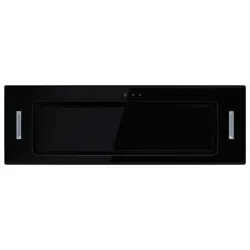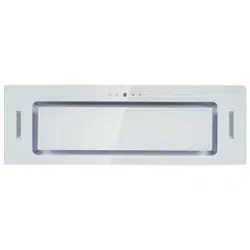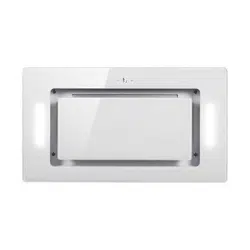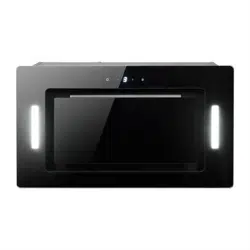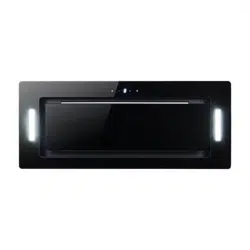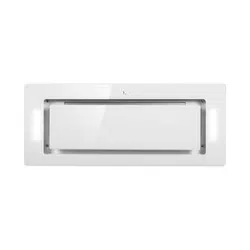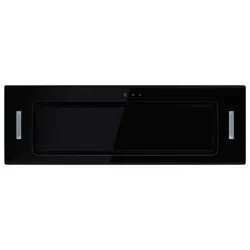
USER MANUAL
COOKER HOOD
EIQ90CANGW EIQ90CANGBL
Thank you for choosing electriQ
Please read this user manual before using this
product and keep it safe for future reference.
Visit our page www.electriQ.co.uk for our entire product range

2
CONTENTS
SAFETY
3
INSTALLATION
5
OPERATION
6
TROUBLESHOOTING
7
CLEANING AND MAINTENANCE
7
FILTER INFORMATION
8
BULB REPLACEMENT
9
TECHNICAL SPECIFICATIONS
9
SUPPORT
10
PRODUCT FICHE
11

3
SAFETY PRECAUTIONS
Whilst this product is compliant with all safety requirements, incorrect or
inappropriate use can lead to both personal injury and potential damage
to property. Please read the contents of this instruction booklet thoroughly
before fitting or using this appliance.
• The cooker hood must be installed in accordance with the installation
instructions and all measurements followed.
• All installation work must be carried out by a competent person or
qualified electrician.
• The unit must be connected to an earthed power supply.
• If venting externally, make sure the ducting has no bends sharper than
90 degrees as this will reduce the efficiency of the cooker hood.
• The cooker hood is for domestic use only and is not designed for
commercial use. It should only be used for the purpose it was intended
– to extract vapours and cooking odours.
• Do not flambé or use an open flame under the cooker hood.
• Do not try to use the cooker hood without the grease filters or if the
filters are excessively greasy. They should be cleaned regularly (see
“Maintenance”) or replaced as necessary.
• The extraction fan must be level to avoid grease collection at one end,
as this could cause a potential fire risk.
• Do not leave frying pans unattended during use because overheated fat
or oils might catch fire.
• If the cooker hood is damaged, do not attempt to use it.
• If the supply cord is damaged, it must be replaced by the manufacturer,
its service agent or a similarly qualified person in order to avoid a
hazard.
• This appliance can be used by children aged from 8 years and above
and persons with reduced physical, sensory or mental capabilities or
lack of experience and knowledge if they have been given supervision
or instruction concerning use of the appliance in a safe way and
understand the hazards involved.
• Children shall not play with the appliance. Cleaning and user
maintenance shall not be made by children without supervision.
• Children should be supervised to ensure that they do not play with the
appliance. It is not a toy.
• The plug must be accessible after installation for isolation in case of an
emergency – or an appropriate fused switch if the unit is hard-wired to
the mains via a spur.
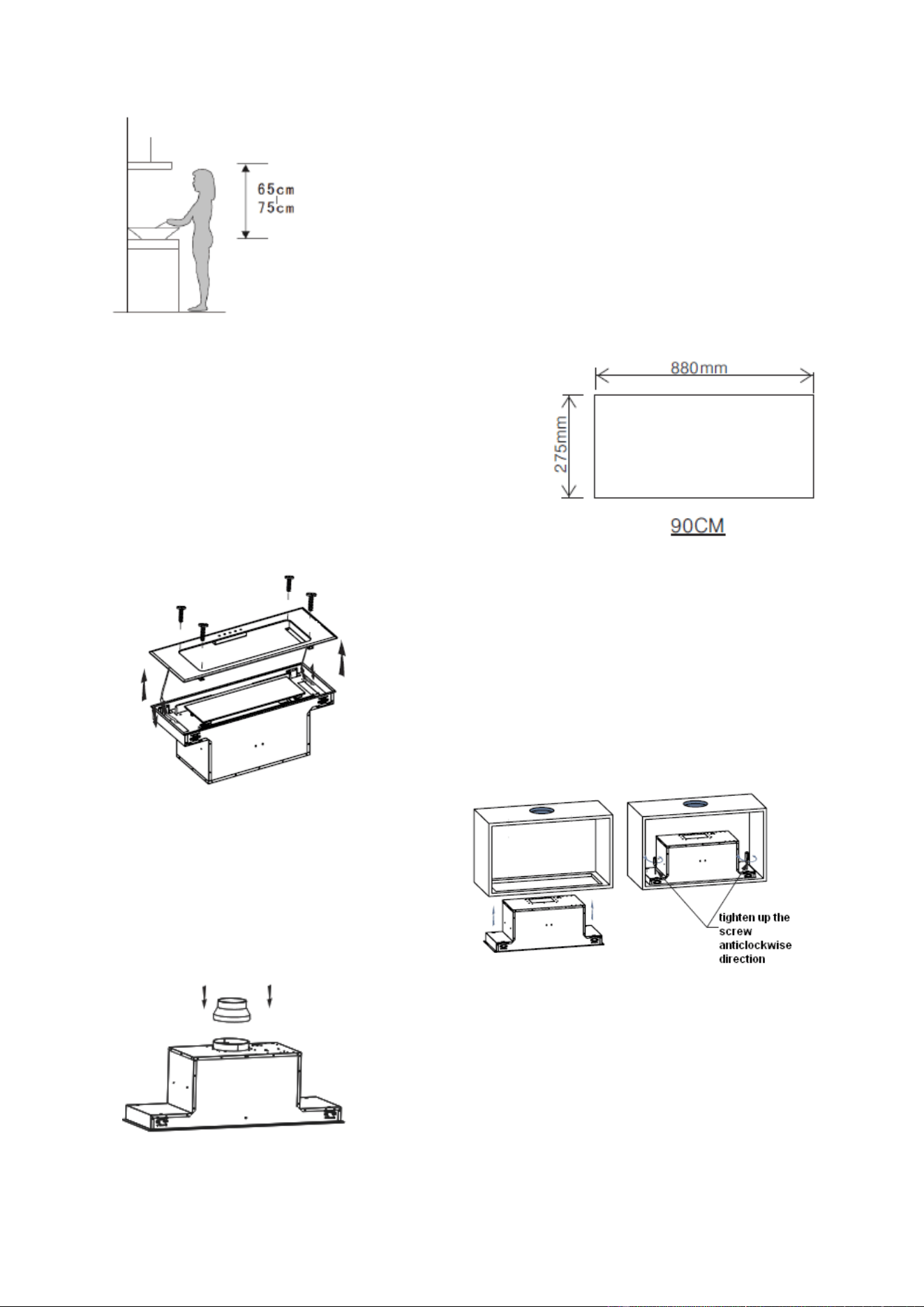
• The minimum distance between the surface of the hob and the lowest
part of the hood should be at least 65cm. A distance of between 65cm
and 75cm gives peak efficiency.

4
• The air must not be discharged into a flue that is used for exhausting
fumes from appliances burning gas or other fuels.
• When the hood is vented externally and used with appliances which
burn fuel (e.g. gas, oil, wood) the area must be sufficiently ventilated to
ensure safe operation. Fresh air must be allowed to freely enter the
room to prevent a partial vacuum.
• A partial vacuum can starve the heating appliance of oxygen, impairing
combustion. It can also prevent toxic fumes from leaving the room, or
can cause fumes to be sucked into the room from outside.
• Safe operation is only possible when the partial vacuum within the
working area does not exceed 4 Pa (0.04 mbar). This can be achieved
by ensuring air is able to enter the room from outside through a suitable
sized opening which cannot be sealed during operation. A number of
alternative solutions are available to ensure this. If in any doubt,
professional advice should be sought.
• Regulations concerning the discharge of air have to be fulfilled.
• There is a potential fire risk if cleaning is not carried out in accordance
with the instructions.
• Clean your appliance periodically by following the method given in the
chapter MAINTENANCE
• If used in recirculation mode, the charcoal filters trap odours and must
be replaced at least once a year depending on how frequently the
cooker hood has been used.
• For safety reasons, please use only the same size of fixing or mounting
screw, which are recommended in this instruction manual.
• Warning: Failure to install the screws or fixing device in accordance with
these instructions may result in electrical hazards
CAUTION: Accessible parts of the hood can become very hot during
use with cooking appliances, whether in use or not, due to heat
rising from the hob. Sufficient time should be allowed for the unit
to cool before touching either the housing or the grease filters
5
INSTALLATION (VENT OUTSIDE)
1. The cooker hood should be placed at a distance of 65-
75cm from the cooking surface.
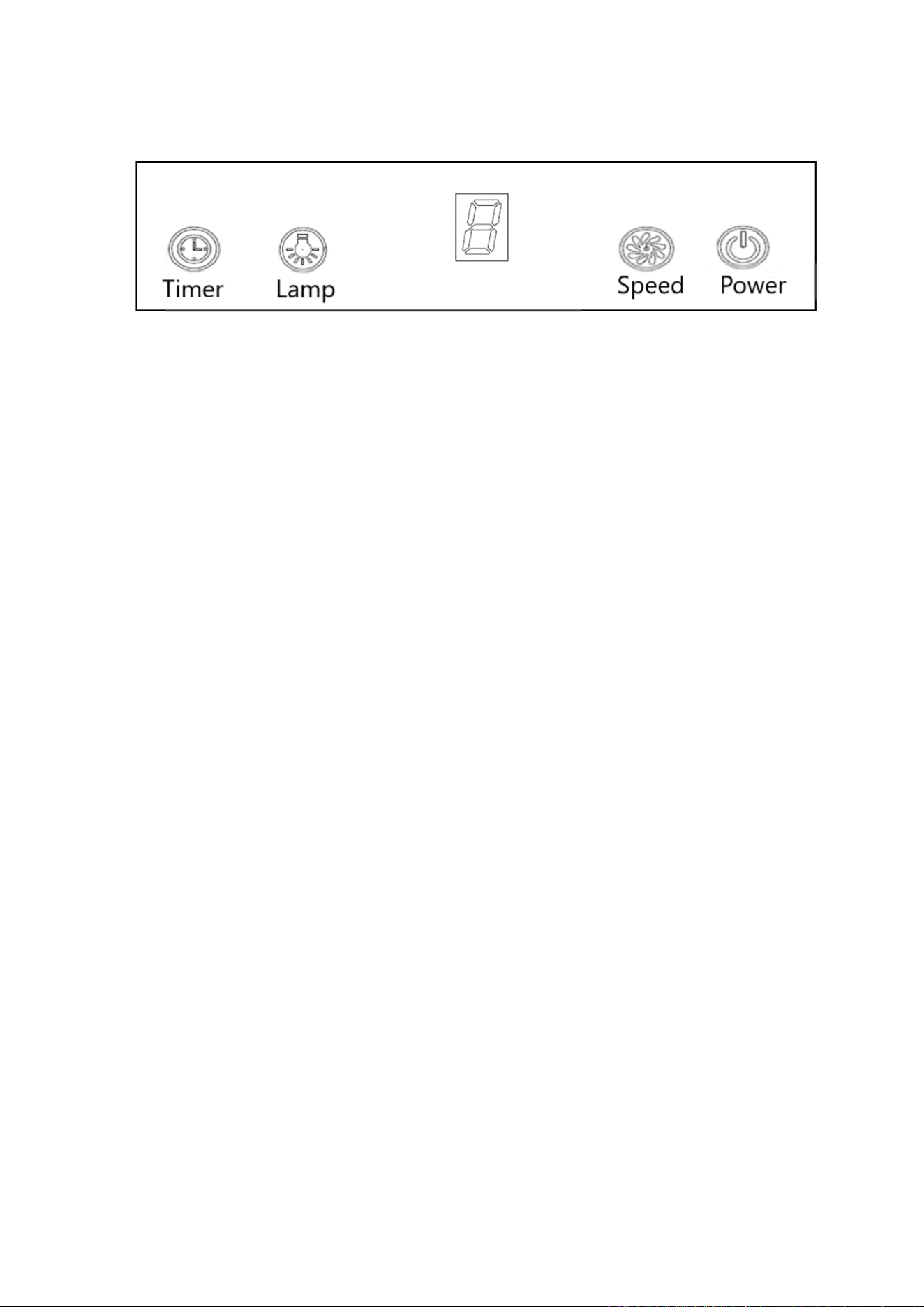
2. Drill a hole in the cabinet, with a width
880*275(mm) for model 90CM. Make sure the
gap between the hole and the cupboard edge is
at least 35mm.
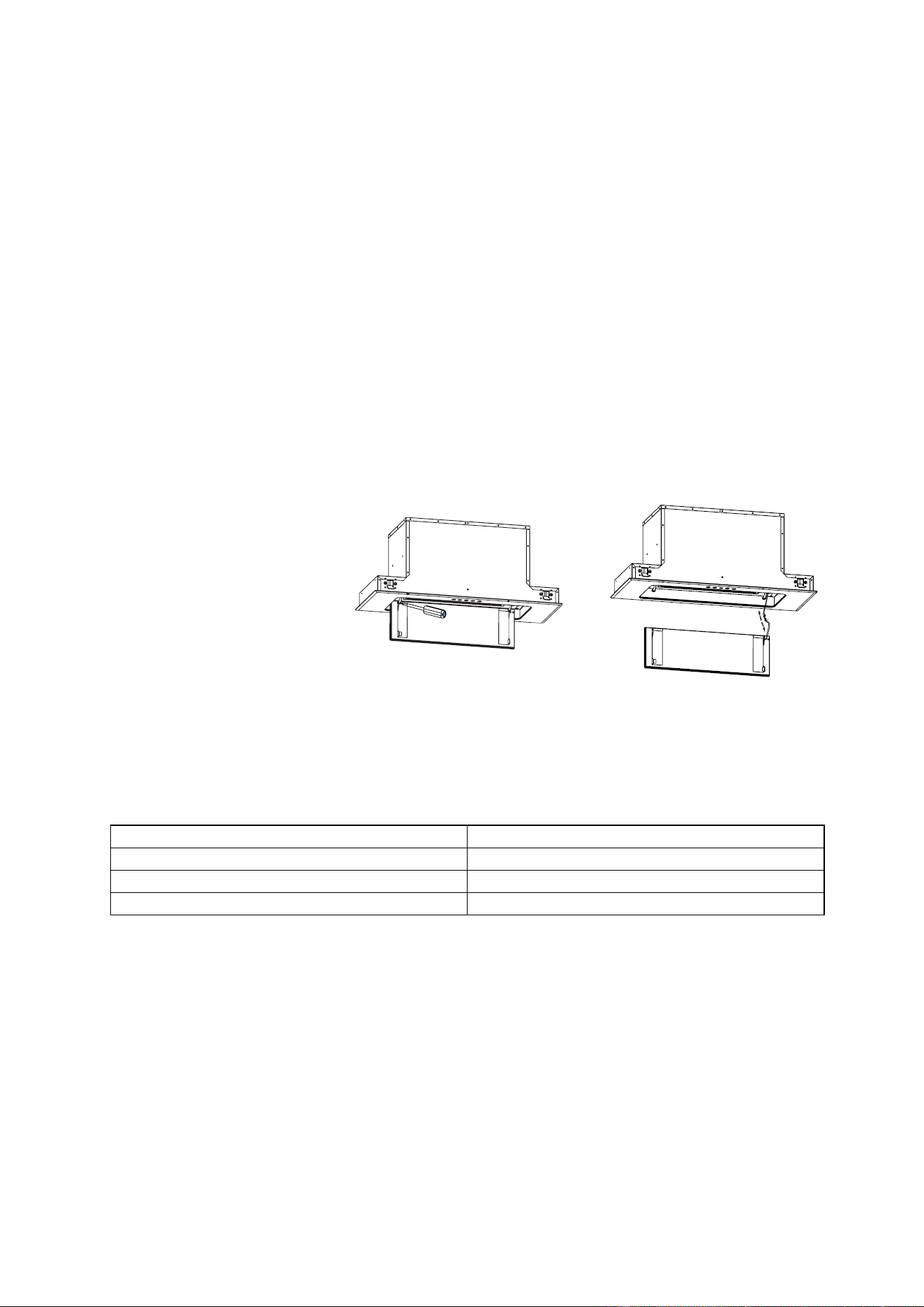
3. Unscrew the 4 screws on the outer glass frame using
a screwdriver, pull out the light wire, take down the outer
glass frame panel.
4. Put the hood into the cabinet, tighten
up the screws and ensure the hood is
fixed securely into place.
5. Connect the light wire and assemble the outer glass
frame panel.
6. Install the converter on the outlet.
6
START USING YOUR COOKER HOOD
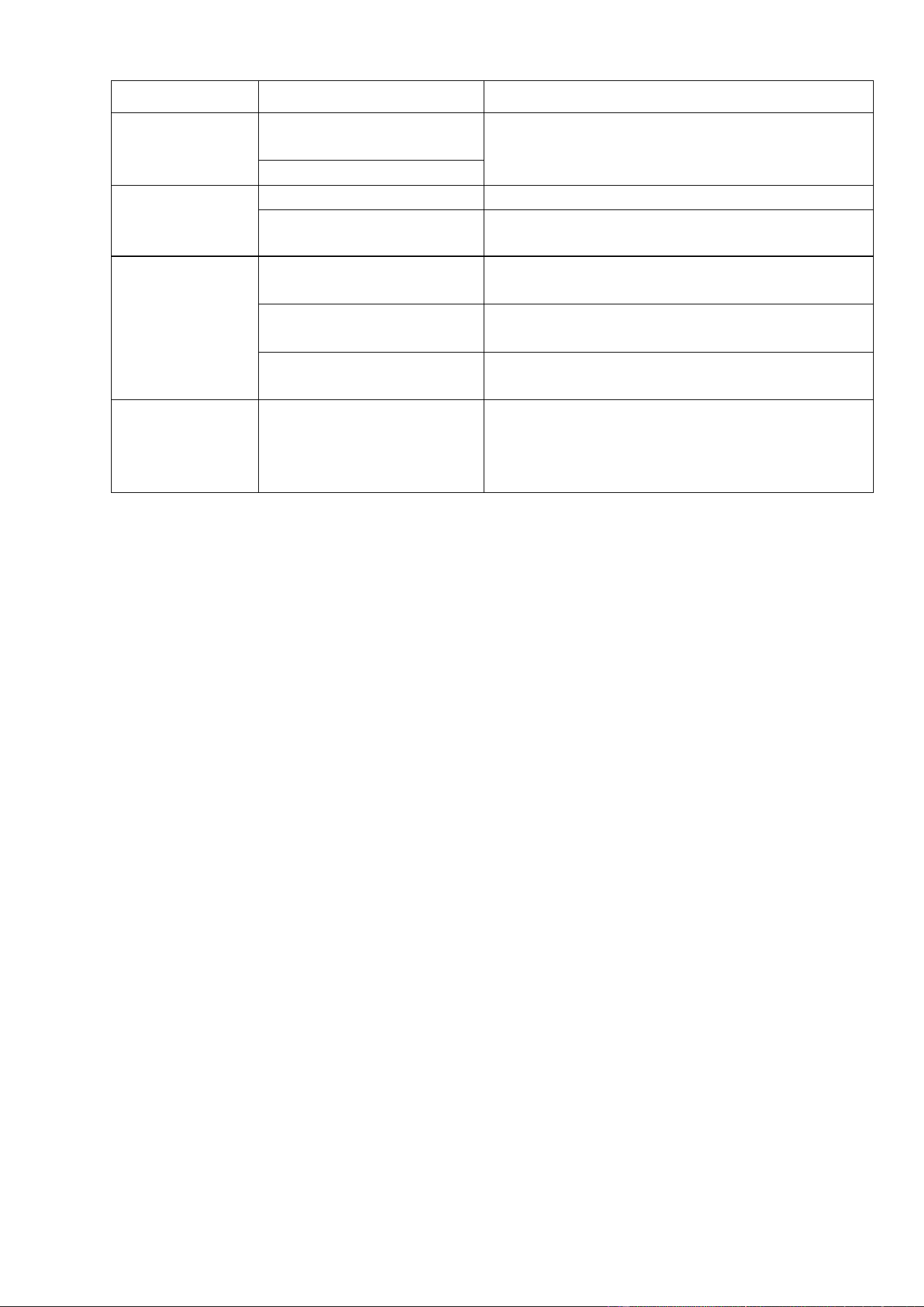
1. Press the “Power” button, to turn the cooker hood on and off.
2. Press the “Speed” button to cycle between fan speeds, the LED display will indicate
the fan speed with the numbers 1, 2 and 3.
3. Press “Light” button to turn the hoods light on and off.
4. When the hood is on, press the “Timer” button and the LED will begin to display a
countdown of 9 minutes. When the countdown is complete, the cooker hood will turn
off.
7
TROUBLESHOOTING
Fault
Cause
Solution
Light on, but
fan does not
work
The fan blade is
jammed.
Switch off the unit. Repair to be carried out
by qualified service personnel only.
The motor is damaged.
Both light
and fan do not
work
Halogen light bulb blown
Replace the bulb with correct rating.
Power cord loose
Plug in to the power supply again.
Excessive
Vibration
The fan blade is
damaged.
Switch off the unit. Repair to be carried out
by qualified service personnel only.
The fan motor is not fixed
tightly.
Switch off the unit. Repair to be carried out
by qualified service personnel only.
The unit is not hung
properly on the bracket.
Take down the unit and check whether the
bracket is in proper location.
Suction
performance
not good
Grease filters clogged?
Distance between the
unit and the cooking
plane too great.
Clean or replace grease filters.
Adjust the distance to between 70cm and
80cm.
MAINTENANCE
Before cleaning, switch the unit off and pull out the plug, or switch off at the relevant
mains switch if the unit has been hard-wired in. Make sure the unit has no power being
fed to it.
REGULAR CLEANING
Use a soft cloth moistened with warm mildly soapy water or household cleaning
detergent. Never use metal pads, chemicals, abrasive material or a stiff brush to clean
the unit.
STAINLESS STEEL
The stainless steel must be cleaned regularly (e.g.weekly) to ensure long life
expectancy.Dry with a clean soft cloth. A specialized stainless steel cleaning fluid may
be used.
NOTE
Ensure that wiping is done along with the grain of the stainless steel to prevent any
unsightly crisscross scratching patterns from appearing.
CONTROL PANEL SURFACE
The inlay control panel can be cleaned using warm soapy water. Ensure the cloth is
clean and well wrung before cleaning. Use a dry soft cloth to remove any excess
moisture left after cleaning.
IMPORTANT
Using neutral detergents and avoid using harsh cleaning chemicals, strong household
detergents or products containing abrasives,as this will affect the appliance
appearance and potentially remove any printing of artwork on the control panel and
will void manufactures warrantee.
8
GREASE MESH FILTERS
The mesh filters can be cleaned by hand. Soak them for about 3 minute in water with a
grease-loosening detergent then brush it gently with a soft brush. Please do not apply
too much pressure, avoid to damage it . (Leave to dry naturally out of direct sun light)
Filters should be washed separately to crockery and kitchen utensils. it is advisable
not to use rinse aid.
INSTALLING GREASE MESH FILTERS
To install filters for the following four steps .
• Angle the filter into slots at the back of the hood.
• Push the button on handle of the filter.
• Release the handle once the filter fits into a resting position.
• Repeat to install all filters.
CARBON FILTER-not supplied
Activated carbon filter can be used to trap odors. Normally the activated carbon filter
should be changed at three or six months according to your cooking habit. The
installation procedure of activated carbon filter is as below.
1. Before installing or replacing the carbon filters, remove power to the unit.
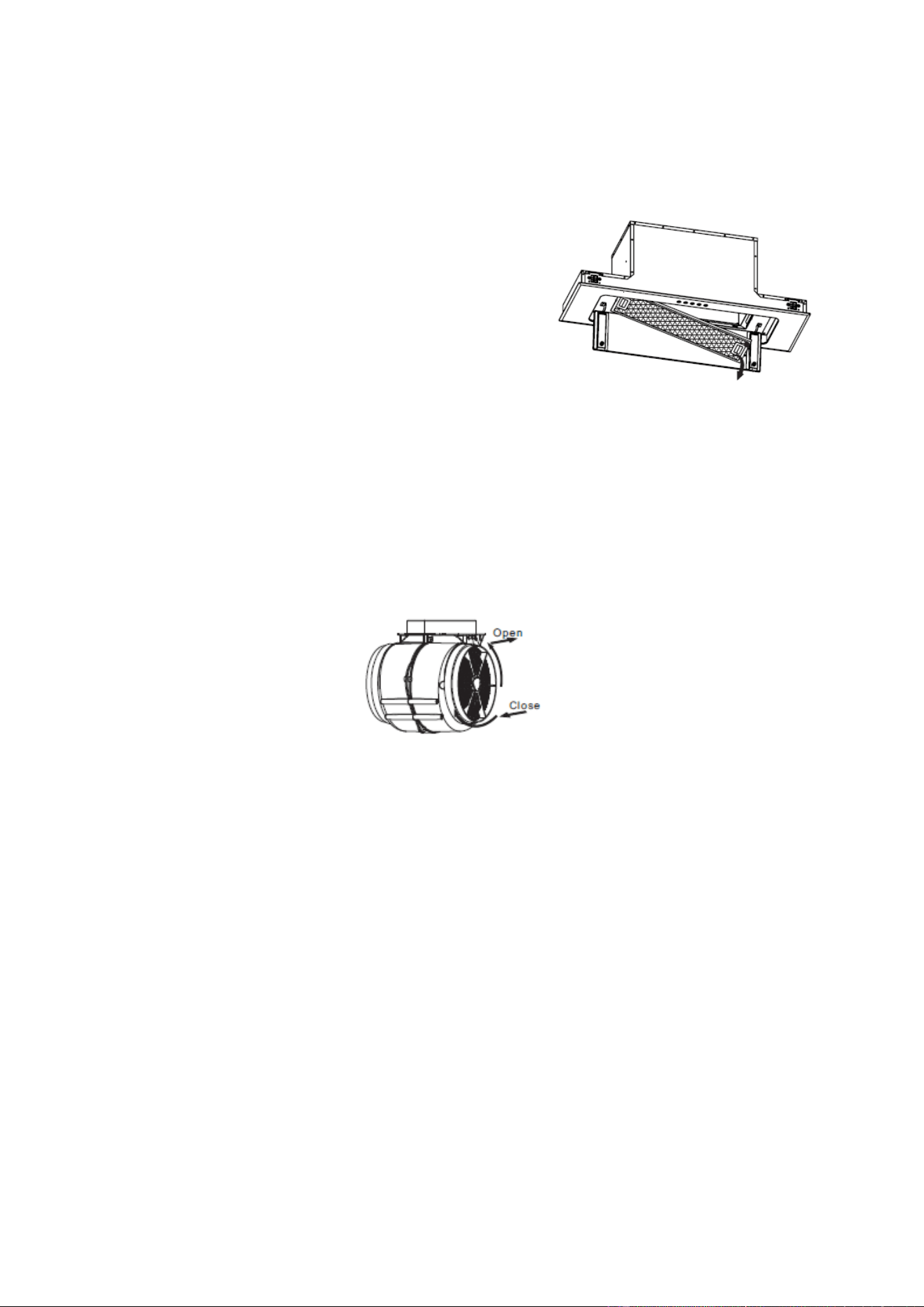
2. Press the filter lock and remove the mesh filter.
3. Turn the carbon filter on both side of the motor anti-clockwise. Replace the carbon
filters with the new carbon filters.
4. Replace the mesh filter.
• Make sure the filter is securely locked. Otherwise, it could loosen.
• When an activated carbon filter is attached, the suction power will be lowered.
FILTER REPLACEMENT
Carbon Filter: EIQCF110
Grease Filter: EIQCANGF
9
BULB REPLACEMENT
• The bulb must be replaced by the manufacturer, its service agent or similarly
qualified persons.
• Always switch off the electricity supply before carrying out any operations on the
appliance. When handling bulb, make sure it is completely cool down before any
direct contact to hands.
• When handling globes hold with a cloth or gloves to ensure perspiration does not
come in contact with the globe as this can reduce the life of the globe.
• Before changing the lights, make sure that the appliance is plugged off.
• Protect against danger when changing lights, such as wearing gloves.
LED LIGHTS:
1. Switch off the appliance and unplug it.
2. Slide the front part of the cooker hood.
3. The al filter should be detached first. Press the lock and pull it downward.
4. Use screwdriver to unscrew the 2 pcs screws and dismantle the terminal of the light
connecting wire.Then take out off the lamp plate and replace it.
ILCOS D code for this lamp
is: DSS-25/65-S-650/160
– Max wattage: 25 W
– Voltage range: DV12V
– Dimensions:650×160 mm
TECHNICAL SPECIFICATIONS
MODEL
EIQ90CANGW EIQ90CANGBL
MOTOR POWER
1*190W
WIDTH
900mm
MOTOR AIR FLOW
630m3/h
10
INFORMATION FOR DISMANTLING
Do not dismantle the appliance in any way which is not shown in the user manual.
The appliance must not be dismantled by an unqualified person. At the end of its life,
the appliance should not be disposed of with general household waste. Check with
your Local Authority or retainer for recycling advice.
electriQ UK SUPPORT
www.electriQ.co.uk/support
Call: 0330 390 3061
Office hours: 9AM - 5PM Monday to Friday
www.electriQ.co.uk
Unit J6, Lowfields Business Park
Lowfields Way, Elland
West Yorkshire, HX5 9DA
Recycling facilities are now available for all customers at
which you can deposit your old electrical products. Customers
will be able to take any old electrical equipment to
participating sites run by their local councils. Please
remember that this equipment will be further handled during
the recycling process, so please be considerate when
depositing your equipment. Please contact the local council for details of
your local household waste recycling centers.
11
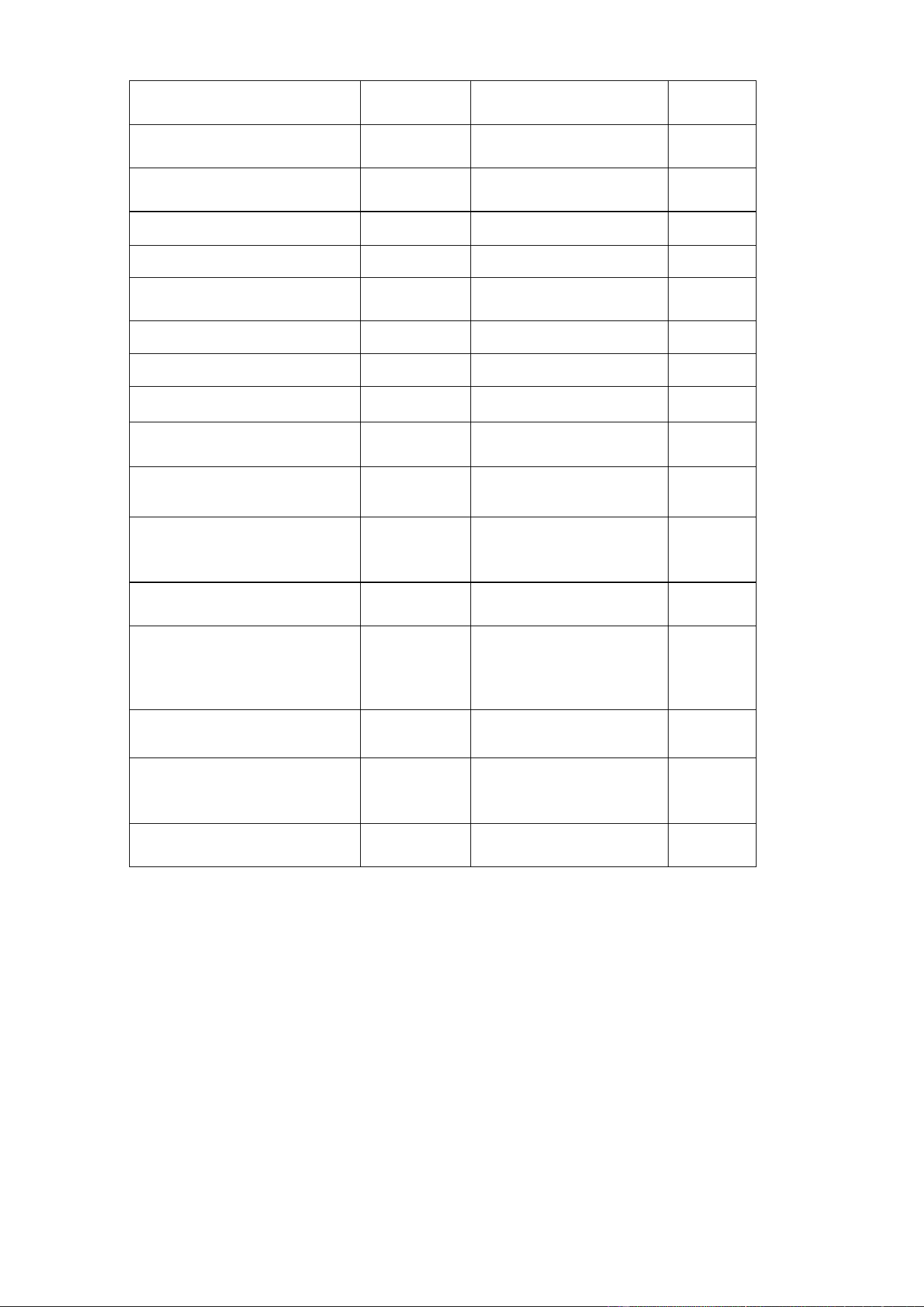
PRODUCT FICHE
Symbol
Value
Unit
Model identification
eiQ90CANGW
eiQ90CANGBL
Annual Energy
Consumption
AEC
hood
75.3
kWh/a
Time increase factor
f
1.2
Fluid Dynamic Efficiency
FDE
hood
23.5
Fluid Dynamic Efficiency
class
Class B
Energy Efficiency Index
EEI
hood
74.8
Energy Efficiency class
Class C
Maximum airflow
Q
max
564.5
m
3
/h
Measured airflow rate at
the best efficiency
Q
BEP
310.1
m
3
/h
Measured air pressure at
best efficiency point
P
BEP
355
Pa
Measured electric power
input at best efficiency
point
W
BEP
130.3
W
Nominal power of the
lighting system
W
L
25.0
W
Average illumination of
the lighting system on the
cooking surface
E
middle
392
lux
Measured power
consumption on off mode
P
O
0.33
W
Measured power
consumption on standby
mode
P
S
-
W
Sound power level
L
WA
Highest setting: 70
Lowest setting: 60
dB