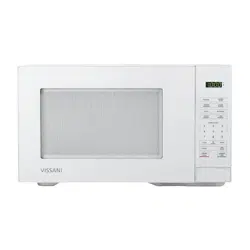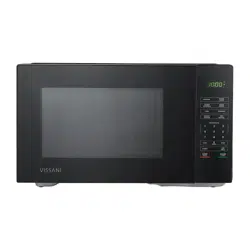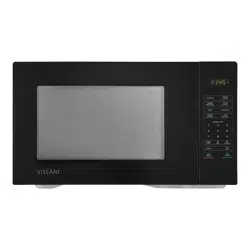
THANK YOU
We appreciate the trust and condence you have placed in Vissani through the purchase of this microwave. We strive
to continually create quality products designed to enhance your home. Visit us online to see our full line of products
available for your home improvement needs. Thank you for choosing Vissani!
USE AND CARE GUIDE
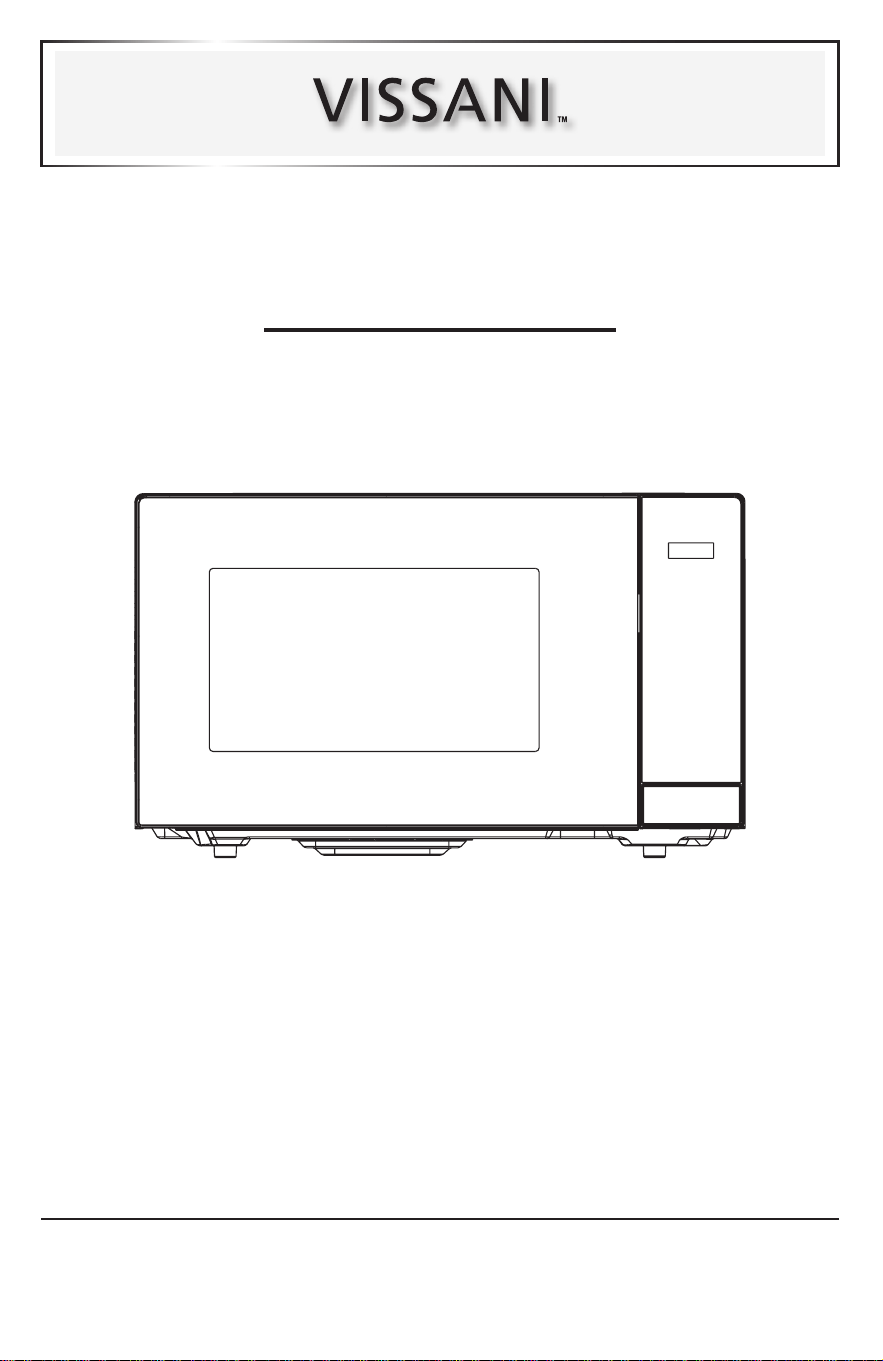
COUNTERTOP MICROWAVE OVEN
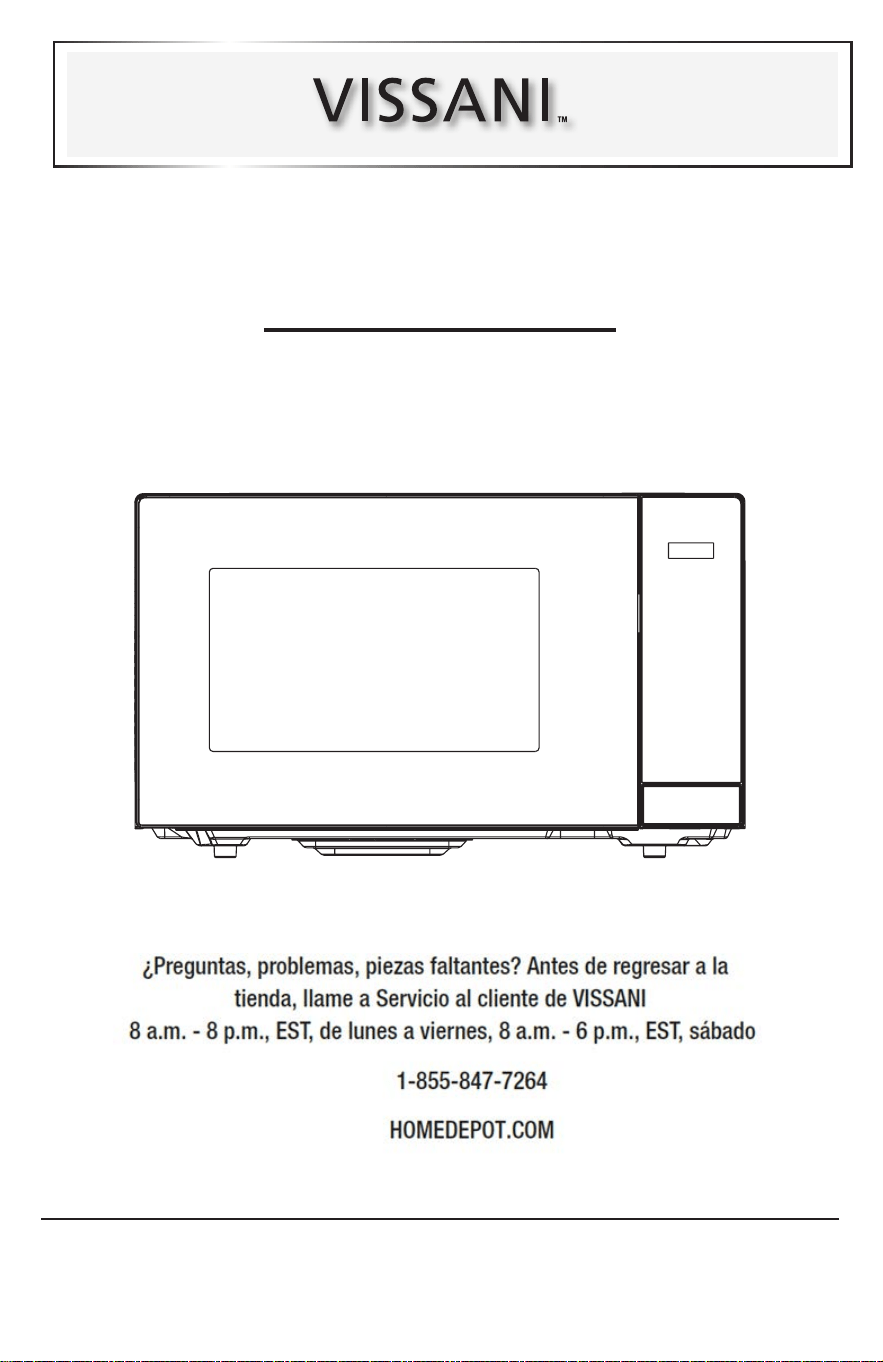
Questions, problems, missing parts? Before returning to the store,
C
all Vissani Customer Service
Monday - Friday 8 a.m. to 8 p.m., Saturday 8 a.m. to 6 p.m.
1-855-847-7264
HOMEDEPOT.COM
Retain this manual for future use.
Item # 1006710527/
Model # HVM1110W/
1006710520
HVM1110B
2
Table of Contents
Table of Contents .......................................................2
Safety Information ..................................................... 2
Warranty.....................................................................5
Pre-Operation ............................................................6
Product Registration ..............................................6
Installation of your Microwave ............................... 6
Product Description ...............................................7
Installing the Turntable ..........................................7
Specications ........................................................7
Using the Oven Controls ............................................8
Food Characteristics ............................................10
Cooking Guidelines ..............................................10
Using the Microwave ............................................... 10
Cookware and Dinnerware ...................................11
To Test Cookware or Dinnerware for Microwave
Use ....................................................................... 11
Aluminum Foil and Metal .....................................12
Microwave Cooking Power ..................................12
Cooking Manually ................................................13
Cooking in Stages
................................................13
Defrosting ............................................................14
Defrosting by Weight ............................................14
Defrosting by Time ............................................... 14
Using the Memory Feature...................................15
Cooking Popcorn .................................................. 15
Cooking a Baked Potato ....................................... 16
Cooking PIzza .......................................................16
Heating a Beverage .............................................. 16
Heating a Dinner Plate .........................................17
Cooking Frozen Vegetables .................................. 17
Care and Cleaning ...................................................18
Cleaning the Oven ................................................ 18
Roller Guide Care .................................................18
Glass Tray Care ....................................................18
Troubleshooting .......................................................19
Before you call Service ........................................19
Frequently Asked Questions ................................19
Safety Information
IMPORTANT SAFETY INSTRUCTIONS
When using electrical appliances, basic safety
precautions should be followed, including the
following:
WARNING: To reduce the risk of burns,
electric
shock, re, injury to persons or
exposure to excessive microwave energy:
1. Read all instructions before using the appliance.
2. Read and follow the specic “AVOIDING
POSSIBLE EXPOSURE TO EXCESSIVE MICROWAVE
ENERGY”.
3. This appliance must be grounded. Connect only
to properly grounded outlet. See GROUNDING
INSTRUCTIONS.
4. Install or locate this appliance only in accordance
with the provided installation instructions.
5. Some products such as whole eggs and sealed
containers - for example, closed glass jars are
able to explode and should not be heated in this
oven.
6. Use this appliance only for its intended use as
described in this manual. Do not use corrosive
chemicals or vapors in this appliance. This type
of oven is specically designed to heat, cook,
or dry food. It is not designed for industrial or
laboratory use.
7.
As with any appliance, close supervision is
necessary when used by children.
8.
Do not operate this appliance if it has a damaged
cord or plug, if it is not working properly, or if it
has been damaged or dropped.
9. This appliance should be serviced only by
qualied service personnel. Contact nearest
authorized service facility for examination, repair
or adjustment.
10.
Do not cover or block any openings on the
appliance.
11.
Do not store this appliance outdoors. Do not
use this product near water - for example,
near a kitchen sink, in a wet basement, near a
swimming pool, or similar locations.

3
Safety Information (continued)
12. Do not immerse cord or plug in water.
13. Keep cord away from heated surfaces.
14. Do not let cord hang over edge of table or
counter.
15. When cleaning surfaes of door and oven that
comes together on closing the door, use only
mild, non-abrasive soaps or detergents applied
with a sponge or soft cloth.
16. To reduce the risk of re in the oven cavity:
□ Do not overcook food. Carefully attend to
appliance when paper, plastic,
or other
combustible materials are placed inside the
oven to facilitate cooking.
□ Remove wire twist-ties from paper or plastic
bags before placing bag in oven.
□ If materials inside the oven ignite, keep oven
door closed, turn oven off, and disconnect the
power cord, or shut off power at the fuse or
circuit breaker panel.
□ Do not use the cavity for storage purposes.
Do not leave paper products, cooking utensils,
or food in the cavity when not in use.
17. Liquids, such as water, coffee, or tea are able to
be overheated beyond the boiling point without
appearing to be boiling due to surface tension
of hte liquid. Visible bubbling or boiling when
the container is removed from the microwave
oven is not always present. THIS COULD RESULT
IN VERY HOT LIQUIDS SUDDENLY BOILING OVER
WHEN SPOON OR OTHER UTENSIL IS INSERTED
INTO THE LIQUID. To reduce the risk of injury to
persons:
□ Do not overheat the liquid. Stir the liquid both
before and halfway through heating it.
□ Do not use straight-sided containers with
narrow necks.
□ After heating, allow the container to stand
in the microwave for a short time before
removing the container.
□ Use extreme care when inserting a spoon or
other utensil into the container.
18. Do not use this microwave oven to heat corrosive
chemicals (for example, suldes and chlorides).
Vapors from such corrosive chemicals may
interact with the contact and springs of the
safety interlock switches thereby rendering them
inoperable.
19. Keep the waveguide cover clean at all times.
Wipe the oven interior with a soft damp cloth
after each use. If you leave grease or fat
anywhere in the cavity it may overheat, smoke or
even catch re when next using the oven.
20. Never heat oil or fat for deep frying as you
cannot control the temperature. Doing so may
lead to re.
21. Do not operate the oven without the glass tray in
place. Ensure it is properly sitting on the base.
22. Do not attempt to dry clothes, newspapers or
other materials in the oven. They may catch on
re.
23. Do not use recycled paper products as they may
contain impurities which may cause sparks or
res.
24. Never use your microwave oven for home
canning. The oven is not designed for proper
home canning. Improperly canned food may spoil
and be dangerous to consume.
25. Potatoes, apples, egg yolks and sausages are
examples of food with non-porous skins. These
must be pierced before cooking to prevent
bursting.
26. Do not attempt to deep fat fry in your microwave
oven.
ARCING
If you see arcing, touch STOP/CANCEL and correct the
problem. Arcing is a term for sparks in the oven and is
caused by:
□ Metal or foil touching the side of the oven or
foil not molded to food (upturned edges act like
antennas).
□ Metal, such as twist-ties, poultry pins, or gold
rimmed dishes, in the microwave.
□ Recycled paper towels containing small metal
pieces being used in the microwave.
SAVE THESE INSTRUCTIONS
HOMEDEPOT.COM
Please contact 1-855-847-7264 for further assistance.
4
Safety Information (continued)
FEDERAL COMMUNICATIONS COMMISSION
WARNING
This equipment generates and uses ISM frequency energy and if not installed and used properly, that is in strict
accordance with the manufacturer’s instructions, may cause interference to radio and television reception.
It has been type-tested and found to comply with limits for an ISM Equipment pursuant to part 18 of FCC Rules,
which are designed to provide reasonable protection against such interference in a residential installation. However,
there is no guarantee that interference will not occur in a particular installation. If this equipment does cause
interference to radio or television reception,which can be determined by turning the equipment off and on, the user
is encouraged to try to correct the interference by one of more of the following:
□ Reorient the receiving antenna or radio or television.
□ Relocate the microwave oven with respect to the receiver.
□ Move the microwave oven away from the receiver.
□ Plug the microwave oven into a different outlet so that microwave oven and receiver are on different branch
circuits.
THE MANUFACTURER is not responsible for any radio or TV interference caused by UNAUTHORIZED MODIFICATION to
this microwave oven. It is the responsibility of the user to correct such interference.
GROUNDING INSTRUCTIONS
This appliance must be grounded. In the event of an electrical short circuit, the grounding plug reduces the risk
of electric shock by providing an escape wire for electric current. This appliance is equipped with a cord having
a grounding wire with a grounding plug. The plug must be plugged into an outlet that is properly installed and
grounded.
WARNING: Improper use of the grounding can result in a risk of electric shock. Consult a qualied electrician or
serviceman if the grounding instructions are not completely understood, or if doubt exists as to whether the appliance
is properly grounded. If it is necessary to use an extension cord, use only a 3-wire extension cord that has a 3-blade
grounding plug, and a 3-slot receptacle that will accept the plug on the appliance. The marked rating of the extension
cord shall be equal to or greater than the electrical rating of the appliance.
WARNING: Do not cut or remove the third (ground) prong from the power cord under any circumstances.
AVOIDING POSSIBLE EXPOSURE TO
Do not attempt to operate this oven with the door open since an open door can result in harmful exposure to
microwave energy. Do not tamper with the safety interlocks.
Do not place any object between the oven front face and the door or allow soil or cleaner residue to accumulate on
sealing surfaces. Do not operate the oven if it is damaged. It is important that the door close properly and that there
is no damage to the door, hinges, latches, door seals, and sealing surfaces.
The door should not be adjusted or repaired by anyone except properly qualied service personnel.
RADIO FREQUENCY INTERFERENCE STATEMENT
EXCESSIVE MICROWAVE ENERGY

5
Warranty
MC Appliance Corporation warrants each new Counvertop Microwave Oven to be free from defects in material and
workmanship, and agrees to remedy any such defect or to furnish a new part(s), at the company’s option, for any
part(s) of the unit that have failed during the warranty period. Parts and labor expenses are covered on this unit for
a period of one year from the date of purchase. A copy of the dated sales receipt or invoice is required to receive
warranty service by an authorized service agent.
In addition, MC Appliance Corporation warrants the magnetron (parts only) to be free from defects in material and
workmanship for a period of eight years. The consumer is responsible for all labor and transportation expenses
related to the diagnosis and replacement of the magnetron after the initial one-year warranty expires. In the event
the unit requires replacement or refund under the terms of this warranty, the consumer is responsible for all
transportation expenses to return the unit to our factory prior to receiving a replacement unit or refund. A copy of
the dated sales receipt/invoice is required to receive warranty service, replacement or refund. This warranty covers
appliances in use within the continental United States, Alaska, Hawaii and Puerto Rico. This warranty does not cover
the following:
Damages due to shipping damage or improper installation.
□ Damages due to misuse or abuse.
□ Content losses due to failure of the unit.
□ Inside components such as turntable, roller guide, light bulbs, etc.
□ Repairs performed by unauthorized service agents.
□ Service calls that do not involve defects in material and workmanship such as instructions on proper use of
the product or improper installation.
□ Replacement or resetting of house fuses or circuit breakers.
□ Failure of this product if used for other purposes than its intended purpose.
□ Disposal costs for any failed unit not returned to our factory.
□ Any delivery/installation costs incurred as the result of a unit that fails to perform as specied.
□ Expenses for travel and transportation for product service if your appliance is located in a remote area where
service by an authorized service technician is not available.
□ The removal and reinstallation of your appliance if it is installed in an inaccessible location or is not installed
in accordance with published installation instructions.
□ Refunds for non repairable products are limited to the price paid for the unit per the sales receipt.
LIMITATIONS OF REMEDIES AND EXCLUSIONS:
Product repair in accordance with the terms herein, is your sole and exclusive remedy under this limited
warranty. Any and all implied warranties including merchantability and tness for a particular purpose are hereby
limited to one year or the shortest period allowed by law. MC Appliance Corporation is not liable for incidental
or consequential damages and no representative or person is authorized to assume for us any other liability in
connection with the sale of this product. Under no circumstances is the consumer permitted to return this unit to
the factory without the prior written consent of MC Appliance Corporation. Some states prohibit the exclusion or
limitation of incidental or consequential damages, or limitations on implied warranties. This warranty gives you
specic legal rights, and you may also have other rights which vary from state to state.
HOMEDEPOT.COM
Please contact 1-855-847-7264 for further assistance.
6
Pre-Operation
PRODUCT REGISTRATION
Thank you for purchasing a Vissani product. The rst step to protect your new product is to complete the product
registration on our website: www.mcappliance.com/register. The benets of registering your product include the
following:
□ Registering your product will allow us to contact you regarding a safety notication or product update.
□ Registering your product will allow for more efcient warranty service processing when warranty service is
required.
□ Registering your product could act as your proof of purchase in the event of insurance loss.
Once again, thank you for purchasing a Vissani product.
INSTALLATION OF YOUR MICROWAVE
When installing your microwave, adhere to the following guidelines:
□ Examine the oven after unpacking. Check for damage such as a misaligned door, broken door or dent in the
cavity. If any damage is visible, DO NOT INSTALL, and notify your dealer immediately.
□ Install the microwave oven on a level, at surface.
□ Do not block air vents. If they are blocked during operation, the oven may overheat and eventually cause a
□ Install the microwave away from radio and TV sets. Poor television reception and radio interference may result
if the oven is located close to a TV, radio, antenna, feeder, etc.
□ Install the microwave away from heating appliances and water taps. Keep the oven away from heat, steam or
splashing liquids. These things can adversely affect oven wiring and contacts.
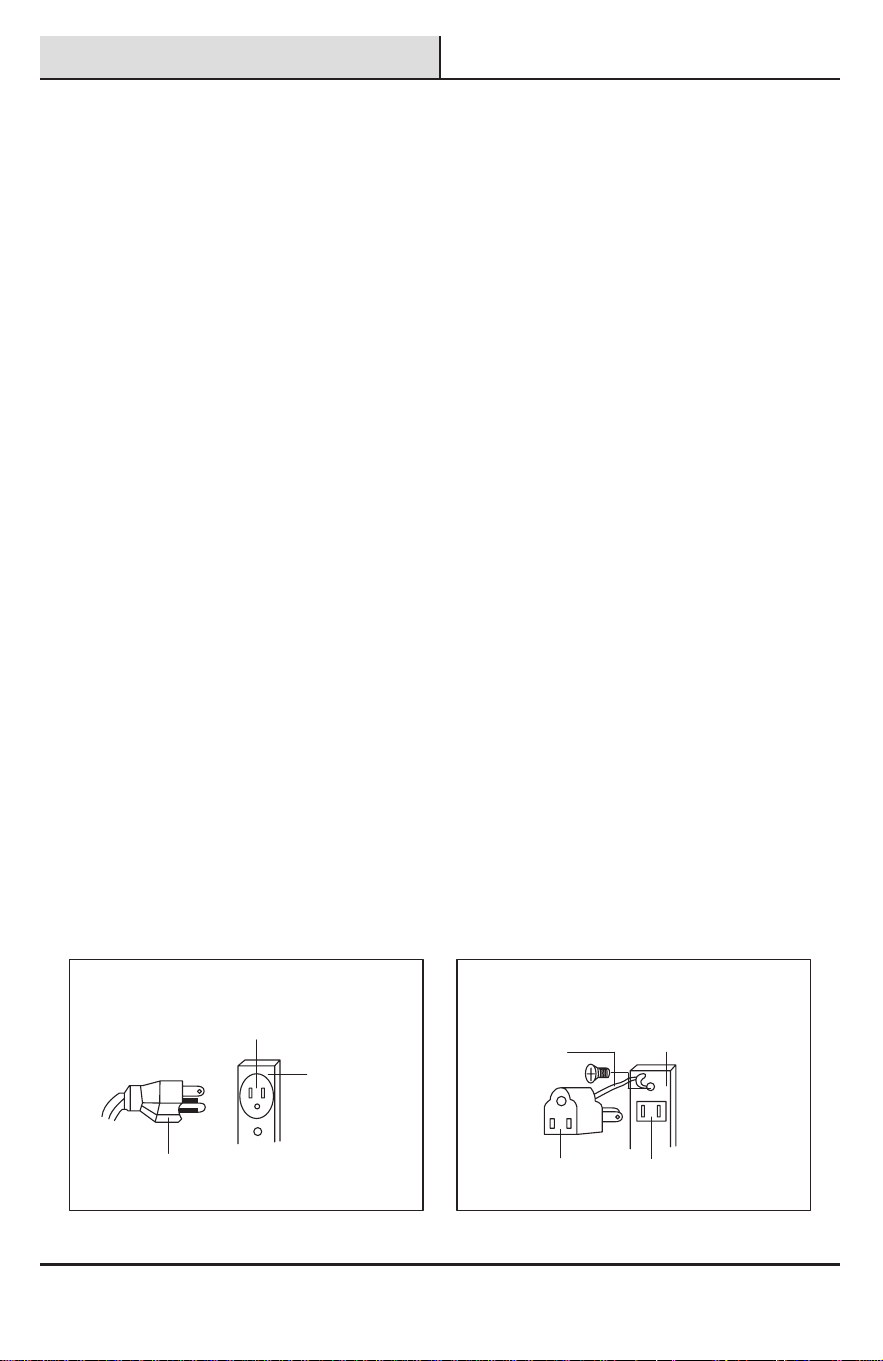
□ Check your local power source.This microwave oven requires a current of approximately 15 amperes,
120Volts, 60Hz grounded outlet.
- A short power-supply cord is provided to reduce the risks resulting from becoming entangled in or
tripping over a longer cord.
- Longer cord sets or extension cords are available and may be used if care is exercised in their use.
- If a long cord or extension cord is used:
□ The marked electrical rating of the cord set or extension cord should be at least as great as the
electrical rating of the appliance.
□ The extension cord must be a grounding type 3-wire cord.
□ The longer cord should be arranged so that it will not drape over the counter top or tabletop where it
can be pulled on by children or tripped over unintentionally.
□ The minimum height of free space necessary above the top surface of the oven is about 4 inches (10.16 cm).
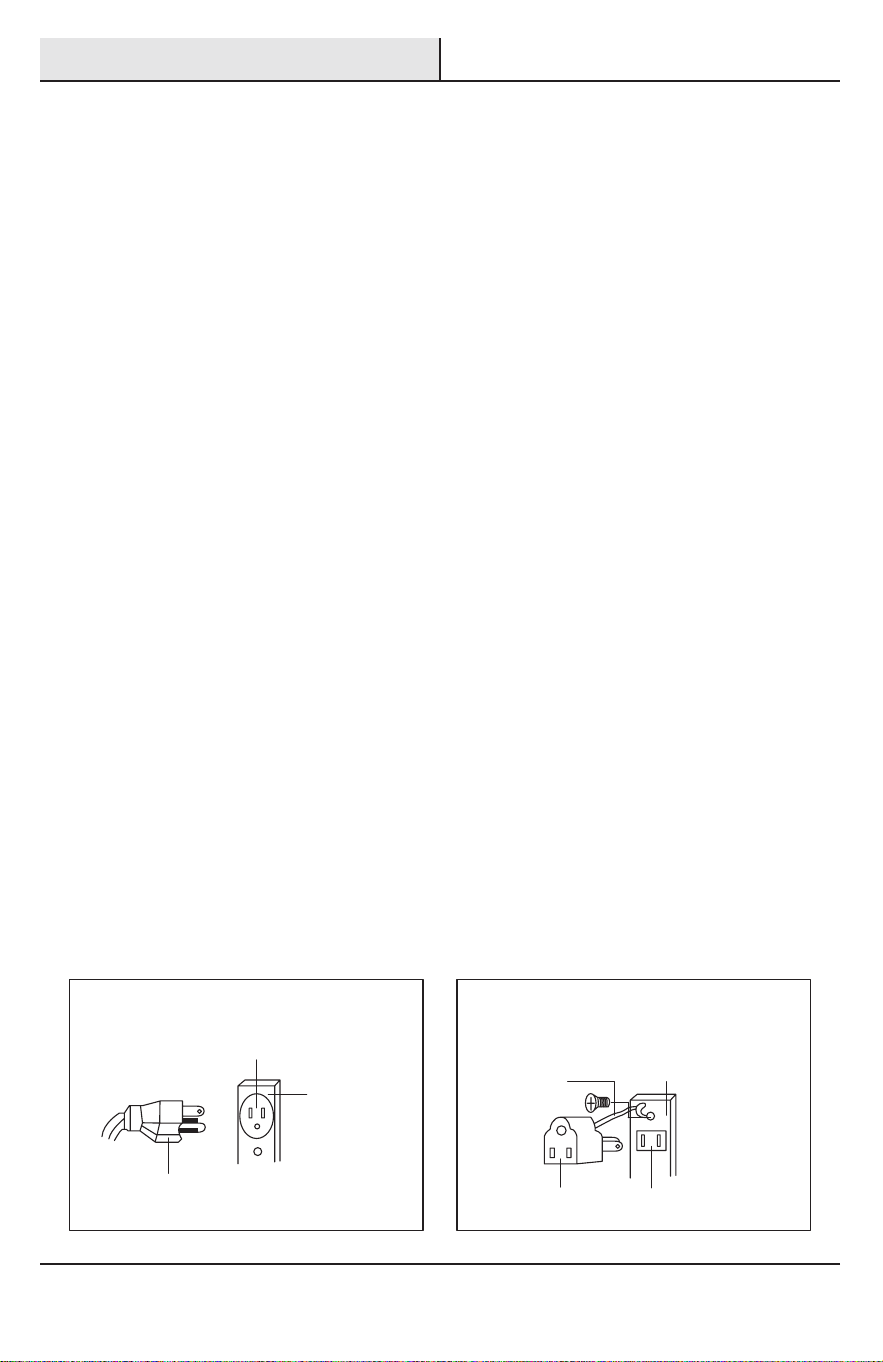
When use 3-pronged plug
3-prong Receptacle
Receptacle
Box cover
3-prong plug
When use grounding adaptor, make sure
the receptacle box is fully grounded.
Receptacle Box Cover
Receptacle
Grounding
Lead
Grounding
Adaptor
THE CANADIAN ELECTRICAL CODE DOES NOT ALLOW THE USE OF THE GROUNDING ADAPTOR
failure. For proper ventilation,
Leave a minimum clearance of 12 inches (30cm) above the oven.
a minimum clearance of 3.0 inches (7.5cm) is required between the oven and any
adjacent walls and
right side must be open.
7
Pre-Operation (continued)
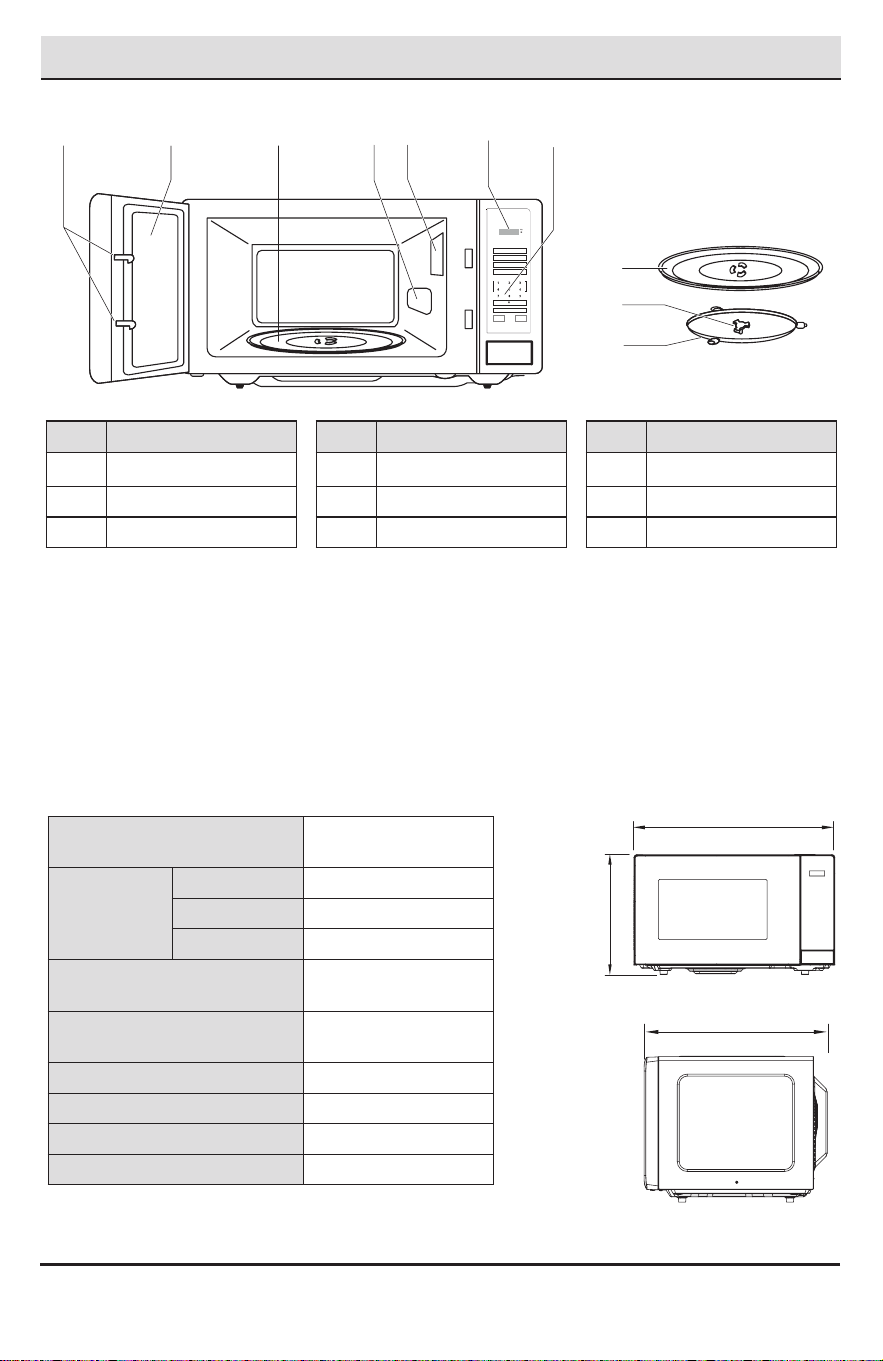
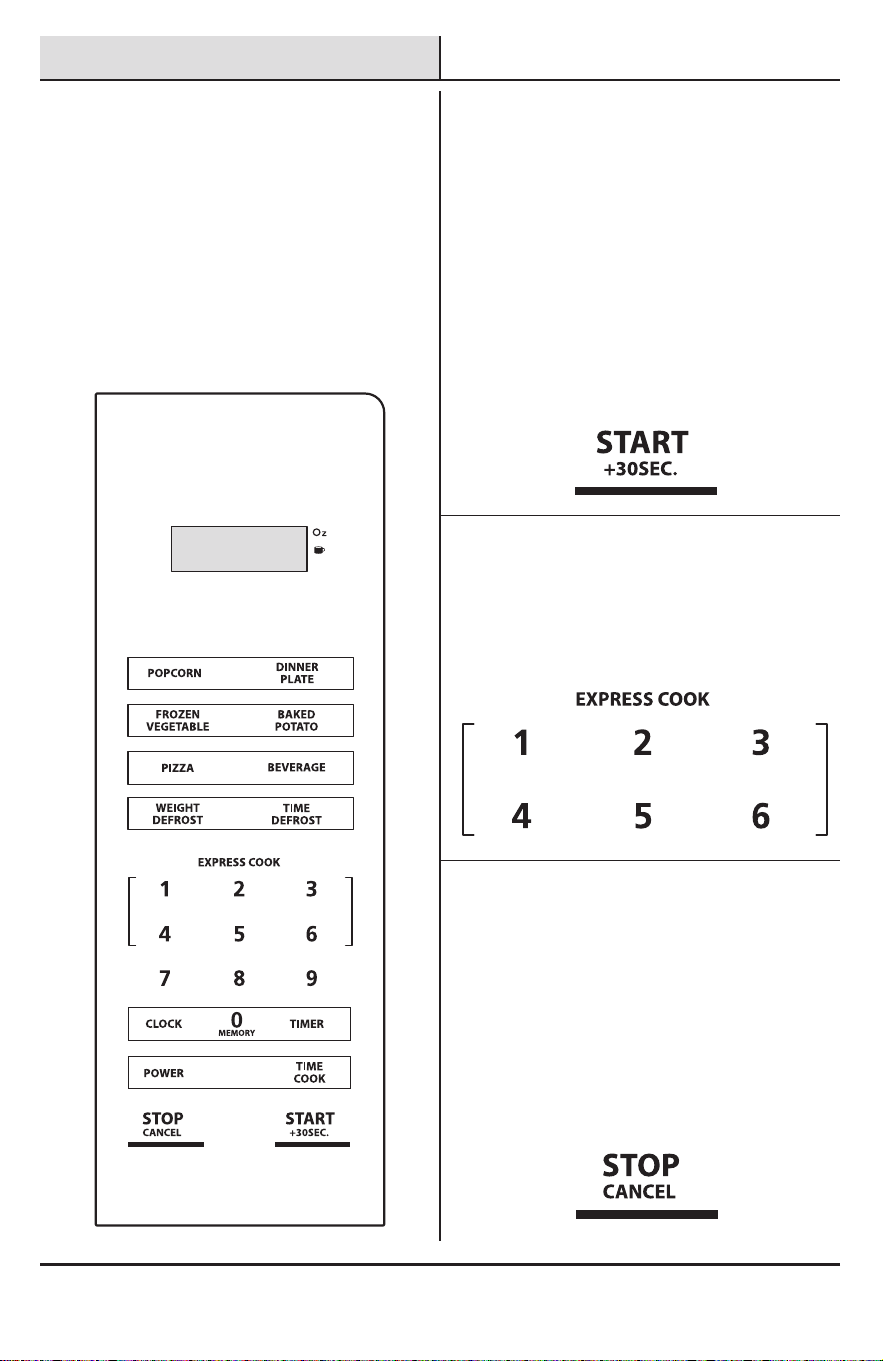
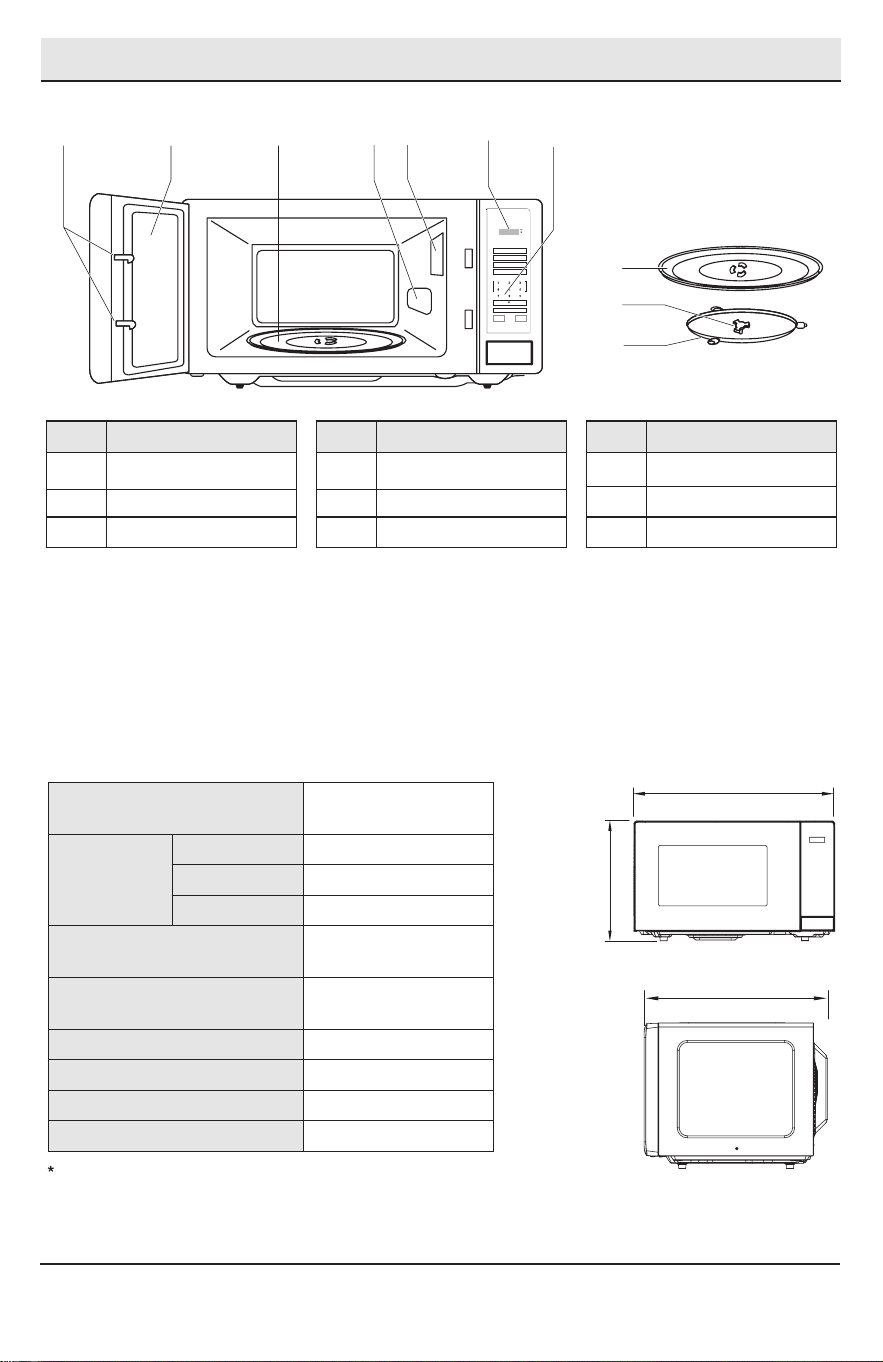
PRODUCT DESCRIPTION
MEMORY
DINNER
PLATE
POPCORN
FROZEN
VEGETABLE
PIZZA
CLOCK
POWER
CANCEL
STOP
+30SEC.
START
TIMER
WEIGHT
DEFROST
EXPRESS COOK
BAKED
POTATO
TIME
DEFROST
TIME
COOK
BEVERAGE
A
BCDE FG
C
H
I
Part Description Part Description Part Description
A Door lock system D Microwave inlet cover G Control panel
B Metal shielded window E Microwave oven light H Hub
C Glass turntable F Display I Roller Guide
INSTALLING THE TURNTABLE
The turntable can rotate in either direction to help cook food more evenly. For best cooking results, do not operate
the microwave oven without having the turntable in place. To install:
1. Install the hub (H) into the hole in the center of the microwave oven cavity bottom.
2. Place the roller guide (I) on the microwave oven cavity bottom.
3. Place the turntable (C) on the roller guide (I). Fit the raised, curved mounds in the center of the turntable
bottom between the three spokes of the hub.
SPECIFICATIONS
Power Supply 120V AC, 60Hz Single
Phase With Grounding
Microwave Input Power 1600 W
Energy Output 1000 W
Frequency 2,450 MHz
Outside Dimensions (W X H X D) 20.6 x 11.8 x 14.7 in
(523 x 300 x 373 mm)
Cavity Dimensions (W X H X D) 13.9 x 10.0 x 14.1 in
(354 x 253 x 357 mm)
Cavity Volume 1.1 cu.ft
Net Weight Approx. 31.7 lbs.
Timer 99 min. 99 sec.
Power Levels 10 Levels
* Specications are subject to change without notice.
20.6 in (523 mm)
11.8 in
(300 mm)
14.7 in ( mm)373
HOMEDEPOT.COM
Please contact 1-855-847-7264 for further assistance.
8
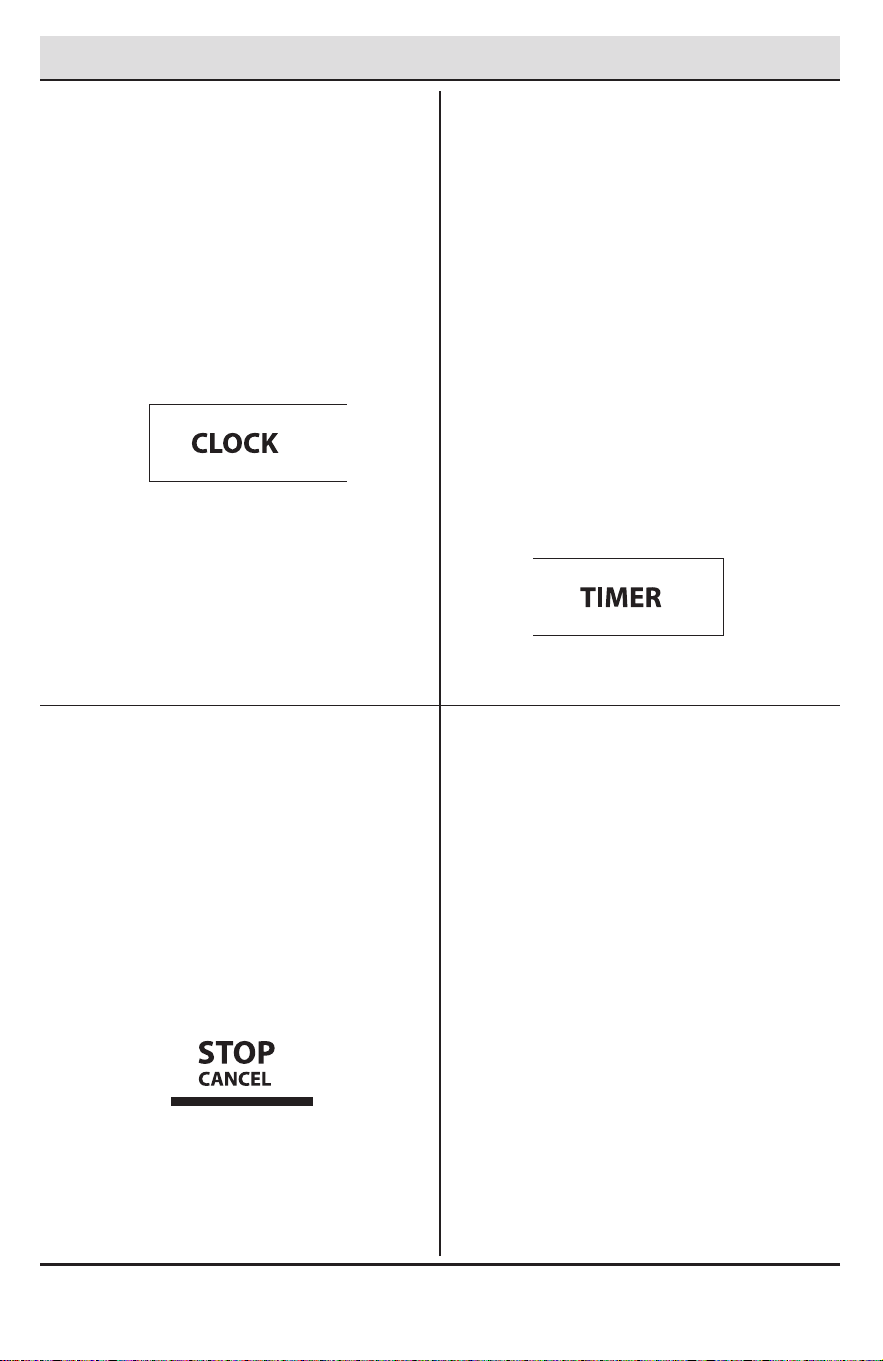
Using the Oven Controls
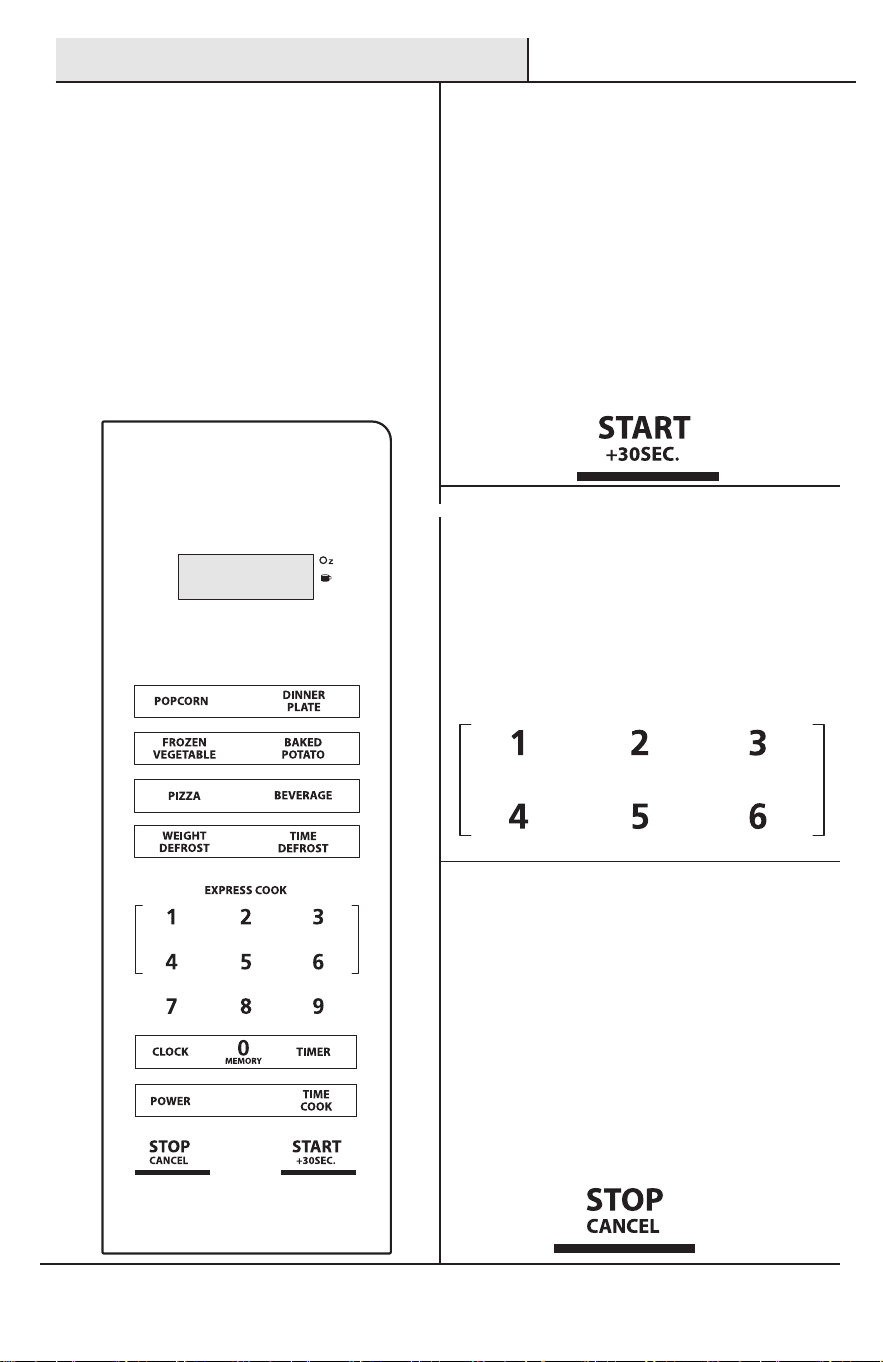
1
About the Display
□ When power is rst supplied to the microwave
oven, “0:00” will appear in the display. If the
“0:00” appears in the display at any other time,
a power failure has occurred. Reset the clock
if needed.
□ When the microwave oven is in use, the
display shows cook time remaining. When
the microwave oven is not in use, the display
shows the time of day (if the clock is set) or
Timer countdown.
2
Using the Start Control
□ The START control (START/+30Sec. pad) begins
any function. If cooking is interrupted by
touching STOP/CANCEL or by opening the door,
touching START/+30Sec will resume the cycle.
Adding 30 Seconds to your Cook Time
□ The +30SEC control (START/+30Sec.)
automatically starts the microwave oven at
100% power for 30 seconds, and adds 30
seconds of cook time with each additional touch
of the control.
3
Using Express Cook
Each of the EXPRESS COOK controls (number pads 1-6)
automatically starts the microwave oven at 100% power
for 1 minute, 2 minutes, 3 minutes, 4 minutes, 5 minutes
or 6 minutes, depending on which number is touched.
4
Using the Stop/Cancel Control
The STOP/CANCEL control clears any incorrect
command,and pauses and/or cancels any program
during cooking. It will not erase the time of day. A
cooking program may be paused by touching. STOP/
CANCEL once or by opening the door. The cycle may
be resumed by touching START/+30Sec. A cooking
program may be canceled by touching STOP/CANCEL
twice or by opening the door and then touching STOP/
CANCEL.
9
Using the Oven Controls (continued)
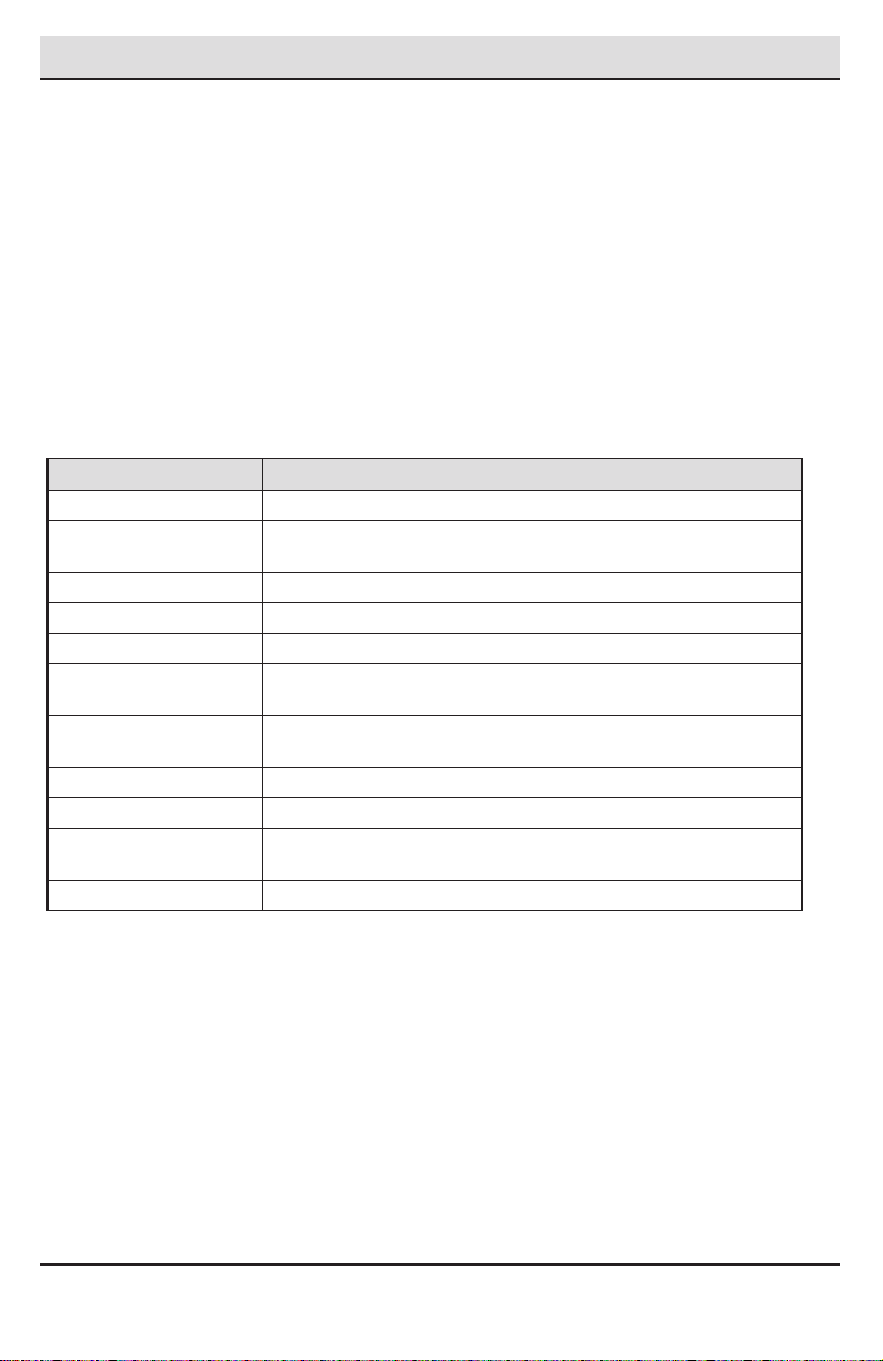
5
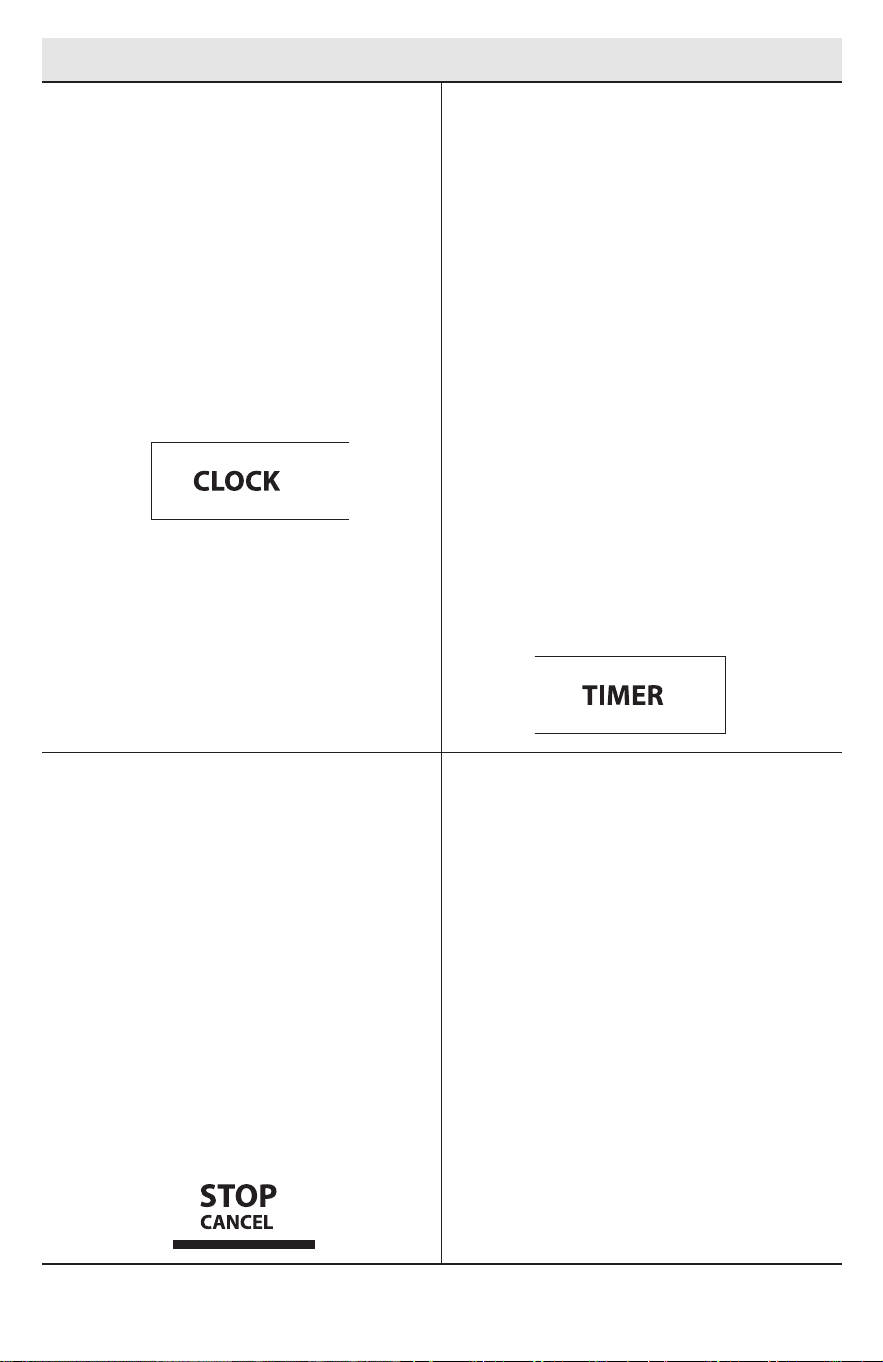
Using the Clock
This is a standard 12-hour clock (1:00-12:59). If the
clock is not set, “0:00” will remain in the display. When
the clock is set, the “:” will ash. During cooking, the
clock may be seen for 3 seconds by touching CLOCK.
□ Ensure the microwave is in standby mode.
□ Touch CLOCK. “00:00” will appear in the
display, with the rst “0” ashing.
□ Use the numbered keypad to enter the time
and press CLOCK again.
6
Using the Kitchen Timer
The Kitchen Timer can be set in minutes and seconds,
up to 99 minutes, 99 seconds, and counts down the
set time. The Kitchen Timer may not be used while any
other function is operating. The Kitchen Timer does not
start or stop the microwave oven.
□ Touch TIMER. “00:00” will appear in the
display, with the rst “0” ashing.
□ Enter desired time in minutes and seconds,
lling all four digits from left to right. Example:
1-0-0-0 for 10 minutes, or 0-5-0-0 for 5
minutes.
□ Touch START/+30Sec. When the set time ends,
end-of-timer tones will sound, and the display
will return to the time of day.
□ Touch STOP/CANCEL at any time to cancel the
timer.
7
Using the Control Lock
□ The Control Lock shuts down the control panel
pads to avoid unintended use of the microwave
oven. To Lock/Unlock Control: The microwave
oven must be in standby mode. Touch and hold
STOP/CANCEL for 3 seconds until one long
tone sounds and the display clears to show an
outline of the display area.
□ Repeat to unlock control, and return the
display to the time of day. If any pad is touched
while the control is locked, there will be no
response from the microwave oven.
8
Listening to Tones
Tones are audible signals that indicate the following:
One tone
□ Valid entry (short tone)
□ End of stage in multistage cooking
□ Control lock activated or deactivated (long
tone)
Five tones
□ End of cycle
□ End of Kitchen Timer countdown
HOMEDEPOT.COM
Please contact 1-855-847-7264 for further assistance.

10
Using the Microwave
Adhere to these safety guidelines when using the microwave oven:
□ To avoid damage to the microwave oven, do not lean on or allow children to swing on the microwave oven
door.
□ To avoid damage to the microwave oven, do not operate when it is empty.
□ Baby bottles and baby food jars should not be heated in microwave oven.
□ Clothes, owers, fruit, herbs, wood, gourds, paper, including brown paper bags and newspaper, should not be
dried in microwave oven.
□ Parafn wax will not melt in the microwave oven because it does not absorb microwaves.
□ Use oven mitts or pot holders when removing containers from microwave oven.
□ Do not overcook potatoes. At the end of the recommended cook time, potatoes should be slightly rm. Let
potatoes stand for 5 minutes. They will nish cooking while standing.
□ Do not cook or reheat whole eggs inside the shell. Steam buildup in whole eggs may cause them to burst,
requiring signicant cleanup of microwave oven cavity. Cover poached eggs and allow a standing time.
FOOD CHARACTERISTICS
When microwave cooking, the amount, size and shape, starting temperature, composition and density of the food
affect cooking results.
Amount of Food
The more food heated at once, the longer the cook time needed. Check for doneness and add small increments of
time if necessary.
Size and Shape
Smaller pieces of food will cook more quickly than larger pieces, and uniformly shaped foods cook more evenly
than irregularly shaped food.
Starting Temperature
Room temperature foods will heat faster than refrigerated foods, and refrigerated foods will heat faster than frozen
foods.
Composition and Density
Foods high in fat and sugar will reach a higher temperature, and will heat faster than other foods. Heavy, dense
foods, such as meat and potatoes, require a longer cook time than the same size of a light, porous food, such as
cake.
COOKING GUIDELINES
Covering
Covering food helps retain moisture, shorten cook time and reduce spattering. Use the lid supplied with cookware.
If a lid is not available, wax paper, paper towels or plastic wrap approved for microwave ovens may be used. Plastic
wrap should be turned back at one corner to provide an opening to vent steam. Condensation on the door and cavity
surfaces is normal during heavy cooking.
Stirring and Turning
Stirring and turning redistribute heat evenly to avoid over cooking the outer edges of food. Stir from outside to
center. If possible, turn food over from bottom to top.
Arranging
If heating irregularly shaped or different sized foods, arrange the thinner parts and smaller sized items toward the
center. If cooking several items of the same size and shape, place them in a ring pattern, leaving the center of the
ring empty.
11
Using the Microwave (continued)
Piercing
Before heating, use a fork or small knife to pierce or prick foods that have a skin or membrane, such as potatoes,
egg yolks, chicken livers, hot dogs, and sausage. Prick in several places to allow steam to vent.
Shielding
Use small, at pieces of aluminum foil to shield the thin pieces of irregularly shaped foods, bones and foods such as
chicken wings, leg tips and sh tail. See “Aluminum Foil and Metal” rst.
Standing Time
Food will continue to cook by the natural conduction of heat even after the microwave cooking cycle ends. The
length of standing time depends on the volume and density of the food.
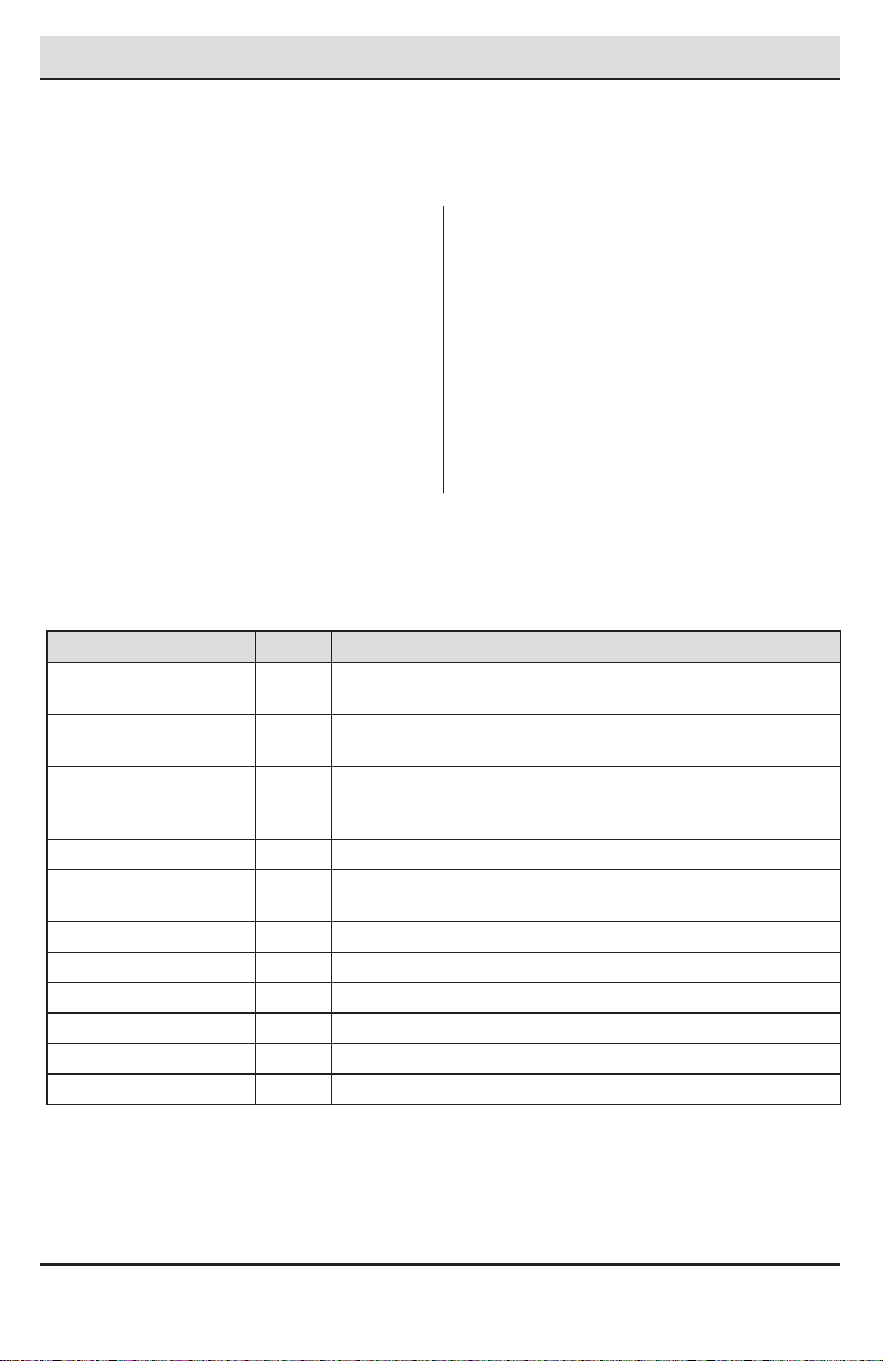
COOKWARE AND DINNERWARE
Cookware and dinnerware must t on the turntable. Always use oven mitts or pot holders when handling because
any dish may become hot from heat transferred from the food. Do not use cookware and dinnerware with gold or
silver trim. Use the following chart as a guide, then test before using.
Material Recommendations
Aluminum Foil, Metal See “Aluminum Foil and Metal” section.
Browning Dish Bottom must be at least 3/16" (5 mm) above the turntable. Follow
manufacturer’s recommendations.
Ceramic Glass, Glass Acceptable for use.
China, Earthenware Follow manufacturer’s recommendations.
Melamine Follow manufacturer’s recommendations.
Paper: Towels, Dinnerware,
Napkins
Use nonrecycled and those approved by the manufacturer for microwave
oven.
Plastic: Wraps, Bags, Covers,
Dinnerware, Containers
Use those approved by the manufacturer for microwave oven use.
Pottery and Clay Follow manufacturer’s recommendations.
Silicone Bakeware Follow manufacturer’s recommendations.
Straw, Wicker, Wooden
Containers
Do not use in microwave oven.
Wax Paper Acceptable for use.
TO TEST COOKWARE OR DINNERWARE FOR MICROWAVE USE
1. Place cookware or dinnerware in microwave oven with 1 cup (250 mL) of water beside it.
2. Cook at 100% cooking power for 1 minute.
Do not use cookware or dinnerware if it becomes hot and the water stays cool.
HOMEDEPOT.COM
Please contact 1-855-847-7264 for further assistance.
12
Using the Microwave (continued)
ALUMINUM FOIL AND METAL
Always use oven mitts or pot holders when removing dishes from the microwave oven.
Aluminum foil and some metal can be used in the microwave oven. If not used properly, arcing (a blue ash of light)
can occur and cause damage to the microwave oven.
OK For Use
Racks and bakeware supplied with the microwave
oven (on some models), aluminum foil for shielding,
and approved meat thermometers may be used
with the following guidelines:
□ To avoid damage to the microwave oven, do
not allow aluminum foil or metal to touch the
inside cavity walls, ceiling or oor.
□ Always use the turntable.
□ To avoid damage to the microwave oven, do
not allow contact with another metal object
during microwave cooking.
Do Not Use
Metal cookware and bakeware, gold, silver, pewter,
non-approved meat thermometers, skewers, twist
ties, foil liners such as sandwich wrappers, staples
and objects with gold or silver trim or a metallic glaze
should not be used in the microwave oven.
MICROWAVE COOKING POWER
Many recipes for microwave cooking specify which cooking power to use by percent, name or number. For example,
70% = 7= Medium-High. Use the following chart as a general guide for the suggested cooking power of specic
foods.
Percent Number Use
100%, High
(default setting)
10 Quick heating convenience foods and foods with high water content,
such as soups, beverages and most vegetables.
90% 9 Cooking small, tender pieces of meat, ground meat, poultry pieces and
sh llets. Heating cream soups.
80% 8 Heating rice, pasta or stirrable casseroles. Cooking and heating foods
that need a cook power lower than high. For example, whole sh and
meat loaf.
70%, Medium-High 7 Reheating a single serving of food.
60% 6 Cooking sensitive foods such as cheese and egg dishes, pudding and
custards. Cooking non-stirrable casseroles, such as lasagna.
50%, Medium 5 Cooking ham, whole poultry and pot roasts. Simmering stews.
40% 4 Melting chocolate. Heating bread, rolls and pastries.
30%, Medium-Low, Defrost 3 Defrosting bread, sh, meats, poultry and precooked foods.
20% 2 Softening butter, cheese, and ice cream.
10%, Low 1 Taking chill out of fruit.
0% 0 Work with fan for no power.

13
Using the Microwave (continued)
COOKING MANUALLY
1. Place food on the turntable and close the door.
2. Touch TIME COOK.
3. Enter length of time to cook.
4. Touch POWER. “PL10” will appear briey in the display. If cooking with a power other than 100%, touch
number keys to select the power levels from highest to lowest. See “Microwave Cooking Power” chart.
5. Touch START/+30Sec. The display will count down the set cook time. When the cycle ends, the end-of-cycle
tones will soundand the display will return to the time of day.
6. Touch STOP/CANCEL at any time to pause or cancel cooking
COOKING IN STAGES
The microwave oven can be set to cook at different cooking powers for various lengths of time, up to 2 stages. One
of the stages may be an automatic Defrost function, which is the rst stage.
1. Place food on the turntable and close the door.
2. Touch TIME COOK.
3. Enter length of time to cook.
4. Touch POWER. “PL10” will appear briey in the display. If cooking with a power other than 100%, touch
number keys to select the power levels from highest to lowest. See “Microwave Cooking Power” chart.
5. Touch TIME COOK.
6. Enter length of time to cook for second stage.
7. Touch POWER. “PL10” will appear briey in the display. If cooking with a power other than 100%, touch
number keys to select the power levels from highest to lowest.
8. Touch START/+30Sec. The display will count down the set cook time for each stage, and a short tone will
sound at the end of the rst stage. The power level may be seen for 3 seconds by touching POWER during the
cycling stage. When the cycle ends, the end-of-cycle tones will sound, and the display will return to the time
of day.
9. Touch STOP/CANCEL at any time during the countdown to pause or cancel cooking.
Cook time may be added in 30-second increments during the second stage by touching START/+30Sec.
To Use Defrost As First Stage
Touch Weight Defrost, “dEF1” appears in the display. Enter the number of ounces between 4 and 70 ounces (see
“Defrost” section), then follow steps 5-8 above for second stage programming.
HOMEDEPOT.COM
Please contact 1-855-847-7264 for further assistance.
14
Using the Microwave (continued)
DEFROSTING
The Defrost feature has two functions: dEF1, which is an automatic defrost by weight, and dEF2, which is a manual
defrost by time. The default power level is 30%, and can not be adjusted.
1. Unwrap foods and remove lids (for example, from fruit juice containers) before defrosting.
2. Shallow packages will defrost more quickly than deep blocks.
3. Separate food pieces as soon as possible during or at the end of the cycle for more even defrosting.
4. Use small pieces of aluminum foil to shield parts of food such as chicken wings, leg tips and sh tails.
The Defrost feature should not be used for food that has been left outside the freezer for more than 20 minutes, or
for frozen ready-made food. Use the following chart as a guide.
Meat
Beef: ground, steaks, roast, stew □ The narrow or fatty areas of irregular shaped cuts should be
shielded with foil before defrosting.
□ Do not defrost less than 1/4 lb (113 g) or two 4 oz (113 g) patties.
□ Place all meats in microwavesafe baking dish. Do not cover.
Lamb: stew and chops
Pork: chops, ribs, roasts, sausage
Poultry
Chicken: whole and cut up □ Place in microwave-safe baking dish, chicken breast.
□ Do not cover.
Cornish hens side up
Turkey: breast
Fish
Fillets, Steaks, Whole Shellsh □ Place in microwave-safe baking dish.
□ Do not cover.
DEFROSTING BY WEIGHT
1. Place food, uncovered, on the turntable and close the door.
2. Touch WEIGHT DEFROST. “dEF1” will appear.
3. Enter the weight in ounces, from 4 to 70. If an invalid value is entered, the microwave oven will not start.
4. Touch START/+30Sec. The display will count down the defrost time. When the cycle ends, the end-of-cycle
tones will sound, and the display will return to the time of day.
5. Touch STOP/CANCEL at any time during the countdown to pause or cancel cooking.
DEFROSTING BY TIME
1. Place food, uncovered, on the turntable and close the door.
2. Touch TIME DEFROST. “dEF2” will appear in the display.
3. Enter the desired time for defrosting.
4. Touch START/+30Sec. The display will count down the defrost time. When the cycle ends, the end-of-cycle
tones will sound, and the display will return to the time of day.
5. Touch STOP/CANCEL at any time during the count down to pause or cancel cooking.
15
Using the Microwave (continued)
USING THE MEMORY FEATURE
The Memory feature can store up to 3 unique cooking programs. The Auto Menu functions cannot be programmed
as a memory function.
To Set Memory:
1. Touch “0” control. “1” will appear in the display for the rst memory program.
2. Set the program, following the instructions in “Manual Cooking” or “Cooking in Stages.”
3. Touch START/+30Sec. . A valid entry tone will sound, indicating that the program has been accepted to
memory or Touch START/+30Sec. again. The program will immediately start, and it will be saved to memory
To Set Second and Third Memory Programs: Touch” 0 “ twice or three times, then follow steps 2 and 3
above.
To use memory:
1. Place food on the turntable and close the door.
2. Touch “0” repeatedly until the desired program number is displayed.
3. Touch START/+30Sec. The display will count down the program cook time. When the cycle ends, the end-of-
cycle tones will sound, and the display will return to the time of day.
4. Touch STOP/CANCEL at any time during the countdown to pause or cancel cooking.
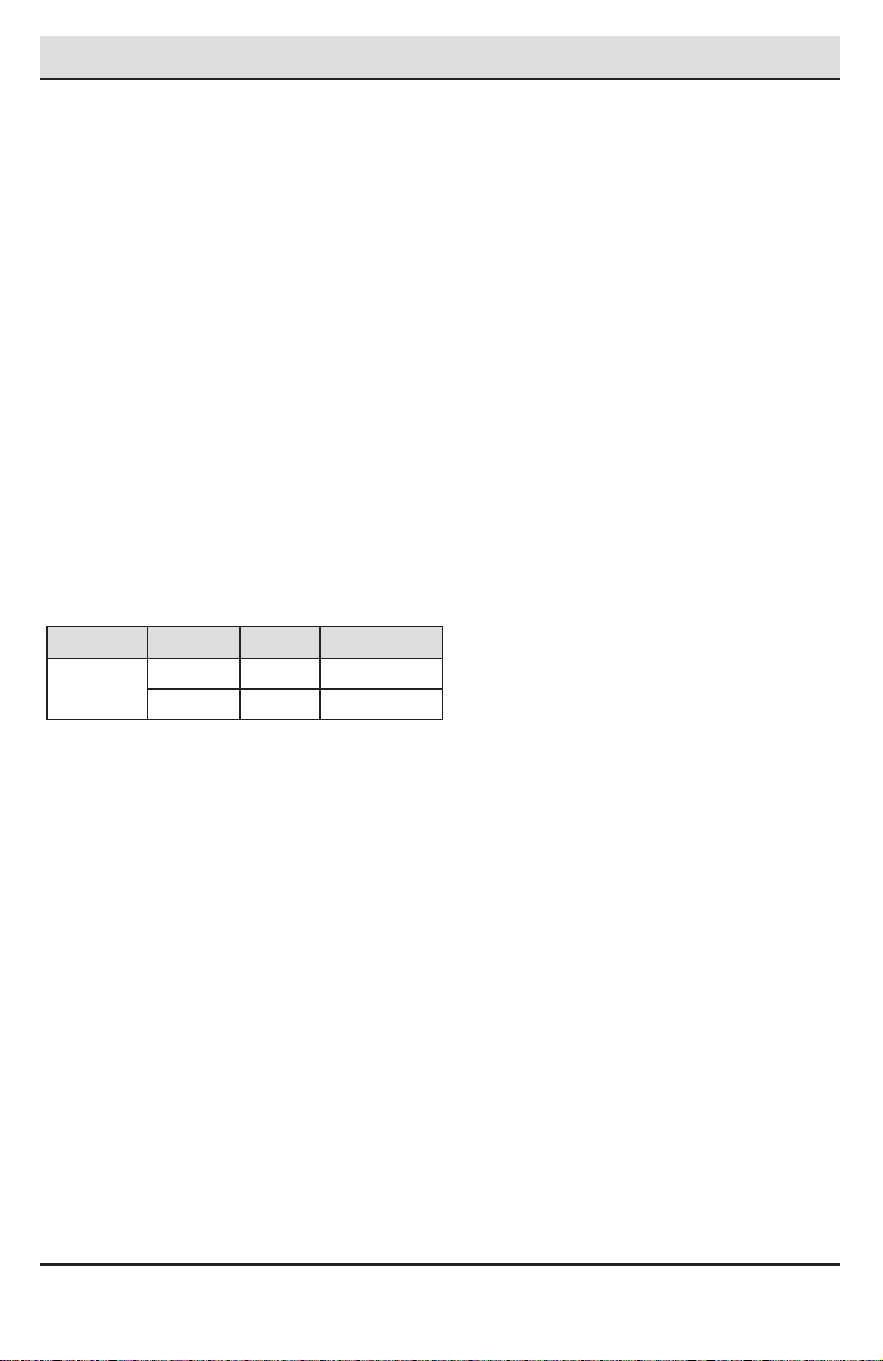
COOKING POPCORN
To cook popcorn, touch POPCORN according to the frequency table below:
Pad Touch Display Serving Size
Popcorn Once 3.2 3.2 oz (91 g)
2 times 3.5 3.5 oz (99 g)
□ During cooking, listen for popping to slow to 1 pop every 1 or 2 seconds, then stop the cycle.
□ To avoid damage to the microwave oven, do not use regular paper bags or glassware.
□ Pop only one package of popcorn at a time.
□ Follow manufacturer’s instructions when using a microwave popcorn popper.
□ For best cooking results, do not try to pop unpopped kern Use fresh bags of popcor n for optimal results.
□ Cooking results may vary by brand and fat content. For bag sizes not listed in this section, follow directions
on the package.
To cook popcorn:
1. Place popcorn bag on the turntable, and close the door.
2. Touch POPCORN to select size (see chart).
3. Touch START/+30Sec. The display will count down the popping time. When the cycle ends, the end-of-cycle
tones will sound, and the display will return to the time of day.
4. Touch STOP/CANCEL at any time to pause or stop popping.
HOMEDEPOT.COM
Please contact 1-855-847-7264 for further assistance.
16
Using the Microwave (continued)
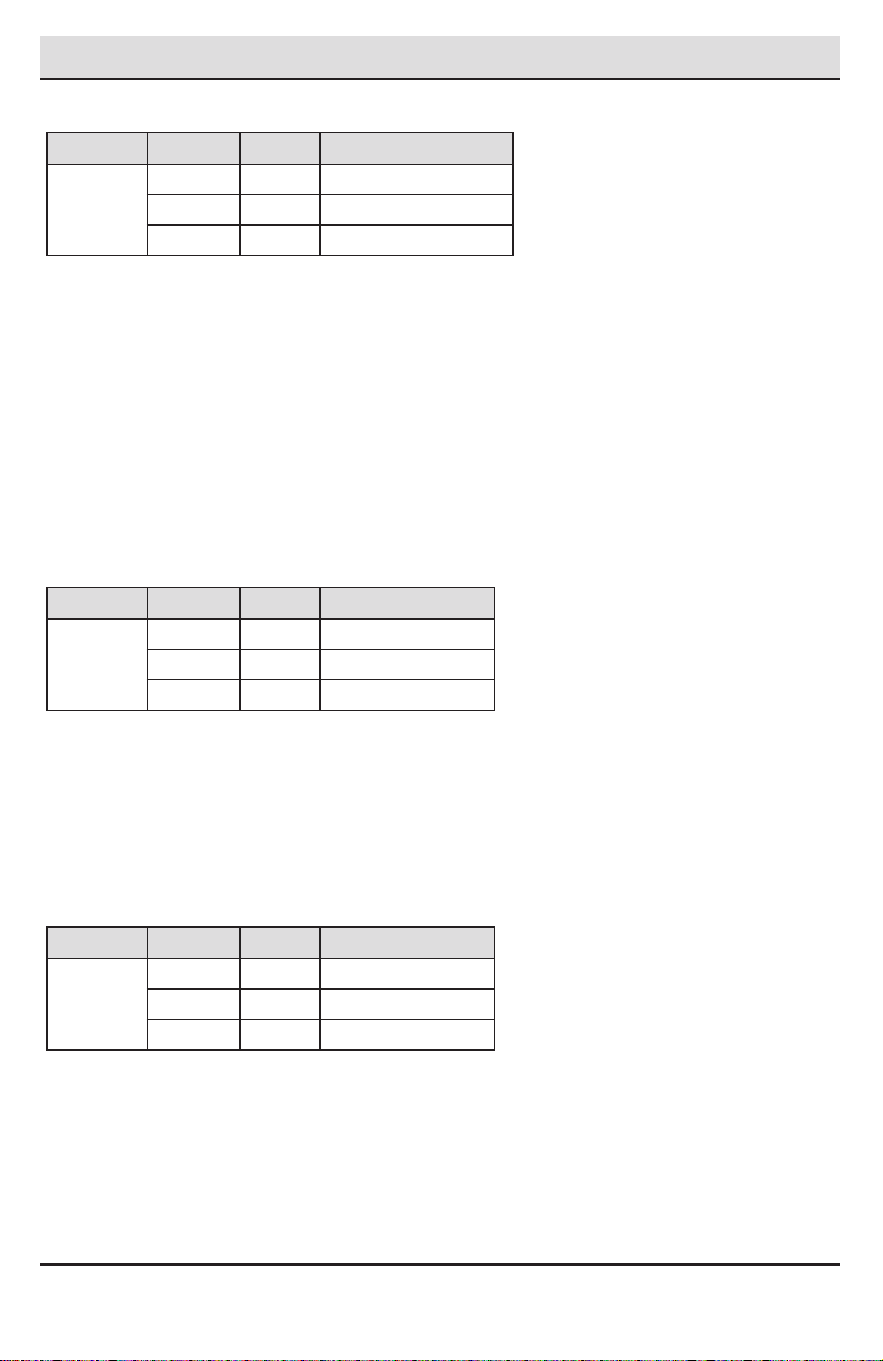
COOKING A BAKED POTATO
Pad Touch Display Serving Size
Baked
Potato
Once 1 1, 8-oz (230 g) potato
2 times 2 2, 16-oz (460 g) potatoes
3 times 3 3, 24-oz (690 g) potatoes
Pierce each potato several times with a fork before baking.
Place a single potato on the turntable, off to the side (not centered). Place 2 or 3 potatoes on the turntable around
the edges, at least 1" (2.5 cm) apart.
Let potato(es) stand for 5 minutes after baking.
To cook a baked potato:
1. Place potato(es) on the turntable and close the door.
2. Touch BAKED POTATO to select number of potatoes (see chart).
3. Touch START/+30Sec. The display will count down the cook time. When the cycle ends, the end-of-cycle tones
will sound, and the display will return to the time of day.
4. Touch STOP/CANCEL at any time to pause or stop cooking.
COOKING PIZZA
Pad Touch Display Serving Size
Pizza Once 4.0 1, 4-oz (113 g) slice
2 times 8.0 2, 8-oz (230 g) slices
3 times 14.0 3, 14-oz (400 g) slices
Place pizza slice(s) on a paper towel or paper plate.
1. Place pizza on the turntable, and close the door.
2. Touch PIZZA to select number of slices (see chart).
3. Touch START/+30Sec. The display will count down the reheat time. When the cycle ends, the end-of-cycle
tones will sound, and the display will return to the time of day.
4. Touch STOP/CANCEL at any time to pause or stop heating.
HEATING A BEVERAGE
Pad Touch Display Serving Size
Beverage Once 1 1, 4-oz (120 mL) cup
2 times 2 2, 8-oz (240 mL) cups
3 times 3 3, 12-oz (360 mL) cups
Do not cover the beverage. The diameter of the cup’s opening will affect how the liquid heats. Beverages in cups
with smaller openings may heat faster.
1. Place cup(s) on the turntable, and close the door.
2. Touch BEVERAGE to select amount (see chart).
3. Touch START/+30Sec. The display will count down the heat time. When the cycle ends, the end-of-cycle tones
will sound, and the display will return to the time of day.
4. Touch STOP/CANCEL at any time to pause or stop heating.
17
Using the Microwave (continued)
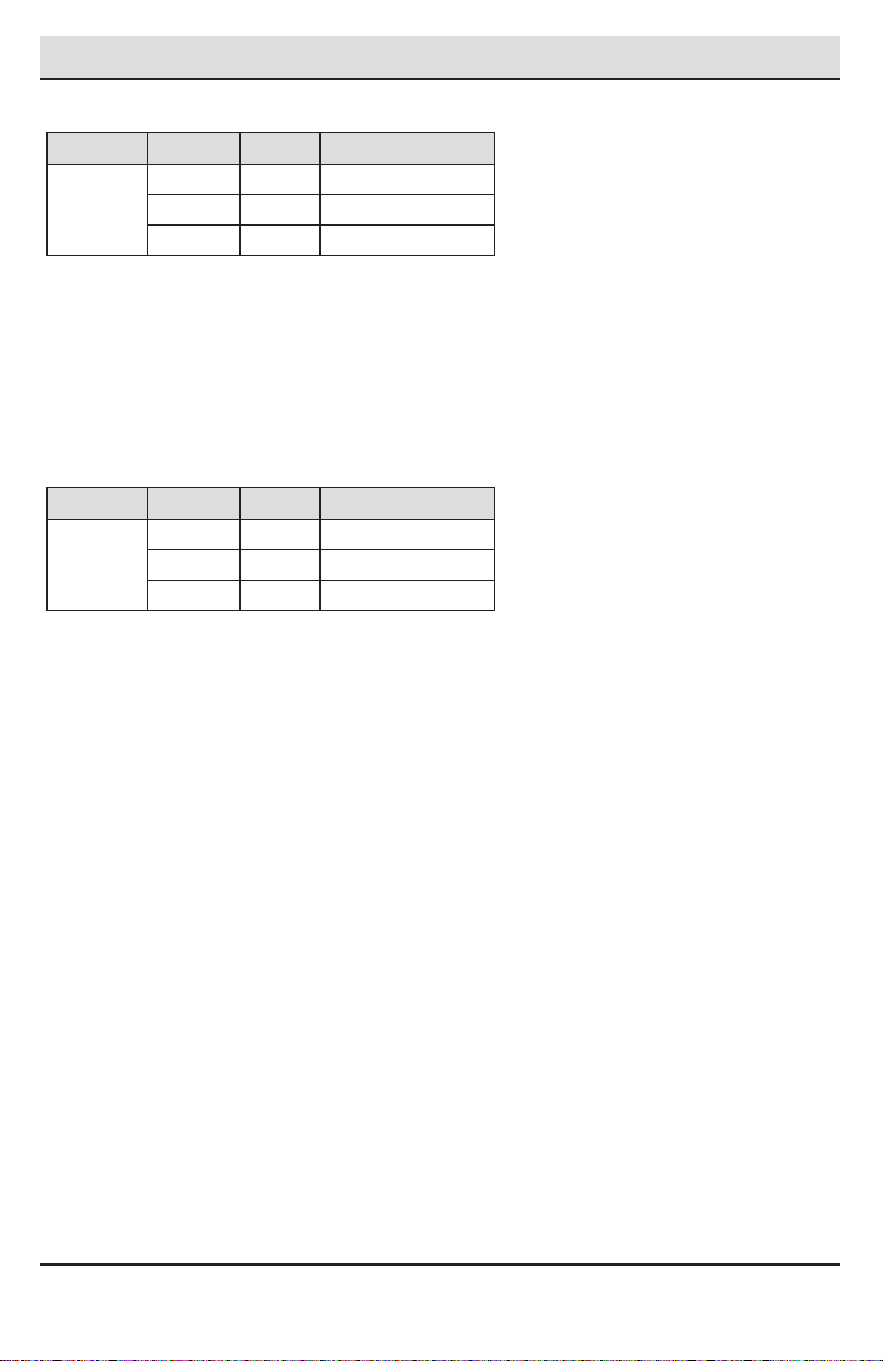
HEATING A DINNER PLATE
Pad Touch Display Serving Size
Dinner
Plate
Once 9.0 9.0 oz (255 g)
2 times 12.0 12.0 oz (340 g)
3 times 18.0 18.0 oz (510 g)
1. Place food on plate(s), cover with plastic wrap and vent.
2. Place dinner plate on the turntable and close the door.
3. Touch DINNER PLATE to select size (see chart).
4. Touch START/+30Sec. The display will count down the cook time. When the cycle ends, the end-of-cycle tones
will sound, and the display will return to the time of day.
5. Touch STOP/CANCEL at any time to pause or stop heating.
COOKING FROZEN VEGETABLES
Pad Touch Display Serving Size
Frozen
Vegetable
Once 4.0 4.0 oz (113 g)
2 times 8.0 8.0 oz (230 g)
3 times 16.0 16.0 oz (460g)
1. Remove frozen vegetables from package.
2. Place in microwave-safe container.
3. Add water:
- 2 tbs (30mL) to 4.0 oz (113 g) vegetables
- 4 tbs (60 mL) to 8.0 oz (230 g) vegetables
- 1/3 cup (80 mL) to 16.0 oz (460 g) vegetables
4. Cover with plastic wrap and vent.
5. Stir and let stand 2-3 minutes after cooking.
6. Place food on the turntable and close the door.
7. Touch FROZEN VEGETABLE to select amount (see chart).
8. Touch START/+30Sec. The display will count down the cook time. When the cycle ends, the end-of-cycle tones
will sound, and the display will return to the time of day.
9. Touch STOP/CANCEL at any time to pause or stop heating.
HOMEDEPOT.COM
Please contact 1-855-847-7264 for further assistance.

18
Care and Cleaning
The oven should be cleaned regularly and any food deposits removed. Failure to maintain the oven in a clean
condition could lead to deterioration of the surface that could adversely affect the life of the appliance and possibly
result in a hazardous situation.
CLEANING THE OVEN
□ Unplug the power cord before cleaning any part of this oven.
□ Keep the inside of the oven clean. When food spatters or spilled liquids adhere to oven walls, wipe with a
damp cloth. Mild detergent may be used if the oven gets very dirty. The use of harsh detergent or abrasives is
not recommended.
□ The outside oven surface should be cleaned with soap and water, rinsed and dried with a soft cloth. To prevent
damage to the operating parts inside the oven, water should not be allowed to seep into the ventilation
openings.
□ Do not place any object between the oven front face and the door or allow residue to accumulate on sealing
surfaces. Wipe the sealing area frequently with a mild detergent, rinse and dry. Never use abrasive powders
or pads.
□ If the Control Panel becomes wet, clean with a soft, dry cloth. Do not use harsh detergents or abrasives on
Control Panel.
□ If steam accumulates inside or around the outside of the oven door, wipe with a soft cloth. This may occur
when the microwave oven is operated under high humidity conditions and in no way indicates malfunction of
the unit.
□ It is occasionally necessary to remove the glass tray for cleaning. Wash the tray in warm sudsy water or in a
dishwasher.
□ The roller guide and oven cavity oor should be cleaned regularly to avoid excessive noise. Simply wipe the
bottom surface of the oven with mild detergent water or window cleaner and dry.
□ When opened, the door must not be subjected to strain, for example, a child hanging on an opened door or
any load could cause the oven to fall forward to cause injury and also damage to the door. Do not operate the
oven if it is damaged, until it has been repaired by a competent service technician. It is particularly important
that the oven closes properly and that there is no damage to the door (bent), hinges and hooks (broken or
loosened), or door seals and sealing surfaces.
ROLLER GUIDE CARE
□ Clean the roller guide and oven oor frequently to prevent excessive noise.
□ Always use the roller guide for cooking together with the glass tray.
GLASS TRAY CARE
□ Never operate the oven without the glass tray in place.
□ Do not use any other glass tray with this oven.
□ If the glass tray is hot, allow it to cool before placing in water or cleaning.
□ Do not cook directly on the glass tray.

19
HOMEDEPOT.COM
Please contact 1-855-847-7264 for further assistance.
Troubleshooting
BEFORE YOU CALL SERVICE
Refer to following checklist, you may prevent an unnecessary service call.
The oven doesn’t work:
□ Check that the power cord is securely plugged in.
□ Check that the door is rmly closed.
□ Check that the cooking time is set.
□ Check for a blown circuit fuse or tripped main circuit breaker in your house.
Sparking in the cavity:
□ Check utensils. Metal containers or dishes with metal trim should not be used.
□ Check that metal skewers or foil does not touch the interior walls.
FREQUENTLY ASKED QUESTIONS
Q: Can the oven be used with the glass tray or roller guide removed?
A: No. Both the glass tray and roller guide must always be used in the oven before cooking.
Q: Can I open the door when the oven is operating?
A: The door can be opened anytime during the cooking operation. Then microwave energy will be instantly switched
off and the time setting will maintain until the door is closed.
Q: Why do I have moisture in my microwave oven after cooking?
A: The moisture on the side of your microwave oven is normal and is caused by steam from cooking.
Q: Does microwave energy pass through the viewing screen in the door?
A: No.
Q: Why do eggs sometimes pop?
A: When baking or poaching eggs, the yolk may pop due to steam build-up inside the yolk membrane. To prevent
this, simply pierce the yolk with a toothpick before cooking. Never cook eggs without piercing their shells.
Q: Why this standing time recommended after the cooking operation has been completed?
A: Standing time is very important. Standing Time means that food should be removed from the oven and covered
for additional time to allow it to nish cooking. This frees the oven for other cooking.
Q: Why does my oven not always cook as fast as the microwave cooking guide says?
A: Check your cooking guide again, to make sure you’ve followed directions exactly. Cooking guide times and heat
settings are suggestions, to help prevent over-cooking... the most common problem in getting used to a microwave
oven. Use your own judgement along with the cooking guide suggestions to check whether the food has been
properly cooked just as you would do with a conventional cooker.
Q: Will the microwave oven be damaged if it operates while empty?
A: Yes. Never run it empty.
Q: Can I operate my microwave oven without the turntable or turn the turntable over to hold a
large dish?
A: No. If you remove or turn over the turntable, you will get poor cooking results. Dishes used in your oven must t
on the turntable.
Questions, problems, missing parts? Before returning to the store,
Call Vissani Customer Service
Monday - Friday 8 a.m. to 8 p.m., Saturday 8 a.m. to 6 p.m.
1-855-847-7264
HOMEDEPOT.COM
Retain this manual for future use.
MUCHAS GRACIAS
Apreciamos la conanza que le ha dado a Vissani al comprar este microondas. Nos esforzamos por crear
constantemente productos de calidad diseñados para mejorar su hogar. Visítenos en línea para ver nuestra
línea completa de productos disponible para mejorar su hogar. ¡Gracias por elegir Vissani!
GUÍA DE USO Y MANTENIMIENTO
HORNO MICROONDAS SOBRE ENCIMERA
HVM1110W/
1006710520
HVM1110B
N.de 1006710527/
N. de
elemento
Modelo
o
2
Contenido
Contenido ...................................................................... 2
Información de seguridad ............................................2
Garantía ........................................................................ 5
Antes que nada ....................................................... 6
Registro del producto
Especicaciones
..............................................6
Instalación del microondas ................................... 6
Descripción del producto ....................................... 7
Instalación de la bandeja giratoria ........................ 7
....................................................7
Uso de los controles del horno .................................. 8
Características de los alimentos ............................................10
Guías de cocción ..................................................10
Uso del microondas ...................................................10
Utensilios de cocina ............................................ 11
....11
Probar los utensilios de cocina en microondas
Papel de aluminio y metales .................................12
Potencia de cocción del microondas ....................12
Cocción manual ....................................................13
Cocción en etapas ................................................13
Descongelar ..........................................................14
Descongelamiento por peso ................................14
Descongelamiento por tiempo ..............................14
Uso de la memoria ..............................................15
Cocinar palomitas de maíz ..................................15
Cocinar una papa horneada .................................16
Cocinar pizza .......................................................16
Calentar una bebida ..............................................16
Calentar un plato con comida ............................. 17
Cocinar verduras congeladas ............................... 17
Cuidado y limpieza ......................................................18
Limpiar el horno ...................................................18
Cuidado del carro de arrastre ..............................18
Cuidado de la bandeja de vidrio ...........................18
Solución de problemas ...............................................19
Antes de llamar al servicio técnico ......................19
Preguntas frecuentes ...........................................19
Información de seguridad
Cuando utilice electrodomésticos, debe seguir algunas
medidas básicas de seguridad, entre las que se incluyen:
ADVERTENCIA:
Para reducir el riesgo de
quemaduras, descargas eléctricas,
incendios, lesiones personales o exposición
a una energía de microondas excesiva:
1. Lea todas las instrucciones antes de usar este
electrodoméstico.
2. Lea y obedezca lo indicado en «EVITAR POSIBLE
EXPOSICIÓN A UNA EXCESIVA ENERGÍA DEL
MICROONDAS»
3. Este electrodoméstico debe contar con una conexión
a tierra. Conecte solamente a un tomacorriente con
una debida toma a tierra. Consúltese la sección
«INSTRUCCIONES DE CONEXIÓN A TIERRA»
4. Instale o ubique este electrodoméstico solamente
de acuerdo con lo indicado en las instrucciones de
instalación.
5. Algunos productos tales como huevos enteros o
recipientes sellados, jarras de vidrio cerradas, por
ejemplo, pueden explotar y no se deben calentar en
este horno.
6. Utilice este electrodoméstico solamente para el
propósito para el que fue diseñado tal como se
describe en este manual. No utilizar sustancias
químicas corrosivas ni vapores en el
electrodoméstico. Este tipo de horno ha sido
diseñado especícamente para calentar, cocinar
o secar alimentos. No ha sido diseñado para uso
industrial ni de laboratorio.
7. Al igual que con cualquier electrodoméstico, es
necesaria una supervisión estricta cuando es
usado por niños.
8. No opere este electrodoméstico si tiene un cable
o enchufe dañado, si no está funcionando
correctamente, o si ha sufrido algún daño o se ha
caído.
9. Este electrodoméstico solamente debe recibir
mantenimiento de personal de servicio calicado.
Comuníquese con el centro de servicio autorizado
más cercano si el microondas necesitara inspección,
reparación o ajuste.
10. No cubra ni obstruya las aperturas en el
electrodoméstico.
11. No guarde este electrodoméstico al aire libre. No
use este electrodoméstico cerca del agua, por
ejemplo cerca de un fregadero de cocina, sobre
una supercie mojada, cerca de una piscina o
ubicaciones similares.
INSTRUCCIONES IMPORTANTES DE SEGURIDAD

3
HOMEDEPOT.com
Información de seguridad (continuación)
12. No sumerja el cable ni el enchufe en agua.
13. Mantenga el cable alejado de supercies calientes.
14. No deje que el cable quede colgando del borde de
la mesas ni de la encimera.
15. Al limpiar la supercie de la puerta y del horno,
use solamente jabón o detergentes suaves
aplicados con una esponja o paño suave.
16. Para reducir el riesgo de incendio, en el interior
del horno:
□ No sobrecocinar los alimentos. Prestar mucha
atención al electrodoméstico cuando se
coloquen en su interior papel, plástico u otros
materiales combustibles para facilitar la cocción.
□ Quitar los elementos de alambre retorcido que
se usan para cerrar las bolsas de papel o plástico
antes de colocar estas bolsas en el horno.
□ Si los materiales en el interior del horno se
prenden fuego, mantenga cerrada la puerta
del horno, desconecte el cable eléctrico o
interrumpa la electricidad en el panel de
fusibles o interruptor de circuito.
□ NO use el interior de este electrodoméstico
para guardar nada. No deje papeles, utensilios
de cocción ni alimentos en el interior del
electrodoméstico cuando no esté en uso.
17. Líquidos, tales como agua, café o té, pueden
calentarse por encima del punto de ebullición sin
parecer que están hirviendo debido a la tensión
supercial del líquido. No siempre habrá burbujas
o ebullición visibles cuando el envase se saca del
horno microondas. ESTO PODRÍA HACER QUE LOS
LÍQUIDOS MUY CALIENTES DE PRONTO COMIENCEN
A HERVIR CUANDO SE INTRODUZCA EN ELLOS UNA
CUCHARA U OTRO UTENSILIO. Para reducir el riesgo
de lesiones a personas:
□ No sobrecaliente los líquidos. Revuelva el líquido
antes y a la mitad del proceso cuando lo esté
calentando.
□ No use envases de lados rectos y cuello angosto.
□ Luego de calentar, deje que el envase permanezca
en el microondas durante un breve período de
tiempo antes de sacarlo del horno.
□ Tenga mucho cuidado al insertar una cuchara u
otro utensilio dentro del envase.
18. No use este microondas para calentar sustancias
químicas corrosivas (por ejemplo, sulfuros o
cloruros. Los vapores emitidos por estas sustancias
químicas corrosivas pueden interactuar con el
contacto y los resortes del mecanismo de seguridad
para cerrar la puerta y, por ello, hacerlos inoperables.
19. Mantenga siempre limpia la placa de mica.
Siempre limpie el interior del horno con un trapo
suave húmedo después de usarlo. Si quedara
grasa o aceite en el interior, estas sustancias
podrían recalentarse, generar humo e incluso
prenderse fuego la siguiente vez que se use el
horno.
20. Jamás caliente aceite ni grasa para fritura por
inmersión ya que no es posible controlar la
temperatura. Hacer esto podría encender un fuego.
21. No opere el horno sin que la bandeja de vidrio
esté en su sitio. Corrobore que esté debidamente
colocada sobre la base.
22. No seque ropa, periódicos ni otros materiales en
el horno. Pondrían prender fuego.
23. No use productos de papel reciclados ya que
podrían contener impurezas que causen chispas
o se prendan fuego.
24. Jamás use el microondas para envasado en el
hogar. El horno no está diseñado para un
adecuado envasado en el hogar. Los alimentos
incorrectamente envasados pueden dañarse y
ser peligrosos para el consumo.
25. Papas, manzanas, yemas de huevo y salchichas
son ejemplos de supercies no porosas. Estas
deben ser perforadas antes de su cocción para
evitar que estallen.
26. No trate de hacer frituras por inmersión en el
horno microondas.
FORMACIÓN DE ARCO
Si observa una formación de arco, toque el botón
STOP/CANCEL (PARAR/CANCELAR) y corrija el problema.
Se denomina «formación de arco» a la formación de
chispas en el interior del horno y estas son
ocasionadas por:
□
Metales o láminas que tocan los costados
del horno o bien láminas que no están
moldeadas al alimento (los bordes hacia
arriba actúan como antenas).
□
Metales, como cierres de alambre retorcidos,
ganchos para sujetar las piezas de pollo o
bordes de oro de platos en el interior del
microondas.
□ El uso en el microondas de papel absorbente
reciclado que contenga pequeñas partículas
de metal.
GUARDE ESTAS INSTRUCCIONES
Póngase en contacto con el 1-855-847-7264 para obtener más ayuda.
4
Información de seguridad
□ Cambiar la orientación de la antena receptora, de la radio o de la televisión.
□
Reubicar el horno microondas con relación al receptor.
□ Alejar el horno microondas del receptor.
□
Enchufar el horno microondas en un tomacorriente distinto, para que se esté en un circuito
eléctrico distinto al del receptor.
EL FABRICANTE no es responsable de ninguna interferencia de radio o televisión causada por CUALQUIER
MODIFICACIÓN NO AUTORIZADA a este horno microondas. Es responsabilidad del usuario corregir este tipo de
interferencia.
Este electrodoméstico debe contar con una conexión a tierra. En caso de cortocircuito eléctrico, la conexión a
tierra reducirá el riesgo de descarga eléctrica al crear un paso de escape para la corriente eléctrica. Este
electrodoméstico viene con un cable que tiene un conductor de conexión a tierra. El enchufe debe estar conectado
a un tomacorriente correctamente instalado y conectado a tierra.
ADVERTENCIA:
El uso incorrecto de la toma de tierra puede resultar en un riesgo de descarga eléctrica. Consulte
con un electricista o técnico calicado si no entiende completamente las instrucciones para la a conexión a tierra o si
tuviera alguna duda sobre si el electrodoméstico está debidamente puesto a tierra. Si fuera necesario usar un cable de
prolongación, utilice solamente uno de tres alambres que tenga un enchufe de tres patas y enchufe en un receptáculo
de tres ranuras que acepte el enchufe del electrodoméstico. La capacidad eléctrica del cable de prolongación debe ser
al menos igual o mayor que la capacidad eléctrica del electrodoméstico.
ADVERTENCIA: Bajo ninguna circunstancia, no corte ni quite la tercera punta (a tierra) del cable de alimentación.
No opere el horno con la puerta abierta ya que esto podría causar una exposición nociva a la energía del microondas.
No altere el interbloqueo de seguridad.
No coloque ningún objeto entre el frente del horno y la puerta ni permite que se acumulen sucios o residuos de
limpieza sobre las supercies de sello. No opere el horno si está dañado. Es importante que la puerta cierre
correctamente; además, la puerta, las bisagras, los cierres, los sellos y las supercies de sellado no estén dañadas.
El ajuste o la reparación de la puerta solamente debe ser efectuado por personal de servicio calicado.
DECLARACIÓN SOBRE INTERFERENCIA DE
RADIOFRECUENCIAS DE LA COMISIÓN FEDERAL
DE COMUNICACIONES DE EE. UU.
ADVERTENCIA
Este equipo genera y usa energía de radiofrecuencia de las bandas de radio industriales, cientícas y médicas
(ISM, sus siglas en inglés) y, si no se instala y usa debidamente, es decir, de estricto acuerdo con las instrucciones
del fabricante, puede causar interferencias en la recepción de radio y televisión.
Luego de realizarse los ensayos correspondientes, se ha determinado que cumple con los límites para un equipo
ISM en virtud de la Parte 18 de las Reglamentaciones de la Comisión Federal de Comunicaciones (FCC) de Estados
Unidos, diseñadas para ofrecer una protección razonable contra este tipo de interferencias en una instalación
residencial. Sin embargo, no hay garantía de que la interferencia no ocurra en una instalación en particular. Si
este equipo causa interferencia a la recepción de radio o televisión, lo que puede determinarse apagando y
encendiendo el equipo, se recomienda al usuario que intente corregir la interferencia mediante una o varias de las
siguientes medidas:
INSTRUCCIONES DE CONEXIÓN A TIERRA
EVITAR POSIBLE EXPOSICIÓN A UNA EXCESIVA
ENERGÍA DEL MICROONDAS

Garantía
MC Appliance Corporation garantiza que cada horno microondas para encimera nuevo carece de defectos en los
materiales y mano de obra, y acuerda remediar dichos defectos o proporcionar una o más partes nuevas, a opción
de la compañía, para cualquier parte de la unidad que falle durante el período de garantía. Los gastos de piezas y
mano de obra están cubiertos en este equipo por un período de un año a partir de la fecha de compra. Para recibir
el servicio de garantía por parte de un agente de servicio autorizado, es necesario presentar una copia del recibo o
de la factura de venta con fecha.
Además, MC Appliance Corporation garantiza que el magnetrón (repuestos solamente) carece de defectos en los
materiales y mano de obra durante un período de ocho años. El consumidor es responsable de todo costo de mano
de obra y transporte relacionado con el diagnóstico y reemplazo del magnetrón una vez que ha expirado la garantía
inicial de un año. El consumidor asume todos los gastos de traslado para devolver el equipo a nuestra fábrica antes
de obtener un reemplazo o un reembolso, en caso de que deba sustituirse el equipo o efectuarse un reembolso de
conformidad con los términos de esta garantía. Es necesario presentar una copia del recibo o de la factura de venta
fechado, para recibir el servicio de garantía, reemplazo o reembolso. Esta garantía cubre los electrodomésticos en
uso dentro de los Estados Unidos continental, Alaska, Hawái y Puerto Rico. Esta garantía no cubre lo siguiente:
Daños debido a daños sufridos durante el envío o por instalación incorrecta.
□ Daños debidos a uso incorrecto o abuso.
□ Pérdidas de contenido debido a fallas del equipo.
□ Componentes internos como plato giratorio, carro de arrastre, bombillos, etc.
□ Reparaciones llevadas a cabo por agentes de servicio no autorizados.
□ Llamadas de servicio que no implican defectos en material y mano de obra tales como
instrucciones sobre el uso correcto del producto o instalación incorrecta.
□ Reemplazo o reajuste de los fusibles o interruptores en el hogar.
□ Falla de este producto si se usa para fines distintos para los que fue diseñado.
□ Costos de eliminación de cualquier unidad defectuosa no devuelta a nuestra fábrica.
□ Ninguno de los costos de entrega/instalación incurridos como resultado de un equipo que no
funcione según las especificaciones.
□ Gastos de viaje y transporte para obtener servicio para el producto si su aparato está ubicado
en una zona remota donde el servicio por parte de un técnico de servicio autorizado no está
disponible.
□ El retiro y la nueva instalación del electrodoméstico si está instalado en una ubicación
inaccesible o no fue instalado de acuerdo con las instrucciones de instalación publicadas.
□ Los reintegros de los productos que no son reparables están limitados al precio pagado por el
equipo conforme a la factura de venta.
La reparación del producto de acuerdo con los términos aquí indicados es el único y exclusivo remedio bajo esta
garantía limitada. Cualquiera y todas las garantías implícitas, incluyendo la comerciabilidad y la idoneidad para
un propósito particular se limitan por la presente a un año o al período más corto permitido por la ley.
MC Appliance Corporation no es responsable por daños incidentales o consecuentes y ningún representante o
persona está autorizada para asumir por nuestra parte, ninguna otra responsabilidad con relación a la venta de
este producto. Bajo ninguna circunstancia se le permite al consumidor devolver este equipo a la fábrica sin la
autorización previa por escrito suministrada por MC Appliance Corporation. Algunos estados prohíben la exclusión
o limitación de los daños indirectos o derivados, o limitaciones sobre las garantías implícitas. Esta garantía le
otorga derechos legales especícos, y usted podría tener otros derechos que varían según el estado.
LIMITATIONS OF REMEDIES AND EXCLUSIONS:
HOMEDEPOT.com
Póngase en contacto con el 1-855-847-7264 para obtener más ayuda.
5
6
□ El registro del producto nos permitirá contactarlo con relación a un aviso de seguridad o
actualización del producto.
□ El registro del producto nos permitirá procesar con más eficiencia el servicio de garantía cuando
este se necesite.
□ El registro del producto puede servir como prueba de compra en el caso de pérdida cubierta
por el seguro. Una vez más, gracias por comprar un producto Vissani.
Gracias por comprar un producto Vissani. El primer paso para proteger su nuevo producto es completar el registro
del producto en nuestro sitio web: www.mcappliance.com/register. Benecios de registrar este producto:
pérdida cubierta por el seguro. Una vez más, gracias por comprar un producto Vissani.
Cuando instale el microondas, respete las siguientes directrices:
□ Examine el horno después de desembalarlo. Compruebe si hay daños como una puerta
desalineada, una puerta rota o una abolladura en la cavidad. Si hay algún daño visible, NO
LO INSTALE, y notifique al distribuidor inmediatamente.
□ Instale el horno microondas sobre una superficie plana y a nivel.
□ NO bloquee las ranuras de ventilación. Si se bloquean durante el funcionamiento, el horno
puede sobrecalentarse y acabar provocando una avería. Para una ventilación adecuada, se
requiere un espacio mínimo de 3.0 pulgadas (7.5 cm) entre el horno y las paredes adyacentes
y el lado derecho debe estar abierto. Deje un espacio mínimo de 12 pulgadas (30 cm) por
encima del horno.
□ Instale el microondas lejos de los aparatos de radio y televisión. Si el horno se encuentra cerca
de un televisor, radio, antena, alimentador, etc., pueden producirse una mala recepción de la
televisión y radio interferencias.
□ Instale el microondas lejos de aparatos de calefacción y grifos de agua. Mantenga el horno
alejado del calor, vapor o salpicaduras de líquidos. Estas cosas pueden afectar negativamente
al cableado y los contactos del horno.
□ Compruebe la fuente de alimentación local. Este horno microondas requiere una corriente de
aproximadamente 15 amperios, 120 voltios y 60 Hz con toma a tierra.
- Se suministra un cable de electricidad corto para reducir los riesgos de enredo o tropiezo con
un cable más largo.
- Se dispone de cables más largos o de prolongación y pueden utilizarse si se hace con
precaución.
- Si se utiliza un cable largo o un alargador:
□ La capacidad eléctrica establecida del cable de alimentación o de la extensión debe ser al
menos tan alta como la capacidad eléctrica del electrodoméstico.
□ El cable de extensión debe ser un cable de 3 hilos con conexión a tierra.
□ El cable más largo debe colocarse de tal manera que no cuelgue fuera de la superficie de
la mesa o encimera donde pueda ser halado por niños o alguien pueda pueda tropezarse
sin querer.
□ La altura mínima de espacio libre necesario por encima de la superficie superior del horno
es de unas 4 pulgadas (10,16 cm).
Usar con un enchufe de tres patas
Receptáculo de 3 puntas
Tapa de la caja
del receptáculo
Enchufe de tres patas
Cuando utilice un adaptador de conexión a
tierra, asegúrese de que la caja del receptáculo
esté completamente conectada a tierra.
Tapa de la caja del
receptáculo
Receptáculo
Cable de
conexión
a tierra
Adaptador
de tierra
EL CÓDIGO ELÉCTRICO CANADIENSE NO PERMITE EL USO DEL ADAPTADOR DE CONEXIÓN A TIERRA
Antes que nada
INSTALACIÓN DE SU MICROONDAS
REGISTRO DEL PRODUCTO
Antes que nada (continuación)
DESCRIPCIÓN DEL PRODUCTO
MEMORY
DINNER
PLATE
POPCORN
FROZEN
VEGETABLE
PIZZA
CLOCK
POWER
CANCEL
STOP
+30SEC.
START
TIMER
WEIGHT
DEFROST
EXPRESS COOK
BAKED
POTATO
TIME
DEFROST
TIME
COOK
BEVERAGE
A
B C D E F G
C
H
I
Pieza Descripción Pieza Descripción Pieza Descripción
A
Sistema de cerradura de
la puerta
D
Tapa de entrada de
microondas
G Panel de control
B
Ventana metálica blindada
E Luz de horno microondas H Cupla trébol
C Plato giratorio de vidrio F Pantalla I Carro de arrastre
El plato giratorio puede girar en cualquier dirección para ayudar a cocinar los alimentos de manera más uniforme.
Para obtener los mejores resultados de cocción, no haga funcionar el horno microondas sin tener el plato giratorio
en su sitio. Para instalar:
1. Instale la cupla trébol (H) en el agujero del centro de la base de la cavidad del horno microondas.
2. Coloque el carro de arrastre (I) en la base de la cavidad del horno microondas.
3. Coloque la plataforma giratoria (C) sobre el carro de arrastre (I). Encaje los montículos elevados y curvados en
el centro de la base de la plataforma giratoria entre los tres radios de la cupla trébol.
Suministro eléctrico
Las especicaciones están sujetas a cambios sin previo aviso
120 V c.a., 60 Hz mono-
fásico con toma a tierra
Microondas Potencia de entrada 1600 W
Energía de salida 1000 W
Frecuencia 2,450 MHz
Dimensiones externas (A × L × P) 20.6 x 11.8 x 14.7 in
(523 x 300 x 373 mm)
Dimensiones de la cavidad (A × L × P) 13.9 x 10.0 x 14.1 in
(354 x 253 x 357 mm)
Volumen de la cavidad 1.1 pies cúbicos
Peso neto Aproximado. 31,7 lb
Temporizador 99 min. 99 seg.
Niveles de potencia 10 niveles
20.6 in (523 mm)
11.8 in
(300 mm)
14.7 in ( mm)373
.
INSTALACIÓN DEL PLATO GIRATORIO
ESPECIFICACIONES
HOMEDEPOT.com
Póngase en contacto con el 1-855-847-7264 para obtener más ayuda.
7
8
1
□ Cuando se suministra energía al horno
microondas por primera vez, aparecerá "0:00"
en la pantalla. Si "0:00" aparece en la pantalla
en cualquier otro momento,se ha producido un
fallo de alimentación. Restablezca el reloj si
es necesario.
□
Cuando el horno microondas está en uso, la
pantalla muestra el tiempo de cocción restante.
Cuando el horno microondas no está en uso, la
pantalla muestra la hora del día (si el reloj está
ajustado) o la cuenta atrás del temporizador.
□ El control START (ARRANCAR) (tecla START/+30Sec.)
inicia cualquier función. Si la cocción se interrumpe
por tocar STOP/CANCEL (PARAR/CANCELAR) o por
abrir la puerta, al tocar START/+30Sec se reanudará
el ciclo.
□ El control +30SEC (START/+30Sec.) arranca
automáticamente el horno microondas al 100% de
potencia durante 30 segundos, y añade 30
segundos de tiempo de cocción con cada toque
adicional del control.
2
3
Cada uno de los controles EXPRESS COOK (COCCIÓN
EXPRESS) (teclado numérico 1-6) pone en marcha
automáticamente el horno microondas al 100% de
potencia durante 1 minuto, 2 minutos, 3 minutos,
4 minutos, 5 minutos o 6 minutos, según el número
que se toque.
4
El control STOP/CANCEL (PARAR/CANCELAR) borra
cualquier orden incorrecta, y pone en pausa y/o cancela
cualquier programa durante la cocción. No borrará la
hora del día. Un programa de cocción puede detenerse
tocando STOP/CANCEL (PARAR/CANCELAR) una vez o
abriendo la puerta. El ciclo puede reanudarse tocando
START/+30Sec. Se puede cancelar un programa de
cocción tocando dos veces STOP/CANCEL
(PARAR/CANCELAR) o abriendo la puerta y tocando
luego STOP/CANCEL (PARAR/CANCELAR).
Uso de los controles del horno
Acerca de la pantalla Uso del control de inicio
Uso de cocción express
Uso del control de parada/
cancelación
Añadir 30 segundos al tiempo de cocción
Using the Oven Controls (continued)
5
Este es un reloj estándar de 12 horas (1:00-12:59).
Si el reloj no está ajustado, "0:00" permanecerá en
la pantalla. Cuando el reloj esté ajustado, el símbolo
":" parpadeará. Durante la cocción, el reloj puede
verse durante 3 segundos tocando CLOCK (RELOJ).
□
Asegúrese de que el microondas está en modo
de espera.
□ Toque CLOCK (RELOJ). "00:00" aparecerá en la
pantalla, con el primer "0" parpadeando.
□ Utilice el teclado numérico para introducir la hora
y pulse de nuevo CLOCK (RELOJ).
6
El temporizador de cocina puede ajustarse en minutos y
segundos, hasta 99 minutos, 99 segundos, y realiza una
cuenta regresiva del tiempo establecido. El temporizador
de cocina no puede utilizarse mientras esté en
funcionamiento cualquier otra función. El temporizador
de cocina no pone en marcha ni detiene el horno
microondas.
□ Toque TIMER (TEMPORIZADOR). "00:00"
aparecerá en la pantalla, con el primer "0"
parpadeando.
□ Ingrese el tiempo deseado en minutos y segundos,
complete los cuatro dígitos de izquierda a derecha.
Ejemplo: 1-0-0-0 durante 10 minutos, o 0-5-0-0
durante 5 minutos.
□ Toque START/+30Sec (ARRANCAR/+30 seg.).
Cuando termine el tiempo programado, sonarán
los tonos de n de temporizador y la pantalla
volverá a mostrar la hora del día.
□ Toque STOP/CANCEL (PARAR/CANCELAR) en
cualquier momento para cancelar el temporizador.
7
□ El bloqueo del control desconecta el teclado del
panel de control para evitar el uso involuntario
del horno microondas. Para bloquear/
desbloquear el control: El horno microondas
debe estar en modo de espera. Mantenga
pulsado STOP/CANCEL (PARAR/CANCELAR)
durante 3 segundos hasta que suene un tono
largo y la pantalla se borre para mostrar un
contorno del área de visualización.
□
Repita la operación para desbloquear el control
y que la pantalla vuelva a mostrar la hora del día.
Si se toca cualquier tecla mientras el control está
bloqueado, no habrá respuesta del horno
microondas.
8
Los tonos son señales audibles que indican lo siguiente:
One tone
□
Entrada válida (tono corto)
□ Fin de etapa en la cocción multietapa
□ Bloqueo de control activado o desactivado
(tono largo).
Cinco tonos
□
Fin de ciclo
□ Fin de la cuenta regresiva del temporizador de
cocina
Uso del reloj Uso del temporizador de cocina
Uso del bloqueo de control Escuchar tonos
HOMEDEPOT.com
Póngase en contacto con el 1-855-847-7264 para obtener más ayuda.
9

10
Uso del microondas
Respete estas directrices de seguridad cuando utilice el horno microondas:
□
Para evitar daños en el horno microondas, no se apoye ni permita que los niños se balanceen sobre la puerta
del horno microondas.
□ Para evitar que se dañe el horno microondas, no lo ponga en funcionamiento si está vacío.
□ Los biberones y los tarros de comida para bebés no deben calentarse en el microondas.
□ No secar en el horno microondas ropa, ores, fruta, hierbas, papel (lo que incluye bolsas de papel marrón y
papel periódico).
□ La parana no se derrite en el microondas porque no absorbe las microondas.
□ Utilice guantes de cocina o agarra ollas al sacar los envases del horno microondas.
□ No cocine demasiado las papas. Al nal del tiempo de cocción recomendado, las papas deben estar
ligeramente rmes. Déjelas reposar durante 5 minutos. Terminarán de cocinarse en ese período.
Al cocinar con microondas, la cantidad, el tamaño y la forma, la temperatura inicial, la composición y la densidad
de los alimentos afectan a los resultados de la cocción.
Cantidad de alimentosd
Cuantos más alimentos se calienten a la vez, mayor será el tiempo de cocción necesario. Verique el grado de
cocción y añade pequeños incrementos de tiempo si es necesario.
Tamaño y forma
Los alimentos más pequeños se cocinan más rápidamente que los más grandes, y los alimentos de forma uniforme
se cocinan más uniformemente que los de forma irregular.
Temperatura inicial
Los alimentos a temperatura ambiente se calientan más rápido que los refrigerados, y los refrigerados se calientan
más rápido que los congelados.
Composición y densidad
Los alimentos con alto contenido en grasa y azúcar alcanzarán una temperatura más alta y se calentarán más
rápidamente que otros alimentos. Los alimentos pesados y densos, como la carne y las papas, requieren un
tiempo de cocción más largo que el mismo tamaño de un alimento ligero y poroso, como un pastel.
Cubrir los alimentos
Cubrir los alimentos ayuda a retener la humedad, acortar el tiempo de cocción y reducir las salpicaduras. Utilice
la tapa suministrada con la batería de cocina.
Si no se dispone de una tapa, se puede utilizar papel encerado, papel absorbente o envoltorios de plástico
aprobados para hornos de microondas. El envoltorio de plástico se debe girar hacia atrás en una de las esquinas
para proporcionar una abertura para ventilar el vapor. La condensación en la puerta y en las supercies de la
cavidad es normal durante la cocción intensa.
Revolver y dar vuelta los alimentos
Al revolver y dar vuelta los alimentos hace que se redistribuya el calor de manera uniforme para evitar que se
cocinen demasiado los bordes exteriores de los alimentos. Revuelva desde fuera hacia el centro. Si es posible,
de vuelta los alimentos de abajo a arriba.
Distribución de los alimentos
Si calienta alimentos de forma irregular o de diferentes tamaños, coloque las partes más nas y los elementos
de menor tamaño hacia el centro. Si se cocinan varios elementos del mismo tamaño y forma, colóquelos en forma
de anillo, dejando el centro del anillo vacío.
CARACTERÍSTICAS DE LOS ALIMENTOS
PAUTAS DE COCCIÓN
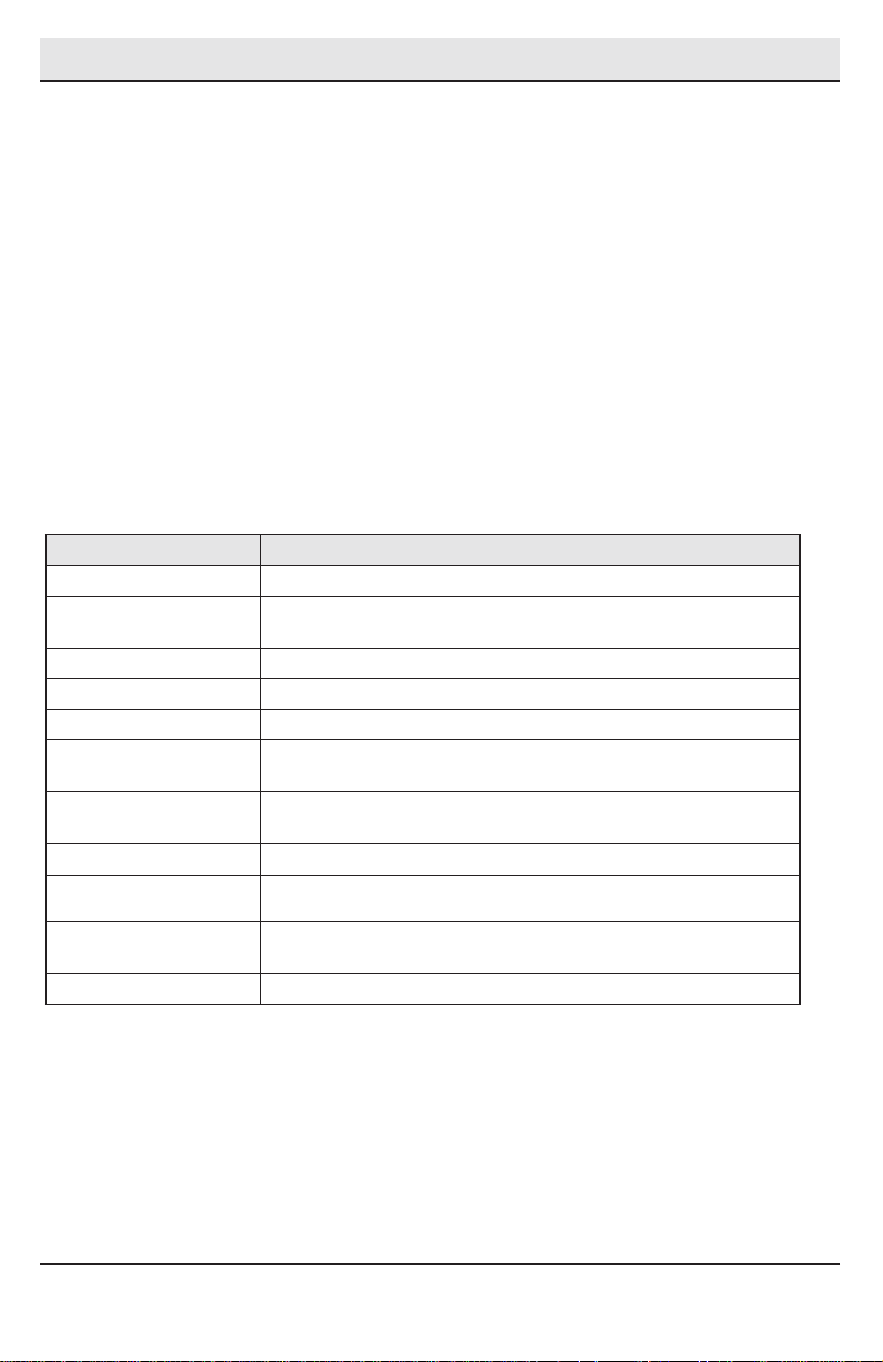
Uso del microondas (continuación)
Perforación
Antes de calentar, utilice un tenedor o un cuchillo pequeño para perforar o pinchar los alimentos que tengan piel o
membrana, como papas, yemas de huevo, hígados de pollo, salchichas y chorizos. Pinche en varios sitios para que
salga el vapor.
Protección
Tiempo que el alimento se sigue cocinando
Utilice trozos pequeños y lisos de papel de aluminio para proteger los trozos de alimentos nos y de forma irregular,
huesos y alimentos como alas de pollo, puntas de patas y colas de pescado. Consulte primero la sección «Papel de
aluminio y metal».
Los alimentos seguirán cocinándose por la conducción natural del calor incluso después de que el ciclo de cocción
de las microondas haya terminado. El tiempo de cocción posterior depende del volumen y la densidad de los
alimentos.
La batería de cocina y la vajilla deben caber en el plato giratorio. Utilice siempre guantes de cocina o agarra ollas
cuando manipule los alimentos, ya que cualquier plato puede calentarse por el calor transferido por los alimentos.
No utilice batería de cocina ni vajillas con adornos dorados o plateados. Utilice el siguiente cuadro como guía,
luego pruebe antes de utilizar.
Material Recomendaciones
Papel de aluminio, metal Consulte primero la sección «Papel de aluminio y metal».
Plato para dorar El fondo debe estar al menos 3/16" (5 mm) por encima del plato giratorio.
Siga las recomendaciones del fabricante.
Vidrio cerámico, vidrio Se puede utilizar.
Porcelana, loza de barro cocido Siga las recomendaciones del fabricante.
Melamina Siga las recomendaciones del fabricante.
Papel: Toallas, vajilla,
servilletas
Utilice material no reciclado y todo material aprobado por el fabricante
para el horno de microondas.
Plástico: Envoltorios, bolsas,
fundas, vajillas, envases
Utilice los aprobados por el fabricante para el uso del horno de microondas.
Cerámica y arcilla Siga las recomendaciones del fabricante.
Implementos para hornear
de silicona
Siga las recomendaciones del fabricante.
Recipientes de paja, mimbre
y madera
No usar en horno microondas.
Papel de cera Se puede utilizar.
1. Coloque la batería de cocina o la vajilla en el microondas con 1 taza (250 ml) de agua al lado.
2. Cocine al 100% de potencia de cocción durante 1 minuto.
No utilice la batería de cocina ni la vajilla si se calientan y el agua se mantiene fría.
BATERÍA DE COCINA Y VAJILLA
PROBAR LA BATERÍA DE COCINA Y LA VAJILLA PARA SU USO EN MICROONDAS
HOMEDEPOT.com
Póngase en contacto con el 1-855-847-7264 para obtener más ayuda.
11
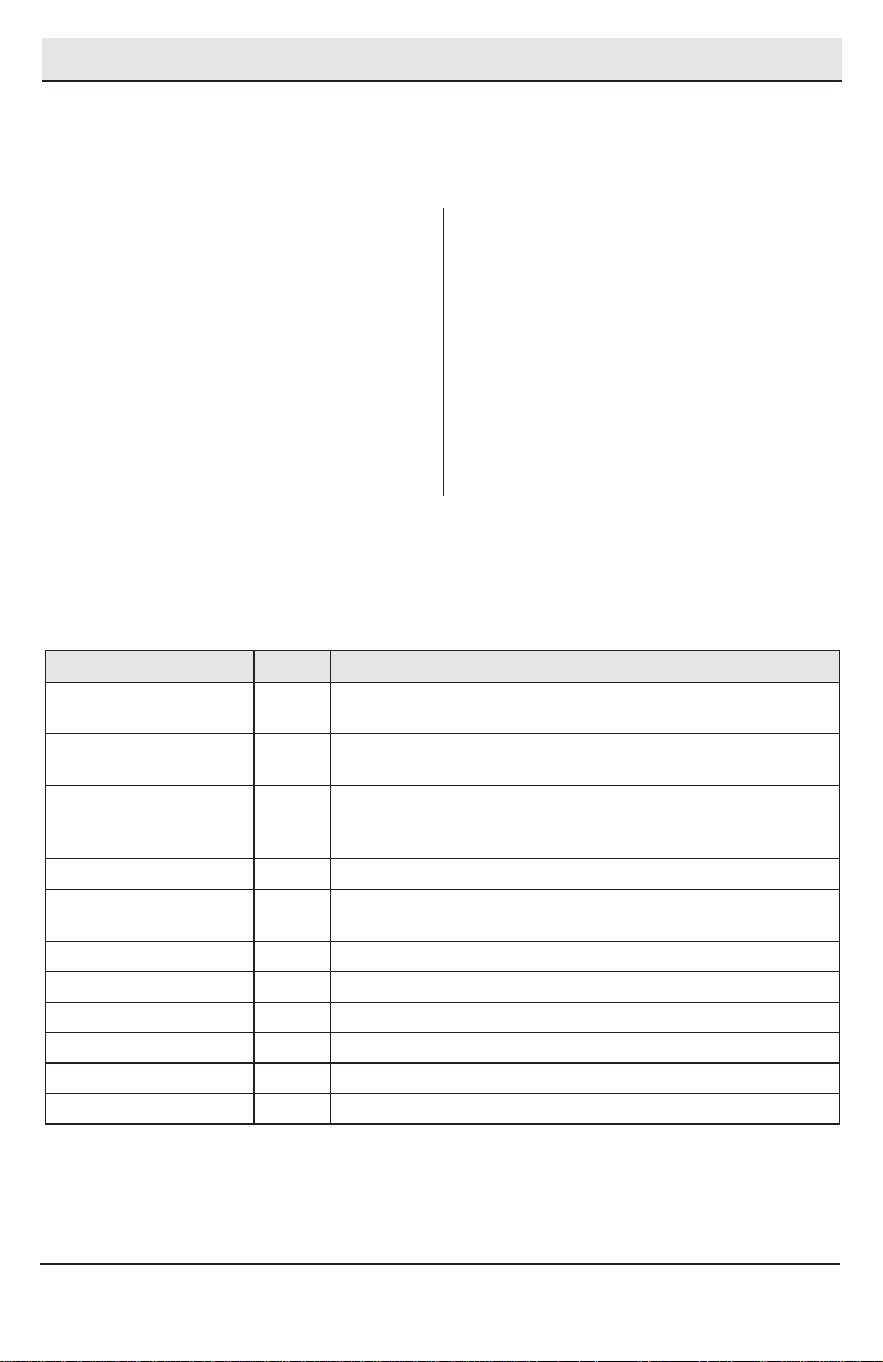
12
Uso del microondas (continuación)
Utilice siempre guantes de cocina o agarra ollas al sacar los platos del horno microondas.
El papel de aluminio y algunos metales pueden utilizarse en el horno microondas. Si no se utilizan correctamente,
puede producirse un arco eléctrico (un destello de luz azul) y dañar el horno microondas.
Se puede utilizar
Las rejillas y los implementos para hornear suministrados
con el horno de microondas (en algunos modelos), el
papel de aluminio para la protección y los termómetros
de carne aprobados pueden utilizarse con las siguientes
guías:
□ Para evitar daños en el horno de microondas, no
permita que el papel de aluminio ni el metal toquen
las paredes interiores, la parte superior ni la base de
la cavidad.
□ Utilice siempre la base giratoria.
□ Para evitar daños en el horno microondas, no permita
el contacto con otro objeto metálico durante la
cocción con microondas.
No utilice
Batería de cocina e implementos para hornear de
metal, oro, plata, estaño, termómetros para carne no
aprobados, brochetas, bridas, revestimientos de papel
de aluminio como envoltorios de sándwiches, grapas
y objetos con adornos de oro o plata o con un esmalte
metálico no deben utilizarse en el horno microondas.
Muchas recetas para cocinar en el microondas especican la potencia de cocción que se debe utilizar por
porcentaje, nombre o número. Por ejemplo, 70% = 7= medio-alto. Utilice la siguiente tabla como guía general
para la potencia de cocción sugerida para alimentos especícos.
Porcentaje Número Uso
100%, Alto (conguración
predeterminada)
10 Calentar rápidamente alimentos precocidos y alimentos con alto
contenido en agua, como sopas, bebidas y la mayoría de verduras.
90% 9 Cocinar pequeños trozos de carne tiernos, carne picada, trozos de ave
y letes de pescado. Calentar sopas crema.
80% 8 Calentar arroz, pasta o guisos que se puedan revolver. Cocinar y
calentar alimentos que necesitan una potencia de cocción inferior a la
alta. Por ejemplo, pescado entero y pastel de carne.
70%, medio-alto 7 Recalentar una sola porción de comida.
60% 6 Cocinar alimentos delicados, como platos de queso y huevo, pudines y
natillas. Cocinar guisos que no se pueden revolver, como la lasaña.
50%, medio 5 Cocinar jamón, aves enteras y estofados. Guisos a fuego lento.
40% 4 Derretir chocolate. Calentar pan, panecillos y bollos.
Descongelar pan, pescado, carnes, aves y alimentos precocidos.
30%, medio-bajo, descongelar 3
20% 2 Ablandar mantequilla, queso y helado.
10%, bajo 1 Quitarle el frío a la fruta.
0% 0 Trabaja con el ventilador sin dar calor.
PAPEL DE ALUMINIO Y METAL
POTENCIA DE COCCIÓN DEL MICROONDAS

Uso del microondas (continuación)
1. Coloque los alimentos en el plato giratorio y cierre la puerta.
2. Toque TIME COOK (TIEMPO DE COCCIÓN).
3. Introduzca el tiempo de cocción.
4. Toque POWER (POTENCIA). "PL10" aparecerá brevemente en la pantalla. Si se cocina con una potencia
distinta del 100%, toque las teclas numéricas para seleccionar los niveles de potencia de mayor a menor.
Consulte la tabla «Potencia de cocción del microondas».
5. Toque START/+30Sec (ARRANCAR/+30 seg.). La pantalla hará una cuenta regresiva del tiempo de cocción
establecido. Cuando termine el ciclo, sonarán los tonos de n de ciclo y la pantalla volverá a mostrar la
hora del día.
6. Toque STOP/CANCEL (PARAR/CANCELAR) en cualquier momento para pausar o detener la cocción.
El horno microondas puede ajustarse para cocinar a diferentes potencias de cocción para varios periodos de
tiempo, hasta 2 etapas. Una de ellas puede ser la función de descongelación automática, que es la primera
etapa.
1. Coloque los alimentos en el plato giratorio y cierre la puerta.
2. Toque TIME COOK (TIEMPO DE COCCIÓN).
3. Introduzca el tiempo de cocción.
4. Toque POWER (POTENCIA). "PL10" aparecerá brevemente en la pantalla. Si se cocina con una potencia
distinta del 100%, toque las teclas numéricas para seleccionar los niveles de potencia de mayor a menor.
Consulte la tabla «Potencia de cocción del microondas».
5. Toque TIME COOK (TIEMPO DE COCCIÓN).
6. Introduzca el tiempo de cocción para la segunda etapa.
7. Toque POWER (POTENCIA). "PL10" aparecerá brevemente en la pantalla. Si se cocina con una potencia
distinta del 100%, toque las teclas numéricas para seleccionar los niveles de potencia de mayor a menor.
8. Toque START/+30Sec (ARRANCAR/+30 seg.). La pantalla hará una cuenta regresiva del tiempo de cocción
establecido para cada etapa, y sonará un tono corto al nal de la primera etapa. El nivel de potencia puede
verse durante 3 segundos tocando POWER (POTENCIA) durante el ciclo. Cuando termine el ciclo, sonarán los
tonos de n de ciclo y la pantalla volverá a mostrar la hora del día.
9. Toque STOP/CANCEL (PARAR/CANCELAR) en cualquier momento durante la cuenta atrás para pausar o
detener la cocción.
El tiempo de cocción puede añadirse en incrementos de 30 segundos durante la segunda etapa tocando
START/+30Sec.
Para usar descongelar como primera etapa
Toque Descongelar por peso, “dEF1” aparece en la pantalla. Introduzca el número de onzas entre 4 y 70 onzas
(véase la sección «Descongelación»), luego siga los pasos 5-8 anteriores para la programación de la segunda
etapa.
COCINAR MANUALMENTE
COCINAR POR ETAPAS
HOMEDEPOT.com
Póngase en contacto con el 1-855-847-7264 para obtener más ayuda.
13
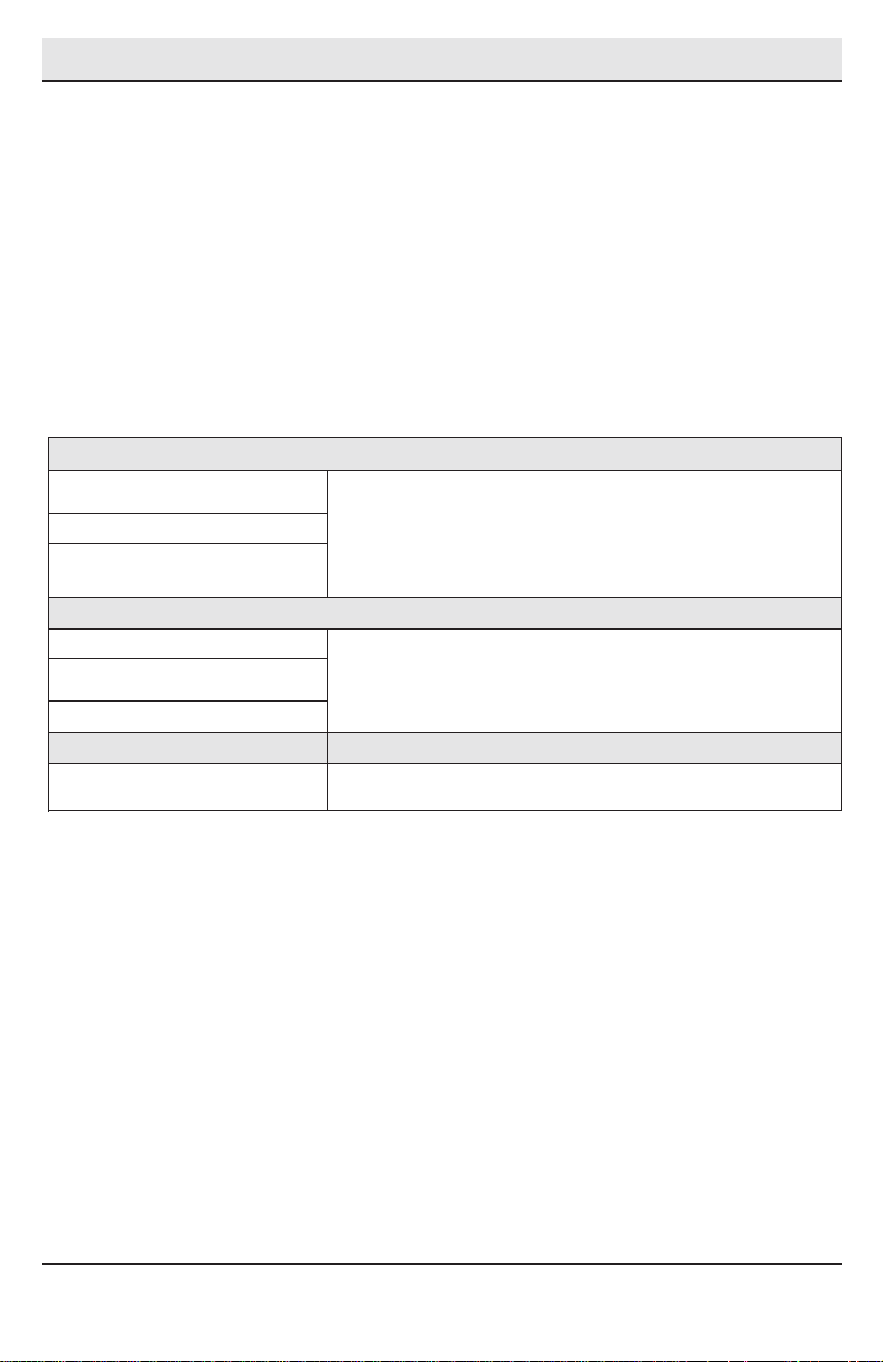
14
Uso del microondas (continuación)
La función de descongelamiento tiene dos funciones: dEF1, que es una función de descongelamiento automático
por peso, y dEF2, que es un descongelamiento manual por tiempo. El nivel de potencia predeterminado es del 30%,
y no se puede ajustar.
1. Desenvuelva los alimentos y quite las tapas (por ejemplo, de envases de jugos de fruta) antes del
descongelamiento.
2. Los paquetes poco profundos se descongelarán más rápidamente que los grandes bloques.
3. Separe las piezas de alimentos lo antes posible durante o al nal del ciclo para una descongelación más
uniforme.
4. Utilice trozos pequeños de papel de aluminio para proteger las partes de los alimentos de forma irregular,
como alas de pollo, puntas de patas y colas de pescado.
La función de descongelación no debe utilizarse para alimentos que hayan permanecido fuera del congelador
durante más de 20 minutos, ni para alimentos preparados congelados. Utilice la siguiente tabla como guía.
Carne
Carne vacuna: carne molida,
churrascos, trozos, estofado
□ Las zonas estrechas o con grasa de los cortes de forma irregular
deben protegerse con papel de aluminio antes de ser descongelados.
□ No descongele menos de 113 g (1/4 lb) o dos hamburguesas de
113 g (4 oz).
□ Coloque todas las carnes en una fuente de horno apta para
microondas. No tapar.
Cordero: estofado y chuletas
Cerdo: chuletas, costillas, trozos,
salchichas
Aves
Pollo: entero y trozado
□ Colocar en una fuente de horno apta para microondas. Pechuga de
pollo.
□ No tapar.
Gallinas de Cornualles, con la pechuga
hacia arriba
Pavo: pechuga
Filetes, bistecs, mariscos enteros
Pescado
□ Colocar en una fuente de horno apta para microondas.
No tapar.
□
1. Coloque los alimentos sin tapar en el plato giratorio y cierre la puerta.
2. Toque DESCONGELAR POR PESO, “dEF1” aparecerá en la pantalla.
3. Introduzca el peso en onzas, de 4 a 70. Si se introduce un valor no válido, el horno microondas no se pondrá en
marcha.
4. Toque START/+30Sec (ARRANCAR/+30 seg.). La pantalla hará una cuenta regresiva del tiempo de
descongelamiento. Cuando termine el ciclo, sonarán los tonos de n de ciclo y la pantalla volverá a mostrar la
hora del día.
5. Toque STOP/CANCEL (PARAR/CANCELAR) en cualquier momento durante la cuenta atrás para pausar o detener
la cocción.
1. Coloque los alimentos sin tapar en el plato giratorio y cierre la puerta.
2. Toque DESCONGELAR POR TIEMPO, “dEF2” aparecerá en la pantalla.
3. Introduzca el tiempo de descongelación deseado.
4. Toque START/+30Sec (ARRANCAR/+30 seg.). La pantalla hará una cuenta regresiva del tiempo de
descongelamiento. Cuando termine el ciclo, sonarán los tonos de n de ciclo y la pantalla volverá a mostrar la
hora del día.
5. Toque STOP/CANCEL (PARAR/CANCELAR) en cualquier momento durante la cuenta atrás para pausar o detener
la cocción.
DESCONGELAMIENTO
DESCONGELAMIENTO POR PESO
DESCONGELAMIENTO POR TIEMPO
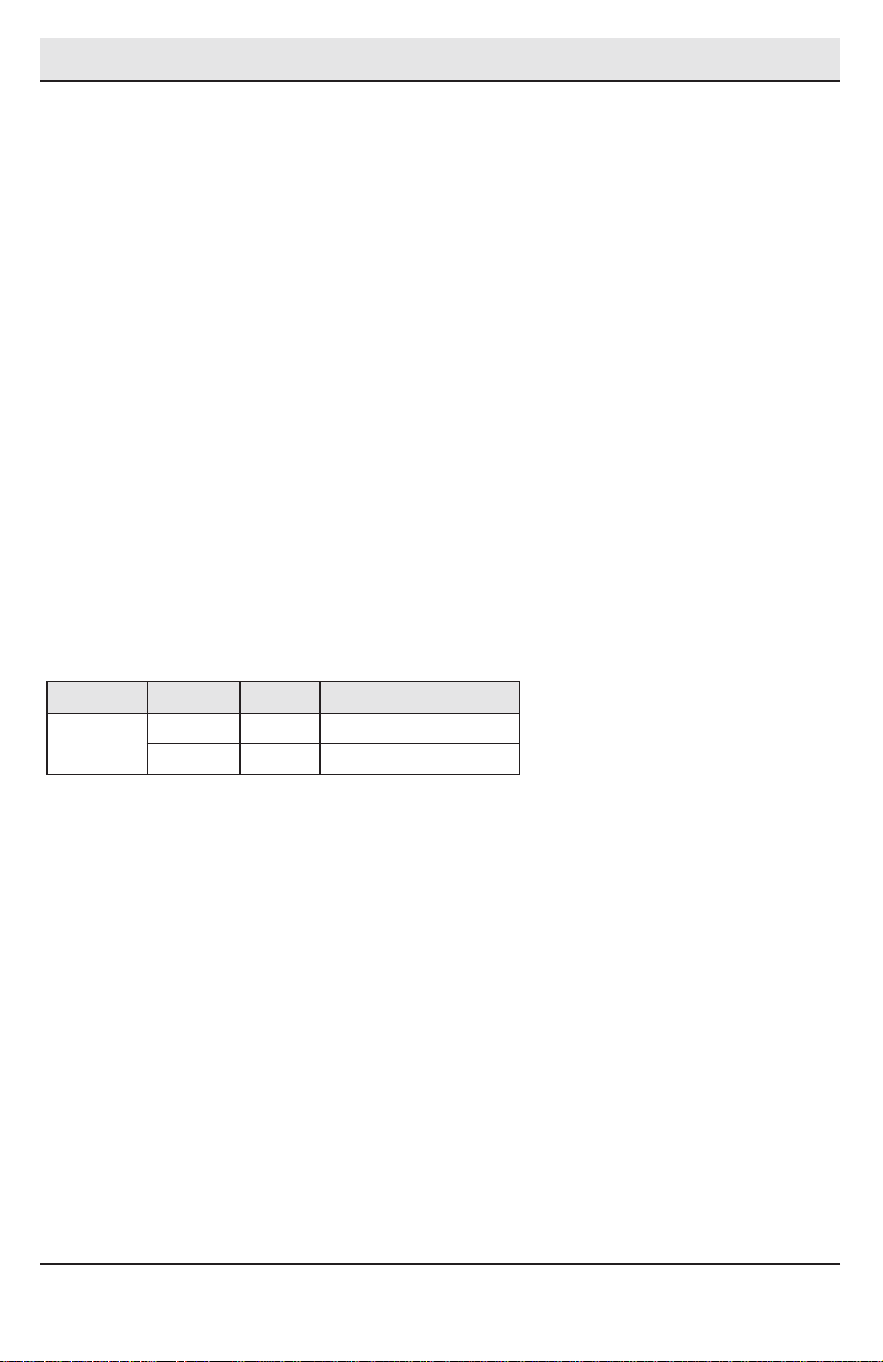
Uso del microondas (continuación)
La función de memoria puede almacenar hasta 3 programas de cocción únicos. Las funciones del menú
automático no pueden programarse como función de memoria.
Para congurar la memoria:
1. Toque el control "0". "1" aparecerá en la pantalla para el primer programa de memoria.
2. Ajuste el programa, siguiendo las instrucciones de «Cocción manual» o «Cocción por etapas».
3. Toque START/+30Sec (ARRANCAR/+30 seg.). Sonará un tono de entrada válida, lo que indica que el programa
ha sido aceptado en la memoria o Toque de nuevo START/+30Sec (ARRANCAR/+30 seg.). El programa se
iniciará inmediatamente y se guardará en la memoria
Para ajustar los programas de segunda y tercera memoria:
Toque "0 " dos o tres veces, y luego siga
los pasos 2 y 3 anteriores.
Para usar la memoria:
1. Coloque los alimentos en el plato giratorio y cierre la puerta.
2. Toque "0" repetidamente hasta que aparezca el número de programa deseado.
3. Toque START/+30Sec (ARRANCAR/+30 seg.). La pantalla hará una cuenta regresiva del tiempo de cocción del
programa. Cuando termine el ciclo, sonarán los tonos de n de ciclo y la pantalla volverá a mostrar la hora del
día.
4. Toque STOP/CANCEL (PARAR/CANCELAR) en cualquier momento durante la cuenta atrás para pausar o detener
la cocción.
Para cocinar palomitas de maíz, toque POPCORN (PALOMITAS DE MAÍZ) de acuerdo con la tabla de frecuencias
que aparece a continuación:
Teclado Toque Pantalla Tamaño de la porción
Palomitas
de maíz
Una vez 3.2 3.2 oz (91 g)
2 veces 3.5 3.5 oz (99 g)
□ Durante la cocción, escuche si los estallidos se reducen a un estallido cada 1 o 2 segundos, y luego
detenga el ciclo.
□ Para evitar que se dañe el horno microondas, no utilice bolsas de papel comunes ni cristalería.
□ Prepare solo un paquete de palomitas a la vez.
□ Siga las instrucciones del fabricante cuando utilice un utensilio para hacer palomitas en el microondas.
□ Para obtener los mejores resultados de cocción, no intente hacer el maíz que no reventó. Para obtener
resultados óptimos, utilice bolsas de maíz para palomitas nuevas.
□ Los resultados de la cocción pueden variar según la marca y el contenido de grasa. Para tamaños de
bolsa que no guran en esta sección, siga las instrucciones del envase.
Cocinar palomitas de maíz:
1. Coloque la bolsa de palomitas de maíz en el plato giratorio y cierre la puerta.
2. Toque POPCORN (PALOMITAS DE MAÍZ) para seleccionar el tamaño (ver tabla).
3. Toque START/+30Sec (ARRANCAR/+30 seg.). La pantalla mostrará la cuenta regresiva del tiempo jado
para las palomitas. Cuando termine el ciclo, sonarán los tonos de n de ciclo y la pantalla volverá a mostrar
la hora del día.
4. Toque STOP/CANCEL (PARAR/CANCELAR) en cualquier momento para pausar o detener la cocción de las
palomitas.
USO DE LA FUNCIÓN DE MEMORIA
COCINAR PALOMITAS DE MAÍZ
HOMEDEPOT.com
Póngase en contacto con el 1-855-847-7264 para obtener más ayuda.
15
16
Uso del microondas (continuación)
Teclado Toque Pantalla Tamaño de la porción
Baked
Potato
Una vez 1 1 papa, 8-oz (230 g)
2 veces 2 2 papas, 16 oz (460 g)
3 veces 3 3 papas, 24 oz (690 g)
Pinche varias veces cada papa con un tenedor antes de hornearla.
Coloque una sola papa en el plato giratorio, hacia un lado (no centrada). Coloque 2 o 3 papas en el plato giratorio,
hacia los bordes, con una separación mínima de 1 in (2.5 cm).
Déjelas reposar durante 5 minutos.
Paracocinar una papa al horno:
1. Colóquela en el plato giratorio y cierre la puerta.
2. Toque BAKED POTATO (PAPAS HORNEADAS) para seleccionar la cantidad de papas (ver tabla).
3. Toque START/+30Sec (ARRANCAR/+30 seg.). La pantalla hará una cuenta regresiva del tiempo cocción.
Cuando termine el ciclo, sonarán los tonos de n de ciclo y la pantalla volverá a mostrar la hora del día.
4. Toque STOP/CANCEL (PARAR/CANCELAR) en cualquier momento para pausar o detener la cocción.
Teclado Toque Pantalla Tamaño de la porción
Pizza Una vez 4.0 1 porción, 4 oz (113 g)
2 veces 8.0 2 porciones, 8 oz (230 g)
3 veces 14.0 3 porciones, 14 oz (400 g)
Coloque las porciones de pizza en un papel absorbente o en un plato de papel.
1. Coloque la pizza en el plato giratorio y cierre la puerta.
2. Toque PIZZA para seleccionar el número de porciones (ver tabla).
3. Toque START/+30Sec (ARRANCAR/+30 seg.). La pantalla hará una cuenta regresiva del tiempo de
recalentamiento. Cuando termine el ciclo, sonarán los tonos de n de ciclo y la pantalla volverá a mostrar
la hora del día.
4. Toque STOP/CANCEL (PARAR/CANCELAR) en cualquier momento para pausar o detener el calentamiento.
Teclado Toque Pantalla Tamaño de la porción
Beverage Una vez 1 1 taza, 4 oz (120 ml)
2 veces 2 2 tazas, 8 oz (240 ml)
3 veces 3 3 tazas, 12 oz (360 ml)
No cubra la bebida. El diámetro de la abertura de la taza afectará al calentamiento del líquido. Las bebidas en
tazas con aberturas más pequeñas pueden calentarse más rápido.
1. Coloque la taza en el plato giratorio y cierre la puerta.
2. Toque BEVERAGE (BEBIDA) para seleccionar el cantidad (ver tabla).
3. Toque START/+30Sec (ARRANCAR/+30 seg.). La pantalla hará una cuenta regresiva del tiempo de cocción.
Cuando termine el ciclo, sonarán los tonos de n de ciclo y la pantalla volverá a mostrar la hora del día.
4. Toque STOP/CANCEL (PARAR/CANCELAR) en cualquier momento para pausar o detener el calentamiento.
COCINAR UNA PAPA HORNEADA
COCINAR PIZZA
CALENTAR UNA BEBIDA
Uso del microondas (continuación)
Teclado Toque Pantalla Tamaño de la porción
Plato de
comida
Una vez 9.0 9.0 oz (255 g)
2 veces 12.0 12.0 oz (340 g)
3 veces 18.0 18.0 oz (510 g)
1. Coloque los alimentos en el plato o platos, cubra con papel plástico y deje un oricio de ventilación.
2. Coloque el plato en el plato giratorio y cierre la puerta.
3. Toque DINNER PLATE (PLATO DE COMIDA) para seleccionar el tamaño (ver tabla).
4. Toque START/+30Sec (ARRANCAR/+30 seg.). La pantalla hará una cuenta regresiva del tiempo cocción.
Cuando termine el ciclo, sonarán los tonos de n de ciclo y la pantalla volverá a mostrar la hora del día.
5. Toque STOP/CANCEL (PARAR/CANCELAR) en cualquier momento para pausar o detener el calentamiento.
Teclado Toque Pantalla Tamaño de la porción
Verduras
congeladas
Una vez 4.0 4.0 oz (113 g)
2 veces 8.0 8.0 oz (230 g)
3 veces 16.0 16.0 oz (460g g)
1. Saque las verduras congeladas del paquete.
2.
Colocar en recipiente apto para microondas.
3. Añadir agua:
- 2 cucharadas (30 ml) para 4.0 oz (113 g) de verduras
- 4 cucharadas (60 ml) para 8.0 oz (230 g) de verduras
- 1/3 taza (80 ml) para 16.0 oz (460 g) de verduras
4. Cubra con papel de plástico y deje un pequeño espacio para ventilar.
5. Remueva y deje descansar 2-3 minutos después de cocinar.
6. Coloque los alimentos en el plato giratorio y cierre la puerta.
7. Toque FROZEN VEGETABLE (VERDURAS CONGELADAS) para seleccionar el cantidad (ver tabla).
8. Toque START/+30Sec (ARRANCAR/+30 seg.). La pantalla hará una cuenta regresiva del tiempo cocción.
Cuando termine el ciclo, sonarán los tonos de n de ciclo y la pantalla volverá a mostrar la hora del día.
9. Toque STOP/CANCEL (PARAR/CANCELAR) en cualquier momento para pausar o detener el calentamiento.
CALENTAR UN PLATO DE COMIDA
COCINAR VERDURAS CONGELADAS
HOMEDEPOT.com
Póngase en contacto con el 1-855-847-7264 para obtener más ayuda.
17

18
Cuidado y limpieza
El horno debe limpiarse regularmente y se deben eliminar los depósitos de alimentos. Si no se mantiene el horno
limpio, podría producirse un deterioro de la supercie que podría afectar negativamente a la vida útil del
electrodoméstico y posiblemente provocar una situación de peligro.
□ Desenchufe el cable de alimentación antes de limpiar cualquier parte de este horno.
□ Mantenga limpio el interior del horno. Si se adhirieran salpicaduras de alimentos o líquidos derramados a las
paredes del horno, limpie con un paño húmedo. Se puede utilizar un detergente suave si el horno se ensucia
mucho. No se recomienda el uso de detergentes fuertes ni abrasivos.
□ La supercie exterior del horno debe limpiarse con agua y jabón, aclararse y secarse con un paño suave.
Para evitar que se dañen las piezas de funcionamiento del interior del horno, no debe permitirse que el agua
se ltre por las aberturas de ventilación.
□ No coloque ningún objeto entre la cara frontal del horno y la puerta ni permita que se acumulen residuos en
las supercies de sellado. Limpie frecuentemente la zona de sellado con un detergente suave, aclare y seque.
Jamás utilice polvo ni elementos abrasivos.
□ Si el panel de control se moja, séquelo con un paño suave y seco. No utilice detergentes fuertes ni abrasivos
en el panel de control.
□ Si se acumula vapor en el interior o en el exterior de la puerta del horno, séquelo con un paño suave. Esto
puede ocurrir cuando el horno microondas es operado bajo condiciones de alta humedad y de ninguna
manera indica un mal funcionamiento de la unidad.
□ De vez en cuando es necesario retirar la bandeja de vidrio para limpiarla. Lave la bandeja en agua tibia y
jabón o en el lavavajillas.
□
Limpiar con regularidad el carro de arrastre y la base de la cavidad del horno para evitar un ruido excesivo.
Simplemente limpie la supercie inferior del horno con agua con detergente suave o limpiavidrios y seque.
□ Al abrirse, la puerta no debe estar sometida a esfuerzos, por ejemplo, un niño colgado de una puerta abierta
o cualquier carga podría hacer que el horno cayera hacia delante y causara lesiones y también daños en
la puerta. Si el horno está dañado, no lo haga funcionar hasta tanto no haya sido reparado por un servicio
técnico competente. Es de particular importancia que el horno cierre correctamente y que no haya daños en
la puerta (doblada), en las bisagras y ganchos (rotos o aojados), o en las juntas y supercies de sellado de
la puerta.
□
□ Utilice siempre el carro de arrastre para cocinar junto con la bandeja de vidrio.
Limpie el carro de arrastre y la base de la cavidad del horno con frecuencia para evitar un ruido excesivo.
□ Nunca opere el horno si la bandeja vidrio no se encuentra en su lugar.
□ No utilice ninguna otra bandeja de vidrio con este horno.
□ Si la bandeja de vidrio está caliente, deje que se enfríe antes de meterla en agua o limpiarla.
□ No cocine directamente sobre la bandeja de vidrio.
LIMPIEZA DEL HORNO
CUIDADO DEL CARRO DE ARRASTRE
CUIDADO DE LA BANDEJA DE VIDRIO

Consulte la siguiente lista de comprobación: podría evitar una llamada de servicio innecesaria.
El horno no funciona:
□ Verique que el cable de electricidad esté enchufado correctamente.
Chispas en la cavidad:
□ Revise los utensilios. No deben utilizarse recipientes metálicos ni platos con adornos metálicos.
□ Verique que los pinchos metálicos o el papel de aluminio no estén tocando las paredes interiores.
□ Verique que la puerta esté rmemente cerrada.
□ Verique que se ha indicado el tiempo de cocción.
□ Verique que no haya un fusible de circuito quemado o si se activó un disyuntor principal.
P: ¿Se puede usar el horno sin la bandeja de vidrio o sin el carro de arrastre en su interior?
R: No. Tanto la bandeja de vidrio como el carro de arrastre deben utilizarse siempre en el horno antes de cocinar.
P: ¿Puedo abrir la puerta cuando el horno está en funcionamiento?
R: La puerta puede abrirse en cualquier momento durante la cocción. En ese momento, la energía de las
microondas se apagará instantáneamente y el ajuste de tiempo se mantendrá hasta que se cierre la puerta.
P: ¿Por qué queda humedad dentro del horno microondas después de cocinar?
R: La humedad a los lados del horno microondas es normal y es causada por el vapor de la cocción.
P: ¿Pasa la energía de las microondas a través de la pantalla de visualización de la puerta?
R: No.
P: ¿Por qué a veces los huevos revientan?
R: Al hornear o cocinar huevos, la yema puede saltar debido a la acumulación de vapor dentro de la membrana
que la envuelve. Para evitarlo, basta con perforar la yema con un palillo antes de cocinarla. No cocine nunca los
huevos sin perforar su cáscara.
P: ¿Por qué se recomienda este tiempo de reposo después de la cocción?
R: El tiempo de reposo de los alimentos es muy importante. El tiempo de reposo signica que los alimentos
deben sacarse del horno y cubrirse durante un tiempo adicional para que se terminen de cocinar. Esto libera el
horno para otras cocciones.
P: ¿Por qué mi horno no siempre cocina tan rápido como indica la guía de cocción del
microondas?
R: Compruebe de nuevo la guía de cocina, para asegurarse de que ha seguido las instrucciones al pie de la
letra. Los tiempos de la guía de cocción y los ajustes de calor son sugerencias, para ayudar a evitar la
sobrecocción… se trata del problema más común a la hora de acostumbrarse a un horno microondas. Utilice
su propio criterio junto con las sugerencias de la guía de cocción para comprobar si los alimentos se han
cocinado correctamente, al igual que haría con una cocina convencional.
P: ¿Se dañará el horno microondas si funciona cuando está vacío?
R: Sí. Nunca lo haga funcionar vacío.
R: No. Si retira o da la vuelta al plato, obtendrá malos resultados de cocción.
Los platos utilizados en el horno deben caber en el plato giratorio.
P: ¿Puedo hacer funcionar mi horno microondas sin el plato giratorio o darle la vuelta
para sostener un plato grande?
ANTES DE LLAMAR AL SERVICIO TÉCNICO
PREGUNTAS FRECUENTES
Solución de problemas
HOMEDEPOT.com
Póngase en contacto con el 1-855-847-7264 para obtener más ayuda.
19