USER MANUAL
REFRIGERATOR
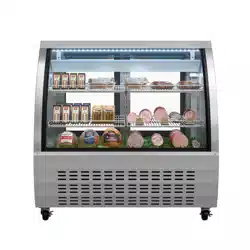
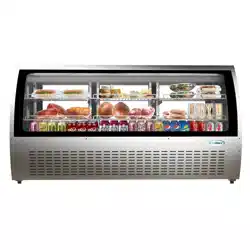
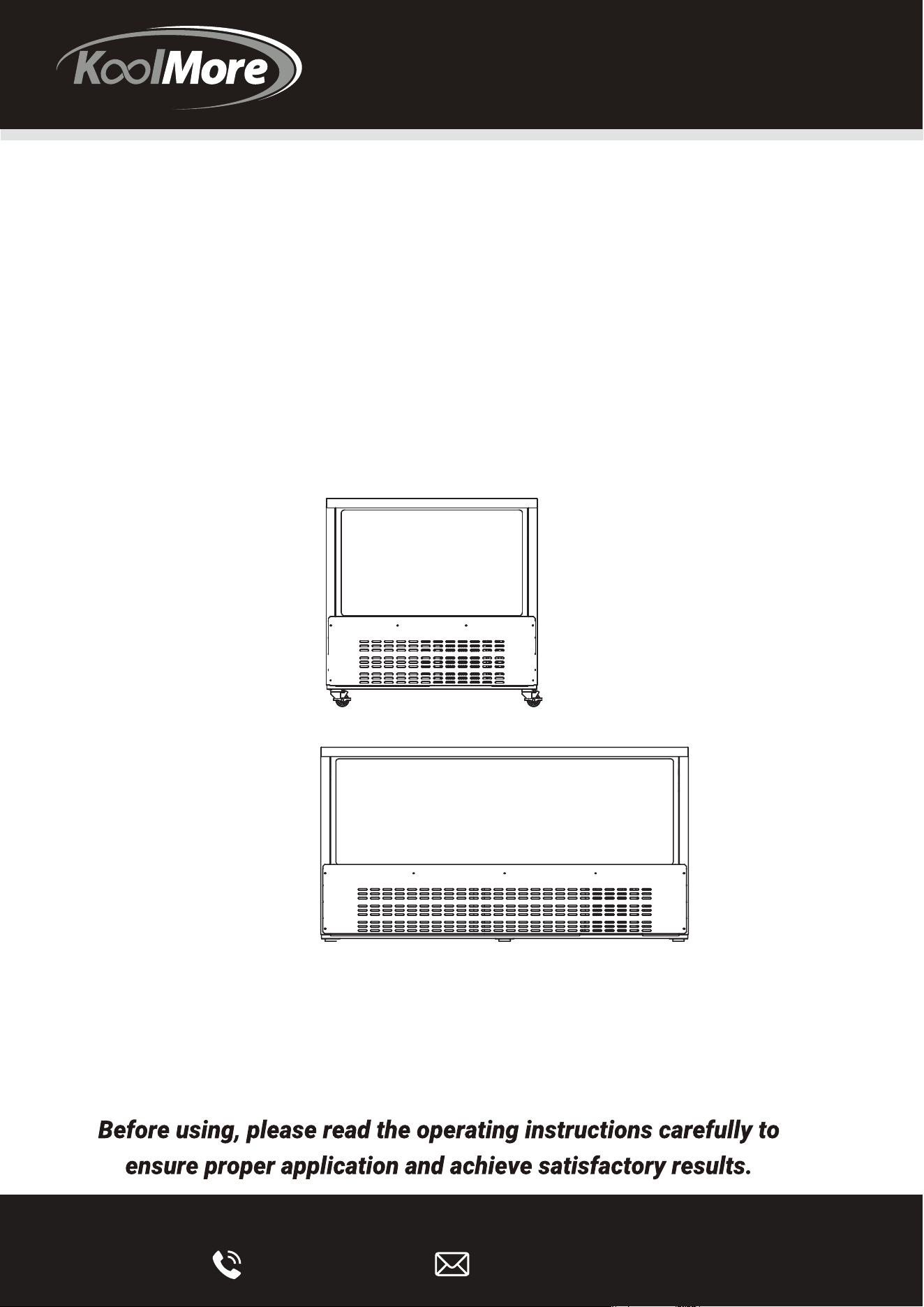
Model: RD18C-SS, RD32C-SS
KoolMore
Deli Display Refrigerator
1. Ensure there is adequate space from the wall to the cabinet and the ceiling; the cabinet
should not be completely sealed at the back. Install an air vent that leads outside. (Note: The
cabinet should be at least 8 inches away from the wall).
2. Remove all packaging from the bottom of the cabinet to prevent heat buildup and reduce the
risk of fire.
3. Storing flammable and explosive chemicals is strictly prohibited. Use an individual,
single-phase socket that must be securely connected to a grounding wire. (Warning: Do not
connect the grounding wire to water or gas pipes).
4. Avoid hard collisions or intense vibrations during transportation; the cabinet should not be
tilted more than 45 degrees.
5. If the unit experiences problems, consult the troubleshooting guide. Do not attempt repairs
yourself; seek assistance from a certified technician only.
DANGER: There is a risk of fire or explosion if the flammable refrigerant is used improperly. Do
not use mechanical devices to defrost the refrigerator or puncture the refrigerant tubing.
DANGER: Flammable refrigerant should only be handled by trained service personnel. Do not
puncture the refrigerant tubing.
CAUTION: There is a risk of fire or explosion when using flammable refrigerants. Consult the
repair manual or owner’s guide before servicing this product. Follow all safety precautions.
CAUTION: Proper disposal of flammable refrigerants is essential. Follow federal or local regula-
tions for disposal to prevent fire or explosion.
CAUTION: Avoid any blockages in all ventilation openings of the appliance or in the built-in struc-
ture.
CAUTION: Servicing should only be performed by factory-authorized service personnel to mini-
mize the risk of fire due to incorrect parts or improper service.
Notice: Use this equipment for its intended purpose as described in this User Manual.
Before you start to install your unit, carefully inspect it for freight damage. If damage is discov-
ered, immediately file a claim with the delivery freight carrier
When using electrical appliances basic safety precautions should be followed:
• This cooler must be properly installed and located in accordance with the installation service
representative.
• Do not allow children to climb, stand or hang on the shelves in the cooler. They could damage
the unit and seriously injure themselves.
• Do not store or use gasoline or other flammable vapors and liquids in the vicinity of this or
any other appliance.
• Unplug the unit from the electrical outlet before cleaning or making repairs.
• Do not touch the cold surfaces in the refrigerator compartment when hands are damp or wet.
Skin may stick to these extremely cold surfaces.
NOTE: It is strongly recommended that any servicing be performed by an authorized instructions
before it is used.
When the refrigerator is installed or used, all the packaging (including cardboard and plastic
wrap) should be removed.
• Keep the refrigerator stable to avoid vibration and noise.
• The refrigerator should be installed in a place with good ventilation and a space of at least 4”
should be allowed between the surrounding walls and the cabinet wall for air circulation.
• Unit should be placed far from any heating source to avoid decrease of refrigeration efficien-
cy.
• Install the refrigerator in a dry place to prevent rust from forming on the compartment body,
which may affect the electrical insulation.
To ensure optimal functionality of your unit from day one, correct installation is essential. We
strongly advise that a certified refrigeration technician and electrician undertake the installation
of your equipment.
First, remove the external packaging and check for any hidden damage. If you find any, promptly
file a claim with the shipping company.
Next, take off the wooden frame and pallet. Position the fridge on a level surface and move it to
its final spot. Ensure there's sufficient air circulation in the area. In particularly hot conditions
(over 100°F), consider adding an exhaust fan for better ventilation.
ELECTRICAL GUIDELINES
Never alter or detach the grounding prong from the appliance's power cord. For safe operation,
this appliance needs to be grounded at all times.
The cooler's power cord has a grounding plug that fits into a standard grounded wall outlet,
reducing the risk of electric shock. If your outlet has only two prongs, it must be upgraded to a
properly grounded one. Avoid using adapter plugs.
Get a professional electrician to verify that your wall outlet and circuit are correctly grounded. Use
a voltmeter to check the incoming voltage. Avoid using extension cords, as they invalidate the
warranty and pose a risk. The cooler should be near enough to the power source to eliminate the
need for extension cords.
The appliance should be connected to a dedicated circuit with a voltage that matches its rating.
This not only ensures efficient performance but also reduces the risk of fire due to overloaded
circuits.
When unplugging the cooler, always hold the plug firmly and pull straight out. Don't just tug on the
cord.
Replace or repair any power cords that are frayed or damaged in any way. Avoid using a cord that
shows signs of wear, cracks, or abrasion.
Be careful not to damage the power cord when moving the cooler away from the wall.
For the wiring diagram, refer to the inside of the front louvered grill.
Once plugged in, the cooler's compressor will start operating.
Avoid excessive adjustments to the control settings. If a replacement of the temperature control
is needed, order it from your dealer or a recommended service agent.
LIGHT SWITCH LOCATION:
The light switch is on the left side of the rear grille.
ADDITIONAL NOTE:
If the unit is unplugged or turned off, wait at least five minutes before restarting.
USAGE RECOMMENDATION
Before loading products, let the unit run for 2 to 3 hours. This helps confirm that the electrical
connections and installation are correct and that no shipping damage has occurred.

1. Ensure there is adequate space from the wall to the cabinet and the ceiling; the cabinet
should not be completely sealed at the back. Install an air vent that leads outside. (Note: The
cabinet should be at least 8 inches away from the wall).
2. Remove all packaging from the bottom of the cabinet to prevent heat buildup and reduce the
risk of fire.
3. Storing flammable and explosive chemicals is strictly prohibited. Use an individual,
single-phase socket that must be securely connected to a grounding wire. (Warning: Do not
connect the grounding wire to water or gas pipes).
4. Avoid hard collisions or intense vibrations during transportation; the cabinet should not be
tilted more than 45 degrees.
5. If the unit experiences problems, consult the troubleshooting guide. Do not attempt repairs
yourself; seek assistance from a certified technician only.
DANGER: There is a risk of fire or explosion if the flammable refrigerant is used improperly. Do
not use mechanical devices to defrost the refrigerator or puncture the refrigerant tubing.
DANGER: Flammable refrigerant should only be handled by trained service personnel. Do not
puncture the refrigerant tubing.
CAUTION: There is a risk of fire or explosion when using flammable refrigerants. Consult the
repair manual or owner’s guide before servicing this product. Follow all safety precautions.
CAUTION: Proper disposal of flammable refrigerants is essential. Follow federal or local regula-
tions for disposal to prevent fire or explosion.
CAUTION: Avoid any blockages in all ventilation openings of the appliance or in the built-in struc-
ture.
CAUTION: Servicing should only be performed by factory-authorized service personnel to mini-
mize the risk of fire due to incorrect parts or improper service.
Notice: Use this equipment for its intended purpose as described in this User Manual.
Before you start to install your unit, carefully inspect it for freight damage. If damage is discov-
ered, immediately file a claim with the delivery freight carrier
When using electrical appliances basic safety precautions should be followed:
• This cooler must be properly installed and located in accordance with the installation service
representative.
• Do not allow children to climb, stand or hang on the shelves in the cooler. They could damage
the unit and seriously injure themselves.
• Do not store or use gasoline or other flammable vapors and liquids in the vicinity of this or
any other appliance.
• Unplug the unit from the electrical outlet before cleaning or making repairs.
• Do not touch the cold surfaces in the refrigerator compartment when hands are damp or wet.
Skin may stick to these extremely cold surfaces.
NOTE: It is strongly recommended that any servicing be performed by an authorized instructions
before it is used.
When the refrigerator is installed or used, all the packaging (including cardboard and plastic
wrap) should be removed.
• Keep the refrigerator stable to avoid vibration and noise.
• The refrigerator should be installed in a place with good ventilation and a space of at least 4”
should be allowed between the surrounding walls and the cabinet wall for air circulation.
• Unit should be placed far from any heating source to avoid decrease of refrigeration efficien-
cy.
• Install the refrigerator in a dry place to prevent rust from forming on the compartment body,
which may affect the electrical insulation.
To ensure optimal functionality of your unit from day one, correct installation is essential. We
CONTENTS
strongly advise that a certified refrigeration technician and electrician undertake the installation
of your equipment.
First, remove the external packaging and check for any hidden damage. If you find any, promptly
file a claim with the shipping company.
Next, take off the wooden frame and pallet. Position the fridge on a level surface and move it to
its final spot. Ensure there's sufficient air circulation in the area. In particularly hot conditions
(over 100°F), consider adding an exhaust fan for better ventilation.
ELECTRICAL GUIDELINES
Never alter or detach the grounding prong from the appliance's power cord. For safe operation,
this appliance needs to be grounded at all times.
The cooler's power cord has a grounding plug that fits into a standard grounded wall outlet,
reducing the risk of electric shock. If your outlet has only two prongs, it must be upgraded to a
properly grounded one. Avoid using adapter plugs.
Get a professional electrician to verify that your wall outlet and circuit are correctly grounded. Use
a voltmeter to check the incoming voltage. Avoid using extension cords, as they invalidate the
warranty and pose a risk. The cooler should be near enough to the power source to eliminate the
need for extension cords.
The appliance should be connected to a dedicated circuit with a voltage that matches its rating.
This not only ensures efficient performance but also reduces the risk of fire due to overloaded
circuits.
When unplugging the cooler, always hold the plug firmly and pull straight out. Don't just tug on the
cord.
Replace or repair any power cords that are frayed or damaged in any way. Avoid using a cord that
shows signs of wear, cracks, or abrasion.
Be careful not to damage the power cord when moving the cooler away from the wall.
For the wiring diagram, refer to the inside of the front louvered grill.
Once plugged in, the cooler's compressor will start operating.
Avoid excessive adjustments to the control settings. If a replacement of the temperature control
is needed, order it from your dealer or a recommended service agent.
LIGHT SWITCH LOCATION:
The light switch is on the left side of the rear grille.
ADDITIONAL NOTE:
If the unit is unplugged or turned off, wait at least five minutes before restarting.
USAGE RECOMMENDATION
Before loading products, let the unit run for 2 to 3 hours. This helps confirm that the electrical
connections and installation are correct and that no shipping damage has occurred.
SAFETY..............................................................2
INSTALLATION...................................................4
MAINTENANCE...................................................6
TROUBLESHOOTING...........................................9

1. Ensure there is adequate space from the wall to the cabinet and the ceiling; the cabinet
should not be completely sealed at the back. Install an air vent that leads outside. (Note: The
cabinet should be at least 8 inches away from the wall).
2. Remove all packaging from the bottom of the cabinet to prevent heat buildup and reduce the
risk of fire.
3. Storing flammable and explosive chemicals is strictly prohibited. Use an individual,
single-phase socket that must be securely connected to a grounding wire. (Warning: Do not
connect the grounding wire to water or gas pipes).
4. Avoid hard collisions or intense vibrations during transportation; the cabinet should not be
tilted more than 45 degrees.
5. If the unit experiences problems, consult the troubleshooting guide. Do not attempt repairs
yourself; seek assistance from a certified technician only.
DANGER: There is a risk of fire or explosion if the flammable refrigerant is used improperly. Do
not use mechanical devices to defrost the refrigerator or puncture the refrigerant tubing.
DANGER: Flammable refrigerant should only be handled by trained service personnel. Do not
puncture the refrigerant tubing.
CAUTION: There is a risk of fire or explosion when using flammable refrigerants. Consult the
repair manual or owner’s guide before servicing this product. Follow all safety precautions.
CAUTION: Proper disposal of flammable refrigerants is essential. Follow federal or local regula-
tions for disposal to prevent fire or explosion.
CAUTION: Avoid any blockages in all ventilation openings of the appliance or in the built-in struc-
ture.
CAUTION: Servicing should only be performed by factory-authorized service personnel to mini-
mize the risk of fire due to incorrect parts or improper service.
Notice: Use this equipment for its intended purpose as described in this User Manual.
Before you start to install your unit, carefully inspect it for freight damage. If damage is discov-
ered, immediately file a claim with the delivery freight carrier
When using electrical appliances basic safety precautions should be followed:
• This cooler must be properly installed and located in accordance with the installation service
representative.
• Do not allow children to climb, stand or hang on the shelves in the cooler. They could damage
the unit and seriously injure themselves.
• Do not store or use gasoline or other flammable vapors and liquids in the vicinity of this or
any other appliance.
• Unplug the unit from the electrical outlet before cleaning or making repairs.
• Do not touch the cold surfaces in the refrigerator compartment when hands are damp or wet.
Skin may stick to these extremely cold surfaces.
NOTE: It is strongly recommended that any servicing be performed by an authorized instructions
before it is used.
When the refrigerator is installed or used, all the packaging (including cardboard and plastic
wrap) should be removed.
• Keep the refrigerator stable to avoid vibration and noise.
• The refrigerator should be installed in a place with good ventilation and a space of at least 4”
should be allowed between the surrounding walls and the cabinet wall for air circulation.
• Unit should be placed far from any heating source to avoid decrease of refrigeration efficien-
cy.
• Install the refrigerator in a dry place to prevent rust from forming on the compartment body,
which may affect the electrical insulation.
To ensure optimal functionality of your unit from day one, correct installation is essential. We
SAFETY
strongly advise that a certified refrigeration technician and electrician undertake the installation
of your equipment.
First, remove the external packaging and check for any hidden damage. If you find any, promptly
file a claim with the shipping company.
Next, take off the wooden frame and pallet. Position the fridge on a level surface and move it to
its final spot. Ensure there's sufficient air circulation in the area. In particularly hot conditions
(over 100°F), consider adding an exhaust fan for better ventilation.
ELECTRICAL GUIDELINES
Never alter or detach the grounding prong from the appliance's power cord. For safe operation,
this appliance needs to be grounded at all times.
The cooler's power cord has a grounding plug that fits into a standard grounded wall outlet,
reducing the risk of electric shock. If your outlet has only two prongs, it must be upgraded to a
properly grounded one. Avoid using adapter plugs.
Get a professional electrician to verify that your wall outlet and circuit are correctly grounded. Use
a voltmeter to check the incoming voltage. Avoid using extension cords, as they invalidate the
warranty and pose a risk. The cooler should be near enough to the power source to eliminate the
need for extension cords.
The appliance should be connected to a dedicated circuit with a voltage that matches its rating.
This not only ensures efficient performance but also reduces the risk of fire due to overloaded
circuits.
When unplugging the cooler, always hold the plug firmly and pull straight out. Don't just tug on the
cord.
Replace or repair any power cords that are frayed or damaged in any way. Avoid using a cord that
shows signs of wear, cracks, or abrasion.
Be careful not to damage the power cord when moving the cooler away from the wall.
For the wiring diagram, refer to the inside of the front louvered grill.
Once plugged in, the cooler's compressor will start operating.
Avoid excessive adjustments to the control settings. If a replacement of the temperature control
is needed, order it from your dealer or a recommended service agent.
LIGHT SWITCH LOCATION:
The light switch is on the left side of the rear grille.
ADDITIONAL NOTE:
If the unit is unplugged or turned off, wait at least five minutes before restarting.
USAGE RECOMMENDATION
Before loading products, let the unit run for 2 to 3 hours. This helps confirm that the electrical
connections and installation are correct and that no shipping damage has occurred.
2

1. Ensure there is adequate space from the wall to the cabinet and the ceiling; the cabinet
should not be completely sealed at the back. Install an air vent that leads outside. (Note: The
cabinet should be at least 8 inches away from the wall).
2. Remove all packaging from the bottom of the cabinet to prevent heat buildup and reduce the
risk of fire.
3. Storing flammable and explosive chemicals is strictly prohibited. Use an individual,
single-phase socket that must be securely connected to a grounding wire. (Warning: Do not
connect the grounding wire to water or gas pipes).
4. Avoid hard collisions or intense vibrations during transportation; the cabinet should not be
tilted more than 45 degrees.
5. If the unit experiences problems, consult the troubleshooting guide. Do not attempt repairs
yourself; seek assistance from a certified technician only.
DANGER: There is a risk of fire or explosion if the flammable refrigerant is used improperly. Do
not use mechanical devices to defrost the refrigerator or puncture the refrigerant tubing.
DANGER: Flammable refrigerant should only be handled by trained service personnel. Do not
puncture the refrigerant tubing.
CAUTION: There is a risk of fire or explosion when using flammable refrigerants. Consult the
repair manual or owner’s guide before servicing this product. Follow all safety precautions.
CAUTION: Proper disposal of flammable refrigerants is essential. Follow federal or local regula-
tions for disposal to prevent fire or explosion.
CAUTION: Avoid any blockages in all ventilation openings of the appliance or in the built-in struc-
ture.
CAUTION: Servicing should only be performed by factory-authorized service personnel to mini-
mize the risk of fire due to incorrect parts or improper service.
Notice: Use this equipment for its intended purpose as described in this User Manual.
Before you start to install your unit, carefully inspect it for freight damage. If damage is discov-
ered, immediately file a claim with the delivery freight carrier
When using electrical appliances basic safety precautions should be followed:
• This cooler must be properly installed and located in accordance with the installation service
representative.
• Do not allow children to climb, stand or hang on the shelves in the cooler. They could damage
the unit and seriously injure themselves.
• Do not store or use gasoline or other flammable vapors and liquids in the vicinity of this or
any other appliance.
• Unplug the unit from the electrical outlet before cleaning or making repairs.
• Do not touch the cold surfaces in the refrigerator compartment when hands are damp or wet.
Skin may stick to these extremely cold surfaces.
NOTE: It is strongly recommended that any servicing be performed by an authorized instructions
before it is used.
When the refrigerator is installed or used, all the packaging (including cardboard and plastic
wrap) should be removed.
• Keep the refrigerator stable to avoid vibration and noise.
• The refrigerator should be installed in a place with good ventilation and a space of at least 4”
should be allowed between the surrounding walls and the cabinet wall for air circulation.
• Unit should be placed far from any heating source to avoid decrease of refrigeration efficien-
cy.
• Install the refrigerator in a dry place to prevent rust from forming on the compartment body,
which may affect the electrical insulation.
To ensure optimal functionality of your unit from day one, correct installation is essential. We
strongly advise that a certified refrigeration technician and electrician undertake the installation
of your equipment.
First, remove the external packaging and check for any hidden damage. If you find any, promptly
file a claim with the shipping company.
Next, take off the wooden frame and pallet. Position the fridge on a level surface and move it to
its final spot. Ensure there's sufficient air circulation in the area. In particularly hot conditions
(over 100°F), consider adding an exhaust fan for better ventilation.
ELECTRICAL GUIDELINES
Never alter or detach the grounding prong from the appliance's power cord. For safe operation,
this appliance needs to be grounded at all times.
The cooler's power cord has a grounding plug that fits into a standard grounded wall outlet,
reducing the risk of electric shock. If your outlet has only two prongs, it must be upgraded to a
properly grounded one. Avoid using adapter plugs.
Get a professional electrician to verify that your wall outlet and circuit are correctly grounded. Use
a voltmeter to check the incoming voltage. Avoid using extension cords, as they invalidate the
warranty and pose a risk. The cooler should be near enough to the power source to eliminate the
need for extension cords.
The appliance should be connected to a dedicated circuit with a voltage that matches its rating.
This not only ensures efficient performance but also reduces the risk of fire due to overloaded
circuits.
When unplugging the cooler, always hold the plug firmly and pull straight out. Don't just tug on the
cord.
Replace or repair any power cords that are frayed or damaged in any way. Avoid using a cord that
shows signs of wear, cracks, or abrasion.
Be careful not to damage the power cord when moving the cooler away from the wall.
For the wiring diagram, refer to the inside of the front louvered grill.
Once plugged in, the cooler's compressor will start operating.
Avoid excessive adjustments to the control settings. If a replacement of the temperature control
is needed, order it from your dealer or a recommended service agent.
LIGHT SWITCH LOCATION:
The light switch is on the left side of the rear grille.
ADDITIONAL NOTE:
If the unit is unplugged or turned off, wait at least five minutes before restarting.
USAGE RECOMMENDATION
Before loading products, let the unit run for 2 to 3 hours. This helps confirm that the electrical
connections and installation are correct and that no shipping damage has occurred.
3

1. Ensure there is adequate space from the wall to the cabinet and the ceiling; the cabinet
should not be completely sealed at the back. Install an air vent that leads outside. (Note: The
cabinet should be at least 8 inches away from the wall).
2. Remove all packaging from the bottom of the cabinet to prevent heat buildup and reduce the
risk of fire.
3. Storing flammable and explosive chemicals is strictly prohibited. Use an individual,
single-phase socket that must be securely connected to a grounding wire. (Warning: Do not
connect the grounding wire to water or gas pipes).
4. Avoid hard collisions or intense vibrations during transportation; the cabinet should not be
tilted more than 45 degrees.
5. If the unit experiences problems, consult the troubleshooting guide. Do not attempt repairs
yourself; seek assistance from a certified technician only.
DANGER: There is a risk of fire or explosion if the flammable refrigerant is used improperly. Do
not use mechanical devices to defrost the refrigerator or puncture the refrigerant tubing.
DANGER: Flammable refrigerant should only be handled by trained service personnel. Do not
puncture the refrigerant tubing.
CAUTION: There is a risk of fire or explosion when using flammable refrigerants. Consult the
repair manual or owner’s guide before servicing this product. Follow all safety precautions.
CAUTION: Proper disposal of flammable refrigerants is essential. Follow federal or local regula-
tions for disposal to prevent fire or explosion.
CAUTION: Avoid any blockages in all ventilation openings of the appliance or in the built-in struc-
ture.
CAUTION: Servicing should only be performed by factory-authorized service personnel to mini-
mize the risk of fire due to incorrect parts or improper service.
Notice: Use this equipment for its intended purpose as described in this User Manual.
Before you start to install your unit, carefully inspect it for freight damage. If damage is discov-
ered, immediately file a claim with the delivery freight carrier
When using electrical appliances basic safety precautions should be followed:
• This cooler must be properly installed and located in accordance with the installation service
representative.
• Do not allow children to climb, stand or hang on the shelves in the cooler. They could damage
the unit and seriously injure themselves.
• Do not store or use gasoline or other flammable vapors and liquids in the vicinity of this or
any other appliance.
• Unplug the unit from the electrical outlet before cleaning or making repairs.
• Do not touch the cold surfaces in the refrigerator compartment when hands are damp or wet.
Skin may stick to these extremely cold surfaces.
NOTE: It is strongly recommended that any servicing be performed by an authorized instructions
before it is used.
When the refrigerator is installed or used, all the packaging (including cardboard and plastic
wrap) should be removed.
• Keep the refrigerator stable to avoid vibration and noise.
• The refrigerator should be installed in a place with good ventilation and a space of at least 4”
should be allowed between the surrounding walls and the cabinet wall for air circulation.
• Unit should be placed far from any heating source to avoid decrease of refrigeration efficien-
cy.
• Install the refrigerator in a dry place to prevent rust from forming on the compartment body,
which may affect the electrical insulation.
To ensure optimal functionality of your unit from day one, correct installation is essential. We
INSTALLATION
strongly advise that a certified refrigeration technician and electrician undertake the installation
of your equipment.
First, remove the external packaging and check for any hidden damage. If you find any, promptly
file a claim with the shipping company.
Next, take off the wooden frame and pallet. Position the fridge on a level surface and move it to
its final spot. Ensure there's sufficient air circulation in the area. In particularly hot conditions
(over 100°F), consider adding an exhaust fan for better ventilation.
ELECTRICAL GUIDELINES
Never alter or detach the grounding prong from the appliance's power cord. For safe operation,
this appliance needs to be grounded at all times.
The cooler's power cord has a grounding plug that fits into a standard grounded wall outlet,
reducing the risk of electric shock. If your outlet has only two prongs, it must be upgraded to a
properly grounded one. Avoid using adapter plugs.
Get a professional electrician to verify that your wall outlet and circuit are correctly grounded. Use
a voltmeter to check the incoming voltage. Avoid using extension cords, as they invalidate the
warranty and pose a risk. The cooler should be near enough to the power source to eliminate the
need for extension cords.
The appliance should be connected to a dedicated circuit with a voltage that matches its rating.
This not only ensures efficient performance but also reduces the risk of fire due to overloaded
circuits.
When unplugging the cooler, always hold the plug firmly and pull straight out. Don't just tug on the
cord.
Replace or repair any power cords that are frayed or damaged in any way. Avoid using a cord that
shows signs of wear, cracks, or abrasion.
Be careful not to damage the power cord when moving the cooler away from the wall.
For the wiring diagram, refer to the inside of the front louvered grill.
Once plugged in, the cooler's compressor will start operating.
Avoid excessive adjustments to the control settings. If a replacement of the temperature control
is needed, order it from your dealer or a recommended service agent.
LIGHT SWITCH LOCATION:
The light switch is on the left side of the rear grille.
ADDITIONAL NOTE:
If the unit is unplugged or turned off, wait at least five minutes before restarting.
USAGE RECOMMENDATION
Before loading products, let the unit run for 2 to 3 hours. This helps confirm that the electrical
connections and installation are correct and that no shipping damage has occurred.
Condensers accumulate dirt and dust and require cleaning every 30 days. Dirty condensers result
in compressor failure, product loss, and lost sales -- which are not covered by warranty.
Air is pulled through the condenser continuously along with dust, lint, grease, etc. If you keep
the condenser clean you will minimize your service expense and lower your electrical costs. The
condenser requires scheduled cleaning every days or as needed. A dirty condenser can result in
non-warranted part and compressor failures and product loss.
Proper cleaning involves removing debris from the condenser by using a soft brush or vacuuming
the condenser with a shop vacuum or using CO2, nitrogen or pressurized air.
If you cannot remove the debris adequately please call KoolMore for assistaince.
CLEANING THE CONDENSER COIL
Required Tools
• Phillips screwdriver
• Stiff bristle brush
• Adjustable wrench
When using electrical appliances basic safety precautions should be followed.
• Disconnect power to unit.
• Take off front grill assembly by removing all screws.
• Remove bolts anchoring compressor assembly to frame rails and carefully slide out --tube
connections are flexible.
• Clean off accumulated dirt from condensing coil with the stiff bristle brush.
• Lift cardboard cover above fan at plastic plugs and carefully clean condenser coil and fan
blades.
• After brushing condenser coil, vacuum dirt from coil and interior floor.
• Replace cardboard cover, carefully slide compressor assembly back into position and replace
bolts.
• Reinstall front grille assembly onto unit with appropriate fasteners and clips. Tighten all
screws.
• Connect unit to power and check to see if condenser is running.
STAINLESS STEEL CARE AND CLEANING
Recommended cleaners for stainless steel
For Routine Cleaning:
Use a mild dish soap or a stainless steel cleaner applied with a soft cloth or sponge for routine
cleaning. Brands like Weiman Stainless Steel Cleaner and Bar Keepers Friend can be used for this
purpose.
For Fingerprints and Smears:
Products like Weiman Stainless Steel Wipes or Sheila Shine Stainless Steel Cleaner provide a
protective barrier film against fingerprints and smears on stainless steel surfaces.
For Stubborn Stains and Discoloration:
To tackle stubborn stains and discoloration, consider using Bar Keepers Friend Cleanser or Bon
Ami Cleanser. Remember to rub in the direction of the polish lines for best results.
For Oven Cleaning:
For removing grease, fatty acids, burnt-on foods, and other residues from ovens and stainless
steel surfaces, you can use Easy-Off Oven Cleaner or De-Grease It Oven Cleaner.
For Grease and Oil Removal:
Any good commercial detergent, such as a dishwashing liquid, can be applied with a sponge or
soft cloth to effectively remove grease and oil.
For Restoration/Passivation:
Products like Benefit Stainless Steel Cleaner, Super Sheen Stainless Steel Cleaner, or Sheila Shine
Stainless Steel Polish are suitable for restoring and passivating stainless steel surfaces, leaving
them looking shiny and refreshed.
CAUTION: Do not use any steel wool, abrasive or chlorine based products to clean stainless steel
surfaces.
Stainless Steel Enemies
There are three basic items that can break down stainless steel’s passivity layer and allow
corrosion to occur.
• Scratches from wire brushes, metal scrapers and steel pads are just a few examples of items
that
can be abrasive to stainless steel’s surface.
• Deposits left on stainless steel can leave spots. Hard water can leave spots. Hard water that is
heated can leave deposits if left to sit for too long. These deposits can cause the passive layer
to break down and rust stainless steel. All deposits left from food prep or service should be
removed as quickly as possible.
• Chlorides are present in table salt, food and water. Household and industrial cleaners are the
worst type of chlorides to use.
8 Steps that can help prevent rust on stainless steel
1. Choose the Right Cleaning Tools: Opt for non-abrasive tools when cleaning stainless steel
items. Soft cloths and plastic scouring pads are gentle on stainless steel's passive layer,
preserving its integrity.
2. Clean Along the Polish Lines: Some stainless steel surfaces have visible polish lines or grain.
Always clean parallel to these lines. When the grain is not visible, use a plastic scouring pad
or a soft cloth.
3. Select Non-Chloride Cleaners: Use alkaline, alkaline chlorinated, or non-chloride containing
cleaners. Many traditional cleaners contain chlorides, but there are now more non-chloride
options available. If you're unsure about chloride content, consult the cleaner supplier and
request an alternative. Avoid cleaners with quaternary salts, as they can harm stainless steel,
leading to pitting and rust.
4. Consider Water Treatment: To reduce mineral deposits, use soft water whenever possible.
Installing specific filters can be beneficial. Consult a water treatment specialist for guidance
on proper water treatment methods.
5. Maintain Food Equipment Cleanliness: Clean food equipment at the recommended strength
using alkaline, alkaline chlorinated, or non-chloride cleaners. Regular cleaning prevents the
buildup of tough stains.
6. Rinse and Dry Immediately with Chlorinated Cleaners: When using chlorinated cleaners, it's
essential to rinse and wipe dry immediately. Promptly remove standing cleaning agents and
water. Allow stainless steel equipment to air dry, as oxygen helps maintain the passive film
that protects stainless steel.
7. Avoid Hydrochloric Acid: Never use hydrochloric acid (muriatic acid) on stainless steel, as it
can damage the surface.
8. Regularly Restore/Passivate Stainless Steel: Periodically restore or passivate stainless steel
to maintain its protective properties and prevent rust.
4

1. Ensure there is adequate space from the wall to the cabinet and the ceiling; the cabinet
should not be completely sealed at the back. Install an air vent that leads outside. (Note: The
cabinet should be at least 8 inches away from the wall).
2. Remove all packaging from the bottom of the cabinet to prevent heat buildup and reduce the
risk of fire.
3. Storing flammable and explosive chemicals is strictly prohibited. Use an individual,
single-phase socket that must be securely connected to a grounding wire. (Warning: Do not
connect the grounding wire to water or gas pipes).
4. Avoid hard collisions or intense vibrations during transportation; the cabinet should not be
tilted more than 45 degrees.
5. If the unit experiences problems, consult the troubleshooting guide. Do not attempt repairs
yourself; seek assistance from a certified technician only.
DANGER: There is a risk of fire or explosion if the flammable refrigerant is used improperly. Do
not use mechanical devices to defrost the refrigerator or puncture the refrigerant tubing.
DANGER: Flammable refrigerant should only be handled by trained service personnel. Do not
puncture the refrigerant tubing.
CAUTION: There is a risk of fire or explosion when using flammable refrigerants. Consult the
repair manual or owner’s guide before servicing this product. Follow all safety precautions.
CAUTION: Proper disposal of flammable refrigerants is essential. Follow federal or local regula-
tions for disposal to prevent fire or explosion.
CAUTION: Avoid any blockages in all ventilation openings of the appliance or in the built-in struc-
ture.
CAUTION: Servicing should only be performed by factory-authorized service personnel to mini-
mize the risk of fire due to incorrect parts or improper service.
Notice: Use this equipment for its intended purpose as described in this User Manual.
Before you start to install your unit, carefully inspect it for freight damage. If damage is discov-
ered, immediately file a claim with the delivery freight carrier
When using electrical appliances basic safety precautions should be followed:
• This cooler must be properly installed and located in accordance with the installation service
representative.
• Do not allow children to climb, stand or hang on the shelves in the cooler. They could damage
the unit and seriously injure themselves.
• Do not store or use gasoline or other flammable vapors and liquids in the vicinity of this or
any other appliance.
• Unplug the unit from the electrical outlet before cleaning or making repairs.
• Do not touch the cold surfaces in the refrigerator compartment when hands are damp or wet.
Skin may stick to these extremely cold surfaces.
NOTE: It is strongly recommended that any servicing be performed by an authorized instructions
before it is used.
When the refrigerator is installed or used, all the packaging (including cardboard and plastic
wrap) should be removed.
• Keep the refrigerator stable to avoid vibration and noise.
• The refrigerator should be installed in a place with good ventilation and a space of at least 4”
should be allowed between the surrounding walls and the cabinet wall for air circulation.
• Unit should be placed far from any heating source to avoid decrease of refrigeration efficien-
cy.
• Install the refrigerator in a dry place to prevent rust from forming on the compartment body,
which may affect the electrical insulation.
To ensure optimal functionality of your unit from day one, correct installation is essential. We
strongly advise that a certified refrigeration technician and electrician undertake the installation
of your equipment.
First, remove the external packaging and check for any hidden damage. If you find any, promptly
file a claim with the shipping company.
Next, take off the wooden frame and pallet. Position the fridge on a level surface and move it to
its final spot. Ensure there's sufficient air circulation in the area. In particularly hot conditions
(over 100°F), consider adding an exhaust fan for better ventilation.
ELECTRICAL GUIDELINES
Never alter or detach the grounding prong from the appliance's power cord. For safe operation,
this appliance needs to be grounded at all times.
The cooler's power cord has a grounding plug that fits into a standard grounded wall outlet,
reducing the risk of electric shock. If your outlet has only two prongs, it must be upgraded to a
properly grounded one. Avoid using adapter plugs.
Get a professional electrician to verify that your wall outlet and circuit are correctly grounded. Use
a voltmeter to check the incoming voltage. Avoid using extension cords, as they invalidate the
warranty and pose a risk. The cooler should be near enough to the power source to eliminate the
need for extension cords.
The appliance should be connected to a dedicated circuit with a voltage that matches its rating.
This not only ensures efficient performance but also reduces the risk of fire due to overloaded
circuits.
When unplugging the cooler, always hold the plug firmly and pull straight out. Don't just tug on the
cord.
Replace or repair any power cords that are frayed or damaged in any way. Avoid using a cord that
shows signs of wear, cracks, or abrasion.
Be careful not to damage the power cord when moving the cooler away from the wall.
For the wiring diagram, refer to the inside of the front louvered grill.
Once plugged in, the cooler's compressor will start operating.
Avoid excessive adjustments to the control settings. If a replacement of the temperature control
is needed, order it from your dealer or a recommended service agent.
LIGHT SWITCH LOCATION:
The light switch is on the left side of the rear grille.
ADDITIONAL NOTE:
If the unit is unplugged or turned off, wait at least five minutes before restarting.
USAGE RECOMMENDATION
Before loading products, let the unit run for 2 to 3 hours. This helps confirm that the electrical
connections and installation are correct and that no shipping damage has occurred.
Condensers accumulate dirt and dust and require cleaning every 30 days. Dirty condensers result
in compressor failure, product loss, and lost sales -- which are not covered by warranty.
Air is pulled through the condenser continuously along with dust, lint, grease, etc. If you keep
the condenser clean you will minimize your service expense and lower your electrical costs. The
condenser requires scheduled cleaning every days or as needed. A dirty condenser can result in
non-warranted part and compressor failures and product loss.
Proper cleaning involves removing debris from the condenser by using a soft brush or vacuuming
the condenser with a shop vacuum or using CO2, nitrogen or pressurized air.
If you cannot remove the debris adequately please call KoolMore for assistaince.
CLEANING THE CONDENSER COIL
Required Tools
• Phillips screwdriver
• Stiff bristle brush
• Adjustable wrench
When using electrical appliances basic safety precautions should be followed.
• Disconnect power to unit.
• Take off front grill assembly by removing all screws.
• Remove bolts anchoring compressor assembly to frame rails and carefully slide out --tube
connections are flexible.
• Clean off accumulated dirt from condensing coil with the stiff bristle brush.
• Lift cardboard cover above fan at plastic plugs and carefully clean condenser coil and fan
blades.
• After brushing condenser coil, vacuum dirt from coil and interior floor.
• Replace cardboard cover, carefully slide compressor assembly back into position and replace
bolts.
• Reinstall front grille assembly onto unit with appropriate fasteners and clips. Tighten all
screws.
• Connect unit to power and check to see if condenser is running.
STAINLESS STEEL CARE AND CLEANING
Recommended cleaners for stainless steel
For Routine Cleaning:
Use a mild dish soap or a stainless steel cleaner applied with a soft cloth or sponge for routine
cleaning. Brands like Weiman Stainless Steel Cleaner and Bar Keepers Friend can be used for this
purpose.
For Fingerprints and Smears:
Products like Weiman Stainless Steel Wipes or Sheila Shine Stainless Steel Cleaner provide a
protective barrier film against fingerprints and smears on stainless steel surfaces.
For Stubborn Stains and Discoloration:
To tackle stubborn stains and discoloration, consider using Bar Keepers Friend Cleanser or Bon
Ami Cleanser. Remember to rub in the direction of the polish lines for best results.
For Oven Cleaning:
For removing grease, fatty acids, burnt-on foods, and other residues from ovens and stainless
steel surfaces, you can use Easy-Off Oven Cleaner or De-Grease It Oven Cleaner.
For Grease and Oil Removal:
Any good commercial detergent, such as a dishwashing liquid, can be applied with a sponge or
soft cloth to effectively remove grease and oil.
For Restoration/Passivation:
Products like Benefit Stainless Steel Cleaner, Super Sheen Stainless Steel Cleaner, or Sheila Shine
Stainless Steel Polish are suitable for restoring and passivating stainless steel surfaces, leaving
them looking shiny and refreshed.
CAUTION: Do not use any steel wool, abrasive or chlorine based products to clean stainless steel
surfaces.
Stainless Steel Enemies
There are three basic items that can break down stainless steel’s passivity layer and allow
corrosion to occur.
• Scratches from wire brushes, metal scrapers and steel pads are just a few examples of items
that
can be abrasive to stainless steel’s surface.
• Deposits left on stainless steel can leave spots. Hard water can leave spots. Hard water that is
heated can leave deposits if left to sit for too long. These deposits can cause the passive layer
to break down and rust stainless steel. All deposits left from food prep or service should be
removed as quickly as possible.
• Chlorides are present in table salt, food and water. Household and industrial cleaners are the
worst type of chlorides to use.
8 Steps that can help prevent rust on stainless steel
1. Choose the Right Cleaning Tools: Opt for non-abrasive tools when cleaning stainless steel
items. Soft cloths and plastic scouring pads are gentle on stainless steel's passive layer,
preserving its integrity.
2. Clean Along the Polish Lines: Some stainless steel surfaces have visible polish lines or grain.
Always clean parallel to these lines. When the grain is not visible, use a plastic scouring pad
or a soft cloth.
3. Select Non-Chloride Cleaners: Use alkaline, alkaline chlorinated, or non-chloride containing
cleaners. Many traditional cleaners contain chlorides, but there are now more non-chloride
options available. If you're unsure about chloride content, consult the cleaner supplier and
request an alternative. Avoid cleaners with quaternary salts, as they can harm stainless steel,
leading to pitting and rust.
4. Consider Water Treatment: To reduce mineral deposits, use soft water whenever possible.
Installing specific filters can be beneficial. Consult a water treatment specialist for guidance
on proper water treatment methods.
5. Maintain Food Equipment Cleanliness: Clean food equipment at the recommended strength
using alkaline, alkaline chlorinated, or non-chloride cleaners. Regular cleaning prevents the
buildup of tough stains.
6. Rinse and Dry Immediately with Chlorinated Cleaners: When using chlorinated cleaners, it's
essential to rinse and wipe dry immediately. Promptly remove standing cleaning agents and
water. Allow stainless steel equipment to air dry, as oxygen helps maintain the passive film
that protects stainless steel.
7. Avoid Hydrochloric Acid: Never use hydrochloric acid (muriatic acid) on stainless steel, as it
can damage the surface.
8. Regularly Restore/Passivate Stainless Steel: Periodically restore or passivate stainless steel
to maintain its protective properties and prevent rust.
5

1. Ensure there is adequate space from the wall to the cabinet and the ceiling; the cabinet
should not be completely sealed at the back. Install an air vent that leads outside. (Note: The
cabinet should be at least 8 inches away from the wall).
2. Remove all packaging from the bottom of the cabinet to prevent heat buildup and reduce the
risk of fire.
3. Storing flammable and explosive chemicals is strictly prohibited. Use an individual,
single-phase socket that must be securely connected to a grounding wire. (Warning: Do not
connect the grounding wire to water or gas pipes).
4. Avoid hard collisions or intense vibrations during transportation; the cabinet should not be
tilted more than 45 degrees.
5. If the unit experiences problems, consult the troubleshooting guide. Do not attempt repairs
yourself; seek assistance from a certified technician only.
DANGER: There is a risk of fire or explosion if the flammable refrigerant is used improperly. Do
not use mechanical devices to defrost the refrigerator or puncture the refrigerant tubing.
DANGER: Flammable refrigerant should only be handled by trained service personnel. Do not
puncture the refrigerant tubing.
CAUTION: There is a risk of fire or explosion when using flammable refrigerants. Consult the
repair manual or owner’s guide before servicing this product. Follow all safety precautions.
CAUTION: Proper disposal of flammable refrigerants is essential. Follow federal or local regula-
tions for disposal to prevent fire or explosion.
CAUTION: Avoid any blockages in all ventilation openings of the appliance or in the built-in struc-
ture.
CAUTION: Servicing should only be performed by factory-authorized service personnel to mini-
mize the risk of fire due to incorrect parts or improper service.
Notice: Use this equipment for its intended purpose as described in this User Manual.
Before you start to install your unit, carefully inspect it for freight damage. If damage is discov-
ered, immediately file a claim with the delivery freight carrier
When using electrical appliances basic safety precautions should be followed:
• This cooler must be properly installed and located in accordance with the installation service
representative.
• Do not allow children to climb, stand or hang on the shelves in the cooler. They could damage
the unit and seriously injure themselves.
• Do not store or use gasoline or other flammable vapors and liquids in the vicinity of this or
any other appliance.
• Unplug the unit from the electrical outlet before cleaning or making repairs.
• Do not touch the cold surfaces in the refrigerator compartment when hands are damp or wet.
Skin may stick to these extremely cold surfaces.
NOTE: It is strongly recommended that any servicing be performed by an authorized instructions
before it is used.
When the refrigerator is installed or used, all the packaging (including cardboard and plastic
wrap) should be removed.
• Keep the refrigerator stable to avoid vibration and noise.
• The refrigerator should be installed in a place with good ventilation and a space of at least 4”
should be allowed between the surrounding walls and the cabinet wall for air circulation.
• Unit should be placed far from any heating source to avoid decrease of refrigeration efficien-
cy.
• Install the refrigerator in a dry place to prevent rust from forming on the compartment body,
which may affect the electrical insulation.
To ensure optimal functionality of your unit from day one, correct installation is essential. We
MAINTENANCE
strongly advise that a certified refrigeration technician and electrician undertake the installation
of your equipment.
First, remove the external packaging and check for any hidden damage. If you find any, promptly
file a claim with the shipping company.
Next, take off the wooden frame and pallet. Position the fridge on a level surface and move it to
its final spot. Ensure there's sufficient air circulation in the area. In particularly hot conditions
(over 100°F), consider adding an exhaust fan for better ventilation.
ELECTRICAL GUIDELINES
Never alter or detach the grounding prong from the appliance's power cord. For safe operation,
this appliance needs to be grounded at all times.
The cooler's power cord has a grounding plug that fits into a standard grounded wall outlet,
reducing the risk of electric shock. If your outlet has only two prongs, it must be upgraded to a
properly grounded one. Avoid using adapter plugs.
Get a professional electrician to verify that your wall outlet and circuit are correctly grounded. Use
a voltmeter to check the incoming voltage. Avoid using extension cords, as they invalidate the
warranty and pose a risk. The cooler should be near enough to the power source to eliminate the
need for extension cords.
The appliance should be connected to a dedicated circuit with a voltage that matches its rating.
This not only ensures efficient performance but also reduces the risk of fire due to overloaded
circuits.
When unplugging the cooler, always hold the plug firmly and pull straight out. Don't just tug on the
cord.
Replace or repair any power cords that are frayed or damaged in any way. Avoid using a cord that
shows signs of wear, cracks, or abrasion.
Be careful not to damage the power cord when moving the cooler away from the wall.
For the wiring diagram, refer to the inside of the front louvered grill.
Once plugged in, the cooler's compressor will start operating.
Avoid excessive adjustments to the control settings. If a replacement of the temperature control
is needed, order it from your dealer or a recommended service agent.
LIGHT SWITCH LOCATION:
The light switch is on the left side of the rear grille.
ADDITIONAL NOTE:
If the unit is unplugged or turned off, wait at least five minutes before restarting.
USAGE RECOMMENDATION
Before loading products, let the unit run for 2 to 3 hours. This helps confirm that the electrical
connections and installation are correct and that no shipping damage has occurred.
Condensers accumulate dirt and dust and require cleaning every 30 days. Dirty condensers result
in compressor failure, product loss, and lost sales -- which are not covered by warranty.
Air is pulled through the condenser continuously along with dust, lint, grease, etc. If you keep
the condenser clean you will minimize your service expense and lower your electrical costs. The
condenser requires scheduled cleaning every days or as needed. A dirty condenser can result in
non-warranted part and compressor failures and product loss.
Proper cleaning involves removing debris from the condenser by using a soft brush or vacuuming
the condenser with a shop vacuum or using CO2, nitrogen or pressurized air.
If you cannot remove the debris adequately please call KoolMore for assistaince.
CLEANING THE CONDENSER COIL
Required Tools
• Phillips screwdriver
• Stiff bristle brush
• Adjustable wrench
When using electrical appliances basic safety precautions should be followed.
• Disconnect power to unit.
• Take off front grill assembly by removing all screws.
• Remove bolts anchoring compressor assembly to frame rails and carefully slide out --tube
connections are flexible.
• Clean off accumulated dirt from condensing coil with the stiff bristle brush.
• Lift cardboard cover above fan at plastic plugs and carefully clean condenser coil and fan
blades.
• After brushing condenser coil, vacuum dirt from coil and interior floor.
• Replace cardboard cover, carefully slide compressor assembly back into position and replace
bolts.
• Reinstall front grille assembly onto unit with appropriate fasteners and clips. Tighten all
screws.
• Connect unit to power and check to see if condenser is running.
STAINLESS STEEL CARE AND CLEANING
Recommended cleaners for stainless steel
For Routine Cleaning:
Use a mild dish soap or a stainless steel cleaner applied with a soft cloth or sponge for routine
cleaning. Brands like Weiman Stainless Steel Cleaner and Bar Keepers Friend can be used for this
purpose.
For Fingerprints and Smears:
Products like Weiman Stainless Steel Wipes or Sheila Shine Stainless Steel Cleaner provide a
protective barrier film against fingerprints and smears on stainless steel surfaces.
For Stubborn Stains and Discoloration:
To tackle stubborn stains and discoloration, consider using Bar Keepers Friend Cleanser or Bon
Ami Cleanser. Remember to rub in the direction of the polish lines for best results.
For Oven Cleaning:
For removing grease, fatty acids, burnt-on foods, and other residues from ovens and stainless
steel surfaces, you can use Easy-Off Oven Cleaner or De-Grease It Oven Cleaner.
For Grease and Oil Removal:
Any good commercial detergent, such as a dishwashing liquid, can be applied with a sponge or
soft cloth to effectively remove grease and oil.
For Restoration/Passivation:
Products like Benefit Stainless Steel Cleaner, Super Sheen Stainless Steel Cleaner, or Sheila Shine
Stainless Steel Polish are suitable for restoring and passivating stainless steel surfaces, leaving
them looking shiny and refreshed.
CAUTION: Do not use any steel wool, abrasive or chlorine based products to clean stainless steel
surfaces.
Stainless Steel Enemies
There are three basic items that can break down stainless steel’s passivity layer and allow
corrosion to occur.
• Scratches from wire brushes, metal scrapers and steel pads are just a few examples of items
that
can be abrasive to stainless steel’s surface.
• Deposits left on stainless steel can leave spots. Hard water can leave spots. Hard water that is
heated can leave deposits if left to sit for too long. These deposits can cause the passive layer
to break down and rust stainless steel. All deposits left from food prep or service should be
removed as quickly as possible.
• Chlorides are present in table salt, food and water. Household and industrial cleaners are the
worst type of chlorides to use.
8 Steps that can help prevent rust on stainless steel
1. Choose the Right Cleaning Tools: Opt for non-abrasive tools when cleaning stainless steel
items. Soft cloths and plastic scouring pads are gentle on stainless steel's passive layer,
preserving its integrity.
2. Clean Along the Polish Lines: Some stainless steel surfaces have visible polish lines or grain.
Always clean parallel to these lines. When the grain is not visible, use a plastic scouring pad
or a soft cloth.
3. Select Non-Chloride Cleaners: Use alkaline, alkaline chlorinated, or non-chloride containing
cleaners. Many traditional cleaners contain chlorides, but there are now more non-chloride
options available. If you're unsure about chloride content, consult the cleaner supplier and
request an alternative. Avoid cleaners with quaternary salts, as they can harm stainless steel,
leading to pitting and rust.
4. Consider Water Treatment: To reduce mineral deposits, use soft water whenever possible.
Installing specific filters can be beneficial. Consult a water treatment specialist for guidance
on proper water treatment methods.
5. Maintain Food Equipment Cleanliness: Clean food equipment at the recommended strength
using alkaline, alkaline chlorinated, or non-chloride cleaners. Regular cleaning prevents the
buildup of tough stains.
6. Rinse and Dry Immediately with Chlorinated Cleaners: When using chlorinated cleaners, it's
essential to rinse and wipe dry immediately. Promptly remove standing cleaning agents and
water. Allow stainless steel equipment to air dry, as oxygen helps maintain the passive film
that protects stainless steel.
7. Avoid Hydrochloric Acid: Never use hydrochloric acid (muriatic acid) on stainless steel, as it
can damage the surface.
8. Regularly Restore/Passivate Stainless Steel: Periodically restore or passivate stainless steel
to maintain its protective properties and prevent rust.
6

1. Ensure there is adequate space from the wall to the cabinet and the ceiling; the cabinet
should not be completely sealed at the back. Install an air vent that leads outside. (Note: The
cabinet should be at least 8 inches away from the wall).
2. Remove all packaging from the bottom of the cabinet to prevent heat buildup and reduce the
risk of fire.
3. Storing flammable and explosive chemicals is strictly prohibited. Use an individual,
single-phase socket that must be securely connected to a grounding wire. (Warning: Do not
connect the grounding wire to water or gas pipes).
4. Avoid hard collisions or intense vibrations during transportation; the cabinet should not be
tilted more than 45 degrees.
5. If the unit experiences problems, consult the troubleshooting guide. Do not attempt repairs
yourself; seek assistance from a certified technician only.
DANGER: There is a risk of fire or explosion if the flammable refrigerant is used improperly. Do
not use mechanical devices to defrost the refrigerator or puncture the refrigerant tubing.
DANGER: Flammable refrigerant should only be handled by trained service personnel. Do not
puncture the refrigerant tubing.
CAUTION: There is a risk of fire or explosion when using flammable refrigerants. Consult the
repair manual or owner’s guide before servicing this product. Follow all safety precautions.
CAUTION: Proper disposal of flammable refrigerants is essential. Follow federal or local regula-
tions for disposal to prevent fire or explosion.
CAUTION: Avoid any blockages in all ventilation openings of the appliance or in the built-in struc-
ture.
CAUTION: Servicing should only be performed by factory-authorized service personnel to mini-
mize the risk of fire due to incorrect parts or improper service.
Notice: Use this equipment for its intended purpose as described in this User Manual.
Before you start to install your unit, carefully inspect it for freight damage. If damage is discov-
ered, immediately file a claim with the delivery freight carrier
When using electrical appliances basic safety precautions should be followed:
• This cooler must be properly installed and located in accordance with the installation service
representative.
• Do not allow children to climb, stand or hang on the shelves in the cooler. They could damage
the unit and seriously injure themselves.
• Do not store or use gasoline or other flammable vapors and liquids in the vicinity of this or
any other appliance.
• Unplug the unit from the electrical outlet before cleaning or making repairs.
• Do not touch the cold surfaces in the refrigerator compartment when hands are damp or wet.
Skin may stick to these extremely cold surfaces.
NOTE: It is strongly recommended that any servicing be performed by an authorized instructions
before it is used.
When the refrigerator is installed or used, all the packaging (including cardboard and plastic
wrap) should be removed.
• Keep the refrigerator stable to avoid vibration and noise.
• The refrigerator should be installed in a place with good ventilation and a space of at least 4”
should be allowed between the surrounding walls and the cabinet wall for air circulation.
• Unit should be placed far from any heating source to avoid decrease of refrigeration efficien-
cy.
• Install the refrigerator in a dry place to prevent rust from forming on the compartment body,
which may affect the electrical insulation.
To ensure optimal functionality of your unit from day one, correct installation is essential. We
strongly advise that a certified refrigeration technician and electrician undertake the installation
of your equipment.
First, remove the external packaging and check for any hidden damage. If you find any, promptly
file a claim with the shipping company.
Next, take off the wooden frame and pallet. Position the fridge on a level surface and move it to
its final spot. Ensure there's sufficient air circulation in the area. In particularly hot conditions
(over 100°F), consider adding an exhaust fan for better ventilation.
ELECTRICAL GUIDELINES
Never alter or detach the grounding prong from the appliance's power cord. For safe operation,
this appliance needs to be grounded at all times.
The cooler's power cord has a grounding plug that fits into a standard grounded wall outlet,
reducing the risk of electric shock. If your outlet has only two prongs, it must be upgraded to a
properly grounded one. Avoid using adapter plugs.
Get a professional electrician to verify that your wall outlet and circuit are correctly grounded. Use
a voltmeter to check the incoming voltage. Avoid using extension cords, as they invalidate the
warranty and pose a risk. The cooler should be near enough to the power source to eliminate the
need for extension cords.
The appliance should be connected to a dedicated circuit with a voltage that matches its rating.
This not only ensures efficient performance but also reduces the risk of fire due to overloaded
circuits.
When unplugging the cooler, always hold the plug firmly and pull straight out. Don't just tug on the
cord.
Replace or repair any power cords that are frayed or damaged in any way. Avoid using a cord that
shows signs of wear, cracks, or abrasion.
Be careful not to damage the power cord when moving the cooler away from the wall.
For the wiring diagram, refer to the inside of the front louvered grill.
Once plugged in, the cooler's compressor will start operating.
Avoid excessive adjustments to the control settings. If a replacement of the temperature control
is needed, order it from your dealer or a recommended service agent.
LIGHT SWITCH LOCATION:
The light switch is on the left side of the rear grille.
ADDITIONAL NOTE:
If the unit is unplugged or turned off, wait at least five minutes before restarting.
USAGE RECOMMENDATION
Before loading products, let the unit run for 2 to 3 hours. This helps confirm that the electrical
connections and installation are correct and that no shipping damage has occurred.
Condensers accumulate dirt and dust and require cleaning every 30 days. Dirty condensers result
in compressor failure, product loss, and lost sales -- which are not covered by warranty.
Air is pulled through the condenser continuously along with dust, lint, grease, etc. If you keep
the condenser clean you will minimize your service expense and lower your electrical costs. The
condenser requires scheduled cleaning every days or as needed. A dirty condenser can result in
non-warranted part and compressor failures and product loss.
Proper cleaning involves removing debris from the condenser by using a soft brush or vacuuming
the condenser with a shop vacuum or using CO2, nitrogen or pressurized air.
If you cannot remove the debris adequately please call KoolMore for assistaince.
CLEANING THE CONDENSER COIL
Required Tools
• Phillips screwdriver
• Stiff bristle brush
• Adjustable wrench
When using electrical appliances basic safety precautions should be followed.
• Disconnect power to unit.
• Take off front grill assembly by removing all screws.
• Remove bolts anchoring compressor assembly to frame rails and carefully slide out --tube
connections are flexible.
• Clean off accumulated dirt from condensing coil with the stiff bristle brush.
• Lift cardboard cover above fan at plastic plugs and carefully clean condenser coil and fan
blades.
• After brushing condenser coil, vacuum dirt from coil and interior floor.
• Replace cardboard cover, carefully slide compressor assembly back into position and replace
bolts.
• Reinstall front grille assembly onto unit with appropriate fasteners and clips. Tighten all
screws.
• Connect unit to power and check to see if condenser is running.
STAINLESS STEEL CARE AND CLEANING
Recommended cleaners for stainless steel
For Routine Cleaning:
Use a mild dish soap or a stainless steel cleaner applied with a soft cloth or sponge for routine
cleaning. Brands like Weiman Stainless Steel Cleaner and Bar Keepers Friend can be used for this
purpose.
For Fingerprints and Smears:
Products like Weiman Stainless Steel Wipes or Sheila Shine Stainless Steel Cleaner provide a
protective barrier film against fingerprints and smears on stainless steel surfaces.
For Stubborn Stains and Discoloration:
To tackle stubborn stains and discoloration, consider using Bar Keepers Friend Cleanser or Bon
Ami Cleanser. Remember to rub in the direction of the polish lines for best results.
For Oven Cleaning:
For removing grease, fatty acids, burnt-on foods, and other residues from ovens and stainless
steel surfaces, you can use Easy-Off Oven Cleaner or De-Grease It Oven Cleaner.
For Grease and Oil Removal:
Any good commercial detergent, such as a dishwashing liquid, can be applied with a sponge or
soft cloth to effectively remove grease and oil.
For Restoration/Passivation:
Products like Benefit Stainless Steel Cleaner, Super Sheen Stainless Steel Cleaner, or Sheila Shine
Stainless Steel Polish are suitable for restoring and passivating stainless steel surfaces, leaving
them looking shiny and refreshed.
CAUTION: Do not use any steel wool, abrasive or chlorine based products to clean stainless steel
surfaces.
Stainless Steel Enemies
There are three basic items that can break down stainless steel’s passivity layer and allow
corrosion to occur.
• Scratches from wire brushes, metal scrapers and steel pads are just a few examples of items
that
can be abrasive to stainless steel’s surface.
• Deposits left on stainless steel can leave spots. Hard water can leave spots. Hard water that is
heated can leave deposits if left to sit for too long. These deposits can cause the passive layer
to break down and rust stainless steel. All deposits left from food prep or service should be
removed as quickly as possible.
• Chlorides are present in table salt, food and water. Household and industrial cleaners are the
worst type of chlorides to use.
8 Steps that can help prevent rust on stainless steel
1. Choose the Right Cleaning Tools: Opt for non-abrasive tools when cleaning stainless steel
items. Soft cloths and plastic scouring pads are gentle on stainless steel's passive layer,
preserving its integrity.
2. Clean Along the Polish Lines: Some stainless steel surfaces have visible polish lines or grain.
Always clean parallel to these lines. When the grain is not visible, use a plastic scouring pad
or a soft cloth.
3. Select Non-Chloride Cleaners: Use alkaline, alkaline chlorinated, or non-chloride containing
cleaners. Many traditional cleaners contain chlorides, but there are now more non-chloride
options available. If you're unsure about chloride content, consult the cleaner supplier and
request an alternative. Avoid cleaners with quaternary salts, as they can harm stainless steel,
leading to pitting and rust.
4. Consider Water Treatment: To reduce mineral deposits, use soft water whenever possible.
Installing specific filters can be beneficial. Consult a water treatment specialist for guidance
on proper water treatment methods.
5. Maintain Food Equipment Cleanliness: Clean food equipment at the recommended strength
using alkaline, alkaline chlorinated, or non-chloride cleaners. Regular cleaning prevents the
buildup of tough stains.
6. Rinse and Dry Immediately with Chlorinated Cleaners: When using chlorinated cleaners, it's
essential to rinse and wipe dry immediately. Promptly remove standing cleaning agents and
water. Allow stainless steel equipment to air dry, as oxygen helps maintain the passive film
that protects stainless steel.
7. Avoid Hydrochloric Acid: Never use hydrochloric acid (muriatic acid) on stainless steel, as it
can damage the surface.
8. Regularly Restore/Passivate Stainless Steel: Periodically restore or passivate stainless steel
to maintain its protective properties and prevent rust.
7

Condensers accumulate dirt and dust and require cleaning every 30 days. Dirty condensers result
in compressor failure, product loss, and lost sales -- which are not covered by warranty.
Air is pulled through the condenser continuously along with dust, lint, grease, etc. If you keep
the condenser clean you will minimize your service expense and lower your electrical costs. The
condenser requires scheduled cleaning every days or as needed. A dirty condenser can result in
non-warranted part and compressor failures and product loss.
Proper cleaning involves removing debris from the condenser by using a soft brush or vacuuming
the condenser with a shop vacuum or using CO2, nitrogen or pressurized air.
If you cannot remove the debris adequately please call KoolMore for assistaince.
CLEANING THE CONDENSER COIL
Required Tools
• Phillips screwdriver
• Stiff bristle brush
• Adjustable wrench
When using electrical appliances basic safety precautions should be followed.
• Disconnect power to unit.
• Take off front grill assembly by removing all screws.
• Remove bolts anchoring compressor assembly to frame rails and carefully slide out --tube
connections are flexible.
• Clean off accumulated dirt from condensing coil with the stiff bristle brush.
• Lift cardboard cover above fan at plastic plugs and carefully clean condenser coil and fan
blades.
• After brushing condenser coil, vacuum dirt from coil and interior floor.
• Replace cardboard cover, carefully slide compressor assembly back into position and replace
bolts.
• Reinstall front grille assembly onto unit with appropriate fasteners and clips. Tighten all
screws.
• Connect unit to power and check to see if condenser is running.
STAINLESS STEEL CARE AND CLEANING
Recommended cleaners for stainless steel
For Routine Cleaning:
Use a mild dish soap or a stainless steel cleaner applied with a soft cloth or sponge for routine
cleaning. Brands like Weiman Stainless Steel Cleaner and Bar Keepers Friend can be used for this
purpose.
For Fingerprints and Smears:
Products like Weiman Stainless Steel Wipes or Sheila Shine Stainless Steel Cleaner provide a
protective barrier film against fingerprints and smears on stainless steel surfaces.
For Stubborn Stains and Discoloration:
To tackle stubborn stains and discoloration, consider using Bar Keepers Friend Cleanser or Bon
Ami Cleanser. Remember to rub in the direction of the polish lines for best results.
For Oven Cleaning:
For removing grease, fatty acids, burnt-on foods, and other residues from ovens and stainless
steel surfaces, you can use Easy-Off Oven Cleaner or De-Grease It Oven Cleaner.
For Grease and Oil Removal:
Any good commercial detergent, such as a dishwashing liquid, can be applied with a sponge or
soft cloth to effectively remove grease and oil.
For Restoration/Passivation:
Products like Benefit Stainless Steel Cleaner, Super Sheen Stainless Steel Cleaner, or Sheila Shine
Stainless Steel Polish are suitable for restoring and passivating stainless steel surfaces, leaving
them looking shiny and refreshed.
CAUTION: Do not use any steel wool, abrasive or chlorine based products to clean stainless steel
surfaces.
Stainless Steel Enemies
There are three basic items that can break down stainless steel’s passivity layer and allow
corrosion to occur.
• Scratches from wire brushes, metal scrapers and steel pads are just a few examples of items
that
can be abrasive to stainless steel’s surface.
• Deposits left on stainless steel can leave spots. Hard water can leave spots. Hard water that is
heated can leave deposits if left to sit for too long. These deposits can cause the passive layer
to break down and rust stainless steel. All deposits left from food prep or service should be
removed as quickly as possible.
• Chlorides are present in table salt, food and water. Household and industrial cleaners are the
worst type of chlorides to use.
8 Steps that can help prevent rust on stainless steel
1. Choose the Right Cleaning Tools: Opt for non-abrasive tools when cleaning stainless steel
items. Soft cloths and plastic scouring pads are gentle on stainless steel's passive layer,
preserving its integrity.
2. Clean Along the Polish Lines: Some stainless steel surfaces have visible polish lines or grain.
Always clean parallel to these lines. When the grain is not visible, use a plastic scouring pad
or a soft cloth.
3. Select Non-Chloride Cleaners: Use alkaline, alkaline chlorinated, or non-chloride containing
cleaners. Many traditional cleaners contain chlorides, but there are now more non-chloride
options available. If you're unsure about chloride content, consult the cleaner supplier and
request an alternative. Avoid cleaners with quaternary salts, as they can harm stainless steel,
leading to pitting and rust.
4. Consider Water Treatment: To reduce mineral deposits, use soft water whenever possible.
Installing specific filters can be beneficial. Consult a water treatment specialist for guidance
on proper water treatment methods.
5. Maintain Food Equipment Cleanliness: Clean food equipment at the recommended strength
using alkaline, alkaline chlorinated, or non-chloride cleaners. Regular cleaning prevents the
buildup of tough stains.
6. Rinse and Dry Immediately with Chlorinated Cleaners: When using chlorinated cleaners, it's
essential to rinse and wipe dry immediately. Promptly remove standing cleaning agents and
water. Allow stainless steel equipment to air dry, as oxygen helps maintain the passive film
that protects stainless steel.
7. Avoid Hydrochloric Acid: Never use hydrochloric acid (muriatic acid) on stainless steel, as it
can damage the surface.
8. Regularly Restore/Passivate Stainless Steel: Periodically restore or passivate stainless steel
to maintain its protective properties and prevent rust.
8
TROUBLESHOOTING
Condensers accumulate dirt and dust and require cleaning every 30 days. Dirty condensers result
in compressor failure, product loss, and lost sales -- which are not covered by warranty.
Air is pulled through the condenser continuously along with dust, lint, grease, etc. If you keep
the condenser clean you will minimize your service expense and lower your electrical costs. The
condenser requires scheduled cleaning every days or as needed. A dirty condenser can result in
non-warranted part and compressor failures and product loss.
Proper cleaning involves removing debris from the condenser by using a soft brush or vacuuming
the condenser with a shop vacuum or using CO2, nitrogen or pressurized air.
If you cannot remove the debris adequately please call KoolMore for assistaince.
CLEANING THE CONDENSER COIL
Required Tools
• Phillips screwdriver
• Stiff bristle brush
• Adjustable wrench
When using electrical appliances basic safety precautions should be followed.
• Disconnect power to unit.
• Take off front grill assembly by removing all screws.
• Remove bolts anchoring compressor assembly to frame rails and carefully slide out --tube
connections are flexible.
• Clean off accumulated dirt from condensing coil with the stiff bristle brush.
• Lift cardboard cover above fan at plastic plugs and carefully clean condenser coil and fan
blades.
• After brushing condenser coil, vacuum dirt from coil and interior floor.
• Replace cardboard cover, carefully slide compressor assembly back into position and replace
bolts.
• Reinstall front grille assembly onto unit with appropriate fasteners and clips. Tighten all
screws.
• Connect unit to power and check to see if condenser is running.
STAINLESS STEEL CARE AND CLEANING
Recommended cleaners for stainless steel
For Routine Cleaning:
Use a mild dish soap or a stainless steel cleaner applied with a soft cloth or sponge for routine
cleaning. Brands like Weiman Stainless Steel Cleaner and Bar Keepers Friend can be used for this
purpose.
For Fingerprints and Smears:
Products like Weiman Stainless Steel Wipes or Sheila Shine Stainless Steel Cleaner provide a
protective barrier film against fingerprints and smears on stainless steel surfaces.
For Stubborn Stains and Discoloration:
To tackle stubborn stains and discoloration, consider using Bar Keepers Friend Cleanser or Bon
Ami Cleanser. Remember to rub in the direction of the polish lines for best results.
For Oven Cleaning:
For removing grease, fatty acids, burnt-on foods, and other residues from ovens and stainless
steel surfaces, you can use Easy-Off Oven Cleaner or De-Grease It Oven Cleaner.
For Grease and Oil Removal:
Any good commercial detergent, such as a dishwashing liquid, can be applied with a sponge or
soft cloth to effectively remove grease and oil.
For Restoration/Passivation:
Products like Benefit Stainless Steel Cleaner, Super Sheen Stainless Steel Cleaner, or Sheila Shine
Stainless Steel Polish are suitable for restoring and passivating stainless steel surfaces, leaving
them looking shiny and refreshed.
CAUTION: Do not use any steel wool, abrasive or chlorine based products to clean stainless steel
surfaces.
Stainless Steel Enemies
There are three basic items that can break down stainless steel’s passivity layer and allow
corrosion to occur.
• Scratches from wire brushes, metal scrapers and steel pads are just a few examples of items
that
can be abrasive to stainless steel’s surface.
• Deposits left on stainless steel can leave spots. Hard water can leave spots. Hard water that is
heated can leave deposits if left to sit for too long. These deposits can cause the passive layer
to break down and rust stainless steel. All deposits left from food prep or service should be
removed as quickly as possible.
• Chlorides are present in table salt, food and water. Household and industrial cleaners are the
worst type of chlorides to use.
8 Steps that can help prevent rust on stainless steel
1. Choose the Right Cleaning Tools: Opt for non-abrasive tools when cleaning stainless steel
items. Soft cloths and plastic scouring pads are gentle on stainless steel's passive layer,
preserving its integrity.
2. Clean Along the Polish Lines: Some stainless steel surfaces have visible polish lines or grain.
Always clean parallel to these lines. When the grain is not visible, use a plastic scouring pad
or a soft cloth.
3. Select Non-Chloride Cleaners: Use alkaline, alkaline chlorinated, or non-chloride containing
cleaners. Many traditional cleaners contain chlorides, but there are now more non-chloride
options available. If you're unsure about chloride content, consult the cleaner supplier and
request an alternative. Avoid cleaners with quaternary salts, as they can harm stainless steel,
leading to pitting and rust.
4. Consider Water Treatment: To reduce mineral deposits, use soft water whenever possible.
Installing specific filters can be beneficial. Consult a water treatment specialist for guidance
on proper water treatment methods.
5. Maintain Food Equipment Cleanliness: Clean food equipment at the recommended strength
using alkaline, alkaline chlorinated, or non-chloride cleaners. Regular cleaning prevents the
buildup of tough stains.
6. Rinse and Dry Immediately with Chlorinated Cleaners: When using chlorinated cleaners, it's
essential to rinse and wipe dry immediately. Promptly remove standing cleaning agents and
water. Allow stainless steel equipment to air dry, as oxygen helps maintain the passive film
that protects stainless steel.
7. Avoid Hydrochloric Acid: Never use hydrochloric acid (muriatic acid) on stainless steel, as it
can damage the surface.
8. Regularly Restore/Passivate Stainless Steel: Periodically restore or passivate stainless steel
to maintain its protective properties and prevent rust.
SYMPTOM POSSIBLE CAUSE CORRECTIVE ACTION
Compressor not running
Fuse blown or circuit breaker tripped.
Power cord unplugged.
Thermostat set too high.
Replace fuse or reset circuit breaker.
Plug in power cord.
Set thermostat to lower temperature.
Condensing unit runs for
long periods of �me.
Excessive amount of warm product
placed in cabinet.
Prolonged door opening or door ajar.
Allow adequate �me for product to cool
down.
Ensure doors are closed when not in use.
Avoid opening doors for long periods of
�me.
Door gasket(s) not sealing
properly.
Gasket snapped completely.
Remove gasket and wash with soap
and water. Check condi�on of gasket
and replace if necessary.
Clean the condenser coil. Unplug unit
and allow coil to defrost. Make sure
thermostat is not set too cold. Ensure
that door gasket(s) are sealing properly.
Dirty condenser coil.
Evaporator coil iced over.
Unplug unit and allow coil to defrost.
Ma
ke sure thermostat is not set too
cold. Ensure that door gasket(s) are
sealing properly.
Set thermostat to lower temperature.
Re-arrange product to allow for proper
air flow. Make sure there is at least four
inches of clearance from evaporator.
Allow adequate �me for product to cool
down.
Cabinet temperature is too
warm.
Thermostat set too warm.
Blocking airflow.
Replace fuse or reset circuit breaker.
Clean the condenser coil. Ensure doors
are closed when not in use. Avoid
opening doors for long periods of �me.
Cabinet is noisy.
Loose part(s).
Tubing vibra�on.
Locate and �ghten loose part(s). Ensure
tubing is free from contact with other
tubing or components.
Before requesting any service on your unit, please check the following points. Please note that
this guide serves only as a reference for solutions to common problems.
9

Condensers accumulate dirt and dust and require cleaning every 30 days. Dirty condensers result
in compressor failure, product loss, and lost sales -- which are not covered by warranty.
Air is pulled through the condenser continuously along with dust, lint, grease, etc. If you keep
the condenser clean you will minimize your service expense and lower your electrical costs. The
condenser requires scheduled cleaning every days or as needed. A dirty condenser can result in
non-warranted part and compressor failures and product loss.
Proper cleaning involves removing debris from the condenser by using a soft brush or vacuuming
the condenser with a shop vacuum or using CO2, nitrogen or pressurized air.
If you cannot remove the debris adequately please call KoolMore for assistaince.
CLEANING THE CONDENSER COIL
Required Tools
• Phillips screwdriver
• Stiff bristle brush
• Adjustable wrench
When using electrical appliances basic safety precautions should be followed.
• Disconnect power to unit.
• Take off front grill assembly by removing all screws.
• Remove bolts anchoring compressor assembly to frame rails and carefully slide out --tube
connections are flexible.
• Clean off accumulated dirt from condensing coil with the stiff bristle brush.
• Lift cardboard cover above fan at plastic plugs and carefully clean condenser coil and fan
blades.
• After brushing condenser coil, vacuum dirt from coil and interior floor.
• Replace cardboard cover, carefully slide compressor assembly back into position and replace
bolts.
• Reinstall front grille assembly onto unit with appropriate fasteners and clips. Tighten all
screws.
• Connect unit to power and check to see if condenser is running.
STAINLESS STEEL CARE AND CLEANING
Recommended cleaners for stainless steel
For Routine Cleaning:
Use a mild dish soap or a stainless steel cleaner applied with a soft cloth or sponge for routine
cleaning. Brands like Weiman Stainless Steel Cleaner and Bar Keepers Friend can be used for this
purpose.
For Fingerprints and Smears:
Products like Weiman Stainless Steel Wipes or Sheila Shine Stainless Steel Cleaner provide a
protective barrier film against fingerprints and smears on stainless steel surfaces.
For Stubborn Stains and Discoloration:
To tackle stubborn stains and discoloration, consider using Bar Keepers Friend Cleanser or Bon
Ami Cleanser. Remember to rub in the direction of the polish lines for best results.
For Oven Cleaning:
For removing grease, fatty acids, burnt-on foods, and other residues from ovens and stainless
steel surfaces, you can use Easy-Off Oven Cleaner or De-Grease It Oven Cleaner.
For Grease and Oil Removal:
Any good commercial detergent, such as a dishwashing liquid, can be applied with a sponge or
soft cloth to effectively remove grease and oil.
For Restoration/Passivation:
Products like Benefit Stainless Steel Cleaner, Super Sheen Stainless Steel Cleaner, or Sheila Shine
Stainless Steel Polish are suitable for restoring and passivating stainless steel surfaces, leaving
them looking shiny and refreshed.
CAUTION: Do not use any steel wool, abrasive or chlorine based products to clean stainless steel
surfaces.
Stainless Steel Enemies
There are three basic items that can break down stainless steel’s passivity layer and allow
corrosion to occur.
• Scratches from wire brushes, metal scrapers and steel pads are just a few examples of items
that
can be abrasive to stainless steel’s surface.
• Deposits left on stainless steel can leave spots. Hard water can leave spots. Hard water that is
heated can leave deposits if left to sit for too long. These deposits can cause the passive layer
to break down and rust stainless steel. All deposits left from food prep or service should be
removed as quickly as possible.
• Chlorides are present in table salt, food and water. Household and industrial cleaners are the
worst type of chlorides to use.
8 Steps that can help prevent rust on stainless steel
1. Choose the Right Cleaning Tools: Opt for non-abrasive tools when cleaning stainless steel
items. Soft cloths and plastic scouring pads are gentle on stainless steel's passive layer,
preserving its integrity.
2. Clean Along the Polish Lines: Some stainless steel surfaces have visible polish lines or grain.
Always clean parallel to these lines. When the grain is not visible, use a plastic scouring pad
or a soft cloth.
3. Select Non-Chloride Cleaners: Use alkaline, alkaline chlorinated, or non-chloride containing
cleaners. Many traditional cleaners contain chlorides, but there are now more non-chloride
options available. If you're unsure about chloride content, consult the cleaner supplier and
request an alternative. Avoid cleaners with quaternary salts, as they can harm stainless steel,
leading to pitting and rust.
4. Consider Water Treatment: To reduce mineral deposits, use soft water whenever possible.
Installing specific filters can be beneficial. Consult a water treatment specialist for guidance
on proper water treatment methods.
5. Maintain Food Equipment Cleanliness: Clean food equipment at the recommended strength
using alkaline, alkaline chlorinated, or non-chloride cleaners. Regular cleaning prevents the
buildup of tough stains.
6. Rinse and Dry Immediately with Chlorinated Cleaners: When using chlorinated cleaners, it's
essential to rinse and wipe dry immediately. Promptly remove standing cleaning agents and
water. Allow stainless steel equipment to air dry, as oxygen helps maintain the passive film
that protects stainless steel.
7. Avoid Hydrochloric Acid: Never use hydrochloric acid (muriatic acid) on stainless steel, as it
can damage the surface.
8. Regularly Restore/Passivate Stainless Steel: Periodically restore or passivate stainless steel
to maintain its protective properties and prevent rust.
LIMITED WARRANTY
Koolmore Supply, Inc. extends a limited warranty to the original purchaser, guaranteeing that this Koolmore
product is free from manufacturing defects in material or workmanship for one year from the date of
purchase.
Should you discover any such defect within the warranty period, Koolmore Supply, Inc., reserves the right to
repair or replace the product without charge, or to cover the cost of replacement parts and repair labor needed
to correct defects present at the time of purchase or resulting from regular usage, when the appliance has been
installed, operated, and maintained as per the instructions provided.
At its sole discretion, Koolmore Supply Inc. may decide to replace the product. In such an event, your replace-
ment appliance will carry the warranty for the remaining term of the original unit's warranty period.
This warranty is valid exclusively to the original purchaser of the product and only applicable within the United
States. The warranty commences from the date of original consumer purchase. Proof of the original purchase
date will be required to obtain service under this warranty.
Under this limited warranty, your sole and exclusive remedy will be product repair, as outlined above. All
services must be provided by a Koolmore-designated service company.
To claim warranty or request repair service:
Email suppor[email protected]. Please include your name, address, phone number, warranty repair request,
and a copy of your proof of purchase receipt. Alternatively, visit koolmore.com and use the contact us page. A
Koolmore customer service representative will promptly arrange service for your appliance.
We thank you for choosing Koolmore.
WARRANTY EXCLUSIONS
This limited warranty will not cover:
1. Failure of the product to perform during power failures or interruptions,
or due to inadequate electrical service.
2. Damage incurred during transportation or handling.
3. Damage caused by accidents, vermin, lightning, winds, fire, floods, or acts of God.
4. Damage resulting from accidents, alterations, misuse, abuse, improper installation, repair, or mainte-
nance. This includes using any external device that alters or converts the voltage or frequency of
electricity.
5. Unauthorized product modifications, repairs by unauthorized centers, or use of non-approved
replacement parts.
6. Abnormal cleaning and maintenance not aligned with the user's manual.
7. Use of incompatible accessories or components.
8. Any costs associated with repairs or replacements under these excluded circumstances shall be the
responsibility of the consumer.
WARRANTY

Condensers accumulate dirt and dust and require cleaning every 30 days. Dirty condensers result
in compressor failure, product loss, and lost sales -- which are not covered by warranty.
Air is pulled through the condenser continuously along with dust, lint, grease, etc. If you keep
the condenser clean you will minimize your service expense and lower your electrical costs. The
condenser requires scheduled cleaning every days or as needed. A dirty condenser can result in
non-warranted part and compressor failures and product loss.
Proper cleaning involves removing debris from the condenser by using a soft brush or vacuuming
the condenser with a shop vacuum or using CO2, nitrogen or pressurized air.
If you cannot remove the debris adequately please call KoolMore for assistaince.
CLEANING THE CONDENSER COIL
Required Tools
• Phillips screwdriver
• Stiff bristle brush
• Adjustable wrench
When using electrical appliances basic safety precautions should be followed.
• Disconnect power to unit.
• Take off front grill assembly by removing all screws.
• Remove bolts anchoring compressor assembly to frame rails and carefully slide out --tube
connections are flexible.
• Clean off accumulated dirt from condensing coil with the stiff bristle brush.
• Lift cardboard cover above fan at plastic plugs and carefully clean condenser coil and fan
blades.
• After brushing condenser coil, vacuum dirt from coil and interior floor.
• Replace cardboard cover, carefully slide compressor assembly back into position and replace
bolts.
• Reinstall front grille assembly onto unit with appropriate fasteners and clips. Tighten all
screws.
• Connect unit to power and check to see if condenser is running.
STAINLESS STEEL CARE AND CLEANING
Recommended cleaners for stainless steel
For Routine Cleaning:
Use a mild dish soap or a stainless steel cleaner applied with a soft cloth or sponge for routine
cleaning. Brands like Weiman Stainless Steel Cleaner and Bar Keepers Friend can be used for this
purpose.
For Fingerprints and Smears:
Products like Weiman Stainless Steel Wipes or Sheila Shine Stainless Steel Cleaner provide a
protective barrier film against fingerprints and smears on stainless steel surfaces.
For Stubborn Stains and Discoloration:
To tackle stubborn stains and discoloration, consider using Bar Keepers Friend Cleanser or Bon
Ami Cleanser. Remember to rub in the direction of the polish lines for best results.
For Oven Cleaning:
For removing grease, fatty acids, burnt-on foods, and other residues from ovens and stainless
steel surfaces, you can use Easy-Off Oven Cleaner or De-Grease It Oven Cleaner.
For Grease and Oil Removal:
Any good commercial detergent, such as a dishwashing liquid, can be applied with a sponge or
soft cloth to effectively remove grease and oil.
For Restoration/Passivation:
Products like Benefit Stainless Steel Cleaner, Super Sheen Stainless Steel Cleaner, or Sheila Shine
Stainless Steel Polish are suitable for restoring and passivating stainless steel surfaces, leaving
them looking shiny and refreshed.
CAUTION: Do not use any steel wool, abrasive or chlorine based products to clean stainless steel
surfaces.
Stainless Steel Enemies
There are three basic items that can break down stainless steel’s passivity layer and allow
corrosion to occur.
• Scratches from wire brushes, metal scrapers and steel pads are just a few examples of items
that
can be abrasive to stainless steel’s surface.
• Deposits left on stainless steel can leave spots. Hard water can leave spots. Hard water that is
heated can leave deposits if left to sit for too long. These deposits can cause the passive layer
to break down and rust stainless steel. All deposits left from food prep or service should be
removed as quickly as possible.
• Chlorides are present in table salt, food and water. Household and industrial cleaners are the
worst type of chlorides to use.
8 Steps that can help prevent rust on stainless steel
1. Choose the Right Cleaning Tools: Opt for non-abrasive tools when cleaning stainless steel
items. Soft cloths and plastic scouring pads are gentle on stainless steel's passive layer,
preserving its integrity.
2. Clean Along the Polish Lines: Some stainless steel surfaces have visible polish lines or grain.
Always clean parallel to these lines. When the grain is not visible, use a plastic scouring pad
or a soft cloth.
3. Select Non-Chloride Cleaners: Use alkaline, alkaline chlorinated, or non-chloride containing
cleaners. Many traditional cleaners contain chlorides, but there are now more non-chloride
options available. If you're unsure about chloride content, consult the cleaner supplier and
request an alternative. Avoid cleaners with quaternary salts, as they can harm stainless steel,
leading to pitting and rust.
4. Consider Water Treatment: To reduce mineral deposits, use soft water whenever possible.
Installing specific filters can be beneficial. Consult a water treatment specialist for guidance
on proper water treatment methods.
5. Maintain Food Equipment Cleanliness: Clean food equipment at the recommended strength
using alkaline, alkaline chlorinated, or non-chloride cleaners. Regular cleaning prevents the
buildup of tough stains.
6. Rinse and Dry Immediately with Chlorinated Cleaners: When using chlorinated cleaners, it's
essential to rinse and wipe dry immediately. Promptly remove standing cleaning agents and
water. Allow stainless steel equipment to air dry, as oxygen helps maintain the passive film
that protects stainless steel.
7. Avoid Hydrochloric Acid: Never use hydrochloric acid (muriatic acid) on stainless steel, as it
can damage the surface.
8. Regularly Restore/Passivate Stainless Steel: Periodically restore or passivate stainless steel
to maintain its protective properties and prevent rust.