1
User Guide
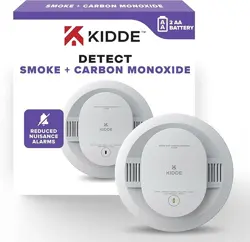
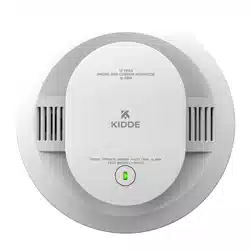
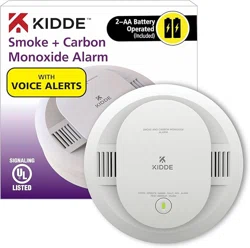
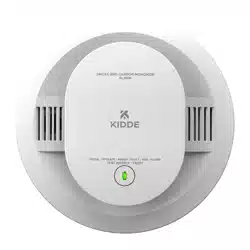
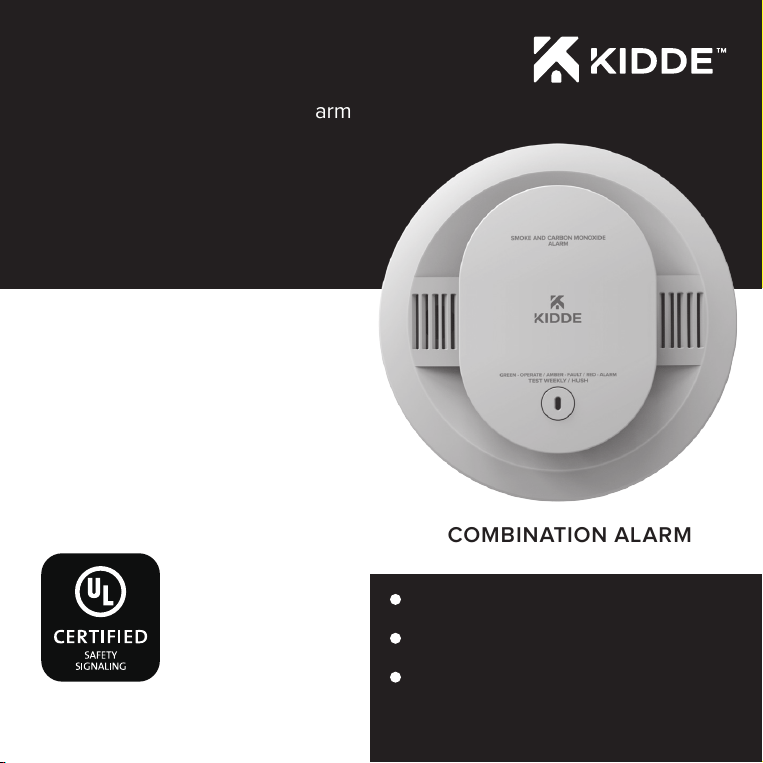
Combination Photoelectric
Smoke & Carbon Monoxide Alarm
with Voice
Model 30CUDR-V
2 AA BATTERIES
SELF-TESTING (SEE SECTION 10)
VOICE MESSAGE SYSTEM
COMBINATION ALARM
P/N: G-000003-00 Rev. A
Helps Reduce Cooking
Nuisance Alarms

2
Thank You for Purchasing this Kidde Alarm
This model is powered by two replaceable AA batteries. It also contains a voice message system
and HUSH
TM
to temporarily silence nuisance alarms, and “self-testing” features (see section 10).
Teach children how to respond to the alarm and that they should never play with the unit. This alarm
is a multi-criteria device designed to detect both smoke and carbon monoxide from any source of
zcombustion in a residential environment. It is not designed for use in a recreational vehicle (RV) or
boat.
NOTE: Please thoroughly read this user guide and save the document for future reference and to
pass on to any subsequent owner. Images are representative only. Actual product may vary slightly.
The National Fire Protection Association (NFPA) and the manufacturer recommend replacing this
alarm after ten years.
Product Support: 1-800-880-6788
Please write down the below information
and have this at hand when you call.
Date Code (on back): _________________
Date of Purchase: _________________
Where Purchased: _________________
Date to Replace: _________________

3
Contents
1. Smoke Alarm: What To Do When The Alarm Sounds . . . . . . . . .4
2. Carbon Monoxide Alarm: What To Do When The Alarm Sounds . . . . .5
3. Other Alarm Visual And Audible Indicators . . . . . . . . . . . .6
4. Troubleshooting Guide . . . . . . . . . . . . . . . . . . .7
5. Introduction, Product Features And Specifications . . . . . . . . .8
6. Limitations Of Smoke And Carbon Monoxide Alarms . . . . . . . . 9
7. Recommended Locations For Smoke And Carbon Monoxide Alarms . . .11
8. Locations To Avoid . . . . . . . . . . . . . . . . . . . . 14
9. Installation and Activation . . . . . . . . . . . . . . . . . .15
10. Operation And Testing. . . . . . . . . . . . . . . . . . . 17
11. Recognizing Nuisance Alarms . . . . . . . . . . . . . . . .18
12. Batteries . . . . . . . . . . . . . . . . . . . . . . .19
13. General Carbon Monoxide (CO) Information . . . . . . . . . . . 20
14. Cleaning Your Alarm . . . . . . . . . . . . . . . . . . . 22
15. Good Safety Habits . . . . . . . . . . . . . . . . . . . .23
16. Service And Warranty . . . . . . . . . . . . . . . . . . .26

4
1. Smoke Alarm: What To Do When The Alarm Sounds
The smoke alarm pattern is three long beeps with voice “Fire!,” a 1.5 second pause, and three long beeps
repeating. The red LED blinks in time with the alarm pattern.
The smoke alarm takes precedence when both smoke and carbon monoxide are present.
• Alert small children in the home as well as anyone else that might have difficulty recognizing the
importance of the alarm sounding or that might have difficulty leaving the area without help.
• Plan two ways out! Leave immediately by your escape plan. Don’t waste time getting dressed or picking up
valuables.
• While leaving, don’t open any inside door without first feeling its surface. If hot, or if you see smoke seeping
through cracks, don’t open that door! Instead, use your alternate exit. If the inside of the door is cool, place
your shoulder against it, open it slightly and be ready to slam it shut if heat and smoke rush in.
• If the escape route requires you to go through smoke, stay close to the floor where the air is cleaner.
Crawl if necessary, and breathe shallowly through a cloth, wet if possible.
• Once outside, go to your selected meeting place and make sure everyone is there.
• Call the fire department or 911 from your cell phone outside, or from your neighbor’s home-not from yours!
• Don’t return to your home until the fire officials say that it is all right to do so.
NOTE: See Section RECOGNIZING NUISANCE ALARMS, for nuisance alarm situations.

5
2. Carbon Monoxide Alarm: What To Do When The Alarm Sounds
The carbon monoxide (CO) alarm pattern is four quick beeps with voice “Warning! Carbon Monoxide”
repeating every 5 seconds. The red LED blinks in time with the alarm pattern. After 4 minutes in CO
alarm the alarm pattern will only occur every 60s.
warning
: A
ctuAtion of your co AlArm indicAtes
the presence of cArbon monoxide (co) which cAn Kill you.
if AlArm signAl sounds:
1) Operate the Test/Hush
TM
button. NOTE: Pressing the button on the alarming
unit will silence the alarm notification. If the unit goes into alarm mode again
within six minutes, it is sensing high levels of CO which can quickly become a
dangerous situation.
2) Call your emergency services (Fire Department or 911).
EMErgENCy PHONE #:___________
3) Immediately move to fresh air — outdoors or by an open door / window.
Do a head count to check that all persons are accounted for. Alert small children
in the home as well as anyone else that might have difficulty recognizing the
importance of the alarm sounding or that might have difficulty leaving the area
without help. Do not reenter the premises or move away from the open
door/window until the emergency services responders have arrived, the premises
have been aired out, and your alarm remains in its normal condition.
4)
After following steps 1-3, if the alarm reactivates within a 24 hour
period, repeat steps 1-3 and call a qualified appliance technician to investigate
sources of CO from fuel burning equipment and appliances,
and to inspect for
proper
operation of equipment.
NOTE: See Section RECOGNIZING NUISANCE ALARMS, for nuisance alarm situations.

6
3. Other Alarm Visual And Audible Indicators
Operational Mode Visual Indications Audible Indications Action/Note
Normal (standby) Green LED blinks approx every
60 sec.
Test (button press when
no alarm condition is
present)
(Note: Test is very loud,
stand a few feet away.)
Red LED blinks in time with
alarm pattern.
•
Single beep.
• 3 long beeps, voice “Fire!,”
3 long beeps, 4 quick beeps,
voice “Warning, Carbon Monoxide,”
4 quick beeps.
Perform button press once a
week to verify proper alarm
operation.
Smoke or CO Alarm
Memory (unit has
experienced a smoke or
CO alarm event, or has
detected 100ppm CO or
greater.)
Smoke: Red LED blinks
every 15 sec.
CO: 2 red LED blinks
every 15 sec.
After button push, voice “Smoke
previously detected” or “Carbon
monoxide previously detected.”
NOTE: Alarm memory is only
retained for 24 hrs. Push button
to clear Alarm Memory.
Smoke Alarm Hush
TM
Mode
Red LED blinks every 2 sec. After button push, voice “Hush
Mode Activated.” Smoke alarm
pattern stops. If there is too much
smoke to allow Hush
TM
, voice
“Too much smoke, alarm cannot
be hushed.” (smoke alarm pattern
continues)
This feature is to be used only
when a known alarm condition,
such as smoke from cooking,
activates the alarm. Push button
during Hush
TM
to clear Hush
TM
and perform a test.
CO Alarm Reset None. After button push: CO alarm pattern
stops.
Unit is confirming if CO is present
or if it experienced a nuisance
situation. Re-alarm means dan-
ger. Move to fresh air and call 911.
If problems are identified during this inspection, have the equipment serviced
immediately. Note any combustion equipment not inspected by the technician and consult the
manufacturer’s instructions, or contact the manufacturer directly for more information
about CO safety and the equipment. Make sure that motor vehicles are not, or have not been,
operating in a garage attached or adjacent to the residence. Never restart the source of a CO
problem until it has been corrected. Never ignore the sound of the alarm!

7
4. Troubleshooting Guide
3. Other Alarm Visual And Audible Indicators
If you require further information please contact Product Support at 1-800-880-6788 or write us at:
Kidde, 1016 Corporate Park Drive, Mebane, NC 27302. Our internet address is www.kidde.com.
Trouble Condition
Visual Indications Audible Indications Action
Low Battery Amber LED blinks every
60 sec.
Chirp and voice “Low Battery”
every 60 sec. After 1 hour, voice
occurs only once every 15 mins.
After button push, voice “Hush
Mode Activated.”
* Push button once to silence for 24 hrs.
(Push button again to clear Hush
TM
and
perform a test.)
Note: 7 days after Low Battery begins, the
notifications cannot be silenced.
* Replace batteries as soon as possible.
Smoke Sensor Fault Amber LED blinks every
60 sec.
3 chirps every 60 sec and voice
“Smoke Sensor Error.” After 1
hour, voice occurs only once
every 15 mins.
* See Cleaning Your Alarm section.
* Push button once to attempt to reset the unit.
* If error continues, remove alarm,
dispose unit, and replace as soon as
possible.
CO Fault Amber LED blinks 2
times every 60 sec.
3 chirps every 60 sec and voice
“Replace Alarm.” After 1 hour,
voice occurs only once every
15 mins.
* Push button once to attempt to reset the unit.
* If error continues, remove alarm, dispose
unit, and replace as soon as possible.
Fatal Fault Amber LED blinks 3
times every 60 sec.
3 chirps every 60 sec and voice
“Replace Alarm.” After 1 hour,
voice occurs only once every
15 mins.
* Push button once to attempt to reset the unit.
* If error continues, remove alarm, dispose
unit, and replace as soon as possible.
End of Unit Life Amber LED blinks 2
times every 60 sec.
2 chirps every 60 sec and voice
“Replace Alarm.” After 1 hour,
voice occurs only once every
15 mins. Voice “Hush Mode
Activated” after button push
(first 7 days only).
* Push button once to silence for 24 hrs.
(Push button again to clear Hush
TM
and
perform a test.) Note: 7 days after End of
Unit Life begins, the notifications cannot
be silenced.
* Remove alarm, dispose unit, and replace as
soon as possible.
MCU Failure None Constant Tone * Remove alarm, dispose unit, and replace as
soon as possible.
Stuck Button Amber LED blinks 4 times
every 60 sec.
3 chirps every 60 sec. * Push button to dislodge it from being
stuck. If button cannot be unstuck, remove
alarm, dispose unit, and replace as soon
as possible.

8
5. Introduction, Product Features And Specifications
Introduction
This alarm detects products of combustion using a photoelectric sensor and carbon monoxide using an
electrochemical cell. Many times throughout this User Guide, we will refer to Carbon Monoxide as “CO.”
Ten (10) years after the unit was installed, powered up, and tested, this unit will automatically alert you
that it is time to replace the unit. This is called “End of Unit Life” mode. See Troubleshooting Guide. To
help identify the date to replace the unit, a label has been affixed to the side of the alarm. Write the
“Install date” in the space provided, and then write in the “Replace by” date (10 years from initial power
up) in permanent marker on the label prior to installing the unit. Two labels have been provided that
have important information on what to do in case of a CO alarm. Place one label at eye level on a wall
near the alarm after it is mounted, and one near a fresh air source such as a door or window.
Product Features and Specifications:
• Powered by two AA batteries
• Reduced nuisance alarms
• Self-testing (see section 10)
• Voice message system
• Easy installation
• Smoke Alarm Hush
TM
• Smoke Sensor: Photoelectric
• CO Sensor: Electrochemical
• Temperature Operating Range: 40°F (4.4°C) to 100°F (37.8°C)
• Humidity Operating Range: 10 to 95% RH non-condensing
• Audible Alarm: 85+ dB at 10’, 3.0 to 3.5 KHz pulsing alarm, with voice messages “Fire!” and/or
“Warning! Carbon Monoxide”

9
6. Limitations Of Smoke And Carbon Monoxide Alarms
WARNING: PLEASE REAd CAREFULLY ANd THOROUGHLY
• Life safety from fire in residential occupancies is based primarily on early notification to occupants of the
need to escape, followed by the appropriate egress actions by those occupants.
• There are situations where a smoke alarm may not be effective to protect against fire as stated in the
NFPA Standard 72. For instance:
a) smoking in bed
b) leaving children home alone
c) cleaning with flammable liquids, such as gasoline
• Fire warning systems for dwelling units are capable of protecting about half of the occupants in poten-
tially fatal fires. A smoke alarm may not be effective in some situations, such as during incendiary fires
where the fire grows so rapidly that an occupant’s egress is blocked even with properly located smoke
alarms, or when victims are intimate with the fire (for example, when a person’s clothes catch fire while
cooking), too old or young, or physically or mentally impaired such that they cannot escape even when
warned early enough that escape should be possible. For these people, additional strategies such as
protection-in-place or assisted escape or rescue are necessary. *
• This model meets the latest residential smoke alarm standards, which includes enhanced resistance
to nuisance alarms from cooking. Industry experts recommend that both ionization and photoelectric
smoke alarms be installed to help ensure optimal detection of the various types of fires that can occur
within the home. Ionization sensing alarms may detect invisible fire particles (associated with fast flaming
fires) sooner than photoelectric alarms. Photoelectric sensing alarms may detect visible fire particles
(associated with slow smoldering fires) sooner than ionization alarms.
• A battery powered alarm must have a battery of the specified type, in good condition and installed
properly (this model includes two AA replaceable batteries.)
• Smoke alarms must be tested regularly to make sure the battery and the alarm circuits are in good
operating condition.
• Smoke alarms cannot provide an alarm if smoke does not reach the alarm. Therefore, smoke alarms may
not sense fires starting in chimneys, within walls, on roofs, on the other side of a closed door or other
obstructions.
• If the alarm is located outside the bedroom or on a different floor, it may not wake up a sound sleeper.
• The use of alcohol or drugs may also impair one’s ability to hear the smoke alarm. For optimal detection,
a smoke alarm should be installed in each sleeping area on every level of a home.
This alarm is not intended to alert hearing impaired individuals.
* Reference National Fire Protection Association (NFPA) standard 72

10
WARNING: PLEASE REAd CAREFULLY ANd THOROUGHLY
• IMPORTANT: This alarm is designed to detect carbon monoxide gas from ANY source of
combustion. It is NOT designed to detect any other gas.
CAUTION: This alarm will only indicate the presence of carbon monoxide gas at the sensor.
Carbon monoxide gas may be present in other areas. Never restart the source of a CO problem
until it has been fixed. NEVER IGNORE THE ALARM!
WARNING: THIs pRODUCT Is INTENDED FOR UsE IN ORDINARy INDOOR LOCATIONs
OF FAMILy LIVING UNITs. IT Is NOT DEsIGNED TO MEAsURE COMpLIANCE WITH
OCCUpATIONAL sAFETy AND HEALTH ADMINIsTRATION (OsHA) COMMERCIAL OR
INDUsTRIAL sTANDARDs. IT Is NOT sUITAbLE FOR INsTALLATION IN HAzARDOUs
LOCATIONs As DEFINED IN THE NATIONAL ELECTRIC CODE. IT Is NOT DEsIGNED FOR
UsE IN A RECREATIONAL VEHICLE (RV) OR bOAT.
• The installation of this device should not be used as a substitute for proper installation, use, and
maintenance of fuel burning appliances, including appropriate ventilation and exhaust systems.
• This alarm does not prevent CO from occurring, nor can it solve any existing CO problem.
WARNING: THIs DEVICE Is DEsIGNED TO HELp pROTECT INDIVIDUALs FROM ACUTE
EFFECTs OF CARbON MONOxIDE ExpOsURE. IT WILL NOT FULLy sAFEGUARD
INDIVIDUALs WITH spECIFIC MEDICAL CONDITIONs. IF IN DOUbT, CONsULT A MEDICAL
pRACTITIONER. INDIVIDUALs WITH MEDICAL pRObLEMs MAy CONsIDER UsING WARNING
DEVICEs WHICH pROVIDE AUDIbLE AND VIsUAL sIGNALs FOR CARbON MONOxIDE
CONCENTRATIONs UNDER 30 ppM. *
• This alarm has not been investigated for carbon monoxide detection below 70 PPM.
• This device requires a continuous supply of electrical power from a healthy battery or AC
connection, depending on the model. It will not work without power.
* Reference Underwriters Laboratories (UL) standard 2034
11
7.
Recommended Locations For Smoke And Carbon Monoxide Alarms
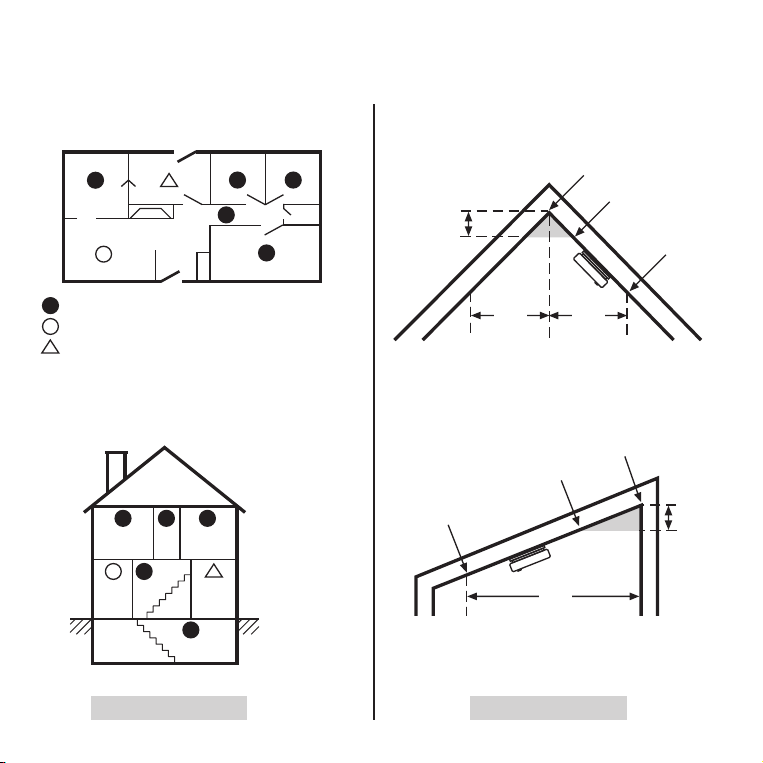
• Locate smoke alarms in all sleeping areas. Try to monitor the exit path as the bedrooms are usually
farthest from the exit. If more than one sleeping area exists, locate additional alarms in each
sleeping area.
• Locate additional alarms in stairways, because stairways act like chimneys for smoke and heat.
• Locate at least one alarm on every floor level.
• Locate an alarm in every bedroom.
• Locate an alarm in every room where electrical appliances are operated (i.e. portable heaters or
humidifiers).
• Locate an alarm in every room where someone sleeps with the door closed. The closed door may
prevent an alarm not located in that room from waking the sleeper.
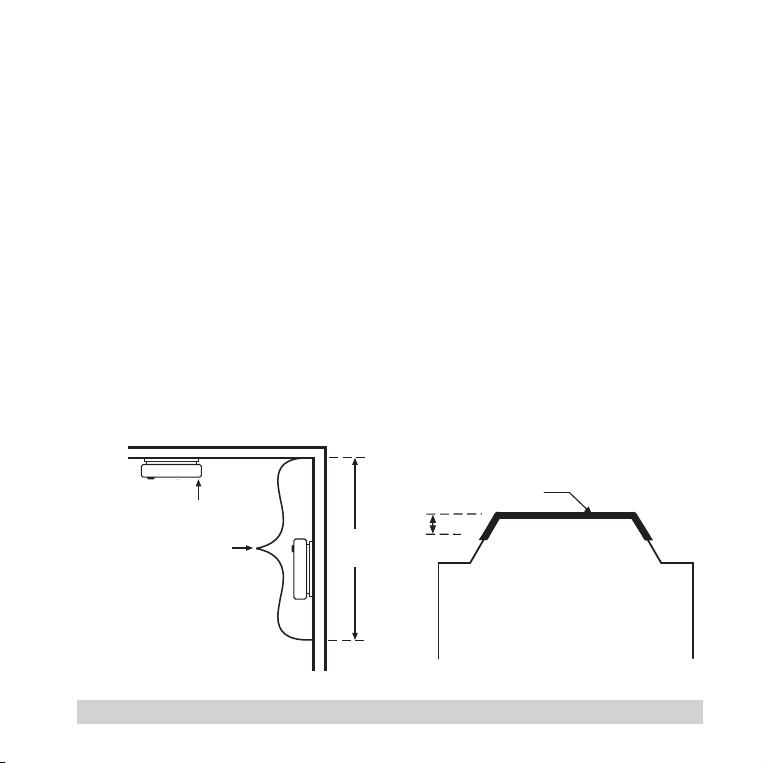
• Smoke, heat, and combustion products rise to the ceiling and spread horizontally. Mounting the
smoke alarm on the ceiling in the center of the room places it closest to all points in the room.
Ceiling mounting is preferred in ordinary residential construction.
• For all alarm locations, be sure to choose a flat, solid surface for mounting, with no holes or gaps
under the mounting bracket.
Figure 7-A
ACCEPTABLE
TOP OF ALARM
ACCEPTABLE HERE
CEILING
Note: measurements shown
are to the closest edge
of the alarm.
12’’
(30.5 cm)
MAXIMUM
SIDE
WALL
12”
(30.5 cm)
4”
(102 mm)
4”
(102 mm)
ANYWHERE ALONG
THIS BOLD SURFACE
Locations permitted for smoke
alarms and smoke detectors
on tray-shaped ceilings.
Not within 6 feet of appliances
Smoke Alarms for Required Detection
BEDROOM
BEDROOM
LIVING
ROOM
BASEMENT
BEDROOM
HALL
LIVING ROOM
BEDROOM
KITCHEN
KITCHEN
BEDROOM
BEDROOM
SINGLE FLOOR PLAN
MULTIPLE
FLOOR PLAN
NOT
IN THIS
AREA
NOT
IN THIS
AREA
ANYWHERE
IN THIS
AREA
ANYWHERE
IN THIS AREA
Smoke Alarms for Additional Detection
3’
(0.9 m)
3’
(0.9 m)
3’
(0.9 m)
ACCEPTABLE
TOP OF ALARM
ACCEPTABLE HERE
CEILING
Note: measurements shown
are to the closest edge
of the alarm.
12’’
(30.5 cm)
MAXIMUM
SIDE
WALL
12”
(30.5 cm)
4”
(102 mm)
4”
(102 mm)
ANYWHERE ALONG
THIS BOLD SURFACE
Locations permitted for smoke
alarms and smoke detectors
on tray-shaped ceilings.
Not within 6 feet of appliances
Smoke Alarms for Required Detection
BEDROOM
BEDROOM
LIVING
ROOM
BASEMENT
BEDROOM
HALL
LIVING ROOM
BEDROOM
KITCHEN
KITCHEN
BEDROOM
BEDROOM
SINGLE FLOOR PLAN
MULTIPLE
FLOOR PLAN
NOT
IN THIS
AREA
NOT
IN THIS
AREA
ANYWHERE
IN THIS
AREA
ANYWHERE
IN THIS AREA
Smoke Alarms for Additional Detection
3’
(0.9 m)
3’
(0.9 m)
3’
(0.9 m)
12
NFPA 72 states: “Smoke alarms in rooms with ceiling slopes greater than 1 ft in 8 ft (0.3m in 2.4 m)
horizontally shall be located on the high side of the room.” NFPA 72 states: “A row of detectors shall be
spaced and located within 3 ft (0.9m) of the peak of the ceiling measured horizontally.”
Figure 7-B Figure 7-C
ACCEPTABLE
TOP OF ALARM
ACCEPTABLE HERE
CEILING
Note: measurements shown
are to the closest edge
of the alarm.
12’’
(30.5 cm)
MAXIMUM
SIDE
WALL
12”
(30.5 cm)
4”
(102 mm)
4”
(102 mm)
ANYWHERE ALONG
THIS BOLD SURFACE
Locations permitted for smoke
alarms and smoke detectors
on tray-shaped ceilings.
Not within 6 feet of appliances
Smoke Alarms for Required Detection
BEDROOM
BEDROOM
LIVING
ROOM
BASEMENT
BEDROOM
HALL
LIVING ROOM
BEDROOM
KITCHEN
KITCHEN
BEDROOM
BEDROOM
SINGLE FLOOR PLAN
MULTIPLE
FLOOR PLAN
NOT
IN THIS
AREA
NOT
IN THIS
AREA
ANYWHERE
IN THIS
AREA
ANYWHERE
IN THIS AREA
Smoke Alarms for Additional Detection
3’
(0.9 m)
3’
(0.9 m)
3’
(0.9 m)
ACCEPTABLE
TOP OF ALARM
ACCEPTABLE HERE
CEILING
Note: measurements shown
are to the closest edge
of the alarm.
12’’
(30.5 cm)
MAXIMUM
SIDE
WALL
12”
(30.5 cm)
4”
(102 mm)
4”
(102 mm)
ANYWHERE ALONG
THIS BOLD SURFACE
Locations permitted for smoke
alarms and smoke detectors
on tray-shaped ceilings.
Not within 6 feet of appliances
Smoke Alarms for Required Detection
BEDROOM
BEDROOM
LIVING
ROOM
BASEMENT
BEDROOM
HALL
LIVING ROOM
BEDROOM
KITCHEN
KITCHEN
BEDROOM
BEDROOM
SINGLE FLOOR PLAN
MULTIPLE
FLOOR PLAN
NOT
IN THIS
AREA
NOT
IN THIS
AREA
ANYWHERE
IN THIS
AREA
ANYWHERE
IN THIS AREA
Smoke Alarms for Additional Detection
3’
(0.9 m)
3’
(0.9 m)
3’
(0.9 m)
ACCEPTABLE
TOP OF ALARM
ACCEPTABLE HERE
CEILING
Note: measurements shown
are to the closest edge
of the alarm.
12’’
(30.5 cm)
MAXIMUM
SIDE
WALL
12”
(30.5 cm)
4”
(102 mm)
4”
(102 mm)
ANYWHERE ALONG
THIS BOLD SURFACE
Locations permitted for smoke
alarms and smoke detectors
on tray-shaped ceilings.
Not within 6 feet of appliances
Smoke Alarms for Required Detection
BEDROOM
BEDROOM
LIVING
ROOM
BASEMENT
BEDROOM
HALL
LIVING ROOM
BEDROOM
KITCHEN
KITCHEN
BEDROOM
BEDROOM
SINGLE FLOOR PLAN
MULTIPLE
FLOOR PLAN
NOT
IN THIS
AREA
NOT
IN THIS
AREA
ANYWHERE
IN THIS
AREA
ANYWHERE
IN THIS AREA
Smoke Alarms for Additional Detection
3’
(0.9 m)
3’
(0.9 m)
3’
(0.9 m)
ACCEPTABLE
TOP OF ALARM
ACCEPTABLE HERE
CEILING
Note: measurements shown
are to the closest edge
of the alarm.
12’’
(30.5 cm)
MAXIMUM
SIDE
WALL
12”
(30.5 cm)
4”
(102 mm)
4”
(102 mm)
ANYWHERE ALONG
THIS BOLD SURFACE
Locations permitted for smoke
alarms and smoke detectors
on tray-shaped ceilings.
Not within 6 feet of appliances
Smoke Alarms for Required Detection
BEDROOM
BEDROOM
LIVING
ROOM
BASEMENT
BEDROOM
HALL
LIVING ROOM
BEDROOM
KITCHEN
KITCHEN
BEDROOM
BEDROOM
SINGLE FLOOR PLAN
MULTIPLE
FLOOR PLAN
NOT
IN THIS
AREA
NOT
IN THIS
AREA
ANYWHERE
IN THIS
AREA
ANYWHERE
IN THIS AREA
Smoke Alarms for Additional Detection
3’
(0.9 m)
3’
(0.9 m)
3’
(0.9 m)

13
• For mobile home installation, select locations carefully to avoid thermal barriers that may form at
the ceiling. For more details, see MOBILE HOME INSTALLATION section.
• When mounting the alarm on the wall, use an inside wall with the top edge of the alarm at a
maximum of 12” (30.5 cm) below the ceiling.
• Put smoke alarms at both ends of a bedroom hallway or large room if the hallway or room is more
than 30 feet (9.1 m) long.
• Install Smoke Alarms on sloped, peaked or cathedral ceilings at or within 3ft (0.9m) of the highest
point (measured horizontally).
• Industry experts recommend a CO alarm be installed on each level of the home-ideally on any
level with fuel burning appliances and outside of sleeping areas.
This equipment should be installed in accordance with the National Fire Protection Association’s 72
(National Fire Protection Association, Batterymarch Park, Quincy, MA 02269).
Mobile Home Installation
Modern mobile homes have been designed and built to be energy efficient. Install smoke alarms as
recommended above. In older mobile homes that are not well insulated compared to present
standards, extreme heat or cold can be transferred from the outside to the inside through poorly
insulated walls and roof. This may create a thermal barrier which can prevent the smoke from reaching
an alarm mounted on the ceiling. In such units, install the smoke alarm on an inside wall with the top
edge of the alarm a maximum of 12” (30.5 cm) below the ceiling.
If you are not sure about the insulation in your mobile home, or if you notice that the outer walls and
ceiling are either hot or cold compared to the room air temperature, install the alarm on an inside wall.
NFPA 72 (National Fire Protection Association) requires smoke alarms be installed in each sleeping
area.
WARNING: TEST YOUR ALARM OPERATION AFTER MOBILE HOME HAS BEEN IN STOR-
AGE OR UNOCCUPIEd, ANd AT LEAST ONCE A WEEk dURING USE.

14
8. Locations To Avoid
(See Figures 7-A, 7-B, & 7-C for recommended locations)
• In the garage. Products of combustion are present when you start your automobile.
• Normal cooking may cause nuisance alarms. If a kitchen alarm is desired, it should have an alarm
silence feature and should not be installed within 6 ft of cooking appliances.
• Do not install within 6 ft of heating appliances.
• Less than 4” (10cm) from the peak of an “A” frame type ceiling.
• In an area where the temperature may fall below 40ºF or rise above 100ºF, such as garages and
unfinished attics.
• In dusty areas. Dust particles may cause nuisance alarms or a failure to alarm.
• In very humid areas (above 95% RH, non-condensing) as moisture or steam can cause nuisance
alarms.
• In insect-infested areas.
• Smoke alarms should not be installed within 3 ft (0.9m) of the door to a bathroom containing a tub
or shower, forced air supply ducts used for heating or cooling, ceiling or whole house ventilating
fans, or other high air flow areas.
• Near lights. Electronic “noise” generated by the lights may cause nuisance alarms.
• Do not install near vents, flues, or chimneys.
• Do not install near fans, doors, windows or areas directly exposed to the weather.
• Do not install DC (battery only) alarms on top of AC electrical junction boxes.
• Avoid installing where the unit will be exposed to direct sunlight.
NOTE: Smoke alarms are not to be used with detector guards unless the combination (alarm and
detector guard) has been evaluated and found suitable for that purpose.
15
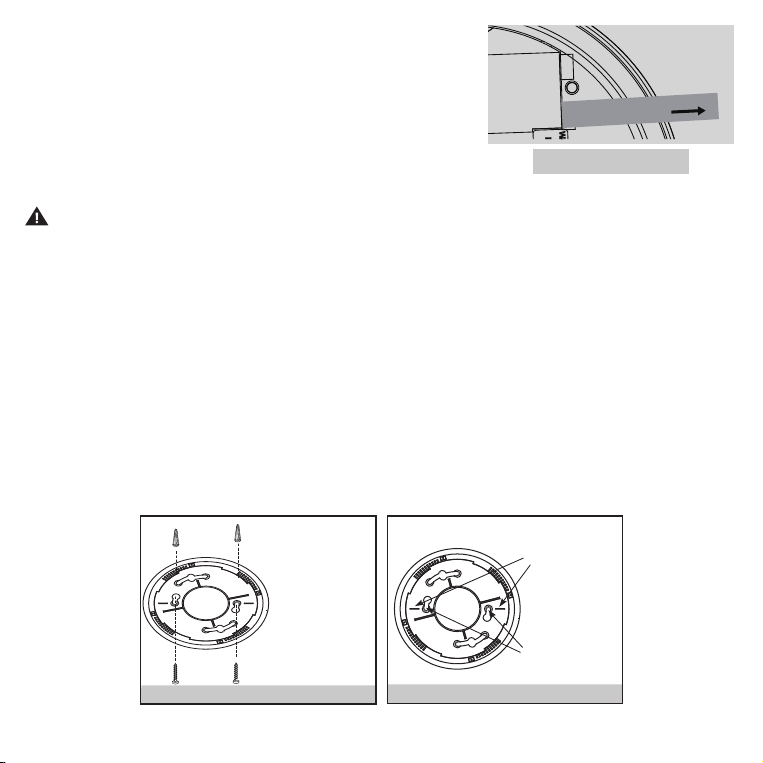
Figure 9 -A
PULL OUT TAB TO ACTIVATE
BATTERIES.
9. Installation and Activation
NOTE: A dust cover has been installed on the alarm. Keep the dust
cover on until all construction has been completed for at least 24
hours (drywall, painting, varnishing, mounting plate install, etc).
Retain the dust cover and re-install it to protect the alarm during
future construction projects. Construction dust and chemicals can
cause contamination and false alarms.
WARNING: DUsT COVER MUsT bE REMOVED FOR ALARM TO OpERATE.
NOTE: Pull out the battery pull tab first to activate the batteries (see Figure 9-A). Battery activation is
confirmed with a beep. If the beep does not occur when the battery pull tab is removed, remove the batteries
and reinstall them. Confirm the battery activation beep.
• Kidde alarms are not designed, agency tested or certified for recessed mounting and should not be installed in
this manner. Recessed mounting impedes smoke entry into the smoke chamber, which may prevent the alarm
from sounding in a timely manner. This could endanger the lives of occupants in the residence. Kidde alarms
are designed, tested and certified for wall (if applicable) and ceiling surface mount only.
• After selecting the proper location for your alarm, attach the mounting bracket to the wall or ceiling.
To ensure aesthetic alignment of the alarm with the hallway, or wall, the “A” line on the mounting
bracket should be parallel with the hallway when ceiling mounted, or horizontal when wall mounted
(Figures 9-B and 9-C).
PULL OUT TAB TO ACTIVATE BATTERIES.
SAQUE LA LENGÜETA PARA
ACTIVAR LAS BATERÍAS.
Figure 9-B
When mounting
in a hallway,
the "A" line should
be parallel with the
hallway. When wall
mounting, the "A"
line should be
horizontal.
Alignment Marks
(”A” Line) on
Mounting
Bracket
Figure 9-C
Mark and drill
two 3/16" (5mm)
holes for wall
anchors.
AA
AA
16
NOTE:
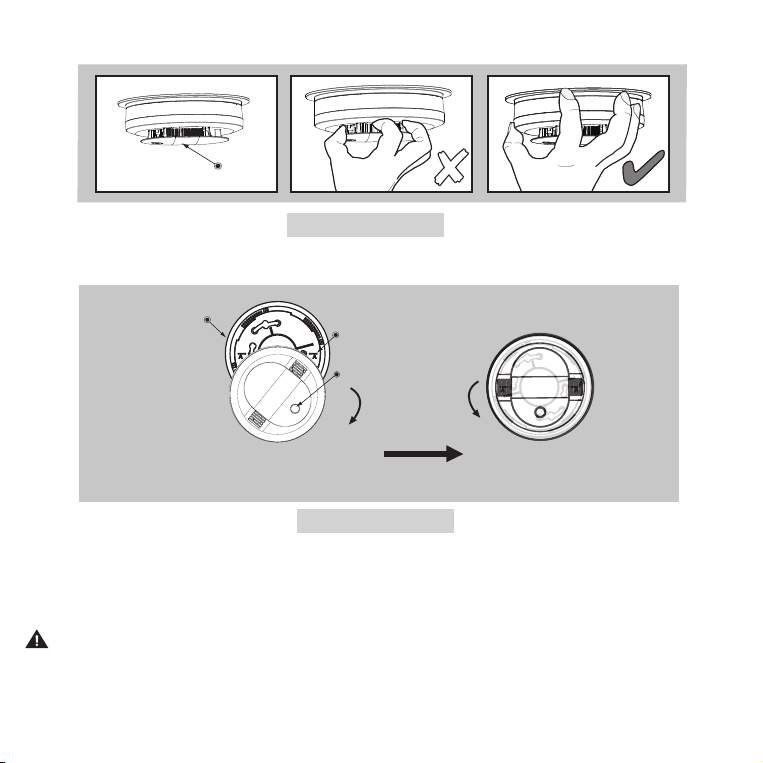
Do not grab the shield to install or remove the alarm. Grab the alarm by the outside of the enclosure. (Figure 9-D).
NOTE: If either battery is missing, the alarm cannot mount on the mounting bracket.
• Install the alarm fully on the mounting bracket by rotating the alarm in a clockwise direction(Figure 9-E).
NOTE: The alarm will mount to the bracket in 4 positions (every 90 degrees).
The alarm is now activated! After installation / activation, test your alarm as described in Operation and Testing
section.
WARNING: FAILURE TO PROPERLY INSTALL ANd ACTIVATE THIS ALARM WILL PREVENT PROPER
OPERATION OF THIS ALARM ANd WILL PREVENT ITS RESPONSE TO FIRE ANd CO HAzARdS.
Install
Remove
Mounting Bracket
Note orientation
of "A" line.
LED
To ensure aesthetic alignment, orient
the unit as shown on the mounting
bracket and rotate the unit completely until it stops.
After fully installed
(The button should
be at the bottom.)
Figure 9-E
Shield
✘
Figure 9-D

17
10. Operation And Testing
This model meets the latest residential smoke
alarm standards, which includes enhanced
resistance to nuisance alarms from cooking.
Operation
The alarm is operating once it is activated and testing is complete (see “TESTING” below). When
products of combustion (smoke or CO) are sensed, the unit sounds a loud alarm with voice messages.
See Sections 1 and 2 for alarm signal descriptions. In high levels of CO, the unit will go into alarm in a
shorter period of time than at low levels of CO.
Testing
WARNING: Do not attempt to test this unit with retail “canned smoke” products. Those
products are intended for use by trained professionals and produce inconsistent results when
misused. Over-application of canned smoke can permanently damage the alarm.
Self-Testing
This model is equipped with internal, self-testing components that are always checking to ensure the
device is operating as expected. (Weekly manual testing is still required. See below.) If the device is
not operating as expected, a fault signal will be generated. (see troubleshooting guide)
Manual Testing
NOTE: When pushing the Test button, use only your finger or thumb. Using any other instrument(s)
(such as a broom handle) is strictly prohibited, as it may damage the alarm.
Test your alarm weekly by pressing and releasing the button quickly. A quick beep will confirm the
button has been pushed followed by the test sequence. See Other Alarm Visual and Audible
Indicators table. The alarm and voice will sound if the electronic circuitry, horn, speaker, and batteries
are working. If the alarm or voice does not sound, or gives erratic or low volume sound, the unit must
be replaced.
WARNING: dUE TO THE LOUdNESS OF THE ALARM, ALWAYS STANd ABOUT 2.5 FEET
AWAY FROM THE UNIT OR USE EAR PROTECTION WHEN TESTING.
WARNING: dO NOT USE AN OPEN FLAME TO TEST YOUR ALARM, YOU COULd dAMAGE
THE ALARM OR IGNITE COMBUSTIBLE MATERIALS ANd START A STRUCTURE FIRE.
Chirping
When End of Unit Life or Low Battery chirping begins, you can temporarily silence these chirps
by pressing the button. Other fault/error chirps cannot be silenced. Take appropriate action as
described in the Troubleshooting Guide.
WARNING: REPLACE UNIT AS SOON AS POSSIBLE WHEN IN ENd OF UNIT LIFE. SEVEN (7)
dAYS AFTER ENd OF UNIT LIFE BEGINS, THE NOTIFICATIONS CANNOT BE SILENCEd, ANd
SMOkE ANd CO dETECTION CANNOT BE GUARANTEEd. REPLACE IMMEdIATELY!
CO ALARM SENSOR RESPONSE TIMES
At 70 PPM, the unit must alarm within 60-240 minutes.
At 150 PPM, the unit must alarm within 10-50 minutes.
At 400 PPM, the unit must alarm within 4-15 minutes.

18
11. Recognizing Nuisance Alarms
Smoke Nuisance
This model meets the latest residential smoke alarm standards, which includes enhanced resistance to
nuisance alarms from cooking.
HUSH
TM
: If you know why the alarm is sounding, and you can verify that it is not a life threatening sit-
uation, you can push the button on the initiating unit to silence the alarm for 8-10 minutes. If the smoke
is not too dense, that unit will silence. After the Hush
TM
period, the smoke alarm will automatically reset
and sound the alarm if particles of combustion are still present. You can use Hush
TM
repeatedly until the
air has been cleared of the condition causing the alarm.
NOTE: Dense smoke will override Hush
TM
and sound a continuous alarm. If no fire is present,
check to see if one of the reasons listed in “Locations to avoid” may have caused the alarm. If a
fire is discovered, get out and call the fire department or 911.
Cigarette smoke will not normally cause the unit to alarm, unless the smoke is blown directly into the
alarm. Combustion particles from cooking may set off the alarm if it is located too close to a cooking
appliance. Large quantities of combustible particles are generated from spills or when broiling. Using
the fan on a range hood which vents to the outside (non-recirculating type) will also help prevent nui-
sance alarms from occurring by removing these combustible products from the kitchen.
Carbon Monoxide (CO) Nuisance
RESET: Pushing the button during CO alarm allows the unit to reset calculations and double check
for the presence of CO. If the unit re-alarms within 6 minutes, it is sensing high levels of CO which can
quickly become a dangerous situation. Move to fresh air and call 911.
WARNING : Although RESET can be used for CO alarm events, it is impossible to
determine the source of a CO alarm using sight or smell. Always consider a CO alarm event as
dangerous.
19
12. Batteries
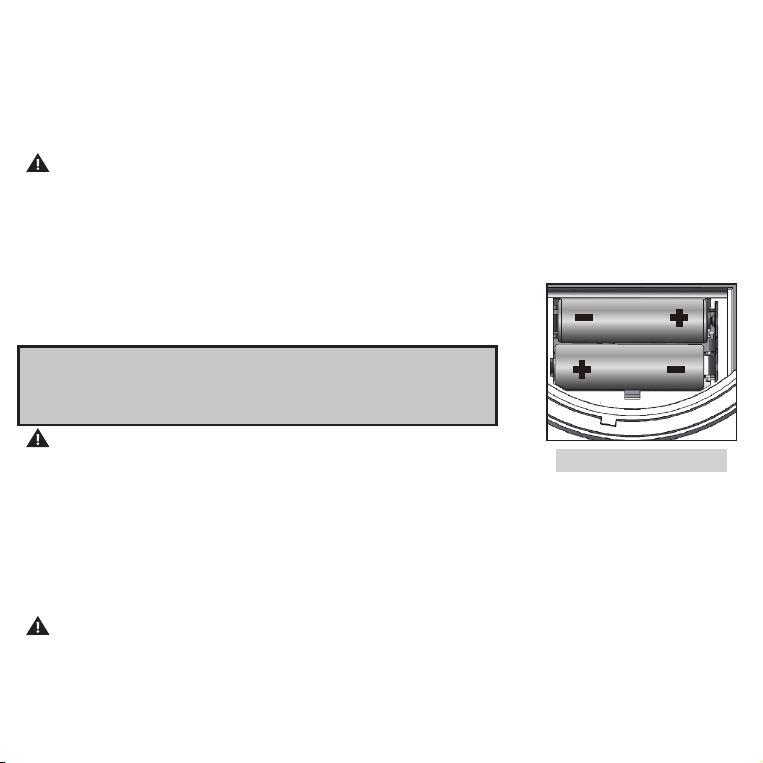
This alarm is powered by two replaceable AA batteries. Under normal conditions, fresh batteries will
last at least one year.
NOTE: Constant exposure to high or low humidity or temperatures may reduce battery life.
WARNING: THE ALARM IS SEALEd ANd THE COVER IS NOT REMOVABLE!
Low Battery
This alarm is equipped with a low battery monitor circuit. If the battery capacity is nearing the point
where it can no longer provide adequate power for all alarm functions, the low battery condition
will occur. See Troubleshooting Guide. The batteries must be replaced
within 7 days of the first occurrence of the “Low Battery Warning” to
provide continuous alarm detection.
Replace batteries with one of the following approved brands:
Energizer E91, Gold Peak 15A or Golden Power GLR6A.
These batteries can be purchased at your local retailer.
WARNING:
Use only the batteries specified. Use of different
batteries may have a detrimental effect on the alarm. Do not mix old and
new batteries. Do not mix alkaline, standard, or rechargeable batteries.
NOTE:
Do not use lithium batteries in this unit.
A good safety measure is to replace the batteries at least once a year, or at the same time you
change your clocks for daylight saving time. A missing or improperly installed battery will render
the unit inoperable.
WARNING: Failure to install batteries in the correct orientation will prevent proper operation of
this alarm and will prevent its response to fire hazards.
Figure 12

20
13. General Carbon Monoxide (CO) Information
Carbon monoxide (CO) is a colorless, odorless, and tasteless poison gas that can be fatal when
inhaled. CO inhibits the blood’s capacity to carry oxygen.
Possible Sources of CO
Inside your home, appliances used for heating and cooking are the most likely sources of CO. Vehicles
and other combustion engines running in an attached garage and using a charcoal/gas grill or hibachi
in an enclosed area are all possible sources of CO. Generators running in enclosed areas, such as
garages or living spaces, will create CO. CO can be produced when burning any fossil fuel: gasoline,
diesel, propane, natural gas, oil and wood. It can be produced by any fuel-burning appliance that is
malfunctioning, improperly installed, or not ventilated correctly, such as: Furnaces/boilers, gas ranges/
stoves, gas clothes dryers, water heaters, portable fuel burning space heaters, fireplaces, wood-burn-
ing stoves and certain swimming pool heaters. Blocked chimneys or flues, back drafting and changes
in air pressure, corroded or disconnected vent pipes, or a loose or cracked furnace heat exchanger
can also release CO into your building.
The following conditions can result in transient CO situations:
Excessive spillage or reverse venting of fuel-burning appliances caused by outdoor ambient
conditions such as: Wind direction and/or velocity, including high gusts of wind, heavy air in the vent
pipes (cold/humid air with extended periods between cycles), negative pressure differential resulting
from the use of exhaust fans, simultaneous operation of several fuel-burning appliances competing
for limited internal air, vent pipe connections vibrating loose from clothes dryers, furnaces/boilers, or
water heaters, obstructions in, or unconventional, vent pipe designs which can amplify the above
situations, extended operation of unvented fuel-burning devices (range, oven, fireplace, etc.),
temperature inversions which can trap exhaust gases near the ground, car idling in an open or closed
attached garage, or near a home.
CO Safety Tips
Every year, have the heating system, vents, chimney and flue inspected and cleaned by a qualified
technician. Always install appliances according to manufacturer’s instructions and adhere to local
building codes. Most appliances should be installed by professionals and inspected after installation.

21
Regularly examine vents and chimneys for improper connections, visible rust, or stains, and check for
cracks in furnace heat exchangers. Verify that the color of flame is blue on pilot lights and burners.
An amber or orange flame is a sign that the fuel is not burning completely and may be releasing CO.
Teach all household members what the alarm sounds like and how to respond. Fire Departments, most
utility companies and HVAC contractors will perform CO inspections. Some contractors may charge for
this service. It’s advisable to inquire about any applicable fees prior to having the service performed.
Kidde will not pay for, or reimburse the owner or user of this product, for any repair or dispatch calls
related to the alarm sounding.
Symptoms of CO Poisoning
Initial carbon monoxide poisoning symptoms are similar to the flu with no fever and can include diz-
ziness, severe headaches, nausea, vomiting and disorientation. Everyone is susceptible but experts
agree that unborn babies, pregnant women, senior citizens and people with heart or respiratory
problems are especially vulnerable. If symptoms of carbon monoxide poisoning are experienced seek
medical attention immediately. CO poisoning can be determined by a carboxyhemoglobin test.
The following symptoms are related to CARBON MONOXIdE POISONING and should be dis-
cussed with ALL members of the household:
1. MILd EXPOSURE: Slight headache, nausea, vomiting, fatigue (often described as “Flu-like”
symptoms).
2. MEdIUM EXPOSURE: Severe throbbing headache, drowsiness, confusion, fast heart rate.
3. EXTREME EXPOSURE: Unconsciousness, convulsions, cardio respiratory failure and death.
The above levels of exposure relate to healthy adults. Levels differ for those at high risk. Exposure to
high levels of carbon monoxide can be fatal or cause permanent damage and disabilities. Many cases
of reported carbon monoxide poisoning indicate that while victims are aware they are not feeling well,
they become so disoriented they are unable to save themselves by either exiting the building, or call-
ing for assistance. Also, young children and household pets may be the first affected. Familiarization
with the effects of each level is important.
22
14. Cleaning Your Alarm
Your Alarm Should be Cleaned at Least Once a Year
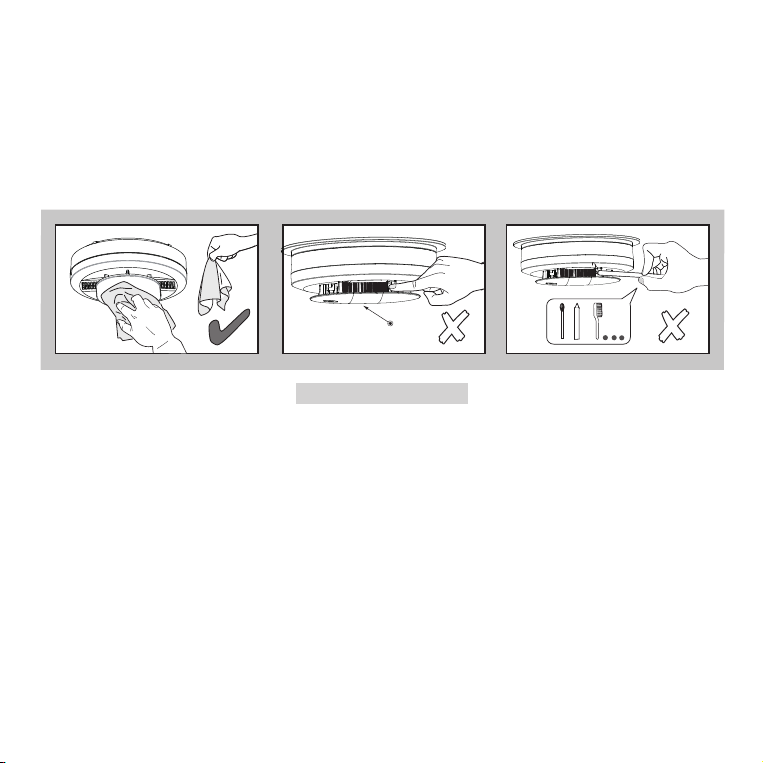
You can clean the interior of your alarm (sensing chamber) by using compressed air or a vacuum
cleaner hose and blowing or vacuuming through the openings around the perimeter of the alarm. The
outside of the alarm can be wiped with a clean, dry cloth. Do not use water, detergents or cleaners as
they may damage the alarm.
NOTE: Do not insert fingers or cleaning items under the shield during cleaning.
If the alarm is in Fault mode, the alarm may be in need of cleaning. After cleaning, press the button. If
the fault does not clear, the alarm needs to be replaced.
• Never use detergent or other solvents to clean the unit.
• Avoid spraying air freshener, hair spray, or other aerosols near the alarm.
• Do not use a hair dryer to clean the alarm, as it may damage the alarm and impact performance.
• Do not paint the unit. Paint will seal the vents and interfere with the sensor’s ability to detect
smoke and CO.
• Never attempt to disassemble the unit to clean inside. This action will void your warranty.
• The following substances can affect the CO sensor and may cause false readings and damage to
the sensor: Methane, propane, isobutane, iso-propanol, ethyl acetate, hydrogen sulfide, sulfide
dioxides, alcohol based products, paints, thinner, solvents, adhesives, hair spray, aftershave,
perfume, and some cleaning agents.
✘
✘
Shield
Figure 14-A

23
15. Good Safety Habits
develop and Practice a Plan of Escape
Prepare and practice a home escape plan twice a year, including drills at night. Know two ways out
of every room (door & window) and identify a meeting place outside the home where everyone will
gather once they have exited the residence. When two people have reached the meeting place, one
should leave to call 911 while the second person stays to account for additional family members.
Establish a rule that once you’re out, you never re-enter under any circumstance!
• Make a floor plan indicating all doors and windows and at least two (2) escape routes from each
room. Stories above ground level may need a rope or chain ladder.
• Have a family meeting and discuss your escape plan, showing everyone what to do in case of fire
and where to meet after they leave the house.
• Ensure that small children hear the alarm and wake when it sounds. They must wake up in order to
execute the escape plan. Practice allows all occupants to test your plan before an emergency.
You may not be able to reach your children. It is important they know what to do.
• Familiarize everyone with the sounds of the smoke/CO alarm and train them to leave your home
when they hear it.
• Current studies have shown smoke/CO alarms may not awaken all sleeping individuals, and that it
is the responsibility of individuals in the household that are capable of assisting others to provide
assistance to those who may not be awakened by the alarm sound, or to those who may be
incapable of safely evacuating the area unassisted.
• Install and maintain fire extinguishers on every level of the home and in the kitchen, basement and
garage. Know how to use a fire extinguisher prior to an emergency.
• Move the Alarm and place in another location prior to performing any of the following:
Staining or stripping wood floors or furniture
Painting
Wall papering
Using adhesives
Storing the unit in a plastic bag during any of the above projects will protect the sensors from damage.
When household cleaning supplies or similar contaminants are used, the area must be well ventilated.
WARNING: REINSTALL THE ALARM AS SOON AS POSSIBLE TO ENSURE CONTINUOUS
dETECTION.

24
Fire Prevention
Never smoke in bed or leave cooking food unattended. Teach children never to play with matches or
lighters! Train everyone in the home to recognize the smoke alarm pattern and to leave the home using
their escape plan when it’s heard. Know how to do “Stop, Drop and Roll” if clothes catch on fire, and
how to crawl low under smoke. Install and
maintain fire extinguishers on every level
of the home and in the kitchen, basement
and garage.
NFPA (National Fire Protection
Association)
Fire Safety in the Home: NFPA 72 is
intended to provide reasonable safety for
persons in family living units. Reasonable
fire safety can be produced through the
following three-point program:
(1) Minimizing fire hazards (2) Providing
fire-warning equipment (3) Having and
practicing an escape plan.
Smoke detection – Are More Alarms
desirable?
The required number of smoke alarms
might not provide reliable early warning
protection for those areas separated by a
door from the areas protected by the required smoke alarms. For this reason, it is recommended that
the resident consider the use of additional smoke alarms for those areas for increased protection.
The additional areas include the basement, bedrooms, dining room, furnace room, utility room,
and hallways not protected by the required smoke alarms. The installation of smoke alarms in
attics (finished or unfinished), garages, or within 6’ of a heating or cooking appliance is not normally
recommended, as these locations occasionally experience conditions that can result in improper
operation. *
* Reference National Fire Protection Association (NFPA) standard 72
For your information, the National Fire Protection
Association’s Standard 72 reads: Where required
by other governing laws, codes, or standards for a
specific type of occupancy, approved single and
multiple-station smoke alarms shall be installed as
follows:
1. In all sleeping rooms and guest rooms
2. Outside of each separate dwelling unit sleeping
area, within 21 ft (6.4 m) of any door to a sleeping
room, with the distance measured along a path
of travel
3. On every level of a dwelling unit, including
basements
4. On every level of a residential board and care
occupancy (small facility), including basements
and excluding crawl spaces and unfinished attics
5. In the living area(s) of a guest suite
6. In the living area(s) of a residential board and
care occupancy (small facility)

25
California State Fire Marshal
Early warning fire detection is best achieved by the installation of fire detection equipment in all rooms and
areas of the household as follows: A smoke alarm installed in each separate sleeping area (in the vicinity,
but outside the bedrooms), heat or smoke detectors in the living rooms, dining rooms, bedrooms, kitchens,
hallways, attics, furnace rooms, closets, utility and storage rooms, basements and attached garages.
FCC
This device complies with part 15 of the FCC Rules. Operation is subject to the following two conditions:
(1) This device may not cause harmful interference, and (2) this device must accept any interference
received, including interference that may cause undesired operation.
WARNING! Changes or modifications not expressly approved by the party responsible for compliance
could void the user’s authority to operate this device.
NOTE: This equipment has been tested and found to comply with the limits for a Class B digital device,
pursuant to part 15 of the FCC Rules. These limits are designed to provide reasonable protection against
harmful interference in a residential installation. This equipment generates, uses, and can radiate radio
frequency energy and, if not installed and used in accordance with the instructions, may cause harmful
interference to radio communications. However, there is no guarantee that interference will not occur in a
particular installation. If this equipment does cause harmful interference to radio or television reception,
which can be determined by turning the equipment off and on, the user is encouraged to try to correct the
interference by one or more of the following measures:
-Reorient or relocate the receiving antenna.
-Increase the separation between the equipment and receiver.
-Connect the equipment into an outlet on a circuit different from that to which the receiver is connected.
-Consult the dealer or an experienced radio/TV technician for help.

26
16. Service And Warranty
Ten-Year Limited Warranty
Kidde warrants that the enclosed alarm (but not the batteries) will be free from defects in material
and workmanship or design under normal use and service for a period of ten years from the date of
purchase. The obligation of Kidde under this warranty is limited to repairing or replacing the alarm
or any part which we find to be defective in material, workmanship or design (part replacement only,
no installation), free of charge, upon receiving the alarm with proof of date of purchase, postage and
return postage prepaid, to Warranty Service Department, Kidde, 1016 Corporate Park Drive, Mebane,
NC 27302. Before shipping the product, please remove the batteries from the battery compartment.
This warranty shall not apply to the alarm if it has been damaged, modified, abused or altered after the
date of purchase or if it fails to operate due to improper maintenance or inadequate power. Any implied
warranties arising out of this sale, including but not limited to the implied warranties of description,
merchantability and fitness for a particular purpose, are limited in duration to the above warranty
period. In no event shall the Manufacturer be liable for loss of use of this product or for any indirect,
special, incidental or consequential damages, or costs, or expenses incurred by the consumer or any
other user of this product, whether due to a breach of contract, negligence, strict liability in tort or
otherwise.
The Manufacturer shall have no liability for any personal injury, property damage or any special,
incidental, contingent or consequential damage of any kind resulting from gas leakage, smoke, fire
or explosion. Since some states do not allow limitations of the duration of an implied warranty or do
not allow the exclusion or limitation of incidental or consequential damages, the above limitations or
exclusions may not apply to you. While this warranty gives you specific legal rights, you may also have
other rights which vary from state to state.
The above warranty may not be altered except in writing signed by both parties hereto. Your Kidde
Alarm is not a substitute for property, fire, disability, life or other insurance of any kind. Appropriate
insurance coverage is your responsibility. Consult your insurance agent. Opening the unit will void the
warranty. If there are any differences between this printed warranty and the online limited warranty,
then the terms of the online warranty supersede those in this user guide or other printed materials.
Visit www.kidde.com for the latest warranty statement.

27
QUESTIONS OR FOR MORE INFORMATION
Call Kidde Product Support line at 1-800-880-6788
or contact us at www.kidde.com
Kidde
1016 Corporate Park Drive, Mebane, NC 27302
©2024 Kidde. All Rights Reserved.