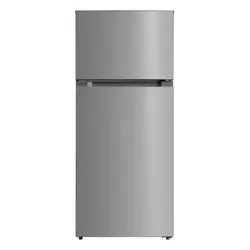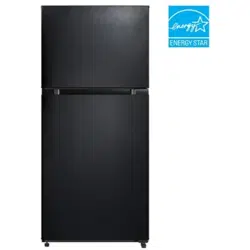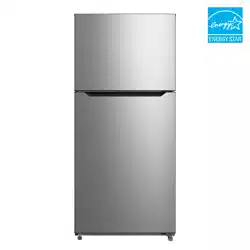
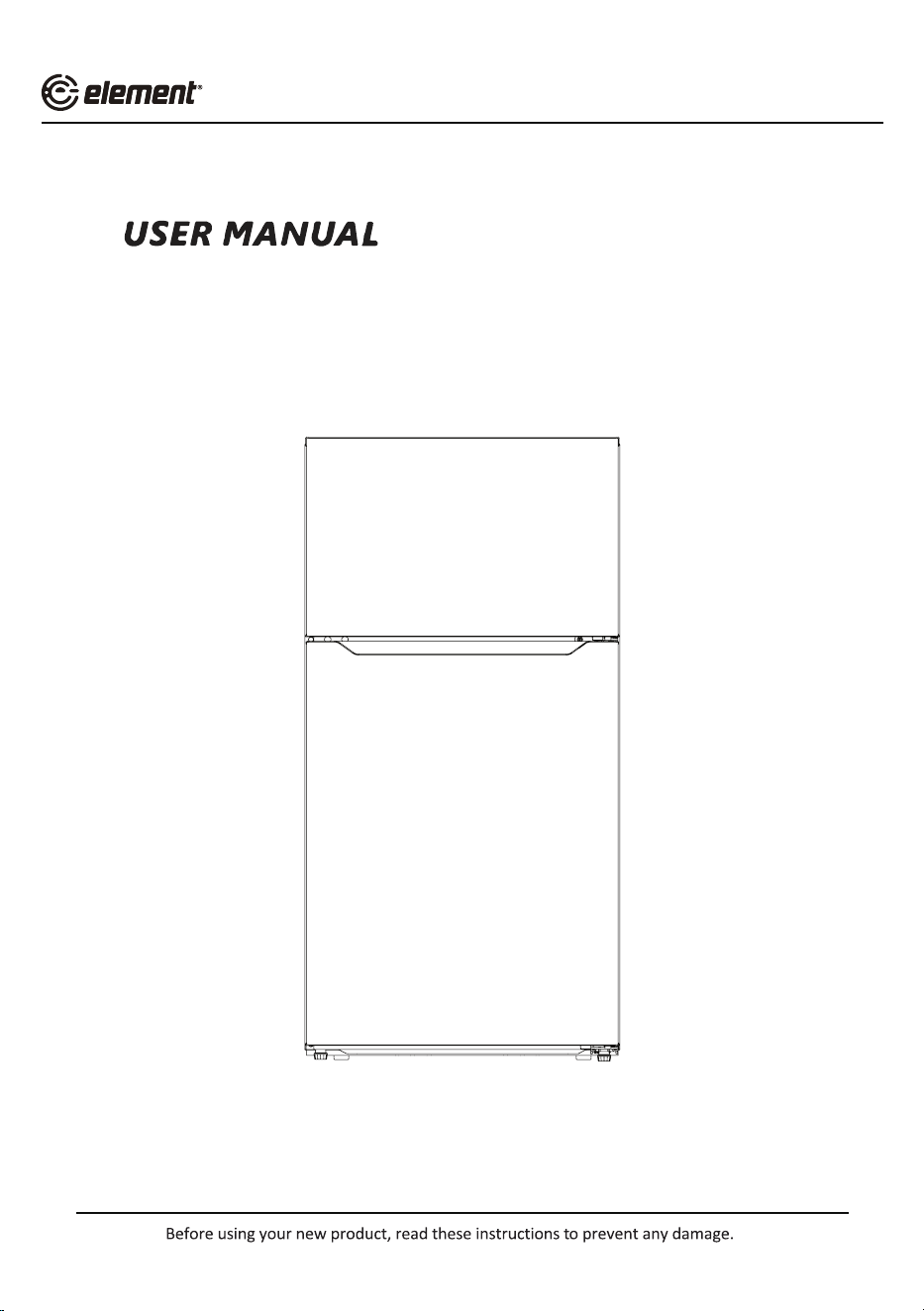
14.2 cu.ft. Top Freezer Refrigerator
ERT14CSCW
ERT14CSCB
ERT14CSCS
Product may vary. Refer to the actual product

Safety
Information
Proper Use of
Refrigerator
Maintenance of
Refrigerator
Trouble
Shooting
Appendix
1. SAFETY INFORMATION .................................................................3
2. PROPER USE OF REFRIGERATOR ..............................................11
2.1 PLACEMENT ....................................................................................... 11
2.2 ENERGY SAVING TIPS ................................................................. 12
2.3 CHANGING THE LIGHT ................................................................ 12
2.4 START TO USE ................................................................................ 13
2.5 COMPONENTS ................................................................................ 14
2.6 FUNCTIONS ..................................................................................... 16
2.7 REVERSE DOOR HINGES (OPTIONAL) ................................. 17
2.8 LEVELING FEET ............................................................................20
3. MAINTENANCE OF REFRIGERATOR ......................................... 21
3.1 OVERALL CLEANING .................................................................... 21
3.2 DEFROSTING .................................................................................. 22
3.3 OUT OF OPERATION .................................................................. 22
4. TROUBLESHOOTING ...................................................................23
5. APPENDIX .................................................................................... 24
6. WARRANTY
.................................................................................. 29
Safety
Information
Proper Use of
Refrigerator
Maintenance of
Refrigerator
Trouble
Shooting
Appendix
CONTENTS
Safety
Information
Proper Use of
Refrigerator
Maintenance of
Refrigerator
Trouble
Shooting
Appendix
3
Safety
Information
Proper Use of
Refrigerator
Maintenance of
Refrigerator
Trouble
Shooting
Appendix
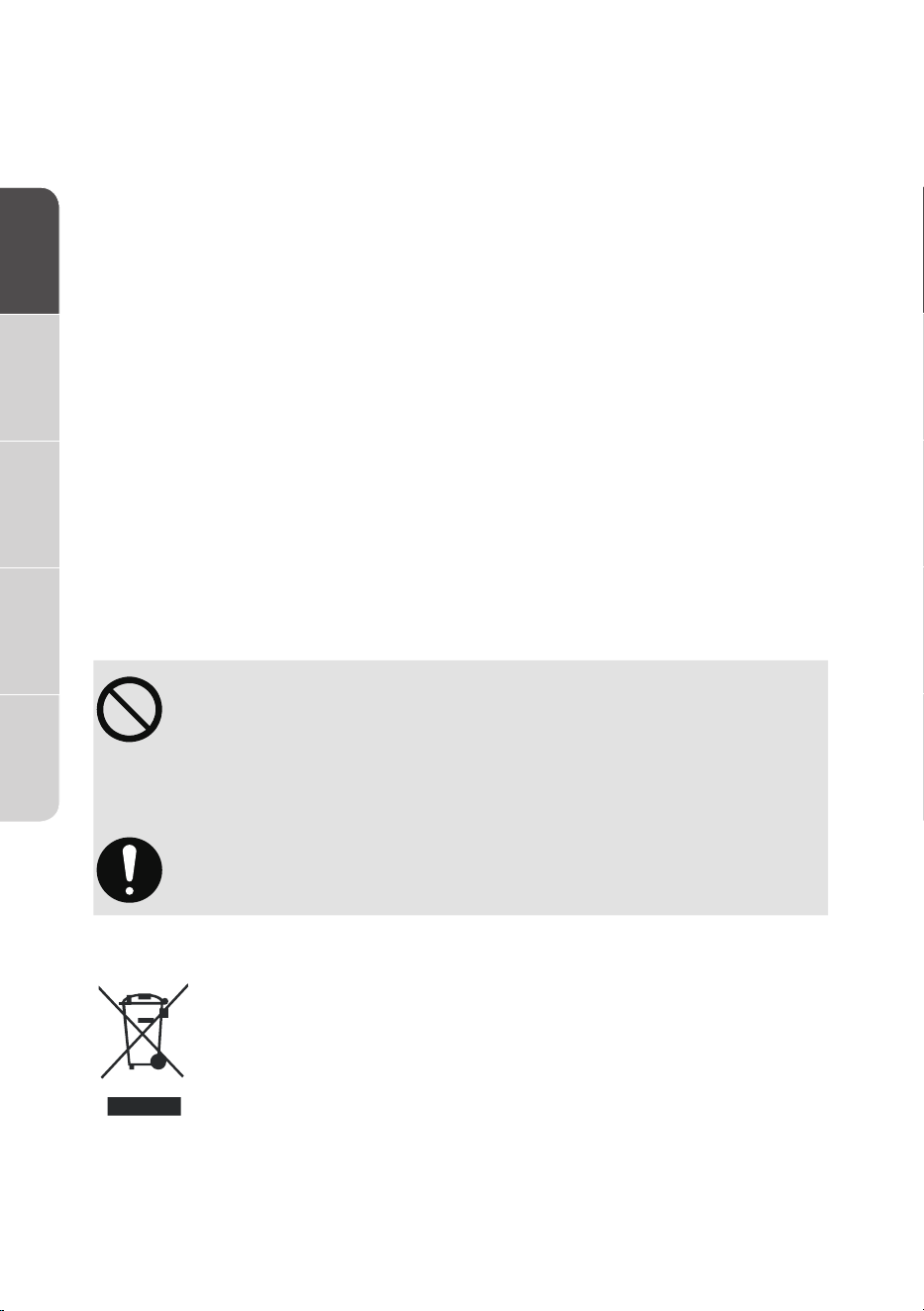
1. SAFETY INFORMATION
YOUR SAFETY AND THE SAFETY OF OTHERS ARE VERY
IMPORTANT
To prevent injury to the user or other persons and property damage,
these instructions must be followed. Incorrect operation due to ignoring
instructions may cause harm or damage, leading to serious injuries or death.
The level of risk is shown by the following indications.
Prohibition
symbol
This is a prohibition symbol.
Any incompliance with instructions marked with this symbol may result in damage to the product or endanger
the personal safety of the user.
Warning
symbol
This is a warning symbol.
It is required to operate in strict observance of instructions marked with this symbol; otherwise damage to the
product or personal injury may be caused.
Cautioning
symbol
This is a cautioning symbol.
moderate injury or damage to the product.
IMPORTANT SAFETY INSTRUCTIONS
Risk Of Fi re / Flammable Ma te rial s
Risk of fire / Flammable materials
WARNING
• This appliance is intended to be used in households and similar
locations
working environments; farmhouses and by clients in hotels, motels
and other residential type environments; bed and breakfast
environments; catering and similar non-retail locations.
• This appliance is not intended for use by persons (including children)
with reduced physical, sensory or mental capabilities, or lack of
experience and knowledge, unless they have been given supervision
or instruction concerning use of the appliance by a person responsible
for their safety.
Safety
Information
Proper Use of
Refrigerator
Maintenance of
Refrigerator
Trouble
Shooting
Appendix
• Children should be supervised to ensure that they do not play with
the appliance.
• If the supply cord is damaged, it must be replaced by the
manufacturer, service agent, or another qualified persons in order
to avoid a hazard.
• Do not store explosive substances such as aerosol cans with a
flammable propellant in this appliance.
• The appliance must be unplugged after use and before carrying out
user maintenance.
• WARNING:Keep ventilation openings in the appliance enclosure
or in the built-in structure clear of obstructions.
• WARNING:Do not use mechanical devices or other means to
accelerate the defrosting process, other than those recommended
by the manufacturer.
• WARNING:Do not damage the refrigerant circuit.
• WARNING:Do not use electrical appliances inside the food
storage compartments of the appliance, unless they are
recommended by the manufacturer.
• WARNING:Dispose of the refrigerator according to local
regulations since it uses flammable blowing gas and refrigerant.
• WARNING:When positioning the appliance, ensure the supply
cord is not trapped or damaged.
• WARNING:Do not place multiple portable socket-outlets or
portable power supplies at the rear of the appliance.
• WARNING:Do not use extension cords or ungrounded
• WARNING:To avoid a hazard due to instability of the appliance,
it must be fixed in accordance with the instructions.
4
Safety
Information
Proper Use of
Refrigerator
Maintenance of
Refrigerator
Trouble
Shooting
Appendix
Safety
Information
Proper Use of
Refrigerator
Maintenance of
Refrigerator
Trouble
Shooting
Appendix
5
Safety
Information
Proper Use of
Refrigerator
Maintenance of
Refrigerator
Trouble
Shooting
Appendix
DANGER
• Risk of child entrapment. Before you dispose of your old refrigerator:
-Leave the shelves in place so that children may not easily climb inside.
•
The refrigerator must be disconnected from the main power before
attempting the installation of accessories.
•
Refrigerant and cyclopentane foaming material used for the appliance
are flammable. Therefore, when the appliance is scrapped, it should
be kept away from any fire source and be recyceld by a special
recycling company with corresponding qualification other than be
disposed by combustion, to prevent damage to the environment
or any other harm.
•
For doors or lids fitted with locks, the keys must be kept out of reach
of children and not in the vicinity of the refrigerating appliance, in
order to prevent children from being locked inside.
6
Safety
Information
Proper Use of
Refrigerator
Maintenance of
Refrigerator
Trouble
Shooting
Appendix
WARNING
For EU standard:
• This appliance can be used by children aged from 8 years and above
and persons with reduced physical, sensory or mental capabilities or
lack of experience and knowledge if they have been given supervision
or instruction concerning the use of the appliance in a safe way
and understand the hazards involved. Children should not play with
the appliance. Cleaning and user maintenance shall not be made by
children without supervision. Children aged from 3 to 8 years are
allowed to load and unload refrigerating appliances.
• To avoid contamination of food, please observe the following
instructions:
– Opening the door for long periods of time can cause a significant
increase of the temperature in the compartments of the appliance.
– Clean surfaces regularly that can come in contact with food and
accessible drainage systems.
– Clean water tanks if they have not been used for 48hours. Flush the
water system connected to a water supply if water has not been
drawn for 5 days. (Note 1)
– Store raw meat and fish in suitable containers in the refrigerator, so
that it is not in contact with or drip onto other food.
– Two-star
frozen-food compartments are suitable for storing
pre-frozen food, and storing ice cubes.
(Note 2)
– One-star
, two-star and three-star compartments are
not suitable for freezing fresh food. (Note 3)
– For appliances without a 4-star
compartment: this
– If the refrigerating appliance is left empty for long periods of time,
mold from developing within the appliance.
Notes 1, 2, 3, 4: Please confirm whether it is applicable according to
your product.
• For a freestanding appliance: this refrigerating appliance is not
intended to be used as a built-in appliance.
• Any replacement or maintenance of the LED light is intended to
be made by the manufacturer, service agent or another qualified
person.
Safety
Information
Proper Use of
Refrigerator
Maintenance of
Refrigerator
Trouble
Shooting
Appendix
Safety
Information
Proper Use of
Refrigerator
Maintenance of
Refrigerator
Trouble
Shooting
Appendix
7
Safety
Information
Proper Use of
Refrigerator
Maintenance of
Refrigerator
Trouble
Shooting
Appendix
SAVE THESE INSTRUCTIONS
THIS APPLIANCE IS FOR HOUSEHOLD USE ONLY
State of California Proposition 65 Warnings:
WARNING: Cancer and Reproductive Harm
-www.P65Warnings.ca.gov.
PROPER DISPOSAL
WARNING
Suocation Hazard
Before you dispose of your old refrigerator:
• Remove the door or lid so that children cannot hide or get trapped
inside your old appliance.
• Leave any shelves in place so that children may not easily climb inside.
• Failure to follow these instructions can result in serious injury or death.
IMPORTANT:
Flammable gas and refrigerant are used. It is the consumer’s responsibility to comply
with Federal and Local regulations when disposing of this product. Refrigerants must
be dispose by a licensed, EPA-certified refrigerant technician in accordance with
established procedures.
8
Safety
Information
Proper Use of
Refrigerator
Maintenance of
Refrigerator
Trouble
Shooting
Appendix
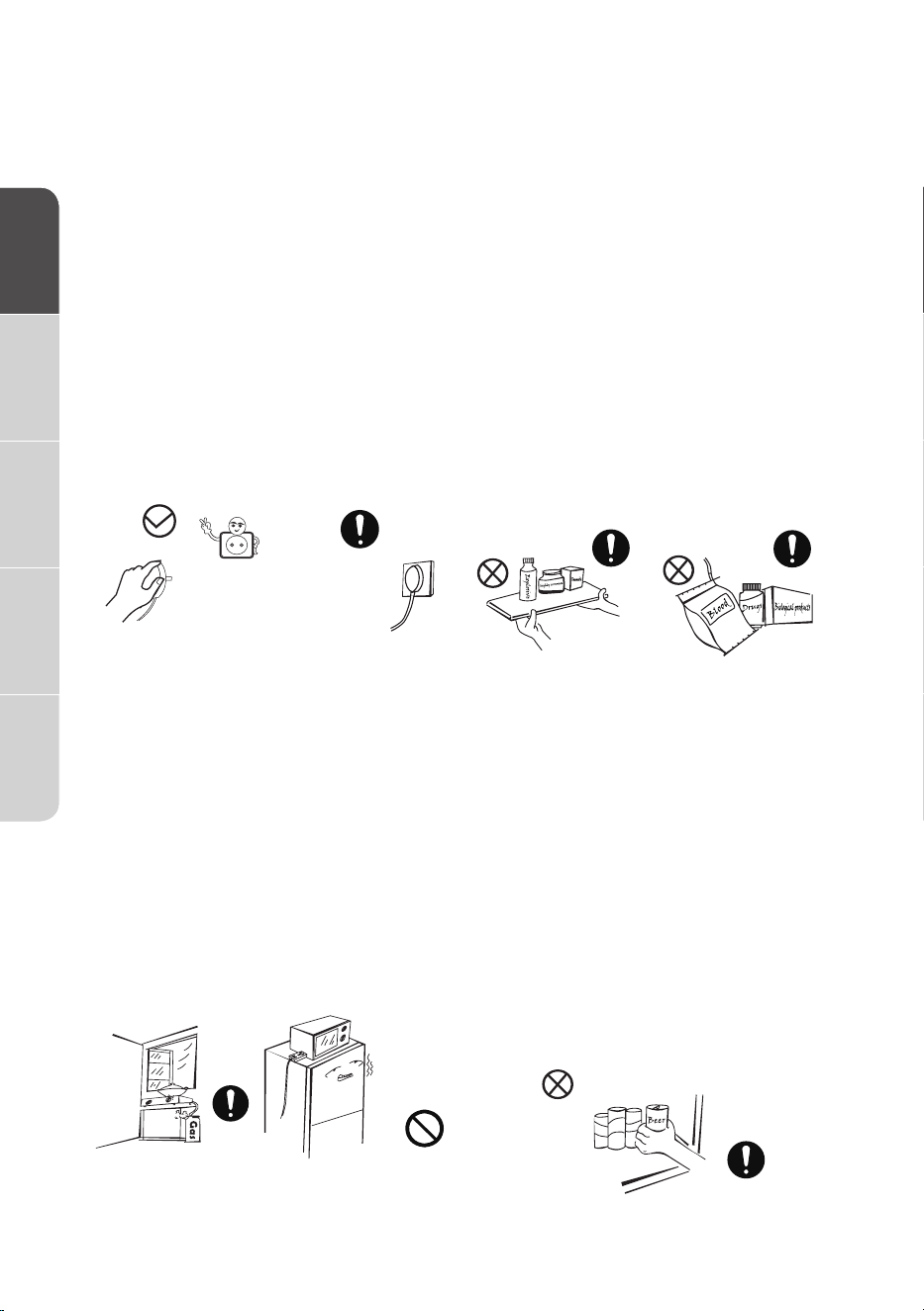
ELECTRICITY-RELATED
WARNINGS
• Do not pull the power cord
when pulling the power plug of
the refrigerator. Firmly
grasp the plug and pull out from
the socket.
• To ensure safe use, do not
damage the power cord or
use the power cord when it is
damaged or worn.
• Use a dedicated power
socket; the power socket
should not be shared with other
electrical appliances.
• The power cord should be firmly
in the socket, otherwise a fire
may be caused.
• Ensure that the
grounding electrode of the
power socket is equipped with a
reliable grounding line.
•
Turn the valve o and open the
doors and windows if there is
leaking gas or other flammable
substances. Do not unplug the
refrigerator or other electrical
appliances, considering a spark
may cause a fire.
• Do not use electrical
appliances on top of the
appliance, unless they are
recommended by the
manufacturer.
WARNINGS RELATED
TO PLACING ITEMS
• Do not place flammable,
explosive, volatile or
highly corrosive items in the
refrigerator to prevent damage
to the product and fire accidents.
• To aviod the risk of fire, do not place
flammable items near the
refrigerator.
• This product is a household
refrigerator and is only suitable
for the storage of food.
According to national standards,
a household refrigerator should
not be used for other purposes,
such as the storage of blood, drugs
or biological products.
• Do not store beer, beverages
or other fluids contained in
bottles or enclosed containers
in the freezing chamber of
the refrigerator; otherwise, the
bottles or enclosed containers
may crack due to freezing and
cause damages.
Freezing chamber
Safety
Information
Proper Use of
Refrigerator
Maintenance of
Refrigerator
Trouble
Shooting
Appendix
Safety
Information
Proper Use of
Refrigerator
Maintenance of
Refrigerator
Trouble
Shooting
Appendix
9
Safety
Information
Proper Use of
Refrigerator
Maintenance of
Refrigerator
Trouble
Shooting
Appendix
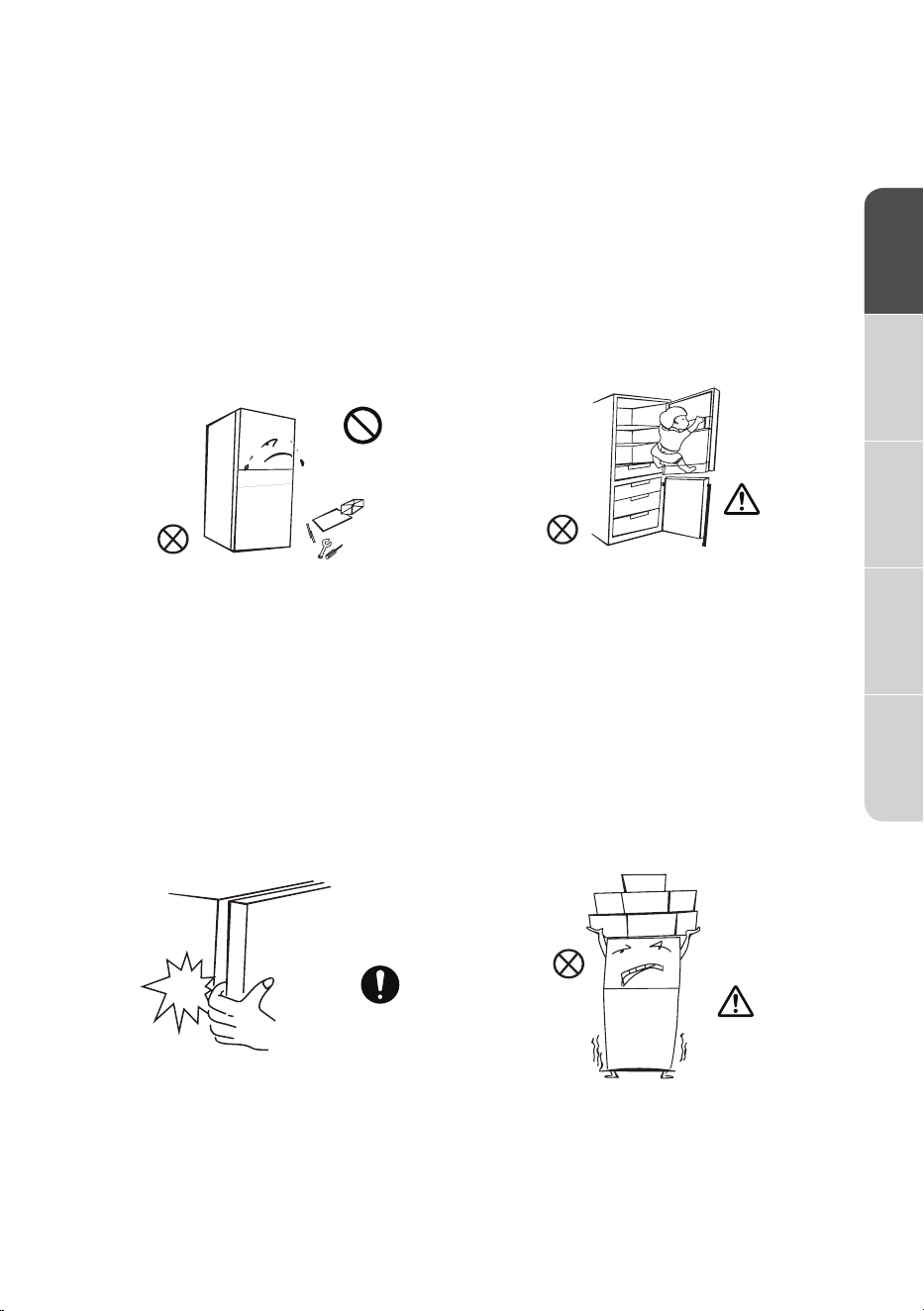
WARNINGS FOR USE
• Do not arbitrarily disassemble
or reconstruct the refrigerator,
nor damage the refrigerant
circuit; maintenance of the
appliance must be conducted by
a specialist.
• If the supply cord is damaged, it
must be replaced by a manuafacture,
service agent, or another qualified
in order to aviod a hazard.
• The gaps between refrigerator
door and body are small. Do
not place your hands in these
areas to prevent squeezing your
fingers. Be careful when
opening the refrigerator door to
avoid objects from falling out.
• Do not pick up food or
containers with wet hands in
the freezing chamber when the
refrigerator is running, especially
metal containers in order to
avoid frostbite.
•
Do not allow children to enter or
climb inside the refrigerator to
prevent children from hiding and
getting trapped in the refrigerator
or being injured due to falling
Refrigerator.
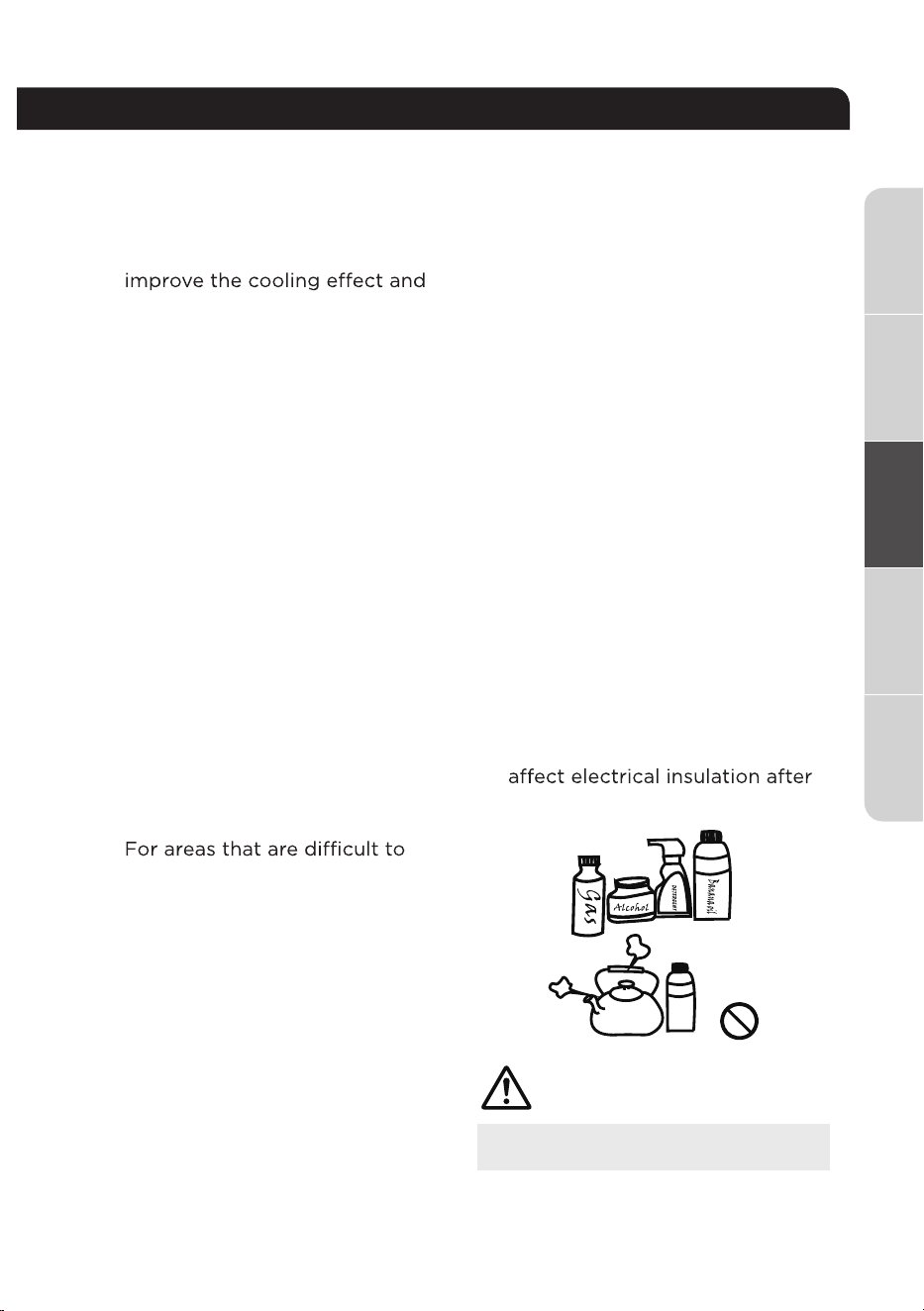
• Do not spray or wash the
refrigerator; do not place the
refrigerator in damp places where
it can be splashed with water to
not aect the electrical
insulation properties of the
refrigerator.
• Do not place heavy objects
on top of the refrigerator
considering that objects may
fall when opening the door, and
could cause accidental injuries.
• Pull the plug out in case
of power failure or cleaning. Do
not connect the refrigerator
to power supply within five
minutes to prevent damages
to the compressor due to
successive starts.
Safety
Information
Proper Use of
Refrigerator
Maintenance of
Refrigerator
Trouble
Shooting
Appendix
10
Safety
Information
Proper Use of
Refrigerator
Maintenance of
Refrigerator
Trouble
Shooting
Appendix
ENERGY WARNINGS
1. Refrigerating appliances
might not operate consistently
(possibility of contents
defrosting or temperature
becoming too warm in the
freezer compartment)
when set for an extended
period of time below the cold
end of the temperature range
for which the refrigerating
appliance is designed.
2. Sparkling beverages should not
be stored in the freezing chamber
or a lower temperature
compartment. Certain drinks
(such as ice water) should not
be consumed too cold.
3. Do not exceed the storage
time(s) recommended by the
food manufacturers for any
kind of food; particularly for
commercially quick-frozen food
in food-freezer and frozen-
food storage compartments or
cabinets.
4. Prevent an undue rise in
temperature of frozen
food while defrosting the
refrigerating appliance, such
as wrapping the frozen food in
several layers of newspaper.
5. A rise in temperature of frozen
food during manual defrosting,
maintenance or cleaning can
shorten the storage life.
DISPOSAL
Refrigerant and cyclopentane foaming material used for the
refrigerator are flammable. Therefore, when the refrigerator
is done with, it should be kept away from any fire source and be
recycled by a special recycling company with corresponding
qualifications other than be disposed by combustion, so as to
prevent damage to the environment or any other harm.
When the refrigerator is disposed, disassemble the doors,
remove gaskets of door and shelves. Place the doors and shelves
in a proper place to prevent trapping children.
Correct Disposal of this product:
This marking indicates that this product should not be
disposed with other household waste. To prevent possible
harm to the environment or human health from uncontrolled
waste disposal, recycle it responsibly to promote the
sustainable reuse of material resources. To return your used
device, please use the return and collection systems or contact
the retailer where the product was purchased. They take this
product in for environmental safe recycling.
Safety
Information
Proper Use of
Refrigerator
Maintenance of
Refrigerator
Trouble
Shooting
Appendix
Safety
Information
Proper Use of
Refrigerator
Maintenance of
Refrigerator
Trouble
Shooting
Appendix
Safety
Information
Proper Use of
Refrigerator
Maintenance of
Refrigerator
Trouble
Shooting
Appendix
Safety
Information
Proper Use of
Refrigerator
Maintenance of
Refrigerator
Trouble
Shooting
Appendix
Trouble
shooting
11
Safety
Information
Proper Use of
Refrigerator
Maintenance of
Refrigerator
Trouble
Shooting
Appendix
Safety
Information
Proper Use of
Refrigerator
Maintenance of
Refrigerator
Trouble
Shooting
Appendix
2. PROPER USE OF REFRIGERATOR
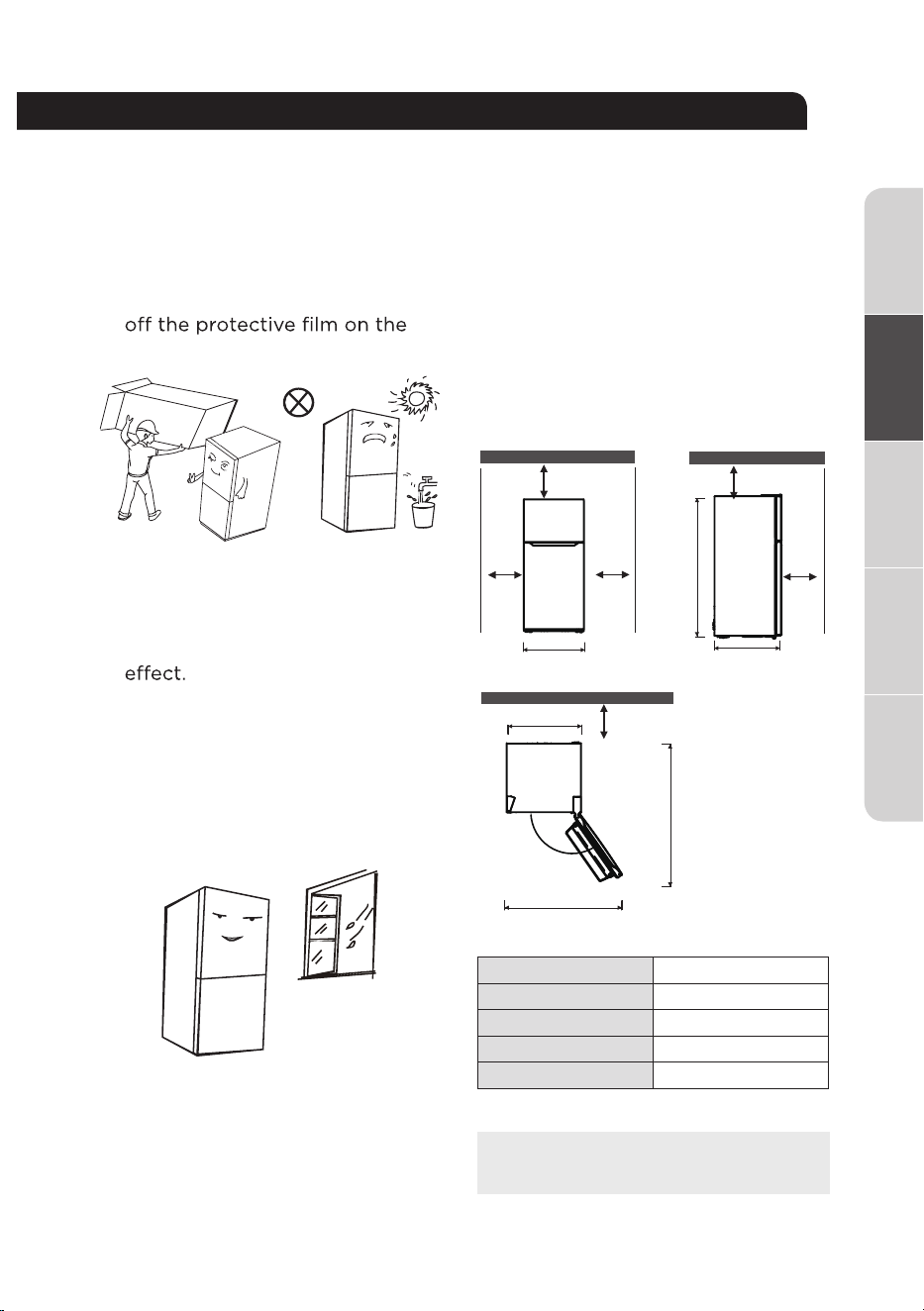
2.1 PLACEMENT
• Before use, remove all packing
materials, including bottom
pads, foam pads and tapes
inside of the refrigerator; tear
doors and the refrigerator body.
• Keep away from heat and
avoid direct sunlight. Do not
place the refrigerator in damp
or wet places to prevent rust
or reduction of the insulating
• Do not spray or wash the
refrigerator; do not place the
refrigerator in damp places where
it can be splashed with water to not
aect the electrical
insulation properties of the
refrigerator.
• The refrigerator is placed in a
well-ventilated indoor place; the
floor must be flat and sturdy
(rotate left or right to adjust the
wheel for leveling if unstable).
• The space on top of the
refrigerator should be greater
than 30cm, and the refrigerator
should be placed against a
wall with a distance of more
than 10cm to facilitate heat
dissipation.
• Spare enough space for
convenient opening of doors
and drawers according to the
statement of the distributor.
10cm
10cm
D
H
10cm
10cm
10cm
10cm
W
B
A
125°
Front View
Top View
Side View
Width “W” 27.56
Depth “D” 28.78
Height “H” 60.63
A 47.72
B 51.57
(unit: inches)
The measurements in the above table
may dier depending on the measuring
method.
Trouble
shooting
12
Safety
Information
Proper Use of
Refrigerator
Maintenance of
Refrigerator
Trouble
Shooting
Appendix
NOTE
This refrigerator needs to be installed
independently and cannot be used as a
built-in. Otherwise, it will cause problems
such as failure to install into the cabinet,
the performance and life of the product
are reduced. And the manufacturer does
not provide basic product warranty.
2.2 ENERGY SAVING
TIPS
• The appliance should be located
in the coolest area of the room,
away from heat producing
appliances or heating ducts, and
out of direct sunlight.
• Let hot food cool down to
room temperature before
placing it in the appliance.
Overloading the appliance
forces the compressor to run
longer. Food that freezes too
slow may lose its quality, or spoil.
• Be sure to wrap food properly,
and wipe containers dry before
placing them in the appliance.
This cuts down on frost build-up
inside the appliance.
• Appliance storage bins should
not be lined with tin foil, wax
paper, or paper toweling.
Liners interfere with the cold
air circulation, making the
• Organize and label food to
reduce door openings and
extended searches. Remove as
many items as needed at one
time, and close the door as soon
as possible.
2.3 CHANGING THE
LIGHT
• Any replacement or
maintenance of the LED lights
is intended to be made by the
manufacturer, service agents
or another qualified person.
The light source in this product is
only to be replaced by qualified
engineers.
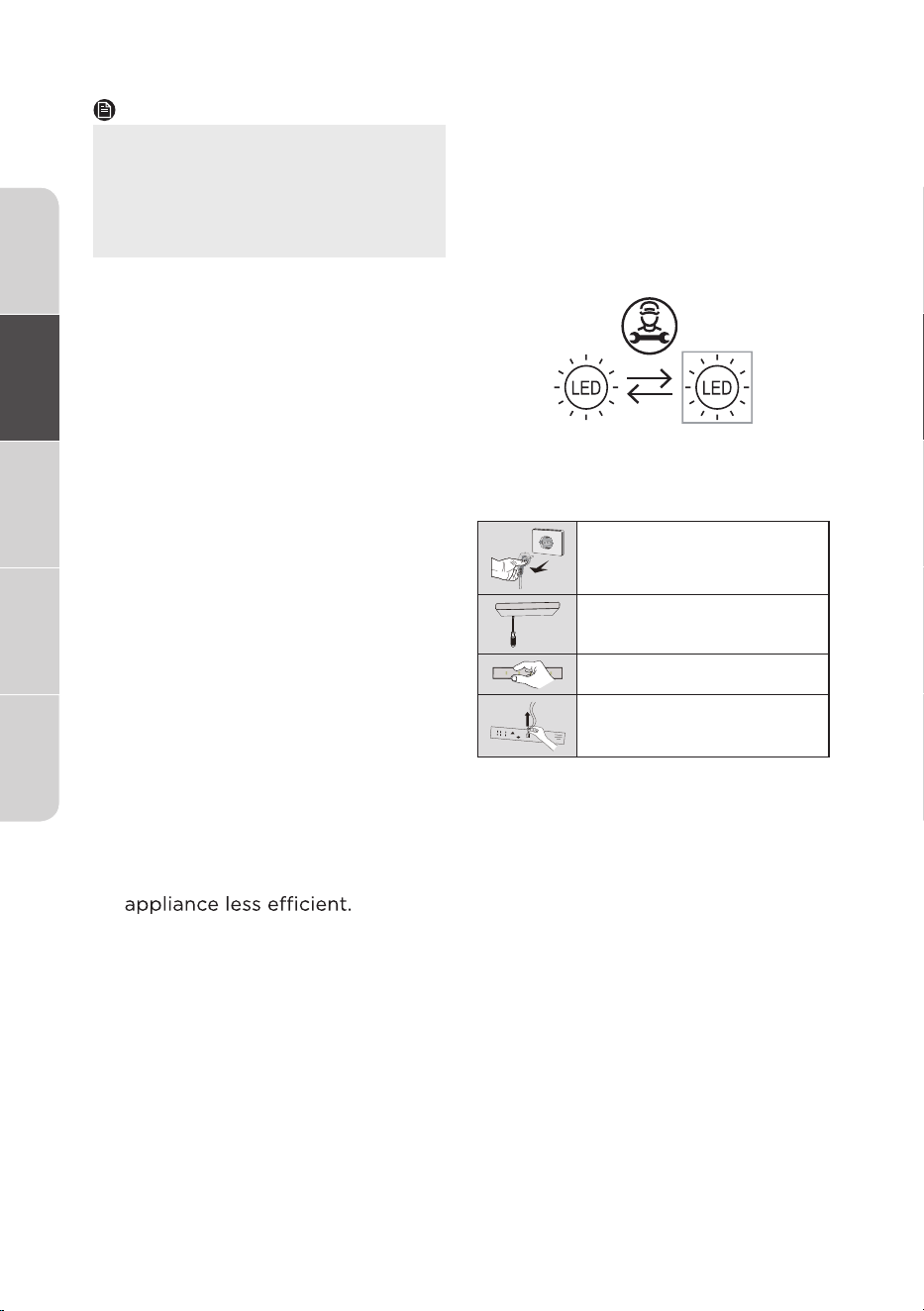
1. Remove the plug.
2. Remove the light cover with a
screwdriver.
3. Take down the light panel.
4. Remove the connection terminal.
Safety
Information
Proper Use of
Refrigerator
Maintenance of
Refrigerator
Trouble
Shooting
Appendix
Safety
Information
Proper Use of
Refrigerator
Maintenance of
Refrigerator
Trouble
Shooting
Appendix
Trouble
shooting
13
Safety
Information
Proper Use of
Refrigerator
Maintenance of
Refrigerator
Trouble
Shooting
Appendix
2.4 START TO USE
• Before initial start, keep the
refrigerator still for two hours
before connecting it to power
supply.
• Before placing any fresh or
frozen food, the refrigerator
should run for 2 - 3 hours,
or above 4 hours in summer
when the ambient temperature
is high.
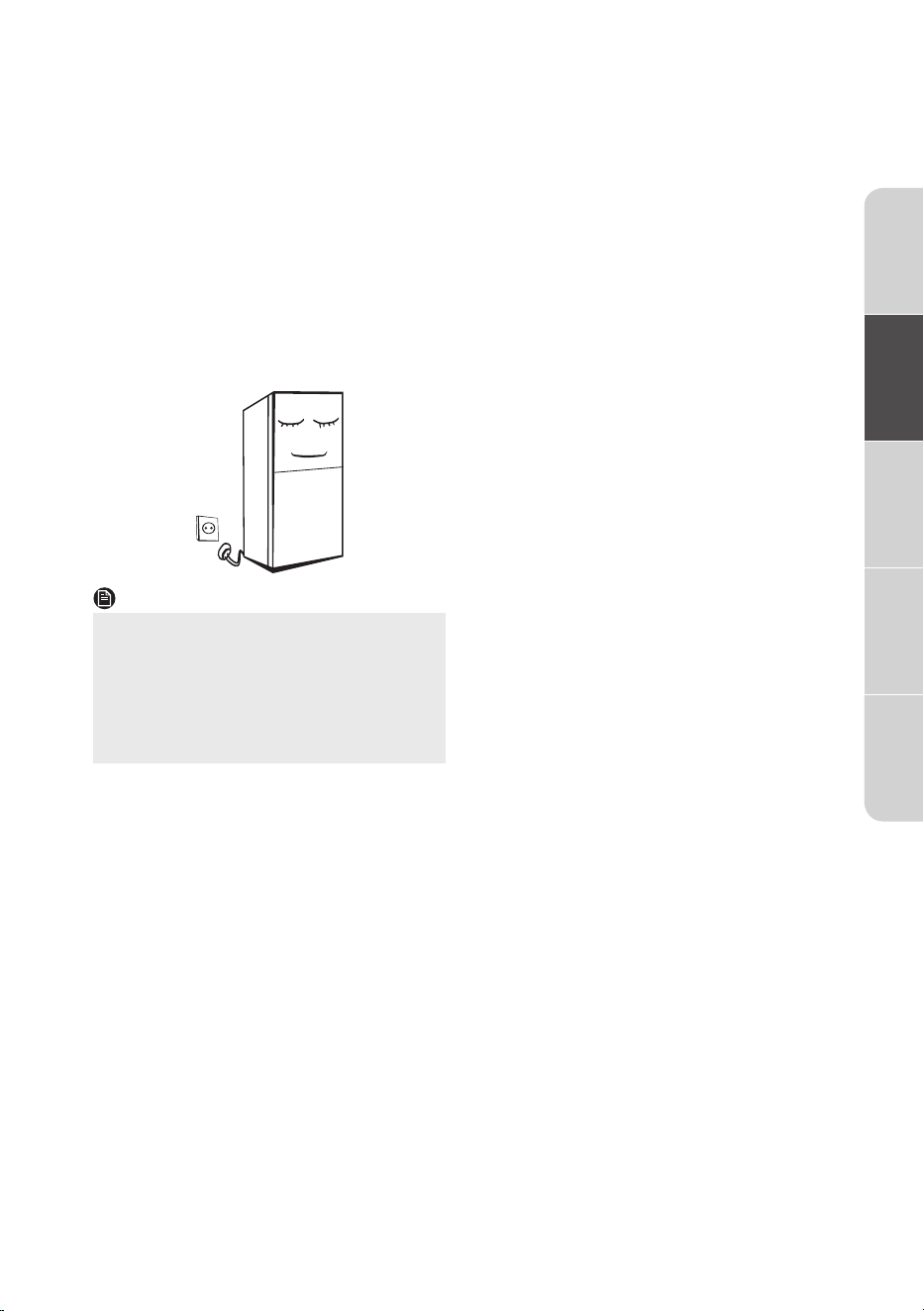
NOTE
This product is not recommended for use
with sockets or main switch with the
A/GFCI function, otherwise it may cause
false tripping.
If tripping persists, it is recommended
to replace the sockets or main switch
without A/GFCI function.
Trouble
shooting
14
Safety
Information
Proper Use of
Refrigerator
Maintenance of
Refrigerator
Trouble
Shooting
Appendix
2.5 COMPONENTS
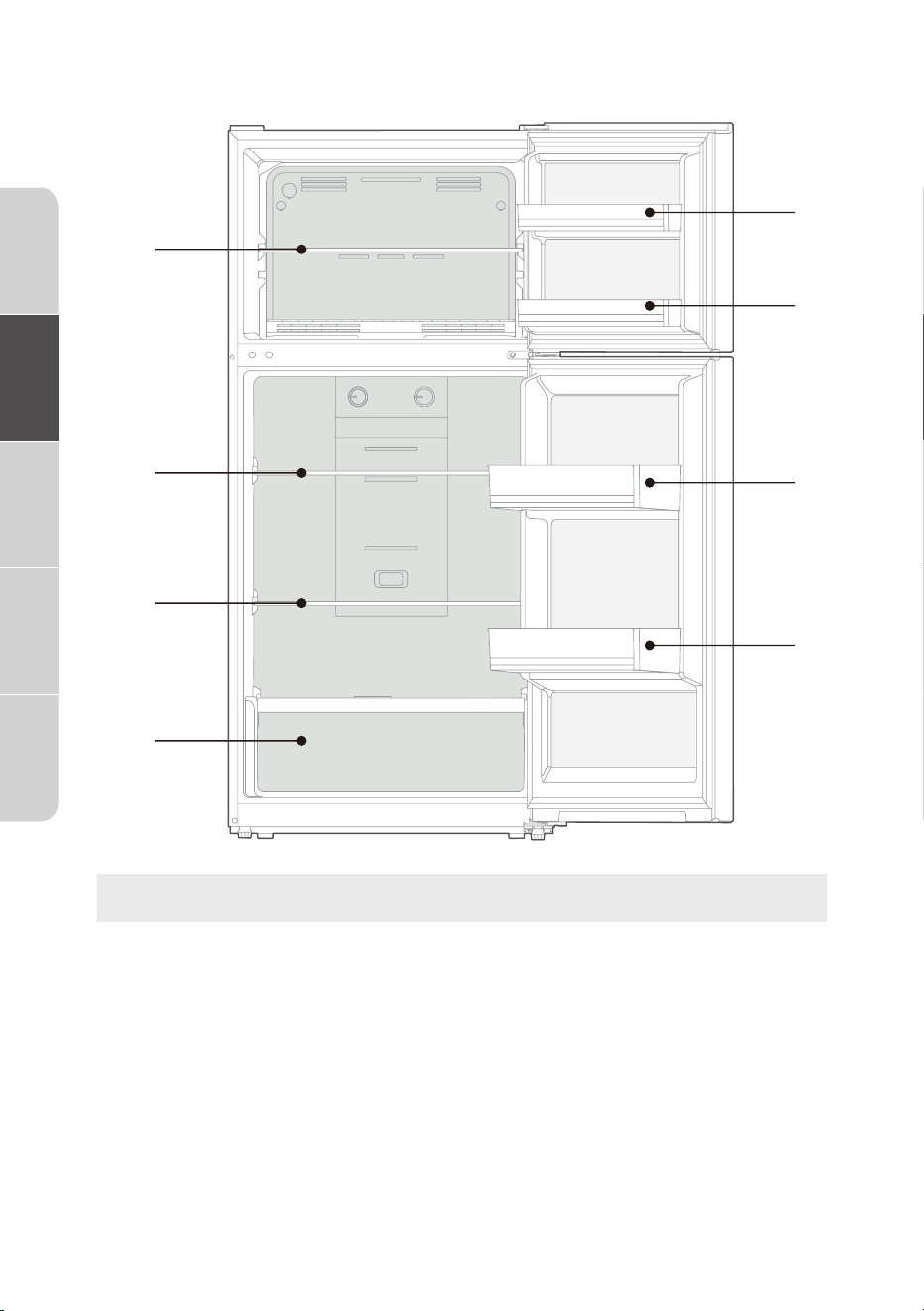
Shelf
Shelf
Shelf
Fruits and
vegetables box
Door tray
Door tray
Door tray
Door tray
The picture above is only for reference. The actual configuration will depend on the
physical product or statement by the distributor
Safety
Information
Proper Use of
Refrigerator
Maintenance of
Refrigerator
Trouble
Shooting
Appendix

Safety
Information
Proper Use of
Refrigerator
Maintenance of
Refrigerator
Trouble
Shooting
Appendix
Trouble
shooting
15
Safety
Information
Proper Use of
Refrigerator
Maintenance of
Refrigerator
Trouble
Shooting
Appendix
Refrigerating chamber
• The refrigerating chamber is
suitable for storage of a variety
of fruits, vegetables, beverages
and other short-term food, but
the vegetables should be as far
away from the refrigeration air
supply outlet as possible.
• Hot food should not be put
in the refrigerating chamber until
cooled to room temperature.
• It is recommended that all food
are sealed before putting into the
refrigerator.
• The glass shelves can be
adjusted up or down for a
reasonable amount of storage
space and easy use.
Freezing chamber
• The low temperature freezing
chamber may keep food fresh for
a long time and it is mainly used
to store frozen food.
• The freezing chamber is suitable
for the storage of meat, fish,
and other food not to be
consumed in short term.
• It is preferred that meat is divided
into small pieces for
quick freezing and easy access.
Note that food should be
consumed within the shelf time.
IMPORTANT:
Drawers, food boxes, shelves, etc. placed according to the position in the picture above
are the most energy ecient.
NOTE
Storage of too much food during operation after the initial connection to power may
adversely aect the freezing eect of the refrigerator. Food stored should not block the
air outlet; otherwise the freezing eect will also be adversely aected.
When storing beverages at the coldest setting, the fruits and vegetables inside are at risk
of freezing. Set at a warmer temperature if the coldest setting is too cool.
Trouble
shooting
16
Safety
Information
Proper Use of
Refrigerator
Maintenance of
Refrigerator
Trouble
Shooting
Appendix
2.6 FUNCTIONS
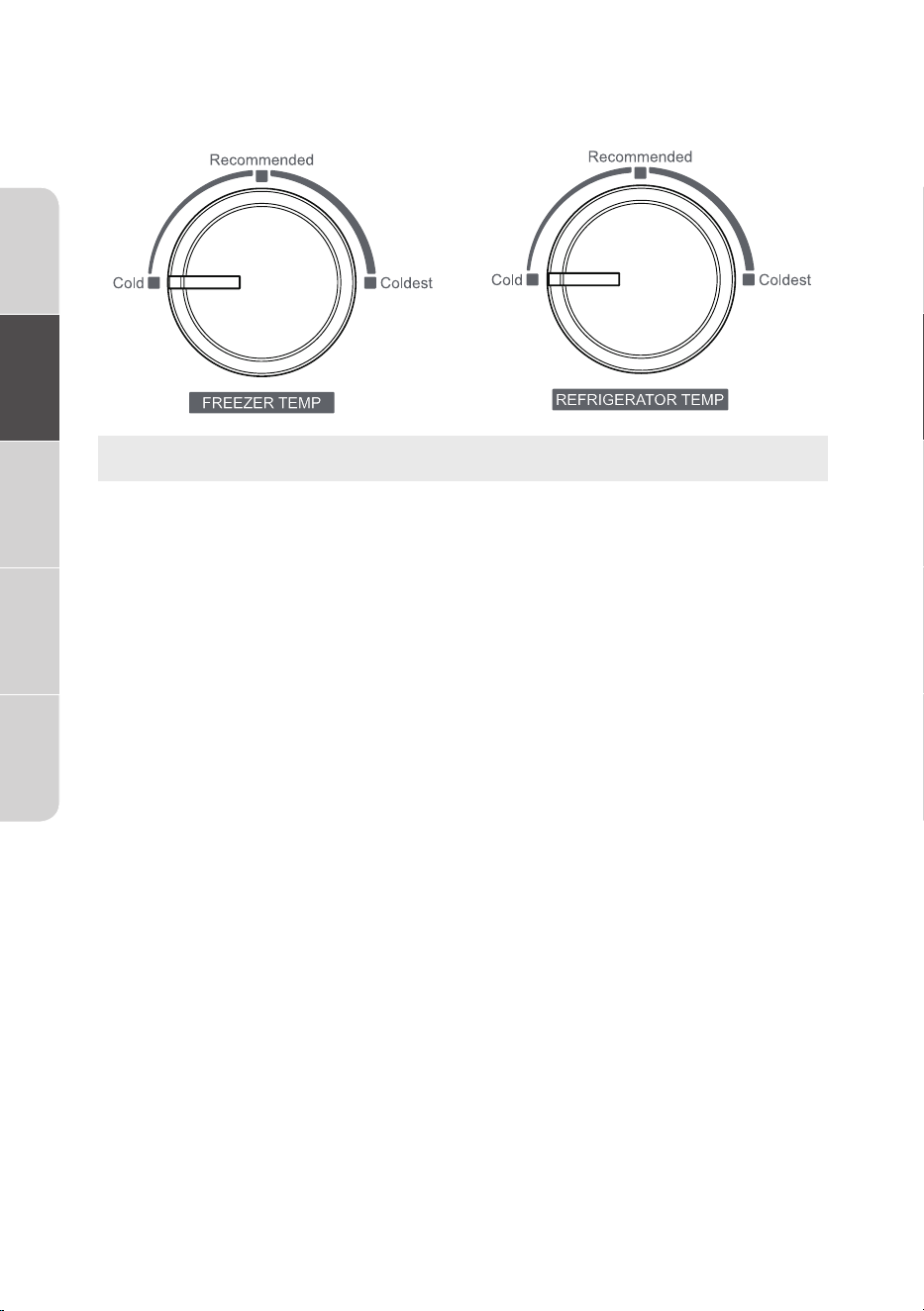
The picture above is only for reference. The actual configuration will depend on the
physical product or statement by the distributor
Freezer temperature adjustment:
1. Adjust the temperature control knob to Cold, the temperature inside the
freezer becomes the highest.
2. Adjust the temperature control knob to Coldest, the temperature inside
the freezer becomes the lowest.
3. The word of the temperature control knob only represents the gear
position, and does not specifically refer to a certain temperature.
4. The recommended gear is: Recommended.
Refrigerator temperature adjustment:
1. Adjust the temperature control knob to Cold, the temperature inside the
refrigerating chamber becomes the highest.
2. Adjust the temperature control knob to Coldest, the temperature inside
the refrigerating chamber becomes the lowest.
3. The word of the temperature control knob only represents the gear
position, and does not specifically refer to a certain temperature.
4. The recommended gear is: Recommended.
Temperature Controlling Knob
Safety
Information
Proper Use of
Refrigerator
Maintenance of
Refrigerator
Trouble
Shooting
Appendix
Safety
Information
Proper Use of
Refrigerator
Maintenance of
Refrigerator
Trouble
Shooting
Appendix
Trouble
shooting
17
Safety
Information
Proper Use of
Refrigerator
Maintenance of
Refrigerator
Trouble
Shooting
Appendix
2.7 REVERSE DOOR HINGES (OPTIONAL)
Precautions before operation:
• Before making changes, the refrigerator must be disconnected from
power. Before adjusting the door, precautions should be taken to
prevent any personal injury.
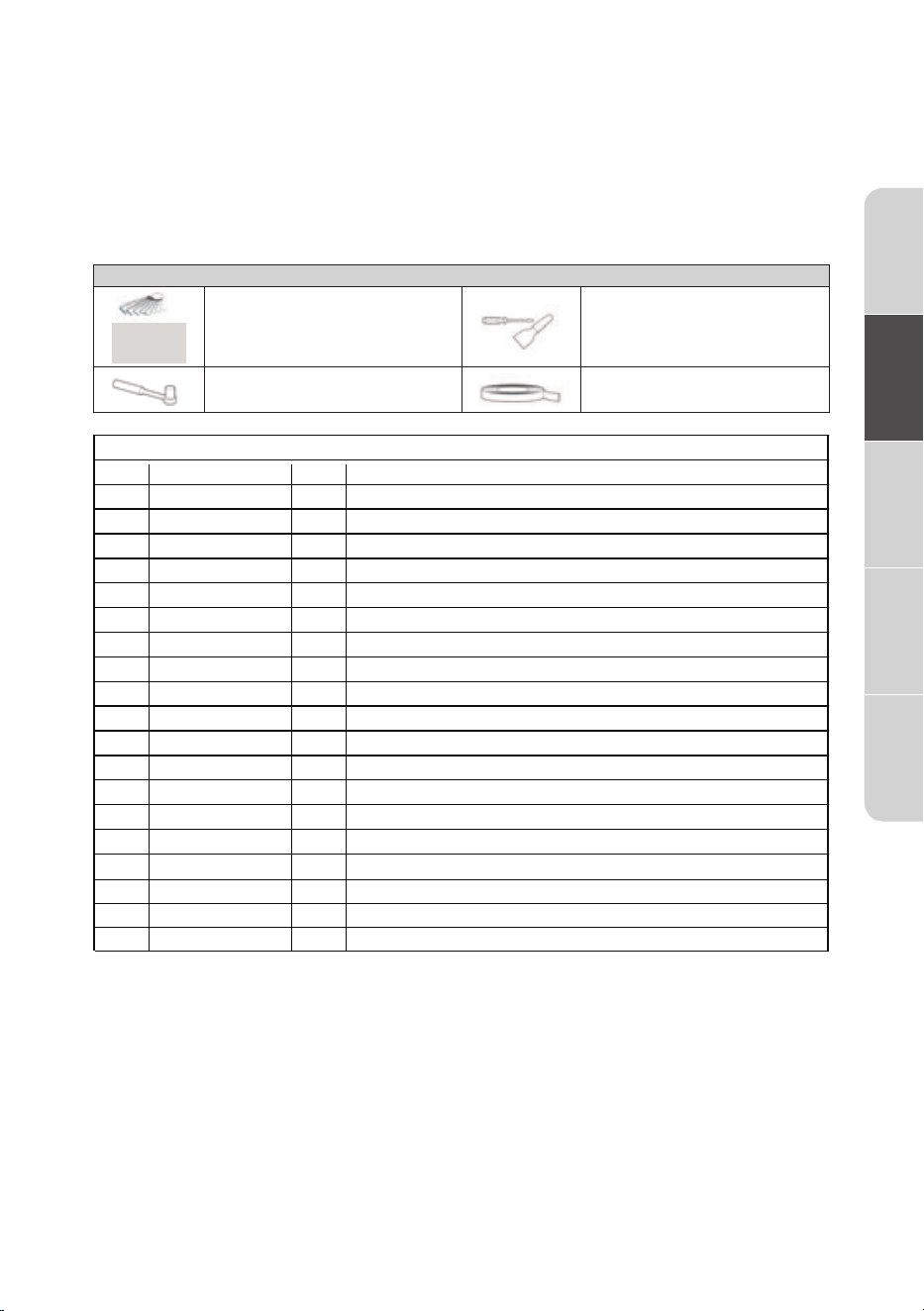
List of tools to be provided to the user
Phillips screwdriver
Putty knife, thin-blade
screwdriver
5/16” socket and ratchet Masking tape
•
•
•
•
•
•
•
•
•
•
•
•
•
•
•
•
•
•
• •
•
•
• •
•
• •
•
•
• •
•
• •
•
• •
•
• •
• •
• •
• •
•
•
Parts to be used for door reverse
SN
parts
Quantity
Upper hinge cover
Upper hinge axle sleeve
Upper hinge screw
Hole cover
Hole plug
Hole plug
Upper hinge
Pre installed on the box and still needs to be used when changing the door
Pre installed on the box and still needs to be used when changing the door
Pre installed on the door and still needs to be used when changing the door
Pre installed on the door and still needs to be used when changing the door
Pre installed on the door and still needs to be used when changing the door
Pre installed on the door and still needs to be used when changing the door
Pre installed on the door and still needs to be used when changing the door
Pre installed on the door body, removed when changing the door, and retained
Put it in the accessory bag and use it when changing the door
Pre installed on the box and still needs to be used when changing the door
Pre installed on the box and still needs to be used when changing the door
Pre installed on the box and still needs to be used when changing the door
Pre installed on the box and still needs to be used when changing the door
Pre installed on the box and still needs to be used when changing the door
Pre installed on the box and still needs to be used when changing the door
Pre installed on the box and still needs to be used when changing the door
Pre installed on the box and still needs to be used when changing the door
Pre installed on the box and still needs to be used when changing the door
Pre installed on the box and still needs to be used when changing the door
Middle hinge screw
Notes
Middle hinge
Adjustable foot
Lower hinge screw
Center sill screw cap
Center sill screw
Lower hinge
Stopper
Stopper screw
Right door self-locking
Left door self-locking
Screw self-locking
Trouble
shooting
18
Safety
Information
Proper Use of
Refrigerator
Maintenance of
Refrigerator
Trouble
Shooting
Appendix
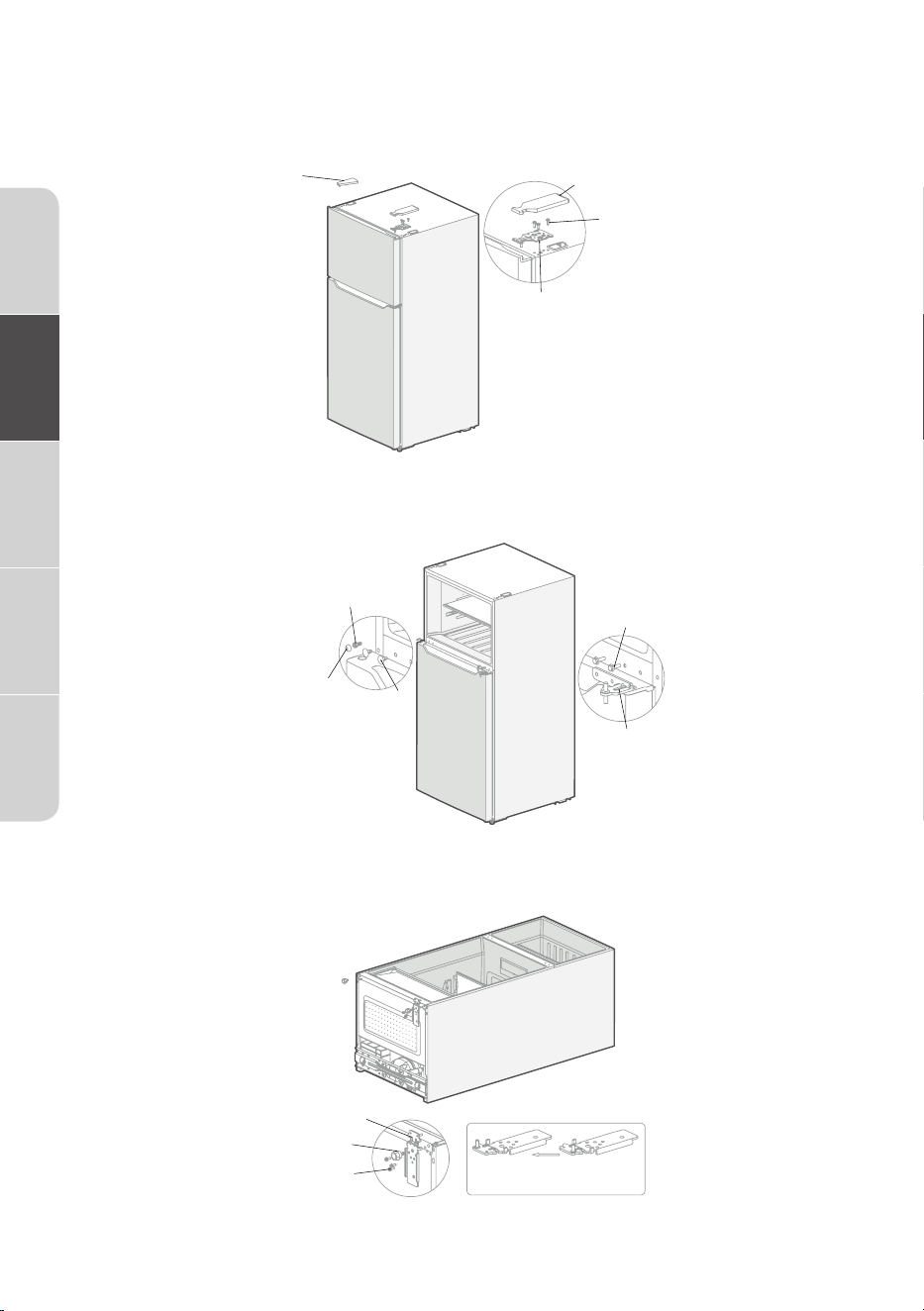
1) Unplug the refrigerator and take out all the food in the refrigerator;
2) Remove the right hinge cover, screws and upper hinge on the top of the box, and
the hole cover on the left; take out the freezing door upwards.
Screw
Upper hinge
Hinge cover
Hole cover
3) Unscrew the hinge screws, remove the middle hinge, remove the hole cover
(plug screw), screw cap and middle beam screw on the middle beam, and take out
the door body of the cold storage chamber upwards.
Screw
Center sill screw
Middle hinge
Plug pins
Center sill screw cap
4) Put the refrigerator down, unscrew the lower hinge screw and leveling foot,
remove the lower hinge, remove the lower hinge shaft and install it into the shaft
hole on the other side of the hinge.
Remove and install the lower
hinge shaft into the shaft hole
on the other side of the hinge
Screw
Lower hinge
Leveling foot
Trouble
shooting
19
Safety
Information
Proper Use of
Refrigerator
Maintenance of
Refrigerator
Trouble
Shooting
Appendix
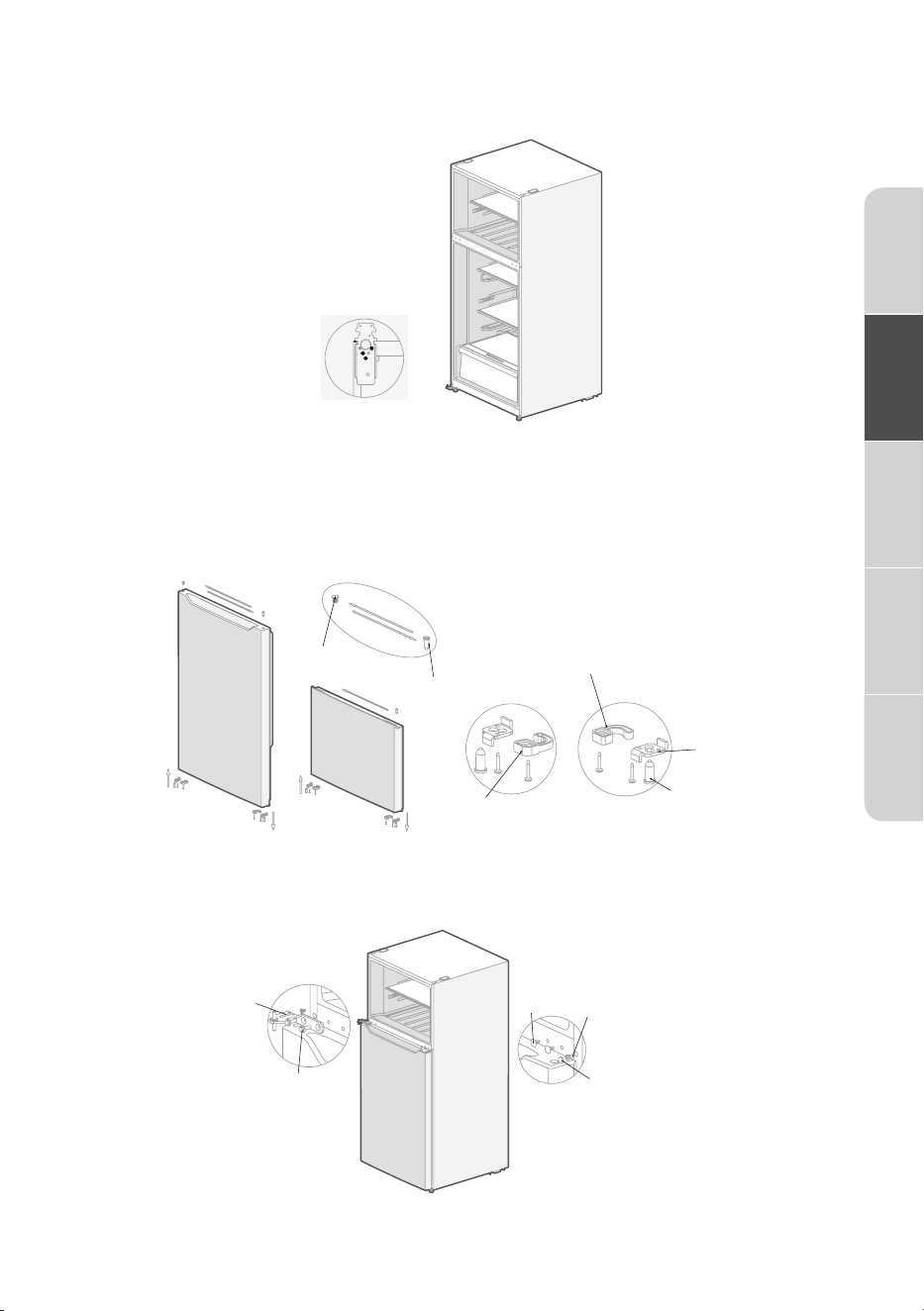
5) Install the lower hinge and tighten the screws on the left side of the refrigerator,
install two leveling feet, and stand up the refrigerator.
6) Unscrew and remove the shaft sleeves, door stops, and right door self-locking
screws of the two door bodies. Take out the left door self-locking from the
accessory bag, and install it to the left corner of the door body together with the
door stops and shaft sleeves. Take out the hole plug and shaft sleeve on the upper
part of the cold storage door and adjust their positions before installing them into
the door body. Take out the shaft sleeve on the freezing door and install it on the
other side.
Right door
self-locking
Sleeve
Sleeve
Hole plug
Stoppe
Left door
self-locking
7) Install the refrigerated door on the lower hinge, install the center beam screws,
center hinge and tighten the screws on the left side, and cover the hole cover (plug
screw), center beam screws and screw caps on the right side.
Screw
Middle hinge
Center sill screw
Plug pins
Center sill screw cap
Safety
Information
Proper Use of
Refrigerator
Maintenance of
Refrigerator
Trouble
Shooting
Appendix
Trouble
shooting
20
Safety
Information
Proper Use of
Refrigerator
Maintenance of
Refrigerator
Trouble
Shooting
Appendix
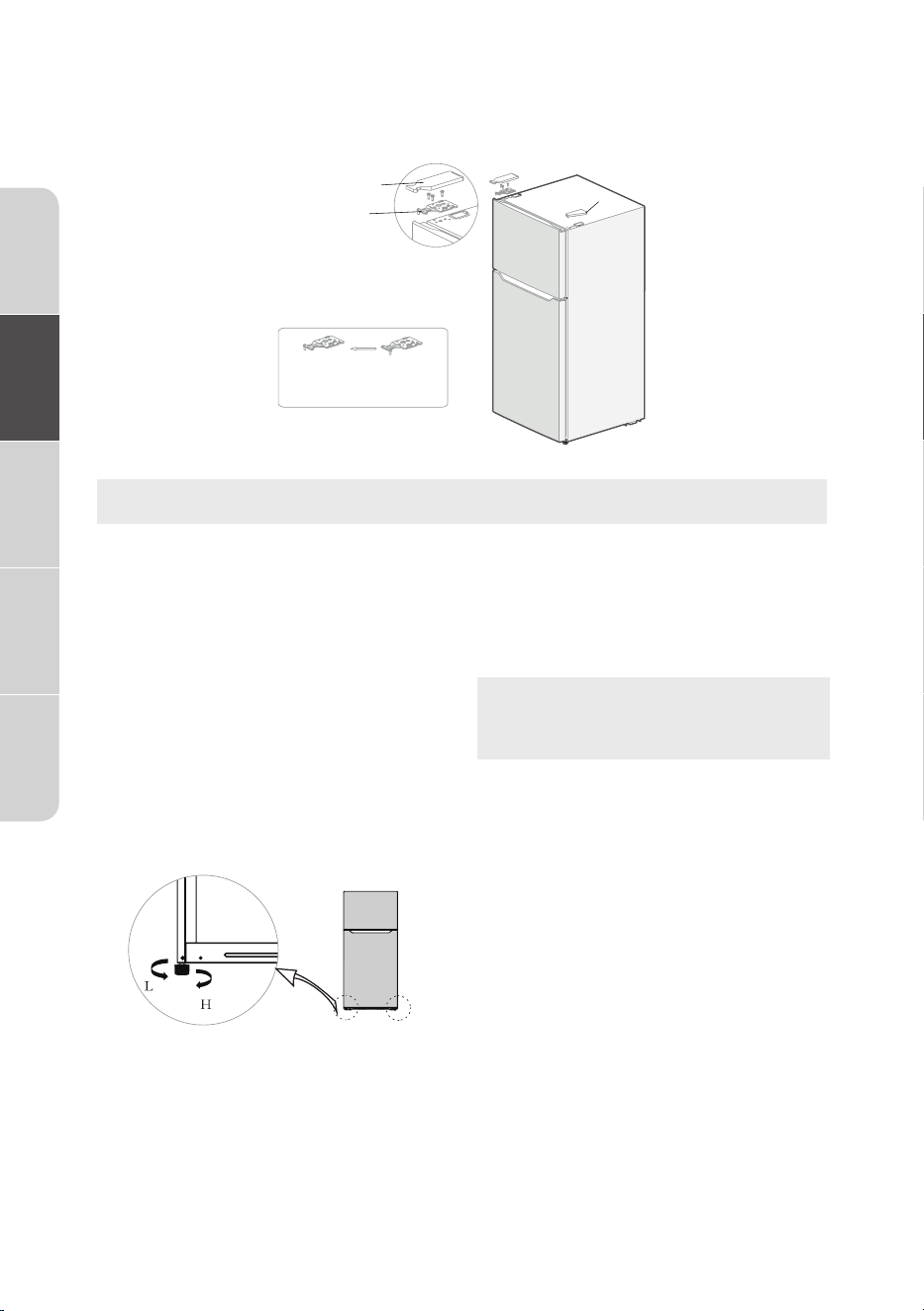
8) Install the freezing door onto the middle hinge, remove the upper hinge shaft and
install it into the shaft hole on the other side of the hinge. Install the upper hinge
and tighten the screws; then install the upper hinge cover and the right hole cover.
Hinge cover
Hole cover
Upper hinge
Remove and install the up
hinge shaft into the shaft hole
on the other side of the hinge
The picture above is only for reference. The actual configuration will depend on the
physical product or statement by the distributor
2.8 LEVELING FEET
1) Precautions before operation:
Before making changes the
refrigerator must be disconnected
from power.
Before adjusting the leveling feet,
precautions should be taken to
prevent any personal injury.
2) Schematic diagram of leveling
feet
3) Adjusting procedures:
a. Turn the feet clockwise to raise
the refrigerator.
b. Turn the feet counterclockwise
to lower the refrigerator.
c. Adjust the right and left feet
based on the procedures above to
a horizontal level.
IMPORTANT:
The picture above is only for reference.
The actual configuration will depend on
the physical product or statement by the
distributor
Safety
Information
Proper Use of
Refrigerator
Maintenance of
Refrigerator
Trouble
Shooting
Appendix
Safety
Information
Proper Use of
Refrigerator
Maintenance of
Refrigerator
Trouble
Shooting
Appendix
Safety
Information
Proper Use of
Refrigerator
Maintenance of
Refrigerator
Trouble
Shooting
Appendix
Safety
Information
Proper Use of
Refrigerator
Maintenance of
Refrigerator
Trouble
Shooting
Appendix
21
Safety
Information
Proper Use of
Refrigerator
Maintenance of
Refrigerator
Trouble
Shooting
Appendix
Safety
Information
Proper Use of
Refrigerator
Maintenance of
Refrigerator
Trouble
Shooting
Appendix
3. MAINTENANCE OF REFRIGERATOR
3.1 OVERALL CLEANING
• Dust behind the refrigerator and
on the floor must be cleaned to
energy saving.
• Check the door gasket regularly
to make sure there is no debris.
Clean the door gasket with a
soft cloth dampened with soapy
water or diluted detergent.
• The interior of the refrigerator
should be cleaned regularly to
avoid odors.
•
cleaning the interior, and remove all
Turn o the power before
food, drinks, shelves, drawers,
etc.
• Use a soft cloth or sponge
to clean the inside of
the refrigerator with two
tablespoons of baking soda and
a quart of warm water. Then
rinse with water and wipe clean.
After cleaning, open the door
and let it dry naturally before
turning on the power.
•
clean inside the refrigerator
(such as narrow places, gaps
or corners), we recommend to
wipe them regularly with a soft
rag, soft brush, etc. and when
necessary, with some tools
(such as thin sticks) to ensure
no contaminants or bacteria
accumulated in these areas.
• Do not use soap, detergent,
scrub powder, spray cleaner,
etc., as these may cause odors
inside the refrigerator or it may
contaminate food.
• Clean the door tray, shelves
and drawers with a soft cloth
dampened with soapy water or
diluted detergent. Dry with a
soft cloth or dry naturally.
• Wipe the outer surface of the
refrigerator with a soft cloth
dampened with soapy water,
detergent, etc., and then wipe
dry.
• Do not use hard brushes,
scouring pads, wire brushes,
abrasives (such as toothpaste),
organic solvents (such as
alcohol, acetone, banana oil,
etc.), boiling water, acid or
alkaline items, which may
damage the fridge surface
and interior. Boiling water
and organic solvents such as
benzene may deform or damage
plastic parts.
• Do not rinse directly with
water or other liquids during
cleaning to avoid short circuit or
immersion.
Unplug the refrigerator for defrosting and
cleaning.

Safety
Information
Proper Use of
Refrigerator
Maintenance of
Refrigerator
Trouble
Shooting
Appendix
22
Safety
Information
Proper Use of
Refrigerator
Maintenance of
Refrigerator
Trouble
Shooting
Appendix
3.2 DEFROSTING
• Frost formed due to change
of season or temperature may
be manually removed by
disconnecting the appliance
from the power supply or by wiping
with a dry towel.
3.3 OUT OF OPERATION
• Power failure: In case of power
failure, even in summer,
food inside the appliance can
be kept for several hours. During
the power failure, the amount of times
of opening the doors must be
reduced, and no additional fresh
food should be placed into the
appliance.
• Long-term non-use: Unplug
and clean the appliance and
leave the doors open to prevent
odors.
• Moving: Before the refrigerator
is moved, take all objects
out, fix the glass partitions,
vegetable holder, etc. with tape,
and tighten the leveling feet;
close the doors and fix them
with tape. During the move,
the appliance must not be laid
upside down, horizontally, or
be exposed to strong vibration;
the inclination during the move
should be no more than 45°.
IMPORTANT:
The appliance should run continuously once
it is started. Generally, the operation of
the appliance should not be interrupted;
otherwise the service life may be
impaired
Safety
Information
Proper Use of
Refrigerator
Maintenance of
Refrigerator
Trouble
Shooting
Appendix
Safety
Information
Proper Use of
Refrigerator
Maintenance of
Refrigerator
Trouble
Shooting
Appendix

Safety
Information
Proper Use of
Refrigerator
Maintenance of
Refrigerator
Trouble
Shooting
Appendix
Safety
Information
Proper Use of
Refrigerator
Maintenance of
Refrigerator
Trouble
Shooting
Appendix
23
Safety
Information
Proper Use of
Refrigerator
Maintenance of
Refrigerator
Trouble
Shooting
Appendix
Safety
Information
Proper Use of
Refrigerator
Maintenance of
Refrigerator
Trouble
Shooting
Appendix
4. TROUBLESHOOTING
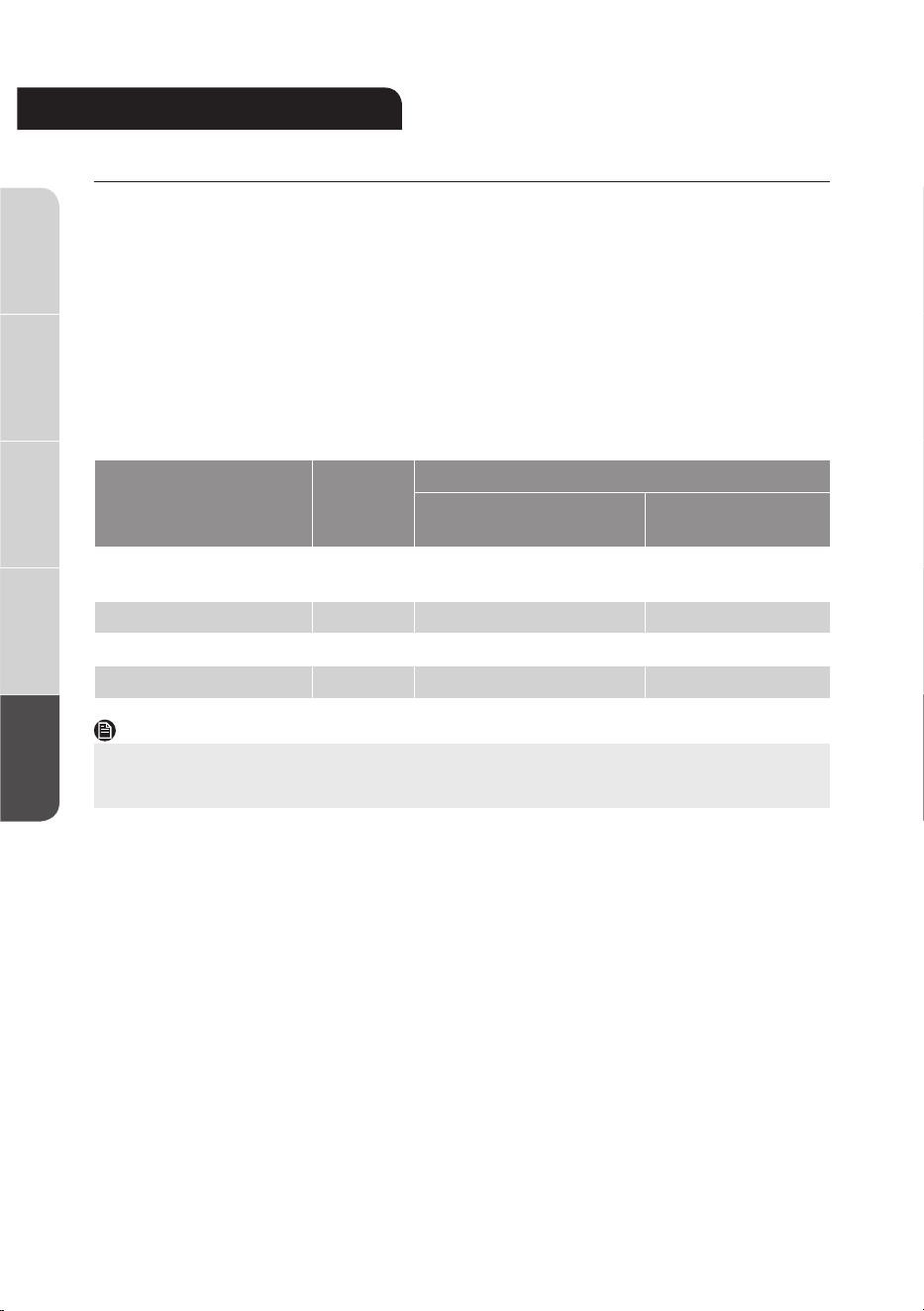
The following simple issues can be handled by the user. Call the
after-sale service department if the issues are not solved.
Malfunction Check whether the appliance is connected to power or whether the plug
is inserted properly.
Check whether the voltage is too low.
Check whether there is a power failure or circuits have tripped.
Odor Odorous food should be tightly wrapped.
Check whether there is any rotten food.
Clean the inside of the refrigerator.
Long operation of
the compressor
Long operation of the refrigerator is normal in summer when the
ambient temperature is high.
We do not suggest placing too much food in the appliance at the same
time.
Food must cool down before being placed in the appliance.
The doors are opened too frequently.
Light fails to turn
on
Check whether the refrigerator is connected to power supply and
whether the illuminating light is damaged.
Have the light replaced by a specialist.
Door cannot be
properly closed
The door is stuck by food packages.
The refrigerator is tilted.
Loud noises Check whether the floor is level and whether the refrigerator is placed in
a stable position.
Check whether accessories are placed at proper locations.
Door seal fails to
be tight
Remove foreign matters on the door seal.
Heat the door seal and then cool it for restoration
(or blow it with an electrical dryer or use a hot towel for heating).
Water pan
overflows
There is too much food in the chamber or food stored contains too
much water, resulting in heavy defrosting.
The doors are not closed properly, resulting in frosting due to entry of
air and increased water due to defrosting.
Hot housing Heat dissipation of the built-in condenser via the housing, which
is normal. When the housing becomes hot due to high ambient
temperature, storage of too much food or shutdown of the compressor,
p
rovide good v
entilation to facilitate heat dissipation.
Surface
condensation
Condensation on the exterior surface and door seals of the refrigerator is
normal when the ambient humidity is too high. Just wipe the condensate
with a clean towel.
Abnormal noise Buzz: The compressor may produce buzzes during operation, and the
buzzes are loud particularly upon start or stop. This is normal.
Creak: Refrigerant flowing inside the appliance may produce a creak,
which is normal.
•
•
•
•
•
•
•
•
•
•
•
•
•
•
•
•
•
•
•
•
•
•
•
•
•
Trouble
shooting
24
Safety
Information
Proper Use of
Refrigerator
Maintenance of
Refrigerator
Trouble
Shooting
Appendix
5. APPENDIX
Installation Instructions
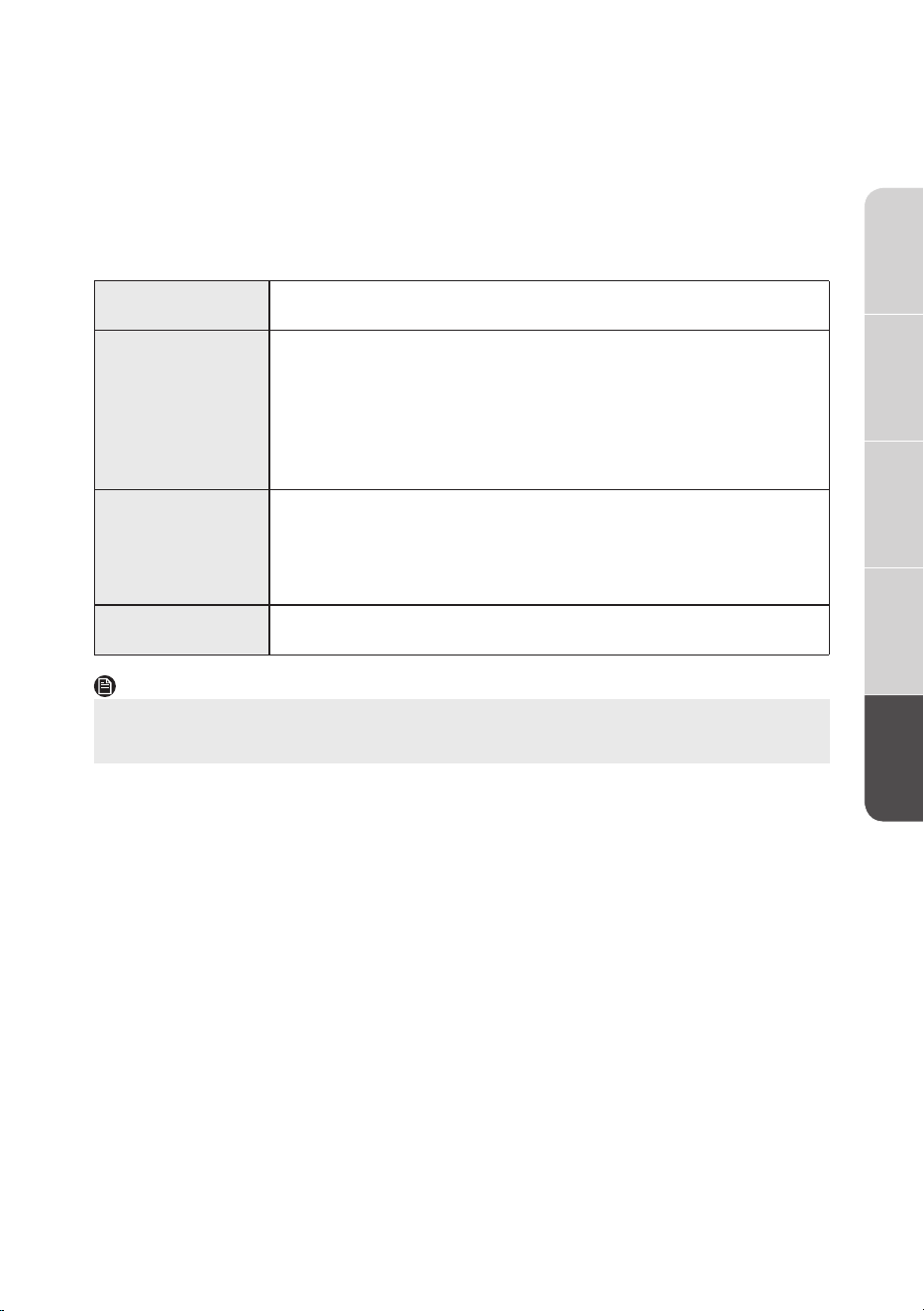
For refrigerating appliances with climate class
Depending on the climate class, this refrigerating appliance is intended to
be used at ambient temperature ranges as specified by the following table.
The climate class can be found on the rating plate. The product may not
operate properly at temperatures outside of the specified range.
You can find the climate class on the label inside your refrigerator
Eective temperature range
The refrigerator is designed to operate normally in the temperature range
specified by its class rating.
Class Symbol
Ambient temperature range °F
IEC 62552
(ISO 15502)
ISO 8561
Extended
temperate
SN +50 to +89.6 +50 to +89.6
Temperate N +60.8 to +89.6 +60.8 to +89.6
Subtropical ST +60.8 to +100.4 +60.8 to +100.4
Tropical T +60.8 to +109.4 +60.8 to +109.4
NOTE
The cooling performance and power consumption of the refrigerator may be aected by
the ambient temperature, the door-opening frequency, and the location of the refrigerator.
We recommend adjusting the temperature settings as appropriate.
Safety
Information
Proper Use of
Refrigerator
Maintenance of
Refrigerator
Trouble
Shooting
Appendix
Safety
Information
Proper Use of
Refrigerator
Maintenance of
Refrigerator
Trouble
Shooting
Appendix
Trouble
shooting
25
Safety
Information
Proper Use of
Refrigerator
Maintenance of
Refrigerator
Trouble
Shooting
Appendix
How to store for best preservation (applicable models only)
Cover food to retain moisture and prevent them from picking up odors
from other food. A large pot of food, like soup or stew, should be divided
into small portions and put in shallow containers before being refrigerated.
A large cut of meat or whole poultry should be divided into smaller pieces
or placed in shallow containers before being refrigerated.
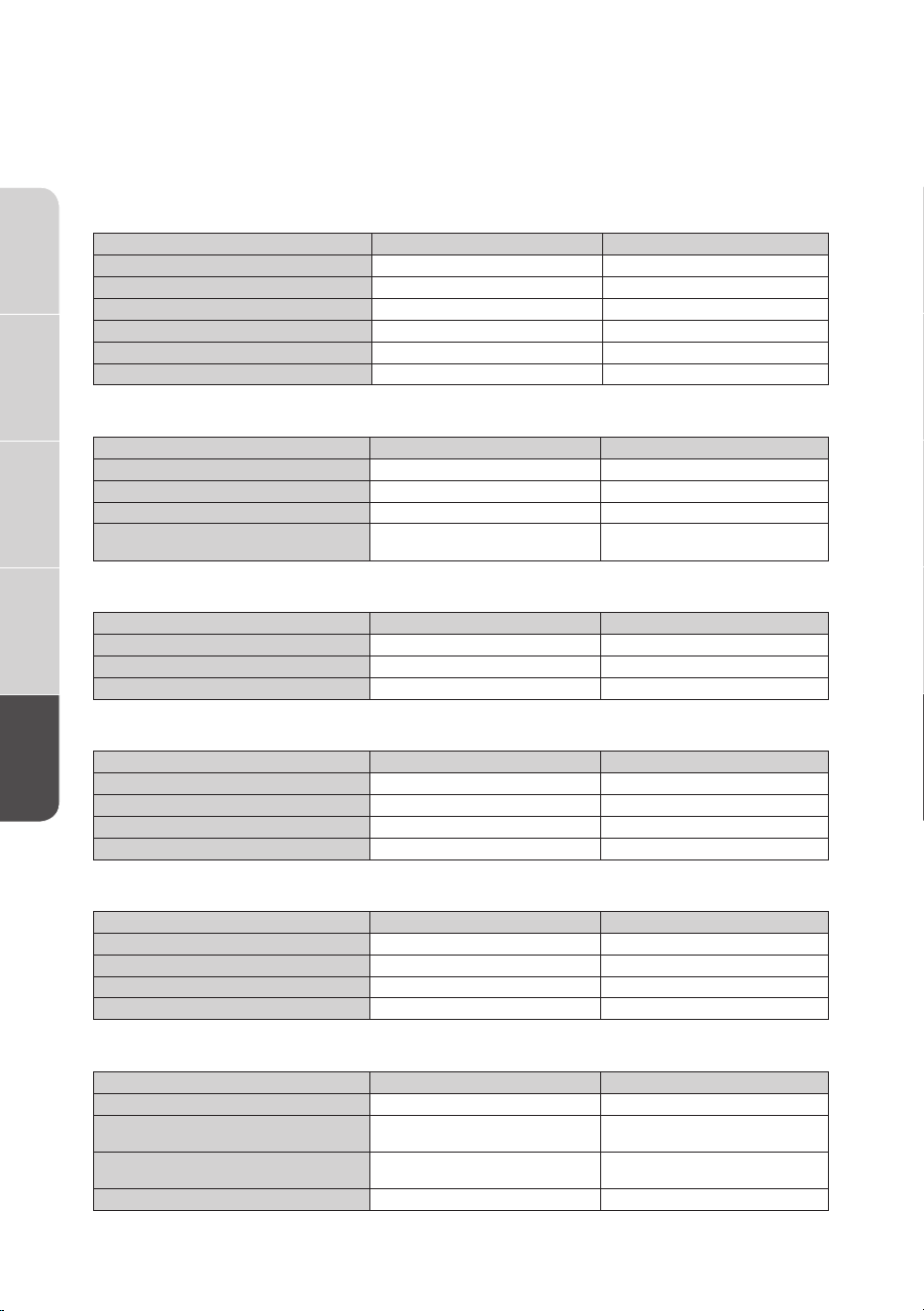
Placement of foods
Shelves Shelves are adjustable to accommodate a variety of
packages.
Specialized
compartment
(applicable
models only)
Sealed crisper drawers provide an optimal storage
environment for fruit and vegetables. Vegetables require
higher humidity while fruit requires lower humidity.
Crispers are equipped with control devices to control
the humidity level (*depending on model and options).
An adjustable temperature meat drawer maximizes the
storage time of meat and cheese.
Storage in the
door
Do not store perishable food in the door. Eggs should
be stored in the carton on a shelf. The temperature of
the storage bins in the door fluctuates more than the
temperature inside the cabinet. Keep the door closed as
much as possible.
Freezer
compartment
You can store frozen food and freeze fresh food in the
freezer compartment.
NOTE
Freeze fresh, undamaged food only. Keep food which is to be frozen away from food which
is already frozen. To prevent food from losing its flavor or drying out, place in airtight
containers.
•
•
•
•
•
•
Trouble
shooting
26
Safety
Information
Proper Use of
Refrigerator
Maintenance of
Refrigerator
Trouble
Shooting
Appendix
Refrigerator & Freezer Storage Chart
The shelf life depends on the temperature and exposure to moisture. Since product
dates are not a guide for the safe use of a product, consult this chart and follow
these tips.
Milk products
Product Refrigerator Freezer
Milk 1 week 1 month
Butter 2 weeks 12 months
Ice cream - 2 - 3 weeks
Natural cheese 1 month 4 - 6 months
Cream cheese 2 weeks Not recommended
Yogurt 1 month -
Meat
Product Refrigerator Freezer
Fresh roasts, steaks, chops 3 - 4 days 2 - 3 months
Fresh ground meat, stew meat 1 - 2 days 3 - 4 months
Bacon 7 days 1 month
Sausage, raw from pork, beef,
turkey
1 - 2 days 1 - 2 months
Poultry / Eggs
Product Refrigerator Freezer
Fresh poultry 2 days 6 - 8 months
Poultry salad 1 day -
Eggs, Fresh in shell 2 - 4 weeks Not recommended
Fish / Seafood
Product Refrigerator Freezer
Fresh fish 1 - 2 days 3 - 6 months
Cooked fish 3 - 4 days 1 month
Fish salad 1 day Not recommended
Dried or pickled fish 3 - 4 weeks -
Fruit
Product Refrigerator Freezer
Apples 1 month -
Peaches 2 - 3 weeks -
Pineapple 1 week -
Other fresh fruit 3 - 5 days 9 - 12 months
Vegetables
Product Refrigerator Freezer
Asparagus 2 - 3 days -
Broccoli, Brussels sprouts, green
peas, mushrooms
3 - 5 days -
Cabbage, cauliflower, celery,
cucumbers, lettuce
1 week -
Carrots, beets, radishes 2 weeks -
Safety
Information
Proper Use of
Refrigerator
Maintenance of
Refrigerator
Trouble
Shooting
Appendix

Safety
Information
Proper Use of
Refrigerator
Maintenance of
Refrigerator
Trouble
Shooting
Appendix
Trouble
shooting
27
Safety
Information
Proper Use of
Refrigerator
Maintenance of
Refrigerator
Trouble
Shooting
Appendix
SPECIAL FOR NEW EUROPEAN STANDARD
The ordered parts in the following table can be acquired through the service
provider
Ordered part Provided by Minimum time required for
provision
Thermostat Professional maintenance
personnel
At least 7 years after the model
was launched
Temperature
sensor
Professional maintenance
personnel
At least 7 years after the model
was launched
Printed circuit
board
Professional maintenance
personnel
At least 7 years after the model
was launched
Light source Professional maintenance
personnel
At least 7 years after the model
was launched
Door handle Professional repairers and
final users
At least 7 years after the model
was launched
Door hinges Professional repairers and
final users
At least 7 years after the model
was launched
Trays Professional repairers and
final users
At least 7 years after the model
was launched
Baskets Professional repairers and
final users
At least 7 years after the model
was launched
Door gaskets Professional repairers and
final users
At least 10 years after the model
was launched
Dear customer,
1. If you want to return or replace the product, please contact the store
where you bought it.
2. Remember to bring proof of purchase.
3. If your product breaks down and needs to be repaired, please contact
the after-sales service provider.
Trouble
shooting
28
Safety
Information
Proper Use of
Refrigerator
Maintenance of
Refrigerator
Trouble
Shooting
Appendix
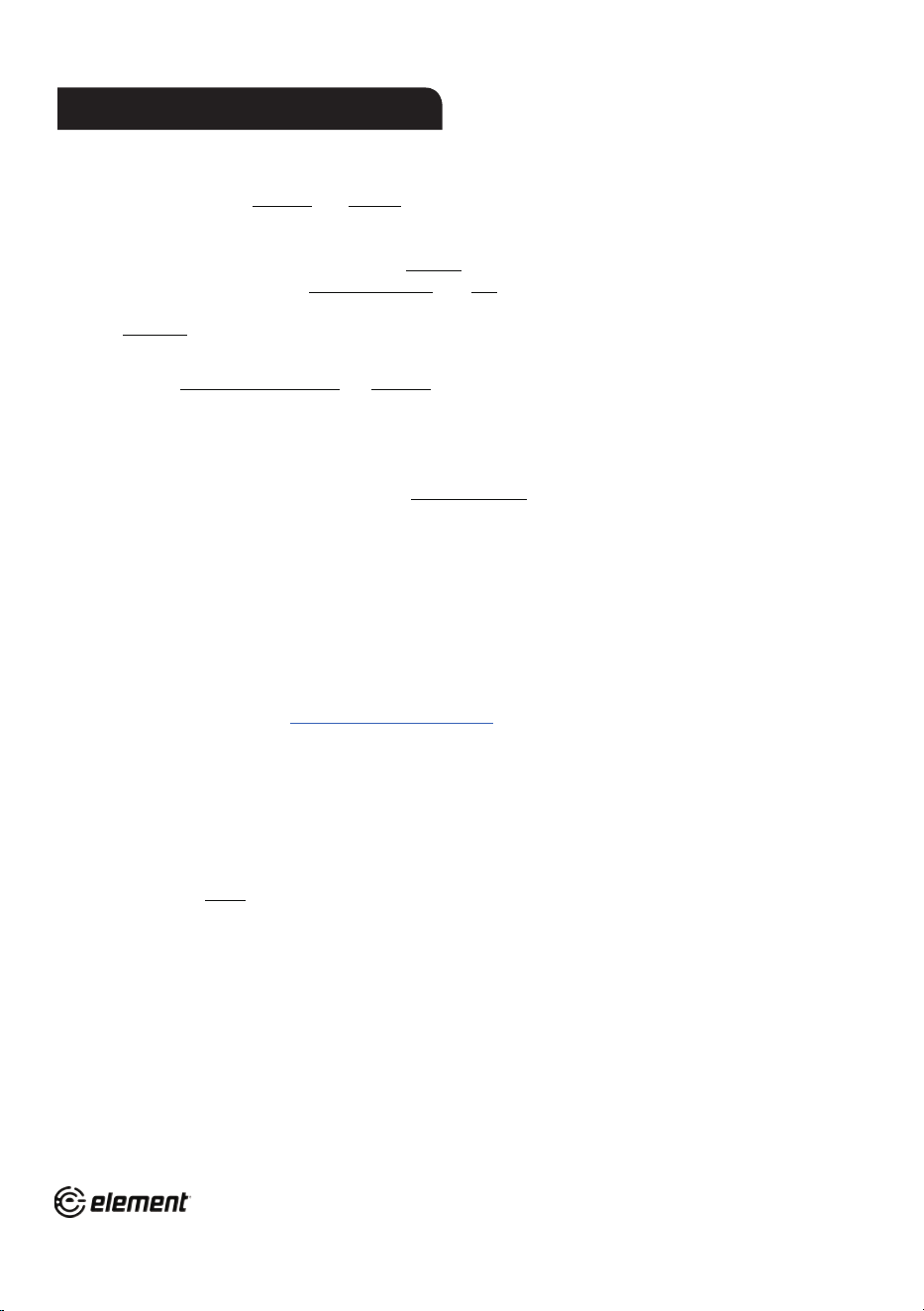
PARAMETERS
TECHNICAL DATA
Model
Fresh food storage compartment volume
Frozen food storage compartment volume
Storage temperature
Energy consumption
Energy consumption ___kWh per year, based on standard test results for
24 hours.
Household appliances category
Energy grading
EU ecolabel
Defrosting type
Climate class
This appliance is intended to be used at an ambient temperature
between _°F and _°F.
Airborne acoustic noise
Temperature rise time
Freezing capacity
Rated voltage
Rated current
Overall dimensions (H x W x D)
Appliance dimension (H x W x D)
Total gross volume (L)
Total storage volume (L)
Total volume (L)
Net weight (lbs)
Safety
Information
Proper Use of
Refrigerator
Maintenance of
Refrigerator
Trouble
Shooting
Appendix
Element Appliance Limit ed Warranty
(the “Products” or “Product” when referencing a singular product herein)
This Product (including any accessories included in the original packaging) as supplied and distributed in new condi�on,
is warranted by Element Appliance Company, LLC ("Element
") to the original customer who purchases the Produc�rom
an authorized Element retailer (the “Original Customer
” or “you”) against defects in material and workmanship under
proper use, maintenance, and care according to the owner’s manual, warnings, and instruc�on accompanying the
Product (“Warranty
”) as follows:
* PLEASE NOTE – Proof of purchase evidencing the date of purchase by the Original Purchaser from an authorized
Element retailer (“Valid Proof of Purchase
”) is required for all Warranty service. The express Warranty se�orth herein
is subjec�o all terms and condi�on se�orth below.
1. WARRANTY SERVICE:
A. ONE-YEAR WARRANTY: Except as provided in subpart 1.B below, for a period of one (1) year from the
date of purchase by the Original Customer (the “Warranty Period
”), if the parts or components covered by this
Warranty are determined by Element or Element’s authorized service provider to be defective in material or
workmanship, Element will, atits sole and absolute discretion and option: (i) repair the defective part or component at
no charge to the Original Customer, (ii) replace the defective Product with a new Product of similar or better quality, at
no charge to the Original Customer, or (iii) refund the documented purchase price paid by the Original Customer
(e
xcluding tax) to the Original Customer upon return of the defective Product as directed by Element. After the
Warranty Period expires, the Original Customer must pay for all parts, components, shipping and handling, labor, and
replacement costs associated with the Product or any part or componentthereof, regardless of any defects in the
Product or any part or componentthereof.
B. LIMITED EXTENDED WARRANTY THROUGH PRODUCT REGISTRATI
ON: If and only if the Original
Customer registers the Product at w
ww.elementelectronics.com
within ninety (90) days of the date of purchase by the
Original Customer, then the Warranty Period discussed in subpart 1.A. above shall be extended an additional one (1)
year to a new Warranty Period equaling two (2) years from the date of purchase by the Original Customer. If the
Product isnot registered as provided for in this subpart 1.B, then the standard one-year Warranty Period setforth in
subpart 1.A shall apply.
C. TIMING AND PROCEDURE: Before Warranty service can co
mmence, the Original Customer must
co
ntact either (i) the retailer from whom the Original Customer purchased the Product, or (ii) Element directly, in either
case for problem determination and service procedures. Valid Proof of Purchase evidencing that the Product is within
the Warranty Period MUST
be presented by Original Customer in order to obtain the requested Warranty service.
Please have your model and serial number available, along with your date of purchaseof the Product. To remain eligible
for Warranty service, Original Customer may not return the Product or any part or componentthereofto the retailer or
Element without Element’s prior writen consent.
2. EXCLUSIONS AND LIMITATIONS TO WARRANTY SERVICE
The Warranty covers manufacturing defects in materials and workmanship of the Pro
duct encountered in the normal,
non-commercial use of the Product, and does not cover (a) damages or malfunctions resulting from improper or
unreasonable use or maintenance, abuse, negligence, failure to follow instructions contained in any writien materials
that accompany the Product, deterioration by reason of excess moisture, corrosive atmosphere, lightning, power surges,
connections to improper voltage supply, unauthorized alteration, or other external causes such as extremes in
t
emperature or humidity, modifications, scratches or discoloration; (b) improper or incorrectly performed repairs by
service providers not authorized by Element; (c) transportation, shipping, delivery, pickup, insurance, installation, or set-
6. WARRANTY
29

30
up costs; (d) ordinary wear and tear, cosmetic damage, or damage due to acts of nature, including but not limited to,
water, floods, wind, storm, tornado, earthquake, or fire, or due to damage caused by extraordinary impact events, such
as dropping, crushing, demolition or other extraordinary damage; (e) commercial use of the Product, or use of the
Product for anything other than single-family household or residential use; or (f) modification of the Product or any part
of the Product.
T
his Warranty is made to the Original Customer only and does not cover Products sold AS IS or WITH ALL FAULTS. The
Warranty is invalid if the factory-applied serial number has been altered or removed from the Product. This Warranty is
valid only in the United States, and only applies to Product if it was purchased and serviced in the United States. The
addition of equipment or features to the Product that are not manufactured or recommended by Element could affect
the intended funct
ion of the Product, and therefore may void the Warranty. Furthermore, the exposure of the Product
to chemicals, heat, cold, humidity, or other elements can affect the Product components, and therefore, the Warranty
does not cover discoloration, fading, cosmetic changes, rust, or any damages or failure related to any such items. The
Warranty is contingent upon the proper use, maintenance, and care of the Product. The Warranty may be void if the
Product has been used in a manner contradictory to, o
r in violation of, the terms of the user’s manual, warnings, or
instructions accompanying the Product.
THIS WARRANTY IS MADE IN LIEU OF AND SUPERSEDES ALL OTHER WARRANTIES OR CONDITIONS OF
MERCHANTABILITY OR FITNESS FOR A PARTICULAR PURPOSE OR GENERAL USE, WHETHER EXPRESS, IMPLIED,
COLLATERAL, STATUTORY, OR PROVIDED BY COMMON LAW, THE UNIFORM COMMERCIAL CODE, OR OTHERWISE.
ELEMENT FURTHER DISCLAIMS ALL WARRANTIES AFTER THE END OF T HE WARRANTY TERM DE
FINED ABOVE. NO
OTHER EX PRESS WARRANTY OR GUARANTY GIVEN BY ANY OTHER PERSON, FIRM, OR ENTITY WITH RESPECT TO THE
PRODUCT SHALL BE BINDING ON ELEMENT. REPAIR, REPLACEMENT, OR REFUND OF THE ORIGINAL PURCHASE PRICE,
AT ELEMENT’S SOLE DISCRETION, ARE THE EXCLUSIVE REMEDIES OF THE CUSTOMER.
ELEMENT SHALL NOT BE LIABLE FOR ANY INCIDENTAL OR CONSEQUENTIAL DAMAGES CAUSED BY THE USE, MISUSE,
OR INABILITY TO USE THE PRODUCT. THESE INCLUDE, BUT ARE NOT LIMITED TO, ANY DA
MAGES IN THE FORM OF
LOST PROFITS, LOSS OF USE, LEGAL FEES, ECONOMIC LOSS, PERSONAL INJURIES, OR ANY OTHER DAMAGES CAUSED
BY CIRCUMSTANCES BEYOND THE CONTROL OF ELEMENT. NOTWITHSTANDING THE FOREGOING, ELEMENT’S
AGGREGATE LIABILITY TO ANY CUSTOMER SHALL NOT E XCEED THE ORIGINAL PURCHASE PRICE OF THE PRODUCT.
THIS WARRANTY SHALL NOT EXTEND TO ANYONE OTHER THAN THE ORIGINAL CUSTOMER WHO PURCHASED THE
PRODUCT, AND IS NOT TRANSFERRABLE. NO PERSON IS AUTHORIZED TO ALTER, E XTEND,
OR WAIVE THIS WARRANTY
OR ANY OF ITS TERMS OR CONDITIONS.
Some states do not allow the exclusion or limitation of incidental or consequential damages, or allow limitations on
warranties, so the above limitations or exclusions may not apply to you. This Warranty gives you specific rights, and you
may have other rights, which vary from state to state. The exclusions and limitations to the Warranty apply to the
maximum extent permitted by law and unless restricted or prohibited by law. Wh
ere any term of this Warranty is
prohibited by applicable law, it shall be null and void, but the remainder of this Warranty shall remain in effect.
PLEASE DIRECT ALL CORRESPONDENCE TO:
Element Appliance Company, LLC
customerservice@elementelectronics.com
(888) 842-3577
https://elementelectronics.com
Element, the Element Logo, and Bring it home are trademarks of Element Brand Holding, LLC.
All other trademarks are the property of their respec�ve owner, who has not sponsored, endorsed,
or approved this product. ©2022 Element Appliance Company, LLC. All rights reserved.
Distributed by Element Appliance Company, LLC
Augusta, GA 30909
For service, support and warranty informa�on:
Call 888.842.3577, email us at [email protected] or visit www.elementelectronics.com
CONTACT US: