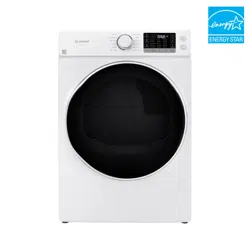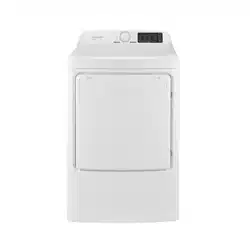
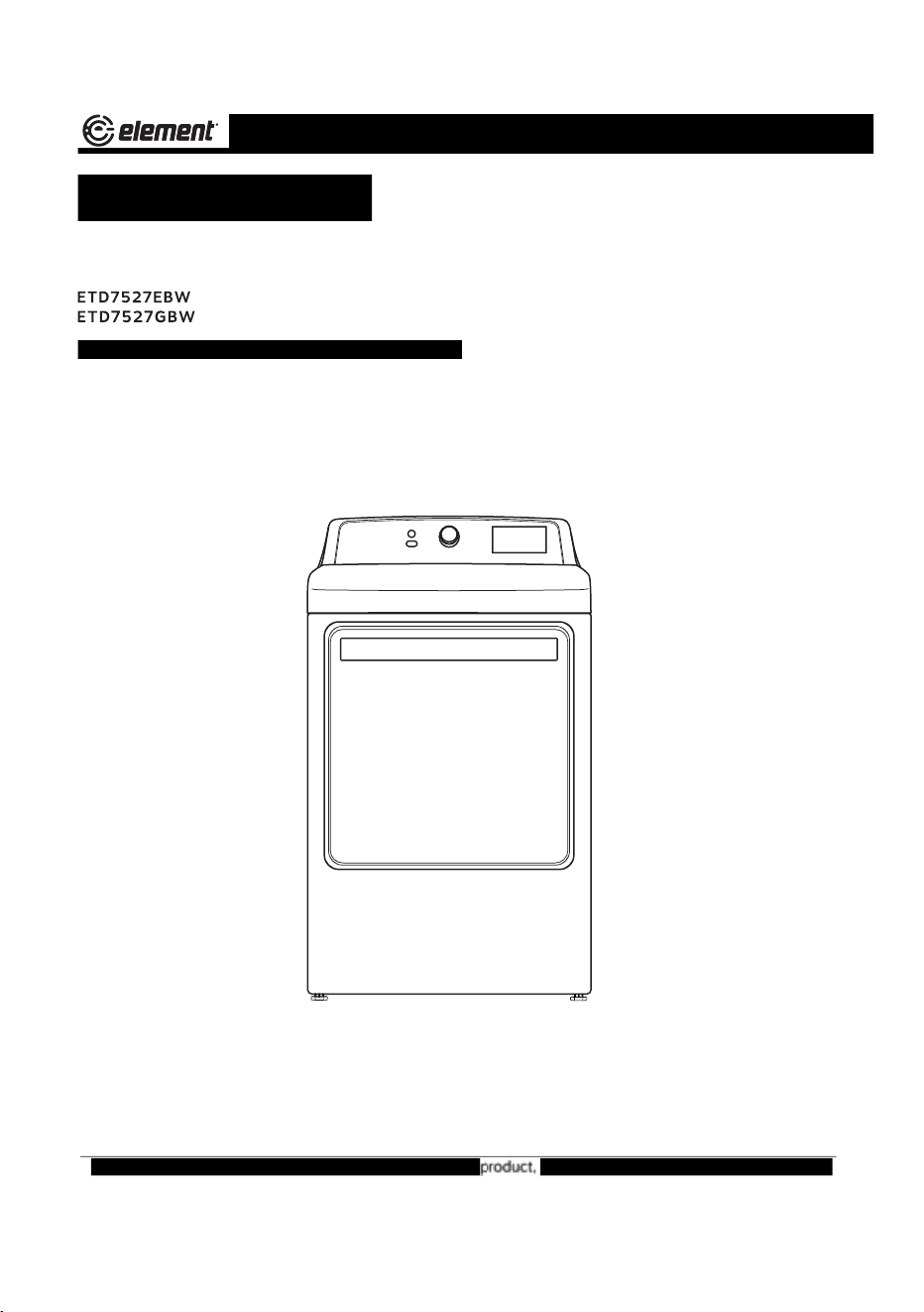
7.5 cu. ft. FRONT LOADING ELECTRIC/GAS DRYER
7.5 cu. ft. FRONT LOADING ELECTRIC/GAS DRYER

DRYER SAFETY ................................................................................. 4
OPERATION REQUIREMENTS ......................................................... 8
Important to Installer .............................................................................. 8
Basic Requirements ................................................................................. 9
Location Requirements .......................................................................... 9
Ducting Requirements .......................................................................... 12
Exhausting Requirements ................................................................... 14
Gas Requirements .................................................................................. 14
Electric Requirements .......................................................................... 16
PARTS AND FEATURES .................................................................. 19
Replacement Parts and Accessories ............................................... 19
INSTALLATION INSTRUCTIONS .................................................... 20
Removing From the Package ............................................................ 20
Tools Required ......................................................................................... 20
Choose the Proper Location .............................................................. 21
Install the Exhaust System .................................................................. 21
Connect the Gas Line (For Gas Models) ...................................... . 23
Connect the Electrical Wiring .......................................................... 24
Level the Dryer ....................................................................................... 27
Power On .................................................................................................. 27
Grounding ................................................................................................. 18

3
Dryer
Safety
Operation
Requirements
Parts and
Features
Installation
Instructions
Dryer Use
Appendix
Dryer Care
Troubleshooting
Final Check .............................................................................................. 27
Door Reversal Procedure.................................................................... 28
DRYER USE ...................................................................................... 34
Control Panel ........................................................................................... 34
Drying a Load of Laundry .................................................................. 37
Special Laundry Tips ............................................................................ 41
DRYER CARE ................................................................................... 42
Cleaning and Maintenance ................................................................. 42
TROUBLESHOOTING ..................................................................... 43
Check These Solutions if Your Dryer... ........................................... 43
Error Codes ..............................................................................................
APPENDIX .......................................................................................
Fabric Care Chart .................................................................................. 46
READ AND KEEP THESE INSTRUCTIONS FOR FUTURE
REFERENCE
and care of your appliance. Carefully read this manual before
installation and operation of this machine to prevent injury and property
damage.
Warnings and Important Safety Instructions in this manual DO NOT
cover all possible conditions and situations that may occur. It is your
responsibility to use common sense, caution and care when installing,
maintaining and operating your dryer.
Change the Dryer Vent Location........................................................ 31
This manual contains important information on the installation, use,
Warranty ................................................................................................... 47
45
46
4
Dryer
Safety
Operation
Requirements
Parts and
Features
Installation
Instructions
Dryer Use
Appendix
Dryer Care
Troubleshooting
DRYER SAFETY
YOUR SAFETY AND THE SAFETY OF OTHERS ARE VERY
IMPORTANT
To prevent injury to the user or other people and property damage, the
instructions shown here must be followed. Incorrect operation due to
ignoring of instructions may cause harm or damage, including death.
The level of risk is shown by the following indications.
CAUTION
WARNING
WARNING
This symbol indicates the possibility of dangerous voltage
constituting a risk of electrical shock is present that could
result in death or serious injury.
This symbol indicates the possibility of injury or damage to
property.
This symbol indicates the possibility of death or serious
injury.
WARNING
For your safety the information in this manual must be followed to
minimize the risk of fire or explosion, or to prevent property damage,
personal injury or death.
WARNING
• Do not store or use gasoline or other flammable vapors and liquids in
the vicinity of this or any other appliance.
Installation and service must be performed by a qualified installer,•
service agency, or the gas supplier.
Fire Hazard
• Failure to follow safety warnings exactly, could result
in serious injury, death or property damage.
• Do not install a booster fan in the exhaust duct.
• Install all clothes dryers in accordance with the
installation instructions of the manufacturer of the
dryer.

5
WARNING
IMPORTANT SAFETY INSTRUCTIONS
WARNING
To reduce the risk of fire, electrical shock, or injury to persons when using
your appliance, follow basic cautions, including the following:
• Read all instructions before using the appliance.
• Use this appliance only for its intended purpose as described in this
Owner’s Manual.
• Before use, the dryer must be properly installed as described in this
manual.
• ALWAYS follow the fabric care instructions supplied by the garment
manufacturer.
• Do not dry articles that have been previously cleaned in, washed
in, soaked in, or spotted with gasoline, dry-cleaning solvents, other
flammable or explosive substances, as they give off vapors that could
ignite or explode.
• Do not use the dryer to dry clothes which have traces of any
flammable substance, such as vegetable oil, cooking oil, machine
oil, flammable chemicals, thinner, etc., or anything containing
wax or chemicals, such as mops and cleaning clothes. Flammable
substances may cause the fabric to catch fire by itself.
• Do not store or use gasoline or other flammable vapors and liquids
near this or any other appliance.
• Do not allow children to play on or in the appliance. Close
supervision of children is necessary when the appliance is used near
children.
• Before the appliance is removed from service or discarded, remove
the lid of the washing or door of the drying compartment.
• Do not reach into the appliance if the drum is moving.
• Do not install or store this appliance where it will be exposed to the
weather or freezing temperatures below 33°F.
• Do not tamper with the controls and latch.
• Do not install a booster fan in the exhaust duct.
What to do if you smell gas:
• Do not try to light any appliance.
• Do not touch any electrical switch; do not use any phone in your
building.
• Clear the room, building, or area of all occupants.
• Immediately call your gas supplier from a neighbor’s phone. Follow
the gas supplier’s instructions.
• If you cannot reach your gas utility provider, then call the fire
department.
Dryer
Safety
Operation
Requirements
Parts and
Features
Installation
Instructions
Dryer Use
Appendix
Dryer Care
Troubleshooting

6
• Do not repair or replace any part of the appliance or attempt
any servicing, unless it is specifically recommended in the user-
maintenance instructions or in published user-repair instructions that
you understand and have the skills to carry out.
• Keep the area underneath and around your appliances free of
combustible materials: (lint, paper, rags, etc.), gasoline, chemicals and
other flammable vapors and liquids.
• Do not place items exposed to cooking oils in your dryer. Items
contaminated with cooking oils may contribute to a chemical
reaction that could cause a load to catch fire. To reduce the risk of
fire due to contaminated loads, the final part of a tumble dryer cycle
occurs without heat (cool down period). Avoid stopping a tumble
dryer before the end of the drying cycle unless all items are quickly
removed and spread out so that the heat is dissipated.
• Turn off the water faucets and unplug the washer if the machine is to
be left for an extended period of time, such as during vacations.
• Packaging material can be dangerous for children. There is a risk of
suffocation! Keep all packaging items away from children.
• Always check the inside of the dryer for foreign objects before
loading laundry. Keep the door closed when not in use.
• Do not use fabric softeners or by-products to eliminate static, unless
recommended by the manufacturer of the fabric softener or product
manufacturer.
• Clean the lint screen before or after each load.
• Keep the area around the exhaust opening and surrounding areas
free from lint, dust, and dirt.
• Keep interior of the dryer and exhaust duct periodically clean. If
necessary use a qualified service personnel.
• Do not place items exposed to cooking oils in your dryer. Items
contaminated with cooking oils may contribute to a chemical
reaction that could cause a load to catch fire.
• This appliance must be grounded. See “Electric Requirements” and
“Grounding” in the “Operation Requirements” section.
• This appliance must be properly grounded. Never plug the power
cord into a receptacle that is not grounded adequately and in
accordance with local and national codes. Refer to installation
instructions for grounding this appliance.
• Ensure pockets are free from small irregularly shaped hard objects
and foreign material, i.e. coins, knives, pins, etc. These objects could
damage your dryer and clothes.
• Do not use heat to dry articles containing foam rubber or similarly
textured rubber like - materials.
Dryer
Safety
Operation
Requirements
Parts and
Features
Installation
Instructions
Dryer Use
Appendix
Dryer Care
Troubleshooting

7
WARNING
CAUTION
To reduce the risk of fire or explosion
• Do not dry items that have been previously cleaned, washed, soaked,
or spotted with gasoline, dry cleaning solvents, or other flammable or
explosive substances. They emit vapors that could ignite or explode.
Any material that has been in contact with a cleaning solvent or
flammable liquids or solids should not be placed in the dryer until all
traces of these flammable liquids or solids and their fumes have been
removed.
• There are many highly flammable items used in homes, such
as acetone, denatured alcohol, gasoline, kerosene, some liquid
household cleaners, some spot removers, turpentine, waxes, and wax
removers.
• Do not dry items containing foam rubber (may be labeled latex
foam) or similarly textured rubber-like materials on a heat setting.
Heated foam rubber materials can, under certain circumstances,
produce fire by spontaneous combustion.
• Do not sit on top of the dryer.
• Because of continuing product improvements, Midea America
reserves the right of change specifications without notice. For
complete details, see the Installation Instructions packed with your
product before selecting cabinetry, making cutouts, or beginning
installation.
• Do not dry clothing with large buckles, buttons, or other heavy metal
or solid things.
• Install and use in accordance with the manufacturer’s instructions.
• Do not place items in your dryer that have been spotted or soaked
with vegetable oil or cooking oil. Even after being washed, these
items may contain significant amounts of these oils.
• Residual oil on clothing can ignite spontaneously. The potential for
spontaneous combustion increases when items containing vegetable
oil or cooking oil are exposed to heat. Heat sources such as your dryer
can warm these items, allowing an oxidation reaction in the oil to
occur.
• Oxidation creates heat. If this heat cannot escape, the items can
become hot enough to catch fire. Piling, stacking, or storing these
kinds of items may prevent heat from escaping and can create a fire
hazard.
• Prevent children from playing with the dryer door to prevent risk of
caught in the door when closing it. This may result in
• Gas leaks may occur in your system, resulting in a dangerous
condition.
• Gas leaks may not be detected by smell alone.
• Certified service gas providers recommend that you purchase and install
a UL approved gas detector.
Dryer
Safety
Operation
Requirements
Parts and
Features
Installation
Instructions
Dryer Use
Appendix
Dryer Care
Troubleshooting
fingers getting
injury.
8
Dryer
Safety
Operation
Requirements
Parts and
Features
Installation
Instructions
Dryer Use
Appendix
Dryer Care
Troubleshooting
State of California Proposition 65 Warnings:
WARNING: Cancer and Reproductive Harm
-www.P65Warnings.ca.gov.
SAVE THESE INSTRUCTIONS
WARNING
CAUTION
Fire Hazard
• Clothes dryer installation must be performed by a
qualified installer.
• Install the clothes dryer according to the
manufacturer’s instructions and local codes.
• Do not install a clothes dryer with flexible plastic
venting materials. If flexible metal (foil type) duct is
installed, it must be of a specific type identified by
the appliance manufacturer as suitable for use with
clothes dryer. Flexible venting materials are known
to collapse, be easily crushed, and trap lint. These
conditions will obstruct with the clothes dryer’s
airflow and increase the risk of fire.
• To reduce the risk of severe injury or death, follow all
installation instructions
• Save these instructions.
IMPORTANT TO INSTALLER
Please read the following instructions carefully before installing the dryer.
These instructions should be kept for future reference.
• The dryer is not suitable for installation in a mobile home.
• Remove the door from all discarded appliances to avoid the danger
of a child being trapped and suffocating, after unplugging cut off the
power cord.
OPERATION REQUIREMENTS
THIS APPLIANCE IS FOR HOUSEHOLD USE ONLY

9
Dryer
Safety
Operation
Requirements
Parts and
Features
Installation
Instructions
Dryer Use
Appendix
Dryer Care
Troubleshooting
1. The dryer should be located where there is enough space at the front
for loading the dryer, and enough space behind for the exhaust system.
2. This dryer is factory-ready for the rear exhaust option. To exhaust
out the bottom or left, use the accessory exhaust kit. Instructions are
included with the kit.
3. Make sure the room in which the dryer is located has enough fresh air.
The dryer must be located where there are no air-flow obstructions.
Ambient temperature shall not be lower than 33°F.
4. For gas dryers, adequate clearance must be maintained as noted on
the data plate to ensure adequate air for combustion and the proper
dryer operation.
5. The dryer must not be installed or stored in an area where it will be
exposed to water and/or weather. The dryer area must be kept clear
of combustible materials, gasoline, and other flammable vapors and
liquids. A dryer produces combustible lint. The area around the dryer
should be kept lint-free.
BASIC REQUIREMENTS
Make sure you have everything necessary for the proper installation.
• A GROUNDED ELECTRICAL OUTLET is required. Refer to the
“Electrical requirements” section.
• A POWER CORD that is compatible with an electric dryer (except for Canada).
• GAS LINES (if a gas dryer) must meet national and local codes.
• The EXHAUST SYSTEM must be made of rigid metal or flexible stiff-
walled metal exhaust ducting. DO NOT USE PLASTIC DUCTS.
LOCATION REQUIREMENTS
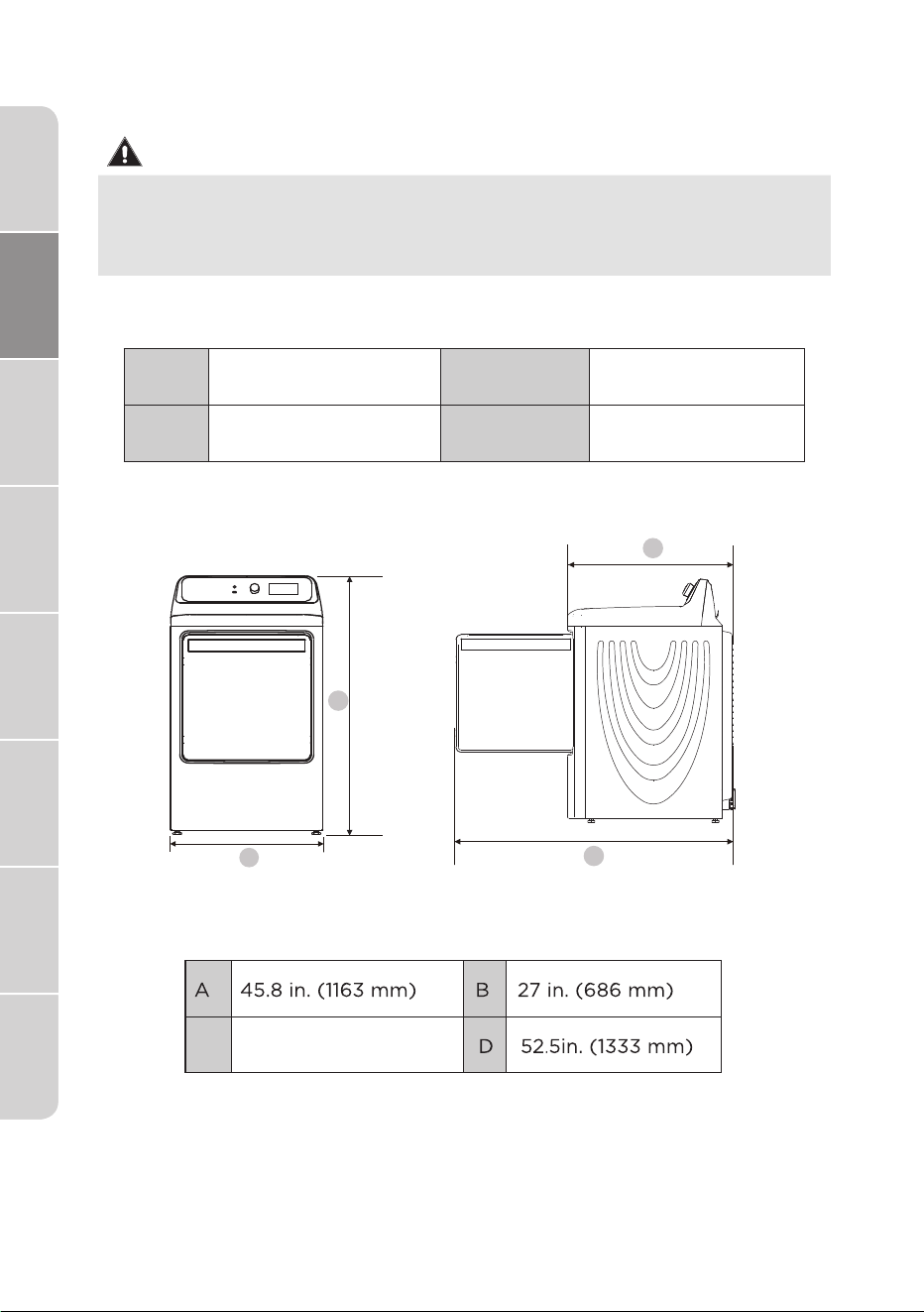
10
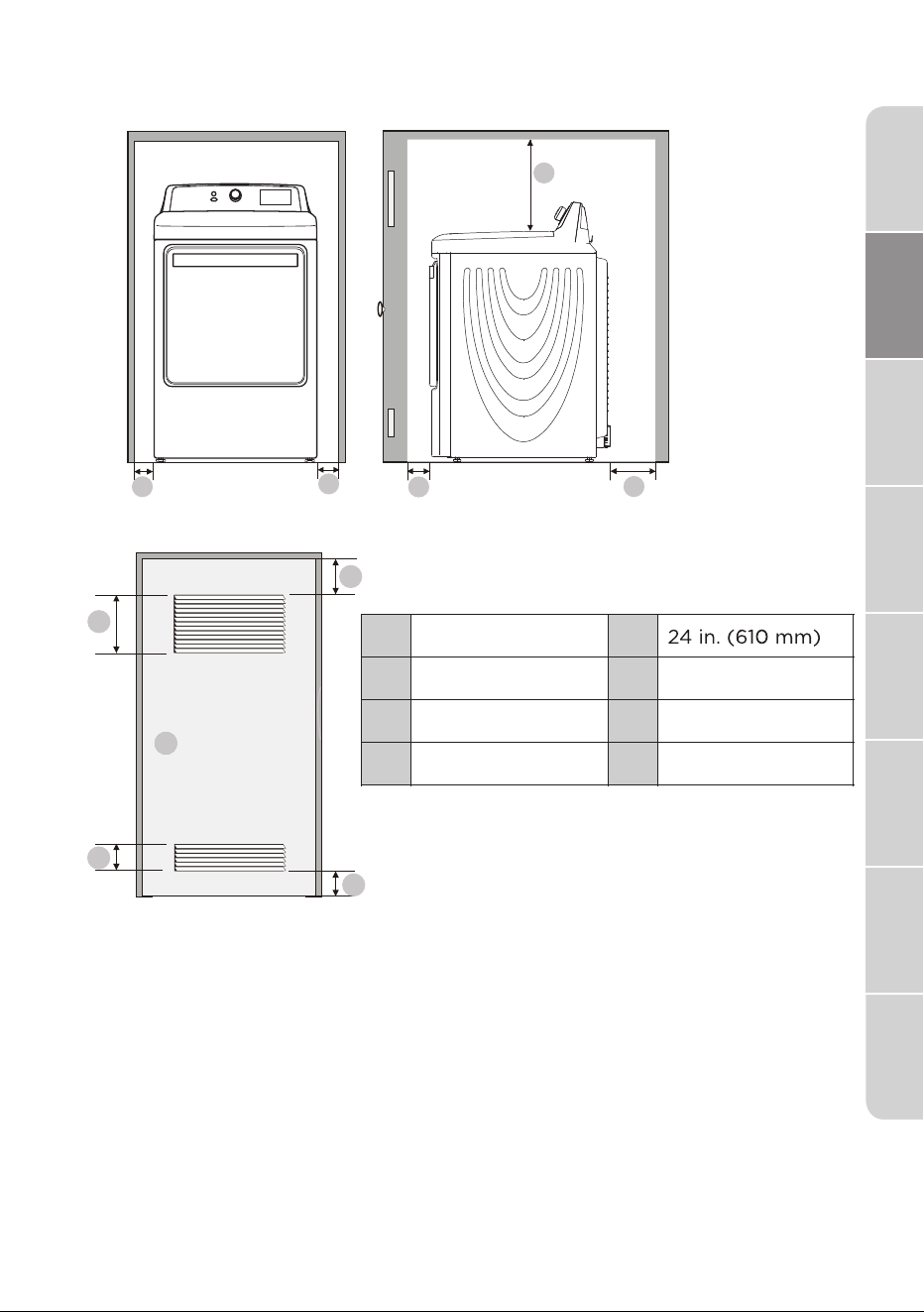
ALCOVE OR CLOSET OR WALL INSERT/RECESSED
INSTALLATIONS
WARNING
Minimum clearances required between the dryer and adjacent walls or other
surfaces:
Sides 1 in. (25 mm) Rear 5 in. (127 mm)
Top 24 in. (610 mm) Closet front 2 in. (51 mm)
• The dryer must be exhausted to the outside to reduce the risk of fire
when installed any place inside the house.
• No other fuel-burning appliance should be installed in the same
closet or space as the dryer.
C 31.5 in. (800 mm)
D
B
A
C
Dryer
Safety
Operation
Requirements
Parts and
Features
Installation
Instructions
Dryer Use
Appendix
Dryer Care
Troubleshooting
11
NOTE:
The front of the closet must have two unobstructed air openings for a
combined minimum total area of 72 sq.in. (465 sq.cm) with a minimum
clearance of 3 in. (76 mm) at the top and bottom. A slatted door with
equivalent space clearance is acceptable.
I
J
K
L
E 1 in. (25 mm) F
G 2 in. (51 mm) H 5 in. (127 mm)
2 2
J 48 in. (31000 mm )
2 2
K 24 in. (15500 mm ) L 3 in. (76 mm)
I 3 in. (76 mm)
G
H
F
E
E
Dryer
Safety
Operation
Requirements
Installation
Instructions
Dryer Use
Appendix
Dryer Care
Troubleshooting
Parts and
Features
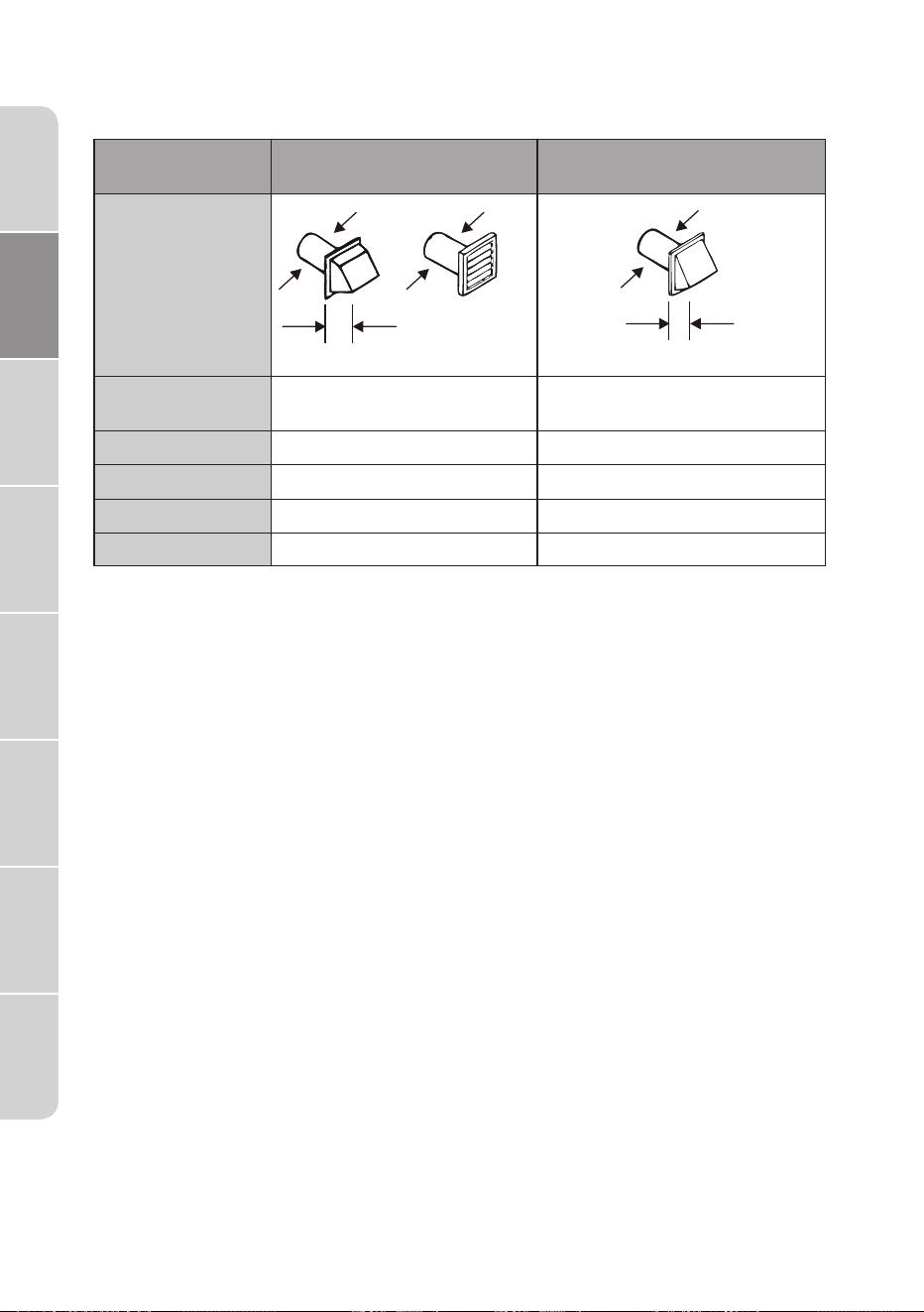
DUCTING REQUIREMENTS
Recommended Use only for short-run
installation
Weather Hood
Type
4" DIA
4" DIA
4"
4 inch. (10.2 cm)
4" DIA
2-1/2"
2.5 inch. (6.4 cm)
No. of 90°
elbows
Rigid Metallic Rigid Metallic
0 90 ft. (27.4 m) 60 ft. (18.3 m)
1 60 ft. (18.3 m) 45 ft. (13.7 m)
2 45 ft. (13.7 m) 35 ft. (10.7 m)
3 35 ft. (10.7 m) 25 ft. ( 7.6 m)
Manometer measurements
The static pressure in any exhaust system should be between
0.3 to 0.8 inches of water column. It cannot be less than 0 under any
circumstances with an installed duct of a 4 inch diameter. Measurement must
be done with the empty dryer, working with a manometer at the point
where the exhaust duct connects to the dryer. A no-heat setting should be
used. Lint filter must be clean.
If this new dryer is installed into an existing exhaust system you must make
sure:
• The exhaust system meets all local, state, and national codes.
• That a flexible plastic duct is not used.
• To inspect and clean all lint buildup from inside the existing duct.
• The duct is not dented or crushed.
• The exhaust hood damper opens and closes freely.
12
Dryer
Safety
Operation
Requirements
Installation
Instructions
Dryer Use
Appendix
Dryer Care
Troubleshooting
Parts and
Features

WARNING
The correct exhaust installation is YOUR RESPONSIBILITY.
• Use a 4-inch (10.2cm) diameter, rigid aluminum or rigid galvanized
steel duct.
• Do not use a smaller diameter than the recommended diameter duct.
• Ducts larger than 4 inches (10.2cm) in diameter can result in
increased accumulation of lint and changes in performance
• Lint should be removed from internal filter before every cycle and
clean ducts periodicly.
• If a flexible metal duct must be used, use the type with a stiff sheet
metal wall. Do not use a flexible duct with a thin foil wall. A serious
blockage can result if the flexible metal duct is bent too sharply.
• Never install any type of flexible duct in walls, ceilings, or other
concealed spaces.
• Keep the exhaust duct as straight, short as possible, minimum elbows
• Secure joints with duct tape. Do not use screws.
• Plastic flexible ducts can kink, sag, be punctured, reduce airflow,
extend drying times, and affect the dryer operation.
• Exhaust systems longer than the recommended 90 ft can extend drying
times, affect machine operations, and collect lint.
• The exhaust duct should end with an exhaust hood with a swing-out
damper to prevent back drafts and entry of wildlife. Never use an
exhaust hood with a magnetic damper.
• The hood should have at least 12 inches (30.5cm) of clearance
between the bottom of the hood and the ground or other
obstruction. The hood opening should point down.
• Never install a screen over the exhaust outlet.
• To avoid lint buildup, do not exhaust the dryer directly into a window
well. Do not exhaust under a house or porch.
• If the exhaust duct must run through an unheated area, the duct
should be insulated and slope slightly down towards the exhaust
hood to reduce condensation and lint buildup.
• Inspect and clean the interior of the exhaust system at least once a
year. Unplug the power cord before cleaning.
• Check frequently to make sure the exhaust hood damper opens and
closes freely.
• Check once per month, and clean at least once per year. NOTE:
If your clothes are not getting dry, then check the ducting for
obstructions.
• Do not exhaust the dryer into a wall, ceiling, crawl space, or
concealed space of a building, gas vent, or any other common duct
or chimney. This could create a fire hazard from the lint expelled by
the dryer.
• Do not use non-metallic flexible duct.
• To reduce the risk of fire, this dryer MUST BE EXHAUSTED
OUTDOORS without obstruction around the outlet.
13
Dryer
Safety
Operation
Requirements
Installation
Instructions
Dryer Use
Appendix
Dryer Care
Troubleshooting
Parts and
Features

EXHAUSTING REQUIREMENTS
WARNING
Exhausting the dryer to the outside will prevent large amounts of lint and
moisture from being blown into the room.
WARNING
NEVER USE A PLASTIC OR NON-METAL FLEXIBLE DUCT
If your existing ductwork is plastic, non-metal, or combustible, replace it
with metal before installing this appliance.
Use only a metal exhaust duct that is non-flammable to ensure
containment of the exhaust air heat, and lint.
THE INSTALLATION MUST CONFORM WITH LOCAL CODES, OR IN THE
ABSENCE OF LOCAL CODES, WITH THE NATIONAL FUEL GAS CODE, ANSI
Z223.1/NFPA 54, LATEST REVISION (FOR THE UNITED STATES), OR THE
NATURAL GAS AND PROPANE INSTALLATION CODE, CSA B149.1, LATEST
REVISION (FOR CANADA).
Gas dryers are equipped with a burner vent for use with natural gas. If you
plan to use your dryer with LP (liquid propane) gas, you need the
conversion kit (#12938200000975), it must be converted for safe and
proper performance by a qualified service technician.
Gas dryers installed in residential garages must be raised 18" (46cm)
above the floor.
• The dryer shall not be exhausted into a chimney, a wall, a ceiling, an
attic, a crawl space, or a concealed space of a building.
• The dryer must be exhausted to the outside to reduce the risk of fire
when installed in an alcove or closet.
Refer to the “Ducting requirements” section on page 12 for the
maximum duct length and number of bends.
• All dryers must be exhausted to the outside.
• Do not assemble the duct with screws or other fastening means that
extend into the duct and catch lint.
• The exhaust duct should be 4 inches (102mm) in diameter.
• The total length of flexible metal duct shall not exceed 7.8 feet
(2.4 meters).
GAS REQUIREMENTS
Use only natural or LP (liquid propane) gases.
A 1/2" (1.27 cm) gas supply line is recommended and must be reduced to
connect to the 3/8" (1 cm) gas line on your dryer. The National Fuel Gas
Code requires that an accessible, approved manual gas shut-off valve be
installed within 6" (15,24 cm) of your dryer.
14
Dryer
Safety
Operation
Requirements
Parts and
Features
Installation
Instructions
Dryer Use
Appendix
Dryer Care
Troubleshooting

Additionally, a 1/8" (0.3cm) N.P.T. (National Pipe Thread) plugged tapping,
accessible for test gauge connection, must be installed immediately
upstream of your dryer’s gas supply connection.
Your dryer must be disconnected from the gas supply pipe system during
any pressure testing of the system.
This dryer must be connected to the gas supply piping with a listed
flexible gas connector that complies with the standard for connectors for
gas appliances, ANSI Z21.24 or CSA 6.10.
GAS IGNITION - Your dryer uses an automatic ignition system to ignite the
burner. There is no constant burning pilot.
COMMONWEALTH OF MASSACHUSETTS INSTALLATION INSTRUCTIONS
Your dryer must be installed by a licensed plumber or gas fitter. A “T”
handle manual gas valve must be installed in the gas supply line to
installed dryer at location of operation. If a flexible gas connector is used
to connect the dryer, the connector may not be longer than 3' (36", 91.5 cm).
WARNING
DO NOT reuse old flexible metal gas lines. Flexible gas lines must be
design certified by the American Gas Association (CGA in Canada).
• Any pipe joint compound used must be resistant to the action of any
liquefied petroleum gas.
• As a courtesy, most local gas utility companies will inspect a gas appliance
installation.
• Gas leaks may occur in your system, creating a dangerous situation.
• Gas leaks may not be detected by smell alone.
• Gas suppliers recommend that you purchase and install a UL-
approved gas detector.
• Install and use it in accordance with the manufacturer’s instructions.
15
Dryer
Safety
Operation
Requirements
Parts and
Features
Installation
Instructions
Dryer Use
Appendix
Dryer Care
Troubleshooting

ELECTRIC REQUIREMENTS
WARNING
Electrical connections
An individual branch (or separate) circuit, serving only your dryer, is
recommended. DO NOT USE AN EXTENSION CORD.
Gas models - U.S. and Canada
A 120Volt, 60Hz AC approved electrical service, with a 15 ampere fuse or
circuit breaker is required.
Electric models - U.S. only
• The improper connection of the equipment grounding conductor can
result in the risk of electrical shock. Check with a qualified electrician
or serviceman if you are in doubt as to whether your dryer is properly
grounded. Do not modify the plug provided with your dryer - if it
doesn’t fit the outlet, have a proper outlet installed by a qualified
electrician.
• To prevent unnecessary risk of fire, electrical shock, or personal
injury, all wiring and grounding must be done in accordance with
local codes, or in the absence of local codes, with the National
Electrical Code, ANSI/NFPA No. 70 - Latest Revision (for the U.S.) or
the Canadian Electrical Code CSA C22.1 - Latest Revisions and local
codes and ordinances. It is your responsibility to provide adequate
electrical services for your dryer.
• All gas installations must be done in accordance with the National
Fuel Code ANSI/Z2231 - Latest Revision (for the U.S.) or CAN/CGA
- B149 Installation Codes - Latest Revision (for Canada) and local
codes and ordinances.
• If a power cord is used, the cord should be plugged into a 30-ampere
receptacle.
• The power cord is NOT provided with U.S. electric model dryers.
The dryers require a 120/240 volt, 60Hz AC approved electrical service.
The electric service requirements can be found on the data label located
behind the door. A 30-ampere fuse or circuit breaker on both sides of the
line is required.
16
The wiring diagram is located on the back board of the unit.
Dryer
Safety
Operation
Requirements
Parts and
Features
Installation
Instructions
Dryer Use
Appendix
Dryer Care
Troubleshooting

WARNING
Electrical Shock Hazard
• Do not reuse a power supply cord from an old dryer.
The power cord electric supply wiring must be retained
at the dryer cabinet with a suitable UL-listed strain
relief.
• Grounding through the neutral conductor is prohibited
for (1) new branch-circuit installations, (2) mobile
homes, (3) recreational vehicles, and (4) areas where
local codes prohibit grounding through the neutral
conductor. (Use a 4-prong plug for 4 wire receptacles,
NEMA type 14-30R.)
Electric models - Canada only
• A 120/240 volt, 60Hz AC approved electrical service fused through a
30-ampere fuse or circuit breaker on both sides of the line is required.
• All Canadian models are shipped with the power cord attached. The
power cord should be plugged into a 30-ampere receptacle.
Dryer
Safety
Operation
Requirements
Parts and
Features
Installation
Instructions
Dryer Use
Appendix
Dryer Care
Troubleshooting
17
If local codes allow, the electrical supply of the dryer
may be connected via a separate supply cord kit
designated for use with a dryer. The UL listed must
be rated at a minimum of 120/240 volts, 30 ampere
with three number 10 copper wire conductors
terminated with closed loop terminals, open-end
spade lugs with turned up ends, or with tinned leads.
GROUNDING
This dryer must be grounded. In the event of a malfunction or breakdown,
grounding the product will reduce the risk of electrical shock by
providing a path of least resistance for the electrical current.
WARNING
WARNING
WARNING
Electric models
Gas and Electric models
•
Gas models
• Your dryer has a three prong power cord with a grounding conductor
120V~ 60 Hz.
• The plug must be plugged into an appropriate individual outlet that
is properly installed and grounded in accordance with all local codes
and ordinances.
Dryer must be grounded with a 3 or 4 wire cord power cord with a
grounding conductor and a grounding plug, which is sold separately.
• The plug must be plugged into an appropriate outlet that is properly
installed and grounded in accordance with all local codes and
ordinances.
• Do not modify the plug provided with your dryer - if it doesn’t fit the
outlet, have a proper outlet installed by a qualified electrician.
• If a power cord is not used and the electric dryer is to be
permanently wired, the dryer must be connected to a permanently
grounded metal wiring system, or an equipment grounding
conductor must be run with the circuit conductors and connected to
the equipment grounding terminal or lead on the dryer.
18
Dryer
Safety
Operation
Requirements
Parts and
Features
Installation
Instructions
Dryer Use
Appendix
Dryer Care
Troubleshooting
Certain internal parts are intentionally not grounded and may
present a risk of electric shock only during servicing. Service
Personnel – Do not come in contact with the following parts while
the appliance is energized: inlet valve, control board and
temperature-regulating thermistor (located on blower housing).
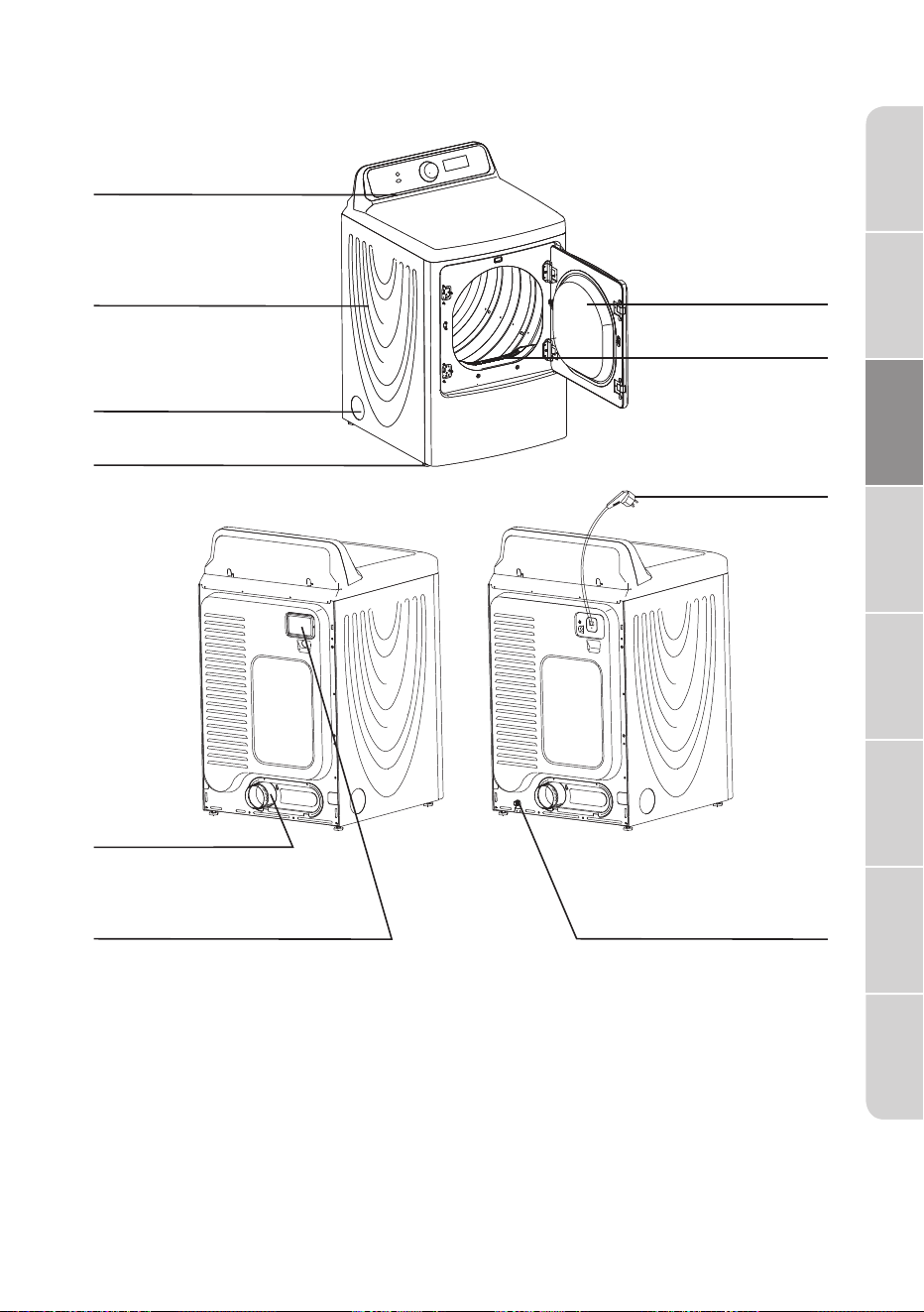
PARTS AND FEATURES
Electric dryer Gas dryer
REPLACEMENT PARTS AND ACCESSORIES
dealer where you purchased your dryer or mail to
customerservic[email protected].
Power cord
Back venting hole
For gas dryer only
Wiring box
For electric dryer only
Gas inlet
Dryer
Safety
Operation
Requirements
Parts and
Features
Installation
Instructions
Dryer Use
Appendix
Dryer Care
Troubleshooting
19
Control panel
Cabinet
Adjustable leg (Four legs)
Left venting hole (for option)
Door
Filter
If your dryer requires replacement parts or accessories, contact the
INSTALLATION INSTRUCTIONS
For the proper installation, we recommend that you hire a qualified
installer.
WARNING
Packaging materials can be dangerous to children;
Keep all packaging material (plastic bags, polystyrene, etc.) well out of
children’s reach.
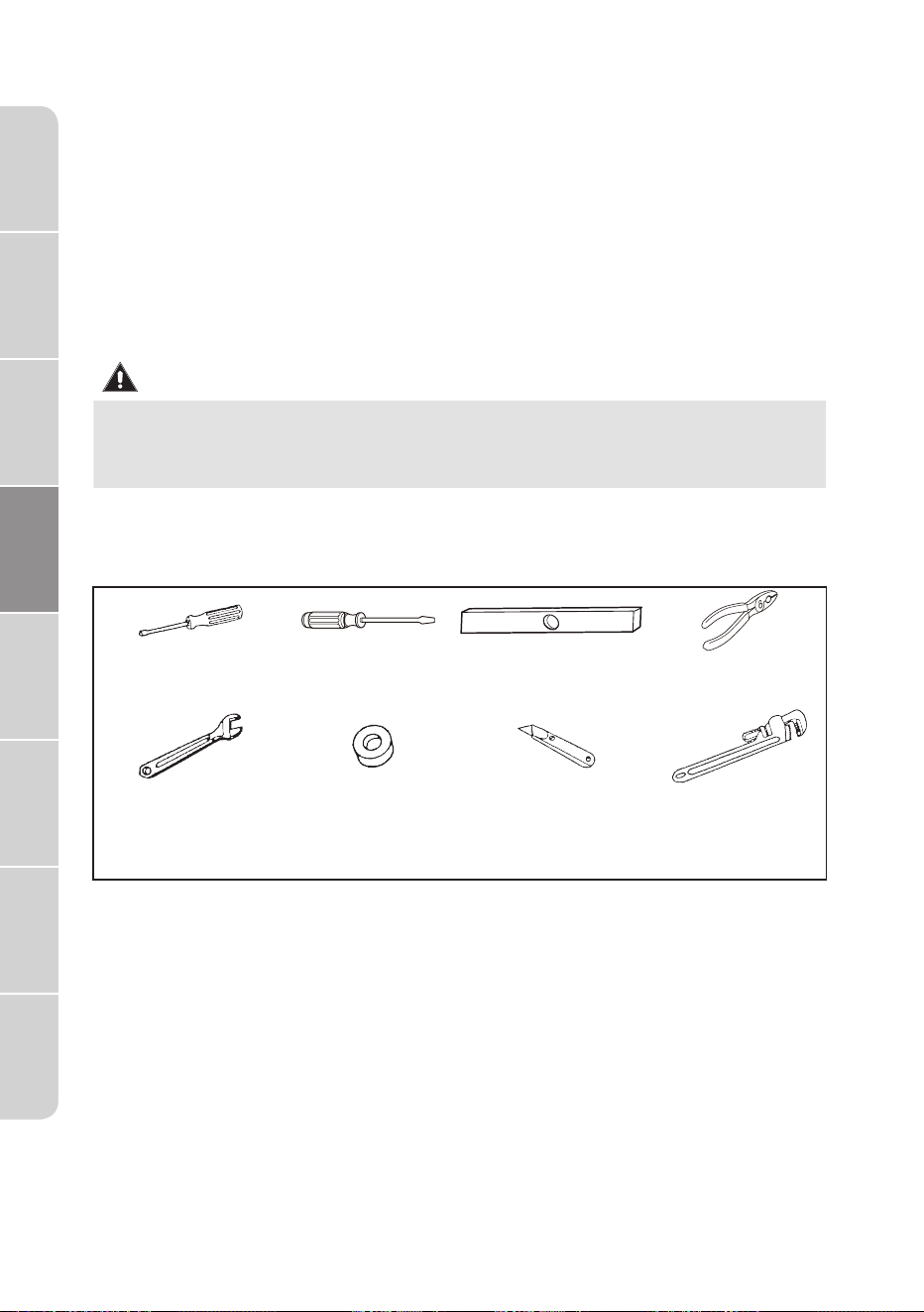
Phillips
screwdriver
Flat screwdriver Level Pliers
Adjustable
wrench that
opens to 1"
(25 mm)
Duct tape Cutting knife Pipe wrench
(gas only)
• Unpack your dryer and inspect it for shipping damage. Make sure you
received all the items shown below.
• To prevent personal injury or strain, wear protective gloves whenever
lifting or carrying the unit.
Dryer
Safety
Operation
Requirements
Parts and
Features
Installation
Instructions
Dryer Use
Appendix
Dryer Care
Troubleshooting
20
REMOVING FROM THE PACKAGE
TOOLS REQUIRED
CHOOSE THE PROPER LOCATION
1. Move your dryer to an appropriate location for the installation.
Consider installing the dryer and washer side-by-side, to allow access
to the gas, electrical, and exhaust connections. Place two of the carton
cushion-tops on the floor. Tip your dryer on its side so it lies across
both cushion-tops.
2. Set your dryer back in an upright position.
1. Review the "Exhausting Requirements" section on before installing the
exhaust system.
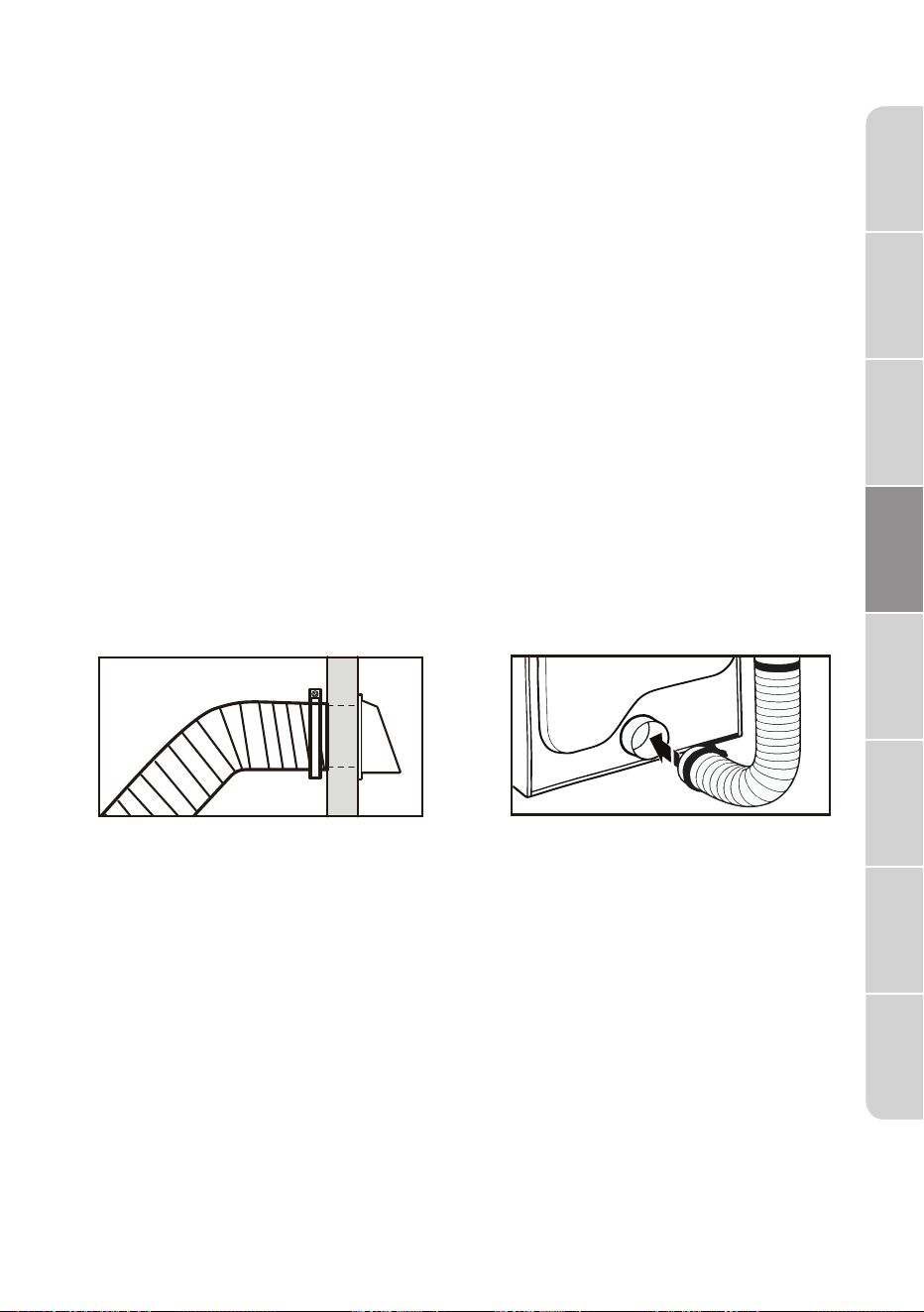
2. Install the ductwork from your dryer to the exhaust hood. The crimped
end of the duct sections must point away from your dryer.
3. DO NOT use sheet metal screws when assembling the ducting.
4. These joints should be taped.
5. Never use plastic flexible exhaust material.
6. Tip for tight installations: install a section of the exhaust system onto
your dryer before putting it in place.
7. Use duct tape to secure this section to your dryer, but do not cover the
ventilation slots at the back of the unit in dryer cabinet.
Dryer
Safety
Operation
Requirements
Parts and
Features
Installation
Instructions
Dryer Use
Appendix
Dryer Care
Troubleshooting
21
INSTALL THE EXHAUST SYSTEM
WARNING
Dryer
Wall
Duct
exhaust
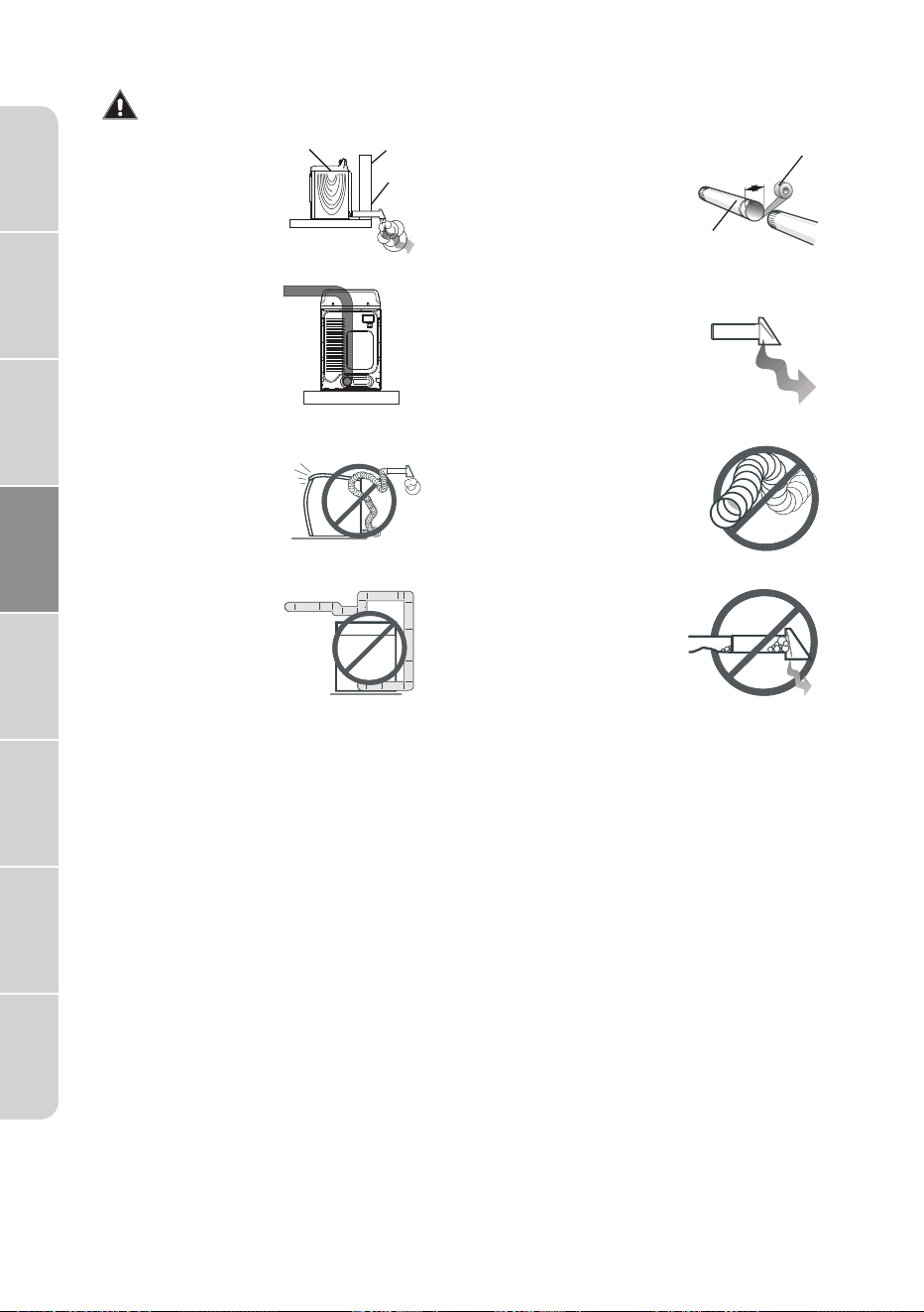
Make sure your
dryer is installed
properly so it
exhausts air
easily.
4"
Duct
Tape
Use a 4" (10.2 cm)
diameter rigid metal
duct. Tape all joints,
including at the dryer.
Never use lint-trapping
screws.
Keep ducts as
straight as
possible.
Clean all old ducts
before installing your
new dryer. Be sure the
vent flap opens and
closes freely. Inspect
and clean the exhaust
system annually.
DO NOT restrict
your dryer with
a poor exhaust
system.
DO NOT use a plastic,
thin foil, or non-metal
flexible duct.
DO NOT use
unnecessarily
long ducts that
have many
elbows.
DO NOT use dented
or clogged ducts
and vent.
Dryer
Safety
Operation
Requirements
Parts and
Features
Installation
Instructions
Dryer Use
Appendix
Dryer Care
Troubleshooting
22
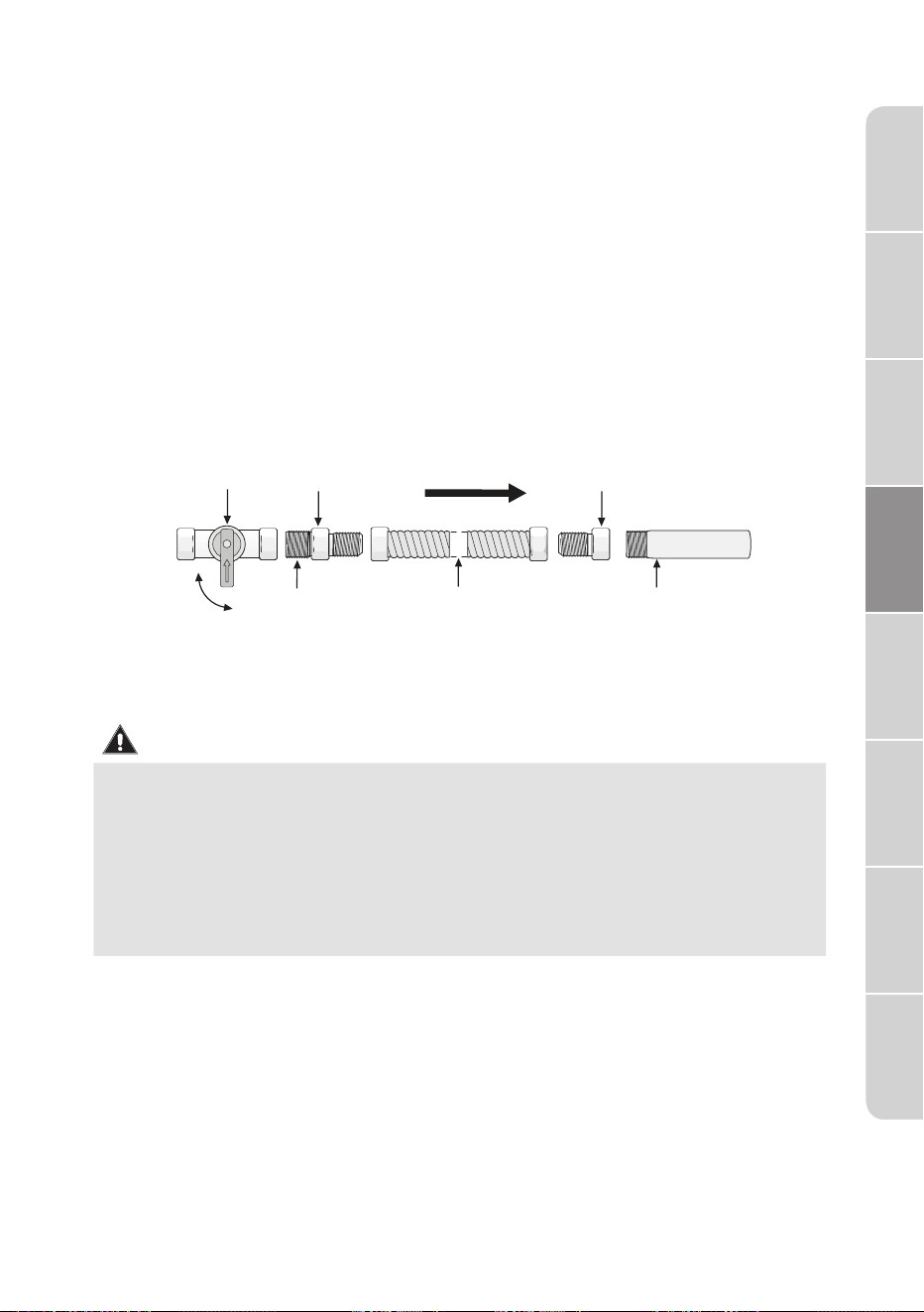
Manual
Shutoff
Valve
Flare
Union
Flare
Union
Open
Nipple Flexible
Connector
Inlet Pipe on
Back of Dryer
GASFLOW
All connections must be wrench-tightened
CONNECT THE GAS LINE (FOR GAS MODELS)
Review the “Gas Requirements” section on page 14. Remove the pipe
thread protective cap.
Apply a pipe joint compound or about 11/2" wraps of teflon tape over all
threaded connections.
• The pipe joint compound must be resistant to the actions of any
liquefied petroleum gas.
Connect the gas supply to your dryer. An additional fitting is required
to connect the 3/4" (1.9 cm) female thread end of a flexible connector to
the 3/8" (1 cm) male threaded end on the dryer. Use only new AGA or CSA
certified gas supply line with SS flexible connectors within 6 ft (1.8 m) of
the dryer.
Securely tighten the gas line fitting over the threads.
Turn on the gas supply.
WARNING
• All gas installations of the dryer must be equipped with Manual Shut-
Off valve.
• Uncoated copper tubing will corrode when subjected to natural gas,
causing gas leaks. Use ONLY black iron, stainless steel, or plastic-
coated brass piping for gas supply.
• Check all gas connections for leaks using a soap solution.
• If bubbles appear, tighten the connections and recheck. DO NOT use
an open flame to check for gas leaks.
Dryer
Safety
Operation
Requirements
Parts and
Features
Installation
Instructions
Dryer Use
Appendix
Dryer Care
Troubleshooting
23
BEFORE OPERATING OR TESTING, follow the grounding instructions in
the “Grounding”section on page 18.
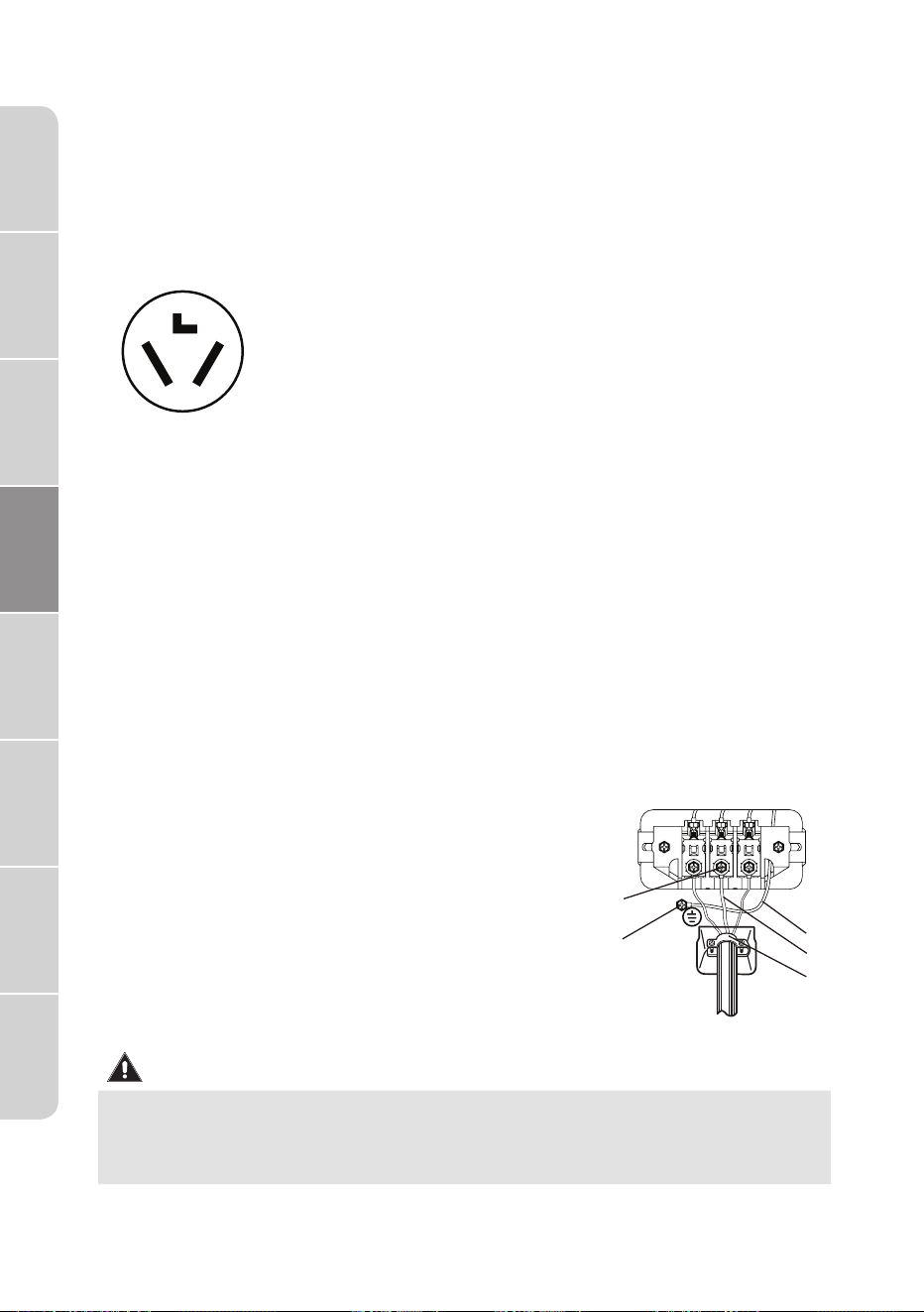
THREE WIRE OUTLET
3-Wire
receptacle
(10-30R)
Then choose a 3-wire power supply cord with ring or
spade terminals and UL listed strain relief. The 3-wire
power supply cord, at least 4 ft. (1.22 m) long, must
have 3 10-gauge solid copper wires and match a
3-wire receptacle of NEMA Type 10-30R.
3-Wire system connections
1. Remove the center terminal block screw.
2. Connect the neutral wire (white or center wire) of the power cord to
the center terminal screw of the terminal block. Be sure to cross the
screw through the ring of the power cord terminal and tighten the
screw.
3. Connect the other wires to the outer terminal block screws. Be sure to
cross the screw through the terminal ring and tighten the screw.
4. Tighten the strain relief screws.
5. Insert the tab of the terminal block cover into your dryer’s rear panel
slot. Secure the cover with a screw.
CONNECT THE ELECTRICAL WIRING
Review the “Electric Requirements” section on page 16.
WARNING
If converting from a 4-wire electrical system to a 3-wire, the ground
strap must be reconnected to the terminal block support to ground
the dryer frame to the neutral conductor. Ring-type terminals are
recommended. If using strap terminals, make sure they are tightened.
3-wire system instructions:
A Center terminal block screw
B External ground connector
C Neutral grounding wire (White)
D Neutral wire (white or center wire)
E 3/4" (1.9cm) UL-listed strain relief
A
B
C
D
E
Dryer
Safety
Operation
Requirements
Parts and
Features
Installation
Instructions
Dryer Use
Appendix
Dryer Care
Troubleshooting
24
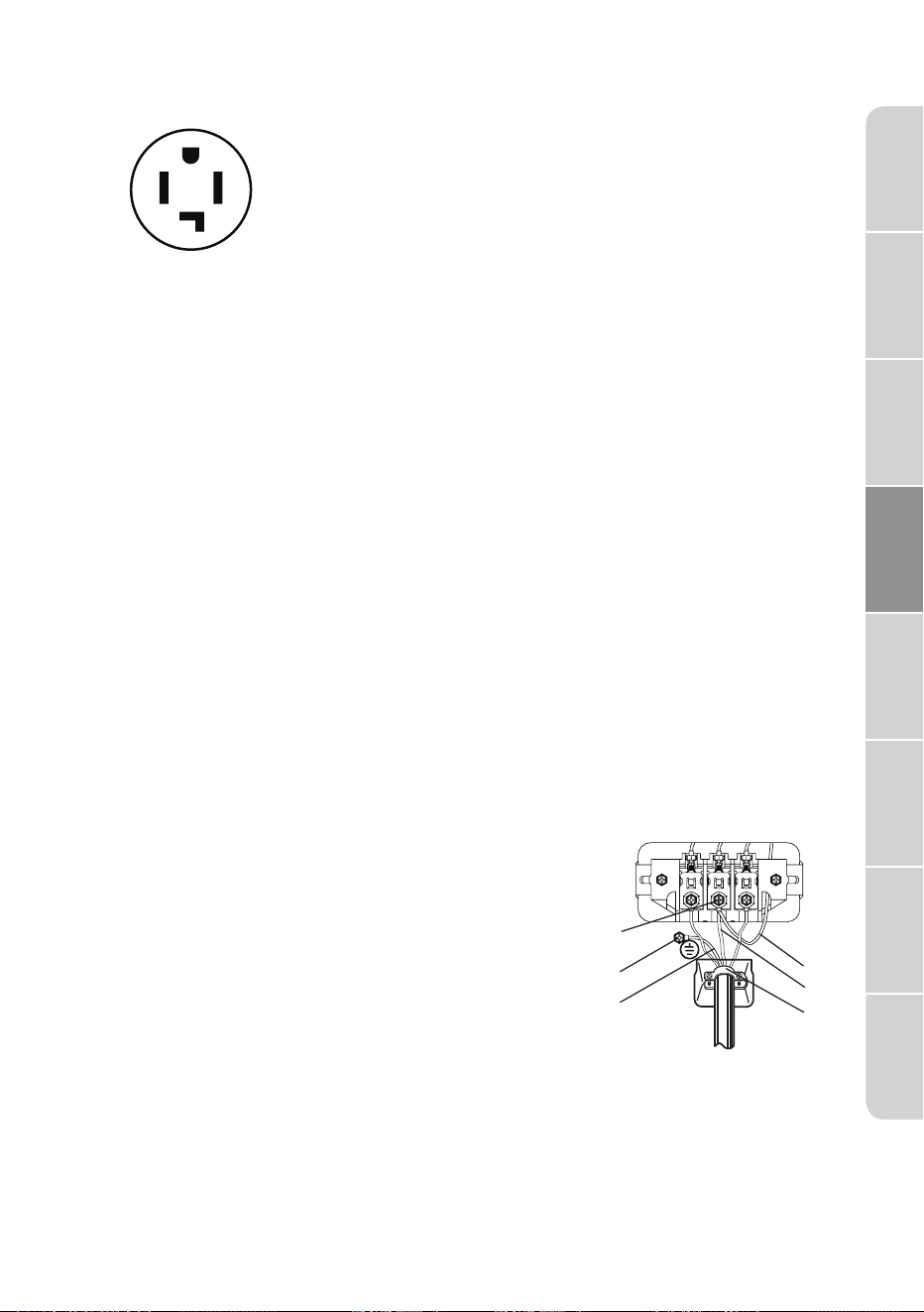
FOUR WIRE OUTLET
4-Wire
receptacle
(14-30R)
Then choose a 4-wire power supply cord with ring
or spade terminals and UL listed strain relief. The
4-wire power supply cord, at least 4 ft. (1.22 m)
long, must have 4 10-gauge solid copper wires
and match a 4-wire receptacle of NEMA Type 14-
30 R. The ground wire (ground conductor) may be
either green or bare. The neutral conductor must
be identified by a white color.
4-Wire system connections
1. Remove the center terminal block screw.
2. Connect the ground wire (green or unwrapped) of the power cord
to the external ground conductor screw.
3. Connect the neutral wire (white or center wire) of the power cord
and the appliance ground wire (white) under the center screw of
the terminal block. Be sure to cross the screw through the ring of
the power cord terminal and tighten the screw.
4. Connect the other wires to the outer terminal block screws. Be sure
to cross the screw through the terminal ring and tighten the screw.
5. Tighten the strain relief screws.
6. Insert the tab of the terminal block cover into your dryer’s rear
panel slot. Secure the cover with a screw.
4-wire system instructions:
IMPORTANT: Ring-type terminals are recommended. If using
A Center terminal block screw
B External ground connector
C Green or bare copper wire of the
power cord
D Neutral grounding wire (White)
E Neutral wire (white or center wire)
F 3/4" (1.9cm) UL-listed strain relief
strap terminals, make sure they are tightened.
A
B
C
D
E
F
Dryer
Safety
Operation
Requirements
Parts and
Features
Installation
Instructions
Dryer Use
Appendix
Dryer Care
Troubleshooting
25

WARNING
Electrical Shock Hazard
All U.S. models are produced for a 3-WIRE SYSTEM
CONNECTION.
The dryer frame is grounded to the neutral conductor
at the terminal block. A 4-WIRE SYSTEM CONNECTION
is required for new or remodeled construction, mobile
homes, or if local codes do not permit grounding through the
neutral conductor. If the 4-wire system is used, the dryer
frame cannot be grounded to the neutral conductor at the
terminal block. Refer to the “Electric Requirements” section
on page 16 for 3-WIRE or 4-WIRE SYSTEM CONNECTIONS.
Remove the terminal block cover plate.
Insert the power cord with a UL-listed strain relief through
Do not loosen the nuts already installed on the terminal
block. Be sure they are tight. Use a 3/8" (1 cm) deep-well
socket.
the hose provided in the cabinet near the terminal block.
• A strain relief must be used.
Dryer
Safety
Operation
Requirements
Parts and
Features
Installation
Instructions
Dryer Use
Appendix
Dryer Care
Troubleshooting
26
27
Dryer
Safety
Operation
Requirements
Parts and
Features
Installation
Instructions
Dryer Use
Appendix
Dryer Care
Troubleshooting
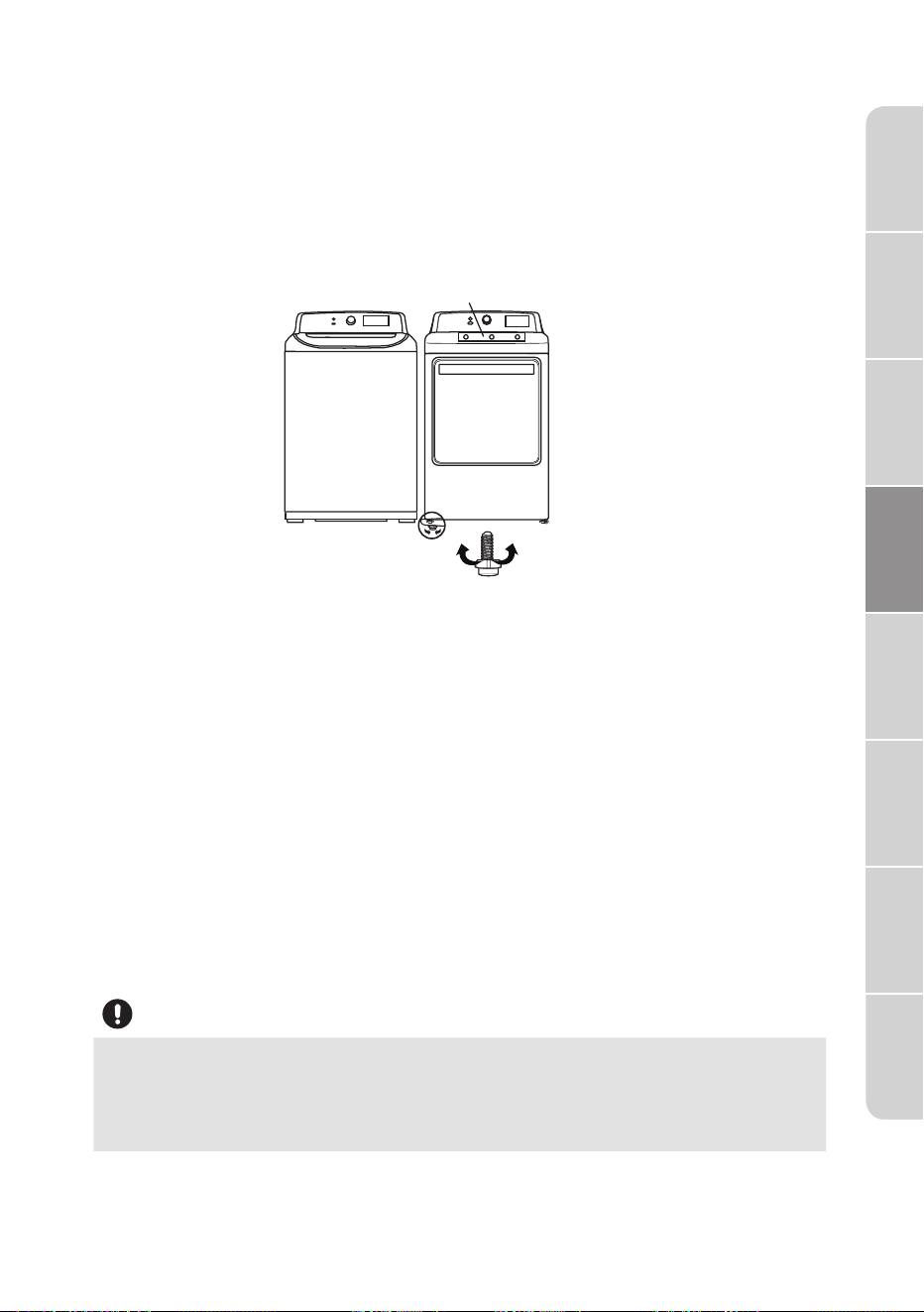
loosen lock
Adjustable legs
POWER ON
connections are complete. Plug in your dryer.
CAUTION
The burner may not ignite initially due to air in the gas line. Allowing
your dryer to operate on a heat setting will purge the line. If the gas
does not ignite within 5 minutes, turn your dryer off and wait 5 minutes.
Be sure the gas supply to your dryer has been turned on. In order to
confirm the gas ignition, check the exhaust for heat.
LEVEL THE DRYER
To ensure that the dryer provides the optimal drying performance, it must
be leveled. To minimize vibration, noise, and unwanted movement, the
floor must be a perfectly level, solid surface.
• Adjust the leveling feet only as much as necessary to level the dryer.
Extending the leveling feet more than necessary can cause the dryer to
vibrate.
• Make sure the dryer is plugged into an electrical outlet and is properly
grounded.
• The exhaust ductwork is hooked up and the joints are taped.
• A plastic flexible duct CAN NOT BE USED.
• Use rigid or stiff-walled flexible metal vent material.
• The dryer is leveled and is sitting firmly on the floor.
• Gas models - the gas is turned on with no gas leakage.
• Start your dryer to confirm that it runs, heats, and shuts off.
level
Make sure all gas connections (Gas Models only), exhaust and electrical
FINAL CHECK
28
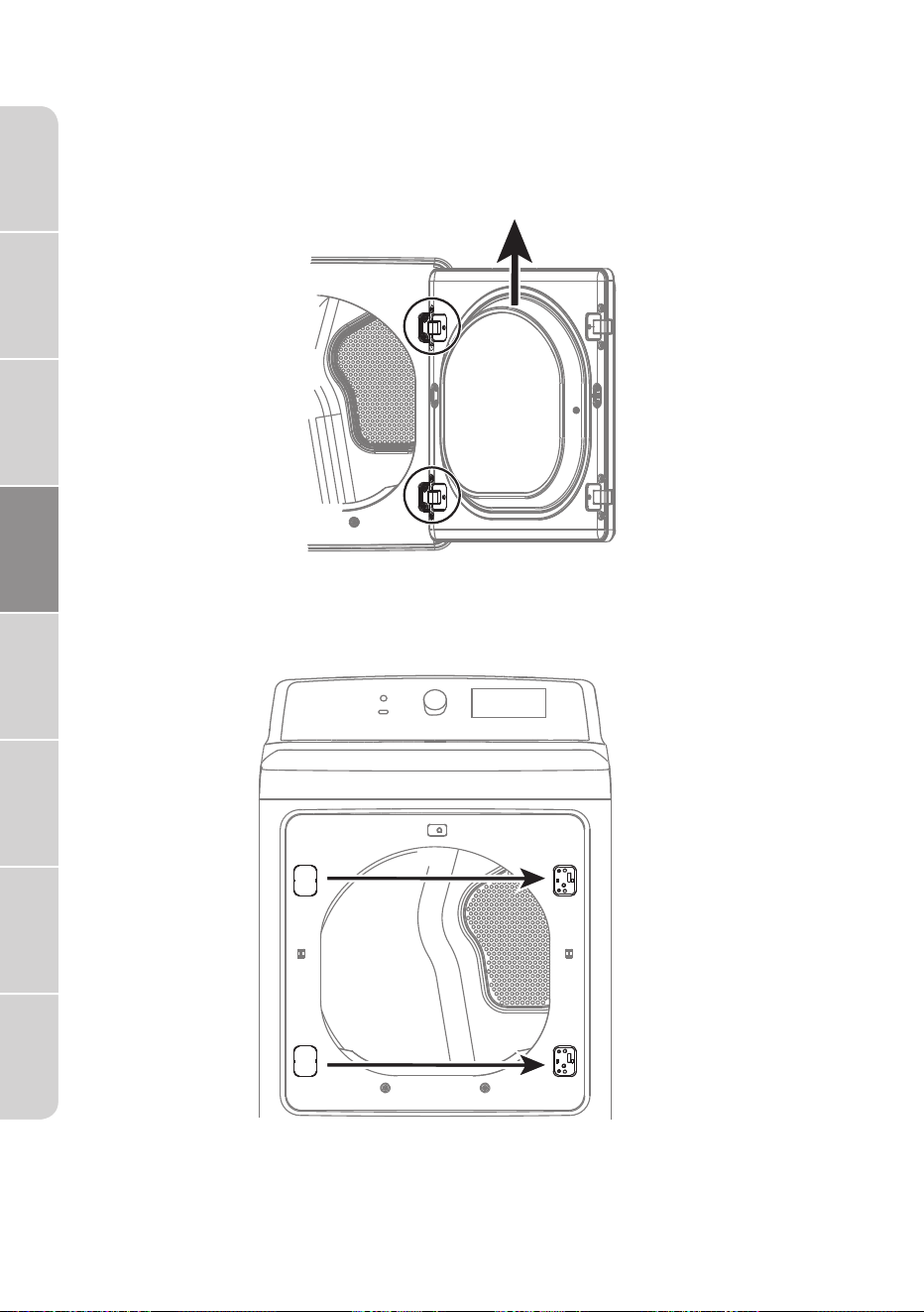
DOOR REVERSAL PROCEDURE
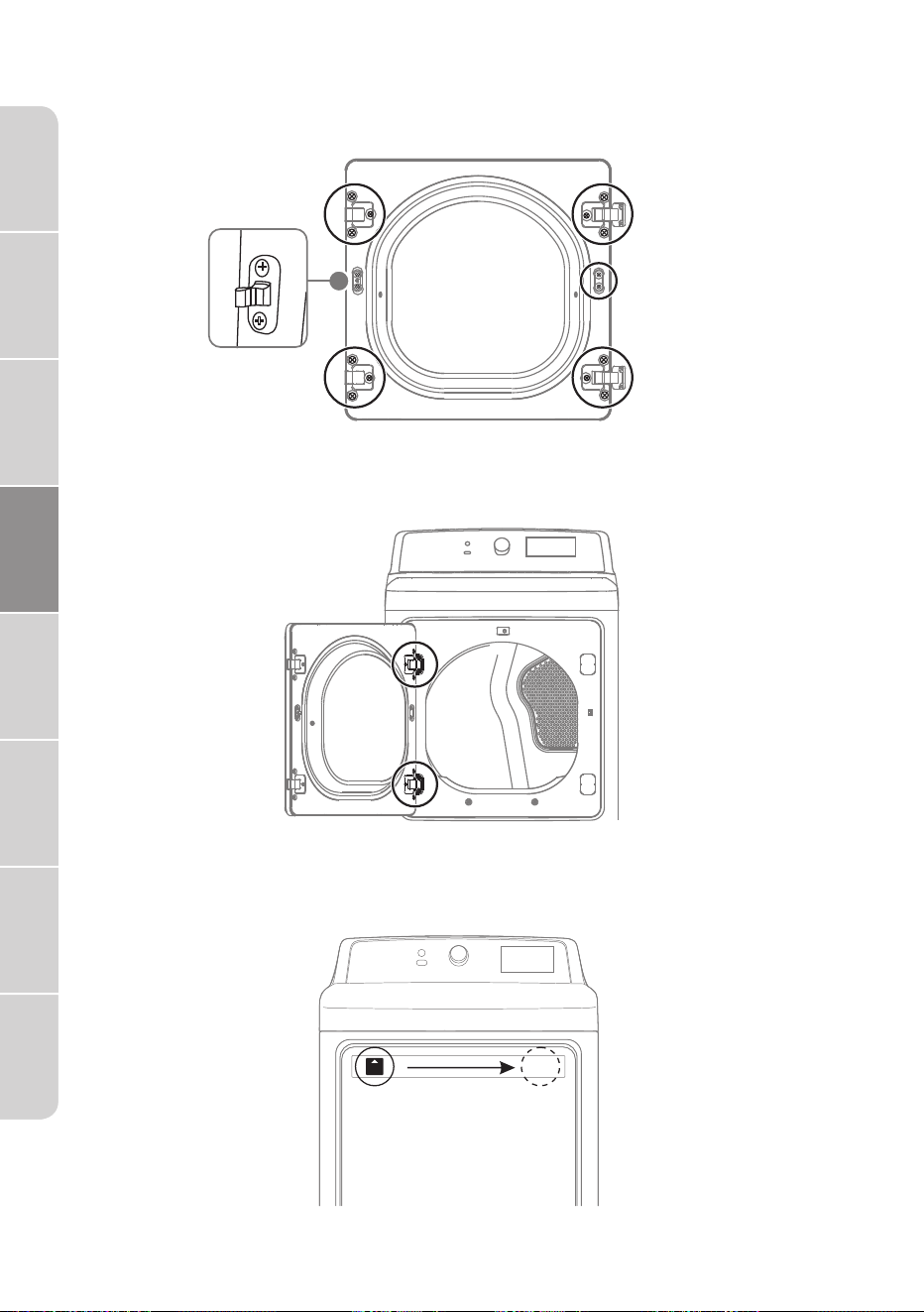
Step 1: Remove the dryer door
1 Make sure that the power cord is unplugged.
2 While supporting the door, remove the four hinge screws from the door,
then, lift the door to remove it and set the door aside .
Step 2: Move the door hinge covers
1 Use a flat-blade screwdriver to remove the two hinge covers from the
side that you want the door to swing from.
2 Install the two hinge covers on the opposite side.
Dryer
Safety
Operation
Requirements
Parts and
Features
Installation
Instructions
Dryer Use
Appendix
Dryer Care
Troubleshooting
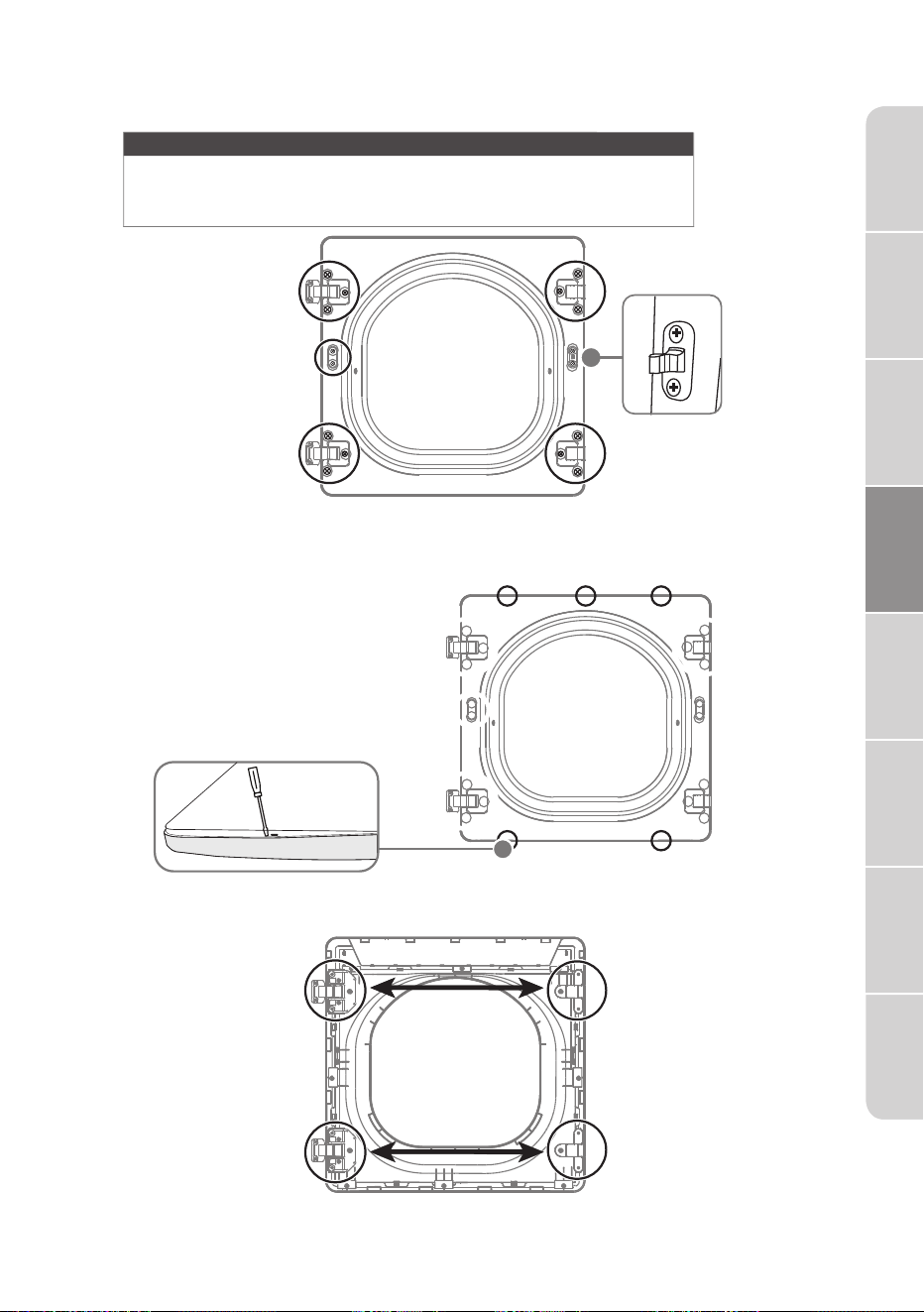
Step 3: Rotate the doorframe
1
Remove the 16 screws that hold the door frame to your dryer.
Note
Two of the screws secure the door latch (P) to the door
frame. You will need to attach the latch when you
reassemble the door.
3
Move the hinges, hinge covers, and door latch to the other side of the door.
P
2
Use a flat-head screwdriver to pry open the 5 tabs, pull the inside
door panel from the outside door panel.
29
Dryer
Safety
Operation
Requirements
Parts and
Features
Installation
Instructions
Dryer Use
Appendix
Dryer Care
Troubleshooting
30
4
Secure the door frame to your dryer using the 16 screws you removed
in Step 1. Make sure that you attach the door latch (P) with two of
the screws.
2 Secure the door with the four screws you removed in
Step 1: Remove the dryer door
1
Align the hinges on the door with the hinge screw holes on the front of
your dryer.
P
Step 4: Install the dryer door on the other side
Step 5: Replace the door sticker on the other side
DOOR
OPEN
Dryer
Safety
Operation
Requirements
Parts and
Features
Installation
Instructions
Dryer Use
Appendix
Dryer Care
Troubleshooting
31
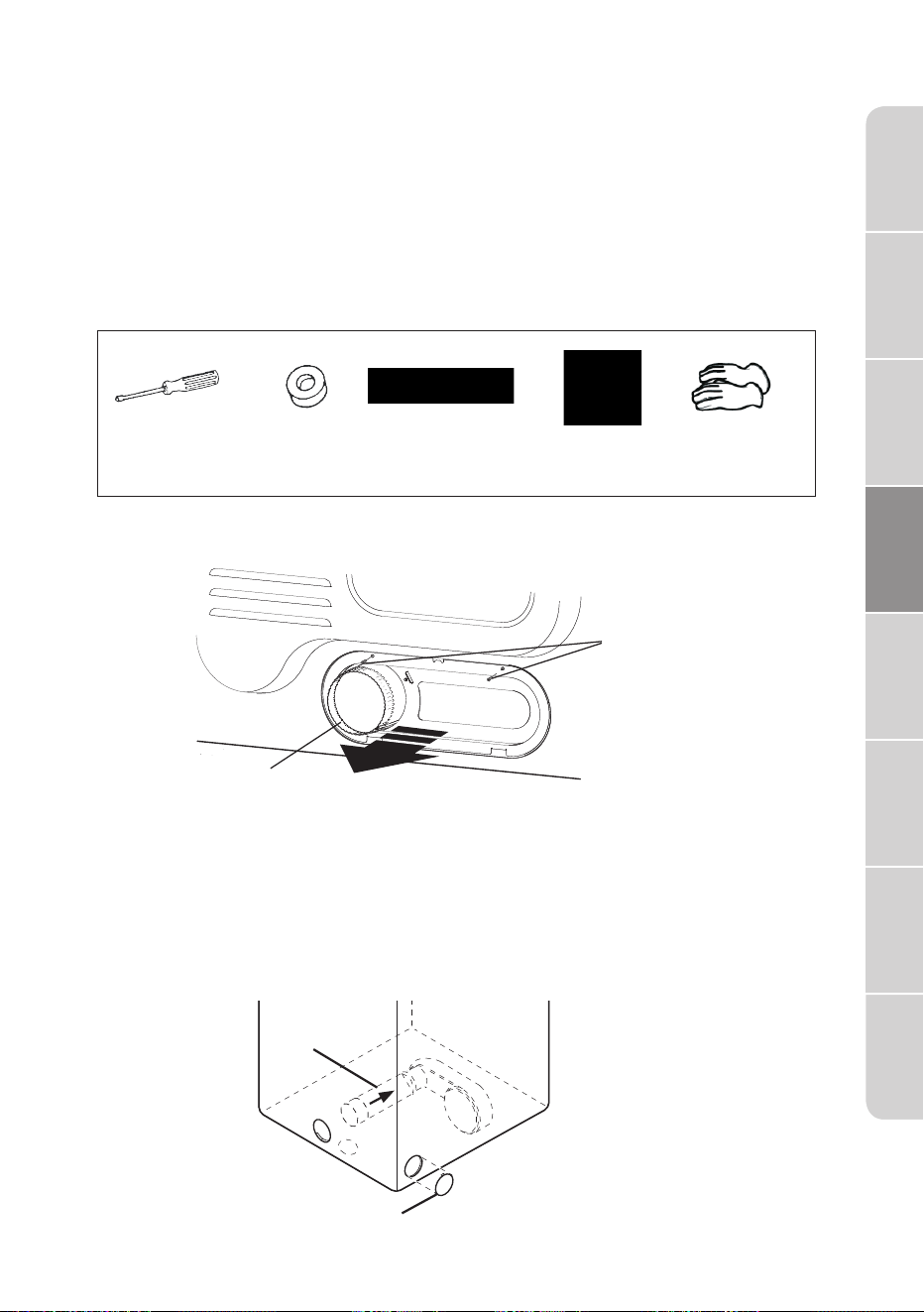
CHANGE THE DRYER VENT LOCATION
Your new dryer is shipped to vent to the rear. It can also be configured to
vent to the bottom or left side (as seen from the front).
An Adapter Kit, which is a standard component, can be purchased from
any retailer. This kit contains the necessary duct components to change
the dryer vent location.
Tools and materials you will need
Duct tape
Phillips screwdriver
Rigid or UL-listed
flexible metal
4'' (10.2 cm) duct
Elbow 4'' (10.2 cm)
Gloves
1. Remove the rear exhaust retaining screws. Pull out the exhaust duct.
Rear
Exhaust Duct
Retaining
Screw
Option 1: Side venting
2. ress P the tabs on the knockout and carefully remove the knockout for
the desired vent opening.
Attach the adapter duct onto the blower housing of the dryer, as shown.
Knockout
Adapter
Duct
Dryer
Safety
Operation
Requirements
Parts and
Features
Installation
Instructions
Dryer Use
Appendix
Dryer Care
Troubleshooting
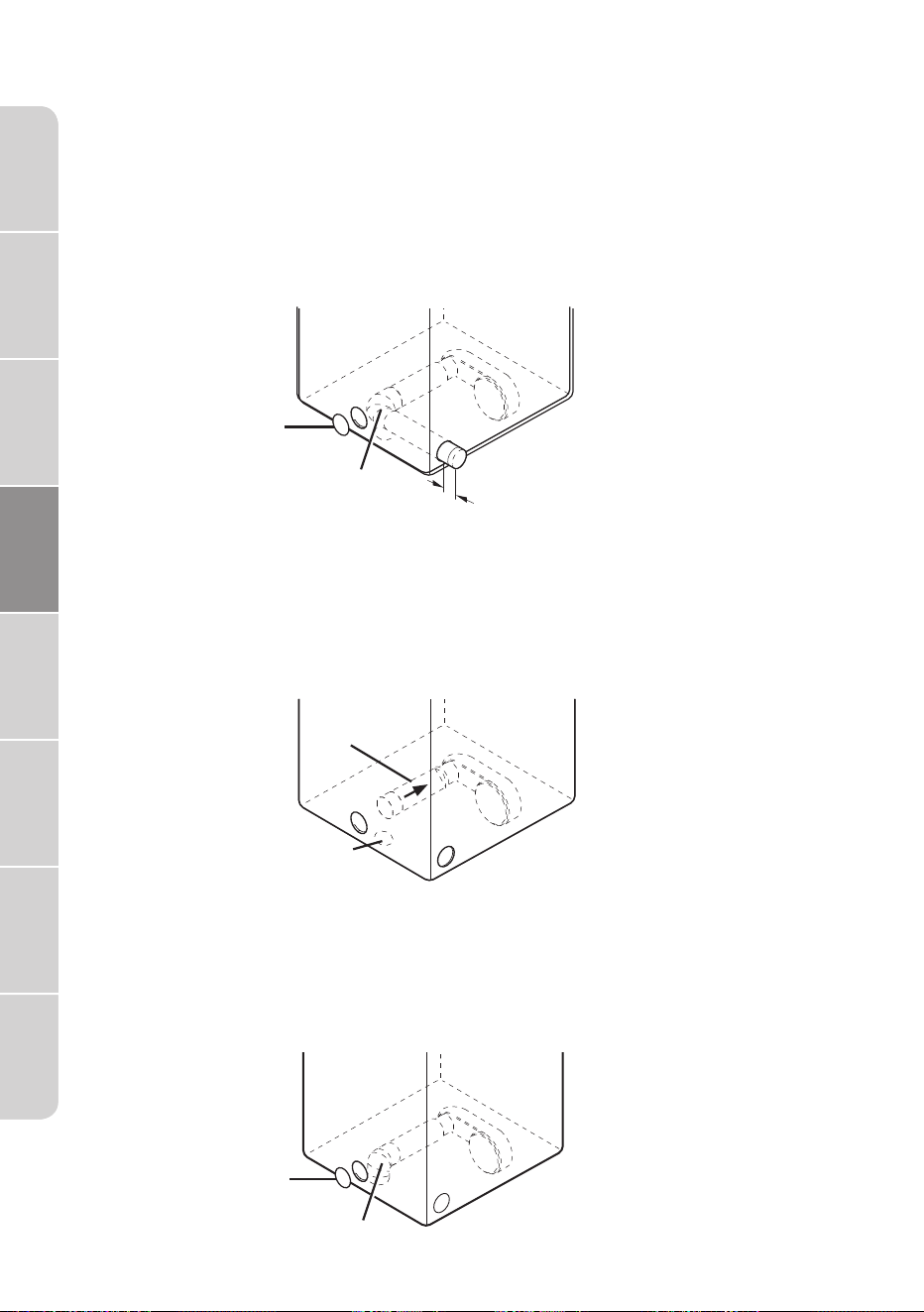
3. Pre assemble a 4 inch (10.2cm) elbow to the next 4 inches (10.2cm)
duct section, and secure all joints with duct tape. Be sure that the
male end of the elbow faces AWAY from the dryer.
Insert the elbow/duct assembly through the side opening and attach it
onto the adapter duct.
Secure in place with duct tape. Be sure that the male end of the duct
protrudes 1.5 inches (3.8cm) to connect the remaining ductwork.
Attach to the back of the dryer. duct tape
2. Press the tabs on the knockout and carefully remove the knockout for
the desired vent opening.
Attach the adapter duct onto the blower housing of the dryer as shown.
Option 2: Bottom venting
1
(3.8 cm)
Elbow
Duct
Tape
Knockout
Adapter
Duct
3. Insert the 4 inches (10.2cm) elbow through the rearopening and attach
it onto the adapter duct.
Be sure that the male end of the elbow faces down through hole in the
bottom of the dryer.
Secure in place with duct tape. Attach duct tape to the back of the dryer.
Duct
Tape
1/2 ''
Elbow
32
Dryer
Safety
Operation
Requirements
Parts and
Features
Installation
Instructions
Dryer Use
Appendix
Dryer Care
Troubleshooting
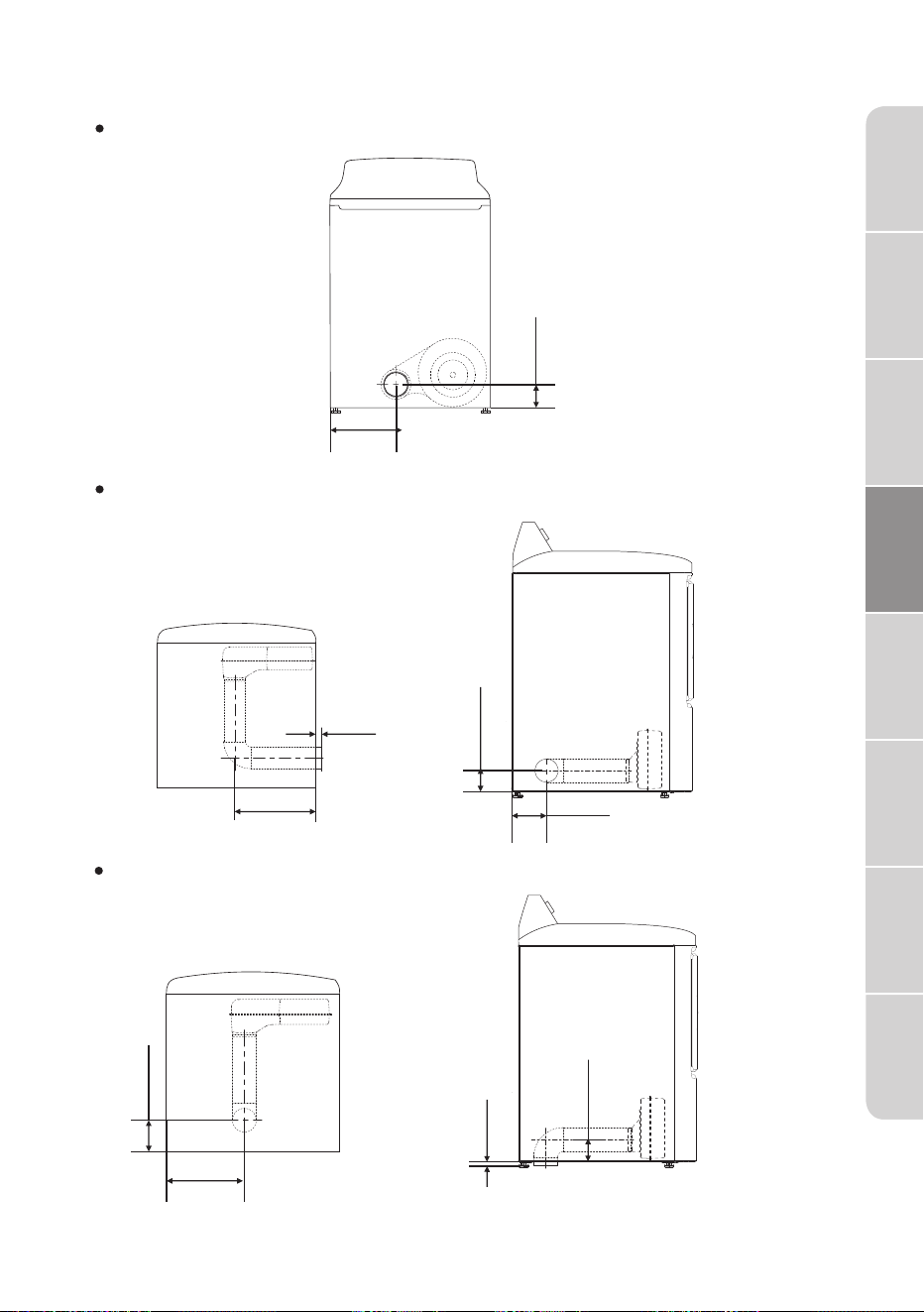
Rear Venting (Default)
Dimensions for installation
Side Venting
Bottom Venting
33
12"
30.5cm
3.64"
9.25cm
BACK
4.8"
12.2cm
3.64"
9.25cm
1.5"
3.8cm
14.96"
38cm
1.5"
3.8cm
3.64"
9.25cm
12"
30.5cm
4.9"
12.58cm
Dryer
Safety
Operation
Requirements
Parts and
Features
Installation
Instructions
Dryer Use
Appendix
Dryer Care
Troubleshooting
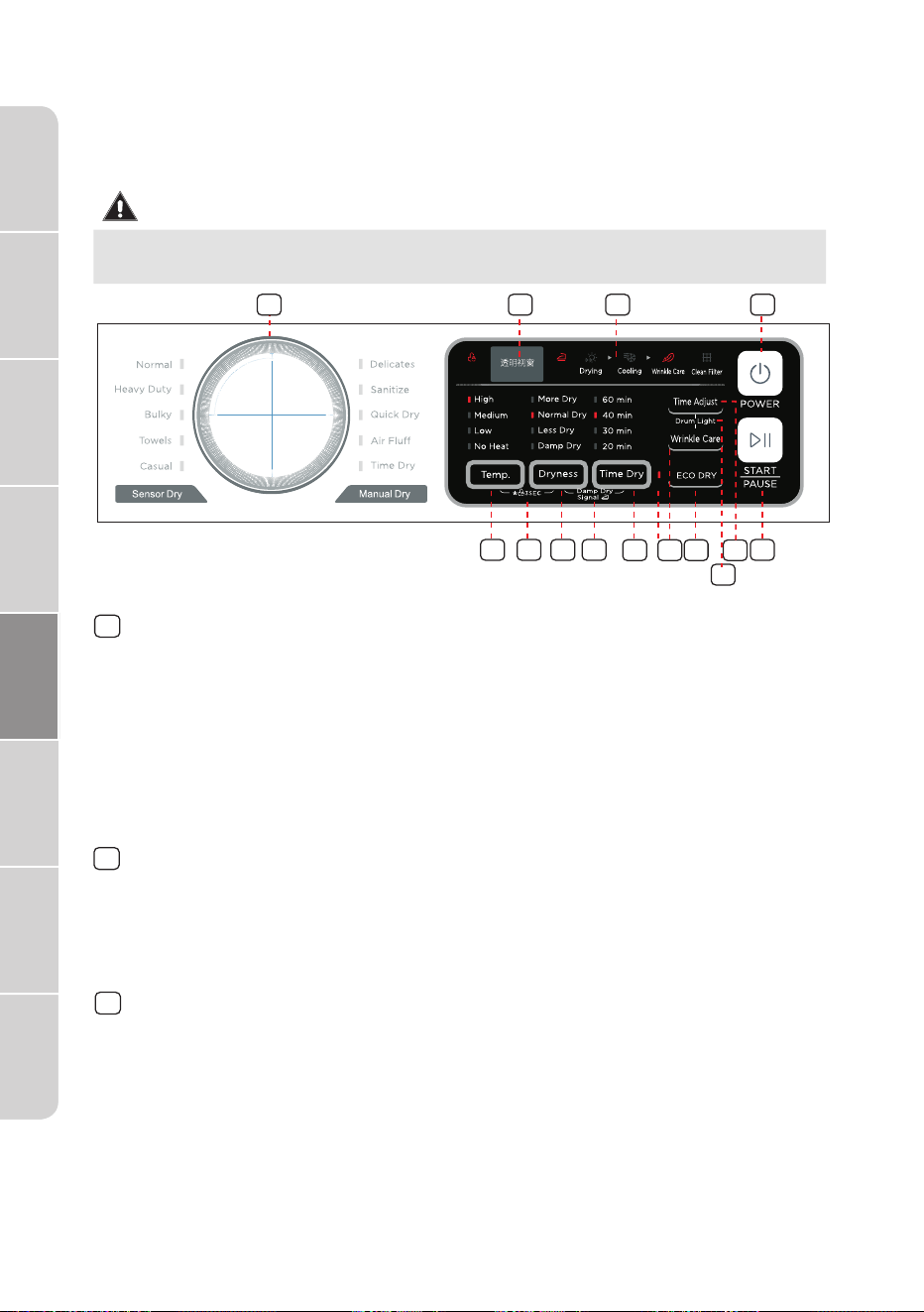
DRYER USE
CONTROL PANEL
WARNING
To reduce the risk of fire, electrical shock, or injury to persons, read the
IMPORTANT SAFETY INSTRUCTIONS before operating the appliance.
1
Cycle selector
Select your desired cycle for the type of load.
The cycle you select determines the heat control for the cycle.
The Normal, Heavy Duty, Bulky, Towels, Casual, Delicates and Sanitize
cycles are Sensor Dry cycles.
The Air Fluff, Time Dry and Quick Dry cycles are Manual Dry cycles.
Dryer
Safety
Operation
Requirements
Parts and
Features
Installation
Instructions
Dryer Use
Appendix
Dryer Care
Troubleshooting
34
FOLLOW CLOTHES LABEL RECOMMENDATIONS.;
2
Digital display
Displays the time while you are pressing the Time Adjust to set the
time for the Quick Dry, Time Dry and Air Fluff cycle.
Displays the remaining cycle time while your dryer is running.
3
Cycle status display
A light will flash to indicate the drying cycle.
1
10
5
7
9
3
4
2
6
11
8
121314

Dryer
Safety
Operation
Requirements
Parts and
Features
Installation
Instructions
Dryer Use
Appendix
Dryer Care
Troubleshooting
35
5
START/PAUSE
Press to start or pause the program. You can’t change any setting
except, add a garment.
9
Wrinkle Care
Press once to add the Wrinkle Care step into the operating program.
Press again to cancel selection.
Wrinkle Care provides approximately 90 minutes of intermittent
tumbling in unheated air at the end of the cycle to reduce wrinkling.
The load is already dry, and can be removed at any time during the
Wrinkle Care cycle.
4
POWER
Press to turn your dryer on or off. If your dryer is on for more than
10 minutes without any buttons being pressed, it automatically
turns off.
6
Time Adjust
These buttons are effective only for Manual cycles. Push these buttons
to change the drying time you prefer. Push repeatedly to get your
desired drying time.
7
Drum Light
Press Time Adjust and Wrinkle Care at the same time to light the drum
light. Press again to put out the drum light.
8
ECO DRY
10
Time Dry
This button is a quick selection for Time Dry setting.
11
Damp Dry Signal
This function is useful when you want to take some garments out for
ironing. The unit will beep 6 times when the moisture in the clothes is
good for ironing. At this time, you can take those garments out and
continue drying the other by pressing the “START/PAUSE” button
once.
NOTE: The unit will not stop operating if you don’t take those
garments out for ironing.
Press to select the ECO DRY cycle. The ECO DRY cycle is a power
saving mode that reduces power while providing efficient drying
performance.
• To save energy, turn ECO DRY on.
• To dry quickly, turn ECO DRY off.

14
DRY TEMP.
Press the button to select the drying temperature.
High - For sturdy cottons or those labeled Tumble Dry.
Medium - For permanent press, synthetics, lightweight cottons, or
items labeled Tumble Dry Medium.
Low - For lower heat than Medium to dry synthetic or washable knit
fabrics.
No Heat - Provides just the air cycle without any heat.
36
13
Control Lock
Press the “Temp.” and "Dryness" together to activate
the Control Lock function. Press again for another 3 seconds to
deactivate the function. All buttons except the “POWER” will be out
of function when Control Lock is activated.
12
Dryness
Press the button to select the dryness level. Different dryness level
will result in different drying time. For clothes to be ironed manually,
a lower dryness level should be selected.
Dryer
Safety
Operation
Requirements
Parts and
Features
Installation
Instructions
Dryer Use
Appendix
Dryer Care
Troubleshooting
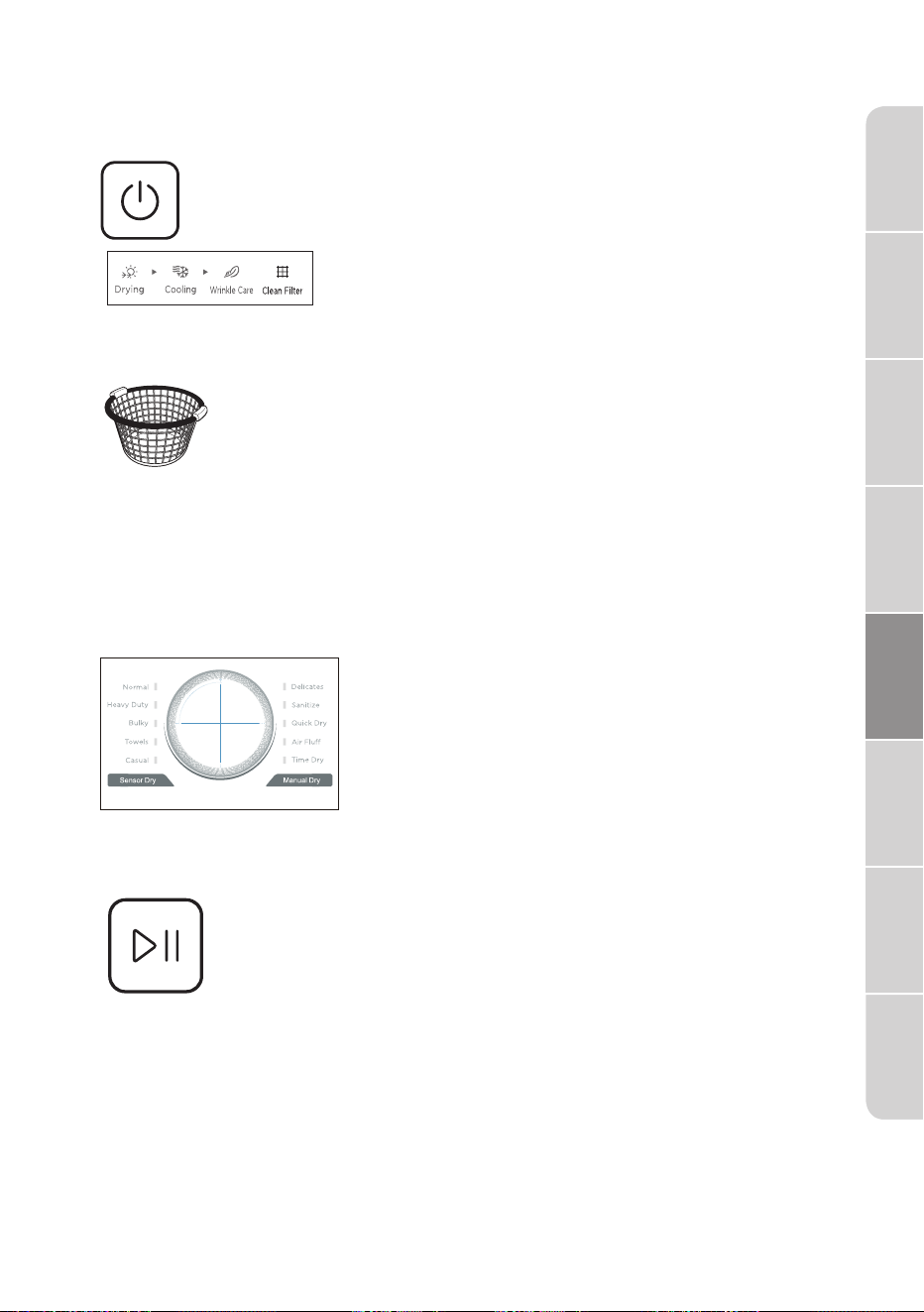
DRYING A LOAD OF LAUNDRY
1. Power on your dryer.
2. Load your dryer.
3. Select the appropriate cycle and options for the load.
4. Start your dryer.
Pressing START/PAUSE button will start the selected cycle.
To PAUSE cycle press START/PAUSE button then open the
door. To resume operation after closing the door always
press START/PAUSE. Opening the door during the operation
will instantly stop operation and will require pressing the
START/PAUSE button to resume operation.
• Press this Power button to power your dryer on.
• Place only one wash load in your dryer at a time.
• Mixed loads of heavy and light weight fabrics will dry
differently, which may result in lightweight fabrics being
dry while heavy fabrics remain damp at the end of a
drying cycle.
• Add one or more similar items to your dryer when
only one or two articles of clothing need drying. This
improves the tumbling action and drying efficiency.
• Overloading restricts tumbling action, resulting in
uneven drying as well as excessive wrinkling of some
fabrics.
• Select the appropriate cycle by using the
Cycle Selector according to the cycle chart
on the next page.
• Select the appropriate options by using
buttons according to the chart on the next
page.
37
• The “Clean Filter” light in the process bar will
flash 10 times when your dryer is powered on
• You should clean the filter before the dryer is
loaded.
Dryer
Safety
Operation
Requirements
Parts and
Features
Installation
Instructions
Dryer Use
Appendix
Dryer Care
Troubleshooting
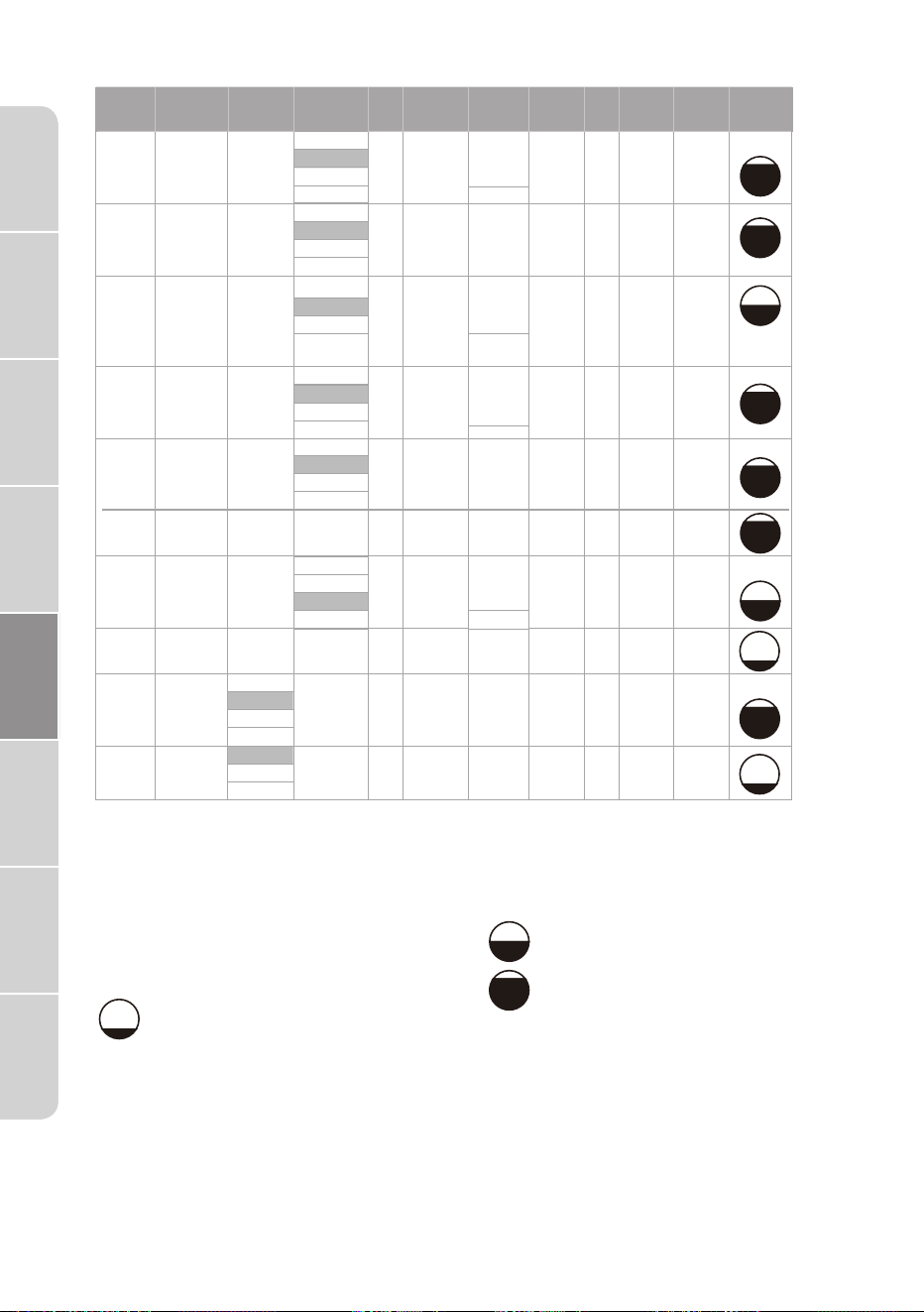
* Table in grey is an initial setting. “Y” are all optional functions you can select.
* For even better drying effect, please select higher dryness level.
38
* FOLLOW GARMENT LABEL REQUIREMENTS.
* Default times can change automatically depending on moisture content of your specific load.
Cycle
Dry Care
Damp
Dry
Signal
Time
Adjust
Eco
Dry
Default
time
(Elec.)
Default
time
(Gas)
Wet load
max
amount
Normal Cotton
Under
wear
Linen
High
N 61min 74min
More Dry
Normal Dry
Less Dry
Damp Dry
N
Bulky Blankets
Sheets
Comforters
Medium
62min 62min
More Dry
Normal Dry
Less Dry
Damp Dry
Casual Wrinkle-
free
cottons
synthetic
fabrics
knits
Medium 31min 31min
More Dry
Normal Dry
Less Dry
Damp Dry
N
Towels Towels
Heavy
cottons
High 58min 58min
More Dry
Normal Dry
Less Dry
Damp Dry
N
Heavy
Duty
Jeans
Corduroys
Work
clothes
High 67min 67min
More Dry
Normal Dry
Less Dry
Damp Dry
Sanitize Bedding
Curtains
High 60min 60min
Delicates Sensitive
items
Low 34min 34min
More Dry
Normal Dry
Less Dry
Damp Dry
N
Air Fluff No Heat 20min 20min
Time Dry / High 40min 40min
Medium
Low
No Heat
Quick
Dry
High 30min 30min
Medium
Low
Time
Dryness
Level
Dry Temp
Fabric type
Wrinkle
Y Y N Y
N
Y N N Y
N
Y Y N Y
N
Y Y N Y
N
Y Y N Y
N
Y N N N
N
Y Y N Y
Y
N N Y N
/
/
Y
Y N Y N
/
Y
Y N Y
Y
Load Size Recommendations:
For best results, follow the wet load
size recommendations noted for each
cycle.
Small load: Fill the dryer drum with
3-4 items, not more than 1/4 full.
Medium load:
up to about 1/2 full.
Large load: Fill the dryer drum up
to about 3/4 full. Do not overload.
Items need to tumble freely.
More Dry
Fill the dryer drum
Dryer
Safety
Operation
Requirements
Parts and
Features
Installation
Instructions
Dryer Use
Appendix
Dryer Care
Troubleshooting
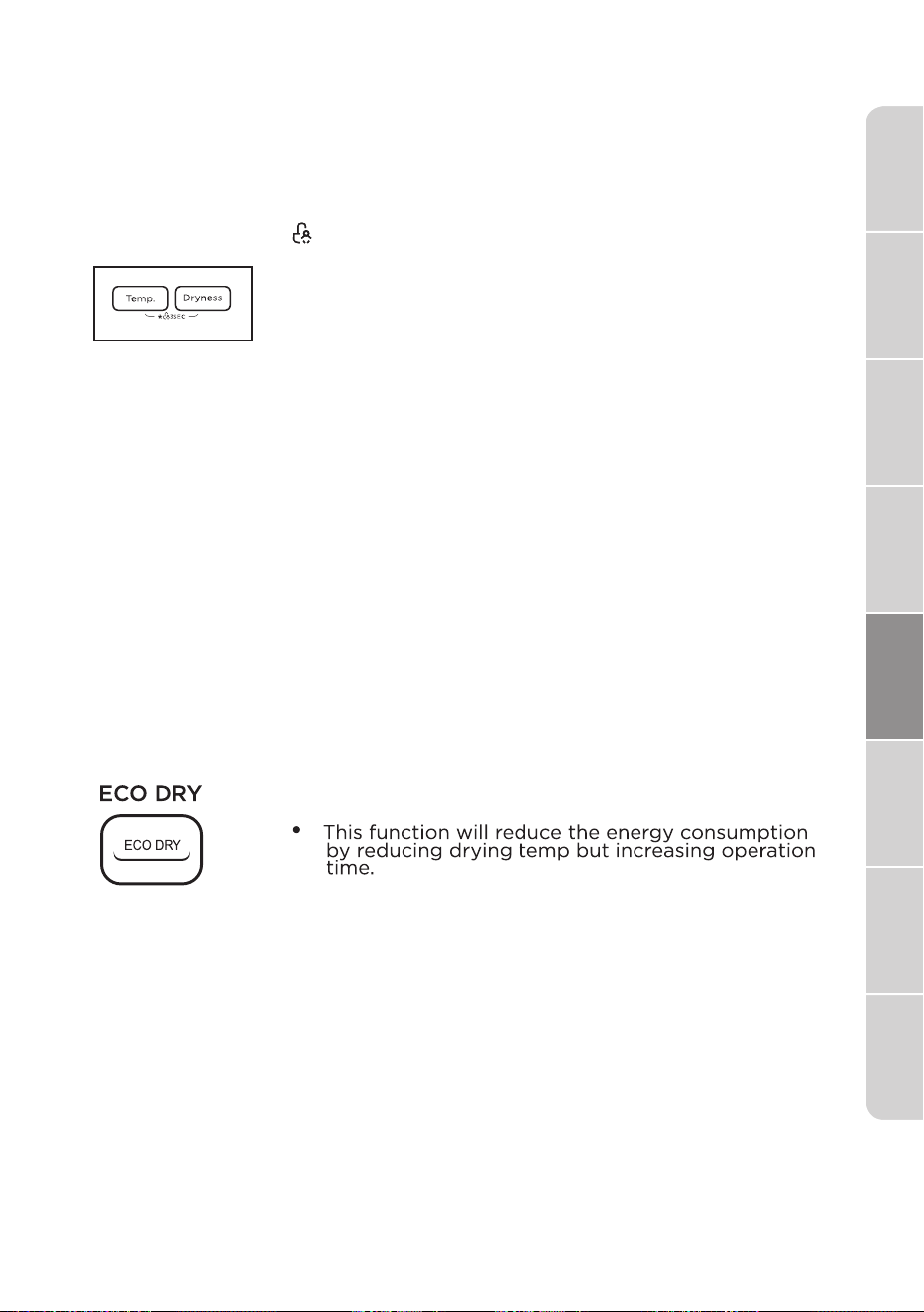
5. Unloading your laundry.
CONTROL LOCK
• You can turn on your dryer, set this function,
then turn it off.
When you do so, even if the unit is powered on, •
you still cannot start it before the Control Lock
function is deactivated.
This function will not be cancelled if your unit •
loses power, such as when you unplug it or the
power turns off.
Your dryer has a Control Lock feature to prevent
children from playing with your dryer. When you
turn on the Control Lock, the only button that
works is “POWER”.
39
Press and hold both the “Temp.” and “Dryness”
buttons for three seconds. The control lock icon turns on.
To turn off the control lock, press and hold both the
“Temp.” and “Dryness” buttons for three seconds.
• The dryer will beep 6 times after the cycle is done.
Dryer
Safety
Operation
Requirements
Parts and
Features
Installation
Instructions
Dryer Use
Appendix
Dryer Care
Troubleshooting
,
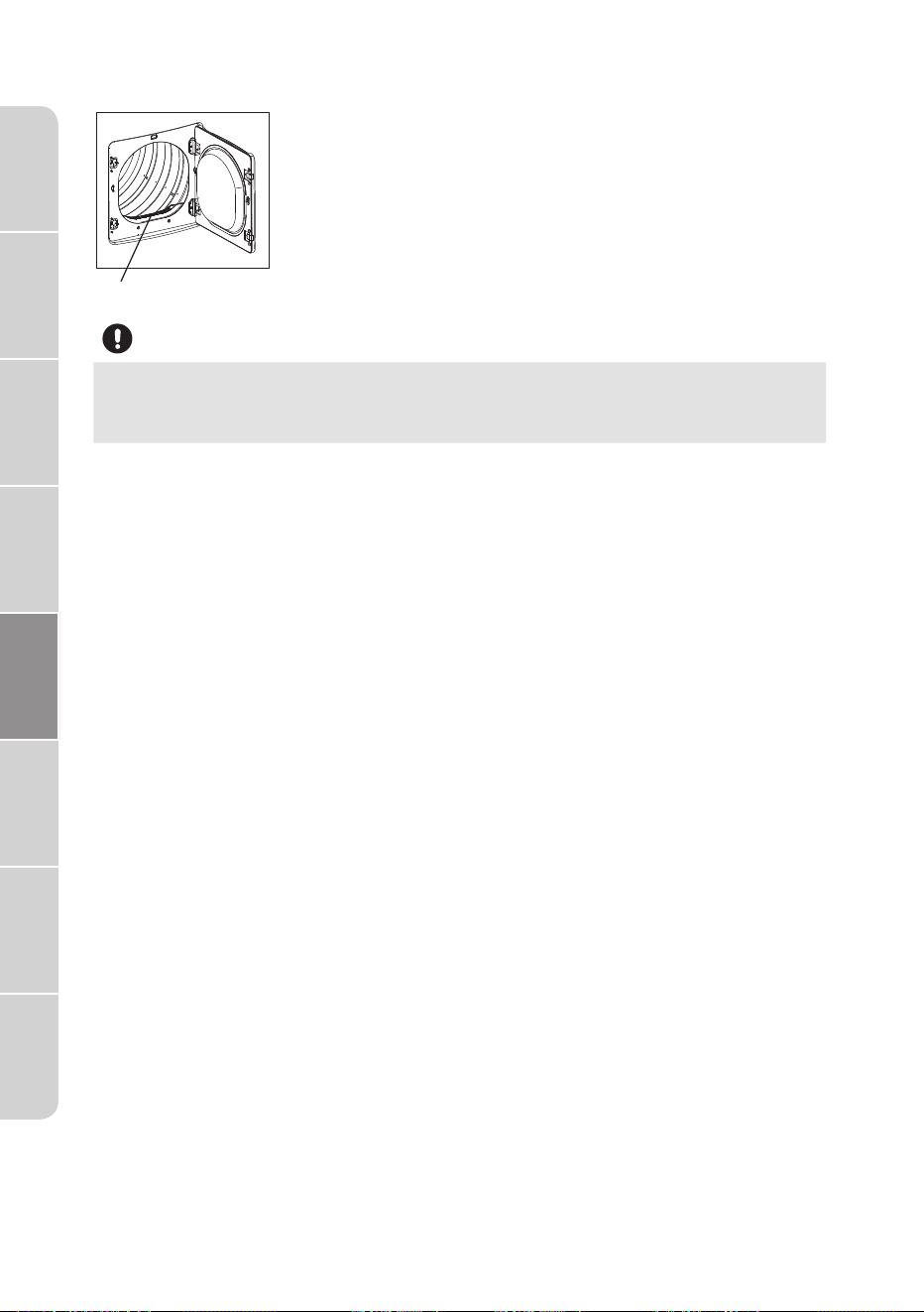
FILTER CLEAN
CAUTION
To prevent a risk of fire, make sure to clean the lint
filter before or after every load.
• To shorten drying time.
• For better performance and energy efficiency.
• Do not operate your dryer without the lint filter in place.
• Do not use a damaged or broken lint filter. This may reduce
performance and/or cause fire.
40
Lint filter
Dryer
Safety
Operation
Requirements
Parts and
Features
Installation
Instructions
Dryer Use
Appendix
Dryer Care
Troubleshooting

SPECIAL LAUNDRY TIPS
special items. If care label instructions are not available, use the following
information as a guide.
Items Drying guide
Bedspreads &
Comforters
• Make sure the item is thoroughly dry before
using or storing.
• May require repositioning to ensure even drying.
Blankets
• Use the Normal cycle and dry only one blanket
at a time for best tumbling action.
• Make sure the item is thoroughly dry before
using or storing.
• May require repositioning to ensure even drying.
41
Curtains &
Draperies
• Use the Casual cycle, medium temperature and
less dry to help minimize wrinkling.
• Dry these in small loads for best results and
remove as soon as possible.
• Use the Normal cycle on High temperature for
soft fluffy diapers.
Cloth Diapers
Down Filled Items
(jackets, sleeping
bags, comforters,
etc.)
• Use the Normal cycle on medium temperature.
• Add a couple of dry towels to shorten drying
time and absorb moisture.
Foam Rubber (rug
backs, stuffed
toys, shoulder
pads, etc.)
• DO NOT dry on a heat setting. Use the Air Fluff
cycle (no heat).
WARNING: Drying a rubber item with heat may
damage it or create a fire hazard.
Pillows
• Use the Normal cycle.
• Add a couple of dry towels and a pair of clean
sneakers to help the tumbling action and to fluff
the item.
DO NOT dry kapok or foam pillows in the dryer. You
can dry these items in the dryer as long as you use
the air fluff cycle.
Plastics (shower
curtains, outdoor
furniture covers,
etc.)
• Use the Air fluff cycle or the Time Dry cycle
on the Low or Ultra Low temperature setting
depending on the care label instructions.
Items NOT to dry:
• Fiberglass items (curtains, draperies, etc.)
• Woolens, unless recommended on the label.
• Items spotted or soaked with vegetable or cooking oils.
Please follow the care label or manufacturer’s instructions for drying
• Follow the care lable instructions or dry in bulky
cycle.
Dryer
Safety
Operation
Requirements
Parts and
Features
Installation
Instructions
Dryer Use
Appendix
Dryer Care
Troubleshooting

DRYER CARE
WARNING
CONTROL PANEL
STAINLESS STEEL OR ANODIZED DRUM
DRYER EXTERIOR
DRYER EXHAUST SYSTEM
•
CLEANING AND MAINTENANCE
• Clean with a soft, damp cloth. Do not use abrasive substances.
• Do not spray cleaners directly on the panel.
• The control panel finish may be damaged by some laundry pre-
treatment soil and stain remover products. Apply such products away
from your dryer and wipe up any spills or overspray immediately.
• To clean the stainless steel or anodized drum, use a damp cloth with
a mild, non-abrasive cleaner suitable for stainless steel and anodized
surfaces.
• Remove the cleaner residue and dry with a clean cloth.
• Clean with a soft, damp cloth. Do not use abrasive substances.
• Protect the surface from sharp objects.
• Do not place any heavy or sharp objects or a detergent box on the
dryer. Keep them on the purchased pedestal or in a separate storage
box. This may scratch or damage the top cover of the dryer.
• Since the entire dryer has a high-gloss finish, the surface can be
scratched or damaged.
• Avoid scratching or damaging the surface when using the dryer.
• Should be inspected and cleaned yearly to maintain optimum
performance.
• Disconnect the exhaust duct from the dryer and from the exhaust hood
(at the exhaust outlet) outside of the building.
• Check the interior of the duct and remove any lint accumulation.
• Be sure that lint is removed from the exhaust hood. Lint may collect in
the exhaust hood so that the flappers or louvers will not open or close
completely.
Dryer
Safety
Operation
Requirements
Parts and
Features
Installation
Instructions
Dryer Use
Appendix
Dryer Care
Troubleshooting
42
Certain internal parts are intentionally not grounded and may present
a risk of electric shock only during servicing. Service Personnel – Do
not come in contact with the following parts while the appliance is
energized: inlet valve, control board and temperature-regulating
thermistor (located on blower housing).

TROUBLESHOOTING
CHECK THESE SOLUTIONS IF YOUR DRYER...
solutions listed below before making a service call. This will help you save
time and money.
Problem Solution
• After cleaning the exhaust hood, check that the flapper or louvers
move freely.
• Reassemble the exhaust duct and hood, checking that the joints are
secure and sealed.
• Operate the dryer and verify that the exhaust air is not obstructed in
the vent and that there are no leaks in the system.
• The outside exhaust hood should be cleaned more frequently to ensure
proper operation.
The unit
doesn’t start.
• Make sure the door is latched shut.
• Be sure the power cord is plugged into a live
electrical outlet.
• Check the home’s circuit breaker and fuses.
• Press the Start/Pause button again if the door is
opened during the cycle.
The unit
doesn’t heat.
• Check the home’s circuit breaker and fuses.
• Select a heat setting other than Air fluff and check
that the Temp selection is not on “No heat”.
• On a gas dryer, check that the gas supply is on.
• Clean the lint filter and exhaust duct.
• Dryer may have moved into the cool-down process
of the cycle.
Doesn’t dry.
• Check all of the above, plus...
• Be sure the exhaust hood outside the home can
open and close freely.
• Check exhaust system for lint buildup. Ducting
should be inspected and cleaned annually.
• Use a 4" rigid metal exhaust duct.
• Do not overload. 1 wash load = 1 dry load.
• Sort heavy items from lightweight items.
• Large, bulky items like blankets or comforters may
require repositioning to ensure even drying.
• Load may be too small to tumble properly. Add a
few towels.
Dryer
Safety
Operation
Requirements
Parts and
Features
Installation
Instructions
Dryer Use
Appendix
Dryer Care
Troubleshooting
43
If your dryer has any of the following problems, you can check the

Problem Solution
The unit is
noisy.
• Check the load for objects such as coins, loose
buttons, nails, broken zips, etc. Remove promptly.
• It is normal to hear the dryer gas valve or heating
element cycle on and off during the drying cycle.
• Be sure the dryer is leveled properly as outlined in
the installation instruction.
• It is normal for the dryer to hum due to the high
velocity of air moving through the dryer drum and
exhaust system.
Clothes are
unevenly
dried.
• Seams, pockets, and other similarly heavy areas may
not be completely dry when the rest of the load has
reached the selected dryness level. This is normal.
Select the Extra Dry setting if desired.
• If one heavy item is dried with a lightweight load,
such as one towel with sheets, it is possible that the
heavy item will not be completely dry when the rest
of the load has reached the selected dryness level.
Sort heavy items from lightweight items for best
drying results.
• Dryer load is too small. Add more items or a few
towels and restart the cycle.
•
Shuts off
before load is
dry.
The unit has a
special odor.
• Household odors from painting, varnishing, strong
cleaners, etc. may enter the dryer with surrounding
room air. This is normal as the dryer draws the air
from surrounding air space of the dryer locations.
• When these odors linger in the air, ventilate the room
completely before using the dryer.
Odors remain
in clothing
after refresh
• Fabrics containing strong odors should be washed
utilizing desired wash cycle.
Garments
still wrinkled
after Wrinkle-
prevent
• Small loads of 1 to 4 items work best.
• Load fewer garments. Load similar-type garments.
Lint on
clothes
• Clean lint filter before every cycle.
• Some fabrics are lint producers (for example, a
fuzzy white cotton towel) and they should be dried
separately from clothes that are lint trappers (for
example, a pair of black linen pants).
• Divide larger loads into smaller loads for drying.
• Check pockets thoroughly before washing and
drying clothes.
Dryer
Safety
Operation
Requirements
Parts and
Features
Installation
Instructions
Dryer Use
Appendix
Dryer Care
Troubleshooting
44
Dryer load is too large. Remove some items and
restart the dryer.

ERROR CODES
Error Code Possible Cause Solutions
C9
The PCB failed. Call the service center for
help; do not use dryer.
E4
The humidity sensor
failed.
The unit will complete the
current operating cycle, but
garments could be over
dried.
The unit can still operate
under the Time Cycles.
Call the service center for
help.
E5
The temperature sensor
failed.
Call the service center for
help; do not use dryer.
45
Dryer
Safety
Operation
Requirements
Parts and
Features
Installation
Instructions
Dryer Use
Appendix
Dryer Care
Troubleshooting
APPENDIX
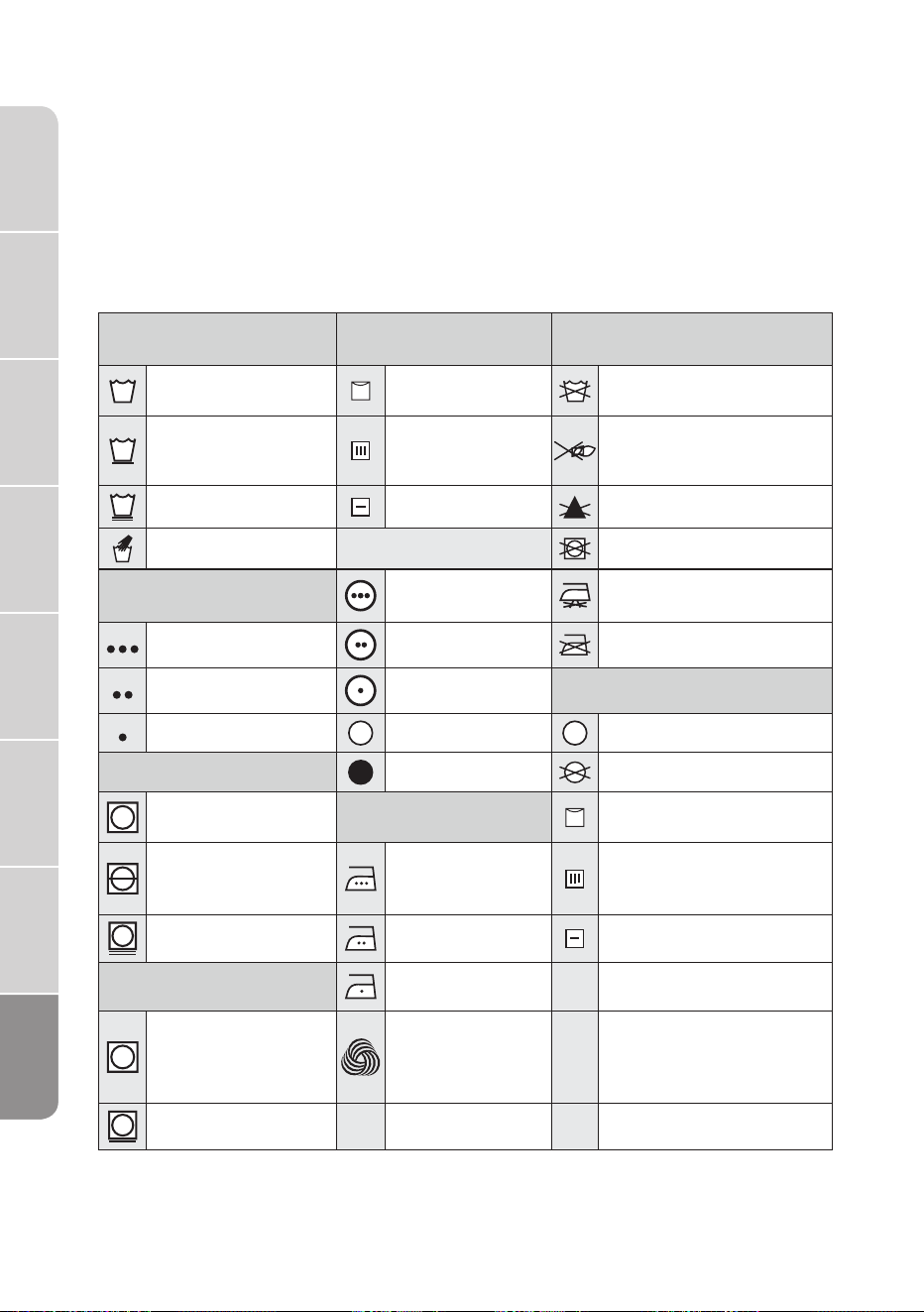
FABRIC CARE CHART
labels include symbols for washing, bleaching, drying and ironing, or dry
cleaning when necessary. The use of symbols ensures consistency among
garment manufacturers of domestic and imported items. Follow care label
directions to maximize garment life and reduce laundering problems.
Wash Cycle Special Instructions
Warning Symbols for
Laundering
Normal
Line Dry/Hang
to Dry
Do Not Wash
Permanent Press /
Wrinkle Resistant/
Wrinkle Control
Drip Dry Do Not Wring
Gentle/Delicates
Dry Flat Do Not Bleach
Hand Wash Heat Setting Do Not Tumble Dry
Water Temperature**
High
No Steam (added to
iron)
Hot Medium Do Not Iron
Warm Low Dryclean
Cold Any Heat Dry Clean
Bleach No Heat/Air Do Not Dry Clean
Any Bleach (when
needed)
Iron-Dry or Steam
Temperatures
Line Dry/Hang to Dry
Only Non-Chlorine
(color-safe) Bleach
(when needed)
High Drip Dry
Tumble Dry Cycle Medium Dry Flat
Normal
Low
Permanent Press /
Wrinkle Resistant /
Wrinkle Control
For machine-
washable wool.
Loads should be
under 8 pounds.
Gentle/Delicates
** The number of dots represent appropriate wash water temperatures for
various items. The temperature range for Hot is 105-125°F/41-52°C, for
Warm 85-105°F/29-41°C and for Cold 60-85°F/16-29°C.
Dryer
Safety
Operation
Requirements
Parts and
Features
Installation
Instructions
Dryer Use
Appendix
Dryer Care
Troubleshooting
46
The following symbols provide garment care direction. The Clothing care
47
48
49