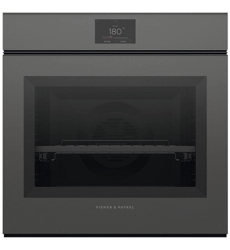
USER GUIDE
US CA
CONVECTION OVEN
MINIMAL
OB24SMPTNB1 models


3
CONTENTS
Safety and warnings 4
First use 9
Setting a function 12
Conditioning the oven 14
Wi-Fi connection and Remote mode 15
Voice to open door 17
Cooking options 18
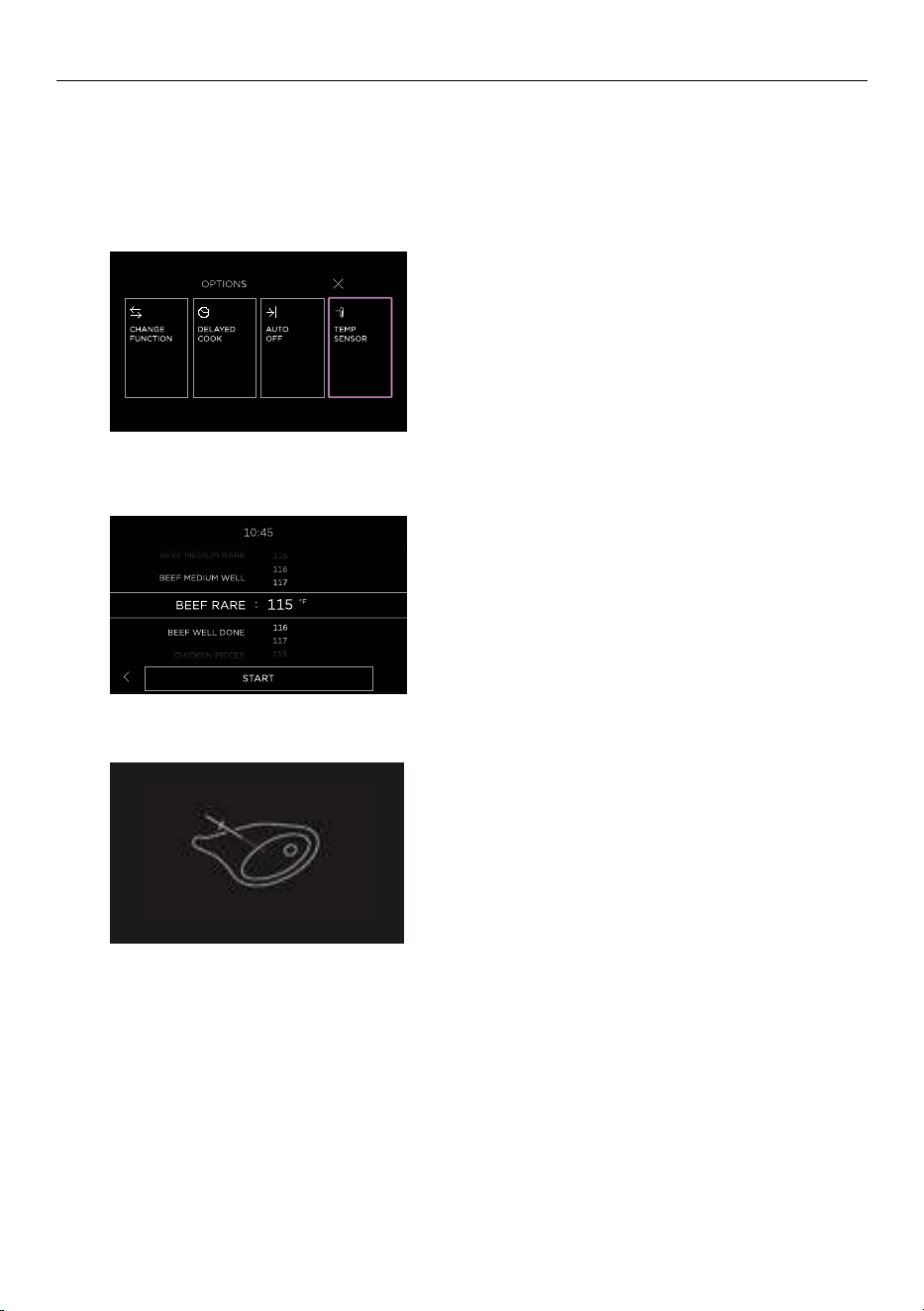
Wired temperature sensor 20
Wireless temperature sensor 21
Oven shelves 22
Care and cleaning 23
Side racks 25
Oven lights 27
Manual door opening 29
Cleaning the oven door 30
Self Clean 32
Troubleshooting 35
Fault codes 37
Manufacturer’s Warranty and Service guide 38
Registration
To register your product visit our website: fisherpaykel.com/register
4
SAFETY AND WARNINGS
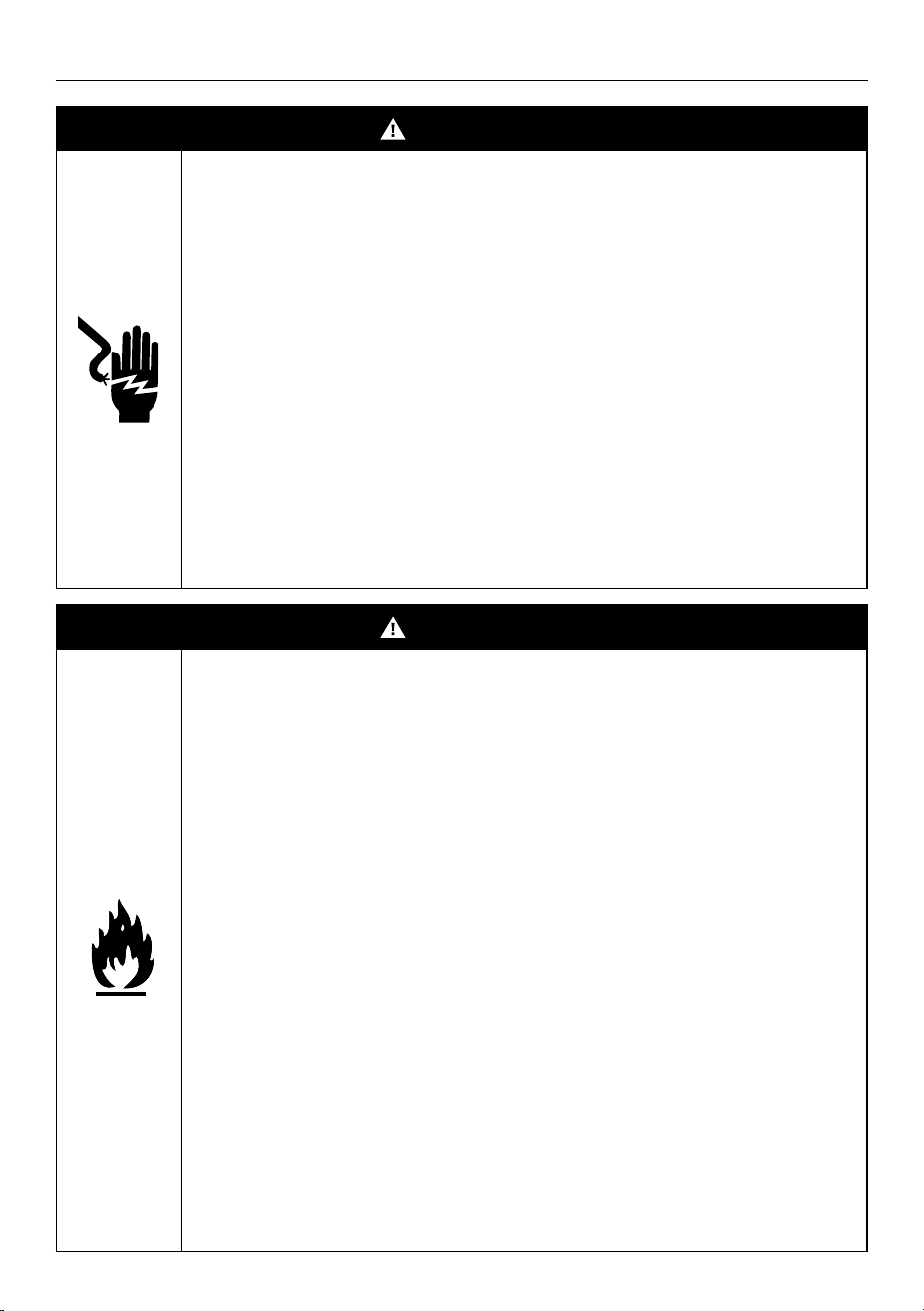
WARNING!
Electric Shock Hazard
Failure to follow this advice may result in
electrical shock or death.
• Turn the oven off at the wall before replacing
the oven lamp.
• Before carrying out any work on the
electrical section of the appliance, it must be
disconnected from the mains electricity supply.
• Connection to a good earth wiring system is
absolutely essential and mandatory.
• Alterations to the domestic wiring system must
only be made by a qualified electrician.
WARNING!
Fire Hazard
Failure to follow this advice may result in
overheating, burning, and injury.
• Carefully follow the instructions for starting a
self-clean cycle.
• Do not place aluminium foil, dishes, trays, water
or ice on the oven floor during cooking, this
will irreversibly damage the enamel. Lining the
oven with aluminium foil may cause fire.
• Never use your appliance for warming or
heating the room. Persons could be burned or
injured or a fire could start.
• Flammable materials should not be stored in an
oven or near its surface.
• Do not use adapters, reducers, or branching
devices to connect this appliance to the mains
power supply.
5
SAFETY AND WARNINGS
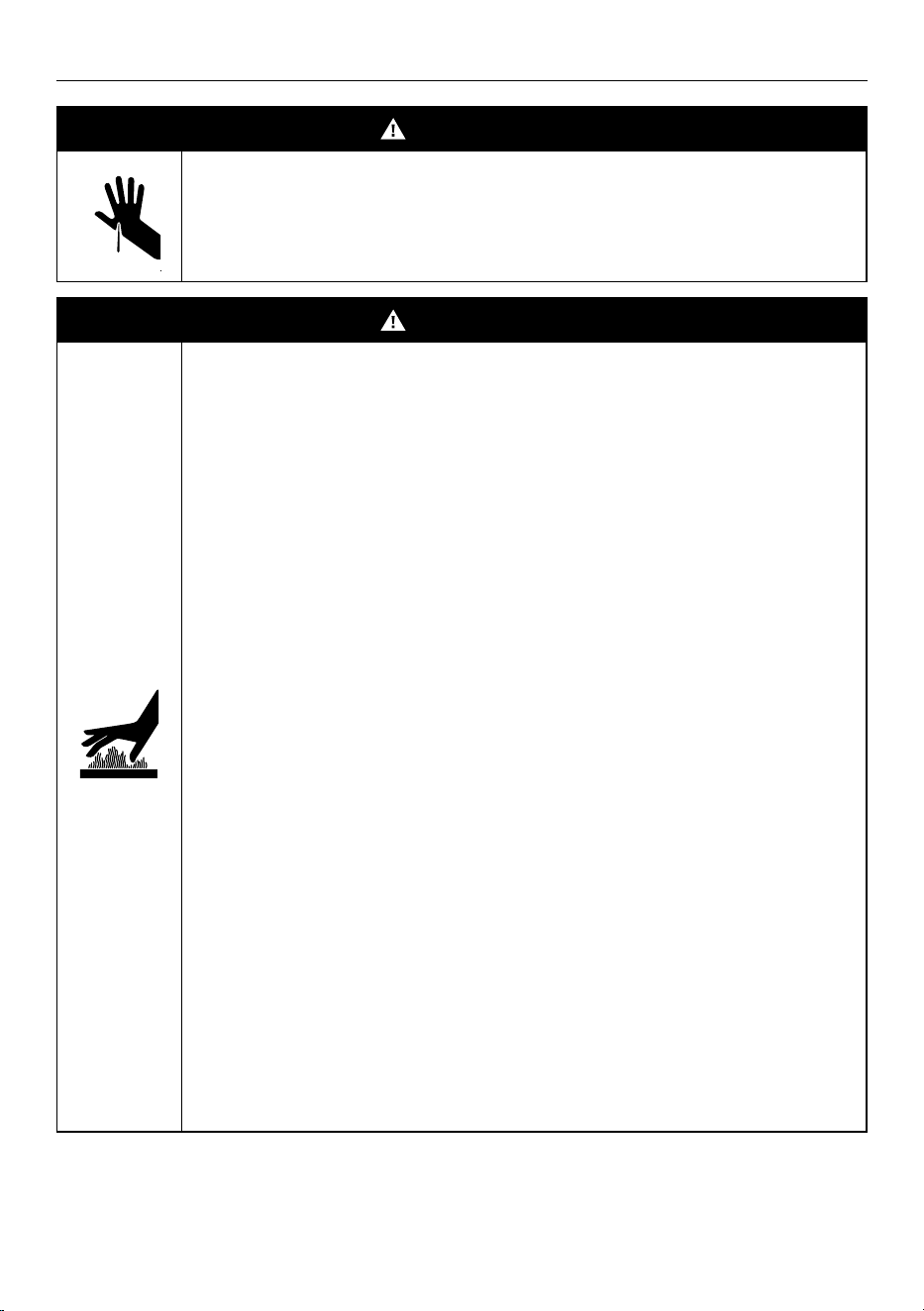
WARNING!
Cut Hazard
Failure to use caution could result in injury.
• Take care: some edges are sharp.
WARNING!
Hot Surface Hazard
Failure to follow this advice could result in
burns and scalds.
• To avoid burns and scalds, keep children away
from this appliance.
• Surfaces of the appliance may become hot
enough to cause burns. Examples include the
oven vent, the surface near the oven vent, and
the oven door.
• Do not touch heating elements or interior
surfaces of the oven. Heating elements may be
hot, even when they are dark in colour.
• Use protection when handling hot surfaces,
such as oven shelves or dishes, or when using
steam functions.
• Be careful when opening the oven door as
hot air and steam can be emitted. Allow hot
air and steam to dissipate before removing or
replacing food.
• During and after use, do not touch or let
clothing or other flammable materials contact
heating elements or interior surfaces of the
oven until they have had sufficient time to cool.

6
SAFETY AND WARNINGS
READ AND SAVE THIS GUIDE
WARNING!
To reduce the risk of fire, electrical shock, injury to persons or damage when using the
oven, follow the important safety instructions listed below. Read all the instructions
before installing or using the oven. Use the oven only for its intended purpose as
described in these instructions.
Installation
z
Ensure your appliance is properly installed and earthed by a qualified technician.
z
Ensure this oven is connected to a circuit which incorporates an isolating switch
providing full disconnection from the power supply.
z
Do not install or operate the appliance if it is damaged or not working properly. If you
receive a damaged product, contact your dealer or installer immediately.
z
Please make this information available to the person installing the appliance—doing so
could reduce your installation costs.
z
This appliance must be installed and connected to the mains power supply only by a
suitably qualified person according to these installation instructions and in compliance
with any applicable local building and electricity regulations. Failure to install the
appliance correctly could invalidate any warranty or liability claims.
z
If the power supply cable is damaged, it must be replaced by the manufacturer, its
service agent or similarly qualified person in order to avoid a hazard.
z
Isolating switch: make sure this oven is connected to a circuit which incorporates an
isolating switch providing full disconnection from the power supply in accordance with
the wiring rules.
z
The oven must be earthed.
z
Do not use adaptors, reducers or branching devices to connect the oven to the mains
electricity supply, as they can cause overheating and burning.
z
The appliance must not be installed behind a decorative door in order to
avoid overheating.
z
Please take extra care not to damage the lower trim of the oven during installation.
The trim is important for correct air circulation and allows the door to open and close
without obstruction. The manufacturer does not accept any responsibility for damage
resulting from incorrect installation.
Servicing
z
Do not repair or replace any part of the appliance unless specifically recommended in
the user guide. All other servicing should be undertaken be a Fisher & Paykel trained
and supported service technician or qualified person.
Fire Hazard
z
Do not use water on grease fires. Smother the fire or flame or use a dry chemical or
foam type extinguisher.
z
Use only dry oven mitts or potholders. Moist or damp potholders on hot surfaces could
result in burns from steam. Do not let potholders touch hot areas or heating elements.
Do not use a towel or a bulky cloth for a potholder. It could catch fire.
z
Do not heat unopened food containers. They can build up pressure that may cause the
container to burst and result in injury.

7
SAFETY AND WARNINGS
Food Safety
z
Leave food in the oven for as short a time as possible before and after cooking. This is
to avoid contamination by organisms which may cause food poisoning. Take particular
care during warm weather.
General Use
z
This product has been designed for use in a domestic (residential) environment. This
product is not designed for any commercial use. Any commercial use by the customer
will affect this product’s manufacturer’s warranty.
z
Household appliances are not intended to be played with by children.
z
Children should not be left alone or unattended in the area where the appliance is in
use. They should never be allowed to sit or stand on any part of the appliance.
z
Children of less than 8 years old must be kept away from the appliance unless
continuously supervised.
z
Cleaning and user maintenance shall not be carried out by children without supervision.
z
Do not store things children might want above the oven. Children could be burned or
injured while climbing on the oven to retrieve items.
z
Do not place heavy objects on the oven door.
z
Always keep oven vents unobstructed. Do not wear loose fitting or hanging garments
when using the appliance. They could ignite or melt if they touch an element or hot
surface and you could be burned.
z
Caution: Hot air can blow from the vent at the top of the oven as part of the oven’s
cooling system.
z
Always position shelves in the desired location while the oven is cool (before
preheating). If a shelf must be removed while the oven is hot, do not let the oven mitts
or potholder contact hot heating elements in the oven or the base of the oven.
z
Use only bakeware approved for ovens. Follow the bakeware manufacturer’s guidance.
z
Always place oven racks in desired location while oven is cool. If rack must be moved
while oven is hot, do not let potholder contact hot heating element.
z
Do not touch heating elements or interior surfaces of your oven. Heating elements and
interior surfaces may be hot even though they are dark in color and could cause burns.
The oven door, vent openings and surfaces near these openings may also become hot.
z
This appliance is configurable to allow remote operation at any time. Do not store
flammable materials or temperature sensitive items inside, on top or near the appliance.
z
Neither the food probe or aluminium foil must come in contact with the oven elements.
z
Only use the temperature probe recommended for this oven.
z
The appliance must not be installed behind a decorative door in order to avoid
overheating.
z
WARNING: Accessible parts may become hot during use. Young children should be
kept away.
Cleaning
z
Do not clean the oven seal or use any oven-cleaning products on it. It is essential for a
good seal, which ensures that the oven operates efficiently. Care should be taken not to
rub, damage, move or remove the oven seal.
z
Do not use oven cleaners, harsh/abrasive cleaning agents, waxes, or polishes. No
commercial oven cleaner, oven liner, or protective coating of any kind should be used in
or around any part of the oven.
z
Do not use harsh/abrasive cleaners, scourers or sharp metal scrapers to clean the oven
door glass since they scratch the surface, which may result in the glass shattering.
z
Clean only the parts listed in this manual.

8
SAFETY AND WARNINGS
z
Do not use a steam cleaner to clean any part of the oven.
z
The door gasket is essential for a good seal. Care should be taken not to rub, damage
or move the gasket.
Self Cleaning
z
Spillages must be removed before starting a Self Clean cycle.
z
Before starting a Self Clean cycle, remove oven shelves and all other cookware/utensils,
and wipe up large food spills or grease deposits.
z
Before starting a Self Clean cycle, ensure you move any pet birds to another, closed
and well ventilated room. Some pet birds are extremely sensitive to the fumes given off
during a Self Clean cycle and may die if left in the same room as the oven during such
a cycle.
z
During a Self Clean cycle, the oven reaches higher temperatures than it does for
cooking. Under such conditions, the surfaces may get hotter than usual and children
should be kept away.
IMPORTANT!
This device complies with part 15 of the FCC Rules. Operation is subject to the
following conditions:
z
This device may not cause harmful interference.
z
This device must accept any interference received, including interference that may
cause undesired operation.
z
Do not change or modify the wireless communication device in any way. Changes or
modifications not expressly approved by Fisher & Paykel could void the user’s authority
to operate the equipment.
WARNING: The incorporated Wi-Fi module in this appliance is to operate only from
channel 1 to channel 11 as per FCC rules.
This device contains licence-exempt transmitter /receiver that comply with Innovation,
Science and Economic Development Canada’s licence-exempt RSS(s). Operation is
subject to the following two conditions:
z
This device may not cause interference.
z
This device must accept any interference, including interference that may cause
undesired operation of the device.
9
FIRST USE
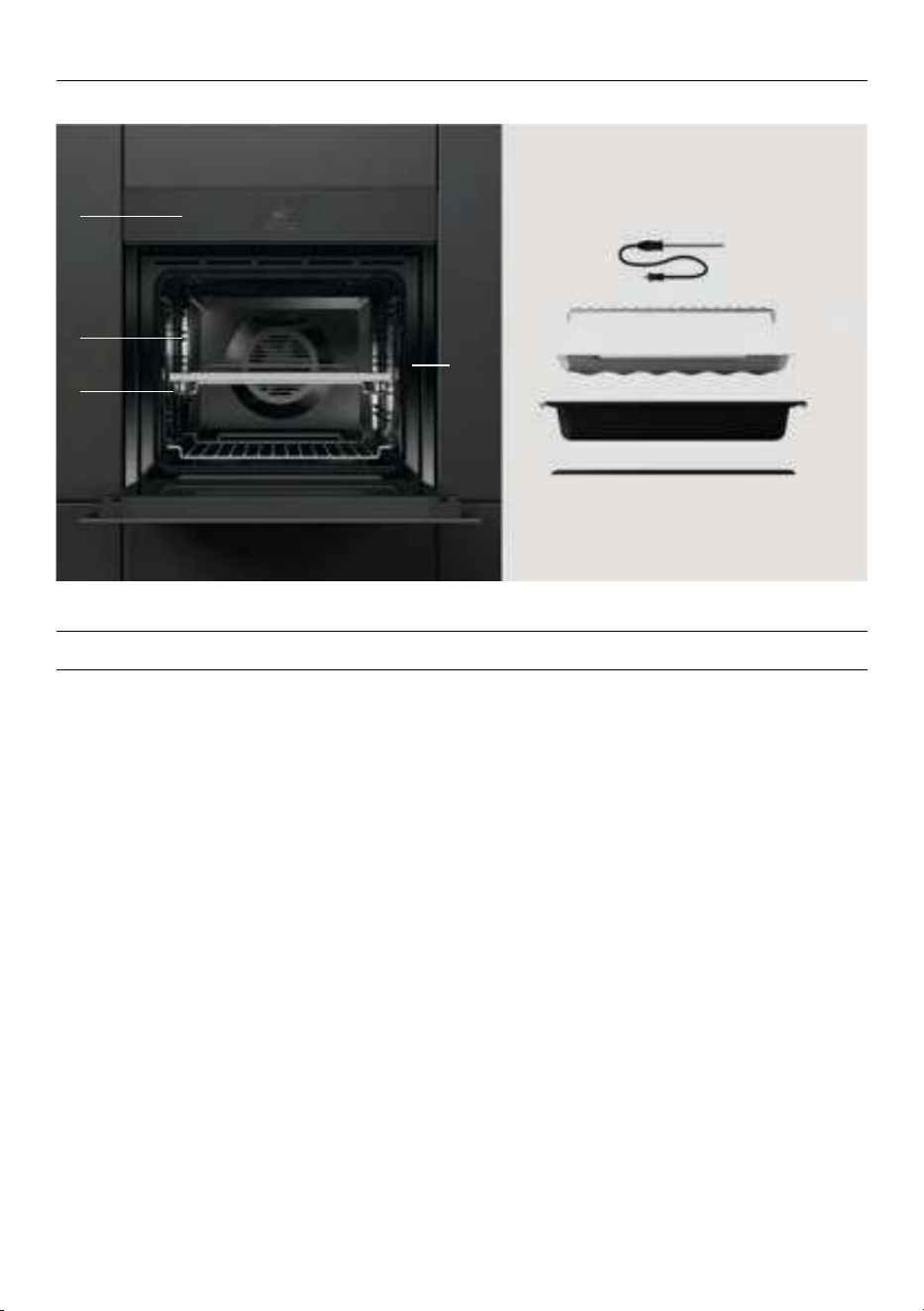
Not all accessories are provided with all models. To purchase additional accessories go to
www.fisherpaykel.com
Not shown: door opening tool.
7
6
5
2
3
1
4
8
9
Features and accessories
1 Oven controls
2 Oven light
3 Shelves
4 Side racks
5 Temperature sensor
6 Broil rack
7 Grid
8 Broil pan
10
FIRST USE
*Recipes available in some languages only.
1
2
1
2 3 4
5
6
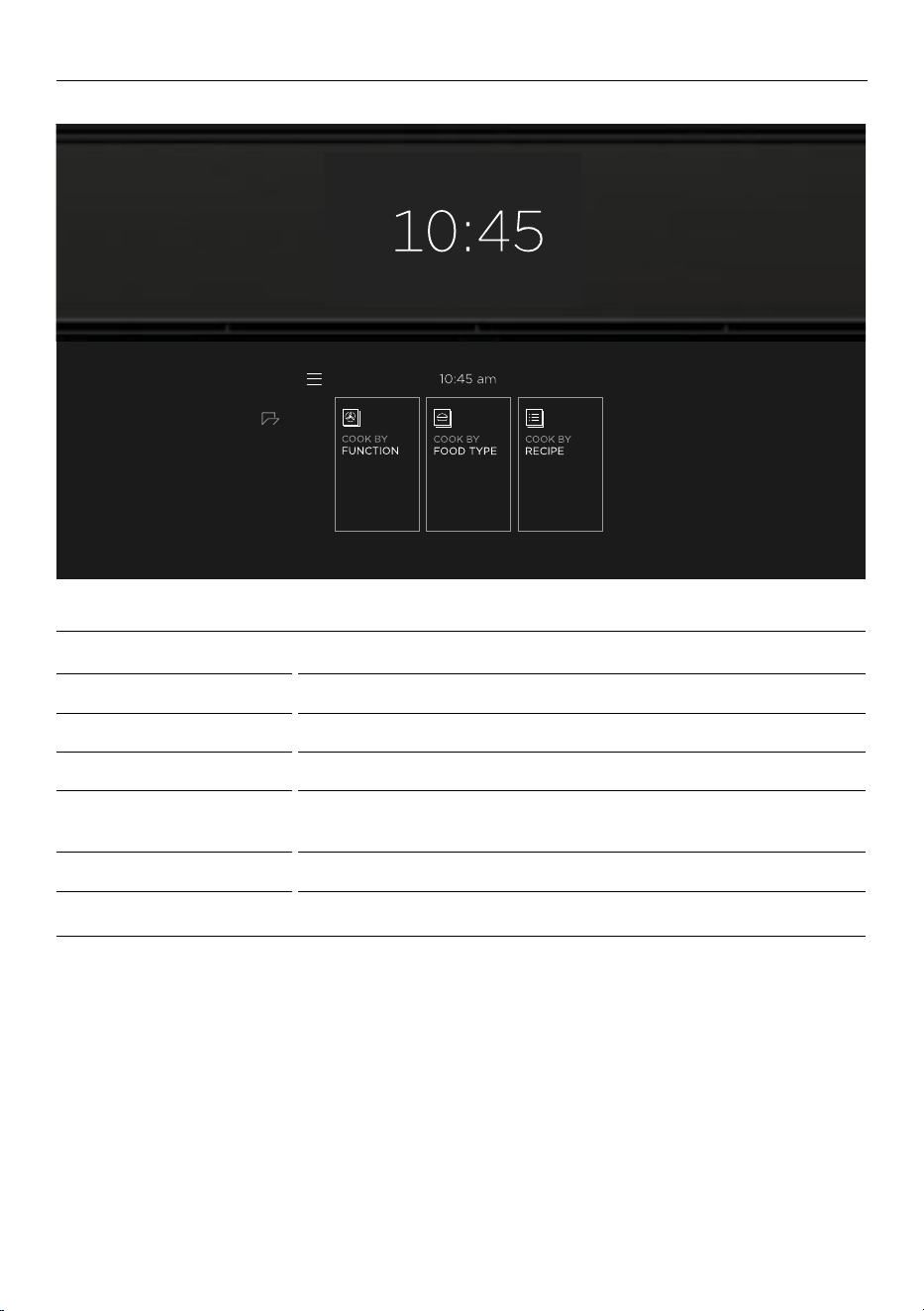
Control panel
1 Touchscreen display Use to navigate cooking functions, features and settings.
2 Cook by Function Choose a function best suited to your cooking requirements.
3 Cook by Food Type Guided cooking to help you get optimal results.
4 Cook by Recipe A collection of recipes designed specifically for this style
of oven.*
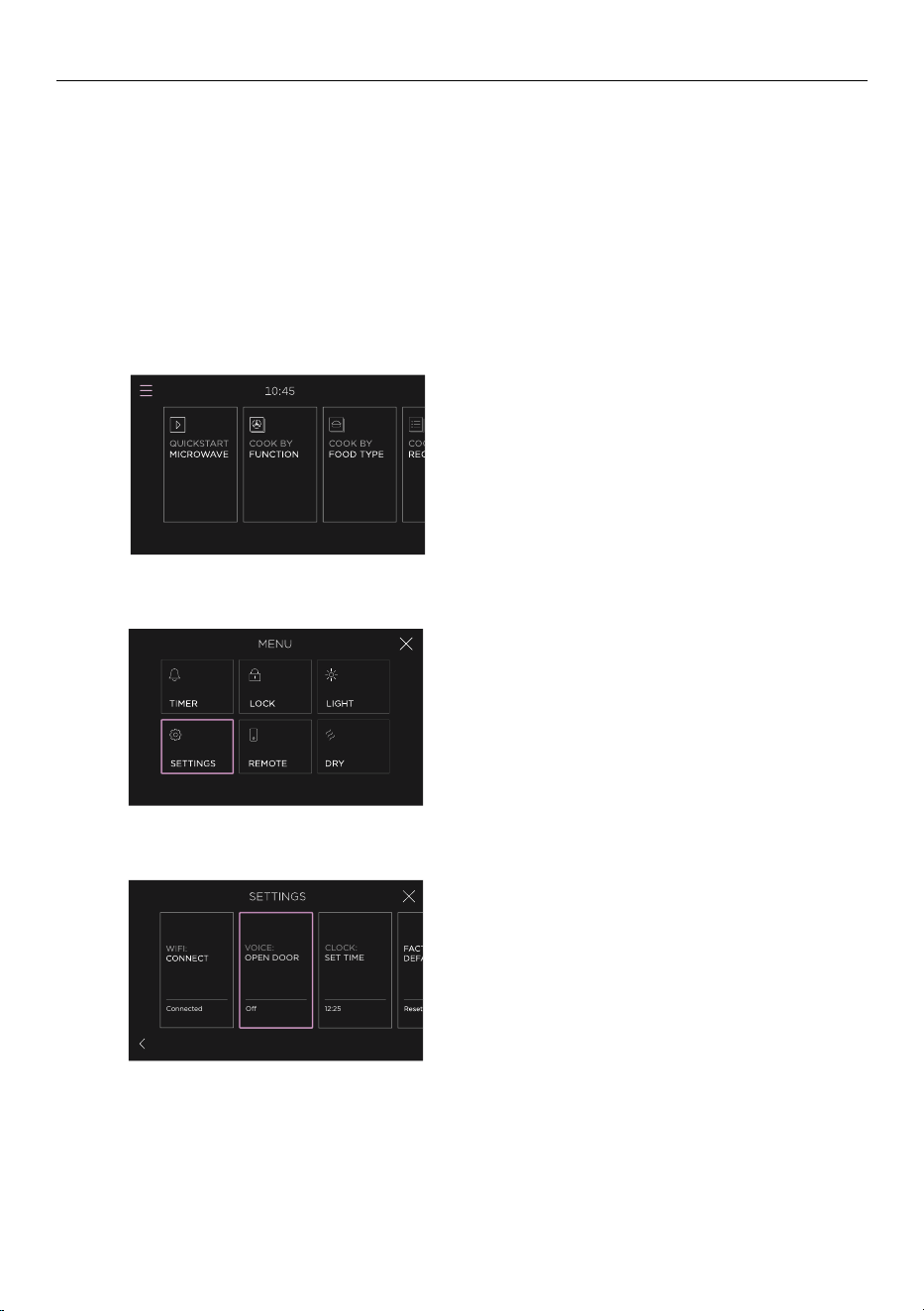
5 Menu Press to access additional features and settings.
6 Open door button Press to open or close the oven door.
11
FIRST USE
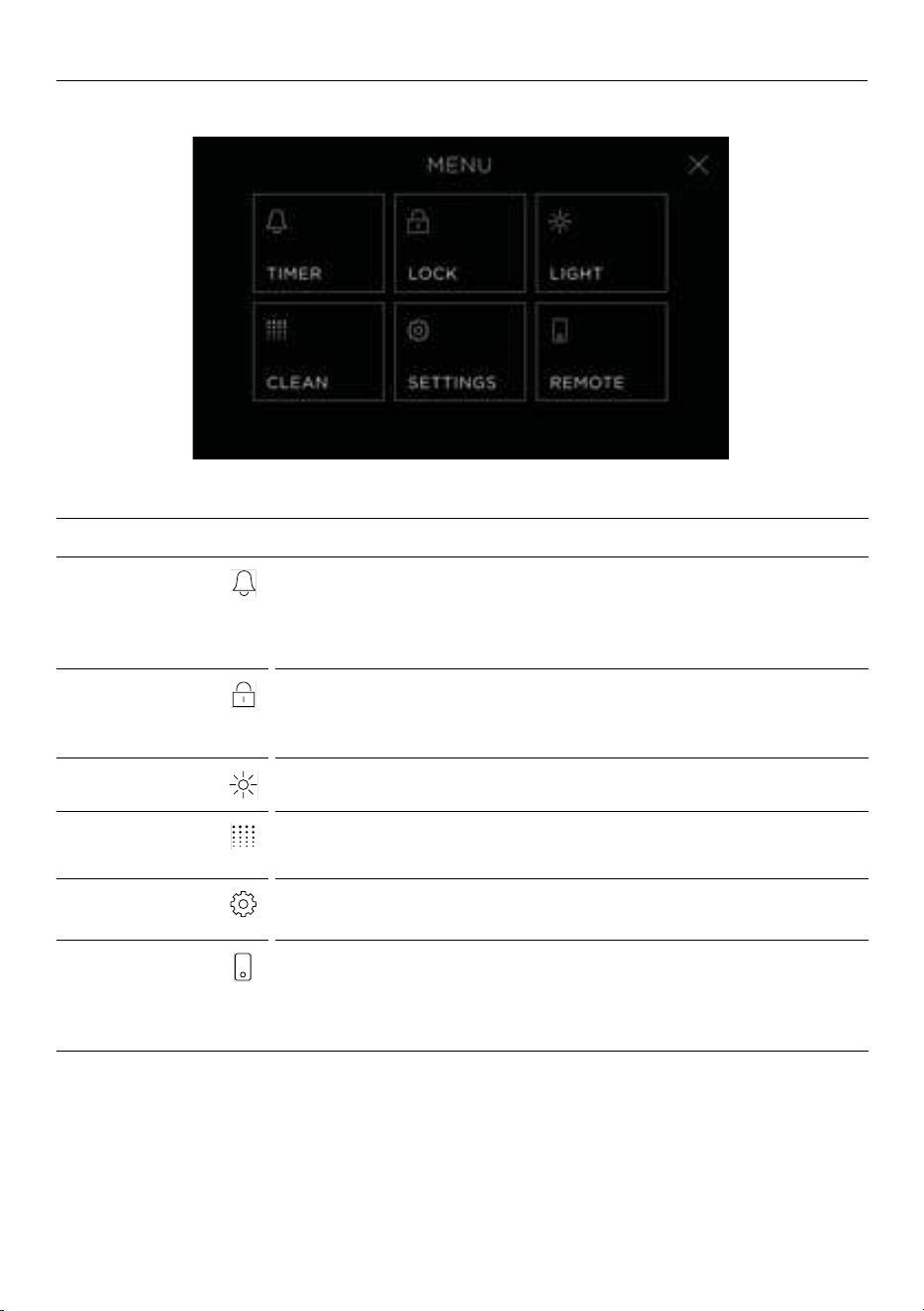
Menu
TIMER
Use the timer to keep track of cooking times. You can use it at
any time, even if you are not using the oven.
The timer does not turn the oven off. Refer to ‘Cooking options’
for automatic cooking options.
LOCK
Lock the oven controls to prevent accidental use. When locked,
the controls will be unresponsive and the oven will not turn on.
Press and hold the screen anywhere to unlock.
LIGHT
Turn the oven lights ON/OFF.
CLEAN
Set a self clean cycle to clean the inside of the oven.
Refer to ‘Self clean’ for full instructions.
SETTINGS
Adjust the oven settings to suit your preferences or set up a
Wi-Fi connection. Refer to ‘Wi-Fi connection & Remote mode’.
REMOTE
Enable or disable REMOTE.
Your oven may be connected to your wireless network
and operated using the app. Refer to ‘Wi-Fi connection &
Remote mode’.
12
SETTING A FUNCTION
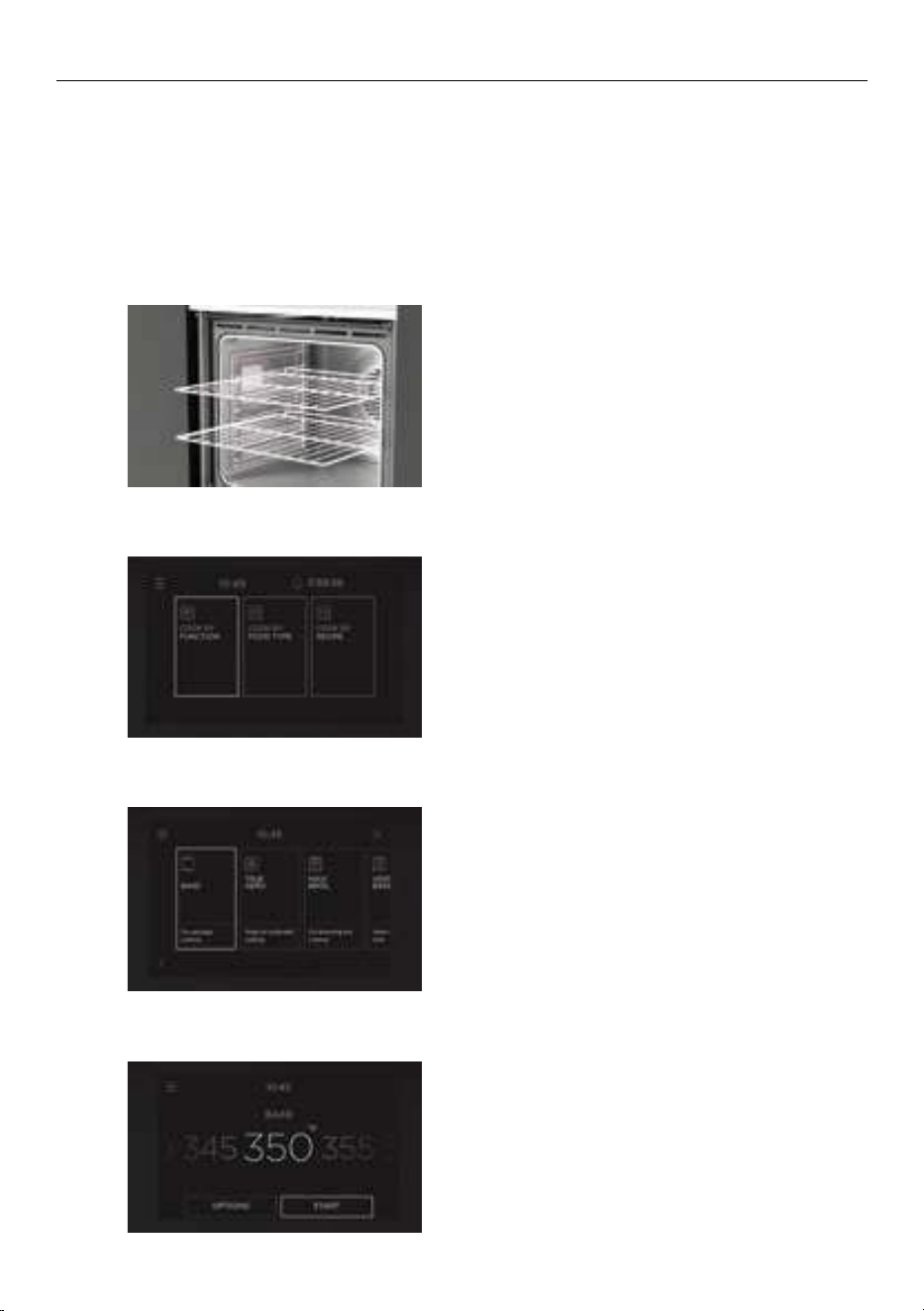
Select a cooking mode.
2
z
Ensure all cable ties and packaging have been removed.
z
Set the time. To change the time at any point go to SETTINGS and select CLOCK: SET TIME.
z
Condition your oven according to the instructions under ‘Conditioning the oven’.
z
Connect your oven to Wi-Fi to operate remotely using the app. For more information
refer to ‘Wi-Fi Connection & Remote mode’.
Position the shelves at the required height.
Ensure shelves are level and correctly
positioned with the guard rail at back.
1
Before you begin
3
Select a function.
For more information on each function,
select the description below the function
name.
4
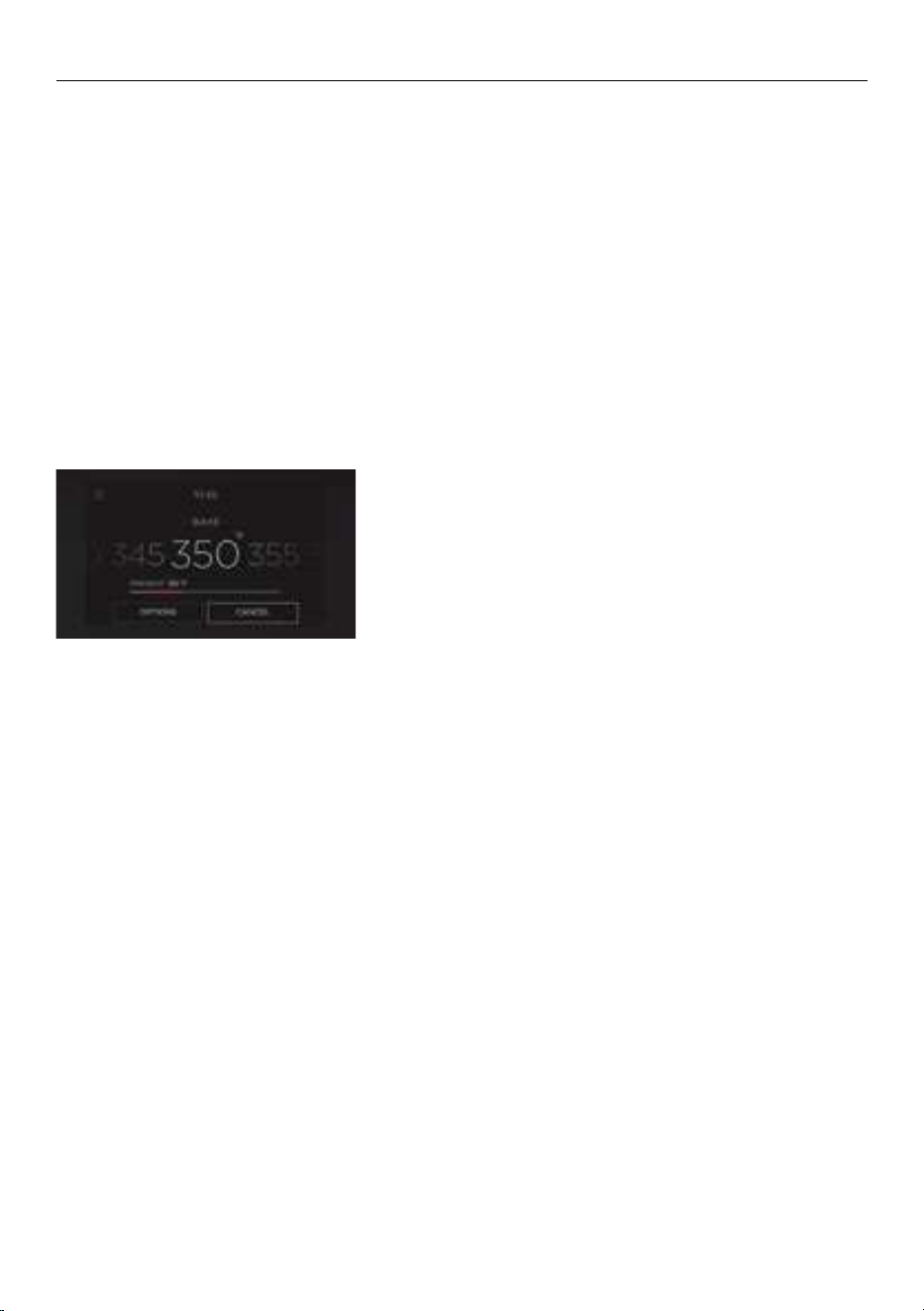
Adjust the temperature if needed, then press
START.
13
SETTING A FUNCTION
Opening the oven door
When first using the oven or after running a self clean cycle, the door may take slighter
longer than normal to open.
Preheating
A progress bar will show on the screen while the oven is heating. To prevent burning, wait
until the oven has reached temperature before placing food inside.
Some functions do not need to preheat and will not show a progress bar. Place food in the
oven when ready to start cooking.
To reach the set temperature quickly, some functions have a rapid preheat stage that uses
all elements.
When you have finished cooking, press
CANCEL to
turn the oven off.
Turning the oven off
14
CONDITIONING THE OVEN
We recommend conditioning your oven for 1 hour before initial use to eliminate any
manufacturing residue. A small amount of smoke may be present, ensure kitchen is
well ventilated.
After conditioning:
z
Wait for the oven to cool completely.
z
Wipe oven with a damp cloth and mild detergent.
z
Dry with a clean, lint-free cloth.
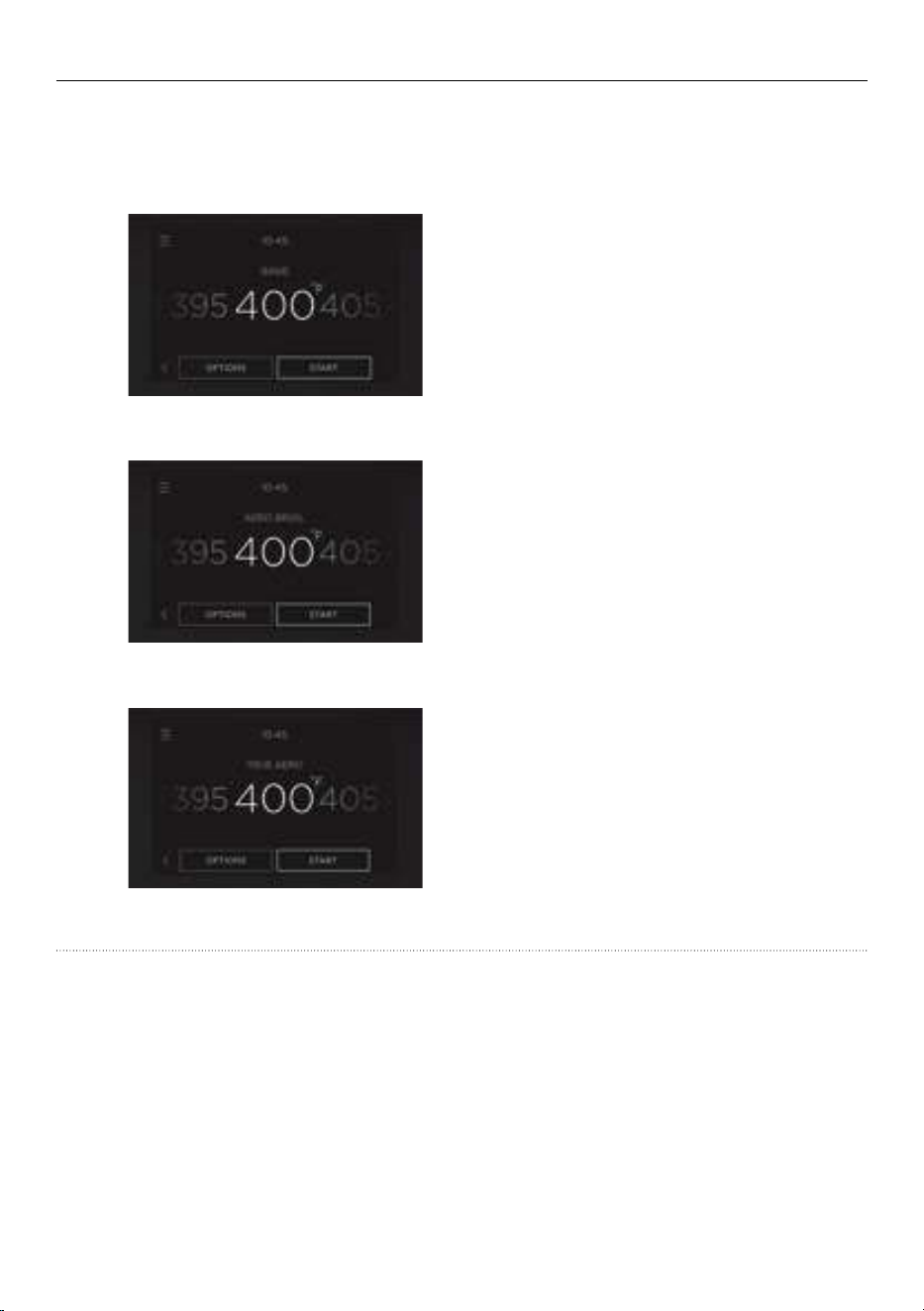
Set the oven to BAKE at 400°F (200°C)
and heat for 30 minutes.
1
After 30 minutes change the function to
AERO BROIL and heat for 5 minutes.
2
After 5 minutes, change to TRUE AERO and
heat for a further 20 minutes. When you have
finished, turn the oven off.
3
15
WI-FI CONNECTION AND REMOTE MODE
Your oven may be connected to your home wireless network and operated remotely using
the app.
Connect your appliance to ensure it stays up to date with the latest software and features.
Getting started
z
Ensure your home Wi-Fi network is turned on.
z
You will be given step by step guidance on both your appliance and mobile device.
z
It may take up to 10 minutes to connect your oven.
z
For further guidance and troubleshooting, please refer to the app.
On your mobile device:
1 Download the app. Scan the QR code or go to www.fisherpaykel.com/connect
2 Register and create an account.
3 Add your appliance and set up the Wi-Fi connection.
Connecting to your home Wi-Fi
1
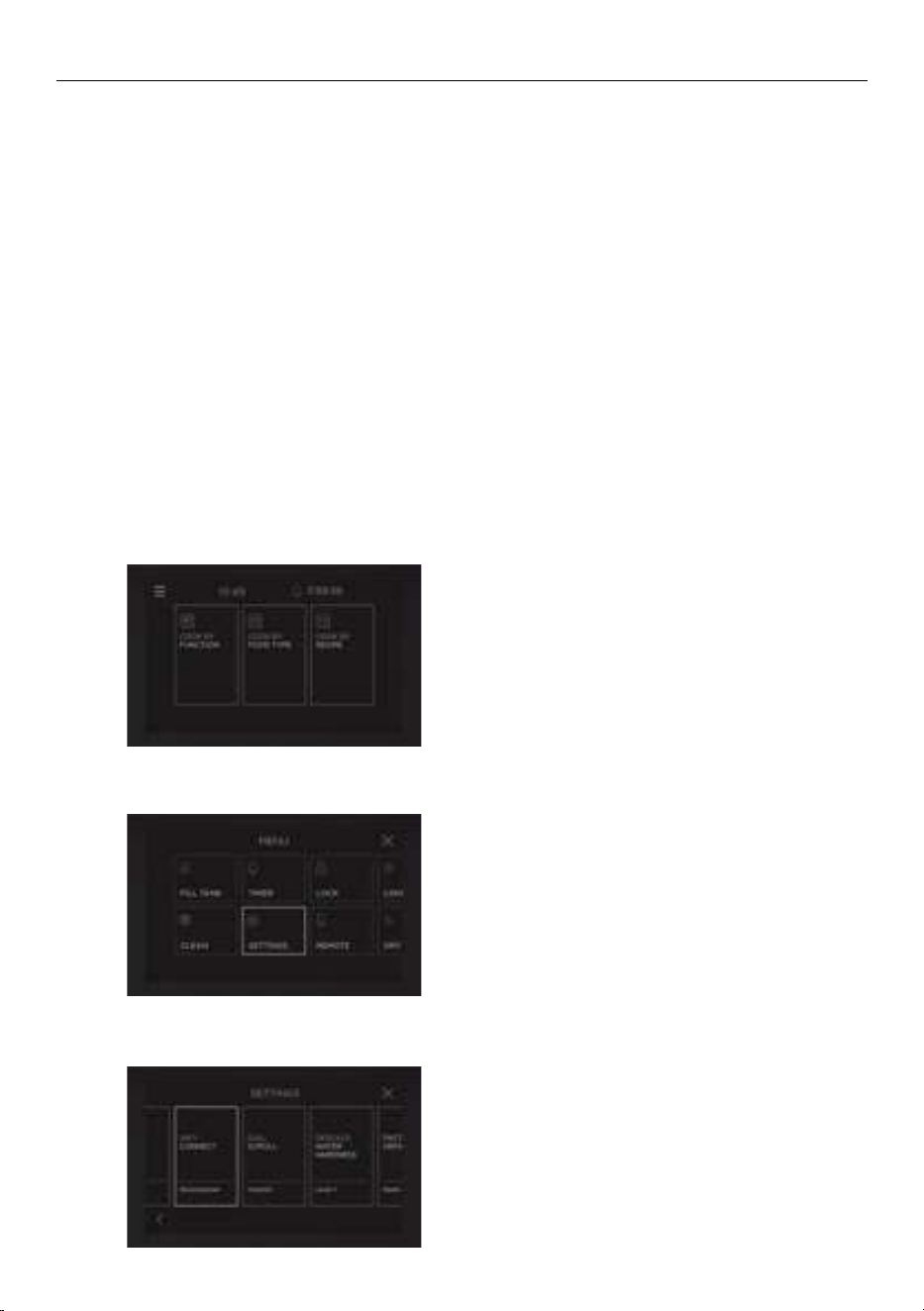
Go to the menu.
Select SETTINGS.
2
Select WI-FI CONNECT and follow the
instructions onscreen.
3
16
WI-FI CONNECTION AND REMOTE MODE
Enabling Remote Mode
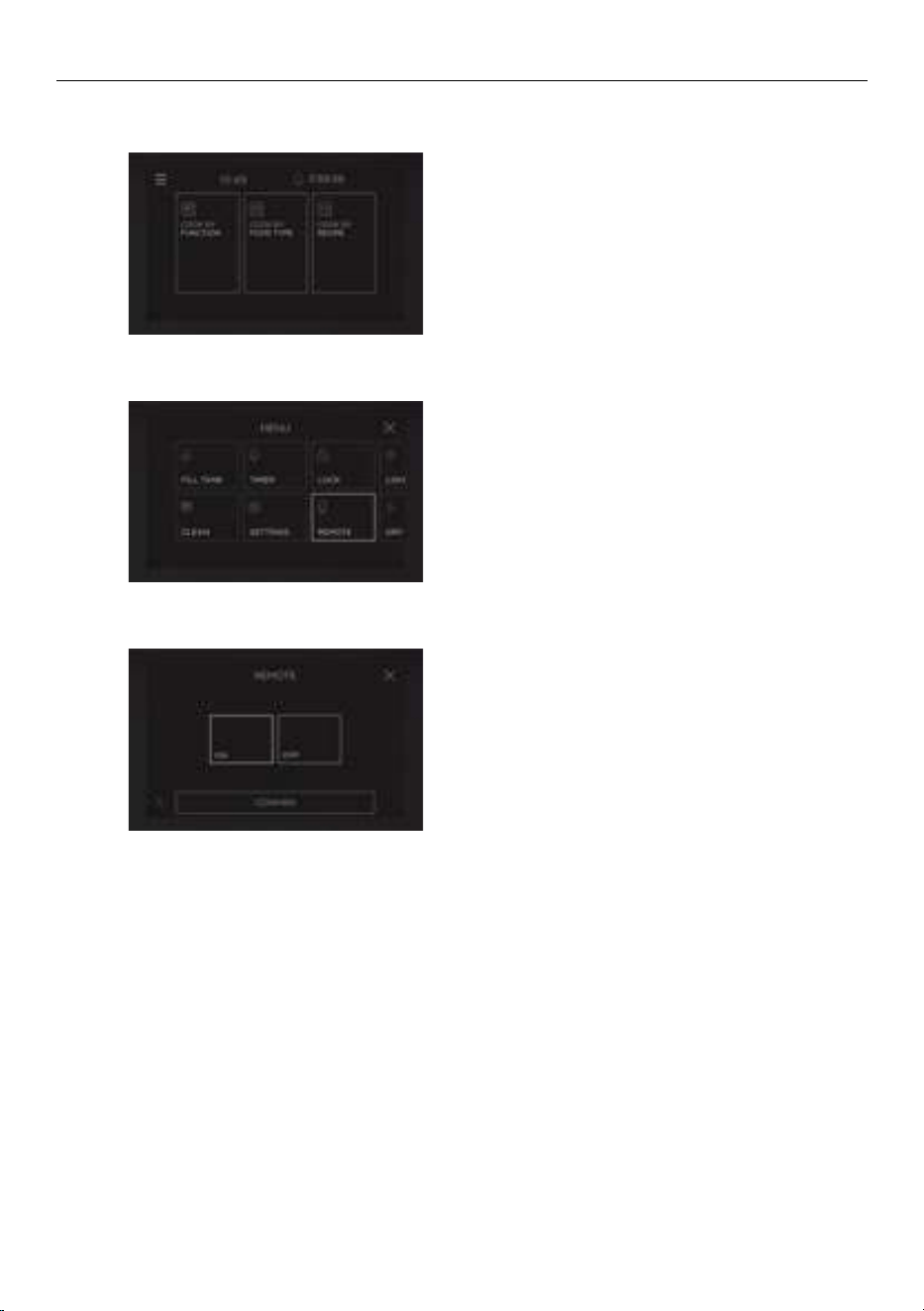
Go to the menu.
1
Select REMOTE.
2
Select ON then press CONFIRM.
Remote Mode is now enabled.
3
17
VOICE TO OPEN DOOR
Your appliance may be set up to open the oven door using voice control.
Your appliance must be connected to Wi-Fi and have Remote Mode enabled to use voice
control. Voice control also requires a smart speaker or your mobile device to control the
oven door.
Using voice control to open the oven door should only be done when in view of the
appliance, as the oven may be hot. Stand clear when the door is opening.
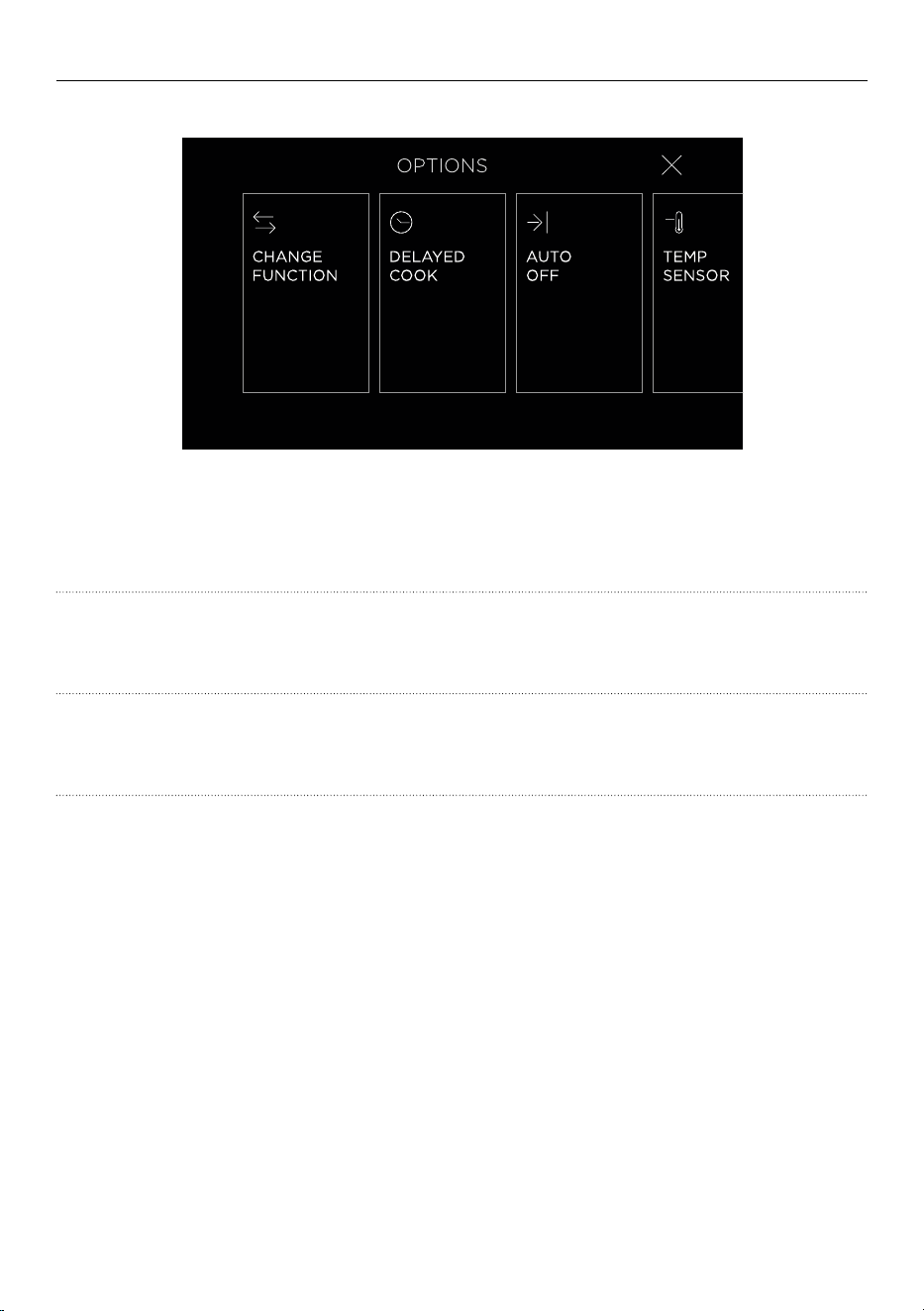
Enabling voice control
1
Go to the menu.
Select VOICE: OPEN DOOR and follow the
instructions onscreen.
3
Connected Off 12:25
OPEN DOOR
VOICE: CLOCK:
SET TIME
Select SETTINGS.
2
18
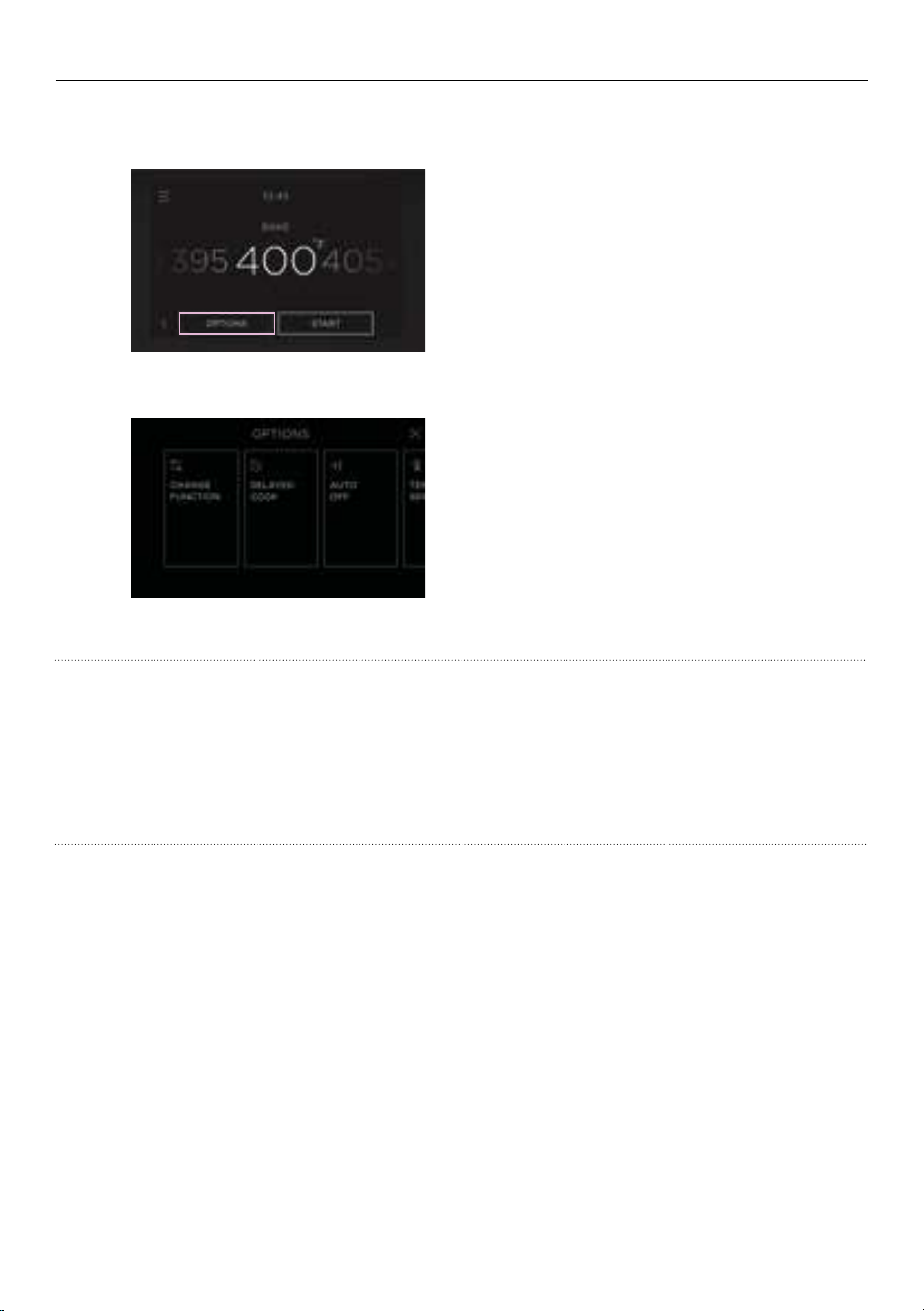
COOKING OPTIONS
Change function
Quickly view and switch functions.
Delayed cook
Set the oven to turn on later, cook for a set length of time and turn off automatically.
Auto off
Set the oven to turn off after a set length of time.
Temperature sensor
Use the sensor to monitor cooking and automatically turn the oven off when food is done.
19
COOKING OPTIONS
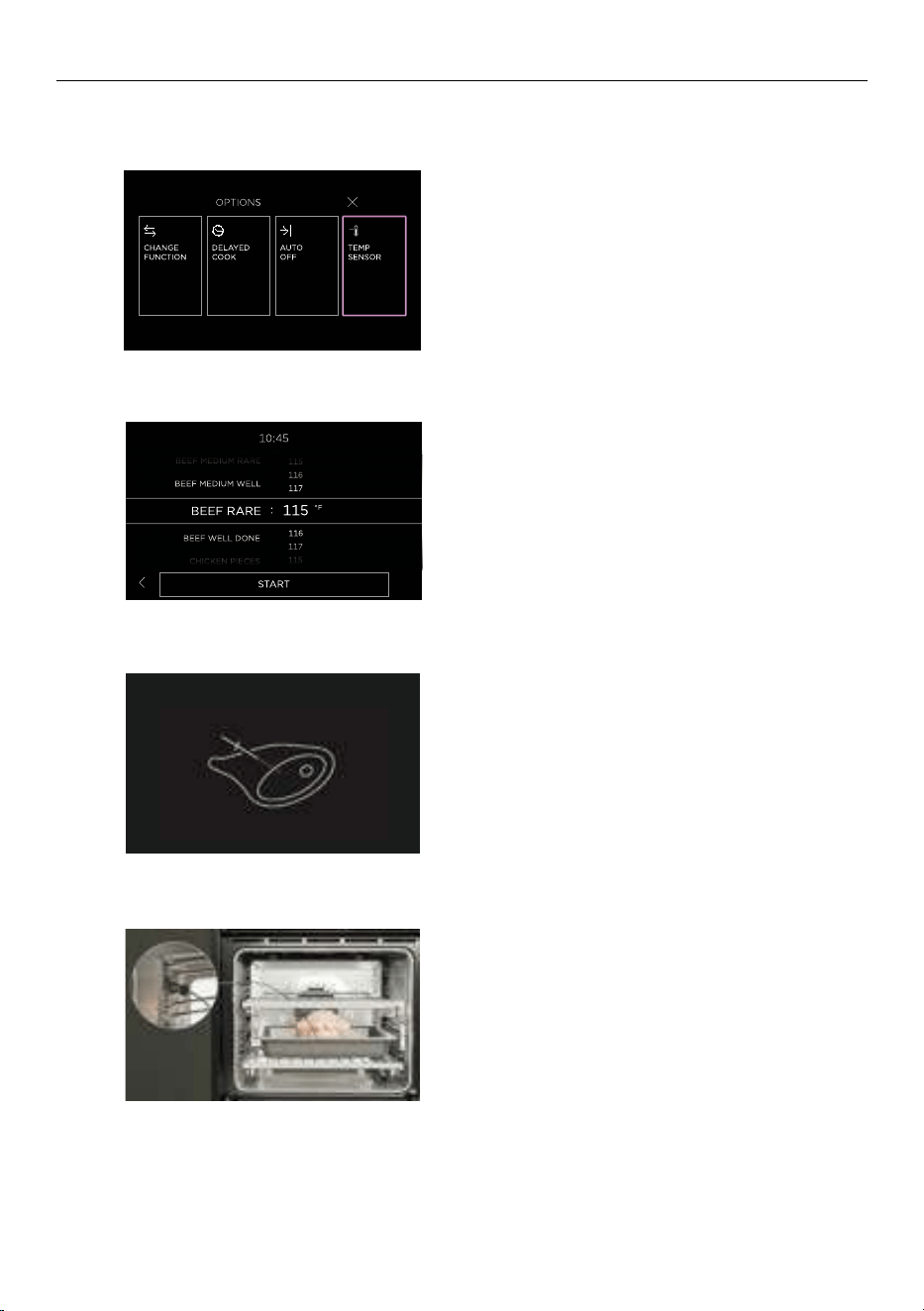
Accessing options
Select a function, then press
OPTIONS.
1
Select a cooking option and follow the
instructions onscreen.
2
Food safety
z
Leave food in the oven for as short a time as possible before and after cooking.
z
Ensure meat is fully defrosted before cooking.
z
Rest meat after cooking to allow the internal temperature to continue to rise.
z
High risk foods such as fish should reach a minimum internal temperature of 145 - 160°F
(63 - 70°C) and poultry and minced meat should reach 165 - 185°F (75 - 85°C).
Delayed cook
The grill element may come on while the oven is heating up. Position food on a lower shelf
or cover to prevent burning as the oven heats up.
When using
DELAYED COOK we do not recommend using BROIL, AERO BROIL or AIR FRY.
When using a temperature sensor we recommend preheating before adding your food to
the oven. Use caution when plugging a wired sensor in to a hot oven.
20
WIRED TEMPERATURE SENSOR
Using the temperature sensor
Insert the sensor into your food.
Position the sensor in the thickest part of
the dish, avoiding fat and bone in meat.
Ensure the tip of the sensor doesn’t
protrude out the other side of food or
touch cookware.
3
Select a cook function
Go to
OPTIONS and select TEMPERATURE
SENSOR
, then select WIRED SENSOR.
1
Place food in the oven and plug in the
sensor. The sensor will click when it is
in place.
The socket is located inside the oven, on
the left hand side.
4
2
Select a food type and temperature then
press CONFIRM.
Allow your oven time to preheat
if necessary.
21
WIRELESS TEMPERATURE SENSOR
Your oven may be connected to a compatible wireless temperature sensor.
Compatible sensors are available to purchase at fisherpaykel.com/sensor.
Ensure your sensor is fully charged before use.
Do not use your wireless sensor to heat food above 212°F (100°C) or place in an oven above
572°F (300°C).
4
Select a cook function
Go to
OPTIONS and select TEMPERATURE
SENSOR
, then select WIRELESS SENSOR.
Follow the instructions onscreen to
connect the sensor.
1
Select a food type and temperature then
press CONFIRM.
Allow your oven time to preheat
if necessary.
Insert the sensor into your food.
Position the sensor in the thickest part of
the dish, avoiding fat and bone in meat.
Ensure the tip of the sensor doesn’t
protrude out the other side of food or
touch cookware.
Ensure the sensor is inserted past the
minimum line.
Place your food in the oven.
6
22
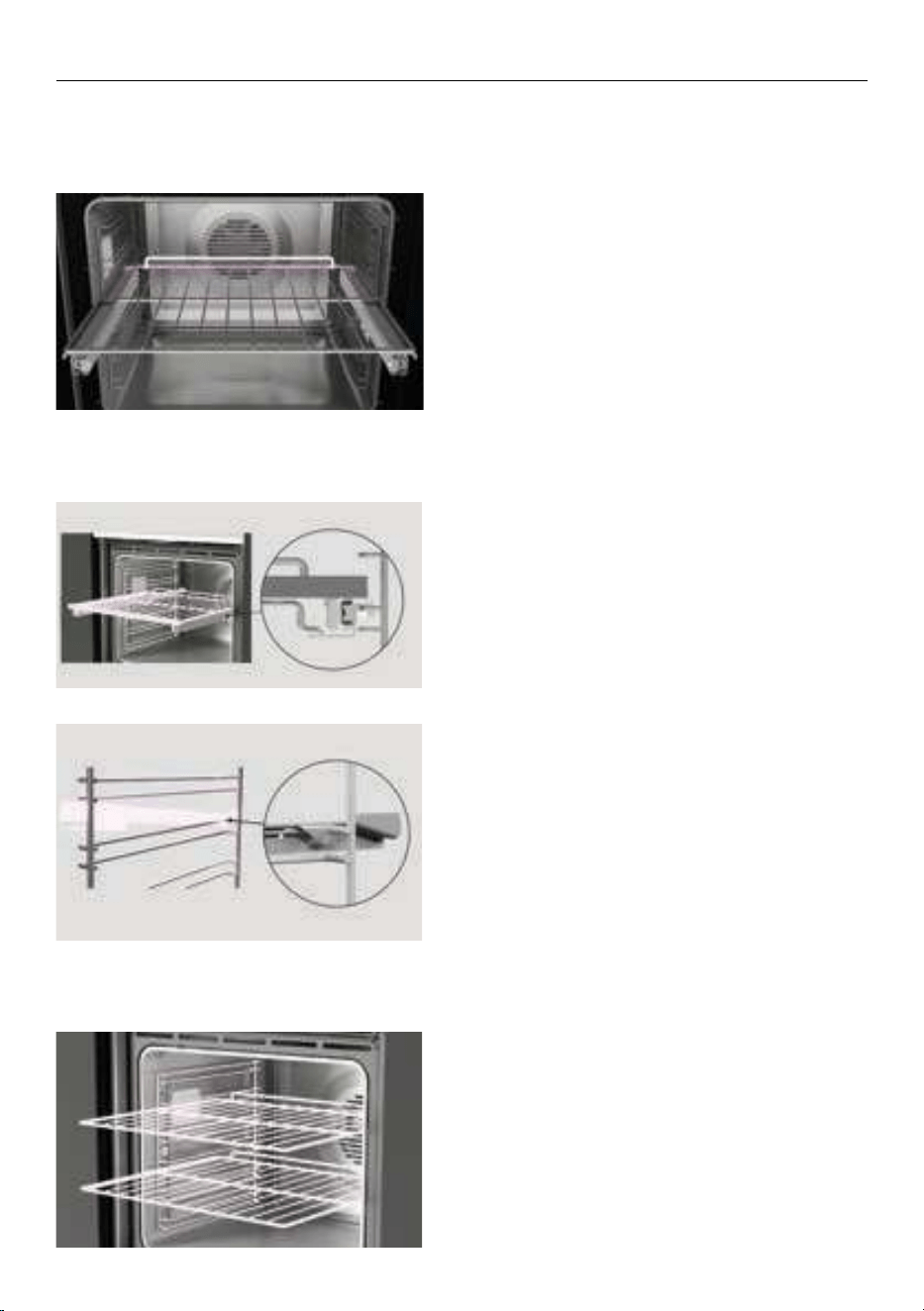
Ensure shelves are level and correctly
positioned with the guard rail at the back
OVEN SHELVES
Positioning the oven shelves
Place shelves in the oven at the required level before heating the oven.
Grip shelves at the front, holding the wire
shelf and frame together.
Place the shelf on top of the side racks,
and push into the oven.
Sliding shelves
Ensure the rear tags are hooked over the
side racks on both sides.
Slide shelves into the cavity.
Wire shelves

23
CARE AND CLEANING
Turn the oven off at the wall and allow it to cool before doing any cleaning or maintenance.
Cleaning surfaces
Wipe with a damp cloth and mild detergent, then dry with a clean, lint-free cloth. We do
not recommend using the following cleaning products as they may damage the surfaces:
z
Plastic or stainless steel scouring pads
z
Abrasive, solvent, household cleaners
z
Acid or alkaline cleaners
z
Hand washing liquids or soap
z
Stainless steel cleaners or polishes
z
Laundry detergents or disinfectants
General
z
Always remove oven shelves before starting a clean cycle.
z
Clean the inner door glass before starting a clean cycle. Any residues left on the glass
will become baked on and may cause permanent discolouration.
z
Enamelled side racks can be left in the oven during a clean cycle.
z
Chrome side racks must be removed before starting a clean cycle.
General
We recommend cleaning any easy-to-reach spills or splatters from the oven after every use,
to prevent them becoming baked on.
Oven door glass
Clean the oven door glass after every use and before running a clean cycle, to prevent
stains from becoming baked on.
WHAT? HOW? IMPORTANT!
Control Panel Take particular care when cleaning
the control panel glass and
screen. Only use a damp cloth
with detergent.
Do not use any oven cleaners, harsh
or abrasive cleaners, scouring pads,
steel wool or sharp metal scrapers
on the glass. These may scratch and
damage the surface.
Oven door frame and
plastic corner clips
Clean with hot water and mild
detergent, then wipe dry.
Oven door glass
(after every use)
Clean with hot water and
mild detergent.
For stubborn stains, try a mixture of
baking soda and warm water with a
non-abrasive scrubbing pad.
Do not use oven cleaners or any
other harsh/abrasive cleaners,
cloths, scouring pads, steel wool or
sharp metal scrapers to clean the
oven door glass. These scratch the
glass, which in turn could result in
the glass cracking and shattering.
Do not allow grease to build up on
the glass or become baked on as
this reduces visibility into the oven.

24
CARE AND CLEANING
WHAT? HOW? IMPORTANT!
Oven seal Do not clean this part.
Oven cavity For light soiling:
Clean with hot water and mild
detergent or an ammonia-based
cleaner, then wipe dry.
For stubborn/baked on soiling:
Run a clean cycle. Refer to
‘Self Clean’.
Clean any easy-to-reach spills,
food or grease stains from the
oven after each use to prevent
stubborn soiling.
Sliding shelves Wipe with a damp cloth and mild
detergent. Do not wipe off or wash
away the white lubricating grease
(visible when the shelf is extended).
Do not wash in the dishwasher,
immerse in soapy water, use
oven cleaner on or leave in the
oven during a clean cycle. Doing
so will prevent the slides from
running smoothly.
Temperature sensor Clean with hot water and mild
detergent, then wipe dry.
Do not wash in the dishwasher,
immerse in soapy water, use oven
cleaner on or leave in the oven
during a clean cycle.
Grid
Grill rack
Grill pan
Wire shelves
Clean with hot water and
mild detergent.
Soak stubborn stains in a solution of
dishwasher powder and hot water.
These parts are dishwasher safe.
Do not leave in the oven during
a clean cycle. They will become
discoloured or damaged.
25
SIDE RACKS
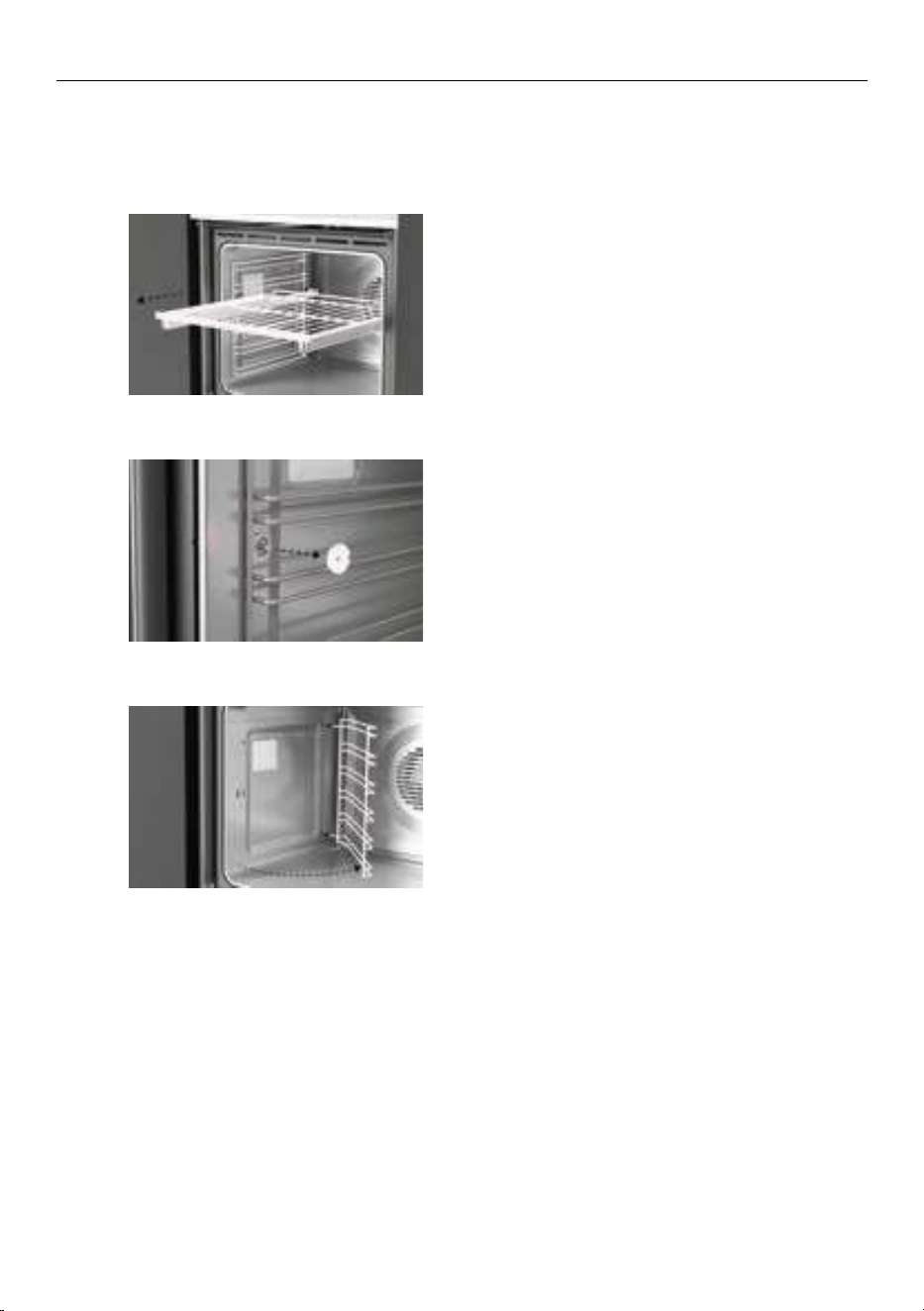
Removing the side racks
Remove the side racks to access the oven lights or to make cleaning easier.
Remove all shelves.
1
Unscrew the nut holding the rack in
position. Use a coin to loosen if required.
2
Pull the front of the rack clear of the screw
and slide forward to remove.
3
26
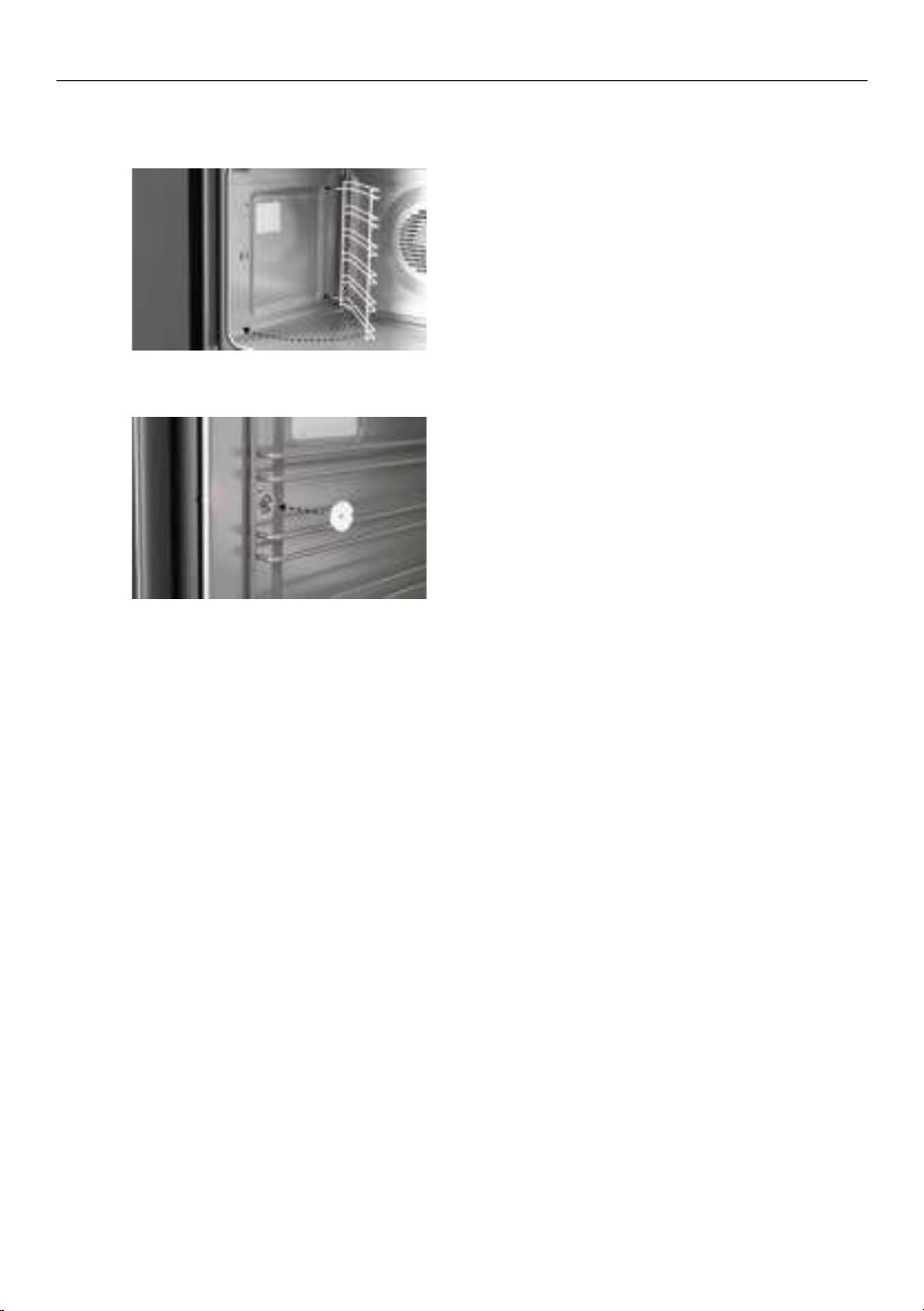
SIDE RACKS
Refitting the side racks
Slide the prongs into the holes.
Ensure the rack sits flush against the side
of the oven.
1
Align the tab with the screw and secure
with the nut.
Use a coin to tighten if required.
2
27
OVEN LIGHTS
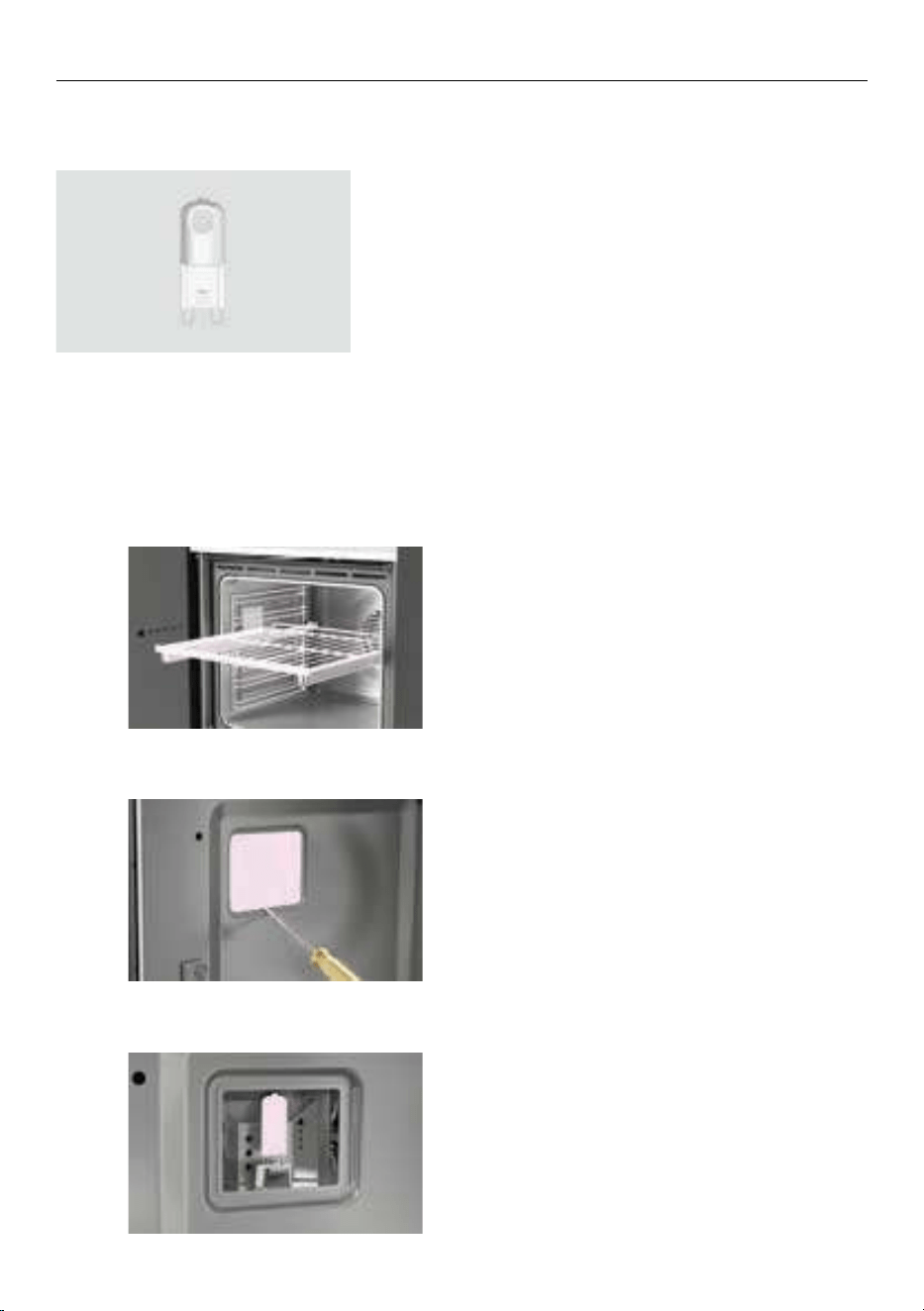
Oven light specifications
G9 120V/25W halogen bulbs.
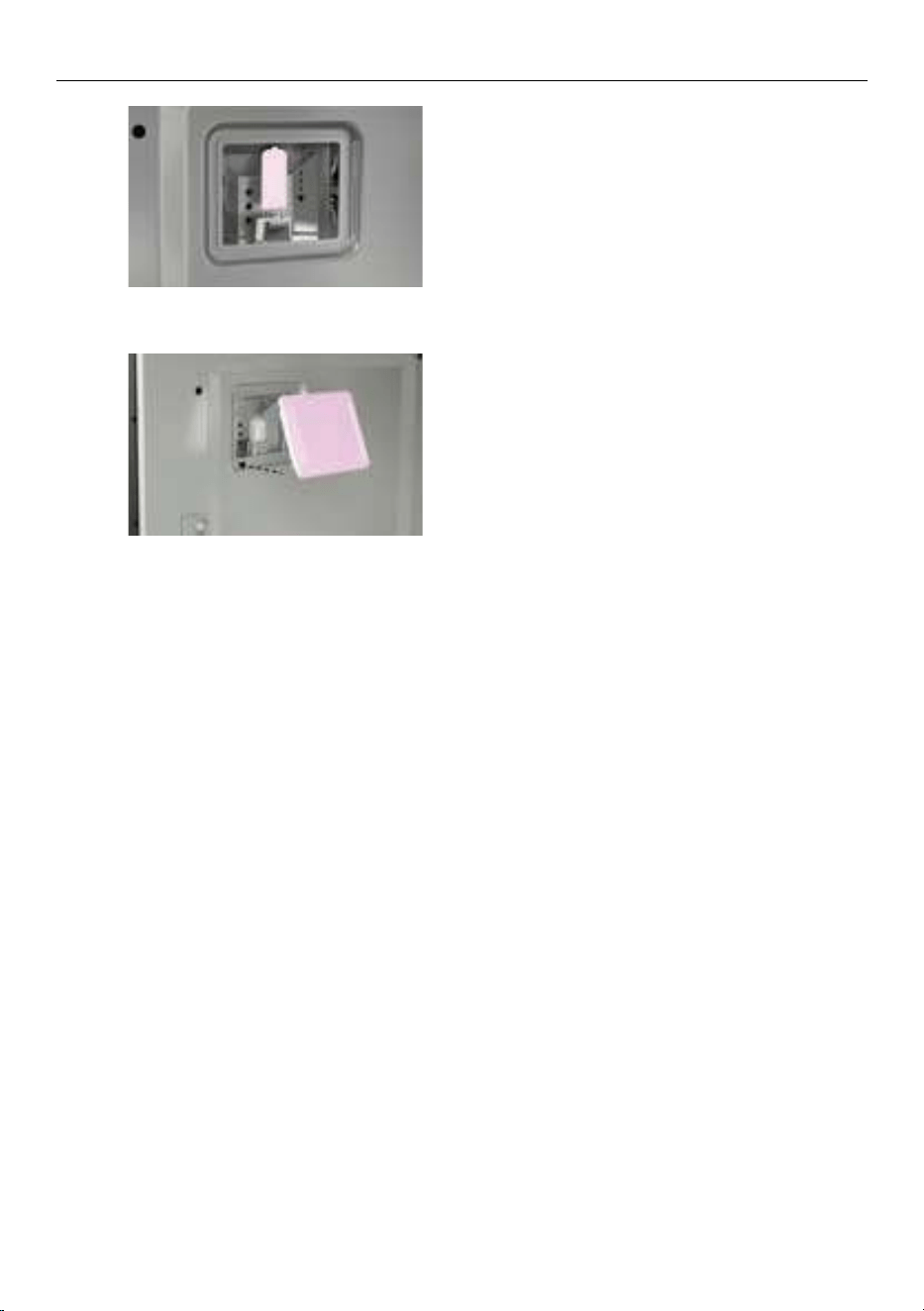
Replacing the oven lights
Take care when replacing the oven lights. Always hold the replacement bulb in a soft
cloth. Touching the bulb will reduce its lifespan.
Remove all shelves and side racks.
1
Remove the glass light bulb cover. Prise off
using a small flat-head screwdriver in the
notches between the cover and oven wall.
Take care not to drop the cover.
2
Remove the faulty bulb from the socket.
3
28
OVEN LIGHTS
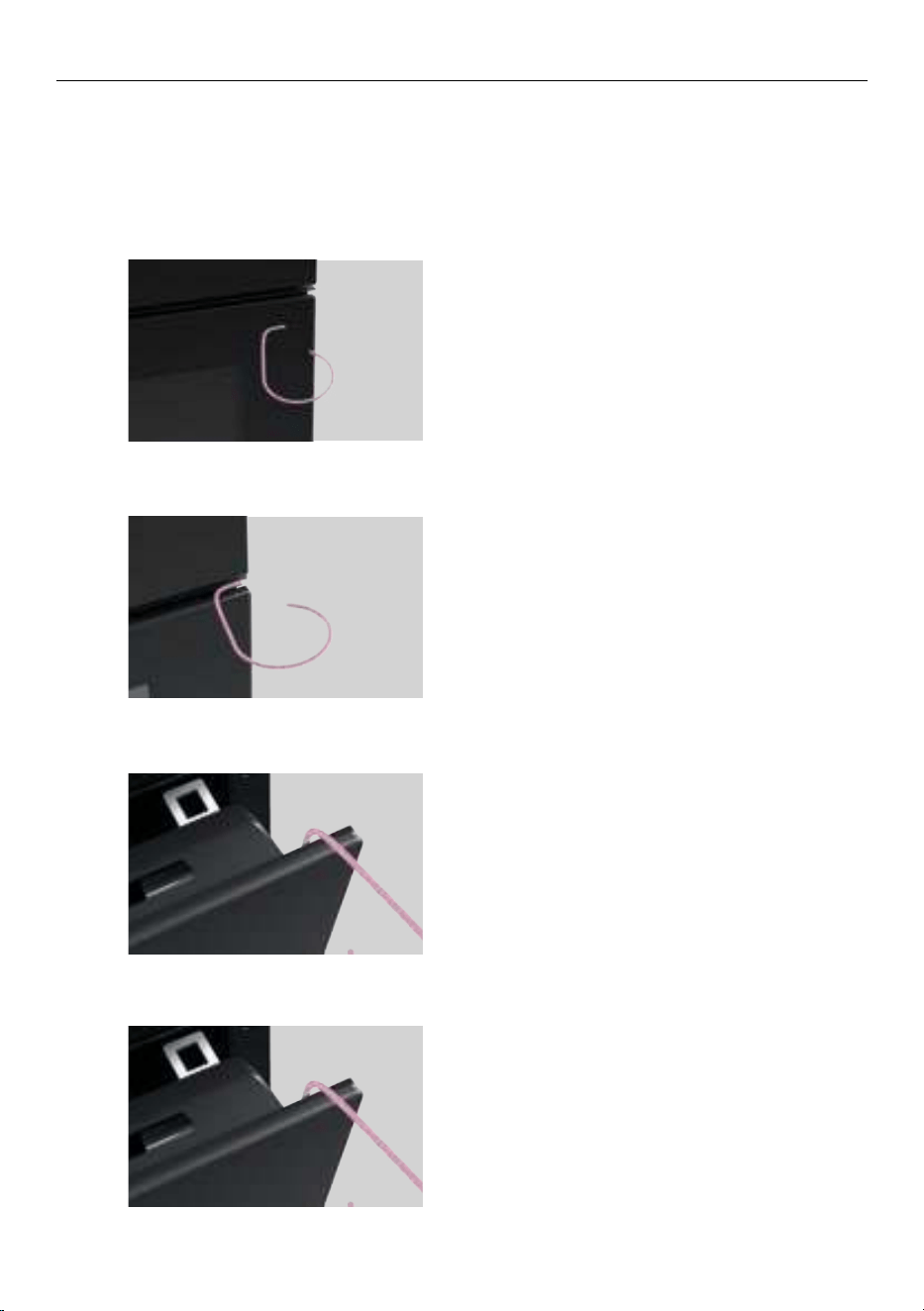
Insert the new bulb, using a soft cloth
to hold it.
4
Replace the cover.
5
Replacement bulbs are available via www.fisherpaykel.com. Oven light replacement is not
covered by your warranty.
29
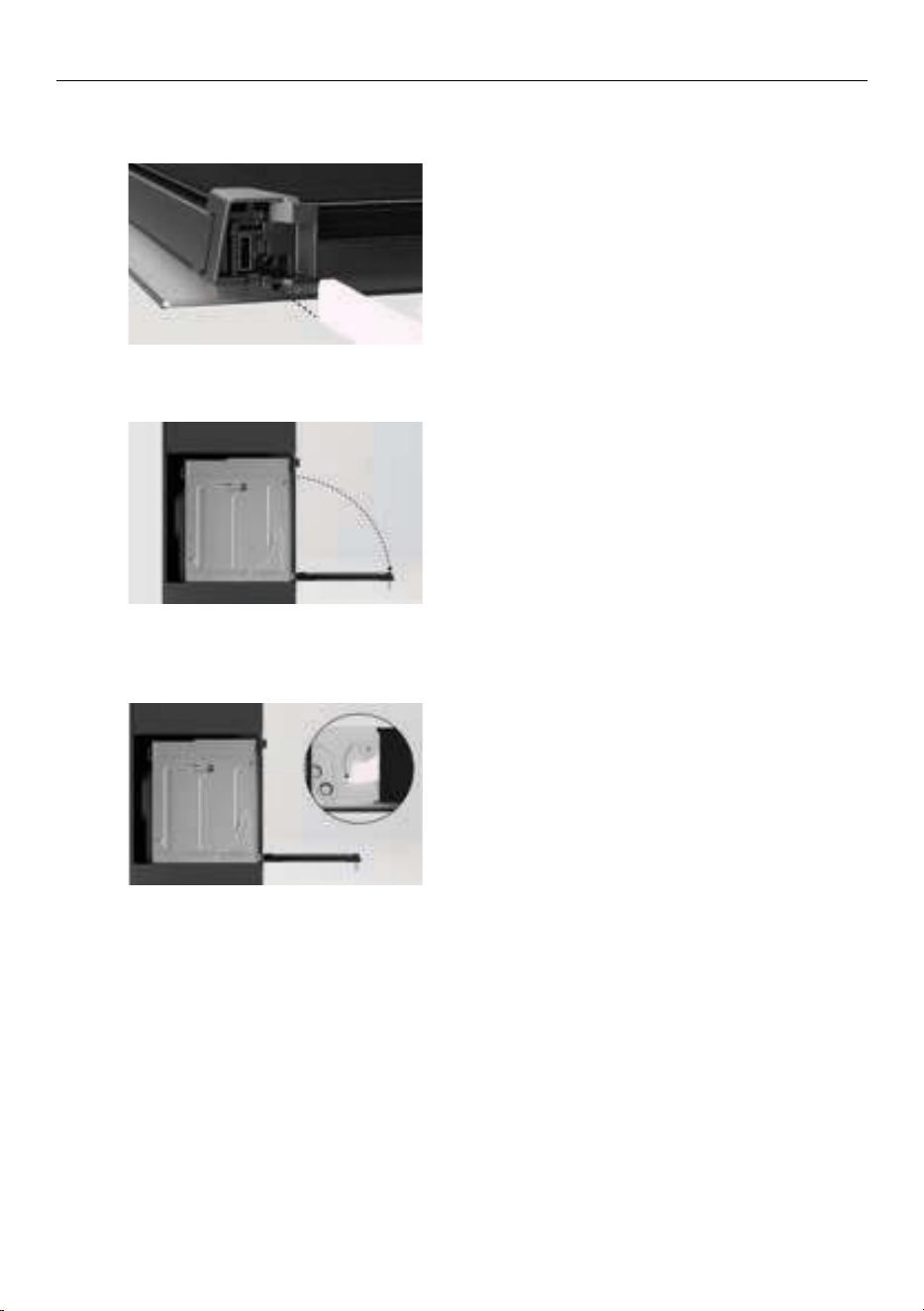
MANUAL DOOR OPENING
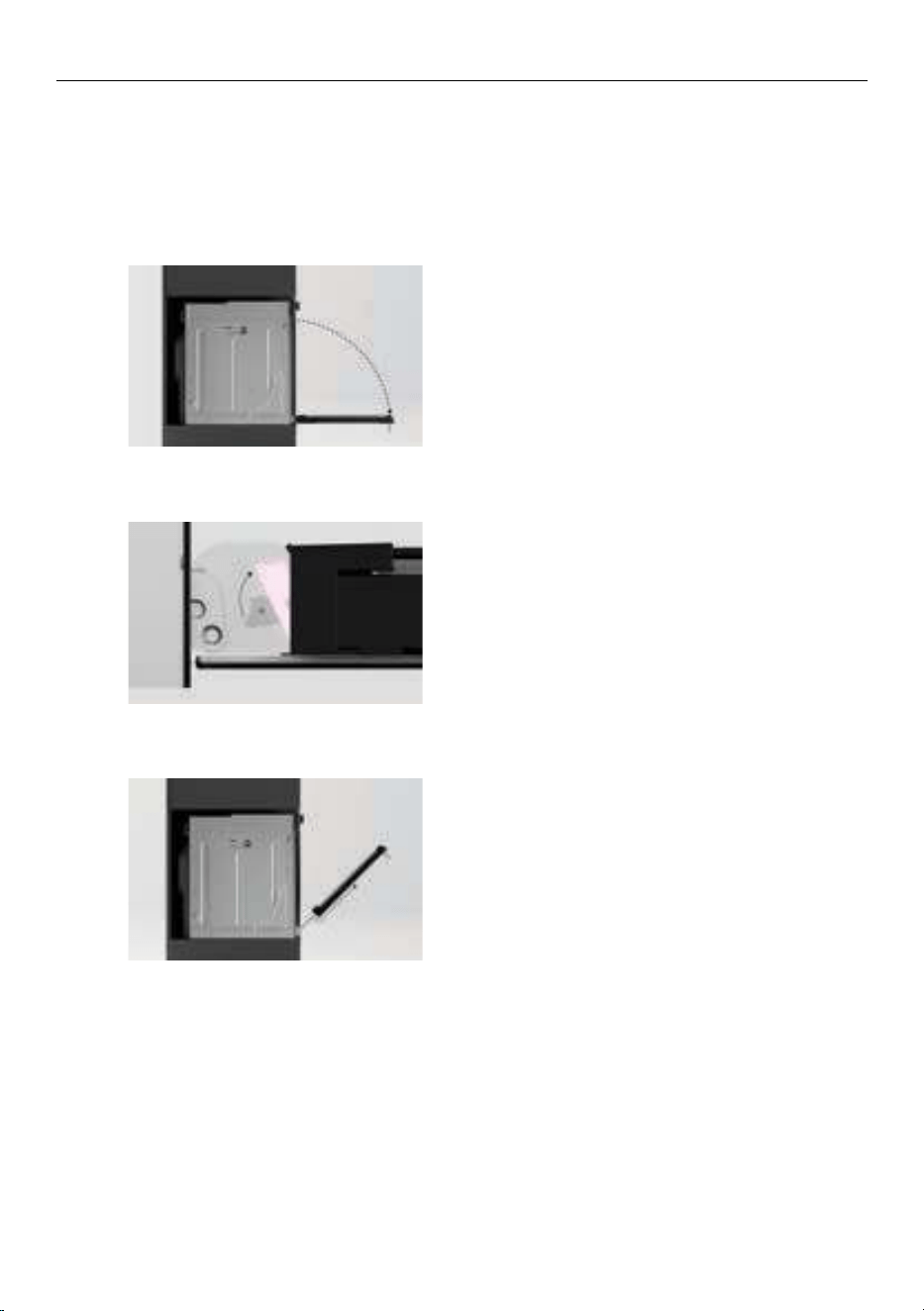
In the event of a power outage or fault, you may need to open the oven door manually.
Your oven comes supplied with a door opening tool for this purpose.
Opening the door manually
Hold the door opener by the loop, with the
short end pointing to the right.
1
Carefully insert the door opener at the
top right of the oven, between the centre
louvre and the top of the door.
2
Rotate the door opener 90 degrees
clockwise, then gently pull the door open.
Do not force the door opener if it doesn’t
turn freely as this could cause damage.
3
30
CLEANING THE OVEN DOOR
Removing the oven door
z
The oven door can be removed to make cleaning easier.
z
Make sure the oven and all its parts have cooled down before removing the door.
z
The oven door is heavy, take care while removing and refitting.
z
Once the door is removed, place it on a soft, clean, flat surface.
Open the door fully.
1
Locate the hinge locks on either side of
the door.
Push the locks upwards to release.
2
Holding the door on both sides, partially
close the door and carefully pull the door
away from the hinges.
3
31
CLEANING THE OVEN DOOR
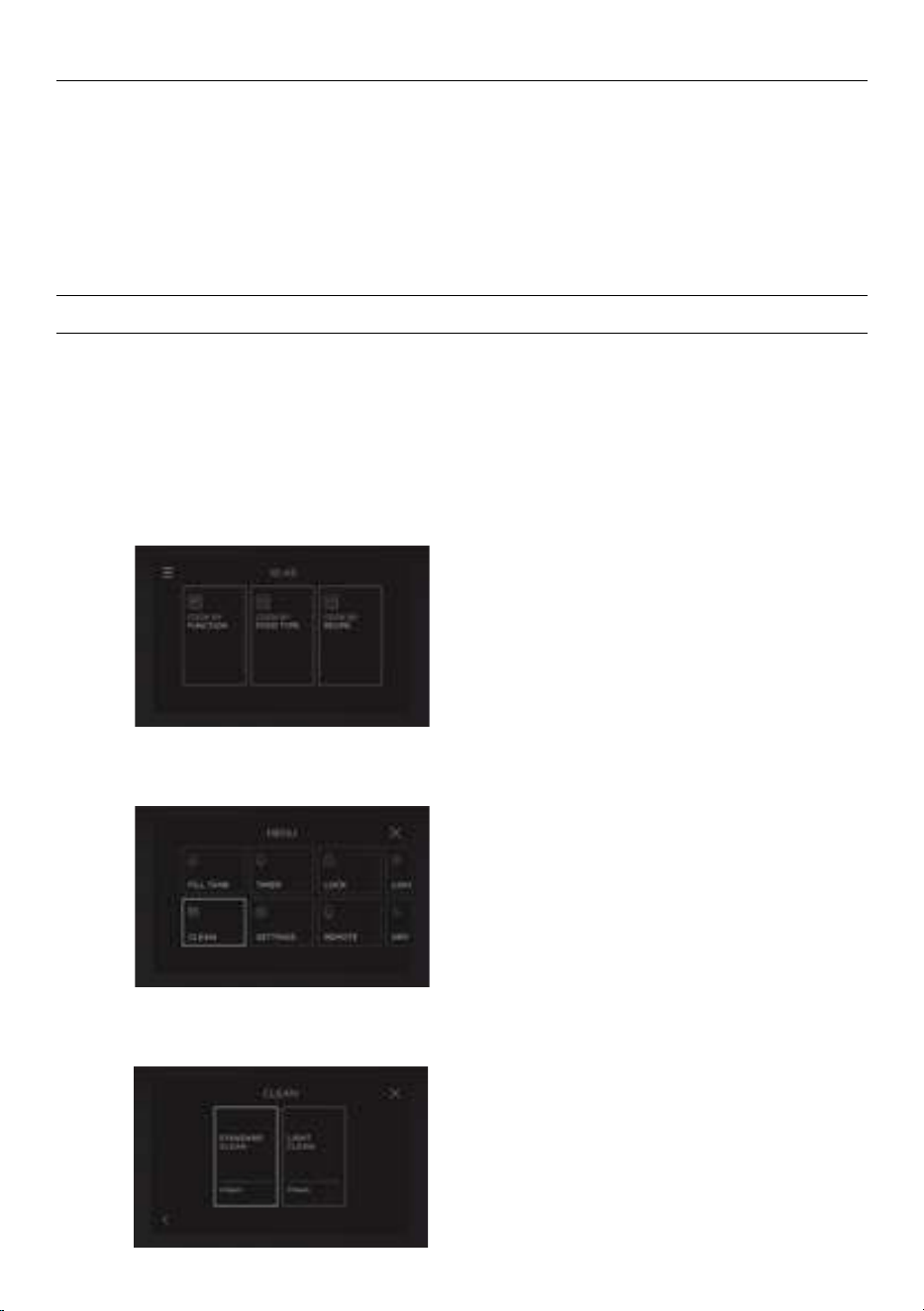
Refitting the oven door
Holding the door on both sides, carefully
lift door back onto the hinges.
1
Open the door fully.
2
3
Push each locking lever down and lock
into place.
Ensure both hinges are fully locked before
closing the door.
32
SELF CLEAN
Before you begin
z
Remove shelves and accessories from the oven.
z
Enamelled side racks can be left in the oven during Self Clean. Chrome side racks must
be removed before running Self Clean.
z
Clean inside oven door with mild detergent an a soft cloth to avoid permanent staining.
z
Wipe up any large spills.
z
Wipe around the edge of the cavity around the seal, taking care to avoid the seal itself.
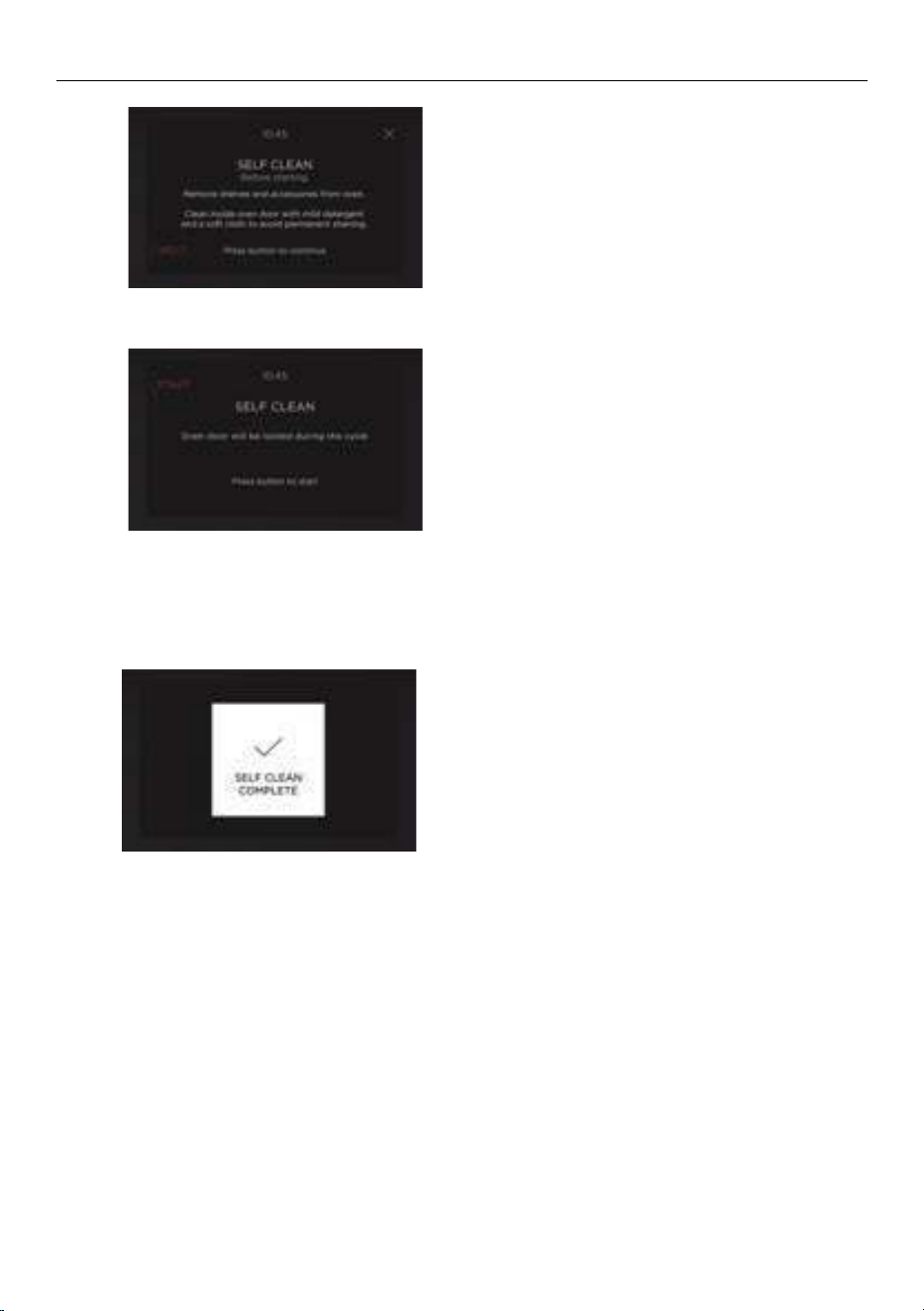
Setting Self Clean
Go to the menu.
1
Select CLEAN.
2
Select STANDARD CLEAN or LIGHT CLEAN.
3
CLEAN CYCLE APPROXIMATE TIME APPLICATION
Standard clean 4 hours For normal or heavy soiling
Light clean 3 hours For light soiling
33
SELF CLEAN
4
5
Follow the instructions onscreen to start
the cycle.
For your safety, the oven door will be locked
shut during the cycle. The cycle will not start
until the door is properly closed.
z
Wait for the oven to cool down
completely.
z
Remove the grey ash with a small brush
or damp cloth.
z
Wipe out the oven with a clean, damp
cloth.
z
Dry with a clean, lint-free cloth.
z
Replace the oven shelves.
When Self Clean is finished

34
Press CANCEL at any point during the clean cycle.
SELF CLEAN
Cancelling Self Clean
The oven door will not unlock until the oven has cooled to a safe temperature.
Do not turn the oven off at the wall. Turning off the power while the oven is too hot may
damage the oven and its surrounding cabinetry.
We do not recommend cancelling then immediately starting another cycle.

35
TROUBLESHOOTING
PROBLEM POSSIBLE CAUSES WHAT TO DO
The oven does not work No power. Check that the mains power supply
(wall switch) is turned on, the fuse
has not tripped and there is no
power outage in your area.
The oven controls
are unresponsive
The controls are locked. Press and hold the dial to unlock.
The door is opening
slower than usual
First time opening the door.
First time opening the door after
running a self clean cycle.
This is normal. The oven door should
return to normal speed next time it
is opened.
The controls work but the
oven does not heat up
The oven is in Demo mode. Call Customer Care.
The door is not properly closed
or it is opened too frequently
during cooking.
The heating elements are disabled
while the door is open.
Make sure the door is properly
closed and avoid opening it
frequently during cooking.
The door is not sealing correctly. Refit the door. Refer to ‘Cleaning the
oven door’.
The temperature
cannot be set below
a certain point
This is normal. For food safety
reasons, the oven functions
have factory-set minimum
temperature settings.
Select a higher temperature or try
a different function that is designed
for low temperatures.
The oven has reached the
set temperature but the
dial is still red
The oven is set to a function that
doesn’t require preheating.
This is normal. The dial will stay red
throughout cooking.
The oven fan comes on
with a function that does
not use the fan (eg BAKE)
This is normal. The fan comes on
while the oven is preheating and will
turn off when the oven has reached
the set temperature.
Wait until the progress bar on the
screen disappears. The oven will
then be ready to use.
The lights do not come
on when I open the
oven door
The oven light bulb(s) have blown. Replace the light bulb(s). Refer to
‘Oven lights’.
The door is not correctly fitted. Refit the door. Refer to ‘Cleaning the
oven door’.
The oven light has been turned off. Go to the menu and select LIGHT.
The oven settings cannot
be adjusted
The oven was on or set for
automatic cooking when you tried
to adjust the settings.
This is normal. You can only adjust
the settings while there is no
cooking underway.

36
TROUBLESHOOTING
PROBLEM POSSIBLE CAUSES WHAT TO DO
During Self Clean, the
oven is louder than usual
This is normal. The oven’s cooling
fans operate at their highest speed.
The screen shows no time
remaining after Self Clean
but the oven door will
not open
This is normal. The oven door will
not unlock until the oven has cooled
to a safe temperature.
Wait until Self Clean has finished.
The oven door will automatically
unlock when the oven has cooled.
I have cancelled Self Clean
but cannot use the oven:
• the oven door will
not open
• the screen is still
counting down minutes
or showing no time
remaining
• the controls are
unresponsive
This is normal. The oven door will
not unlock until the oven has cooled
to a safe temperature.
If you cancel a clean cycle part way
through, the oven will still need to
cool.
Wait until the oven has finished
cooling. The oven door will
automatically unlock when the oven
has cooled.
Note: depending on when the clean
cycle was cancelled, the cooling
phase may take up to 45 minutes.
There is a power cut
during Self Clean
Power cut. The door will remain locked.
Once the power is turned back
on, the door will remain locked
until the oven has cooled to a
safe temperature.
There is hot air blowing
out of the vents after the
oven is turned off
For safety reasons the cooling fans
will continue to run even when you
have turned the oven off.
This is normal. The fans will switch
off automatically when the oven
has cooled.
The oven door does not
align with the control
panel or surrounding
cabinetry
The oven door has been fitted
incorrectly and the hinges are
misaligned within the slots.
Refit the door.
Refer to ‘Cleaning the oven door’
for instructions.
A glass pane in the oven
door has cracked, chipped
or shattered
Incorrect cleaning or the edge of
the glass hitting against something.
You must NOT use the oven.
Contact a Fisher & Paykel trained
and supported service technician or
Customer Care
The oven is beeping and
showing an alert
There may be a fault. Follow the guidance on the
screen. Refer to ‘Fault codes’ for
more information.

37
FAULT CODES
How do I know if there is a problem?
Your oven will beep and an alert will show in the display.
What to do
First try to fix the issue and clear the alert according to the instructions onscreen or the
steps in the following table.
Do not turn the oven off at the wall unless it is completely cool. Turning off the power while
the oven is too hot may damage the oven and its surrounding cabinetry.
If the problem persists
1 Note down the fault code.
2 Contact Customer Care or a Fisher & Paykel trained and supported service technician.
Refer to the Service and Warranty booklet for contact details.
If the fault code has disappeared, the fault has been reset and you can continue to use
your oven.
FAULT CODE POSSIBLE CAUSE WHAT TO DO
A1
The oven has
overheated.
• Allow the oven to cool down.
• Once the oven has cooled down and the door has
unlocked, the alert code will disappear. You can now use
the oven.
A2
Door lock error:
the door cannot
be locked after
you have started a
Self-clean cycle.
• Turn the power to the oven off at the wall and on again.
• Wait approximately 10 seconds. This will allow the door
lock to return to its initial position.
• Set the clock. See ‘Setting the clock and first use’
for instructions.
• Try starting a Self Clean cycle again, making sure that you
close the door firmly. See ‘Self Clean’.
A3
Door lock error:
the door cannot
be unlocked after
a Self Clean cycle
has finished.
• Turn the power to the oven off at the wall and on again.
• Gently press the door a few times to help the door
lock disengage.
• If this doesn’t help and the alert code reappears,
contact a Fisher & Paykel trained and supported service
technician or Customer Care.
F
+ number
Technical fault. • Note down the alert code.
• Wait until the cooling fans have stopped and the oven
has completely cooled down.
• Turn the power to the oven off at the wall.
• Contact a Fisher & Paykel trained and supported service
technician or Customer Care.
38
MANUFACTURER’S WARRANTY AND SERVICE GUIDE
To access your Warranty and Service Guide
Scan the QR code with your smartphone to access your warranty and
book a service, refer to your separate warranty and service book or
view online at https://www.fisherpaykel.com/us/help-and-support/
warranty-information
This product has been designed for use in a domestic (residential) environment. This
product is not designed for any commercial use. Any commercial use by the customer will
affect this product’s Manufacturer’s Warranty.
To access your Warranty and Service Guide
Scan the QR code with your smartphone to access your warranty and
book a service, refer to your separate warranty and service book or
view online at https://www.fisherpaykel.com/ca/help-and-support/
warranty-information
US
CA
Complete and keep for safe reference:
Model
Serial No.
Purchase Date
Purchaser
Dealer
City
State
Zip
Country

432170A 10.24
FISHERPAYKEL.COM
© Fisher & Paykel Appliances 2024. All rights reserved.
The models shown in this guide may not be available in all markets
and are subject to change at any time.
The product specifications in this guide apply to the specific products and
models described at the date of issue. Under our policy of continuous product
improvement, these specifications may change at any time.
For current details about model and specification availability in your country,
please go to our website or contact your local Fisher&Paykel dealer.