
Part Number: 000016427 Rev 00 01/2021
Ice Machines
Service Manual
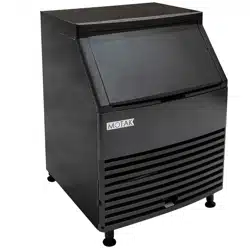
PKU0155/PKM0335/PKM0425/PKM0535 MODELS
For technical Assistance please call - MoTak Service @ 1-800.648.6398


Safety Notices
Read these precautions to prevent personal injury:
• Read this manual thoroughly before operating, installing or performing maintenance on
the equipment. Failure to follow instructions in this manual can cause property damage,
injury or death.
• Routine adjustments and maintenance procedures outlined in this manual are not
covered by the warranty.
• Proper installation, care and maintenance are essential for maximum performance and
trouble-free operation of your equipment.
• This equipment contains high voltage electricity and refrigerant charge. Installation and
repairs are to be performed by properly trained technicians aware of the dangers of
dealing with high voltage electricity and refrigerant under pressure. The technician must
also be certified in proper refrigerant handling and servicing procedures. All lockout and
tag out procedures must be followed when working on this equipment.
• This equipment is intended for indoor use only. Do not install or operate this equipment
in outdoor areas.
• As you work on this equipment, be sure to pay close attention to the safety notices in
this document. Disregarding the notices may lead to serious injury and/or damage to
the equipment.

Definitions
DANGER
Indicates a hazardous situation that, if not avoided, will result in death or serious injury.
This applies to the most extreme situations.
n
Warning
Indicates a hazardous situation that, if not avoided, could result in death or serious
injury.
,
Caution
Indicates a hazardous situation that, if not avoided, could result in minor or moderate
injury.
Notice
Indicates information considered important, but not hazard-related (e.g. messages
relating to property damage).
Important
Indicates useful, extra information about the procedure you are performing.
NOTE: Indicates useful, extra information about the procedure you are performing.

n
Warning
Follow these electrical requirements during installation of this equipment:
• All field wiring must conform to all applicable codes of the authority having jurisdiction.
It is the responsibility of the end user to provide the disconnect means to satisfy local
codes. Refer to rating plate for proper voltage.
• This appliance must be grounded.
• This equipment must be positioned so that the plug is accessible unless other means
for disconnection from the power supply (e.g., circuit breaker or disconnect switch) is
provided.
• Check all wiring connections, including factory terminals, before operation. Connections
can become loose during shipment and installation.
n
Warning
Follow these precautions to prevent personal injury during installation of this
equipment:
• Installation must comply with all applicable equipment fire and health codes with the
authority having jurisdiction.
• Connect to a potable water supply only.
• To avoid instability the installation area must be capable of supporting the combined
weight of the equipment and product. Additionally the equipment must be level side to
side and front to back.
• Remove all removable panels before lifting and installing and use appropriate safety
equipment during installation and servicing. Two or more people are required to lift or
move this appliance to prevent tipping and/or injury.
• Do not damage the refrigeration circuit when installing, maintaining or servicing the
unit.
• Ice machines require a deflector when installed on an ice storage bin. Prior to using a
non-OEM ice storage system with this ice machine, contact the bin manufacturer to
assure their ice deflector is compatible.
• Prior to installing a non-OEM ice storage system with this ice machine, follow the
manufacturers installation procedures and verify the location and installation meets the
local/national mechanical codes and stability requirements.

n
Warning
Follow these precautions to prevent personal injury while operating or maintaining
this equipment:
• Refer to nameplate to identify the type of refrigerant in your equipment.
• Only trained and qualified personnel aware of the dangers are allowed to work on the
equipment.
• Read this manual thoroughly before operating, installing or performing maintenance on
the equipment. Failure to follow instructions in this manual can cause property damage,
injury or death.
• Crush/Pinch Hazard. Keep hands clear of moving components. Components can move
without warning unless power is disconnected and all potential energy is removed.
• Moisture collecting on the floor will create a slippery surface. Clean up any water on the
floor immediately to prevent a slip hazard.
• Never use sharp objects or tools to remove ice or frost. Do not use mechanical devices
or other means to accelerate the defrosting process.
• When using cleaning fluids or chemicals, rubber gloves and eye protection (and/or face
shield) must be worn.
• Objects placed or dropped in the bin can affect human health and safety. Locate and
remove any objects immediately.
DANGER
Do not operate equipment that has been misused, abused, neglected, damaged, or
altered/modified from that of original manufactured specifications. This appliance is
not intended for use by persons (including children) with reduced physical, sensory or
mental capabilities, or lack of experience and knowledge, unless they have been given
supervision concerning use of the appliance by a person responsible for their safety.
Do not allow children to play with, clean or maintain this appliance without proper
supervision.

n
Warning
Follow these precautions to prevent personal injury during use and maintenance of
this equipment:
• It is the responsibility of the equipment owner to perform a Personal Protective
Equipment Hazard Assessment to ensure adequate protection during maintenance
procedures.
• Do Not Store Or Use Gasoline Or Other Flammable Vapors Or Liquids In The Vicinity Of
This Or Any Other Appliance. Never use flammable oil soaked cloths or combustible
cleaning solutions for cleaning.
• All covers and access panels must be in place and properly secured when operating this
equipment.
• Risk of fire/shock. All minimum clearances must be maintained. Do not obstruct vents
or openings.
• Failure to disconnect power at the main power supply disconnect could result in serious
injury or death. The power switch DOES NOT disconnect all incoming power.
• All utility connections and fixtures must be maintained in accordance with the authority
having jurisdiction.
• Turn off and lockout all utilities (gas, electric, water) according to approved practices
during maintenance or servicing.
• Never use a high-pressure water jet for cleaning on the interior or exterior of this unit.
Do not use power cleaning equipment, steel wool, scrapers or wire brushes on stainless
steel or painted surfaces.
• Two or more people are required to move this equipment to prevent tipping.
• Locking the front casters after moving is the owner’s and operator’s responsibility.
When casters are installed, the mass of this unit will allow it to move uncontrolled on
an inclined surface. These units must be tethered/secured to comply with all applicable
codes.
• The on-site supervisor is responsible for ensuring that operators are made aware of the
inherent dangers of operating this equipment.
• Do not operate any appliance with a damaged cord or plug. All repairs must be
performed by a qualified service company.

THIS PAGE INTENTIONALLY LEFT BLANK

Part Number: 000016427 Rev 00 08/2020 9
Safety Notices
Requirements - Cleaning - Operation
Model Numbers ......................................................................11
Ice Machine Warranty Information ..........................................11
Warranty .................................................................................11
Warranty Registration..............................................................11
Location of Ice Machine ...........................................................12
Ice Machine Clearance Requirements ......................................12
Ice Machine Heat of Rejection ................................................. 12
Electrical Requirements ...........................................................13
Water Service/Drains ...............................................................14
Water Supply ........................................................................ 14
Water Inlet Lines ................................................................... 14
Drain Connections ................................................................ 14
Water Supply and Drain Line Sizing/Connections ................ 15
Descaling and Sanitizing ..........................................................15
General ................................................................................. 15
Detailed Descaling and Sanitizing Procedure ........................ 15
Toggle Switch Operation ....................................................... 15
Sanitizing Procedure ............................................................. 17
Remove Parts for Cleaning/Descaling ................................... 18
Remedial Cleaning Procedure ..................................................22
Cleaning the Condenser Filter .................................................. 23
Cleaning the Condenser ...........................................................23
Removal from Service/Winterization ....................................... 23
Air-cooled Models ................................................................. 23
Ice Making Sequence of Operation ..........................................24
PKM0335/PKM0425/PKM0535 ............................................ 24
Control Board Timers PKM0335/PKM0425/PKM0535 ......... 25
Safety Limits PKM0335/PKM0425/PKM0535 ....................... 25
Energized Parts Chart PKM0335/PKM0425/PKM0535 ......... 27
Operational Checks PKM0335/PKM0425/PKM0535 ................. 28
Ice Thickness Check PKM0335/PKM0425/PKM0535 ............ 28
Minimum/Maximum Slab Weights PKM0335/PKM0425/
PKM0535 .............................................................................. 28
Ice Making Sequence of Operation ..........................................29
PKU0155 ............................................................................... 29
Energized Parts Chart PKU0155 ............................................ 31
Table of Contents

10 Part Number: 000016427 Rev 00 08/2020
Table of Contents (continued)
Operational Checks PKU0155 ................................................... 32
Siphon System PKU0155 ....................................................... 32
Water Level PKU0155 ........................................................... 32
Water Level Check PKU0155 ................................................. 33
Ice Thickness Check PKU0155 ............................................... 33
Minimum/Maximum Slab Weight PKU0155 ......................... 34
Troubleshooting
PKM0335/PKM0425/PKM0535 Models
Control Board Test Mode .........................................................35
Diagnosing an Ice Machine that Will Not Run ..........................36
Ice Machine Does Not Cycle Into Harvest when the Harvest
Float Is Down/Closed ...............................................................36
Ice Machine Cycles Into Harvest Before the Harvest Float Is
Down/Closed ...........................................................................38
Ice Production Check ...............................................................39
Installation/Visual Inspection Checklist ................................... 40
Water System Checklist ........................................................... 41
Ice Formation Pattern .............................................................. 42
Safety Limits ............................................................................ 43
Safety Limit 1 ........................................................................ 43
Safety Limit 2 ........................................................................ 43
Safety Limit 3 ........................................................................ 44
Safety Limit Checklist ............................................................ 45
Analyzing Discharge Pressure .................................................. 48
Discharge Pressure High Checklist ........................................ 49
Freeze Cycle Discharge Pressure Low Checklist .................... 49
Analyzing Suction Pressure .....................................................50
Suction Pressure High Checklist ............................................ 52
Suction Pressure Low Checklist ............................................. 52
Harvest Valve .......................................................................... 53
Harvest Valve Analysis .......................................................... 54
Comparing Evaporator Inlet/Outlet Temperatures ...................56
Discharge Line Temperature Analysis ....................................... 57
Refrigeration Component Diagnostics ......................................58
Procedure ............................................................................. 58
Final Analysis ........................................................................ 59
Refrigeration Component Diagnostic Chart .............................. 60

Part Number: 000016427 Rev 00 08/2020 11
Table of Contents (continued)
Troubleshooting
PKU0155 Model
Troubleshooting an Ice Machine Will Not Run .........................63
Troubleshooting Ice Thickness Control Circuitry ....................... 64
Ice Machine Does Not Cycle Into Harvest when Water
Contacts the Ice Thickness Control Probe............................. 64
Ice Machine Cycles Into Harvest Before Water Contact
with the Ice Thickness Probe ................................................ 66
Ice Production Check ...............................................................67
Installation and Visual Inspection Checklist ............................. 68
Water System Checklist ........................................................... 68
Ice Formation Pattern .............................................................. 70
Safety Limit Feature .................................................................72
Safety Limits .......................................................................... 72
Safety Limit #1 ...................................................................... 72
Safety Limit #2 ...................................................................... 72
Safety Limit Stand-by Mode .................................................. 72
Safety Limit Checklist ............................................................ 75
Analyzing Discharge Pressure .................................................. 78
Discharge Pressure High Checklist ........................................ 79
Freeze Cycle Discharge Pressure Low Checklist .................... 79
Analyzing Suction Pressure .....................................................80
Suction Pressure High Checklist ............................................ 82
Suction Pressure Low Checklist ............................................. 82
Harvest Valve .......................................................................... 83
Harvest Valve Analysis .......................................................... 84
Comparing Evaporator Inlet/Outlet Temperatures ...................87
Discharge Line Temperature .....................................................88
Refrigeration Component Diagnostic Chart .............................. 89
Procedure ............................................................................. 89
Final Analysis ........................................................................ 90
Refrigeration Component Diagnostic Chart PKU0155 .......... 91
Ice Quality Is Poor — Cubes are Shallow, Incomplete
or White ................................................................................ 93
Freeze Cycle Is Long, Low Ice Production ............................. 94
Ice Machine Runs and No Ice Is Produced ............................ 95

12 Part Number: 000016427 Rev 00 08/2020
Table of Contents (continued)
Specifications
Main Fuse ................................................................................97
Bin Switch ............................................................................... 98
Float Switch .............................................................................99
Compressor Electrical Diagnostics .......................................... 101
Fan Cycle Control ................................................................... 103
High Pressure Cutout (HPCO) Control ..................................... 105
Refrigerant Recovery/Evacuation ........................................... 106
Definitions .......................................................................... 106
Refrigerant Re-use Policy .................................................... 107
Recovery and Recharging Procedures ................................ 109
System Contamination Cleanup .......................................... 111
Determining Severity of Contamination ............................. 111
Cleanup Procedure ............................................................. 113
Severe System Contamination Cleanup Procedure ............. 114
Liquid Line filter driers ........................................................ 115
Replacing Pressure Controls without Removing
Refrigerant Charge .............................................................. 116
Refrigerant Amount ............................................................... 117
Ice Machine Normal Operation Charts ................................... 117
PKU0155 Self Contained Ice Machine ................................. 118
PKM0335 Modular Ice Machine ......................................... 119
PKM0425 Modular Ice Machine ......................................... 120
PKM0535 Modular Ice Machine ......................................... 121
Wiring Diagram ..................................................................... 122
PKU0155 Wiring Diagram ................................................... 123
PKM0335/PKM0425/PKM0535 Wiring Diagram ................ 124
Electronic Control Board ........................................................ 125
Control Board Schematic PKM0335/PKM0425/PKM0535 . 125
Control Board Schematic PKU0155 ..................................... 126
Refrigeration Tubing Schematic ............................................. 127

Part Number: 000016427 Rev 00 08/2020 13
Model Numbers
This manual covers the following models:
PKU0155SA - Small Cube, Air-cooled, Undercounter Model
PKU0155FA - Full Cube Air-cooled, Undercounter Model
PKM0335SA - Small Cube, Air-cooled, Modular Model
PKM0335FA - Full Cube Air-cooled, Modular Model
PKM0425SA - Small Cube, Air-cooled, Modular Model
PKM0425FA - Full Cube Air-cooled, Modular Model
PKM0535SA - Small Cube, Air-cooled, Modular Model
PKM0535FA - Full Cube Air-cooled, Modular Model
PKB0425 - 22" Wide Modular Bin
PKB0535 - 30" Wide Modular Bin
Ice Machine Warranty Information
Warranty
For warranty information visit:
• Warranty Coverage Information
• Warranty Registration
• Warranty Verification
Warranty coverage begins the day the ice machine is installed.
Warranty Registration
Completing the warranty registration process is a quick and easy way to protect your
investment.
Requirements - Cleaning - Operation

14 Part Number: 000016427 Rev 00 08/2020
Requirements - Cleaning - Operation
Location of Ice Machine
The location selected for the ice machine must meet the following criteria. If any of these
criteria are not met, select another location.
• The location must be indoors.
• The location must be free of airborne and other contaminants.
• Air temperature: Must be at least 40°F (4°C) but must not exceed 110°F (43.4°C).
• The location must not be near heat-generating equipment or in direct sunlight.
• The location must be capable of supporting the weight of the ice machine and a full bin
of ice.
• The location must allow enough clearance for water, drain, and electrical connections in
the rear of the ice machine.
• The location must not obstruct airflow through or around the ice machine (condenser
air flow is in the back and out the sides). Refer to the chart for clearance requirements.
• The ice machine must be protected if it will be subjected to temperatures below
32°F (0°C). Failure caused by exposure to freezing temperatures is not covered by the
warranty.
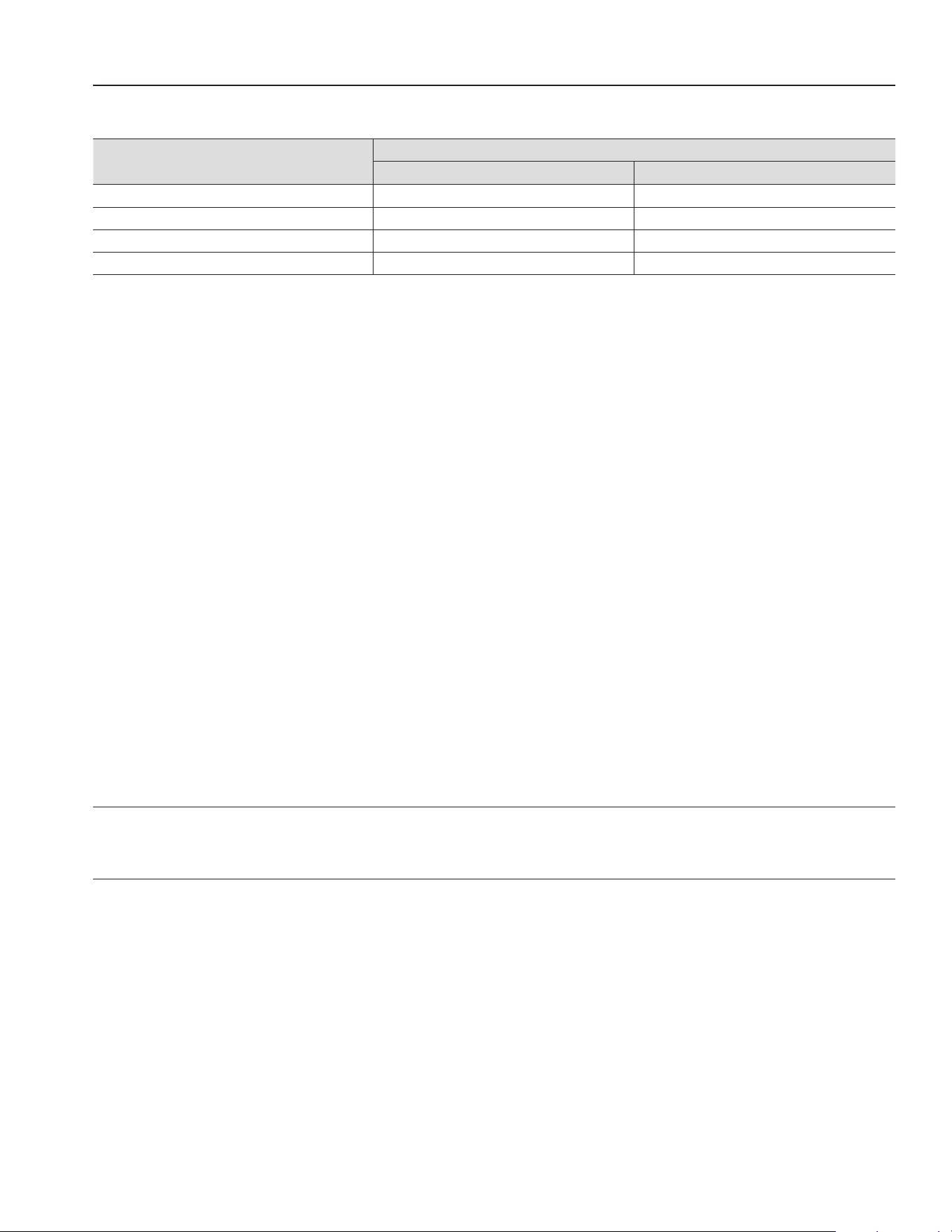
Ice Machine Clearance Requirements
PKU0155 Top and Sides 5" (13 cm) Back 5" (13 cm)
PKM0335 Top and Sides 12" (30 cm) Back 5" (13 cm)
PKM0425 and PKM0535 Top and Sides 8" (20 cm) Back 5" (13 cm)
Do not obstruct ice machine vents or openings.
,
Caution
The ice machine must be protected if it will be subjected to temperatures below
32°F (0°C). Failure caused by exposure to freezing temperatures is not covered by the
warranty.
Part Number: 000016427 Rev 00 08/2020 15
Requirements - Cleaning - Operation
Ice Machine Heat of Rejection
Series
Ice Machine
Heat of Rejection
1
Air Conditioning
2
Peak
PKU0155 2200 2600
PKM0335 4600 5450
PKM0425 5400 6300
PKM0535 5300 6100
1
B.T.U./Hour
2
Because the heat of rejection varies during the ice making cycle, the figure shown is an average.
Ice machines, like other refrigeration equipment, reject heat through the condenser.
It is helpful to know the amount of heat rejected by the ice machine when sizing air
conditioning equipment where self-contained air-cooled ice machines are installed.
Electrical Requirements
Voltage
The maximum allowable voltage variation is ±10% of the rated voltage on the ice machine
model/serial number plate at start-up (when the electrical load is highest).
Fuse/Circuit Breaker
A separate fuse/circuit breaker must be provided for each ice machine.
Total Circuit Ampacity
The total circuit ampacity is used to help select the wire size of the electrical supply.
The wire size (or gauge) is also dependent upon location, materials used, length of run,
etc., so it must be determined by a qualified electrician.
Refer to ice machine data plate, for electrical requirements. The ice machine data plate
information overrides all other published data.
n
Warning
All wiring must conform to local, state and national codes.
n
Warning
The ice machine must be grounded in accordance with national and local electrical
code.

16 Part Number: 000016427 Rev 00 08/2020
Requirements - Cleaning - Operation
Water Service/Drains
WATER SUPPLY
Local water conditions may require treatment of the water to inhibit scale formation, filter
sediment, and remove chlorine odor and taste.
Important
If you are installing a water filter system, refer to the Installation Instructions supplied
with the filter system for ice making water inlet connections.
n
Warning
For ice making, connect to a potable water supply only.
WATER INLET LINES
Follow these guidelines to install water inlet lines:
• Do not connect the ice machine to a hot water supply. Be sure all hot water restrictors
installed for other equipment are working. (Check valves on sink faucets, dishwashers,
etc.)
• If water pressure exceeds the maximum recommended pressure, 80 psig (5.5 bar)
obtain a water pressure regulator from your Koolaire distributor.
• Install a water shut-off valve for ice making potable water.
• Insulate water inlet lines to prevent condensation.
DRAIN CONNECTIONS
Follow these guidelines when installing drain lines to prevent drain water from flowing
back into the ice machine and storage bin:
• Drain lines must have a 1.5-inch drop per 5 feet of run (2.5 cm per meter), and must not
create traps.
• The floor drain must be large enough to accommodate drainage from all drains.
• Install a tee to vent the ice machine drain to the atmosphere.
• Insulate drain lines to prevent condensation.
• Install a separate bin drain and ice machine drain.
,
Caution
Plumbing must conform to state and local codes
Part Number: 000016427 Rev 00 08/2020 17
Requirements - Cleaning - Operation
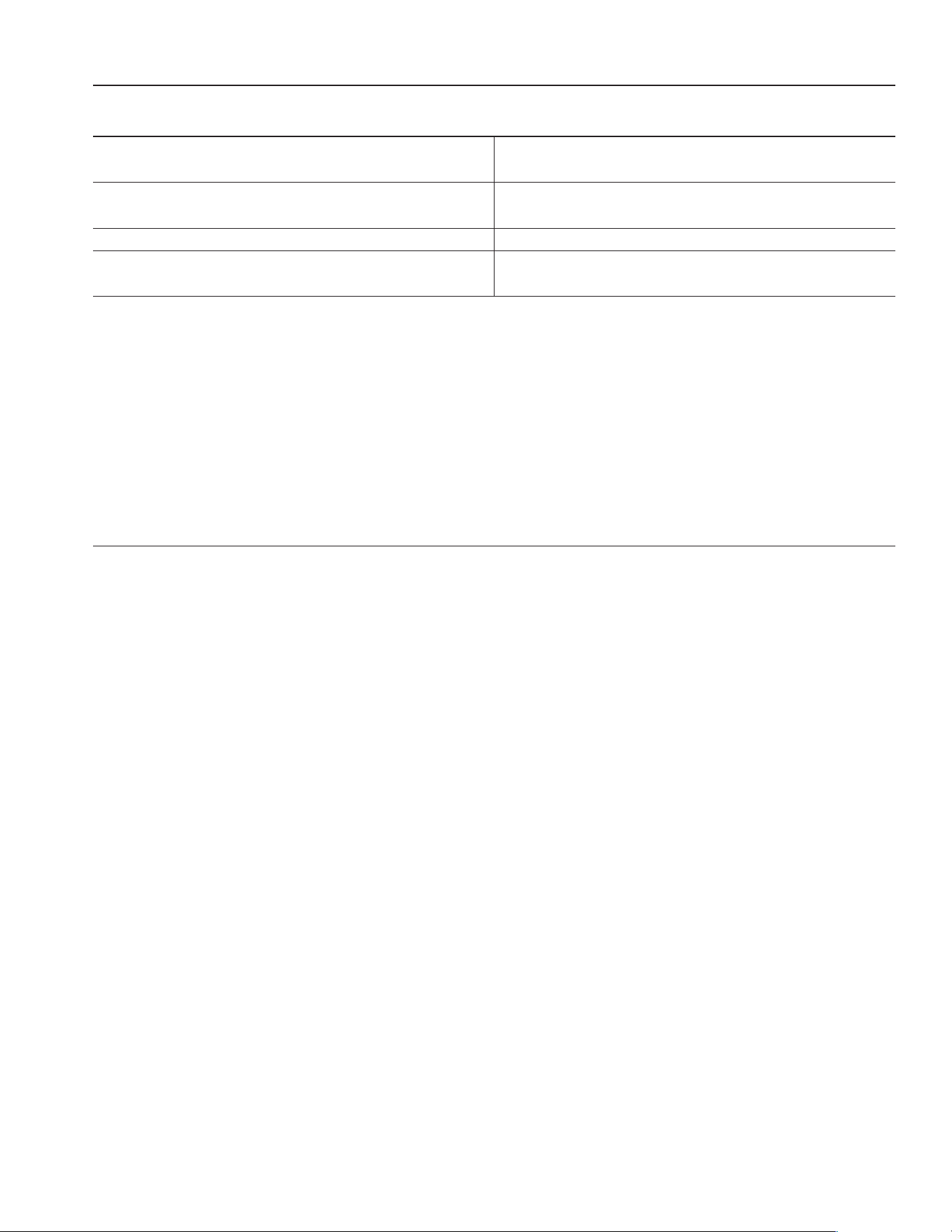
WATER SUPPLY AND DRAIN LINE SIZING/CONNECTIONS
Water Temperature
40°F (4°C) min.
90°F (32.2°C) max.
Water Pressure
20 psi (1.38 bar) min.
80 psi (5.5 bar) max.
Ice Machine Fitting 3/8" Female Pipe Thread
Tubing Size Up to Ice Machine Fitting
3/8" (9.5 mm) min.
inside diameter
Descaling and Sanitizing
GENERAL
Descale and sanitize the ice machine every six months for efficient operation. If the
ice machine requires more frequent cleaning and sanitizing, consult a qualified service
company to test the water quality and recommend appropriate water treatment.
The ice machine must be taken apart for cleaning and sanitizing.
,
Caution
Use only Manitowoc Ice Machine Cleaner/Descaler (part number 9405463) and
Sanitizer (part number 9405653). It is a violation of Federal law to use these solutions
in a manner inconsistent with their labeling. Read and understand all labels printed on
bottles before use.
DETAILED DESCALING AND SANITIZING PROCEDURE
Ice machine cleaner/descaler is used to remove lime scale and mineral deposits. Ice
machine sanitizer disinfects and removes algae and slime.
TOGGLE SWITCH OPERATION
Moving the toggle switch to clean will start a Clean cycle.
• Setting the ice machine to stop after the clean cycle: Place the toggle switch in the
clean position. The ice machine will stop after the clean cycle.
• Pausing the cleaning cycle: Move the toggle switch to Off. Moving the toggle switch to
clean will restart the clean cycle.
• Setting the ice machine to start ice making after the clean cycle: Place the toggle
switch in the Ice position more than 2 minutes into the clean cycle.
18 Part Number: 000016427 Rev 00 08/2020
Requirements - Cleaning - Operation
Step 1 Remove/open the front door to access the evaporator compartment. Ice must
not be on the evaporator during the descaling and sanitizing cycle. Set the toggle switch to
the OFF position after ice falls from the evaporator at the end of a harvest cycle. Or, set the
switch to OFF and allow the ice to melt off the evaporator
,
Caution
Never use anything to force ice from the evaporator. Damage may result.
Step 2 Remove all ice from the bin.
n
Warning
Wear rubber gloves and safety goggles (and/or face shield) when handling Ice Machine
Descaler/Cleaner or Sanitizer.
,
Caution
Do not mix Ice Machine Cleaner/Descaler and Sanitizer solutions together. It is a
violation of Federal law to use these solutions in a manner inconsistent with their
labeling.
Step 3 Place the toggle switch in the CLEAN or WASH position. Water will flow through
the water dump valve and down the drain. Wait until the water trough refills, then add the
proper amount of ice machine cleaner/descaler.
Model Amount of Cleaner/Descaler
PKU0155 2 ounces (60 ml)
PKM0335/PKM0425/PKM0535 5 ounces (150 ml)
Step 4 Wait until the cycle is complete, then place the toggle switch in the off position
and disconnect power and water supplies to the ice machine (and dispenser when used).
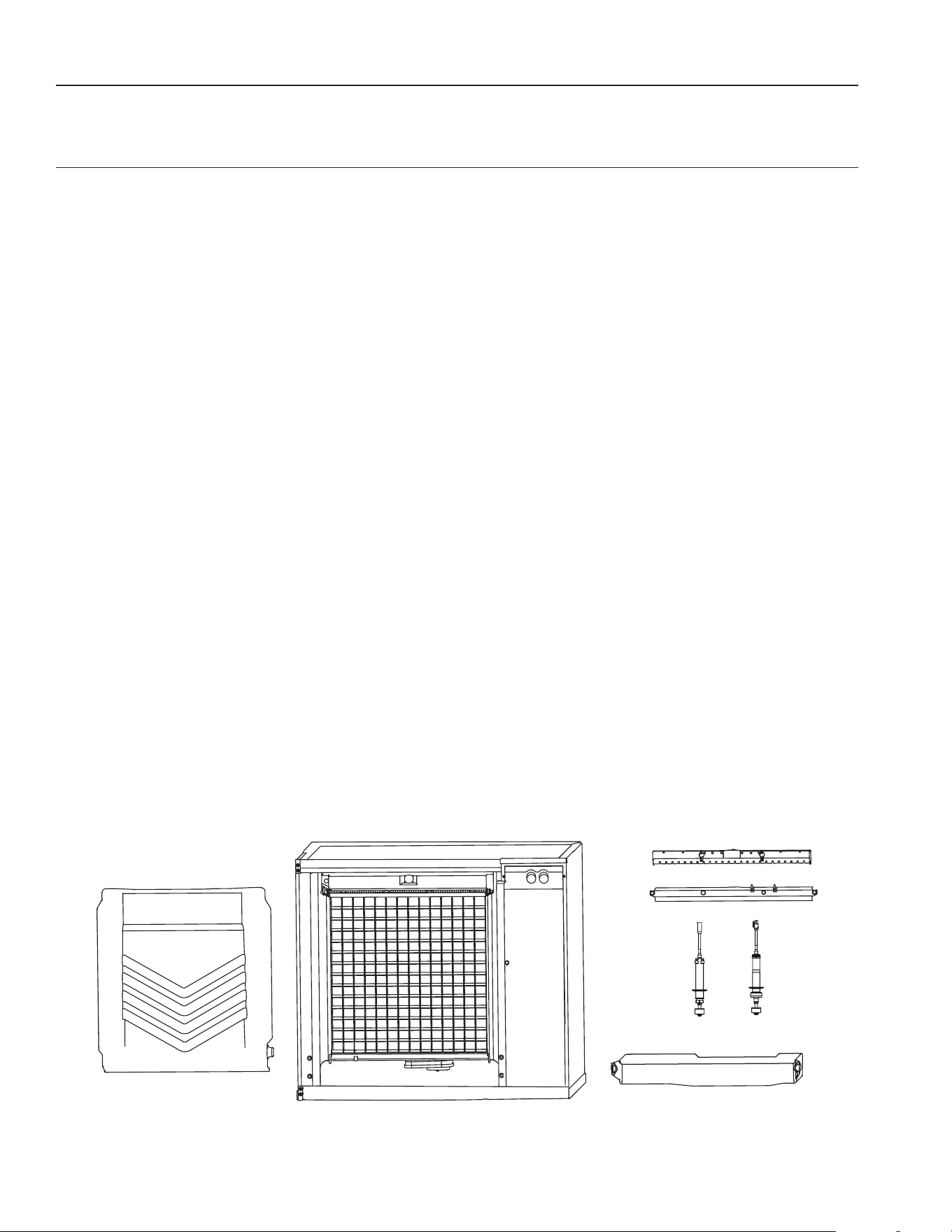
Step 5 Remove parts for descaling.
Refer to the proper parts removal for your machine. Continue with Step 6 when the
parts have been removed. Refer to “PKM0335/PKM0425/PKM0535 Parts Removal” on
page 20 or “PKU0155 Parts Removal” on page 21.
Step 6 Mix a solution of cleaner/descaler and lukewarm water. Depending on the
amount of mineral buildup, a larger quantity of solution may be required. Use the ratio in
the table below to mix enough solution to thoroughly clean all parts.
Solution Type Water Mixed with
Cleaner/Descaler 1 gal. (4 l) 16 oz (500 ml) cleaner/descaler

Part Number: 000016427 Rev 00 08/2020 19
Requirements - Cleaning - Operation
Step 7 Use half of the cleaner/descaler & water solution to clean all components. The
solution will foam when it contacts lime scale and mineral deposits; once the foaming
stops use a soft bristle brush, sponge or cloth (not a wire brush) to carefully clean the
parts. Soak the parts for 5 minutes (15 – 20 minutes for heavily scaled parts). Rinse all
components with clean water.
Step 8 While components are soaking, use half of the cleaner/descaler & water solution
to clean all foodzone surfaces of the ice machine and bin. Use a nylon brush or cloth to
thoroughly clean the following ice machine areas:
• Evaporator plastic parts – including top, bottom and sides
• Bin bottom, sides and top
• Rinse all areas thoroughly with clean water.
SANITIZING PROCEDURE
Step 9 Mix a solution of sanitizer and warm water.
Solution Type Water Mixed With
Sanitizer 3 gal. (12 l) 2 oz (60 ml) sanitizer
Step 10 Use half of the sanitizer/water solution to sanitize all removed components. Use
a spray bottle to liberally apply the solution to all surfaces of the removed parts or soak
the removed parts in the sanitizer/water solution. Do not rinse parts after sanitizing.
Step 11 Use half of the sanitizer/water solution to sanitize all foodzone surfaces of the
ice machine and bin. Use a spray bottle to liberally apply the solution. When sanitizing, pay
particular attention to the following areas:
• Evaporator plastic parts - including top, bottom and sides
• Bin bottom, sides and top
Do not rinse the sanitized areas.
Step 12 Replace all removed components.
Step 13 Wait 20 minutes.
Step 14 Reapply power and water to the ice machine and place the toggle switch in the
CLEAN or WASH position.
Step 15 Wait until the water trough refills, then add the proper amount of ice machine
sanitizer to the water trough.
Model Amount of Sanitizer
PKU0155 2.2 ounces (66 ml)
PKM0335/PKM0425/PKM0535 3 ounces (90 ml)
After the sanitize cycle is complete move the toggle switch to the ice position to start ice
making.
20 Part Number: 000016427 Rev 00 08/2020
Requirements - Cleaning - Operation
REMOVE PARTS FOR CLEANING/DESCALING
n
Warning
Disconnect electric power to the ice machine at the electric switch box before
proceeding.
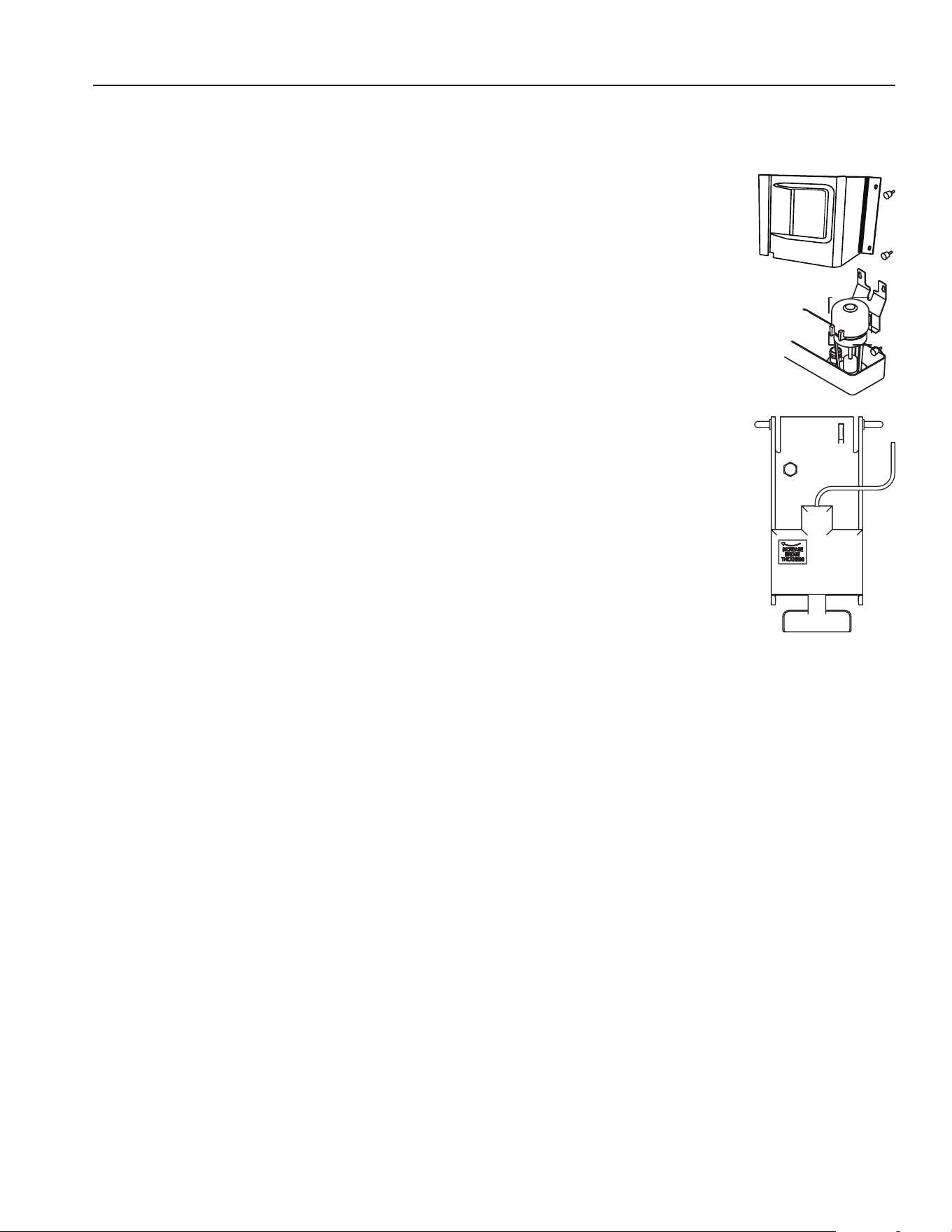
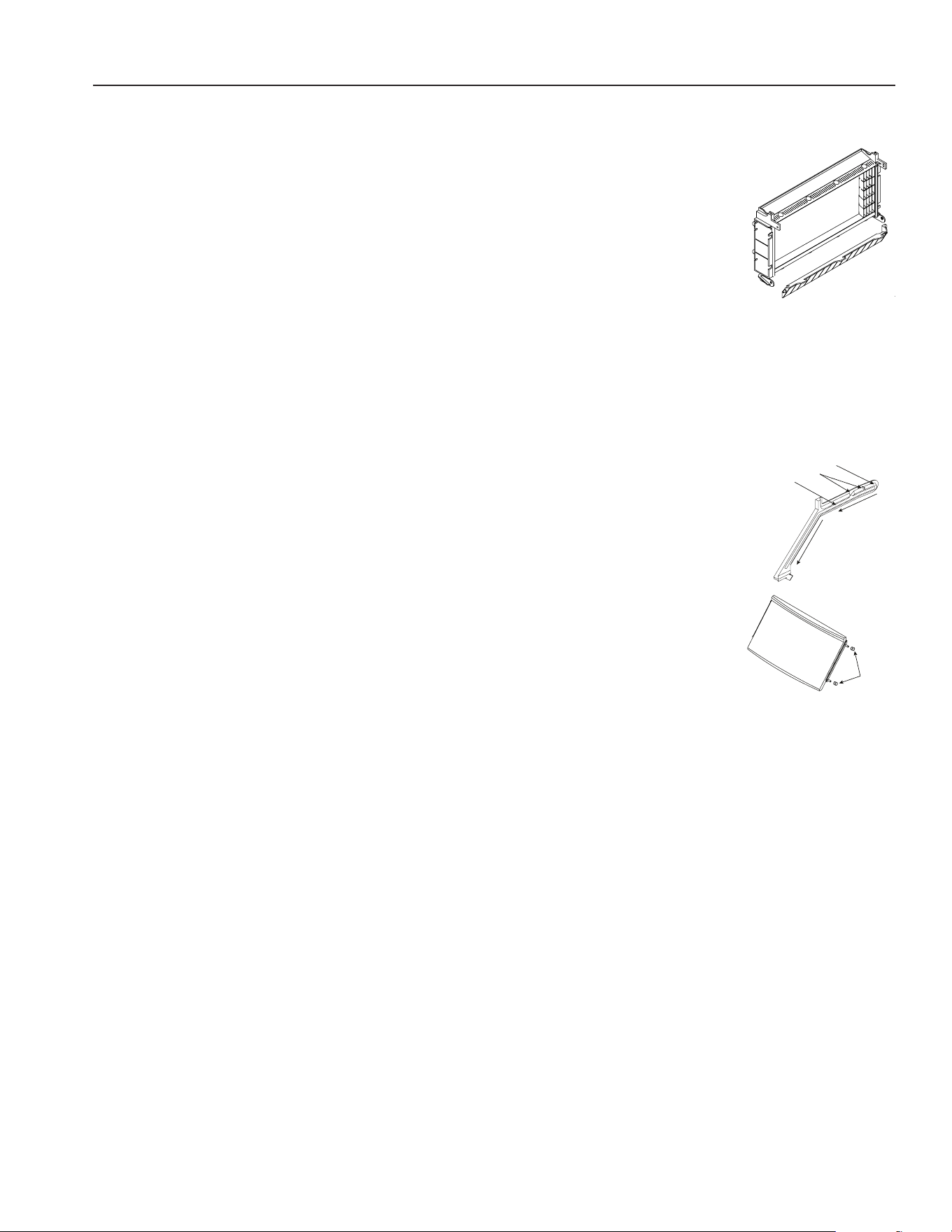
PKM0335/PKM0425/PKM0535 Parts Removal
A. Remove the water curtain
• Gently flex the curtain in the center and remove it from the right side.
• Slide the left pin out.
B. Remove the water trough
• Depress tabs on right and left side of the water trough.
• Allow front of water trough to drop as you pull forward to disengage the rear pins.
C. Remove the ice thickness and harvest float switches
• Pull the float switch straight down to disengage.
• Lower the float switch until the wiring connector is visible.
• Disconnect the wire lead from the float switch.
• Remove the float switch from the ice machine.
D. Remove the water distribution tube.
NOTE: Distribution tube thumbscrews are retained to prevent loss. Loosen
thumbscrews but do not pull thumbscrews out of distribution tube.
• Loosen the two outer screws (do not remove screws completely they are retained to
prevent loss) and pull forward on the distribution tube to release from slip joint.
• Disassemble distribution tube by loosening the two (2) middle thumbscrews and
dividing the distribution tube into two pieces.
• Proceed to page 18 Step 6.
A
B
C
D
Part Number: 000016427 Rev 00 08/2020 21
Requirements - Cleaning - Operation
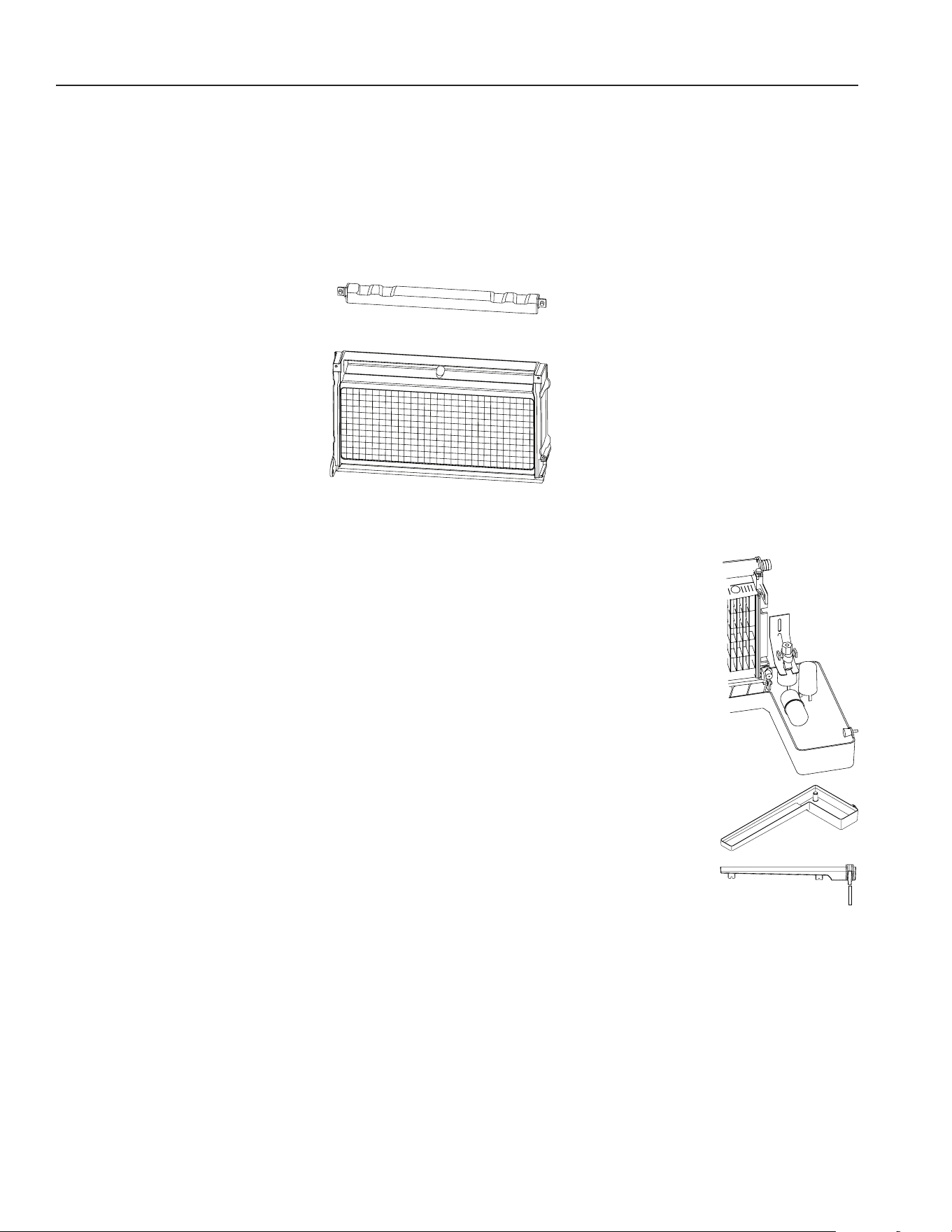
PKU0155 Parts Removal
1. Remove Two Thumbscrews and Water Pump Cover.
2. Remove the Vinyl Hose Connecting the Water Pump and Water
Distribution Tube.
3. Remove Water Pump:
• Disconnect the water pump power cord.
• Loosen the screws securing the pump mounting bracket to the
bulkhead.
• Lift the pump and bracket assembly off the mounting screws.
4. Remove the Ice Thickness Probe by compressing the side of the ice
thickness probe near the top hinge pin and remove it from the
bracket.
NOTE: At this point, the ice thickness probe can easily be cleaned. If
complete removal is desired, follow the ice thickness probe wire to
the bulkhead grommet (exit point) in the back wall. Pop the bulkhead
grommet out of the back wall by inserting fingernails or a flat object
between the back wall and the grommet and prying forward. Pull the
bulkhead grommet and wire forward until the connector is accessible,
then disconnect the wire lead from the connector.
Ice Thickness Probe Cleaning
• Mix a solution of ice machine cleaner and water (2 ounces of cleaner to 16 ounces of
water) in a container.
• Soak the ice thickness probe a minimum of 10 minutes.
Clean all ice thickness probe surfaces and verify the ice thickness probe cavity is clean.
Rinse thoroughly with clean water, then dry completely. Incomplete rinsing and drying of
the ice thickness probe can cause premature harvest.
22 Part Number: 000016427 Rev 00 08/2020
Requirements - Cleaning - Operation
5. Remove the Water Distribution Tube
A. Loosen the two thumbscrews, which secure the distribution tube.
B. Lift the right side of the distribution tube up off the locating pin.
C. Slide the distribution tube back.
D. Slide the distribution tube to the right and remove.
Dissemble the distribution tube - Twist both of the inner tube ends until the tabs line up
with the keyway and pull the inner tube ends outward.
6. Remove the Float Valve
• Turn the splash shield counterclockwise one or two turns and pull
the float valve forward and off the mounting bracket.
• Disconnect the water inlet tube from the float valve at the
compression fitting.
• Remove the cap and filter screen for cleaning.
7. Remove the Water Trough
• Apply downward pressure on the siphon tube and remove from the
bottom of the water trough.
• Remove the upper thumbscrew and while supporting the water
trough remove the two thumbscrews from beneath the water
trough.
Part Number: 000016427 Rev 00 08/2020 23
Requirements - Cleaning - Operation
8. Remove the ice damper
• Grasp ice damper and apply pressure toward the left hand
mounting bracket.
• Apply pressure to the right-hand mounting bracket with thumb.
• Pull ice damper forward when the right-hand ice damper pin
disengages.
Installation
• Place ice damper pin in left-hand mounting bracket and apply pressure toward the
left-hand mounting bracket.
• Apply pressure to the right-hand mounting bracket with thumb.
• Push ice damper toward evaporator until right-hand damper pin engages.
9. Remove the Bin Door
A. Grasp the rear of the bin door and pull bin door forward
approximately 5" (13 cm).
B. Slide bin door to the rear while applying upward pressure (The
rear door pins will ride up into the track slot and slide backward
to the stop tab).
C. While applying pressure against the bin door pull down on the
rear of each bin door track until the door pins clear the stop tabs.
D. Slide the rear door pins off the end and then below the door
track. Slide bin door forward allowing the back of the door to
lower into the bin. Continue forward with the bin door until the
front pins bottom out in the track.
E. Lift right side of door until the front pins clear the track, then remove door from
bin.
F. Remove rollers (4) from all door pins.
10. Continue with Step 6 on page 18
A
B
C
F
D

24 Part Number: 000016427 Rev 00 08/2020
Requirements - Cleaning - Operation
Remedial Cleaning Procedure
This procedure descales all components in the water flow path, and is used between the
bi-yearly detailed descaling and sanitizing procedure.
Ice machine cleaner/descaler is used to remove lime scale and mineral deposits. Ice
machine sanitizer disinfects and removes algae and slime.
NOTE: Although not required and dependent on your installation, removing the ice
machine top cover may allow easier access.
Step 1 Ice must not be on the evaporator during the cycle. Follow one of the methods
below:
• Move the toggle switch to the OFF position at the end of a harvest cycle after ice falls
from the evaporator.
• Move the toggle switch to the OFF position and allow the ice to melt.
,
Caution
Never use anything to force ice from the evaporator. Damage may result.
Step 2 Open the front door and move the toggle switch to the CLEAN or WASH position.
Wait until the water trough refills (approximately 1 minute) and then add the proper
amount of Ice Machine cleaner/descaler to the water trough.
Model Amount of Cleaner/Descaler
PKU0155 2 ounces (60 ml)
PKM0335/PKM0425/PKM0535 5 ounces (150 ml)
Step 3 After 1 minute place the toggle switch in the ICE position and close and secure
the front door. The ice machine will automatically start ice making after the cycle is
complete (approximately 24 minutes).

Part Number: 000016427 Rev 00 08/2020 25
Requirements - Cleaning - Operation
Cleaning the Condenser Filter
The washable filter is designed to catch dust, dirt, lint and grease. Clean the filter with a
mild soap and water.
Cleaning the Condenser
General
n
Warning
Disconnect electric power to the ice machine head section and the remote condensing
unit at the electric service switches before cleaning the condenser.
A dirty condenser restricts airflow, resulting in excessively high operating temperatures.
This reduces ice production and shortens component life.
• Clean the condenser at least every six months.
n
Warning
The condenser fins are sharp. Use care when cleaning them.
• Shine a flashlight through the condenser to check for dirt between the fins.
• Blow compressed air or rinse with water from the inside out (opposite direction of
airflow).
• If dirt still remains call a service agent to clean the condenser.
Removal from Service/Winterization
AIR-COOLED MODELS
1. Descale and sanitize the ice machine.
2. Place the toggle switch in the off position to turn off the ice machine.
3. Turn off the water supply, disconnect and drain the incoming ice-making water line at
the rear of the ice machine and drain the water trough.
4. Blow with compressed air to remove water from ice machine:
• PKM0335/PKM0425/PKM0535 - Energize the ice machine, wait one minute for the
water inlet valve to open and blow compressed air in both the incoming water and
the drain openings in the rear of the ice machine to remove all water.
• PKU0155 - Blow compressed air in both the incoming water and the drain openings
in the rear of the ice machine to remove all water.
5. Place the toggle switch in the off position and disconnect the electric power at the
circuit breaker or the electric service switch.
6. Fill spray bottle with sanitizer and spray all interior food zone surfaces. Do not rinse
and allow to air dry.
7. Replace all panels.

26 Part Number: 000016427 Rev 00 08/2020
Requirements - Cleaning - Operation
Ice Making Sequence of Operation
PKM0335/PKM0425/PKM0535
NOTE: The toggle switch must be in the ICE position and the water curtain must be closed
before the ice machine will start.
1. Water Purge Cycle
The ice machine purges any remaining water from the water trough down the drain.
2. Freeze Cycle
Prechill - The refrigeration system chills the evaporator before water flow over the
evaporator starts. The water inlet valve energizes during the pre-chill and remains on until
the ice thickness float switch is satisfied.
Freeze - Water flowing across the evaporator freezes and builds ice on the evaporator.
After a sheet of ice has formed, the Harvest float switch signals the control board to start a
harvest cycle.
3. Harvest Cycle
Any remaining water is purged down the drain as refrigerant gas warms the evaporator.
When the evaporator warms, the sheet of cubes slides off the evaporator and into the
storage bin. If all cubes fall clear of the water curtain, the ice machine starts another freeze
cycle.
4. Full Bin Cycle
If the water curtain is held open by ice cubes the ice machine shuts off. When the water
curtain closes the ice machine starts a new cycle at the water purge.

Part Number: 000016427 Rev 00 08/2020 27
Requirements - Cleaning - Operation
CONTROL BOARD TIMERS PKM0335/PKM0425/PKM0535
• The ice machine is locked into the freeze cycle for 6 minutes before a harvest cycle can
be initiated.
• The freeze time lock in feature is bypassed on the initial cycle (manual start or after a
full bin/safety limit condition).
• If the harvest float switch is in the down position for 10 continuous seconds during the
start of an initial freeze cycle, a harvest sequence is initiated. If the harvest float is in
the down position in subsequent cycles a safety limit 3 cycle is initiated.
• The maximum freeze time is 35 minutes (60 minutes prior to software revision 3.2) at
which time the control board automatically initiates a harvest sequence.
• The maximum harvest time is 3.5 minutes. The control board automatically initiates a
freeze sequence when these times are exceeded.
• The ice machine will continue to fill with water for up to six minutes, or until the high
water float opens for 5 continuous seconds. The control board will energize the water
inlet valve one more time 3 minutes into the freeze cycle.
SAFETY LIMITS PKM0335/PKM0425/PKM0535
Safety limits are stored and indicated by the control board. The number of cycles required
to stop the ice machine varies for each safety limit.
Safety limits can be reset by cycling the toggle switch Off/On and starting a new ice making
cycle.
A safety limit is indicated by a flashing light on the control board.
Safety Limit 1
If the freeze time reaches 35 minutes, the control board automatically initiates a harvest
cycle.
• After 3 consecutive 35 minute cycles control board light SL#1 light will flash on/off at 1
second intervals.
• If 6 consecutive 35-minute freeze cycles occur, the ice machine stops and the SL#1 light
on the control board will be on continuously.
NOTE: Prior to control board software revision 3.2 the maximum freeze time is 60 minutes
rather than 35 minutes.

28 Part Number: 000016427 Rev 00 08/2020
Requirements - Cleaning - Operation
Safety Limit 2
If the harvest time reaches 3.5 minutes, the control board automatically returns the ice
machine to the freeze cycle.
• If three consecutive 3.5 minute harvest cycles occur the SL#2 light on the control board
will flash on/off at 1 second intervals. After 75 consecutive 3.5 minutes harvest cycles
the SL#2 light will be energized continuously.
• If 100 consecutive 3.5 minute harvest cycles occur, the ice machine stops and the SL#2
light on the control board will be on continuously.
Safety Limit 3
If the harvest float switch hasn’t opened for 10 continuous seconds within 4 minutes of
the water inlet valve energizing the ice machine stops.
• Safety Limit 3 is bypassed on the initial cycle (manual start or after a full bin/safety
limit condition). For all subsequent cycles the ice machine stops for 30 minutes when
the water inlet valve is energized for 4 minutes and the harvest float valve didn’t open.
Control board lights SL#1 and SL#2 will flash on/off at 1 second intervals.
• The ice machine automatically restarts at the end of the 30 minute delay period and
stops flashing the control board lights.
• If 100 consecutive failures occur the ice machine stops and the SL#1 & SL#2 lights flash
on/off at 1 second intervals.
• SL#1 & SL#2 will flash 3 times on startup and automatically erase after 100 normal
cycles.
Part Number: 000016427 Rev 00 08/2020 29
Requirements - Cleaning - Operation
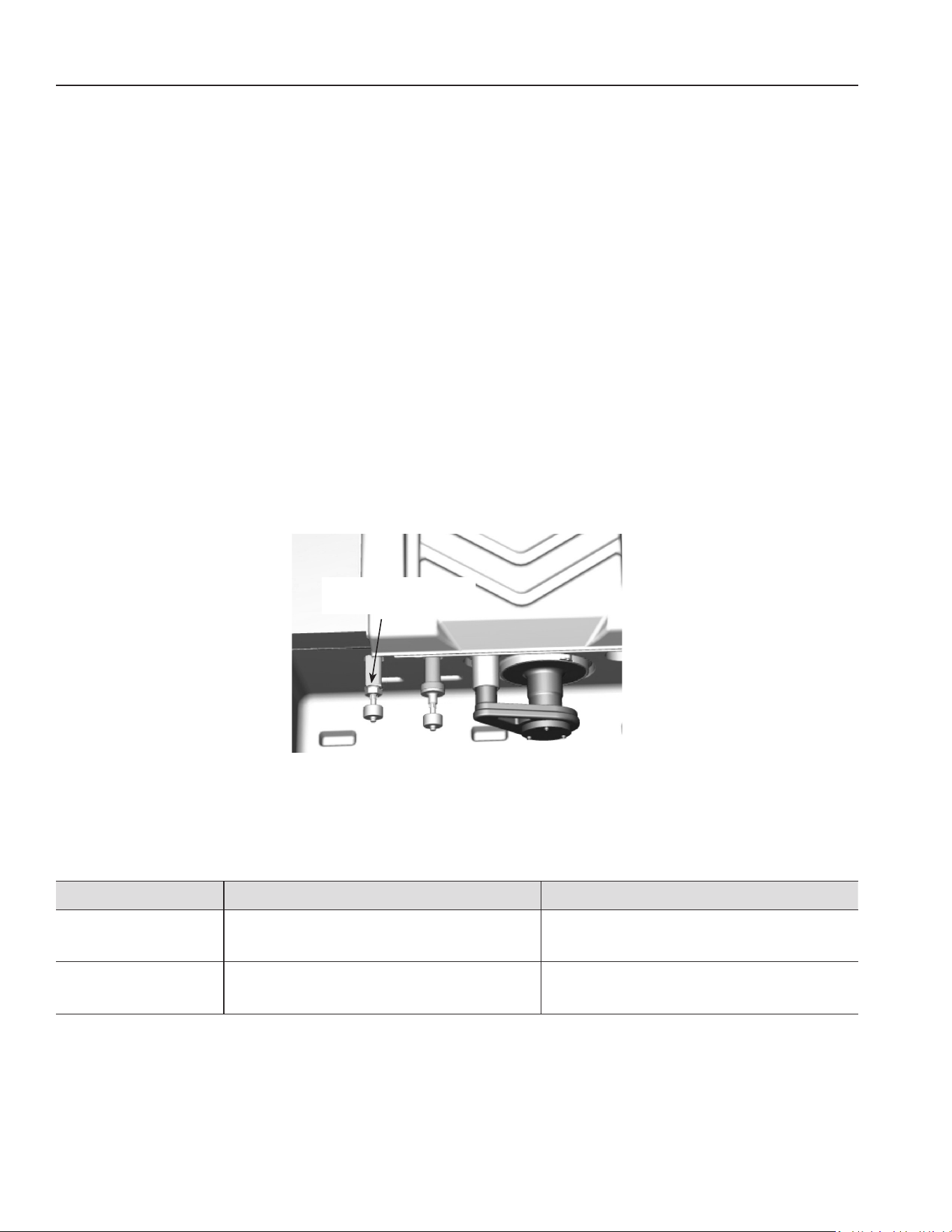
ENERGIZED PARTS CHART PKM0335/PKM0425/PKM0535
ICE MAKING
SEQUENCE
OF
OPERATION
Water
Pump
Harvest
Valve
Water
Inlet
Valve
Dump
Valve
Compressor
&
Condenser
Fan Motor*
Harvest
Float
Switch
Ice
Thickness
Float
Switch
Length of
Time
Initial
Start-up
1a. Water
purge
1b. Delay
period
On On Off On Off Closed Closed 45 seconds
Off Off Off Off Off Closed Closed 5 seconds
2.
Refrigeration
System
Start-up
2a. Equalize
Pressure
2b.
Compressor
Start-up
Off On Off Off Off Closed Closed 5 seconds
Off On Off Off On Closed Closed 5 seconds
Freeze
Sequence
3. Pre chill
Off Off On Off On Open Closed
120
Seconds
initial
cycle
Thereafter
30 seconds
4. Freeze On Off On Off On
Open
then
Closed
Closed
then
Open
Until
Harvest
Float
Switch
closes for
10
continual
seconds
Harvest
Sequence
5. Water
Purge
On On Off On On Closed Closed 45 seconds
6. Harvest Off On Off Off On Closed Closed
Bin switch
activation
7. Automatic
Shut-off
Off Off Off Off Off Closed Closed
Until bin
switch
re-closes
* Condenser Fan Motor: The fan motor is wired through a fan cycle pressure control; therefore, it may
cycle on and off.
30 Part Number: 000016427 Rev 00 08/2020
Requirements - Cleaning - Operation
Operational Checks PKM0335/PKM0425/PKM0535
ICE THICKNESS CHECK PKM0335/PKM0425/PKM0535
After a harvest cycle, inspect the ice cubes in the ice storage bin. The ice bridge connects
the ice cubes and must be set to maintain an ice bridge thickness of 1/8" (3 mm). To adjust
the thickness of the bridge refer to ice thickness adjustment.
The ice thickness float switch is factory-set to maintain the ice bridge thickness at 1/8"
(3 mm).
NOTE: Make sure the water curtain is in place when performing this check. It prevents
water from splashing out of the water trough.
1. Inspect the bridge connecting the cubes. It should be about 1/8" (3 mm) thick.
2. If adjustment is necessary, turn the ice thickness float switch clockwise to increase
bridge thickness, counterclockwise to decrease bridge thickness. Adjust to achieve a
1/8" (3 mm) bridge thickness.
NOTE: The float can be adjusted with a 3/4" wrench while the water trough is in-place.
Test run two cycles to verify ice bridge thickness.
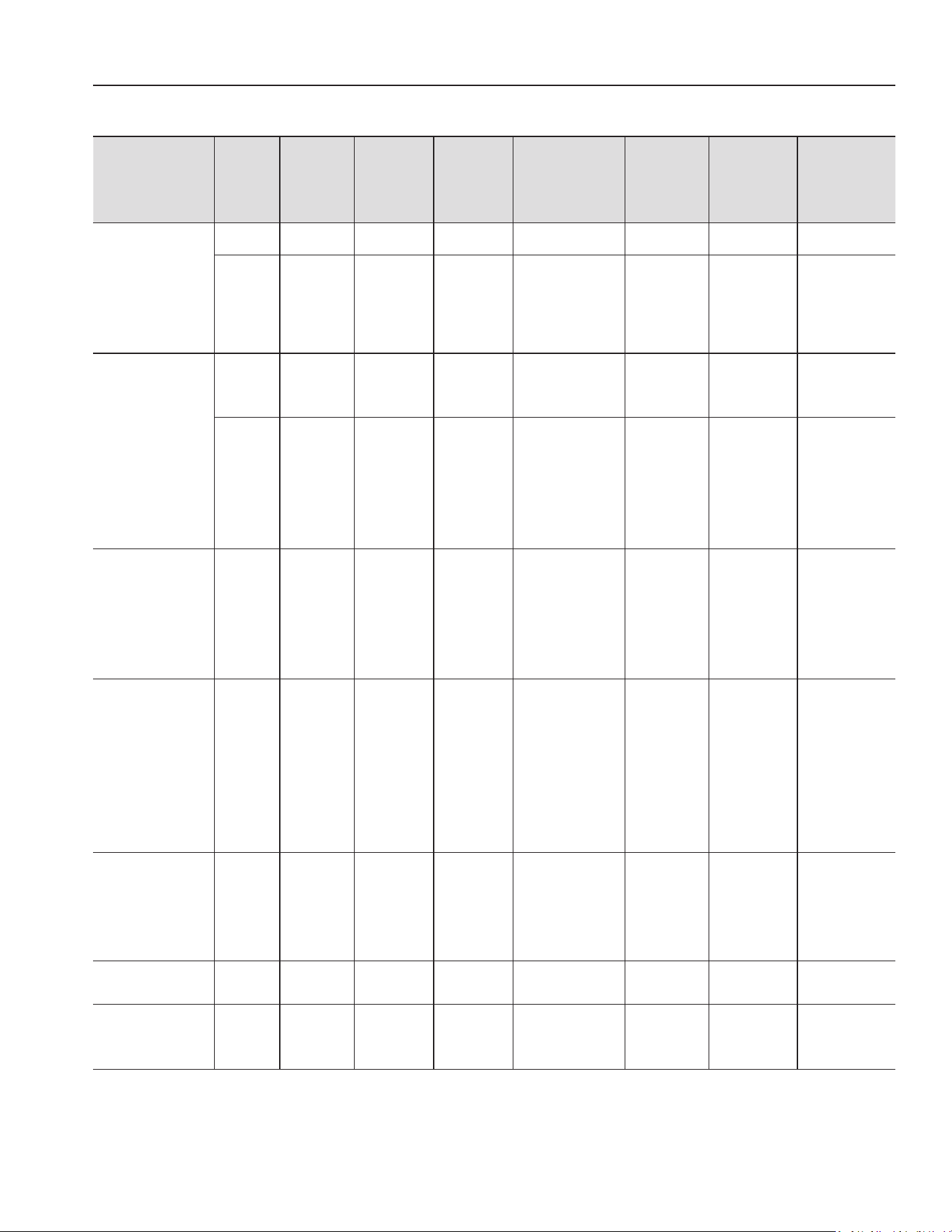
Ice Thickness Float
Switch Adjustment
MINIMUM/MAXIMUM SLAB WEIGHTS PKM0335/PKM0425/PKM0535
Adjust ice thickness to meet 1/8" (3 mm) bridge thickness and minimum/maximum weight
per cycle.
Model Minimum Ice Weight Per Cycle Maximum Ice Weight Per Cycle
PKM0425
3.4 lbs
1542 g
3.9 lbs
1769 g
PKM0535
4.125 lbs
1871 g
4.75 lbs
2154 g

Part Number: 000016427 Rev 00 08/2020 31
Requirements - Cleaning - Operation
Ice Making Sequence of Operation
PKU0155
NOTE: The toggle switch must be in the ICE position and the water curtain must be closed
before the ice machine will start.
1. Pressure Equalization
Before the compressor starts the harvest valve is energized for 15 seconds to equalize
pressures during the initial refrigeration system start-up.
2. Refrigeration System Start-up
The compressor starts after the 15-second pressure equalization, and remains on
throughout the entire Freeze and Harvest Sequences. The harvest valve remains on for 5
seconds during initial compressor start-up and then shuts off.
At the same time the compressor starts, the condenser fan motor (air-cooled models)
is supplied with power throughout the entire Freeze and Harvest Sequences. The fan
motor is wired through a fan cycle pressure control, therefore it may cycle on and off. (The
compressor and condenser fan motor are wired through the relay. As a result, any time the
relay coil is energized, the compressor and fan motor are supplied with power.)
FREEZE SEQUENCE
3. Prechill
The compressor is on for 30 seconds prior to water flow to prechill the evaporator.
4. Freeze
The water pump starts after the 30-second prechill. An even flow of water is directed
across the evaporator and into each cube cell, where it freezes.
When sufficient ice has formed, the water flow (not the ice) contacts the ice thickness
probe. After approximately 7 seconds of continual water contact, the Harvest Sequence is
initiated. The ice machine cannot initiate a Harvest Sequence until a 6-minute freeze time
has been surpassed.

32 Part Number: 000016427 Rev 00 08/2020
Requirements - Cleaning - Operation
HARVEST SEQUENCE
5. Harvest
The water pump de-energizes stopping flow over the evaporator. The rising level of water
in the sump trough diverts water out of the overflow tube, purging excess minerals from
the sump trough. The harvest valve also opens to divert hot refrigerant gas into the
evaporator.
The refrigerant gas warms the evaporator causing the cubes to slide, as a sheet, off the
evaporator and into the storage bin. The sliding sheet of cubes contacts the ice damper,
opening the bin switch.
The momentary opening and re-closing of the bin switch terminates the Harvest Sequence
and returns the ice machine to the Freeze Sequence (steps 3 - 4).
AUTOMATIC SHUT-OFF
6. Automatic Shut-off
When the storage bin is full at the end of a harvest sequence, the sheet of cubes fails
to clear the ice damper and will hold it down. After the ice damper is held open for 7
seconds, the ice machine shuts off. The ice machine remains off for 3 minutes before it can
automatically restart.
The ice machine remains off until enough ice has been removed from the storage bin to
allow the ice to fall clear of the damper. As the ice damper swings back to the operating
position, the bin switch re-closes and the ice machine restarts (steps 1 - 2), provided the 3
minute delay period is complete.
Part Number: 000016427 Rev 00 08/2020 33
Requirements - Cleaning - Operation
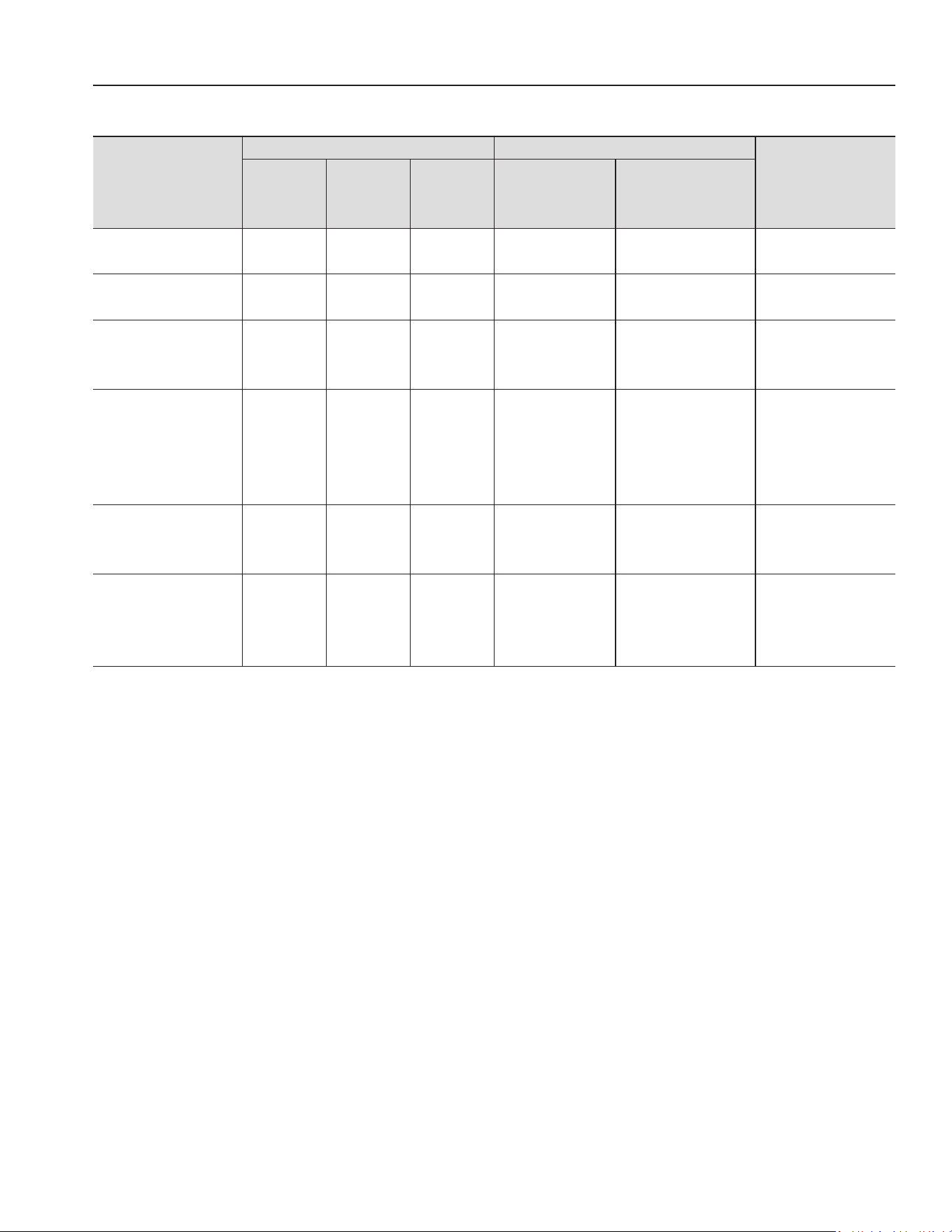
ENERGIZED PARTS CHART PKU0155
ICE MAKING
SEQUENCE OF
OPERATION
Control Board Relays Relay
Length of
Time
1
Water
Pump
2
Harvest
Valve
3
Relay
Coil
3A
Compressor
3B
Compressor
Fan Motor*
Initial Start-up
1. Water Purge
Off On Off Off Off 15 Second
2. Refrigeration
Start-Up
Off On On On On 5 Seconds
Freeze
Sequence
3. Prechill
Off Off On On On 30 Seconds
4. Freeze On Off On On On
Until 7 Second
Water
Contact W/
Ice Thickness
Probe
Harvest
Sequence
5. Harvest
Off On On On On
Bin Switch
Activation
Automatic
Shut-off
6. Automatic
Shut-off
On Off On On On
Until Bin
Switch
Re-closes
* Condenser Fan Motor: The fan motor is wired through a fan cycle pressure control; therefore, it may
cycle on and off
34 Part Number: 000016427 Rev 00 08/2020
Requirements - Cleaning - Operation
Operational Checks PKU0155
SIPHON SYSTEM PKU0155
To reduce mineral build-up and cleaning frequency, the water in the sump trough must be
purged during each harvest cycle.
When the water pump de-energizes, the level in the water trough rises above the
standpipe, starting a siphon action.
The siphon action stops when the water level in the sump trough drops. When the siphon
action stops, the float valve refills the water trough to the correct level.
Follow steps 1 through 6 under water level check to verify the siphon system functions
correctly.
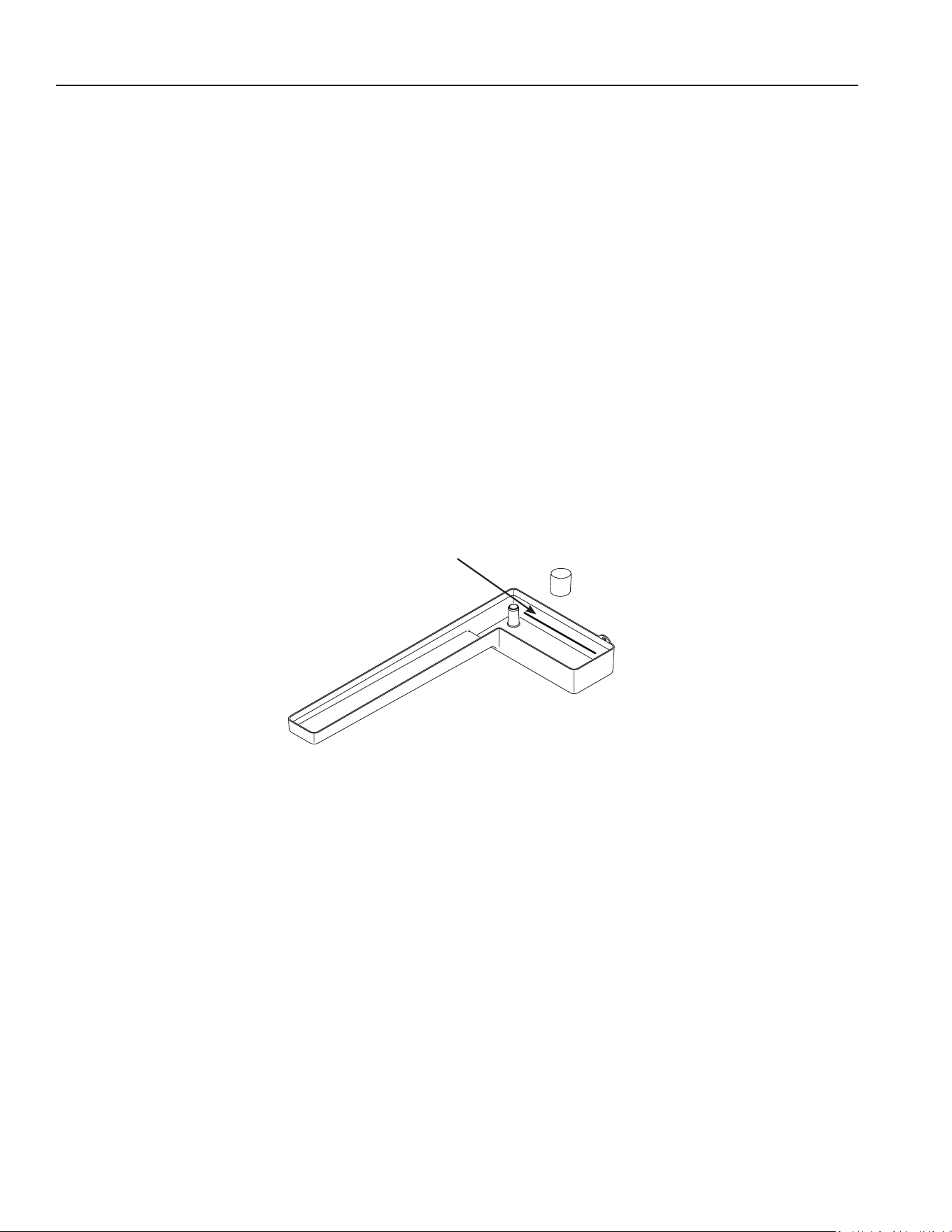
WATER LEVEL PKU0155
Check the water level while the ice machine is in the ice mode and the water pump is
running. The correct water level is 1/4" (6.3 mm) to 3/8" (9.5 mm) below the top of the
standpipe. A line in the water trough indicates the correct level.
Set the water level to
the line in the water
trough
Siphon Cap
Part Number: 000016427 Rev 00 08/2020 35
Requirements - Cleaning - Operation
WATER LEVEL CHECK PKU0155
The float valve is factory-set for the proper water level. If adjustments are necessary:
1. Verify the ice machine is level.
2. Remove the siphon cap from the standpipe.
3. Place the main ON/OFF/WASH toggle switch to the ON position, and wait until the
float valve stops adding water.
4. Adjust the water level to (1/4" to 3/8" [6.3 to 9.5 mm] below the standpipe) the line
in the water trough:
A. Loosen the two screws on the float valve bracket.
B. Raise or lower the float valve assembly as necessary, then tighten the screws.
5. Move the main ON/OFF/WASH toggle switch to the OFF position. The water level in
the trough will rise above the standpipe and run down the drain.
6. Replace the siphon cap on the standpipe, and verify water level and siphon action by
repeating steps 3 through 5.
ICE THICKNESS CHECK PKU0155
After a harvest cycle, inspect the ice cubes in the ice storage bin. The ice thickness probe is
set to maintain an ice bridge of 1/8" (3.2 mm). If an adjustment is needed, follow the steps
below.
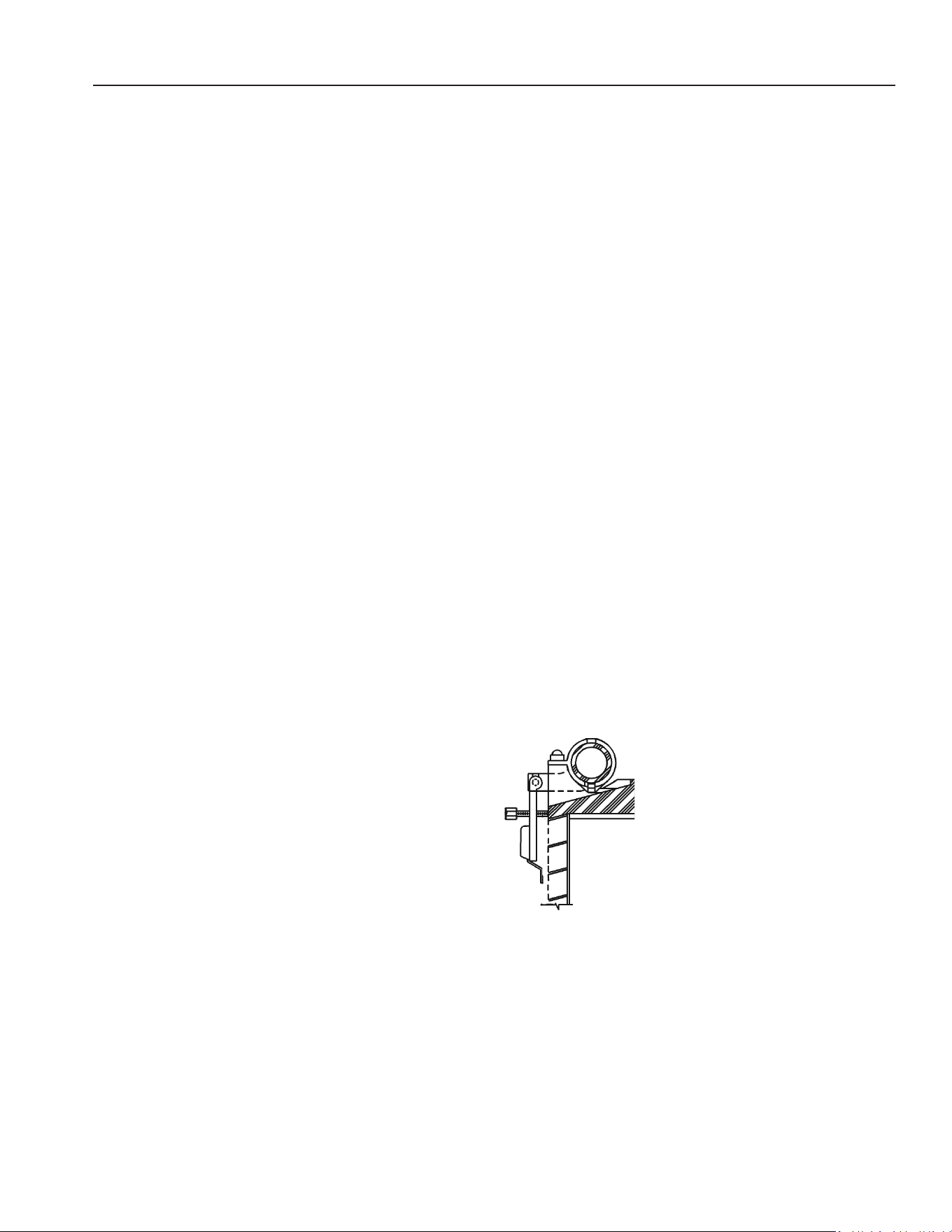
1. Turn the ice thickness probe adjustment screw clockwise for a thicker ice bridge, or
counterclockwise for a thinner ice bridge.
2. Make sure the ice thickness probe wire and bracket does not restrict movement of
the probe.
Adjusting Screw
36 Part Number: 000016427 Rev 00 08/2020
Requirements - Cleaning - Operation
MINIMUM/MAXIMUM SLAB WEIGHT PKU0155
Adjust ice thickness to meet 1/8" (3 mm) bridge thickness and minimum/maximum weight
per cycle.
Model Minimum Ice Weight Per Cycle Maximum Ice Weight Per Cycle
PKM0335
3.4 lbs
1542 g
3.9 lbs
1769 g

Part Number: 000016427 Rev 00 08/2020 37
PKM0335/PKM0425/PKM0535 Models
Control Board Test Mode
NOTE: The water curtain/bin switch can be open or closed and does not affect the
operation of the test mode.
To enter the test mode, move the toggle switch to off, then press and hold the test button
on the control board for 3 seconds. The control board test mode performs the following
functions for a 2-minute time period:
• Energizes all control board relays
• Energizes all control board lights
After 2 minutes, the control board will automatically initiate and complete one ice-making
cycle, then stop.
Canceling a test cycle:
To cancel a test cycle, press the test button a second time.
Restarting a test cycle:
The test cycle will restart each time the test button is pressed for a 3-second time period.
Troubleshooting

38 Part Number: 000016427 Rev 00 08/2020
Troubleshooting
Diagnosing an Ice Machine that Will Not Run
n
Warning
High (line) voltage is applied to the control board at all times. Removing the control
board fuse or pressing the power button will not remove the power supplied to the
control board.
1. Verify primary voltage is supplied to ice machine and the fuse/circuit breaker is
closed.
2. Verify control board fuse is okay.
NOTE: If any control board lights are on, the fuse is okay.
3. Verify the bin switch functions properly. A defective bin switch can falsely indicate a
full bin of ice.
4. Verify toggle switch functions properly. A defective toggle switch may keep the ice
machine in the OFF mode. Refer to toggle switch diagnostics when Steps 1 – 3 test
good.
5. Be sure Steps 1 – 4 were followed thoroughly. Intermittent problems are not usually
related to the control board. Replace control board if toggle switch operation is
correct.
Ice Machine Does Not Cycle Into Harvest when the Harvest Float Is
Down/Closed
NOTE: The ice machine will make a thick or double slab when a new freeze cycle is started
with ice already present on the evaporator.
Two of the most common scenarios are:
• Power is cycled off/on with ice on the evaporator.
• The water curtain/bin switch is opened/closed in the harvest cycle before the ice
releases.
Remove all ice from the evaporator before starting diagnostic procedures.
Part Number: 000016427 Rev 00 08/2020 39
Troubleshooting
Freeze Time Lock-In Feature
The ice machine control system incorporates a freeze time lock-in feature. This prevents
the ice machine from short cycling in and out of harvest. The control board locks the
ice machine in the freeze cycle for six minutes. After six minutes a harvest cycle can be
initiated. To allow the service technician to initiate a harvest cycle without delay, this
feature is not used on the first cycle after moving the toggle switch to OFF and back to ON.
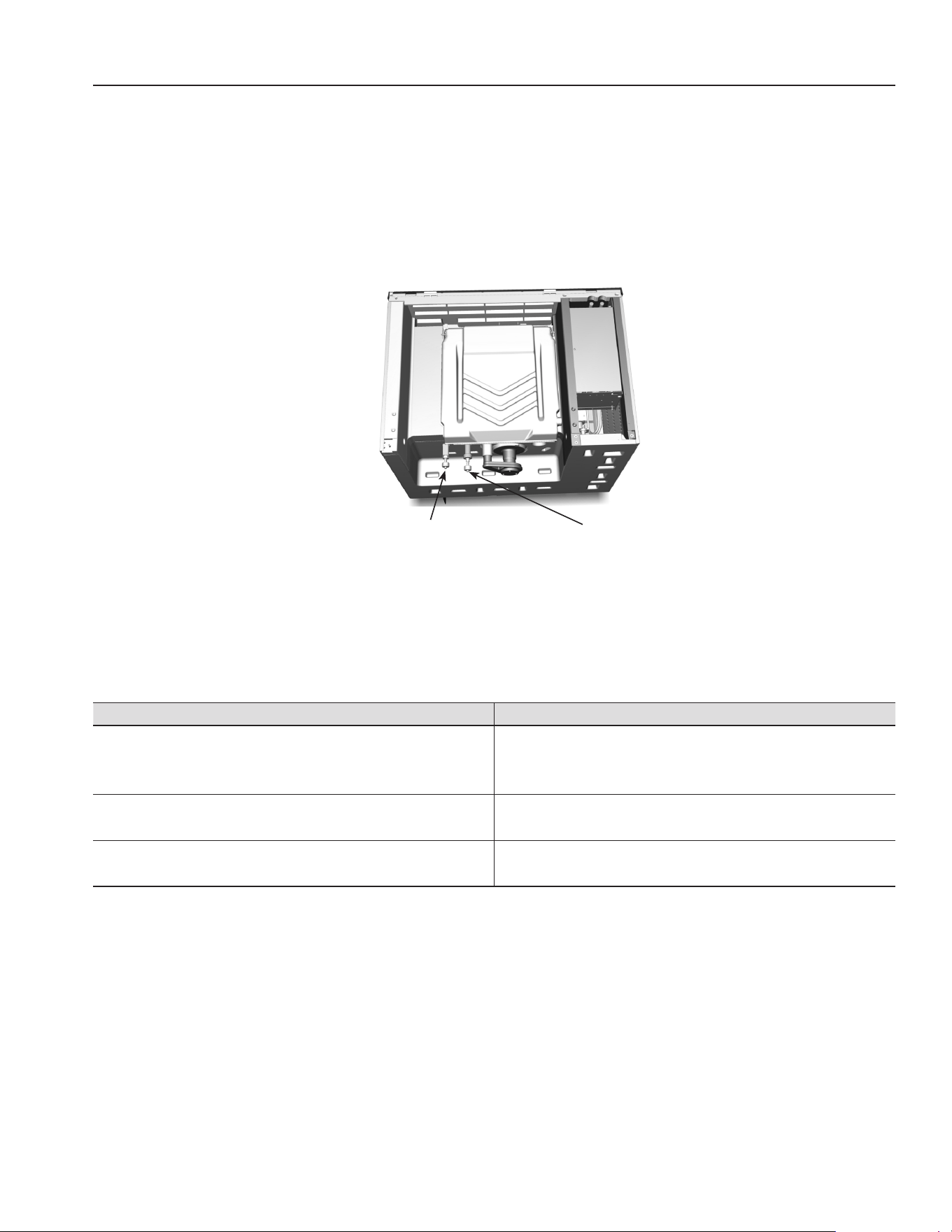
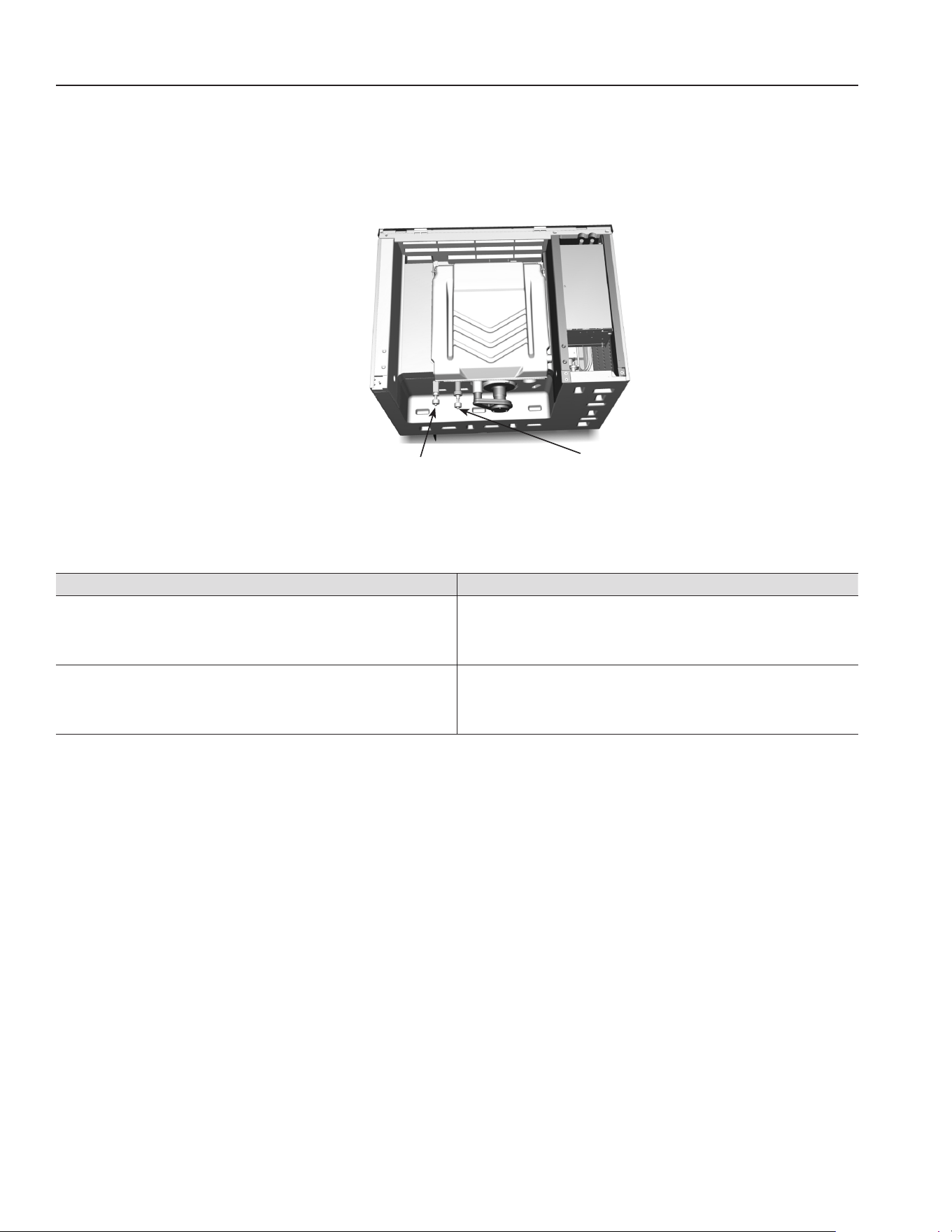
Harvest Float SwitchIce Thickness Float Switch
Step 1 Disconnect power to the ice machine, remove the electrical panel to allow
viewing of the control board lights. Disconnect the harvest float switch wire from the
control board and place a jumper on the control board harvest switch terminals.
Step 2 Bypass the freeze time lock-in feature by moving the toggle switch Off/On to
cycle the ice machine on. Wait until water flows over the evaporator, then refer to chart.
Result Correction
10 seconds into the freeze cycle the ice
machine cycles from freeze to harvest and
the control board harvest light energizes.
The ice thickness float switch, connectors or
wiring are causing the malfunction.
The harvest light comes on, but the ice
machine remains in the freeze cycle.
The ice machine is in a 6 minute freeze lock -
Cycle on/off and retest.
The harvest light stays off and the ice
machine remains in freeze.
Replace the control board.
40 Part Number: 000016427 Rev 00 08/2020
Troubleshooting
Ice Machine Cycles Into Harvest Before the Harvest Float Is Down/Closed
Step 1 Disconnect power to the ice machine, remove the electrical panel to allow
viewing of the control board lights and disconnect the harvest float switch from the
control board.
Harvest Float SwitchIce Thickness Float Switch
Step 2 Reapply power and move the toggle switch to Ice to bypass the freeze time lock-
in feature. Wait until water flows over the evaporator, then refer to chart.
Result Correction
The harvest light does not come on and the
ice machine stays in freeze.
The ice thickness float switch, connectors or
wiring are causing the malfunction. Refer to
float switch diagnostics.
10 seconds into the freeze cycle the ice
machine cycles from freeze to harvest and
the control board harvest light energizes.
Replace the control board.

Part Number: 000016427 Rev 00 08/2020 41
Troubleshooting
Ice Production Check
The amount of ice a machine produces directly relates to the operating water and air
temperatures. This means an ice machine with a 70°F (21°C) ambient temperature and
50°F (10°C) water produces more ice than the same ice machine with 90°F (32°C) ambient
and 70°F (21°C) water.
1. Determine the ice machine operating conditions:
Air temp entering condenser:____°
Air temp around ice machine:____°
Water temp entering sump trough:____°
2. Refer to the appropriate 24-Hour Ice Production Chart. Use the operating conditions
determined in Step 1 to find published 24-Hour Ice Production:_____
• Times are in minutes.
Example: 1 min. 15 sec. converts to 1.25 min.
(15 seconds ÷ 60 seconds = .25 minutes)
• Weights are in pounds.
Example: 2 lb. 6 oz. converts to 2.375 lb.
(6 oz. ÷ 16 oz. = .375 lb.)
3. Perform an ice production check using the formula below.
1. + =
Freeze Time Harvest Time Total Cycle Time
2. 1440 ÷ =
Minutes in 24 Hrs. Total Cycle Time Cycles per Day
3. x =
Weight of One Harvest Cycles per Day Actual 24-Hour
Production
Weighing the ice is the only 100% accurate check.
4. Compare the results of Step 3 with Step 2. Ice production is normal when these
numbers match closely. If they match closely, determine if:
• Another larger ice machine is required.
• Relocating the existing equipment to lower the load conditions is required.

42 Part Number: 000016427 Rev 00 08/2020
Troubleshooting
Installation/Visual Inspection Checklist
Ice machine is not level
• Level the ice machine
Condenser is dirty
• Clean the condenser
Water filtration is plugged (if used)
• Install a new water filter
Water drains are not run separately and/or are not vented
• Run and vent drains according to the Installation Manual

Part Number: 000016427 Rev 00 08/2020 43
Troubleshooting
Water System Checklist
A water-related problem often causes the same symptoms as a refrigeration system
component malfunction.
Example: A water dump valve leaking during the freeze cycle, a system low on charge, and
a starving TXV have similar symptoms.
Water system problems must be identified and eliminated prior to replacing refrigeration
components.
Water area (evaporator) is dirty
• Clean as needed
Water inlet pressure not between 20 and 80 psig (1–5 bar, 138–552 kPa)
• Install a water regulator valve or increase the water pressure
Incoming water temperature is not between 35°F (1.7°C) and 90°F (32.2°C)
• If too hot, check the hot water line check valves in other store equipment
Water filtration is plugged (if used)
• Install a new water filter
Vent tube is not installed on water outlet drain
• See Installation Instructions
Hoses, fittings, etc., are leaking water
• Repair/replace as needed
Water valve is stuck open, closed or is leaking
• Clean/replace as needed
Water is spraying out of the sump trough area
• Stop the water spray
Uneven water flow across the evaporator
• Clean the ice machine
Water is freezing behind the evaporator
• Correct the water flow
Plastic extrusions and gaskets are not secured to the evaporator
• Remount/replace as needed

44 Part Number: 000016427 Rev 00 08/2020
Troubleshooting
Ice Formation Pattern
Evaporator ice formation pattern analysis is helpful in ice machine diagnostics.
Analyzing the ice formation pattern alone cannot diagnose an ice machine malfunction.
However, when this analysis is used along with the Refrigeration System Operational
Analysis Table, it can help diagnose an ice machine malfunction.
OUTLET
INLET
Example of Evaporator Tubing Routing
Normal Ice Formation
Ice forms across the entire evaporator surface.
At the beginning of the Freeze cycle, it may appear that more ice is forming on the inlet
of the evaporator than at the outlet. At the end of the Freeze cycle, ice formation at the
outlet will be close to, or just a bit thinner than, ice formation at the inlet. The dimples in
the cubes at the outlet of the evaporator may be more pronounced than those at the inlet.
This is normal.
If ice forms uniformly across the evaporator surface, but does not do so in the proper
amount of time, this is still considered a normal ice fill pattern.
Extremely Thin at Evaporator Outlet
There is no ice, or a considerable lack of ice formation on the outlet of the evaporator.
Examples: No ice at all at the outlet of the evaporator, but ice forms at the inlet half of the
evaporator. Or, the ice at the outlet of the evaporator reaches the correct thickness, but
the outlet of the evaporator already has 1/2" to 1" (12.7 mm to 25.4 mm) of ice formation.
Extremely Thin at Evaporator Inlet
There is no ice, or a considerable lack of ice formation at the inlet of the evaporator.
Examples: The ice at the outlet of the evaporator reaches the correct thickness, but there
is no ice formation at all at the inlet of the evaporator.

Part Number: 000016427 Rev 00 08/2020 45
Troubleshooting
No Ice Formation
The ice machine operates for an extended period, but there is no ice formation at all on
the evaporator.
Evaporator Tubing Routing
Routing of the tubing on the back of the evaporator determines the ice fill pattern failure
mode. The evaporator outlet tubing does not exit directly at the top of the evaporator,
but exits several inches below the top of the evaporator. Extremely Thin at the Evaporator
Outlet will first be visible several inches below the top of the evaporator. Extremely Thin at
Evaporator Inlet will first be visible at the bottom of the evaporator.
Safety Limits
Safety limits are stored and indicated by the control board. The number of cycles required
to stop the ice machine varies for each safety limit.
Safety limits can be reset by cycling the toggle switch Off/On and starting a new ice making
cycle.
A safety limit is indicated by a flashing light on the control board.
SAFETY LIMIT 1
If the freeze time reaches 35 minutes, the control board automatically initiates a harvest
cycle.
• After 3 consecutive 35 minute cycles, control board light SL#1 light will flash on/off at 1
second intervals.
• If 6 consecutive 35-minute freeze cycles occur, the ice machine stops and the SL#1 light
on the control board will be on continuously.
SAFETY LIMIT 2
If the harvest time reaches 3.5 minutes, the control board automatically returns the ice
machine to the freeze cycle.
• If three consecutive 3.5 minute harvest cycles occur, the SL#2 light on the control board
will flash on/off at 1 second intervals. After 75 consecutive 3.5 minutes harvest cycles,
the SL#2 light will be energized continuously.
• If 100 consecutive 3.5 minute harvest cycles occur, the ice machine stops and the SL#2
light on the control board will be on continuously.

46 Part Number: 000016427 Rev 00 08/2020
Troubleshooting
SAFETY LIMIT 3
If the harvest float switch hasn’t opened for 10 continuous seconds within the first 4
minutes of the freeze cycle, the ice machine stops.
• Safety Limit 3 is bypassed on the initial cycle (manual start or after a full bin/safety limit
condition). For all subsequent cycles, the ice machine stops for 30 minutes when the
harvest float switch hasn’t opened for 10 continuous seconds within the first 4 minutes
of the freeze cycle. Control board lights SL#1 and SL#2 will flash on/off at 1 second
intervals.
• The ice machine automatically restarts at the end of the 30 minute delay period and
stops flashing the control board lights.
• If 100 consecutive failures occur, the ice machine stops and the SL#1 & SL#2 lights flash
on/off at 1 second intervals.
• SL#1 & SL#2 will flash 3 times on start-up and automatically erase after 100 normal
cycles.
Determining Which Safety Limit Stopped the Ice Machine:
1. Cycle the toggle switch Off.
2. Cycle the toggle switch On to start ice making.
3. Watch the safety limit lights.
• One will flash corresponding to safety limits 1 or 2.
4. Safety limit 3 is indicated by both SL#1 & SL#2 flashing.
After safety limit indication, the ice machine will restart and run until a safety limit is
exceeded again.
Safety Limit Notes
• A continuous run of 100 harvests automatically erases the safety limit code.
• The control board will store and indicate only one safety limit – the last one exceeded.
• If the toggle switch is cycled OFF and then ON prior to reaching the 100-harvest point,
the last safety limit exceeded will be indicated.

Part Number: 000016427 Rev 00 08/2020 47
Troubleshooting
SAFETY LIMIT CHECKLIST
The following checklists are designed to assist the service technician in analysis. However,
because there are many possible external problems, do not limit your diagnosis to only the
items listed.
Safety Limit #1
Freeze time exceeds 35 minutes for 6 consecutive freeze cycles.
Possible Cause Checklist
Improper installation
• Refer to “Installation/Visual Inspection Checklist” on page 42
Water System
• Float switch or water escaping water trough
• Low water pressure (20 psig min.)
• High water pressure (80 psig max.)
• High water temperature (90°F/32.2°C max.)
• Clogged water distribution tube
• Dirty/defective water inlet valve
• Defective water pump
Electrical System
• Harvest cycle not initiated electrically
• Contactor not energizing
• Compressor electrically non-operational
• Restricted condenser air flow
• High inlet air temperature (110°F/43.3°C max.)
• Condenser discharge air re-circulation
• Dirty condenser fins
• Defective fan cycling control
• Defective fan motor
• Dirty condenser

48 Part Number: 000016427 Rev 00 08/2020
Troubleshooting
Refrigeration System
• Non-OEM components
• Improper refrigerant charge
• Defective compressor
• TXV starving or flooding (check bulb mounting)
• Non-condensible in refrigeration system
• Plugged or restricted high side refrigerant lines or component
• Defective harvest valve
Safety Limit #2
Harvest time exceeds 3.5 minutes for 100 Consecutive harvest cycles.
Possible Cause Checklist
Improper installation
• Refer to “Installation/Visual Inspection Checklist” on page 42
Water System
• Water area (evaporator) dirty
• Dirty/defective water dump valve
• Vent tube not installed on water outlet drain
• Water freezing behind evaporator
• Plastic extrusions and gaskets not securely mounted to the evaporator
Electrical System
• Bin switch defective
• Premature harvest
Refrigeration System
• Non-OEM components
• Improper refrigerant charge
• Defective harvest valve
• TXV flooding (check bulb mounting)
• Defective fan cycling control

Part Number: 000016427 Rev 00 08/2020 49
Troubleshooting
Safety Limit 3
The harvest float switch hasn’t opened for 10 continuous seconds in the first 4 minutes
of the freeze cycle.
Possible Cause Checklist
Improper installation
• Refer to “Installation/Visual Inspection Checklist” on page 42
Water System
• Water dump valve
• Harvest float valve dirty or defective
• Low water pressure (20 psig min.)
• Dirty defective water filter (when used)
• Loss of water from sump area
• Dirty/defective water inlet valve
Electrical System
• Water inlet valve coil defective
• Harvest float valve defective
50 Part Number: 000016427 Rev 00 08/2020
Troubleshooting
Analyzing Discharge Pressure
1. Determine the ice machine operating conditions:
Air temp. entering condenser ______°
Air temp. around ice machine ______°
Water temp. entering sump trough ______°
2. Refer to “Ice Machine Normal Operation Charts” on page 119 for ice machine being
checked.
Use the operating conditions determined in Step 1 to find the published normal discharge
pressures.
Freeze Cycle ______
Harvest Cycle ______
3. Perform an actual discharge pressure check.
Freeze Cycle
PSIG
Harvest Cycle
PSIG
Beginning of Cycle ______________________ ______________________
Middle of Cycle ______________________ ______________________
End of Cycle ______________________ ______________________
4. Compare the actual discharge pressure (Step 3) with the published discharge pressure
(Step 2).
The discharge pressure is normal when the actual pressure falls within the published
pressure range for the ice machine’s operating conditions. It is normal for the discharge
pressure to be higher at the beginning of the freeze cycle (when load is greatest), then
drop throughout the freeze cycle.

Part Number: 000016427 Rev 00 08/2020 51
Troubleshooting
DISCHARGE PRESSURE HIGH CHECKLIST
Improper Installation
• Refer to “Installation/Visual Inspection Checklist” on page 42
Condenser Air Flow
• High inlet air temperature
• Condenser discharge air re-circulation
• Dirty condenser fins
• Defective fan cycling control
• Defective fan motor
Improper Refrigerant Charge
• Overcharged
• Non-condensible in system
• Wrong type of refrigerant
Other
• Non-OEM components in system
• High side refrigerant lines/component restricted (before mid-condenser)
FREEZE CYCLE DISCHARGE PRESSURE LOW CHECKLIST
Improper Installation
• Refer to “Installation/Visual Inspection Checklist” on page 42
Improper Refrigerant Charge
• Undercharged
• Wrong type of refrigerant
Other
• Non-OEM components in system
• High side refrigerant lines/component restricted (before mid-condenser)
• Defective fan cycle control

52 Part Number: 000016427 Rev 00 08/2020
Troubleshooting
Analyzing Suction Pressure
The suction pressure gradually drops throughout the freeze cycle. The actual suction
pressure (and drop rate) changes as the air and water temperature entering the ice
machine changes. These variables also determine the freeze cycle times.
To analyze and identify the proper suction pressure drop throughout the freeze cycle,
compare the published suction pressure to the published freeze cycle time.
NOTE: Analyze discharge pressure before analyzing suction pressure. High or low discharge
pressure may be causing high or low suction pressure.

Part Number: 000016427 Rev 00 08/2020 53
Troubleshooting
Procedure
Step
1. Determine the ice machine operating conditions.
Example:
Air temp. entering condenser: 90°F/32.2°C
Air temp. around ice machine: 80°F/26.7°C
Water temp. entering water fill valve: 70°F/21.1°C
2A. Refer to “Cycle Time” and “Operating Pressure” charts for ice machine model being
checked. Using operating conditions from Step 1, determine published freeze cycle time
and published freeze cycle suction pressure.
Example:
Published freeze cycle time: 14.8 - 15.9 minutes
Published freeze cycle suction pressure: 65 - 26 psig
2B. Compare the published freeze cycle time and published freeze cycle suction pressure.
Develop a chart.
Example:
Published Freeze Cycle Time (minutes)
1 2 4 7 10 12 14
| | | | | | |
65 55 47 39 34 30 26
Published Freeze Cycle Suction Pressure (psig)
In the example, the proper suction pressure should be approximately 39 psig at 7
minutes; 30 psig at 12 minutes; etc.
3. Perform an actual suction pressure check at the beginning, middle and end of the
freeze cycle. Note the times at which the readings are taken.
Example:
Manifold gauges were connected to the example ice machine and suction pressure
readings taken as follows: ________ PSIG
Beginning of freeze cycle: 79 (at 1 min.)
Middle of freeze cycle: 48 (at 7 min.)
End of freeze cycle: 40 (at 14 min.)
4. Compare the actual freeze cycle suction pressure (Step 3) to the published freeze cycle
time and pressure comparison (Step 2B). Determine if the suction pressure is high, low or
acceptable.
Example:
In this example, the suction pressure is considered high throughout the freeze cycle. It
should have been:
Approximately 65 psig (at 1 minute) – not 79
Approximately 39 psig (at 7 minutes) – not 48
Approximately 26 psig (at 14 minutes) – not 40

54 Part Number: 000016427 Rev 00 08/2020
Troubleshooting
SUCTION PRESSURE HIGH CHECKLIST
Improper Installation
• Refer to “Installation/Visual Inspection Checklist” on page 42
Discharge Pressure
• Discharge pressure is too high and is affecting suction pressure, refer to “Discharge
Pressure High Checklist” on page 51
Improper Refrigerant Charge
• Overcharged
• Wrong type of refrigerant
• Non-condensible in system
Other
• Non-OEM components in system
• Harvest valve leaking
• TXV flooding (check bulb mounting)
• Defective compressor
SUCTION PRESSURE LOW CHECKLIST
Improper Installation
• Refer to “Installation/Visual Inspection Checklist” on page 42
Discharge Pressure
• Discharge pressure is too low, and is affecting suction pressure, refer to “Freeze Cycle
Discharge Pressure Low Checklist” on page 51
Improper Refrigerant Charge
• Undercharged
• Wrong type of refrigerant
Other
• Non-OEM components in system
• Improper water supply over evaporator refer to “Water System Checklist” on page 43
• Loss of heat transfer from tubing on back side of evaporator
• Restricted/plugged liquid line drier
• Restricted/plugged tubing in suction side of refrigeration system
• TXV starving

Part Number: 000016427 Rev 00 08/2020 55
Troubleshooting
Harvest Valve
General
The harvest valve is an electrically operated valve that opens when energized, and closes
when de-energized.
Normal Operation
The valve is de-energized (closed) during the freeze cycle and energized (open) during
the harvest cycle. The valve is positioned between the compressor discharge line and the
evaporator and performs two functions:
1. Prevents refrigerant from entering the evaporator during the freeze cycle.
The harvest valve is not used during the freeze cycle. The harvest valve is de-energized
(closed) preventing refrigerant flow from the discharge line into the evaporator.
2. Allows refrigerant vapor to enter the evaporator in the harvest cycle.
During the harvest cycle, the harvest valve is energized (open) allowing refrigerant
gas from the discharge line of the compressor to flow into the evaporator. The heat is
absorbed by the evaporator and allows release of the ice slab.
Exact pressures vary according to ambient temperature and ice machine model. Harvest
pressures can be found in the Cycle Time/24 Hour Ice Production/ Refrigerant Pressure
Charts in this book.

56 Part Number: 000016427 Rev 00 08/2020
Troubleshooting
HARVEST VALVE ANALYSIS
The valve can fail in two positions:
• Valve will not open in the harvest cycle.
• Valve remains open during the freeze cycle.
VALVE WILL NOT OPEN IN THE HARVEST CYCLE:
Although the circuit board has initiated a harvest cycle, the evaporator temperature
remains unchanged from the freeze cycle.
VALVE REMAINS OPEN IN THE FREEZE CYCLE:
Symptoms of a harvest valve remaining partially open during the freeze cycle can be
similar to symptoms of an expansion valve or compressor problem. Symptoms are
dependent on the amount of leakage in the freeze cycle.
A small amount of leakage will cause increased freeze times and an ice fill pattern that is
“Thin at the Outlet”, but fills in at the end of the cycle.
As the amount of leakage increases, the length of the freeze cycle increases and the
amount of ice at the outlet of the evaporator decreases.
Refer to the Parts Manual for proper valve application. If replacement is necessary, use
only “original” replacement parts.
Use the following procedure and table to help determine if a harvest valve is remaining
partially open during the freeze cycle.
1. Wait five minutes into the freeze cycle.
2. Feel the inlet of the harvest valve(s).
Important
Feeling the harvest valve outlet or across the harvest valve itself will not work for this
comparison.
The harvest valve outlet is on the suction side (cool refrigerant). It may be cool enough
to touch even if the valve is leaking.
3. Feel the compressor discharge line.
n
Warning
The inlet of the harvest valve and the compressor discharge line could be hot enough to
burn your hand. Just touch them momentarily.
4. Compare the temperature of the inlet of the harvest valves to the temperature of the
compressor discharge line.

Part Number: 000016427 Rev 00 08/2020 57
Troubleshooting
Findings Comments
The inlet of the harvest valve is cool enough
to touch and the compressor discharge line
is hot.
Cool & Hot
This is normal as the discharge line should
always be too hot to touch and the harvest
valve inlet, although too hot to touch during
harvest, should be cool enough to touch
after 5 minutes into the freeze cycle.
The inlet of the harvest valve is hot and
approaches the temperature of a hot
compressor discharge line.
Hot & Hot
This is an indication something is wrong, as
the harvest valve inlet did not cool down
during the freeze cycle. If the compressor
dome is also entirely hot, the problem
is not a harvest valve leaking, but rather
something causing the compressor (and the
entire ice machine) to get hot.
Both the inlet of the harvest valve and the
compressor discharge line are cool enough
to touch.
Cool & Cool
This is an indication something is wrong,
causing the compressor discharge line to
be cool to the touch. This is not caused by a
harvest valve leaking.
5. Record your findings on the table.

58 Part Number: 000016427 Rev 00 08/2020
Troubleshooting
Comparing Evaporator Inlet/Outlet Temperatures
The temperatures of the suction lines entering and leaving the evaporator alone cannot
diagnose an ice machine. However, comparing these temperatures during the freeze cycle,
along with the Refrigeration System Operational Analysis Table, can help diagnose an ice
machine malfunction.
The actual temperatures entering and leaving the evaporator vary by model, and change
throughout the freeze cycle. This makes documenting the “normal” inlet and outlet
temperature readings difficult. The key to the diagnosis lies in the difference between the
two temperatures five minutes into the freeze cycle. These temperatures must be within
7°F (4°C) of each other.
Use this procedure to document freeze cycle inlet and outlet temperatures.
1. Use a quality temperature meter, capable of taking temperature readings on curved
copper lines.
2. Attach the temperature meter sensing device to the copper lines entering and leaving
the evaporator.
Important
Do not simply insert the sensing device under the insulation. It must be attached to and
reading the actual temperature of the copper line.
3. Wait five minutes into the freeze cycle.
4. Record the temperatures below and determine the difference between them.
__________________ __________________ __________________
Inlet Temperature Difference must be within
7°F (4°C) at 5 minutes into
the freeze cycle
Outlet Temperature
5. Use this with other information gathered on the Refrigeration System Operational
Analysis Table to determine the ice machine malfunction.

Part Number: 000016427 Rev 00 08/2020 59
Troubleshooting
Discharge Line Temperature Analysis
GENERAL
Knowing if the discharge line temperature is increasing, decreasing or remaining constant
can be an important diagnostic tool. Maximum compressor discharge line temperature
on a normally operating ice machine steadily increases throughout the freeze cycle.
Comparing the temperatures over several cycles will result in a consistent maximum
discharge line temperature.
Ambient air temperatures affect the maximum discharge line temperature.
Higher ambient air temperatures at the condenser = higher discharge line temperatures at
the compressor.
Lower ambient air temperatures at the condenser = lower discharge line temperatures at
the compressor.
Regardless of ambient temperature, the freeze cycle discharge line temperature will be
higher than 150°F (66°C) on a normally operating ice machine.
PROCEDURE
Connect a temperature probe on the compressor discharge line within 6" (15 cm) of the
compressor. Observe the discharge line temperature for the last three minutes of the
freeze cycle and record the maximum discharge line temperature.
Discharge Line Temperature Above 150°F (66°C) at End of Freeze Cycle:
Ice machines that are operating normally will have consistent maximum discharge line
temperatures above 150°F (66°C).
Verify the expansion valve sensing bulb is positioned and secured correctly.
Discharge Line Temperature Below 150°F (66°C) at End of Freeze Cycle:
Ice machines that have a flooding expansion valve will have a maximum discharge line
temperature that decreases each cycle.
Verify the expansion valve sensing bulb is 100% insulated and sealed airtight. Condenser
air contacting an incorrectly insulated sensing bulb will cause overfeeding of the expansion
valve.

60 Part Number: 000016427 Rev 00 08/2020
Troubleshooting
Refrigeration Component Diagnostics
All electrical and water related problems must be corrected before these charts will
work properly. These tables must be used with charts, checklists and other references to
eliminate refrigeration components not listed and external items and problems that will
cause good refrigeration components to appear defective.
The tables list four different defects that may affect the ice machine’s operation.
NOTE: A low-on-charge ice machine and a starving expansion valve have very similar
characteristics and are listed under the same column.
PROCEDURE
Step 1 Complete each item individually in the “Operational Analysis” column.
Enter check marks in the boxes.
Each time the actual findings of an item in the “Operational Analysis” column matches the
published findings on the table, enter a check mark.
Example: Freeze cycle suction pressure is determined to be low. Enter a check mark in the
“low” box.
Perform the procedures and check all information listed. Each item in this column has
supporting reference material.
While analyzing each item separately, you may find an “external problem” causing a
good refrigerant component to appear bad. Correct problems as they are found. If the
operational problem is found, it is not necessary to complete the remaining procedures.
Step 2 Add the check marks listed under each of the four columns. Note the column
number with the highest total and proceed to “Final Analysis.”
NOTE: If two columns have matching high numbers, a procedure was not performed
properly and/or supporting material was not analyzed correctly.

Part Number: 000016427 Rev 00 08/2020 61
Troubleshooting
FINAL ANALYSIS
The column with the highest number of check marks identifies the refrigeration problem.
Column 1 – Harvest Valve Leaking
A leaking harvest valve must be replaced.
Column 2 – Low Charge/TXV Starving
Normally, a starving expansion valve only affects the freeze cycle pressures, not the
harvest cycle pressures. A low refrigerant charge normally affects both pressures. Verify
the ice machine is not low on charge before replacing an expansion valve.
Add refrigerant charge in 2 oz. (57 g) increments as a diagnostic procedure to verify a low
charge. (Do not add more than the total charge of refrigerant.) If the problem is corrected,
the ice machine is low on charge. Find the refrigerant leak.
The ice machine must operate with the nameplate charge. If the leak cannot be found,
proper refrigerant procedures must still be followed. Change the liquid line drier, evacuate
the system and weigh in the proper charge.
If the problem is not corrected by adding charge, the expansion valve is faulty.
Column 3 – TXV Flooding
A loose or improperly mounted expansion valve bulb causes the expansion valve to flood.
Check bulb mounting, insulation, etc., before changing the valve.
Column 4 – Compressor
Replace the compressor and start components. To receive warranty credit, the compressor
ports must be properly sealed by crimping and soldering them closed. Old start
components must be returned with the faulty compressor.
62 Part Number: 000016427 Rev 00 08/2020
Troubleshooting
Refrigeration Component Diagnostic Chart
Operational Analysis 1 2 3 4
Ice Production Published 24 hour ice production________________
Calculated (actual) 24 hour ice production_______________
NOTE: The ice machine is operating properly if the ice
fill pattern is normal and ice production is within 10% of
charted capacity.
Installation and Water
System
All installation and water related problems must be
corrected before proceeding with chart.
Ice Formation Pattern Ice formation
is extremely
thin on outlet
of evaporator
-or-
No ice
formation
on entire
evaporator
Ice formation
extremely thin
on outlet of
evaporator
-or-
No ice
formation
on entire
evaporator
Ice formation
is normal
-or-
Ice formation
is extremely
thin on the
bottom of
evaporator
-or-
No ice
formation on
evaporator
Ice formation
is normal
-or-
No ice
formation
on entire
evaporator
Safety Limits
Refer to “Analyzing Safety
Limits” to eliminate all non-
refrigeration problems.
Stops on
safety limit:
1 or 2
Stops on
safety limit:
1
Stops on
safety limit:
1 or 2
Stops on
safety limit:
1
Freeze Cycle
Discharge Pressure
________ ______ ______
1 minute Middle End
If discharge pressure is High or Low, refer to freeze cycle
high or low discharge pressure problem checklist to
eliminate problems and/or components not listed on this
table before proceeding.

Part Number: 000016427 Rev 00 08/2020 63
Troubleshooting
Operational Analysis 1 2 3 4
Freeze Cycle
Suction Pressure
________ ______ ______
1 minute Middle End
If suction pressure is High or Low refer to freeze cycle high
or low suction pressure problem checklist to eliminate
problems and/or components not listed on this table before
proceeding.
Suction
pressure is
High
Suction
pressure is
Low
Suction
pressure is
High
Suction
pressure is
High
Harvest Valve The harvest
valve inlet is
HOT
and
The
compressor
discharge line
is
HOT
The harvest
valve inlet is
COOL
and
The
compressor
discharge line
is
HOT
The harvest
valve inlet is
COOL
and
The
compressor
discharge line
is
COOL
The harvest
valve inlet is
COOL
and
The
compressor
discharge line
is
HOT
Discharge Line Temp.
Record freeze cycle
discharge line temp at the
end of freeze cycle.
Discharge line
temp 150°F
(66°C) or
higher at the
end of freeze
cycle
Discharge line
temp 150°F
(66°C) or
higher at the
end of freeze
cycle
Discharge line
temp
less than
150°F (66°C)
at the end of
freeze cycle
Discharge line
temp 150°F
(66°C) or
higher at the
end of freeze
cycle
Final Analysis
Enter total number of boxes
checked in each column.
Harvest Valve
Leaking
Low On
Charge
-or-
TXV Starving
TXV Flooding Compressor


Part Number: 000016427 Rev 00 08/2020 65
PKU0155 Model
Troubleshooting an Ice Machine Will Not Run
n
Warning
High (line) voltage is applied to the control board (terminals #2 and #4) at all times.
Removing control board fuse or moving the toggle switch to OFF will not remove the
power supplied to the control board.
1. Verify primary voltage is supplied to ice machine and the fuse/circuit breaker is
closed.
2. Verify control board fuse is okay.
3. If the bin switch light functions, the fuse is okay.
4. Verify the bin switch functions properly. A defective bin switch can falsely indicate a
full bin of ice.
5. Verify ON/OFF/WASH toggle switch functions properly. A defective toggle switch may
keep the ice machine in the OFF mode.
6. Verify low DC voltage is properly grounded. Loose DC wire connections may
intermittently stop the ice machine.
7. Replace the control board.
8. Be sure Steps 1 – 5 were followed thoroughly. Intermittent problems are not usually
related to the control board.
Troubleshooting
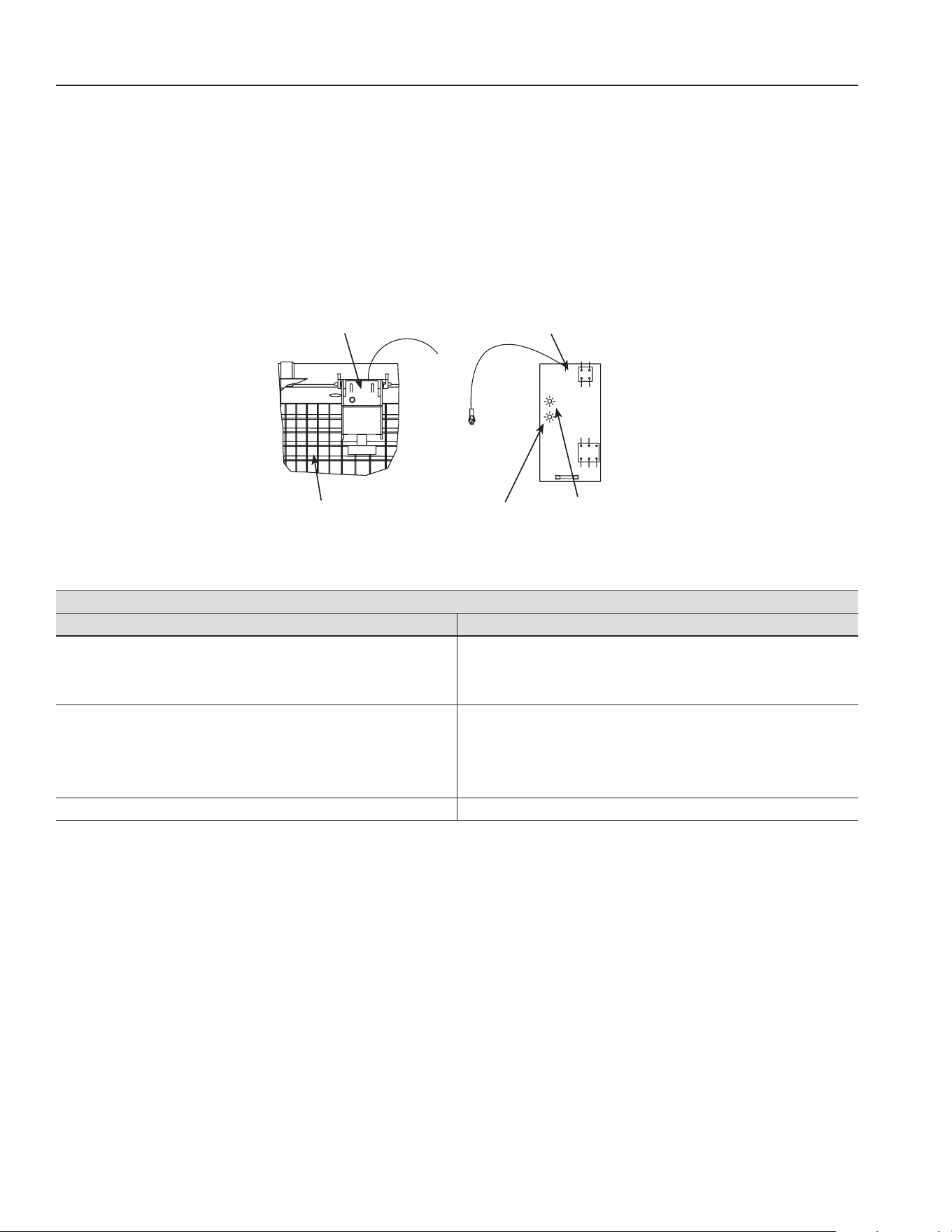
66 Part Number: 000016427 Rev 00 08/2020
Troubleshooting
Troubleshooting Ice Thickness Control Circuitry
ICE MACHINE DOES NOT CYCLE INTO HARVEST WHEN WATER CONTACTS THE ICE
THICKNESS CONTROL PROBE
Step 1 Bypass the freeze time lock-in feature by moving the ON/OFF/WASH switch to
OFF and back to ON. Wait until the water starts to flow over the evaporator.
Step 2 Clip the jumper wire to the ice thickness probe and any cabinet ground.
EVAPORATOR
ICE THICKNESS
PROBE
PROBE
CONNECTION
GROUND
JUMPER
WIRE
BIN SWITCH
LIGHT (GREEN)
HARVEST
LIGHT (RED)
SV1592i
Step 2 Jumper wire connected from probe to ground
Monitoring Harvest Light Correction
The harvest light comes on, and 6-10
seconds later, ice machine cycles from freeze
to harvest.
The ice thickness control circuitry is
functioning properly. Do not change any
parts.
The harvest light comes on but the ice
machine stays in the freeze sequence.
The ice control circuitry is functioning
properly. The ice machine is in a six minute
freeze time lock-in. Verify Step 1 of this
procedure was followed correctly.
The harvest light does not come on. Proceed to Step 3.
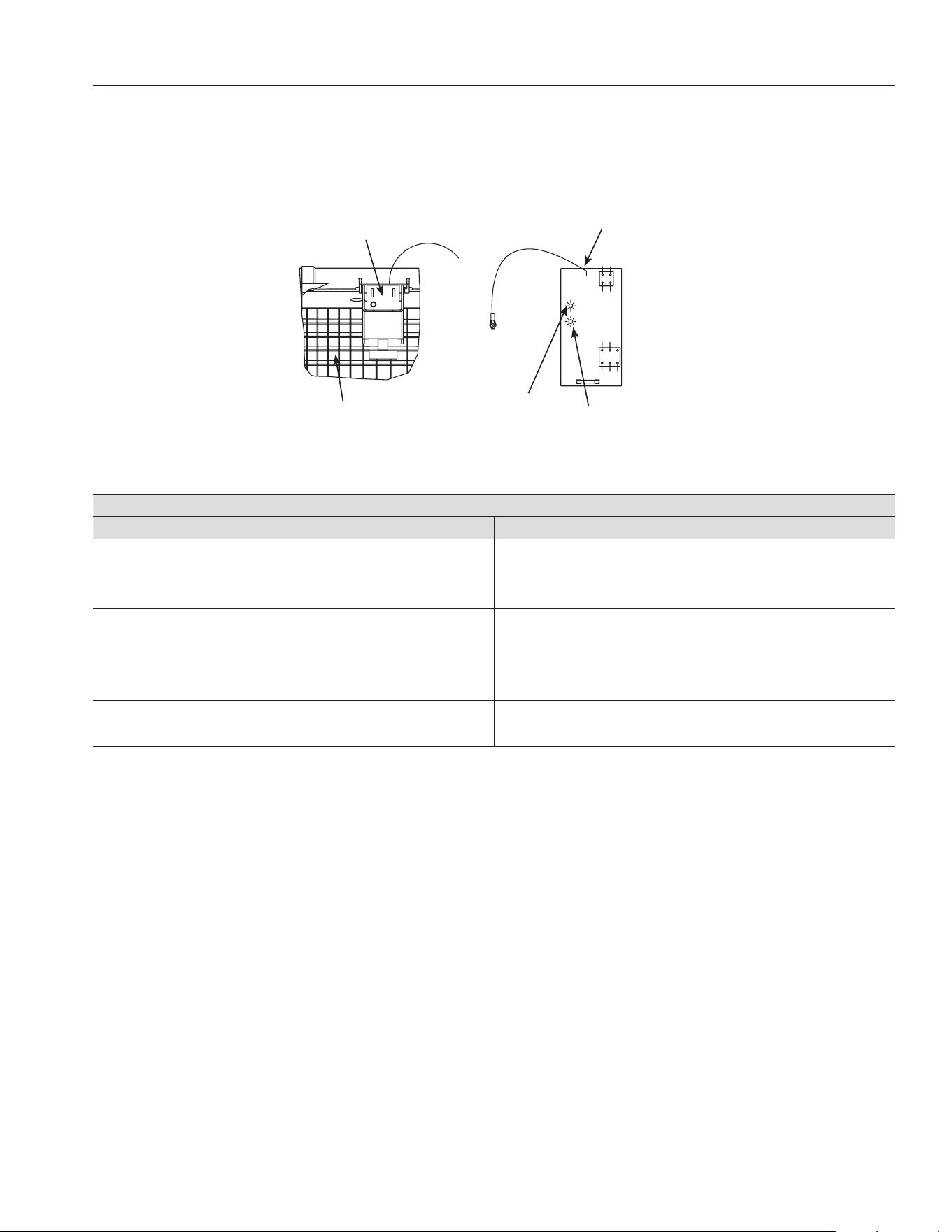
Part Number: 000016427 Rev 00 08/2020 67
Troubleshooting
Step 3 Disconnect the ice thickness probe from the control board terminal. Clip the
jumper wire to the terminal on the control board and any cabinet ground. Monitor the
harvest light.
EVAPORATOR
ICE THICKNESS
PROBE
PROBE
CONNECTION
GROUND
JUMPER WIRE
BIN SWITCH
LIGHT (GREEN)
HARVEST LIGHT
(RED)
SV1592J
Step 3 Jumper wire connected from control board terminal to ground
Monitoring Harvest Light Correction
The harvest light comes on, and 6-10
seconds later, ice machine cycles from freeze
to harvest.
The ice thickness probe is causing the
malfunction.
The harvest light comes on but the ice
machine stays in the freeze sequence.
The control circuitry is functioning properly.
The ice machine is in a six-minute freeze
time lock-in (verify step 1 of this procedure
was followed correctly).
The harvest light does not come on. The control board is causing the
malfunction.
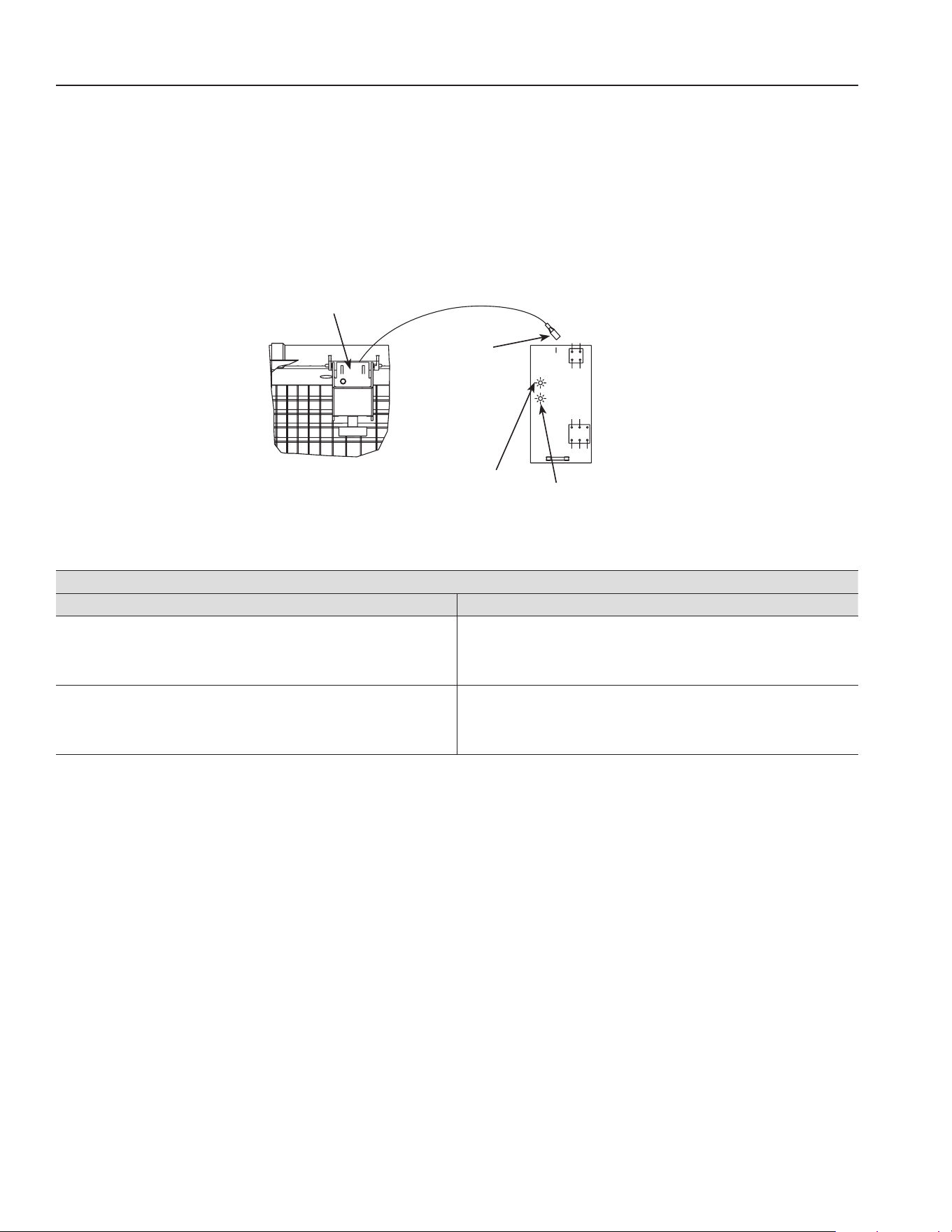
68 Part Number: 000016427 Rev 00 08/2020
Troubleshooting
ICE MACHINE CYCLES INTO HARVEST BEFORE WATER CONTACT WITH THE ICE
THICKNESS PROBE
Step 1 Bypass the freeze time lock-in feature by moving the ON/OFF/WASH switch to
OFF and back to ON. Wait until the water starts to flow over the evaporator, then monitor
the harvest light.
Step 2 Disconnect the ice thickness probe from the control board terminal.
ICE THICKNESS
PROBE
DISCONNECT
PROBE WIRE
BIN SWITCH
LIGHT (GREEN)
HARVEST LIGHT
(RED)
SV1592J_2
Step 2 Disconnect probe from control board terminal
Monitoring Harvest Light Correction
The harvest light stays off and the ice
machine remains in the freeze sequence.
The ice thickness probe is causing the
malfunction. Verify that the ice thickness
probe is adjusted correctly.
The harvest light comes on, and 6-10
seconds later, the ice machine cycles from
freeze to harvest.
The control board is causing the
malfunction.

Part Number: 000016427 Rev 00 08/2020 69
Troubleshooting
Ice Production Check
The amount of ice a machine produces directly relates to the operating water and air
temperatures. This means an ice machine with a 70°F (21.2°C) ambient temperature and
50°F (10.0°C) water produces more ice than the same ice machine with 90°F (32.2°C)
ambient and 70°F (21.2°C) water.
1. Determine the ice machine operating conditions:
Air temp entering condenser: ____°
Air temp around ice machine: ____°
Water temp entering sump trough: ____°
2. Refer to the appropriate 24-Hour Ice Production Chart. Use the operating conditions
determined in step 1 to find published 24-Hour Ice Production:_____
• Times are in minutes.
Example: 1 min. 15 sec. converts to 1.25 min.
(15 seconds ÷ 60 seconds = .25 minutes)
• Weights are in pounds.
Example: 2 lb. 6 oz. converts to 2.375 lb.
(6 oz. ÷ 16 oz. = .375 lb.)
3. Perform an ice production check using the formula below.
1. + =
Freeze Time Harvest Time Total Cycle Time
2. 1440 ÷ =
Minutes in 24 Hrs. Total Cycle Time Cycles per Day
3. x =
Weight of One Harvest Cycles per Day Actual 24-Hour
Production
Weighing the ice is the only 100% accurate check. However, if the ice pattern is normal and
the 1/8" (3 mm) thickness is maintained, the ice slab weights listed with the 24-Hour Ice
Production Charts may be used.
4. Compare the results of step 3 with step 2. Ice production is normal when these
numbers match closely. If they match closely, determine if:
• Another larger ice machine is required.
• Relocating the existing equipment to lower the load conditions is required.
Contact the local distributor for information on available options and accessories.

70 Part Number: 000016427 Rev 00 08/2020
Troubleshooting
Installation and Visual Inspection Checklist
Ice machine is not level
Level the ice machine
Condenser is dirty
• Clean the condenser
Water filtration is plugged (if used)
• Install a new water filter
Water drains are not run separately and/or are not vented
• Run and vent drains according to the Installation Manual
Water System Checklist
A water-related problem often causes the same symptoms as a refrigeration system
component malfunction.
Example: A water dump valve leaking during the freeze cycle, a system low on charge, and
a starving TXV have similar symptoms.
Water system problems must be identified and eliminated prior to replacing refrigeration
components.
Water area (evaporator) is dirty
• Clean as needed
Water inlet pressure not between 20 and 80 psig (1–5 bar, 138–552 kPa)
• Install a water regulator valve or increase the water pressure
Incoming water temperature is not between 35°F (1.7°C) and 90°F (32.2°C)
• If too hot, check the hot water line check valves in other store equipment
Water filtration is plugged (if used)
• Install a new water filter

Part Number: 000016427 Rev 00 08/2020 71
Troubleshooting
Vent tube is not installed on water outlet drain
• See Installation Instructions
Hoses, fittings, etc., are leaking water
• Repair/replace as needed
Water float valve is stuck open or closed
• Clean/replace as needed
Water is spraying out of the sump trough area
• Stop the water spray
Uneven water flow across the evaporator
• Clean the ice machine
Water is freezing behind the evaporator
• Correct the water flow
Plastic extrusions and gaskets are not secured to the evaporator
• Remount/replace as needed

72 Part Number: 000016427 Rev 00 08/2020
Troubleshooting
Ice Formation Pattern
Evaporator ice formation pattern analysis is helpful in ice machine diagnostics.
Analyzing the ice formation pattern alone cannot diagnose an ice machine malfunction.
However, when this analysis is used along with the Refrigeration System Operational
Analysis Table, it can help diagnose an ice machine malfunction.
Any number of problems can cause improper ice formation.
Example: An ice formation that is “extremely thin at the outlet” could be caused by a
hot water supply, water leaking out the overflow pipe, a faulty water float valve, a low
refrigerant charge, etc.
OUTLET
INLET
OUTLET
INLET
K0170 K0270
Examples of Evaporator Tubing Routing
Normal Ice Formation
Ice forms across the entire evaporator surface.
At the beginning of the Freeze cycle, it may appear that more ice is forming on the inlet
of the evaporator than at the outlet. At the end of the Freeze cycle, ice formation at the
outlet will be close to, or just a bit thinner than, ice formation at the inlet. The dimples in
the cubes at the outlet of the evaporator may be more pronounced than those at the inlet.
This is normal.
If ice forms uniformly across the evaporator surface, but does not do so in the proper
amount of time, this is still considered a normal ice fill pattern.

Part Number: 000016427 Rev 00 08/2020 73
Troubleshooting
Extremely Thin at Evaporator Outlet
There is no ice, or a considerable lack of ice formation on the outlet of the evaporator.
Examples: No ice at all at the outlet of the evaporator, but ice forms at the inlet half of the
evaporator. Or, the ice at the outlet of the evaporator reaches the correct thickness, but
the outlet of the evaporator already has 1/2" to 1" (12.7 mm to 25.4 mm) of ice formation.
Possible cause: Water loss, low on refrigerant, starving TXV, hot water supply, faulty float
valve, etc.
Extremely Thin at Evaporator Inlet
There is no ice, or a considerable lack of ice formation at the inlet of the evaporator.
Examples: The ice at the outlet of the evaporator reaches the correct thickness, but there
is no ice formation at all at the inlet of the evaporator.
Possible cause: Insufficient water flow, flooding TXV, etc.
Spotty Ice Formation
There are small sections on the evaporator where there is no ice formation. This could be
a single corner, or a single spot in the middle of the evaporator. This is generally caused by
loss of heat transfer from the tubing on the backside of the evaporator.
No Ice Formation
The ice machine operates for an extended period, but there is no ice formation at all on
the evaporator.
Possible cause: Water float valve, water pump, starving expansion valve, low refrigerant
charge, compressor, etc.

74 Part Number: 000016427 Rev 00 08/2020
Troubleshooting
Safety Limit Feature
In addition to the standard safety controls, your Koolaire® ice machine features built-in
safety limits that will stop the ice machine if conditions arise which could cause a major
component failure.
Before calling for service, re-start the ice machine using the following procedure:
1. Move the ON/OFF/WASH switch to OFF and then back to ON.
2. If the safety limit feature has stopped the ice machine, it will restart after a short
delay. Proceed to step 4.
3. If the ice machine does not restart, see “Ice machine does not operate”.
4. Allow the ice machine to run to determine if the condition is reoccurring.
A. If the ice machine stops again, the condition has reoccurred. Call for service.
B. If the ice machine continues to run, the condition has corrected itself. Allow the ice
machine to continue running.
SAFETY LIMITS
In addition to standard safety controls, the control board has two built in safety limit
controls which protect the ice machine from major component failures.
SAFETY LIMIT #1
If the freeze time reaches 60 minutes, the control board automatically initiates a harvest
cycle. 3 cycles outside the time limit = 1 hour Stand-by Mode.
SAFETY LIMIT #2
If the harvest time reaches 3.5 minutes, the control board automatically returns the
ice machine to the freeze cycle. 3 cycles outside the time limit = Safety Limit (must be
MANUALLY reset).
SAFETY LIMIT STAND-BY MODE
The first time a safety limit shut down occurs, the ice machine turns off for 60 minutes
(Stand-by Mode). The ice machine will then automatically restart to see if the problem
reoccurs. During the Stand-by Mode the harvest light will be flashing continuously and a
safety limit indication can be viewed. If the same safety limit is reached a second time (the
problem has reoccurred), the ice machine will initiate a safety limit shut down and remain
off until it is manually restarted. During a safety limit shut down the harvest light will be
flashing continuously.

Part Number: 000016427 Rev 00 08/2020 75
Troubleshooting
Determining Which Safety Limit Stopped the Ice Machine: When a safety limit condition
causes the ice machine to stop, the harvest light on the control board continually flashes
on and off. Use the following procedures to determine which safety limit has stopped the
ice machine.
1. Move the toggle switch to OFF.
2. Move the toggle switch back to ON.
3. Watch the harvest light. It will flash one or two times, corresponding to safety limits 1
and 2, to indicate which safety limit stopped the ice machine.
After safety limit indication, the ice machine will restart and run until a safety limit is
exceeded again.
Safety Limit Notes
• A safety limit indication is completed before the water pump starts. Water contacting
the ice thickness probe in the freeze cycle will cause the harvest light to flash. Do not
mistake a harvest light flashing in the freeze cycle with a safety limit indication.
• A continuous run of 100 harvests automatically erases the safety limit code.
• The control board will store and indicate only one safety limit – the last one exceeded.
• If the toggle switch is moved to the OFF position and then back to the ON position prior
to reaching the 100-harvest point, the last safety limit exceeded will be indicated.
• If the harvest light did not flash prior to the ice machine restarting, then the ice machine
did not stop because it exceeded a safety limit.

76 Part Number: 000016427 Rev 00 08/2020
Troubleshooting
ANALYZING WHY SAFETY LIMITS MAY STOP THE ICE MACHINE
According to the refrigeration industry, a high percentage of compressor failure is a
result of external causes. These can include flooding or starving expansion valves, dirty
condensers, water loss to the ice machine, etc. The safety limits protect the ice machine
(primarily the compressor) from external failures by stopping ice machine operation before
major component damage occurs.
The safety limit system is similar to a high-pressure cutout control. It stops the ice
machine, but does not tell what is wrong. The service technician must analyze the system
to determine what caused the high-pressure cutout, or a particular safety limit, to stop the
ice machine.
The safety limits are designed to stop the ice machine prior to major component failures,
most often a minor problem or something external to the ice machine. This may be
difficult to diagnose, as many external problems occur intermittently.
Example: An ice machine stops intermittently on safety limit #1 (long freeze times). The
problem could be a low ambient temperature at night, a water pressure drop; the water is
turned off one night a week, etc.
When a high-pressure cutout or a safety limit stops the ice machine, they are doing what
they are supposed to do. That is, stopping the ice machine before a major component
failure occurs.
Refrigeration and electrical component failures may also trip a safety limit. Eliminate all
electrical components and external causes first. If it appears that the refrigeration system
is causing the problem, use the Refrigeration System Operational Analysis Table, along with
detailed charts, checklists, and other references to determine the cause.

Part Number: 000016427 Rev 00 08/2020 77
Troubleshooting
SAFETY LIMIT CHECKLIST
The following checklists are designed to assist the service technician in analysis. However,
because there are many possible external problems, do not limit your diagnosis to only the
items listed.
Safety Limit #1
Freeze time exceeds 60 minutes for 6 consecutive freeze cycles.
Possible Cause Checklist
Improper Installation
• Refer to “Installation and Visual Inspection Checklist” on page 70
Water System
• Water Level set too high (water escaping through over flow tube)
• Low water pressure (20 psig min.)
• High water pressure (80 psig max.)
• High water temperature (90°F/32.2°C max.)
• Clogged water distribution tube
• Dirty/defective float valve
• Defective water pump
Electrical System
• Ice thickness probe out of adjustment
• Harvest cycle not initiated electrically
• Compressor relay not energizing
• Compressor electrically non-operational
• High inlet air temperature (110°F/43.3°C max.)
• Defective fan cycling control
• Defective fan motor
• Dirty condenser

78 Part Number: 000016427 Rev 00 08/2020
Troubleshooting
Refrigeration System
• Restricted condenser air flow
• Condenser discharge air re-circulation
• Dirty condenser fins
• Non-OEM components
• Improper refrigerant charge
• Defective compressor
• TXV starving or flooding (check bulb mounting)
• Non-condensible in refrigeration system
• Plugged or restricted high side refrigerant lines or component
• Defective harvest valve

Part Number: 000016427 Rev 00 08/2020 79
Troubleshooting
Safety Limit #2
Harvest time exceeds 3.5 minutes for 6 Consecutive harvest cycles.
Possible Cause Checklist
Improper Installation
• Refer to “Installation and Visual Inspection Checklist” on page 70
Water System
• Water area (evaporator) dirty
• Dirty/defective water dump valve
• Vent tube not installed on water outlet drain
• Water freezing behind evaporator
• Plastic extrusions and gaskets not securely mounted to the evaporator
• Low water pressure (20 psig min.)
• Loss of water from sump area
• Clogged water distribution tube
• Dirty/defective float valve
• Defective water pump
Electrical System
• Ice thickness probe out of adjustment
• Ice thickness probe dirty
• Bin switch defective
• Premature harvest
Refrigeration System
• Non-OEM components
• Improper refrigerant charge
• Defective harvest valve
• TXV flooding (check bulb mounting)
• Defective fan cycling control
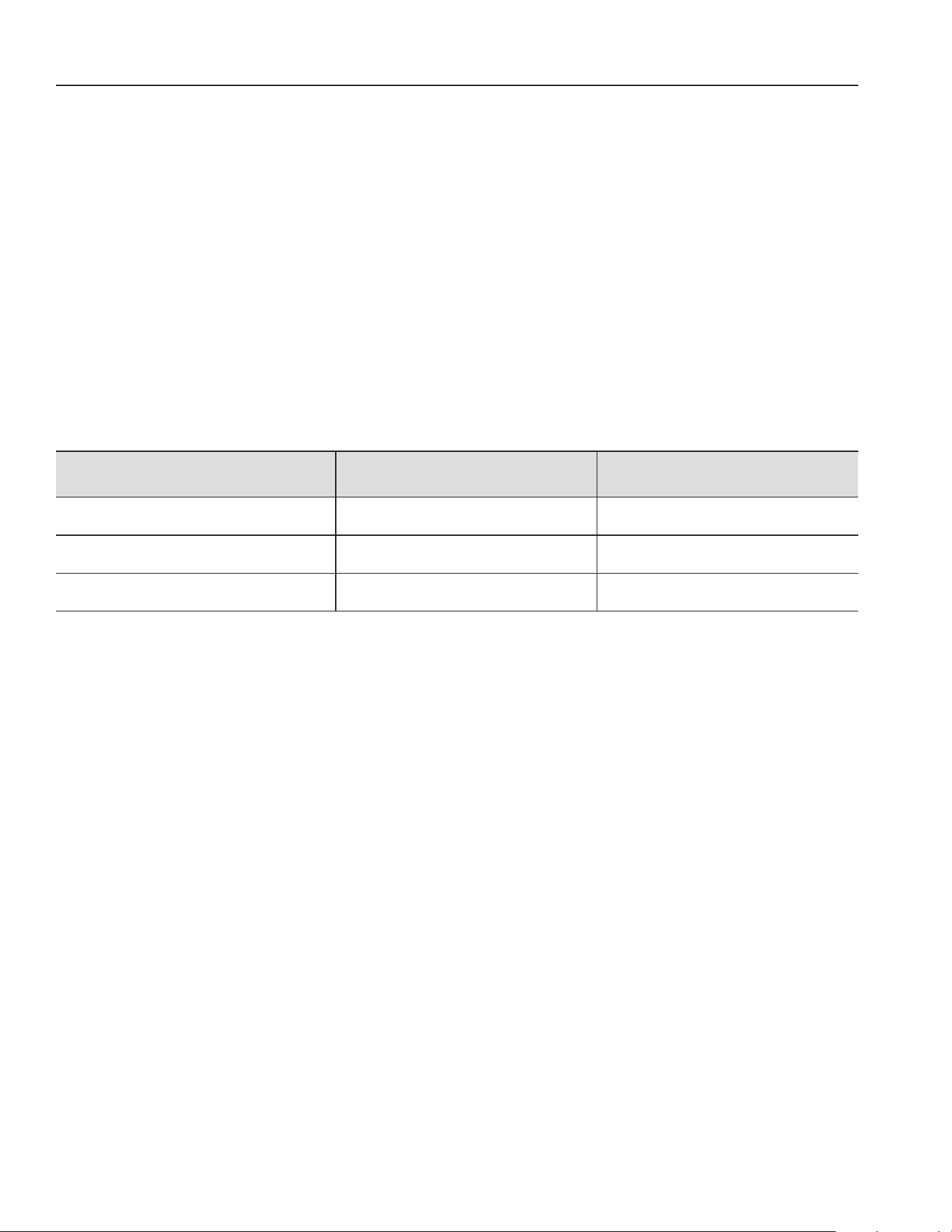
80 Part Number: 000016427 Rev 00 08/2020
Troubleshooting
Analyzing Discharge Pressure
1. Determine the ice machine operating conditions:
Air temp. entering condenser ______°
Air temp. around ice machine ______°
Water temp. entering sump trough ______°
2. Refer to “Ice Machine Normal Operation Charts” on page 119 for ice machine being
checked.
Use the operating conditions determined in step 1 to find the published normal discharge
pressures.
Freeze Cycle ______
Harvest Cycle ______
3. Perform an actual discharge pressure check.
Freeze Cycle
PSIG
Harvest Cycle
PSIG
Beginning of Cycle ______________________ ______________________
Middle of Cycle ______________________ ______________________
End of Cycle ______________________ ______________________
4. Compare the actual discharge pressure (step 3) with the published discharge pressure
(step 2).
The discharge pressure is normal when the actual pressure falls within the published
pressure range for the ice machine’s operating conditions. It is normal for the discharge
pressure to be higher at the beginning of the freeze cycle (when load is greatest), then
drop through out the freeze cycle.

Part Number: 000016427 Rev 00 08/2020 81
Troubleshooting
DISCHARGE PRESSURE HIGH CHECKLIST
Improper Installation
• Refer to “Installation and Visual Inspection Checklist” on page 70
Restricted Condenser Air Flow
• High inlet air temperature
• Condenser discharge air re-circulation
• Dirty condenser fins
• Defective fan cycling control
• Defective fan motor
Improper Refrigerant Charge
• Overcharged
• Non-condensible in system
• Wrong type of refrigerant
Other
• Non-OEM components in system
• High side refrigerant lines/component
• Restricted (before mid-condenser)
FREEZE CYCLE DISCHARGE PRESSURE LOW CHECKLIST
Improper Installation
• Refer to “Installation and Visual Inspection Checklist” on page 70
Improper Refrigerant Charge
• Undercharged
• Wrong type of refrigerant
Other
• Non-OEM components in system
• High side refrigerant lines/component restricted (before mid-condenser)
• Defective fan cycle control

82 Part Number: 000016427 Rev 00 08/2020
Troubleshooting
Analyzing Suction Pressure
The suction pressure gradually drops throughout the freeze cycle. The actual suction
pressure (and drop rate) changes as the air and water temperature entering the ice
machine changes. These variables also determine the freeze cycle times.
To analyze and identify the proper suction pressure drop throughout the freeze cycle,
compare the published suction pressure to the published freeze cycle time.
NOTE: Analyze discharge pressure before analyzing suction pressure. High or low discharge
pressure may be causing high or low suction pressure.

Part Number: 000016427 Rev 00 08/2020 83
Troubleshooting
Procedure
Step
1. Determine the ice machine operating conditions.
Example:
Air temp. entering condenser: 90°F/32.2°C
Air temp. around ice machine: 80°F/26.7°C
Water temp. entering water fill valve: 70°F/21.1°C
2A. Refer to “Cycle Time” and “Operating Pressure” charts for ice machine model being
checked. Using operating conditions from Step 1, determine published freeze cycle time
and published freeze cycle suction pressure.
Example:
Published freeze cycle time: 14.8 - 15.9 minutes
Published freeze cycle suction pressure: 65 - 26 psig
2B. Compare the published freeze cycle time and published freeze cycle suction pressure.
Develop a chart.
Example:
Published Freeze Cycle Time (minutes)
1 2 4 7 10 12 14
| | | | | | |
65 55 47 39 34 30 26
Published Freeze Cycle Suction Pressure (psig)
In the example, the proper suction pressure should be approximately 39 psig at 7
minutes; 30 psig at 12 minutes; etc.
3. Perform an actual suction pressure check at the beginning, middle and end of the
freeze cycle. Note the times at which the readings are taken.
Example:
Manifold gauge set was connected to the example ice machine and suction pressure
readings taken as follows: ________ PSIG
Beginning of freeze cycle: 79 (at 1 min.)
Middle of freeze cycle: 48 (at 7 min.)
End of freeze cycle: 40 (at 14 min.)
4. Compare the actual freeze cycle suction pressure (Step 3) to the published freeze cycle
time and pressure comparison (Step 2B). Determine if the suction pressure is high, low or
acceptable.
Example:
In this example, the suction pressure is considered high throughout the freeze cycle. It
should have been:
Approximately 65 psig (at 1 minute) – not 79
Approximately 39 psig (at 7 minutes) – not 48
Approximately 26 psig (at 14 minutes) – not 40

84 Part Number: 000016427 Rev 00 08/2020
Troubleshooting
SUCTION PRESSURE HIGH CHECKLIST
Improper Installation
• Refer to “Installation and Visual Inspection Checklist” on page 70
Discharge Pressure
• Discharge pressure is too high, and is affecting suction pressure, refer to “Discharge
Pressure High Checklist” on page 81
Improper Refrigerant Charge
• Overcharged
• Wrong type of refrigerant
• Non-condensible in system
Other
• Non-OEM components in system
• Harvest valve leaking
• TXV flooding (check bulb mounting)
• Defective compressor
SUCTION PRESSURE LOW CHECKLIST
Improper Installation
• Refer to “Installation and Visual Inspection Checklist” on page 70
Discharge Pressure
• Discharge pressure is too low, and is affecting suction pressure, refer to “Freeze Cycle
Discharge Pressure Low Checklist” on page 81
Improper Refrigerant Charge
• Undercharged
• Wrong type of refrigerant
Other
• Non-OEM components in system
• Improper water supply over evaporator refer to “Water System Checklist” on page 70
• Loss of heat transfer from tubing on back side of evaporator
• Restricted/plugged liquid line drier
• Restricted/plugged tubing in suction side of refrigeration system
• TXV starving
NOTE: Do not limit your diagnosis to only the items listed in the checklists.

Part Number: 000016427 Rev 00 08/2020 85
Troubleshooting
Harvest Valve
General
The harvest valve is an electrically operated valve that opens when energized, and closes
when de-energized.
Normal Operation
The valve is de-energized (closed) during the freeze cycle and energized (open) during
the harvest cycle. The valve is positioned between the receiver and the evaporator and
performs two functions:
1. Prevents refrigerant from entering the evaporator during the freeze cycle.
The harvest valve is not used during the freeze cycle. The harvest valve is de-
energized (closed) preventing refrigerant flow from the receiver into the evaporator.
2. Allows refrigerant vapor to enter the evaporator in the harvest cycle.
During the harvest cycle, the harvest valve is energized (open) allowing refrigerant
gas from the discharge line of the compressor to flow into the evaporator. The heat is
absorbed by the evaporator and allows release of the ice slab.
Exact pressures vary according to ambient temperature and ice machine model. Harvest
pressures can be found in the Cycle Time/24 Hour Ice Production/Refrigerant Pressure
Charts in this book.

86 Part Number: 000016427 Rev 00 08/2020
Troubleshooting
HARVEST VALVE ANALYSIS
The valve can fail in two positions:
• Valve will not open in the harvest cycle.
• Valve remains open during the freeze cycle.
VALVE WILL NOT OPEN IN THE HARVEST CYCLE
Although the circuit board has initiated a harvest cycle, the evaporator temperature
remains unchanged from the freeze cycle.
,
Caution
Coil must be seated 100% on solenoid to function correctly. Install coil with a twisting
motion to properly seat.
VALVE REMAINS OPEN IN THE FREEZE CYCLE:
Symptoms of a harvest valve remaining partially open during the freeze cycle can be
similar to symptoms of an expansion valve, float valve or compressor problem. Symptoms
are dependent on the amount of leakage in the freeze cycle.
A small amount of leakage will cause increased freeze times and an ice fill pattern that is
“Thin at the Outlet”, but fills in at the end of the cycle.
As the amount of leakage increases the length of the freeze cycle increases and the
amount of ice at the outlet of the evaporator decreases.
Refer to the Parts Manual for proper valve application. If replacement is necessary, use
only “original” replacement parts.

Part Number: 000016427 Rev 00 08/2020 87
Troubleshooting
Use the following procedure and table to help determine if a harvest valve is remaining
partially open during the freeze cycle.
1. Wait five minutes into the freeze cycle.
2. Feel the inlet of the harvest valve.
Important
Feeling the harvest valve outlet or across the harvest valve itself will not work for this
comparison.
The harvest valve outlet is on the suction side (cool refrigerant). It may be cool enough
to touch even if the valve is leaking.
3. Feel the compressor discharge line.
n
Warning
The inlet of the harvest valve and the compressor discharge line could be hot enough to
burn your hand. Just touch them momentarily.
4. Compare the temperature of the inlet of the harvest valve to the temperature of the
compressor discharge line.

88 Part Number: 000016427 Rev 00 08/2020
Troubleshooting
Findings Comments
The inlet of the harvest valve is cool enough
to touch and the compressor discharge line
is hot.
Cool & Hot
This is normal as the discharge line should
always be too hot to touch and the harvest
valve inlet, although too hot to touch during
harvest, should be cool enough to touch
after 5 minutes into the freeze cycle.
The inlet of the harvest valve is hot and
approaches the temperature of a hot
compressor discharge line.
Hot & Hot
This is an indication something is wrong, as
the harvest valve inlet did not cool down
during the freeze cycle. If the compressor
dome is also entirely hot, the problem
is not a harvest valve leaking, but rather
something causing the compressor (and the
entire ice machine) to get hot.
Both the inlet of the harvest valve and the
compressor discharge line are cool enough
to touch.
Cool & Cool
This is an indication something is wrong,
causing the compressor discharge line to
be cool to the touch. This is not caused by a
harvest valve leaking.
5. Record your findings on the table.

Part Number: 000016427 Rev 00 08/2020 89
Troubleshooting
Comparing Evaporator Inlet/Outlet Temperatures
The temperatures of the suction lines entering and leaving the evaporator alone cannot
diagnose an ice machine. However, comparing these temperatures during the freeze cycle,
along with using the Refrigeration System Operational Analysis Table, can help diagnose an
ice machine malfunction.
The actual temperatures entering and leaving the evaporator vary by model, and change
throughout the freeze cycle. This makes documenting the “normal” inlet and outlet
temperature readings difficult. The key to the diagnosis lies in the difference between the
two temperatures five minutes into the freeze cycle. These temperatures must be within
7°F (4°C) of each other.
Use this procedure to document freeze cycle inlet and outlet temperatures.
1. Use a quality temperature meter, capable of taking temperature readings on curved
copper lines.
2. Attach the temperature meter sensing device to the copper lines entering and leaving
the evaporator.
Important
Do not simply insert the sensing device under the insulation. It must be attached to and
reading the actual temperature of the copper line.
3. Wait five minutes into the freeze cycle.
4. Record the temperatures below and determine the difference between them.
__________________ __________________ __________________
Inlet Temperature Difference must be within
7°F (4°C) at 5 minutes into
the freeze cycle
Outlet Temperature
5. Use this with other information gathered on the Refrigeration System Operational
Analysis Table to determine the ice machine malfunction.

90 Part Number: 000016427 Rev 00 08/2020
Troubleshooting
Discharge Line Temperature
GENERAL
Knowing if the discharge line temperature is increasing, decreasing or remaining constant
can be an important diagnostic tool. Maximum compressor discharge line temperature
on a normally operating ice machine steadily increases throughout the freeze cycle.
Comparing the temperatures over several cycles will result in a consistent maximum
discharge line temperature.
Ambient air temperatures affect the maximum discharge line temperature.
Higher ambient air temperatures at the condenser = higher discharge line temperatures at
the compressor.
Lower ambient air temperatures at the condenser = lower discharge line temperatures at
the compressor.
Regardless of ambient temperature, the freeze cycle discharge line temperature will be
higher than 150°F (66°C) on a normally operating ice machine.
PROCEDURE
Connect a temperature probe on the compressor discharge line within 6" (15.2 cm) of the
compressor.
Observe the discharge line temperature for the last three minutes of the freeze cycle and
record the maximum discharge line temperature.
Discharge Line Temperature Above 150°F (66°C) at End of Freeze Cycle:
Ice machines that are operating normally will have consistent maximum discharge line
temperatures above 150°F (66°C).
Verify the expansion valve sensing bulb is positioned and secured correctly.
Discharge Line Temperature Below 150°F (66°C) at End of Freeze Cycle:
Ice machines that have a flooding expansion valve will have a maximum discharge line
temperature that decreases each cycle.
Verify the expansion valve sensing bulb is 100% insulated and sealed airtight. Condenser
air contacting an incorrectly insulated sensing bulb will cause overfeeding of the expansion
valve.

Part Number: 000016427 Rev 00 08/2020 91
Troubleshooting
Refrigeration Component Diagnostic Chart
All electrical and water related problems must be corrected before these charts will
work properly. These tables must be used with charts, checklists and other references to
eliminate refrigeration components not listed and external items and problems that will
cause good refrigeration components to appear defective.
The tables list four different defects that may affect the ice machine’s operation.
NOTE: A low-on-charge ice machine and a starving expansion valve have very similar
characteristics and are listed under the same column.
PROCEDURE
Step 1 Complete each item individually in the “Operational Analysis” column.
Enter check marks in the boxes.
Each time the actual findings of an item in the “Operational Analysis” column matches the
published findings on the table, enter a check mark.
Example: Freeze cycle suction pressure is determined to be low. Enter a check mark in the
“low” box.
Perform the procedures and check all information listed. Each item in this column has
supporting reference material.
While analyzing each item separately, you may find an “external problem” causing a
good refrigerant component to appear bad. Correct problems as they are found. If the
operational problem is found, it is not necessary to complete the remaining procedures.
Step 2 Add the check marks listed under each of the four columns. Note the column
number with the highest total and proceed to “Final Analysis.”
NOTE: If two columns have matching high numbers, a procedure was not performed
properly and/or supporting material was not analyzed correctly.

92 Part Number: 000016427 Rev 00 08/2020
Troubleshooting
FINAL ANALYSIS
The column with the highest number of check marks identifies the refrigeration problem.
Column 1 – Harvest Valve Leaking
A leaking harvest valve must be replaced.
Column 2 – Low Charge/TXV Starving
Normally, a starving expansion valve only affects the freeze cycle pressures, not the
harvest cycle pressures. A low refrigerant charge normally affects both pressures. Verify
the ice machine is not low on charge before replacing an expansion valve.
Add refrigerant charge in 2 oz. (57 g) increments as a diagnostic procedure to verify a low
charge. (Do not add more than the total charge of refrigerant). If the problem is corrected,
the ice machine is low on charge. Find the refrigerant leak.
The ice machine must operate with the nameplate charge. If the leak cannot be found,
proper refrigerant procedures must still be followed. Change the liquid line drier, evacuate
the system and weigh in the proper charge.
If the problem is not corrected by adding charge, the expansion valve is faulty.
Column 3 – TXV Flooding
A loose or improperly mounted expansion valve bulb causes the expansion valve to flood.
Check bulb mounting, insulation, etc., before changing the valve.
Column 4 – Compressor
Replace the compressor and start components. To receive warranty credit, the compressor
ports must be properly sealed by crimping and soldering them closed. Old start
components must be returned with the faulty compressor.
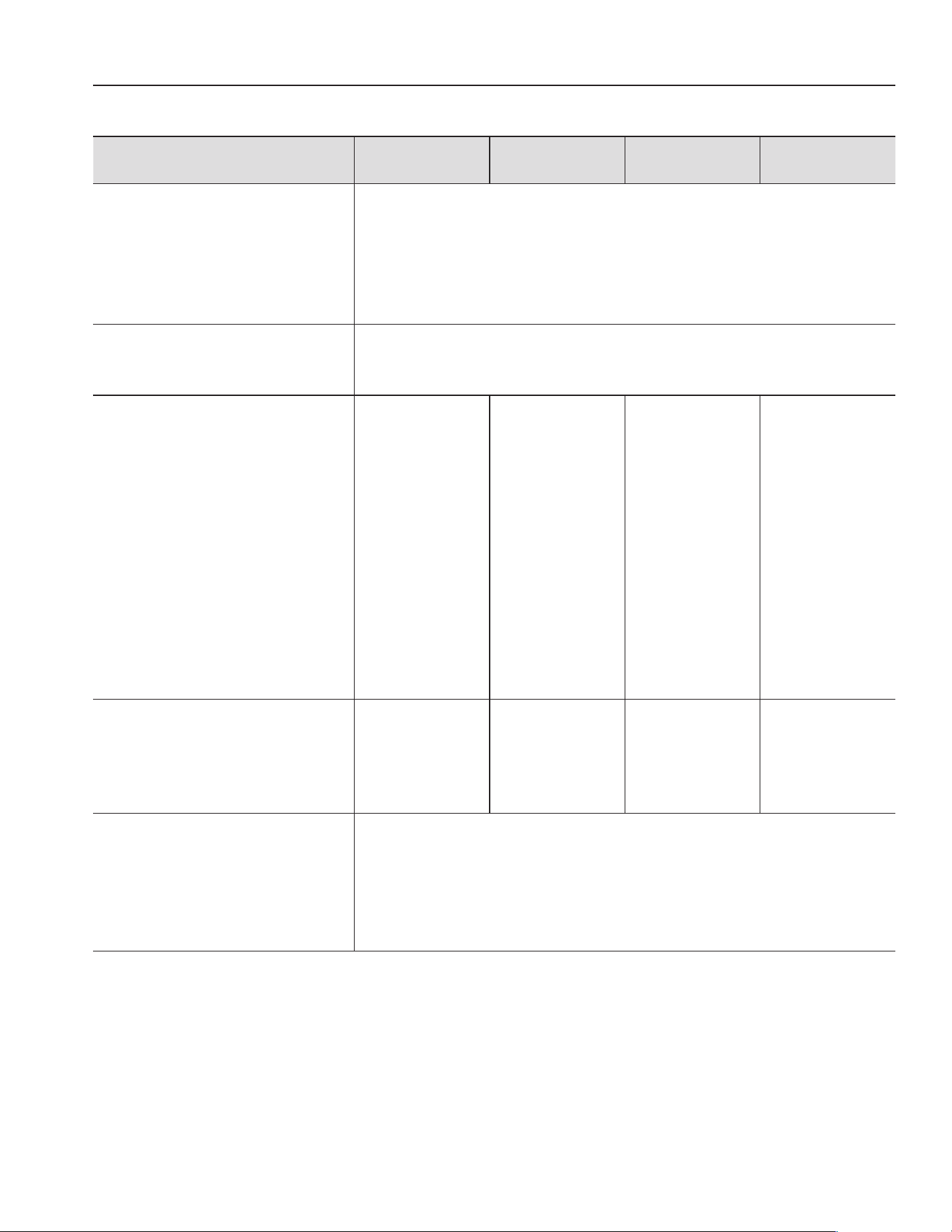
Part Number: 000016427 Rev 00 08/2020 93
Troubleshooting
REFRIGERATION COMPONENT DIAGNOSTIC CHART PKU0155
Operational Analysis 1 2 3 4
Ice Production Published 24 hour ice production________________
Calculated (actual) 24 hour ice production_______________
NOTE: The ice machine is operating properly if the ice
fill pattern is normal and ice production is within 10% of
charted capacity.
Installation and Water
System
All installation and water related problems must be
corrected before proceeding with chart.
Ice Formation Pattern Ice formation
is extremely
thin on top of
evaporator
-or-
No ice
formation
on the entire
evaporator
Ice formation
extremely thin
on top of the
evaporator
-or-
No ice
formation
on entire
evaporator
Ice formation
is normal
-or-
Ice formation
is extremely
thin on the
bottom of
evaporator
-or-
no ice
formation on
evaporator
Ice formation
is normal
-or-
No ice
formation
on entire
evaporator
Safety Limits
Refer to “Analyzing Safety
Limits” to eliminate all non-
refrigeration problems.
Stops on
safety limit:
1 or 2
Stops on
safety limit:
1
Stops on
safety limit:
1 or 2
Stops on
safety limit:
1
Freeze Cycle
Discharge Pressure
________ ______ _____
1 minute Middle End
into cycle
If discharge pressure is High or Low, refer to freeze cycle high
or low discharge pressure problem checklist to eliminate
problems and/or components not listed on this table before
proceeding.

94 Part Number: 000016427 Rev 00 08/2020
Troubleshooting
Operational Analysis 1 2 3 4
Freeze Cycle
Suction Pressure
________ ______ _____
1 minute Middle End
If suction pressure is High or Low refer to freeze cycle high
or low suction pressure problem checklist to eliminate
problems and/or components not listed on this table before
proceeding.
Suction
pressure is
High
Suction
pressure is
Low
Suction
pressure is
High
Suction
pressure is
High
Harvest Valve The harvest
valve inlet
is
HOT
and
The
compressor
discharge
line is
HOT
The harvest
valve inlet
is
COOL
and
The
compressor
discharge
line is
HOT
The harvest
valve inlet
is
COOL
and
The
compressor
discharge
line is
COOL
The harvest
valve inlet
is
COOL
and
The
compressor
discharge
line is
HOT
Discharge Line Temp.
Record freeze cycle
discharge line temp at the
end of freeze cycle.
Discharge line
temp 150°F
(66°C) or
higher at the
end of freeze
cycle
Discharge line
temp 150°F
(66°C) or
higher at the
end of freeze
cycle
Discharge line
temp
less than
150°F (66°C)
at the end of
freeze cycle
Discharge line
temp 150°F
(66°C) or
higher at the
end of freeze
cycle
Final Analysis
Enter total number of boxes
checked in each column.
Harvest Valve
Leaking
Low On
Charge
-or-
TXV Starving
TXV Flooding Compressor

Part Number: 000016427 Rev 00 08/2020 95
Troubleshooting
ICE QUALITY IS POOR — CUBES ARE SHALLOW, INCOMPLETE OR WHITE
Ice machine is dirty
• Clean and sanitize the ice machine
Water filtration is poor
• Replace the filter
Water softener is working improperly (if applicable)
• Repair the water softener
Poor incoming water quality
• Contact a qualified company to test the quality of the incoming water and make
appropriate filter recommendations
Water escaping from sump during freeze cycle
• Check standpipe and drain
• Check for water tracking out of water circuit

96 Part Number: 000016427 Rev 00 08/2020
Troubleshooting
FREEZE CYCLE IS LONG, LOW ICE PRODUCTION
Water temperature is too high
• Connect to a cold water supply, verify check valves in faucets and other equipment are
functioning correctly
Dirty Condenser
• Clean condenser
High air temperature entering condenser
• Air temperature must not exceed 120°F (39°C)
Water inlet valve filter screen is dirty
• Remove the water inlet valve and clean the filter screen
Water inlet valve stuck open or leaking
• Turn off ice machine, if water continues to enter ice machine, verify water pressure is ok
then replace water inlet valve
Water inlet valve is not working
• Water inlet valve must be replaced
Refrigeration problem
• Refer to refrigeration diagnostics
Water escaping from sump during freeze cycle
• Check standpipe and drain
• Check for water tracking out of water circuit

Part Number: 000016427 Rev 00 08/2020 97
Troubleshooting
ICE MACHINE RUNS AND NO ICE IS PRODUCED
No water to ice machine
• Correct water supply
Incorrect incoming water pressure
• Water pressure must be 20-80 psi (1.4-5.5 bar)
Excessive mineral buildup
• Clean and sanitize the ice machine
Ambient temperature is too high or low
• Ambient temperature must be between 50°F and 110°F (10°C and 43°C)
Compressor relay inoperable
• No voltage to coil or coil defective
• Defective contacts
Compressor off on overload
• Condenser fan motor defective
• Incorrect flow to water cooled condenser
• Ambient temperature too high
• Condenser blocked
• Faulty start components


Part Number: 000016427 Rev 00 08/2020 99
Main Fuse
Function
The control board fuse stops ice machine operation if electrical components fail causing
high amp draw.
Specifications
• The main fuse is 250 Volt, 3.15 amp.
n
Warning
High (line) voltage is applied to the control board at all times. Removing the control
board fuse or cycling the toggle switch Off/On will not remove the power supplied to
the control board.
Check Procedure
1. If the curtain light is on with the water curtain closed, the fuse is good.
n
Warning
Disconnect electrical power to the entire ice machine before proceeding.
2. Remove the fuse. Check the resistance across the fuse with an ohmmeter.
Reading Result
Open (OL) Replace fuse
Closed (O) Fuse is good
Specifications

100 Part Number: 000016427 Rev 00 08/2020
Specifications
Bin Switch
Function
Bin switch operation is controlled by the movement of the water curtain. The bin switch
has two main functions:
1. Terminating the harvest cycle and returning the ice machine to the freeze cycle.
This occurs when the bin switch is opened and closed again within 30 seconds of
opening during the harvest cycle.
2. Automatic ice machine shut-off.
If the storage bin is full at the end of a harvest cycle, the sheet of cubes fails to clear
the water curtain and holds it down. After the water curtain is held down for 30
seconds, the ice machine shuts off.
The ice machine remains off until enough ice is removed from the storage bin to allow
the sheet of cubes to drop clear of the water curtain. As the water curtain swings back
to the operating position, the bin switch closes and the ice machine restarts.
Important
The water curtain must be installed (bin switch closed) to start ice making.
Check Procedure
1. Cycle the toggle switch OFF.
2. Watch the curtain light on the control board.
3. Move the water curtain upward, toward the evaporator. The bin switch must close.
The curtain light “on” indicates the bin switch has closed properly.
4. Move the water curtain away from the evaporator. The bin switch must open. The
curtain light “off” indicates the bin switch has opened properly.
Ohm Test
1. Disconnect the bin switch wires from the control board.
2. Connect an ohmmeter to the disconnected bin switch.
3. Cycle the bin switch open and closed numerous times by opening and closing the
water curtain.
NOTE: To prevent misdiagnosis:
• Always use the water curtain magnet to cycle the switch (a larger or smaller magnet will
affect switch operation).
• Watch for consistent readings when the bin switch is cycled open and closed (bin switch
failure could be erratic).

Part Number: 000016427 Rev 00 08/2020 101
Specifications
Float Switch
Function
Open and close to indicate to the control board the level of water in the water trough.
Specifications
Normally closed, float operated magnetic reed switch.
The float switch contacts are closed in the down position. When water raises the float to
the up position the magnet in the float opens the contacts.
Check Procedure
The ice machine uses two float switches.
Ice Thickness Float - Indicates the water level has been reached.
Harvest Float - Indicates a harvest cycle needs to be initiated.
Initial testing can be performed by viewing the control board light(s) while raising and
lowering the float. The corresponding control board light must turn on and off when the
float is raised and lowered.
Harvest Float Switch:
A. The light must be on in the up position.
B. The light must be off in the down position.
Ice Thickness Float Switch:
A. The light must be off in the down position.
B. The light must be on in the up position.
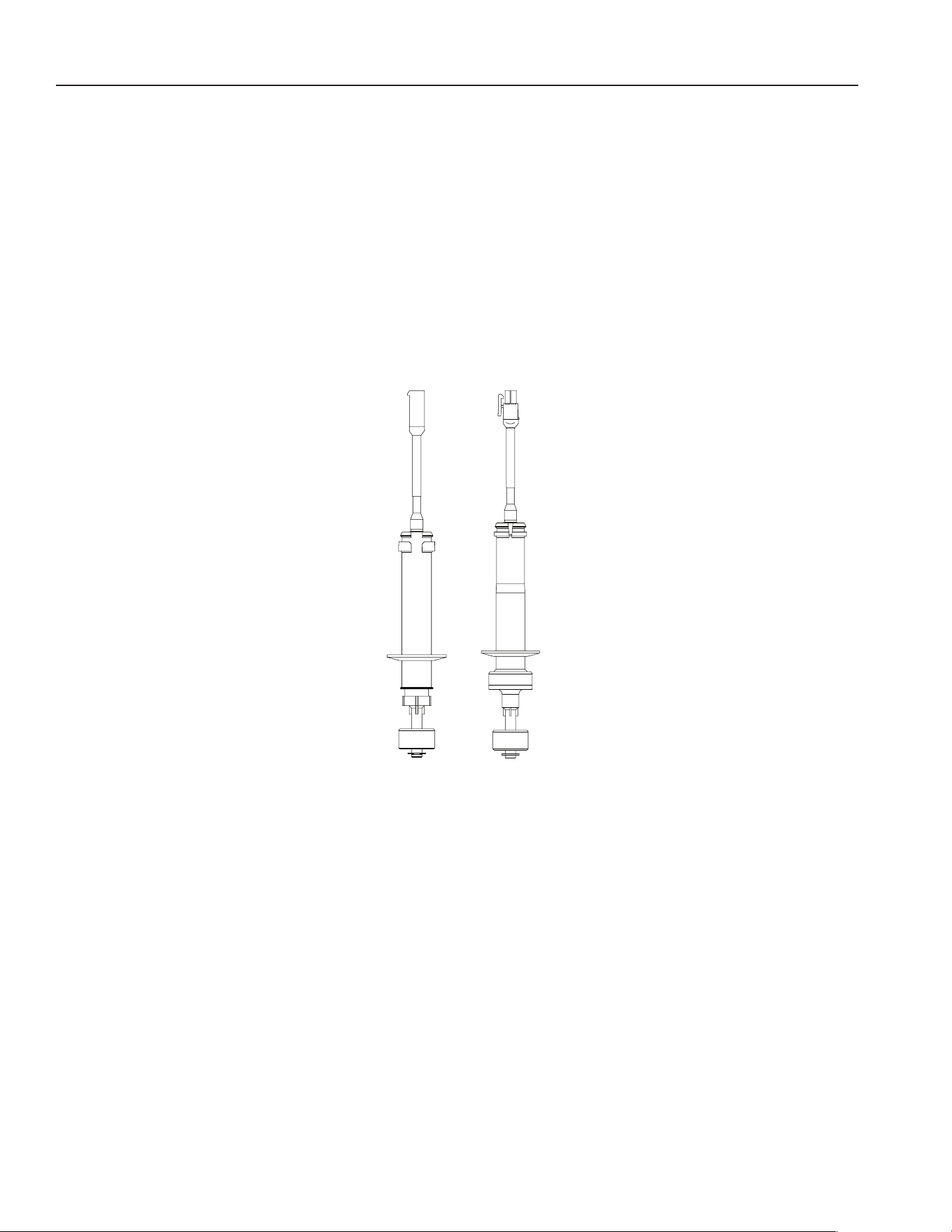
102 Part Number: 000016427 Rev 00 08/2020
Specifications
If the control board light does not respond to the float, proceed with Step 1 below.
1. Disconnect power to the ice machine and pull the float switch and connector through
the ice machine base and disconnect.
2. Attach an ohm meter lead to each float switch wire.
3. Place the float in the down position - The float switch must be closed.
4. Place the float in the up position - The float switch must be open.
5. If the float tests good, ohm the interconnecting wires to the control board and inspect
connectors.
NOTE: Make adjustments with the ice machine in the off position. Making adjustments
during the freeze cycle may produce an initial sheet of ice that is thicker than future cycles.
ICE THICKNESS
FLOAT
HARVEST
FLOAT

Part Number: 000016427 Rev 00 08/2020 103
Specifications
Compressor Electrical Diagnostics
The compressor does not start or will trip repeatedly on overload.
Check Resistance (Ohm) Values
NOTE: Compressor windings can have very low ohm values. Use a properly calibrated
meter.
Perform the resistance test after the compressor cools. The compressor dome should be
cool enough to touch (below 120°F/49°C) to ensure that the overload is closed and the
resistance readings will be accurate.
Single Phase Compressors
1. Disconnect power and remove the wires from the compressor terminals.
2. The resistance values between C and S and between C and R, when added together
should equal the resistance value between S and R.
3. If the overload is open, there will be a resistance reading between S and R, and open
readings between C and S and between C and R. Allow the compressor to cool, then
check the readings again.
Check Motor Windings to Ground
Check continuity between all three terminals and the compressor shell or copper
refrigeration line. Scrape metal surface to get good contact. If continuity is present, the
compressor windings are grounded and the compressor should be replaced.
To determine if the compressor is seized, check the amp draw while the compressor is
trying to start.

104 Part Number: 000016427 Rev 00 08/2020
Specifications
Compressor Drawing Locked Rotor
The two likely causes of this are:
• Defective starting component
• Mechanically seized compressor
To determine which you have:
1. Install high and low side gauge.
2. Try to start the compressor.
3. Watch the pressures closely.
• If the pressures do not move, the compressor is seized. Replace the compressor.
• If the pressures move, the compressor is turning slowly and is not seized. Check the
start components.
Compressor Drawing High Amps
The continuous amperage draw on start-up should not be near the maximum fuse size
indicated on the serial tag.
The wiring must be correctly sized to minimize voltage drop at compressor start-up. The
voltage when the compressor is trying to start must be within ±10% of the nameplate
voltage.
PTCR
The PTCR allows current to flow through the start winding at compressor startup.
Current flow heats the ceramic discs in the PTCR. The electrical resistance increases with
temperature and stops all except a trickle of current flow through the start winding. The
small flow of current keeps the PTCR hot (260°F/127°C) and the start winding out of the
circuit.
The PTCR must be cooled before attempting to start the compressor, otherwise the
PTCR will heat up too quickly and stop current flow through the start winding before the
compressor motor reaches full speed.
n
Warning
Disconnect electrical power to the entire ice machine at the building electrical
disconnect box before proceeding.
NOTE: If a PTCR is dropped internal damage can occur to the ceramic PTCR discs. The
ceramic disc can chip and cause arcing which leads to PTCR failure. Since there is no way
to open the PTCR in order to determine if the ceramic disc is chipped or not, it must be
discarded when dropped.
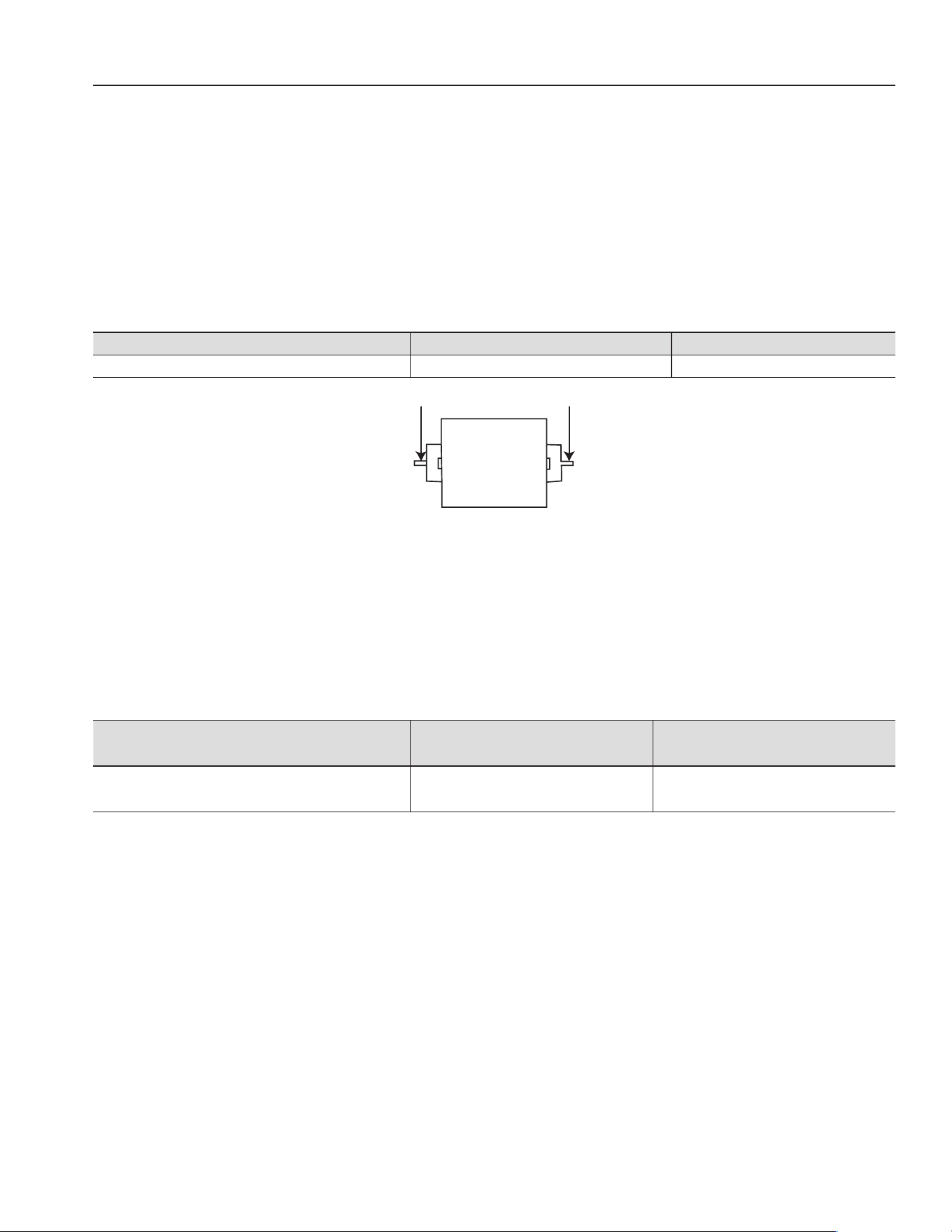
Part Number: 000016427 Rev 00 08/2020 105
Specifications
PTCR Operation Check
1. Visually inspect the PTCR. Check for signs of physical damage.
NOTE: The PTCR case temperature may reach 210°F (100°C) while the compressor is
running. This is normal. Do not change a PTCR just because it is hot.
2. Wait at least 10 minutes for the PTCR to cool to room temperature.
3. Remove the PTCR from the ice machine.
4. Measure the resistance of the PTCR as shown. The resistance reading must be
between:
Model Ohm Value Amp
PKM0335/PKM0425/PKM0535 10.5 to 19.5 12
Two Terminal PTCR
Fan Cycle Control
Function
Cycles the fan motor on and off to maintain proper operating discharge pressure.
The fan cycle control closes on an increase, and opens on a decrease in discharge pressure.
Specifications
Model
Cut-In
(Close)
Cut-Out
(Open)
PKM0335/PKM0425/PKM0535
335 psig ±5
2310 kPa ±5
275 psig ±5
1896 kPa ±5
Measure Resistance at Ends
106 Part Number: 000016427 Rev 00 08/2020
Specifications
Check Procedure
Disconnect electrical power to the ice machine at the electrical service disconnect.
Verify fan motor windings are not open or grounded, and fan spins freely.
Connect manifold gauge to ice machine.
Hook voltmeter in parallel across the fan cycle control, leaving wires attached.
Reconnect electrical power to the ice machine and Cycle the toggle switch On.
Wait until water flows over the evaporator then refer to chart below.
System Pressure: Reading Should Be: Fan Should Be:
above cut-in 0 volts running
below cut-out line voltage off

Part Number: 000016427 Rev 00 08/2020 107
Specifications
High Pressure Cutout (HPCO) Control
Function
Stops the ice machine if subjected to excessive high-side pressure.
The HPCO control is normally closed, and opens on a rise in discharge pressure.
Specifications
Cut-out: 600 psig ±10 / 4137 kPa ±10
Cut-in: 450 psig ±10 / 3103 kPa ±10
(Must be below 450 psig / 3103 kPa to reset).
Check Procedure
1. Move toggle switch to OFF.
2. Connect manifold gauge.
3. Hook voltmeter in parallel across the HPCO, leaving wires attached.
4. On water-cooled models, close the water service valve to the water condenser inlet.
On self-contained air-cooled models, disconnect the fan motor.
5. Move toggle switch to ON.
6. No water or air flowing through the condenser will cause the HPCO control to open
because of excessive pressure. Watch the pressure gauge and record the cut-out
pressure.
n
Warning
If discharge pressure exceeds 600 psig - 4137 kPa and the HPCO control does not cut
out, cycle the toggle switch Off to stop ice machine operation.
Replace the HPCO control if it:
• Will not reset (below 450 psig - 3103 kPa)
• Does not open at the specified cut-out point

108 Part Number: 000016427 Rev 00 08/2020
Specifications
Refrigerant Recovery/Evacuation
DEFINITIONS
Recover
To remove refrigerant, in any condition, from a system and store it in an external container,
without necessarily testing or processing it in any way.
Recycle
To clean refrigerant for re-use by oil separation and single or multiple passes through
devices, such as replaceable core filter-driers, which reduce moisture, acidity and
particulate matter. This term usually applies to procedures implemented at the field job
site or at a local service shop.
Reclaim
To reprocess refrigerant to new product specifications (see below) by means which may
include distillation. A chemical analysis of the refrigerant is required after processing to
be sure that product specifications are met. This term usually implies the use of processes
and procedures available only at a reprocessing or manufacturing facility.
Chemical analysis is the key requirement in this definition. Regardless of the purity levels
reached by a reprocessing method, refrigerant is not considered “reclaimed” unless it has
been chemically analyzed and meets ARI Standard 700 (latest edition).
New Product Specifications
This means ARI Standard 700 (latest edition). Chemical analysis is required to assure that
this standard is met.

Part Number: 000016427 Rev 00 08/2020 109
Specifications
REFRIGERANT RE-USE POLICY
Proper handling, re-use, and disposal of refrigerants during service procedures require
recapturing refrigerants, not venting them to the atmosphere.
It is not necessary, in or out of warranty, to reduce or compromise the quality and
reliability of your customers’ products to achieve this.
Important
Koolaire assumes no responsibility for use of contaminated refrigerant. Damage
resulting from the use of contaminated, recovered, or recycled refrigerant is the sole
responsibility of the servicing company.
1. New Refrigerant
• Must be of original nameplate type.
2. Reclaimed Refrigerant
• Must be of original nameplate type.
• Must meet ARI Standard 700 (latest edition) specifications.
3. Recovered or Recycled Refrigerant
• Must be recovered or recycled in accordance with current local, state and federal
laws.
• Must be recovered from and re-used in the same product. Re-use of recovered or
recycled refrigerant from other products is not approved.
• Recycling equipment must be certified to ARI Standard 740 (latest edition) and be
maintained to consistently meet this standard.

110 Part Number: 000016427 Rev 00 08/2020
Specifications
4. Recovered refrigerant must come from a “contaminant-free” system. To decide
whether the system is contaminant free, consider:
• Type(s) of previous failure(s)
• Whether the system was cleaned, evacuated and recharged properly following
failure(s)
• Whether the system has been contaminated by this failure
• Compressor motor burnouts and improper past service prevent refrigerant re-use.
• Refer to “Determining Severity of Contamination” on page 113 to test for
contamination.
5. “Substitute” or “Alternative” Refrigerant
• Must use only approved alternative refrigerants.
• Must follow published conversion procedures.

Part Number: 000016427 Rev 00 08/2020 111
Specifications
RECOVERY AND RECHARGING PROCEDURES
Do not purge refrigerant to the atmosphere. Capture refrigerant using recovery
equipment. Follow the manufacturer’s recommendations.
Important
No responsibility is assumed for the use of contaminated refrigerant. Damage resulting
from the use of contaminated refrigerant is the sole responsibility of the servicing
company.
Important
Replace the liquid line drier before evacuating and recharging. Use only an O.E.M. liquid
line filter drier to prevent voiding the warranty.
CONNECTIONS
1. Suction side of the compressor through the suction service valve.
2. Discharge side of the compressor through the discharge service valve.
3. Liquid side through the liquid line drier.
SELF-CONTAINED RECOVERY/EVACUATION
1. Cycle the toggle switch Off.
2. Install manifold gauge, scale and recovery unit or two-stage vacuum pump and open
high, low and charging ports.
3. Perform recovery or evacuation:
A. Recovery: Operate the recovery unit as directed by the manufacturer’s
instructions.
B. Evacuation prior to recharging: Pull the system down to 500 microns. Then, allow
the pump to run for an additional half hour. Turn off the pump and perform a
standing vacuum leak check.
4. Follow the Charging Procedures.

112 Part Number: 000016427 Rev 00 08/2020
Specifications
CHARGING PROCEDURES
Important
The charge is critical on this equipment. Use a scale to ensure the proper charge is
installed.
1. Cycle the toggle switch Off.
2. Isolate the vacuum pump valve, low side and high side access valves from the
refrigeration system. The refrigerant charging access valve remains open.
3. Open the high side manifold gauge valve.
4. Open the refrigerant cylinder and add the proper refrigerant charge (shown on
nameplate) through the liquid line drier.
,
Caution
Damage may occur when charging liquid into the front discharge line access port.
Replacement driers have a Schrader valve built into the inlet of the drier. Filter driers
without an access port must be replaced with the current OEM part before recharging
the ice machine. All Liquid refrigerant must be added through the liquid line drier access
port.
5. Let the system “settle” for 2 to 3 minutes.
6. Cycle the toggle switch On.
NOTE: Manifold gauge set must be removed properly to ensure that no refrigerant
contamination or loss occurs.
7. Make sure that all of the vapor in the charging hoses is drawn into the ice machine
before disconnecting the charging hoses.
A. Run the ice machine in freeze cycle.
B. Remove the high side low loss fitting from the liquid line filter drier.
C. Open the high and low side valves on the manifold gauge set. Any refrigerant in
the lines will be pulled into the low side of the system.
D. Allow the pressures to equalize while the ice machine is in the freeze cycle.
E. Remove the hoses from the ice machine and install the caps.

Part Number: 000016427 Rev 00 08/2020 113
Specifications
SYSTEM CONTAMINATION CLEANUP
This section describes the basic requirements for restoring contaminated systems to
reliable service.
Important
No responsibility is assumed for the use of contaminated refrigerant. Damage resulting
from the use of contaminated refrigerant is the sole responsibility of the servicing
company.
DETERMINING SEVERITY OF CONTAMINATION
System contamination is generally caused by either moisture or residue from compressor
burnout entering the refrigeration system.
Inspection of the refrigerant usually provides the first indication of system contamination.
Obvious moisture or an acrid odor in the refrigerant indicates contamination.
If harmful levels of contamination are suspected, perform the following procedure.
1. Remove the refrigerant charge from the ice machine.
2. Remove the compressor from the system.
3. Check the odor and appearance of the oil.
4. Inspect open suction and discharge lines at the compressor for burnout deposits.
5. If no signs of contamination are present, perform an acid oil test to determine the
type of cleanup required.

114 Part Number: 000016427 Rev 00 08/2020
Specifications
Contamination/Cleanup Chart
Symptoms/Findings Required Cleanup Procedure
No symptoms or suspicion of contamination Normal evacuation/recharging procedure
Moisture/Air Contamination symptoms
Refrigeration system open to atmosphere
for longer than 15 minutes
Refrigeration test kit and/or acid oil test
shows contamination
No burnout deposits in open compressor
lines
Mild contamination cleanup procedure
Mild Compressor Burnout symptoms
Oil appears clean but smells acrid
Refrigeration test kit or acid oil test shows
harmful acid content
No burnout deposits in open compressor
lines
Mild contamination cleanup procedure
Severe Compressor Burnout symptoms
Oil is discolored, acidic, and smells acrid
Burnout deposits found in the compressor,
lines, and other components
Severe contamination cleanup procedure

Part Number: 000016427 Rev 00 08/2020 115
Specifications
CLEANUP PROCEDURE
Mild System Contamination
1. Replace any failed components.
2. If the compressor is good, change the oil.
3. Replace the liquid line drier.
NOTE: If the contamination is from moisture, use heat lamps during evacuation. Position
them at the compressor, condenser and evaporator prior to evacuation. Do not position
heat lamps too close to plastic components, or they may melt or warp.
4. Follow the normal evacuation procedure, except replace the evacuation step with the
following:
A. Pull vacuum to 1000 microns. Break the vacuum with dry nitrogen and sweep the
system. Pressurize to a minimum of 5 psig.
B. Pull vacuum to 500 microns. Break the vacuum with dry nitrogen and sweep the
system. Pressurize to a minimum of 5 psig.
C. Change the vacuum pump oil.
D. Pull vacuum to 500 microns. Run the vacuum pump for 1/2 hour on self-contained
models, 1 hour on remotes.
NOTE: You may perform a pressure test as a preliminary leak check. You should use an
electronic leak detector after system charging to be sure there are no leaks.
5. Charge the system with the proper refrigerant to the nameplate charge.
6. Operate the ice machine.

116 Part Number: 000016427 Rev 00 08/2020
Specifications
SEVERE SYSTEM CONTAMINATION CLEANUP PROCEDURE
1. Remove the refrigerant charge.
2. Remove the compressor and inspect the refrigeration lines. If burnout deposits are
found, install a new harvest valve, replace the manifold strainer, TXV and harvest
pressure regulating valve.
3. Wipe away any burnout deposits from suction and discharge lines at compressor.
4. Sweep through the open system with dry nitrogen.
5. Install a new compressor and new start components.
6. Install suction line filter-drier in front of compressor.
7. Install an access valve at the inlet of the suction line drier.
8. Install a new liquid line drier.
9. Follow the normal evacuation procedure, except replace the evacuation step with the
following:
A. Pull vacuum to 1000 microns. Break the vacuum with dry nitrogen and sweep the
system. Pressurize to a minimum of 5 psig.
B. Change the vacuum pump oil.
C. Pull vacuum to 500 microns. Break the vacuum with dry nitrogen and sweep the
system. Pressurize to a minimum of 5 psig.
D. Change the vacuum pump oil.
E. Pull vacuum to 500 microns. Run the vacuum pump for 1 additional hour.
NOTE: You may perform a standing vacuum test to make a preliminary leak check. You
should use an electronic leak detector after system charging to be sure there are no leaks.

Part Number: 000016427 Rev 00 08/2020 117
Specifications
10. Charge the system with the proper refrigerant to the nameplate charge.
11. Operate the ice machine for one hour. Then, check the pressure drop across the
suction line filter-drier.
A. If the pressure drop is less than 1 psig the filter-drier should be adequate for
complete cleanup.
B. If the pressure drop exceeds 1 psig, change the suction line filter-drier and the
liquid line drier. Repeat until the pressure drop is acceptable.
12. Operate the ice machine for 48 – 72 hours. Replace the suction line and liquid line
drier if necessary.
13. Follow normal evacuation procedures.
LIQUID LINE FILTER DRIERS
The filter-driers used on these ice machines have an access fitting for charging with
refrigerant. The drier also has dirt-retaining filtration, with fiberglass filters on both the
inlet and outlet ends. This is very important because ice machines have a back-flushing
action that takes place during every Harvest cycle.
The size of the filter-drier is important as is high moisture and acid removal capability.
The refrigerant charge is critical. Using an improperly sized filter-drier will cause the ice
machine to be improperly charged with refrigerant.
Important
Driers are covered as a warranty part. The drier must be replaced any time the system is
opened for repairs.

118 Part Number: 000016427 Rev 00 08/2020
Specifications
REPLACING PRESSURE CONTROLS WITHOUT REMOVING REFRIGERANT CHARGE
This procedure reduces repair time and cost. Use it when any of the following components
require replacement, and the refrigeration system is operational and leak-free.
• Fan cycle control
• High pressure cut-out control
• High side access valve
• Low side access valve
1. Disconnect power to the ice machine.
2. Follow all manufacturers’ instructions supplied with the pinch-off tool. Position the
pinch-off tool around the tubing as far from the pressure control as feasible. (See the
figure on next page.) Clamp down on the tubing until the pinch-off is complete.
n
Warning
Do not unsolder a defective component. Cut it out of the system. Do not remove the
pinch-off tool until the new component is securely in place.
3. Cut the tubing of the defective component with a small tubing cutter.
4. Solder the replacement component in place. Allow the solder joint to cool.
5. Remove the pinch-off tool.
6. Re-round the tubing. Position the flattened tubing in the proper hole in the pinch off
tool. Tighten the wing nuts until the block is tight and the tubing is rounded.
NOTE: The pressure controls will operate normally once the tubing is re-rounded. Tubing
may not re-round 100%.
Part Number: 000016427 Rev 00 08/2020 119
Specifications
Refrigerant Amount
NOTE: All models charged with R410A refrigerant.
Nameplate information overrides all data in this chart.
Model Air-Cooled
PKU0155 14 oz - 397 g
PKM0335 15 oz - 425 g
PKM0425 16 oz - 454 g
PKM0535 18 oz - 510 g
Ice Machine Normal Operation Charts
These charts are used as guidelines to verify correct ice machine operation.
Accurate collection of data is essential to obtain the correct diagnosis.
• Production and cycle times are for dice cube - Half dice cube cycle times can be 1-2
minutes faster depending on model and ambient temperature.
• Ice production checks that are within 10% of the chart are considered normal. This is
due to variances in water and air temperature. Actual temperatures will seldom match
the chart exactly.
• Refer to “Operational Analysis Chart” for the list of data that must be collected for
refrigeration diagnostics.
• Zero out manifold gauge set before obtaining pressure readings to avoid mis-diagnosis.
• Discharge and suction pressure are highest at the beginning of the cycle. Suction
pressure will drop throughout the cycle. Verify the pressures are within the range
indicated.
• Record beginning of freeze cycle suction pressure one minute after the water pump
energizes.
120 Part Number: 000016427 Rev 00 08/2020
Specifications
PKU0155 SELF CONTAINED ICE MACHINE
NOTE: These characteristics may vary depending on operating conditions.
CYCLE TIMES
Freeze Time + Harvest Time = Total Cycle Time
Air Temp. Entering
Condenser °F/°C
Freeze Time
Harvest
Time
Water Temperature °F/°C
50/10 70/21 90/32
70/21 19.8-22.5 21.2-24.0 26.6-30.2
1.0-2.5
80/27 21.2-24.0 22.7-25.8 29.1-32.9
90/32 23.6-26.8 26.6-30.2 30.4-34.5
100/38 27.8-31.5 32.0-36.2 37.5-42.5
110/43 35.5-40.2 42.4-48.0 52.6-59.4
Times in minutes
24 HOUR ICE PRODUCTION
Air Temp. Entering
Condenser °F/°C
Water Temperature °F/°C
50/10 70/21 90/32
70/21 165 155 125
80/27 155 145 115
90/32 140 125 110
100/38 120 105 90
110/43 95 80 65
Based on average ice slab weight of 2.44 – 2.75 lb (1.11 – 1.25 kg)
Regular cube derate is 7%.
OPERATING PRESSURES
Air Temp.
Entering
Condenser °F/°C
Freeze Cycle Harvest Cycle
Discharge
Pressure
PSIG
Suction Pressure
PSIG
Discharge
Pressure
PSIG
Suction Pressure
PSIG
50/10 220-280 60-38 150-170 90-110
70/21 220-280 60-38 150-170 95-115
80/27 240-290 70-38 160-190 100-120
90/32 280-330 75-38 180-210 160-140
100/38 310-380 85-41 200-230 120-160
110/43 315-390 90-41 200-240 140-170
Suction pressure drops gradually throughout the freeze cycle.
Part Number: 000016427 Rev 00 08/2020 121
Specifications
PKM0335 MODULAR ICE MACHINE
NOTE: These characteristics may vary depending on operating conditions.
CYCLE TIMES
Freeze Time + Harvest Time = Total Cycle Time
Air Temp. Entering
Condenser °F/°C
Freeze Time
Harvest
Time
Water Temperature °F/°C
50/10 70/21 90/32
70/21 13.3-15.5 16.0-18.6 18.1-21.0
1.0-2.5
80/27 15.7-18.2 18.1-21.0 19.8-22.9
90/32 17.3-20.1 19.3-22.4 21.8-25.2
100/38 19.3-22.4 21.3-24.6 23.6-27.3
110/43 21.8-25.2 23.0-26.6 25.7-29.7
Times in minutes
24 HOUR ICE PRODUCTION
Air Temp. Entering
Condenser °F/°C
Water Temperature °F/°C
50/10 70/21 90/32
70/21 330 280 250
80/27 285 250 230
90/32 260 230 210
100/38 235 215 195
110/43 210 200 180
Based on average ice slab weight of 3.40 – 3.90 lb (1.54 – 1.77 kg)
230/50/1 production is approximately 12% lower than 230/60/1.
OPERATING PRESSURES
Air Temp.
Entering
Condenser °F/°C
Freeze Cycle Harvest Cycle
Discharge
Pressure
PSIG
Suction Pressure
PSIG
Discharge
Pressure
PSIG
Suction Pressure
PSIG
50/10 300-335 70-38 160-180 150-175
70/21 310-340 75-40 180-200 150-175
80/27 315-360 80-42 185-210 150-175
90/32 320-375 90-44 190-215 150-175
100/38 420-510 100-49 300-330 200-250
110/43 450-540 120-52 355-370 270-290
Suction pressure drops gradually throughout the freeze cycle.
122 Part Number: 000016427 Rev 00 08/2020
Specifications
PKM0425 MODULAR ICE MACHINE
NOTE: These characteristics may vary depending on operating conditions.
CYCLE TIMES
Freeze Time + Harvest Time = Total Cycle Time
Air Temp. Entering
Condenser °F/°C
Freeze Time
Harvest
Time
Water Temperature °F/°C
50/10 70/21 90/32
70/21 11.7-13.7 12.5-14.5 13.6-15.8
1.0-2.5
80/27 12.9-15.0 13.8-16.1 15.4-17.9
90/32 14.0-16.3 14.6-16.9 16.6-19.3
100/38 15.7-18.2 17.0-19.7 18.1-21.0
110/43 17.7-20.5 18.9-21.9 20.3-23.5
Times in minutes
24 HOUR ICE PRODUCTION
Air Temp. Entering
Condenser °F/°C
Water Temperature °F/°C
50/10 70/21 90/32
70/21 370 350 325
80/27 340 320 290
90/32 315 305 270
100/38 285 265 250
110/43 255 240 225
Based on average ice slab weight of 3.40 – 3.90 lb (1.54 – 1.77 kg)
230/50/1 production is approximately 12% lower than 230/60/1.
OPERATING PRESSURES
Air Temp.
Entering
Condenser °F/°C
Freeze Cycle Harvest Cycle
Discharge
Pressure
PSIG
Suction Pressure
PSIG
Discharge
Pressure
PSIG
Suction Pressure
PSIG
50/10 275-360 60-31 180-220 130-160
70/21 290-380 65-32 200-220 140-160
80/27 300-390 65-33 215-235 150-170
90/32 330-400 70-34 235-245 160-180
100/38 400-500 80-34 355-370 240-270
110/43 430-520 95-34 370-375 255-275
Suction pressure drops gradually throughout the freeze cycle.
Part Number: 000016427 Rev 00 08/2020 123
Specifications
PKM0535 MODULAR ICE MACHINE
NOTE: These characteristics may vary depending on operating conditions.
CYCLE TIMES
Freeze Time + Harvest Time = Total Cycle Time
Air Temp. Entering
Condenser °F/°C
Freeze Time
Harvest
Time
Water Temperature °F/°C
50/10 70/21 90/32
70/21 10.0-11.8 12.5-14.6 13.4-15.6
1.0-2.5
80/27 11.7-13.7 12.6-14.8 14.3-16.7
90/32 12.6-14.8 15.5-17.7 15.5-18.0
100/38 13.9-16.3 15.5-18.0 16.8-19.5
110/43 14.8-17.2 16.8-19.5 18.3-21.3
Times in minutes
24 HOUR ICE PRODUCTION
Air Temp. Entering
Condenser °F/°C
Water Temperature °F/°C
50/10 70/21 90/32
70/21 515 425 400
80/27 450 420 375
90/32 420 400 350
100/38 385 350 325
110/43 365 325 300
Based on average ice slab weight of 4.125 – 4.75 lb (1.87 – 2.15 kg)
230/50/1 production is approximately 12% lower than 230/60/1.
OPERATING PRESSURES
Air Temp.
Entering
Condenser °F/°C
Freeze Cycle Harvest Cycle
Discharge
Pressure
PSIG
Suction Pressure
PSIG
Discharge
Pressure
PSIG
Suction Pressure
PSIG
50/10 260-325 60-36 140-175 100-120
70/21 270-340 65-37 150-185 105-130
80/27 275-380 65-37 165-200 110-150
90/32 340-400 75-38 190-220 130-160
100/38 380-500 80-42 280-320 180-235
110/43 440-520 80-44 290-330 185-240
Suction pressure drops gradually throughout the freeze cycle.

124 Part Number: 000016427 Rev 00 08/2020
Specifications
Wiring Diagram
n
Warning
Always disconnect power before working on electrical circuitry.
Wiring Diagram Legend
The following symbols are used on all of the wiring diagrams:
* Internal Compressor Overload
(Some models have external compressor overloads)
** Fan Motor Run Capacitor
(Some models do not incorporate fan motor run capacitor)
( ) Wire Number Designation
(The number is marked at each end of the wire)
—>>— Multi-pin Connection
(Electrical Box Side) —>
(Compressor Compartment Side) >—
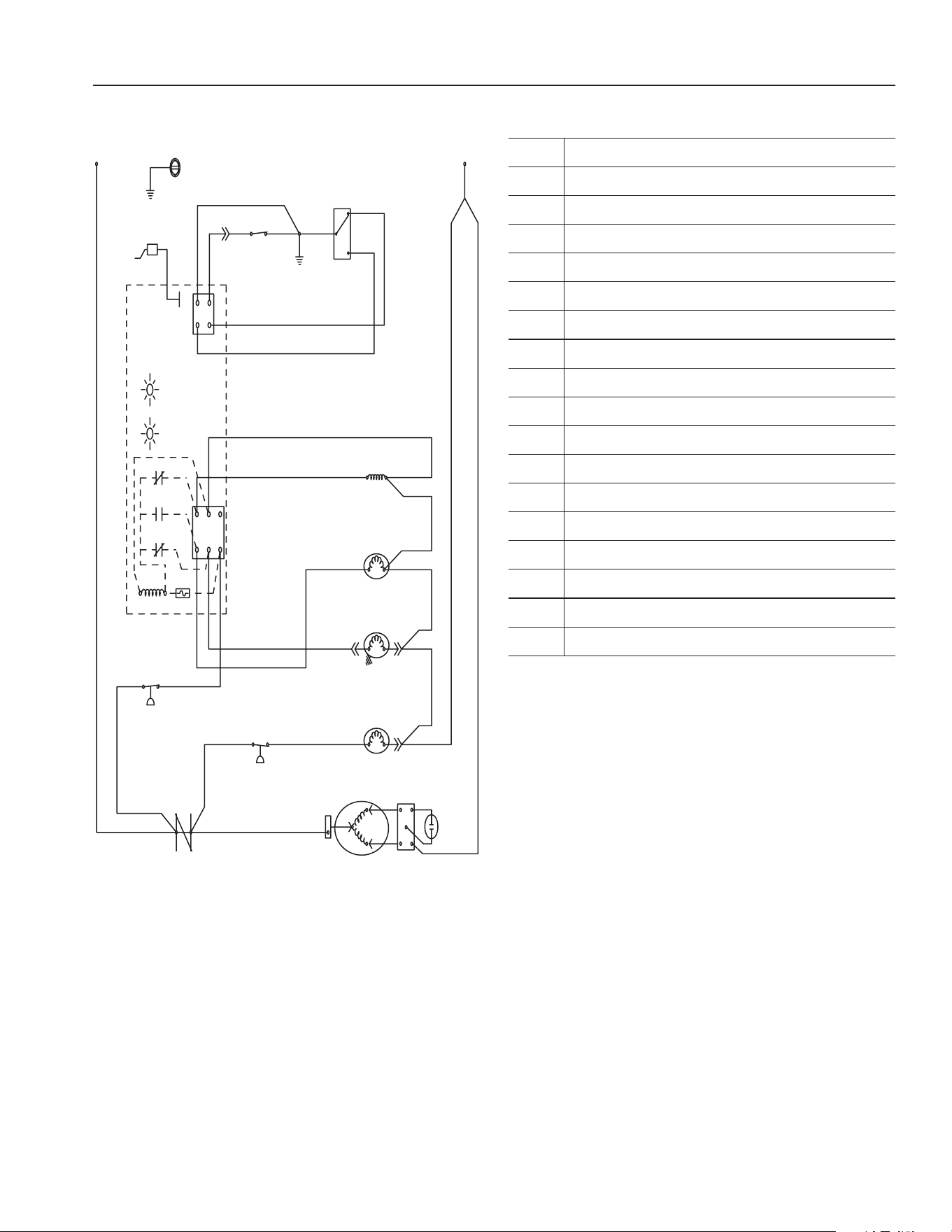
Part Number: 000016427 Rev 00 08/2020 125
Specifications
PKU0155 WIRING DIAGRAM
L1
L2
GND
23
27
18
29
19
7
10
5
30
4
1
(22)
(20)
(21)
(15)
(2)
(7)
(23)
(3)
(13)
(8)
(6)
(5)
(9)
(14)
(4)
32
3
2
21
20
(24)
(12)
25
(10) (11)
(C)
(S)
(R)
11
10
PKU0155
1 Control Board
2 Fuse
3 Transformer
4 On/Off /Clean Switch
5 Bin Switch
6 Bin Thermostat
7 High Pressure Cut Out
10 Harvest Solenoid Valve
18 Contactor Coil
19 Contactor Contacts
20 Compressor
21 Compressor Relay
23 Compressor Start Capacitor
25 Compressor Overload
27 Condenser Fan Motor
29 Fan Cycle Control
30 Water Pump
32 Ice Thickness Control
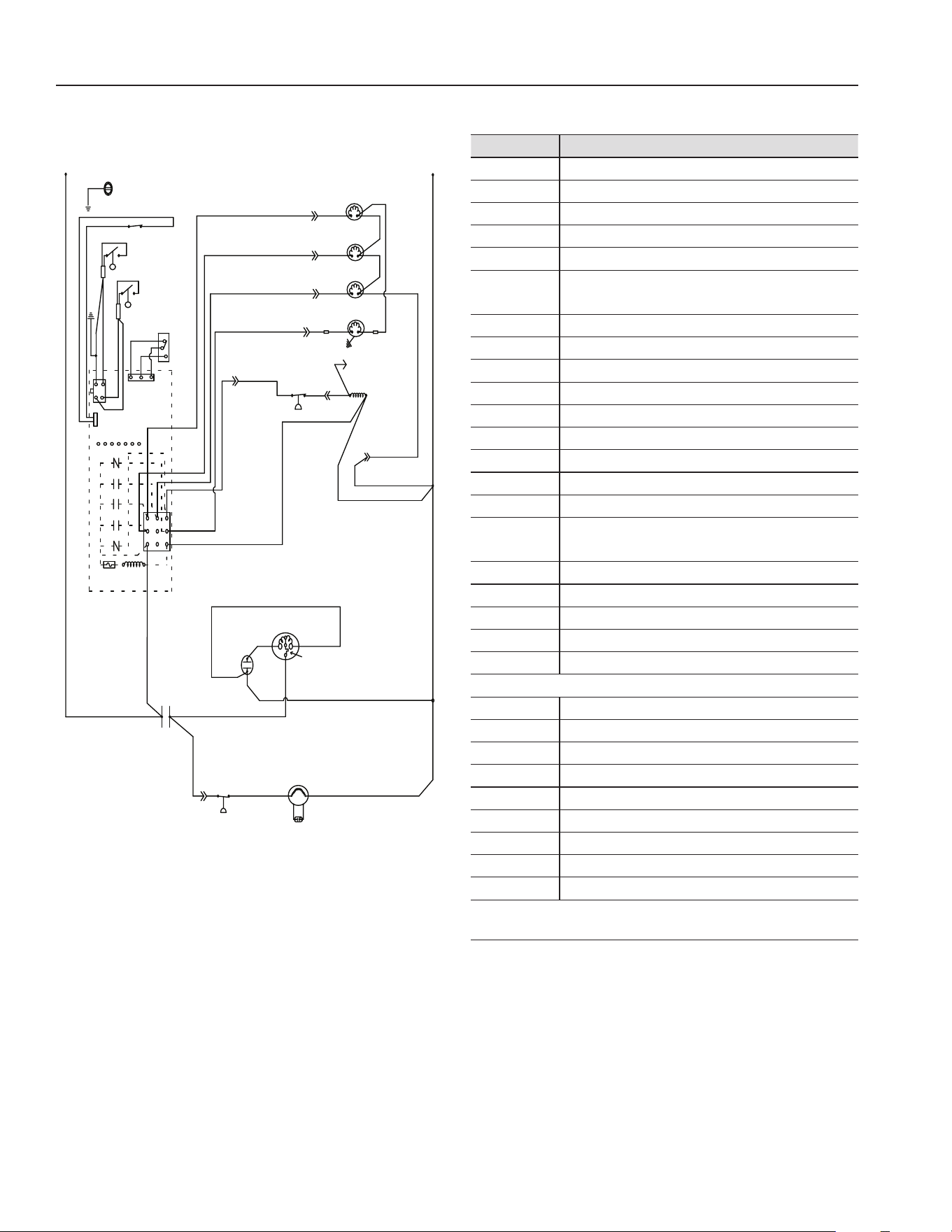
126 Part Number: 000016427 Rev 00 08/2020
Specifications
PKM0335/PKM0425/PKM0535 WIRING
DIAGRAM
L1
L2
GND
(22)
WHT
(21) BLU
(20) WHT
(99)
WHT
(77) RED
(61) RED
(80)
WHT
(81)
WHT
(76) BLK
(98) GRY
(60) BLK
(57) GRY
(59) ORG
(42)
ORG
(89)
PRPL
(88) PRPL
(58)
PRPL
(56)
WHT
(74)
WHT
(75)
WHT
(50) BLU
(C)
(S)
(R)
(47)
YEL
(47)
RED
(48) BLK
(55)
BLK
L1
(51)
ORG
(85)
BLK
000010656_04
5
14
56
1
55
17
31
26
3
40
41
19
28 54
18
15
7
11
58
42
25
27
PKM0335/PKM0425/PKM0535
Number Component
3 Bin Switch
5 Compressor
7 Compressor Overload
11 Compressor Run Capacitor
14 Condenser Fan Motor
15 Condenser Fan Motor Run
Capacitor
17 Contactor Coil
18 Contactor Contacts
19 Control Board
25 Fan Cycle Control
26 Harvest Float Switch
27 Water Level Float Switch
28 Fuse
31 High Pressure Cutout
40 On/Off/Clean Switch
41 See Control Board Schematic For
Detail
42 Solenoid Valve - Harvest
54 Transformer
55 Water Dump Valve
56 Water Inlet Valve
58 Water Pump
Wire Colors
BLK Black
BLU Blue
BRN Brown
GRY Grey
ORG Orange
PRPL Purple
RED Red
WHT White
YEL Yellow
Refer to control board schematic for control board
detail
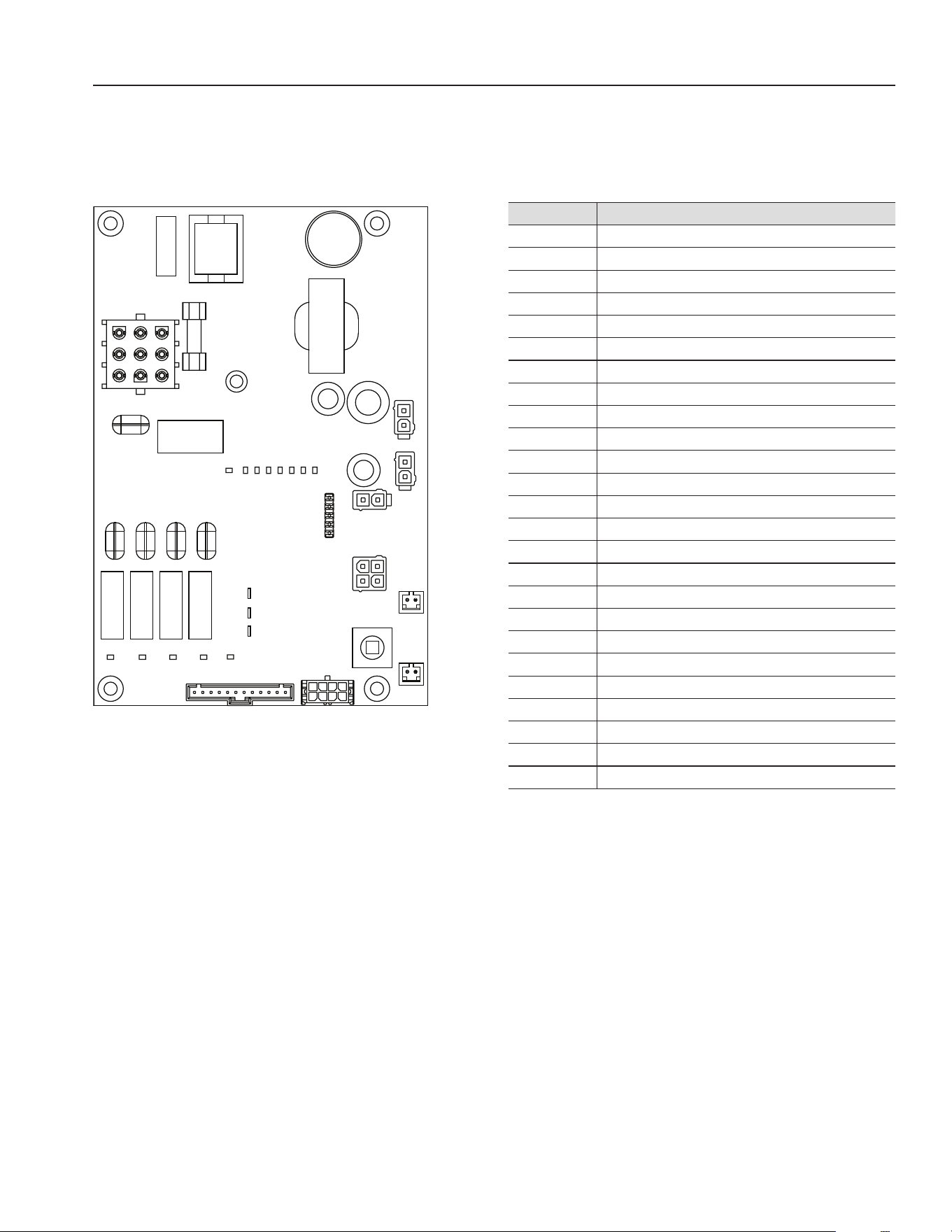
Part Number: 000016427 Rev 00 08/2020 127
Specifications
Electronic Control Board
CONTROL BOARD SCHEMATIC
PKM0335/PKM0425/PKM0535
1
2
3
4
5
678
9
10
11
12
13
14
15
16
17
19 18
20
21
23
24
25
22
Electronic Control Board PKM0335/
PKM0425/PKM0535
Number Component
1 LED Water Pump Relay
2 LED Compressor Relay
3 LED Water Dump Valve Relay
4 LED Harvest Solenoid Valve
5 LED Clean
6 Thermistor
7 Thermistor
8 Thermistor
9 LED Water Fill Valve
10 LED Harvest Float
11 LED Water Level Float
12 LED Bin Switch
13 LED Safety Limit 2
14 LED Safety Limit 1
15 LED Harvest
16 LED Test Mode
17 Fuse
18 Motor Connector
19 EC Fan Motor Connector
20 Bin Switch Connector
21 Float Switch Water Level
22 Float Switch Harvest
23 Thermistor 2
24 Test Switch
25 Thermistor 1
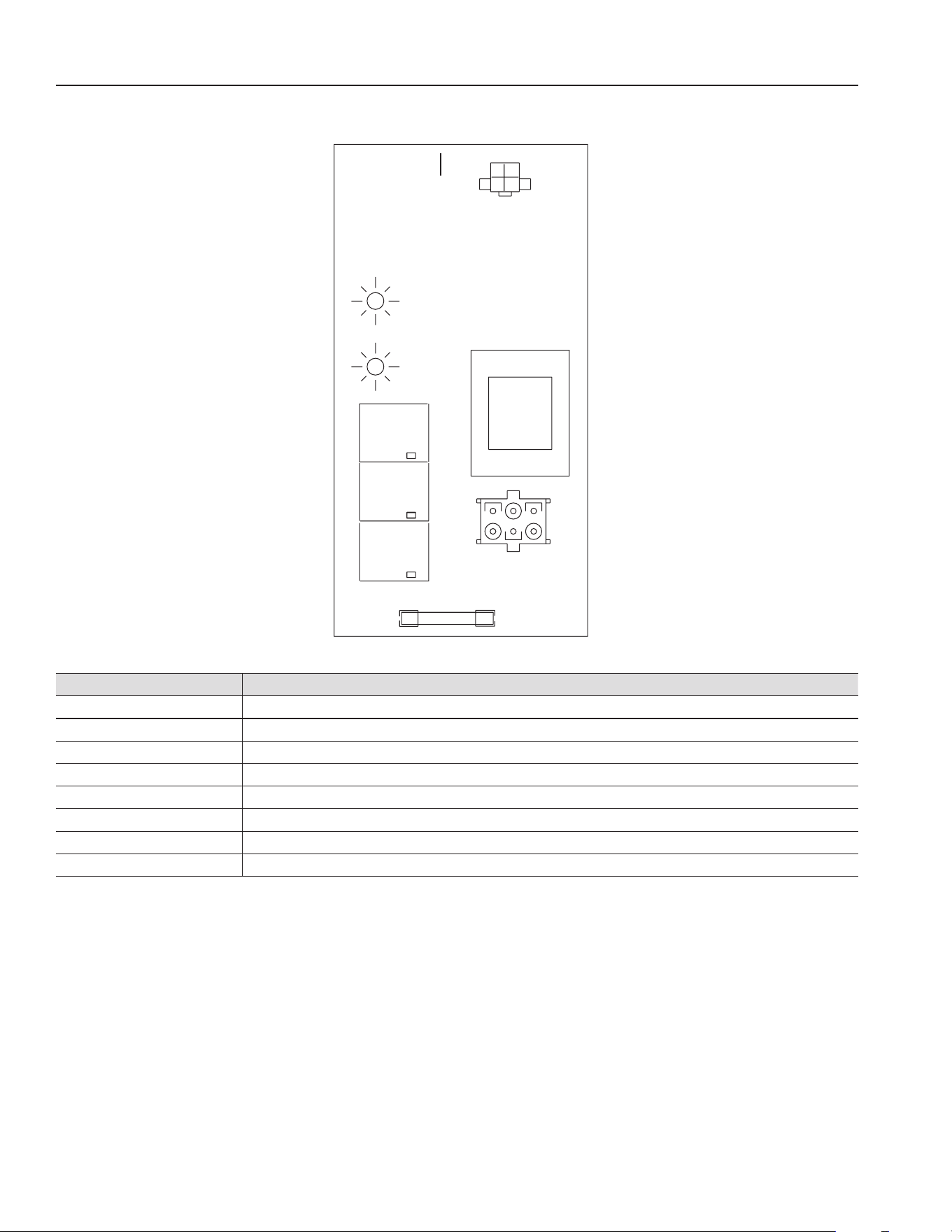
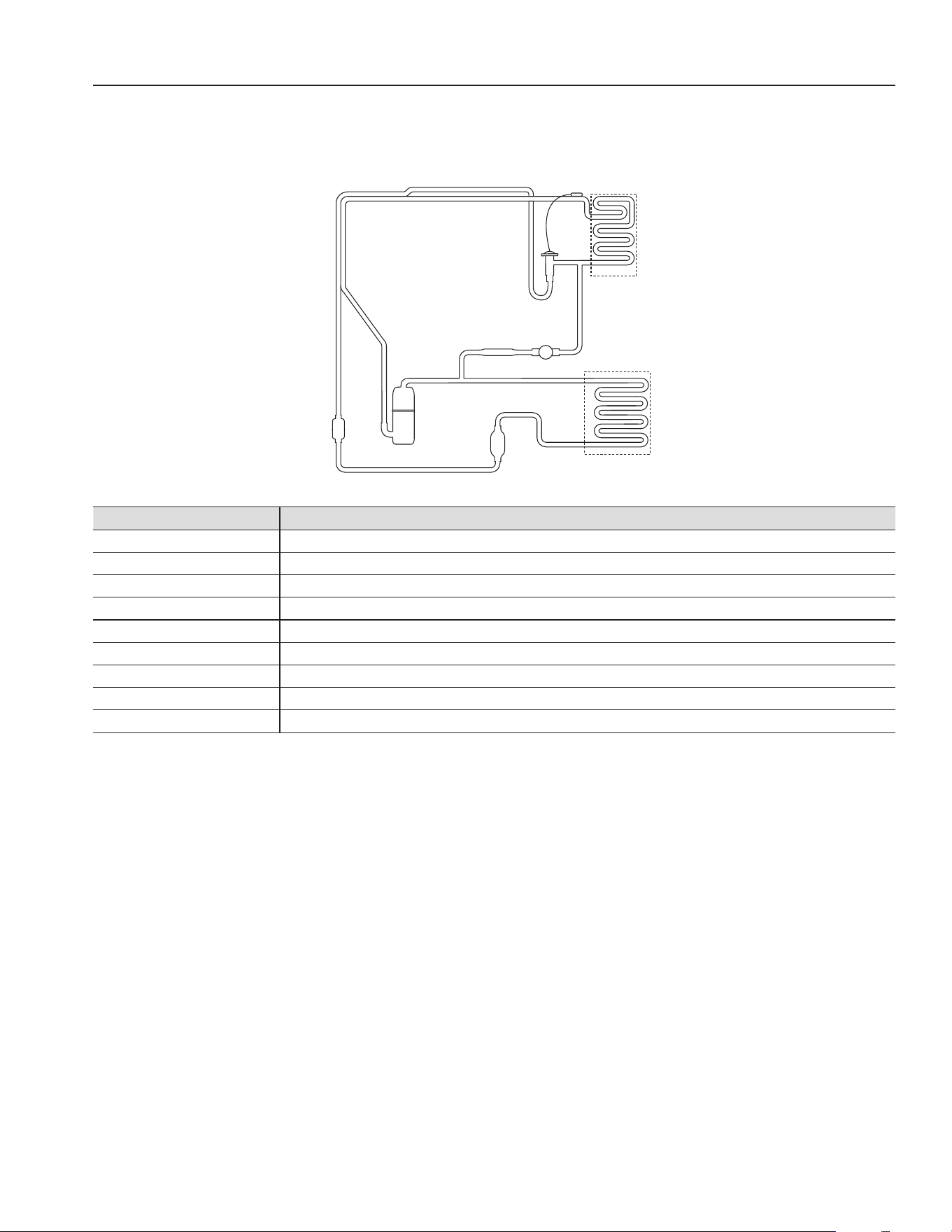
Part Number: 000016427 Rev 00 08/2020 129
Specifications
Refrigeration Tubing Schematic
PKU0155/PKM0335/PKM0425/PKM0535
X
X
1
2
3
4
5
8
9
6
7
Number Component
1 Compressor
2 Condenser-Air or Water cooled
3 Receiver - Water Cooled Only
4 Liquid Line Filter Drier
5 Heat Exchanger
6 TXV - Thermostatic Expansion Valve
7 Evaporator
8 Strainer
9 Harvest Solenoid Valve