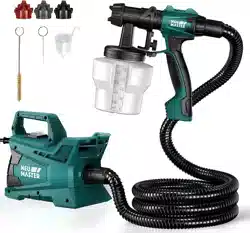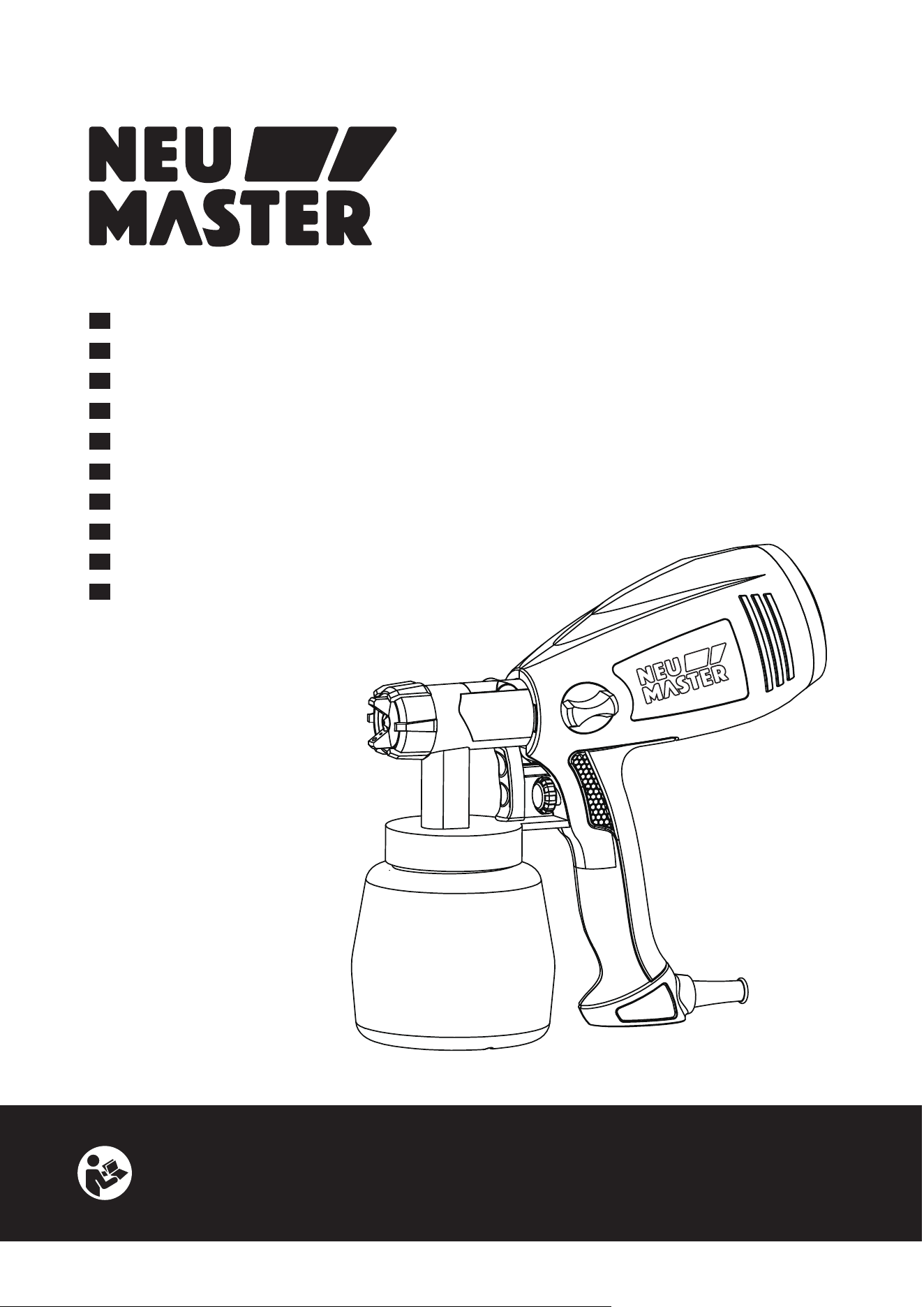
N3020
CN
EN
DE
FR
IT
ES
PT
RU
JP
ID
SAVE THIS INSTRUCTION MANUAL FOR FUTURE PEFERENCE.
电动喷枪
Electric Spray Gun
Elektrische Spritzpistole
Pistolet à peinture électrique
Pistola a spruzzo elettrica
Pistola de pulverización eléctrica
Pistola de pulverização elétrica
Электрический распылитель
電動スプレーガン
Pistol semprot listrik
Important Safety
• Read all safety inform n before
opera the equipment. Save these
To reduce the risks of fire or explosion, electrical shock and the injury to persons, read and understand all inst included in this manual. Be
familiar with the controls and proper usage of the equipment.
Indicates a hazardous situa
on which, if not avoided,
could result in death or serious injury.
HAZARD: EXPLOSION OR FIRE
Solvent and paint fumes can explode or ignite.
Severe injury or property damage can occur.
PREVENTION:
• Provide extensive exhaust and fresh air introduc
n to keep the air
within
the spray area free from
n of
flammable vapors.
• Avoid all igni
on sources such as sta c electric
sparks, open flames, pilot lights, electrical
appliances, and hot objects. Con
or
power cords or working light
switches can make sparks.
• Do not smoke in spray area.
• Fire sher must be present and in good working order.
• Use only outdoors in a well-ve
ed area. Flammable vapors are
heavier than air. The turbine contains arcing parts that emit sparks and can
ignite vapors.
• Follow the material and solvent manufacturer’s warnings and
• Do not use materials with a flashpoint below 70°F
(21°C). Flashpoint is the temperature that a fluid can produce
enough
vapors to ignite (see coa
g supplier).
• Plas
c can cause sta c sparks. Never hang plas c to enclose the spray
area. Do not use
drop cloths when spraying flammable materials.
HAZARD: EXPLOSION HAZARD DUE TO
INCOMPATIBLE MATERIALS.
Will cause property damage or severe injury.
PREVENTION:
• Do not use materials containing bleach or
chlorine.
• Do not use halogenated hydrocarbon solvents such as bleach,
mildewcide, methylene chloride and 1,1,1--trichloroethane. They are not
compa
e with aluminum.
• Contact your coa
g supplier about the compa lity of
material with aluminum.
HAZARD: HAZARDOUS VAPORS
Paints, solvents, insec
cides, and other
materials can be harmful if inhaled or come in
contact with the body. Vapors can cause
severe nausea, fa
g, or poisoning.
PREVENTION:
• Use a respirator or mask if vapors can be
inhaled. Read all instruc
ons supplied with
the mask to be sure it will provide the
necessary prote
.
• Wear
eyewear.
• Wear
clothing as required by coa g manufacturer.
HAZARD: GENERAL
Can cause severe injury or property damage.
PREVENTION:
• Read all instruc
ons and safety before
equipment.
• Follow all appropriate local, state, and
codes
governing ven
a , fire preven on, and
• Use only manufacturer authorized parts. User assumes
all
risks and liabili
es when using parts that do not meet the
minimum specifica
s and safety devices of the turbine
manufacturer.
• Do not spray outdoors on windy days.
• Wear clothing to keep paint off skin and hair.
• Never aim spray gun at any part of the body.
Household use only. Intended for outdoor use ONLY with
materials having flashpoint above 70
o
F (21
o
C).
2
Technical Data
Double insula n
Voltage
Frequency
Power
Nozzle Size
Max. Viscosity
Max. Spraying Pressure
Flow Rate
Container Capacity
Nozzle Material
120V~
60Hz
3.0A
Φ2.5mm (/Φ1.8mm/Φ1.0mm)
60DIN-s
0.1-0.2Bar
700ml/min
800ml
Copper Nozzle
ImportantSafetyInformation•Readallsafetyinformationbefore
operatingtheequipment.Savetheseinstructions
ImportantElectricalInformation
1.Thetoolplugmustfitintothesocket.Theplugmaynotbemodifiedinanyform.Donotuseadaptorplugstogetherwithprotective‐earthedtools.
Unmodifiedplugsandsuitablesocketsreducetheriskofanelectricshock.
2.Avoidphysicalcontactwithearthedsurfacessuchaspipes,heating
elements,stovesandrefrigerators.Theriskthroughelectricshockincreasesif
yourbodyisearthed.
3.Keeptheequipmentawayfromrainandmoisture.Theriskofanelectricshockincreasesifwaterpenetrateselectricalequipment.
4.Donotmisusethemainsleadbycarryingthetoolbythelead,
hangingitfromtheleadorbypullingontheleadto removetheplug.Keepthelead
awayfromheat,oil,sharpedgesormovingtoolparts.Damagedortwistedleadsincreasetheriskofanelectricshock.
5.Ifyouworkoutdoors,useonlyextensionleadsthatareapproved
foroutdooruse.Theuseofanextensionleadthatissuitableforoutdoorsreduces
theriskofanelectricshock.
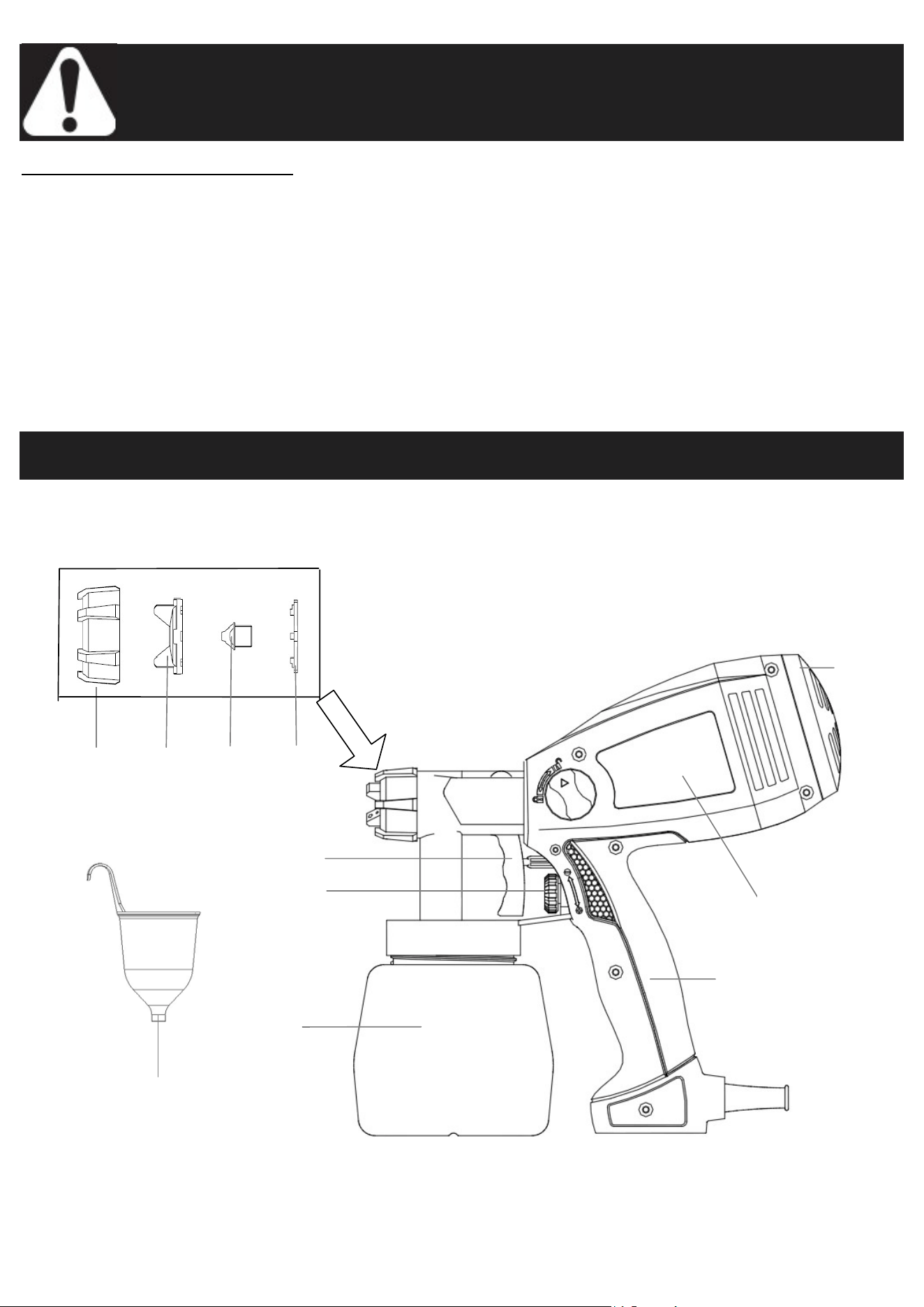
Components
ComponentsCompoC
3
Filter
housing
Nut
Aircap
Viscositycup
Seal
Nozzle
Trigger
Material
adjustment
knob
Handle
container
Air Compressor
Assembly
Setup
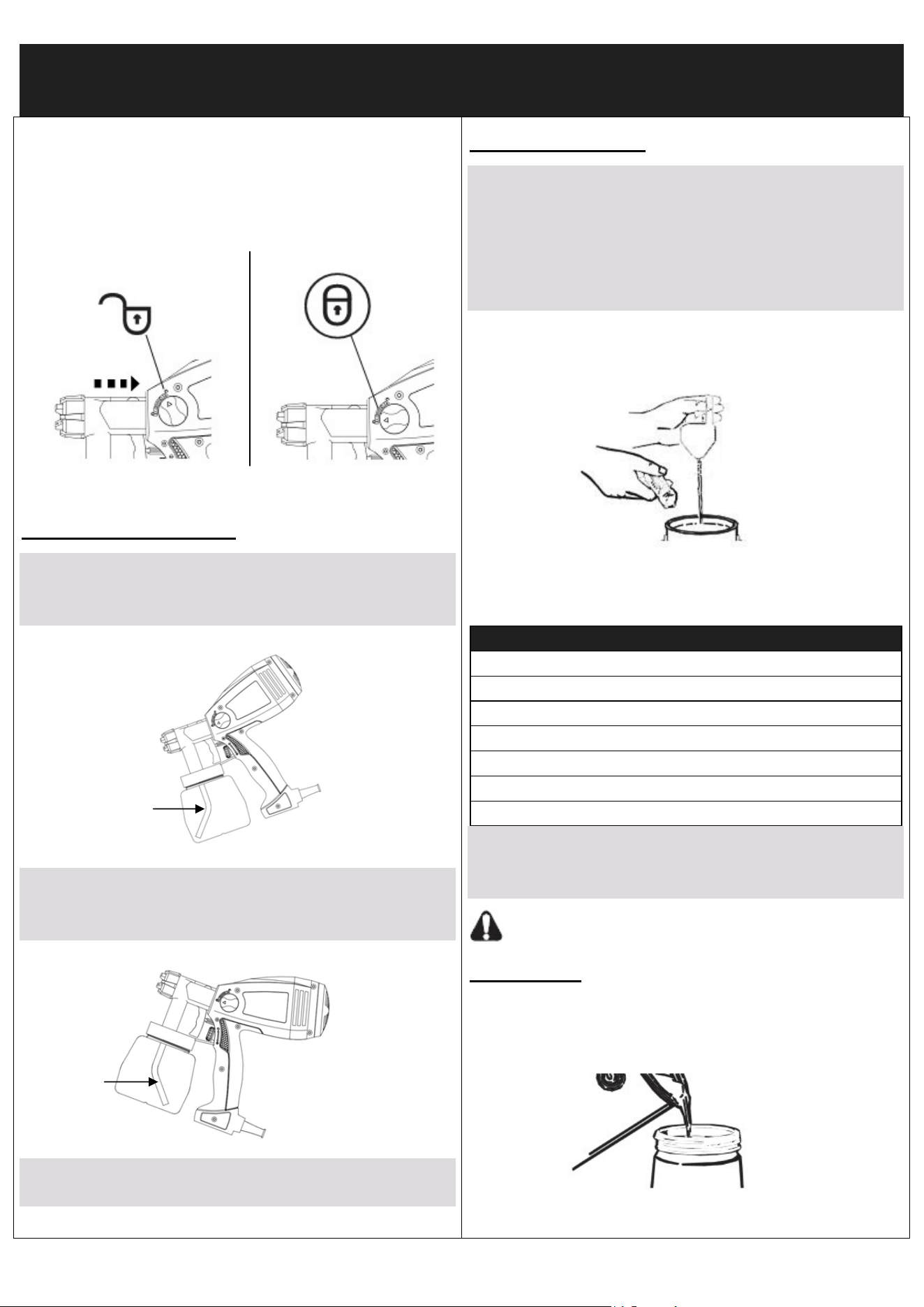
1.TurnbothknobsonbothsidesoftheAirCompressorAssemblytothe
“Unlock”position,andInsertthespraygunintotheAirCompressor
Assemblyintoplace,
2.TurnbothknobsonbothsidesoftheAirCompressorAssemblytothe
“Lock”positiontolockthetwopiecesintoplace.
AligningtheSuctionTube
Ifyouaregoingtobesprayinginadownwarddirection,
theangledendofthesuctiontubeshouldbepointing
towardthefrontofthegun.
Ifyouaregoingtobesprayinginanupwarddirection,
theangledendofthesuctiontubeshouldbepointing
towardtherearofthegun.
Bypointingthesuctiontubeintheproperdirection,you
willnothavetorefillthecontainerasoften..
MaterialPreparation
Beforespraying,thematerialbeingusedmayneedtobe
thinnedwiththepropersolventasspecifiedbythe
materialmanufacturer.Neverexceedthethinning
advicegivenbythecoatingmanufacturer.
Donotusematerialswithaflashpointbelow70°F
(21°C).Followtheinstructionsbelow.
1.Stirthesprayingmaterialthoroughlybeforemeasuring
viscosity.
2.Diptheviscositytestcupcompletelyintothespraying
material.
3.Holdthetestcupupandmeasurethetimeinsecondsuntil
theliquidemptiesout.Thistimeisreferredtobelowas
RunoutTime.
ThinningChart
MaterialRunoutTime
1)Oilenamel25‐40
2)Oilbasedprimer30‐45
3)OilstainNothinningrequired
4)ClearsealerNothinningrequired
5)PolyurethaneNothinningrequired
6)Varnish20‐50
Materialtobesprayedshouldalwaysbestrainedtoremoveany
impuritiesinthepaintwhichmayenterandclogthesystem.Impuritiesin
thepaintwillgivepoorperformanceandapoorfinish.
MATERIALFLASHPOINTMUSTBE70°F(21°C)OR
HIGHER.
FillContainer
1.Unscrewthecupfromthespraygun.
2.Afterthematerialhasbeenproperlythinnedandstrained,
fillthecontainertothetopoftheneck.
3.Carefullyscrewthecupbackontothespraygun.
4
Spraying
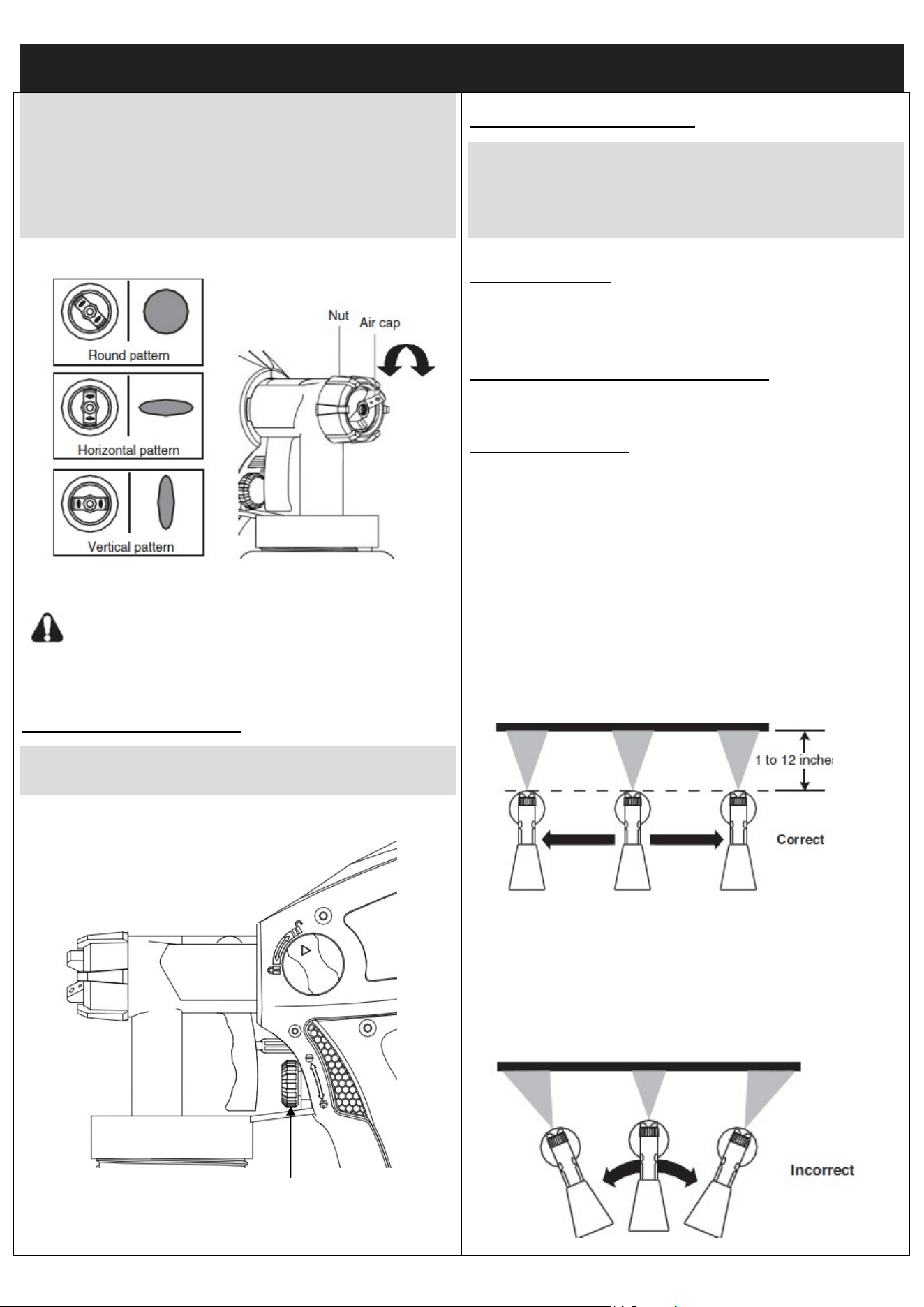
Thespraypatternshapeisadjustedbyturningtheears
oftheaircaptoeitherthevertical,horizontal,or
diagonalpositions.Thepositionsoftheaircapandthe
correspondingspraypatternshapesareillustratedbelow.
Testeachpatternandusewhicheverpatternissuitable
foryourapplication.
NEVERtriggerthegunwhileadjustingtheearson
theaircap.NEVERpointthespraygunatanypart
ofthebody.
MaterialFlowAdjustment
Setthematerialvolumebyturningtheregulatorbehindthetriggerofthe
spraygun.
ProperSprayingTechnique
IfsprayingwithanHVLPspraysystemisnewor
unfamiliartoyou,itisadvisabletopracticeonapieceof
scrapwoodorcardboardbeforebeginningonyour
intendedworkpiece.
SurfacePreparation
Allobjectstobesprayedshouldbethoroughlycleanedbefore
sprayingmaterialonthem.Areasnottobesprayedmay,in
certaincases,needtobemaskedorcovered.
SprayAreaPreparation‐outdooruseonly
Thesprayareamustbecleanandfreeofdustinordertoavoidblowing
dustontoyourfreshlysprayedsurface.
HowtoSprayProperly
•Positionthespraygunperpendiculartoandone(1)ormoreinchesfrom
thespraysurface,dependinguponthespray
patternsizedesired.
•Sprayparalleltothesurfacewithsmoothpassesata
consistentspeedasillustratedbelow.Doingthiswillhelp
avoidirregularitiesinthefinish(i.
e.runsandsags).
•Alwaysapplyathincoatofmaterialonthefirstpassand
allowtodrybeforeapplyingasecond,slightlyheaviercoat.
•Thecloseryoursprayeristotheobjectbeingsprayedthe
lowertheoverspray.
Evencoatthroughout
Keepstrokesmoothand
atanevenspeed
•Whenspraying,alwaystriggerthespraygunafterspray
passhasbegunandreleasetriggerbeforestoppingthe
pass.Alwayskeepthegunpointedsquarelyatthespray
surfaceandoverlappassesslightlytoobtainthemost
consistentandprofessionalfinishpossible.
Lightcoat
HeavycoatLightcoat
Donotflexwristwhilespraying.
5
Cleanup
CleaningtheSprayGun
Specialcleanupinstructionsforusewith
flammablesolvents(musthaveaflashpointabove
70ºF(21ºC):
•Alwaysflushspraygunoutside.
•Areamustbefreeofflammablevapors.
•Cleaningareamustbewell‐ventilated.
•DONOTSUBMERGEAirCompressor!
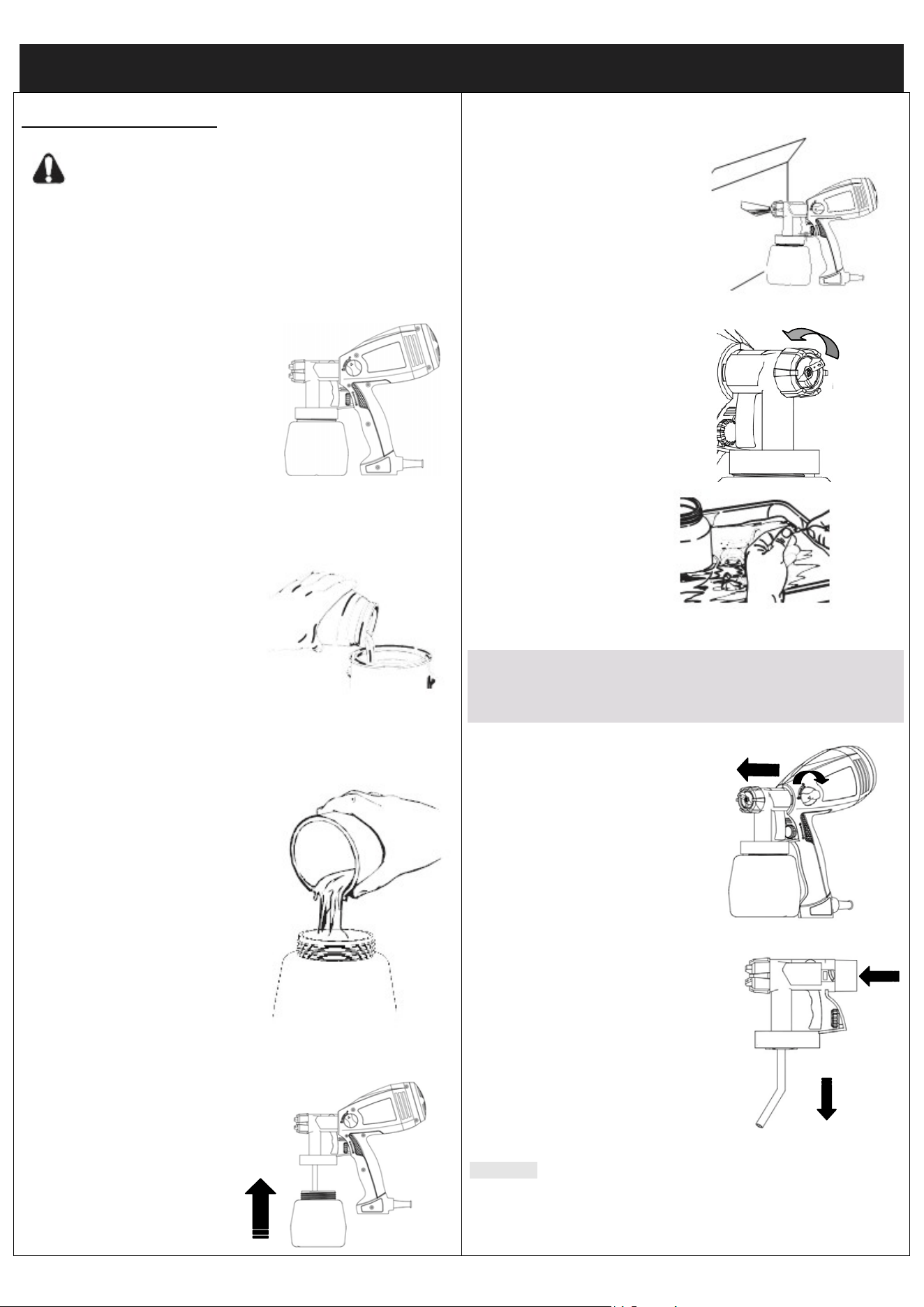
1.Unplugthespraygun,
and
triggerthespraygunsothat
thematerialinsidethespray
gunflowsbackintothe
container.
2.Unscrewthecontainer.
Emptyanyremainingmaterial
backintothematerial
container.
3.Pourasmallamountofthe
appropriatecleaningsolution
intothecup(warm,soapy
waterforlatexmaterials;
mineralspiritsforoil‐based
materials).Cleancupand
properlydisposeof
cleaningsolution.
4.RefillthecupwithNEW
cleaningsolution.
5.Attachthecuptothegunand
pluginthesprayer.
6.Spraythesolutionthroughthe
gunfortwosecondsinasafe
area.Sprayagainfortwo
seconds.Unplugthespray
gun,andtriggerthespraygun
sothatthematerialinsidethe
spraygunflowsbackintothe
container.
7.Wipetheexteriorofthe
cup
andgununtilclean.
8.Unscrewthenutand
removetheaircap
andnozzle.
9.Cleanthecontainer,
suctiontube,aircap
andnozzlewitha
cleaningbrushand
theappropriate
cleaningsolution.
Nevercleannozzleorairholesinthespraygunwith
sharpmetalobjects.Donotusesolventsorlubricants
containingsilicone.
10.Turnbothknobsonbothsides
oftheAirCompressorAssembly
tothe“Unlock”position,pulland
separatethespraygunfromthe
AirCompressorAssembly.
11.(a)Cleantherearofthespray
gunwiththeappropriatecleaning
solution.
(b)Turnthesuction
tube
anti‐clockwiseandpullthesuction
tubedownwardtodisassembleit
fromthespraygun.Thencleanthe
suctiontubewiththeappropriate
cleaningsolution.
Attention! TheSealRing(4)betweenSuctionTube1(3)andSuctionTube
2(5)mustbeputbackintoplaceaftercleaning.Otherwise,somepaintin
thecontainerwillbesuckedintotheairductandinterferewiththe
functionoftheunit.
6
(a)
(b)
Maintenance
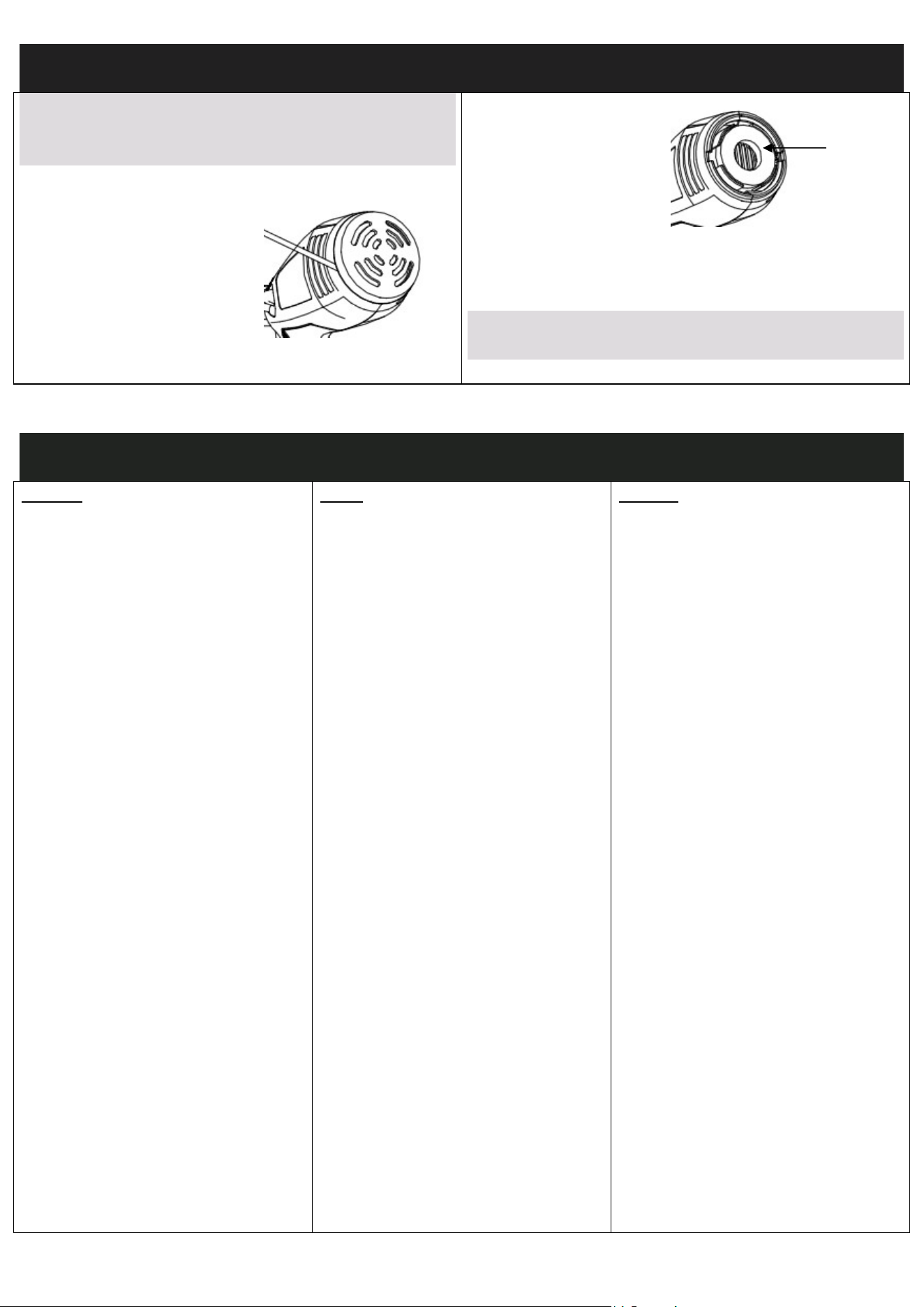
YoushouldinspecttheairfilterintheAirCompressorAssemblytoseeifit
isexcessivelydirty.Ifitisdirty,followthestepsbelow
toreplaceit.
1.Unplugthespraygun.Remove
thefiltercoverwithatool
(suchasaflatscrewdriver)
2.Removethedirty
filtersandreplace
withnewones.
3.Securethecoverbackontotheturbine.
Neveroperateyourunitwithouttheairfilters.Dirtcould
besuckedinandinterferewiththefunctionoftheunit.
Troubleshooting
Problem
A.Littleornomaterialflow
B.Materialleaking
C.Atomizationistoocoarse
D.Sprayjetpulsates
E.Patternrunsorsags
F.Toomuchoverspray
G.Patternisverylightand
splotchy.
Cause
1.Nozzleclogged.
2.Suctiontubeclogged.
3.Materialvolumesettingturnedtoolow(‐).
4.Suctiontubeloose.
5.Nopressurebuildupincontainer.
6.Airfilterclogged.
1.Nozzleloose.
2.Nozzleworn.
3.Nozzlesealworn.
4.Materialbuild‐uponaircapandnozzle
1.Viscosity
ofmaterialtoohigh.
2.Materialvolumetoolarge.
3.Materialvolumesettingtoohigh(+).
4.Nozzleclogged.
5.Airfilterclogged.
6.Toolittlepressurebuild‐upincontainer.
1.Materialincontainerrunningout.
2.Airfilterclogged.
1.Applyingtoomuchmaterial.
1.Guntoofar
fromsprayobject.
2.Toomuchmaterialapplied.
1.Movingthesprayguntoofast
Solution
1.Clean.
2.Clean.
3.Increasevolumesetting(+).
4.Insert.
5.Tightencontainer.
6.Change.
1.Tighten.
2.Replace.
3.Replace.
4.Clean.
1.Thin.
2.Decreasevolumesetting(‐).
3.Decreasevolumesetting(‐).
4.Clean.
5.Change.
6.Tightencontainer.
1.Refill.
2.Change.
1.Adjust
materialfloworincrease
movementofspraygun.
1.Reducedistance.
2.Decreasevolumesetting(‐).
1.Adjustmaterialflowordecrease
movementofspraygun.
7
filters
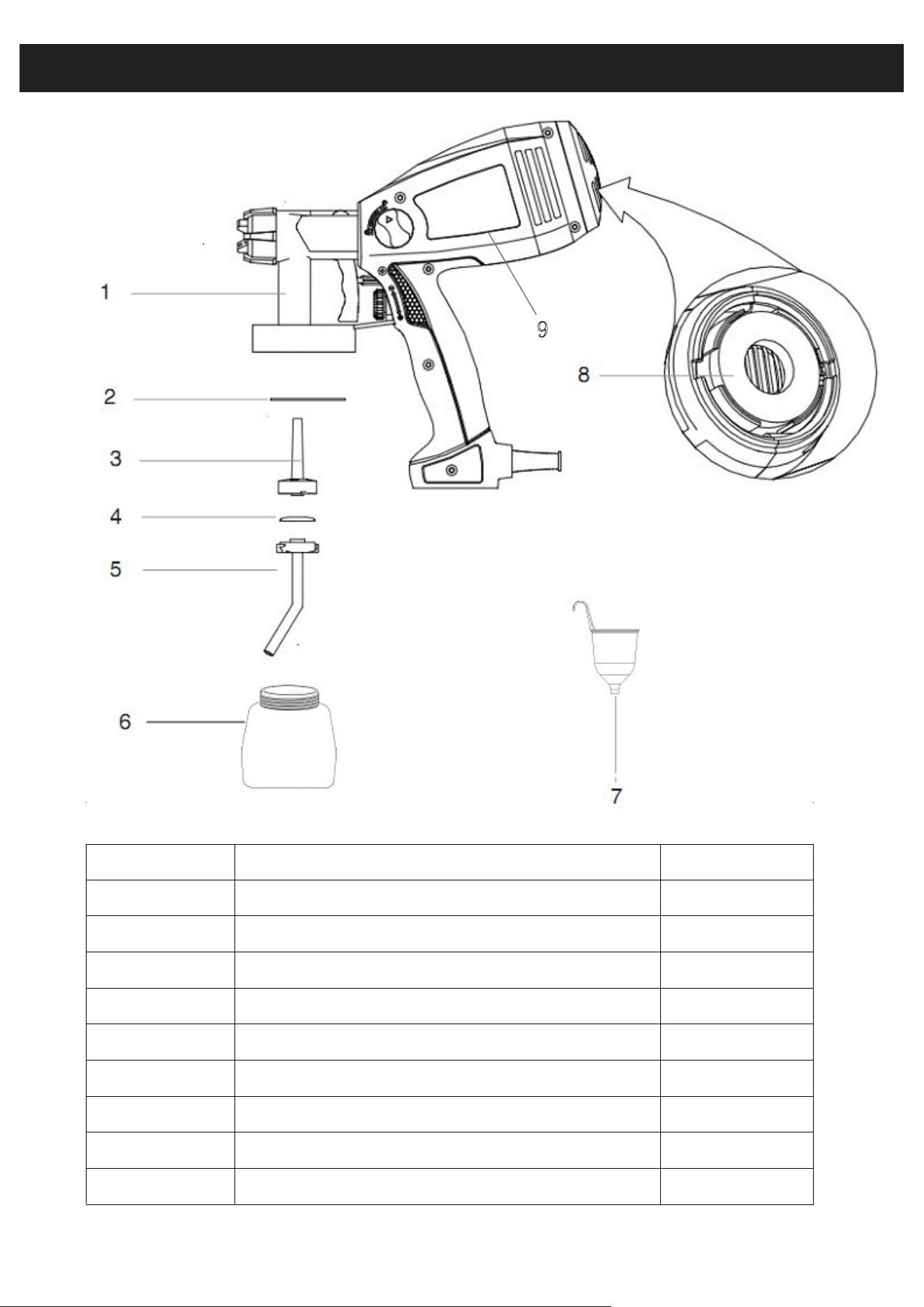
Parts List
8
9
Number Part Descripon Quanty
1 Sprayer Assembly 1
1
1
1
1
1
1
1
1
2
Container Seal
3 Sucon Tube 1
4 Seal Ring
5
Sucon Tube 2
6
Container
7 Viscosity Cup
8 Air Filter
9
Air Compressor Assembly