506318-03B Issue 1850 Page 1 of 12
INSTALLATION INSTRUCTIONS
BHP15 SPLIT SYSTEM HEAT
PUMP
(R410A REFRIGERANT)
This manual must be left with the homeowner for future reference.
This is a safety alert symbol and should never be ignored. When you see this symbol on labels or in
manuals, be alert to the potential for personal injury or death.
Table of Contents
Safety Precautions ........................................................ 2
Installation ..................................................................... 2
Electrical Connections ................................................... 4
Start-Up Procedure ........................................................ 5
Operation ....................................................................... 6
Homeowner’s Information ........................................... 10
NOTE TO INSTALLING DEALER
These instructions and warranty are to be given to the
owner or displayed near the indoor air handler unit.
CAUTION
Improper installation, adjustment, alteration, service or
maintenance will void the warranty. The qualified
installer or agency must use factory-authorized kits or
accessories when added to this products. Refer to the
individual instructions included with the specific
accessory kit.
Manufactured By
Blue Summit LLC
8201 C National Turnpike Louisville,
KY 40214
NOTE
These instructions are intended as a general guide and
do not supersede national, state or local codes in any
way.
WARNING
Installation or repairs made by unqualified persons can
result in hazards to you and others. Installation MUST
conform with local building codes and with the National
Electrical Code NFPA 70/ANSI C1-1993 or current
edition and Canadian Electrical Code Part 1 CSA
C22.1.
WARNING
Before installing, modifying, or servicing system, main
electrical disconnect switch must be in the OFF position.
There may be more than 1 disconnect switch. Lock out
and tag switch with a suitable warning label. Electrical
shock can cause personal injury or death.
*P506318-03B*
(P) 506318-03B
These units are designed for use in residential and light
commercial type buildings. Heat Pumps may only be
installed with indoor combinations listed in the Air
Conditioning, Heating and Refrigeration Institute (AHRI)
Directory of Certified Products.
Inspect the unit for any damage before installation. If
damage is found, notify the transportation company
immediately and file a concealed damage claim.
Save these instructions for future reference
Page 2 of 12 Issue 1850 506318-03B
Safety Precautions
Follow all safety codes. Wear safety glasses and work
gloves. Use quenching cloth for brazing operations.
Have fire extinguisher available. Read these instructions
thoroughly and follow all warning or cautions attached to
the unit.
1. Always wear proper personal protection equipment.
2. Always disconnect electrical power before removing
panel or servicing equipment.
3. Keep hands and clothing away from moving parts.
4. Handle refrigerant with caution, refer to proper
MSDS from refrigerant supplier.
5. Use care when lifting, avoid contact with sharp
edges.
Installation
NOTE: In some cases noise in the living area has been
traced to gas pulsations from improper installation of
equipment.
1. Locate unit away form windows, patios, decks, etc.
where unit operation sounds may disturb customer.
2. Ensure that vapor and liquid tube diameters are
appropriate to capacity of unit.
3. Run refrigerant tubes as directly as possible by
avoiding unnecessary turns and bends.
4. Leave some slack between structure and unit to
absorb vibration.
5. When passing refrigerant tubes through the wall,
seal opening with RTV or other silicon-based caulk.
6. Avoid direct tubing contact with water pipes, duct
work, floor joists, wall studs, floors, walls, and any
structure.
7. Do not suspend refrigerant tubing from joists and
studs with a rigid wire or strap which comes in direct
contact with tubing.
8. Ensure that tubing insulation is pliable and
completely surrounds vapor tube.
When outdoor unit is connected to factory-approved
indoor unit, outdoor unit contains system refrigerant
charge for operation with indoor unit of the same size
when connected NOTE: Maximum liquid-line size is 3/8
in. O.D. for all residential applications including long
lines.
Outdoor Section
Zoning ordinances may govern the minimum distance
the condensing unit can be installed from the property
line.
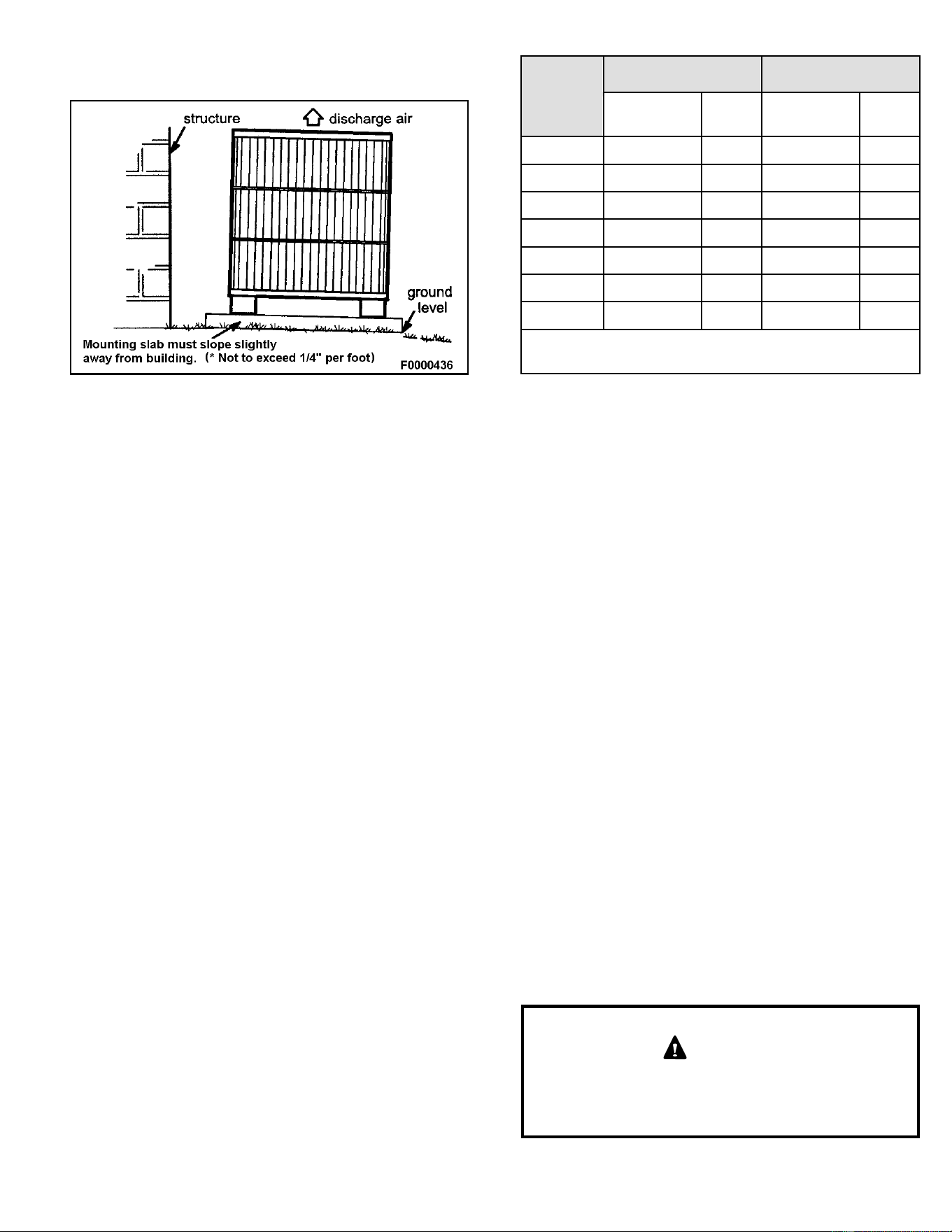
Install on a Solid, Level Mounting Pad
The outdoor section is to be installed on a solid
foundation. This foundation should extend a minimum of
2” (inches) beyond the sides of the outdoor section. To
reduce the possibility of noise transmission, the
foundation slab should NOT be in contact with or be an
integral part of the building foundation.
Elevate Unit
CAUTION
Accumulation of water and ice in base pan may cause
equipment damage.
Elevate unit per local climate and code requirements to
provide clearance above estimated snowfall level and
ensure adequate drainage of unit. Use snow stand in
areas where prolonged freezing temperatures are
encountered.
If conditions or local codes require the unit be attached
to pad or mounting frame, tie down bolts should be used
and fastened through knockouts provided in unit base
pan.
Rooftop Installations
Mount on level platform or frame 6 inches above roof
surface. Place unit above a load-bearing wall and isolate
unit and tubing set from structure. Arrange supporting
members to adequately support unit and minimize
transmission of vibration to building. Ensure roof
structure and anchoring method is adequate for location.
Consult local codes governing rooftop applications.
Roof mounted units exposed to winds above 5 mph may
require wind baffles to achieve adequate defrost. A sheet
metal baffle should be spaced 6-1/2” from the fall of the
coil. The height should cover the face of the coil and the
length should be 6” from the access panel.
NOTE: Unit must be level to within ± 1/4 in./ft. per
compressor manufacturer specifications.
Clearance Requirements
When installing, allow sufficient space for airflow
clearance, wiring, refrigerant piping, and service. For
proper airflow, quiet operation and maximum efficiency.
by 15 ft. of field-supplied tubing. For proper unit operation,
check refrigerant charge using charging information
located on control box cover.
506318-03B Issue 1850 Page 3 of 12
Position so water, snow, or ice from roof or eaves cannot
fall directly on unit.
DO LOCATE THE UNIT:
• With proper clearances on sides and top of unit
• On a solid, level foundation or pad • To
minimize refrigerant line lengths
DO NOT LOCATE THE UNIT:
• On brick, concrete blocks or unstable surfaces
• Near clothes dryer exhaust vents
• Near sleeping area or near windows
• Under eaves where water, snow or ice can fall
directly on the unit
• With clearance less than 2 ft. from a second unit
• With clearance less than 4 ft. on top of unit
Operating Ambient
The minimum outdoor operating ambient in cooling mode
is 55°F, and the maximum outdoor operating ambient in
cooling mode is 125°F. The maximum outdoor operating
ambient in heating mode is 66°F.
Refrigeration Line Sets
Use only refrigerant grade copper tubes. Split systems
may be installed with up to 50 feet of line set (no more
than 20 feet vertical) without special consideration (see
long line set guidelines).
It is important that no tubing be cut or seals broken until
you are ready to actually make connections to the
evaporator and to the condenser section. DO NOT
remove rubber plugs or copper caps from the tube ends
until ready to make connections at evaporator and
condenser. Under no circumstances leave the lines open
to the atmosphere for any period of time, if so unit
requires additional evacuation to remove moisture.
Liquid
Vapor
Capacity
Connections
Dia.
Tube
Dia.
Connections
Dia.
Tube
Dia.
-018
3/8”
3/8”
3/4”
3/4”
-024
3/8”
3/8”
3/4”
3/4”
-030
3/8”
3/8”
3/4”
3/4”
-036
3/8”
3/8”
7/8”
7/8”
-042
3/8”
3/8”
7/8”
7/8”
-048
3/8”
3/8”
7/8”
7/8”
-060
3/8”
3/8”
7/8”
*1-1/8”
* Field supplied 7/8 x 1-1/8 connector required on both ends
of vapor tubing.
Table 1. Recommended Liquid & Vapor Tube
Diameters (in.)
Be extra careful with sharp bends. Tubing can “kink” very
easily, and if this occurs, the entire tube length will have
to be replaced. Extra care at this time will eliminate future
service problems.
It is recommended that vertical suction risers not be
upsized. Proper oil return to the compressor should be
maintained with suction gas velocity.
Filter Drier
The filter drier is very important for proper system
operation and reliability. If the drier is shipped loose, it
must be installed by the installer in the field. Unit warranty
will be void, if the drier is not installed.
Installation of Line Sets
DO NOT fasten liquid or suction lines in direct contact
with the floor or ceiling joist. Use an insulated or
suspension type of hanger. Keep both lines separate,
and always insulate the suction line. Long liquid line runs
(30 feet or more) in an attic will require insulation. Route
refrigeration line sets to minimize length.
DO NOT let refrigerant lines come in direct contact with
foundation. When running refrigerant lines through the
foundation or wall, openings should allow for a sound
and vibration absorbing material to be placed or installed
between tubing and foundation. Any gap between
foundation or wall and refrigerant lines should be filled
with a vibration damping material.
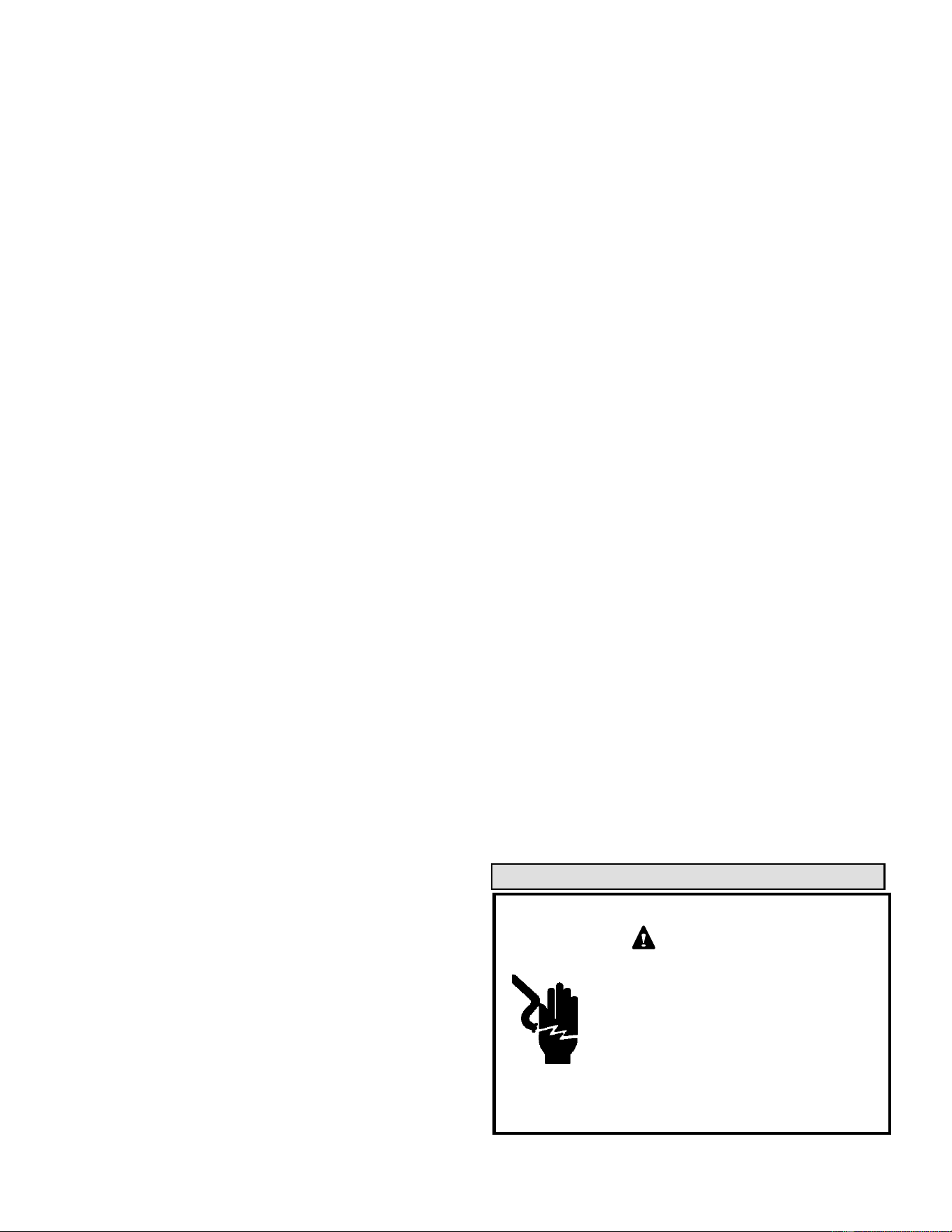
CAUTION
If ANY refrigerant tubing is required to be buried by state
or local codes, provide a 6 inch vertical rise at service
valve.
Figure 1.
Page 4 of 12 Issue 1850 506318-03B
Before making braze connections, be sure all joints are
clean. Before heat is applied for brazing, dry nitrogen
should be flowing through the tubing to prevent oxidation
and scale formation on the inside of the tubing.
The following is the recommended method for making
braze connections at the refrigerant line connections:
1. Debur and clean refrigerant tube end with emery
cloth or steel brush.
2. Insert tubing into swage fitting connection.
3. Wrap wet rags over valves to protect from heat.
4. Allow dry nitrogen to flow through refrigerant lines.
5. Braze joint, using a suitable brazing alloy for copper
to copper joints.
6. Quench the joint and tubing with water using a wet
rag. Leave rag on fitting body and re-wet with water
to help cool area.
Leak Check
Refrigeration lines and indoor coil must be checked for
leaks after brazing and before evacuation. The
recommended procedure is to apply a trace amount of
vapor refrigerant (approximately two ounces or 3 psig)
into the line set and indoor coil, then pressurize with 150
psig of dry nitrogen. Use a refrigerant leak detector to
check all joints. The system may also be checked for
leaks using a halide torch or pressure and soapy
solution. After completion of leak check, relieve all
pressure from system before evacuation.
Evacuating and Charging Instructions
NOTE: Intentional release of CFC or HCFC refrigerant to
the atmosphere violates Federal Law. It may also violate
State and Local Codes. Check all Federal, State and
Local Codes before proceeding.
These outdoor units are pre-charged at the factory with
adequate refrigerant to handle 15 feet of refrigerant
tubing.
NOTE: DO NOT use any portion of the charge for purging
or leak testing. It is mandatory that a thorough evacuation
of the refrigeration lines and indoor coil be performed.
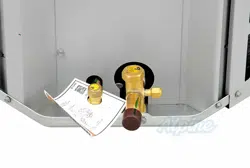
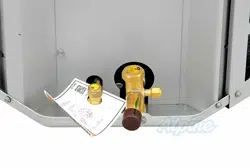
The liquid line and suction line service valves have been
closed after final testing at the factory. DO NOT disturb
these valves until the lines have been leak checked
and evacuated or the charge in the unit may be lost.
1. Connect the vacuum pump to the center hose of the
manifold gauge set, the low-pressure manifold
gauge to the vapor service valve and the high
pressure manifold gauge to the liquid service valve.
NOTE: Unnecessary switching of hoses can be
avoided and complete evacuation of all lines can be
achieved by also connecting a branch hose from the
manifold gauge center port to a cylinder of the proper
refrigerant. Provide a separate shut-off valve to
vacuum pump to avoid contaminating vacuum pump
oil with refrigerant.
2. The valves should be kept in the “front seated”
(closed) position. This will allow evacuation of the
refrigeration lines and the indoor coil, without
disturbing the factory charge in the outdoor unit.
3. Follow the vacuum pump manufacturer’s
instructions. Allow the pump to operate until the
system has been evacuated down to 300 microns.
Allow the pump to continue running for an additional
15 minutes. Turn OFF the pump and leave the
connections secured to the two (2) service valves.
After 5 minutes, if the system fails to hold 500
microns or less, check all connections for tight fit and
repeat the evacuation procedure.
4. Isolate the vacuum pump from the system by closing
the shutoff valves on the gauge-set. Disconnect the
vacuum pump.
Opening Service Valves
After evacuation of the connecting lines, remove the
service valve cap and fully insert the hex wrench into the
stem. A back-up wrench is required on the valve body to
open the valve stem. Back-out counterclockwise until the
valve stem just touches the coined edge.
Wrench sizes:
• 3/8 service valve: 3/16” Hex wrench
• 3/4 service valve: 5/16” Hex wrench
• 7/8 service valve: 5/16” Hex wrench
Replace service valve cap and torque to 8-11 ft-lb on 3/8”
valves; 12-15 ft-lb on 3/4” valves; 15-20 ft-lb on 7/8”
valves. Use backup wrench on valve body when torquing
valve cap.
Install Electrical Accessories
Refer to the instructions packaged with the accessories.
Electrical Connections
WARNING
Electrical Shock Hazard!
Turn OFF electric power before
connecting unit, performing any
maintenance or removing panels or doors.
More than one disconnect may be
required to turn off all power.
FAILURE TO DO SO COULD RESULT IN
BODILY INJURY OR DEATH.
506318-03B Issue 1850 Page 5 of 12
Be sure to check all local codes to determine that the unit
is installed accordance with local requirements. Consult
the National Electric Code for wire size requirements.
Use 60 C wire or higher. Always provide ground
connections to the outdoor unit. Power supply must
agree with rating on unit nameplate.
Provide line voltage power supply to unit from a properly
sized disconnect switch. Route power and ground wires
from disconnect switch to unit. Line voltage connections
are made at the line side of the contactor in the control
box of the outdoor unit. Follow the appropriate wiring
diagram attached to inside of the access panel.
Proper circuit protection recommendations are indicated
on Unit Rating Plate. Time delay fuses are required to
prevent blowing due to starting current (the current in
rush when equipment starts is referred to as the Locked
Rotor Amps or (LRA). A fuse of this kind properly sized
will give maximum equipment protection.
Use copper wire only between disconnect switch and
unit.
Remove access panel to gain access to unit wiring.
Extend wires from disconnect through power wiring hole
provided and into unit control box. Flexible conduit is
required for the swing out control box feature.
WARNING
The unit cabinet must have an uninterrupted or
unbroken ground to minimize personal injury if an
electrical fault should occur. The ground may consist of
electrical wire or metal conduit when installed in
accordance with existing electrical codes. Failure to
follow this warning can result in an electric shock, fire,
or death.
Connect ground wire to ground connection in control box
for safety. Connect power wiring to contactor.
High voltage power connections to 3-phase models is
made to “Pig Tail” leads with field supplied splice
connectors.
Control Wiring
The control voltage is 24 VAC. NEC Class I insulated 18
AWG is required for control wiring. For lengths longer
than 150 feet, contact your local distributor for technical
service.
Ensure the room thermostat is properly installed per
instructions shipped with room thermostat. Generally the
thermostat should not be exposed to sunlight, drafts or
vibration and should not be mounted on exterior walls.
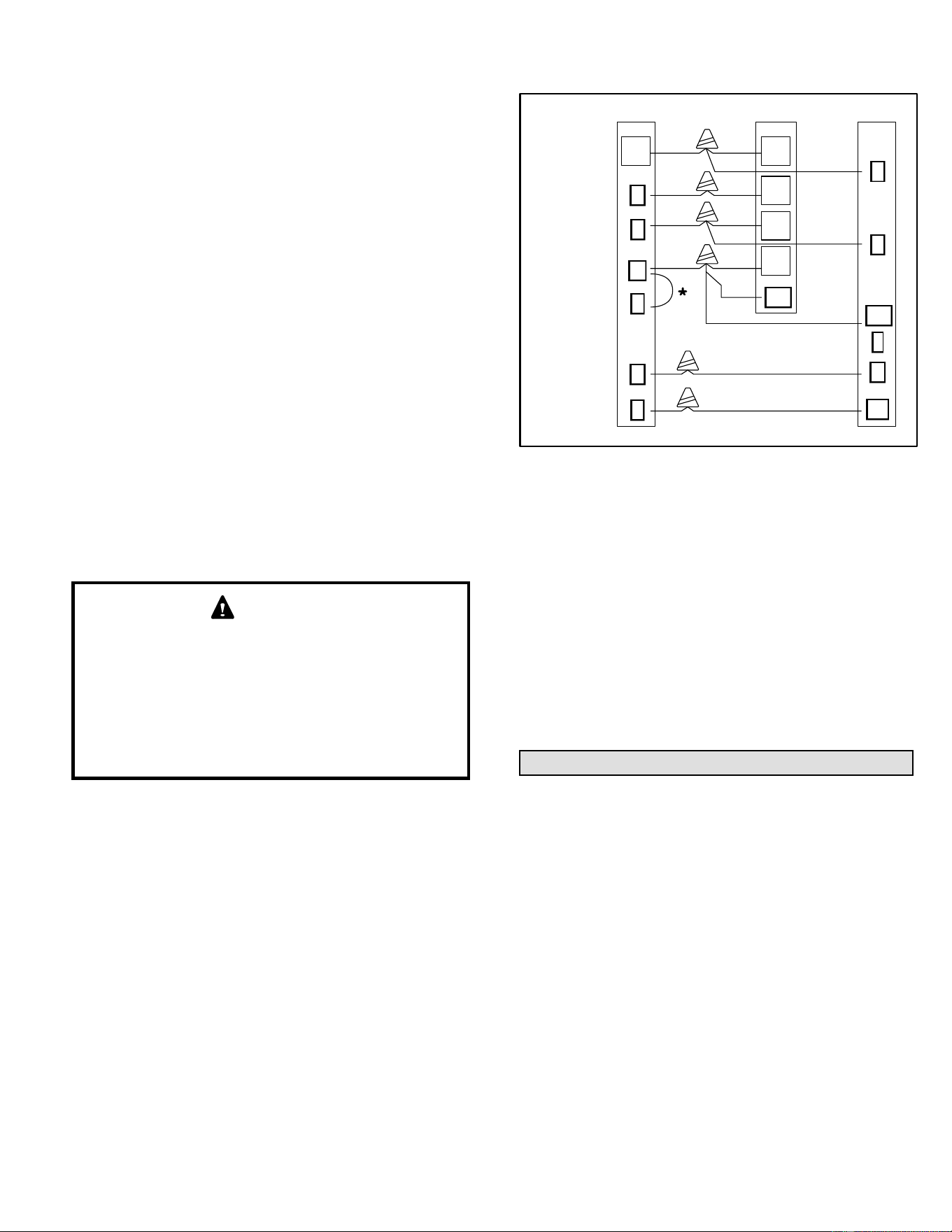
Low voltage control wire connections should be made to
the screw connection terminal board mounted on the
defrost control as shown. All low voltage control wiring
must be separated from incoming power leads.
Heat Pump Application with Electric Heat
Emergency Heat (Heating Heat Pump)
If selector switch on thermostat is set to the emergency
heat position, the heat pump will be locked out of the
heating circuit, and all heating will be electric heat ( if
applicable). A jumper should be placed between W and
E on the thermostat so that the electric heat control will
transfer to the first stage heat on the thermostat. This will
allow the indoor blower to cycle on and off with the
electric heat when the fan switch is in the AUTO position.
* Add Jumper on Subbase (Optional)
Start-Up Procedure
1. Check to ensure:
• Service valve and gage port caps are installed
and tightened.
• Voltage supply at unit agrees with nameplate
rating.
• Field wiring connections are tight and factory
wiring has not been disturbed and are tight.
• Indoor fan motor is on correct speed tap.
2. Set thermostat selector switch to OFF and fan
control switch to “Auto” is so equipped.
3. Close electrical disconnects to energize system.
4. Set room thermostat at desired temperature. Be sure
set point is below indoor ambient temperature.
5. Set the system switch of the thermostat on COOL (or
HEAT if applicable) and fan switch for continuous
operation (ON) or AUTO, as desired. There will be a
Thermostat
Air Handler
Heat Pump
24
VAC HOT
INDOOR FAN
24
VAC COM
HEAT
STAGE 2
EMERGENCY
HEAT
RVS
COOLING
COOL / HEAT
STAGE 1
R
G
C
W
E
O
Y
R
G
C
R
G
C
O
R
B
W
W1
W2
L
Y1
W1
RED
GREEN
BLUE
WHITE
ORANGE
YELLOW
F0000453
Figure 2.
Page 6 of 12 Issue 1850 506318-03B
5 minute short cycle compressor delay on startup.
Operate unit for 15-20 minutes, then check the
system refrigerant charge.
6. Adjust refrigerant charge per “Adjusting Charge”
section.
Adjusting Charge
Factory charge is shown on the rating label located on
the access panel.
All split system heat pumps are factory charged for
15 feet of connecting line set and matched indoor fan
coil. Nameplate refrigerant charge should initially be
adjusted for line set lengths other than 15 feet. For line
sets shorter than 15 feet in length, remove charge. For
line sets longer than 15 feet, add charge. Oil charge is
sufficient for all line lengths.
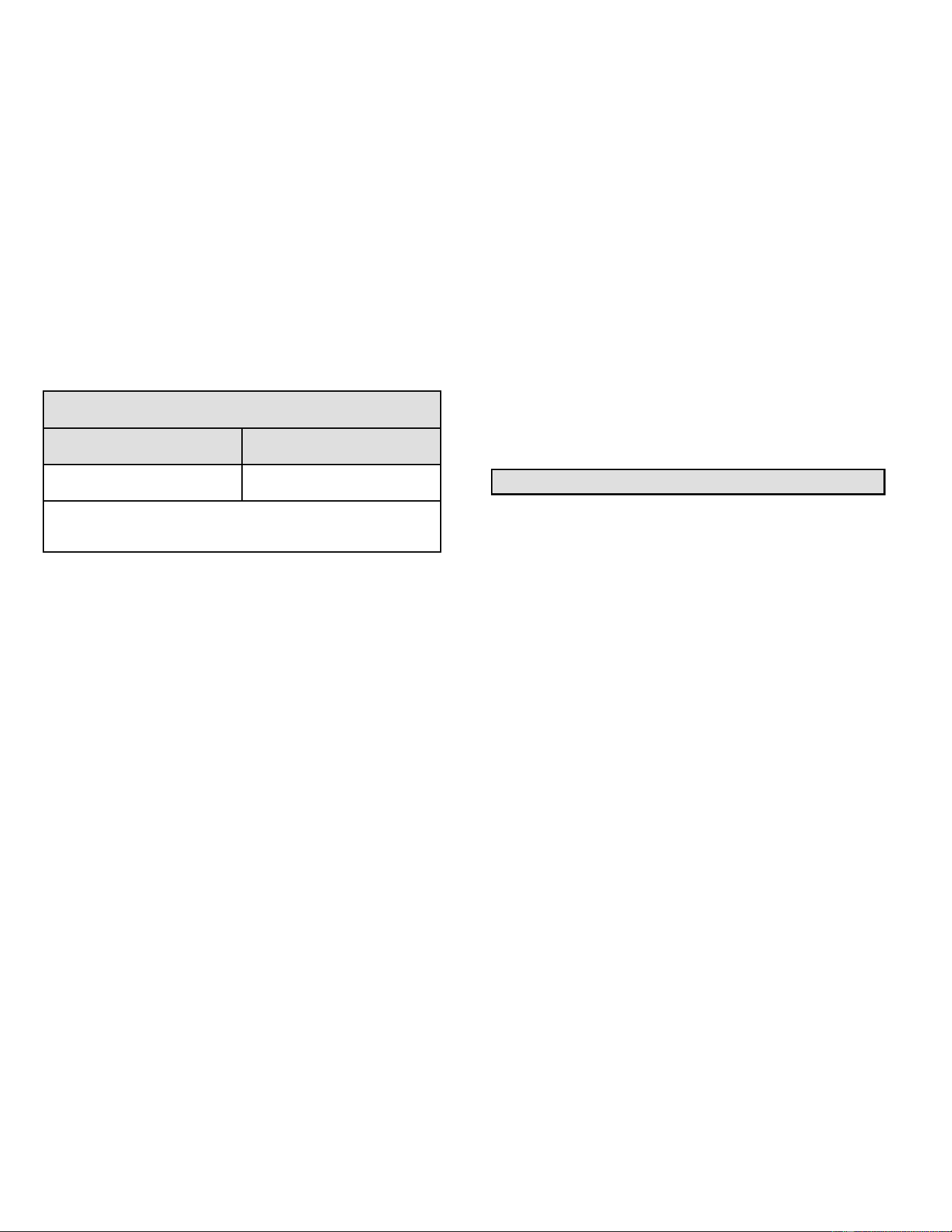
Refrigeration Charge Adjustment
Liquid Line Diameter
Oz. Per Linear Foot
3/8”
0.6
* Factory charge for series is for 15’ (ft.) line sets and
matched fan coil.
Table 2.
Before final adjustment is made to the refrigerant charge,
it is imperative that proper indoor airflow be established.
Airflow will be higher across a dry coil versus a wet coil.
Blower charts are calculated with a dry or wet coil basis.
Recommended airflow is 350-450 CFM per ton (12,000
Btuh) through a wet coil. Refer to indoor unit instructions
for methods of determining air flow and blower
performance.
The optimum method for checking the charge is by
weight. However the following methods may be used
to confirm the proper charge:
Cooling Mode
1. Operate unit a minimum of 10 minutes before
checking charge.
2. Measure liquid service valve pressure by attaching
an accurate gage to service port. Determine
saturation temp. from T/P chart.
3. Measure liquid line temperature by attaching an
accurate thermistor type or electronic thermometer
to liquid line near outdoor coil.
4. Calculate subcooling (saturation temp. measured
temp.) and compare with table on back of central box
cover.
5. Add refrigerant if subcooling is lower than table.
Recover refrigerant if subcooling is high.
6. If ambient temp is lower than 60°F, check charge in
heating mode or weigh refrigerant according to name
plate data.
Heating Mode
Check charge in heating mode if ambient temp is below
60° F. Indoor temp must be between 65° and 75° F.
Follow steps (1) to (6) above and compare with heating
mode subcooling range on the table on back of central
box cover.
Charge must be rechecked again during the cooling
season.
Cold Weather Application
A cold weather accessory kit may be required for heat
pumps operating at ambient conditions below 25°F.
Supplemental heat should be provided for these
conditions due to the expected performance
degeneration.
Operation
The outdoor unit and indoor blower cycle on demand
from the room thermostat. When the thermostat blower
switch is in the ON position, the indoor blower operates
continuously.
Emergency Heat Function (Room Thermostat)
An emergency heat function is designed into some room
thermostats. This feature is applicable when isolation of
outdoor unit is required or when auxiliary electric heat is
staged by outdoor thermostats. When the room
thermostat is placed in the emergency heat position, the
outdoor unit control circuit is isolated from power and
field-provided relays bypass the outdoor thermostats. An
amber indicating light simultaneously comes on to
remind the homeowner that he is operating in the
emergency heat mode.
Emergency heat is usually used during an outdoor unit
shutdown, but it should also be used following a power
outage. If power has been off for over an hour and the
outdoor temperature is below 50°F (10°C). System
should be left in the emergency heat mode at least six
hours to allow the crankcase heater sufficient time to
prevent compressor slugging. This applies only to
systems with crank case heaters.
Defrost System
The defrost system includes two (2) components: a
defrost thermostat and a defrost control.
506318-03B Issue 1850 Page 7 of 12
Defrost Thermostat
The defrost thermostat is located on the outdoor coil of
most models and on the liquid line between the check/
expansion valve and the distributor on R-410A TXV
equipped models. When defrost thermostat senses 29°F
(42 on R-410A TXV’s) or cooler, the thermostat contacts
close and send a signal to the defrost control board to
start the defrost timing. It also terminates defrost when
the liquid line warms up to 60°F.
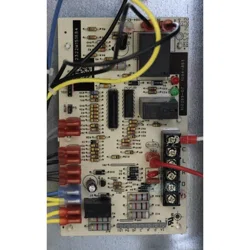
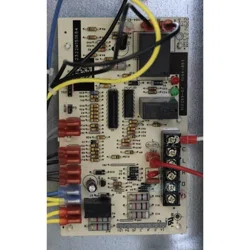
Defrost Control
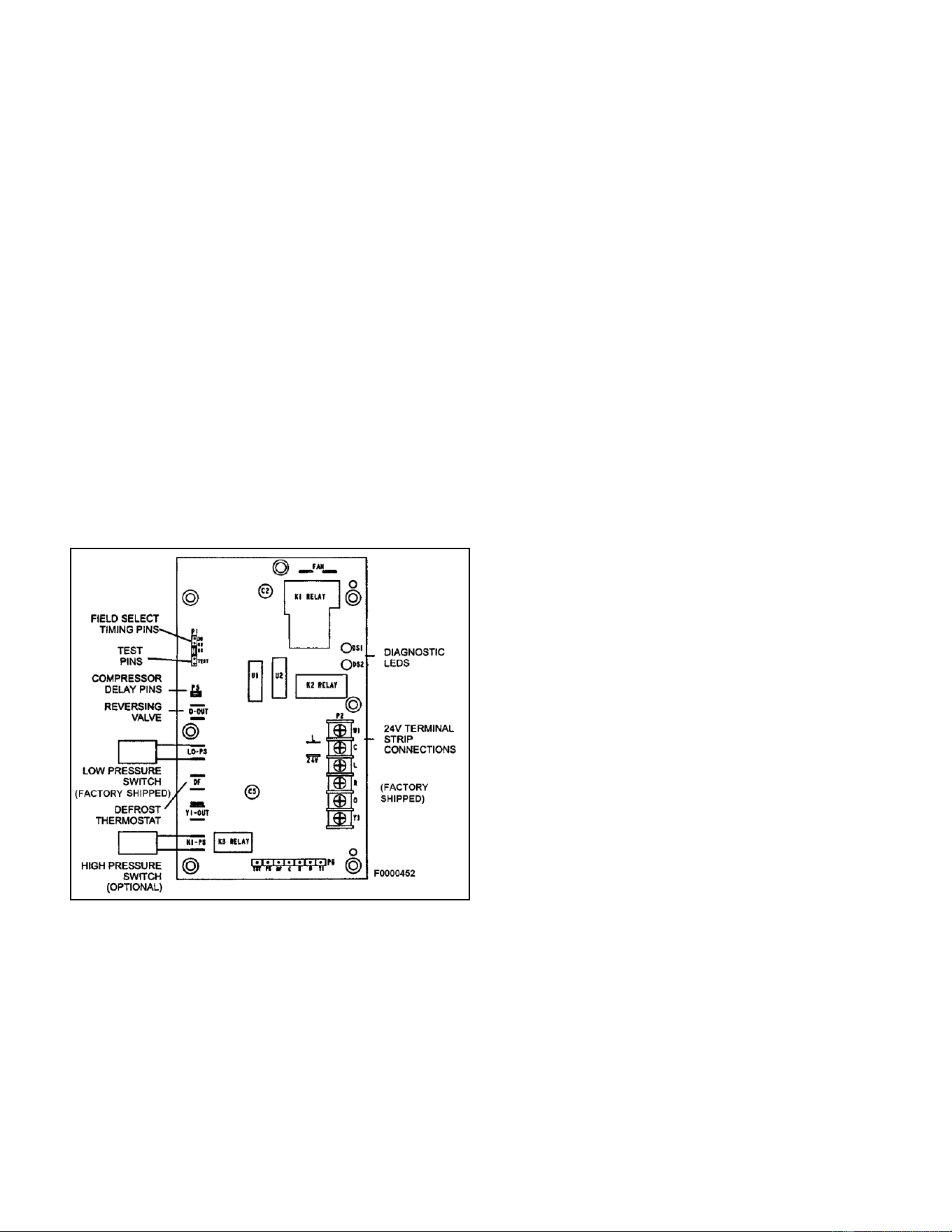
The defrost control board includes the combined
functions of a time/temperature defrost control, defrost
relay, diagnostic LEDs and terminal strip for field wiring
connections.
The control provides automatic switching from normal
heating operation to defrost mode and back. During
compressor cycle, the control accumulates compressor
run times at 30-, 60-, or 90-minute field-adjustable
intervals. If the defrost thermostat is closed when the
selected compressor run time interval ends (call for
defrost), the defrost relay is energized and defrost
begins. The factory setting is 90 minutes which is the
optimum efficiency setting.
Figure 3. Outdoor Unit Defrost Control Board
Defrost Control Timing Pins
Each timing pin selection provides a different
accumulated compressor run time period for one defrost
cycle. This time period must occur before a defrost cycle
is initiated. The defrost interval can be adjusted to 30
(/T1), 60 (T2), or 90 (T3) minutes. If the timing selector
jumper is not in place the control defaults to a 90-minute
defrost interval. The maximum defrost period is 14
minutes and cannot be adjusted.
A TEST option is provided for troubleshooting. The TEST
mode may be started any time the unit is in the heating
mode and the defrost thermostat is closed or jumpered.
If the jumper is in the TEST position at power-up, the
control will ignore the test pins. When the jumper is
placed across the TEST pins for 2 seconds, the control
will enter the defrost mode. If the jumper is removed
before an additional 5 second period has elapsed (7
seconds total), the unit will remain in defrost mode until
the defrost thermostat opens or 14 minutes have passed.
If the jumper is not removed until after the additional 5
second period has elapsed, the defrost will terminate and
the test option will not function again until the jumper is
removed and re-applied.
Time Delay
The timed-off delay is 5 minutes long. The delay help to
protect the compressor from short-cycling in case the
power to the unit is interrupted or a pressure switch
opens. The delay is bypassed by placing the timer select
jumper across the TEST pins for 0.5 seconds.
Pressure Switch Circuit
The defrost control incorporates 2 pressure switch
circuits. The high pressure switch connects to the boards
HI PS terminals. The low pressure switch is factory
installed.
During a single demand cycle, the defrost control will lock
out the unit after the fifth time that the circuit is interrupted
by any pressure switch wired to the control board. In
addition, the diagnostic LEDs will indicate a locked-out
pressure switch after the fifth occurrence of an open
pressure switch. The unit will remain locked out until
power to the board is interrupted, then re-established or
until the jumper is applied to the TEST pins for 0.5
seconds.
NOTE: The defrost control board ignores input from the
low-pressure switch terminals as follows:
• During the TEST mode,
• During the defrost cycle,
• During the 90 second start-up period,
• And for the first 90 seconds each time the reversing
valve switches heat/cool modes. If the TEST pins are
jumpered and the 5 minute delay is being by-passed,
the LO PS terminal signal is not ignored during the
90 second start-up period.
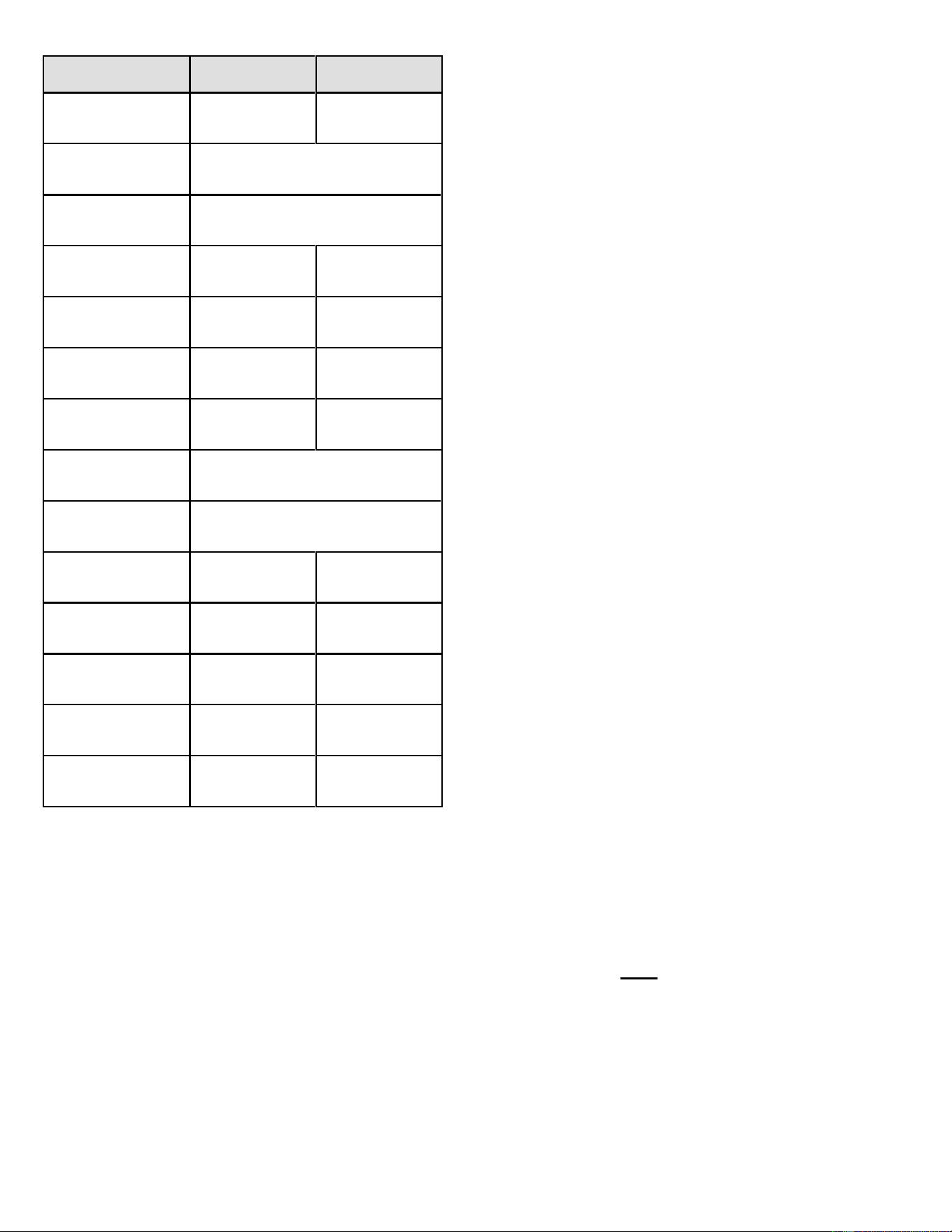
Diagnostic LEDs
The state (Off, On, Flashing) of two LEDs on the defrost
board (DS1 [Red] and DS2 [Green]) indicate diagnostics
conditions that are described in Table 3.
Page 8 of 12 Issue 1850 506318-03B
Mode
Green LED (DS2)
Red LED (DS1)
No power to control
Off
Off
Normal operation /
power to control
Simultaneous slow flash
Anti-short cycle
lockout
Alternating slow flash
Low pressure switch
fault
Off
Slow flash
Low pressure switch
lockout
Off
On
High pressure switch
fault
Slow flash
Off
High pressure switch
lockout
On
Off
Ambient sensor
problem
Simultaneous fast flash
Coil sensor problem
Alternating fast flash
Circuit board failure
On
On
Discharge line temp
fault
Slow flash
On
Discharge line temp
lockout
Fast flash
On
Discharge sensor
fault
Off
Fast flash
Discharge sensor
lockout
Fast flash
Off
Table 3.
Defrost Board Pressure Switch Connections
The unit’s automatic reset pressure switches (LO PS -
S87 and HI PS - S4) are factory-wired into the defrost
board on the LO-PS and HI-PS terminals, respectively.
Low Pressure Switch (LO-PS) — When the low
pressure switch trips, the defrost board will cycle off the
compressor, and the strike counter in the board will count
one strike. The low pressure switch is ignored under the
following conditions:
• during the defrost cycle and 90 seconds after the
termination of defrost
• when the average ambient sensor temperature is
below 15° F (-9°C)
• for 90 seconds following the start up of the
compressor
• during “test” mode
High Pressure Switch (HI-PS) — When the high
pressure switch trips, the defrost board will cycle off the
compressor, and the strike counter in the board will count
one strike.
Defrost Board Pressure Switch Settings
• High Pressure (auto reset) - trip at 590 psig; reset at
418.
• Low Pressure (auto reset) - trip at 25 psig; reset at
40.
5-Strike Lockout Feature
The internal control logic of the board counts the
pressure switch trips only while the Y1 (Input) line is
active. If a pressure switch opens and closes four times
during a Y1 (Input), the control logic will reset the
pressure switch trip counter to zero at the end of the Y1
(Input). If the pressure switch opens for a fifth time during
the current Y1 (Input), the control will enter a lockout
condition.
The 5-strike pressure switch lockout condition can be
reset by cycling OFF the 24-volt power to the control
board or by shorting the TEST pins between 1 and 2
seconds. All timer functions (run times) will also be reset.
If a pressure switch opens while the Y1 Out line is
engaged, a 5-minute short cycle will occur after the
switch closes.
Compressor Delay
The defrost board has a field-selectable function to
reduce occasional sounds that may occur while the unit
is cycling in and out of the defrost mode. When a jumper
is installed on the DELAY pins, the compressor will be
cycled off for 30 seconds going in and out of the defrost
mode. Units are shipped with jumper installed on DELAY
pins.
NOTE: The 30 second compressor delay feature (known
as the quiet shift) must be deactivated during any unit
performance testing. The feature is deactivated by
removing the jumper located on the compressor delay
pins on the control board mounted inside the unit control
box. This feature is optional for the homeowner, but may
impact testing performance.
506318-03B Issue 1850 Page 9 of 12
Page 10 of 12 Issue 1850 506318-03B
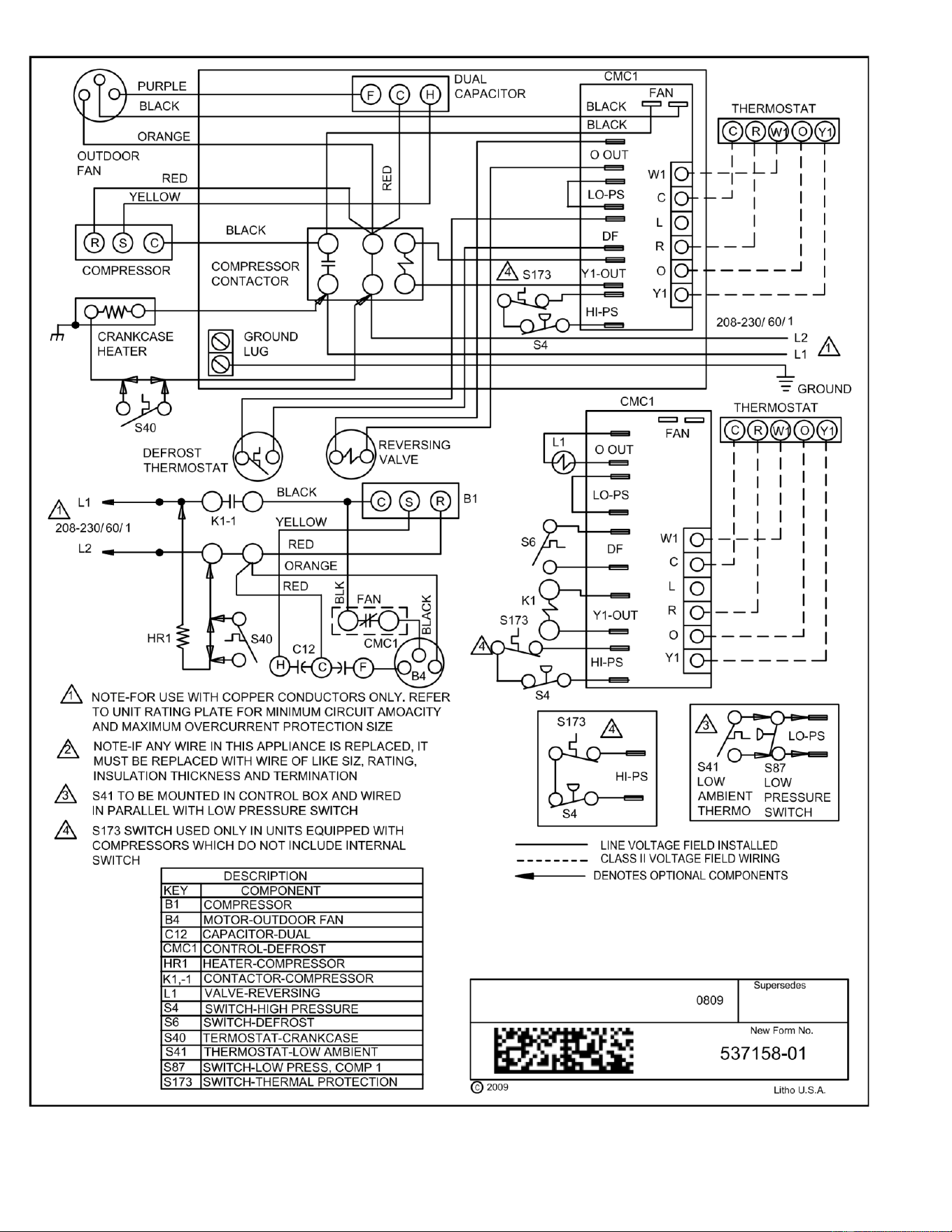
Figure 4. H/P 15 SEER Wiring Diagram
Homeowner’s Information
WARNING
ELECTRICAL SHOCK HAZARD!
Turn OFF electric power to unit before performing any
maintenance or removing panels or doors.
FAILURE TO DO SO COULD RESULT IN BODILY
INJURY OR DEATH.
Heat Pump Operation
Your new heat pump has several characteristics that you
should be aware of:
• Heat pumps satisfy heating demand by delivering large
amounts of warm air into the living space. This is quite
different from gas-or oil-fired furnaces or an electric
furnace which deliver lower volumes of considerably
hotter air to heat the space.
• Do Not be alarmed if you notice frost on the outdoor coil
in the winter months. Frost develops on the outdoor coil
during the heating cycle when temperatures are below
45°F. An electronic control activates a defrost cycle
lasting 5 to 15 minutes at preset intervals to clear the
outdoor coil of the frost.
• During the defrost cycle, you may notice steam rising
from the outdoor unit. This is a normal occurrence. The
thermostat may engage auxiliary heat during the defrost
cycle to satisfy a heating demand; however, the unit will
run to normal operation at the conclusion of the defrost
cycle.
In case of extended power outage...
If the outdoor temperature is below 50°F and power to your
outdoor unit has been interrupted for 6 hours or longer,
observe the following when restoring power to your heat
pump system.
• Set the room thermostat selector to the “Emergency
Heat” setting to obtain temporary heat for a minimum of
6 hours. This will allow system refrigerant pressures and
temperatures enough time to return to a stabilized
condition.
• In Emergency Heat mode, all heating demand is
satisfied by auxiliary heat; heat pump operation is locked
out. After a 6 hour “warm-up” period, the thermostat can
then be switched to the “Heat” setting and normal heat
pump operation my resume.
• Heat pumps (in the cooling mode) remove humidity from
your home. Depending on the amount of moisture in the
air inside your home, water will trickle from the
condensate drain of the cooling coil.
Thermostat Operation
The wall-mounted thermostat controls your air conditioner.
The thermostat is available in various configurations from
different manufacturers. The information below is typical for
most thermostats. Ask your dealer for specific information
regarding the model of thermostat installed.
Temperature Setting Levers
Most heat pump thermostats have 2 temperature selector
levers: one for heating and one for cooling. Set the levers or
dials to the desired temperature set points for both heating
and cooling. Avoid frequent temperature adjustment; turning
the unit off and back on before pressures equalize puts
stress on the unit compressor.
On heat pump systems, increasing your thermostat setting
by more than 2 degrees may cause supplemental heaters to
turn on, reducing potential energy savings.
Fan Switch
In AUTO or INT (intermittent ) mode, the blower operates
only when the thermostat calls for heating or cooling. This
mode is generally preferred when humidity control is a
priority. The ON or CONT mode provides continuous indoor
blower operation, regardless of whether the compressor or
auxiliary heat are operating. This mode is required when
constant air circulation or filtering is desired.
System Switch
Set the system switch for heating, cooling or auto operation.
The auto mode allows the heat pump to automatically switch
from heating mode to cooling mode to maintain
predetermined comfort settings. Many heat pump
thermostats are also equipped with an emergency heat
mode which locks out heat pump operation and provides
temporary heat supplied by the auxiliary heat.
Indicating Light
Most heat pump thermostats have an amber light which
indicates when the heat pump is operating in the emergency
heat mode.
Temperature Indicator
The temperature indicator displays the actual room
temperature.
Fan Control
For fan control your thermostat may have a Fan Selection
Switch that allows you to run the fan continuously or cycle it
automatically with the heating or cooling system. Switch the
506318-03B Issue 1850 Page 11 of 12
lever to ON for continuous operation and to AUTO for
automatic cycling.
For maximum comfort satisfaction and continual air
cleaning/filtering, constant fan operation is recommended.
On models without a fan Selection Switch, the fan will cycle
with the outdoor unit.
Important System Information
• Your system should never be operated without a clean
air filter properly installed.
• Return air and supply air registers should be free from
restrictions or obstructions to allow full flow of air.
Regular Maintenance Requirements
Your system should be regularly inspected by a qualified
service technician. These regular visits may include (among
other things) checks for:
• Motor operation
• Ductwork air leaks
• Coil & drain pan cleanliness (indoor & outdoor)
• Electrical component operation & wiring check
• Proper refrigerant level & refrigerant leaks
• Proper airflow
• Drainage of condensate
• Air filter(s) performance
• Blower wheel alignment, balance & cleaning
• Primary & secondary drain line cleanliness
• Proper defrost operation (heat pumps)
There is some routine maintenance procedures you can do
to help keep your system operating at peak performance
between visits.
Air Filter
Inspect air filters at least monthly and replace or clean as
required. Disposable filters should be replaced. Washable
filters may be cleaned by soaking in mild detergent and
rinsing with cold water. Replace filters with the arrows
pointing in the direction of airflow. Dirty filters are the most
common cause of poor heating / cooling performance and
compressor failures.
Indoor Coil
If the system has been operated with a clean filter in place,
it should require minimal cleaning. Use a vacuum cleaner
and soft brush attachment to remove any accumulation of
dust from the top and underside of the finned coil surface.
However, perform this maintenance only when the coil is
completely dry.
If the coil cannot be cleaned by this method, call your dealer
for service. It may need a detergent solution and rinsing with
water for cleaning, which may require coil removal. You
should not attempt this yourself.
Condensate Drain
During cooling season check at least monthly for free flow of
drainage and clean if necessary.
Condenser Coils
Grass cuttings, leaves, dirt, dust, lint from clothes dryers,
and fall off from trees can be drawn into coils by movement
of the air. Clogged condenser coils will lower the efficiency
of your unit and could cause damage to the condenser.
Periodically, debris should be brushed from the condenser
coils.
WARNING
SHARP OBJECT HAZARD!
Condenser coils have sharp edges. Wear adequate
body protection on body extremities (e.g. gloves).
FAILURE TO FOLLOW THIS WARNING COULD
RESULT IN BODILY INJURY.
Use a soft bristle brush with light pressure only. DO NOT
damage or bend condenser coil fins. Damaged or bent fins
may affect unit operation.
Painted Surfaces
For maximum protection of the unit’s finish, a good grade of
automobile wax should be applied every year. In
geographical areas where water has a high concentration of
minerals (calcium, iron, sulfur, etc.). It is recommended that
lawn sprinklers not be allowed to spray the unit. In such
applications, the sprinklers should be directed away from the
unit. Failure to follow this precaution may result in premature
deterioration of the unit finish and metal components.
In sea coast areas, special maintenance is required due to
the corrosive atmosphere provided by the high salt
concentration in ocean mists and the air. Periodic washing
of all exposed surfaces and coil will add additional life to your
unit. Please consult your installing dealer for proper
procedures in your geographic area.
IF YOUR SYSTEM DOES NOT WORK, BEFORE
REQUESTING A SERVICE CALL:
1. Ensure thermostat is set below (cooling) or above
(heating) room temperature and that the system lever is
in the “COOL”, “HEAT” or “AUTO” position.
2. Inspect your return air filter: If it is dirty your air
conditioner may not function properly.
3. Check indoor and outdoor disconnect switches. Confirm
circuit breakers are ON or that fuses have not blown.
Reset breakers/replace fuses as necessary.

Page 12 of 12 Issue 1850 506318-03B
4. Inspect the outdoor unit for clogged condenser coils,
(grass cuttings, leaves, dirt, dust or lint). Ensure that
branches, twigs or other debris are not obstructing the
condenser fan.
IF YOUR SYSTEM STILL DOES NOT OPERATE,
CONTACT YOU SERVICING DEALER.
Be sure to describe the problem, and have the model and
serial numbers of the equipment available.
If warranted replacements parts are required, the warranty
must be processed through a qualified distribution location.