OWNER’S MANUAL
ELECTRIC RANGE
ENGLISH
LSEL6337*E / LSEL6335*E
MFL71878824
Rev.01_122424
www.lg.com
Copyright © 2024 LG Electronics. All Rights Reserved
Scan to see the online manual.
Read this owner’s manual thoroughly before operating the appliance
and keep it handy for reference at all times. This abridged owner's
manual addresses user safety, precautions, and installation
information.
To view the complete owner's manual, you may:
1. Online manual: Visit the LG w
ebsite at: http://gscs-manual.lge.com/
Total/HQ/GatewayPage/main.html or scan the QR code above; or
2. Printable PDF manual: Visit lg.com and search for your model
number; or
3. Call or write to customer service as provided in your Limited
Warranty.
bookinfo.fm Page 1 Tuesday, December 24, 2024 3:17 PM
TABLE OF CONTENTS
2
4 IMPORTANT SAFETY
INSTRUCTIONS
4 READ ALL INSTRUCTIONS BEFORE USE
4 Safety Messages
4 Anti-tip Device
5 WARNING
5 Installation
5 Operation
6 Maintenance
7 Risk of Fire and Flammable Materials
7CAUTION
7 Operation
9 Maintenance
10 PRODUCT OVERVIEW
10 Product Features
10 Exterior & Interior
10 Product Specifications
11 Accessories
12 INSTALLATION
12 Before Installing
12 Installation Overview
12 Tools Needed
13 Parts
13 Unpacking and Moving the Range
14 Choosing the Proper Location
14 Dimensions and Clearances
16 Electricity
16 Flooring
16 Ambient Temperature
17 Leveling
17 Leveling the Range
17 Connecting Electricity
17 Electrical Requirements
18 Connecting the Power Cord / Conduit
22 Optional Rear Filler
22 Installing the Rear Filler
22 Anti-tip Device
22 Installing the Anti-tip Device
23 Test Run
23 Test the Range Before Use
25 OPERATION
25 Online Owner’s Manual
25 Additional Information In Online Owner’s
Manual
26 Control Panel
26 Control Panel Features
27 Knob Positions
27 Knob/Display Lighting (Model
LSEL6337*E)
29 Oven Settings
29 Changing Oven Settings
29 Settings (Hour Mode, Convection Auto
Conversion, Calibrating the Oven
Temperature, Preheat Alarm Light,
Beeper Volume, Fahrenheit or Celsius,
Cooktop On Alert Volume, Wi-Fi On/Off)
31 Cooktop
31 Using the Cooktop Elements
33 Turning on the Warm Zone
34 Using the Knob Lock
34 Oven
34 Oven Vent
34 Cooking Modes
37 SMART FUNCTIONS
37 LG ThinQ Application
37 LG ThinQ Application Features
37 Installing LG ThinQ Application and
Connecting an LG Appliance
38 Installing the LG ThinQ Application
38 LG UP Feature
38 Connecting to Wi-Fi
39 RF Module Specifications
39 FCC Statement
39 FCC RF Radiation Exposure Statement
39 Open Source Software Notice
Information
40 MAINTENANCE
40 Cleaning
40 Interior
40 Exterior
en-us_main.book.book Page 2 Tuesday, December 24, 2024 1:36 PM
3
42 Cooktop Surface
45 EasyClean
47 Self Clean
49 Removing/Assembling Lift-Off Oven
Doors
51 Removing/Assembling Drawers
51 Removing/Assembling the Vent Trim
52 Periodic Maintenance
52 Changing the Oven Light
53 TROUBLESHOOTING
53 FAQs
53 Frequently Asked Questions
56 Before Calling for Service
56 Additional Troubleshooting Information
56 Wi-Fi
57 LIMITED WARRANTY
57 USA
57 TERMS AND CONDITIONS
57 THIS LIMITED WARRANTY DOES NOT
COVER:
58 PROCEDURE FOR RESOLVING DISPUTES:
en-us_main.book.book Page 3 Tuesday, December 24, 2024 1:36 PM
4 IMPORTANT SAFETY INSTRUCTIONS
IMPORTANT SAFETY INSTRUCTIONS
READ ALL INSTRUCTIONS BEFORE USE
Download this owner's manual at http://www.lg.com
Safety Messages
Your safety and the safety of others are very important.
We have provided many important safety messages in this manual and on your appliance. Always read and
follow all safety messages.
All safety messages will tell you what the potential hazard is, tell you how to reduce the chance of injury,
and tell you what may happen if the instructions are not followed.
Anti-tip Device
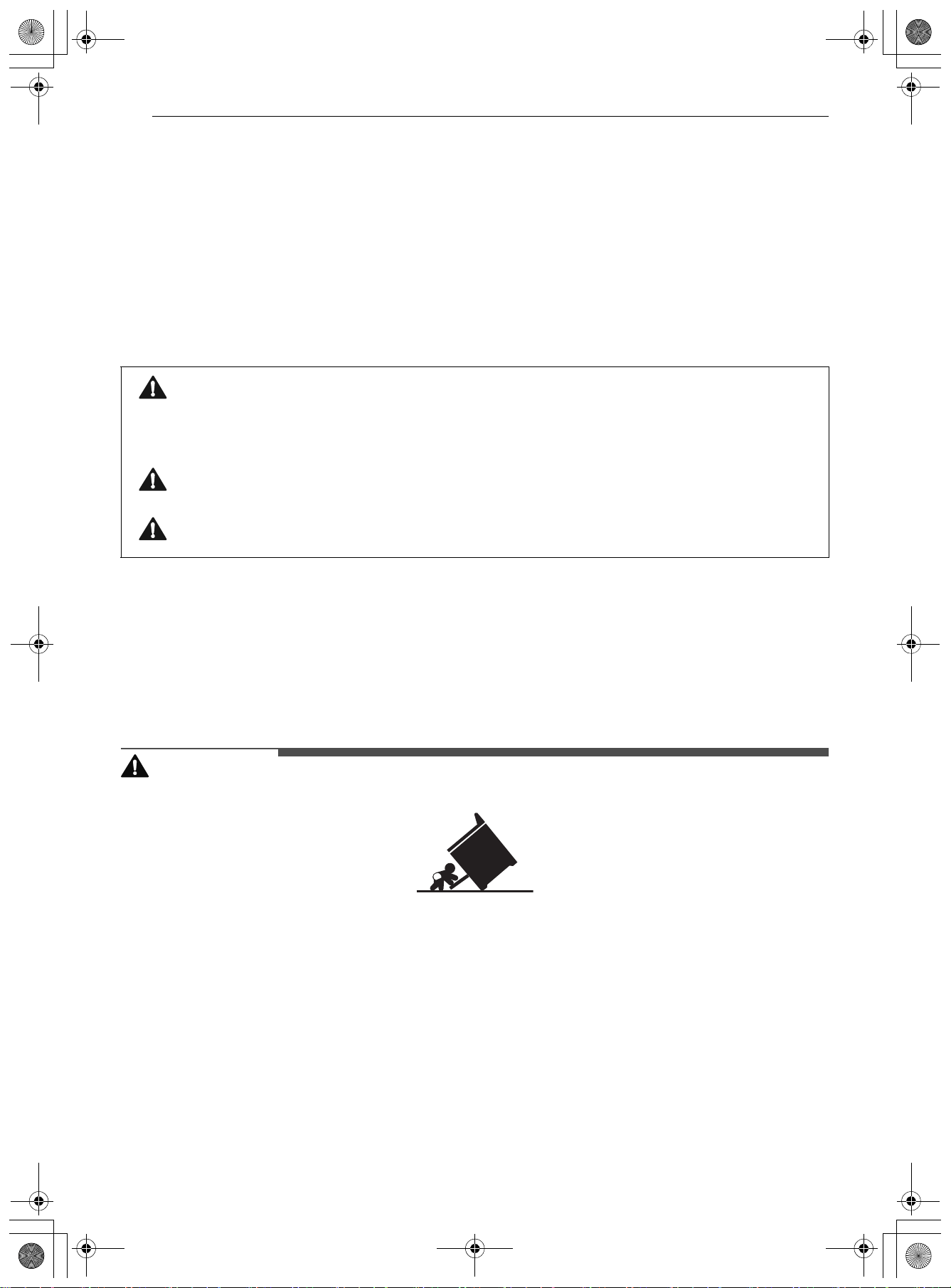
To reduce the risk of tipping, the appliance must be secured by a properly installed anti-tip device. To
check if the device is installed properly, verify that the anti-tip device is engaged, or grasp the top rear
edge of the range back guard and carefully attempt to tilt it forward. Refer to the installation section for
instructions.
WARNING
• A child or adult can tip the range and be killed.
• Install the anti-tip device to the structure and/or the range. Verify the anti-tip device has been properly
installed and engaged by following the guide on the anti-tip bracket template.
• Engage the range to the anti-tip device by following the guide on the anti-tip bracket template. Ensure
the anti-tip device is re-engaged when the range is moved by following the guide on the anti-tip bracket
template.
• Re-engage the anti-tip device if the range is moved. Do not operate the range without the anti-tip device
in place and engaged.
• See installation instructions for details.
• Failure to do so can result in death or serious burns to children or adults.
• Do not rest large, heavy items such as whole turkeys on the open oven door. The range could tip forward
and cause injury.
This is the safety alert symbol.
This symbol alerts you to potential hazards that can kill or injure you and others. All safety messages
will follow the safety alert symbol and either the word WARNING or CAUTION.
These words mean:
WARNING
You may be killed or seriously injured if you do not follow instructions.
CAUTION
You may be injured or cause damage to the product if you do not follow instructions.
en-us_main.book.book Page 4 Tuesday, December 24, 2024 1:36 PM
5IMPORTANT SAFETY INSTRUCTIONS
ENGLISH
• Do not step or sit on the oven door. The range could be tipped and injury might result from spilled hot
liquid, food, or the range itself.
• Never remove the oven legs. The range will not be secured to the anti-tip bracket if the legs are
removed.
WARNING
WARNING
• To reduce the risk of explosion, fire, death, electric shock, injury or scalding to persons when using this
product, follow basic precautions, including the following:
Installation
• Do not line the oven walls, racks, bottom, or any other part of the oven with aluminum foil or any other
material. Doing so will disrupt heat distribution, produce poor baking results and cause permanent
damage to the oven interior. (Aluminum foil will melt to the interior surface of the oven.)
• To eliminate the risk of burns or fire by reaching over heated surface units, cabinet storage space
located above the surface units should be avoided. If cabinet storage is to be provided, the risk can be
reduced by installing a range hood that projects horizontally a minimum of 5 inches beyond the bottom
of the cabinets.
• Do not use aluminum foil or any other material to line the oven bottom. Improper installation of these
liners may result in a risk of electric shock or fire.
• Make sure your range is properly installed and grounded by a qualified installer, according to the
installation instructions. Any adjustment and service should be performed only by qualified range
installers or service technicians.
Operation
• Do not leave children alone or unsupervised near the appliance when it is in use or is still hot. Children
should never be allowed to sit or stand on any part of the appliance as they could be injured or burned.
• Children should not be allowed to play with controls or other parts of the appliance.
• DO NOT TOUCH HEATING ELEMENTS OR INTERIOR SURFACES OF OVEN. Heating elements may be hot
even though they are dark in color. Interior surfaces of an oven become hot enough to cause burns.
During and after use, do not touch or let clothing or other flammable materials contact heating elements
or interior surfaces of the oven until they have had sufficient time to cool. Other surfaces, such as oven
vent openings and surfaces near these openings, oven doors, and windows of oven doors, also get hot
and may cause burns if not cooled.
• Surface units may be hot even though they are dark in color. Areas near surface units may become hot
enough to cause burns. During and after use, DO NOT TOUCH SURFACE UNITS OR AREAS NEAR UNITS or
let clothing or other flammable materials contact surface units or areas near units until they have had
sufficient time to cool. This includes the cooktop and the area above the oven door.
• Use care when opening the oven door. The hot air and steam that escape can cause burns to hands, face
and eyes. Let hot air or steam escape from the oven before removing or replacing food in the oven.
• Do not use plastic to cover food. Use foil or oven-safe lids only.
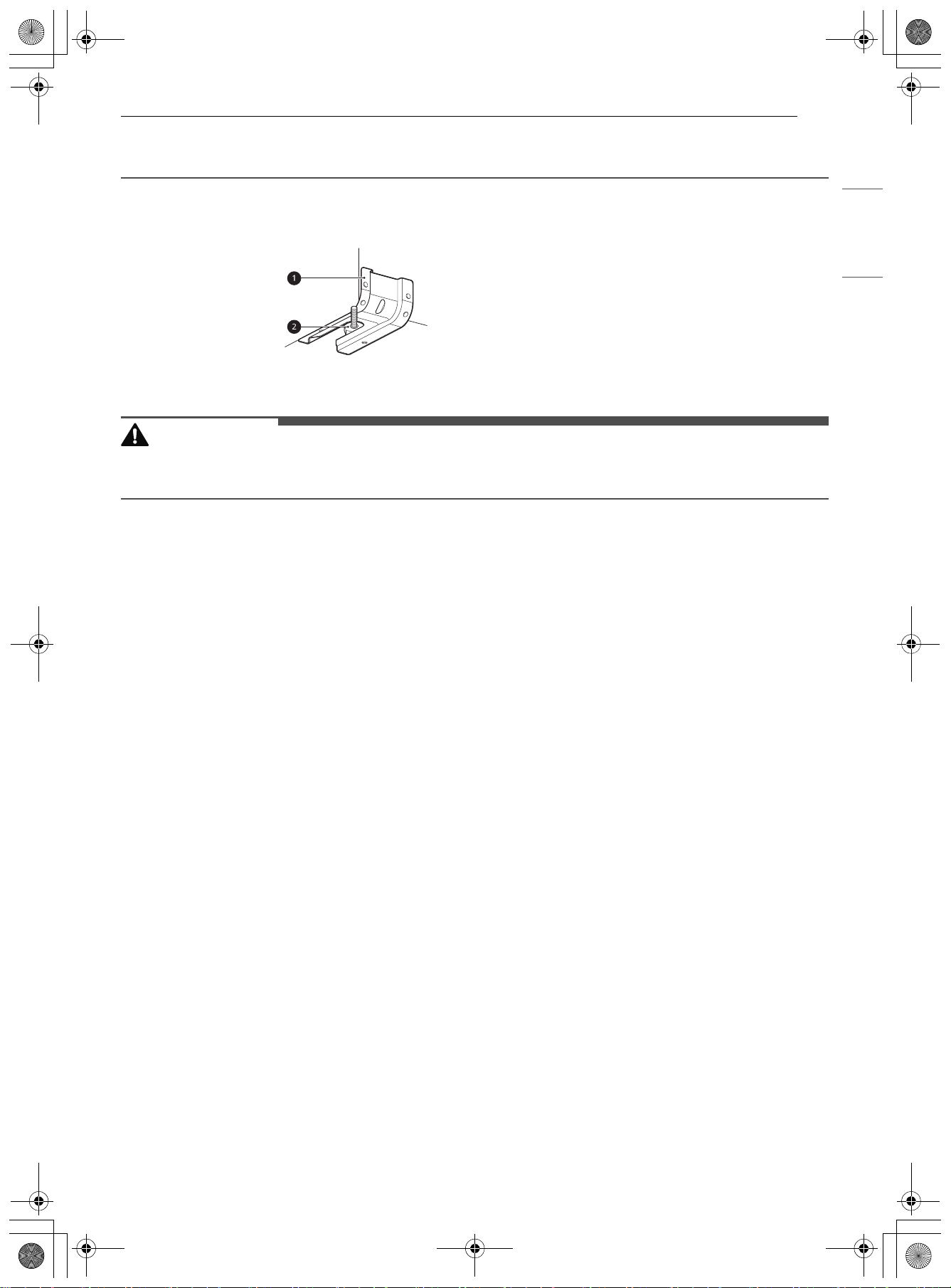
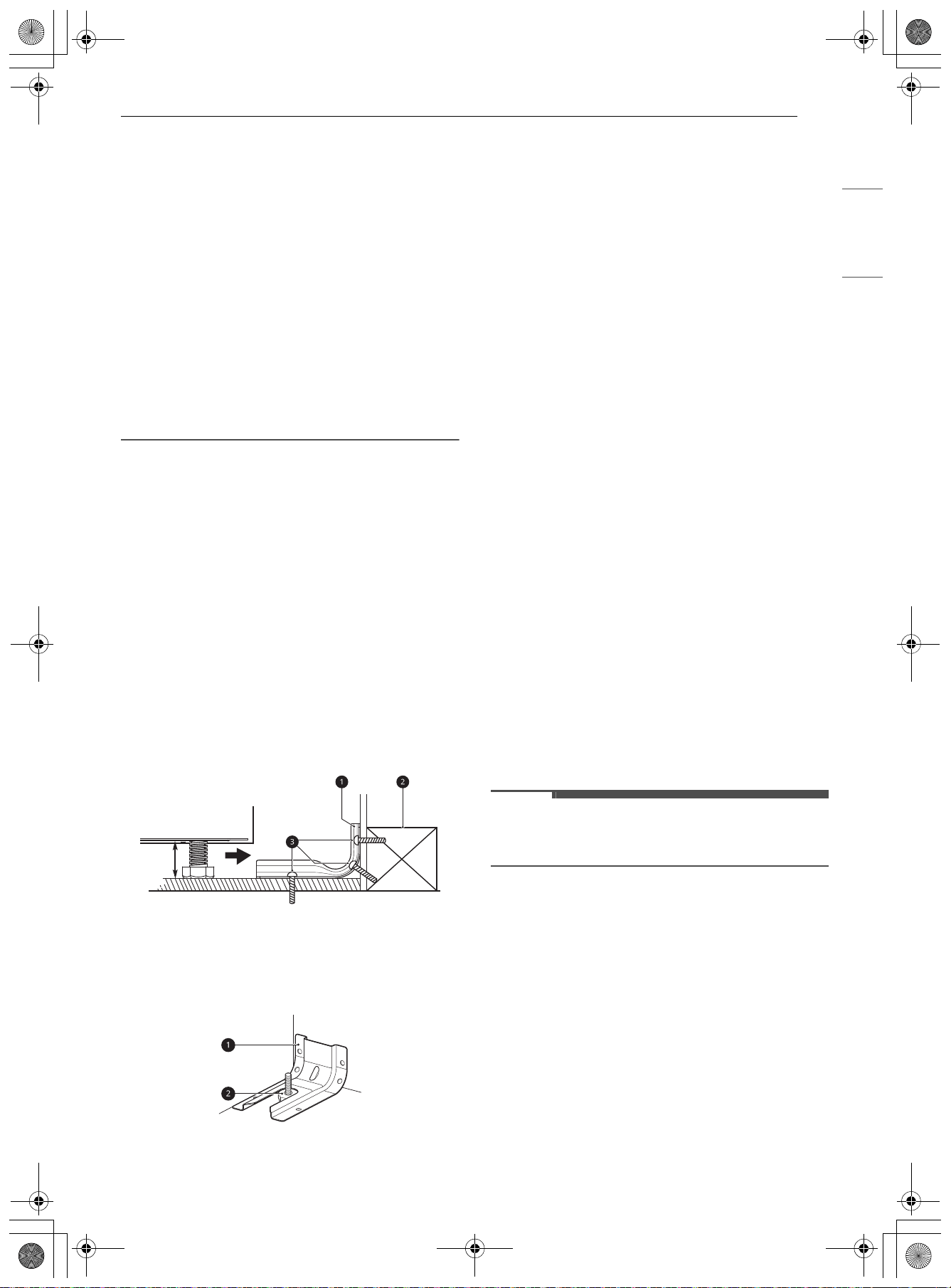
aAnti-tip bracket
bLeveling leg
en-us_main.book.book Page 5 Tuesday, December 24, 2024 1:36 PM
6 IMPORTANT SAFETY INSTRUCTIONS
• Never attempt to dry a pet in the oven.
• Never use your appliance for warming or heating the room.
• Always use pot holders or oven mitts when removing food from the oven or the surface element.
Cookware will be hot. Use only dry pot holders. Moist or damp pot holders on hot surfaces may result in
burns from steam. Do not let the pot holder touch hot heating elements. Do not use a towel or other
bulky cloth to remove food.
• Do not heat unopened food containers. Pressure in the containers may cause them to burst which may
result in injury.
• Be certain that all packing materials are removed from the appliance before operating. Keep plastic,
clothes, paper, and other flammable materials away from parts of the appliance that may become hot.
• Do not allow aluminum foil or the temperature probe to contact heating elements.
• Do not touch the hot surface between the bottom of the oven door and the top of the drawer on the
front of the oven while the oven is in operation. The surface becomes hot and can cause burns and other
injury.
• Do not touch the oven racks while they are hot.
• If a rack must be moved while the oven is hot, do not let the pot holder contact the hot heating element
in the oven.
• Pull the oven rack to the stop-lock position when loading and unloading food from the oven. This helps
prevent burns caused by touching hot surfaces of the door and oven walls.
• Do not use the oven if a heating element develops a glowing spot during use or shows other signs of
damage. A glowing spot indicates the heating element may fail and present a potential burn, fire, or
shock hazard. Turn the oven off immediately and have the heating element replaced by a qualified
service technician.
• During oven operation, the upper surface of the drawer cavity becomes hot and may cause burns. Never
allow children to remain unsupervised near the oven or cooktop.
• Do not put your hand inside the drawer while the oven is operating.
• Do not cook on a broken cooktop. If the cooktop is broken, cleaning solutions and spillovers may
penetrate the broken cooktop and create a risk of electric shock. Contact a qualified technician
immediately.
• Do not place or store items that can melt or catch fire on the glass cooktop, even when it is not being
used.
• Never leave hot cookware or utensils near the control panel, as the heat could damage the control panel.
• Turn cookware handles inward so they don't extend over adjacent surface units. This reduces the risk of
burns, ignition of flammable materials, and spillage due to unintentional contact with the cookware.
• Some cleaners can produce dangerous fumes if applied to a hot surface.
• Always place the pan in the center of the surface unit you are cooking on. Never leave surface units
unattended at high heat settings. Proper contact of cookware to burner also will improve efficiency.
Boilovers cause smoking and greasy spills that may catch on fire.
• Clean cooktop with caution. Do not use sponges or cloth to wipe spills on a hot cooking area. Use a
proper metal scraper. If a wet sponge or cloth is used to wipe spills on a hot cooking area, it can cause
steam burns. Some cleaners can produce noxious fumes if applied to a hot surface.
• Keep Oven Vent Duct Unobstructed. Areas near the vent may become hot during operation and may
cause burns. Do not block the vent opening. Avoid placing plastics near the vent as heat may distort or
melt the plastic.
Maintenance
• Do not allow children to crawl into the oven.
• Let hot cookware and utensils cool in a safe place, out of reach of small children.
• If the door glass, cooktop glass, surface, or oven heating unit of the range are damaged, discontinue use
of the range and call for service.
en-us_main.book.book Page 6 Tuesday, December 24, 2024 1:36 PM
7IMPORTANT SAFETY INSTRUCTIONS
ENGLISH
• Do not allow anyone to climb, stand or hang on the door, storage drawer or cooktop. They could
damage the range and even tip it over, causing severe personal injury.
• Always disconnect power from the appliance before servicing.
• Before replacing the oven light, switch off the electrical power to the oven at the main fuse or circuit
breaker panel. Failure to do so can result in severe personal injury, death, or electrical shock.
• Never pour cold water over a hot oven for cleaning. Doing so may cause the oven to malfunction.
Risk of Fire and Flammable Materials
• Do not store or use flammable material in the oven or near or on the cooktop. Flammable materials
include paper, plastic, pot holders, linens, wall coverings, curtains, and gasoline or other flammable
vapors and liquids such as grease or cooking oil. These materials can be ignited when the oven and
cooktop are in use.
• Use extreme caution when moving or disposing of hot grease.
• Wear proper apparel. Do not wear loose-fitting or hanging garments, which may ignite if they contact
hot surfaces, and cause severe burns.
• Do not use the oven for drying clothes. Only use the oven for its intended purpose.
• If cabinet storage is provided directly above the cooking surface, only use it to store items that are not
frequently used and can be safely stored in an area subjected to heat. Temperatures may be unsafe for
volatile items such as flammable liquids, cleaners or aerosol sprays.
• Do not use water on grease fires. Should an oven fire occur, leave the oven door closed and turn the
oven off. If the fire continues, throw baking soda on the fire or use a fire extinguisher. Do not put water
or flour on the fire. Flour may be explosive and water can spread a grease fire and cause personal injury.
CAUTION
CAUTION
• To reduce the risk of minor injury to persons, malfunction, or damage to the product or property when
using this product, follow basic precautions, including the following:
Operation
• Always heat fat slowly, and watch as it heats.
• If frying combinations of oils and fats, stir them together before heating.
• Use a deep fat thermometer, if possible, to prevent overheating fat beyond the smoking point.
• Use the least possible amount of fat for effective shallow or deep-fat frying. Filling the pan with too much
fat can cause spillovers when food is added.
• Accessible parts may become hot when the broiler is in use.
• Do not place food or cookware on the bottom of the oven cavity. Doing so will cause permanent damage
to the oven bottom finish.
• When using cooking or roasting bags in the oven, follow the manufacturer’s directions.
• To protect against food-borne illnesses, cook meat and poultry thoroughly. The USDA has indicated the
following as safe minimum internal temperatures for consumption:
- Ground beef: 160 °F
- Poultry: 165 °F
- Beef, veal, pork, or lamb: 145 °F
- Fish/seafood: 145 °F
en-us_main.book.book Page 7 Tuesday, December 24, 2024 1:36 PM
8 IMPORTANT SAFETY INSTRUCTIONS
• Foil may be used to wrap food in the oven or warming drawer, but do not allow the foil to come into
contact with the exposed heating/broiling elements in the oven. The foil could melt or ignite, causing
smoke, fire, or injury.
• Use caution with the Delayed Timed Cook features. Use the automatic timer when cooking cured or
frozen meats and most fruits and vegetables. Foods that can easily spoil, such as milk, eggs, fish, meat or
poultry, should be chilled in the refrigerator first. Even when chilled, they should not stand in the oven
for more than 1 hour before cooking begins, and should be removed promptly when cooking is
complete. Eating spoiled food can result in sickness from food poisoning.
• Do not use the glass cooktop surface as a cutting board.
• Choose proper burner size. For smaller pots and pans, use the smaller heating elements. For larger pots
and pans, use the larger heating elements. Select pans that have flat bottoms large enough to cover the
heating elements. Using undersized pans exposes a portion of the heating element to direct contact and
may result in clothing burning.
• Glazed cookware. Only certain types of glass, glass-ceramic, ceramic, earthenware, or other glazed
cookware are suitable for range-top service without breaking due to the sudden change in temperature.
• Never cook directly on the glass. Always use cookware.
• Always turn the surface units off before removing cookware.
• Immediately clean spills on the cooking area to prevent a tough cleaning chore later.
• Do not turn surface units on before placing cookware.
• Do not store heavy items above the cooktop surface that could fall and damage it.
• Do not place aluminum foil or plastic items such as salt and pepper shakers, spoon holders, or plastic
wrappings or any other material on the range when it is in use.
• Do not use a steel-wool pad or scrub pad or abrasive cleaning pads. They can scratch the surface.
• FOOD POISON HAZARD : Bacteria may grow in food at temperatures below 140 °F.
- Always start with hot food. Do not use the warm setting to heat cold food.
- Do not use the warm setting for more than 2 hours.
• The edges of the range vent are sharp. Wear gloves when cleaning the range to avoid injury.
• Replace oven racks before turning the oven on to prevent burns.
• Do not cover the racks with aluminum foil, or any other material, or place anything on the bottom of the
oven. Doing so will result in poor baking and may damage the oven bottom.
• Only arrange oven racks when the oven is cool.
• Do not hit the glass door panel with excessive force. Do not allow hard objects like cookware or glass
bottles to hit the glass door panel. The glass could break, resulting in a risk of personal injury.
• Do not use a broiler pan without a grid.
• Do not cover the grid with aluminum foil.
• Position food (fat side up) on the grid.
• Do not use a broiler pan without a grid. Oil can cause a grease fire.
• Do not cover the grid and broiler pan with aluminum foil. Doing so will cause a fire.
• Always use a broiler pan and grid for excess fat and grease drainage. This will help to reduce splatter,
smoke, and flare-ups.
• When using your broiler, the temperature inside the oven will be extremely high. Take caution to avoid
possible burns by:
- Keeping the door closed when broiling
- Always wearing oven mitts when inserting or removing food items
• Never cover slots, holes, or passages in the oven bottom or cover entire racks with materials such as
aluminum foil. Doing so blocks airflow through the oven and can result in carbon monoxide poisoning.
Aluminum foil can also trap heat, causing a fire hazard or poor oven performance.
• Clean the grease filters on your exhaust hood regularly.
en-us_main.book.book Page 8 Tuesday, December 24, 2024 1:36 PM
9IMPORTANT SAFETY INSTRUCTIONS
ENGLISH
SAVE THESE INSTRUCTIONS
• When flaming foods under the hood, turn the fan on.
• Always use an oven mitt to remove the temperature probe. Do not touch the broil element. Failure to
obey this caution can result in severe personal injury.
• To avoid damage to the meat probe, Do not use tongs to pull on the probe when removing it.
• Do not store the meat probe in the oven.
• Do not pull wire to remove probe. Hold the probe head, not the wire, when inserting or removing probe.
• Do not use the peel as cookware in the oven.
• The pizza stone gets very hot and retains heat for a long time. Allow it to cool in the oven before handling
it.
• To avoid burns, use oven mitts when moving the pizza stone or using the pizza stone and peel.
• Do not run water over a hot pizza stone or subject the stone to excessive shocks. The stone could break
and cause injuries.
• Do not use harsh cleaners or abrasive pads to clean the pizza stone and peel. They could damage the
surface or coating.
• Use only water to clean the pizza stone and peel.
Maintenance
• Do not store items of interest to children in cabinets above a range or on the back guard of a range.
Children climbing on the range to reach items could be seriously injured.
• Do not repair or replace any part of the appliance unless specifically recommended in the manual. All
other servicing should be performed by a qualified technician.
• Do not use harsh etching, abrasive cleaners or sharp metal scrapers to clean the oven door glass
because they can scratch the surface. Scratches may cause the glass to shatter.
• Make sure oven lights are cool before cleaning.
• Do not clean the door gasket. The door gasket is essential for a good seal. Care should be taken not to
rub, damage, or move the gasket.
• Clean in the self-clean cycle only parts listed in this manual. Before self-cleaning the oven, remove the
broiler pan, all oven racks, the meat probe and any cookware, utensils or food from the oven.
en-us_main.book.book Page 9 Tuesday, December 24, 2024 1:36 PM
10 PRODUCT OVERVIEW
PRODUCT OVERVIEW
Product Features
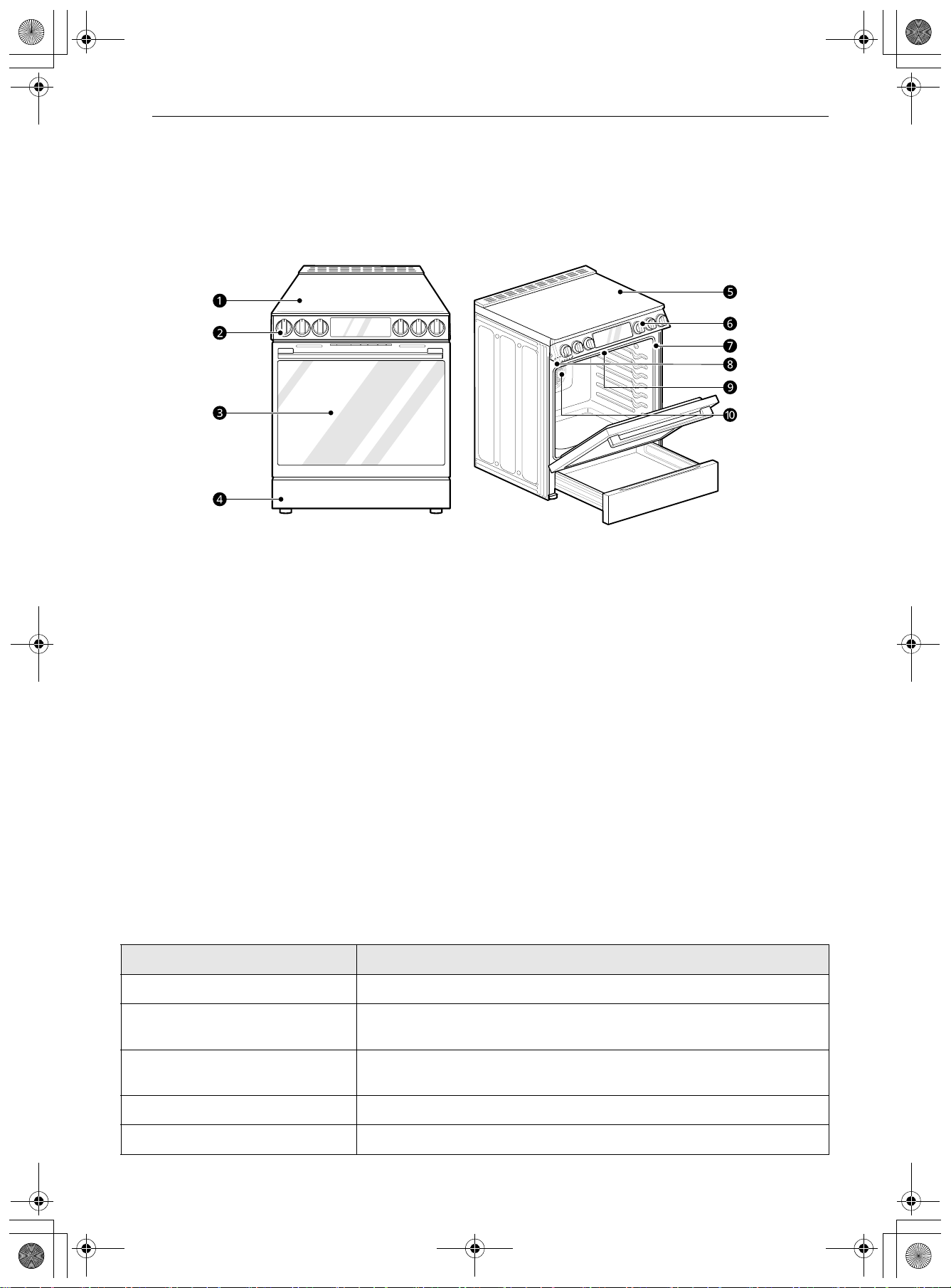
Exterior & Interior
a Cooktop
b Cooktop controller
c Oven door
d Storage drawer
e Glass-ceramic cooktop
f Oven mode knob
g Gasket
h Model & serial number plate
i Broil heater
j Convection heater
Product Specifications
The appearance and specifications listed in this manual may vary due to constant product improvements.
Oven Range Models LSEL6337*E, LSEL6335*E
Description Electric Slide In Oven Range
Electrical requirements LSEL6337*E : 13.6 kW 120/240 VAC or 10.2 kW 120/208 VAC
LSEL6335*E : 13.0 kW 120/240 VAC or 9.8 kW 120/208 VAC
Exterior Dimensions 29 7/8" (W) x 36 1/2" (H) x 26 7/8" (D) (D with door closed)
75.9 cm (W) x 92.8 cm (H) x 68.3 cm (D) (D with door closed)
Height to cooking surface 36 1/8" (91.6 cm)
Net weight 164 lb (74.4 kg)
en-us_main.book.book Page 10 Tuesday, December 24, 2024 1:36 PM
11PRODUCT OVERVIEW
ENGLISH
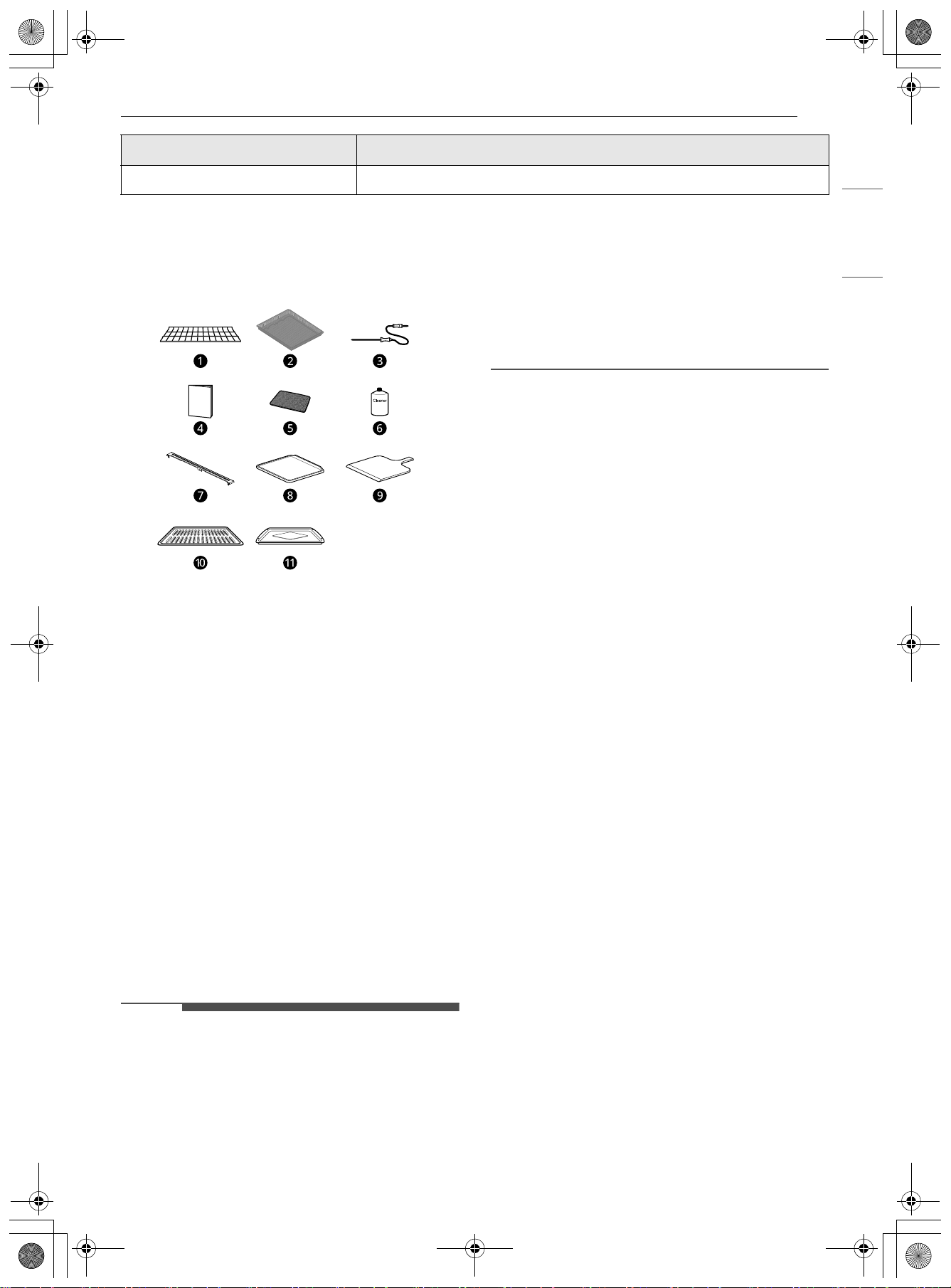
Accessories
Included Accessories
a Heavy Duty Rack (2 ea)
b Air Fry Tray (1 ea)
c Meat Probe (1 ea)
• LSEL6337*E model only
d Owner’s Manual (1 ea)
e Non-scratch Scouring Pad (1 ea)
f Cooktop Cleaner (1 ea)
g Rear Filler (1 ea)
h Pizza Stone (1 ea)
• LSEL6337*E model only
i Peel (1 ea)
• LSEL6337*E model only
j Grid (1 ea)
k Broiler Pan (1 ea)
NOTE
• Contact LG Customer Service at 1-800-243-0000
(1-888-542-2623 in Canada) if any accessories
are missing.
• For your safety and for extended product life,
only use authorized components.
• The manufacturer is not responsible for product
malfunction or accidents caused by the use of
separately purchased, unauthorized
components or parts.
• The images in this guide may be different from
the actual components and accessories, which
are subject to change by the manufacturer
without prior notice for product improvement
purposes.
Total capacity 6.3 cu. ft.
Oven Range Models LSEL6337*E, LSEL6335*E
en-us_main.book.book Page 11 Tuesday, December 24, 2024 1:36 PM
12 INSTALLATION
INSTALLATION
Before Installing
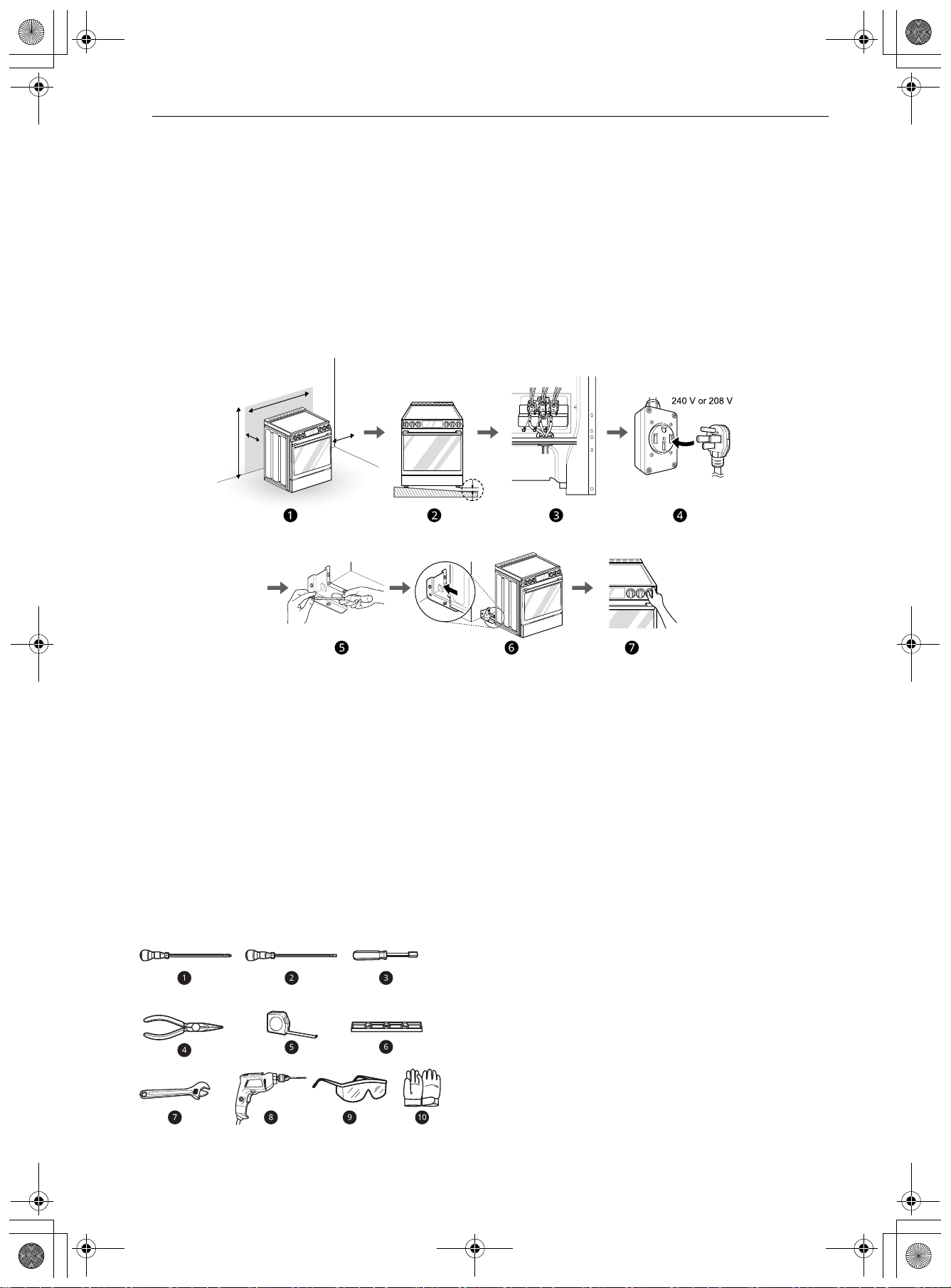
Installation Overview
Please read the following installation instructions first after purchasing this product or transporting it to
another location.
The images in this guide may be different from the actual components and accessories, which are subject
to change by the manufacturer without prior notice for product improvement purposes.
a Check and choose the proper location
b Level the range
c Connect electric range
d Plug in the power cord
e Install anti-tip device
f Engage the anti-tip device
g Test run
Tools Needed
a Phillips Screwdriver
b Flat-blade Screwdriver
c 1/4" Nut Driver
d Pliers
e Tape Measure
f Level
g Adjustable Wrench
h Drill
i Safety Glasses
en-us_main.book.book Page 12 Tuesday, December 24, 2024 1:36 PM
13INSTALLATION
ENGLISH
j Gloves
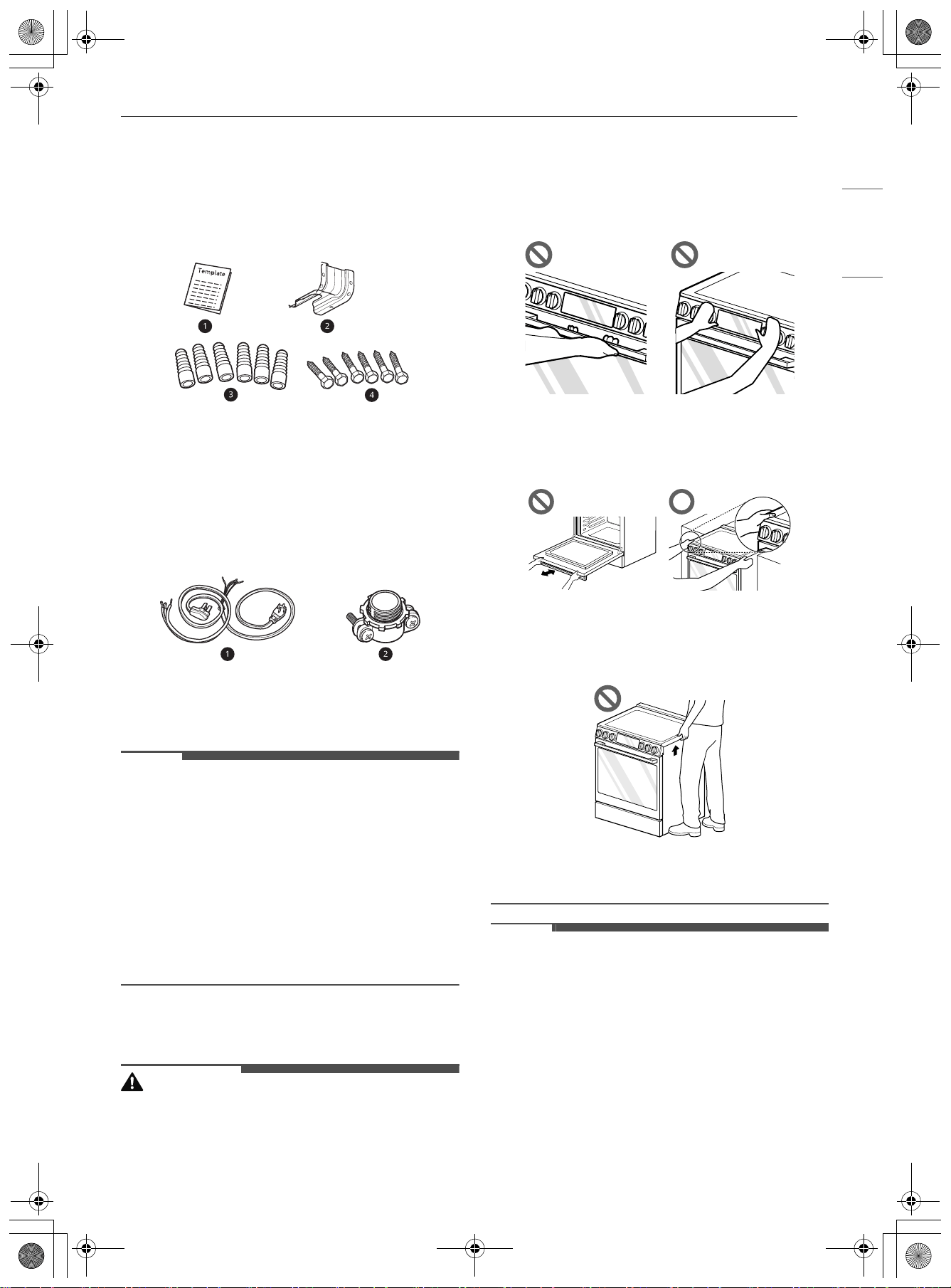
Parts
Parts Provided
a Template (1 ea)
b Anti-tip Bracket Kit (1 ea)
c Anchor Sleeves (6 ea)
d Lag Bolts (6 ea)
Parts Not Provided
a 4-Wire Cord or 3-Wire Cord (UL approved 40 or
50 AMP)
b Strain Relief (for conduit installations only)
NOTE
• Observe all governing codes and ordinances.
• Have the installer show you the location of the
circuit breaker or fuse. Mark it for easy
reference.
• As when using any appliance generating heat,
there are certain safety precautions you should
follow.
• Be sure your range is installed and grounded
properly by a qualified installer or service
technician.
Unpacking and Moving the Range
WARNING
• You should use two or more people to move and
install the range. (Excessive Weight Hazard)
Failure to do so can result in back or other injury.
• Do not use the door handles or knobs to push or
pull the range during installation or when
moving the range out for cleaning or service.
Doing so can result in serious damage to the
range.
• Do not push or pull the range by grabbing the
open oven door or cooktop only. Doing so can
result in serious damage to the range.
• Do not lift the range using the cooktop or door
handle. Doing so can cause damage and
improper operation of the range.
• To reduce the risk of burns, do not move this
appliance while it is hot.
NOTE
• The image may differ from the actual model.
en-us_main.book.book Page 13 Tuesday, December 24, 2024 1:36 PM
14 INSTALLATION
NOTE
• Your range is heavy and can be installed on soft
floor coverings such as cushioned vinyl or
carpeting. Use care when moving the range on
this type of flooring. Use a belt when moving the
range to prevent damaging the floor. Or slide
the range onto cardboard or plywood to avoid
damaging the floor covering.
• Remove packing material, tape and any
temporary labels from your range before using.
Do not remove any warning-type labels, the
model and serial number label, or the Tech
Sheet that is located on the back of the range.
• To remove any remaining tape or glue, rub the
area briskly with your thumb. Tape or glue
residue can also be easily removed by rubbing a
small amount of liquid dish soap over the
adhesive with your fingers. Wipe with warm
water and dry.
• Do not use sharp instruments, rubbing alcohol,
flammable fluids, or abrasive cleaners to remove
tape or glue. These products can damage the
surface of your range.
Choosing the Proper Location
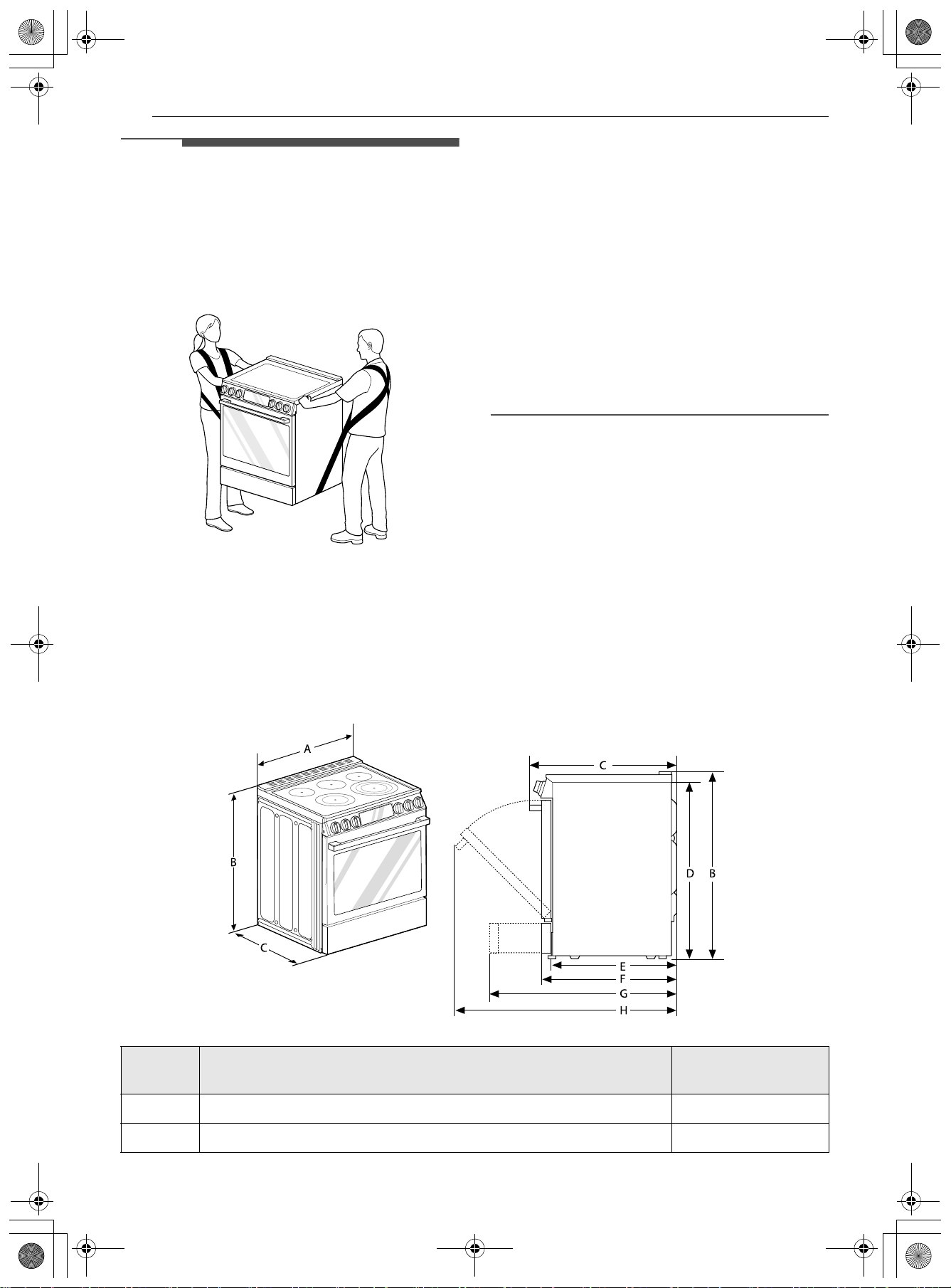
Dimensions and Clearances
Dimensions
- Dimensions
LSEL6337*E,
LSEL6335*E
AWidth 29 7/8" (759 mm)
BHeight 36 1/2" (928 mm)
en-us_main.book.book Page 14 Tuesday, December 24, 2024 1:36 PM
15INSTALLATION
ENGLISH
Clearances
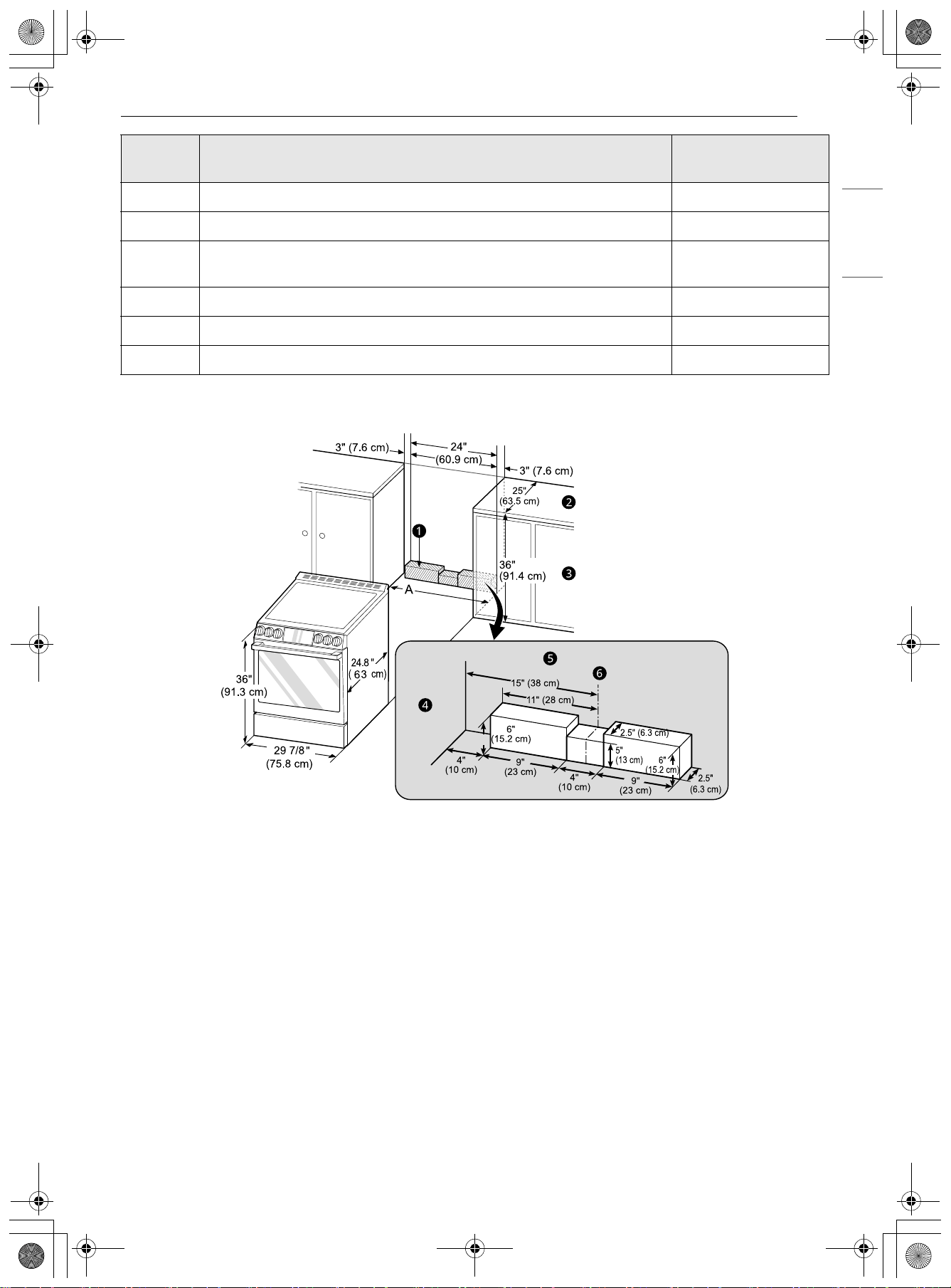
a Acceptable electrical outlet area
b Normal counter top depth
c Counter top height
d Cabinet
e Wall
f Center
A (Cabinet opening)
= 30" (76.2 cm) For U.S.A
= 30" (76.2 cm) ~ 31" (78.7 cm) For CANADA
C Depth (Includes Door Handle) 29 1/4" (742 mm)
D Height (Excludes Vent Trim) 36 1/8" (916 mm)
E
Depth (Includes only the product body that is loaded into the cabinet.
Excludes door, drawer, and handles)
24 5/8" (627 mm)
F Depth (Excludes Door Handle) 26 7/8" (683 mm)
G Depth when drawer is fully opened 38 1/4" (973 mm)
H Depth when door is fully opened 48 1/2" (1233 mm)
- Dimensions
LSEL6337*E,
LSEL6335*E
en-us_main.book.book Page 15 Tuesday, December 24, 2024 1:36 PM
16 INSTALLATION
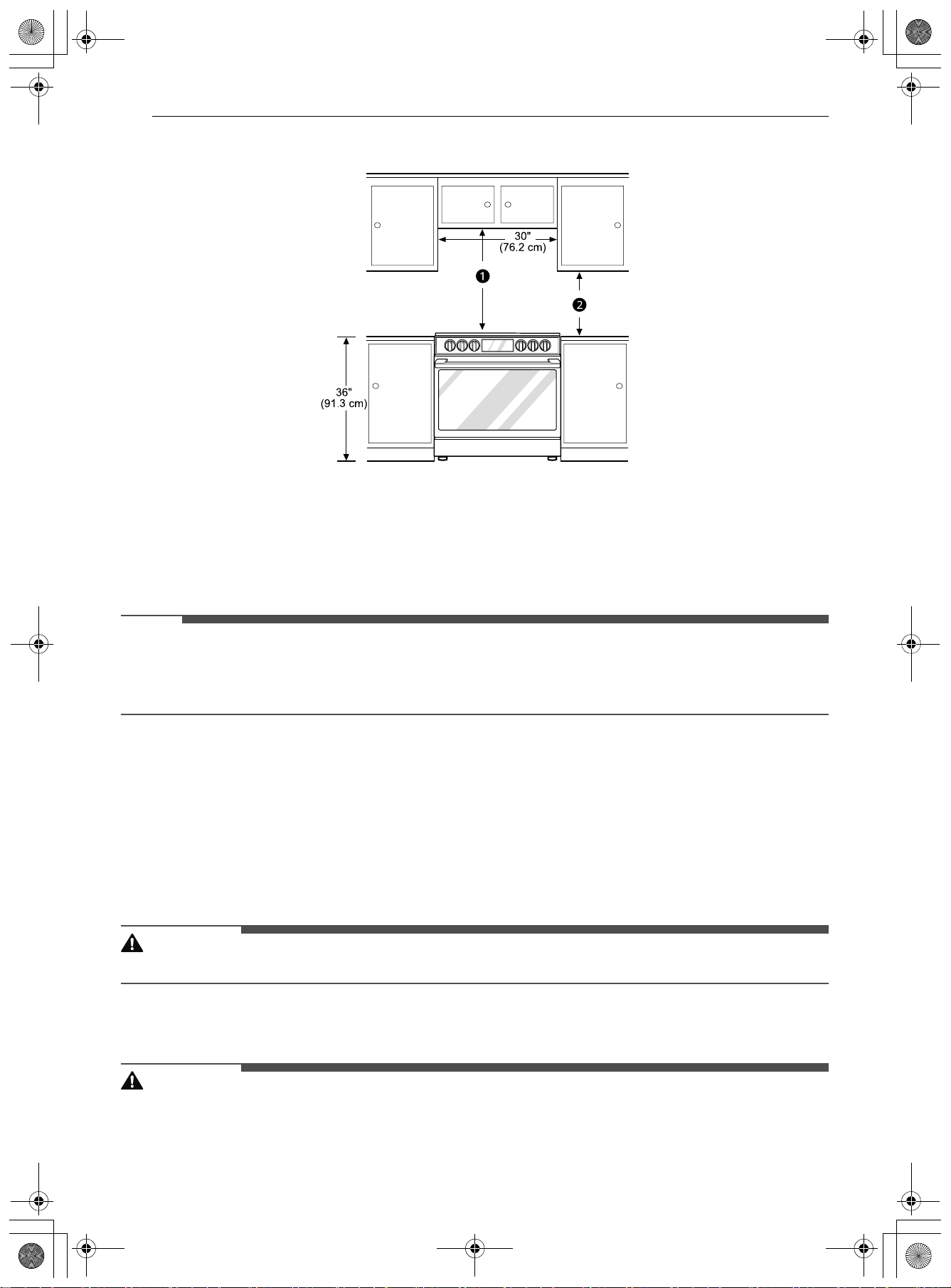
Minimum Dimensions
a 30" (76.2 cm) minimum clearance between the top of the cooking surface and the bottom of an
unprotected wood or metal cabinet; or 24" (60.9 cm) minimum when bottom of wood or metal cabinet
is protected by not less than 1/4"(0.64 cm) flame retardant millboard covered with not less than no. 28
MSG sheet steel, 0.015" (0.381 mm) stainless steel, 0.024" (0.610 mm) aluminum or 0.020" (0.508 mm)
copper.
b 15" (38.1 cm) minimum between countertop and adjacent cabinet bottom.
NOTE
• Important – Save for the use of the local electrical inspector.
• For installation in Canada, a free-standing range is not to be installed closer than 15/32" (12 mm) from
any adjacent surface.
Electricity
The range should always be plugged into its own individual properly grounded electrical outlet.
• This prevents overloading house wiring circuits which could cause a fire hazard from overheated wires.
• It is recommended that a separate circuit serving only this appliance be provided.
Flooring
CAUTION
• Use an insulated pad or 1/4 in. (0.64 cm) plywood under the range if installing the range over carpeting.
Ambient Temperature
CAUTION
• Make sure wall coverings, countertops and cabinets around the range can withstand the heat (up to 194
°F) generated by the range. Discoloration, delamination or melting may occur. This range has been
designed to comply with the maximum allowable wood cabinet temperature of 194 °F.
en-us_main.book.book Page 16 Tuesday, December 24, 2024 1:36 PM
17INSTALLATION
ENGLISH
• Before installing the range in an area covered with linoleum or other synthetic floor covering, make sure
the floor covering can withstand temperatures of at least 200 °F (93 °C).
Leveling
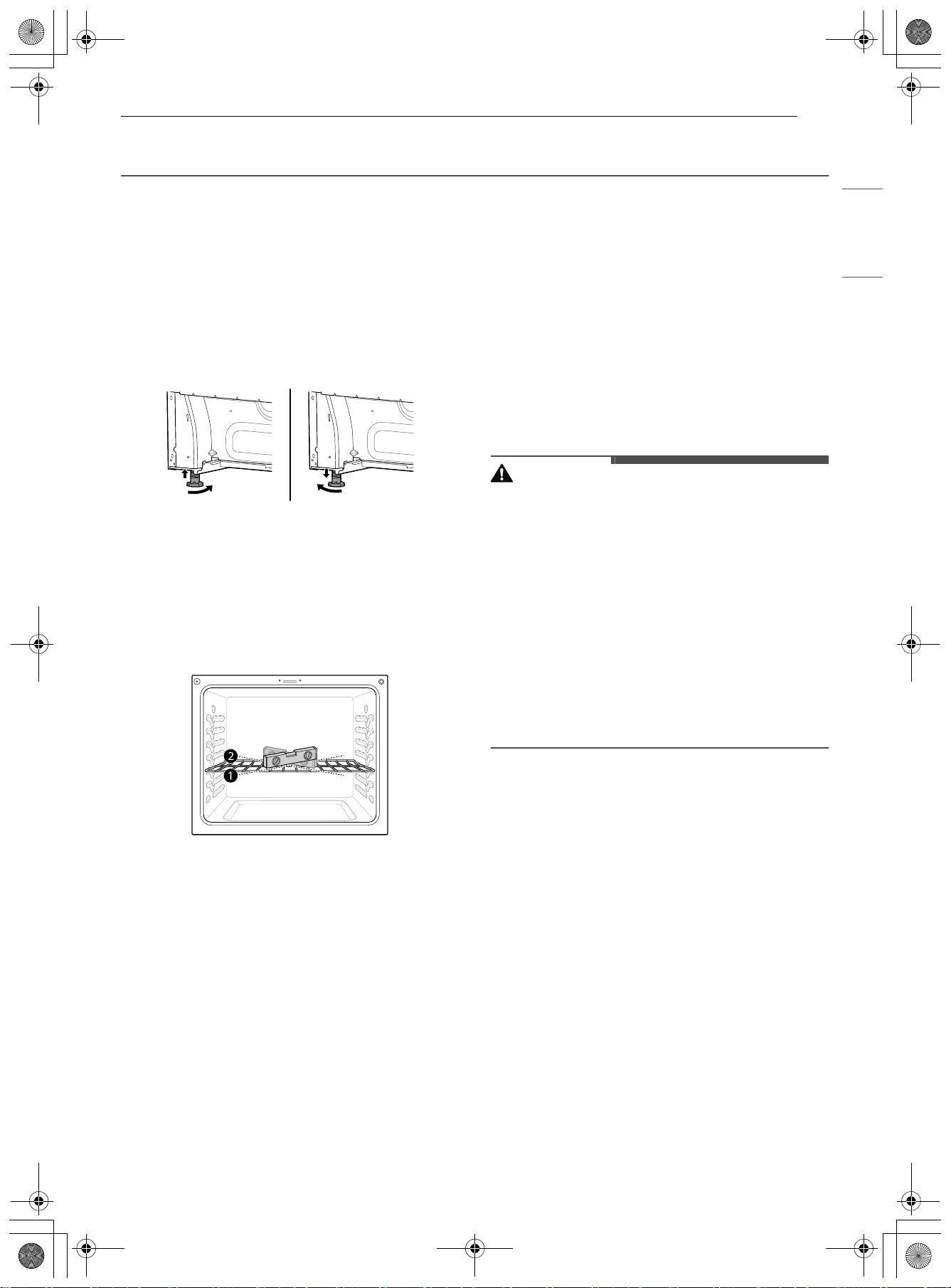
Leveling the Range
Level the range by adjusting the leveling legs with
a wrench. Extending the legs slightly may also
make it easier to insert the rear leg into the anti-tip
bracket.
Checking Adjustments
1 Place the level diagonally on the oven rack,
and check each direction for level.
• First check direction
a. Then check
direction
b.
2 If the level doesn’t show that the rack is level,
adjust the leveling legs with a wrench.
Connecting Electricity
Electrical Requirements
This appliance must be installed and grounded on
a branch circuit by a qualified technician in
accordance with the National Electrical code ANSI/
NFPA NO. 70 - latest edition.
All wiring should conform to local and NEC codes.
This range requires a single-phase, 3 wire, AC 120/
208 V or 120/240 V 60 Hz electrical system. Use
only a 3-conductor or a 4-conductor UL - listed
range cord with closed-loop terminals, open-end
spade lugs with upturned ends or similar
termination. Do not install the power cord without
a strain relief.
A range cord rated at 40 amps with 120/240 V
minimum range is required.
If a 50 amp range cord is used, it should be
marked for use with 1 3/8" diameter connection
openings. This appliance may be connected by
means of a conduit or power cord. If a conduit is
being used, refer to "3-Wire Connection: Conduit"
or "4-Wire Connection: Conduit" sections.
WARNING
• Allow 2 to 3 ft (61.0 cm to 91.4 cm) of slack in the
line so that the range can be moved if servicing
is ever necessary.
• The power supply cord and plug should not be
modified. If the plug will not fit the outlet, have a
proper outlet installed by a qualified electrician.
• Using an extension cord to connect the power is
prohibited. Connect the power cord and plug
directly.
• Electrical ground is required on this appliance.
• Make sure that the power cord is not pinched by
the range or heavy objects. Failure to do so can
result in serious burns or electrical shock.
Specified Power Cord Kit Rating
Case 1
• Voltage: 120/240 volts (3-wire)
• Range rating: 8,750 W - 16,500 W
• Specified rating of power supply-cord kit,
amperes: 40 A or 50 A
• Diameter (inches) of range connection opening
- Power cord: 1 3/8"
- Conduit: 1 1/8"
Case 2
• Voltage: 120/240 volts (3-wire)
• Range rating: 16,501 W - 22,500 W
• Specified rating of power supply-cord kit,
amperes: 50 A
en-us_main.book.book Page 17 Tuesday, December 24, 2024 1:36 PM
18 INSTALLATION
• Diameter (inches) of range connection opening
- Power cord: 1 3/4"
- Conduit: 1 3/8"
Case 3
• Voltage: 120/208 volts (3-wire)
• Range rating: 7,801 W- 12,500 W
• Specified rating of power supply-cord kit,
amperes: 40 A or 50 A
• Diameter (inches) of range connection opening
- Power cord: 1 3/8"
- Conduit: 1 1/8"
Case 4
• Voltage: 120/208 volts (3-wire)
• Range rating: 12,501 W - 18,500 W
• Specified rating of power supply-cord kit,
amperes: 50 A
• Diameter (inches) of range connection opening
- Power cord: 1 3/4"
- Conduit: 1 3/8"
3, 4 - Wire Electrical Wall Receptacle
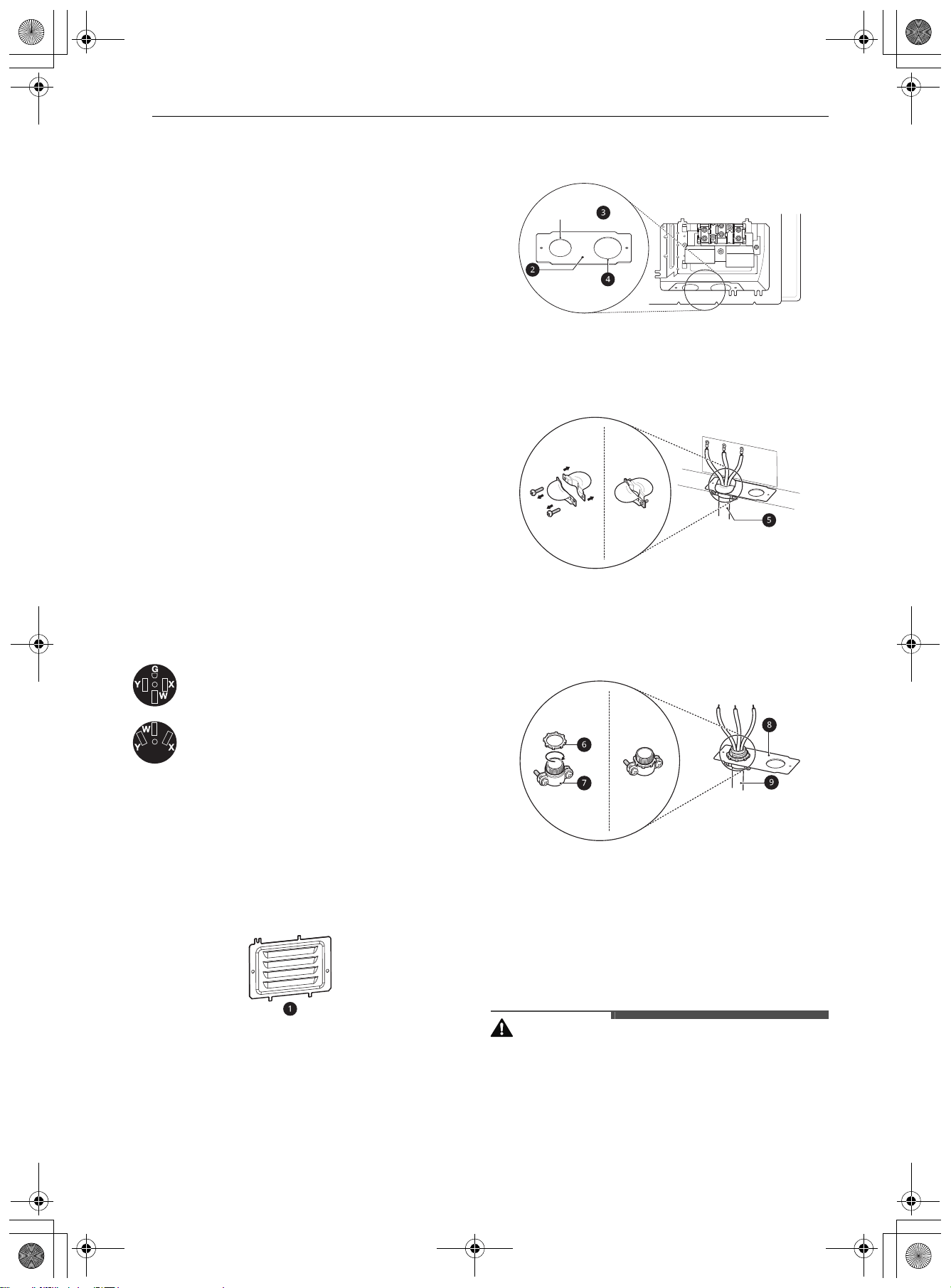
Connecting the Power Cord /
Conduit
The rear access cover a must be removed. Loosen
the two screws with a screwdriver. The terminal
block will then be accessible.
Use the cord/conduit connection plate
b to install
the power cord or conduit. Leave the connection
plate as installed for power cord installations.
Remove the connection plate for conduit
installations and rotate it to use the smaller 1 1/8
in. (2.8 cm) conduit hole
c instead of the 1 3/8 in.
(3.5 cm) power cord hole
d.
For power cord
e installations, hook the strain
relief over the 1 3/8 in. (3.5 cm) power cord hole
located below the rear of the oven. Insert the
power cord through the strain relief and tighten it.
For conduit installations, insert the conduit strain
relief in the 1 1/8 in. (2.8 cm) conduit hole. Then
install the conduit through the body of the strain
relief and fasten the strain relief with its ring.
f Ring
g Body
h Cord/Conduit Connection Plate
i Conduit
3-Wire Connection: Power Cord
WARNING
• The white middle (neutral or ground) wire of a 3-
wire power cord or a 3-wire conduit has to be
connected to the middle post of the main
terminal block. The remaining two wires of the
power cord or conduit have to be connected to
the outside posts of the main terminal
4 Wire receptacle (14-50R)
3 Wire receptacle (10-50R)
1
1
/
8
"
(2.8 cm)
1
3
/
8
"
(3.5 cm)
en-us_main.book.book Page 18 Tuesday, December 24, 2024 1:36 PM
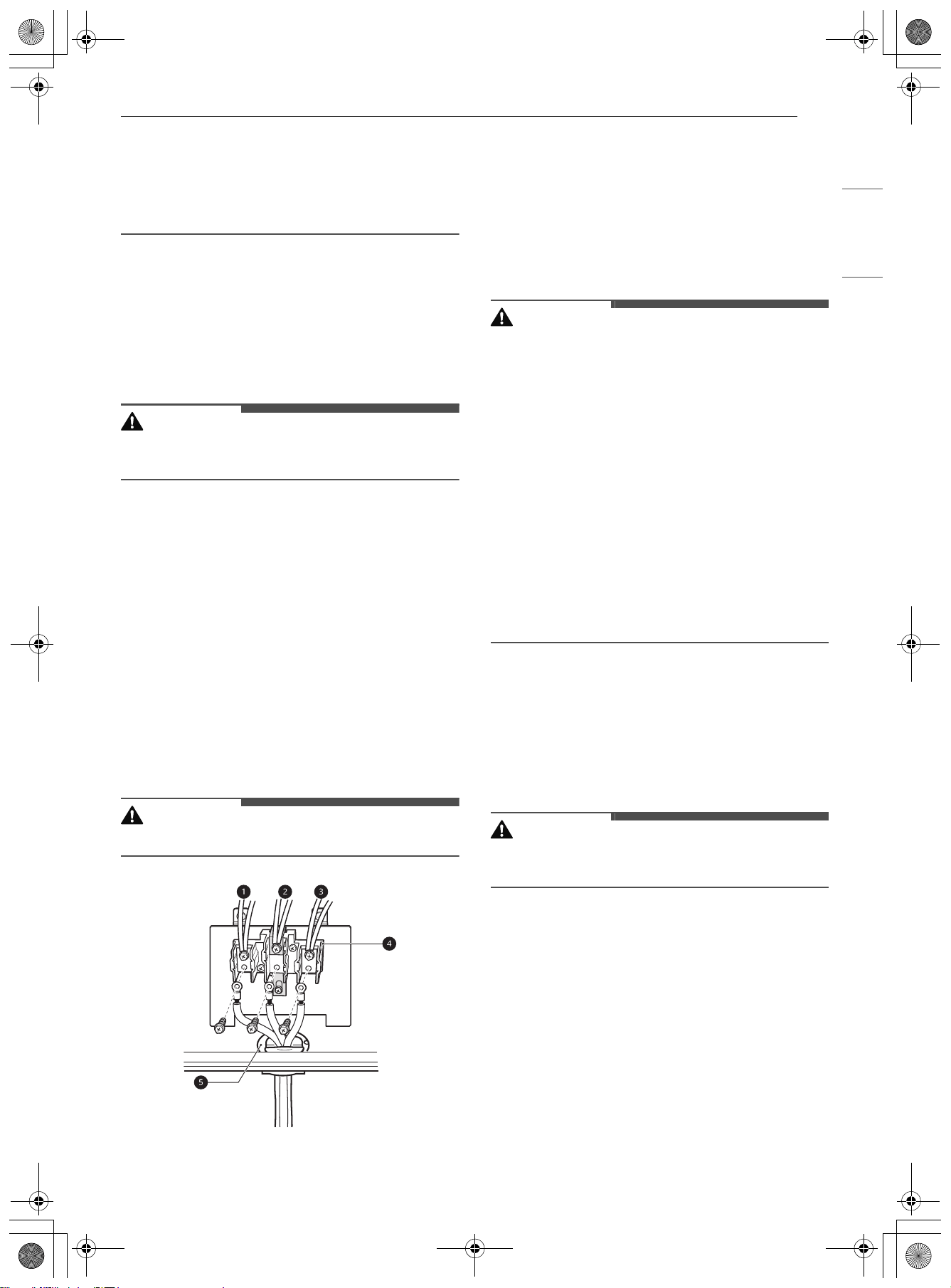
19INSTALLATION
ENGLISH
connection block. Failure to do so can result in
electrical shock, severe personal injury or death.
• If screws are not tightened securely, it can result
in electrical spark and severe personal injury or
death.
1 For power cord installations, hook the strain
relief over the power cord hole (1 3/8") located
below the rear of the oven.
2 Insert the power cord through the strain relief
and tighten it.
CAUTION
• Do not install the power cord without a strain
relief.
3 Remove the lower 3 screws from the terminal
block and retain them.
4 Insert the 3 screws through each power cord
terminal ring and into the lower terminals of
the terminal block.
• Make sure that the white center wire is
connected to the center lower position of
the terminal block.
5 Tighten the 3 screws securely into the
terminal block.
CAUTION
• Do not remove the ground strap connections.
a Black
b White
c Red
d Terminal Block
e Cord/Conduit Connection Plate
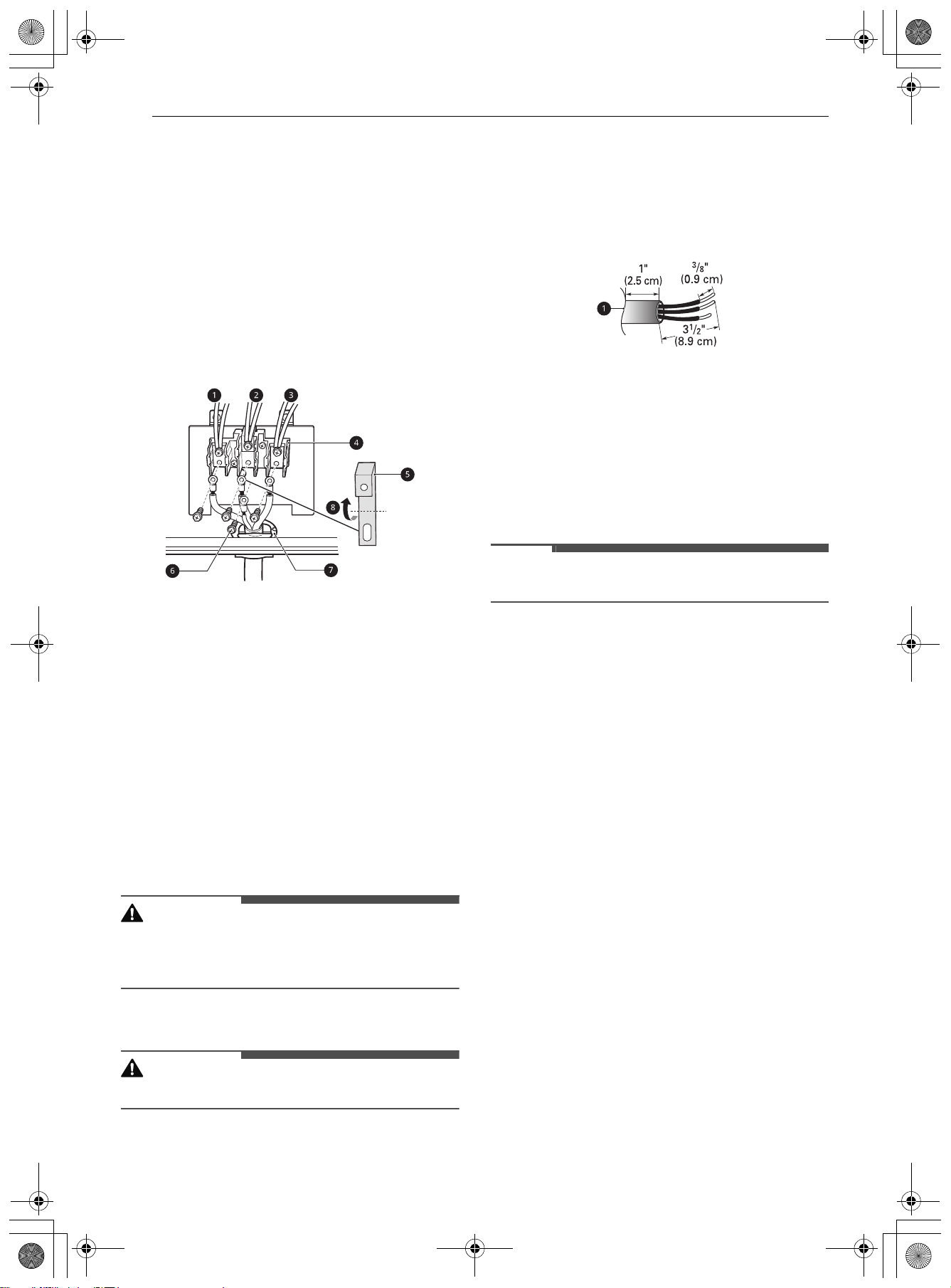
4-Wire Connection: Power Cord
WARNING
• Only a 4-conductor power-supply cord kit rated
120/240 volts, 50 amperes and marked for use
with ranges with closed-loop connectors or
opened spade lugs with upturned ends must be
used. The white middle (neutral) wire of the
power cord or 4-wire conduit has to be
connected to the middle post of the main
terminal block. The other two wires of the power
cord or conduit have to be connected to the
outside posts of the main terminal connection
block. The 4th ground wire (green) must be
connected to the frame of the range with the
ground screw. Failure to do so can result in
electrical shock, severe personal injury or death.
• If screws are not tightened securely, it can result
in electrical spark and severe personal injury or
death.
1 For power cord installations, hook the strain
relief over the power cord hole (1 3/8") located
below the rear of the oven.
2 Insert the power cord through the strain relief
and tighten it.
CAUTION
• Do not install the power cord without a strain
relief.
3 Remove the lower 3 screws from the terminal
block and retain them.
4 Remove the ground screw and bend the end
of the ground strap up so the slot is over the
hole of the center screw removed in step 3.
5 Insert the ground screw into the power cord
ground wire (green) terminal ring and secure
it to the range frame.
en-us_main.book.book Page 19 Tuesday, December 24, 2024 1:36 PM
20 INSTALLATION
6 Insert the 3 screws through each power cord
terminal ring and into the lower terminals of
the terminal block.
• Make sure that the white center (neutral)
wire is connected to the center lower
position of the terminal block.
7 Tighten the 3 screws securely into the
terminal block.
• The center screw now attaches the bent up
ground strap to the block.
a Black
b White
c Red
d Terminal Block
e Ground Strap
f Ground Screw
g Cord/Conduit Connection Plate
h Bend strap up and attach.
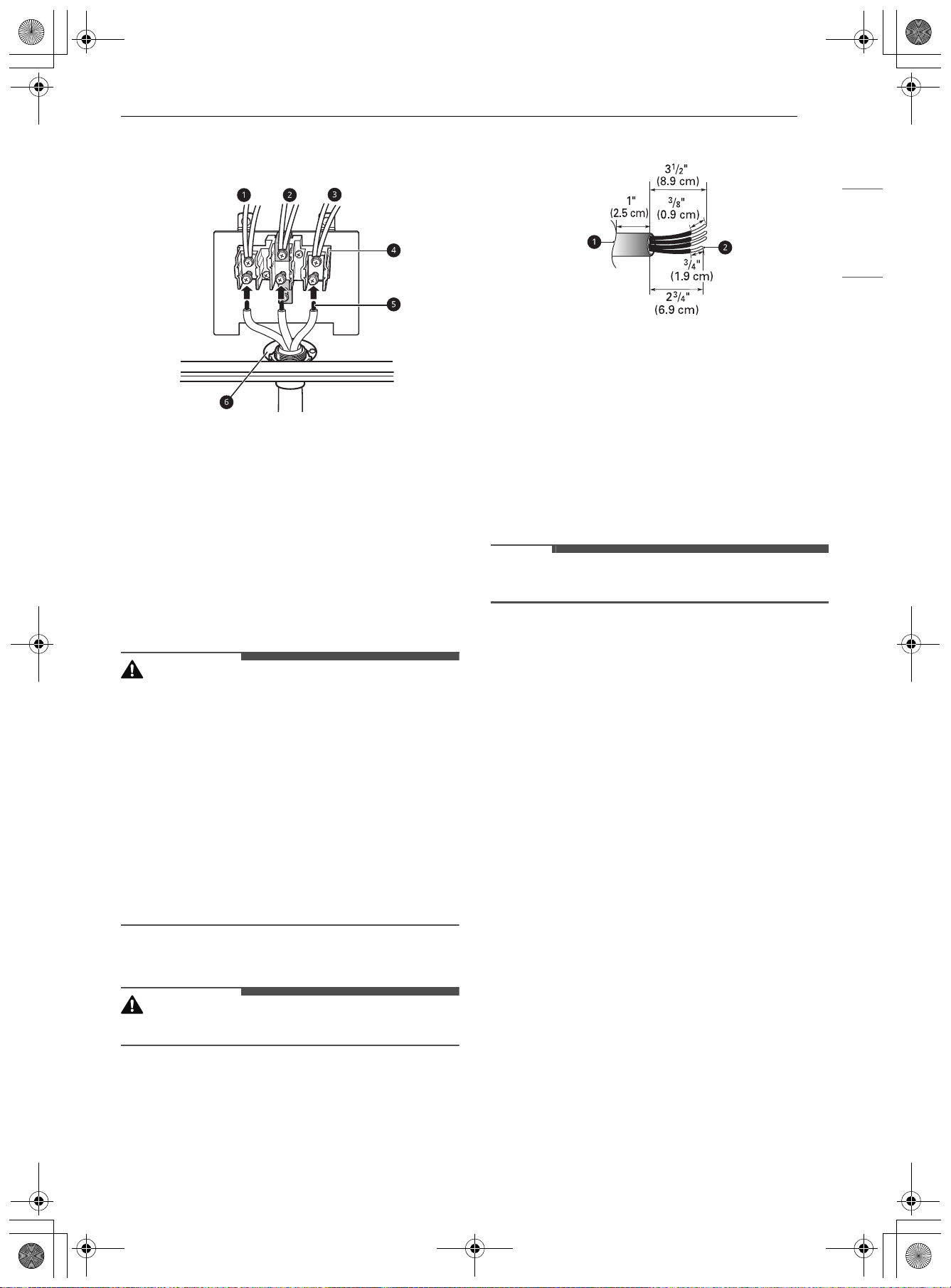
3-Wire Connection: Conduit
WARNING
• If screws are not tightened securely, it can result
in electrical spark and severe personal injury or
death.
Conduit Installations
CAUTION
• Do not install the conduit without a strain relief.
1 Remove the cord/conduit connection plate
from the rear of the oven and rotate it.
• The conduit hole (1 1/8") must be used.
2 Prepare the conduit wires as shown below.
a Cord/Conduit connection plate
3 Install the conduit strain relief.
1) Insert the strain relief in the 1 1/8 in. (2.8
cm) conduit hole.
2) Install the conduit through the body of
the strain relief and fasten the strain relief
with its ring.
NOTE
• For conduit installations, purchase a strain relief.
4 Reinstall the cord/conduit connection plate.
Conduit Connections
If the wire in the conduit is copper it must be 8 or
10 AWG wiring.
If the wire in the conduit is aluminum it must be 6
or 8 AWG wiring.
1 Loosen the lower 3 screws from the terminal
block.
2 Insert the bare wire (white/neutral) end
through the center terminal block opening.
Do not remove the ground strap connections.
3 Insert the two side bare wire ends into the
lower left and the lower right terminal block
openings.
en-us_main.book.book Page 20 Tuesday, December 24, 2024 1:36 PM
21INSTALLATION
ENGLISH
4 Tighten the 3 screws securely into the
terminal block. (approximately 35 - 50 IN-LB)
a Black
b White
c Red
d Terminal Block
e Wire Ends
f Conduit Connection Plate
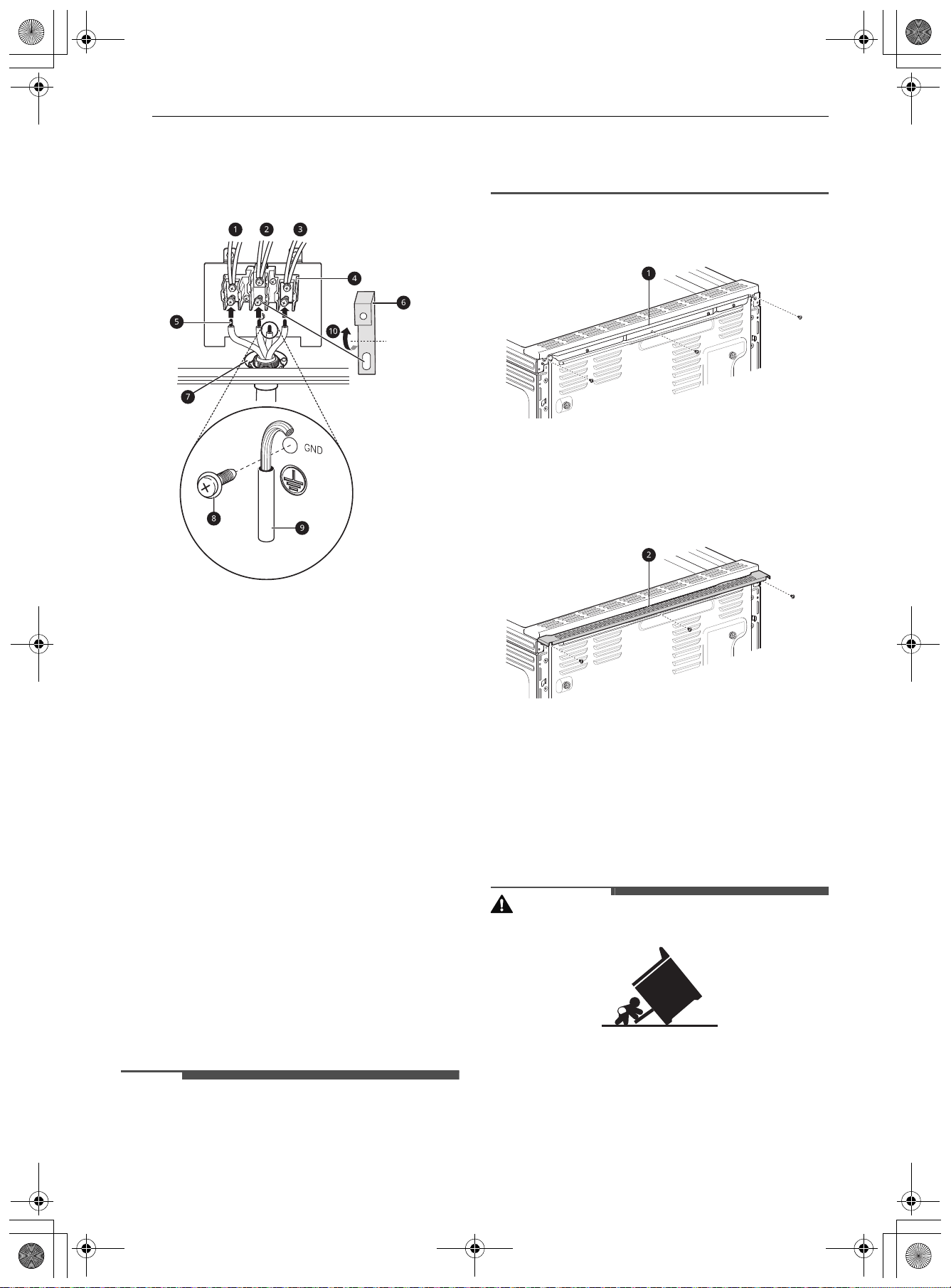
4-Wire Connection: Conduit
WARNING
• The white middle (neutral) wire of the power
cord or 4-wire conduit has to be connected to
the middle post of the main terminal block. The
other two wires of the power cord or conduit
have to be connected to the outside posts of the
main terminal connection block. The 4th ground
wire (green) must be connected to the frame of
the range with the ground screw. Failure to do
so can result in electrical shock, severe personal
injury or death.
• If screws are not tightened securely, it can result
in electrical spark and severe personal injury or
death.
Conduit Installations
CAUTION
• Do not install the conduit without a strain relief.
1 Remove the cord/conduit connection plate
from the rear of the oven and rotate it.
• The conduit hole (1 1/8") must be used.
2 Prepare the conduit wires as shown below.
a Cord/Conduit Connection Plate
b Ground Wire
3 Install the conduit strain relief.
1) Insert the strain relief in the 1 1/8 in. (2.8
cm) conduit hole.
2) Install the conduit through the body of
the strain relief and fasten the strain relief
with its ring.
NOTE
• For conduit installations, purchase a strain relief.
4 Reinstall the cord/conduit connection plate.
Conduit Connections
If the wire in the conduit is copper it must be 8 or
10 AWG wiring.
If the wire in the conduit is aluminum it must be 6
or 8 AWG wiring.
1 Loosen the 2 lower left and right screws from
the terminal block. Remove the lower 2 center
screws. Do not discard any screws.
2 Remove the ground screw and bend the end
of the ground strap up so the slot is over the
hole of the center screw removed in step 1.
3 Attach the ground (green) bare wire end to
the range frame and secure it in place with
the ground screw.
4 Insert the bare wire (white/neutral) end
through the center terminal block opening.
The center screw now attaches the bent up
ground strap to the block.
en-us_main.book.book Page 21 Tuesday, December 24, 2024 1:36 PM
22 INSTALLATION
5 Insert the two side bare wire ends into the left
and the right terminal block openings.
Tighten the 3 screws securely into the
terminal block. (approximately 35 - 50 IN-LB)
a Black
b White
c Red
d Terminal Block
e Wire Ends
f Ground Strap
g Conduit Connection Plate
h Ground Screw
i Ground Wire
j Bend strap up and attach.
Optional Rear Filler
Installing the Rear Filler
If the counter does not bridge the opening at the
rear wall, the rear filler kit that is provided with the
slide in range will be needed.
NOTE
• If the countertop depth is greater than 25 3/8"
there will be a gap between the filler kit and the
back wall.
• If the countertop depth is less than 24 3/4", the
control panel will not sit flush with the
countertop.
1 Using a screwdriver, remove the three screws
holding the rear top plate in place.
a Rear Top Plate
2 Attach the rear top plate and filler assembly
as shown, using three screws removed in step
1.
b Rear filler
Anti-tip Device
Installing the Anti-tip Device
Tip Hazard
WARNING
• A child or adult can tip the range and be killed.
• Install the anti-tip device to the structure and/or
the range. Verify the anti-tip device has been
properly installed and engaged by following the
guide on the anti-tip bracket template.
• Engage the range to the anti-tip device by
following the guide on the anti-tip bracket
template. Ensure the anti-tip device is re-
en-us_main.book.book Page 22 Tuesday, December 24, 2024 1:36 PM
23INSTALLATION
ENGLISH
engaged when the range is moved by following
the guide on the anti-tip bracket template.
• Re-engage the anti-tip device if the range is
moved. Do not operate the range without the
anti-tip device in place and engaged.
• See installation instructions for details.
• Failure to follow these instructions can result in
death or serious burns to children or adults.
• Range must be secured with an approved anti-
tip device.
• The range could be tipped by standing, sitting or
leaning on an open door if the range or anti-tip
device is not properly installed.
• The use of this device does not preclude tipping
of the range when not properly installed.
• After installing the anti-tip device, verify that it is
in place by carefully attempting to tilt the range
forward.
• This range has been designed to meet all
recognized industry tip standards for all normal
conditions.
• The installation of the anti-tip device must meet
all local codes for securing the appliance.
Using the Anti-tip Bracket Template
• The anti-tip bracket is packaged with an
installation template. The instructions include
necessary information to complete the
installation. Read and follow the range
installation instruction sheet.
•Screws
c must enter wood or concrete.
a Anti-tip Bracket
b Wall Plate
Engaging the Anti-tip Device
a Anti-tip Bracket
b Leveling Leg
1 Slide the range against the wall, making sure
the back leg slides into and engages the anti-
tip bracket.
2 Check for proper installation by grasping the
front edge of the cooktop and carefully
attempting to tilt the range forward.
Test Run
Test the Range Before Use
Check if the range is properly installed and run a
test cycle.
1 Before using the cooktop for the first time,
clean it with a ceramic cooktop cleaner. This
helps protect the top and makes cleanup
easier.
2 Turn the oven mode knob to the O F F
position to start test.
3 Fill an induction-capable pot with water and
place it on a surface element. Turn on the
surface element. The LED bar should show the
setting and the water should heat. The LED
bar should not fluctuate. Repeat for all
surface elements.
NOTE
• The Warm Zone does not consume enough
power to glow red.
4 After checking all the surface heating
elements, check the locking system by
pressing Control Lock for three seconds. The
oven controller should lock and the cooktop
should not operate while the Control Lock
function is turned on. Press Control Lock for
three seconds to disable Control Lock.
5 Now check the oven's operation. Turn the
oven mode knob to select the Bake mode.
350 °F appears in the display. Press START.
en-us_main.book.book Page 23 Tuesday, December 24, 2024 1:36 PM
24 INSTALLATION
6 The oven should finish preheating in 15
minutes, and the convection fan should
operate while the oven is preheating.
7 After checking the oven's operation, turn the
temperature up to 450 °F and leave the oven
on for at least an hour to help remove any oil
which might cause smoke and odors when
first using the oven.
NOTE
• Smoke may come out of the range when it is first
used.
en-us_main.book.book Page 24 Tuesday, December 24, 2024 1:36 PM
25OPERATION
ENGLISH
OPERATION
Online Owner’s Manual
Additional Information In Online
Owner’s Manual
The complete owner’s manual can be found on the
LG website or by scanning the QR code. LG is
working to create a sustainable tomorrow by
publishing parts of this manual online only.
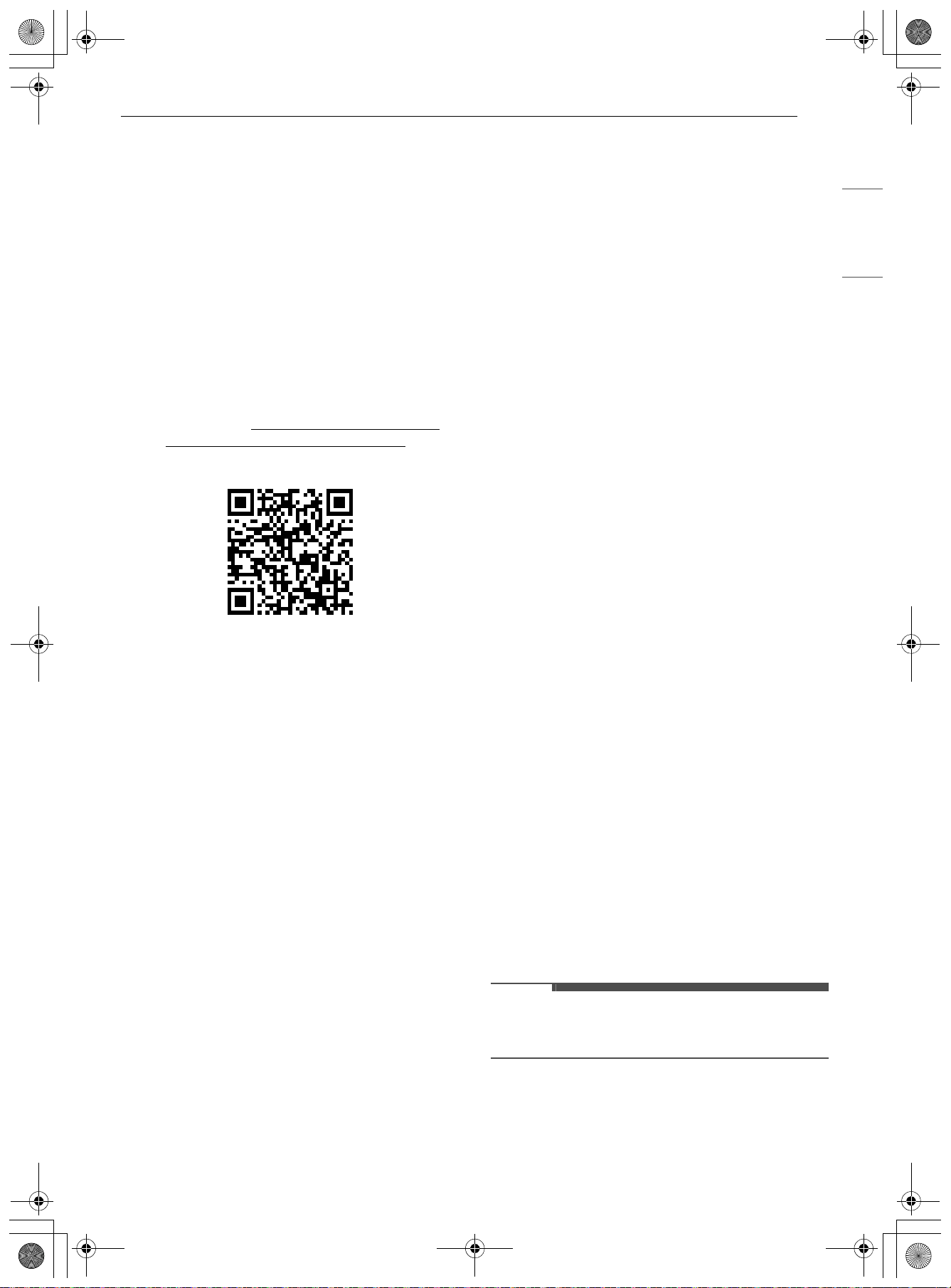
1 To view the complete owner’s manual, visit
the LG website or scan the QR code.
• LG website: http://gscs-manual.lge.com/
CVZ/MFL68920573/en-us/main.html
• QR Code
2 Select the OPERATION chapter or search
using any of the following topics to find
additional information in the online owner's
manual.
• Control Panel
- Control Panel Features
- Knob Positions
- Knob/Display Lighting (Model
LSEL6337*E)
• Changing Oven Settings
- Clock
- Oven Light
- Timer On/Off
- Wi-Fi
- Settings (Hour Mode, Convection Auto
Conversion, Calibrating the Oven
Temperature, Preheat Alarm Light,
Beeper Volume, Fahrenheit or Celsius,
Cooktop on Albert Volume, Wi-Fi On/Off)
- Control Lock
- Start Time (Delayed Timed Cook)
- Cook Time (Timed Cook)
- Minimum & Maximum Default Settings
• Cooktop
- Before Using the Cooktop
- Cooking Areas
- Using the Cooktop Elements
- Turning on the Warm Zone
- Using the Knob Lock
- The Recommended Surface Cooking
Setting
- Using the Proper Cookware
•Oven
- Before Using the Oven
- Oven Vent
- Using Oven Racks
- Instaview
- Bake
- Convection Mode
- Recommended Baking and Roasting
Guide
- Broil
- Recommended Broiling Guide
- Proof
- Warm
- Keep Warm
- Air Fry
- Recommended Air Frying Guide
- Air Sous-Vide (Model LSEL6337*E)
- Recommended Air Sous-Vide Guide
- Frozen Meal
- Slow Cook (Model LSEL6335*E)
- Remote Start
- Meat Probe (Model LSEL6337*E)
- Using the Sabbath Mode
NOTE
• To search for information in the online owner's
manual, enter a keyword in the Search field.
en-us_main.book.book Page 25 Tuesday, December 24, 2024 1:36 PM
26 OPERATION
Control Panel
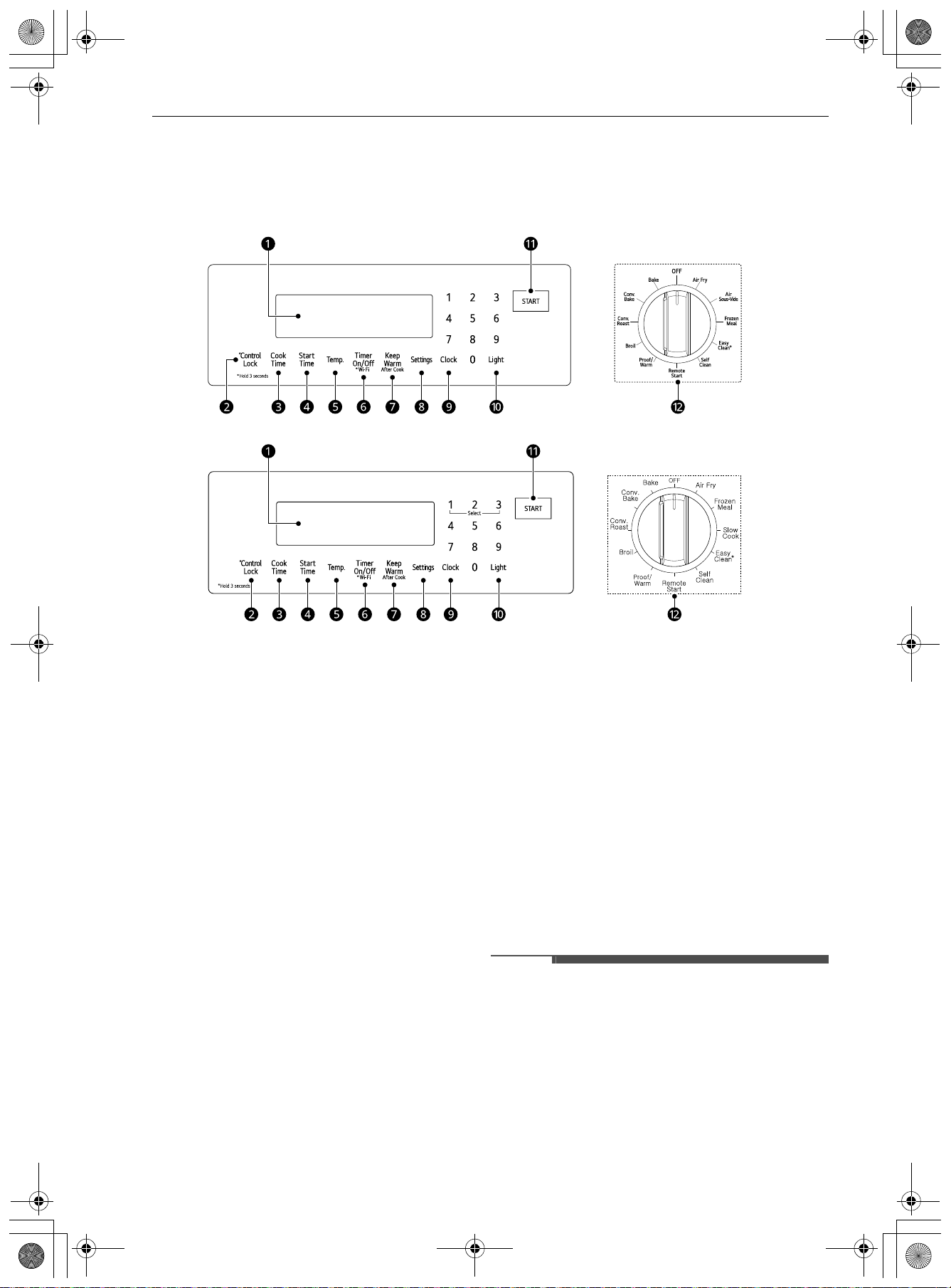
Control Panel Features
Model: LSEL6337*E
Model: LSEL6335*E
a Control Lock
Press and hold the button for 3 seconds to lock
the control panel.
b Cook Time
Press the button to set the desired amount of
time for food to cook. The oven shuts off when
the set cooking time runs out.
c Start Time
Press the button to set the delayed timed cook.
The oven starts at the set time.
d Temp.
Press the button to set the oven temperature
during oven use.
e Timer On/Off / Wi-Fi
Press the button to set or cancel the timer.
Press and hold the button for 3 seconds to
connect the appliance to a Wi-Fi network.
f Keep Warm
Press the button to keep food warm in the oven
after cooking.
• This feature should be used after cooking in
the oven.
g Settings
Press the button to select and adjust oven
settings.
h Clock
Press the button to set the time of day.
i Light
Press the button to turn the oven light on or
off.
j START
Press the button to start all oven features.
k Oven Mode Knob
Turn the knob to select the oven operating
mode.
NOTE
• Flashing Clock
If the colon in the clock display flashes, press
Clock and reset the time, or press any key to
stop the flashing.
• Press any button on the control panel to activate
the display. In standby mode, the screen is
dimmed.
• Setting the Time, Timer and Temperature
en-us_main.book.book Page 26 Tuesday, December 24, 2024 1:36 PM
27OPERATION
ENGLISH
If you enter one digit of a number incorrectly,
enter the entire number again to correct it. For
example, if you press 1, 0, 3 and 1 to set the
clock for 10:30, press 1, 0, 3 and 0 to enter the
correct time.
Knob Positions
After cleaning the cooktop control knobs, make sure to replace each knob in the correct position. Failure to
do so can result in improper operation of the burners.
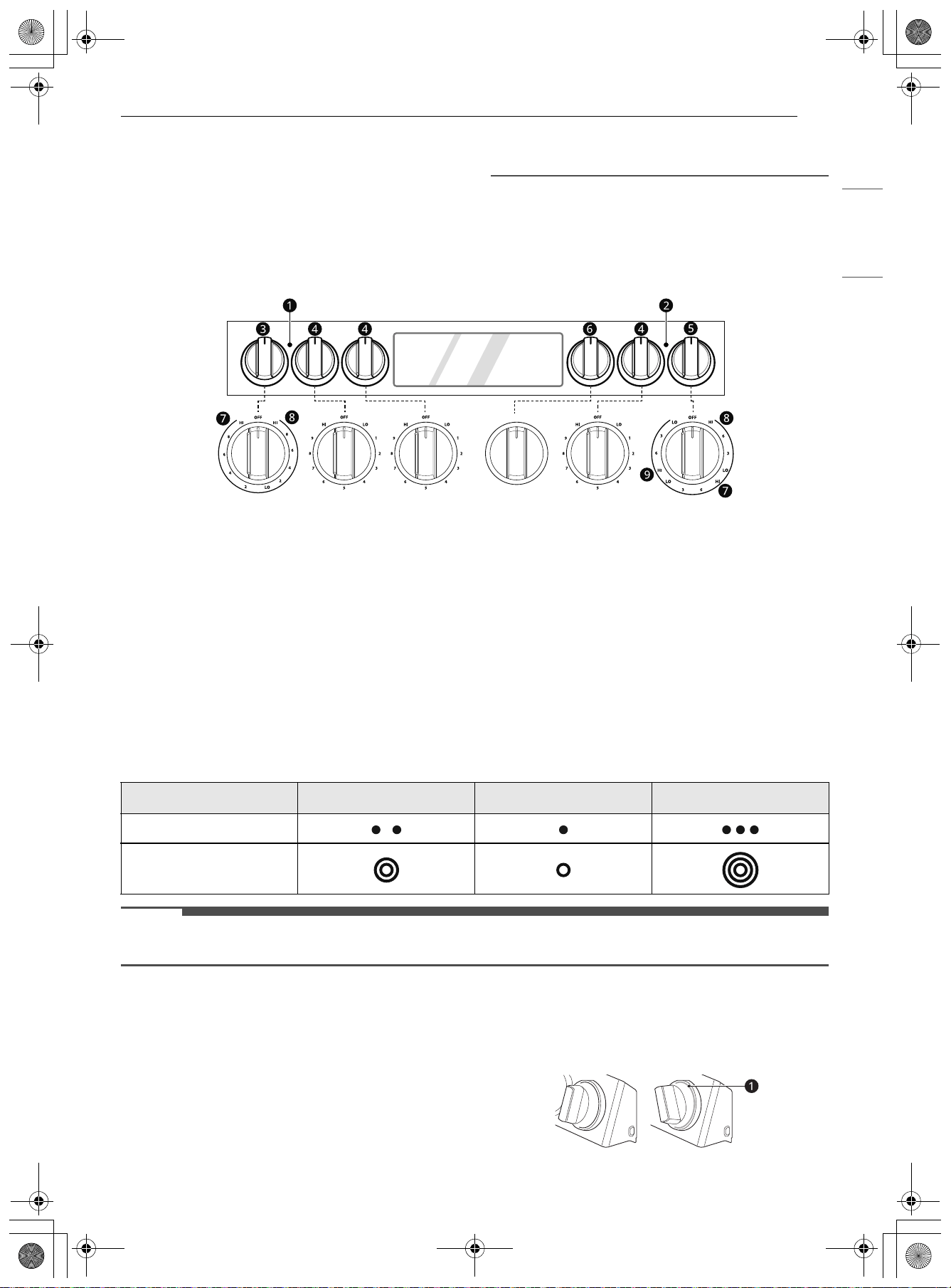
a Burner On
The Burner On indicator light turns on when the knob is turned even if the cooktop element does not
operate.
b Hot Surface Indicator
The hot surface indicator light glows as long as any surface cooking area is too hot to touch.
It remains on after the element is turned off and until the surface has cooled to approximately 150 ℉.
c Dual (Mark A)
d Single (Mark C)
e Triple (Mark B)
f Oven Mode Knob
NOTE
• When reassembling the knobs, refer to the marks for the correct orientation.
Knob/Display Lighting (Model
LSEL6337*E)
This feature is only available on some models.
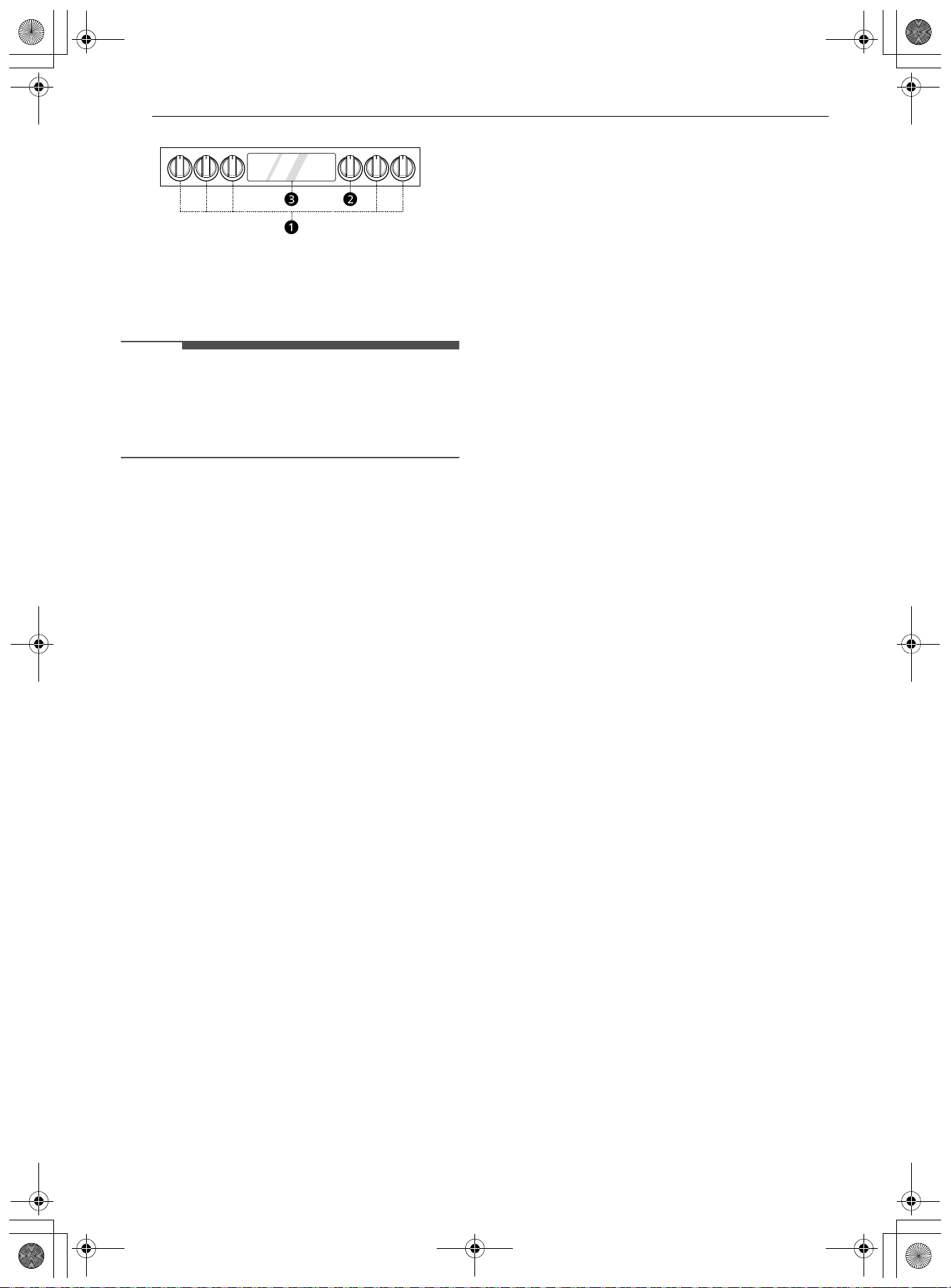
Knob lighting illuminates the edge of the knob
when you turn the knob to operate the heating
elements (excluding Mode knob).
-
g Dual h Single i Triple
Icon Type 1
Icon Type 2
en-us_main.book.book Page 27 Tuesday, December 24, 2024 1:36 PM
28 OPERATION
a Knob Lighting
b Mode Knob
c Display Lighting
NOTE
• Oven Mode knob does not have knob lighting.
•If Control Lock is activated, the knob lighting
turns on when the cooktop knob is turned even
though the cooktop element does not operate.
en-us_main.book.book Page 28 Tuesday, December 24, 2024 1:36 PM
29OPERATION
ENGLISH
Oven Settings
Changing Oven Settings
Clock
The clock must be set to the correct time of day in
order for the automatic oven timing functions to
work properly.
1 Press Clock.
2 Press the numbers to enter the time. For
example, to set the clock for 10:30, press the
numbers: 1, 0, 3 and 0.
3 Press START.
NOTE
• The time of day cannot be changed during a
timed baking or self-clean cycle.
• To check the time of day when the display is
showing other information, press Clock.
• If no other buttons are pressed within 25
seconds of pressing Clock, the display reverts to
the original setting.
• If the display time is blinking, there may have
been a power failure. Reset the time.
Oven Light
The interior oven light automatically turns on
when the door is opened.
• Press Light to manually turn the oven light on.
Timer On/Off
The Timer On/Off serves as an extra timer in the
kitchen that beeps when the set time has run out.
It does not start or stop cooking.
The Timer On/Off feature can be used during any
of the other oven control functions.
NOTE
• If the remaining time is not in the display, recall
the remaining time by pressing Timer On/Off.
• Press Timer On/Off twice to set the time in
minutes and seconds.
• Press Timer On/Off once to set the time in
hours and minutes.
Canceling the Timer
1 Press Timer On/Off once.
The display returns to the time of day.
Wi-Fi
The Wi-Fi button is used to connect the appliance
to a home Wi-Fi network.
Control Lock
The Control Lock feature locks the control panel
and oven mode knob.
• When the Control Lock feature is activated, the
cooktop and oven mode knob do not operate.
• To activate/deactivate Control Lock, press and
hold Control Lock for 3 seconds. The unlock
melody sounds and the controls unlock.
Start Time (Delayed Timed Cook)
The automatic timer of the Delayed Timed Cook
function turns the oven on and off at the time you
select. This feature can be used with the Bake,
Conv. Bake, Conv. Roast and Self Clean modes.
Cook Time (Timed Cook)
Set the oven to cook for a specific length of time
using the Timed Cook feature. This feature can
only be used with the Bake, Conv. Bake, Conv.
Roast, Air Sous-Vide, Air Fry, Slow Cook,
FrozenMeal and Proof modes.
Settings (Hour Mode, Convection
Auto Conversion, Calibrating the
Oven Temperature, Preheat Alarm
Light, Beeper Volume, Fahrenheit
or Celsius, Cooktop On Alert
Volume, Wi-Fi On/Off)
Press the Settings button repeatedly to toggle
through and change oven settings.
The Settings button allows you to:
• set the hour mode on the clock (12 or 24
hours)
• enable/disable convection auto conversion
• calibrate the oven temperature
• activate/deactivate the preheating alarm
light
• set the beeper volume
• switch the temperature scale between
Fahrenheit and Celsius
• set the cooktop on alert volume
en-us_main.book.book Page 29 Tuesday, December 24, 2024 1:36 PM
30 OPERATION
• activate/deactivate the Wi-Fi
Setting the Hour Mode
The control is set to use a 12-hour clock. To set the
clock to 24-hour mode, follow the steps below.
1 Press Settings once.
2 Press 1 to toggle between a 12-hour and 24-
hour clock.
3 Press START to accept the change.
Setting Convection Auto Conversion
When Conv. Bake and Conv. Roast are selected,
Convection Auto Conversion automatically
converts the standard recipe temperature entered
to a convection temperature by subtracting 25 ℉ /
14 ℃. This auto converted temperature shows on
the display. For example, select Conv. Bake, enter
350 ℉, and 325 ℉ shows on the display after
preheat.
1 Press Settings repeatedly until Avto appears
in the display.
2 Press 1 to disable or enable auto conversion.
3 Press START to accept the change.
NOTE
• The convection cooking mode uses air
circulation to cook faster and more evenly than
the normal cooking mode, so you can get better
cooking results than normal baking even when
the temperature is reduced by 25°F / 14℃.
Calibrating the Oven Temperature
When you start using the oven, pay careful
attention to the recommended temperatures,
times, and rack positions in the manual. This oven
may differ from your previous oven, and it may
take some time to become accustomed to it. If you
have followed the recommended guides for this
oven and still believe that the temperature is
hotter or colder than expected, you can manually
calibrate the displayed oven temperature.
There are 2 methods for gauging how much to
adjust the temperature display.
• Method 1: Try to gauge how much to increase or
decrease the displayed temperature by testing
familiar recipes at higher or lower temperatures
than recommended. This may help you decide
the amount of temperature adjustment you
want.
• Method 2: Adjust the temperature to 15 °F (8 °C)
hotter or cooler at first. Try the oven with this
setting. If you still need to adjust the oven
temperature, use the results of the first
adjustment as a reference and vary the
temperature adjustment amount until the oven
temperature display is calibrated to your
satisfaction.
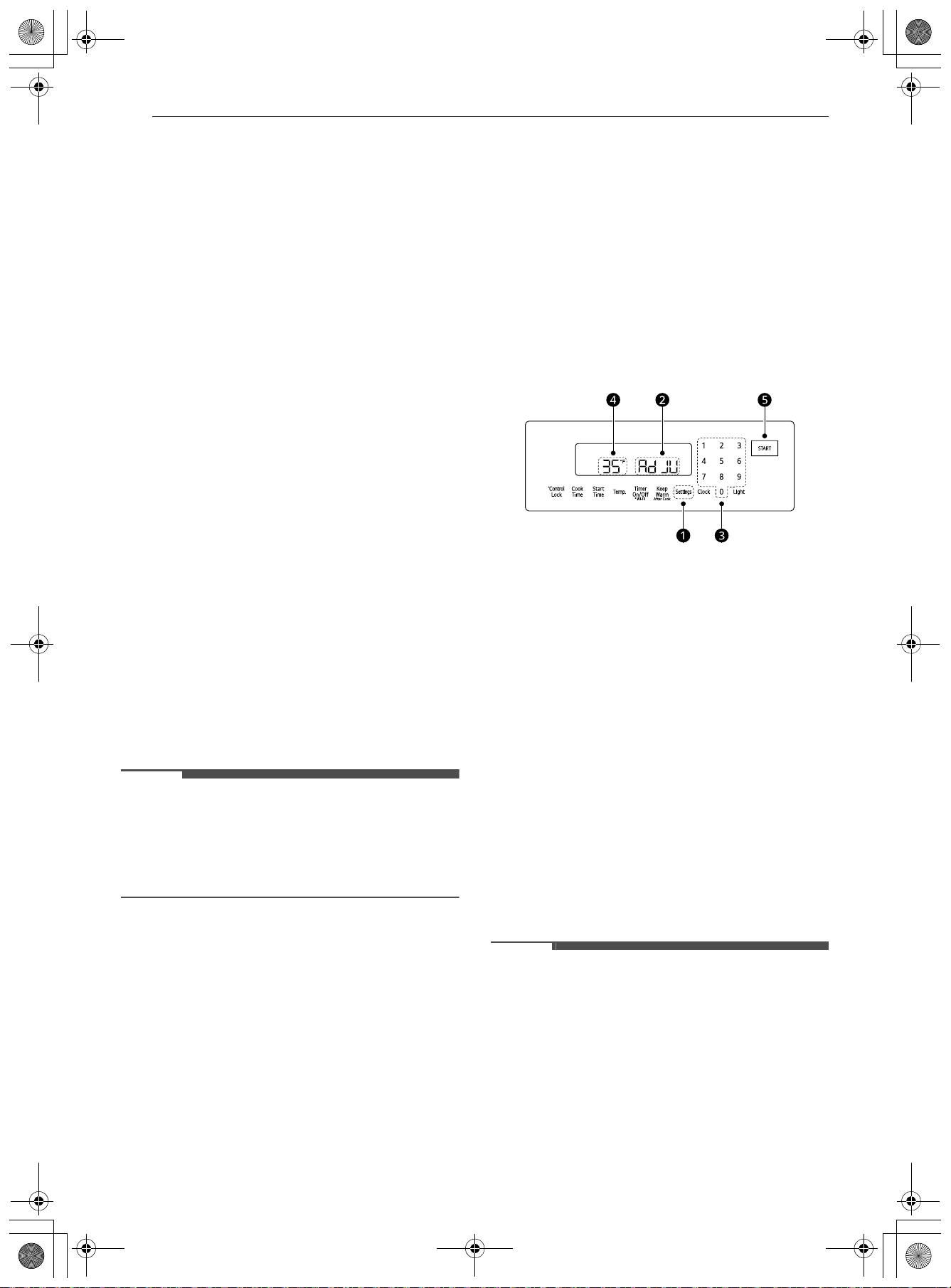
1 Press Settings a repeatedly until AdJU b
shows in the display.
2 Use the number buttons c to enter the
number of degrees you want to adjust the
oven temperature. The temperature
adjustment is shown next to
AdJU d. You can
adjust the temperature up or down by 35 °F
or 19 °C.
3 To lower the temperature, press Settings a
to add a minus sign (-) to the displayed
number. To raise the temperature, press
Settings
a to remove the minus sign in the
display.
4 Press START e to accept the change.
NOTE
• This adjustment does not affect the broiling or
Self Clean temperatures. The adjustment is
retained in memory after a power failure. The
oven temperature can be adjusted by ±35 °F (±19
°C).
• Once the temperature is adjusted, press
Settings repeatedly until
AdJU is displayed to
see the amount you adjusted and change it if
needed.
en-us_main.book.book Page 30 Tuesday, December 24, 2024 1:36 PM
31OPERATION
ENGLISH
• The temperatures displayed by an oven
thermometer placed in the oven cavity may
differ from the actual set oven temperature in all
modes.
Turning the Preheat Alarm Light On/
Off
When the oven reaches its set-temperature, the
preheating alarm light flashes 5 times or until the
oven door is opened.
You can activate or deactivate the preheating
alarm light.
1 Press Settings repeatedly until PrE appears in
the display.
2 Press 1 repeatedly to set the light to on/off.
3 Press START to accept the change.
Adjusting the Beeper Volume
1 Press Settings repeatedly until 8EEP appears
in the display.
2 Press 1 repeatedly to select Hi, Lo or Off.
3 Press START to accept the change.
NOTE
• Adjusting the beeper volume does not affect the
preheat alarm volume.
Selecting Fahrenheit or Celsius
Set the oven temperature display to show either
Fahrenheit (℉) or Celsius (℃) units. The oven
defaults to Fahrenheit unless changed by the user.
1 Press Settings repeatedly until UNit appears
in the display.
2 Press 1 repeatedly to select F (Fahrenheit) or C
(Celsius).
3 Press START to accept the change.
Adjusting Cooktop On Alert Volume
1 Press Settings repeatedly until CtOP appears
in the display.
2 Press 1 to select Hi, Lo, Off.
3 Press START to accept the change.
Turning the Wi-Fi On/Off
You can turn the Wi-Fi transmitter on the PCB on
or off.
1 Press Settings repeatedly until Wi-Fi appears
in the display.
2 Press 1 to turn the Wi-Fi transmitter on/off.
3 Press START to accept the change.
Cooktop
Using the Cooktop Elements
CAUTION
• Only use cookware and dishes that are safe for
oven and cooktop use.
• Always use oven mitts when removing food from
the cooktop and oven.
• Do not place sealed containers on the cooktop.
• Do not use plastic wrap to cover food while on
the cooktop. Plastic may melt onto the surface
and be very difficult to remove.
• Never leave food on the cooktop unattended.
Spillovers can cause smoke. Greasy spillovers
may catch on fire.
• The surface element may appear to have cooled
after it has been turned off. The element may
still be hot and touching the element before it
has cooled sufficiently can cause burns.
• Match the size of the cooktop element to the size
of the cookware in use. Using a large element for
a small pan wastes heating energy, and the
exposed surface of the element is a burn or fire
hazard.
en-us_main.book.book Page 31 Tuesday, December 24, 2024 1:36 PM
32 OPERATION
CAUTION
• Clean the knobs regularly. Soil or foreign objects
on the knobs may interfere with the operation of
the button.
• Do not apply excessive force when using the
buttons and lock functions, or they may be
damaged.
• The surfaces of the knobs may be hot after
cooking. Allow the knobs to cool sufficiently or
put on an oven mitt before touching them.
• The buttons must be properly set to ensure the
intended functions of the knobs.
NOTE
• Hot Surface Indicator
- The hot surface indicator light glows as long as
any surface cooking area is too hot to touch.
- It remains on after the element is turned off
and until the surface has cooled to
approximately 150 ˚F.
• The oven mode knob does not have a button.
• To use the cooktop knobs without pressing in
the side button, use the button lock function.
• If removing and reassembling the knob, press
and hold the side button while pushing the knob
fully onto shaft.
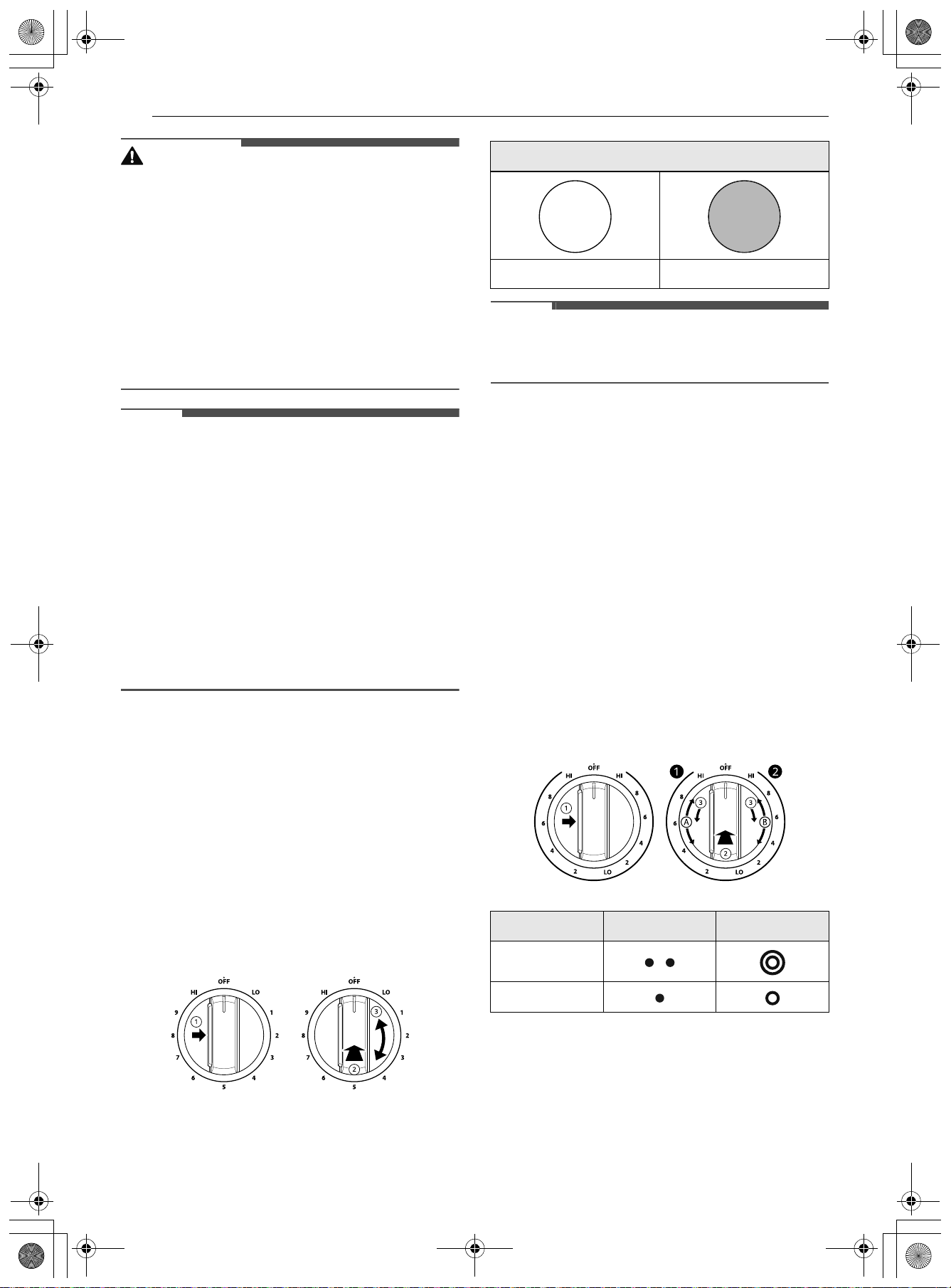
Turning on a Single Element
1 Press in the side button on the knob A.
2 Push the Single element knob in B.
3 Turn the knob in either direction to the
desired setting C.
• The control knob clicks when it is positioned
at OFF, HI and LO.
NOTE
• HI is the highest temperature available.
• LO is the lowest temperature available.
Turning on a Dual Element
There is one dual element located in the left front
position. Use the dual element as a dual or single
element.
1 Press in the side button on the knob A.
2 Push in the appropriate knob B.
3 Turn the knob to use it as a single element or
a dual element C.
• To use it as a single element, turn the knob
counterclockwise.
• To use it as a dual element, turn the knob
clockwise.
Heating element
OFF ON
Icon Type 1 Icon Type 2
a Dual
b Single
en-us_main.book.book Page 32 Tuesday, December 24, 2024 1:36 PM
33OPERATION
ENGLISH
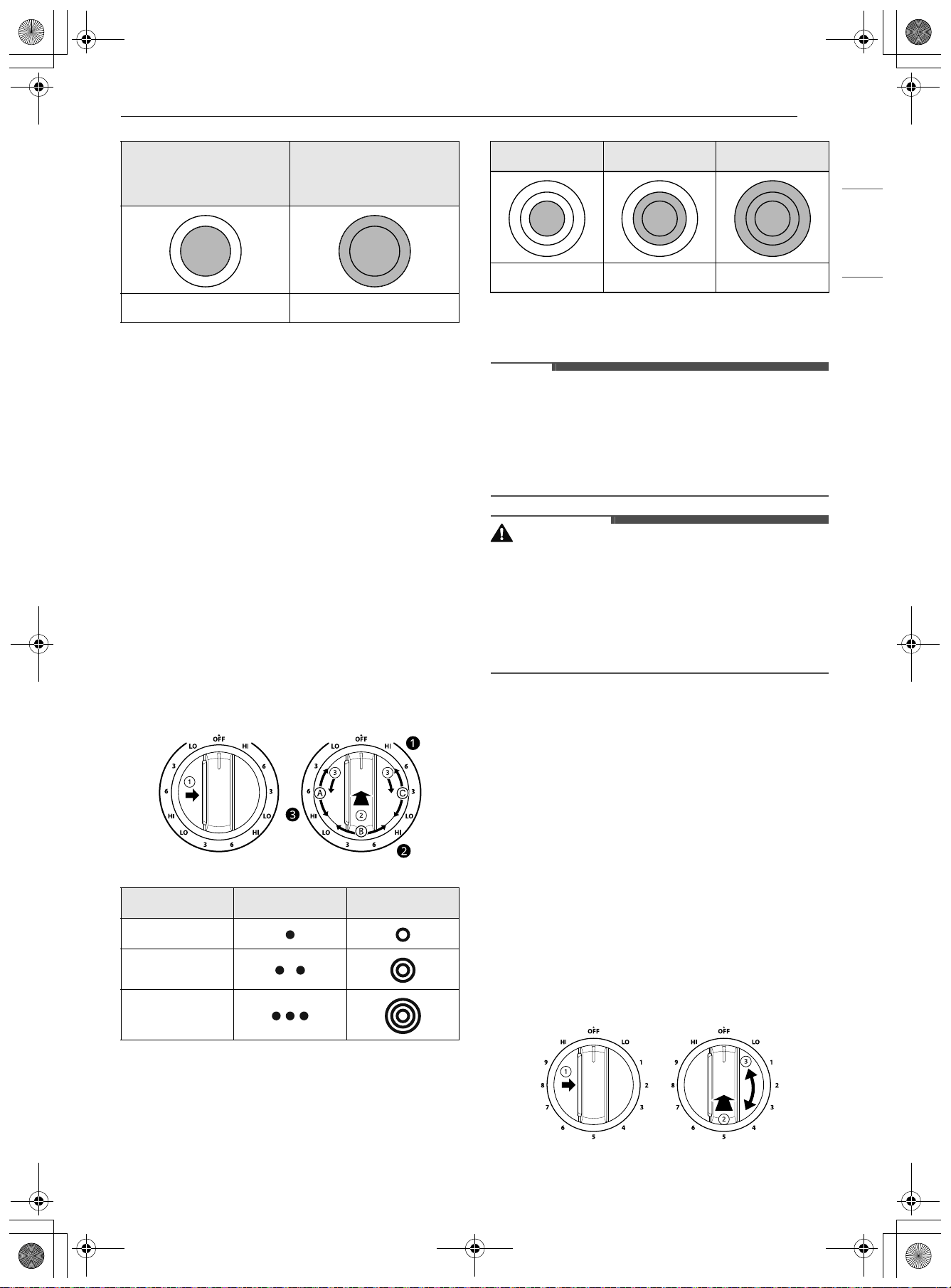
Turning on a Triple Element (On Some
Models)
There is one triple element that can be used as
either a single, dual or triple element.
1 Press in the side button on the knob A.
2 Push in the appropriate knob B.
3 Turn the knob to use it as a single, dual or
triple element.
• To use it as a single element, turn the knob
counterclockwise.
• To use it as a dual element, turn the knob
clockwise to the dual position.
• To use it as a triple element, turn the knob
clockwise to the triple position.
Turning on the Warm Zone
NOTE
•The Warm Zone will not glow red like the other
cooking elements.
• If removing and reassembling the knob, press
and hold the side button while pushing the knob
fully onto shaft.
CAUTION
• FOOD POISON HAZARD : Bacteria may grow in
food at temperatures below 140 °F.
- Always start with hot food. Do not use the
warm setting to heat cold food.
- Do not use the warm setting for more than 2
hours.
The Warm Zone, located in the back center of the
glass surface, will keep hot, cooked food at serving
temperature. Use the Warm Zone to keep food
warm after it has already been cooked. Attempting
to cook uncooked or cold food on the Warm Zone
could result in a food-borne illness.
1 Press in the side button on the knob A.
2 Push the Warm Zone element knob in B.
3 Turn the knob in either direction to the
desired setting C.
• The control knob clicks when it is positioned
at OFF, HI and LO.
Heating with inner
(smaller) element
only
Heating with both
elements together
BA
Icon Type 1 Icon Type 2
a Single
b Dual
c Triple
Single Dual Triple
CBA
en-us_main.book.book Page 33 Tuesday, December 24, 2024 1:36 PM
34 OPERATION
NOTE
• For best results, food on the warmer should be
kept in its container or covered with a lid or
aluminum foil to maintain food quality.
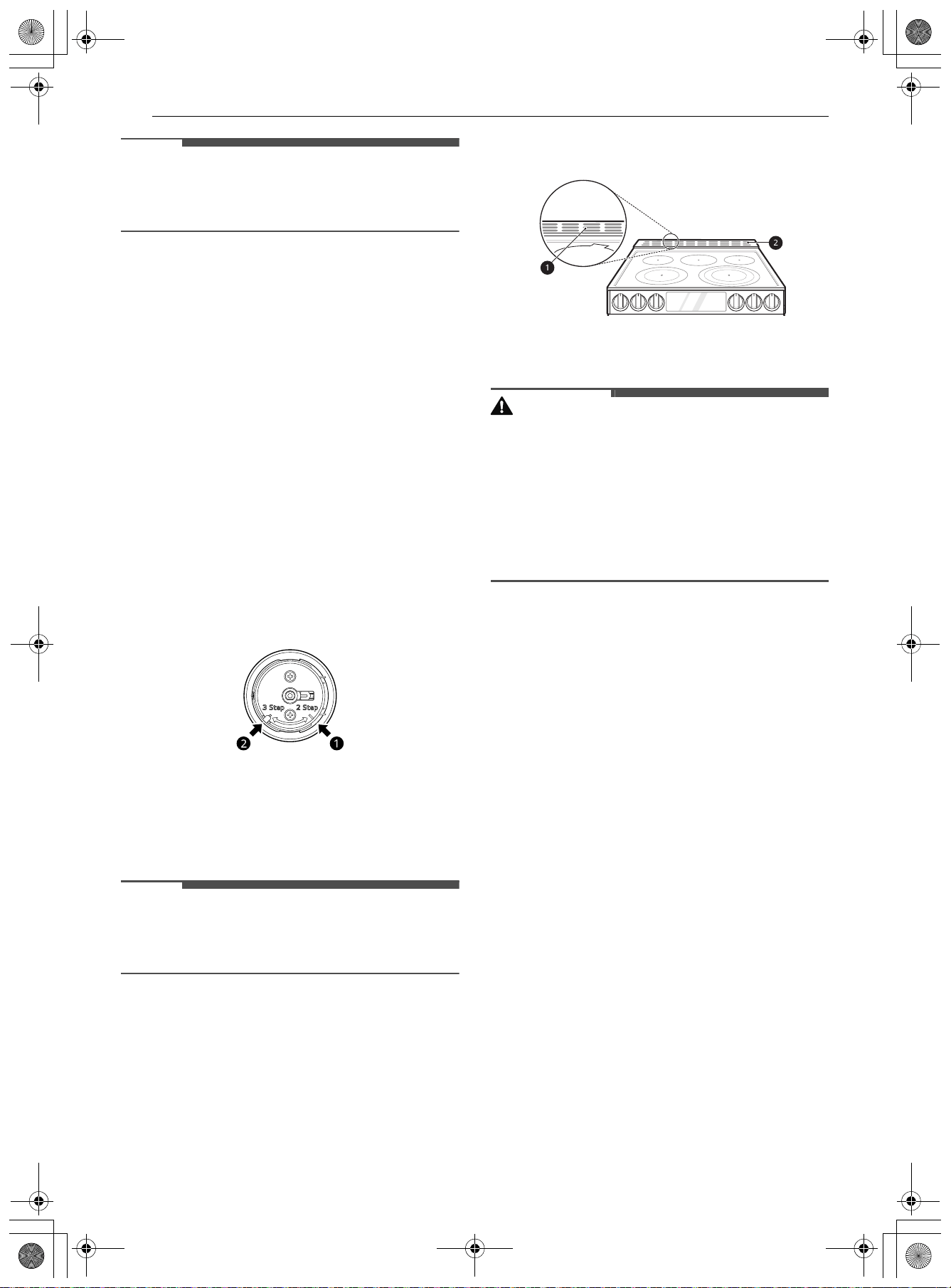
Using the Knob Lock
You can adjust the Knob Lock on each cooktop
knob so you don’t have to press the button in to
use the knob. Remove and adjust one knob at a
time.
1 Make sure the knob is in the OFF position and
pull it straight off the stem.
2 On the back of the knob ring, rotate the black
tab to the 2 Step or 3 Step position.
• If you slide the tab to the 2 Step
a position,
the knob can be used without pressing in
the button.
• If you slide the tab to the 3 Step
b position,
you must press in the button to use the
knob.
3 Once the Knob Lock is adjusted as desired,
reinstall the knob. To reinstall, hold the knob
with the OFF label at the top and slide the
knob directly onto the stem.
NOTE
• The black tab must be aligned with the 2 Step or
3 Step mark to ensure proper operation of the
knob and button.
Oven
Oven Vent
Areas near the vent may become hot during
operation and may cause burns. Do not block the
vent opening. Avoid placing plastics near the vent
as heat may distort or melt the plastic.
It is normal for steam to be visible when cooking
foods with high moisture content.
a Oven Vent
b Vent trim
CAUTION
• The edges of the range vent are sharp. Wear
gloves when cleaning the range to avoid injury.
• Do not block, touch or place items around the
oven vent during cooking.
- Do not block the oven vent when cooking to
allow for proper air flow. Do not touch vent
openings or nearby surfaces during any
cooking operation.
Cooking Modes
Setting a Cooking Mode
1 Turn the oven mode knob to select the
desired cooking mode.
2 Set the oven temperature.
3 Press START. The oven starts to preheat.
4 When cooking is complete, turn the oven
mode knob to the OFF position.
5 Remove food from the oven.
Bake
Bake is used to prepare foods such as pastries,
breads and casseroles.
The oven can be programmed to bake at any
temperature from 170 ℉ (80 ℃) to 550 ℉ (285 ℃).
The default temperature is 350 ℉ (175 ℃).
en-us_main.book.book Page 34 Tuesday, December 24, 2024 1:36 PM
35OPERATION
ENGLISH
NOTE
• It is normal for the convection fan to operate
periodically throughout a normal bake cycle in
the oven. This is to ensure even baking results.
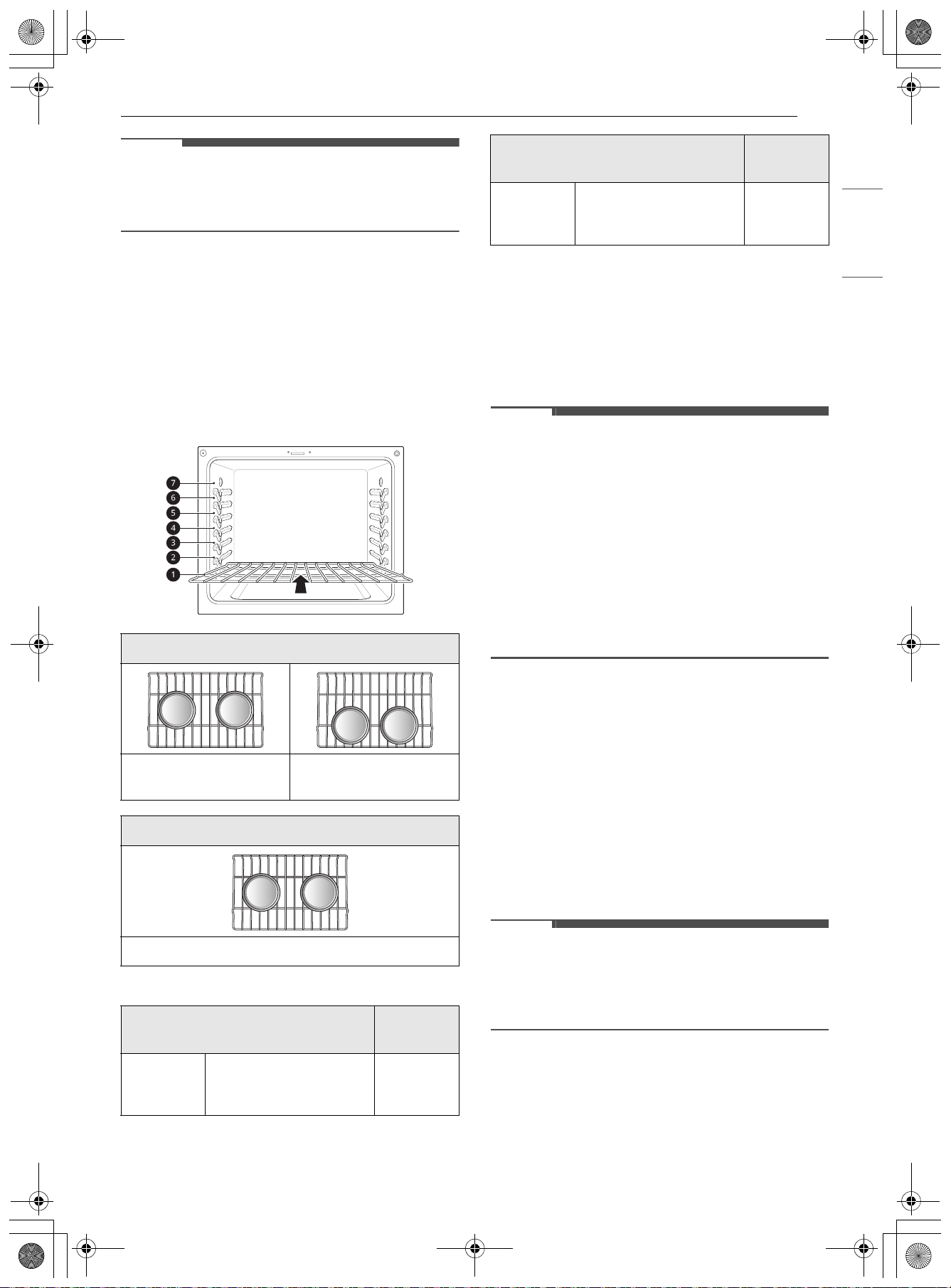
Recommended Baking Guide
Baking results will be better if baking pans are
centered in the oven as much as possible. If
cooking on multiple racks, place the oven racks in
the positions shown.
Multiple-rack cooking saves time and energy.
Whenever possible, cook foods requiring the same
cooking temperature together in one oven.
Rack and Pan Placement
Baking Rack Guide
Pizza Stone & Peel (Model LSEL6337*E
Only)
A pizza stone retains heat and distributes it more
evenly than a metal pan. The extra-hot surface is
ideal for creating a crisp bottom crust on thin-crust
pizzas. Use a pizza peel to help move the pizza on
and off the hot pizza stone.
NOTE
• If you're cooking multiple pizzas, later pizzas
may cook more quickly.
• Place the pizza stone in the oven before
preheating the oven. Allow the stone to preheat
for 15 to 30 minutes before cooking the pizza.
• Adjust the position of the oven rack before
putting the pizza stone in the oven to get a more
or less crispy crust.
• It is not recommended to use the pizza stone
with frozen pizzas, as the thermal shock could
damage the pizza stone.
Convection Mode
The convection system uses a fan to circulate the
heat evenly within the oven. Improved heat
distribution allows for even cooking and excellent
results while cooking with single or multiple racks.
• As the oven preheats, the display shows
increasing temperatures in 5-degree
increments. Once the oven reaches the set
adjusted temperature, a tone sounds and the
oven light flashes on and off. The display shows
the auto-converted oven temperature, 350 °F
and the fan icon.
NOTE
• The oven fan runs while convection baking. The
fan stops when the door is open. In some cases,
the fan may shut off during a convection bake
cycle.
Broil
The Broil function uses intense heat from the
upper heating element to cook food. Broiling
works best for tender cuts of meat, fish, and thinly
cut vegetables.
Multiple rack baking
Heavy duty rack
(Position 2)
Heavy duty rack
(Position 5)
Single rack baking
Heavy duty rack
Food
Rack
position
Cakes
Layer cakes
Bundt cakes
Angel food cake
2
3
3
Cookies
Sugar cookies
Chocolate chips
Brownies
4
4
4
Food
Rack
position
en-us_main.book.book Page 35 Tuesday, December 24, 2024 1:36 PM
36 OPERATION
During normal broiler operation, it is normal for
either element to cycle off intermittently.
NOTE
• This range is designed for closed-door broiling.
Close the door to set the Broil function. If the
door is open, the Broil function cannot be set
and "door" appears on the display. Close the
door and reset the Broil function. Opening the
door turns off the broil burner during broiling. If
the door is opened during broiling, the broil
burner turns off after five seconds. The broiler
turns back on automatically once the door is
closed.
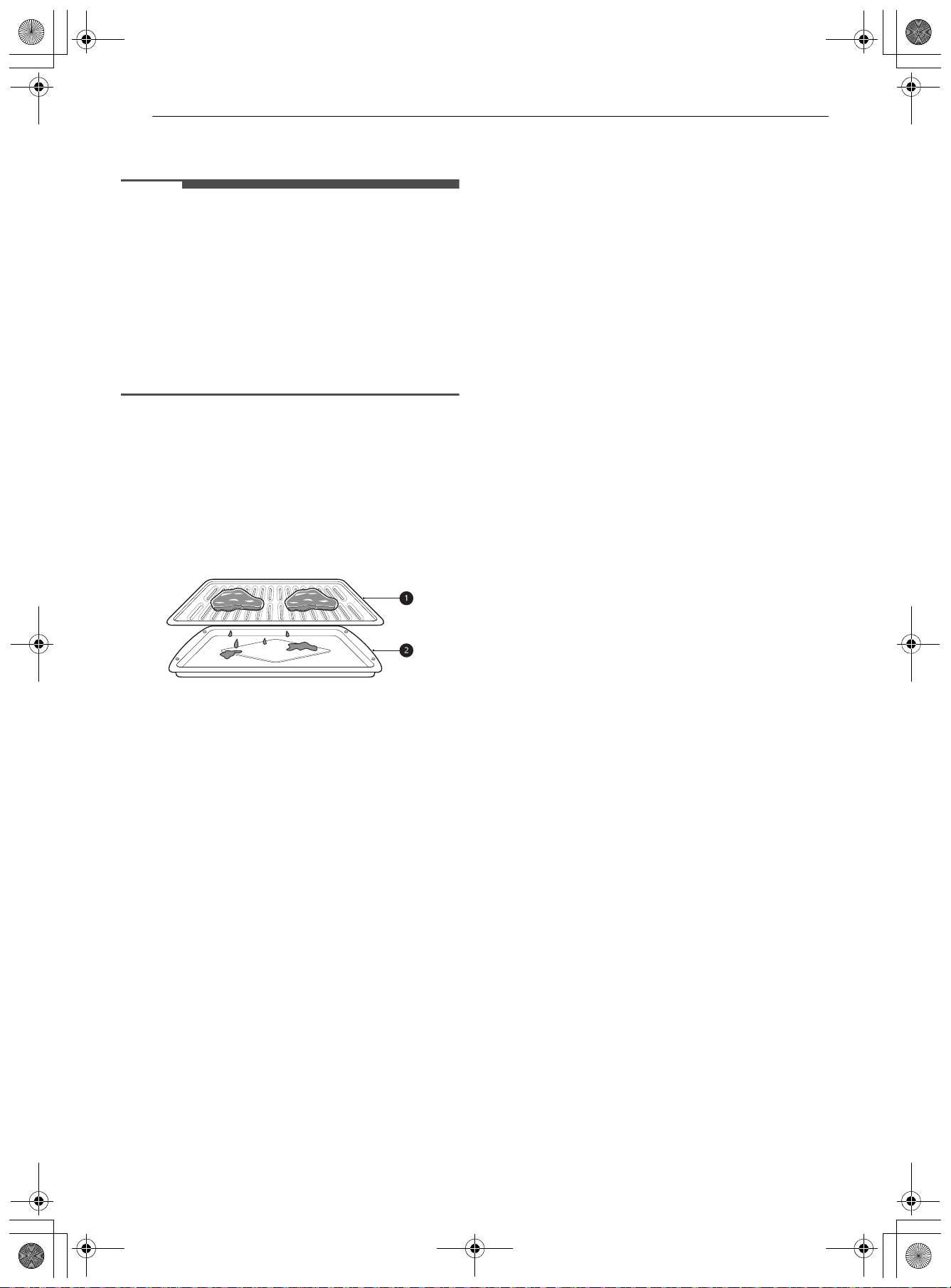
Recommended Broiling Guide
The size, weight, thickness, starting temperature,
and your preference of doneness will affect
broiling times.
This guide is based on meats at refrigerator
temperature. For best results when broiling, use a
pan designed for broiling.
a Grid (sold separately)
b Broiler pan (sold separately)
•Food: Hamburgers
Space evenly. Up to 9 patties may be broiled at
once.
- Quantity and/or Thickness:
9 patties, 1/2 to 3/4" thick
- Rack Position: 7
- First Side (min.): 3-6
- Second Side (min.): 2-4
Proof
This feature maintains a warm oven for rising
yeast-leavened products before baking. (Set
temperature: 92 °F)
Warm
This function will maintain an oven temperature of
170 °F. It will keep cooked food warm for serving
up to 3 hours after cooking has finished. The
Warm function may be used without any other
cooking operations or can be used after cooking
has finished using a Timed Cook or a Delayed
Timed Cook.
Keep Warm
This function will maintain an oven temperature of
170 °F. The Keep Warm function will keep cooked
food warm for serving up to 3 hours after cooking
has finished. The Keep Warm function should be
used with any other cooking operations. The Keep
Warm function can be used after cooking has
finished using a Timed Cook or a Delayed Timed
Cook.
Air Fry
This feature automatically increases the entered
temperature by 50°F for optimal performance
when using Air Fry.
The Air Fry function is specially designed for oil-
free frying.
Air Sous-Vide (Model LSEL6337*E)
This feature is only available on some models.
Air Sous-Vide cooking uses air to cook foods “low
and slow.” Use it to cook meat, fish, seafood,
poultry or vegetables. Food must be vacuum
packed in pouches before cooking.
• It is not necessary to preheat the oven when
using Air Sous-Vide.
• Refer to the cooking guide for recommended Air
Sous-Vide settings.
Frozen Meal
The Frozen Meal function is specially designed for
cooking frozen prepared meals. It heats from both
the top and bottom to brown food more evenly.
This system is designed to give the optimum
cooking performance by automatically selecting a
combination of the broil and bake heating
systems. No preheating is required when using the
Frozen Meal mode. For best results with frozen
pizza, cook food on a single rack placed in position
4 at 400 °F.
Slow Cook (Model LSEL6335*E)
This feature is only available on some models.
The Slow Cook function is specially designed for
grilling beef, pork and poultry. It is common for
the surface of the food to darken after the
completion of the Slow Cook. No preheating is
required when using the Slow Cook mode.
en-us_main.book.book Page 36 Tuesday, December 24, 2024 1:36 PM
37SMART FUNCTIONS
ENGLISH
SMART FUNCTIONS
LG ThinQ Application
This feature is only available on models with Wi-Fi.
The LG ThinQ application allows you to
communicate with the appliance using a
smartphone.
LG ThinQ Application Features
• Smart Diagnosis
TM
- This function provides useful information for
diagnosing and solving issues with the
appliance based on the pattern of use.
• Settings
- Allows you to set various options on the oven
and in the application.
• Scan to Cook
- Scan the barcode on a ready-made meal using
the LG ThinQ application and send the
recommended or customized cooking
instructions straight to your oven. Remote
Start must be activated on the oven to use
Scan to Cook.
• Monitoring
- This function helps you check the current
status, remaining time, cook settings and end
time in one place.
• Product Notifications
- Turn on the Push Alerts to receive appliance
status notifications. The notifications are
triggered even if the LG ThinQ application is
not open.
• Timer
- You can set the timer from the application.
• Firmware Update
- Keep the appliance updated.
NOTE
• In the following cases, you must update the
network information for each appliance in the
LG ThinQ application under Device Cards
~
Settings
~ Change Network.
- wireless router is changed
- wireless router password is changed
- Internet service provider is changed
• This information is current at the time of
publication. The application is subject to change
for product improvement purposes without
notice to users.
• Scan to Cook cannot be used while the timer is
running. Cancel the timer operation to use Scan
to Cook.
Installing LG ThinQ Application and
Connecting an LG Appliance
Models with QR Code
Scan the QR code attached to the product using
the camera or a QR code reader application on
your smartphone.
Models without QR Code
1 Search for and install the LG ThinQ
application from the Google Play Store or
Apple App Store on a smartphone.
2 Run the LG ThinQ application and sign in with
your existing account or create an LG account
to sign in.
3 Touch the add (~) button on the LG ThinQ
application to connect your LG appliance.
Follow the instructions in the application to
complete the process.
NOTE
• To verify the Wi-Fi connection, check that the f
icon on the control panel is lit.
• The appliance supports 2.4 GHz Wi-Fi networks
only. To check your network frequency, contact
your Internet service provider or refer to your
wireless router manual.
• LG ThinQ is not responsible for any network
connection problems or any faults, malfunctions,
or errors caused by network connection.
• The surrounding wireless environment can
make the wireless network service run slowly.
en-us_main.book.book Page 37 Tuesday, December 24, 2024 1:36 PM
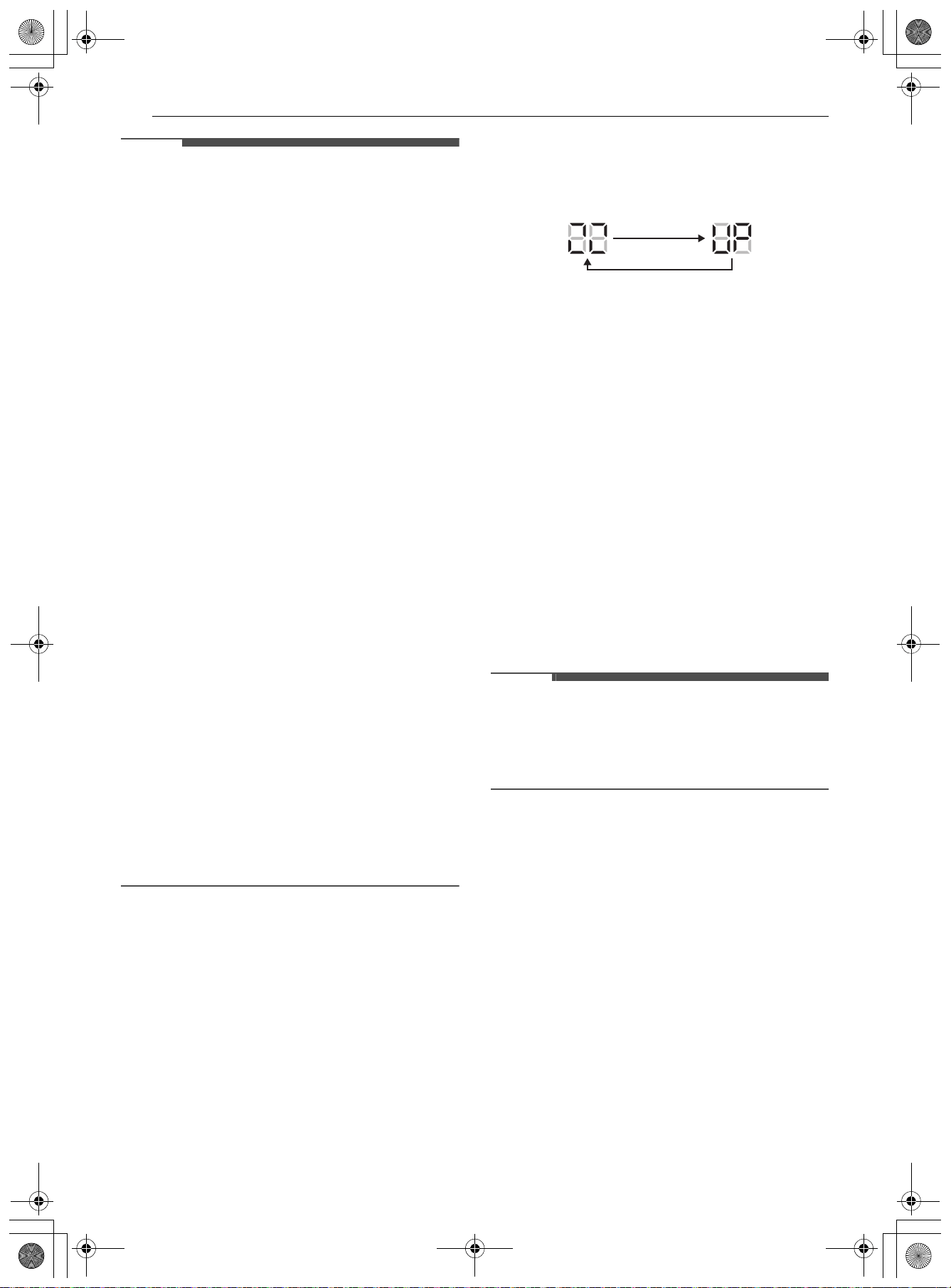
38 SMART FUNCTIONS
NOTE
• If the distance between the appliance and the
wireless router is too far, the signal becomes
weak. It may take a long time to connect or fail
to install the application.
• If the appliance is having trouble connecting to
the Wi-Fi network, it may be too far from the
router. Purchase a Wi-Fi repeater (range
extender) to improve the Wi-Fi signal strength.
• The network connection may not work properly
depending on the Internet service provider.
• The Wi-Fi may not connect or the connection
may be interrupted because of the home
network environment.
• If the appliance cannot be connected due to
problems with the wireless signal transmission,
unplug the appliance and wait about a minute
before trying again.
• If the firewall on your wireless router is enabled,
disable the firewall or add an exception to it.
• The wireless network name (SSID) should be a
combination of English letters and numbers. (Do
not use special characters.)
• Smartphone user interface (UI) may vary
depending on the mobile operating system (OS)
and the manufacturer.
• If the security protocol of the router is set to
WEP, network setup may fail. Change the
security protocol (WPA2 is recommended), and
connect the product again.
• To disable the Wi-Fi function, press and hold the
Wi-Fi button for 3 seconds. The Wi-Fi indicator
will be turned off.
• To reconnect the appliance or add another user,
press and hold the Wi-Fi button for 3 seconds.
Run the LG ThinQ application and follow the
instructions in the application to connect the
appliance.
Installing the LG ThinQ Application
Search for the LG ThinQ application from the
Google Play Store or Apple App Store on a
smartphone. Follow instructions to download and
install the application.
LG UP Feature
Experience new features by upgrading the product
through the LG ThinQ app.
If an upgradable feature is available, an upgrade
notification appears on the display and a melody
sounds after cooking has finished and the CLEAR/
OFF key is pressed.
For example, the lights on the display may light in
sequence until φπ appears.
1 Upgrade notifications are sent to your
smartphone when upgradable features are
available.
2 Press the upgrade notification on your
smartphone to enter the LG UPgrade Center
in the LG ThinQ app.
3 In the LG UPgrade Center, select a new
function and press the Upgrade button.
• Do not unplug the product during the
upgrade, as doing so may interrupt the
upgrade process.
4 After the upgrade is complete, check the
guide in the LG ThinQ app for detailed
feature settings.
NOTE
• This feature is only available on some models.
• After the upgrade is complete, the actual
product features may differ from those
described in the owner's manual.
Connecting to Wi-Fi
The Wi-Fi button, when used with the LG ThinQ
application, allows the appliance to connect to a
home Wi-Fi network. The
f icon shows the status
of the appliance’s network connection. The icon
illuminates when the appliance is connected to the
Wi-Fi network.
• Initial Appliance Connection
Run the LG ThinQ application and follow the
instructions in the application to connect the
appliance.
• Reconnecting the Appliance or Connecting
Another User
Press and hold the Wi-Fi button for 3 seconds.
Run the LG ThinQ application and follow the
instructions in the application to connect the
appliance.
en-us_main.book.book Page 38 Tuesday, December 24, 2024 1:36 PM
39SMART FUNCTIONS
ENGLISH
RF Module Specifications
FCC Statement
The following notice covers the transmitter
module contained in this product.
This equipment has been tested and found to
comply with the limits for a Class B digital device,
pursuant to Part 15 of the FCC Rules. These limits
are designed to provide reasonable protection
against harmful interference in a residential
installation. This equipment generates, uses, and
can radiate radio frequency energy and, if not
installed and used in accordance with the
instructions, may cause harmful interference to
radio communications. However, there is no
guarantee that interference will not occur in a
particular installation. If this equipment does
cause harmful interference to radio or television
reception, which can be determined by turning the
equipment off and on, the user is encouraged to
try to correct the interference by one or more of
the following measures:
• Reorient or relocate the receiving antenna.
• Increase the separation between the equipment
and the receiver.
• Connect the equipment into an outlet on a
circuit different from that to which the receiver is
connected.
• Consult the dealer or an experienced radio/TV
technician for help.
This device complies with part 15 of the FCC Rules.
Operation is subject to the following two
conditions:
(1) This device may not cause harmful interference
and
(2) This device must accept any interference
received, including interference that may cause
undesired operation.
Any changes or modifications in construction of
this device which are not expressly approved by
the party responsible for compliance could void
the user’s authority to operate the equipment.
FCC RF Radiation Exposure
Statement
This equipment complies with FCC radiation
exposure limits set forth for an uncontrolled
environment. This transmitter must not be co-
located or operating in conjunction with any other
antenna or transmitter.
This equipment should be installed and operated
with a minimum distance of 20 cm (7.8 inches)
between the antenna and your body. Users must
follow the specific operating instructions for
satisfying RF exposure compliance.
Open Source Software Notice
Information
To obtain the source code that is contained in this
product, under GPL, LGPL, MPL, and other open
source licenses that have the obligation to disclose
source code, and to access all referred license
terms, copyright notices and other relevant
documents, please visit https://
opensource.lge.com.
LG Electronics will also provide open source code
to you on CD-ROM for a charge covering the cost
of performing such distribution (such as the cost of
media, shipping, and handling) upon email
request to opensource@lge.com.
This offer is valid to anyone in receipt of this
information for a period of three years after our
last shipment of this product.
Type
Frequency
Range
Output
Power (Max.)
Wi-Fi
2 412 - 2 462
MHz
< 30 dBm
Bluetooth
2 402 - 2 480
MHz
< 30 dBm
en-us_main.book.book Page 39 Tuesday, December 24, 2024 1:36 PM
40 MAINTENANCE
MAINTENANCE
Cleaning
CAUTION
• Do not clean this appliance with bleach.
• To prevent burns, wait until the cooktop has
cooled down before touching any of its parts.
• Always wear gloves when cleaning the cooktop.
Interior
Do not use oven cleaners to clean the oven cavity.
Use the product's EasyClean function regularly to
clean light soil. For stubborn soil, use the Self
Clean function (on some models) or clean
manually using the following tips.
• A plastic spatula can be used as a scraper to
scrape off any chunks or debris before and
during oven cleaning.
• Using the rough side of a non-scratch scouring
pad may help to take off burnt-on stains better
than a soft sponge or towel.
• Certain non-scratch scrubbing sponges, such as
those made of melamine foam, available at local
stores, can also help improve cleaning.
CAUTION
• Do not use oven cleaners, harsh chemical
cleaners, bleach, vinegar, steel scouring pads, or
abrasive pads or cleansers to clean the oven, as
they can permanently damage the oven surface.
• Do not clean the gasket.
Exterior
Control Panel
To prevent activating the control panel during
cleaning, disconnect power to the appliance. Clean
up splatters with a damp cloth using a glass
cleaner. Remove heavier soil with warm, soapy
water. Do not use abrasives of any kind.
Front Manifold Panel and Knobs
It is best to clean the manifold panel after each use
of the range. For cleaning, use a damp cloth and
mild soapy water or a 50/50 solution of vinegar
and water. Rinse with clean water and polish dry
with a soft cloth.
CAUTION
• Do not use abrasive cleansers, strong liquid
cleaners, plastic scouring pads or oven cleaners
on the manifold panel. Doing so will damage the
finish.
• Do not try to bend the knobs by pulling them up
or down, and do not hang a towel or other
objects on them. This can damage the gas valve
shaft.
• The control knobs may be removed for easy
cleaning.
• To clean the knobs, make sure that they are in
the OFF position and pull them straight off the
stems.
• To replace the knobs, make sure the knob has
the OFF position centered at the top, and slide
the knob directly onto the stem.
NOTE
• To prevent scratching, do not use abrasive
cleaners on any of these materials.
Painted and Decorative Trim
For general cleaning, use a cloth with hot soapy
water. For more difficult soil and built-up grease,
apply a liquid detergent directly onto the soil.
Leave it on for 30 to 60 minutes. Rinse with a damp
cloth and dry. Do not use abrasive cleaners.
Stainless Steel Surfaces
To avoid scratches, do not use steel wool pads.
1 Place a small amount of stainless steel
appliance cleaner or polish on a damp cloth or
paper towel.
2 Clean a small area, rubbing with the grain of
the stainless steel if applicable.
3 Dry and buff with a clean, dry paper towel or
soft cloth.
4 Repeat as necessary.
en-us_main.book.book Page 40 Tuesday, December 24, 2024 1:36 PM
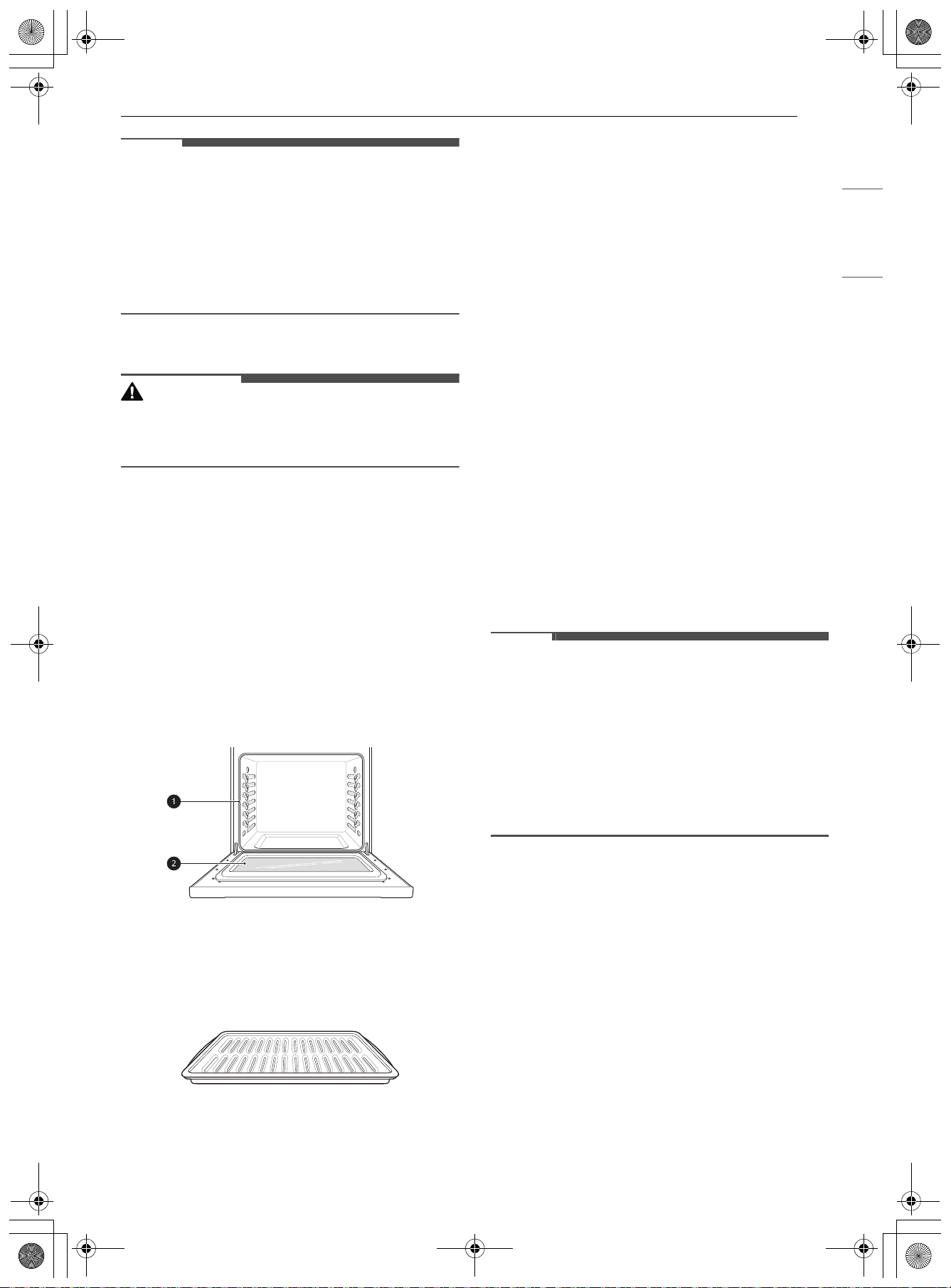
41MAINTENANCE
ENGLISH
NOTE
• To clean the stainless steel surface, use warm
sudsy water or a stainless steel cleaner or polish.
• Always wipe in the direction of the metal surface
finish.
• Stainless steel appliance cleaner or polish can be
purchased online or from most retailers of
appliances or home goods.
Oven Door
CAUTION
• Do not use harsh cleaners or harsh abrasive
cleaning materials on the outside of the oven
door. Doing so can cause damage.
• Use soapy water to thoroughly clean the oven
door. Rinse well. Do not immerse the door in
water.
• You may use a glass cleaner on the outside glass
of the oven door. Do not spray water or glass
cleaner on the door vents.
• Do not use oven cleaners, cleaning powders, or
harsh abrasive cleaning materials on the outside
of the oven door.
• Do not clean the oven door gasket. The oven
door gasket is made of a woven material that is
essential for a good seal. Care should be taken
not to rub, damage, or remove this gasket.
a Don’t hand clean oven door gasket
b Do hand clean door
Broiler Pan and Grid
• Do not store a soiled broiler pan or grid
anywhere in the range.
• Do not clean the broiler pan or grid in a self
cleaning mode. (Available on some models)
• Remove the grid from the pan. Carefully pour
out the grease from the pan into a proper
container.
• Wash and rinse the broiler pan and grid in hot
water with a soap-filled or plastic scouring pad.
• If food has burned on, sprinkle the grid with
cleaner while hot and cover with wet paper
towels or a dishcloth. Soaking the pan will
remove burned-on foods.
• Both the broiler pan and grid may be cleaned
with a commercial oven cleaner or in the
dishwasher.
Oven Racks
Remove the oven racks before operating the Self
Clean cycle (on some models) and EasyClean.
1 Clean with a mild, abrasive cleaner.
• Food spilled into the tracks could cause the
racks to become stuck.
2 Rinse with clean water and dry.
NOTE
• For models with Self Clean function:
- If the racks are cleaned using the Self Clean
cycle (not recommended), the color will turn
slightly blue and the finish will become dull.
After the Self Clean cycle is complete, and the
oven has cooled, rub the sides of the racks
with wax paper or a cloth containing a small
amount of oil. This will make the racks glide
more easily into the rack tracks.
Vent Louvers
• The appearance of the range may differ from
model to model.
en-us_main.book.book Page 41 Tuesday, December 24, 2024 1:36 PM
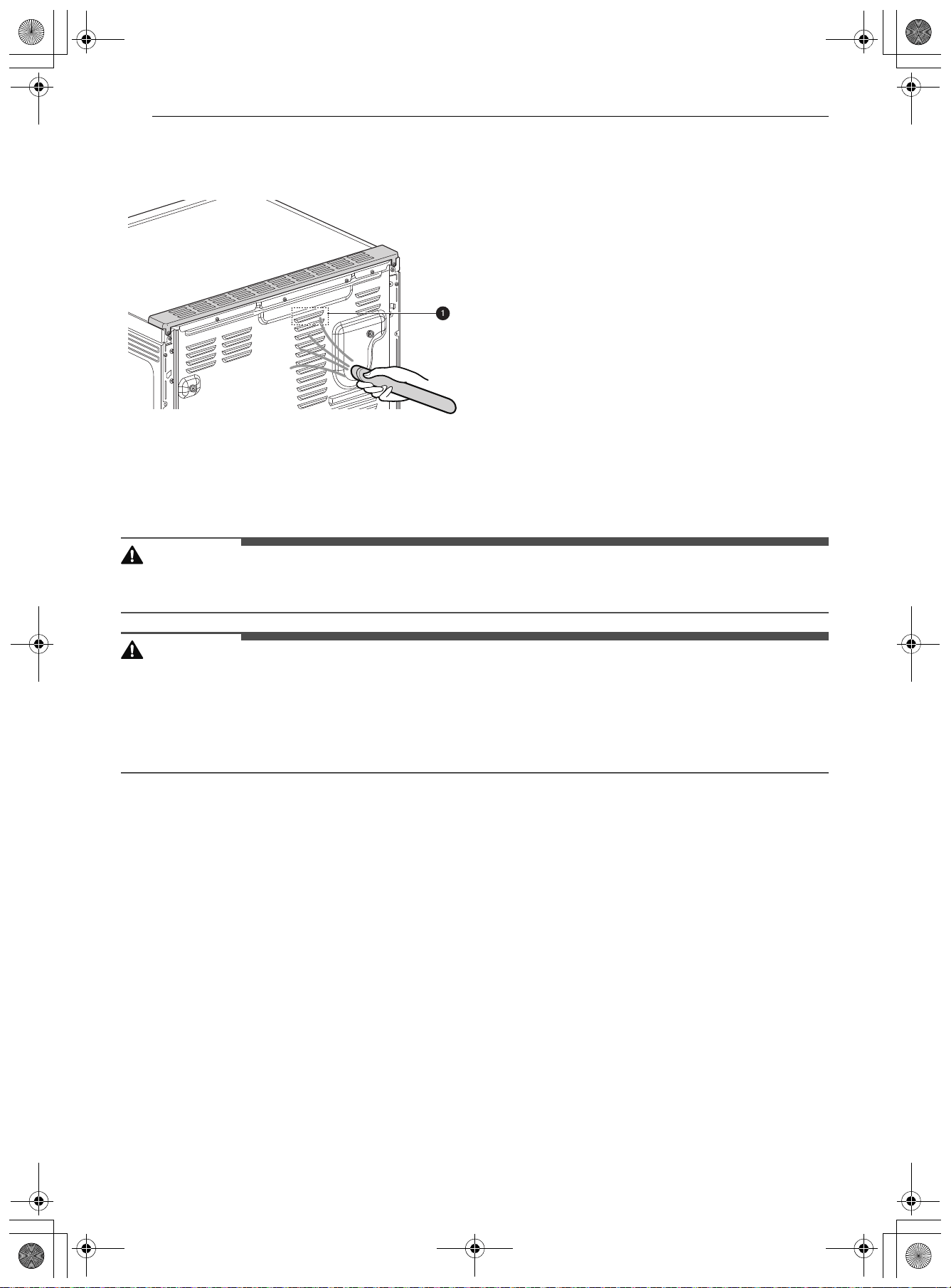
42 MAINTENANCE
Use a vacuum cleaner with a brush or crevice
attachment to clean the vent louvers a. Do not
remove the panel covering the range.
Cooktop Surface
Glass-Ceramic Cooktop
WARNING
• To protect hands from burns, always wear oven mitts or use pot holders while using a scraper on the hot
cooking surface.
CAUTION
• If any sugar or food containing sugar spills, or plastic or foil melts on the cooktop, remove the material
IMMEDIATELY with a metal razor scraper while the cooking surface is still hot to avoid the risk of damage
to the glass-ceramic surface. When used correctly, the scraper will not damage the cooktop surface.
• If water or food containing water spills, remove the spill IMMEDIATELY with a dry paper towel.
• Do not use scrub pads or abrasive cleaning pads. They may damage your cooktop surface.
Use ceramic cooktop cleaner on the glass cooktop. Other cleaners may not be as effective or may scratch,
damage or stain the cooktop surface.
To maintain and protect the surface of the glass cooktop, follow these steps:
1 Before using the cooktop for the first time, clean it with a ceramic cooktop cleaner. This helps protect
the top and makes cleanup easier.
2 Use ceramic cooktop cleaner daily to help keep the cooktop looking new.
3 Shake the cleaner well. Apply a few drops of cleaner directly to the cooktop.
4 Use a paper towel to clean the entire cooktop surface.
5 Rinse with clear water and use a dry cloth or paper towel to remove all cleaning residue.
en-us_main.book.book Page 42 Tuesday, December 24, 2024 1:36 PM
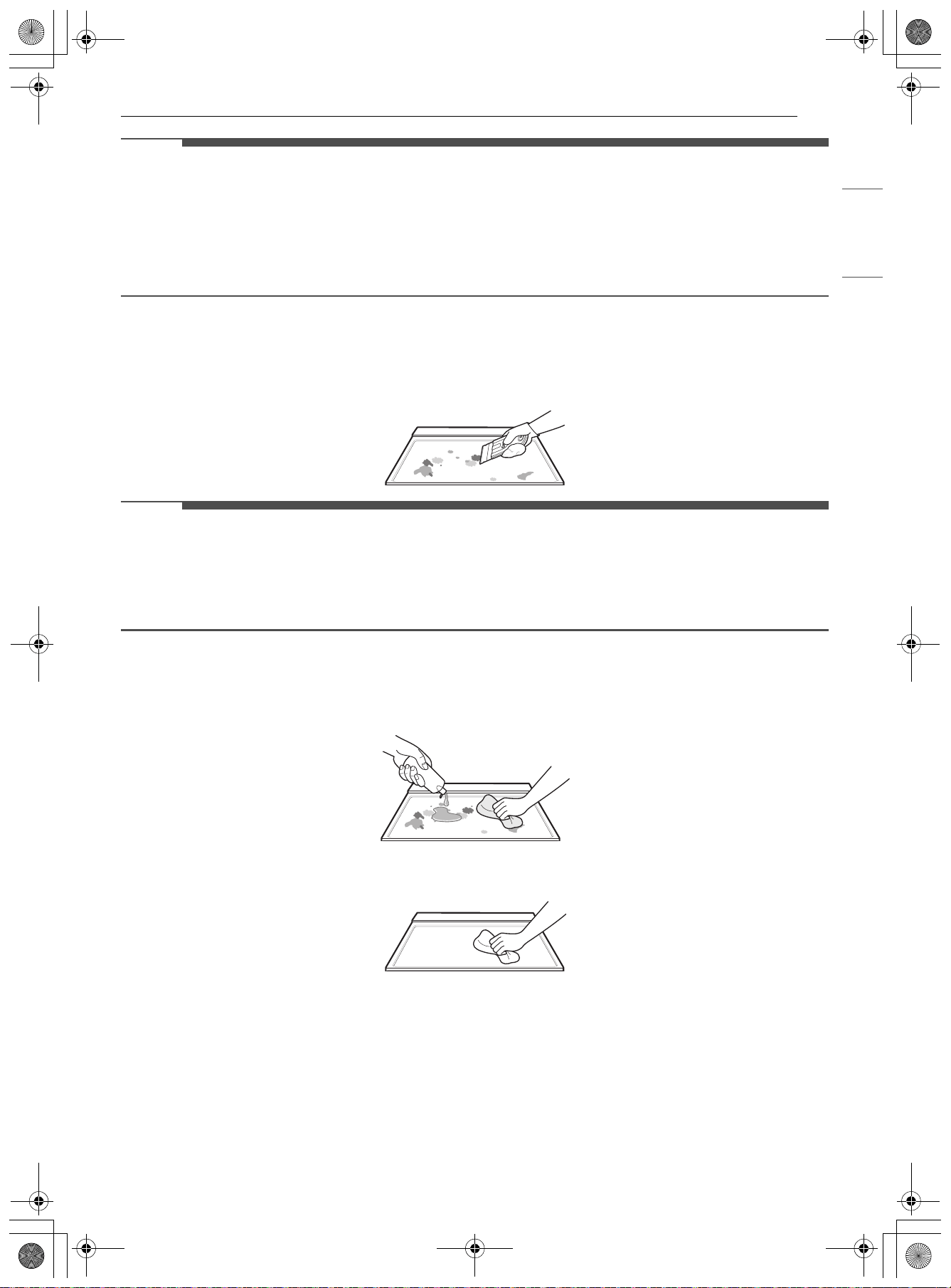
43MAINTENANCE
ENGLISH
NOTE
• Any damage or failure of the product resulting from the items below may not be covered under the
LIMITED WARRANTY.
- Sugary spillovers (such as preserves, ketchup, tomato sauce, jellies, fudge, candy, syrups, or chocolate)
or melted plastics can cause pitting on the surface of your cooktop.
- If food or water containing calcium (such as baking powder, wine, milk, spinach, or broccoli) is spilled
on the cooktop, it can permanently stain or discolor the surface.
Burned-On Residue
1 While the cooktop is still warm, remove any burnt on deposits or spilled food from the glass-ceramic
cooking surface with a suitable metal razor scraper.
NOTE
• Do not use a dull or nicked blade.
• Hold the scraper at approximately a 30° angle to the cooktop.
• The razor scraper will not damage the markings on the cooking surface.
• Take care to avoid damaging the seal when cleaning the cooktop with a metal razor scraper.
2 When the cooking surface has completely cooled, apply a few fingertip-sized dabs of a glass-ceramic
cooktop cleaner in each burner area. Spread the cleaner over the cooktop surface with a damp paper
towel. Leave the cleaner on for 10 minutes before rinsing it off.
3 Rinse with clean water and wipe the cooktop surface with a clean, dry paper towel.
Cooktop Seal
1 To remove burned-on soil from the seal around the outside of the glass-ceramic cooktop, cover the
area with a warm, wet cloth to soften the soil.
2 After a few minutes, wipe the area clean with a mild, nonabrasive cleaner.
en-us_main.book.book Page 43 Tuesday, December 24, 2024 1:36 PM
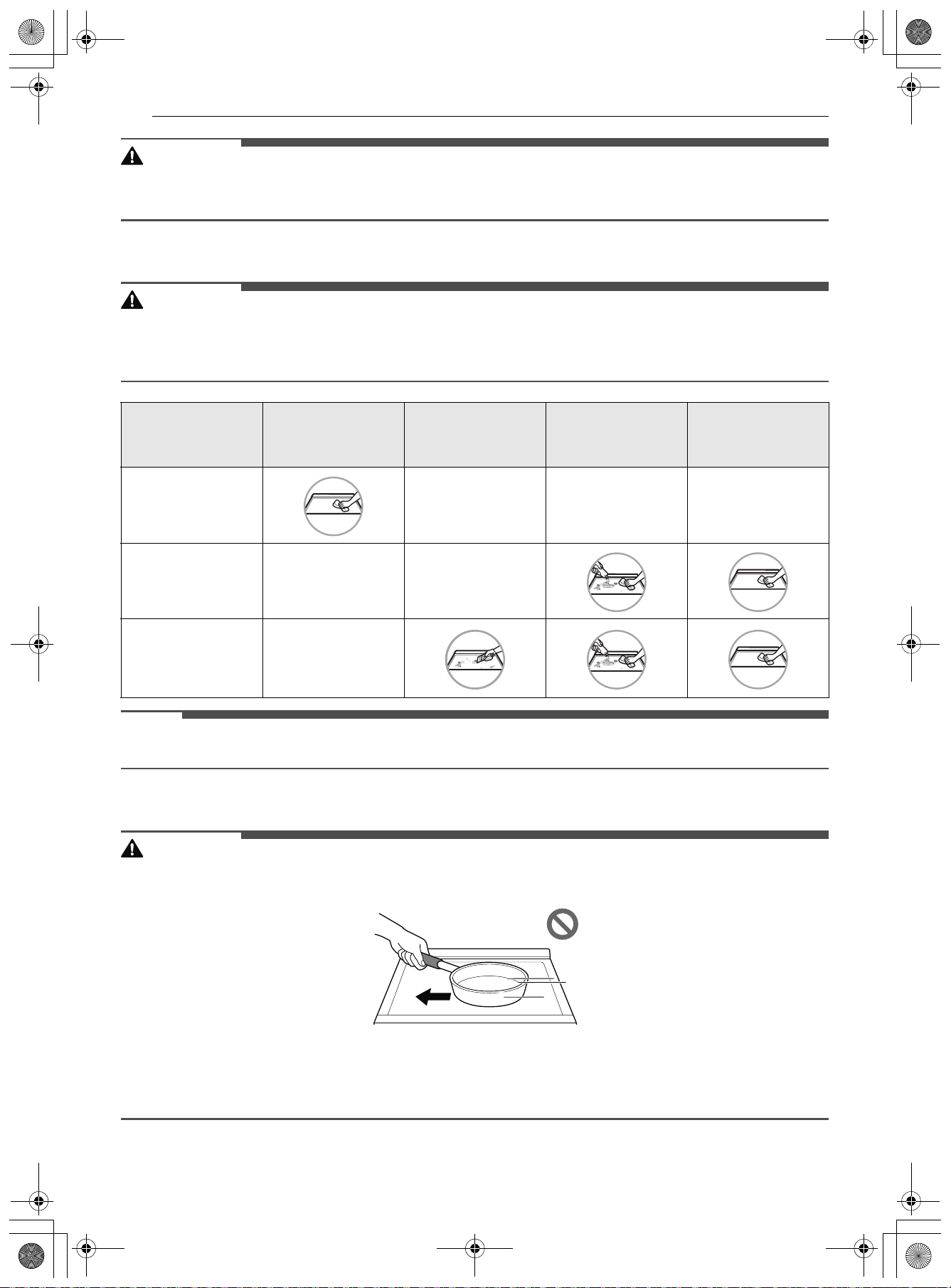
44 MAINTENANCE
CAUTION
• Do not use a knife or any sharp object to clean the seal around the outside of the glass-ceramic cooktop.
• Take care to avoid damaging the seal when cleaning the cooktop with a metal razor scraper.
Maintaining the Cooktop
CAUTION
• Do not use chlorine bleach, ammonia, or other cleaners not specifically recommended for use on glass-
ceramic cooktops.
• Let your glass-ceramic cooking surface cool off before cleaning.
NOTE
• For additional product information, visit our website at www.lg.com
Metal Marks and Scratches
CAUTION
• Always use heavier gauge, high-quality cookware on the cooking elements and do not slide it on the
ceramic cooktop surface. Even high-quality cookware can scratch the cooktop surface.
• Any cookware that has a rough or dirty bottom can mark and scratch the cooktop surface. Always start
with clean cookware.
• Do not use cookware if there is foreign matter on the cooktop surface. Always clean the cooktop surface
before cooking.
-
Wipe off with a
damp towel and
mild detergent
Use a metal
scraper
Apply cooktop
cleaner. Rub with
a towel.
Rinse with a
damp towel, then
wipe dry.
Regular
(Recommended
after each use)
---
Occasional
(Recommended
every week)
--
Thorough
(Recommended for
tough stains or
burnt-on food)
-
en-us_main.book.book Page 44 Tuesday, December 24, 2024 1:36 PM
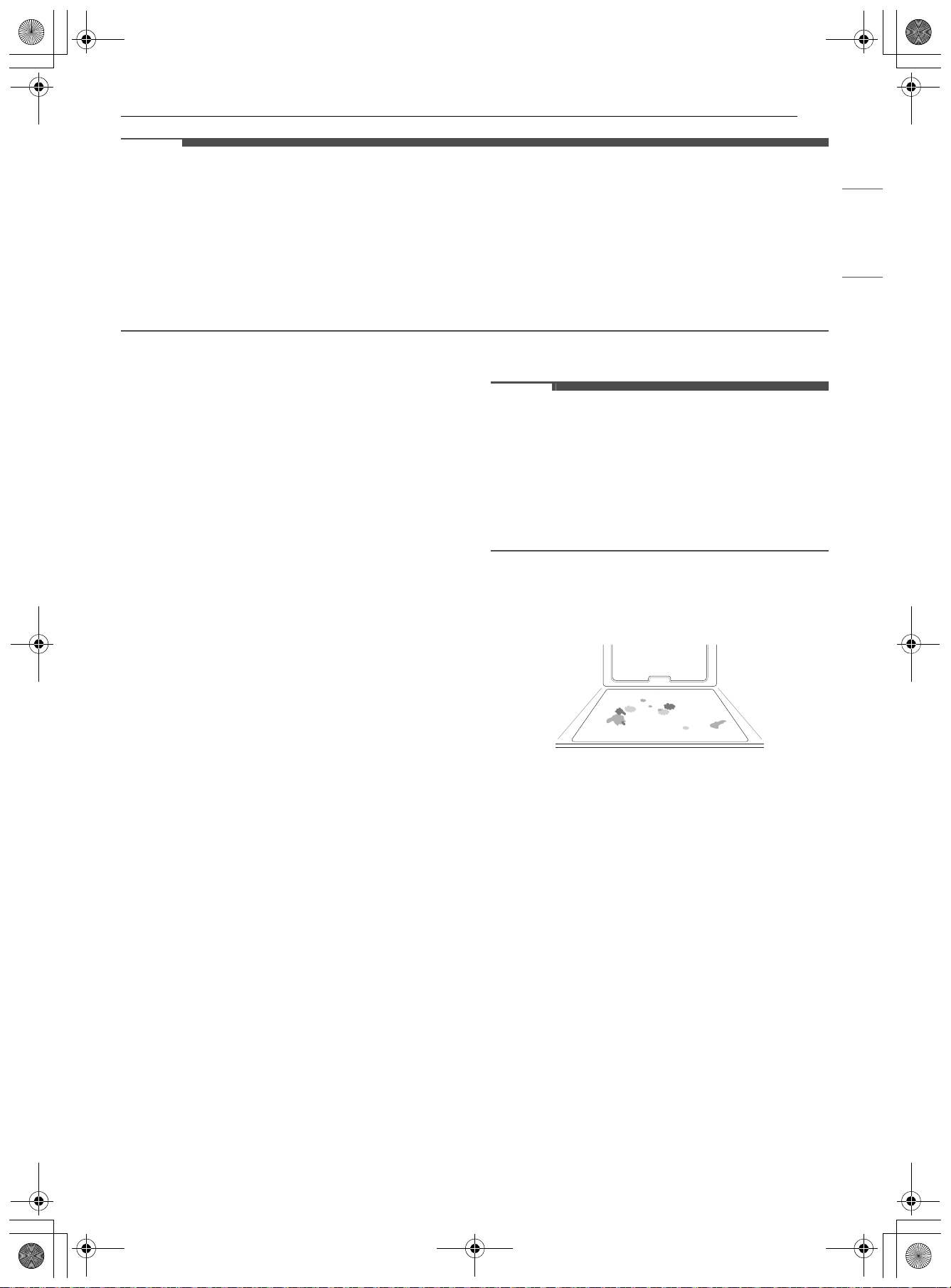
45MAINTENANCE
ENGLISH
NOTE
• Any damage or failure of the product resulting from the items below may not be covered under the
LIMITED WARRANTY.
- Be careful not to slide pots and pans across the cooktop. Doing so will leave metal markings on the
cooktop surface. To help remove these marks, use a ceramic cooktop cleaner with a cleaning pad for
ceramic cooktops.
- If pots with a thin overlay of aluminum or copper are allowed to boil dry, the overlay may leave a black
discoloration on the cooktop. This should be removed immediately before heating again or the
discoloration may be permanent.
EasyClean
This feature is only available on some models.
LG’s EasyClean enamel technology provides two
cleaning options for the inside of the range. The
EasyClean feature takes advantage of LG’s new
enamel to help lift soils without harsh chemicals,
and it runs using ONLY WATER for just 10 minutes
in low temperatures to help loosen LIGHT soils
before hand cleaning.
While EasyClean is quick and effective for small
and LIGHT soils, the Self Clean feature can be used
to remove HEAVY, built up soils. The intensity and
high heat of the Self Clean cycle may result in
smoke which will require the opening up of
windows to provide ventilation. Compared to the
more intense Self Clean process, your LG oven
gives you the option of cleaning with LESS HEAT,
LESS TIME, and virtually NO SMOKE OR FUMES.
You can reduce energy use by cleaning light oven
soils with the EasyClean feature instead of Self
Clean.
When needed, the range still provides the Self
Clean option for longer, more thorough oven
cleaning for heavier, built up soils. (On some
models)
• For hard to reach areas such as the back surface
of the oven, it is better to use the Self Clean
cycle.
Benefits of EasyClean
• Helps loosen light soils before hand-cleaning
• EasyClean only uses water; no chemical cleaners
• Makes for a better Self Clean experience (On
some models)
- Delays the need for a Self Clean cycle
- Minimizes smoke and odors
- Can allow shorter Self Clean time
NOTE
• For models without Self Clean option
- The EasyClean feature may not be effective in
removing heavy, built-up soils. Because the
range does not include a Self Clean option,
clean the oven regularly using the EasyClean
feature to prevent heavy, burnt-on soil from
building up in the oven.
When to Use EasyClean
• Example of oven soiling
Case 1
- Soil pattern: Small drops or spots
- Types of soils: Cheese or other ingredients
- Common food items that can soil your oven:
Pizza
Case 2
- Soil pattern: Light splatter
- Types of soils: Fat/grease
- Common food items that can soil your oven:
Steaks, broiled / Fish, broiled / Meat roasted at
low temperatures
EasyClean Instruction Guide
en-us_main.book.book Page 45 Tuesday, December 24, 2024 1:36 PM
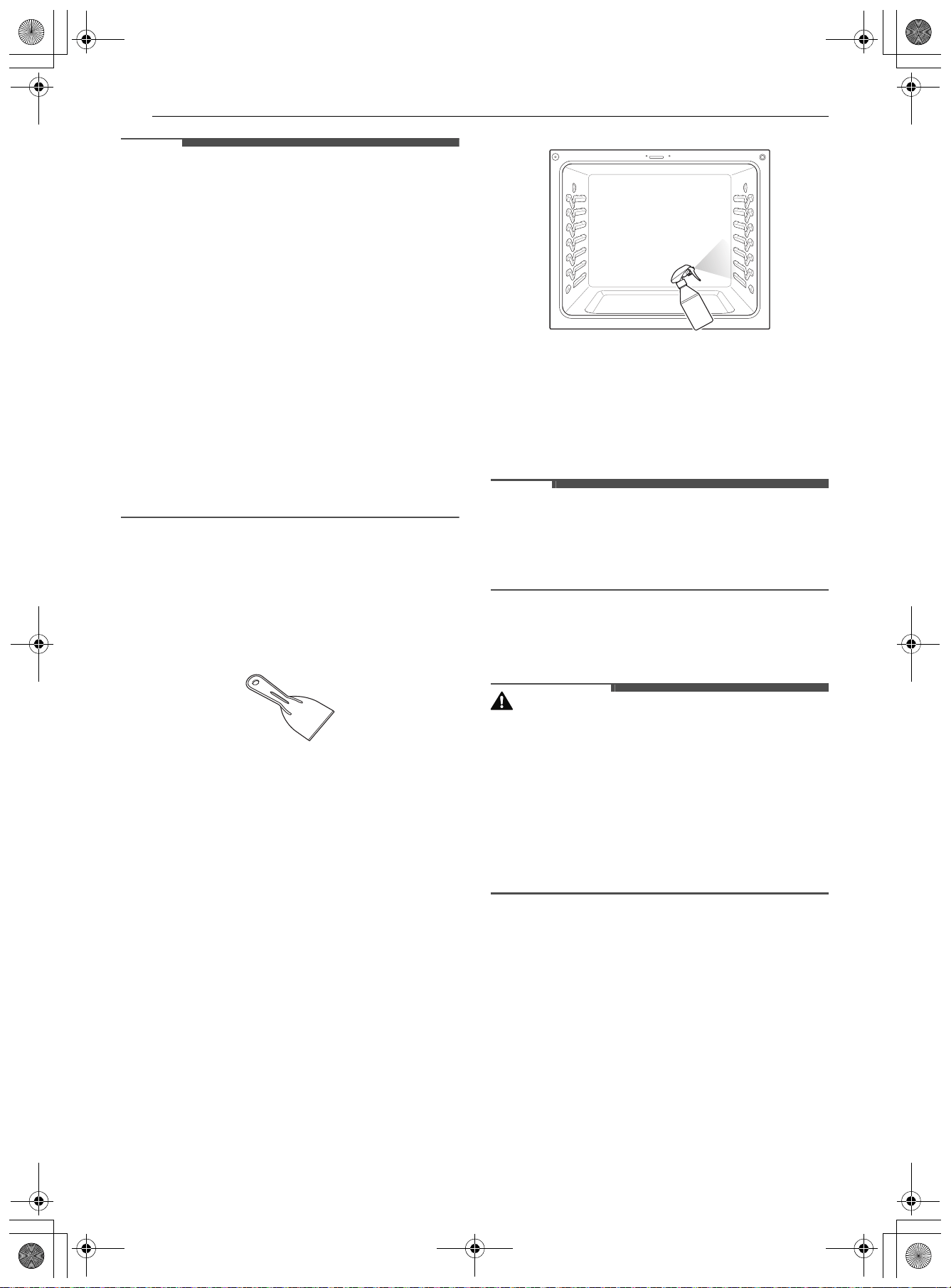
46 MAINTENANCE
NOTE
• Allow the oven to cool to room temperature
before using the EasyClean cycle. If your oven
cavity is above 150 °F (65 °C), Hot will appear in
the display, and the EasyClean cycle will not be
activated until the oven cavity cools down.
• The range should be level to ensure that the
bottom surface of the oven cavity is entirely
covered by water at the beginning of the
EasyClean cycle.
• For best results, use distilled or filtered water.
Tap water may leave mineral deposits on the
oven bottom.
• Soil baked on through several cooking cycles will
be more difficult to remove with the EasyClean
cycle.
• Do not open the oven door during the EasyClean
cycle. Water will not get hot enough if the door is
opened during the cycle.
1 Remove oven racks and accessories from the
oven.
2 Scrape off and remove any burnt-on debris
with a plastic scraper.
• Suggested plastic scrapers:
- Hard plastic spatula
- Plastic pan scraper
- Plastic paint scraper
- Old credit card
3 Fill a spray bottle (10 oz or 300 ml) with water
and use the spray bottle to thoroughly spray
the inside surfaces of the oven.
4 Use at least 1/5 (2 oz or 60 ml) of the water in
the bottle to completely saturate the soil on
both the walls and in the corners of the oven.
5 Spray or pour the remaining water (8 oz or
240 ml) onto the bottom center of the oven
cavity. The indentation on the oven bottom
should be fully covered to submerge all soils.
Add water if necessary.
NOTE
• If cleaning multiple ovens, use an entire bottle of
water to clean each oven. Do not spray water
directly on the door. Doing so will result in water
dripping to the floor.
6 Close the oven door. Turn the oven mode
knob to select EasyClean. Press START.
CAUTION
• Some surfaces may be hot after the EasyClean
cycle. Wear rubber gloves while cleaning to
prevent burns.
• During the EasyClean cycle, the oven becomes
hot enough to cause burns. Wait until the cycle is
over before wiping the inside surface of the
oven. Failure to do so may result in burns.
• Avoid leaning or resting on the oven door glass
while cleaning the oven cavity.
7 A tone will sound at the end of the 10 minute
cycle. Turn the oven mode knob to the O F F
position to clear the display and end the tone.
8 After the cleaning cycle and during hand-
cleaning, enough water should remain on the
oven bottom to completely submerge all soils.
Add water if necessary. Place a towel on the
floor in front of the oven to capture any water
that may spill out during hand-cleaning.
en-us_main.book.book Page 46 Tuesday, December 24, 2024 1:36 PM
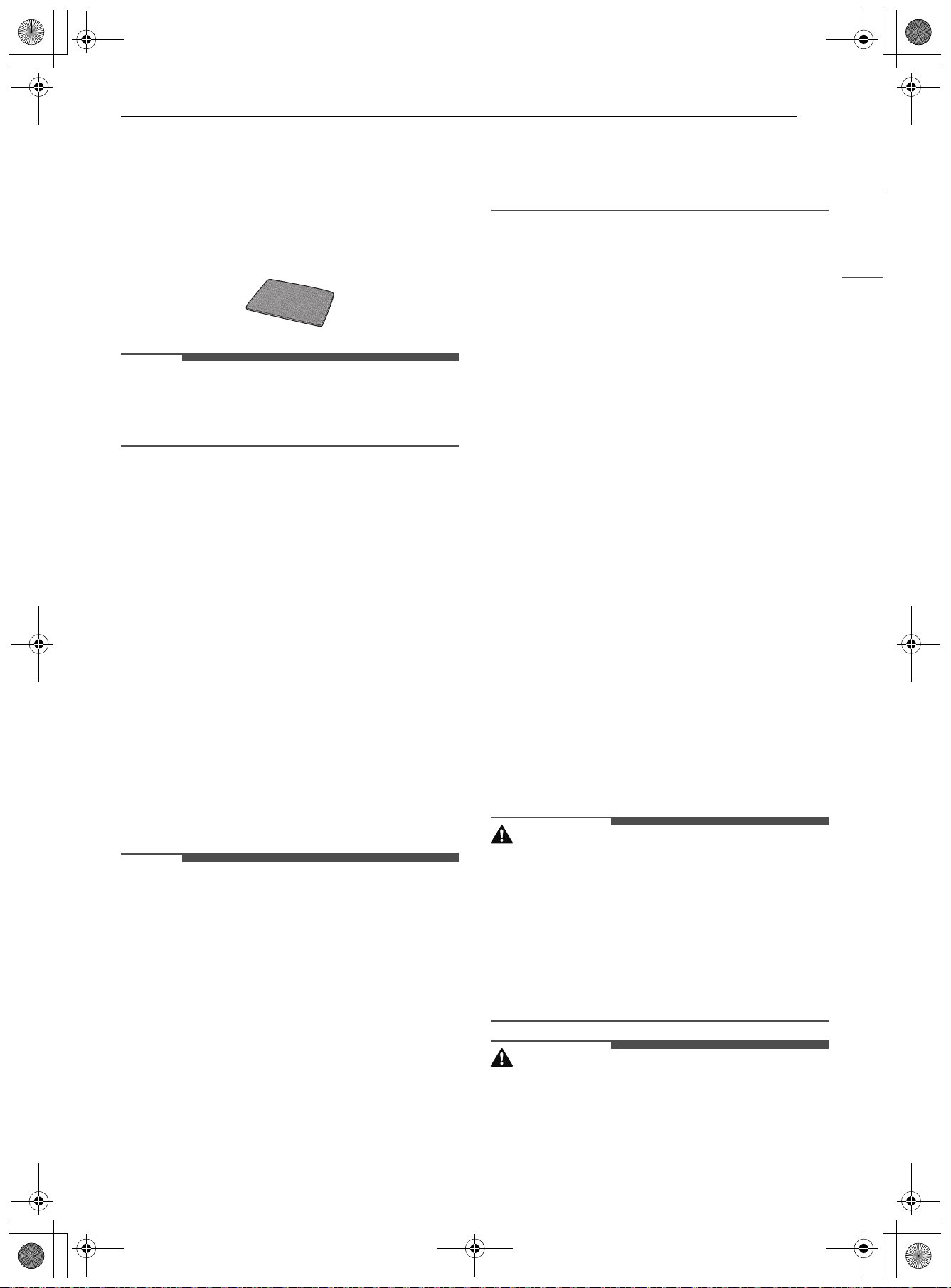
47MAINTENANCE
ENGLISH
9 Clean the oven cavity immediately after the
EasyClean cycle by scrubbing with a wet, non-
scratch scouring sponge or pad. (The scouring
side will not scratch the finish.) Some water
may spill into the bottom vents while
cleaning, but it will be captured in a pan under
the oven cavity and will not hurt the burner.
NOTE
• Do not use any steel scouring pads, abrasive
pads or cleaners as these materials can
permanently damage the oven surface.
10 Once the oven cavity is cleaned, wipe any
excess water with a clean dry towel. Replace
racks and any other accessories.
11 If some light soils remain, repeat the above
steps, making sure to thoroughly soak the
soiled areas.
• For models with Self Clean function
- If stubborn soils remain after multiple
EasyClean cycles, run the Self Clean cycle.
Be sure that the oven cavity is empty of
oven racks and other accessories, and
that the oven cavity surface is dry before
running the Self Clean cycle. Consult the
Self Clean section of your owner’s manual
for further details. If a Self Clean option is
not available, scrape off and remove
stubborn soil using a scraper.
NOTE
• If you forget to saturate the inside of the oven
with water before starting EasyClean, turn the
oven mode knob to the O F F position to end the
cycle. Wait for the range to cool to room
temperature and then spray or pour water into
the oven and start another EasyClean cycle.
• The cavity gasket may be wet when the
EasyClean cycle finishes. This is normal. Do not
clean the gasket.
• If mineral deposits remain on the oven bottom
after cleaning, use a cloth or sponge soaked in
vinegar to remove them.
• It is normal for the fan to operate during the
EasyClean cycle.
• Using commercial oven cleaners or bleach to
clean the oven is not recommended. Instead,
use a mild liquid cleanser with a pH value below
12.7 to avoid discoloring the enamel.
Self Clean
This feature is only available on some models.
The Self Clean cycle uses extremely hot
temperatures to clean the oven cavity. While
running the Self Clean cycle, you may notice
smoking or an odor. This is normal, especially if
the oven is heavily soiled. During Self Clean, the
kitchen should be well ventilated to minimize the
odors from cleaning.
Before Starting Self Clean
• Clean only parts listed in manual. Remove the
oven racks, broiler pan, broiler grid, all
cookware, aluminum foil or any other material
from the oven.
- If oven racks are left in the oven cavity during
the Self Clean cycle, they will discolor and
become difficult to slide in and out.
• The kitchen should be well ventilated to
minimize the odors from cleaning. Open a
window or turn on a ventilation fan or hood
before self-cleaning.
• Wipe any heavy spillovers on the bottom of the
oven.
• Make sure that the oven light cover is in place
and the oven light is off.
• Clean the frame of the oven and door with hot
soapy water. Rinse well.
WARNING
• If the oven is heavily soiled with oil, self-clean the
oven before using the oven again. The oil could
cause a fire.
• If there is a fire in the oven during self-clean,
turn the oven off and wait for the fire to go out.
Do not force the door open. Introduction of
fresh air at self-clean temperatures may lead to
a burst of flame from the oven. Failure to follow
this instruction may result in severe burns.
CAUTION
• Do not use oven cleaners. Commercial oven
cleaner or oven liner protective coating of any
kind should not be used in or around any part of
the oven.
en-us_main.book.book Page 47 Tuesday, December 24, 2024 1:36 PM
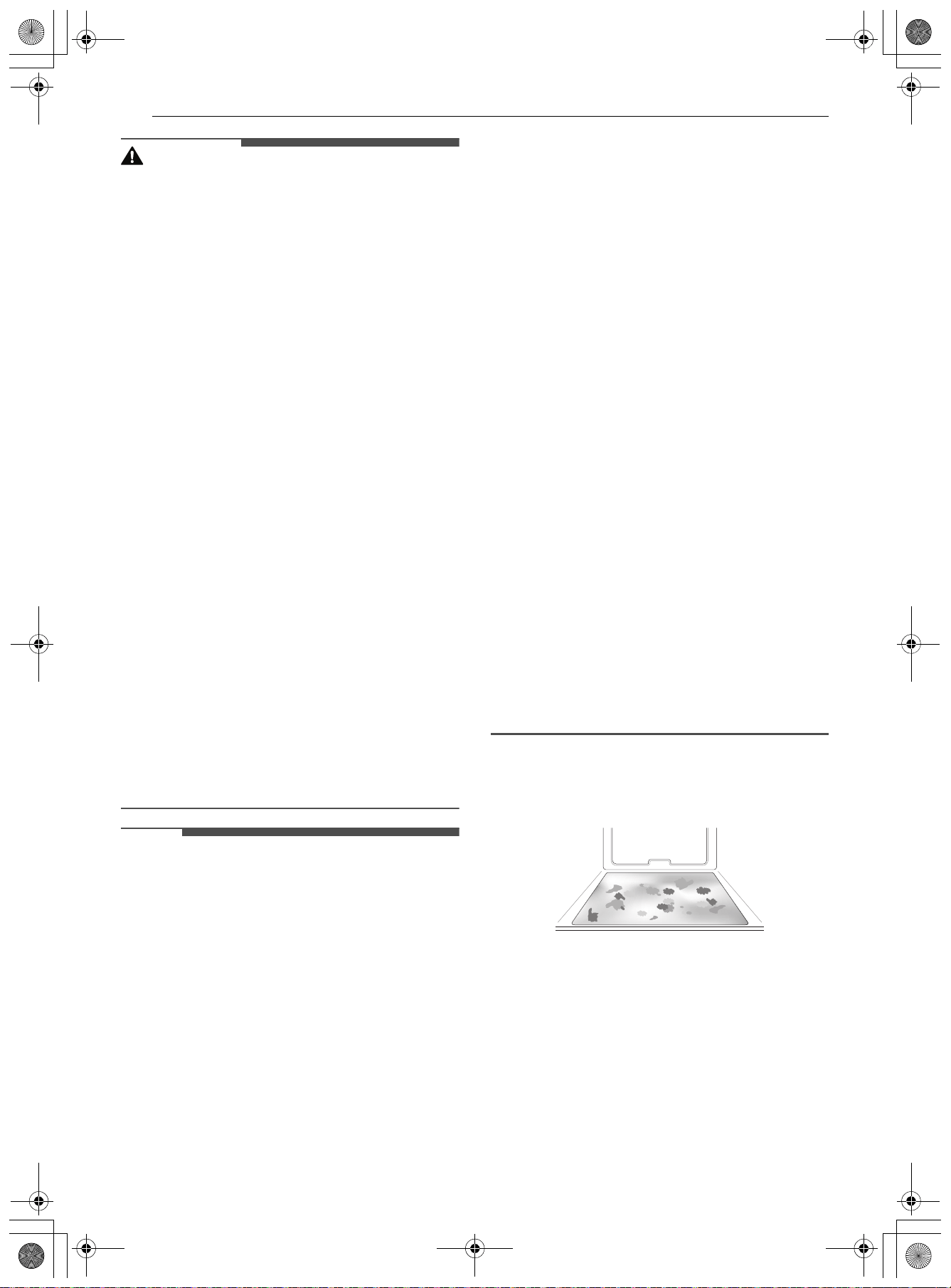
48 MAINTENANCE
CAUTION
•The oven displays an F error code and sounds
three long beeps during the self-cleaning
process if it malfunctions in the self-clean mode.
Switch off the electrical power to the main fuse
or breaker and have the oven serviced by a
qualified technician.
• If the self cleaning mode malfunctions, turn the
range off and disconnect the power supply. Have
it serviced by a qualified technician.
• It is normal for parts of the oven to become hot
during a Self Clean cycle. Avoid touching the
cooktop, door, window or oven vent area during
a Self Clean cycle.
• Do not leave small children unattended near the
appliance. During the Self Clean cycle, the
outside of the range can become very hot to the
touch.
•If you have pet birds, move them to another
well-ventilated room. The health of some birds is
extremely sensitive to the fumes given off during
the Self Clean cycle of any range.
• Do not line the oven walls, racks, bottom or any
other part of the range with aluminum foil or
any other material. Doing so will destroy heat
distribution, produce poor baking results and
cause permanent damage to the oven interior
(aluminum foil will melt to the interior surface of
the oven).
• Do not force the door open. This can damage the
automatic door locking system. Use care when
opening the oven door after the Self Clean cycle.
Stand to the side of the oven when opening the
door to allow hot air or steam to escape. The
oven may still be VERY HOT.
NOTE
• The oven light cannot be turned on during a Self
Clean cycle. The oven light cannot be turned on
until the oven temperature has cooled below
500 ˚F (260 ˚C) after a Self Clean cycle is
complete.
• During the Self Clean cycle, the cooktop
elements and warming drawer cannot be used.
• Clean the frame of the oven and door with hot
soapy water. Rinse well.
• Do not clean the gasket. The fiberglass material
of the oven door gasket cannot withstand
abrasion. It is essential for the gasket to remain
intact. If you notice it becoming worn or frayed,
replace it.
• It is normal for the fan to operate during the Self
Clean cycle.
• As the oven heats, you may hear sounds of metal
parts expanding and contracting. This is normal
and will not damage the oven.
• You may notice some white ash in the oven.
Wipe it off with a damp cloth or a soap-filled
steel wool pad after the oven cools. If the oven is
not clean after one Self Clean cycle, repeat the
cycle.
• If oven racks were left in the oven and do not
slide smoothly after a Self Clean cycle, wipe racks
and rack supports with a small amount of
vegetable oil to make them glide more easily.
• After a Self Clean cycle, fine lines may appear in
the porcelain because it went through heating
and cooling. This is normal and will not affect
performance.
• The Self Clean cycle cannot be started if the
Control Lock / Lockout feature is active.
• Once the Self Clean cycle is set, the oven door
locks automatically. You will not be able to open
the oven door until the oven is cooled. The lock
releases automatically.
• Once the door has been locked, the lock
k
indicator light stops flashing and remains on.
Allow about 15 seconds for the oven door lock to
activate.
• If the clock is set for a 12-hour display (default)
the Delayed Self Clean can never be set to start
more than 12 hours in advance.
• After the oven is turned off, the convection fan
keeps operating until the oven has cooled down.
When to Use Self Clean
• Example of oven soiling
Case 1
• Soil pattern: Medium to heavy splatter
• Types of soils: Fat/grease
• Common food items that can soil your oven:
Meat roasted at high temperatures
Case 2
• Soil pattern: Drops or spots
• Types of soils: Filling or sugar based soils
en-us_main.book.book Page 48 Tuesday, December 24, 2024 1:36 PM
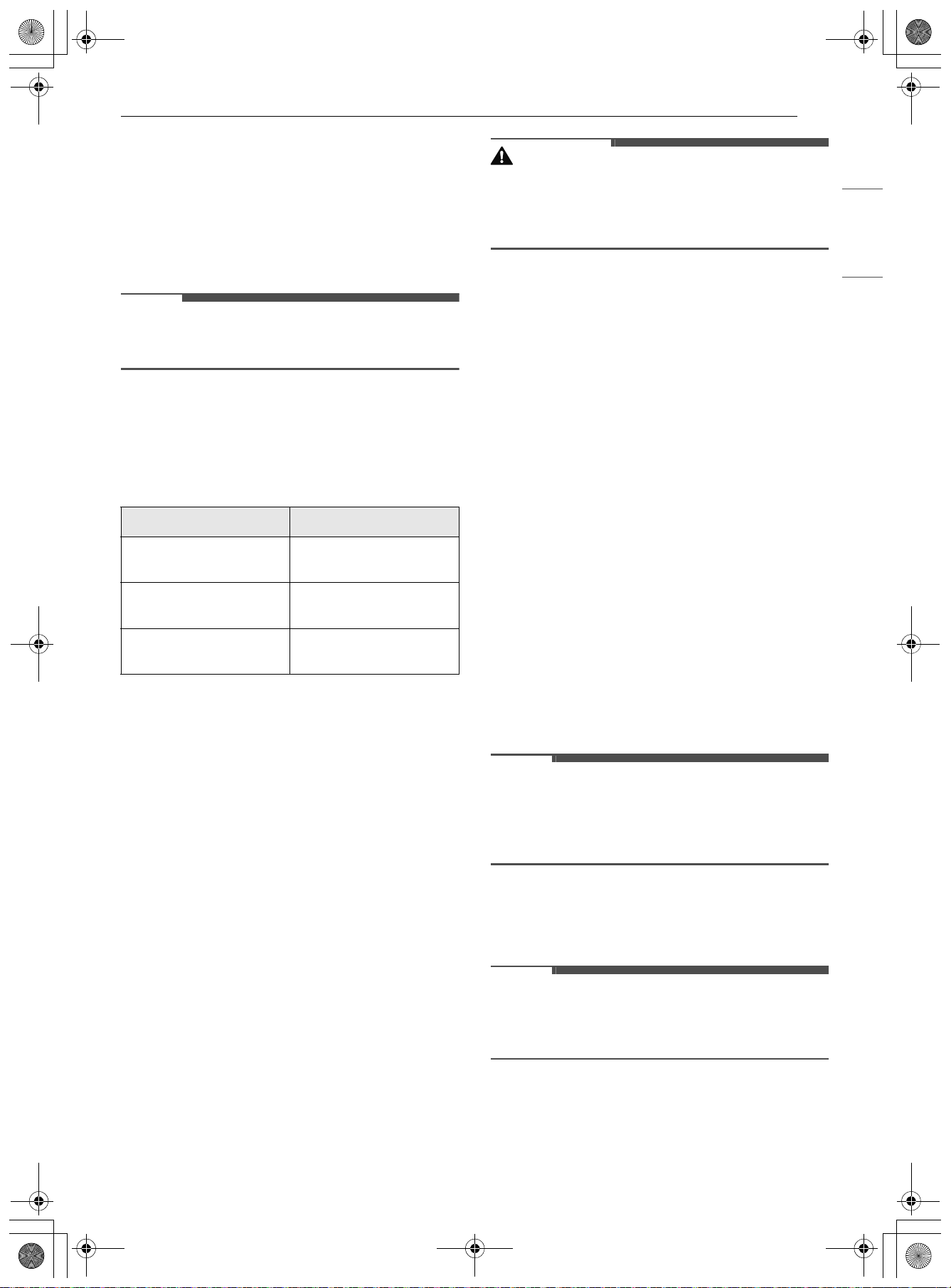
49MAINTENANCE
ENGLISH
• Common food items that can soil your oven: Pies
Case 3
• Soil pattern: Drops or spots
• Types of soils: Cream or tomato sauce
• Common food items that can soil your oven:
Casseroles
NOTE
• The Self Clean cycle can be used for soil that has
been built up over time.
Setting Self Clean
The Self Clean function has cycle times of 3, 4, or 5
hours.
Self Clean Soil Guide
1 Remove all racks and accessories from the
oven.
2 Turn the oven mode knob to select Self Clean.
The oven defaults to the recommended four-
hour Self Clean for a moderately soiled oven.
Press buttons as below to select a self clean
time from 3 to 5 hours.
• 1 : 3 hours
• 2 : 4 hours
• 3 : 5 hours
3 Press START.
4 Once the Self Clean cycle is set, the oven door
locks automatically and the lock icon
k
displays. You will not be able to open the oven
door until the oven has cooled. The lock
releases automatically when the oven has
cooled.
CAUTION
• Do not force the oven door open when the lock
icon is displayed. The oven door remains locked
until the oven temperature has cooled. Forcing
the door open will damage the door.
Setting Self Clean with a Delayed Start
1 Remove all racks and accessories from the
oven.
2 Turn the oven mode knob to select Self Clean.
The oven defaults to the recommended four-
hour self clean for a moderately soiled oven.
Press buttons as below to select a self clean
time from 3 to 5 hours.
• 1 : 3 hours
• 2 : 4 hours
• 3 : 5 hours
3 Press Start Time.
4 Set the time of day you would like the Self
Clean to start by pressing numbers.
5 Press START.
NOTE
• It may become necessary to cancel or interrupt a
Self Clean cycle due to excessive smoke or fire in
the oven. To cancel the Self Clean function, turn
the oven mode knob to the OFF position.
Removing/Assembling Lift-Off
Oven Doors
NOTE
• Parts may be changed due to product
improvement and may look different than
shown in images.
Door Care Instructions
Most oven doors contain glass that can break.
Soil Level Cycle Setting
Lightly Soiled Oven
Cavity
3-Hour Self Clean
Moderately Soiled Oven
Cavity
4-Hour Self Clean
Heavily Soiled Oven
Cavity
5-Hour Self Clean
en-us_main.book.book Page 49 Tuesday, December 24, 2024 1:36 PM
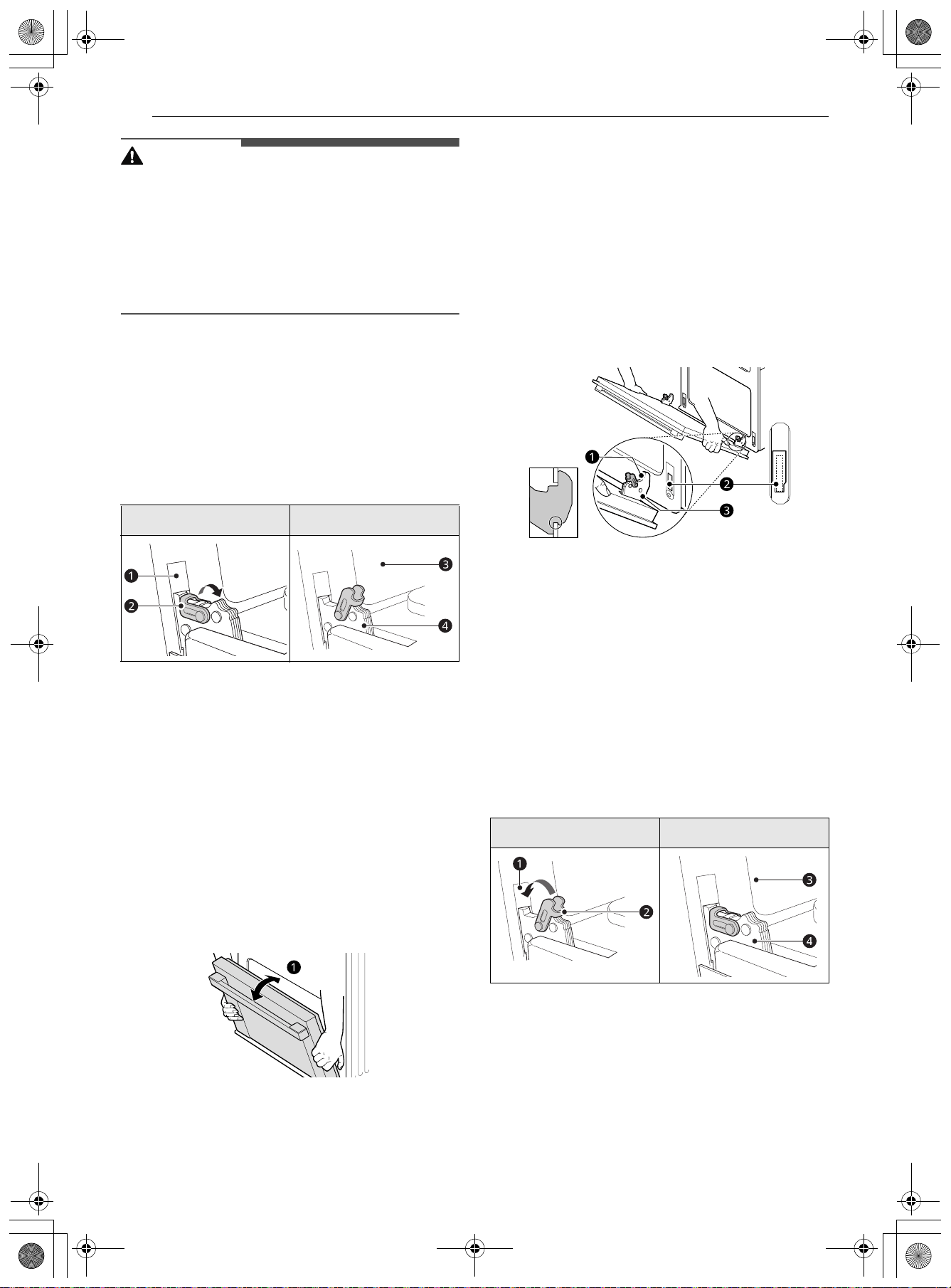
50 MAINTENANCE
CAUTION
• Do not close the oven door until all the oven
racks are fully in place.
• Do not hit the glass with pots, pans, or any other
object.
• Scratching, hitting, jarring, or stressing the glass
may weaken its structure causing an increased
risk of breakage at a later time.
Removing Doors
1 Fully open the door.
2 Lift up the hinge lock b and flip it towards the
hinge arm
d completely. Repeat on other
side.
a Slot
b Hinge Lock
c Oven Frame
d Hinge Arm
3 Firmly grasp both sides of the door at the top.
4 Partially close the door to approximately 5
degrees a. If the position is correct, the hinge
arms will move freely.
a about 5°
5 Lift and pull the door towards you until the
hinge latches are completely loosened.
Assembling Doors
1 Firmly grasp both sides of the door at the top.
2 Fully insert the hinge arms a into the slots b
until the indentations c on the hinge arms
rest on the bottom edges of the slots.
a Hinge Arm
b Bottom Edge of Slot
c Indentation
3 Slowly open the door fully. Make sure that the
hinge arms are properly engaged in the slots.
4 Lift up the hinge lock b and flip it towards the
oven c until it clicks into position. Repeat on
other side.
a Slot
b Hinge Lock
c Oven Frame
d Hinge Arm
5 Close the oven door.
Locked Position Unlocked Position
Unlocked Position Locked Position
en-us_main.book.book Page 50 Tuesday, December 24, 2024 1:36 PM
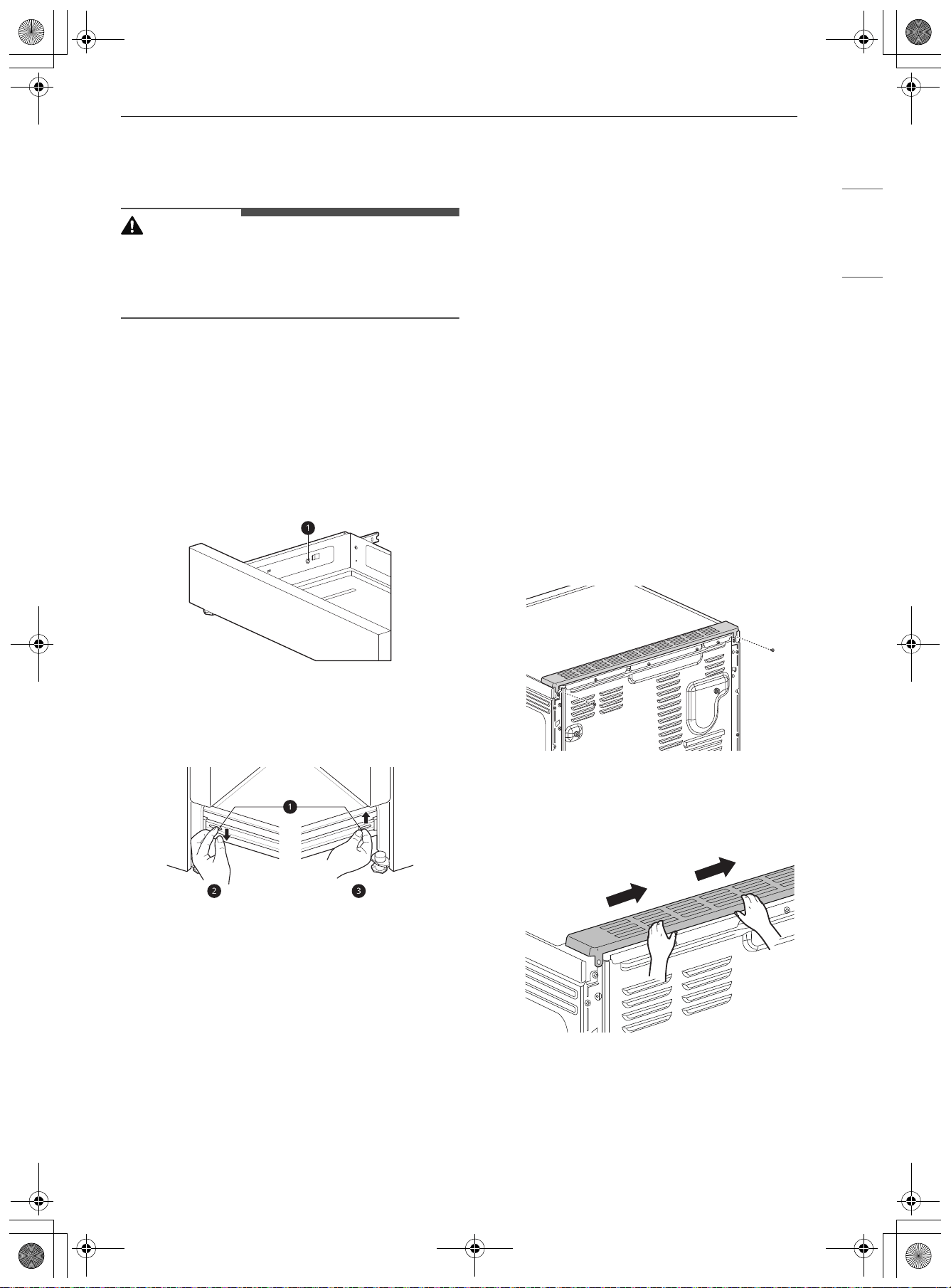
51MAINTENANCE
ENGLISH
Removing/Assembling Drawers
Removing Drawers
CAUTION
• Disconnect the electrical power to the range at
the main fuse or circuit breaker panel. Failure to
do so can result in severe personal injury, death,
or electrical shock.
Most cleaning can be done with the drawer in
place; however, the drawer may be removed if
further cleaning is needed. Use warm water to
thoroughly clean.
1 Fully open the drawer.
2 Unscrew the screw a on the side at the back
of the drawer.
3 Locate the glide lever on each side of the
drawer. Push down on the left glide lever and
pull up on the right glide lever.
a Lever
b Push down with finger
c Pull up with finger
4 Pull the drawer away from the range.
Assembling Drawers
1 Pull the bearing glides to the front of the
chassis glide.
2 Align the glide on each side of the drawer with
the glide slots on the range.
3 Push the drawer into the range until levers
click (approximately 2 inches).
4 Insert and tighten the screws on the side at
the back of the drawer.
5 Pull the drawer open again to seat the
bearing glides into position.
Removing/Assembling the Vent
Trim
Removing the Vent Trim
1 Using a screwdriver, remove the two screws
holding the vent trim in place.
2 Move the vent trim in the indicated direction
approximately 1/4".
3 Lift the vent trim.
en-us_main.book.book Page 51 Tuesday, December 24, 2024 1:36 PM
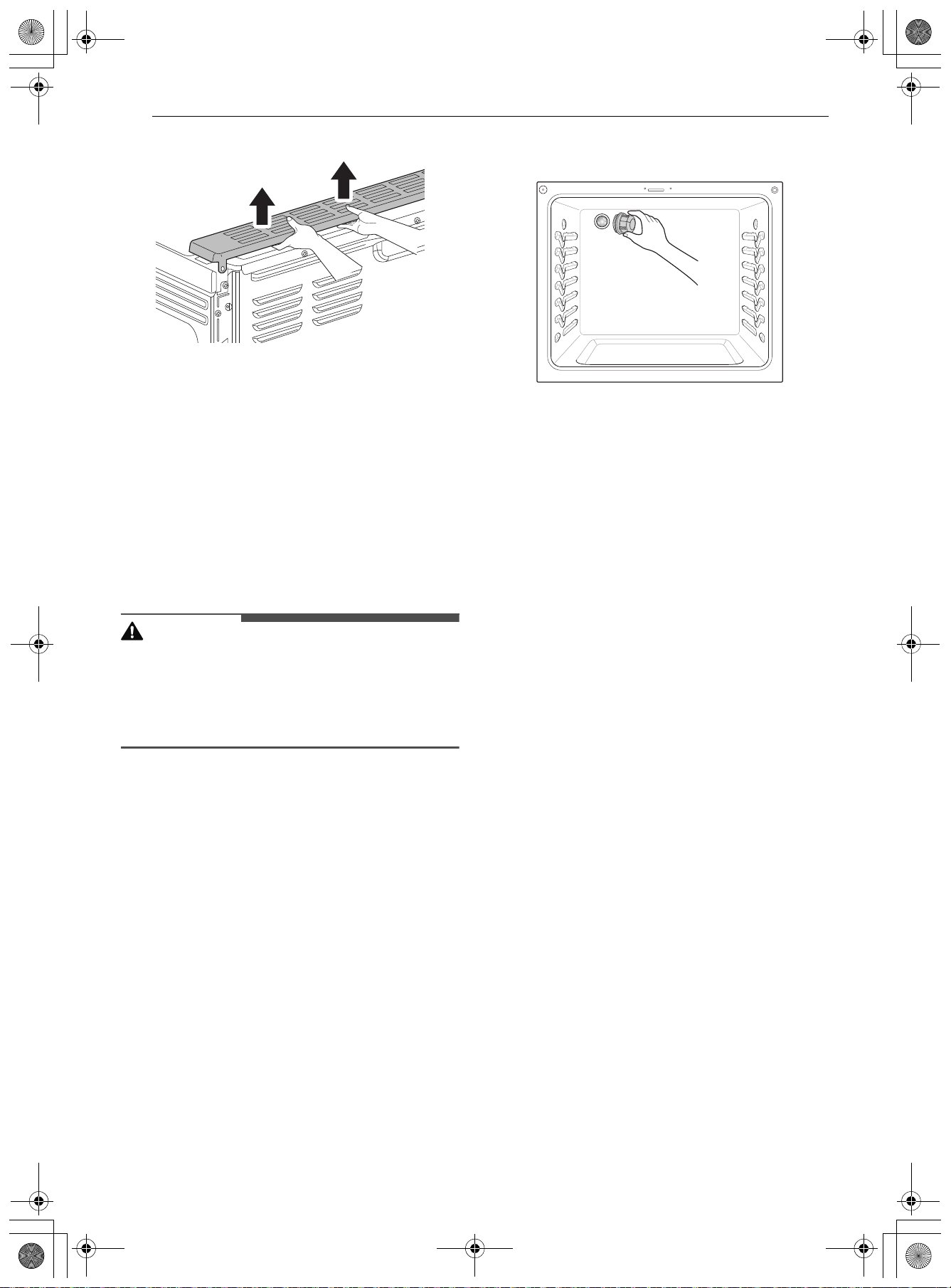
52 MAINTENANCE
Assembling the Vent Trim
Assemble the vent trim in the reverse sequence of
its removal.
Periodic Maintenance
Changing the Oven Light
The oven light is a standard 40-watt appliance
halogen lamp. It turns on when the oven door is
open. When the oven door is closed, press Light to
turn it on or off.
WARNING
• Make sure that the oven and lamp are cool.
• Disconnect the electrical power to the range at
the main fuse or circuit breaker panel. Failure to
do so can result in severe personal injury, death,
or electrical shock.
1 Unplug the range or disconnect power.
2 Turn the glass lamp cover in the back of the
oven counterclockwise to remove.
3 Remove the halogen lamp from the socket.
4 Insert the new halogen lamp.
5 Insert the glass lamp cover and turn it
clockwise.
6 Plug in the range or reconnect the power.
en-us_main.book.book Page 52 Tuesday, December 24, 2024 1:36 PM
53TROUBLESHOOTING
ENGLISH
TROUBLESHOOTING
FAQs
Frequently Asked Questions
CAUTION
• Foil may be used to wrap food in the oven or warming drawer, but do not allow the foil to come into
contact with the exposed heating/broiling elements in the oven. The foil could melt or ignite, causing
smoke, fire, or injury.
Q: What types of cookware are recommended for use with the cooktop?
A:
• The pans must have a flat bottom and straight sides.
• Only use heavy-gauge pans.
• The pan size must match the amount of food to be prepared and the size of the surface
element.
• Use tight fitting lids.
• Only use flat-bottom woks.
Q: Why do the heating elements appear to be turning ON and OFF during use of the cooktop or
oven?
A: Depending on your cooktop element setting or the temperature selected in your oven, it is normal for
the cooking elements to cycle on and off.
Q: My new oven doesn’t cook like my old one. Is there something wrong with the temperature
settings?
A: No. Your oven has been factory tested and calibrated. For the first few uses, follow your recipe times
and temperatures carefully. If you still think your new oven is too hot or too cold, you can adjust the
oven temperature yourself to meet your specific cooking needs. Refer to the Changing Oven Settings
section in this manual for easy instructions on how to adjust your thermostat.
Q: Is it normal to hear a clicking noise coming from the back of my oven when I am using it?
A: Your new range is designed to maintain a tighter control over your oven’s temperature. You may hear
your oven’s heating elements click on and off more frequently on your new oven. This is normal.
Q: Why is the time flashing?
A: This means that the product has just been plugged in, or that it has experienced a power
interruption. To clear the flashing time, touch any button and reset the clock if needed.
Q: During convection cooking the fan stops when I open the door. Is that normal?
A: Yes, this is normal. When the door is opened, the convection fan will stop until the door is closed.
Q: Can I use aluminum foil to catch drippings in my oven cavity?
A: Never use aluminum foil to line the bottom or sides of the oven or the warming drawer (on some
models). The foil will melt and stick to the bottom surface of the oven and will not be removable. Use
a foil-lined sheet pan placed on a lower oven rack to catch drippings instead. (If foil has already
melted onto the bottom of the oven, it will not interfere with the oven’s performance.)
Q: Can I use aluminum foil on the racks?
A: Do not cover racks with aluminum foil. Covering entire racks with foil restricts air flow, leading to
poor cooking results. Use a sheet pan lined with foil under fruit pies or other acidic or sugary foods to
prevent spillovers from damaging the oven finish.
en-us_main.book.book Page 53 Tuesday, December 24, 2024 1:36 PM
54 TROUBLESHOOTING
Q: Can I leave my racks in the oven when running a Self Clean cycle? (On some models)
A: No. Although it will not damage the racks, it will discolor them and may make them hard to slide in
and out during use. Remove all items from the oven before starting a Self Clean cycle.
Q: What should I do if my racks are sticky and have become hard to slide in and out?
A: Over time, the racks may become hard to slide in and out. Apply a small amount of olive oil to the
sides of the racks. This will work as a lubricant for easier gliding.
Q: What should I do for hard to remove stains on my cooktop?
A: The cooktop should be cleaned after every use to prevent permanent staining. When cooking foods
with high sugar content, such as tomato sauce, clean the stain off with a scraper while the cooktop is
still warm. Use an oven mitt when scraping to prevent burns. Refer to the MAINTENANCE section of
this owner's manual for further instruction.
Q: Why aren't the function buttons working?
A:
Make sure that the range is not in Control Lock / Lockout mode. The lock
k will show in the display if
Control Lock / Lockout is activated. To deactivate Control Lock / Lockout, refer to the Control Lock /
Lockout section. The unlock melody sounds and Loc appears in the display until the controls are
unlocked. On models with Sabbath mode, make sure that the range is not in Sabbath mode. See the
Sabbath Mode section of the manual for instructions.
Q: My range is still dirty after running the EasyClean cycle. What else should I do?
A: The EasyClean cycle only helps to loosen light soils in your oven range to assist in hand-cleaning of
your oven. It does not automatically remove all soils after the cycle. Some scrubbing of your oven
range is required after running the EasyClean cycle.
Q: I tried scrubbing my oven after running EasyClean, but some soils still remain. What can I do?
A: The EasyClean feature works best when the soils are fully soaked and submerged in water before
running the cycle and during hand-cleaning. If soils are not sufficiently soaked in water, it can
negatively affect the cleaning performance. Repeat the EasyClean process using sufficient water.
• For models with Self Clean function:
Sugar-based and certain greasy soils are especially hard to clean. If some stubborn soils
remain, use the Self Clean feature to thoroughly clean your oven.
Q: Soils on my oven walls are not coming off. How can I get the oven walls clean?
A: Soils on the side and rear walls of your oven range may be more difficult to fully soak with water. Try
repeating the EasyClean process with more than the ¼ cup (2 oz or 60 ml) of spray recommended.
Q: Will EasyClean get all of the soils and stains out completely?
A: It depends on the soil type. Sugar-based and certain grease stains are especially hard to clean. Also, if
stains are not sufficiently soaked in water, this can negatively affect cleaning performance.
• For models with Self Clean function:
If stubborn or built-up stains remain, use the Self Clean feature. Refer to the Self Clean section
of your owner's manual.
Q: Are there any tricks to getting some of the stubborn soils out?
A: Scraping the soils with a plastic scraper before and during hand-cleaning is recommended. Fully
saturating soils with water is also recommended.
• For models with Self Clean function:
Certain types of soils are harder to clean than others. For these stubborn soils, the Self Clean
cycle is recommended. Consult the Self Clean section of your owner's manual for details.
Q: Is it safe for my convection fan or heater element to get wet during EasyClean?
en-us_main.book.book Page 54 Tuesday, December 24, 2024 1:36 PM
55TROUBLESHOOTING
ENGLISH
A: Yes. The convection fan or heater element may get a little wet during cleaning. However, direct spray
onto the broil burner and heater elements is not necessary because these are self-cleaning during
regular use.
Q: Do I need to use all 1 ¼ cups (10 oz or 300 ml) of water for EasyClean?
A: Yes. It is highly recommended that 1 cup (8 oz or 240 ml) of water be sprayed or poured on the
bottom and an additional ¼ cup (2 oz or 60 ml) of water be sprayed on walls and other soiled areas to
fully saturate the soils for better cleaning performance.
Q: I see smoke coming out of my oven range’s cooktop vents during EasyClean. Is this normal?
A: This is normal. This is not smoke. It is actually water vapor (steam) from the water in the oven cavity.
As the oven heats briefly during EasyClean, the water in the cavity evaporates and escapes through
the oven vents.
Q: How often should I use EasyClean?
A: EasyClean can be performed as often as you wish. EasyClean works best when your oven is LIGHTLY
soiled from such things as LIGHT grease splatter and small drops of cheese. Please refer to the
EasyClean section in your owner's manual for more information.
Q: What is required for EasyClean?
A: A spray bottle filled with 1¼ cups (10 oz or 300 ml) of water, a plastic scraper, a non-scratch scrubbing
pad and a towel. You should not use abrasive scrubbers such as heavy-duty scouring pads or steel
wool.
Q: How can I help keep children safe around the range?
A: Children should be supervised around the range whenever it is in use, and after use until surfaces
have cooled. You can also use the Control Lock / Lockout feature to help prevent children from
accidentally turning on the cooktop or oven. The Control Lock / Lockout feature disables most control
panel buttons and the cooktop control knobs. On some models, it also locks the oven door. Consult
the Control Lock / Lockout section of your owner’s manual for details. (In models without a Self Clean
option, the Control Lock / Lockout feature locks the controls but does not lock the oven door.)
Q: Why isn't the Instaview working? (On some models only)
A: Level the range by adjusting the leveling legs with a wrench.
en-us_main.book.book Page 55 Tuesday, December 24, 2024 1:36 PM
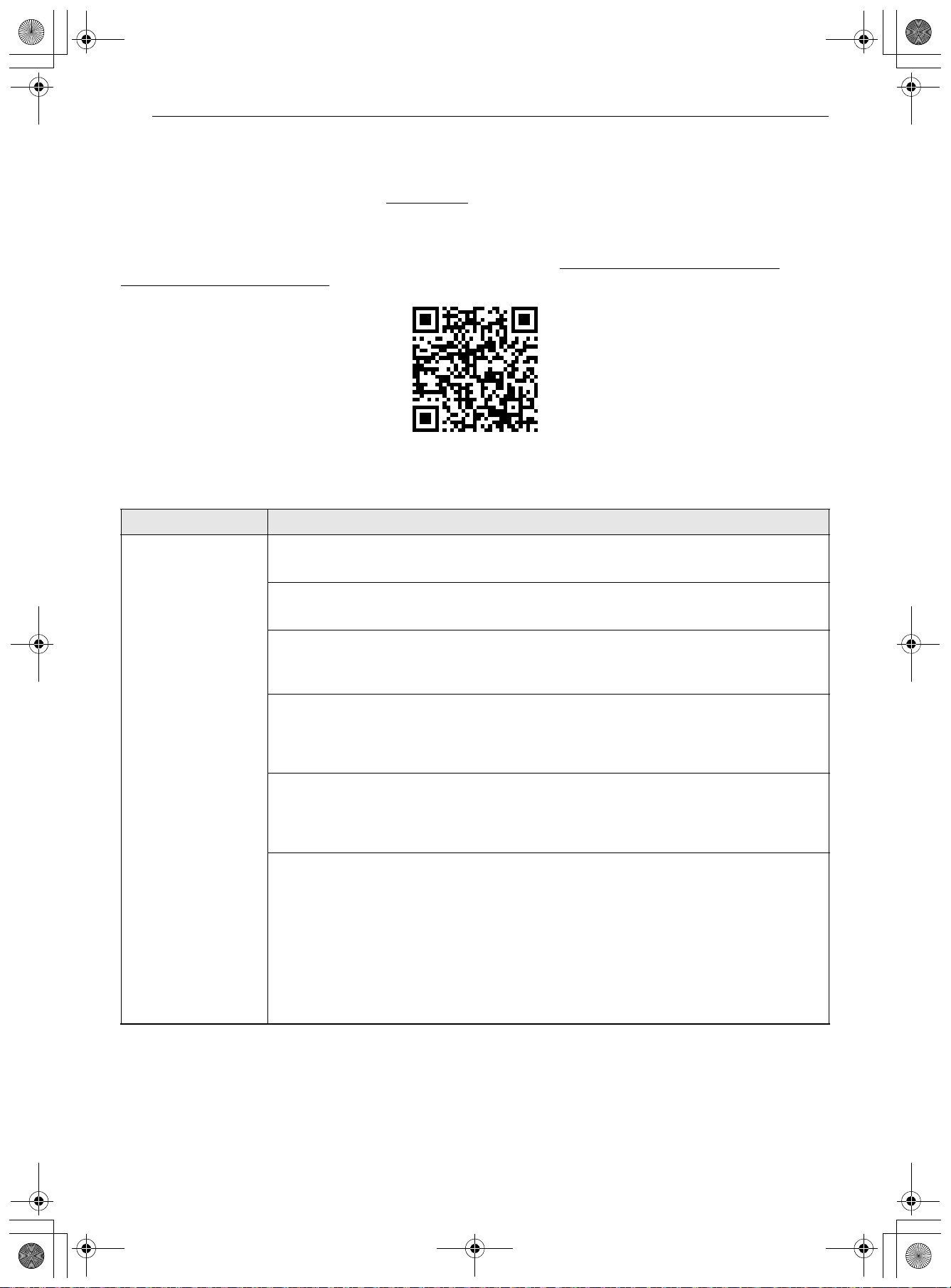
56 TROUBLESHOOTING
Before Calling for Service
Review this section before calling for service; doing so will save you both time and money.
For detailed information or videos, visit www.lg.com
for the troubleshooting page.
Additional Troubleshooting Information
The complete owner’s manual can be found on the LG website at: http://gscs-manual.lge.com/CVZ/
MFL68920573/en-us/main.html or by scanning the QR code.
Wi-Fi
Problem Possible Cause & Solution
Trouble connecting
appliance and
smartphone to Wi-Fi
network
The password for the Wi-Fi network was entered incorrectly.
• Delete your home Wi-Fi network and begin the connection process again.
Mobile data for your smartphone is turned on.
• Turn off the Mobile data on your smartphone before connecting the appliance.
The wireless network name (SSID) is set incorrectly.
• The wireless network name (SSID) should be a combination of English letters and
numbers. (Do not use special characters.)
The router frequency is not 2.4 GHz.
• Only a 2.4 GHz router frequency is supported. Set the wireless router to 2.4 GHz and
connect the appliance to the wireless router. To check the router frequency, check with
your Internet service provider or the router manufacturer.
The appliance and the router are too far apart.
• If the appliance is too far from the router, the signal may be weak and the connection may
not be configured correctly. Move the router closer to the appliance or purchase and
install a Wi-Fi repeater.
During Wi-Fi setup, the app is requesting a password to connect to the product (on
certain phones).
• Locate the network name which starts with "LG" under Settings > Networks. Note the last
part of the network name.
- If the network name looks like LGE_Appliance_XX-XX-XX, enter lge12345.
- If the network name looks like LGE_Appliance_XXXX, enter XXXX twice as your password.
For example, if the network name appears as LGE_Appliance_8b92, then you would
enter 8b928b92 as your password. In this instance, the password is case sensitive and
the last 4 characters are unique to your appliance.
en-us_main.book.book Page 56 Tuesday, December 24, 2024 1:36 PM
57LIMITED WARRANTY
ENGLISH
LIMITED WARRANTY
USA
TERMS AND CONDITIONS
ARBITRATION NOTICE: THIS LIMITED WARRANTY CONTAINS AN ARBITRATION PROVISION THAT
REQUIRES YOU AND LG ELECTRONICS (“LG”) TO RESOLVE DISPUTES BY BINDING ARBITRATION
INSTEAD OF IN COURT, UNLESS YOU CHOOSE TO OPT OUT. IN ARBITRATION, CLASS ACTIONS AND
JURY TRIALS ARE NOT PERMITTED. PLEASE SEE THE SECTION TITLED “PROCEDURE FOR RESOLVING
DISPUTES” BELOW.
Should your LG Electric Range ("Product") fail due to a defect in materials or workmanship under normal
and proper use, during the warranty period set forth below, LG will, at its option, repair or replace the
Product. This limited warranty is valid only to the original retail purchaser of the Product (“You”) and
applies only when purchased lawfully and used within the United States including U.S. Territories.
• Replacement Products and parts are warranted for the remaining portion of the original warranty period
or ninety (90) days, whichever is greater.
• Replacement Products and parts may be new, reconditioned, refurbished, or otherwise factory
remanufactured.
• Replaced Product or part(s) will be the property of LG.
• Proof of original retail purchase specifying the Product model and date of purchase is required to obtain
warranty service under this limited warranty.
EXCEPT TO THE EXTENT PROHIBITED BY APPLICABLE LAW, ANY IMPLIED WARRANTY OF
MERCHANTABILITY OR FITNESS FOR A PARTICULAR PURPOSE ON THE PRODUCT IS LIMITED IN
DURATION TO THE DURATION OF THE ABOVE LIMITED WARRANTY. UNDER NO CIRCUMSTANCES
SHALL LG OR ITS U.S. DISTRIBUTORS/DEALERS BE LIABLE FOR ANY INDIRECT, INCIDENTAL,
CONSEQUENTIAL, SPECIAL, OR PUNITIVE DAMAGES, INCLUDING, WITHOUT LIMITATION, LOST
GOODWILL, LOST REVENUES OR PROFITS, WORK STOPPAGE, IMPAIRMENT OF OTHER GOODS, COST OF
REMOVAL AND REINSTALLATION OF THE PRODUCT, LOSS OF USE, OR ANY OTHER DAMAGES WHETHER
BASED IN CONTRACT, TORT, OR OTHERWISE. LG’S TOTAL LIABILITY, IF ANY, SHALL NOT EXCEED THE
PURCHASE PRICE PAID BY YOU FOR THE PRODUCT.
SOME STATES DO NOT ALLOW THE EXCLUSION OR LIMITATION OF INCIDENTAL OR CONSEQUENTIAL
DAMAGES OR LIMITATIONS ON HOW LONG AN IMPLIED WARRANTY LASTS, SO THE ABOVE
EXCLUSIONS OR LIMITATIONS MAY NOT APPLY TO YOU. THIS LIMITED WARRANTY GIVES YOU
SPECIFIC LEGAL RIGHTS AND YOU MAY ALSO HAVE OTHER RIGHTS THAT VARY FROM STATE TO STATE.
THIS LIMITED WARRANTY DOES NOT COVER:
• Service trips to deliver, pick up, or install, educate how to operate, correct wiring, or correct
unauthorized repairs.
• Damage or failure of the Product to perform during power failures and interrupted or inadequate
electrical service.
• Damage or failure of the Product caused by leaky or broken water pipes, frozen water pipes, restricted
drain lines, inadequate or interrupted water supply or inadequate supply of air.
• Damage or failure of the Product resulting from operating the Product in a corrosive atmosphere or
contrary to the Product owner’s manual.
• Damage or failure of the Product caused by accidents, pests and vermin, lightning, wind, fire, floods, acts
of nature, or any other causes beyond the control of LG.
Warranty Period Scope of Warranty HOW SERVICE IS HANDLED
One (1) year from date of
original retail purchase
Parts and Labor (internal
/ functional parts only)
LG will provide, free of charge, all labor and in-home
service to replace defective part(s).
en-us_main.book.book Page 57 Tuesday, December 24, 2024 1:36 PM
58 LIMITED WARRANTY
• Damage or failure of the Product caused by unauthorized modification or alteration, or if the Product is
used for other than the intended purpose, or any water leakage where the Product was not properly
installed.
• Damage or failure of the Product caused by incorrect electrical current, voltage, or plumbing codes.
• Damage or failure of the Product caused by transportation, storage, and/or handling, including
scratches, dents, chips, and/or other damage to the finish of the Product, unless such damage is
reported within one (1) week of delivery.
• Damage or failure of the Product resulting from misuse, abuse, improper installation, repair, or
maintenance. Improper repair includes the use of parts not authorized by LG. Improper installation or
maintenance includes installation or maintenance contrary to the Product owner’s manual.
• Damage or failure of the Product caused by the use of parts, components, accessories, consumable
cleaning products, or any other products or services that were not authorized by LG.
• Damage or missing items to any display or open box Product.
• Refurbished Product or any Product sold “As Is”, “Where Is”, “With all Faults”, or similar disclaimer.
• Products with original serial numbers that have been removed, altered, or cannot be readily determined.
• Increases in utility costs and additional utility expenses.
• Any noises associated with normal operation.
• Products used for other than normal and proper household use (e.g., commercial or industrial use) or
contrary to the Product owner’s manual.
• Costs associated with removal and reinstallation of the Product for repairs, or the removal and
reinstallation of the Product if it is installed in an inaccessible location or not installed in accordance with
the Product Owner's manual.
• Accessories, removable components, or consumable parts (e.g. Shelves, door bins, drawers, water/air
filters, racks, light bulbs, batteries, etc., as applicable), except for internal/functional parts covered under
this limited warranty.
The cost of repair or replacement under these excluded circumstances shall be borne by You.
TO OBTAIN WARRANTY SERVICE AND ADDITIONAL INFORMATION
Call 1-800-243-0000
and select the appropriate option from the menu.
Or visit our website at http://www.lg.com
Or by mail: LG Electronics Customer Service P.O. Box 240007 Huntsville, AL 35813 ATTN: CIC
PROCEDURE FOR RESOLVING DISPUTES:
ALL DISPUTES BETWEEN YOU AND LG ARISING OUT OF OR RELATING IN ANY WAY TO THIS LIMITED
WARRANTY OR THE PRODUCT SHALL BE RESOLVED EXCLUSIVELY THROUGH BINDING ARBITRATION, AND
NOT IN A COURT OF GENERAL JURISDICTION. BINDING ARBITRATION MEANS THAT YOU AND LG ARE EACH
WAIVING THE RIGHT TO A JURY TRIAL AND TO BRING OR PARTICIPATE IN A CLASS ACTION.
Definitions. For the purposes of this section, references to “LG” mean LG Electronics U.S.A., Inc., its
parents, subsidiaries and affiliates, and each of their officers, directors, employees, agents, beneficiaries,
predecessors in interest, successors, assigns and suppliers; references to “dispute” or “claim” shall include
any dispute, claim or controversy of any kind whatsoever (whether based in contract, tort, statute,
regulation, ordinance, fraud, misrepresentation or any other legal or equitable theory) arising out of or
relating in any way to the sale, condition or performance of the product or this Limited Warranty.
Notice of Dispute. In the event you intend to commence an arbitration proceeding, you must first notify
LG in writing at least 30 days in advance of initiating the arbitration by sending a letter to LG at LG
Electronics, USA, Inc. Attn: Legal Department- Arbitration 111 Sylvan Avenue, Englewood Cliffs, NJ 07632
USA. You and LG agree to engage in good faith discussions in an attempt to amicably resolve your claim.
The notice must provide your name, address, and telephone number; identify the product that is the
subject of the claim; and describe the nature of the claim and the relief being sought. If you and LG are
unable to resolve the dispute within 30 days, either party may proceed to file a claim for arbitration.
en-us_main.book.book Page 58 Tuesday, December 24, 2024 1:36 PM
59LIMITED WARRANTY
ENGLISH
Agreement to Binding Arbitration and Class Action Waiver. Upon failure to resolve the dispute during
the 30 day period after sending written notice to LG, you and LG agree to resolve any claims between us
only by binding arbitration on an individual basis, unless you opt out as provided below. Any dispute
between you and LG shall not be combined or consolidated with a dispute involving any other person’s or
entity’s product or claim. More specifically, without limitation of the foregoing, any dispute between you
and LG shall not under any circumstances proceed as part of a class or representative action. Instead of
arbitration, either party may bring an individual action in small claims court, but that small claims court
action may not be brought on a class or representative basis.
Arbitration Rules and Procedures. To begin arbitration of a claim, either you or LG must make a written
demand for arbitration. The arbitration will be administered by the American Arbitration Association
(“AAA”) and will be conducted before a single arbitrator under the AAA’s Consumer Arbitration Rules that
are in effect at the time the arbitration is initiated (referred to as the “AAA Rules”) and under the
procedures set forth in this section. The AAA Rules are available online at www.adr.org/consumer. Send a
copy of your written demand for arbitration, as well as a copy of this provision, to the AAA in the manner
described in the AAA Rules. You must also send a copy of your written demand to LG at LG Electronics,
USA, Inc. Attn: Legal Department- Arbitration 111 Sylvan Avenue, Englewood Cliffs, NJ 07632 USA. If there
is a conflict between the AAA Rules and the rules set forth in this section, the rules set forth in this section
will govern. This arbitration provision is governed by the Federal Arbitration Act. Judgment may be entered
on the arbitrator’s award in any court of competent jurisdiction. All issues are for the arbitrator to decide,
except that issues relating to the scope and enforceability of the arbitration provision and to the
arbitrability of the dispute are for the court to decide. The arbitrator is bound by the terms of this
provision.
Governing Law. The law of the state of your residence shall govern this Limited Warranty and any
disputes between us except to the extent that such law is preempted by or inconsistent with applicable
federal law.
Fees/Costs. You do not need to pay any fee to begin an arbitration. Upon receipt of your written demand
for arbitration, LG will promptly pay all arbitration filing fees to the AAA unless you seek more than $25,000
in damages, in which case the payment of these fees will be governed by the AAA Rules. Except as
otherwise provided for herein, LG will pay all AAA filing, administration and arbitrator fees for any
arbitration initiated in accordance with the AAA Rules and this arbitration provision. If you prevail in the
arbitration, LG will pay your attorneys’ fees and expenses as long as they are reasonable, by considering
factors including, but not limited to, the purchase amount and claim amount. Notwithstanding the
foregoing, if applicable law allows for an award of reasonable attorneys’ fees and expenses, an arbitrator
can award them to the same extent that a court would. If the arbitrator finds either the substance of your
claim or the relief sought in the demand is frivolous or brought for an improper purpose (as measured by
the standards set forth in Federal Rule of Civil Procedure 11(b)), then the payment of all arbitration fees will
be governed by the AAA Rules. In such a situation, yo
u agree to reimburse LG for all monies previously
disbursed by it that are otherwise your obligation to pay under the AAA Rules. Except as otherwise
provided for, LG waives any rights it may have to seek attorneys’ fees and expenses from you if LG prevails
in the arbitration.
Hearings and Location. If your claim is for $25,000 or less, you may choose to have the arbitration
conducted solely on the basis of (1) documents submitted to the arbitrator, (2) through a telephonic
hearing, or (3) by an in-person hearing as established by the AAA Rules. If your claim exceeds $25,000, the
right to a hearing will be determined by the AAA Rules. Any in-person arbitration hearings will be held at a
location within the federal judicial district in which you reside unless we both agree to another location or
we agree to a telephonic arbitration.
Opt Out. You may opt out of this dispute resolution procedure. If you opt out, neither you nor LG can
require the other to participate in an arbitration proceeding. To opt out, you must send notice to LG no
later than 30 calendar days from the date of the first consumer purchaser’s purchase of the product by
either: (i) sending an e-mail to [email protected]
, with the subject line: “Arbitration Opt Out” or (ii) calling 1-
800-980-2973. You must include in the opt out e-mail or provide by telephone: (a) your name and address;
(b) the date on which the product was purchased; (c) the product model name or model number; and (d)
the serial number (the serial number can be found (i) on the product; or (ii) online by accessing https://
www.lg.com/us/support/repair-service/schedule-repair-continued and clicking on “Find My Model & Serial
Number”).
You may only opt out of the dispute resolution procedure in the manner described above (that is, by e-mail
or telephone); no other form of notice will be effective to opt out of this dispute resolution procedure.
en-us_main.book.book Page 59 Tuesday, December 24, 2024 1:36 PM
60 LIMITED WARRANTY
Opting out of this dispute resolution procedure will not affect the coverage of the Limited Warranty in any
way, and you will continue to enjoy the full benefits of the Limited Warranty. If you keep this product and
do not opt out, then you accept all terms and conditions of the arbitration provision described above.
en-us_main.book.book Page 60 Tuesday, December 24, 2024 1:36 PM
MANUAL DEL PROPIETARIO
ESTUFA ELÉCTRICA
ESPAÑOL
LSEL6337*E / LSEL6335*E
www.lg.com
Copyright © 2024 LG Electronics. Todos los derechos reservados
Escanee el código QR para ver el manual.
Lea el manual del propietario detenidamente previo a operar el
electrodoméstico y mantengalo al alcance para futuras referencias.
Este manual del propietario abreviado aborda la seguridad del
usuario, las precau
ciones y la información de instalación.
Para ver el manual del propietario completo, puede
1. Manual en línea: visite el sitio web de LG en: http://gscs-manual.lge.
com/Total/HQ/GatewayPage/main.html o escanee el código QR que
se encuentra en la parte superior; o
2. Manual en PDF imprimible: Visite lg.com y busque su número
de
modelo; o
3. Llame o escriba al servicio de atención al cliente según lo dispuesto
en su Garantía limitada.
bookinfo.fm Page 1 Tuesday, December 24, 2024 3:17 PM
ÍNDICE
2
4 INSTRUCCIONES IMPORTANTES
DE SEGURIDAD
4 LEA TODAS LAS INSTRUCCIONES ANTES DE
UTILIZAR
4 Mensajes de Seguridad
4 Dispositivo antivuelco
5 ADVERTENCIA
5 Instalación
5 Funcionamiento
7 Mantenimiento
7 Riesgo de incendio y materiales
inflamables
8 PRECAUCIÓN
8 Funcionamiento
10 Mantenimiento
11 DESCRIPCIÓN GENERAL DEL
PRODUCTO
11 Características del producto
11 Interior y exterior
11 Especificaciones del producto
12 Accesorios
13 INSTALACIÓN
13 Antes de la instalación
13 Descripción general de la instalación
13 Herramientas necesarias
14 Piezas
14 Desembalaje y traslado de la estufa
15 Elección de la ubicación adecuada
15 Dimensiones y Espacios
17 Electricidad
17 Suelo
17 Temperatura ambiente
18 Nivelando
18 Nivelación de la estufa
18 Conexión de electricidad
18 Requisitos eléctricos
19 Conexión del cable de alimentación/
conducto
24 Relleno trasero opcional
24 Instalación de la placa trasera
24 Dispositivo antivuelco
24 Instalación del dispositivo antivuelco
25 Prueba de funcionamiento
25 Pruebe la estufa antes de usarla
26 FUNCIONAMIENTO
26 Manual online del propietario
26 Más información en el Manual online del
propietario
27 Panel de control
27 Funciones del panel de control
28 Posiciones de las perillas
29 Luz de perilla / pantalla (Modelo
LSEL6337*E)
30 Configuración del horno
30 Cambio de configuración del horno
31 Configuración (Modo de horas,
Conversión automática a convección,
Calibración de la temperatura del horno,
Luz de alarma de precalentado, Volumen
del indicador sonoro, Fahrenheit o
Celsius, Placa de cocción en volumen de
alarma, Encender/Apagar Wi-Fi)
33 Placa de cocción
33 Uso de las hornallas de la placa de
cocción
35 Encendido de la zona de calentamiento
35 Uso del Bloqueo de Perillas
36 Horno
36 Ventilación del horno
36 Modos de cocción
40 FUNCIONES INTELIGENTES
40 Aplicación LG ThinQ
40 Funciones de la aplicación LG ThinQ
40 Instalación de la aplicación LG ThinQ y
conexión de un electrodoméstico LG
41 Instalación de la aplicación LG ThinQ
41 Actualización de características LG
42 Conexión a Wi-Fi
42 Especificaciones del módulo RF
42 Declaración de la FCC
42 Declaración sobre exposición a la
radiación de RF de la FCC
42 Software de código abierto
es-us_main.book.book Page 2 Tuesday, December 24, 2024 1:43 PM
3
43 MANTENIMIENTO
43 Limpieza
43 Interior
43 Exterior
45 Superficie de la placa de cocción
48 EasyClean
51 Self Clean (Autolimpieza)
53 Extracción y colocación de las puertas
desmontables del horno
54 Extracción y colocación de cajones
55 Extracción/montaje de la moldura de
ventilación
55 Mantenimiento periódico
55 Cambio de la luz del horno
57 SOLUCIÓN DE PROBLEMAS
57 Preguntas Frecuentes
57 Preguntas frecuentes
60 Antes de llamar al servicio técnico
60 Información adicional sobre la solución
de problemas
60 Wi-Fi
61 GARANTÍA LIMITADA
61 EE. UU.
61 TÉRMINOS Y CONDICIONES
61 ESTA GARANTÍA LIMITADA NO CUBRE LO
SIGUIENTE:
62 PROCEDIMIENTO PARA RESOLVER
DISPUTAS:
es-us_main.book.book Page 3 Tuesday, December 24, 2024 1:43 PM
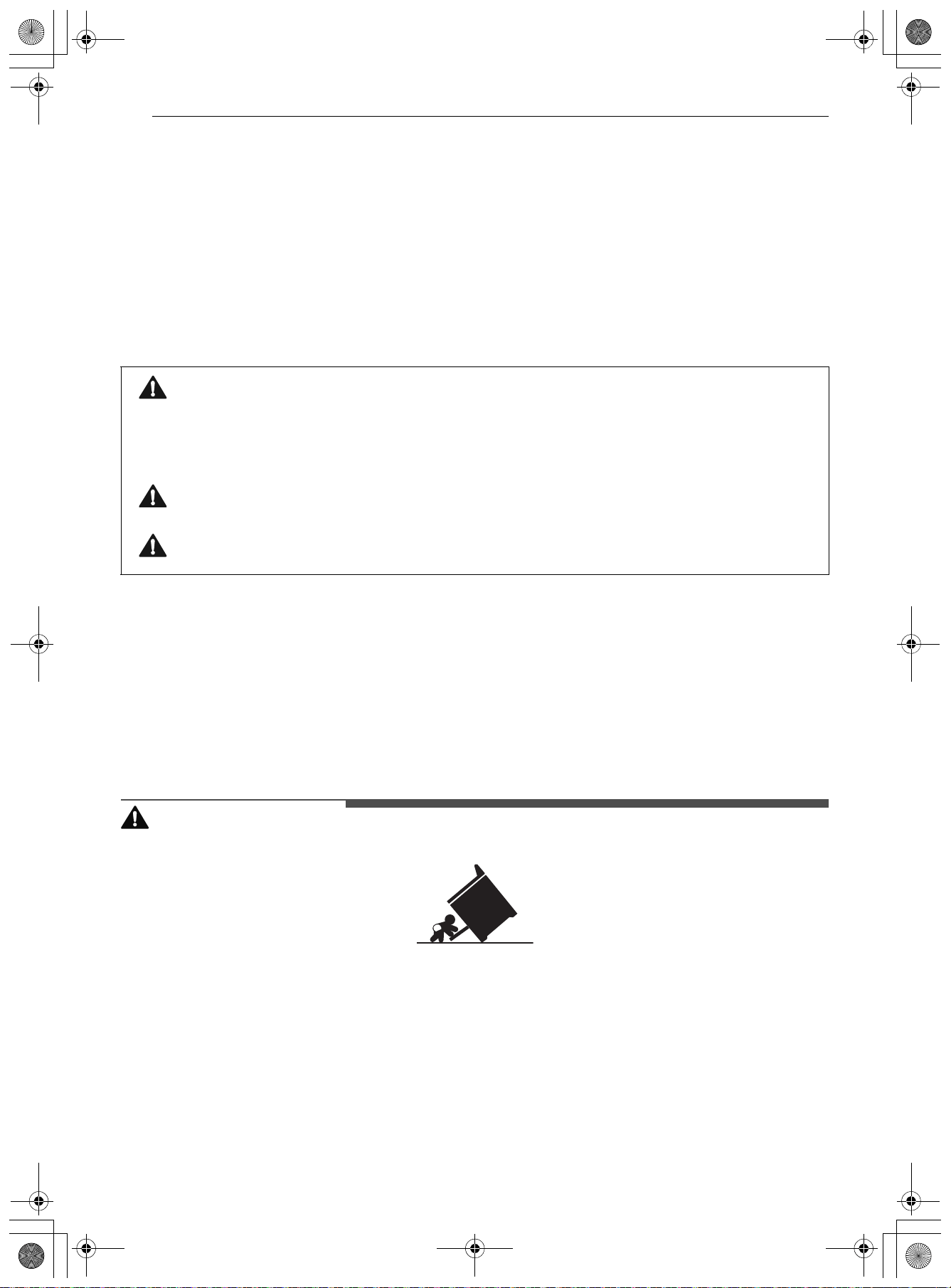
4 INSTRUCCIONES IMPORTANTES DE SEGURIDAD
INSTRUCCIONES IMPORTANTES DE SEGURIDAD
LEA TODAS LAS INSTRUCCIONES ANTES DE UTILIZAR
Descargue este manual del propietario en http://www.lg.com
Mensajes de Seguridad
Su seguridad y la de los demás son muy importantes.
Tanto en este manual como en el equipo, hemos proporcionado muchos mensajes de seguridad
importantes. Siempre debe leer y respetar todos los mensajes de seguridad.
Todos los mensajes de seguridad le indicarán cuál es el riesgo potencial, le indicarán cómo reducir la
probabilidad de lesiones y le proporcionarán información sobre qué podría suceder si no se siguen las
instrucciones.
Dispositivo antivuelco
Para reducir el riesgo de vuelco, el electrodoméstico debe estar asegurado con un dispositivo antivuelco
instalado de manera adecuada. Para comprobar si el dispositivo está instalado correctamente, verifique
que el dispositivo antivuelco esté bien sujeto, o tome el borde superior trasero de la protección posterior
de la estufa e intente inclinarla hacia adelante con cuidado. Consulte la sección de instalación para obtener
instrucciones.
ADVERTENCIA
• Un niño o adulto pueden volcar la estufa y morir.
• Coloque el dispositivo antivuelco en la estructura y/o estufa. Verifique que el dispositivo antivuelco se
haya instalado y acoplado correctamente siguiendo la guía del soporte antivuelco.
• Enganche la estufa al dispositivo antivuelco conforme a la guía del soporte antivuelco. Asegúrese que el
dispositivo antivuelco se vuelva a acoplar cuando se mueva la estufa según la guía del soporte
antivuelco.
• Vuelva a enganchar el dispositivo antivuelco si mueve la estufa. No opere la estufa sin el dispositivo
antivuelco en su lugar y enganchado.
• Consulte las instrucciones de instalación para obtener los detalles.
• Si no sigue estas instrucciones puede ocasionar la muerte o quemaduras graves en niños o adultos.
Este es el símbolo de alerta de seguridad.
Este símbolo le advierte de posibles peligros que pueden matarlos o lastimarlos a usted y a otros.
Todos los mensajes de seguridad seguirán el símbolo de alerta de seguridad y la palabra
ADVERTENCIA o PRECAUCIÓN.
Estos términos significan lo siguiente:
ADVERTENCIA
Podría sufrir lesiones graves o la muerte si no sigue las instrucciones.
PRECAUCIÓN
Puede resultar lesionado o causar daño al producto si no sigue las instrucciones.
es-us_main.book.book Page 4 Tuesday, December 24, 2024 1:43 PM
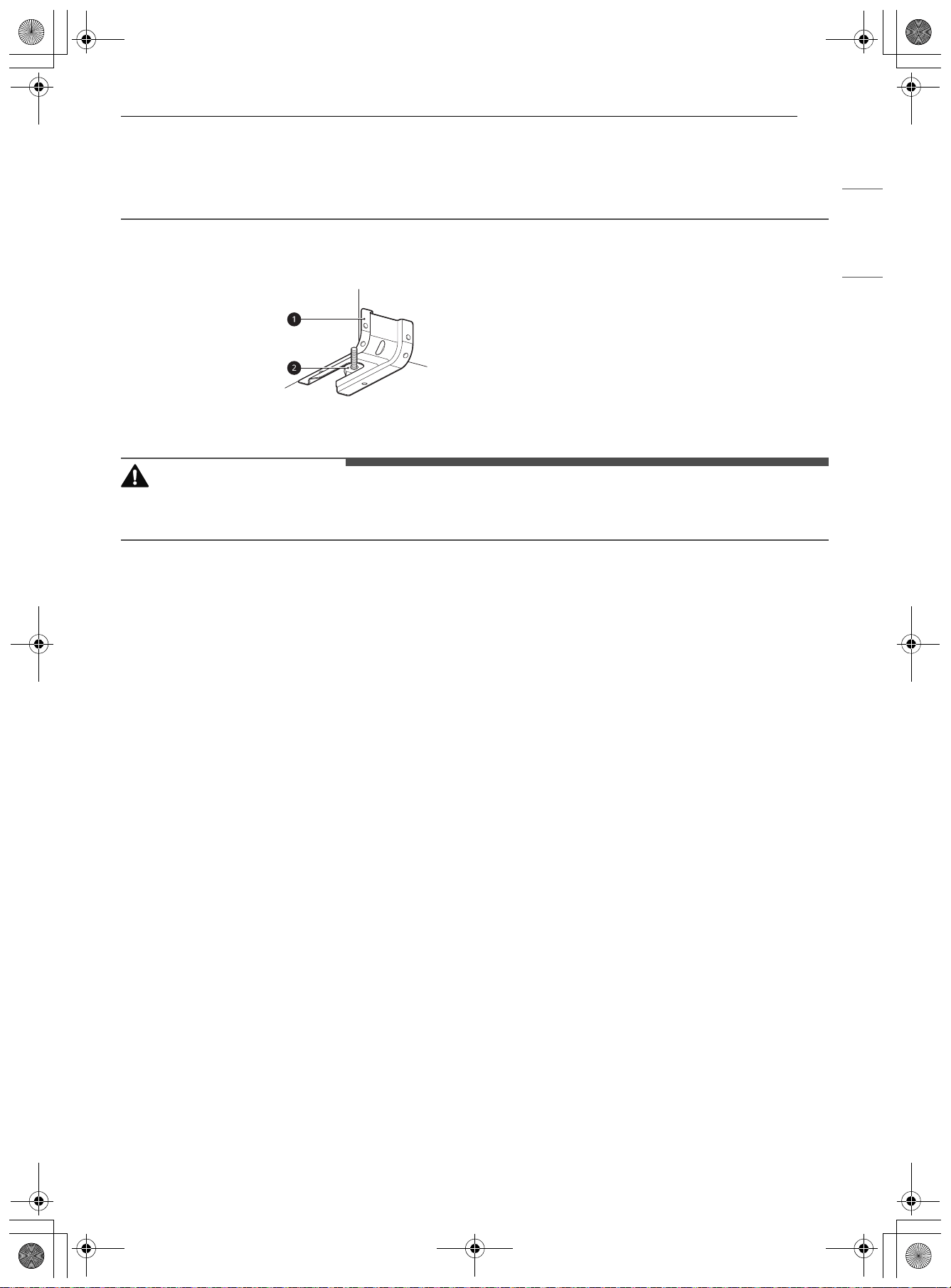
5INSTRUCCIONES IMPORTANTES DE SEGURIDAD
ESPAÑOL
• No coloque objetos grandes y pesados, como pavos enteros, sobre la puerta del horno abierta. La estufa
podría inclinarse hacia adelante y ocasionar lesiones.
• No se pare ni se siente sobre la puerta del horno. La estufa podría inclinarse y usted podría sufrir
lesiones con líquidos calientes derramados, alimentos calientes o la estufa misma.
• Nunca retire las patas del horno. La estufa no estará asegurada al soporte antivuelco si se retiran las
patas del horno.
ADVERTENCIA
ADVERTENCIA
• Para reducir el riesgo de explosiones, incendios, descargas eléctricas, quemaduras, lesiones o muerte de
las personas al usar este producto, siga las precauciones básicas, incluidas las siguientes:
Instalación
• No recubra las paredes del horno, los estantes, el fondo ni ninguna otra parte del horno con papel de
aluminio ni ningún otro material. Esto destruye la distribución de calor, produce resultados de horneado
deficientes y causa daños permanentes al interior del horno. (El papel de aluminio se fundirá en la
superficie interior del horno).
• Para eliminar el riesgo de quemaduras o incendio al estirarse sobre las llamas de las unidades de la
superficie encendidas, se debe evitar el espacio de almacenamiento del gabinete ubicado sobre las
unidades de superficie. Si se proporcionará almacenamiento en gabinetes, el riesgo se puede reducir
instalando una campana extractora sobre la estufa, que se proyecte hacia adelante 5 pulgadas como
mínimo al frente de los gabinetes.
• No utilice papel de aluminio ni ningún otro material para revestir la base del horno. La instalación
inadecuada de estos revestimientos podría causar riesgo de descarga eléctrica o incendio.
• Haga que un instalador calificado instale y conecte a tierra su estufa de manera apropiada, de acuerdo
con las instrucciones de instalación. Cualquier ajuste y servicio deben realizarlo instaladores de estufas
de calificados o técnicos de servicio.
Funcionamiento
• No deje a los niños solos o sin supervisión cerca del electrodoméstico en uso o todavía caliente. Nunca
se debe permitir que los niños se sienten o paren sobre ninguna parte del electrodoméstico, ya que
podrían lesionarse o quemarse.
• No debe permitir que los niños jueguen con los controles ni con ninguna otra parte del
electrodoméstico.
• NO TOQUE LOS ELEMENTOS CALENTADORES NI LAS SUPERFICIES INTERIORES DEL HORNO. Los
elementos calentadores podrían estar calientes, incluso cuando presenten un color oscuro. Las
superficies interiores del horno se calientan lo suficiente como para causar quemaduras. Durante y
después del uso, no toque ni permita que la vestimenta u otro material inflamable entren en contacto
con los elementos calentadores ni las superficies interiores del horno, hasta que hayan tenido tiempo
suficiente para enfriarse. Otras superficies, como los orificios de ventilación del horno y las superficies
cercanas a estos orificios, las puertas del horno y las ventanas de las puertas del horno también se
calientan y podrían causar quemaduras.
a Soporte antivuelco
b Pata de nivelación
es-us_main.book.book Page 5 Tuesday, December 24, 2024 1:43 PM
6 INSTRUCCIONES IMPORTANTES DE SEGURIDAD
• Las hornallas superficiales podrían estar calientes incluso cuando presenten un color oscuro. Las áreas
cercanas a las hornallas superficiales podrían calentarse lo suficiente como para causar quemaduras.
Durante y después de su uso, NO TOQUE LAS HORNALLAS SUPERFICIALES NI LAS ÁREAS CERCANAS ni
permita que la vestimenta u otro material inflamable entren en contacto con las hornallas o las
superficies cercanas hasta que hayan tenido tiempo suficiente para enfriarse. Esto incluye la placa de
cocción y el área sobre la puerta del horno.
• Abra la puerta del horno con cuidado. El aire caliente y el vapor que salen del horno pueden causar
quemaduras en las manos, el rostro y los ojos. Permita que el aire caliente o el vapor salgan del horno
antes de sacar o colocar nuevamente la comida en el horno.
• No utilice plástico para cubrir los alimentos. Utilice únicamente papel de aluminio o tapas seguras para
horno.
• Nunca intente secar una mascota en el horno.
• Nunca utilice su electrodoméstico para calefaccionar el ambiente.
• Utilice siempre agarraderas o guantes para horno cuando retire alimentos del horno o del elemento de
la superficie. Los utensilios de cocina estarán calientes. Utilice solo agarraderas secas. Las agarraderas
húmedas o mojadas sobre superficies calientes podrían producir quemaduras por vapor. No permita
que la agarradera toque los elementos calentadores. No utilice una toalla u otra tela gruesa para retirar
alimentos.
• No caliente recipientes cerrados de alimentos. La presión puede causar una explosión que podría
generar lesiones.
• Asegúrese de retirar todos los materiales del embalaje antes de la puesta en funcionamiento. Mantenga
el plástico, telas, papel y otros materiales inflamables lejos de las piezas del electrodoméstico que se
podrían calentar.
• No permita que el papel de aluminio ni la sonda de temperatura entren en contacto con las hornallas.
• No toque la superficie caliente entre la parte inferior de la puerta del horno y la parte superior del cajón,
en el frente del horno, mientras está en funcionamiento. La superficie se calienta y puede causar
quemaduras y otras lesiones.
• No toque los estantes del horno mientras están calientes.
• Si se debe mover un estante mientras el horno está caliente, evite que la agarradera toque el quemador
del horno.
• Tire del estante del horno hasta llegar a la posición de detención y bloqueo al cargar, y descargar
alimentos del horno. Esto ayuda a prevenir quemaduras causadas al tocar superficies calientes de la
puerta y las paredes del horno.
• No utilice el horno si el quemador desarrolla un punto de brillo durante el uso o si muestra otros signos
de daño. Un punto de brillo indica que el quemador podría fallar y representar un peligro potencial de
quemadura, incendio o descarga eléctrica. Apague el horno de inmediato y solicite que un técnico
calificado reemplace el quemador.
• Cuando el horno está en funcionamiento, la superficie superior de la cavidad del cajón se calienta y
puede causar quemaduras. Nunca deje a los niños sin supervisión cerca del horno o de la placa de
cocción.
• No ponga la mano dentro del cajón mientras el horno está en funcionamiento.
• No cocine sobre una placa de cocción dañada. Si la superficie de cocción está dañada, las soluciones de
limpieza y todo lo que se derrame pueden penetrar en la placa de cocción con daños y causar riesgo de
descarga eléctrica. Comuníquese con un técnico calificado inmediatamente.
• No coloque ni almacene artículos que puedan derretirse o prenderse fuego sobre la placa de cocción de
vidrio, incluso cuando no se esté utilizando.
• Nunca deje los utensilios de cocina caliente cerca del panel de control, ya que el calor podría dañar el
panel de control.
• Gire las manijas de los utensilios de cocina hacia adentro para que no se extiendan sobre las unidades
de superficie adyacentes. Esto reduce el riesgo de quemaduras, ignición de materiales inflamables y
derrames debido al contacto no intencional con los utensilios de cocina.
• Algunos limpiadores pueden producir vapores peligrosos si se aplican sobre una superficie caliente.
es-us_main.book.book Page 6 Tuesday, December 24, 2024 1:43 PM
7INSTRUCCIONES IMPORTANTES DE SEGURIDAD
ESPAÑOL
• Coloque siempre la olla en el centro de la unidad de la superficie en la que está cocinando. Nunca deje
las unidades de la superficie de cocción desatendidas a temperaturas altas. El contacto adecuado del
utensilio de cocina con el quemador también mejorará la eficacia del artefacto. Los derrames provocan
humo y derrames grasosos que podrían incendiarse.
• Limpie la estufa con precaución. No use esponjas o paños para limpiar derrames en un área de cocción
caliente. Utilice un raspador de metal adecuado. Si usa una esponja o un paño húmedo para limpiar los
derrames en un área de cocción caliente se pueden provocar quemaduras por vapor. Algunos
limpiadores pueden producir vapores nocivos si se aplican sobre una superficie caliente.
• Mantenga el conducto de ventilación del horno sin obstrucciones. Las áreas cercanas a la ventilación
podrían calentarse durante el funcionamiento y causar quemaduras. No bloquee la abertura de
ventilación. Evite colocar plásticos cerca de la ventilación, ya que el calor podría deformar o derretir el
plástico.
Mantenimiento
• No permita que los niños se metan dentro del horno.
• Deje que los utensilios calientes se enfríen en un lugar seguro, fuera del alcance de los niños.
• Si el vidrio de la puerta, la vitrocerámica de la placa de cocción, la superficie o la resistencia del horno
están dañados, deje de usar la estufa y solicite servicio técnico.
• No permita que nadie se suba, pare o cuelgue de la puerta, del cajón de almacenamiento ni de la placa
de cocción. Podrían causar daños a la estufa e incluso hacerla caer, lo que generaría lesiones personales
graves.
• Siempre desconecte la energía del electrodoméstico antes de que se efectúen tareas de mantenimiento.
• Antes de reemplazar la luz del horno, desconecte la energía eléctrica del horno desde el fusible principal
o el panel disyuntor. Si no lo hace, podría causar lesiones graves, descargas eléctricas o la muerte.
• Nunca derrame agua fría sobre el horno caliente para limpiarlo. Si lo hace, podría provocar el mal
funcionamiento del horno.
Riesgo de incendio y materiales inflamables
• No almacene ni utilice material inflamable en el horno ni cerca de la placa de cocción. Los materiales
inflamables incluyen papel, plástico, agarraderas, telas, recubrimientos para paredes, cortinas y gasolina
u otros vapores inflamables y líquidos como grasa o aceite de cocina. Estos materiales pueden
prenderse fuego cuando el horno y la placa de cocción están en uso.
• Tenga sumo cuidado al mover o desechar grasa caliente.
• Use vestimenta adecuada. No use prendas holgadas o que cuelguen, ya que podrían prenderse fuego en
contacto con superficies calientes y causar quemaduras graves.
• No utilice el horno para secar ropa. Solo use el horno para el propósito diseñado.
• Si posee gabinetes de almacenamiento directamente sobre la superficie de cocción, use solo para
guardar los objetos que use con poca frecuencia y que puedan almacenarse de manera segura en un
lugar expuesto al calor. Las altas temperaturas pueden ser peligrosas para objetos volátiles como
líquidos inflamables, limpiadores o aerosoles.
• No utilice agua para apagar incendios provocados por grasa. Si se produce un incendio en el horno,
mantenga la puerta del horno cerrada y apague el horno. Si el fuego continúa, arroje bicarbonato de
sodio sobre el fuego o utilice un extinguidor. No arroje agua ni harina sobre el fuego. La harina podría
ser explosiva y el agua podría hacer que un incendio causado por grasa se propague y genere lesiones
personales.
es-us_main.book.book Page 7 Tuesday, December 24, 2024 1:43 PM
8 INSTRUCCIONES IMPORTANTES DE SEGURIDAD
PRECAUCIÓN
PRECAUCIÓN
• Para reducir el riesgo de lesiones leves a personas, mal funcionamiento o daño al producto o a la
propiedad al usar este producto, siga las precauciones básicas, incluidas las siguientes:
Funcionamiento
• Siempre caliente la grasa lentamente y vigile mientras aumenta la temperatura.
• Si freirá una combinación de aceites y grasas, mézclelos antes de calentarlos.
• Si es posible, utilice un termómetro para frituras a fin de evitar que la grasa se caliente por encima del
punto de humeo.
• Utilice la menor cantidad posible de grasa para rehogados o frituras profundas efectivos. Llenar la
sartén con demasiada grasa podría causar derrames al agregar los alimentos.
• Las partes accesibles podrían calentarse cuando se utiliza la asadera.
• No coloque alimentos ni utensilios de cocina en el fondo de la cavidad del horno. Si lo hace podría causar
daños permanentes al acabado de la base del horno.
• Al usar bolsas para hornear o asar en el horno, siga las instrucciones del fabricante.
• Para evitar enfermedades transmitidas por los alimentos, cocine bien las carnes rojas y aves. El USDA ha
indicado que las siguientes constituyen temperaturas internas mínimas de seguridad para el consumo:
- Carne molida de vaca: 160 °F
- Aves: 165 °F
- Carne de res, ternera, cerdo o cordero: 145 °F
- Pescado/mariscos: 145 °F
• Se puede utilizar papel de aluminio para envolver los alimentos dentro del horno o el cajón de
calentamiento, pero no permita que el papel de aluminio entre en contacto con los elementos
calentadores o asaderas del horno expuestos. El papel de aluminio podría derretirse o prenderse fuego,
lo que ocasionaría humo, incendio o lesiones.
• Tenga cuidado con las funciones de Cocción programada retrasada. Utilice el temporizador automático
cuando cocine carnes curadas o congeladas y la mayoría de las frutas y verduras. Los alimentos que se
pueden echar a perder fácilmente, como la leche, los huevos, el pescado, la carne o las aves, deben
enfriarse primero en el refrigerador. Incluso cuando estén fríos, no deben permanecer en el horno
durante más de 1 hora antes de que comience la cocción, y deben retirarse inmediatamente cuando
finalice la cocción. Comer alimentos en mal estado puede provocar enfermedades por intoxicación
alimentaria.
• No utilice la superficie de la placa de cocción de vidrio como tabla de cortar.
• Elija el tamaño de quemador adecuado. Para ollas y sartenes más pequeñas, use los elementos
calentadores más pequeños. Para ollas y sartenes más grandes, use los elementos calentadores más
grandes. Seleccione ollas que tengan fondos planos lo suficientemente grandes como para cubrir los
elementos calentadores. El uso de ollas de tamaño insuficiente expone una parte del elemento
calentador al contacto directo y puede provocar que se quemen las prendas de vestir.
• Utensilios de cocina vidriados. Solo ciertos tipos de vidrio, vitrocerámica, cerámica, loza u otros
utensilios vidriados son adecuados para usarse sobre la estufa sin romperse debido al cambio repentino
de temperatura.
• Nunca cocine directamente sobre el vidrio. Siempre utilice utensilios de cocina.
• Siempre apague las unidades de superficie antes de quitar la batería de cocina.
• Limpie inmediatamente los derrames en el área de cocción para evitar una tarea de limpieza ardua más
adelante.
• No encienda las unidades de la superficie antes de colocar la batería de cocina.
es-us_main.book.book Page 8 Tuesday, December 24, 2024 1:43 PM
9INSTRUCCIONES IMPORTANTES DE SEGURIDAD
ESPAÑOL
• No almacene artículos pesados sobre la superficie de la placa de cocción que puedan caerse y dañarla.
• No coloque papel de aluminio o artículos de plástico como saleros y pimenteros, portacucharas o
envoltorios de plástico o cualquier otro material sobre la estufa cuando esté en uso.
• No utilice almohadillas de lana de acero, esponjas limpiadoras ni limpiadores abrasivos. Pueden rayar la
superficie.
• PELIGRO DE VENENO ALIMENTARIO: Las bacterias pueden crecer en los alimentos con temperaturas
inferiores a 140 °F.
- Siempre empiece con comida caliente. No use la configuración de calentamiento para calentar
alimentos fríos.
- No utilice la configuración de calentamiento durante más de 2 horas.
• Los bordes de la ventilación de la estufa son filosos. Para evitar sufrir lesiones, use guantes cuando
limpie la estufa.
• Reemplace los estantes del horno antes de encender el horno para evitar quemaduras.
• No cubra los estantes con papel de aluminio o cualquier otro material, ni coloque nada sobre la parte
inferior del horno. Si lo hace, podría generar un proceso de horneado deficiente y dañar la base del
horno.
• Acomode los estantes del horno solo cuando el horno esté frío.
• No golpee el panel de la puerta de vidrio con una fuerza desmedida. No se debe golpear el panel de la
puerta de vidrio con objetos duros, como utensilios de cocina o botellas de vidrio. El vidrio podría
romperse y provocar riesgo de lesiones personales.
• No use una asadera sin rejilla.
• No cubra la rejilla con papel de aluminio.
• Coloque los alimentos (con la grasa hacia arriba) en la rejilla.
• No utilice una asadera sin rejilla. El aceite puede provocar un incendio causado por grasa.
• No cubra la rejilla ni la asadera con papel de aluminio. Si lo hace, se prenderá fuego.
• Siempre use una asadera con rejilla para drenar el exceso de grasa. Esto ayuda a reducir las
salpicaduras, el humo y las llamaradas ocasionales.
• Cuando use su asador, la temperatura dentro del horno será extremadamente elevada. Tenga cuidado
de evitar posibles quemaduras por los siguientes motivos:
- Mantener la puerta cerrada al asar
- Siempre use guantes de cocina al insertar o quitar alimentos
• Nunca cubra ranuras, orificios o pasajes en la base del horno ni cubra todos los estantes con materiales
como papel de aluminio. Si lo hace, bloqueará el flujo de aire a través del horno y puede provocar una
intoxicación por monóxido de carbono. El papel de aluminio también puede atrapar el calor y provocar
riesgo de incendio o un rendimiento deficiente del horno.
• Limpie los filtros de grasa de la campana extractora con regularidad.
• Cuando tenga comida en el fuego debajo de la campana, encienda el extractor.
• Utilice siempre un guante para horno al retirar la sonda de temperatura. No toque el asador. Si no se
cumple con esta advertencia, se pueden producir lesiones personales graves.
• Para evitar daños en la sonda para carne, no use pinzas para tirar de la sonda al retirarla.
• No guarde la sonda para carne dentro del horno.
• No tire del cable para quitar la sonda. Al insertar o retirar la sonda, sostenga el cabezal de la sonda, no el
cable.
• No use la pala como utensilio de cocina en el horno.
• La piedra para pizza se calienta mucho y retiene el calor durante mucho tiempo. Déjela enfriar en el
horno antes de manipularla.
• Para evitar quemaduras, use guantes para horno cuando mueva la piedra para pizza o use la piedra para
pizza y la pala.
es-us_main.book.book Page 9 Tuesday, December 24, 2024 1:43 PM
10 INSTRUCCIONES IMPORTANTES DE SEGURIDAD
GUARDE ESTAS INSTRUCCIONES
• No vierta agua sobre una piedra para pizza caliente ni someta la piedra a golpes fuertes. La piedra
podría romperse y provocar lesiones.
• No use limpiadores fuertes ni almohadillas abrasivas para limpiar la piedra y la pala para pizza. Podrían
dañar la superficie o el revestimiento.
• Use solo agua para limpiar la piedra y la pala pizza.
Mantenimiento
• No guarde objetos de interés para los niños en los gabinetes que se encuentran arriba de la estufa o
sobre la protección trasera de la estufa; si los niños suben a la estufa para alcanzar algo que buscan,
podrían sufrir lesiones graves.
• No repare ni reemplace ninguna pieza del electrodoméstico a menos que así se recomiende
específicamente en el manual. Un técnico calificado debe estar a cargo de todas las demás tareas de
mantenimiento.
• No utilice limpiadores ásperos, abrasivos ni espátulas de metal para limpiar el vidrio de la puerta del
horno, ya que podrían rayar la superficie. Los arañazos podrían hacer que el vidrio se quiebre.
• Asegúrese de que las luces del horno estén frías antes de limpiar.
• No limpie las juntas de la puerta del horno. Las juntas de la puerta del horno son esenciales para lograr
un buen sellado. No debe frotar, dañar ni mover la junta.
• Limpie con el ciclo de autolimpieza solo las partes indicadas en este manual. Antes de realizar la
autolimpieza del horno, retire la asadera, todos los estantes del horno, la sonda para carne y cualquier
otro utensilio de cocina, utensilio o alimento del horno.
es-us_main.book.book Page 10 Tuesday, December 24, 2024 1:43 PM
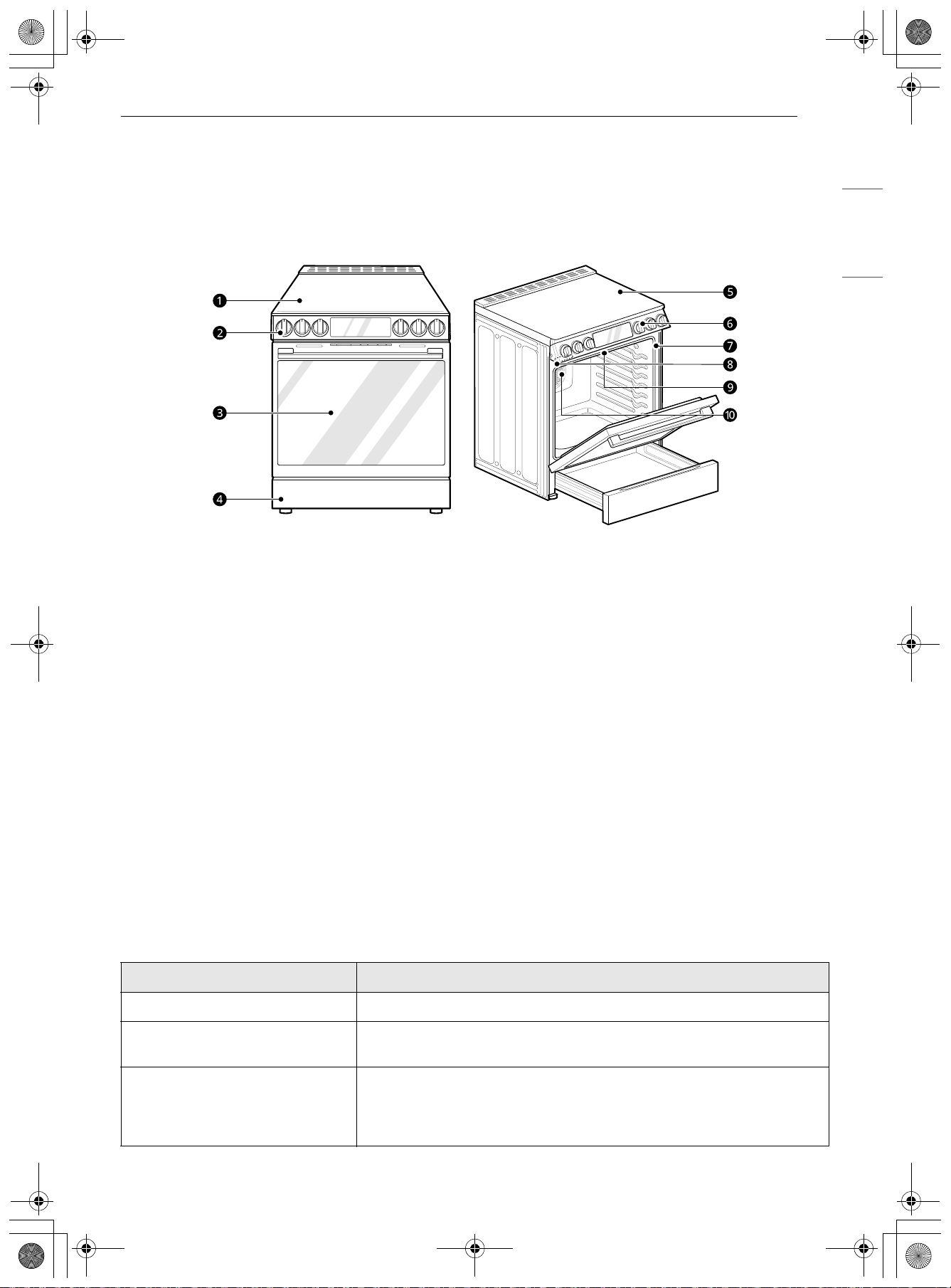
11DESCRIPCIÓN GENERAL DEL PRODUCTO
ESPAÑOL
DESCRIPCIÓN GENERAL DEL PRODUCTO
Características del producto
Interior y exterior
a Placa de cocción
b Controlador de la placa de cocción
c Puerta del horno
d Cajón de almacenamiento
e Placa de cocción de vitrocerámica
f Perilla de modo del horno
g Junta
h Placa con el número de serie y modelo
i Calentador de asar
j Calentador de convección
Especificaciones del producto
La apariencia y las especificaciones detalladas en este manual podrían variar debido a mejoras constantes
en el producto.
Modelos de estufas con horno LSEL6337*E, LSEL6335*E
Descripción Estufa con horno eléctrica empotrable
Requisitos eléctricos LSEL6337*E: 13.6 kW 120/240 VCA o 10.2 kW 120/208 VCA
LSEL6335*E : 13.0 kW 120/240 VCA o 9.8 kW 120/208 VCA
Dimensiones exteriores 29 7/8" (ancho) x 36 1/2" (alto) x 26 7/8" (profundidad) (Profundidad con
la puerta cerrada)
75.9 cm (Ancho) x 92.8 cm (Alto) x 68.3 cm (Profundidad) (Profundidad
con la puerta cerrada)
es-us_main.book.book Page 11 Tuesday, December 24, 2024 1:43 PM
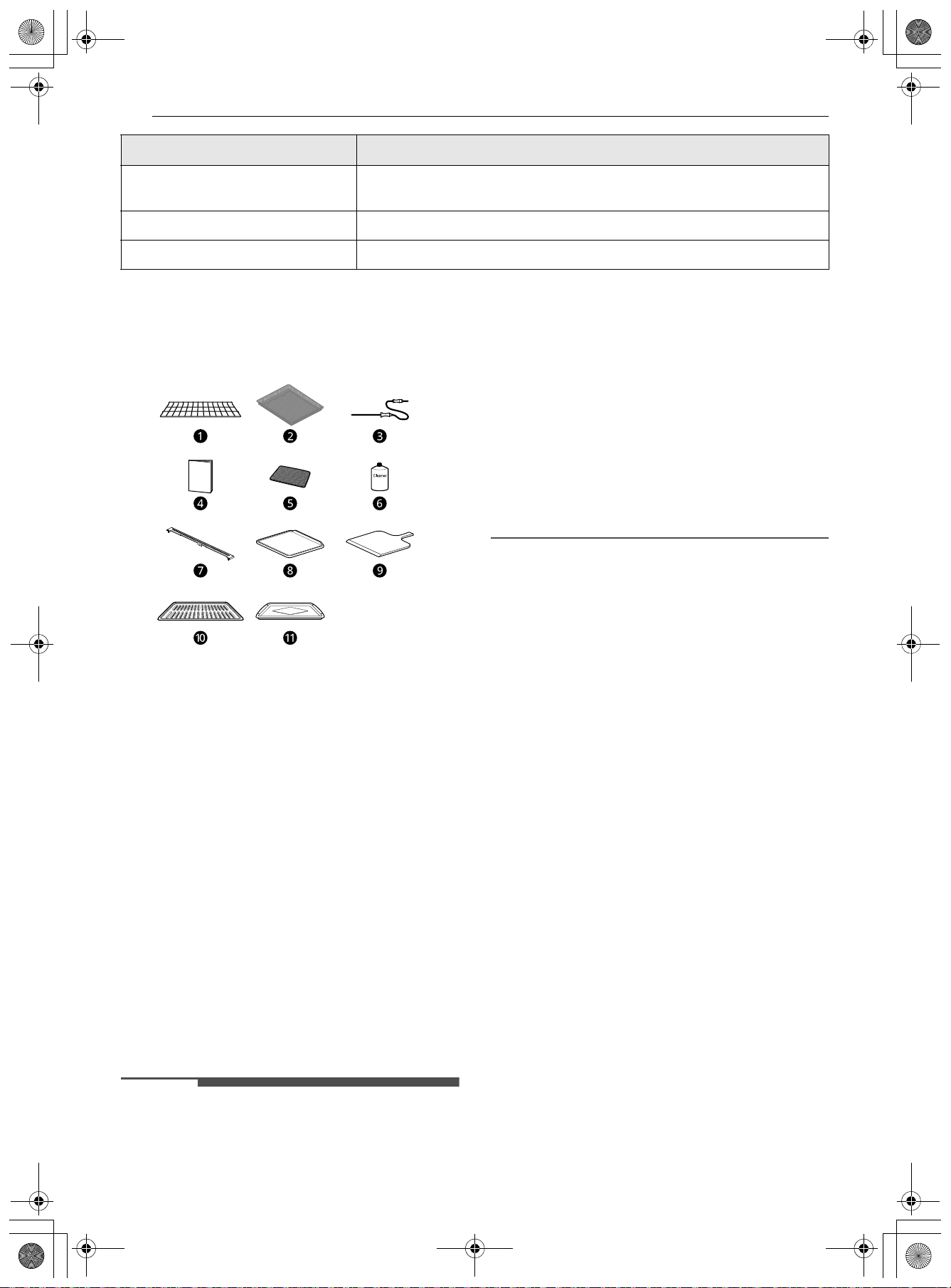
12 DESCRIPCIÓN GENERAL DEL PRODUCTO
Accesorios
Accesorios incluidos
a Estante resistente (2 c/u)
b Estante de freír con aire (1 c/u)
c Sonda para carne (1 c/u)
• Solo para el modelo LSEL6337*E
d Manual del propietario (1 c/u)
e Esponja de limpieza que no raya (1 c/u)
f Limpiador para placas de cocción (1 c/u)
g Placa trasera (1 c/u)
h Piedra para pizza (1 c/u)
• Solo para el modelo LSEL6337*E
i Pala (1 c/u)
• Solo para el modelo LSEL6337*E
j Rejilla (1 c/u)
k Asadera (1 c/u)
NOTA
• Comuníquese con el Servicio de atención al
cliente de LG al 1-800-243-0000 (1-888-542-2623
en Canadá) si le falta algún accesorio.
• Para su seguridad y una mayor duración del
producto, utilice únicamente componentes
autorizados.
• El fabricante no es responsable del mal
funcionamiento del producto ni de accidentes
causados por el uso de componentes o piezas no
autorizados y comprados por separado.
• Las ilustraciones en esta guía pueden diferir de
los componentes y accesorios reales, los cuales
están sujetos a cambios sin previo aviso por
parte del fabricante a fin de introducir mejoras
en el producto.
Altura hasta la superficie de
cocción
36 1/8" (91.6 cm)
Peso neto 164 lb (74.4 kg)
Capacidad total 6.3 pies cúbicos
Modelos de estufas con horno LSEL6337*E, LSEL6335*E
es-us_main.book.book Page 12 Tuesday, December 24, 2024 1:43 PM
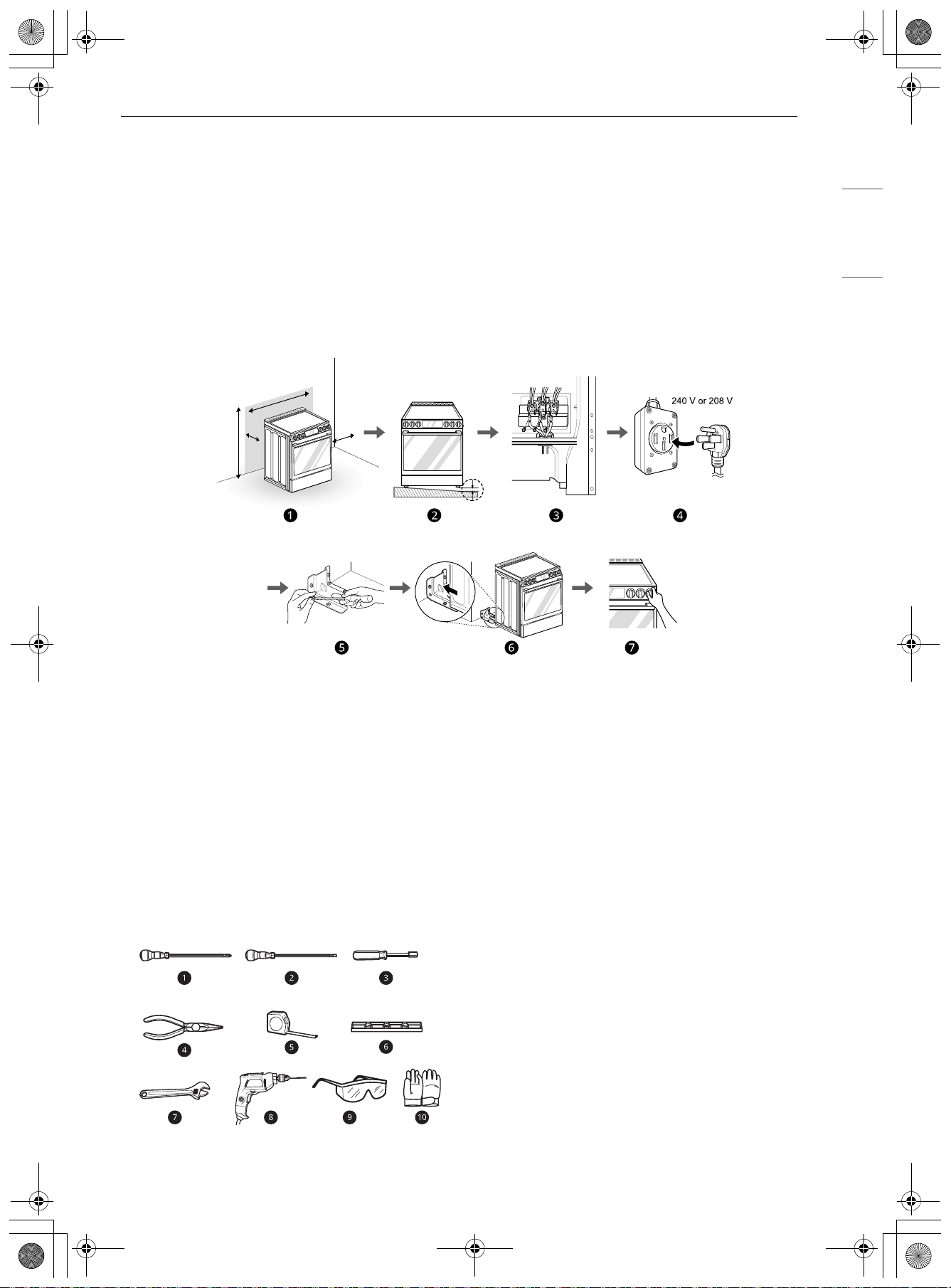
13INSTALACIÓN
ESPAÑOL
INSTALACIÓN
Antes de la instalación
Descripción general de la instalación
Lea las siguientes instrucciones de instalación inmediatamente después de adquirir este producto o
transportarlo a otra ubicación.
Las ilustraciones en esta guía pueden diferir de los componentes y accesorios reales, los cuales están
sujetos a cambios sin previo aviso por parte del fabricante a fin de introducir mejoras en el producto.
a Verifique y elija la ubicación adecuada
b Nivele la estufa
c Conecte la estufa eléctrica
d Enchufe el cable de alimentación
e Instale el dispositivo antivuelco
f Conecte el dispositivo antivuelco
g Prueba de funcionamiento
Herramientas necesarias
a Destornillador Phillips
b Destornillador plano
c Llave para tuercas de 1/4"
d Pinzas
e Cinta medidora
f Nivel
g Llave ajustable
h Taladro
i Gafas de seguridad
es-us_main.book.book Page 13 Tuesday, December 24, 2024 1:43 PM
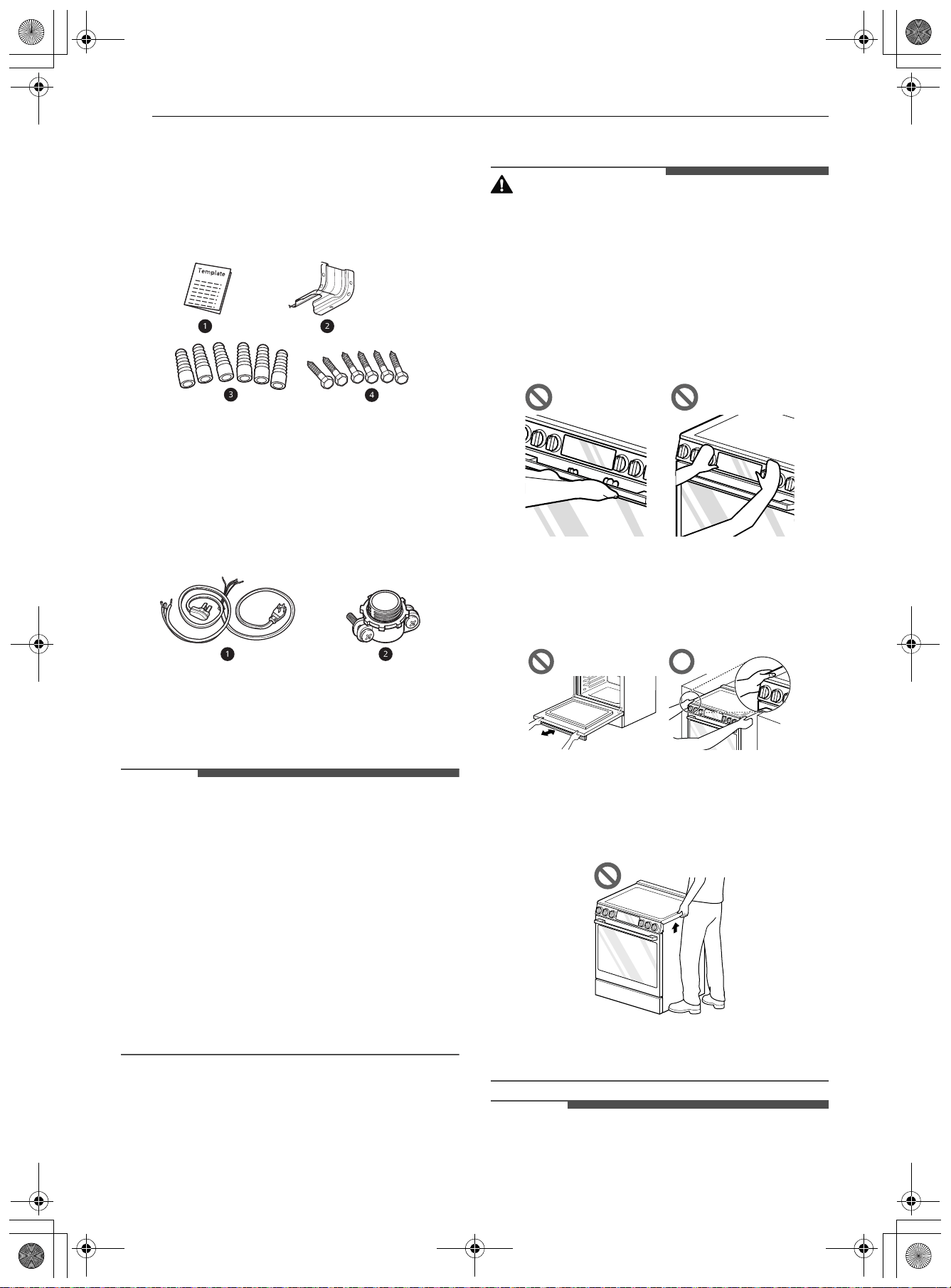
14 INSTALACIÓN
j Guantes
Piezas
Piezas incluidas
a Plantilla (1 c/u)
b Juego del soporte antivuelco (1 c/u)
c Casquillos de anclaje (6 c/u)
d Pernos tirafondo (6 c/u)
Piezas no incluidas
a Cable eléctrico de 4 hilos o cable eléctrico de
3 hilos (40 o 50 AMP aprobado por UL)
b Pasacables (solo para instalaciones de
conductos)
NOTA
• Cumpla todos los códigos y ordenanzas
vigentes.
• Solicite al instalador que le muestre la ubicación
del disyuntor o fusible. Márquelo para que sea
fácil de detectar.
• Al igual que al utilizar cualquier otro
electrodoméstico que genera calor, existen
determinadas precauciones de seguridad que se
deben respetar.
• Asegúrese de que su estufa esté instalada
correctamente y con la conexión a tierra
adecuada, a cargo de un instalador o técnico de
mantenimiento calificado.
Desembalaje y traslado de la estufa
ADVERTENCIA
• Debe haber dos o más personas para mover e
instalar la estufa. (Peligro de peso excesivo) Si no
se cumple con esto, se pueden producir lesiones
en la espalda o de otro tipo.
• No utilice las manijas de la puerta ni perillas para
empujar o tirar de la estufa durante la
instalación, ni al mover la estufa para tareas de
limpieza o reparaciones. Si lo hace podría causar
daños graves a la estufa.
• No agarre solo la puerta abierta del horno ni la
placa de cocción para empujar la estufa o tirar
de ella, ya que puede causar daños graves en la
estufa.
• No levante la estufa usando la placa de cocción
ni la manija de la puerta. Esto puede provocar
daños y un funcionamiento inadecuado de la
estufa.
• Para reducir el riesgo de quemaduras, no mueva
el electrodoméstico mientras esté caliente.
NOTA
• La imagen puede ser distinta al modelo real.
es-us_main.book.book Page 14 Tuesday, December 24, 2024 1:43 PM
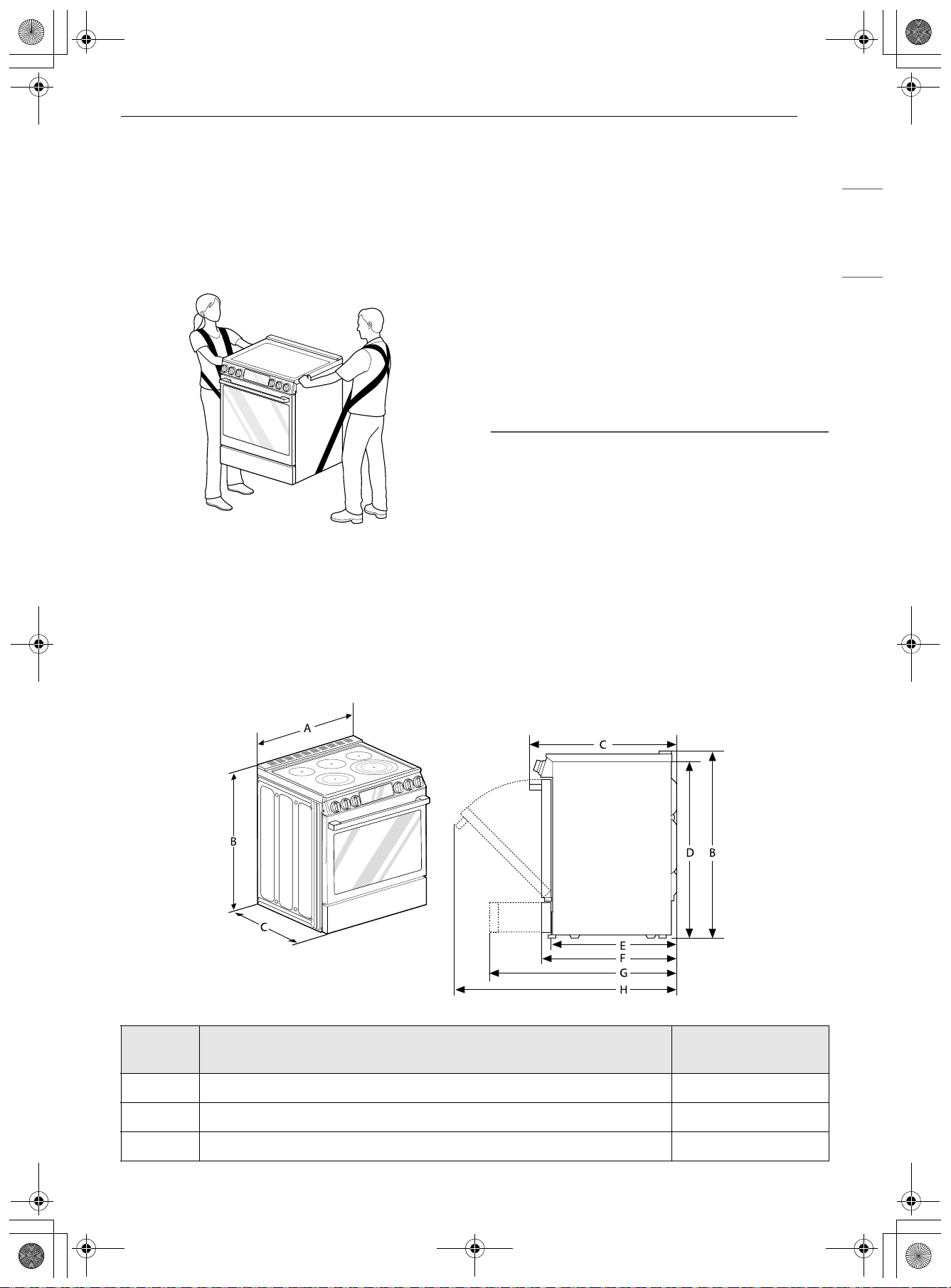
15INSTALACIÓN
ESPAÑOL
• La estufa es pesada y puede instalarse sobre
revestimientos blandos para pisos como vinilo
acolchado o piso alfombrado. Tenga cuidado al
mover la estufa sobre este tipo de pisos. Utilice
una correa al mover la estufa para evitar dañar
el piso. O deslice la estufa sobre un cartón o
madera enchapada para evitar dañar el
revestimiento del piso.
• Retire el material de embalaje, la cinta y
cualquier etiqueta temporaria de la estufa, antes
de usarla. No retire las etiquetas de advertencia,
del modelo y número de serie ni la hoja técnica
ubicada en la parte trasera de la estufa.
• Para remover cualquier cinta adhesiva o goma
restante frote enérgicamente el área con su
pulgar. La cinta adhesiva o residuos de goma
pueden ser fácilmente removidos frotando una
pequeña cantidad de jabón líquido para platos
con sus dedos. Limpie con agua caliente y seque.
• No utilice instrumentos puntiagudos, alcohol
para frotar, fluidos inflamables o limpiadores
abrasivos para remover cinta adhesiva o goma.
Estos productos pueden dañar la superficie de la
estufa.
Elección de la ubicación adecuada
Dimensiones y Espacios
Dimensiones
- Dimensiones
LSEL6337*E,
LSEL6335*E
AAncho 29 7/8" (759 mm)
BAlto 36 1/2" (928 mm)
C Profundidad (Incluye manija de la puerta) 29 1/4" (742 mm)
es-us_main.book.book Page 15 Tuesday, December 24, 2024 1:43 PM
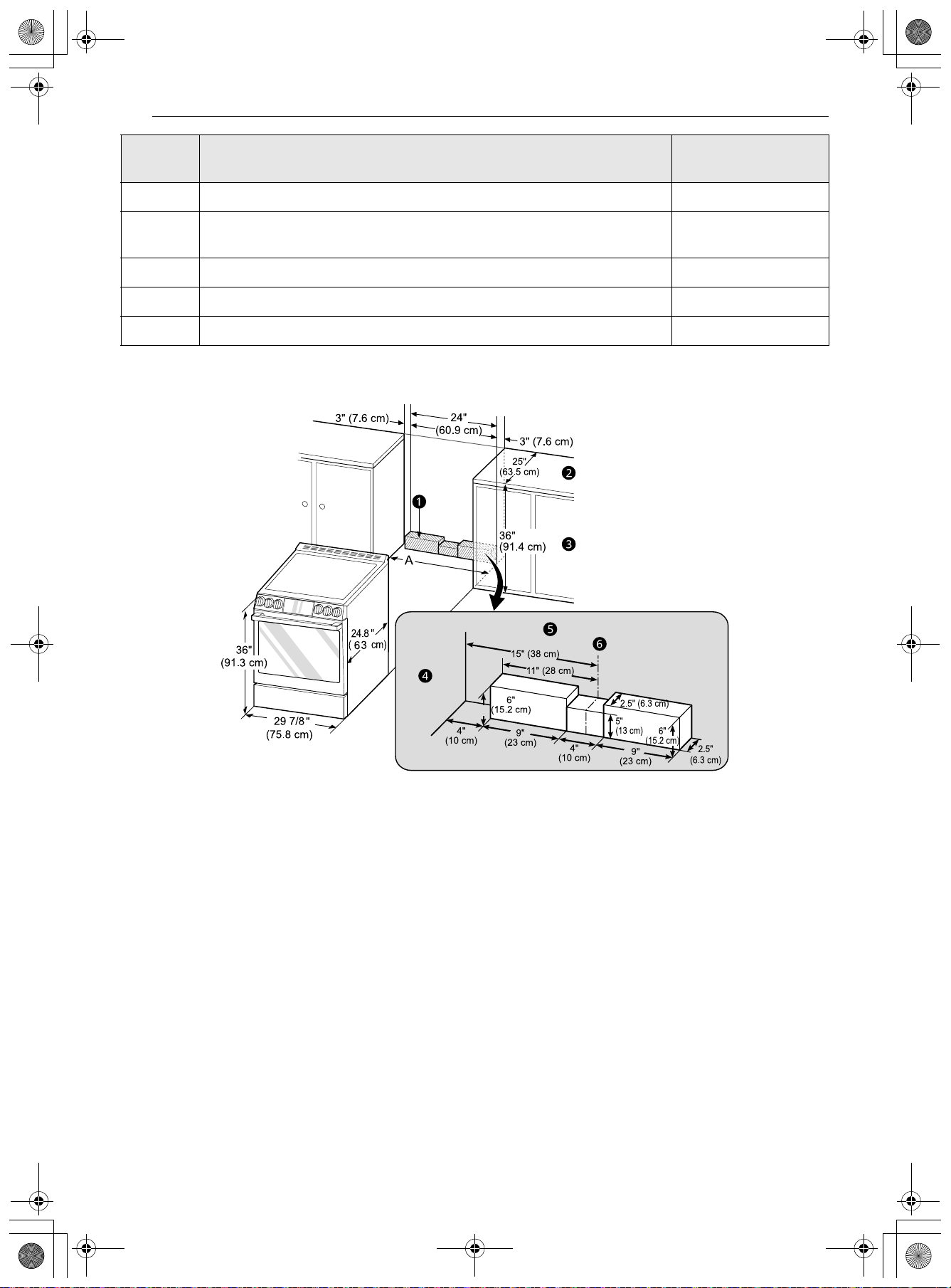
16 INSTALACIÓN
Espacios libres
a Área de tomacorriente aceptable
b Profundidad normal de la encimera
c Altura de la encimera
d Gabinete
e Pared
f Centro
A (Apertura del gabinete)
= 30" (76.2 cm) para EE. UU.
= de 30" (76.2 cm) a 31" (78.7 cm) Para CANADÁ
D Alto (No incluye moldura de ventilación) 36 1/8" (916 mm)
E
Profundidad (Incluye solo el cuerpo del producto que se carga en el
gabinete. No incluye puerta, cajón y manijas)
24 5/8" (627 mm)
F Profundidad (No incluye manija de la puerta) 26 7/8" (683 mm)
G Profundidad cuando el cajón está totalmente abierto 38 1/4" (973 mm)
H Profundidad cuando la puerta está totalmente abierta 48 1/2" (1233 mm)
- Dimensiones
LSEL6337*E,
LSEL6335*E
es-us_main.book.book Page 16 Tuesday, December 24, 2024 1:43 PM
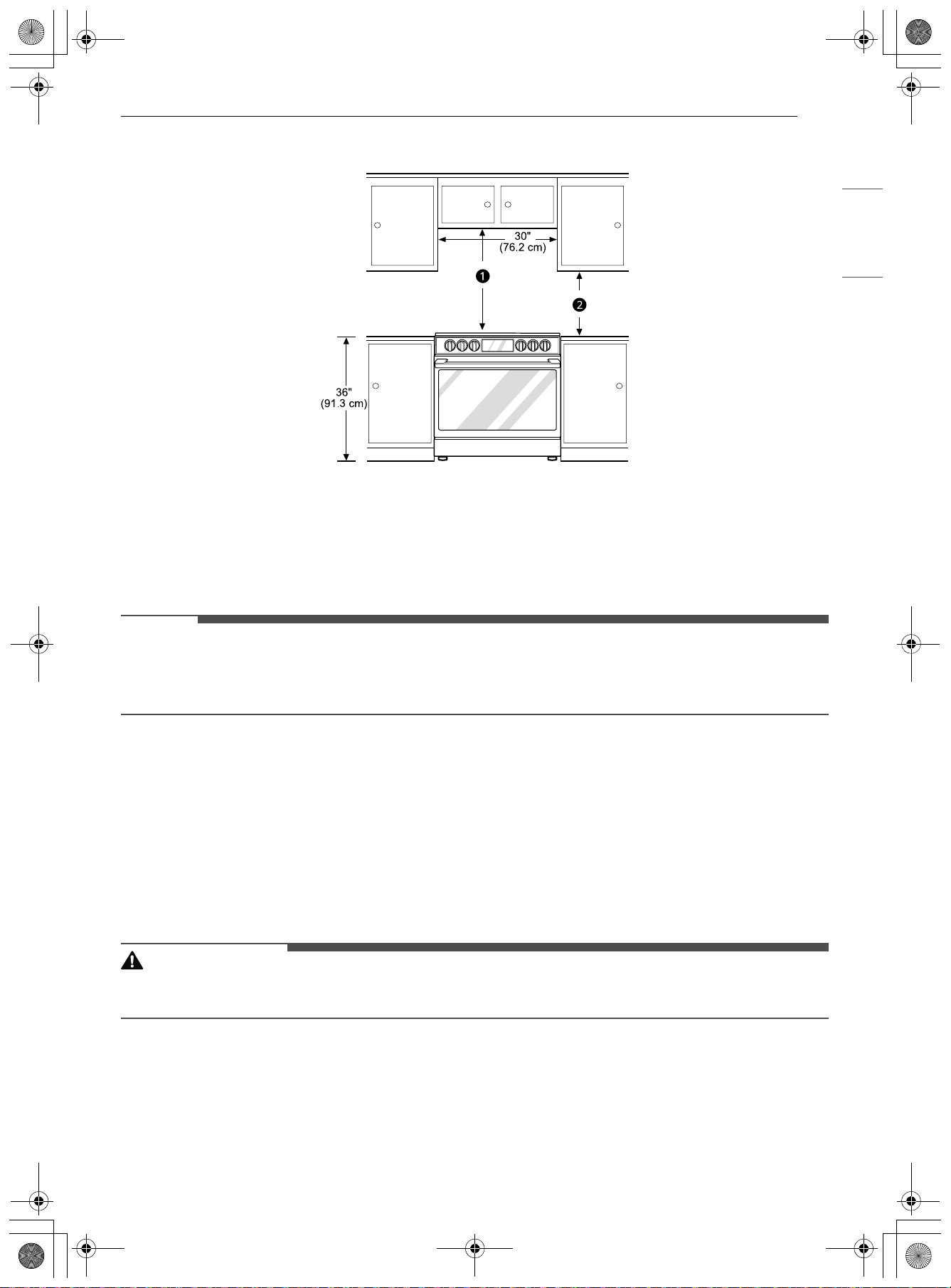
17INSTALACIÓN
ESPAÑOL
Dimensiones mínimas
a 30" (76.2 cm) de espacio mínimo entre la parte superior de la superficie de cocción y la parte inferior de
un gabinete de madera o metal no protegido; o 24" (60.9 cm) mínimo cuando el fondo del gabinete de
madera o metal está protegido por 1/4" (0.64 cm) como mínimo, de material pirorresistente cubierto
con una lámina de acero superior a n.º 28 MSG, 0.015" (0.381 mm) de acero inoxidable,
0.024" (0.610 mm) de aluminio o 0.020" (0.508 mm) de cobre.
b 15" (38.1 cm) de espacio mínimo entre la encimera y la parte inferior del gabinete adyacente.
NOTA
• Importante – Guarde para el uso del inspector eléctrico local.
• Para la instalación en Canadá, no se debe instalar una estufa independiente (no empotrable) a menos de
15/32" (12 mm) de distancia de cualquier superficie adyacente.
Electricidad
La estufa debe estar siempre enchufada en su propio tomacorriente individual con conexión a tierra.
• Esto evita sobrecargar los circuitos eléctricos de la vivienda, lo que podría causar un peligro de incendio,
debido a los cables sobrecalentados.
• Se recomienda la instalación de un circuito exclusivo para este electrodoméstico.
Suelo
PRECAUCIÓN
• Utilice una almohadilla de aislamiento o una placa de madera enchapada de 1/4 pulgada (0.64 cm)
debajo de la estufa si la instala sobre piso alfombrado.
Temperatura ambiente
es-us_main.book.book Page 17 Tuesday, December 24, 2024 1:43 PM
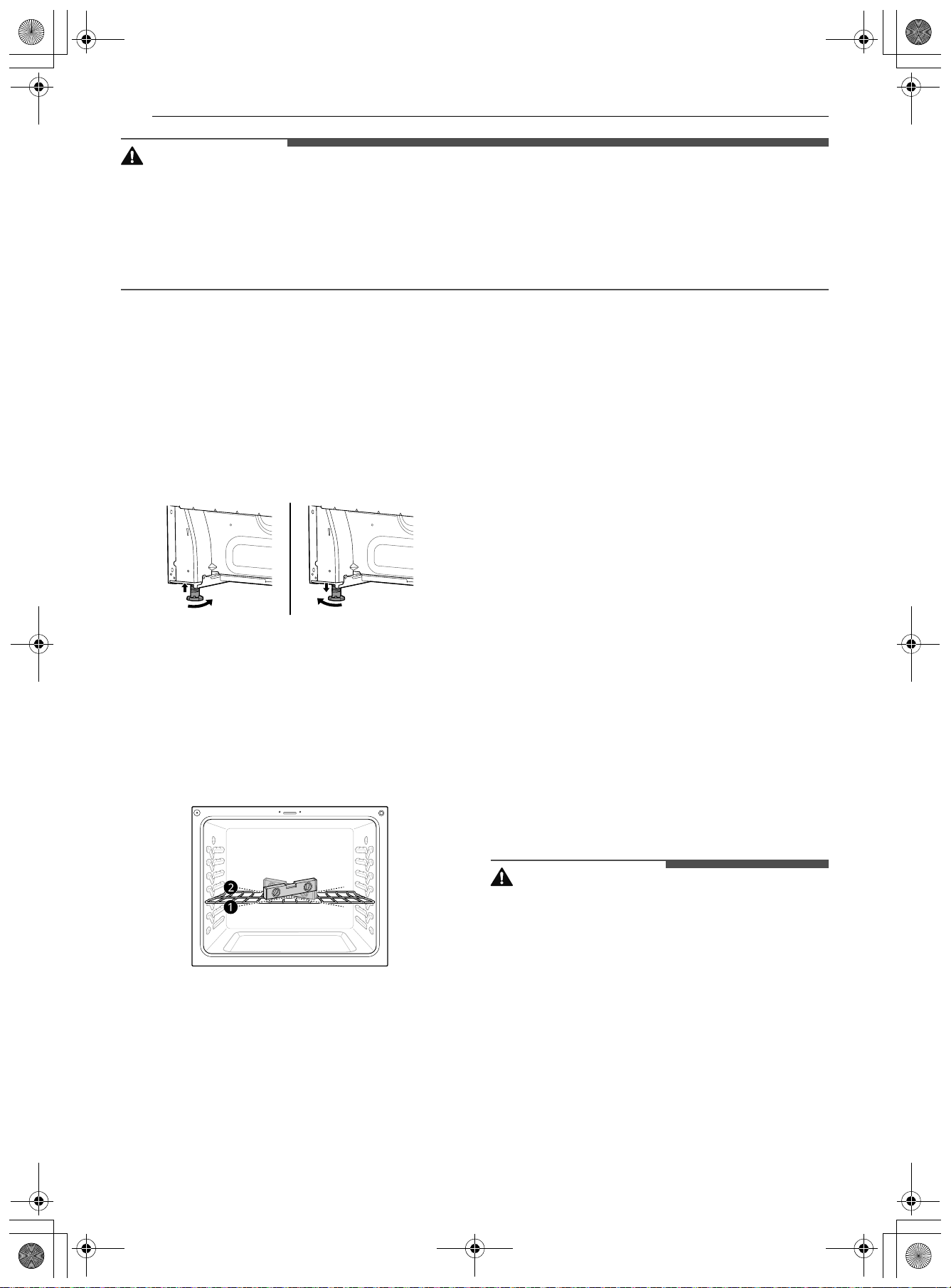
18 INSTALACIÓN
PRECAUCIÓN
• Asegúrese de que los revestimientos de las paredes, las encimeras y los gabinetes alrededor de la estufa
puedan resistir el calor (hasta 194 ºF) generado por la estufa. Puede producirse decoloración,
delaminación o fusión. Esta estufa está diseñada para cumplir con la temperatura máxima permitida del
gabinete de madera de 194 ºF.
• Antes de instalar la estufa en un área cubierta con linóleo u otro revestimiento sintético para pisos,
asegúrese de que este pueda soportar temperaturas de 200 °F (93 °C), como mínimo.
Nivelando
Nivelación de la estufa
Nivele la estufa ajustando las patas de nivelación
con una llave. Si extiende las patas ligeramente,
podría ser más fácil insertar la pata trasera en el
soporte antivuelco.
Verificación de los ajustes
1 Ubique el nivelador en diagonal sobre el
estante el horno y verifique en todas
direcciones para nivelar.
• Primero verifique la dirección
a. Luego
verifique la dirección
b.
2 Si el nivelador no queda equilibrado sobre el
estante, ajuste las patas de nivelación con una
llave.
Conexión de electricidad
Requisitos eléctricos
Un técnico calificado debe instalar este
electrodoméstico e incluir una conexión a tierra en
un circuito derivado, de acuerdo con el Código
Eléctrico Nacional ANSI/NFPA N.° 70, en su edición
más reciente.
Todo el cableado debe cumplir con el Código
Eléctrico Nacional (National Electrical Code, NEC) y
el local. Esta estufa requiere un cable monofásico
de 3 hilos, un sistema eléctrico de 120/208 VCA o
120/240 V 60 Hz. Utilice únicamente un cable para
estufa de 3 o 4 conductores homologados por UL
con terminales de circuito cerrado, terminales de
horquilla abiertos o una terminación similar. No
instale el cable de alimentación sin un pasacables.
Se requiere un cable apto para estufas de
40 amperios con un rango mínimo de 120/240 V.
Si se utiliza un cable apto para estufas de
50 amperios, debe estar indicado para un uso con
aberturas de conexión de 1 3/8" de diámetro. Este
electrodoméstico puede conectarse por medio de
un conducto o un cable de alimentación. Si se
utiliza un conducto, consulte las secciones
"Conexión con cable de 3 hilos: Conducto" o
"Conexión con cable de 4 hilos: Conducto".
ADVERTENCIA
• Deje de 2 a 3 pies (61.0 cm a 91.4 cm) de lugar
libre en la línea para que se pueda mover la
estufa si es necesario hacer reparaciones.
• No se deben modificar ni el cable de
alimentación ni el enchufe. Si el enchufe no
entra en el tomacorriente, debe solicitar que un
electricista calificado instale un tomacorriente
adecuado.
• Se prohíbe utilizar un cable de extensión para
conectar la energía eléctrica. Conecte el cable de
alimentación y enchufe directamente.
• Se requiere una conexión eléctrica a tierra en
este electrodoméstico.
es-us_main.book.book Page 18 Tuesday, December 24, 2024 1:43 PM
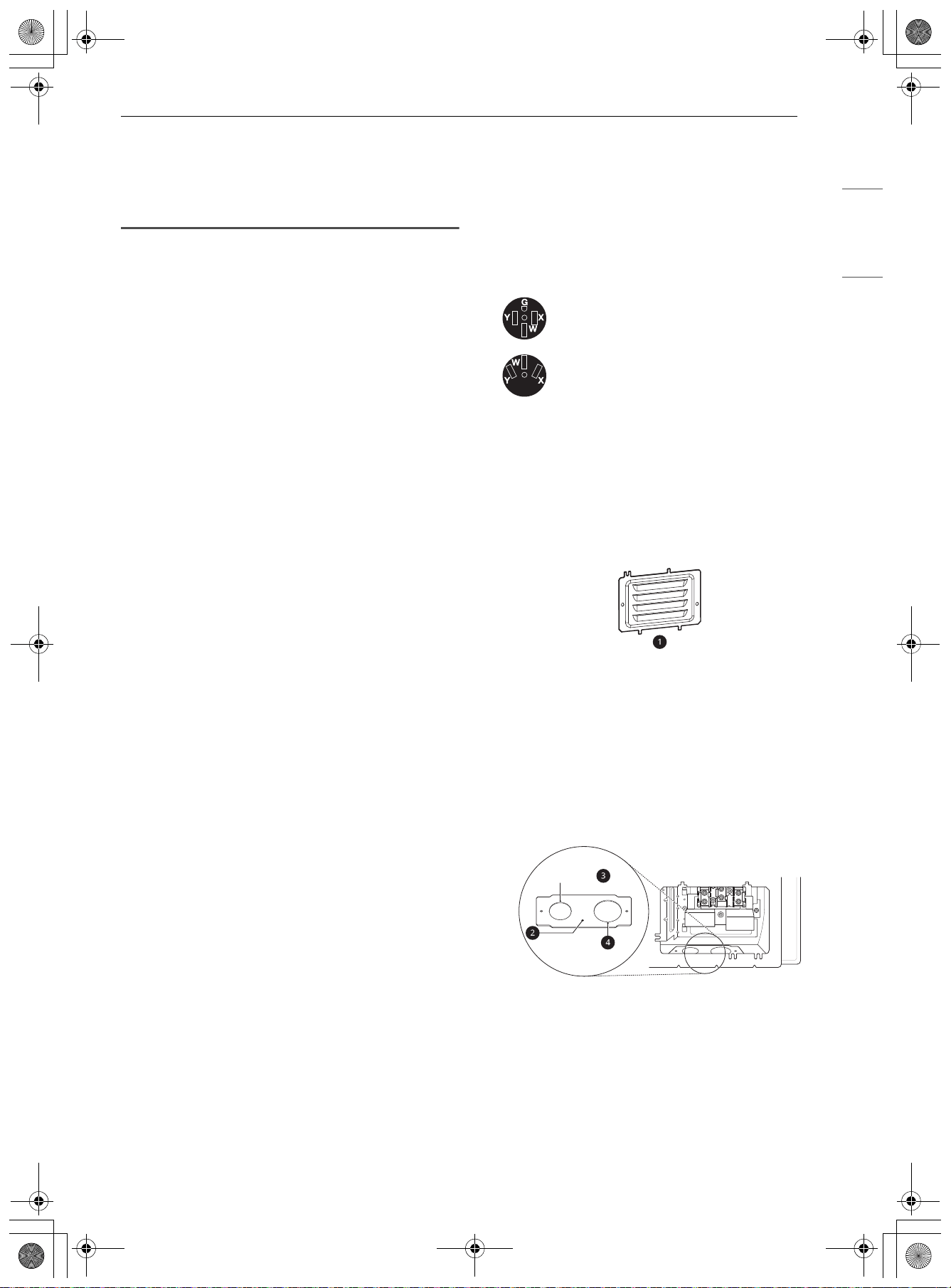
19INSTALACIÓN
ESPAÑOL
• Asegúrese de que el cable de alimentación no
esté presionado por la estufa ni por objetos
pesados. Si no verificara esto y el cable estuviera
presionado, podría sufrir quemaduras graves o
descargas eléctricas.
Valores nominales especificados del
juego del cable de alimentación
Caso 1
• Voltaje: 120/240 voltios (3 hilos)
• Tensión nominal de la estufa: 8.750 W - 16.500 W
• Corriente nominal especificada del juego del
cable de alimentación, amperios: 40 A o 50 A
• Diámetro (pulgadas) de la abertura de conexión
de la estufa
- Cable de alimentación: 1 3/8"
- Conducto: 1 1/8"
Caso 2
• Voltaje: 120/240 voltios (3 hilos)
• Tensión nominal de la estufa: 16.501 W -
22.500 W
• Corriente nominal especificada del juego del
cable de alimentación, amperios: 50 A
• Diámetro (pulgadas) de la abertura de conexión
de la estufa
- Cable de alimentación: 1 3/4"
- Conducto: 1 3/8"
Caso 3
• Voltaje: 120/208 voltios (3 hilos)
• Tensión nominal de la estufa: 7.801 W - 12.500 W
• Corriente nominal especificada del juego del
cable de alimentación, amperios: 40 A o 50 A
• Diámetro (pulgadas) de la abertura de conexión
de la estufa
- Cable de alimentación: 1 3/8"
- Conducto: 1 1/8"
Caso 4
• Voltaje: 120/208 voltios (3 hilos)
• Tensión nominal de la estufa: 12.501 W -
18.500 W
• Corriente nominal especificada del juego del
cable de alimentación, amperios: 50 A
• Diámetro (pulgadas) de la abertura de conexión
de la estufa
- Cable de alimentación: 1 3/4"
- Conducto: 1 3/8"
Receptáculo eléctrico de pared para
cables de 3 o 4 hilos
Conexión del cable de
alimentación/conducto
Se debe retirar la cubierta de acceso trasera a.
Afloje los dos tornillos con un destornillador. El
bloque de terminales debe quedar accesible.
Utilice la placa de conexión del cable/conducto
b
para instalar el cable de alimentación o el
conducto. Deje la placa de conexión como estaba
instalada para las instalaciones del cable de
alimentación. Retire la placa de conexión para las
instalaciones de conductos y gírela para utilizar el
orificio para conducto
c más pequeño de 1 1/
8 pulg. (2.8 cm), en lugar del orificio para cable de
alimentación
d de 1 3/8 pulg. (3.5 cm).
Para instalaciones con cable de alimentación
e,
enganche el pasacables sobre el orificio para cable
de alimentación de 1 3/8 pulg. (3.5 cm), ubicado
por debajo de la parte trasera del horno. Inserte el
Receptáculo para cable de 4 hilos (14-
50R)
Receptáculo para cable de 3 hilos (10-
50R)
1
1
/
8
"
(2.8 cm)
1
3
/
8
"
(3.5 cm)
es-us_main.book.book Page 19 Tuesday, December 24, 2024 1:43 PM
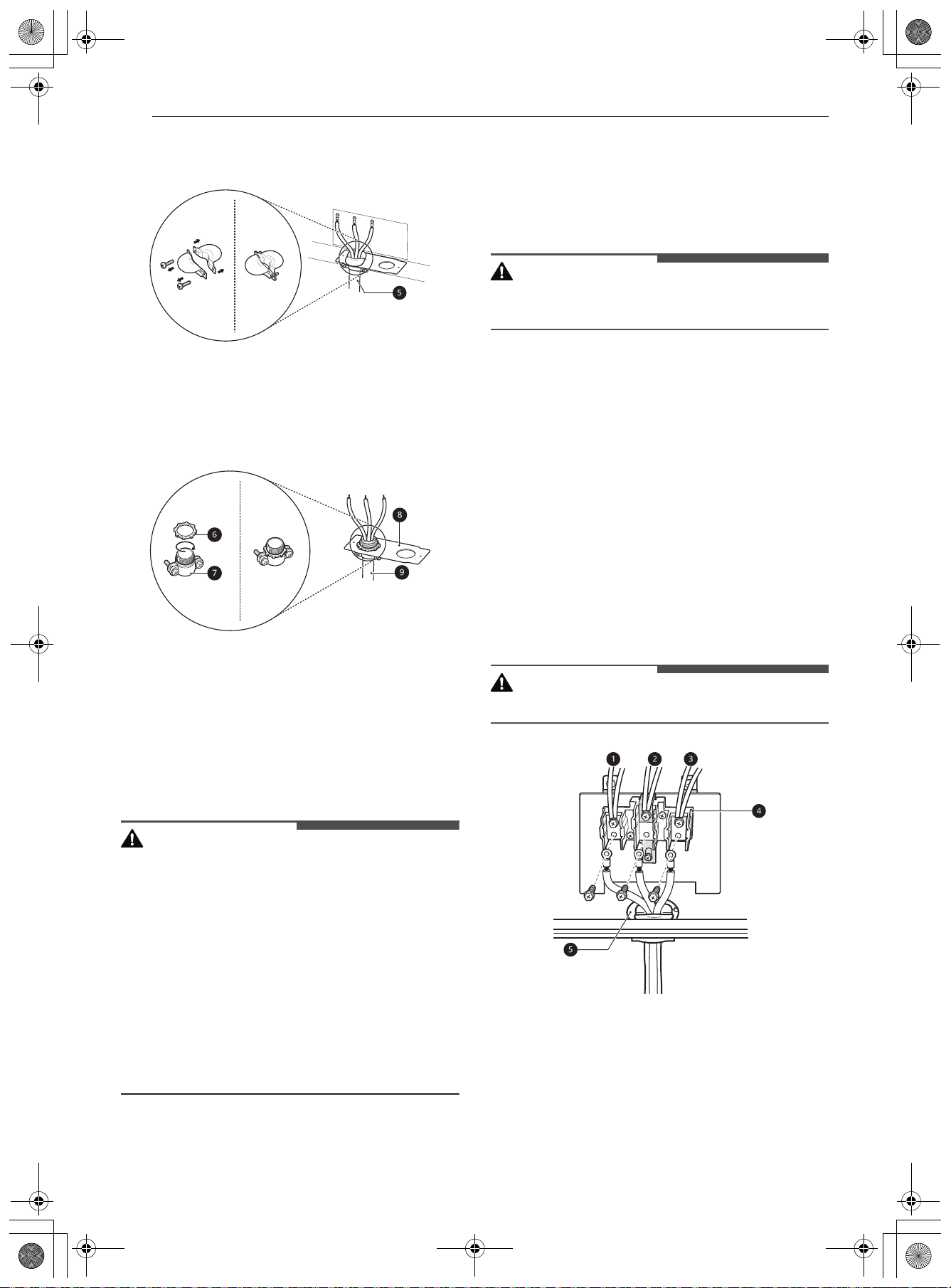
20 INSTALACIÓN
cable de alimentación a través del pasacables y
ajústelo.
Para instalaciones de conductos, inserte el
pasacables del conducto en el orificio
correspondiente de 1 1/8 pulgadas (2.8 cm).
Luego, instale el conducto a través del cuerpo del
pasacables y ajústelo con su anillo.
f Anillo
g Cuerpo
h Placa de conexión del cable/conducto
i Conducto
Conexión de 3 hilos: Cable de
alimentación
ADVERTENCIA
• El hilo del medio (neutro o tierra) de un cable de
alimentación de 3 hilos o un conducto de 3 hilos
se debe conectar al poste medio del bloque de
terminales principal. Los dos hilos restantes del
cable de alimentación o del conducto se deben
conectar a los postes exteriores del bloque de
terminales principal. De lo contrario, podría
causar lesiones personales graves, descargas
eléctricas o la muerte.
• Si los tornillos no están ajustados de manera
segura, podría generarse una chispa eléctrica y
causar lesiones personales graves o incluso la
muerte.
1 Para instalaciones con cable de alimentación,
enganche el pasacables sobre el orificio para
cable de alimentación (1 3/8") ubicado por
debajo de la parte trasera del horno.
2 Inserte el cable de alimentación a través del
pasacables y ajústelo.
PRECAUCIÓN
• No instale el cable de alimentación sin un
pasacables.
3 Retire los 3 tornillos inferiores del bloque de
terminales y consérvelos.
4 Inserte los 3 tornillos a través de cada anillo
de terminales del cable de alimentación y en
los terminales inferiores del bloque.
• Asegúrese de que el hilo central blanco esté
conectado a la posición central inferior del
bloque de terminales.
5 Ajuste los 3 tornillos de manera segura al
bloque de terminales. No retire las
conexiones de la correa a tierra.
PRECAUCIÓN
• No retire las conexiones de la correa a tierra.
a Negro
b Blanco
c Rojo
d Bloque de terminales
e Placa de conexión del cable/conducto
es-us_main.book.book Page 20 Tuesday, December 24, 2024 1:43 PM
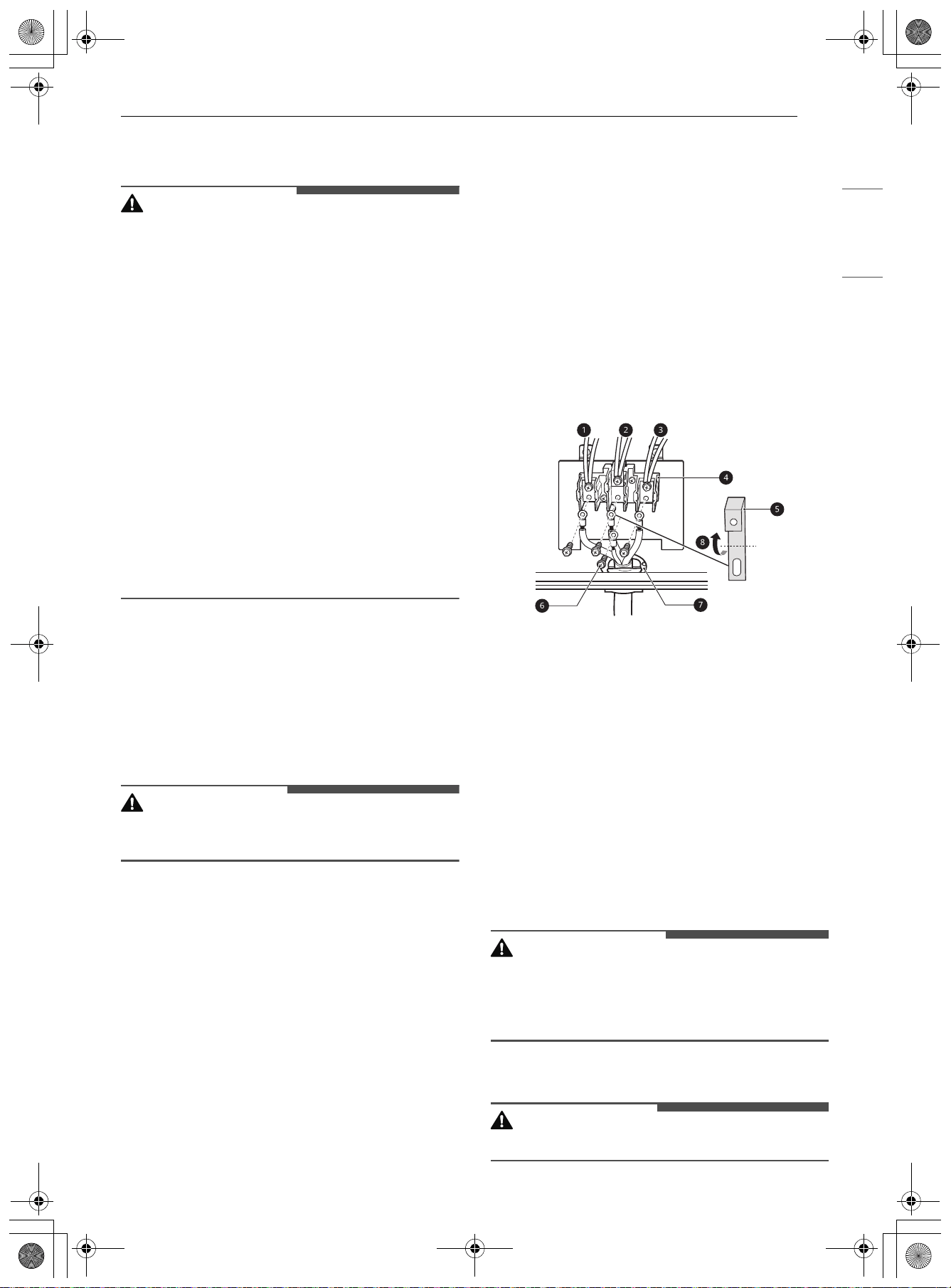
21INSTALACIÓN
ESPAÑOL
Conexión de 4 hilos: Cable de
alimentación
ADVERTENCIA
• Solo debe utilizar un juego de cable de
alimentación de 4 conductores con un valor
nominal de 120/240 voltios, 50 amperios y
marcado para uso en estufas de conectores de
circuito cerrado o terminales de horquilla
abiertos con los extremos hacia arriba. El hilo
blanco del medio (neutro) del cable de
alimentación o conducto de 4 hilos se debe
conectar al poste medio del bloque de
terminales principal. Los otros dos hilos del
cable de alimentación o conducto se deben
conectar a los postes exteriores del bloque de
terminales principal. El cuarto cable a tierra
(verde) se debe conectar al marco de la estufa
con el tornillo de conexión a tierra. De lo
contrario, podría causar lesiones personales
graves, descargas eléctricas o la muerte.
• Si los tornillos no están ajustados de manera
segura, podría generarse una chispa eléctrica y
causar lesiones personales graves o incluso la
muerte.
1 Para instalaciones con cable de alimentación,
enganche el pasacables sobre el orificio para
cable de alimentación (1 3/8") ubicado por
debajo de la parte trasera del horno.
2 Inserte el cable de alimentación a través del
pasacables y ajústelo.
PRECAUCIÓN
• No instale el cable de alimentación sin un
pasacables.
3 Retire los 3 tornillos inferiores del bloque de
terminales y consérvelos.
4 Retire el tornillo de conexión a tierra y doble
el extremo de la correa de conexión a tierra
para que la ranura quede sobre el orificio del
tornillo central que retiró en el paso 3.
5 Inserte el tornillo a tierra en el anillo del
terminal del hilo a tierra del cable de
alimentación (verde) y fíjelo al marco de la
estufa.
6 Inserte los 3 tornillos a través de cada anillo
de terminales del cable de alimentación y en
los terminales inferiores del bloque.
• Asegúrese de que el hilo central blanco
(neutro) esté conectado a la posición central
inferior del bloque de terminales.
7 Ajuste los 3 tornillos de manera segura al
bloque de terminales. No retire las
conexiones de la correa a tierra.
• El tornillo central ahora fija la correa de
conexión a tierra, plegada hacia arriba al
bloque.
a Negro
b Blanco
c Rojo
d Bloque de terminales
e Correa de conexión a tierra
f Tornillo de conexión a tierra
g Placa de conexión del cable/conducto
h Doble la correa hacia arriba y fíjela.
Conexión de 3 hilos: Conducto
ADVERTENCIA
• Si los tornillos no están ajustados de manera
segura, podría generarse una chispa eléctrica y
causar lesiones personales graves o incluso la
muerte.
Instalaciones del conducto
PRECAUCIÓN
• No instale el conducto sin un pasacables.
es-us_main.book.book Page 21 Tuesday, December 24, 2024 1:43 PM
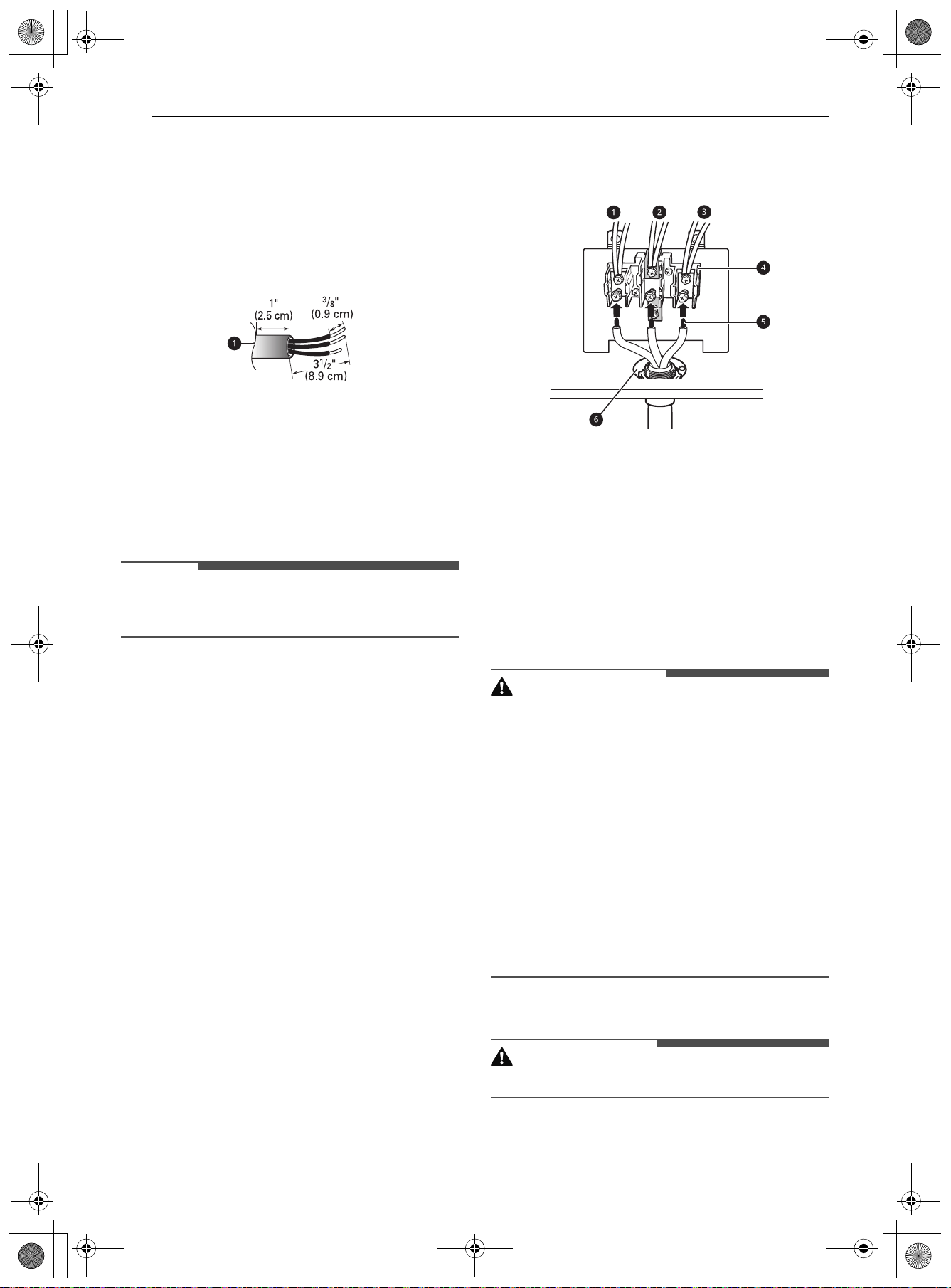
22 INSTALACIÓN
1 Retire la placa de conexión de conductos de la
parte posterior del horno y gírela.
• Se debe utilizar el orificio para conductos (1
1/8").
2 En primer lugar, prepare los hilos del
conducto como se indica a continuación.
a Placa de conexión del cable/conducto
3 Instale el pasacables del conducto.
1) Inserte el pasacables en el orificio para
conducto de 1 1/8 pulg.(2.8 cm).
2) Instale el conducto a través del cuerpo del
pasacables y ajústelo con su anillo.
NOTA
• Para instalaciones de conductos, compre un
pasacables.
4 Vuelva a colocar la placa de conexión del
cable/conducto.
Conexiones de conductos
Si el hilo del conducto es de cobre debe ser un
cableado de 8 o 10 AWG.
Si el hilo del conducto es de aluminio debe ser un
cableado de 6 u 8 AWG.
1 Afloje los 3 tornillos inferiores del bloque de
terminales.
2 Inserte el extremo expuesto del cable (blanco/
neutro) a través de la abertura central del
bloque de terminales. No retire las
conexiones de la correa a tierra.
3 Inserte los dos extremos expuestos del cable
en las aberturas inferiores izquierda y
derecha del bloque de terminales.
4 Ajuste los 3 tornillos de manera segura al
bloque de terminales (aproximadamente de
35 a 50 pulg-lb).
a Negro
b Blanco
c Rojo
d Bloque de terminales
e Extremos del cable
f Placa de conexión del conducto
Conexión de 4 hilos: Conducto
ADVERTENCIA
• El hilo blanco del medio (neutro) del cable de
alimentación o conducto de 4 hilos se deben
conectar al poste medio del bloque de
terminales principal. Los otros dos hilos del
cable de alimentación o conducto se deben
conectar a los postes exteriores del bloque de
terminales principal. El cuarto cable a tierra
(verde) se debe conectar al marco de la estufa
con el tornillo de conexión a tierra. De lo
contrario, podría causar lesiones personales
graves, descargas eléctricas o la muerte.
• Si los tornillos no están ajustados de manera
segura, podría generarse una chispa eléctrica y
causar lesiones personales graves o incluso la
muerte.
Instalaciones del conducto
PRECAUCIÓN
• No instale el conducto sin un pasacables.
es-us_main.book.book Page 22 Tuesday, December 24, 2024 1:43 PM
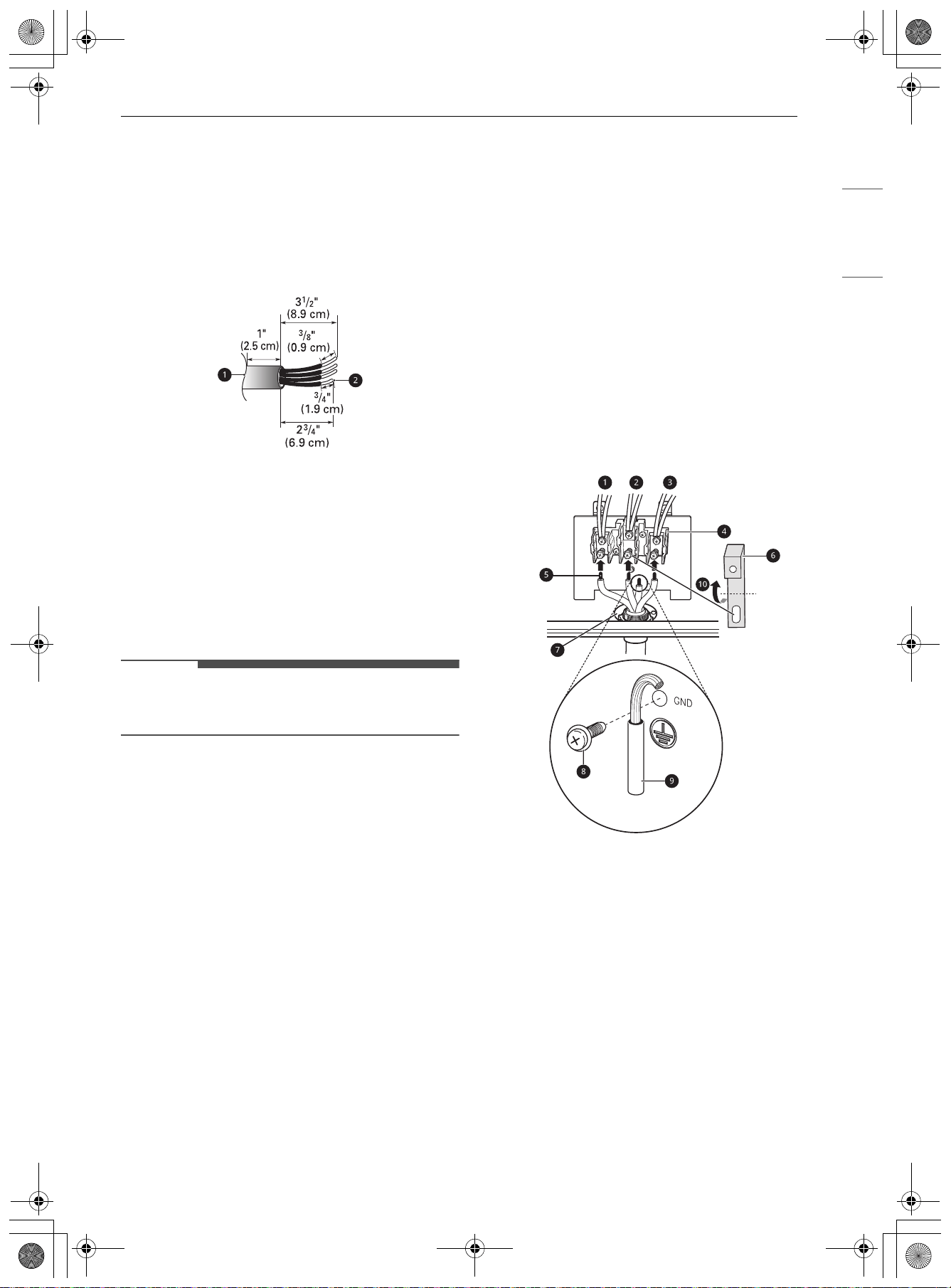
23INSTALACIÓN
ESPAÑOL
1 Retire la placa de conexión de conductos de la
parte posterior del horno y gírela.
• Se debe utilizar el orificio para conductos (1
1/8").
2 En primer lugar, prepare los hilos del
conducto como se indica a continuación.
a Placa de conexión del cable/conducto
b Cable de conexión a tierra
3 Instale el pasacables del conducto.
1) Inserte el pasacables en el orificio para
conducto de 1 1/8 pulg.(2.8 cm).
2) Instale el conducto a través del cuerpo del
pasacables y ajústelo con su anillo.
NOTA
• Para instalaciones de conductos, compre un
pasacables.
4 Vuelva a colocar la placa de conexión del
cable/conducto.
Conexiones de conductos
Si el hilo del conducto es de cobre debe ser un
cableado de 8 o 10 AWG.
Si el hilo del conducto es de aluminio debe ser un
cableado de 6 u 8 AWG.
1 Afloje los 2 tornillos inferiores izquierdo y
derecho del bloque de terminales. Retire los 2
tornillos centrales inferiores. No descarte
ningún tornillo.
2 Retire el tornillo de conexión a tierra y doble
el extremo de la correa de conexión a tierra
para que la ranura quede sobre el orificio del
tornillo central que retiró en el paso 1.
3 Una el extremo expuesto del cable de
conexión a tierra (verde) al marco de la estufa
y asegúrelo con el tornillo de conexión a
tierra.
4 Inserte el extremo expuesto del cable (blanco/
neutro) a través de la abertura central del
bloque de terminales. El tornillo central ahora
fija la correa de conexión a tierra, plegada
hacia arriba, al bloque.
5 Inserte los dos extremos expuestos del cable
a través de las aberturas izquierda y derecha
del bloque de terminales. Ajuste los 3 tornillos
de manera segura al bloque de terminales
(aproximadamente de 35 a 50 pulg-lb).
a Negro
b Blanco
c Rojo
d Bloque de terminales
e Extremos del cable
f Correa de conexión a tierra
g Placa de conexión del conducto
h Tornillo de conexión a tierra
i Cable de conexión a tierra
j Doble la correa hacia arriba y fíjela.
es-us_main.book.book Page 23 Tuesday, December 24, 2024 1:43 PM
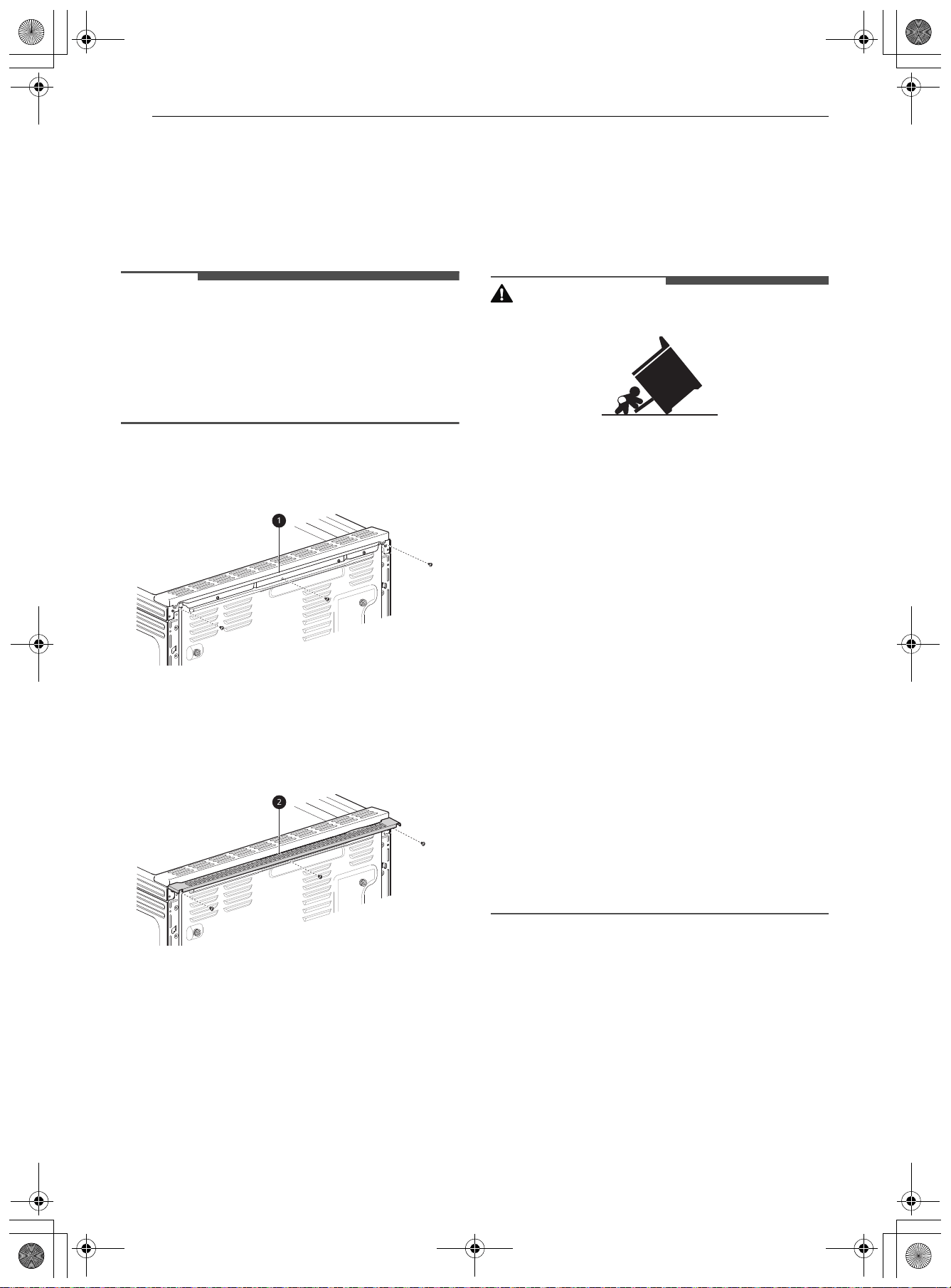
24 INSTALACIÓN
Relleno trasero opcional
Instalación de la placa trasera
Si la encimera no cubre la abertura en la pared
posterior, se necesitará el kit de placa trasera que
se suministra con la estufa empotrable.
NOTA
• Si la profundidad de la encimera es mayor que
25 3/8", habrá un espacio entre el kit y la pared
posterior.
• Si la profundidad de la encimera es menor que
24 3/4", el panel de control no se colocará al ras
de la encimera.
1 Con un destornillador, retire los tres tornillos
que sujetan la placa superior trasera en su
lugar.
a Placa superior trasera
2 Fije el conjunto de placa superior trasera y
relleno como se muestra en la imagen, con
los tres tornillos que retiró en el paso 1.
b Placa trasera
Dispositivo antivuelco
Instalación del dispositivo
antivuelco
Peligro de vuelco
ADVERTENCIA
• Un niño o adulto pueden volcar la estufa y morir.
• Coloque el dispositivo antivuelco en la estructura
y/o estufa. Verifique que el dispositivo antivuelco
se haya instalado y acoplado correctamente
siguiendo la guía del soporte antivuelco.
• Enganche la estufa al dispositivo antivuelco
conforme a la guía del soporte antivuelco.
Asegúrese que el dispositivo antivuelco se
vuelva a acoplar cuando se mueva la estufa
según la guía del soporte antivuelco.
• Vuelva a enganchar el dispositivo antivuelco si
mueve la estufa. No opere la estufa sin el
dispositivo antivuelco en su lugar y enganchado.
• Consulte las instrucciones de instalación para
obtener los detalles.
• Si no sigue estas instrucciones puede ocasionar
la muerte o quemaduras graves en niños o
adultos.
• Se debe asegurar la estufa con un dispositivo
antivuelco aprobado.
• La estufa puede inclinarse si una persona se
pone de pie, se sienta o apoya en la puerta
abierta y el dispositivo antivuelco no está
instalado de manera adecuada.
• El uso de este dispositivo no impide que la estufa
se caiga si no está bien instalado.
• Después de instalar el dispositivo antivuelco,
intente inclinar la estufa hacia adelante para
verificar una correcta instalación.
• Esta estufa está diseñada para cumplir con todos
los estándares de vuelco reconocidos por la
industria para todas las condiciones normales.
• La instalación del dispositivo antivuelco debe
cumplir con todos los códigos locales para
asegurar el electrodoméstico.
es-us_main.book.book Page 24 Tuesday, December 24, 2024 1:43 PM
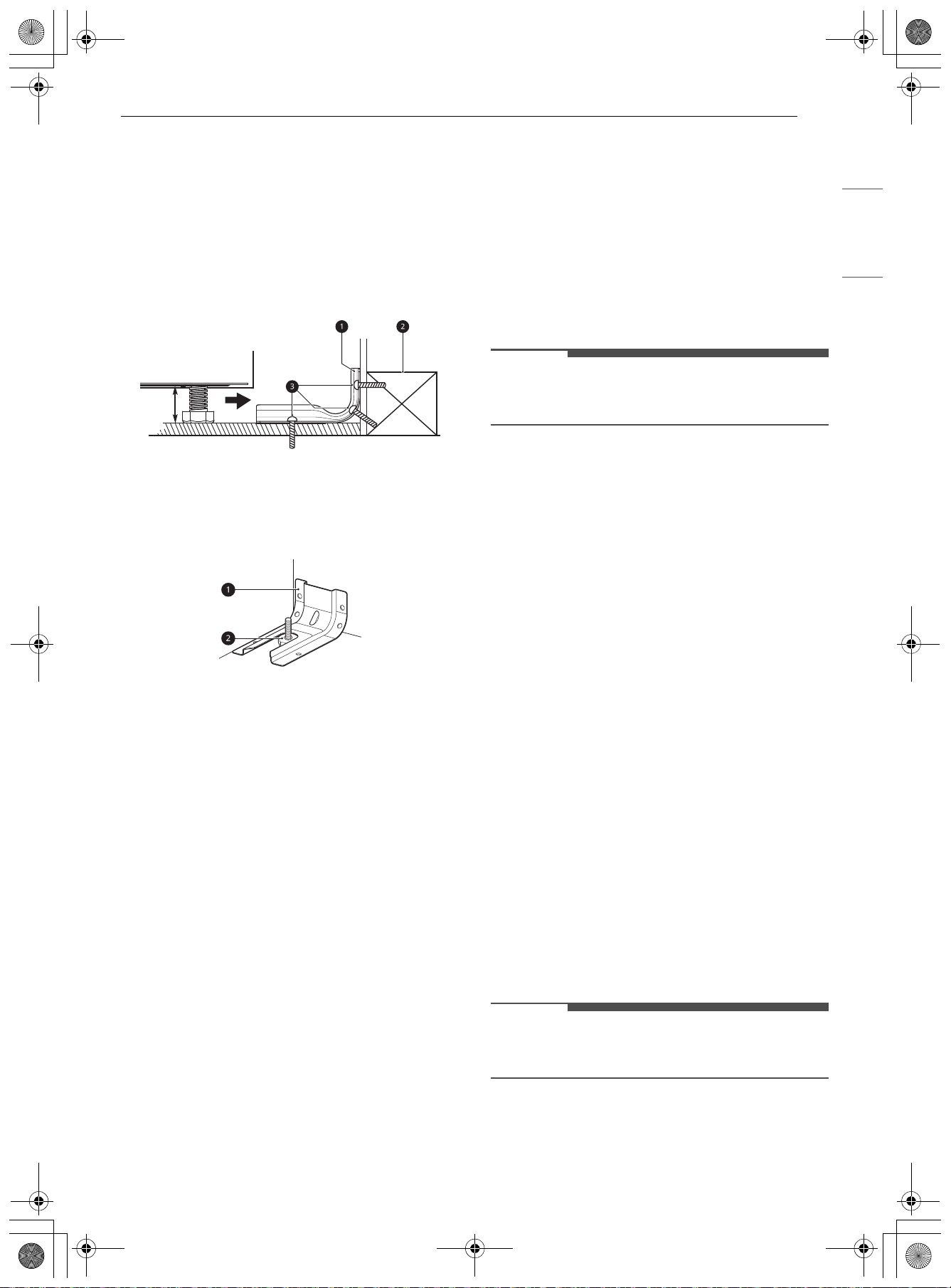
25INSTALACIÓN
ESPAÑOL
Uso de la plantilla de soporte
antivuelco
• Se incluye un soporte antivuelco con una
plantilla de instalación. Las instrucciones
incluyen la información necesaria para
completar la instalación. Lea y siga la hoja de
instrucciones de instalación de la estufa.
• Los tornillos
c deben ser aptos para madera u
hormigón.
a Soporte antivuelco
b Placa de pared
Colocación del dispositivo antivuelco
a Soporte antivuelco
b Pata de nivelación
1 Deslice la estufa contra la pared y asegúrese
de que la pata trasera se deslice y se
enganche en el soporte antivuelco.
2 Verifique la correcta instalación sujetando el
borde delantero de la placa de cocción e
intente inclinar la estufa hacia adelante.
Prueba de funcionamiento
Pruebe la estufa antes de usarla
Verifique si la estufa está instalada correctamente
y realice un ciclo de prueba.
1 Antes de usar la placa de cocción por primera
vez, límpiela con un limpiador para placas de
cocción de cerámica. Esto ayuda a proteger la
parte superior y facilita la limpieza.
2 Gire la perilla de modo del horno hasta la
posición O F F para iniciar la prueba.
3 Llene una olla con capacidad de inducción con
agua y colóquela sobre una hornalla.
Encienda la hornalla. La barra de LED debe
mostrar la configuración y el agua debe
calentarse. La barra de LED no debe fluctuar.
Repita este procedimiento con todas las
hornallas.
NOTA
• La zona de calentamiento no consume energía
suficiente como para emitir un brillo rojo.
4 Después de revisar todos los elementos
calentadores de la superficie, verifique el
sistema de bloqueo presionando Control
Lock durante tres segundos. La puerta del
horno debe bloquearse y la placa de cocción
no debe funcionar mientras que la función
Bloqueo de Control está encendida. Presione
Control Lock durante tres segundos para
desactivar el Bloqueo.
5 Ahora verifique el funcionamiento del horno.
Gire la perilla de modo del horno para
seleccionar el modo Bake. En la pantalla
aparece 350 °F. Presione START.
6 El horno debe terminar de precalentarse en
15 minutos y el ventilador de convección debe
funcionar mientras el horno se está
precalentando.
7 Después de controlar el funcionamiento del
horno, suba la temperatura a 450 °F y deje el
horno encendido durante una hora, como
mínimo, para ayudar a remover cualquier
resto de aceite que pudiera causar humo y
olores al usar el horno por primera vez.
NOTA
• Cuando la estufa se usa por primera vez, podría
salir humo.
es-us_main.book.book Page 25 Tuesday, December 24, 2024 1:43 PM
26 FUNCIONAMIENTO
FUNCIONAMIENTO
Manual online del propietario
Más información en el Manual
online del propietario
El manual del propietario completo se puede
encontrar en el sitio web de LG o escaneando el
código QR. LG trabaja para crear un mañana
sostenible y, por eso, publica solo partes de este
manual online.
1 Para ver el manual del propietario completo,
visite el sitio web de LG o escaneando el
código QR.
• Sitio web de LG: http://gscs-
manual.lge.com/CVZ/MFL68920573/en-us/
main.html
• Código QR
2 Seleccione el capítulo OPERACIÓN o haga una
búsqueda con cualquiera de los siguientes
temas para encontrar más información en el
manual online del propietario.
• Panel de control
- Funciones del panel de control
- Posiciones de las perillas
- Luz de perilla / pantalla (Modelo
LSEL6337*E)
• Cambio de configuración del horno
- Reloj
- Luz del horno
- Timer On/Off (Temporizador encendido/
apagado)
- Wi-Fi
- Configuración (Modo de horas,
Conversión automática a convección,
Calibración de la temperatura del horno,
Luz de alarma de precalentado, Volumen
del indicador sonoro, Fahrenheit o
Celsius, Placa de cocción en volumen de
alarma, Encender/Apagar Wi-Fi)
- Bloqueo de control
- Hora de inicio (Cocción programada
retrasada)
- Cook Time (Timed Cook) (Tiempo de
cocción [Cocción programada])
- Configuraciones mínimas y máximas
predeterminadas
• Placa de cocción
- Antes de usar la placa de cocción
- Áreas de cocción
- Uso de las hornallas de la placa de cocción
- Encendido de la zona de calentamiento
- Uso del Bloqueo de Perillas
- Configuración recomendada de cocción
en superficie
- Uso de los utensilios de cocina adecuados
•Horno
- Antes de usar el horno
- Ventilación del horno
- Uso de los estantes del horno
- InstaView
- Bake (Hornear)
- Modo de convección
- Guía de recomendaciones para hornear y
rostizar
- Broil (Asar)
- Guía de recomendaciones para asar
- Proof (Leudar)
- Warm (Calentar)
- Keep Warm (Mantener caliente)
- Air Fry (Freír con aire)
- Guía para freír con aire recomendada
- Air Sous-Vide (Cocción al vacío por flujo de
aire) (Modelo LSEL6337*E)
- Guía de cocción al vacío por flujo de aire
recomendada
- Frozen Meal (Comida congelada)
- Slow Cook (Cocción lenta)
(modelo LSEL6335*E)
- Inicio remoto
- Meat Probe (Sonda para carne) (Modelo
LSEL6337*E)
es-us_main.book.book Page 26 Tuesday, December 24, 2024 1:43 PM
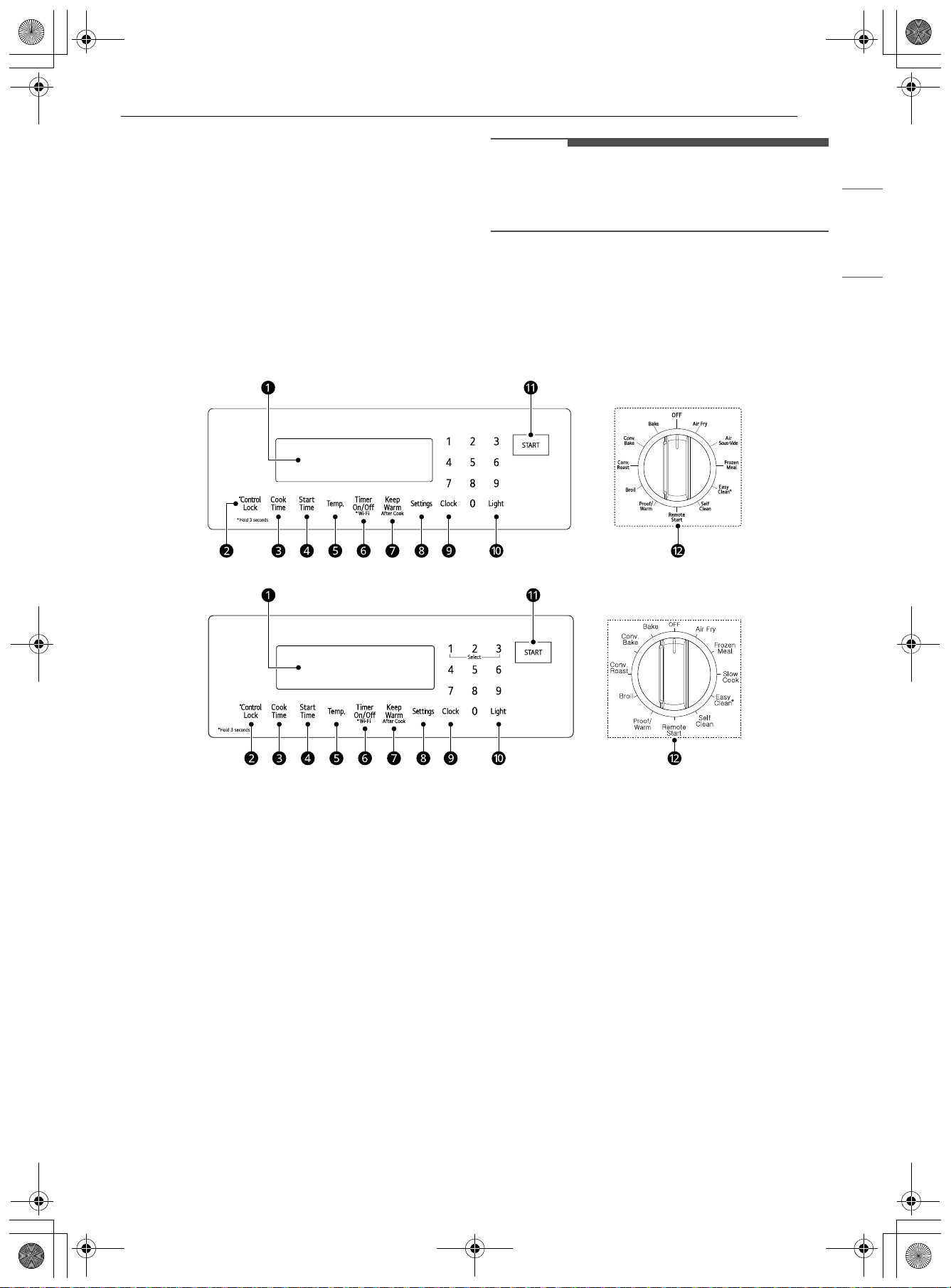
27FUNCIONAMIENTO
ESPAÑOL
- Uso del Modo Sabbath
NOTA
• Para buscar información en el manual online del
propietario, ingrese una palabra clave en el
campo de búsqueda.
Panel de control
Funciones del panel de control
Modelo: LSEL6337*E
Modelo: LSEL6335*E
a Control Lock
Mantenga presionado el botón durante
3 segundos para bloquear el panel de control.
b Cook Time
Presione el botón para configurar la cantidad
de tiempo que desea cocinar la comida. El
horno se apaga cuando se agota el tiempo de
cocción establecido.
c Start Time
Presione el botón para configurar la cocción
programada retrasada. El horno se inicia a la
hora configurada.
d Temp.
Presione el botón para configurar la
temperatura durante el uso del horno.
e Timer On/Off / Wi-Fi
Presione el botón para configurar o cancelar el
temporizador.
Mantenga presionado el botón durante
3 segundos para conectar el electrodoméstico
a una red Wi-Fi.
f Keep Warm
Presione el botón para mantener la comida
caliente en el horno luego de la cocción.
• Esta función debe usarse después de cocinar
en el horno.
g Settings
Presione el botón para seleccionar y hacer
ajustes en la configuración del horno.
h Clock
Presione el botón para configurar la hora del
día.
i Light
Presione el botón para encender o apagar la
luz del horno.
es-us_main.book.book Page 27 Tuesday, December 24, 2024 1:43 PM
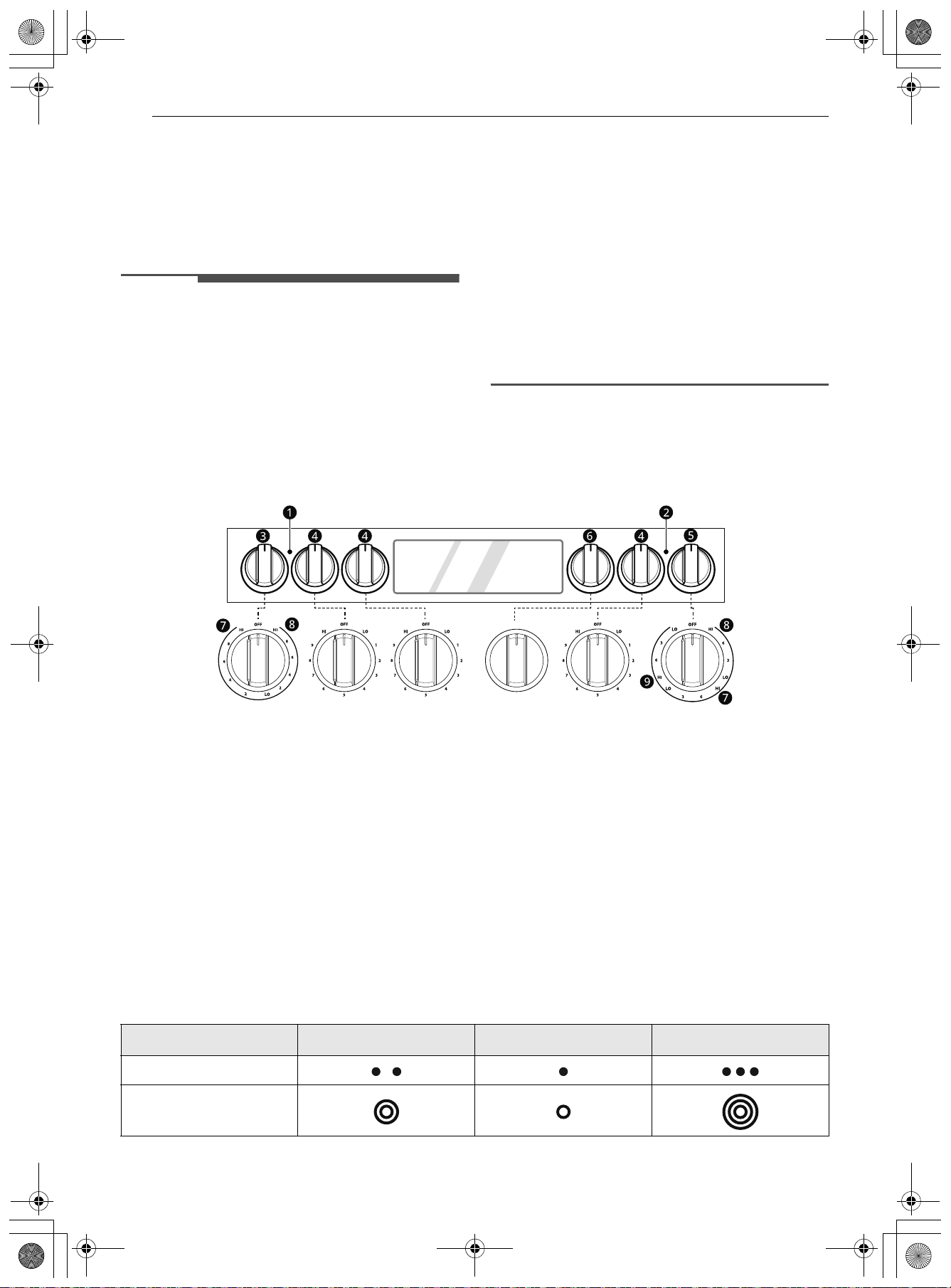
28 FUNCIONAMIENTO
j START
Presione el botón para iniciar todas las
funciones del horno.
k Perilla de modo del horno
Gire la perilla para seleccionar el modo de
operación del horno.
NOTA
• Reloj intermitente
Si el signo de dos puntos parpadea en la pantalla
del reloj, presione Clock y restablezca la hora, o
presione cualquier tecla para detener el
parpadeo.
• Presione cualquier botón del panel de control
para activar la pantalla. En el modo reposo, la
pantalla se atenúa.
• Configuración de la hora, el temporizador y la
temperatura
Si introduce un dígito de un número
incorrectamente, introduzca el número
complete nuevamente para corregirlo. Por
ejemplo, si presiona 1, 0, 3 y 1 para programar el
reloj a las 10:30, presione 1, 0, 3 y 0 para
ingresar la hora correcta.
Posiciones de las perillas
Después de limpiar las perillas de control de la placa de cocción, asegúrese de volver a colocarlas en la
posición correcta; de lo contrario podría ocasionar un mal funcionamiento de los quemadores.
a Burner On (Hornalla encendida)
Al girar la perilla se enciende la luz indicadora Burner On (Hornalla encendida) aunque el elemento de
la placa de cocción no esté en funcionamiento.
b Indicador de superficie caliente
La luz indicadora de superficie caliente permanecerá encendida mientras cualquier área de la
superficie de cocción se encuentre demasiado caliente para tocarla.
Permanecerá encendida hasta que se apague y hasta que la superficie se haya enfriado
aproximadamente a 150 °F.
c Doble (Marca A)
d Simple (Marca C)
e Triple (Marca B)
f Perilla de modo del horno
-
g Doble h Simple i Triple
Ícono tipo 1
Ícono tipo 2
es-us_main.book.book Page 28 Tuesday, December 24, 2024 1:43 PM
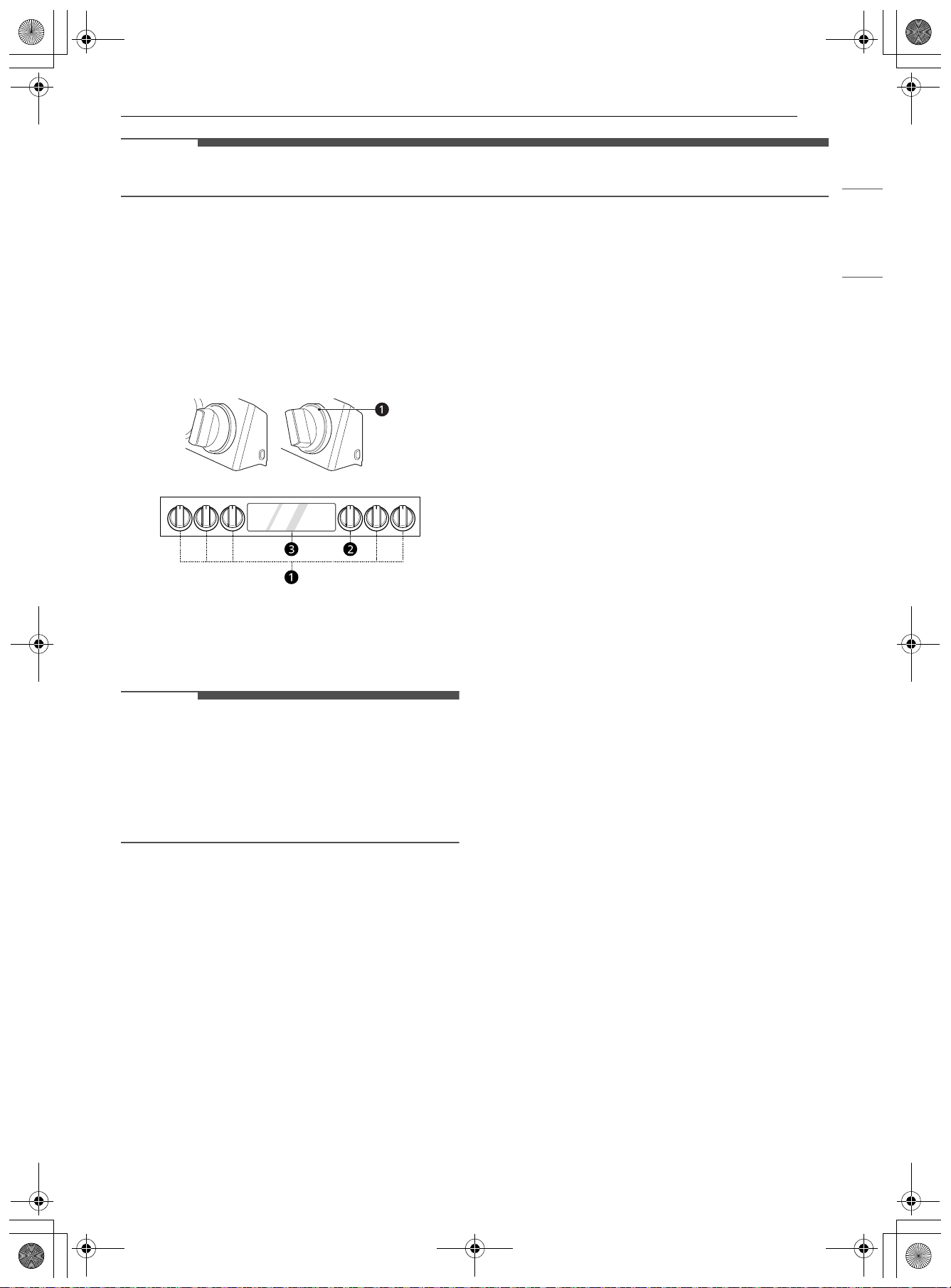
29FUNCIONAMIENTO
ESPAÑOL
NOTA
• Al recolocar las perillas, revise las marcas para ver la orientación correcta.
Luz de perilla / pantalla (Modelo
LSEL6337*E)
Esta característica solo está disponible en algunos
modelos.
La luz de perilla ilumina el borde de la perilla al
girarla para operar los elementos calentadores
(sin incluir la perilla de Modo).
a Luz de perilla
b Perilla de modo
c Luz pantalla
NOTA
• La perilla de Modo del horno no tiene la luz de
perilla.
• Si la función Control Lock (Bloqueo de Control)
está activada, al girar la perilla de la placa de
cocción, se enciende la luz de perilla, aunque el
elemento de la placa de cocción no funcione.
es-us_main.book.book Page 29 Tuesday, December 24, 2024 1:43 PM
30 FUNCIONAMIENTO
Configuración del horno
Cambio de configuración del horno
Reloj
El reloj debe estar configurado en la hora correcta
para que las funciones con temporizador del
horno funcionen correctamente.
1 Presione Clock.
2 Presione los números para ingresar la hora.
Por ejemplo, para configurar 10:30, presione
los botones: 1, 0, 3 y 0.
3 Presione START.
NOTA
• La hora del día no puede modificarse durante los
ciclos de horneado con temporizador o de
autolimpieza.
• Para comprobar la hora mientras se muestra
otra información en pantalla, presione Clock.
• Si no se presionan los botones numéricos dentro
de los 25 segundos después de presionar el
botón Clock la pantalla vuelve a la configuración
original.
• Si puede verse una hora parpadeando en la
pantalla, se ha experimentado un corte de
energía. Reconfigure el reloj.
Luz del horno
La luz interior del horno se enciende de forma
automática cuando se abre la puerta.
•Presione Light para encender la luz del horno de
forma manual.
Timer On/Off (Temporizador
encendido/apagado)
El Temporizador encendido/apagado sirve de
temporizador adicional en la cocina y emite un
pitido cuando se ha agotado el tiempo
configurado. No inicia ni detiene la cocción.
La función Temporizador encendido/apagado se
puede utilizar durante cualquiera de las funciones
de control del horno.
NOTA
• Si en la pantalla no aparece el tiempo restante,
recupérelo presionando Timer On/Off.
•Presione Timer On/Off dos veces para
configurar la hora en minutos y segundos.
•Presione Timer On/Off una vez para configurar
la hora en horas y minutos.
Cancelación del temporizador
1 Presione Timer On/Off una vez.
La pantalla vuelve a mostrar la hora del día.
Wi-Fi
El botón Wi-Fi se usa para conectar el
electrodoméstico a una red de Wi-Fi doméstica.
Bloqueo de control
La función Control Lock bloquea el panel de
control y la perilla de modo del horno.
• Cuando la función Control Lock (Bloqueo de
Control) está activada, las perillas de la placa de
cocción y del horno no funcionan.
• Para activar/desactivar la función Control Lock,
mantenga presionado el botón Control Lock
durante 3 segundos. Suena la melodía de
desbloqueo y se destraban los controles.
Hora de inicio (Cocción programada
retrasada)
El temporizador automático de la función Cocción
programada retrasada enciende y apaga el horno
a la hora que usted seleccione. Esta función puede
usarse junto con los modos Bake, Conv. Bake,
Conv. Roast y Self Clean.
Cook Time (Timed Cook) (Tiempo de
cocción [Cocción programada])
Configure el horno para que realice la cocción
durante un período específico de tiempo mediante
la función Cocción programada. Esta función solo
puede usarse junto con los modos Bake Conv.
Bake, Conv. Roast, Air Sous-Vide, Air Fry, Slow
Cook, FrozenMeal y Proof.
es-us_main.book.book Page 30 Tuesday, December 24, 2024 1:43 PM
31FUNCIONAMIENTO
ESPAÑOL
Configuración (Modo de horas,
Conversión automática a
convección, Calibración de la
temperatura del horno, Luz de
alarma de precalentado, Volumen
del indicador sonoro, Fahrenheit o
Celsius, Placa de cocción en
volumen de alarma, Encender/
Apagar Wi-Fi)
Presione el botón Settings (Ajustes) varias veces
para alternar entre las diferentes configuraciones
del horno y modificarlas.
El botón Settings permite:
• Configurar el modo de horas en el reloj (12 o
24 horas)
• Habilitar/inhabilitar la conversión
automática a convección
• calibrar la temperatura del horno
• Activar/desactivar la luz de alarma de
precalentamiento
• Configurar el volumen del indicador sonoro
• Cambiar la escala de temperatura entre
Fahrenheit y Celsius
• Configurar la placa de cocción en volumen de
alarma
• activar/desactivar el Wi-Fi
Configuración del modo de la hora
El control está configurado para usar un reloj de
12 horas. Si desea configurar el reloj en el modo de
24 horas, siga los pasos a continuación.
1 Presione Settings una vez.
2 Presione 1 para ir cambiando entre un reloj
de 12 horas y uno de 24 horas.
3 Presione START para aceptar el cambio.
Configuración del modo de conversión
automática a convección
Cuando se seleccionan los modos Conv. Bake y
Conv. Roast, la función Conversión automática a
convección convierte de manera automática la
temperatura estándar de la receta ingresada en
una temperatura de convección al restar 25 °F / 14
°C. Esta temperatura convertida automáticamente
aparece en la pantalla. Por ejemplo, si selecciona
Conv. Bake e ingresa 350 °F, en la pantalla
aparecerá 325 °F después de precalentar.
1 Presione Settings varias veces hasta que
aparezca Avto en la pantalla.
2 Presione 1 para habilitar o inhabilitar la
conversión automática.
3 Presione START para aceptar el cambio.
NOTA
• El modo de cocción por convección utiliza la
circulación de aire para cocinar más rápido y de
forma más pareja que el modo de cocción
normal, por lo que se pueden obtener mejores
resultados de cocción que con el horneado
normal, incluso cuando la temperatura se
reduce en 25 °F/14 °C.
Calibración de la temperatura del
horno
Cuando empiece a utilizar el horno, preste mucha
atención a las temperaturas, los tiempos y las
posiciones de los estantes recomendados en el
manual. Este horno podría ser diferente de su
horno anterior, por lo que podría llevarle algún
tiempo acostumbrarse a él. Si ha seguido las guías
de recomendaciones de este horno y todavía cree
que la temperatura es más alta o más baja de lo
esperado, puede calibrar manualmente la
temperatura que se muestra en el horno.
Hay 2 métodos para medir cuánto se debe ajustar
la temperatura de pantalla.
• Método 1: Intente calcular cuánto debe
aumentar o disminuir la temperatura indicada
probando recetas conocidas a temperaturas
superiores o inferiores a las recomendadas. Esto
podría ayudarle a decidir cuánto desea ajustar la
temperatura.
• Método 2: Suba o baje la temperatura 15 °F
(8 °C) al principio. Pruebe el horno con este
ajuste. Si aún necesita ajustar la temperatura del
horno, use los resultados del primer ajuste como
referencia y cambie la cantidad de ajuste de
es-us_main.book.book Page 31 Tuesday, December 24, 2024 1:43 PM
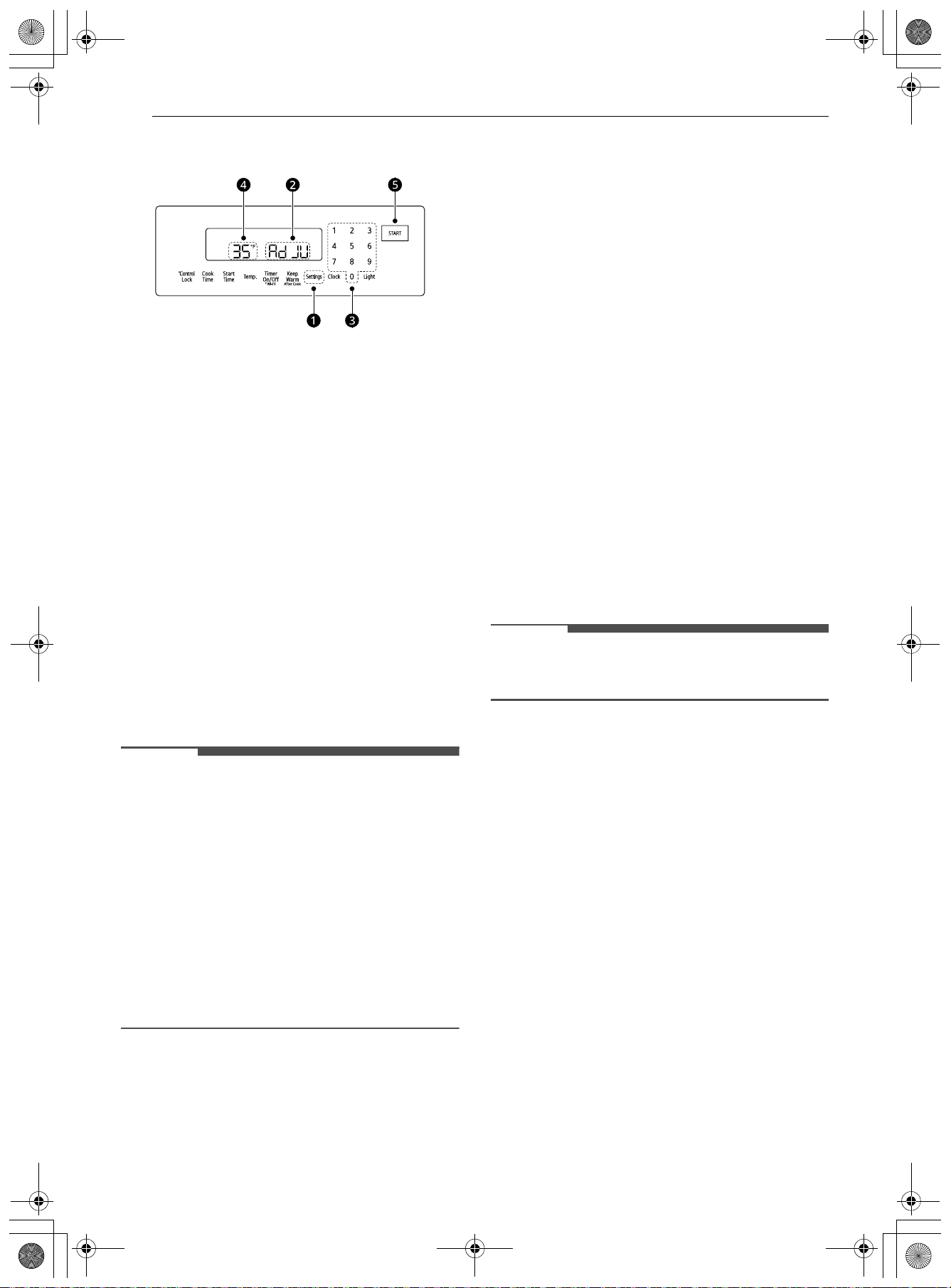
32 FUNCIONAMIENTO
temperatura hasta que logre calibrar la pantalla
de temperatura del horno a su gusto.
1 Presione Settings a (Configuración) varias
veces hasta que AdJU b aparezca en la
pantalla.
2 Use los botones numéricos c para ingresar la
cantidad de grados a los que desea ajustar la
temperatura del horno. El ajuste de la
temperatura se muestra junto a
AdJU d.
Puede subir o bajar la temperatura en 35 °F o
19 °C.
3 Para bajar la temperatura, presione Settings
a (Configuración) para agregar un signo
menos (-) al número mostrado. Para subir la
temperatura, presione Settings
a para
quitar el signo menos de la pantalla.
4 Presione START e para aceptar el cambio.
NOTA
• Este ajuste no afecta a las temperaturas de
asado o SelfClean. El ajuste se retiene en la
memoria después de una falla eléctrica. La
temperatura del horno puede ajustarse en
±35 °F (±19 °C).
• Una vez ajustada la temperatura, presione
Settings (Configuración) varias veces hasta que
aparezca
AdJU para que pueda ver la cantidad
ajustada y cambiarla si es necesario.
• Las temperaturas mostradas por un termómetro
de horno colocado en la cavidad del horno
podrían diferir de la temperatura real
configurada del horno en todos los modos.
Encendido/apagado de la luz de alarma
de precalentamiento
Cuando el horno alcanza la temperatura
programada, la luz de alarma de precalentamiento
titila 5 veces o hasta que se abra la puerta del
horno.
Puede activar o desactivar la luz de alarma de
precalentamiento.
1 Presione Settings varias veces hasta que
aparezca PrE en la pantalla.
2 Presione 1 varias veces para establecer el
encendido o apagado de la luz.
3 Presione START para aceptar el cambio.
Ajuste del volumen del indicador
sonoro
1 Presione Settings varias veces hasta que
aparezca 8EEP en la pantalla.
2 Presione 1 varias veces para seleccionar Hi,
Lo o bien OFF.
3 Presione START para aceptar el cambio.
NOTA
• Ajustar el volumen de la señal acústica no afecta
el volumen de la alarma de precalentamiento.
Selección de grados Fahrenheit o
Celsius
Configure la visualización de la temperatura del
horno para que muestre unidades Fahrenheit (℉)
o Celsius (℃). El ajuste predeterminado del horno
es en unidades Fahrenheit, a menos que lo cambie
el usuario.
1 Presione Settings varias veces hasta que
aparezca UNit en la pantalla.
2 Presione 1 varias veces para seleccionar F
(Fahrenheit) o C (Celsius).
3 Presione START para aceptar el cambio.
Ajuste de la Placa de cocción en
volumen de alarma
1 Presione Settings varias veces hasta que
aparezca CtOP en la pantalla.
es-us_main.book.book Page 32 Tuesday, December 24, 2024 1:43 PM
33FUNCIONAMIENTO
ESPAÑOL
2 Presione 1 para seleccionar Hi, Lo, Off (Alto,
Bajo, Apagado).
3 Presione START para aceptar el cambio.
Encender/Apagar el Wi-Fi
Puede encender o apagar el transmisor Wi-Fi de la
PCB.
1 Presione Settings varias veces hasta que
aparezca Wi-Fi en la pantalla.
2 Presione 1 para encender o apagar el
transmisor Wi-Fi.
3 Presione START para aceptar el cambio.
Placa de cocción
Uso de las hornallas de la placa de
cocción
PRECAUCIÓN
• Utilice únicamente utensilios de cocina y vajilla
que sean seguros para su uso en el horno y la
placa de cocción.
• Use siempre agarraderas o guantes para horno
al retirar alimentos de la placa de cocción y del
horno.
• No coloque recipientes sellados sobre la placa
de cocción.
• No utilice envolturas plásticas para cubrir
alimentos mientras estén sobre la placa de
cocción. El plástico podría derretirse sobre la
superficie y muy difícil de limpiar.
• Nunca deje alimentos sin supervisión sobre la
placa de cocción. Los derrames podrían causar
humo. Los derrames grasosos podrían iniciar un
incendio.
• Es posible que el elemento de la superficie
parezca que se ha enfriado una vez apagado,
pero aún podría estar caliente y tocarlo antes de
se haya enfriado lo suficiente puede causar
quemaduras.
• Haga coincidir el tamaño del elemento de la
placa de cocción con el tamaño del utensilio en
uso. El uso un elemento grande para una olla
pequeña desperdicia energía térmica, y la
superficie expuesta del elemento constituye un
riesgo de quemadura o incendio.
• Limpie las perillas regularmente. La suciedad u
objetos extraños en las perillas podrían interferir
con el funcionamiento del botón.
• No aplique fuerza excesiva al utilizar los botones
y las funciones de bloqueo, ya que podrían
dañarse.
• Las superficies de las perillas podrían estar
calientes luego de la cocción. Deje que las
perillas se enfríen lo suficiente o póngase un
guante de cocina previo a tocarlas.
• Los botones deben estar ajustados
correctamente para garantizar las funciones
previstas de las perillas.
NOTA
• Indicador de superficie caliente
- La luz indicadora de superficie caliente
permanecerá encendida mientras cualquier
área de la superficie de cocción se encuentre
demasiado caliente para tocarla.
- Permanecerá encendida hasta que se apague
y hasta que la superficie se haya enfriado
aproximadamente a 150 °F.
• La perilla de modo del horno no tiene botón.
• Para utilizar las perillas de la placa de cocción sin
presionar el botón lateral, utilice la función de
bloqueo de botón.
• Si va a remover y reensamblar la perilla,
mantenga pulsado el botón lateral mientras
presiona la perilla completamente sobre el eje.
Encendido de un elemento simple
1 Presione el botón lateral de la perilla A.
2 Presione la perilla del elemento simple a B.
es-us_main.book.book Page 33 Tuesday, December 24, 2024 1:43 PM
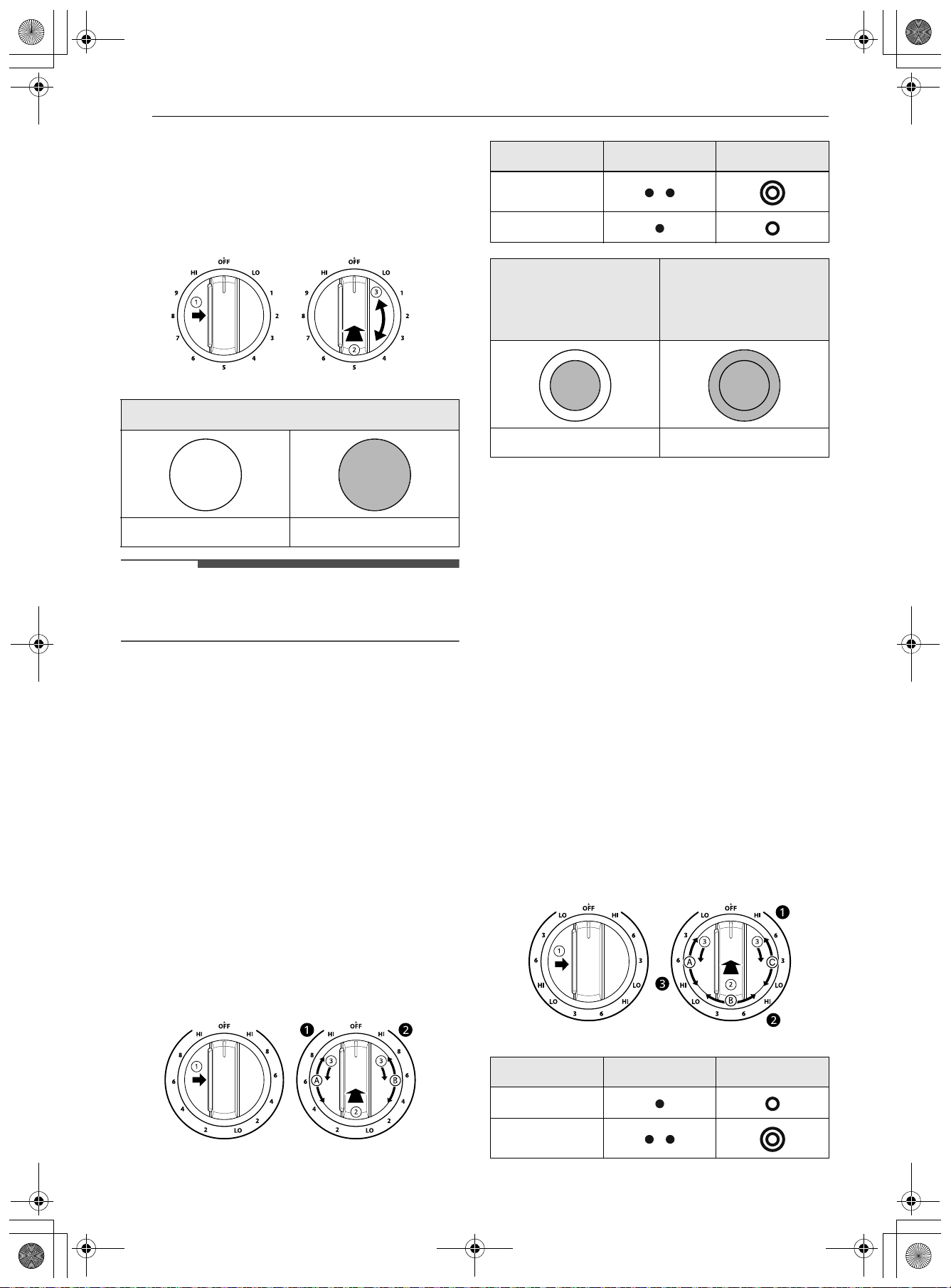
34 FUNCIONAMIENTO
3 Gire la perilla en cualquier dirección hasta el
ajuste deseado C.
• La perilla de control hace clic cuando se
coloca en OFF (APAGADO), Hi (ALTO) y Lo
(BAJO).
NOTA
• Hi es la temperatura más alta disponible.
• Lo es la temperatura más baja disponible.
Encendido de un elemento doble
Hay un elemento doble ubicado en la posición
delantera izquierda. Utilice el elemento doble
como doble o simple.
1 Presione el botón lateral de la perilla A.
2 Presione la perilla adecuada B.
3 Gire la perilla para utilizarlo como elemento
simple o como un elemento doble
C.
• Para usar como elemento simple, gire la
perilla hacia la izquierda.
• Para usar como elemento doble, gire la
perilla hacia la derecha.
Encendido de un elemento triple (En
algunos modelos)
Hay un elemento triple que se puede utilizar como
simple, doble o triple.
1 Presione el botón lateral de la perilla A.
2 Presione la perilla adecuada B.
3 Gire la perilla para utilizar como elemento
simple, doble o triple.
• Para usar como elemento simple, gire la
perilla hacia la izquierda.
• Para usar como elemento doble, gire la
perilla hacia la derecha hasta la posición
doble.
• Para usar como elemento triple, gire la
perilla hacia la derecha hasta la posición
triple.
Elemento calentador
APAGADO ENCENDIDO
Ícono tipo 1 Ícono tipo 2
a Doble
b Simple
Calentamiento solo
con un elemento
interior (más
pequeño)
Calentamiento con
los dos elementos
juntos
BA
Ícono tipo 1 Ícono tipo 2
a Simple
b Doble
es-us_main.book.book Page 34 Tuesday, December 24, 2024 1:43 PM
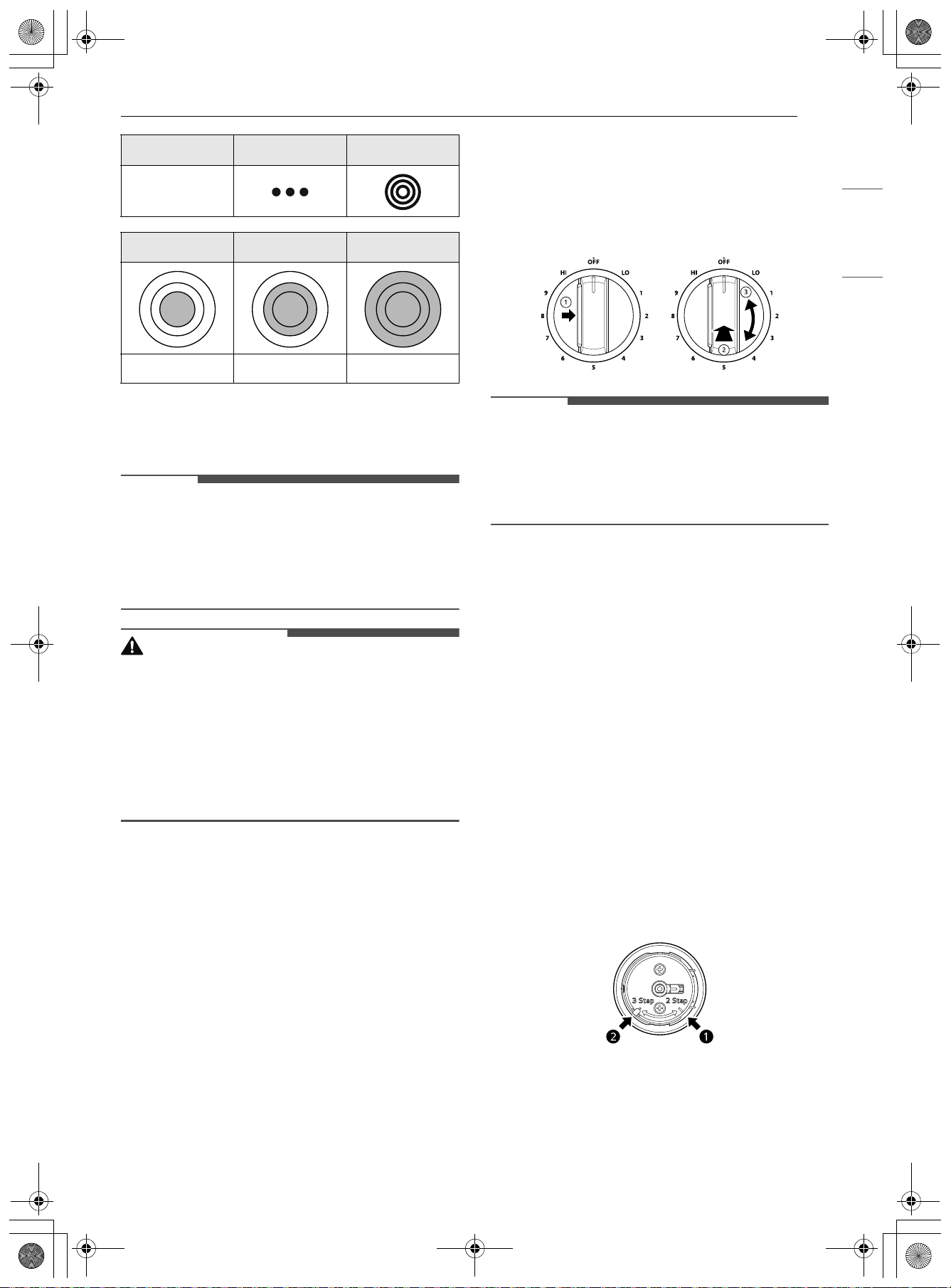
35FUNCIONAMIENTO
ESPAÑOL
Encendido de la zona de
calentamiento
NOTA
•La zona de calentamiento no emitirá un brillo
rojo como los otros elementos de cocción.
• Si va a remover y reensamblar la perilla,
mantenga pulsado el botón lateral mientras
presiona la perilla completamente sobre el eje.
PRECAUCIÓN
• PELIGRO DE VENENO ALIMENTARIO: Las
bacterias pueden crecer en los alimentos con
temperaturas inferiores a 140 °F.
- Siempre empiece con comida caliente. No use
la configuración de calentamiento para
calentar alimentos fríos.
- No utilice la configuración de calentamiento
durante más de 2 horas.
La Zona de calentamiento, ubicada en la parte
posterior central de la superficie de vidrio,
mantendrá los alimentos cocidos calientes a la
temperatura adecuada para servir. Use la Zona de
calentamiento para mantener la comida caliente
después de que ya se haya cocinado. Si intenta
cocinar alimentos crudos o fríos en la Zona de
calentamiento podría provocar enfermedades
transmitidas por los alimentos.
1 Presione el botón lateral de la perilla A.
2 Presione la perilla del elemento Warm Zone
(Zona de calentamiento) en B.
3 Gire la perilla en cualquier dirección hasta el
ajuste deseado C.
• La perilla de control hace clic cuando se
coloca en OFF (APAGADO), Hi (ALTO) y Lo
(BAJO).
NOTA
• Para obtener mejores resultados, los alimentos
que se encuentran en el calentador deben
guardarse en su recipiente o cubrirse con una
tapa o papel de aluminio para mantener su
calidad.
Uso del Bloqueo de Perillas
Puede ajustar el bloqueo de perilla en cada perilla
de la placa de cocción para que no tenga que
presionar el botón para utilizar la perilla. Retire y
ajuste una perilla a la vez.
1 Asegúrese de que la perilla está en la posición
OFF y tire de ella hacia afuera de su eje.
2 En la parte posterior del anillo de la perilla,
gire la pestaña negra a la posición de 2 Step o
3 Step.
• Si desliza la lengüeta a la posición 2 Step
a,
la perilla se puede usar sin presionar el
botón.
• Si desliza la lengüeta a la posición 3 Step b,
debe presionar el botón para usar la perilla.
3 Una vez que el bloqueo de la perilla esté
ajustado como desee, vuelva a instalar la
perilla. Para reinstalar, sostenga la perilla con
c Triple
Simple Doble Triple
CBA
Ícono tipo 1 Ícono tipo 2
es-us_main.book.book Page 35 Tuesday, December 24, 2024 1:43 PM
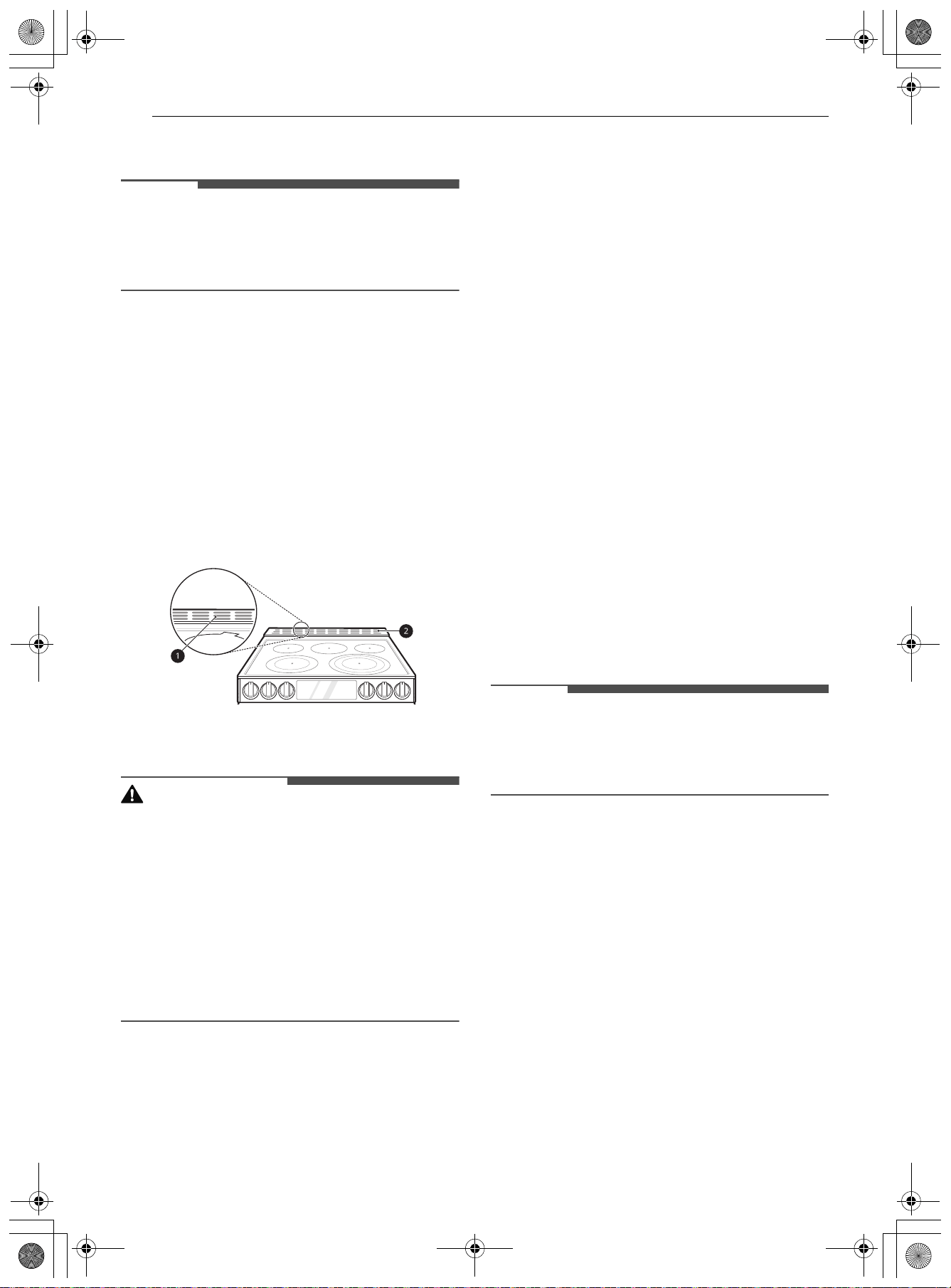
36 FUNCIONAMIENTO
la etiqueta OFF en la parte superior y deslice
la perilla directamente sobre su eje.
NOTA
• La lengüeta negra debe estar alineada con la
marca 2 Step o 3 Step para garantizar el
funcionamiento adecuado de la perilla y del
botón.
Horno
Ventilación del horno
Las áreas cercanas a la ventilación podrían
calentarse durante el funcionamiento y causar
quemaduras. No bloquee la abertura de
ventilación. Evite colocar plásticos cerca de la
ventilación, ya que el calor podría deformar o
derretir el plástico.
Es normal que se vea vapor cuando se cocinan
alimentos con un alto contenido de humedad.
a Ventilación del horno
b Moldura de ventilación
PRECAUCIÓN
• Los bordes de la ventilación de la estufa son
filosos. Para evitar sufrir lesiones, use guantes
cuando limpie la estufa.
• No bloquee, toque ni coloque elementos
alrededor de la ventilación del horno durante la
cocción.
- No bloquee la ventilación del horno cuando
cocine para permitir un flujo de aire adecuado.
No toque las aberturas de ventilación ni las
superficies cercanas durante cualquier
operación de cocina.
Modos de cocción
Cómo configurar un modo de cocción
1 Gire la perilla de modo del horno para
seleccionar el modo de cocción deseado.
2 Ajuste la temperatura del horno.
3 Presione START. El horno comienza a
precalentar.
4 Cuando termine de cocinar, gire la perilla de
modo del horno a la posición OFF.
5 Retire los alimentos del horno.
Bake (Hornear)
La función Hornear se utiliza para preparar
alimentos como pasteles, panes y estofados.
Es posible programar el horno para hornear a
cualquier temperatura entre 170 °F (80 °C) y 550 °F
(285 °C). La temperatura predeterminada es 350 °F
(175 °C).
NOTA
•Es normal que el ventilador de convección
funcione periódicamente durante un ciclo
normal de horneado. Esto sucede para asegurar
resultados uniformes de horneado.
Guía de recomendaciones para hornear
Los resultados del horneado serán mejores si las
bandejas para hornear están centradas en el
horno todo lo posible. Si cocina en varios estantes,
coloque los estantes del horno en las posiciones
que se muestran.
La cocción con varios estantes ahorra tiempo y
energía. Siempre que sea posible, cocine los
alimentos que requieran la misma temperatura de
cocción juntos en un horno.
es-us_main.book.book Page 36 Tuesday, December 24, 2024 1:43 PM
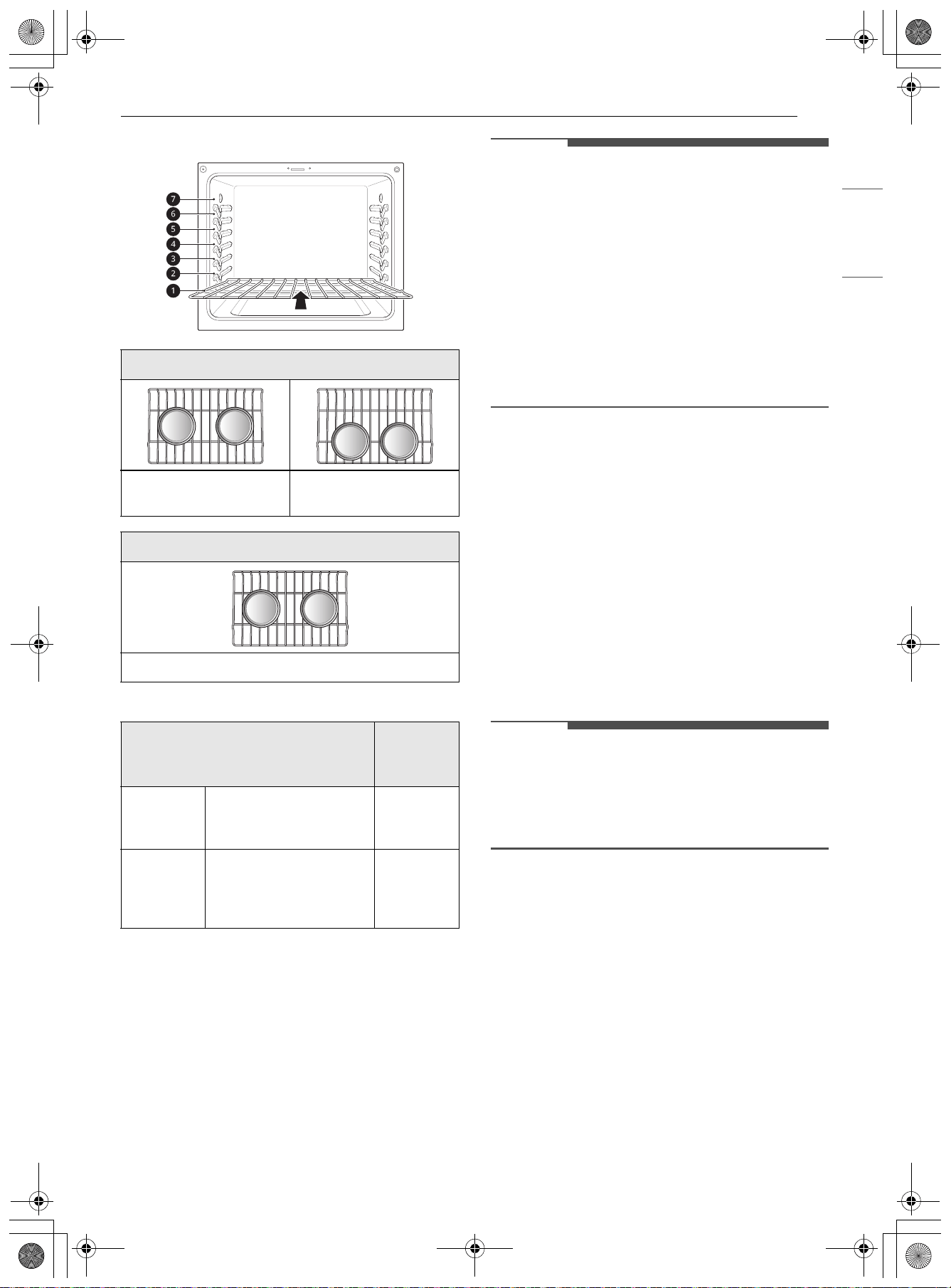
37FUNCIONAMIENTO
ESPAÑOL
Colocación de estantes y bandejas
Guía para horneado en estantes
Piedra y pala para pizza (Solo modelo
LSEL6337*E)
Una piedra para pizza retiene el calor y lo
distribuye de manera más uniforme que una
bandeja de metal. La superficie extra caliente es
ideal para crear una base crujiente en pizzas de
masa fina. Use una pala para pizza para poder
colocar y quitar la pizza de la piedra para pizza
caliente.
NOTA
• Si está cocinando varias pizzas, es posible que
las pizzas posteriores se cocinen más rápido.
• Coloque la piedra para pizza en el horno antes
de precalentar el horno. Deje que la piedra se
precaliente de 15 a 30 minutos antes de cocinar
la pizza.
• Ajuste la posición de la rejilla del horno antes de
colocar la piedra para pizza en el horno para
obtener una masa más o menos crujiente.
• No se recomienda utilizar la piedra para pizza
con pizzas congeladas, ya que el choque térmico
podría dañar la piedra para pizza.
Modo de convección
El sistema de convección usa un ventilador para
hacer circular el calor de manera uniforme dentro
del horno. Esto mejora la distribución del calor y
permite una cocción uniforme y excelentes
resultados mientras se cocina con un solo estante
o con varios.
• A medida que el horno se precalienta, se
muestran incrementos de temperatura cada 5
grados. Una vez que el horno alcanza la
temperatura deseada, suena un tono y la luz del
horno se enciende y apaga. La pantalla muestra
la temperatura del horno convertida
automáticamente a 350 °F y el icono de
ventilador.
NOTA
• El ventilador del horno funciona mientras se
hornea por convección. Si la puerta está abierta,
el ventilador se detiene. En algunos casos, el
ventilador podrá detenerse durante un ciclo de
horneado por convección.
Broil (Asar)
La función Asar utiliza calor intenso del elemento
calentador superior para cocinar los alimentos. La
función Asar funciona mejor cuando se asan cortes
de carne, pescado y vegetales tiernos y finos.
Durante el funcionamiento normal del asador,
cualquiera de los elementos se puede apagar en
forma intermitente.
Horneado en varios estantes
Estante resistente
(Posición 2)
Estante resistente
(Posición 5)
Horneado en un solo estante
Estante resistente
Comida
Posición
del
estante
Pasteles
Pasteles en capas
Pasteles en savarín
Pastel de ángel
2
3
3
Galletas
Galletas azucaradas
Con chispas de
chocolate
Con chocolate y nueces
4
4
4
es-us_main.book.book Page 37 Tuesday, December 24, 2024 1:43 PM
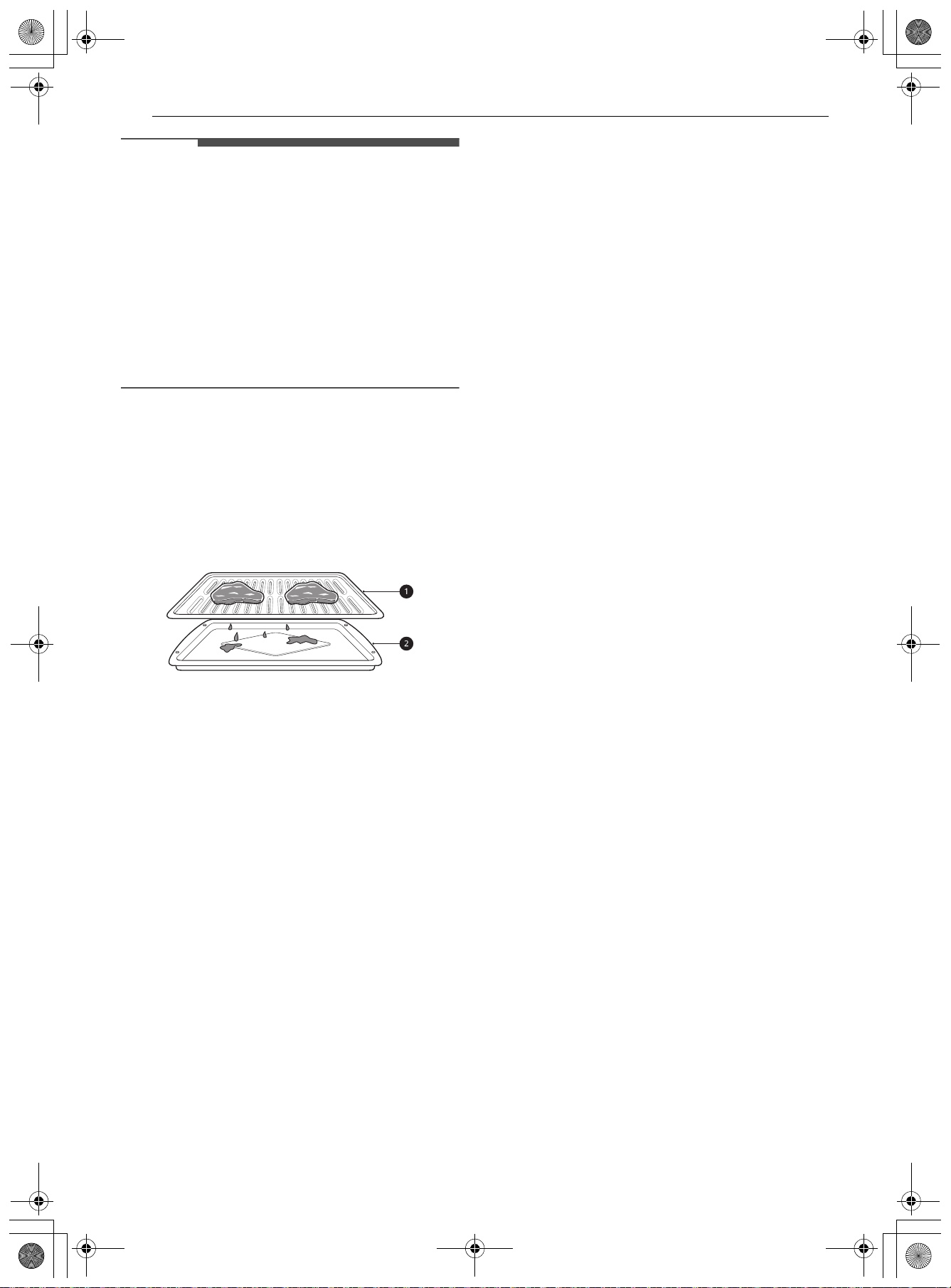
38 FUNCIONAMIENTO
NOTA
• Su horno está diseñado para asar con la puerta
cerrada. Cierre la puerta para configurar la
función Asar. Si la puerta está abierta, la función
Asar no se puede configurar, y aparece la
palabra "door" (puerta) en la pantalla. Cierre la
puerta y restablezca la función Asar. Abrir la
puerta durante el proceso de asar, hace que se
apague el quemador. Si la puerta se abre
durante el proceso de asar, el quemador se
apaga luego de cinco segundos. El quemador
para asar se vuelve a encender
automáticamente una vez cerrada la puerta.
Guía de recomendaciones para asar
El tamaño, peso, espesor, la temperatura inicial y
su preferencia de cocción afectarán el tiempo de
asado.
Esta guía se basa en carnes a temperatura de
refrigerador. Para obtener mejores resultados al
asar, use una bandeja especial para asar.
a Rejilla (se vende por separado)
b Asadera (se vende por separado)
• Alimentos: hamburguesas
Espaciar de manera uniforme. Se pueden asar
hasta 9 hamburguesas.
- Cantidad y/o espesor:
9 hamburguesas de 1/2 a 3/4" de espesor
- Posición del estante: 7
- Primer lado (min.): de 3 a 6
- Segundo lado (min.): de 2 a 4
Proof (Leudar)
Esta función mantiene el horno caliente para
leudar los productos con levadura antes de
hornear. (Configure la temperatura a 92 °F)
Warm (Calentar)
Esta función mantendrá una temperatura del
horno de 170 °F y conservará caliente la comida
cocida para que pueda servirla hasta 3 horas
después de realizada la cocción. La función
Calentar puede utilizarse sin ninguna otra
operación de cocción o se puede usar después de
que la cocción haya terminado con las funciones
de Cocción programada o Cocción programada
retrasada.
Keep Warm (Mantener caliente)
Esta función mantendrá una temperatura del
horno de 170 ℉. La función Mantener caliente
mantendrá caliente la comida cocida para servir
hasta 3 horas después de realizada la cocción. La
función Mantener caliente puede utilizarse con
cualquier otra operación de cocción. La función
Mantener caliente se puede usar después de que
la cocción haya terminado con las funciones de
cocción programada o cocción programada
retrasada.
Air Fry (Freír con aire)
Esta función aumenta automáticamente la
temperatura ingresada a 50 °F para un
rendimiento óptimo cuando se usa Freír con aire.
La función Freír con aire está especialmente
diseñada para freír sin aceite.
Air Sous-Vide (Cocción al vacío por flujo
de aire) (Modelo LSEL6337*E)
Esta característica solo está disponible en algunos
modelos.
La función Cocción al vacío por flujo de aire utiliza
aire para cocinar los alimentos "a fuego lento".
Úsela para cocinar carnes, pescados, mariscos,
aves o verduras. Los alimentos deben estar
envasados al vacío en bolsas antes de cocinarlos.
• No es necesario precalentar el horno cuando se
utiliza la función Cocción al vacío por flujo de
aire.
• Consulte la guía de cocción para obtener los
ajustes recomendados de la Cocción al vacío por
flujo de aire.
Frozen Meal (Comida congelada)
La función Comida congelada está diseñada
especialmente para cocinar comidas preparadas
que están congeladas. Permite que los alimentos
se calienten tanto desde arriba como desde abajo
para dorarlos de manera más uniforme.
Este sistema está diseñado para brindar un
rendimiento de cocción óptimo al seleccionar
automáticamente una combinación de los
sistemas de calentamiento para asar y hornear.
Cuando se usa el modo Comida congelada, no se
requiere precalentamiento. Para obtener mejores
resultados con la pizza congelada, cocine los
alimentos en un solo estante colocado en la
posición 4 a 400 °F.
es-us_main.book.book Page 38 Tuesday, December 24, 2024 1:43 PM
39FUNCIONAMIENTO
ESPAÑOL
Slow Cook (Cocción lenta)
(modelo LSEL6335*E)
Esta característica solo está disponible en algunos
modelos.
La función Cocción lenta está diseñada
especialmente para asar carne de res, cerdo y
aves. Es común que la superficie de los alimentos
se oscurezca después de completar la cocción
lenta. No se requiere precalentamiento cuando se
usa el modo de cocción lenta.
es-us_main.book.book Page 39 Tuesday, December 24, 2024 1:43 PM
40 FUNCIONES INTELIGENTES
FUNCIONES INTELIGENTES
Aplicación LG ThinQ
Esta característica solo está disponible en modelos
con Wi-Fi.
La aplicación LG ThinQ le permite comunicarse
con el electrodoméstico usando un teléfono
inteligente.
Funciones de la aplicación LG ThinQ
• Smart Diagnosis
TM
- Esta función brinda información útil para
diagnosticar y resolver problemas con el
producto conforme a su patrón de uso.
• Configuración
- Esta función le permite ajustar varias opciones
en el horno y en la aplicación.
• Scan to Cook (Escanear para cocinar)
- Escanee el código de barras en una comida
precocinada usando la aplicación LG ThinQ y
envíe las instrucciones de cocción
recomendadas o personalizadas directamente
a su horno. La función Remote Start
(Arranque remoto) debe estar activada en el
horno para usar la función Scan to Cook.
• Monitoreo
- Esta función le ayuda a comprobar el estado
actual, el tiempo restante, la configuración de
cocción y la hora de finalización en un lugar.
• Notificaciones de productos
- Active las Alertas Push para recibir
notificaciones del estado del electrodoméstico.
Las notificaciones se emiten incluso si la
aplicación LG ThinQ no está abierta.
• Temporizador
- Se puede configurar el temporizador desde la
aplicación.
• Actualización de Firmware
- Mantiene el electrodoméstico actualizado.
NOTA
• En los siguientes casos, debe actualizar la
información de red para cada electrodoméstico
en la aplicación LG ThinQ en tarjeta del
electrodoméstico
~ Ajustes ~ Cambio de
red.
- el router inalámbrico ha cambiado
- la contraseña del router inalámbrico ha
cambiado
- el proveedor de servicio de internet ha
cambiado
• Esta información está actualizada en el
momento de su publicación. La aplicación está
sujeta a cambios, con fines de mejorar el
producto, sin previo aviso a los usuarios.
• No se puede utilizar Scan to Cook (Escanear para
cocinar) mientras el temporizador está
funcionando. Cancele la operación del
temporizador para usar Scan to Cook.
Instalación de la aplicación LG
ThinQ y conexión de un
electrodoméstico LG
Modelos con código QR
Escanee el código QR que trae el producto con la
cámara o una aplicación lectora de códigos QR en
su teléfono inteligente.
Modelos sin código QR
1 Busque la aplicación LG ThinQ en la tienda
Google Play o Apple App Store e instálela en
su teléfono inteligente.
2 Ejecute la aplicación LG ThinQ e inicie sesión
con su cuenta actual, o cree una cuenta LG
para iniciar sesión.
3 Pulse el botón Agregar (~) en la aplicación LG
ThinQ para conectar su electrodoméstico LG.
Siga las instrucciones en la aplicación y
complete el proceso.
NOTA
• Para verificar la conexión Wi-Fi, revise que el
ícono
f en el panel de control esté encendido.
• El electrodoméstico funciona únicamente con
redes Wi-Fi de 2.4 GHz. Contacte a su proveedor
de servicios de internet o verifique el manual del
es-us_main.book.book Page 40 Tuesday, December 24, 2024 1:43 PM
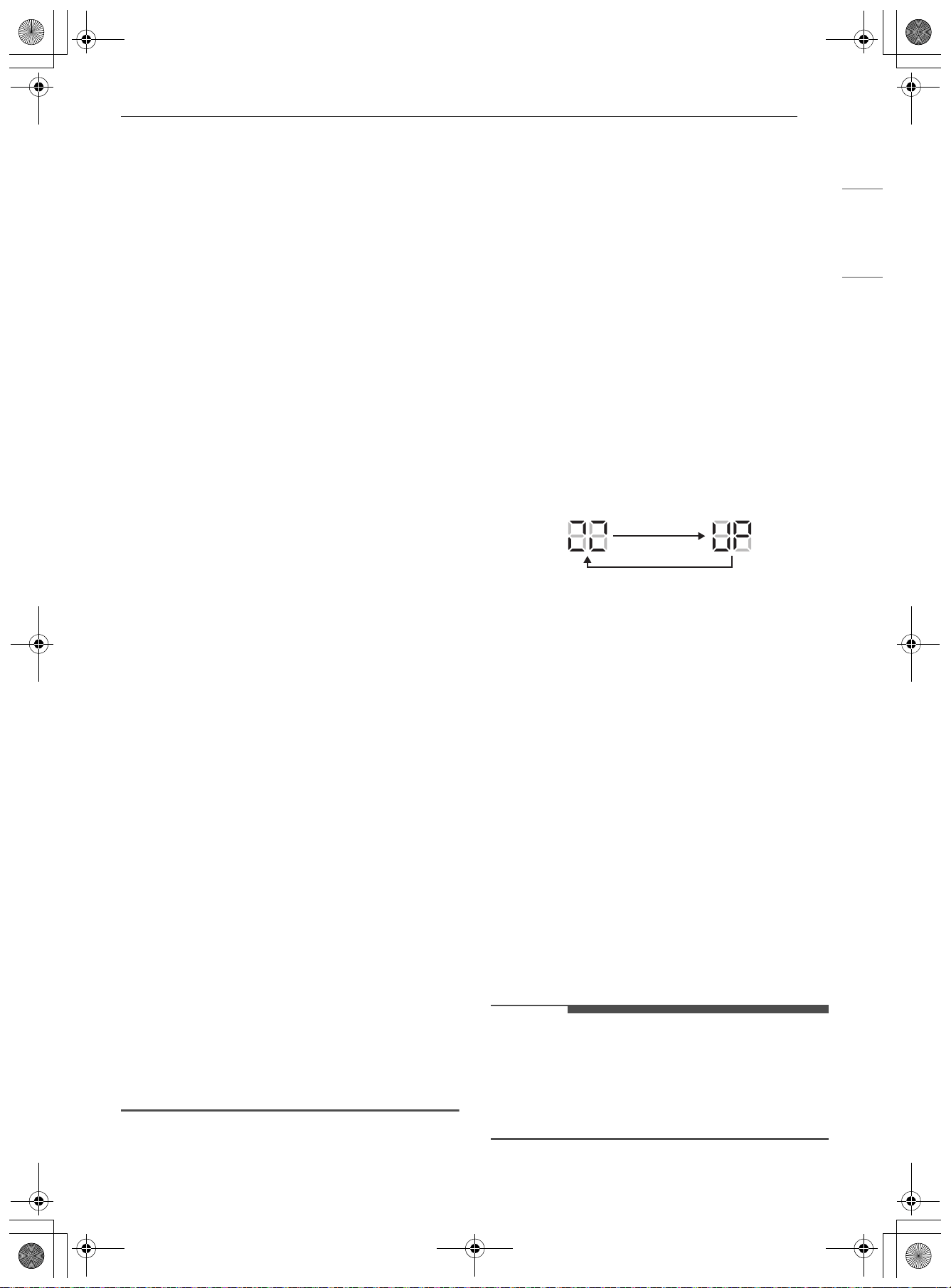
41FUNCIONES INTELIGENTES
ESPAÑOL
enrutador inalámbrico para revisar la frecuencia
de su red.
• LG ThinQ no es responsable por ningún
problema de conexión en red, falla, mal
funcionamiento o error causado por la conexión
de red.
• El entorno inalámbrico circundante puede hacer
que el servicio de red inalámbrica funcione
lentamente.
• Si la distancia entre el electrodoméstico y el
enrutador inalámbrico es muy grande, la señal
será débil. Probablemente le tome más tiempo
conectarse o no pueda instalar la aplicación.
• Si el aparato tiene problemas para conectarse a
la red Wi-Fi, es posible que se encuentre
demasiado lejos del router. Adquiera un
repetidor Wi-Fi (extensor de alcance) para
mejorar la intensidad de la señal Wi-Fi.
• Es posible que la conexión de red no funcione
bien por cuestiones relacionadas con su
proveedor de servicios de Internet.
• Es posible que el equipo no se conecte a la red
Wi-Fi o que se interrumpa la conexión debido al
entorno de la red doméstica.
• Si el electrodoméstico no puede conectarse
debido a problemas con la transmisión de la
señal inalámbrica, desenchufe el artefacto y
espere alrededor de un minuto antes de
intentarlo de nuevo.
• Si el cortafuegos de su enrutador inalámbrico
está activado, desactivelo o añada una
excepción a éste.
• El nombre de la red inalámbrica (SSID) debe ser
una combinación de letras y números. (No utilice
símbolos especiales)
• La interfaz de usuario (IU) del teléfono
inteligente puede variar dependiendo del
sistema operativo (OS) del móvil y del fabricante.
• Puede que la configuración de red falle si el
protocolo de seguridad del enrutador está en
WEP. Cambie el protocolo de seguridad por otro
(se recomienda el WPA2) y conecte el producto
de nuevo.
• Para desactivar la función Wi-Fi, mantenga
presionado el botón Wi-Fi por 3 segundos. El
indicador Wi-Fi se apagará.
• Para volver a conectar el electrodoméstico o
agregar otro usuario, mantenga presionado el
botón Wi-Fi por 3 segundos. Ejecute la
aplicación LG ThinQ y siga las instrucciones en
ella para conectar el electrodoméstico.
Instalación de la aplicación LG
ThinQ
Busque la aplicación LG ThinQ en la tienda Google
Play o App Store desde su teléfono inteligente.
Siga las instrucciones para descargar e instalar la
aplicación.
Actualización de características LG
Disfrute de nuevas características mediante la
actualización de su producto a través de la
aplicación LG ThinQ.
Si una función actualizable está disponible,
aparece una notificación de actualización en la
pantalla y suena una melodía después de que la
cocción haya terminado y se presiona CLEAR/OFF.
Por ejemplo, es posible que las luces de la pantalla
se enciendan en una secuencia hasta que aparezca
φπ.
1 Cuando hay actualizaciones disponibles, se
envían notificaciones de actualización a su
teléfono inteligente.
2 Presione la notificación de actualización en su
teléfono inteligente para ingresar al LG
UPgrade Center en la aplicación LG ThinQ.
3 Una vez en el LG UPgrade Center, seleccione
una nueva característica y presione el botón
Upgrade.
• No desenchufe el producto durante la
actualización; de lo contrario, podría
interrumpir el proceso de actualización.
4 Cuando haya finalizado la actualización,
compruebe la guía en la aplicación LG ThinQ
para obtener las configuraciones de la
característica en detalle.
NOTA
• Esta característica solo está disponible en
algunos modelos.
• Cuando haya finalizado la actualización, las
funciones reales del producto pueden diferir de
las descritas en el manual del propietario.
es-us_main.book.book Page 41 Tuesday, December 24, 2024 1:43 PM
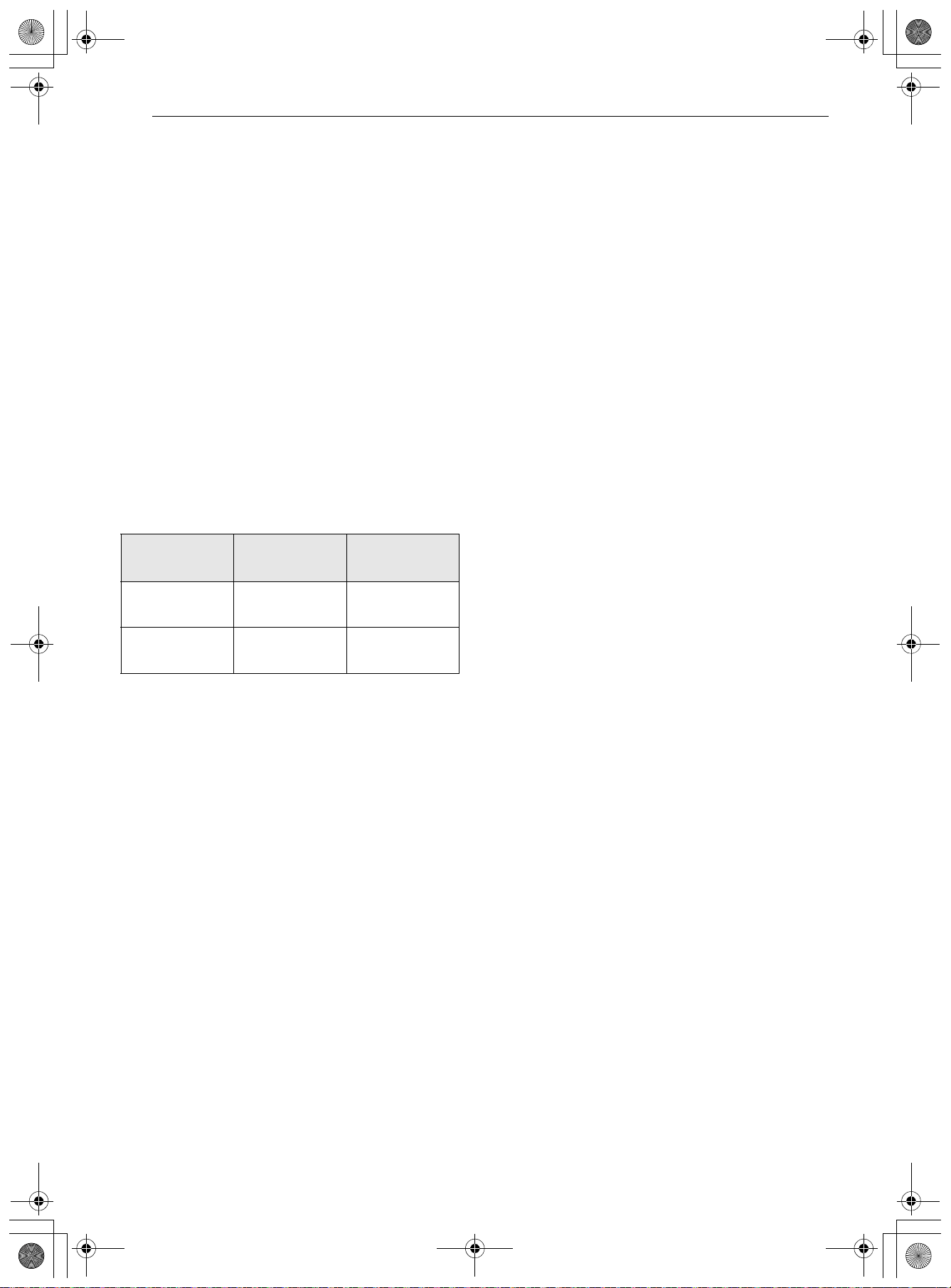
42 FUNCIONES INTELIGENTES
Conexión a Wi-Fi
El botón Wi-Fi, al ser usado con la aplicación LG
ThinQ, permite al electrodoméstico conectarse a
la red Wi-Fi doméstica. El ícono
f muestra el
estado de la conexión de red del electrodoméstico.
El ícono se ilumina cuando el electrodoméstico
está conectado a la red Wi-Fi.
• Conexión inicial del electrodoméstico
Ejecute la aplicación LG ThinQ y siga las
instrucciones en ella para conectar el
electrodoméstico.
• Reconexión del electrodoméstico o conexión
de otro usuario
Mantenga presionado el botón Wi-Fi durante 3
segundos. Ejecute la aplicación LG ThinQ y siga
las instrucciones en ella para conectar el
electrodoméstico.
Especificaciones del módulo RF
Declaración de la FCC
El siguiente aviso cubre el módulo transmisor
contenido en este producto.
Este equipo fue probado y se determinó que
cumple con los límites para los dispositivos
digitales de Clase B, en conformidad con la parte
15 de las normas de la FCC. Estos límites están
diseñados para ofrecer una protección razonable
contra interferencias dañinas en una instalación
residencial. Este equipo genera, usa y puede emitir
energía de radiofrecuencia y, si no se instala y
utiliza de acuerdo con las instrucciones, podría
causar interferencias dañinas a las
comunicaciones por radio. Sin embargo, no se
garantiza que dicha interferencia no pueda ocurrir
en instalaciones particulares. Si este equipo causa
interferencia dañina a la recepción de radio o
televisión, que se puede determinar encendiendo
y apagando el equipo, se aconseja al usuario
intentar corregir la interferencia realizando alguna
de las siguientes acciones:
• Reorientar o reubicar la antena receptora.
• Aumentar la separación entre el equipo y el
receptor.
• Conecte el equipo a una toma de corriente en un
circuito diferente al que está conectado el
receptor.
• Consultar al vendedor o a un técnico de radio/TV
con experiencia para solicitar ayuda.
El dispositivo cumple con la parte 15 de las Reglas
FCC. La operación está sujeta a las siguientes dos
condiciones:
(1) Este dispositivo no debe causar interferencia
dañina, y
(2) Este dispositivo debe aceptar cualquier
interferencia que reciba, incluida la interferencia
que pueda causar un funcionamiento no deseado.
Cualquier cambio o modificación en la
construcción de este dispositivo, que no cuente
con la aprobación expresa de la parte responsable
del cumplimiento, puede anular la autorización del
usuario para operarlo.
Declaración sobre exposición a la
radiación de RF de la FCC
Este equipo cumple con los límites de exposición a
la radiación de la FCC establecidos para entornos
no controlados. Este transmisor no se debe ubicar
ni operar junto con ninguna otra antena ni
transmisor.
El equipo se debe instalar y operar con una
distancia mínima de 20 cm (7.8 pulg.) entre la
antena y su cuerpo. Los usuarios deben seguir las
instrucciones de operación específicas de manera
tal de cumplir con las normas de exposición a la
RF.
Software de código abierto
Para obtener el código fuente bajo GPL, LGPL, MPL
y otras licencias de código abierto con las
obligaciones para divulgar el código abierto, que
contiene este producto, y para acceder a todos los
términos de la licencia, avisos de derechos de
autor y otros documentos relevantes, visite https:/
/opensource.lge.com.
LG Electronics también le proporcionará el código
abierto en un CD-ROM por un costo que cubra los
gastos de dicha distribución (como el costo del
medio, del envío y de la manipulación) una vez
realizado el pedido por correo electrónico a la
dirección openso[email protected].
Esta oferta es válida para todo aquel que reciba
esta información durante un período de tres años
después de que se envíe el último cargamento de
este producto.
Tipo
Rango de
frecuencia
Potencia de
salida (máx.)
Wi-Fi
2 412 - 2 462
MHz
< 30 dBm
Bluetooth
2 402 - 2 480
MHz
< 30 dBm
es-us_main.book.book Page 42 Tuesday, December 24, 2024 1:43 PM
43MANTENIMIENTO
ESPAÑOL
MANTENIMIENTO
Limpieza
PRECAUCIÓN
• No limpie este aparato con lejía.
• Para evitar quemaduras, deje enfriar la parte
superior de la estufa antes de tocar cualquiera
de sus piezas.
• Use guantes para limpiar la parte superior.
Interior
No utilice limpiadores de horno para limpiar la
cavidad del horno. Utilice la función EasyClean del
producto regularmente para limpiar la suciedad
ligera. Para la suciedad rebelde, utilice la función
Self Clean (en algunos modelos) o limpie
manualmente con los siguientes consejos.
• Se puede usar una espátula plástica como
raspador para quitar los restos o residuos antes
de la limpieza del horno o durante el proceso.
• Puede resultar de ayuda usar el lado áspero de
una esponja que no raye para quitar manchas
quemadas mejor que con una esponja blanda o
una toalla.
• Algunas esponjas que no rayan, como las hechas
de espuma de melamina, disponibles en las
tiendas locales, también pueden ayudar a
mejorar la limpieza.
PRECAUCIÓN
• No utilice limpiadores para hornos, limpiadores
químicos abrasivos, lejía, vinagre, esponjas de
acero ni paños o limpiadores abrasivos para
limpiar el horno, ya que pueden dañar
permanentemente la superficie del horno.
• No limpie las juntas.
Exterior
Panel de control
Para evitar que el panel de control se active
durante la limpieza, desconecte el
electrodoméstico de la alimentación eléctrica.
Limpie las salpicaduras con un paño húmedo y
limpiacristales. Elimine la suciedad más difícil con
una solución de agua tibia jabonosa. No use
ningún tipo de abrasivos.
Perillas y panel del múltiple delantero
Se recomienda limpiar el panel del múltiple
después de cada uso de la estufa. Para limpiarlo,
use un paño húmedo y una solución de agua
jabonosa suave o una solución mitad agua y mitad
vinagre. Enjuague con agua limpia y seque con un
paño suave.
PRECAUCIÓN
• No use limpiadores abrasivos, limpiadores
líquidos fuertes, esponjas abrasivas plásticas ni
limpiadores para horno en el panel del múltiple.
Si lo hace, dañará el acabado.
• No intente doblar las perillas moviéndolas hacia
arriba o hacia abajo y no cuelgue toallas ni otros
objetos de ellas. Puede dañar el eje de la válvula
de gas.
• Las perillas de control se pueden quitar para
limpiarlas fácilmente.
• Para limpiar las perillas, asegúrese de que estén
en la posición OFF y sáquelas de los vástagos.
• Para volver a colocarlas, asegúrese de que la
perilla esté colocada en la posición OFF centrada
en la parte superior y deslice la perilla
directamente sobre el vástago.
NOTA
• Para evitar rayas, no use limpiadores abrasivos
en ninguno de estos materiales.
Reborde decorativo y pintado
Para la limpieza general, use un paño con agua
jabonosa caliente. En el caso de suciedad más
difícil y grasa acumulada, aplique detergente
líquido directamente sobre la suciedad. Déjelo
reposar allí entre 30 y 60 minutos. Enjuague con
un paño húmedo y seque. No use limpiadores
abrasivos.
Superficies de acero inoxidable
Para evitar hacer rayas, no use esponjas de lana de
acero.
1 Coloque una pequeña cantidad de limpiador
o pulidor para electrodomésticos de acero
inoxidable en un paño o una toalla de papel
húmedos.
es-us_main.book.book Page 43 Tuesday, December 24, 2024 1:43 PM
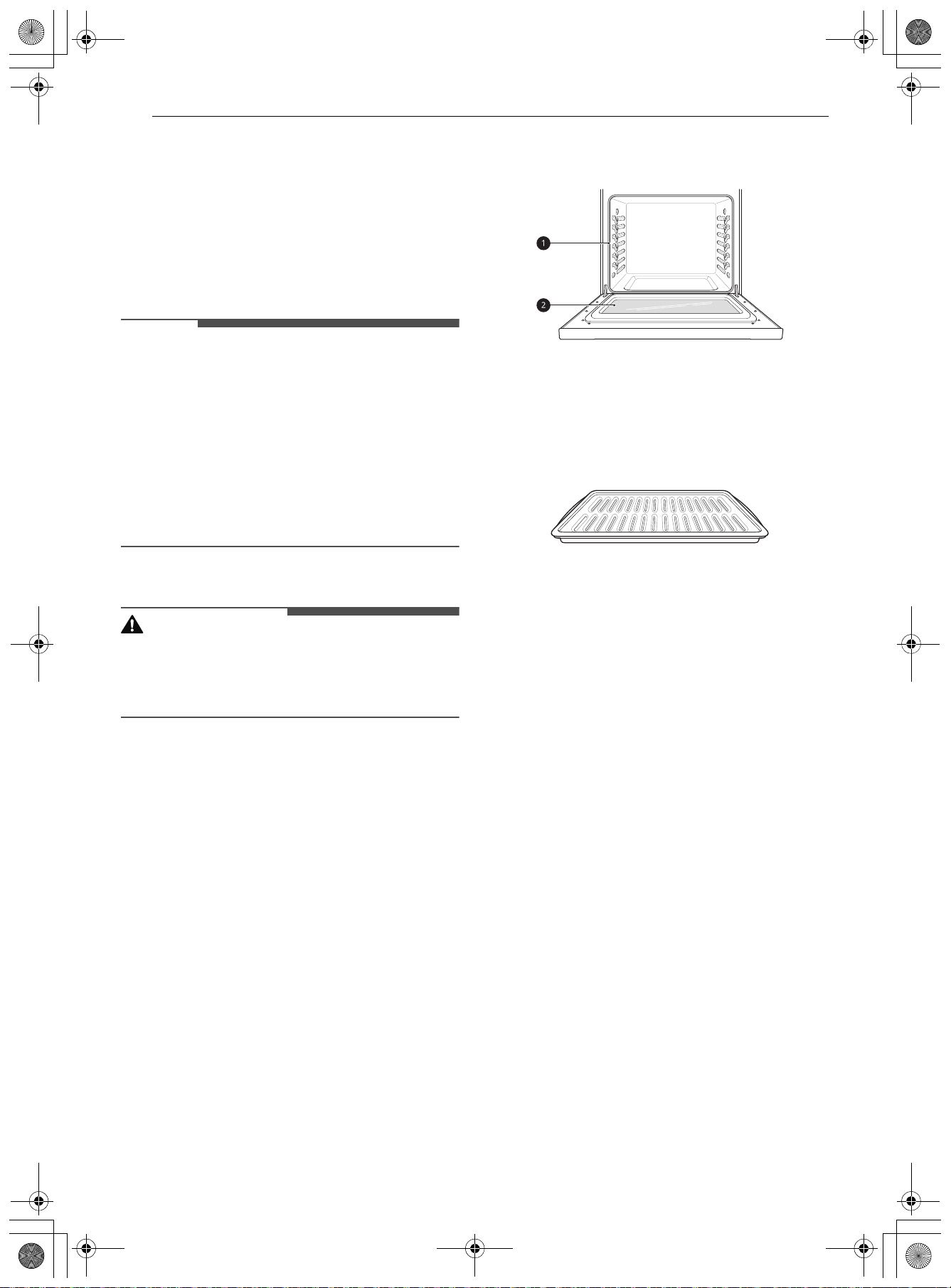
44 MANTENIMIENTO
2 Limpie un área pequeña y friegue siguiendo
el grano del acero inoxidable si corresponde.
3 Seque y saque brillo con un paño suave o una
toalla de papel secos y limpios.
4 Repita si fuera necesario.
NOTA
• Para limpiar la superficie de acero inoxidable,
utilice agua tibia jabonosa, limpiador o pulidor
para acero inoxidable.
• Limpie siempre en la dirección del acabado de la
superficie de metal.
• Los limpiadores o pulidores para
electrodomésticos de acero inoxidable pueden
comprarse por Internet o en la mayoría de los
comercios minoristas de electrodomésticos o
artículos para el hogar.
Puerta del horno
PRECAUCIÓN
• No use limpiadores para horno, polvos
limpiadores ni materiales abrasivos de limpieza
en el exterior de la puerta del horno. Si lo hace,
podría causar daños.
• Use agua jabonosa para limpiar bien la puerta
del horno. Enjuague bien. No sumerja la puerta
en agua.
• Puede usar un limpiador para vidrios en la parte
externa de la puerta del horno. No rocíe agua ni
limpiador para vidrios en las ventilaciones de la
puerta.
• No use limpiadores para horno, polvos
limpiadores ni materiales abrasivos de limpieza
en el exterior de la puerta del horno.
• No limpie la junta de la puerta del horno. La
junta está hecha de material tejido que es
fundamental para lograr un buen sellado. Se
debe tener cuidado de no frotar, dañar ni quitar
esta junta.
a No limpie manualmente la junta de la puerta
del horno
b Limpie manualmente la puerta
Asadera y rejilla
• No guarde una asadera o rejilla sucia en ninguna
parte de la estufa.
• No limpie la asadera ni la rejilla en el modo de
autolimpieza. (Disponible en algunos modelos)
• Retire la rejilla de la asadera. Vierta la grasa de la
asadera en un recipiente adecuado con cuidado.
• Lave y enjuague la asadera y la rejilla con agua
caliente y una esponja abrasiva plástica o jabón.
• Si hay comida quemada, rocíe la rejilla con
limpiador mientras está caliente y cúbrala con
toallas de papel húmedas o un paño de cocina.
Al sumergir la asadera se removerán los restos
de comida quemada.
• Tanto la asadera como la rejilla se pueden
limpiar con un limpiador para horno comercial o
en el lavavajillas.
Estantes del horno
Retire los estantes del horno antes de iniciar el
ciclo Self Clean (en algunos modelos) y la función
EasyClean.
1 Limpie con un limpiador abrasivo suave.
• Los alimentos derramados en las guías
pueden atascar los estantes.
2 Enjuague con agua limpia y seque.
es-us_main.book.book Page 44 Tuesday, December 24, 2024 1:43 PM
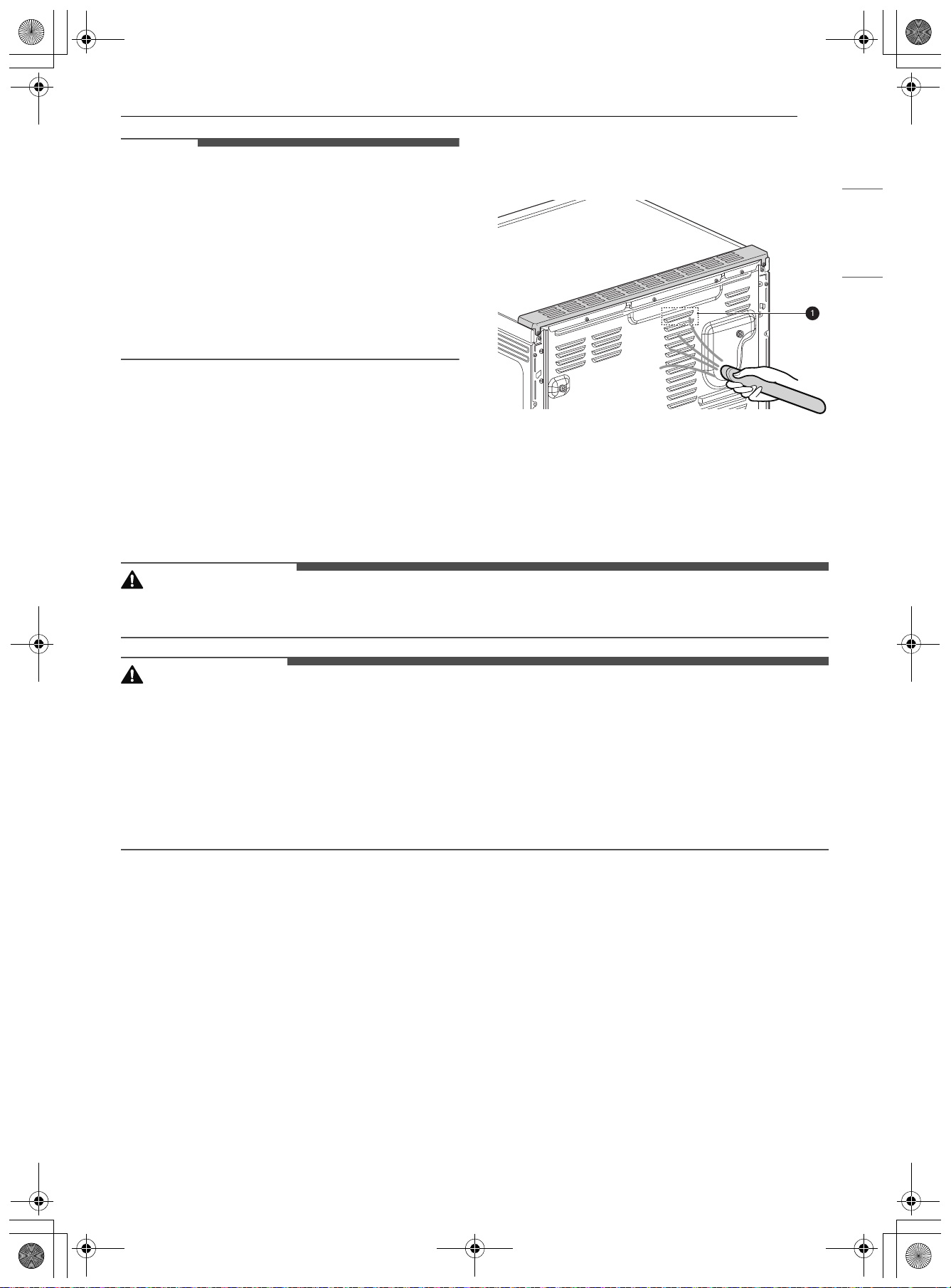
45MANTENIMIENTO
ESPAÑOL
NOTA
• Para modelos con función Self Clean:
- Si limpia los estantes usando el ciclo Self Clean
(no recomendado), el color cambiará a azul
claro y el acabado perderá el brillo. Una vez
finalizado el ciclo Self Clean y después de que
el horno se haya enfriado, frote los costados
de los estantes con papel encerado o con un
paño que contenga una pequeña cantidad de
aceite. Esto hará que los estantes se deslicen
más fácilmente en las guías.
Celosía de ventilación
• La apariencia de la estufa puede variar entre los
distintos modelos.
Use una aspiradora con un accesorio de cepillo o
boquilla para limpiar la celosía de ventilación a.
No quite el panel que cubre la estufa.
Superficie de la placa de cocción
Placa de cocción de vitrocerámica
ADVERTENCIA
• Para proteger las manos de las quemaduras, use siempre guantes de cocina o una agarradera mientras
utiliza un raspador en la superficie de cocción caliente.
PRECAUCIÓN
• Si se derrama azúcar o alimentos que contienen azúcar, o plástico o papel de aluminio en la placa de
cocción, retire el material INMEDIATAMENTE con un raspador de metal mientras la superficie de la placa
de cocción aún está caliente para evitar el riesgo de que se dañe la superficie de vitrocerámica. Si se usa
correctamente, el raspador no dañará la superficie.
• Si se derrama agua o alimentos que contienen agua, elimine el derrame INMEDIATAMENTE con una
toalla de papel seca.
• No use esponjas limpiadoras ni limpiadores abrasivos, ya que pueden dañar la superficie de la placa de
cocción.
En la placa de cocción de vidrio, use un limpiador para placas de cocción de cerámica. Es posible que otros
limpiadores no sean tan efectivos o pueden rayar, dañar o manchar la superficie de la placa de cocción.
Para mantener y proteger la superficie de la placa de cocción de vidrio, siga estos pasos:
1 Antes de usar la placa de cocción por primera vez, límpiela con un limpiador para placas de cocción de
cerámica. Esto ayuda a proteger la parte superior y facilita la limpieza.
2 Use un limpiador para placas de cocción de cerámica diariamente para ayudar a mantener la placa
como nueva.
3 Agite bien el limpiador. Aplique unas gotas de limpiador directamente sobre la placa de cocción.
4 Use una toalla de papel para limpiar toda la superficie de la placa de cocción.
es-us_main.book.book Page 45 Tuesday, December 24, 2024 1:43 PM
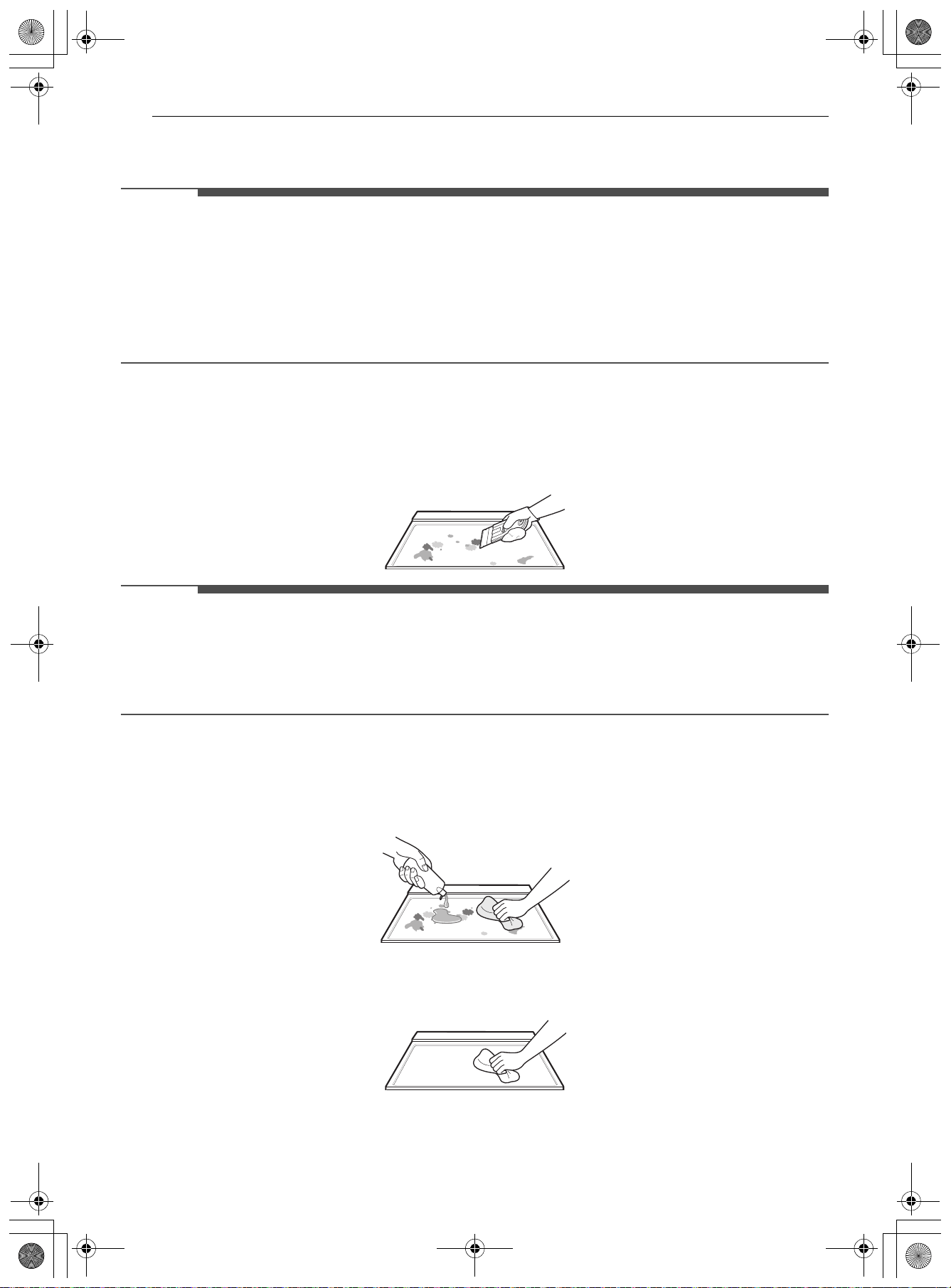
46 MANTENIMIENTO
5 Enjuague con agua limpia y use un paño seco o una toalla de papel para eliminar todos los residuos
de limpieza.
NOTA
• Es posible que cualquier daño o falla del producto que resulte de los elementos que se describen a
continuación no estén cubiertos por la GARANTÍA LIMITADA.
- Los derrames de alimentos azucarados (como conservas, kétchup, salsa de tomate, jaleas, dulces,
jarabes o chocolate) o plásticos derretidos pueden causar picaduras en la superficie de la placa de
cocción.
- Si se derrama comida o agua que contenga calcio (como polvo de hornear, vino, leche, espinacas o
brócoli) sobre la placa de cocción, puede manchar o decolorar la superficie de forma permanente.
Residuos quemados
1 Mientras la placa de cocción aún está caliente, retire los depósitos quemados o los alimentos
derramados de la superficie de la placa de cocción de vitrocerámica con un raspador de metal
adecuado.
NOTA
• No utilice una cuchilla desafilada o mellada.
• Sostenga el raspador en un ángulo de aproximadamente 30° con respecto a la placa de cocción.
• El raspador no dañará las marcas en la superficie de cocción.
• Tenga cuidado de no dañar la junta cuando limpie la placa de cocción con un raspador metálico.
2 Cuando la superficie de cocción se haya enfriado por completo, aplique unas gotitas de un limpiador
para placas de cocción de vitrocerámica en las áreas de cada quemador. Distribuya el limpiador sobre
la superficie de la placa de cocción con una toalla de papel húmeda. Deje actuar durante 10 minutos
antes de enjuagar.
3 Enjuague con agua limpia, y limpie la superficie de la placa de cocción con una toalla de papel limpia y
seca.
es-us_main.book.book Page 46 Tuesday, December 24, 2024 1:43 PM
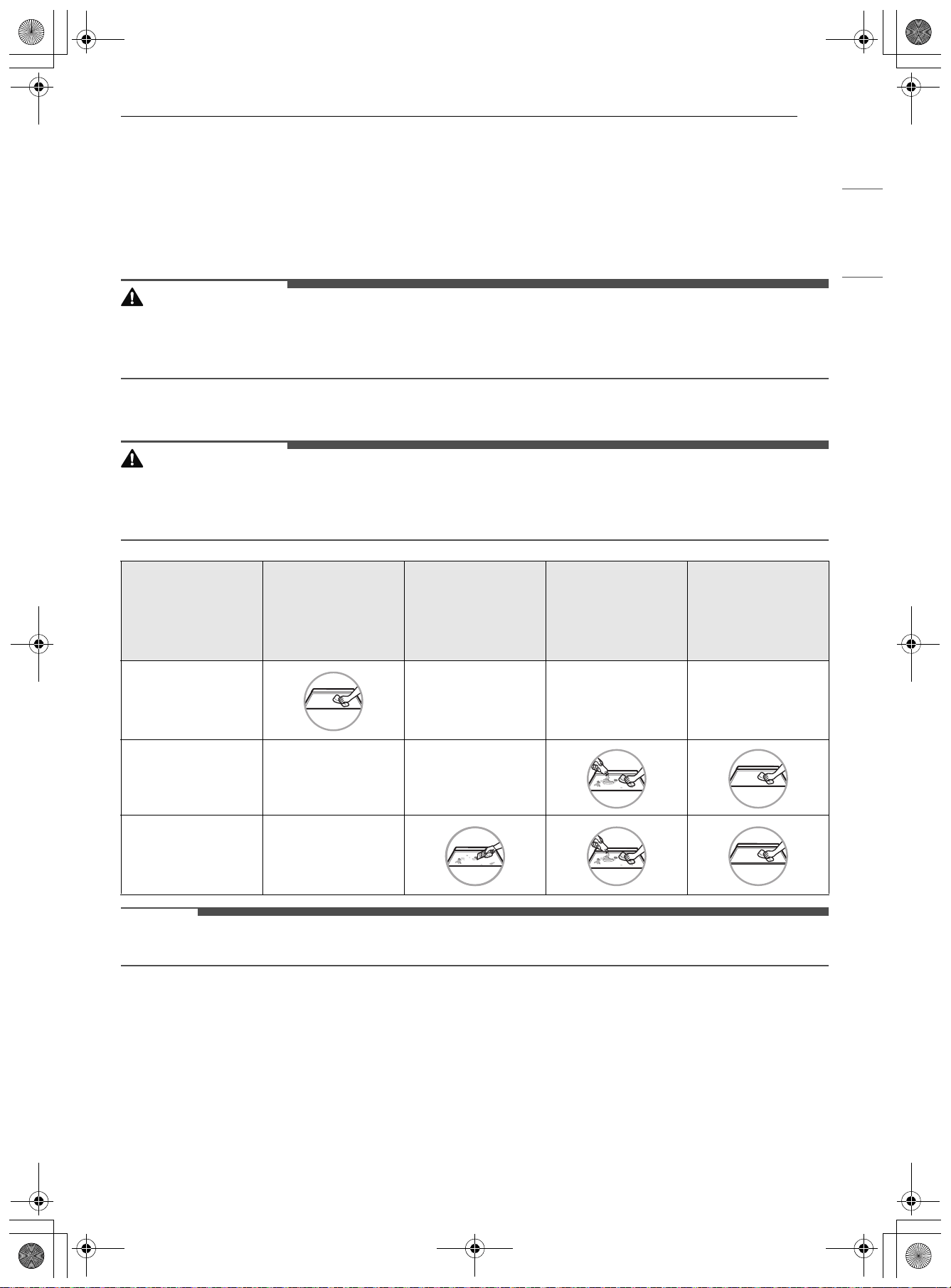
47MANTENIMIENTO
ESPAÑOL
Junta de la placa de cocción
1 Para eliminar la suciedad quemada de la junta que rodea el exterior de la placa de cocción
vitrocerámica, cubra la zona con un paño húmedo y caliente para ablandar la suciedad.
2 Luego de unos minutos, limpie la zona con un limpiador suave no abrasivo.
PRECAUCIÓN
• No utilice un cuchillo ni ningún objeto afilado para limpiar la junta que rodea el exterior de la placa de
cocción vitrocerámica.
• Tenga cuidado de no dañar la junta cuando limpie la placa de cocción con un raspador metálico.
Mantenimiento de la placa de cocción
PRECAUCIÓN
• No use blanqueador con cloro, amoníaco u otros limpiadores que no estén específicamente
recomendados para su uso en placas de cocción de vitrocerámica.
• Deje que la superficie de cocción de vitrocerámica se enfríe antes de limpiarla.
NOTA
• Para obtener más información sobre el producto, visite nuestro sitio web en www.lg.com
-
Limpie con una
toalla húmeda y
un detergente
suave
Use un raspador
de metal
Aplique el
limpiador para
superficies de
cocción. Frote
con una toalla.
Enjuague con una
toalla húmeda y
luego seque.
Regular
(recomendado
después de cada
uso)
---
Ocasional
(recomendado cada
semana)
--
Completo
(recomendado para
manchas difíciles o
comida quemada)
-
es-us_main.book.book Page 47 Tuesday, December 24, 2024 1:43 PM
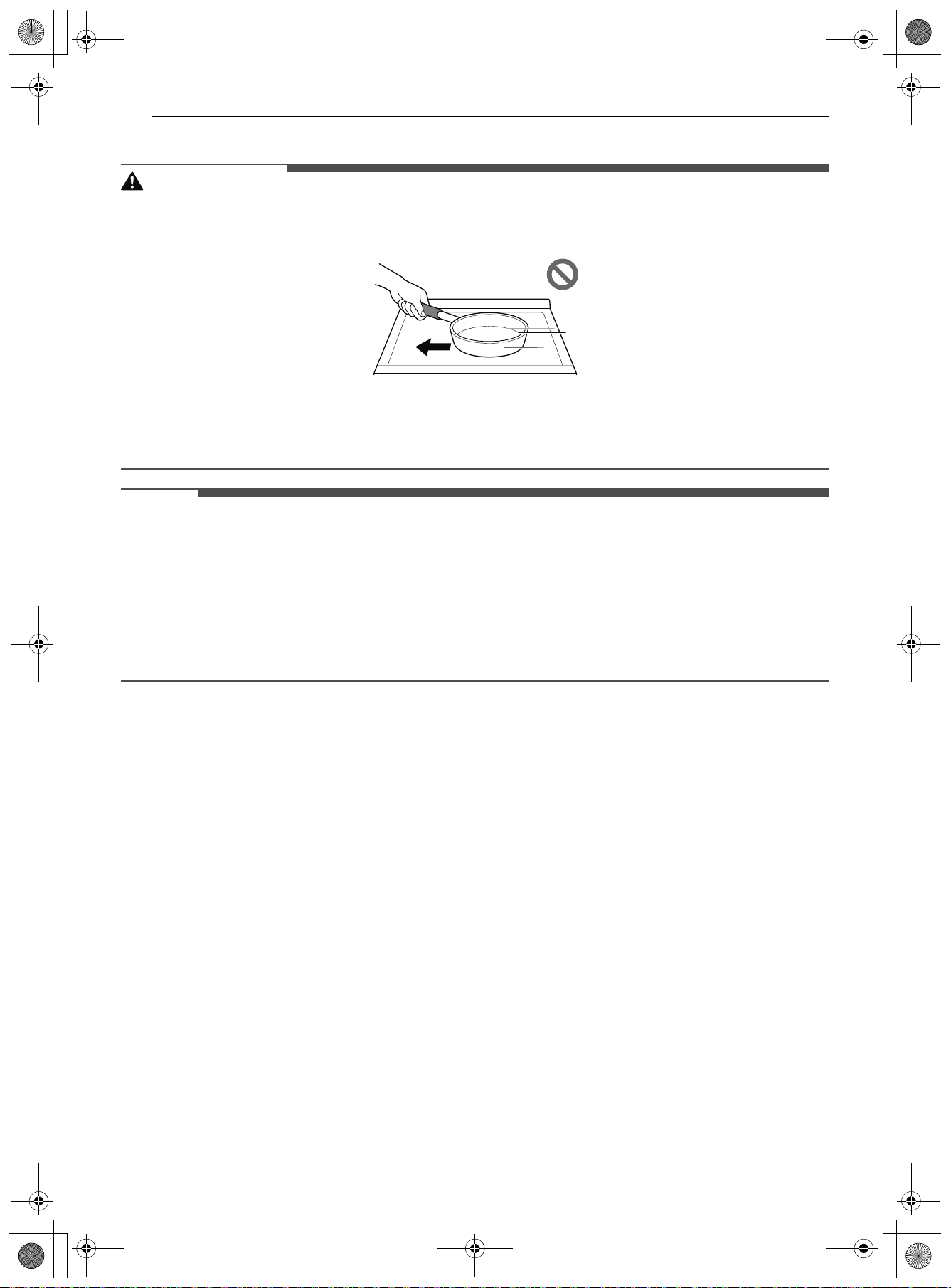
48 MANTENIMIENTO
Marcas de metal y rayas
PRECAUCIÓN
• Utilice siempre utensilios de cocina de mayor calibre y calidad sobre los elementos de cocción y no los
deslice sobre la superficie de la placa de cocción de cerámica. Incluso los utensilios de cocina de alta
calidad pueden rayar la superficie de la placa de cocción.
• Cualquier utensilio de cocina que tenga un fondo áspero o sucio puede marcar y rayar la superficie de la
placa de cocción. Empiece siempre con utensilios de cocina limpios.
• No use utensilios de cocina si hay alguna materia extraña en la superficie de la placa de cocción. Siempre
limpie la superficie antes de cocinar.
NOTA
• Es posible que cualquier daño o falla del producto que resulte de los elementos que se describen a
continuación no estén cubiertos por la GARANTÍA LIMITADA.
- Tenga cuidado de no deslizar ollas y sartenes por la placa de cocción para evitar que queden marcas
de metal. Si desea eliminar estas marcas, use un limpiador para placas de cocción de cerámica con una
esponja limpiadora para tal fin.
- Si las ollas con una capa delgada de aluminio o cobre se dejan hervir en seco, la capa puede dejar una
decoloración negra sobre la placa de cocción. Esta mancha se debe eliminar de inmediato antes de
volver a calentar o la decoloración puede ser permanente.
EasyClean
Esta característica solo está disponible en algunos
modelos.
La tecnología esmaltada de LG EasyClean ofrece
dos opciones de limpieza para el interior de la
estufa. La función EasyClean se beneficia con el
nuevo esmalte de LG ya que ayuda a despegar la
suciedad sin usar químicos fuertes y funciona
SOLAMENTE CON AGUA durante apenas 10
minutos a baja temperatura para aflojar la
suciedad LEVE antes de la limpieza manual.
Si bien la función EasyClean es rápida y eficaz para
la suciedad LEVE y pequeña, la función Self Clean
se puede usar para quitar la suciedad DIFÍCIL
acumulada. La intensidad y la alta temperatura del
ciclo Self Clean pueden producir humo, de modo
que se deberán abrir las ventanas para ventilar. En
comparación con el proceso más intenso de Self
Clean, el horno LG le brinda la opción de limpiar
con MENOS CALOR, en MENOS TIEMPO y,
prácticamente, SIN HUMO NI VAPORES. Puede
reducir el uso de energía limpiando la suciedad
leve del horno con la función EasyClean en lugar
de usar Self Clean.
Cuando sea necesario, la estufa ofrece también la
opción de Self Clean más prolongada y profunda
del horno para quitar la suciedad más difícil
acumulada. (En algunos modelos)
• Para limpiar áreas difíciles de alcanzar, como la
superficie trasera del horno, es mejor usar el
ciclo Self Clean.
Beneficios de EasyClean
• Ayuda a aflojar la suciedad leve antes de la
limpieza manual
• EasyClean solo usa agua; no usa limpiadores
químicos
• Favorece una mejor experiencia de Self Clean (En
algunos modelos)
- Retrasa la necesidad de un ciclo Self Clean
- Minimiza el humo y los olores
- Puede acortar el tiempo de Self Clean
es-us_main.book.book Page 48 Tuesday, December 24, 2024 1:43 PM
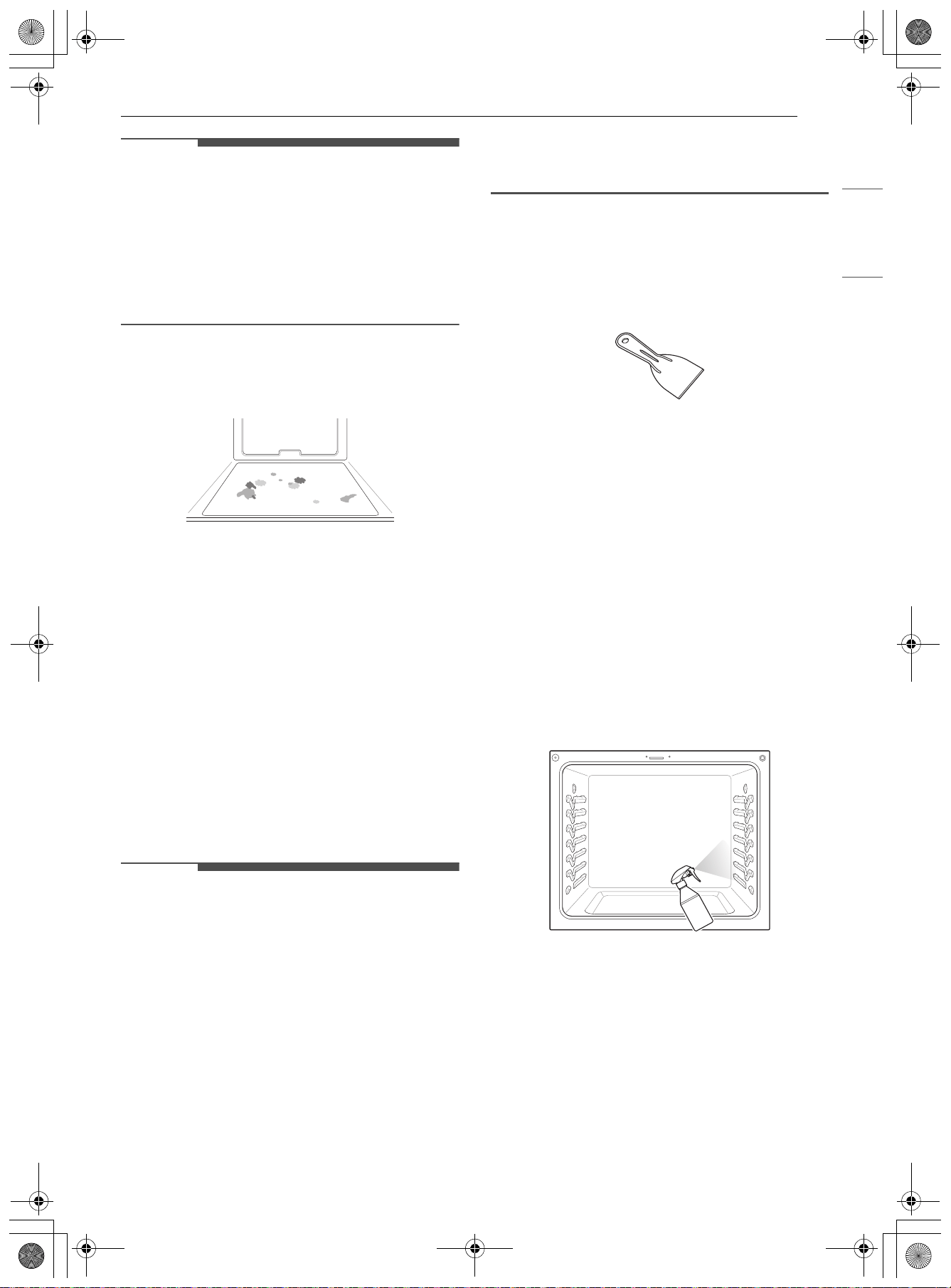
49MANTENIMIENTO
ESPAÑOL
NOTA
• Para modelos sin la opción de Self Clean
- La función EasyClean tal vez no sea efectiva
para quitar la suciedad difícil acumulada.
Debido a que la estufa no incluye una opción
de Self Clean, limpie el horno periódicamente
con la función EasyClean para evitar que se
acumulen residuos difíciles quemados en el
horno.
Cuándo usar EasyClean
• Ejemplo de suciedad en el horno
Caso 1
- Forma de la suciedad: gotitas o manchitas
- Tipos de suciedad: queso u otros ingredientes
- Alimentos comunes que pueden ensuciar el
horno: pizza
Caso 2
- Forma de la suciedad: salpicadura leve
- Tipos de suciedad: grasa/aceite
- Alimentos comunes que pueden ensuciar el
horno: bistecs, asados / pescado, asado /
carne rostizada a baja temperatura
Guía de instrucciones de EasyClean
NOTA
• Permita que el horno se enfríe a temperatura
ambiente antes de usar el ciclo EasyClean. Si la
cavidad del horno alcanza una temperatura
superior a 150 °F (65 °C), aparecerá "Hot" en la
pantalla y el ciclo EasyClean no se activará hasta
que la cavidad del horno se enfríe.
• La estufa debe estar nivelada para garantizar
que la superficie inferior de la cavidad del horno
esté completamente cubierta con agua al
comienzo del ciclo EasyClean.
• Para obtener mejores resultados, use agua
destilada o filtrada. El agua del grifo puede dejar
depósitos minerales en la base del horno.
• La suciedad quemada en varios ciclos de cocción
será más difícil de quitar con el ciclo EasyClean.
• No abra la puerta del horno durante el ciclo
EasyClean. El agua no se calienta lo suficiente si
se abre la puerta durante este ciclo.
1 Quite los estantes y los accesorios del horno.
2 Raspe y retire los residuos quemados con un
raspador plástico.
• Raspadores plásticos sugeridos:
- Espátula de plástico dura
- Raspador plástico para bandejas
- Raspador plástico para pintura
- Tarjeta de crédito sin usar
3 Llene un envase rociador con agua (10 oz o
300 ml) y utilícelo para rociar bien las
superficies interiores del horno.
4 Use por lo menos 1/5 (2 oz o 60 ml) del agua
de la botella para saturar completamente la
suciedad en las paredes y las esquinas del
horno.
5 Rocíe o vierta el agua restante (8 oz o 240 ml)
en el centro de la base de la cavidad del
horno. La hendidura en la base del horno
debe estar totalmente cubierta para sumergir
toda la suciedad. Agregue agua si fuera
necesario.
es-us_main.book.book Page 49 Tuesday, December 24, 2024 1:43 PM
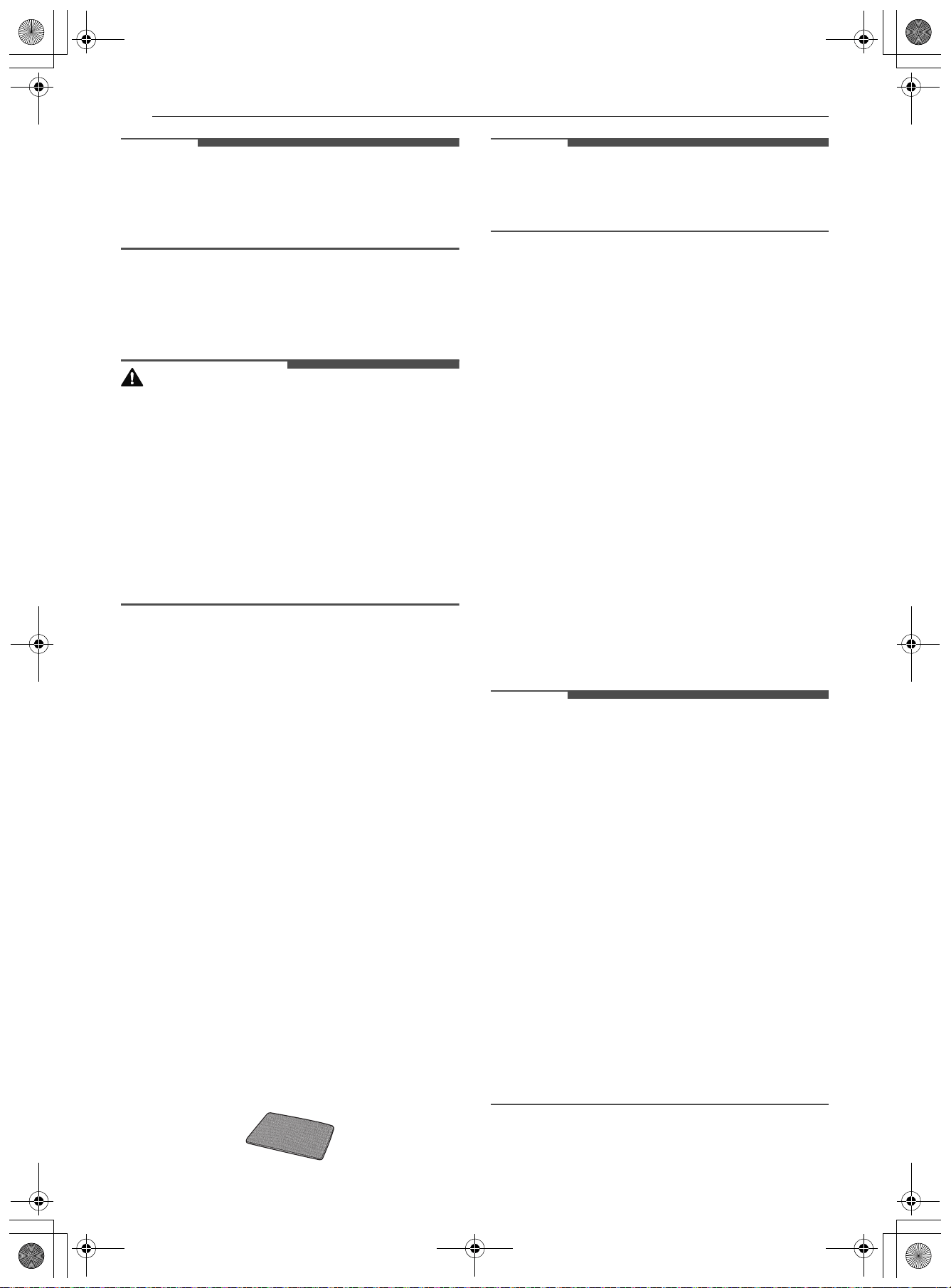
50 MANTENIMIENTO
NOTA
• Si limpia varios hornos, use una botella de agua
entera para cada uno. No rocíe agua
directamente en la puerta. Si lo hace, el agua
caerá al piso.
6 Cierre la puerta del horno. Gire la perilla de
modo del horno hasta seleccionar EasyClean.
Presione START.
PRECAUCIÓN
• Algunas superficies pueden quedar calientes
después del ciclo EasyClean. Use guantes de
goma cuando limpie para evitar quemaduras.
• Durante el ciclo EasyClean, el horno se calienta
lo suficiente como para provocar quemaduras.
Espere hasta que el ciclo termine antes de
limpiar la superficie interna del horno. Si no
espera, podría quemarse.
• Evite apoyarse o posarse sobre el vidrio de la
puerta del horno mientras limpia la cavidad del
horno.
7 Sonará un tono al final del ciclo de 10
minutos. Gire la perilla de modo del horno
hasta la posición O F F para borrar la pantalla
y apagar el tono.
8 Después del ciclo de limpieza y durante la
limpieza manual, debe quedar suficiente agua
en la base del horno para sumergir
completamente la suciedad. Agregue agua si
fuera necesario. Coloque una toalla en el piso
frente al horno para absorber el agua que
pueda derramarse durante la limpieza
manual.
9 Limpie la cavidad del horno inmediatamente
después del ciclo EasyClean fregando con una
esponja o un paño de limpieza húmedos que
no rayen. (El lado para refregar no rayará el
acabado). Se puede derramar un poco de
agua en las ventilaciones de la base cuando se
realice la limpieza, pero se recogerá en una
bandeja que se encuentra debajo de la
cavidad del horno y no dañará el quemador.
NOTA
• No use esponjas de acero ni paños o limpiadores
abrasivos, ya que estos materiales pueden dañar
en forma permanente la superficie del horno.
10 Una vez que haya limpiado la cavidad del
horno, quite el exceso de agua con una toalla
limpia y seca. Vuelva a colocar los estantes y
demás accesorios.
11 Si queda alguna suciedad leve, repita los
pasos anteriores y asegúrese de empapar
bien las áreas sucias.
• Para modelos con función Self Clean
- Si queda suciedad rebelde después de
varios ciclos EasyClean, ejecute el ciclo
Self Clean. Asegúrese de que se hayan
retirado de la cavidad del horno los
estantes y los demás accesorios y que la
superficie de la cavidad esté seca antes de
ejecutar el ciclo Self Clean. Consulte la
sección Self Clean (Autolimpieza) del
manual del propietario para obtener más
detalles. Si la opción de Self Clean no está
disponible, raspe y retire la suciedad
difícil usando un raspador.
NOTA
• Si olvida empapar el interior del horno con agua
antes de comenzar el ciclo EasyClean, gire la
perilla de modo del horno hasta la posición O F F
(APAGADO) para finalizar el ciclo. Espere que la
estufa se enfríe a temperatura ambiente y,
luego, rocíe o vierta agua en el horno y comience
otro ciclo EasyClean.
• La junta de la cavidad puede quedar mojada
cuando termine el ciclo EasyClean. Esto es
normal. No limpie la junta.
• Si quedan depósitos minerales en la base del
horno después de la limpieza, use un paño o una
esponja impregnada en vinagre para quitarlos.
• Es normal que el ventilador funcione durante el
ciclo EasyClean.
• No es recomendable el uso de limpiadores
comerciales o blanqueadores para limpiar el
horno. Utilice un limpiador líquido suave con un
valor de pH inferior a 12.7 para evitar que el
esmalte pierda el color.
es-us_main.book.book Page 50 Tuesday, December 24, 2024 1:43 PM
51MANTENIMIENTO
ESPAÑOL
Self Clean (Autolimpieza)
Esta característica solo está disponible en algunos
modelos.
El ciclo Self Clean usa temperaturas sumamente
altas para limpiar la cavidad del horno. Mientras se
ejecuta el ciclo de autolimpieza, es posible que
perciba humo u olor. Esto es normal,
especialmente si el horno está muy sucio. Durante
el ciclo Self Clean, se debe ventilar bien la cocina
para minimizar los olores de la limpieza.
Antes de comenzar Self Clean
• Limpie solo las partes mencionadas en el
manual. Quite los estantes del horno, la asadera,
la rejilla de la asadera, los recipientes, el papel
aluminio y cualquier otro material del horno.
- Si se dejan los estantes en el horno durante el
ciclo Self Clean se decolorarán y será difícil
deslizarlos hacia adentro o hacia afuera.
• La cocina debe estar bien ventilada para
minimizar los olores de la limpieza. Abra una
ventana o encienda un ventilador o extractor
antes de la autolimpieza.
• Limpie los derrames difíciles en la base del
horno.
• Asegúrese de que la tapa de la luz del horno esté
en su lugar y que la luz esté apagada.
• Limpie el marco del horno y la puerta con agua
jabonosa caliente. Enjuague bien.
ADVERTENCIA
• Si el horno está muy sucio con aceite, realice una
autolimpieza del horno antes de volver a
utilizarlo. El aceite puede provocar un incendio.
• En caso de un incendio en el horno durante la
autolimpieza, apáguelo y espere a que se
apague el fuego. No fuerce la puerta para
abrirla. El ingreso de aire fresco a las
temperaturas de autolimpieza puede producir
un estallido de llamas en el horno. Si no sigue
estas instrucciones podría sufrir quemaduras
graves.
PRECAUCIÓN
• No use limpiadores para horno. No deben
usarse limpiadores comerciales ni
revestimientos protectores para horno de
ningún tipo alrededor de las piezas del horno.
• Aparece un código de error F en la pantalla del
horno y suenan tres pitidos largos durante el
proceso de autolimpieza si el modo de
autolimpieza no funciona correctamente.
Desconecte la energía eléctrica del fusible
principal o el disyuntor y hágalo revisar por un
técnico calificado.
• Si el modo de autolimpieza no funciona
correctamente, apague la estufa y desconecte la
alimentación eléctrica. Hágalo revisar por un
técnico calificado.
• Es normal que las piezas del horno se calienten
durante el ciclo Self Clean. No toque la placa de
cocción de la estufa, la ventana ni el área de
ventilación del horno durante el ciclo Self Clean.
• No deje a niños pequeños sin supervisión cerca
del aparato. Durante el ciclo Self Clean, el
exterior de la estufa puede estar muy caliente al
tacto.
• Si tiene aves domésticas, llévelas a otra sala bien
ventilada. La salud de algunas aves es muy
sensible a los vapores emanados durante el ciclo
Self Clean de cualquier estufa.
• No recubra las paredes del horno, los estantes,
el fondo ni ninguna otra parte de la estufa con
papel de aluminio ni con ningún otro material.
Esto destruye la distribución de calor, produce
resultados de horneado deficientes y causa
daños permanentes al interior del horno (el
papel de aluminio se fundirá en la superficie
interior del horno).
• No fuerce la puerta del horno para abrirla.
Podría dañar el sistema automático de bloqueo
de la puerta. Tenga cuidado cuando abra la
puerta del horno después del ciclo Self Clean.
Ubíquese al costado del horno cuando abra la
puerta para dejar que salgan el aire y el vapor
calientes. El horno todavía puede estar MUY
CALIENTE.
NOTA
• La luz del horno no se puede encender durante
el ciclo Self Clean. La luz del horno no se puede
encender hasta que la temperatura sea inferior
a 500 ˚F (260 ˚C) después de completar el ciclo
Self Clean.
• Durante el ciclo Self Clean, no se pueden usar los
elementos de la placa de cocción ni el cajón de
calentamiento.
• Limpie el marco del horno y la puerta con agua
jabonosa caliente. Enjuague bien.
• No limpie la junta. La fibra de vidrio de la junta
de la puerta del horno no resiste la abrasión. Es
fundamental que la junta permanezca intacta. Si
nota que está gastada o deshilachada,
reemplácela.
• Es normal que el ventilador funcione durante el
ciclo Self Clean.
es-us_main.book.book Page 51 Tuesday, December 24, 2024 1:43 PM
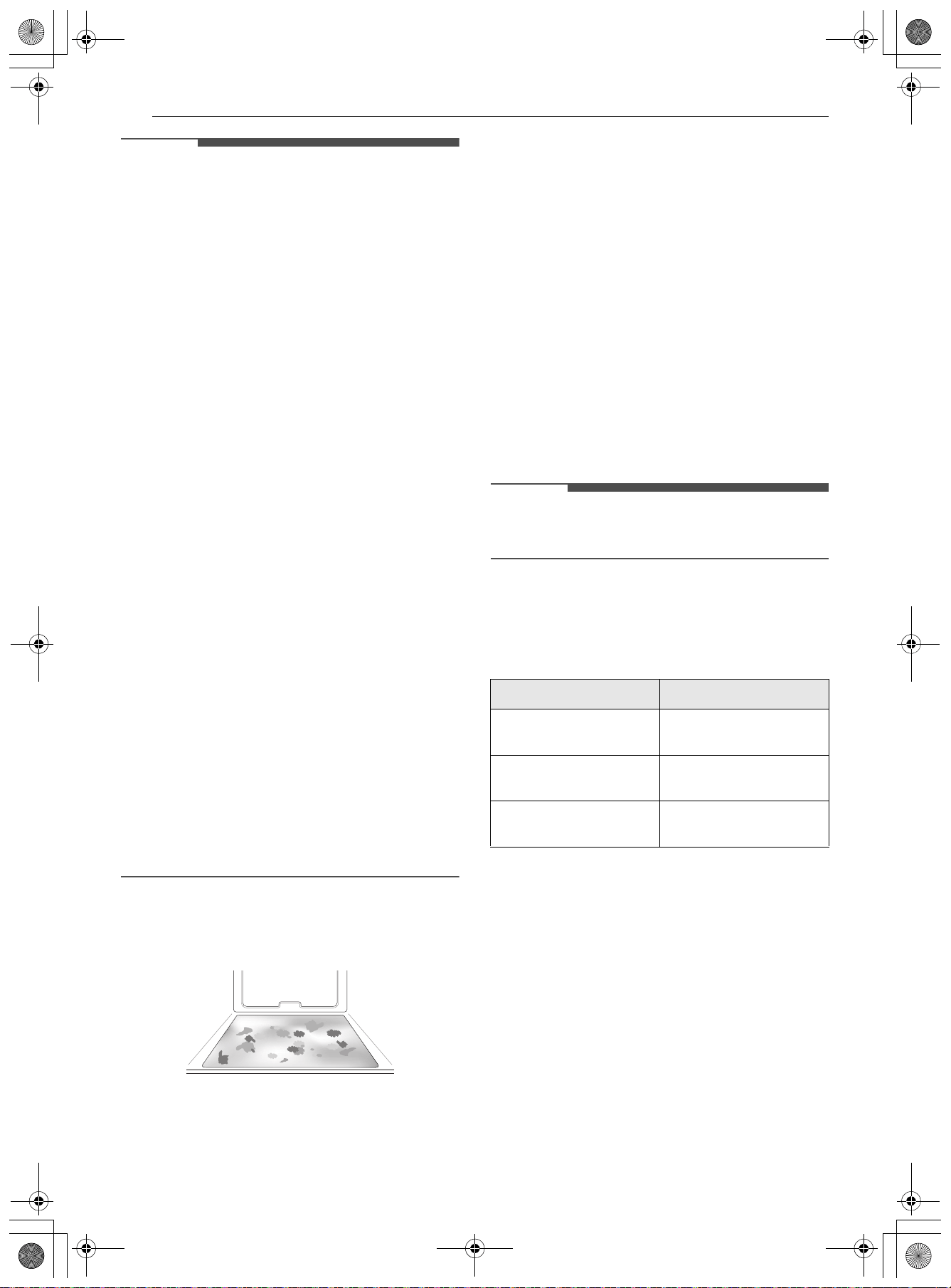
52 MANTENIMIENTO
NOTA
• A medida que el horno se calienta, es posible
que escuche ruidos por la expansión y
contracción de las piezas metálicas. Es normal y
no dañará el horno.
• Es posible que note un poco de ceniza blanca en
el horno. Límpiela con un paño húmedo o una
esponja de lana de acero con jabón después de
que el horno se enfríe. Si el horno no está limpio
después de un ciclo de autolimpieza, repita el
ciclo.
• Si se dejaron los estantes en el horno y no se
deslizan bien después de un ciclo Self Clean,
aplique a los estantes y sus soportes un poco de
aceite vegetal para que se desplacen con
facilidad.
• Pueden aparecer líneas finas en la porcelana
porque fue sometida a frío y calor. Esto es
normal y no afecta su desempeño.
• No se puede iniciar el ciclo Self Clean si está
activa la función Bloqueo de Control/Bloqueo.
• Una vez que se haya configurado el ciclo Self
Clean, la puerta del horno se traba
automáticamente. No podrá abrir la puerta del
horno hasta que el horno se haya enfriado. El
bloqueo se libera de manera automática.
• Una vez que la puerta se haya trabado, la luz
indicadora de bloqueo
k dejará de parpadear y
quedará encendida. Espere unos 15 segundos
para que se active la traba de la puerta del
horno.
• Si el reloj está configurado para una
visualización de 12 horas (predeterminado), Self
Clean atrasada nunca se podrá iniciar con más
de 12 horas de anticipación.
• Luego de que se apague el horno, el ventilador
de convección seguirá funcionando hasta que el
horno se haya enfriado.
Cuándo usar Self Clean
• Ejemplo de suciedad en el horno
Caso 1
• Forma de la suciedad: salpicadura mediana a
grande
• Tipos de suciedad: grasa/aceite
• Alimentos comunes que pueden ensuciar el
horno: carne rostizada a alta temperatura
Caso 2
• Forma de la suciedad: gotas o manchas
• Tipos de suciedad: relleno o suciedad de
alimentos con azúcar
• Alimentos comunes que pueden ensuciar el
horno: tartas
Caso 3
• Forma de la suciedad: gotas o manchas
• Tipos de suciedad: crema o salsa de tomate
• Alimentos comunes que pueden ensuciar el
horno: estofados
NOTA
• El ciclo de autolimpieza puede usarse para
suciedad que se haya acumulado con el tiempo.
Ajuste de Self Clean
La función Self Clean tiene ciclos de 3, 4 o 5 horas.
Guía de suciedad para Self Clean
1 Quite todos los estantes y los accesorios del
horno.
2 Gire la perilla de modo del horno hasta
seleccionar Self Clean. De manera
predeterminada, el horno comienza la
limpieza automática de cuatro horas
recomendada para un horno
moderadamente sucio.
Presione los botones de la siguiente manera
para seleccionar el tiempo de autolimpieza de
3 a 5 horas.
• 1 : 3 horas
• 2 : 4 horas
• 3 : 5 horas
Nivel de suciedad Ajuste del ciclo
Cavidad del horno
levemente sucia
Self Clean de 3 horas
Cavidad del horno
moderadamente sucia
Self Clean de 4 horas
Cavidad del horno muy
sucia
Self Clean de 5 horas
es-us_main.book.book Page 52 Tuesday, December 24, 2024 1:43 PM
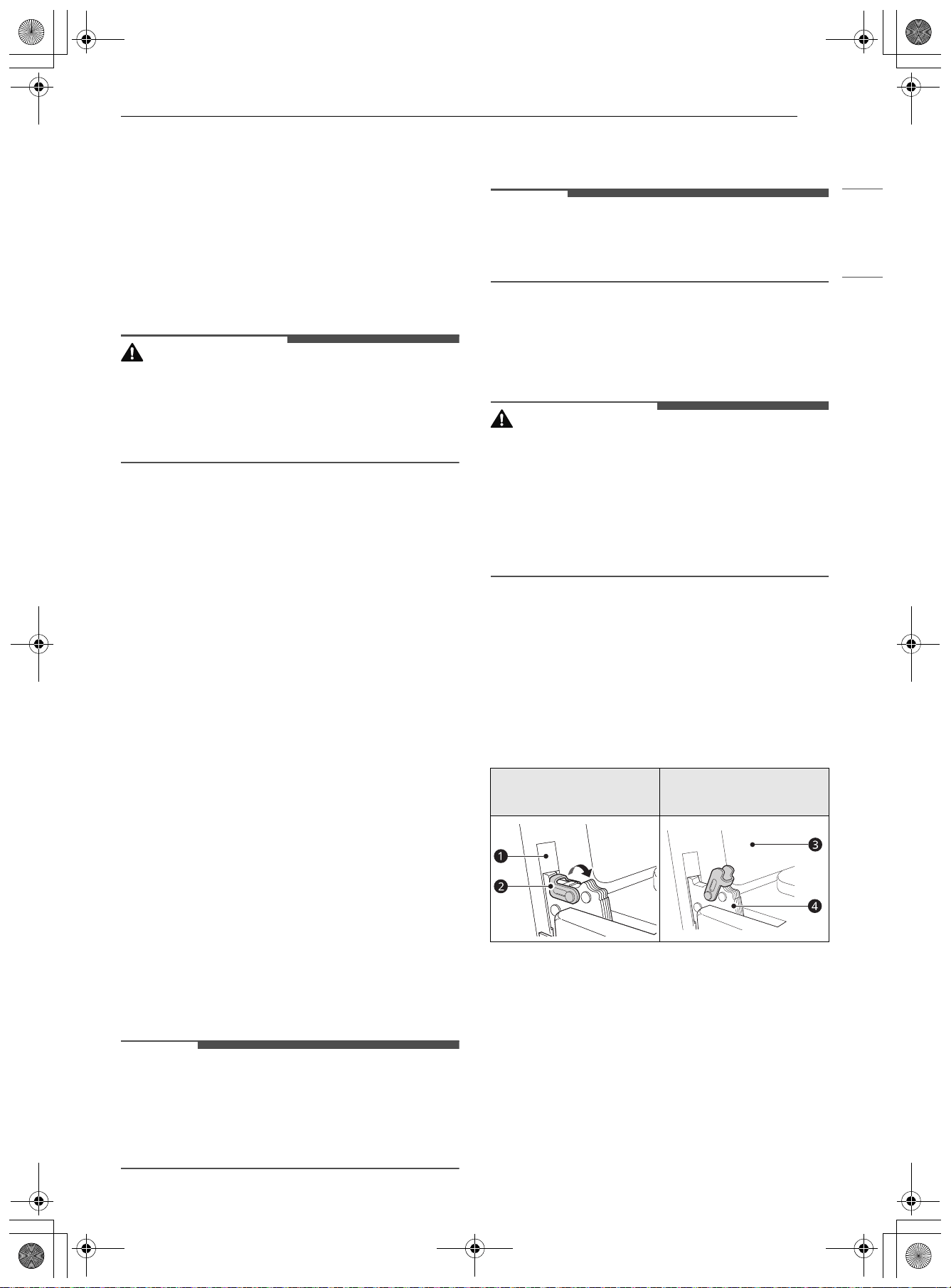
53MANTENIMIENTO
ESPAÑOL
3 Presione START.
4 Una vez que se haya configurado el ciclo de
autolimpieza, la puerta del horno se traba
automáticamente y aparece el icono del
candado k No podrá abrir la puerta del
horno hasta que el horno se haya enfriado. El
bloqueo se libera de manera automática
cuando baja la temperatura.
PRECAUCIÓN
• No fuerce la puerta del horno para abrirla
cuando vea el icono del candado. La puerta
permanece trabada hasta que baja la
temperatura del horno. Si abre la puerta a la
fuerza, se dañará.
Configuración de Self Clean con Inicio
retrasado
1 Quite todos los estantes y los accesorios del
horno.
2 Gire la perilla de modo del horno hasta
seleccionar Self Clean. De manera
predeterminada, el horno comienza la
limpieza automática de cuatro horas
recomendada para un horno
moderadamente sucio. Presione los botones
de la siguiente manera para seleccionar el
tiempo de autolimpieza de 3 a 5 horas.
• 1 : 3 horas
• 2 : 4 horas
• 3 : 5 horas
3 Presione Start Time.
4 Presione los números para establecer la hora
del día en la que quisiera iniciar Self Clean.
5 Presione START.
NOTA
• Es posible que deba cancelar o interrumpir el
ciclo Self Clean debido a exceso de humo o la
presencia de fuego en el horno. Para cancelar la
función Self Clean, gire la perilla de modo del
horno hasta la posición OFF.
Extracción y colocación de las
puertas desmontables del horno
NOTA
• Las piezas pueden ser modificadas debido a la
mejora del producto y pueden tener un aspecto
diferente al mostrado en las imágenes.
Instrucciones para el cuidado de la
puerta
La mayoría de las puertas de los hornos contienen
un vidrio que puede romperse.
PRECAUCIÓN
• No cierre la puerta del horno hasta que todos los
estantes estén bien colocados en su lugar.
• No golpee el vidrio con ollas, sartenes ni con
ningún otro objeto.
• Si se raya, golpea, hace vibrar o fuerza el vidrio,
se puede debilitar su estructura, lo que aumenta
el riesgo de rotura más adelante.
Extracción de las puertas
1 Abra la puerta totalmente.
2 Levante la traba de la bisagra b y gírela
completamente hacia el brazo de la bisagra
d. Repita en el otro lado.
a Ranura
b Traba de la bisagra
c Marco del horno
d Brazo de la bisagra
3 Tome firmemente ambos lados de la puerta
desde la parte superior.
Posición de
bloqueado
Posición de
desbloqueado
es-us_main.book.book Page 53 Tuesday, December 24, 2024 1:43 PM
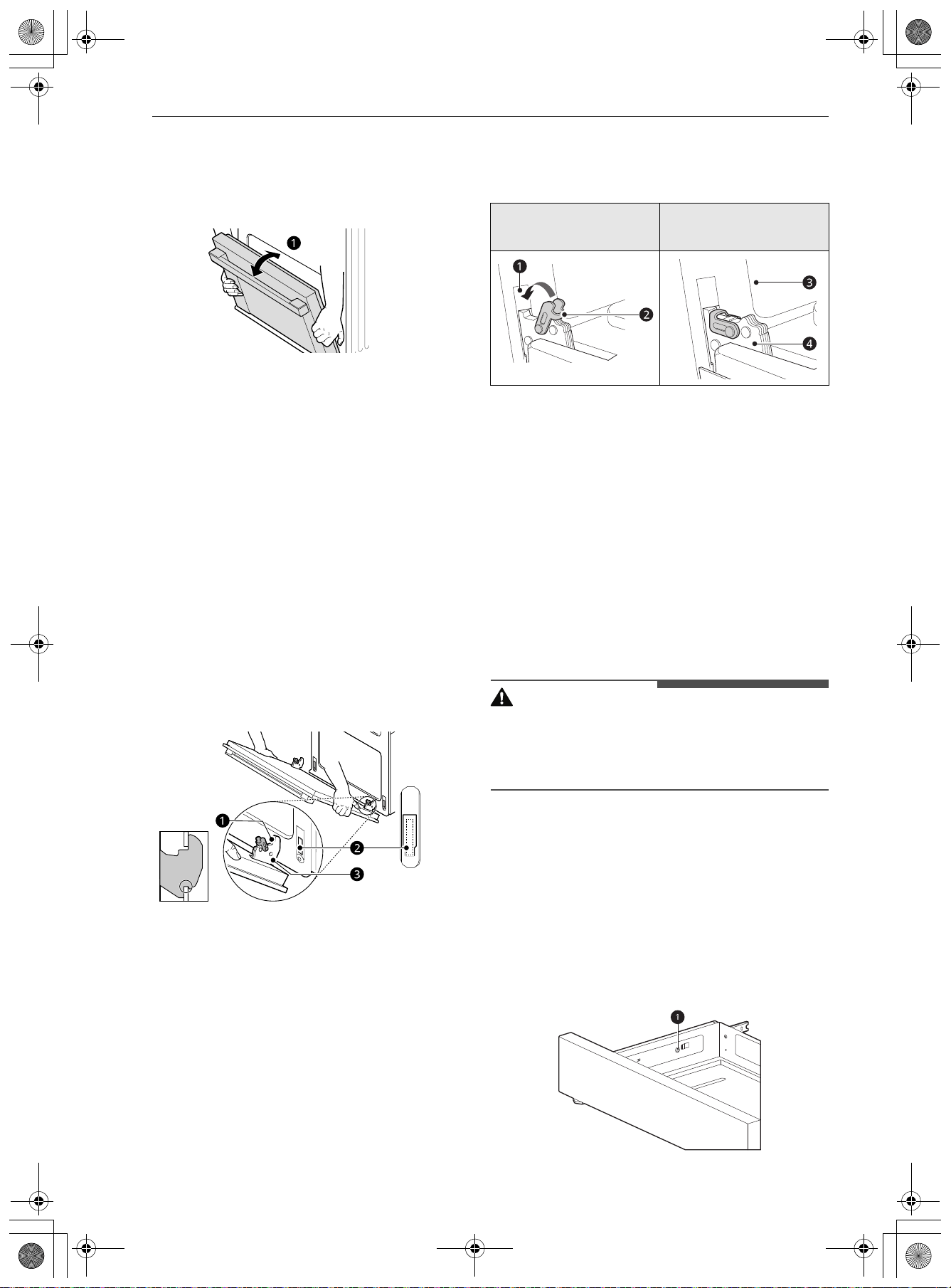
54 MANTENIMIENTO
4 Cierre la puerta parcialmente a
aproximadamente 5 grados a. Si la posición
es correcta, los brazos de la bisagra se
moverán de manera libre.
a Aproximadamente 5°
5 Levante la puerta y tire de ella hacia usted
hasta que la cerradura de la bisagra esté
completamente desprendida.
Colocación de las puertas
1 Tome firmemente ambos lados de la puerta
desde la parte superior.
2 Inserte completamente los brazos de la
bisagra a dentro de la ranura b hasta que
las hendiduras
c de los brazos de la bisagra
se apoyen en los bordes inferiores de las
ranuras.
a Brazo de la bisagra
b Borde inferior de la ranura
c Hendidura
3 Lentamente abra la puerta por completo.
Asegúrese de que los brazos de la bisagra
estén colocados correctamente en las
ranuras.
4 Levante la traba de la bisagra b y gírela hacia
el horno c hasta que haga clic en la posición.
Repita en el otro lado.
a Ranura
b Traba de la bisagra
c Marco del horno
d Brazo de la bisagra
5 Cierre la puerta del horno.
Extracción y colocación de cajones
Extracción de cajones
PRECAUCIÓN
• Desconecte la energía eléctrica de la estufa del
fusible principal o el panel disyuntor. Si no lo
hace, podría causar lesiones graves, descargas
eléctricas o la muerte.
La mayor parte de la limpieza se puede realizar
con el cajón en su lugar; sin embargo, el cajón
puede extraerse si se necesita realizar una
limpieza adicional. Use agua caliente para limpiar
a fondo.
1 Abra el cajón totalmente.
2 Desenrosque el tornillo a del lado de la parte
posterior del cajón.
Posición de
desbloqueado
Posición de
bloqueado
es-us_main.book.book Page 54 Tuesday, December 24, 2024 1:43 PM
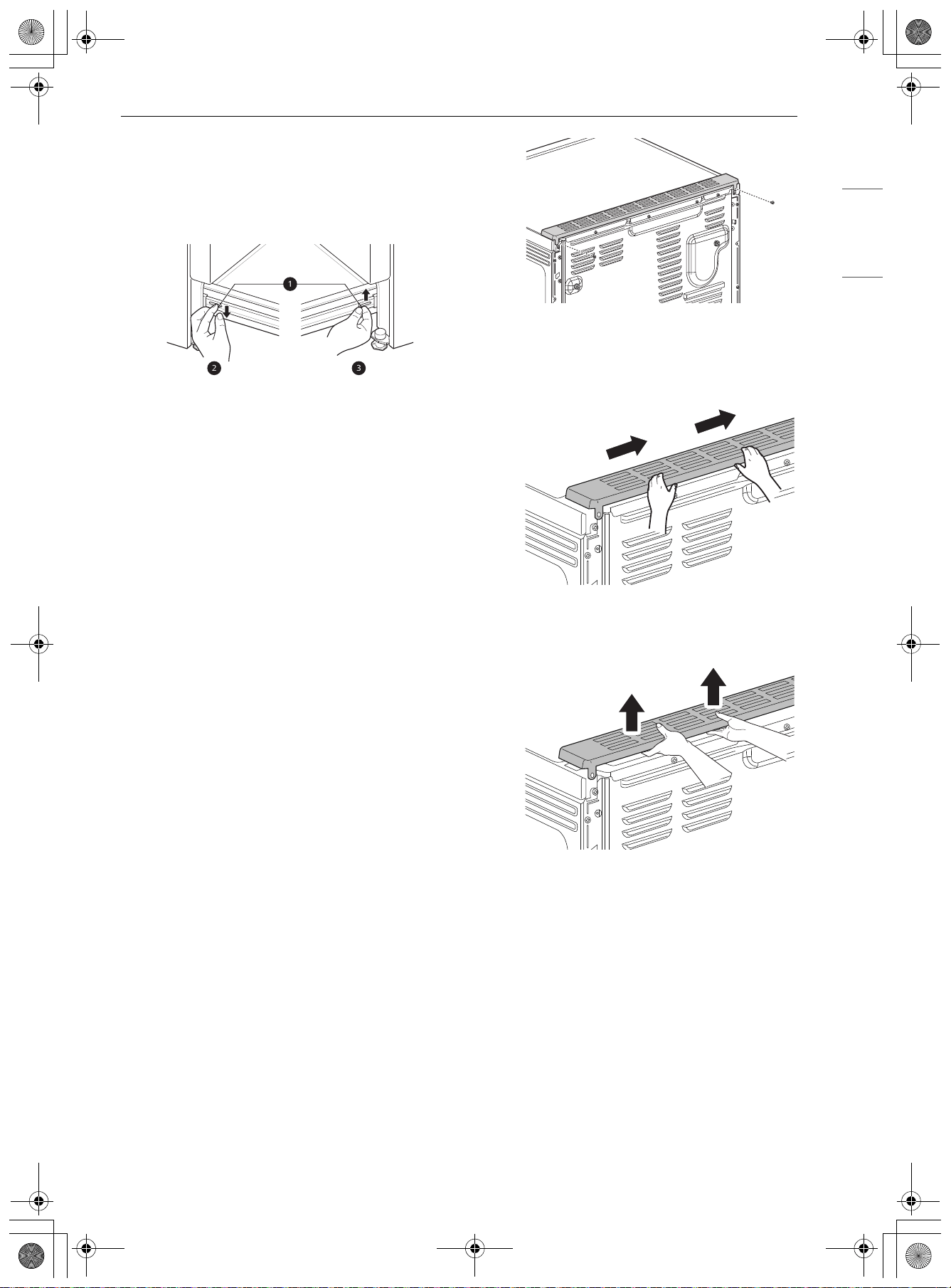
55MANTENIMIENTO
ESPAÑOL
3 Localice las palancas de deslizamiento a
ambos lados del cajón. Presione la palanca de
deslizamiento izquierda hacia abajo y tire
hacia arriba la palanca de deslizamiento
derecha.
a Palanca
b Empuje hacia abajo con el dedo
c Levante con el dedo
4 Retire el cajón de la estufa.
Colocación de los cajones
1 Lleve las correderas de apoyo a la parte
delantera de la corredera del chasis.
2 Alinee las correderas de cada lado del cajón
con las ranuras de las correderas de la estufa.
3 Empuje el cajón en la estufa hasta que las
palancas hagan clic (aproximadamente 2
pulgadas).
4 Inserte y ajuste los tornillos en el lado de la
parte posterior del cajón.
5 Tire nuevamente del cajón para abrirlo y
encajar las correderas de apoyo en su lugar.
Extracción/montaje de la moldura
de ventilación
Extracción de la moldura de
ventilación
1 Con un destornillador, retire los dos tornillos
que sujetan la moldura de ventilación en su
lugar.
2 Mueva la moldura de ventilación en la
dirección indicada aproximadamente 1/4".
3 Levante la moldura de ventilación.
Montaje de la moldura de ventilación
Coloque la moldura de ventilación en la secuencia
inversa a la de su extracción.
Mantenimiento periódico
Cambio de la luz del horno
La luz del horno es una bombilla estándar
halógena para electrodomésticos de 40 vatios. Se
enciende cuando se abre la puerta del horno.
Cuando la puerta del horno está cerrada, presione
Light para encenderla o apagarla.
es-us_main.book.book Page 55 Tuesday, December 24, 2024 1:43 PM
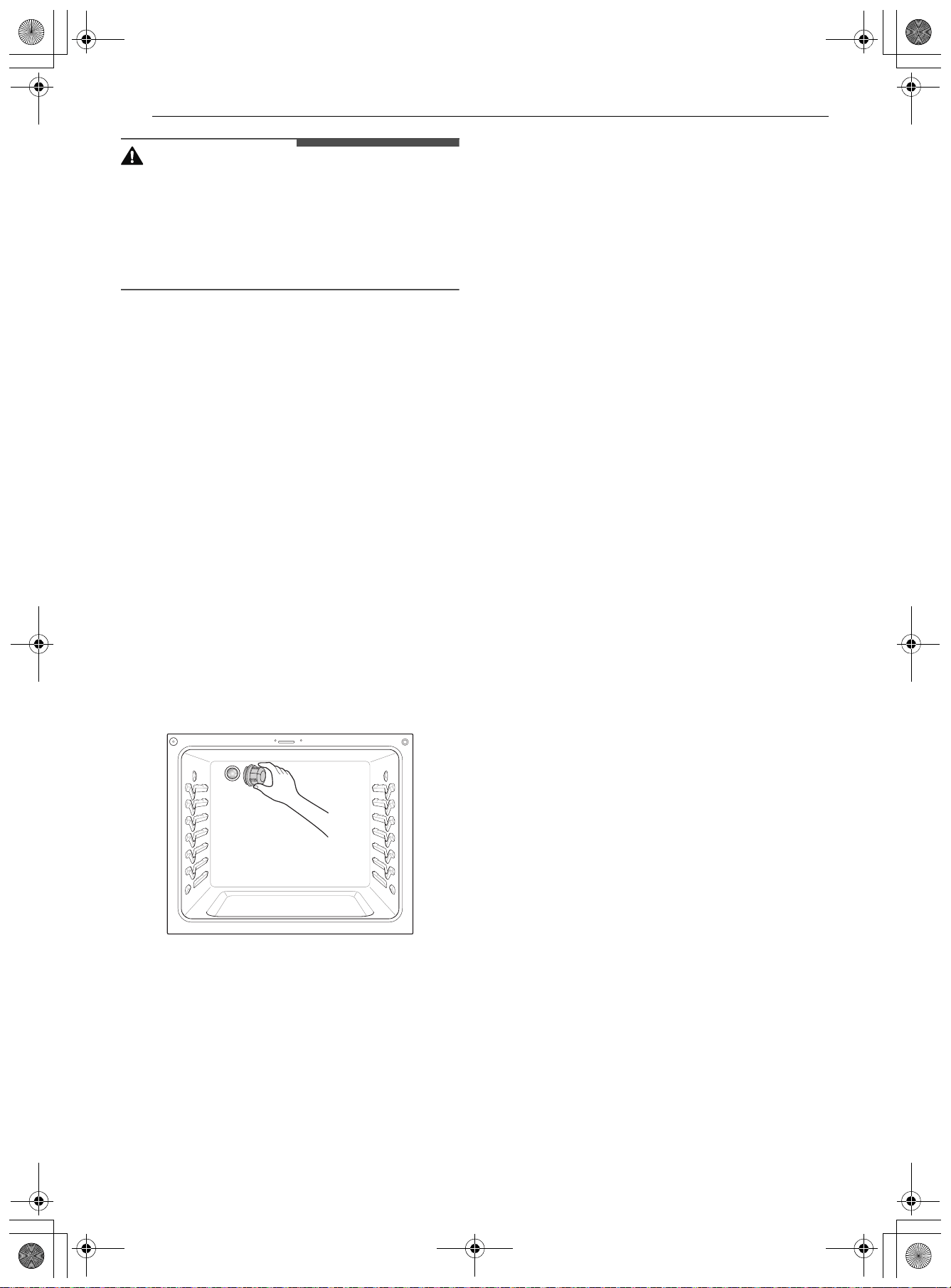
56 MANTENIMIENTO
ADVERTENCIA
• Asegúrese de que el horno y la bombilla estén
fríos.
• Desconecte la energía eléctrica de la estufa del
fusible principal o el panel disyuntor. Si no lo
hace, podría causar lesiones graves, descargas
eléctricas o la muerte.
1 Desenchufe la estufa o desconéctela de la
corriente eléctrica.
2 Para quitar la tapa de vidrio de la bombilla
que se encuentra en la parte trasera del
horno, gírela hacia la izquierda.
3 Retire la bombilla halógena del enchufe.
4 Inserte la nueva bombilla halógena.
5 Inserte la tapa de vidrio de la bombilla y gírela
hacia la derecha.
6 Enchufe la estufa o reconecte la corriente
eléctrica.
es-us_main.book.book Page 56 Tuesday, December 24, 2024 1:43 PM
57SOLUCIÓN DE PROBLEMAS
ESPAÑOL
SOLUCIÓN DE PROBLEMAS
Preguntas Frecuentes
Preguntas frecuentes
P: ¿Qué tipo de utensilios cocina se recomienda usar con la placa de cocción?
R:
• Las bandejas deben tener fondo plano y laterales rectos.
• Use solamente bandejas gruesas.
• El tamaño de la bandeja debe coincidir con la cantidad de comida que se preparará y el
tamaño de la hornalla.
• Use tapas herméticas.
• Use solamente woks de fondo plano.
P: ¿Por qué los elementos calentadores parecen ENCENDERSE y APAGARSE durante el uso de la
placa de cocción o del horno?
R: Dependiendo del ajuste de los elementos de la placa de cocción o la temperatura seleccionada en el
horno es normal que los elementos calentadores se enciendan y se apaguen.
P: Mi nuevo horno no cocina como el que tenía antes. ¿Hay algún problema con los ajustes de
temperatura?
R: No, su horno se probó y calibró en la fábrica. Durante los primeros usos, siga cuidadosamente los
tiempos y las temperaturas de su receta. Si todavía piensa que el horno nuevo se calienta o enfría
demasiado, puede ajustar su temperatura para adecuarla a sus necesidades específicas de cocción.
Consulte la sección Cambio de configuración del horno de este manual para obtener instrucciones
fáciles sobre cómo ajustar el termostato.
P: ¿Es normal que se escuche un chasquido que proviene de la parte trasera del horno cuando lo
uso?
R: Su nueva estufa está diseñada para mantener un control más estricto de la temperatura del horno. Es
posible que escuche los elementos calentadores del horno hacer un chasquido al encenderse y
apagarse con más frecuencia en su horno nuevo. Esto es normal.
P: ¿Por qué parpadea el reloj?
R: Esto significa que el producto acaba de enchufarse o que hubo una interrupción del suministro
eléctrico. Para eliminar el parpadeo del reloj, toque cualquier botón o reinicie el reloj si es necesario.
P: Durante la cocción por convección, el ventilador se detiene cuando abro la puerta. ¿Es normal?
R: Sí, es normal. Cuando se abre la puerta, el ventilador de convección se detiene hasta que se cierra la
puerta.
P: ¿Puedo usar papel de aluminio para que recolecte el goteo en la cavidad del horno?
R: Nunca utilice papel de aluminio para revestir la base o los costados del horno o el cajón calentador
(en algunos modelos). El papel se derretirá y se pegará a la superficie del fondo del horno y no se
podrá quitar. En lugar de eso, coloque una bandeja forrada con papel de aluminio sobre un estante
inferior del horno y úsela para recolectar las gotas. (Si ya se ha derretido papel de aluminio en el
fondo del horno, esto no interferirá con el rendimiento del horno).
P: ¿Puedo usar papel de aluminio en los estantes?
R: No cubra los estantes con papel de aluminio. Cubrir estantes por completo con papel de aluminio
restringe el flujo de aire, generando resultados de cocción deficientes. Coloque una bandeja cubierta
con papel de aluminio debajo de tartas de frutas u otros alimentos ácidos o dulces para evitar que los
derrames dañen el acabado del horno.
es-us_main.book.book Page 57 Tuesday, December 24, 2024 1:43 PM
58 SOLUCIÓN DE PROBLEMAS
PRECAUCIÓN
• Se puede utilizar papel de aluminio para envolver los alimentos dentro del horno o el cajón de
calentamiento, pero no permita que el papel de aluminio entre en contacto con los elementos
calentadores o asaderas del horno expuestos. El papel de aluminio podría derretirse o prenderse fuego,
lo que ocasionaría humo, incendio o lesiones.
P: ¿Puedo dejar los estantes en el horno cuando ejecute un ciclo de autolimpieza? (En algunos
modelos)
R: No. Aunque no dañará los estantes, esto los decolorará y no se deslizarán bien cuando los use. Quite
todos los elementos del horno antes de comenzar un ciclo de autolimpieza.
P: ¿Qué debo hacer si los estantes están pegajosos y es difícil deslizarlos hacia dentro y hacia
fuera?
R: Con el tiempo, se puede hacer difícil deslizar los estantes. Aplique una pequeña cantidad de aceite de
oliva en los extremos de los estantes. Este actuará como lubricante para un mejor deslizamiento.
P: ¿Qué debo hacer para quitar manchas difíciles de la placa de cocción?
R: La placa de cocción debe limpiarse después de cada uso para evitar que queden manchas
permanentes. Cuando cocine alimentos con alto contenido de azúcar, como salsa de tomate, se
recomienda limpiar la mancha con una espátula mientras la placa de cocción todavía esté tibia. Use
un guante para horno cuando raspe para evitar quemarse. Consulte la sección MANTENIMIENTO del
presente manual del propietario para obtener más instrucciones.
P: ¿Por qué no se pueden operar los botones de función?
R:
Asegúrese de que la estufa no esté en modo Bloqueo de Control/Bloqueo. El icono del candado
k
aparecerá en la pantalla si el modo Bloqueo de Control/Bloqueo está activado. Para desactivarlo,
consulte la sección Bloqueo de Control/Bloqueo. Suena la melodía de desbloqueo y aparece Loc en la
pantalla hasta que los controles se desbloquean. En modelos con Modo Sabbath, asegúrese de que la
estufa no esté en Modo Sabbath. Consulte la sección Modo Sabbath del manual para obtener
instrucciones.
P: Mi estufa todavía está sucia después de ejecutar el ciclo EasyClean. ¿Qué más debo hacer?
R: El ciclo EasyClean solo ayuda a aflojar la suciedad leve de la estufa para ayudar en la limpieza manual
del horno. No quita automáticamente toda la suciedad después del ciclo. Es posible que necesite
fregar la estufa después de haber ejecutado el ciclo EasyClean.
P: Probé fregar el horno después de ejecutar EasyClean, pero queda suciedad. ¿Qué puedo hacer?
R: La función EasyClean tiene un mejor resultado cuando la suciedad se empapa y sumerge totalmente
en agua antes de ejecutar el ciclo y durante la limpieza manual. Si la suciedad no está muy empapada
en agua, puede tener un efecto negativo sobre el desempeño de la limpieza. Repita el proceso
EasyClean utilizando suficiente agua.
• Para modelos con función Self Clean:
La suciedad de azúcar y algunos residuos grasosos son particularmente difíciles de limpiar. Si
queda alguna suciedad rebelde, use la función Self Clean para limpiar bien el horno.
P: La suciedad de las paredes del horno no sale. ¿Cómo puedo dejar limpias las paredes?
R: La suciedad en las paredes laterales y traseras de su estufa con horno puede resultar más difícil de
empapar totalmente con agua. Intente repetir el proceso EasyClean con más de ¼ de taza (2 oz o 60
ml) del producto recomendado.
P: ¿EasyClean quita toda la suciedad y las manchas por completo?
es-us_main.book.book Page 58 Tuesday, December 24, 2024 1:43 PM
59SOLUCIÓN DE PROBLEMAS
ESPAÑOL
R: Depende del tipo de suciedad. Las manchas de azúcar y algunas de grasa son particularmente
difíciles de limpiar. Además, si las manchas no están muy empapadas en agua, esto puede tener un
efecto negativo en el desempeño de la limpieza.
• Para modelos con función Self Clean:
Si todavía quedan manchas rebeldes o acumulación, use la función Self Clean. Consulte la
sección Self Clean (Autolimpieza) del manual del propietario.
P: ¿Hay algún truco para eliminar algo de la suciedad rebelde?
R: Se recomienda raspar la suciedad con un raspador plástico antes de limpiar manualmente y mientras
limpia. También se recomienda saturar por completo con agua la suciedad.
• Para modelos con función Self Clean:
Hay suciedad que es más difícil de limpiar que otra. Para la suciedad rebelde, se recomienda
usar el ciclo Self Clean. Consulte la sección Self Clean (Autolimpieza) del manual del
propietario para obtener más detalles.
P: ¿Es seguro que el ventilador de convección o el elemento calentador se mojen durante la
función EasyClean?
R: Sí. Tanto el ventilador de convección como el elemento calentador pueden mojarse un poco durante
la limpieza. Sin embargo, no es necesario aplicar un rocío directo sobre el quemador del asador ni los
elementos calentadores porque se limpian automáticamente durante el uso regular.
P: ¿Debo usar toda el agua 1 ¼ taza (10 oz o 300 ml) para la función EasyClean?
R: Sí. Se recomienda encarecidamente rociar o verter 1 taza (8 oz o 240 ml) de agua en la base y otro ¼
de taza (2 oz o 60 ml) de agua en las paredes y otras áreas sucias para saturar por completo la
suciedad a fin de lograr un mejor resultado de la limpieza.
P: Veo humo que sale de las ventilaciones de la placa de cocción de la estufa durante la función
EasyClean. ¿Es normal?
R: Esto es normal. No es humo. En realidad es vapor del agua que está en la cavidad del horno. Cuando
el horno se calienta brevemente durante la función EasyClean, el agua de la cavidad se evapora y sale
por las ventilaciones del horno.
P: ¿Con qué frecuencia debo usar EasyClean?
R: EasyClean se puede usar las veces que desee. EasyClean funciona mejor cuando el horno está
LEVEMENTE sucio, por ejemplo, con salpicaduras de grasa LEVES y gotitas de queso. Consulte la
sección EasyClean del manual del propietario para obtener más información.
P: ¿Qué se necesita para EasyClean?
R: Un envase rociador con 1 ¼ taza (10 oz o 300 ml) de agua, un raspador plástico, una esponja que no
raye y una toalla. No debe usar esponjas abrasivas como las de trabajo pesado ni lana de acero.
P: ¿Cómo puedo mantener la seguridad de los niños alrededor de la estufa?
R: Los niños deben estar bajo supervisión cuando estén alrededor de la estufa en uso y hasta que las
superficies se hayan enfriado. También puede usar la función de Bloqueo de Control/Bloqueo para
evitar que los niños enciendan accidentalmente la placa de cocción o el horno. La función de Bloqueo
de Control/Bloqueo desactiva la mayoría de los botones del panel de control y las perillas de control
de la placa de cocción. En algunos modelos, también se puede trabar la puerta del horno. Consulte la
sección Bloqueo de Control/Bloqueo del manual del propietario para obtener más detalles. (En
modelos sin la opción de Self Clean (Autolimpieza), la función de Bloqueo de Control/Bloqueo
bloquea los controles, pero no traba la puerta del horno).
P: ¿Por qué no funciona Instaview? (Únicamente en algunos modelos)
R: Nivele la estufa ajustando las patas de nivelación con una llave.
es-us_main.book.book Page 59 Tuesday, December 24, 2024 1:43 PM
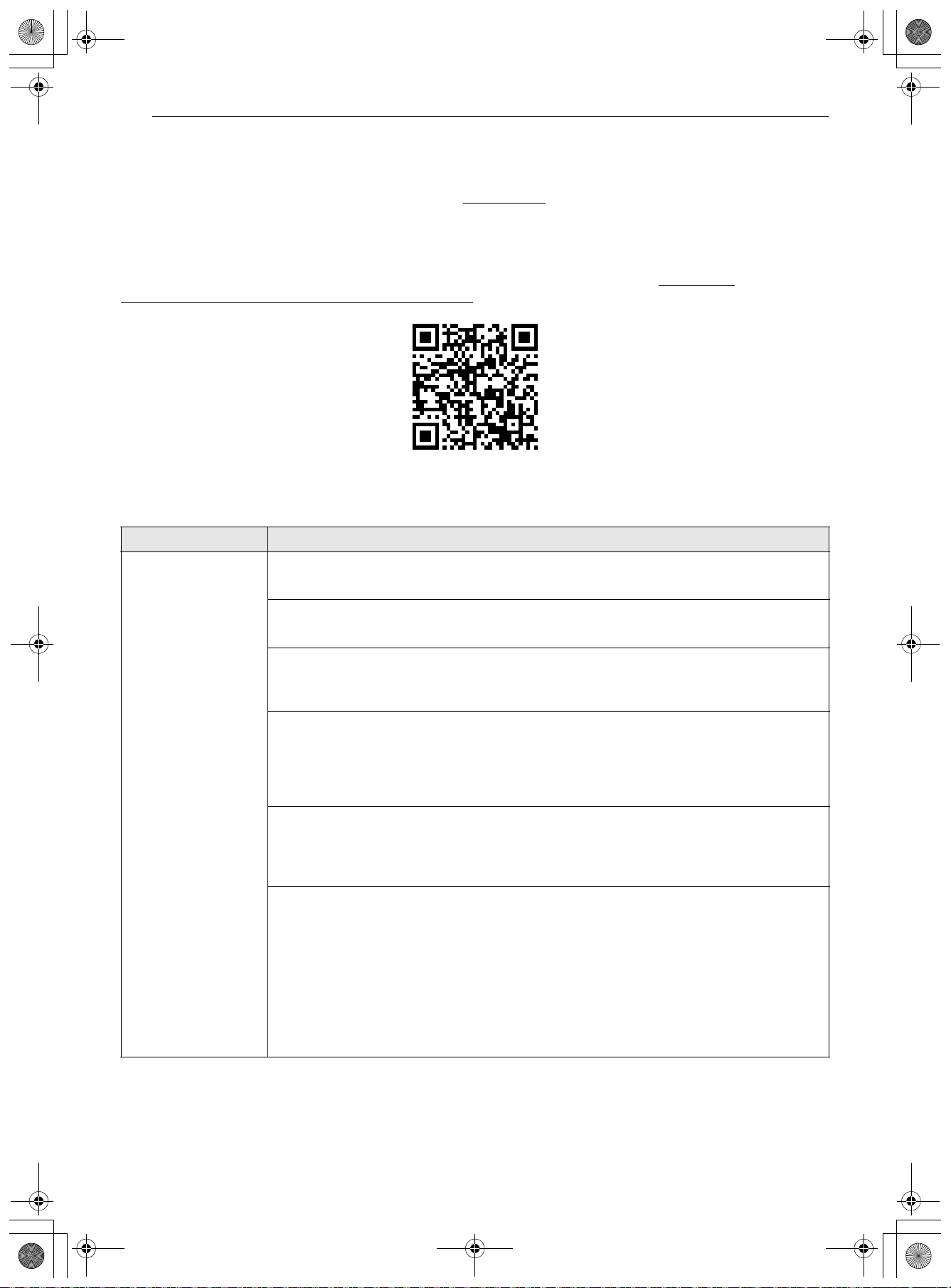
60 SOLUCIÓN DE PROBLEMAS
Antes de llamar al servicio técnico
Revise esta sección antes de llamar para servicio; hacerlo le ahorrará tiempo y dinero.
Para obtener información detallada o videos, visite www.lg.com
para consultar la página de resolución de
problemas.
Información adicional sobre la solución de problemas
El manual del propietario completo se puede encontrar en el sitio web de LG en: http://gscs-
manual.lge.com/CVZ/MFL68920573/en-us/main.html o escaneando el código QR.
Wi-Fi
Problemas Causas posibles y solución
Problemas para
conectar el
electrodoméstico y
el teléfono
inteligente a la red
Wi-Fi
La contraseña para la red Wi-Fi se introdujo de forma incorrecta.
• Elimine la red Wi-Fi doméstica y comience el proceso de conexión una vez más.
Los Datos Móviles para su teléfono inteligente están activados.
• Desactive la Red Móvil en su teléfono inteligente antes de conectar el electrodoméstico.
El nombre de la red inalámbrica (SSID) se ha configurado incorrectamente.
• El nombre de la red inalámbrica (SSID) debe ser una combinación de letras y números. (No
utilice símbolos especiales)
La frecuencia del enrutador no es de 2.4 GHz.
• Sólo se admite una frecuencia de enrutador de 2.4 GHz. Configure el enrutador
inalámbrico a 2.4 GHz y conecte el electrodoméstico a éste. Para verificar la frecuencia del
enrutador, consulte con su proveedor de servicios de internet o con el fabricante del
enrutador.
El electrodoméstico y el enrutador están demasiado alejados.
• Si el electrodoméstico se encuentra muy lejos del enrutador, puede que la señal sea débil y
que la conexión no sea configurada correctamente. Coloque el enrutador más cerca del
electrodoméstico o compre e instale un repetidor Wi-Fi.
Durante la configuración de Wi-Fi, la aplicación requiere una contraseña para conectar
el producto (en determinados teléfonos).
• Ubique el nombre de la red que comienza con "LG" en Configuración > Redes. Anote la
última parte del nombre de la red.
- Si el nombre de la red se asemeja a LGE_Appliance_XX-XX-XX, ingrese lge12345.
- Si el nombre de la red se asemeja a LGE_Appliance_XXXX, ingrese XXXX dos veces como
su contraseña. Por ejemplo, si el nombre de la red aparece como LGE_Appliance_8b92,
debería ingresar 8b928b92 como su contraseña. En esta instancia, la contraseña detecta
mayúsculas y minúsculas, y los últimos 4 caracteres son únicos a su electrodoméstico.
es-us_main.book.book Page 60 Tuesday, December 24, 2024 1:43 PM
61GARANTÍA LIMITADA
ESPAÑOL
GARANTÍA LIMITADA
EE. UU.
TÉRMINOS Y CONDICIONES
AVISO DE ARBITRAJE: ESTA GARANTÍA LIMITADA CONTIENE UNA CLÁUSULA DE ARBITRAJE QUE LE
DEMANDA A USTED Y A LG ELECTRONICS (“LG”) RESOLVER CONFLICTOS A TRAVÉS DE UN ARBITRAJE
VINCULANTE EN LUGAR DE HACERLO EN EL TRIBUNAL, A MENOS QUE USTED DECIDA NO PARTICIPAR.
EN EL ARBITRAJE, NO ESTÁN PERMITIDAS LAS ACCIONES COLECTIVAS NI LOS JUICIOS CON JURADO.
VEA A CONTINUACIÓN LA SECCIÓN “PROCEDIMIENTO PARA RESOLVER CONFLICTOS”.
Si su Estufa eléctrica LG (“Producto”) fallara debido a defectos de materiales o de fabricación en el uso
doméstico normal y correcto, durante el período de garantía que se establece a continuación, LG reparará
o reemplazará el Producto, según su criterio. Esta garantía limitada solo es válida para el comprador
minorista original del Producto (“Usted”), y solo se aplica cuando la compra es legal y cuando se utiliza
dentro de los Estados Unidos, incluidos los territorios estadounidenses.
• Los productos y las piezas de repuesto están cubiertos durante el tiempo restante del período original
de garantía o noventa (90) días, lo que resulte mayor.
• Los productos y las piezas de repuesto pueden ser nuevos, reparados, reacondicionados o reconstruidos
por la fábrica.
• Los productos o las piezas reemplazadas serán propiedad de LG.
• Es necesario presentar prueba de la compra minorista especificando el modelo del Producto y la fecha
de compra para obtener el servicio de garantía conforme a la presente garantía limitada.
SALVO LO PROHIBIDO POR LA LEY, TODA GARANTÍA DE COMERCIALIZACIÓN O IDONEIDAD
IMPLÍCITA, PARA UN PROPÓSITO PARTICULAR EN EL PRODUCTO, ESTÁ LIMITADA A LA DURACIÓN DE
LA GARANTÍA ARRIBA EXPRESADA. BAJO NINGUNA CIRCUNSTANCIA DEBERÁ LG O SUS
DISTRIBUIDORES/REPRESENTANTES SER RESPONSABLE POR CUALQUIER DAÑO INDIRECTO,
INCIDENTAL, CONSECUENTE, ESPECIAL, O PUNITIVO, LO CUAL INCLUYE PERO NO SE LIMITA A,
PÉRDIDA DE FONDOS DEL COMERCIO, GANANCIAS PERDIDAS, INTERRUPCIÓN DEL TRABAJO,
DETERIORO DE OTROS BIENES, COSTO DE REMOVER Y REINSTALAR EL PRODUCTO, PÉRDIDA DE USO, O
CUALQUIER OTRO DAÑO YA SEA BASADO EN CONTRATO, PERJUICIO, U OTROS. LA RESPONSABILIDAD
TOTAL DE LG, EN CASO EXISTA, NO EXCEDERÁ EL PRECIO QUE USTED PAGÓ POR ADQUIRIR EL
PRODUCTO.
ALGUNOS ESTADOS NO PERMITEN LA EXCLUSIÓN O LIMITACIÓN DE DAÑOS INCIDENTALES O
EMERGENTES, O LIMITACIONES A LA DURACIÓN DE LA GARANTÍA IMPLÍCITA, POR LO QUE LA
EXCLUSIÓN O LIMITACIÓN ANTERIORMENTE MENCIONADA PODRÍAN NO CORRESPONDER EN SU
CASO. ESTA GARANTÍA LIMITADA LE OTORGA DERECHOS LEGALES ESPECÍFICOS Y ES POSIBLE QUE
USTED CUENTE CON OTROS DERECHOS QUE VARÍAN SEGÚN EL ESTADO.
ESTA GARANTÍA LIMITADA NO CUBRE LO SIGUIENTE:
• Viajes del servicio técnico para entregar, buscar o instalar el producto, instruir al cliente sobre la
operación del mismo, corregir el cableado o las reparaciones/instalaciones no autorizadas.
• Daño o fallo del producto al operar durante fallas e interrupciones del suministro eléctrico, o resultado
de un servicio eléctrico inadecuado.
• Daños o fallos del Producto causados por tuberías de agua rotas o con fugas, tuberías de agua
congeladas, líneas de desagüe obstruidas, suministro de agua inadecuado o interrumpido, o suministro
de aire inadecuado.
Período de garantía Alcance de la garantía CÓMO SE MANEJA EL SERVICIO
Un (1) año a partir de la
fecha original de la
compra minorista
Piezas y mano de obra
(solo piezas internas /
funcionales)
LG suministrará toda la mano de obra y el
mantenimiento a domicilio sin cargo para reemplazar
las piezas defectuosas.
es-us_main.book.book Page 61 Tuesday, December 24, 2024 1:43 PM
62 GARANTÍA LIMITADA
• Daño o fallo del producto resultantes de operar el producto en una atmósfera corrosiva o contraria a las
instrucciones detalladas en el manual del propietario del producto.
• Daños o fallos del producto causados por accidentes, pestes y alimañas, rayos, viento, incendio,
inundaciones, hechos de fuerza mayor, o cualquier otra causa fuera del control de LG.
• Daños o fallos del Producto causados por modificaciones o alteraciones no autorizadas, o por utilizar el
Producto para fines distintos de lo previsto, o pérdida de agua cuando el Producto no se instaló
adecuadamente.
• Daños o fallos del Producto causados por corriente eléctrica o voltaje incorrectos, o códigos de cañería.
• Daños o fallos del producto causados por el transporte, almacenamiento y/o manejo, incluye rayas,
muescas, astillados y/u otros daños al acabado del producto, a menos que tales daños se informen
dentro del plazo de una (1) semana de la entrega.
• Daños o fallos del producto resultantes de mal uso, abuso, instalación, reparación o mantenimiento
incorrectos. Una reparación incorrecta incluye el uso de piezas no autorizadas, aprobadas o
especificadas por LG. La instalación o el mantenimiento inadecuados incluye aquellos contrarios a lo
especificado en el manual del usuario del producto.
• Daños o fallos del Producto causados por el uso de piezas, componentes, accesorios, productos de
limpieza consumibles, u otros productos o servicios no autorizados por LG.
• Daños o artículos faltantes con la caja abierta o que hayan estado en exhibición.
• Productos reacondicionados o cualquier producto vendido con los avisos "En el estado actual", "En el
sitio actual", "Con todos sus defectos" o similares.
• Productos cuyos números de serie originales hayan sido retirados, alterados o no se puedan determinar
fácilmente.
• Aumentos en los costos de los servicios públicos y otros gastos adicionales de dichos servicios.
• Cualquier ruido asociado con la operación normal.
• Productos utilizados de otra forma que no sea uso doméstico usual y normal (p. ej., uso comercial o
industrial) o de forma contraria al manual del usuario del Producto.
• Costos asociados con la remoción y reinstalación del Producto para reparaciones o la remoción y
reinstalación del Producto si está instalado en una ubicación inalcanzable o no está instalado de acuerdo
con el Manual del propietario del producto.
• Accesorios, componentes extraíbles o partes consumibles (por ejemplo, estantes, compartimentos de la
puerta, cajones, filtros de agua o aire, rejillas, bombillas, baterías, etc. según corresponda), excepto las
partes internas/funcionales cubiertas por esta garantía limitada.
El costo de la reparación o el reemplazo en estas circunstancias excluidas estará a su cargo.
PARA OBTENER SERVICIO EN GARANTÍA E INFORMACIÓN ADICIONAL
Llame al 1-800-243-0000
y seleccione la opción apropiada desde el menú.
O visite nuestro sitio web en http://www.lg.com
O por correo: LG Electronics Customer Service P.O. Box 240007 Huntsville, AL 35813 ATTN: CIC
PROCEDIMIENTO PARA RESOLVER DISPUTAS:
TODOS LOS CONFLICTOS ENTRE USTED Y LG QUE SURJAN FUERA DE O RELACIONADOS DE ALGUNA
MANERA CON ESTA GARANTÍA LIMITADA O CON EL PRODUCTO, SE RESOLVERÁN EXCLUSIVAMENTE A
TRAVÉS DE UN ARBITRAJE VINCULANTE Y NO EN UNA CORTE DE JURISDICCIÓN GENERAL. ARBITRAJE
VINCULANTE SIGNIFICA QUE USTED Y LG RENUNCIAN AL DERECHO DE UN JUICIO CON JURADO Y A
REALIZAR O PARTICIPAR EN UNA DEMANDA COLECTIVA.
Definiciones. Para el propósito de esta sección, las referencias a “LG” significan: LG Electronics U.S.A., Inc.,
sus empresas matrices, subsidiarias y filiales y cada uno de sus directivos, directores, empleados, agentes,
beneficiarios, predecesores en interés, sucesores, cesionarios y proveedores; las referencias a “conflicto” o
“reclamación” incluirán cualquier conflicto, reclamo o controversia de cualquier tipo, sin importar (ya sea
basado en contrato, agravio, estatuto, regulación, ordenanza, fraude, falsa representación o cualquier
es-us_main.book.book Page 62 Tuesday, December 24, 2024 1:43 PM
63GARANTÍA LIMITADA
ESPAÑOL
teoría legal o equitativa) que surja de o esté relacionada con cualquier forma de venta, condición o
desempeño del producto o de esta Garantía Limitada.
Aviso de disputa. En caso de que usted desee iniciar un procedimiento de arbitraje, primero debe
notificar a LG por escrito al menos 30 días antes de iniciar el arbitraje enviando una carta a LG a LG
Electronics, USA, Inc. Atención: Legal Department- Arbitration 111 Sylvan Avenue, Englewood Cliffs, NJ
07632 USA. Usted y LG aceptan participar en discusiones de buena fe en un intento de resolver su reclamo
de manera amistosa. En la carta debe proporcionar su nombre, dirección y número de teléfono; identificar
el producto que es objeto de la reclamación; y describir la naturaleza del reclamo y el remedio que busca.
Si usted y LG no pueden resolver la disputa dentro de 30 días, cualquiera de las partes puede proceder a
presentar una demanda de arbitraje.
Acuerdo de arbitraje vinculante y renuncia de demanda colectiva. En caso de no resolver la disputa
durante el período de 30 días después de enviar una notificación por escrito a LG, Usted y LG se
comprometen a resolver cualquier reclamo entre nosotros, solamente a través de arbitraje vinculante
sobre una base individual, a menos que usted se excluya, conforme a lo dispuesto a continuación.
Cualquier conflicto entre usted y LG no estarán combinados o consolidados con una controversia
relacionada con cualquier otro producto o reclamo de otra persona o entidad. Más específicamente y sin
prejuicio de lo anterior, no procederá bajo ninguna circunstancia cualquier disputa entre usted y LG como
parte de una acción colectiva o representativa. En lugar del arbitraje, cualquiera de las partes podrá iniciar
una acción individual en la corte de reclamos menores, pero tales acciones en la corte de reclamos
menores no podrán ser realizadas en una acción colectiva o representativa.
Normas y procedimientos de arbitraje. Para comenzar con el arbitraje de un reclamo, usted o LG deben
realizar una demanda escrita para arbitraje. El arbitraje será administrado por la Asociación Americana de
Arbitraje (AAA) y se llevará a cabo ante un árbitro único bajo las Normas de Arbitraje del Consumidor de la
AAA, que tienen efecto al momento de inicio del arbitraje (en adelante “Normas de la AAA”) y bajo los
procedimientos establecidos en esta sección. Las Normas de la AAA están disponibles en línea en
www.adr.org/consumer. Envíe una copia de su solicitud de arbitraje por escrito, así como una copia de
esta disposición, a la AAA de la forma descrita en las Normas de la AAA. También debe enviar una copia de
su solicitud por escrito a LG en LG Electronics, USA, Inc. Atención: Legal Department- Arbitration 111
Sylvan Avenue, Englewood Cliffs, NJ 07632 USA. Si hay un conflicto entre las Normas de la AAA y las reglas
establecidas en esta sección, prevalecerán dichas reglas de esta sección. Esta disposición de arbitraje se
rige por la Ley Federal de Arbitraje. El juicio se puede introducir en el laudo arbitral en cualquier tribunal
de jurisdicción competente. Todos son temas para que el árbitro tome sus decisiones, excepto aquellos
asuntos relativos al alcance y aplicabilidad de la cláusula de arbitraje y de la capacidad de arbitraje de la
controversia para que el tribunal decida. El árbitro se regirá por los términos de esta disposición.
Legislación vigente. La legislación del estado de su residencia regirá esta Garantía Limitada, así como
todas las disputas entre nosotros, salvo que sea invalidada o inconsistente con leyes federales aplicables.
Tarifas / Costos. Usted no debe pagar ninguna tarifa para comenzar un arbitraje. Al recibir su solicitud de
arbitraje por escrito, LG pagará todos los gastos administrativos rápidamente a la AAA, a menos que usted
solicite más de $25,000.00 por daños, en cuyo caso el pago de estos gastos se regirá por las Normas de la
AAA. Salvo disposición contraria prevista en el presente documento, LG pagará a la AAA todos los gastos
documentales, administrativos y de arbitraje para cualquier ar
b
itraje iniciado, de conformidad con las
Normas de la AAA y esta disposición de arbitraje. Si usted prevalece en el arbitraje, LG pagará los
honorarios y gastos de sus abogados, siempre y cuando sean razonables, considerando factores que
incluyen, entre otros, el monto de la compra y el monto del reclamo. No obstante lo anterior, si la ley
aplicable permite una adjudicación de honorarios y gastos razonables de abogados, un árbitro puede
otorgarlos en la misma medida que lo haría un tribunal. Si el árbitro considera que la sustancia de su
reclamo o la reparación solicitada en la demanda es frívola o se utiliza para un propósito inadecuado
(calificado según las normas establecidas en la Norma Federal de Procedimiento Civil 11 (b)), el pago de
todos los honorarios de arbitraje se regirá por las Normas de la AAA. En tal situación usted se compromete
a reembolsar a LG todos los fondos erogados previamente por ella, cuyo pago es, por otra parte, su
obligación, según las Normas de la AAA. Salvo disposición contraria, LG renuncia a cualquier derecho que
pudiera tener para solicitarle los honorarios y gastos de sus abogados, si LG prevalece en el arbitraje.
Audiencias y ubicación. Si su reclamo es por $25,000 o menos, usted puede optar que el arbitraje sea
realizado únicamente sobre la base de: (1) documentos presentados al árbitro, (2) a través de una
audiencia telefónica o (3) por una audiencia en persona, según lo establecido por las Normas de la AAA. Si
su reclamo excede $25,000, el derecho a una audiencia estará determinado por las Normas de la AAA.
Cualquier audiencia de arbitraje en persona se realizará en un lugar dentro del distrito judicial federal en
es-us_main.book.book Page 63 Tuesday, December 24, 2024 1:43 PM
64 GARANTÍA LIMITADA
el cual resida, a menos que ambos acuerden otra ubicación o estemos de acuerdo con el arbitraje
telefónico.
Exclusión voluntaria. Usted puede optar por no participar en este procedimiento de resolución de
disputas. Si opta por no participar, ni usted ni LG pueden exigir a la otra parte que participe en un
procedimiento de arbitraje. Para optar por no participar, usted debe enviar un aviso a LG a más tardar 30
días calendario a partir de la fecha de compra del producto por parte del primer comprador consumidor ya
sea (i) enviando un correo electrónico a optou[email protected]
, con el asunto: “Exclusión voluntaria del arbitraje”
o (ii) llamando al 1-800-980-2973. Debe incluir lo siguiente en el correo electrónico de exclusión voluntaria
o proporcionar por teléfono: (a) su nombre y dirección; (b) la fecha en la que se compró el producto; (c) el
nombre del modelo o el número de modelo del producto; y (d) el número de serie (el número de serie se
puede encontrar (i) en el producto; o (ii) en línea accediendo a https://www.lg.com/us/support/repair-
service/schedule-repair-continued y haciendo clic en “Find My Model & Serial Number”).
Usted sólo puede optar por no participar en el procedimiento de resolución de disputas de la manera
descrita anteriormente (es decir, por correo electrónico o por teléfono); ninguna otra forma de notificación
será efectiva para optar por no participar en este procedimiento de resolución de disputas. La exclusión
voluntaria de este procedimiento de resolución de disputas no afectará la cobertura de la Garantía
limitada de ninguna manera y usted seguirá disfrutando de todos los beneficios de la Garantía limitada. Si
conserva este producto y no opta por no participar, acepta todos los términos y condiciones de la
disposición de arbitraje descrita anteriormente.
es-us_main.book.book Page 64 Tuesday, December 24, 2024 1:43 PM
65Memorándum
es-us_main.book.book Page 65 Tuesday, December 24, 2024 1:43 PM
66 Memorándum
es-us_main.book.book Page 66 Tuesday, December 24, 2024 1:43 PM
67Memorándum
es-us_main.book.book Page 67 Tuesday, December 24, 2024 1:43 PM
68 Memorándum
es-us_main.book.book Page 68 Tuesday, December 24, 2024 1:43 PM
69Memorándum
es-us_main.book.book Page 69 Tuesday, December 24, 2024 1:43 PM
70 Memorándum
es-us_main.book.book Page 70 Tuesday, December 24, 2024 1:43 PM
71Memorándum
es-us_main.book.book Page 71 Tuesday, December 24, 2024 1:43 PM
LG Customer Information Center
Register your product Online!
www.lg.com
For inquiries or comments,
visit www.lg.com or call:
1-800-243-0000
U.S.A.
1-888-542-2623
CANADA
Centro de Información al Cliente LG
¡Registre su producto en línea!
www.lg.com
Para consultas o comentarios, visite
www.lg.com o llame por teléfono:
1-800-243-0000
EE.UU.
1-888-542-2623
CANADÁ
Centre de Service à la Clientèle de LG
Enregistrez votre produit en ligne!
Pour des questions ou des commentaires,
visitez www.lg.com/ca_fr ou appelez :
1-800-243-0000
ÉTATS-UNIS
1-888-542-2623
CANADA
www.lg.com/ca_fr
es-us_main.book.book Page 65 Tuesday, December 24, 2024 1:43 PM