Page 1 of 2 Revision Date: September 2004
METCo P/N: 58-97-0100
Legend: Drawing No.: 1A
Y - Yes
N - No
N/A – Not Applicable
Material Safety Data Sheet
May be used to comply with
OSHA’s Hazard Communication Standard 29 CFR 1910.1200.
This standard must be consulted for specific requirements
IDENTITY (As used on label and list)
Note: Blank spaces are not permitted. If any item is not applicable, or no information
is available, the space must be marked to indicate that.
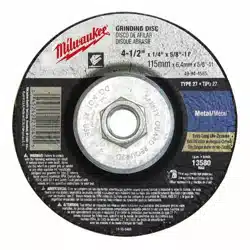
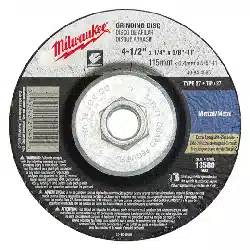
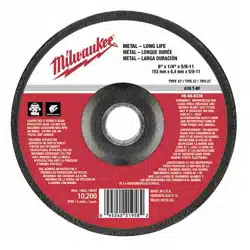
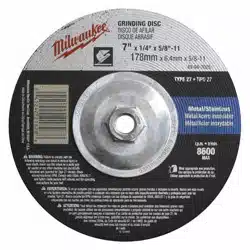
Cut-Off Wheels
49-94-4510, 49-94-4515, 49-94-4520, 49-94-4525, 49-94-5010,
49-94-5020, 49-94-6330, 49-94-6340, 49-94-6360, 49-94-7015,
49-94-7020, 49-94-7025, 49-94-9015, 49-94-9025
Section I
Manufacturer’s Name
Emergency Telephone Number
Milwaukee Electric Tool Corporation 1-800-424-9300
Address (Number, Street)
Contact Telephone Number for Technical Information
13135 West Lisbon Road 262-781-3600 or 1-800-729-3878 (1-800-SAWDUST)
(City, State, and Zip Code) Date Prepared
Brookfield, Wisconsin 53005 September 2004
Section II - Hazardous Ingredients/Identity Information
Hazardous Components [Specific Chemical Identity, Common name (s)]
Ingredient % by
Weight
OSHA Reg.
Y/N
CAS #
OSHA
PEL
ACGIH
TLV
California
Prop 65 Reg.
Y/N
IARC/NTP
Y/N
Aluminum Oxide, Non-Fibrous 60-90% N 1344-28-1 15mg/m3 10mg/m3 N N
Cured Phenol/Formaldehyde Resin 2-15% N 9003-35-4 N/A N/A N N
Inorganic Fluorides ** 1-15% N NA 2.5mg/m3 2.5mg/m3 N N
Iron Disulfide 2-30% N 12068-85-8 10mg/m3 10mg/m3 N N
** Substance is a compound and/or mixture
DOT Hazard Classification: Non-Hazardous
SARA Title III Section 313: This product does not contain regulated levels of any toxic chemical subject to the reporting requirements of section 313 of
Title III of the Superfund Amendments and Reauthorization Act of 1986 (SARA) and 40 CFR part 372.
HMIS
®
Rating Numbers
Health Flammability Reactivity Personal Protection
1 0 0 A
Hazard Ratings: 0 = Minimum hazard 1 = Slight hazard 2 = Moderate hazard 3 = Serious hazard 4 = Severe hazard
A = Goggles B = Goggles + Gloves C = Face Shield, Gloves + Apron X = Special, See sections VII & VIII of this sheet
Section III - Physical/Chemical Characteristics
Boiling Point
Specific Gravity (H
2
O=1)
N/A N/A
Vapor Pressure (mm/Hg.) Melting Point
N/A N/A
Vapor Density (Air=1) Evaporation Rate
N/A N/A
Solubility in Water
Non-Soluble
Appearance and Odor
Solid article. Odorless.
Section IV - Fire and Explosion Hazard Data
Flash Point (Method Used) Flammable Limits LEL UEL
N/A N/A N/A N/A
Extinguishing Media
N/A
Special Fire Fighting Procedures Unusual Fire and Explosion Hazards
N/A N/A
Section V - Reactivity Data
Stability Unstable
Conditions to avoid
:
Stable
X N/A
Incompatibility (Material to avoid):
Avoid acids of all types with a pH < 4.0
Page 2 of 2 Revision Date: September 2004
METCo P/N: 58-97-0100
Legend: Drawing No.: 1A
Y - Yes
N - No
N/A – Not Applicable
Hazardous Decomposition or Byproducts
In use, dust and decomposing odors may be generated. In most cases, the material removed from the workplace will be
significantly greater then the grinding wheel components. Coolants may produce other decomposition products. For
products containing phenol and formaldehyde resin, thermal decomposition may produce trace amounts of phenol and
formaldehyde. For products containing inorganic fluorides, thermal decomposition may produce trace amounts of
fluorides.
Hazardous May Occur
Conditions to avoid
:
Polymerization Stable
X N/A
Section VI - Health Hazard Data
Route(s) of Entry: Inhalation? Skin? Ingestion?
During normal use
Affects breathing capacity Irritation No affects
Health Hazards (Acute and Chronic)
ACUTE: Dust may be slightly irritating to eyes and respiratory tract at high concentrations. CHRONIC: May affect
breathing capacity. For products containing phenol/formaldehyde resin dust generated from intended use may contain
trace amounts of phenol and formaldehyde which may cause skin sensitization and airway obstruction. For products
containing inorganic fluorides, excessive exposure to inorganic fluorides has been shown to increase bone density.
Signs and Symptoms of Exposure:
INHALATION: May cause airway obstruction. EYES: May irritate eyes. SKIN: Some may experience skin irritation.
INGESTION: No known adverse affects, but ingestion not recommended.
Medical Conditions Generally Aggravated by Exposure:
None
Emergency and First Aid Procedures
INHALATION: Remove to fresh air. If breathing stops, get medical attention immediately and give artificial respiration.
EYES: Wash with large amounts of water and obtain medical attention if needed. SKIN: Wash affected areas with soap
and water and obtain medical attention. INGESTION: Call poison control center, hospital emergency room, or physician
immediately.
Section VII - Precautions for Safe Handling and Use
Steps to Be Taken in Case Material is Released if Spilled
Follow normal clean up procedures.
Waste Disposal Method
Use standard landfill methods consistent with applicable Federal, State, Provincial, and local laws. Products with listed
fluorides may have slightly soluble fluoride swarf.
Precautions to Be Taken in Handling and Storing
Always handle and store in a careful manner.
Other Precautions
ALWAYS visually inspect wheels before mounting, check machine speed against the established maximum safe
operating speed marked on the wheel, check mounting flanges for equal and correct diameter, use mounting blotters, be
sure work rest is properly adjusted, use a safety guard covering at least one-half of the grinding wheel, allow newly
mounted wheels to run at operating speed with guard in place for at least one minute before grinding, and turn off coolant
before stopping wheel to avoid an out-of-balance wheel.
Section VIII - Control Measures
Respiratory Protection (Specify Type)
Respirators are required when airborne contaminant levels exceed the TLV’s.
Ventilation Local Exhaust Special
It is recommended when general ventilation is not
keeping the airborne concentration below the TLV.
None
Mechanical Other
None None
Protective Gloves Eye Protection
None Always wear safety glasses
Other Protective Clothing or Equipment:
Use of this product may create elevated sound levels. Hearing protection should be worn where required (see OSHA 29
CFR 1910.134 and other applicable regulations).
Work/Hygienic Practices
None
The information and recommendations set forth are made in good faith and believed to be accurate as of the
date of preparation. MILWAUKEE ELECTRIC TOOL CORPORATION makes no warranty, expressed or
implied, regarding the accuracy of this data or the results to be obtained from the use thereof.