
Owner’s Manual & Safety Instructions
Save This Manual Keep this manual for the safety warnings and precautions, assembly,
operating, inspection, maintenance and cleaning procedures. Write the product’s serial number in the
back of the manual near the assembly diagram (or month and year of purchase if product has no number).
Keep this manual and the receipt in a safe and dry place for future reference. 18e
When unpacking, make sure that the product is intact
and undamaged. If any parts are missing or broken,
please call 1-888-866-5797 as soon as possible.
Copyright
©
2018 by Harbor Freight Tools
®
. All rights reserved.
No portion of this manual or any artwork contained herein may be reproduced in
any shape or form without the express written consent of Harbor Freight Tools.
Diagrams within this manual may not be drawn proportionally. Due to continuing
improvements, actual product may differ slightly from the product described herein.
To ols required for assembly and se rv ic e m ay n ot b e i nc lu de d .
Read this material before using this product.
Failure to do so can result in serious injury.
SAVE THIS MANUAL.
Visit our website at: http://www.harborfreight.com
Email our technical support at: [email protected]
Page 2 For technical questions, please call 1-888-866-5797. Item 64014
SaFEty OpEratiOn MaintEnancESEtup
table of contents
Safety ..........................................2
Specifications ..............................5
Setup ...........................................6
Operation ..................................... 8
Maintenance ...............................14
Warranty .....................................16
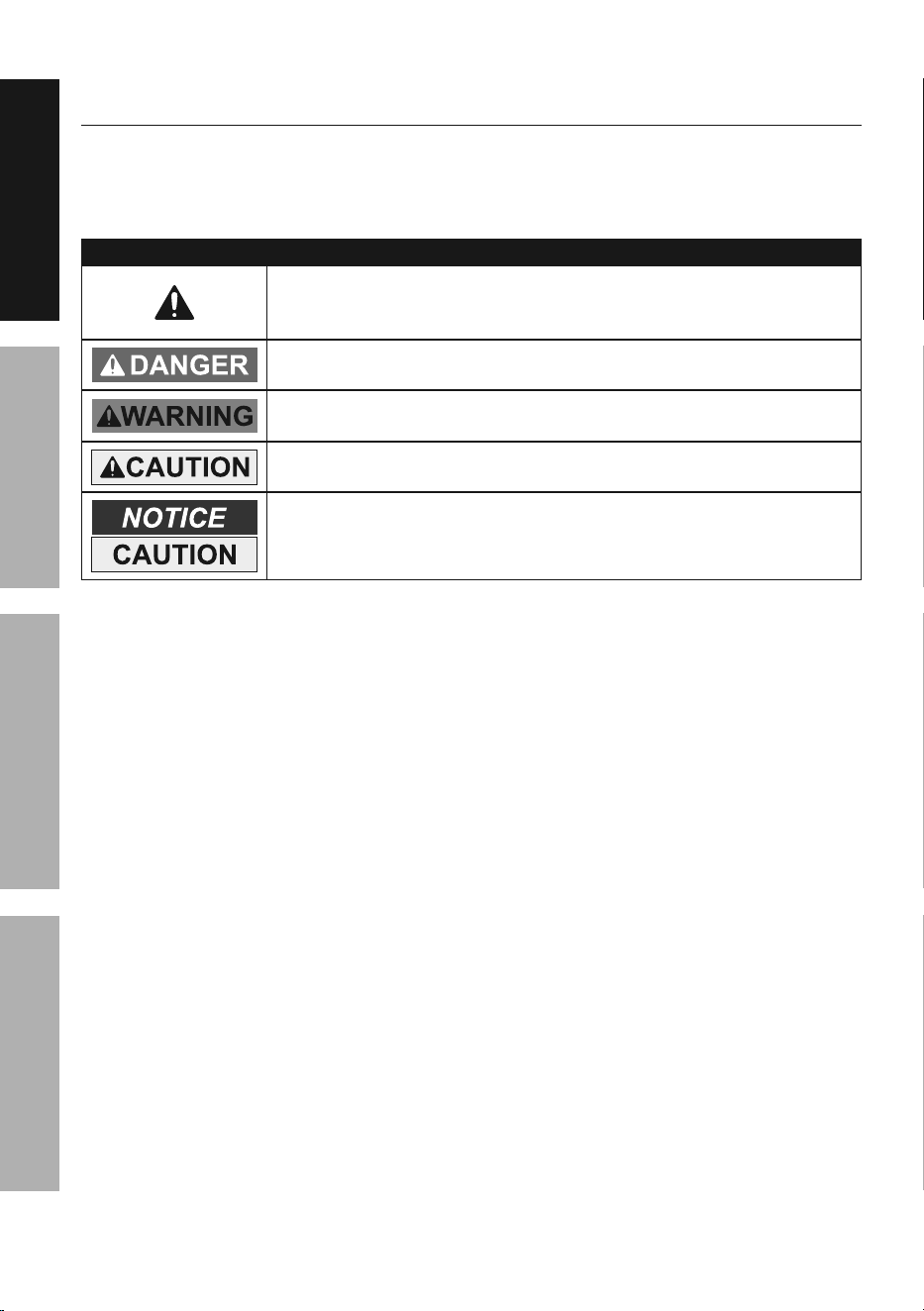
WarninG SyMBOLS anD DEFinitiOnS
This is the safety alert symbol. It is used to alert you to
potential personal injury hazards. Obey all safety messages
that follow this symbol to avoid possible injury or death.
Indicates a hazardous situation which, if not avoided,
will result in death or serious injury.
Indicates a hazardous situation which, if not avoided,
could result in death or serious injury.
Indicates a hazardous situation which, if not avoided,
could result in minor or moderate injury.
Addresses practices not related to personal injury.

Page 3For technical questions, please call 1-888-866-5797.Item 64014
SaFEtyOpEratiOnMaintEnancE SEtup
iMpOrtant SaFEty inFOrMatiOn
Safety Warnings and precautions
read all safety warnings and all instructions.
Failure to follow the warnings and instructions may result
in electric shock, fire and/or serious injury.
Save all warnings and instructions for future reference.
1. Electrical shock can cause death
or injury! NEVER TOUCH exposed
conductors of electricity.
2. test cable voltages with care.
3. Inspect the Multimeter before
use. In addition to a general
inspection, look specifically for:
a. Pay special attention to the
insulation protecting the connectors.
b. Check the leads for exposed metal,
damaged insulation, and continuity.
c. Replace damaged test lead
immediately, before use.
4. Do not use the Multimeter if:
a. Either of the test leads are
damaged in any way.
b. Test leads are dirty or
have residue on them.
c. The battery is low.
d. Near any explosive
gasses or fumes.
e. Any abnormal operation is
detected.
(If in doubt about the
condition of the Meter, have
it serviced before use).
f. The battery cover is open.
5. Power this Meter using only
the battery(ies) referenced in
the Specifications Chart.
6. Use caution when working near
voltages above 30 VAC rms,
42 VAC peak, or 60 VDC. Voltages this
high present a risk of electric shock.
7. Disconnect the circuit’s power
before connecting the Meter in
series, when measuring current.
8. Connect the common (COM) test
lead first and disconnect it last.
9. Hold the probes with fingers
behind guards.
10. Avoid electrical shock. Use extreme
caution when working near uninsulated
conductors or bus bars. Prevent body
contact with grounded surfaces such
as pipes, radiators, ranges, and cabinet
enclosures when testing voltages.
11. Observe work area conditions. Do
not test voltages in damp or wet
locations. Don’t expose to rain.
Keep work area clean and well lit.
12. Keep children away. Children must
never be allowed in the work area.
13. Stay alert. Watch what you are doing,
use common sense. Do not operate
any meter when you are tired.
14. Do not operate meter if under the
influence of alcohol or drugs. Read
warning labels on prescriptions
to determine if your judgment or
reflexes are impaired while taking
drugs. If there is any doubt,
do not operate the meter.
Page 4 For technical questions, please call 1-888-866-5797. Item 64014
SaFEty OpEratiOn MaintEnancESEtup
15. People with pacemakers should
consult their physician before use.
Electromagnetic fields in close
proximity to heart pacemaker could
cause pacemaker interference
or pacemaker failure.
16. Do not test voltage on circuits
higher than 600 volts.
17. Do not test current on circuits
higher than 10 amps.
18. Dress properly. Protective,
electrically nonconductive
clothes and nonskid footwear are
recommended when working.
19. Wear ANSI-approved safety
goggles during use.
20. Only use accessories intended
for use with this meter.
21. Avoid damaging meter. Use only
as specified in this manual.
22. Prior to testing resistance, diodes,
or continuity; disconnect all power
to the circuit and discharge all
high-voltage capacitors.
23. Performance of this meter may vary
depending on battery condition.
24. Use the proper settings, terminals,
techniques, and range for the
tests performed. Start with the
range stated in the instructions.
25. Do not apply voltage to the Test
Leads when the Multimeter is in
the Ohms testing setting. Damage
can occur to the Meter.
26. Do not switch between testing
modes with the multimeter
connected to a circuit.
27. Do not use the meter at a setting
marked as blank on the scale.
28. Have the multimeter calibrated by
a qualified technician every year
to maintain accurate results.
29. Do not disassemble multimeter;
take it to a qualified technician
when service or repair is required.
Incorrect reassembly may result
in a risk of electric shock or fire.
30. The warnings, cautions, and
instructions discussed in this
instruction manual cannot cover all
possible conditions and situations
that may occur. It must be understood
by the operator that common sense
and caution are factors which cannot
be built into this product, but must
be supplied by the operator.
SaVE tHESE inStructiOnS.
Page 5For technical questions, please call 1-888-866-5797.Item 64014
SaFEtyOpEratiOnMaintEnancE SEtup
Specifications
DC Voltage Ranges: 200mV / 2V / 20V / 200V / 600V DC (max)
Input Impedance: 10MΩ
DC Voltage Accuracy (@200mV - 200V) ± 0.5% of rdg + 3D
(@600V) ± 0.8% of rdg + 3D
DC Current Ranges: 200μA / 2000μA / 20mA / 200mA / 10A
DC Current Accuracy (@ 200μA - 200mA) ± 0.8% of rdg +3D
(@10A) ± 1.0% of rdg + 10D
AC Voltage Ranges: 2V / 20V / 200V / 600V AC rms (max)
Frequency Response: 40Hz - 400Hz
AC Voltage Accuracy (@2V - 200V) ± 0.5% of rdg + 5D
(@600V) ± 1.0% of rdg + 5D
AC Current Ranges: 200μA / 2000μA / 20mA / 200mA / 10A
AC Current Accuracy (@200μA - 20mA) ± 1.0% of rdg + 3D
(@200mA) ± 1.2% of rdg +3D
(@10A) ± 1.5% of rdg + 10D
Resistance Ranges: 200Ω / 2kΩ / 20kΩ / 200kΩ / 2MΩ / 20MΩ
Resistance Accuracy (@200Ω - 2MΩ) ± 0.8% of rdg + 4D
(@20MΩ) ± 1.0% of rdg + 4D
Diode 1.5V forward voltage drop
Battery Test Accuracy (@12V / 9V) ± 0.8% of rdg +7D
(@1.5V) ± 3.0% of rdg +5D
Continuity Meter beeps at < 50Ω ± 20Ω
Temperature Range: -4°F - 1382°F (-20°C - 750°C)
Temperature Accuracy (@-20°C - 750°C) ± 2.0% of rdg +2D
(@-4°F - 1382°F) ± 2.0% of rdg + 4D
Operating Temperature Range: 32°F - 104°F (0°C - 40°C)
Operating Humidity <80% RH
Overload Protection (mA jack) FF 400mA H 600V fuse (F2)
(A jack) FF 10A H 600V fuse (F1)
Display LCD
Battery 9V (included)
Page 6 For technical questions, please call 1-888-866-5797. Item 64014
SaFEty OpEratiOn MaintEnancESEtup
Setup - Before use:
read the EntirE iMpOrtant SaFEty inFOrMatiOn section
at the beginning of this manual including all text under
subheadings therein before set up or use of this product.
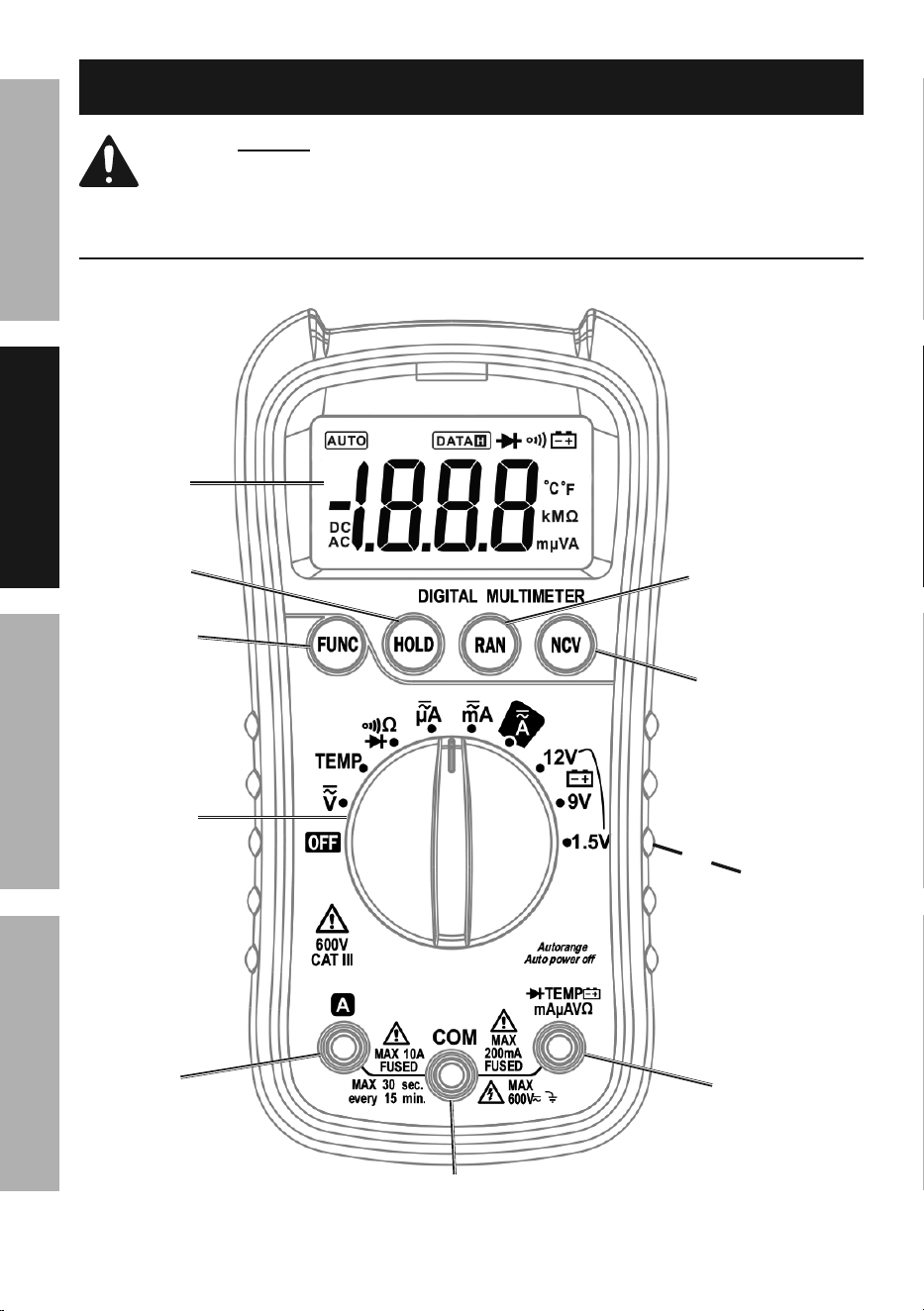
Functions
range Button
cOM Jack
Display
Data
Hold
Button
Function
Button
non-contact
Voltage
Button
rotary
Switch
a
Jack
input
Jack
Stand
(on back)
Page 7For technical questions, please call 1-888-866-5797.Item 64014
SaFEtyOpEratiOnMaintEnancE SEtup
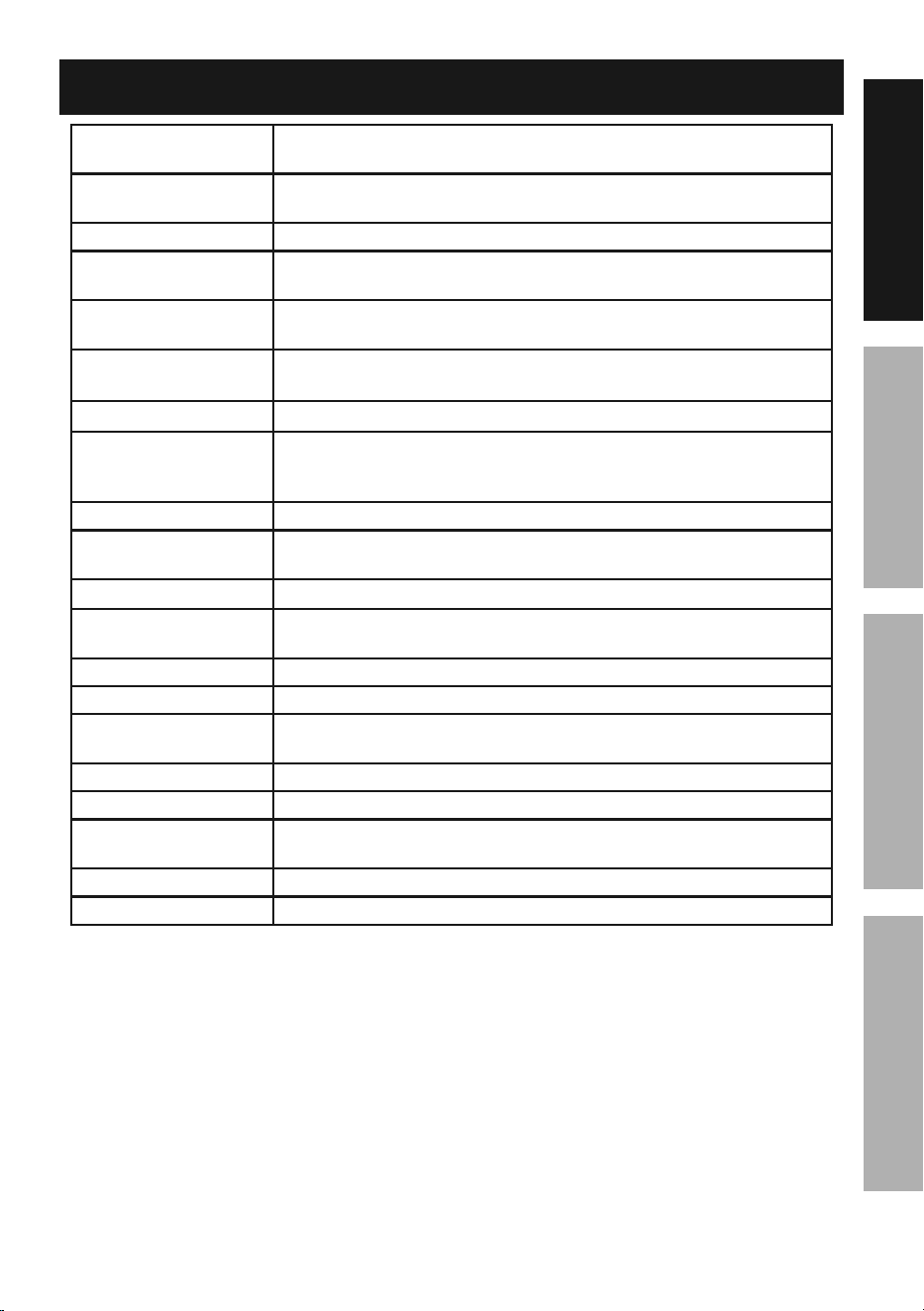
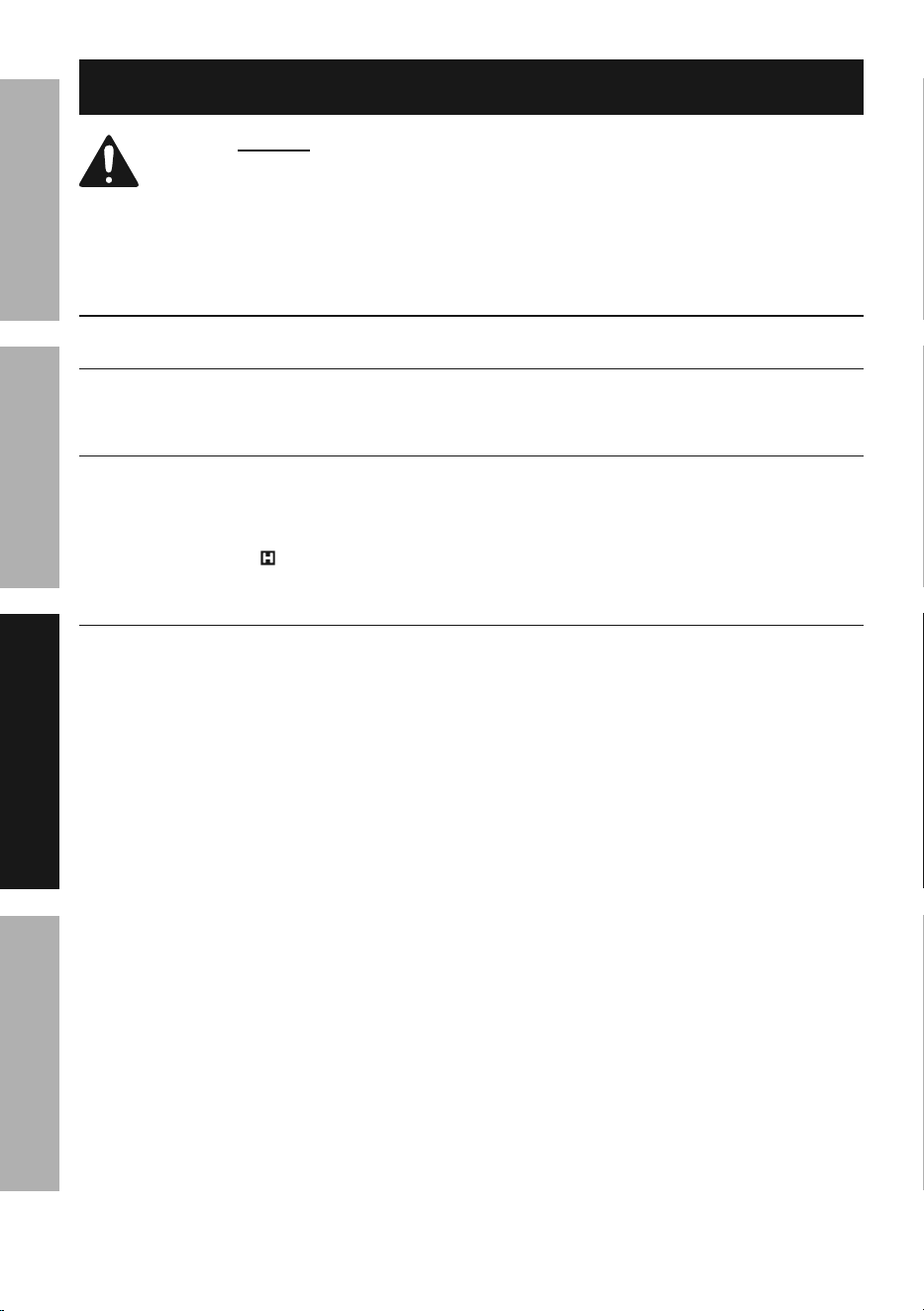
Display
Symbol Description
autO Auto range mode
Data Indicates that display data is being held
Diode test
Continuity buzzer
Battery low indicator
Dc Direct current
ac Alternating current
°c °F Celsius / Fahrenheit (temperature)
kMΩ Ohms, Kilohms, Megohms (resistance)
mμVA
Milli/Micro, Volts (voltage) /
Amperes (current)
Page 8 For technical questions, please call 1-888-866-5797. Item 64014
SaFEty OpEratiOn MaintEnancESEtup
Operating instructions
read the EntirE iMpOrtant SaFEty inFOrMatiOn section
at the beginning of this manual including all text under
subheadings therein before set up or use of this product.
Electrical shock can cause death or injury! nEVEr tOucH
exposed conductors of electricity.
General Operation
Func Button
Press the Func Button to switch between AC/DC or other functions.
Data Hold Button
The data HOLD function keeps the current reading on the Display.
1. To activate hold, press the HOLD
Button. The reading will be held on the
Display and the symbol will appear.
2. Press HOLD again to release the hold.
ran Button
The ran function allows you to manually switch through different ranges.
1. Press the ran Button to enable
manual selection. When
enabled, the autO indicator will
disappear from the Display.
2. Pressing the ran Button will progress
the reading to the next higher range
and as you press it will move the
range up until the highest is reached.
3. When the highest is reached, the
next press of the ran Button will
switch to the range to the lowest.
4. Hold down the ran Button to
return to auto range. When in
auto range the autO indicator will
reappear on the Display and you
can release the ran Button.

Page 9For technical questions, please call 1-888-866-5797.Item 64014
SaFEtyOpEratiOnMaintEnancE SEtup
ncV (non-contact ac Voltage) Button
The ncV function allows you to use the Meter for voltage detection.
1. To activate, hold down the
ncV Button in any mode.
2. Move the Meter close to the voltage
source or unshielded conductor. If
voltage is detected, the meter will
beep and the Non-Contact Voltage
Indicator will flash.
3. Release the ncV Button to
stop voltage detection.
WarninG! Even if no indication is
given, voltage may still be present.
Do not rely solely on NCV detection to
determine the presence of voltage.
auto power-Off Operation
If the Meter is not used for approximately 15 minutes, it automatically turns
itself off to conserve battery power. To turn the Meter back on after auto-
off, press any Button or turn the rotary switch. To disable Auto Power-Off,
press and hold down the HOLD Button when powering on the Meter.

Page 10 For technical questions, please call 1-888-866-5797. Item 64014
SaFEty OpEratiOn MaintEnancESEtup
Measurement Operation
note: Remove plugs from
ends of Test Leads (included)
before connecting to Meter.
note: Test Lead probes have removable
covers for overvoltage protection. With
covers in place, Test Leads are rated for
use with CAT III circuits. Exposed probes
are rated for use with CAT II circuits.
ac/Dc Voltage Measurement
Measure AC conductors carrying up to 600 VAC, from 40 Hz to 400 Hz.
Measure DC conductors carrying up to 600 VDC.
WarninG! Use caution when working
near voltages above 30 VAC rms,
42 VAC peak, or 60 VDC. Voltages this
high present a risk of electric shock.
WarninG! To prevent damage
to the Meter or personal injury, do
not measure voltages higher than
600 VDC or 600 VAC rms.
1. Plug black test lead into cOM Jack.
Plug red test lead into input Jack.
2. Turn Rotary Switch to the
position.
3. Press Func Button to choose
between AC and DC voltage.
4. While observing polarity, carefully
touch exposed conductors
with tips of probes.
5. Read measured voltage on the Display.
• ″OL” displayed on the Meter
indicates the measurement
exceeds the current range.
6. When testing is complete, turn
Rotary Switch to OFF, remove
Test Leads and store with Meter.
temperature Measurement
Measure temperature from -4°F to 1382°F (-20°C to 750°C).
1. Connect red end of Thermocouple
(included) to the input Jack and
the black end to the cOM Jack.
2. Turn Rotary Switch to the temp
position. The Display will show
the current ambient temperature.
Press Func to switch between
Celsius and Fahrenheit.
3. Touch the tip of the Thermocouple
to the object to be tested.
4. Read measured temperature
on the Display.
5. When is complete, turn Rotary
Switch to OFF remove Thermocouple
and store with Meter.
WarninG! To prevent electric
shock, remove Thermocouple before
switching between testing modes.
Page 11For technical questions, please call 1-888-866-5797.Item 64014
SaFEtyOpEratiOnMaintEnancE SEtup
continuity Measurement
Test continuity between two points of a circuit.
WarninG! To prevent electric shock, turn
off all power and fully discharge capacitors
in the circuit under test before measuring.
1. Plug black test lead into cOM Jack.
Plug red test lead into input Jack.
2. Turn the Rotary Switch
to the
Turn the Rotary Switch
position.
3. Press Func until is displayed.
4. Connect the test leads across
the circuit to be measured.
5. Read measured resistance on
the Display. If the measured
resistance is less than 50Ω ±
20Ω, the Meter will beep.
6. When testing is complete, turn
Rotary Switch to OFF, remove
Test Leads and store with Meter.
note: If Test Leads are open or
the resistance of the circuit is out
of range, OL is displayed.
resistance Measurement
Measure circuit resistance up to 20M ohms.
WarninG! To prevent electric shock, turn
off all power and fully discharge capacitors
in the circuit under test before measuring.
note: When measuring Ohms,
start with the lowest range if the
resistance is unknown.
1. Plug black test lead into cOM Jack.
Plug red test lead into input Jack.
2. Turn the Rotary Switch to
the
Turn the Rotary Switch to
position. The default
position is resistance.
3. Carefully touch exposed
conductors with tips of probes.
4. Read measured resistance
on the Display.
5. When testing is complete, turn
Rotary Switch to OFF, remove
Test Leads and store with Meter.
note: Sometimes the resistor value and
measured resistance differ. This is due
to the Meter’s output test current going
through all possible paths between leads.
• Keep test leads as
short as possible.
• Resistors should be
measured out of circuit.
note: For resistance measurements
above 1MΩ, allow a few seconds
to get a steady reading.
note: When leads are disconnected
or measurement is out of
range, OL is displayed.
Page 12 For technical questions, please call 1-888-866-5797. Item 64014
SaFEty OpEratiOn MaintEnancESEtup
Diode Measurement
Test voltage drop in diodes.
WarninG! To prevent electric shock, turn
off all power and fully discharge capacitors
in the circuit under test before measuring.
1. Plug black test lead into cOM Jack.
Plug red test lead into input Jack.
2. Turn the Rotary Switch
to the
Turn the Rotary Switch
position.
3. Press Func until is displayed.
4. Connect red probe to diode’s anode (+)
and black probe to its cathode (-).
5. Read measured forward-biased
voltage drop on the Display.
note: If the test leads are reversed
or open, OL is displayed.
note: When testing is complete,
turn Rotary Switch to OFF, remove
Test Leads and store with Meter.
current Measurement
Measure current in AC and DC circuits carrying up to 10 amperes.
note: Amperage is always tested
in series with circuit under test.
note: When using manual range
mode, always start with the highest
range if the amperage is unknown.
WarninG! Check fuses before
making current measurements. To
prevent damage to the meter, be sure
to use the correct input jacks.
1. Turn the Rotary Switch to the
appropriate position, depending on the
amperage of the circuit under test.
• Selections are
microamperes,
milliamperes, or amperes.
2. Press Func to select AC or DC.
3. Always start with the highest range
if the amperage is unknown.
4. Turn off power to the circuit and
allow capacitors to discharge.
WarninG! To prevent damage to
the Meter, never measure open-circuit
voltages exceeding 600V between
the input terminals and ground.
5. Break the circuit and connect the
Test Leads in series with the circuit
being measured. Connect the black
lead on the lower voltage side.
• Plug black test lead
into cOM Jack.
• If amperage is < 200mA, plug
red test lead into input Jack.
• If amperage is > 200mA
(10A maximum), plug red
test lead into Jack.
6. Power on the circuit and read
measurement. If “OL” is displayed
then the measurement exceeds
the current rating. Move the
rotary switch to a higher range.
note: Measure for a maximum 30
seconds and allow 15 minutes to
pass between measurements.
7. When testing is complete, turn
Rotary Switch to OFF, remove
Test Leads and store with Meter.

Page 13For technical questions, please call 1-888-866-5797.Item 64014
SaFEtyOpEratiOnMaintEnancE SEtup
Battery test
To measure voltage stored in a battery.
1. Set the Rotary Switch to the range
that matches the battery under test.
• Selections are 12V, 9V or 1.5V.
2. Plug the red lead to the input Jack.
Plug the black test lead into cOM jack.
3. Connect the red test lead to the
positive (+) terminal of the battery
and the black test lead to the
negative (-) terminal of battery.
4. Read the measurement
on the Meter Display.
WarninG! To prevent damage to
the Meter, do not connect the Meter
to a battery with a voltage rating
exceeding 60 VAC or 30 VDC.
5. When testing is complete, turn
Rotary Switch to OFF, remove
Test Leads and store with Meter.
Page 14 For technical questions, please call 1-888-866-5797. Item 64014
SaFEty OpEratiOn MaintEnancESEtup
Maintenance and Servicing
procedures not specifically explained in this manual
must be performed only by a qualified technician.
cleaning, Maintenance, and Lubrication
1. Wipe unit with a dry, lint-free cloth.
Do not use solvents or abrasives.
2. Remove battery if not in
use for long periods.
3. Store Meter in a dry location.
4. Other than test leads, the battery, and
fuses, there are no replaceable parts
on this Meter. repairs should be
done by a qualified technician.
Battery replacement
If the sign appears on the Display,
the battery should be replaced.
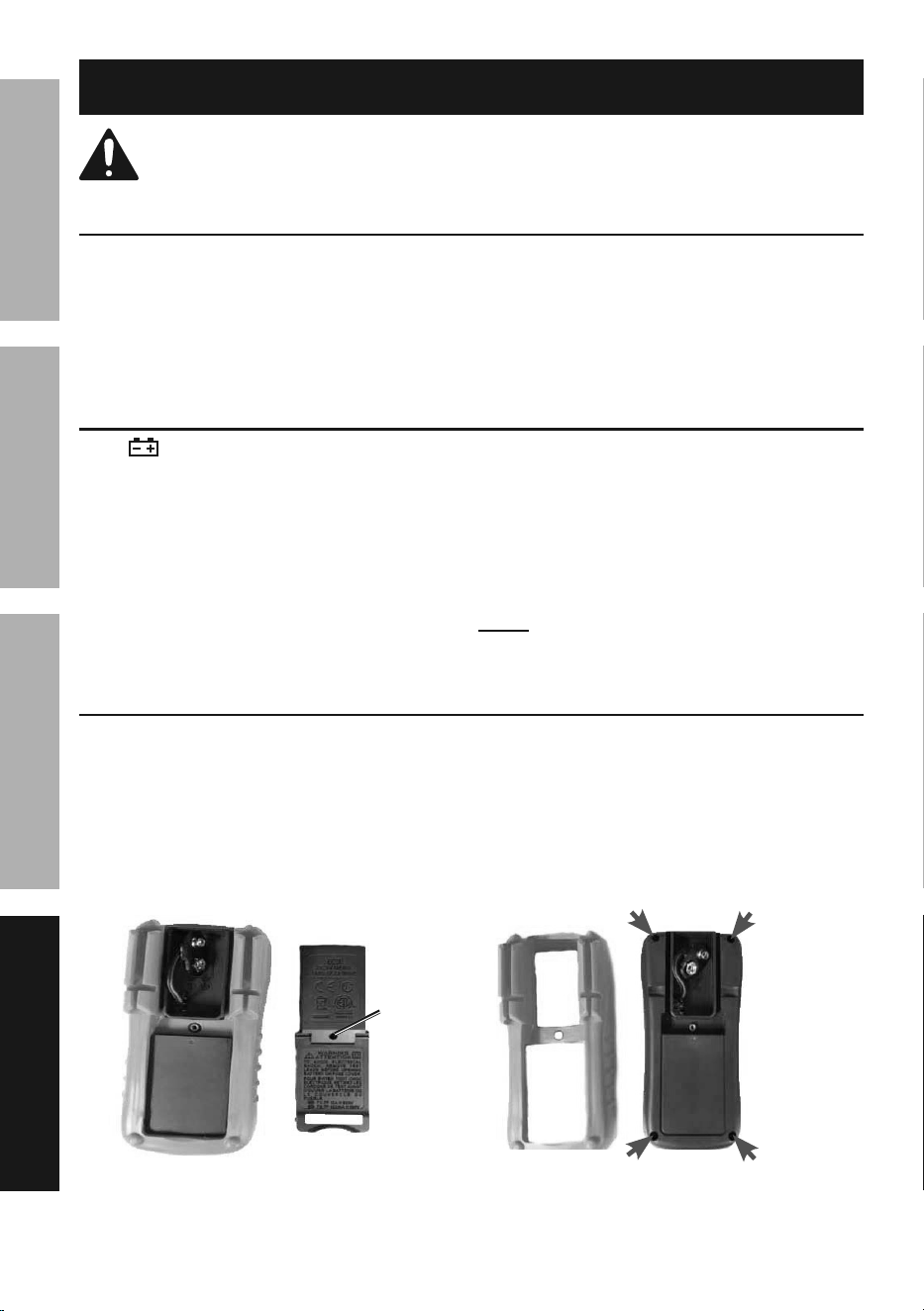
1. Power off Meter and
remove its Test Leads.
2. Turn Meter over and remove screw
on back cover. Save the screw.
3. Carefully remove battery cover and
tilt stand from back of Meter.
4. Remove battery from the
battery compartment.
5. Replace battery with the
same type and rating.
6. Replace battery cover and tilt stand.
Fasten securely with saved screw.
note: Do not reverse the
polarity of the battery.
Fuse replacement
1. Power off Meter and
remove Test Leads.
2. Turn Meter over and remove screw
from back. Save the screw.
3. Carefully remove battery cover and
tilt stand from back of meter.
Screw
4. Carefully pull the outside
cover off the Meter.
5. Remove four screws from back cover,
one from each corner. Save screws.
One screw at
each corner.
Page 15For technical questions, please call 1-888-866-5797.Item 64014
SaFEtyOpEratiOnMaintEnancE SEtup
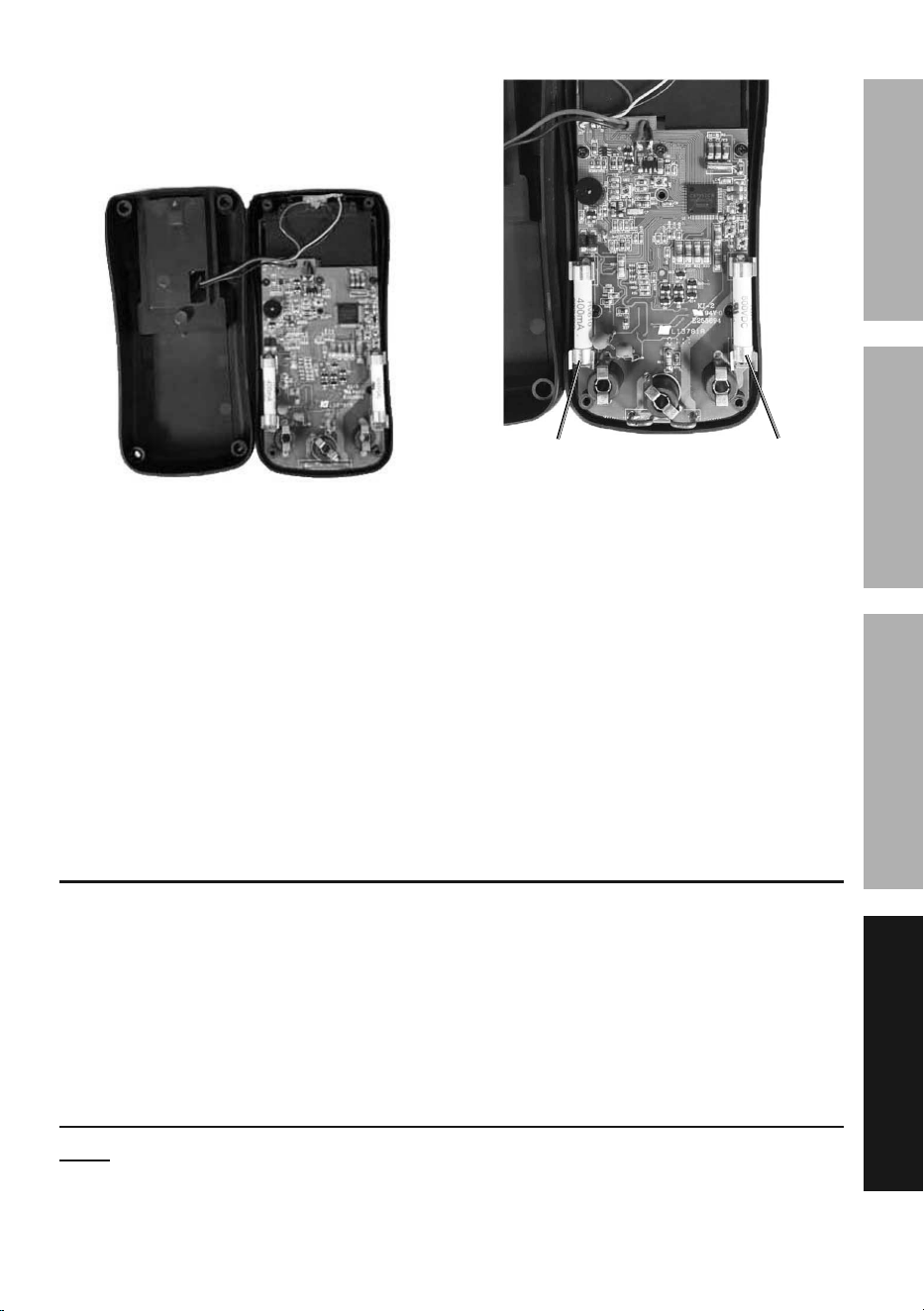
6. Carefully open the case and separate
the case top and bottom. Lie the two
sides of the case next to each other
being careful to not pull the wires.
7. Carefully remove fuses one at a
time. Gently pry one end loose
and remove from its bracket.
Make note of the rating.
F2 = 400ma F1 = 10a
8. Replace with new fuse of the
same type and rating.
9. Rejoin the covers being careful to
not pinch wires. Secure covers
with the four saved screws.
10. Reattach Meter’s outside cover.
11. Reattach battery cover and tilt
stand. Secure with the saved
screw and tighten securely.
calibration
Have the Meter calibrated by a qualified technician every year.
record Serial number Here:
note: If product has no serial number,
record month and year of purchase instead.

Limited 90 Day Warranty
Harbor Freight Tools Co. makes every effort to assure that its products meet high quality
and durability standards, and warrants to the original purchaser that this product is free from
defects in materials and workmanship for the period of 90 days from the date of purchase.
This warranty does not apply to damage due directly or indirectly, to misuse, abuse, negligence
or accidents, repairs or alterations outside our facilities, criminal activity, improper installation,
normal wear and tear, or to lack of maintenance. We shall in no event be liable for death,
injuries to persons or property, or for incidental, contingent, special or consequential damages
arising from the use of our product. Some states do not allow the exclusion or limitation of
incidental or consequential damages, so the above limitation of exclusion may not apply to you.
THIS WARRANTY IS EXPRESSLY IN LIEU OF ALL OTHER WARRANTIES, EXPRESS OR
IMPLIED, INCLUDING THE WARRANTIES OF MERCHANTABILITY AND FITNESS.
To take advantage of this warranty, the product or part must be returned to us with transportation
charges prepaid. Proof of purchase date and an explanation of the complaint must accompany
the merchandise. If our inspection verifies the defect, we will either repair or replace
the product at our election or we may elect to refund the purchase price if we cannot readily
and quickly provide you with a replacement. We will return repaired products at our expense,
but if we determine there is no defect, or that the defect resulted from causes not within
the scope of our warranty, then you must bear the cost of returning the product.
This warranty gives you specific legal rights and you may also
have other rights which vary from state to state.
3491 Mission Oaks Blvd. • pO Box 6009 • camarillo, ca 93011 • 1-888-866-5797