267-3229
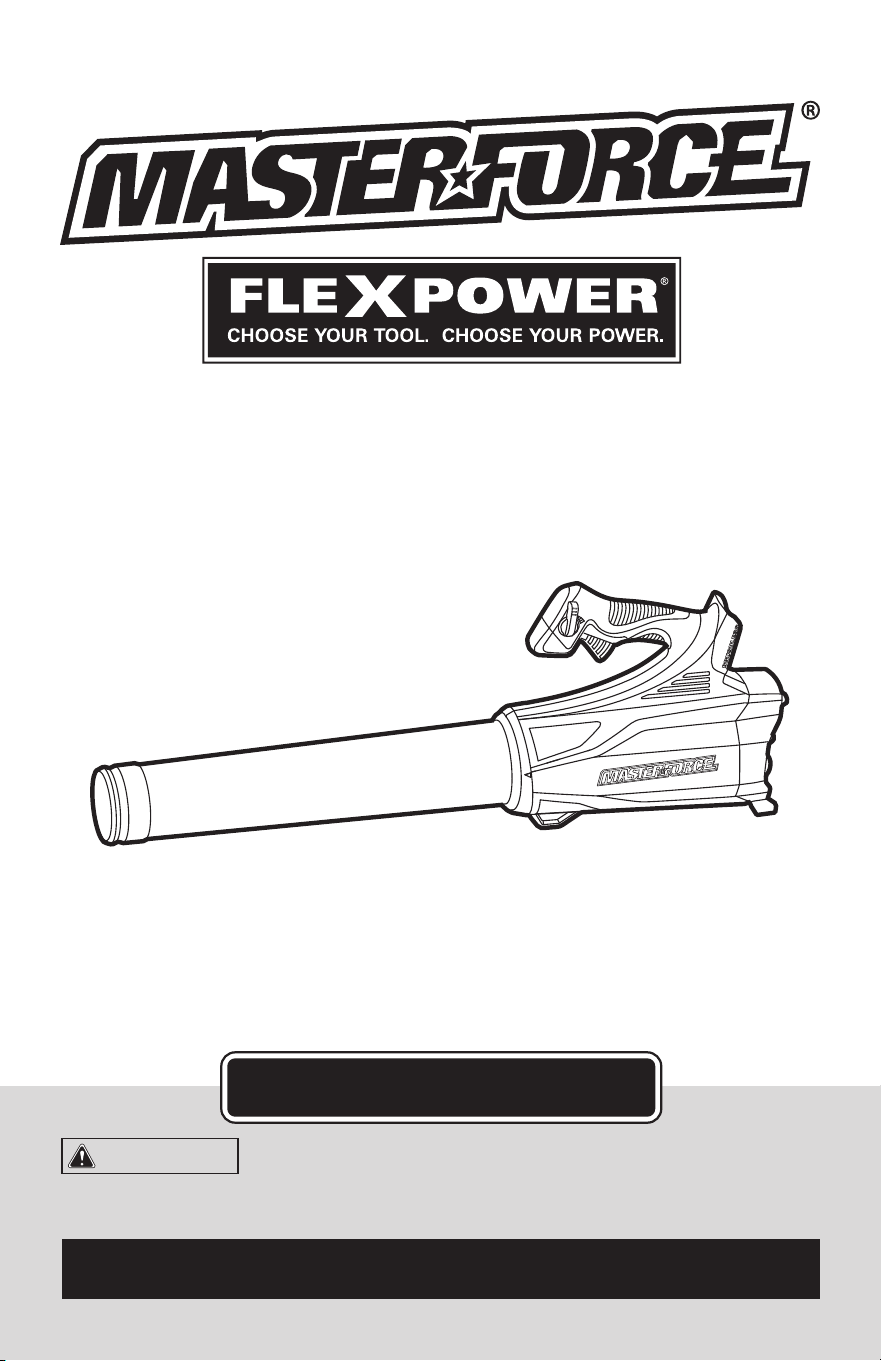
OPERATOR’S MANUAL
CAUTION:
To Reduce the Risk of Injury, User Must
Read and Understand the Operator’s Manual. Save These
Instructions For Future Reference.
For questions / comments, technical assistance or repair parts –
Please Call Toll Free: 1-866-917-4374 (M-F 8:30am-5:00pm EST).
Blower

TABLE OF CONTENTS
Safety Symbols ......................................................... Page 2
Safety Instructions ...................................................... Page 3
Overview/Specifications ................................................. Page 7
Assembly ............................................................. Page 8
Operation ............................................................. Page 9
Maintenance .......................................................... Page 11
Troubleshooting ....................................................... Page 11
Parts List ............................................................. Page 12
Schematic Drawing .................................................... Page 13
Warranty .............................................................Page 14
Page 2
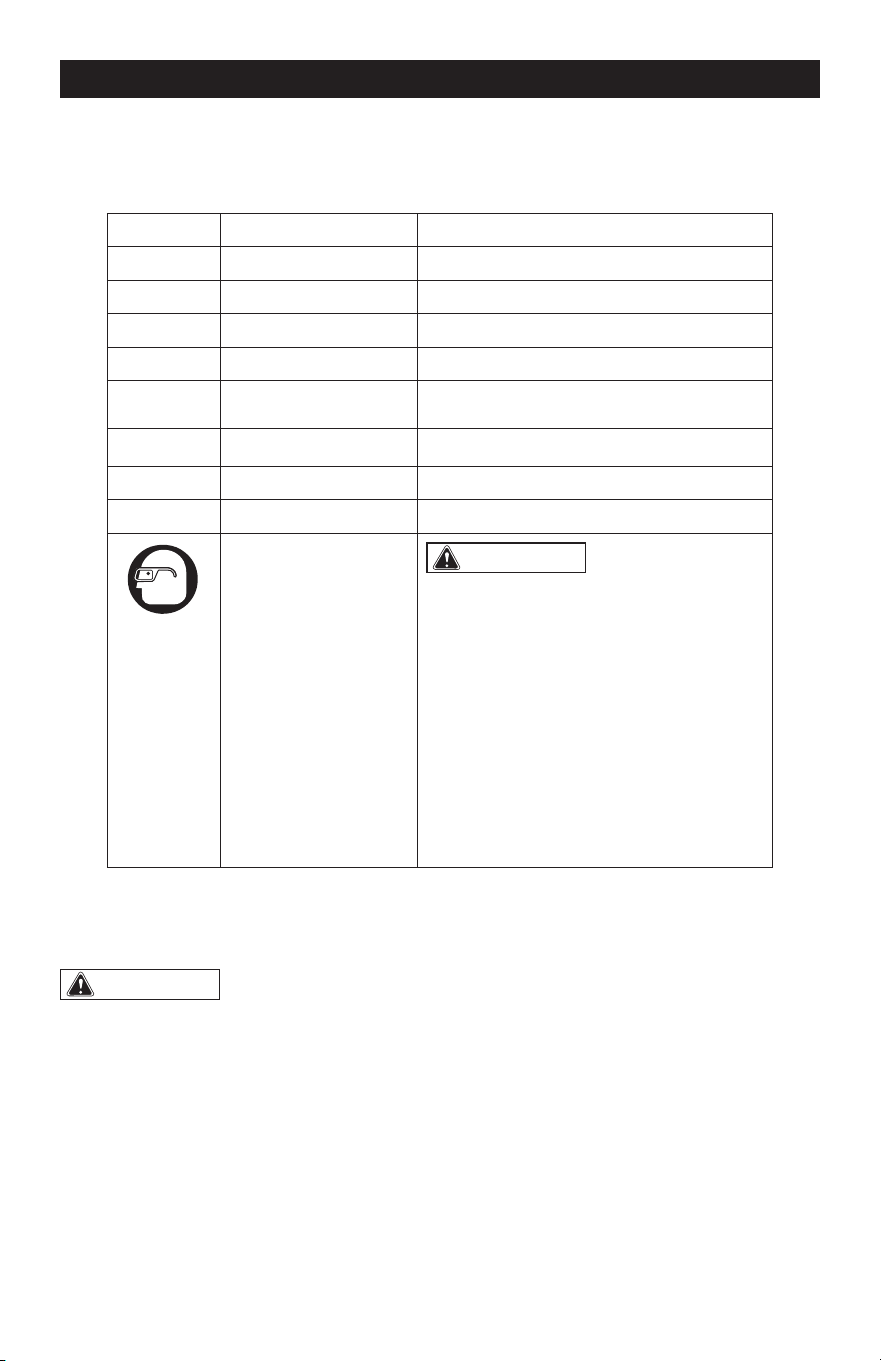
SAFETY SYMBOLS
Some of these following symbols may be used on this machine. Please study them and learn
their meaning. Proper interpretation of these symbols will allow you to operate the machine
better and more safely.
Symbol
Name
Designation / Explanation
V Volts Voltage
A Amperes Current
Hz Hertz Frequency (cycles per second)
W Watts Power
∿
Alternating current Type of current
�
or d.c.
Direct current Type or characteristic of current
CFM Cubic feet per minute Air Volume
MPH Mile per hour Air speed
Wear safety goggles
WARNING:
The operation of any
machine can result in foreign objects
being thrown into your eyes, which can
result in severe eye damage. Before
beginning machine operation, always
wear safety goggles or safety glasses
with side shields and a full-face shield
when needed. We recommend a Wide
Vision Safety Mask for use over eye-
glasses or standard safety glasses with
side shields. Always use eye protection
which is marked to comply with
ANSI Z87.1.
WARNING:
To ensure safety and reliability, all repairs should be performed by a
qualified service technician.
Page 3
SAFETY INSTRUCTIONS
The purpose of safety symbols is to attract your attention to possible dangers. The safety
symbols and the explanations with them deserve your careful attention and understanding.
The symbol warnings do not, by themselves, eliminate any danger. The instructions and
warnings they give are no substitutes for proper accident prevention measures.
WARNING:
Be sure to read and understand all safety instructions in this manual,
including all safety alert symbols such as “DANGER,” ”WARNING,” and “CAUTION”
before using this machine. Failure to follow all instructions listed below may result in
electric shock, fire, and/or serious personal injury.
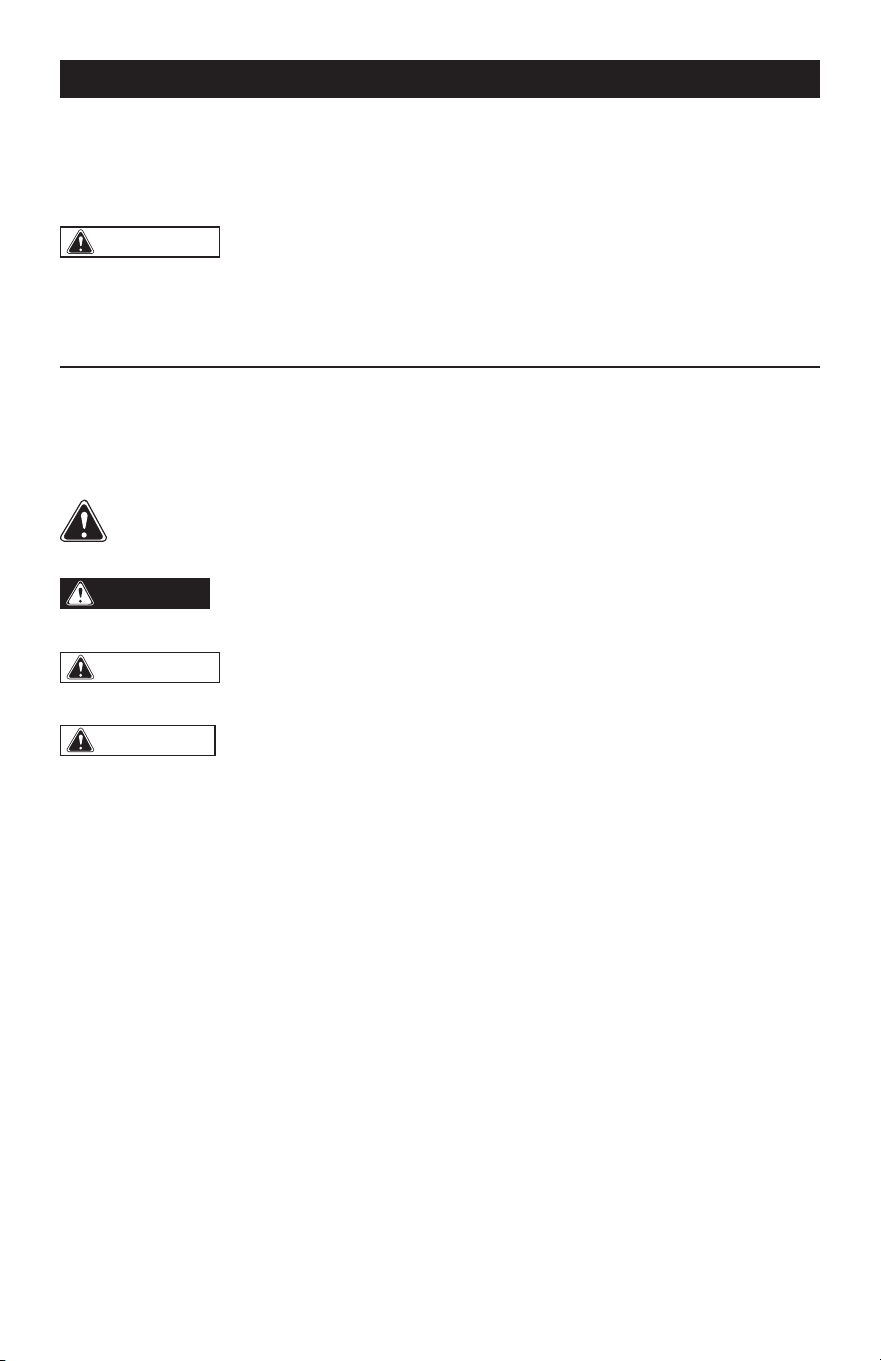
SYMBOL MEANING
SAFETY ALERT SYMBOL: Indicates DANGER, WARNING, OR CAUTION.
May be used in conjunction with other symbols or pictographs.
DANGER:
Indicates an imminently hazardous situation, which, if not avoided,
will result in death or serious injury.
WARNING:
Indicates a potentially hazardous situation, which, if not avoided,
could result in death or serious injury.
CAUTION:
Indicates a potentially hazardous situation, which, if not avoided, could
result in minor or moderate injury.
NOTICE: (Without Safety Alert Symbol) Indicates a situation that may result in property
damage.
SAVE THESE INSTRUCTIONS!
Page 4
SAFETY INSTRUCTIONS
IMPORTANT SAFETY
INSTRUCTION
When using an electrical appliance, basic
precautions should always be followed,
including the following.
NOTICE: The appliance is intended for
household use. READ ALL INSTRUCTIONS
BEFORE USING THIS APPLIANCE.
WARNING:
To reduce risk of fire,
electric shock, or injury:
1. Know your power blower. Read the
instruction manual carefully. Learn the
blower’s applications and limitations, as well
as the specific potential hazards related to
this blower. Following this rule will reduce
the risk of electric shock, fire, or serious
injury.
2. Do not use in rain.
3. Do not allow the blower to be used as a
toy. Close attention is necessary when used
by or near children.
4. Use only as described in this manual.
Use only manufacturer’s recommended
attachments.
5. Do not handle the charger, including
charger plug, or charger terminals with
wet hands.
6. Do not put any object into any openings.
Do not use with any opening blocked; keep
openings free of dust, lint, hair, and anything
that may reduce air flow.
7. Keep hair, loose clothing, fingers, and
all parts of body away from openings and
moving parts. Loose clothes, jewelry, or
long hair can be drawn into air vents.
8. Use extra care when cleaning on stairs.
9. Do not charge the battery pack
outdoors.
10. Use only the charger supplied by the
manufacturer to recharge.
11. Do not incinerate the appliance even if
it is severely damaged. The batteries can
explode in a fire.
12. Use the battery operated blower only
with specifically designated battery pack.
Use of any other batteries may create a risk
of fire.
13. Only use attachments recommended
or sold by the manufacturer.
14. To reduce the risk of electric shock
or damage to the charger and battery,
use only the Masterforce
®
batteries and
charger listed.
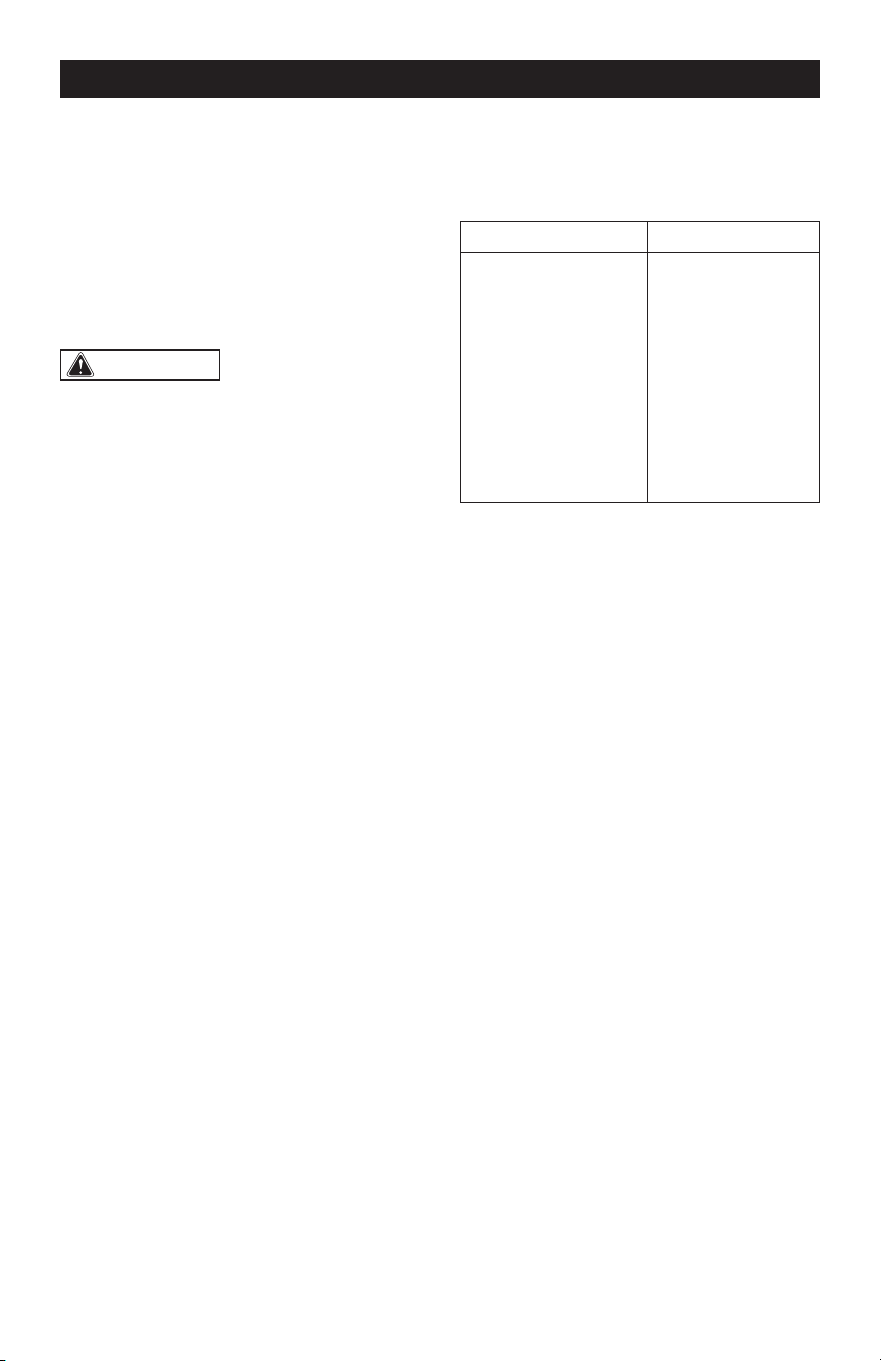
Battery pack Charger
252-8029 (1.5Ah)
252-8031 (2.0Ah)
252-8030 (2.5Ah)
252-8003 (2.5Ah)
252-8034 (4.0Ah)
252-8013 (4.0Ah)
252-8035 (5.0Ah)
252-8005 (5.0Ah)
252-8007 (7.5Ah)
252-8014 (8.0Ah)
252-8025
252-8026
252-8037
252-8043
15. Do not leave blower unattended when
the battery is inserted. Remove the battery
when the blower is not in use and before
servicing.
16. Avoid accidental starting. Be sure that
the switch is in the locked or off position
before inserting the battery pack. Carrying
blowers with your finger on the switch or
inserting the battery pack into a blower with
the switch on invites accidents.
17. Do not operate blowers in explosive
atmospheres, such as in the presence of
flammable liquids, gases, or dust. Blowers
create sparks which may ignite the dust or
fumes.
18. Stay alert, watch what you are doing
and use common sense when operating
a power blower. Do not use the blower
while tired, upset, or under the influence of
drugs, alcohol, or medication. A moment
of inattention while operating blowers may
result in serious personal injury.
19. Do not use on a ladder, rooftop, tree, or
other unstable support. Stable footing on a
solid surface enables better control of the
blower in unexpected situations.
20. Keep firm footing and balance. Do not
overreach. Overreaching can result in loss of
balance.

Page 5
SAFETY INSTRUCTIONS
21. Always take care of your feet, children,
or pets around you when removing the
battery pack from blower. Never remove
the battery pack when in a high position.
Serious injury could result if the battery pack
falls.
22. Do not use the blower if switch does
not turn it on or off. A blower that cannot be
controlled with the switch is dangerous and
must be repaired.
23. Remove the battery pack from the
blower before making any adjustments,
changing accessories, or storing the
blower. Such preventive safety measures
reduce the risk of starting the blower
accidentally.
24. Check for misalignment or binding of
moving parts, breakage of parts, and any
other condition that may affect the blower’s
operation. If damaged, have the blower
serviced before using. Many accidents are
caused by poorly maintained blowers.
25. Keep the blower and its handle dry,
clean and free from oil and grease. Always
use a clean cloth when cleaning. Never use
brake fluids, gasoline, petroleum-based
products, or any strong solvents to clean
your blower. Following this rule will reduce
the risk of loss of control and deterioration
of the enclosure plastic.
26. Use safety equipment. Always wear
eye protection with side shields marked to
comply with ANSI Z87.1 along with hearing
protection when operating this equipment.
Everyday glasses have only impact resistant
lenses. They are NOT safety glasses.
Following this rule will reduce the risk of eye
injury.
27. Protect your lungs. Wear a face or dust
mask if the operation is dusty. Following
this rule will reduce the risk of serious
personal injury.
28. Protect your hearing. Wear hearing
protection during extended periods of
operation. Following this rule will reduce the
risk of serious personal injury.
29. Wear heavy, long pants, long sleeves,
boots, and gloves. Avoid loose garments
or jewelry that could get caught in moving
parts of the machine or its motor.
30. Do not operate the equipment while
barefoot or when wearing sandals
or similar lightweight footwear. Wear
protective footwear that will protect your
feet and improve your footing on slippery
surfaces.
31. Batteries can explode in the presence
of a source of ignition, such as a pilot
light. To reduce the risk of serious personal
injury, never use any cordless product in
the presence of open flame. An exploded
battery can propel debris and chemicals. If
exposed, flush with water immediately.
32. Check the work area before each use.
Remove all objects such as rocks, broken
glass, nails, wire, or string which can be
thrown by or become entangled in the
machine.
33. Do not point the blower tube in the
direction of people or pets.
34. Never run the unit without the proper
equipment attached. Always ensure that
the blower tube is installed.
35. When not in use, the blower should be
stored indoors in a dry, secure place out of
the reach of children.
36. Keep all bystanders, children, and pets
at least 50 ft. away.
37. When servicing a blower, use only
identical replacement parts. Follow
instructions in the Maintenance section of
this manual. Use of unauthorized parts or
failure to follow Maintenance Instructions
may create a risk of shock or injury.
38. Never use the blower near fires or hot
ashes. Use near fires or ashes can spread
fires and result in serious injury and/or
property damage.
39. Never use blower to spread chemicals,
fertilizers, or any other toxic substances.
40. Spreading these substances could
result in serious injury to the operator or
bystanders.

Page 6
SAFETY INSTRUCTIONS
41. Never place the blower on any surface,
except a hard, clean surface when the
engine is running. Gravel, sand, and other
debris can be picked up by the air inlet
and thrown at the operator or bystanders,
causing possible serious injuries.
42. Do not modify or attempt to repair the
appliance or the battery pack (as applicable)
except as indicated in the instructions for
use and care.
43. Save these instructions. Refer to them
frequently and use them to instruct others
who may use this machine. If you loan this
machine to someone else, also loan these
instructions to them to prevent misuse of
the product and possible injury.
SAVE THESE INSTRUCTIONS!
Page 7
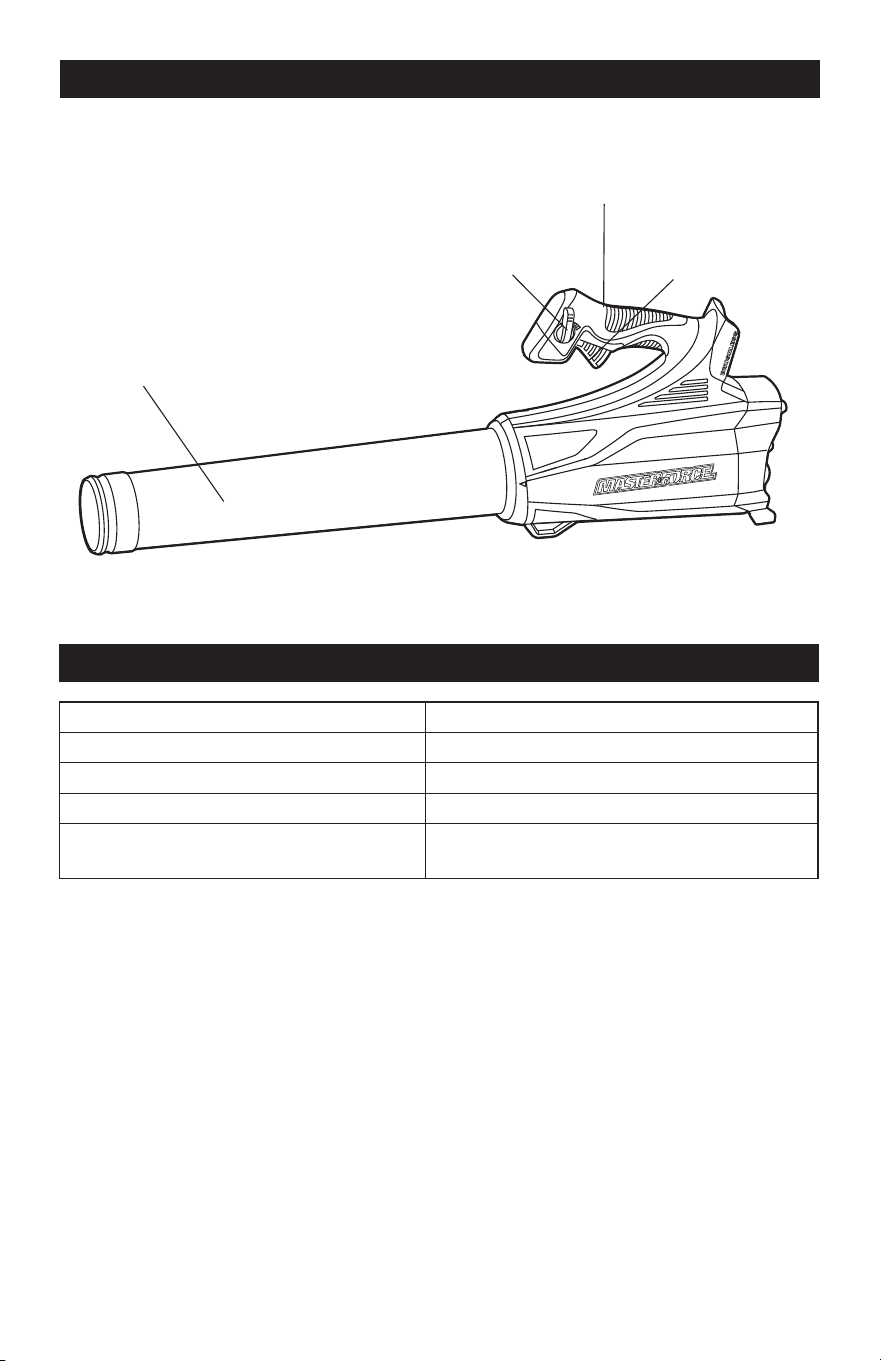
OVERVIEW
SPECIFICATIONS
Rated Voltage 20V d.c.
Max Air Volume 450 CFM
Max Air Speed 120 MPH
Weight 4lb.10oz (2.1kg)
Recommended Operating and Storage
Temperature
5-40°C (41-104 °F)
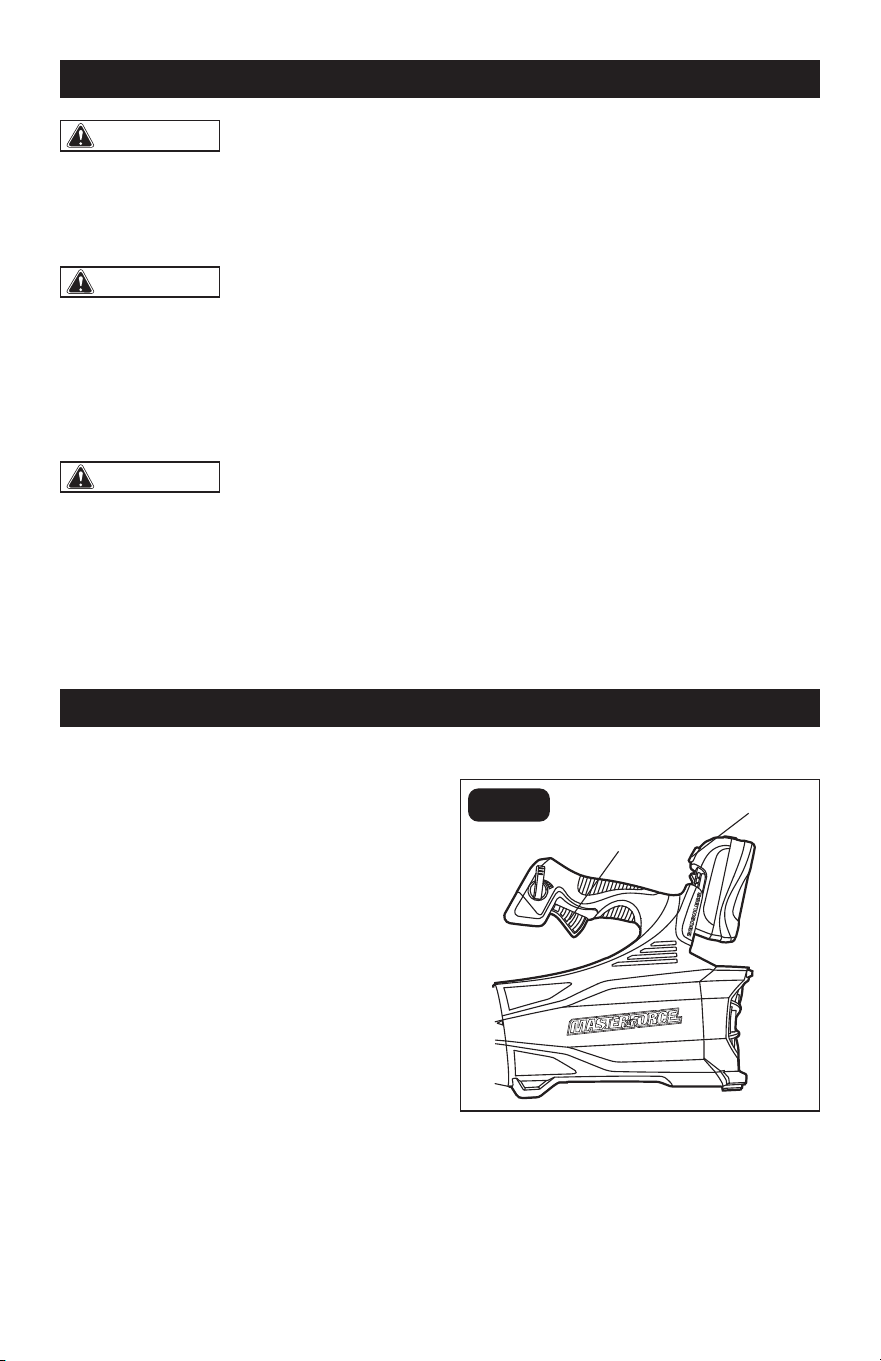
Cruise Control Lever
Blower Tube
Variable-speed
Trigger Switch
Main Handle
Page 8
ASSEMBLY
WARNING:
If any part is broken or
missing, DO NOT attach the battery pack
or operate the machine until the broken or
missing part is replaced. Failure to do so
could result in possible serious injury.
WARNING:
Do not attempt
to modify this machine or create
accessories not recommended for use
with this machine. Any such alteration or
modification is misuse and could result in
a hazardous condition leading to possible
serious injury.
WARNING:
Your machine should
never be connected to the battery pack
when you are assembling parts, making
adjustments, installing or removing
blades, cleaning, or when it is not in use.
Disconnecting the machine will prevent
accidental starting, which could cause
ASSEMBLY
serious personal injury.
CONTENTS
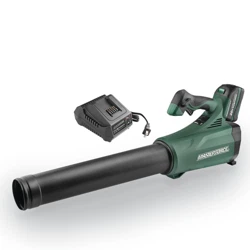
Cordless blower, blower tube, and instruction
manual.
UNPACKING
1. Carefully remove the blower and any
accessories from the carton. Make sure
that all items listed in the packing list are
included.
2. Inspect the blower carefully to make
sure that no breakage or damage
occurred during shipping.
3. Do not discard the packing material
until you have carefully inspected and
satisfactorily operated the blower.
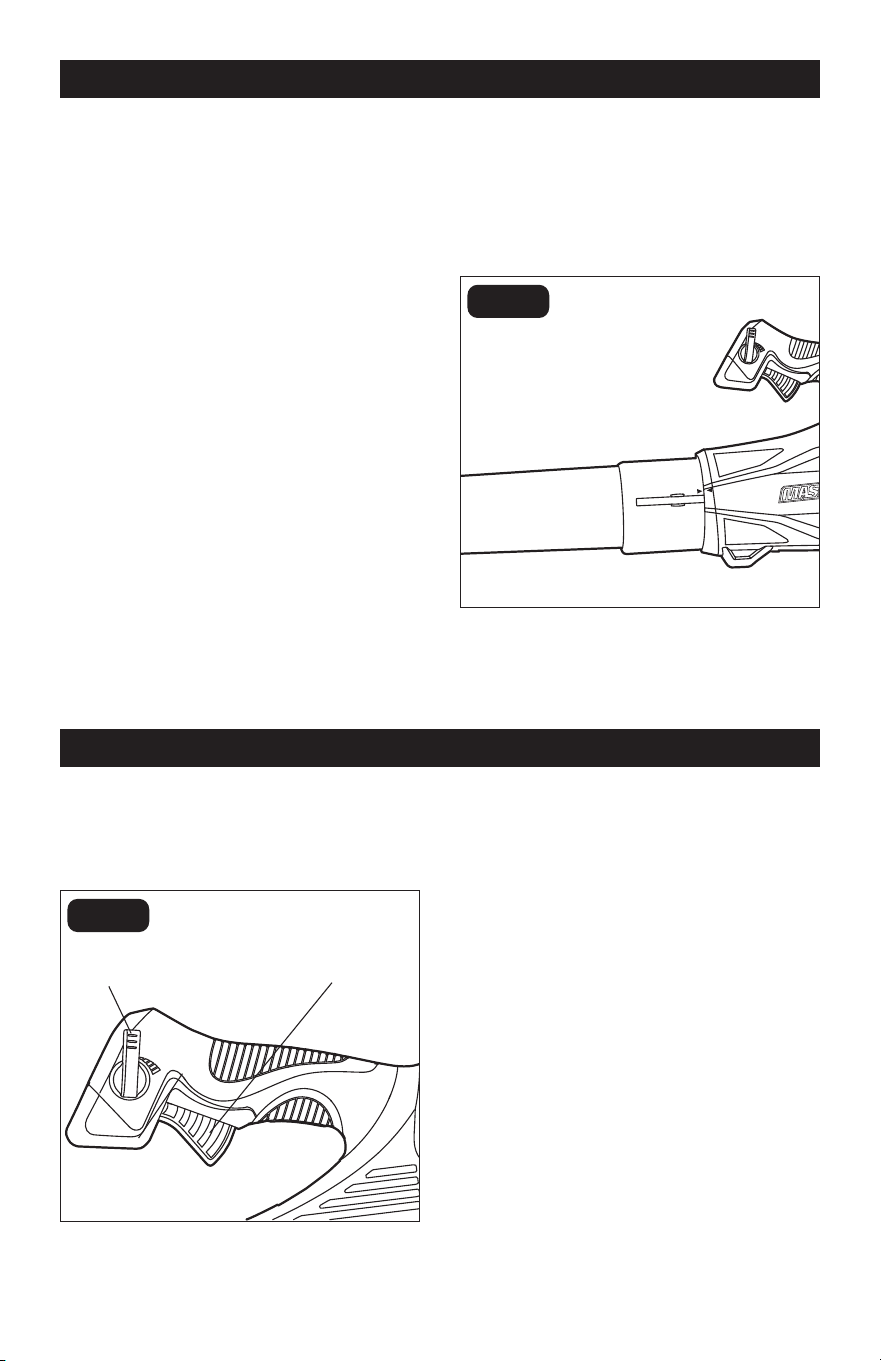
TO ATTACH BATTERY
PACK (FIG. 1)
Make sure that the variable-speed trigger
switch is in the OFF position.
Align the raised rib on the battery pack with
the grooves on the bottom of the blower, and
then slide the battery pack to the blower.
NOTICE: Make sure that the latch on the
battery pack snaps into place and the bat-
tery pack is secured to the blower before
operation.
Variable-speed
Trigger Switch
Battery-release
Button
FIG. 1
Page 9
TO DETACH BATTERY
PACK (FIG. 1)
1. Make sure that the variable-speed
trigger switch is in the OFF position and
the cruise control lever is in the OFF
position. Depress the battery-release
button located on the battery pack to
release the battery pack.
2. Pull the battery pack out and remove it
from the blower.
ASSEMBLING THE BLOWER
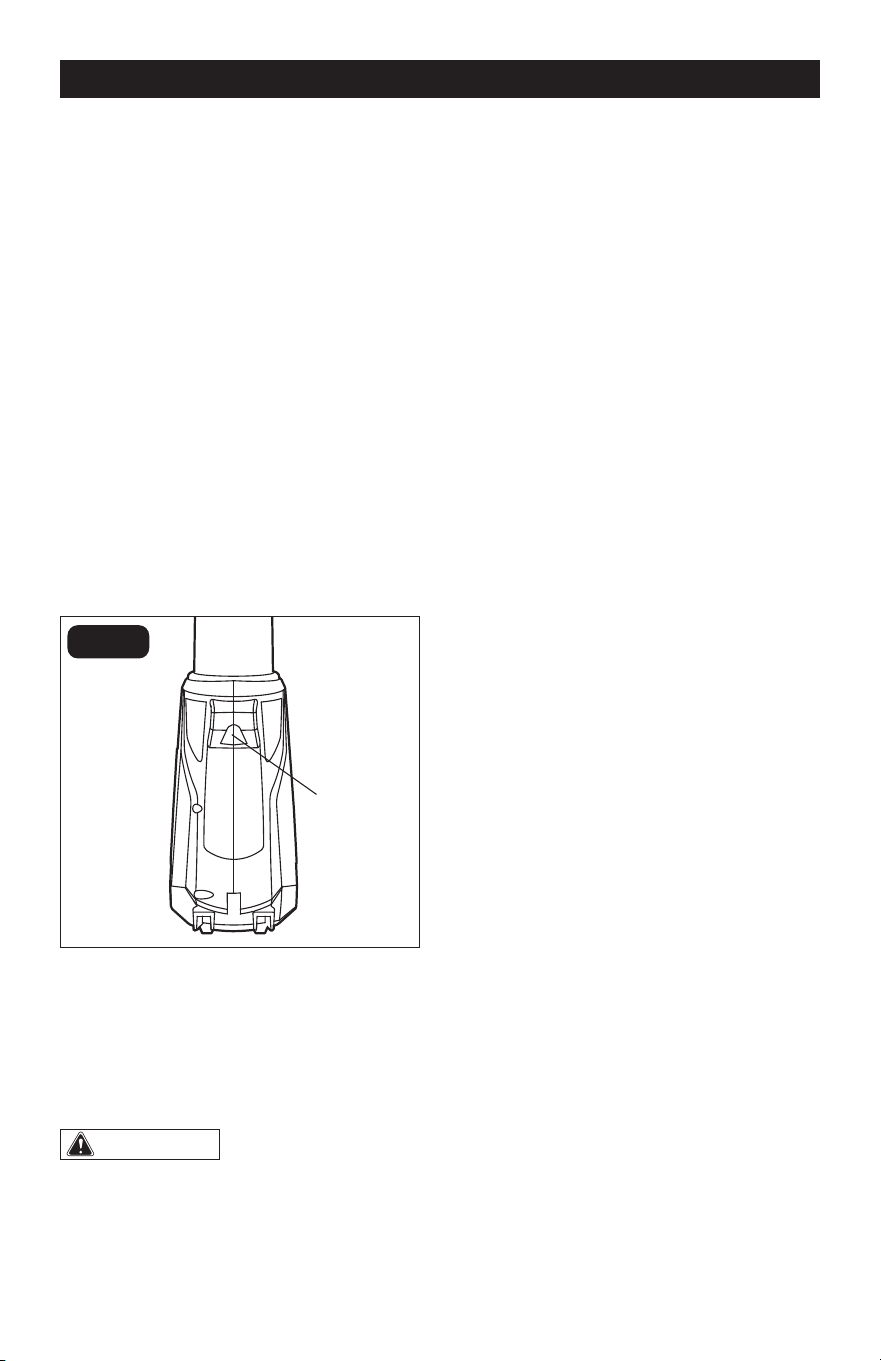
TUBE (FIG.2)
This product requires assembly before
using. To prevent accidental starting that
could cause serious personal injury, always
remove the battery pack from the machine
when assembling parts.
1. Align the arrows between the blower
tube and the blower housing, and then
insert the tube into the blower housing.
2. To remove the blower tube, just pull it
straight out from the blower.
TO START/STOP THE BLOWER
(FIG. 3)
The variable-speed trigger switch can turn
the blower ON/OFF and deliver variable
speed. The blower is also equipped with a
cruise control lever to turn the blower ON/
OFF, and lock the blower at a chosen speed.
TO TURN THE BLOWER ON
1. To turn the blower ON, depress the
variable-speed trigger switch.
2. The variable-speed trigger switch
delivers higher speed with increased
trigger pressure and lower speed with
decreased trigger pressure.
3. To lock the blower on the chosen speed,
move the cruise control lever toward the
back of the machine.
ASSEMBLY
OPERATION
Cruise Control
Lever
Variable-speed
Trigger Switch
FIG. 3
FIG. 2
Page 10
OPERATION
4. The cruise control lever can also be
pulled back to start the blower without
needing to first depress the variable-
speed trigger switch. The blower runs
at higher speeds as the lever is moved
further back.
TO TURN THE BLOWER OFF
1. If thecruise control lever is not engaged,
release the variable-speed trigger
switch to turn off the blower.
2. If the cruise control lever is engaged,
move the cruise control lever forward
to the unlocked position to turn off the
blower.
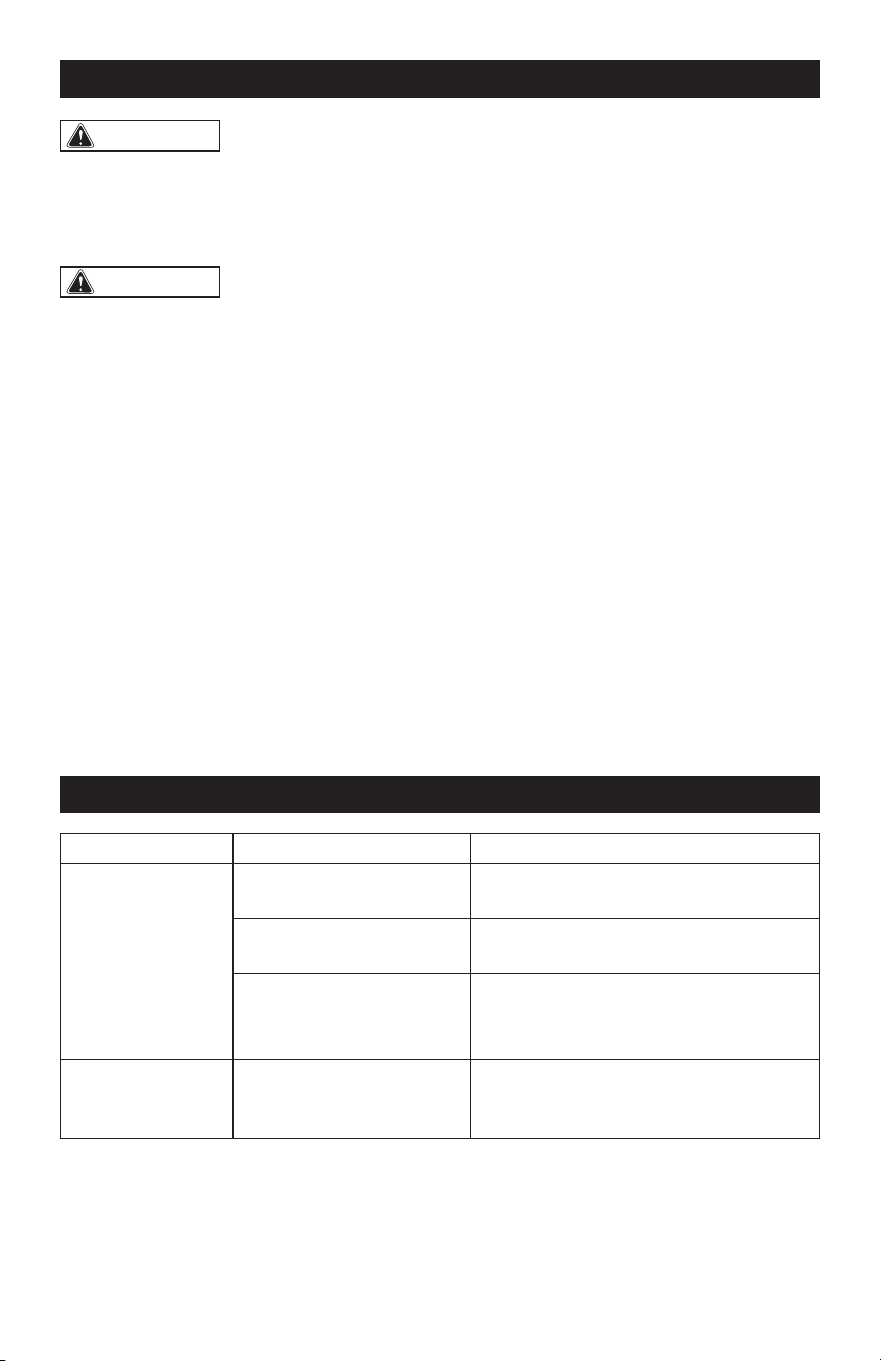
HANGING HOLE (FIG.4)
Hanging
Hole
FIG. 4
The blower is equipped with a hanging hole.
The blower can be hung from a screw or nail
for storage.
OPERATING THE BLOWER
WARNING:
• Always wear eye protection with side
shields marked to comply with ANSI
Z87.1, along with hearing protection.
Failure to do so could result in objects
being thrown into your eyes and other
possibly serious injuries.
• Do not use any attachments or
accessories not recommended by the
manufacturer of this product. The use
of attachments or accessories not
recommended can result in serious
personal injury.
• Before each use, inspect the entire
product for damaged, missing, or loose
parts, such as screws, nuts, bolts, caps,
etc. Tighten all fasteners and caps
securely and do not operate this product
until all missing or damaged parts are
replaced.
• To keep from scattering debris, blow
around the outer edges of a debris pile.
Never blow directly into the center of a
pile.
• To reduce sound levels, limit the number
of pieces of equipment used at any one
time.
• Use rakes and brooms to loosen debris
before blowing it to clear it. In dusty
conditions, slightly dampen surfaces if
water is available.
• Watch out for children, pets, open
windows, or freshly washed cars, and
blow debris safely away.
• After using blowers or other equipment,
clean up! Dispose of debris properly.
Page 11
WARNING:
Always wear safety
goggles or safety glasses with side shields
during machine operations, or when
blowing dust. If the operation is dusty, also
wear a dust mask.
WARNING:
Do not at any time let
brake fluids, gasoline, petroleum-based
products, penetrating oils, etc. come in
contact with plastic parts. Chemicals can
damage, weaken or destroy plastic, which
may result in serious personal injury.
MAINTENANCE
The machine may be cleaned most
effectively with compressed dry air.
Always wear safety goggles when cleaning
machines with compressed air.
Avoid using solvents when cleaning plastic
parts. Most plastics are susceptible to
damage from various types of commercial
solvents and may be damaged by their use.
Use clean cloths to remove dirt, dust, oil,
grease, etc.
BEFORE EACH USE
1. Check for damaged, missing, or worn
parts.
2. Check for loose screws, misalignment
or binding of moving parts, or any other
condition that may affect the operation.
3. If abnormal vibration or noise occurs,
turn the machine off immediately and
have the problem corrected before
further use.
STORAGE
Clean all foreign material from the air inlets
of the blower.
Store indoors in a place that is inaccessible
to children. Keep away from corrosive
agents, such as garden chemicals and de-
icing salts.
MAINTENANCE
TROUBLESHOOTING
PROBLEM CAUSE SOLUTION
The blower does
not work.
The battery pack is
depleted.
Charge the battery pack.
The battery pack or
blower is too hot.
Turn off the blower and allow the blower
and battery pack to cool.
The temperature of the
battery pack is too low
while in low charge.
1. Fully charge the battery pack again.
2. Keep the battery pack at room
temperature.
The air velocity
decreases
obviously.
The air inlet is blocked by
debris.
Remove the battery pack, clear the
debris.

Page 12
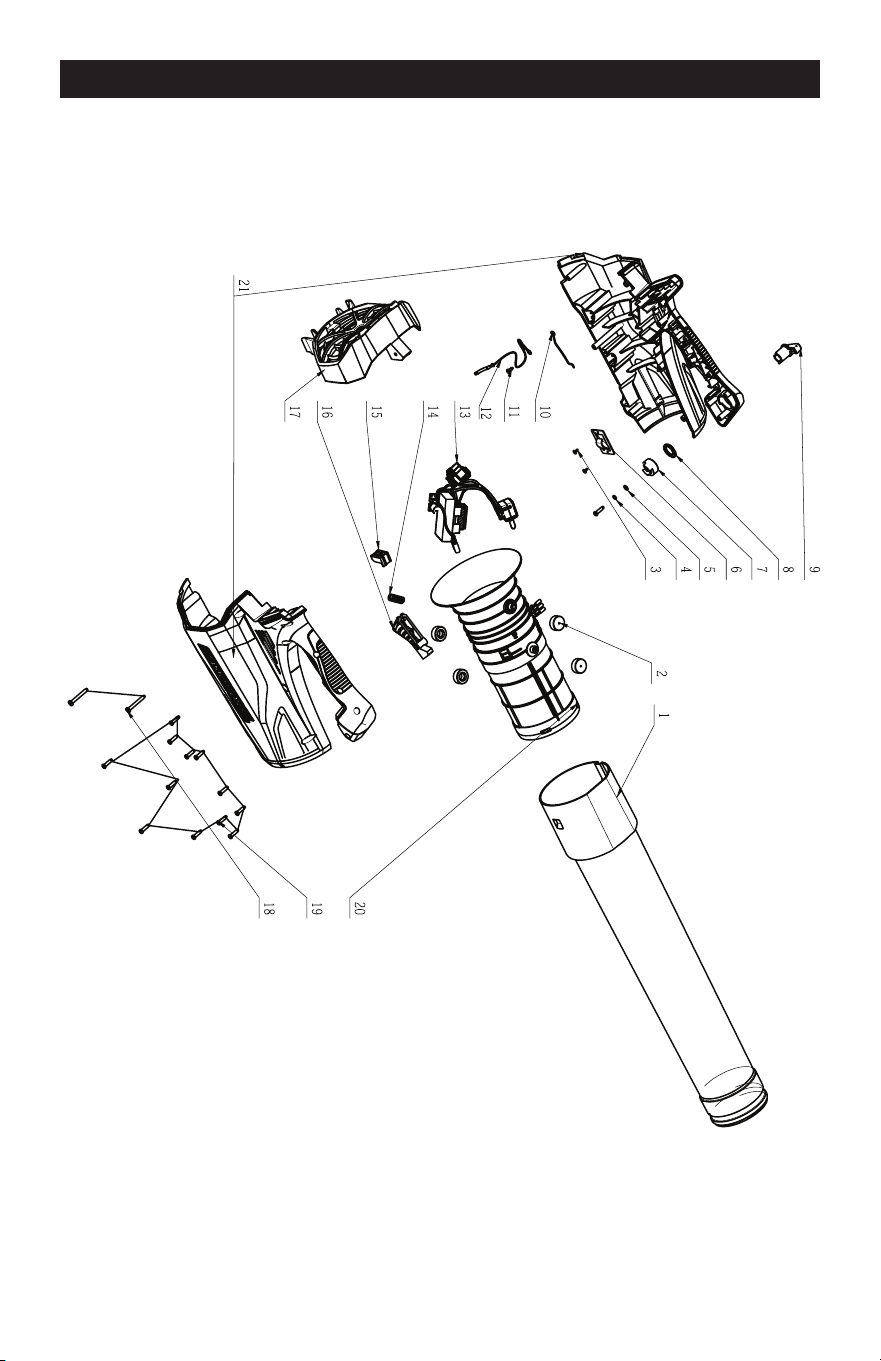
PARTS LIST
No. Part Name No. Part Name
1 Tube 12 Static Dissipation ASSY
2 Rubber Gasket 13 Electric Assembly
3 Screw With Washer 14 Spring1
4 Spring Washer 15 Sliding Block
5 Plain Washer 16 Switch Trigger
6 Clamp Washer 17 Fan Baffle
7 Intermediate Wheel 18 Tapping Screw
8 Wave Washer 19 Tapping Screw
9 Speed Adjusting Knob 20 Ducted Set
10 Anti-Static Bar 21 L R Housing Set
11 Tapping Screw
Page 13
SCHEMATIC DRAWING
Page 14
Blower

07/2024
© 2024 Menard, Inc., Eau Claire, WI 54703