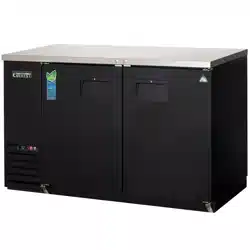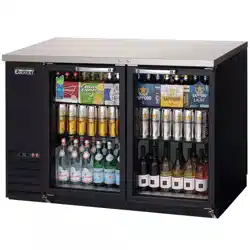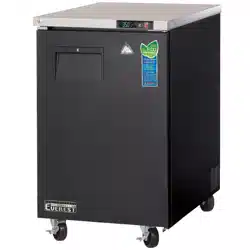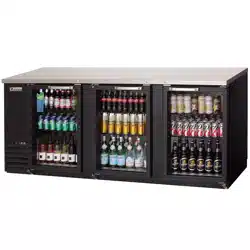
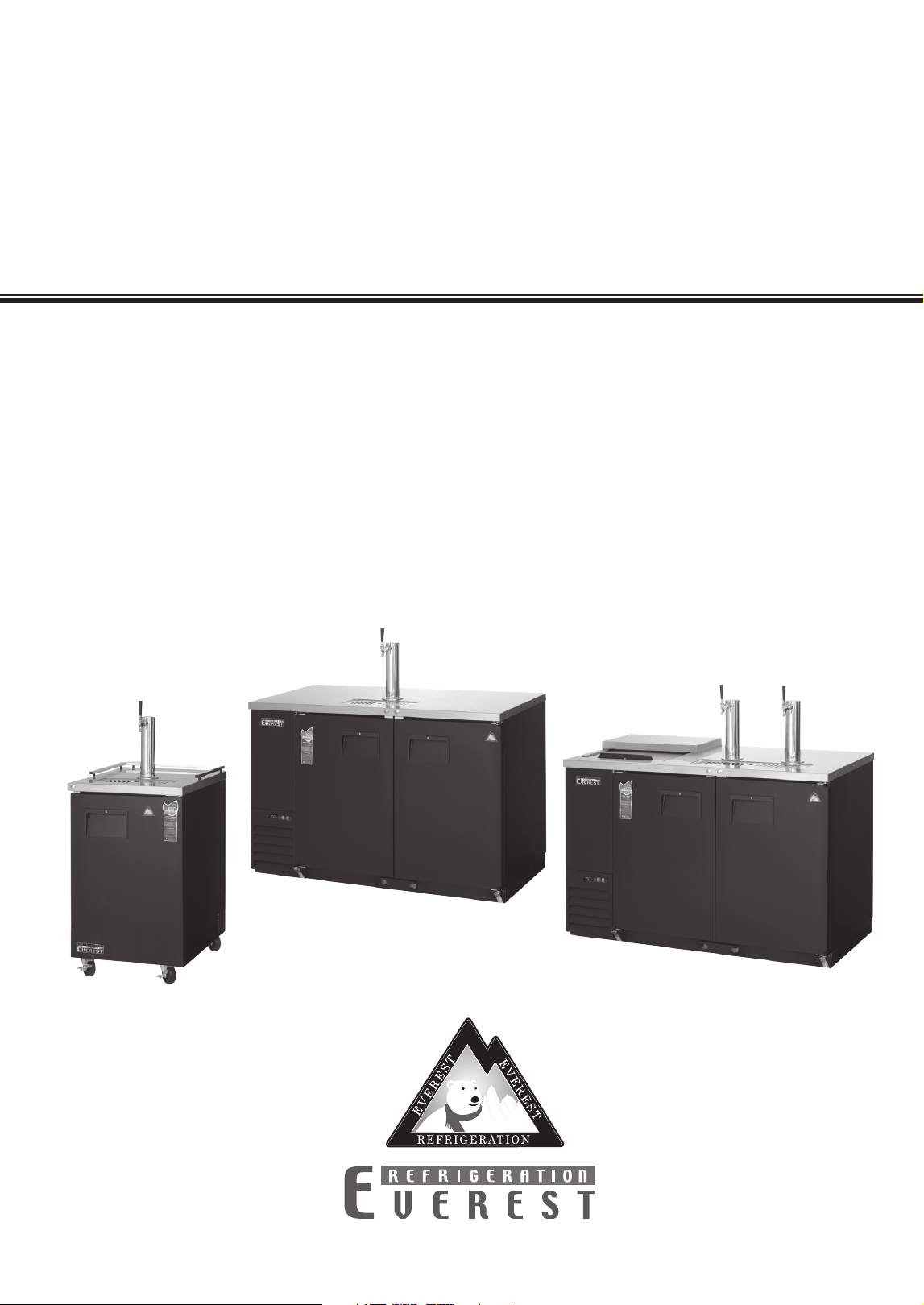
Owner’s Manual
EBD1, EBD2, EBD3, EBD4
EBDS2-24, EBD2-24, EBD3-24, EBD4-24
EBD2-BB, EBD2-BBG, EBD3-BB, EBD3-BBG
EBDS2-BB-24, EBD2-BB-24, EBD3-BB-24
EBDS2-BBG-24, EBD2-BBG-24, EBD3-BBG-24
EBD2-CT, EBD3-CT, EBD4-CT
Direct Draw
Keg Refrigerators

this page intentionally left blank
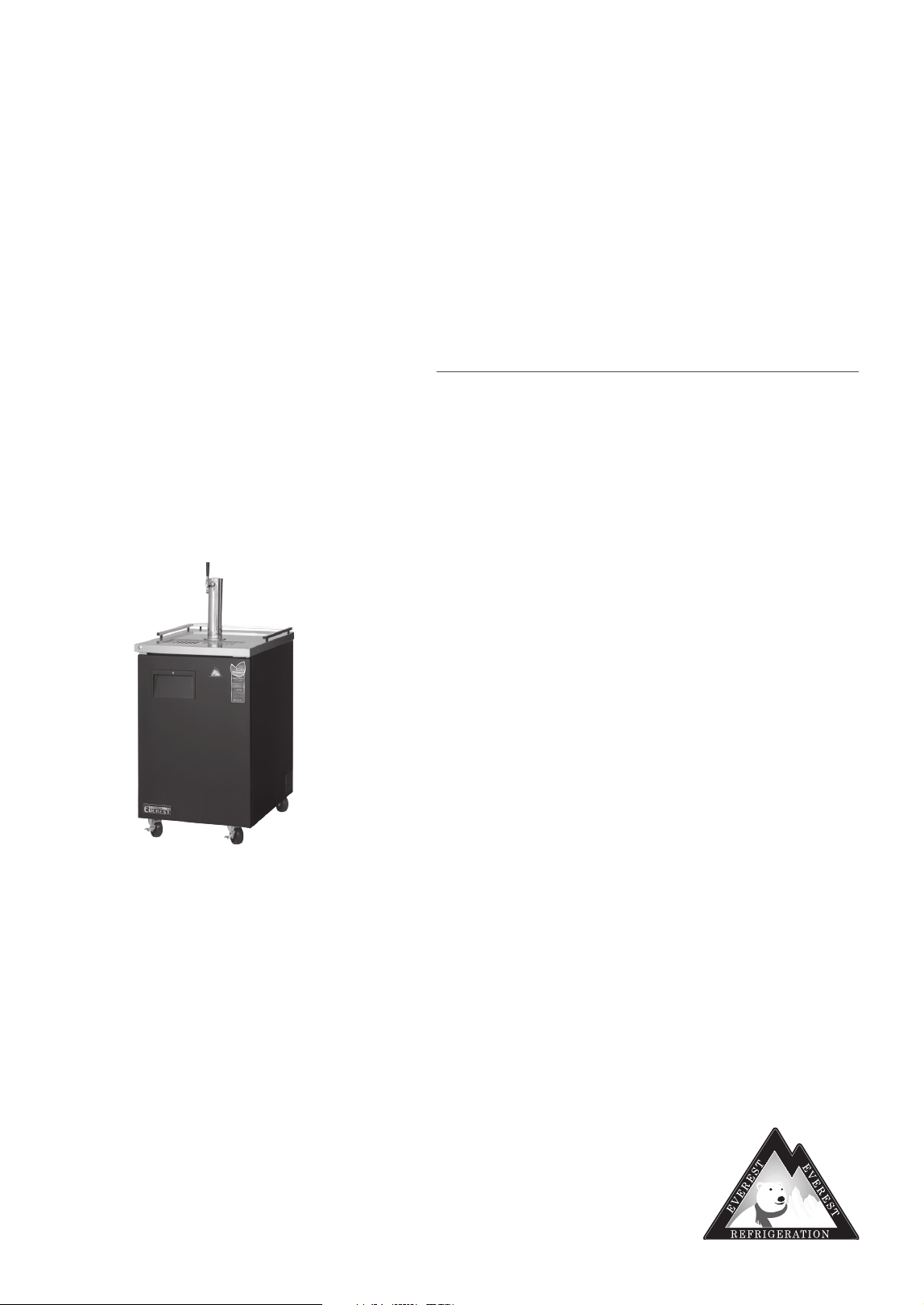
Direct Draw Keg Refrigerators
EBD1, EBD2, EBD3, EBD4
EBDS2-24, EBD2-24, EBD3-24, EBD4-24
EBD2-BB, EBD2-BBG, EBD3-BB, EBD3-BBG
EBDS2-BB-24, EBD2-BB-24, EBD3-BB-24
EBDS2-BBG-24, EBD2-BBG-24, EBD3-BBG-24
EBD2-CT, EBD3-CT, EBD4-CT
Everest Owner’s Manual
Contents
Hydrocarbon Guidelines �����������������������������1, 2
Installation Instructions ��������������������������������3, 4
Product Load Level & Shelf Placement ��������5, 6
Draft Assembly ��������������������������������������������7, 11
Safe Drilling Areas �����������������������������������12, 15
Keg Installation �����������������������������������������16, 17
General Safety ������������������������������������������������18
Electrical Safety ���������������������������������������������19
Operation ������������������������������������������������ 20–24
Care and Maintenance ��������������������������� 25–26
Troubleshooting Guide ���������������������������27–28
Warranty Registration ����������������������������� 29–30
Hydrocarbon Guidelines
1
Hydrocarbon Guidelines
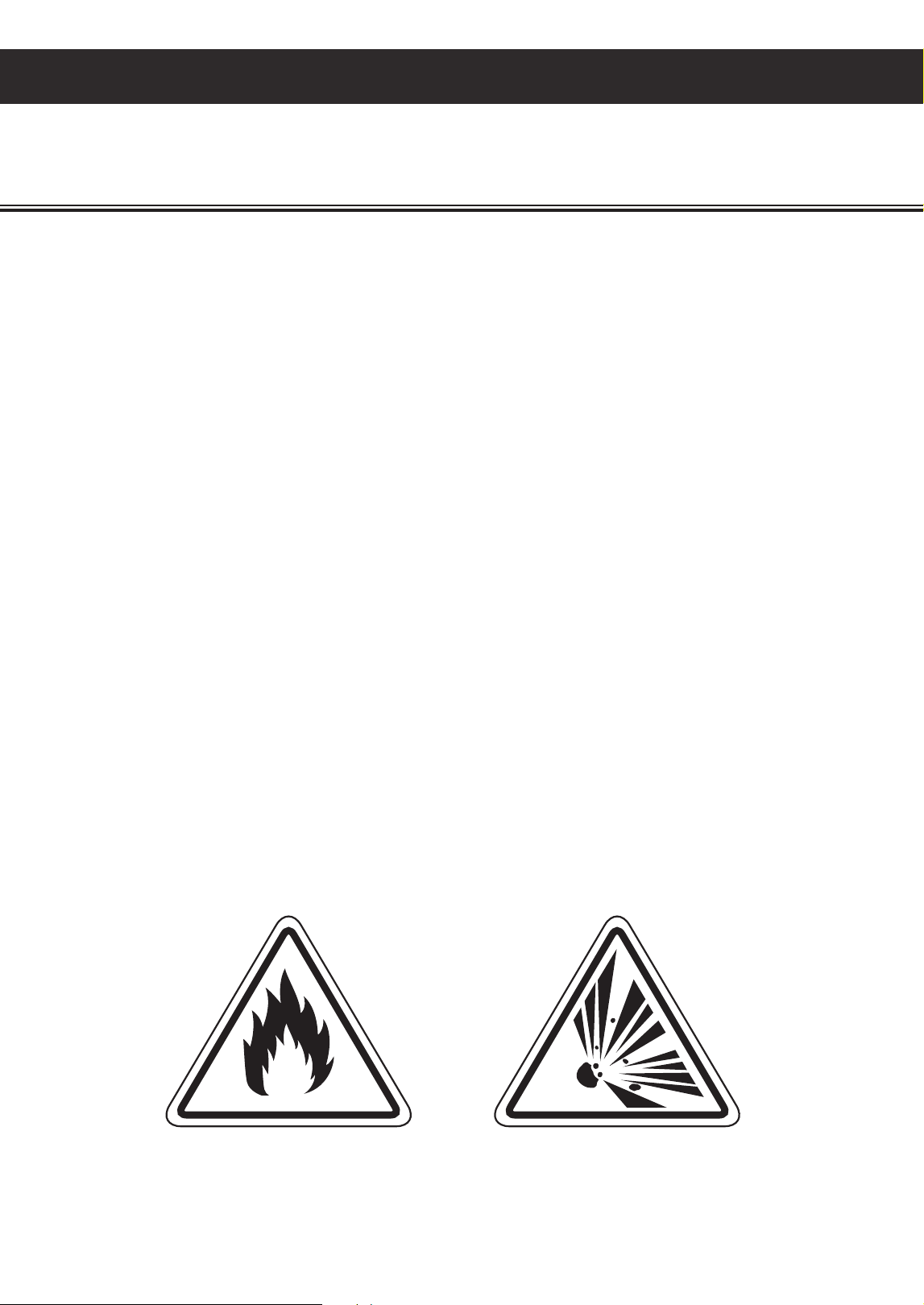
DANGER - Risk of fire or explosion. Flammable refrigerant used. Do not use mechanical devices or
other means to accelerate the defrosting process. Do not puncture refrigerant tubing.
DANGER - Risk of fire or explosion. Flammable refrigerant used. To be repaired only by trained service
personnel. Do not puncture refrigerant tubing.
CAUTION - Risk of fire or explosion. Flammable refrigerant used. Consult Service Manual or Owner’s
Manual before attempting to install or service this product. All safety precautions must
be followed.
CAUTION - Risk of fire or explosion. Flammable refrigerant used. Dispose of properly in accordance
with federal or local regulations.
CAUTION - Risk of fire or explosion due to puncture of refrigerant tubing; follow handling instructions
carefully. Flammable refrigerant used.
WARNING - THIS UNIT USES R290, A HYDROCARBON, PROPANE REFRIGERANT THAT IS
ENVIRONMENTALLY FRIENDLY BUT IS ALSO HIGHLY FLAMMABLE AND EXPLOSIVE. PLEASE
READ THIS MANUAL CAREFULLY AND FOLLOW ALL SAFETY PRECAUTIONS CONTAINED HEREIN
TO AVOID THE RISK OF FIRE OR EXPLOSION. FAILURE TO FOLLOW THE SAFETY PRECAUTIONS
MAY RESULT IN SERIOUS INJURY, OR DEATH, AND/OR PROPERTY DAMAGE.
This section applies to R290 Hydrocarbon units only. To identify the refrigerant type,
see the data plate in the cabinet interior.

Hydrocarbon Guidelines
2
PROPANE (R290) IS HIGHLY APPROVED FOR USE AS A REFRIGERANT IN COMMERCIAL,
SELF-CONTAINED UNITS IN THE US UNDER LIMITED USE CONDITIONS. IT CAN ONLY BE
USED IN NEW EQUIPMENT. BACKFITTING OR MODIFICATIONS OF OLD EQUIPMENT ARE
NOT ALLOWED. IT MUST BE CHARGED IN A STRICTLY LIMITED VOLUME OF UP TO 150
GRAMS (5.3 OZ) PER REFRIGERATION CIRCUIT. EVEN THOUGH THIS IS A SMALL AMOUNT,
IT STILL PRESENTS A FIRE OR EXPLOSION HAZARD IF IT LEAKS OUT OF PARTS THAT
HOLD REFRIGERANT. WHEN IT COMES IN CONTACT WITH AIR, A FLAMMABLE PROPANE-AIR
MIXTURE CAN BE CREATED AND EASILY IGNITED BY ELECTRICAL SPARKS, OPEN FLAMES OR
HOT SURFACES. THE RISK IS HIGHER IN SMALL, CONFINED, POORLY VENTILATED SPACES.
PROPANE WILL SETTLE AT LOWER ZONES BECAUSE IT IS HEAVIER THAN AIR. TO REDUCE
THESE RISKS, OBSERVE THE FOLLOWING PRECAUTIONS
• Avoid installation of unit in areas with open flames or in general vicinity of open flames or high
surface temperatures.
• Avoid unit installation in small, confined spaces. Ensure ample ventilation at all times. Keep all
exhaust vents free of any blockage or obstruction.
• Do not rely on smell to detect potential leaks of propane refrigerant. Propane refrigerant is a
high purity propane gas and does not contain odorants or stenching agents. These additives are
typically used in fuel-grade propane and natural gas in order to give them a distinctive smell which
makes it easier to detect leaks.
• General service and repairs must be performed in well-ventilated areas.
• General service and repairs must be performed only by professionals authorized by Everest
Refrigeration.
• Component shall be replaced with Everest-issued, like components to minimize the risk of possible
ignition resulting from incompatible parts or improper repairs.
• Do not modify, re-appropriate, or remove any functional part(s) from the unit.
• Handle the unit with care to avoid any damage.
• Practice safety guidelines when transporting the unit. Consult with your local Department of
Transportation for requirements in moving flammable gasses.
3
Installation Instructions
Installation Instructions
1. Inspect for any freight damage upon delivery
of the unit. If damage is detected, immediately
report it to an Everest representative. Everest
is not responsible for damage that occurs
during shipment.
2. Keep the unit upright at all times. The
compressor contains oil, refrigerant,
lubricants, and various chemicals. When tilted,
these fluids may shift and travel to sections
where they don’t naturally occur. This will
lead to system contamination and compressor
failure.
3. Select a location with good air ventilation.
Poor ventilation rapidly increases ambient
temperature. High ambient temperatures
exceeding 86°F (30°C) promote excessive
compressor activity in order to maintain the
desired cabinet temperature. This will result in
decreased performance, advanced component
failure, and the risk of fire.
4. Select a location away from heat-generating
equipment such as stoves, ovens, etc. Heat
sources rapidly increase the temperature of
the immediate vicinity. High temperatures
exceeding 86°F (30°C) promote excessive
compressor activity in order to maintain the
desired cabinet temperature. This will result in
decreased performance, advanced component
failure, and the risk of fire.
5. A distance of 6” is required for left side or right
side clearance wherever a unit’s condenser
coil is located. This ensures proper ventilation
and prevents overheating which can lead to
advanced component failure or the risk of fire.
6. Select a location with a hard, leveled surface.
Use a leveling tool on the unit to ensure
proper alignment. Proper door function
and condensate removal is dependent
on accurate balance.
7. Select a location close to an electrical wall
outlet to ensure direct connection without
the use of extension cords.
8. Select a location away from severe moisture
conditions. This may compromise the unit’s
electrical components and lead to electrical
shocks or the risk of fire.
9. Select a location that will not expose the unit
to extremely dusty conditions. Environments
with high dust and debris content will
significantly hasten condenser coil and
condenser coil air filter blockage and will
result in decreased performance, advanced
component failure, and the risk of fire.
10. Do not build an enclosure or cabinet around
the unit. This will restrict air ventilation
resulting in elevated compressor activity,
decreased performance, advanced component
failure, and the risk of fire.
11. The unit is not intended for use in food trucks.
Limited space, lack of ventilation, and ambient
temperatures exceeding 86°F (30°C) typical to
this setting will result in elevated compressor
activity, decreased performance, advanced
component failure, and the risk of fire.
12. The unit is intended for indoor use only.
Outdoor use will cause a decrease in
performance, advanced component failure,
and the risk of fire.
13. The unit comes with an interior drain hole
plug. Keep this plugged in during normal
operation and unplug when cleaning the
interior to allow water to drain.
14. Install drain hoses to the back of the unit
when cleaning the interior.
This section applies to all Everest products. Correct installation ensures proper performance
and longevity of your appliance. Professional installation by a trained refrigeration technician
and electrician is recommended. Warranty is void if the following guidelines are not met.
4
Installation Instructions Shelf
Shelf Installation
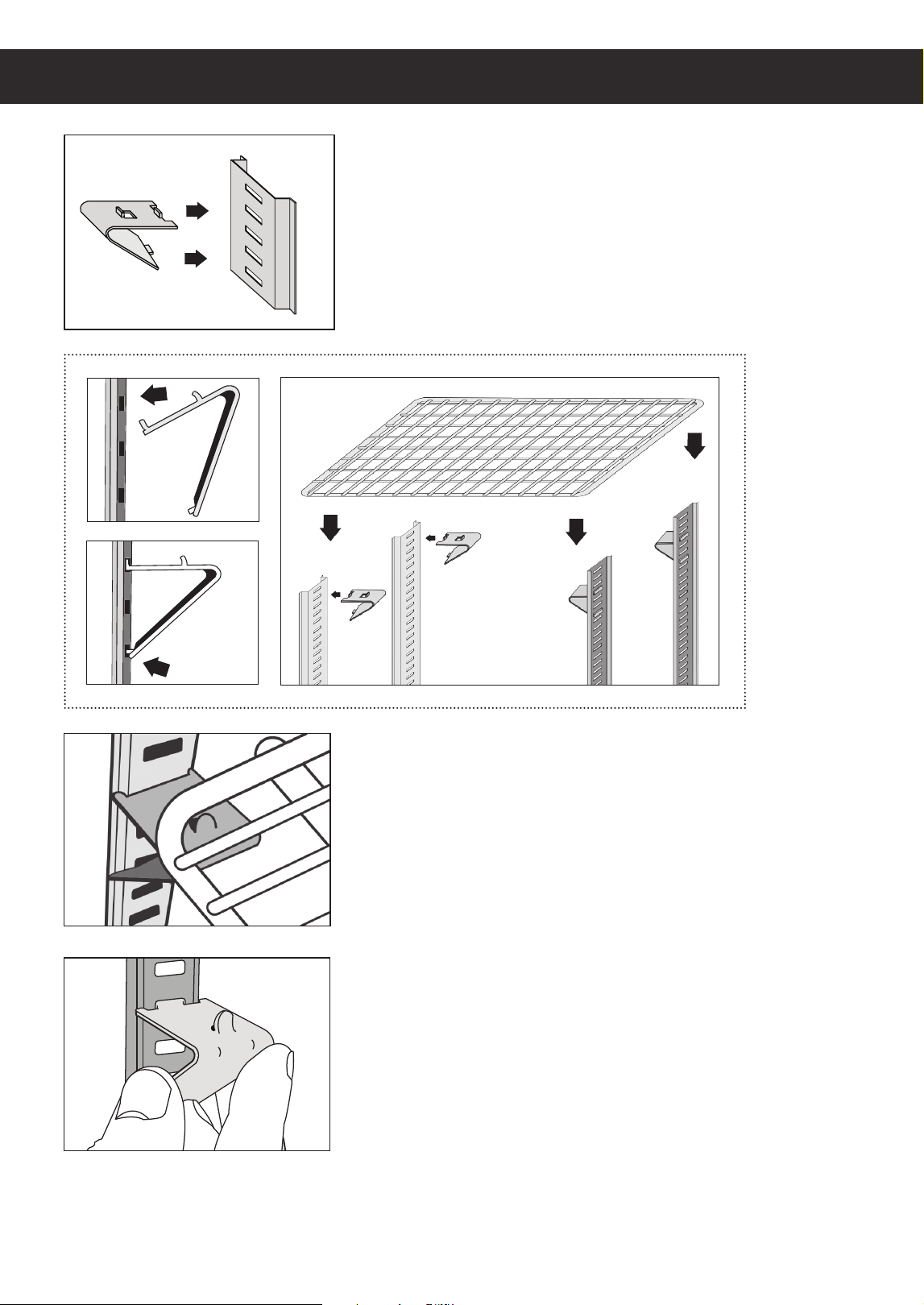
1. Some models come standard with shelves, shelf clips
and notched pilasters. Each shelf requires four clips.
Attach the shelf clips onto the pilasters by inserting
its top hook into a pilaster notch followed by the
bottom hook. Do not use pliers or other crimping
tools to modify the shape of the shelf clips. This will
result in shelf mounting instability.
2. Place shelves on the shelf clips making sure all
corners are mounted securely and evenly with
identical distance from the unit’s floor and up. Always
lay the back of each shelf down on the rear clips
before the front.
3. When removing a shelf, unmount the shelf from the
shelf clips. To detach the shelf clip from the pilaster,
tilt up the shelf clip until the bottom hook clears,
followed by the top hook.
Side View
Front
Rear
Front View
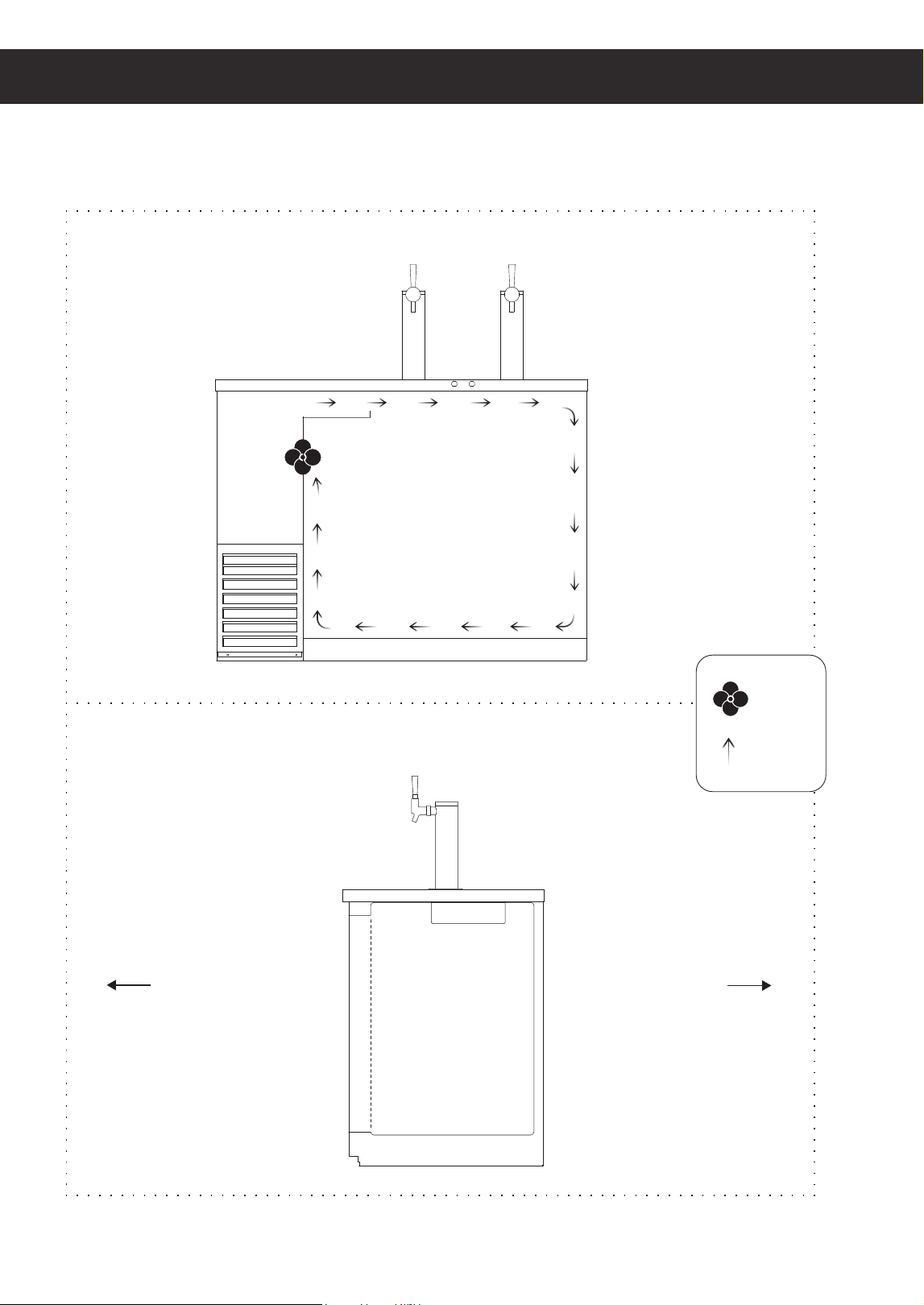
Fan
Airflow
5
Models : EBD1, EBD2, EBD3, EBD4, EBDS2-24, EBD2-24, EBD3-24, EBD4-24
EBD2-BB, EBD3-BB, EBDS2-BB-24, EBD2-BB-24, EBD3-BB-24, EBD2-CT
EBD3-CT, EBD4-CT
Product Load Level & Shelf Placement
Installation Instructions: Product Load Level & Shelf Placement
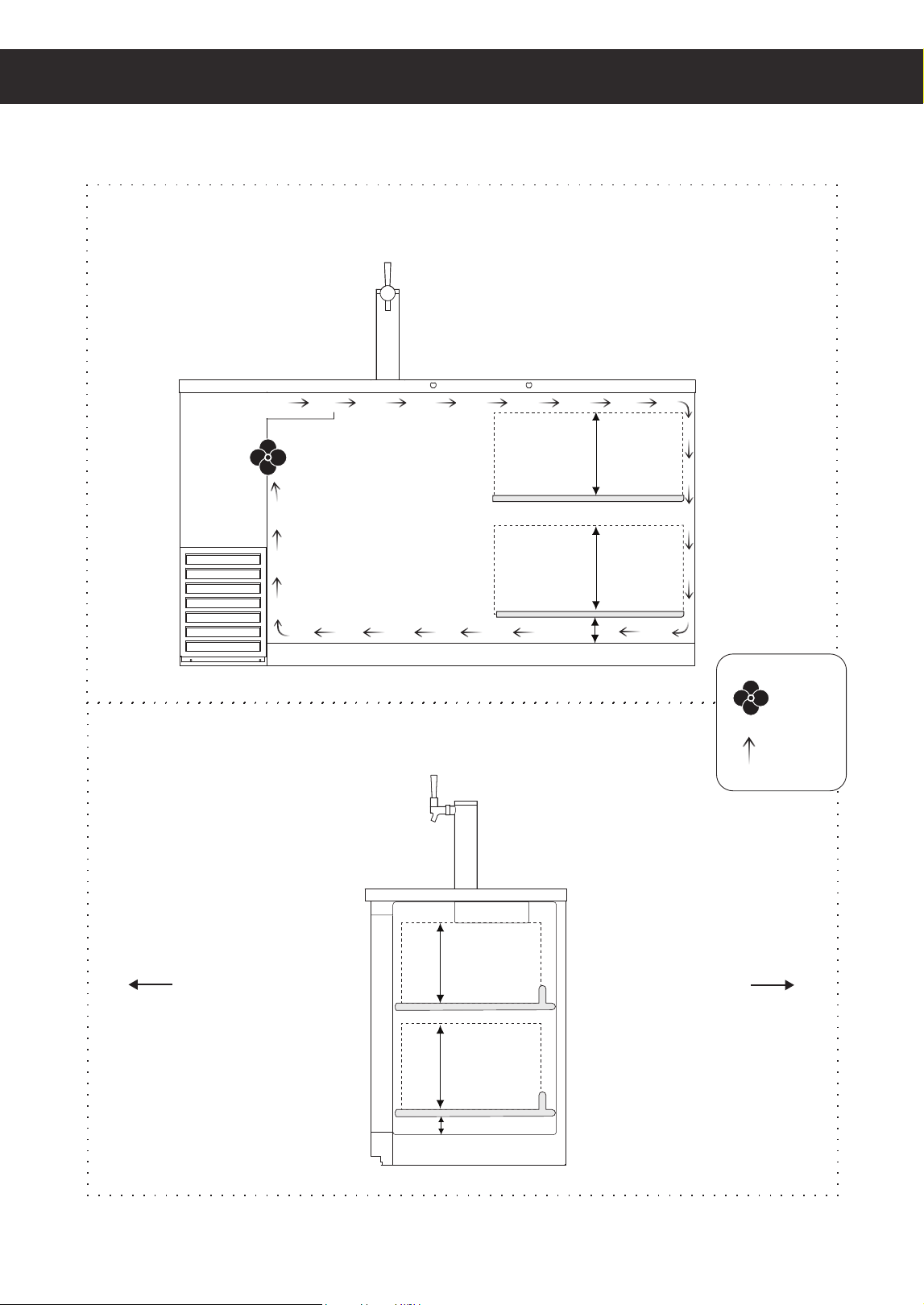
Side View
Front
Rear
Front View
Load Level 11”
Load Level 11”
2”
2”
Load Level 11”
Load Level 11”
Fan
Airflow
6
Installation Instructions: Product Load Level & Shelf Placement
Product Load Level & Shelf Placement
Models : EBD2-BBG, EBD3-BBG, EBDS2-BBG-24, EBD2-BBG-24, EBD3-BBG-24
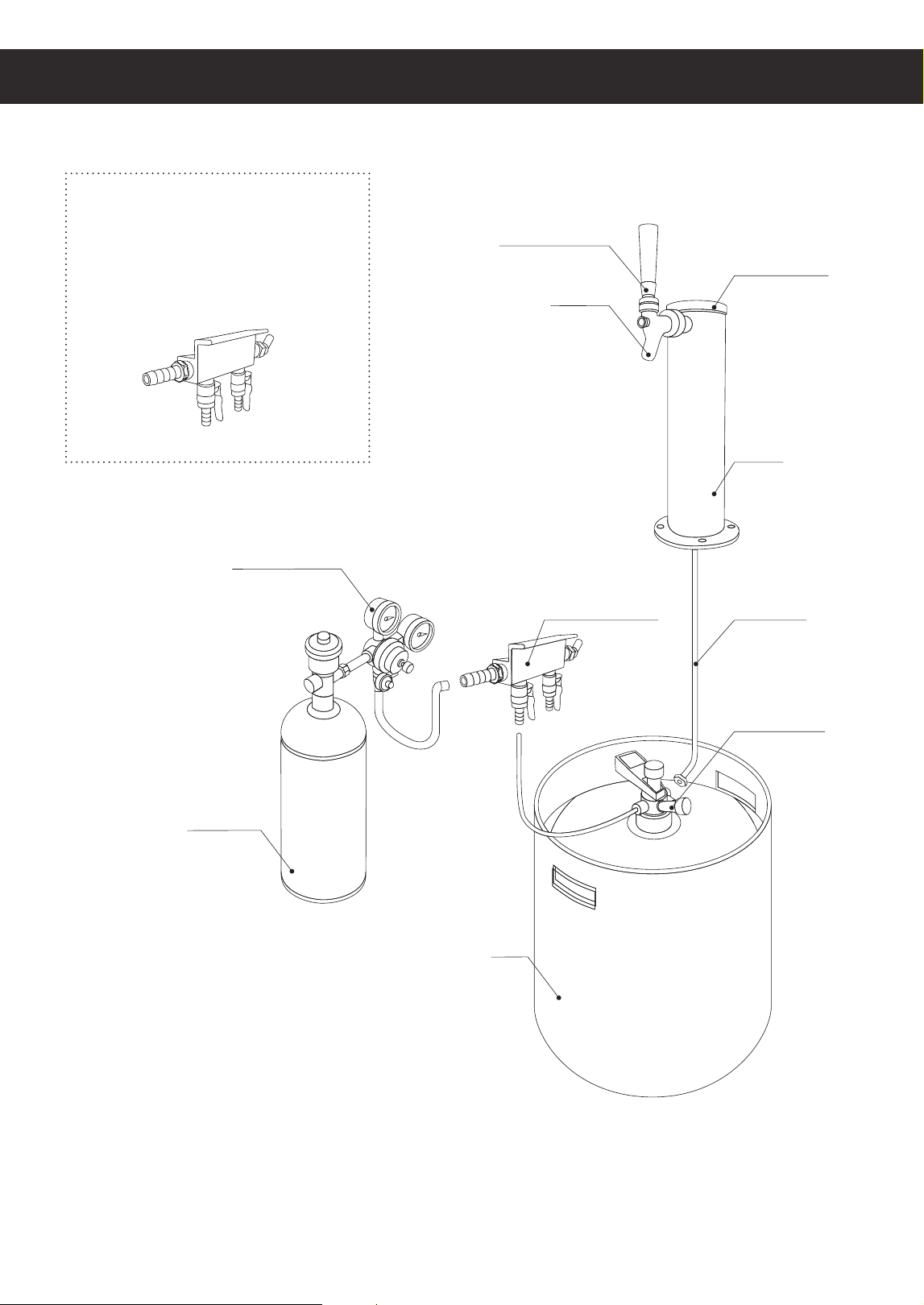
Faucet Handle
Faucet
Tower Cover
Tower
Beer Line
CO
2
Regulator
CO
2
Tank
Keg
Keg Coupler
Air Distributor
Air Distributors are included in
Direct Draw Keg Refrigerators that
have multiple faucets and kegs.
Each keg is connected to a valve
on the air distributor.
7
Installing Draft Assembly - Single Faucet
Draft Assembly - Single Faucet
The Keg, Keg Coupler,
CO
2
Regulator, CO
2
Regulator
Line Coupler and CO
2
Tank
are not included with the
Direct Draw Keg Refrigerator.
These items can be obtained
from your chosen beverage
distributor.
8
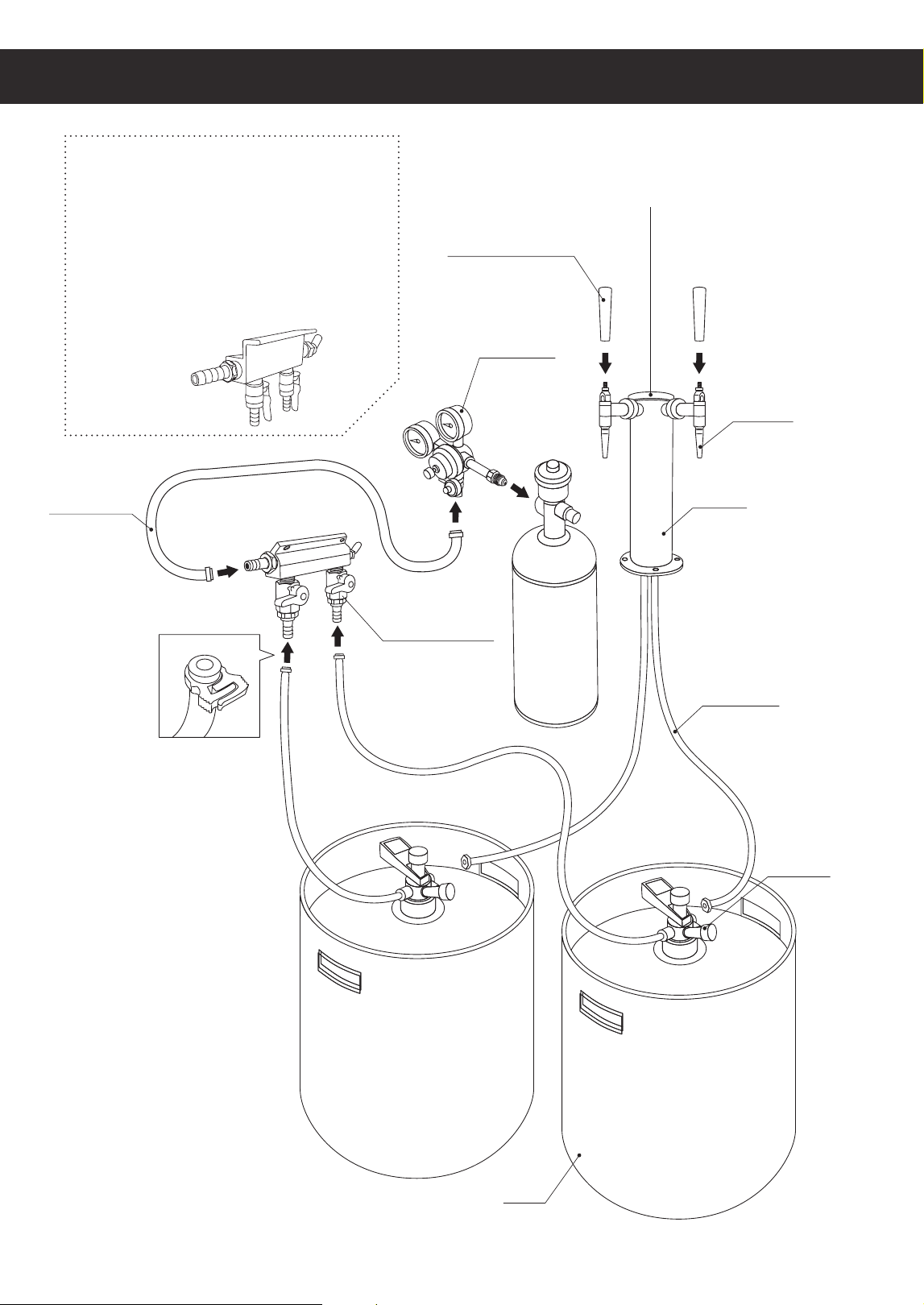
Installing Draft Assembly - Dual Faucet
Draft Assembly - Dual Faucet
Air Distributors are included in Direct
Draw Keg Refrigerators that have
multiple faucets and kegs. Each
keg is connected to a valve on the
air distributor. For Direct Draw Keg
Refrigerators with a single keg and
faucet the keg is connected directly to
the Regulator.
The Keg, Keg Coupler,
CO2Regulator, CO2Regulator
Line Coupler and CO2Tank
are not included with the
Direct Draw Keg Refrigerator.
These items can be obtained
from your chosen beverage
distributor.
Keg
Coupler
Beer Line
Towe r
Faucet Handle
Nitrogen
Regulator
Air Hose
Air Distributor
Faucet
Tower Cover
Keg
Insulation (Foam)
Insulation (Foam)
Hook
T-Shaped PVC
Drain Fittings w/
Moveable Plug
3/4" O.D.
Insulation (Foam)
Insulation (Foam)
Hook
T-Shaped PVC
Drain Fittings w/
Moveable Plug
3/4" O.D.
9
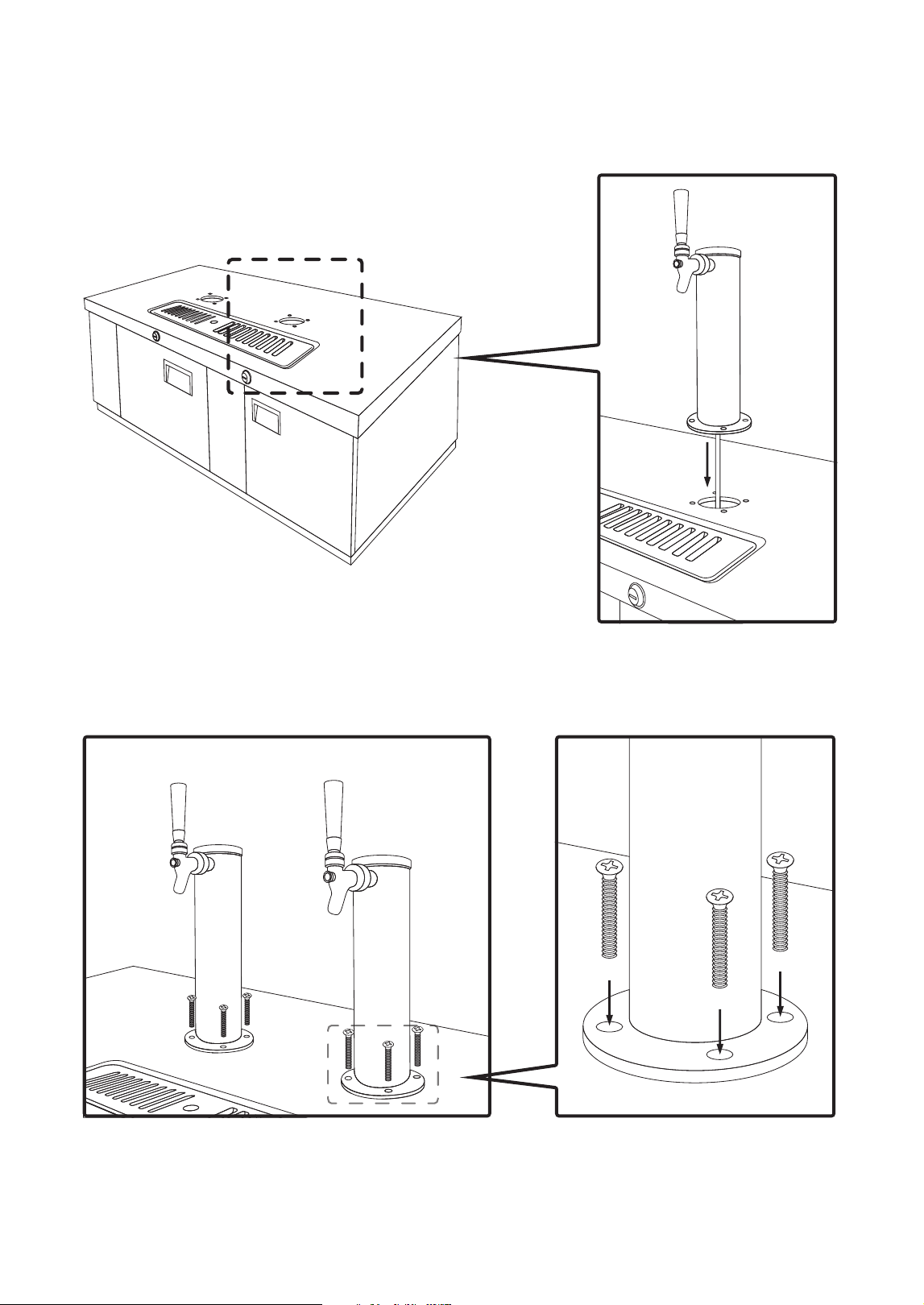
Installing Draft Assembly
Draft Assembly Instructions (Continued)
1. Position the base of the draft tower so that the tower shaft and
screw holes align perfectly with the corresponding openings on
the worktop. Feed the beer line through the main opening.
2. Secure the base of draft tower to the work top using the provided screws.
Insulation (Foam)
Insulation (Foam)
Hook
T-Shaped PVC
Drain Fittings w/
Moveable Plug
3/4" O.D.
Insulation (Foam)
Insulation (Foam)
Hook
T-Shaped PVC
Drain Fittings w/
Moveable Plug
3/4" O.D.
10
Installing Draft Assembly
Draft Assembly Instructions (Continued)
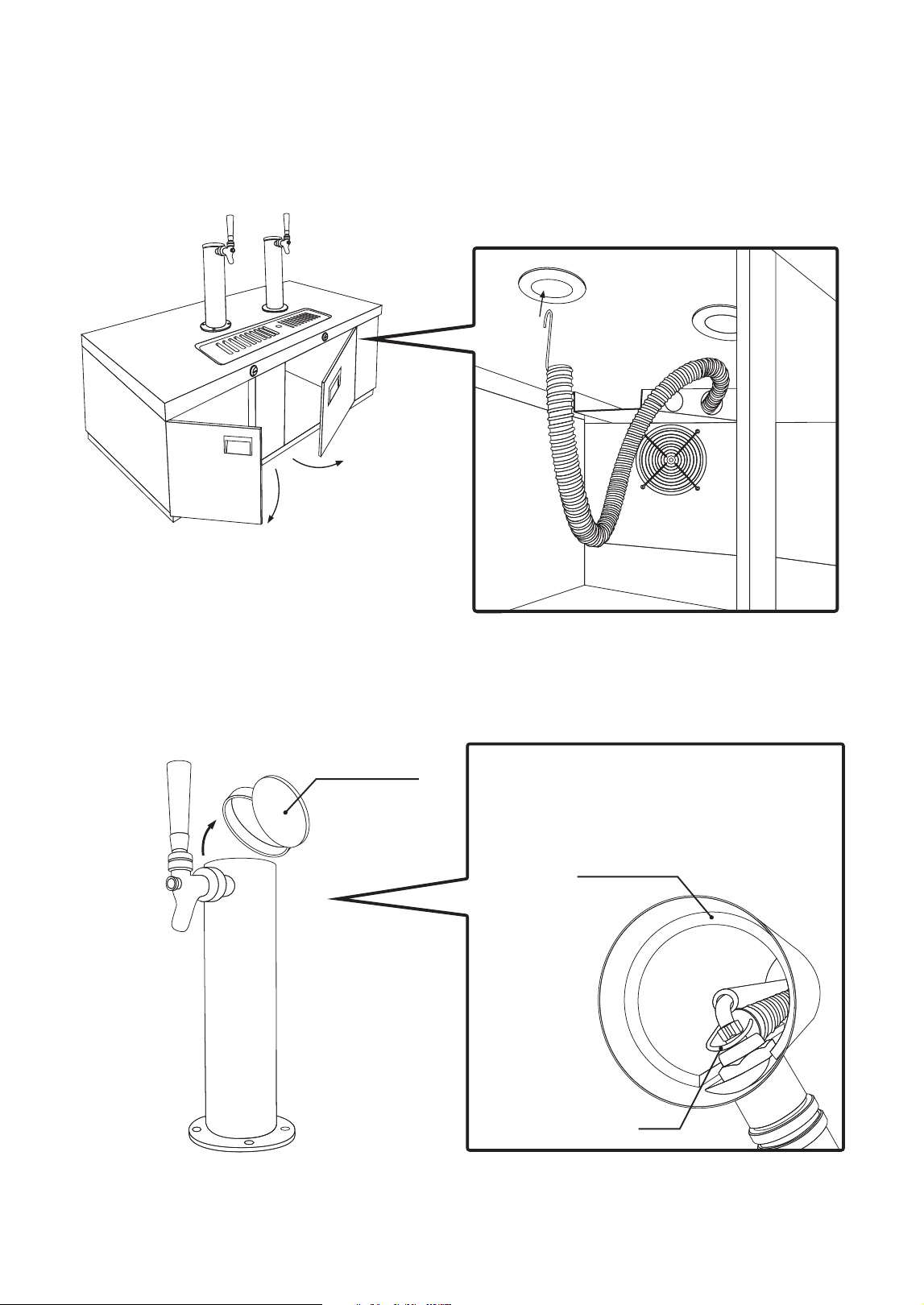
3. Take the cold air hose and insert the flat end into the air baffle located in the cabinet interior.
4. Remove the top cap and insulation pad from the draft tower.
5. Take the cold air hose and insert the
hooked end through the bottom of the
tower. Attach the hook to the bolt of the
draft faucet.
Insulation (Foam)
Insulation (Foam)
Hook
T-Shaped PVC
Drain Fittings w/
Moveable Plug
3/4" O.D.
Insulation (Foam)
Insulation (Foam)
Hook
T-Shaped PVC
Drain Fittings w/
Moveable Plug
3/4" O.D.
11
Draft Assembly Instructions (Continued)
Installing Draft Assembly
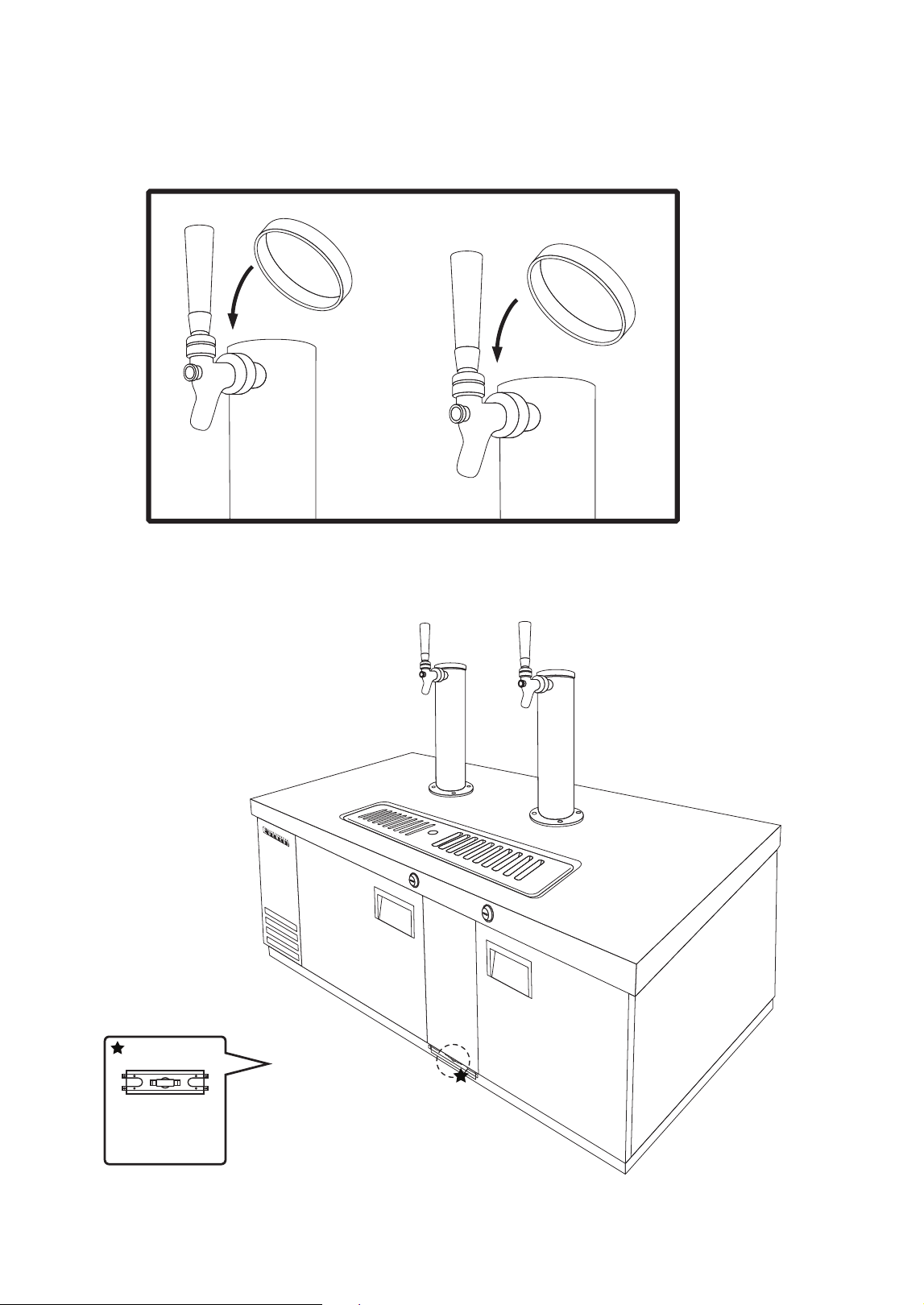
6. Secure the top cap and insulation pad back on the draft tower.
Ensure that they are tightly sealed in place.
7. Connect any exterior rubber or silicone drain hose that matches the ¾" diameter drain fitting
located at the front, bottom section of the unit. The Direct Draw Keg Refrigerator does not include
an exterior drain hose.
R
R
R
R
12
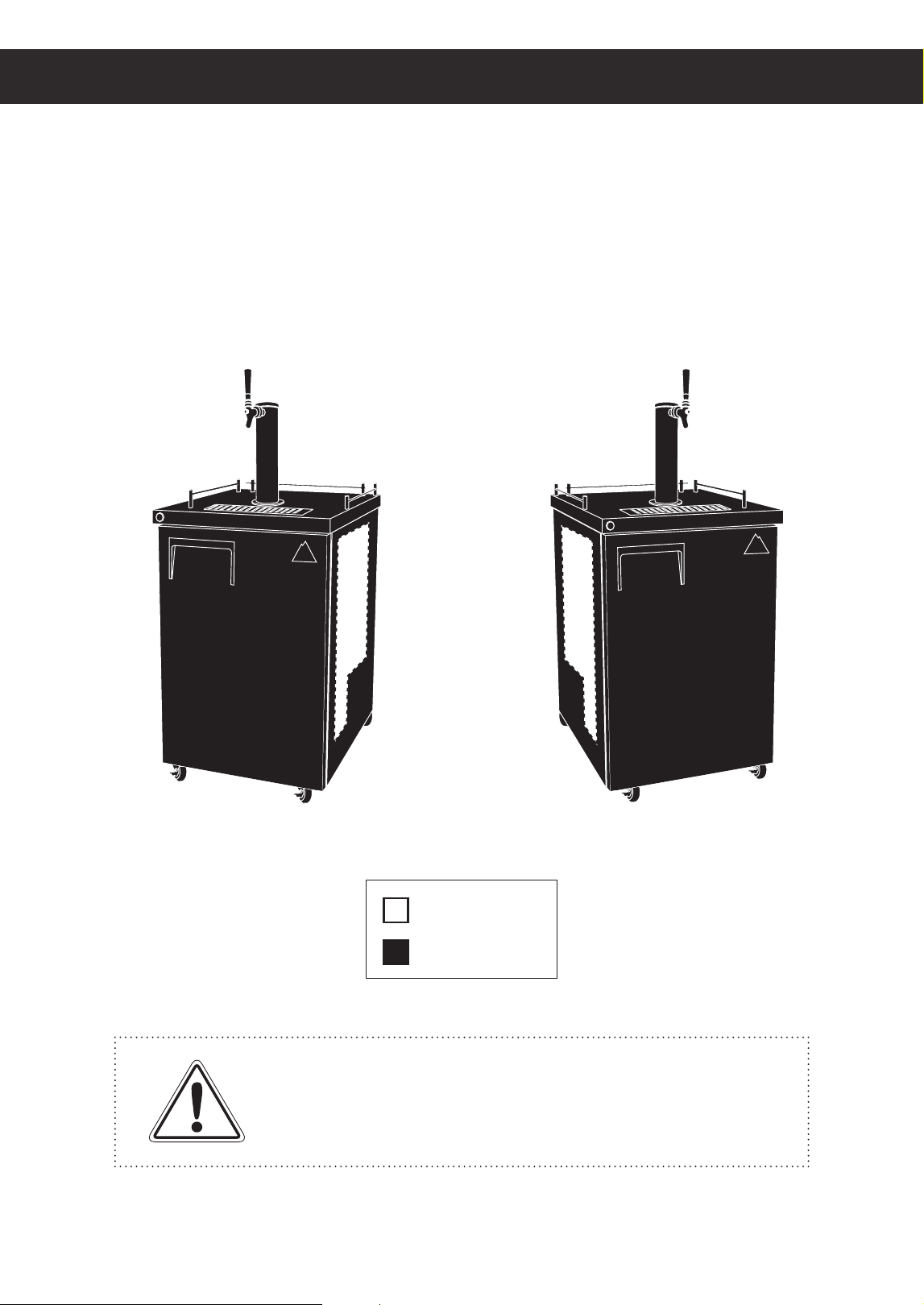
Installation Instructions: Safe Drilling Areas for CO2 Ports
Safe Drilling Areas for CO2 Ports (EBD1 Models Type A)
The following diagram illustrates safe drilling areas for EBD1 models within the serial number range
BBD1-0801-XXXX to BBD1-1810-XXXX. Everest recommends only a qualified technician or keg
installation professional to perform this modification. Warranty is void if these guidelines are not met.
Drill holes for CO2 lines anywhere within the highlighted areas.
Drilling outside of these areas will cause irreparable damage to the
refrigeration components and /or wiring.
Drill Safe Area
Do Not Drill
Left SideRight Side
R
R
R
R
13
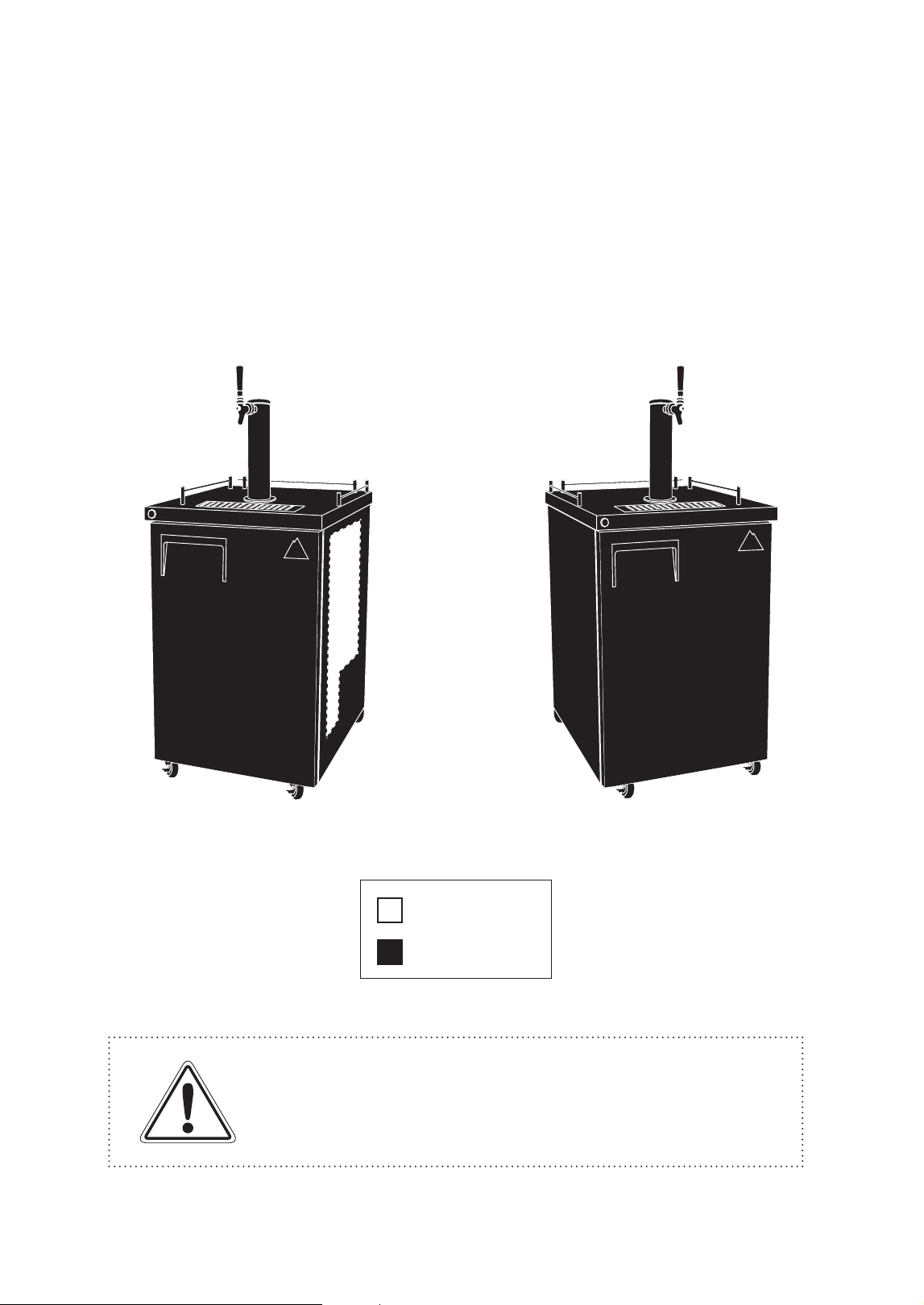
Installation Instructions: Safe Drilling Areas for CO2 Ports
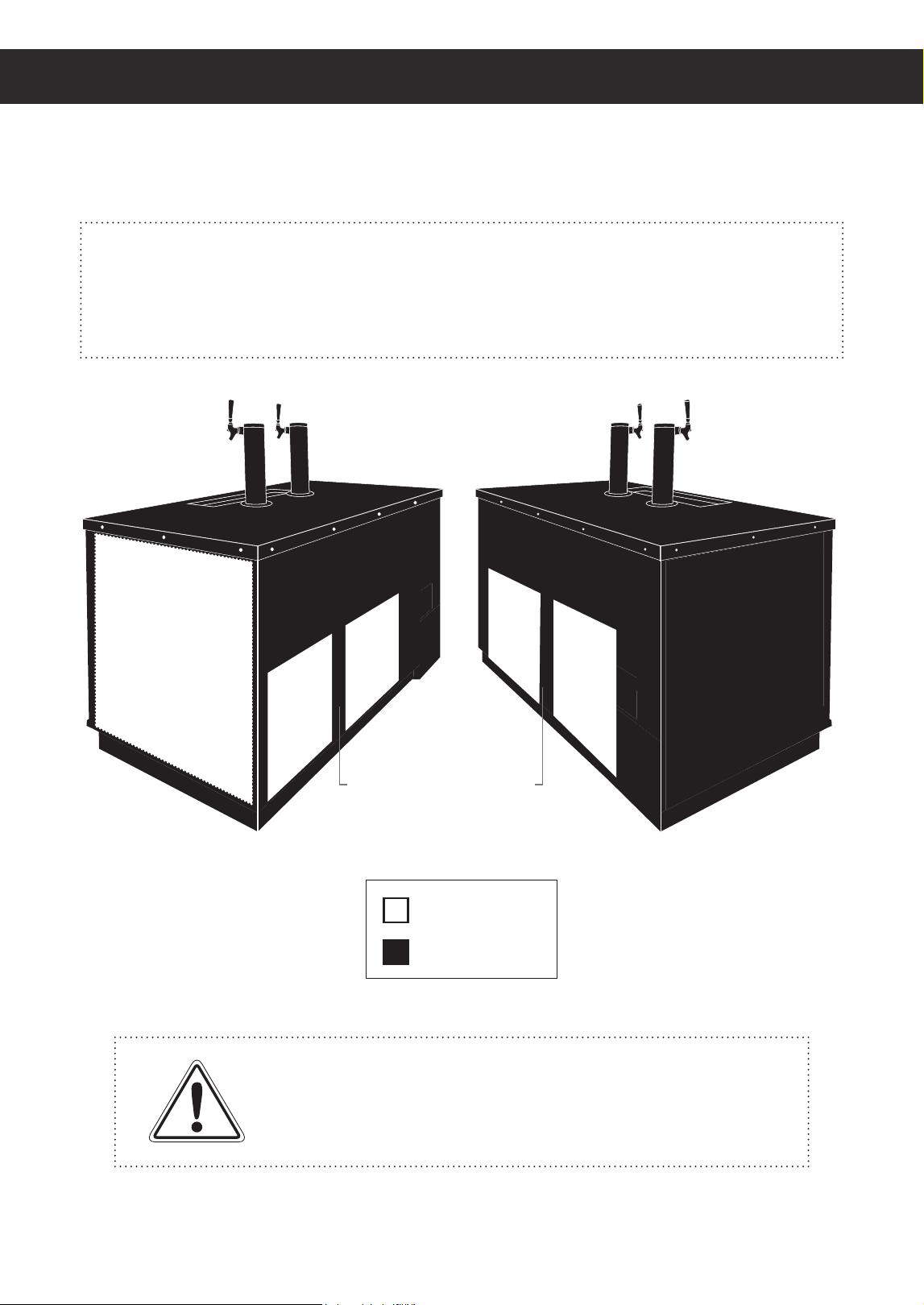
Safe Drilling Areas for CO2 Ports (EBD1 Models Type B)
Drill holes for CO2 lines anywhere within the highlighted areas.
Drilling outside of these areas will cause irreparable damage to the
refrigeration components and /or wiring.
Drill Safe Area
Do Not Drill
Left SideRight Side
The following diagram illustrates safe drilling areas for EBD1 models within the serial number range
BBD1-1811-XXXX to present. Everest recommends only a qualified technician or keg installation
professional to perform this modification. Warranty is void if these guidelines are not met.
Wall-integrated Drain Line
14
Installation Instructions: Safe Drilling Areas for CO2 Ports
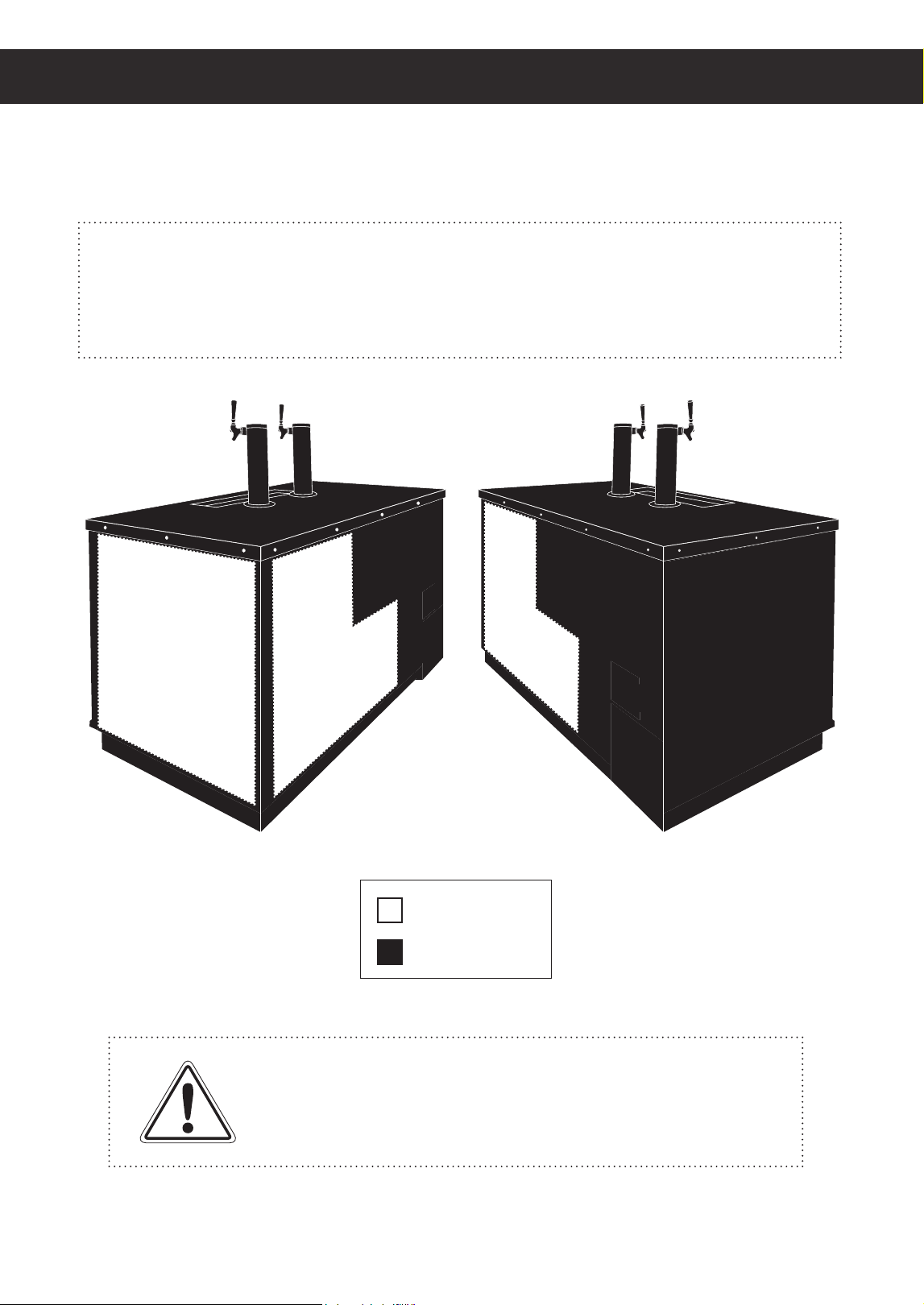
Safe Drilling Areas for CO2 Ports (Multi-Section Models Type A)
Drill holes for CO2 lines anywhere within the highlighted areas.
Drilling outside of these areas will cause irreparable damage to the
refrigeration components and /or wiring.
BBD2, BBD2-24, BBD2-BB-24,
BBD2-BBG, BBD2-BBG-24, BBD2-CT,
BBD3, BBD3-24, BBD3-BB, BBD3-BB-24,
BBD3-BBG, BBD3-BBG-24, BBD3-CT,
BBD4, BBD4-24, BBD4-CT, BBD52-24,
BBD52-BB-24, BBD52-BBG-24
*Multi-Section Models:
Drill Safe Area
Do Not Drill
Left SideRight Side
The following diagram illustrates safe drilling areas for multi-section models* within the serial number
range (model)-0801-XXXX to (model)-1209-XXXX. Everest recommends only a qualified technician or
keg installation professional to perform this modification.
Warranty is void if these guidelines are not met.
15
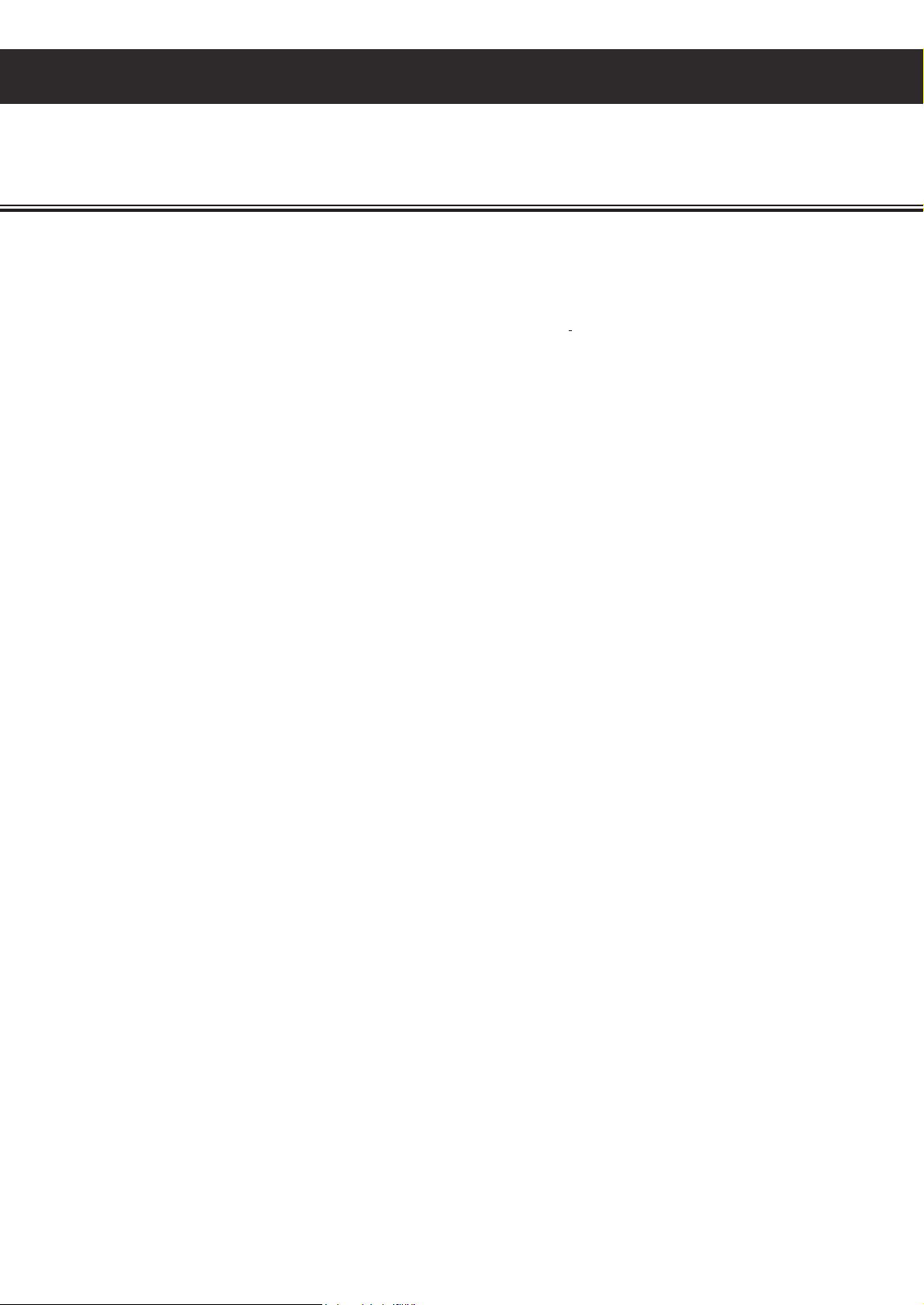
Drill holes for CO2 lines anywhere within the highlighted areas.
Drilling outside of these areas will cause irreparable damage to the
refrigeration components and /or wiring.
Drill Safe Area
Do Not Drill
Left SideRight Side
Safe Drilling Areas for CO2 Ports (Multi-Section Models Type B)
The following diagram illustrates safe drilling areas for multi-section models* within the serial number
range (model)-1210-XXXX to present. Everest recommends only a qualified technician or keg
installation professional to perform this modification.
Warranty is void if these guidelines are not met.
BBD2, BBD2-24, BBD2-BB-24, BBD2-BBG,
BBD2-BBG-24, BBD2-CT,BBD3, BBD3-24,
BBD3-BB, BBD3-BB-24,BBD3-BBG, BBD3-
BBG-24, BBD3-CT, BBD4, BBD4-24, BBD4-CT,
BBD52-24, BBD52-BB-24, BBD52-BBG-24,
BBD2-SS, BBD4-SS
*Multi-Section Models:
Installation Instructions: Safe Drilling Areas for CO2 Ports
16
Installation Instructions: Keg
Keg Installation
*NOTE: The CO2 distributor can be used to share the single CO2 tank between multiple kegs.
A ) Cabinet Exterior: For CO2 tanks placed outside of the unit, it is necessary to drill a hole for the CO2
port anywhere in the safe areas indicated in Safe Drilling Areas. Drilling outside of these areas will
cause irreparable damage to the refrigeration components and/or wiring.
B ) Cabinet Interior: For CO2 tanks placed inside the unit, it is not necessary to drill a hole for the CO2
port. This set up is possible depending on the model of the Direct Draw Keg Refrigerator and the size of
the CO2 tanks and beer kegs.
1 ) Choosing the CO2 tank location
A ) Before proceeding, ensure that the shut off valve of the CO2 regulator is closed. The lever must be
perpendicular to the CO2 line if it is in the closed position.
B ) Take one end of the CO2 line and push it up the CO2 regulator’s barb connector as tightly as
possible. Secure the hose to the fitting with the use of a clamp. The clamp must be positioned well
above the hose and fitting junction so as not to interfere with the valve operation.
C ) If the CO2 tank is located outside the cabinet, feed the hose through the CO2 port that was drilled
into the wall of the unit.
2 ) Connecting the CO2 Line to the CO2 Regulator
A ) Before proceeding, ensure that the CO2 tank is filled and in the closed position.
B) Connect the CO2 regulator nut to the CO2 tank.
3 ) Connecting the CO2 Regulator to the CO2 Tank
A) Before proceeding, it is critical that the keg pull handle is closed in the up position.
B) Install the keg coupler on the keg’s neck junction. Turn clockwise to lock it in place.
4 ) Connecting the Keg Coupler
A) Take the open end of the CO2 line and push it up the keg coupler’s barb connector as tightly as
possible. Secure the hose to the fitting with the use of a clamp. The clamp must be positioned well
above the hose and fitting junction so as not to interfere with the valve operation.
5) Connecting the CO2 Line to the Keg Coupler

17
Installation Instructions: Keg
Keg Installation (Continued)
A) Before proceeding, remove any protective film or wrap from the keg coupler.
B) Attach the rubber washer to the beer line hex fitting.
C) Connect the beer line from the tower to the screw fitting on top of the keg coupler.
6) Connecting the Beer Line to the Keg Coupler
A) Pull on the top handle of the keg coupler and push down until it locks in place.
7) Tapping the Keg
A) Keep the shut-off valve of the CO2 regulator closed while you open the valve on the CO2 tank.
B) Loosen the CO2 regulator adjustment nut with a pair of pliers. Twist the adjustment screw
counterclockwise all the way.
C) Slowly turn the CO2 regulator adjustment screw until the desired pressure is shown on the output
pressure gauge. 12 PSI is the recommended pressure for most situations. Some conditions such as
site altitude or beer variety will dictate specific pressure settings. Regulators designed for draft beer
are turned clockwise to increase output pressure and counterclockwise to decrease output pressure.
D) Open the shut-off valve on the CO2 regulator while keeping the main switch parallel to the
tubing. The keg will audibly pressurize as gas flows through the regulator to the keg coupler.
The output needle will momentarily drop as the pressure equalizes before returning to the
original position it was set to.
E) Pull on the ring of the keg coupler’s pressure relief valve to allow gas to vent. This will help
achieve a more accurate reading on the output pressure gauge.
F) Recheck the output pressure on the regulator. If necessary, readjust following step 8C until
the desired pressure is achieved. Finish any adjustment to the regulator with a brief pull on the
pressure relieve valve to ensure an accurate reading on the output pressure gauge.
8) Calibrating the CO2 Regulator
9) Placing the Keg
A) Position the keg in the cabinet interior. Ensure that no hoses are pinched or crushed.
18
General Safety
• Before the unit is used, it must be installed and connected according to the installation instructions
provided in this manual.
• Remove all packaging material and protective vinyl covering from the unit before it is used.
These items are flammable and can lead to a fire.
• Do not store or use gasoline or other flammable vapors and liquids in the vicinity of the unit.
Do not store combustible or explosive items and substances such as aerosol cans in or around
the vicinity of the unit.
• Do not place objects on or around the exhaust vents of the unit. This can cause overheating
which may lead to a fire or explosion. Objects may also fall when opening and closing doors
which may lead to serious injury.
• Do not place any weight on top of the unit nor use it as a stand. This can damage the unit’s
structural integrity.
• If you suspect a refrigerant leak or a compromised refrigeration system, disconnect the unit,
and contact Everest Refrigeration immediately.
• When disposing the unit, remove all doors and trays to avoid any risk of injury or entrapment.
Ensure that the refrigerant in the condensing unit is properly disposed of by a qualified
refrigeration technician according to governmental codes, requirements, and regulations.
General Safety
This section applies to all Everest products. Use your appliance according to its designed
function as specified in this Owner’s Manual. Warranty is void if the following guidelines
are not met.
19
Everest units come as 115 volts, 60 hertz,
single phase.
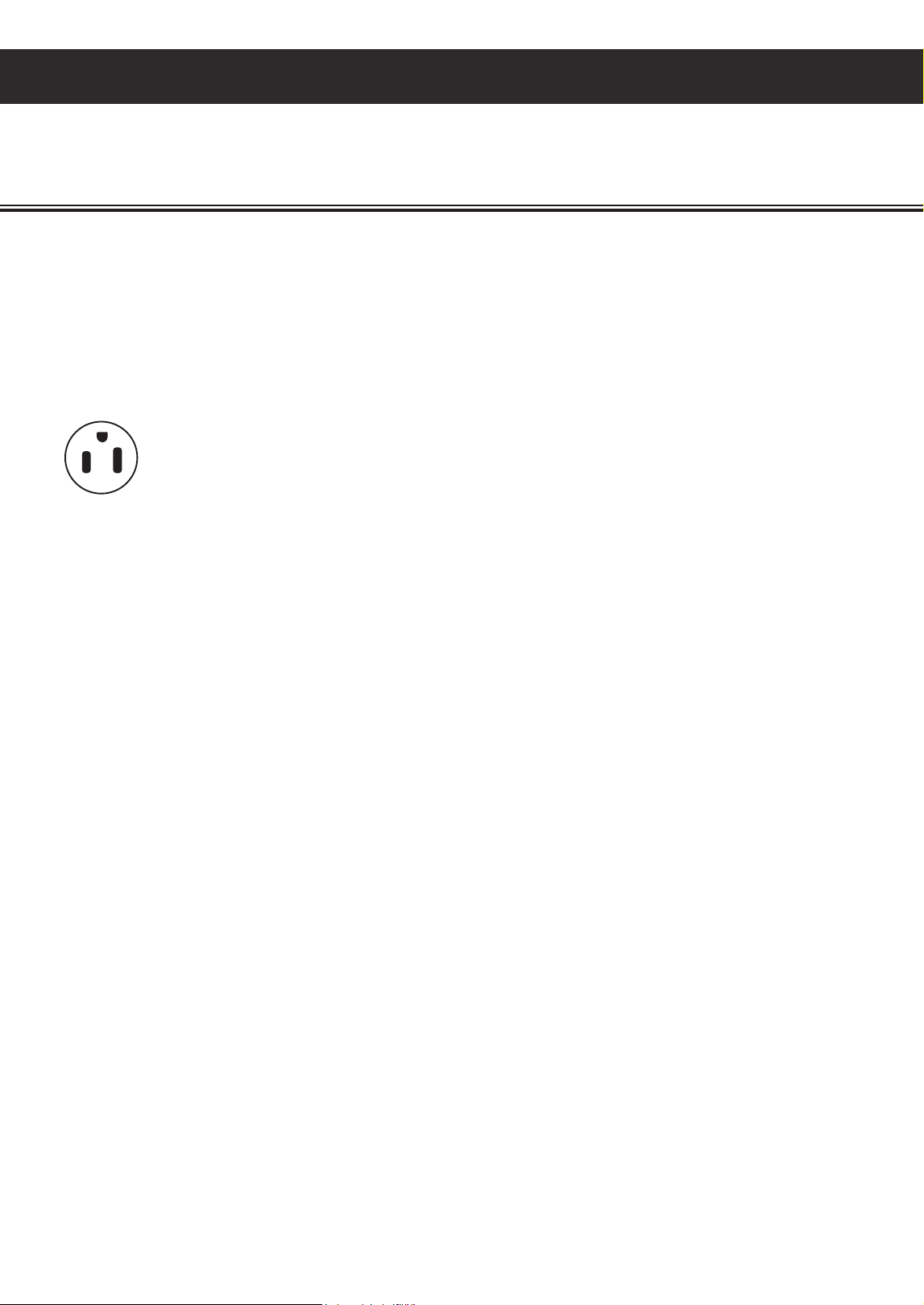
Everest units in this family are equipped with a
NEMA 5-15P. A 15 amp breaker must be used
for units that come with a NEMA 5-15P plug.
The ground prong must not be removed to reduce
the risk of electric shock and related hazards.
If the grounding pin is missing, the cord must
be removed from use. If the outlet is a standard
2-prong outlet, it must be replaced with the
properly grounded 3-prong wall outlet. Only
a qualified electrician may install the correct
power source.
To guarantee electrical safety, the wall outlet and
circuit must be checked by a qualified electrician
to make sure it is properly grounded.
Remove debris from the power plug prongs
with a soft cloth or brush before connecting
it to an outlet.
Assign the unit to a dedicated, undamaged
electrical circuit with a voltage rating that
matches the data plate. Check the incoming
voltage with a multi-meter. This avoids the
overloading and overheating of circuit wires
which may lead to a fire.
Do not use extension cords, adapter plugs or
other third party electrical connections. Everest is
not responsible for issues resulting from improper
electrical connections, electrical power failures
and voltage fluctuations.
Everest does not recommend the use of
generators in conjunction with the unit due
to voltage fluctuations that may compromise
electrical components.
Turn off the unit using the power button before
unplugging. Wait at least 5 minutes before
re-plugging to prevent damage to the compressor.
Do not unplug the unit by tugging on the power
cord. Grip the plug and pull it securely out of the
outlet.
Prevent damage to the power cord by providing
sufficient clearance around and under the unit.
Do not use a power cord that shows cracks or
exposed wires. Power cords that have been
severely worn or damaged must be replaced
with original manufacturer parts and only by
an authorized technician.
Electrical Safety
115/60/1
NEMA 5-15R
This section applies to all Everest products. Basic safety precautions must be observed when
using electrical appliances in addition to the following. Warranty is void if these guidelines
are not met.
General Safety
20
Operation Guidelines
Operation
Starting your Everest Product
After plugging in the unit, the current temperature and compressor symbol will appear on the
digital temperature control’s LED display. will flash at short intervals for 1 minute after which the
compressor(s) and condenser fan motor(s) will initiate. At the beginning of every compressor cycle,
the condenser fan motor is automated to rotate in reverse for 30 seconds in order to blow dust off the
condenser coil.
The evaporator fan motor(s) will initiate once the evaporator coil reaches a specific temperature
relative to the digital temperature control setting and for as long as the door is closed. A fan symbol
will appear on the LED display to indicate that the evaporator fan is running.
Allow the unit to operate for 24 to 72 hours before storing contents in the cabinet. This lets the cabinet
temperature fully stabilize. Use this time to verify proper installation and operation.
The interior light and evaporator fan motor is controlled by a door switch for solid door models and a
rocker switch for glass door models.
The default temperature setting is 35.0°F (2.0°C) for refrigerators and -4.0°F (-20.0°C) for freezers.
The factory recommended temperature range is between 33.0°F (1.0°C) to 40.0°F (4.0°C) for
refrigerators and -5.0°F (-21.0°C) to 0°F (-18.0°C) for freezers. Setting the temperature outside of the
recommended range will cause performance issues and in some cases may result in component failure
that is outside of warranty coverage.
The compressor, condenser and evaporator fan motors run while the unit is on refrigeration cycle.
The compressor, condenser and evaporator fan motors stop running while the unit is on defrost cycle.
The unit is preset to defrost every 5-6 hours with a duration of 45 minutes or less depending on the
evaporator coil temperature. Changing the preset outside of the default range will result in cooling
issues and advanced component failure.
The digital temperature control is intended to read and display the cabinet’s air temperature, not actual
food product temperature. The displayed temperature may fluctuate due to frequent or prolonged door
operation. The most conclusive method to determine a unit’s cooling performance is to measure the
food product’s temperature using a digital food thermometer.
Use your Everest product according to its intended functions. Warranty is void if the following
guidelines are not met.
21
Operation Guidelines
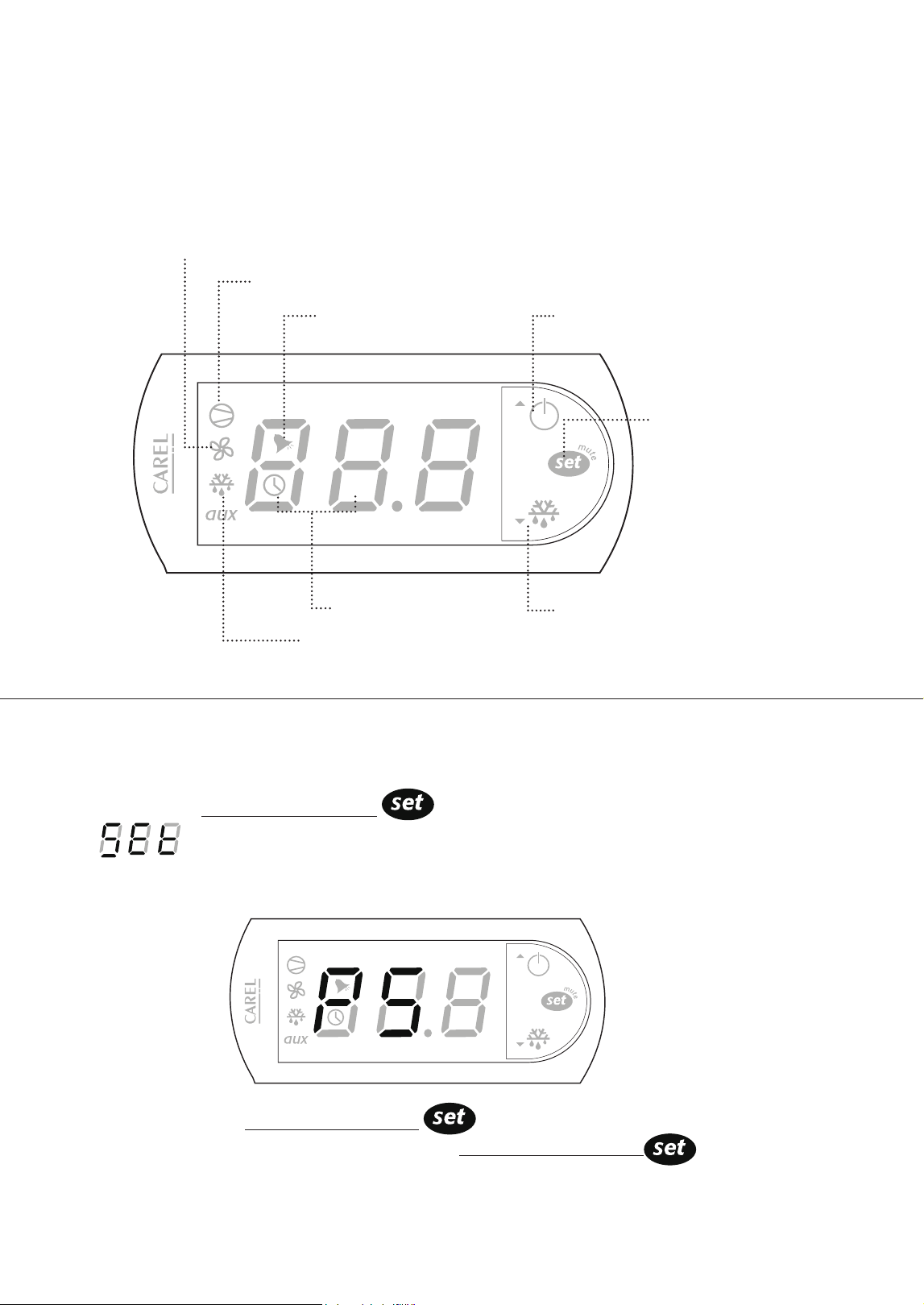
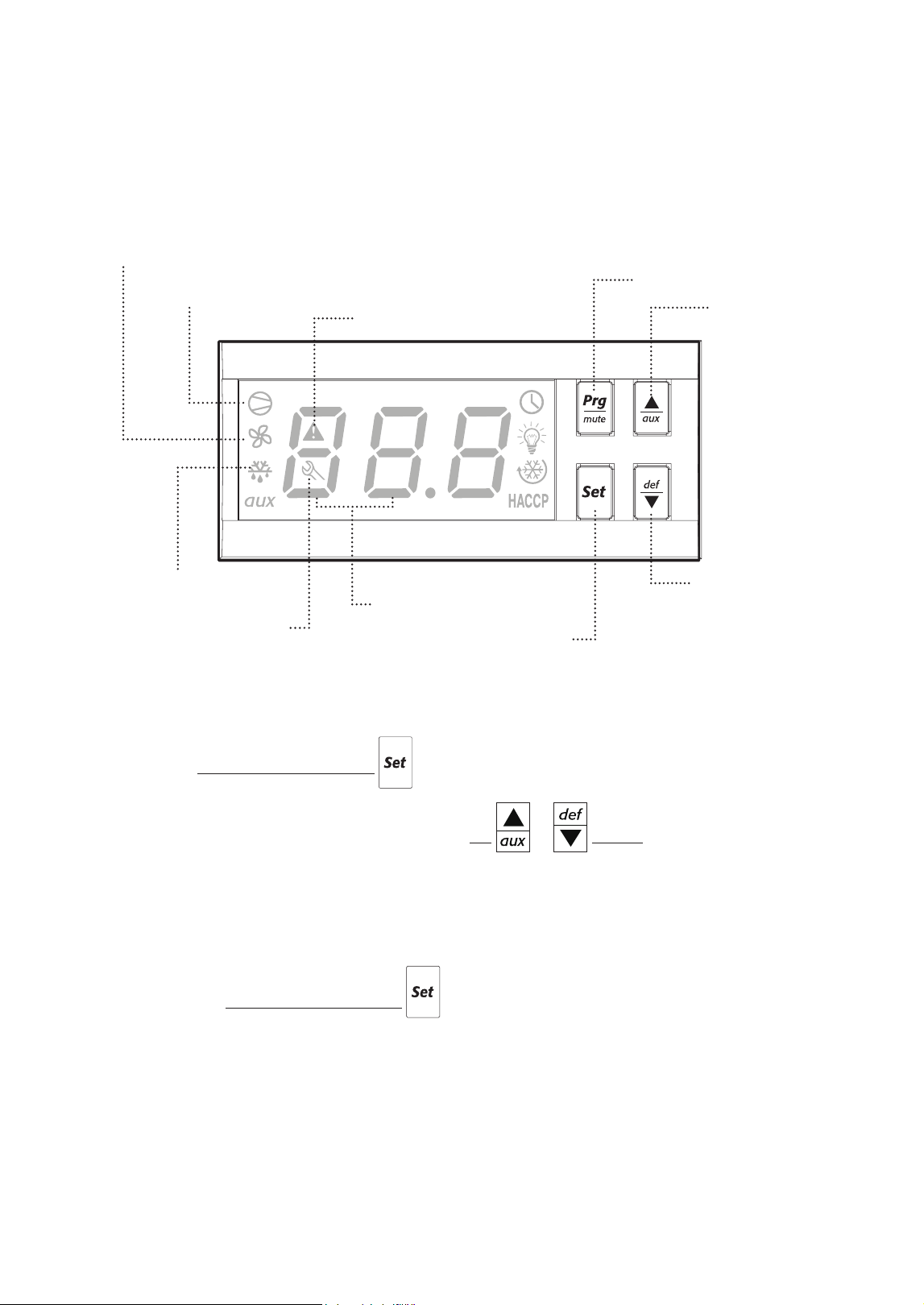
Everest units are equipped with a Carel Digital Temperature Control. The type of controller is
dependent on the model and production date.
Setting the Temperature
1. Press and hold Temperature Set Button for 2 seconds until the LED blinks
SET alternating with a number. The blinking number is the current set temperature.
CAUTION: If PS appears on the LED
This means the Temperature Set button was held down longer than 3
seconds. To exit this mode and restart, press Temperature Set Button
Alarm in Progress
Compressor Running
Power / Up Button
Cabinet in Defrost
Manual Defrost / Down Button
Evaporator Fan Running
Temperature
Set Button
Cabinet Temperature
Carel ‘Easy’ Digital Temperature Control
22
Operation Guidelines
Manual Defrost / Down Button
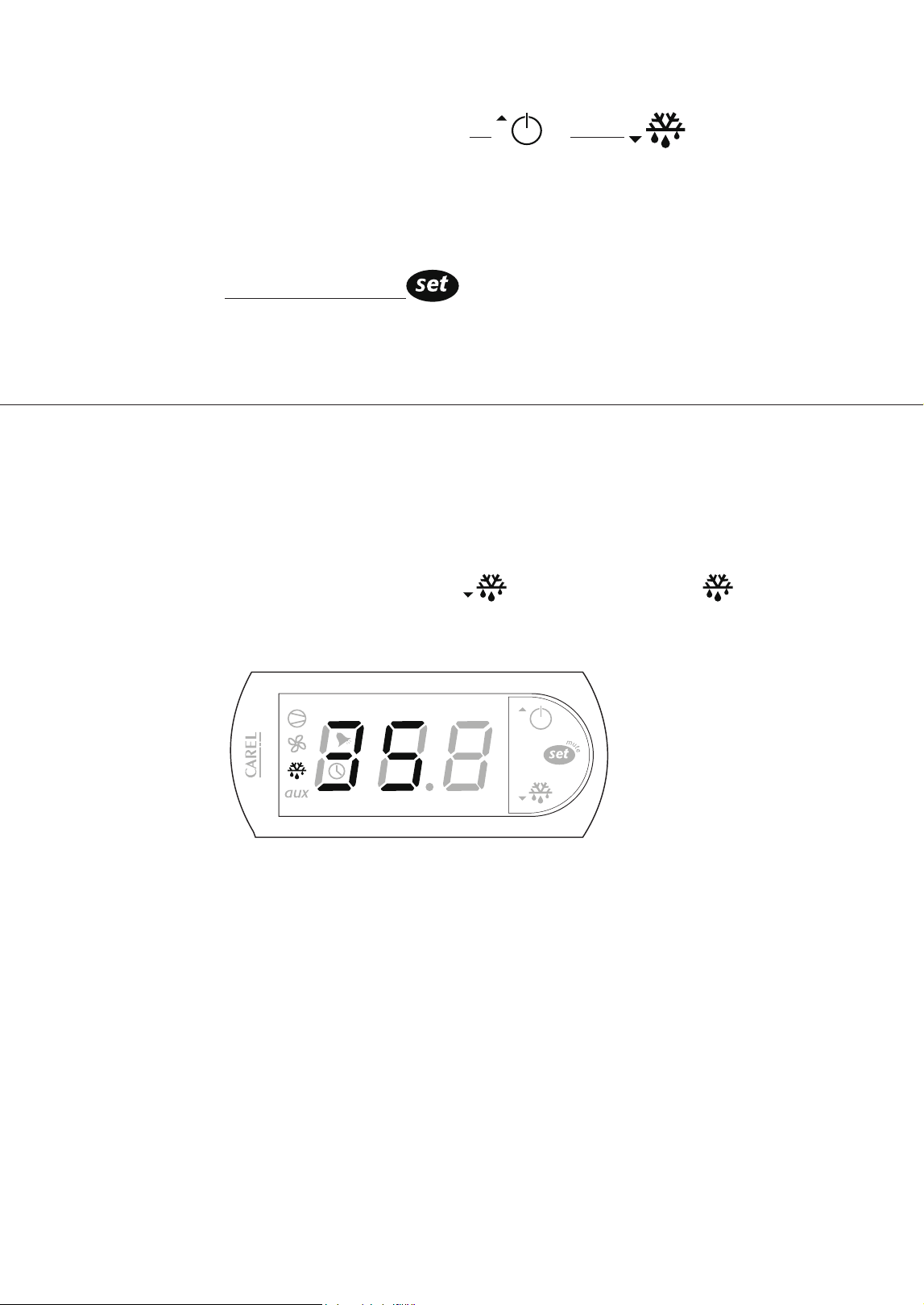
2. Toggle through the desired temperature by pressing UP or DOWN The number increases
or decreases by a decimal point.
3. The recommended setting is 35.0°F (2.0°C) for refrigerators and -4.0°F (-20.0°C) for freezers. The
available temperature setting range is 33.0°F to 54.0°F (1.0°C to 12.0°C) for Refrigerators and -10.0°F to
54.0°F (-23.0°C to 12.0°C) for Freezers.
4. Press and hold the Temperature Set Button for 3 seconds to save the new temperature and exit
the setting mode. The LED will return to the current cabinet temperature.
Initiating Manual Defrost
The controller has an automatic defrost cycle in place so initiating manual defrost is not
necessary unless there is an abnormal accumulation of ice around the evaporator coil.
1. Press and hold down the Manual Defrost Button until the Defrost Symbol
appears on the LED display.
The compressor, condenser and evaporator fan motors will stop running.
The refrigeration system will remain in defrost cycle for 45 minutes or until the
evaporator coil reaches the safety termination temperature setting.
Setting the Temperature ( continued )
23
Operation Guidelines
Setting the Temperature
1. Press and hold Temperature Set Button for 2 seconds until a number blinks on the LED. The blinking
number is the current set temperature.
2. Toggle through the desired temperature by pressing UP or DOWN. The number increases or
decreases by a decimal point.
3. The recommended setting is 35.0°F (2.0°C) for refrigerators and -4.0°F (-20.0°C) for freezers. The
available temperature setting range is 33.0°F to 54.0°F (1.0°C to 12.0°C) for Refrigerators and -10.0°F to
54.0°F (-23.0°C to 12.0°C) for Freezers.
4. Press and hold the Temperature Set Button for 3 seconds to save the new temperature and exit the
setting mode. The LED will return to the current cabinet temperature.
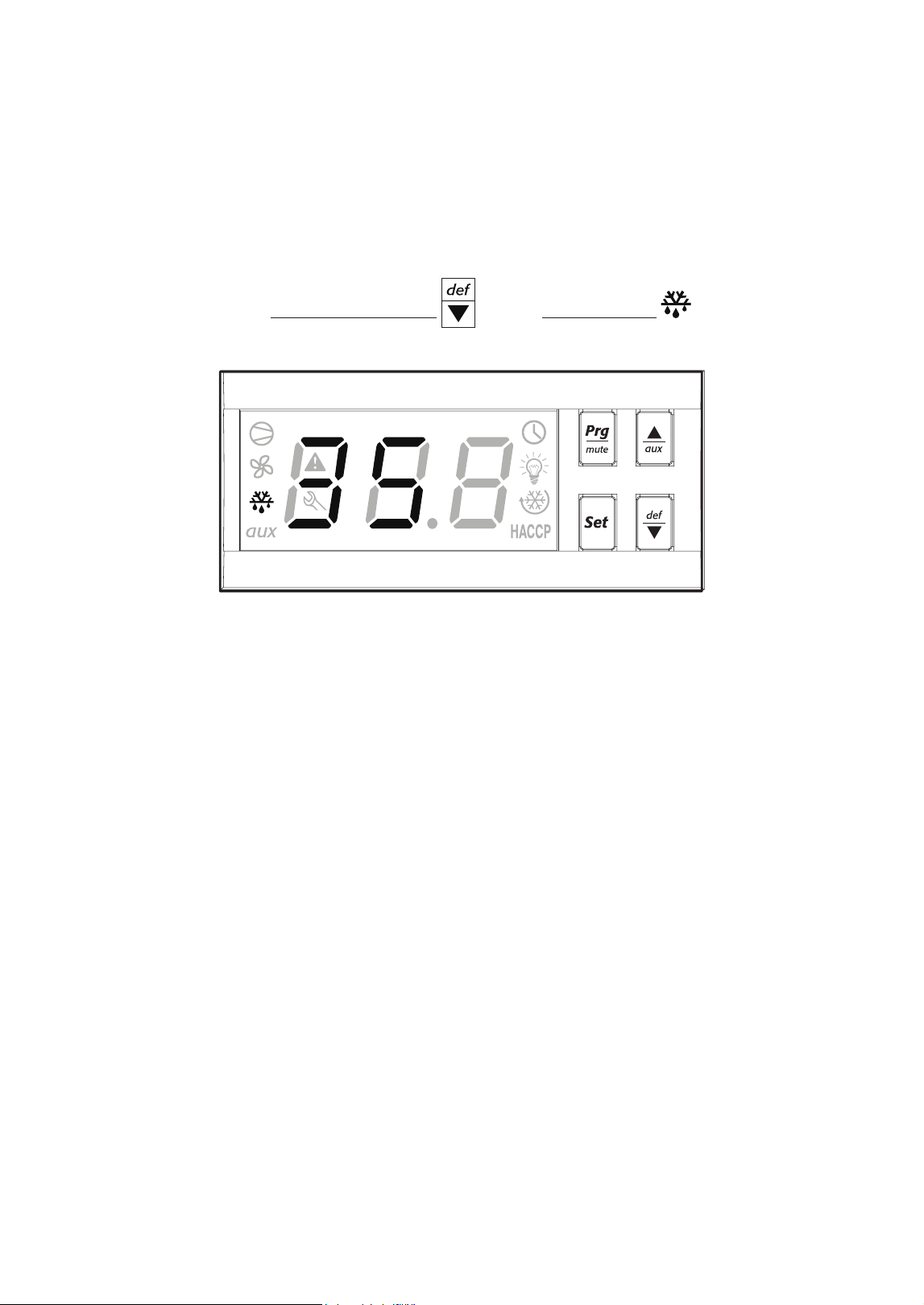
Everest units are equipped with a Carel Digital Temperature Control. The type of controller is
dependent on the model and production date.
Carel ‘ir33’ Digital Temperature Control
Compressor Running
Cabinet in Defrost
Evaporator Fan Running
Cabinet Temperature
Alarm in Progress
Error
Up Button /
Auxiliary
Down Button /
Manual Defrost
Program Button
Temperature Set Button
24
Operation Guidelines
Up Button /
Auxiliary
Down Button /
Manual Defrost
The controller has an automatic defrost cycle in place so initiating manual defrost is not necessary
unless there is an abnormal accumulation of ice around the evaporator coil.
1. Press and hold down the Manual Defrost Button until the Defrost Symbol appears on the
LED display.
The compressor, condenser and evaporator fan motors will stop running. The refrigeration system
will remain in defrost cycle for 45 minutes or until the evaporator coil reaches the safety termination
temperature setting.
Initiating Manual Defrost
25
Care and Maintenance
• Unplug the unit before cleaning, repairing or replacing parts.
• Do not spray the exterior of unit with water to avoid electric shock, component malfunction
or the risk of fire.
• Do not use any flammable cleaning products on or around the unit to prevent the risk of fire.
• Do not use household or industrial chemical cleaners, acidic or chlorine based solutions,
degreasers, wire brushes, scrapers, steel pads, acidic solutions or other abrasive products.
• The unit is equipped with a washable condenser coil filter. The filter builds up lint, dust and grease
overtime and will require monthly cleaning. A clogged condenser coil filter will result in decreased
performance, advanced component failure and a risk of fire. See page (23) for condenser coil filter
cleaning instructions.
• Conduct regular inspection of the sliding door tracks to ensure that the sliding doors are
closing properly. Clean any debris that could potentially cause blockage in the tracks.
• Clean the interior of the unit with mild soap and warm water. Remove the interior drain hole
plug to allow water to drain out. Ensure that the exterior drain hoses are connected to the rear
of the unit. Wipe interior until dry.
• Clean the exterior of the product with mild soap and water. Do not use steel wool, strong acids,
concentrated detergents, bleaches, cleaning waxes, polishers and other abrasive cleaners.
Do not allow moisture to come in contact with electronic parts to avoid any risk of fire.
• Acidic products and products containing vinegar must be stored in sealed containers to prevent acid
damage to the interior of the unit and the evaporator coil. Rust resulting from improper maintenance
is not covered under warranty.
Care and Maintenance
This section applies to all Everest products. Regular care and maintenance of your appliance
will significantly extend service life and dependability. In severe cases, lack of upkeep will
contribute to the rapid decline in performance and component health. Care and maintenance is
the product owner’s personal responsibility. Warranty is void if these guidelines are not met.
26
Care and Maintenance
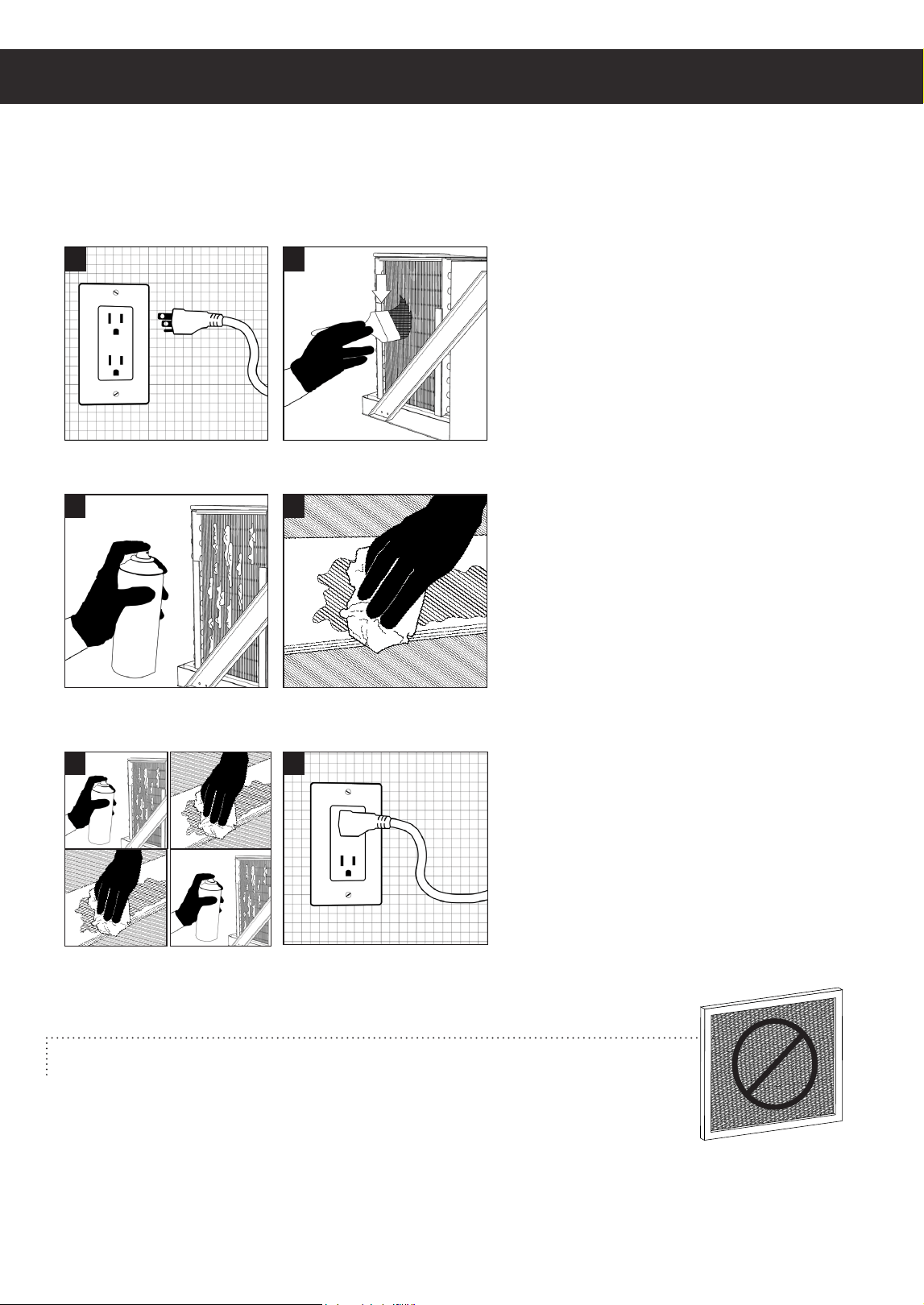
Condenser Coil Air Filter Cleaning Instructions
It is necessary to clean the condenser coil monthly to ensure that it is free of lint, dust and grease
build-up. Warranty is void if the following guidelines are not met.
1. Ensure that the unit is disconnect from
the outlet before performing maintenance.
2. Use a long bristled brush in a vertical
sweeping motion to remove lint, dust and
debris from in between the metal fins of
the condenser coil. Do not apply heavy
pressure so as not to bend the fins.
3. Use a commercial condenser coil cleaner
for metal fins that are coated in grease.
Allow the cleaner to saturate the area.
Follow the recommended wait time
printed on the product packaging.
4. The grease and cleaning solvent will
pool at the base of the metal fins. Brush
the fins and wipe off any accumulated
residue.
5. Repeat the above steps until the metal
fins are clean. You should be able to see
in through and in between the metal fins.
6. Reconnect the unit to the designated
outlet.
1 2
3
5
4
6
Do not attach an aftermarket filter or screen around the condenser coil.
This constricts ventilation which leads to overheating, component failure
or the risk of fire.
27
Troubleshooting Guide
‘Cht’ or ‘cHt’ appears on the LED alternating
with the current temperature and accompanied
by an audible alarm.
The condenser coil may be clogged with dust,
grime or debris. Clean it following the instructions
in Care and Maintenance.
The room’s ambient temperature may be higher
than 86°F (30°C). Provide ample ventilation or
additional cooling to the room or relocate the unit
to a larger space with lower ambient temperature.
The unit may be installed in close proximity to
heat sources such as ovens, stoves, heaters or
direct sunlight. Relocate the unit away from these
sources.
The unit may be installed without clearance or
proper ventilation. Provide additional exhaust
vents and observe the clearance allowance
specified in Installation Instructions.
The compressor, fan motors or entire system
fails to start
The ON/OFF switch may be set to OFF. Turn to
the ON position and wait for the LED and motors
to show signs of operation.
The power cord may not be connected. Check
for proper connection. In cases of damage to the
power cord or plug, immediately mark the unit as
out of order until the damaged part is replaced.
The outlet may not be sending power or the
power supply breaker may be switched off. Unplug
the unit and contact a licensed electrician for
inspection and/or repairs.
The compressor operates continuously or for
prolonged periods.
The condenser coil may be clogged with dust,
grime or debris. Clean it following the instructions
in Installation Instructions.
The door, drawer or gasket may not be sealing
properly. Check product placement in the cabinet
as it may prevent the door and drawers from fully
closing. If the gasket is loose, reattach.
The evaporator coil may be blocked with ice.
Defrost it following the instructions in Care and
Maintenance. Normally, evaporator coils will
self-maintain with automated defrost cycles. If
the evaporator coil ices up frequently, re-assess
placement of food items in the cabinet as it could
obstruct cold air circulation. Food items must
not touch the wall or floors of the cabinet and
stay within the boundaries of the shelf to prevent
blockage of air flow.
The room’s ambient temperature may be higher
than 86°F (30°C). Provide ample ventilation or
additional cooling to the room or relocate the unit
to a larger space with lower ambient temperature.
The unit may be installed in close proximity to
heat sources such as ovens, stoves, heaters or
direct sunlight. Relocate the unit away from these
sources.
The unit may be installed without clearance or
proper ventilation. This forces the compressor to
operate constantly in order to maintain cabinet
temperature. Provide additional exhaust vents
and observe the clearance allowance specified in
Installation Instructions.
The draft and keg assemblies may not be
installed properly causing an entry point for
refrigerated air to exit and ambient air to enter.
Check the draft tower for proper mounting and the
CO2 ports for an airtight seal.
The cabinet temperature is too warm.
The condenser coil may be clogged with dust,
grime or debris. Clean it following the instructions
In most cases, your Everest product may be exhibiting behavior that is typical
of standard operation. Observe the following when troubleshooting symptoms.

28
Troubleshooting Guide
in Care and Maintenance. The door or door
gasket may not be sealing properly. Check
product placement in the cabinet as it may
prevent the door from fully closing. If the gasket
is loose, reattach.
The temperature may be set too high. Adjust the
setting to 35.0°F (2.0°C) for refrigerators or
-4.0°F (-20.0°C) for freezers.
Hot food items may have been placed in the
cabinet. Store only room temperature food items.
The room’s ambient temperature may be higher
than 86°F (30°C). Provide ample ventilation or
additional cooling to the room. Relocate the unit
from extremely small spaces without ventilation.
The unit may be installed in close proximity to
heat sources such as ovens, stoves, heaters or
direct sunlight. Relocate the unit away from
these sources.
The unit may be installed without clearance or
proper ventilation. Provide additional exhaust
vents and observe the clearance allowance
specified in Installation Instructions.
The draft and keg assemblies may not be
installed properly causing an entry point for
refrigerated air to exit and ambient air to enter.
Check the draft tower for proper mounting
and the CO2 ports for an airtight seal.
Condensation in the interior cabinet.
The door / drawer or gaskets may not be
sealing properly. If the gasket is loose, reattach.
Check product placement in the cabinet as
it may prevent the door from fully closing.
Hot food items may have been stored in the
cabinet. The interaction between hot and cold
temperatures will promote condensation.
Unsealed or open food items with high moisture
content may have been stored in the cabinet.
Keep these items in air tight containers. Mild
condensation in warmer ambient temperature
conditions may occur due to frequent or
prolonged door operation.
The draft and keg assemblies may not be installed
properly causing an entry point for refrigerated air
to exit and ambient air to enter. Check the draft
tower for proper mounting and the CO2 ports for
an airtight seal.
Condensation on the unit’s exterior surfaces.
Highly humid environments will contribute to the
condensation build up on exterior panels. Providing
ample ventilation and air movement to a space will
reduce the humidity level.
The door, drawer or gasket may not be sealing
properly. Check product placement in the cabinet
as it may prevent the door from fully closing. If the
gasket is loose, reattach.
Noise level during unit operation.
It is normal for commercial grade compressors
and components to have a higher decibel output
compared to residential counterparts.
The unit may not be balanced evenly. Poorly
leveled units may cause components or fittings to
misalign or disengage during operation. This may
produce noise as a direct result of repeated surface
friction or impact.
The unit may not be securely mounted to the
floor. This may produce noise as a direct result of
repeated surface friction or impact.
Some sounds are normal for the refrigeration
process. A dripping sound, for example, is
the result of refrigerant circulation during the
compressor rest period.
Draft tower is not dispensing properly.
The beer keg or CO2 tank may be empty or
defective. Contact your keg supplier for assistance.
The draft tower or keg assembly may not be
installed properly. Check for proper mounting of
screw-in components. Ensure that all hose and
clamp connections are secure. Follow installation
guidelines in Draft Assembly.
The tank pressure may not be calibrated properly.
Follow pressure adjustment guidelines in Keg
Installation.
29
Warranty Registration
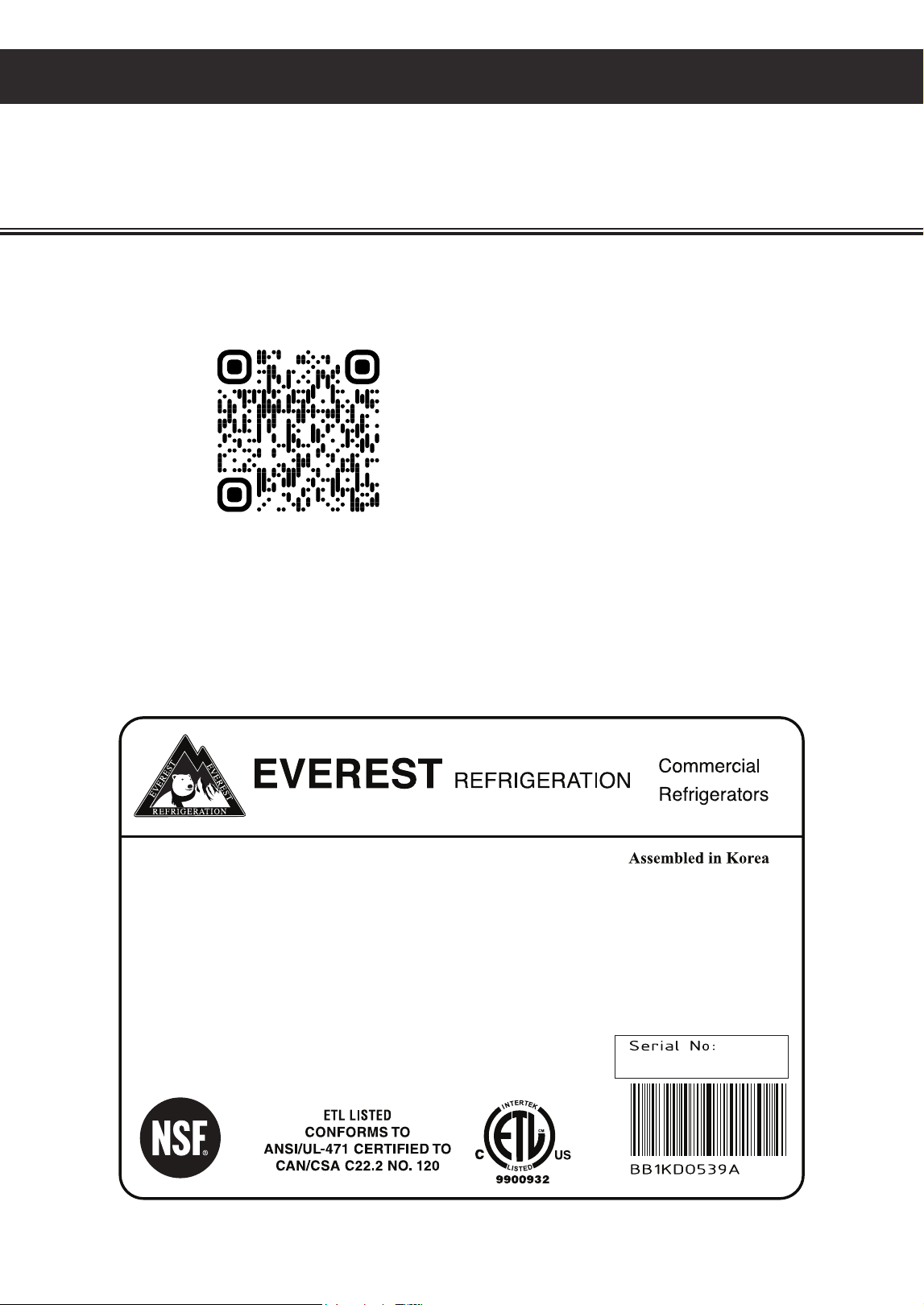
You may register online at www.EVERESTref.com or use your smart phone to scan the QR code below:
Product Identification:
The product data plate is a permanently affixed label that contains the model, serial, barcode numbers,
and refrigeration data of your Everest product. The tag is located on the rear or side of the unit exterior.
Please retain this information for warranty-related purposes.
Warranty Registration
Registering your new appliance is important. In the unlikely event a safety notification or
warranty service is required, we will have the means to contact you. Your completed appliance
registration also verifies your ownership in the event of an insurance loss or theft.
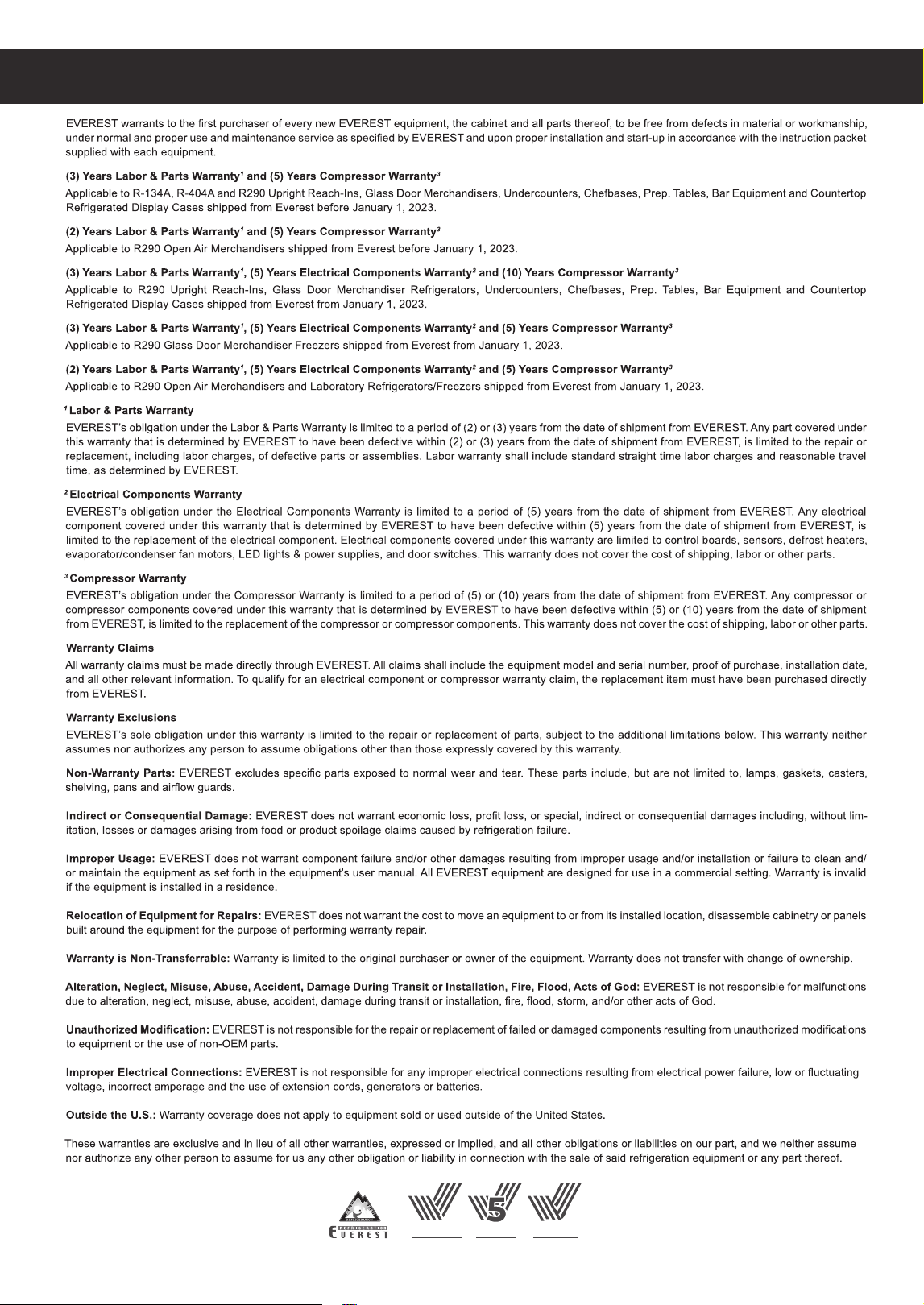
Warranty
18
Product Identification
The product data plate is a permanently affixed label that contains the model, serial, barcode numbers
and refrigeration data of your Everest product. This tag is located in the upper left or right interior
compartment for models with doors, or the exterior left or right exterior housing for models with
drawers. Please retain this information for service-related purposes.
8. Warranty Information
Register your Everest product within thirty (30) days of purchase to take full advantage of warranty
services. Successful registration will expedite and help prevent complications in processing
service requests.
Warranty Registration
You may register online at www.EVERESTref.com or send a completed warranty registration to:
Everest Refrigeration
Warranty Department,
201 W. Artesia Blvd.,
Compton, CA 90220
MODEL : ESR1
COMPRESSOR : 1/8 HP
REFRIGERANT : R290
* Use of other than specified refrigerant voids warranty
REFRIGERANT CHARGE : 3.17 Oz
ELECTRICAL :
115VX1Phx60Hz
TOTAL AMPS : 3.27A (COMP RUN)
HIGH PRESSURE TEST : 218PSIG.
LOW PRESSURE TEST : 38PSIG.
* Do not clean label with solvent
ESC47L
BTR1XXXXXXXX
1. Open the camera app.
2. Point the camera at the QR code.
3. Scan and launch the QR code.
30
Warranty Certificate
YEAR S
PARTS & LABOR
3
3
YEAR S
COMPRESSOR
10
10
YEAR S
ELECTRICAL

this page intentionally left blank

this page intentionally left blank
A Step Above The Standard
201 W. Artesia Blvd., Compton, CA 90220
Tel: 800-444-6285 / 310-323-6586
Fax: 310-323-7524 / 310-761-1127
www.EVERESTref.com
v101722