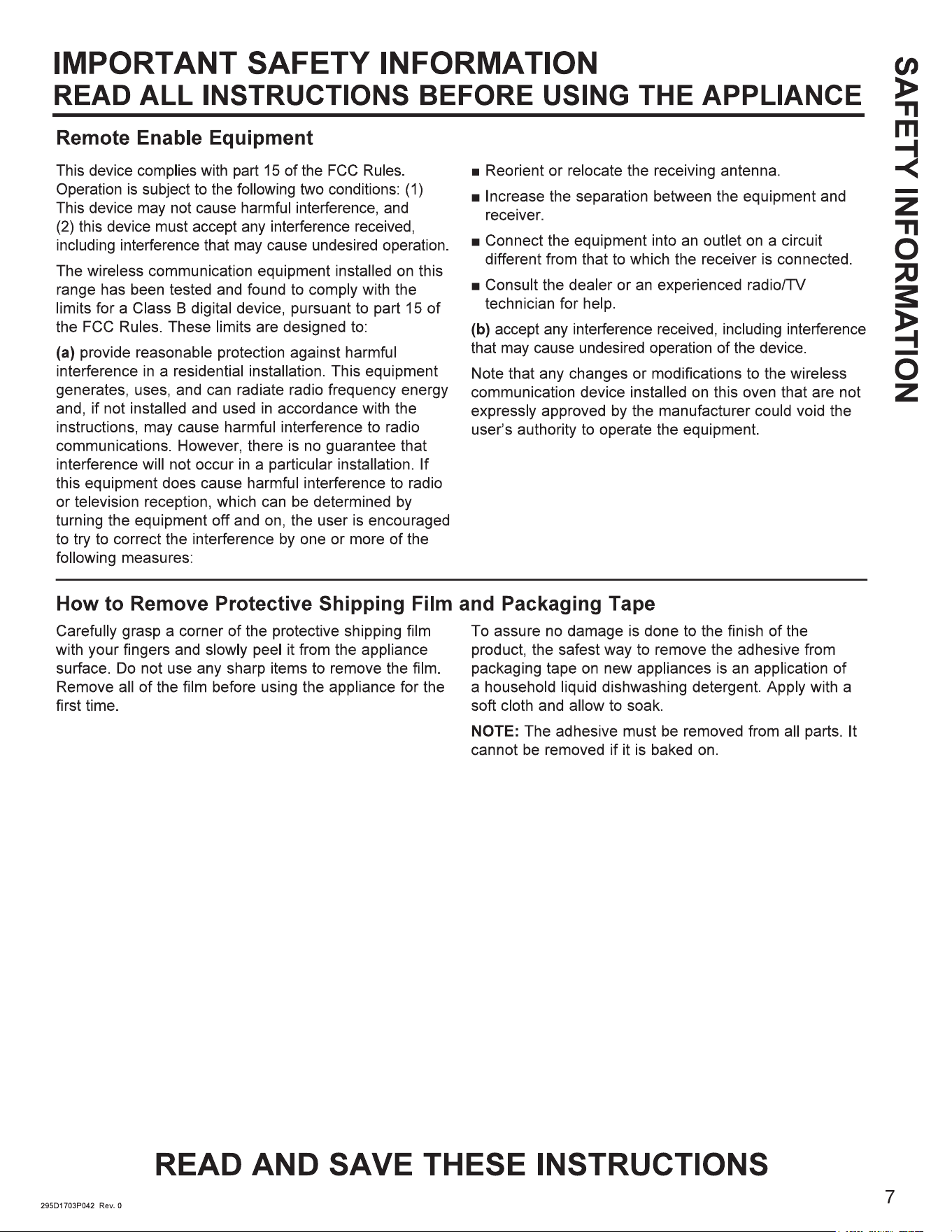
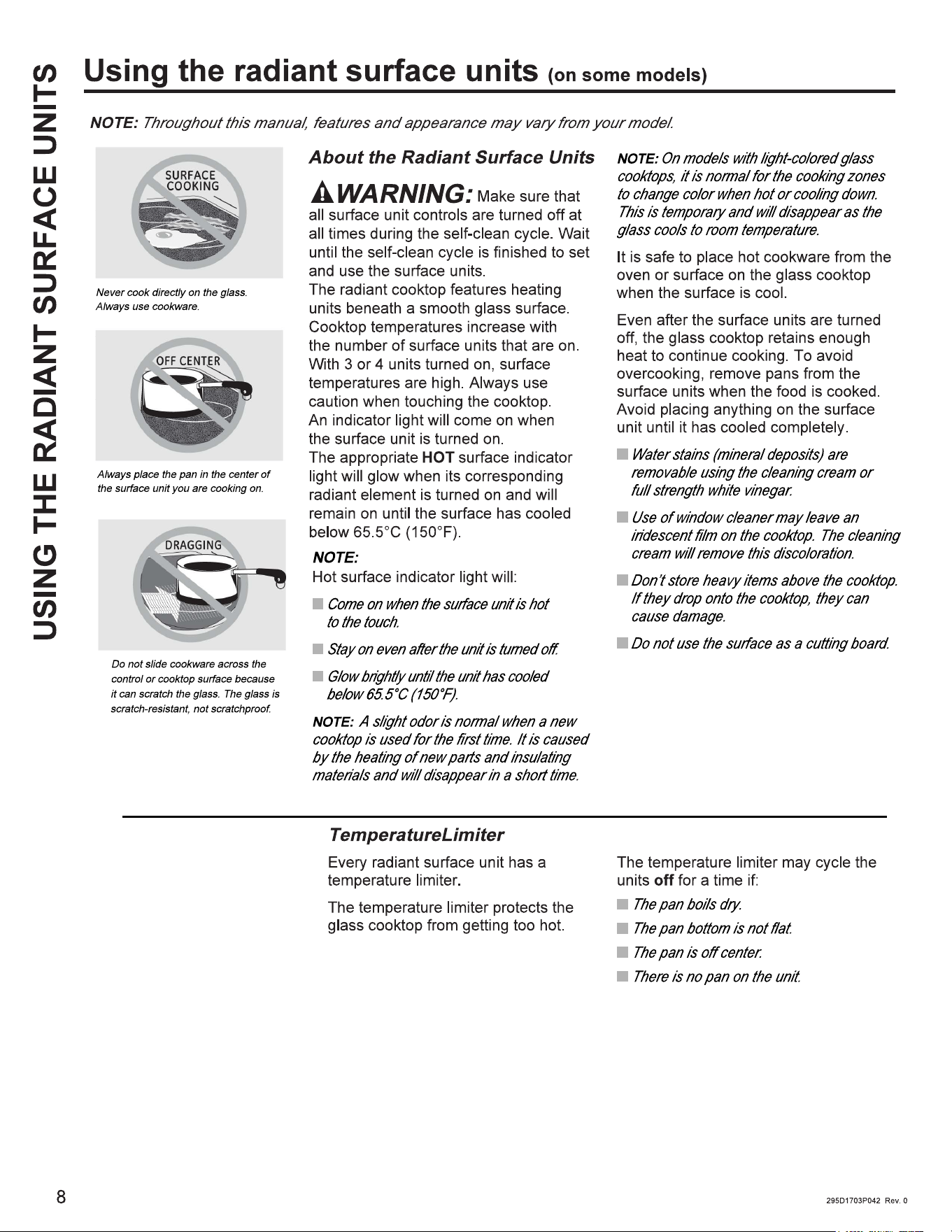
The following information will help you choose cookware which will give good performance on glass cooktops.
Stainless Steel:
recommended
Aluminum:
heavy weight recommended
Copper Bottom:
recommended
Porcelain Enamel-Covered CastIron:
recommended
Glass-Ceramic:
usable, but not recommended
Stoneware:
usable, but not recommended
Home Canning Tips:
a straight edge.
Pans with rounded, curved, ridged or
warped bottoms are not recommended.
Wok Cooking
We recommend that you use only a flat-
bottomed wok. They are available at your
local retail store.
Do not use woks that have support rings.
Use of these types of woks, with or
without the ring in place, can be dangerous.
Placing the ring over the surface unit will
cause a buildup of heat that will damage
the porcelain cooktop. Do not try to use
such woks without the ring. You could
be seriously burned if the wok tips over.
Use medium- or heavy-weight cookware.
Aluminum cookware conducts heat faster
than other metals. Cast-iron and coated
cast-iron cookware are slow to absorb
heat, but generally cook evenly at low to
medium heat settings. Steel pans may
cook unevenly if not combined with other
metals.
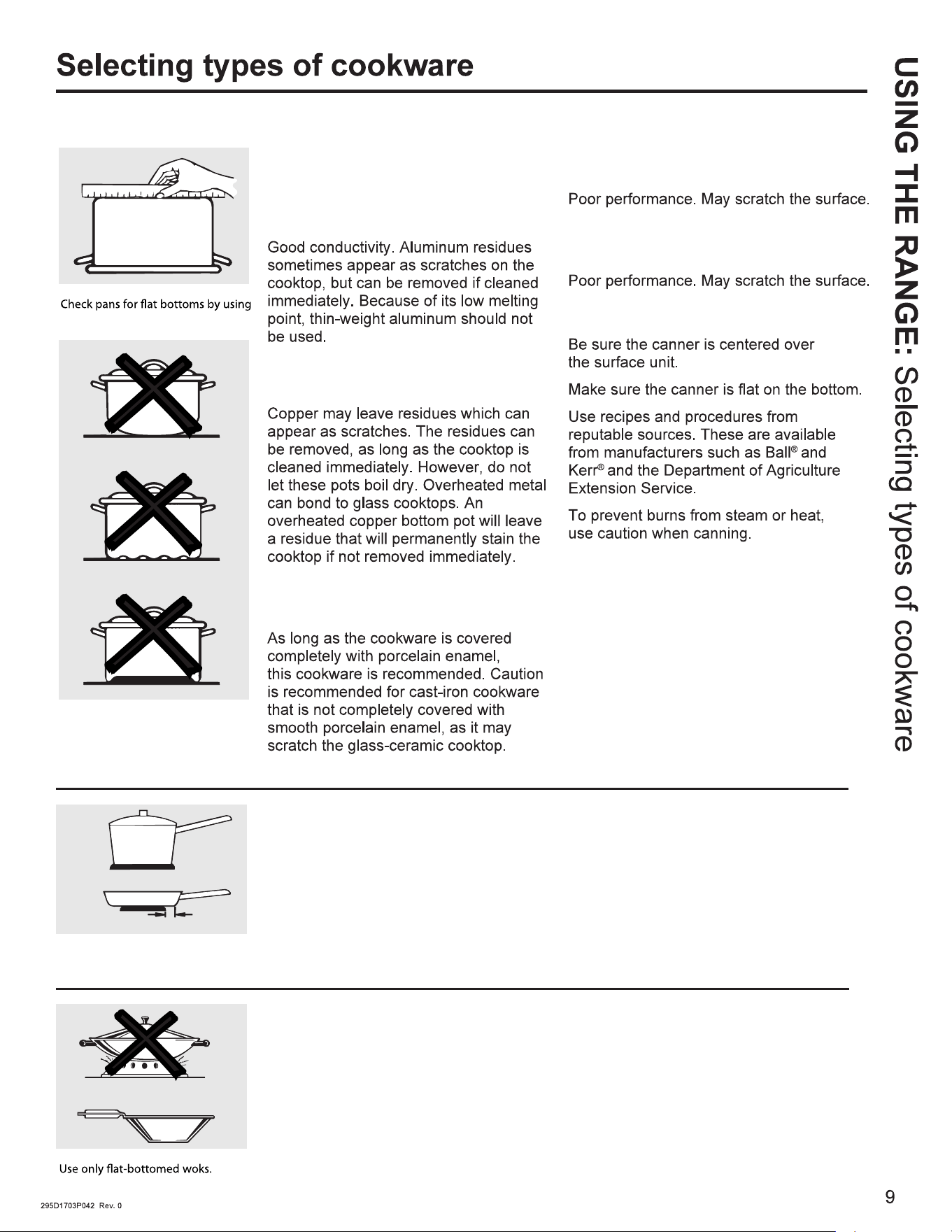
For best cooking results, pans should be
flat on the bottom. Match the size of the
saucepan to the size of the surface unit.
The pan should not extend over the edge
of the surface unit more than 2.5 cm
1 inch.
Not over 1 inch
1“
The following information will help you choose cookware which will give good performance on coil cooktops.
Surface Cookware Tips
Throughout this manual, features and appearance may vary from your model.
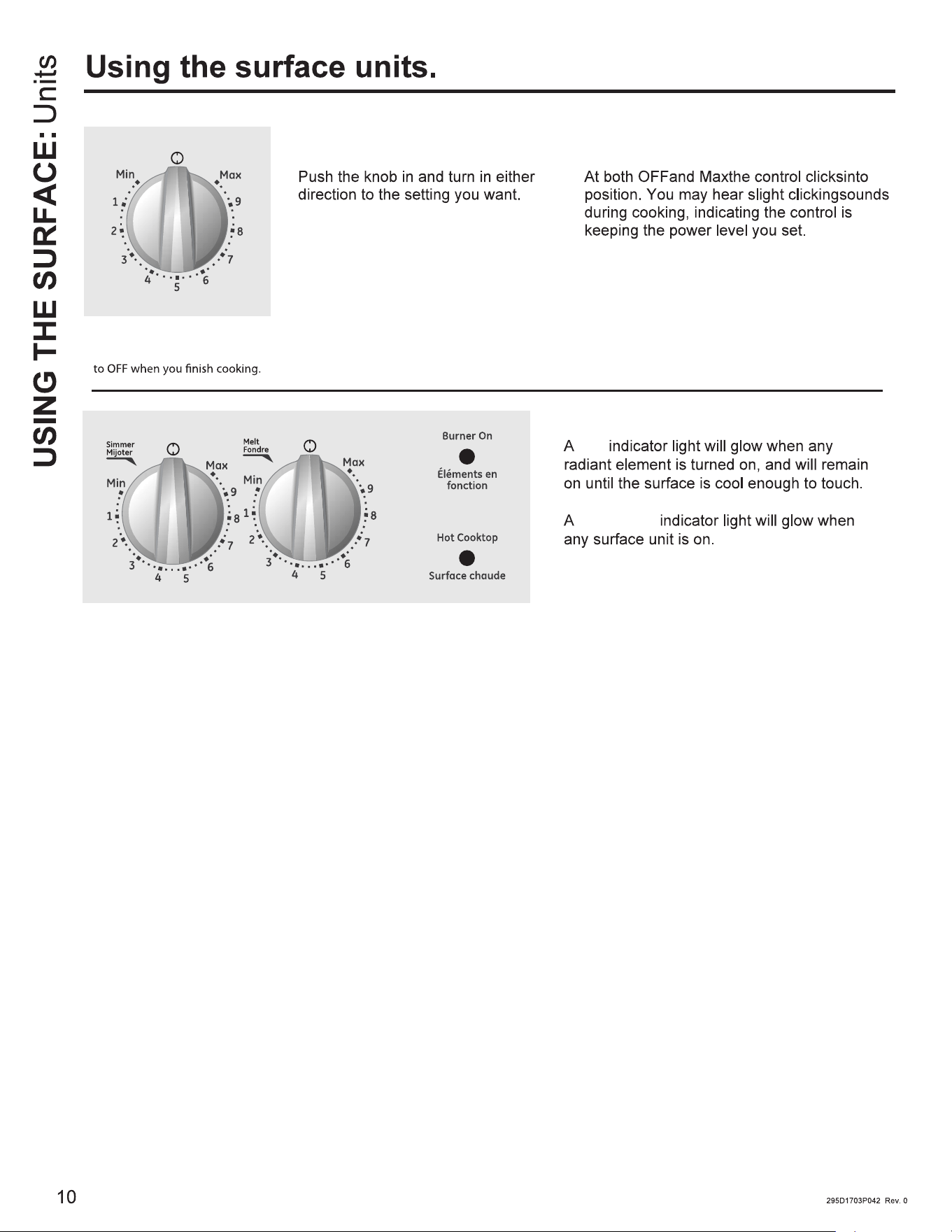
How to Set
Be sure you turn the control knob
Indicator Lights
(on radiant glass models only)
Hot
Burner On
NOTE: The Hot indicator light may glow
between the surface control settings of Min
and OFF, but there is no power to the surface
units.
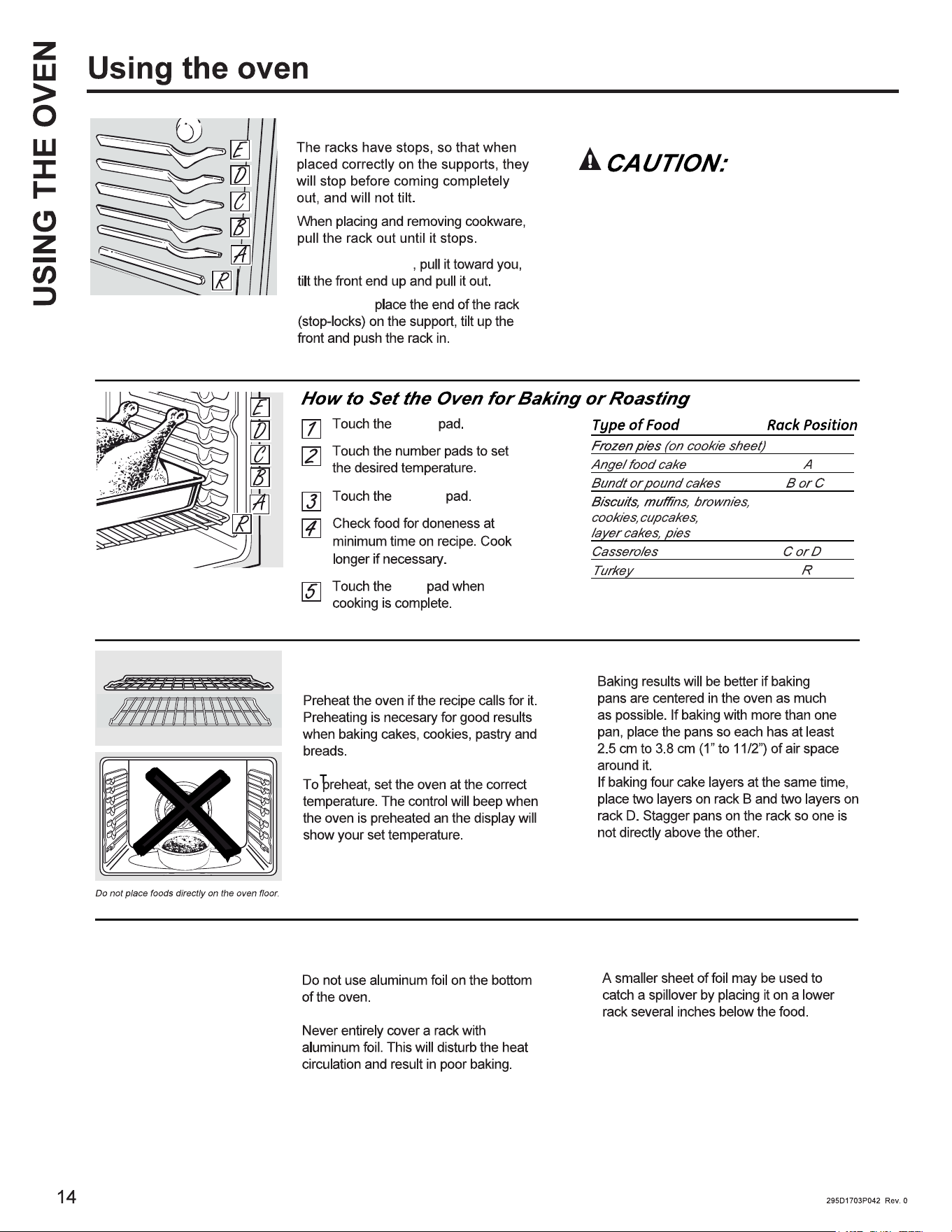
Ovenrack
Flat rack
BAKE
START
OFF
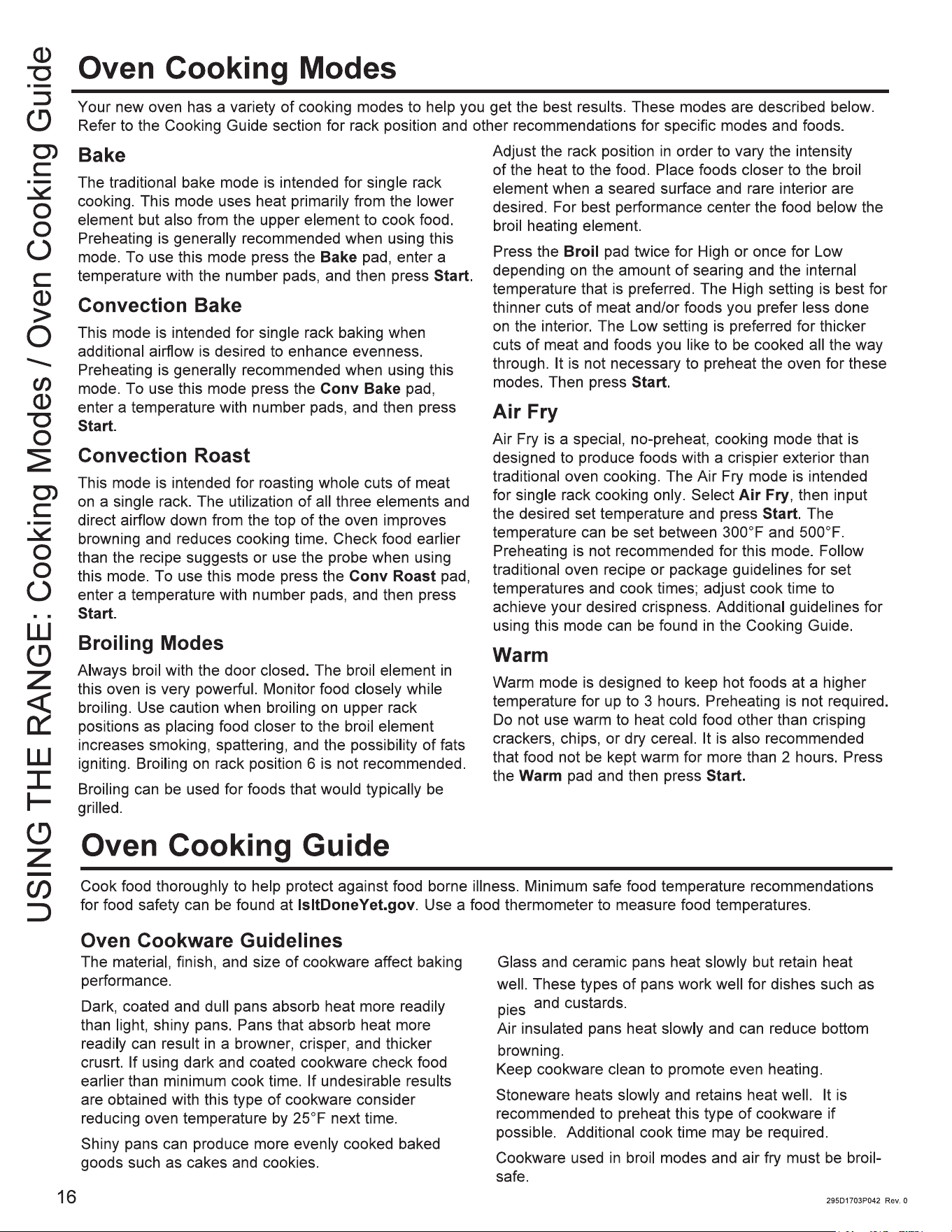
The oven has 5 rack positiones.
It also has a special low rack position (R)
for extra large items, such as a large
turkey.
Before you begin…
To remove a rack
To replace,
a rack in the lowest position (A), you will need
to use caution when pulling the rack out. We
recommend that you pull the rack out several
inches and then, using two pot holders, pull the
rack out by holding the sides of it. The rack is low
and you could be burned if you place your hand
in the middle of the rack and pull all the way out.
Be very careful not to burn your hand on the door
when using the rack in the lowest position (A).
When you are using
Aluminum Foil
Preheating and Pan Placement
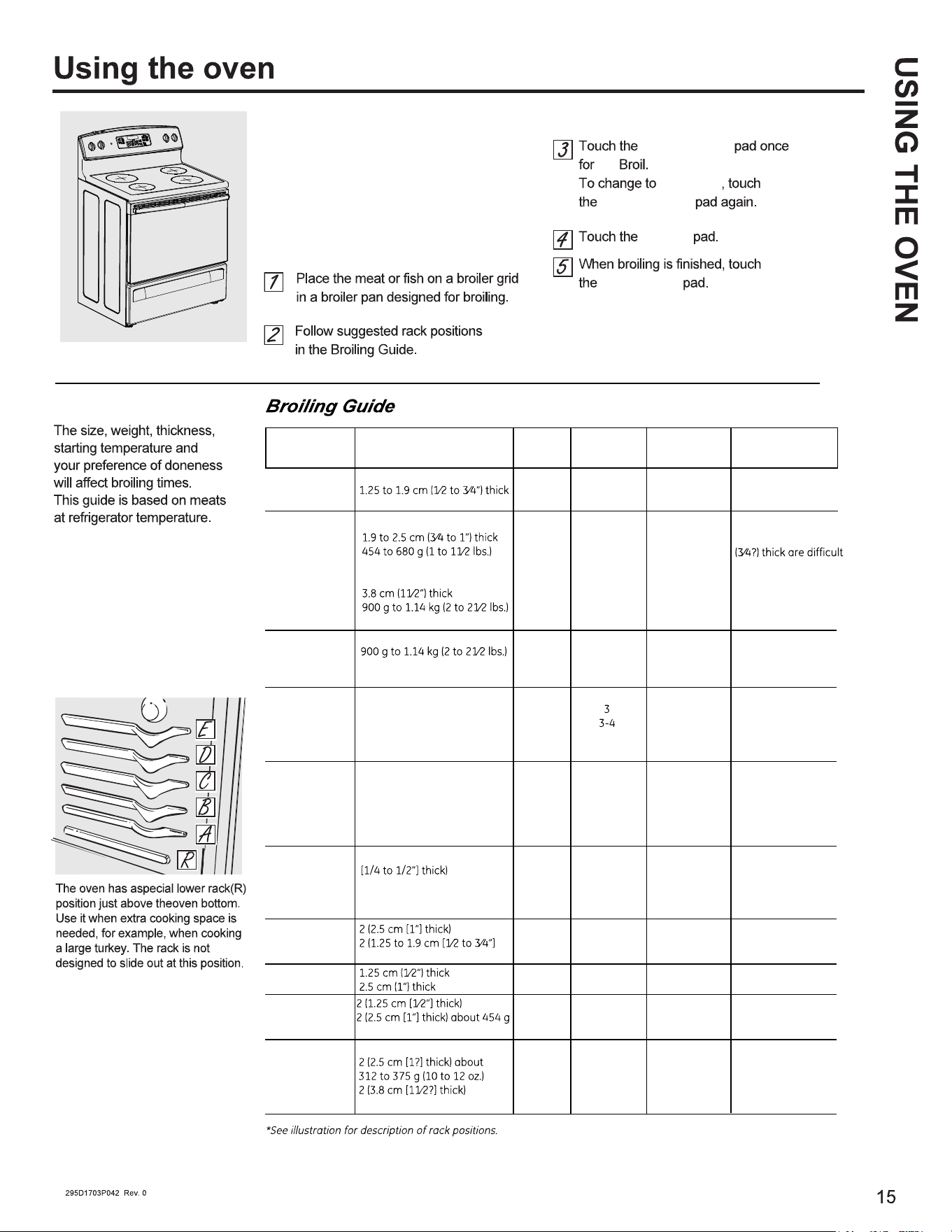
How to Set the Oven for Broiling
NOTE: Close the door before start any
broiling function.
Use LO Broil to cook foods such as poultry
or thick cuts of meat thoroughly without
over browning them.
454 g (1 lb.) (4 patties)
1.8 kg (4 lbs.) (16 patties)
Quantity and/
or Thickness
Food
Rack*
Position
First Side
Time (min.)
Second Side
Time (min.)
Comments
Ground Beef
C
C
10
15
7-10
11
Space evenly.
Beef Steaks
Rare †
Medium
Well Done
Rare †
Medium
Well Done
C
D
D
C
D
D
6
8
10
10
15
20
4
6
7-10
8
10-12
20
Chicken
1 whole cut up
split lengthwise
Breast
B
B
25
25
25
15
Bakery Product
Bread (toast)
English Muffin
2 to 4 slices
2 (split)
D
E
1
Lobster Tails
2-4
B
18-20
Do not
turn
over.
Fish Fillets
450 g (1 lb.) (0.6 to 1.25 cm
D
5
5
Salmon
thick)
D
D
10
10
5
Steaks less than 1.9 cm
to cook rare.
Slash fat.
Brush each side with
melted butter.
Broil skin-side-down
first.
Space evenly. Place
English muffins cutside-
up and brush
with butter if desired.
Cut through back of
shell. Spread open.
Brush with melted
butter before broiling
and after half of
broiling time.
Handle and turn very
carefully. Brush with
lemon butter before
and during cooking,
if desired.
Turn carefully. Do not
turn skin side down.
Steaks
Fillets
Ham Slices
(precooked)
C
C
6
8
6
8
Pork Chops
Well Done
(1 lb.)
C
C
10
15
10
15
Slash fat.
Lamb Chops
Medium
Well Done
Medium
Well Done
about 454 g (1 lb.)
D
D
D
D
7
10
9
14
4
9
6
10
Slash fat.
The U.S. Department of Agriculture
says “Rare beef is popular, but you
should know that cooking it to only
60 °C (140 °F) means some food
poisoning organisms may survive.”
(Source. Safe Food Book. Your Kitchen
Guide. USDA Rev. June 1985.)
†
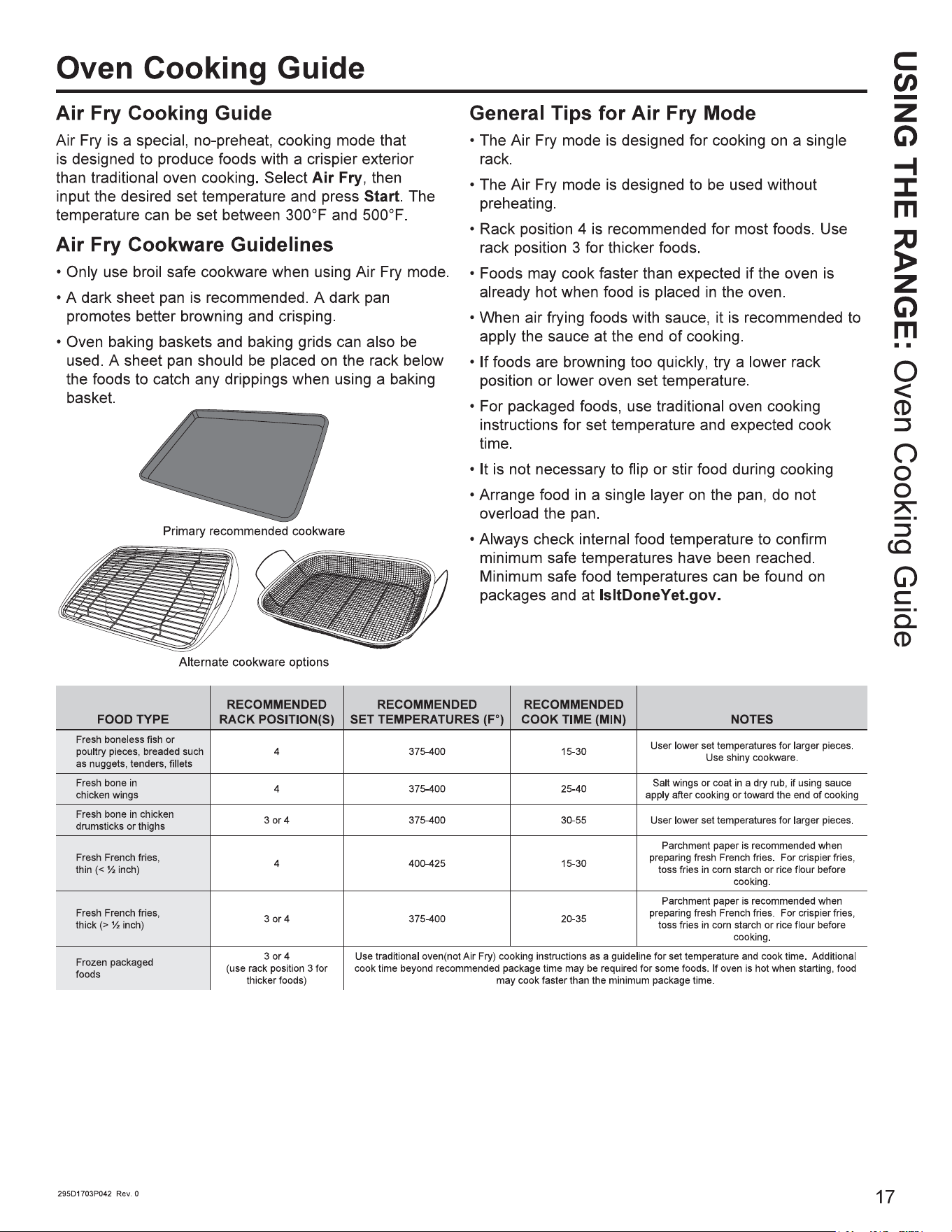
BROIL HI/LO
HI
LO Broil
BROIL HI/LO
START
CLEAR/OFF
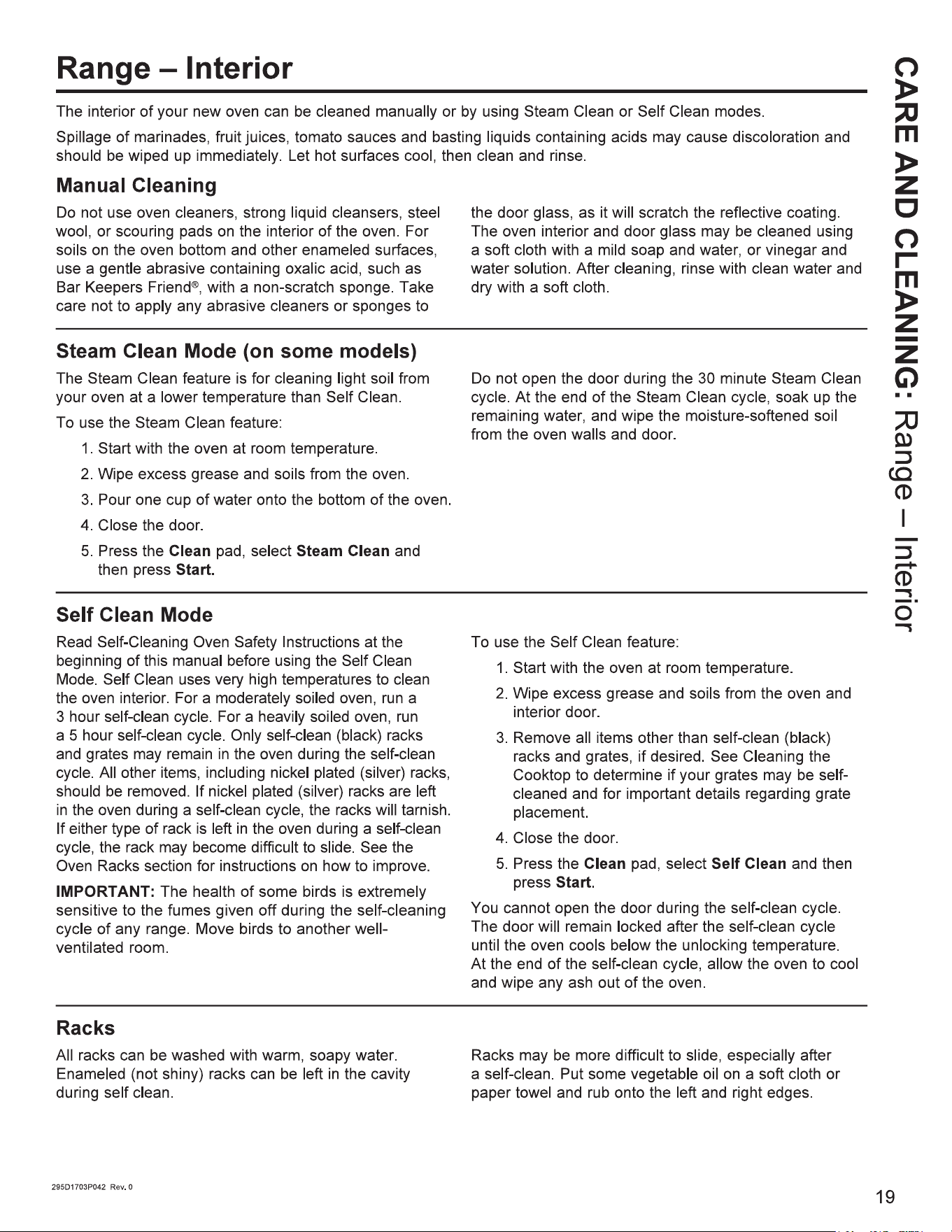
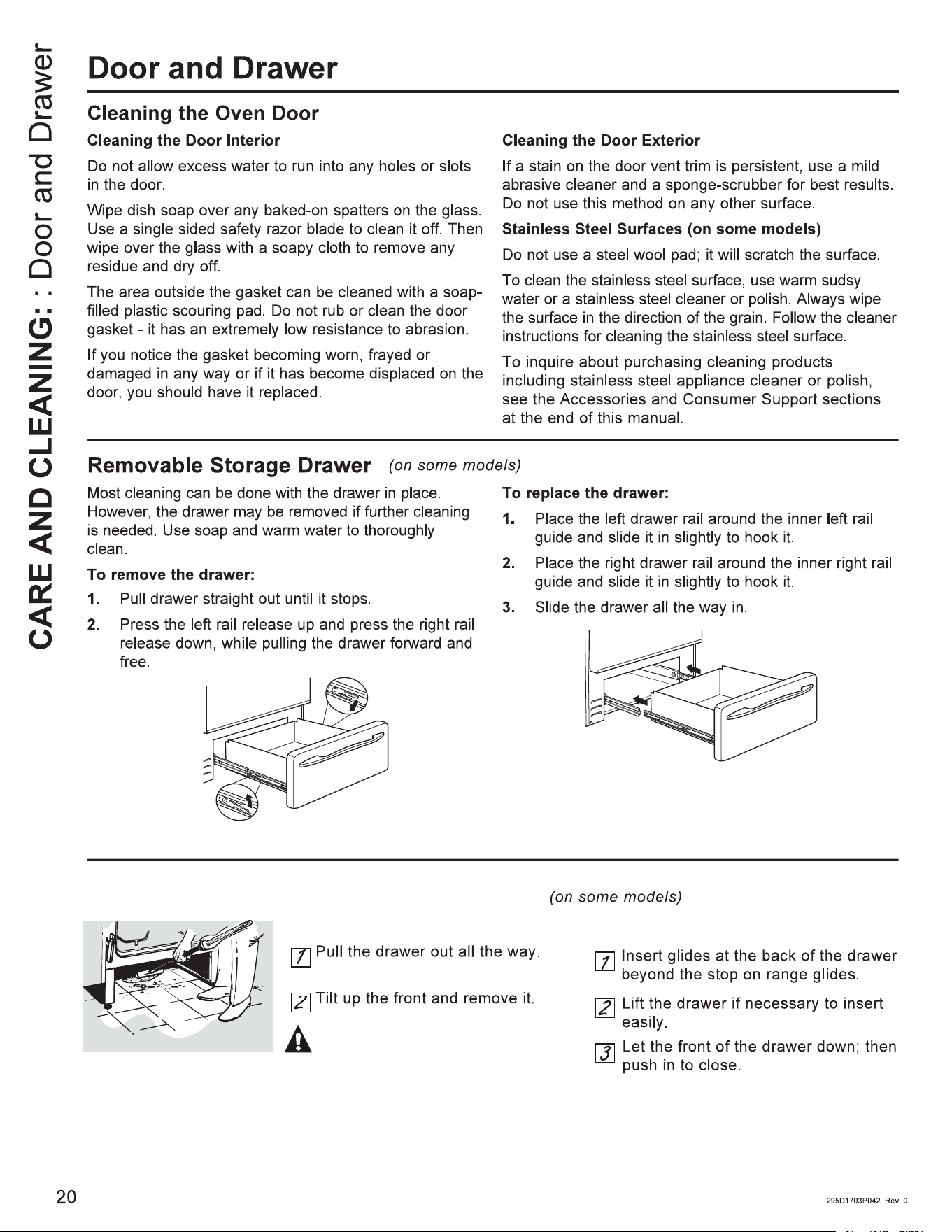
Cleanunder the range.
To remove the storage drawer: To replace the storage drawer:
Do not leave paper products, plastics
canned food or combustible materials
in the drawer.
WARNING:
Storage Drawer Removal
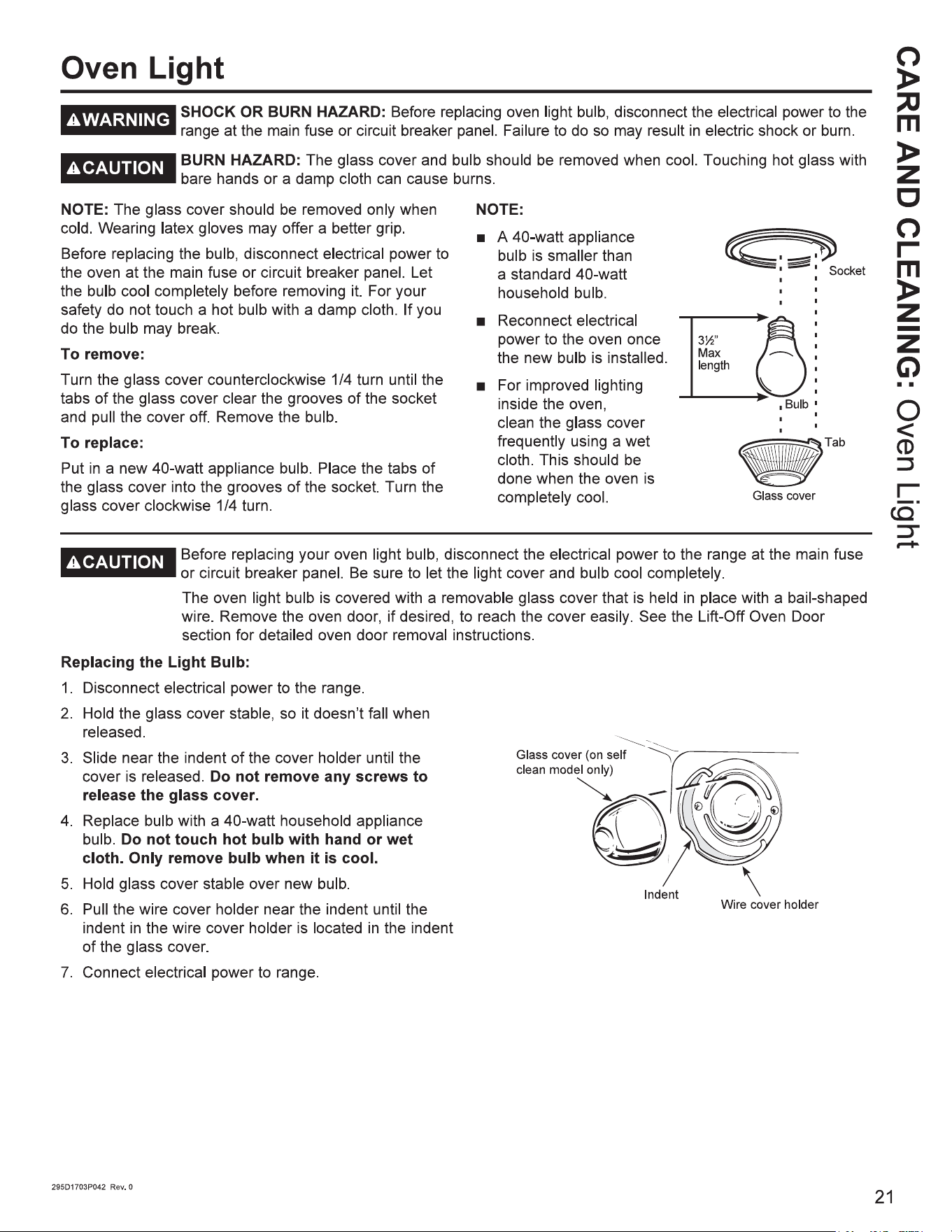
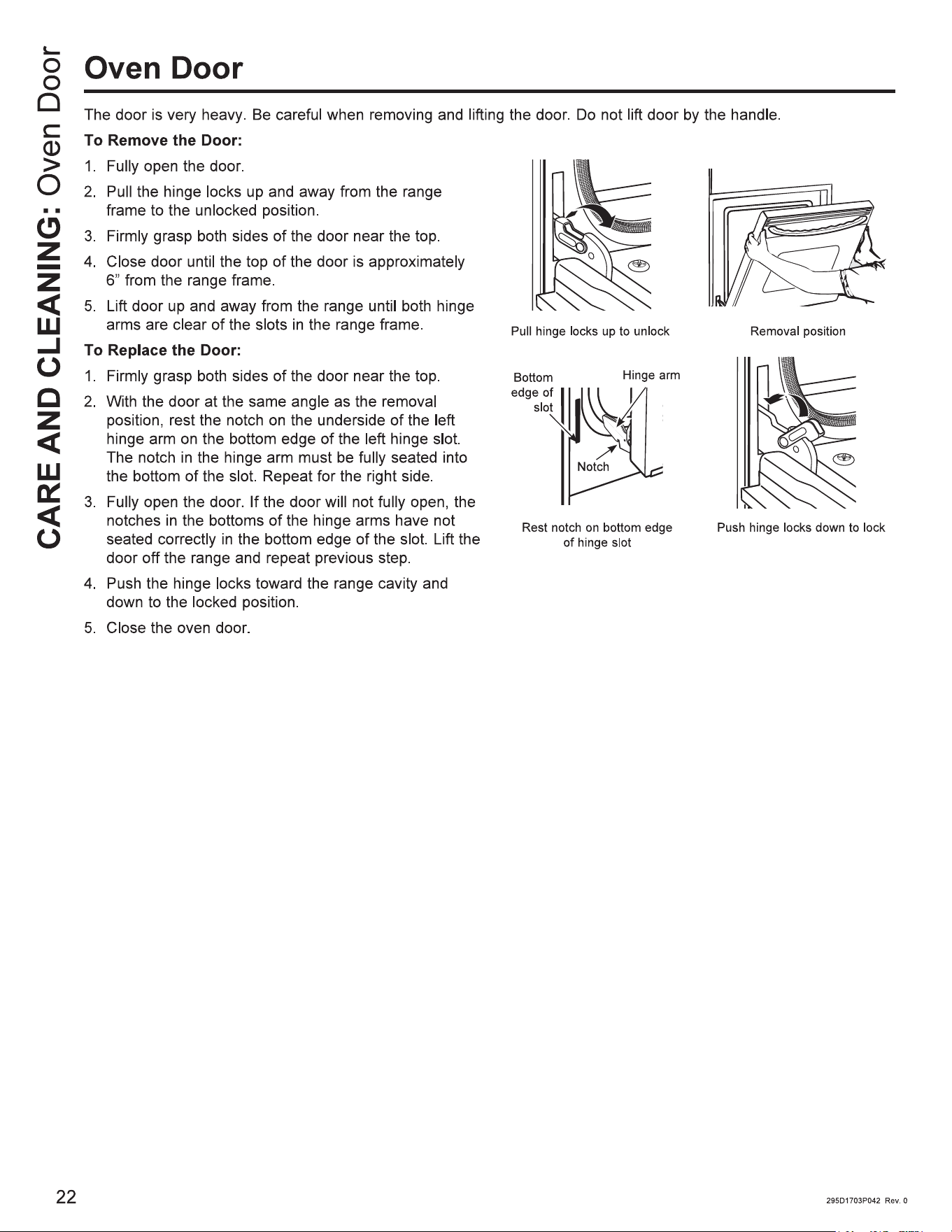
.