Visit our website at: http://www.harborfreight.com
Email our technical support at: [email protected]
Email our engine support at: [email protected]
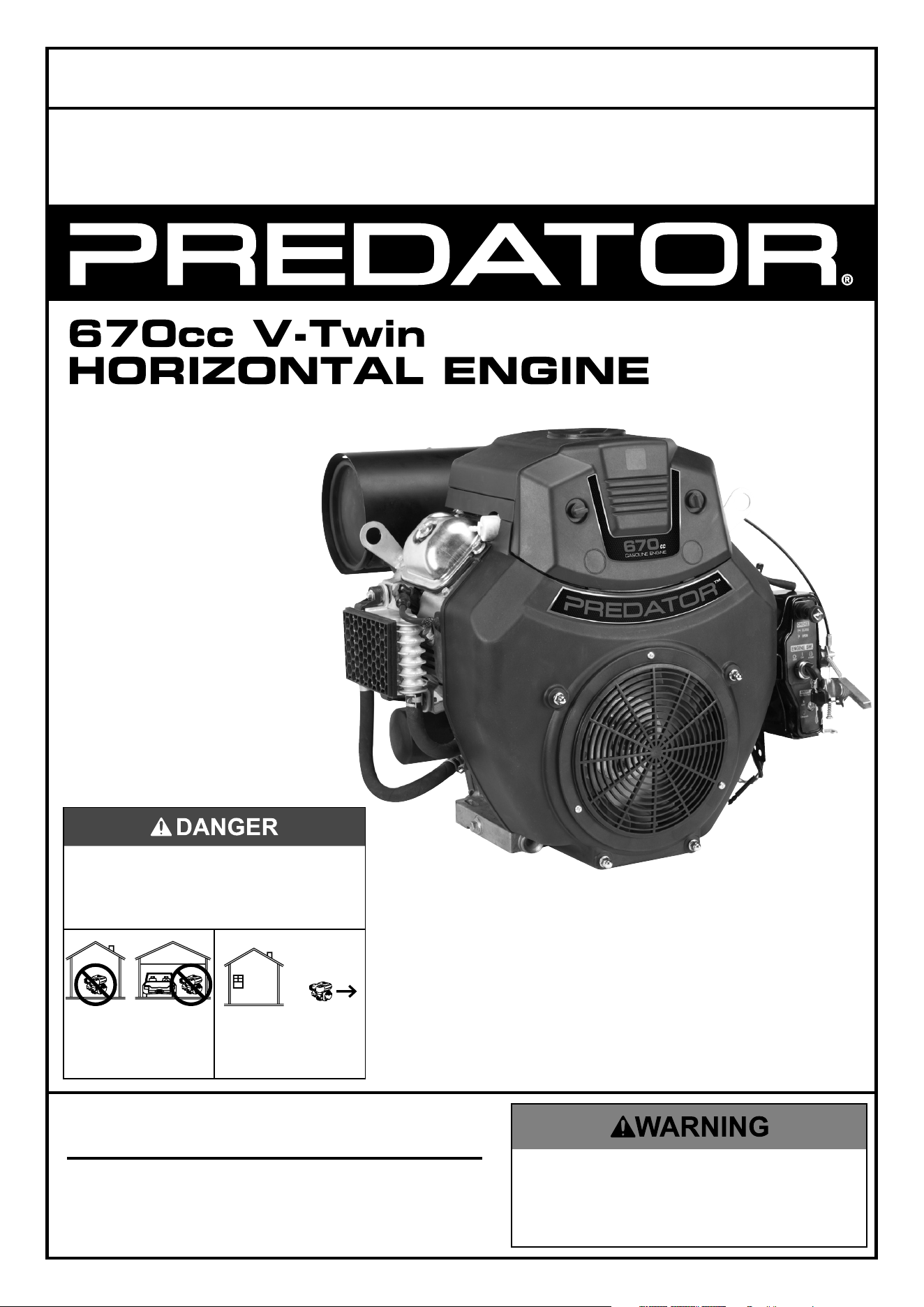
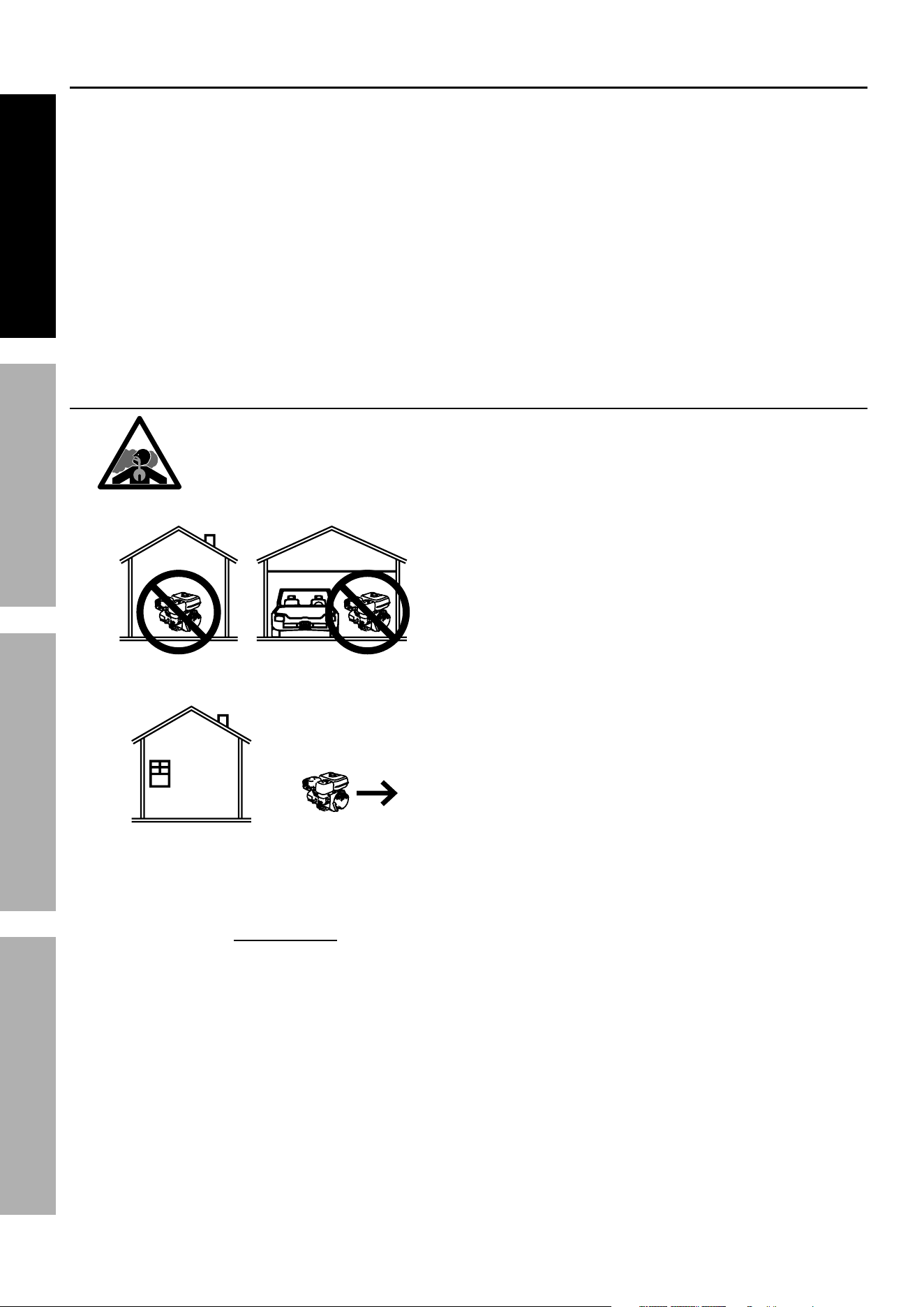
Using an engine indoors
CAN KILL YOU IN MINUTES.
Engine exhaust contains carbon monoxide.
This is a poison you cannot see or smell.
NEVER use inside
a home or garage,
EVEN IF doors and
windows are open.
Only use OUTSIDE
and far away from
windows, doors,
and vents.
61614
Owner’s Manual & Safety Instructions
Save This Manual Keep this manual for the safety warnings and precautions, assembly,
operating, inspection, maintenance and cleaning procedures. Write the product’s serial number in the
back of the manual (or month and year of purchase if product has no number). Keep this manual and the
receipt in a safe and dry place for future reference. 22d
When unpacking, make sure that the product is intact
and undamaged. If any parts are missing or broken,
please call 1-888-866-5797 as soon as possible.
Copyright
©
2021 by Harbor Freight Tools
®
. All rights reserved.
No portion of this manual or any artwork contained herein may be reproduced in
any shape or form without the express written consent of Harbor Freight Tools.
Diagrams within this manual may not be drawn proportionally. Due to continuing
improvements, actual product may differ slightly from the product described herein.
Tools required for assembly and service may not be included.
Read this material before using this product.
Failure to do so can result in serious injury.
SAVE THIS MANUAL.
Page 2 For technical questions, please call 1-888-866-5797. ITEM 61614
Table of Contents
Specifications ............................................. 2
Safety ......................................................... 3
Setup .......................................................... 6
Operation ................................................... 16
Maintenance .............................................. 20
Troubleshooting ......................................... 24
Warranties ................................................. 26
Parts Lists and Diagrams .......................... 28
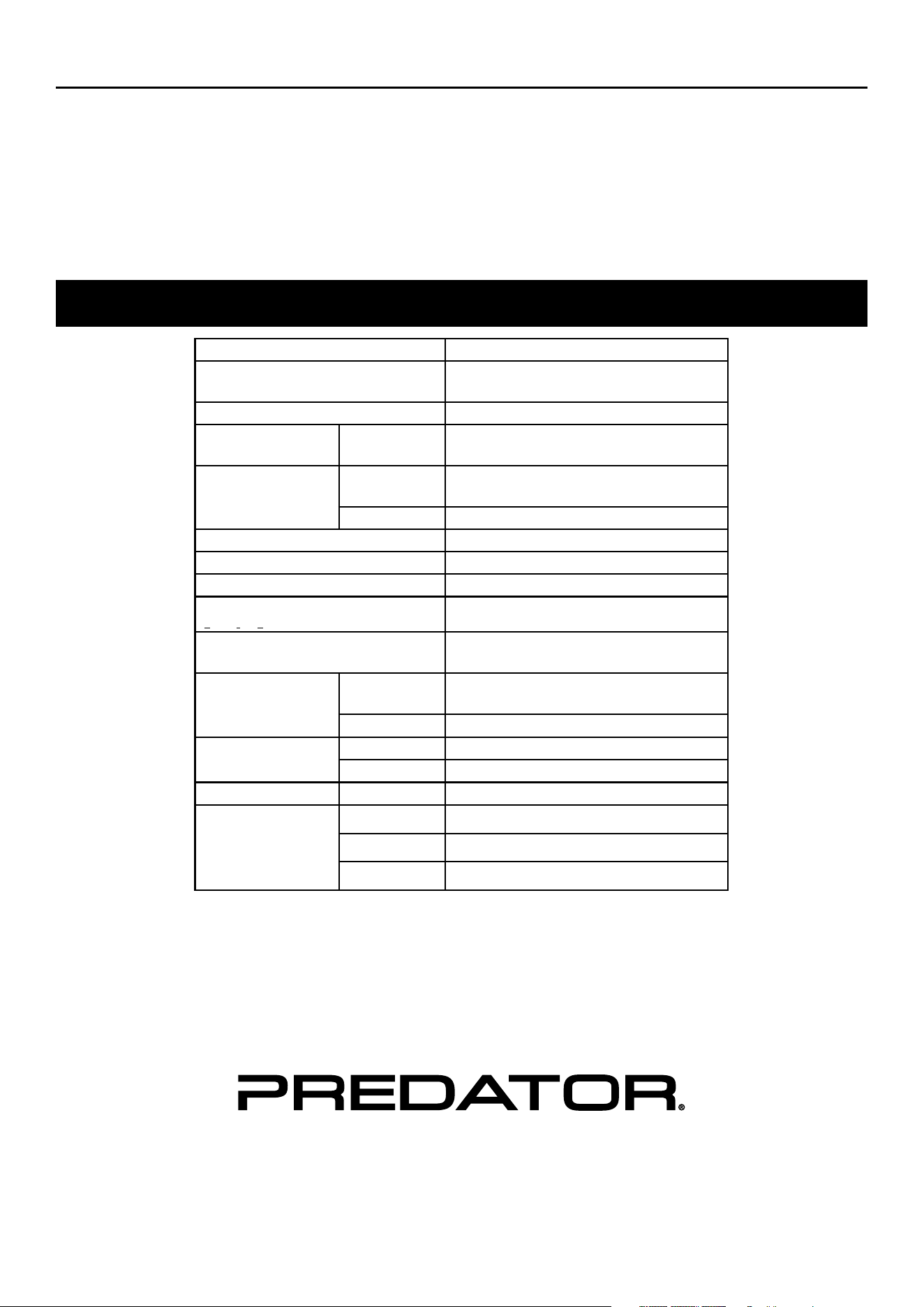
Specifications
Displacement 670cc
Engine Type
Horizontal/Vertical Double Cylinder
4-stroke
Cooling System Forced air cooled
Fuel Type
87+ octane stabilizer treated
unleaded gasoline
Engine Oil
Type
SAE 10W-30 above 32° F
SAE 5W30 at 32° F or below
Capacity 1.8 Quart
Sound Level at 3 feet 88 dB
Bore x Stroke 78 mm x 70 mm
Compression Ratio 8.2:1
Rotation viewed from PTO
(power takeoff - the output shaft)
Counterclockwise
Oil Filter Compatibility
STP S4967
Fram PH4967
Spark Plugs
Type
NGK
®
BPR5ES
Torch
®
F5RTC
Gap 0.027″ - 0.031″
Valve Clearance
Intake 0.005" - 0.007"
Exhaust 0.007" - 0.009"
Speed Idle 1800 RPM
Shaft
Shaft Ø1″ x 3.56″
Keyway 1/4″
End Tapped 3/8″ - 24 UNF
The emissions control system for this Engine is warranted for standards set by the
U.S. Environmental Protection Agency. For warranty information, refer to the last pages of this manual.
Page 3For technical questions, please call 1-888-866-5797.ITEM 61614
SAFETYOpERATIONMAINTENANCE SETUp
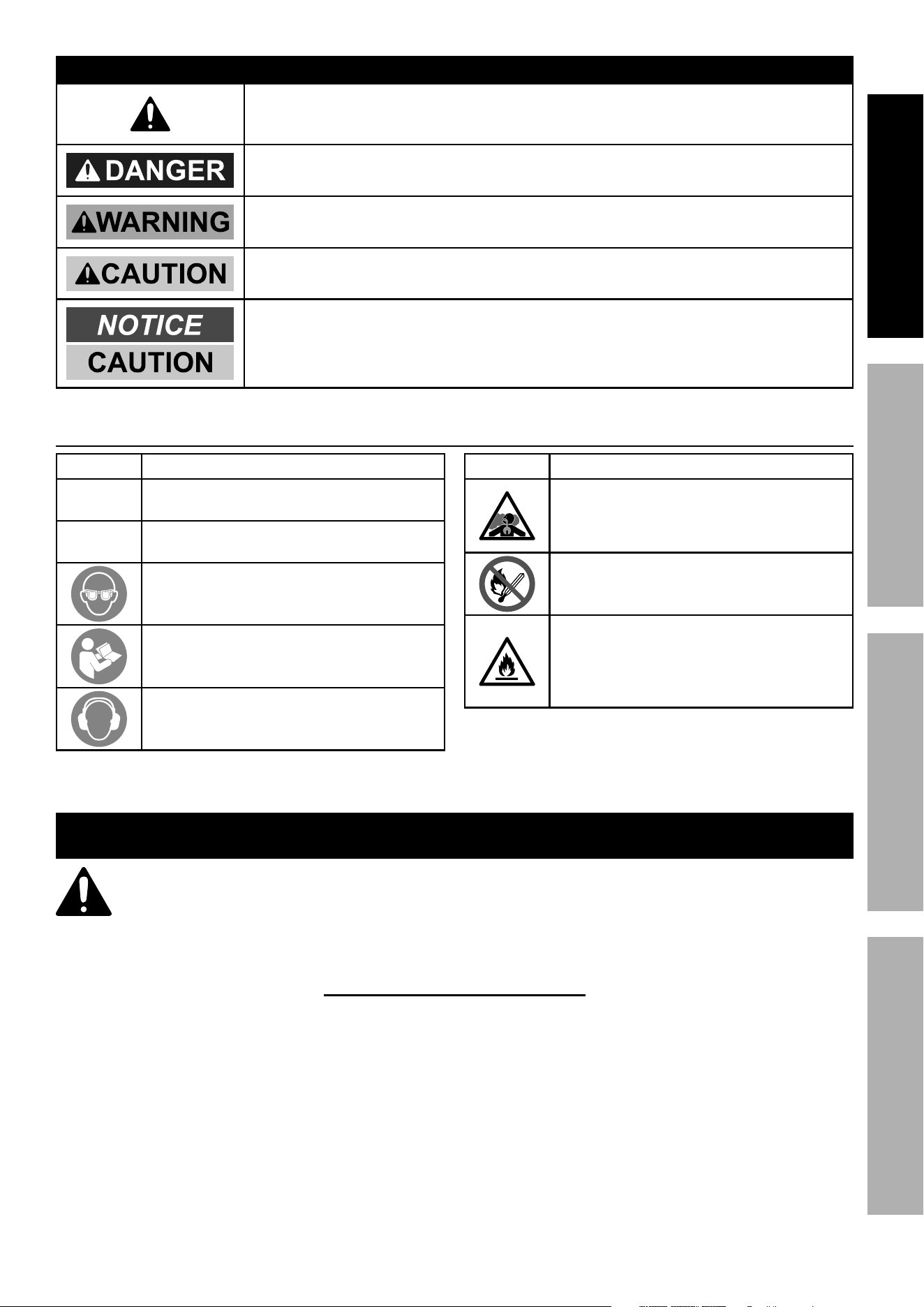
WARNING SYMBOLS AND DEFINITIONS
This is the safety alert symbol. It is used to alert you to potential
personal injury hazards. Obey all safety messages that
follow this symbol to avoid possible injury or death.
Indicates a hazardous situation which, if not avoided,
will result in death or serious injury.
Indicates a hazardous situation which, if not avoided,
could result in death or serious injury.
Indicates a hazardous situation which, if not avoided,
could result in minor or moderate injury.
Addresses practices not related to personal injury.
Symbol Definitions
Symbol property or Statement
RpM
Revolutions Per Minute
Hp
Horsepower
WARNING marking concerning
Risk of Eye Injury. Wear ANSI-approved
safety goggles with side shields.
Read the manual before
set-up and/or use.
WARNING marking concerning
Risk of Hearing Loss.
Wear hearing protection.
Symbol property or Statement
WARNING marking concerning
Risk of Respiratory Injury.
Operate engine OUTSIDE and far away
from windows, doors, and vents.
WARNING marking concerning
Risk of Fire while handling fuel.
Do not smoke while handling fuel.
WARNING marking concerning
Risk of Fire.
Do not refuel while operating.
Keep flammable objects
away from engine.
IMpORTANT SAFETY INSTRUCTIONS
WARNING! Read all instructions.
Failure to follow all instructions listed below may result in fire, serious injury and/or DEATH.
The warnings and precautions discussed in this manual cannot cover all possible conditions and
situations that may occur. It must be understood by the operator that common sense and caution
are factors which cannot be built into this product, but must be supplied by the operator.
SAVE THESE INSTRUCTIONS
Page 4 For technical questions, please call 1-888-866-5797. ITEM 61614
SAFETY OpERATION MAINTENANCESETUp
Set up precautions
1. Gasoline fuel and fumes are flammable, and
potentially explosive. Use proper fuel storage
and handling procedures. Do not store fuel
or other flammable materials nearby.
2. Have multiple ABC class fire extinguishers nearby.
3. Operation of this equipment may create sparks that
can start fires around dry vegetation.
A spark arrestor may be required. The operator
should contact local fire agencies for laws or
regulations relating to fire prevention requirements.
4. KEEp LEVEL! Set up and use only on
a flat, level, well-ventilated surface.
Do not set up or use on a surface
that is tilted 15 degrees or more.
5. Wear ANSI-approved safety goggles, heavy-duty
work gloves, and dust mask/respirator during set up.
6. Use only lubricants and fuel recommended
in the Specifications chart of this manual.
7. Fuel tank must be designed specifically for
containing gasoline and must be mounted to a
stable mounting frame. Some areas may have
specific gasoline vapor containment requirements;
comply with local, state, and federal laws.
Operating precautions
1. CARBON MONOXIDE HAZARD
Using an engine indoors
CAN KILL YOU IN MINUTES.
Engine exhaust contains
carbon monoxide. This is a poison
you cannot see or smell.
NEVER use inside a home or garage,
EVEN IF doors and windows are open.
Only use OUTSIDE and far away from windows,
doors, and vents.
2. Keep children away from the equipment,
especially while it is operating.
3. Keep all spectators at least six feet
from the Engine during operation.
4. Fire Hazard! Do not fill fuel tank while engine is
running. Do not operate if gasoline has been spilled.
Clean spilled gasoline before starting engine.
Do not operate near pilot light or open flame.
5. Do not touch engine during use.
Let engine cool down after use.
6. Never store fuel or other flammable
materials near the engine.
7. Only use a suitable means of transport and
lifting devices with sufficient weight bearing
capacity when transporting the engine.
8. Secure the engine on transport vehicles to
prevent it from rolling, slipping, and tilting.
9. Industrial applications must follow
OSHA requirements.
10. Do not leave the engine unattended when it is
running. Turn off the engine (and remove safety
keys, if available) before leaving the work area.
11. The engine can produce high noise levels.
Prolonged exposure to noise levels
above 85 dBA is hazardous to hearing.
Wear ear protection when operating the engine
or when working nearby while it is operating.
12. Wear ANSI-approved safety glasses
and hearing protection during use.
13. People with pacemakers should consult their
physician(s) before use. Electromagnetic fields in
close proximity to a heart pacemaker could cause
pacemaker interference or pacemaker failure.
Caution is necessary when near the
engine’s magneto or recoil starter.
14. Use only accessories that are recommended
by Harbor Freight Tools for your model.
Accessories that may be suitable for one
piece of equipment may become hazardous
when used on another piece of equipment.
15. Do not operate in explosive atmospheres,
such as in the presence of flammable
liquids, gases, or dust. Gasoline-powered
engines may ignite the dust or fumes.
16. Stay alert, watch what you are doing and use
common sense when operating this engine.
Do not use while tired or under the influence
of drugs, alcohol or medication.
17. Dress properly. Do not wear loose clothing or
jewelry. Keep hair, clothing and gloves away
from moving parts. Loose clothes, jewelry or
long hair can be caught in moving parts.
18. Parts, especially exhaust system components,
get very hot during use. Stay clear of hot parts.

Page 5For technical questions, please call 1-888-866-5797.ITEM 61614
SAFETYOpERATIONMAINTENANCE SETUp
19. Do not cover the engine during operation.
20. Keep the engine and surrounding
area clean at all times.
21. Do not smoke, or allow sparks, flames,
or other sources of ignition around the
equipment, especially when refuelling.
22. Use the equipment, accessories, etc., in
accordance with these instructions and in the
manner intended for the particular type of
equipment, taking into account the working
conditions and the work to be performed.
Use of the equipment for operations different from
those intended could result in a hazardous situation.
23. Do not operate the equipment with known
leaks in the engine’s fuel system.
24. When spills of fuel or oil occur, they must be
cleaned up immediately. Dispose of fluids and
cleaning materials as per any local, state, or
federal codes and regulations. Store oil rags in
a bottom-ventilated, covered, metal container.
25. Keep hands and feet away from moving parts.
Do not reach over or across
equipment while operating.
26. Before use, check for misalignment or binding of
moving parts, breakage of parts, and any other
condition that may affect the equipment’s operation.
If damaged, have the equipment serviced
before using. Many accidents are caused
by poorly maintained equipment.
27. Use the correct equipment for the application.
Do not modify the equipment and do not use the
equipment for a purpose for which it is not intended.
Service precautions
1. Before service, maintenance, or cleaning:
a. Turn the engine switch to its “OFF” position.
b. Allow the engine to completely cool.
c. Then, remove the spark plug caps
from the spark plugs.
2. Keep all safety guards in place and in
proper working order. Safety guards include
muffler, air cleaner, mechanical guards,
and heat shields, among other guards.
3. Do not alter or adjust any part of the
equipment or its engine that is sealed by the
manufacturer or distributor. Only a qualified
service technician may adjust parts that may
increase or decrease governed engine speed.
4. Wear ANSI-approved safety goggles,
heavy-duty work gloves, and
dust mask/respirator during service.
5. Maintain labels and nameplates on the equipment.
These carry important information.
If unreadable or missing, contact
Harbor Freight Tools for a replacement.
6. Have the equipment serviced by a qualified repair
person using only identical replacement parts.
This will ensure that the safety of the equipment
is maintained. Do not attempt any service or
maintenance procedures not explained in this
manual or any procedures that you are uncertain
about your ability to perform safely or correctly.
7. Store equipment out of the reach of children.
8. Follow scheduled engine and
equipment maintenance.
Refueling:
1. Do not refill the fuel tank while the
engine is running or hot.
2. Do not smoke, or allow sparks, flames,
or other sources of ignition around the
equipment, especially when refuelling.
3. Do not fill fuel tank to the top.
Leave a little room for the fuel to expand as needed.
4. Refuel in a well-ventilated area only.
5. Wipe up any spilled fuel and allow excess
to evaporate before starting engine.
To prevent FIRE, do not start the engine
while the smell of fuel hangs in the air.
SAVE THESE INSTRUCTIONS.

Page 6 For technical questions, please call 1-888-866-5797. ITEM 61614
SAFETY OpERATION MAINTENANCESETUp
Set Up
Read the ENTIRE IMpORTANT SAFETY INFORMATION section at the beginning of this manual
including all text under subheadings therein before set up or use of this product.
TO pREVENT SERIOUS INJURY:
Operate only with proper spark arrestor installed.
Operation of this equipment may create sparks that can start fires around dry vegetation.
A spark arrestor may be required.
The operator should contact local fire agencies for laws or regulations
relating to fire prevention requirements.
WARNING! TO pREVENT SERIOUS INJURY: DO NOT INSTALL THIS ENGINE ON A VEHICLE.
WARNING! INSTALL THIS ENGINE ACCORDING TO EQUIpMENT INSTRUCTIONS BEFORE USE.
WARNING! TO pREVENT SERIOUS INJURY: If you do not connect a battery to the positive
battery cable, wrap its terminal securely with electrical tape (sold separately).
Page 7For technical questions, please call 1-888-866-5797.ITEM 61614
SAFETYOpERATIONMAINTENANCE SETUp
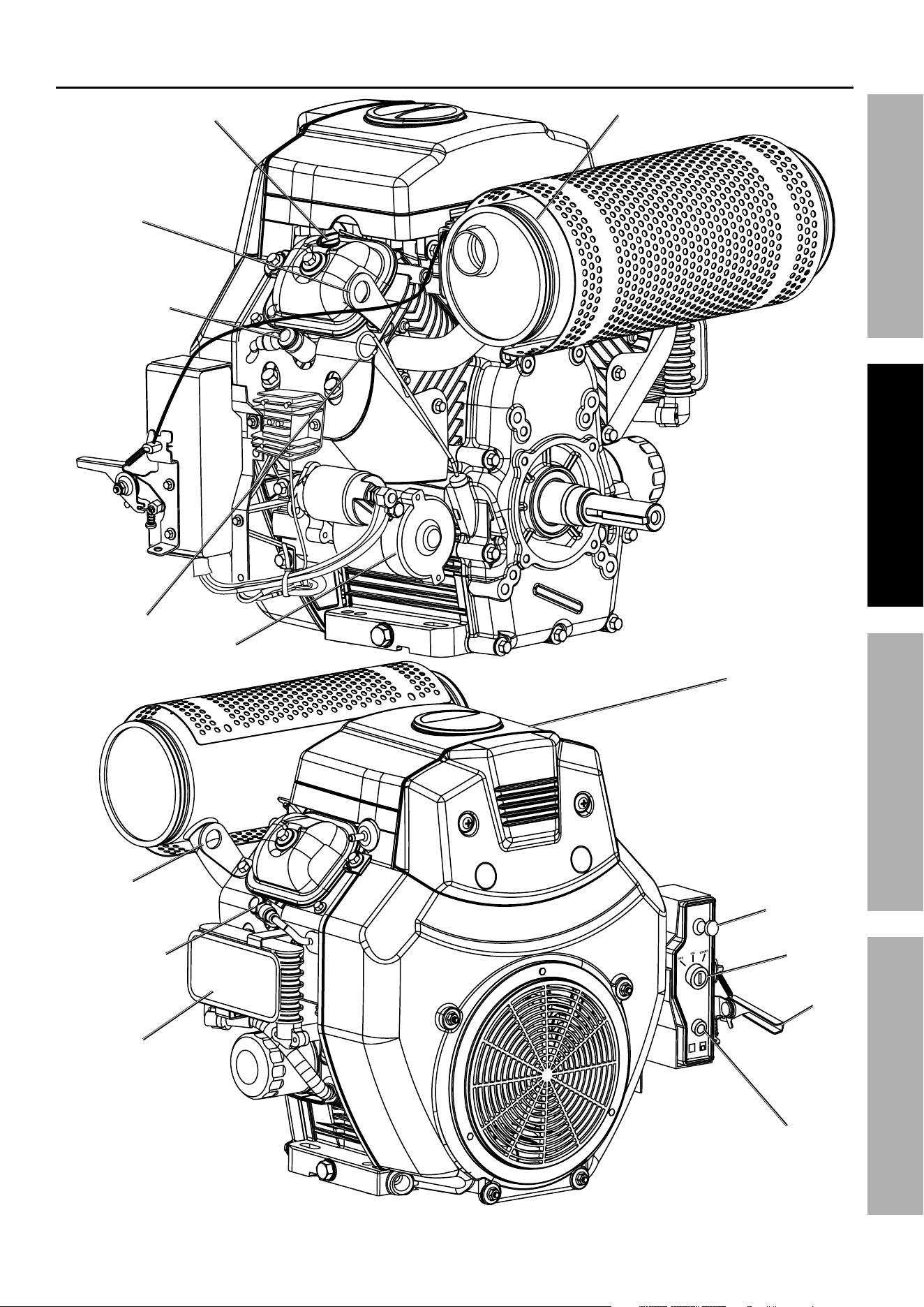
Components and Controls
Starter
Spark plug
(1 of 2)
Muffler
Lifting
Bracket
Oil Fill
plug
Dipstick
Choke
Throttle
Switch
Circuit
Breaker
Spark plug
(2 of 2)
Radiator
Lifting
Bracket
Air Cleaner
Page 8 For technical questions, please call 1-888-866-5797. ITEM 61614
SAFETY OpERATION MAINTENANCESETUp
High Altitude Operation Above 3000 feet
WARNING! TO pREVENT SERIOUS INJURY FROM FIRE:
Follow instructions in a well-ventilated area away from ignition sources.
If the engine is hot from use, shut the engine off and wait for it to cool before proceeding. Do not smoke.
NOTICE: Warranty void if necessary adjustments are not made for high altitude use.
At high altitudes, the engine’s carburetor, governor (if so equipped), and any other parts that control the fuel-air
ratio will need to be adjusted by a qualified mechanic to allow efficient high-altitude use and to prevent damage
to the engine and any other devices used with this product. The fuel system on this engine may be influenced by
operation at higher altitudes. Proper operation can be ensured by installing an altitude kit at altitudes higher than
3000 ft. above sea level. At elevations above 8000 ft, the engine may experience decreased performance, even
with the proper main jet. Operating this engine without the proper altitude kit installed may increase the engine’s
emissions and decrease fuel economy and performance. The kit should be installed by a qualified mechanic.
High Altitude Kit parts List - A
part Description Qty
A1 Left Main Jet 3000-6000 ft. 1
A2 Right Main Jet 3000-6000 ft. 1
A3 Left Main Jet 6000-8000 ft. 1
part Description Qty
A4 Right Main Jet 6000-8000 ft. 1
137d Outer Bowl O-ring (replacement) 2
137e Inner Bowl O-ring (replacement) 2
Disassembly
1. Turn off the engine.
2. Close the fuel valve, if equipped.
If no fuel valve is equipped, then clamp
the fuel hose closed right before the filter.
Be careful to avoid damaging the fuel hose.
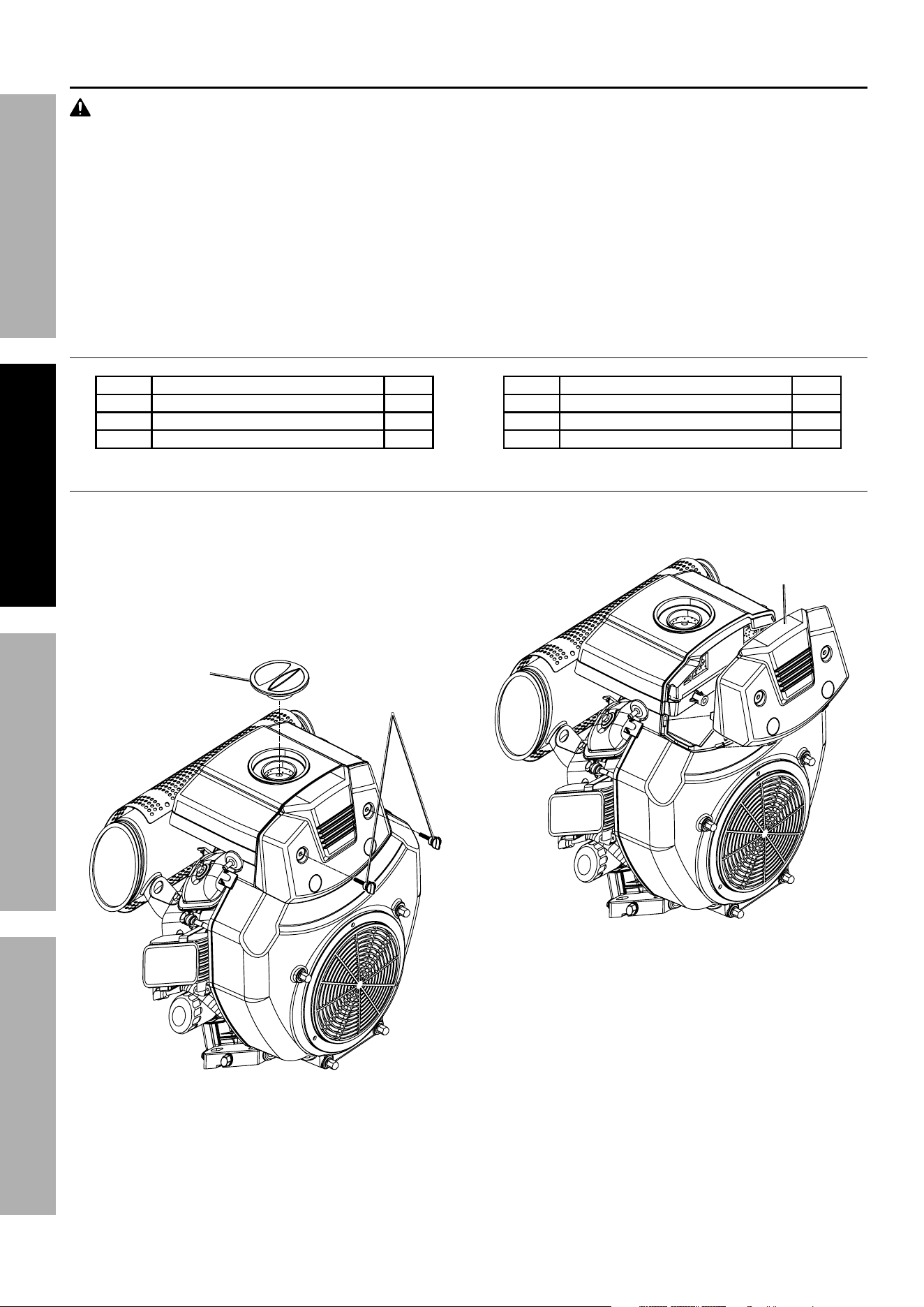
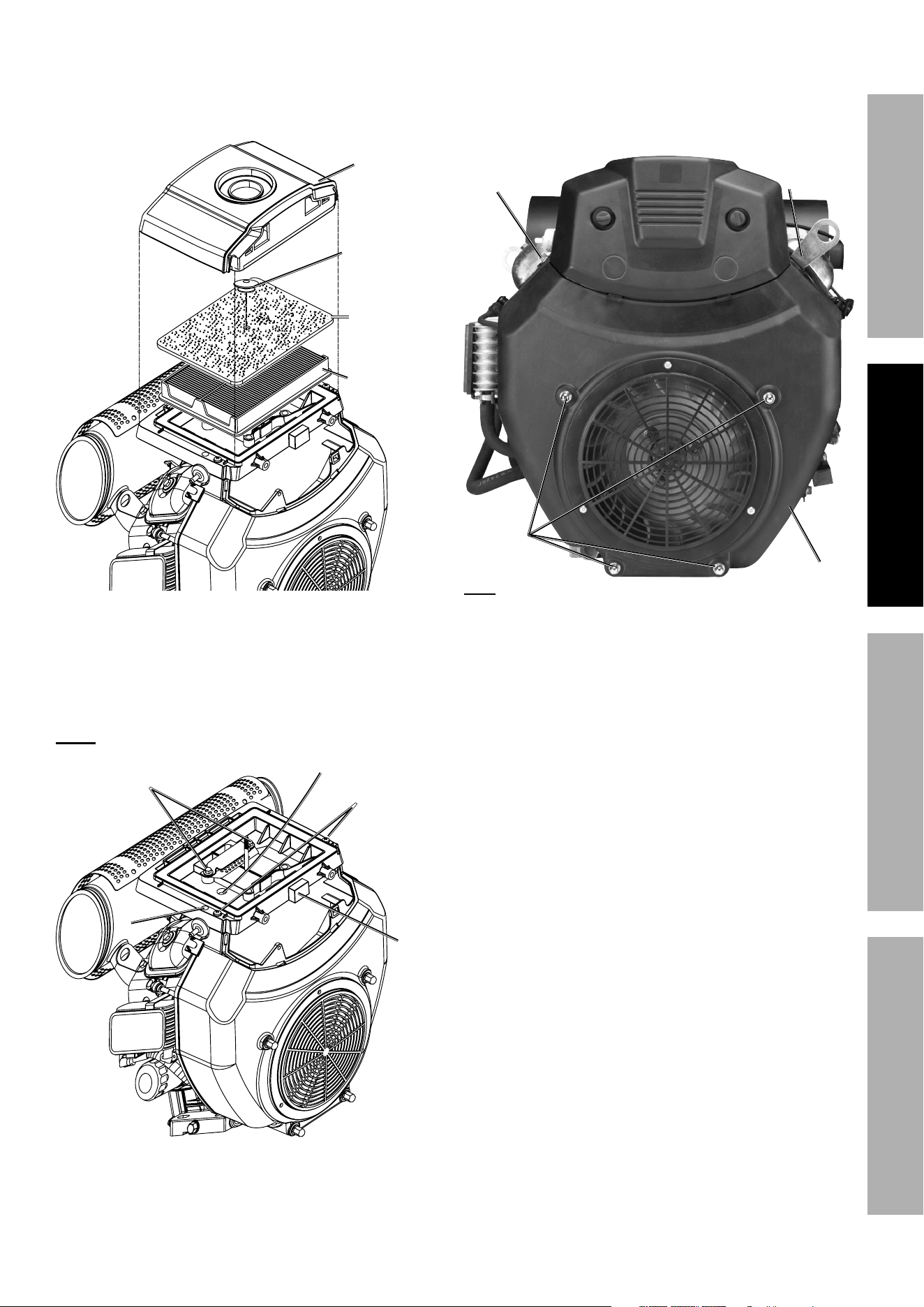
3. Remove the Air Cleaner Top Knob (142a) and the
two Air Cleaner Front Knobs (102). See Figure A.
Air Cleaner
Top Knob (142a)
Air Cleaner
Front Knob
(102)
Figure A: Remove Knobs
4. Remove the Air Cleaner Front Cover (101),
pulling it up then out. See Figure B.
Air Cleaner Air Cleaner
Front Cover (101)Front Cover (101)
Figure B: Remove Front Cover
Page 9For technical questions, please call 1-888-866-5797.ITEM 61614
SAFETYOpERATIONMAINTENANCE SETUp
5. Remove the Air Cleaner Top Cover (142b) and
internal Air Cleaner components
(Spacer, Foam and Paper Filters (142c-142e)).
See Figure C.
Air Cleaner
Top Cover
(142b)
Air Cleaner
Spacer (142c)
Foam Air
Filter (142d)
paper Air
Filter (142e)
Figure C: Remove Air Cleaner
Top Cover and components
6. Remove the two Intake Cover Bolts (143) and the
two Air Cleaner Base Bolts (146). See Figure D.
7. Detach the top of the Fuel Filter Clip (147)
from the Air Cleaner Base (142g).
Note: See page 19 if idle screw adjustment is desired.
Intake Cover
Bolts (143)
Air Cleaner
Base Bolts
(146)
Fuel Filter Fuel Filter
Clip (147)Clip (147)
Air Cleaner Air Cleaner
Base (142g)Base (142g)
Idle Screw Cover
Figure D: Remove Bolts and Clip
from Air Cleaner Base
8. Remove the Air Cleaner Base.
9. Remove the four Shroud Nuts (99) and the two
Flange Shoulder Bolts (112) from the Shroud (100).
The Flange Shoulder Bolt on the right holds the
Lifting Bracket (111) in place. See Figure E.
Shroud
Nuts (99)
Flange
Shoulder
Bolt (112)
Flange Shoulder Flange Shoulder
Bolt (112)Bolt (112)
behind Lifting Bracketbehind Lifting Bracket
Shroud (100)
Note: Air Cleaner Front Cover is still shown,
although it should have been removed in step 4.
Figure E: Remove Shroud
10. Remove the Shroud.
Page 10 For technical questions, please call 1-888-866-5797. ITEM 61614
SAFETY OpERATION MAINTENANCESETUp
11. WARNING! TO pREVENT SERIOUS INJURY FROM FIRE, BEFORE CONTINUING:
a. Make sure that the work area is well-ventilated and that there are no ignition sources.
b. Have multiple class ABC fire extinguishers available.
c. Double-check that fuel hose leading from fuel tank to Fuel Filter is clamped or fuel valve is closed.
d. Use a safe, proper means to clean up all fuel spills immediately.
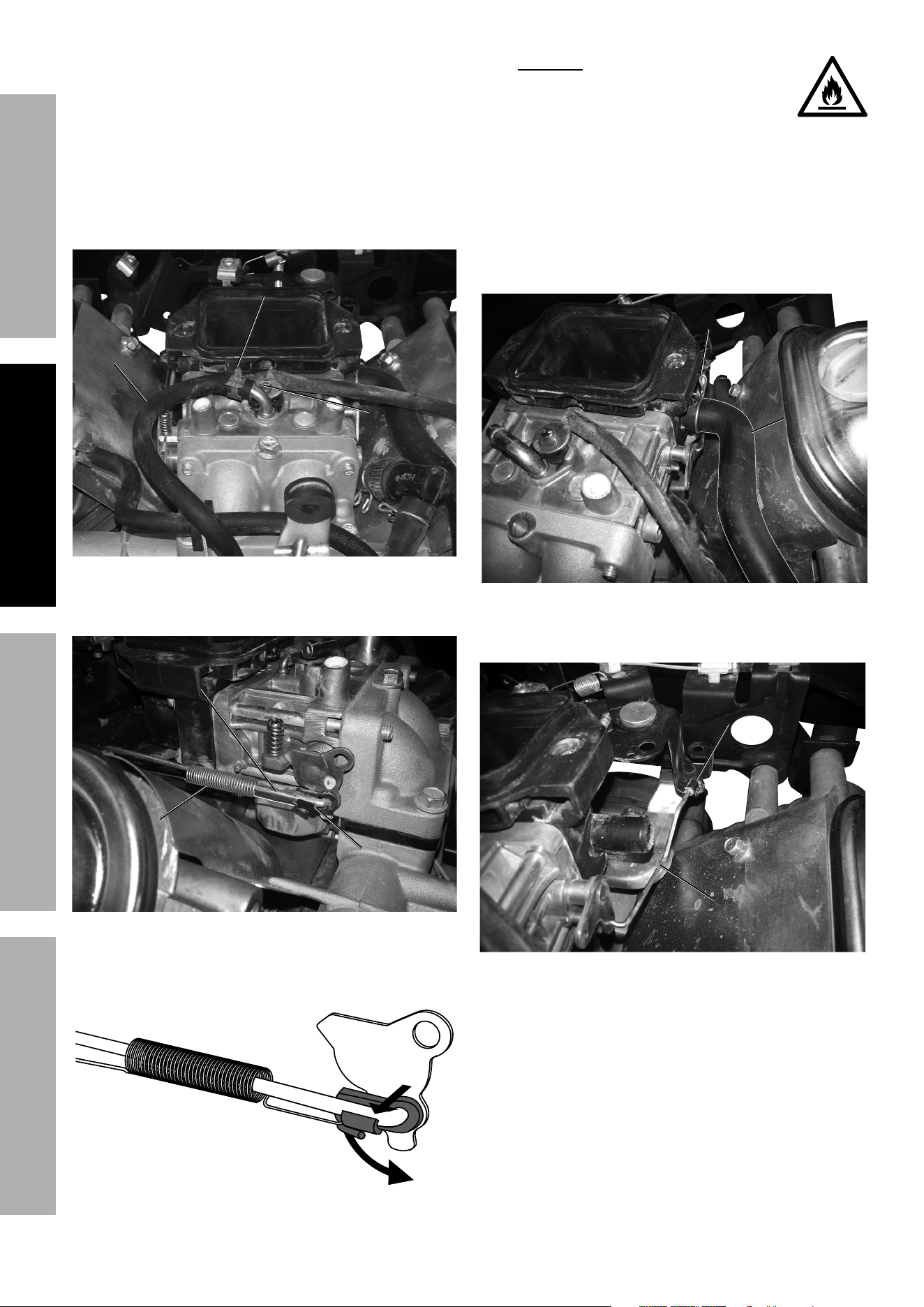
12. Squeeze the Spring Clamp (140) and slide it back.
Detach the Fuel Hose (141) from the port at
the top of the Carburetor. See Figure F.
Spring Spring
Clamp (140)Clamp (140)
fuel fuel
portport
Fuel Fuel
Hose (141)Hose (141)
Figure F: Detach Fuel Hose
13. Locate the Throttle Rod (174) connection on
the left side of the carburetor. See Figure G.
Throttle Throttle
Rod (174)Rod (174)
Throttle Rod Throttle Rod
Spring (175)Spring (175)
Throttle Rod Throttle Rod
Clip (139)Clip (139)
Figure G: Disconnect Throttle Rod
14. A: Swing the black Throttle Rod Clip (139) down
to release the Throttle Rod. See Figure H.
B: Pull the Throttle Rod out of the Clip.
A
B
Figure H: Throttle Rod Clip
15. Disconnect the Throttle Rod Spring
from the Throttle Rod Clip.
16. Squeeze the Spring Wire Clamp (32) and slide
it back. Detach the Breather Hose (33) from
the right side of the Carburetor. See Figure I.
Spring Wire Spring Wire
Clamp (32)Clamp (32)
Breather Breather
Hose (33)Hose (33)
Figure I: Detach Breather Hose
17. Locate the Choke Rod (177) connection on the
right side of the carburetor. See Figure J.
Choke Choke
Rod (177)Rod (177)
Choke Rod Choke Rod
Clip (176)Clip (176)
Figure J: Disconnect Choke Rod
18. Swing the black Choke Rod Clip (176) aside to
release the Choke Rod. Disconnect the Choke Rod.
Page 11For technical questions, please call 1-888-866-5797.ITEM 61614
SAFETYOpERATIONMAINTENANCE SETUp
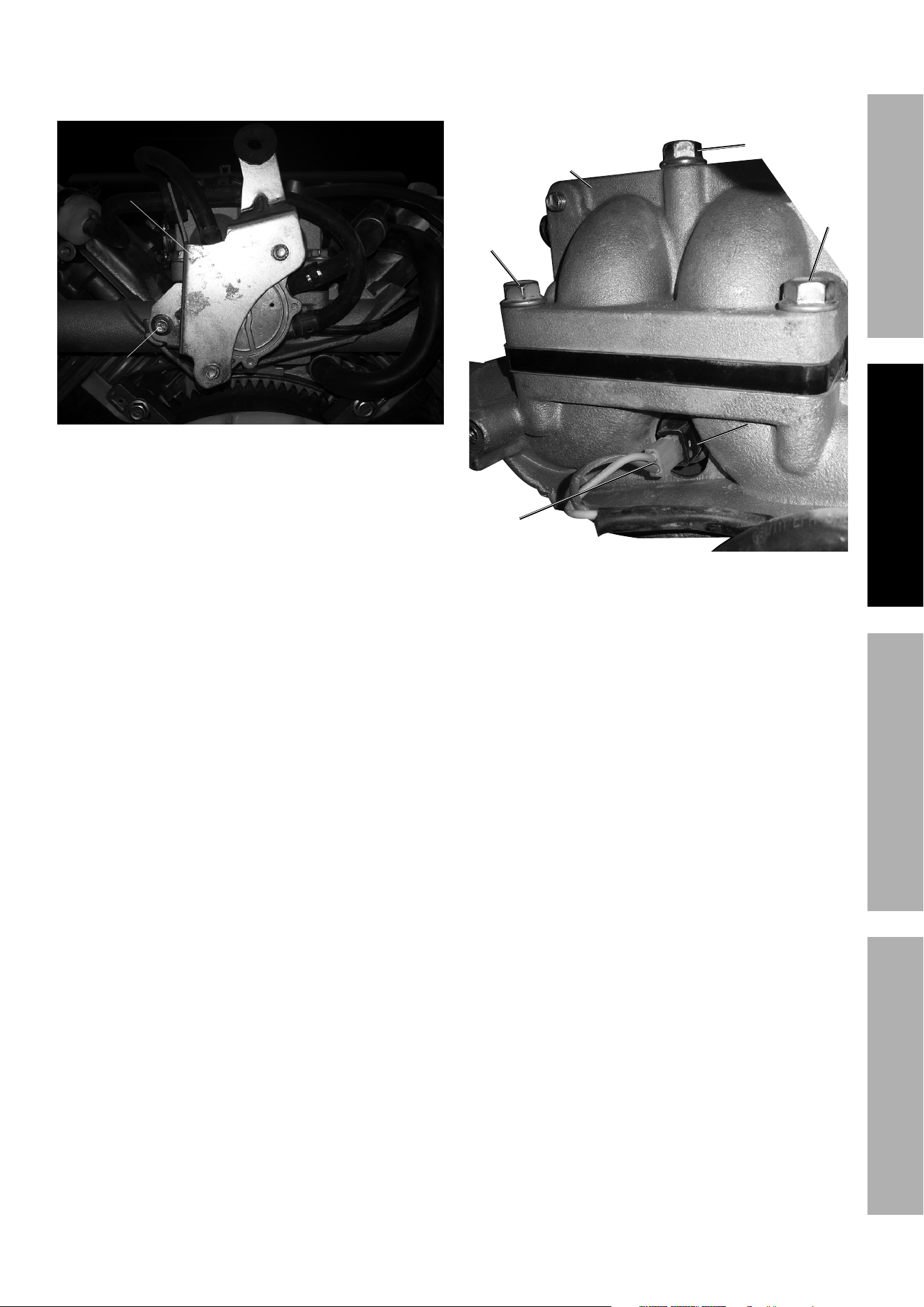
19. At the front of the Carburetor,
remove the Bolt (38) holding the
Fuel Pump Bracket (40) in place. See Figure K.
Fuel pump Fuel pump
Bracket (40)Bracket (40)
Bolt (38)Bolt (38)
Figure K: Remove Fuel pump Bracket
20. Underneath where the Fuel Pump Bracket was,
the Solenoid Valve (138) is connected.
Note the location of the green wire and green dot on
the connector. Unplug the connector. See Figure L.
Solenoid wire Solenoid wire
connectorconnector
Note location Note location
of dots here.of dots here.
Bolt (133)Bolt (133)
Carburetor Carburetor
Intake Elbow Intake Elbow
(131)(131)
Bolt Bolt
(132)(132)
Bolt Bolt
(132)(132)
Figure L: Disconnect Solenoid Valve wire connector
21. Remove Bolt (133) and two Bolts (132) from the
Carburetor Intake Elbow (131). See Figure L.
22. Remove the Carburetor assembly from the engine.
Keep it upright, it may contain fuel.
Page 12 For technical questions, please call 1-888-866-5797. ITEM 61614
SAFETY OpERATION MAINTENANCESETUp
23. Hold the fuel drain port over a bowl, and open the
Carburetor Drain Plug (137a) to allow fuel to drain
out of that port. Once the carburetor is empty,
close the Carburetor Drain Plug. See Figure M.
Carburetor Carburetor
Drain plug Drain plug
(137a)(137a)
fuel fuel
drain drain
portport
Figure M: Carburetor Drain
24. Turn the Carburetor assembly over.
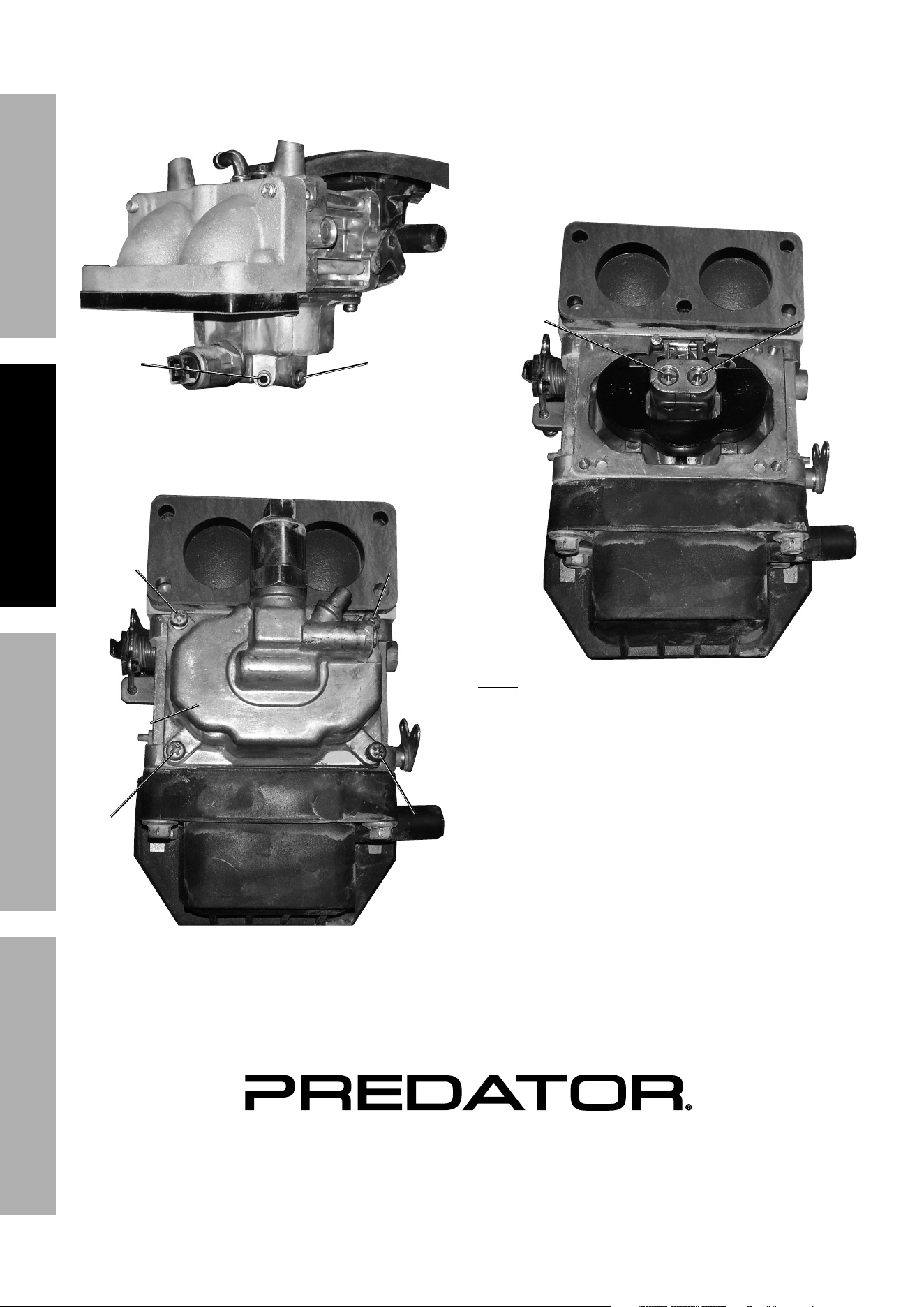
25. Remove the four Carburetor Bowl Bolts (137b) and
remove the Carburetor Bowl (137c). See Figure N.
Carburetor Carburetor
Bowl Bolt Bowl Bolt
(137b)(137b)
Carburetor Carburetor
Bowl Bolt Bowl Bolt
(137b)(137b)
Carburetor Carburetor
Bowl Bowl
(137c)(137c)
Carburetor Carburetor
Bowl Bolt Bowl Bolt
(137b)(137b)
Carburetor Carburetor
Bowl Bolt Bowl Bolt
(137b)(137b)
Figure N: Carburetor Bowl Bolts
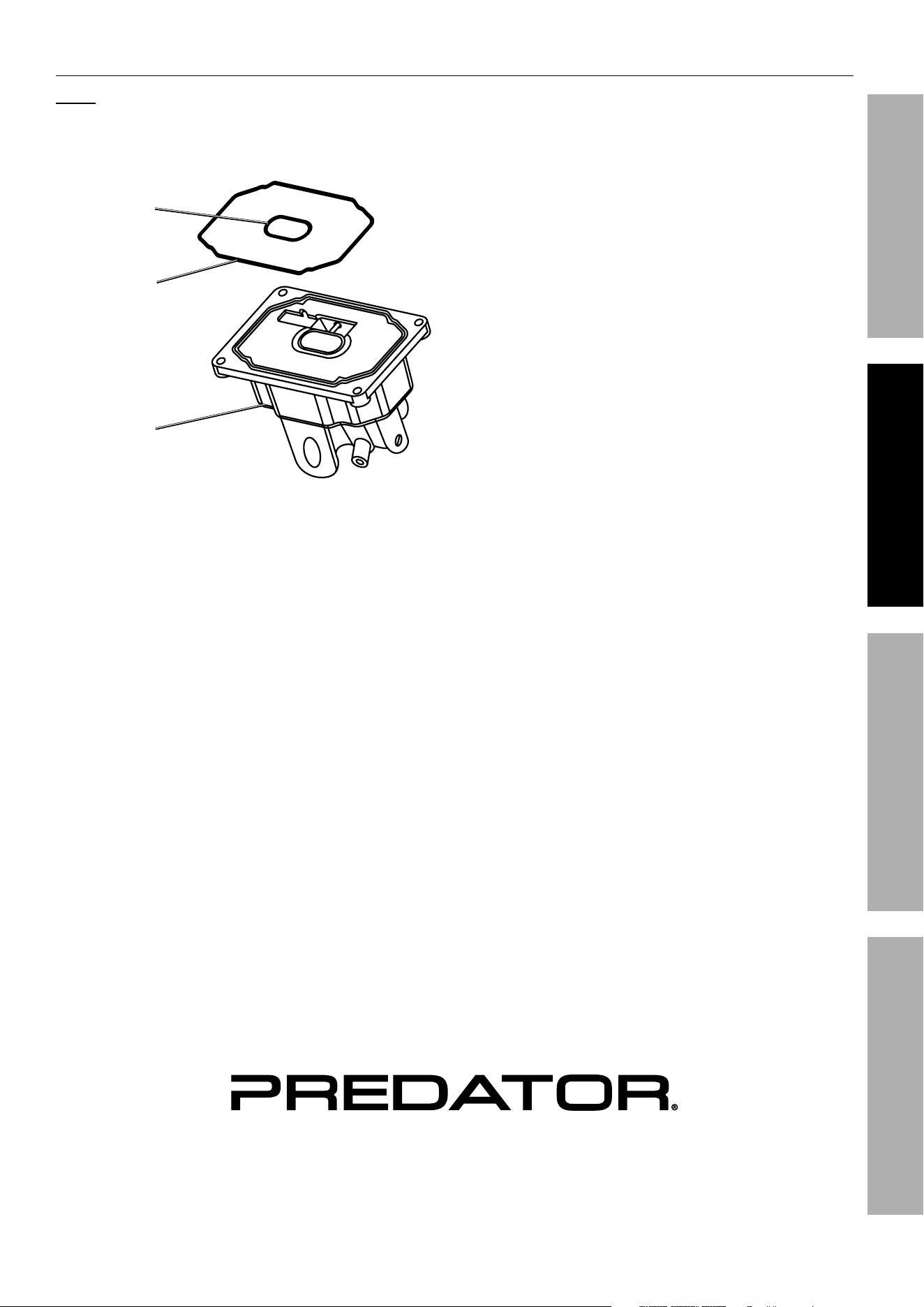
26. Use a carburetor screwdriver (sold separately)
to remove the Left Main Jet and replace it with
the proper replacement Left Main Jet (A1 or A3)
for the altitude. See Figure O.
27. Use a carburetor screwdriver to remove the
Right Main Jet and replace it with the replacement
Right Main Jet (A2 or A4) for the same altitude
as the Left Main Jet. See Figure O.
Right Right
Main Jet Main Jet
(A2/A4)(A2/A4)
Left Left
Main Jet Main Jet
(A1/A3)(A1/A3)
Note: Since carburetor is upside-down,
left and right sides are reversed.
Figure O: Main Jets
Page 13For technical questions, please call 1-888-866-5797.ITEM 61614
SAFETYOpERATIONMAINTENANCE SETUp
Reassembly
Note: Reassembly step references shown in brackets.
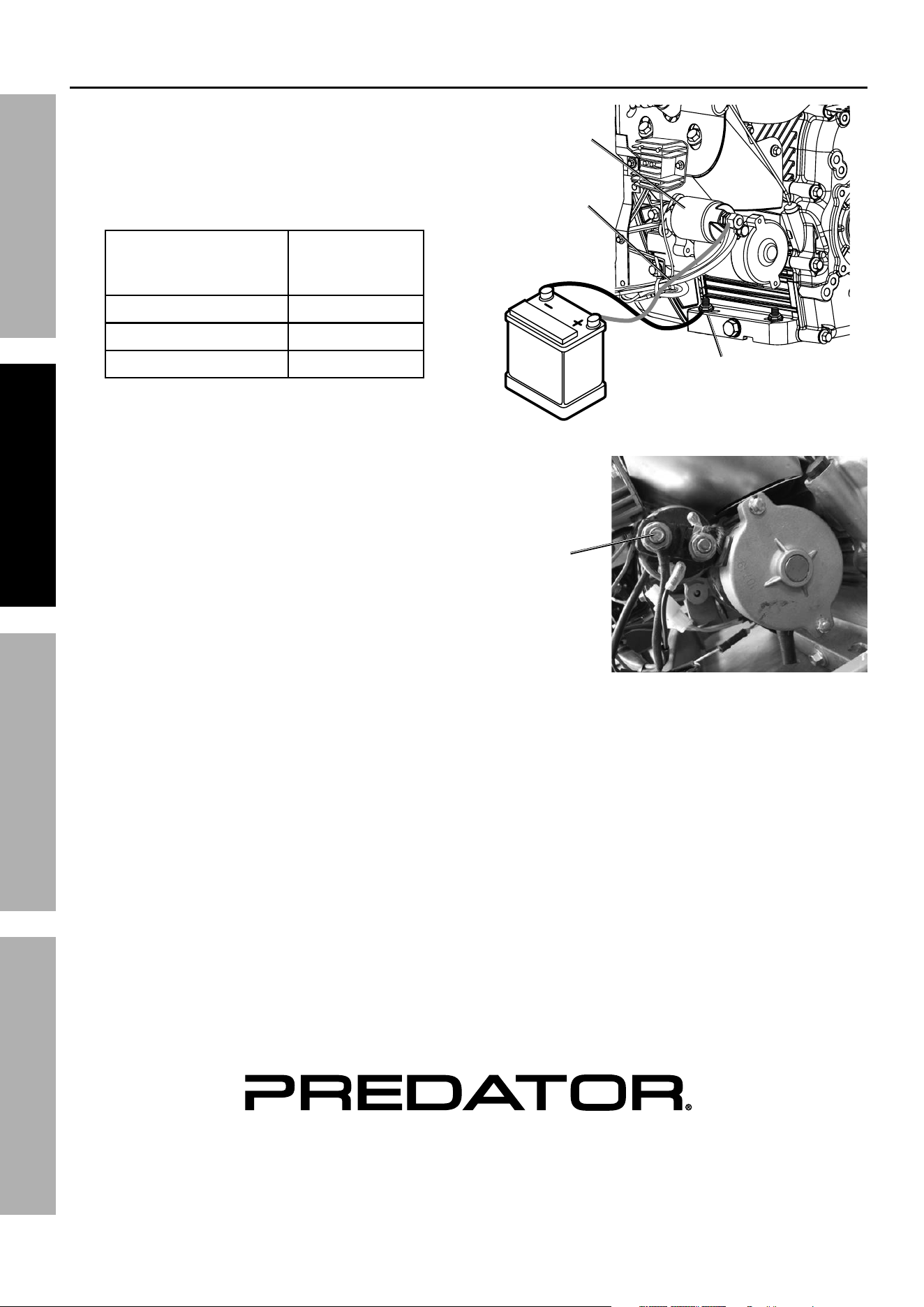
1. Replace the Outer and Inner Bowl O-rings
(137d, 137e) with the replacements
from the altitude kit. Do not reuse existing O-rings.
Carburetor Carburetor
BowlBowl
Outer Bowl Outer Bowl
O-ringO-ring
Inner Bowl Inner Bowl
O-ringO-ring
Figure p: Replace Bowl O-rings
2. Assemble the Carburetor Bowl using four
Carburetor Bowl Bolts. [#25] Assemble Carburetor
Intake Elbow to Intake using Bolts. [#21]
3. Attach Solenoid Valve connector, line up green
wire with the green dot on the connector. [#20]
4. Attach Fuel Pump Bracket to front of intake
using Bolt. Gently lift the Bracket after
assembly to ensure proper alignment. [#19]
5. Attach the Choke Rod on the right side of the
Carburetor, and secure it with its Clip. [#17,18]
6. Attach the Breather Hose to the Carburetor,
and secure it with its Clamp. [#16]
7. Attach the Throttle Rod Spring to the Throttle Rod
Clip on the left side of the Carburetor. [#15]
8. Insert the Throttle Rod on the left side of the
Carburetor, and secure it with its Clip. [#14]
9. Attach the Fuel Hose to the port at the top of the
Carburetor and attach it using its Clamp. [#12]
10. Install Shroud using four Shroud Bolts and two
Flange Shoulder Bolts. [#9,10] Include the Lifting
Bracket in place on the right Flange Shoulder Bolt.
11. Install Air Cleaner Base using two Air Cleaner Base
Bolts. Connect Fuel Filter Clip under left side of
Air Cleaner Base. Install the Intake Cover and
Intake Screen using the Intake Cover Bolts. [#6-8]
12. Place the Paper Air Filter, Foam Air Filter,
Air Cleaner Spacer, and Air Cleaner Top Cover
into place on the Air Cleaner Base. [#5]
13. Replace the Air Cleaner Front Cover. [#4]
14. Use the Air Cleaner Top Knob and Air Cleaner
Front Knobs to secure the Covers in place. [#3]
15. Once all connections are secure,
open fuel valve/unclamp fuel hose.
16. Wipe up any spilled fuel and allow excess
to evaporate before starting engine.
To prevent FIRE, do not start the engine
while the smell of fuel hangs in the air.
Page 14 For technical questions, please call 1-888-866-5797. ITEM 61614
SAFETY OpERATION MAINTENANCESETUp
Battery Setup Instructions
1. Place a fully charged, lead-acid 12 volt,
36 Ah battery (not included) in a stable,
flat location near the engine.
2. Only use cables sized to match
their length according to.
Cable Gauge
(lower gauge numbers
mean thicker cables)
Maximum
Cable Length
6 5′
4 7′
2 12′
Table A: Minimum Cable Diameters
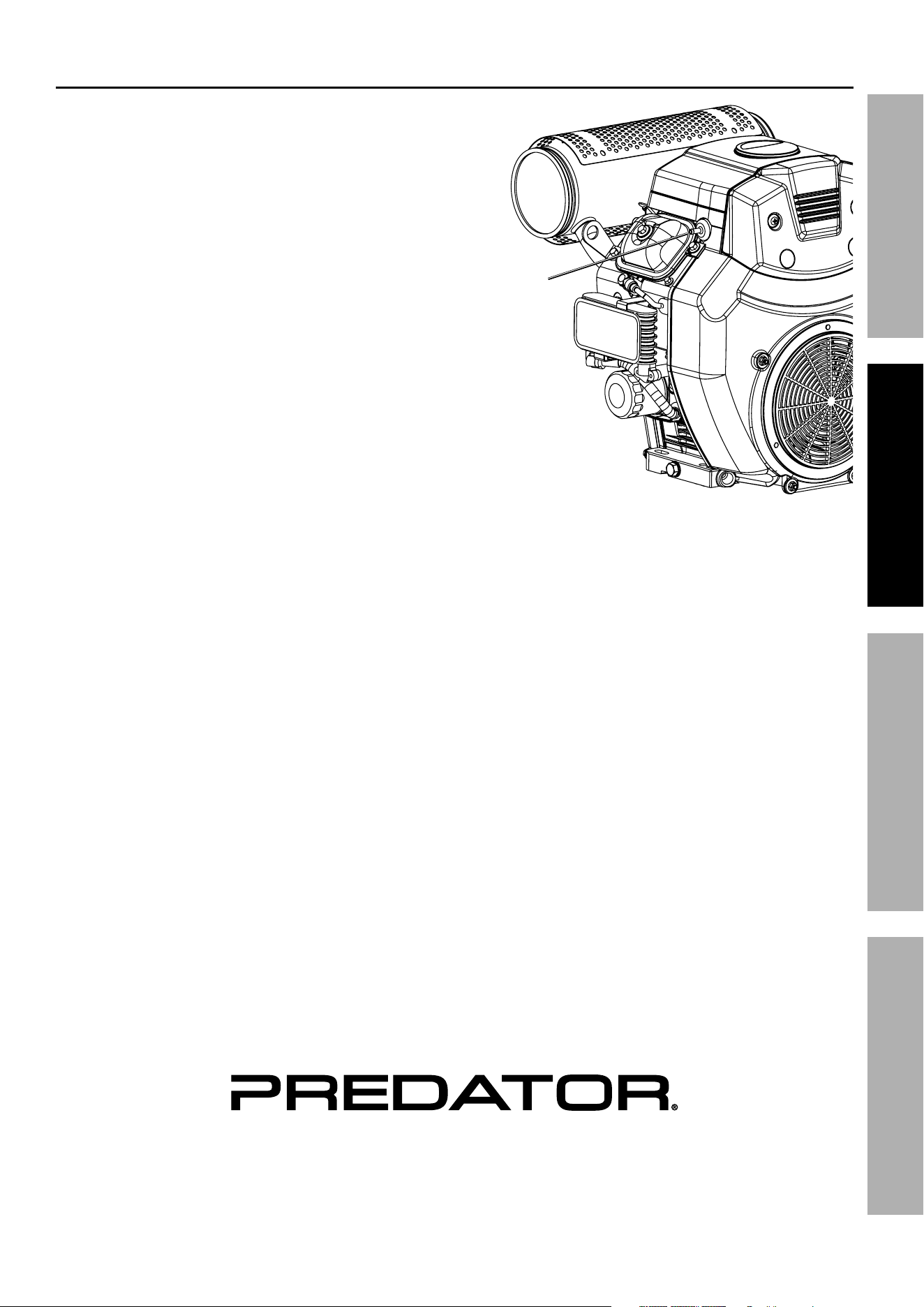
3. Attach the positive cable from the positive battery
terminal to the outer terminal on the Starter’s (164)
solenoid, see Figure Q and Figure R. Connect cable
securely to prevent disconnection and short circuits.
4. Attach the negative cable to the
negative battery terminal.
5. Connect the negative cable securely to one
of the engine mounting bolts, as shown
in Figure Q. Connect cable securely to
prevent disconnection and short circuits.
6. Coat the terminals and cable ends with
a corrosion-preventive coating.
solenoid onsolenoid on
Starter (164)Starter (164)
red wire red wire
to positive to positive
battery cablebattery cable
connect negative
battery cable to
a mounting bolt
Figure Q: Battery Cable Connections
Connect Cable
from positive
Battery
Terminal to
this Starter
Terminal
Figure R: Connect positive to this Terminal
Page 15For technical questions, please call 1-888-866-5797.ITEM 61614
SAFETYOpERATIONMAINTENANCE SETUp
Fuel Tank Setup Instructions
1. If possible, incorporate a fuel shutoff valve
on the fuel hose (neither included).
2. WARNING! TO pREVENT SERIOUS INJURY:
Fuel tank (not included) must be designed
specifically for containing gasoline and
must be mounted to a stable mounting frame.
Some areas may have specific
gasoline vapor containment requirements;
comply with local, state, and federal laws.
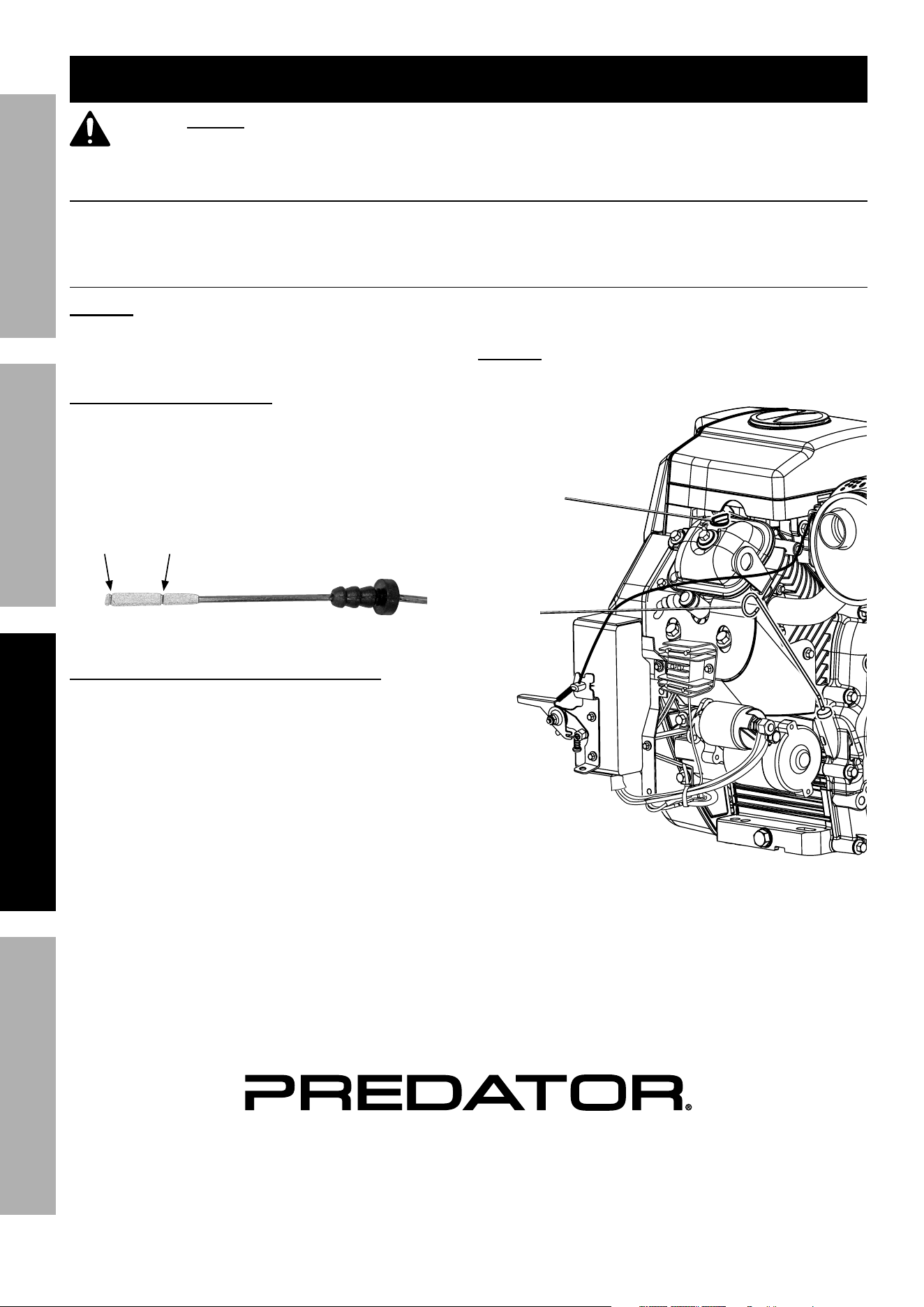
3. Connect a fuel hose from the fuel tank to the
exposed port of the Fuel Filter, and secure it
in place with a hose clamp. See Figure S.
fuel hose
connection
Figure S: Fuel Hose Connector
Page 16 For technical questions, please call 1-888-866-5797. ITEM 61614
SAFETY OpERATION MAINTENANCESETUp
Operation
Read the ENTIRE IMpORTANT SAFETY INFORMATION section at the beginning of this manual
including all text under subheadings therein before set up or use of this product.
pre-Start Checks
Inspect Engine and equipment looking for damaged, loose, and missing parts before set up and starting.
If any problems are found, do not use equipment until fixed properly.
Checking and Filling Engine Oil
NOTICE: Your Warranty is VOID if the engine’s
crankcase is not properly filled with oil before
each use. Before each use, check the oil level.
Engine will not start with low or no engine oil.
Adding Oil Before First Use
Engine is shipped containing approximately 300 ml of
residual oil. Before first use, remove the Oil Fill Plug
and add 1500 ml of the appropriate type of oil. Remove
the Dipstick to check the oil level. The oil level should
be up to the upper, FULL mark on the dipstick.
DO NOT OVERFILL pAST THE FULL MARK.
LOW FULL
Figure T: Oil Level Indicator on Dipstick
Checking and Adding Oil Before Each Use
1. Make sure the Engine is stopped and is level.
2. Close the Fuel Valve.
3. Clean the top of the Dipstick and the
area around it. Remove the Dipstick and
wipe it off with a clean, lint free rag.
4. Reinsert the Dipstick fully and remove it to
check the oil level. The oil level should be up
to the upper, FULL mark on the Dipstick.
5. If the oil level is at or below the LOW mark, remove
the Oil Fill Plug and add the appropriate type of oil
until the oil level is at the full level. Refer to Figure T.
DO NOT OVERFILL pAST THE FULL MARK.
SAE 10W-30 oil is recommended for general use.
The SAE Viscosity Grade chart on page 21 in
the Maintenance section shows other viscosities
to use in different average temperatures.
6. Replace the Oil Fill Plug and insert the
Dipstick back into the housing.
NOTICE: Do not run the Engine with too little oil.
Engine will shut off if engine oil level is too low.
Dipstick
Oil Fill plug
Figure U: Oil Fill and Dipstick

Page 17For technical questions, please call 1-888-866-5797.ITEM 61614
SAFETYOpERATIONMAINTENANCE SETUp
Checking and Filling Fuel
WARNING! TO pREVENT SERIOUS
INJURY FROM FIRE:
Fill the fuel tank in a well-ventilated area
away from ignition sources. If the engine
is hot from use, shut the engine off and
wait for it to cool before adding fuel. Do not smoke.
1. Clean the Fuel Cap and the area around it.
2. Unscrew and remove the Fuel Cap.
3. Remove the Strainer and remove any dirt
and debris. Then replace the Strainer.
Note: Do not use gasoline containing more than
10% ethanol (E10). Do not use E85 ethanol. Add fuel
stabilizer to the gasoline or the Warranty is VOID.
Note: Do not use gasoline that has been stored in a
metal fuel container or a dirty fuel container. It can
cause particles to enter the carburetor, affecting
engine performance and/or causing damage.
4. If needed, fill the Fuel Tank to about 1 inch under
the fill neck of the Fuel Tank with 87 octane or
higher unleaded gasoline that has been treated
with a fuel stabilizer additive. Follow fuel stabilizer
manufacturer’s recommendations for use.
5. Replace the Fuel Cap.
6. Wipe up any spilled fuel and allow excess
to evaporate before starting Engine.
To prevent FIRE, do not start the Engine
while the smell of fuel hangs in the air.
Page 18 For technical questions, please call 1-888-866-5797. ITEM 61614
SAFETY OpERATION MAINTENANCESETUp
Starting the Engine
Before starting the engine:
a. Follow the Set Up Instructions in this manual to prepare the Engine.
b. Follow the Set Up Instructions in the equipment manual to prepare the equipment.
c. Inspect the equipment and Engine.
d. Make sure Engine is as level as possible, at no greater than a 15° angle.
e. Fill the Engine with the proper amount and type of both unleaded gasoline and oil.
f. Read the Equipment Operation section in the equipment manual.
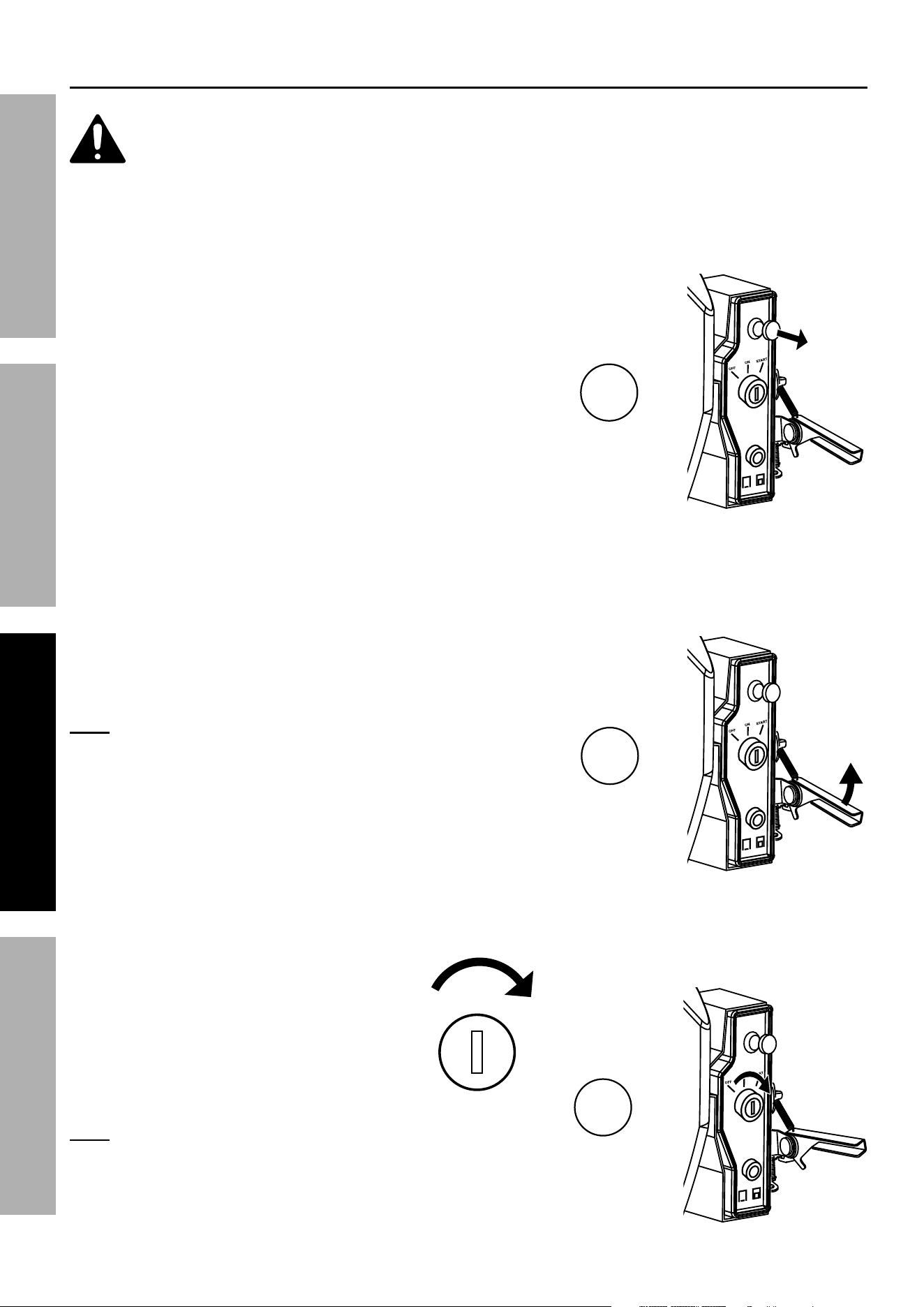
1. To start a cold engine, pull the Choke Knob out
to the START position.
To restart a warm engine, push the
Choke in to the RUN position.
2. Open the Fuel Valve, if equipped.
3. Slide the Throttle or Speed Control Lever to 1/3
away from the SLOW position (the “turtle”).
Note: Some tools have a Speed Control Lever located
elsewhere on the tool which functions the same as
the Throttle. Use the Speed Control Lever in place
of the Throttle when the tool is so equipped.
4. Insert the Key and turn it to START
until the engine starts,
no more than a few seconds.
Release the Key when the engine starts.
Note: If engine does not start, check engine oil level.
Engine will not start with low or no engine oil.
1
3
4
ON
OFF START
Page 19For technical questions, please call 1-888-866-5797.ITEM 61614
SAFETYOpERATIONMAINTENANCE SETUp
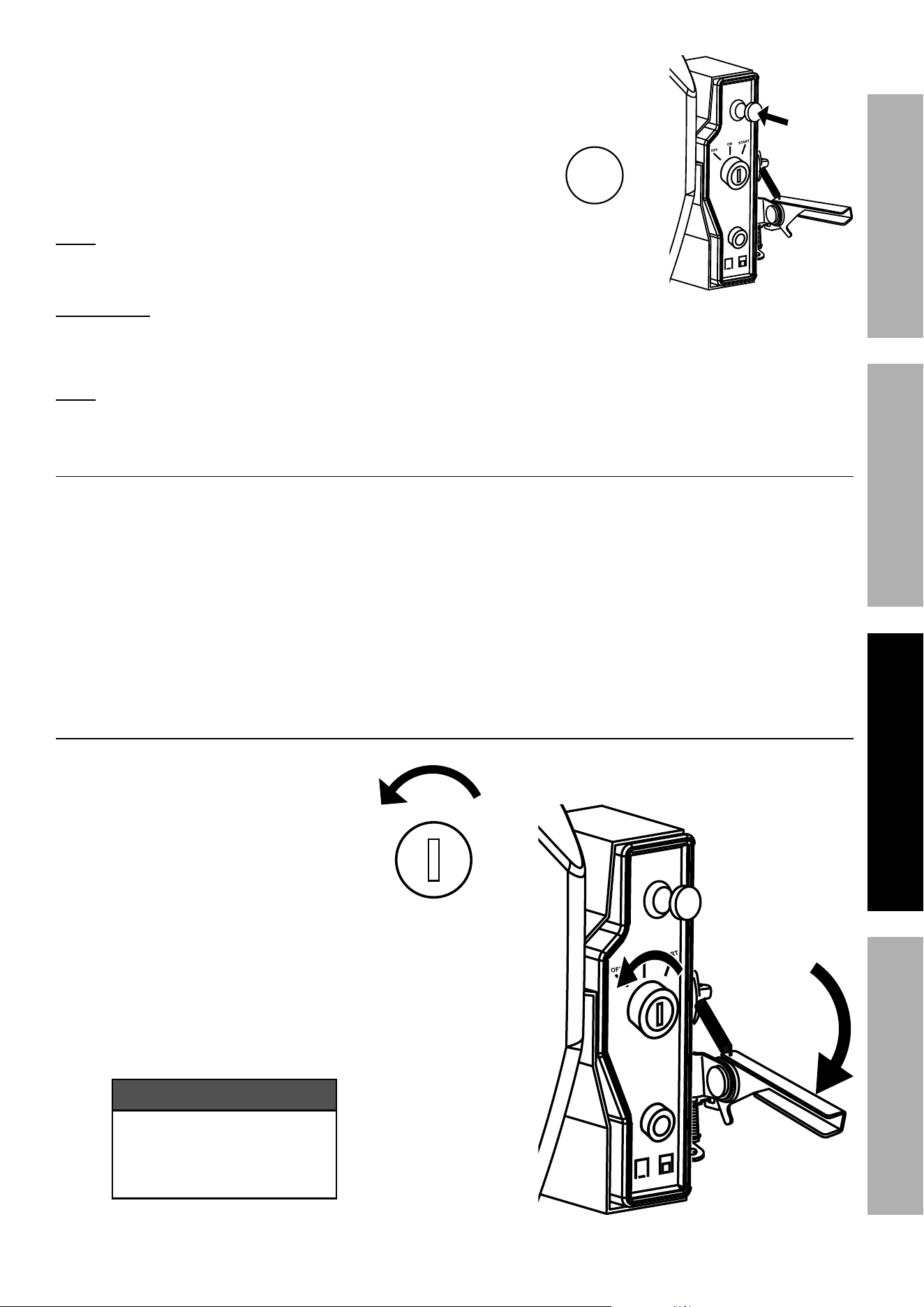
5. Allow the Engine to run for several seconds.
Then, if the Choke Knob is in
the pulled-out START position,
push the Choke Knob in very slowly
to its RUN position.
Note: Moving the Choke Knob too
fast could stall the engine.
IMpORTANT: Allow the engine to run at no load for five minutes
after each start-up so that the engine can stabilize.
6. Adjust the Throttle as needed.
Note: Adjust idle speed with the Idle Screw (located underneath the Air Filter beneath a rubber cover, see
Figure D on page 9). Actual idle speed depends on application. Refer to equipment manufacturer’s
recommendations. Running idle speed too low may result in performance issues, including excessive engine wear.
Break-in period:
a. Breaking-in the engine will help to ensure proper equipment and engine operation.
b. The operational break-in period will last about 3 hours of use. During this period:
• Do not apply a heavy load to the equipment.
• Do not operate the engine at its maximum speed.
c. The maintenance break-in period will last about 20 hours of use.
• Change the engine oil after this period.
Under normal operating conditions subsequent maintenance follows
the schedule explained in the MAINTENANCE section.
Stopping the Engine
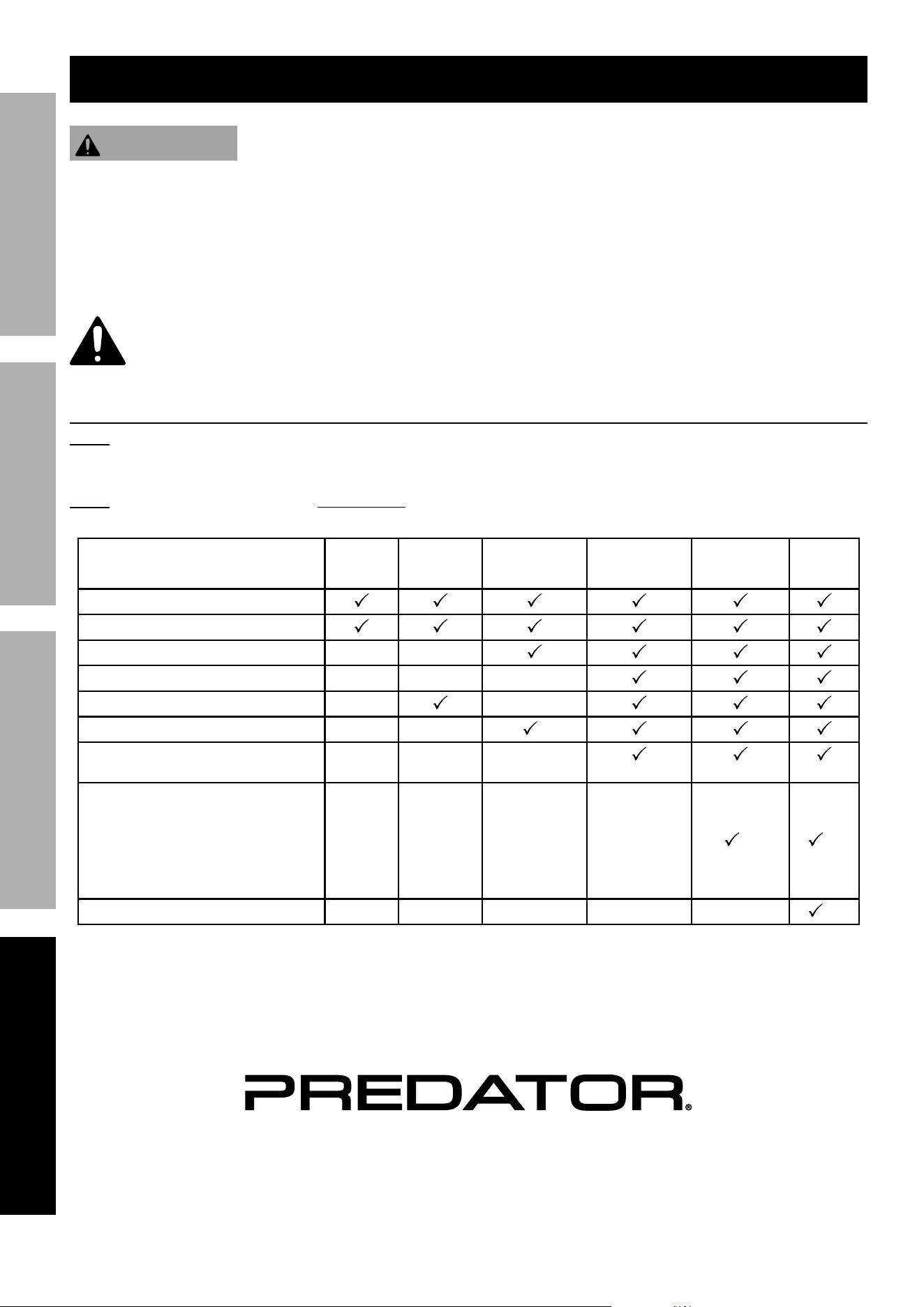
1. To stop the engine in an emergency,
turn the Key to OFF.
2. Under normal conditions, use the following procedure:
a. Slide the Throttle or Speed Control
Lever to SLOW (the “turtle”).
b. Turn the Key to OFF.
c. Close the Fuel Valve, if equipped.
NOTICE
Drain fuel at end of season
or warranty is void.
See Storage on page 23 for
complete storage instructions.
5
ON
OFF START
Page 20 For technical questions, please call 1-888-866-5797. ITEM 61614
SAFETY OpERATION MAINTENANCESETUp
Maintenance
WARNING
TO pREVENT SERIOUS INJURY FROM ACCIDENTAL STARTING:
Turn the power Switch of the equipment to its “OFF” position, wait for the engine to cool, and disconnect
the spark plug caps before performing any inspection, maintenance, or cleaning procedures.
TO pREVENT SERIOUS INJURY FROM EQUIpMENT FAILURE:
Do not use damaged equipment. If abnormal noise, vibration, or
excess smoking occurs, have the problem corrected before further use.
Follow all service instructions in this manual. The engine may fail critically if not serviced properly.
Many maintenance procedures, including any not detailed in this manual, will need to be performed
by a qualified technician for safety. If you have any doubts about your ability to safely service the
equipment or engine, have a qualified technician service the equipment instead.
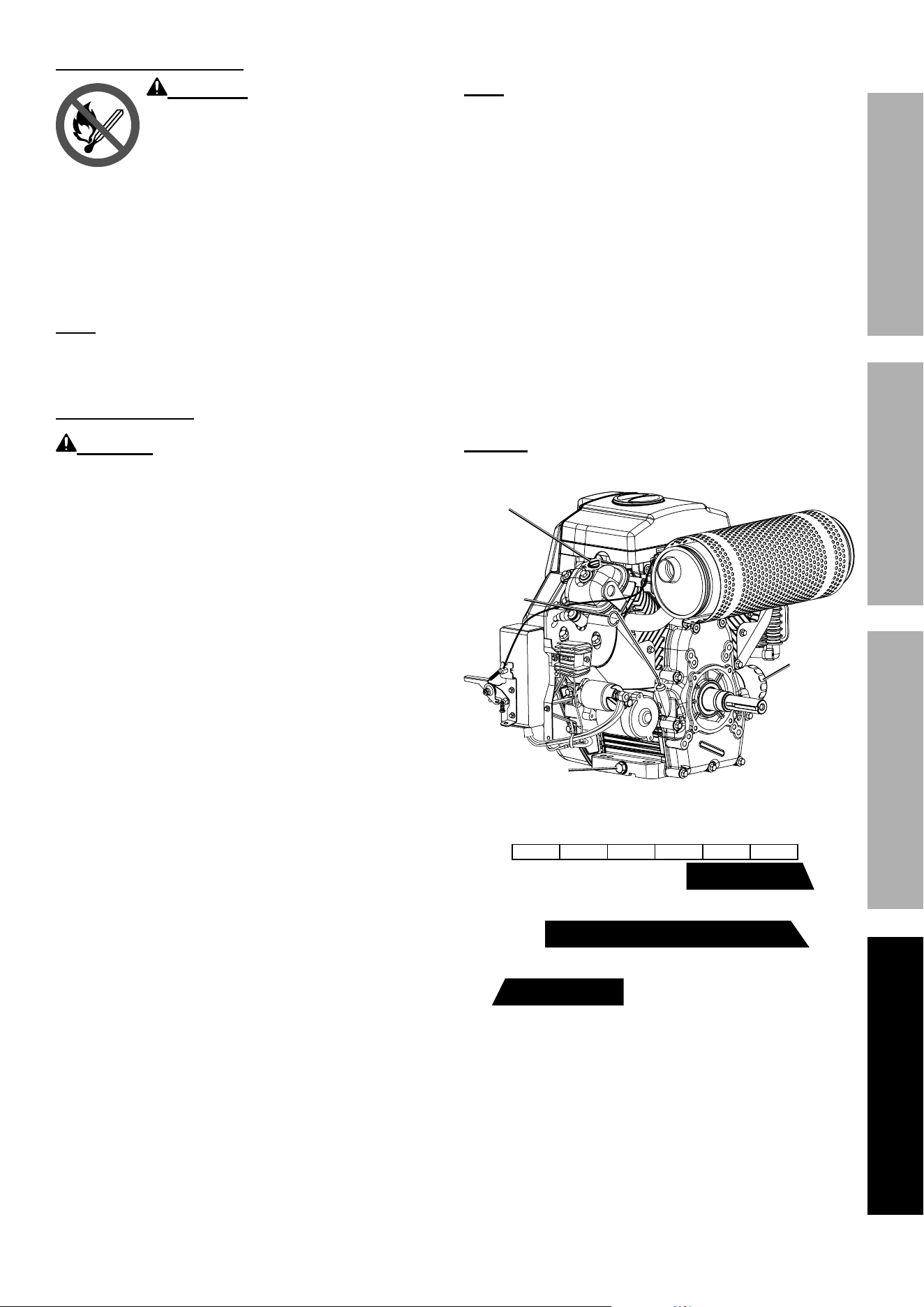
Cleaning, Maintenance, and Lubrication Schedule
Note: This maintenance schedule is intended solely as a general guide. If performance decreases or if
equipment operates unusually, check systems immediately. The maintenance needs of each piece of equipment
will differ depending on factors such as duty cycle, temperature, air quality, fuel quality, and other factors.
Note: The following procedures are in addition to the regular checks and maintenance
explained as part of the regular operation of the engine and equipment.
procedure
Before
Each Use
Monthly or
every 20
hr. of use
Every 3 mo. or
50 hr. of use
Every 6 mo. or
100 hr. of use
Yearly or
every 300
hr. of use
Every
2 Years
Brush off outside of engine
Check engine oil level
Check air cleaner
Check sediment cup
Change engine oil and oil filter
Clean/replace air filter
*
1. Check and clean spark plugs
2. Replace fuel filter.
1. Check/adjust idle speed
2. Check/adjust valve clearance
3. Clean fuel tank, strainer
and carburetor
4. Clean carbon build-up from
combustion chambers
** **
Replace fuel line if necessary
**
*Service more frequently when used in dusty areas.
**These items should be serviced by a qualified technician.
Page 21For technical questions, please call 1-888-866-5797.ITEM 61614
SAFETYOpERATIONMAINTENANCE SETUp
Checking and Filling Fuel
WARNING! TO pREVENT SERIOUS
INJURY FROM FIRE:
Fill the fuel tank in a well-ventilated area
away from ignition sources. If the engine
is hot from use, shut the engine off and
wait for it to cool before adding fuel. Do not smoke.
1. Clean the Fuel Cap and the area around it.
2. Unscrew and remove the Fuel Cap.
3. Remove the Strainer and remove any dirt
and debris. Then replace the Strainer.
Note: Do not use gasoline containing more than
10% ethanol (E10). Do not use E85 ethanol. Add fuel
stabilizer to the gasoline or the Warranty is VOID.
Note: Do not use gasoline that has been stored in a
metal fuel container or a dirty fuel container. It can
cause particles to enter the carburetor, affecting
engine performance and/or causing damage.
4. If needed, fill the Fuel Tank to about 1 inch under
the fill neck of the Fuel Tank with 87 octane or
higher unleaded gasoline that has been treated
with a fuel stabilizer additive. Follow fuel stabilizer
manufacturer’s recommendations for use.
5. Then replace the Fuel Cap.
6. Wipe up any spilled fuel and allow excess
to evaporate before starting engine.
To prevent FIRE, do not start the engine
while the smell of fuel hangs in the air.
Engine Oil Change
CAUTION! Oil is very hot during operation and can
cause burns. Wait for engine to cool before changing oil.
1. Make sure the engine is stopped and is level.
2. Close the Fuel Valve.
3. Place a drain pan (not included) underneath
the crankcase’s drain plug.
4. Remove the drain plug and, if possible,
tilt the crankcase slightly to help drain
the oil out. Recycle used oil.
5. Replace the drain plug and tighten it.
6. Move the drain pan underneath the Oil Filter.
7. Unthread and remove the Oil Filter. Allow the oil to
drain out of the filter completely before disposal.
8. Install a new Oil Filter of the same size and
type, either STP S4967 or Fram PH4967.
9. Clean the top of the Dipstick and the
area around it. Remove the Dipstick and
wipe it off with a clean, lint free rag.
10. Remove the Oil Fill Plug and add the appropriate
type of oil. Reinsert the Dipstick fully and
remove it to check the oil level. The oil level
should be up to the upper, FULL mark on the
dipstick. Refer to Figure T on page 16.
DO NOT OVERFILL pAST THE FULL MARK.
SAE 10W-30 oil is recommended for general use.
The SAE Viscosity Grade chart shows other
viscosities to use in different average temperatures.
11. Insert the Dipstick back into the housing.
NOTICE: Do not run the engine with too little oil.
Engine will not start with low or no engine oil.
Dipstick
Oil Fill plug
Oil Drain plug
Oil Filter
Figure V: Oil Drain and Oil Filter Location
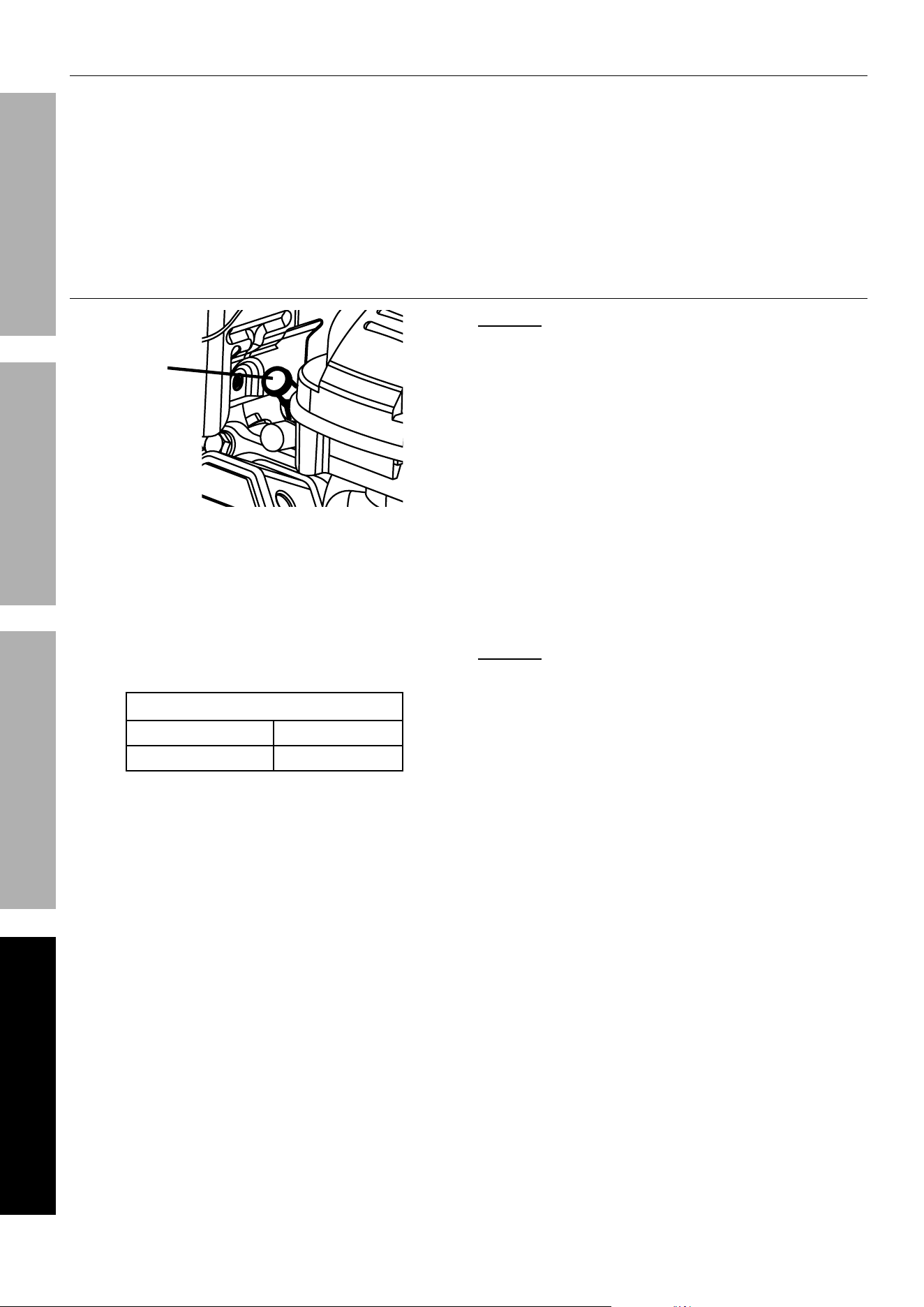
10W-30
30
5W-30
-20 0 20 40 60 80 100°F
SAE Viscosity Grades
Average outdoor temperature
Table B: SAE Viscosity Grade
Page 22 For technical questions, please call 1-888-866-5797. ITEM 61614
SAFETY OpERATION MAINTENANCESETUp
Air Filter Maintenance
1. Remove the Air Cleaner Top Cover and
the air filter elements and check for
dirt. Clean as described below.
2. Clean Paper Air Filter:
To prevent injury from dust and debris, wear
ANSI-approved safety goggles, NIOSH-approved
dust mask/respirator, and heavy-duty work gloves.
In a well-ventilated area away from bystanders,
use pressurized air to blow dust out of the Filter.
3. Clean Foam Air Filter:
Wash the Filter in warm water and mild
detergent several times. Rinse. Squeeze out
excess water and allow it to dry completely.
Soak the Filter in lightweight oil briefly,
then squeeze out the excess oil.
4. Install the cleaned filter. Secure the Air
Cleaner Top Cover before use.
Spark plug Maintenance
1.
Spark
plug
Cap
Disconnect spark plug caps from ends of plugs.
Clean out debris from around spark plugs.
2. Using a spark plug wrench, remove the spark plugs.
3. Inspect the spark plugs:
If the electrode(s) is oily, clean it using a clean,
dry rag. If the electrode(s) has deposits on it, polish
it using emery paper. If the white insulator is cracked
or chipped, the spark plug needs to be replaced.
Recommended Spark plugs
TORCH
®
F5RTC
NGK
®
BPR5ES
NOTICE: Using an incorrect spark plug
may damage the engine.
4. When installing a new spark plug(s),
adjust the plug’s gap to the specification on the
Specifications chart. Do not pry against the
electrode, the spark plug can be damaged.
5. Install the new spark plug(s) or
the cleaned spark plug(s) into the engine.
• Gasket-style:
Finger-tighten until the gasket
contacts the cylinder head,
then tighten about 1/2-2/3 turn more.
• Non-gasket-style:
Finger-tighten until the plug
contacts the cylinder head,
then tighten about 1/16 turn more.
NOTICE: Tighten the spark plugs properly.
If loose, the spark plugs will cause the
engine to overheat.
If overtightened, the threads in the
engine block will be damaged.
6. Apply dielectric spark plug boot protector
(not included) to the end of the spark plugs
and reattach the wires securely.
Page 23For technical questions, please call 1-888-866-5797.ITEM 61614
SAFETYOpERATIONMAINTENANCE SETUp
Storage
When the equipment is to remain idle for longer than
20 days, prepare the Engine for storage as follows:
1. CLEANING:
Wait for Engine to cool, then clean Engine with
dry cloth. NOTICE: Do not clean using water.
The water will gradually enter the Engine
and cause rust damage. Apply a thin coat
of rust preventive oil to all metal parts.
2. FUEL:
To protect the fuel tank during storage, fill the
tank with gasoline that has been treated with
a fuel stabilizer additive. Follow fuel stabilizer
manufacturer’s recommendations for use. Refer
to Checking and Filling Fuel on page 8.
WARNING! TO pREVENT SERIOUS
INJURY FROM FIRE:
Fill tank in a well-ventilated area away from
ignition sources. If the engine is hot from
use, shut the engine off and wait for it to
cool before adding fuel. Do not smoke.
3. LUBRICATION:
a. Change engine oil.
b. Clean out area around spark plug.
Remove spark plug and pour one tablespoon of
engine oil into cylinder through spark plug hole.
c. Replace spark plug, but leave
spark plug cap disconnected.
d. Pull Starter Handle to distribute oil in cylinder.
Stop after one or two revolutions when you
feel the piston start the compression stroke
(when you start to feel resistance).
4. BATTERY:
Disconnect battery cables (if equipped).
Recharge batteries monthly while in storage.
5. STORAGE AREA:
Cover and store in a dry, level, well-ventilated
area out of reach of children. Storage area should
also be away from ignition sources, such as
water heaters, clothes dryers, and furnaces.
NOTICE: During extended storage periods the
Engine must be started every 3 months and allowed
to run for 15 – 20 minutes or the Warranty is VOID.
6. AFTER STORAGE:
Before starting the Engine during or after
storage, keep in mind that untreated gasoline
will deteriorate quickly. Drain the fuel
tank and change to fresh fuel if untreated
gasoline has been sitting for a month, if
treated gasoline has been sitting beyond the
fuel stabilizer’s recommended time period,
or if the Engine does not start.
Page 24 For technical questions, please call 1-888-866-5797. ITEM 61614
SAFETY OpERATION MAINTENANCESETUp
Troubleshooting
problem possible Causes probable Solutions
Engine will not start
FUEL RELATED:
1. No fuel in tank or fuel valve closed.
2. Choke not in START position, cold engine.
3. Gasoline with more than 10% ethanol used.
(E15, E20, E85, etc.)
4. Low quality or deteriorated, old gasoline.
5. Carburetor not primed.
6. Dirty fuel passageways.
7. Carburetor needle stuck.
Fuel can be smelled in the air.
8. Too much fuel in chamber. This can be caused
by the carburetor needle sticking.
9. Clogged Fuel Filter.
FUEL RELATED:
1. Fill fuel tank with fresh 87+ octane stabilizer-
treated unleaded gasoline and open fuel
valve.
Do not use gasoline with more than
10% ethanol (E15, E20, E85, etc.).
2. Move Choke to START position.
3. Clean out ethanol rich gasoline from fuel
system. Replace components damaged by
ethanol. Use fresh 87+ octane stabilizer-
treated unleaded gasoline only.
Do not use gasoline with more than
10% ethanol (E15, E20, E85, etc.).
4. Use fresh 87+ octane stabilizer-treated
unleaded gasoline.
Do not use gasoline with more than
10% ethanol (E15, E20, E85, etc.).
5. Pull on Starter Handle to prime.
6. Clean out passageways using fuel additive.
Heavy deposits may require further cleaning.
7. Gently tap side of carburetor float
chamber with screwdriver handle.
8. Turn Choke to RUN position. Remove
spark plug and pull the start handle several
times to air out the chamber. Reinstall
spark plug and set Choke to START position.
9. Replace Fuel Filter.
IGNITION (SPARK) RELATED:
1. Spark plug cap not connected securely.
2. Spark plug electrode wet or dirty.
3. Incorrect spark plug gap.
4. Spark plug cap broken.
5. Circuit breaker tripped.
6. Incorrect spark timing or faulty ignition system.
IGNITION (SPARK) RELATED:
1. Connect spark plug cap properly.
2. Clean spark plug.
3. Correct spark plug gap.
4. Replace spark plug cap.
5. Reset circuit breaker. Check wiring and
starter motor if breaker continues to trip.
6. Have qualified technician diagnose/
repair ignition system.
COMPRESSION RELATED:
1. Cylinder not lubricated.
Problem after long storage periods.
2. Loose or broken spark plug.
(Hissing noise will occur
when trying to start.)
3. Loose cylinder head or damaged head gasket.
(Hissing noise will occur when trying to start.)
4. Engine valves or tappets mis-adjusted or stuck.
ENGINE OIL RELATED:
1. Low engine oil.
2. Engine mounted on slope,
triggering low oil shutdown.
COMPRESSION RELATED:
1. Pour tablespoon of oil into spark plug
hole. Crank engine a few times
and try to start again.
2. Tighten spark plug.
If that does not work, replace spark plug.
If problem persists, may have head
gasket problem, see #3.
3. Tighten head.
If that does not remedy problem,
replace head gasket.
4. Have qualified technician adjust/
repair valves and tappets.
ENGINE OIL RELATED:
1. Fill engine oil to proper level.
Check engine oil before EVERY use.
2. Operate engine on level surface.
Check engine oil level.
Follow all safety precautions whenever diagnosing or servicing the equipment or engine.
Page 25For technical questions, please call 1-888-866-5797.ITEM 61614
SAFETYOpERATIONMAINTENANCE SETUp
problem possible Causes probable Solutions
Engine misfires
1. Spark plug cap loose.
2. Incorrect spark plug gap or
damaged spark plug.
3. Defective spark plug cap.
4. Old or low quality gasoline.
5. Incorrect compression.
1. Check cap and wire connections.
2. Re-gap or replace spark plug.
3. Replace spark plug cap.
4. Use only fresh 87+ octane stabilizer-treated
unleaded gasoline.
Do not use gasoline with more than
10% ethanol (E15, E20, E85, etc.).
5. Diagnose and repair compression.
(Use Engine will not start:
COMpRESSION RELATED section.)
Engine stops
suddenly
1. Fuel tank empty or full of impure or low quality
gasoline.
2. Low oil shutdown.
3. Defective fuel tank cap creating vacuum,
preventing proper fuel flow.
4. Faulty magneto.
5. Disconnected or improperly
connected spark plug cap.
1. Fill fuel tank with fresh 87+ octane stabilizer-
treated unleaded gasoline.
Do not use gasoline with more than
10% ethanol (E15, E20, E85, etc.).
2. Fill engine oil to proper level.
Check engine oil before EVERY use.
3. Test/replace fuel tank cap.
4. Have qualified technician service magneto.
5. Secure spark plug cap.
Engine stops when
under heavy load
1. Dirty air filter
2. Engine running cold.
1. Clean element.
2. Allow engine to warm up prior
to operating equipment.
Engine knocks
1. Old or low quality gasoline.
2. Engine overloaded.
3. Incorrect spark timing, deposit buildup,
worn engine, or other mechanical problems.
1. Fill fuel tank with fresh 87+ octane stabilizer-
treated unleaded gasoline.
Do not use gasoline with more than
10% ethanol (E15, E20, E85, etc.).
2. Do not exceed equipment’s load rating.
3. Have qualified technician diagnose
and service engine.
Engine backfires
1. Impure or low quality gasoline.
2. Engine too cold.
3. Intake valve stuck or overheated engine.
4. Incorrect timing.
1. Fill fuel tank with fresh 87+ octane stabilizer-
treated unleaded gasoline.
Do not use gasoline with more than
10% ethanol (E15, E20, E85, etc.).
2. Use cold weather fuel and oil additives
to prevent backfiring.
3. Have qualified technician diagnose
and service engine.
4. Check engine timing.
After sudden
impact, engine will
run, but equipment
will not operate
Shaft key or other shear pin
broken by impact to disconnect
engine and limit damage.
Have qualified technician check and replace
broken shaft key or other shear pins.
Follow all safety precautions whenever diagnosing or servicing the equipment or engine.

Page 26 For technical questions, please call 1-888-866-5797. ITEM 61614
SAFETY OpERATION MAINTENANCESETUp
Warranties
Limited 90 Day Warranty (Retail)
Harbor Freight Tools Co. makes every effort to assure that its products meet high quality and durability standards,
and warrants to the original purchaser that this product is free from defects in materials and workmanship for the
period of 90 days from the date of purchase. This warranty does not apply to damage due directly or indirectly,
to misuse, abuse, negligence or accidents, repairs or alterations outside our facilities, criminal activity, improper
installation, normal wear and tear, or to lack of maintenance. We shall in no event be liable for death, injuries
to persons or property, or for incidental, contingent, special or consequential damages arising from the use of
our product. Some states do not allow the exclusion or limitation of incidental or consequential damages, so
the above limitation of exclusion may not apply to you. THIS WARRANTY IS EXPRESSLY IN LIEU OF ALL
OTHER WARRANTIES, EXPRESS OR IMPLIED, INCLUDING THE WARRANTIES OF MERCHANTABILITY
AND FITNESS, EXCEPT FOR THE EMISSIONS CONTROL SYSTEM WARRANTY BELOW.
To take advantage of this warranty, the product or part must be returned to us with transportation charges prepaid.
Proof of purchase date and an explanation of the complaint must accompany the merchandise. If our
inspection verifies the defect, we will either repair or replace the product at our election or we may elect to
refund the purchase price if we cannot readily and quickly provide you with a replacement. We will return
repaired products at our expense, but if we determine there is no defect, or that the defect resulted from
causes not within the scope of our warranty, then you must bear the cost of returning the product.
This warranty gives you specific legal rights and you may also have other rights which vary from state to state.
Emissions Control System Warranty
Harbor Freight Tools (HFT) is pleased to explain the emissions control system warranty on your Small Off-Road
Engine produced after January 1, [Model Year] (engine), in addition to the Retail Warranty above. HFT warrants that
the emissions control system on your engine is designed, built, and equipped so that it conforms to the United States
Environmental Protections Agency’s (EPA) emissions requirements in effect at the time of manufacture. HFT also
warrants that the emissions control system on your engine will be free from defects in material and workmanship for
two (2) years, provided there has been no improper maintenance, misuse, or abuse of your engine.
Your emissions control system may include parts such as the carburetor or fuel-injection system, and the ignition
system. Also included may be hoses, belts, connectors and other emissions-related assemblies.
WHAT WE WILL DO
Where a warrantable condition exists, HFT will repair or replace, at our option, any emissions-related part on your
engine if it becomes defective, malfunctions, or otherwise fails to conform with this warranty under normal use and
service during the two (2) year term of this warranty at no cost to you, including diagnosis, parts and labor. This war-
ranty applies to the original purchaser and any subsequent owner within the two year warranty period.
WHAT IS COVERED?
The following parts are examples of components of the emissions control system and are covered by this
two (2) year warranty. For a full list of emissions control components covered by this warranty, please see 40 CFR
§1068, Appendix I.
1. Fuel Metering System
a. Carburetor and its internal parts.
b. Fuel pump (if so equipped).
c. Cold start enrichment system.
2. Air Induction System
a. Intake pipe/manifold.
b. Air cleaner.
3. Ignition System
a. Spark plug.
b. Magneto ignition system.
4. Catalyst System (if so equipped)
a. Exhaust pipe stud.
b. Muffler.
c. Catalytic converter (if so equipped).
5. Miscellaneous Items Used in Above Systems
a. Vacuum, temperature and time sensitive valves
and switches.
b. Hoses, belts, connectors, and assemblies.
This warranty does not cover normal maintenance services or replacement of maintenance items such as filters,
oils, or spark plugs.

Page 27For technical questions, please call 1-888-866-5797.ITEM 61614
SAFETYOpERATIONMAINTENANCE SETUp
WHAT YOU MUST DO TO OBTAIN WARRANTY SERVICE
As the engine owner, you are responsible for the performance of the required maintenance listed in your Own-
er’s Manual. HFT may deny you warranty coverage if your engine or a part has failed due to abuse (including failure to
follow the fuel use instructions contained in this manual), neglect, improper maintenance, or unapproved modifications.
In order to obtain warranty repair or replacement, you may either (a) contact HFT product support at 1-888-866-5797
or [email protected]; or (b) bring the to your nearest Harbor Freight Tools retail store. When going to the
retail store or contacting product support, you must indicate the specific emissions control part or defect that you are
claiming and the date this was originally purchased. The nearest Harbor Freight Tools retail store can be found on the
internet at http://www.harborfreight.com.HFT warrants that the Environmental Protections Agency’s (EPA) emissions
requirements are in effect at the time of manufacture.
Page 28 For technical questions, please call 1-888-866-5797. ITEM 61614
SAFETY OpERATION MAINTENANCESETUp
parts Lists and Diagrams
parts List
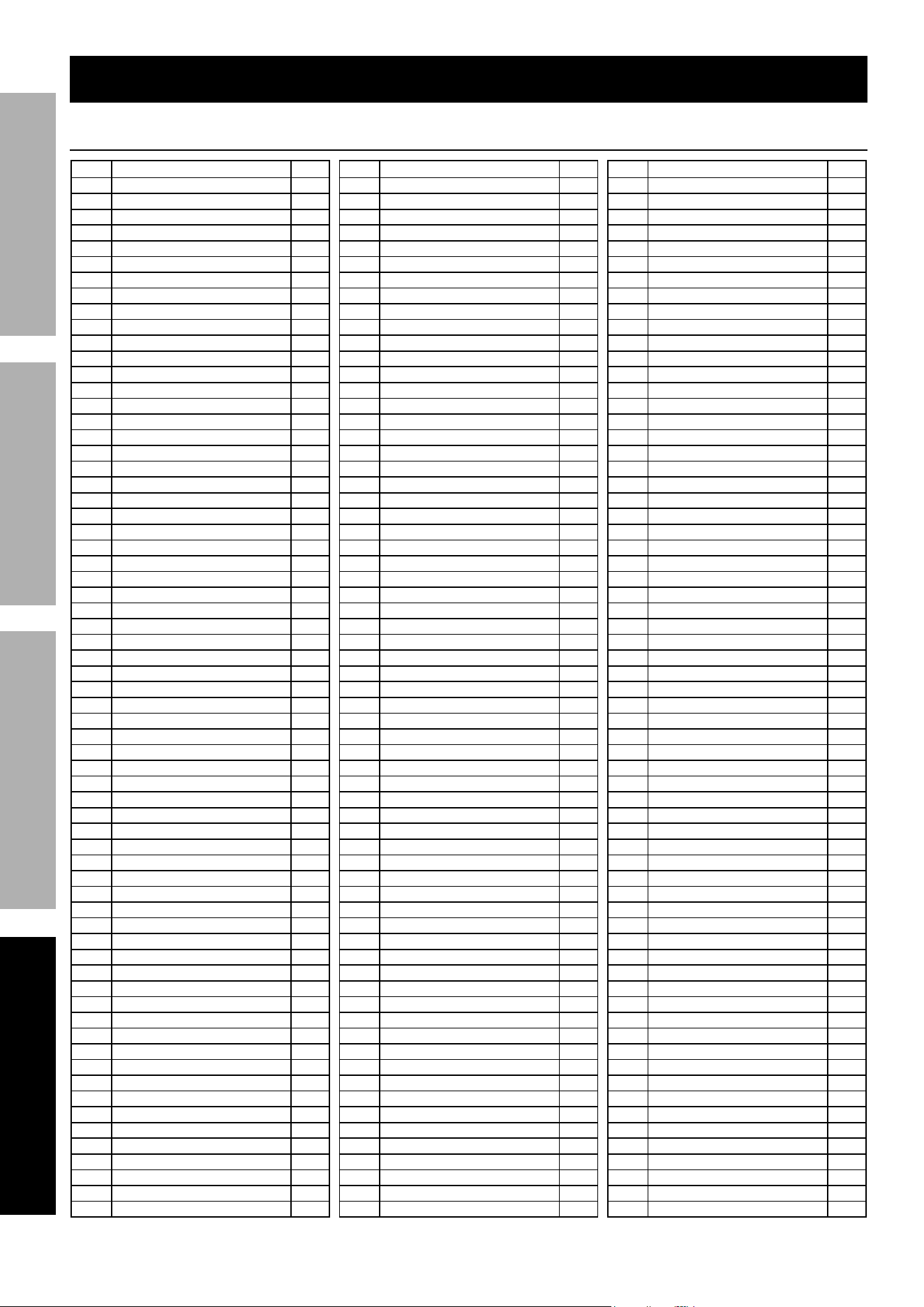
part Description Qty
1 Bolt, Cylinder Head Cover 2
2 Cover, Left Cylinder Head 1
3 Gasket, Cylinder Head Cover 2
4 Spark Plug 2
5 Bolt, Cylinder Head 8
6 Head, Left Cylinder 1
7 Head, Right Cylinder 1
8 Pin 4
9 Gasket, Cylinder Head 4
10 Metal Head Gasket 2
11 Stud 4
12 Stud 4
13 Cover, Right Cylinder Head 1
14 Oil Fill Plug 1
15 Oil Fill Plug Seal 1
16 Crankcase 1
17 Cotter Pin 2
18 Washer 3
19 Governor Arm 1
20 Oil Seal 1
21 Drain Plug 2
22 Washer 2
23 Oil Seal 1
24 Breather Separator 1
25 Breather Plate 1
26 Breather Gasket 1
27 Breather Gasket 1
28 Breather Cover 1
29 Clamp 1
30 Bolt 2
31 Bolt 2
32 Spring Wire Clamp 2
33 Breather Hose 1
34 Gasket, Inlet 2
35 Intake 1
36 Nut 4
37 Fuel Pump 1
38 Bolt 3
39 Fuel Pump Sleeve 2
40 Fuel Pump Bracket 1
41 Fuel Filter 1
42 Spring Clamp 5
43 Vacuum Hose 1
44 Vacuum Hose 1
45 Spring Clamp 2
46 Fuel Hose 1
47 Fuel/Oil Separator 1
48 Fuel Hose 1
49 Clamp 1
50 PCV Valve 1
51 Sensor, Engine Oil 1
52 Bolt 2
53 Bolt 7
54 Bolt 2
55 Crankcase Cover 1
56 Pin 2
57 Crankcase Gasket 1
58 Seal, Oil 1
59 Hose, Suction Oil 1
60 O-Ring 1
61 Bolt 2
62 Bolt 2
63 Pin 2
64 Oil Pump Asm. 1
65 Cover, Oil Pump 1
66 Spring, Pressure Relief Valve 1
part Description Qty
67 Ball, Steel 1
68 Strainer, Oil 1
69 Governor Gear Asm. 1
70 Dipstick, Oil 1
71 Gasket, Oil Pump 1
72 Crankshaft 1
73 Washer, Thrust 1
74 Rod, Connecting 2
75 Piston 2
76 Pin, Piston 2
77 Clip, Piston Pin 4
78 Primary Ring 2
79 Secondary Ring 2
80 Ring Set, Oil 2
81 Nut, Valve Lock 4
82 Bolt,Valve Adjusting 4
83 Rocker, Valve 4
84 Shaft, Valve Rocker 4
85 Lifter, Valve 4
86 Tappet, Valve 4
87 Seat, Valve Spring 4
88 Check Ring 4
89 Clamp, Valve Lock 8
90 Spring, Valve 4
91 Guide, Seal 4
92 Retainer, Valve Spring 4
93 Valve, Exhaust 2
94 Valve, Intake 2
95 Camshaft 1
96 Washer, Camshaft 1
97 Shield, Shroud 1
98 Bolt 3
99 Shroud Nut 4
100 Shroud 1
101 Air Cleaner Front Cover 1
102 Air Cleaner Front Knob 2
103 Shroud 2, Cylinder Body 1
104 Diode 1
105 Shroud, Cylinder Body 1
106 Shield, Lower 1
107 Bolt 13
108 Plug, End 1
109 Shield, Crankcase Side 1
110 Bolt, Flange Shoulder 1
111 Lifting Bracket 2
112 Flange Shoulder Bolt 2
113 Right Lower Cover 1
114 Right Shield 1
115 Gasket, Oil Filter Cover 1
116 Oil Filter Block 1
117 Ring, Seal 1
118 Hose, Oil Filter Installation 1
119 Oil Filter 1
120 Washer, Flat 2
121 Cooling Pipe Adapter 2
122 Clamp 4
123 Cooling Pipe 1
124 Cooling Pipe 1
125 Radiator 1
126 Bolt 2
127 Voltage Regulator Insulator 1
128 Regulator, Voltage 1
129 Gasket, Carburetor 3
130 Gasket, Carburetor Insulator 1
131 Carburetor Intake Elbow 1
132 Bolt 2
part Description Qty
133 Bolt 1
134 O-ring 1
135 Air Cleaner Connector 1
136 Bolt 4
137 Carburetor Asm. 1
137a Carburetor Drain Plug 1
137b Carburetor Bowl Bolt 4
137c Carburetor Bowl 1
137d Outer Bowl O-ring 2
137e Inner Bowl O-ring 2
138 Solenoid Valve 1
139 Throttle Rod Clip 1
140 Spring Clamp 1
141 Fuel Hose 1
142 Air Cleaner Asm. 1
142a Air Cleaner Top Knob 1
142b Air Cleaner Top Cover 1
142c Air Cleaner Spacer 1
142d Foam Air Filter 1
142e Paper Air Filter 1
142f Air Cleaner Gasket 1
142g Air Cleaner Base Asm. 1
143 Intake Cover Bolt 2
144 Intake Cover 1
145 Intake Screen 1
146 Air Cleaner Base Bolt 2
147 Fuel Filter Clip 1
148 Coil, Ignition 1
149 Coil, Ignition 1
150 Bolt 2
151 Stud 2
152 Stud 2
153 Coil, Charge 1
154 Bolt 6
155 Flywheel 1
156 Gasket 1
157 Bolt, Flywheel 1
158 Impeller 1
159 Tray, Impeller Setting 1
160 Bolt 3
161 Protector, Oil 1
162 Bolt 1
163 Pin 2
164 Starter 1
165 Bolt 2
166 Control, Throttle Asm. 1
167 Control, Throttle Asm. 1
168 Spring, Governor 1
169 Bolt 2
170 Spring, Governor 1
171 Nut 2
172 Bolt, Governor Support 1
173 Throttle Support 1
174 Throttle Rod 1
175 Throttle Rod Spring 1
176 Choke Rod Clip 1
177 Choke Rod 1
179 Throttle Cable 1
180 Motor Control Box 1
181 Control Box Support 1
182 Bolt 2
183 Muffler Asm. 1
184 Nut 4
185 Bolt 2
186 Gasket, Exhaust Outlet 2
187 Spark Collector 1
Page 29For technical questions, please call 1-888-866-5797.ITEM 61614
SAFETYOpERATIONMAINTENANCE SETUp
Record product’s Serial Number Here:
Note: If product has no serial number,
record month and year of purchase instead.
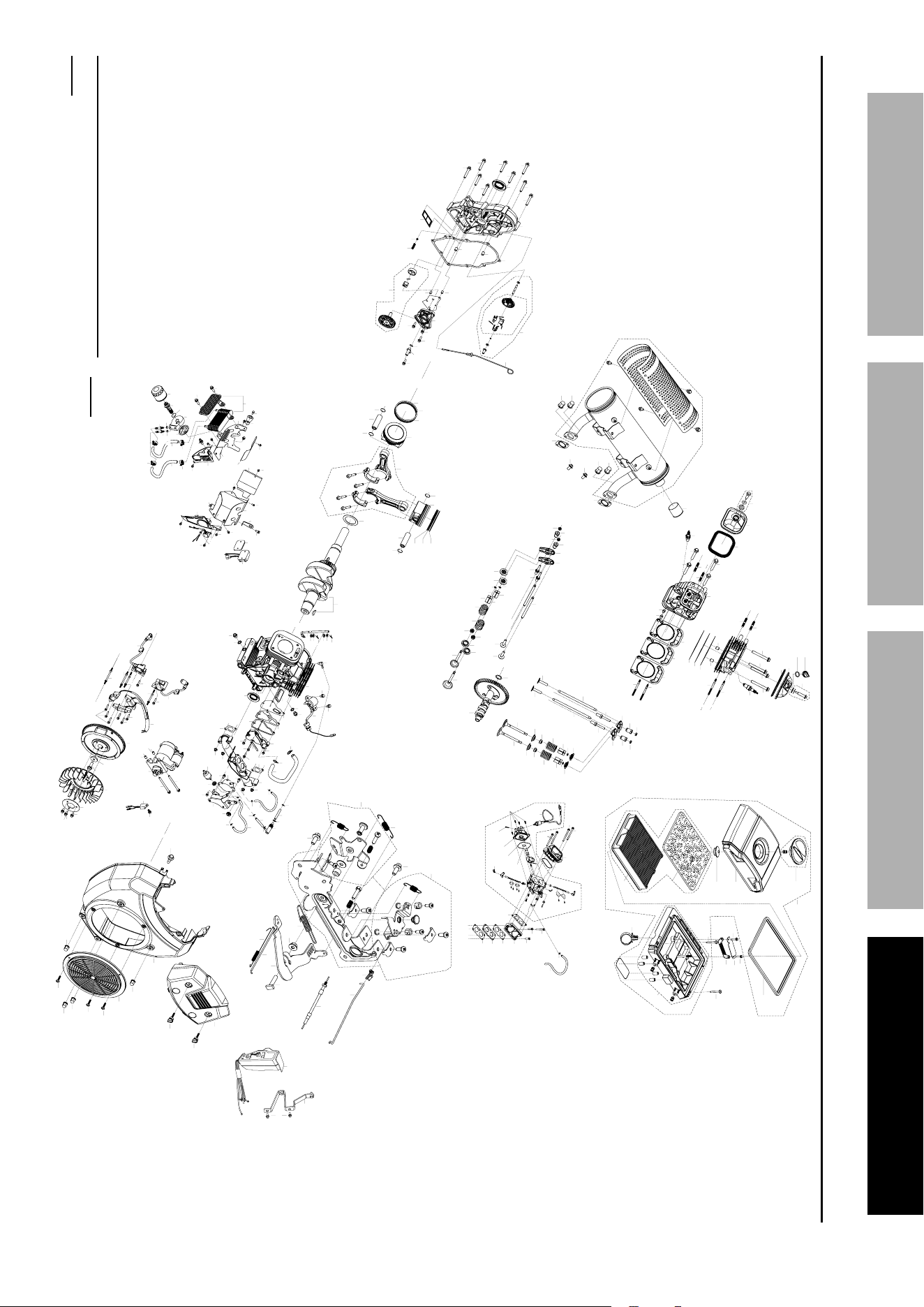
Assembly Diagram
78
72
73
75
76
77
77
74
76
77
77
75
78
79
80
79
80
16
17
18
19
17
18
18
50
23
24
20
22
21
22
21
51
52
52
26
25
27
32
43
28
30
32
33
42
31
30
29
31
36
35
3636
4949
36
36
34
3737
3838
38
38
39
41
39
40
42
42
48
34
4242
46
45
44
47
42
45
54
54
53
53
53
53
53
53
53
58
59
60
56
55
56
57
65
62
64
66
67
68
61
63
63
69
62
61
70
71
184
185
185
186
186
183
184
184
184
142142a
142b
142c
142d
142e
142f
142g
146
146
147
129
129
130
129
131
132
132
133
136
134
135
136
136
137
138
139
137a
137b
137c
137d
137e
149
148
150
150
151151
151
152
152
153
154
154
154
155
156
157
158
159
160
160
165
163
165
163
164
160
161
162
98
98
98
99
99
99
99
100
101
97
102
102
82
82
81
81
85
86
86
81
82
83
81
82
83
84
84
87
90
91
85
85
86
86
87
90
91
94
92
93
95
84
84
85
83
83
87
87
96
92
91
91
92
94
93
90
90
92
169
169
166
168
170
171
172
174
175
173
177
176
167
2
1
3
4
5
5
6
8
8
5
11
11
9
5
12
12
3
1
13
14
5
4
7
11
5
5
5
8
8
9
11
12
12
9
10
9
10
116
107
105
119
106
111
110
109
107
118
111
103
112
112
107
107
113
114
107
107
107
107
126
126
121
121
124
123
122
122
115
122
120120
120
125
117
128
127
108
107
180
181
179
89
89
89
89
89
89
122
143
143
144
145
15
88
88
88
88
140
141
182
187
104104
Note: Some parts are listed and shown
for illustration purposes only, and are
not available individually as replacement
parts. Specify UPC 193175469304
when ordering parts.
Page 30 For technical questions, please call 1-888-866-5797. ITEM 61614
SAFETY OpERATION MAINTENANCESETUp
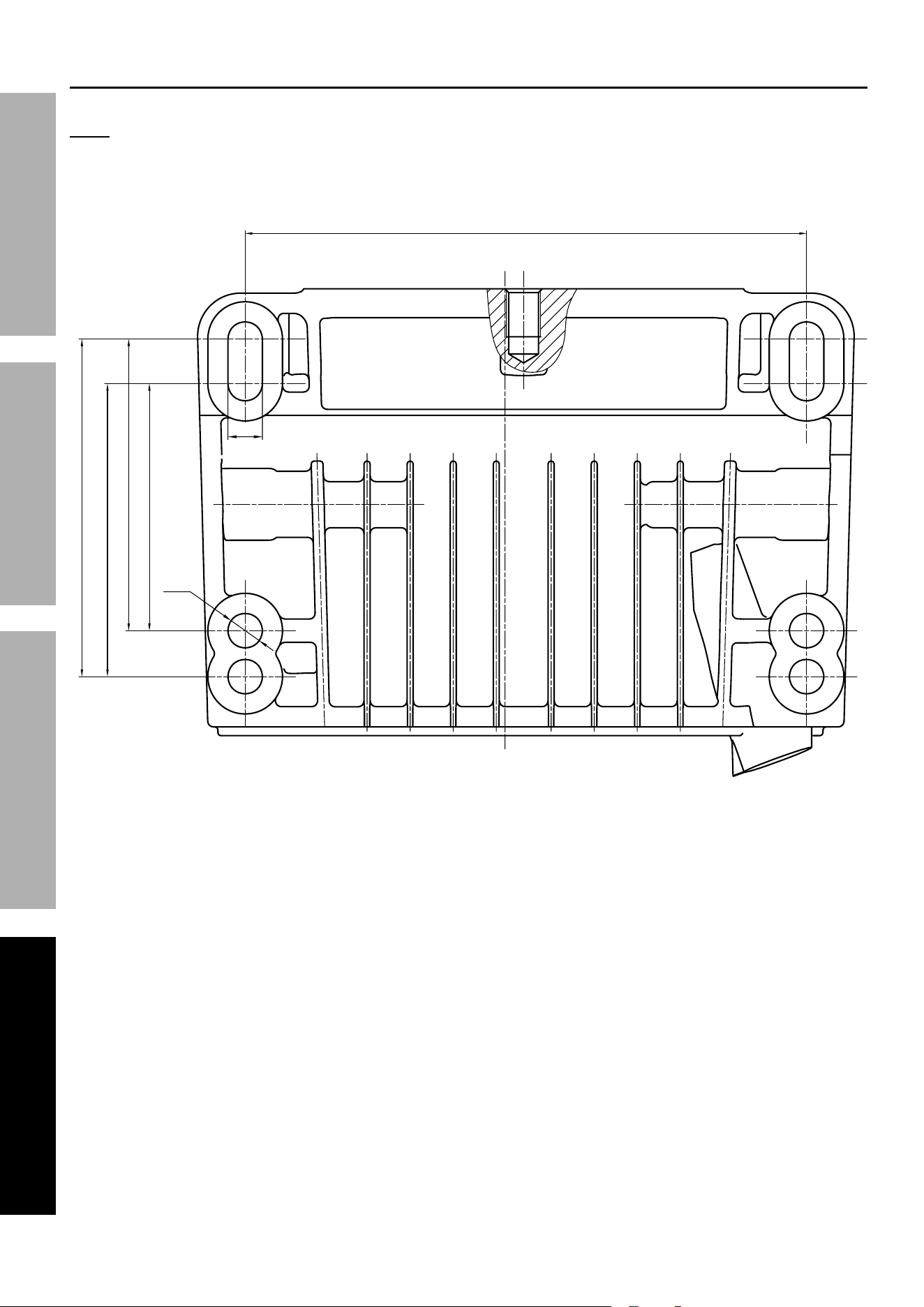
Mounting Hole Diagram
Note: Not to scale.
7.7" / 195.5mm
4.625" / 117.5mm
2x 0.47" / 12mm2x 0.47" / 12mm
~4" / 102mm
4" / 101.5mm
3.375" / 86mm
4x
0.47" / 0.47" /
12mm12mm
Page 31For technical questions, please call 1-888-866-5797.ITEM 61614
SAFETYOpERATIONMAINTENANCE SETUp
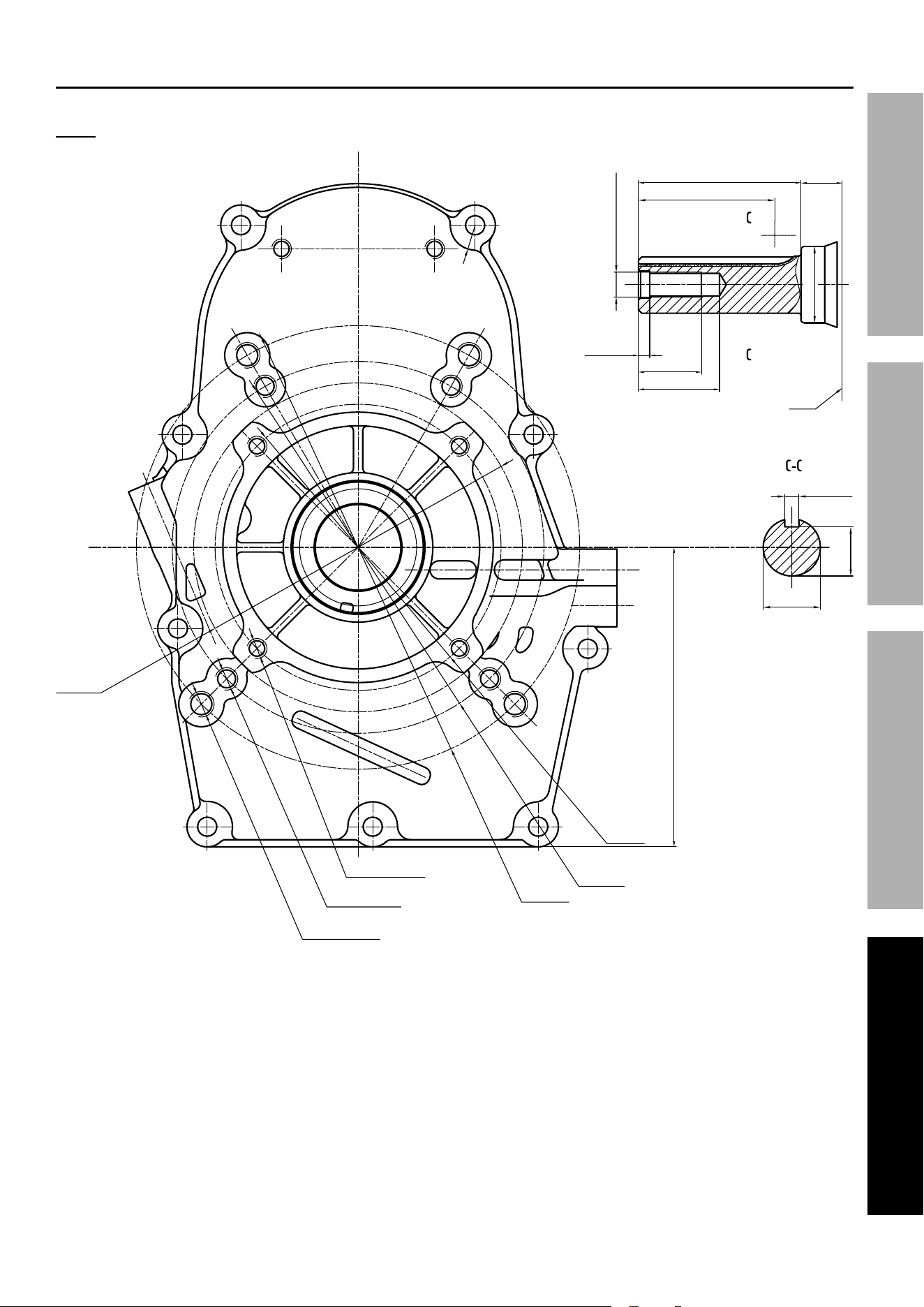
power Take-Off Diagram
Note: Not to scale.
9x 0.43"
/ 11mm
Ø5.75" /
146mm
Ø7.75" /
196.9mm
Ø6.5" /
165.1mm
Ø5" /
127mm
5.3" / 135mm
1" / 25.4mm
0.86" /
21.8mm
0.25" / 6.3mm
0.2" / 5mm
3/8" - 24UNF
1.1" / 28mm
1.4" / 36mm
2.375" / 60.5mm
1.3" / 34mm
2.84" / 72.2mm
0.72" /
18.3mm
pTO
4x 7/16" - 14UNC
4x 3/8" - 16UNC
4x 5/16" - 24UNF

26677 Agoura Road • Calabasas, CA 91302 • 1-888-866-5797
pLEASE READ THE FOLLOWING CAREFULLY
THE MANUFACTURER AND/OR DISTRIBUTOR HAS PROVIDED THE PARTS LIST AND ASSEMBLY DIAGRAM
IN THIS MANUAL AS A REFERENCE TOOL ONLY. NEITHER THE MANUFACTURER OR DISTRIBUTOR
MAKES ANY REPRESENTATION OR WARRANTY OF ANY KIND TO THE BUYER THAT HE OR SHE IS
QUALIFIED TO MAKE ANY REPAIRS TO THE PRODUCT, OR THAT HE OR SHE IS QUALIFIED TO REPLACE
ANY PARTS OF THE PRODUCT. IN FACT, THE MANUFACTURER AND/OR DISTRIBUTOR EXPRESSLY
STATES THAT ALL REPAIRS AND PARTS REPLACEMENTS SHOULD BE UNDERTAKEN BY CERTIFIED AND
LICENSED TECHNICIANS, AND NOT BY THE BUYER. THE BUYER ASSUMES ALL RISK AND LIABILITY
ARISING OUT OF HIS OR HER REPAIRS TO THE ORIGINAL PRODUCT OR REPLACEMENT PARTS
THERETO, OR ARISING OUT OF HIS OR HER INSTALLATION OF REPLACEMENT PARTS THERETO.