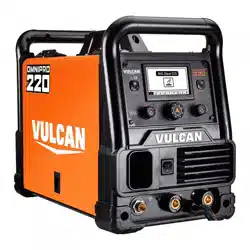
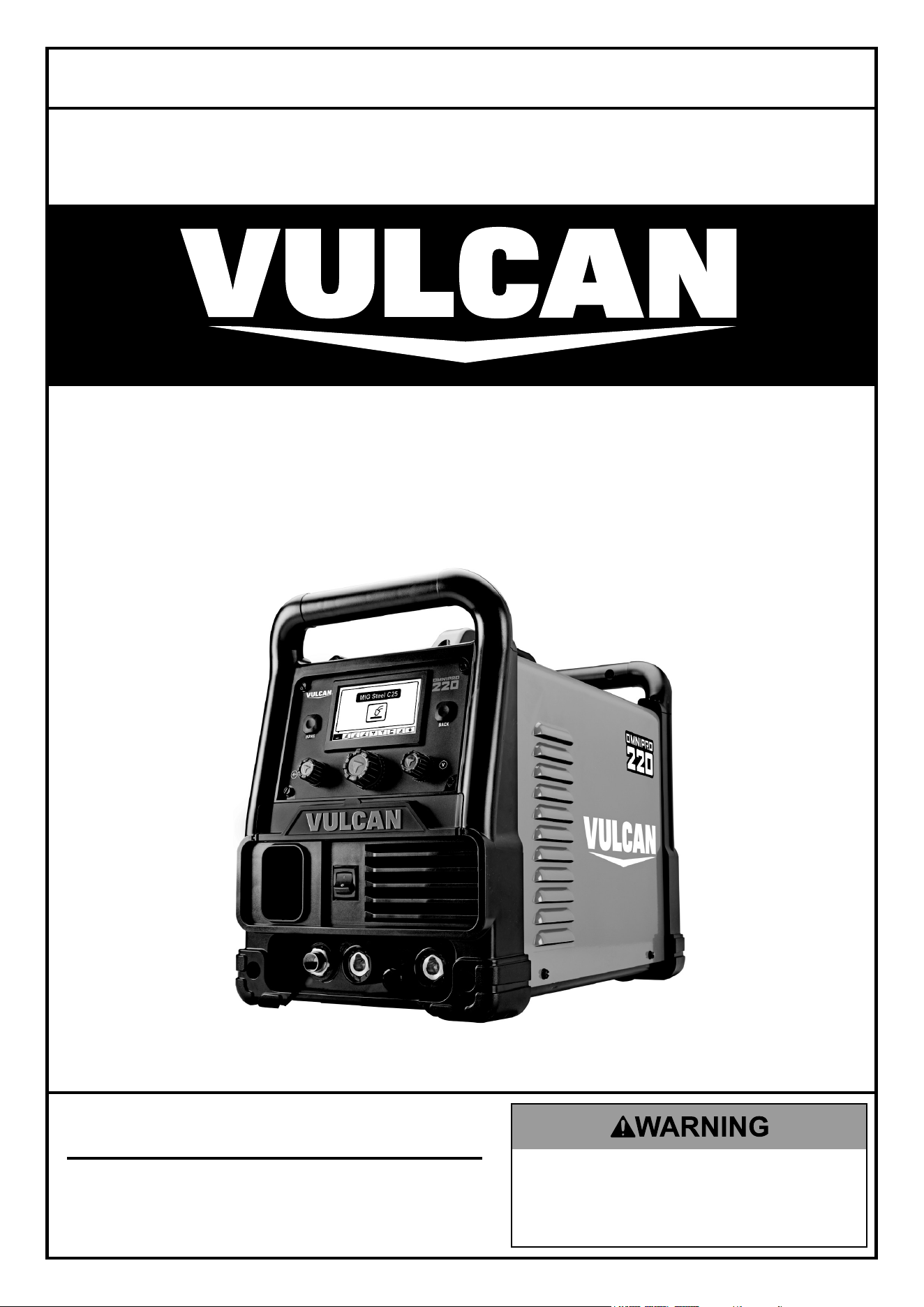
OMNIPRO 220
MULTIPROCESS WELDING SYSTEM
Visit our website at: https://www.harborfreight.com
email our technical support at: [email protected]
®
57812
Owner’s Manual & Safety Instructions
Save This Manual Keep this manual for the safety warnings and precautions, assembly,
operating, inspection, maintenance and cleaning procedures. Write the product’s Date Code in the back of
the manual (or month and year of purchase if product has no number). Keep this manual and the receipt in
a safe and dry place for future reference. 25e
When unpacking, make sure that the product is intact
and undamaged. If any parts are missing or broken,
please call 1-800-444-3353 as soon as possible.
Copyright
©
2022 by Harbor Freight Tools
®
. All rights reserved.
No portion of this manual or any artwork contained herein may be reproduced in
any shape or form without the express written consent of Harbor Freight Tools.
Diagrams within this manual may not be drawn proportionally. Due to continuing
improvements, actual product may differ slightly from the product described herein.
Tools required for assembly and service may not be included.
Read this material before using this product.
Failure to do so can result in serious injury.
SAVE THIS MANUAL.
Page 2 For technical questions, please call 1-800-444-3353. Item 57812
SaFety
Welding tipS
tig / Stick
cOntROlS
WiRe
Maintenance
table of contents
Safety ........................................................................2
Specifications ............................................................7
Controls .....................................................................8
MIG / Flux-Cored Wire Welding .................................10
TIG / Stick Welding ....................................................24
Welding Tips .............................................................34
Maintenance .............................................................41
Parts List and Diagram .............................................46
Warranty ...................................................................48
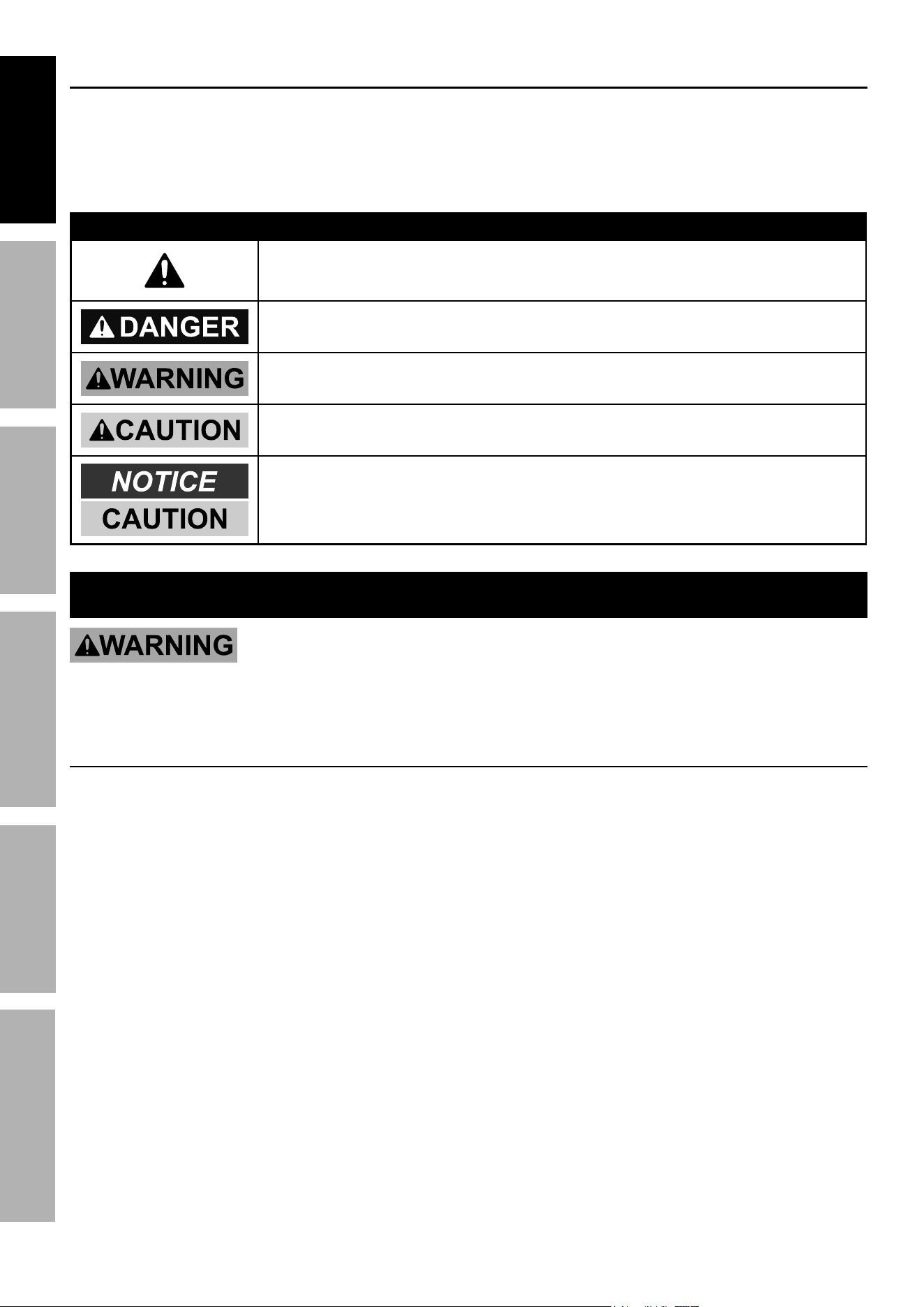
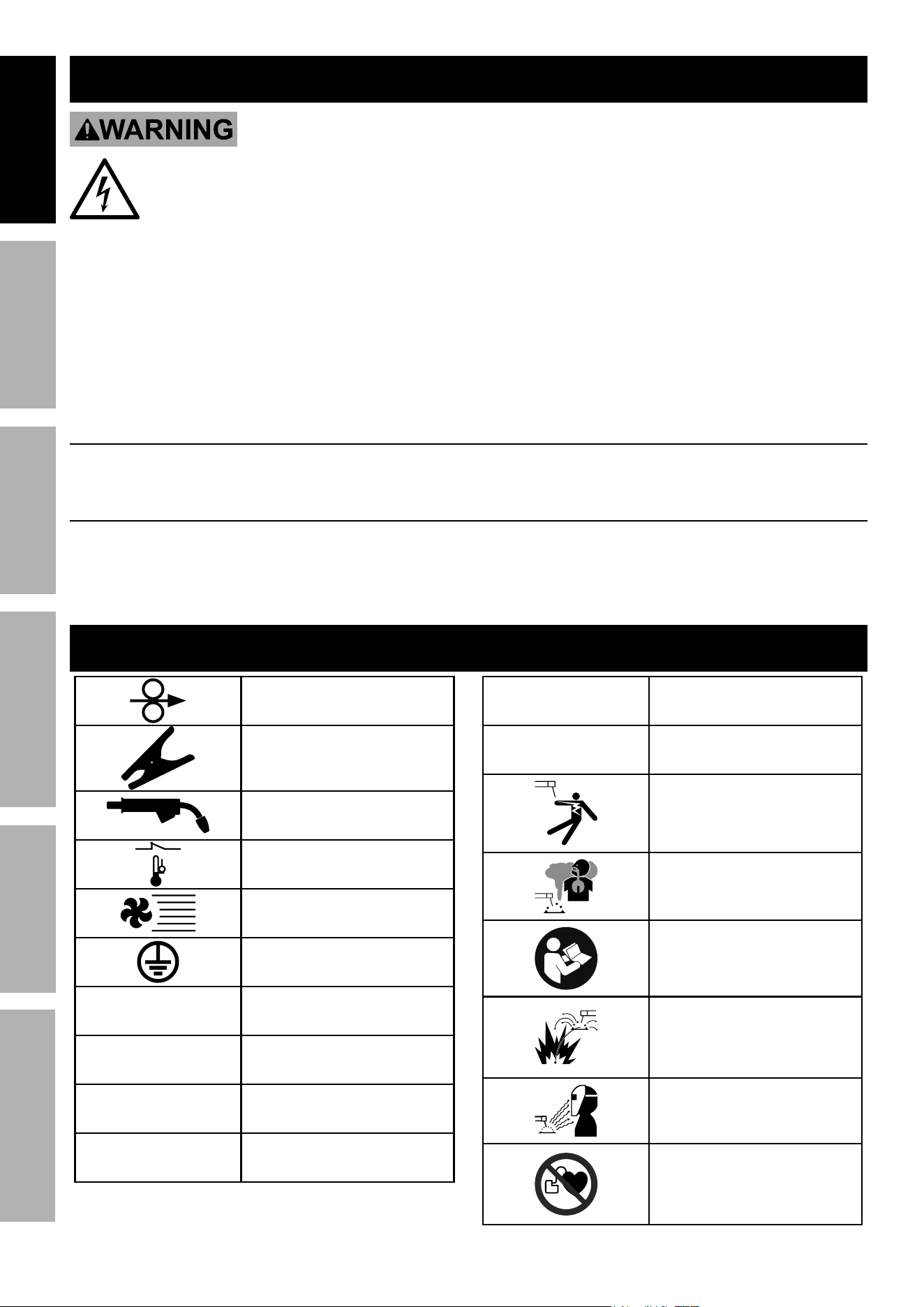
WaRning SyMBOlS and deFinitiOnS
This is the Safety alert symbol. It is used to alert you to potential
personal injury hazards. Obey all Safety messages that
follow this symbol to avoid possible injury or death.
Indicates a hazardous situation which, if not avoided,
will result in death or serious injury.
Indicates a hazardous situation which, if not avoided,
could result in death or serious injury.
Indicates a hazardous situation which, if not avoided,
could result in minor or moderate injury.
Addresses practices not related to personal injury.
iMpORtant SaFety inFORMatiOn
Read all Safety warnings and instructions.
Failure to follow the warnings and instructions may result in electric shock, fire and/or serious injury.
Save all warnings and instructions for future reference.
general Safety
pROtect yourself and others. Read and understand this information.
1. Before use, read and understand
manufacturer′s instructions,
Material Safety Data Sheets (MSDS′s),
employer′s Safety practices, and ANSI Z49.1.
2. keep out of reach of children.
Keep children and bystanders away while operating.
3. place the welder on a stable location before use.
If it falls while plugged in, severe injury,
electric shock, or fire may result.
4. do not overreach.
keep proper footing and balance at all times.
5. Stay alert, watch what you are doing and use
common sense when operating a welder.
do not use a welder while you are tired or under
the influence of drugs, alcohol or medication.
A moment of inattention while operating welders
may result in serious personal injury.
6. avoid unintentional starting. Make sure you are
prepared to begin work before turning on the Welder.
7. never leave the Welder unattended while
energized. Turn power off if you have to leave.
8. the warnings, precautions, and instructions
discussed in this instruction manual cannot
cover all possible conditions and situations
that may occur. It must be understood by the
operator that common sense and caution are
factors which cannot be built into this product,
but must be supplied by the operator.
Page 3For technical questions, please call 1-800-444-3353.Item 57812
SaFety
Welding tipS
Maintenance
tig / Stick cOntROlSWiRe
Fume and gas Safety
INHALATION HAZARD:
Welding and plasma cutting produce toxic fumes.
1. exposure to welding or cutting exhaust
fumes can increase the risk of developing
certain cancers, such as cancer of the
larynx and lung cancer. Also, some diseases
that may be linked to exposure to welding
or plasma cutting exhaust fumes are:
• Early onset of Parkinson’s Disease
• Heart disease
• Ulcers
• Damage to the reproductive organs
• Inflammation of the small intestine or stomach
• Kidney damage
• Respiratory diseases such as
emphysema, bronchitis, or pneumonia
Use natural or forced air ventilation and wear
a respirator approved by NIOSH to protect
against the fumes produced to reduce the
risk of developing the above illnesses.
2. do not use near degreasing or
painting operations.
3. keep head out of fumes.
Do not breathe exhaust fumes.
4. Use enough ventilation, exhaust at arc, or
both, to keep fumes and gases from breathing
zone and general area. If engineering controls
are not feasible, use an approved respirator.
5. Work in a confined area only if it
is well-ventilated, or while wearing
an air-supplied respirator.
6. Have a recognized specialist in
industrial Hygiene or environmental Services
check the operation and air quality
and make recommendations
for the specific welding situation.
Follow OSHA guidelines for
Permissible Exposure Limits (PEL’s) and
the American Conference of Governmental
Industrial Hygienists recommendations for
Threshold Limit Values (TLV’s) for fumes and gases.
arc Ray Safety
aRc RayS can injure eyes and burn skin.
1. Wear anSi-approved welding eye protection
featuring at least a number 10 shade lens rating.
2. Wear leather leggings, fire resistant shoes
or boots during use. Do not wear pants with
cuffs, shirts with open pockets, or any clothing
that can catch and hold molten metal or sparks.
3. keep clothing free of grease, oil,
solvents, or any flammable substances.
Wear dry, insulating gloves and protective clothing.
4. Wear an approved head covering to protect
the head and neck. Use aprons, cape, sleeves,
shoulder covers, and bibs designed and
approved for welding and cutting procedures.
5. Wear an approved welding jacket or long sleeves
to protect forearms from radiation burns.
6. When welding/cutting overhead or in confined
spaces, wear flame resistant ear plugs or
ear muffs to keep sparks out of ears.
Page 4 For technical questions, please call 1-800-444-3353. Item 57812
SaFety
Welding tipS
tig / Stick
cOntROlS
WiRe
Maintenance
electrical Safety
electRic SHOck can kill.
1. turn off, disconnect power, and
discharge electrode to ground before setting
down torch/electrode holder and before service.
2. do not touch energized electrical parts.
Wear dry, insulating gloves. Do not touch electrode
holder, electrode, welding torch, or welding wire with
bare hand. Do not wear wet or damaged gloves.
3. connect to grounded, gFci-protected
power supply only.
4. do not use near water or damp objects.
5. people with pacemakers should consult their
physician(s) before use. Electromagnetic fields
in close proximity to heart pacemaker could cause
pacemaker interference or pacemaker failure.
6. do not expose welders to rain or wet conditions.
Water entering a welder will increase
the risk of electric shock.
7. do not abuse the cord. never use the cord
for carrying, pulling or unplugging the welder.
keep cord away from heat, oil, sharp edges
or moving parts. Damaged or entangled
cords increase the risk of electric shock.
8. do not use outdoors.
9. insulate yourself from the workpiece and
ground. Use nonflammable, dry insulating
material if possible, or use dry rubber mats,
dry wood or plywood, or other dry insulating
material large enough to cover your full
area of contact with the work or ground.
10. tHiS Welding MacHine MUSt Be
cOnnected tO pOWeR SOURce in
accORdance WitH applicaBle
electRical cOdeS.
Fire Safety
aRc and Slag can cause fire.
1. clear away or protect flammable objects.
Remove or make safe all combustible materials for a
radius of 35 feet (10 meters) around the work area.
Use a fire resistant material to cover
or block all open doorways, windows,
cracks, and other openings.
2. keep aBc-type fire extinguisher near
work area and know how to use it.
3. Maintain a safe working environment.
Keep the work area well lit.
Make sure there is adequate
surrounding workspace. Keep the work area free
of obstructions, grease, oil, trash, and other debris.
4. do not operate welders in atmospheres
containing dangerously reactive or
flammable liquids, gases, vapors, or dust.
Provide adequate ventilation in work areas
to prevent accumulation of such substances.
Welders create sparks which may ignite flammable
substances or make reactive fumes toxic.
5. if working on a metal wall, ceiling, etc.,
prevent ignition of combustibles on the
other side by moving the combustibles to a
safe location. If relocation of combustibles is
not possible, designate someone to serve as
a fire watch, equipped with a fire extinguisher,
during the cutting process and for at least one
half hour after the cutting is completed.
6. do not weld or cut on materials having
a combustible coating or combustible
internal structure, as in walls or ceilings, without
an approved method for eliminating the hazard.
7. do not dispose of hot slag in containers
holding combustible materials.
8. after welding, make a thorough examination
for evidence of fire. Be aware that easily
visible smoke or flame may not be present
for some time after the fire has started.
9. do not apply heat to a container that has held
an unknown substance or a combustible
material whose contents, when heated,
can produce flammable or explosive vapors.
Clean and purge containers before applying heat.
Vent closed containers, including castings,
before preheating, welding, or cutting.
Page 5For technical questions, please call 1-800-444-3353.Item 57812
SaFety
Welding tipS
Maintenance
tig / Stick cOntROlSWiRe
Welder Use and care
1. do not use the welder if the switch does not turn
it on and off. Any welder that cannot be controlled
with the switch is dangerous and must be repaired.
2. disconnect the plug from the power
source before making any adjustments,
changing accessories, or storing welders.
Such preventive Safety measures reduce the
risk of starting the welder accidentally.
3. prevent unintentional starting.
ensure the switch is in the off-
position before connecting to power
source or moving the welder. Carrying
or energizing welders that have the
switch on invites accidents.
4. Store idle welders out of the reach of
children and do not allow persons unfamiliar
with the welder or these instructions to
operate the welder. Welders are dangerous
in the hands of untrained users.
5. Use the welder and accessories in
accordance with these instructions, taking
into account the working conditions and
the work to be performed. Use of the welder
for operations different from those intended
could result in a hazardous situation.
6. do not use the welder for pipe thawing.
Maintenance
1. Maintain welders. check for misalignment or
binding of moving parts, breakage of parts
and any other condition that may affect the
welder’s operation. if damaged, have the
welder repaired before use. Many accidents
are caused by poorly maintained welders.
2. Have your welder serviced by a qualified
repair person using only identical
replacement parts. This will ensure that
the Safety of the welder is maintained.
3. Maintain labels and nameplates on the Welder.
These carry important information.
If unreadable or missing, contact
Harbor Freight Tools for a replacement.
4. Unplug before maintenance. Unplug the Welder
from its electrical outlet before any inspection,
maintenance, or cleaning procedures.
gas Shielded Welding - cylinder Safety
cylinders can explode when damaged.
1. do not weld on a pressurized or closed cylinder.
2. do not allow an electrode holder,
electrode, welding torch, or welding
wire to touch the cylinder.
3. keep cylinders away from any electrical circuits,
including welding circuits.
4. keep protective cap in place over the valve
except when the cylinder is in use.
5. Use only correct gas shielding equipment
designed specifically for the type of welding
you will do. Maintain this equipment properly.
6. protect gas cylinders from heat, being struck,
physical damage, slag, flames, sparks, and arcs.
7. Use proper procedures to move cylinders.
SaVe tHeSe inStRUctiOnS.
Page 6 For technical questions, please call 1-800-444-3353. Item 57812
SaFety
Welding tipS
tig / Stick
cOntROlS
WiRe
Maintenance
Symbology
Wire Feed (Speed)
Workpiece Ground Cable
Torch Cable
Overheat Shutdown Indicator
Cooling Fan
Housing Ground Point
Vac
Volts Alternating Current
a
Amperes
OcV
Open Circuit Voltage
kVa
Kilovolt Amperes
(Volts / 1000 * Amperes)
ipM
Inches Per Minute
aWg
American Wire Gauge
Electric Shock Hazard.
Do not touch energized parts.
Inhalation Hazard.
Keep head out of fumes
and use proper ventilation.
Read manual before
setup and/or use.
Fire Hazard.
Keep flammable materials
away during welding. Spatter
can cause accidental fires.
Arc Ray Hazard.
Wear welding helmet with
properly rated filter lens.
Pacemaker Hazard.
Welding processes may
interfere with pacemakers.
Consult doctor before use.
grounding
tO pReVent electRic SHOck and deatH
FROM incORRect gROUnding WiRe cOnnectiOn:
check with a qualified electrician if you are in doubt as to whether the outlet is
properly grounded. do not use the welder if the power cord or plug is damaged. if damaged,
have it repaired by a service facility before use. if the plug will not fit the outlet, have a proper outlet
installed by a qualified electrician, do not use adapter plugs.
1. The green wire inside the cord is connected to
the grounding system in the Welder. The green
wire in the cord must be the only wire connected
to the Welder’s grounding system and must
never be attached to an electrically “live” terminal.
Never leave the grounding wire disconnected
or modify either Power Cord Plug in any way.
2. Make sure the tool is connected to an outlet having
the same configuration as the plug. If the tool must
be reconnected for use on a different type of electric
circuit, the reconnection should be made by qualified
service personnel; and after reconnection, the tool
should comply with all local codes and ordinances.
extension cords
do not use an extension cord on this welder.
Replacement cords
1. Use only one of the supplied power cords for
this welder or an identical replacement cord.
2. do not install a thinner or longer
cord on this welder.
3. do not patch cords of any length
together for this item, patches may allow
moisture to penetrate the insulation,
resulting in electric shock.
Page 7For technical questions, please call 1-800-444-3353.Item 57812
SaFety
Welding tipS
Maintenance
tig / Stick cOntROlSWiRe
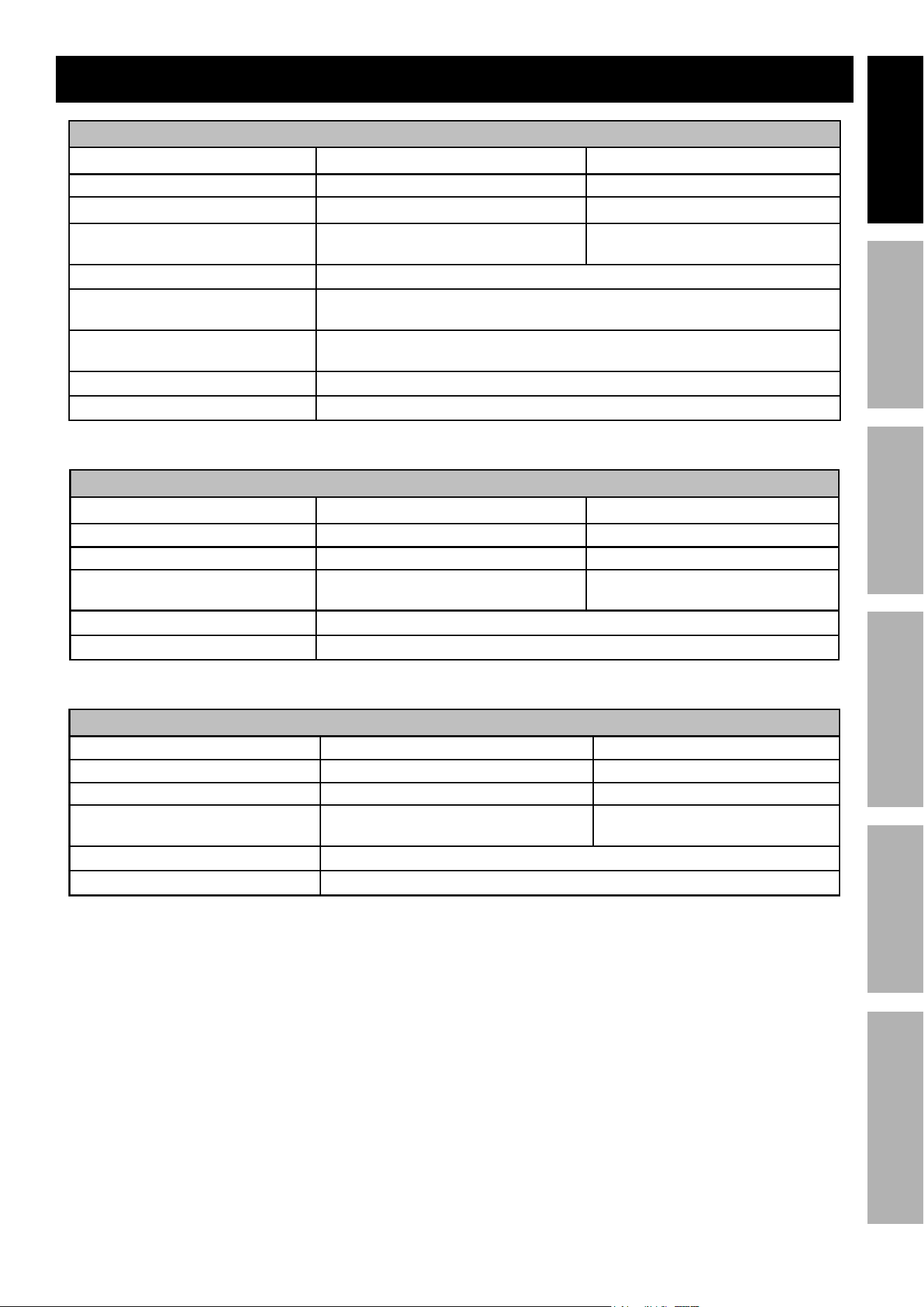
Specifications
Mig
Power Input 120 VAC / 60 Hz 240 VAC / 60 Hz
Current Input at Output 20.8 A at 100 A 25.5 A at 200 A
Welding Current Range 30 –140 A 30 –220 A
Rated Duty Cycles
40% @ 100 A
100% @ 75 A
25% @ 200 A
100% @ 115 A
Maximum OCV 86 VDC
Weldable Materials
Mild Steel, Stainless Steel
Aluminum (with optional Spool Gun)
Welding Wire Capacity
Solid Core: 0.025" / 0.030" / 0.035"
Flux Cored: 0.030" / 0.035" / 0.045"
Wire Speed 50 – 500 IPM
Wire Spool Capacity Up to 12 lb spool
tig
Power Input 120 VAC / 60 Hz 240 VAC / 60 Hz
Current Input at Output 20.6 A at 125 A 15.6 A at 175 A
Welding Current Range 10 A –125 A 10 A –175 A
Rated Duty Cycles
40% @ 125 A
100% @ 90 A
30% @ 175 A
100% @ 105 A
Maximum OCV 86 VDC
Weldable Materials Mild Steel, Stainless Steel, Chrome Moly
Stick
Power Input 120 VAC / 60 Hz 240 VAC / 60 Hz
Current Input at Output 19.5 A at 80 A 23.7 A at 175 A
Welding Current Range 10 A – 80 A 10 A –175 A
Rated Duty Cycles
40% @ 80 A
100% @ 60 A
25% @ 175 A
100% @ 100 A
Maximum OCV 86 VDC
Weldable Materials Mild Steel, Stainless Steel
Page 8 For technical questions, please call 1-800-444-3353. Item 57812
SaFety
Welding tipS
tig / Stick
cOntROlS
WiRe
Maintenance
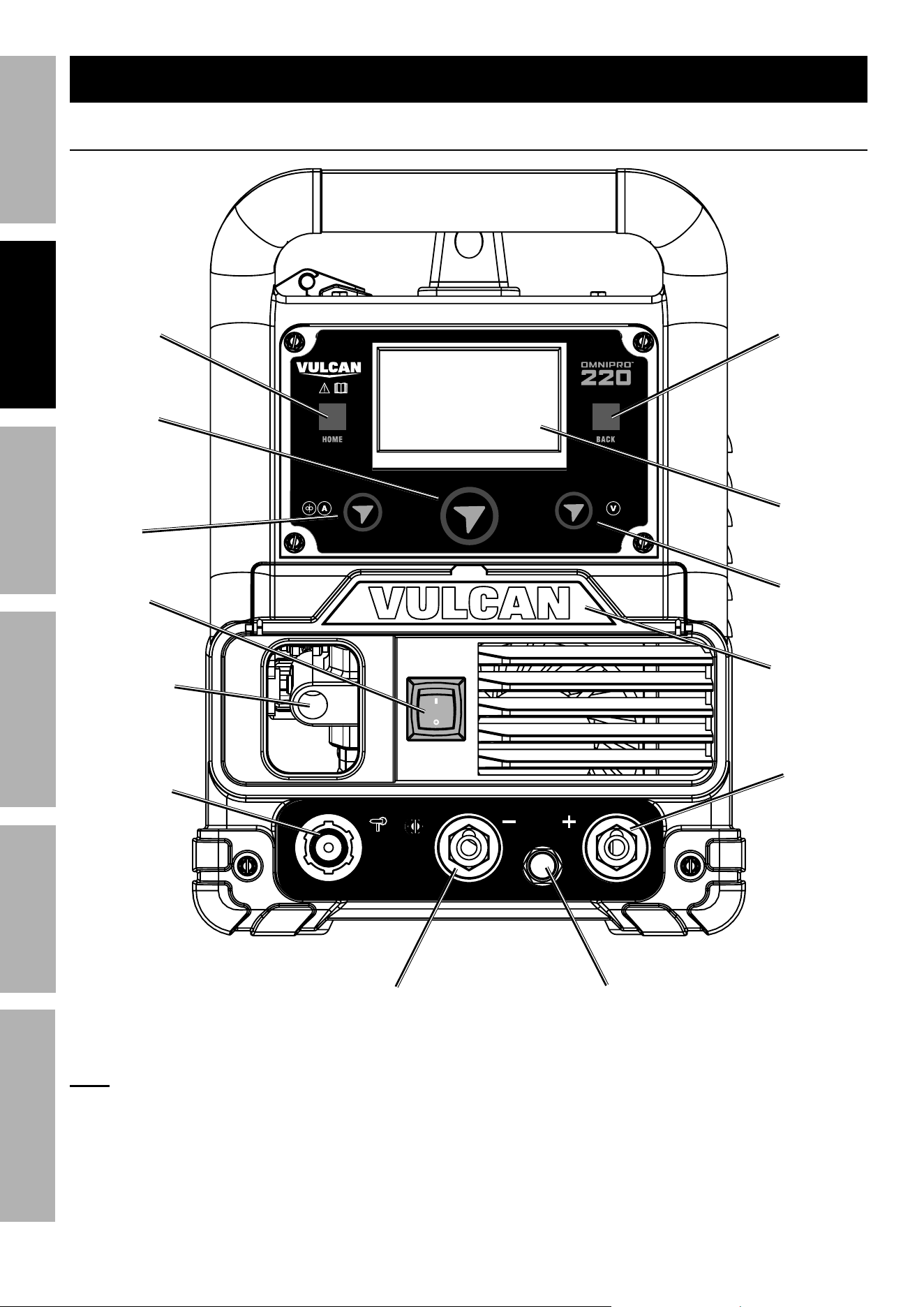
controls
Front panel controls
®
Wire Feed
power cable
power
Switch
lcd
display
Right
knob
left
knob
control
knob
Home
Button
Back
Button
Spool gun
gas Outlet
MIG Gun /
Spool gun
cable Socket
negative
Socket
positive
Socket
Storage
compartment
note: When using an optional Spool Gun (sold separately), connect the
Spool Gun gas hose to the Spool Gun Gas Outlet.
Page 9For technical questions, please call 1-800-444-3353.Item 57812
SaFety
Welding tipS
Maintenance
tig / Stick cOntROlSWiRe
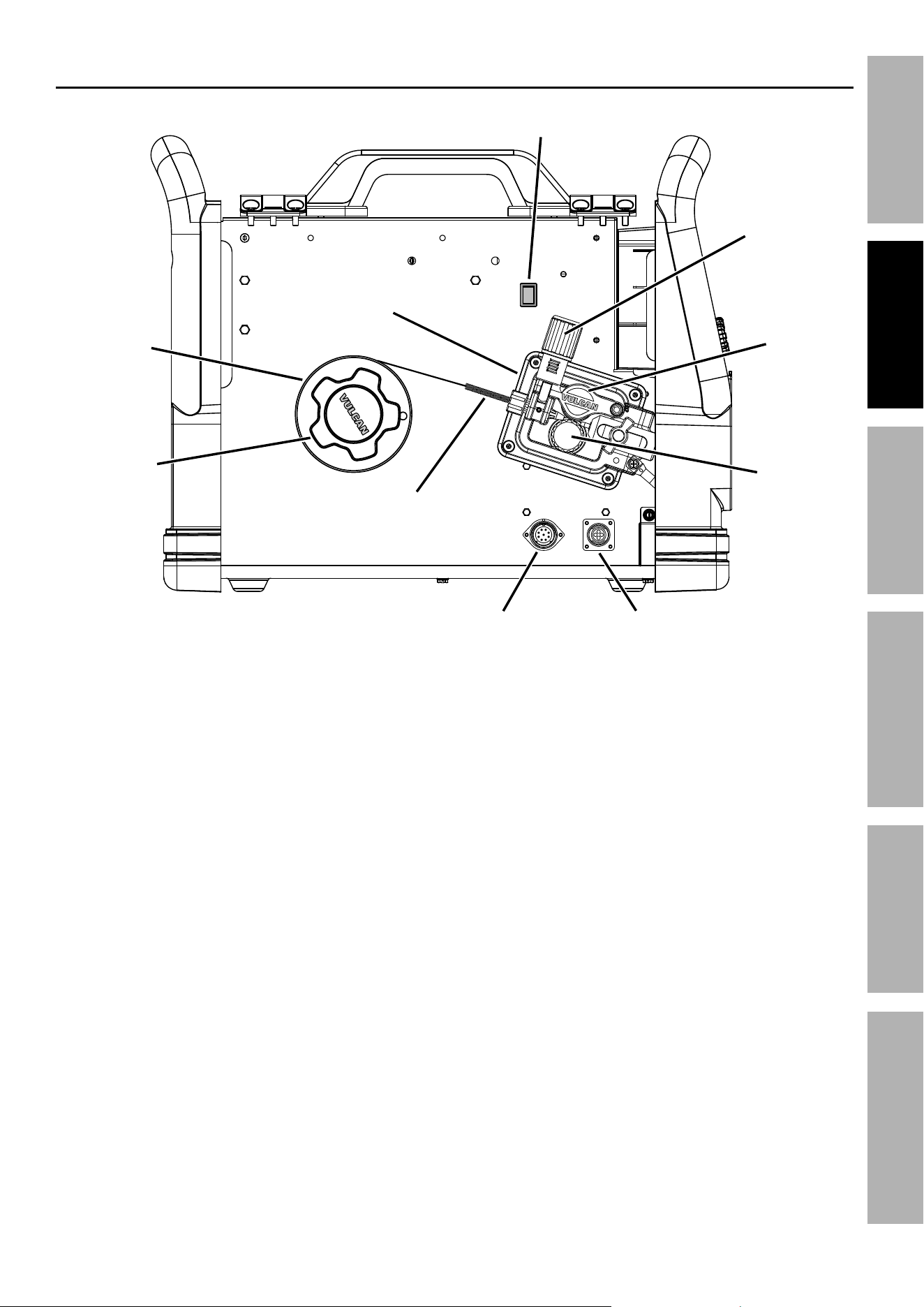
interior controls
cold Wire
Feed Switch
idler
arm
Wire Feed
Mechanism
Wire Spool
Spool knob
Feed
tensioner
Wire inlet
liner
Feed
Roller
knob
Wire Feed
control Socket
Foot pedal
Socket
Page 10 For technical questions, please call 1-800-444-3353. Item 57812
SaFety
Welding tipS
tig / Stick
cOntROlS
WiRe
Maintenance
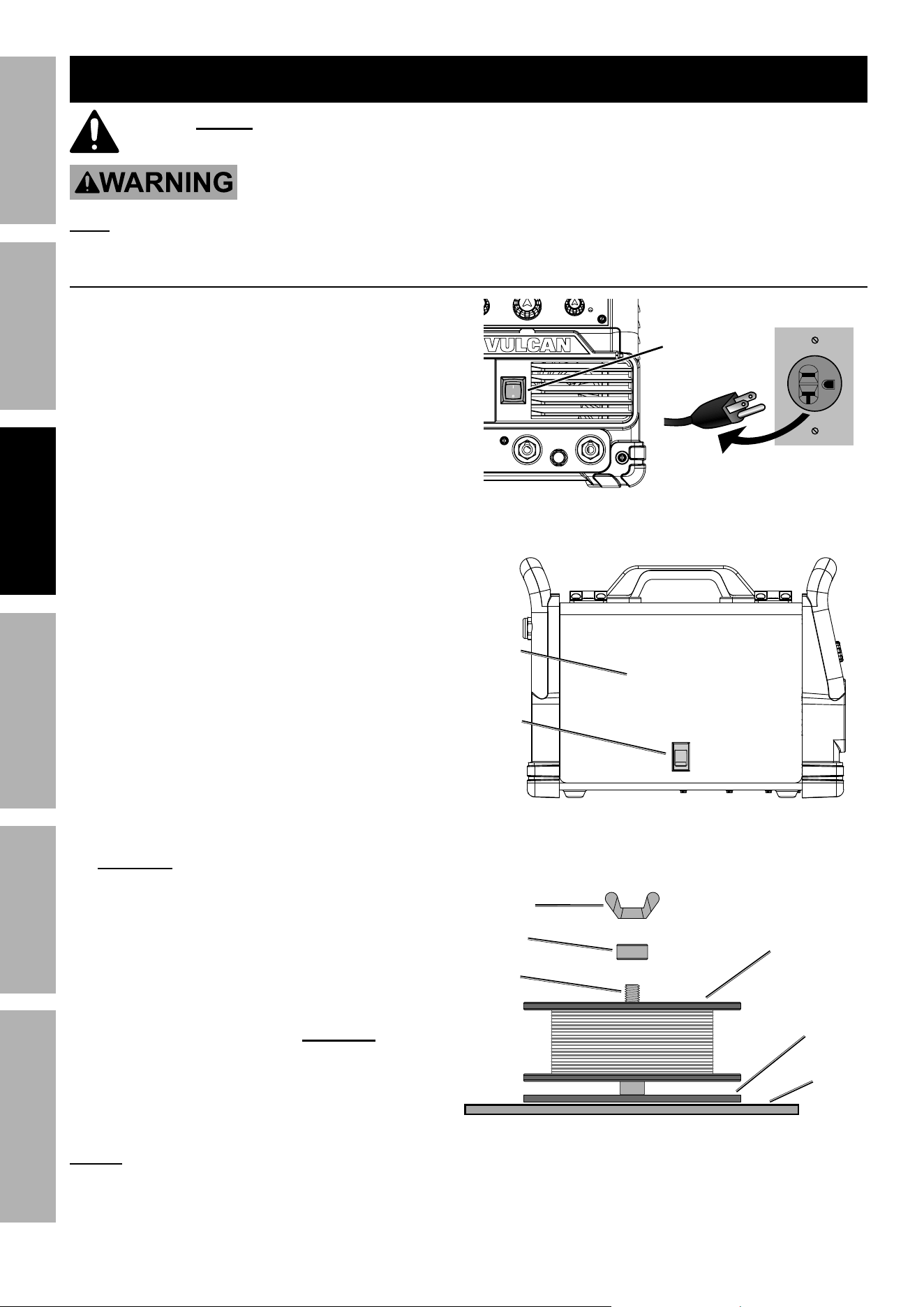
1. turn the power Switch OFF and unplug
the Welder before proceeding.
2. Pull up on the Door Latch,
then open the Door.
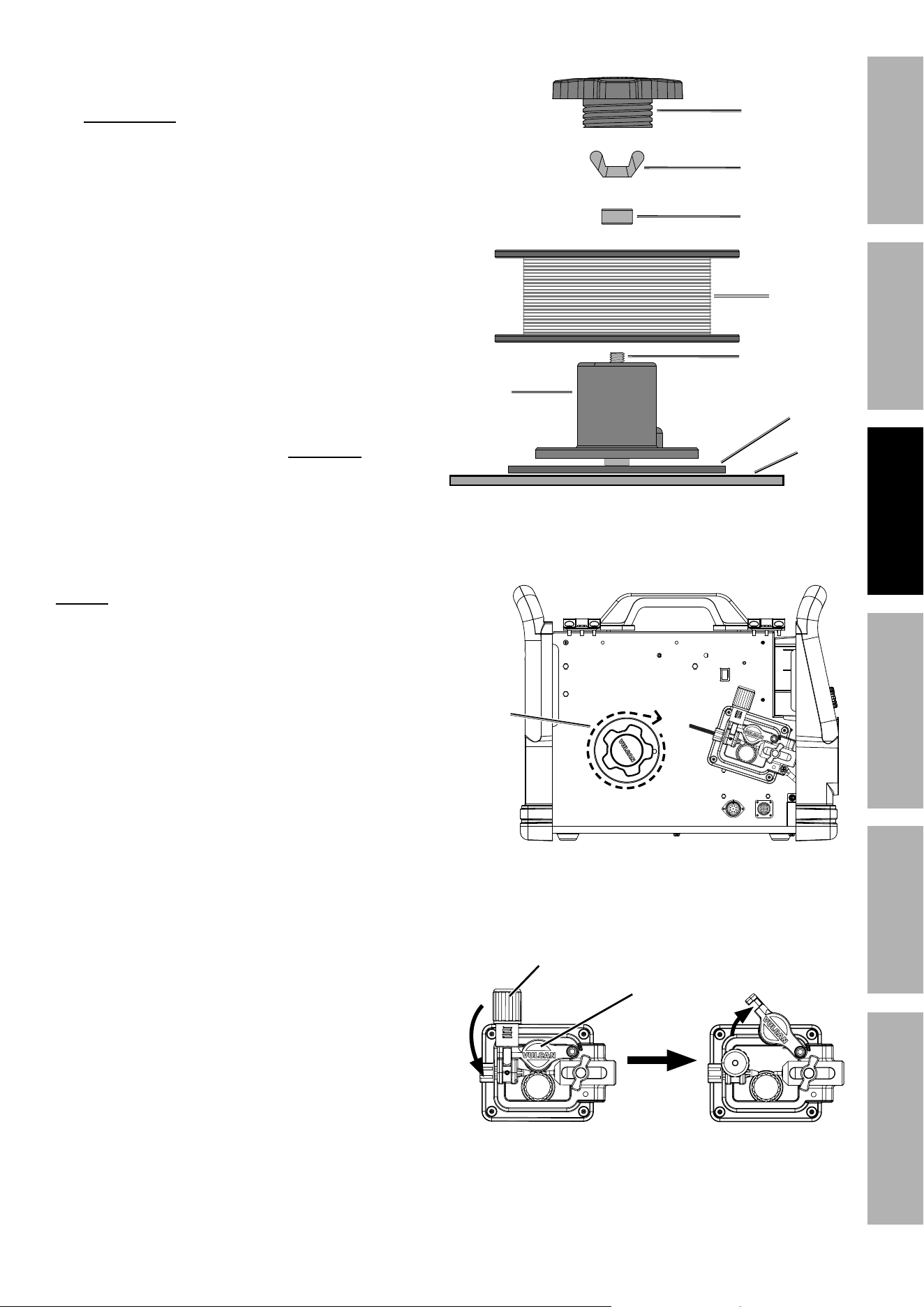
3. 1-2 pound Wire Spool installation:
Remove the Wingnut and Spacer. If
replacing a Spool, remove the old Spool
and all remaining wire from the liners.
4. Place the new Wire Spool over the Spool Spindle
and against the Spool Brake Pad as illustrated.
to prevent wire feed problems, set the
Spool so that it will unwind clockwise.
5. Replace the Spacer over the
Spool Spindle and secure Spool
in place with the Wingnut.
notice: If Wire Spool can spin freely, Wingnut is too
loose. This will cause the welding wire to unravel and
unspool which can cause tangling and feeding problems.
power
Switch
door
latch
door
Welder
Wall
Wingnut
1-2 lb
Wire Spool
Spool
Brake pad
Spacer
Spool
Spindle
1-2 lb Spool loading
MIG / Flux-Cored Wire Welding
Read the entiRe iMpORtant SaFety inFORMatiOn section at the beginning of this manual
including all text under subheadings therein before set up or use of this product.
tO pReVent SeRiOUS inJURy FROM accidental OpeRatiOn:
turn the power Switch off and unplug the Welder before setup.
note: Remove the protective foam and cardboard from the Welder before setup.
Wire Spool Installation / Wire Setup
Page 11For technical questions, please call 1-800-444-3353.Item 57812
SaFety
Welding tipS
Maintenance
tig / Stick cOntROlSWiRe
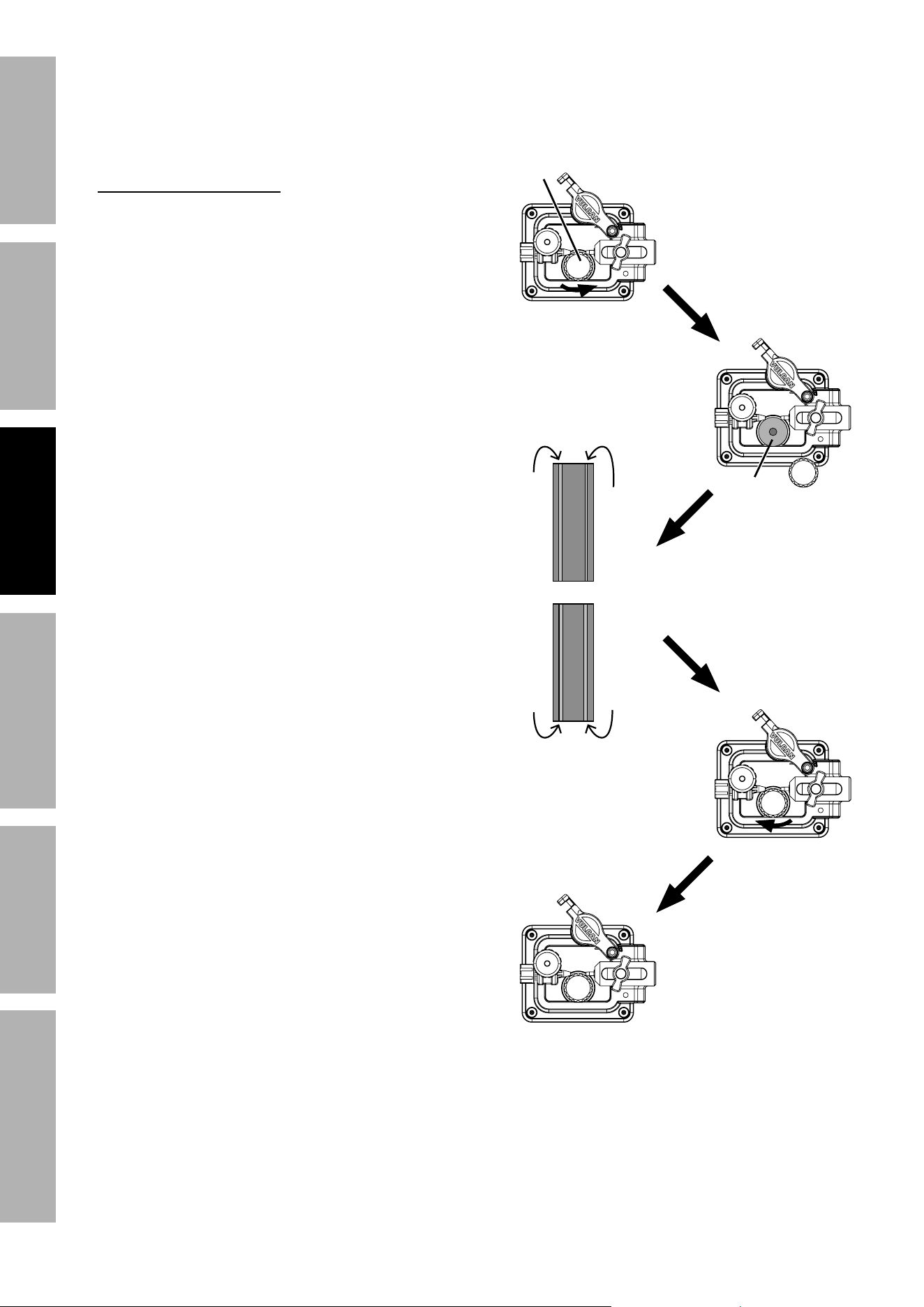
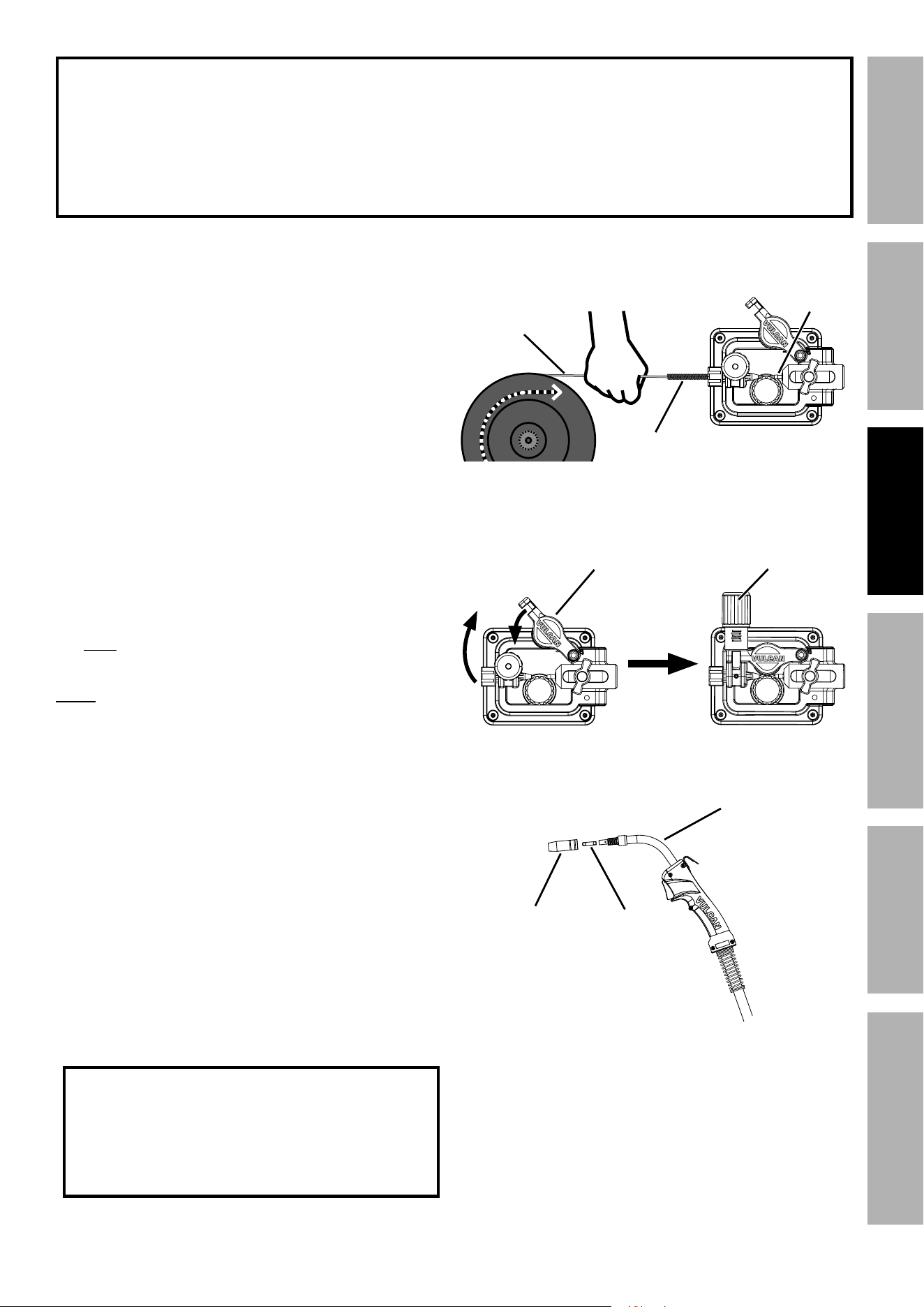
6. 10-12 pound Wire Spool installation:
Remove the Wingnut and Spacer. If
replacing a Spool, remove the old Spool
and all remaining wire from the liners.
7. Place the Spool Adapter over the Spool Spindle
and against the Spool Brake Pad as illustrated.
8. Place the new Wire Spool over the Adapter and
line up pin on Adapter with hole in Spool.
to prevent wire feed problems, set the
Spool so that it will unwind clockwise.
9. Replace the Spacer over the Spool Spindle
and secure Spool in place with the Wingnut.
notice: If Wire Spool can spin freely, Wingnut
is too loose. This will cause the welding
wire to unravel and unspool which can
cause tangling and feeding problems.
10. Screw the Spool Knob into the Spool Adapter.
11. Turn the Feed Tensioner knob counterclockwise to
loosen it enough to pull it down to remove tension.
The spring-loaded Idler Arm will move up as shown.
Welder
Wall
Spool
Brake pad
10-12 lb
Spool
adapter
10-12 lb Spool loading
Wingnut
10-12 lb
Wire Spool
Spacer
Spool Spindle
Spool knob
Wire
must
unwind
in this
direction
idler arm
Feed tensioner
Page 12 For technical questions, please call 1-800-444-3353. Item 57812
SaFety
Welding tipS
tig / Stick
cOntROlS
WiRe
Maintenance
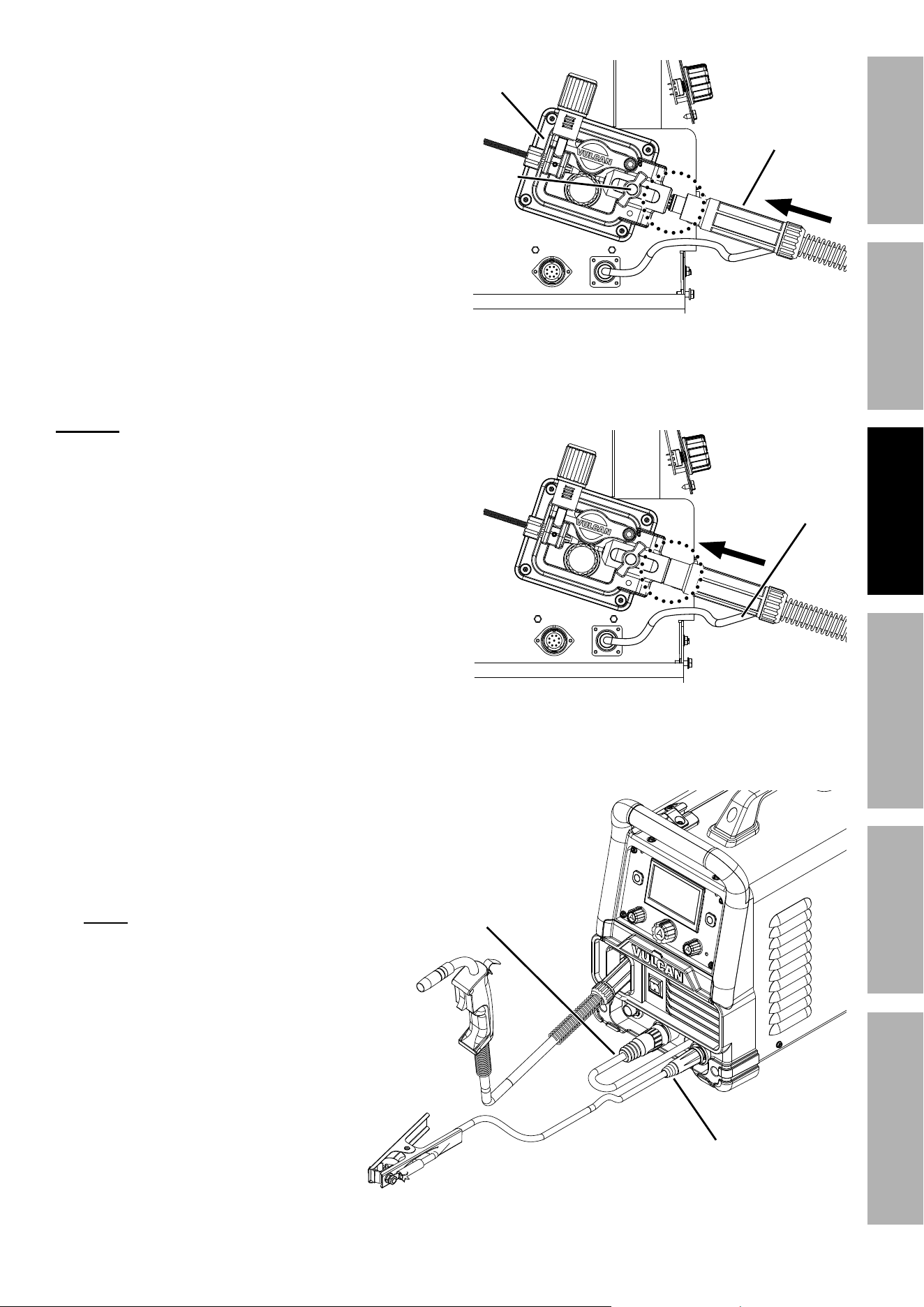
12. Feed Roller instructions:
Check that the Feed Roller is correct for the
type of wire being used (solid core or flux-
cored) and that it is turned to properly match
the wire size marked on the Wire Spool:
a. Unscrew the Feed Roller Knob
counterclockwise.
b. Remove the Feed Roller Knob
to expose the Feed Roller.
c. Flip or replace the Feed Roller as needed
and confirm that it is the correct Roller
for the type of wire being used and that
the number showing is the same as
the wire diameter on the Spool.
d. Screw the Feed Roller Knob back into
place to secure the Feed Roller.
Feed Roller
knob
Feed
Roller
aa
BB
cc
dd
0.030 / 0.035
groove
0.025
groove
Solid core
V-groove
0.045
groove
0.030 / 0.035
groove
Flux-cored
knurled groove
Page 13For technical questions, please call 1-800-444-3353.Item 57812
SaFety
Welding tipS
Maintenance
tig / Stick cOntROlSWiRe
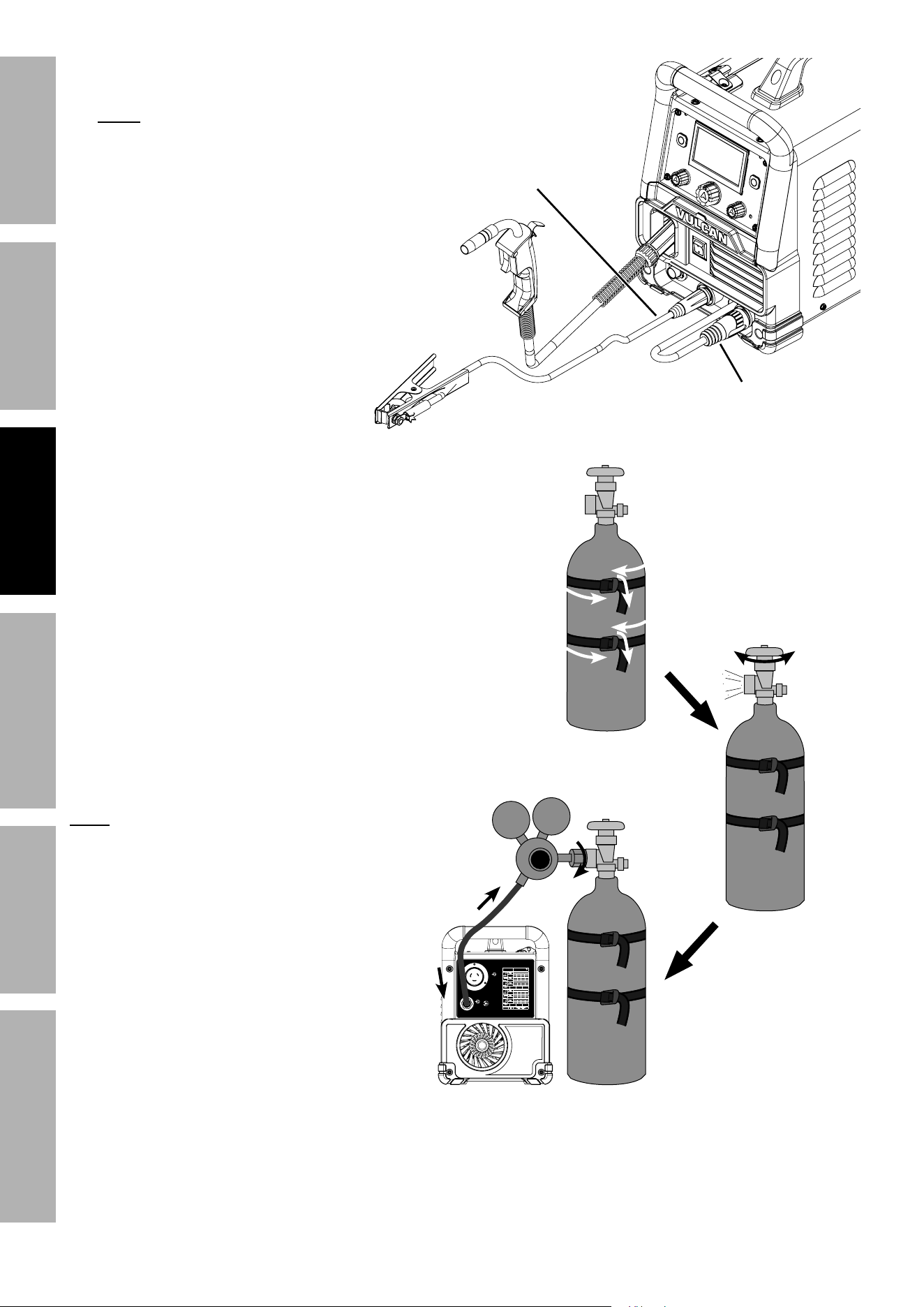
13. Loosen the Knob on the Wire Feed
mechanism, then insert the Gun Cable
Connector through the hole on the Welder
front and into the socket on the Wire Feed.
14. Ensure that the Gun Cable Connector
is fully inserted into the socket on
the Wire Feed mechanism as shown,
then tighten the Knob securely.
If Connector is not fully inserted, the gas
connection will leak, preventing shielding
gas from reaching the welding arc.
nOtice: To prevent damage, do
not overtighten the Knob.
15. Insert the Wire Feed Control Cable through
the hole on the Welder front and connect it
to the Wire Feed Control Socket inside the
machine, then tighten the lock ring on the Cable
plug. Note that the plug on the Cable fits into
the Socket in one specific orientation only.
16. dcen direct current electrode
negative Wire Setup for Flux-cored
(gasless) welding:
Plug Ground Clamp Cable into Positive (+)
Socket. Plug Wire Feed Power Cable
into Negative (
–
) Socket. Twist cables
clockwise all the way to lock in place.
gun cable
connector
Incorrect – Connector not fully insertedIncorrect – Connector not fully inserted
Wire Feed
Mechanism
knob
Correct – Connector fully insertedCorrect – Connector fully inserted
Wire
Feed
control
cable
ground clamp cable
in positive Socket
Wire Feed
power cable in
negative Socket
dcen
Flux-Cored (Gasless)
polarity Setup
Page 14 For technical questions, please call 1-800-444-3353. Item 57812
SaFety
Welding tipS
tig / Stick
cOntROlS
WiRe
Maintenance
17. dcep direct current electrode positive Wire
Setup for Solid Core (gas shielded) welding:
a. Plug Ground Clamp Cable into Negative (
–
)
Socket. Plug Wire Feed Power Cable
into Positive (+) Socket. Twist cables
clockwise all the way to lock in place.
b. Determine which type of shielding
gas would be appropriate for
the welding you will do. Refer
to the Settings Chart on the
inside of the Welder door.
c. With assistance, set the cylinder (not included)
onto a cabinet or cart near the Welder
and secure the cylinder in place with two
straps (not included) to prevent tipping.
d. Remove the cylinder’s cap. Stand to the
side of the valve opening, then open the
valve briefly to blow dust and dirt from the
valve opening. Close the cylinder valve.
e. Locate the Regulator (included) and close its
valve until it is loose, then thread Regulator
onto cylinder and wrench-tighten connection.
note: When using C100 shielding gas, connect the
enclosed CGA 580/320 adapter to the inlet connection
of the Regulator and wrench-tighten. Thread the
adapter onto the gas cylinder and wrench-tighten.
f. Attach the Gas Hose (included)
to the Regulator’s outlet and
the Welder’s gas inlet. Wrench-
tighten both connections.
ground clamp cable
in negative Socket
dcep
Solid Core (Gas Shielded)
polarity Setup
Wire Feed
power cable in
positive Socket
Reset
Power Input
Gas Inlet
IP21S
S
1
f1
f2
Date:
57812 25d
Conforms to ANSI/IEC Std. 60974-1
264149
Vulcan OMNIPRO 220
30A/15.5V to 220A/25V
X 25% 60% 100%
U
0
= 86V
I
2
200A 130A 115A
U
2
24V 20.5V 19.75V
1~50/60Hz
U
1
= 240V
I
1max
= 25.5A
23.7A
15.6A
I
1eff
= 12.8A
11.9A
8.5A
10A/20.4V to 175A/27V
X 25% 60% 100%
U
0
= 86V
I
2
175A 115A 100A
U
2
27V 24.6V 24V
10A/10.4V to 175A/17V
X 30% 60% 100%
U
0
= 86V
I
2
175A 125A 105A
U
2
17V 15V 14.2V
30A/15.5V to 140A/21V
X 40% 60% 100%
U
0
= 86V
I
2
100A 85A 75A
U
2
19V 18.25V 17.75V
1~50/60Hz
U
1
= 120V
I
1max
= 20.8A
19.5A
20.6A
I
1eff
= 13.1A
12.3A
13A
10A/20.4V to 80A/23.2V
X 40% 60% 100%
U
0
= 86V
I
2
80A 70A 60A
U
2
23.2V 22.8V 22.4V
10A/10.4V to 125A/15V
X 40% 60% 100%
U
0
= 86V
I
2
125A 105A 90A
U
2
15V 14.2V 13.6V
UPC 193175422590
f
e
c
Briefly open valve
to clean,
then close
valve.
d
Page 15For technical questions, please call 1-800-444-3353.Item 57812
SaFety
Welding tipS
Maintenance
tig / Stick cOntROlSWiRe
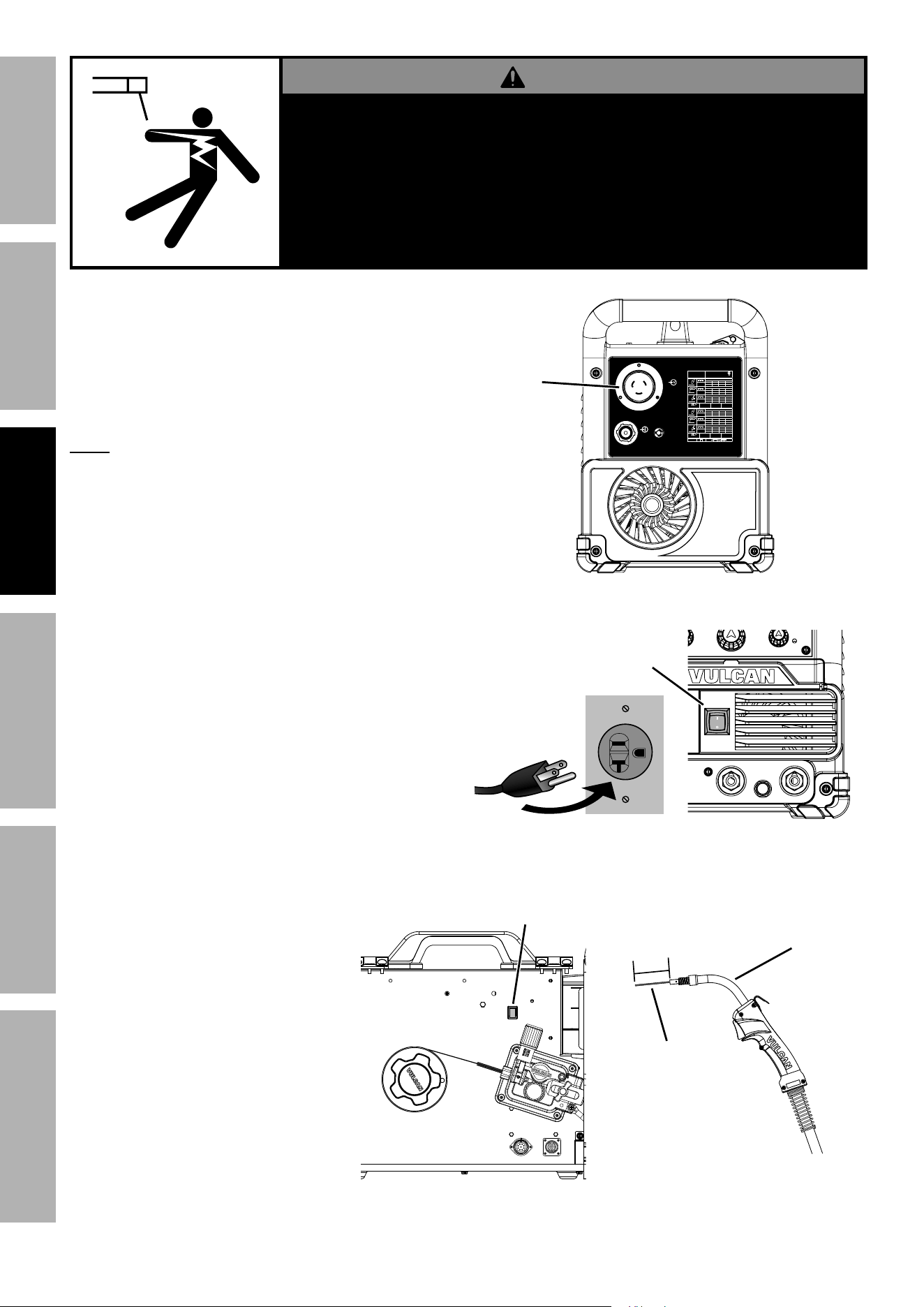
iMpORtant
Securely hold onto the end of the welding wire and keep
tension on it during the following steps.
if this is not done, the welding wire will unravel and unspool
which can cause tangling and feeding problems.
18. Cut off all bent and crimped wire.
The cut end must have no burrs or
sharp edges; cut again if needed.
19. Keep tension on the wire and guide at
least 12 inches of wire into the Wire
Inlet Liner and Feed Guide.
20. Make sure the welding wire is resting in the groove
of the Feed Roller, then push the wire Idler Arm
down, and swing the Feed Tensioner up to latch it
across the tip of the arm.
After the wire is held by the Tensioner,
you may release it.
note: The tension should be 3 – 5 for solid wire and
2 – 3 for flux-cored wire. Too much force on flux-cored
wire will crush it and may cause feeding issues.
21. Pull the Nozzle to remove it.
22. Unscrew the Contact Tip
counterclockwise and remove.
23. Lay the MIG Gun Cable out in a straight line
so that the welding wire moves through it
easily. Leave the cover open, so that the
feed mechanism can be observed.
iMpORtant
Stainless steel wire is less flexible than
other welding wire. therefore, it is more
difficult to feed through the liner and gun.
it is especially important to keep the gun cable
straight while feeding stainless steel wire.
Wire Wire
SpoolSpool
Welding
Wire
HOld WiRe
SecURely
Feed
guide
Wire inlet
liner
idler arm
Feed tensioner
nozzle
contact
tip
Mig gun
Page 16 For technical questions, please call 1-800-444-3353. Item 57812
SaFety
Welding tipS
tig / Stick
cOntROlS
WiRe
Maintenance
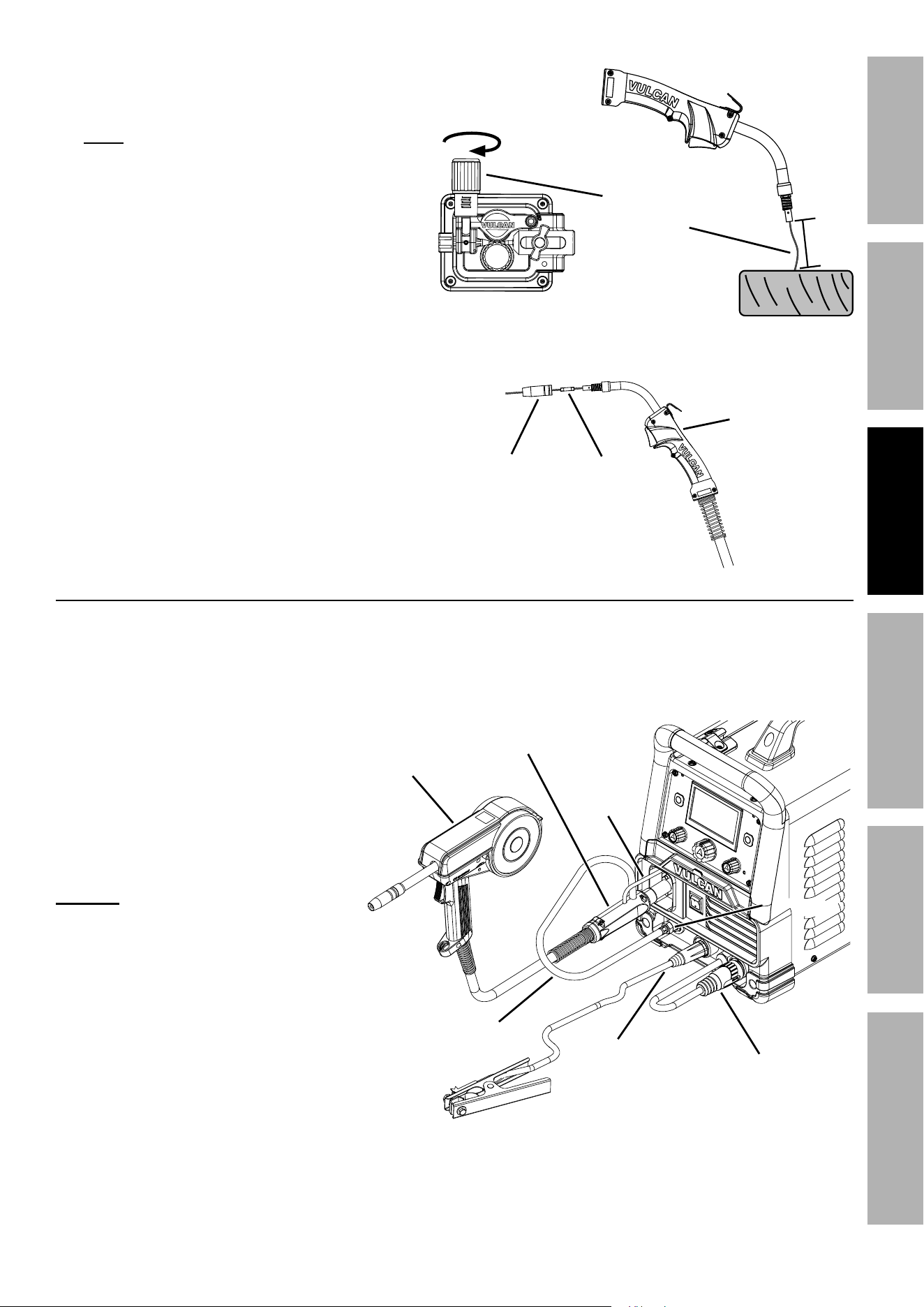
dangeR
paRtS May Be at Welding VOltage
tO pReVent electRic SHOck and deatH:
1. keep hands away from Wire Feed mechanism.
2. close door before plugging in, unless using cold
Wire Feed to feed wire through to gun.
3. do not touch trigger while feeding wire through to gun.
24. Plug either 120 VAC or 240 VAC Power
Cord into Power Input Socket.
note: Plug will only fit one way.
25. Do not touch the Gun’s Trigger. Plug the Power
Cord into a properly grounded, GFCI protected
120 VAC (20 amp rated) or 240 VAC receptacle that
matches the plug and turn the Power Switch ON.
The circuit must be equipped with delayed
action-type circuit breaker or fuses.
26. Point the Gun away from
all objects. Press and
hold the Cold Wire Feed
Switch until the wire feeds
through two inches.
the wire liner may come
out with the welding
wire. this is normal,
just push the wire liner
back into the gun.
If the wire does not feed
properly and the Spool
is stationary, turn OFF
and unplug the Welder
and slightly tighten the
Feed Tensioner clockwise
before retrying.
Reset
Power Input
Gas Inlet
IP21S
S
1
f1
f2
Date:
57812
25d
Conforms to ANSI/IEC Std. 60974-1
264149
Vulcan OMNIPRO 220
30A/15.5V to 220A/25V
X 25% 60% 100%
U
0
= 86V
I
2
200A 130A 115A
U
2
24V 20.5V 19.75V
1~50/60Hz
U
1
= 240V
I
1max
= 25.5A
23.7A
15.6A
I
1eff
= 12.8A
11.9A
8.5A
10A/20.4V to 175A/27V
X 25% 60% 100%
U
0
= 86V
I
2
175A 115A 100A
U
2
27V 24.6V 24V
10A/10.4V to 175A/17V
X 30% 60% 100%
U
0
= 86V
I
2
175A 125A 105A
U
2
17V 15V 14.2V
30A/15.5V to 140A/21V
X 40% 60% 100%
U
0
= 86V
I
2
100A 85A 75A
U
2
19V 18.25V 17.75V
1~50/60Hz
U
1
= 120V
I
1max
= 20.8A
19.5A
20.6A
I
1eff
= 13.1A
12.3A
13A
10A/20.4V to 80A/23.2V
X 40% 60% 100%
U
0
= 86V
I
2
80A 70A 60A
U
2
23.2V 22.8V 22.4V
10A/10.4V to 125A/15V
X 40% 60% 100%
U
0
= 86V
I
2
125A 105A 90A
U
2
15V 14.2V 13.6V
UPC 193175422590
power
input
power
Switch
Mig gun
Welding
Wire
2"
cold Wire
Feed Switch
Page 17For technical questions, please call 1-800-444-3353.Item 57812
SaFety
Welding tipS
Maintenance
tig / Stick cOntROlSWiRe
27. To check the wire’s drive tension, press and hold
Trigger to feed the wire against a piece of wood
from 2 to 3 inches away.
note: after pressing trigger, wire will stop
feeding after 3 seconds if there is no arc.
check tension for less than 3 seconds.
If the wire stops instead of bending, unplug
the Welder, slightly tighten the Feed Tensioner
clockwise, and try again. If the wire bends
from the feed pressure, then the tension
is set properly. Before proceeding, turn
OFF the Power Switch and unplug the
Power Cord from its electrical outlet.
28. Turn OFF the Power Switch and unplug the
Power Cord from its electrical outlet.
29. Close the Door. Make sure
Door is securely latched.
30. Select a Contact Tip that is compatible with
the welding wire used. Slide the Contact
Tip over the wire and thread it clockwise into
the MIG Gun. Tighten the Contact Tip.
31. Replace the Nozzle and cut the wire
off at 1/2" from tip (1/2" stickout).
incrementally
increase tension
until
wire bends.
2–3"
nozzle
contact
tip
Mig gun
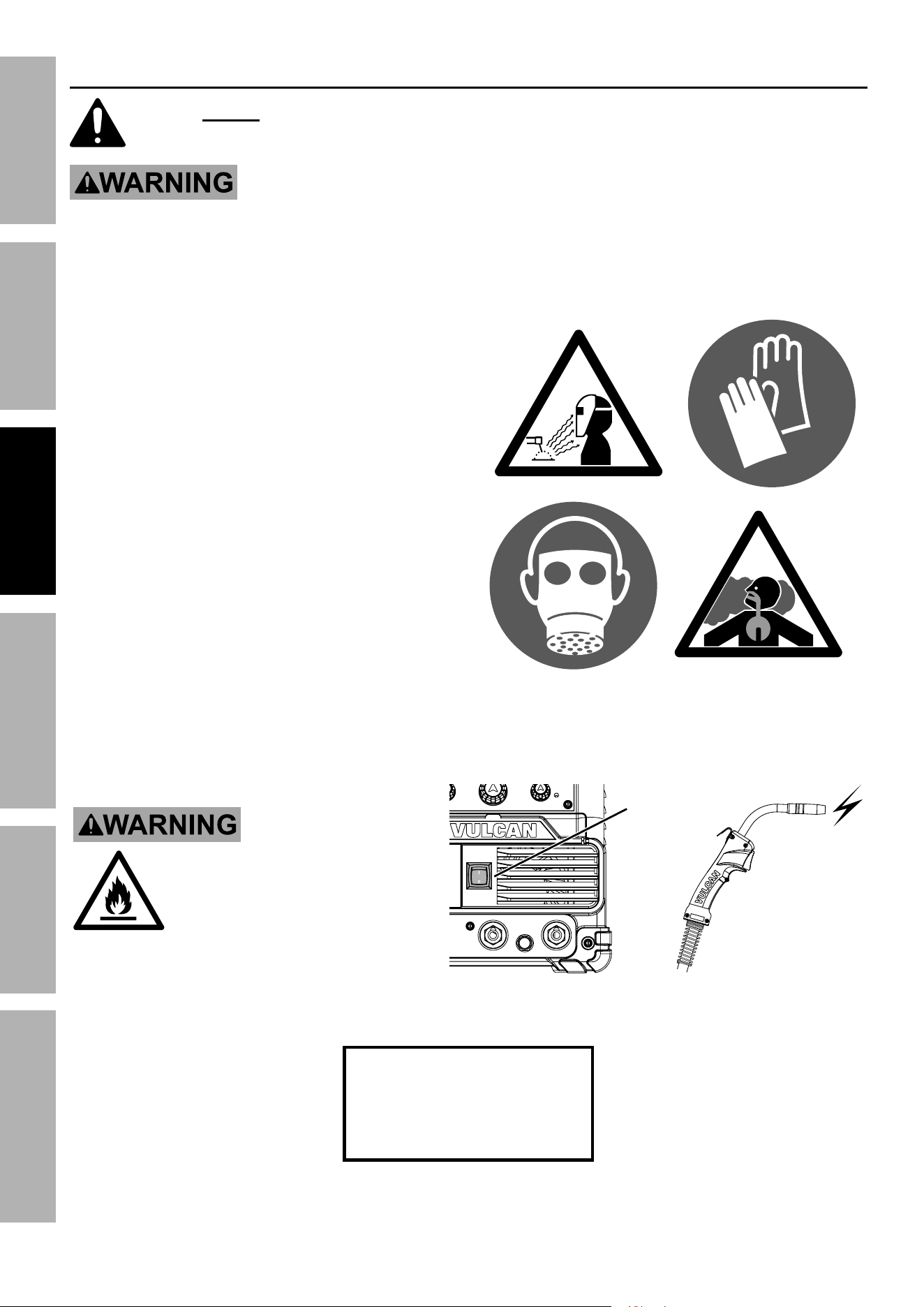
Optional Spool gun Setup
1. To set up optional Spool Gun (sold separately), plug Ground Clamp Cable into Negative (
–
) Socket. Plug
Wire Feed Power Cable into Positive (+) Socket. Twist cables clockwise all the way to lock in place.
2. Loosen the Knob on the Wire Feed
mechanism, then insert the Spool
Gun Cable Connector through the
hole on the Welder front and into
the socket on the Wire Feed.
3. Ensure Cable Connector is fully
inserted and tighten the Knob
securely. If Connector is not fully
inserted, the gas connection will
leak, preventing shielding gas
from reaching the welding arc.
nOtice: To prevent damage, do
not overtighten the Knob.
4. Insert the Wire Feed Control Cable
through hole on Welder front and
connect to the Wire Feed Control Socket
inside the machine, then tighten lock
ring on the Cable plug. Note that the
plug on the Cable fits into the Socket
in one specific orientation only.
5. Connect Gas Hose on Spool Gun Cable
Connector to Spool Gun Gas Outlet on front
of Welder. Refer to paragraph 17 on page 14
for further shielding gas setup information.
6. Refer to Spool Gun manual for
operational information.
Spool gun
Spool gun Spool gun
gas Outletgas Outlet
Spool gun
cable connector
gas Hose
Wire Feed Wire Feed
control control
cablecable
ground
clamp cable
in negative
Socket
Wire Feed
power cable in
positive Socket
Page 18 For technical questions, please call 1-800-444-3353. Item 57812
SaFety
Welding tipS
tig / Stick
cOntROlS
WiRe
Maintenance
Basic Wire Welding
Read the entiRe iMpORtant SaFety inFORMatiOn section at the beginning of this manual
including all text under subheadings therein before welding.
tO pReVent SeRiOUS inJURy:
protective gear must be worn when using the Welder; minimum shade number 10 full face shield
(or welding mask), ear protection, welding gloves, sleeves and apron, NIOSH-approved respirator, and fire
resistant work clothes without pockets should be worn when welding.
light from the arc can cause permanent damage to the eyes and skin.
do not breathe arc fumes.
Flux-cored wire welding is used to weld mild steel
and stainless steel without shielding gas.
MIG welding uses solid wire and shielding gas,
and is used to weld mild steel and stainless steel.
MIG welding can also be used to weld thinner
workpieces than flux-cored welding can.
Aluminum welding can be performed with an
optional Spool Gun (sold separately) using
aluminum wire and shielding gas.
Good welding takes a degree of skill and experience.
Practice a few sample welds on scrap before
welding your first project. Additional practice
periods are recommended whenever you weld:
• a different thickness of material
• a different type of material
• a different type of connection
• using a different process
Make practice welds on pieces of scrap to practice
technique before welding anything of value.
practice your welding
technique on scrap
pieces before welding
anything of value.
tO pReVent SeRiOUS inJURy,
FiRe and BURnS:
keep welding tip clear of grounded
objects whenever unit is plugged
in and turned on.
power
Switch
=
Page 19For technical questions, please call 1-800-444-3353.Item 57812
SaFety
Welding tipS
Maintenance
tig / Stick cOntROlSWiRe
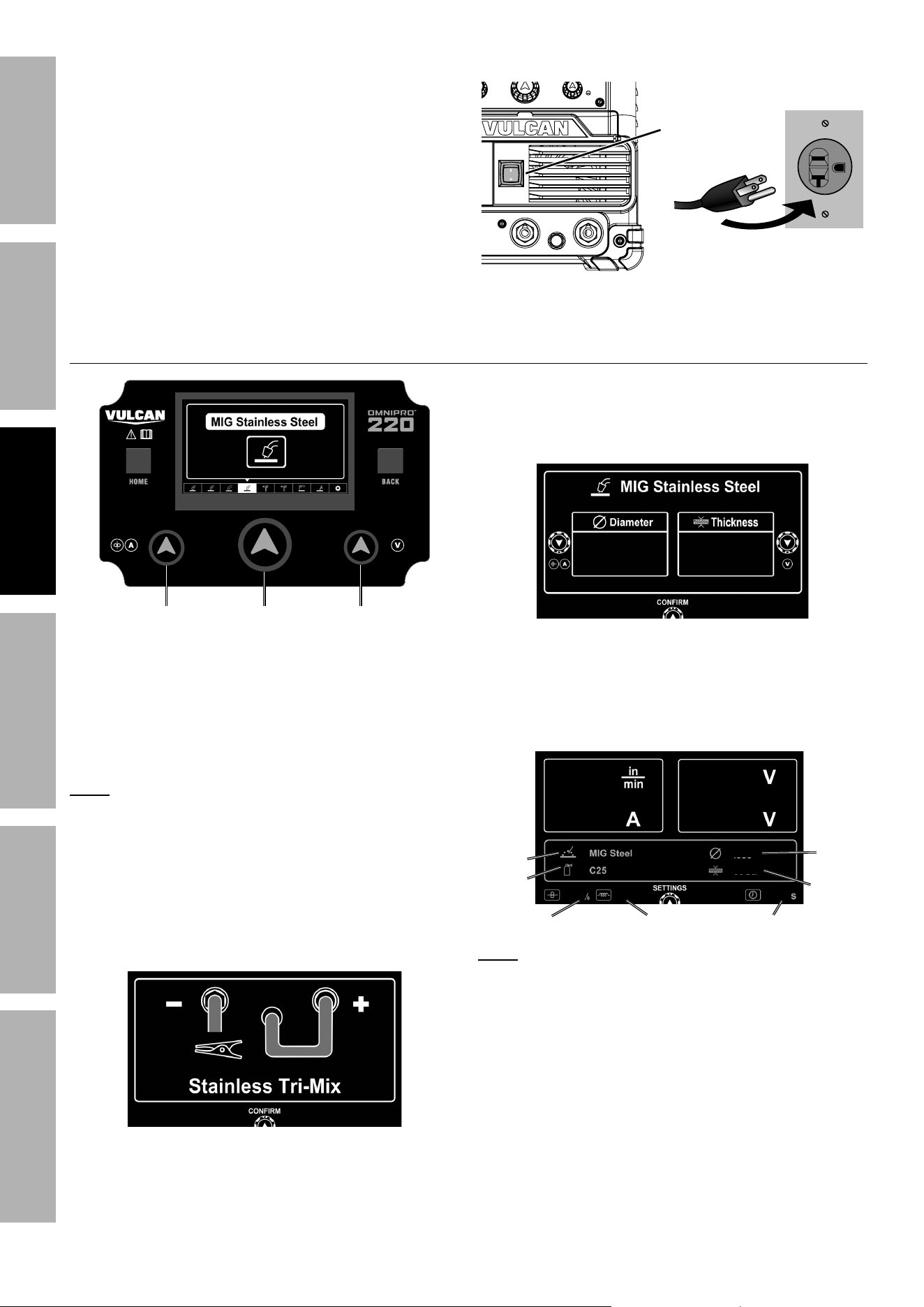
Setting Up the Weld
clamps
workpieces
chamfer thick workpieces.
clean surfaces
to bare metal.
1. Make practice welds on pieces of scrap the
same thickness as your intended workpiece
to practice technique before welding anything
of value. Clean the weld surfaces thoroughly
with a wire brush or angle grinder; there
must be no rust, paint, oil, or other materials
on the weld surfaces, only bare metal.
2. Use clamps (not included) to hold the workpieces
in position so that you can concentrate on proper
welding technique. The distance (if any) between the
two workpieces must be controlled properly to allow
the weld to hold both sides securely while allowing
the weld to penetrate fully into the joint. The edges
of thicker workpieces may need to be chamfered
(or beveled) to allow proper weld penetration.
notice: When welding equipment on a vehicle,
disconnect the vehicle battery power from both the
positive connection and the ground before welding.
This prevents damage to some vehicle electrical
systems and electronics due to the high voltage
and high frequency bursts common in welding.
3. Clamp Ground Cable to bare metal on the
workpiece near the weld area, or to metal work
bench where the workpiece is clamped.
®
ground connection depends
on desired welding polarity
Workpiece
ground
clamp
clean
surface to
bare metal.
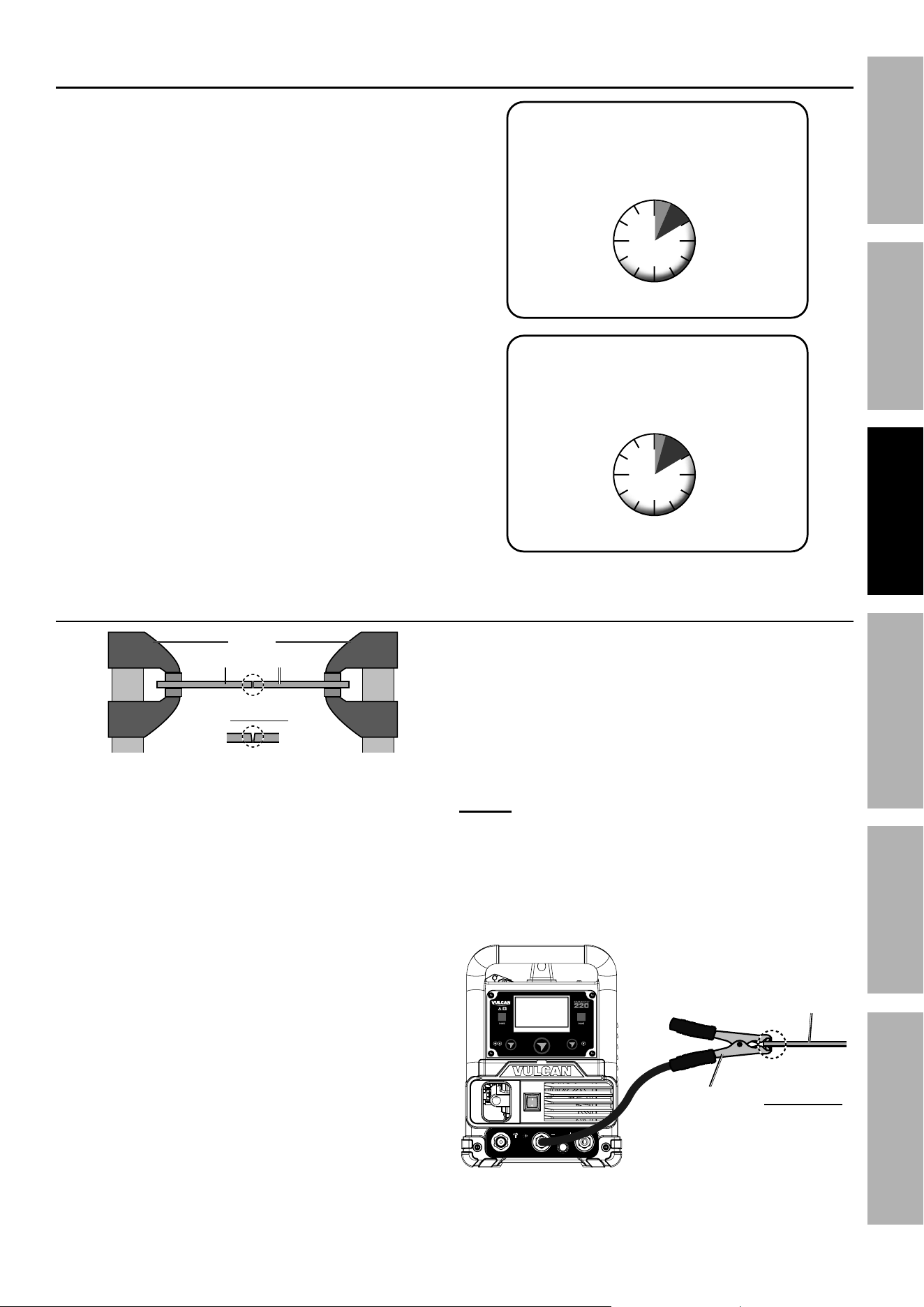
Duty Cycle (Duration of Use)
avoid damage to the Welder by not welding for more
than the prescribed duty cycle time. The Duty Cycle
defines the number of minutes, within a 10 minute
period, during which a given welder can produce a
particular welding current without overheating.
For example, a welder with a 40% duty cycle at
100 A welding current must be allowed to rest for at least
6 minutes after every 4 minutes of continuous welding.
Failure to carefully observe duty cycle limitations
can easily over-stress a welder’s power generation
system contributing to premature welder failure.
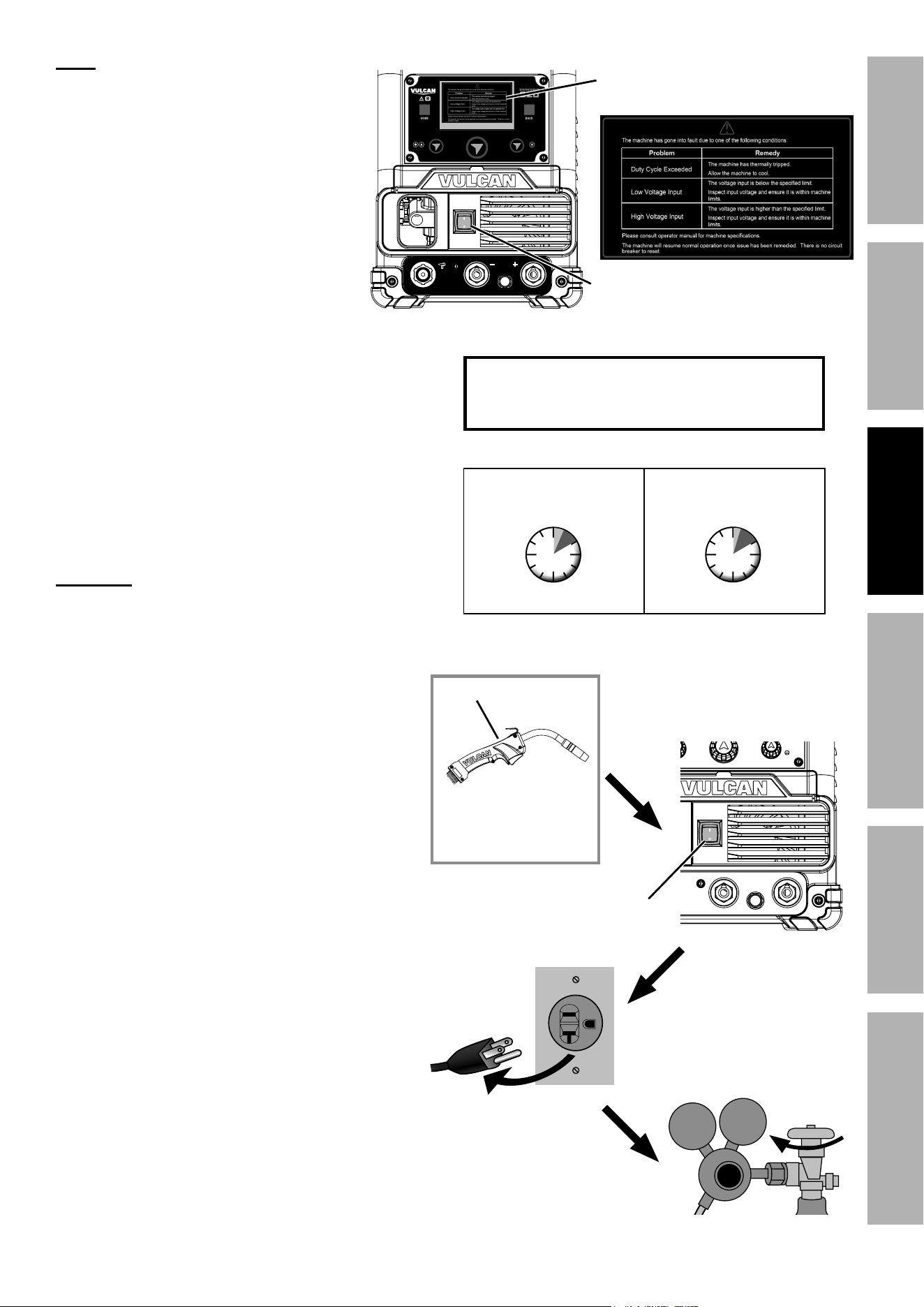
This Welder has an internal thermal protection system
to help prevent this sort of over-stress. When the
Welder overheats, it automatically shuts down and a
warning screen appears in the LCD Display window.
The Welder automatically returns to service after
cooling off. Should this occur, rest the MIG Gun on an
electrically non-conductive, heat-proof surface, such
as a concrete slab, well clear of the ground clamp.
allow the Welder to cool with the power Switch on,
so that the internal Fan will help cool the Welder.
When normal operation resumes, use shorter welding
periods and longer rest periods to prevent needless wear.
Rated Duty Cycle
100% continuous Use at 115
a
240 VAC
25% Use at 200 A
For 10 continuous Minutes
2-1/2
Minutes
Welding
7-1/2
Minutes
Resting
Rated Duty Cycle
100% continuous Use at 75
a
120 VAC
40% Use at 100 A
For 10 continuous Minutes
4
Minutes
Welding
6
Minutes
Resting
Page 20 For technical questions, please call 1-800-444-3353. Item 57812
SaFety
Welding tipS
tig / Stick
cOntROlS
WiRe
Maintenance
4. Turn the Power Switch to the OFF position,
then plug the Power Cord into a properly
grounded, GFCI protected 120 VAC (20 amp
rated) or 240 VAC receptacle that matches
the plug. The circuit must be equipped with
delayed action-type circuit breaker or fuses.
5. Set MIG Gun down on nonconductive, nonflammable
surface away from any grounded objects.
6. Turn the Power Switch ON.
power
Switch
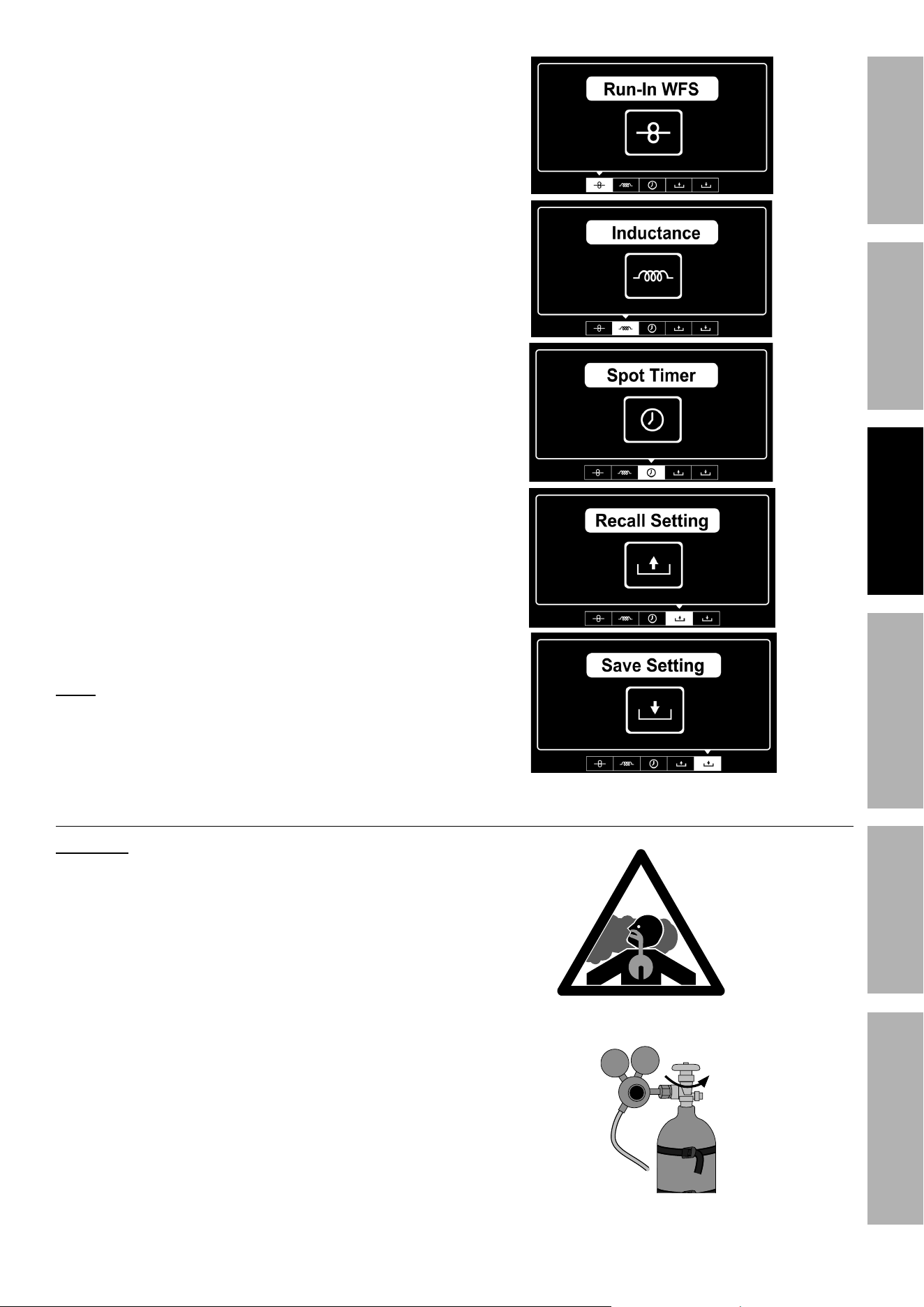
Settings
®
Main
control
knob
left
knob
Right
knob
1. Press Home Button on Control Panel.
2. Turn Main Control Knob until desired
process appears on LCD display screen.
3. Press Main Control Knob to select process.
note: Press Main Control Knob to go to next screen.
Press Back Button to return to the previous screen.
4. Adjust settings for the selected process.
a. Polarity and Gas Settings:
• Plug cables in according to screen.
• Connect gas according to screen.
• Set SCFH between 20-30.
b. Set Wire Diameter and Material Thickness:
• Turn Left Knob to set wire diameter.
• Turn Right Knob to set material thickness.
.025" 24ga
c. Auto Weld Settings:
• Turn Left Knob to adjust Wire
Feed Speed (Amperage).
• Turn Right Knob to adjust Voltage.
121 13.8
0.0
0
.030"
0.0
25 5
24ga
process
Run-in WFS
inductance
Spot timer
Wire
diameter
Material
thickness
gas type
note: If the Wire Feed Speed or Voltage settings are
adjusted manually, the white mark on the line shows
the recommended setting for your wire/electrode
diameter and workpiece thickness.
Page 21For technical questions, please call 1-800-444-3353.Item 57812
SaFety
Welding tipS
Maintenance
tig / Stick cOntROlSWiRe
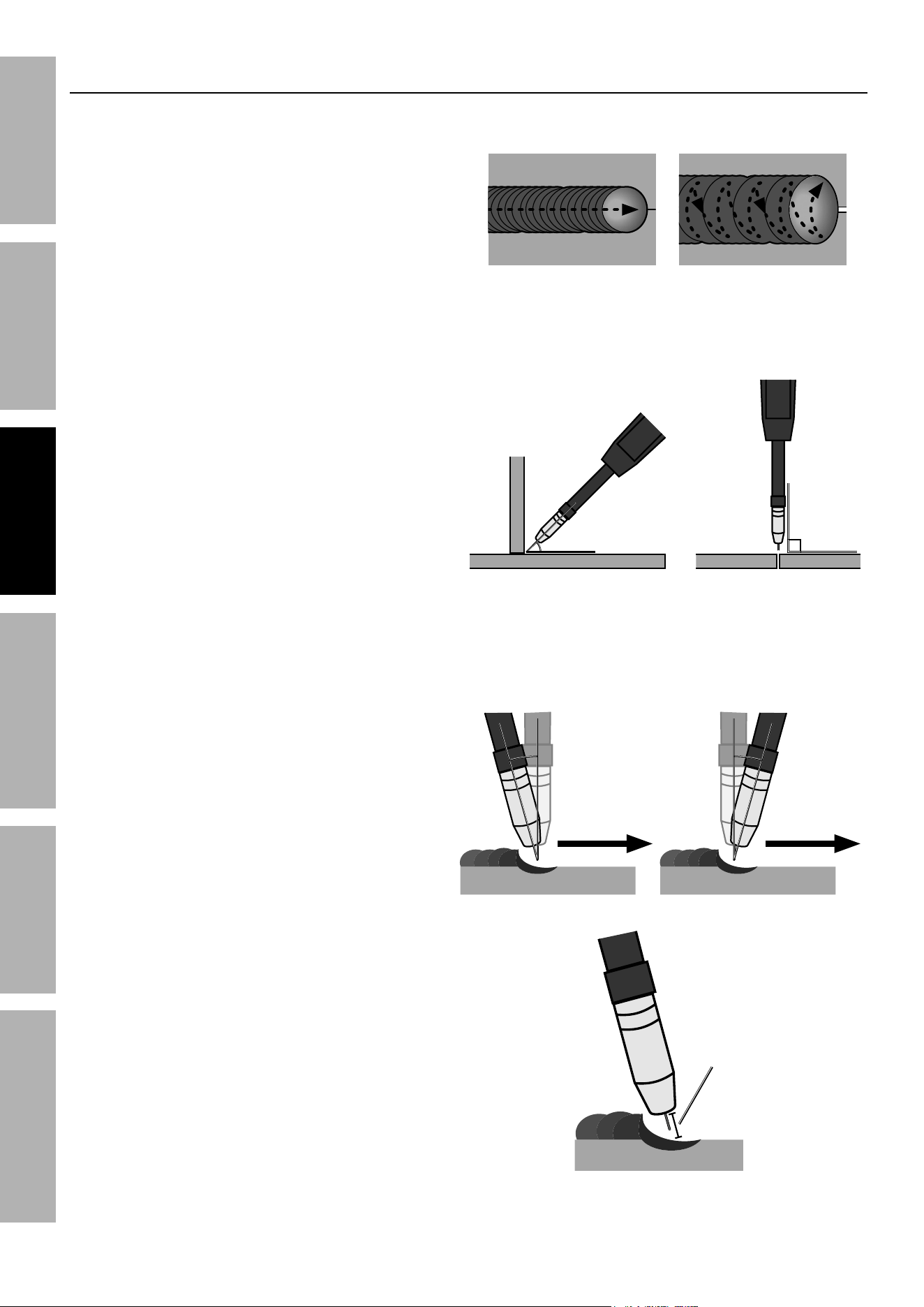
d. Optional Settings:
• Press Main Control Knob to
enter Optional Settings.
• Turn Main Control Knob until desired
setting appears on screen.
• Press Main Control Knob to
select desired setting.
• Turn Main Control Knob to adjust setting.
Available Optional Settings:
• Run-In WFS – Adjust wire speed before it
contacts workpiece. This setting represents
a % of the pre-set wire feed speed (WFS).
• Inductance – Adjust length of arc.
Increase for more fluid puddle and flatter
bead. Decrease for colder puddle.
• Spot Timer – Set timer for spot welding.
• Recall Setting – Retrieve saved settings.
• Save Setting – Program up to 5 different
configurations. Turn Main Control Knob to
scroll between 5 available slots. Press Main
Control Knob to access OVERWRITE MEMORY
SETTING screen and turn Main Control Knob
to choose YES selection. Press Main Control
Knob to save current Welder settings.
note: The initial settings may need to be
adjusted after stopping and carefully inspecting
the weld. Proper welding takes experience.
gas Shielded, Solid-core Wire Only
dangeR! tO pReVent deatH
FROM aSpHyXiatiOn:
do not open gas without proper ventilation. Fix gas
leaks immediately.
Shielding gas can displace air and cause rapid loss of
consciousness and death.
Shielding gas without carbon dioxide can be
even more hazardous because asphyxiation
can start without feeling shortness of breath.
1. Open gas cylinder valve all the way.
2. Set Flow Gauge to SCFH value
indicated on Settings Chart.
Page 22 For technical questions, please call 1-800-444-3353. Item 57812
SaFety
Welding tipS
tig / Stick
cOntROlS
WiRe
Maintenance
1.
Basic Wire Welding technique
Press (and hold) Trigger and contact the area
to be welded with electrode wire to ignite arc.
2. For a narrow weld, you can usually draw the wire
in a steady straight line.
This is called a stringer bead.
For a wider weld, draw the wire back and forth
across the joint.
This is called a weave bead and takes
practice to perform properly.
3. Direct the welding wire straight into the joint.
This gives an angle of 90° (straight up and
down) for butt (end to end) welds, and an
angle of 45° for fillet (T-shaped) welds.
4. For MIG welding using solid wire and
shielding gas, the end of the MIG Gun should
be tilted so that wire is angled anywhere
in-between straight on and 15° away
from the direction you are welding. The
amount of tilt is called the push angle.
5. When using flux-cored wire without
shielding gas, the end of the MIG Gun
should be tilted so that wire is angled
anywhere in-between straight on and
15° in the direction you are welding. The
amount of tilt is called the drag angle.
6. The Contact Tip should remain within 1/2″
of the work surface. This distance is called
CTWD - Contact Tip to Work Distance.
stringer bead weave bead
Weld Mig gun angles,
viewed from front of weld joint.
45°
fillet weld joint
90°
butt weld joint
ctWd
(up to 1/2")
Weld
direction
drag angledrag angle
0-15°0-15°
Weld
direction
push anglepush angle
0-15°0-15°
Solid Wire with Shielding gas Flux-cored Wire without gas
Page 23For technical questions, please call 1-800-444-3353.Item 57812
SaFety
Welding tipS
Maintenance
tig / Stick cOntROlSWiRe
note: If Welder is used too long, a
warning screen appears in the LCD
Display window and the unit automatically
shuts down. The Welder automatically
returns to service after cooling off.
Should this occur, rest the MIG Gun
on an electrically non-conductive,
heat-proof surface, such as a concrete
slab, away from the ground clamp.
allow the Welder to cool with the
power Switch on, so that the internal
Fan will help cool the Welder.
When normal operation resumes, use
shorter welding periods and longer rest
periods to help prevent needless wear.
7. After welding the test weld on a piece
of scrap for a few seconds, stop, and
check your progress. Clean, then compare
your weld’s appearance with the diagrams
and descriptions in the Welding tips section
starting on the next page. After making any
necessary adjustments, continue to weld
while carefully following the DUTY CYCLE
guidelines as explained on page 19.
caUtiOn! Weld will be hot, do not touch.
8. When welding is complete, set the Mig
gun down on a heat-proof, electrically
non-conductive surface.
Turn the Power Switch OFF.
9. Allow Welder to cool down, then
unplug the Power Cord.
10. Remove Ground Clamp from workpiece
or table and disconnect MIG Gun.
11. Respool wire by clipping wire, removing gas
nozzle/contact tip on MIG gun, releasing Idler
Arm on Wire Feed mechanism, and rotating
the Wire Spool counterclockwise. Be sure
to securely hold wire as it is being respooled
because the end of wire has a tendency to
quickly unravel once it clears the wire feeder.
12. Mig Only:
close shielding gas cylinder valve
securely. Remove Regulator and
replace cap. Disconnect Gas Hose from
Welder. Store and secure gas cylinder.
®
power
Switch
lcd
display
Warning
Screen
120 VAC
40% Use at 100 A
For 10 continuous Minutes
100% Continuous Use at 75 A
4 4
Minutes Minutes
WeldingWelding
6 6
Minutes Minutes
RestingResting
240 VAC
25% Use at 200 A
For 10 continuous Minutes
100% Continuous Use at 115 A
2-1/2 2-1/2
Minutes Minutes
WeldingWelding
7-1/2 7-1/2
Minutes Minutes
RestingResting
after practice welding for a few seconds,
StOp and examine your weld using the
guidelines starting on the next page.
FOllOW dUty cycle!
Mig gun
concrete slab
(or other heat-proof,
non-conductive surface)
power
Switch
Page 24 For technical questions, please call 1-800-444-3353. Item 57812
SaFety
Welding tipS
tig / Stick
cOntROlS
WiRe
Maintenance
TIG / Stick Welding
Read the entiRe iMpORtant SaFety inFORMatiOn section at the beginning of this manual
including all text under subheadings therein before set up or use of this product.
tO pReVent SeRiOUS inJURy FROM accidental OpeRatiOn:
turn the power Switch off and unplug the Welder before setup.
note: Remove the protective foam and cardboard from the Welder before setup. Place the Welder on a level
surface that can bear its weight near the work area. Leave space around the Welder for proper air flow.
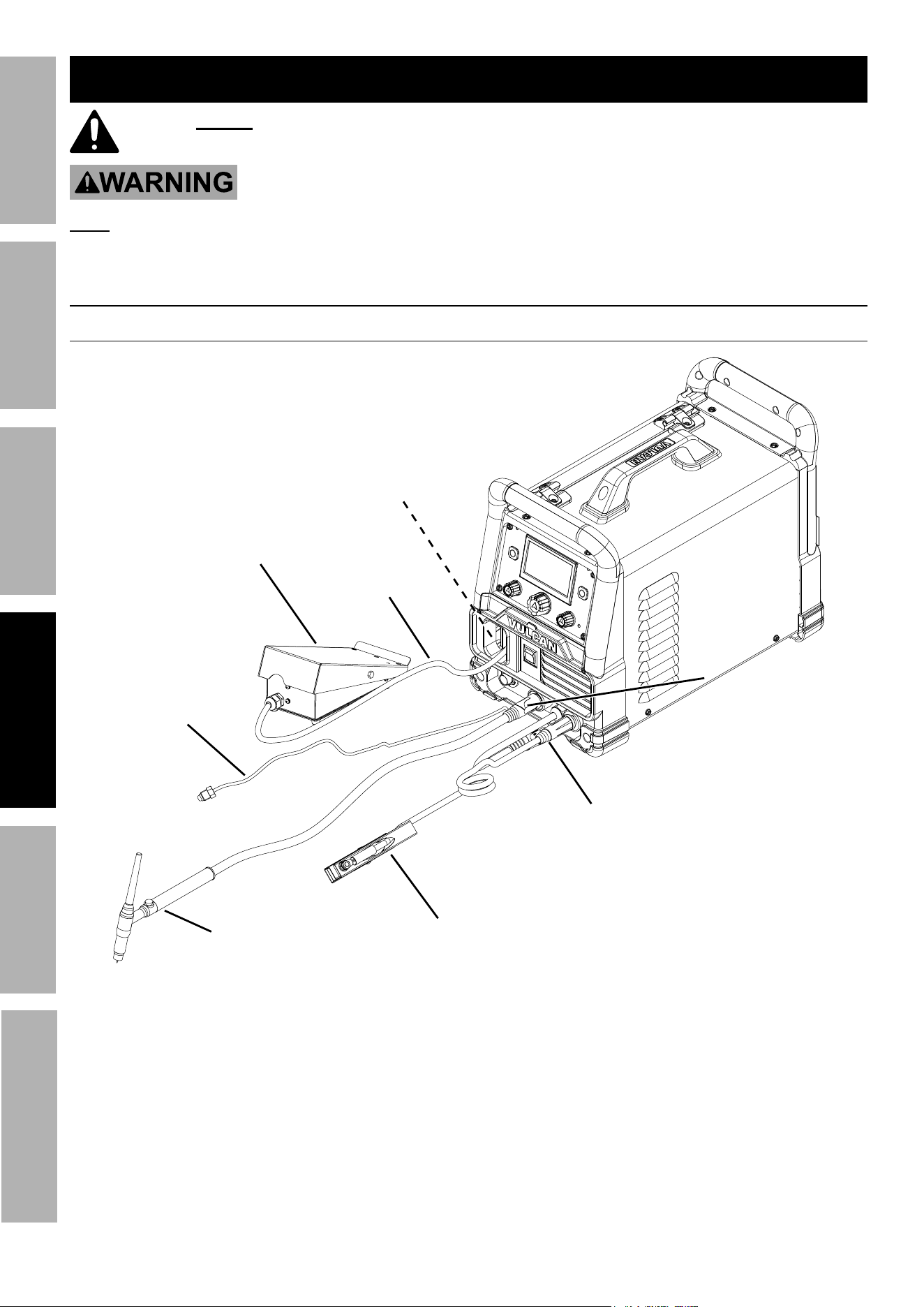
tig Setup
connect cables
ground clamp cable
in positive Socket
ground
clamp
tig torch tig torch
cable in cable in
negative negative
SocketSocket
tig torch
(sold separately)
Foot pedal Socket
(inside Welder)
Foot pedal
(sold separately)
Foot pedal
cable
Shielding
gas Hose
1. Plug Ground Clamp Cable into Positive Socket.
Twist clockwise all the way to lock in place.
2. Plug TIG Torch Cable (TIG Torch sold
separately) into Negative Socket. Twist
clockwise all the way to lock in place.
3. Insert the Foot Pedal Cable (Foot Pedal
sold separately) through hole on Welder
front and connect to the Foot Pedal
Socket inside the machine. Secure by
turning collar clockwise until tight.
4. For connecting Shielding Gas Hose, refer to
Connect Shielding Gas section on next page.
Page 25For technical questions, please call 1-800-444-3353.Item 57812
SaFety
Welding tipS
Maintenance
tig / Stick cOntROlSWiRe
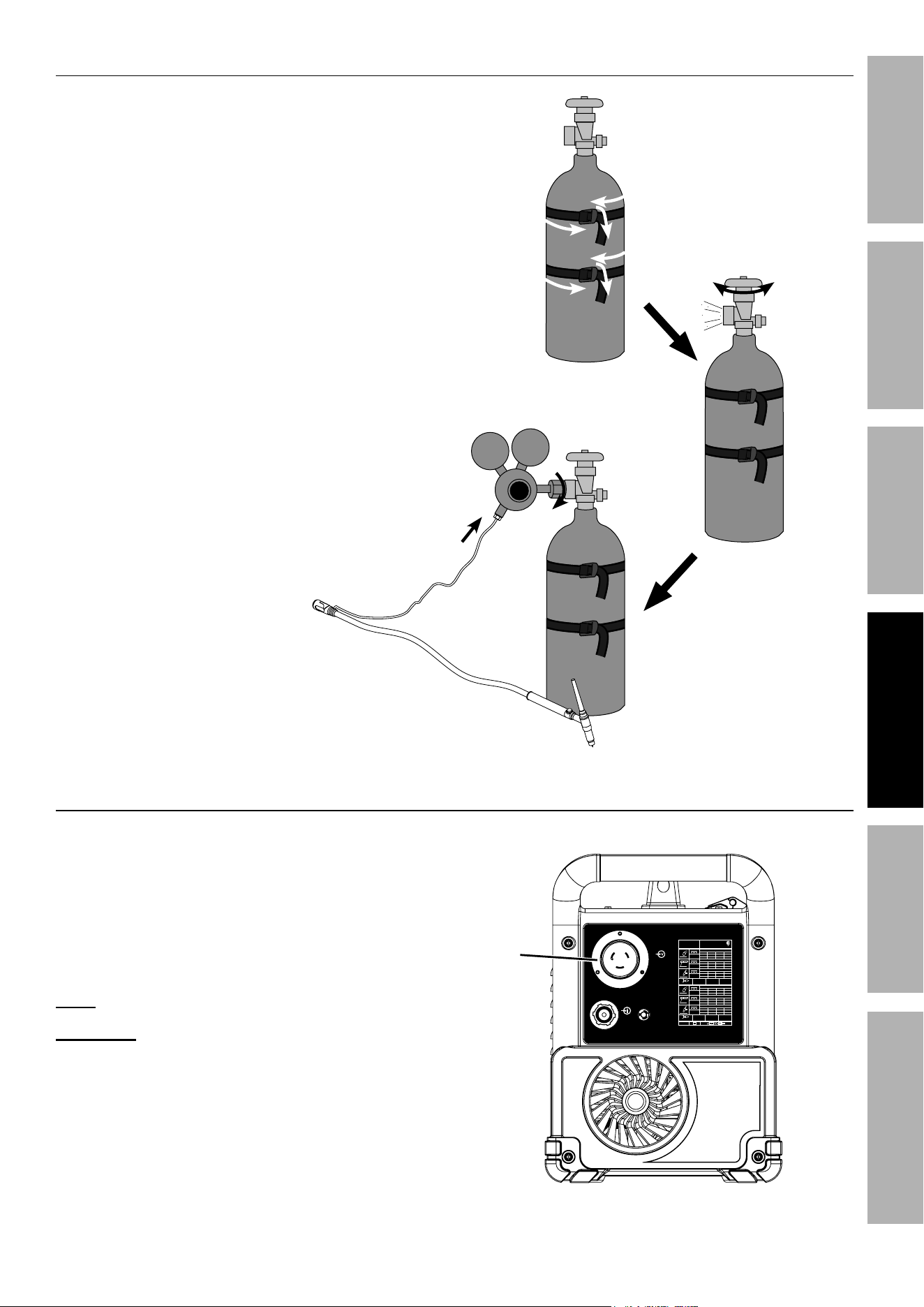
connect Shielding gas
1. With assistance, place an 100% Argon cylinder
(not included) onto a cabinet or cart near the
Welder and secure the cylinder in place with
two straps (not included) to prevent tipping.
2. Remove the cylinder’s cap. Stand to the
side of the valve opening, then open the
valve briefly to blow dust and dirt from the
valve opening. Close the cylinder valve.
3. Locate the Regulator (included) and close its
valve until it is loose, then thread Regulator
onto cylinder and wrench-tighten connection.
4. Connect Shielding Gas Hose on TIG
Torch Cable Connector to the Regulator’s
Outlet and wrench-tighten connection.
connect power cord
Plug either 120 VAC or 240 VAC Power
Cord into Power Input Socket.
note: Plug will only fit one way.
WaRning! tO pReVent SeRiOUS inJURy
FROM accidental OpeRatiOn: Do not
plug cord into wall outlet at this time.
4
3
1
Briefly open valve
to clean,
then close
valve.
2
Reset
Power Input
Gas Inlet
IP21S
S
1
f1
f2
Date:
57812
25d
Conforms to ANSI/IEC Std. 60974-1
264149
Vulcan OMNIPRO 220
30A/15.5V to 220A/25V
X 25% 60% 100%
U
0
= 86V
I
2
200A 130A 115A
U
2
24V 20.5V 19.75V
1~50/60Hz
U
1
= 240V
I
1max
= 25.5A
23.7A
15.6A
I
1eff
= 12.8A
11.9A
8.5A
10A/20.4V to 175A/27V
X 25% 60% 100%
U
0
= 86V
I
2
175A 115A 100A
U
2
27V 24.6V 24V
10A/10.4V to 175A/17V
X 30% 60% 100%
U
0
= 86V
I
2
175A 125A 105A
U
2
17V 15V 14.2V
30A/15.5V to 140A/21V
X 40% 60% 100%
U
0
= 86V
I
2
100A 85A 75A
U
2
19V 18.25V 17.75V
1~50/60Hz
U
1
= 120V
I
1max
= 20.8A
19.5A
20.6A
I
1eff
= 13.1A
12.3A
13A
10A/20.4V to 80A/23.2V
X 40% 60% 100%
U
0
= 86V
I
2
80A 70A 60A
U
2
23.2V 22.8V 22.4V
10A/10.4V to 125A/15V
X 40% 60% 100%
U
0
= 86V
I
2
125A 105A 90A
U
2
15V 14.2V 13.6V
UPC 193175422590
power
input
Page 26 For technical questions, please call 1-800-444-3353. Item 57812
SaFety
Welding tipS
tig / Stick
cOntROlS
WiRe
Maintenance
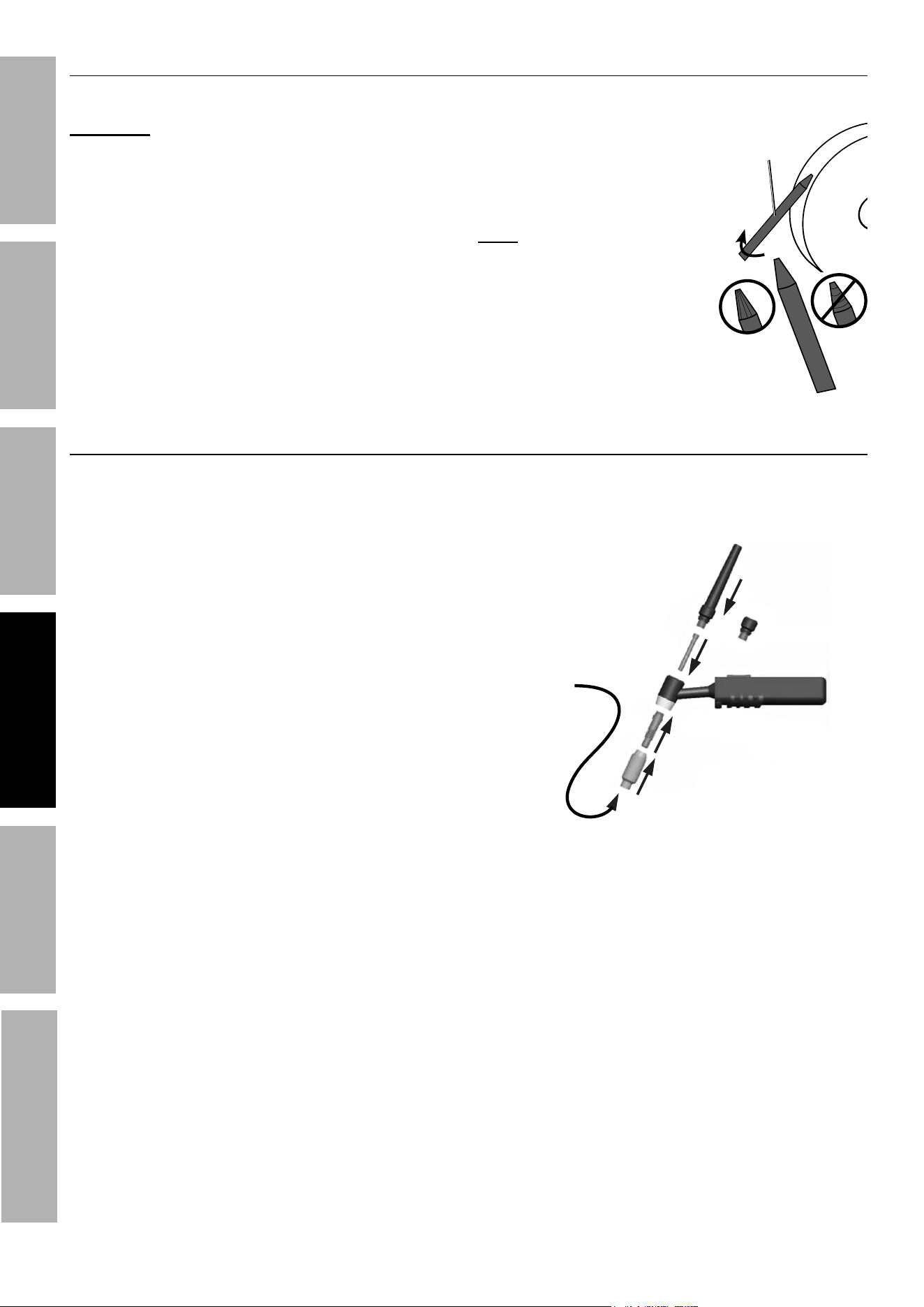
Sharpen Tungsten Electrode (sold separately)
To avoid Electrode contamination, dedicate a fine grit grinding wheel exclusively to Electrode grinding.
WaRning! tO pReVent SeRiOUS inJURy: Some
Electrodes may have materials added to them that are
hazardous to breathe. Wear a respirator and ANSI-
approved Safety goggles when grinding an Electrode.
1. Shut off the welder and wait until Electrode
and Torch have cooled enough to handle.
2. Remove Back Cap. Pull Electrode from front
of Torch. (Pulling it from rear will damage
Collet and create burrs on Electrode).
3. If Electrode has dulled or been otherwise
contaminated, use pliers or a suitable tool to
grip the Electrode above the contaminated
section and snap off the end of the Electrode.
4. Lightly press Electrode tip
against the surface of
the grinding wheel at an angle.
Rotate Electrode tip until a
blunt point is formed.
note: Grinding direction must be
parallel to length of Electrode.
5. The conical portion of the ideal
tip will be 2-1/2 times as long
as the Electrode diameter.
6. Re-insert Electrode into Collet with tip
protruding 1/8"-1/4" beyond the Ceramic
Nozzle, then re-tighten the Back Cap.
Assemble TIG Torch (sold separately)
1. Consult Settings Chart, on top of Welder, to
determine proper Tungsten Electrode size to be
used with thickness of material to be welded.
2. Match Collet and Collet Body sizes
to Tungsten Electrode size.
3. Thread Collet Body into the front of the Torch.
4. Make sure Ceramic Nozzle size is
appropriate for application.
5. Thread Ceramic Nozzle onto Collet Body.
6. Insert Collet into back of Torch and into Collet Body.
7. Insert Tungsten Electrode into
Collet on front of Torch.
8. Lock Electrode in place with Back Cap.
Electrode should protrude 1/8" to 1/4"
beyond the Ceramic Nozzle.
collet
Body
ceramic
nozzle
collet
Back cap
insert tungsten
electrode here.
grinding
Wheel
electrode
Page 27For technical questions, please call 1-800-444-3353.Item 57812
SaFety
Welding tipS
Maintenance
tig / Stick cOntROlSWiRe
Stick Setup
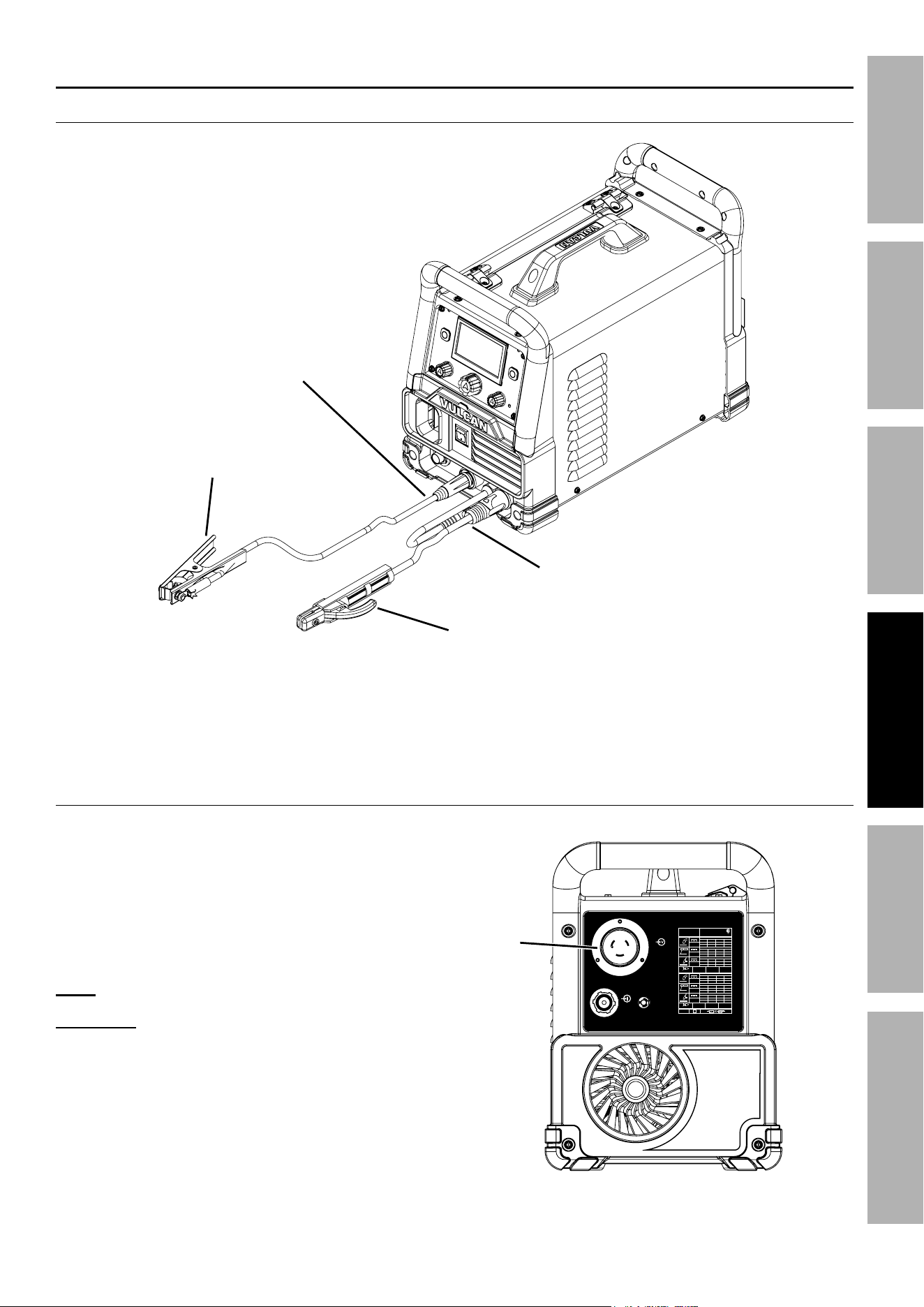
connect cables
electrode Holder
cable in positive Socket
ground clamp cable
in negative Socket
ground
clamp
electrode
Holder
1. Plug Ground Clamp Cable into Negative Socket.
Twist clockwise all the way to lock in place.
2. Plug Electrode Holder Cable into Positive Socket.
Twist clockwise all the way to lock in place.
connect power cord
Plug either 120 VAC or 240 VAC Power
Cord into Power Input Socket.
note: Plug will only fit one way.
WaRning! tO pReVent SeRiOUS inJURy
FROM accidental OpeRatiOn: Do not
plug cord into wall outlet at this time.
Reset
Power Input
Gas Inlet
IP21S
S
1
f1
f2
Date:
57812
25d
Conforms to ANSI/IEC Std. 60974-1
264149
Vulcan OMNIPRO 220
30A/15.5V to 220A/25V
X 25% 60% 100%
U
0
= 86V
I
2
200A 130A 115A
U
2
24V 20.5V 19.75V
1~50/60Hz
U
1
= 240V
I
1max
= 25.5A
23.7A
15.6A
I
1eff
= 12.8A
11.9A
8.5A
10A/20.4V to 175A/27V
X 25% 60% 100%
U
0
= 86V
I
2
175A 115A 100A
U
2
27V 24.6V 24V
10A/10.4V to 175A/17V
X 30% 60% 100%
U
0
= 86V
I
2
175A 125A 105A
U
2
17V 15V 14.2V
30A/15.5V to 140A/21V
X 40% 60% 100%
U
0
= 86V
I
2
100A 85A 75A
U
2
19V 18.25V 17.75V
1~50/60Hz
U
1
= 120V
I
1max
= 20.8A
19.5A
20.6A
I
1eff
= 13.1A
12.3A
13A
10A/20.4V to 80A/23.2V
X 40% 60% 100%
U
0
= 86V
I
2
80A 70A 60A
U
2
23.2V 22.8V 22.4V
10A/10.4V to 125A/15V
X 40% 60% 100%
U
0
= 86V
I
2
125A 105A 90A
U
2
15V 14.2V 13.6V
UPC 193175422590
power
input
Page 28 For technical questions, please call 1-800-444-3353. Item 57812
SaFety
Welding tipS
tig / Stick
cOntROlS
WiRe
Maintenance
Basic TIG / Stick Welding
Read the entiRe iMpORtant SaFety inFORMatiOn section at the beginning of this
manual including all text under subheadings therein before set up or use of this product.
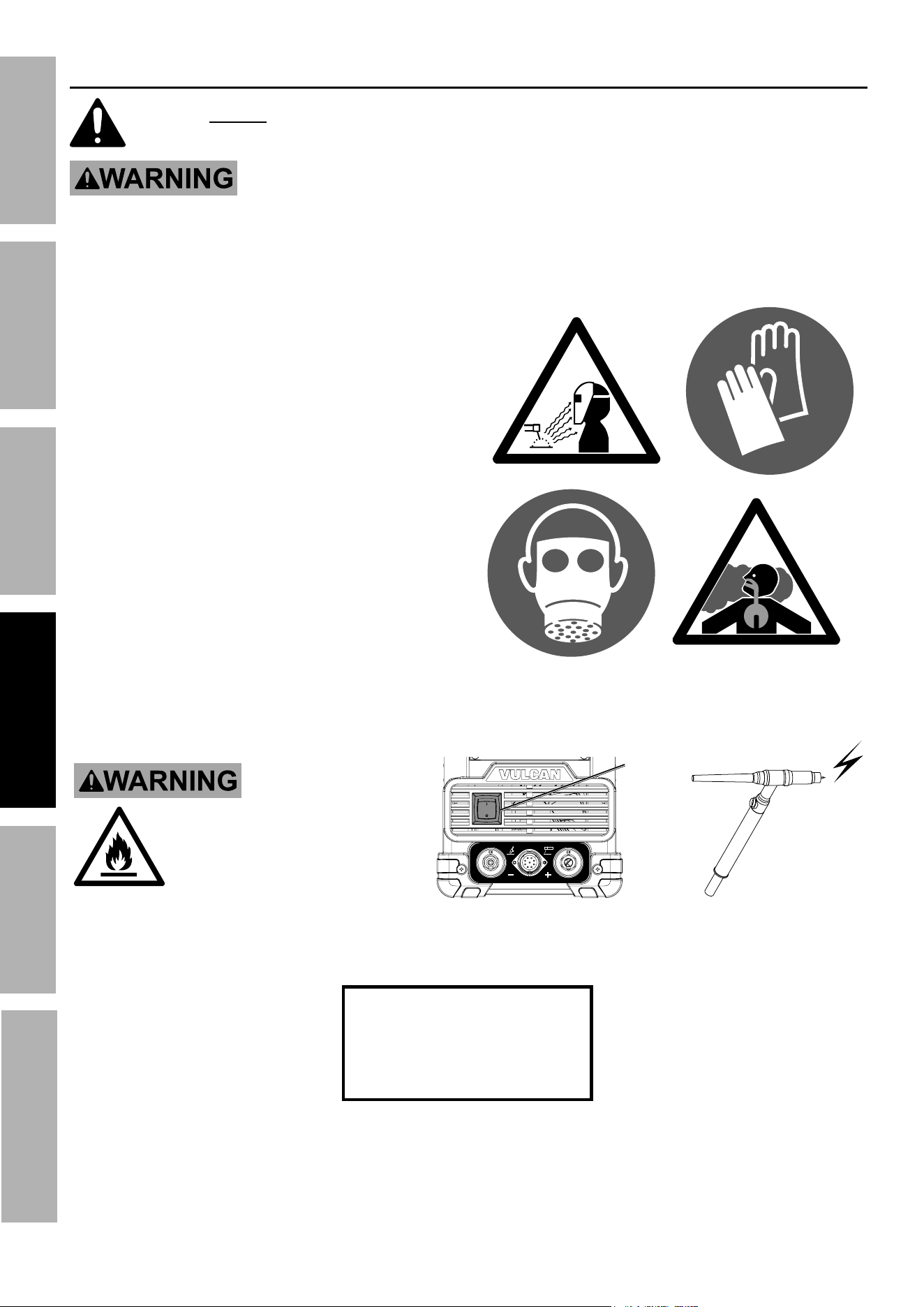
tO pReVent SeRiOUS inJURy:
protective gear must be worn when using the Welder; minimum shade number 10 full face shield
(or welding mask), ear protection, welding gloves, sleeves and apron, NIOSH-approved respirator, and fire
resistant work clothes without pockets should be worn when welding.
light from the arc can cause permanent damage to the eyes and skin.
do not breathe arc fumes.
• DC TIG Welding is used to weld
mild steel and stainless steel using
a TIG Rod and shielding gas.
• AC TIG Welding is used to weld aluminum
using a TIG Rod and shielding gas.
• Stick Welding is used to weld mild
steel and stainless steel using a
Stick Electrode without shielding gas.
Good welding takes a degree of skill and experience.
Practice a few sample welds on scrap before
welding your first project. Additional practice
periods are recommended whenever you weld:
• a different thickness of material
• a different type of material
• a different type of connection
• using a different process
Make practice welds on pieces of scrap to practice
technique before welding anything of value.
tO pReVent SeRiOUS inJURy,
FiRe and BURnS:
keep welding tip clear of grounded
objects whenever unit is plugged
in and turned on.
power
On
=
practice your welding
technique on scrap
pieces before welding
anything of value.
Page 29For technical questions, please call 1-800-444-3353.Item 57812
SaFety
Welding tipS
Maintenance
tig / Stick cOntROlSWiRe
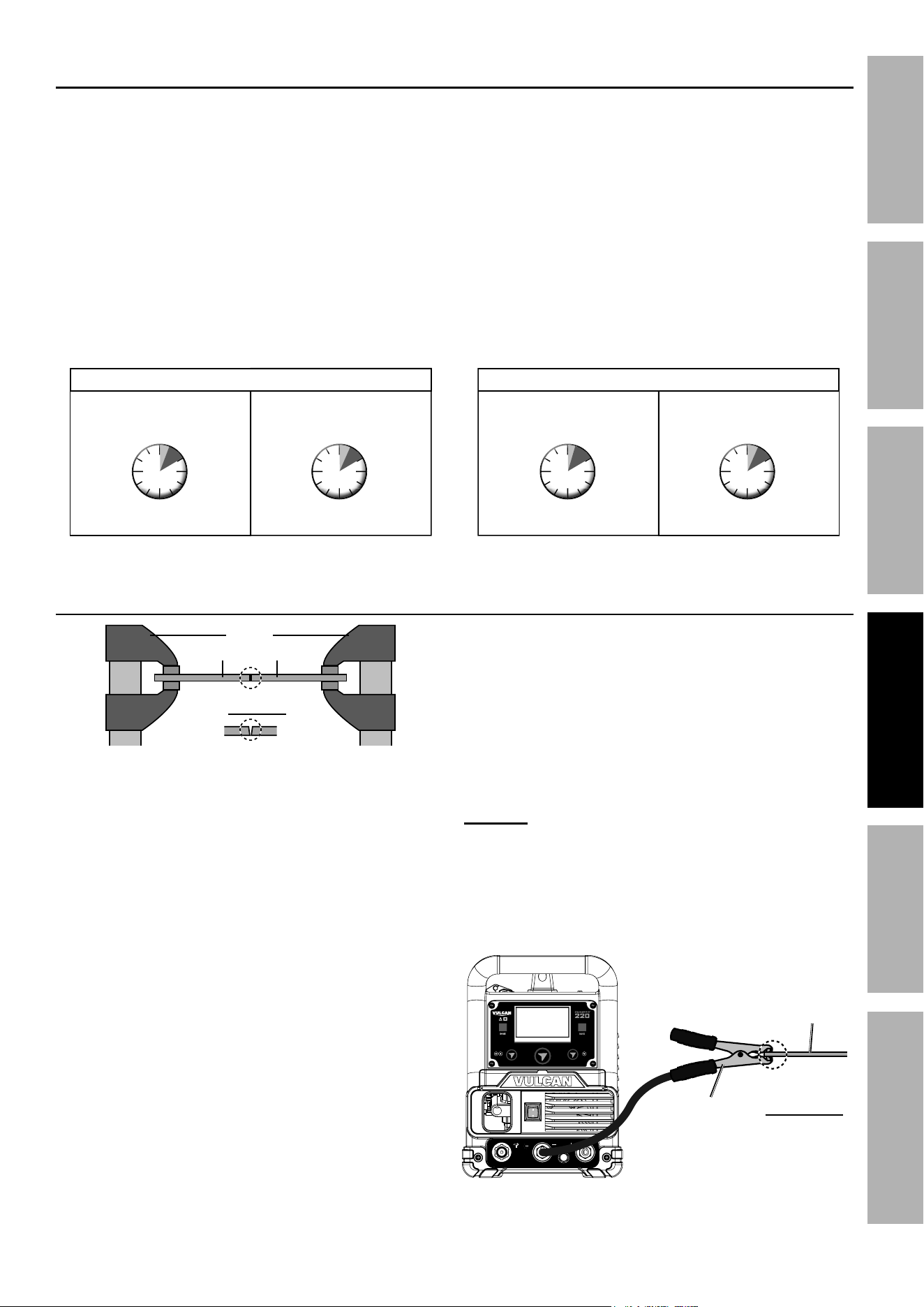
Duty Cycle (Duration of Use)
avoid damage to the Welder by not welding for more
than the prescribed duty cycle time. The Duty Cycle
defines the number of minutes, within a 10 minute
period, during which a given welder can produce a
particular welding current without overheating.
For example, a welder with a 40% duty
cycle at 125 A welding current must be
allowed to rest for at least 6 minutes after
every 4 minutes of continuous welding.
Failure to carefully observe duty cycle limitations
can easily over-stress a welder’s power generation
system contributing to premature welder failure.
This Welder has an internal thermal protection system to
help prevent this sort of over-stress. When the Welder
overheats, it automatically shuts down and a warning
screen appears in the LCD Display window. The Welder
automatically returns to service after cooling off. Should
this occur, rest the Tig Torch or Electrode Holder on an
electrically non-conductive, heat-proof surface, such
as a concrete slab, well clear of the ground clamp.
allow the Welder to cool with the power Switch on,
so that the internal Fan will help cool the Welder.
When normal operation resumes, use
shorter welding periods and longer rest
periods to prevent needless wear.
240 VAC
25% Use at 175 A
For 10 continuous Minutes
100% Continuous Use at 100 A
2-1/2
2-1/2
Minutes
Minutes
Welding
Welding
7-1/2
7-1/2
Minutes
Minutes
Resting
Resting
120 VAC
40% Use at 80 A
For 10 continuous Minutes
100% Continuous Use at 60 A
4
4
Minutes
Minutes
Welding
Welding
6
6
Minutes
Minutes
Resting
Resting
Stick Rated duty cycles
240 VAC
30% Use at 175 A
For 10 continuous Minutes
100% Continuous Use at 105 A
3
3
Minutes
Minutes
Welding
Welding
7
7
Minutes
Minutes
Resting
Resting
120 VAC
40% Use at 125 A
For 10 continuous Minutes
100% Continuous Use at 90 A
4
4
Minutes
Minutes
Welding
Welding
6
6
Minutes
Minutes
Resting
Resting
tig Rated duty cycles
Setting up the Weld
clamps
workpieces
chamfer thick workpieces.
clean surfaces
to bare metal.
1. Make practice welds on pieces of scrap the
same thickness as your intended workpiece
to practice technique before welding anything
of value. Clean the weld surfaces thoroughly
with a wire brush or angle grinder; there
must be no rust, paint, oil, or other materials
on the weld surfaces, only bare metal.
2. Use clamps (not included) to hold the workpieces
in position so that you can concentrate on
proper welding technique. The distance (if
any) between the two workpieces must be
controlled properly to allow the weld to hold
both sides securely while allowing the weld
to penetrate fully into the joint. The edges of
thicker workpieces may need to be chamfered
(or beveled) to allow proper weld penetration.
nOtice: When welding equipment on a vehicle,
disconnect the vehicle battery power from both the
positive connection and the ground before welding.
This prevents damage to some vehicle electrical
systems and electronics due to the high voltage
and high frequency bursts common in welding.
3. Clamp Ground Cable to bare metal on the
workpiece near the weld area, or to metal work
bench where the workpiece is clamped.
®
ground connection depends
on desired welding polarity
Workpiece
ground
clamp
clean
surface to
bare metal.
Page 30 For technical questions, please call 1-800-444-3353. Item 57812
SaFety
Welding tipS
tig / Stick
cOntROlS
WiRe
Maintenance
tig Welding
tO pReVent SeRiOUS inJURy and deatH:
do not weld without grounding clamp.
When the operator is not holding the torch, it must be sitting on a nonconductive, nonflammable surface.
Only hold tig Rod with an electrically insulated welding glove.
tO pReVent deatH FROM aSpHyXiatiOn:
do not open gas without proper ventilation. Fix gas leaks immediately. Shielding gas can displace
air and cause rapid loss of consciousness and death. Shielding gas without carbon dioxide can be
even more hazardous because asphyxiation can start without feeling shortness of breath.
nOtice: TIG welding is a complicated process,
requiring experience and skill to achieve
successful results. Training beyond the scope of
this manual is required to TIG weld properly.
1. Open gas cylinder’s valve all the way.
2. Set Flow Gauge to SCFH value indicated on the
Settings Chart on the inside of the Welder door.
3. Turn the Power Switch to the OFF position, then
plug the Welder into a properly grounded, GFCI
protected, 120 VAC (20 amp rated) outlet or
240 V outlet. The circuit must be equipped with
delayed action-type circuit breaker or fuses.
4. Set TIG Torch down on nonconductive,
nonflammable surface away from
any grounded objects.
5. Turn the Power Switch ON.
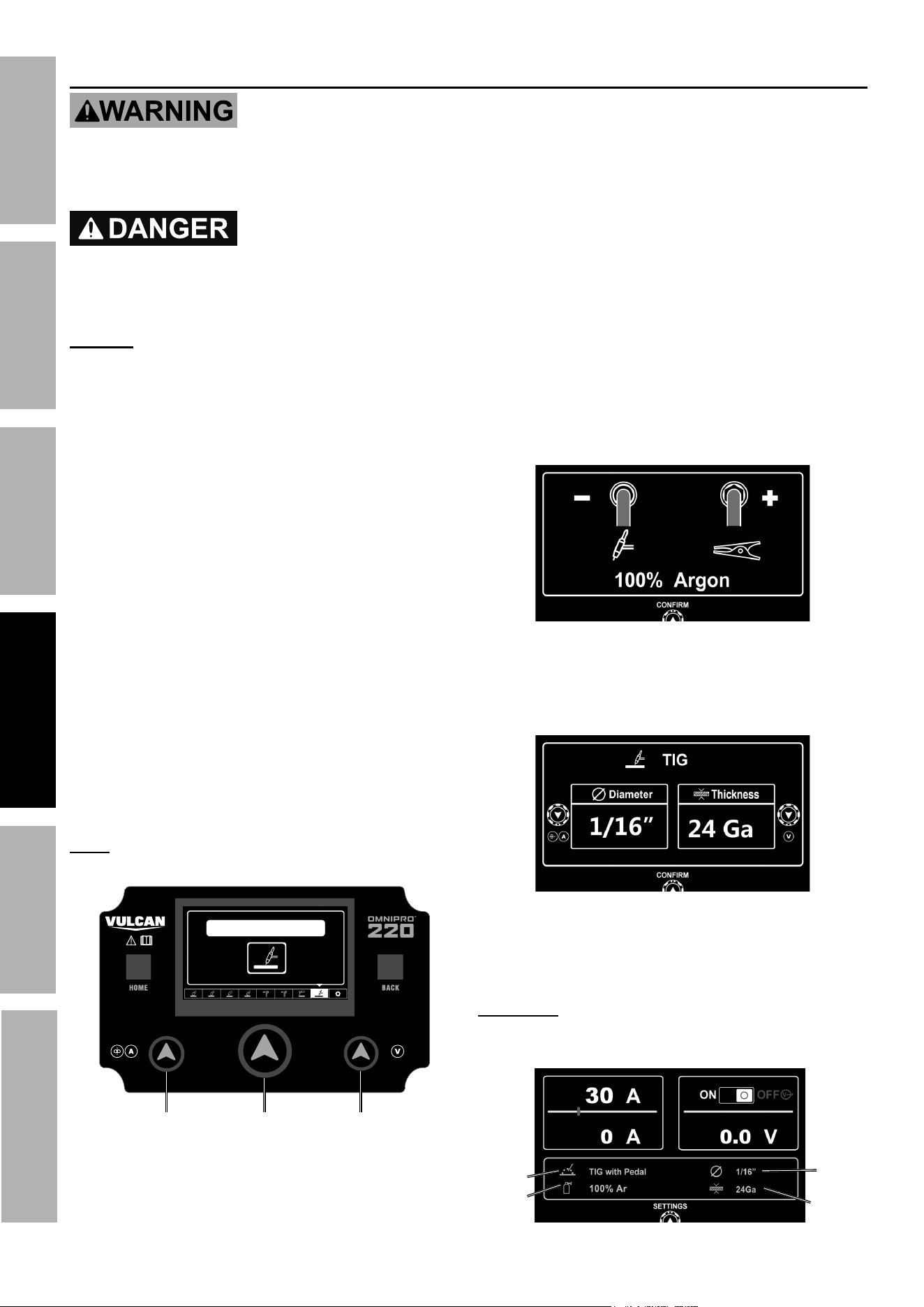
6. Press Home Button on Control Panel.
7. Turn Main Control Knob until TIG process
appears on LCD display screen.
8. Press Main Control Knob to select TIG process.
note: Press Main Control Knob to go to next screen.
Press Back Button to return to the previous screen.
®
Main
control
knob
left
knob
Right
knob
tig
9. Adjust settings for the TIG process.
a. Polarity and Gas Settings:
• Plug cables in according to screen.
• Connect gas according to screen.
• Set SCFH between 10-25.
b. Set Rod Diameter and Material Thickness:
• Turn Left Knob to set rod diameter.
• Turn Right Knob to set material thickness.
c. Auto Weld Settings:
• Turn Left Knob to adjust output amperage.
• Turn Right Knob to ON to energize TIG Torch.
WaRning! tO pReVent SeRiOUS
inJURy: Welder is now energized and
Open circuit Voltage is present.
process
Rod
diameter
Material
thickness
gas type
Page 31For technical questions, please call 1-800-444-3353.Item 57812
SaFety
Welding tipS
Maintenance
tig / Stick cOntROlSWiRe
d. Optional Settings:
• Press Main Control Knob to
enter Optional Settings.
• Turn Main Control Knob until desired
setting appears on screen.
• Press Main Control Knob to
select desired setting.
• Turn Main Control Knob to adjust setting.
Available Optional Settings:
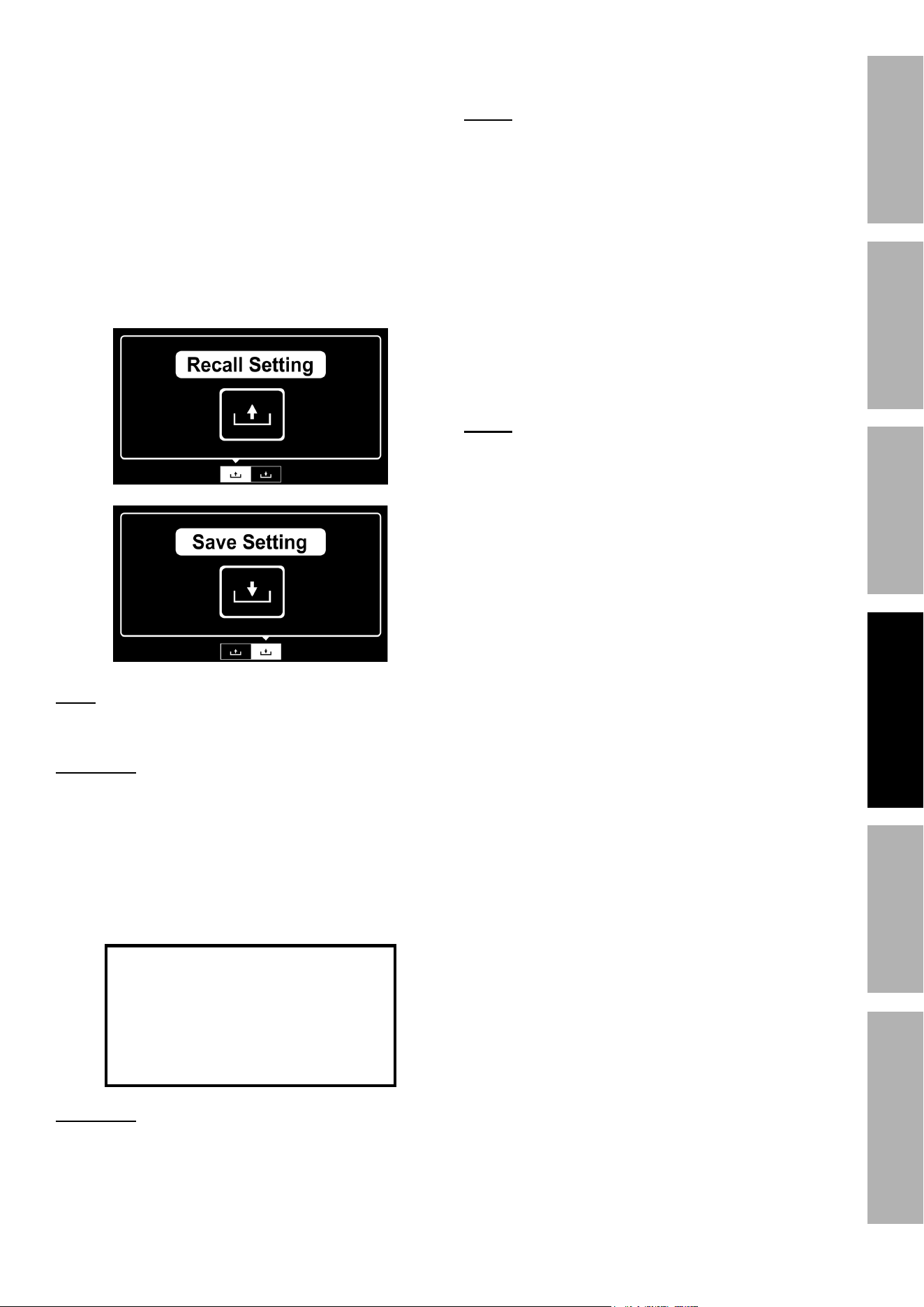
• Recall Setting – Retrieve saved settings.
• Save Setting – Program up to
5 different configurations.
note: The initial settings may need to be
adjusted after stopping and carefully inspecting
the weld. Proper welding takes experience.
WaRning! tO pReVent SeRiOUS inJURy:
protective gear must be worn when using the
Welder; minimum shade number 10 full face shield
(or welding mask), ear protection, welding gloves,
sleeves and apron, niOSH-approved respirator,
and fire resistant work clothes without pockets
should be worn when welding. light from the
arc can cause permanent damage to the eyes
and skin. do not breathe arc fumes.
After practice welding on scrap, stop,
and check your progress. Perform
Strike Test according to Strike test on
page 34. After making any necessary
adjustments, continue to weld while
carefully following the DUTY CYCLE
guidelines as explained on page 29.
WaRning! tO pReVent SeRiOUS inJURy: Metal
work bench must be grounded when tig welding.
10. Hold TIG Torch in one gloved hand and the TIG
Rod (sold separately) in other gloved hand.
nOte: Maintain a constant distance between the
Tungsten Electrode and the workpiece: between
1 and 1.5 times the diameter of the Electrode.
11. Open valve on TIG Torch to start gas flow.
12. To initiate welding arc, push Foot Pedal and touch
Electrode to work piece and lift. If not using Foot
Pedal, touch Electrode to work piece and lift.
13. When welding puddle is hot enough, tilt Torch
backward about 10-15 degrees from vertical and
move it back slightly. Add TIG Rod material as
needed to the front end of the weld puddle.
14. Alternate between pushing the torch/weld
puddle and adding the TIG Rod material.
nOte: Remove the TIG Rod each time the Electrode
is advanced, but do not remove it from the gas shield.
This prevents oxidation from contaminating the weld.
15. When finished welding, release the Foot Pedal but
keep Torch on weld puddle until weld solidifies.
If not using Foot Pedal, pull Torch away from
work piece until welding arc is broken, then
return the gas coverage until weld solidifies.
16. Close valve on TIG Torch and turn Right Knob
to OFF to turn off power to TIG Torch.
17. Set TIG Torch down on nonconductive,
nonflammable surface away from
any grounded objects.
18. Turn the Power Switch OFF.
19. To prevent accidents, after use:
• Allow Welder to cool down.
• Unplug Welder’s power cord from outlet.
• Remove Ground Clamp from workpiece or table.
• Disconnect TIG Torch, Ground
and Foot Pedal Cables.
• Close gas cylinder’s valve securely,
remove regulator and replace cap.
• Disconnect Gas Hose from Welder.
• Store and secure gas cylinder.
• Clean, then store Welder and its accessories
indoors out of children’s reach.
Page 32 For technical questions, please call 1-800-444-3353. Item 57812
SaFety
Welding tipS
tig / Stick
cOntROlS
WiRe
Maintenance
Stick Welding
tO pReVent SeRiOUS inJURy and deatH:
do not weld without grounding clamp.
When the operator is not holding the electrode Holder, it must be
sitting on a nonconductive, nonflammable surface.
1. Turn the Power Switch to the OFF position, then
plug the Welder into a properly grounded, GFCI
protected, 120 VAC (20 amp rated) outlet or
240 V outlet. The circuit must be equipped with
delayed action-type circuit breaker or fuses.
2. Set Electrode Holder down on
nonconductive, nonflammable surface
away from any grounded objects.
3. Turn the Power Switch ON.
4. Press Home Button on Control Panel.
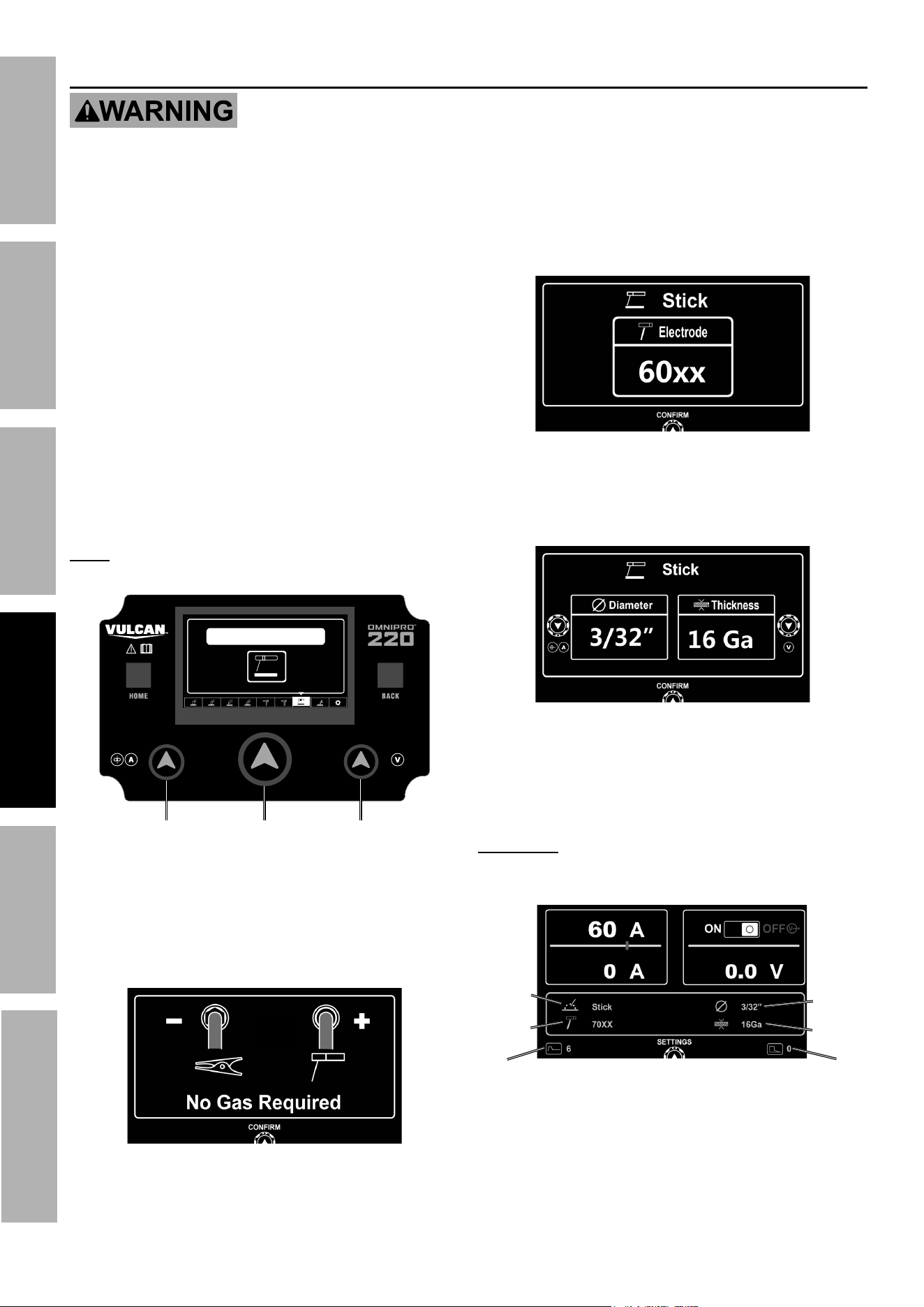
5. Turn Main Control Knob until Stick process
appears on LCD display screen.
6. Press Main Control Knob to select STICK process.
note: Press Main Control Knob to go to next screen.
Press Back Button to return to the previous screen.
Main
control
knob
left
knob
Right
knob
Stick
7. Adjust settings for the STICK process.
a. Polarity Setting:
• Plug cables in according to screen.
b. Set Electrode type:
• Turn Main Control Knob to set electrode type.
c. Set Electrode Diameter and Material Thickness:
• Turn Left Knob to set electrode diameter.
• Turn Right Knob to set material thickness.
d. Auto Weld Settings:
• Turn Left Knob to adjust output amperage.
• Turn Right Knob to ON to
energize Electrode Holder.
WaRning! tO pReVent SeRiOUS
inJURy: Welder is now energized and
Open circuit Voltage is present.
Hot Start
arc Force
electrode
diameter
Material
thickness
process
electrode
type
Page 33For technical questions, please call 1-800-444-3353.Item 57812
SaFety
Welding tipS
Maintenance
tig / Stick cOntROlSWiRe
e. Optional Settings:
• Press Main Control Knob to
enter Optional Settings.
• Turn Main Control Knob until desired
setting appears on screen.
• Press Main Control Knob to
select desired setting.
• Turn Main Control Knob to adjust setting.
Available Optional Settings:
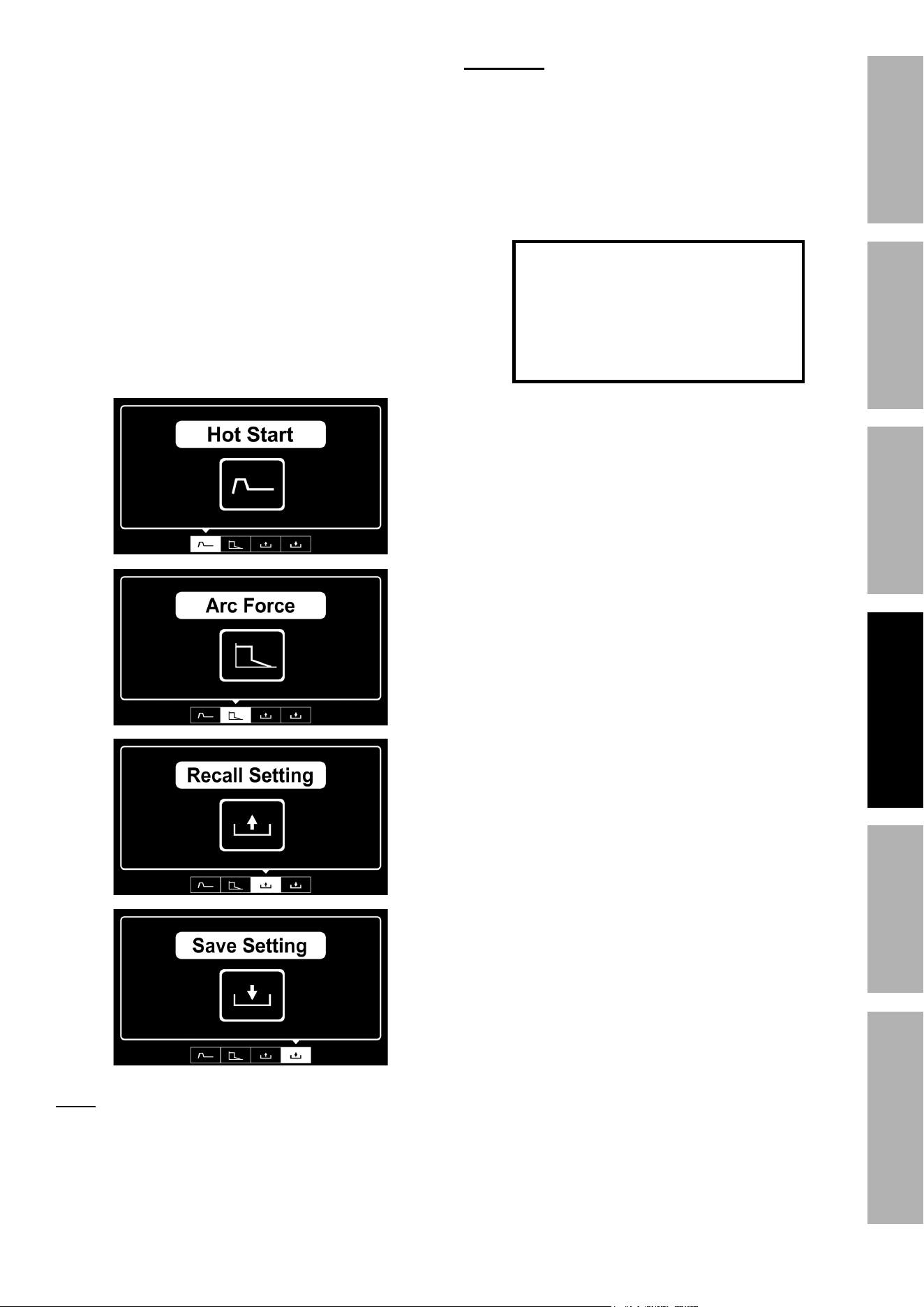
• Hot Start – Adjust amperage at start of weld.
• Arc Force – Adjust weld penetration
and smoothness.
• Recall Setting – Retrieve saved settings.
• Save Setting – Program up to
5 different configurations.
note: The initial settings may need to be
adjusted after stopping and carefully inspecting
the weld. Proper welding takes experience.
WaRning! tO pReVent SeRiOUS inJURy:
protective gear must be worn when using the
Welder; minimum shade number 10 full face shield
(or welding mask), ear protection, welding gloves,
sleeves and apron, niOSH-approved respirator,
and fire resistant work clothes without pockets
should be worn when welding. light from the
arc can cause permanent damage to the eyes
and skin. do not breathe arc fumes.
After practice welding on scrap, stop,
and check your progress. Perform
Strike Test according to Strike test on
page 34. After making any necessary
adjustments, continue to weld while
carefully following the DUTY CYCLE
guidelines as explained on page 29.
8. Place the bare metal end of the Stick Electrode (sold
separately) inside the jaws of the Electrode Holder.
9. Stroke the workpiece lightly to ignite the arc.
Tips for igniting the arc:
a. Tap the surface with the Electrode.
b. Stroke the surface with the Electrode.
c. Strike the surface like a match with the Electrode.
10. After the arc ignites:
a. Lift the Electrode off workpiece the same
distance as the diameter of the bare metal end.
b. Tilt Electrode back 10 to 20 degrees.
c. Drag Electrode to the back end of the weld
puddle to deposit material as needed.
11. When finished welding; lift the Electrode from
the workpiece, then set Electrode Holder
down on nonconductive, nonflammable
surface away from any grounded objects.
12. Turn the Power Switch OFF.
13. To prevent accidents, after use:
• Allow Welder to cool down.
• Unplug Welder’s power cord from outlet.
• Remove Ground Clamp.
• Disconnect Electrode Holder
and Ground Cables.
14. Clean, then store Welder and its accessories
indoors out of children’s reach.
Page 34 For technical questions, please call 1-800-444-3353. Item 57812
SaFety
Welding tipS
tig / Stick
cOntROlS
WiRe
Maintenance
Welding tips
A good way to test welding technique is to examine a weld’s appearance after it has cooled and the slag has been
removed. Then, better welding can be learned by adjusting your weld technique to remedy any problems found.
NOTICE: TIG welding is a complicated process, requiring experience and skill to achieve successful
results. Training beyond the scope of this manual is required to TIG weld properly.
after practice welding a couple
of welding beads, StOp and
examine your weld using
the following guidelines.
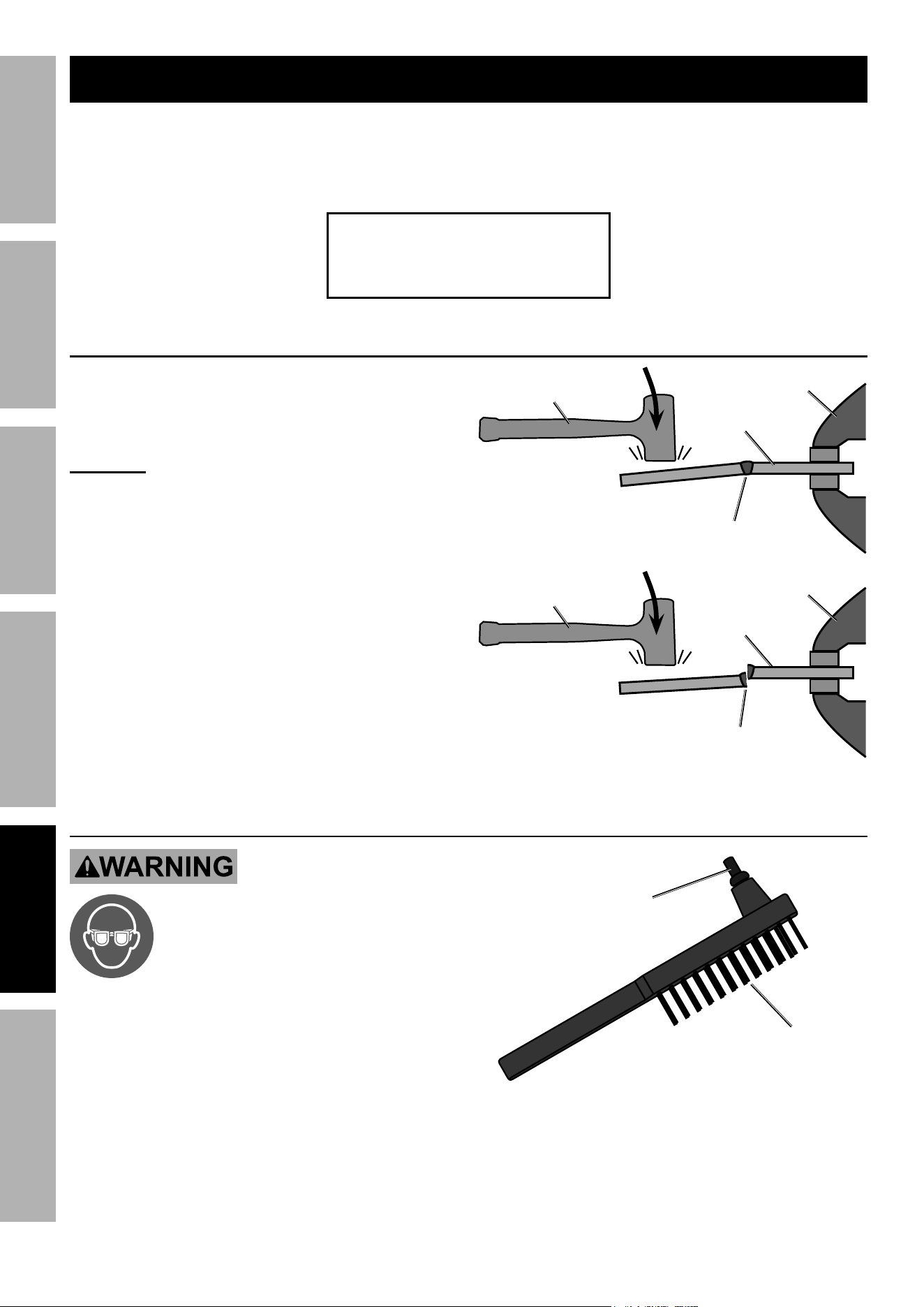
Strike test
a test weld on a piece OF ScRap can be
tested by using the following procedure.
WeaR anSi-appROVed SaFety gOggleS
dURing tHiS pROcedURe.
caUtiOn! this test Will damage the weld it is
performed on. this test is Only an indicator of weld
technique and is not intended to test working welds.
1. After two scraps have been welded together and the
weld has cooled, clamp one scrap in a sturdy vise.
2. Stay clear from underneath while you strike
the opposite scrap with a heavy hammer,
preferably a dead-blow hammer.
3. A gOOd Weld will deform but not break, as shown
on top.
A pOOR Weld will be brittle and snap at the
weld, as shown on bottom.
clamp
ScRap
workpiece
gOOd Weld
bends and is not brittle
dead-blow hammer
clamp
ScRap
workpiece
pOOR Weld
snaps or cracks
dead-blow hammer
cleaning the Weld
tO pReVent SeRiOUS inJURy:
continue to wear anSi-approved
safety goggles and protective wear
when cleaning a weld.
Sparks or chips may fly when cleaning.
1. A weld from flux-cored wire welding or stick
welding will be covered by slag. Use a chipping
hammer to knock this off. Be careful not
to damage the weld or base material.
2. Use a wire brush to further clean the weld
or use an angle grinder (sold separately) to
shape the weld.
chipping
Hammer
Wire Brush
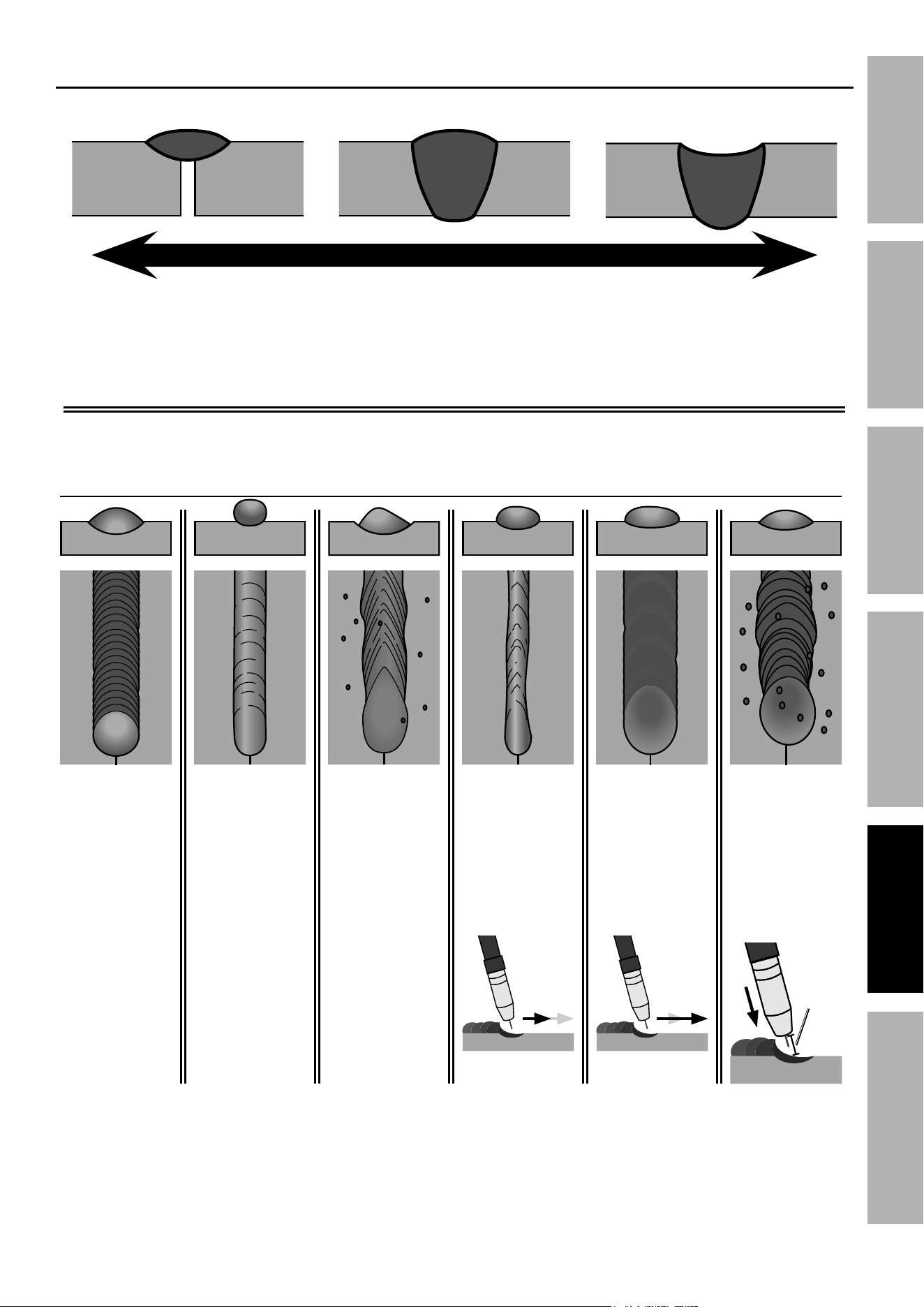
Page 35For technical questions, please call 1-800-444-3353.Item 57812
SaFety
Welding tipS
Maintenance
tig / Stick cOntROlSWiRe
Wire Weld Diagnosis – Workpiece Heat Control / Weld Penetration
eXceSS penetRatiOn OR
BURn-tHROUgH
pROpeR penetRatiOninadeQUate penetRatiOn
not hot enough too hotideal heat
How to increase workpiece heat
and increase penetration:
(to weld tHickeR workpieces properly)
How to reduce workpiece heat
and limit penetration:
(to weld tHinneR workpieces properly)
a. increase weld current
b. decrease travel speed
c. Use faster wire feed
d. Use shorter ctWd
e. decrease weld current
f. increase travel speed
g. Use slower wire feed
h. Use longer ctWd
example Wire Weld diagrams
good
Weld
Voltage
too low or
Wire Feed
too Slow
Voltage
too High or
Wire Feed
too Fast
travel Speed
too Fast
travel Speed
too Slow
ctWd
too long
or
Wrong polarity
tO cORRect:
travel
slower
tO cORRect:
travel
faster
tO cORRect:
check polarity
and
maintain
less less
than 1/2" than 1/2"
ctWdctWd
tO cORRect:tO cORRect:
or
increase
Output Voltage
increase Wire
Feed Speed
or
decrease
Output Voltage
decrease Wire
Feed Speed
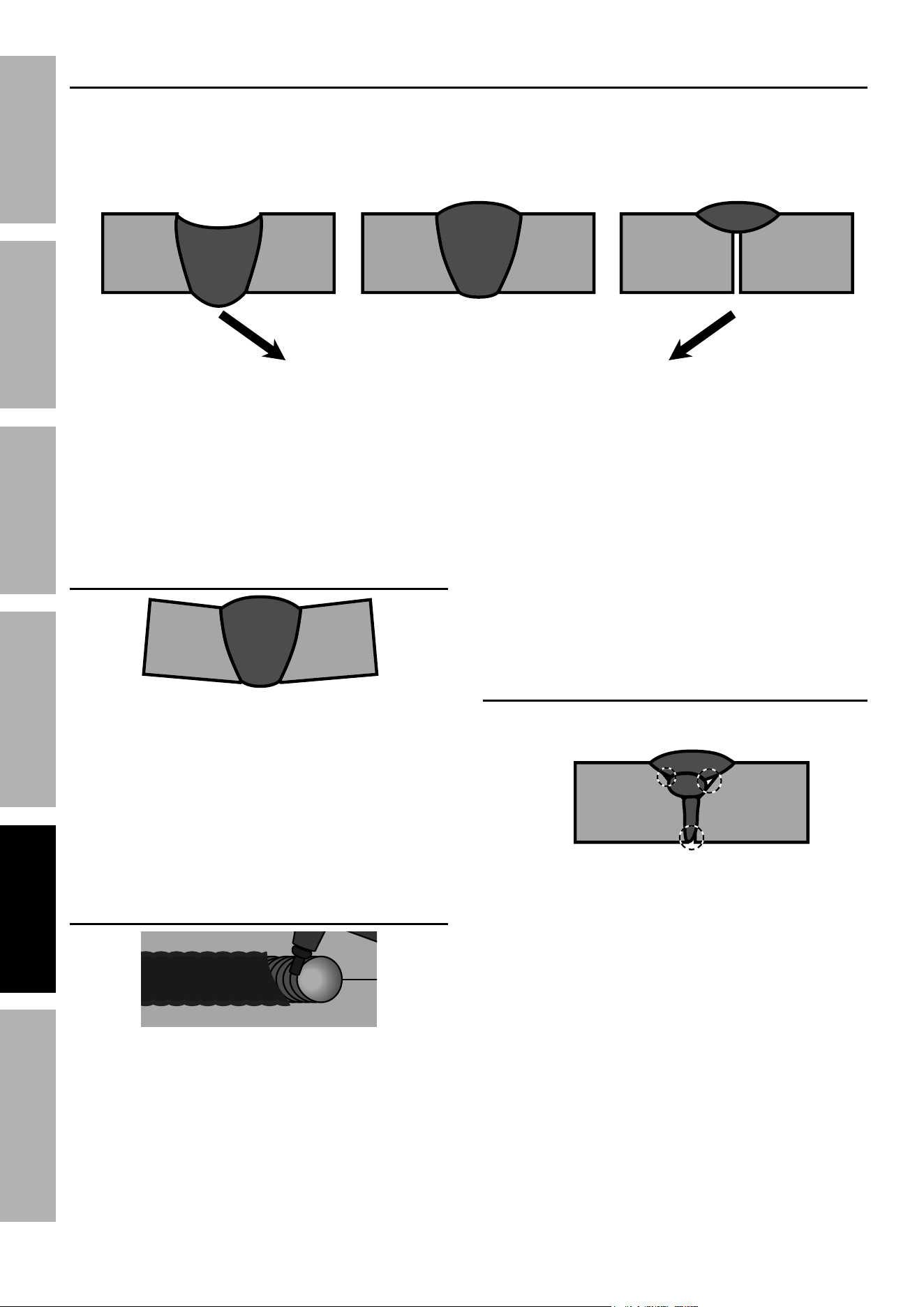
Page 36 For technical questions, please call 1-800-444-3353. Item 57812
SaFety
Welding tipS
tig / Stick
cOntROlS
WiRe
Maintenance
Wire Weld Penetration (Workpiece Heat Control)
eXceSS penetRatiOn OR
BURn-tHROUgH
Weld droops on top and
underneath, or falls through
entirely, making a hole.
pROpeR penetRatiOn
Weld is visible underneath and
bulges slightly on top.
inadeQUate penetRatiOn
Weld does not penetrate the
joint fully, just on the surface.
pOSSiBle caUSeS and SOlUtiOnS
1. Workpiece overheating:
Reduce wire feed speed.
Decrease weld current.
2. travel speed too slow:
Increase travel speed and ensure
that travel speed is kept steady.
3. excessive material at weld:
Reduce wire feed speed.
pOSSiBle caUSeS and SOlUtiOnS
4. incorrect welding technique:
Maintain 1/2" or less CTWD.
Keep arc on leading edge of weld puddle.
Hold MIG Gun at proper angles.
5. insufficient weld heat:
Reduce travel speed.
Increase weld current.
6. Workpieces too thick/close:
Bevel thick workpieces, allow slight
gap, and weld in several passes.
7. insufficient weld material:
Increase wire feed speed.
PROFILE VIEWS
Weld not adhering properly
gaps present between weld and previous bead or
between weld and workpiece. See areas below.
pOSSiBle caUSeS and SOlUtiOnS
1. incorrect welding technique:
Place stringer bead at correct place in joint.
Adjust workpiece position or weld angle to permit
proper welding to bottom of piece.
Pause briefly at sides during weave bead.
Keep arc on leading edge of weld puddle.
Hold MIG Gun at proper angles.
2. insufficient weld heat:
Increase current.
Increase wire feed speed.
3. dirty workpiece:
Clean workpiece down to bare metal.
4. insufficient weld material:
Increase wire feed speed.
5. Workpiece gap too narrow:
Widen groove or increase bevel.
PROFILE
VIEW
Bend at Joint
pOSSiBle caUSeS and SOlUtiOnS
1. improper clamping:
Clamp workpieces securely.
Make tack welds to hold workpieces.
2. excessive heat:
Weld a small portion and allow to cool before
proceeding.
Increase travel speed.
Reduce wire feed speed.
PROFILE
VIEW
coat of Slag Over Weld
Slag is a necessary part of a flux-cored wire
weld. it shields the weld from impurities.
clean off the slag with a chipping Hammer
and Wire Brush after welding.
gas-shielded Mig welds are protected by the
shielding gas and do not need slag to protect them.
TOP
VIEW
PARTIALLY CHIPPED AWAY TO SHOW WELD
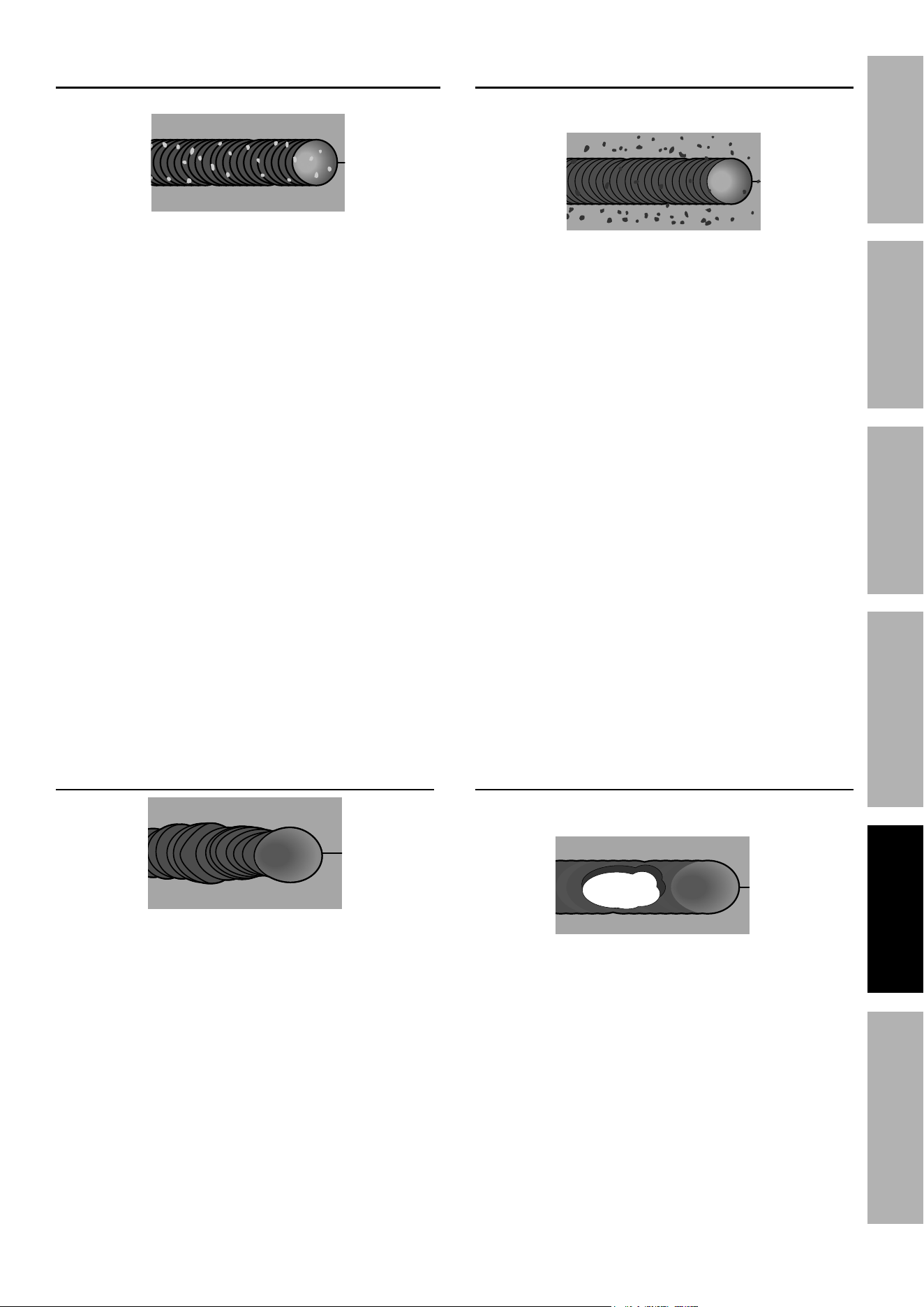
Page 37For technical questions, please call 1-800-444-3353.Item 57812
SaFety
Welding tipS
Maintenance
tig / Stick cOntROlSWiRe
Wire Weld – Burn-Through
Base material melts away,
leaving a hole in the weld.
pOSSiBle caUSeS and SOlUtiOnS
1. Workpiece overheating:
Reduce current and/or wire feed speed.
2. travel speed too slow:
Increase travel speed and ensure
that travel speed is kept steady.
3. excessive material at weld:
Reduce wire feed speed.
TOP
VIEW
Wire Weld – Crooked/Wavy Bead
pOSSiBle caUSeS and SOlUtiOnS
1. inaccurate welding:
Use two hands or rest hand on steady surface.
2. inconsistent travel speed:
Maintain steady travel speed.
3. ctWd too long:
Reduce CTWD.
TOP
VIEW
Wire Weld – Porosity
Small cavities or holes in the bead.
pOSSiBle caUSeS and SOlUtiOnS
1. incorrect polarity:
Check that polarity is set correctly
for type of welding.
2. Insufficient shielding gas (MIG only):
Increase flow of gas.
Clean nozzle.
Maintain proper CTWD.
3. Incorrect shielding gas (MIG only):
Use shielding gas recommended by wire supplier.
4. dirty workpiece or welding wire:
Clean workpiece down to bare metal.
Make certain that wire is clean and free
from oil, coatings, and other residues.
5. inconsistent travel speed:
Maintain steady travel speed.
6. ctWd too long:
Reduce CTWD.
TOP
VIEW
Wire Weld – Excessive Spatter
Fine spatter is normal.
Spatter that is grainy and large is a problem.
pOSSiBle caUSeS and SOlUtiOnS
1. dirty workpiece or welding wire:
Clean workpiece down to bare metal.
Make certain that wire is clean and free
from oil, coatings, and other residues.
2. incorrect polarity:
Check that polarity is set correctly
for type of welding.
3. Insufficient shielding gas (MIG only):
Increase flow of gas.
Clean nozzle.
Maintain proper CTWD.
4. Wire feeding too fast:
Reduce wire feed speed.
5. ctWd too long:
Reduce CTWD.
TOP
VIEW
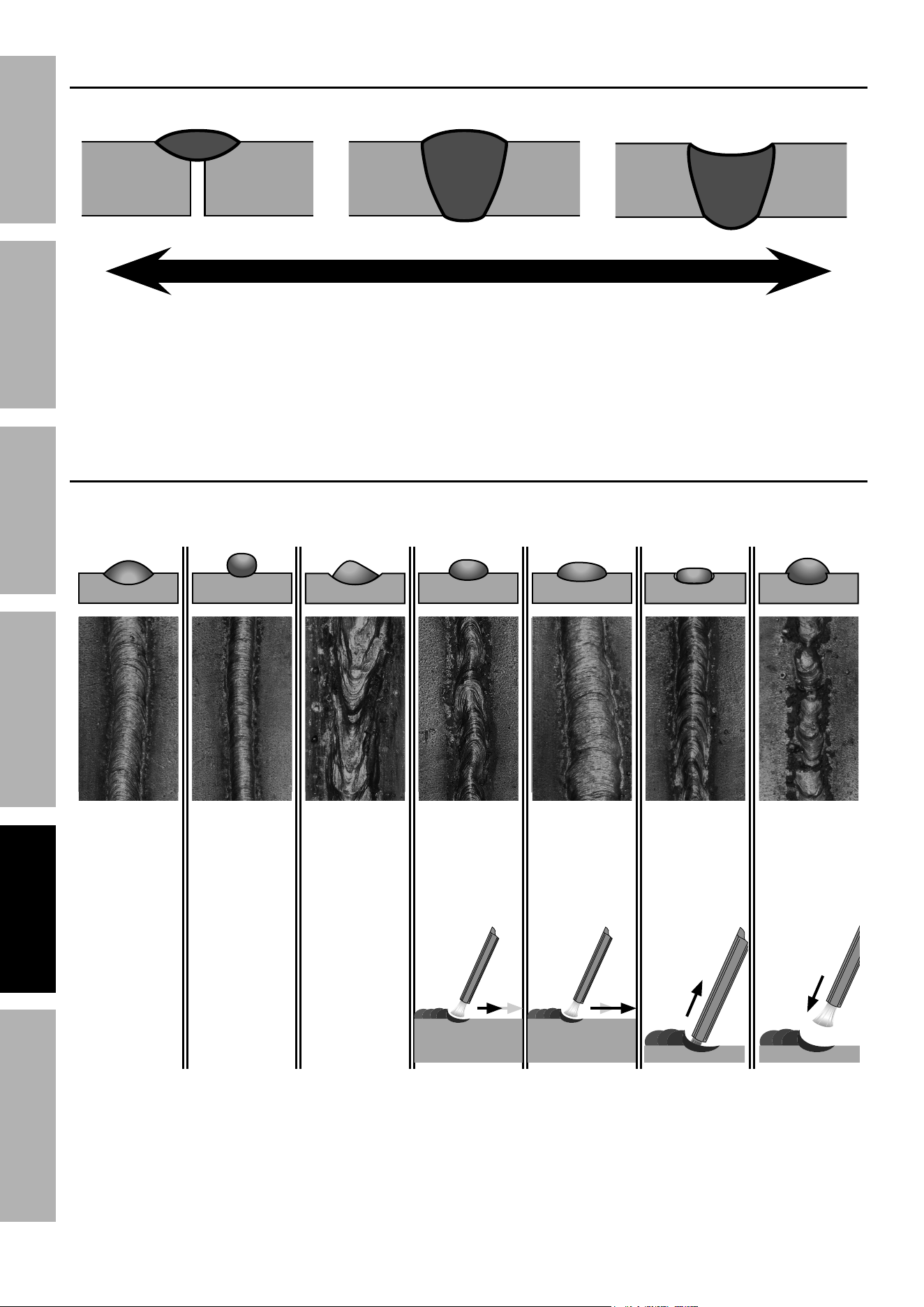
Page 38 For technical questions, please call 1-800-444-3353. Item 57812
SaFety
Welding tipS
tig / Stick
cOntROlS
WiRe
Maintenance
Stick Weld Diagnosis – Workpiece Heat Control / Weld Penetration
eXceSS penetRatiOn OR
BURn-tHROUgH
pROpeR penetRatiOninadeQUate penetRatiOn
not hot enough too hotideal heat
How to increase workpiece heat
and increase penetration:
(to weld tHickeR workpieces properly)
a. Increase current. b. Weld more slowly.
How to reduce workpiece heat
and limit penetration:
(to weld tHinneR workpieces properly)
c. Decrease current. d. Weld more quickly.
example Stick Weld diagrams
clean WeldS FiRSt!
Stick welds will have a coat of slag over them until cleaned.
good
Weld
current
too low
tO cORRect:
Increase the
current
tO cORRect:
Decrease
the current
current
too High
tO cORRect:
Weld slower
Weld Speed
too Fast
tO cORRect:
Weld faster
Weld Speed
too Slow
arc length
too Short
tO cORRect:
Increase
distance
arc length
too long
tO cORRect:
Decrease
distance
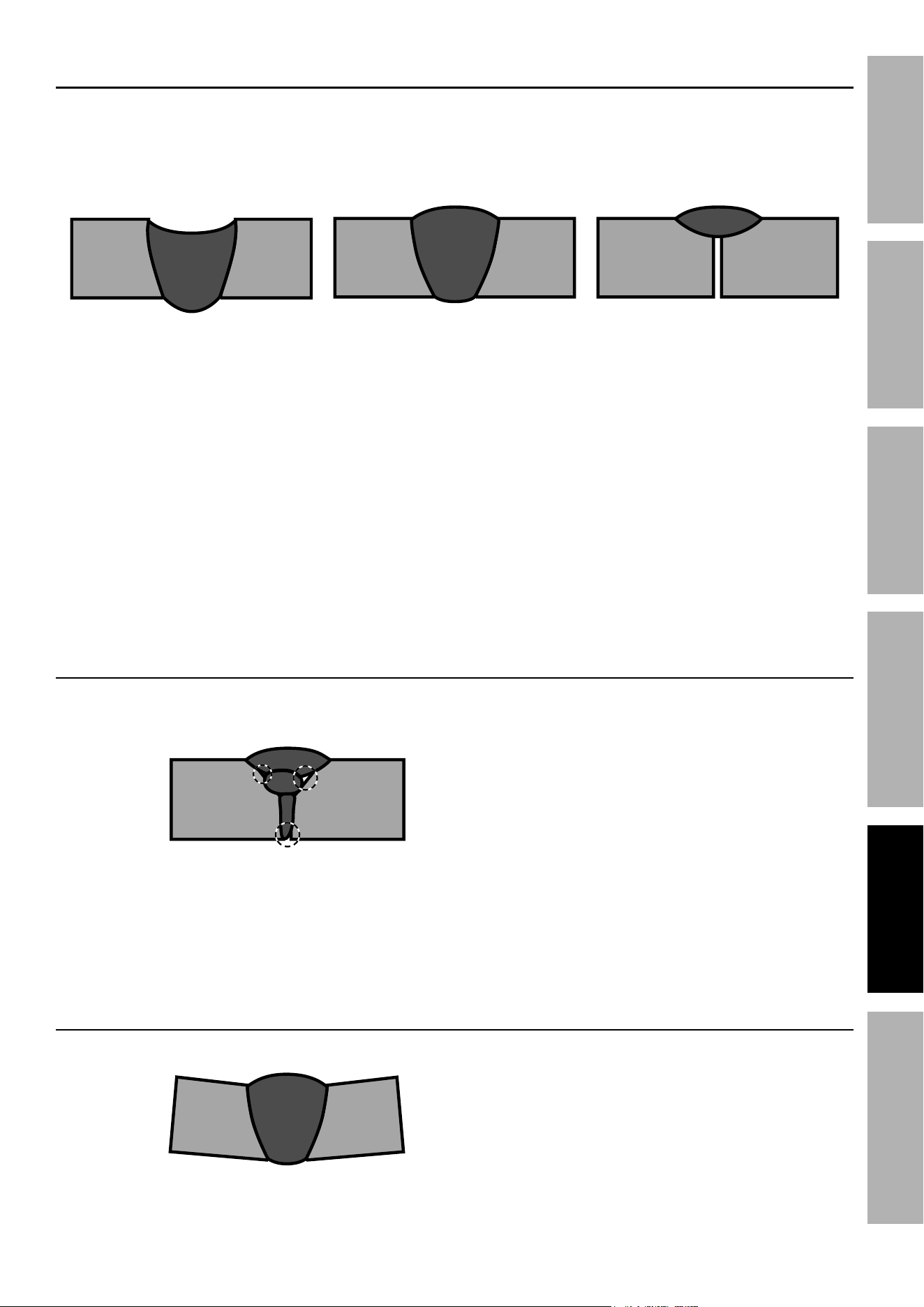
Page 39For technical questions, please call 1-800-444-3353.Item 57812
SaFety
Welding tipS
Maintenance
tig / Stick cOntROlSWiRe
Stick Weld Penetration (Workpiece Heat Control)
eXceSS penetRatiOn OR
BURn-tHROUgH
Weld droops on top and
underneath or falls through
entirely, making a hole.
pROpeR penetRatiOn
Weld is visible underneath and
bulges slightly on top.
inadeQUate penetRatiOn
Weld does not contact the joint
fully, just on the surface.
PROFILE VIEWS
pOSSiBle caUSeS and SOlUtiOnS FOR
eXceSS penetRatiOn OR BURn-tHROUgH
1. Workpiece overheating:
Reduce current.
2. Welding speed too slow:
Increase welding speed and ensure
that welding speed is kept steady.
pOSSiBle caUSeS and SOlUtiOnS FOR
inadeQUate penetRatiOn
1. incorrect welding technique:
Keep arc on leading edge of weld puddle.
Hold torch at proper angles.
2. insufficient weld heat:
Slow down so fill material has time to melt
into the weld location. Increase current.
3. Workpieces too thick/close:
Bevel thick workpieces, allow slight
gap, and weld in several passes.
4. insufficient weld material:
Increase amount of fill material.
Stick Weld – Weld Not Adhering Properly
gaps present between weld and previous bead or between weld and workpiece. See areas below.
pOSSiBle caUSeS and SOlUtiOnS
PROFILE
VIEW
1. incorrect welding technique:
Place stringer bead at correct place in joint.
Adjust workpiece position or weld angle to permit
proper welding to bottom of piece.
Keep arc on leading edge of weld puddle.
Hold Electrode and fill material at proper angles.
2. insufficient weld heat:
Increase current.
3. dirty workpiece:
Clean workpiece down to bare metal.
4. insufficient weld material:
Increase amount of fill material.
5. distance between workpieces to large:
Decrease distance and increase bevel.
Stick Weld – Bend at Joint
pOSSiBle caUSeS and SOlUtiOnS
PROFILE
VIEW
1. improper clamping:
Clamp workpieces securely.
Make tack welds to hold workpieces.
2. excessive heat:
Weld a small portion and allow to cool before
proceeding.
Increase weld speed.
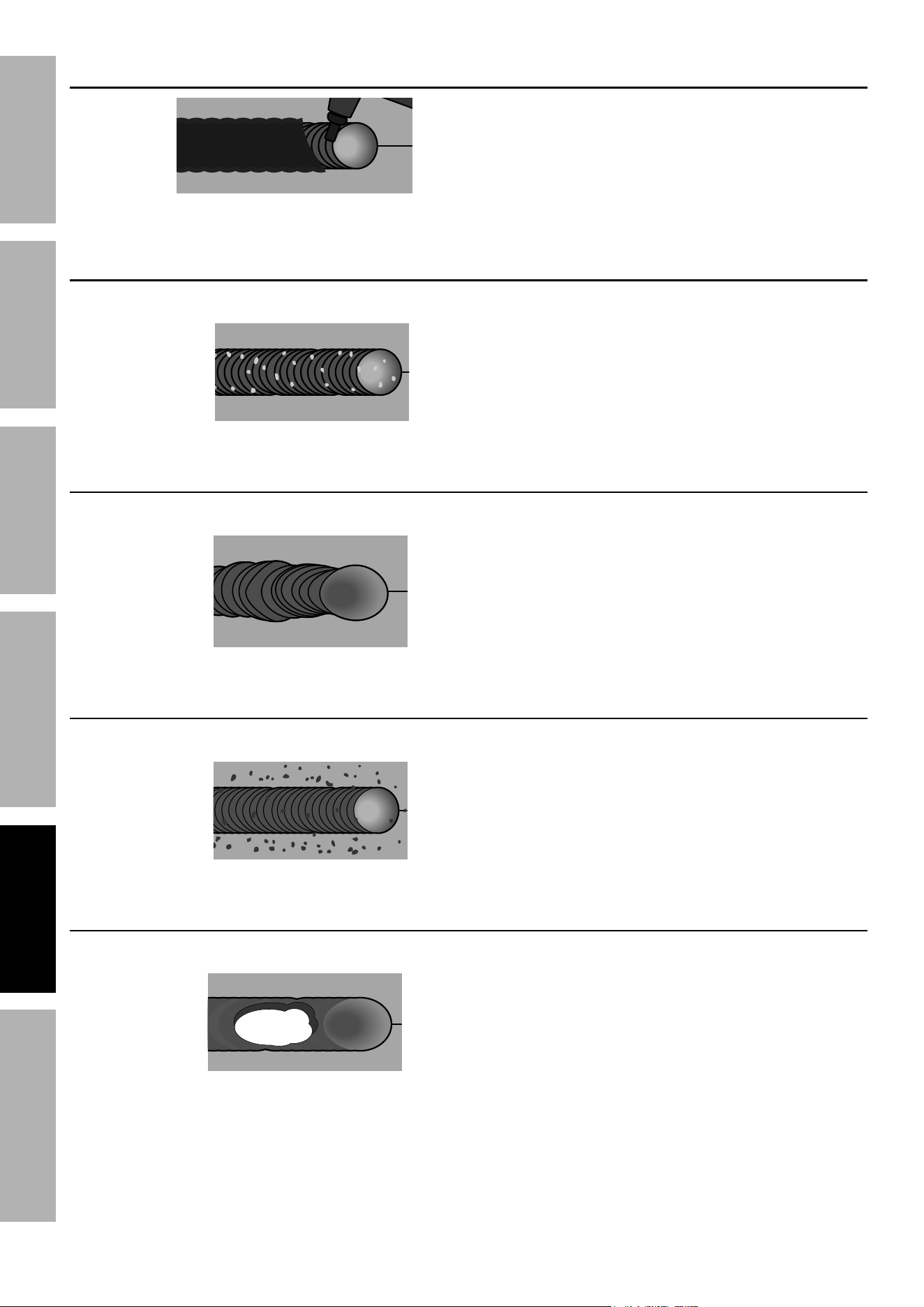
Page 40 For technical questions, please call 1-800-444-3353. Item 57812
SaFety
Welding tipS
tig / Stick
cOntROlS
WiRe
Maintenance
Stick Weld – Coat of Slag Over Weld
TOP
VIEW
PARTIALLY CHIPPED AWAY TO SHOW WELD
Slag is a necessary part of a stick weld. it shields
the weld from impurities. clean off the slag with the
chipping Hammer and Wire Brush after welding.
Stick Weld – Porosity — Small cavities or holes in the bead.
pOSSiBle caUSeS and SOlUtiOnS
TOP
VIEW
1. dirty workpiece or fill material:
Clean workpiece down to bare metal.
Make certain that fill material and Electrode are
clean and free from oil, coatings, and other residues.
2. inconsistent welding speed:
Maintain steady weld speed.
Stick Weld – Crooked/Wavy Bead
pOSSiBle caUSeS and SOlUtiOnS
TOP
VIEW
1. inaccurate welding:
Use two hands or rest hand on steady surface.
2. inconsistent welding speed:
Maintain steady weld speed.
Stick Weld – Excessive Spatter
pOSSiBle caUSeS and SOlUtiOnS
TOP
VIEW
Fine spatter is normal. Spatter that is
grainy and large is a problem.
dirty workpiece or fill material:
Clean workpiece down to bare metal.
Make certain that fill material and Electrode are
clean and free from oil, coatings, and other residues.
Stick Weld – Burn-Through — Base material melts away, leaving a hole in the weld.
pOSSiBle caUSeS and SOlUtiOnS
TOP
VIEW
1. Workpiece overheating:
Reduce current.
2. Welding speed too slow:
Increase welding speed and ensure
that welding speed is kept steady.
3. excessive material at weld:
Reduce amount of fill material.
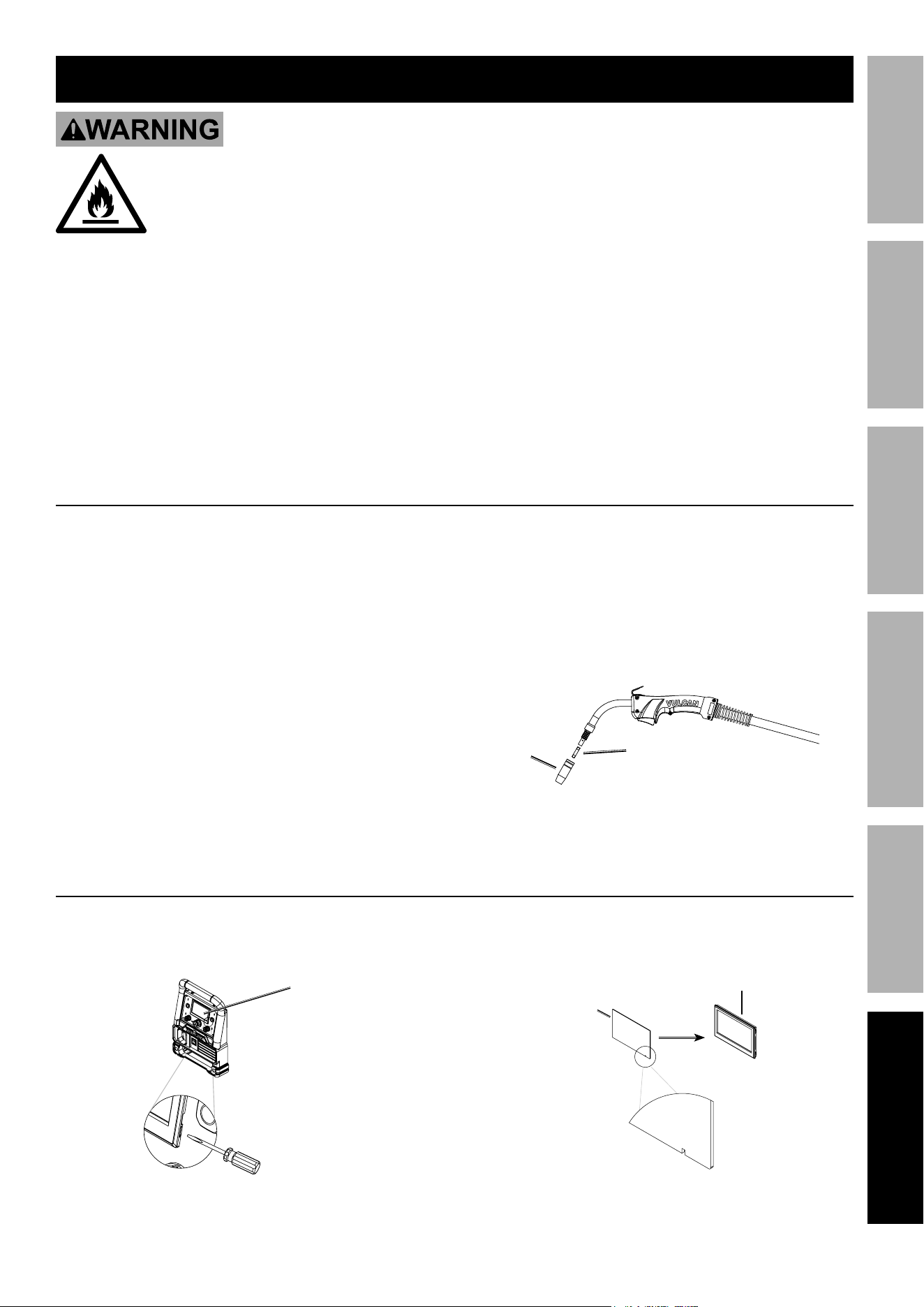
Page 41For technical questions, please call 1-800-444-3353.Item 57812
SaFety
Welding tipS
Maintenance
tig / Stick cOntROlSWiRe
Maintenance
tO pReVent SeRiOUS inJURy, FiRe and BURnS:
Unplug the Welder, rest the tool on a heat-proof, electrically non-conductive surface, and allow
all parts of the Welder to cool thoroughly before service.
1. BeFORe eacH USe, inspect the general
condition of the Welder. Check for:
• loose hardware
• misalignment or binding of moving parts
• damaged cord / electrical wiring
• frayed or damaged cables
• cracked or broken parts
• any other condition that may
affect its safe operation.
2. peRiOdically, have a qualified
technician remove the Rear Panel
and use compressed air to blow
out all dust from the interior.
3. aFteR eVeRy USe, store in
a clean and dry location.
4. For optimal MIG / Flux-Cored wire weld
quality, clean and inspect the Mig
gun contact tip and nozzle before
each use, as explained below.
Mig gun nozzle and contact tip inspection and cleaning
1. Make sure that the entire Mig gun is completely
cool and that the power cord is unplugged
from the electrical outlet before proceeding.
2. Pull the Nozzle to remove it.
3. Scrub the interior of the Nozzle
clean with a wire brush.
4. Examine the end of the Nozzle. The end should be
flat and even. If the end is uneven, chipped, melted,
cracked, or otherwise damaged, the Nozzle will
adversely effect the weld and should be replaced.
5. Unscrew the Contact Tip counterclockwise
and slide it off the welding wire to remove.
6. Scrub the outside of the Tip clean with a wire brush.
Clean out the inside of the tip with a tip
cleaner (sold separately). Check that the Tip
is the proper type for the wire size used.
7. Examine the shape of the hole at the end of
the Contact Tip. It should be an even circle; it
should not be oblong or have any bulges in it.
8. If any problems are noted, replace the
Contact Tip. Select a new Tip of the
correct size for the welding wire used.
9. Reinstall the Tip and securely
reinstall the Nozzle as well.
nozzle
contact
tip
Replacing the lcd Screen cover
1. Carefully pry frame off of Display (22)
by inserting flathead screwdriver (sold
separately) into one of the side slots.
display
2. Insert a new Screen Cover (17) into Screen
Frame (18) with the gap facing downward.
Screen
cover
Screen
Frame
3. Insert frame back into slot on Display with
the top end being placed in first.
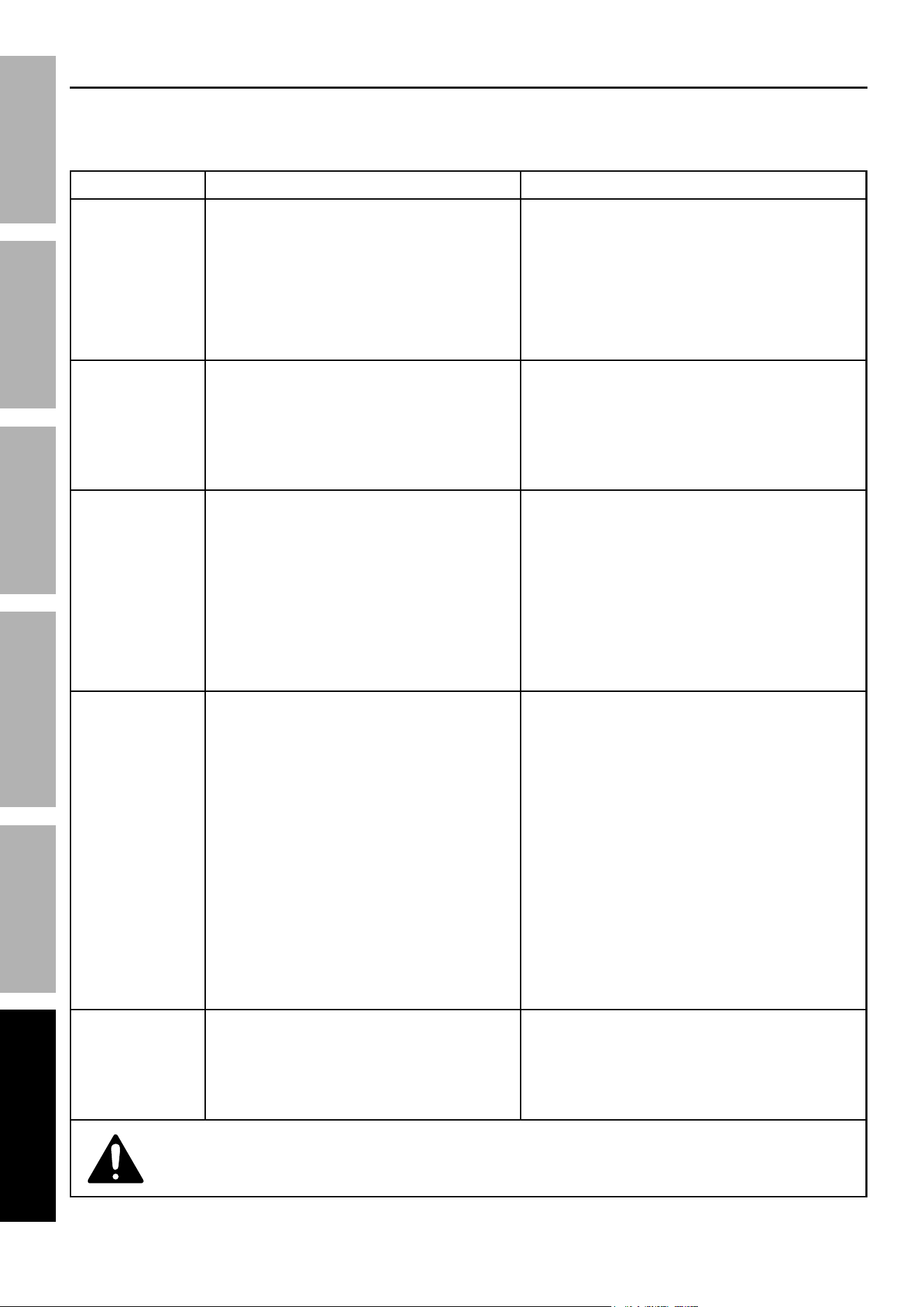
Page 42 For technical questions, please call 1-800-444-3353. Item 57812
SaFety
Welding tipS
tig / Stick
cOntROlS
WiRe
Maintenance
Troubleshooting – MIG / Flux-Cored Welding
iMpORtant!
Be ceRtain to shut off the Welder, disconnect it from power, and discharge the Mig gun to
ground before adjusting, cleaning, or repairing the unit.
problem possible causes likely Solutions
Wire Feed Motor
Runs but Wire Does
Not Feed Properly
1. Insufficient wire feed pressure.
2. Incorrect wire feed roller size.
3. Damaged MIG Gun, cable, or liner assembly.
4. Feed Tensioner is too tight.
1. Increase wire feed pressure properly.
Follow step 27 on page 17.
2. Flip roll to correct size. Follow the Feed
Roller instructions on page 12.
3. Have a qualified technician inspect these
parts and replace as necessary.
4. Loosen Feed Tensioner so it applies only
enough pressure to prevent continued
spinning after the Gun Trigger is released.
Wire Creates a
Bird’s Nest During
Operation
1. Excess wire feed pressure.
2. Incorrect Contact Tip size.
3. MIG Gun Cable Connector not fully
inserted into Wire Feed mechanism.
4. Damaged liner.
1. Adjust wire feed pressure properly.
Follow step 27 on page 17.
2. Replace with the proper tip for wire used.
3. Insert Gun Cable Connector properly.
Follow steps 13 and 14 on page 13.
4. Have a qualified technician inspect
and repair/replace as necessary.
Wire Stops
During Welding
1. Gun cable is severely bent and Wire
Feed mechanism cannot feed wire.
2. Gun liner is clogged or worn.
3. Gun liner is too small for
welding wire being used.
4. Wire is tangled on the spool.
5. Wire is not making contact with Feed Rollers.
6. Feed Roller is not making enough contact
with wire or is crushing flux-cored wire.
1. Straighten Gun cable.
2. Check gun liner for obstruction.
Replace if necessary.
3. Check that gun liner is correct size for wire.
4. Check wire for cross winding or tangled spool.
5. Check Feed Rollers and ensure correct
groove for wire diameter is being used.
6. Check Feed Tensioner and ensure it is set properly.
Welding Arc
Not Stable
1. Wire not feeding properly.
2. Incorrect Contact Tip or liner
size or excessive wear.
3. Incorrect wire feed speed.
4. Loose MIG Gun cable or ground cable.
5. Damaged MIG Gun or loose
connection within Gun.
6. Incorrect polarity for process being run.
7. Gas coverage may be insufficient or too high.
8. Poor connection with workpiece.
1. See first Troubleshooting section above.
2. Replace with the proper tip or
liner size for wire used.
3. Adjust wire feed speed to achieve
a more stable arc.
4. Check to ensure that all connections are tight.
5. Have a qualified technician inspect
and repair/replace as necessary.
6. Ensure polarity is correct for operation:
DCEP for MIG welding and DCEN for
Flux-Cored self-shielded welding.
7. Ensure gas flow rate is set according to
Settings Chart. Make sure MIG Gun Cable
Connector is fully inserted into Wire Feed
mechanism with no O-Rings exposed.
8. Check the ground clamp connection to
the workpiece and machine. Ensure
the MIG Gun is properly secured.
Weak Arc Strength
1. Incorrect line voltage.
2. Improper gauge or length of cord.
3. Not enough current.
1. Check the line voltage and, if insufficient, have
a licensed electrician remedy the situation.
2. Do not use an extension cord on this Welder.
Use only one of the supplied power cords for
this Welder or an identical replacement cord.
3. Switch current to proper setting for metal thickness.
Follow all safety precautions whenever diagnosing or servicing the equipment.
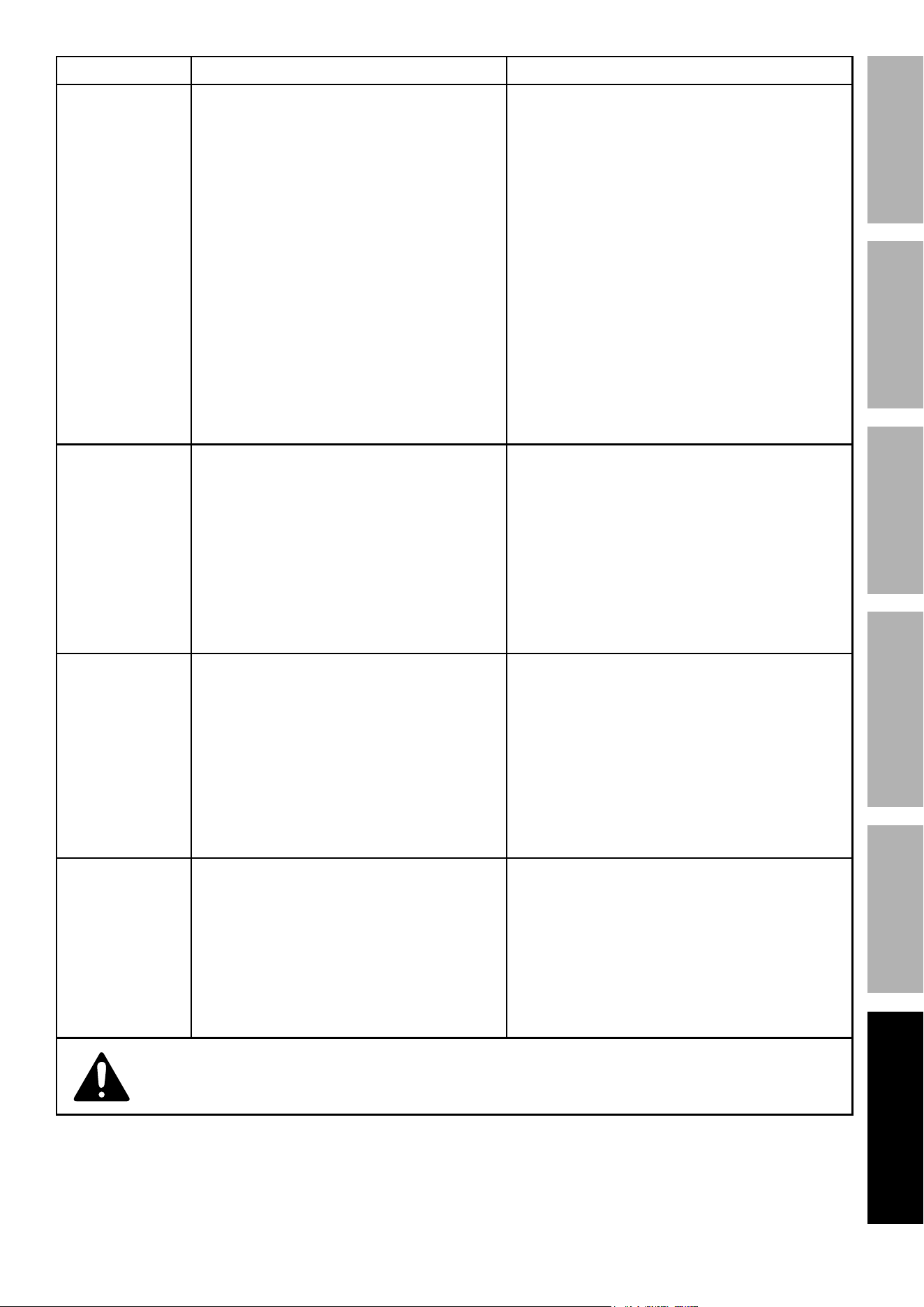
Page 43For technical questions, please call 1-800-444-3353.Item 57812
SaFety
Welding tipS
Maintenance
tig / Stick cOntROlSWiRe
problem possible causes likely Solutions
Welder Does Not
Function When
Switched On
1. Tripped thermal protection device.
2. Circuit supplies insufficient input voltage or
amperage.
3. Faulty or improperly connected Trigger.
4. Machine is in low- or
over-voltage protection.
5. Machine is in the incorrect mode.
1. If a warning screen appears in the LCD Display
window, Welder may have overheated and shut
down. Stop and wait with the Power Switch ON
for the Welder to cool. The Welder automatically
returns to service after cooling off. Reduce
duration or frequency of welding periods to
help reduce wear on the Welder. Refer to
Duty Cycle (Duration of Use) on page 19.
2. Verify that the circuit is designed to supply the
required input voltage and amperage as detailed
on the Specifications table. If a warning screen
appears in the LCD Display window, check the
input voltage to ensure it is within specified range.
3. Ensure the gun connection is properly
seated on machine. Qualified technician
must check and secure/replace Trigger.
4. Check input voltage and ensure it falls within
the specified range. If input voltage is correct,
press Reset Button on back of machine.
5. Ensure the correct process has been selected.
LCD Display
Does Not Light
When Welder is
Switched On
1. Unit is not connected to outlet properly.
2. Outlet is unpowered.
3. Plug does not have correct rating.
4. Circuit breaker has tripped due
to high input amperage.
5. Input Power Cord is not seated properly.
1. Verify the voltage at the outlet and
the connection to the outlet.
2. Check circuit breaker/GFCI devices;
if any are tripped, determine and
remedy cause before resetting.
3. Make sure installed plug is correct rating.
See Specifications on page 7.
4. Press Reset Button on back of
machine to reset circuit breaker.
5. Ensure the twist lock input Power
Cord is fully secured.
Wire Feeds, but Arc
Does Not Ignite
1. Improper ground connection.
2. Improperly sized Contact Tip.
3. Excessively worn Contact Tip.
4. Dirty Contact Tip.
1. Make certain that the workpiece is contacted
properly by the Ground Clamp and that
the workpiece is properly cleaned near the
ground clamp and the welding location.
2. Verify that Contact Tip is the proper size
for welding wire. If needed, replace
Contact Tip with proper size and type.
3. Check that the hole in the tip is not
deformed or enlarged. If needed, replace
Contact Tip with proper size and type.
4. Properly clean Contact Tip.
Porosity in the
Weld Metal
1. Shielding gas bottle is empty.
2. Not enough or too much shielding gas.
3. Dirty workpiece.
4. Gun is being used too far
away from workpiece.
5. Polarity is incorrect for the application.
6. Dirty welding wire is introducing
contamination into the weld.
1. Check gas bottle and replenish as necessary.
2. Check gas regulator to ensure proper flow.
3. Clean workpiece down to bare metal.
4. Check CTWD (contact tip to work
distance) for the proper procedure.
5. Check the polarity and ensure it is DCEP
for MIG and DCEN for Flux-Cored.
6. Make certain that welding wire is clean
and free of rust and residues.
Follow all safety precautions whenever diagnosing or servicing the equipment.
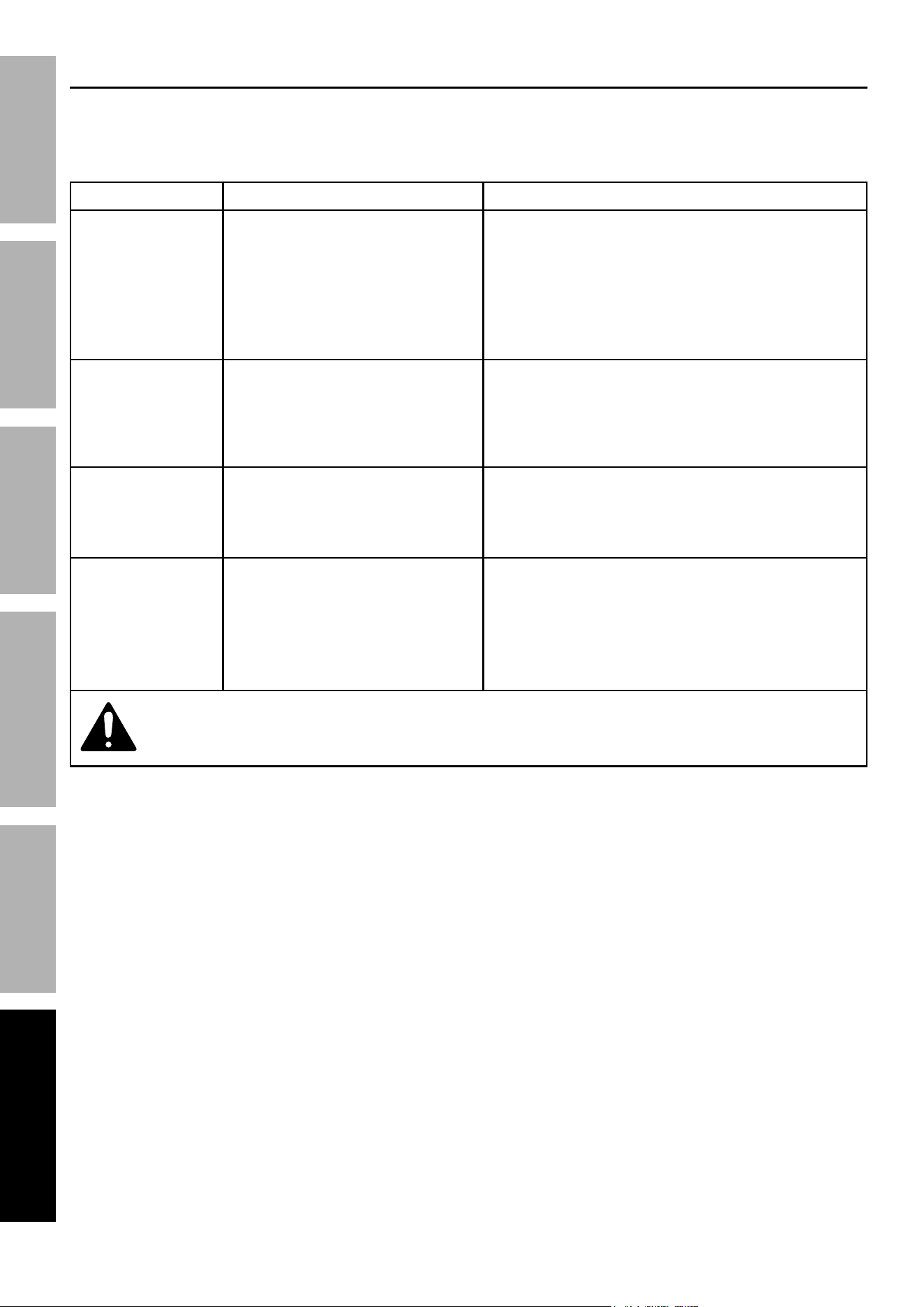
Page 44 For technical questions, please call 1-800-444-3353. Item 57812
SaFety
Welding tipS
tig / Stick
cOntROlS
WiRe
Maintenance
Troubleshooting – TIG / Stick Welding
iMpORtant!
Be ceRtain to shut off the Welder, disconnect it from power, and discharge the
electrode to ground before adjusting, cleaning, or repairing the unit.
problem possible causes likely Solutions
Welder Does Not
Function When
Switched On
1. Tripped thermal protection device.
2. Faulty or improperly
connected Trigger.
3. Ground Clamp not attached
to workpiece.
4. Shielding Gas not connected.
1. Reduce duration or frequency of welding periods
to help reduce wear on the welder. Refer to
Duty Cycle (Duration of Use) on page 29.
2. Qualified technician must check and
secure/replace Trigger.
3. Attach Ground Clamp to workpiece.
4. Connect shielding gas to Welder.
LCD Display Does Not
Light When Welder
is Switched On
1. Unit is not connected
to outlet properly.
2. Outlet is unpowered.
1. Verify the voltage at the outlet and
the connection to the outlet.
2. Check circuit breaker/GFCI devices; if any are tripped,
determine and remedy cause before resetting. Verify
that the circuit is designed to supply the required input
amperage as detailed in Specifications on page 7.
Weak Arc Strength 1. Incorrect line voltage.
2. Improper gauge or length of cord.
1. Check the line voltage and, if insufficient, have
a licensed electrician remedy the situation.
2. Do not use an extension cord on this Welder. Use
only one of the supplied power cords for this
Welder or an identical replacement cord.
Welding Arc
Not Stable.
1. Loose electrode cable
or ground cable.
2. Damaged electrode holder or loose
connection within electrode holder.
3. Adjust current setting.
4. Shielding gas getting low.
1. Check to ensure that all connections are tight.
2. Have a qualified technician inspect and
repair/replace as necessary.
3. Make sure setting matches
recommended setting on chart.
4. Replace shielding gas cylinder.
Follow all safety precautions whenever diagnosing or servicing the equipment.
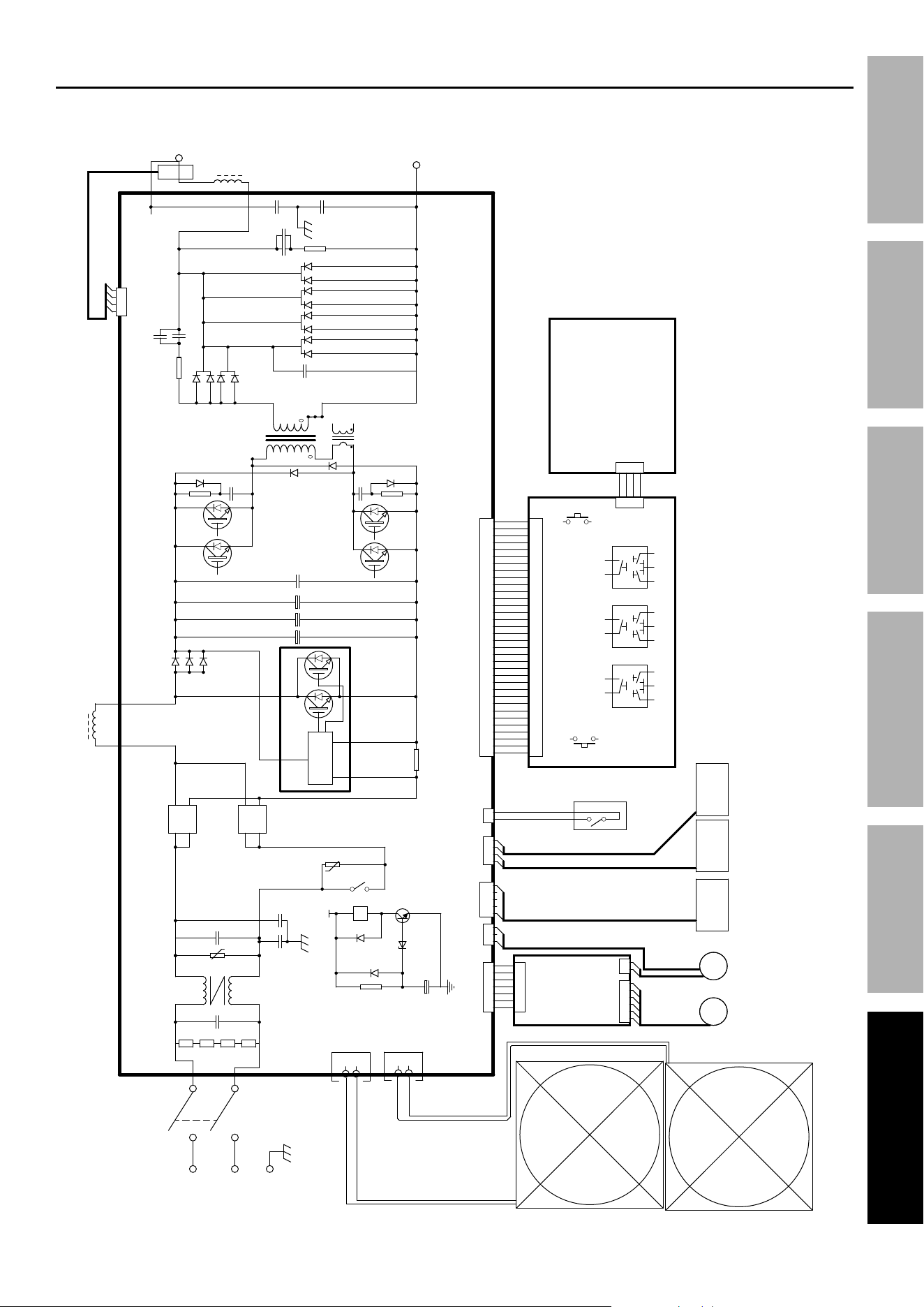
Page 45For technical questions, please call 1-800-444-3353.Item 57812
SaFety
Welding tipS
Maintenance
tig / Stick cOntROlSWiRe
Wiring Schematic
AC1
AC2
G
3
4
-T
〜
1
〜
3
-
4
+
2
〜
1
〜
3
-
4
+
2
24V
J
2 1
IGBT
PFC
5
6
4
1
OUT
+
OUT-
K1 AC 120-240V/50/60HZ
RECITIFIER
1/4
1/4
1/4
1/4
4
3
2
1
T1
T60*30*28
1
2
3
4
CN1
Hall
v
OUT+
1
2
1
2
FAN
FAN2
1
2
3
4
5
6
7
CN8
1
2
3
4
5
6
7
CN1
1
2
3
4
5
6
CN2
1
2
CN3
AVIATION
PLUG
1
2
3
CN7
WIRE FEEDER
M
1
2
3
4
5
CN4
SOLENOID
VALVE
1
2
3
4
CN3
1
2
CN6
3
4
1
2
3
4
5
6
7
8
9
10
11
12
13
14
15
16
17
18
19
20
21
22
23
24
25
26
27
29
30
31
32
33
34
28
CN5
1
2
3
4
5
6
7
8
9
10
11
12
13
14
15
16
17
18
19
20
21
22
23
24
25
26
27
29
30
31
32
33
34
28
CN7
3
2
1
5
4
3
2
1
5
4
3
2
1
5
4
1
2
3
4
CN5
1
2
3
4
MCU BOARD
LCD
SCREEN
FAST WIRE FEED SWITCH
REMOTE
BOARD
AVIATION
PLUG
SOLENOID
VALVE
Page 46 For technical questions, please call 1-800-444-3353. Item 57812
SaFety
Welding tipS
tig / Stick
cOntROlS
WiRe
Maintenance
part description Qty
1 Right Cover 1
2 Handle Base 1
3 Handle Cover 1
4 Hinge-Right 2
5 Hinge-left 2
6 Left Cover 1
7 Latch 1
8 Middle Bracket 1
9 PFC Inductance 1
10 Spool 1
11 Remote Control PCB 1
12 Wire Feeder 1
13 Aviation Plug Wire 1
14 Miller Plug Connector 1
15 Protective Cover 1
16 Display PCB 1
17 Screen Cover 1
18 Screen Frame 1
19 MIG Welding Torch 1
20 Front Handle Cover 1
21 Front Panel 1
22 Display 1
23 Knob 2
24 Knob 1
25 Storage Door 1
26 Switch 1
27 American Air Fitting 2
28 Air Connector 3
29 Quick Connector 2
30 Grounding Clamp Assembly 1
31 Welding Clamp Assembly 1
part description Qty
32 Polarity Cable 1
33 Output Inductor 1
34 Air Connector 2
35 Solenoid Valve 2
36 Bottom Housing 1
37 Board Insulation Paper 1
38 Main PCB 1
39 Control PCB 1
40 Fast Recovery Diode 6
41 Metal Case Air Way 1
42 Rectifier Radiator Support Bar 1
43 Rectifier Radiator 1
44 Fan 1
45 Transformer 1
46 IGBT 6
47 Bridge Rectifier Heatsink 1
48 Fast Recovery Diode 2
49 IGBT Heat Sink Support Bar 1
50 IGBT Radiator 1
51 Bridge Rectifiers 2
52 IGBT Radiator 2
53 Fan 1
54 Y-Type Threaded Tee 1
55 120 VAC Power Cord 1
56 Rear Panel 1
57 Rear Handle Cover 1
58 American Power Socket 1
59 Overload Protector 1
60 Rear Panel 1
61 240 VAC Power Cord 1
parts list and diagram
pleaSe Read tHe FOllOWing caReFUlly
THE MANUFACTURER AND/OR DISTRIBUTOR HAS PROVIDED THE PARTS LIST AND ASSEMBLY DIAGRAM
IN THIS MANUAL AS A REFERENCE TOOL ONLY. NEITHER THE MANUFACTURER OR DISTRIBUTOR
MAKES ANY REPRESENTATION OR WARRANTY OF ANY KIND TO THE BUYER THAT HE OR SHE IS
QUALIFIED TO MAKE ANY REPAIRS TO THE PRODUCT, OR THAT HE OR SHE IS QUALIFIED TO REPLACE
ANY PARTS OF THE PRODUCT. IN FACT, THE MANUFACTURER AND/OR DISTRIBUTOR EXPRESSLY
STATES THAT ALL REPAIRS AND PARTS REPLACEMENTS SHOULD BE UNDERTAKEN BY CERTIFIED AND
LICENSED TECHNICIANS, AND NOT BY THE BUYER. THE BUYER ASSUMES ALL RISK AND LIABILITY
ARISING OUT OF HIS OR HER REPAIRS TO THE ORIGINAL PRODUCT OR REPLACEMENT PARTS
THERETO, OR ARISING OUT OF HIS OR HER INSTALLATION OF REPLACEMENT PARTS THERETO.
parts list
Record product’s date code Here:
note: If product has no Date Code, record month and year of purchase instead.
note: Some parts are listed and shown for illustration purposes only, and are not available individually as
replacement parts. Parts may not be interchangeable. Specify UPC 193175422590 when ordering parts.
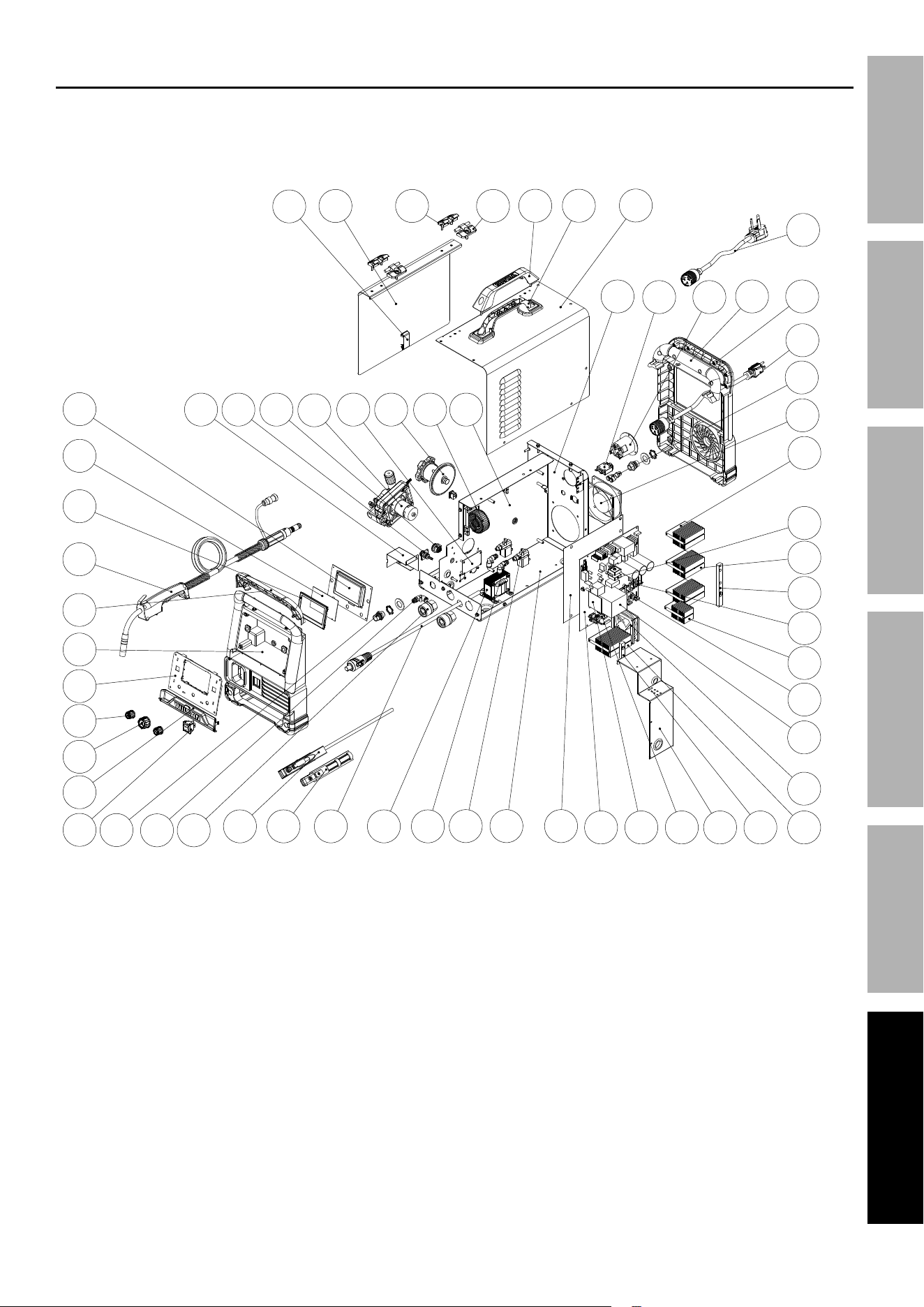
Page 47For technical questions, please call 1-800-444-3353.Item 57812
SaFety
Welding tipS
Maintenance
tig / Stick cOntROlSWiRe
assembly diagram
1
2
456
7
10 9
12
11 815 14
16
17
18
20
21
22
25
23
24
26
27
28 29
33 34
35
41 42 43
44
45
40
37
38 39
46
47
50
49
52
60
59 58
54
53
57 56
55
48
51
13
61
32
36
19
30 31
3

®
26677 Agoura Road • Calabasas, CA 91302 • 1-800-444-3353
Limited 90 Day Warranty
Harbor Freight Tools Co. makes every effort to assure that its products meet high quality and durability standards,
and warrants to the original purchaser that this product is free from defects in materials and workmanship for the
period of 90 days from the date of purchase. This warranty does not apply to damage due directly or indirectly,
to misuse, abuse, negligence or accidents, repairs or alterations outside our facilities, criminal activity, improper
installation, normal wear and tear, or to lack of maintenance. We shall in no event be liable for death, injuries
to persons or property, or for incidental, contingent, special or consequential damages arising from the use of
our product. Some states do not allow the exclusion or limitation of incidental or consequential damages, so the
above limitation of exclusion may not apply to you. THIS WARRANTY IS EXPRESSLY IN LIEU OF ALL OTHER
WARRANTIES, EXPRESS OR IMPLIED, INCLUDING THE WARRANTIES OF MERCHANTABILITY AND FITNESS.
To take advantage of this warranty, the product or part must be returned to us with transportation charges
prepaid. Proof of purchase date and an explanation of the complaint must accompany the merchandise.
If our inspection verifies the defect, we will either repair or replace the product at our election or we may
elect to refund the purchase price if we cannot readily and quickly provide you with a replacement. We will
return repaired products at our expense, but if we determine there is no defect, or that the defect resulted
from causes not within the scope of our warranty, then you must bear the cost of returning the product.
This warranty gives you specific legal rights and you may also have other rights which vary from state to state.