Transportation
Use caution when transporting your kayak.
Be sure to tie down your kayak, but do not
overtighten the straps.
Storage
Be sure to empty the kayak of all water. You should
clean the kayak by rinsing with freshwater, especially
if the kayak has been used in salt water or becomes
muddy. Store the kayak out of direct sunlight.
Usage
Sit in the cockpit area of the kayak, centered in the provided seat area. Using the foot braces, secure your feet so your
knees are bent and feel sturdy. Paddle with your arms evenly apart at a medium speed switching back and forth from
one side to the other. The paddle should enter the water around your shins and pull out of the water around your hips.
SAVE THIS INSTRUCTION IN THE EVENT THE MANUFACTURER MUST BE CONTACTED.
KAYAK
OWNER’S MANUAL
QUESTIONS?
CONTACT OUR CUSTOMER SERVICE DEPARTMENT:
Dial 1-800-225-3865
PRODUCT ID:
Live Chat:
www.lifetime.com/customerservice/home
(Click on the “LIVE CHAT” tab)
Paddle sports can be physically demanding and dangerous.
• ANYONE using this watercraft may be at risk of serious injury or death.
• ALWAYS wear a Coast Guard-approved, PERSONAL FLOTATION VEST.
• OBTAIN certified watercraft and first-aid training, and carry first aid and safety/rescue equipment.
• CONSULT a physician PRIOR to beginning your paddle sport training.
• This watercraft is intended for RECREATIONAL USE ONLY.
• This watercraft is NOT intended for mechanical propulsion.
• Scout unfamiliar waters; portage where appropriate.
• NEVER use this watercraft in rough, stormy or whitewater conditions.
• This watercraft is NOT intended to be used as a lifesaving device.
• DO NOT allow minors to use this watercraft without adult supervision.
• DO NOT use in areas where dangerous or strong current flows can overcome your ability to control your
direction or destination.
• NEVER use drugs or alcohol BEFORE or DURING operation of this watercraft.
• ALWAYS paddle with a buddy in case you require emergency help.
• NEVER use in cold water that may cause hypothermia.
• ALWAYS wear a helmet when appropriate.
• CHECK your equipment PRIOR to each use for signs of wear or failure.
WARNING
1169432 C
!
!
MODEL 90537
2
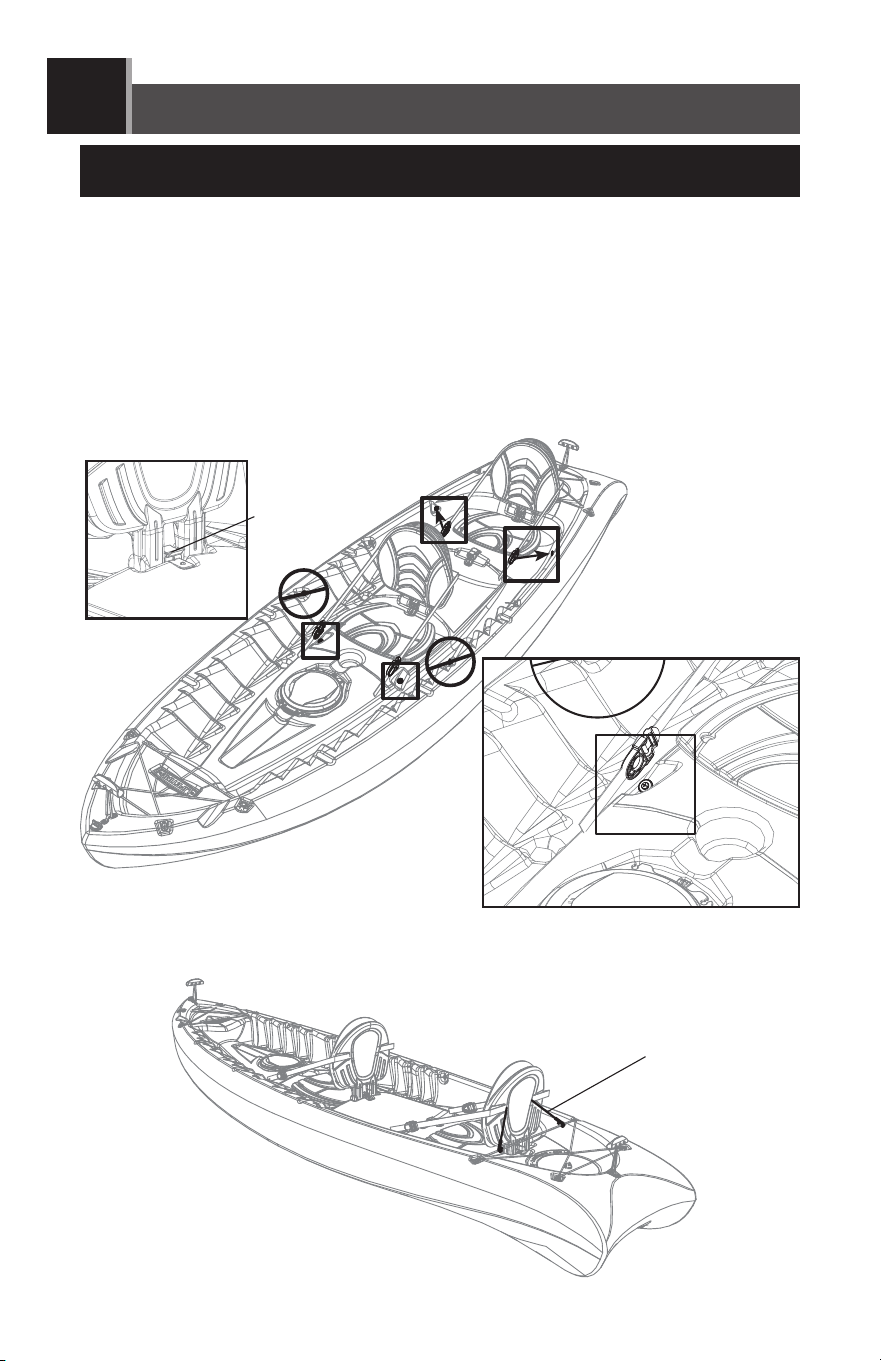
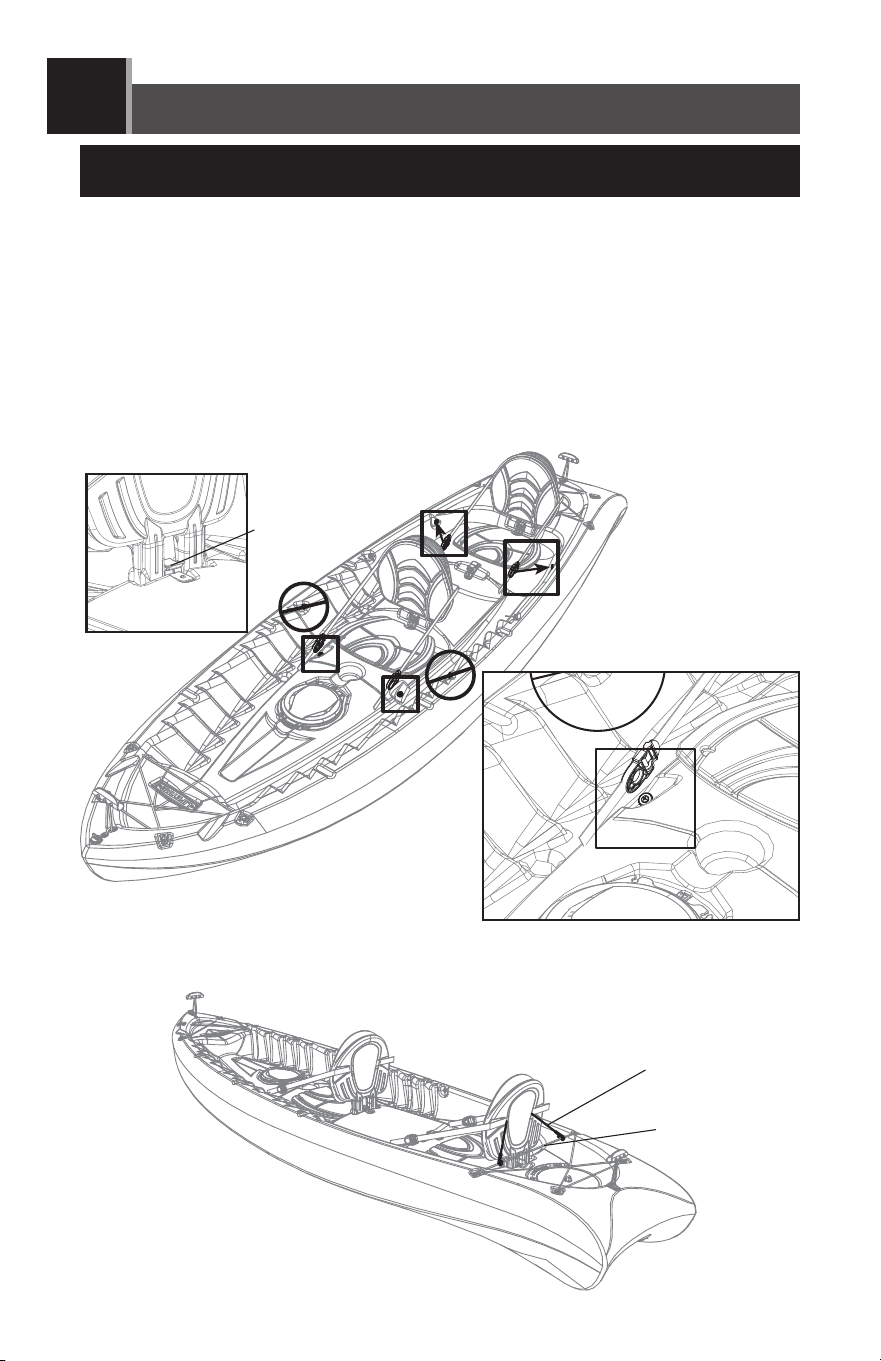
This kayak was designed for tandem use. When kayaking in tandem, both seats are used: one at the front
seating position and the other at the rear. Both seats should be locked down with the latches at the bottom
of the back of the seats. Lock the front seatback in position by connecting the
straps to the spools DIRECTLY IN FRONT of the front seat. Lock the rear seatback
in position by connecting the straps to the spools to THE SIDES of the rear
seat. DO NOT connect the FRONT seatback straps to the sides of the kayak when kayaking in tandem. DO
NOT connect the front seat bungee to a spool or any part of the hull. The rear occupants feet can become
entangled, endangering the occupant. The rear occupant’s straps may be attached to the spools on the inside
walls of the hull.
Latch
The rear occupant’s bungee cord may be attached to the bungee at the
rear of the hull to help keep the seatback vertical during use.
Bungee cord
PART 2: KAYAKING TANDEM
SECURING THE SEATS
1
3
SECURING THE SEATS
1
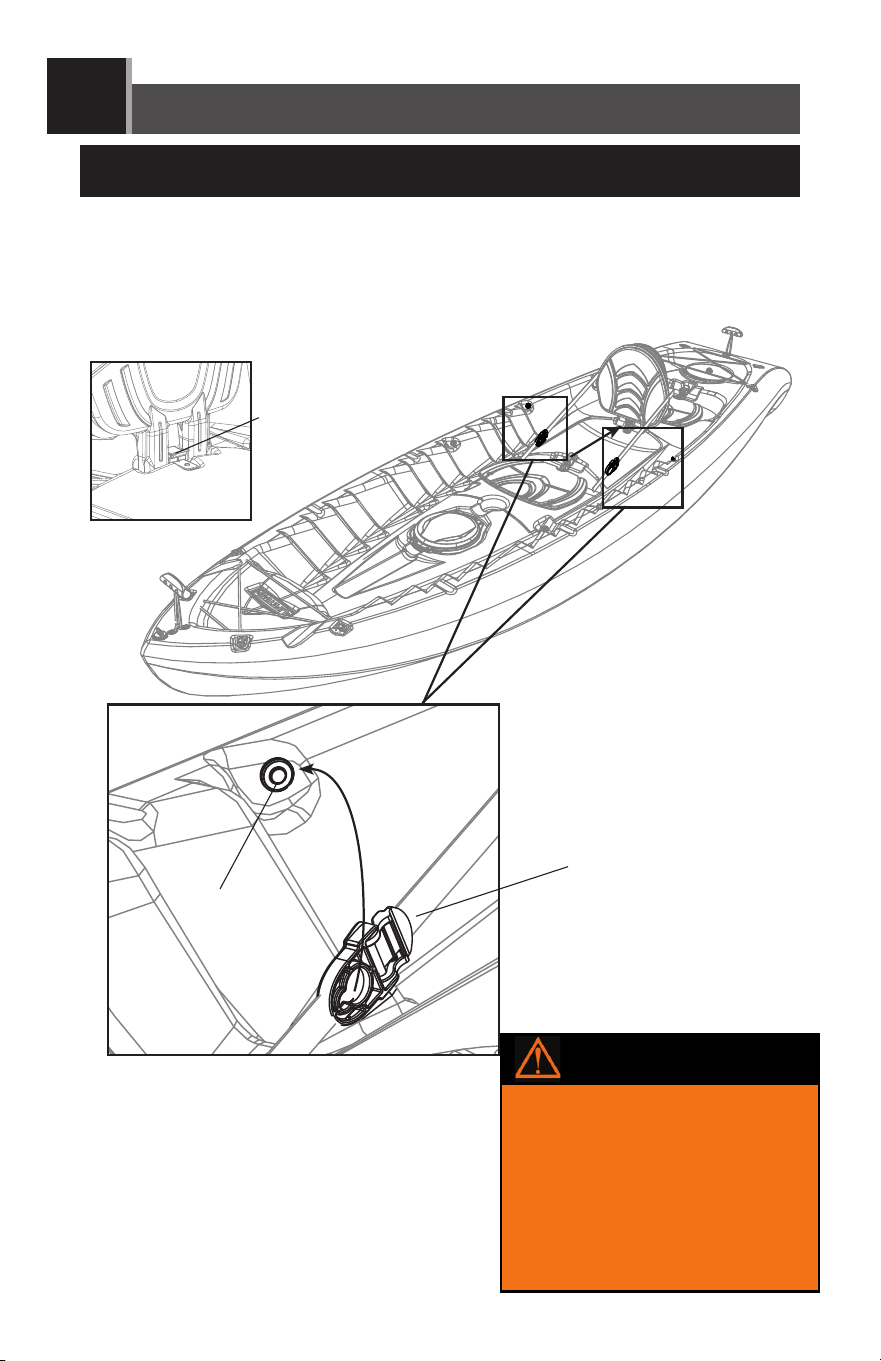
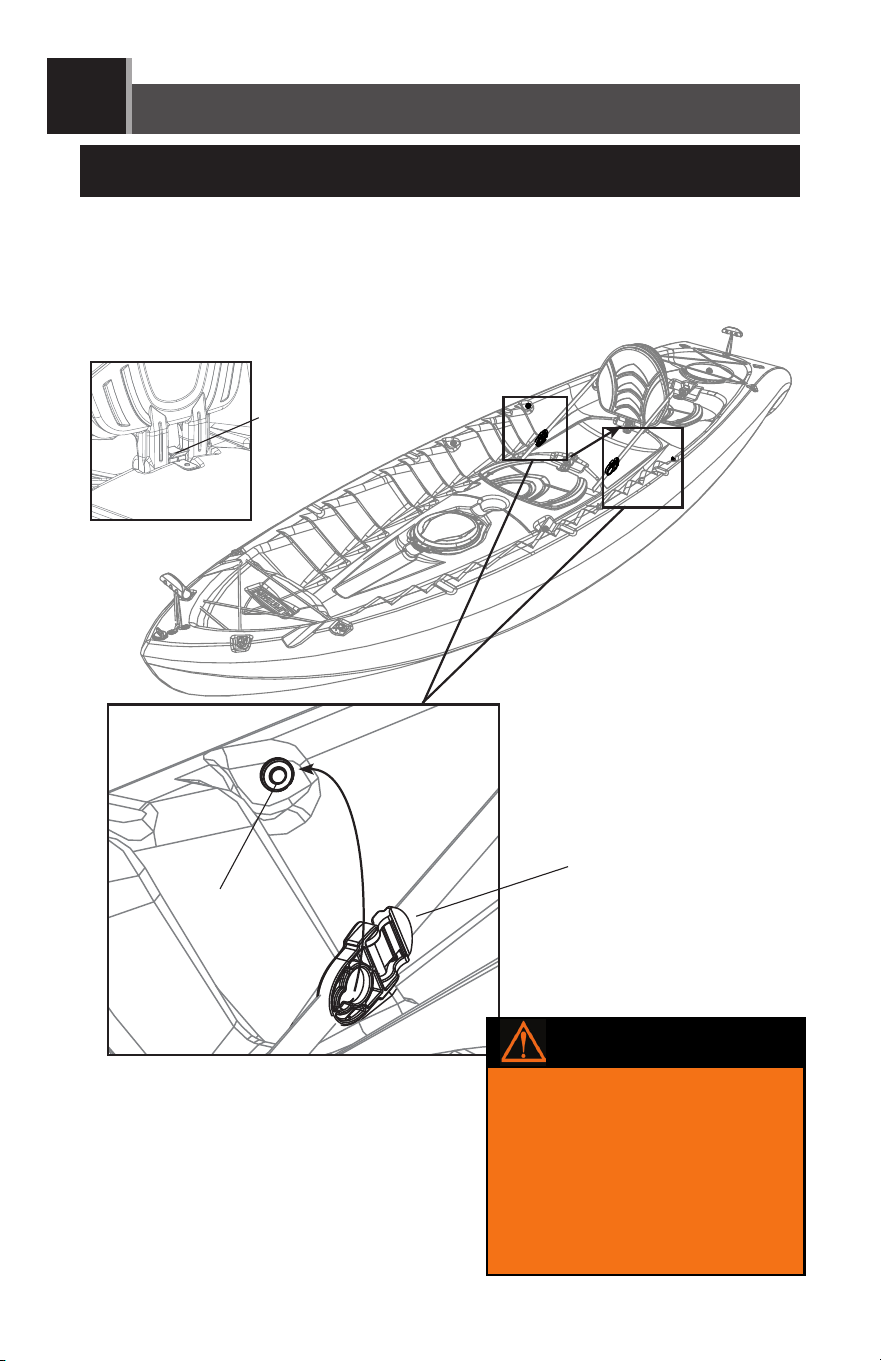
When kayaking solo, a seat should be moved to the center seating position; the center seating position
is used to keep balance. Lift the latch behind the backrest to unlock it. Place the
backrest in the center seating position and lock it down with the center
latch. Connect a strap to a spool on each side of the kayak. DO NOT move the seat
pad.
Note: the bungee cord on the back of the seatback is not used in this
position.
PART 2: KAYAKING SOLO
Spool
Strap
Latch
Remove forward seatback when kayak
is being used by only one person. When
using both seats, attach the straps for
the forward seatback to the inner set of
anchors to avoid entangling feet of rear
occupant. NEVER place your feet under
the seat straps.
WARNING
1139690
4
Congratulations on your Lifetime
®
product purchase. By following the instructions below, your new Lifetime
®
product
should provide you with years of service and enjoyment.
Cleaning and Care
Lifetime
®
Kayaks are stain- and solvent-resistant. Most stains can be removed, using a mild soap and a soft-bristled
brush. Abrasive cleaning materials may scratch the plastic and are not recommended. Avoid placing a direct heat
source on or near surfaces unless using a heat barrier.
Helpful Tips For Your Kayak
• Always store your kayak out of direct sunlight when not in use. Your kayak is manufactured with UV-resistant
color, but a kayak stored in direct sunlight will begin to color fade over long periods of time.
• Your new kayak is molded of high-density polyethylene resin. Periodically cleaning with mild soap and water is
recommended to keep your kayak looking new.
• Never drag any portion of the kayak over asphalt, rocky, sandy or abrasive surfaces.
• Do not stand or sit on your kayak when out of the water. This can cause damage to the hull.
• During regular use, it is normal to find small amounts of water inside the kayak. Carefully unscrew the drain plug
and tilt the kayak to let the water drain out. Secure the drain plug when finished.
• If your kayak has been exposed to hot sunlight, it is recommended to splash water on the hull to cool the hot
surface before it comes in direct contact with your skin. This should also be done for any paddles you may have.
**For customers outside the U.S. or Canada, please contact the store for assistance.**
**U.S. and Canada customers ONLY**
IF ASSISTANCE IS NEEDED,
DO NOT CONTACT THE STORE!
CALL OUR CUSTOMER SERVICE DEPARTMENT at 1 (800) 225-3865
Please have the Product ID ready when you call; it is located at the bottom of the first page of
this instruction.
ADDITIONAL WARNING
CLEANING & CARE
WARNING
When kayaking solo, place a seatback at the center seating position to balance the kayak when in use. When
kayaking in tandem, attach the straps of the forward seatback to the inner set of spools to avoid entangling feet
of rear occupant. NEVER place your feet under the seat straps.
LIFETIME
®
5
Transporte
Tener cuidado al transportar este kayak. Al atar un
kayak en el techo de un vehículo o de un estante,
tener cuidado de no apretar demasiado las correas.
Almacenamiento
Asegurarse de vaciar del kayak toda el agua. Limpiar el
kayak enjuagándolo con agua fresca, especialmente si el
kayak ha sido usado en agua salada o tiene lodo. Guardar
el kayak lejos de la luz solar directa.
Uso
Sentarse en el área de la cabina del kayak, centrado en el área del asiento proporcionado. Usando los tirantes del
pie, asegurar los pies para que las rodillas estén dobladas y se sientan fuertes. Remar con los brazos uniformemente
separados a una velocidad media alternándolos desde un lado a otro con el remo entrando en el agua alrededor de
espinillas y sacando del agua alrededor de las caderas.
Guardar este número de identificación en caso de tener que comunicarse con el Departamento
de servicio al cliente.
KAYAK
MANUAL DEL USUARIO
¿PREGUNTAS?
PONERSE EN CONTACTO CON LOS SERVICIOS AL CLIENTE:
Marcar al 011-52-818-145-0650
PRODUCT ID:
Chat en vivo:
www.lifetime.com/customerservice/home
(Cliquear en la lengüeta «LIVE CHAT»)
MODELO 90537
La identificación
se encuentra en la
página 1
Importador
LPI de México S. de R. L. de C.V.
Decada # 5005
Parque Industrial Milenium
Apodaca, N.L. México C.P. 66626
RFC: LME070821UG6
Hecho en EUA
Verse Instructivo Anexo
+52 (81) 8145-0650
Deportes acuáticos pueden ser físicamente exigentes y peligrosos.
• TODOS los que usan este vehículo acuático sufren riesgo de lesiones graves o muerte.
• SIEMPRE llevar un CHALECO SALVAVIDAS PERSONAL aprobado por los guardacostas.
• OBTENER entrenamiento acreditado para vehículos acuáticos y primeros auxilios; llevar equipo de
primeros auxilios y de seguridad y rescate.
• CONSULTAR a un médico ANTES de comenzar el entrenamiento deportivo de remo.
• Este vehículo acuático está pensado SÓLO PARA USO RECREATIVO.
• Este vehículo acuático NO está pensado para propulsión mecánica.
• Explorar aguas desconocidas; portear donde sea apropiado.
• NUNCA usar este vehículo acuático en aguas rápidas o en condiciones tempestuosas.
• Este vehículo acuático NO está diseñado para ser utilizado como dispositivo de flotación.
• NO permitir a los menores usar este vehículo acuático sin supervisión adulta.
• NO usar este vehículo acuático en áreas donde aguas rápidas o corrientes peligrosas pueden superar
la habilidad de controlar la dirección o destinación.
• NUNCA consumir drogas o alcohol ANTES de o DURANTE el manejo de este vehículo acuático.
• SIEMPRE remar con un amigo en caso de una emergencia.
• NUNCA usar este vehículo acuático en agua fría que puede causar hipotermia.
• SIEMPRE llevar un casco cuando sea apropiado.
• VERIFICAR el equipo ANTES de cada uso para señales de desgaste o fallo mecánico.
ADVERTENCIA
1176012 E
!
!
Procedencia: E.U.A.
6
Este kayak fue diseñado para uso en tándem. Al hacer kayak en tándem, se usan ambos asientos: uno en la posición
del asiento delantero y el otro en la parte trasera. Ambos asientos deben estar cerrados con los cierres de asiento
ubicados en la parte inferior del respaldo de los asientos. Cerrar el respaldo del asiento delantero
en su posición conectando las correas a los carretes DIRECTAMENTE EN FRENTE
del asiento delantero. Cerrar el respaldo del asiento trasero en su posición
conectando las correas a los carretes a LOS LADOS del asiento trasero. NO conectar
las correas del respaldo del asiento DELANTERO a los lados del kayak al hacer kayak en tándem. NO conectar el
cable elástico del asiento delantero a un carrete o cualquier parte del casco. Los pies del ocupante trasero pueden
enredarse, poniendo en peligro al ocupante. Las correas del ocupante trasero se pueden fijar a los carretes en las
paredes interiores del casco.
Cierre
El cable elástico del ocupante trasero se puede sujetar al cordón elástico en la
parte trasera del casco para ayudar a mantener el respaldo vertical durante el
uso.
Cable elástico
Cordón elástico
PARTE 2: HACER KAYAK EN TÁNDEM
ASEGURAR LOS ASIENTOS
1
7
ASEGURAR LOS ASIENTOS
1
Al hacer kayak en solitario, se debe mover un asiento a la posición central, usando esta posición para
mantener el equilibro. Levantar el cierre que se encuentra detrás del respaldo
para desbloquearlo. Colocar el respaldo en la posición central del asiento y
cerrarlo con el cierre central. Conectar la correa a un carrete en cada lado
del kayak. NO mover la almohadilla del asiento.
Notar: el cable elástico en la parte trasero del respaldo no se usa en
esta posición.
PARTE 2: HACER KAYAK EN SOLITARIO
Carrete
Correa
Cierre
Retirar el respaldo delantero
cuando sólo una persona esta
usando el kayak. Al usar ambos
asientos, fijar las correas del
respaldo delantero al conjunto de
anclajes interior para evitar que
los pies del ocupante trasero se
enreden. Nunca colocar los pies
debajo de las correas del asiento.
ADVERTENCIA
1240996
8
1240958 B 2/05/2025
ADVERTENCIA SUPLEMENTARIA
LIMPIEZA Y CUIDADO
ADVERTENCIA
Al hacer kayak en solitario, colocar el respaldo a la posición central para mantener el
equilibro. Al hacer kayak en tándem, sujetar las correas del respaldo delantero al juego
interior de carretes para evitar que los pies del ocupante trasero se enreden. NUNCA
colocar los pies debajo de las correas del asiento.
Felicitaciones por la compra Lifetime
®
. Al cumplir todas las instrucciones siguientes, podrá disfrutar
satisfactoriamente del servicio de su nuevo producto Lifetime.
Limpieza y cuidado
Los kayaks Lifetime® son resistentes a las manchas y a los solventes. Se pueden limpiar la mayoría de las manchas
usando un jabón suave y un cepillo de cerdas blandas. Los materiales limpiadores abrasivos podrían raspar el
plástico y no son recomendados. Evitar colocar una fuente directa de calor sobre la superficie o cerca de ella sin
usar una barrera contra el calor.
Consejos útiles para el kayak
• Almacenar siempre el kayak lejos de luz solar directa cuando no se utilice. El color de su kayak ha sido fabricado
a ser resistente a las rayos ultravioleta, mas el color del kayak empezará a desteñir si está almacenado bajo luz
solar directa durante periodos prolongados.
• Este nuevo kayak ha sido moldeado de resina polietilena de alta densidad. Recomendamos limpiarlo
periódicamente con agua y un jabón suave para mantener el kayak como nuevo.
• Nunca arrastrar ni una parte del kayak sobre asfalto, o superficies rocosas, arenosas, o abrasivas.
• No pararse ni sentarse en el kayak cuando esté fuera del agua; esto puede dañar el casco.
• Durante uso regular, es normal encontrar pequeñas cantidades de agua en el kayak. Desenroscar
cuidadosamente el tapón de drenaje e inclinar el kayak para drenar el agua. Atornillar el tapón al terminar.
• Si el kayak ha sido expuesto a luz directa del sol, se recomienda salpicar agua en el casco para refrescar la
superficie antes de contactarla directamente con la piel. Esto también se debe hacer para cualquier remo usado.
**Para los clientes afuera de los Estados Unidos de America o de Canadá, ponerse en contacto
con la tienda.**
**Clientes de los E.U.A. o de Canadá SOLAMENTE**
SI SE NECESITA ASISTENCIA,
¡NO CONTACTAR LA TIENDA!
LLAMAR A NUESTRO DEPARTEMENTO DE SERVICIOS A CLIENTES al 011-52-818-145-0650
Favor de tener la identificación del producto disponible antes de llamar; está ubicado en la
esquina inferior izquierdo de la primera página de este manual.
Antes de usar el producto, lea las siguientes instrucciones, además de las instrucciones
para el Soporte para cañas de pesca.
LIFETIME
®