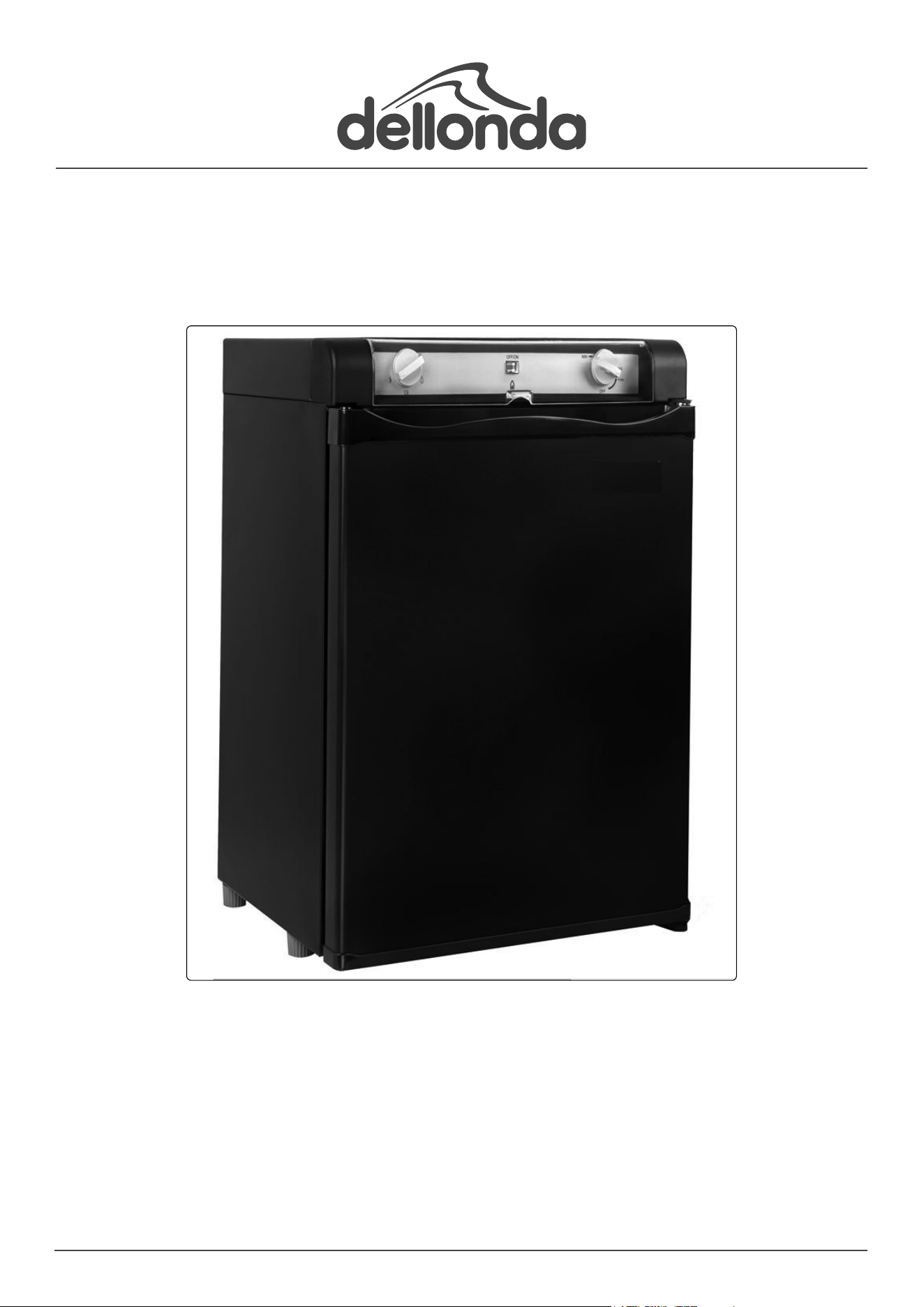
Model No. DL158
Thank you for purchasing a Dellonda product. Manufactured to a high standard, this product will,
if used according to these instructions, and properly maintained, give you years of trouble free performance.
www.dellonda.co.uk
Baridi 40L 3-Way Fridge
DL158 Issue 1 12/02/24
Important Information
Please read these instructions carefully. Note the safe operational requirements, warnings & cautions. Use the product correctly and with care
for the purpose for which it is intended. Failure to do so may cause damage and/or personal injury and will invalidate the warranty. Keep these
instructions safe for future use.
Refer to
instructions
• SAFETY INSTRUCTIONS
• Read manufacturer’s instructions before use. This appliance shall be installed according to local regulations in force.
• ELECTRICAL SAFETY
• WARNING! It is the user’s responsibility to check the following:
• Check all electrical equipment and appliances to ensure that they are safe before using. Inspect power supply leads, plugs and all electrical
connections for wear and damage. Dellonda recommend that an RCD (Residual Current Device) is used with all electrical products.
• Electrical safety information: It is important that the following information is read and understood.
• Ensure that the insulation on all cables and on the appliance is safe before connecting it to the power supply.
• Regularly inspect power supply cables and plugs for wear or damage and check all connections to ensure that they are secure.
• Important: Ensure that the voltage rating on the appliance suits the power supply to be used and that the plug is tted with the correct fuse - see
fuse rating in these instructions.
• DO NOT pull or carry the appliance by the power cable.
• DO NOT pull the plug from the socket by the cable.
• DO NOT use worn or damaged cables, plugs or connectors.
• Ensure that any faulty item is repaired or replaced immediately by a qualied electrician.
• If the cable or plug is damaged during use, switch off the electricity supply and remove from use.
• Ensure that repairs are carried out by a qualied electrician.
• GENERAL SAFETY
• This appliance is intended for use but not limited to the below applications.
• When camping only to use in an enclosed environment.
• Staff kitchen areas in shops, ofces and other working environments;
• Farm houses and by clients in hotels, motels and other residential type environments;
• Bed and breakfast type environments;
• Catering and similar non-retail applications.
• WARNING! When positioning the appliance, ensure the supply cord is not trapped or damaged.
• WARNING! DO NOT locate multiple portable socket-outlets or portable power supplies at the rear of the appliance.
• To avoid contamination of food, please respect the following instructions:
• Opening the door for long periods can cause a signicant increase of the temperature in the compartments of the appliance.
• Clean regularly surfaces that can come in contact with food and accessible drainage systems.
• Store raw meat and sh in suitable containers in the refrigerator, so that it is not in contact with or drip onto other food.
• If the refrigerating appliance is left empty for long periods, switch off, defrost, clean, dry, and leave the door open to prevent mould developing
within the appliance.
• DO NOT store or use gasoline or other ammable vapours in the vicinity of this or any other appliance.
• If you smell gas: Open windows. DO NOT attempt to light appliance. DO NOT touch electrical switches. Extinguish any open ame. Shut off gas
supply. Evacuate immediately and call emergency services.
• WARNING! A QUALIFIED GAS SAFE ENGINEER MUST BE USED IF THE REFRIGERATOR IS TO RUN ON GAS.
• Failure to follow these instructions could result in re or explosion, which could cause property damage, personal injury, or death.
• DO NOT allow children to play with the refrigerator, even when it is turned off.
• DO NOT store liquids such gasoline, kerosene, etc., inside your refrigerator, thus avoiding the risks of explosions and re.
• DO NOT store toxic materials inside your refrigerator, as they could contaminate food items.
• Your Refrigerator should be used only by those who have read this manual or those that have been adequately instructed by someone who has
read it.
• This appliance can be used by children aged from 8 years and above and persons with reduced physical, sensory or mental capabilities or lack of
experience and knowledge if they have been given supervision or instruction concerning use of the appliance in a safe way and understand the
hazards involved.
• Children shall not play with the appliance. Children aged from 3 to 8 years are allowed to load and unload refrigerating appliances.
• Cleaning and user maintenance shall not be made by children without supervision.
• If the supply cord is damaged, it must be replaced by the manufacturer or its service agent or a similarly qualied person in order to avoid a
hazard. The appliance shall be disconnected from its power source during service and when replacing parts;
• These appliances use ammable insulation blowing gas, please dispose the appliance according to the local regulation.
• DO NOT store explosive substances such as aerosol cans with ammable propellant in this appliance.
• Before you use your absorption refrigerator, please read this instruction manual carefully.
• NEVER install gas appliances in unventilated (air tight) structures or sleeping rooms. Gas refrigerators consume air (oxygen) when operated on
gas power. When used in any inside area, provide a fresh air opening of at least 3 square inches (20mm). Please note that an exterior ue is not
required with “vent-less” propane appliances like gas refrigerators, but you may choose to run an insulated 2 inch (min) inside diameter vent pipe
through the roof (straight up is best) or the wall (avoid 90 degree bends with 45
o
spaced more than two feet apart). It is recommended that a
carbon monoxide detector be installed in the same room as the gas refrigerator.
• NEVER install a gas appliance on carpeting or against a ammable wall.
• NEVER leave your gas appliances running unattended while on vacation.
• NEVER run the electrical power and gas power at the same time. Backup electrical power AC operation is Standard equipment on the gas fridge.
• Never unplug the refrigerator by pulling on the power cord. Always grasp the plug rmly and pull straight out from the wall outlet.
• Repair or replace immediately, all electric service cords that have become frayed or otherwise damaged. Do not use a cord that shows cracks or
abrasion damage along its length, the plug or the connector end.
• Unplug the refrigerator before cleaning or before making any repairs.
• The power supply must be properly earthed.
• Use this appliance only for its intended purpose as described in this user manual.
• This refrigerator must be properly installed in accordance with the installation instructions before it is used.
• Cut off the gas supply and AC or DC power supply before cleaning or before making any repairs.
• NOTE: If for any reason this product requires service, we strongly recommend that a certied technician perform the service.
• DO NOT operate your refrigerator in the presence of explosive fumes.
• DO NOT use the unit in the immediate surroundings of a bath, shower or swimming pool.
• Before discarding or storing, remove the door and leave the shelves in place. This will reduce the possibility of danger to children.
• The sealed cooling system must not be opened, since it contains corroding chemicals under high pressure.
• Check that the gas supplied to the refrigerator is at the correct pressure. See the pressure regulator on the LP gas tank.
• DO NOT use an adapter plug or extension cord.
• Remove any transit protection before use.
• This appliance is not intended for use by young children or inrm persons unless they have been adequately supervised by a responsible person
to ensure that they can use the appliance safely.
• WARNING: Electrical Grounding Instructions
• This appliance is equipped with a three-pin (grounding) plug for your protection against shock hazards and should be plugged directly into a
properly grounded mains supply. Do not cut or remove the earth connection from this plug.
• LP GAS CONNECTION: The refrigerator is designed for operation on LP gas, Check that this is stated on the dataplate. The refrigerator is NOT
designed for operation on town gas or natural gas. Use Regulator, comply with the requirements of EN12864; and use hose that complies with the
requirement of BS3212, Length cannot exceed 1.5 meters. Hose cannot be folded; We suggest replacing every year.
• SAFE DISPOSAL: Follow local regulations for collecting and disposing of refrigerated appliances in your area.
• NOTE: Do not attempt to remove refrigerant or compressors yourself. Improperly handled refrigerant may result in physical harm. Only properly
trained individuals using EPA-approved refrigerant recovery equipment should attempt to remove refrigerant from appliances.
• SPECIFICATION
Model No: DL158
Capacity: 40L (36L usable)
Power Rating: 65W
EU Energy Eciency: G Dimensions (W x D x H): 450 x 460 x 570mm
Noise Power/Pressure: 0dB Refrigerant: R717 (72g)
Power Consumption: 0.688KWh/24h Temperature Range: 0 - 10°C
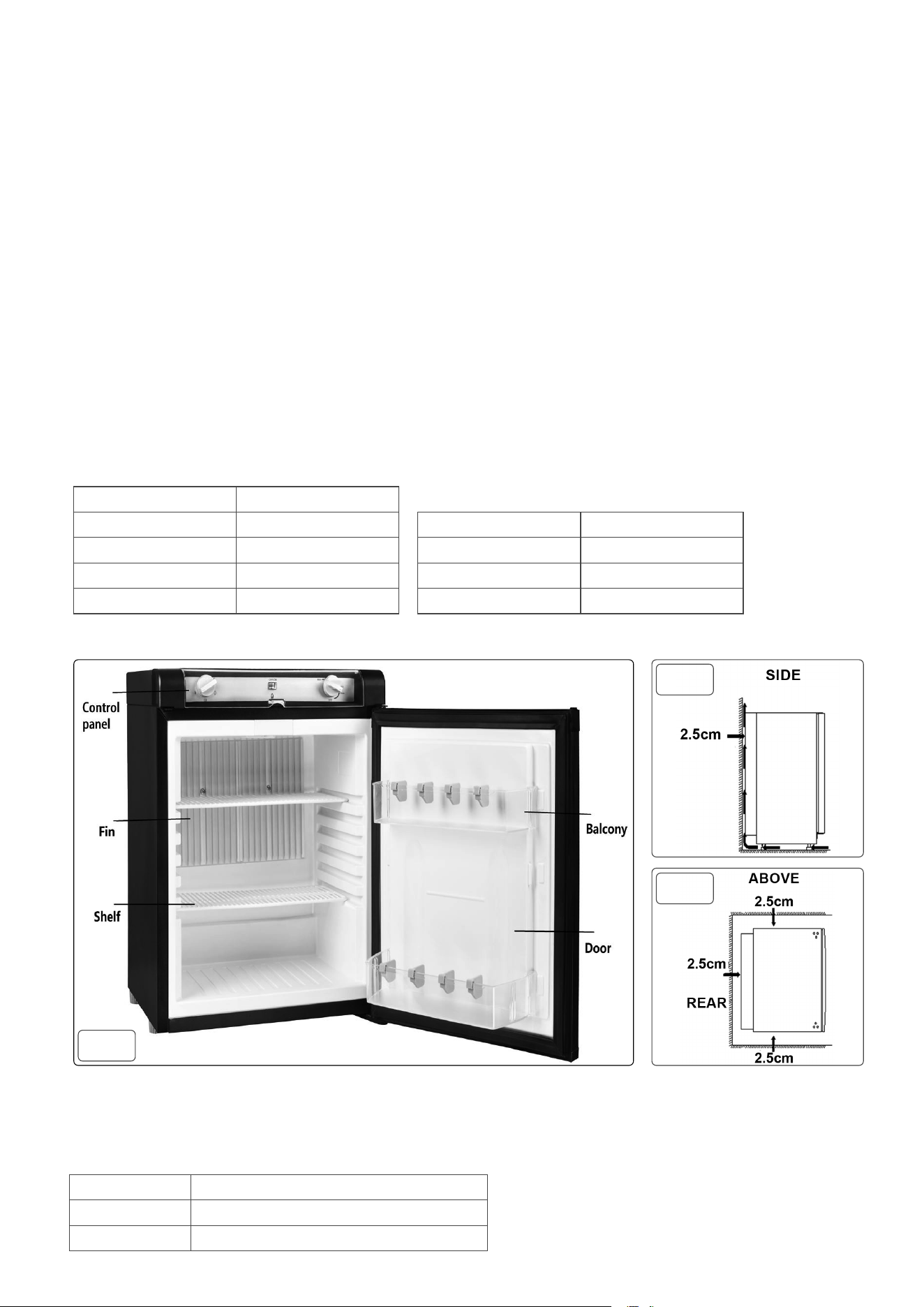
• OVERVIEW
FIG.2
FIG.3
FIG.1
• INSTALLATION
• It is advisable to clean the inside of the refrigerator with lukewarm water using a mild detergent, and then to dry it thoroughly prior to use.
• Only operate as per the below specications. Exceeding this can damage the electrical circuit, related components and voids the warranty.
LP Gas Operation 2.75 KPa
12 volts DC Control voltage (10.5 VDC min. to 13.4 VDC max)
AC Operation Check the voltage stated on the data plate
• LEVELLING AND VENTILATION
• The refrigerator is designed to operate on a at surface.
• Avoid tilting the unit if possible.
• If the unit needs to be tilted to move into position, allow it to sit upright for 30 minutes prior to plugging in and starting the cooling process.
• Earthed plug and socket should be provided in accordance with local regulations.
• The cable-size should meet the refrigerator’s requirements.
• The unit must be connected to proper electrical network, which is shown on the nameplate, through an omnipoplar circuit-breaker. To assure the
proper function of the refrigerator.
• OBSERVE THE FOLLOWING RECOMMENDATIONS
• Ensure the unit is at least 2.5cm from any wall or obstruction for adequate circulation.
• Clearance above the unit should be at least 10cm.
• Locate the unit away from direct sunlight for best performance and efciency.
• The room should have a window (which can be opened) or a door to the outside.
• It is important that the refrigerator is not subject to radiation of heat from a stove etc.
• The refrigerator is designed for a free-standing installation.
• Ventilation must be in accordance with local regulations in force.
• In general, the appliance should have adequate ventilation for complete combustion of gas, proper ueing and to maintain temperature of
immediate surroundings within safe limits.
• LP GAS CONNECTION
• WARNING! A QUALIFIED GAS SAFE ENGINEER MUST BE USED IF THE REFRIGERATOR IS
TO RUN ON GAS.
• CAUTION! Check that the gas supplied to the refrigerator is at the proper pressure. See the
pressure regulator on the LP gas container.
• The refrigerator is designed for operation on LP gas, the pressure of which must be 2.75kPa for
Propane.
• Check that this is stated on the data plate. The refrigerator is NOT designed for operation on
town gas or natural gas.
• This appliance shall be installed only by authorised persons and in accordance with the
manufacturer’s installation instructions, local gas tting regulations, municipal building codes
and any other statutory regulations.
• The gas supply pipe should be connected to the gas inlet of the gas control valve by means of a
suitable threaded coupling.
• In making the connection to the refrigerator, a union gas cock of an approved bottled-gas type
must be incorporated in the supply line in a position which is readily accessible to the user. For
eventual servicing purposes, the union should be on the outlet side of the cock and the pipe
work should be positioned so as not to prevent the refrigerator from being readily withdrawn.
• NEVER check gas leaks with an open ame. Use an approved leak detection solution.
• WARNING! An approved manual shut-off valve must be installed at the gas inlet of the
refrigerator. The shut-off valve must be accessible to the user when the appliance is in the
installed position.
• BEFORE USE: Check all connections for gas leaks with soap and water. DO NOT use a naked
ame for detecting leaks. Ignite the burner to ensure correct operation of gas valve, burner and
ignition. Turn gas tap to low ame position and observe stability of the ame. When satised,
please instruct the user on the correct method of operation. In case the appliance fails to
operate correctly after all checks have been carried out, refer to the authorised service provider
in your area.
• AC CONNECTION
• Check that the voltage stated on the data plate is the same as the mains voltage in use.
• Plug the refrigerator power cord into an easily accessible earthed wall socket.
• Electrical leads must be routed and secured so that they cannot come into contact with hot or sharp parts of the refrigerator.
• DC CONNECTION
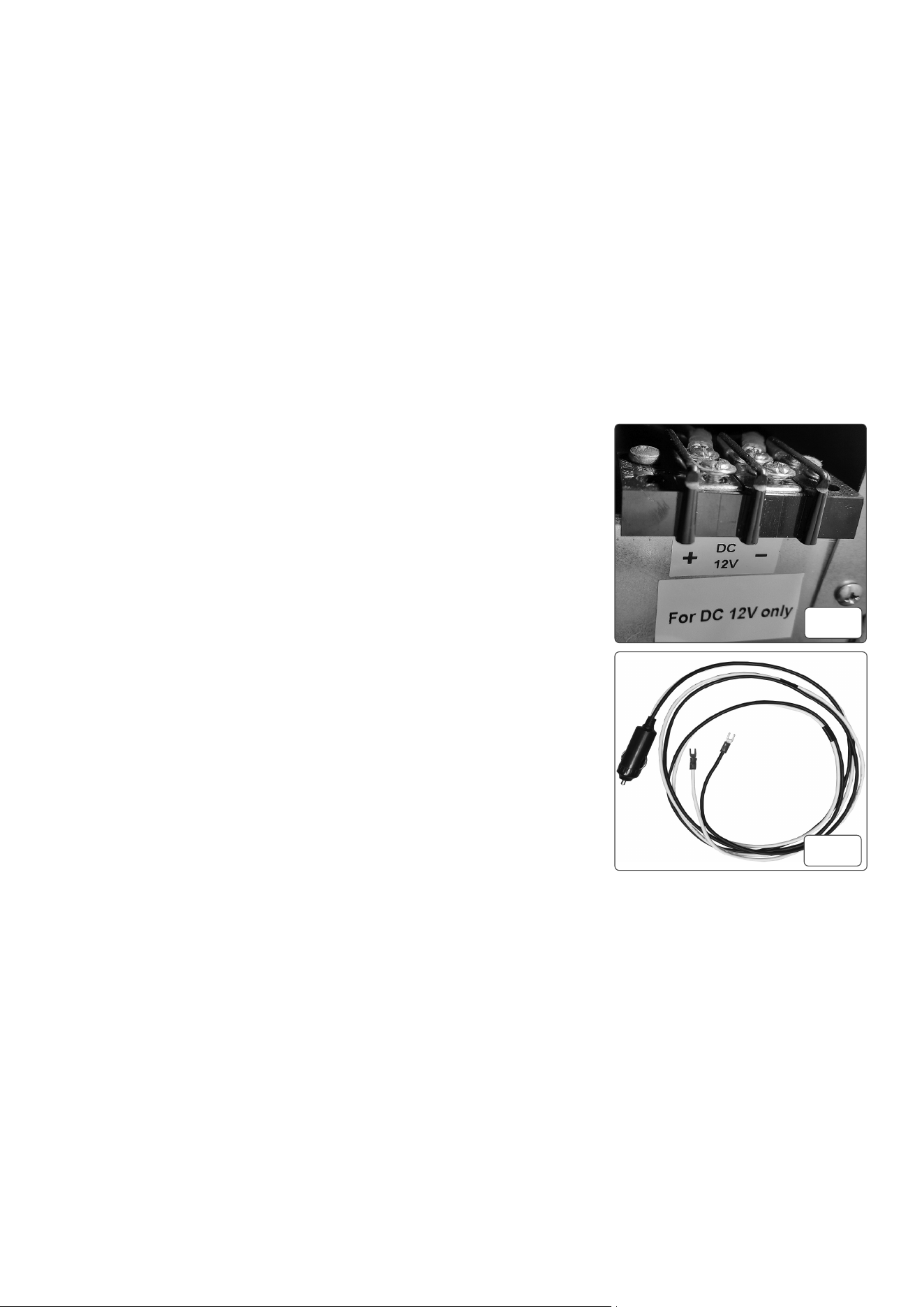
• The terminal block is located at the back of the unit, labelled as shown in g.4.
• Note the distinction between + - poles before connecting the wires from the 12V power cord (g.5).
• It must only be supplied at the voltage corresponding to the marking on the appliance.
FIG.5
FIG.4
• OPERATION
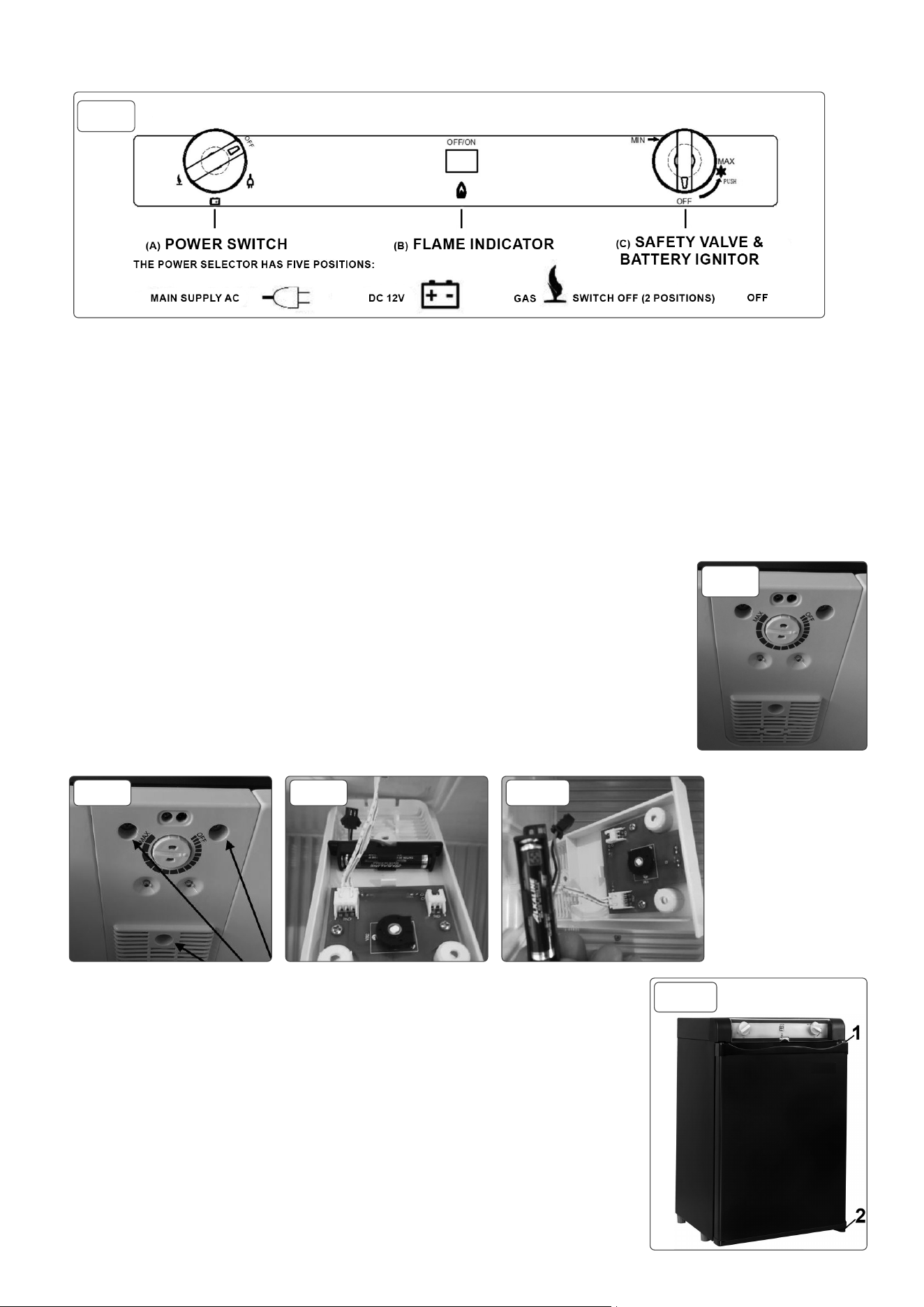
FIG.6
• GAS OPERATION
• NOTE: when the gas cylinder is initially installed, repaired or replaced, some air will enter the gas pipe. Press the button and turn the (C) knob
counterclockwise to MAX and hold it for 15 seconds or more to let the air out of the pipe. Open the valve of the gas cylinder, then press the safety
valve switch button (C) for more than 15 seconds until the ame indicator (B) lights up.
• Rotate the energy selection knob (A) to gas mode.
• Press the safety valve and the battery ignition switch button (C) and hold it while turning the knob counterclockwise (C) to the MAX position.
• Check the ame indicator (B) to see if the ame is on. After the ame is ignited, the pointer should move from the red area to the green area.
• Press and hold the safety valve and battery ignition switch button (C) for 10-15 seconds.
• Release the safety valve and the battery ignition switch button (C) and check again whether the ame is on or not.
• If the burner has not lit after 4-5 attempts, turn off the gas tap, wait 5 minutes and then try to re-light.
• If the burner still fails to light, please contact an authorised service provider.
• To terminate gas operation, turn the power switch to the OFF position, then turn off the gas valve from the gas container.
• To terminate any power mode, gas, AC or DC, turn the knob A to the OFF positions.
• TEMPERATURE CONTROL ON AC OR DC POWER (FIG.7)
• Temperature inside of the cabinet is 2℃ to 8℃ and can be adjusted using the thermostat knob (g.7).
• Rotate the thermostat clockwise to decrease temperature. Rotate anticlockwise to turn off.
• REPLACE THE BATTERY FOR ELECTRONIC SPARK IGNITION (FIG.8, 9 & 10)
• If the battery ignition fails to spark, it will need replacing as per the steps below.
• The battery box is on the back of the unit.
• Remove the xing screws with a screwdriver to remove the casing (g.8 & 9).
• Replace the old battery with new one and replace the casing.
• NOTE: use a 1.5V battery (g.10).
FIG.8 FIG.9 FIG.10
• LIGHTING IN THE CABINET
• The LED light automatically turns on when the door is opened.
• If the light fails, contact your authorised service agent for repair.
• TURNING OFF THE REFRIGERATOR
• Turn off the refrigerator if it is not to be used for some time.
• Shut off any valve in the gas line to the refrigerator.
• Turn the main power swich to “OFF”.
• Empty the refrigerator. Defrost and clean it. It must be completely dry inside to avoid mold growth (if
possible have the door open).
• Set the thermostat button to the OFF position;
FIG.7
FIG.11
• RECOGNIZING ABNORMAL OPERATION
• Any of the following are considered to be abnormal operation and may require
servicing:
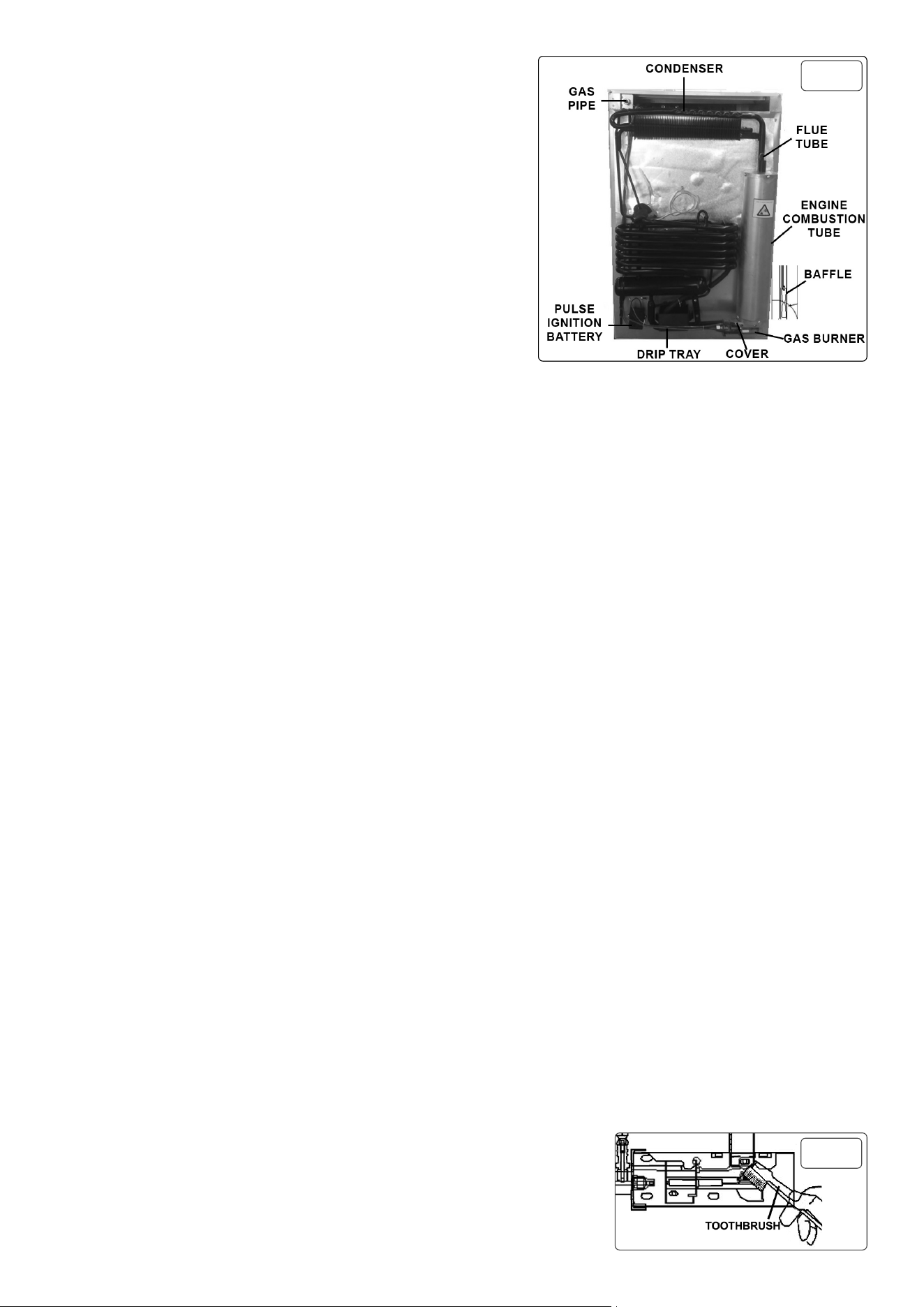
• Yellow tip of the burner ame; burner (g.12) not igniting properly; burner failing to
remain alight; gas valves, which are difcult to turn.
• In case the appliance fails to operate correctly, contact Dellonda.
• REVERSING THE DOOR (FIG.11)
• Remove the lower hinge by loosening and removing the screws with a screwdriver
(2).
• Carefully lower the door and remove it.
• Remove the three screws from the left top hinge(1) position, take the plastic part
off the hinge position.
• Remove the three screws from the right top hinge and take off the hinge, insert the
plastic part, rivet the three screws thereafter.
• Take off the lower hinge and x it to the opposite side.
• Take the door. Insert the lower hinge axle into the right bottom hole of the door.
• Fix the spare hinge to the left top position of the cabinet. Adjust the door, make it
straight and in alignment with the cabinet.
• NOTE: As the door gasket gets pressed-in during shipment, after reversing the door the gasket might have to be reset. This will be good for
seal to avoid any air escaping. If there is a gap between the cabinet and the door gasket, set the gasket by gently pulling it out to seal the gap. If
necessary, use a hair drier to gently warm the gasket to get rid of the gap.
• FOOD STORAGE
• The freezer compartment is designed to keep food frozen. It is NOT intended for quick freezing.
• The fresh food compartment stores and cools food.
• Air must circulate within the fresh food compartment for best cooling performance. DO NOT cover the shelves with paper, plastic, etc.
• To reduce frost on the cooling ns, cover liquids and moist foods.
• DO NOT place hot foods in the compartment, and DO NOT leave the door open longer than needed.
• The door storage areas hold items such as 2L bottles, half-gallon milk cartons, cans, ketchup bottles, and other commonly used items.
• Allow the refrigerator to cool for 8 hours before loading foods. Loading a warm refrigerator with warm food increases the cool down period.
• NEVER keep items in the refrigerator which might give off ammable gases.
• NEVER put bottles or cans of zzy drinks in the frozen food storage compartment as they may burst when freezing. Also don’t give children ice
lollies straight from the frozen food as they could cause frostbite. Most kinds of frozen food can be stored in the frozen food compartment for
about a month. This period of time may vary, however, and it is important to follow the instructions on the individual packets.
• ICE-MAKING
• Fill the ice tray just below the brim with drinking water and place it on the freezer compartment.
• It is possible to make ice faster by turning the control knob temporarily to its highest value but do not forget to turn it back to its regular setting
afterwards as the refrigerator might otherwise become too cold.
• DEFROSTING
• Frost will gradually accumulate on the refrigerating surfaces. DO NOT allow it to grow too thick as this will affect performance.
• Check the formation of frost regularly every week and when it gets about 3mm thick, defrost the refrigerator.
• To defrost the refrigerator, turn it off and remove the ice tray and all food items.
• DO NOT try to accelerate defrosting by using any kind of heating appliance, as this might damage the plastic surfaces of the refrigerator.
• DO NOT use sharp objects to scrape off the ice.
• The defrost water runs through the drainage pipe to a receptacle at the rear of the refrigerator where it evaporates.
• Mop the defrosted water in the freezer compartment with a cloth.
• When all ice has melted, wipe the refrigerator dry and restart it.
• Place the food items back inside but wait until the refrigerator is cold before making ice cubes.
• CLEANING THE REFRIGERATOR
• WARNING! To avoid electric shock always unplug your absorption refrigerator before cleaning. Ignoring this warning may result in injury.
• DO NOT use harsh chemicals, abrasives, ammonia, chlorine bleach, concentrated detergents, solvents or metal scouring pads. Some of these
chemicals may dissolve, damage and/or discolour your absorption refrigerator.
• Remove the contents of the appliance
• Wipe the inside and outside surfaces with a damp cloth. The addition of vinegar to the water is good for the prevention of mold and fungus.
• Wipe all parts thoroughly after the cleaning.
• Clean behind the refrigerator with a brush from time to time. Ensure the unit is switched off when
doing this.
• The entire unit must be left for drying completely after cleaning with damp cloth.
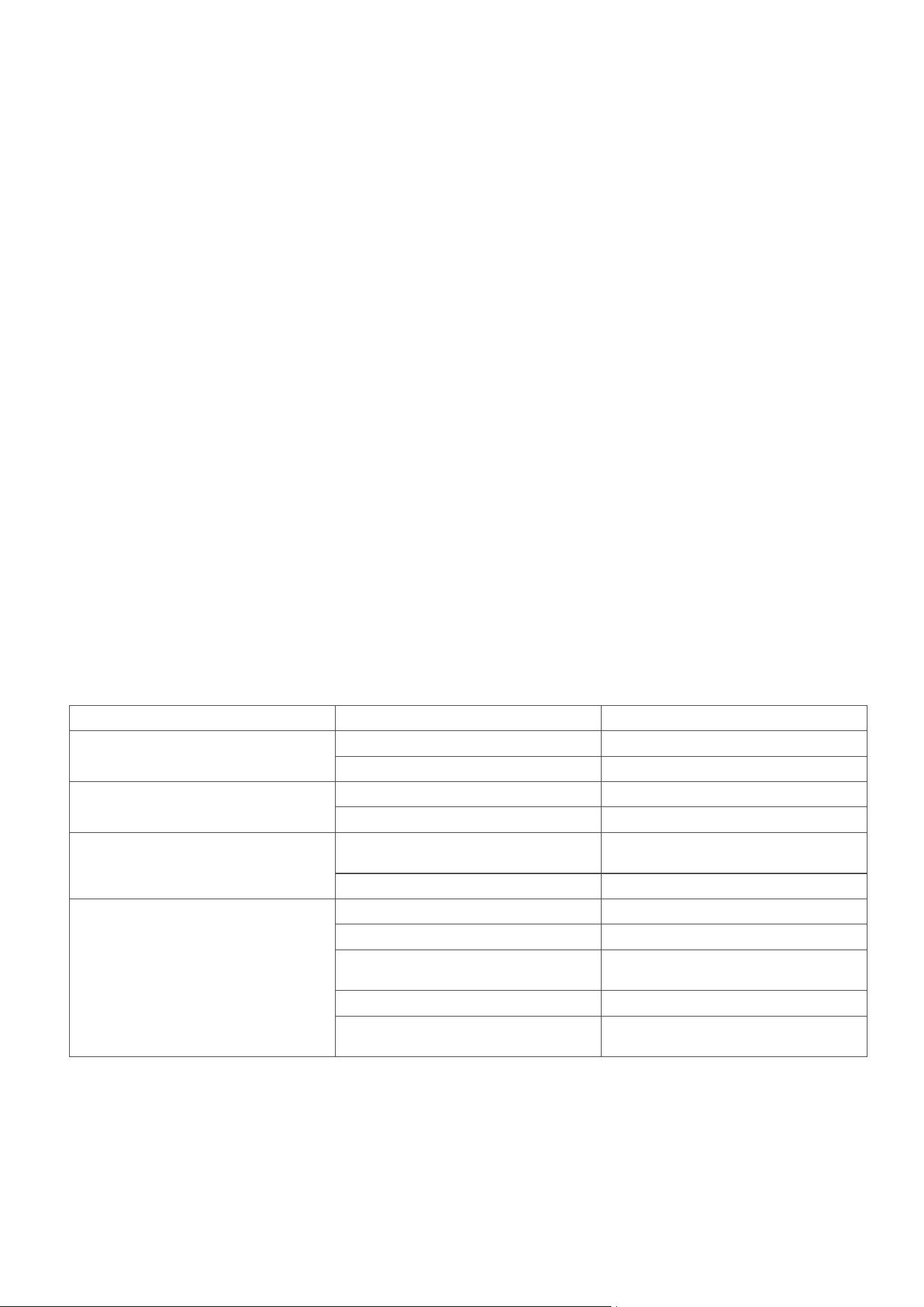
• CLEANING THE BURNER (FIG.13)
• Take off the protection hood.
• Clean the openings and the burner screen with a toothbrush.
FIG.12
FIG.13
• Clean and inspect the electrode and thermocouple. If either is corroded, have it changed. Check that they are well attached and if necessary
tighten the screws.
• Check that the spark is created by pressing the electric piezo igniter button on the control panel.
• DO NOT use thin objects to either clean or unblock the injector
• CLEANING THE COOLING SYSTEM FLUE
• WARNING! Carbon Monoxide can be hazardous to your health.
Gas appliances may emit excessive Carbon Monoxide if the refrigerator’s burner, burner orice, and the ue tube are not regularly cleaned.
To prevent Carbon Monoxide, the burner, burner orice, and the cooling system’s ue tube must be cleaned at least once a year and after all
prolonged (seasonal) shut-down periods. Refer to the following cleaning procedures, or contact a qualied installer, or your stockist.
• Before cleaning, put a cloth on the burner to protect it from dirt.
• Remove the refrigerator from its enclosure.
• Remove the heat deector cap from the ue.
• Remove the spiral ue bafe from the ue tube.
• Using a stiff brush or ne emery cloth, clean the spiral ue bafe of debris.
• Clean the inside of the ue tube with a ue brush. Inspect burner after cleaning.
• Re-install the spiral ue bafe. Insure the spiral ue bafe is securely in place. The spiral ue bafe is required for efcient cooling while operating
in the gas mode.
• MAINTENANCE
• Inspect the gas hose periodically for cracks or deep chang marks. Connections must be tested for leaks using a soap solution.
• DO NOT USE AN OPEN FLAME to check for gas leaks.
• If there is any suspicion of damage, call for a service technician.
• We recommend that a service technician check the refrigerator once a year.
• HOW TO CHANGE A NEW GAS BOTTLE
• If cooling effect decreases, a new gas bottle may be required.
• If gas pressure has decreased, shut off the gas valve, move away the gas pipe connected to the appliance and ret a new gas bottle.
• Restart the refrigerator as per the above instructions.
• NOTE: The sealed cooling system must not be opened, since it contains corrosive chemicals under high pressure.
• TROUBLE SHOOTING
• Refer to the troubleshooting table below if you have problems with your refrigerator.
• If the refrigerator still does not work properly, call a service technician.
• NOTE: The sealed cooling system must not be opened, since it contains corroding chemicals under high pressure.
PROBLEM POSSIBLE CAUSE SOLUTION
The refrigerator fails to work. Incorrect installation. Install as per the above instructions.
The refrigerator is uneven. Ensure the refrigerator is level.
The refrigerator fails to work on gas. Gas bottle is empty. Rell/change the gas bottle.
LP-gas valve is closed. Ensure the valve on the bottle is open.
The refrigerator fails to work on AC. That the AC supply is connected to the
refrigerator.
Connect to supply. If cable/plug is damaged,
a qualied electrician should replace.
Blown fuse. Replace the fuse with an equivalent.
The refrigerator is not cold enough. Inadequate ventilation. Install in a location as per the instructions.
Thermostat set on high temperature. Set the thermostat on a cooler temperature.
The doors are opened frequently, or the
gasket is not sealed properly.
Ensure the door is closed properly. Service if
required.
The refrigerator is full. Put less in the refrigerator.
Gas pressure incorrect. Check the pressure regulator at the gas
container.
Dellonda Limited
Kempson Way, Suffolk Business Park, Bury St Edmunds, Suffolk. IP32 7AR
01284 757575 suppor[email protected] www.dellonda.co.uk
Environment Protection and Waste Protection and Electrical Equipment Regulations (WEEE)
Recycle unwanted packaging materials. When this product is no longer required, or has reached the end of it’s useful life, please dispose of
it in an environmentally friendly way. Drain any fluids (if applicable) into approved containers, in accordance with local waste regulations.
Under the Waste Batteries and Accumulators Regulations 2009, Dellonda would like to inform the user that this product contains one or
more batteries. It is our policy to continually improve products and we reserve the right to alter data, specifications and parts without
prior notice. No liability is accepted for incorrect use of this product. Guarantee is 12 months from purchase date, proof of which is required
for any claim.
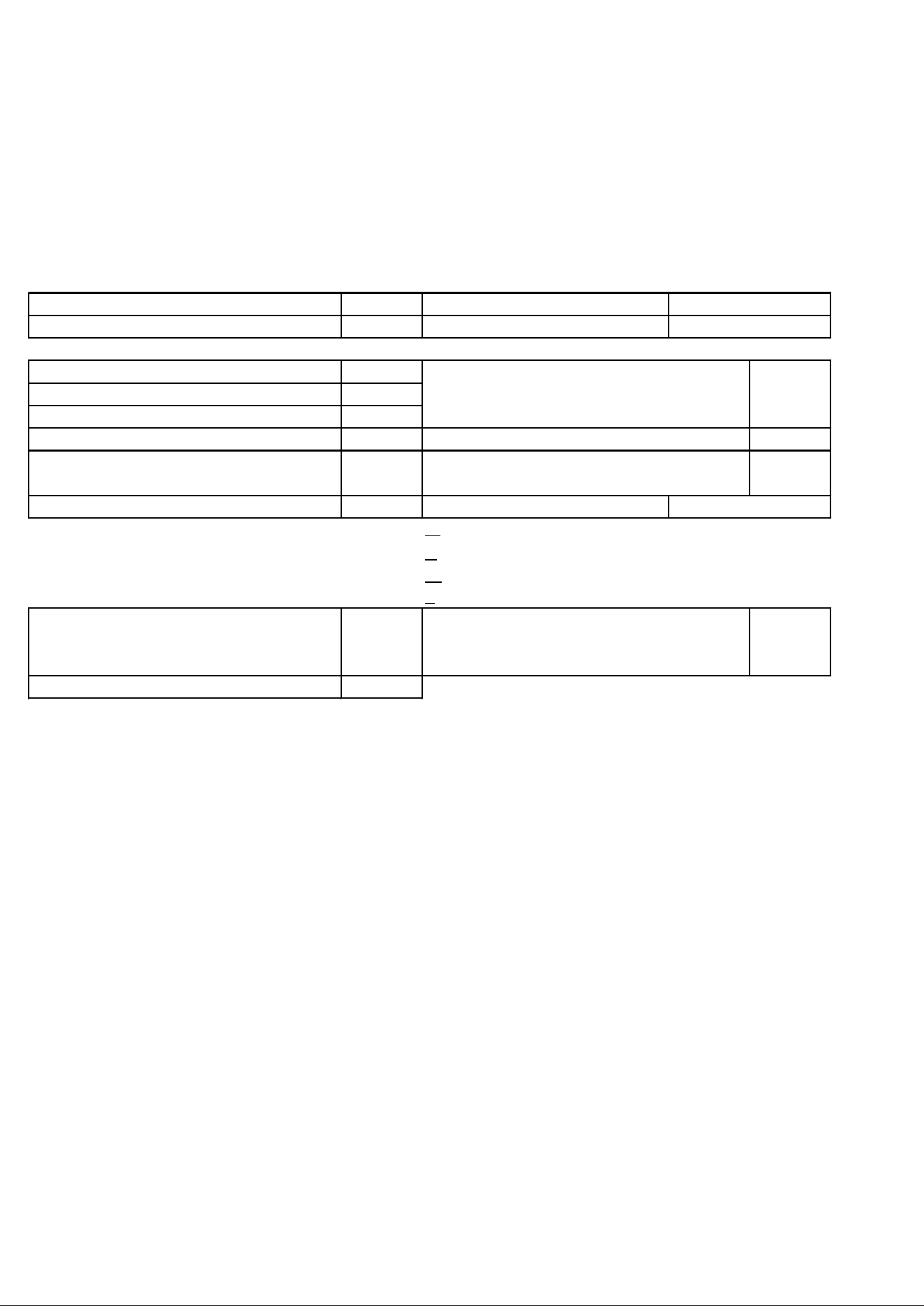
Product Information Sheet. Refrigerating Appliances
SUPPLIER_NAME_OR_TRADEMARK Dellonda EU Ltd. DELEGATED_ACT EU/2019/2016
MODEL_IDENTIFIER DL158
ADDRESS
Farney Street, Carrickmacross, Co. Monaghan, A81 PK68 Ireland
PHONE_NUMBER 01284 757 500
EMAIL_ADDRESS [email protected]
Parameter Verification tolerances
Low-noise appliance Yes Design type Freestanding
Wine storage appliance No Other refrigerating appliance No
General product parameters
Height mm 570
Width mm 450 34
Depth mm 460
EEI 295 G
Airborne acoustical noise emissions (dB(a)
re 1 pW
0 A
Annual energy consumption kWh/a 233.00
SN = extended temperate(10-32°C)
N = temperate 16-32°C
ST = subtropical 16-38°C
T = tropical 16-43°C]
Minimum ambient temperature (°C) for
which the refrigerating appliance is
suitable.
10 32
Winter setting No
3 Way Fridge, Gas/12V/230V, 40L, Camping, Motorhome, Truck, Black
Total volume. Litres.
Airborne acoustical noise emission class
Maximum ambient temperature (°C) for
which the refrigerating appliance is suitable.
Climate class
N
Energy efficiency class
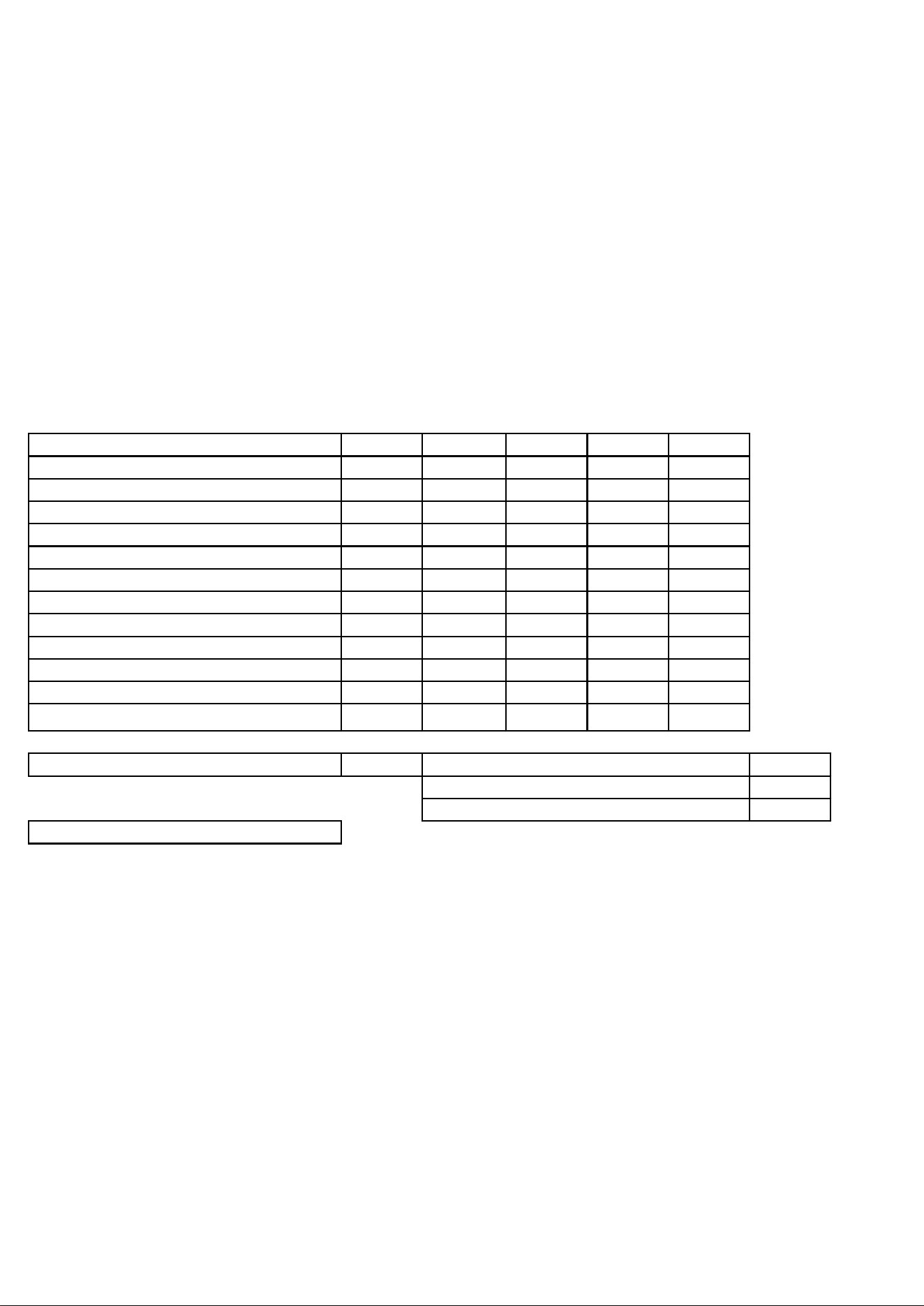
Compartment type
Volume.
Litres.
Recommended temperature setting for optimised food storage
Freezing capacity (kg/24 h)
Defrosting type
(auto = A Manual = D)
Pantry No FALSE FALSE
_
FALSE
Wine storage appliance No FALSE FALSE
_
FALSE
Beverage / Beer cooler No FALSE FALSE
_
FALSE
Cellar Yes 34.0 5
_
A
Fresh food No FALSE FALSE
_
FALSE
Chill No FALSE FALSE
_
FALSE
0-star or ice-making No FALSE FALSE
_
FALSE
1-star No FALSE FALSE
_
FALSE
2-star No FALSE FALSE
_
FALSE
3-star No FALSE FALSE
_
FALSE
4-star No FALSE FALSE FALSE FALSE
2-star section No FALSE FALSE
_
FALSE
Variable temperature compartment
Compartment
types
FALSE FALSE
_
FALSE
4-star compartments Light source parameters
Fast freeze facility No Type of light source LED
Energy efficiency class exempt
Minimum duration of guarantee (years) 1
Suppliers website https://www.dellonda.co.uk/