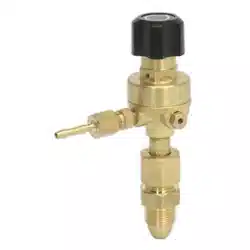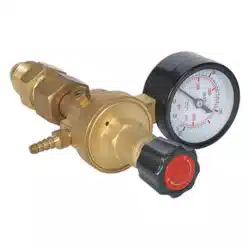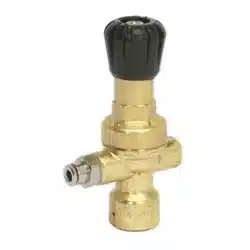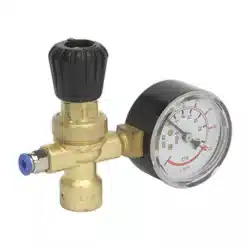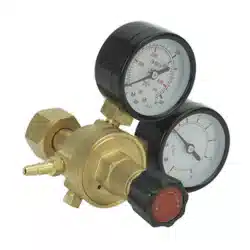
MIG GAS REGULATOR 1/2 GAUGE INDUSTRIAL
MODEL NO’s: REG/MO.V2, REG/MT.V2
Thank you for purchasing a Sealey product. Manufactured to a high standard, this product will, if used according to these instructions,
and properly maintained, give you years of trouble free performance.
IMPORTANT: PLEASE READ THESE INSTRUCTIONS CAREFULLY. NOTE THE SAFE OPERATIONAL REQUIREMENTS, WARNINGS & CAUTIONS. USE
THE PRODUCT CORRECTLY AND WITH CARE FOR THE PURPOSE FOR WHICH IT IS INTENDED. FAILURE TO DO SO MAY CAUSE DAMAGE AND/OR
PERSONAL INJURY AND WILL INVALIDATE THE WARRANTY. KEEP THESE INSTRUCTIONS SAFE FOR FUTURE USE.
1. SAFETY
9 Read the following instructions carefully before using the regulator, and keep them for future reference. The instructions provide all the
information necessary for correct use of the regulator, to avoid damage and danger.
SEALEY will not be responsible for any damage occurring due to incorrect use of the regulator, or to modifications made to it. This gas
regulator is a delicate piece of workshop equipment. Failure to observe the following safety points will cause damage to the unit and will
invalidate your warranty.
9 Use regulator only for gas intended.
9 Use to designed pressure.
9 Check for damage and leaks at frequent intervals.
8 DO NOT knock or jolt regulator.
8 DO NOT use a regulator showing any signs of damage.
8 DO NOT allow cylinders to become heated.
8 DO NOT use pressure gauges that are damaged, not smooth in operation or not zeroing.
8 DO NOT overtighten adjusting knob as this will damage diaphragm and void warranty.
8 DO NOT oil the regulator.
WARNING! Incorrect use of the regulator can cause serious damage. Users must be trained by specialist engineers.
WARNING! The regulator must be treated as a precision instrument. Protect it from accidental knocks, dust, oil and other sources of dirt.
WARNING! Do not use the regulator if it is not in perfect working condition
WARNING! When you draw gas, the cylinder must be placed upright and protected from falling.
2. INTRODUCTIONi
Top quality regulators made to ISO 2503. Industrial regulator ts CO2, Argon and CO2/Argon mix gas cylinders using adaptor. Suitable for
industrial size gas cylinders. Maximum operating pressure of 4bar.
3. SPECIFICATION
Model no’s.......................................................... REG/MO.V2
Argon/CO2 adaptor .......................................................... yes
Cylinder type ............................................................industrial
Gauges ................................................................................ 1
Max. throughput (L/min) ..................................................... 10
Safe working pressure ................................................ 230bar
The function of the regulator is to reduce and control the pressure of a gas. The regulator reduces the cylinder pressure at which the gas
is stored, to the pressure needed to use the gas. The pressure reducer has been designed so as to be used only and exclusively with the
type of gas and at the pressure which are shown by the markings stamped on the regulator body (refer to the markings key above).
WARNING! To try and use the pressure reducer with types of gasses and pressures other than those indicated can be dangerous.
Refer to
instruction
manual
REG/MO.V2, REG/MT.V2 Issue:2 (H,F) 06/05/21
Original Language Version
© Jack Sealey Limited
KEY TO MARKINGS (stamped on regulator bodies)
Relevant
standard
'K' = Pressure
reducer class
Code for
gas type
Serial
number
Max inlet
pressure
EN ISO 2503 K1 N 170409 230BAR
Gas code 'N' = CO
²
, Argon and CO
²
/Argon mix
Model no’s........................................................... REG/MT.V2
Argon/CO2 adaptor .......................................................... yes
Cylinder type ............................................................industrial
Gauges ................................................................................ 2
Max. throughput (L/min) ..................................................... 10
Safe working pressure ................................................ 230bar
4. CONNECTION.
4.1. REGULATOR CONNECTION
4.1.1. Check that the pressure regulator is correct both for the type of gas and the pressure in the cylinder in use.
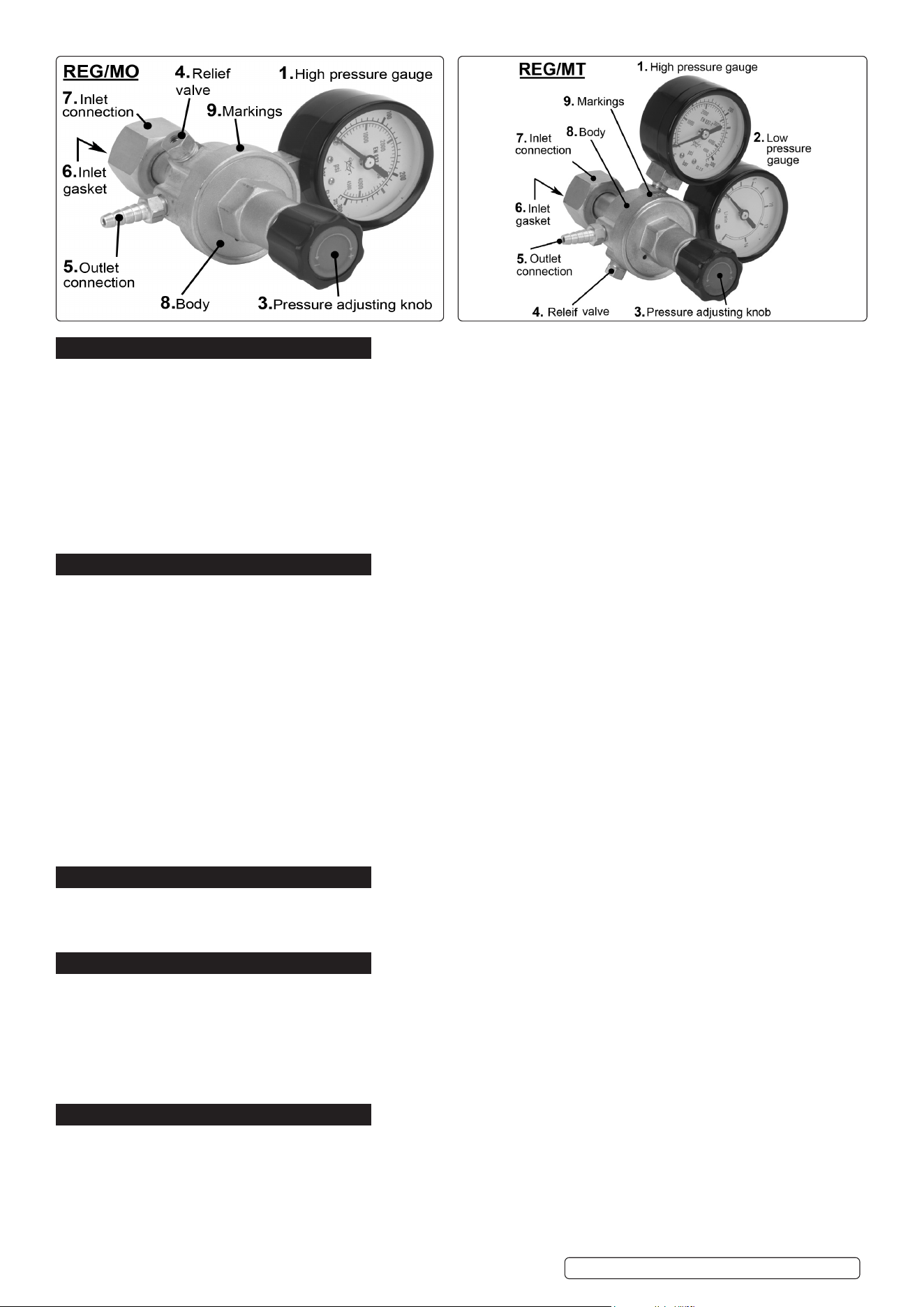
4.1.2. Turn the pressure adjusting knob (3) anticlockwise to ensure that the regulator valve is closed.
4.1.3. Replace the inlet connection gasket if it is damaged or lost.
4.1.4. Before screwing on the regulator, briefly open the cylinder valve, then close it, in order to remove any impurity (only for rechargeable
bottles).
WARNING! During this operation it is dangerous to stand, or place your hands in front of the cylinder valve.
4.1.5. Screw the regulator to the cylinder valve and tighten using a suitable spanner. DO NOT over-tighten.
4.2. HOSE CONNECTION
4.2.1. Attach hose to the hose connection of the outlet connection (5) and secure it with a hose clamp.
WARNING! Only use hoses complying with EN 559-ISO3821.
5. OPERATION
5.1. GAS SUPPLY
CAUTION! Before opening the cylinder valve, check that the regulator is completely closed (turn the pressure adjusting knob (3)
anticlockwise).
5.1.1. Slowly open the cylinder valve. The high pressure gauge (1) will show you the cylinder pressure.
5.1.2. Opening the cylinder valve too quickly may make gauges malfunction.
5.1.3. Turn the pressure adjusting knob (3) very slowly clockwise. The low pressure gauge (2) will show the outlet pressure (REG/MT only).
5.2. REGULATE PRESSURE
5.2.1. To increase pressure: continue slowly turning the regulator pressure adjusting knob (3) clockwise.
5.2.2. To decrease pressure: slowly turn the regulator pressure adjusting knob (3) anticlockwise.
5.2.3. Using the pressure adjusting knob (3) it is possible to compensate for eventual pressure drop within the cylinder.
CAUTION! Outlet pressure must not be regulated higher than the pressure you need to use.
5.2.4. Outlet pressure must not be regulated higher than the red mark on the low pressure gauge (2). (REG/MT only)
5.3. CLOSING
5.3.1. Close the cylinder valve.
5.3.2. Release the gas until the regulator gauges indicate “zero”.
5.3.3. Turn the pressure adjusting knob (3) anticlockwise until it is completely closed.
5.3.4. Remove regulator from cylinder.
6. STORAGEs
6.1. The regulator must be treated as a precision instrument.
6.2. When the regulator is not to be used for long periods, store it in its wrapping or in its box, to prevent contact with dust, oil and other
sources of dirt.
7. MAINTENANCE Maintenance
8 DO NOT carry out maintenance or repairs, other than the following:
Replacement of bottle seal.
Replacement of gauge.
Replacement of inlet connector.
Use only original spare parts and accessories.
Do not clean gauge glasses with petrol, solvents or any other kind of detergent.
In case of failure return your regulator to the retailer.
8. MALFUNCTION Malfunctioning
8.1. In case of malfunction (e.g. leaks in the gauges or in the relief valves) stop use and close the cylinder valve immediately.
8.2. Unscrew immediately the regulator from the gas bottle.
8.3. We suggest that the regulator be returned to the supplier to be checked and repaired.
CAUTION! DO NOT use the regulator if there are the following malfunctions:
The gasket (6) is damaged or lost.
The regulator or any of its parts (gauge, inlet connection, outlet connection) are damaged or dirty, oily etc.
There are any leaky connections.
Original Language Version
© Jack Sealey Limited
REG/MO.V2, REG/MT.V2 Issue:2 (H,F) 06/05/21

Sealey Group, Kempson Way, Suffolk Business Park, Bury St Edmunds, Suffolk. IP32 7AR
01284 757500 01284 703534 sales@sealey.co.uk www.sealey.co.uk
ENVIRONMENT PROTECTION
Recycle unwanted materials instead of disposing of them as waste. All tools, accessories and packaging should be sorted, taken to
a recycling centre and disposed of in a manner which is compatible with the environment. When the product becomes completely
unserviceable and requires disposal, drain any fluids (if applicable) into approved containers and dispose of the product and fluids
according to local regulations.
Note: It is our policy to continually improve products and as such we reserve the right to alter data, specifications and component parts without prior
notice. Please note that other versions of this product are available. If you require documentation for alternative versions, please email or call
our technical team on technical@sealey.co.uk or 01284 757505.
Important: No Liability is accepted for incorrect use of this product.
Warranty: Guarantee is 12 months from purchase date, proof of which is required for any claim.
The relief valve adjustment has been modified or the valve leaks.
8.4. RELIEF VALVE (4)
8.4.1. Regulators are equipped with an excess pressure valve.
8.4.2. In case of malfunctioning, this valve allows the excess gas pressure to escape.
CAUTION! DO NOT modify the calibration of the relief valve.
8.5. CHECKING THE SEAL
8.5.1. This check must be carried out only in the open air: use either soapy water or a gas leak detector. DO NOT use flames.
8.5.2. Spray detector on the area to be checked.
8.5.3. The forming of bubbles or foam is a sign of a leak. If a leak is detected remove regulator from service immediately and have it
serviced by an authorised stockist.
Original Language Version
© Jack Sealey Limited
REG/MO.V2, REG/MT.V2 Issue:2 (H,F) 06/05/21