en Table of contents
You can find additional information and explanations online.
Scan the QR code on the title page.
Table of contentsTable of contents
1 Safety ........................................................................ 2
2 Preventing material damage .................................. 5
3 Environmental protection and saving energy ...... 6
4 INSTALLATION AND CONNECTION ..................... 7
5 Familiarising yourself with your appliance .......... 8
6 Accessories ........................................................... 11
7 Before using for the first time .............................. 13
8 Operating the hotplate .......................................... 13
9 Basic operation ..................................................... 14
10 Rapid heating ...................................................... 14
11 Cleaning and servicing ...................................... 14
12 Rails ..................................................................... 16
13 Appliance door .................................................... 17
14 Troubleshooting ................................................. 20
15 Transportation and disposal ............................. 20
16 Customer Service ............................................... 21
17 How it works ........................................................ 21
Safety 1 Safety
Observe the following safety instructions.
1.1 Intended use
Read the information on intended use to en-
sure that you use the appliance correctly and
safely.
The figures in these instructions are intended
for information purposes.
Only a licensed professional may connect ap-
pliances without plugs. Damage caused by in-
correct connection is not covered under the
warranty.
Only use the appliance as follows:
¡ To prepare meals and drinks.
¡ Under supervision. Never leave the appli-
ance unattended when cooking for short
periods.
¡ in private households and in enclosed
spaces in a domestic environment.
¡ Up to an altitude of 4000m above sea level.
Do not use the appliance:
¡ On boats or in vehicles.
¡ as a room heater.
¡ with an external timer or a remote control.
You cannot operate the appliance with a timer
or remote control.
Always place accessories in the cooking com-
partment the right way round.
1.2 Restriction on user group
This appliance may be used by children aged
8 or over and by people who have reduced
physical, sensory or mental abilities or inad-
equate experience and/or knowledge,
provided that they are supervised or have
been instructed on how to use the appliance
safely and have understood the resulting
dangers.
Do not let children play with the appliance.
Children must not perform cleaning or user
maintenance unless they are at least 15 years
old and are being supervised.
Keep children under the age of 8 years away
from the appliance and power cable.
1.3 Safe use
WARNING‒Risk of fire!
The appliance will become hot.
Do not keep combustible objects or aerosol
cans in drawers directly underneath the hob.
Never store or use combustible materials
(e.g. spray cans or cleaning agents) under
the appliance or in its immediate vicinity.
The cooking surface becomes very hot.
Never place flammable objects on the cook-
ing surface or in its immediate vicinity.
Never place objects on the cooking surface.
Leaving fat or oil cooking on an unattended
hob can be dangerous and may lead to fires.
Never leave hot oil or fat unattended.
2

Safety en
Never attempt to extinguish a fire using wa-
ter; instead, switch off the appliance and
then cover with a lid or a fire blanket.
Hob covers can cause accidents, for example
due to overheating, catching fire or materials
shattering.
Do not use hob covers.
Opening the appliance door creates a draught.
Greaseproof paper may come into contact with
the heating element and catch fire.
Never place greaseproof paper loosely over
accessories when preheating the appliance
and while cooking.
Always cut greaseproof paper to size and
use a plate or baking tin to hold it down.
Combustible objects that are left in the cook-
ing compartment may catch fire.
Never store combustible objects in the cook-
ing compartment.
Food may catch fire.
The cooking process must be monitored. A
short process must be monitored continu-
ously.
Loose food remnants, fat and meat juices may
catch fire.
Before using the appliance, remove the
worst of the food residues and remnants
from the cooking compartment, heating ele-
ments and accessories.
Overheating of the appliance may cause a fire.
Never install the appliance behind a decorat-
ive door or unit door.
It is dangerous to use an extended power cord
and non-approved adapters.
Do not use extension cables or multiple
socket strips.
Only use adapters and power cords ap-
proved by the manufacturer.
If the power cord is too short and a longer
one is not available, please contact an elec-
trician to have the domestic installation ad-
apted.
WARNING‒Risk of burns!
The appliance and its parts that can be
touched become hot during use, particularly
the hob surround, if fitted.
Caution should be exercised here in order to
avoid touching heating elements.
Young children under 8 years of age must
be kept away from the appliance.
Hob protective grilles may cause accidents.
Never use hob guards.
Accessories and cookware get very hot.
Always use oven gloves to remove ac-
cessories or cookware from the cooking
compartment.
The appliance becomes hot during operation.
Allow the appliance to cool down before
cleaning.
When the cooking compartment is hot, any al-
coholic vapours inside may catch fire.
Only use small quantities of drinks with a
high alcohol content in food.
Open the appliance door carefully.
The appliance and its parts that can be
touched become hot during use.
Caution should be exercised here in order to
avoid touching heating elements.
Young children under 8 years of age must
be kept away from the appliance.
When the cooking compartment is hot, any al-
coholic vapours inside may catch fire. The ap-
pliance door may spring open. Hot steam and
jets of flame may escape.
Only use small quantities of drinks with a
high alcohol content in food.
Do not heat spirits (≥ 15% vol.) when undi-
luted (e.g. for marinating or pouring over
food).
Open the appliance door carefully.
WARNING‒Risk of electric shock!
Improper repairs are dangerous.
Repairs to the appliance should only be car-
ried out by trained specialist staff.
Only use genuine spare parts when repairing
the appliance.
If the power cord of this appliance is dam-
aged, it must be replaced by the manufac-
turer, the manufacturer's Customer Service
or a similarly qualified person in order to pre-
vent any risk.
If the appliance or the power cord is damaged,
this is dangerous.
Never operate a damaged appliance.
Never operate an appliance with a cracked
or fractured surface.
Call customer service.
Page21
An ingress of moisture can cause an electric
shock.
Do not use steam- or high-pressure cleaners
to clean the appliance.
The insulation on cables of electrical appli-
ances may melt if it touches hot parts of the
appliance.
Never bring electrical appliance cables into
contact with hot parts of the appliance.
3
en Safety
If the insulation of the power cord is damaged,
this is dangerous.
Never let the power cord come into contact
with hot appliance parts or heat sources.
Never let the power cord come into contact
with sharp points or edges.
Never kink, crush or modify the power cord.
WARNING‒Risk of injury!
The hinges on the appliance door move when
the door is opened and closed, which could
trap your fingers.
Keep your hands away from the hinges.
Scratched glass in the appliance door may de-
velop into a crack.
Do not use any harsh or abrasive cleaners
or sharp metal scrapers to clean the glass
on the oven door, as they may scratch the
surface.
If you leave the appliance door open, people
may bump into it, resulting in injury.
Always keep the appliance door closed dur-
ing and after operation.
Components inside the appliance door may
have sharp edges.
Wear protective gloves.
The appliance and its parts that can be
touched may have sharp edges.
Take care when handling and cleaning them.
If possible, wear protective gloves.
WARNING‒Risk ofscalding!
The accessible parts of the appliance become
hot during operation.
Never touch these hot parts.
Keep children at a safe distance.
Hot steam may escape when you open the ap-
pliance door. Steam may not be visible, de-
pending on the temperature.
Open the appliance door carefully.
Keep children at a safe distance.
If there is water in the cooking compartment
when it is hot, this may create hot steam.
Never pour water into the cooking compart-
ment when the cooking compartment is hot.
WARNING‒Risk of suffocation!
Children may put packaging material over their
heads or wrap themselves up in it and suffoc-
ate.
Keep packaging material away from chil-
dren.
Do not let children play with packaging ma-
terial.
Children may breathe in or swallow small
parts, causing them to suffocate.
Keep small parts away from children.
Do not let children play with small parts.
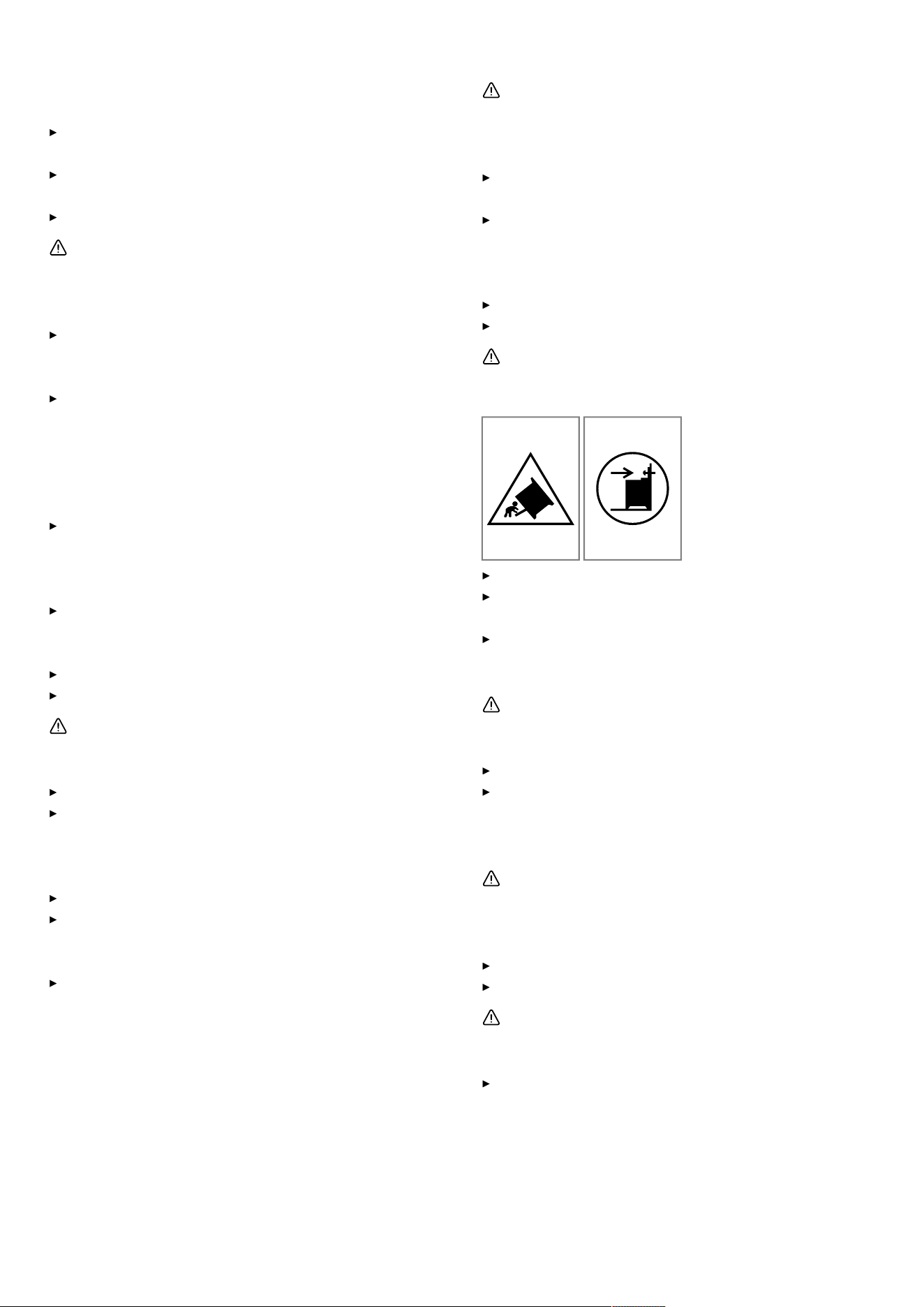
WARNING‒Risk of tipping!
If the appliance is placed on a base and is not
secured, it may slide off the base.
Connect the appliance securely to the base.
Warning: To prevent the appliance from tip-
ping over, attach a compensation device.
Observe the instructions for the installation.
1.4 Plinth drawer
WARNING‒Risk of fire!
The surfaces of the plinth drawer may become
very hot.
Only store oven accessories in the drawer.
Do not keep any flammable or combustible
objects in the plinth drawer.
1.5 Halogen bulb
WARNING‒Risk of burns!
The bulbs in the cooking compartment get
very hot. There is still a risk of burning for
some time after they have been switched off.
Do not touch the glass cover.
Avoid contact with your skin when cleaning.
WARNING‒Risk of electric shock!
When changing the bulb, the bulb socket con-
tacts are live.
Before replacing the bulb, ensure that the
appliance is switched off in order to prevent
a potential electric shock.
4

Preventing material damage en
Preventing material damage2 Preventing material damage
2.1 Oven area
Follow the corresponding instructions when using the
oven.
ATTENTION
Objects on the cooking compartment floor at over
50°C will cause heat to build up. The baking and roast-
ing times will no longer be correct and the enamel will
be damaged.
Do not place any accessories, greaseproof paper or
foil of any kind on the cooking compartment floor.
Only place cookware on the cooking compartment
floor if a temperature under 50°C has been set.
If aluminium foil comes into contact with the door pane,
it could cause permanent discolouration.
Do not allow aluminium foil in the cooking compart-
ment to come into contact with the door pane.
When the cooking compartment is hot, any water inside
it will create steam. The change in temperature may
cause damage.
Never pour water into the cooking compartment when
it is still hot.
Never place cookware containing water on the cook-
ing compartment floor.
The prolonged presence of moisture in the cooking
compartment leads to corrosion.
Allow the cooking compartment to dry after use.
Do not keep moist food in the cooking compartment
for a long time with the door closed.
Do not store food in the cooking compartment.
Take care not to trap anything in the appliance door.
Leaving the appliance to cool down with the door open
will damage the front of neighbouring kitchen units over
time.
Always allow the cooking compartment to cool down
with the door closed after cooking at high temperat-
ures.
Take care not to trap anything in the appliance door.
Only leave the cooking compartment to dry with the
door open if a lot of moisture was produced during
operation.
Fruit juice dripping from the baking tray leaves stains
that cannot be removed.
When baking very juicy fruit flans, do not pack too
much on the baking tray.
If possible, use the deeper universal pan.
Using oven cleaner in a hot cooking compartment dam-
ages the enamel.
Never use oven cleaner in the cooking compartment
when it is still warm.
Remove all food remnants from the cooking compart-
ment and the appliance door before you next heat up
the appliance.
If the seal is very dirty, the appliance door will no longer
close properly during operation. This may damage the
front of adjacent kitchen units.
Keep the seal clean at all times.
Never operate the appliance if the seal is damaged or
missing.
Sitting or placing objects on the appliance door may
damage it.
Do not place, hang or support objects on the appli-
ance door.
Do not place cookware or accessories on the appli-
ance door.
With certain models, accessories may scratch the door
pane when closing the appliance door.
Always push accessories fully into the cooking com-
partment.
If you carry or move the appliance by the handle on the
cover or move, the handle may break off and cause
damage to the hinges. The handle of the cover is not
designed for the weight of the appliance.
Do not carry or move the appliance by the handle on
the cover.
When grilling, due to high temperatures, the baking tray
or universal pan may become deformed and damage
the enamel coating when they are removed.
When grilling, do not insert the baking tray or univer-
sal pan higher than level 3.
Above shelf position 3, only grill directly on the wire
insert.
2.2 Hob
Follow the corresponding instructions when using the
appliance.
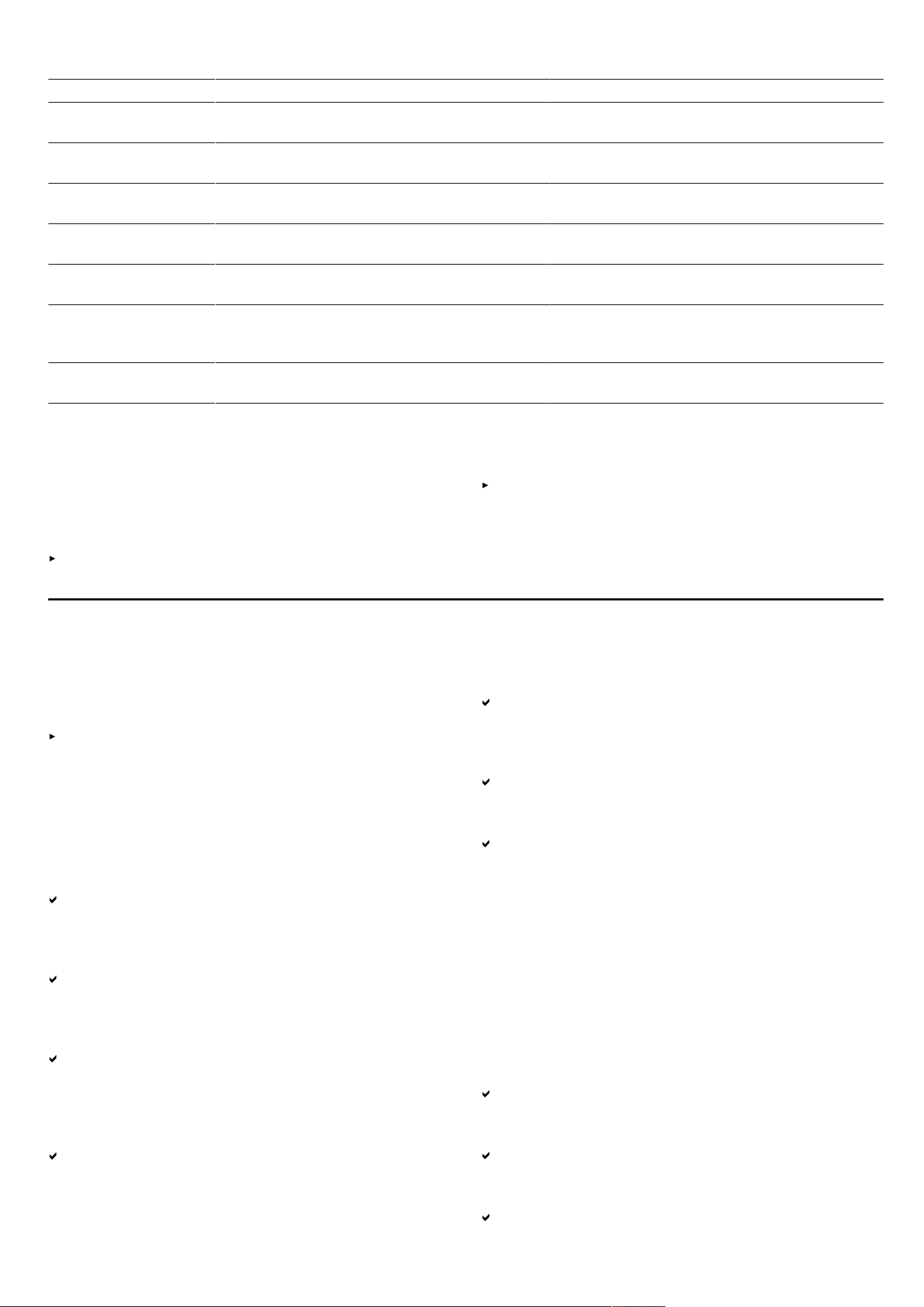
Avoiding material damage
This is where you can find the most common causes of damage and tips on how to avoid them.
Damage Cause Measure
Stains Unsupervised cooking process. Monitor the cooking process.
Stains, blisters Spilled food, especially food with a high
sugar content.
Remove immediately with a glass scraper.
Stains, blisters or frac-
tures in the glass
Defective cookware, cookware with melted
enamel or cookware with copper or alu-
minium base.
Use suitable cookware that is in a good condi-
tion.
Stains, discolouration Unsuitable cleaning methods. Only use cleaning agents that are suitable for
glass ceramic, and only clean the hob when it
is cold.
5
en Environmental protection and saving energy
Damage Cause Measure
Blisters or fractures in
the glass
Knocks or falling cookware, cooking ac-
cessories or other hard or pointed objects.
When cooking, do not hit the glass or let ob-
jects fall onto the hob.
Scratches, discoloura-
tion
Rough cookware bases or moving the cook-
ware on the hob.
Check the cookware. Lift the cookware when
moving it.
Scratches Salt, sugar or sand. Do not use the hob as a work surface or stor-
age space.
Damage to the appli-
ance
Cooking with frozen cookware. Never use frozen cookware.
Damage to the cook-
ware or the appliance
Cooking without contents. Never place or heat empty cookware on a hot
cooking zone.
Glass damage Melted material on the hot cooking zone or
hot pot lid on the glass.
Do not place greaseproof paper or aluminium
foil nor plastic containers or pot lids on the
hob.
Overheating Hot cookware on the control panel or on the
frame.
Never place hot cookware on these areas.
2.3 Drawer area
Follow the corresponding instructions when using the
drawer.
ATTENTION
Do not place hot objects in the plinth drawer. The plinth
drawer may be damaged.
Do not place hot objects in the plinth drawer.
Do not place oven accessories that exceed the height of
the drawer into the plinth drawer. Otherwise, this may
damage the appliance.
Do not place oven accessories that exceed the height
of the drawer into the plinth drawer.
Environmental protection and saving energy3 Environmental protection and saving energy
3.1 Disposing of packaging
The packaging materials are environmentally compatible
and can be recycled.
Sort the individual components by type and dispose
of them separately.
3.2 Saving energy
If you follow these instructions, your appliance will use
less power.
Only preheat the appliance if the recipe or the recom-
mended settings tell you to do so.
Not preheating the appliance can reduce the energy
used by up to 20%.
Use dark-coloured, black-coated or enamelled baking
tins.
These types of baking tin absorb the heat particularly
well.
Open the appliance door as little as possible during op-
eration.
This maintains the temperature in the cooking com-
partment and eliminates the need for the appliance to
reheat.
When baking multiple dishes, do so in succession or in
parallel.
The cooking compartment is heated after baking the
first dish. This reduces the baking time for the sub-
sequent cakes.
For longer cooking times, you can switch the appliance
off 10minutes before the cooking time ends.
There is sufficient residual heat to finish cooking the
dish.
Remove any accessories that are not being used from
the cooking compartment.
Accessories that are not being used do not need to
be heated.
Allow frozen food to defrost before cooking.
This saves the energy that would otherwise be re-
quired to defrost it.
Saving energy
If you follow these instructions, your appliance will use
less power.
Select the cooking zone to match the size of your pan.
Centre the cookware on the hob.
Use cookware whose base diameter is the same dia-
meter as the hotplate.
Tip: Cookware manufacturers often give the upper dia-
meter of the saucepan. It is often larger than the base
diameter.
Unsuitable cookware or incompletely covered cook-
ing zones consume a lot of energy.
Cover saucepans with suitable lids.
Cooking without a lid consumes considerably more
energy.
Lift lids as infrequently as possible.
When you lift the lid, a lot of energy escapes.
6

Installation and connection en
Using a glass lid
You can see into the pan through a glass lid without
having to lift it.
Use pots and pans with flat bases.
Uneven bases increase energy consumption.
Use cookware that is suitable for the quantity of food.
Large items of cookware containing little food need
more energy to heat up.
Cook with only a little water.
The more water there is in the cookware, the more
energy that is required to heat it up.
Turn down to a lower power level early on.
If you use an ongoing power level that is too high,
you will waste energy.
Installation and connection4 Installation and connection
You can find out where and how best to install your ap-
pliance here. You will also learn how to connect your
appliance to the power supply.
4.1 Electrical connection
The appliance must be connected to the mains by a li-
censed expert. You must comply with the requirements
of your electricity supplier.
If the power cable of this appliance is damaged, this
must be replaced by the manufacturer, the manufac-
turer's customer service or a similarly qualified person
in order to prevent any risk.
Any damage arising from the appliance being con-
nected incorrectly will invalidate the warranty.
Information on electrical connection by our customer
service:
Connect the appliance in accordance with the spe-
cifications on the rating plate.
The appliance must only be connected to an elec-
trical connection that corresponds to the applicable
regulations. The socket must be easily accessible so
that you can disconnect the appliance from the elec-
tricity supply if necessary.
Ensure that a multi-pin disconnecting system is avail-
able.
For safety reasons, this appliance must only be con-
nected to an earthed connection. If the safety earth
terminal does not comply with regulations, protection
against electrical risks is not guaranteed.
To connect the appliance, use H05VV-F cables or
other equivalent cables.
Information on the electrical connection by the in-
staller:
If the plug is not accessible following installation, an
all-pole isolating unit with a contact clearance of at
least 3mm must be available on the installation side.
This is not necessary if the appliance is connected via
a plug that is accessible to the user.
Electrical safety: The cooker corresponds to safety
class I and may only be used in conjunction with a
safety earth terminal.
To connect the appliance, use H05VV-F cables or
other equivalent cables.
Important information about the electrical
connection
Note the following information and ensure that:
WARNING‒Risk of electric shock!
There is a risk of electric shock if you touch live com-
ponents.
Hold the mains plug with dry hands only.
Never pull out the mains plug from the socket while
the appliance is in operation.
Pull out the power cable directly at the plug and
never by pulling the power cable as this may become
damaged.
Fit the mains plug and socket together.
The mains plug can be accessed at all times.
The cross section of the cable is sufficient.
The mains cable is not kinked, crushed, modified or
severed.
If required, the mains cable must only be replaced by
a qualified electrician. A replacement mains cable is
available from the after-sales service.
Do not use any multiple plugs or multi-connectors
and extension cords.
The earthing system is correctly installed.
If using a residual current device, only use one that
bears the mark . The presence of this mark is the
only way to be sure that it fulfils all the applicable reg-
ulations.
The mains cable does not come into contact with
heat sources.
4.2 Setting up the appliance
Place the appliance on a smooth surface.
Never set up the appliance behind a decorative door or
the door of a kitchen unit. There is a risk of overheating.
Setting the base height of the appliance
Set the base height in accordance with the functions of
your appliance.
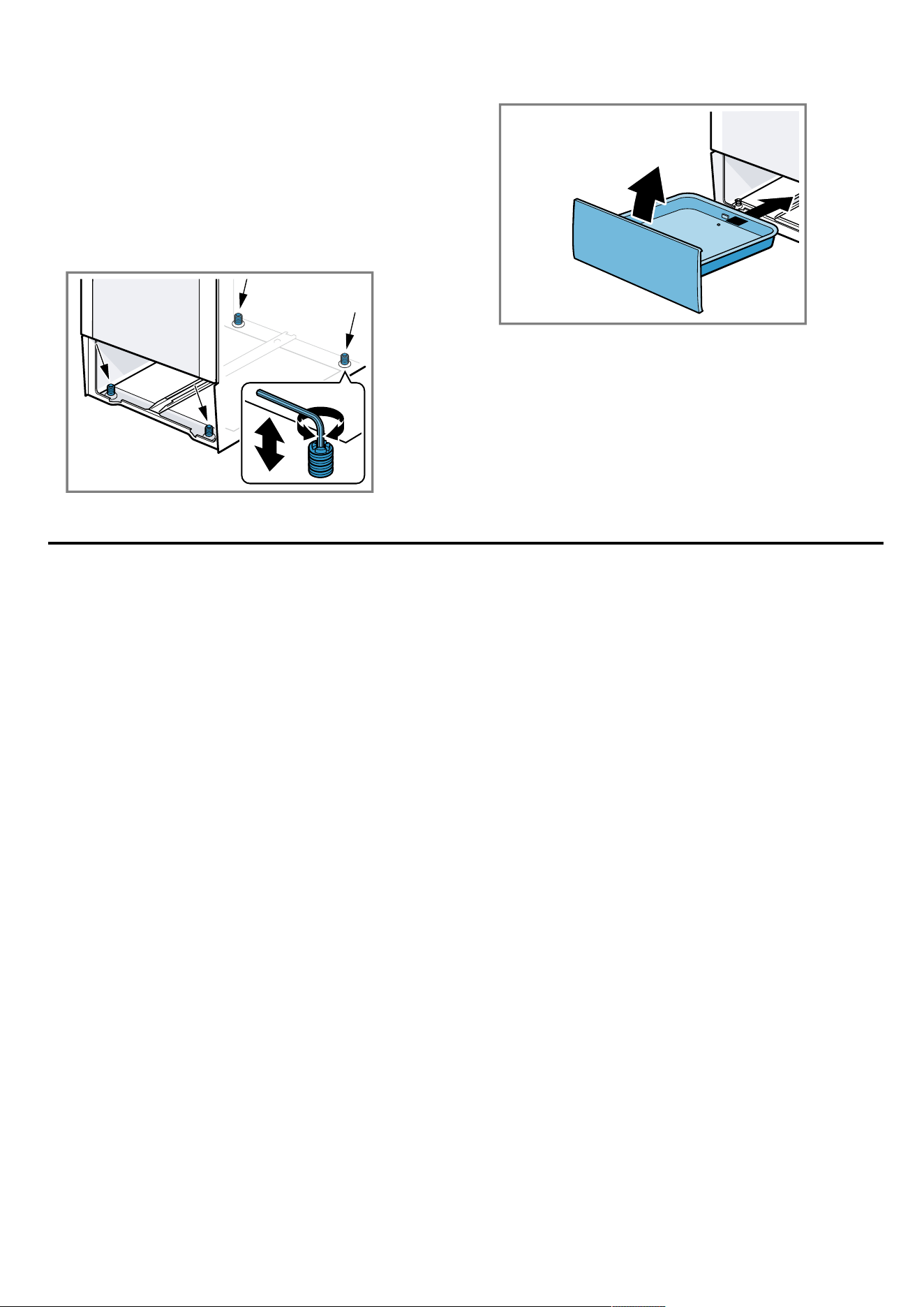
Adjusting the height of the appliance with fixed
drawers
If your appliance has fixed drawers, set the base height
of your appliance as follows.
Note
The appliance has height-adjustable feet. This allows the
appliance to be raised approx. 15 mm from the ground.
The feet are located at the front and rear on the un-
derside of the appliance.
Raise or lower the feet by turning the feet with an Al-
len key until the appliance is in a horizontal position.
7
en Familiarising yourself with your appliance
Setting the base height of the appliance with a
removable drawer
If your appliance does not have height-adjustable feet
and the drawer is removable, set the base height of
your appliance as follows.
1.
Pull out the plinth drawer and lift it up and out. There
are adjustable feet at the front and rear on the inside
of the plinth.
2.
Use an Allen key to raise or lower the adjustable feet
until the cooker is level.
3.
Push in the plinth drawer.
Adjacent units
Any adjacent units must not be made of flammable ma-
terials. The fronts of any adjacent units must be heat-
resistant up to at least 90 °C.
Wall fixing
To prevent the appliance from tipping over, you must fix
it to the wall using the enclosed brackets. To secure the
appliance to the wall, follow the installation instructions.
Familiarising yourself with your appliance5 Familiarising yourself with your appliance
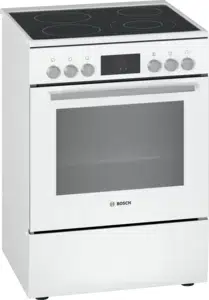
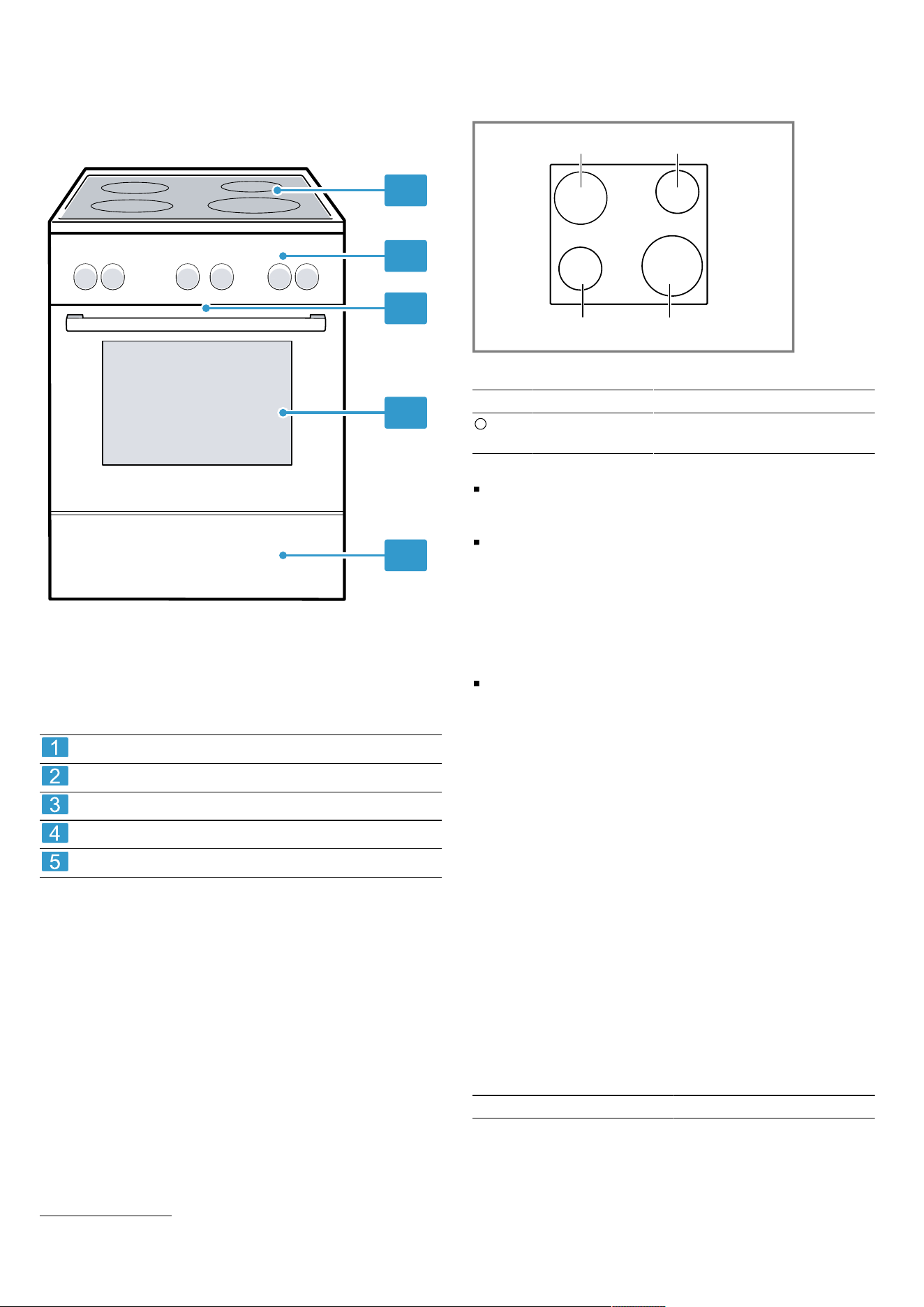
5.1 Your appliance
You can find an overview of the parts of your appliance
here.
Note: On certain models, specific details such as colour
and shape may differ from those pictured.
8
Familiarising yourself with your appliance en
1
2
3
4
5
Hob
Control panels
Cooling fan
1
Appliance door
Plinth drawer
1
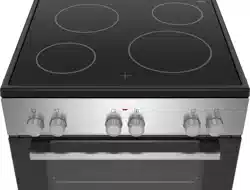
5.2 Hob
You can find an overview of the different activations of
the hotplates here.
On certain models, specific details such as colour and
shape may differ from those pictured.
Ø 14,5
Ø 14,5
Ø 18
Ø 21
Ø = cm
Hotplate Activating and deactivating
Single-circuit
hotplate
Notes
Dark areas in the glow pattern of the hotplate are part
of the technical design. This does not affect the func-
tionality of the hotplate.
The hotplate regulates the temperature by switching
the heat on and off. The heat may also switch on and
off when at the highest setting.
– This protects easily damaged components from
overheating.
– The appliance is protected against electrical over-
load.
– You achieve better cooking results.
With multi-circuit hotplates, the heating of the inner fil-
ament circuits and the heating of the activations may
switch on and off at different times.
Residual heat indicator
The hob has a residual heat indicator for each hotplate.
It shows which hotplates are still hot. Even if the hob is
switched off, the display lights up until the hotplate has
cooled down sufficiently. Do not touch the hotplate while
the residual heat indicator is lit up.
Tip: You can keep small dishes warm or melt cooking
chocolate.
5.3 Control panels
You can use the control panel to configure all functions
of your appliance and to obtain information about the
operating status.
Controls
You can use the controls to configure all functions of
your appliance and to obtain information about the oper-
ating status.
Control Explanation
Function selector Use the function selector to
set the types of heating and
other functions.
1
Depending on the appliance specifications
9
en Familiarising yourself with your appliance
Control Explanation
You can turn the function
selector clockwise or anti-
clockwise from the zero
setting .
Depending on the appli-
ance, the function selector
can be pushed in. Press on
the function selector to
click it into or out of the
zero setting .
"Types of heating and
functions", Page10
Temperature selector Use the temperature se-
lector to set the temperat-
ure for the type of heating
and select settings for other
functions.
You can only turn the tem-
perature selector clockwise
from the zero setting until
it offers resistance. You
cannot turn it any further
than this.
Control Explanation
Depending on the appli-
ance, the temperature se-
lector can be pushed in.
Press on the temperature
selector to click it into or
out of the zero setting .
"Temperature and setting
levels", Page10
Hotplate control You can use the four hot-
plate switches to control
the output provided by
each individual hotplate.
The symbol above each of
the switches shows you
which hotplate is set using
that switch.
"Hotplate selector",
Page11
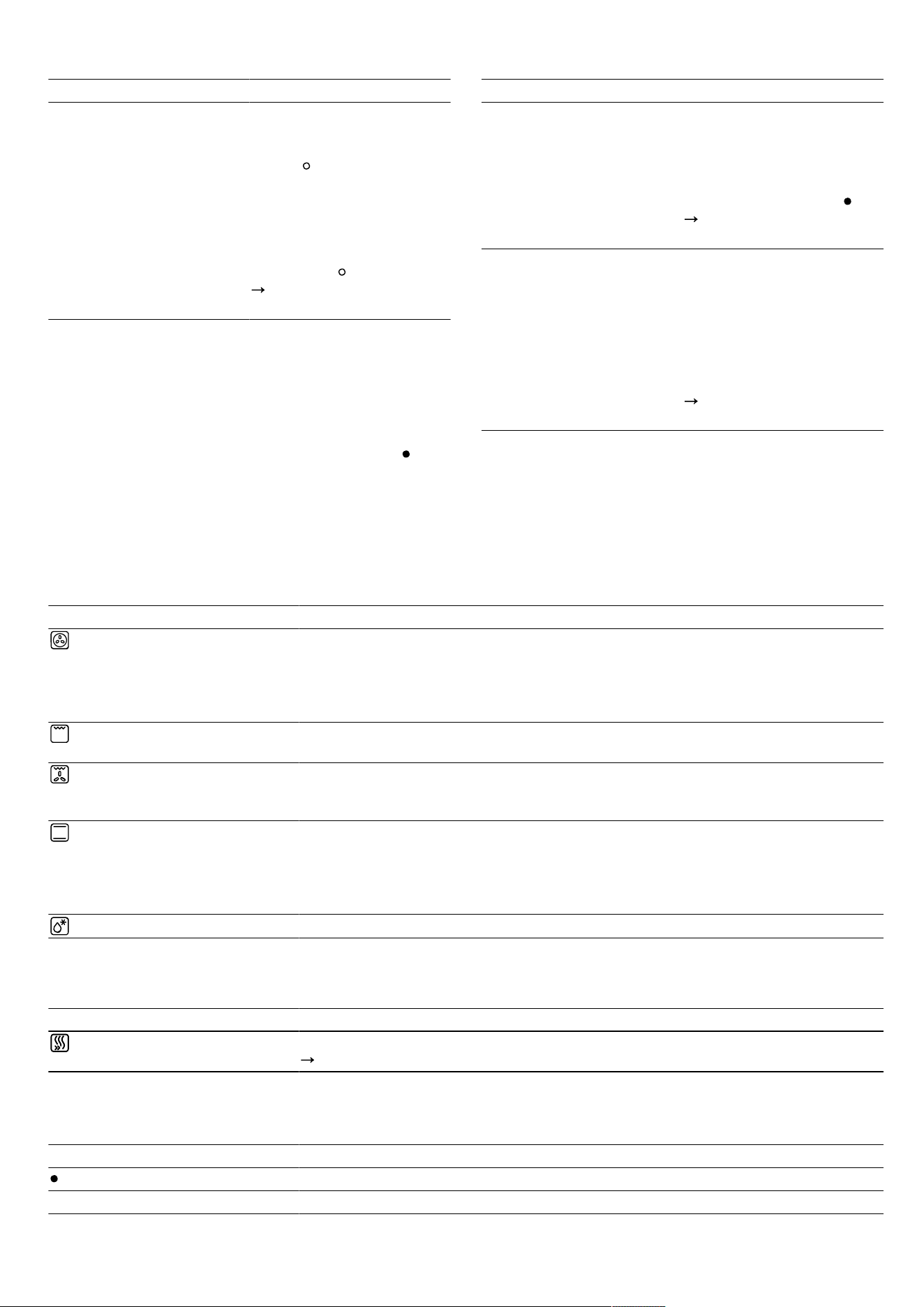
Types of heating and functions
To ensure that you always use the right type of heating to cook your food, we explain the differences and applica-
tions below.
Symbol Type of heating What it's used for and how it works
3Dhot air Bake or roast on one or more levels.
The fan distributes the heat from the ring-shaped heating element in the back wall
evenly around the cooking compartment.
This type of heating is used to determine the energy consumption in air recircula-
tion mode and the energy efficiency class.
Full-surface grill Grill flat items such as steak, sausages, or toast. Gratinate food.
The entire area below the grill element becomes hot.
Hot air grilling Roast poultry, whole fish or large pieces of meat.
The grill element and the fan switch on and off alternately. The fan circulates the
hot air around the food.
Top/bottom heating Traditionally bake or roast on one level. This type of heating is especially suitable
for cakes with moist toppings.
The heat is emitted evenly from above and below.
This type of heating is used to determine the energy consumption in the conven-
tional mode.
Defrosting Gently defrost frozen food.
Additional functions
Here, you can find an overview of other functions of your appliance.
Symbol Function Use
Rapid heating Rapidly preheat the cooking compartment without accessories.
"Rapid heating", Page14
Temperature and setting levels
There are different settings for the types of heating and functions.
Symbol Function Use
Zero setting The appliance does not heat up.
50–275 Temperature range Set the temperature in the cooking compartment in°C.
10
Accessories en
Symbol Function Use
1, 2, 3
or
I, II, III
Grill settings Depending on the appliance type, set the grill settings for the grill, for the large
area and grill, or for the small area.
1 = low
2 = medium
3 = high
Heat-up indicator
The appliance indicates when it is heating up.
When the appliance is heating, the indicator lamp above
the temperature selector lights up. The light goes out
during pauses in the heating.
When you preheat the appliance, the optimal time to
place your food in the cooking compartment is when the
indicator lamp first goes out.
Notes
If the interior lighting function and a temperature are
set, the heat-up indicator also lights up. The appli-
ance does not heat up.
If your appliance features the interior lighting function
and when a temperature value is set, the heat-up in-
dicator also lights up. The appliance does not heat
up.
Due to thermal inertia, the temperature that is dis-
played may differ slightly from the actual temperature
inside the cooking compartment.
Hotplate selector
You can use the hotplate selector to adjust the heat setting of the hotplates.
If you activate the connections, the relevant displays light up.
Position Function Explanation
0 Zero setting The hotplate is switched off.
1–9 Power levels 1=lowest output
9=highest output
5.4 Cooking compartment
The functions in the cooking compartment make your
appliance easier to use.
Rails
The shelf supports in the cooking compartment enable
you to place accessories at different heights.
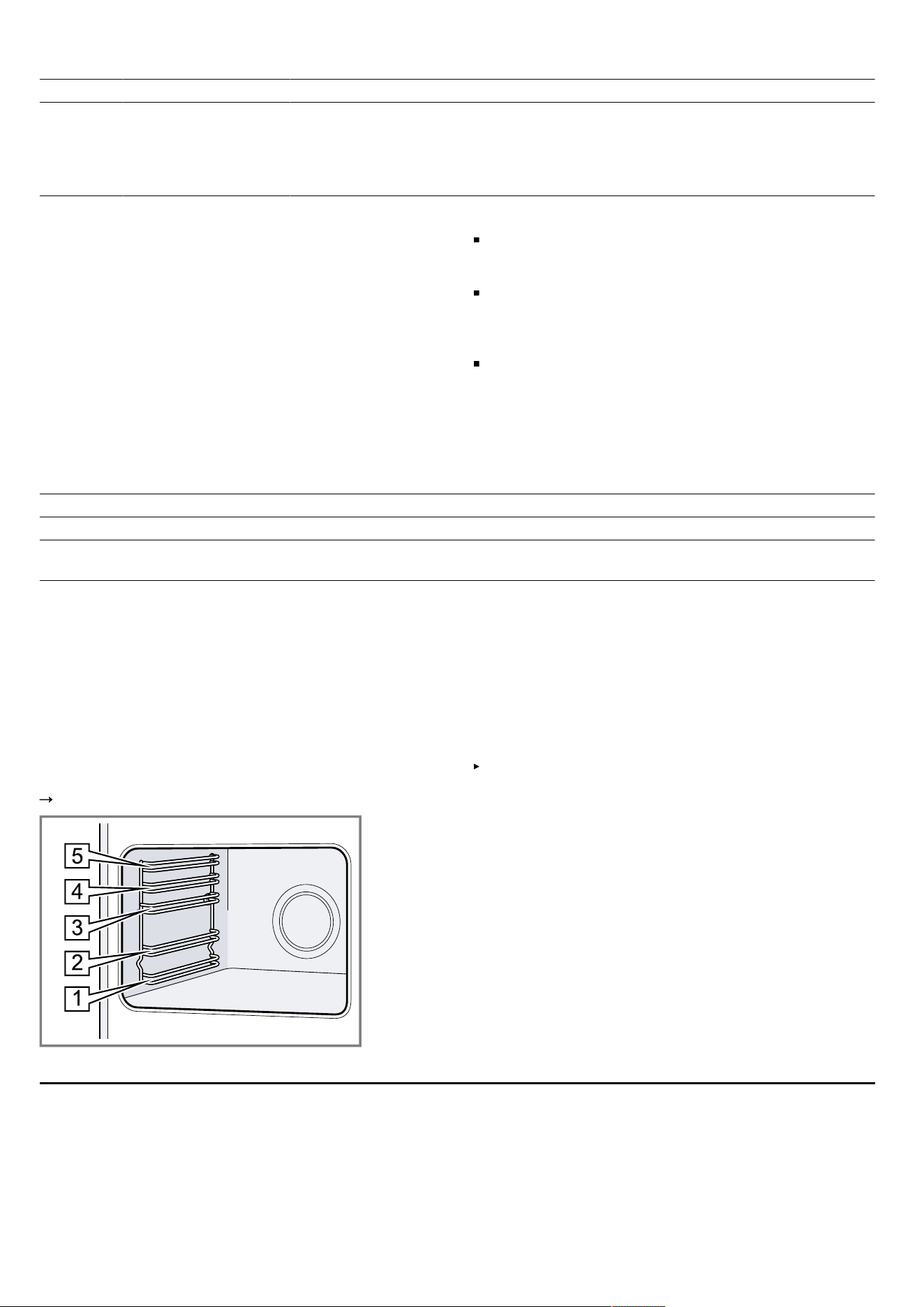
The cooking compartment has five shelf positions. The
shelf positions are numbered from bottom to top.
You can remove the rails, e.g. for cleaning.
"Rails", Page16
Cooling fan
The cooling fan switches on and off depending on the
appliance's temperature. The hot air escapes above the
door.
ATTENTION
Do not cover the ventilation slot above the appliance
door.
The appliance overheats.
Ensure that the ventilation slots are unobstructed.
To ensure that the appliance cools down more quickly
after operation, the cooling fan continues to run for a
certain period afterwards.
Appliance door
If you open the appliance door during operation, the op-
eration continues.
Condensation
Condensation can occur in the cooking compartment
and on the appliance door when cooking. Condensation
is normal and does not adversely affect appliance oper-
ation. Wipe away the condensation after cooking.
Accessories6 Accessories
Use original accessories. These have been made especially for your appliance.
Note: Heat may deform the accessory. This deformation has no effect on the function. When the accessory cools
down, it will regain its original shape.
The accessories supplied may differ depending on the appliance model.
11
en Accessories
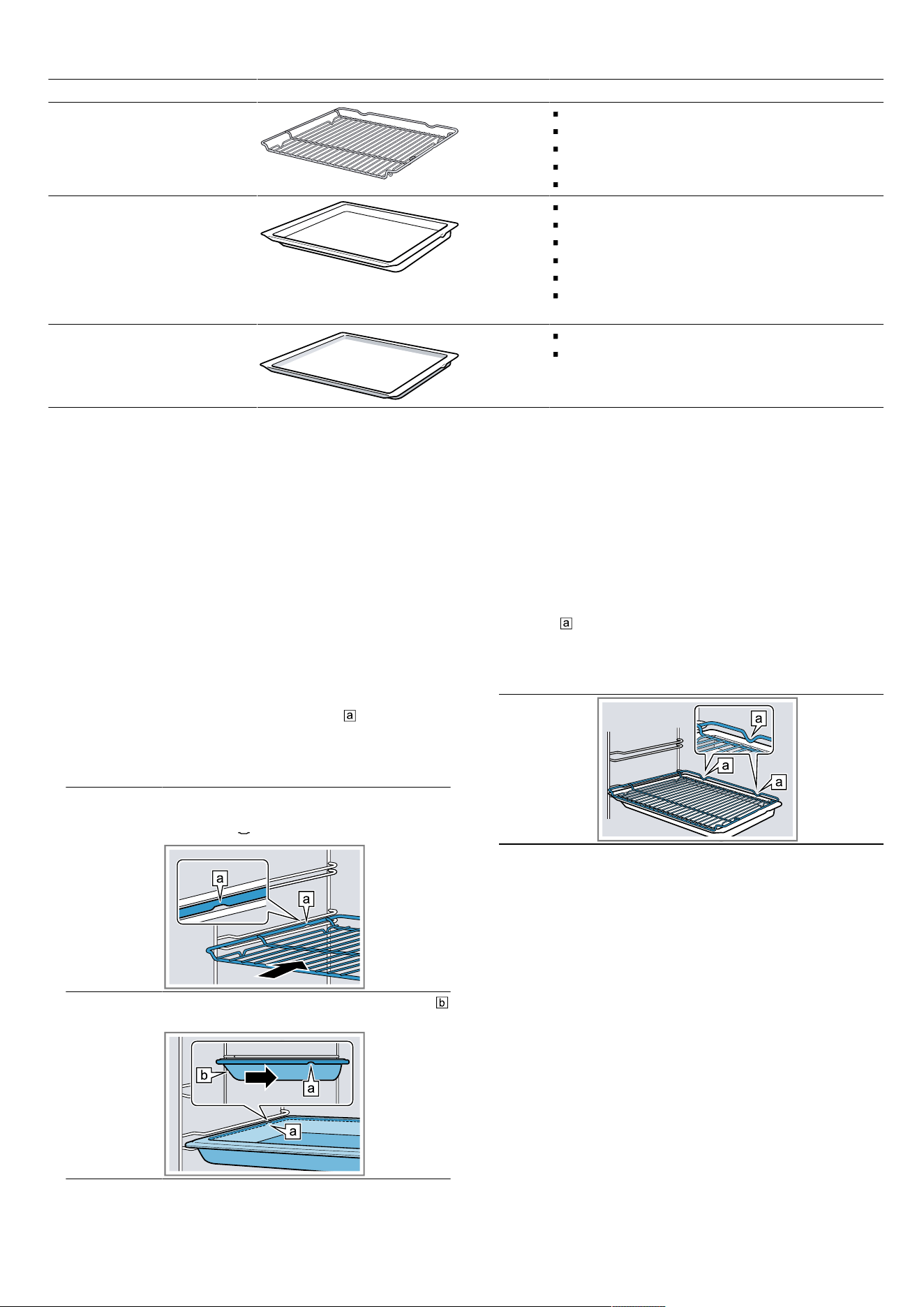
Accessories Use
Wire rack Baking tins
Ovenproof dishes
Cookware
Meat, e.g. roasting joints or steak
Frozen meals
Universal pan Moist cakes
Biscuits
Bread
Large roasts
Frozen meals
Catching dripping liquids, e.g. fat when
grilling food on the wire rack.
Baking tray Tray bakes
Sponge cake, simple
6.1 Locking function
The locking function prevents the accessories from tilt-
ing when they are pulled out.
You can pull out the accessories approximately halfway
without them tipping. The accessories must be inserted
into the cooking compartment correctly for the tilt pro-
tection to work properly.
6.2 Sliding accessories into the cooking
compartment
Always slide the accessory into the cooking compart-
ment the right way round. This is the only way to ensure
that accessories can be pulled out approximately
halfway without tipping.
1.
Turn the accessories so that the notch is at the rear
and is facing downwards.
2.
Insert the accessory between the two guide rods for a
shelf position.
Wire rack Insert the wire rack with the open side
facing the appliance door and the
curved lip facing downwards.
Tray
E.g. univer-
sal pan or
baking tray
Slide the tray in with the sloping edge
towards the appliance door.
3.
Push the accessory all the way in, making sure that it
does not touch the appliance door.
Note: Take any accessories that you will not be using
out of the cooking compartment while the appliance is
in operation.
Combining accessories
You can combine the wire rack with the universal pan to
catch any liquid that drips down.
1.
Place the wire rack on the universal pan so that both
spacers are on the rear edge of the universal pan.
2.
Insert the universal pan between the two guide rods
for a shelf position. In so doing, the wire rack is on
top of the upper guide rod.
Wire rack
on universal
pan
6.3 Other accessories
You can purchase other accessories from our customer
service, specialist retailers or online.
You will find a comprehensive range of products for
your appliance in our brochures and online:
www.bosch-home.com
Accessories are appliance-specific. When purchasing
accessories, always quote the exact product number (E
no.) of your appliance.
You can find out which accessories are available for
your appliance in our online shop or from our customer
service.
12
Before using for the first time en
Before using for the first time7 Before using for the first time
Configure the settings for initial start-up. Clean the appli-
ance and accessories.
7.1 Initial configuration
Implement the settings for the initial configuration.
7.2 Cleaning the appliance before using it
for the first time
Clean the cooking compartment and accessories before
using the appliance to prepare food for the first time.
1.
Remove the accessory and the leftover packaging,
such as polystyrene pellets, from the cooking com-
partment.
2.
Before heating, wipe the smooth surfaces in the cook-
ing compartment with a soft, damp cloth.
3.
Ventilate the room while the appliance is heating.
4.
Set the type of heating and the temperature.
"Basic operation", Page14
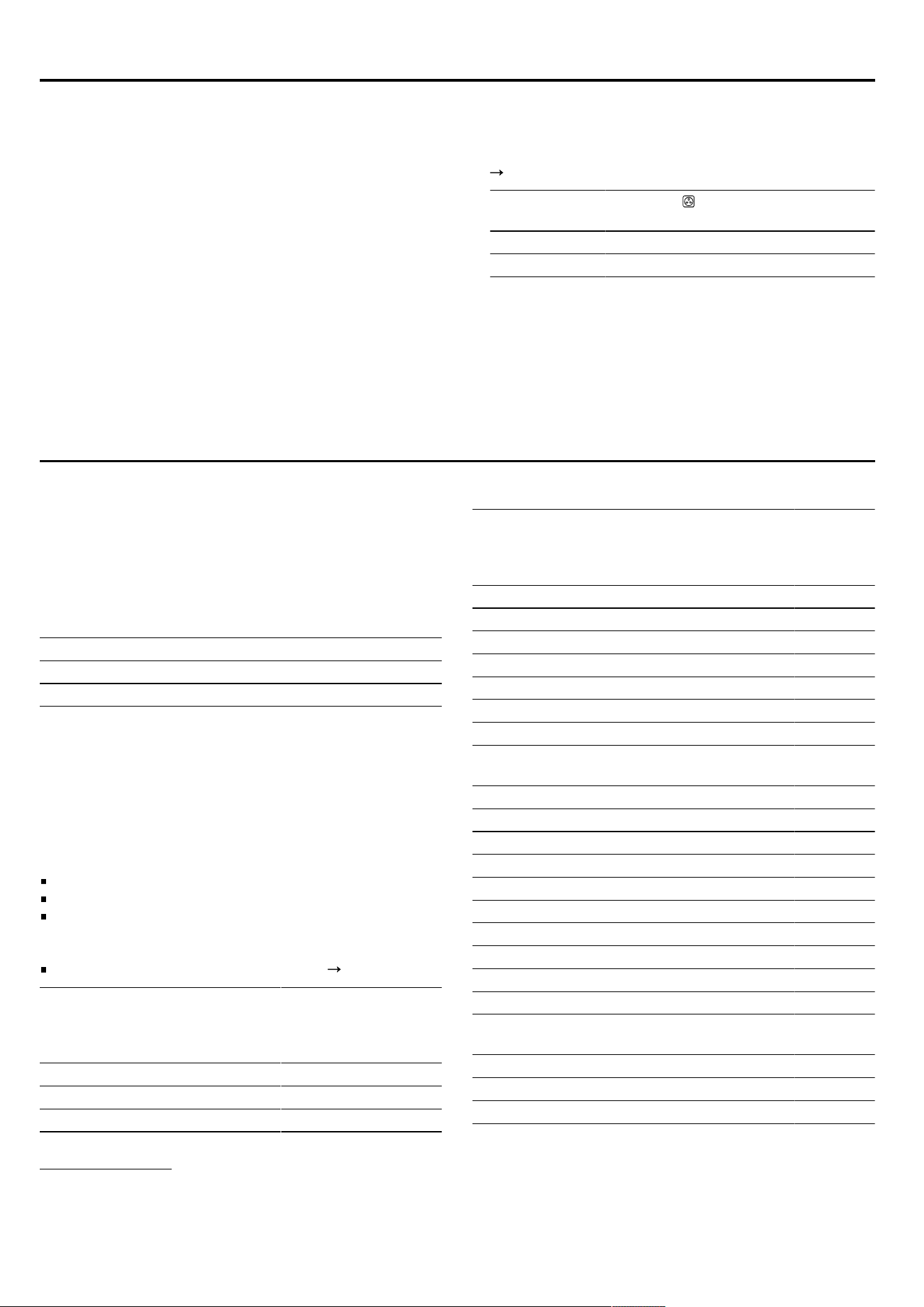
Type of heat-
ing
3D hot air
Temperature Maximum
Cooking time 1hour
5.
Switch off the appliance after the specified cooking
time.
6.
Wait until the cooking compartment has cooled down.
7.
Clean the smooth surfaces with soapy water and a
dish cloth.
8.
Clean the accessory with soapy water and a dish
cloth or a soft brush.
Operating the hotplate8 Operating the hotplate
You can find out everything you need to know about op-
erating your hotplate here.
8.1 Setting the hotplates
You can use the hotplate switch to adjust the heat out-
put of the hotplate.
Power level
1 Lowest level
9 Highest level
8.2 Recommended cooking settings
You can find an overview of different foods with appro-
priate heat settings here.
The cooking time will vary depending on the type,
weight, thickness and quality of the food. The ongoing
cooking setting depends on the cookware used.
Cooking tips
To bring food to the boil, use heat setting 9.
Stir thick liquids occasionally.
Food that needs to be seared quickly or that initially
loses a lot of liquid during frying should be fried in
small portions.
Tips for saving energy when cooking.
Page6
Meal Ongoing
cooking
setting
Ongoing
cooking
time in
minutes
Melting
Butter, gelatine 1 -
Heating or keeping warm
Meal Ongoing
cooking
setting
Ongoing
cooking
time in
minutes
Stew, e.g. lentil stew 1 -
Milk
1
1-2 -
Poaching or simmering
Dumplings
2,3
3-4 20–30
Fish
2,3
3 10–15
White sauce, e.g. béchamel 1 3-6
Boiling, steaming or stewing
Rice, with double the volume of
water
3 15–30
Potato wedges 3-4 25–30
Boiled potatoes 3-4 15–20
Pasta, noodles
2,3
5 6–10
Stew, soup 3-4 15–60
Vegetables, fresh or frozen 3-4 10–20
Food in a pressure cooker 3-4 -
Braising
Roulades 3-4 50–60
Pot roast 3-4 60–100
Goulash 3-4 50–60
Frying with little oil
Cook food without a lid.
Escalope, plain or breaded 6-7 6–10
Chop, plain or breaded
4
6-7 8–12
Steak, 3cm thick 7-8 8–12
1
Prepare the dish without the lid.
2
Bring the water to the boil with the lid on.
3
Continue to cook the dish without a lid.
4
Turn the dish several times.
13
en Basic operation
Meal Ongoing
cooking
setting
Ongoing
cooking
time in
minutes
Fish and fish fillet, plain or
breaded
4-5 8–20
Fish or fish fillet, breaded and
frozen, e.g. fish fingers
6-7 8–12
Meal Ongoing
cooking
setting
Ongoing
cooking
time in
minutes
Stir fry, frozen 6-7 6–10
Pancakes 5-6 -
Basic operation9 Basic operation
9.1 Switching on the appliance
Turn the function selector to any position other than
the "Off" position .
The appliance is switched on.
9.2 Switching off the appliance
Turn the function selector to the "Off" position .
The appliance is switched off.
9.3 Types of heating and temperature
1.
Use the function selector to set the type of heating.
2.
Use the temperature selector to set the temperature
or grill setting.
The appliance starts heating after a few seconds.
3.
When the dish is ready, switch off the appliance.
Tip: The most suitable type of heating for your food can
be found in the description of the types of heating.
Changing the type of heating
You can change the type of heating at any time.
Use the function selector to set the required type of
heating.
Changing the temperature
You can change the temperature at any time.
Turn the temperature selector to set the desired tem-
perature.
Rapid heating10 Rapid heating
To save time, you can use the rapid heating to shorten
the preheat time.
Only use rapid heat-up when a temperature of over
100°C has been set.
After rapid heating, it is best to use the following types
of heating:
3D hot air
Top/bottom heating
10.1 Setting rapid heating
To ensure an even cooking result, do not place the food
in the cooking compartment until rapid heating has
come to an end.
1.
Use the function selector to select rapid heating .
2.
Use the temperature selector to set the required tem-
perature.
Rapid heating starts after a few seconds.
When the rapid heating process ends, the heat-up in-
dicator goes out.
3.
Use the function selector to set a suitable type of
heating.
4.
Place the food in the cooking compartment.
Cleaning and servicing11 Cleaning and servicing
To keep your appliance working efficiently for a long
time, it is important to clean and maintain it carefully.
11.1 Cleaning agent
To avoid damaging the different surfaces of the appli-
ance, do not use unsuitable cleaning agents.
WARNING‒Risk of electric shock!
An ingress of moisture can cause an electric shock.
Do not use steam- or high-pressure cleaners to clean
the appliance.
ATTENTION
Unsuitable cleaning agents damage the surfaces of the
appliance.
Do not use aggressive or abrasive cleaning agents.
Do not use cleaning products with a high alcohol con-
tent.
Do not use hard scouring pads or cleaning sponges.
Do not use any special cleaners if the appliance is
still warm.
14
Cleaning and servicing en
Using oven cleaner in a hot cooking compartment dam-
ages the enamel.
Do not use oven cleaner in the cooking compartment
when it is still warm.
Remove all food remnants from the cooking compart-
ment and the appliance door before you next heat up
the appliance.
New sponge cloths contain residues from production.
Wash new sponge cloths thoroughly before use.
Suitable cleaning agents
Only use cleaning agents that are suitable for the different surfaces on your appliance.
Follow the instructions on cleaning the appliance.
"Cleaning the appliance", Page16
Appliance
Surface Suitable cleaning agents Information
Stainless steel Hot soapy water
Special stainless steel
cleaning products suit-
able for hot surfaces
To prevent corrosion, remove any limescale, grease, starch or albu-
min (e.g. egg white) stains on stainless steel surfaces immediately.
Apply a thin layer of the stainless steel cleaning product.
Enamel, plastic,
painted, and
screen-printed sur-
faces
E.g. control panel
Hot soapy water Do not use a glass cleaning product or a glass scraper.
Knobs Hot soapy water Clean with a dish cloth and dry with a soft cloth.
Do not remove or scrub.
Ceramic hob Glass ceramic cleaner Follow the cleaning instructions on the product packaging.
Remove heavy soiling using a glass scraper.
Plinth drawer Hot soapy water Clean with a dishcloth.
Appliance cover
Area Suitable cleaning agents Information
Door panels Hot soapy water Do not use a glass scraper or steel wool.
Tip: Remove the door panels in order to clean them thoroughly.
"Appliance door", Page17
Door cover Made of stainless
steel:
Stainless steel cleaner:
Made of plastic:
Hot soapy water
Do not use a glass cleaning product or a glass scraper.
Tip: To thoroughly clean the cover plate, remove the cover.
"Appliance door", Page17
Door handle Hot soapy water In order to avoid stubborn dirt, remove descaling agents from the
door handle immediately.
Door seal Hot soapy water Do not remove or scrub.
Hob
Area Suitable cleaning agents Information
Enamelled sur-
faces
Hot soapy water
Vinegar solution
Oven cleaner
Soak any heavily soiled areas and use a brush or steel wool.
Leave the appliance cover open so that the hob can dry after it has
been cleaned.
Notes
Enamel burns at very high temperatures, causing minor discoloura-
tion. The functionality of the appliance is not affected by this.
The edges of thin baking trays cannot be completely enamelled
and may be rough. This does not impair the corrosion protection.
Food residues leave a white coating on the enamelled surfaces.
The coating does not pose a health risk. The functionality of the ap-
pliance is not affected by this. You can remove these residues with
lemon juice.
Glass cover on
the oven light
Hot soapy water Use oven cleaner to remove very heavy soiling.
15
en Rails
Area Suitable cleaning agents Information
Rails Hot soapy water Soak any heavily soiled areas and use a brush or steel wool.
Tip: Remove the shelf supports for cleaning.
"Rails", Page16
Accessories Hot soapy water
Oven cleaner
Soak any heavily soiled areas and use a brush or steel wool.
Enamelled accessories are dishwasher-safe.
11.2 Cleaning the appliance
In order to avoid damaging the appliance, clean your
appliance only as specified, and using suitable cleaning
products.
WARNING‒Risk of burns!
The appliance and its parts that can be touched be-
come hot during use.
Caution should be exercised here in order to avoid
touching heating elements.
Young children under 8 years of age must be kept
away from the appliance.
WARNING‒Risk of fire!
Loose food remnants, fat and meat juices may catch
fire.
Before using the appliance, remove the worst of the
food residues and remnants from the cooking com-
partment, heating elements and accessories.
Requirement: Read the information on cleaning agents.
"Cleaning agent", Page14
1.
Clean the appliance using hot soapy water and a dish
cloth.
For some surfaces, you can use alternative clean-
ing agents.
"Suitable cleaning agents", Page15
2.
Dry with a soft cloth.
11.3 Cleaning controls
WARNING‒Risk of electric shock!
An ingress of moisture can cause an electric shock.
Do not detach the control knobs to clean them.
Do not use wet sponge cloths.
1.
Observe the information regarding the cleaning
agents.
2.
Clean using a damp sponge cloth and hot soapy wa-
ter.
3.
Dry with a soft cloth.
11.4 Potential stains
In order to avoid these stains, clean the hob with a
damp dish cloth and dry it with a cloth.
Dam-
age
Cause Action
Stains Limescale
and water
marks
Only clean the hob when it has
cooled down sufficiently.
You can use a cleaning agent
suitable for glass-ceramic hobs.
Stains Sugar, rice
starch or
plastic
Clean immediately.
Use a glass scraper.
11.5 Cleaning the hob
Clean the hob after every use to stop cooking residues
from getting burnt on.
Requirement: The hob must be cold. Do not allow the
hob to cool down if it has sugar stains, rice starch,
plastic or aluminium foil on it.
1.
Remove heavy soiling using a glass scraper.
2.
Clean the hob with a cleaning agent for glass
ceramic.
Follow the cleaning instructions on the packaging of
the cleaning agent.
Tips
You can achieve good cleaning results using a
special sponge for glass ceramic.
If you keep the base of the cookware clean, the
hob surface remains in a good condition.
11.6 Cleaning the hob surround
If the hob frame is dirty or stained after use, clean this.
Note: Do not use a glass scraper.
1.
Clean the hob frame with hot soapy water and a soft
cloth.
Wash new sponge cloths thoroughly before use.
2.
Dry with a soft cloth.
Rails12 Rails
To clean the rails and cooking compartment thoroughly,
you can remove the shelf supports.
12.1 Unhooking the rails
WARNING‒Risk of burns!
The rails can be very hot.
Never touch the rails when they are hot.
Allow the appliance to cool down.
Keep children at a safe distance.
1.
Hold the bottom of the shelf support and pull it
slightly towards the front. Pull the extension pins in
16
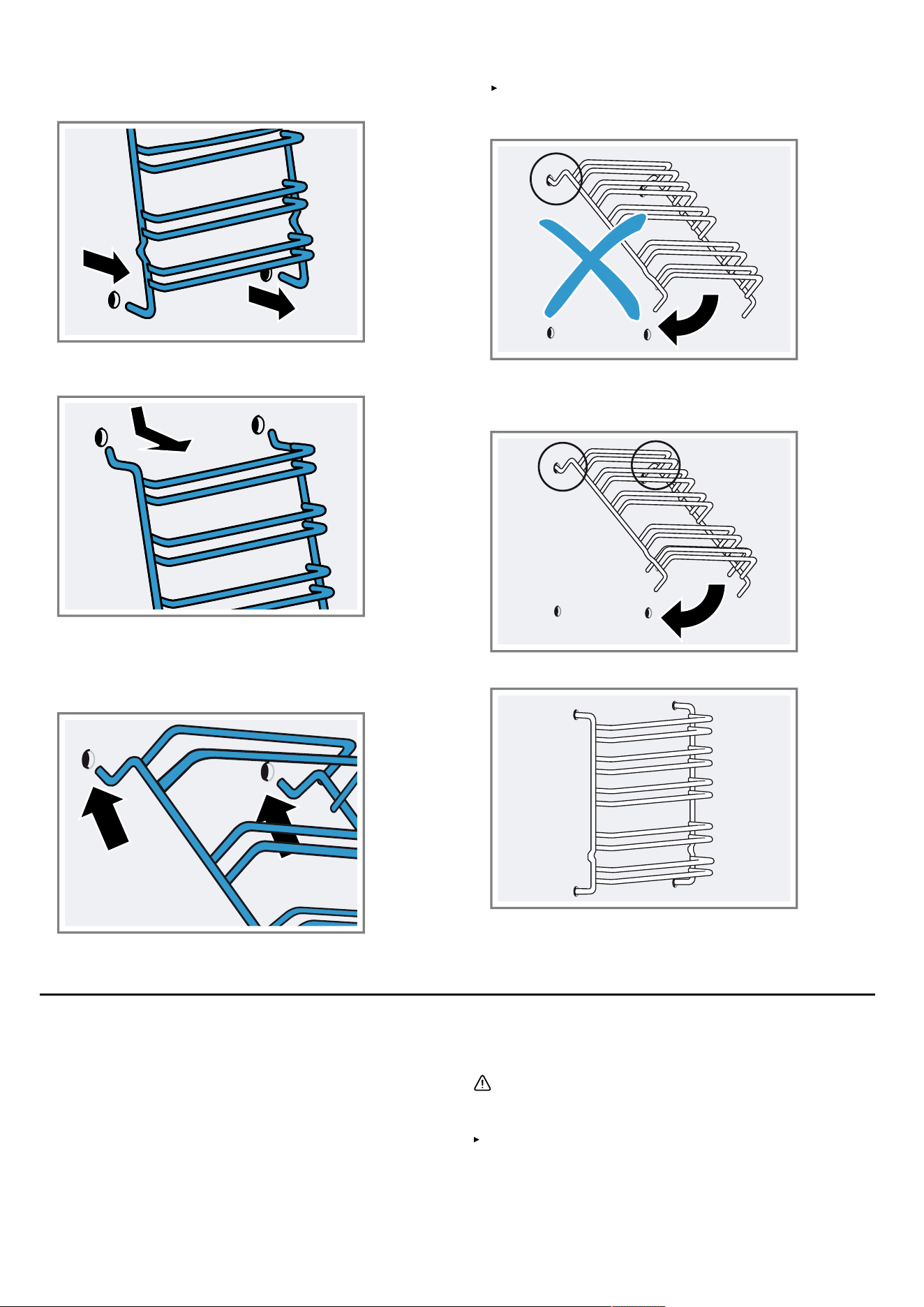
Appliance door en
the lower section of the rails out of the mounting
openings.
2.
Pull the entire shelf support downwards first and then
pull it forwards and remove it.
12.2 Attaching the rails
1.
Place the two hooks at the top of the rail into the up-
per holes.
2.
ATTENTION‒Incorrect assembly
Never move the rail before the two hooks are se-
cured fully in the upper holes. Otherwise the
enamelled coating may be damaged and break.
3.
Both hooks must be inserted fully into the upper
holes. Move the rail down slowly and carefully, and
hook it into the lower holes.
4.
Hook both rails into the side walls of the oven.
If the rails are fitted correctly, the distance between
the two upper shelf positions is greater.
Appliance door13 Appliance door
It is normally sufficient if you clean the outside of the ap-
pliance door. If the appliance door is very dirty on the in-
side and outside, you can remove the appliance door
and clean it.
13.1 Door hinges
WARNING‒Risk of injury!
When the hinges are not secured, they can snap shut
with great force.
If you open the appliance door, ensure that the lock-
ing levers are fully open or fully closed.
17
en Appliance door
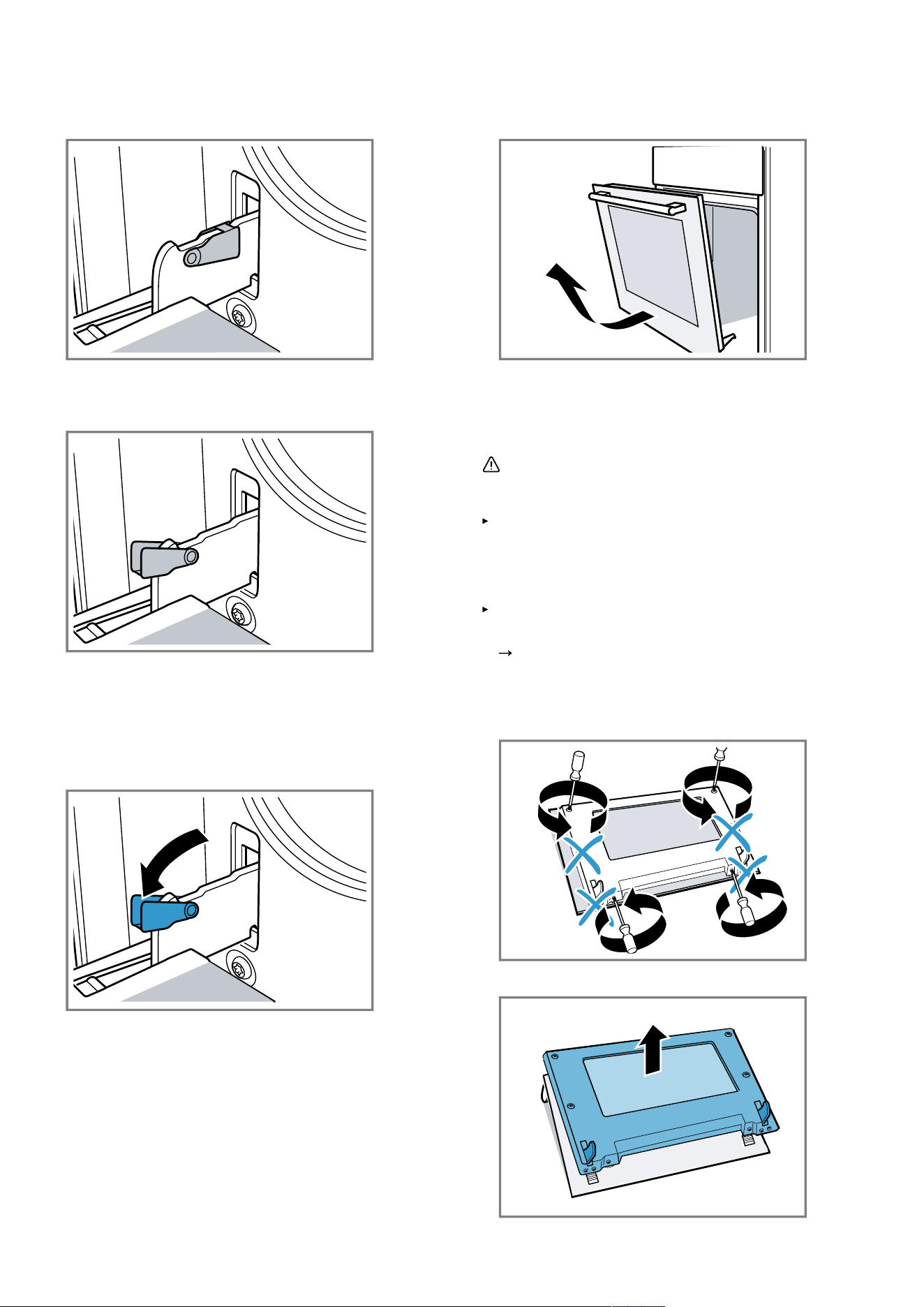
1.
The oven door hinges each have a locking lever.
When the locking levers are closed, the oven door is
secured in place.
It cannot be detached.
2.
When the locking levers are open in order to detach
the oven door, the hinges are secured.
The hinges cannot snap shut.
13.2 Removing the appliance door
1.
Open the oven door fully.
2.
Open the locking levers on the left- and right-hand
hinges.
3.
Close the oven door as far as the limit stop. Grip the
left and right hand sides of the door with both hands.
Close the door slightly more and remove it.
13.3 Removing the door panes
The glass panes of the oven door can be removed to
make cleaning easier.
WARNING‒Risk of injury!
Scratched glass in the appliance door may develop into
a crack.
Do not use any harsh or abrasive cleaners or sharp
metal scrapers to clean the glass on the oven door,
as they may scratch the surface.
The components in the appliance door may have sharp
edges.
Wear gloves.
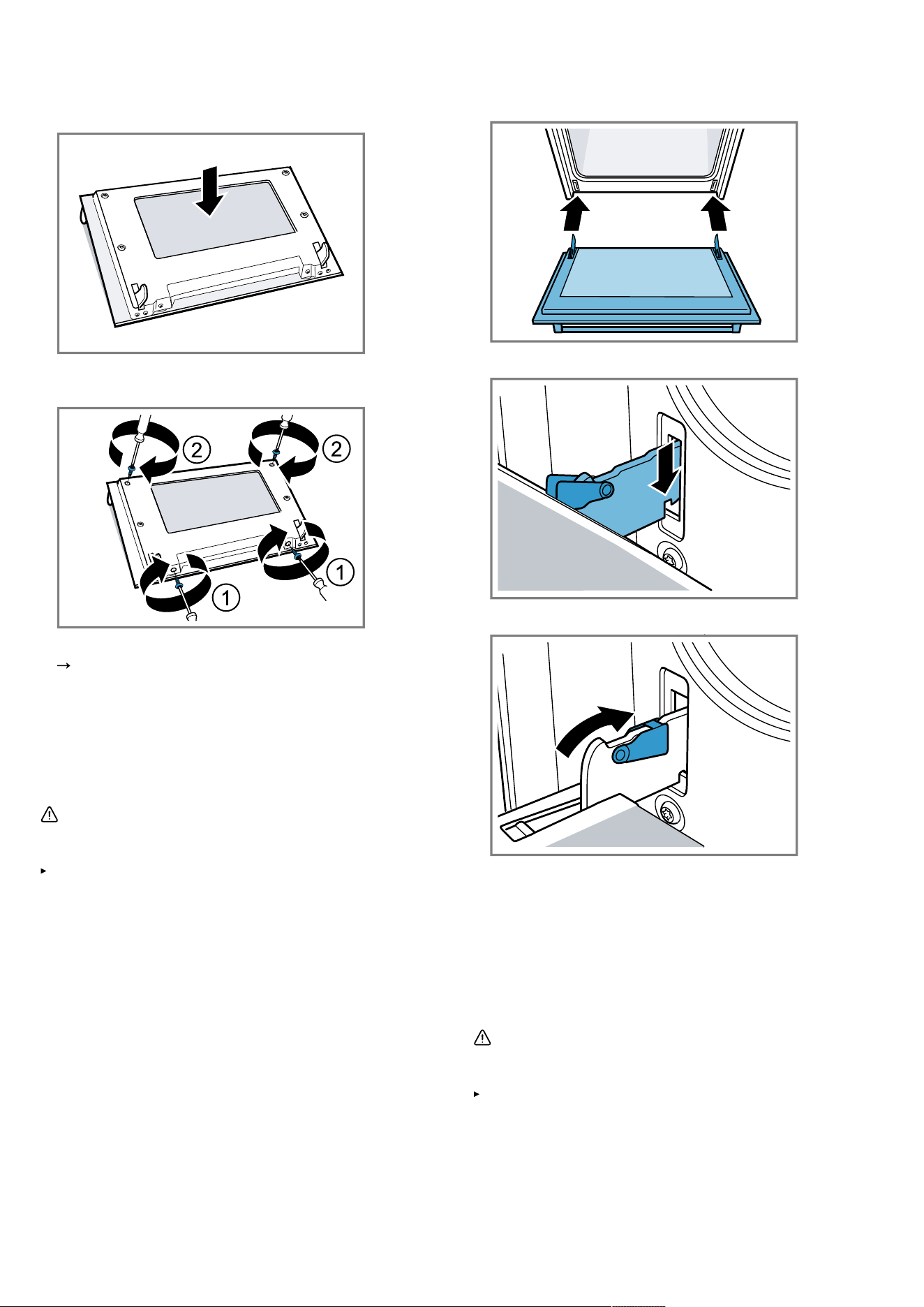
1.
Detach the oven door.
"Removing the appliance door", Page18
2.
Position it on a cloth with its handle pointing down-
wards.
3.
Turn the two screws at bottom followed by the two
screws at the top in an anti-clockwise direction.
4.
Remove the complete door base.
18
Appliance door en
13.4 Fitting the door panes
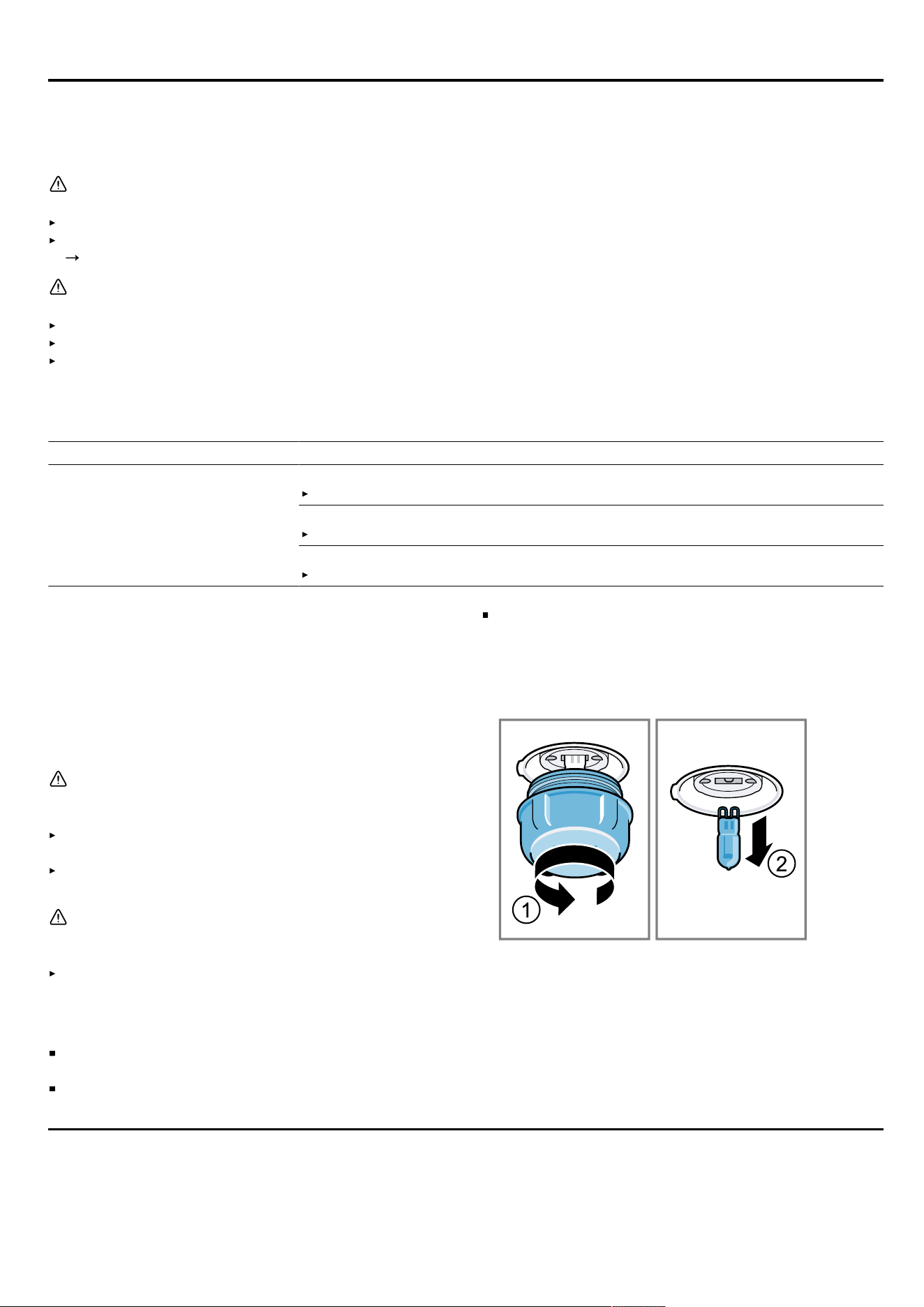
1.
Reinsert the complete door base.
2.
First tighten the two screws at the bottom again and
then the two screws at the top.
3.
Attach the oven door.
"Attaching the appliance door", Page19
Note: Only use the oven once the glass panes have
been correctly fitted.
13.5 Attaching the appliance door
Reattach the oven door in the reverse sequence to re-
moval.
WARNING‒Risk of injury!
The oven door might accidentally fall or a hinge may
suddenly snap shut.
In this case, do not hold onto the hinge. Call cus-
tomer service.
1.
When attaching the oven door, ensure that both
hinges are inserted in the opening direction.
2.
The notch on the hinge must engage on both sides.
3.
Close both locking levers again.
4.
Close the appliance door.
13.6 Additional door safety
Additional safety devices have been fitted to prevent
contact with the oven doors. Always attach these safety
devices when children could come near the oven. You
can purchase this special accessory from after-sales
service. 11023590
WARNING‒Risk of burns!
During long cooking times, the oven door may become
very hot.
Supervise small children when the oven is in opera-
tion.
19
en Troubleshooting
Troubleshooting14 Troubleshooting
You can rectify minor faults on your appliance yourself. Read the troubleshooting information before contacting after-
sales service. This will avoid unnecessary costs.
WARNING‒Risk of injury!
Improper repairs are dangerous.
Repairs to the appliance should only be carried out by trained specialist staff.
If the appliance is defective, call Customer Service.
"Customer Service", Page21
WARNING‒Risk of electric shock!
Improper repairs are dangerous.
Repairs to the appliance should only be carried out by trained specialist staff.
Only use genuine spare parts when repairing the appliance.
If the power cord of this appliance is damaged, it must be replaced by the manufacturer, the manufacturer's Cus-
tomer Service or a similarly qualified person in order to prevent any risk.
14.1 Malfunctions
Fault Cause and troubleshooting
The appliance is not working. The mains plug of the power cord is not plugged in.
Connect the appliance to the power supply.
The circuit breaker in the fuse box has tripped.
Check the circuit breaker in the fuse box.
There has been a power cut.
Check whether the lighting in your room or other appliances are working.
14.2 Replacing the oven light bulb
If the light in the cooking compartment fails, change the
oven light bulb.
Note: Heat-resistant, 40 - 43-watt, 230 V halogen bulbs
are available from the after-sales service or specialist re-
tailers. Only use these bulbs. Hold the new halogen
bulbs only with a clean, dry towel. This increases the
service life of the bulb.
WARNING‒Risk of burns!
The appliance and its parts that can be touched be-
come hot during use.
Caution should be exercised here in order to avoid
touching heating elements.
Young children under 8 years of age must be kept
away from the appliance.
WARNING‒Risk of electric shock!
When changing the bulb, the bulb socket contacts are
live.
Before replacing the bulb, ensure that the appliance
is switched off in order to prevent a potential electric
shock.
Requirements
The appliance is disconnected from the power sup-
ply.
The cooking compartment has cooled down.
You must have a new halogen lamp to replace the
old one.
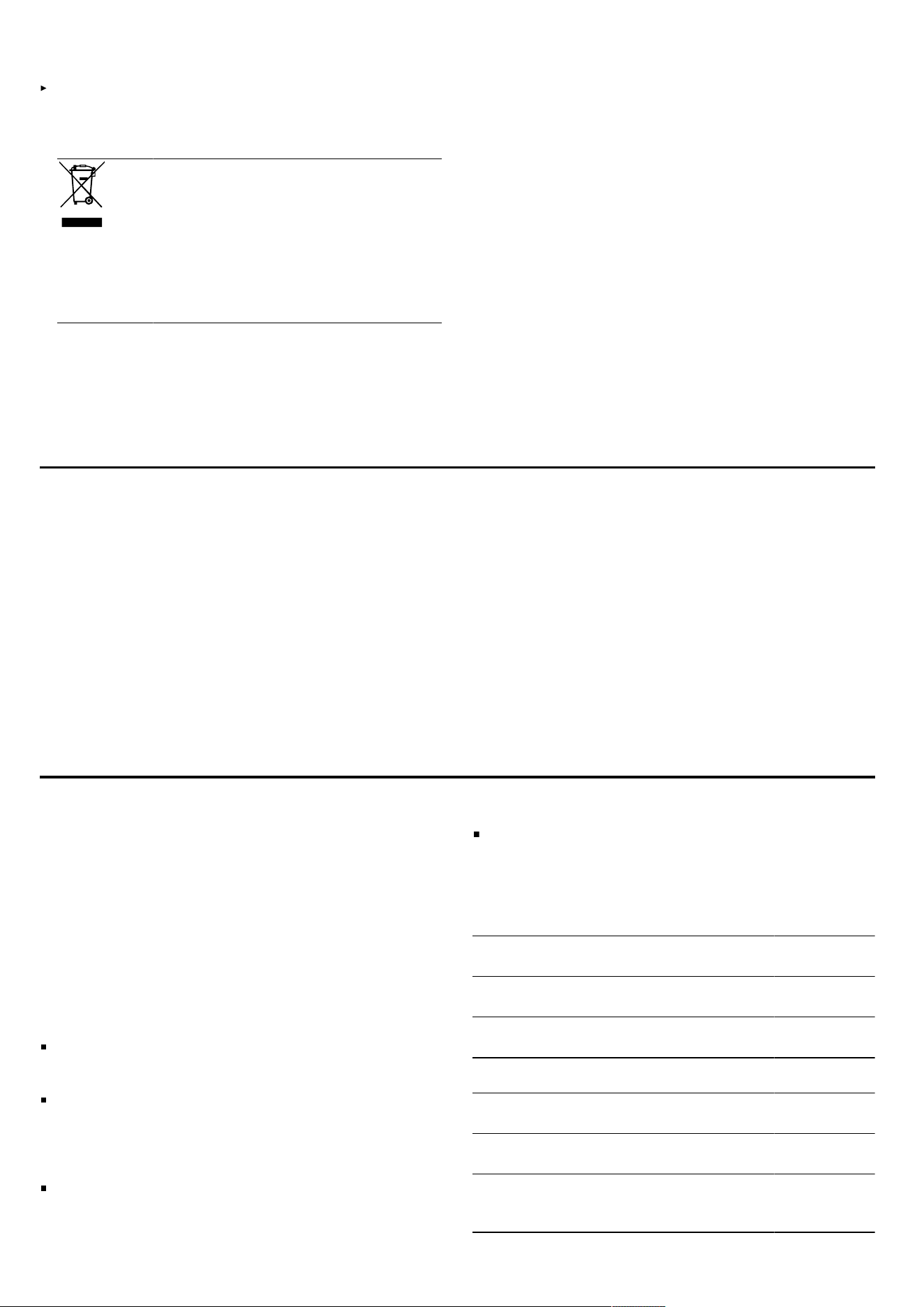
1.
Place a tea towel in the cooking compartment to pre-
vent damage.
2.
Turn the glass cover anti-clockwise.
3.
Pull out the halogen bulb without turning it.
4.
Insert the new halogen bulb and press it firmly into
the socket.
Make sure that the pins are positioned correctly.
5.
Depending on the appliance model, the glass cover
may have a sealing ring. Attach the sealing ring.
6.
Screw in the glass cover.
7.
Remove the tea towel from the cooking compartment.
8.
Connect the appliance to the power supply.
Transportation and disposal15 Transportation and disposal
You can find out here how to prepare your appliance for
transportation. You will also find out how to dispose of
old appliances.
15.1 Disposing of old appliance
Valuable raw materials can be reused by recycling.
20
Customer Service en
Dispose of the appliance in an environmentally
friendly manner.
Information about current disposal methods are avail-
able from your specialist dealer or local authority.
This appliance is labelled in accordance
with European Directive 2012/19/EU
concerning used electrical and elec-
tronic appliances (waste electrical and
electronic equipment - WEEE).
The guideline determines the framework
for the return and recycling of used ap-
pliances as applicable throughout the
EU.
15.2 Transporting the appliance
Keep the original appliance packaging. Only transport
the appliance in the original packaging. Observe the
transport arrows on the packaging.
1.
Secure all moving parts in and on the appliance us-
ing adhesive tape that can be removed without leav-
ing any traces.
2.
Slide all accessories, such as baking trays, into the
corresponding slots with thin cardboard at the edges,
in order to avoid damaging the appliance.
3.
Place cardboard or similar between the front and rear
side to prevent knocks against the inside of the door
glass.
4.
Secure the door and, if available, the top cover to the
appliance sides using adhesive tape.
If the original packaging is no longer available
1.
In order to guarantee sufficient protection against any
transport damage, pack the appliance in protective
packaging.
2.
Always transport the appliance upright.
3.
Do not hold the appliance by the door handle or the
connections on the rear, as these could be damaged.
4.
Do not place any heavy objects on the appliance.
Customer Service16 Customer Service
Detailed information about the warranty period and the
warranty conditions in your country is available via the
QR code on the enclosed document on service con-
tacts and warranty conditions, from our customer ser-
vice or on our website.
If you contact Customer Service, you will require the
product number (E-Nr.) and the production number (FD)
of your appliance.
You can find the contact details for our customer ser-
vice via the QR code on the enclosed document on ser-
vice contacts and warranty conditions or on our website.
This product contains light sources from energy effi-
ciency class G.
16.1 Product number (E-Nr.) and production
number (FD)
You can find the product number (E-Nr.) and the pro-
duction number (FD) on the appliance's rating plate.
You will see the rating plate with these numbers if you
open the appliance door.
Make a note of your appliance's details and the Cus-
tomer Service telephone number to find them again
quickly.
How it works17 How it works
Here, you can find the ideal settings for various types of
food as well as the best accessories and cookware.
These recommendations are perfectly tailored to your
appliance.
Detailed baking tables for your appliance and tips for
baking with your appliance can be found in the instruc-
tions on the Internet:
www.bosch-home.com
17.1 Cooking tips
Observe this information when preparing food.
The temperature and cooking time depend on the
amount of food and the recipe. Settings ranges are
specified for this reason. Select the lower value first.
The setting values apply to food placed in the cook-
ing compartment while the cooking compartment is
still cold.
Do not place accessories into the cooking compart-
ment until it has finished preheating.
Remove any accessories that are not being used
from the cooking compartment.
Ensure that the accessory slides in the right way
round.
17.2 Notes on baking
When baking, use the shelf positions indicated.
Baking on one level Shelf posi-
tion
Rising pasta/baked goods or tin on the
wire rack
2
Flat pasta/baked items or in the baking
tray
2–3
Baking on two or more levels Shelf posi-
tion
Universal pan
Baking tray
3
1
Baking tins on the wire rack:
First wire rack
Second wire rack
Shelf position
3
1
21
en How it works
Baking on three levels Shelf posi-
tion
Baking trays
Universal pan
Baking trays
5
3
1
Notes
When baking on several layers, use hot air. Different
food that is placed in the oven at the same time will
not necessarily be ready at the same time.
In such cases, you can remove the cooked food and
continue to cook the other baking tray. If necessary,
you can change the position and direction of the bak-
ing trays.
Position baking tins/dishes either next to one another
or offset on different shelves so that they are not dir-
ectly one above the other in the cooking compart-
ment. You can cut energy use by cooking different
items at the same time.
For best results, we recommend using dark-coloured
metal baking tins.
17.3 Notes on roasting and grilling
The setting values are based on the assumption that un-
stuffed, chilled, ready-to-roast poultry, meat or fish is
placed into a cold cooking compartment.
ATTENTION
Acidic food may damage the wire rack
Do not place acidic food, such as fruit or food with an
acidic marinade directly on the wire rack.
The larger the poultry, meat or fish, the lower the tem-
perature and the longer the cooking time.
Turn the poultry, meat or fish after approx. 1/2 to 2/3
of the time listed.
Add a little liquid to the poultry in the cookware.
Cover the base of the cookware with approx. 1–2cm
of liquid.
When you turn poultry, ensure that the breast side or
skin side is underneath to begin with.
Use tongs to turn the pieces of food you are grilling. If
you pierce the meat with a fork, the juices will run out
and it will become dry.
Only add salt to steaks once they have been grilled.
Salt draws water from the meat.
Information for those allergic to nickel
In rare cases, small amounts of nickel may pass into the
food.
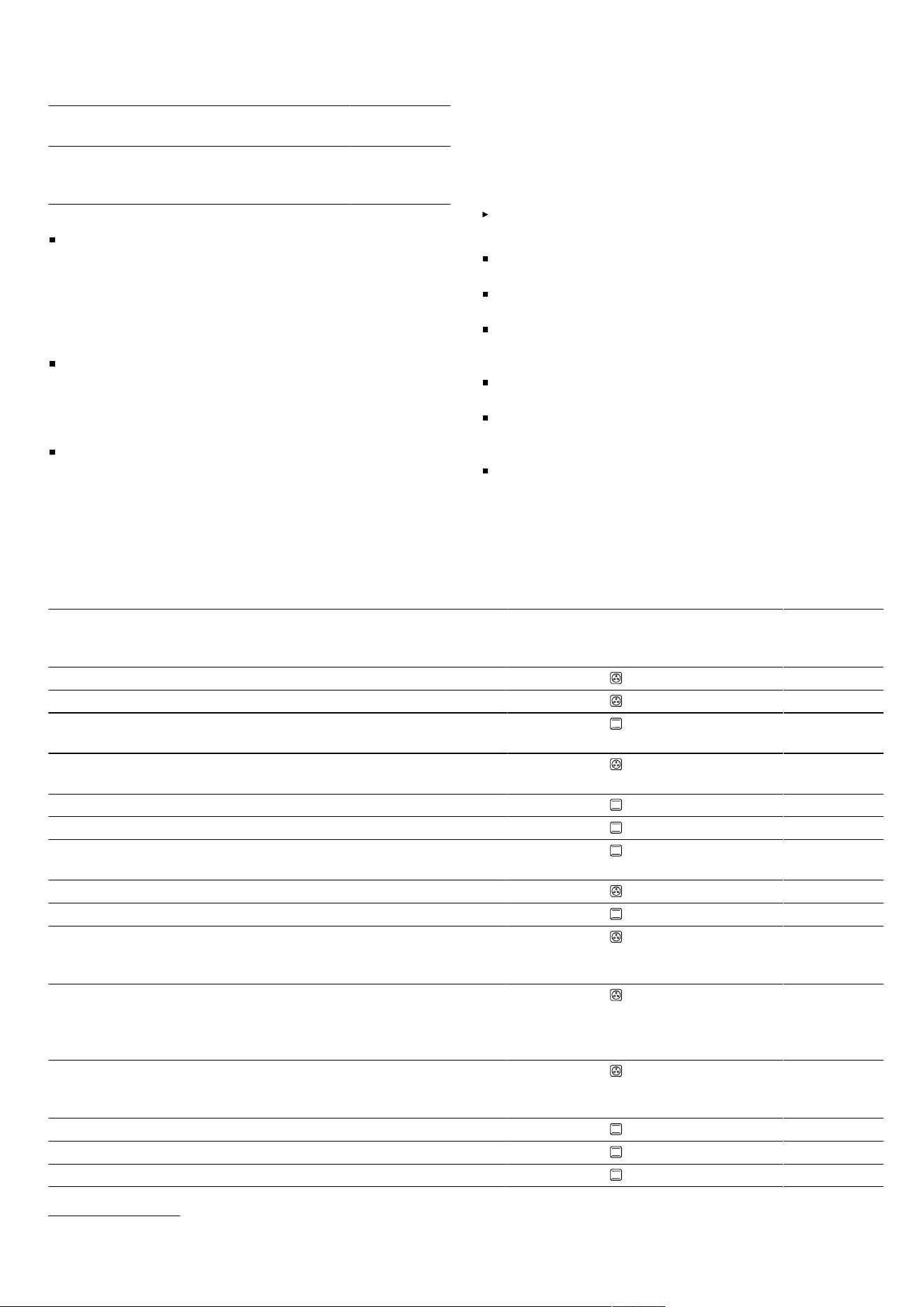
17.4 List of foods
Food Accessories/cook-
ware
Shelf posi-
tion
Type of
heating
Temperature
in °C/grill
setting
Cooking
time in mins
Sponge cake, simple Vienna ring tin/loaf tin 2 160–180 50–60
Sponge cake, simple, 2levels Vienna ring tin/loaf tin 3+1 140–160 60–80
Fruit tart or cheesecake with shortcrust
pastry base
Springform cake tin,
diameter 26 cm
2 160–180 70–90
Sponge flan, 6 eggs Springform cake tin Ø
28 cm
2 160–170 35–45
Swiss roll Universal pan 2 170–190
1
15–20
Shortcrust tart with moist topping Universal pan 2 160–180 60–90
Muffins Muffin tray on wire
rack
2 170–190 20–40
Small baked items, with yeast Universal pan 3 150-170 25-35
Biscuits Universal pan 3 140–160 20–30
Biscuits, 2levels Universal pan
+
Baking tray
3+1 130–150 25–35
Biscuits, 3levels 2x
Baking tray
+
Universal pan
5+3+1 130–150 30–40
Bread, 1000g, in a loaf tin or free-form Universal pan
or
Loaf tin
2 200–220 35–50
Pizza, fresh Universal pan 2 190–210 20–30
Pizza, fresh, thin-crust Universal pan 2 250-270
1
15-25
Quiche, flan Tart dish or tin 1 210–230 40–50
1
Preheat the appliance.
22
How it works en
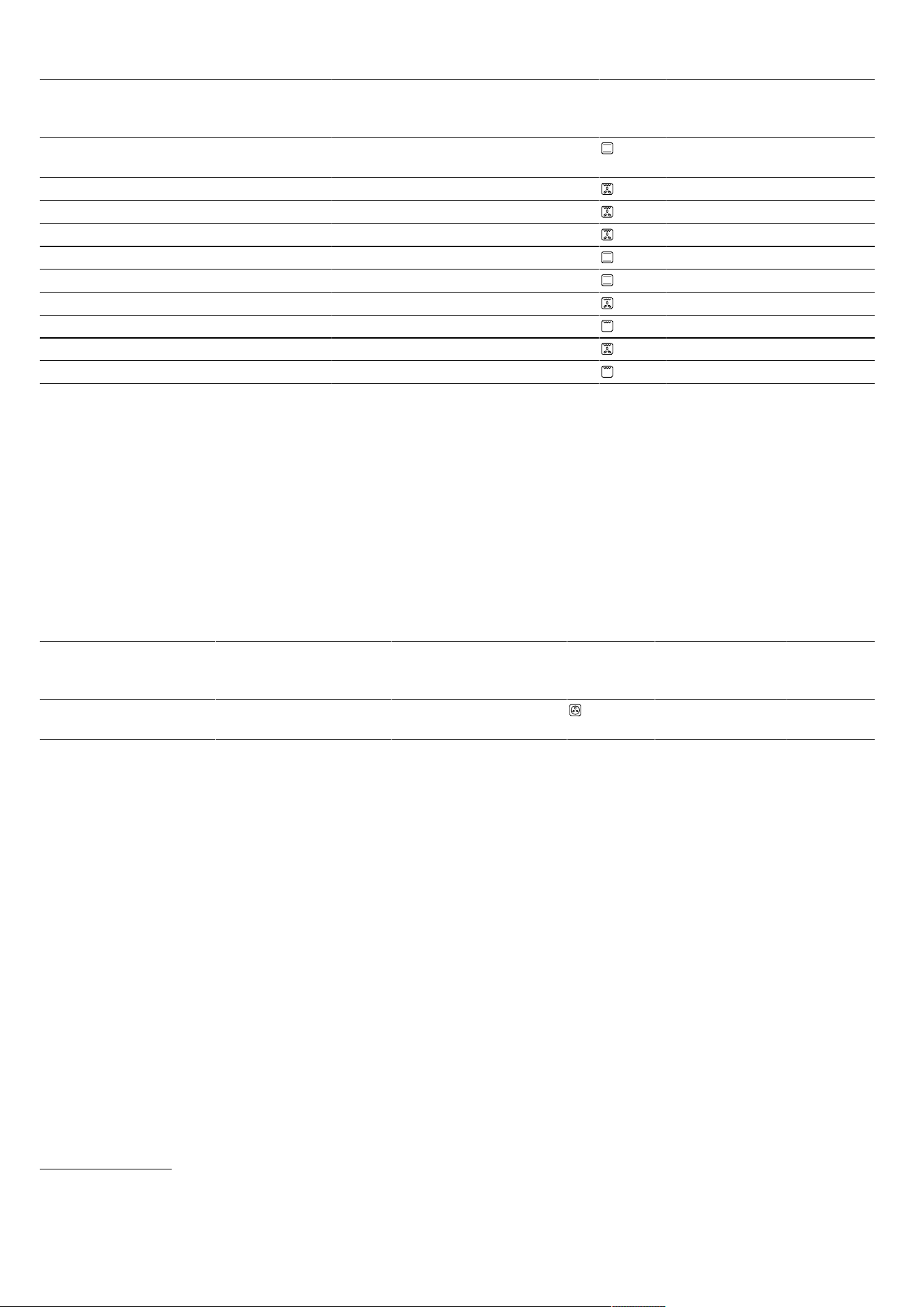
Food Accessories/cook-
ware
Shelf posi-
tion
Type of
heating
Temperature
in °C/grill
setting
Cooking
time in mins
Bake, savoury, fresh, cooked ingredi-
ents
Ovenproof dish 2 200–220 30–60
Chicken, 1.3kg, unstuffed Cookware without lid 2 200–220 60–70
Small chicken portions, 250g each Cookware without lid 3 220–230 30–35
Goose, unstuffed, 3kg Cookware without lid 2 170–190 120–140
Fillet of beef, medium, 1kg Cookware without lid 3 210–220 45–55
Pot-roasted beef, 1.5 kg Cookware with lid 2 200–220 100–120
1
Sirloin, medium, 1.5kg Cookware without lid 2 200–220 60–70
Hamburger, 3–4cm thick Wire rack 4 3
2
25–30
3
Leg of lamb, boned, medium, 1.5kg Cookware without lid 2 170–190 70–80
4
Fish, grilled, whole, 300g, e.g. trout Wire rack 2 2 20–25
3
17.5 Yoghurt
You can also use your appliance to make your own
yoghurt.
Making yoghurt
1.
Remove the accessories and shelves from the cook-
ing compartment.
2.
Heat 1litre of milk (3.5% fat) to 90°C on the hob and
then leave it to cool down to 40°C. Only heat UHT
milk to 40°C.
3.
Stir 30g yoghurt into the milk.
4.
Pour the mixture into small containers, e.g. small jars
with lids.
5.
Cover the containers with film, e.g. cling film.
6.
Place the containers on the cooking compartment
floor.
7.
Use the recommended settings when configuring the
appliance settings.
8.
After making the yoghurt, leave it to cool in the refri-
gerator.
Yoghurt
Meal Accessory/cookware Shelf position Type of
heating/
function
Temperature
in°C
Cooking
time,
minutes
Yoghurt Cup/jar Cooking compartment
floor
- 4–5 hours
1
At the start, add liquid to the cookware so that at least 2/3 of the joint is covered in liquid
2
Turn the dish 2/3 of the way through the cooking time.
3
Slide the universal pan underneath the wire rack.
4
Do not turn the food. Cover the base with water.
23
Thank you for buying a
Bosch Home Appliance!
Register your new device on MyBosch now and profit directly from:
• Expert tips & tricks for your appliance
• Warranty extension options
• Discounts for accessories & spare-parts
• Digital manual and all appliance data at hand
• Easy access to Bosch Home Appliances Service
Free and easy registration – also on mobile phones:
www.bosch-home.com/welcome
Looking for help?
You'll find it here.
Expert advice for your Bosch home appliances, help with problems
or a repair from Bosch experts.
Find out everything about the many ways Bosch can support you:
www.bosch-home.com/service
Contact data of all countries are listed in the attached service directory.
BSH Hausgeräte GmbH
Carl-Wery-Straße 34
81739 München, GERMANY
www.bosch-home.com
A Bosch Company
*9001654678*
9001654678 (050509) REG25
en