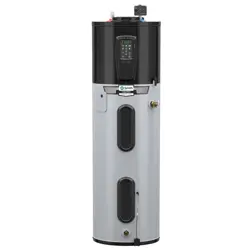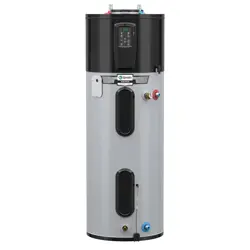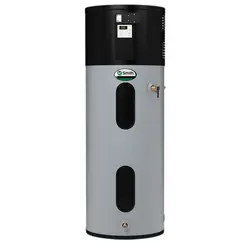
Installaon Instrucons and
Use & Care Guide
Keep this manual in the pocket on heater for future reference whenever maintenance, adjustment or service is required.
Retain your original receipt as proof of purchase.
DO NOT RETURN THIS UNIT TO THE STORE
Read this manual and the labels on the water heater before you install,
operate, or service it. If you have diculty following the direcons, or
aren’t sure you can safely and properly do any of this work yourself:
• Call our Technical Assistance Hotline at 1-877-817-6750 or visit:
hp://www.AOSmithAtLowes.com. We can help you with installaon,
operaons, troubleshoong, or maintenance. Before you call, write down the
model and serial number from the water heater’s data plate.
Incorrect installaon, operaon, or service can damage the water heater, your
house and other property, and present risks including re, scalding, electric shock,
and explosion, causing serious injury or death.
AHRI Cercaon® applies to residenal electric water heaters with rated
capacies of 20 to 120 gallon and input rangs of 12 kw or less.
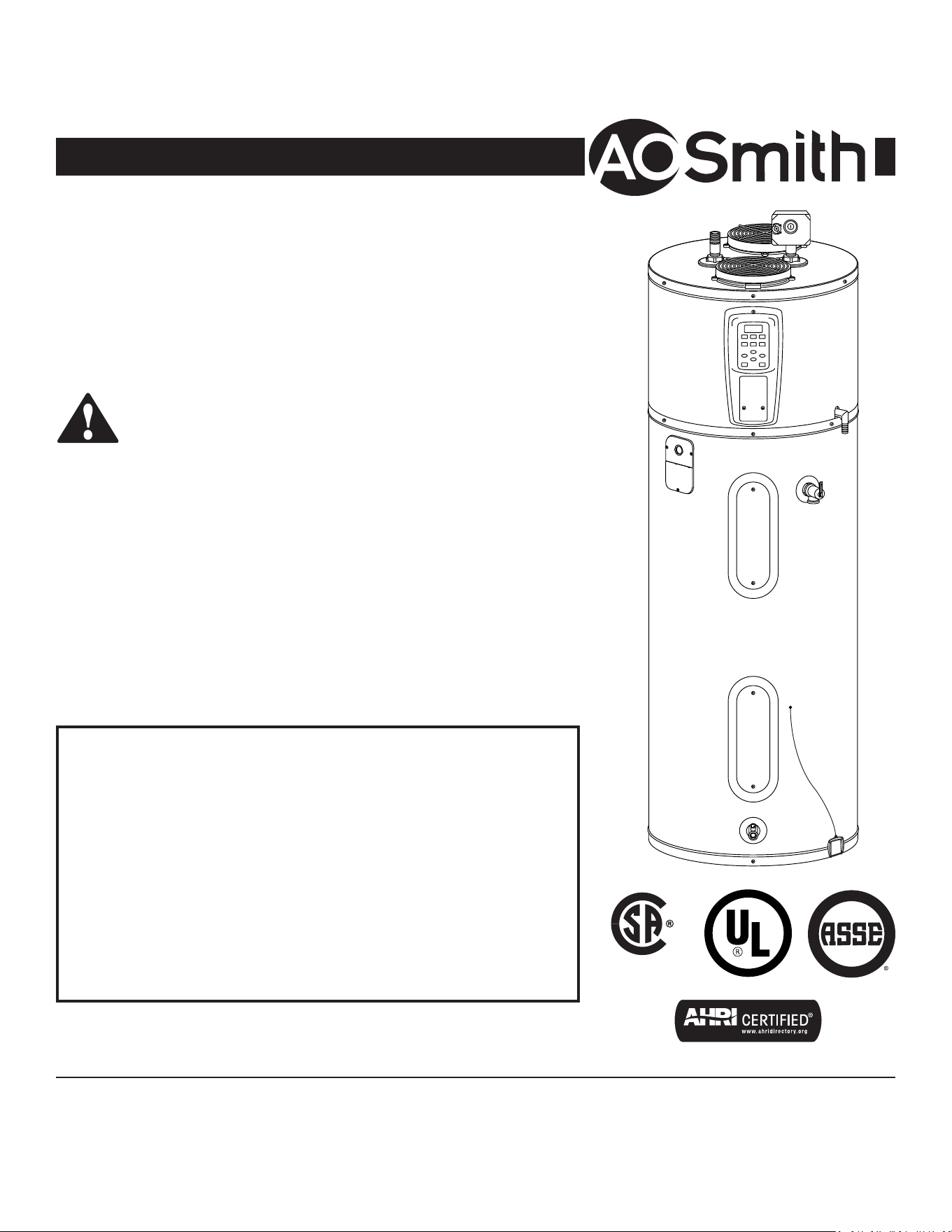
Hybrid Electric
Heat Pump Water Heater
LOW LEAD
CONTENT
100379656_2000812402May, 2024
Table of Contents
Important Safety Informaon .................................................. 3
Geng Started ........................................................................ 6
Installaon ............................................................................... 7
Operaon .............................................................................. 19
Troubleshoong .................................................................... 25
Maintenance ......................................................................... 32
Diagrams................................................................................ 38
Repair Parts ........................................................................... 39
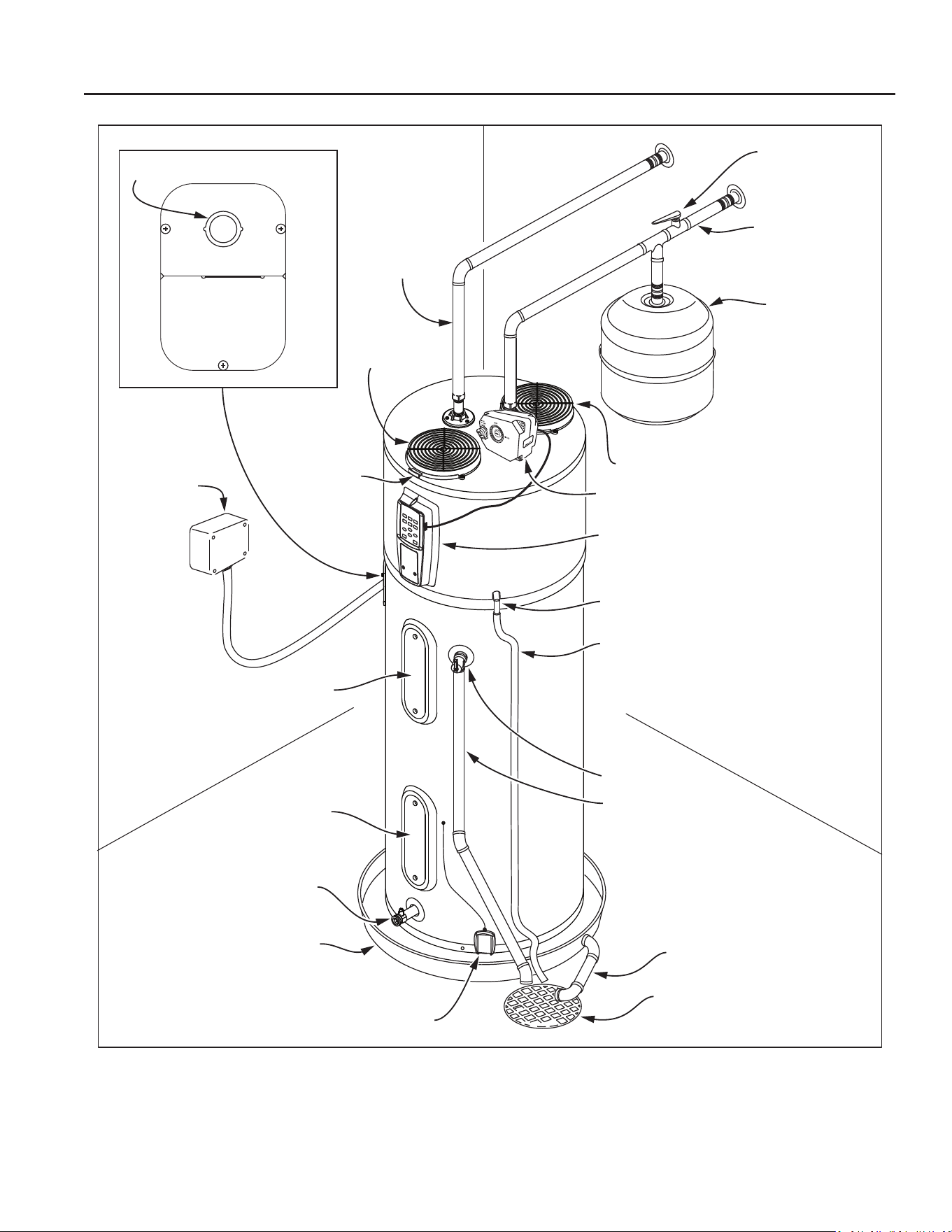
COMPLETED INSTALLATION (TYPICAL)
2 • Residenal Electric Water Heater Use and Care Guide
Water shut-o
valve
Cold water line
Thermal
expansion tank
Drain pan discharge pipe
Drain
Leak detection sensor
Drain valve
Drain pan
Lower element
Upper element
and ECO
Electrical
junction
box
Hot water line
Condensate line (supplied)
Condensate drain
Control panel
T&P discharge pipe
(Do not cap or plug)
T&P relief valve
Intake air
Exhaust air
Intake lter
1/2” (13mm) Conduit Opening
Quick Release
to remove valve body
Automatic cold water
shut-o valve
Note: If copper piping is used, then unions must be dielectric at inlet and outlet.
Residenal Electric Water Heater Use and Care Guide • 3
IMPORTANT SAFETY INFORMATION
SAFETY
Important informaon to keep
Fill out this secon and keep this
manual in the pocket of the water
heater for reference.
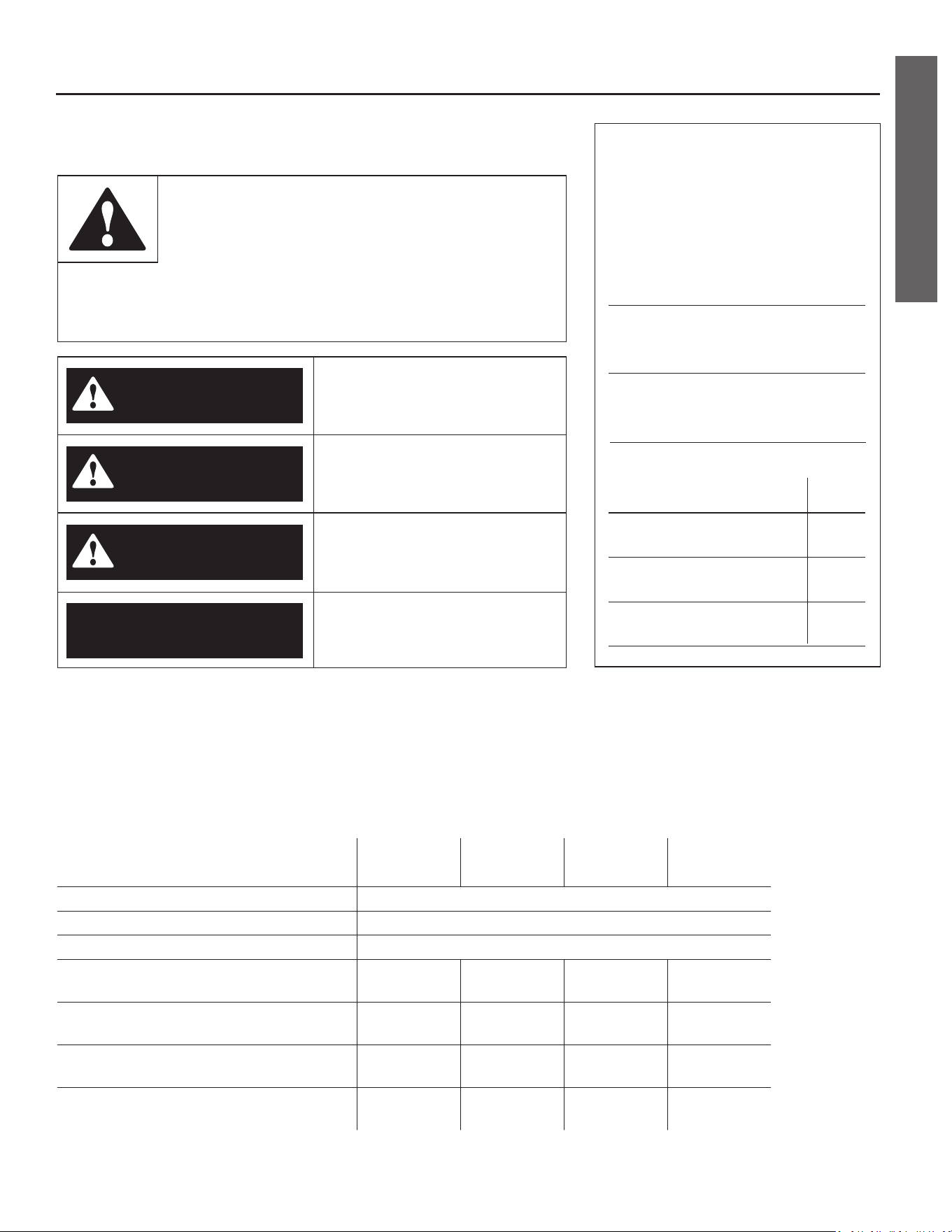
Date Purchased:
Model number:
Serial number:
Maintenance performed:* Date:
*Drain and flush tank, clean air filter, clean condensate pan, and remove and inspect anode rod after first six months of operation
and at least annually thereafter. Inspect and operate the Temperature and Pressure Relief Valve (T&P) annually (see the label
on the T&P valve for maintenance schedule). If no label is attached to the T&P Relief Valve, follow the instructions in the T&P
Relief Valve Maintenance section of this manual. See the Maintenance section for more information about maintaining this water
heater.
This product is cered to comply with a maximum weighted average of
0.25% lead content as required in some areas.
This is the safety alert symbol. It is used to alert you to
potenal physical injury hazards. Obey all safety messages
that follow this symbol to avoid possible property damage,
serious injury or death. Do not remove any permanent
instrucons, labels, or the data plate from either the outside
of the water heater or on the inside of the access panels. Keep this manual
near the water heater.
DANGER
DANGER indicates hazardous
situaon that, if not avoided, will
result in death or serious injury.
WARNING
WARNING indicates a hazardous
situaon that, if not avoided, could
result in death or serious injury.
CAUTION
CAUTION indicates a hazardous
situaon that, if not avoided, could
result in minor or moderate injury.
NOTICE
NOTICE indicates pracces not
related to physical injury.
Read and follow all safety messages and instrucons in this
manual.
ASSE 1082 Test Condions
40 Gallon
Model
50 Gallon
Model
66 Gallon
Model
80 Gallon
Model
Water Heater Connecon Size 3/4" NPT
Maximum Seng 150°F (66°C)
Maximum Working Pressure 150 PSI (1034 kPa)
Maximum Flow Rate at Minimum
Temperature Rise
2 GPM
(7.5 L/min)
2.5 GPM
(9.4 L/min)
3.5 GPM
(13.2 L/min)
4 GPM
(15.1 L/min)
Minimum Flow Rate at Maximum
Temperature Rise
0.5 GPM
(1.8 L/min)
0.6 GPM
(2.2 L/min)
0.8 GPM
(3 L/min)
1 GPM
(3.7 L/min)
Maximum Flow Rate at +70°F (+39°C)
Temperature Rise
2 GPM
(7.5 L/min)
2.5 GPM
(9.4 L/min)
3.5 GPM
(13.2 L/min)
4 GPM
(15.1 L/min)
Pressure Drop at Maximum Flow Rate
2 PSI
(13.7 kPa)
2.5 PSI
(17.2 kPa)
3.5 PSI
(24.1 kPa)
4 PSI
(27.5 kPa)
4 • Residenal Electric Water Heater Use and Care Guide
To reduce the risk of property
damage, serious injury or death, read
and follow the precauons below,
all labels on the water heater, and
the safety messages and instrucons
throughout this manual.
RISKS DURING
INSTALLATION AND
MAINTENANCE
Electric Shock Risk
WARNING! Contact
with the electrical parts in
the juncon box, behind
the access doors and inside the top
shroud can result in severe injury
or death from the electrical shock.
Safety and precauons to reduce
the risk of re, electric shock or
injury to persons should be followed,
including:
• READ ALL INSTRUCTIONS BEFORE
USING THE WATER HEATER.
• This water heater must be ground-
ed. See the “Electrical Connecons”
secon found in the “Installaon”
chapter of this manual.
• Install or locate this water heater
only in accordance with the provid-
ed manual.
• Use this water heater only for its
intended use as described in this
manual.
• As with any appliance, close super-
vision is necessary when used by
children.
• This water heater should be serviced
only by qualied personnel. Contact
a service person for examinaon,
repair or adjustment.
• Disconnect power by opening the
circuit breaker or removing the fus-
es before installing or servicing.
• Use a non-contact circuit tester to
conrm that power is OFF before
working on or near any electrical
parts.
• Replace all parts and panels before
operang.
Liing Risk
WARNING! The
water heater is
heavy. Follow these
precauons to reduce the risk of
property damage, injuries from liing
or impact injuries from dropping the
water heater.
• Use at least two people to li the
water heater.
• Be sure you both have a good grip
before liing.
• Unit is top heavy, use an appliance
dolly (with strap) to move the water
heater.
RISKS DURING
OPERATION
Scalding Risk
This water heater
can make water hot
enough to cause
severe burns instantly, resulng in
severe injury or death.
• Feel water before bathing or show-
ering.
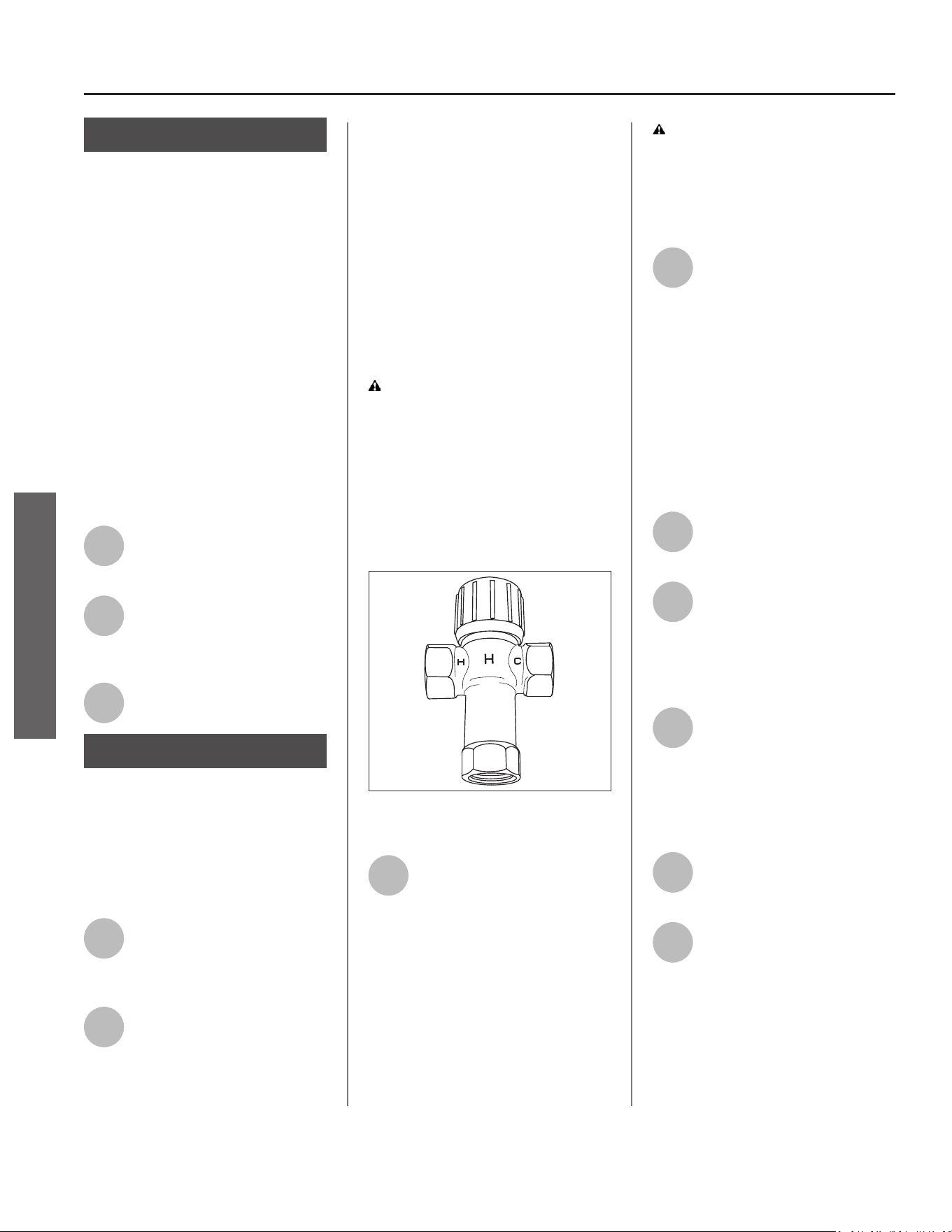
• To reduce the risk of scalding, install
Thermostac Mixing Valves (tem-
perature liming valves) at each
point-of-use. These valves automa-
cally mix hot and cold water to limit
the temperature at the tap. Mixing
valves are available from Lowe’s®.
Follow manufacturer’s instrucons
for installaon and adjustment of
the valves.
• The Control Assembly on this water
heater has been factory set to
approximately 120°F/49°C to reduce
the risk of scalding. Higher tempera-
tures increase the risk of scalding,
but even at 120°F/49°C, hot water
can scald. If you choose a higher
temperature, Thermostac Mixing
Valves located at each point-of-use
are parcularly important to help
avoid scalding.
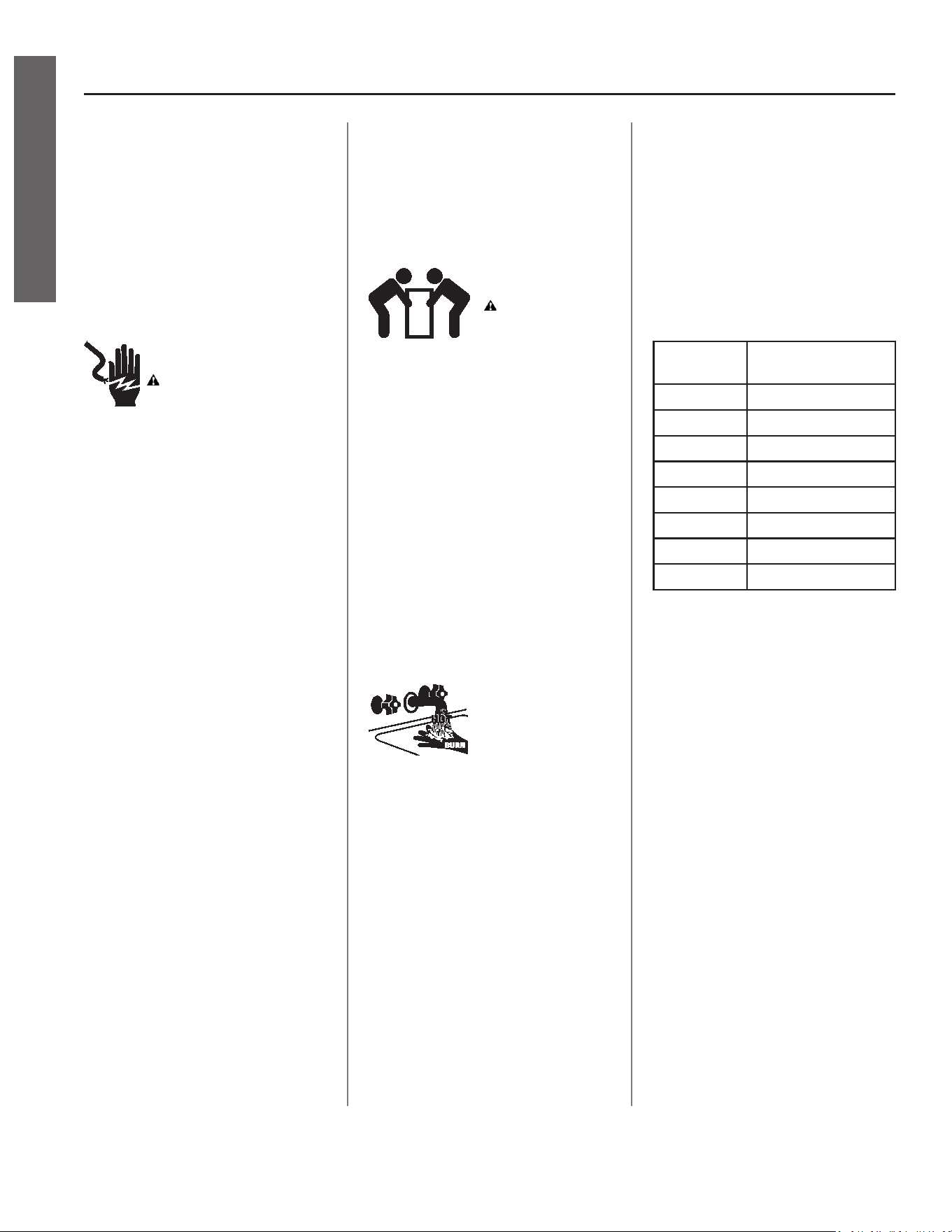
Temperature Time to Produce a
Serious Burn
120°F (49°C) More than 5 minutes
125°F (52°C) 1½ to 2 minutes
130°F (54°C) About 30 seconds
135°F (57°C) About 10 seconds
140°F (60°C) Less than 5 seconds
145°F (63°C) Less than 3 seconds
150°F (66°C) About 1½ seconds
155°F (68°C) About 1 second
For more informaon about changing
the factory thermostat seng(s), refer
to the “Adjusng the Temperature”
secon in this manual (see page 18).
Regardless of the water heater
Control Assembly seng, higher
temperatures may occur in certain
circumstances:
• In some cases, repeated small draws
of water can cause the hot and cold
water in the tank to “stack” in layers.
If this happens, the water can be as
much as 30°F/15°C degrees hoer
than the thermostat seng. This
temperature variaon is the result
of your usage paern and is not a
malfuncon.
• Water temperature will be hoer if
someone adjusted the thermostat(s)
to a higher seng.
• Problems with the thermostat(s),
or other malfuncons may result in
higher than expected water tem-
peratures.
SAFETY
IMPORTANT SAFETY INFORMATION
Residenal Electric Water Heater Use and Care Guide • 5
IMPORTANT SAFETY INFORMATION
SAFETY
• If the water heater is in a hot envi-
ronment, the water in the tank can
become as hot as the surrounding
air, regardless of the thermostat
seng.
• If the water supplied to the water
heater is pre-heated (for example,
by a solar water heang system)
the temperature in the tank may be
higher than the water heater’s ther-
mostat seng.
To reduce the risk of unusually hot
water reaching the xtures in the
house, install Thermostac Mixing
Valves at each point-of-use.
If anyone in your home is at parcular
risk of scalding (for example, the
elderly, children, or people with
disabilies) or if there is a local code
or state law requiring a certain water
temperature at the hot water tap,
then these precauons are parcularly
important.
According to the naonal standard
American Society of Sanitary
Engineering (ASSE 1070) and most
local plumbing codes, the water
heater’s thermostat should not be
used as the sole means to regulate
water temperature to avoid scalds.
Properly adjusted Thermostac Mixing
Valves installed at each point-of-use
allow you to set the tank temperature
to a higher seng without increasing
risk of scalds. A higher temperature
seng allows the tank to provide
much more hot water and can help
provide proper water temperatures
for appliances such as dishwashers
and washing machines. Higher tank
temperatures (140°F/60°C) also kill
bacteria that cause a condion known
as “smelly water” and can reduce the
levels of bacteria that cause water-
borne diseases.
Water Contaminaon Risk
Do not use chemicals that could
contaminate the potable water supply.
Do not use piping that has been
treated with chromates, boiler seal, or
other chemicals.
Fire Risk
To reduce the risk of a
re that could destroy
your home and seriously injure or kill
people:
• Do not store things that can burn
easily such as paper or clothes next
to the water heater.
• Be sure the juncon box cover and
the element access door covers are
in place. These covers keep debris
from entering and potenally being
ignited, and help keep any internal
res from spreading.
• Keep the water heater from becom-
ing wet. Immediately shut the water
heater o and have it inspected by a
qualied person if you nd that the
wiring, thermostat(s) or surrounding
insulaon have been exposed to
water in any way (e.g., leaks from
plumbing or leaks from the water
heater itself can damage property
and could cause a re risk). If the
water heater is subjected to ood
condions or the thermostat(s) have
been submerged in water, the enre
water heater must be replaced.
• Make electrical connecons proper-
ly, according to the instrucons on
page 17. Use 10 gauge solid copper
wire. Use a UL listed or CSA approved
strain relief. Connect the ground wire
to the green ground screw.
Explosion Risk
High temperatures and
pressures in the water
heater tank can cause an explosion
resulng in property damage, serious
injury or death. A new Temperature
and Pressure (T&P) Relief Valve is
included with your water heater
to reduce the risk of explosion by
discharging hot water. Addional
temperature and pressure protecve
equipment may be required by local
codes.
A naonally recognized tesng
laboratory maintains periodic
inspecon of the valve producon
process and ceres that it meets the
requirements for Relief Valves for Hot
Water Supply Systems, ANSI Z21.22.
The T&P Relief Valve’s relief pressure
must not exceed the working pressure
rang of the water heater as stated on
the rang plate.
Maintain the T&P Relief Valve properly.
Follow the maintenance instrucons
provided by the manufacturer of the
T&P Relief Valve (label aached to T&P
Relief Valve). If no label is aached
to the T&P Relief Valve, follow the
instrucons in the T&P Relief Valve
Maintenance secon of this manual.
An explosion could occur if the T&P
Relief Valve or discharge pipe is
blocked. Do not cap or plug the T&P
Relief Valve or discharge pipe.
Fire and Explosion Risk if Hot Water is
Not Used for Two Weeks or More.
CAUTION! Hydrogen gas builds up
in a hot water system when it is not
used for a long period (two weeks
or more). Hydrogen gas is extremely
ammable. If the hot water system
has not been used for two weeks or
more, open a hot water faucet for
several minutes at the kitchen sink
before using any electrical appliances
connected to the hot water system.
Do not smoke or have an open ame
or other ignion source near the
faucet while it is open.
6 • Residenal Electric Water Heater Use and Care Guide
Installaon Accessories
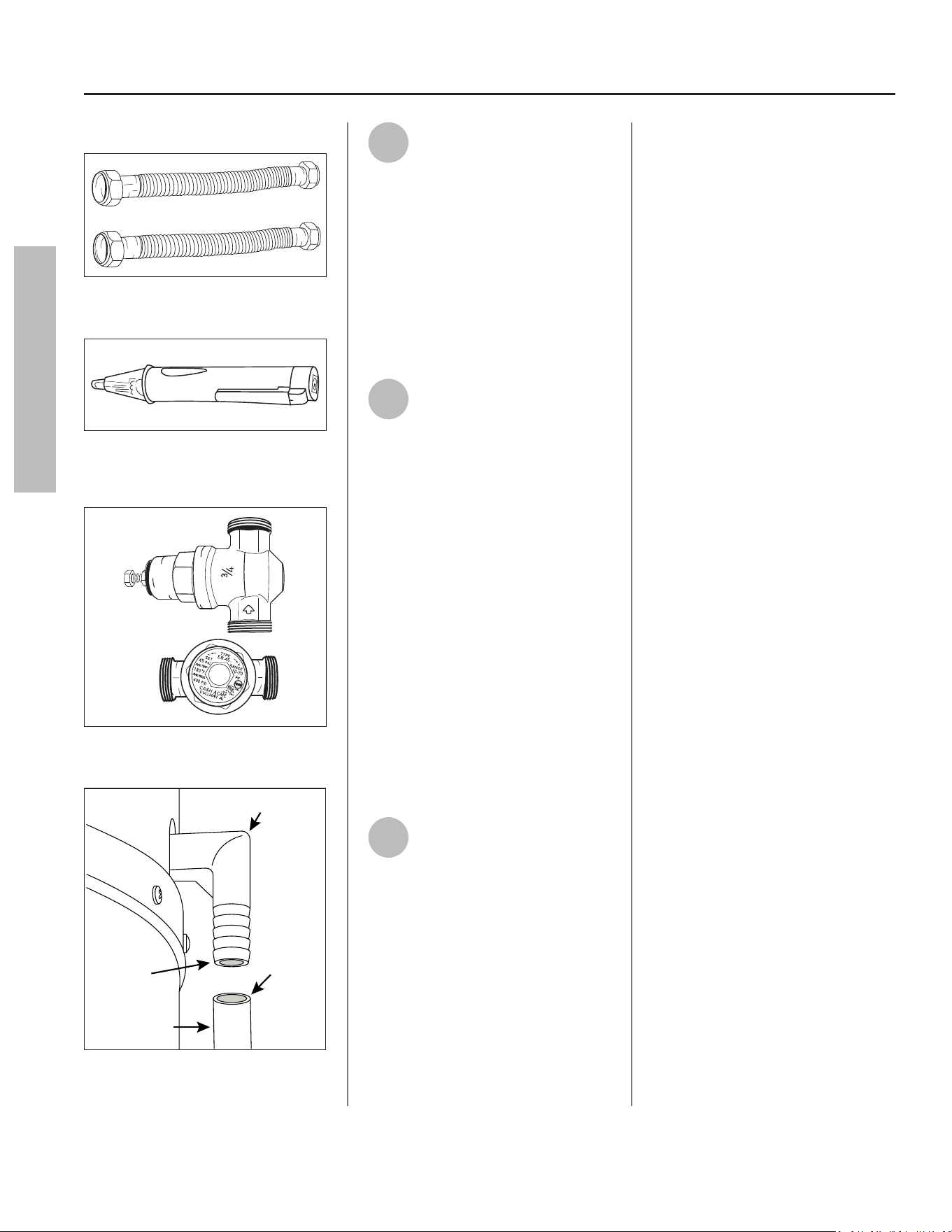
Figure 1 - Flexible connectors use compression
ngs and do not require soldering.
ON
OFF
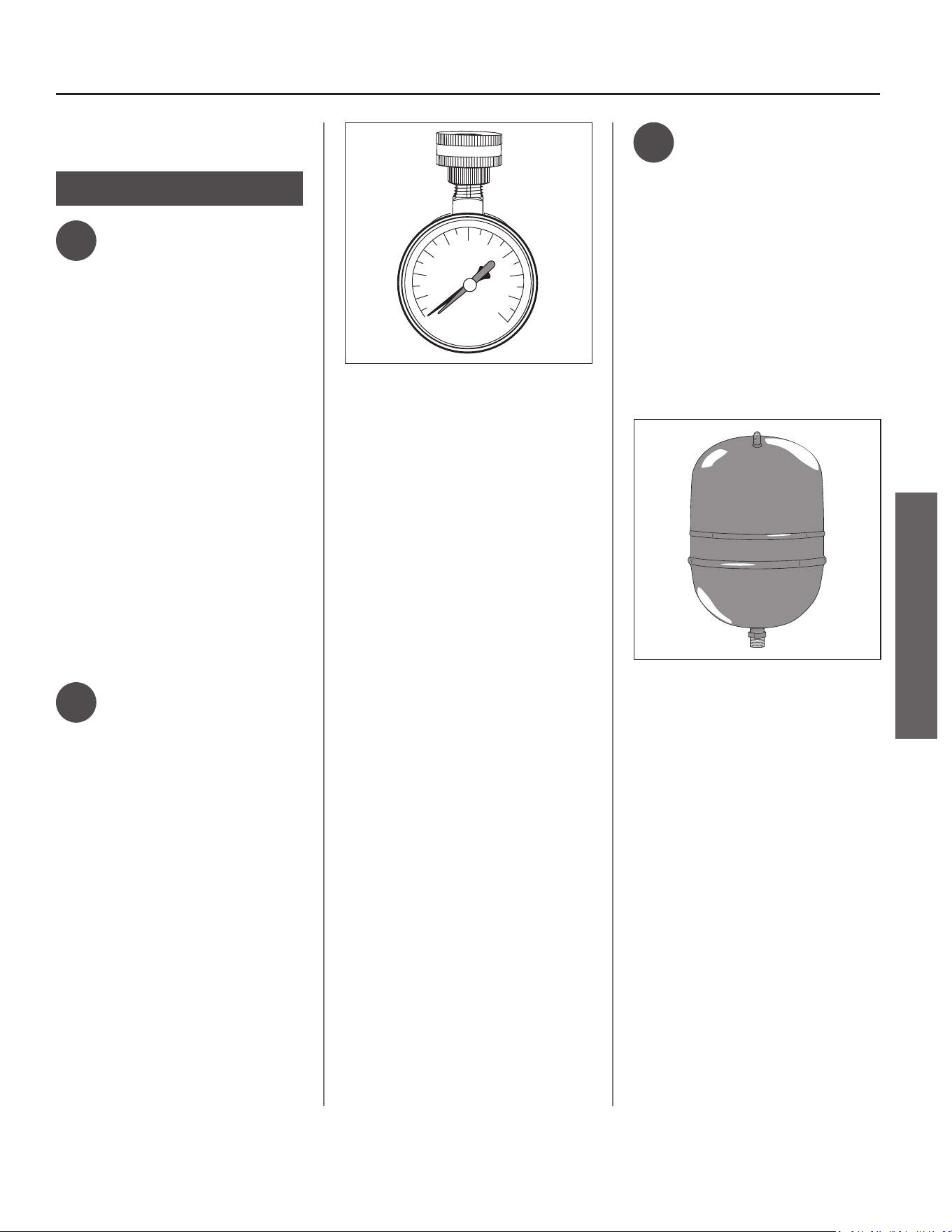
Figure 2 - Use a non-contact circuit tester to
ensure that the power is o before you work
on a circuit.
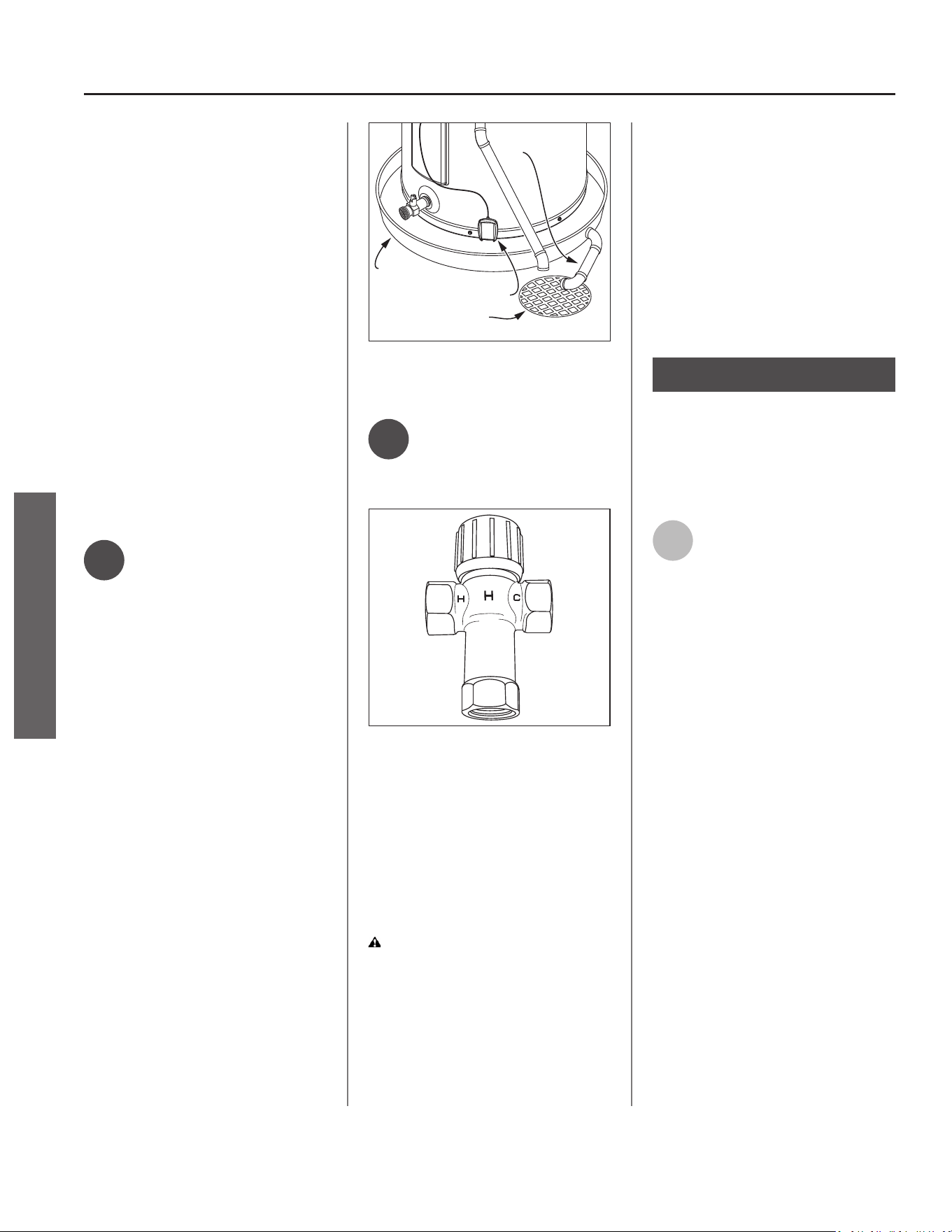
Figure 3 - Install a Pressure Reducing Valve if
required.
Flexible Tubing
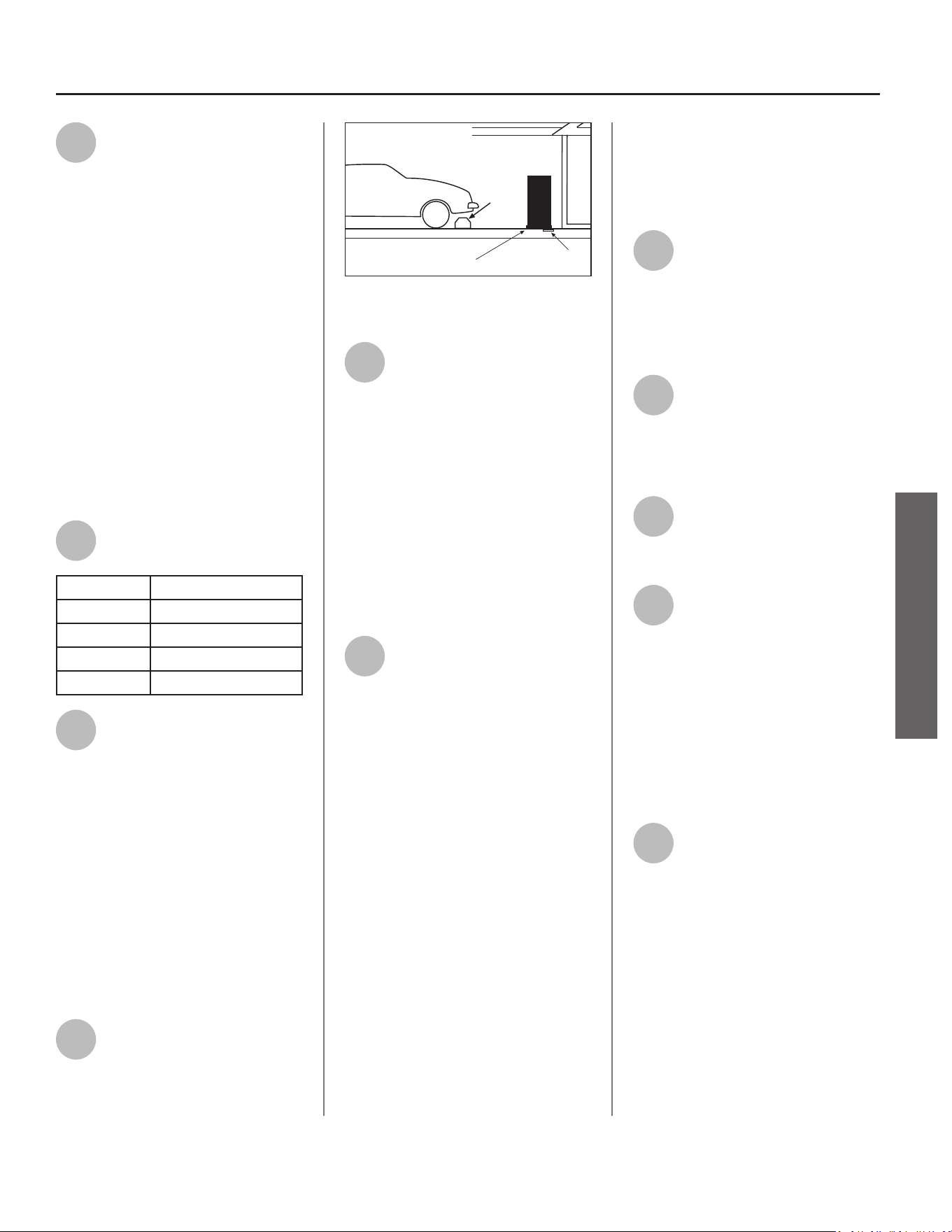
Condensate Drain
Ø 5/8” ID
Barbs For
Ø 5/8” ID
Plastic Hose
Figure 4 - Condensate drain connecon
1
Review all of the instrucons
before you begin work. If you
aren’t sure that you can
safely and properly do this work
yourself, call your Lowe’s® store to
arrange for Professional Installaon
(you may also call a qualied person
of your choice, such as a licensed
plumber or electrician, to have the
work done). Improper installaon can
damage the water heater, your home
and other property, and can present
risks of serious injury or death.
2
Check with your local and
state authories for any local
or state codes that apply to
your area. In the absence of local and
state codes, follow Naonal Fire
Protecon Associaon (NFPA-70) and
the current edions of the Naonal
Electric Code (NEC) and the
Internaonal Plumbing Code (IPC).
The instrucons in this manual comply
with naonal codes, but the installer
is responsible for complying with local
codes.
Massachuses code requires this
water heater to be installed in
accordance with Massachuses
248-CMR 2.00 and 248-CMR 5.00:
State Plumbing Code. Other local
and state authories may have
similar requirements or other codes
applicable to the installaon of this
water heater.
3
Before you start, be sure you
have, and know how to use,
the following tools and
supplies:
• Plumbing tools and supplies appro-
priate for the type of water pipes in
your home
• Threaded connecons (Figure 1) for
the cold and hot water pipes
• For homes plumbed with plasc
pipe, use threaded connectors suit-
able for the specic type of plasc
pipe used: CPVC and PEX (cross-
linked polyethylene). Do not use
PVC pipe
• For homes with copper pipes, you
may purchase connector kits with
compression ngs that don’t re-
quire soldering (Figure 1). Compres-
sion ngs are easier to install than
soldering copper pipes
• Thread sealant tape or pipe joint
compound approved for potable
water
• Tools to make electrical connecons
(for example, screwdrivers and wire
strippers)
• Non-Contact circuit tester to check
for power (Figure 2)
• Water Pressure Gauge (Figure 5 on
page 7)
• Safety Gloves
Recommended Accessories:
• Suitable drain pan (Figure 7 on page
8)
• Pressure Reducing Valve (Figure 3)
• Thermal Expansion Tank (Figure 6 on
page 7)
• Point-of-use Thermostac Mixing
Valves (Figure 8 on page 8)
GETTING STARTED
GETTING STARTED
Residenal Electric Water Heater Use and Care Guide • 7
INSTALLATION
INSTALLATION
IMPORTANT: Follow these steps for
proper installaon.
Step: 1
✓
Verify that Your
Home is Equipped
and Up-To-Date
for Proper Operaon
Installing a new water heater is the
perfect me to examine your home’s
plumbing system and make sure the
system is up to current code standards.
There have likely been plumbing
code changes since the old water
heater was installed. We recommend
installing the following accessories
and make any other changes to bring
your home up to the latest code
requirements.
Use this checklist and inspect your
home. Install any devices you need
to comply with codes and assure that
your new water heater performs at its
best. Check with your local plumbing
ocial for more informaon.
✓
Water Pressure
We recommend checking your
home’s water pressure with a pressure
gauge (Figure 5). Most codes allow a
maximum incoming water pressure
of 80 psi/551 kPa. We recommend a
working pressure no higher than
50-60 psi/345-414 kPa.
HOW: Purchase an inexpensive water
pressure gauge available at Lowe’s®.
Connect the Water Pressure Gauge
to an outside faucet and measure the
maximum water pressure experienced
throughout the day (highest water
pressures oen occur at night).
140
20
40
60
80
100
120
160
180
200
psi
AVOID FREEZING
Figure 5 - Use a Water Pressure Gauge to make
sure your home’s water pressure is not too high.
To limit your home’s water pressure:
Locate your home’s Pressure Reducing
Valve (PRV) on the main incoming
(cold) water supply line and adjust the
water pressure control between 50
and 60 psi. If your home does not have
a Pressure Reducing Valve, install a
PRV on the home’s main water supply
line and set it to between 50 and
60 psi. Pressure Reducing Valves are
available at Lowe’s®.
BACKGROUND: Over the years,
many ulies have increased water
supply pressures so they can serve
more homes. In some homes today,
pressures exceed 100 psi/689 kPa.
High water pressures can damage
water heaters, causing premature
leaks. If you have replaced toilet
valves, had a water heater leak, or
had to repair appliances connected to
the plumbing system, pay parcular
aenon to your home’s water
pressure. When purchasing a PRV,
make sure the PRV has a built-in
bypass.
✓
Water Pressure
Increase Caused
by Thermal
Expansion
Verify that you have a properly sized
Thermal Expansion Tank (Figure 6). We
recommend installing an expansion
tank if your home does not have one.
Codes require a properly pressurized,
properly sized Thermal Expansion
Tank in all homes that have backow,
check or pressure reducing valves (see
illustraon on inside front cover).
Figure 6 - A Thermal Expansion Tank helps pro-
tect the home’s plumbing system from pressure
spikes.
HOW: Connect the Thermal Expansion
Tank (available at Lowe’s®) to the
cold water supply line near the water
heater. The expansion tank contains
a bladder and an air charge. To work
properly, the Thermal Expansion Tank
must be sized according to the water
heater’s tank capacity and pressurized
to match the home’s incoming water
pressure. Refer to the installaon
instrucons provided with the Thermal
Expansion Tank for installaon details.
BACKGROUND: Water expands when
heated, and the increased volume
of water must have a place to go, or
thermal expansion will cause large
increases in water pressure (despite
the use of a Pressure Reducing Valve
on the home’s main water supply line).
8 • Residenal Electric Water Heater Use and Care Guide
The Safe Drinking Act of 1974 requires
the use of backow preventers and
check valves to restrict water from
your home reentering the public
water system. Backow preventers
are oen installed in water meters
and may not be readily visible. As
a result, most all plumbing systems
today are now “closed,” and almost
all homes now need a Thermal
Expansion Tank.
A Thermal Expansion Tank is a
praccal and inexpensive way to help
avoid damage to the water heater,
washing machine, dishwasher, ice
maker and even toilet valves. If
your toilet occasionally runs for no
apparent reason (usually briey at
night), that may be due to thermal
expansion increasing the water
pressure temporarily.
✓
Water Pipe and
Tank Leaks
Leaks from plumbing pipes or from
the water heater itself can damage
property and could cause a re risk.
• Install the provided leak detecon
sensor (see “Step 15” on page 18).
An automac cold water shut-o
valve is included with this water
heater (see “Step 9” on page 13 for
installaon instrucons). These de-
vices can detect water leaks and can
shut o the water heater’s water
supply if a leak occurs.
• Install a suitable drain pan (available
at Lowe’s®) under the water heater
(Figure 7) to catch condensaon or
leaks in the piping connecons or
tank. Most codes require, and we
recommend, installing the water
heater in a drain pan that is piped
to an adequate drain. The drain pan
must be at least 2” (50 mm) wider
than the diameter of the water
heater. Install the drain pan so the
water level would be limited to a
maximum depth of 1-3/4” (45 mm).
Drain
Drain Pan
Leak Detection Sensor
Drain Pan
Discharge Pipe
Figure 7 - A suitable drain pan piped to an
adequate drain can help protect ooring from
leaks and drips.
✓
Water
Temperature
Regulaon
MIX
Figure 8 - Thermostac Mixing Valves installed
at each point-of-use can help avoid scalding.
Install Thermostac Mixing Valves
(Figure 8) to regulate the temperature
of the water supplied to each point-
of-use (for example, the kitchen sink,
bathroom sink, bath and shower).
Consult the valve manufacturer’s
instrucons or a qualied person.
WARNING! Even if the water
heater thermostat is set to a
relavely low temperature, hot water
can scald. Install Thermostac Mixing
Valves at each point-of-use to reduce
the risk of scalding (see page 4 and
Figure 8).
BACKGROUND: A Thermostac Mixing
Valve, installed at each point-of-use,
mixes hot water from the water
heater with cold water to more
precisely regulate the temperature of
hot water supplied to xtures. If you
are not sure if your plumbing system
is equipped with properly installed
and adjusted Thermostac Mixing
Valves, at each point of use where
hot water is used, contact a qualied
person for more informaon.
Step: 2
Verify that the Locaon
is Appropriate
Before installing your water heater,
ensure that:
1
The water heater will be:
• Installed indoors close to the center
of the plumbing system.
• In a suitable drain pan piped to an
adequate oor drain or external to
the building (Figure 7).
• In an area that will not freeze.
• In an area that is suitable for install-
ing the water heater vercally and
on a level surface.
• Installed where a typical home
appliance sound would not cause a
disturbance.
• Not used for space heang.
NOTICE: Water heater must be level!
INSTALLATION
INSTALLATION
Residenal Electric Water Heater Use and Care Guide • 9
INSTALLATION
INSTALLATION
2
The locaon has adequate
space (clearances) for periodic
servicing. For opmal water
heater eciency in unvented
applicaons, the unit must have
unrestricted airow and requires a
minimum installaon space of 450 ³
(12.7 m³). As an example, a room that
has an 8 (2.4 m) tall ceiling and is
7-3/4 (2.3 m) long by 7-1/4 (2.2 m)
wide would contain 450 ³ (12.7 m³).
NOTICE: This Heat Pump Water Heater
may be located within a required
minimum of 6”/152 mm clearance
from the front side and 12”/305 mm
clearance from the top of the water
heater. However, for future service
consideraons, a minimum of 3 /.9 m
from any obstrucon on the front side
is recommended.
3
The oor can support the
weight of a full water heater.
Capacity Filled Weight (lbs.)
40 Gallon 470
50 Gallon 573
66 Gallon 796
80 Gallon 921
4
Your area is not prone to
earthquakes. If it is, use
special straps as required by
local building codes.
NOTICE: The state of California
requires bracing, anchoring or
strapping the water heater to avoid
its moving during an earthquake.
To contact local ulies for code
requirements in your area, visit
hp://www.dsa.dgs.ca.gov, or call
1-916-445-8100 and request
instrucons. Other locaons may have
similar requirements. Check with your
local and state authories.
5
The locaon is not prone to
physical damage by vehicles,
ooding, or other risks.
Vehicle
Stop
Drain
Drain
Pan
Figure 9 - In a garage, install a vehicle stop to
avoid water heater damage.
6
Avoid locaons such as acs,
upper oors, or where a leak
might damage the structure
or furnishings. Due to the normal
corrosive acon of water, the tank will
eventually leak. To minimize property
damage from leaks, inspect and
maintain your water heater in
accordance with this manual’s
instrucons. Inspect the drain pan,
pipes, and surrounding area regularly
and x any leaks found. Drain pans are
available at Lowe’s®. Leaks are
frequently in the plumbing system
itself and not the water heater.
7
The unit cannot be placed into
any type of closet or small
enclosure (less than 450 ³),
unless adequate provisions are made
for air exchange (vented or louvered
doors, wall grilles, ducng, etc.). Wall
grilles shall be a minimum size of 22
inches by 6 inches, or provide the
equivalent area of airow (a minimum
net free area of 130 in²).
For small enclosures with a minimum
installaon space of 84 ³ to 449 ³
(2.3 m³ to 12.7 m³), the following
methods of venlaon are acceptable:
• A fully louvered door.
• One wall grille located a minimum
of 12 inches from the ceiling, and a
second wall grille located a minimum
of 12 inches from the oor.
• One wall grille located a minimum
of 12 inches from the ceiling, and
an undercut door providing 3/4” of
clearance (or a minimum net free
area of 18 in²).
8
To ensure opmal
performance and
serviceability, a minimum
clearance of 6”/152 mm must be
maintained from the front side and
12”/305 mm from the top for access
and serviceability.
9
Water heaters located in
uncondioned spaces (i.e.,
garages, basements, etc.) may
require the water piping, condensate
piping, and drain piping to be insulated
to guard from freezing.
10
The air lter, condensaon
drain and controls must be
easily accessible for operaon
and service.
11
The site locaon must be free
from any corrosive elements
in the atmosphere such as
sulfur, uorine, sodium and chlorine.
These elements are found in aerosol
sprays, detergents, bleaches, air
fresheners, paint and varnish
removers, refrigerants and many other
household products. In addion,
excessive dust and lint may aect the
operaon of the unit (see “Air Filter
Maintenance” on page 37).
12
The ambient air temperature
must also be considered when
installing this unit. In Heat
Pump Mode, the air temperature
needs to be above 37°F/3°C and below
120°F/49°C for heat pump operaon. If
the air temperature falls outside these
upper and lower limits, the electrical
elements will acvate to meet the hot
water demand. In this scenario, the
heat pump will not operate in either
Heat Pump Mode or Hybrid Mode.
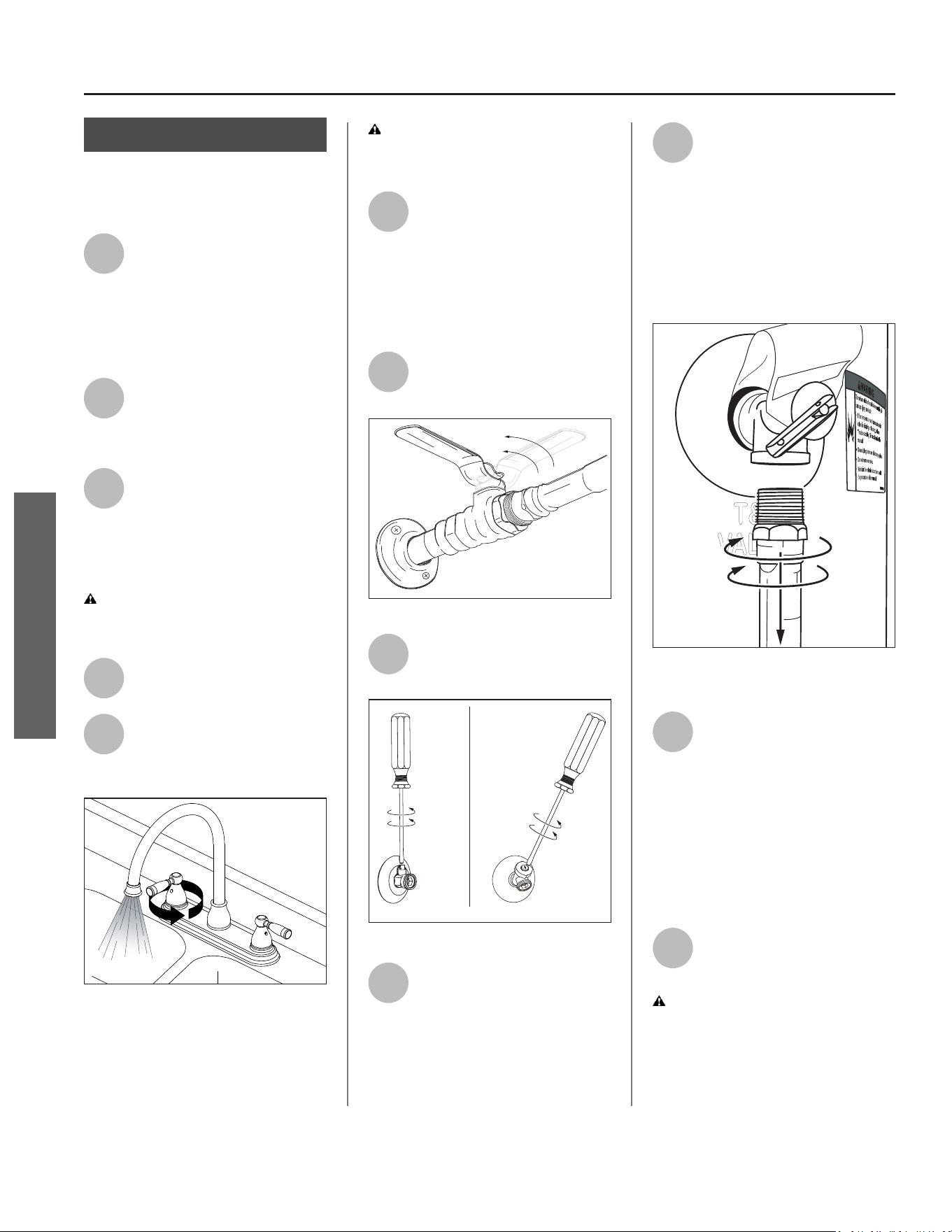
10 • Residenal Electric Water Heater Use and Care Guide
Step: 3
Removing the Old
Water Heater
1
Read each installaon step
and decide if you have the
necessary skills to install the
water heater. Only proceed if you can
safely perform the work. If you are
not comfortable, have a qualied
person perform the installaon.
2
Locate the water heater’s
circuit breaker and turn it
OFF (or remove the circuit’s
fuses).
3
On the old water heater,
remove the electrical juncon
box access panel. Using a
non-contact circuit tester, check the
wiring to make certain the power is
OFF.
WARNING! Working on an
energized circuit can result in severe
injury or death from electrical shock.
4
Disconnect the electrical
wires.
5
Open a hot water faucet and
let the hot water run unl it
is cool (this may take 10
minutes or longer).
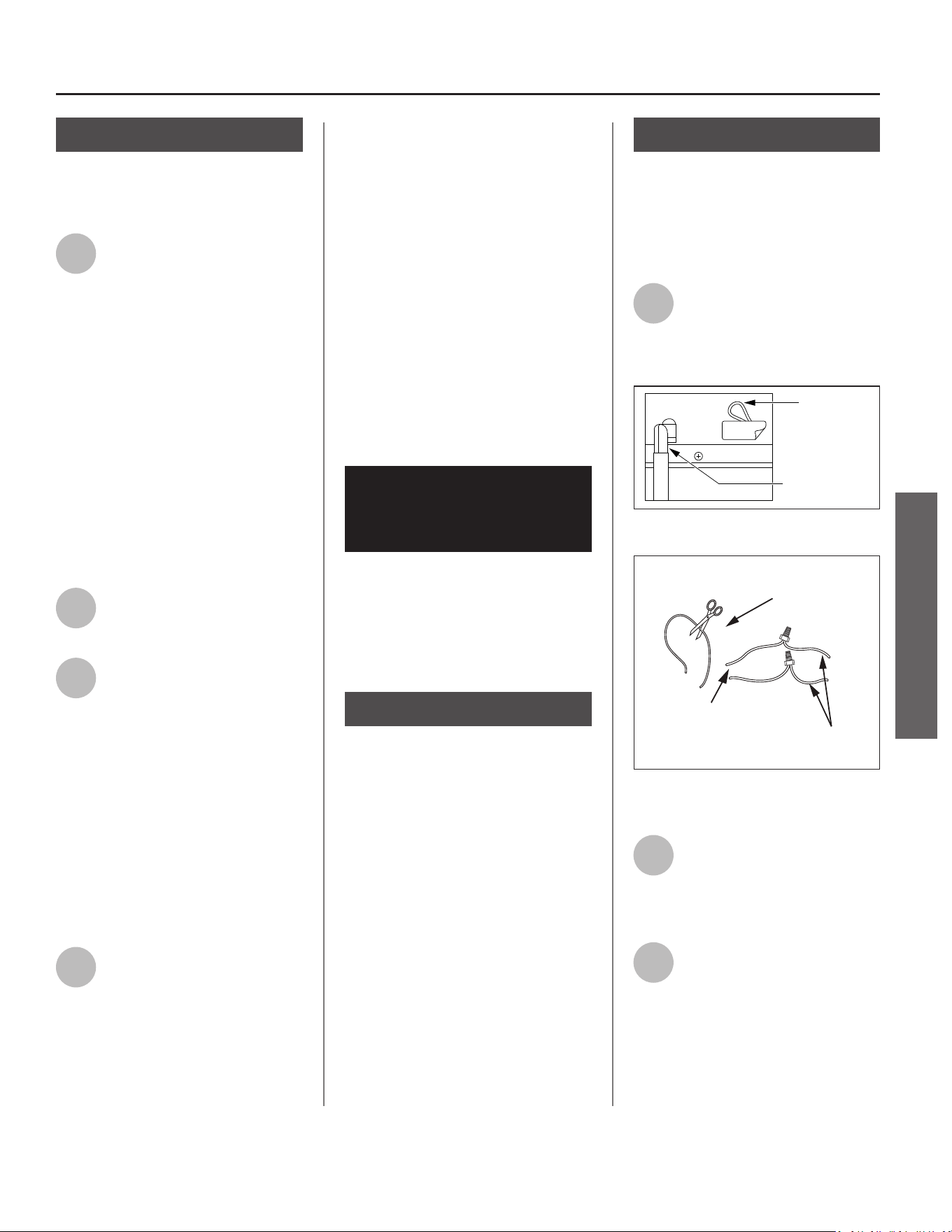
Figure 10 - Let the hot water run unl it is cool.
WARNING! Be sure the water
runs cool before draining the tank to
reduce the risk of scalding.
6
Connect a garden hose to the
drain valve and place the
other end of the hose in a
drain, outside, or a bucket. (Note that
sediment in the boom of the tank
may clog the valve and prevent it from
draining. If you cannot get the tank to
drain, contact a qualied person.)
7
Turn the cold water supply
valve OFF.
Figure 11 - Cold water supply in OFF posion.
8
Open the drain valve on the
water heater.
Figure 12 - Draining the old water heater.
9
Also open a hot water faucet
to help the water in the tank
drain faster.
10
When the tank is empty,
disconnect the Temperature
& Pressure (T&P) Relief Valve
discharge pipe. You may be able to
reuse the discharge pipe, but do not
reuse the old T&P Relief Valve. A new
T&P Relief Valve comes installed on
your water heater (or on some
models, is in the carton with the
water heater).
Figure 13 - Removing the T&P Relief Valve
discharge pipe.
11
Disconnect the water pipes.
Many water pipes are
connected by a threaded
union which can be disconnected with
wrenches. If you must cut the water
pipes, cut the pipes close to the water
heater’s inlet and outlet connecons,
leaving the water pipes as long as
possible. If necessary, you can make
them shorter later when you install
the new water heater.
12
Remove the old water heater.
WARNING! Use two or more
people to remove or install the water
heater. Failure to do so can result in
back or other injury.
INSTALLATION
INSTALLATION
Residenal Electric Water Heater Use and Care Guide • 11
INSTALLATION
INSTALLATION
Step: 4
Installing the New
Water Heater
1
Completely read all
instrucons before beginning.
If you are not sure you can
complete the installaon, DO NOT
RETURN THIS UNIT TO THE STORE.
Seek assistance from any of the
following sources:
• Professional Installaon is available
for this product and the work is guar-
anteed. Call your Lowe’s® store to
have this water heater installed.
• Schedule an appointment with a
qualied person to install your water
heater.
• Call our Technical Assistance Hotline
at 1-877-817-6750.
2
Install a suitable drain pan (if
required) that is piped to an
adequate drain.
3
Set the water heater in place
taking care not to damage the
drain pan.
NOTICE: Most codes require seng
the water heater in a suitable drain
pan piped to an adequate drain. The
drain pan helps avoid property damage
which may occur from condensaon
or leaks in the piping connecons or
tank. The drain pan must be at least
2” (50 mm) wider than the diameter
of the water heater. Install the drain
pan so the water level is limited to a
maximum depth of 1-3/4” (45 mm).
4
Verify that the water heater is
set in place properly. Check
that:
• The T&P Relief Valve will not be in
contact with any electrical parts.
• There is adequate space to install
the T&P Relief Valve discharge pipe
and that it can be piped to a separate
drain (and not into the drain pan).
• There is adequate space to install
proper condensate drain tubing.
• There is adequate access and space
around the water heater for future
maintenance. A minimum clearance
of 6”/152 mm must be maintained
from the front side of the water
heater.
• Unit is level to allow proper conden-
sate drainage. An unlevel unit may
lead to condensate draining improp-
erly, resulng in property damage.
• The water heater is installed upright.
DO NOT CONNECT ELECTRICAL
WIRING UNTIL YOU ARE
INSTRUCTED TO DO SO
NOTICE: Connecng electrical power
to the tank before it is completely full
of water (the water must run FULL
STREAM from a hot water tap for a
full three [3] minutes) may cause the
upper heang element to burn out.
Step: 5
Connecng the
Condensate Pump
When Required
NOTICE: If no oor drain is available,
or the drain is above the level of the
condensate line, a condensate pump
must be installed.
Follow condensate drain pump
manufacturer’s instrucons for
installaon.
Step: 6
Connecng the
Condensate Pump
Oponal Overow
Shut-O Switch
1
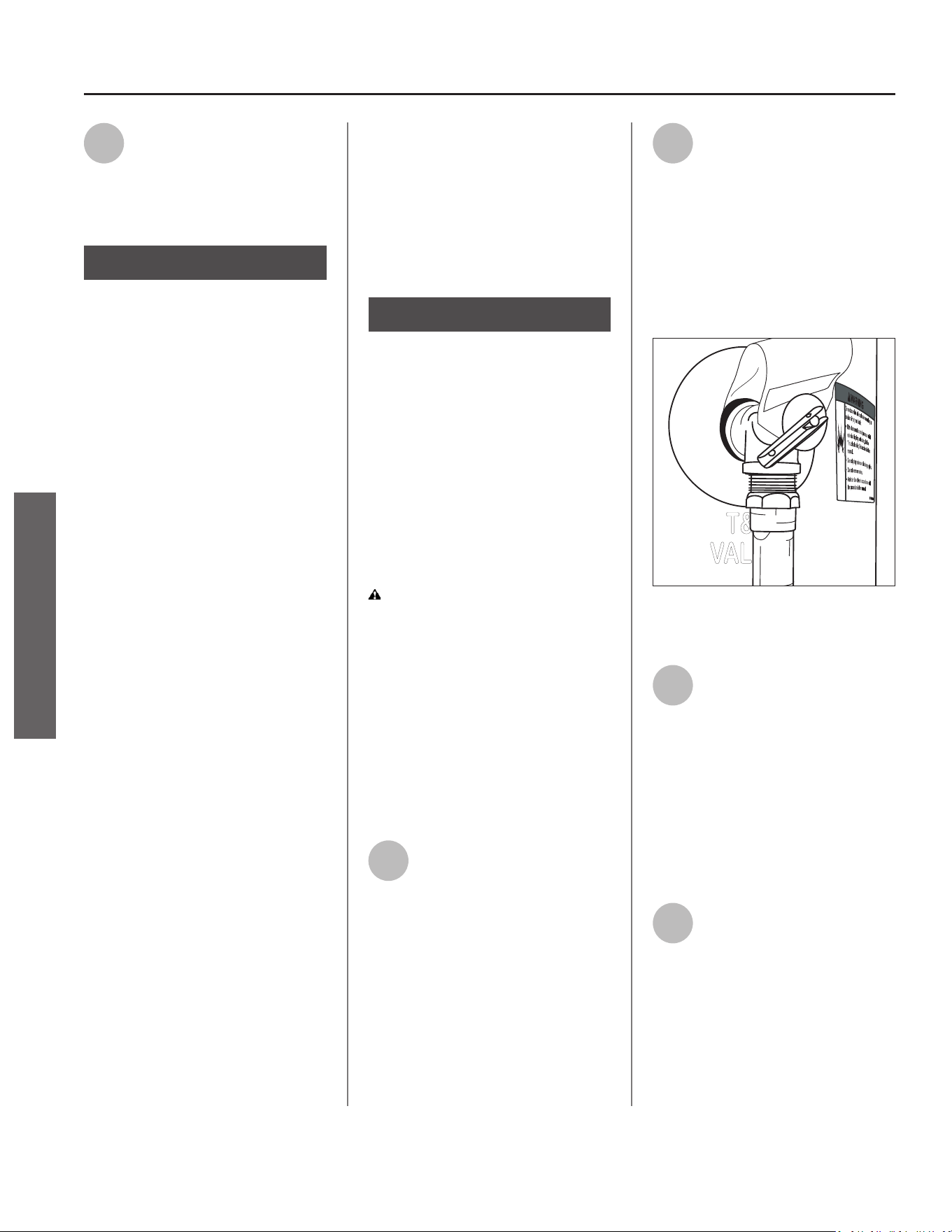
Locate the wiring loop next to
the condensate drain
connecon and remove label
(Figure 14). Cut the loop and strip
insulaon o the two ends (Figure 15).
Condensate
Pump Wiring
(Loop located
close to Drain
Connection)
Condensate
Drain Connection
REMOVE
Figure 14 - Condensate Pump wiring.
Condensate Pump Wiring Loop
(Loop Located Close to the Drain Connections)
Wires From
Water Heater
Wires to Condensate
Pump Overflow
Shut Off Switch
Figure 15 - Wiring Loop for connecon to Con-
densate Pump.
2
Measure the distance from
the wiring loop to the
condensate pump. Cut two 22
AWG wires to correct length and strip
the insulaon at both ends.
3
Connect the two 22 AWG
wires to the two wires on the
water heater using wire
connectors or other approved means
to make the power connecons.
12 • Residenal Electric Water Heater Use and Care Guide
4
Connect the free ends of the
two 22 AWG wires to the
shut-o switch on the
condensate pump in accordance with
the condensate pump manufacturer’s
recommendaons.
Step: 7
Install Condensate
Drain Line
NOTICE: Barbed drain and exible
tubing for condensate drain line come
pre-installed from the factory.
• Flexible tubing must be used to
connect the condensate drain to a
suitable drain or condensate pump.
• Condensate drain line should be
installed in condioned areas only.
Install approved insulaon on the
condensate drain line to prevent
condensaon from forming on the
outside of the drain line. Conden-
saon drain lines installed in areas
that are subject to freezing tempera-
tures should be wrapped with a na-
onally recognized heat tape. Install
per manufacturer’s instrucons.
• Do not connect condensate drain
line with other drain or discharge
lines into a single (common) pipe
or line. Each line (condensate drain
line, temperature and pressure relief
valve discharge pipe, etc.) should be
independently run to an adequate
drain.
• Slope the condensate drain line
toward the inside oor drain or
condensate pump.
• The condensate drain line and
connecons to the drain piping must
comply with all local codes.
• If a condensate pump is installed, it
should be wired to shut o the heat
pump in the event the condensate
pump fails or the oat switch in the
pump acvates (see “Connecng
the Condensate Pump Oponal
Overow Shut-O Switch” on page
11).
• Allow enough length on the 5/8” ID
exible plasc tubing (pre-installed
from the factory) to access an ade-
quate drain.
Step: 8
Connect the
Temperature and
Pressure (T&P) Relief
Valve/Pipe
Most T&P Relief Valves are pre-
installed at the factory. In some cases,
they are shipped in the carton and
must be installed in the opening
marked and provided for this purpose
and according to local codes.
WARNING! To avoid serious injury
or death from explosion, install a
T&P Relief Valve according to the
following instrucons:
If your water heater does not have
a factory installed T&P Relief Valve,
install the new T&P Relief Valve that
came with your water heater. Do
not reuse an old T&P Relief Valve.
Install a T&P Relief Valve discharge
pipe according to local codes and the
following guidelines:
1
The discharge pipe should be
at least 3/4” (19 mm) inside
diameter and sloped for
proper drainage. Install it to allow
complete drainage of both the T&P
Relief Valve and the discharge pipe.
2
The discharge pipe must
withstand 250°F/121°C
without distoron. Use only
copper or CPVC pipe. Most homes use
copper water pipes, but some use
CPVC or cross-linked polyethylene
(PEX). Use ngs appropriate for the
type of pipe in your home. Do not use
any other type of pipe, such as PVC,
iron, exible plasc pipe, or any type
of hose.
Figure 16 - The T&P Relief Valve discharge pipe
must be installed properly and piped to an
adequate drain.
3
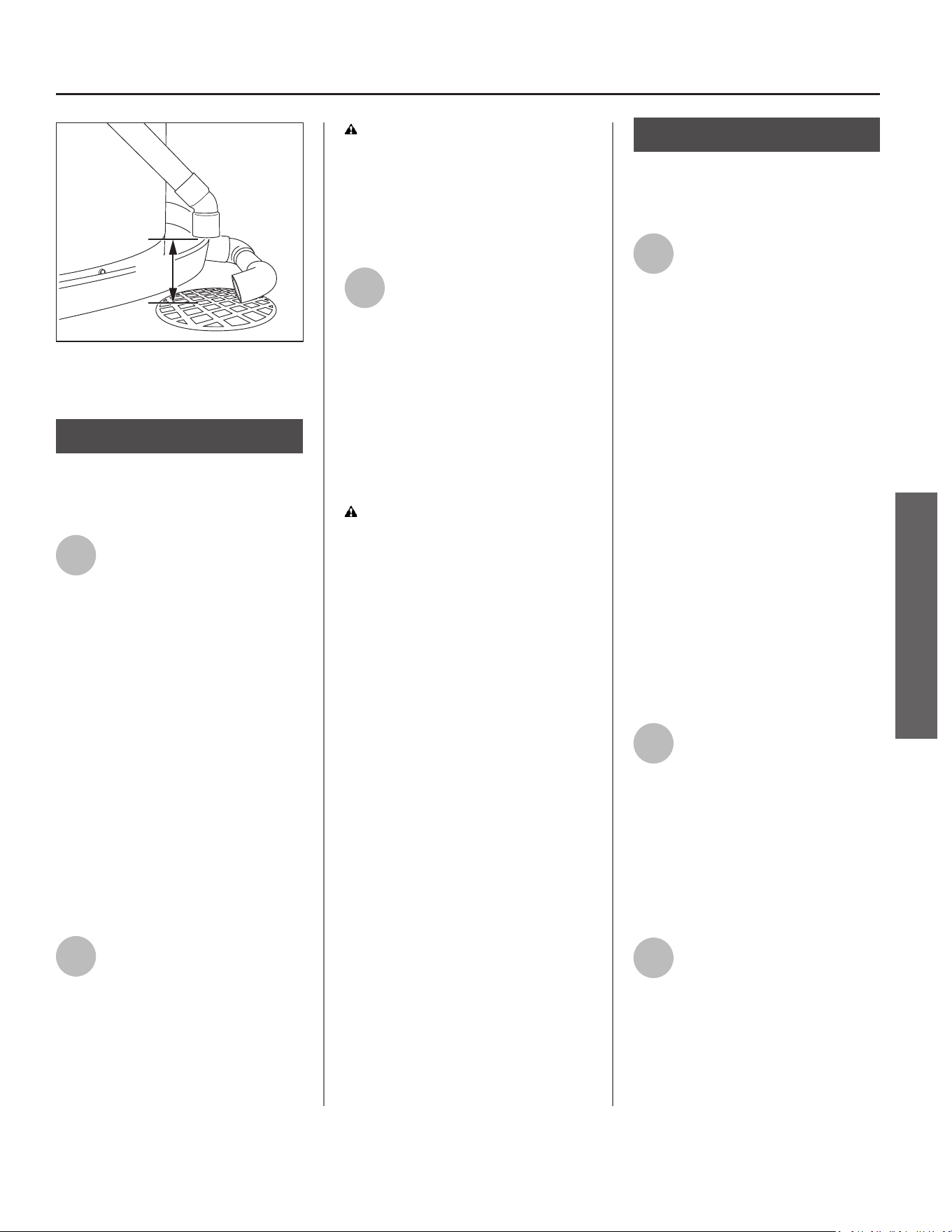
Terminate the discharge pipe
a maximum of 6” (15 cm)
above a oor drain, or
outside the building (Figure 17). Do
not drain the discharge pipe into the
drain pan; instead pipe it separately to
an adequate drain. In cold climates,
terminate the discharge pipe inside
the building to an adequate drain.
Outside drains could freeze and
obstruct the drain line. Protect the
drain from freezing.
4
Do not place any valve or
other restricon between the
tank and T&P Relief Valve. Do
not cap, block, plug, or insert any
valve between the T&P Relief Valve
and the end of the discharge pipe. Do
not insert or install any reducer in the
discharge pipe.
INSTALLATION
INSTALLATION
Residenal Electric Water Heater Use and Care Guide • 13
INSTALLATION
INSTALLATION
6.00"
MAX
Discharge
Pipe
Drain
Pipe
Figure 17 - The end of the T&P Relief Valve dis-
charge pipe must stop no more than 6” (15 cm)
above a oor drain or outside.
Step: 9
Install Shut-O and
Tempering Valves
1
Install a manual shut-o valve
(available at Lowe’s®) on the
cold water line that supplies
the water heater. Install the shut-o
valve near the water heater so that it is
readily accessible. Only use valves that
are compable with potable water.
Use only full-ow ball or gate valves.
Other types of valves may cause
excessive restricon to the water ow.
NOTICE: An automac cold water
shut-o valve is included with this
water heater. This is to be installed
on the cold water line near the water
heater. Make sure the module cable
can be easily plugged into the Control
Assembly (within 30”/76 cm). See
included kit instrucons found with
the automac cold water shut-o valve
for further installaon instrucons.
2
Install Thermostac Mixing
Valves at each point-of-use
(for example, the kitchen sink,
bathroom sink, bath or shower).
Consult the valve manufacturer’s
instrucons or a qualied person.
WARNING! Even if the water
heater’s thermostat(s) are set to a
relavely low temperature, hot water
can scald. Install Thermostac Mixing
Valves at each point-of-use to reduce
the risk of scalding (see page 4 and
Figure 8).
3
For water heaters that are fed
by a solar water heang
system (or any other pre-
heang system), always install a
Thermostac Mixing Valve or other
temperature liming device in the inlet
water supply line to limit water supply
inlet temperature to 120°F/49°C. Solar
water heang systems can supply
water with temperatures exceeding
170°F/77°C and may result in water
heater malfuncon.
WARNING! Hot water provided
by solar heang systems can cause
severe burns instantly, resulng in
severe injury or death (see page 4).
Step: 10
Connect the Water
Supply
1
Determine the type of water
pipes in your home. Most
homes use CPVC or cross-
linked polyethylene (PEX). Use ngs
appropriate for the type of pipe in
your home. Do not use iron or PVC
pipe – they are not suitable for potable
water.
The water inlet and outlet threaded
connecons are steel. When
connecng the unit to piping made of
a dierent material, use of a dielectric
ng or a dielectric union conforming
to ASSE 1079 is recommended to
prevent corrosion and potenal
subsequent water leaks at or near the
connecon. Dielectric ngs may be
required by local plumbing codes.
IMPORTANT! A dielectric waterway
nipple is dierent than a dielectric
nipple and does not perform the same
funcon. A dielectric waterway nipple
will not protect the water heater from
corrosion.
2
Connect the cold water supply
using 3/4 inch Naonal Pipe
Thread (“NPT”) to the BLUE
cold water connecon on the top side
of the water heater.
To avoid damaging gaskets in the ex
lines, use a pipe wrench at the hot
and cold nipples to counter torque
when installing or removing water
connecons. DO NOT overghten.
3
Connect the hot water supply
using 3/4 inch NPT to the
corresponding RED hot water
connecon on the top side of the
water heater. Follow the same
connecon guidelines as for the cold
water supply.
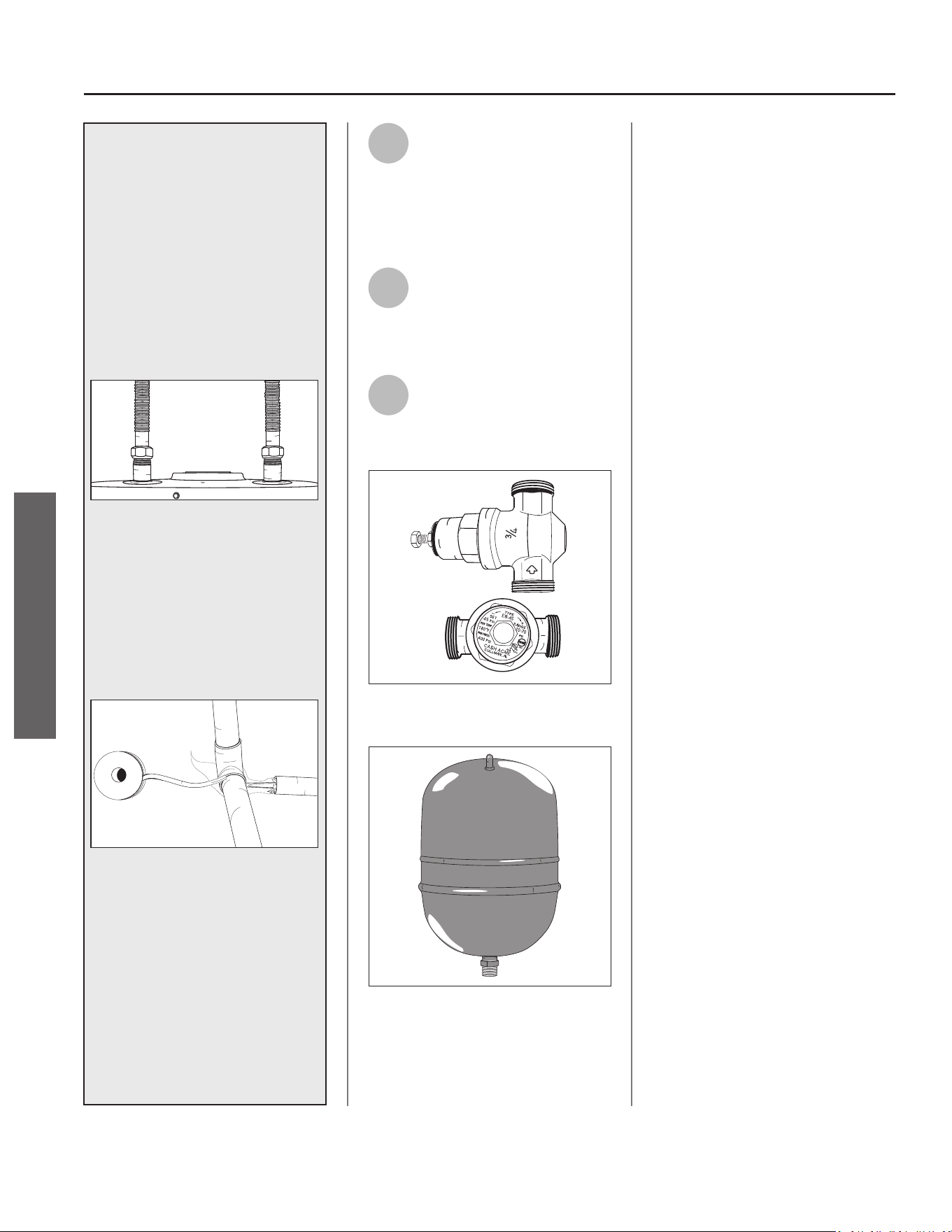
14 • Residenal Electric Water Heater Use and Care Guide
IF YOU HAVE COPPER PIPES:
If your home has copper water
pipes, you can solder the water pipe
connecons or use compression
ngs which do not require
soldering. Compression ngs
are easier to install than soldering
pipe. Check with local plumbing
ocials to determine what types of
pipe materials are suitable for your
locaon. Do not use lead-based
solder.
Compression ngs don’t require soldering.
NOTICE: Do not solder pipes while
they are aached to the water
heater. The water heater’s inlet
and outlet connecons contain
non-metallic parts which could
be damaged. The proper way to
connect the water heater to copper
water pipes is as follows:
Solder a short length of pipe (about
a foot or so) to a threaded adapter
using only 95/5 n-anmony
or equivalent solder. Aach the
threaded adaptors to the water
heater’s connecons (using
thread sealant tape or pipe joint
compound). Connect the home’s
water pipes by soldering, keeping
the connecons at the water heater
cool with wet rags. DO NOT over
apply joint compound.
4
Install insulaon (or heat
tape) on the water pipes
especially if the indoor
installaon area is subject to freezing
temperatures. Insulang the hot
water pipes can increase energy
eciency.
5
Double check to make sure
the hot and cold water pipes
are connected to the correct
hot and cold water ngs on the
water heater.
6
If needed, install (or adjust)
the home’s Pressure
Reducing Valve to 50-60 psi
and install a Thermal Expansion Tank.
Figure 18 - A Pressure Reducing Valve is re-
quired if your home’s water pressure is above
80 psi.
Figure 19 - The Thermal Expansion Tank should
be pressurized with air to match the home’s
incoming water pressure.
Recirculang Loop
A recirculaon loop is somemes
provided in a hot water system where
it is desirable to have on demand hot
water at the xtures.
We do not recommend this heat
pump water heater for use in
conjuncon with recirculaon loop
systems due to the wide variety
of applicaons and variability in
installaon and performance of
these systems. We can provide the
following guidance that you may use
to determine if this heat pump water
heater will operate at peak eciency
in your specic applicaon.
A smaller diameter size pipe with an
inline circulaon pump is plumbed
to a locaon near the furthest
xture and to a locaon near the
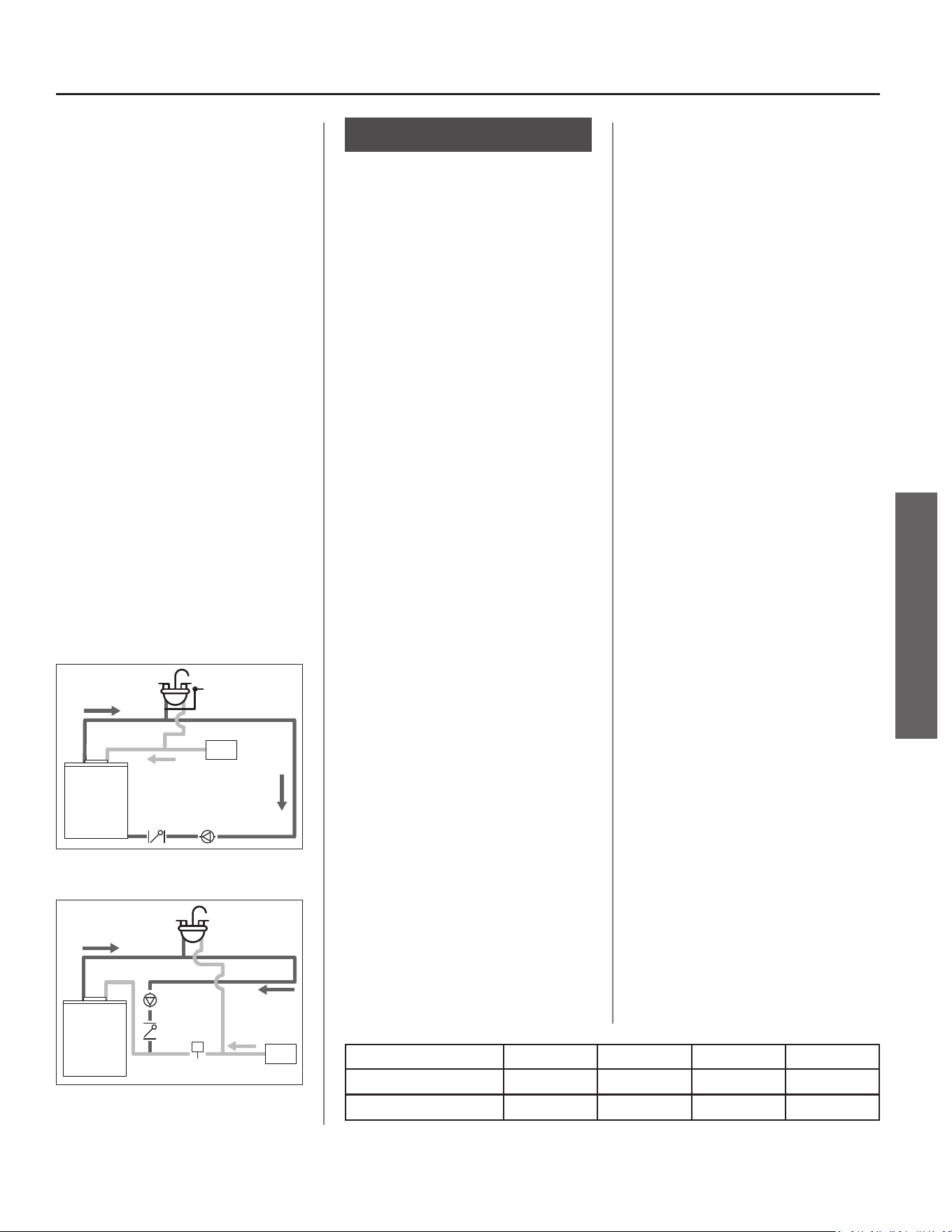
water heater. The pump shall be “on
demand.” This means that either by
manual control (Figure 20) or sensor
control (Figure 21), the pump shall be
iniated shortly prior to the hot water
draw.
A recirculaon loop in your home
provides on demand hot water
to your xtures quickly and helps
migate the amount of wastewater
sent down the drain while you wait,
but hot water may be connuously
owing through your plumbing
system. If your recirculaon pipes
are not insulated well enough to
prevent heat energy loss, then your
pipes will radiate heat throughout
the surrounding areas of your home.
The heat energy lost can cause your
heat pump water heater to work
connuously to maintain the heat in
the pipes.
This heat pump water heater is
programmed with proprietary
soware to ensure the water heater
operates at peak eciency. Demand
for hot water in the plumbing system
will draw hot water from the tank
INSTALLATION
INSTALLATION
Residenal Electric Water Heater Use and Care Guide • 15
INSTALLATION
INSTALLATION
causing a heang cycle as the supply
water temperature is much cooler
than the water in the tank. You should
consider alternaves to installing a
heat pump water heater in conjuncon
with a residenal recirculaon loop to
prevent the water heater from running
connuously due to the lower input
of these types of units, potenally
causing a “no hot water” condion.
If your recirculaon loop or pump is
designed to help provide on demand
hot water to sinks, showers, etc.,
and does not present a signicant
connuous heang load, this heat
pump water heater can generally be
used with on demand recirculaon
systems.
Energy savings from this heat pump
water heater will be signicantly
impacted depending on condions
associated with the specic
applicaon. The heat energy lost in a
recirculaon loop system can cause
your water heater to run excessively.
This heat pump water heater may not
be able to accommodate demand.
CHECK
VALVE
HOT WATER
SUPPLY
WATER
METER
DEDICATED
RETURN
LINE
HEAT PUMP
WATER HEATER
CIRCULATION
PUMP
FIXTURE FURTHEST
FROM WATER HEATER
WITH MANUAL SWITCH
FOR INITIATING
CIRCULATION PUMP
COLD
WATER
SUPPLY
Figure 20 - Recirculaon Loop Diagram with
Manual Switch.
CIRCULATION
PUMP
HOT WATER
SUPPLY
COLD
WATER
SUPPLY
CHECK
VALVE
HOT WATER
RETURN
HEAT PUMP
WATER HEATER
FIXTURE FURTHEST
FROM WATER HEATER
WATER
METER
FLOW MONITOR
(ON DEMAND SENSOR)
Figure 21 - Recirculaon Loop Diagram with
Sensor Control.
Step: 11
Ducng Requirements
(oponal)
Heat is absorbed from air entering
the intake side of the compressor
unit on top of the water heater and
transferred to the water inside the
storage tank. Cooler dehumidied
air exing the exhaust side of the
compressor unit is a normal by-
product of operaon. In unvented
applicaons, a minimum installaon
space of 450 ³/12.7 m³ is required,
however, if adequate provisions are
made for air exchange, this water
heater may be installed in small
enclosures with a minimum installaon
space of 84 ³/2.3 m³ (see “Verify that
the Locaon is Appropriate” secon
[pages 8-9] in this manual for more
informaon about required ducng
and vented or louvered doors). The
factory installed duct adaptors can be
used to redirect intake and/or exhaust
air from or to other locaons to
permit installaon in conned spaces,
improve performance and maintain
comfort in occupied areas of the
home.
INSTALLATION LIMITATIONS
There are two duct adaptors; one
connects to the air exhaust side of the
top shroud cover (near the back of the
water heater) and one to the air intake
side of the top shroud cover (near the
front of the water heater). The two
cannot be interchanged. The inlet and
outlet duct adaptors on the water
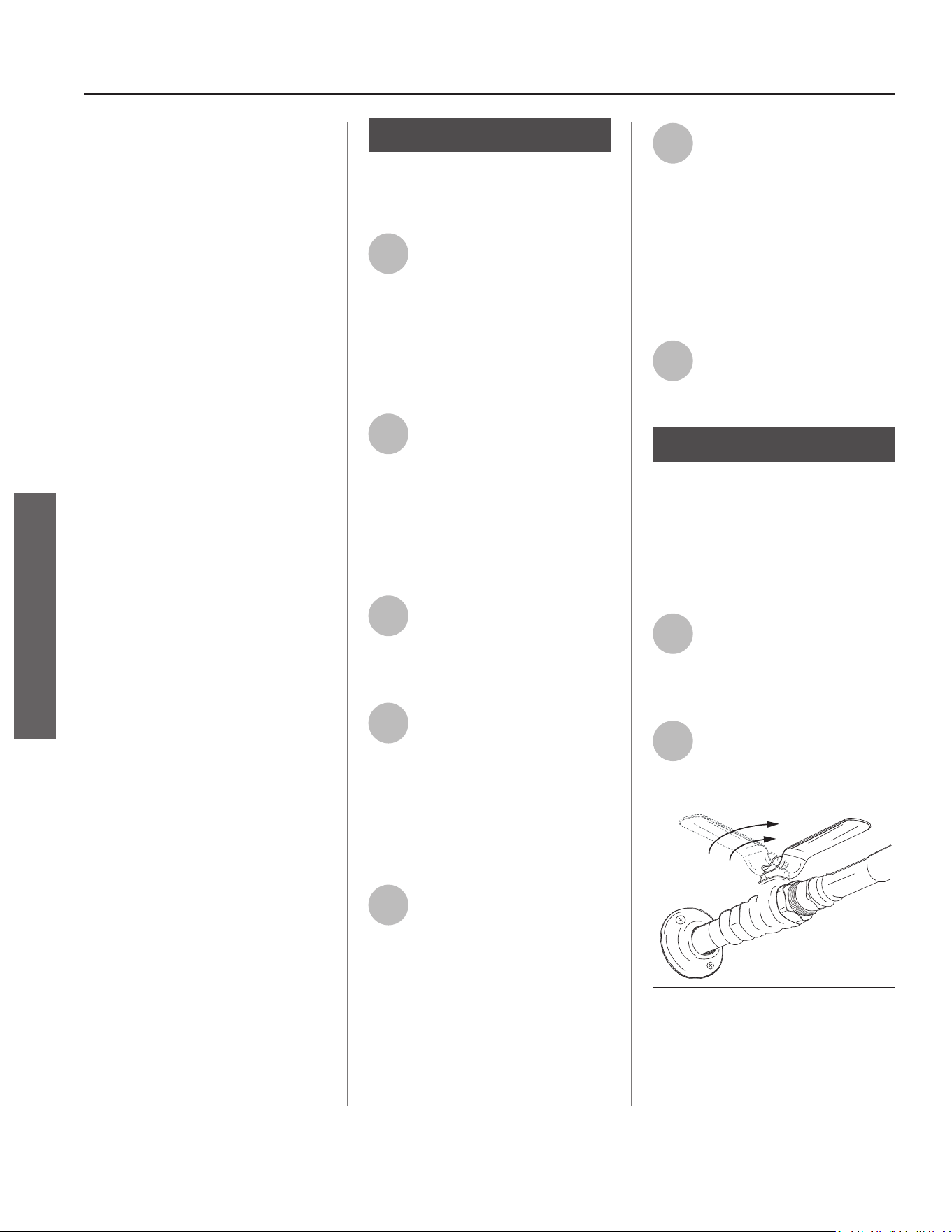
heater accept 8” diameter ducng. No
addional adaptors are needed.
7”, 6” and 5” diameter ducng is
supported. The table below lists the
total feet of ducng allowed.
For duct diameters smaller than 8”
diameter, the table takes into account
the duct reducer(s) and up to 10 feet
of 8” inch rigid ducng (two elbows)
before the duct reducer(s) at the unit.
Duct reducers must be installed within
10 feet (two elbows) of the unit or
within 2 feet of the duct terminaon.
IMPORTANT: A minimum length of 12”
exible ducng (8” diameter) must be
installed between the duct adaptors
and any rigid ducng.
Air can be drawn from or expelled
to the outdoors, an ac space, or to
another room inside the home.
INSTALLATION
CONSIDERATIONS
The compressor unit on the water
heater is disabled when the
temperature of the air owing to the
intake is lower than 37°F/3°C or higher
than 120°F/49°C. These operaonal
parameters must be considered when
determining if a locaon to duct air
from/to will be suitable.
NOTICE: If the compressor unit is
disabled for long periods of me due
to air intake temperature being too
hot or too cold, the potenal energy
savings a heat pump water heater is
able to provide may be signicantly
reduced.
AIR INTAKE
Outdoor air temperatures will oen
be lower than 37°F/3°C in many
regions during fall and winter months.
Ac temperatures will oen exceed
120°F/49°C in many regions during
spring and summer months. For
units installed in condioned spaces,
ducng outdoor air to the intake of the
unit may place addional load on
Duct Type / Diameter 8” 7” 6” 5”
Flexible 100’ 50’ 24’ —
Rigid 300’ 155’ 65’ 20’
16 • Residenal Electric Water Heater Use and Care Guide
space heang and cooling equipment
unless the air from the exhaust is also
ducted to an alternate locaon.
Air being drawn from an alternate
locaon inside the home may cause
a negave pressure condion inside
that area. As a result, cold or hot air
from outdoors may be drawn into
the structure and place addional
load on the space heang and cooling
equipment.
AIR EXHAUST
The air exhaust from a unit installed
in a garage or any area where
solvents or other chemicals that
emit potenally harmful fumes are
stored or automobiles are located
must never be ducted to any other
space inside the building structure.
This would include all occupied and
unoccupied spaces such as acs or
basements. Potenally harmful fumes
and vapors from solvents and cleaners
or automobile exhaust gases could be
introduced into living spaces.
Cold air blowing from the air exhaust
into an alternate locaon inside the
home may cause cooling discomfort.
Cold air blowing from the air exhaust
into an alternate locaon inside the
home may place addional load on
space heang equipment during fall
and winter months.
Ducng only exhaust air to an
alternate locaon may cause a
negave air pressure in the installed
space. As a result, cold or hot air
from outdoors may be drawn into
the structure and place addional
load on the space heang and cooling
equipment.
Step: 12
Ducng Installaon
(oponal)
1
Read each installaon step
and decide if you have the
necessary skills to install
intake and exhaust ducng to and
from the heat pump water heater.
Only proceed if you can safely
perform the work. If you are not
comfortable, have a qualied person
perform the installaon.
2
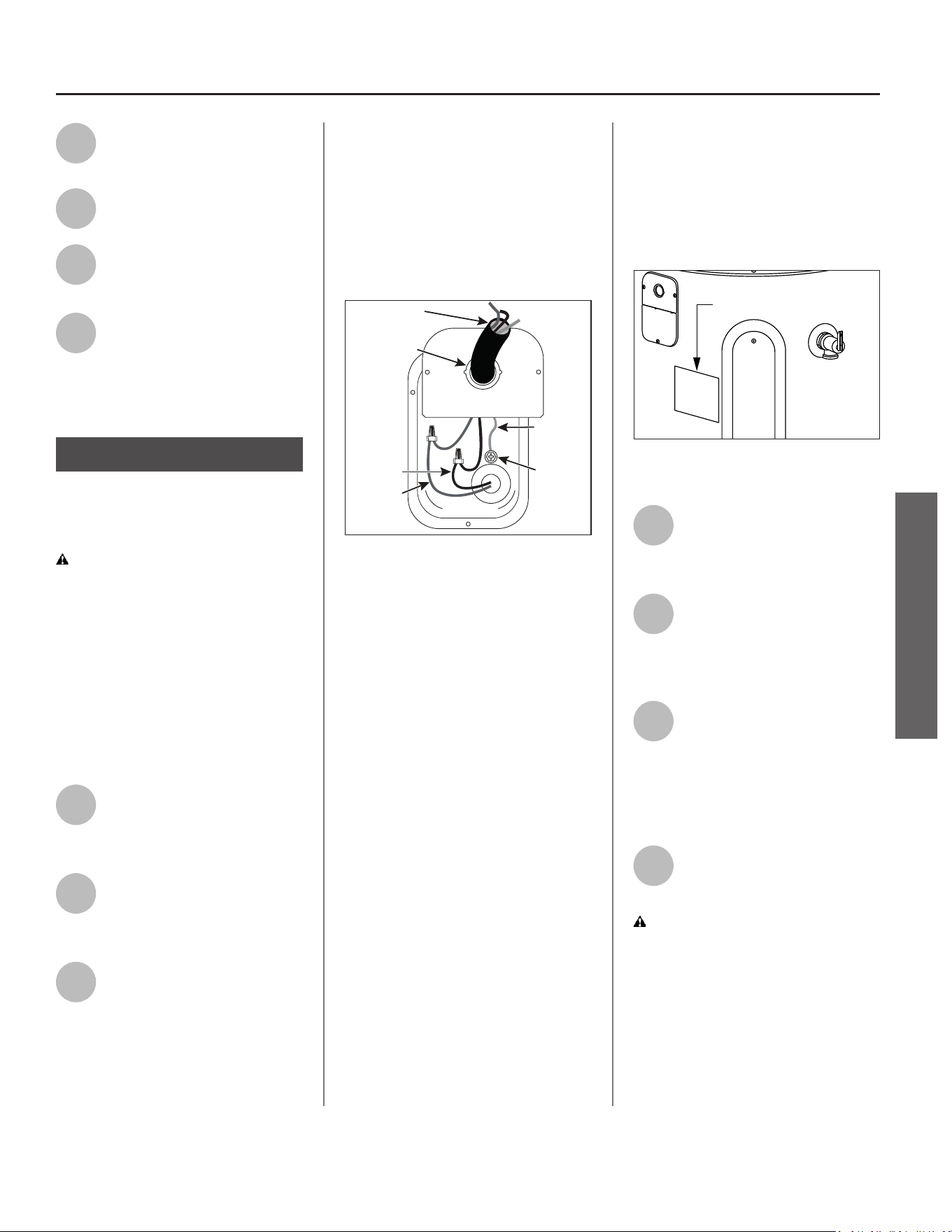
Aer the desired length of 8”
exible duct has been
determined, carefully cut
completely around and through the
duct insulaon jacket with a pair of
scissors. Using a pair of wire cuers,
cut the wire inside the core duct. Fold
the duct insulaon jacket back and
away from the core duct.
3
Slide the core duct over the
air exhaust duct adaptor and
secure with a cable e. Seal
core duct with at least two wraps of
insulaon tape over cable e.
4
Slide duct insulaon jacket
back over the core duct and
the air exhaust duct adaptor.
Use insulaon tape to secure the duct
insulaon jacket to the air exhaust
duct adaptor. Addionally, secure duct
insulaon jacket with cable e. Repeat
procedure for the air intake duct
adaptor.
5
Add support to the duct work
as necessary with ducng
tube hooks or as required by
local codes. Special aenon must be
given to prevent large droops in the
duct work which could allow moisture
to pool.
6
The appropriate duct
terminaon shall be added to
the terminaon end of the
duct. This terminaon shall prevent
any debris or rodents from entering
the duct work and shall minimally
restrict airow through the ducng. In
addion, the terminaon shall be
designed to prevent rain from
entering the duct work if terminated
to the outside.
7
The ow area terminaon
must be at least 40 sq in. to
avoid overloading the heat
pump water heater fan.
Step: 13
Verify Connecons and
Completely Fill Tank
To remove air from the tank and allow
the tank to ll completely with water,
follow these steps:
1
Remove the ow restrictor at
the nearest hot water faucet.
This allows any debris in the
tank or plumbing system to be
washed out.
2
Turn the cold water supply
back ON and ensure any shut-
o valves installed on the
cold water supply line are open.
Figure 22 - Fully open the cold water supply
valve (full-ow ball valve pictured above).
INSTALLATION
INSTALLATION
Residenal Electric Water Heater Use and Care Guide • 17
INSTALLATION
INSTALLATION
3
Open a hot water faucet and
allow the water to run unl it
ows with a full stream.
4
Let the water run full stream
for three full minutes.
5
Close the hot water faucet
and replace the ow
restrictor.
6
Check inlet and outlet
connecons and water pipes
for leaks. Dry all pipes so that
any drips or leaks will be apparent.
Repair any leaks. Almost all leaks occur
at connecons and are not a tank leak.
Step: 14
Make Electrical
Connecons
WARNING! Working on an
energized circuit can result in severe
injury or death from electrical shock.
NOTICE: Do not supply electrical
power to water heater unless you are
sure all of the air is out of the tank and
the tank is completely full of water.
Although this water heater is equipped
with “Dry-Fire” protecon, be certain
all air is purged from the tank before
making any electrical connecons.
1
Be sure the electrical power
to the water heater is turned
OFF at the circuit breaker
panel (or remove the circuit’s fuses).
2
Using a non-contact circuit
tester, check the wiring to
make certain the power is OFF
and the circuit is not energized.
3
This water heater requires a
208/240 VAC single phase 30
amp power supply, at 50Hz or
60Hz. Check the water heater’s data
plate (Figure 24) and ensure that the
home’s voltage, wiring size (ampacity)
and circuit breaker rang and type are
correct for this water heater. Refer to
the wiring diagram located on the
water heater, and on page 38 of this
manual, for the correct electrical
connecons. Ensure that wire sizes,
type, and connecons comply with all
applicable local codes. In the absence
of local codes, follow NFPA-70 and the
current edion of the Naonal Electric
Code (NEC).
1/2” Conduit
Opening
Green
Ground
Screw
Green
Ground
Wire
Red Wire
Black Wire
Power Supply
Connector
Figure 23 - Connecng the electrical wires
(boom cover to electrical juncon box removed
for clarity).
If metal conduit is used for the
grounding conductor:
• The grounding electrode conductor
shall be 10 gauge solid copper wire.
The copper wire shall be of one
connuous length without a splice
or joint.
• Rigid metal conduit, intermediate
metal conduit, or electrical metallic
tubing may be used for the ground-
ing means if conduit or tubing is
terminated in ngs approved for
grounding.
• Flexible metal conduit or exible
metallic tubing shall be permied for
grounding if all the following condi-
ons are met:
I. The length in any ground return
path does not exceed 6 feet/1.8 m.
II. The circuit conductors contained
therein are protected by overcur-
rent devices rated at 30 amperes.
III. The conduit or tubing is terminat-
ed in ngs approved for ground-
ing.
For complete grounding details and
all allowable excepons, refer to the
current edion of the Naonal Electric
Code NFPA-70.
Data Plate
Figure 24 - The water heater’s electrical require-
ments can be determined from the data plate.
4
Remove the top and boom
covers on the electrical
juncon box on the side of the
water heater.
5
Install wiring in an approved
conduit (if required by local
codes). Use a UL listed or CSA
approved strain relief to secure the
electrical wiring to the water heater.
6
Connect the ground wire to
the green ground screw.
Connect the home’s two
power wires to the water heater’s two
power wires. Use suitable wire
connectors or other approved means
to make the power connecons.
7
Replace the juncon box
covers and secure with the
screws provided.
WARNING! Be sure the cover to
juncon box is secured to reduce the
risk of re and electric shock.
18 • Residenal Electric Water Heater Use and Care Guide
Step: 15
Installing the Leak
Detecon Sensor
The Leak Detecon Sensor (LDS) does
not provide protecon against a water
leak, it only provides nocaon that
water is present in the locaon of the
sensor. When a leak is detected, the
Control Assembly will display an error
code accompanied by a ashing light
and audible signal. If the presence
of water is indicated, disconnect
power to the water heater, turn OFF
the incoming water and address the
source of the leak before returning
the unit to service. See included kit
instrucons found with the LDS for
detailed installaon instrucons.
1
Plug the LDS into the
connecon port next to the
lower element access panel.
2
Aach the LDS to the heater
or drain pan using the tape
on the back of the LDS.
Ensure the metal probes point down.
3
Use the included wire clamps
to organize the wires.
Step: 16
Adjusng the
Temperature
With the installaon steps completed,
you may adjust the water heater’s
temperature seng if desired.
1
Turn the electric power back
ON. Remove/pull out the
baery protecve tab from
the le side of the Control Assembly.
2
Set the thermostat to the
desired temperature on the
Control Assembly (see
“Adjusng the Control Assembly’s
Operaonal Modes” on page 21). The
set point on this water heater has
been factory set to approximately
120°F/49°C to reduce the risk of scald
injury. You may wish to set a higher
temperature to provide hot water for
automac dishwashers or laundry
machines, to provide more hot water
capacity, and to reduce bacterial
growth. Higher tank temperatures
(140°F/60°C) kill bacteria that cause a
condion known as “smelly water”
and can reduce the levels of bacteria
that cause water-borne diseases.
WARNING! Higher temperatures
increase the risk of scalding, but even
at 120°F/49°C, hot water can scald
(see page 4 and Figure 25).
If you increase the water heater’s
temperature seng, install
Thermostac Mixing Valve(s) at each
point-of-use to reduce the risk of
scalding.
MIX
Figure 25 - Adjust Thermostac Mixing Valves at
each point-of-use to 120°F/49°C or lower.
3
Wait for the water to heat up.
It may take several hours for
a tank of cold water to heat
up. If you have no hot water aer two
hours, refer to the “Troubleshoong”
secon (beginning on page 25).
WARNING! If you have increased
the temperature seng and the
Thermostac Mixing Valves are not
set properly (or not installed) you
could scald yourself while checking
the temperature.
4
Check water temperature at
several points in your home
(for example, the bathtub
faucet, shower, or lavatory sink) and
adjust the Thermostac Mixing Valves
as needed. If you are not sure how to
adjust the Thermostac Mixing Valve
sengs, or are not sure if you have
Thermostac Mixing Valves, contact a
qualied person.
Post Installaon
Review
1
Understand how to use the
Control Assembly to set the
various modes and funcons.
2
Hybrid Mode is the
recommended Operang
Mode. Understand the
various Operang Modes and which
mode may be best, based on ambient
temperature and hot water demands.
3
Understand the importance
of roune inspecon/
maintenance of the
condensate drain pan and line. This is
to prevent any possible drain line
blockage resulng in the condensate
drain pan overowing.
4
To maintain opmal
operaon, check, remove and
clean the air lter as needed.
5
The installaon Instrucons
and Use and Care Guide
should be kept with the
water heater for reference.
INSTALLATION
INSTALLATION
Residenal Electric Water Heater Use and Care Guide • 19
OPERATION
Start-up and Operaon
NOTICE: The default operang mode
is Hybrid Mode. To select a dierent
mode, see “Adjusng the Control
Assembly’s Operaonal Modes” on
page 21.
1
Turn the electric power ON at
the circuit breaker panel, or
fuse box. Power to the water
heater will allow the water heater to
run a system diagnosc. This typically
takes several minutes.
NOTICE: The water heater will conduct
a system diagnosc (approximately
seven (7) to ten (10) minutes) each
me power is applied from an o
state. Normal operaon will begin
aer the system diagnosc has been
completed. If the system diagnosc
yields any codes, reference the
diagnosc codes secon in this manual
(see pages 25-27).
2
The diagnosc sequence
typically takes seven (7) to ten
(10) minutes. During this
period the Control Assembly will
display a series of single, alternang
dashes repevely. Once the
diagnosc sequence has nished, the
fan will turn on.
NOTICE: The heat pump’s fan will
not turn on if the average water
temperature in the tank is less than
55°F/13°C and/or the ambient air
temperature is above 120°F/49°C, or
below 37°F/7°C. Should the internal
diagnoscs detect the heat pump is
out of operaonal range, the Control
Assembly will display the code HPO.
Normal operaon will be restored
once heat pump is within operaonal
range.
3
Set the desired operaonal
mode. For typical installaons,
the factory default mode
(Hybrid Mode) oers the best
combinaon of eciency and hot
water delivery.
Operang Mode
Descripons
The operang modes can be changed
by pressing the buon for any desired
mode (Figure 26 on page 21). The
Operaon Mode Indicaon Light will
turn on when the relevant mode is
selected.
This unit is equipped with technology
that senses the hot water demand
from the unit. While in Heat Pump or
Hybrid Mode, during normal usage,
the unit will operate the heat pump
for maximum eciency. In Hybrid
Mode, during periods when the
water usage is above normal, this unit
has the ability to use one element
(upper or lower) and the heat pump
simultaneously to help improve
recovery. This transion is seamless
and will go unnoced.
General Operaon
IMPORTANT: On the inial start-up
of the unit, the water heater will go
through a seven (7) to ten (10) minute
diagnosc period prior to heang the
water.
NOTICE: If the water is warm/hot, the
unit will not go through the diagnosc
period.
The primary funcon of the Control
Assembly is to heat the water in the
tank unl it reaches the temperature
set point. The water heater has
three means of heang the water:
the elements, the heat pump, and a
combinaon of the elements and heat
pump.
The control logic of the Control
Assembly is designed so that the heat
pump will always have priority over
the elements when within operaonal
range. The temperature regulaon will
not be performed unl aer Dry-Fire
detecon tesng indicates that there is
sucient water in the tank.
Vacaon Mode
To save energy, select Vacaon Mode
to lower the temperature seng on
the thermostat if you plan to be away
for an extended me.
NOTICE: Vacaon Mode has a xed set
point of 50°F/10°C.
When Vacaon Mode is selected, the
vacaon mer will be displayed. The
default vacaon days are preset at 7
days. Press the Up and Down buons
to modify the mer to desired number
of vacaon days (seng range: 1 to
99 days or permanently ON). The
vacaon mer will blink on the display;
press the Enter buon to conrm the
vacaon mer. To deacvate Vacaon
Mode, press the Vacaon Mode buon
to return to the previous operang
mode or press the buon for any other
desired mode.
When the vacaon days decrease to 9
hours remaining, the Control Assembly
will automacally switch to the
previously selected mode.
NOTICE: Normally, the display will only
show the remaining vacaon days.
WARNING! Hydrogen gas builds up
in a hot water system when it is not
used for a long period (two weeks
or more). Hydrogen gas is extremely
ammable. If the hot water system
has not been used for two weeks or
more, open a hot water faucet for
several minutes at the kitchen sink
before using any electrical appliances
connected to the hot water system.
Do not smoke or have an open ame
or other ignion source near the
faucet while it is open.
Heat Pump Mode
Provides the highest eciency and
lowest cost operaon by using only
the heat pump for heang. Recovery
me and eciency will vary with
ambient temperature and relave
OPERATION

20 • Residenal Electric Water Heater Use and Care Guide
OPERATION
OPERATION
humidity. Eciency will be greatest,
and recovery quickest, when both
are high. At lower temperatures and
relave humidity levels, eciency will
be lower and recovery will take longer.
Heat pump operaon is allowed
between 37°F/3°C to 120°F/48.9°C
ambient temperature. At ambient
temperatures lower than 37°F/3°C
and greater than 120°F/48.9°C, the
heat pump will not operate. Similarly,
if the average water temperature
in the tank is less than 55°F/13°C,
the heat pump will not operate. The
Control Assembly will display the
code HPO, and the unit will operate
in Electric Mode unl ambient air and
water temperatures return to the safe
operang range of the heat pump.
Hybrid Mode
This is the default, recommended
seng combining high energy
eciency with reduced recovery
me. This mode uses the heat pump
as the primary heang source. One
of the heang elements (upper or
lower) will provide supplementary
heang if demand exceeds a
predetermined level so that the set
point temperature can be recovered
more quickly.
Electric Mode
The water heater funcons as a
convenonal electric unit, relying on
only the elements for heat. This mode
may be useful in periods of increased
hot water demands. When Electric
Mode is selected, the duraon mer
will be displayed. The default Electric
Mode days are preset at 3 days. Press
the Up and Down buons to modify
the mer to the desired number of
Electric Mode days (seng range: 1
to 7 days). The mer will blink on the
display; press the Mode/Enter buon
to conrm the Electric Mode mer.
NOTICE: Do not shut o power to the
unit for extended periods of me.
If power must be turned o for an
extended period of me, turn OFF
the power to the water heater at the
circuit breaker/fuse box, and then
drain the tank completely.
Hot Water+ Mode
This feature increases the amount
of usable hot water available to
beer match your daily needs. It
stores addional thermal energy by
increasing the temperature of the
water in the tank. As hot water is
drawn from the tank the integrated
smart valve combines with cold
water to mix to the desired water
temperature set on the controls.
By default, this funcon is
deacvated, but can be enabled to
three increasing levels of performance
using the Hot Water+ Mode buon
on the Control Assembly (Figure 26).
This mode operates simultaneously
with Hybrid, Heat Pump, or Electric
Mode. Hot Water+ Mode is opmized
for the factory 120°F/49°C outlet
water temperature seng and will
have decreasing benets as the set
temperature is increased.
When Hot Water+ Mode is acvated,
the LED indicator for the selected
operang mode (Hybrid, Heat Pump,
or Electric Mode) will remain lit.
Guest Mode
This mode maximizes the amount of
hot water available for holidays or
other mes with higher than normal
hot water usage. It stores addional
thermal energy by increasing the
temperature of the water in the tank.
As hot water is drawn from the tank
the integrated smart valve combines
with cold water to mix to the desired
water temperature set on the
controls.
When Guest Mode is selected, the
duraon mer will be displayed. The
default Guest Mode days are preset
at 3 days duraon. Press the Up and
Down buons to modify the mer to
the desired number of Guest Mode
days (seng range: 1 to 7 days). The
mer will blink on the display; press
the Mode/Enter buon to conrm the
Guest Mode mer. The water heater
will revert to the previous operang
mode when the duraon has expired.
NOTICE: Operang the water heater
in Guest Mode may increase energy
consumpon.
Other Controls
HEAT PUMP DEFROSTING
INDICATION:
There will be frost accumulang
on the evaporator when the heat
pump is operated under low ambient
temperatures. The controller will
order the unit to enter defrosng
cycle to opmize the heat pump
operaon performance. During
the defrosng period, the Control
Assembly will display ICE as an
indicaon.
OUT OF HEAT PUMP
OPERATION RANGE:
The Control Assembly will display HPO
as an indicaon that the ambient and/
or water temperature condion is out
of the heat pump operaon range.
NOTICE: The display will go into
“Sleep Mode” for energy saving if
there is no operaon on any buon
for 15 minutes. All of the display and
lights will be turned o except for the
“Operaonal Mode Indicaon Light,”
which will remain illuminated while
the unit is powered on. The unit can
be awakened by pressing any buon.
Your Heat Pump Water Heater is
equipped with an EcoPort CTA-2045
communicaon port. Contact your
local electric ulies company for
parcipaon and plug in module
availability and to learn more
about potenal energy savings
opportunies.
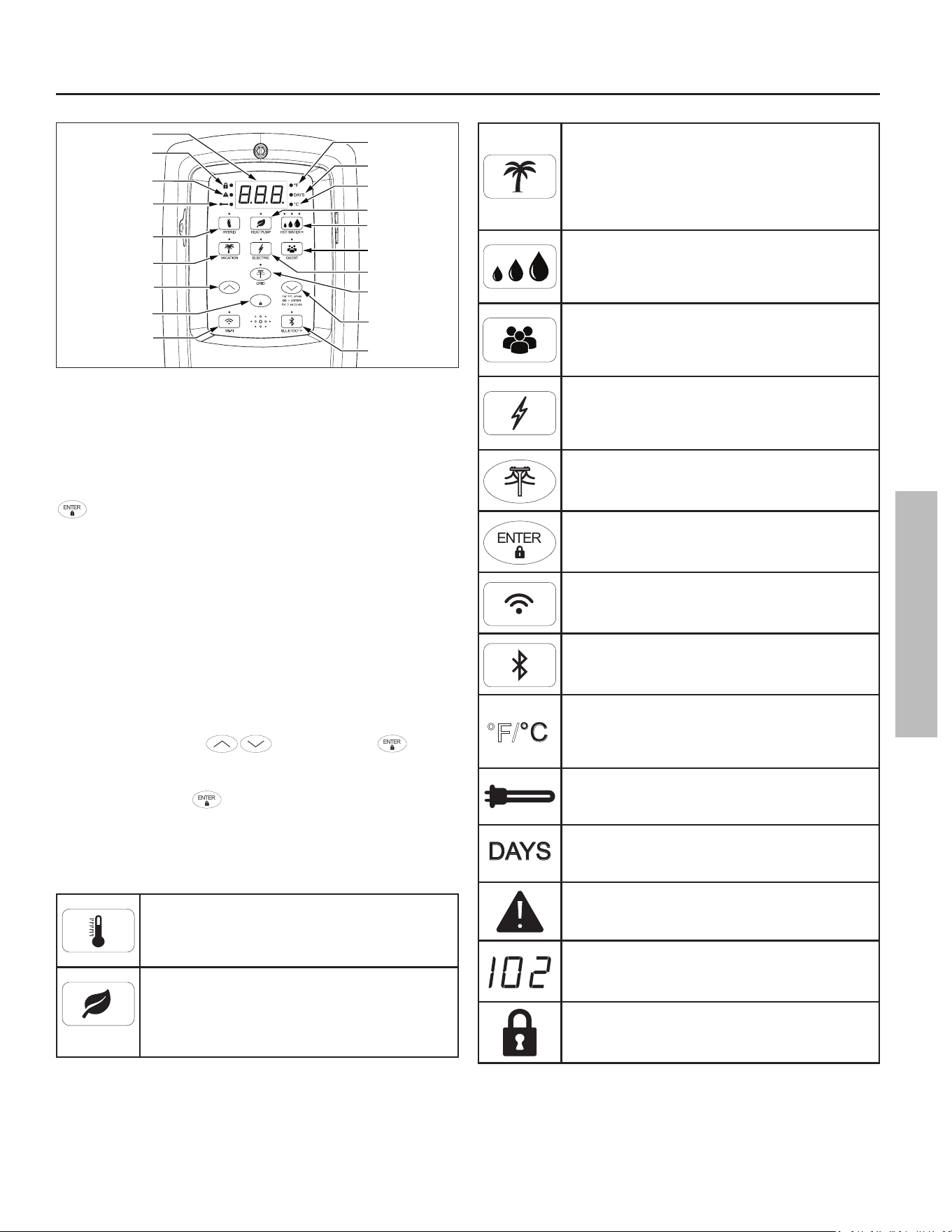
Residenal Electric Water Heater Use and Care Guide • 21
OPERATION
OPERATION
Control Assembly
Lock LED Indicator
Water Temperature
Set Point
Temperature
Down (Decrease)
Button
Temperature
Up (Increase)
Button
Wi-Fi
Button
Grid Enabled
Button W/LED
Indicator
Hot Water+ Mode
Button
Celsius LED
Indicator
Fahrenheit LED
Indicator
Hybrid Mode
Button
Days LED
Indicator
Alert
Indicator
ENTER
Vacation Mode
Button
Guest Mode
Button
LCD Display Panel
Enter/Lock Button
Bluetooth
Button
Electric Mode
Button
Heat Pump Mode
Button
Heating Cycle
LED Indicator
Figure 26 - Control Assembly
ADJUSTING THE CONTROL ASSEMBLY’S
OPERATIONAL MODES
If locked, the operang modes can be changed by holding the
E
N
T
E
R
buon for approximately 3 seconds, then touching the
desired mode icon on the Control Assembly (Figure 26).
WATER TEMPERATURE ADJUSTMENT
IMPORTANT: On the inial start-up of the unit, the water
heater will go through a seven (7) to ten (10) minute diagnosc
period prior to heang the water. Before aempng to adjust
the thermostat, read the “Important Safety Informaon”
secon on page 4. If the instrucons are not clear, contact a
qualied service technician.
The water temperature can be adjusted from 95°F/35°C to
150°F/65°C by pressing followed by the
E
N
T
E
R
buon
to set the desired temperature. The Control Assembly is
unlocked by default. To lock the display aer seng the
parameters, hold the
E
N
T
E
R
buon for 3 seconds.
°F/°C SWITCH: Press and hold the “Temperature Down” buon,
in combinaon with the “Enter” buon, for 3 seconds to switch
temperature unit between Fahrenheit and Celsius.
HYBRID MODE - System default mode. Pressing this
buon will allow high eciency heat pump operaon
with supplementary heang from a backup heang
element during periods of high demand.
HEAT PUMP MODE - Provides the highest eciency
and lowest cost operaon by using only the heat
pump for heang while in the safe ambient operang
range of the heat pump (between 37°F/3°C to
120°F/48.9°C).
VACATION MODE - The Control Assembly adjusts the
temperature set point to approximately 50°F/10°C.
This mode is recommended when the water heater
is not in use for a long period of me. This mode
minimizes energy consumpon and prevents the
water heater from freezing during cold weather.
HOT WATER+ MODE - Operates simultaneously with
Hybrid, Heat Pump or Electric Mode. Allows the user
to enable three levels of increasing performance
while maintaining the temperature set point.
GUEST MODE - Provides maximum performance
and capacity for higher than normal hot water
usage. Selecng this mode may increase energy
consumpon.
ELECTRIC MODE - The water heater funcons as
a convenonal electric unit, relying on only the
elements for heat. This mode may be useful in
periods of increased hot water demand.
SMART GRID CONTROL - Pressing this buon will
enable or disable a request for grid control (see page
24).
E
N
T
E
R
CONTROL ASSEMBLY LOCK - Holding this buon for
more than 3 seconds switches the lock mode on or
o.
Wi-Fi - Press this buon once to acvate the Wi-Fi
signal.
BLUETOOTH - Press this buon once to acvate the
Bluetooth signal.
°
C
°F/
°F/°C - Press and hold the “Temperature Down”
buon, in combinaon with the “Enter” buon,
for 3 seconds to switch temperature unit between
Fahrenheit and Celsius.
HEATING CYCLE INDICATOR - Indicates the water
heater is in a heang cycle and either the elements
are energized or the heat pump is operang.
D
A
Y
S
DAYS - Indicates the number of days (1 to 99+) the
unit will be set in vacaon mode.
ALERT INDICATOR - Indicates when there is a
Warning/Fault.
FAULT CONDITION - Will display a three digit fault
code with Alert Icon Flashing (see Diagnosc code
chart on page 25).
LOCK - Indicates the control assembly is locked.
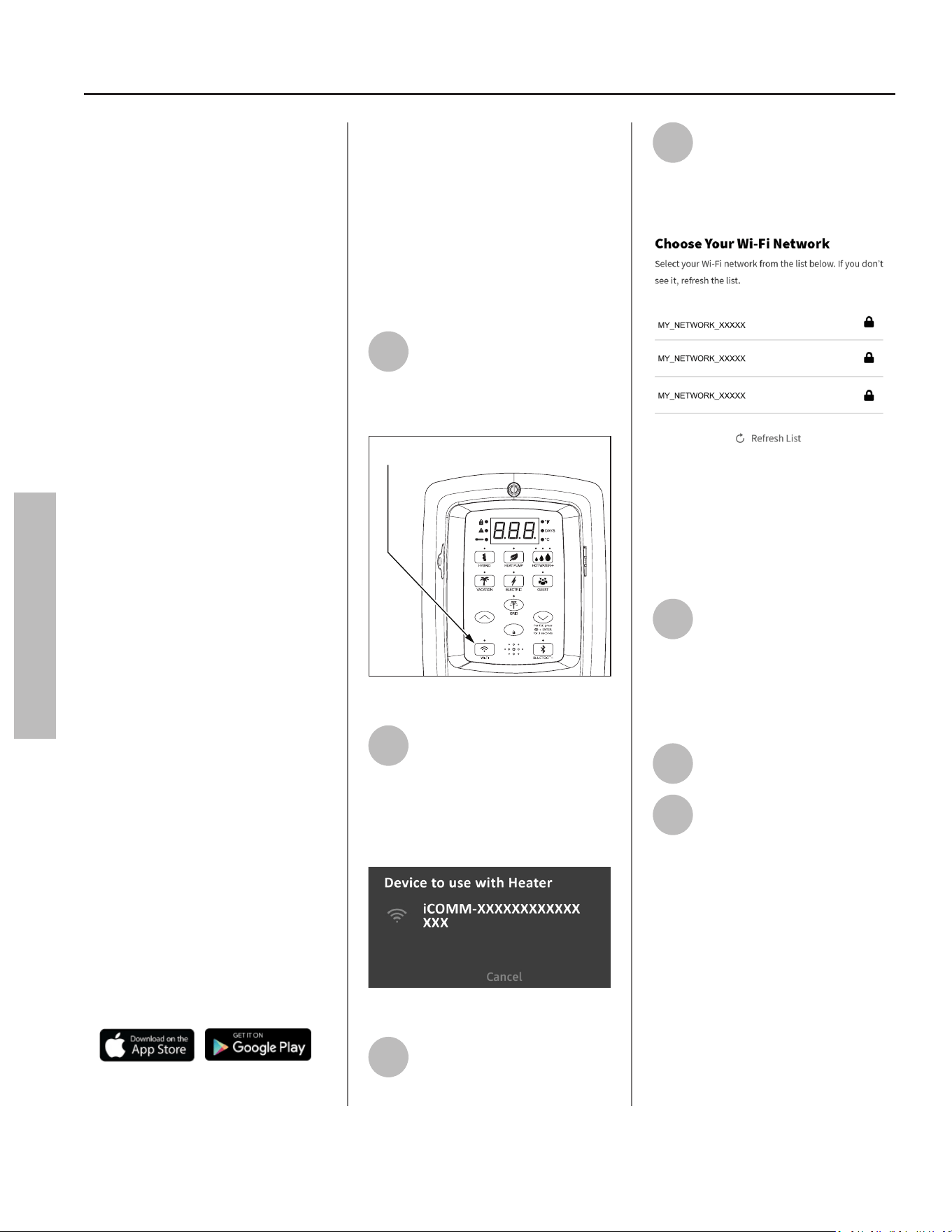
22 • Residenal Electric Water Heater Use and Care Guide
Wi-Fi
(Control Assembly)
This water heater comes equipped
with the iCOMM™ remote monitoring
system. It allows users to monitor
crical operaons and diagnose issues
remotely using the manufacturer’s
water heater app (available for IOS
and Android).
The iCOMM system can automacally
nofy selected personnel via email
and/or cellular phone text messages if
operaonal problems occur.
It is recommended the water heater
app be installed on the homeowner’s
device prior to seng up the Wi-Fi
funcon on this water heater.
IMPORTANT: By enabling and
connecng your water heater to
Wi-Fi, you are granng permission
to the manufacturer to push “over-
the-air” (OTA) updates to the water
heater and to collect telemetry data
regarding the water heater. The OTA
updates may be pushed periodically
to address bugs and provide security
patches. Refer to the Terms and
Condions at www.aosmith.com/
Ulity-Pages/Terms-and-Condions/
for more details. Also, refer to www.
aosmith.com/Privacy-Policy/ for
more informaon about how we
collect and use data.
Wi-Fi Set Up:
The Wi-Fi signal is set to o by default
and will not produce a signal unl
acvated.
NOTICE: Have the router SSID and
password ready.
• Download the iCOMM Ulies app
for your smart phone.
• Launch the iCOMM Ulies app on
your smart phone, then follow the
simple steps. The iCOMM Ulies
app makes it easy to set up, program
and control your water heater.
• Create an account or log in to your
exisng account and tap the “add a
water heater” buon.
• When the app prompts you to ac-
vate the Wi-Fi signal, proceed with
the following steps:
1
To acvate the Wi-Fi signal,
press the Wi-Fi buon once.
The LED will blink on and o
in 1/2 second intervals. Wi-Fi will
acvate pairing mode (Figure 27).
ENTER
Pressing the Wi-Fi button once will activate
the Wi-Fi signal for 15 minutes.
Figure 27 - Wi-Fi Control
2
The app will display a
temporary Wi-Fi network to
connect to your device.
Select the network that matches the
water heater DSN value, and your
device will connect to the Wi- radio
on the Control Assembly:
Figure 28 - Select Temporary Network
3
The app will begin the
communicaon process of
linking your water heater to
your Wi-Fi router.
4
Select your preferred Wi-Fi
network from the list on the
app. LED will pulse from dim
to bright when aempng to connect
to local network.
Figure 29 - Select Your Wi-Fi Network
NOTICE: If the app does not prompt
you with a list of available Wi-Fi
networks, access Wi-Fi sengs on
your device and select your preferred
network.
5
The app will aempt to
connect with your Wi-Fi
network. We recommend
connecng to a Wi-Fi network that
has been secured with a password.
The LED will hold solid when
connected.
6
The app will display the water
heater temperature set point.
7
Congure the water heater
Set Point, Mode, and Time of
Use Rate Plan if applicable.
NOTICE: If the Wi-Fi signal is to be
terminated, press and hold the Wi-Fi
buon for 3 seconds. The Control
Assembly will beep once. This will
turn the Wi-Fi signal o. The Control
Assembly resets and the LED display
will turn o. Press and hold the Wi-Fi
buon for 9 seconds to remove the
original connected network from the
Control Assembly memory.
OPERATION
OPERATION
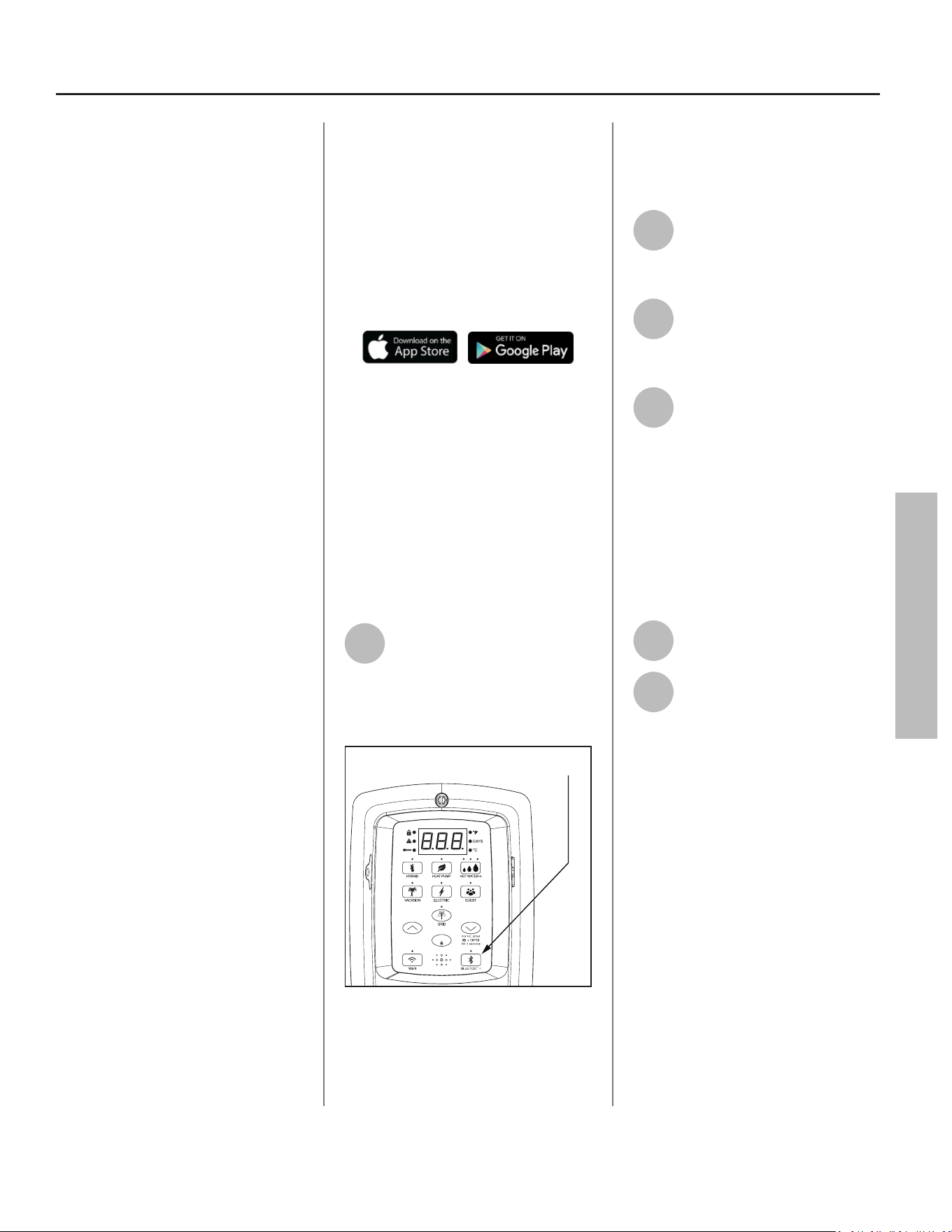
Residenal Electric Water Heater Use and Care Guide • 23
OPERATION
Bluetooth
(Control Assembly)
This water heater comes equipped
with the iCOMM™ remote monitoring
system. It allows users to monitor
crical operaons and diagnose issues
remotely using the manufacturer’s
water heater app (available for IOS and
Android).
The iCOMM system can automacally
nofy selected personnel via email
and/or cellular phone text messages if
operaonal problems occur.
It is recommended the water heater
app be installed on the homeowner’s
device prior to seng up the
Bluetooth funcon on this water
heater.
IMPORTANT: By enabling and
connecng your water heater to
Bluetooth, you are granng permission
to the manufacturer to push “over-
the-air” (OTA) updates to the water
heater and to collect telemetry data
regarding the water heater. The OTA
updates may be pushed periodically
to address bugs and provide security
patches. Refer to the Terms and
Condions at www.aosmith.com/
Ulity-Pages/Terms-and-Condions/
for more details. Also, refer to www.
aosmith.com/Privacy-Policy/ for more
informaon about how we collect and
use data.
Bluetooth Set Up:
The Bluetooth signal is set to o by
default and will not produce a signal
unl acvated.
NOTICE: Have the device SSID and
password ready.
• Download the iCOMM Ulies app
for your smart phone.
• Launch the iCOMM Ulies app on
your smart phone, then follow the
simple steps. The iCOMM Ulies
app makes it easy to set up, program
and control your water heater.
• Create an account or log in to your
exisng account and tap the “add a
water heater” buon.
• When the app prompts you to ac-
vate the Bluetooth signal, proceed
with the following steps:
1
To acvate the Bluetooth
signal, press the Bluetooth
buon once. The LED will
blink on and o in 1/2 second
intervals. Bluetooth will acvate
pairing mode (Figure 30).
Pressing the Bluetooth button once will activate
the Bluetooth signal for 10 minutes.
ENTER
Figure 30 - Bluetooth Control
NOTICE: Once acvated, the Bluetooth
signal will automacally terminate
aer 10 minutes if no aempt to pair
your device is made.
2
Select the opon in the app to
begin linking your device with
the Bluetooth radio on the
Control Assembly.
3
The app will begin the
communicaon process of
linking your water heater to
your Bluetooth device.
4
The app will aempt to
connect with your Bluetooth
device. We recommend
connecng to a Bluetooth device that
has been secured with a password.
The LED will hold solid when
connected.
NOTICE: Once connected, the
Bluetooth signal will automacally
terminate aer 30 minutes of
inacvity.
5
The app will display the water
heater temperature set point.
6
Congure the water heater
Set Point, Mode, and Time of
Use Rate Plan if applicable.
NOTICE: If the Bluetooth signal is to
be terminated, press and hold the
Bluetooth buon for 3 seconds. The
Control Assembly will beep once.
This will turn the Bluetooth signal o.
The Control Assembly resets and the
LED display will turn o. The original
connected device has been removed
from the memory of the water heater
Control Assembly.
OPERATION
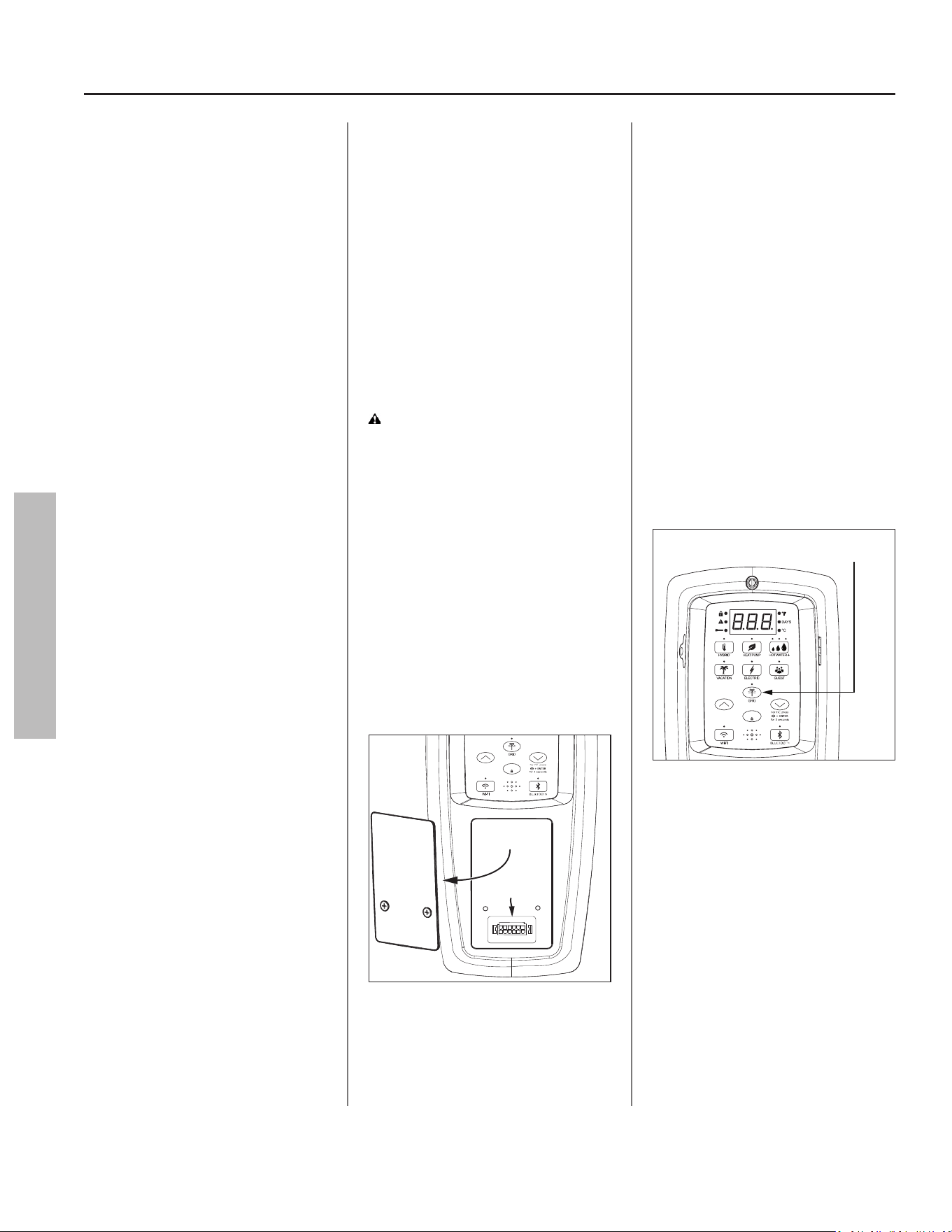
24 • Residenal Electric Water Heater Use and Care Guide
Smart Grid Technology
The electric Smart Grid will enable
signicant improvements in electric
power reliability and quality through
reducon of peak power demand,
while providing consumers the
knowledge and ability to manage
their energy consumpon and ulity
costs. According to the Department
of Energy (DOE), since 1982 the
growth in peak electricity demand
has exceeded power transmission
growth. This has caused more
frequent blackouts and service
interrupons, as well as an increase in
the costly reserve capacity the power
grid requires to meet higher peak
demands. The increased demand for
electrical power across the naon has
also led to higher peak ulity costs.
Smart appliances are one way to
help migate this problem. By using
advanced digital communicaon
technologies, smart appliances will
be able to communicate with local
power companies or home energy
systems, and react accordingly to
save energy and money. For example,
during peak demand periods, the
water heater may pause or delay its
power consumpon and thus reduce
the load on the smart ulity grid.
Addionally, smart appliances will
also communicate with consumers to
let them know how much energy they
are consuming. This will eventually
allow consumers to control their
appliances, manage energy usage, and
ulmately save money.
EcoPort CTA-2045,
Smart Grid Control
(Where Available)
Where available, grid communicaon
adaptors called Universal
Communicaon Modules (UCM)
may be supplied by the local power
company or purchased from leading
retailers. A UCM is a direct digital
thermostat that provides integrated
control of the unit’s thermostat.
Please contact your local power
company for more informaon.
WARNING! Electrical Shock Hazard.
Disconnect power before servicing.
Replace all parts and panels before
operang. Failure to do so can result
in death or electrical shock.
To acvate Smart Grid Control, turn
OFF electric power to the water
heater at the circuit breaker or fuse
box. Using a non-contact circuit
tester, check the power wires to make
certain the power is OFF. Remove
the cover over the grid connecon
pins and plug in the UCM grid
communicaon adaptor and return
power to the water heater at the
circuit breaker or fuse box (Figure 31).
Remove
Panel
Grid Connection Pins
ENTER
Figure 31 - Accessing EcoPort CTA-2045 commu-
nicaon port.
NOTICE: Use only approved grid
communicaon adaptors. This
will enable the power company to
communicate the peak demand
periods for the water heater’s power
usage.
Aer this connecon is made, the grid
control is automacally enabled. Press
the “Enter” buon to conrm UCM is
present. This acon will be followed
by a solid LED from the grid indicator
(Figure 32).
Enabling this feature will allow
acceptance of the power company
communicaon grid management
requests.
NOTICE: The LED will blink when the
power company has control of the
unit.
Pressing the Smart Grid Control
button will enable and/or disable
a request for grid control.
ENTER
Figure 32 - Smart Grid Control Buon
To disable (override) grid control,
press the “Smart Grid Control”
buon (Figure 32). This acon will be
followed by a 72 hour mer. Remove
CTA 2045 UCM. Press the “Enter”
buon to conrm the disconnecon.
The LED will turn o.
NOTICE: If the CTA 2045 UCM is
not removed followed by pressing
the “Enter” buon, the grid will be
enabled automacally once the 72
hour mer has expired.
OPERATION
OPERATION
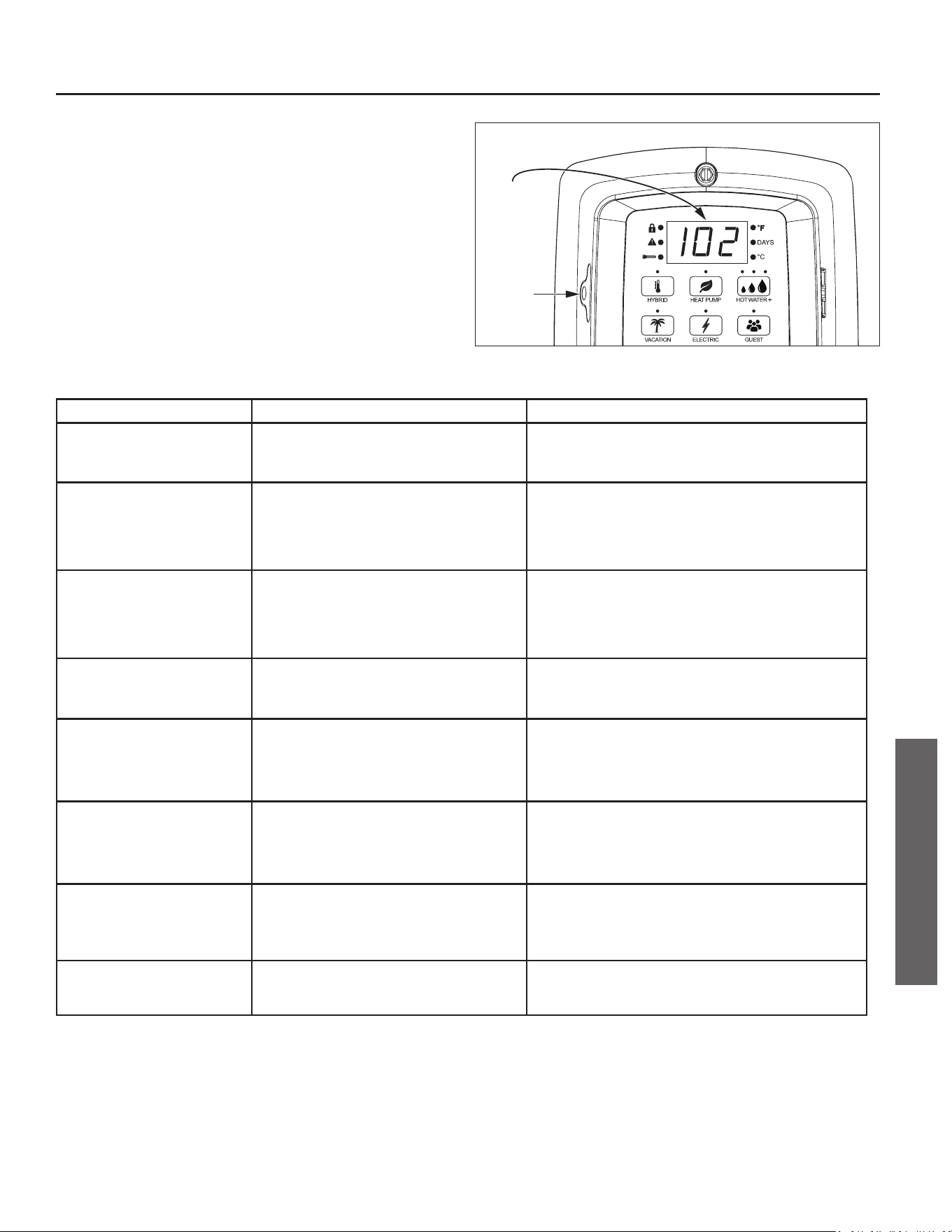
Residenal Electric Water Heater Use and Care Guide • 25
TROUBLESHOOTING
CONTROL ASSEMBLY DIAGNOSTIC
CODE CHART
IMPORTANT: Before aempng to adjust the thermostat, read
the “Important Safety Informaon” secon on page 4. If the
instrucons are not clear, contact a qualied person.
ENTER
Error
Code
Battery
Tray
Figure 33 - Control Assembly Diagnosc Coding.
ERROR CODE INDICATES CORRECTIVE ACTION*
No Error Code
Displayed
Not Enough Hot Water
High usage, plumbing leak, operating mode
adjustment
1. Check for plumbing leak.
2. Adjust temperature; see scald warnings on heater and in
manual.
3. Contact a qualied person to perform a volume test.
No Error Code
Displayed
Water Too Hot
Water temperature set too high or grounded element 1. Reduce temperature setting; or
2. Turn OFF electrical power at the breaker.
3. Check element circuits for resistance of 5-25 ohms (replace if
required, see page 34).
4. Turn ON electrical power at breaker.
5. If the error persists, contact a qualied person.
No Error Code
Displayed
No Hot Water
No power, control panel or thermostat operation 1. Turn OFF electrical power at breaker.
2. Unplug and reconnect 24 pin connector.
3. Turn ON electrical power at breaker.
4. Contact a qualied person to verify correct voltage to unit.
NOTICE: If the control panel was not connected via Wi-Fi or
Bluetooth, the time will need to be set.
001 with alert indicator ashing
(also ashing red LED and beeper)
Dry-re, electrical power on with the tank not
completely full of water
1. Turn OFF electrical power at breaker. Add water, open a hot
water faucet to bleed all air until water ows without air bursts.
2. Turn ON electrical power at breaker.
3. See “Important Safety Information” on page 4.
003 with alert indicator ashing
(also ashing red LED)
Upper thermistor sensor failure. Upper thermistor
sensor is mounted to tank and located above upper
element.
NOTICE: The Control Assembly will go into Limp
Mode 1 until the failure is corrected. See page 28.
1. Turn OFF electrical power at the breaker.
2. Check electrical connections at Control Assembly board.
3. If there are no issues with the wiring, replace the thermistor.
4. Turn ON electrical power at breaker.
004 with alert indicator ashing
(also ashing red LED)
Lower thermistor sensor failure. Lower thermistor
sensor is mounted to tank and located above lower
element.
NOTICE: The Control Assembly will go into Limp
Mode 2 until the failure is corrected. See page 28.
1. Turn OFF electrical power at the breaker.
2. Check electrical connections at Control Assembly board.
3. If there are no issues with the wiring, replace the thermistor.
4. Turn ON electrical power at breaker.
006 with alert indicator ashing
(also ashing red LED and beeper)
Internal Processor Error
- Frequency Fault
- Standard AD Reference Fault
- Non-Volatile Memory Fault
- Crystal Fault
1. Turn OFF electrical power at the breaker. Now turn ON electrical
power to see if error clears. If error has not cleared, turn OFF
electrical power at the breaker and replace Control Assembly.
2. Turn ON electrical power at breaker.
009 with alert indicator ashing
(also ashing red LED)
Power supply voltage is too low
NOTICE: The Control Assembly will go into Limp
Mode 3 until the failure is corrected. See page 28.
Check for loose electrical connections, refer to “Power Cycling the
Unit” on page 31.
TROUBLESHOOTING
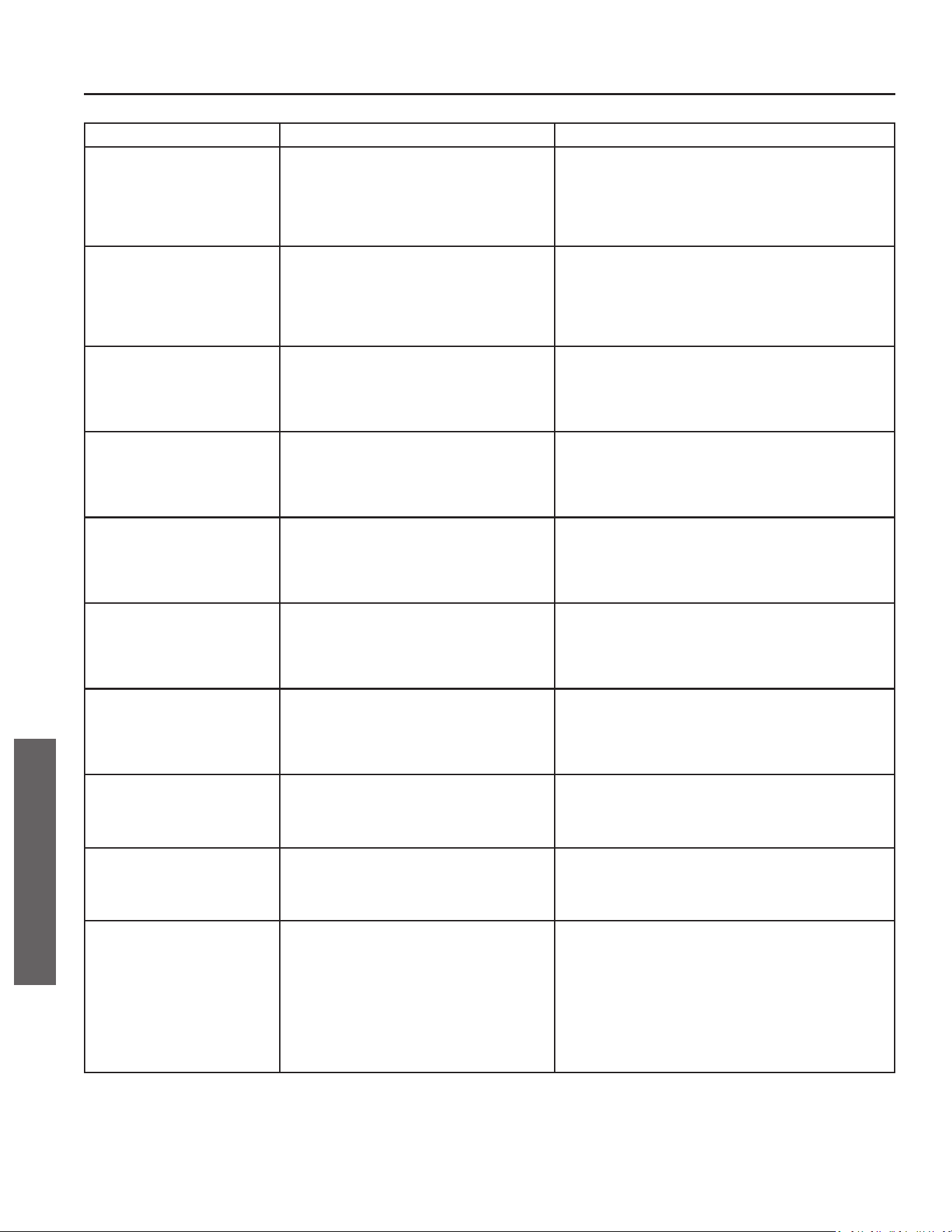
26 • Residenal Electric Water Heater Use and Care Guide
ERROR CODE INDICATES CORRECTIVE ACTION*
021 with alert indicator ashing
(also ashing red LED)
Upper element circuit failure. Lower element is still
operable
NOTICE: The Control Assembly will go into Limp
Mode 1 until the failure is corrected. See page 28.
1. Turn OFF electrical power at the breaker.
2. Check element circuits for resistance of 5-25 ohms (replace if
required, see page 34).
3. Check wires at elements, thermostat and Control Assembly
board for damage.
4. Turn ON electrical power at breaker.
5. If the error persists, contact a qualied person.
022 with alert indicator ashing
(also ashing red LED)
Lower element circuit failure. Upper element is still
operable
NOTICE: The Control Assembly will go into Limp
Mode 2 until the failure is corrected. See page 28.
1. Turn OFF electrical power at the breaker.
2. Check element circuits for resistance of 5-25 ohms (replace if
required, see page 34).
3. Check wires at elements, thermostat and Control Assembly
board for damage.
4. Turn ON electrical power at breaker.
5. If the error persists, contact a qualied person.
025 with alert indicator ashing
(also ashing red LED)
Heat Pump Coil Temperature Sensor is not functioning
NOTICE: The Control Assembly will go into Limp
Mode 3 until the failure is corrected. See page 28.
1. Power OFF (“Power Cycling the Unit,” page 31).
2. Disconnect and reconnect the J9 connection from control board.
3. Inspect wire for damage.
4. Re-install Control Assembly.
5. Reconnect power to water heater.
6. If error persists, replace temperature sensor.
026 with alert indicator ashing
(also ashing red LED)
Heat Pump Suction Temperature Sensor is not
functioning
NOTICE: The Control Assembly will go into Limp
Mode 3 until the failure is corrected. See page 28.
1. Power OFF (“Power Cycling the Unit,” page 31).
2. Disconnect and reconnect the J9 connection from control board.
3. Inspect wire for damage.
4. Re-install Control Assembly.
5. Reconnect power to water heater.
6. If error persists, replace temperature sensor.
027 with alert indicator ashing
(also ashing red LED)
Heat Pump Discharge Temperature Sensor is not
functioning
NOTICE: The Control Assembly will go into Limp
Mode 3 until the failure is corrected. See page 28.
1. Power OFF (“Power Cycling the Unit,” page 31).
2. Disconnect and reconnect the J9 connection from control board.
3. Inspect wire for damage.
4. Re-install Control Assembly.
5. Reconnect power to water heater.
6. If error persists, replace temperature sensor.
028 with alert indicator ashing
(also ashing red LED and beeper)
Ambient Temperature Sensor failure (Heat Pump
Compressor is outside of operational temperature
range)
NOTICE: The Control Assembly will go into Limp
Mode 3 until the failure is corrected. See page 28.
1. Power OFF (“Power Cycling the Unit,” page 31).
2. Disconnect and reconnect the J9 connection from control board.
3. Inspect wire for damage.
4. Re-install Control Assembly.
5. Reconnect power to water heater.
6. If error persists, replace temperature sensor.
029 with alert indicator ashing
(also ashing red LED and beeper)
Outlet temperature sensor failure
NOTICE: Guest Mode and Hot Water+ Mode will be
unavailable until the failure is corrected.
1. Power OFF (“Power Cycling the Unit,” page 31).
2. Disconnect and reconnect the J3 connection from control board.
3. Inspect wires for damage.
4. Re-install Control Assembly.
5. Reconnect power to water heater.
6. If error persists, replace outlet temperature sensor.
031 with alert indicator ashing
(also ashing red LED and beeper)
Water Leak 1. Turn OFF electrical power at the breaker, check all electrical
connections, and wiring for damage.
2. Check for plumbing leaks and correct accordingly.
3. If tank is leaking, replace the unit.
4. Turn ON electrical power at breaker.
044 with alert indicator ashing
(also ashing red LED)
SAC anode depleted 1. Turn OFF electrical power. Shut OFF the cold water valve at the
main line and open a hot water faucet to release pressure from
the water heater.
2. Remove anode rod (see page 33).
3. Inspect anode rod and replace if necessary.
046 with alert indicator ashing
(also ashing red LED and beeper)
Shut-o Valve (if applicable) 1. Turn OFF electrical power. Shut OFF the cold water valve at the
main line and open a hot water faucet to release pressure from
the water heater.
2. Check the shut-o valve, making sure the valve is not stuck
in the open or closed position (see instructions provided with
shut-o valve).
3. Replace the shut-o valve, if needed.
4. Turn ON electrical power at breaker.
5. Open the cold water valve to ll the heater with water, open
a hot water faucet to bleed all air until water ows without air
bursts.
TROUBLESHOOTING
TROUBLESHOOTING
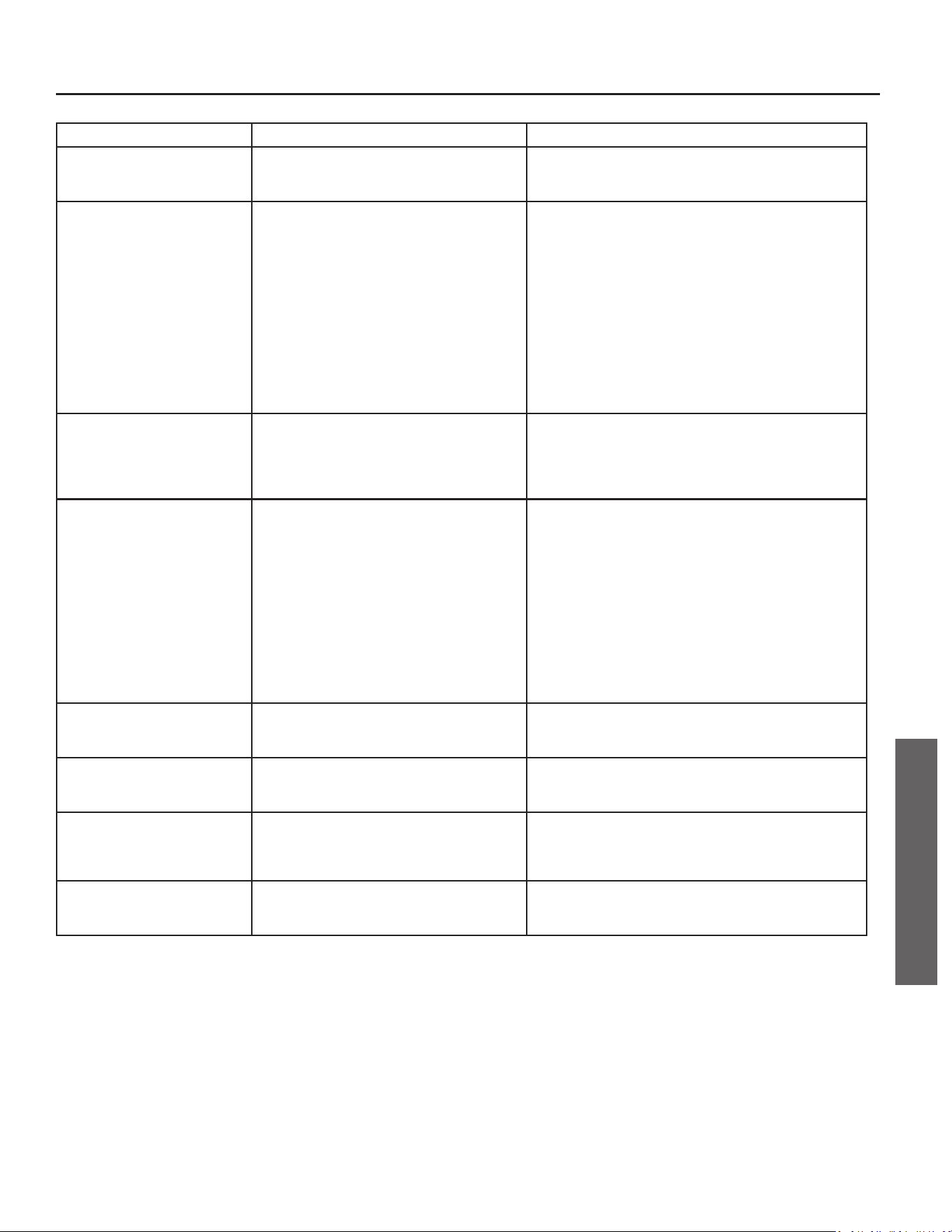
Residenal Electric Water Heater Use and Care Guide • 27
TROUBLESHOOTING
ERROR CODE INDICATES CORRECTIVE ACTION*
047 with alert indicator ashing
(also ashing red LED)
Smart Valve failure
NOTICE: Guest Mode and Hot Water+ Mode will be
unavailable until the failure is corrected.
1. Power OFF (“Power Cycling the Unit,” page 31).
2. Reconnect power to water heater. If error persists, replace
Smart Valve.
048 with alert indicator ashing
(also ashing red LED)
Battery Low Energy 1. Make sure the battery protective tab has been properly removed
from the battery tray, located on the left side of the Control
Assembly.
2. Locate the battery tray on the side of the Control Assembly.
3. Remove the Phillips head screw, slide the battery tray out from
the Control Assembly.
4. Remove the old battery and replace with Panasonic® BR2032
or Murata CR2032 battery only. Use of another battery may
present a risk of re or explosion.
5. Reinstall the tray with new battery into the Control Assembly.
Hand tighten the Phillips head screw to secure the tray in the
Control Assembly.
NOTICE: If the Control Assembly was not connected via Wi-Fi,
Bluetooth, or powered by a power source, the time will need to be
set.
080 with alert indicator ashing
(also ashing red LED)
Air lter is dirty 1. Take the tab on the air lter and remove (slide) it from the air
intake duct adaptor located on the top of the unit.
2. If you are replacing the lter, skip to step three. To clean the
lter, use a vacuum with a hose attachment to remove any dust
or debris.
3. Place the new or cleaned lter into the water heater.
081 with alert indicator ashing
(also ashing red LED and beeper)
Condensate management
NOTICE: The Control Assembly will go into Limp
Mode 3 until the failure is corrected. See page 28.
1. Ensure unit is installed level.
2. Check for blocked condensate drain line, clear drain line as
necessary.
3. If an accessory condensate pump was installed: Turn OFF
power to the water heater at the breaker and check control
wire connections to condensate pump. See “Connecting the
Condensate Pump Optional Overow Shut-O Switch” on page
11. Reconnect power to water heater.
4. Check to see if the accessory condensate pump is plugged in
and has power.
5. Ensure the pump is operating properly, check pump outlet tube
for blockage.
6. Repair or replace accessory condensate pump as necessary.
7. If problem persists, call our Technical Assistance Hotline which
is listed on the water heater’s warranty sheet.
083 with alert indicator ashing
(also ashing red LED and beeper**)
Heat Pump Compressor suction pressure is too low
NOTICE: The Control Assembly will go into Limp
Mode 3 until the failure is corrected. See page 28.
Call our Technical Assistance Hotline which is listed on the water
heater’s warranty sheet for further assistance.
084 with alert indicator ashing
(also ashing red LED and beeper**)
Heat Pump Compressor is not functioning
NOTICE: The Control Assembly will go into Limp
Mode 3 until the failure is corrected. See page 28.
Call our Technical Assistance Hotline which is listed on the water
heater’s warranty sheet for further assistance.
085 with alert indicator ashing
(also ashing red LED and beeper**)
Heat Pump Compressor discharge temperature is too
high
NOTICE: The Control Assembly will go into Limp
Mode 3 until the failure is corrected. See page 28.
Call our Technical Assistance Hotline which is listed on the water
heater’s warranty sheet for further assistance.
086 with alert indicator ashing
(also ashing red LED and beeper***)
Fan speed feedback
NOTICE: The Control Assembly will go into Limp
Mode 3 until the failure is corrected. See page 28.
Call our Technical Assistance Hotline which is listed on the water
heater’s warranty sheet for further assistance.
*These instrucons are brief and intended as guidance for a qualied person. If you lack the necessary skills to perform these procedures call the Technical
Assistance Hotline which is listed on the water heater’s warranty sheet for assistance.
**Audible alarm will beep if error code is triggered three (3) mes in one (1) hour.
***Audible alarm will beep if error code is triggered three (3) mes in seventy-two (72) hours.
TROUBLESHOOTING
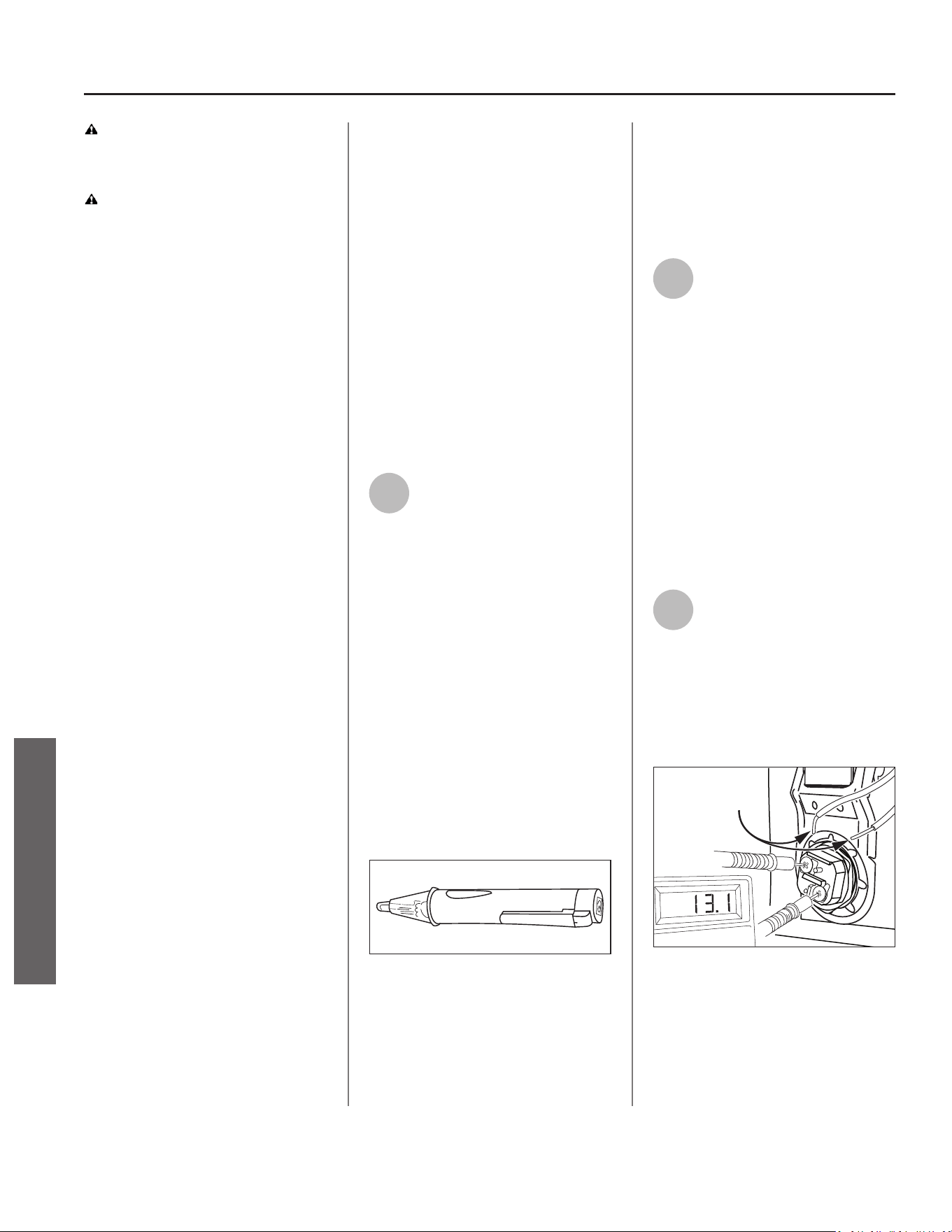
28 • Residenal Electric Water Heater Use and Care Guide
TROUBLESHOOTING
TROUBLESHOOTING
WARNING! Working near an
energized circuit can result in severe
injury or death from electrical shock.
WARNING! When you are nished,
be sure all covers are secured to
reduce the risk of re and electric
shock.
Troubleshoong &
Maintenance
If you are not qualied or are not
comfortable performing any of
the troubleshoong, repair or
maintenance procedures that follow,
call our Technical Assistance Hotline
for further assistance, or contact a
qualied person.
Limp Mode
The heater will connue operang
with one failed heang method by
switching into Limp Mode:
• (Limp Mode 1): If the control assem-
bly determines that the upper ele-
ment or upper thermistor has failed,
the upper element call for heat will
be sased by the lower element.
• (Limp Mode 2): If the control assem-
bly determines that the lower ele-
ment or lower thermistor has failed,
the lower element call for heat will
be sased by the upper element.
• (Limp Mode 3): If the control assem-
bly determines that the heat pump
is unavailable, both the upper and
lower elements will sasfy the call
for heat.
NOTICE: The Control Assembly will
operate in Limp Mode unl the failure
is corrected.
No Hot Water
The most likely reasons for an electric
water heater to produce NO hot
water are:
• No power to the water heater (no
lights on the unit are acvated).
• Unit in Vacaon Mode.
• ECO tripped.
• Hot water usage paern exceeds
the capability of the water heater in
current mode.
• Non-funconing upper temperature
sensor.
• Faulty thermostac mixing valve.
• Leak in plumbing system.
Follow these steps to diagnose and
correct common electrical problems:
1
Check the Electrical Power to
the Water Heater.
No hot water is oen caused by a
problem with the home’s electrical
wiring or circuit breakers. You will
need a non-contact circuit tester.
Follow these guidelines:
• Locate the water heater’s circuit
breaker and turn it OFF (or remove
the circuit’s disconnects).
• Locate the electrical juncon box
on the side of the water heater and
remove the cover.
• Idenfy the two power wires. The
power wires are usually black/black
or black/red. The green or copper
wire is the ground wire.
ON
OFF
Figure 34 - Use a non-contact circuit tester to
check for electrical power.
• Turn the circuit breaker back ON (or
install the disconnects) and check
the power on both incoming power
wires using a non-contact circuit
tester.
• Turn the power OFF and replace the
cover on the electrical juncon box.
If the water heater is not geng
power, contact a qualied person to
have your home’s wiring or circuit
breakers checked.
2
Check the Upper Heang
Element.
If the water heater is geng electrical
power, check to see if the upper
heang element is burned out. If the
upper element is burned out, you will
have no hot water. To check the upper
element, you will need a mulmeter
capable of reading resistance.
• Turn the power OFF at the circuit
breaker or remove disconnects.
• Remove the upper access panel.
• Move the insulaon to access the
ECO and heang element.
3
Check the Top Two Screws of
the ECO Using a Non-Contact
Circuit Tester and Conrm
that Power is OFF (screw terminals 1
and 3 shown in Figure 36).
With the electrical power OFF,
remove the two power wires from the
upper heang element.
Wires are
removed
Figure 35 - Use a mulmeter to check the resis-
tance of the upper heang element.
Residenal Electric Water Heater Use and Care Guide • 29
TROUBLESHOOTING
TROUBLESHOOTING
4
Check the Resistance of the
Upper Heang Element Using
a Mulmeter.
Measure the resistance between the
two screw terminals on the upper
heang element. A good element will
have a resistance ranging between 5
and 25 Ohms. If the resistance is:
Outside this Range. Replace the
element (see “Replacing the Heang
Element” on page 34). If the lower
element is a concern, repeat the
element check procedure for the
lower element. The upper and lower
elements should have the same
resistance range.
Within this Range. Reaach the power
wires, making sure the wires are in
good condion and the connecons
are clean and ght.
Check/Reset Energy Cut O (ECO)
Buon.
Terminal 1
Terminal 3
ECO Reset
Button
Figure 36 - Energy Cut O (ECO) Buon.
The Energy Cut O (ECO) shuts o
power to the water heater’s elements
if the temperature of the water in
the tank gets too hot. If the ECO has
tripped, you will have no hot water.
A tripped ECO can usually be reset,
but you should have a qualied
person invesgate the cause of the
overheang and repair the problem.
Do not turn the power back on unl
the cause of the overheang has been
idened and repaired.
To Check the Energy Cut O (ECO):
• Turn OFF the power to the water
heater.
WARNING! Working near an
energized circuit can result in severe
injury or death from electrical shock.
Check power wires in the electrical
juncon box with a non-contact
circuit tester to make sure power is
OFF.
• Press the red ECO reset buon (Fig-
ure 36).
• The ECO was tripped if you hear a
click when it is reset. In most cases,
a tripped ECO indicates that the tank
overheated due to a problem with
one of the elements. Have a qualied
person check the upper and lower
elements and replace if necessary.
• The ECO was not tripped if you did
not hear a click. In that case it should
be checked by a qualied person.
• Replace the insulaon and the upper
access panel.
• Turn the power back ON to the water
heater.
WARNING! Be sure all covers are
secured to reduce the risk of re and
electric shock.
Drips from T&P Relief
Valve Discharge Pipe
A small amount of water dripping from
the Temperature and Pressure (T&P)
Relief Valve usually means the home’s
water pressure is too high or you
need a properly sized and pressurized
Thermal Expansion Tank (see “Step
1” on page 7 for more informaon).
A large amount of hot water coming
from the T&P discharge pipe may be
due to the tank overheang.
WARNING! Do not cap or plug the
T&P Relief Valve or discharge pipe,
and do not operate the water heater
without a funconing T&P Relief
Valve - this could cause an explosion.
Water Pressure too High. High
water pressure can cause the T&P
Relief Valve to drip. Install a Pressure
Reducing Valve (PRV) on the main cold
water supply line. Adjust the PRV to
between 50-60 psi/345-414 kPa.
Thermal Expansion Tank. Install a
Thermal Expansion Tank. If a Thermal
Expansion Tank is already installed
and the T&P Relief Valve discharge
pipe drips, the Thermal Expansion
Tank may be pressurized to the wrong
pressure or the internal bladder may
be defecve. Refer to the instrucons
that came with the Thermal Expansion
Tank for more informaon.
Debris. In rare cases, debris can sck
inside the T&P Relief Valve prevenng
the valve from seang fully. In that
case, the T&P Relief Valve discharge
pipe will drip. You may be able to clear
debris from the T&P Relief Valve by
manually operang the valve, allowing
small quanes of water to ush out
the debris. See the label on the T&P
Relief Valve for instrucons.
WARNING! When manually
operang the T&P Relief Valve,
make sure that no one is in front
of or around the discharge outlet.
The water may be extremely hot
and could cause severe burns. Also,
ensure that the water discharge will
not cause property damage.
If the water pressure is between 50-60
psi/345-414 kPa, a Thermal Expansion
Tank is installed and properly
pressurized, the valve has been cleared
of any debris, and it sll drips, the
valve may be broken – have a qualied
person replace the T&P Relief Valve.
30 • Residenal Electric Water Heater Use and Care Guide
TROUBLESHOOTING
TROUBLESHOOTING
Water Odor
Harmless bacteria normally present
in tap water can mulply in water
heaters and give o a “roen egg”
smell. A higher tank temperature
seng of 140°F/60°C kills the bacteria
that causes “smelly water” and can
reduce the levels of bacteria that
cause water-borne disease. A properly
adjusted Thermostac Mixing Valve
should be installed at each point of
use.
NOTICE: To protect the tank, an anode
rod must be installed in the water
heater at all mes or the warranty is
void.
WARNING! Because higher
temperatures increase the risk of
scalding, if the temperature set
point is higher than 120°F/49°C,
Thermostac Mixing Valves are
parcularly important (see page 4
and Figure 8).
Water Heater Sounds
During the normal operaon of the
water heater, sounds or noises may be
heard. These noises are common and
may result from the following:
• Normal expansion and contracon
of metal parts during periods of
heat-up and cool-down.
• Sediment buildup on or around
the elements could create varying
amounts of noise and may cause
premature tank failure. Drain and
ush the tank as directed (see
“Draining and Flushing the Water
Heater” on page 32).
• The heat pump compressor or fan
running.
Temperature Too High
If the water temperature is too hot:
• Adjust the Control Assembly on
the water heater (see “Adjusng
the Control Assembly’s Operaonal
Modes” on page 21).
• Install or adjust a Thermostac
Mixing Valve (see manufacturer’s
instrucons).
A non-funconing thermostat or
a shorted heang element can
cause extremely hot water. If the
Temperature and Pressure (T&P)
Relief Valve releases large amounts
of very hot water, it is likely due to a
shortened heang element, or more
rarely a non-funconing thermostat,
or the thermostat does not t
snuggly against the tank. Very high
water temperatures can also cause
the Energy Cut O (ECO) to trip (see
“Replacing the ECO” on page 35).
Turn power OFF unl this problem is
repaired.
Low Water Pressure
Check both the cold and hot water
at a sink to determine if the lower
pressure is only on the hot water side.
If both hot and cold faucets have low
pressure, call your local water ulity.
If the low pressure is only on the hot
water side, the primary causes of this
are:
• Melted PEX liner. Soldering copper
pipes while they are connected
to the water heater can melt the
PEX liner inside of the hot and cold
water connecons. Melng the PEX
liner can restrict the ow of hot
and cold water. If that is the case,
replace the nipples at the hot and
cold water connecons.
• Parally closed supply valve. Open
the water heater’s supply valve fully.
Insucient or No Hot
Water, or Slow Hot
Water Recovery
WARNING! Because higher
temperatures increase the risk of
scalding, if the temperature set
point is higher than 120°F/49°C,
Thermostac Mixing Valves are
parcularly important (see page 4
and Figure 8).
If the hot water is simply not warm
enough, there are several possible
causes:
• Thermostac Mixing Valve faulty or
set too low.
• Temperature set point too low.
• Hot water usage paern exceeds
the capability of the water heater in
current mode (see “Operang Mode
Descripons” on page 19).
• Water connecons to unit are
reversed (disconnect and re-install
correctly).
• Leak in plumbing system (check
home for any leaks and repair).
• Lower heang element not func-
oning properly.
• No power to the water heater (no
lights on the unit are on and display
is blank).
• Unit is in Vacaon Mode.
• ECO tripped.
• Non-funconing upper thermistor
sensor (refer to code 003 in the “Di-
agnosc Codes” secon on page 25).
• Air lter is dirty (see “Air Filter Main-
tenance” on page 37).
Residenal Electric Water Heater Use and Care Guide • 31
TROUBLESHOOTING
TROUBLESHOOTING
Thermostac Mixing Valves. If the
hot water is simply not warm enough,
make sure the faucet you are checking
does not have a defecve Thermostac
Mixing Valve. If these devices fail,
they can reduce the amount of hot
water the shower or faucet delivers
even though there is plenty of hot
water in the tank. Always check the
water temperature at several faucets
to make sure the problem is not in a
faucet or shower control.
Temperature Set Point Too Low. If the
water temperature at several faucets
is too cool, adjust the set point at
the Control Assembly (see “Water
Temperature Adjustment” on page 21).
Undersized Water Heater. If your
water heater runs out of hot water
too quickly, it may be too small for
your needs. If the water heater is old,
consider replacing it with a larger
model. If the water heater is in good
condion, you may be able to meet
your family’s hot water needs with
the exisng water heater by installing
a Thermostac Mixing Valve and then
seng the temperature to a higher
set point on the Control Assembly (see
“Water Temperature Adjustment” on
page 21).
You can also reduce your home’s hot
water needs by washing clothes in cold
water, installing ow restrictors on
shower heads, repairing leaky faucets,
and taking other conservave steps.
Reversed Connecons. Check the
hot and cold connecons and make
sure your home’s hot water pipe is
connected to the hot water outlet on
the water heater. Usually, reversed
connecons are found soon aer the
installaon of a new unit.
Plumbing Leak. Even a small leak
in the hot water side of the home’s
plumbing system can make it appear
that the water heater is producing
lile or no hot water. Locate and repair
the leak.
Lower Heang Element Not Working.
If the lower heang element is not
working, you will have some hot water
but not as much as before. Because
the lower element does most of the
work, it usually wears out before the
upper element. Replace the lower
element if necessary (see “Replacing
the Heang Element” on page 34).
Power Cycling the Unit
1
Find and turn OFF the water
heater’s circuit breaker or
remove disconnects.
2
Locate the electrical juncon
box on side of water heater,
remove cover and idenfy the
two (2) power wires.
3
Turn the circuit breaker back
ON (or reinstall the
disconnects) and check for
power on both incoming power wires
using a mulmeter.
4
Again, turn OFF the water
heater’s circuit breaker, or
remove the disconnects and
replace the electrical juncon box
cover, before performing maintenance
work.
NOTICE: When powered on, the unit
will start to run a system diagnosc.
The diagnosc sequence typically takes
seven (7) to ten (10) minutes. During
this period the Control Assembly will
display a series of single, alternang
dashes repevely.
WARNING! Working near an
energized circuit can result in severe
injury or death from electrical shock.
WARNING! When you are nished,
be sure all covers are secured to
reduce the risk of re and electric
shock.
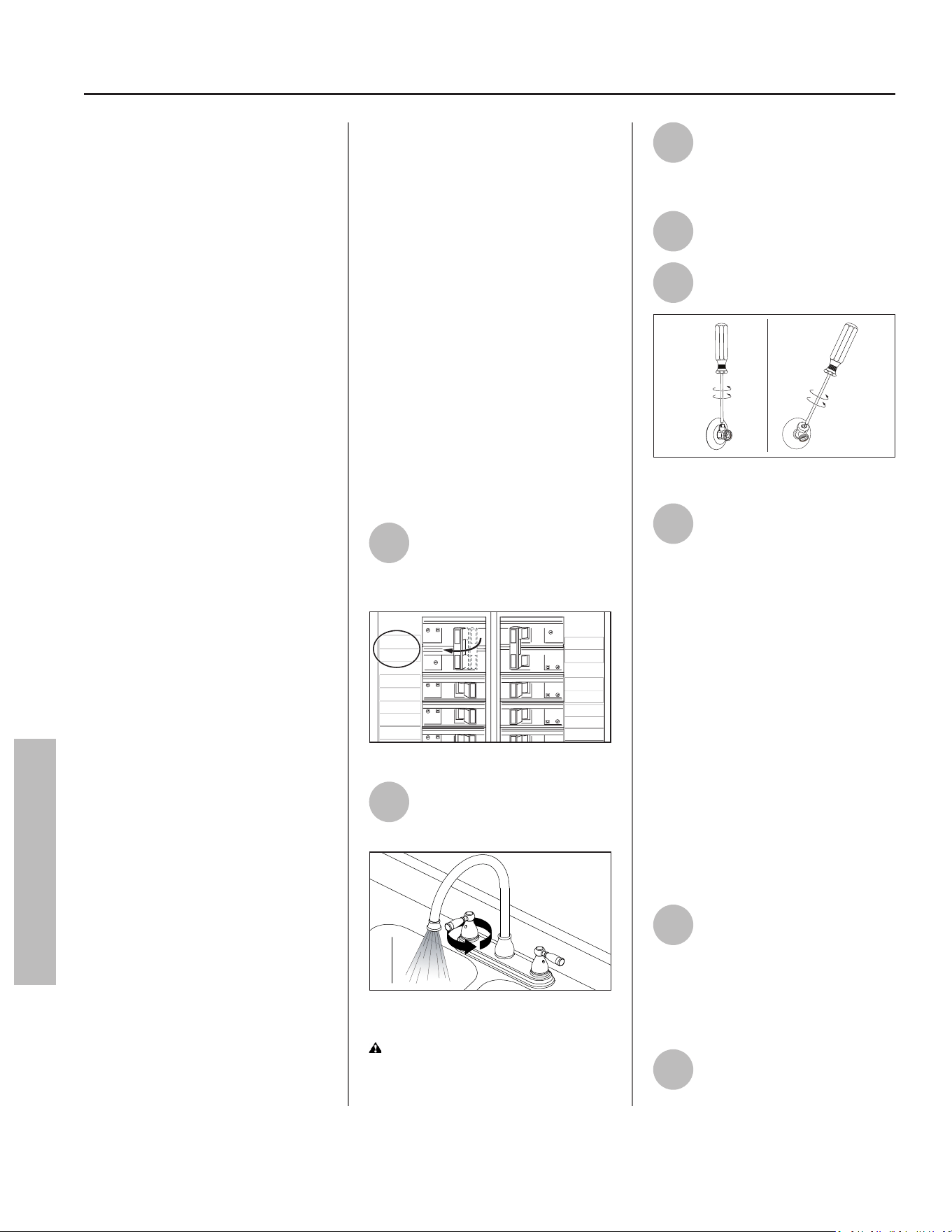
32 • Residenal Electric Water Heater Use and Care Guide
MAINTENANCE
Roune Maintenance
Roune maintenance will help your
water heater last longer and work
beer. If you cannot perform these
roune maintenance tasks yourself,
contact a qualied person.
IMPORTANT! Failure to perform
required or recommended
maintenance as described in the
following secons may void the
warranty.
Water Heater
Maintenance
Aer the rst six months, drain and
ush the water heater and inspect
the anode rod. Depending on the
hardness of your water, repeat this
process at least annually, or more
frequently if needed. From me
to me you may need to replace a
heang element or a thermostat.
All three maintenance tasks are
described below.
Draining and Flushing
the Water Heater
Tap water contains minerals that
can form lime deposits on heang
elements or sediment in the boom
of the tank. The amount of lime
deposits or sediment depends on the
hardness of your tap water. The rate
at which sediment builds up depends
on water quality and hardness in
your area, the temperature sengs,
and other variables. We recommend
draining and ushing the water heater
aer the rst six months of operaon
to determine the amount of sediment
buildup. Draining sediment extends
the life of the tank, heang elements,
and drain valves.
IMPORTANT! Failure to drain and
ush the water heater of sediment
can deteriorate the tank, heang
elements, and drain valve and cause
leaks resulng in property damage.
• In areas with very hard water,
remove and check the heang ele-
ments whenever you drain the tank.
If you have heavy lime deposits on
heang elements, you will need to
replace them more oen.
• Sediment may form large masses
that can prevent the tank from
draining. Have a qualied person
use a deliming agent suitable for po-
table water to remove the sediment
buildup.
• In most cases, it is easier and less
expensive to replace lime-encrust-
ed elements than trying to remove
heavy lime deposits.
To Drain and Flush the
Tank
1
Locate the water heater’s
circuit breaker and turn it
OFF (or remove the circuit’s
fuses).
WATER
HEATER
MICRO-
WAVE
LIVING
ROOM
50
50
1
RANGE
STOVE
2
20 20
15
2015
20
FRIDGE
PLUG
DISH
WASHER
HALL
LIGHTS
LAUNDRY
ROOM
TYPE HOM
SERIES 1
10 kA
120/240 V-
TYPE HOM
SERIES 1
10 kA
120/240 V-
TYPE HOM
SERIES 1
10 kA
120/240 V-
T
YPE HOM
SERIES 1
10 kA
120/240 V-
TYPE HOM
SERIES 1
10 kA
120/240 V-
TYPE HOM
SERIES 1
10 kA
120/240 V-
TYPE HOM
SERIES 1
10 kA
120/240 V-
TYPE HOM
SERIES 1
10 kA
120/240
V-
30
30
30
30
Figure 37 - Circuit Breaker.
2
Open a hot water faucet and
let the hot water run unl it
is cool.
Figure 38 - Water Faucet.
WARNING! Be sure the water
runs cool before draining the tank to
reduce the risk of scalding.
3
Connect a garden hose to the
drain valve and place the
other end of the hose in a
drain, outside, or in buckets.
4
Turn the cold water supply
valve OFF.
5
Open the drain valve on the
water heater.
Figure 39 - Drain Valve.
6
Open a hot water faucet to
help the water in the tank
drain faster.
NOTICE: DO NOT reconnect power
to water heater unless the tank is
completely full of water. This is an
addional precauon to protect the
elements against dry re. Dry re
occurs when power is supplied to the
electric elements without sucient
water in the heater. Dry ring the
unit will result in immediate failure
of the element. While this unit is
equipped with dry re protecon, the
recommended pracce is to ensure
the tank is lled with water prior
to supplying power to the unit. For
complete instrucons on lling the
tank, follow “Step 13” on page 16 in
the installaon secon of this manual.
7
If sediment was present
when the tank was drained,
ush the tank by opening the
cold water supply valve and leng
the water run unl no more sediment
drains from the tank. Close the drain
valve when you are done.
8
Rell the tank by opening the
cold water supply valve.
Make sure a hot water faucet
MAINTENANCE
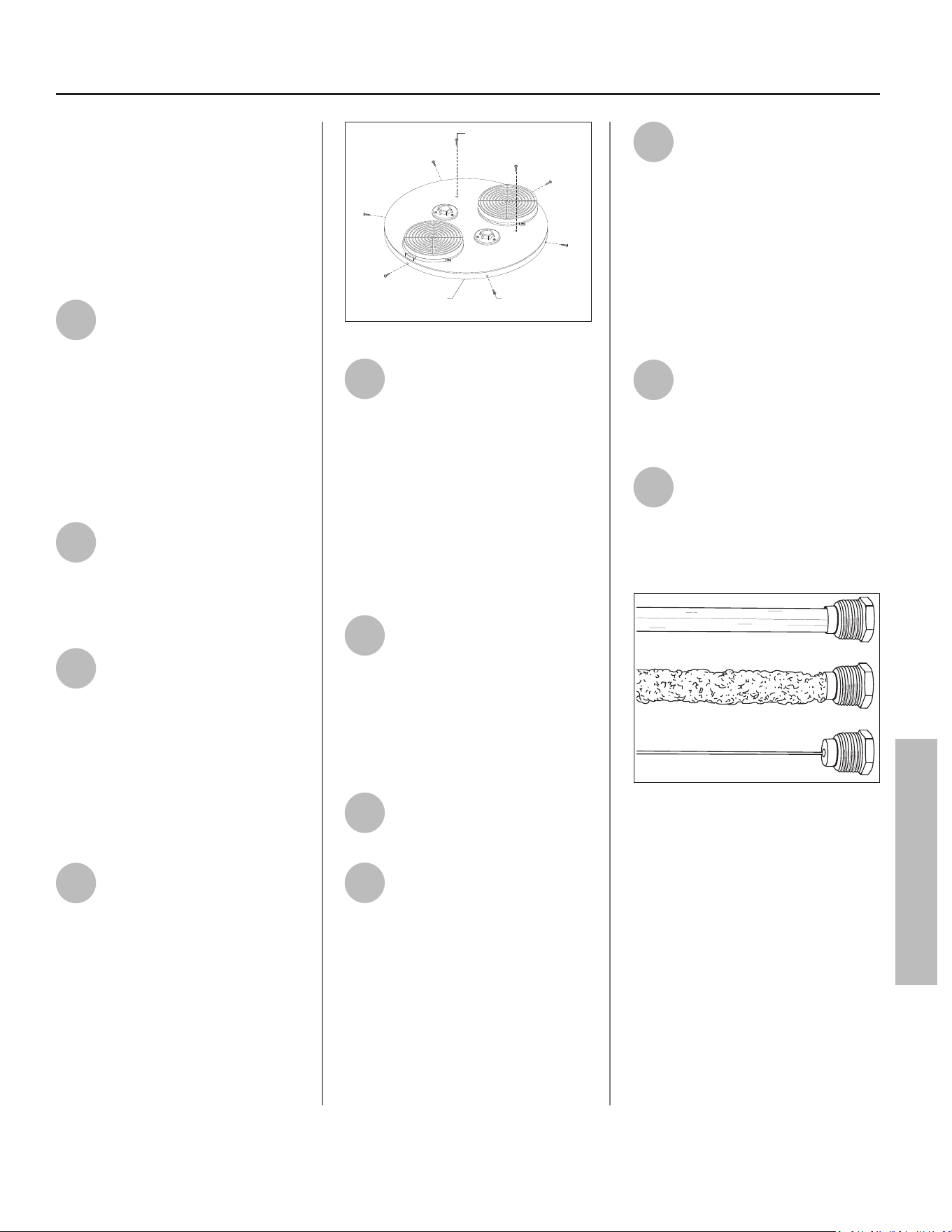
Residenal Electric Water Heater Use and Care Guide • 33
MAINTENANCE
MAINTENANCE
is open and the drain valve is closed.
Allow the hot water to run full for at
least three minutes to make sure the
tank has all the air removed and is
completely full of water. Failure to
perform this step can cause the upper
heang element to burn out. Once you
are certain the tank is completely full
of water, close the hot water faucet.
9
Turn ON power to the water
heater at the circuit breaker/
fuse box. It may take two
hours for the tank to heat up.
Replacing the Anode
Rod
NOTICE: The Control Assembly will
display error code 044 when the anode
rod has been depleted.
1
To replace the anode rod if it
is depleted: Turn the power
OFF. Run hot water unl it is
cool. Turn cold water supply valve OFF.
Open a hot water faucet to
depressurize tank.
2
Remove ducng from unit.
Disconnect cold water supply
and hot water supply
connecons from top of unit if
necessary to remove jacket cover.
To avoid damaging gaskets in ex
lines, use a pipe wrench at the hot
and cold nipples to counter torque
when installing or removing water
connecons. DO NOT overghten.
3
Remove the six (6) screws
located around the perimeter
of the jacket cover. Locate and
remove the two (2) screws on top of
the unit fastening the jacket cover to
the heat pump evaporator. Li the
jacket cover up and away from the unit
to gain access to the anode rod (see
illustraon on back cover for locaon
of anode rod).
Perimeter
Screw (6x)
Evaporator
Screw (2x)
Shroud Cover
Figure 40 - Remove Shroud Cover
4
Once the anode rod is
exposed, remove the top nut
with a 10 mm hex socket
wrench and remove the wire terminal
(do not remove lower hex nut from
bolt). With the wire terminal removed,
use a 1-1/16” socket wrench with an
extension to remove the anode rod.
Inspect the anode rod and replace if
depleted. Apply thread sealant tape or
pipe joint compound and reinstall the
anode rod ghtly. Connect the wire
terminal and secure with hex nut.
5
Install jacket cover to water
heater by following the
instrucons outlined in Step 3
in reverse order.
NOTICE: Flex hose connecons must
be aligned with nut retainers to install
shroud cover to shroud. Adjust ex
hoses accordingly.
6
Reconnect cold water supply
and hot water supply
connecons at top of unit.
7
Rell the tank by opening the
cold water supply valve. Make
sure a hot water faucet is
open and the drain valve is closed.
Allow the hot water to run full for at
least three (3) minutes to make sure
the tank has all the air removed and is
completely full of water. Failure to
perform this step can cause the upper
heang element to burn out. Once you
are certain the tank is completely full
of water, close the hot water faucet.
8
Remove the three (3) screws
securing intake duct adaptor
(closest to front side of water
heater) to jacket cover. Li intake duct
adaptor up and away from jacket cover
to visually inspect for leaks around the
anode ng and water connecons. If
there are no leaks, proceed to Step 9.
If there is a leak, turn OFF water supply
to the water heater, open a faucet to
eliminate pressure, and ghten the
anode rod further. Return to Step 7.
9
Install intake duct adaptor to
jacket cover and secure with
three (3) screws. Reconnect
any ducng to the intake and exhaust
adaptors.
10
Reconnect power to the water
heater. It may take several
hours for the tank to heat up
depending on the tank size,
temperature seng, and cold water
supply temperature.
Figure 41 - Anode Rods from new (top) to par-
ally depleted (middle) to fully depleted stages
(boom).
Anode Rod. The anode rod is a
sacricial metal rod and is the water
heater’s rst line of defense to prevent
corrosion and premature failure
(leaks) in the tank. The anode rod
is a consumable item. Inspect the
anode rod aer the rst six months of
operaon when you drain and ush
the tank. Replace the anode rod if it
is substanally worn out or depleted.
Thereaer, inspect the anode rod
annually or more frequently if needed.
If you use a water soener, your
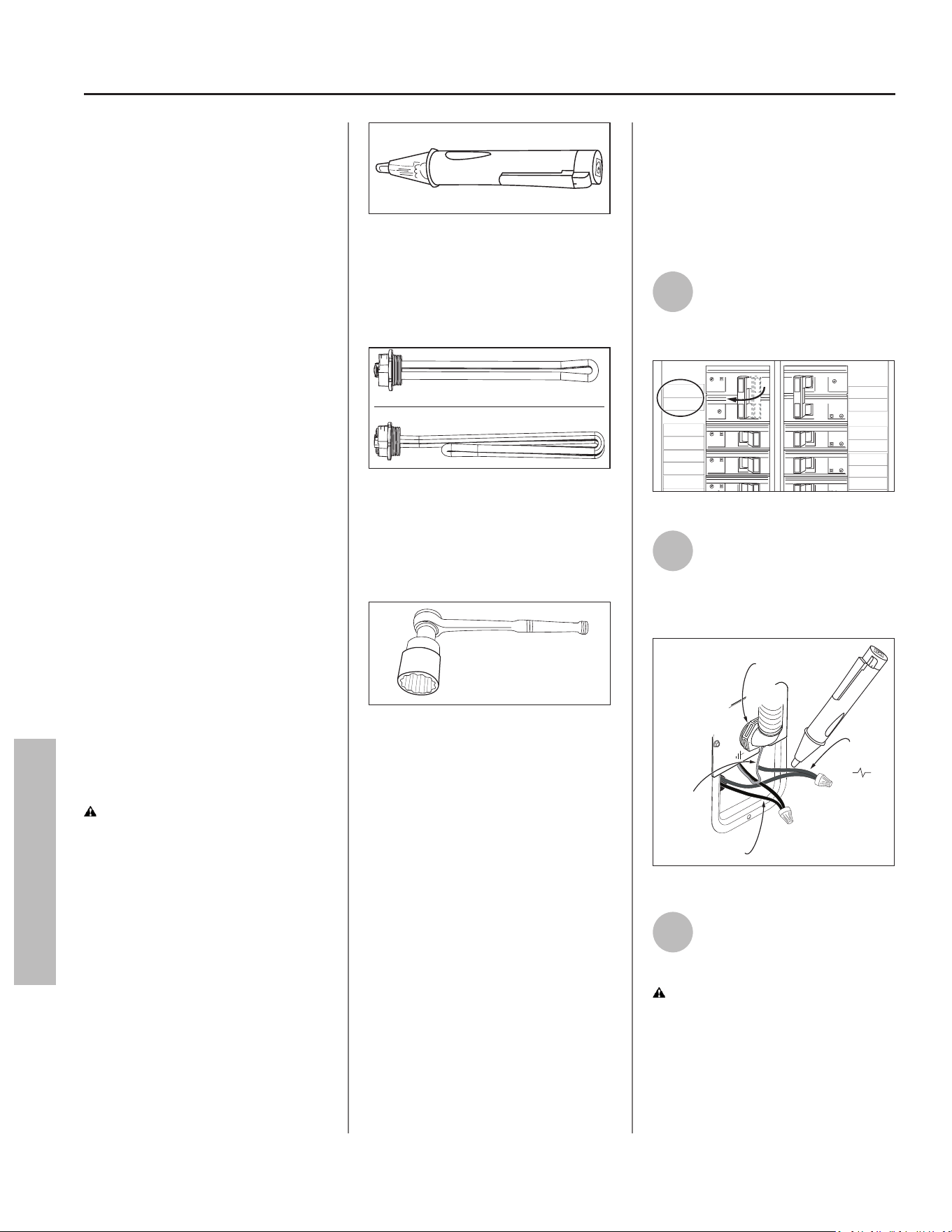
34 • Residenal Electric Water Heater Use and Care Guide
MAINTENANCE
MAINTENANCE
anode rod will deplete faster than
normal. Inspect the anode rod more
frequently, replacing the anode rod
as needed. Obtain new anode rods
from Lowe’s® or have a qualied
person replace it (anode rods are a
consumable item and are not covered
under warranty).
Cleaning the Heang
Element
At least annually, inspect upper and
lower elements for scaling or damage
caused by corrosive water condions
and mineral deposits.
Use a so bristle brush to remove
scale from the elements. If necessary,
soak the elements in cider vinegar for
two hours to remove scale.
Follow the instrucons in the next
secon to disconnect power to the
water heater and drain the tank
before accessing the elements.
IMPORTANT! Failure to clean scaling
from elements can lead to corrosion
and premature failure (leaks) in the
tank resulng in property damage.
Replace the heang elements if
necessary.
Replacing the Heang
Element
WARNING! Working near an
energized circuit can result in severe
injury or death from electrical
shock. Turn power OFF. Check wires
with a non-contact circuit tester to
make sure power is OFF. When you
are nished, be sure all covers are
secured to reduce the risk of re and
electric shock.
If you are not comfortable replacing
a heang element or thermostat
yourself, have this work done by
a qualied person. To replace the
heang element, you will need the
following tools and supplies:
ON
OFF
Figure 42 - Non-Contact Circuit Tester.
• Always turn power OFF and check
the power wires with a non-contact
circuit tester before working on the
water heater.
Figure 43 - Heang Element (with gasket).
• Check your water heater’s data plate
for the correct waage and voltage.
Heang elements are available at
Lowe’s®.
Figure 44 - Element Wrench.
• Some regular sockets (1-1/2 inch)
may work, but regular sockets are
oen beveled and may slip. In-
expensive element wrenches are
available at Lowe’s®.
• Garden hose to drain the tank.
• Hand dishwashing liquid to lubricate
the gasket.
• A clean cloth to clean the threaded
opening.
• A at blade and Phillips screwdriver.
Steps for Replacing the
Heang Element:
NOTICE: A diagnosc code (see
“Control Assembly Diagnosc Code
Chart” on page 25) should indicate if
the upper or lower element has failed.
1
Locate the water heater’s
circuit breaker and turn it
OFF (or remove the circuit’s
fuses).
WATER
HEATER
MICRO-
WAVE
LIVING
ROOM
50
50
1
RANGE
STOVE
2
20 20
15
2015
20
FRIDGE
PLUG
DISH
WASHER
HALL
LIGHTS
LAUNDRY
ROOM
TYPE HOM
SERIES 1
10 kA
120/240 V-
TYPE HOM
SERIES 1
10 kA
120/240 V-
TYPE HOM
SERIES 1
10 kA
120/240 V-
T
YPE HOM
SERIES 1
10 kA
120/240 V-
TYPE HOM
SERIES 1
10 kA
120/240 V-
TYPE HOM
SERIES 1
10 kA
120/240 V-
TYPE HOM
SERIES 1
10 kA
120/240 V-
TYPE HOM
SERIES 1
10 kA
120/240
V-
30
30
30
30
Figure 45 - Circuit Breaker.
2
Open the electrical juncon
box on the side of the water
heater. Using a non-contact
circuit tester, check the power wires
to make certain the power is OFF.
ON
OFF
Ground
Wires
1/2" Conduit
Connection
Black Wires
Red
Wires
Figure 46 - Non-Contact Circuit Tester.
3
Open a hot water faucet and
let the hot water run unl it
is cool.
WARNING! Be sure the water
runs cool before draining the tank to
reduce the risk of scalding.
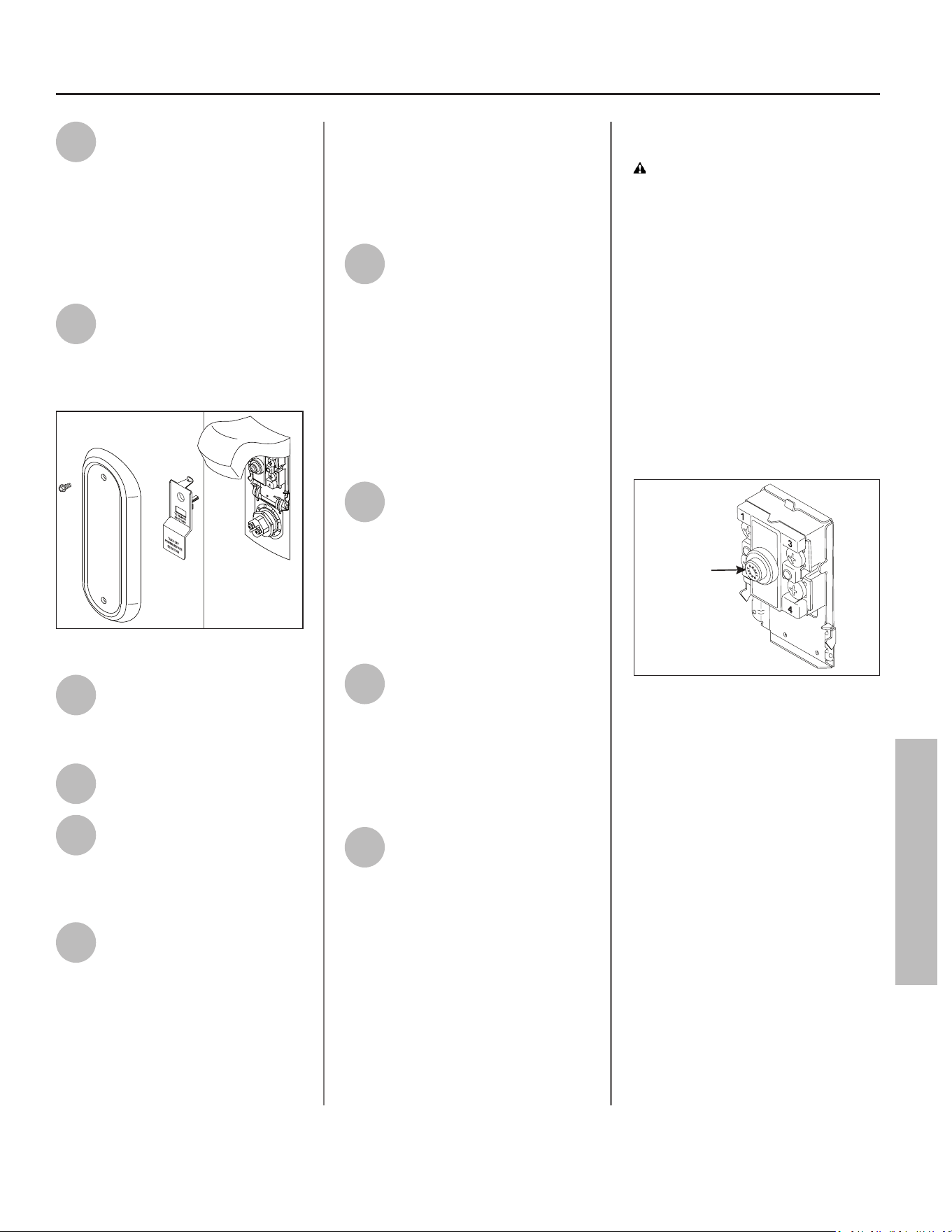
Residenal Electric Water Heater Use and Care Guide • 35
MAINTENANCE
MAINTENANCE
4
Connect a garden hose to the
drain valve and place the
other end of the hose in a
drain or outside (or use buckets). Turn
OFF the cold water valve that supplies
the water heater. Open the drain valve
on the water heater. Opening a hot
water faucet will help the tank drain
faster.
5
Remove the upper or lower
access panel on the water
heater, and then fold back the
insulaon and remove the plasc
element/thermostat cover.
Figure 47 - Access Panel.
6
With the tank drained and the
power OFF, remove the power
wires from the element you
intend to replace.
7
Remove the bad element
using an element wrench.
8
Make sure the new element is
the correct replacement by
referring to the water heater’s
data plate for voltage and waage
informaon.
9
Clean the threads in the tank
opening with a rag. Insert the
new element equipped with a
rubber gasket. Use a drop of hand
dishwashing liquid to lubricate the
gasket to help avoid damaging the
gasket as it is being ghtened. Tighten
with an element wrench.
NOTICE: DO NOT turn power back
on unl the tank is completely full of
water. For complete instrucons on
lling the tank, follow “Step 13” on
page 16 in the installaon secon of
this manual.
10
Rell the tank by opening the
cold water supply valve. Make
sure a hot water faucet is
open and the drain valve is closed.
Allow hot water to run full for at least
three (3) minutes to make sure the
tank has all the air removed and is
completely full of water. Failure to
perform this step can cause the upper
heang element to burn out. Once you
are certain the tank is completely full
of water, close the hot water faucet.
11
Check the newly installed
element for leaks. If a leak is
present, ghten the element
unl the leak stops. If you cannot stop
the leak, drain the tank and remove
the element. Inspect the gasket for
damage. If the gasket is damaged,
replace the gasket and reinstall the
element.
12
Once the element is
successfully installed and
there are no leaks, replace the
power wires, thermostat cover,
insulaon, and access panel. Make
sure all wire connecons are ght.
Replace the cover on the electrical
juncon box.
13
Turn ON power to the water
heater at the circuit breaker/
fuse box. It may take two
hours for the tank to heat up.
Replacing the ECO
WARNING! Working near an
energized circuit can result in severe
injury or death from electrical
shock. Turn power OFF. Check wires
with a non-contact circuit tester to
make sure power is OFF. When you
are nished, be sure all covers are
secured to reduce the risk of re and
electric shock.
To replace the ECO, you will need the
following tools and supplies:
• A non-contact circuit tester. Always
turn power OFF and check with a
non-contact circuit tester before
working on the water heater.
ECO Reset
Button
Figure 48 - ECO
• A replacement ECO (see the repair
parts list on back cover).
• A business card to check the gap
between the ECO and tank.
• Tape and a permanent marker to
mark the wires.
• A at blade and Phillips screwdriver.
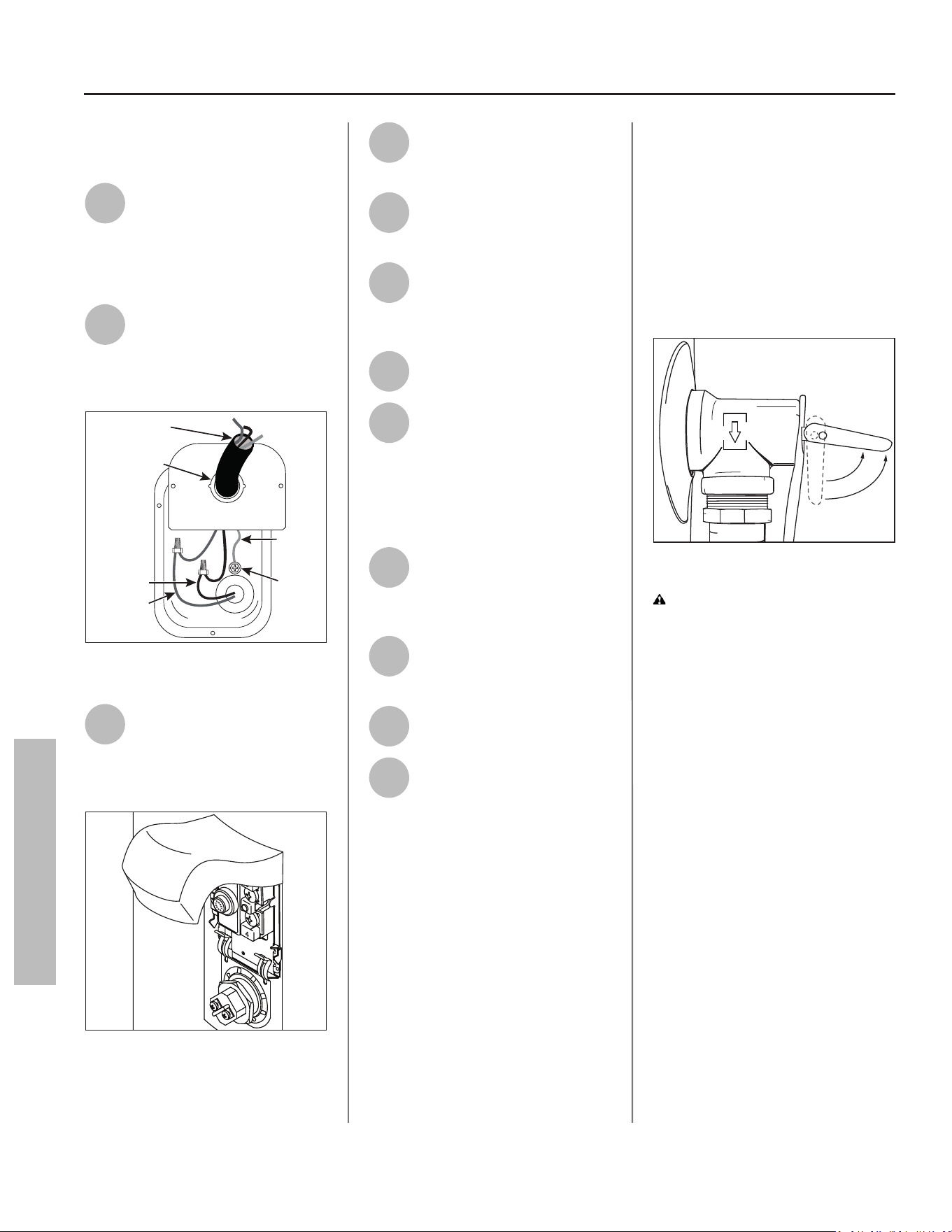
36 • Residenal Electric Water Heater Use and Care Guide
MAINTENANCE
MAINTENANCE
Steps for Replacing the
ECO:
1
Turn the power OFF at the
circuit breaker or remove
fuses.
NOTICE: It is not necessary to drain
the tank to replace an ECO.
2
Open the electrical juncon
box on the side of the water
heater. Using a non-contact
circuit tester, check the power wires
to make certain the power is OFF.
1/2” Conduit
Opening
Green
Ground
Screw
Green
Ground
Wire
Red Wire
Black Wire
Power Supply
Connector
Figure 49 - Electrical Juncon Box (boom cover
to electrical juncon box removed for clarity).
3
Remove the upper access
panel on the water heater
and carefully fold back the
insulaon and plasc element/ECO
cover (Figure 50).
Figure 50 - Element Access Panel/ECO Compart-
ment.
4
Make sure the replacement
ECO matches the original
ECO.
5
Mark the wires with tape so
you will know how to put
them back on.
6
Disconnect the wires from
the bad ECO and remove the
ECO from the metal mounng
clip.
7
Install the new ECO in the
metal mounng clip.
8
Make sure the new ECO ts
snuggly against the tank. You
should NOT be able to slip a
business card between the ECO and
the tank. If you can, bend the ECO
mounng clip unl the ECO ts ghtly
against the tank.
9
Aach the wires following
the wiring diagram on the
water heater’s label. Make
sure all wire connecons are ght.
10
Replace the plasc element/
ECO cover, insulaon, and
access panel.
11
Replace the cover on the
electrical juncon box.
12
Turn ON power to the water
heater at the circuit breaker/
fuse box.
T&P Relief Valve
Maintenance
Read and follow the operang and
annual maintenance instrucons
provided by the manufacturer of
the T&P Relief Valve (yellow label
aached to the T&P Relief Valve).
If no label is aached to the T&P
Relief Valve, follow the instrucons
in this secon. Minerals in the
water can form deposits that cause
the valve to sck or create blocked
passages, making the T&P Relief Valve
inoperave. Follow these guidelines:
• At least annually, inspect the T&P
Relief Valve and discharge pipe for
damage caused by corrosive water
condions and mineral depos-
its. Operate the T&P Relief Valve
manually to ensure the waterways
are clear and the valve mechanism
moves freely (below). Before oper-
ang the valve manually, check that
it will discharge in a place for secure
disposal.
Figure 51 - T&P Relief Valve.
WARNING! Hot water will be
released. Before operang the T&P
Relief Valve manually, check that it
will discharge in a safe place. If water
does not ow freely from the end of
the discharge pipe, turn the power to
the water heater OFF. Call a qualied
person to determine the cause.
• Note that a dripping T&P Relief
Valve is usually caused by the
home’s water pressure being too
high or the lack of a Thermal Expan-
sion Tank. If your T&P Relief Valve
drips, see “Drips from T&P Relief
Valve Discharge Pipe” on page 29.
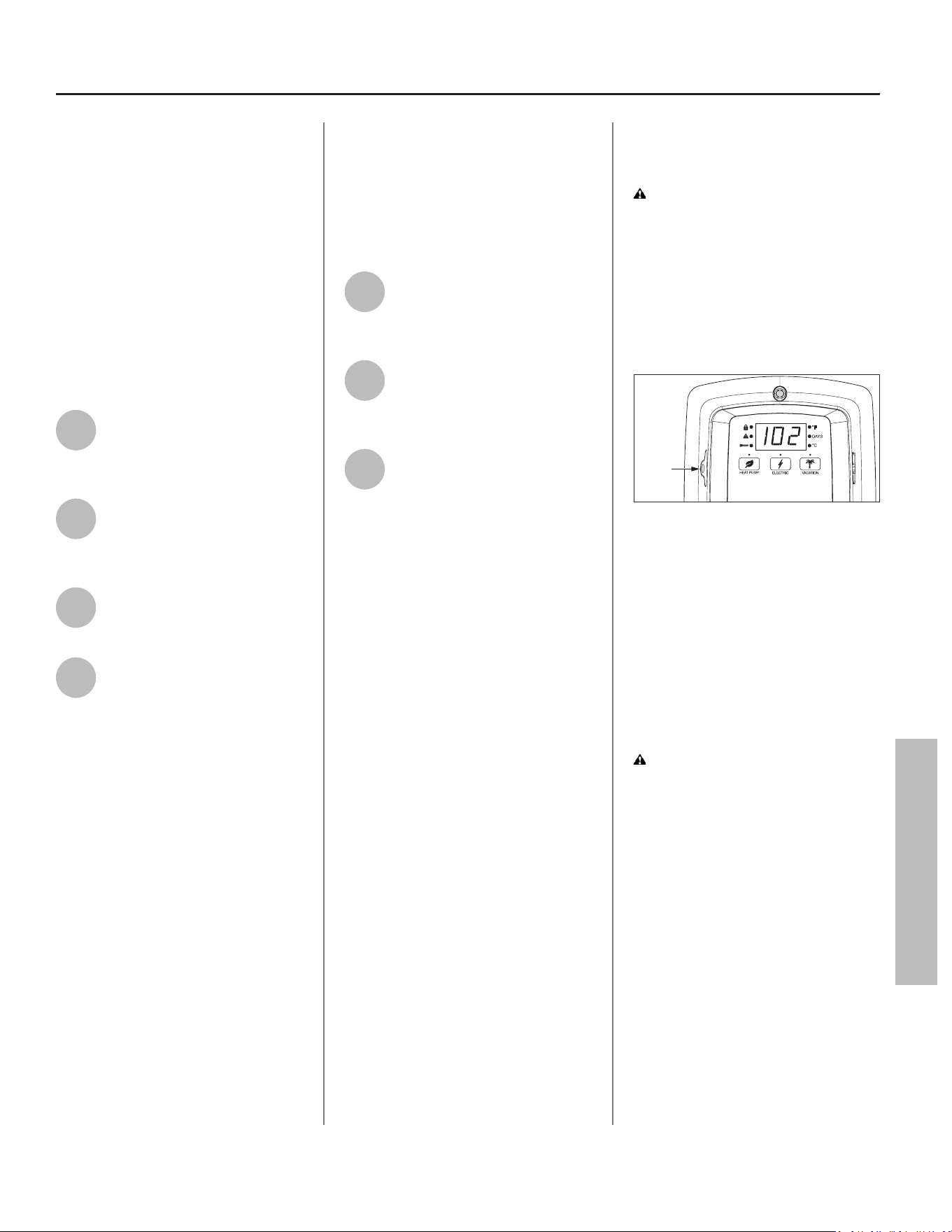
Residenal Electric Water Heater Use and Care Guide • 37
MAINTENANCE
Air Filter Maintenance
The heater will monitor the heat pump
operaon status and indicate whether
the lter should be cleaned. If the
Control Assembly displays the code
080, this indicates the lter should be
cleaned or replaced with the following
process (see exploded view of the unit
on page 39 for air lter locaon).
NOTICE: Before aempng to clean
or replace the air lter, turn OFF the
power to the water heater at the
circuit breaker/fuse box.
1
Take the tab on the air lter
and remove (slide) it from the
top facing air intake duct
adaptor.
2
To clean the lter, use a
vacuum with a hose
aachment to remove any
dust or debris.
3
Slide the new or cleaned lter
into the air intake duct
adaptor.
4
Turn ON power to the water
heater at the circuit breaker/
fuse box.
NOTICE: The water heater may
conduct a system diagnosc prior to
operaon.
Condensate Drain
Maintenance
NOTICE: Before aempng to clean
the condensate drain pan or lines, turn
power OFF to the water heater at the
circuit breaker/fuse box.
1
Check the condensate drain
pan and drain lines for any dirt
or debris that might interfere
with proper drainage.
2
Use a pipe cleaner to clear
debris from condensate drain,
condensate line, and
condensate drain pan.
3
Once the condensate drain
pan and lines have been
inspected/cleaned, turn ON
power to the water heater at the
circuit breaker/fuse box.
NOTICE: The water heater will conduct
a system diagnosc prior to operaon.
Control Assembly
Baery Maintenance
CAUTION! Baery May Explode
If Mistreated. Do Not Recharge,
Disassemble Or Dispose Of In Fire.
It is recommended to replace the
baery in the Control Assembly every
ve (5) years for reliability.
Locate the baery tray on the le side
of the Control Assembly (Figure 52).
ENTER
Battery
Tray
Figure 52 - Baery Tray locaon.
Replace the BR2032 or CR2032 baery
by removing the Phillips head screw
and sliding the baery tray out from
the Control Assembly. Replace baery
with Panasonic® BR2032 or Murata
CR2032 only. Insert baery into the
tray and reinstall into the Control
Assembly. Hand ghten the Phillips
head screw to secure the tray in the
Control Assembly.
CAUTION! Use of Another Baery
May Present A Risk Of Fire Or
Explosion.
NOTICE: If the Control Assembly was
not connected via Wi-Fi, Bluetooth, or
powered by a power source, the me
will need to be set.
MAINTENANCE
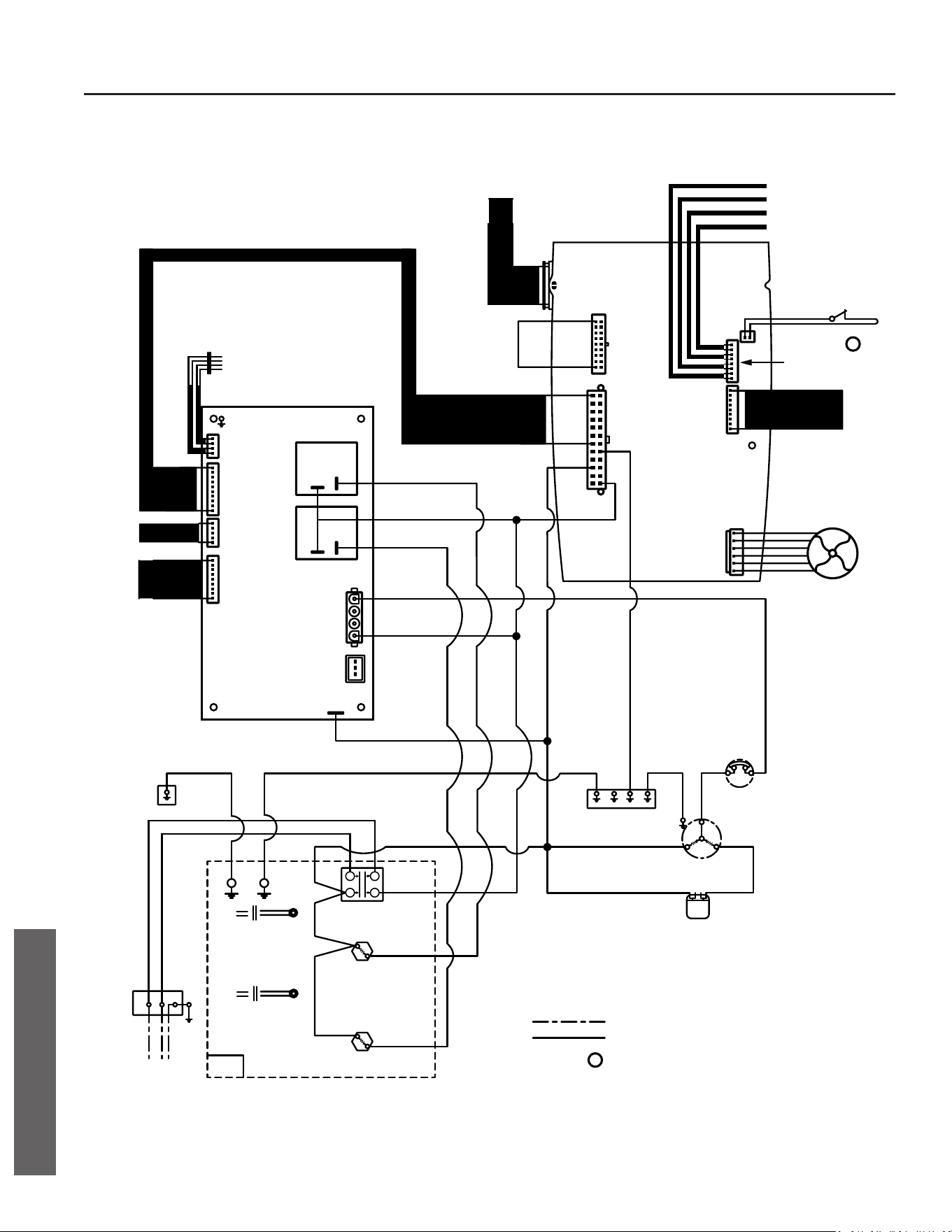
38 • Residenal Electric Water Heater Use and Care Guide
CONTROL ASSEMBLY AND THERMOSTAT DIAGRAM
J9
SHUT OFF VALVE
BLUE
BLACK
GREEN
YELLOW
AMBIENT TEMP. SENSOR
COIL TEMP. SENSOR
SUCTION TEMP. SENSOR
DISCHARGE TEMP. SENSOR
CONDENSATE WATER
ALARM SIGNAL
a
TO DAUGHTER
BOARD
ANODE
(OPTION OF WATER
TEMP. SENSOR AND
BYPASS VALVE FOR
PREMIUM MODEL)
FAN MOTOR
BLACK
TANK LOWER TEMP. SENSOR
RED
A-A
B-B
TANK UPPER TEMP. SENSOR
EEV
TO MAIN
CONTROL
BOARD
TANK
A-A
TANK LOWER
TEMP. SENSOR
B-B
TANK UPPER
TEMP. SENSOR
BLACK
BLACK
BLACK
RED
BLUE
WHITE
LOWER ELEMENT
4.5KW
1
2
3
4
BLACK
UPPER ELEMENT
4.5KW
HIGH LIMIT
SWITCH
MOTOR
PROTECTOR
TANK TOP
COVER
COMPRESSOR
C
R
S
CAPACITOR
OPTIONAL OVERFLOW SWITCH
NORMALLY CLOSED
a
FIELD WIRING
FACTORY WIRING
JUNCTION
BOX
L1 L2 G
BLACKRED
TANK
JACKET
GREEN
GREEN
GREEN
GREEN
GREEN
RED
WHITE
RED
BLACK
BLACK
BLACK
RED
RED
BLUE
WHITE
RED
CONDENSATE WATER
LEVEL SWITCH
240VAC 50Hz/60Hz 1Φ
208VAC 50Hz/60Hz 1Φ
DIAGRAMS
DIAGRAMS
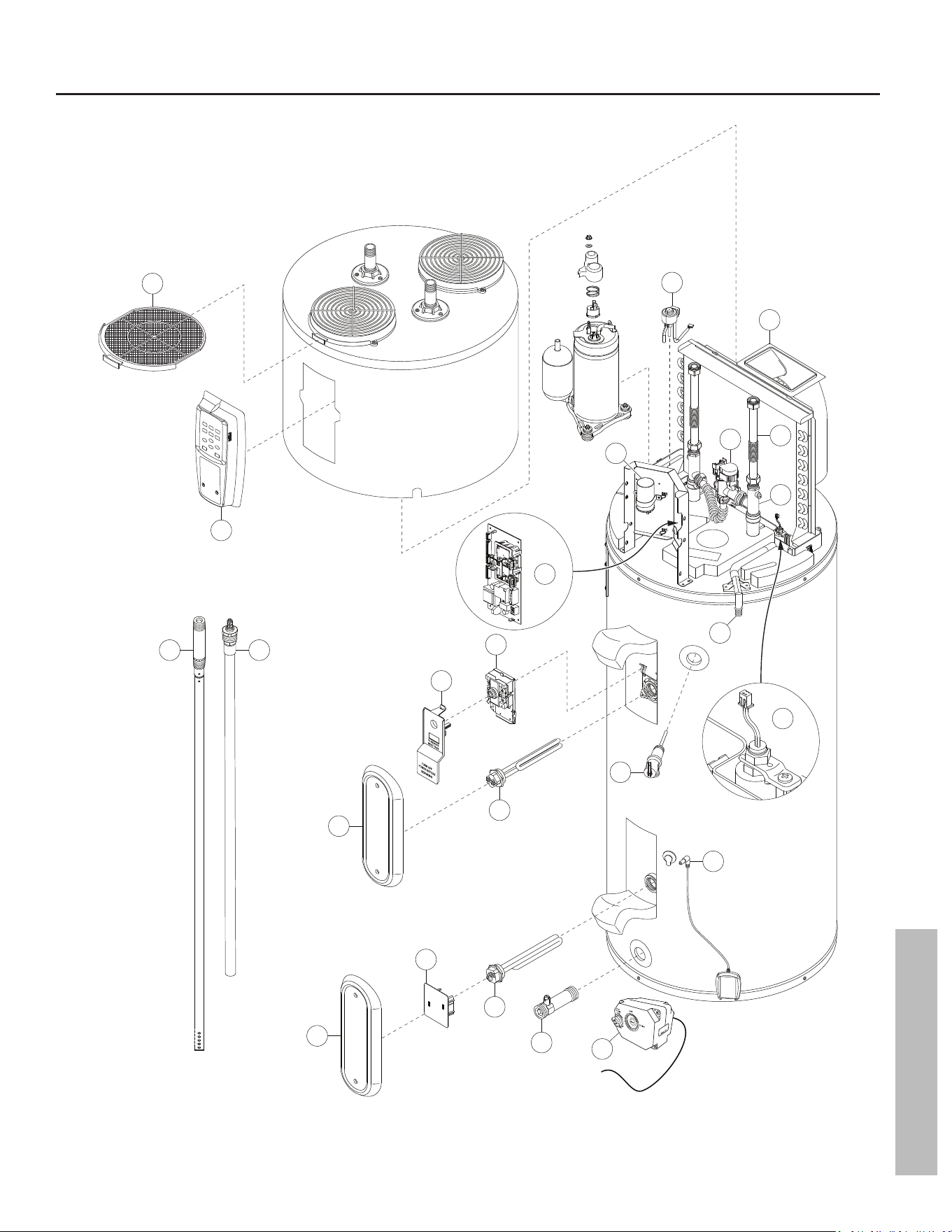
Residenal Electric Water Heater Use and Care Guide • 39
REPAIR PARTS
REPAIR PARTS
12
20
15
15
13
16
21
3
1
4
14
14
6
19
5
18
8
10 11
Quick Release
to remove valve body
22
7
2
17
9
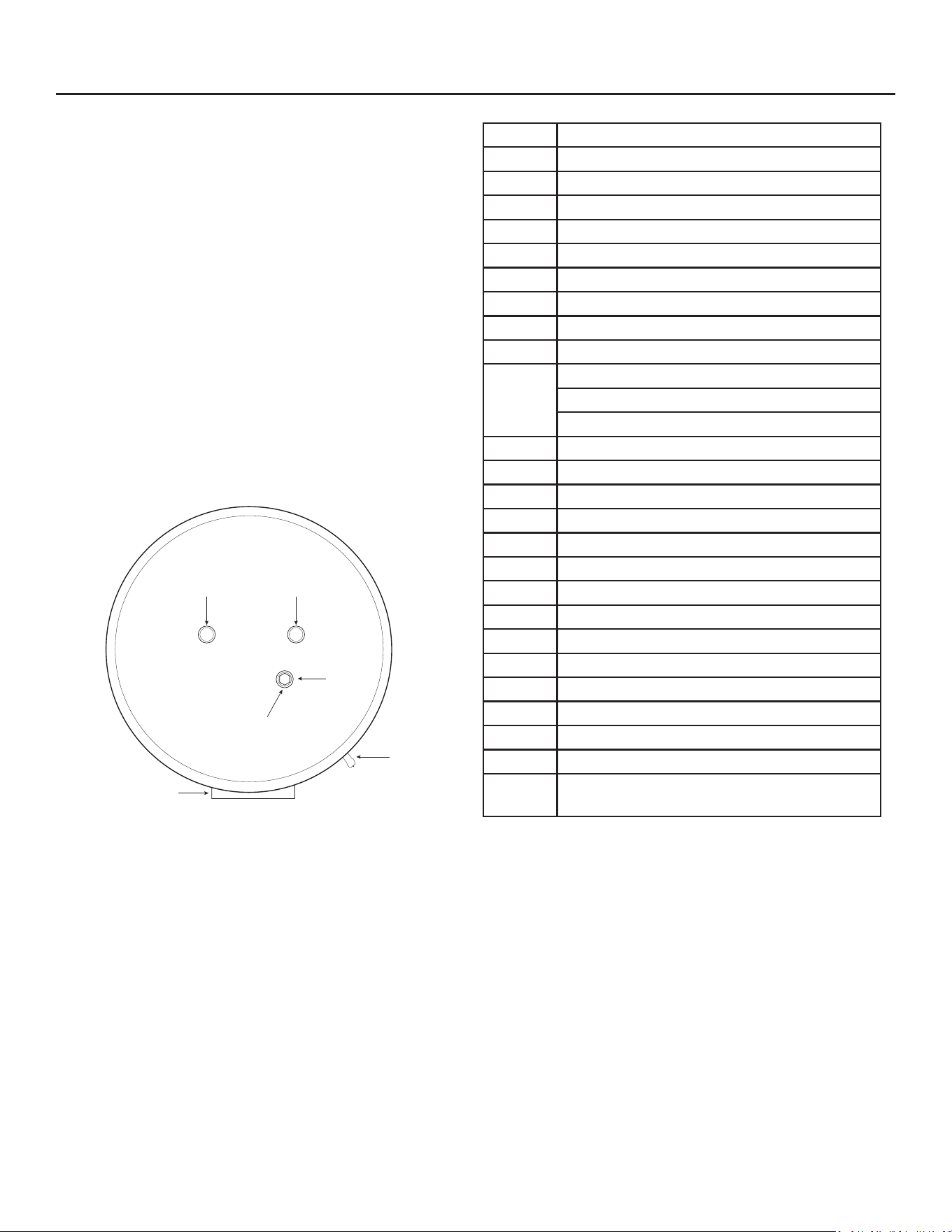
REPAIR PARTS
Repair parts may be ordered through your plumber, local
distributor, home improvement center, or by calling our Technical
Assistance Hotline which is listed on your warranty. When
ordering parts, always give the following informaon:
1. Model, serial and product number
2. Item number
3. Parts descripon
Anode
T&P Valve
Control Assembly
Front of Unit
Back of Unit
37” for all models
ColdHot
ITEM NO. PARTS DESCRIPTION
1 Air Filter
2 Fan Motor Assembly
3 Electronic Expansion Valve Solenoid
4 Control Assembly
5 Daughter Board, 208V/240V
6 Run Capacitor
7 Smart Valve Assembly
8 Flex Hoses (2x), Gaskets
9 Inlet / Outlet T-Nipple Assembly
10
Dip Tube, for 40 & 50 gallon
Dip Tube, for 66 gallon
Dip Tube, for 80 gallon
11 Anode Rod, 37” for all models
12 Upper Element Personnel Protector
13 Energy Cut-O (ECO) Switch
14 Element Access Panel
15 Element, 4500 Was
16 Temperature & Pressure Relief Valve
17 Condensate Drain Valve
18 Condensate Drain Switch
19 Leak Detecon Sensor
20 Lower Element Personnel Protector
21 Drain Valve
22 Automac Cold Water Shut-O Valve
23 Outlet Thermistor Assembly*
24 Upper / Lower Tank Thermistor Assembly*
25
Ambient / Discharge / Coil / Sucon
Temperature Sensor Assembly*
*Not shown
REPAIR PARTS
Apple logo and Apple App Store Logo are trademarks of Apple Inc.
Google Play and the Google Play Logo are trademarks of Google LLC.
LOWE’S is a registered Trademark of LF, LLC.
Copyright © 2024, A.O. Smith. All Rights Reserved
Limited Warranty provided by Manufacturer.