USER
GUIDE
A commitment to:
Belling Rangecooker Deluxe - DF & GTG
Date: 03/08/2021

To contact Belling about your appliance, please call:
Customer Care Helpline
AU - 1 800 444 357
NZ - 09 274 8265
To register your appliance by mail:
Please complete the warranty card
and return to the address supplied
To register your appliance online:
AU - www.belling.com.au
NZ - www.belling.co.nz
To contact us by email:
AU - [email protected]
NZ - [email protected]
To purchase additional spare parts and accessories visit our website on www.belling.com.au
Calls are charged at the basic rate, please check with your telephone service provider for exact charges
During the 5 year guarantee period, your appliance, as specified on your warranty registration card,
your appliance is protected against electrical and mechanical breakdown. To register your
appliance, please call the number shown above, register online or complete the registration card
included.
Please ensure that you have available your appliance model number and serial number. For full
terms & conditions of the manufacturer’s guarantee, refer to the website.
Our policy is one of constant development and improvement, therefore we cannot guarantee the
strict accuracy of all of our illustrations and specications. Changes may have been made
subsequent to publishing.
AU - Glen Dimplex Australia PTY LTD, 8 Lakeview Drive, Scoresby VIC 3179
NZ - Glen Dimplex New Zealand Ltd, 38 Harris Road, East Tamaki, Auckland, New Zealand
GB - Great Britain
IE - Ireland
DE - Germany
ES - Spain
FR - France
IT - Italy
PL - Poland
NL - Netherlands
SE - Sweden
CN - China
NZ - New Zealand þ
AU - Australia þ
Countries of destination:

Thank you for buying this British-built appliance from us.
This user guide book is designed to help you through each step of owning your new product.
Please read it carefully before you start using your appliance, as we have endeavored to answer as
many questions as possible, and provide you with as much support as we can.
General information and User Guides are available from our website.
If you should nd something missing from your product or have any questions that are not covered in
this user guide, please contact us (see contact information inside the front cover).
This unit must be installed by a competent electrician / qualied technician. In regions where applicable,
please retain your Certicate of Compliance.
Disposal of Packaging Material
The packaging materials used with this appliance can be recycled. Please dispose of the packaging
materials in the correct manner.
GAS WARNING:
If you smell gas, Do not try to light any appliance. Do not touch any electrical switch.
Call the gas emergency helpline
INTRODUCTION

CONTENTS
SAFETY PG 5
USING YOUR APPLIANCE PG 9
USING THE GRILL PG 17
USING THE TOP OVEN PG 19
USING THE MAIN OVEN - ELECTRIC PG 21
USING THE OVEN/GRILL - MULTIFUNCTION PG 27
USING THE OVEN - SLOW COOK PG 36
USING THE SPLITTER - 90CM DELUXE ONLY PG 39
INSTALLATION INSTRUCTIONS PG 54
REGULATION STANDARDS PG 55
BEFORE INSTALLATION PG 56
DIMENSIONS AND CLEARANCES PG 58
CONNECT TO THE ELECTRICITY AND GAS SUPPLY PG 60
COMMISSIONING PG 63
USING YOUR APPLIANCE PG 64
TECHNICAL DATA PG 68

SAFETY
WARNING
• During use the appliance becomes hot. Care should be taken to
avoid touching heating elements.
• This appliance is not intended for use by persons (including
children) with reduced physical, sensory or mental capabilities, or
lack of experience and knowledge, unless they have been given
supervision or instruction concerning use of the appliance by a
person responsible for their safety. Young children should be
supervised to ensure that they do not play with the appliance.
• Do not use harsh abrasive cleaners or sharp metal scrapers to
clean the oven door glass or the hob, since they can scratch the
surface, which may result in shattering of the glass.
• Do not use a steam cleaner on any cooking range, hob or oven
appliance.
• If you appliance is fitted with a lid, any spillage should be removed
from the lid before opening. The hob surface should be allowed to
cool before closing the lid (if fitted).
• Metallic objects such as knives, forks, spoons and lids should not
be placed on the hob surface since they can get hot.
• To avoid electric shock, ensure that the appliance is switched o
before replacing the lamp.
• The appliance is not intended to be operated by means of an
external timer or separate control system.
• Unattended cooking on a hob with fat or oil can be dangerous and
may result in fire.
• NEVER try to extinguish a fire with water, but switch off the
appliance and then cover the flame with a lid or damp cloth.
• Danger of fire: Do not store items on the cooking surfaces.
• Only use hob guards designed by the manufacturer of the cooking
appliance or indicated by the manufacturer of the appliance in the
instructions for use as suitable or hob guards incorporated in the
appliance. The use of inappropriate hob guards can cause
accidents.
• If the cooker is placed on a base, measures have to be taken to
prevent the appliance slipping from the base.

SAFETY
• If the hob surface is cracked, broken or shattered, switch off the
appliance to avoid the possibility of electric shock and call for a
service engineer’s visit.
• Never put items directly on the base of the oven or cover the oven
with foil, as this can cause the base element to overheat.
• Accessible parts may become hot when the grill is in use. Children
should be kept away.
• Do not store or use flammable liquids or items in the vicinity of this
appliance.
• DO NOT USE OR STORE FLAMMABLE MATERIALS IN OR
NEAR THIS APPLIANCE.
• DO NOT SPRAY AEROSOLS IN THE VICINITY OF THIS
APPLIANCE WHILE IT IS IN OPERATION.
• DO NOT MODIFY THIS APPLIANCE.
• D
O NOT PLACE ARTICLES ON OR AGAINST THE APPLIANCE.
• Servicing shall be carried out only by authorised personnel.
• Do not use this appliance as a room or space heater.
• Where this appliance is installed in marine craft or in caravans, it
shall not be used as a space heater.
• Always switch off your appliance and allow it to cool down before
you clean any part of it.
• The switch in the fixed wiring must be installed in accordance with
the wiring rules.
• Although every care has been taken to ensure this appliance has
no sharp edges, we recommend that you wear protective gloves
when installing and moving this appliance. This will prevent injury.
• This appliance must be fitted to a switch providing all pole
disconnection with a minimum contact separation of 3mm.
• Connection should be made with a suitable flexible cable with a
minimum temperature of 70
o
C.
CAUTION
• This appliance must not be installed behind a decorative door in
order to avoid overheating.
• The cooking process has to be supervised. A short term cooking
process has to be supervised continuously.
• The use of a gas cooking appliance results in the production of

SAFETY
heat, moisture and products of combustion in the room in which
it is installed. Ensure that the kitchen is well ventilated especially
when the appliance is in use: keep natural ventilation holes open
or install a mechanical ventilation device (mechanical extractor
hood). Prolonged intensive use of the appliance may call for
additional ventilation, for example opening of a window, or more
eective ventilation, for example increasing the level of mechanical
ventilation where present.
• This appliance is for cooking purposes only. It must not be used for
other purposes, for example room heating.
• (Gas through glass models only) In case of hotplate glass
breakage, shut immediately o all burners and any electrical
heating element and isolate the appliance from the power supply,
do not touch the appliance surface, do not use the appliance.
• Ensure shelving is correctly installed. See the sections on the shelf
runners and shelf location within this book.
• Fire Safety Advice
If you do have a re in the kitchen, don’t take any risks - get
everyone out of your home and call the Fire Brigade.
Ifyouhaveanelectricalreinthekitchen:
• Pull the plug out, or switch o the power at the fuse box - this may
be enough to stop the re immediately
• Smother the re with a re blanket, or use a dry powder or carbon
dioxide extinguisher
• Remember: never use water on an electrical or cooking oil re.
• Other Safety Advice
• Servicing should be carried out only by authorised personnel.
• Do not operate the appliance without the glass panel correctly
tted.
• There is a risk of electric shock, so always make sure you have
turned o and unplugged your appliance. Always allow the product
to cool down before you change the bulb.
• Do not modify the outer panels of this appliance in any way.

SAFETY
• This appliance must be earthed.
• The appliance must never be disconnected from the mains supply
during use, as this will seriously affect the safety and performance,
particularly in relation to surface temperatures becoming hot and
gas operated parts not working efficiently. The cooling fan (if fitted)
is designed to run on after the control knob has been switched off.
• GAS WARNING! - If you smell gas: Do not try to light any
appliance, Do not touch any electrical switch. Contact your local
gas supplier immediately.
• If the supply cord is damaged, it must be replaced by the
manufacturer, its service agent or similarly qualified persons in
order to avoid a hazard.
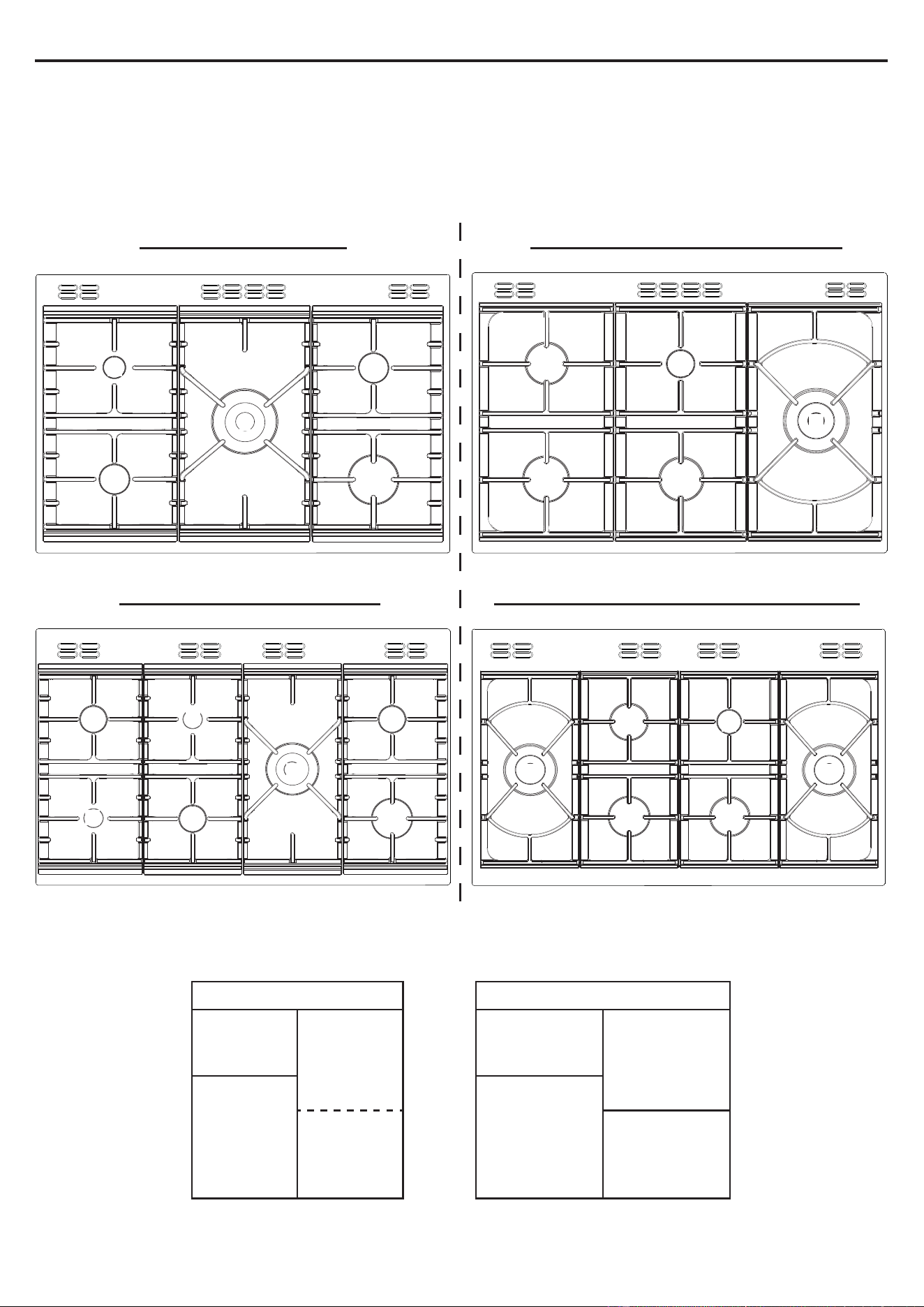
Getting to know your product
Note: Your appliance layout may dier depending on the model.
Note: All numbers refer to the nominal power rating in Kilowatts (kW)
Dual Fuel Hob 90cm Gas-Through-Glass Hob 90cm
Dual Fuel Hob 100/110cm Gas-Through-Glass Hob 100/110cm
Fascia Fascia
90cm Deluxe 100/110cm Deluxe
Top Oven
Multifunction
Oven
Fanned
Oven with
Splitter
Top Oven
Multifunction
Oven
Fanned
Oven
Slow
Cook
Note: Please refer to the shaded cavity diagrams throughout this book on it’s use.
1
2
4
2
3
1
2
2
4
USING YOUR APPLIANCE
Wok
Wok
3
1
2
5
5
5
2
2
3
1
2
23
1
Wok
Wok Wok
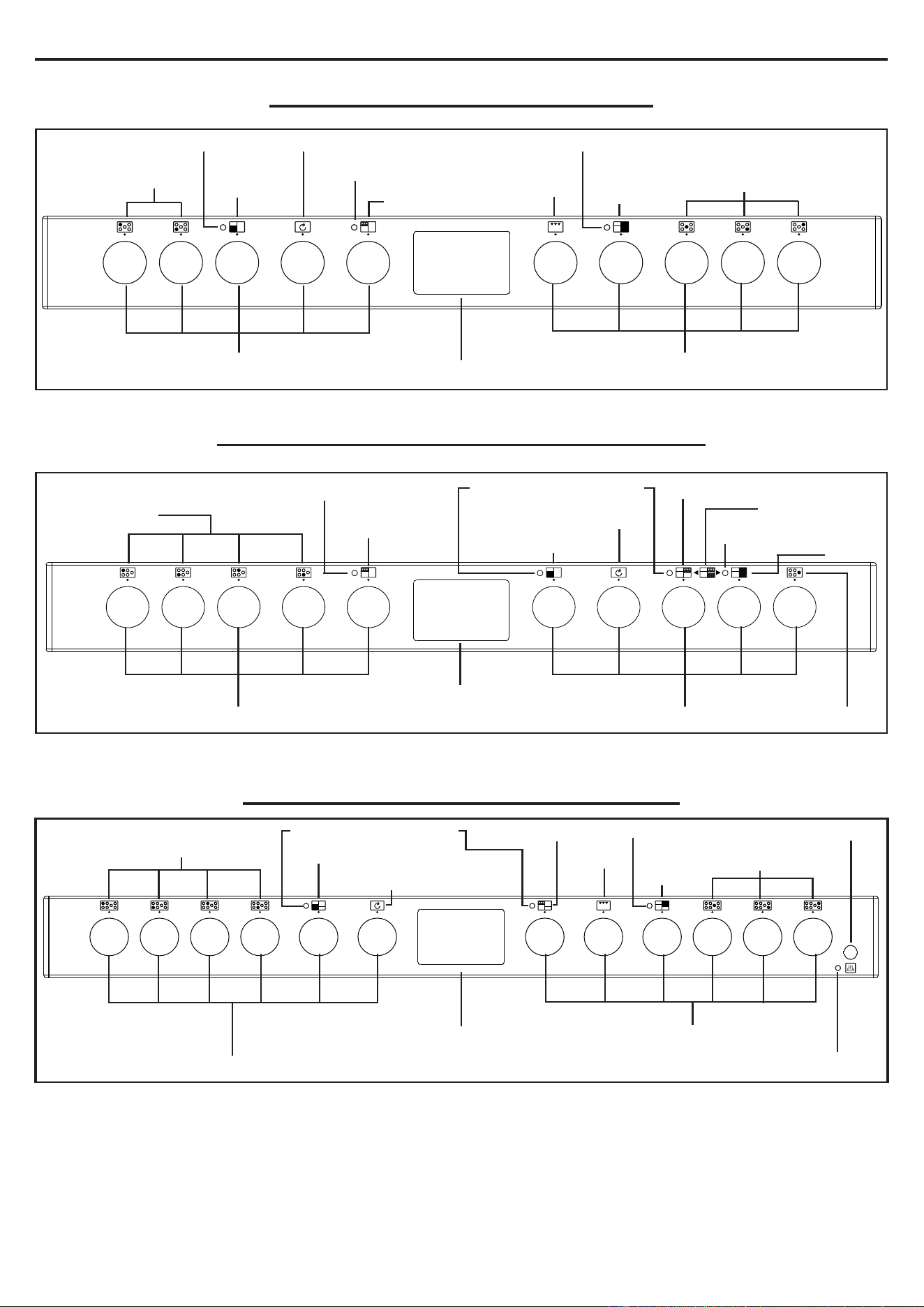
Control Panel 90cm Dual Fuel Deluxe
Control Panel 90cm Gas-Through-Glass Deluxe
Control Panel 100/110cm Dual Fuel Deluxe
USING YOUR APPLIANCE
Cook zones
Cook zones
Oven
Oven Selector Control
Top Oven
Clock/Programmer
Grill
Oven
Thermostat indicator
Slow Cook
Hob and Oven controls
Hob and Oven controls
Thermostat indicator
Thermostat indicator
Cook zones
Cook zone
Oven
Top Oven/Grill
Split Cavity
Hob and Oven controls Hob and Oven controls
Clock/Programmer
Oven
Top Oven/Grill
Oven Selector Control
Thermostat indicator
Thermostat indicator
Thermostat indicator
Oven
Grill
Cook zones
Cook zones
Oven
Top Oven
Oven Selector Control
Hob and Oven controls Hob and Oven controls
Clock/Programmer
Thermostat indicator
Thermostat indicator Thermostat indicator
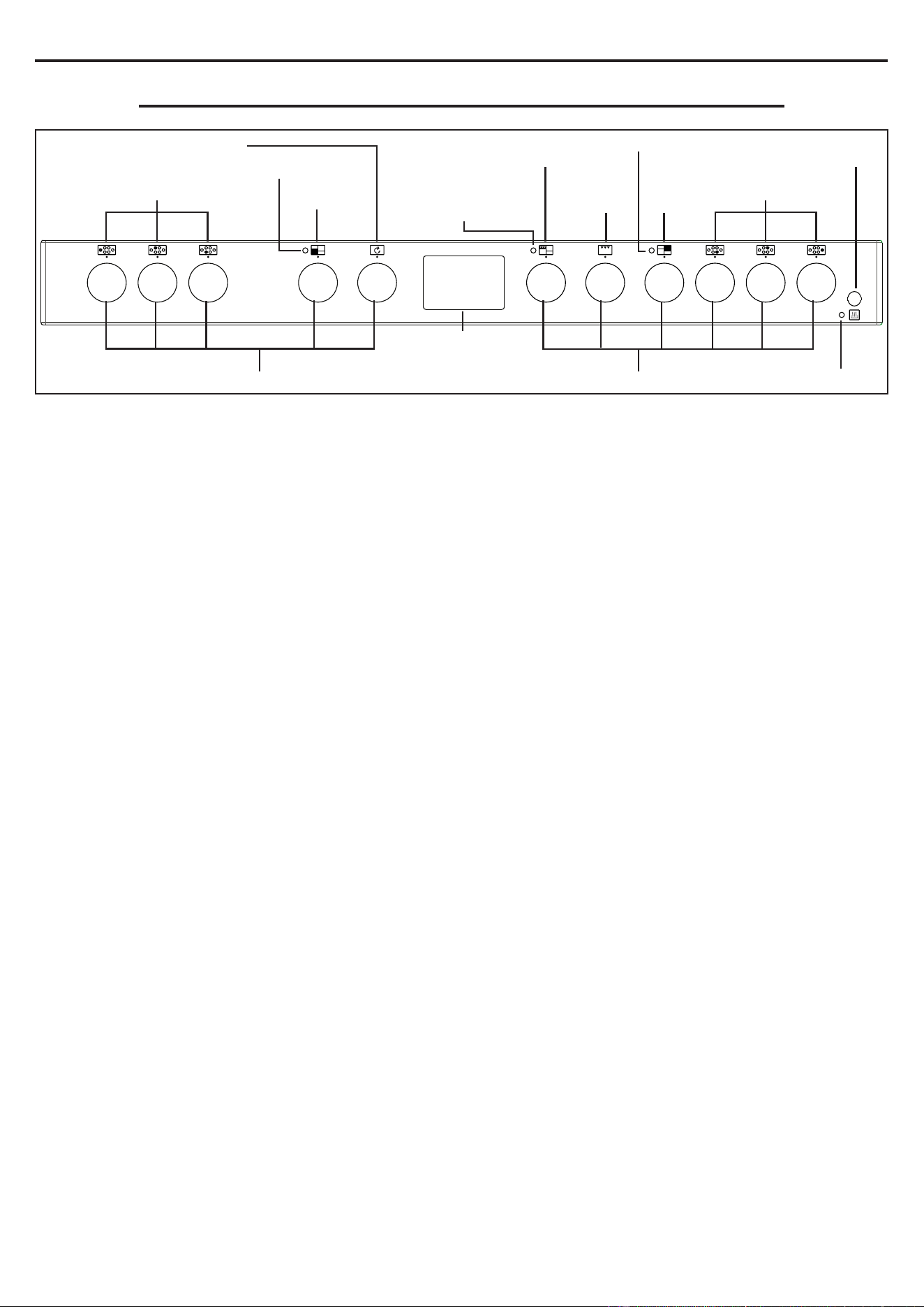
Control Panel 100/110cm Dual Fuel Gas-Through-Glass Deluxe
USING YOUR APPLIANCE
Clock/Programmer
Cook zonesCook zones
OvenGrill
Thermostat indicator
Top Oven
Oven
Slow Cook
Hob and Oven controls Hob and Oven controls
Oven Selector Control
Thermostat indicator
Thermostat
indicator
Thermostat indicator
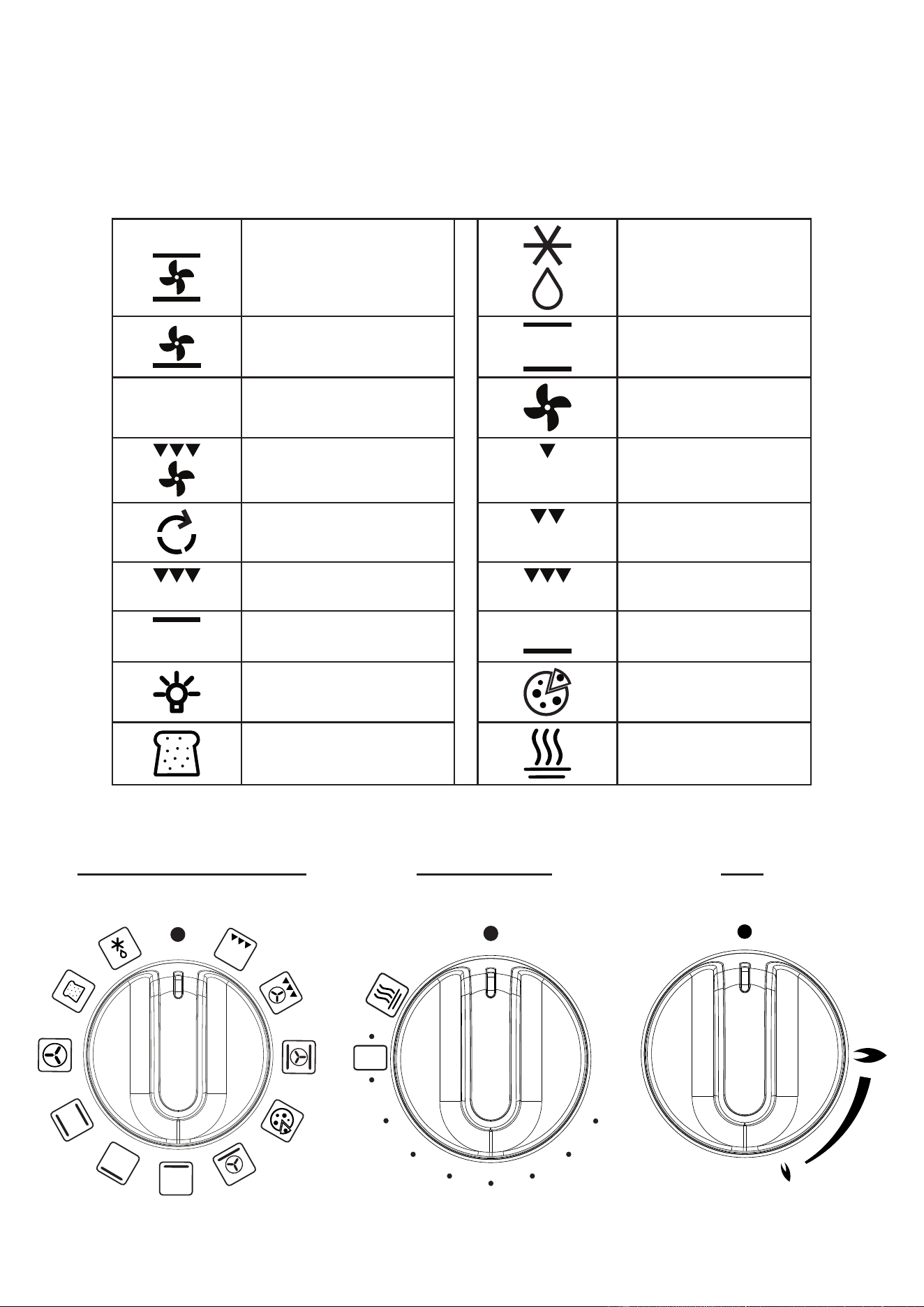
Appliance functions
Note: Your oven may not have all of the functions shown here. We recommend for best cooking results,
please preheat your oven for 15 minutes and 3-5 minutes for grilling.
Only slow cook using the dedicated function. When using the multifunction oven, rstly select the
fanned oven feature.
Intense Baking Defrost
Base Heat with Fan Conventional Oven
S
Slow Cook Fanned Oven
Fanned Grill Low Grill
Oven Selector Control Single Grill
Conventional Grill Dual Grill
Top Heat Base Heat
Lights Only Pizza Function
Bread Proving Keep Warm
Oven Selector Control Electric oven Hob
OFF
OFF
S
120
140
160
180
200
220
240
260
OFF
USING YOUR APPLIANCE
Ovens and Grill
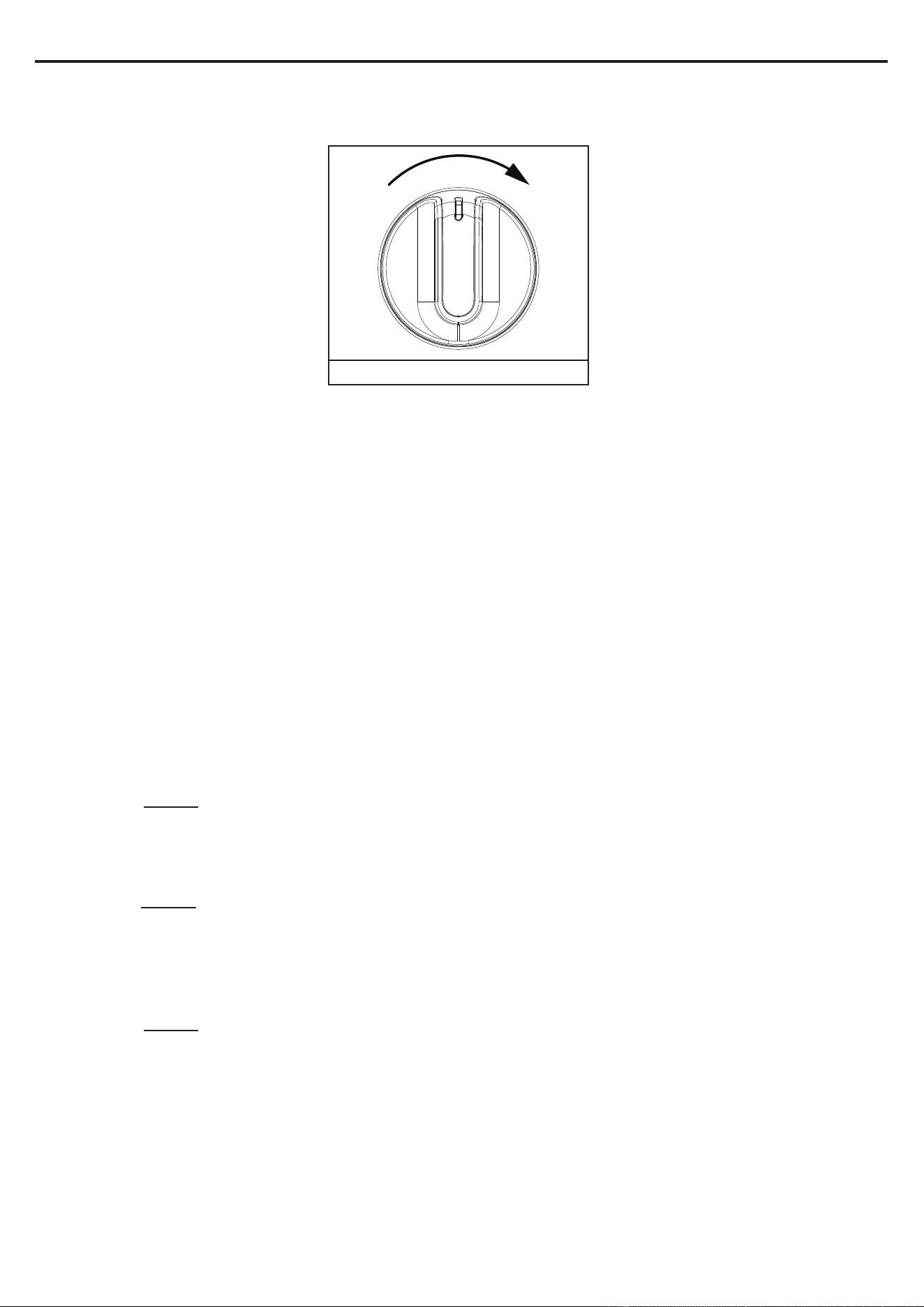
Choose required setting
When using the top oven or main oven, the thermostat indicator light will come on until the selected
temperature is reached.
When the Top oven/grill or grill is switched on, the cooling fans come on to keep the fascia and control
knobs cool during cooking/grilling. The cooling fans may operate when the main ovens are in use,
depending on the temperature setting. The fans may continue to operate for a period after the oven/grill
has been switched o. During use the fan may cycle on and o, this is normal.
Important: Never put items directly on top the base of the oven, or cover the oven base with foil, as
this may cause the element to overheat. Always position items on the shelf.
The left hand main oven will not operate if the programmer is set to Auto, see clock/programmer
section.
Top Oven - Grill
THE DOOR MUST BE OPEN WHEN THE GRILL IS USED.
Main Oven - Grill
THE DOOR MUST BE CLOSED WHEN THE GRILL IS USED FOR FANNED AND CONVENTIONAL
GRILLING.
Tall Oven - Grill (90cm only)
THE DOOR MUST BE OPEN WHEN THE GRILL IS USED.
USING YOUR APPLIANCE
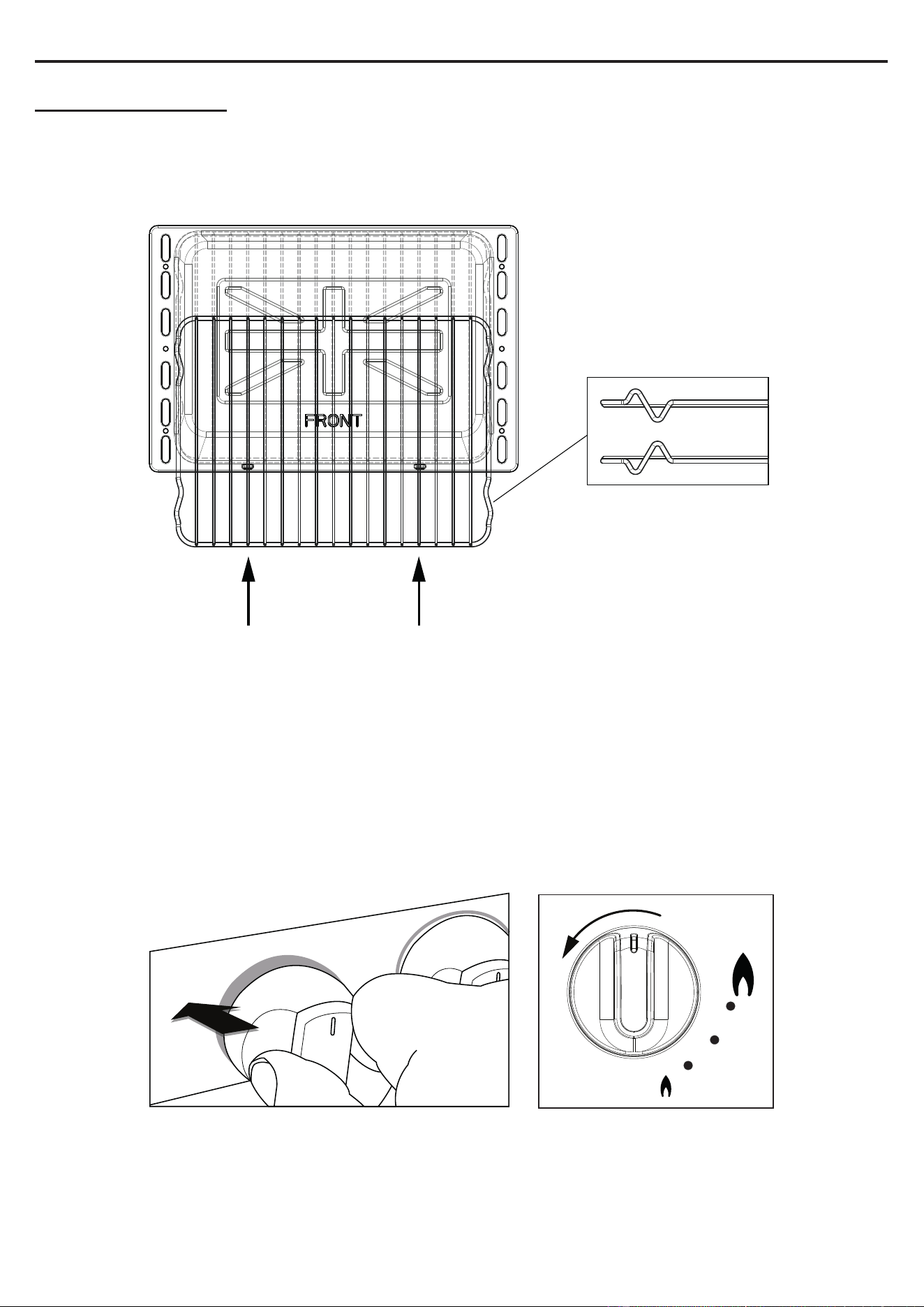
Grill pan and trivet
The grill trivet (inside the grill pan) can be inverted to give a high or low position, or it may be removed.
The speed of grilling can be controlled by selecting a higher or lower shelf position, or adjusting the grill
setting.
Inverted
Hob
• Press the control knob to ignite the gas for up to 15 seconds then release. For the wok, please allow
the burner to warm up for a few minutes.
• Once lit, turn the control knob to the required setting.
If the burner fails to ignite within this time, release the control knob and wait 1 minute before attempting
to re-ignite.
USING YOUR APPLIANCE
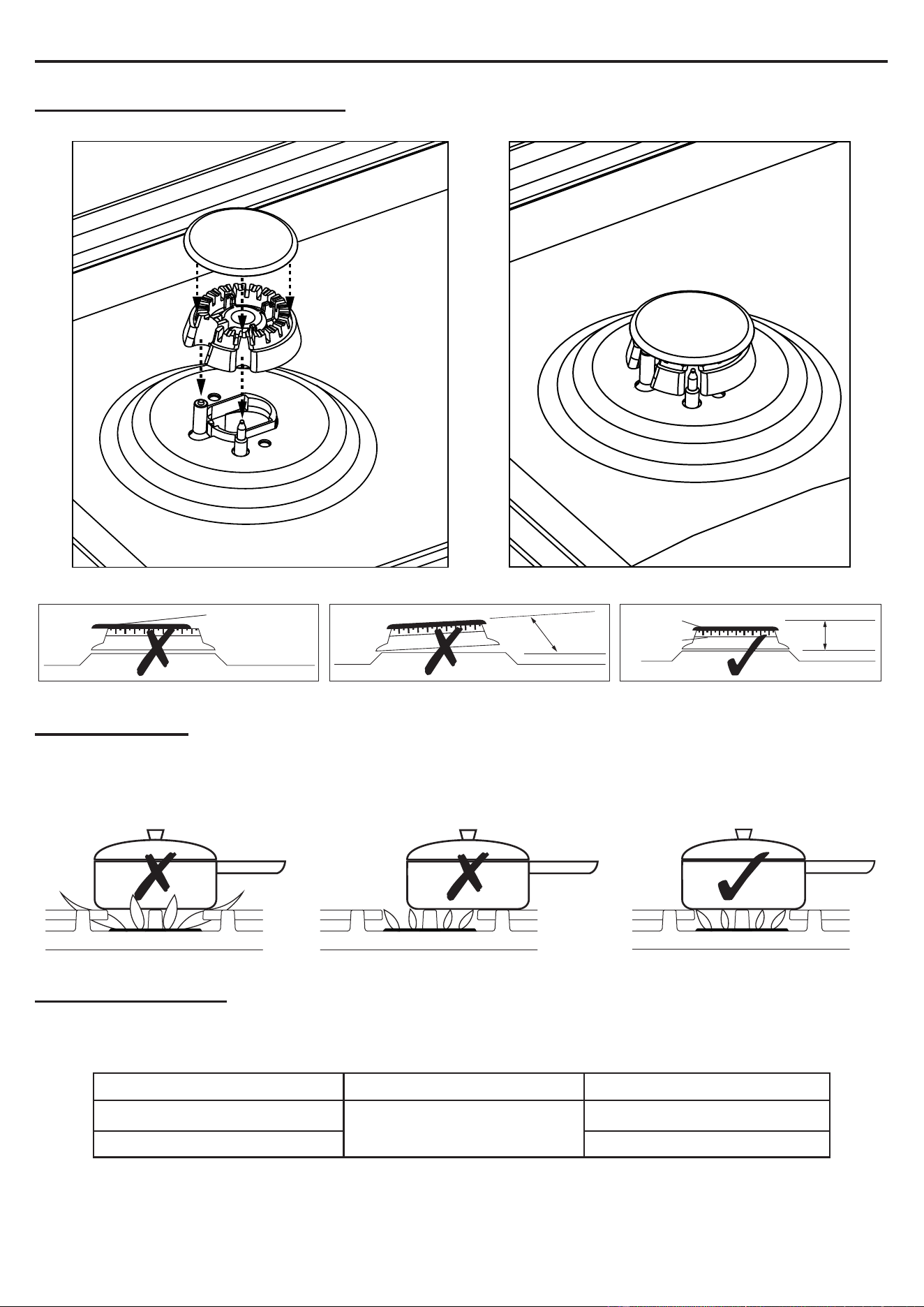
Fitting burner caps and heads
angled
parallel
burner cap
burner head
burner cap not central
Pan placement
Always make sure that your pans are placed centrally and do not allow the ame to extend over the
base of the pan. Do not place pans directly onto the burners.
Pan sizes required
Dual Fuel
Hob Cook Zones Minimum Pan Sizes (mm) Maximum Pan Sizes (mm)
Rapid & Wok
100
260
All other cook zones 250
USING YOUR APPLIANCE
90cm Gas-Through-Glass
Cook Zones Minimum Pan Sizes (mm) Maximum Pan Sizes (mm)
Wok
100
300
All other cook zones 220
110cm Gas-Through-Glass
Cook Zones Minimum Pan Sizes (mm) Maximum Pan Sizes (mm)
Wok
100
280
All other cook zones 220
Warning: Do not allow cooking vessels to overlap cooking zones
Note: GTG - Ensure when locating the GTG pan supports, they securely locate onto the pins on the
hotplate
Using the Dual Wok
90cm Wok 110cm Wok
OFF
OFF
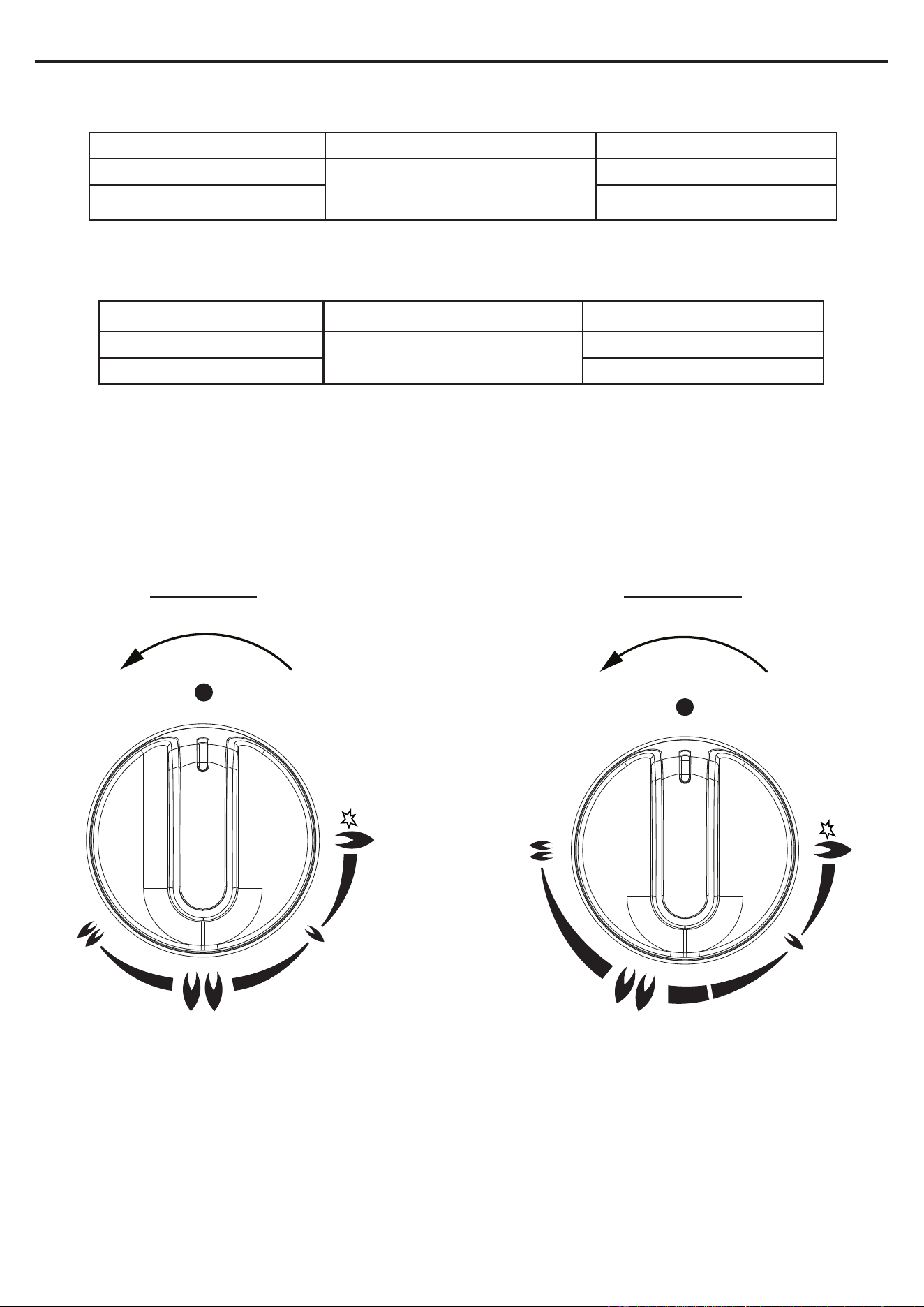
To ignite the outer burner of the wok, turn the control knob to the ignition and ame symbol (1). Hold for
15 seconds until the ame takes hold. Then turn the control knob to the desired power.
To activate the outer and inner wok rings together, turn the control knob to the dual ame symbol (2). To
reduce the power of both wok rings, turn the control knob to (3).
Please note, it may be necessary to apply increased pressure when pressing in the control knob when
lighting the wok burners. This is to ensure operation of the safety system for these burners.
3
2
2
1
1
3
USING THE GRILL
Warning: Accessible parts may
become hot when the grill is in
use. Children should be kept away
BEFORE YOU START GRILLING. . . .
Before you use the grill, make sure you
have placed the grill shelf in the posi-
tion you need as once the grill is on you
may injure yourself if you try to move the
shelf.
• Do not close the door while the grill
is in use.
• Turn the top oven control knob to the
required grill setting.
•
Turnthegrillcontrolknob(iftted)
to the heat setting you require.
•
Toswitcho,returnthecontrol
knob(s)tothe‘o’position.
• The cooling fan will come on during
use, and may continue to run for
some time afterwards.
• To adjust your results, you can turn
the grid over, or remove it altogether.
• The dual grill uses all of the top ele-
ment and is ideal for grilling large
quantities of food.
• The single grill uses part of the ele-
ment only, and is better suited to grill
smaller amounts of food.
The grill pan
This appliance comes with a grill pan and
trivet.
Shelf & Trivet adjustments
Speed of grilling can be adjusted by
changing the shelf position or the turning
the trivet.
• High: For thin foods and toasting.
• Low: For thicker meat pieces.
Types of grill
Dual grill: has two grill elements which
can be used together, or as a single
grill.
For best results:
Pre-heat the single grill for 5
minutes and the dual grill for 3
minutes.
i
i
Aluminium Foil
Never cover the grill pan or grill trivet
with foil, or allow fat to build up in the
grillpan,asthiscreatesarehazard.
USING THE GRILL
Food Type
Time Approx
(mins)
Bacon 8-15
Sausages 12 - 15
Chops
•Lamb
•Pork
10 - 15
15 - 25
Toast
•2rounds
•4rounds
1-2(perside)
1-2(perside)
Bread products
•Buns
•Teacakes
1-2(perside)
1-2(perside)
Cheese on toast
•2rounds
•4rounds
4-5
4-5
Fish
•llets
10 - 15
Chicken
•llets
20 - 30
Beef Steaks
•rare
•medium
•welldone
Gammon Steaks
7 - 10
10 - 15
15 - 20
12 - 15
As with any cooking guide, all
times are approximate and can
be adjusted to suit personal
taste.
i

USING THE TOP OVEN
When you are cooking keep children
away from the vicinity of the oven.
Caution: The top element gets
extremely hot when in use, so
take extra care to avoid touch-
ing it.
The top oven is a conventional oven.
Note: The top oven is not controlled by
the programmer.
To turn on the top oven
Turn the temperature control knob until
the required temperature is selected.
The white thermostat indicator will come
on until the selected temperature is
reached,andthengoo.Itwillturnon
andoperiodicallyasthethermostat
operates to maintain the selected tem-
perature.
Toswitcho,returnthetopovencontrol
knobtotheoposition.
Important: Never put items directly on
the base of the oven, or cover the oven
base with foil, as this may cause the ele-
ment to overheat. Always position items
on the shelf.
The cooling fan
When the top oven is switched on, you
will hear the cooling fan come on - this
keeps the fascia and control knobs of the
appliance cool during cooking. The fan
may continue to operate for a period after
theovencontrolhasbeenswitchedo.
Preheating
The oven must be preheated when cook-
ingfrozenorchilledfoods,andwerec-
ommend preheating for yeast mixtures,
batters,soués,andwhiskedsponges.
Preheat the oven until the indicator light
switchesoforthersttime,thiswill
take up to 15 minutes depending on the
temperature selected.
If you are not preheating the oven, the
cooking times in the following guide may
need to be extended, as they are based
on a preheated oven.
Shelf positions
Whencookingfrozenorchilledfood,use
the highest possible shelf position, while
allowing some clearance between the
food and the top element.
The oven shelf must be positioned with
the up-stand at the rear of the oven and
facing up. Position baking trays and roast-
ing tins on the middle of the shelves, and
leave one clear shelf position between
shelves, to allow for circulation of heat.
When using the top oven
As part of the cooking process, hot air is
expelled through a vent at the top of the
oven(s).Whenopeningtheovendoor,
care should be taken to avoid any possible
contact with potentially hot air, since this
may cause discomfort to people with sen-
sitive skin. We recommend that you hold
the underneath of the oven door handle.
USING THE TOP OVEN
TOP OVEN BAKING GUIDE
Cooking times
These times are based on cooking in a
preheated oven.
These cooking times are approximate,
duetothesizeandtypeofcookingdish
and personal preferences.
Shelf positions
Asageneralguide,whencookingfrozen
or chilled food, use the highest pos-
sible shelf position, while allowing some
clearance between the food and the top
element. Follow the instructions given on
packaging.
Item Temperature
(°C)
Shelf
Position
Approximate cooking time
Small cakes
Victoria sandwich
(2x180mm/7”)
Swiss roll
Semi rich fruit cake
(180mmx7”)
Scones
Meringues
180
160
200
140
215
90 - 100
1
1
1
1
1
1
15 - 20 mins
20 - 25 mins
8 - 12 mins
2¼ - 2¾ hours
10 - 15 mins
2 - 3 hours
Shortcrust pastry
Pu/akypastry
Choux pasrty
200 - 210
200 - 210
200 - 210
1
1
1
Dependsonsize&typeofcook-
ingdish&alsothelling
Biscuits
Sponge pudding
Milk pudding
160 - 200
150
140
2
1
1
10 - 20 mins
30 - 45 mins
2 - 2½ hours
Cooking temperatures
The temperature settings and time given
in the Baking Guides are based on dishes
made with block margarine. If soft tub
margarine is used, it may be necessary
to reduce the temperature setting. If a
recipegivesadierenttemperatureset-
ting to that shown in the guide, the recipe
instruction should be followed.
Because the top oven is more compact,
it may be necessary to reduce cooking
temperaturesspeciedinrecipesbyupto
20°C.
Use the baking guide as a reference for
determining which temperatures to use.

USING THE MAIN OVEN - ELECTRIC
Accessible parts may be
hot when the oven is used.
Young children should be
kept away.
To switch on the oven
Turn the oven control knob(s) to the
required setting.
The white thermostat neon (if tted) will
come on until the selected temperature
is reached and then go o; it will turn
on and o periodically as the thermostat
operates to maintain the selected
temperature.
To switch o, return the control knob to
the o position.
When using the oven
As part of the cooking process, hot air
is expelled through a vent in the oven.
When opening the oven door, care should
be taken to avoid any possible contact
with potentially hot air, since this may
cause discomfort to people with sensitive
skin. We recommend that you hold the
underneath of the oven door handle.
PREHEATING
Fanned oven
When cooking sensitive items such as
soue and Yorkshire puddings or, when
cooking bread, we recommend that the
oven is preheated until the neon switches
o for the rst time. For any other types
of cooking, a preheat may not be re-
quired.
Conventional oven
Preheating is always required
Manual Operation (Left hand oven
only)
The programmer must be set to manual
operation before the main oven can be
used. If A (Auto) is on the programmer
display, return the oven to manual
by pressing the plus and minus buttons
simultaneously or the Menu button where
applicable. Any programme which has
been set is cancelled.
The cooling fan
The cooling fan may operate when the
main oven is on and may continue to
operate for a period after the oven has
been switched o.
OVEN FURNITURE
Oven shelves
The oven shelf must be positioned with
the upstand at the rear of the oven and
facing upwards.
Position baking trays and roasting tins on
the middle of the shelves.
Baking tray and roasting tins
For best cooked results and even brown-
ing, the recommended size baking trays
and roasting tins that should be used are
as follows;
Baking tray 350mm x 250mm
This size of baking tray will hold up to 12
small cakes.
Roasting tin 370mm x 320mm
We recommend that you use good quality
cookware. Poor quality trays and tins may
warp when heated, leading to uneven
baking results.

USING THE MAIN OVEN - ELECTRIC
Slow cooking ( Setting or 100°C)
• Make sure that frozen foods are thor-
oughly thawed before cooking.
• Do not slow cook joints of meat
or poultry weighing more than
2¼kg/4½lb.
• Preheat the oven to 170°C and cook
for 30 minutes, then adjust the oven
control to or 100°C (slow cook
setting) for the remainder of the
cooking time.
• Slow cooking times will be about 3
times as long as conventional cooking
times.
• Do not open the oven door unneces-
sarily during slow cooking, as this will
result in heat loss at low tempera-
tures.
• Always use dishes with tightly tting
lids. To rectify badly tting lids, place
foil over the dish underneath the lid.
Aluminium foil
Use foil only to cover food or cooking
dishes, using foil to cover the shelves or
oven base creates a re hazard.
Cooking with a fanned oven
As this is a high eciency oven,
you may notice the emission of
steam from the oven when the door
is opened. Please take care when
opening the door.
If you are used to cooking with a conven-
tional oven you will nd a number of dif-
ferences to cooking with a fan oven which
will require a dierent approach:
There are no zones of heat in a fan oven
as the convection fan at the back of
the oven ensures an even temperature
throughout the oven.
This makes it ideal for batch baking - eg;
when planning a party as all the items will
be cooked within the same length of time.
Foods are cooked at a lower temperature
than a conventional oven, so conven-
tional recipe temperature may have to be
reduced. Please refer to the conversion
chart.
Preheating is generally not necessary as a
fan oven warms up quickly.
There is no avour transference in a fan
oven, which means you can cook strong
smelling foods such as sh at the same
time as mild foods - eg; milk puddings.
When batch baking foods that will rise
during cooking - eg; bread - always
ensure that enough space has been left
between the shelves to allow for the rise.
Notes:
When 2 or more shelves are being used, it
may be necessary to increase the cooking
time slightly.
Because the 2 oven shelves are wider
than in many ovens, it is possible to cook
2 items per shelf - eg; 2 victoria sand-
wiches or 2 casseroles.
When roasting meats, you will notice that
fat splashing is reduced, which is due in
part to the lower oven temperatures, and
will help keep cleaning of the oven to a
minimum.
Because a fan oven has an even tem-
perature throughout the oven, there is no
need to follow the shelf positions given in
the baking guide.

USING THE MAIN OVEN - ELECTRIC
There is no need to interchange dishes
onto dierent shelves part way through
cooking, as with a conventional oven.
To help the air circulate freely
Position the shelves evenly within the
oven and maintain a clearance from the
oven roof and base.
If more than one cooking dish or bak-
ing tray is to be used on a shelf, leave a
gap of at least 25mm between the items
themselves and the oven interior.
Keep Warm
(Setting or 70°C)
This setting temperature is set to allow
the user to keep food warm without over
cooking. This setting can also thaw frozen
foods, or warm plates.
Do not use this as a cooking function.
Defrosting and cooling in the
main oven
To defrost frozen foods, turn the main
oven control to the Bread Proving
position, place the food in the centre of
the oven and close the door.
To cool foods after cooking prior to
refrigerating or freezing, turn the main
oven control to the defrost position and
open the door.
Defrosting times
Small or thin pieces of frozen sh or meat
- eg; sh lets, prawns & mince will take
approximately 1 - 2 hours.
Placing the food in a single layer will
reduce the thawing time.
A medium sized casserole or stew will
take approximately 3 - 4 hours.
A 1½kg/3lb oven ready chicken will take
approximately 5 hours, remove the giblets
as soon as possible.
Be safe
Do not defrost stued poultry using this
method.
Do not defrost larger joints of meat and
poultry over 2kg/4lb using this method.
Never place uncooked food for defrosting
next to cooked food which is to be cooled,
as this can lead to cross contamination.
Defrosting meat, poultry, and sh can be
accelerated using this method but make
sure they are completely thawed before
cooking thoroughly. Place meat and poul-
try on a trivet in a meat tin.
MAIN OVEN BAKING GUIDE
Cooking times & temperatures
The temperature settings and times given
in the baking guide are based on dishes
made with block margarine. If soft tub
margarine is used it may be necessary to
reduce the temperature setting.
Allow enough space between shelves for
food that will rise during cooking.
Do not place items on the oven base as
this will prevent air circulating freely.
USING THE MAIN OVEN - ELECTRIC
Note: This is a fanned oven, therefore
some adjustment will have to be
made to conventional cooking tempera-
tures. The table below shows conven-
tional cooking temperatures, fanned oven
temperatures and gas marks. For opti-
mum results,
conventional temperatures need to be
converted to fanned oven temperatures.
For example, an item which would nor-
mally cook at a conventional temperature
of 180 °C, will now cook at the fanned
oven temperature of 160°C.
Conventional temperature
(°C)
Fanned Oven
(°C)
Gas Mark
100
110
130
140
150
160
180-190
200
220
230
250
100
110
120
130
140
150
160
170
180
190
200
1/4
1/4
1/2
1
2
3
4-5
6
7
8
9
Food Type Temperature
settings (°C)
Time
Approx.
Shelf
Position
Cakes
Small cakes
Victoria sandwich
Semi rich fruit cake
Christmas cake
Conv
190
180
150
150
Fanned
160
160
125
125
15 - 25
20 - 30
2.5
HRS - 3HRS
2.5HRS - 3HRS
2 - 4
3
2
2
Puddings
Bread and butter pud-
ding
Fruit crumble
170
200
150
175
45 - 1hr
40 - 1hr
3
3
Miscellaneous
Yorkshire pudding:
large
small
Shortcrust pastry
220
220
200
200
200
180
40 - 48
15 - 20
Depends on
lling
4 - 5
4 - 5
4 - 5

USING THE MAIN OVEN - ELECTRIC
Traditional fruit cakes
It should be remembered that ovens can
vary over time, therefore cooking times
can vary, making it dicult to be precise
when baking fruit cakes.
It is necessary therefore, to test the cake
before removal from the oven. Use a ne
warmed skewer inserted into the centre of
the cake. If the skewer comes out clean,
then the cake is cooked.
• Follow the temperatures suggested
in the recipe and then adjust accord-
ingly to the conversion table.
• Do not attempt to make Christmas
cakes larger than the oven can cope
with, you should allow at least 25mm
(1”) space between the oven walls
and the tin.
• Always follow the temperatures rec-
ommended in the recipe.
• To protect a very rich fruit cake dur-
ing cooking, tie 2 layers of brown
paper around the tin.
• We recommend that the cake tin is
not stood on layers of brown paper,
as this can hinder eective circulation
of air.
• Do not use soft tub margarine for
rich fruit cakes, unless specied in
the recipe.
• Always use the correct size and
shape of tin for the recipe quantities.
Roast turkey
Roasting turkey involves cooking two
dierent types of meat - the delicate light
breast meat, which must not be allowed
to dry out, and the darker leg meat,
which takes longer to cook.
The turkey must be roasted long enough
for the legs to cook, so frequent bast-
ing is necessary. The breast meat can be
covered once browned.
• Always make sure that the turkey is
completely thawed and that the gib-
lets are removed before cooking.
• Turkey should be roasted at 160°C
- 180°C (fanned) or 180°C - 200°C
(conventional) for 20 minutes per
450g (1 lb), plus 20 minutes, unless
packaging advises otherwise.
• The turkey can be open roasted,
breast side down, for half of the cook
time, and then turned over for the
remainder of the cooking time.
• If the turkey is stued, add 5 minutes
per 450g (1 lb) to the cooking time.
• If roasting turkey covered with foil,
add 5 minutes per 450g (1 lb) to the
cooking time.
To test if the turkey is cooked, push a
ne skewer into the thickest part of the
thigh. If the juices run clear, the turkey
is cooked. If the juices are still pink, the
turkey will need longer cooking.
USING THE MAIN OVEN - ELECTRIC
Roasting guide
The times given in the roasting guide
are only approximate, because the size
and age of the bird will inuence cooking
times as will the shape of a joint and the
proportion of the bone.
Frozen meat should be thoroughly thawed
before cooking. For large joints it is advis-
able to thaw over night.
Frozen poultry should be thoroughly
thawed before cooking. The time required
depends on the size of the bird - eg; a
large turkey may take up to 48 hours to
thaw.
Use of a trivet with a roasting tin will
reduce fat splashing and will help to keep
the oven interior clean. Alternatively, to
help reduce fat splashing, potatoes or
other vegetables can be roasted around
the meat/poultry.
Notes:
• When cooking stued meat or poultry
calculate the cooking time from the
total weight of the meat plus the
stung.
• For joints cooked in foil or covered
roasters, and for lidded casseroles,
add 5 minutes per 450g (1lb) to the
calculated cooking time.
• Smaller joints weighing less than
1.25kg (2½lb) may require 5 minutes
per 450g (1lb) extra cooking time.
• Position the oven shelf so that the
meat or poultry is in the centre of the
oven.
• It is recommended that the appliance
is cleaned after open roasting.
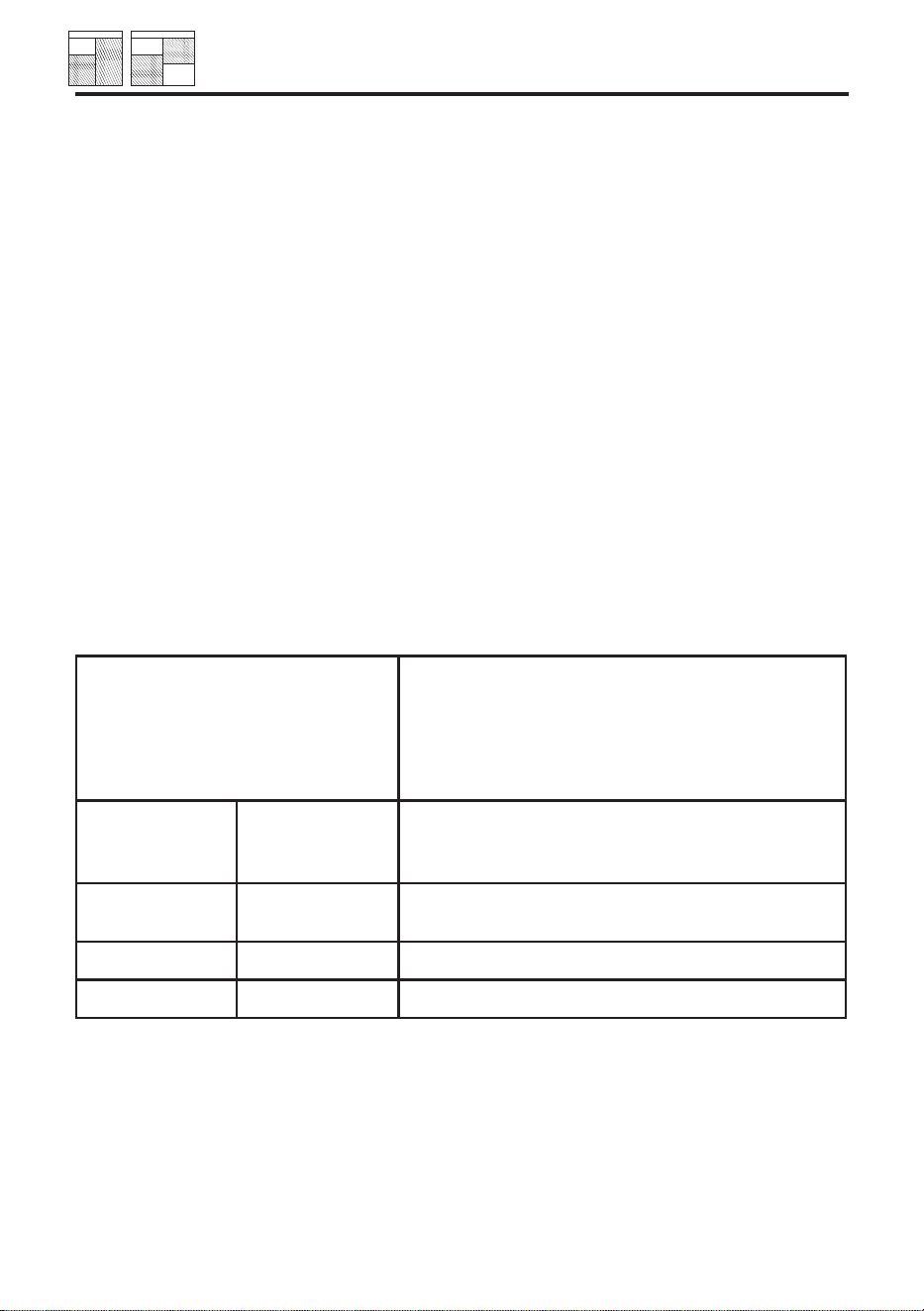
Cook in main oven at:
160°C - 180°C (fanned)
180°C - 200°C (conventional)
Approximate Cooking Time
(preheated oven)
Beef
Rare
Medium
Well done
20 minutes per 450g (1lb), plus 20 minutes
25 minutes per 450g (1lb), plus 25 minutes
30 minutes per 450g (1lb), plus 30 minutes
Lamb
Medium
Well Done
25 minutes per 450g (1lb), plus 25 minutes
30 minutes per 450g (1lb), plus 30 minutes
Pork
35 minutes per 450g (1lb), plus 35 minutes
Poultry
20 minutes per 450g (1lb), plus 20 minutes

USING THE OVEN/GRILL - MULTI-FUNCTION
MULTIFUNCTION OVEN
The multifunction oven can be controlled
by the programmer (see The Program-
mer/Clockfordetails).
The programmer, must be set to manual
before it can be used, or programmed.
Switching on the multifunction oven
• Use the function control knob to
select the function you wish to use -
see the functions table for details.
Note: You can change function during
cooking if you wish, as long as the
oven is in manual mode.
• Turn the temperature control knob to
the temperature you wish to use.
• The thermostat indicator will come on
to show that the oven is heating, and
once the temperature is achieved, it
will go out.
•
Toswitchotheoven,simplyturn
thecontrolknobbacktothe‘•‘posi-
tion.
• The cooling fan may come on during
use, and may continue to run for
some time afterwards.
i
Important: Never place food, or
dishes on the base of the main oven,
the element is here and it will cause
over heating.
Oven & Grill Functions
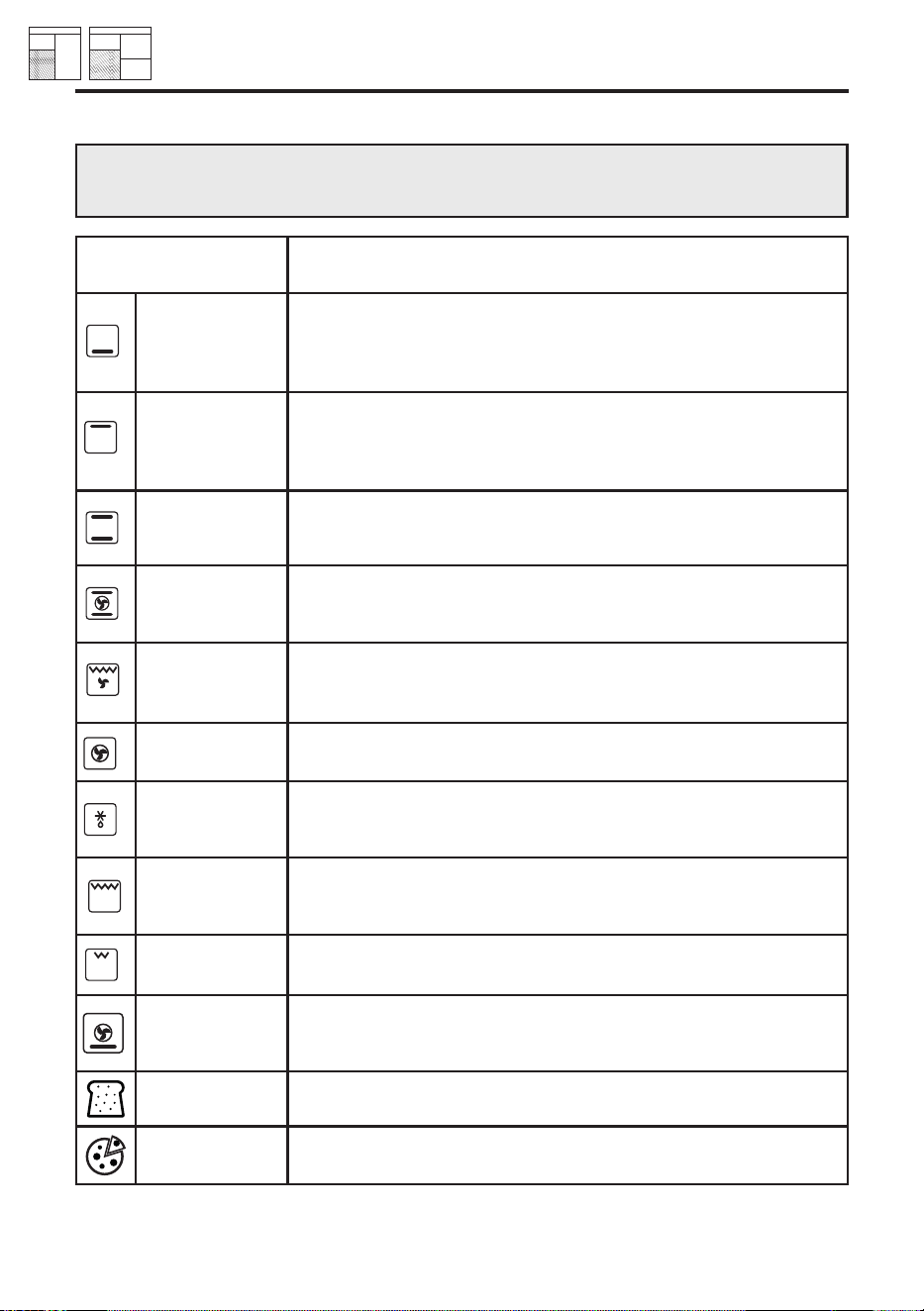
The chart below details all of the functions which are available. Your oven may not
have all of the functions shown here.
Main Oven Func-
tion
Recommended Uses
Oven & Grill Functions
Main Oven Function Recommended Uses
Base Heat Only Used to finish off the bases of food following cooking using the conventional
or fanned modes. The base heat can be used to provide additional
browning for pizzas, pies and quiche. Use this function towards the end of
cooking.
Top Heat Only The heat is ideal from browning off the tops of food as it is not as fierce as
the grill following conventional or fanned cooking. Provides additional
browning for dishes like Lasagna or Cauliflower cheese. Use this function
towards the end of
cooking.
Conventional Oven This function is ideal for traditional roasting. The meat is placed in the
middle of the oven, roast potatoes towards the top.
Intensive Bake Suitable for food with a high moisture content, such as quiche, bread and
cheesecake. It also eliminates the need for baking pastry blind.
Fanned Grill The fan allows the heat to circulate around the food. Ideal for thinner foods
such as bacon, fish and gammon steaks. Foods do not require turning. Use
with the oven door closed.
Fanned Oven The even temperature in the oven makes this function suitable for batch
baking, or batch cooking foods.
Defrost To defrost foods, such as cream cakes/gateaux, use with the oven door
closed. For cooling dishes prior to refrigeration, leave the door open.
Dual Grill This function cooks food from the top and is ideal for a range of food from
toast to steaks. As the whole grill is working, you can cook larger quantities
of food.
Single Grill For smaller quantities of food, but is still ideal for
anything from toast to steaks.
Base Heat with Fan Used to cook open pies (such as mince pies) the base element ensures that
the base is cooked while the fan allows the air to circulate around the filling
- without being too intensive.
Lights only Use when the oven is switched off and cold to aid cleaning the oven cavity.
The chart below details all of the functions which are available. Your oven may
not have all of the functions shown here.
27
Base Heat Only
Usedtonishothebasesoffoodfollowingcookingusingthe
conventional or fanned modes. The base heat can be used to
provideadditionalbrowningforpizzas,piesandquiche.Usethis
function towards the end of cooking.
Oven & Grill Functions
Main Oven Function Recommended Uses
Base Heat Only Used to finish off the bases of food following cooking using the conventional
or fanned modes. The base heat can be used to provide additional
browning for pizzas, pies and quiche. Use this function towards the end of
cooking.
Top Heat Only The heat is ideal from browning off the tops of food as it is not as fierce as
the grill following conventional or fanned cooking. Provides additional
browning for dishes like Lasagna or Cauliflower cheese. Use this function
towards the end of
cooking.
Conventional Oven This function is ideal for traditional roasting. The meat is placed in the
middle of the oven, roast potatoes towards the top.
Intensive Bake Suitable for food with a high moisture content, such as quiche, bread and
cheesecake. It also eliminates the need for baking pastry blind.
Fanned Grill The fan allows the heat to circulate around the food. Ideal for thinner foods
such as bacon, fish and gammon steaks. Foods do not require turning. Use
with the oven door closed.
Fanned Oven The even temperature in the oven makes this function suitable for batch
baking, or batch cooking foods.
Defrost To defrost foods, such as cream cakes/gateaux, use with the oven door
closed. For cooling dishes prior to refrigeration, leave the door open.
Dual Grill This function cooks food from the top and is ideal for a range of food from
toast to steaks. As the whole grill is working, you can cook larger quantities
of food.
Single Grill For smaller quantities of food, but is still ideal for
anything from toast to steaks.
Base Heat with Fan Used to cook open pies (such as mince pies) the base element ensures that
the base is cooked while the fan allows the air to circulate around the filling
- without being too intensive.
Lights only Use when the oven is switched off and cold to aid cleaning the oven cavity.
The chart below details all of the functions which are available. Your oven may
not have all of the functions shown here.
27
Top Heat Only
Theheatisidealfrombrowningothetopsoffoodasitisnot
aserceasthegrillfollowingconventionalorfannedcooking.
Provides additional browning for dishes like Lasagna or Cauli-
owercheese.Usethisfunctiontowardstheendofcooking.
Oven & Grill Functions
Main Oven Function Recommended Uses
Base Heat Only Used to finish off the bases of food following cooking using the conventional
or fanned modes. The base heat can be used to provide additional
browning for pizzas, pies and quiche. Use this function towards the end of
cooking.
Top Heat Only The heat is ideal from browning off the tops of food as it is not as fierce as
the grill following conventional or fanned cooking. Provides additional
browning for dishes like Lasagna or Cauliflower cheese. Use this function
towards the end of
cooking.
Conventional Oven This function is ideal for traditional roasting. The meat is placed in the
middle of the oven, roast potatoes towards the top.
Intensive Bake Suitable for food with a high moisture content, such as quiche, bread and
cheesecake. It also eliminates the need for baking pastry blind.
Fanned Grill The fan allows the heat to circulate around the food. Ideal for thinner foods
such as bacon, fish and gammon steaks. Foods do not require turning. Use
with the oven door closed.
Fanned Oven The even temperature in the oven makes this function suitable for batch
baking, or batch cooking foods.
Defrost To defrost foods, such as cream cakes/gateaux, use with the oven door
closed. For cooling dishes prior to refrigeration, leave the door open.
Dual Grill This function cooks food from the top and is ideal for a range of food from
toast to steaks. As the whole grill is working, you can cook larger quantities
of food.
Single Grill For smaller quantities of food, but is still ideal for
anything from toast to steaks.
Base Heat with Fan Used to cook open pies (such as mince pies) the base element ensures that
the base is cooked while the fan allows the air to circulate around the filling
- without being too intensive.
Lights only Use when the oven is switched off and cold to aid cleaning the oven cavity.
The chart below details all of the functions which are available. Your oven may
not have all of the functions shown here.
27
Conventional
Oven
This function is ideal for traditional roasting. The meat is placed
in the middle of the oven, roast potatoes towards the top.
Oven & Grill Functions
Main Oven Function Recommended Uses
Base Heat Only Used to finish off the bases of food following cooking using the conventional
or fanned modes. The base heat can be used to provide additional
browning for pizzas, pies and quiche. Use this function towards the end of
cooking.
Top Heat Only The heat is ideal from browning off the tops of food as it is not as fierce as
the grill following conventional or fanned cooking. Provides additional
browning for dishes like Lasagna or Cauliflower cheese. Use this function
towards the end of
cooking.
Conventional Oven This function is ideal for traditional roasting. The meat is placed in the
middle of the oven, roast potatoes towards the top.
Intensive Bake Suitable for food with a high moisture content, such as quiche, bread and
cheesecake. It also eliminates the need for baking pastry blind.
Fanned Grill The fan allows the heat to circulate around the food. Ideal for thinner foods
such as bacon, fish and gammon steaks. Foods do not require turning. Use
with the oven door closed.
Fanned Oven The even temperature in the oven makes this function suitable for batch
baking, or batch cooking foods.
Defrost To defrost foods, such as cream cakes/gateaux, use with the oven door
closed. For cooling dishes prior to refrigeration, leave the door open.
Dual Grill This function cooks food from the top and is ideal for a range of food from
toast to steaks. As the whole grill is working, you can cook larger quantities
of food.
Single Grill For smaller quantities of food, but is still ideal for
anything from toast to steaks.
Base Heat with Fan Used to cook open pies (such as mince pies) the base element ensures that
the base is cooked while the fan allows the air to circulate around the filling
- without being too intensive.
Lights only Use when the oven is switched off and cold to aid cleaning the oven cavity.
The chart below details all of the functions which are available. Your oven may
not have all of the functions shown here.
27
Intensive Bake
Suitable for food with a high moisture content, such as quiche,
bread and cheesecake. It also eliminates the need for baking
pastry blind.
Oven & Grill Functions
Main Oven Function Recommended Uses
Base Heat Only Used to finish off the bases of food following cooking using the conventional
or fanned modes. The base heat can be used to provide additional
browning for pizzas, pies and quiche. Use this function towards the end of
cooking.
Top Heat Only The heat is ideal from browning off the tops of food as it is not as fierce as
the grill following conventional or fanned cooking. Provides additional
browning for dishes like Lasagna or Cauliflower cheese. Use this function
towards the end of
cooking.
Conventional Oven This function is ideal for traditional roasting. The meat is placed in the
middle of the oven, roast potatoes towards the top.
Intensive Bake Suitable for food with a high moisture content, such as quiche, bread and
cheesecake. It also eliminates the need for baking pastry blind.
Fanned Grill The fan allows the heat to circulate around the food. Ideal for thinner foods
such as bacon, fish and gammon steaks. Foods do not require turning. Use
with the oven door closed.
Fanned Oven The even temperature in the oven makes this function suitable for batch
baking, or batch cooking foods.
Defrost To defrost foods, such as cream cakes/gateaux, use with the oven door
closed. For cooling dishes prior to refrigeration, leave the door open.
Dual Grill This function cooks food from the top and is ideal for a range of food from
toast to steaks. As the whole grill is working, you can cook larger quantities
of food.
Single Grill For smaller quantities of food, but is still ideal for
anything from toast to steaks.
Base Heat with Fan Used to cook open pies (such as mince pies) the base element ensures that
the base is cooked while the fan allows the air to circulate around the filling
- without being too intensive.
Lights only Use when the oven is switched off and cold to aid cleaning the oven cavity.
The chart below details all of the functions which are available. Your oven may
not have all of the functions shown here.
27
Fanned Grill
The fan allows the heat to circulate around the food. Ideal for
thinnerfoodssuchasbacon,shandgammonsteaks.Foodsdo
not require turning. Use with the oven door closed.
Oven & Grill Functions
Main Oven Function Recommended Uses
Base Heat Only Used to finish off the bases of food following cooking using the conventional
or fanned modes. The base heat can be used to provide additional
browning for pizzas, pies and quiche. Use this function towards the end of
cooking.
Top Heat Only The heat is ideal from browning off the tops of food as it is not as fierce as
the grill following conventional or fanned cooking. Provides additional
browning for dishes like Lasagna or Cauliflower cheese. Use this function
towards the end of
cooking.
Conventional Oven This function is ideal for traditional roasting. The meat is placed in the
middle of the oven, roast potatoes towards the top.
Intensive Bake Suitable for food with a high moisture content, such as quiche, bread and
cheesecake. It also eliminates the need for baking pastry blind.
Fanned Grill The fan allows the heat to circulate around the food. Ideal for thinner foods
such as bacon, fish and gammon steaks. Foods do not require turning. Use
with the oven door closed.
Fanned Oven The even temperature in the oven makes this function suitable for batch
baking, or batch cooking foods.
Defrost To defrost foods, such as cream cakes/gateaux, use with the oven door
closed. For cooling dishes prior to refrigeration, leave the door open.
Dual Grill This function cooks food from the top and is ideal for a range of food from
toast to steaks. As the whole grill is working, you can cook larger quantities
of food.
Single Grill For smaller quantities of food, but is still ideal for
anything from toast to steaks.
Base Heat with Fan Used to cook open pies (such as mince pies) the base element ensures that
the base is cooked while the fan allows the air to circulate around the filling
- without being too intensive.
Lights only Use when the oven is switched off and cold to aid cleaning the oven cavity.
The chart below details all of the functions which are available. Your oven may
not have all of the functions shown here.
27
Fanned Oven
The even temperature in the oven makes this function suitable
for batch baking, or batch cooking foods.
Oven & Grill Functions
Main Oven Function Recommended Uses
Base Heat Only Used to finish off the bases of food following cooking using the conventional
or fanned modes. The base heat can be used to provide additional
browning for pizzas, pies and quiche. Use this function towards the end of
cooking.
Top Heat Only The heat is ideal from browning off the tops of food as it is not as fierce as
the grill following conventional or fanned cooking. Provides additional
browning for dishes like Lasagna or Cauliflower cheese. Use this function
towards the end of
cooking.
Conventional Oven This function is ideal for traditional roasting. The meat is placed in the
middle of the oven, roast potatoes towards the top.
Intensive Bake Suitable for food with a high moisture content, such as quiche, bread and
cheesecake. It also eliminates the need for baking pastry blind.
Fanned Grill The fan allows the heat to circulate around the food. Ideal for thinner foods
such as bacon, fish and gammon steaks. Foods do not require turning. Use
with the oven door closed.
Fanned Oven The even temperature in the oven makes this function suitable for batch
baking, or batch cooking foods.
Defrost To defrost foods, such as cream cakes/gateaux, use with the oven door
closed. For cooling dishes prior to refrigeration, leave the door open.
Dual Grill This function cooks food from the top and is ideal for a range of food from
toast to steaks. As the whole grill is working, you can cook larger quantities
of food.
Single Grill For smaller quantities of food, but is still ideal for
anything from toast to steaks.
Base Heat with Fan Used to cook open pies (such as mince pies) the base element ensures that
the base is cooked while the fan allows the air to circulate around the filling
- without being too intensive.
Lights only Use when the oven is switched off and cold to aid cleaning the oven cavity.
The chart below details all of the functions which are available. Your oven may
not have all of the functions shown here.
27
Defrost
To defrost foods, such as cream cakes/gateaux, use with the
oven door closed. For cooling dishes prior to refrigeration, leave
the door open.
Oven & Grill Functions
Main Oven Function Recommended Uses
Base Heat Only Used to finish off the bases of food following cooking using the conventional
or fanned modes. The base heat can be used to provide additional
browning for pizzas, pies and quiche. Use this function towards the end of
cooking.
Top Heat Only The heat is ideal from browning off the tops of food as it is not as fierce as
the grill following conventional or fanned cooking. Provides additional
browning for dishes like Lasagna or Cauliflower cheese. Use this function
towards the end of
cooking.
Conventional Oven This function is ideal for traditional roasting. The meat is placed in the
middle of the oven, roast potatoes towards the top.
Intensive Bake Suitable for food with a high moisture content, such as quiche, bread and
cheesecake. It also eliminates the need for baking pastry blind.
Fanned Grill The fan allows the heat to circulate around the food. Ideal for thinner foods
such as bacon, fish and gammon steaks. Foods do not require turning. Use
with the oven door closed.
Fanned Oven The even temperature in the oven makes this function suitable for batch
baking, or batch cooking foods.
Defrost To defrost foods, such as cream cakes/gateaux, use with the oven door
closed. For cooling dishes prior to refrigeration, leave the door open.
Dual Grill This function cooks food from the top and is ideal for a range of food from
toast to steaks. As the whole grill is working, you can cook larger quantities
of food.
Single Grill For smaller quantities of food, but is still ideal for
anything from toast to steaks.
Base Heat with Fan Used to cook open pies (such as mince pies) the base element ensures that
the base is cooked while the fan allows the air to circulate around the filling
- without being too intensive.
Lights only Use when the oven is switched off and cold to aid cleaning the oven cavity.
The chart below details all of the functions which are available. Your oven may
not have all of the functions shown here.
27
Dual Grill
This function cooks food from the top and is ideal for a range of
food from toast to steaks. As the whole grill is working, you can
cook larger quantities of food.
Oven & Grill Functions
Main Oven Function Recommended Uses
Base Heat Only Used to finish off the bases of food following cooking using the conventional
or fanned modes. The base heat can be used to provide additional
browning for pizzas, pies and quiche. Use this function towards the end of
cooking.
Top Heat Only The heat is ideal from browning off the tops of food as it is not as fierce as
the grill following conventional or fanned cooking. Provides additional
browning for dishes like Lasagna or Cauliflower cheese. Use this function
towards the end of
cooking.
Conventional Oven This function is ideal for traditional roasting. The meat is placed in the
middle of the oven, roast potatoes towards the top.
Intensive Bake Suitable for food with a high moisture content, such as quiche, bread and
cheesecake. It also eliminates the need for baking pastry blind.
Fanned Grill The fan allows the heat to circulate around the food. Ideal for thinner foods
such as bacon, fish and gammon steaks. Foods do not require turning. Use
with the oven door closed.
Fanned Oven The even temperature in the oven makes this function suitable for batch
baking, or batch cooking foods.
Defrost To defrost foods, such as cream cakes/gateaux, use with the oven door
closed. For cooling dishes prior to refrigeration, leave the door open.
Dual Grill This function cooks food from the top and is ideal for a range of food from
toast to steaks. As the whole grill is working, you can cook larger quantities
of food.
Single Grill For smaller quantities of food, but is still ideal for
anything from toast to steaks.
Base Heat with Fan Used to cook open pies (such as mince pies) the base element ensures that
the base is cooked while the fan allows the air to circulate around the filling
- without being too intensive.
Lights only Use when the oven is switched off and cold to aid cleaning the oven cavity.
The chart below details all of the functions which are available. Your oven may
not have all of the functions shown here.
27
Single Grill
For smaller quantities of food, but is still ideal for anything from
toast to steaks.
Oven & Grill Functions
Main Oven Function Recommended Uses
Base Heat Only Used to finish off the bases of food following cooking using the conventional
or fanned modes. The base heat can be used to provide additional
browning for pizzas, pies and quiche. Use this function towards the end of
cooking.
Top Heat Only The heat is ideal from browning off the tops of food as it is not as fierce as
the grill following conventional or fanned cooking. Provides additional
browning for dishes like Lasagna or Cauliflower cheese. Use this function
towards the end of
cooking.
Conventional Oven This function is ideal for traditional roasting. The meat is placed in the
middle of the oven, roast potatoes towards the top.
Intensive Bake Suitable for food with a high moisture content, such as quiche, bread and
cheesecake. It also eliminates the need for baking pastry blind.
Fanned Grill The fan allows the heat to circulate around the food. Ideal for thinner foods
such as bacon, fish and gammon steaks. Foods do not require turning. Use
with the oven door closed.
Fanned Oven The even temperature in the oven makes this function suitable for batch
baking, or batch cooking foods.
Defrost To defrost foods, such as cream cakes/gateaux, use with the oven door
closed. For cooling dishes prior to refrigeration, leave the door open.
Dual Grill This function cooks food from the top and is ideal for a range of food from
toast to steaks. As the whole grill is working, you can cook larger quantities
of food.
Single Grill For smaller quantities of food, but is still ideal for
anything from toast to steaks.
Base Heat with Fan Used to cook open pies (such as mince pies) the base element ensures that
the base is cooked while the fan allows the air to circulate around the filling
- without being too intensive.
Lights only Use when the oven is switched off and cold to aid cleaning the oven cavity.
The chart below details all of the functions which are available. Your oven may
not have all of the functions shown here.
27
Base Heat with
Fan
Usedtocookopenpies(suchasmincepies)thebaseelement
ensures that the base is cooked while the fan allows the air to
circulatearoundthelling-withoutbeingtoointensive.
Bread Proving
This function circulates air at the correct temperature for proving
bread dough before baking for up to 40
o
C.
Pizza
Thisfunctionisidealforcookingpizza.Thefannedovenoper-
ateswiththeadditionofthebaseelementtocookpizzaperfectly
USING THE OVEN/GRILL - MULTI-FUNCTION
Before you start grilling. . . .
Before you use the grill, make sure you
have placed the grill shelf in the posi-
tion you need as once the grill is on you
may injure yourself if you try to move the
shelf.
FANNED / CONVENTIONAL GRILL
• The grill function must be used with
the door closed.
• Turn the selector control knob to the
grill setting you require (conventional
orfanned).
• Turn the temperature selector to the
heat setting you require in a similar
way to selecting the oven tempera-
ture.
Toswitcho,returnthecontrolknobsto
the‘o’position.
The cooling fan may come on during use,
and may continue to run for some time
afterwards.
To adjust your results, you can turn the
grid over, or remove it altogether.
The grill neon
When grilling with the door closed, the
neonwillcycleonandoasthetempera-
ture is maintained inside the cavity.
i
Warning: Accessible parts may
become hot when the grill is in use.
Children should be kept away.
i
Types of grill
Single grill: has one grill element. The
grill pan trivet MUST be inverted when
using single grill in the main oven.
i
For best results:
Pre-heat the single grill for 3 - 5
minutes.
USING THE OVEN/GRILL - MULTI-FUNCTION
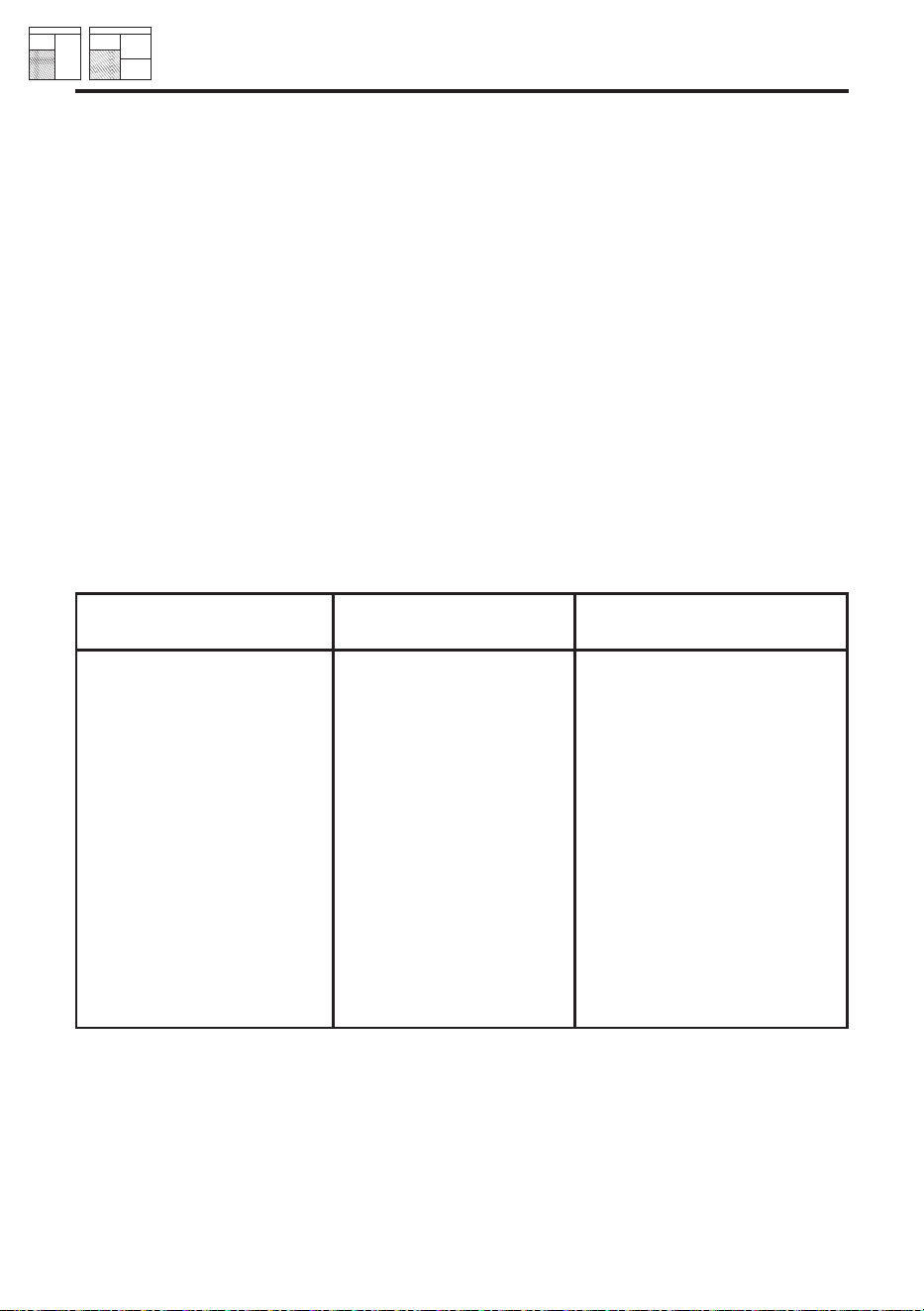
Fanned oven guide
• Some adjustment will have to be
made to conventional cooking tem-
peratures.
• The table below shows conven-
tional cooking temperatures, fanned
temperatures and gas marks. For op-
timum results using the fanned oven
setting, conventional temperatures
need to be converted to the fanned
oven temperatures.
• For example and item which would
cook at 180°C will now cook at the
fanned oven temperature of 160°C.
•
Thisisahigheciencyoven,you
may notice an emission of steam
when the door is opened.
•
Whencookingchilledorfrozenfoods,
use the recommended cooking times
and temperature on the packaging.
Always make sure the food is piping
hot throughout before serving.
•
Therearenozonesofheat,andno
avourtransferwhenusingafanned
oven - allowing you to cook a greater
variety of foods together.
• If you are cooking on more than
one shelf, you may need to slightly
increase the cooking time.
• Always make sure that there is
enough space between dishes, to
allow food to rise, and to air to
circulate.
Conventional temp (°C)
‘A’ Eciency fanned
oven (°C)
Gas Mark
100
110
130
140
150
160
180 - 190
200
220
230
250
100
110
120
130
140
150
160
170
180
190
200
1/4
1/4
1/2
1
2
3
4 - 5
6
7
8
9
USING THE OVEN/GRILL - MULTI-FUNCTION
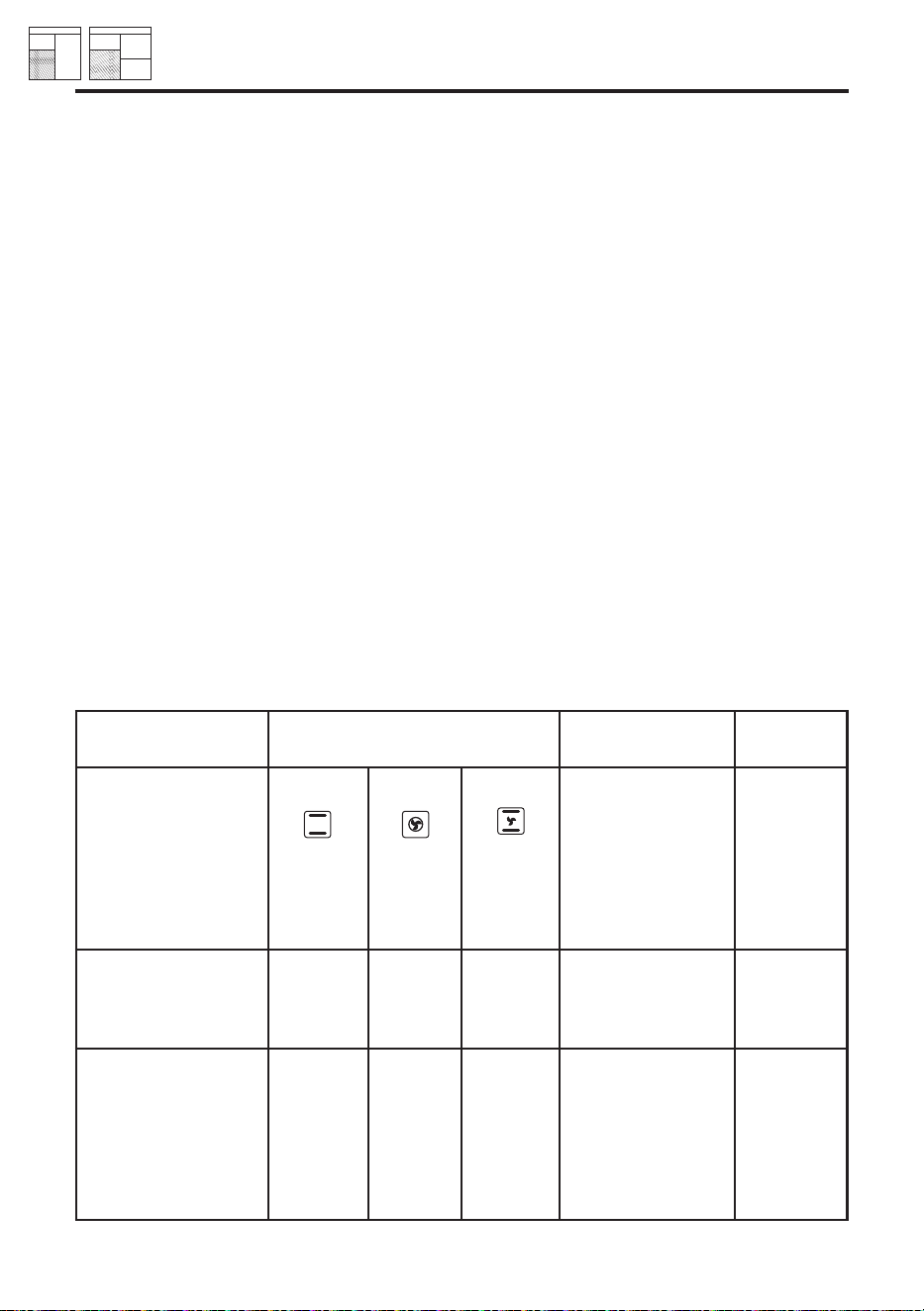
COOKING GUIDE
Pre-heating
To get the best results from your oven,
we recommend pre-heating for around 5
to 15 minutes before placing your dishes
in. This is especially important for items
whicharechilled,frozen,batterbased,
yeast based or whisked sponges.
If you are using a fanned function, you
should still preheat but for a shorter time.
The items in the cooking guide below are
based on a pre-heated oven, but can be
adjusted to take into account personal
taste.
Oven and bake-ware
Always use high quality trays and tins
for cooking. Poor quality tins and trays
can warp in the oven producing uneven
results.
Never use dishes which are cracked, dam-
aged or not oven proof as heating may
lead to shattering inside the oven.
OVEN FURNITURE
Oven shelves
The oven shelf must be positioned with
the upstand at the rear of the oven and
facing upwards.
Position baking trays and roasting tins on
the middle of the shelves, and leave one
clear shelf position between shelves, to
allow for circulation of heat.
Baking tray and roasting tins
For best cooked results and even brown-
ing,therecommendedsizebakingtrays
and roasting tins that should be used are
as follows;
Baking tray 350mm x 250mm
Thissizeofbakingtraywillholdupto12
small cakes.
Roasting tin 370mm x 320mm
We recommend that you use good quality
cookware. Poor quality trays and tins may
warp when heated, leading to uneven
baking results.
Food Type Temp. Setting °C Time Approx.
Shelf
Position
Cakes
Small cakes
Victoria sandwich
Semi rich fruit cake
Christmas cake
Conv
Pre-heating
To get the best results from your oven, we recommend
pre-heating for around 5 to 15 minutes before placing
your dishes in. This is especially important for items
which are chilled, frozen, batter based, yeast based or
whisked sponges.
If you are using a fanned function, you should still pre-
heat but for a shorter time.
The items in the cooking guide below are based on a
pre-heated oven, but can be adjusted to take into account
personal taste.
Oven and bakeware
Always use high quality trays and tins for cooking. Poor
quality tins and trays can warp in the oven producing
uneven results.
Never use dishes which are cracked, damaged or not
oven proof as heating may lead to shattering inside the
oven.
Food Type Temp.
Setting ˙C
Time
Approx.
Shelf
Position
Cakes
Small cakes
Victoria sandwich
Semi rich fruit cake
Christmas cake
Conv
190
180
150
150
Fanned
175
160
125
125
Intensive
-
-
-
-
15 - 25
20 - 30
2
1/2
- 3hrs
2
1/2
- 3hrs
7 & 13
7
5
3
Puddings
Bread & butter
pudding
Fruit crumble
170
200
150
175
-
-
45 - 1hr
40 - 1hr
9
9
Miscellaneous
Yorkshire pudding:
large
small
Shortcrust pastry
220
220
200
200
200
180
200
200
180
40 - 45
15 - 20
depends on
filling
11
12
top - middle
e
31
190
180
150
150
Fanned
Pre-heating
To get the best results from your oven, we recommend
pre-heating for around 5 to 15 minutes before placing
your dishes in. This is especially important for items
which are chilled, frozen, batter based, yeast based or
whisked sponges.
If you are using a fanned function, you should still pre-
heat but for a shorter time.
The items in the cooking guide below are based on a
pre-heated oven, but can be adjusted to take into account
personal taste.
Oven and bakeware
Always use high quality trays and tins for cooking. Poor
quality tins and trays can warp in the oven producing
uneven results.
Never use dishes which are cracked, damaged or not
oven proof as heating may lead to shattering inside the
oven.
Food Type Temp.
Setting ˙C
Time
Approx.
Shelf
Position
Cakes
Small cakes
Victoria sandwich
Semi rich fruit cake
Christmas cake
Conv
190
180
150
150
Fanned
175
160
125
125
Intensive
-
-
-
-
15 - 25
20 - 30
2
1/2
- 3hrs
2
1/2
- 3hrs
7 & 13
7
5
3
Puddings
Bread & butter
pudding
Fruit crumble
170
200
150
175
-
-
45 - 1hr
40 - 1hr
9
9
Miscellaneous
Yorkshire pudding:
large
small
Shortcrust pastry
220
220
200
200
200
180
200
200
180
40 - 45
15 - 20
depends on
filling
11
12
top - middle
e
31
175
160
125
125
Intensive
Pre-heating
To get the best results from your oven, we recommend
pre-heating for around 5 to 15 minutes before placing
your dishes in. This is especially important for items
which are chilled, frozen, batter based, yeast based or
whisked sponges.
If you are using a fanned function, you should still pre-
heat but for a shorter time.
The items in the cooking guide below are based on a
pre-heated oven, but can be adjusted to take into account
personal taste.
Oven and bakeware
Always use high quality trays and tins for cooking. Poor
quality tins and trays can warp in the oven producing
uneven results.
Never use dishes which are cracked, damaged or not
oven proof as heating may lead to shattering inside the
oven.
Food Type Temp.
Setting ˙C
Time
Approx.
Shelf
Position
Cakes
Small cakes
Victoria sandwich
Semi rich fruit cake
Christmas cake
Conv
190
180
150
150
Fanned
175
160
125
125
Intensive
-
-
-
-
15 - 25
20 - 30
2
1/2
- 3hrs
2
1/2
- 3hrs
7 & 13
7
5
3
Puddings
Bread & butter
pudding
Fruit crumble
170
200
150
175
-
-
45 - 1hr
40 - 1hr
9
9
Miscellaneous
Yorkshire pudding:
large
small
Shortcrust pastry
220
220
200
200
200
180
200
200
180
40 - 45
15 - 20
depends on
filling
11
12
top - middle
e
31
-
-
-
-
15 - 25
20 - 30
2½ - 3hrs
2½ - 3hrs
2&4
3
2
2
Puddings
Bread&butter
pudding
Fruit crumble
170
200
150
175
-
-
45 - 1hr
40 - 1hr
3
3
Miscellaneous
Yorkshire pudding:
large
small
Shortcrust pastry
220
220
200
200
200
180
200
200
180
40 - 45
15 - 20
dependsonlling
4 - 5
4 - 5
4 - 5
USING THE OVEN/GRILL - MULTI-FUNCTION
Roasting Guide
• Roasting times depend on the weight,
shape and texture of the meat and
personal preference. In order to
calculate the roasting time, weigh
the meat or poultry, including the
stung,andfollowthetimesgiven
below.
•
Frozenmeatmustbethoroughly
thawed before cooking. For large
joints, it is advisable to thaw over-
night.
•
Frozenpoultrymustbethoroughly
thawed before cooking. The time
requireddependsonthesizeofthe
bird - eg: a large turkey may take up
to 48 hours to thaw.
•
Whencookingstuedmeatorpoul-
try, calculate the cooking time from
the total weight of the meat plus the
stung.
• Cooking joints in foil, covered roast-
ers, lidded casseroles, or roasting
bags will help to reduce meat shrink-
age, give a more moist result and
may reduce fat splashing. However,
a slightly longer cooking times will
be required, add 5 - 10 minutes per
450g(1lb)tothecalculatedcooking
time. When using roasting bags do
not exceed the temperatures recom-
mended by the manufacturer, and do
not allow the roasting bag to touch
the sides or top of the oven.
• Use of a trivet with the roasting tin
will reduce fat splashing during open
roasting, and will help to keep the
oven interior clean.
• The use of a roasting tin larger then
that supplied is not advised, as this
may impair performance and lead to
extended cooking times.
Meatjoints(includingchicken)should
be roasted at 180 - 200°C Conven-
tional/ 160 - 180°C Fanned for 20 - 30
mins per 450g/1lb, plus 20 minutes on
shelf position 2.
USING THE OVEN/GRILL - MULTI-FUNCTION
Roasting Guide
Roast turkey
• Roasting turkey perfectly involves
cookingtwodierenttypesofmeat-
the delicate light breast meat, which
must not be allowed to dry out, and
the darker leg meat, which takes
longer to cook.
• The turkey must be roasted long
enough for the legs to cook, so
frequent basting is necessary. The
breast meat can be covered once
browned.
• Turkey should be roasted at 180°C -
190°C Conventional / 160°C - 180°C
Fanned for 20 mins per 1lb, plus 20
minutes.
• The turkey can be open roasted,
breast side down, for half of the cook
time, and then turned over for the
remainder of the cooking time.
•
Iftheturkeyisstued,add5minutes
per 1lb to the cooking time.
• If roasting turkey covered with foil,
add 5 minutes per 1lb to the cooking
time.
• To test if the turkey is cooked, push
aneskewerintothethickestpart
of the thigh. If the juices run clear,
the turkey is cooked. If the juices are
still pink, the turkey will need longer
cooking. Always make sure that the
turkey is cooked properly before serv-
ing.
Turkey Roasting times.
Most Turkeys are measured by the
kilogram. Timing should be calculated
in either of these ways:
40 minutes per 1kg plus 10 minutes
per 1/4 kg.
or
20 minutes per 1lb, plus 20 minutes.
ThemaximumsizeTurkeyforthisap-
pliance is: 20lbs approximately 9kgs.
Please do not attempt to roast a
Turkey larger than this, as the results
cannot be guaranteed.
USING THE OVEN/GRILL - MULTI-FUNCTION
General Baking Guide
Trouble-shooting - fruit cakes
PROBLEM POSSIBLE CAUSE
Fruit sinking to the bottom
Low oven temperature which may cause the cake
to take longer to set, allowing the fruit to sink. Or,
too much liquid, or raising agent. The fruit may
not have been properly washed and dried.
Cake sinking / dipping in the
centre
Too much raising agent in the mixture. Too hot, or
too cool an oven. Or, not enough liquid or insuf-
cientcreaming.
Surface cracks
Too small a tin, or too much mixture in the tin.
Too much raising agent in the mix, plus not
enoughliquidorinsucientcreaming.Theoven
may be too hot.
Hard outer crust with a damp
patch inside
Oven too hot, therefore the cake baked too
quickly.Toomuchsugar,orinsucientliquid.
Burnt outside
Oven temperature too high. Oven too small for
thesizeofcake.Insucientprotectionaroundthe
tin. Cake baked on too high a shelf.
Texture with pronounced holes. Too much raising agent. Flour unevenly mixed.
Texture too close and cake insuf-
cientlyrisen.
Not enough raising agent. Not enough liquid. Too
coolanoven.Insucientcreaming.
Cake crumbles when cut
Not enough liquid. Baked for too long. Not enough
sugar. Too much baking agent.
Too dry
Overbaking.Insucienteggorliquid.Toomuch
raising agent.
Trouble-shooting - sponge cakes
Domed top
Insucientcreamingofmixture.Cakebakedon
too high a shelf position, or at too high a tem-
perature. Paper liners can cause the outer edge
not to rise and the centre to peak.
Hollowed / sunken top
Too much raising agent. Oven temperature too
low, or incorrect shelf position. Cake removed
fromovenbeforeit’scooked.Useofsofttub
margarine.
Very pale, but cooked
Oven temperature too low. Baked too low in the
oven
Overowingtin Tin too small for the amount of mixture
USING THE OVEN/GRILL - MULTI-FUNCTION

Cooling and Defrosting Function
• To cool foods quickly straight after
cooking, but before refrigerating or
freezing,turntheovencontroltothe
defrost position, and open the door.
•
Todefrostfrozenfoods,turntheoven
control to the defrost position, place
the food in the centre of the oven
and close the door.
Defrosting times
•
Smallorthinpiecesoffrozenshor
meat-eg;shllets,prawns,and
mince will take approximately 1 - 2
hours. Placing the food in a single
layer will reduce the thawing time.
•
Amediumsizedcasseroleorstewwill
take around 3 - 4 hours.
• A 1½kg / 3lb oven ready chicken
will take around 5 hours, remove the
giblets as soon as possible.
• Always check foods are thoroughly
defrosted before cooking.
Be safe
•
Donotdefroststuedpoultryusing
this method.
• Do not defrost larger joints of meat
and poultry over 2kg / 4lb using this
method.
• Never place uncooked food for de-
frosting next to cooked food which is
to be cooled, as this can lead to cross
contamination.
•
Defrostingmeat,poultryandsh
speeded up using this method,
but make sure they are completely
thawed before cooking thoroughly.
• Place meat and poultry on a trivet in
a meat tin, to catch the juices from
the defrosting process.
USING THE OVEN/GRILL - MULTI-FUNCTION


USING THE OVEN - SLOW COOK (100/110CM ONLY)
The advantages of slow cooking are
as follows:
• Food can be left to cook unattended
for several hours and will keep hot for
several hours if left covered, without
spoiling for a further 2-3 hours, so
foods can be left to cook while you
are out for the day, or over night.
• Inexpensive cuts of meat become
deliciously tender when slow cooked.
• Slow cooking will also produce moist,
tender“roasts”with minimal meat
shrink-age and reduced oven soiling.
• Dishes such as soups, vegetables,
puddings savory dishes and preserves
are also suitable for slow cooking.
• There is no topping up of steam-
ers,steamlledkitchensorconstant
checking to do.
Using the slow cook oven
Turn the oven on and preheat for 20
minutes. Always place the prepared cook-
ing pot centrally on the base of the oven.
Follow the guide lines for the best results.
• The maximum capacity of oven proof
dishes should be no more than 2.5
litres(4.5pints).
• Pleasenote:Themoreyoullthe
dish/pot the longer it will take to
cook.
• Cooking times will vary depending on
thesizeandshapeofthemeat,or
poultry.
• Always bring soups,casseroles and
liquids to the boil before placing in a
preheated oven. To give more colour
to meat or poultry, fry the meat to
brown and add to stock which is hot.
• All meat and poultry recipes need a
minimum of 5 hours to cook.
•
Makesureallfrozeningredientsare
well thawed out.
•
Alwaysensurethatfrozenpoultryhas
thoroughly defrosted in a refrigerator
and all ice crystals have melted.
• Cut root vegetables into smaller
pieces as they take longer than meat
to cook.
• If possible they should be sauteed for
2-3 minutes before slow cooking.
• Ensure that root vegetables are
always at the bottom of the pan im-
mersed in the cooking liquid.
• A meat thermometer should be used
when cooking pork joints and poultry.
The internal temperature of the food
shouldreach88˙C,
• Stuedmeatorstuedpoultry
should not be slow cooked. Cook any
stungseparately.
• Cover casseroles with a lid, or foil to
prevent loss of moisture.
• Adjust seasonings and thickenings at
the end of cooking time.
• Dried red kidney beans must be
boiled for a minimum of 10 minutes
following soaking before inclusion in
any dish.
• Opening the door during cooking,
leads to heat loss, and will lead to
increased cooking times.


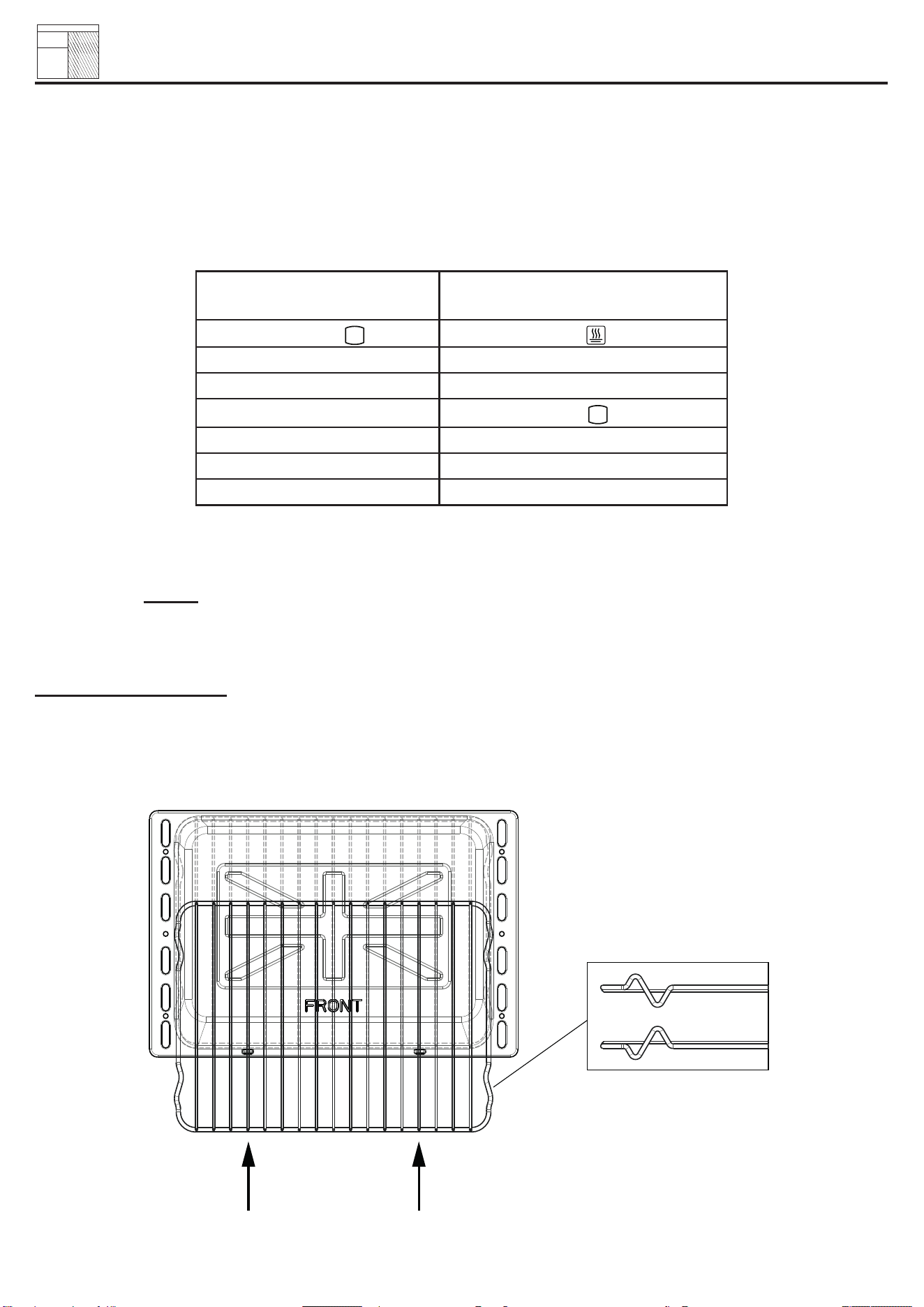
Using the upper and lower ovens
When using the upper and lower ovens at dierent temperatures, use the upper oven at the higher
temperature and the lower oven at the lower temperature. The table below shows the minimum
temperature that can be achieved in the lower oven when the upper oven is in use. For example with
the upper oven at 200°C, the minumum temperature that can be used in the lower oven is 120°C.
Upper Oven temperature
(°C)
Lower Oven Minimum
temperature (°C)
100 (Slow Cook)
S
70 (Keep Warm)
120 80
140 90
160
100 (Slow Cook)
S
180 110
200 120
220 130
Grilling
THE DOOR MUST BE OPEN WHEN THE GRILL IS USED FOR CONVENTIONAL GRILLING.
To operate the grill, turn the left hand control to the grill function symbol.
Grill pan and trivet
The grill trivet (inside the grill pan) can be inverted to give a high or low position, or it may be removed.
The speed of grilling can be controlled by selecting a higher or lower shelf position, or adjusting the grill
setting.
Inverted
USING THE SPLITTER - 90CM DELUXE ONLY
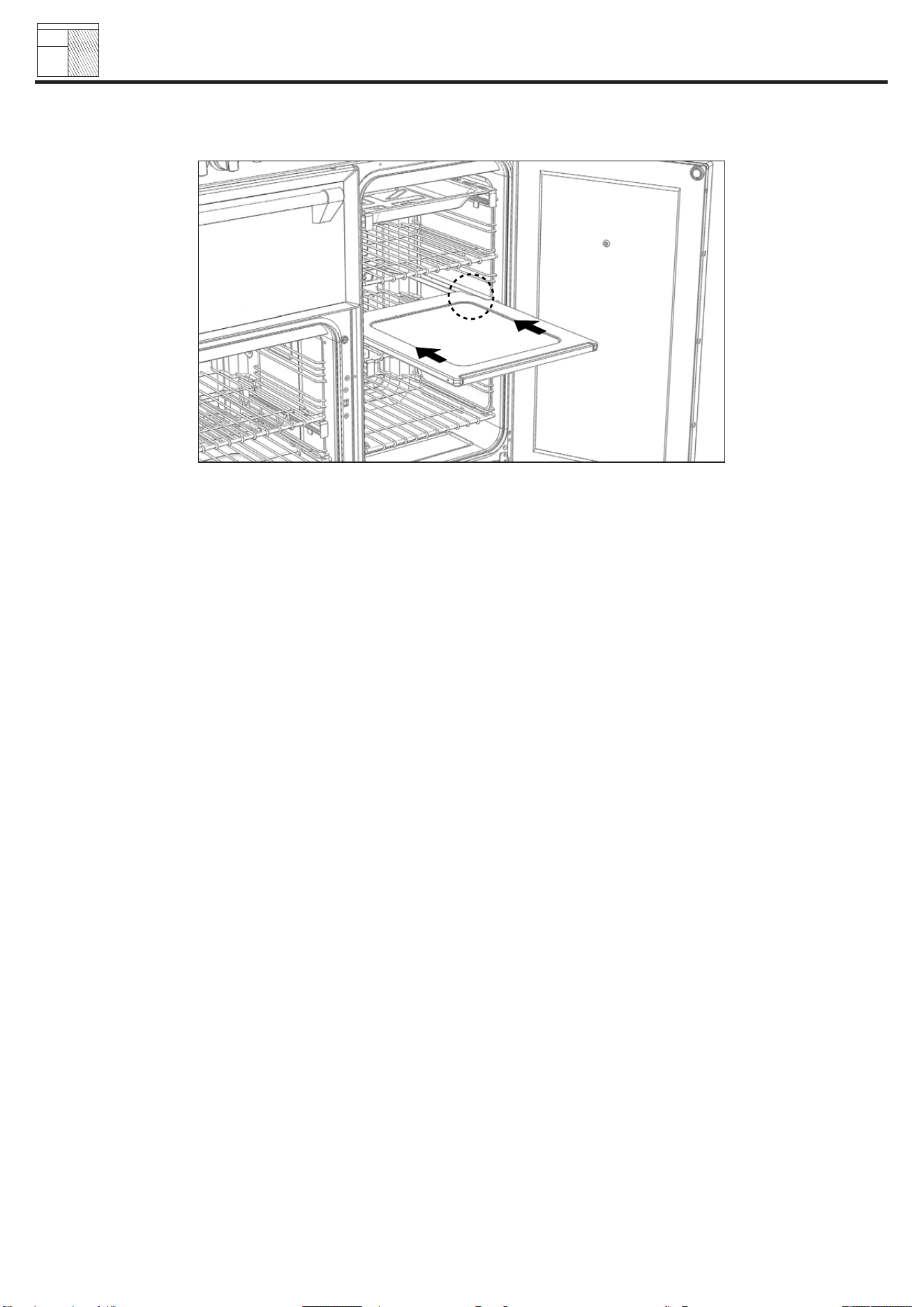
How to position the Splitter
USING THE SPLITTER - 90CM DELUXE ONLY
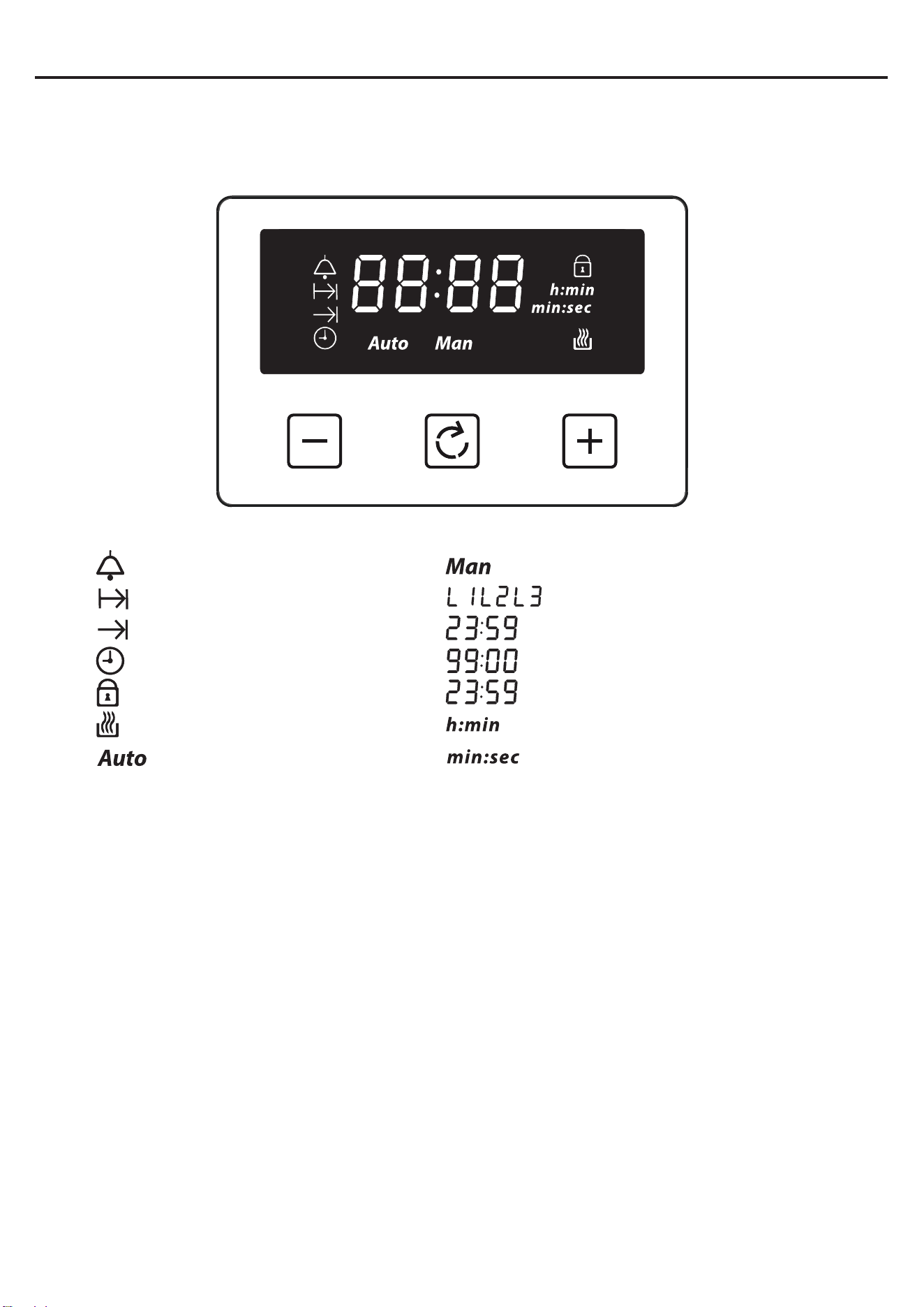
Please be aware that only the multifunction oven is controlled by the programmer.
Note: Your clock / programmer may not have all these functions
Minute minder
MenuMinus Plus
Cooking time / Duration
End of cooking time
Time of day
Keylock
Auto cooking
Automatic mode
Manual mode
Volume level
7-segment display
Max. adjustable minute minder
Max. adjustable cooking time
Display hours:minutes
Display minutes:seconds
, ,
Using the touch controls
Menu - Scroll through to select a function
Plus - Increase time or volume
Minus - Decrease time or volume
When a function is selected and the time or volume is set, the chosen function will automatically start
seven seconds after setting.
Manual Mode
If the programmer is not in semi-automatic or full-automatic mode you can use oven functions manually.
The manual icon is also on the display.
CLOCK/PROGRAMMER
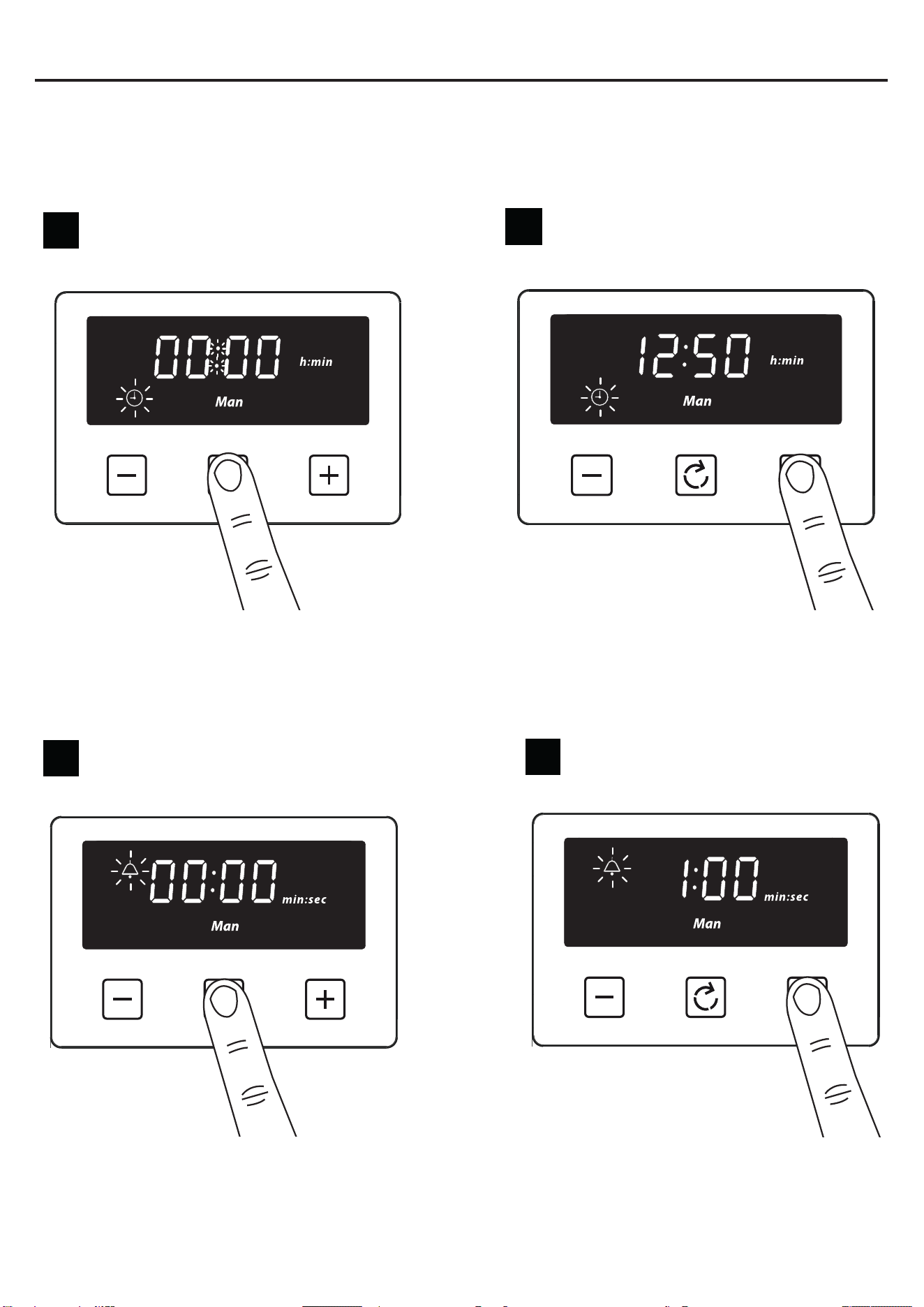
Setting the time of day
By pressing menu, scroll through the functions until you reach ‘time of day’.
1
Press the function button until the ‘time of day’
symbol appears
2
Press the plus or minus buttons to set a time
Setting the minute minder
The maximum cooking time that can be set is 99 minutes.
1
Press the function button until the ‘minute
minder’ symbol appears
2
Press the plus or minus buttons to set a time
Once set, the minute minder will start to countdown in steps of seconds. The display will show the
minute minder symbol and the remaining time. The countdown will continue in the background, if other
functions are being set.
When the set time for the minute minder has completed, an alarm is heard and the minute minder
symbol will ash on the display. Press any button to stop the alarm and the time of day is displayed.
CLOCK/PROGRAMMER
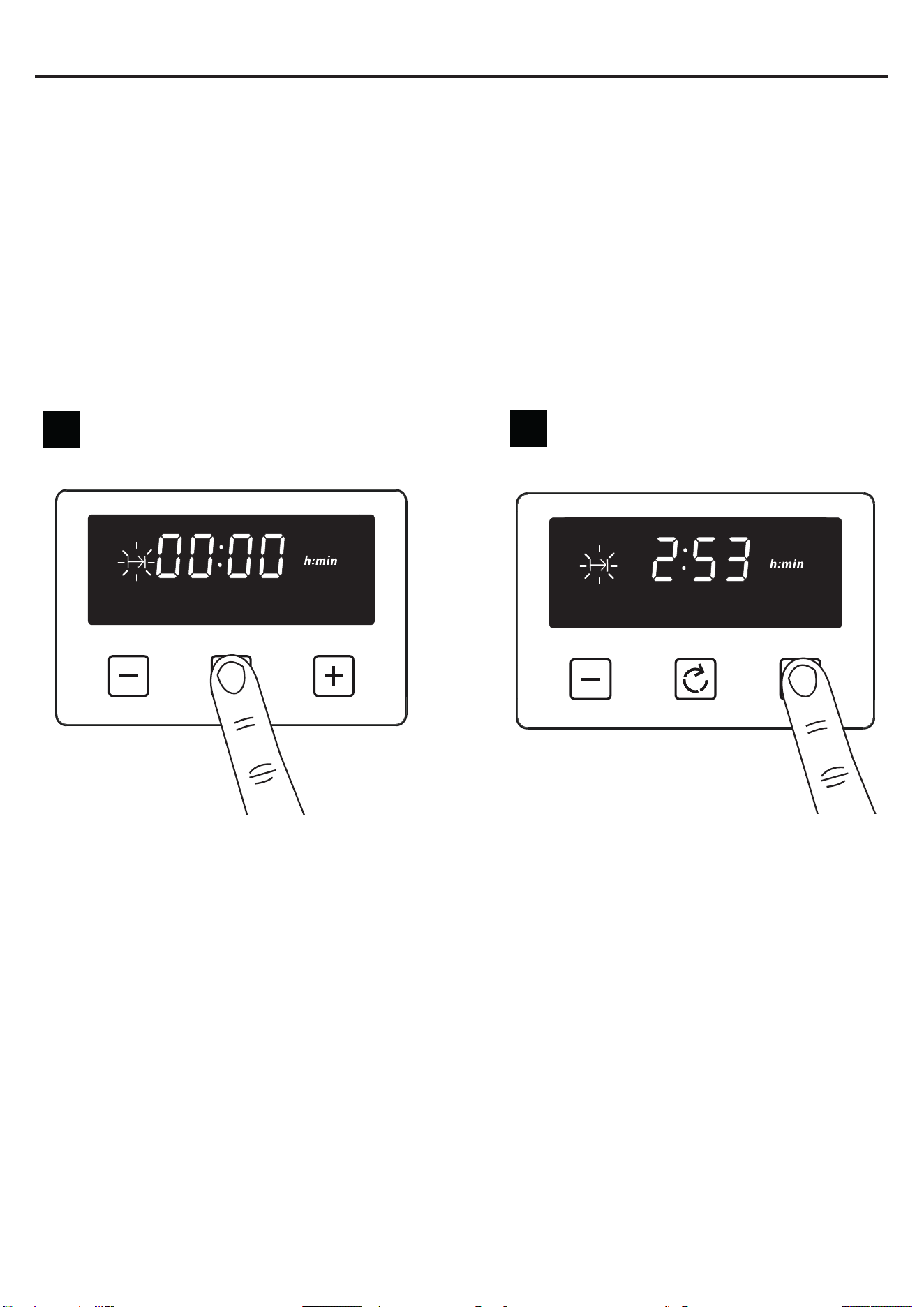
To modify or cancel the minute minder
Return to the minute minder function and use either the plus or minus buttons to adjust the time. By
setting the time to ‘0.00’, this will cancel the countdown.
Setting the cooking time (the duration of time the oven will operate for) Semi Auto-
matic cooking
Note: Only the bottom left hand oven on 1000cm and 1100cm appliances can use the Semi Automatic
cooking function.
The maximum cooking time that can be set is 23 hours and 59 minutes.
1
Press the function button until the ‘cooking
time’ symbol appears
2
Press the plus or minus buttons to set a time
Once set, the automatic mode, auto cooking symbol and the time of day is displayed.
When cooking is completed, an alarm is heard and the manual mode symbol ashes on the display.
Press the Menu button to stop the alarm and then the ‘time of day’ will then be displayed. Pressing the
Menu button again will return to manual mode.
To modify or cancel the cooking time
Return to the ‘cooking time’ function and use either the plus or minus buttons to set the time. By setting
the time to ‘0.00’, this will cancel the countdown.
CLOCK/PROGRAMMER
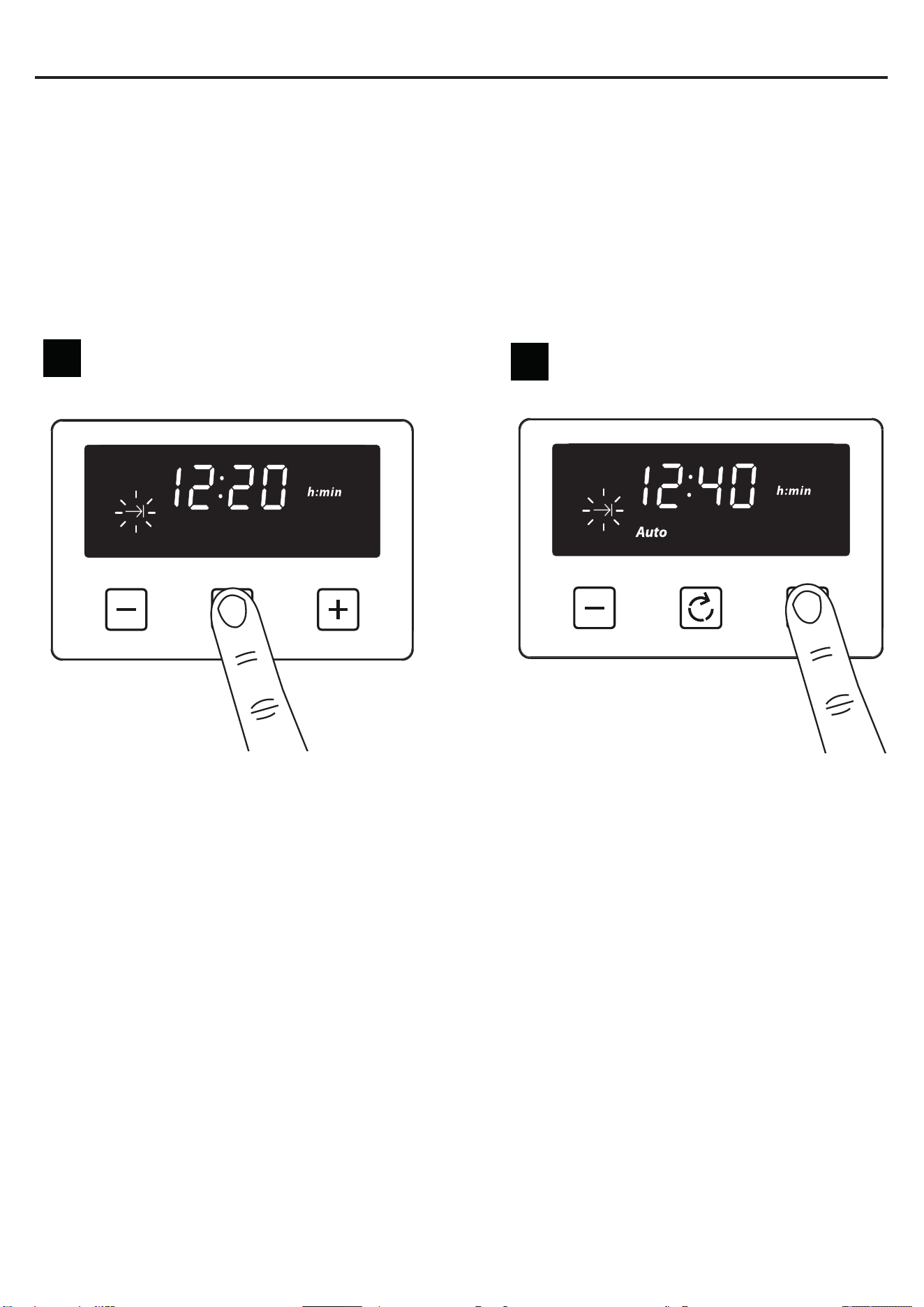
Settingtheendofcookingtime(tosetatimefortheoventoturno)Fully
Automatic
Enter cooking duration as described in ‘Setting the cooking time’ section.
The display shows the current ‘time of day’ plus the ‘end of cooking time’ symbol. The latest ‘end of
cooking time’ is limited to the current ‘time of day’ plus the maximum time that can be set (23 hours and
59 minutes).
1
Press the function button until the ‘end of
cooking time’ symbol appears
2
Press the plus or minus buttons to set a time
The auto cooking symbol disappears from the display once the time, the required cooking settings and
temperature have been set. The appliance will not be switched on until the set cooking start time, that is
the dierence between the cooking end time and the cooking duration.
When cooking is completed, an alarm is heard and manual mode symbol ashes on the display. Press
the menu button to stop the alarm. Pressing the Menu button again will return to manual mode.
To modify or cancel the end of cooking time
Return to the ‘end of cooking time’ function and use either the plus or minus buttons to set the time. The
‘end of cooking time’ can be deleted by counting back using the minus button until it equals the current
time of day.
CLOCK/PROGRAMMER
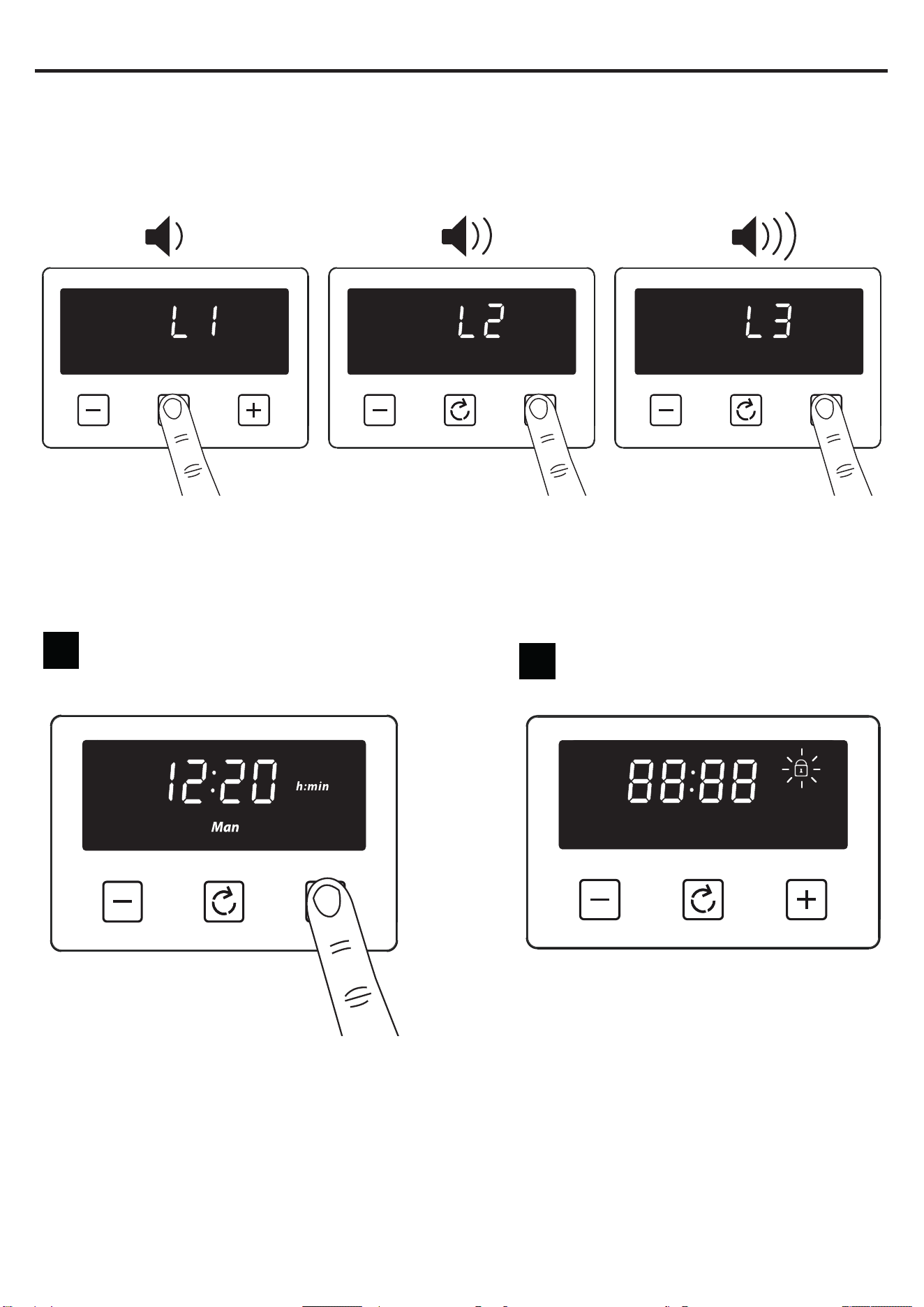
Setting the volume
Press the menu button until “LX” (X = 1, 2 or 3) ashes on the display. Use the plus or minus buttons to
select a tone.
Note: Default tone is L3
Activating / deactivating Key lock
1
Press and hold the plus button for 3-5
seconds
2
Once the Key lock is active, the buttons will be inactive. A two beep signal will be heard if the buttons
are pressed.
To deactivate the Key lock
Press and hold the plus button for 3-5 seconds. The Key lock symbol will disappear and the appliance
can continue to be used.
Note: In case of main power loss for a short time (about 1.5 minutes), timer maintains its status. Key
lock status and buzzer tone are memorized independent of the power loss duration.
CLOCK/PROGRAMMER
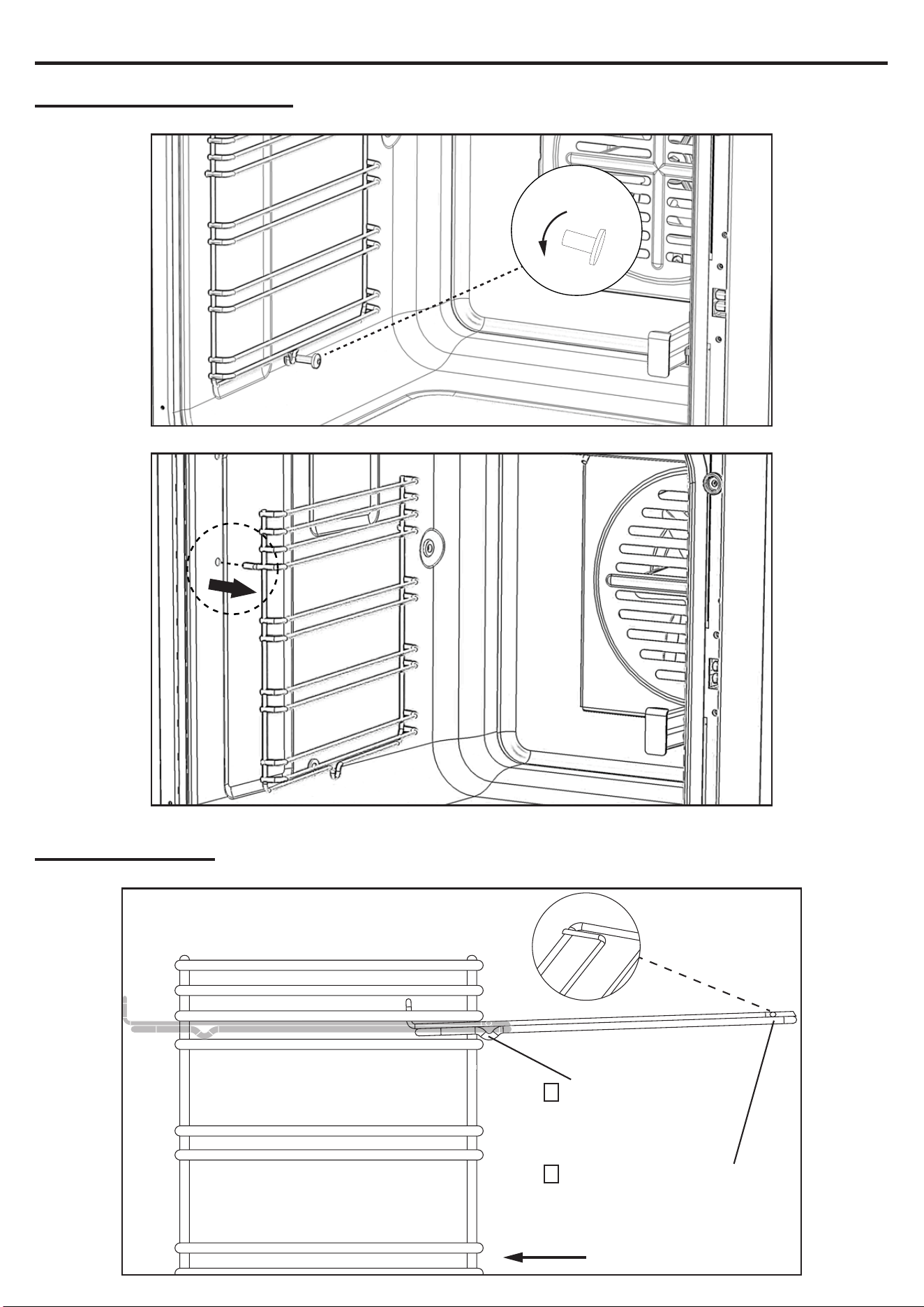
USING YOUR APPLIANCE
Removing Shelf Runners
To Open
Standard shelves
Front of appliance
2
Ensure the shelf is fully pushed
back towards the back of the
oven, until the shelf stopper is
reached.
Slightly raise the shelf and
insert in the chosen shelf
position
1
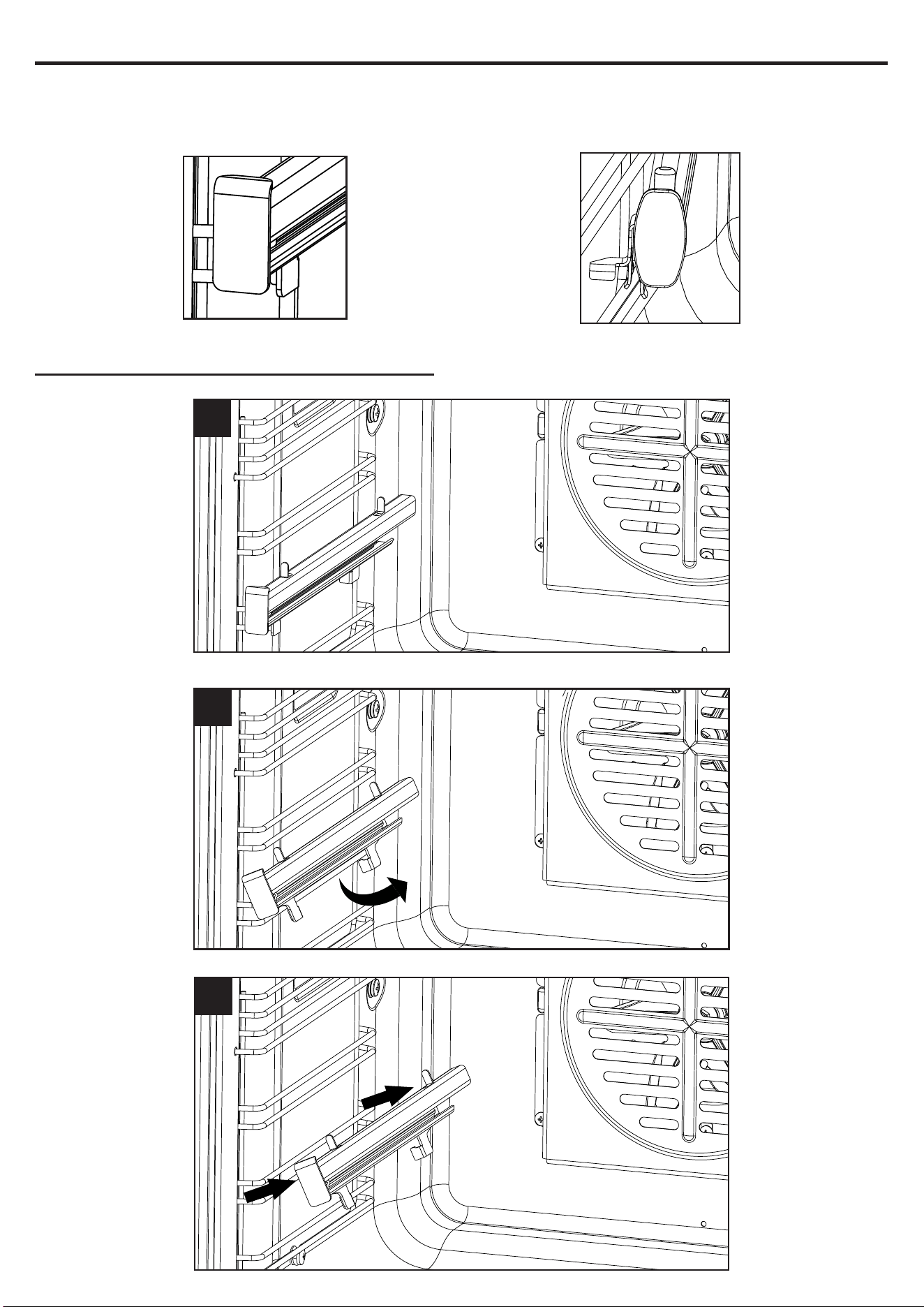
USING YOUR APPLIANCE
Your product will be supplied with either one of the tted Telescopic guides as shown. Please refer to
the instructions below.
Option 1: Removing Telescopic guides
Option 1 Option 2
1
2
3
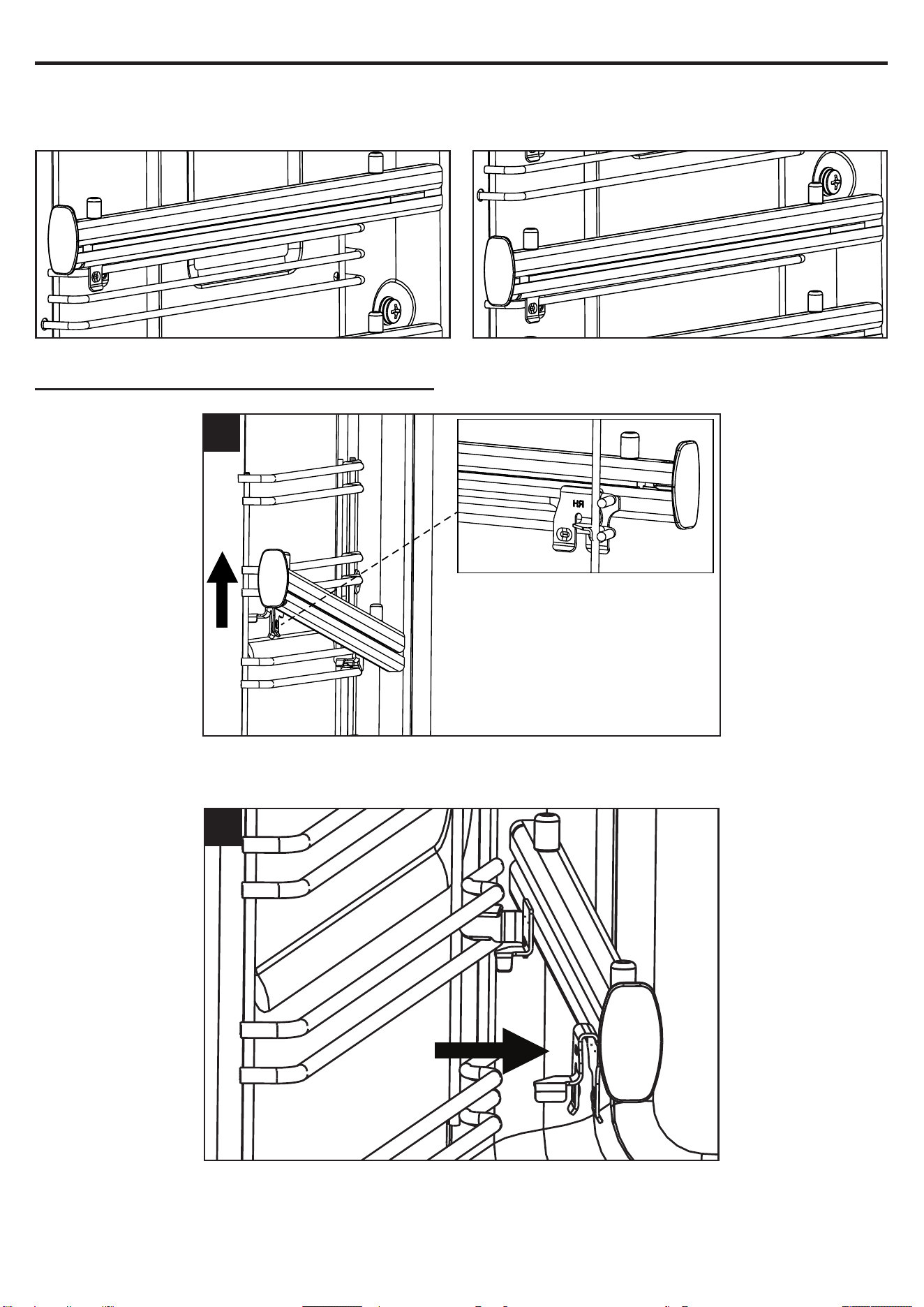
USING YOUR APPLIANCE
Note: The Telescopic guides can only be attached to the top part of the top, middle and bottom sections
of the shelves as shown below.
Option 2: Removing Telescopic guides
Front Clip
Push the front of the guide upwards rmly, ensuring the front clip is released from the shelf runner.
Pull the guide away from the shelf runner.
1
2
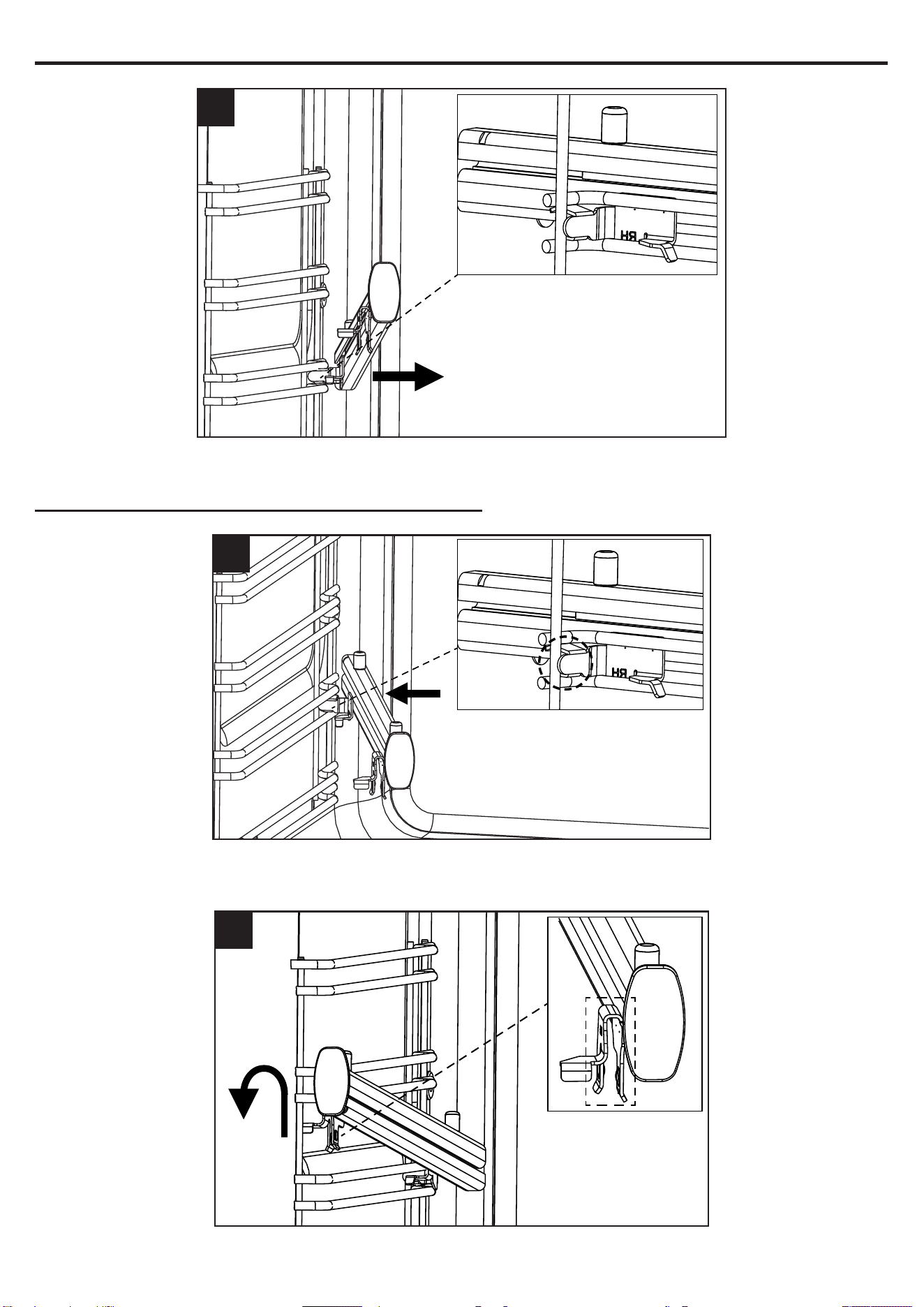
USING YOUR APPLIANCE
Back clip
Pull the back clip away from in between the shelf runner.
Option 2: To reinstall the Telescopic guides
Back clip
Secure the back clip in between the shelf runner. Ensure the guide is fully pushed back towards the
back of shelf runner.
Front clip
Locate the front clip onto the shelf runner and rmly push the front of the guide down until the front clip
is secured into place.
3
1
2
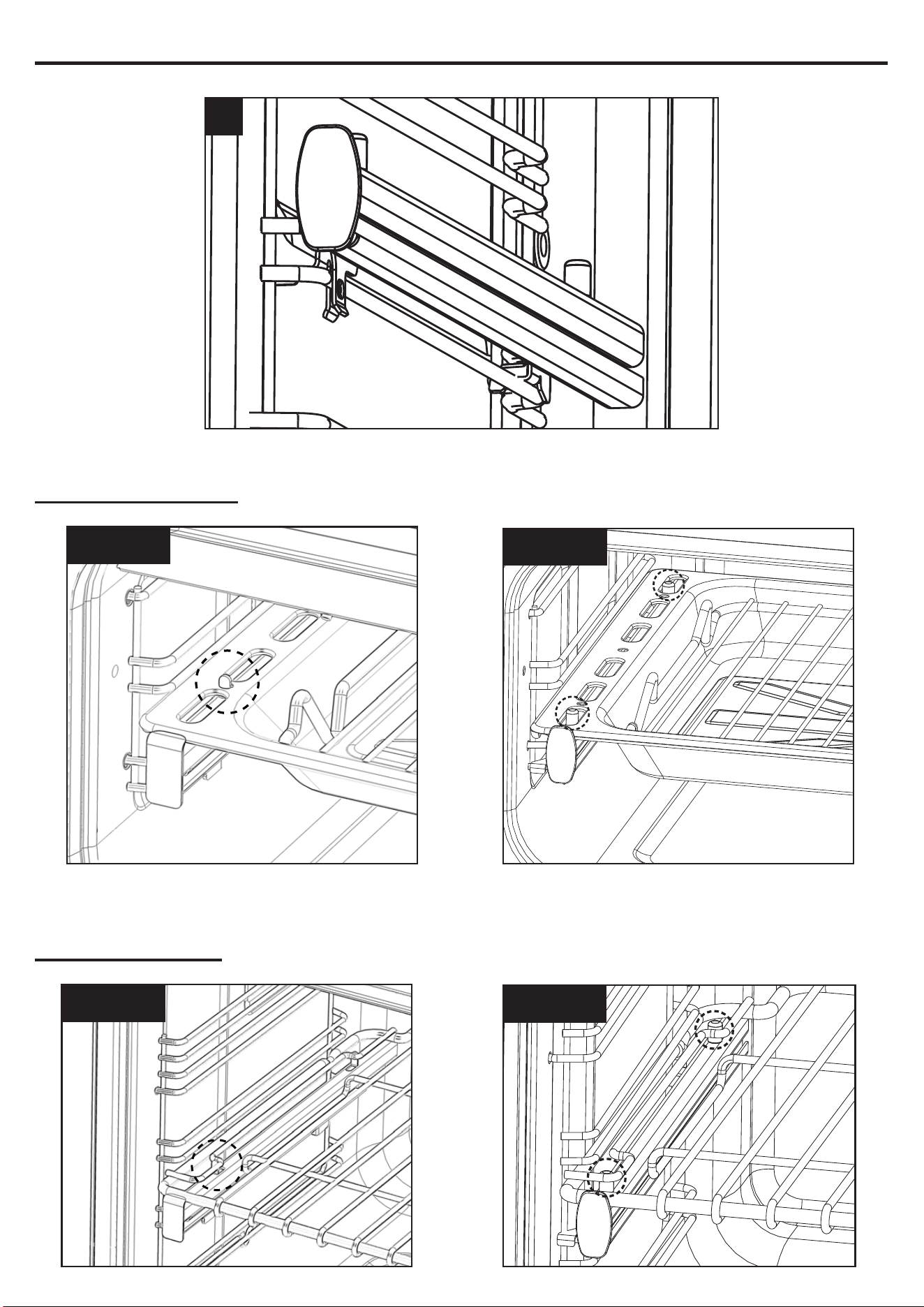
USING YOUR APPLIANCE
The Telescopic guide should now be tted correctly and secure to the shelf runner.
Full width oven pan
Note: Please ensure the wires / oven pan locate around the small tabs on the telescopic runner.
Telescopic sliders
Option 1
Option 2
Option 1
Option 2
3
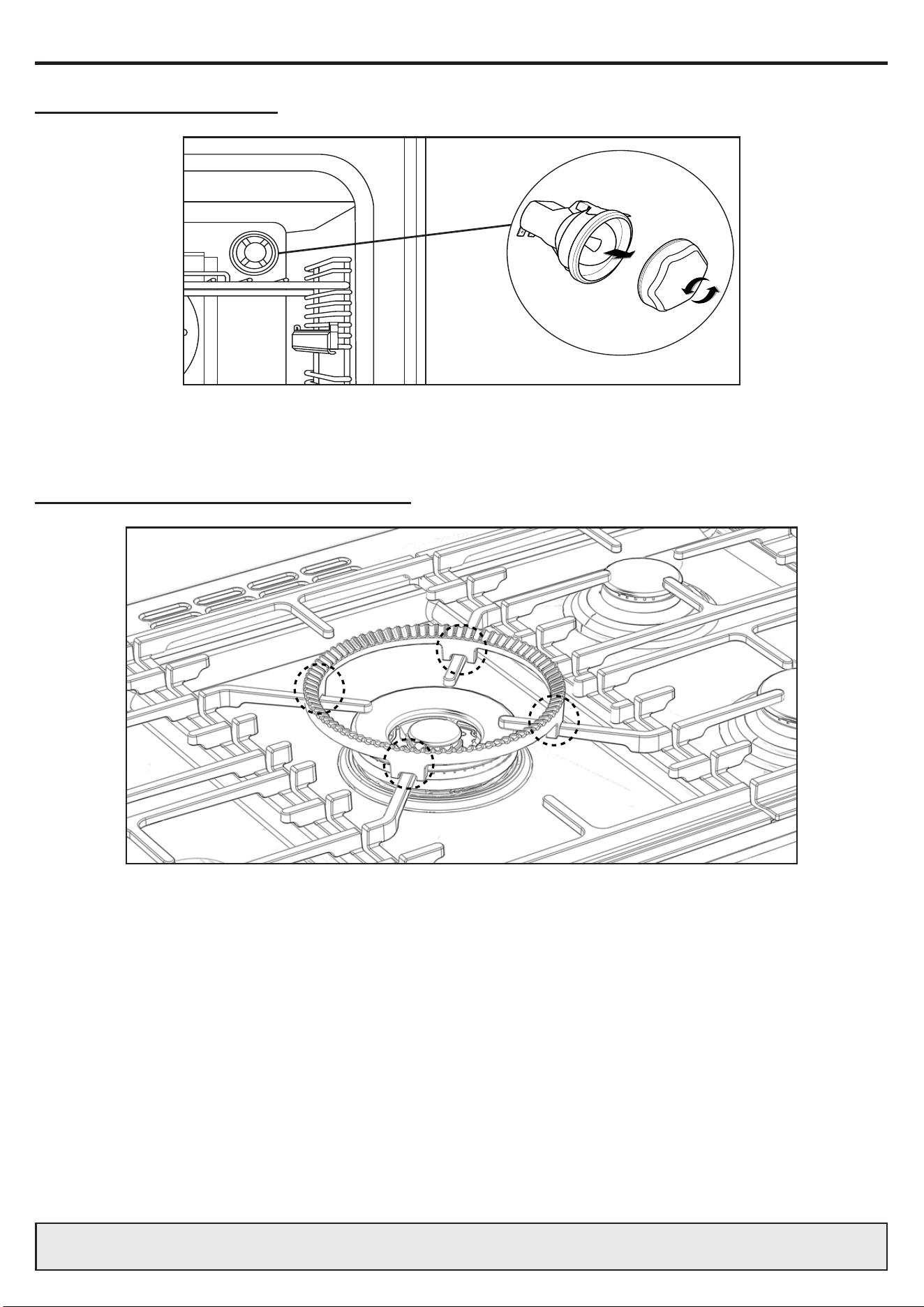
USING YOUR APPLIANCE
Changing the light bulb
Not all appliances have the same number and type of bulbs. Before you replace your bulb, check to see
what type you have. Please remember that bulbs are not covered by your warranty.
Wok Cradle (Deluxe only) if supplied
Please ensure the woke cradle sits securely on the 4 pan support ngers.
Please refer to our website for further information on recipes
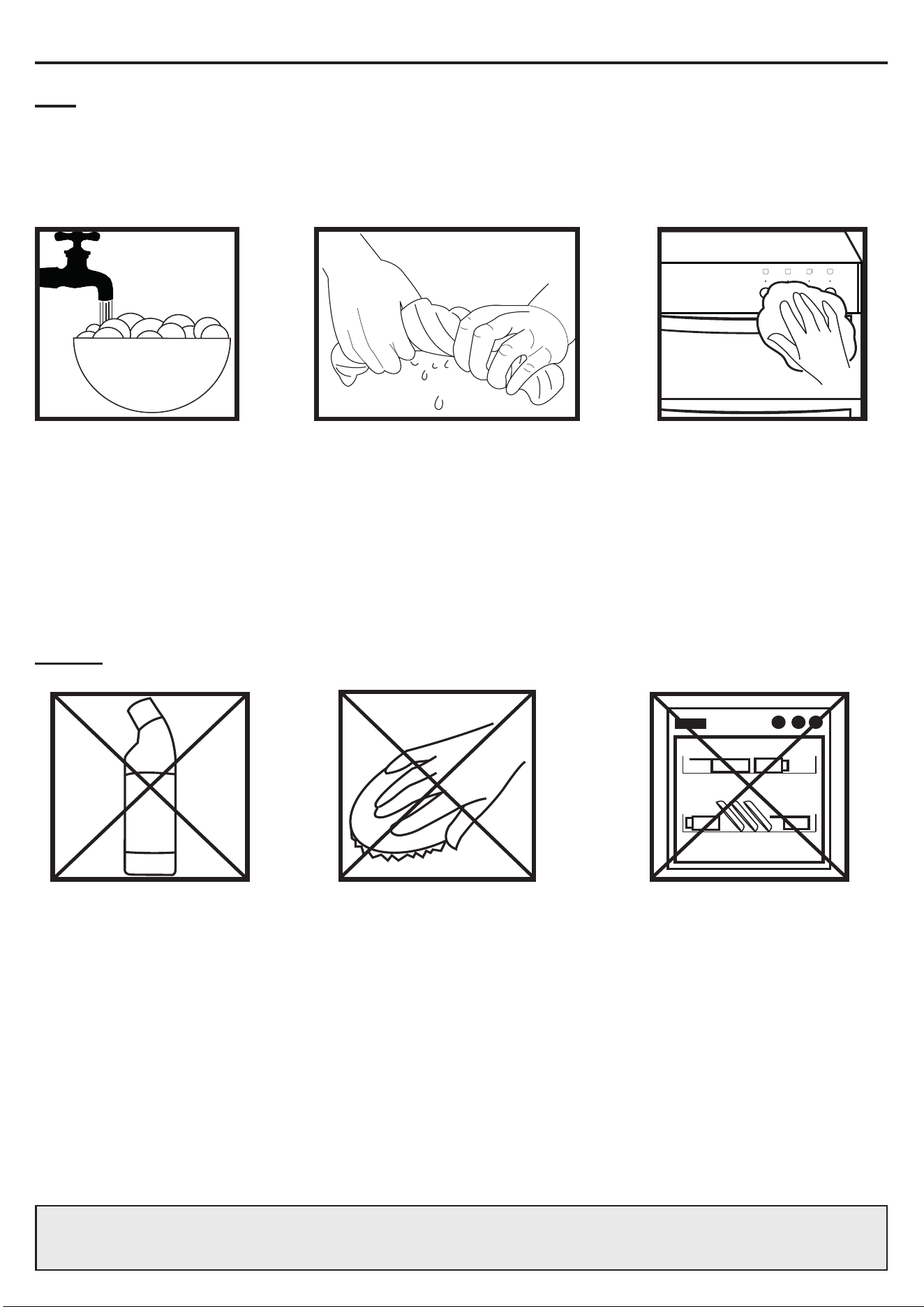
CLEANING YOUR APPLIANCE
Dos
Note: Always switch o your appliance and allow it to cool down before you clean any part of it.
Note: Please take extra care when cleaning over the symbols on the control panel, as this can lead to
them fading.
H
Tips: Some foods can mark or damage the metal or paint work e.g.; Vinegar, fruit juices and salt.
Always clean food spillages as soon as possible.
Note: When cleaning the grill, take care of the xing brackets and xings.
Don’ts
IT IS IMPORTANT TO CLEAN YOUR APPLIANCE REGULARLY AS A BUILD UP OF FAT CAN
AFFECT ITS PERFORMANCE OR DAMAGE IT AND MAY INVALIDATE YOUR GUARANTEE.
IN ADDITION TO THE ABOVE, DO NOT USE METAL SCRAPERS TO CLEAN THE OVEN DOOR
GLASS.
• Undiluted bleaches
• Chloride products
• Warm, soapy water • Wipe with damp cloth
• Dry with a soft cloth
• Clean, wrung out cloth
• Wire Wool
• Abrasive cleaners
• Nylon pads
• Steam cleaners
Do not place in the
dishwasher:
• Cast iron griddle
• Pan supports
• Burner caps & skirts
We oer a great range of cleaning products and accessories for your appliance.
To shop, please visit our website located at the front of this User Guide.

FAILURE TO INSTALL APPLIANCES CORRECTLY IS DANGEROUS AND COULD
LEAD TO PROSECUTION.
This appliance shall only be installed only by authorised persons and in accordance with
the manufacturer's installation instructions, local regulations, municipal building codes,
electrical wiring regulations, and any other statutory regulations.
Our policy is one of constant development and improvement, therefore we cannot guar-
antee the strict accuracy of all of our illustrations and specifications. Changes may have
been made subsequent to publishing.
Please keep to the following points most carefully;
Although every care has been taken to ensure this appliance has no sharp edges, we
recommend that you wear protective gloves when installing and moving this appliance.
This will prevent injury.
Ensure that you route all mains cables well clear of any adjacent heat source.
The space for air circulation, located underneath and at the back of the hob improves its
reliability by ensuring that it will cool down, efficiently.
Installations should be carried out in line with the National Regulations applicable for this
product type.
INSTALLATION INSTRUCTIONS
Before you start please read the instructions.
Planning your installation will save you time and eort.

Prior to installation, ensure that the local distribution conditions (nature of the gas and gas pressure)
and the adjustment of the appliance are compatible. The adjustment conditions are stated on the data
badge.
This appliance is not connected to a combustion evacuation device. It shall be installed and connect-
ed in accordance with current installation regulation. Particular attention shall be given to the relevant
requirements regarding ventilation.
In your own interest and that of safety, it is the law that all gas appliances be installed and serviced by
competent persons. GAS SAFE registered installers undertake to work to satisfactory standards.
Where regulations or standards have been revised since this handbook was printed, always use the
latest edition.
WARNING: Servicing shall be carried out by authorized personnel
Gas Safety (Installation & Use) Regulations
This appliance must be installed by an authorised person in accordance with the Australian Gas Instal-
lation Standard AS/NZS 5601, the manufacturers installation instructions, local gas tting regulations,
and any other relevant statutory regulations.
Particular attention should be given to relevant requirements regarding ventilation.
Ventilation Requirements
Ventilation must be as specied by AS/NZS 5601 Installation code. The room containing the appliance
should have an air supply.
An appliance should be installed in a location for complete combustion of gas, proper ueing and to
maintain ambient temperature of the immediate surrounding at safe limits, under normal conditions.
Windows and permanent vents should therefore not be blocked or removed without rst consulting a
GAS SAFE or local accredited gas installer.
REGULATIONS AND STANDARDS
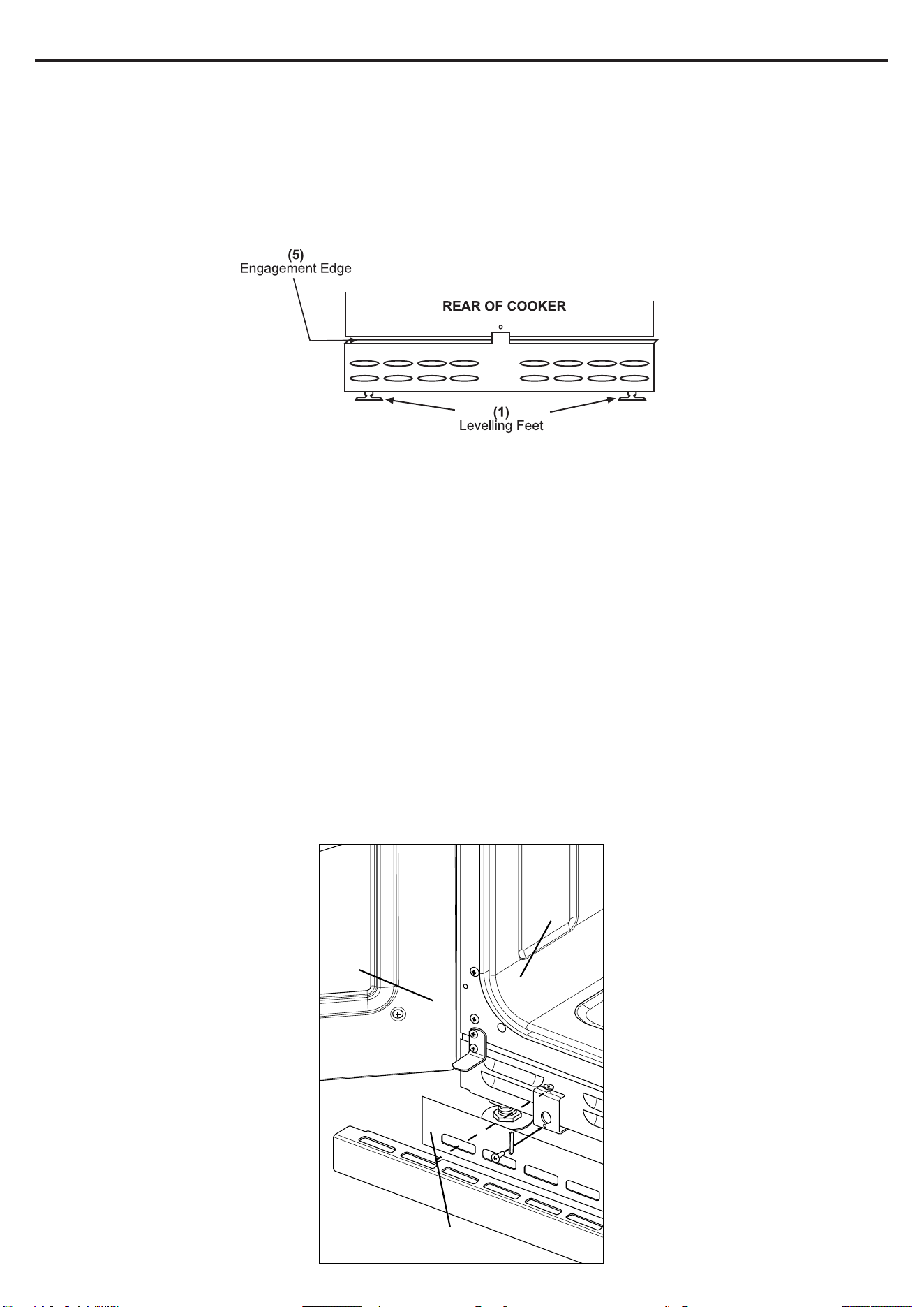
Levelling Your Cooker
Place a spirit level on a baking sheet onto an oven shelf.
The cooker is tted with leveling feet (1) Level your cooker to your desired height using the leveling feet
at the front and rear of the cooker.
Rearwheels(iftted)
Adjustment of the wheel height can be made with a screw driver, through the hexagonal hole in the
front plinth
Fitting the plinth
• Make sure the appliance is raised to a height of 915mm or above before beginning. If the appliance
is below 915mm - you can only t the plinth cover labelled X. You can adjust the height using the
feet (1) of the appliance. If your appliance has a storage drawer at the bottom, you access the re-
quired holes through the base of the drawer after lifting the mat.
• Open the appliance doors, and loosen screw A located on bracket (2). Do not remove this screw
entirely
• Insert screw B, through slot (3) and screw into the small hole at the bottom of bracket (2). Make sure
that the plinth cover is ush to the appliance, but not over tightened.
Oven cavity
Door
X
Y
A
B
(1)
(2)
(3)
Plinth Cover
BEFORE INSTALLATION
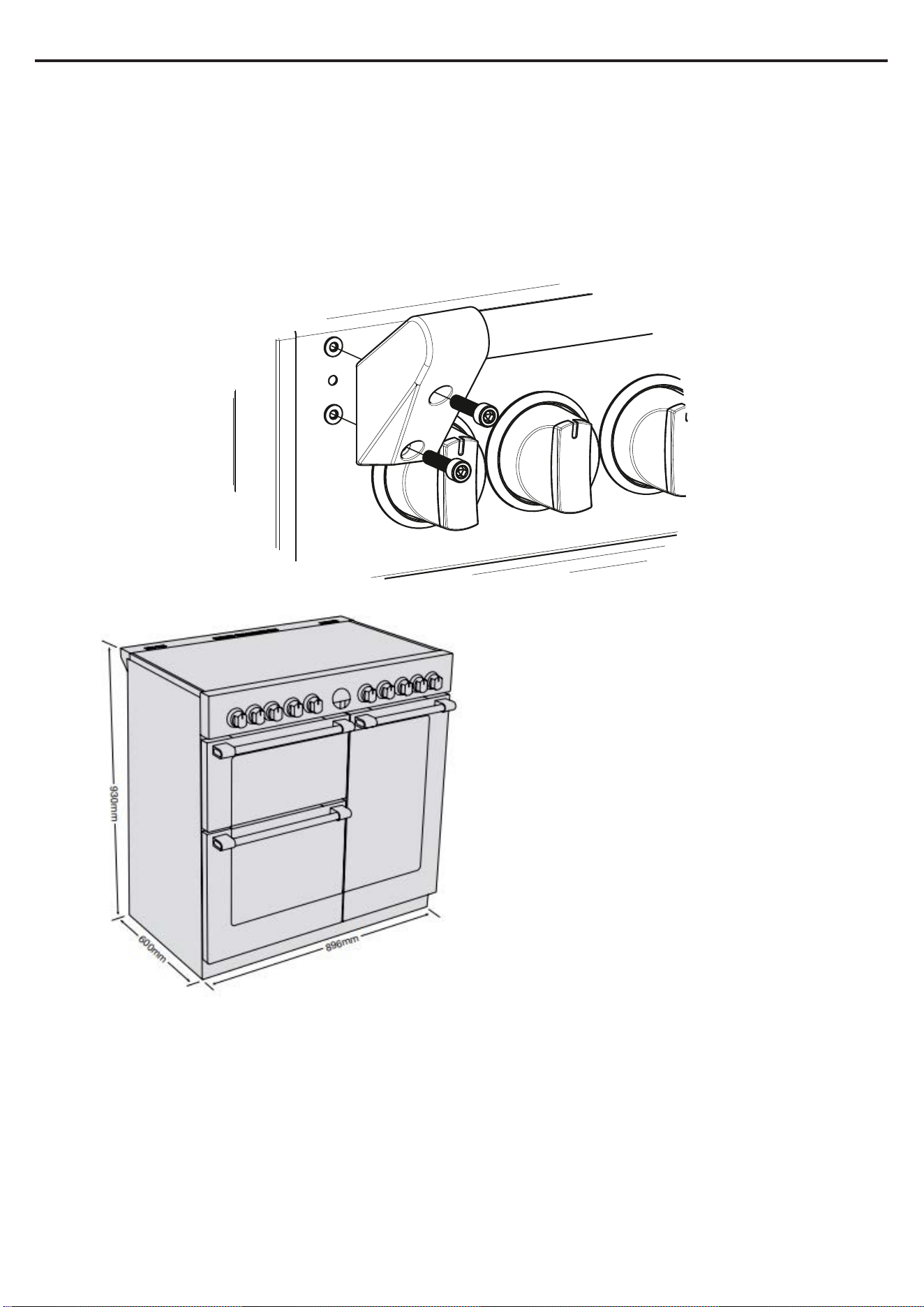
Fitting the towel rail (if applicable)
• On the towel rail there are two holes, top (A) and bottom (B), these holes have corresponding holes
on the fascia at each end.
• Both screws must be inserted through the towel rail at each end and screwed into the fascia. Both
screws are M6 screws but the longer screw must be secured through the top hole. Using the Allen
key provided, tighten the screws making sure that the towel rail is ush to the fascia, but not over
tightened.
A
B
Vinyl wrapped surfaces (if applicable)
BEFORE INSTALLATION
If this appliance is installed near vinyl wrapped
surfaces, we strongly recommend using an
installation kit available from the vinyl-wrap
supplier. Belling cannot accept any
responsibility for damage caused due to
installation into cabinets with low temperature
tolerances.
This appliance shall be installed in accordance with AS/NZS 5601 Gas Installations Fig 5.1:Required
Clearances Around Domestic Cooking Appliances.
Any adjoining wall surface situated within 200mm from the edge of any burner must be a suitable
non-combustible material for a height of 150mm for the entire length of the appliance. Any
combustible construction above the appliance must be at least 600mm above the top of the cooking
surface and no construction shall be within 450mm above the top of the cooking surface.
If a bench made from a combustible material is situated within 200mm from the edge of any burner,
it should be 10mm or more below the hob. Install rangehoods in accordance with manufacturers
instructions, no closer than 600mm above the cooking surface for Rangehoods and 750mm for
Exhaust Fans.
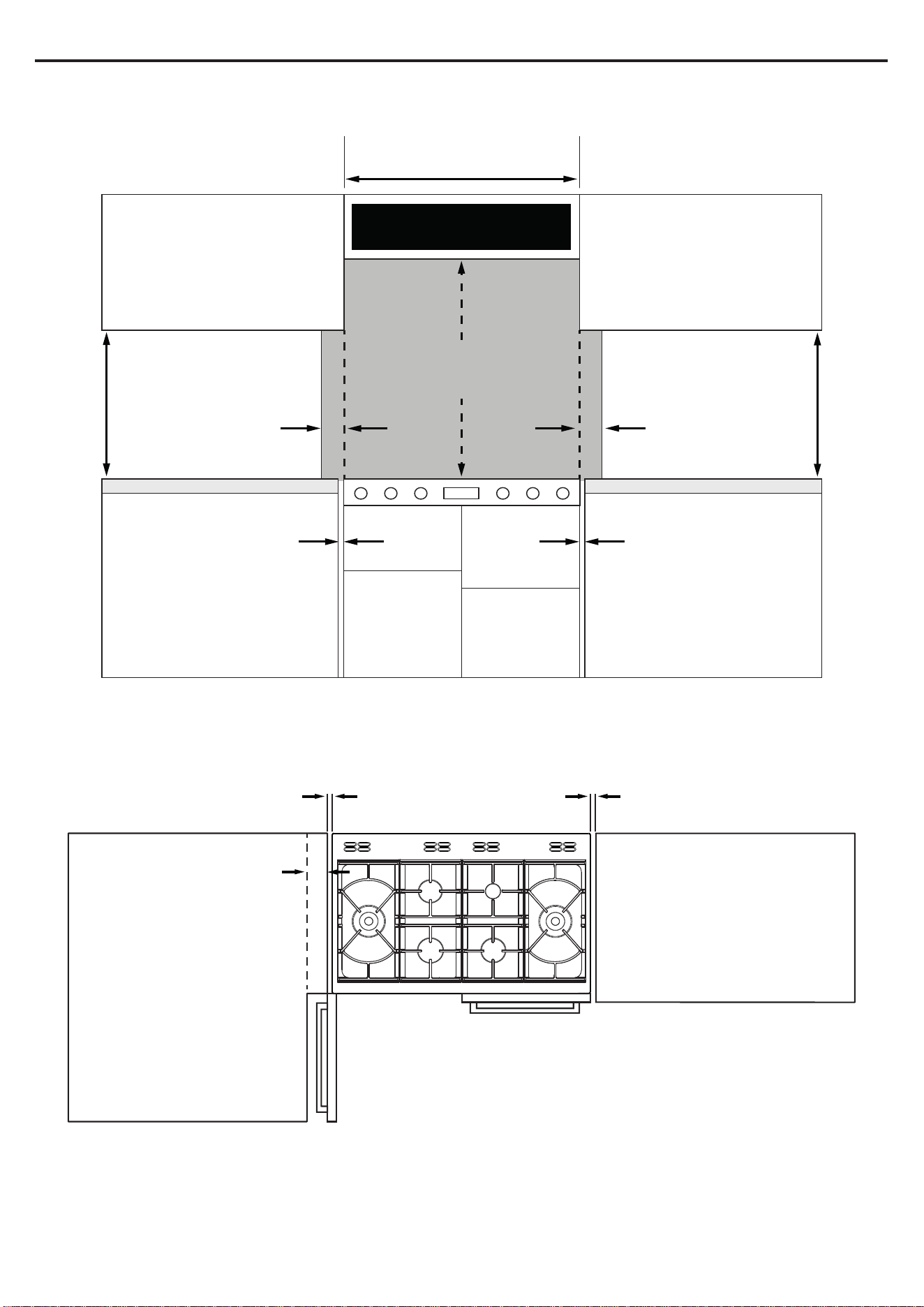
Cupboard / hood clearances
Nominal width of the hob
90mm
Wall Unit Wall Unit
400mm
No shelf or overhang of
combustible material should be
closer than 650mm above the hob.
90mm
10mm
400mm
min
650mm
worktop worktop
10mm
View from front
Worktop Worktop
10mm 10mm
60mm
• If your appliance has a side opening door, we recommend a side clearance of 60mm to allow the
oven door to fully open, if placed up to a wall or cabinetry.
• The cooker must have a side clearance above hob level of 90mm up to a height of 400mm.
DIMENSIONS AND CLEARANCES
View from above, with the
appliance located in a corner
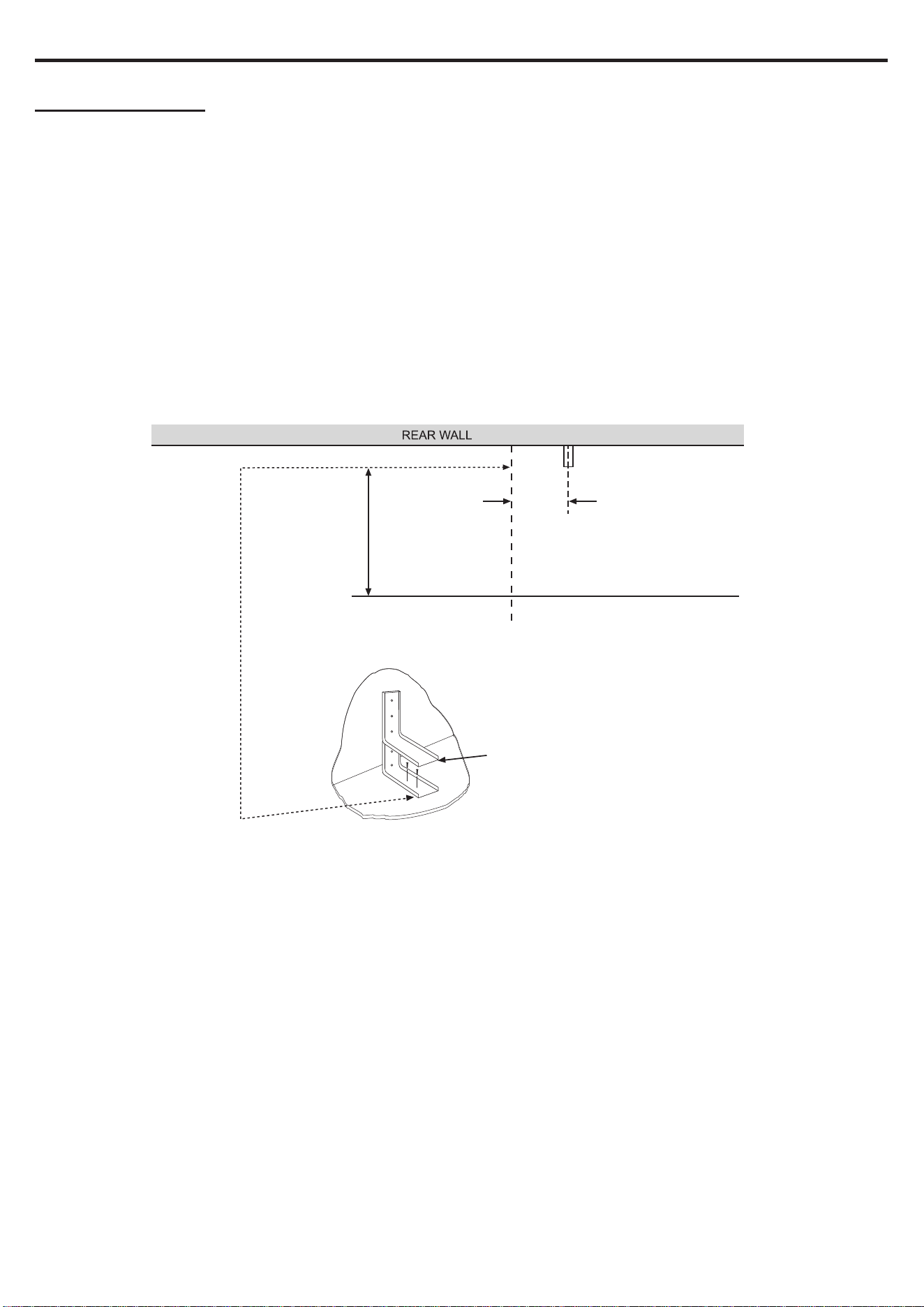
Stability Bracket
If the cooker is tted with a exible connection, a stability bracket should be tted to engage in the back
of the cooker. A stability bracket is included with this product.
A stability bracket can be tted as follows:
1. Place the cooker in the position and draw a PENCIL LINE level with the front edge.
2. Mark the centre of the cooker to give the CENTRE LINE for the bracket.
3. Remove the cooker and mark o 450mm from the PENCIL LINE to locate the front edge of the low-
er bracket.
4. Fix the bracket to the oor. Measure from oor level to engagement edge in the back of cooker and
add 3mm.
5. Assemble the underside of the top part of the bracket to this height
Front edge
for lower
bracket
(5)
Underside of top bracket slots into
engagement edge in back of cooker
(3)
450 mm
(1)
Pencil line on floor
Stability bracket
Review stability bracket
location identified on rear
of appliance and position
bracket accordingly
(2)
Centre line
(4)
A restraining device shall restrict the appliance movement to no more than 80% of the hose length.
DIMENSIONS AND CLEARANCES
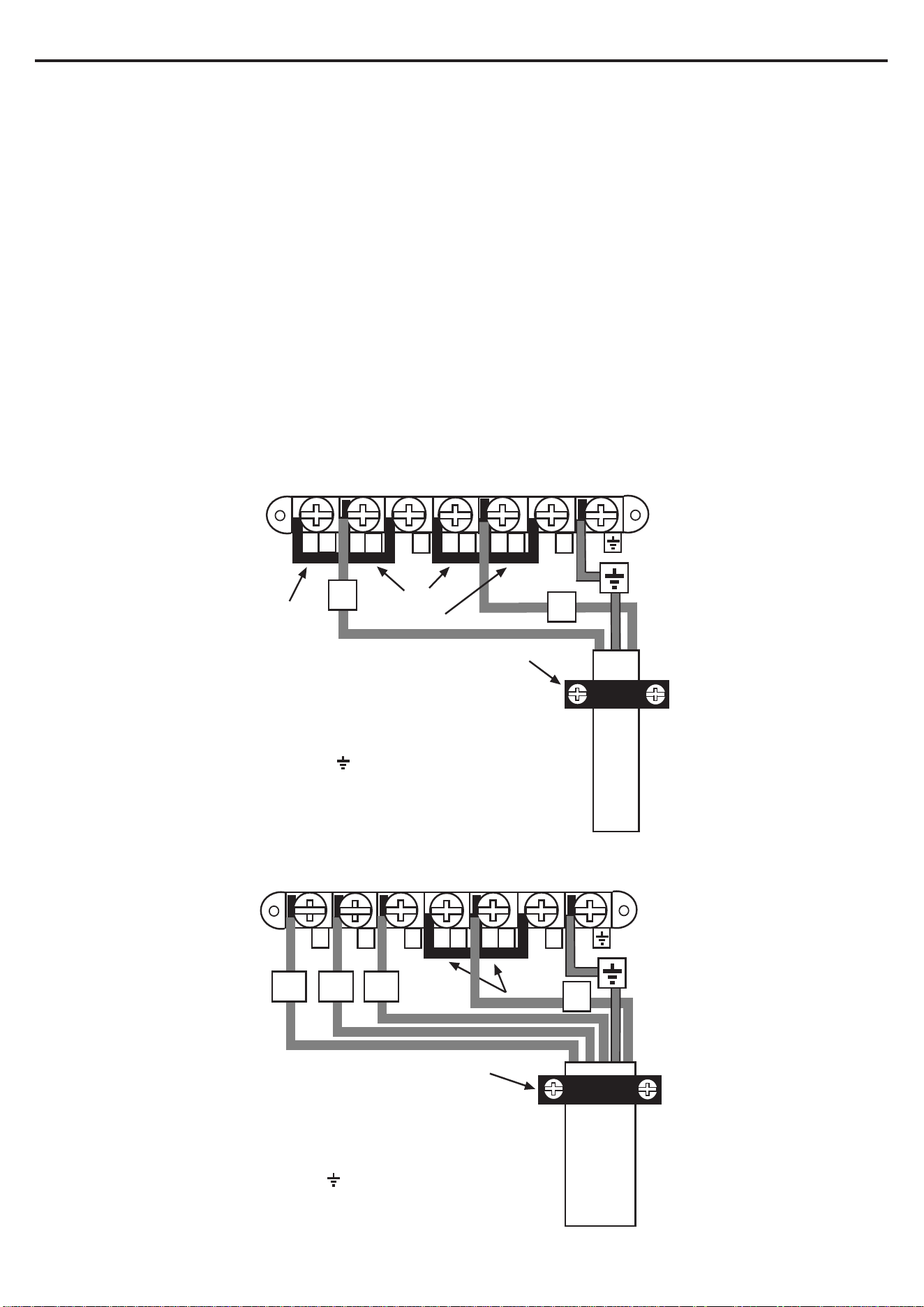
WARNING: This appliance must be earthed.
• This appliance must be tted to a switch providing all pole disconnection with a minimum contact
separation of 3mm.
• Access to the mains terminal is gained by removing the terminal block cover at the rear of the appli-
ance.
• Connection should be made with a suitable exible cable with a minimum temperature rating of
70°C.
• First strip the wires then push the cable through the cable clamp.
• Connect the cable to the terminal block and tighten the cable clamp screws - see diagram.
• Ret the terminal box cover.
• Sucient cable should be used to allow the cooker to be pulled out, but must hang clear of the oor
so it does not become twisted or trapped when the cooker is pushed back.
The terminal block screws and clamps can be damaged by excessive tightening and untightening. DO
NOT USE POWER TOOLS!
Single Phase Connection (240V ac 50Hz)
4
5
2
3
6
1
N
L
Shorting
Links
Shorting
Link
Connect cable to terminal block:
L to terminal 2.
N to terminal 5.
Earth to terminal.
Ensure shorting links are fitted between
terminals 1-2, 2-3, 4-5 and 5-6.
Ensure all screws are fully tightened.
Cable
Clamp
Three Phase Connection (240/415V 3N ac 50Hz)
4
5
2
3
6
1
N
Shorting
Links
Connect cable to terminal block:
Remove shorting links 1-2 and 2-3
L1, L2 and L3 to terminals 1, 2 and 3.
N to terminal 5.
Earth to terminal.
Ensure shorting links are fitted between
terminals 4-5 and 5-6.
Ensure all screws are fully tightened.
Cable
Clamp
L1
L2
L3
CONNECT TO THE ELECTRICITY AND GAS SUPPLY
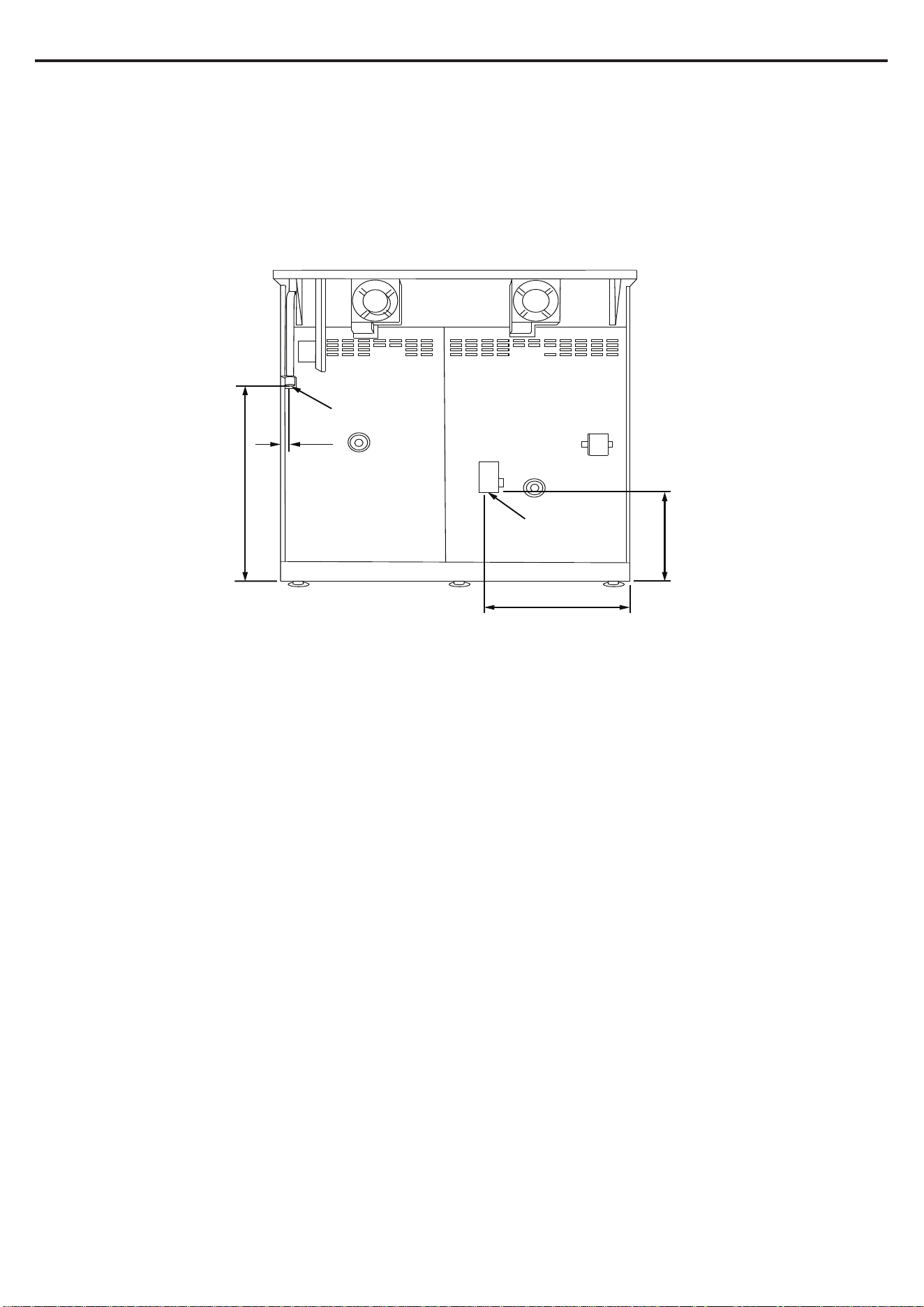
Electric and gas connection location (see illustration below)
The electric connection can be found on the rear of the appliance, 25.7cm from the bottom of the appli-
ance and 35cm from the right hand side of the appliance.
The gas inlet can be found on the rear of the appliance, 56.5cm from the bottom of the appliance and
3.2cm from the left hand side of the appliance.
56.5cm
25.7cm
35.0cm
Electrical cable
entry point
Gas connector
point
3.2cm
to centre
CONNECT TO THE ELECTRICITY AND GAS SUPPLY

COMMISSIONING
The installer must test the operation of the appliance.
Burner aeration
All burners have xed aeration and no adjustment is possible.
Pressure setting
Natural Gas @ 1.00kPa
Pressure test point
The pressure test point is tted on the outlet of the regulator or on an adapter which should be tted
onto the outlet of the regulator.
Hob burner
Turn the control knob to the FULL ON position, wait a second before pressing the ignition switch or
holding a lighted match or taper to the burner. Hold the control knob in for 15 seconds. Do not hold the
control knob in for longer that 15 seconds. If the burner fails to light within this time, release the control
knob and wait one minute before attempting further ignition.
Maintenance Schedule
It is recommended that the appliance is inspected annually as part of a routine Maintenance Schedule,
to ensure the electrical and gas components are in satisfactory condition
Before leaving the installation hand over the User Guide to the customer
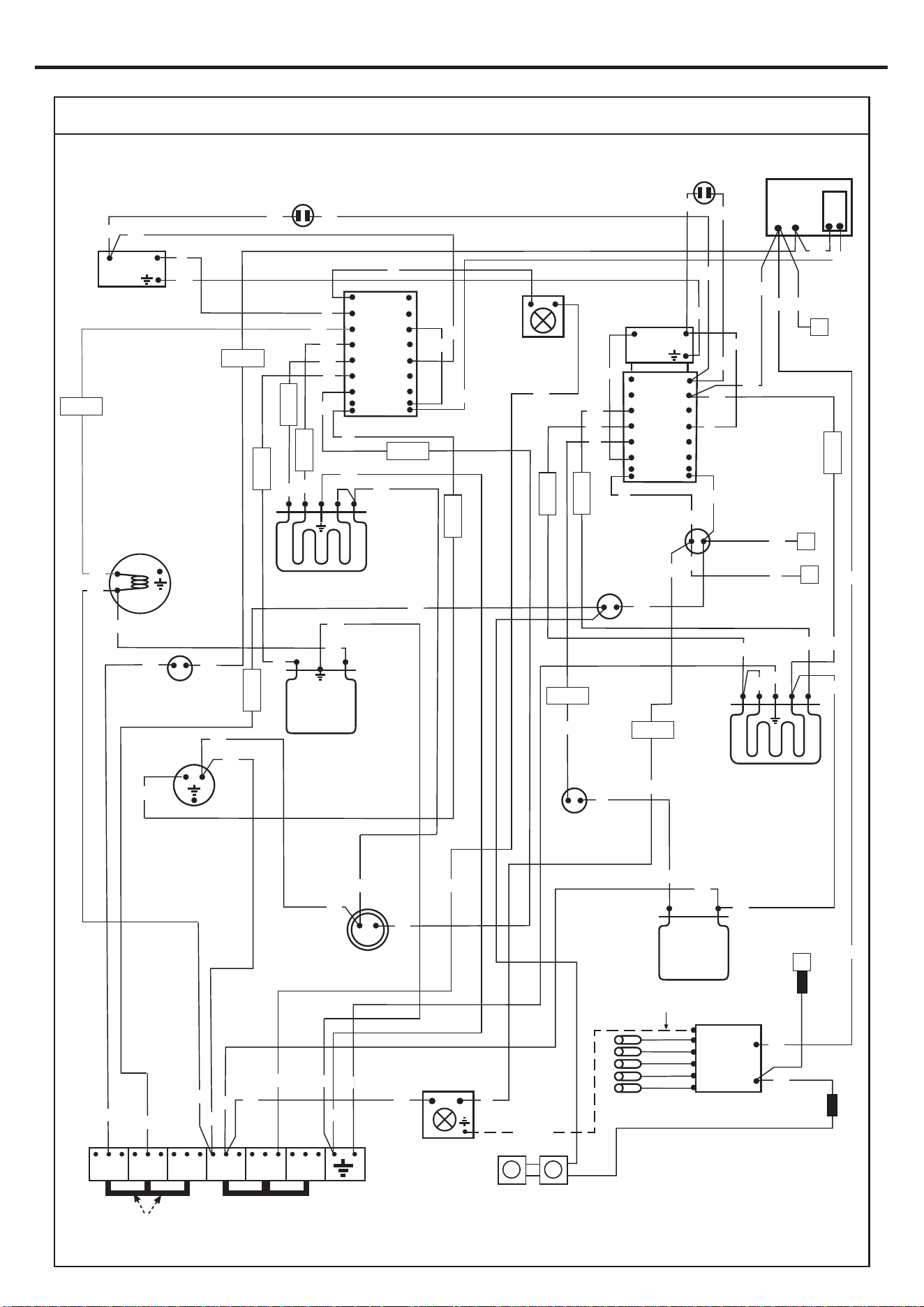
USING YOUR APPLIANCE
1
2
3
4
5
6
P1
P2
P3
P4
P5
P6
7
TOP OVEN
SWITCH
1
2
THERMOSTAT
Wiring colour code: Bk-Black, Bn-Brown, Bu-Blue, Gn-Green, Or-Orange, R-Red, W-White, Y-Yellow, V-Violet, Gy -Grey
LH FRONT
THERMAL
SWITCH
LH
COOLING
FAN
LH TOP REAR
THERMAL
CUTOUT
LEFT
HAND
OVEN LAMP
Bu
Bu
Gn
LH REAR MAIN
THERMAL CUTOUT
Bk
LH STAT.
NEON
Bk
PROGRAMMER
N
L
LH TOP
THERMAL
CUTOUT
LH OVEN
FAN
ELEMENT
LH OVEN
STIR FAN
P7
TOP STAT.
NEON
Bk
TOP OVEN
GRILL ELEMENT
TOP OVEN
BASE
ELEMENT
Bk
Bk
Or
Bk
V
1
2
3
4
5
6
P1
P2
P3
P4
P5
P6
7
MULTIFUNCTION
SELECTOR
SWITCH
P7
1
2
MAIN T-STAT
8
P8
Y
Or
W
V
MAIN OVEN
BASE
ELEMENT
Gn
Gn
Bk
Bk
Bk
MAIN OVEN
GRILL ELEMENT
Bk
Or
Bk
Bk
A
B
C
Y
Y
Y
Y
Y
Or
Or
Or
Or
Or
Or
Y
Or
Bk
Bk
W
W
R
R
R
R
R
R
Gn
Gn
Gn
Gn
Gn
Bk
Bk
Bk
Bk
Bk
Bn
Bn
Y
Gy
Gy
V
V
Bk
Bk
Connector
MO-Pin 1
Connector
MO-Pin 2
Connector
MO-Pin 3
Connector
MO-Pin 4
Connector
MO-Pin 5
Connector
MO-Pin 6
Connector
MO-Pin 7
Connector
TO-Pin 1
Connector
TO-Pin 2
Connector
TO-Pin 3
Connector
TO-Pin 4
Connector
TO-Pin 5
Connector
TO-Pin 6
Bk
W
V
Bn
Or
Bn
WIRING DIAGRAM - LH OVEN PAGE 1/2
Bk
Or
W
W
R
Bk
Bk
Bn
Bk
W
Y
IGNITION
GENERATOR
L
N
Bk
Bn
D
LH ROTARY
SWITCHES
Bk
Bk
Bk
Remove These Two Links for Multi-Phase Installations !
INLET
TERMINAL
BLOCK
L1
L2 L3 4(N)
5(N)
6(N)
083753402
29.11.2018
BELLING RICHMOND/COOKCENTRE 900DF- AU
CENTRE
COOLING
FAN
Y
Bu
Bu
Bu
Gn/Y
IF FITTED
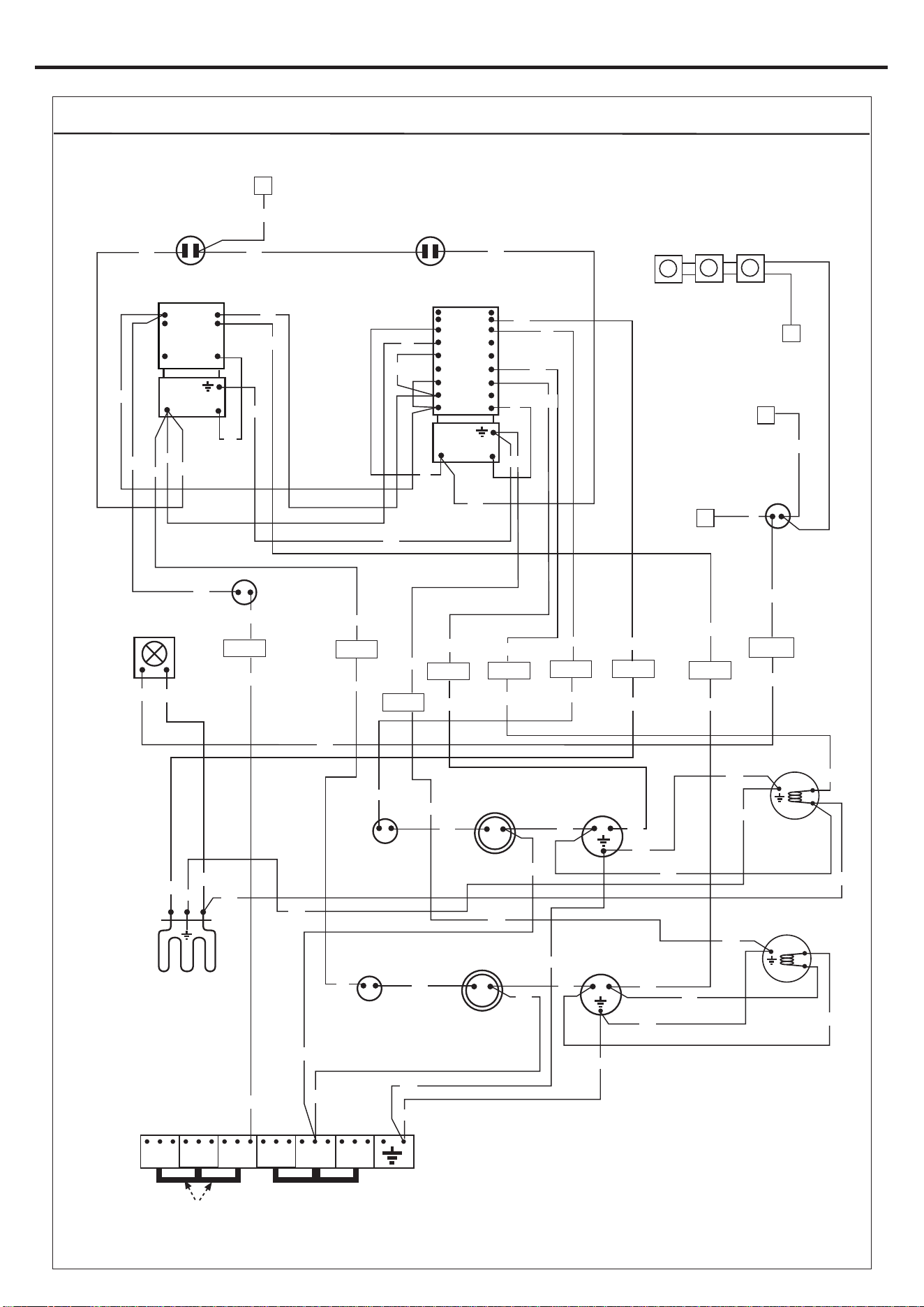
USING YOUR APPLIANCE
Wiring colour code: Bk-Black, Bn-Brown, Bu-Blue, Gn-Green, Or-Orange, R-Red, W-White, Y-Yellow, V-Violet
WIRING DIAGRAM - RH OVEN PAGE 2/2
Connector
RH-Pin 3
Connector
RH-Pin 6
RH FRONT
THERMAL
SWITCH
Y
Connector
RH-Pin 7
RH
COOLING FAN
Bu
Y
RH BOTTOM OVEN
FAN ELEMENT
RH TOP
OVEN
STIR FAN
RH REAR
TOP OVEN
THERMAL
CUTOUT
RH TOP OVEN
FAN ELEMENT
Connector
RH-Pin 4
Connector
RH-Pin 1
LH SPLITTER SWITCH
1
2
3
4
5
6
7
8
P8
P7
P6
P5
P4
P3
P2
P1
1
2
THERMOSTAT
FAN STALL
TOP THERMAL
CUTOUT
W
RH SPLITTER
SWITCH
P1
P2
2
1
1
2
THERMOSTAT
V
Connector
RH-Pin 9
Connector
RH-Pin 8
Connector
RH-Pin 2
W
Connector
RH-Pin 5
Gn
Gn
Gn
Gn
Bn
Bn
Bn
Bn
Bn
W
W
W
Or
Or
Or
Or
Or
Y
Y
Y
Y
RH BOTTOM
OVEN
STIR FAN
RH TOP
OVEN
LIGHT
RH BOTTOM
OVEN LIGHT
RH REAR BOTTOM
OVEN THERMAL
CUTOUT
W
W
W
W
YY
Y
Y
Bk
Bk
Bk
Bk
Bk
RH SPLITTER
GRILL ELEMENT
Bu
Bk
Bk
Bk
Bn
Bn
Bn
Bk
Or
Or
Y
Y
Y
Bn
Bn
Gn
Gn
Gn
Gn
Gn
Gn
Gn
Gn
Gn
Gn
Gn
Gn
Gn
Or
Or
Bk
B
C
TOP SPLITTER
OVEN NEON
BOTTOM
SPLITTER
OVEN NEON
Bk
Bk
Bk
A
Bk
Bk
W
W
Bk
RH ROTARY
SWITCHES
D
Bn
Y
Remove These Two Links for Multi-Phase Installations !
INLET
TERMINAL
BLOCK
L1
L2 L3 4(N)
5(N)
6(N)
V
BELLING RICHMOND/COOKCENTRE 900DF- AU
083753402
29.11.2018
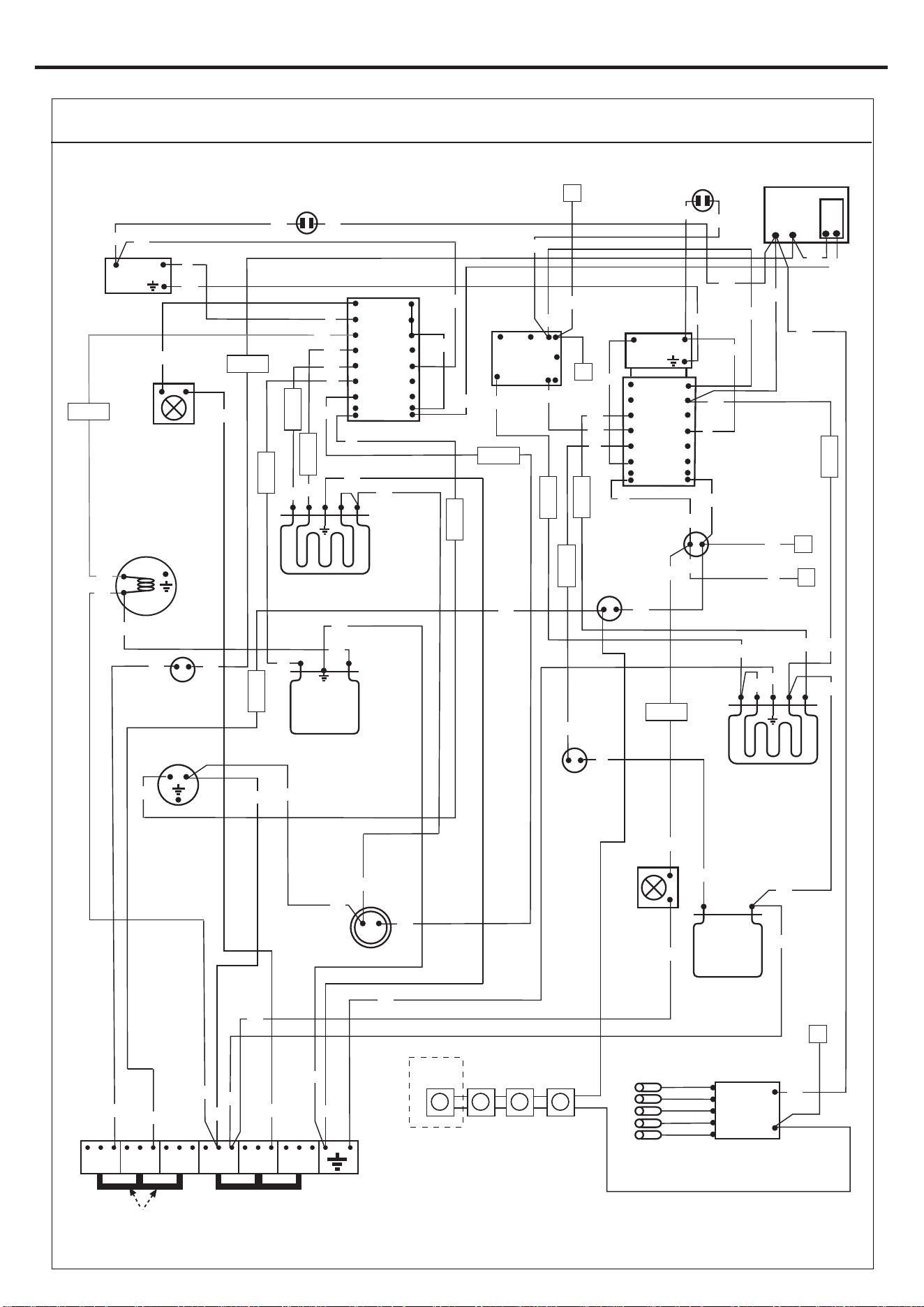
USING YOUR APPLIANCE
1
2
3
4
5
6
P1
P2
P3
P4
P5
P6
7
TOP OVEN
SWITCH
1
2
THERMOSTAT
IGNITION
GENERATOR
L
N
Wiring colour code: Bk-Black, Bn-Brown, Bu-Blue, Gn-Green, Or-Orange, R-Red, W-White, Y-Yellow, V-Violet, Gy -Grey
LH FRONT
THERMAL
SWITCH
LH
COOLING
FAN
LH TOP REAR
THERMAL
CUTOUT
LEFT
HAND
OVEN LAMP
Bu
Bu
Gn
LH REAR MAIN
THERMAL CUTOUT
Bk
LH STAT.
NEON
Bk
PROGRAMMER
N
L
LH TOP
THERMAL
CUTOUT
LH OVEN
FAN
ELEMENT
LH OVEN
STIR FAN
P7
TOP STAT.
NEON
Bk
TOP OVEN
GRILL ELEMENT
TOP OVEN
BASE
ELEMENT
Bk
Bk
Bk
Or
Bk
V
1
2
3
4
5
6
P1
P2
P3
P4
P5
P6
7
MULTIFUNCTION
SELECTOR
SWITCH
P7
1
2
MAIN T-STAT
8
P8
W
Y
Or
P1
2
P2
S2
S1
4
GRILL REG
(EGO)
W
V
MAIN OVEN
BASE
ELEMENT
Gn
Gn
Bk
Bk
Bk
MAIN OVEN
GRILL ELEMENT
Bk
Or
Bk
Bk
A
B
C
Y
Y
Y
Y
Y
Or
Or
Or
Or
Or
Or
Y
Or
Bk
Bk
Bk
W
W
R
R
R
R
R
R
Gn
Gn
Gn
Gn
Gn
Bk
Bk
Bk
Bk
Bk
Bn
Bn
Y
Gy
Gy
Bn
V
V
Bk
Bk
Connector
MO-Pin 1
Connector
MO-Pin 2
Connector
MO-Pin 3
Connector
MO-Pin 4
Connector
MO-Pin 5
Connector
MO-Pin 6
Connector
MO-Pin 7
Connector
TO-Pin 1
Connector
TO-Pin 2
Connector
TO-Pin 3
Connector
TO-Pin 4
Connector
TO-Pin 5
Connector
TO-Pin 6
Bk
W
V
Bn
Bn
Or
Bn
WIRING DIAGRAM- LH OVEN PAGE 1/2
Bk
Or
W
W
R
Bk
Bk
D
LH ROTARY
SWITCHES
E
Bn
Bk
Bk
INLET
TERMINAL
BLOCK
L1
L2 L3 4(N)
5(N)
Remove These Two Links for Multi-Phase Installations !
6(N)
083752802
29.11.2018
BELLING RICHMOND/COOKCENTRE 1100DF- AU
CENTRE
COOLING
FAN
Y
Bu
Bu
IF
FITTED
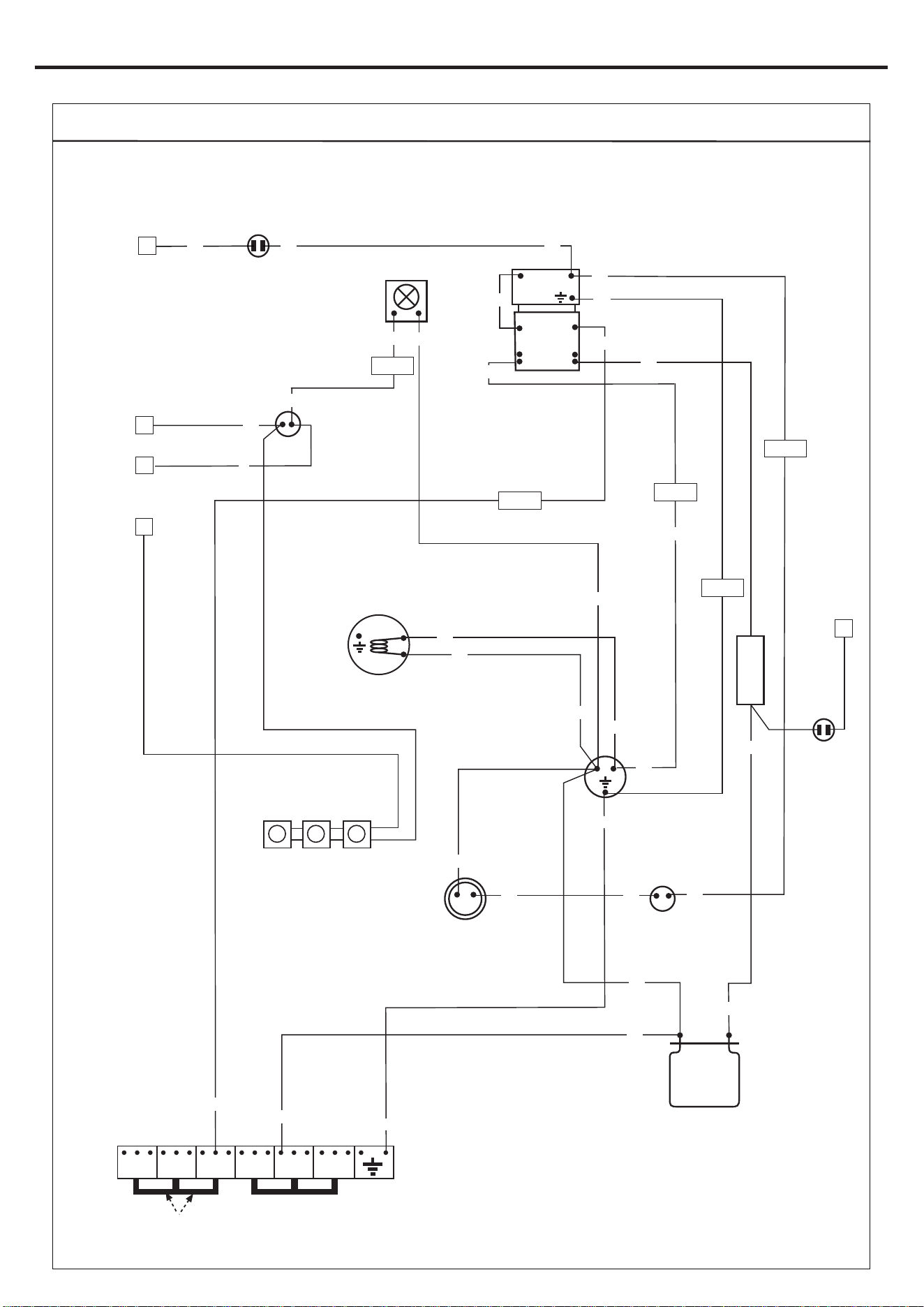
USING YOUR APPLIANCE
RH OVEN FAN
ELEMENT
RH REAR
THERMAL
CUTOUT
RH OVEN
STIR FAN
RIGHT HAND
OVEN
LAMP
Bk
Bn
W
W
Or
Bk
Gn
Bn
Gn
Gn
W
RH STAT.
NEON
RH
COOLING FAN
RH FRONT
THERMAL
SWITCH
Bu
Wiring colour code: Bk-Black, Bn-Brown, Bu-Blue, Gn-Green, Or-Orange, R-Red, W-White, Y-Yellow, V-Violet
1
2
THERMOSTAT
RH OVEN
SWITCH
1
2
P1
P2
Y
Bk
Y
Y
Bk
Bu
Or
A
B
C
Y
Bk
Bk
Connector
RH-Pin 2
Connector
RH-Pin 3
Connector
RH-Pin 1
Connector
RH-Pin 5
Connector
RH-Pin 4
Y
Y
Bu
Bu
Bu
Bu
SLOW
COOK
ELEMENT
Bk
Bn
SLOW COOK
SWITCH
SLOW
COOK
NEON
R
R
D
E
RH ROTARY SWITCHES
Bn
WIRING DIAGRAM- RH OVEN PAGE 2/2
INLET
TERMINAL
BLOCK
L1
L2 L3 4(N)
5(N)
Remove These Two Links for Multi-Phase Installations !
6(N)
BELLING RICHMOND/COOKCENTRE 1100DF- AU
083752802
29.11.2018
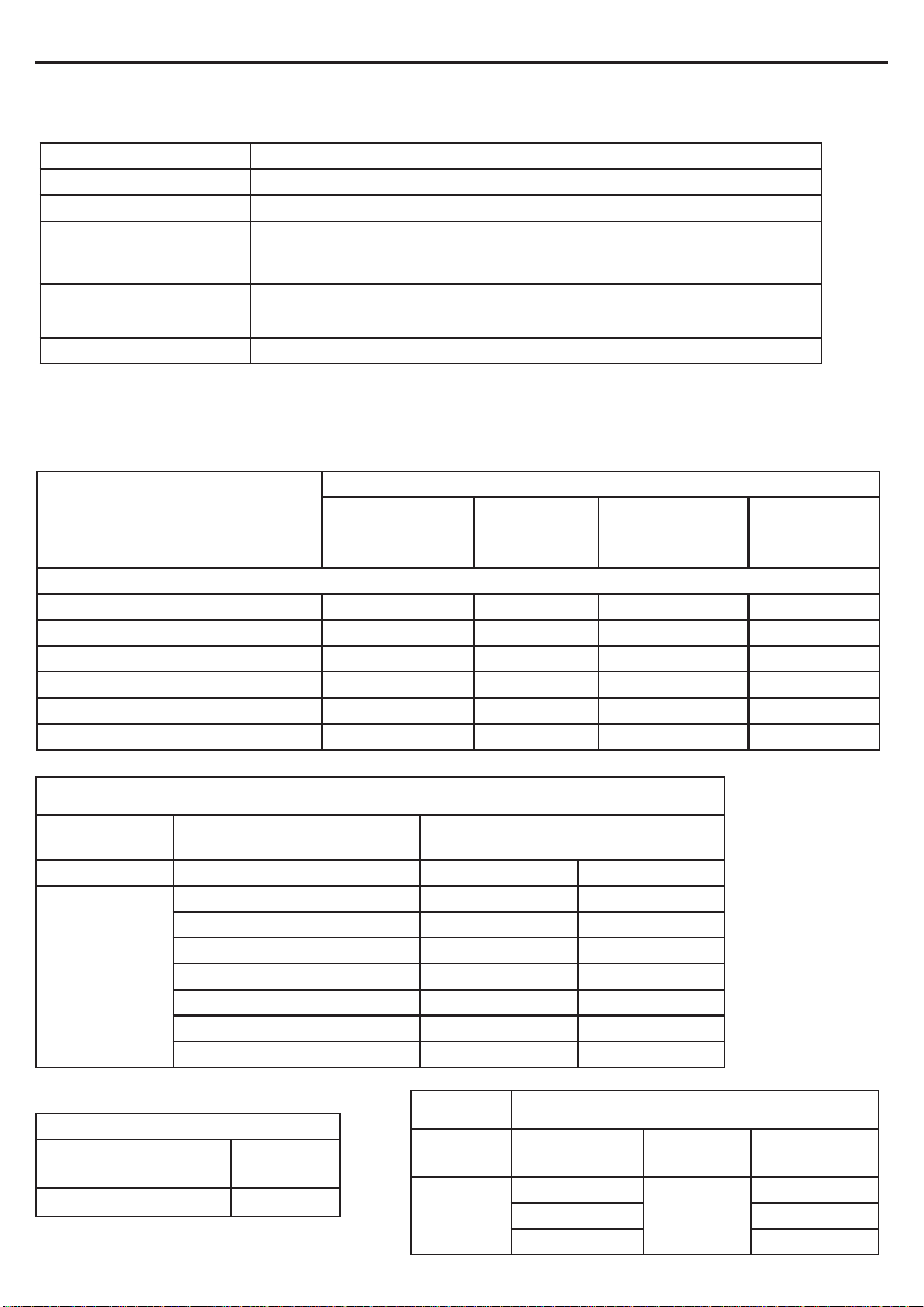
Gas - range
Databadge Lower part of the front frame
Appliance class Class 1 - freestanding cooker
Electrical supply 240V/415 3N ~ 50Hz
Type of gas Please see data badge for your specied gas type. Can be convert-
ed from natural gas to LPG. Never attempt to convert an appliance
unless the data badge states you can.
Gas pressure settings Natural Gas 1.0 kPa
ULPG 2.75 kPa
Burner Aeration Fixed
WARNING - This cooker must be earthed
Burner / Element Nat Gas / ULPG
Nat Gas
Nominal rate
(MJ/h)
ULPG
Nominal rate
(MJ/h)
Injector (Nat
Gas)
Injector
(LPG)
Load (W) - 4100 - 4900
Hob - small 3.4 3.4 82 50
Hob - medium 6.9 6.9 118 70
Hob - Large 10.0 10.0 142 87
Hob - wok 14.4 14.4 185 104
Total heat input (5 burners) 41.6 41.6 N/A N/A
Total heat input (7 burners) 51.9 51.9 N/A N/A
Electrical supply / load
Electrical
supply
Oven Appliance Size (cm) / Load kW
90 110
240V
Multifunction 3.1 3.1
Fanned 2.0 2.0
Fanned (90cm tall oven) 2.5 N/A
Fanned (90cm deluxe oven) 1.7 / 3.0 N/A
Dual variable grill 1.7 / 2.7 1.7 / 2.7
Conventional top 1.4 1.4
Slow Cook N/A 0.17
Oven Lamps
Lamps (90cm deluxe
Right Hand Oven)
25W each
Lamps 40W each
Electrical supply / load
Appliance
Size (cm)
Electrical
supply
Max. load
(kW)
Dual grill
models
90
240V/415
3N ~ 50Hz
8.45
90 (deluxe) 8.98
110 8.13
TECHNICAL DATA
Gas hob appliances with metal hotplate
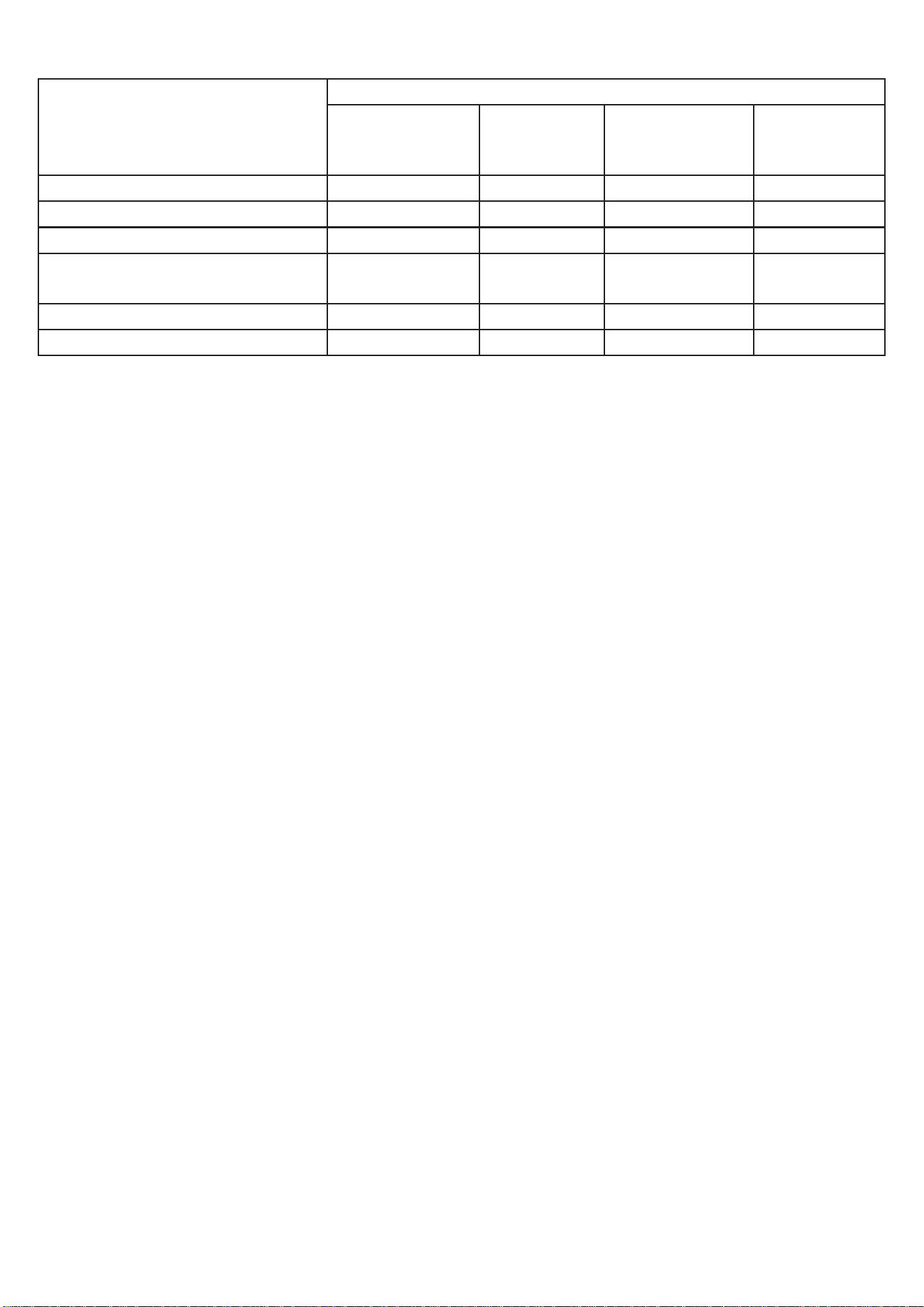
Gas-Through-Glass hob appliances with glass hotplate
Burner / Element
Nat Gas / ULPG
Nat Gas
Nominal rate
(MJ/h)
ULPG
Nominal rate
(MJ/h)
Injector
Natural gas
(0.01mm)
Injector
ULPG
(0.01mm)
Hob - small 3.6 3.6 83 51
Hob - medium 7.2 7.2 120 73
Hob - Large 10.8 10.8 148 89
Hob - wok
18.0 16.6
180 (External)
85 (Internal)
98 (External)
50 (Internal)
Total heat input (5 burners) 46.8 45.4 N/A N/A
Total heat input (6 burners) 64.8 62.0 N/A N/A

MANUFACTURER GUARANTEE
This warranty is provided in Australia by Glen Dimplex Australia Pty Limited ABN 69 118 275 460
(Phone number 1300 556 816) and in New Zealand by Glen Dimplex New Zealand Limited NZBN
9429000069823 (Phone number 09 274 8265) in respect of the Belling product.
1. Belling Express Warranty
Subject to the exclusions below, we warrant that the product will not have any electrical or
mechanical breakdowns within:
a) In the case of Belling products used for personal, domestic or household purposes, a period
of 5 years from the date the product is purchased as a brand-new product from a retailer
located in Australia / New Zealand.
b) In the case of Belling products used for purposes other than personal, domestic or
household purposes (including business or commercial use), a period of 90 days from the
date the product is purchased as a brand-new product from a retailer located in Australia /
New Zealand. Belling products are designed and intended for domestic use only; and
c) All warranty repairs must be carried out by Glen Dimplex or their nominated service agent
Note: warranty periods detailed above may vary in line with agreements with select retail and
builder partners and may differ between Australia and New Zealand.
The benefits conferred by this express warranty are in addition to the Consumer Guarantees
referred to in section 3 and any other statutory rights you may have under the Australian / New
Zealand Consumer Law and/or other applicable laws.
2. Warranty exclusions
This express warranty does not apply where:
a) The product has been installed, used or operated otherwise than in accordance with the
product manual or other similar documentation provided to you with the product;
b) The product requires repairs due to damage resulting from accident, misuse, incorrect
installation, insect or vermin infestation, improper liquid spillage, cleaning or maintenance,
unauthorised modification, use on an incorrect voltage, power surges and dips, voltage
supply problems, tampering or unauthorised repairs by any persons, use of defective or
incompatible accessories or exposure to abnormally corrosive conditions, events
independent of human control which occurred after the goods left the control of Glen
Dimplex;

c) The repair relates to the replacement of consumable parts such as fuses and bulbs or any
other parts of the product which require routine replacement;
d) You are unable to provide us with reasonable proof of purchase for the product;
e) the breakdown occurs after the expiry of the express warranty period set out in section 1 or
f) the product was not purchased in Australia / New Zealand as a brand-new product.
3. Consumer guarantees
Our goods come with guarantees that cannot be excluded under the Australian / New Zealand
Consumer Law. You are entitled to a replacement or refund for a major failure and for compensation
for any other reasonably foreseeable loss or damage. You are also entitled to have the goods
repaired or replaced if the goods fail to be of acceptable quality and the failure does not amount to a
major failure.
4. How to make a claim
You may make a claim under this warranty through our website, contacting our customer care line
or via email. Contact details for Glen Dimplex Australia and New Zealand can be found at the end of
this document
To make a valid claim under this warranty, you must:
a) Lodge the claim with us as soon as possible and no later than 14 days after you first become
aware of the breakdown;
b) Provide us with the product serial number;
c) Provide us with reasonable proof of purchase for the product. This can take the form of a
store receipt, new home handover form or other payment receipt documentation; and
d) If required by us, provide us (or any person nominated by us) with access to the premises at
which the product is located at times nominated by us (so that we can inspect the product).

5. Warranty claims
If you make a valid claim under this warranty and none of the exclusions set out in section 2 apply,
we will, at our election, either repair the product or replace the product with a product of identical
specification (or where the product is superseded or no longer in stock, with a product of as close a
specification as possible).
Goods presented for repair may be replaced by refurbished goods of the same type rather than
being repaired. Refurbished parts may be used to repair the goods.
Products are designed and supplied for normal domestic use. We will not be liable to you under this
warranty for business loss or damage of any kind whatsoever.
Glen Dimplex Australia Pty Ltd Glen Dimplex New Zealand Ltd
www.glendimplex.com.au www.glendimplex.co.nz
Australia New Zealand
Ph: 1300 556 816 Ph: 09 274 8265
READ THE INSTRUCTION BOOKLET BEFORE INSTALLING AND USING THE APPLIANCE.
The manufacturer will not be responsible for any damage to property or to persons caused by
incorrect installation or improper use of the appliance.
The manufacturer is not responsible for any inaccuracies, due to printing or transcription errors,
contained in this manual. In addition, the appearance of the figures reported is also purely
indicative.
The manufacturer reserves the right to make changes to its products when considered necessary
and useful, without affecting the essential safety and operating characteristics.
Glen Dimplex constantly seeks ways to improve the specifications and designs of their products.
Whilst every effort is made to produce up to date literature, this document should not be regarded
as an infallible guide. Actual product only should be used to derive cut out sizes.
All appliances must be installed by a qualified person/s with adherence to the relevant electrical,
plumbing and building codes, with compliance being issued as required by state or national
legislation.
Additionally, all upright cookers must have the anti-tilt device installed correctly in adherence to the
relevant standards by a licenced installer.
For maximum effectiveness and efficiency all rangehoods should be installed with the use of
ductwork, by a licenced installer with adherence to the relevant state and national building codes
and regulations.
All Glen Dimplex appliances are for Domestic use only, and must be installed by a licence installer
into Domestic Applications only, without exception and to the required Authorities guidelines. Any
installation outside of this will VOID warranty. Alfresco areas are not a Domestic application.
Distributed by:
Glen Dimplex Australia Pty Ltd Glen Dimplex New Zealand Ltd
For full terms and conditions, or to register your product warranty, please visit our website:
www.glendimplex.com.au www.glendimplex.co.nz
For service advice, please contact the Customer Care Centre by phone or email below.
Australia New Zealand
Ph: 1300 556 816 Ph: 09 274 8265
customer.care.ha@glendimplex.com.au nztechserv@glendimplex.co.nz
VERSION 1 REVISION 20191212