
TS6400 series
Online Manual
English

Contents
Using Online Manual
. . . . . . . . . . . . . . . . . . . . . . . . . . . . . . . . . . . . . . . . . . . . . . . 8
Symbols Used in This Document. . . . . . . . . . . . . . . . . . . . . . . . . . . . . . . . . . . . . . . . . . . . . 9
Touch-enabled Device Users (Windows). . . . . . . . . . . . . . . . . . . . . . . . . . . . . . . . . . . . . . 10
Trademarks and Licenses. . . . . . . . . . . . . . . . . . . . . . . . . . . . . . . . . . . . . . . . . . . . . . . . . 11
Network. . . . . . . . . . . . . . . . . . . . . . . . . . . . . . . . . . . . . . . . . . . . . . . . . . . . . . . . 29
Restrictions. . . . . . . . . . . . . . . . . . . . . . . . . . . . . . . . . . . . . . . . . . . . . . . . . . . . . . . . . . . . . 31
Network Connection Tips. . . . . . . . . . . . . . . . . . . . . . . . . . . . . . . . . . . . . . . . . . . . . . . . . . 33
Default Network Settings. . . . . . . . . . . . . . . . . . . . . . . . . . . . . . . . . . . . . . . . . . . . . . . . . . . . . . . . . . . . . 34
Detect Same Printer Name. . . . . . . . . . . . . . . . . . . . . . . . . . . . . . . . . . . . . . . . . . . . . . . . . . . . . . . . . . . 36
Connects to Another Computer via LAN/Changes from USB to LAN Connection. . . . . . . . . . . . . . . . . . 37
Printing Network Settings. . . . . . . . . . . . . . . . . . . . . . . . . . . . . . . . . . . . . . . . . . . . . . . . . . . . . . . . . . . . . 38
Reconfiguration Method of Wi-Fi Connection. . . . . . . . . . . . . . . . . . . . . . . . . . . . . . . . . . . . . . . . . . . . . 43
Connecting with Wireless Direct. . . . . . . . . . . . . . . . . . . . . . . . . . . . . . . . . . . . . . . . . . . . . . . . . . . . . . . 44
IJ Network Device Setup Utility (macOS). . . . . . . . . . . . . . . . . . . . . . . . . . . . . . . . . . . . . . 49
IJ Network Device Setup Utility. . . . . . . . . . . . . . . . . . . . . . . . . . . . . . . . . . . . . . . . . . . . . . . . . . . . . . . . 50
Starting Up IJ Network Device Setup Utility. . . . . . . . . . . . . . . . . . . . . . . . . . . . . . . . . . . . . . . . . . . . . . . 51
Diagnosing and Repairing Network Settings. . . . . . . . . . . . . . . . . . . . . . . . . . . . . . . . . . . . . . . . . . . . . . 52
List of Models Which Does Not Support Diagnosis and Repair Function. . . . . . . . . . . . . . . . . . . . . . . . 53
Handling Paper, Originals, FINE Cartridges, etc.. . . . . . . . . . . . . . . . . . . . . . . . 54
Loading Paper. . . . . . . . . . . . . . . . . . . . . . . . . . . . . . . . . . . . . . . . . . . . . . . . . . . . . . . . . . 55
Paper Sources. . . . . . . . . . . . . . . . . . . . . . . . . . . . . . . . . . . . . . . . . . . . . . . . . . . . . . . . . . . . . . . . . . . . . 56
Loading Plain Paper / Photo Paper in Rear Tray. . . . . . . . . . . . . . . . . . . . . . . . . . . . . . . . . . . . . . . . . . . 57
Loading Plain Paper in Cassette. . . . . . . . . . . . . . . . . . . . . . . . . . . . . . . . . . . . . . . . . . . . . . . . . . . . . . . 62
Loading Envelopes in Rear Tray. . . . . . . . . . . . . . . . . . . . . . . . . . . . . . . . . . . . . . . . . . . . . . . . . . . . . . . 67
Loading Originals. . . . . . . . . . . . . . . . . . . . . . . . . . . . . . . . . . . . . . . . . . . . . . . . . . . . . . . . 71
Loading Originals on Platen. . . . . . . . . . . . . . . . . . . . . . . . . . . . . . . . . . . . . . . . . . . . . . . . . . . . . . . . . . . 72
Supported Originals. . . . . . . . . . . . . . . . . . . . . . . . . . . . . . . . . . . . . . . . . . . . . . . . . . . . . . . . . . . . . . . . . 74
How to Detach / Attach the Document Cover. . . . . . . . . . . . . . . . . . . . . . . . . . . . . . . . . . . . . . . . . . . . . 75
Replacing a FINE Cartridge. . . . . . . . . . . . . . . . . . . . . . . . . . . . . . . . . . . . . . . . . . . . . . . . 77
Replacing a FINE Cartridge. . . . . . . . . . . . . . . . . . . . . . . . . . . . . . . . . . . . . . . . . . . . . . . . . . . . . . . . . . . 78
Checking Ink Status on the LCD. . . . . . . . . . . . . . . . . . . . . . . . . . . . . . . . . . . . . . . . . . . . . . . . . . . . . . . 82

Ink Tips. . . . . . . . . . . . . . . . . . . . . . . . . . . . . . . . . . . . . . . . . . . . . . . . . . . . . . . . . . . . . . . . . . . . . . . . . . 83
If Printing Is Faint or Uneven. . . . . . . . . . . . . . . . . . . . . . . . . . . . . . . . . . . . . . . . . . . . . . . 84
Maintenance Procedure. . . . . . . . . . . . . . . . . . . . . . . . . . . . . . . . . . . . . . . . . . . . . . . . . . . . . . . . . . . . . . 85
Printing the Nozzle Check Pattern. . . . . . . . . . . . . . . . . . . . . . . . . . . . . . . . . . . . . . . . . . . . . . . . . . . . . . 88
Examining the Nozzle Check Pattern. . . . . . . . . . . . . . . . . . . . . . . . . . . . . . . . . . . . . . . . . . . . . . . . . . . 89
Cleaning the Print Head. . . . . . . . . . . . . . . . . . . . . . . . . . . . . . . . . . . . . . . . . . . . . . . . . . . . . . . . . . . . . . 91
Deep Print Head Cleaning. . . . . . . . . . . . . . . . . . . . . . . . . . . . . . . . . . . . . . . . . . . . . . . . . . . . . . . . . . . . 93
Aligning the Print Head. . . . . . . . . . . . . . . . . . . . . . . . . . . . . . . . . . . . . . . . . . . . . . . . . . . . . . . . . . . . . . 95
Aligning the Print Head Manually. . . . . . . . . . . . . . . . . . . . . . . . . . . . . . . . . . . . . . . . . . . . . . . . . . . . . . . 97
Performing Maintenance Functions from Your Computer (macOS). . . . . . . . . . . . . . . . . 101
Opening Remote UI for Maintenance. . . . . . . . . . . . . . . . . . . . . . . . . . . . . . . . . . . . . . . . . . . . . . . . . . 102
Cleaning the Print Heads. . . . . . . . . . . . . . . . . . . . . . . . . . . . . . . . . . . . . . . . . . . . . . . . . . . . . . . . . . . . 103
Adjusting Print Head Position. . . . . . . . . . . . . . . . . . . . . . . . . . . . . . . . . . . . . . . . . . . . . . . . . . . . . . . . 105
Checking Ink Status from Your Computer. . . . . . . . . . . . . . . . . . . . . . . . . . . . . . . . . . . . . . . . . . . . . . . 106
Cleaning. . . . . . . . . . . . . . . . . . . . . . . . . . . . . . . . . . . . . . . . . . . . . . . . . . . . . . . . . . . . . . 107
Cleaning Paper Feed Rollers. . . . . . . . . . . . . . . . . . . . . . . . . . . . . . . . . . . . . . . . . . . . . . . . . . . . . . . . . 108
Cleaning Inside the Printer (Bottom Plate Cleaning). . . . . . . . . . . . . . . . . . . . . . . . . . . . . . . . . . . . . . . 110
Overview. . . . . . . . . . . . . . . . . . . . . . . . . . . . . . . . . . . . . . . . . . . . . . . . . . . . . . 113
Safety. . . . . . . . . . . . . . . . . . . . . . . . . . . . . . . . . . . . . . . . . . . . . . . . . . . . . . . . . . . . . . . . 114
Safety Precautions. . . . . . . . . . . . . . . . . . . . . . . . . . . . . . . . . . . . . . . . . . . . . . . . . . . . . . . . . . . . . . . . . 115
Regulatory Information. . . . . . . . . . . . . . . . . . . . . . . . . . . . . . . . . . . . . . . . . . . . . . . . . . . . . . . . . . . . . . 118
WEEE (EU&EEA). . . . . . . . . . . . . . . . . . . . . . . . . . . . . . . . . . . . . . . . . . . . . . . . . . . . . . . . . . . . . . . . . 120
Handling Precautions. . . . . . . . . . . . . . . . . . . . . . . . . . . . . . . . . . . . . . . . . . . . . . . . . . . . 121
Legal Restrictions on Scanning/Copying. . . . . . . . . . . . . . . . . . . . . . . . . . . . . . . . . . . . . . . . . . . . . . . . 122
Printer Handling Precautions. . . . . . . . . . . . . . . . . . . . . . . . . . . . . . . . . . . . . . . . . . . . . . . . . . . . . . . . . 123
Transporting Your Printer. . . . . . . . . . . . . . . . . . . . . . . . . . . . . . . . . . . . . . . . . . . . . . . . . . . . . . . . . . . . 124
When Repairing, Lending, or Disposing of the Printer. . . . . . . . . . . . . . . . . . . . . . . . . . . . . . . . . . . . . . 126
Keeping Print Quality High. . . . . . . . . . . . . . . . . . . . . . . . . . . . . . . . . . . . . . . . . . . . . . . . . . . . . . . . . . . 127
Main Components and Their Use. . . . . . . . . . . . . . . . . . . . . . . . . . . . . . . . . . . . . . . . . . . 128
Main Components. . . . . . . . . . . . . . . . . . . . . . . . . . . . . . . . . . . . . . . . . . . . . . . . . . . . . . . . . . . . . . . . . 129
Front View. . . . . . . . . . . . . . . . . . . . . . . . . . . . . . . . . . . . . . . . . . . . . . . . . . . . . . . . . . . . . . . . . . . 130
Rear View. . . . . . . . . . . . . . . . . . . . . . . . . . . . . . . . . . . . . . . . . . . . . . . . . . . . . . . . . . . . . . . . . . . 132
Inside View. . . . . . . . . . . . . . . . . . . . . . . . . . . . . . . . . . . . . . . . . . . . . . . . . . . . . . . . . . . . . . . . . . 133
Operation Panel. . . . . . . . . . . . . . . . . . . . . . . . . . . . . . . . . . . . . . . . . . . . . . . . . . . . . . . . . . . . . . . 134

Power Supply. . . . . . . . . . . . . . . . . . . . . . . . . . . . . . . . . . . . . . . . . . . . . . . . . . . . . . . . . . . . . . . . . . . . . 135
Checking that Power Is On. . . . . . . . . . . . . . . . . . . . . . . . . . . . . . . . . . . . . . . . . . . . . . . . . . . . . . 136
Turning the Printer On and Off. . . . . . . . . . . . . . . . . . . . . . . . . . . . . . . . . . . . . . . . . . . . . . . . . . . 137
Checking the Power Plug/Power Cord. . . . . . . . . . . . . . . . . . . . . . . . . . . . . . . . . . . . . . . . . . . . . 139
Unplugging the Printer. . . . . . . . . . . . . . . . . . . . . . . . . . . . . . . . . . . . . . . . . . . . . . . . . . . . . . . . . . 140
LCD and Operation Panel. . . . . . . . . . . . . . . . . . . . . . . . . . . . . . . . . . . . . . . . . . . . . . . . . . . . . . . . . . . 141
Entering Numbers, Letters, and Symbols. . . . . . . . . . . . . . . . . . . . . . . . . . . . . . . . . . . . . . . . . . . . . . . 144
Changing Settings. . . . . . . . . . . . . . . . . . . . . . . . . . . . . . . . . . . . . . . . . . . . . . . . . . . . . . 146
Changing Printer Settings from Your Computer (macOS). . . . . . . . . . . . . . . . . . . . . . . . . . . . . . . . . . . 147
Managing the Printer Power. . . . . . . . . . . . . . . . . . . . . . . . . . . . . . . . . . . . . . . . . . . . . . . . . . . . . 148
Changing the Printer Operation Mode. . . . . . . . . . . . . . . . . . . . . . . . . . . . . . . . . . . . . . . . . . . . . . 149
Changing Settings from Operation Panel. . . . . . . . . . . . . . . . . . . . . . . . . . . . . . . . . . . . . . . . . . . . . . . 150
Changing Settings from Operation Panel. . . . . . . . . . . . . . . . . . . . . . . . . . . . . . . . . . . . . . . . . . . 151
Setting Items on Operation Panel. . . . . . . . . . . . . . . . . . . . . . . . . . . . . . . . . . . . . . . . . . . . . . . . . 153
Print settings. . . . . . . . . . . . . . . . . . . . . . . . . . . . . . . . . . . . . . . . . . . . . . . . . . . . . . . . . . . . . . . . . 154
LAN settings. . . . . . . . . . . . . . . . . . . . . . . . . . . . . . . . . . . . . . . . . . . . . . . . . . . . . . . . . . . . . . . . . 155
Other device settings. . . . . . . . . . . . . . . . . . . . . . . . . . . . . . . . . . . . . . . . . . . . . . . . . . . . . . . . . . . 160
Language selection. . . . . . . . . . . . . . . . . . . . . . . . . . . . . . . . . . . . . . . . . . . . . . . . . . . . . . . . . . . . 161
Firmware update. . . . . . . . . . . . . . . . . . . . . . . . . . . . . . . . . . . . . . . . . . . . . . . . . . . . . . . . . . . . . . 162
Reset setting. . . . . . . . . . . . . . . . . . . . . . . . . . . . . . . . . . . . . . . . . . . . . . . . . . . . . . . . . . . . . . . . . 163
Feed settings. . . . . . . . . . . . . . . . . . . . . . . . . . . . . . . . . . . . . . . . . . . . . . . . . . . . . . . . . . . . . . . . . 164
Web service setup. . . . . . . . . . . . . . . . . . . . . . . . . . . . . . . . . . . . . . . . . . . . . . . . . . . . . . . . . . . . . 165
ECO settings. . . . . . . . . . . . . . . . . . . . . . . . . . . . . . . . . . . . . . . . . . . . . . . . . . . . . . . . . . . . . . . . . 166
Quiet setting. . . . . . . . . . . . . . . . . . . . . . . . . . . . . . . . . . . . . . . . . . . . . . . . . . . . . . . . . . . . . . . . . . 168
System information. . . . . . . . . . . . . . . . . . . . . . . . . . . . . . . . . . . . . . . . . . . . . . . . . . . . . . . . . . . . 169
Specifications. . . . . . . . . . . . . . . . . . . . . . . . . . . . . . . . . . . . . . . . . . . . . . . . . . . . . . . . . . 170
Information about Paper. . . . . . . . . . . . . . . . . . . . . . . . . . . . . . . . . . . . . . . . . . 173
Supported Media Types. . . . . . . . . . . . . . . . . . . . . . . . . . . . . . . . . . . . . . . . . . . . . . . . . . 174
Paper Load Limit. . . . . . . . . . . . . . . . . . . . . . . . . . . . . . . . . . . . . . . . . . . . . . . . . . . . . . . . . . . . . . . . . . 177
Unsupported Media Types. . . . . . . . . . . . . . . . . . . . . . . . . . . . . . . . . . . . . . . . . . . . . . . . 179
Handling Paper. . . . . . . . . . . . . . . . . . . . . . . . . . . . . . . . . . . . . . . . . . . . . . . . . . . . . . . . . 180
Printing. . . . . . . . . . . . . . . . . . . . . . . . . . . . . . . . . . . . . . . . . . . . . . . . . . . . . . . 181
Printing from Computer. . . . . . . . . . . . . . . . . . . . . . . . . . . . . . . . . . . . . . . . . . . . . . . . . . . 182

Printing from Application Software (macOS AirPrint). . . . . . . . . . . . . . . . . . . . . . . . . . . . . . . . . . . . . . . 183
Printing. . . . . . . . . . . . . . . . . . . . . . . . . . . . . . . . . . . . . . . . . . . . . . . . . . . . . . . . . . . . . . . . . . . . . . 184
Perform Borderless Printing. . . . . . . . . . . . . . . . . . . . . . . . . . . . . . . . . . . . . . . . . . . . . . . . . . . . . . 187
Printing on Postcards. . . . . . . . . . . . . . . . . . . . . . . . . . . . . . . . . . . . . . . . . . . . . . . . . . . . . . . . . . . 189
Adding Printer. . . . . . . . . . . . . . . . . . . . . . . . . . . . . . . . . . . . . . . . . . . . . . . . . . . . . . . . . . . . . . . . 191
How to Open Printer Settings Screen. . . . . . . . . . . . . . . . . . . . . . . . . . . . . . . . . . . . . . . . . . . . . . 192
Displaying the Printing Status Screen. . . . . . . . . . . . . . . . . . . . . . . . . . . . . . . . . . . . . . . . . . . . . . 193
Deleting the Undesired Print Job. . . . . . . . . . . . . . . . . . . . . . . . . . . . . . . . . . . . . . . . . . . . . . . . . . 194
Removing Printer That Is No Longer Required from List of Printers. . . . . . . . . . . . . . . . . . . . . . . 195
Printing Using Canon Application Software. . . . . . . . . . . . . . . . . . . . . . . . . . . . . . . . . . . . . . . . . . . . . . 196
Printing from Smartphone/Tablet. . . . . . . . . . . . . . . . . . . . . . . . . . . . . . . . . . . . . . . . . . . 197
Paper Settings. . . . . . . . . . . . . . . . . . . . . . . . . . . . . . . . . . . . . . . . . . . . . . . . . . . . . . . . . 198
Copying. . . . . . . . . . . . . . . . . . . . . . . . . . . . . . . . . . . . . . . . . . . . . . . . . . . . . . . 202
Making Copies. . . . . . . . . . . . . . . . . . . . . . . . . . . . . . . . . . . . . . . . . . . . . . . . . . . . . . . . . 203
Setting Items for Copying. . . . . . . . . . . . . . . . . . . . . . . . . . . . . . . . . . . . . . . . . . . . . . . . . . . . . . . . . . . . 204
Scanning. . . . . . . . . . . . . . . . . . . . . . . . . . . . . . . . . . . . . . . . . . . . . . . . . . . . . . 206
Scanning from Computer (macOS). . . . . . . . . . . . . . . . . . . . . . . . . . . . . . . . . . . . . . . . . 207
Scanning According to Item Type or Purpose (IJ Scan Utility Lite). . . . . . . . . . . . . . . . . . . . . . . . . . . . 208
IJ Scan Utility Lite Features. . . . . . . . . . . . . . . . . . . . . . . . . . . . . . . . . . . . . . . . . . . . . . . . . . . . . . 209
Scanning Easily (Auto Scan). . . . . . . . . . . . . . . . . . . . . . . . . . . . . . . . . . . . . . . . . . . . . . . . . . . . . 211
Scanning Documents and Photos. . . . . . . . . . . . . . . . . . . . . . . . . . . . . . . . . . . . . . . . . . . . . . . . . 213
Scanning Tips. . . . . . . . . . . . . . . . . . . . . . . . . . . . . . . . . . . . . . . . . . . . . . . . . . . . . . . . . . . . . . . . . . . . 214
Positioning Originals (Scanning from Computer). . . . . . . . . . . . . . . . . . . . . . . . . . . . . . . . . . . . . . 215
Frequently Asked Questions. . . . . . . . . . . . . . . . . . . . . . . . . . . . . . . . . . . . . . . 220
Network Settings and Common Problems. . . . . . . . . . . . . . . . . . . . . . . . . . . . . . . . . . . . 222
Network Communication Problems. . . . . . . . . . . . . . . . . . . . . . . . . . . . . . . . . . . . . . . . . 224
Cannot Find Printer on Network. . . . . . . . . . . . . . . . . . . . . . . . . . . . . . . . . . . . . . . . . . . . . . . . . . . . . . . 225
Cannot Find Printer During Setup. . . . . . . . . . . . . . . . . . . . . . . . . . . . . . . . . . . . . . . . . . . . . . . . . 226
Cannot Proceed beyond Printer Connection Screen (Cannot Find Printer Connected via USB). 229
Cannot Find Printer while Using Wi-Fi. . . . . . . . . . . . . . . . . . . . . . . . . . . . . . . . . . . . . . . . . . . . . . 231
Network Connection Problems. . . . . . . . . . . . . . . . . . . . . . . . . . . . . . . . . . . . . . . . . . . . . . . . . . . . . . . 233
Printer Suddenly Stopped Working for Some Reason. . . . . . . . . . . . . . . . . . . . . . . . . . . . . . . . . . 234

Network Key (Password) Unknown. . . . . . . . . . . . . . . . . . . . . . . . . . . . . . . . . . . . . . . . . . . . . . . . 238
Printer Cannot Be Used After Replacing Wireless Router or Changed Router Settings. . . . . . . . 240
Other Network Problems. . . . . . . . . . . . . . . . . . . . . . . . . . . . . . . . . . . . . . . . . . . . . . . . . . . . . . . . . . . . 242
Checking Network Information. . . . . . . . . . . . . . . . . . . . . . . . . . . . . . . . . . . . . . . . . . . . . . . . . . . . 243
Restoring to Factory Defaults. . . . . . . . . . . . . . . . . . . . . . . . . . . . . . . . . . . . . . . . . . . . . . . . . . . . 246
Problems while Printing/Scanning from Smartphone/Tablet. . . . . . . . . . . . . . . . . . . . . . 247
Cannot Print/Scan from Smartphone/Tablet. . . . . . . . . . . . . . . . . . . . . . . . . . . . . . . . . . . . . . . . . . . . . 248
Printing Problems. . . . . . . . . . . . . . . . . . . . . . . . . . . . . . . . . . . . . . . . . . . . . . . . . . . . . . . 252
Printer Does Not Print. . . . . . . . . . . . . . . . . . . . . . . . . . . . . . . . . . . . . . . . . . . . . . . . . . . . . . . . . . . . . . 253
Ink Does Not Come Out. . . . . . . . . . . . . . . . . . . . . . . . . . . . . . . . . . . . . . . . . . . . . . . . . . . . . . . . . . . . . 256
Printer Does Not Pick up or Feed the Paper/"No Paper" Error. . . . . . . . . . . . . . . . . . . . . . . . . . . . . . . 258
Printout Results Are Unsatisfactory. . . . . . . . . . . . . . . . . . . . . . . . . . . . . . . . . . . . . . . . . . . . . . . . . . . . 261
Printouts Are Blank/Blurry or Fuzzy/Inaccurate or Bleeding Colors/Streaks or Lines. . . . . . . . . . 263
Colors Are Unclear. . . . . . . . . . . . . . . . . . . . . . . . . . . . . . . . . . . . . . . . . . . . . . . . . . . . . . . . . . . . 267
Lines Are Misaligned/Distorted. . . . . . . . . . . . . . . . . . . . . . . . . . . . . . . . . . . . . . . . . . . . . . . . . . . 269
Paper Is Smudged / Printed Surface Is Scratched. . . . . . . . . . . . . . . . . . . . . . . . . . . . . . . . . . . . 270
Vertical Line Next to Image. . . . . . . . . . . . . . . . . . . . . . . . . . . . . . . . . . . . . . . . . . . . . . . . . . . . . . 274
Scanning Problems (macOS). . . . . . . . . . . . . . . . . . . . . . . . . . . . . . . . . . . . . . . . . . . . . . 275
Scanning Problems. . . . . . . . . . . . . . . . . . . . . . . . . . . . . . . . . . . . . . . . . . . . . . . . . . . . . . . . . . . . . . . . 276
Scanner Does Not Work. . . . . . . . . . . . . . . . . . . . . . . . . . . . . . . . . . . . . . . . . . . . . . . . . . . . . . . . 277
Scanner Driver Does Not Start. . . . . . . . . . . . . . . . . . . . . . . . . . . . . . . . . . . . . . . . . . . . . . . . . . . 278
Mechanical Problems. . . . . . . . . . . . . . . . . . . . . . . . . . . . . . . . . . . . . . . . . . . . . . . . . . . . 279
Printer Does Not Turn On. . . . . . . . . . . . . . . . . . . . . . . . . . . . . . . . . . . . . . . . . . . . . . . . . . . . . . . . . . . 280
Printer Turns Off Unexpectedly or Repeatedly. . . . . . . . . . . . . . . . . . . . . . . . . . . . . . . . . . . . . . . . . . . 281
USB Connection Problems. . . . . . . . . . . . . . . . . . . . . . . . . . . . . . . . . . . . . . . . . . . . . . . . . . . . . . . . . . 283
Cannot Communicate with Printer via USB. . . . . . . . . . . . . . . . . . . . . . . . . . . . . . . . . . . . . . . . . . . . . . 284
Wrong Language Appears in LCD. . . . . . . . . . . . . . . . . . . . . . . . . . . . . . . . . . . . . . . . . . . . . . . . . . . . . 285
Installation and Download Problems. . . . . . . . . . . . . . . . . . . . . . . . . . . . . . . . . . . . . . . . 286
Failed to MP Drivers Installation (Windows). . . . . . . . . . . . . . . . . . . . . . . . . . . . . . . . . . . . . . . . . . . . . 287
Updating MP Drivers in Network Environment (Windows). . . . . . . . . . . . . . . . . . . . . . . . . . . . . . . . . . . 288
Errors and Messages. . . . . . . . . . . . . . . . . . . . . . . . . . . . . . . . . . . . . . . . . . . . . . . . . . . . 289
When Error Occurred. . . . . . . . . . . . . . . . . . . . . . . . . . . . . . . . . . . . . . . . . . . . . . . . . . . . . . . . . . . . . . . 290
Message (Support Code) Appears. . . . . . . . . . . . . . . . . . . . . . . . . . . . . . . . . . . . . . . . . . . . . . . . . . . . 292

List of Support Code for Error. . . . . . . . . . . . . . . . . . . . . . . . . . . . . . . . . . . . . . 295
What to Do When Paper Is Jammed. . . . . . . . . . . . . . . . . . . . . . . . . . . . . . . . . . . . . . . . 297
1300. . . . . . . . . . . . . . . . . . . . . . . . . . . . . . . . . . . . . . . . . . . . . . . . . . . . . . . . . . . . . . . . . . . . . . . . . . . . 298
1303. . . . . . . . . . . . . . . . . . . . . . . . . . . . . . . . . . . . . . . . . . . . . . . . . . . . . . . . . . . . . . . . . . . . . . . . . . . . 300
1304. . . . . . . . . . . . . . . . . . . . . . . . . . . . . . . . . . . . . . . . . . . . . . . . . . . . . . . . . . . . . . . . . . . . . . . . . . . . 301
1313. . . . . . . . . . . . . . . . . . . . . . . . . . . . . . . . . . . . . . . . . . . . . . . . . . . . . . . . . . . . . . . . . . . . . . . . . . . . 302
Paper Is Jammed inside Printer. . . . . . . . . . . . . . . . . . . . . . . . . . . . . . . . . . . . . . . . . . . . . . . . . . . . . . . 303
Removing Jammed Paper from Rear Side. . . . . . . . . . . . . . . . . . . . . . . . . . . . . . . . . . . . . . . . . . 307
1000. . . . . . . . . . . . . . . . . . . . . . . . . . . . . . . . . . . . . . . . . . . . . . . . . . . . . . . . . . . . . . . . . 312
1003. . . . . . . . . . . . . . . . . . . . . . . . . . . . . . . . . . . . . . . . . . . . . . . . . . . . . . . . . . . . . . . . . 313
1200. . . . . . . . . . . . . . . . . . . . . . . . . . . . . . . . . . . . . . . . . . . . . . . . . . . . . . . . . . . . . . . . . 315
1401. . . . . . . . . . . . . . . . . . . . . . . . . . . . . . . . . . . . . . . . . . . . . . . . . . . . . . . . . . . . . . . . . 316
1430. . . . . . . . . . . . . . . . . . . . . . . . . . . . . . . . . . . . . . . . . . . . . . . . . . . . . . . . . . . . . . . . . 317
1485. . . . . . . . . . . . . . . . . . . . . . . . . . . . . . . . . . . . . . . . . . . . . . . . . . . . . . . . . . . . . . . . . 318
1650. . . . . . . . . . . . . . . . . . . . . . . . . . . . . . . . . . . . . . . . . . . . . . . . . . . . . . . . . . . . . . . . . 319
1651. . . . . . . . . . . . . . . . . . . . . . . . . . . . . . . . . . . . . . . . . . . . . . . . . . . . . . . . . . . . . . . . . 320
1682. . . . . . . . . . . . . . . . . . . . . . . . . . . . . . . . . . . . . . . . . . . . . . . . . . . . . . . . . . . . . . . . . 321
1686. . . . . . . . . . . . . . . . . . . . . . . . . . . . . . . . . . . . . . . . . . . . . . . . . . . . . . . . . . . . . . . . . 322
1687. . . . . . . . . . . . . . . . . . . . . . . . . . . . . . . . . . . . . . . . . . . . . . . . . . . . . . . . . . . . . . . . . 323
1688. . . . . . . . . . . . . . . . . . . . . . . . . . . . . . . . . . . . . . . . . . . . . . . . . . . . . . . . . . . . . . . . . 324
Shipping Tape etc. Are Still Attached (1890). . . . . . . . . . . . . . . . . . . . . . . . . . . . . . . . . . 325
2110. . . . . . . . . . . . . . . . . . . . . . . . . . . . . . . . . . . . . . . . . . . . . . . . . . . . . . . . . . . . . . . . . 326
2113. . . . . . . . . . . . . . . . . . . . . . . . . . . . . . . . . . . . . . . . . . . . . . . . . . . . . . . . . . . . . . . . . 329
2114. . . . . . . . . . . . . . . . . . . . . . . . . . . . . . . . . . . . . . . . . . . . . . . . . . . . . . . . . . . . . . . . . 332
4103. . . . . . . . . . . . . . . . . . . . . . . . . . . . . . . . . . . . . . . . . . . . . . . . . . . . . . . . . . . . . . . . . 335
5011. . . . . . . . . . . . . . . . . . . . . . . . . . . . . . . . . . . . . . . . . . . . . . . . . . . . . . . . . . . . . . . . . 336
5012. . . . . . . . . . . . . . . . . . . . . . . . . . . . . . . . . . . . . . . . . . . . . . . . . . . . . . . . . . . . . . . . . 337
5100. . . . . . . . . . . . . . . . . . . . . . . . . . . . . . . . . . . . . . . . . . . . . . . . . . . . . . . . . . . . . . . . . 338
5200. . . . . . . . . . . . . . . . . . . . . . . . . . . . . . . . . . . . . . . . . . . . . . . . . . . . . . . . . . . . . . . . . 339
5B02. . . . . . . . . . . . . . . . . . . . . . . . . . . . . . . . . . . . . . . . . . . . . . . . . . . . . . . . . . . . . . . . . 340
6000. . . . . . . . . . . . . . . . . . . . . . . . . . . . . . . . . . . . . . . . . . . . . . . . . . . . . . . . . . . . . . . . . 341
C000. . . . . . . . . . . . . . . . . . . . . . . . . . . . . . . . . . . . . . . . . . . . . . . . . . . . . . . . . . . . . . . . . 342


Symbols Used in This Document
Warning
Instructions that, if ignored, could result in death, serious personal injury, or property damage caused by
incorrect operation of the equipment. These must be observed for safe operation.
Caution
Instructions that, if ignored, could result in personal injury or property damage caused by incorrect
operation of the equipment. These must be observed for safe operation.
Important
Instructions including important information that must be observed to avoid damage and injury or
improper use of the product. Be sure to read these instructions.
Note
Instructions including notes for operation and additional explanations.
Basics
Instructions explaining basic operations of your product.
Note
• Icons may vary depending on your product.
9

Touch-enabled Device Users (Windows)
For touch actions, you need to replace "right-click" in this document with the action set on the operating
system. For example, if the action is set to "press and hold" on your operating system, replace "right-click"
with "press and hold."
10

Trademarks and Licenses
• Microsoft is a registered trademark of Microsoft Corporation.
• Windows is a trademark or registered trademark of Microsoft Corporation in the U.S. and/or other
countries.
• Windows Vista is a trademark or registered trademark of Microsoft Corporation in the U.S. and/or other
countries.
• Microsoft Edge is a trademark or registered trademark of Microsoft Corporation in the U.S. and/or other
countries.
• Internet Explorer is a trademark or registered trademark of Microsoft Corporation in the U.S. and/or
other countries.
• Mac, Mac OS, macOS, OS X, AirPort, App Store, AirPrint, the AirPrint logo, Safari, Bonjour, iPad, iPad
Air, iPad mini, iPadOS, iPhone and iPod touch are trademarks of Apple Inc., registered in the U.S. and
other countries.
• IOS is a trademark or registered trademark of Cisco in the U.S. and other countries and is used under
license.
• Google Cloud Print, Google Chrome, Chrome OS, Chromebook, Android, Google Drive, Google Apps
and Google Analytics are either registered trademarks or trademarks of Google Inc. Google Play and
Google Play Logo are trademarks of Google LLC.
• Adobe, Acrobat, Flash, Photoshop, Photoshop Elements, Lightroom, Adobe RGB and Adobe RGB
(1998) are either registered trademarks or trademarks of Adobe Systems Incorporated in the United
States and/or other countries.
• Bluetooth is a trademark of Bluetooth SIG, Inc., U.S.A. and licensed to Canon Inc.
• Autodesk and AutoCAD are registered trademarks or trademarks of Autodesk, Inc., and/or its
subsidiaries and/or affiliates in the USA and/or other countries.
• QR Code is a registered trademark of DENSO WAVE INCORPORATED in Japan and in other
countries.
• USB Type-C™ is a trademark of USB Implementers Forum.
• The Mopria® word mark and the Mopria® Logo are registered and/or unregistered trademarks of Mopria
Alliance, Inc. in the United States and other countries. Unauthorized use is strictly prohibited.
Note
• The formal name of Windows Vista is Microsoft Windows Vista operating system.
Copyright (c) 2003-2015 Apple Inc. All rights reserved.
Redistribution and use in source and binary forms, with or without modification, are permitted provided
that the following conditions are met:
1. Redistributions of source code must retain the above copyright notice, this list of conditions and the
following disclaimer.
2. Redistributions in binary form must reproduce the above copyright notice, this list of conditions and
the following disclaimer in the documentation and/or other materials provided with the distribution.
3. Neither the name of Apple Inc. ("Apple") nor the names of its contributors may be used to endorse or
promote products derived from this software without specific prior written permission.
THIS SOFTWARE IS PROVIDED BY APPLE AND ITS CONTRIBUTORS "AS IS" AND ANY EXPRESS
OR IMPLIED WARRANTIES, INCLUDING, BUT NOT LIMITED TO, THE IMPLIED WARRANTIES OF
MERCHANTABILITY AND FITNESS FOR A PARTICULAR PURPOSE ARE DISCLAIMED. IN NO
11

EVENT SHALL APPLE OR ITS CONTRIBUTORS BE LIABLE FOR ANY DIRECT, INDIRECT,
INCIDENTAL, SPECIAL, EXEMPLARY, OR CONSEQUENTIAL DAMAGES (INCLUDING, BUT NOT
LIMITED TO, PROCUREMENT OF SUBSTITUTE GOODS OR SERVICES; LOSS OF USE, DATA, OR
PROFITS; OR BUSINESS INTERRUPTION) HOWEVER CAUSED AND ON ANY THEORY OF
LIABILITY, WHETHER IN CONTRACT, STRICT LIABILITY, OR TORT (INCLUDING NEGLIGENCE OR
OTHERWISE) ARISING IN ANY WAY OUT OF THE USE OF THIS SOFTWARE, EVEN IF ADVISED OF
THE POSSIBILITY OF SUCH DAMAGE.
Apache License
Version 2.0, January 2004
http://www.apache.org/licenses/
TERMS AND CONDITIONS FOR USE, REPRODUCTION, AND DISTRIBUTION
1. Definitions.
"License" shall mean the terms and conditions for use, reproduction, and distribution as defined by
Sections 1 through 9 of this document.
"Licensor" shall mean the copyright owner or entity authorized by the copyright owner that is granting
the License.
"Legal Entity" shall mean the union of the acting entity and all other entities that control, are controlled
by, or are under common control with that entity. For the purposes of this definition, "control" means
(i) the power, direct or indirect, to cause the direction or management of such entity, whether by
contract or otherwise, or (ii) ownership of fifty percent (50%) or more of the outstanding shares, or (iii)
beneficial ownership of such entity.
"You" (or "Your") shall mean an individual or Legal Entity exercising permissions granted by this
License.
"Source" form shall mean the preferred form for making modifications, including but not limited to
software source code, documentation source, and configuration files.
"Object" form shall mean any form resulting from mechanical transformation or translation of a Source
form, including but not limited to compiled object code, generated documentation, and conversions to
other media types.
"Work" shall mean the work of authorship, whether in Source or Object form, made available under
the License, as indicated by a copyright notice that is included in or attached to the work (an example
is provided in the Appendix below).
"Derivative Works" shall mean any work, whether in Source or Object form, that is based on (or
derived from) the Work and for which the editorial revisions, annotations, elaborations, or other
modifications represent, as a whole, an original work of authorship. For the purposes of this License,
Derivative Works shall not include works that remain separable from, or merely link (or bind by name)
to the interfaces of, the Work and Derivative Works thereof.
"Contribution" shall mean any work of authorship, including the original version of the Work and any
modifications or additions to that Work or Derivative Works thereof, that is intentionally submitted to
Licensor for inclusion in the Work by the copyright owner or by an individual or Legal Entity
authorized to submit on behalf of the copyright owner. For the purposes of this definition, "submitted"
means any form of electronic, verbal, or written communication sent to the Licensor or its
representatives, including but not limited to communication on electronic mailing lists, source code
12

control systems, and issue tracking systems that are managed by, or on behalf of, the Licensor for
the purpose of discussing and improving the Work, but excluding communication that is
conspicuously marked or otherwise designated in writing by the copyright owner as "Not a
Contribution."
"Contributor" shall mean Licensor and any individual or Legal Entity on behalf of whom a Contribution
has been received by Licensor and subsequently incorporated within the Work.
2. Grant of Copyright License. Subject to the terms and conditions of this License, each Contributor
hereby grants to You a perpetual, worldwide, non-exclusive, no-charge, royalty-free, irrevocable
copyright license to reproduce, prepare Derivative Works of, publicly display, publicly perform,
sublicense, and distribute the Work and such Derivative Works in Source or Object form.
3. Grant of Patent License. Subject to the terms and conditions of this License, each Contributor hereby
grants to You a perpetual, worldwide, non-exclusive, no-charge, royalty-free, irrevocable (except as
stated in this section) patent license to make, have made, use, offer to sell, sell, import, and
otherwise transfer the Work, where such license applies only to those patent claims licensable by
such Contributor that are necessarily infringed by their Contribution(s) alone or by combination of
their Contribution(s) with the Work to which such Contribution(s) was submitted. If You institute patent
litigation against any entity (including a cross-claim or counterclaim in a lawsuit) alleging that the
Work or a Contribution incorporated within the Work constitutes direct or contributory patent
infringement, then any patent licenses granted to You under this License for that Work shall terminate
as of the date such litigation is filed.
4. Redistribution. You may reproduce and distribute copies of the Work or Derivative Works thereof in
any medium, with or without modifications, and in Source or Object form, provided that You meet the
following conditions:
1. You must give any other recipients of the Work or Derivative Works a copy of this License; and
2. You must cause any modified files to carry prominent notices stating that You changed the files;
and
3. You must retain, in the Source form of any Derivative Works that You distribute, all copyright,
patent, trademark, and attribution notices from the Source form of the Work, excluding those
notices that do not pertain to any part of the Derivative Works; and
4. If the Work includes a "NOTICE" text file as part of its distribution, then any Derivative Works that
You distribute must include a readable copy of the attribution notices contained within such
NOTICE file, excluding those notices that do not pertain to any part of the Derivative Works, in at
least one of the following places: within a NOTICE text file distributed as part of the Derivative
Works; within the Source form or documentation, if provided along with the Derivative Works; or,
within a display generated by the Derivative Works, if and wherever such third-party notices
normally appear. The contents of the NOTICE file are for informational purposes only and do not
modify the License. You may add Your own attribution notices within Derivative Works that You
distribute, alongside or as an addendum to the NOTICE text from the Work, provided that such
additional attribution notices cannot be construed as modifying the License.
You may add Your own copyright statement to Your modifications and may provide additional or
different license terms and conditions for use, reproduction, or distribution of Your modifications,
or for any such Derivative Works as a whole, provided Your use, reproduction, and distribution of
the Work otherwise complies with the conditions stated in this License.
5. Submission of Contributions. Unless You explicitly state otherwise, any Contribution intentionally
submitted for inclusion in the Work by You to the Licensor shall be under the terms and conditions of
13

this License, without any additional terms or conditions. Notwithstanding the above, nothing herein
shall supersede or modify the terms of any separate license agreement you may have executed with
Licensor regarding such Contributions.
6. Trademarks. This License does not grant permission to use the trade names, trademarks, service
marks, or product names of the Licensor, except as required for reasonable and customary use in
describing the origin of the Work and reproducing the content of the NOTICE file.
7. Disclaimer of Warranty. Unless required by applicable law or agreed to in writing, Licensor provides
the Work (and each Contributor provides its Contributions) on an "AS IS" BASIS, WITHOUT
WARRANTIES OR CONDITIONS OF ANY KIND, either express or implied, including, without
limitation, any warranties or conditions of TITLE, NON-INFRINGEMENT, MERCHANTABILITY, or
FITNESS FOR A PARTICULAR PURPOSE. You are solely responsible for determining the
appropriateness of using or redistributing the Work and assume any risks associated with Your
exercise of permissions under this License.
8. Limitation of Liability. In no event and under no legal theory, whether in tort (including negligence),
contract, or otherwise, unless required by applicable law (such as deliberate and grossly negligent
acts) or agreed to in writing, shall any Contributor be liable to You for damages, including any direct,
indirect, special, incidental, or consequential damages of any character arising as a result of this
License or out of the use or inability to use the Work (including but not limited to damages for loss of
goodwill, work stoppage, computer failure or malfunction, or any and all other commercial damages
or losses), even if such Contributor has been advised of the possibility of such damages.
9. Accepting Warranty or Additional Liability. While redistributing the Work or Derivative Works thereof,
You may choose to offer, and charge a fee for, acceptance of support, warranty, indemnity, or other
liability obligations and/or rights consistent with this License. However, in accepting such obligations,
You may act only on Your own behalf and on Your sole responsibility, not on behalf of any other
Contributor, and only if You agree to indemnify, defend, and hold each Contributor harmless for any
liability incurred by, or claims asserted against, such Contributor by reason of your accepting any
such warranty or additional liability.
END OF TERMS AND CONDITIONS
---- Part 1: CMU/UCD copyright notice: (BSD like) -----
Copyright 1989, 1991, 1992 by Carnegie Mellon University
Derivative Work - 1996, 1998-2000
Copyright 1996, 1998-2000 The Regents of the University of California
All Rights Reserved
Permission to use, copy, modify and distribute this software and its documentation for any purpose and
without fee is hereby granted, provided that the above copyright notice appears in all copies and that both
that copyright notice and this permission notice appear in supporting documentation, and that the name of
CMU and The Regents of the University of California not be used in advertising or publicity pertaining to
distribution of the software without specific written permission.
CMU AND THE REGENTS OF THE UNIVERSITY OF CALIFORNIA DISCLAIM ALL WARRANTIES
WITH REGARD TO THIS SOFTWARE, INCLUDING ALL IMPLIED WARRANTIES OF
MERCHANTABILITY AND FITNESS. IN NO EVENT SHALL CMU OR THE REGENTS OF THE
UNIVERSITY OF CALIFORNIA BE LIABLE FOR ANY SPECIAL, INDIRECT OR CONSEQUENTIAL
DAMAGES OR ANY DAMAGES WHATSOEVER RESULTING FROM THE LOSS OF USE, DATA OR
14

PROFITS, WHETHER IN AN ACTION OF CONTRACT, NEGLIGENCE OR OTHER TORTIOUS ACTION,
ARISING OUT OF OR IN CONNECTION WITH THE USE OR PERFORMANCE OF THIS SOFTWARE.
---- Part 2: Networks Associates Technology, Inc copyright notice (BSD) -----
Copyright (c) 2001-2003, Networks Associates Technology, Inc
All rights reserved.
Redistribution and use in source and binary forms, with or without modification, are permitted provided
that the following conditions are met:
* Redistributions of source code must retain the above copyright notice, this list of conditions and the
following disclaimer.
* Redistributions in binary form must reproduce the above copyright notice, this list of conditions and the
following disclaimer in the documentation and/or other materials provided with the distribution.
* Neither the name of the Networks Associates Technology, Inc nor the names of its contributors may be
used to endorse or promote products derived from this software without specific prior written permission.
THIS SOFTWARE IS PROVIDED BY THE COPYRIGHT HOLDERS AND CONTRIBUTORS ``AS IS''
AND ANY EXPRESS OR IMPLIED WARRANTIES, INCLUDING, BUT NOT LIMITED TO, THE IMPLIED
WARRANTIES OF MERCHANTABILITY AND FITNESS FOR A PARTICULAR PURPOSE ARE
DISCLAIMED. IN NO EVENT SHALL THE COPYRIGHT HOLDERS OR CONTRIBUTORS BE LIABLE
FOR ANY DIRECT, INDIRECT, INCIDENTAL, SPECIAL, EXEMPLARY, OR CONSEQUENTIAL
DAMAGES (INCLUDING, BUT NOT LIMITED TO, PROCUREMENT OF SUBSTITUTE GOODS OR
SERVICES; LOSS OF USE, DATA, OR PROFITS; OR BUSINESS INTERRUPTION) HOWEVER
CAUSED AND ON ANY THEORY OF LIABILITY, WHETHER IN CONTRACT, STRICT LIABILITY, OR
TORT (INCLUDING NEGLIGENCE OR OTHERWISE) ARISING IN ANY WAY OUT OF THE USE OF
THIS SOFTWARE, EVEN IF ADVISED OF THE POSSIBILITY OF SUCH DAMAGE.
---- Part 3: Cambridge Broadband Ltd. copyright notice (BSD) -----
Portions of this code are copyright (c) 2001-2003, Cambridge Broadband Ltd.
All rights reserved.
Redistribution and use in source and binary forms, with or without modification, are permitted provided
that the following conditions are met:
* Redistributions of source code must retain the above copyright notice, this list of conditions and the
following disclaimer.
* Redistributions in binary form must reproduce the above copyright notice, this list of conditions and the
following disclaimer in the documentation and/or other materials provided with the distribution.
* The name of Cambridge Broadband Ltd. may not be used to endorse or promote products derived from
this software without specific prior written permission.
THIS SOFTWARE IS PROVIDED BY THE COPYRIGHT HOLDER ``AS IS'' AND ANY EXPRESS OR
IMPLIED WARRANTIES, INCLUDING, BUT NOT LIMITED TO, THE IMPLIED WARRANTIES OF
MERCHANTABILITY AND FITNESS FOR A PARTICULAR PURPOSE ARE DISCLAIMED. IN NO
EVENT SHALL THE COPYRIGHT HOLDER BE LIABLE FOR ANY DIRECT, INDIRECT, INCIDENTAL,
SPECIAL, EXEMPLARY, OR CONSEQUENTIAL DAMAGES (INCLUDING, BUT NOT LIMITED TO,
PROCUREMENT OF SUBSTITUTE GOODS OR SERVICES; LOSS OF USE, DATA, OR PROFITS; OR
BUSINESS INTERRUPTION) HOWEVER CAUSED AND ON ANY THEORY OF LIABILITY, WHETHER
15

IN CONTRACT, STRICT LIABILITY, OR TORT (INCLUDING NEGLIGENCE OR OTHERWISE) ARISING
IN ANY WAY OUT OF THE USE OF THIS SOFTWARE, EVEN IF ADVISED OF THE POSSIBILITY OF
SUCH DAMAGE.
---- Part 4: Sun Microsystems, Inc. copyright notice (BSD) -----
Copyright c 2003 Sun Microsystems, Inc., 4150 Network Circle, Santa Clara, California 95054, U.S.A. All
rights reserved.
Use is subject to license terms below.
This distribution may include materials developed by third parties.
Sun, Sun Microsystems, the Sun logo and Solaris are trademarks or registered trademarks of Sun
Microsystems, Inc. in the U.S. and other countries.
Redistribution and use in source and binary forms, with or without modification, are permitted provided
that the following conditions are met:
* Redistributions of source code must retain the above copyright notice, this list of conditions and the
following disclaimer.
* Redistributions in binary form must reproduce the above copyright notice, this list of conditions and the
following disclaimer in the documentation and/or other materials provided with the distribution.
* Neither the name of the Sun Microsystems, Inc. nor the names of its contributors may be used to
endorse or promote products derived from this software without specific prior written permission.
THIS SOFTWARE IS PROVIDED BY THE COPYRIGHT HOLDERS AND CONTRIBUTORS ``AS IS''
AND ANY EXPRESS OR IMPLIED WARRANTIES, INCLUDING, BUT NOT LIMITED TO, THE IMPLIED
WARRANTIES OF MERCHANTABILITY AND FITNESS FOR A PARTICULAR PURPOSE ARE
DISCLAIMED. IN NO EVENT SHALL THE COPYRIGHT HOLDERS OR CONTRIBUTORS BE LIABLE
FOR ANY DIRECT, INDIRECT, INCIDENTAL, SPECIAL, EXEMPLARY, OR CONSEQUENTIAL
DAMAGES (INCLUDING, BUT NOT LIMITED TO, PROCUREMENT OF SUBSTITUTE GOODS OR
SERVICES; LOSS OF USE, DATA, OR PROFITS; OR BUSINESS INTERRUPTION) HOWEVER
CAUSED AND ON ANY THEORY OF LIABILITY, WHETHER IN CONTRACT, STRICT LIABILITY, OR
TORT (INCLUDING NEGLIGENCE OR OTHERWISE) ARISING IN ANY WAY OUT OF THE USE OF
THIS SOFTWARE, EVEN IF ADVISED OF THE POSSIBILITY OF SUCH DAMAGE.
---- Part 5: Sparta, Inc copyright notice (BSD) -----
Copyright (c) 2003-2012, Sparta, Inc
All rights reserved.
Redistribution and use in source and binary forms, with or without modification, are permitted provided
that the following conditions are met:
* Redistributions of source code must retain the above copyright notice, this list of conditions and the
following disclaimer.
* Redistributions in binary form must reproduce the above copyright notice, this list of conditions and the
following disclaimer in the documentation and/or other materials provided with the distribution.
* Neither the name of Sparta, Inc nor the names of its contributors may be used to endorse or promote
products derived from this software without specific prior written permission.
16

THIS SOFTWARE IS PROVIDED BY THE COPYRIGHT HOLDERS AND CONTRIBUTORS ``AS IS''
AND ANY EXPRESS OR IMPLIED WARRANTIES, INCLUDING, BUT NOT LIMITED TO, THE IMPLIED
WARRANTIES OF MERCHANTABILITY AND FITNESS FOR A PARTICULAR PURPOSE ARE
DISCLAIMED. IN NO EVENT SHALL THE COPYRIGHT HOLDERS OR CONTRIBUTORS BE LIABLE
FOR ANY DIRECT, INDIRECT, INCIDENTAL, SPECIAL, EXEMPLARY, OR CONSEQUENTIAL
DAMAGES (INCLUDING, BUT NOT LIMITED TO, PROCUREMENT OF SUBSTITUTE GOODS OR
SERVICES; LOSS OF USE, DATA, OR PROFITS; OR BUSINESS INTERRUPTION) HOWEVER
CAUSED AND ON ANY THEORY OF LIABILITY, WHETHER IN CONTRACT, STRICT LIABILITY, OR
TORT (INCLUDING NEGLIGENCE OR OTHERWISE) ARISING IN ANY WAY OUT OF THE USE OF
THIS SOFTWARE, EVEN IF ADVISED OF THE POSSIBILITY OF SUCH DAMAGE.
---- Part 6: Cisco/BUPTNIC copyright notice (BSD) -----
Copyright (c) 2004, Cisco, Inc and Information Network Center of Beijing University of Posts and
Telecommunications.
All rights reserved.
Redistribution and use in source and binary forms, with or without modification, are permitted provided
that the following conditions are met:
* Redistributions of source code must retain the above copyright notice, this list of conditions and the
following disclaimer.
* Redistributions in binary form must reproduce the above copyright notice, this list of conditions and the
following disclaimer in the documentation and/or other materials provided with the distribution.
* Neither the name of Cisco, Inc, Beijing University of Posts and Telecommunications, nor the names of
their contributors may be used to endorse or promote products derived from this software without specific
prior written permission.
THIS SOFTWARE IS PROVIDED BY THE COPYRIGHT HOLDERS AND CONTRIBUTORS ``AS IS''
AND ANY EXPRESS OR IMPLIED WARRANTIES, INCLUDING, BUT NOT LIMITED TO, THE IMPLIED
WARRANTIES OF MERCHANTABILITY AND FITNESS FOR A PARTICULAR PURPOSE ARE
DISCLAIMED. IN NO EVENT SHALL THE COPYRIGHT HOLDERS OR CONTRIBUTORS BE LIABLE
FOR ANY DIRECT, INDIRECT, INCIDENTAL, SPECIAL, EXEMPLARY, OR CONSEQUENTIAL
DAMAGES (INCLUDING, BUT NOT LIMITED TO, PROCUREMENT OF SUBSTITUTE GOODS OR
SERVICES; LOSS OF USE, DATA, OR PROFITS; OR BUSINESS INTERRUPTION) HOWEVER
CAUSED AND ON ANY THEORY OF LIABILITY, WHETHER IN CONTRACT, STRICT LIABILITY, OR
TORT (INCLUDING NEGLIGENCE OR OTHERWISE) ARISING IN ANY WAY OUT OF THE USE OF
THIS SOFTWARE, EVEN IF ADVISED OF THE POSSIBILITY OF SUCH DAMAGE.
---- Part 7: Fabasoft R&D Software GmbH & Co KG copyright notice (BSD) -----
Copyright (c) Fabasoft R&D Software GmbH & Co KG, 2003 [email protected]
Author: Bernhard Penz <[email protected]>
Redistribution and use in source and binary forms, with or without modification, are permitted provided
that the following conditions are met:
* Redistributions of source code must retain the above copyright notice, this list of conditions and the
following disclaimer.
17

* Redistributions in binary form must reproduce the above copyright notice, this list of conditions and the
following disclaimer in the documentation and/or other materials provided with the distribution.
* The name of Fabasoft R&D Software GmbH & Co KG or any of its subsidiaries, brand or product names
may not be used to endorse or promote products derived from this software without specific prior written
permission.
THIS SOFTWARE IS PROVIDED BY THE COPYRIGHT HOLDER ``AS IS'' AND ANY EXPRESS OR
IMPLIED WARRANTIES, INCLUDING, BUT NOT LIMITED TO, THE IMPLIED WARRANTIES OF
MERCHANTABILITY AND FITNESS FOR A PARTICULAR PURPOSE ARE DISCLAIMED. IN NO
EVENT SHALL THE COPYRIGHT HOLDER BE LIABLE FOR ANY DIRECT, INDIRECT, INCIDENTAL,
SPECIAL, EXEMPLARY, OR CONSEQUENTIAL DAMAGES (INCLUDING, BUT NOT LIMITED TO,
PROCUREMENT OF SUBSTITUTE GOODS OR SERVICES; LOSS OF USE, DATA, OR PROFITS; OR
BUSINESS INTERRUPTION) HOWEVER CAUSED AND ON ANY THEORY OF LIABILITY, WHETHER
IN CONTRACT, STRICT LIABILITY, OR TORT (INCLUDING NEGLIGENCE OR OTHERWISE) ARISING
IN ANY WAY OUT OF THE USE OF THIS SOFTWARE, EVEN IF ADVISED OF THE POSSIBILITY OF
SUCH DAMAGE.
---- Part 8: Apple Inc. copyright notice (BSD) -----
Copyright (c) 2007 Apple Inc. All rights reserved.
Redistribution and use in source and binary forms, with or without modification, are permitted provided
that the following conditions are met:
1. Redistributions of source code must retain the above copyright notice, this list of conditions and the
following disclaimer.
2. Redistributions in binary form must reproduce the above copyright notice, this list of conditions and
the following disclaimer in the documentation and/or other materials provided with the distribution.
3. Neither the name of Apple Inc. ("Apple") nor the names of its contributors may be used to endorse or
promote products derived from this software without specific prior written permission.
THIS SOFTWARE IS PROVIDED BY APPLE AND ITS CONTRIBUTORS "AS IS" AND ANY EXPRESS
OR IMPLIED WARRANTIES, INCLUDING, BUT NOT LIMITED TO, THE IMPLIED WARRANTIES OF
MERCHANTABILITY AND FITNESS FOR A PARTICULAR PURPOSE ARE DISCLAIMED. IN NO
EVENT SHALL APPLE OR ITS CONTRIBUTORS BE LIABLE FOR ANY DIRECT, INDIRECT,
INCIDENTAL, SPECIAL, EXEMPLARY, OR CONSEQUENTIAL DAMAGES (INCLUDING, BUT NOT
LIMITED TO, PROCUREMENT OF SUBSTITUTE GOODS OR SERVICES; LOSS OF USE, DATA, OR
PROFITS; OR BUSINESS INTERRUPTION) HOWEVER CAUSED AND ON ANY THEORY OF
LIABILITY, WHETHER IN CONTRACT, STRICT LIABILITY, OR TORT (INCLUDING NEGLIGENCE OR
OTHERWISE) ARISING IN ANY WAY OUT OF THE USE OF THIS SOFTWARE, EVEN IF ADVISED OF
THE POSSIBILITY OF SUCH DAMAGE.
---- Part 9: ScienceLogic, LLC copyright notice (BSD) -----
Copyright (c) 2009, ScienceLogic, LLC
All rights reserved.
Redistribution and use in source and binary forms, with or without modification, are permitted provided
that the following conditions are met:
18

* Redistributions of source code must retain the above copyright notice, this list of conditions and the
following disclaimer.
* Redistributions in binary form must reproduce the above copyright notice, this list of conditions and the
following disclaimer in the documentation and/or other materials provided with the distribution.
* Neither the name of ScienceLogic, LLC nor the names of its contributors may be used to endorse or
promote products derived from this software without specific prior written permission.
THIS SOFTWARE IS PROVIDED BY THE COPYRIGHT HOLDERS AND CONTRIBUTORS "AS IS" AND
ANY EXPRESS OR IMPLIED WARRANTIES, INCLUDING, BUT NOT LIMITED TO, THE IMPLIED
WARRANTIES OF MERCHANTABILITY AND FITNESS FOR A PARTICULAR PURPOSE ARE
DISCLAIMED. IN NO EVENT SHALL THE COPYRIGHT HOLDERS OR CONTRIBUTORS BE LIABLE
FOR ANY DIRECT, INDIRECT, INCIDENTAL, SPECIAL, EXEMPLARY, OR CONSEQUENTIAL
DAMAGES (INCLUDING, BUT NOT LIMITED TO, PROCUREMENT OF SUBSTITUTE GOODS OR
SERVICES; LOSS OF USE, DATA, OR PROFITS; OR BUSINESS INTERRUPTION) HOWEVER
CAUSED AND ON ANY THEORY OF LIABILITY, WHETHER IN CONTRACT, STRICT LIABILITY, OR
TORT (INCLUDING NEGLIGENCE OR OTHERWISE) ARISING IN ANY WAY OUT OF THE USE OF
THIS SOFTWARE, EVEN IF ADVISED OF THE POSSIBILITY OF SUCH DAMAGE.
LEADTOOLS
Copyright (C) 1991-2009 LEAD Technologies, Inc.
CMap Resources
-----------------------------------------------------------
Copyright 1990-2009 Adobe Systems Incorporated.
All rights reserved.
Copyright 1990-2010 Adobe Systems Incorporated.
All rights reserved.
Redistribution and use in source and binary forms, with or
without modification, are permitted provided that the
following conditions are met:
Redistributions of source code must retain the above
copyright notice, this list of conditions and the following
disclaimer.
Redistributions in binary form must reproduce the above
copyright notice, this list of conditions and the following
disclaimer in the documentation and/or other materials
provided with the distribution.
Neither the name of Adobe Systems Incorporated nor the names
of its contributors may be used to endorse or promote
products derived from this software without specific prior
written permission.
THIS SOFTWARE IS PROVIDED BY THE COPYRIGHT HOLDERS AND
CONTRIBUTORS "AS IS" AND ANY EXPRESS OR IMPLIED WARRANTIES,
INCLUDING, BUT NOT LIMITED TO, THE IMPLIED WARRANTIES OF
MERCHANTABILITY AND FITNESS FOR A PARTICULAR PURPOSE ARE
19

DISCLAIMED. IN NO EVENT SHALL THE COPYRIGHT HOLDER OR
CONTRIBUTORS BE LIABLE FOR ANY DIRECT, INDIRECT, INCIDENTAL,
SPECIAL, EXEMPLARY, OR CONSEQUENTIAL DAMAGES (INCLUDING, BUT
NOT LIMITED TO, PROCUREMENT OF SUBSTITUTE GOODS OR SERVICES;
LOSS OF USE, DATA, OR PROFITS; OR BUSINESS INTERRUPTION)
HOWEVER CAUSED AND ON ANY THEORY OF LIABILITY, WHETHER IN
CONTRACT, STRICT LIABILITY, OR TORT (INCLUDING NEGLIGENCE OR
OTHERWISE) ARISING IN ANY WAY OUT OF THE USE OF THIS
SOFTWARE, EVEN IF ADVISED OF THE POSSIBILITY OF SUCH DAMAGE.
-----------------------------------------------------------
MIT License
Copyright (c) 1998, 1999, 2000 Thai Open Source Software Center Ltd
Permission is hereby granted, free of charge, to any person obtaining a copy of this software and
associated documentation files (the "Software"), to deal in the Software without restriction, including
without limitation the rights to use, copy, modify, merge, publish, distribute, sublicense, and/or sell copies
of the Software, and to permit persons to whom the Software is furnished to do so, subject to the following
conditions:
The above copyright notice and this permission notice shall be included in all copies or substantial
portions of the Software.
THE SOFTWARE IS PROVIDED "AS IS", WITHOUT WARRANTY OF ANY KIND, EXPRESS OR
IMPLIED, INCLUDING BUT NOT LIMITED TO THE WARRANTIES OF MERCHANTABILITY, FITNESS
FOR A PARTICULAR PURPOSE AND NONINFRINGEMENT. IN NO EVENT SHALL THE AUTHORS OR
COPYRIGHT HOLDERS BE LIABLE FOR ANY CLAIM, DAMAGES OR OTHER LIABILITY, WHETHER
IN AN ACTION OF CONTRACT, TORT OR OTHERWISE, ARISING FROM, OUT OF OR IN
CONNECTION WITH THE SOFTWARE OR THE USE OR OTHER DEALINGS IN THE SOFTWARE.
Copyright 2000 Computing Research Labs, New Mexico State University
Copyright 2001-2015 Francesco Zappa Nardelli
Permission is hereby granted, free of charge, to any person obtaining a copy of this software and
associated documentation files (the "Software"), to deal in the Software without restriction, including
without limitation the rights to use, copy, modify, merge, publish, distribute, sublicense, and/or sell copies
of the Software, and to permit persons to whom the Software is furnished to do so, subject to the following
conditions:
The above copyright notice and this permission notice shall be included in all copies or substantial
portions of the Software.
THE SOFTWARE IS PROVIDED "AS IS", WITHOUT WARRANTY OF ANY KIND, EXPRESS OR
IMPLIED, INCLUDING BUT NOT LIMITED TO THE WARRANTIES OF MERCHANTABILITY, FITNESS
FOR A PARTICULAR PURPOSE AND NONINFRINGEMENT. IN NO EVENT SHALL THE COMPUTING
RESEARCH LAB OR NEW MEXICO STATE UNIVERSITY BE LIABLE FOR ANY CLAIM, DAMAGES OR
OTHER LIABILITY, WHETHER IN AN ACTION OF CONTRACT, TORT OR OTHERWISE, ARISING
FROM, OUT OF OR IN CONNECTION WITH THE SOFTWARE OR THE USE OR OTHER DEALINGS IN
THE SOFTWARE.
20

Written by Joel Sherrill <[email protected]>.
COPYRIGHT (c) 1989-2000.
On-Line Applications Research Corporation (OAR).
Permission to use, copy, modify, and distribute this software for any purpose without fee is hereby
granted, provided that this entire notice is included in all copies of any software which is or includes a
copy or modification of this software.
THIS SOFTWARE IS BEING PROVIDED "AS IS", WITHOUT ANY EXPRESS OR IMPLIED WARRANTY.
IN PARTICULAR, THE AUTHOR MAKES NO REPRESENTATION OR WARRANTY OF ANY KIND
CONCERNING THE MERCHANTABILITY OF THIS SOFTWARE OR ITS FITNESS FOR ANY
PARTICULAR PURPOSE.
(1) Red Hat Incorporated
Copyright (c) 1994-2009 Red Hat, Inc. All rights reserved.
This copyrighted material is made available to anyone wishing to use, modify, copy, or redistribute it
subject to the terms and conditions of the BSD License. This program is distributed in the hope that it will
be useful, but WITHOUT ANY WARRANTY expressed or implied, including the implied warranties of
MERCHANTABILITY or FITNESS FOR A PARTICULAR PURPOSE. A copy of this license is available at
http://www.opensource.org/licenses. Any Red Hat trademarks that are incorporated in the source code or
documentation are not subject to the BSD License and may only be used or replicated with the express
permission of Red Hat, Inc.
(2) University of California, Berkeley
Copyright (c) 1981-2000 The Regents of the University of California.
All rights reserved.
Redistribution and use in source and binary forms, with or without modification, are permitted provided
that the following conditions are met:
* Redistributions of source code must retain the above copyright notice, this list of conditions and the
following disclaimer.
* Redistributions in binary form must reproduce the above copyright notice, this list of conditions and the
following disclaimer in the documentation and/or other materials provided with the distribution.
* Neither the name of the University nor the names of its contributors may be used to endorse or promote
products derived from this software without specific prior written permission.
THIS SOFTWARE IS PROVIDED BY THE COPYRIGHT HOLDERS AND CONTRIBUTORS "AS IS" AND
ANY EXPRESS OR IMPLIED WARRANTIES, INCLUDING, BUT NOT LIMITED TO, THE IMPLIED
WARRANTIES OF MERCHANTABILITY AND FITNESS FOR A PARTICULAR PURPOSE ARE
DISCLAIMED. IN NO EVENT SHALL THE COPYRIGHT OWNER OR CONTRIBUTORS BE LIABLE FOR
ANY DIRECT, INDIRECT, INCIDENTAL, SPECIAL, EXEMPLARY, OR CONSEQUENTIAL DAMAGES
(INCLUDING, BUT NOT LIMITED TO, PROCUREMENT OF SUBSTITUTE GOODS OR SERVICES;
LOSS OF USE, DATA, OR PROFITS; OR BUSINESS INTERRUPTION) HOWEVER CAUSED AND ON
ANY THEORY OF LIABILITY, WHETHER IN CONTRACT, STRICT LIABILITY, OR TORT (INCLUDING
NEGLIGENCE OR OTHERWISE) ARISING IN ANY WAY OUT OF THE USE OF THIS SOFTWARE,
EVEN IF ADVISED OF THE POSSIBILITY OF SUCH DAMAGE.
The FreeType Project LICENSE
21

----------------------------
2006-Jan-27
Copyright 1996-2002, 2006 by
David Turner, Robert Wilhelm, and Werner Lemberg
Introduction
============
The FreeType Project is distributed in several archive packages; some of them may contain, in addition to
the FreeType font engine, various tools and contributions which rely on, or relate to, the FreeType Project.
This license applies to all files found in such packages, and which do not fall under their own explicit
license. The license affects thus the FreeType font engine, the test programs, documentation and
makefiles, at the very least.
This license was inspired by the BSD, Artistic, and IJG (Independent JPEG Group) licenses, which all
encourage inclusion and use of free software in commercial and freeware products alike. As a
consequence, its main points are that:
o We don't promise that this software works. However, we will be interested in any kind of bug reports.
(`as is' distribution)
o You can use this software for whatever you want, in parts or full form, without having to pay us.
(`royalty-free' usage)
o You may not pretend that you wrote this software. If you use it, or only parts of it, in a program, you
must acknowledge somewhere in your documentation that you have used the FreeType code. (`credits')
We specifically permit and encourage the inclusion of this software, with or without modifications, in
commercial products.
We disclaim all warranties covering The FreeType Project and assume no liability related to The
FreeType Project.
Finally, many people asked us for a preferred form for a credit/disclaimer to use in compliance with this
license. We thus encourage you to use the following text:
"""
Portions of this software are copyright © <year> The FreeType
Project (www.freetype.org). All rights reserved.
"""
Please replace <year> with the value from the FreeType version you actually use.
Legal Terms
===========
0. Definitions
--------------
Throughout this license, the terms `package', `FreeType Project', and `FreeType archive' refer to the set
of files originally distributed by the authors (David Turner, Robert Wilhelm, and Werner Lemberg) as the
`FreeType Project', be they named as alpha, beta or final release.
22

`You' refers to the licensee, or person using the project, where `using' is a generic term including
compiling the project's source code as well as linking it to form a `program' or `executable'.
This program is referred to as `a program using the FreeType engine'.
This license applies to all files distributed in the original FreeType Project, including all source code,
binaries and documentation, unless otherwise stated in the file in its original, unmodified form as
distributed in the original archive.
If you are unsure whether or not a particular file is covered by this license, you must contact us to verify
this.
The FreeType Project is copyright (C) 1996-2000 by David Turner, Robert Wilhelm, and Werner Lemberg.
All rights reserved except as specified below.
1. No Warranty
--------------
THE FREETYPE PROJECT IS PROVIDED `AS IS' WITHOUT WARRANTY OF ANY KIND, EITHER
EXPRESS OR IMPLIED, INCLUDING, BUT NOT LIMITED TO, WARRANTIES OF MERCHANTABILITY
AND FITNESS FOR A PARTICULAR PURPOSE. IN NO EVENT WILL ANY OF THE AUTHORS OR
COPYRIGHT HOLDERS BE LIABLE FOR ANY DAMAGES CAUSED BY THE USE OR THE INABILITY
TO USE, OF THE FREETYPE PROJECT.
2. Redistribution
-----------------
This license grants a worldwide, royalty-free, perpetual and irrevocable right and license to use, execute,
perform, compile, display, copy, create derivative works of, distribute and sublicense the FreeType Project
(in both source and object code forms) and derivative works thereof for any purpose; and to authorize
others to exercise some or all of the rights granted herein, subject to the following conditions:
o Redistribution of source code must retain this license file (`FTL.TXT') unaltered; any additions, deletions
or changes to the original files must be clearly indicated in accompanying documentation. The copyright
notices of the unaltered, original files must be preserved in all copies of source files.
o Redistribution in binary form must provide a disclaimer that states that the software is based in part of
the work of the FreeType Team, in the distribution documentation. We also encourage you to put an URL
to the FreeType web page in your documentation, though this isn't mandatory.
These conditions apply to any software derived from or based on the FreeType Project, not just the
unmodified files. If you use our work, you must acknowledge us. However, no fee need be paid to us.
3. Advertising
--------------
Neither the FreeType authors and contributors nor you shall use the name of the other for commercial,
advertising, or promotional purposes without specific prior written permission.
We suggest, but do not require, that you use one or more of the following phrases to refer to this software
in your documentation or advertising materials: `FreeType Project', `FreeType Engine', `FreeType library',
or `FreeType Distribution'.
As you have not signed this license, you are not required to accept it. However, as the FreeType Project
is copyrighted material, only this license, or another one contracted with the authors, grants you the right
to use, distribute, and modify it.
23

Therefore, by using, distributing, or modifying the FreeType Project, you indicate that you understand and
accept all the terms of this license.
4. Contacts
-----------
There are two mailing lists related to FreeType:
Discusses general use and applications of FreeType, as well as future and wanted additions to the library
and distribution.
If you are looking for support, start in this list if you haven't found anything to help you in the
documentation.
Discusses bugs, as well as engine internals, design issues, specific licenses, porting, etc.
Our home page can be found at
http://www.freetype.org
--- end of FTL.TXT ---
The TWAIN Toolkit is distributed as is. The developer and distributors of the TWAIN Toolkit expressly
disclaim all implied, express or statutory warranties including, without limitation, the implied warranties of
merchantability, noninfringement of third party rights and fitness for a particular purpose. Neither the
developers nor the distributors will be liable for damages, whether direct, indirect, special, incidental, or
consequential, as a result of the reproduction, modification, distribution or other use of the TWAIN Toolkit.
JSON for Modern C++
Copyright (c) 2013-2017 Niels Lohmann
Permission is hereby granted, free of charge, to any person obtaining a copy of this software and
associated documentation files (the "Software"), to deal in the Software without restriction, including
without limitation the rights to use, copy, modify, merge, publish, distribute, sublicense, and/or sell copies
of the Software, and to permit persons to whom the Software is furnished to do so, subject to the following
conditions:
The above copyright notice and this permission notice shall be included in all copies or substantial
portions of the Software.
THE SOFTWARE IS PROVIDED "AS IS", WITHOUT WARRANTY OF ANY KIND, EXPRESS OR
IMPLIED, INCLUDING BUT NOT LIMITED TO THE WARRANTIES OF MERCHANTABILITY, FITNESS
FOR A PARTICULAR PURPOSE AND NONINFRINGEMENT. IN NO EVENT SHALL THE AUTHORS OR
COPYRIGHT HOLDERS BE LIABLE FOR ANY CLAIM, DAMAGES OR OTHER LIABILITY, WHETHER
IN AN ACTION OF CONTRACT, TORT OR OTHERWISE, ARISING FROM, OUT OF OR IN
CONNECTION WITH THE SOFTWARE OR THE USE OR OTHER DEALINGS IN THE SOFTWARE.
Copyright (c) 2011 - 2015 ARM LIMITED
All rights reserved.
24

Redistribution and use in source and binary forms, with or without modification, are permitted provided
that the following conditions are met:
- Redistributions of source code must retain the above copyright notice, this list of conditions and the
following disclaimer.
- Redistributions in binary form must reproduce the above copyright notice, this list of conditions and the
following disclaimer in the documentation and/or other materials provided with the distribution.
- Neither the name of ARM nor the names of its contributors may be used to endorse or promote products
derived from this software without specific prior written permission.
THIS SOFTWARE IS PROVIDED BY THE COPYRIGHT HOLDERS AND CONTRIBUTORS "AS IS" AND
ANY EXPRESS OR IMPLIED WARRANTIES, INCLUDING, BUT NOT LIMITED TO, THE IMPLIED
WARRANTIES OF MERCHANTABILITY AND FITNESS FOR A PARTICULAR PURPOSE ARE
DISCLAIMED. IN NO EVENT SHALL COPYRIGHT HOLDERS AND CONTRIBUTORS BE LIABLE FOR
ANY DIRECT, INDIRECT, INCIDENTAL, SPECIAL, EXEMPLARY, OR CONSEQUENTIAL DAMAGES
(INCLUDING, BUT NOT LIMITED TO, PROCUREMENT OF SUBSTITUTE GOODS OR SERVICES;
LOSS OF USE, DATA, OR PROFITS; OR BUSINESS INTERRUPTION) HOWEVER CAUSED AND ON
ANY THEORY OF LIABILITY, WHETHER IN CONTRACT, STRICT LIABILITY, OR TORT (INCLUDING
NEGLIGENCE OR OTHERWISE) ARISING IN ANY WAY OUT OF THE USE OF THIS SOFTWARE,
EVEN IF ADVISED OF THE POSSIBILITY OF SUCH DAMAGE.
Copyright (c) 2014, Kenneth MacKay
All rights reserved.
Redistribution and use in source and binary forms, with or without modification, are permitted provided
that the following conditions are met:
* Redistributions of source code must retain the above copyright notice, this list of conditions and the
following disclaimer.
* Redistributions in binary form must reproduce the above copyright notice, this list of conditions and the
following disclaimer in the documentation and/or other materials provided with the distribution.
THIS SOFTWARE IS PROVIDED BY THE COPYRIGHT HOLDERS AND CONTRIBUTORS "AS IS" AND
ANY EXPRESS OR IMPLIED WARRANTIES, INCLUDING, BUT NOT LIMITED TO, THE IMPLIED
WARRANTIES OF MERCHANTABILITY AND FITNESS FOR A PARTICULAR PURPOSE ARE
DISCLAIMED. IN NO EVENT SHALL THE COPYRIGHT HOLDER OR CONTRIBUTORS BE LIABLE
FOR ANY DIRECT, INDIRECT, INCIDENTAL, SPECIAL, EXEMPLARY, OR CONSEQUENTIAL
DAMAGES (INCLUDING, BUT NOT LIMITED TO, PROCUREMENT OF SUBSTITUTE GOODS OR
SERVICES; LOSS OF USE, DATA, OR PROFITS; OR BUSINESS INTERRUPTION) HOWEVER
CAUSED AND ON ANY THEORY OF LIABILITY, WHETHER IN CONTRACT, STRICT LIABILITY, OR
TORT (INCLUDING NEGLIGENCE OR OTHERWISE) ARISING IN ANY WAY OUT OF THE USE OF
THIS SOFTWARE, EVEN IF ADVISED OF THE POSSIBILITY OF SUCH DAMAGE.
Copyright (c) 2006, CRYPTOGAMS by <[email protected]> All rights reserved.
Redistribution and use in source and binary forms, with or without modification, are permitted provided
that the following conditions are met:
* Redistributions of source code must retain copyright notices, this list of conditions and the following
disclaimer.
25

* Redistributions in binary form must reproduce the above copyright notice, this list of conditions and the
following disclaimer in the documentation and/or other materials provided with the distribution.
* Neither the name of the CRYPTOGAMS nor the names of its copyright holder and contributors may be
used to endorse or promote products derived from this software without specific prior written permission.
ALTERNATIVELY, provided that this notice is retained in full, this product may be distributed under the
terms of the GNU General Public License (GPL), in which case the provisions of the GPL apply INSTEAD
OF those given above.
THIS SOFTWARE IS PROVIDED BY THE COPYRIGHT HOLDER AND CONTRIBUTORS "AS IS" AND
ANY EXPRESS OR IMPLIED WARRANTIES, INCLUDING, BUT NOT LIMITED TO, THE IMPLIED
WARRANTIES OF MERCHANTABILITY AND FITNESS FOR A PARTICULAR PURPOSE ARE
DISCLAIMED. IN NO EVENT SHALL THE COPYRIGHT OWNER OR CONTRIBUTORS BE LIABLE FOR
ANY DIRECT, INDIRECT, INCIDENTAL, SPECIAL, EXEMPLARY, OR CONSEQUENTIAL DAMAGES
(INCLUDING, BUT NOT LIMITED TO, PROCUREMENT OF SUBSTITUTE GOODS OR SERVICES;
LOSS OF USE, DATA, OR PROFITS; OR BUSINESS INTERRUPTION) HOWEVER CAUSED AND ON
ANY THEORY OF LIABILITY, WHETHER IN CONTRACT, STRICT LIABILITY, OR TORT (INCLUDING
NEGLIGENCE OR OTHERWISE) ARISING IN ANY WAY OUT OF THE USE OF THIS SOFTWARE,
EVEN IF ADVISED OF THE POSSIBILITY OF SUCH DAMAGE.
ISC License
Copyright (c) 2013-2017
Frank Denis <j at pureftpd dot org>
Permission to use, copy, modify, and/or distribute this software for any purpose with or without fee is
hereby granted, provided that the above copyright notice and this permission notice appear in all copies.
THE SOFTWARE IS PROVIDED "AS IS" AND THE AUTHOR DISCLAIMS ALL WARRANTIES WITH
REGARD TO THIS SOFTWARE INCLUDING ALL IMPLIED WARRANTIES OF MERCHANTABILITY
AND FITNESS. IN NO EVENT SHALL THE AUTHOR BE LIABLE FOR ANY SPECIAL, DIRECT,
INDIRECT, OR CONSEQUENTIAL DAMAGES OR ANY DAMAGES WHATSOEVER RESULTING FROM
LOSS OF USE, DATA OR PROFITS, WHETHER IN AN ACTION OF CONTRACT, NEGLIGENCE OR
OTHER TORTIOUS ACTION, ARISING OUT OF OR IN CONNECTION WITH THE USE OR
PERFORMANCE OF THIS SOFTWARE.
Copyright (c) 2008 The NetBSD Foundation, Inc.
All rights reserved.
This code is derived from software contributed to The NetBSD Foundation
by Lennart Augustsson ([email protected]) at
Carlstedt Research & Technology.
Redistribution and use in source and binary forms, with or without
modification, are permitted provided that the following conditions
are met:
1. Redistributions of source code must retain the above copyright
notice, this list of conditions and the following disclaimer.
26

2. Redistributions in binary form must reproduce the above copyright
notice, this list of conditions and the following disclaimer in the
documentation and/or other materials provided with the distribution.
THIS SOFTWARE IS PROVIDED BY THE NETBSD FOUNDATION, INC. AND CONTRIBUTORS
``AS IS'' AND ANY EXPRESS OR IMPLIED WARRANTIES, INCLUDING, BUT NOT LIMITED
TO, THE IMPLIED WARRANTIES OF MERCHANTABILITY AND FITNESS FOR A PARTICULAR
PURPOSE ARE DISCLAIMED. IN NO EVENT SHALL THE FOUNDATION OR CONTRIBUTORS
BE LIABLE FOR ANY DIRECT, INDIRECT, INCIDENTAL, SPECIAL, EXEMPLARY, OR
CONSEQUENTIAL DAMAGES (INCLUDING, BUT NOT LIMITED TO, PROCUREMENT OF
SUBSTITUTE GOODS OR SERVICES; LOSS OF USE, DATA, OR PROFITS; OR BUSINESS
INTERRUPTION) HOWEVER CAUSED AND ON ANY THEORY OF LIABILITY, WHETHER IN
CONTRACT, STRICT LIABILITY, OR TORT (INCLUDING NEGLIGENCE OR OTHERWISE)
ARISING IN ANY WAY OUT OF THE USE OF THIS SOFTWARE, EVEN IF ADVISED OF THE
POSSIBILITY OF SUCH DAMAGE.
Copyright (c) 2000 Intel Corporation
All rights reserved.
Redistribution and use in source and binary forms, with or without
modification, are permitted provided that the following conditions are met:
* Redistributions of source code must retain the above copyright notice,
this list of conditions and the following disclaimer.
* Redistributions in binary form must reproduce the above copyright notice,
this list of conditions and the following disclaimer in the documentation
and/or other materials provided with the distribution.
* Neither name of Intel Corporation nor the names of its contributors
may be used to endorse or promote products derived from this software
without specific prior written permission.
THIS SOFTWARE IS PROVIDED BY THE COPYRIGHT HOLDERS AND CONTRIBUTORS
"AS IS" AND ANY EXPRESS OR IMPLIED WARRANTIES, INCLUDING, BUT NOT
LIMITED TO, THE IMPLIED WARRANTIES OF MERCHANTABILITY AND FITNESS FOR
A PARTICULAR PURPOSE ARE DISCLAIMED. IN NO EVENT SHALL INTEL OR
CONTRIBUTORS BE LIABLE FOR ANY DIRECT, INDIRECT, INCIDENTAL, SPECIAL,
EXEMPLARY, OR CONSEQUENTIAL DAMAGES (INCLUDING, BUT NOT LIMITED TO,
PROCUREMENT OF SUBSTITUTE GOODS OR SERVICES; LOSS OF USE, DATA, OR
PROFITS; OR BUSINESS INTERRUPTION) HOWEVER CAUSED AND ON ANY THEORY
OF LIABILITY, WHETHER IN CONTRACT, STRICT LIABILITY, OR TORT (INCLUDING
NEGLIGENCE OR OTHERWISE) ARISING IN ANY WAY OUT OF THE USE OF THIS
SOFTWARE, EVEN IF ADVISED OF THE POSSIBILITY OF SUCH DAMAGE.
The following applies only to products supporting Wi-Fi.
(c) 2009-2013 by Jeff Mott. All rights reserved.
Redistribution and use in source and binary forms, with or without modification, are permitted provided
that the following conditions are met:
27

* Redistributions of source code must retain the above copyright notice, this list of conditions, and the
following disclaimer.
* Redistributions in binary form must reproduce the above copyright notice, this list of conditions, and the
following disclaimer in the documentation or other materials provided with the distribution.
* Neither the name CryptoJS nor the names of its contributors may be used to endorse or promote
products derived from this software without specific prior written permission.
THIS SOFTWARE IS PROVIDED BY THE COPYRIGHT HOLDERS AND CONTRIBUTORS "AS IS,"
AND ANY EXPRESS OR IMPLIED WARRANTIES, INCLUDING, BUT NOT LIMITED TO, THE IMPLIED
WARRANTIES OF MERCHANTABILITY AND FITNESS FOR A PARTICULAR PURPOSE, ARE
DISCLAIMED. IN NO EVENT SHALL THE COPYRIGHT HOLDER OR CONTRIBUTORS BE LIABLE
FOR ANY DIRECT, INDIRECT, INCIDENTAL, SPECIAL, EXEMPLARY, OR CONSEQUENTIAL
DAMAGES (INCLUDING, BUT NOT LIMITED TO, PROCUREMENT OF SUBSTITUTE GOODS OR
SERVICES; LOSS OF USE, DATA, OR PROFITS; OR BUSINESS INTERRUPTION) HOWEVER
CAUSED AND ON ANY THEORY OF LIABILITY, WHETHER IN CONTRACT, STRICT LIABILITY, OR
TORT (INCLUDING NEGLIGENCE OR OTHERWISE) ARISING IN ANY WAY OUT OF THE USE OF
THIS SOFTWARE, EVEN IF ADVISED OF THE POSSIBILITY OF SUCH DAMAGE.
28
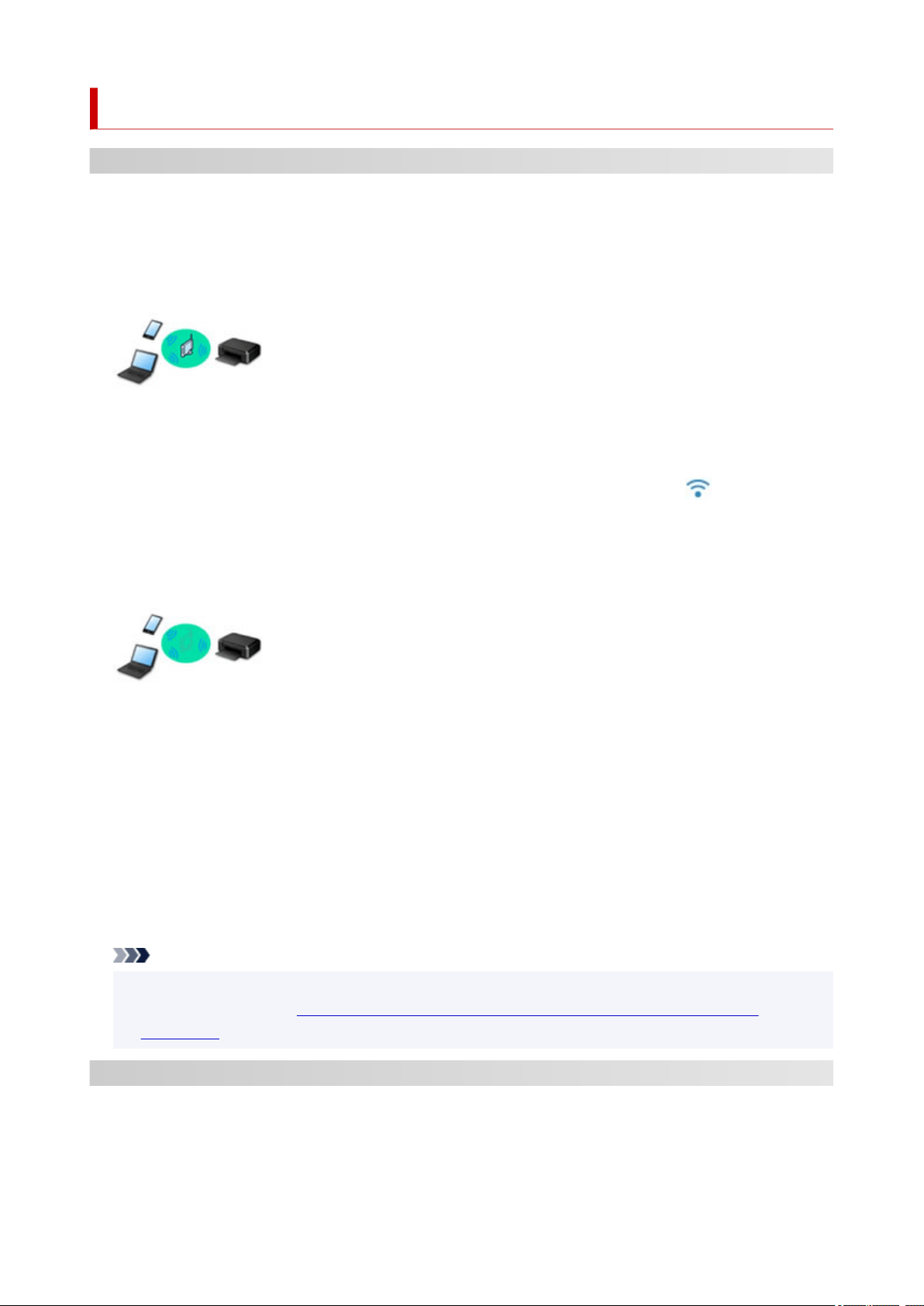
Network
Available Connection Methods
The following connection methods are available on the printer.
• Wireless Connection
Connect the printer and devices (e.g. computer/smartphone/tablet) using a wireless router.
If you have a wireless router, we recommend you use one for wireless connection.
◦ Connection methods vary depending on the wireless router type.
◦ You can change network settings such as the network name (SSID) and security protocol on the
printer.
◦ When the connection between a device and a wireless router is completed and
(Wi-Fi icon) is
displayed in the device's screen, you can connect the device to the printer using the wireless router.
• Wireless Direct
Connect the printer and devices (e.g. computer/smartphone/tablet) without using a wireless router.
◦ While you are using the printer with Wireless Direct, Internet connection from the printer becomes
unavailable. In that case, web services for the printer cannot be used.
◦ If you connect a device connected to the Internet via a wireless router to the printer that is in the
Wireless Direct, the connection between the device and wireless router will be disabled. In that case,
the connection of the device may switch to a mobile data connection automatically depending on
your device. Transmission fees for connecting to the Internet using a mobile data connection apply.
◦ In the Wireless Direct, you can connect up to five devices at the same time. If you try to connect a
sixth device while five devices are already connected, an error will appear. If an error appears,
disconnect a device you do not use and configure settings again.
◦ Network settings such as the network name (SSID) and security protocol are specified automatically.
Note
• You can connect the printer and computer using a USB cable (USB connection). Prepare a USB
cable. For details, see
Connects to Another Computer via LAN/Changes from USB to LAN
Connection.
Network Connection Settings/Setup
Perform connection setup for the printer and computer/smartphone/tablet.
For more on setup procedure, click here.
29

Changing Network Settings
See below for changing connection settings for the printer and computer/smartphone/tablet.
• To change network connection method:
Reconfiguration Method of Wi-Fi Connection
Changing the Connection Mode
• To add computer/smartphone/tablet to the printer:
Connects to Another Computer via LAN/Changes from USB to LAN Connection
• To use Wireless Direct temporarily:
Connecting with Wireless Direct
IJ Network Device Setup Utility
IJ Network Device Setup Utility checks or diagnoses the settings of the printer and those of computer and
restores the status of them if anything is wrong with network connection. Select either link below to download
IJ Network Device Setup Utility.
Checking Printer Connection Status Using IJ Network Device Setup Utility
• Performing/Changing Network Settings (Windows)
For Windows, you can perform network settings using IJ Network Device Setup Utility.
IJ Network Device Setup Utility (Windows)
• Diagnosing and Repairing Network Settings (Windows/macOS)
You can diagnose or repair network settings using IJ Network Device Setup Utility.
◦ For Windows:
IJ Network Device Setup Utility (Windows)
◦ For macOS:
IJ Network Device Setup Utility (macOS)
Network Connection Tips
See below for tips on using the printer via network connection.
Network Connection Tips
Handling Printer Configuration using the Web Browser
Countermeasures against Unauthorized Access
Troubleshooting
See Network Settings and Common Problems for troubleshooting on network connection.
Notice/Restriction
See below for details.
• Restrictions on network settings:
Restrictions
• Notices when printing using web service:
Notice for Web Service Printing
30

Restrictions
When connecting another device while a device (such as a computer) is already connected to the printer,
connect it using the same connection method as the connected device.
If you connect using a different connection method, the connection to the device in use will be disabled.
Connect via wireless router
• Make sure your device and the wireless router are connected. For details on checking these settings,
see the manual supplied with the wireless router or contact its manufacturer.
As for a device already connected to the printer without using a wireless router, reconnect it via a
wireless router.
• Configuration, router functions, setup procedures and security settings of wireless routers vary
depending on the system environment. For details, see the manual for your wireless router or contact
its manufacturer.
• This printer does not support IEEE802.11ac, IEEE802.11a, or IEEE802.11n (5 GHz). Check if your
device supports IEEE802.11n (2.4 GHz), IEEE802.11g or IEEE802.11b.
• If your device is set to the "IEEE802.11n only" mode, WEP or TKIP cannot be used as a security
protocol. Change the security protocol for your device to something other than WEP and TKIP or
change the setting to something other than "IEEE802.11n only."
The connection between your device and the wireless router will be temporarily disabled while the
setting is changed. Do not proceed to the next screen of this guide until setup is complete.
• For office use, consult your network administrator.
• Note that if you connect to a network with no security protection, your personal information could be
disclosed to a third party.
Wireless Direct
Important
• If a device is connected to the Internet via a wireless router, and you then connect it to a printer in
Wireless Direct mode, the existing connection between the device and wireless router will be
disabled. In that case, the connection of the device may switch to a mobile data connection
automatically depending on your device. When you connect to the Internet using a mobile data
connection, charges may apply depending on your contract.
When you connect a device and the printer using Wireless Direct, the connection information
will be saved to Wi-Fi settings. The device may be connected to the printer automatically even
after disconnecting it or connecting it to another wireless router.
To prevent automatic connection to the printer in Wireless Direct mode, change the connection
mode after using the printer, or set not to connect automatically in the Wi-Fi settings of the
device.
For details on changing the settings of your device, see the manual supplied with the device or
contact its manufacturer.
• If you connect a device and the printer using Wireless Direct, Internet connection may become
unavailable depending on your environment. In that case, web services for the printer cannot be used.
31

• In Wireless Direct mode, you can connect up to five devices at the same time. If you try to connect a
sixth device while five devices are already connected, an error will appear.
If an error appears, disconnect a device that does not use the printer, then configure settings again.
• Devices connected to the printer using Wireless Direct cannot communicate with each other.
• Firmware updates for the printer are not available while using Wireless Direct.
• When a device has been connected to the printer without using a wireless router and you want to set
it up again using the same connection method, disconnect it first. Disable the connection between the
device and printer in the Wi-Fi setting screen.
32


Default Network Settings
LAN Connection Defaults
Item Default
Network name(SSID) BJNPSETUP
Wi-Fi security Disable
IP address (IPv4) Auto setup
IP address (IPv6) Auto setup
Set printer name* XXXXXXXXXXXX
Enable/disable IPv6 Enable
Enable/disable WSD Enable
Timeout setting 15 min.
Enable/disable Bonjour Enable
Service name Canon TS6400 series
LPR protocol setting Enable
RAW protocol Enable
LLMNR Enable
PictBridge communication (Enable/disable communication) Enable
("XX" represents alphanumeric characters.)
* Default value depends on printer. To check value, use operation panel.
LAN settings
Wireless Direct Defaults
Item Default
Network name(SSID) DIRECT-abXX-TS6400series *1
Password YYYYYYYYYY *2
Wi-Fi security WPA2-PSK (AES)
Connection request confirmation Displayed
*1 "ab" is specified at random and "XX" represents last two digits of printer's MAC address. (The value is
specified when the printer is turned on for the first time.)
34

*2 The password is specified automatically when the printer is turned on for the first time.
35

Detect Same Printer Name
When the printer is detected during setup, plural printers with the same name may appear on the results
screen.
Select a printer with checking the printer settings against those on detection result screen.
• For Windows:
Check the printer's MAC address or serial to select the correct printer from the results.
• For macOS:
The printer names appear with the MAC address added at the end or as the printer name specified by
Bonjour.
Check identifiers such as the MAC address, the printer name specified by Bonjour, and the printer's
serial number to select the printer from among those that appear.
Note
• Serial number may not appear on result screen.
To check the printer's MAC address and the serial number, print out the network settings information.
Printing Network Settings
Note
• You can check the printer's MAC address and the serial number by displaying on the LCD.
System information
36

Connects to Another Computer via LAN/Changes from USB to
LAN Connection
To connect an additional computer to the printer via LAN, or to change from USB to LAN connection, click
here and perform setup.
37
Printing Network Settings
Use the operation panel to print the printer's current network settings.
Important
• The network settings printout contains important information about your network. Handle it with care.
1.
Check that printer is turned on.
2. Load three sheets of A4 or Letter-sized plain paper.
3. Press OK button on HOME screen.
4. Select Device settings and press OK button.
5. Select LAN settings and press OK button.
6. Select Print details and press OK button.
7. Select Yes and press OK button.
The printer starts printing the network setting information.
The following information on the printer's network setting is printed out. (Some setting values are not
displayed depending on the printer settings.)
Item Num-
ber
Item Description Setting
1 Product Information Product information –
1-1 Product Name Product name XXXXXXXX
1-2 ROM Version ROM version XXXXXXXX
1-3 Serial Number Serial number XXXXXXXX
2 Network Diagnostics Network diagnostics –
2-1 Diagnostic Result Diagnostic result XXXXXXXX
2-2 Result Codes Result codes XXXXXXXX
2-3 Result Code Details Result code details http://canon.com/ijnwt
3 Wireless LAN Wireless LAN Enable/Disable
3-2 Infrastructure Infrastructure Enable/Disable
3-2-1 Signal Strength Signal strength 0 to 100 [%]
38
3-2-2 Link Quality Link quality 0 to 100 [%]
3-2-3 Frequency Frequency XX (GHz)
3-2-4 MAC Address MAC address XX:XX:XX:XX:XX:XX
3-2-5 Connection Connection status Active/Inactive
3-2-6 SSID SSID Wireless LAN network name (SSID)
3-2-7 Channel Channel XX (1 to 13)
3-2-8 Encryption Encryption method None/WEP/TKIP/AES
3-2-9 WEP Key Length WEP key length (bits) Inactive/128/64
3-2-10 Authentication Authentication method None/auto/open/shared/WPA-PSK/WPA2-PSK
3-2-11 TCP/IPv4 TCP/IPv4 Enable/Disable
3-2-12 IP Address IP address XXX.XXX.XXX.XXX
3-2-13 Subnet Mask Subnet mask XXX.XXX.XXX.XXX
3-2-14 Default Gateway Default gateway XXX.XXX.XXX.XXX
3-2-15 TCP/IPv6 TCP/IPv6 Enable/Disable
3-2-16 Link Local Address Link local address XXXX:XXXX:XXXX:XXXX
XXXX:XXXX:XXXX:XXXX
3-2-17 Link Local Prefix
Length
Link local prefix length XXX
3-2-18 Stateless Address1 Stateless address 1 XXXX:XXXX:XXXX:XXXX
XXXX:XXXX:XXXX:XXXX
3-2-19 Stateless Prefix
Length1
Stateless prefix length
1
XXX
3-2-20 Stateless Address2 Stateless address 2 XXXX:XXXX:XXXX:XXXX
XXXX:XXXX:XXXX:XXXX
3-2-21 Stateless Prefix
Length2
Stateless prefix length
2
XXX
3-2-22 Stateless Address3 Stateless address 3 XXXX:XXXX:XXXX:XXXX
XXXX:XXXX:XXXX:XXXX
3-2-23 Stateless Prefix
Length3
Stateless prefix length
3
XXX
3-2-24 Stateless Address4 Stateless address 4 XXXX:XXXX:XXXX:XXXX
XXXX:XXXX:XXXX:XXXX
39
3-2-25 Stateless Prefix
Length4
Stateless prefix length
4
XXX
3-2-26 Default Gateway1 Default gateway 1 XXXX:XXXX:XXXX:XXXX
XXXX:XXXX:XXXX:XXXX
3-2-27 Default Gateway2 Default gateway 2 XXXX:XXXX:XXXX:XXXX
XXXX:XXXX:XXXX:XXXX
3-2-28 Default Gateway3 Default gateway 3 XXXX:XXXX:XXXX:XXXX
XXXX:XXXX:XXXX:XXXX
3-2-29 Default Gateway4 Default gateway 4 XXXX:XXXX:XXXX:XXXX
XXXX:XXXX:XXXX:XXXX
3-2-33 IPsec IPsec setting Active/Inactive
3-2-34 Security Protocol Security method ESP/ESP & AH/AH/Blank (Not selected)
3-3 Wireless Direct Operation mode for
Wireless Direct
Enable/Disable
3-3-1 MAC Address MAC address XX:XX:XX:XX:XX:XX
3-3-2 Connection Connection status Active/Inactive
3-3-3 SSID SSID Wireless Direct network name (SSID)
3-3-4 Password Password Wireless Direct password
3-3-5 Channel Channel 3
3-3-6 Encryption Encryption method AES
3-3-7 Authentication Authentication method WPA2-PSK
3-3-8 TCP/IPv4 TCP/IPv4 Enable/Disable
3-3-9 IP Address IP address XXX.XXX.XXX.XXX
3-3-10 Subnet Mask Subnet mask XXX.XXX.XXX.XXX
3-3-11 Default Gateway Default gateway XXX.XXX.XXX.XXX
3-3-12 TCP/IPv6 TCP/IPv6 Enable/Disable
3-3-13 Link Local Address Link local address XXXX:XXXX:XXXX:XXXX
XXXX:XXXX:XXXX:XXXX
3-3-14 Link Local Prefix
Length
Link local prefix length XXX
3-3-15 IPsec IPsec setting Active/Inactive
3-3-16 Security Protocol Security method ESP/ESP & AH/AH/Blank (Not selected)
40
5 Other Settings Other settings –
5-1 Printer Name Printer name Printer name (Up to 15 alphanumeric characters)
5-2 Wireless Direct Dev-
Name
Device name for wire-
less direct
Device name for wireless direct (Up to 32 alphanumeric
characters)
5-4 WSD Printing WSD printing setting Enable/Disable
5-5 WSD Timeout Timeout 1/5/10/15/20 [min]
5-6 LPD Printing LPD printing setting Enable/Disable
5-7 RAW Printing RAW printing setting Enable/Disable
5-9 Bonjour Bonjour setting Enable/Disable
5-10 Bonjour Service Name Bonjour service name Bonjour service name (Up to 52 alphanumeric characters)
5-11 LLMNR LLMNR setting Enable/Disable
5-12 SNMP SNMP setting Enable/Disable
5-13 PictBridge Commun. PictBridge Communica-
tion
Enable/Disable
5-14 DNS Server Obtain DNS server ad-
dress automatically
Auto/Manual
5-15 Primary Server Primary server address XXX.XXX.XXX.XXX
5-16 Secondary Server Secondary server ad-
dress
XXX.XXX.XXX.XXX
5-17 Proxy Server Proxy server setting Enable/Disable
5-18 Proxy Address Proxy address XXXXXXXXXXXXXXXXXXXX
5-19 Proxy Port Proxy port specification 1 to 65535
5-20 Cert. Fingerprt(SHA-1) Certificate finger-
print(SHA-1)
xxxxxxxx xxxxxxxx xxxxxxxx
xxxxxxxx xxxxxxxx
5-21 Cert. Fin-
gerprt(SHA-256)
Certificate finger-
print(SHA-256)
xxxxxxxx xxxxxxxx xxxxxxxx xxxxxxxx
xxxxxxxx xxxxxxxx xxxxxxxx xxxxxxxx
6 Bluetooth Bluetooth settings –
6-1 Bluetooth Setting Bluetooth Enable/Disable
6-3 Bluetooth Device Ad-
dress
Bluetooth device ad-
dress of the printer
XX:XX:XX:XX:XX:XX
6-5 Bluetooth Device Name Bluetooth device name
of the printer
XXXXXXXX
41
7 Web Services Web Services –
7-1 Unsent Usage Logs Number of unsent us-
age logs
0 to 200
7-2 Usage Log Last Sent Last date when usage
log was sent
XXXXXXXX
7-3 Web Service Status Registration status Not set/Disabled/Registration pending/Registered
7-4 Log Transmission Sta-
tus
Transmission result Not activated/Processing/Server error/Connection error/
Timeout error/Error/Awaiting server response/Active
7-5 Subscription Informa-
tion
Subscription Informa-
tion
Subscription agreement information (Printed with or without
subscription agreement)
7-5-1 Subscription Ink
7-5-2 Remaining Offline
Prints
7-5-3 Installed Cartridge Type
7-5-4 Online Support Support page URL for
subscription contractors
only (If mentioned)
If you have a subscription contract, please check the con-
tractor-only support page.
("XX" represents alphanumeric characters.)
42

Reconfiguration Method of Wi-Fi Connection
Follow either procedure below to change Wi-Fi connection method (infrastructure or Wireless Direct).
• For Windows:
◦ See Changing the Connection Mode.
◦ Perform settings on the Network Settings screen on IJ Network Device Setup Utility.
Important
Before you perform settings using IJ Network Device Setup Utility, turn on Easy wireless
connect mode on the printer following the procedure below.
1. Check that printer is turned on.
2. Press and hold (Wireless connect) button for 3 seconds.
LCD and Operation Panel
3. Follow instructions on your computer, smartphone/tablet.
4. If message saying setup is completed appears, press OK button.
• For macOS:
See Changing the Connection Mode.
43

Connecting with Wireless Direct
You can connect devices (e.g. computer, smartphone, or tablet) to the printer by two methods below.
• Wireless connection (connecting devices via a wireless router)
• Direct wireless connection (connecting devices directly without a wireless router)
This section describes Wireless Direct, which allows you to print by connecting the devices to the printer
directly.
Follow the procedure below to set up and use Wireless Direct.
1. Preparing the printer.
Changing Printer Setting to Use Wireless Direct
2. Preparing a device to connect to the printer.
Connecting a smartphone/tablet/computer to the printer
Important
• You can connect up to 5 devices to the printer at the same time with Wireless Direct.
• Check the usage restrictions and switch the printer to the Wireless Direct.
Restrictions
Changing Printer Setting to Use Wireless Direct
1. Make sure the printer is turned on.
2. Press the OK button on HOME screen.
3. Select Device settings and press the OK button.
4. Select LAN settings and press the OK button.
5. Select Wireless Direct and press the OK button.
6. Select Advanced mode and press the OK button.
7. Check displayed message, select Next and press the OK button.
8. Select ON and press the OK button.
The Wireless Direct is enabled and a device can be connected to the printer wirelessly.
Note
• To show the password, select ON. To hide the password, select OFF.
44

• The password is required when connecting a device to the printer. Depending on the device you
are using, no password is required.
• When you connect a Wi-Fi Direct compatible device to the printer, select the device name from
your device.
• To change the identifier (SSID) and the password, see below.
Changing Wireless Direct Setting
Connecting a smartphone/tablet/computer to the printer
1. Enable Wi-Fi function on smartphone/tablet/computer.
Enable Wi-Fi in the Settings menu on your smartphone/tablet/computer.
For instructions on enabling the Wi-Fi function, refer to the instruction manual for your smartphone/
tablet/computer.
2. Press the OK button on HOME screen.
3. Select Device settings and press the OK button.
4. Select LAN settings and press the OK button.
5. Select Wireless Direct and press the OK button.
6. Select Connect to smartphone and press the OK button.
7. To connect with an iPhone/iPad, select iPhone/iPad. To connect with a non-iPhone/iPad,
select Others and press the OK button.
• iPhone/iPad
1. Check displayed message and select Next.
2. Scan the displayed QR code with the iPhone/iPad standard camera app.
The iPhone/iPad is connected to the printer.
Note
• If the iPhone/iPad and printer cannot be connected, Wireless Direct is not enabled.
See
Changing Printer Setting to Use Wireless Direct to enable Wireless Direct.
• Others
1. Check displayed message and select Next.
2. To show the password, select ON. To hide the password, select OFF.
Network name(SSID) and Password are displayed.
45

Note
• The password is required when connecting smartphone/tablet/computer to the printer.
3. Select "DIRECT-XXXX-TS6400series" ("X" represents alphanumeric characters) on your
smartphone/tablet/computer.
Note
• If "DIRECT-XXXX-TS6400series" does not appear on the list, Wireless Direct is not
enabled.
See
Changing Printer Setting to Use Wireless Direct to enable Wireless Direct.
4. Enter Password on smartphone/tablet/computer.
The smartphone/tablet/computer is connected to the printer.
Note
• If the printer is set to display a confirmation screen in Connection request
confirmation of
Changing Wireless Direct Setting, when the wireless direct compatible
device connects to the printer, a confirmation screen asking for permission to connect
is displayed on the printer LCD.
Make sure the name on the LCD is the same as that of your wireless communication
device and select Yes.
You can print from your smartphone or tablet by installing Canon PRINT Inkjet/SELPHY. Download it from
App Store and Google Play.
For iOS
For Android
Changing Wireless Direct Setting
Change the settings for the Wireless Direct following the procedure below.
1. Make sure the printer is turned on.
2. Press the OK button on HOME screen.
3. Select Device settings and press the OK button.
4. Select LAN settings and press the OK button.
5. Select Wireless Direct and press the OK button.
6. Select a setting item and press the OK button.
Scroll down if necessary.
• Show setting info
46

A confirmation screen is displayed whether you want to display password information.
When you select ON or OFF, the setting values for using the printer with Wireless Direct are
displayed.
The setting values for using the
printer with Wireless Direct are displayed.
• Change network name (SSID)
Change the identifier (SSID) for Wireless Direct.
The identifier (SSID) is the printer's name (device name) displayed on a Wi-Fi Direct compatible
device.
Follow the procedure below to change the identifier (SSID).
◦ To set manually
1. Select Change manually and press the OK button.
The input screen is displayed.
2. Enter the identifier or printer name.
Press
button to enter the identifier (SSID) value one column at a time and press
OK button.
Press (Wireless connect) button to change the type of characters to enter
(uppercase / lowercase, numbers, symbols).
One character can be erased by pressing the Stop button.
3. Confirm the input contents and press the Start button.
◦ To set automatically
1. Select Auto update and press OK button.
2. Select Yes and press OK button.
3. To show the password, select ON and to hide the password, select OFF and press OK
button.
You can check the updated setting.
• Change password
Change the password for Wireless Direct.
◦ To set manually.
1. Select Change manually and press the OK button.
The input screen is displayed.
2. Enter the new password (10 characters).
Press button to enter the password value one column at a time and press OK
button.
Press (Wireless connect) button to change the type of characters to enter
(uppercase / lowercase, numbers).
One character can be erased by pressing the Stop button.
3. Confirm the input contents and press the Start button.
◦ To set automatically
47

1. Select Auto update and press OK button.
2. Select Yes and press OK button.
3. To show the password, select ON and to hide the password, select OFF and press OK
button.
You can check the updated setting.
• Connection request confirmation
Change the confirmation screen setting when a Wi-Fi Direct compatible device is connecting to
the printer.
If you want the printer to display the screen to inform you a Wi-Fi Direct compatible device is
connecting to the printer, select ON and press the OK button.
Important
• To prevent an unauthorized access, we recommend you should select the setting to display
the confirmation screen.
Note
• If you change the Wireless Direct setting of the printer, also change the wireless router setting of the
device.
48


IJ Network Device Setup Utility
If anything is wrong with connection, IJ Network Device Setup Utility diagnoses the settings of the printer
and those of computer on which it is installed. In addition, IJ Network Device Setup Utility restores the status
of the printer and computer.
Important
• To use the printer over LAN, make sure you have the equipment necessary for the connection type,
such as a wireless router or a LAN cable.
• When you install IJ Network Device Setup Utility, disable block function of firewall.
50
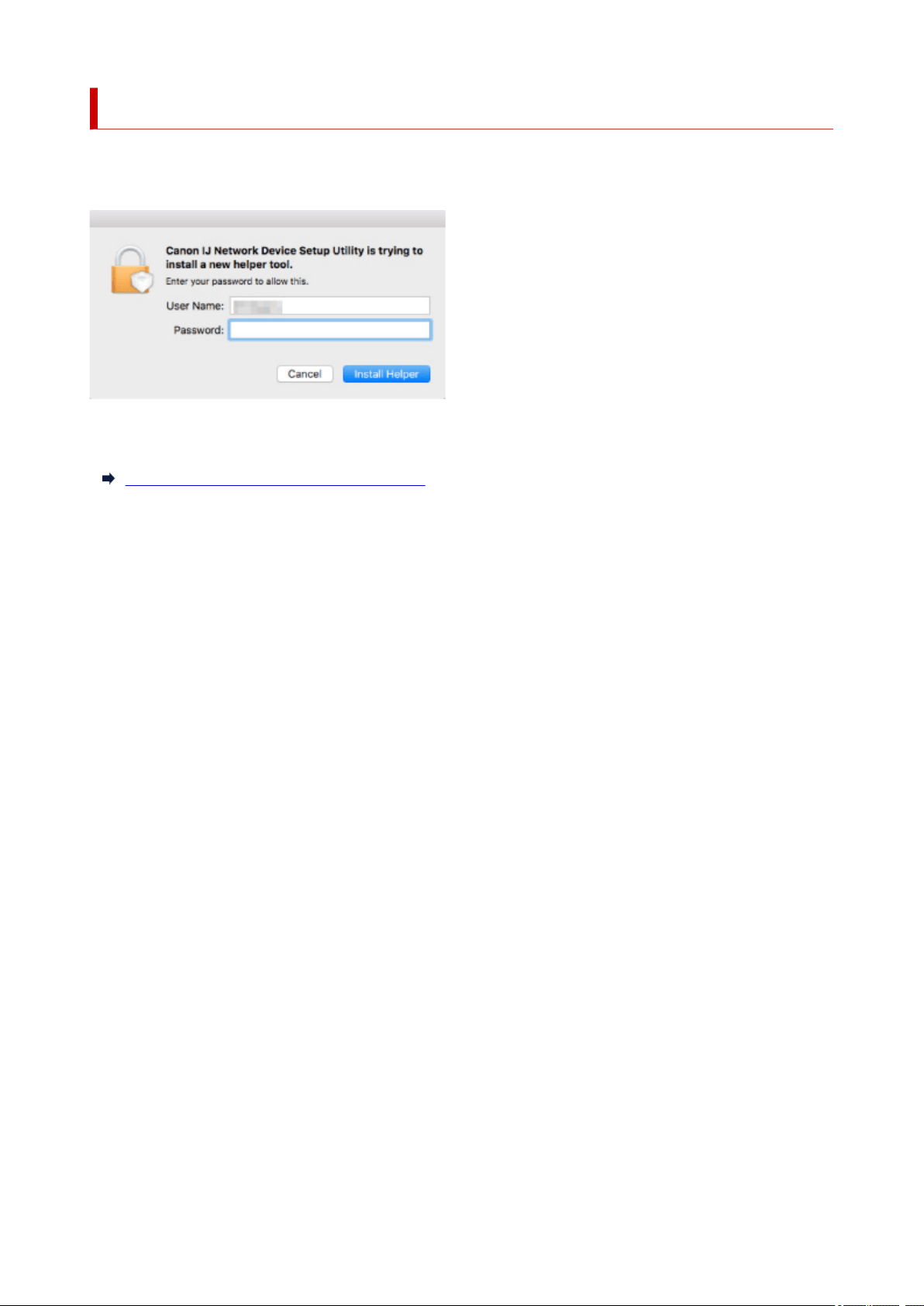
Starting Up IJ Network Device Setup Utility
Start up Launchpad, select Canon Utilities, and then select IJ Network Device Setup Utility.
When you start up IJ Network Device Setup Utility, the screen below appears.
Enter the password specified for your computer and select Install Helper. IJ Network Device Setup Utility
starts diagnosis and repair of network.
Diagnosing and Repairing Network Settings
51

Diagnosing and Repairing Network Settings
IJ Network Device Setup Utility diagnoses and repairs computer settings or connection between the
computer and printer when a problem (e.g. cannot print from a printer on the network) occurs.
Important
• Some models do not support diagnosis and repair function.
For details:
List of Models Which Does Not Support Diagnosis and Repair Function
IJ Network Device Setup Utility starts checking the computer settings when it starts up. Perform operations
following the instructions on the screen.
Note
• This function checks the following items:
whether the computer is connected to the router
whether the printer can be detected on the network
whether the signal strength or communication level is sufficient (when using Wi-Fi)
whether the printer port setting matches with the network setting
52

List of Models Which Does Not Support Diagnosis and Repair
Function
The following models does not support "Diagnose and Repair" function of IJ Network Device Setup Utility.
• G4000 series
• PRO-500 series
• PRO-1000 series
• MB2100 series
• MB2700 series
• MB5100 series
• MB5400 series
• iB4000 series
• PRO-520
• PRO-540
• PRO-560
• PRO-540S
• PRO-560S
• PRO-2000
• PRO-4000
• PRO-6000
• PRO-4000S
• PRO-6000S
• TS9000 series
• TS8000 series
• TS6000 series
• TS5000 series
• MG3000 series
• E470 series
53


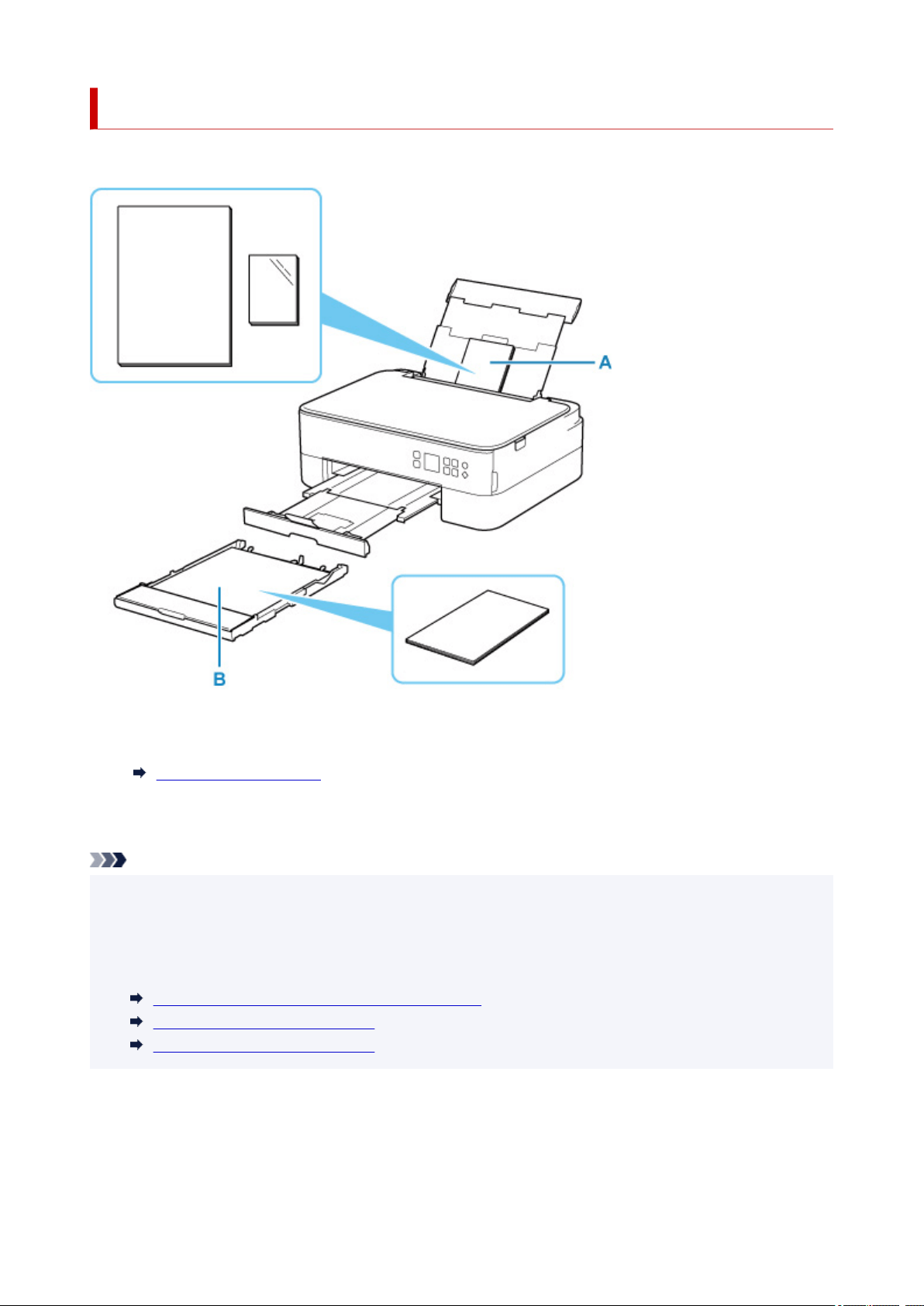
Paper Sources
The printer has two paper sources for feeding paper, the rear tray (A) and cassette (B).
Rear tray
You can load all supported paper such as plain paper and photo paper on the rear tray.
Supported Media Types
Cassette
You can load A4, B5, A5, or Letter-sized plain paper in the cassette.
Note
• When printing, select the correct page size and media type. If you select the wrong page size or media
type, the printer may feed paper from the wrong paper source or may not print with the proper print
quality.
For details on how to load paper in each paper source, see below.
Loading Plain Paper / Photo Paper in Rear Tray
Loading Plain Paper in Cassette
Loading Envelopes in Rear Tray
56
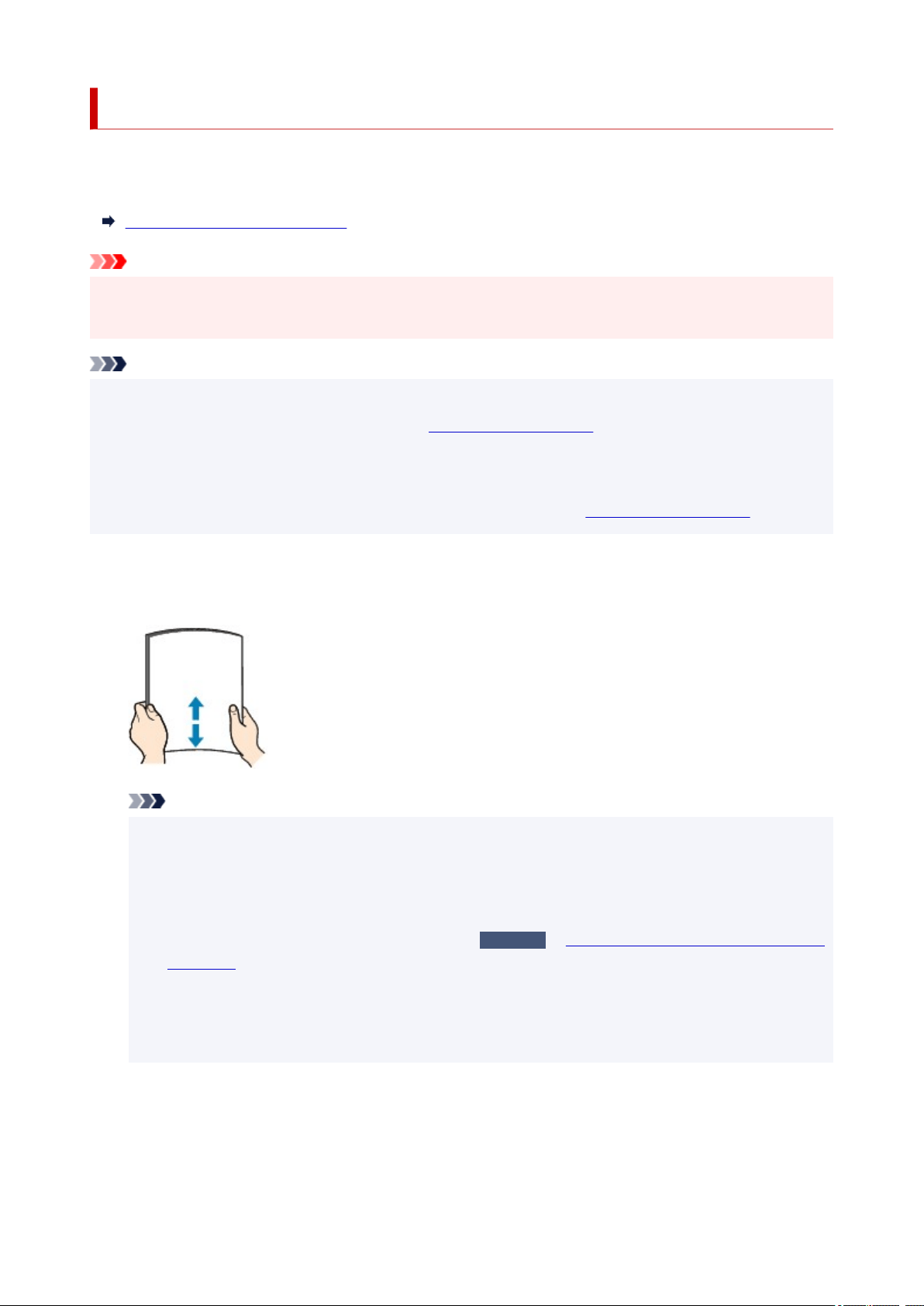
Loading Plain Paper / Photo Paper in Rear Tray
You can load plain paper or photo paper.
You can also load envelopes on the rear tray.
Loading Envelopes in Rear Tray
Important
• If you cut plain paper to a size of 5" x 7" (13 x 18 cm) or smaller to perform a trial print, it may cause a
paper jam.
Note
• We recommend Canon genuine photo paper for printing photos.
For details on the Canon genuine paper, see
Supported Media Types.
• You can use general copy paper or Canon Red Label Superior WOP111/Canon Océ Office Colour
Paper SAT213.
For the page size and paper weight you can use for this printer, see Supported Media Types.
1. Prepare paper.
Align the edges of paper. If paper is curled, flatten it.
Note
• Align the edges of paper neatly before loading. Loading paper without aligning the edges may
cause paper jams.
• If paper is curled, hold the curled corners and gently bend them in the opposite direction until the
paper becomes completely flat.
For details on how to flatten curled paper, see
Check3
in Paper Is Smudged / Printed Surface Is
Scratched.
• When using Photo Paper Plus Semi-gloss SG-201, even if the sheet is curled, load one sheet at a
time as it is. If you roll up this paper to flatten, this may cause cracks on the surface of the paper
and reduce the print quality.
2. Open rear tray cover (A). Pull straight up and fold back paper support (B).
57
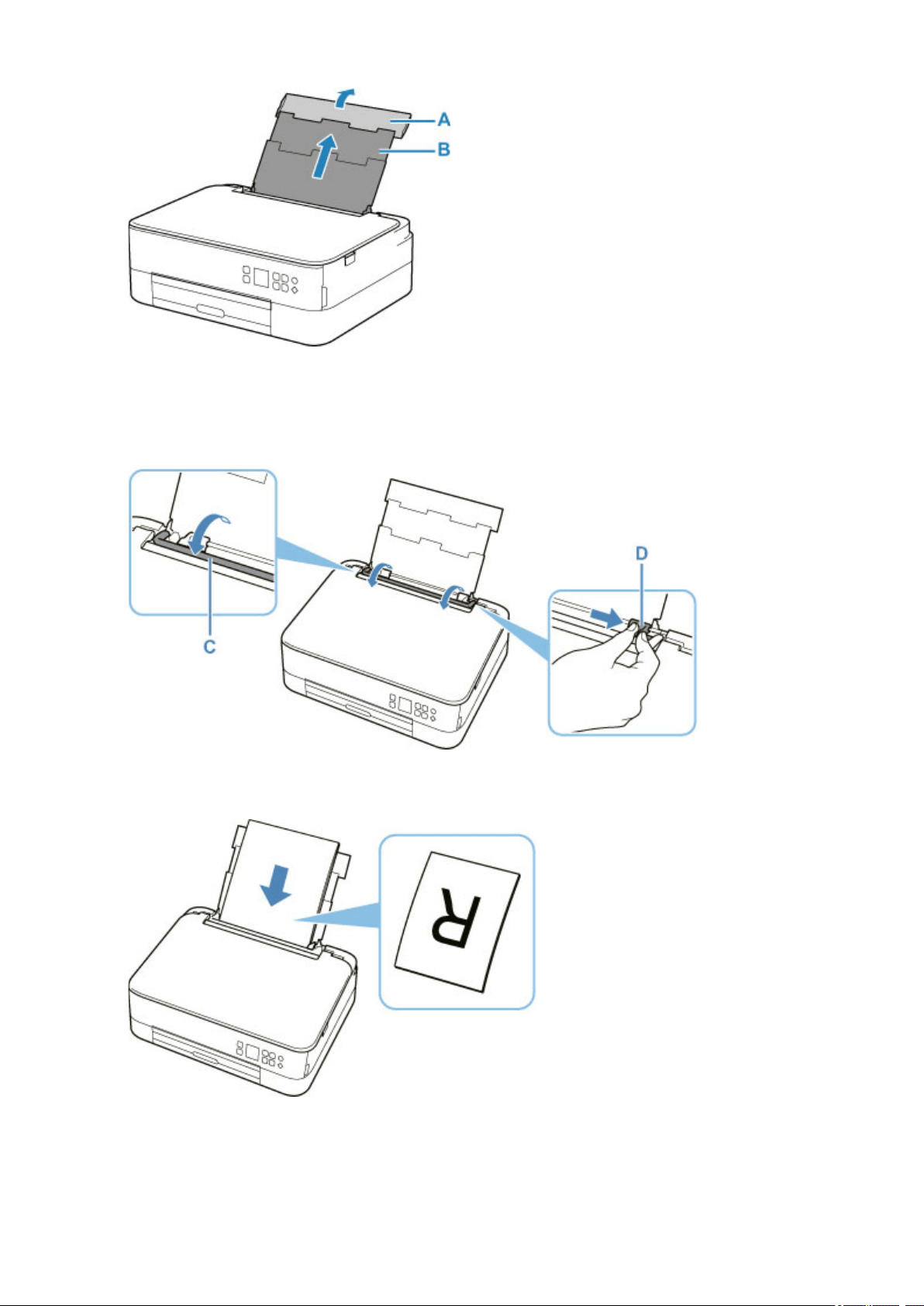
3. Open the feed slot cover (C).
4. Slide right paper guide (D) to open both paper guides.
5. Load paper stack in portrait orientation WITH PRINT SIDE FACING UP.
6. Slide right paper guide (D) to align with both sides of paper stack.
Do not slide the paper guides too hard against the paper. The paper may not be fed properly.
58
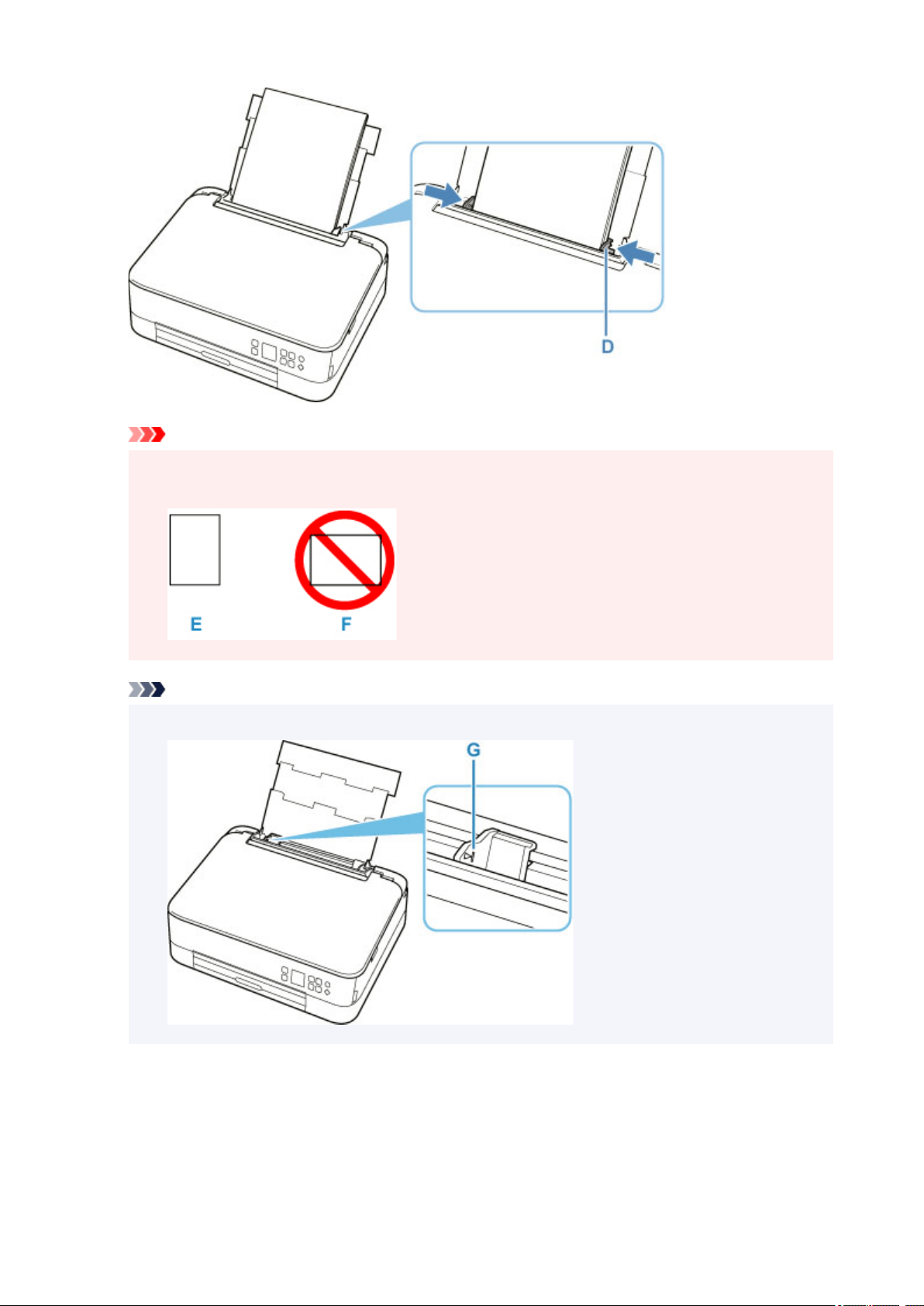
Important
• Always load paper in portrait orientation (E). Loading paper in landscape orientation (F) can cause
paper jams.
Note
• Do not load sheets of paper higher than the load limit mark (G).
7. Close feed slot cover (C) gently.
59
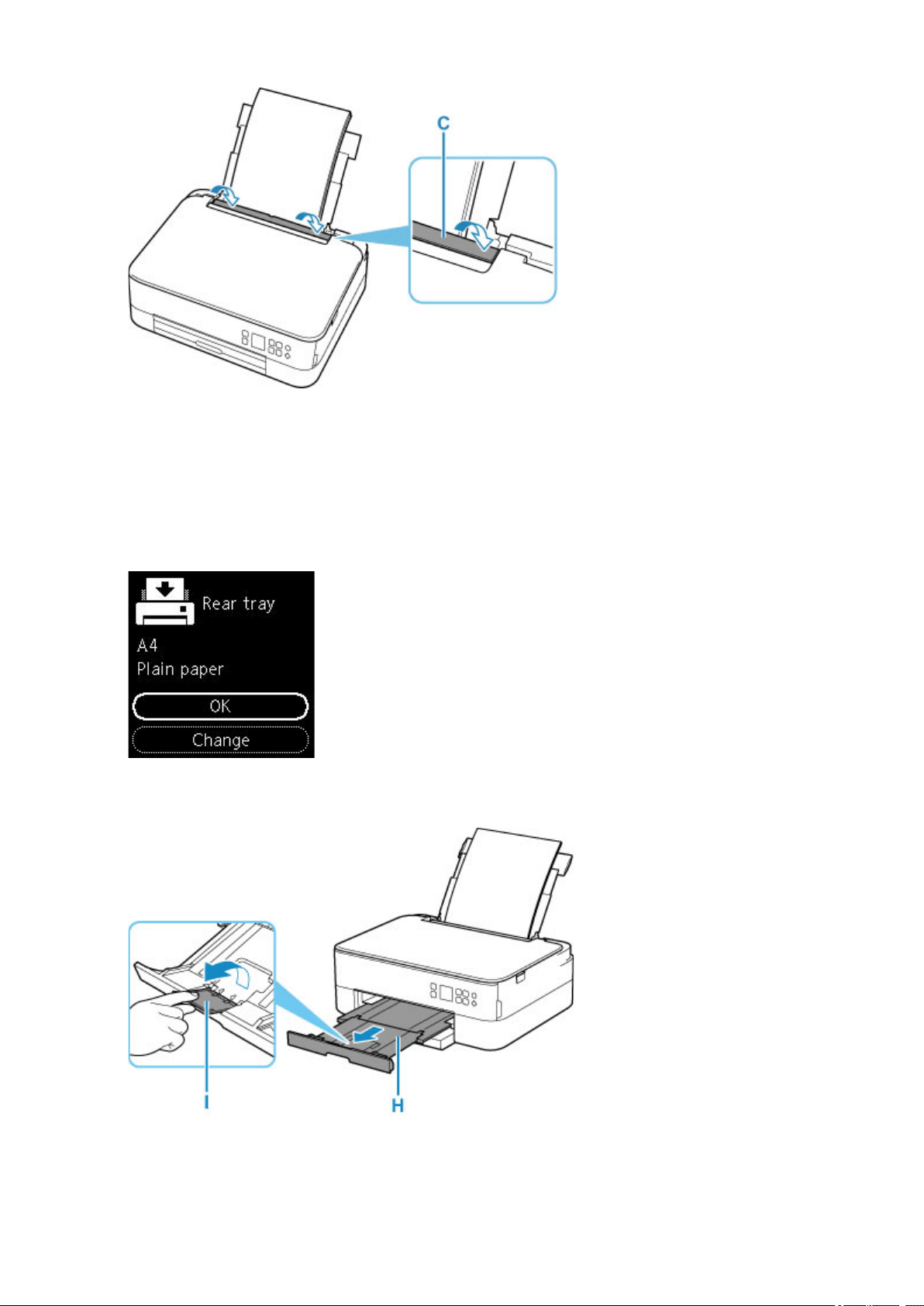
After closing the feed slot cover, the paper setting confirmation screen for the rear tray appears on the
LCD.
8. If page size and media type on LCD match size and type of paper loaded in rear tray, select
OK.
If not, select Change to change the settings in accordance with the size and type of the loaded paper.
9. Pull out the paper output tray (H) and open the paper output support (I).
60

Note
• There are various types of paper, such as paper with a special surface coating for printing photos at
optimal quality and paper suitable for documents. Each media type has specific preset settings (how ink
is used and sprayed, distance from nozzles, etc.), that allow you to print to that type with optimal image
quality. The wrong paper settings may cause poor printout color quality or scratches on the printed
surface. If you notice blurring or uneven colors, increase the print quality setting and try printing again.
• To prevent incorrect printing, this printer has a function that detects whether the settings for the paper
loaded on the rear tray matches the paper settings. Before printing, make print settings in accordance
with the paper settings. When this function is enabled, an error message is displayed if these settings
do not match to prevent incorrect printing. When this error message is displayed, check and correct the
paper settings.
61
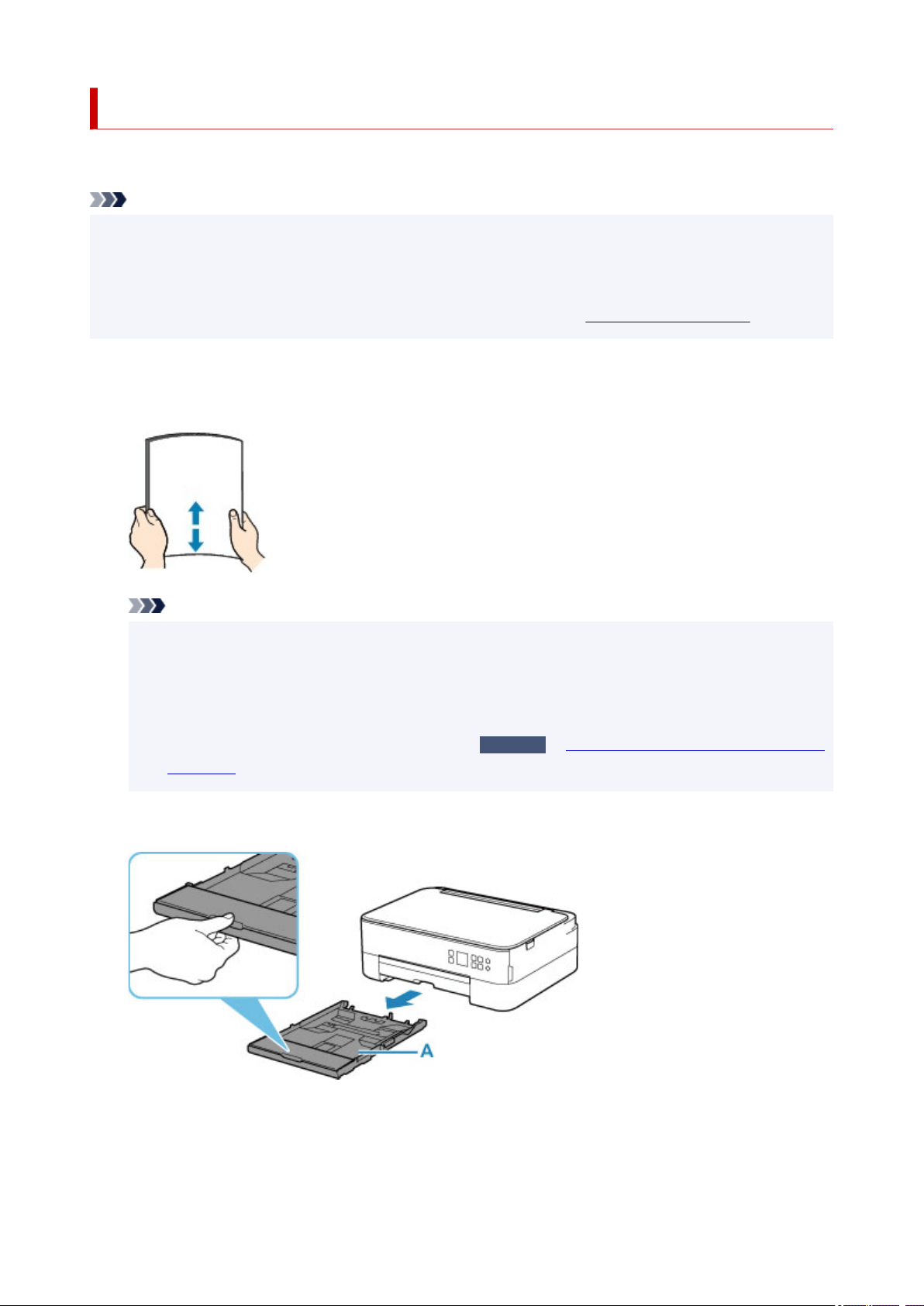
Loading Plain Paper in Cassette
You can load A4, B5, A5, or Letter-sized plain paper in the cassette.
Note
• In the cassette, be sure to load only plain paper.
• You can use general copy paper or Canon Red Label Superior WOP111/Canon Océ Office Colour
Paper SAT213.
For the page size and paper weight you can use for this printer, see
Supported Media Types.
1. Prepare paper.
Align the edges of paper. If paper is curled, flatten it.
Note
• Align the edges of paper neatly before loading. Loading paper without aligning the edges may
cause paper jams.
• If paper is curled, hold the curled corners and gently bend them in the opposite direction until the
paper becomes completely flat.
For details on how to flatten curled paper, see
Check3
in Paper Is Smudged / Printed Surface Is
Scratched.
2. Pull out the cassette (A) from the printer.
3. Remove the cassette cover (B).
62
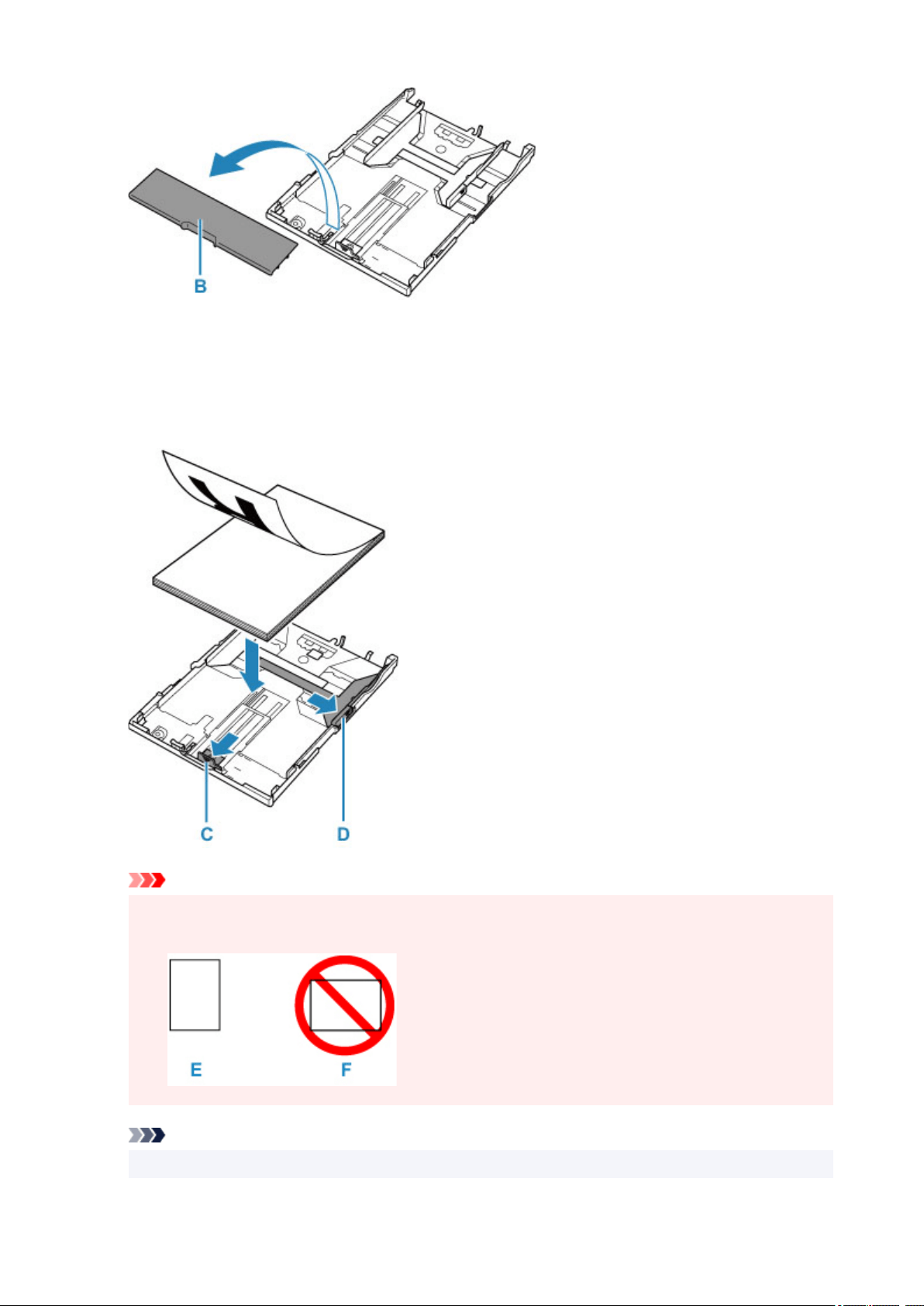
4. Slide paper guides (C) in front and (D) on right to open guides.
5. Load paper stack in portrait orientation WITH PRINT SIDE FACING DOWN, and place it in
center of cassette.
Important
• Always load paper in portrait orientation (E). Loading paper in landscape orientation (F) can cause
paper jams.
Note
• Align the paper stack with the edge of the cassette as shown in the figure below.
63
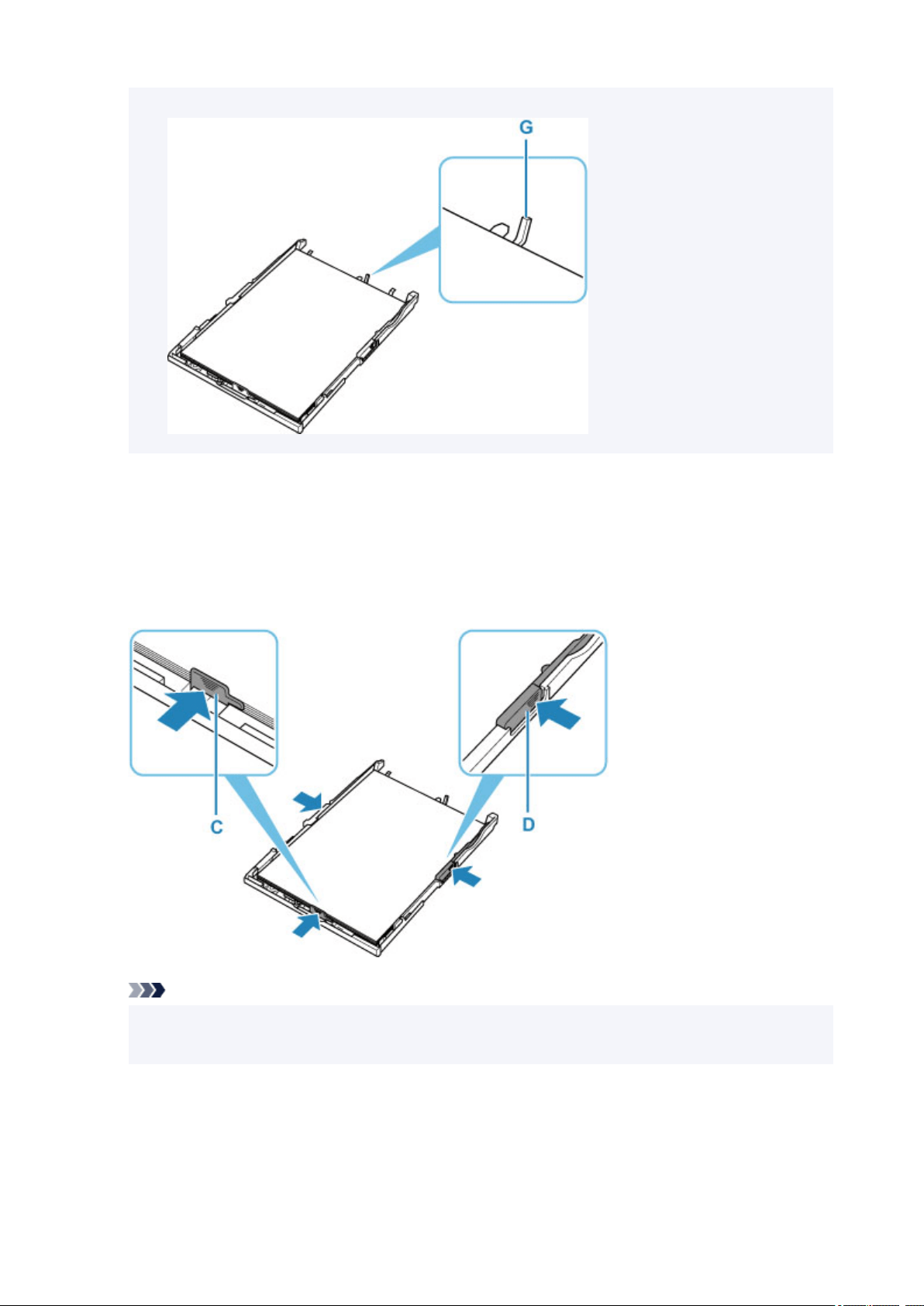
If the paper stack is in contact with the protrusion (G), the paper may not be fed properly.
6. Slide front paper guide (C) to align it with paper stack.
Align paper guide with where it clicks into place.
7. Slide right paper guide (D) to align it with paper stack.
Do not slide the paper guide too hard against the paper. The paper may not be fed properly.
Note
• Do not load sheets of paper higher than the load limit mark (H).
• Keep the paper stack height below the tabs (I) of the paper guides.
64
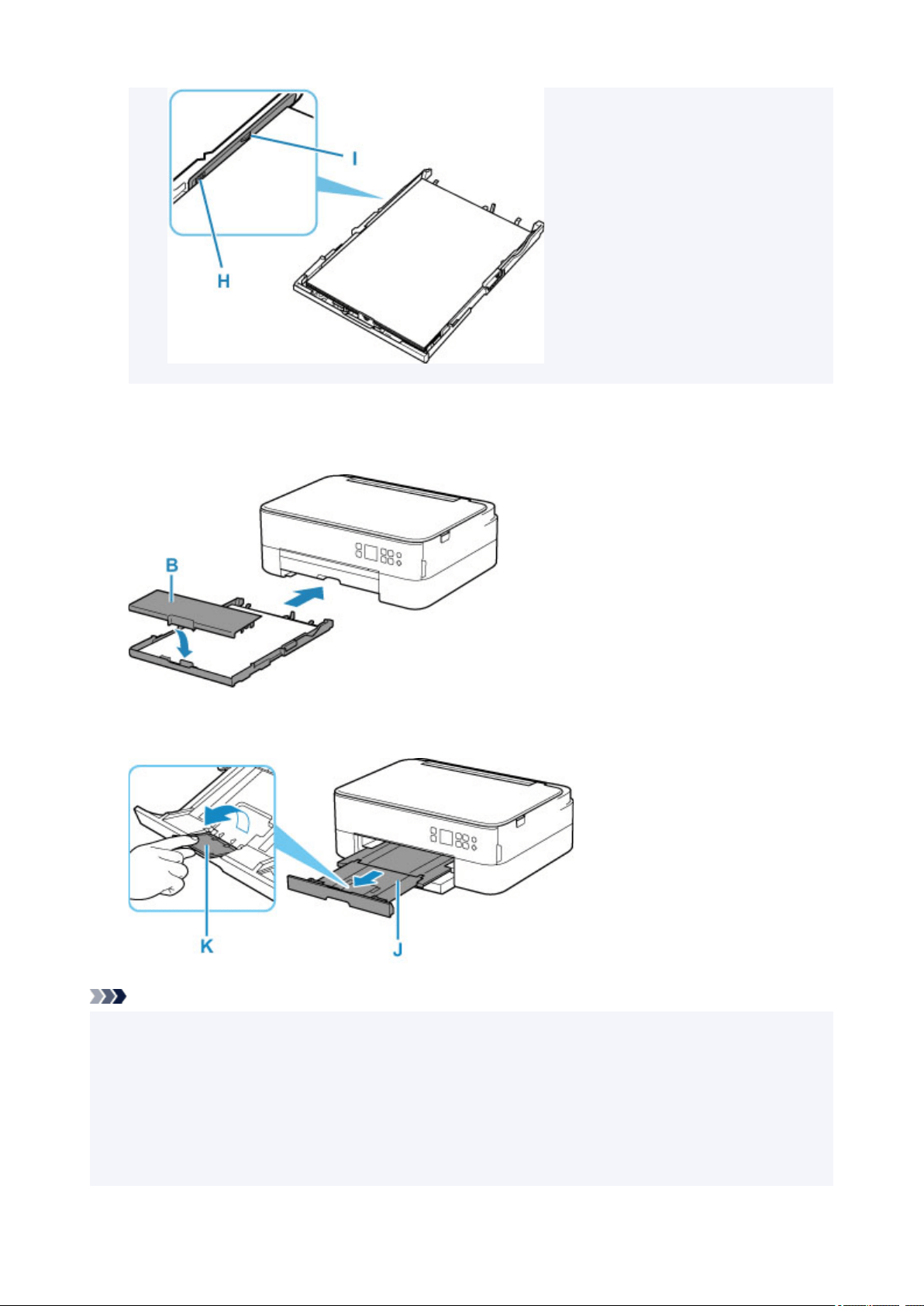
8. Mount cassette cover (B) and insert cassette into printer.
Push the cassette into the printer until it stops.
9. Pull out the paper output tray (J) and open the paper output support (K).
Note
• To prevent incorrect printing, this printer has a function that detects whether the settings for the paper
loaded in the cassette matches the paper settings. Before printing, make print settings in accordance
with the paper settings. When this function is enabled, an error message is displayed if these settings
do not match to prevent incorrect printing. When this error message is displayed, check and correct the
paper settings.
• When the cassette is pulled out, it automatically extends. To shorten the extended cassette, push it in
while pulling lever (L).
65

66
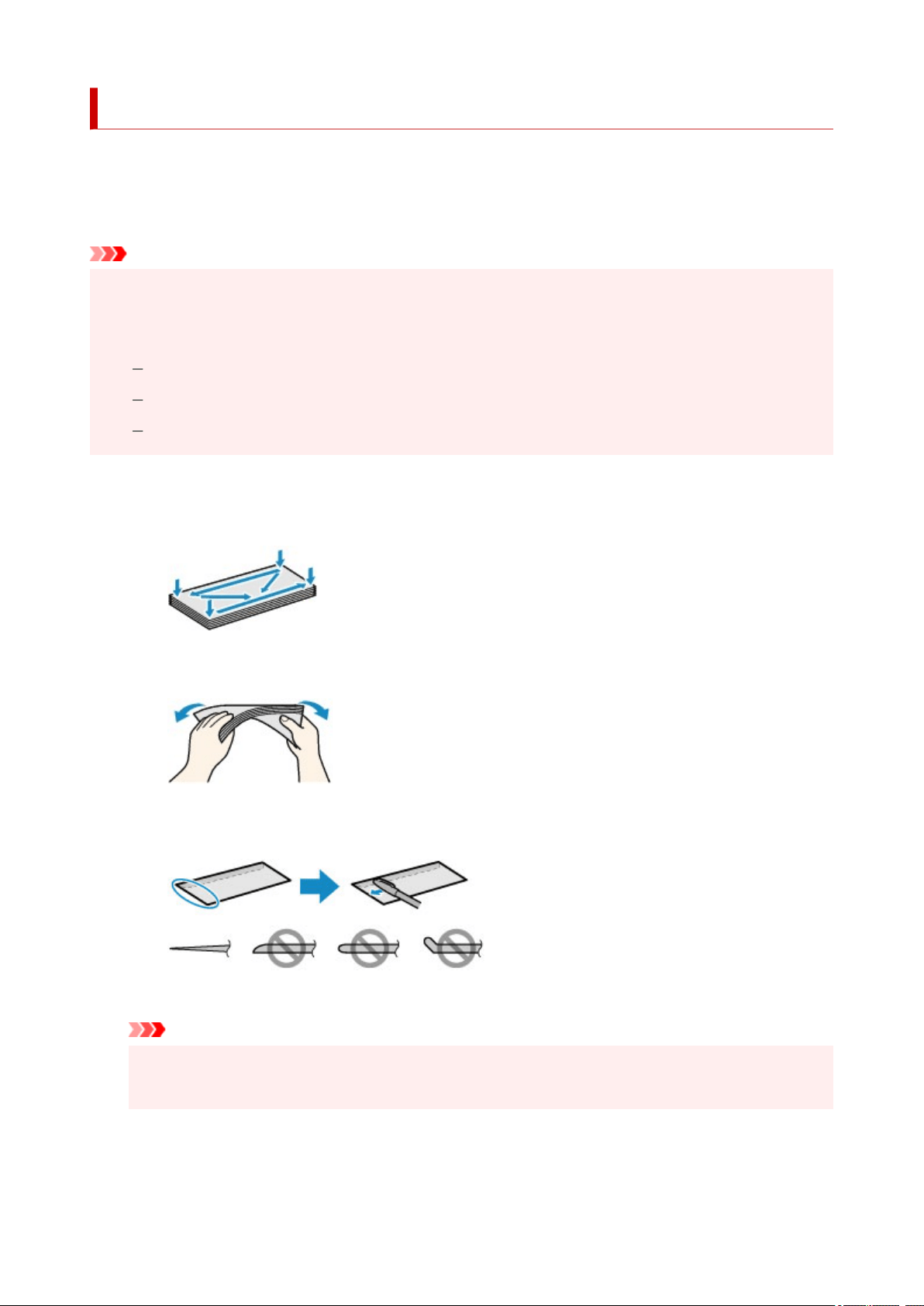
Loading Envelopes in Rear Tray
You can load Envelope DL and Envelope Com 10 on the rear tray.
The address is automatically rotated and printed according to the envelope's direction by specifying with the
printer driver properly.
Important
• Printing of envelopes from the operation panel or from a PictBridge (Wi-Fi) compliant device is not
supported.
• Do not use the following envelopes. They could jam in the printer or cause the printer to malfunction.
Envelopes with an embossed or treated surface
Envelopes with a double flap
Envelopes whose gummed flaps are already moistened and adhesive
1. Prepare envelopes.
• Press down on all four corners and edges of the envelopes to flatten them.
• If the envelopes are curled, hold the opposite corners and gently twist them in the opposite
direction.
• If the corner of the envelope flap is folded, flatten it.
• Use a pen to press the leading edge in the inserting direction flat and sharpen the crease.
The figures above show a side view of the leading edge of the envelope.
Important
• The envelopes may jam in the printer if they are not flat or the edges are not aligned. Make sure
that no curl or puff exceeds 0.12 in. (3 mm).
2. Open rear tray cover (A). Pull straight up and fold back paper support (B).
67
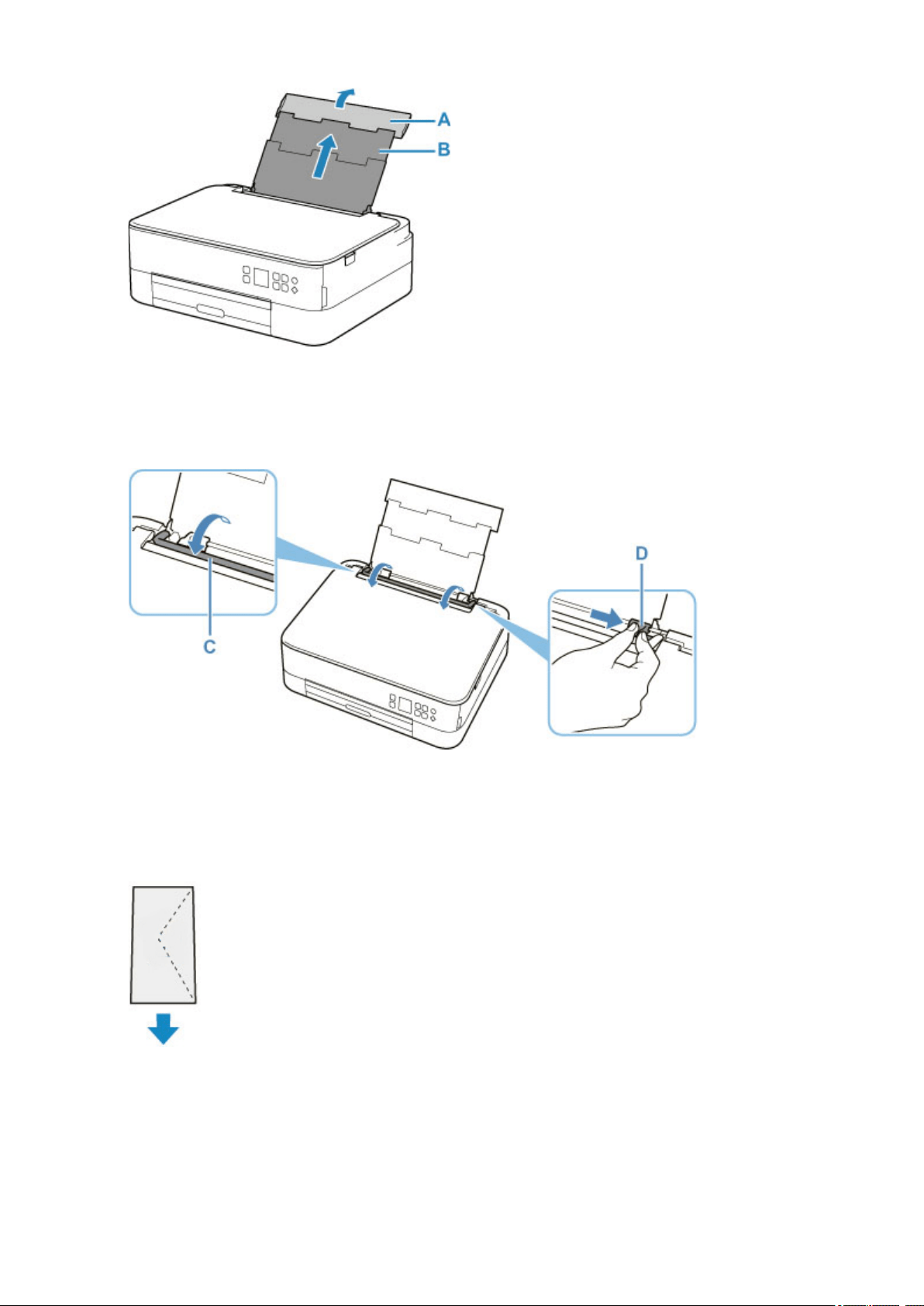
3. Open the feed slot cover (C).
4. Slide right paper guide (D) to open both paper guides.
5. Load envelopes in portrait orientation WITH PRINT SIDE FACING UP.
Up to 10 envelopes can be loaded at once.
Fold flap of the envelope and load the envelope in portrait orientation with the address side facing up.
6. Slide right paper guide (D) to align with both sides of envelopes.
Do not slide the paper guides too hard against the envelopes. The envelopes may not be fed properly.
68
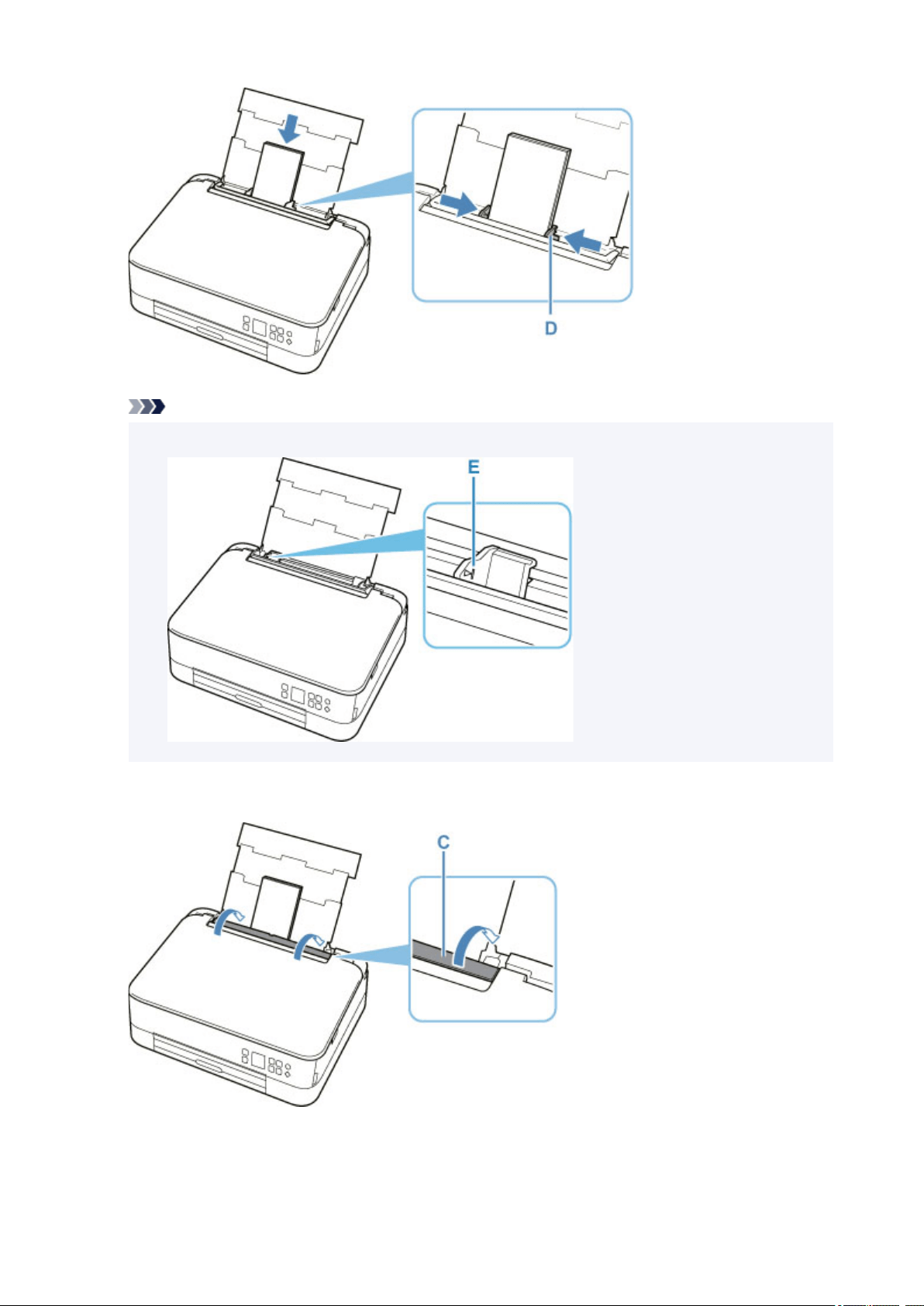
Note
• Do not load envelopes higher than the load limit mark (E).
7. Close feed slot cover (C) gently.
After closing the feed slot cover, the paper setting confirmation screen for the rear tray appears on the
LCD.
69
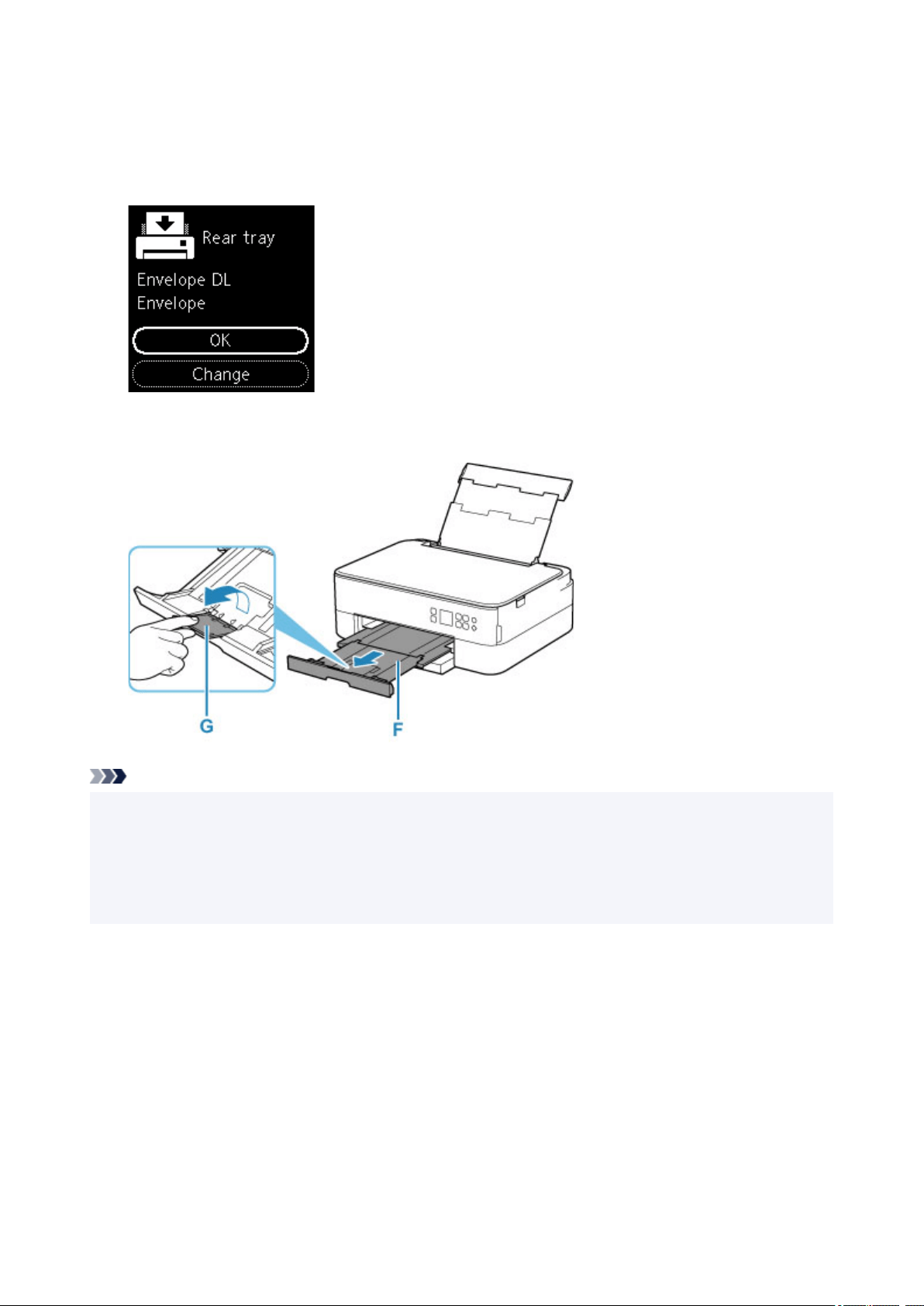
8. If page size and media type shown on LCD match size and type of envelopes loaded in rear
tray, select OK.
If not, select Change to change the settings in accordance with the size and type of the loaded
envelopes.
9. Pull out the paper output tray (F) and open the paper output support (G).
Note
• To prevent incorrect printing, this printer has a function that detects whether the settings for the paper
loaded on the rear tray matches the paper settings. Before printing, make print settings in accordance
with the paper settings. When this function is enabled, an error message is displayed if these settings
do not match to prevent incorrect printing. When this error message is displayed, check and correct the
paper settings.
70

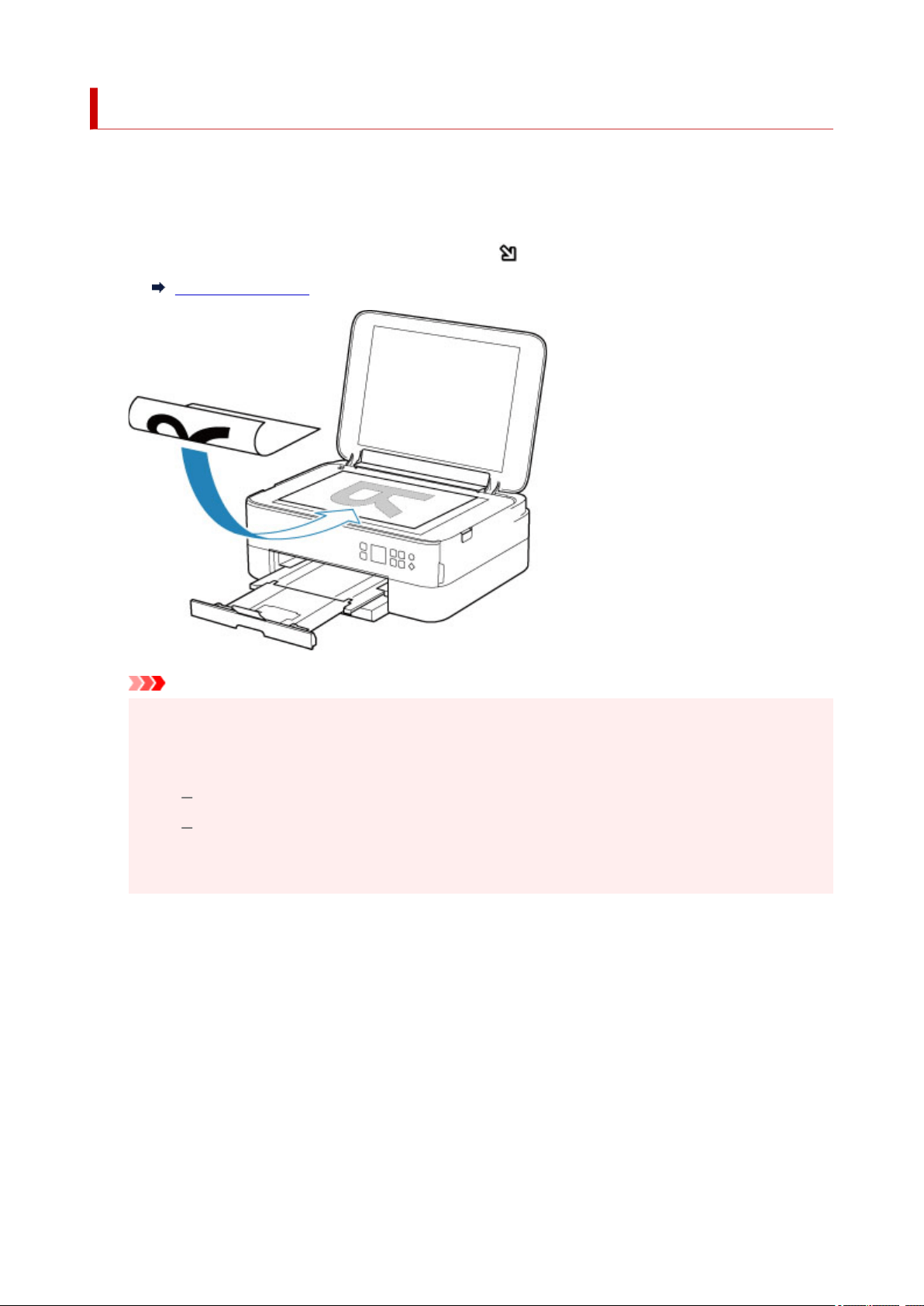
Loading Originals on Platen
1. Open the document cover.
2. Load original WITH SIDE TO SCAN FACING DOWN on platen.
Align the corner of the original with the alignment mark
.
Supported Originals
Important
• Be sure to observe the following when loading the original on the platen.
Failure to observe the following may cause the scanner to malfunction or the platen glass to
break.
Do not place any objects weighing 4.4 lb (2.0 kg) or more on the platen glass.
Do not put any pressure of 4.4 lb (2.0 kg) or more on the platen glass, such as pressing
down the original.
• The printer cannot scan the striped area (A) (0.04 in. (1 mm) from the edges of the platen glass).
72
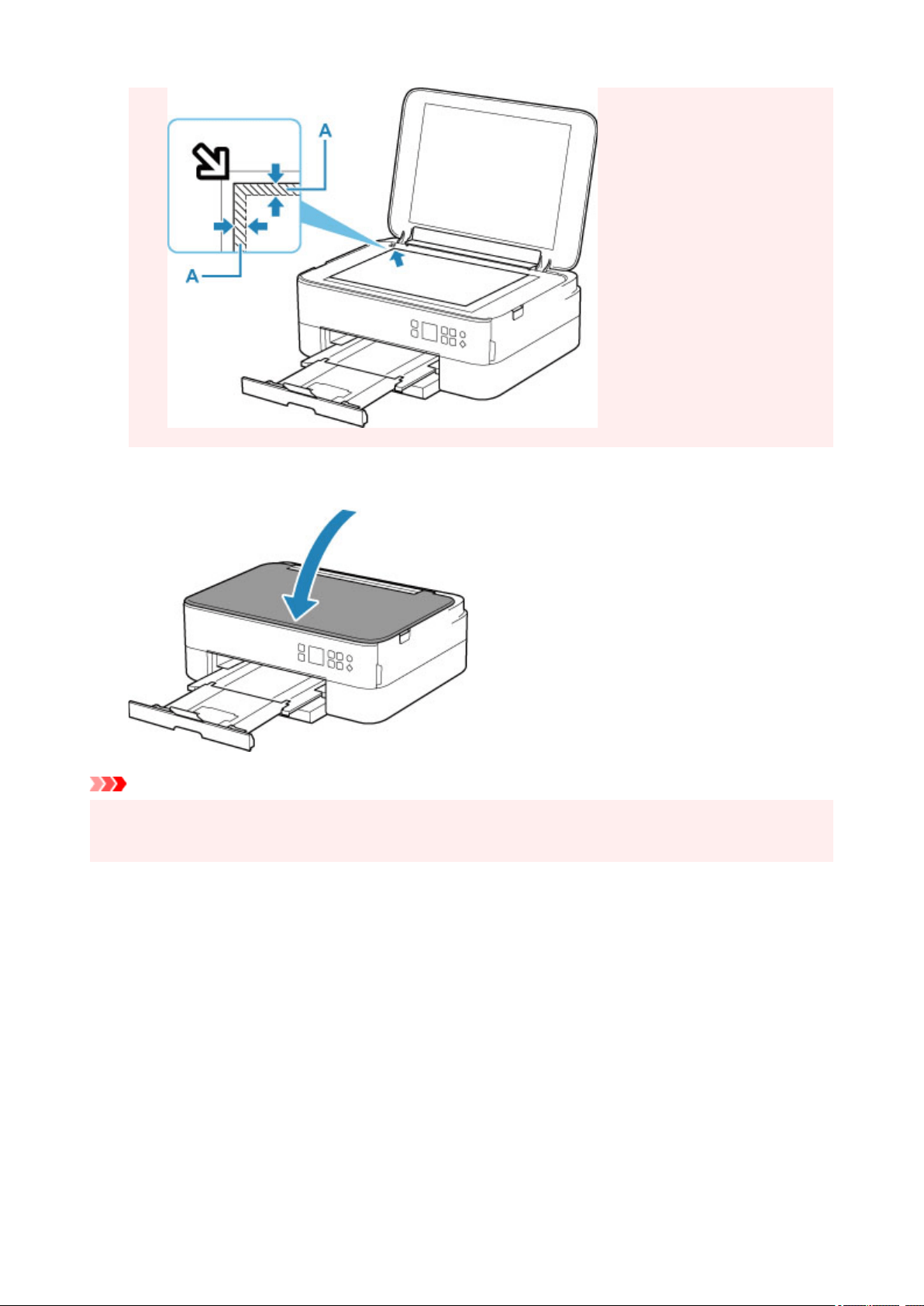
3. Close the document cover gently.
Important
• After loading the original on the platen, be sure to close the document cover before starting to copy or
scan.
73

Supported Originals
Item Details
Types of originals • Text document, magazine, or newspaper
• Printed photo, postcard, business card, or disc (BD/DVD/CD, etc.)
Size (width x height) Max. 8.5 x 11.7 in. (216 x 297 mm)
Note
• When loading a thick original such as a book on the platen, you can load it by removing the document
cover from the printer.
How to Detach / Attach the Document Cover
74
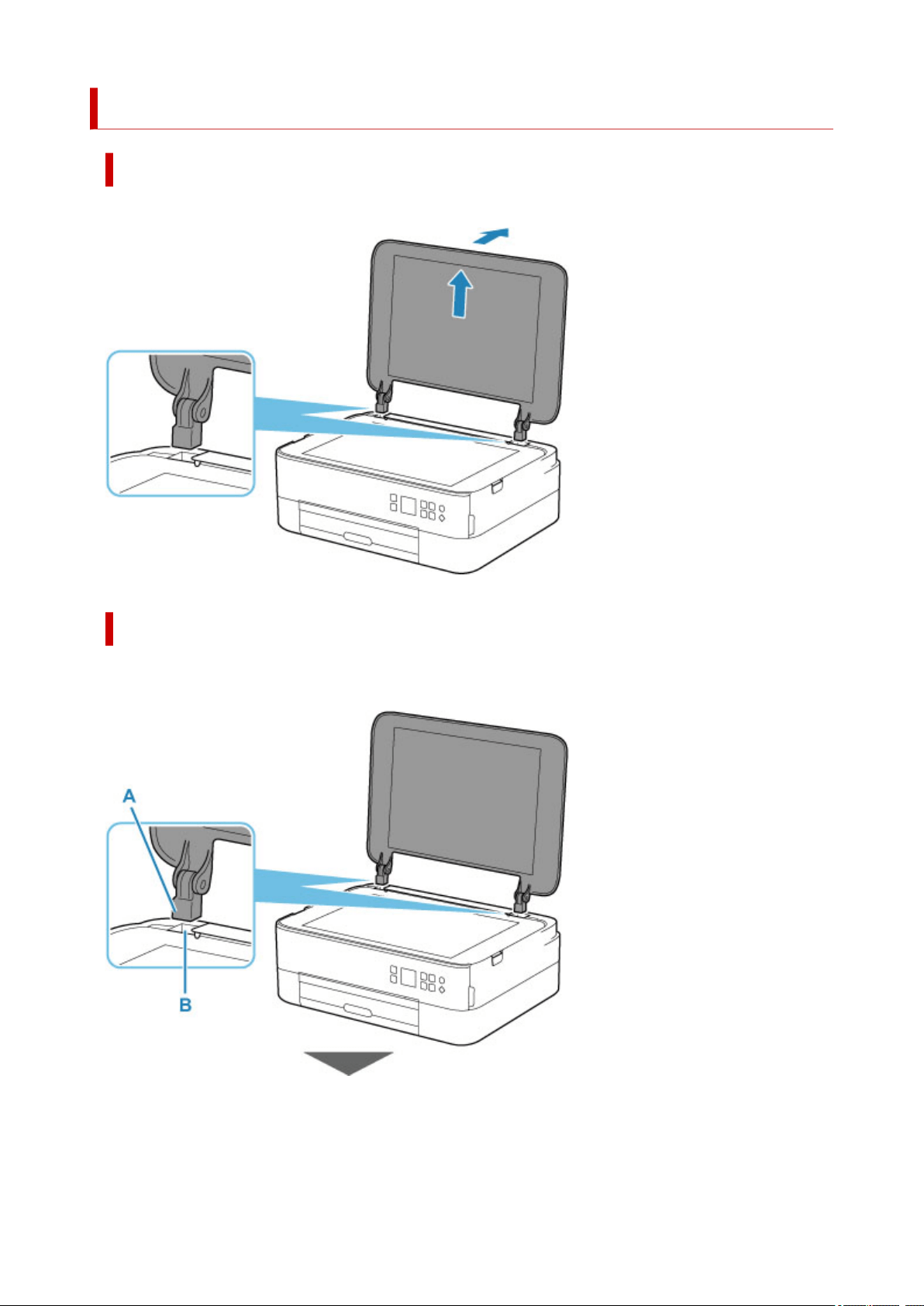
How to Detach / Attach the Document Cover
Detaching the document cover:
Hold up the document cover in portrait orientation and then tip it back.
Attaching the document cover:
Fit both hinges (A) of the document cover into the holder (B) and insert both hinges of the document cover
vertically as illustrated below.
75
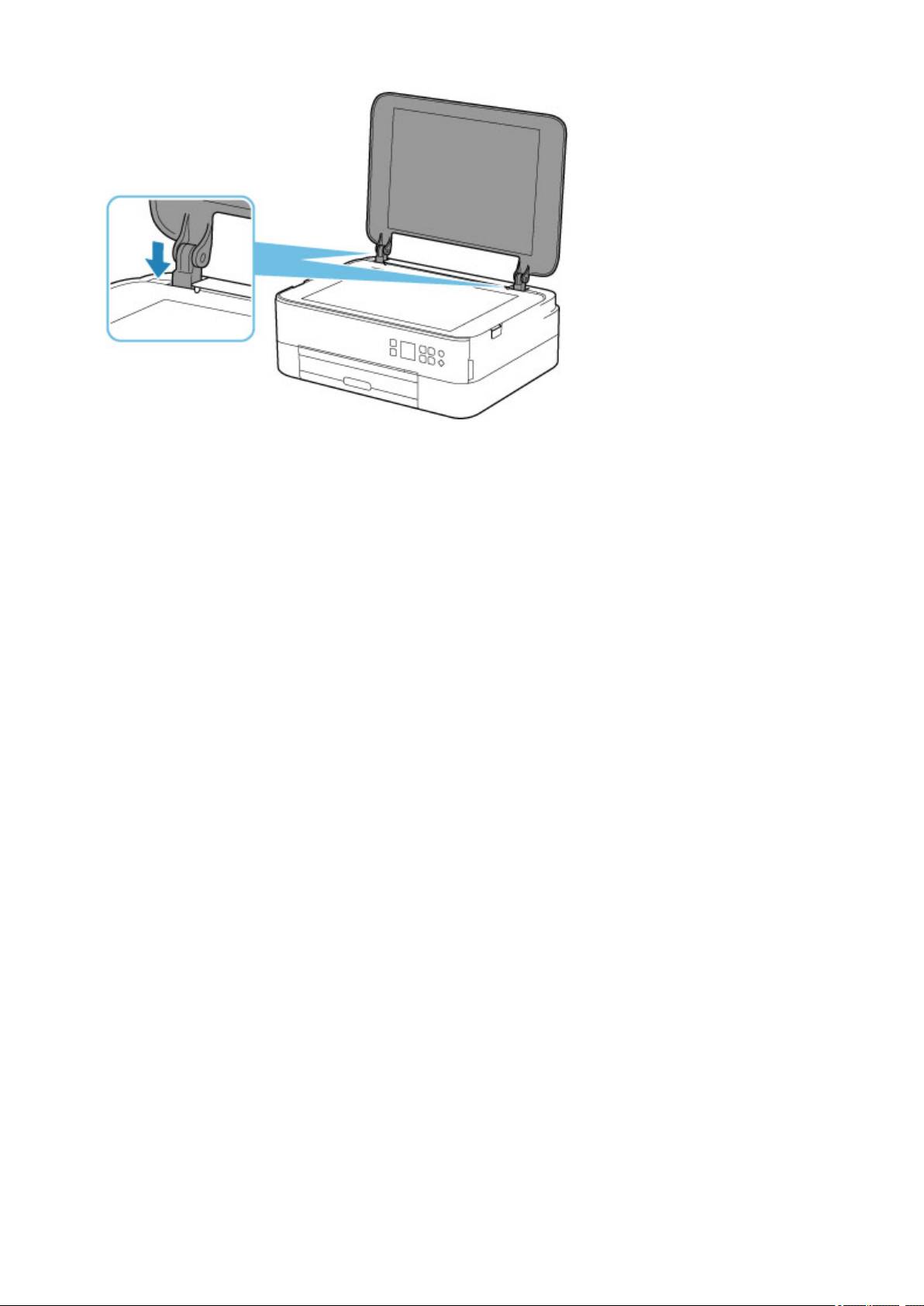
76

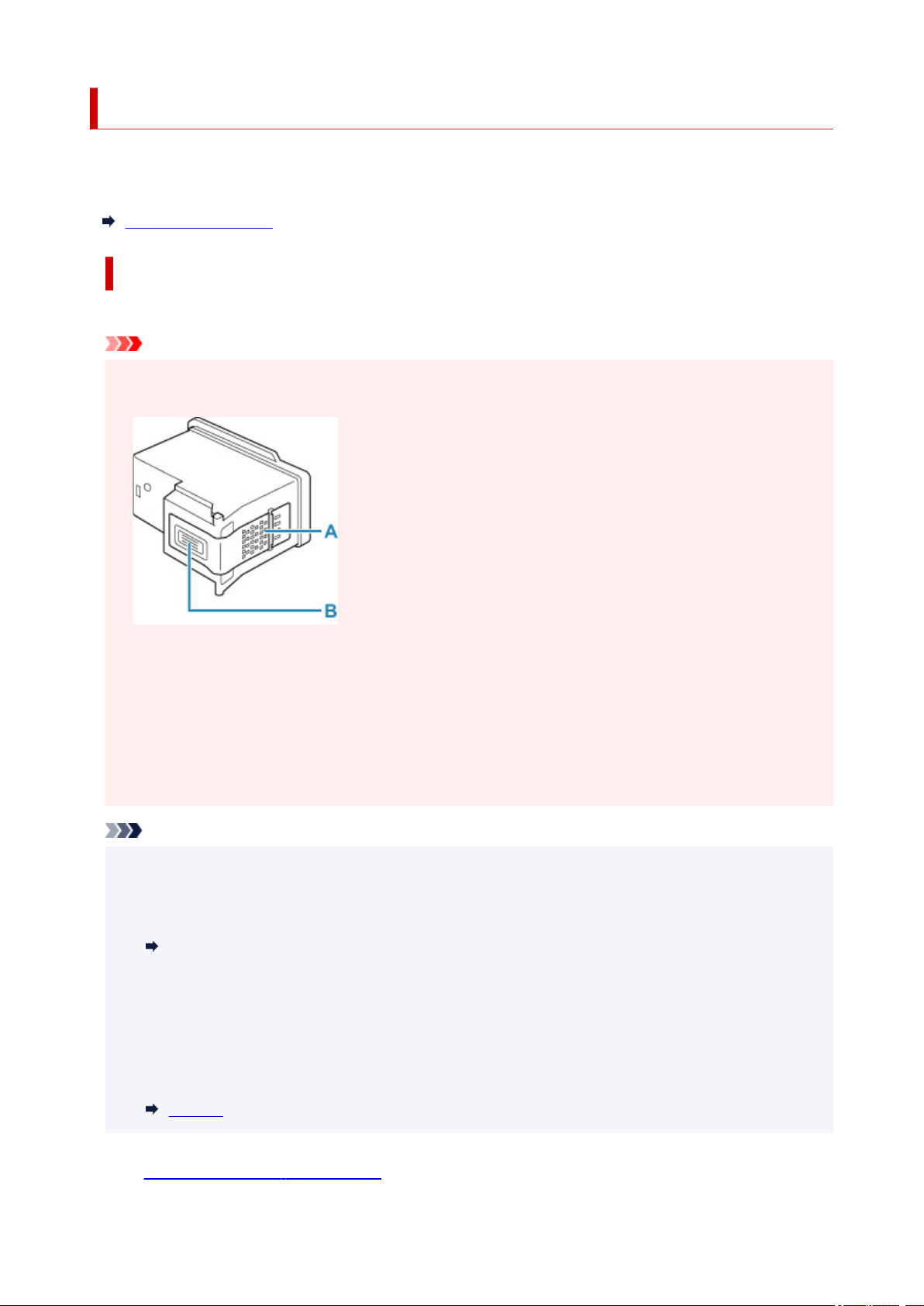
Replacing a FINE Cartridge
When remaining ink cautions or errors occur, the error message will appear on the LCD to inform you of the
error. In this state, the printer cannot print or scan. Check the error message and take appropriate action.
When Error Occurred
Replacing Procedure
When you need to replace a FINE cartridge, follow the procedure below.
Important
• Do not touch the electrical contacts (A) or print head nozzle (B) on a FINE cartridge. The printer may
not print properly if you touch them.
• If you remove a FINE cartridge, replace it immediately. Do not leave the printer with the FINE
cartridge removed.
• Use a new FINE cartridge for replacement. Installing a used FINE cartridge may cause the nozzles to
clog.
Furthermore, with such a FINE cartridge, the printer will not be able to inform you when to replace the
FINE cartridge properly.
Note
• For Windows, if a FINE cartridge runs out of ink, you can print with either color or black FINE
cartridge, in whichever ink remains, only for a while.
For information on how to configure this setting, see below.
Setting the Ink to be Used
• Color ink may be consumed even when printing a black-and-white document or when black-and-
white printing is specified.
Both color ink and black ink are also consumed in the standard cleaning and deep cleaning of the
print head, which may be necessary to maintain the performance of the printer. When ink runs out,
replace the FINE cartridge immediately with a new one.
Ink Tips
1. Check that printer is turned on.
78
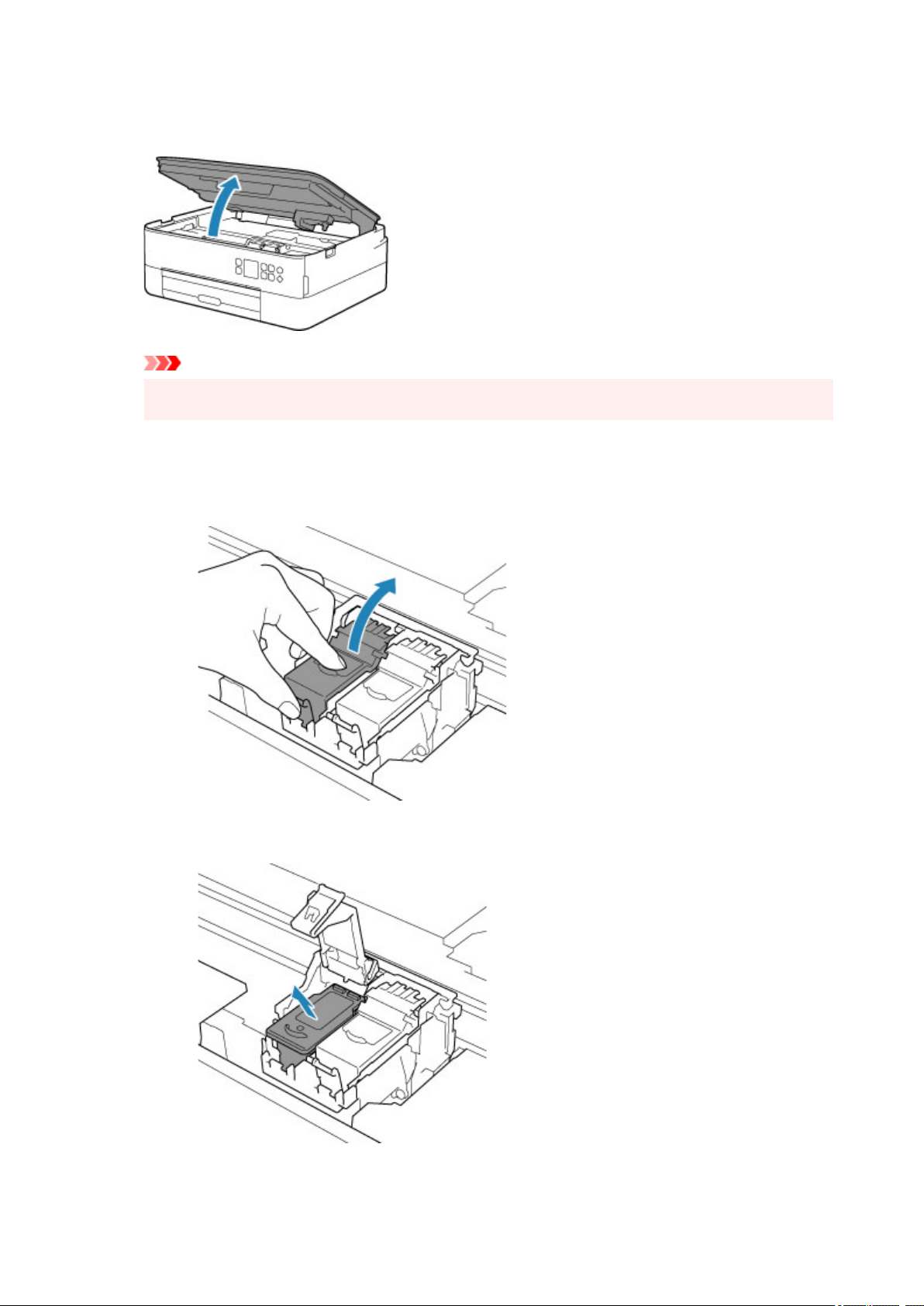
2. Open the scanning unit / cover.
The FINE cartridge holder moves to the replacement position.
Important
• Do not touch the metallic parts or other parts inside the printer.
3. Remove the empty FINE cartridge.
1. Pick up the ink cartridge locking cover to open it.
2. Remove the FINE cartridge.
79
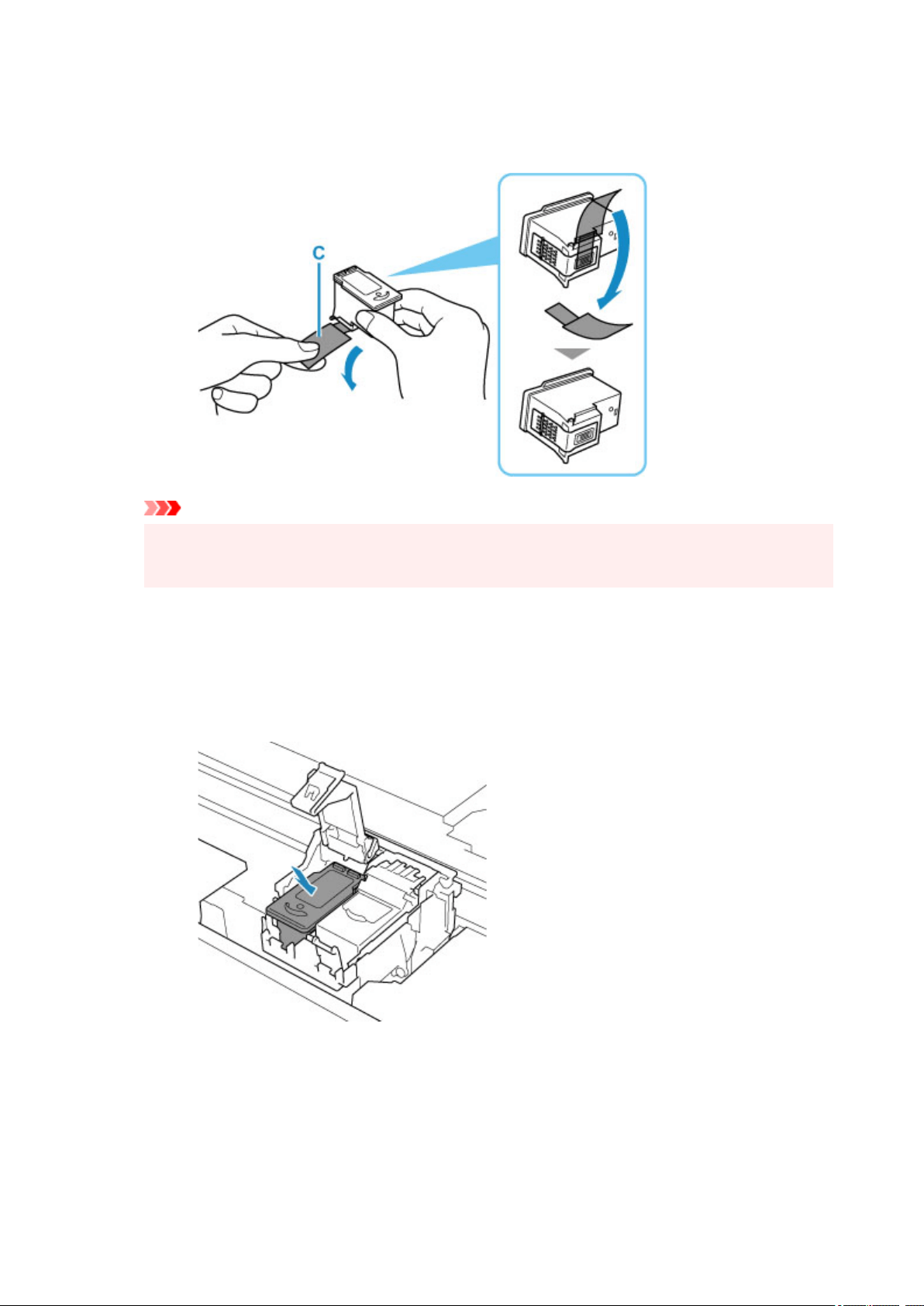
4. Prepare a new FINE cartridge.
1. Take new FINE cartridge out of its package and remove protective tape (C) gently.
Important
• Do not touch the electrical contacts or print head nozzle on a FINE cartridge. The printer may
not print properly if you touch them.
5. Install the FINE cartridge.
1. Insert the new FINE cartridge into the FINE cartridge holder.
The color FINE cartridge should be installed into the left slot and the black FINE cartridge should be
installed into the right slot.
2. Close the ink cartridge locking cover to secure theFINE cartridge.
Push the ink cartridge locking cover fully until a "click" sound is heard.
80
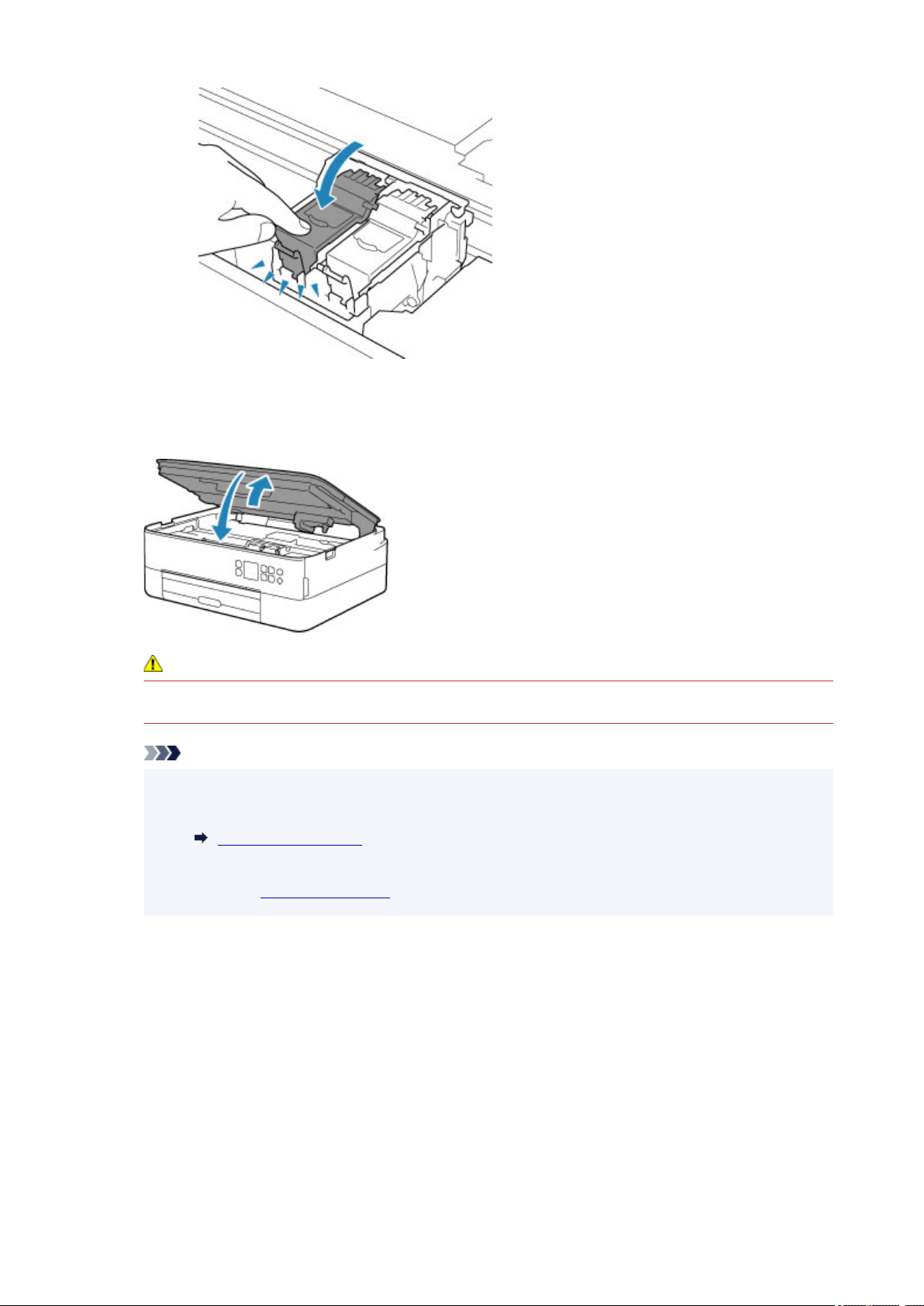
6. Close the scanning unit / cover.
To close the scanning unit / cover, hold it up once, then take it down gently.
Caution
• When closing the scanning unit / cover, be careful not to get your fingers caught.
Note
• If the error message appears on the LCD after the scanning unit / cover is closed, take
appropriate action.
When Error Occurred
• If the print head is out of alignment, as indicated by misaligned printed ruled lines or similar
symptoms, align the print head.
81
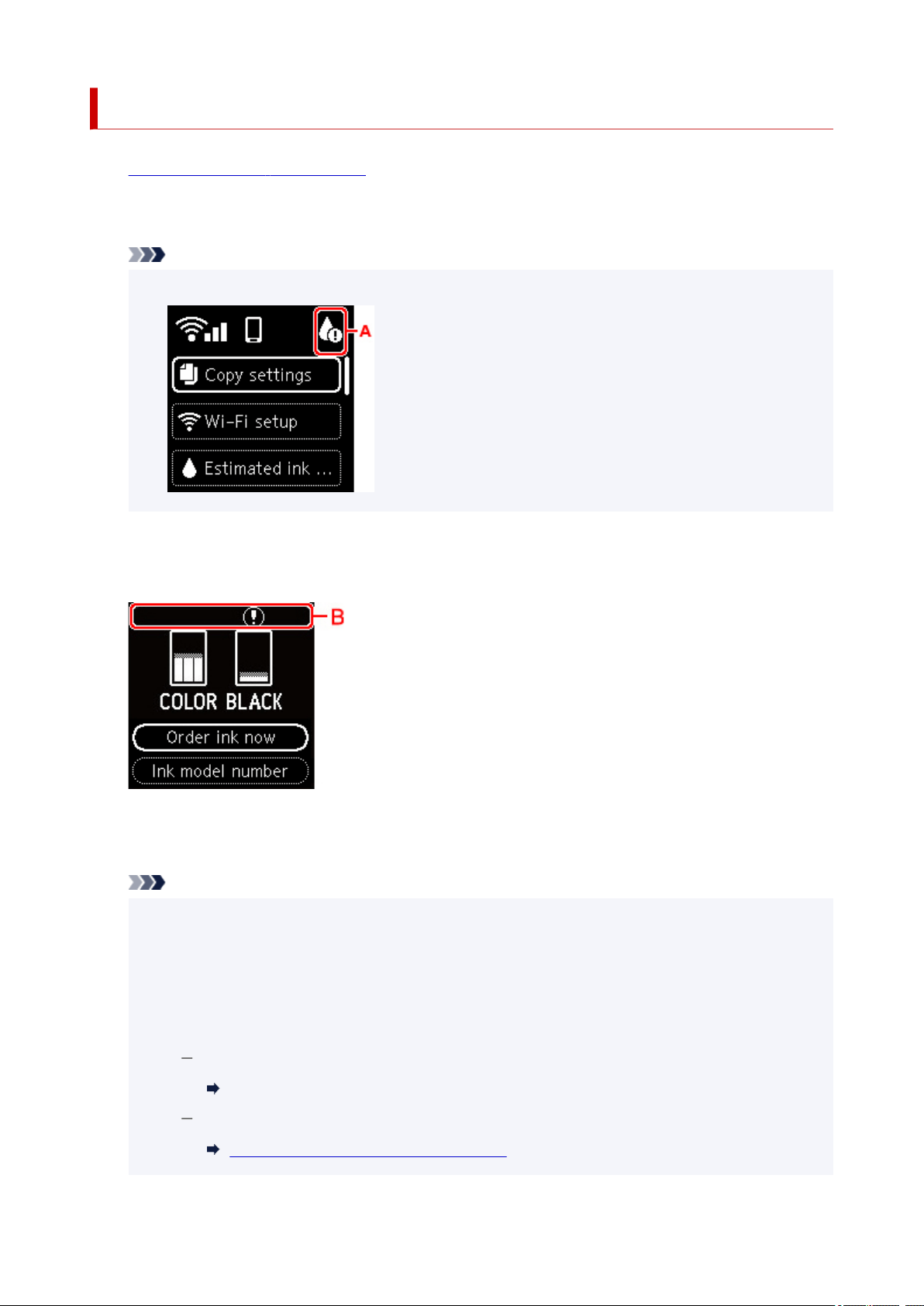
Checking Ink Status on the LCD
1.
Check that printer is turned on.
2. Press the OK button.
Note
• A symbol appears in the area A if there is any information about the remaining ink level.
3. Select Estimated ink levels.
A symbol is displayed on top of the FINE Cartridge (area B) where there is a notification.
The ink is running low. Prepare a new ink cartridge.
The resulting print quality may not be satisfactory, if printing is continued under this condition.
Note
• The above screen shows estimated ink levels.
• Select Order ink now and press the QR button to display the QR code and access the ink
purchasing site. Cost of connecting to Internet is to be born by the customer.
• You can check the model number of the FINE cartridge by selecting Ink model number.
• You can also check the ink status on the computer screen.
For Windows:
Checking Ink Status from Your Computer
For macOS:
Checking Ink Status from Your Computer
82

Ink Tips
How is ink used for various purposes other than printing?
Ink may be used for purposes other than printing. It is used for cleaning to keep the printing clean. To
keep printer's performance, Canon printer performs cleaning automatically according to its condition. A
small amount of ink is consumed when cleaning.
Does black-and-white printing use color ink?
Black-and-white printing may use ink other than black ink depending on the type of printing paper or the
settings of the printer driver. So, color ink is consumed even when printing in black-and-white.
83

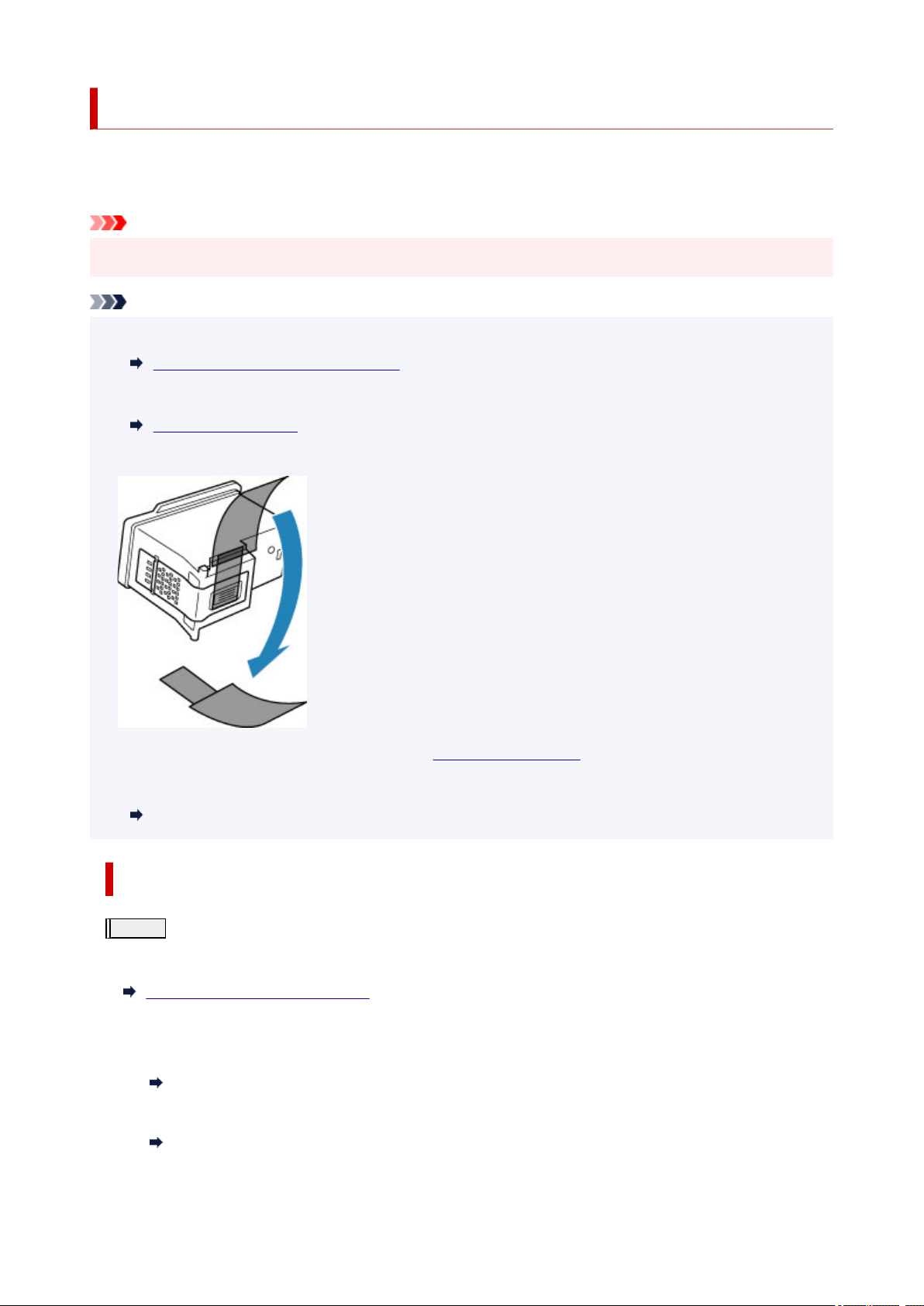
Maintenance Procedure
If print results are blurred, colors are not printed correctly, or print results are unsatisfactory (e.g. misaligned
printed ruled lines), perform the maintenance procedure below.
Important
• Do not rinse or wipe the FINE cartridge. This can cause trouble with the FINE cartridge.
Note
• Check if ink remains in the FINE cartridge.
Checking the Ink Status on the LCD
• Check if the FINE cartridge is installed correctly.
Replacing Procedure
Also check if the protective tape on the bottom of the FINE cartridge is removed.
• If an error message appears on the LCD, see When Error Occurred.
• For Windows, increasing the print quality in the printer driver settings may improve the print result.
Changing the Print Quality and Correcting Image Data
When the Print Results Are Blurred or Uneven:
Step1
Print the nozzle check pattern.
From the printer
Printing the Nozzle Check Pattern
From the computer
• For Windows:
Printing a Nozzle Check Pattern
• For macOS:
Printing a Nozzle Check Pattern
85

Step2
Examine the nozzle check pattern.
If there are missing lines or horizontal white streaks in the pattern:
Step3
Clean the print head.
From the printer
Cleaning the Print Head
From the computer
• For Windows:
Cleaning the Print Heads
• For macOS:
Cleaning the Print Heads
After cleaning the print head, print and examine the nozzle check pattern: Step1
If the problem is not resolved after performing from step 1 to step 3 twice:
Step4
Clean the print head deeply.
From the printer
Deep Print Head Cleaning
From the computer
• For Windows:
Cleaning the Print Heads
• For macOS:
Cleaning the Print Heads
If the problem is not resolved, turn off the power and clean the print head deeply again after 24 hours.
If the problem is still not resolved:
Step5
Replace the FINE cartridge.
Replacing a FINE Cartridge
Note
• If the problem is still not resolved after replacing the FINE cartridge, contact your nearest Canon
service center to request a repair.
86

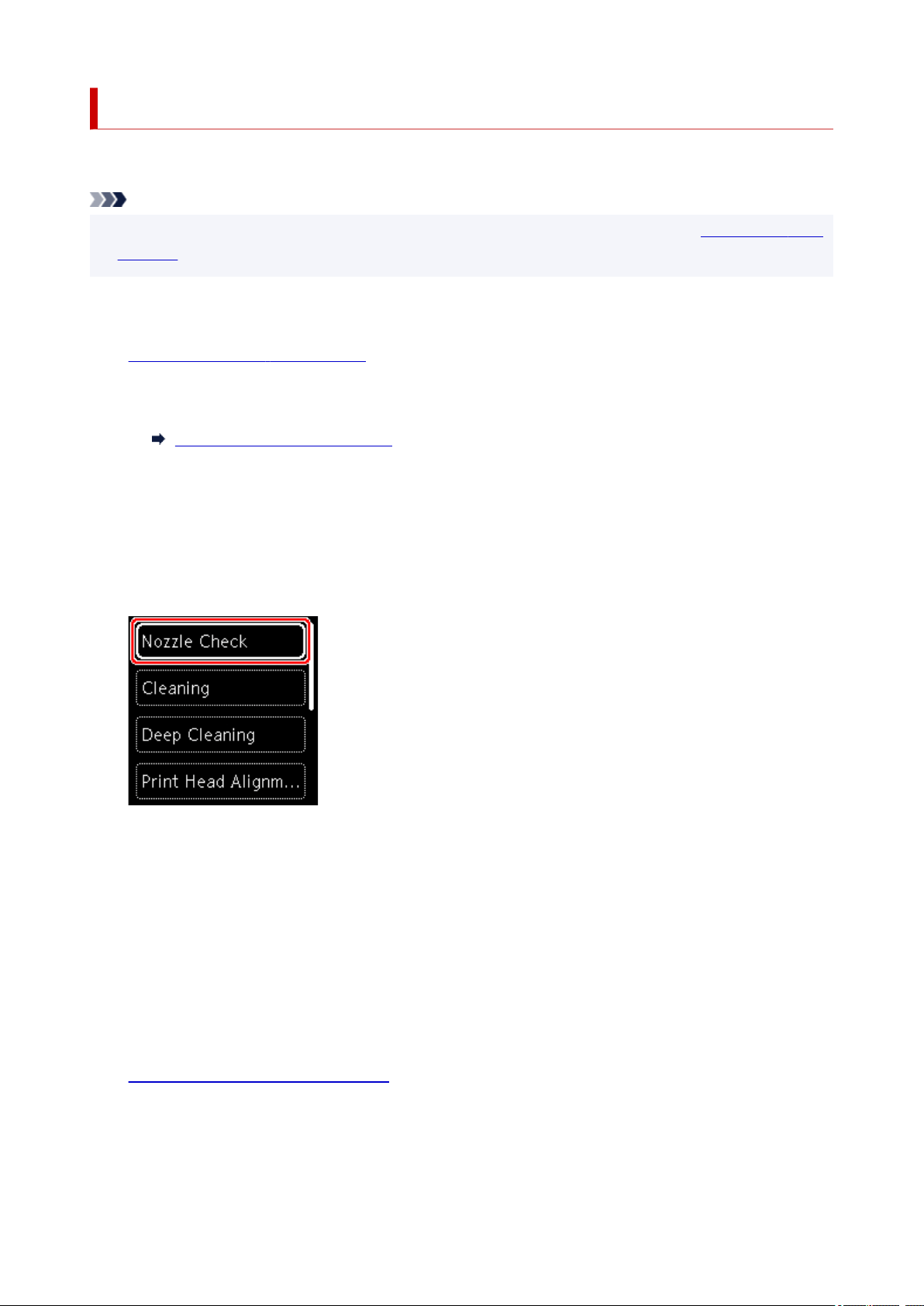
Printing the Nozzle Check Pattern
Print the nozzle check pattern to determine whether the ink ejects properly from the print head nozzle.
Note
• If the remaining ink level is low, the nozzle check pattern will not be printed correctly.
Replace the FINE
cartridge whose ink is low.
You need to prepare: a sheet of A4 or Letter-sized plain paper
1. Check that printer is turned on.
2. Load a sheet of A4 or Letter-sized plain paper in the cassette.
Loading Plain Paper in Cassette
3. Press the OK button.
4. Select Maintenance.
5. Select Nozzle Check.
The confirmation screen will appear.
6. Select Yes.
7. Press the OK button.
The nozzle check pattern will be printed and two pattern confirmation screens will appear on the LCD.
8. Select Next.
9.
Examine the nozzle check pattern.
88
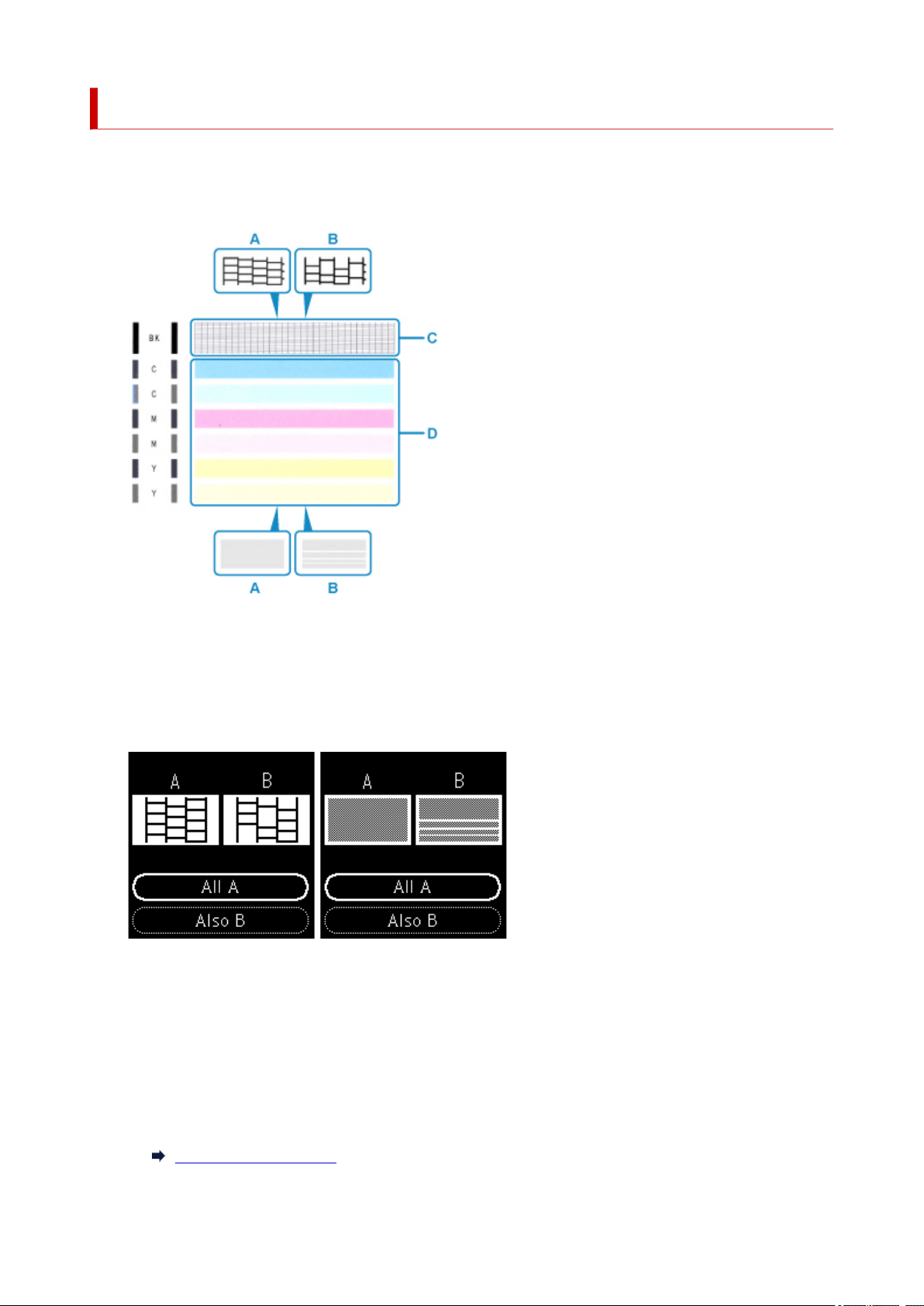
Examining the Nozzle Check Pattern
Examine the nozzle check pattern, and clean the print head if necessary.
1. Check if there are missing lines in the pattern C or horizontal white streaks in the pattern D.
A: No missing lines/No horizontal white streaks
B: Lines are missing/Horizontal white streaks are present
2. Select the pattern that is closer to the printed nozzle check pattern on the confirmation
screen.
For A (no missing lines or no horizontal white streaks) in both the pattern C and pattern D:
The cleaning is not required. Select All A, confirm the message, then select OK.
For B (lines are missing or horizontal white streaks are present) in the pattern C or pattern D, or
in both patterns:
The cleaning is required. Select Also B, then select Yes on the cleaning confirmation screen.
The printer starts cleaning the print head.
Cleaning the Print Head
89

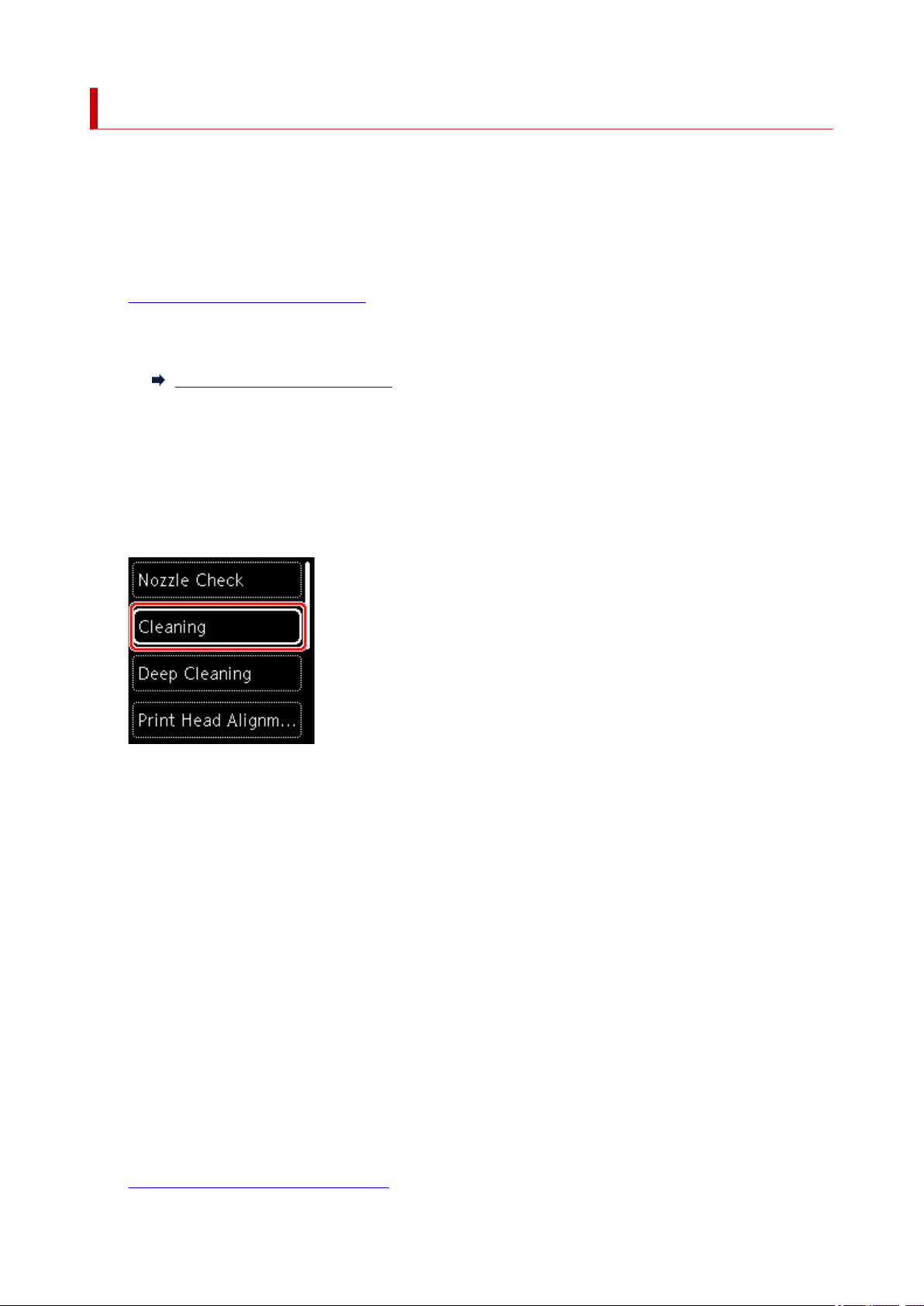
Cleaning the Print Head
Clean the print head if lines are missing or if horizontal white streaks are present in the printed nozzle check
pattern. Cleaning unclogs the nozzles and restores the print head condition. Cleaning the print head
consumes ink, so clean the print head only when necessary.
You need to prepare: a sheet of A4 or Letter-sized plain paper
1.
Check that printer is turned on.
2. Load a sheet of A4 or Letter-sized plain paper in the cassette.
Loading Plain Paper in Cassette
3. Press the OK button.
4. Select Maintenance.
5. Select Cleaning.
The confirmation screen will appear.
6. Select Yes.
The printer starts cleaning the print head.
Do not perform any other operations until the printer completes the cleaning of the print head. This takes
about 2 minutes.
The pattern print confirmation screen will appear.
7. Select Yes.
8. Press the OK button.
The nozzle check pattern will be printed.
9. Select Next.
10.
Examine the nozzle check pattern.
91

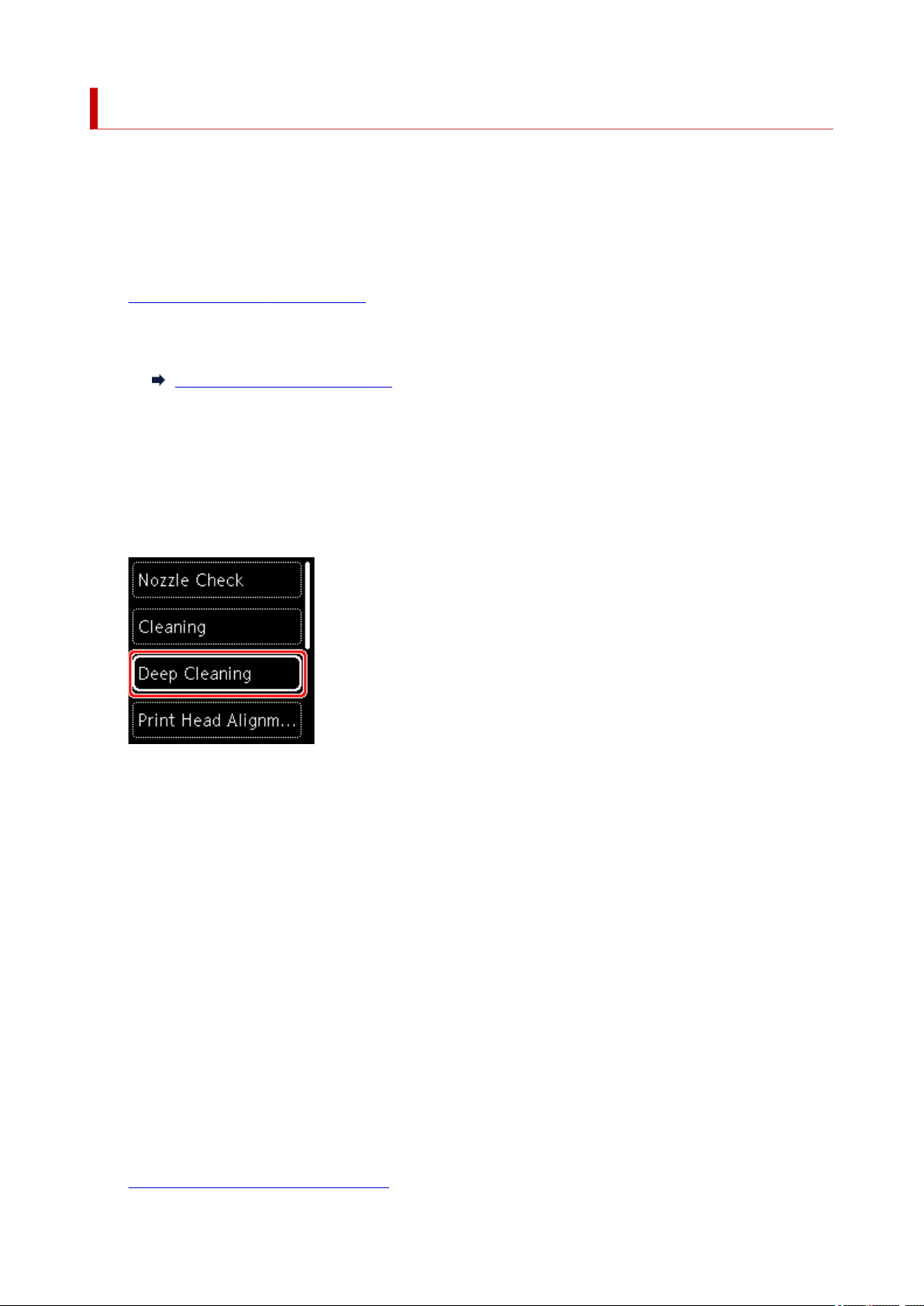
Deep Print Head Cleaning
If print quality does not improve by the standard cleaning of the print head, clean the print head deeply.
Cleaning the print head deeply consumes more ink than the standard cleaning of the print head, so clean
the print head deeply only when necessary.
You need to prepare: a sheet of A4 or Letter-sized plain paper
1.
Check that printer is turned on.
2. Load a sheet of A4 or Letter-sized plain paper in the cassette.
Loading Plain Paper in Cassette
3. Press the OK button.
4. Select Maintenance.
5. Select Deep Cleaning.
The confirmation screen will appear.
6. Select Yes.
The printer starts cleaning the print head deeply.
Do not perform any other operations until the printer completes the deep cleaning of the print head. This
takes about 1 to 2 minutes.
The pattern print confirmation screen will appear.
7. Select Yes.
8. Press the OK button.
The nozzle check pattern will be printed.
9. When the completion message appears, select OK.
10.
Examine the nozzle check pattern.
93

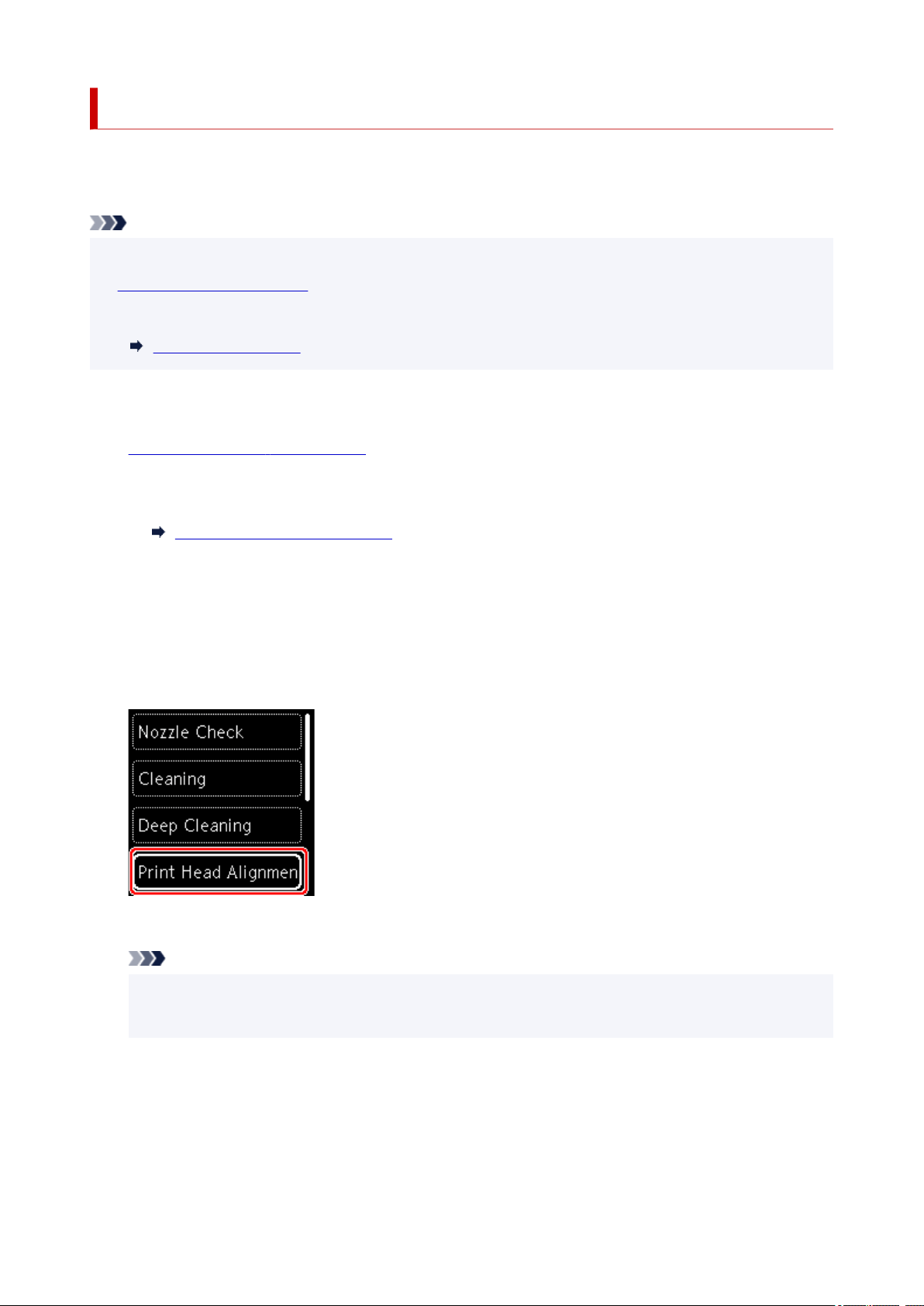
Aligning the Print Head
If printed ruled lines are misaligned or print results are otherwise unsatisfactory, adjust the print head
position.
Note
• If the remaining ink level is low, the print head alignment sheet will not be printed correctly.
Replace the FINE Cartridge whose ink is low.
• If ink runs out as the print head alignment sheet is printed, an error message appears on the LCD.
When Error Occurred
You need to prepare: two sheets of A4 or Letter-sized plain paper
1. Check that printer is turned on.
2. Load two sheets of A4 or Letter-sized plain paper in cassette.
Loading Plain Paper in Cassette
3. Press the OK button.
4. Select Maintenance.
5. Select Print Head Alignment - Auto.
The confirmation screen will appear.
Note
• To print and check the current head position alignment values, select Print the head alignment
value.
6. Select Yes.
7. Press the OK button.
The print head alignment sheet is printed, and the print head is aligned automatically.
95

This takes about 4 to 5 minutes.
Note
• If automatic print head alignment fails, an error message appears on the LCD.
When Error Occurred
8. When completion message appears, select OK.
Note
• If the print results are still not satisfactory after adjusting the print head position as described above,
adjust the print head position manually.
For Windows:
You can also align the print head manually from a computer.
Adjusting Print Head Position Manually
96
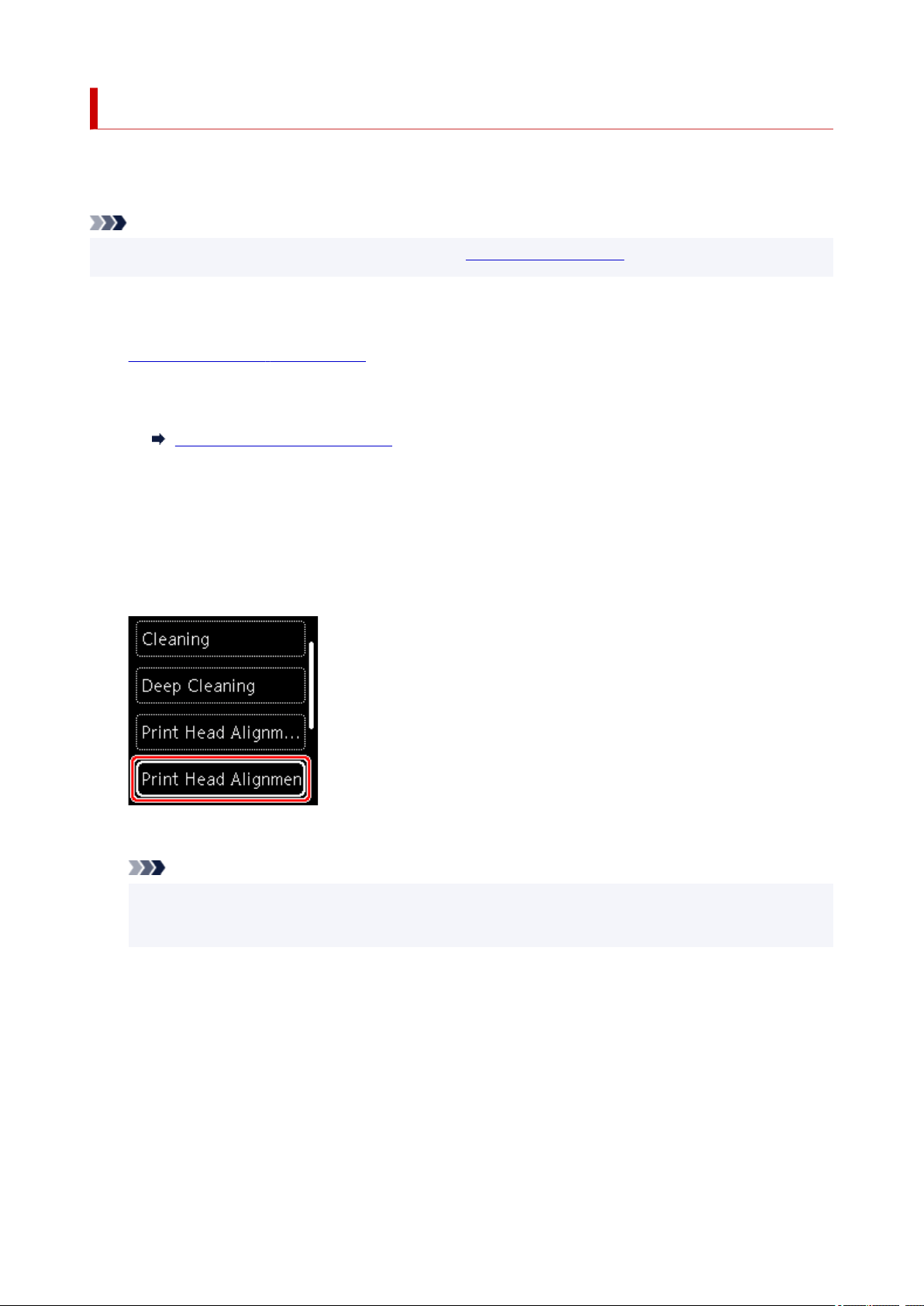
Aligning the Print Head Manually
Try aligning the print head manually after automatic print head alignment if printing results are not as
expected, as when printed ruled lines are misaligned.
Note
• For details on automatic print head alignment, see
Aligning the Print Head.
What you will need: three sheets of A4 or Letter-sized plain paper
1. Check that printer is turned on.
2. Load three sheets of A4 or Letter-sized plain paper in cassette.
Loading Plain Paper in Cassette
3. Press the OK button.
4. Select Maintenance.
5. Select Print Head Alignment - Manual.
The confirmation screen will appear.
Note
• To print and check the current head position alignment values, select Print the head alignment
value.
6. Check message and select Yes.
7. Press the OK button.
The print head alignment pattern will be printed.
8. When Did the patterns print correctly? appears, make sure pattern was printed correctly,
and if so, select Yes.
97
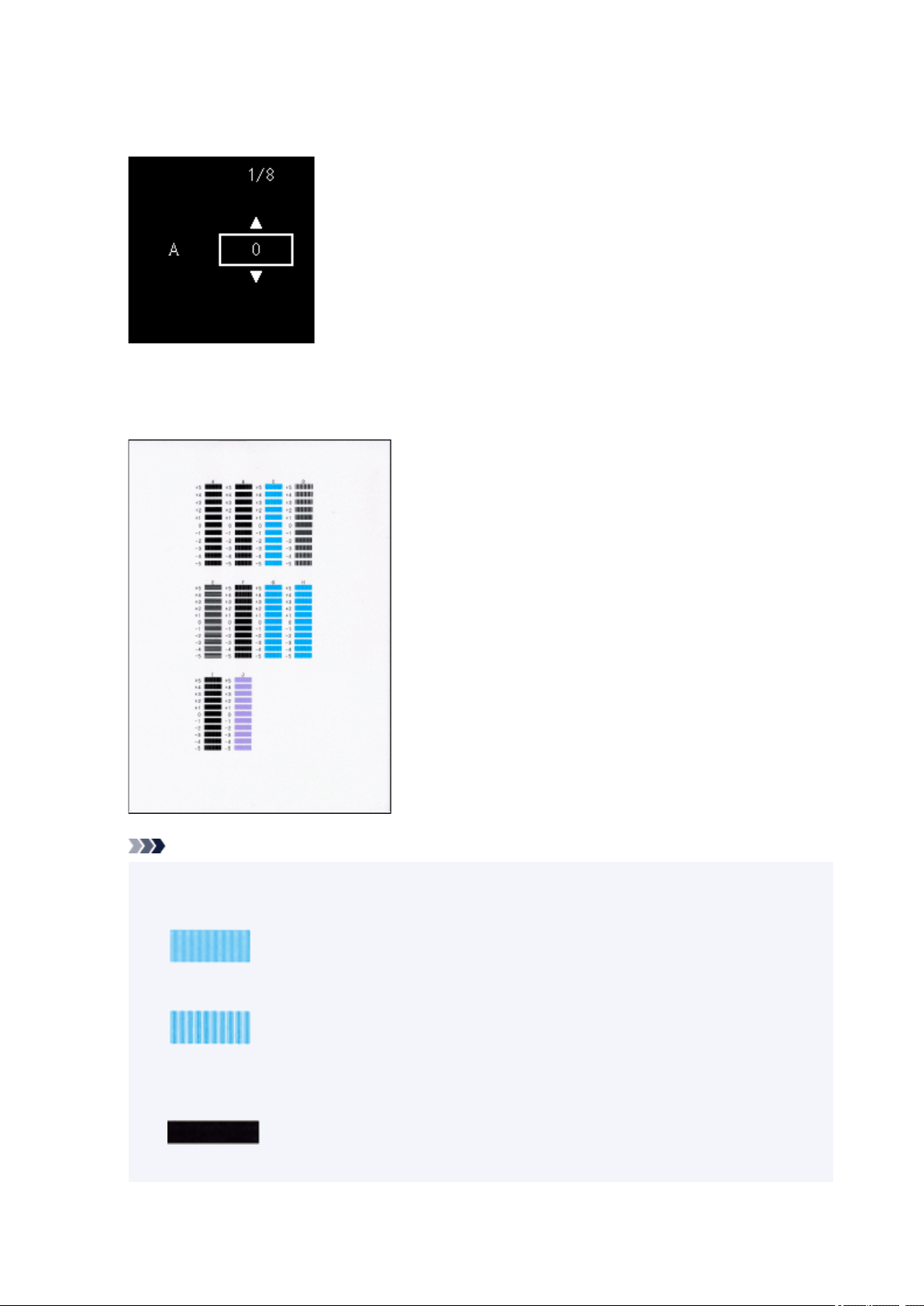
9. Select OK.
The input screen for head position alignment values is displayed.
10. Examine first patterns. In column A, find pattern in which streaks are least noticeable, select
the number of that pattern, and then press the OK button.
Note
• If all patterns look different, choose the pattern in which vertical streaks are least noticeable.
Subtle vertical streaks
Noticeable vertical streaks
• If all patterns look different, choose the pattern in which horizontal streaks are least noticeable.
Subtle horizontal streaks
Noticeable horizontal streaks
98
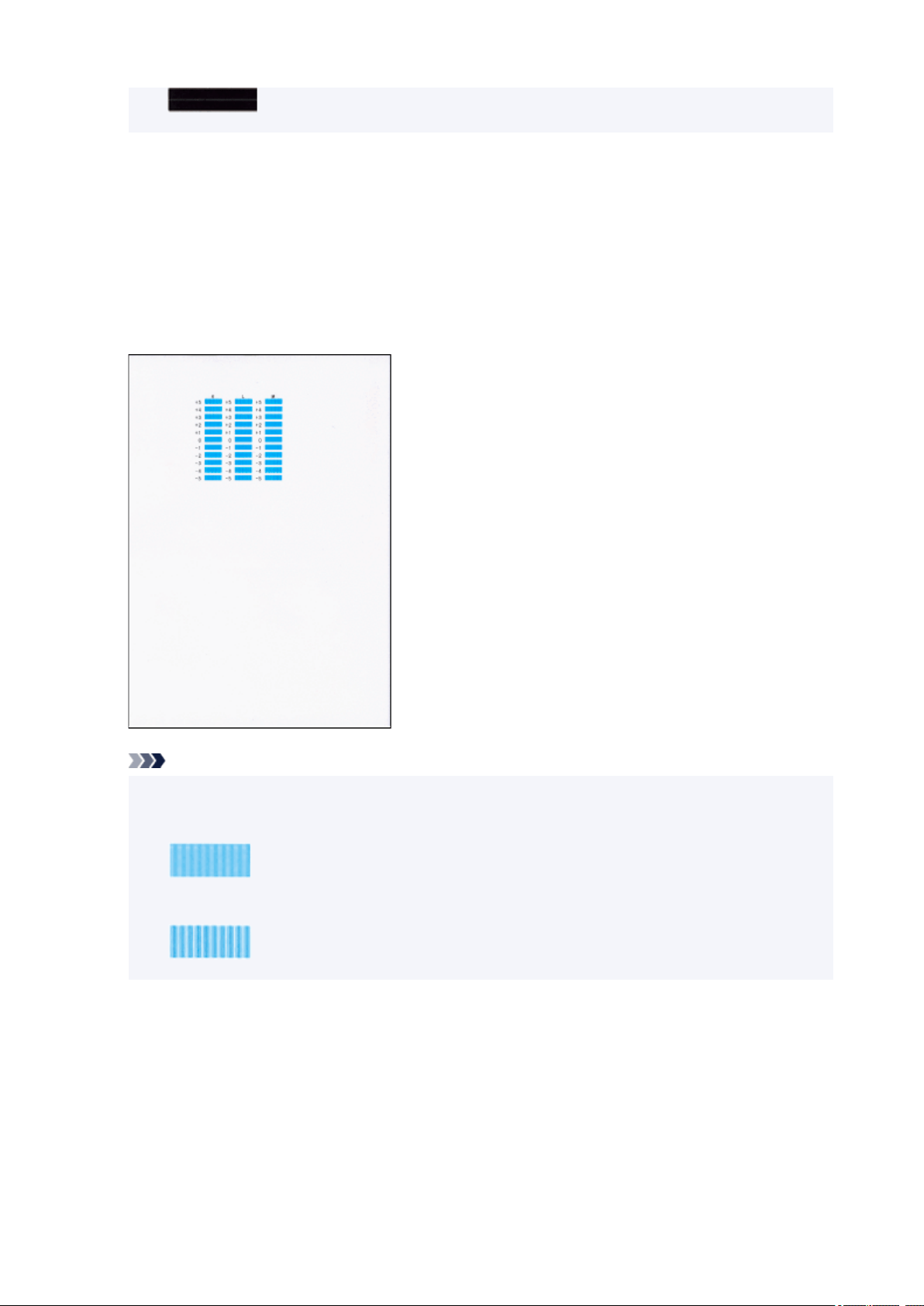
11. Repeat these steps for columns B to J.
12. Check message and press the OK button.
The second set of patterns is printed.
13. Examine second patterns. In column K, find pattern in which streaks are least noticeable,
select the number of that pattern, and then press the OK button.
Note
• If all patterns look different, choose the pattern in which vertical streaks are least noticeable.
Subtle vertical streaks
Noticeable vertical streaks
14. Repeat these steps for columns L to M.
15. Check message and press the OK button.
The third set of patterns is printed.
16. Examine third patterns. In column N, find pattern in which stripes are least noticeable,
select the number of that pattern, and then press the OK button.
99
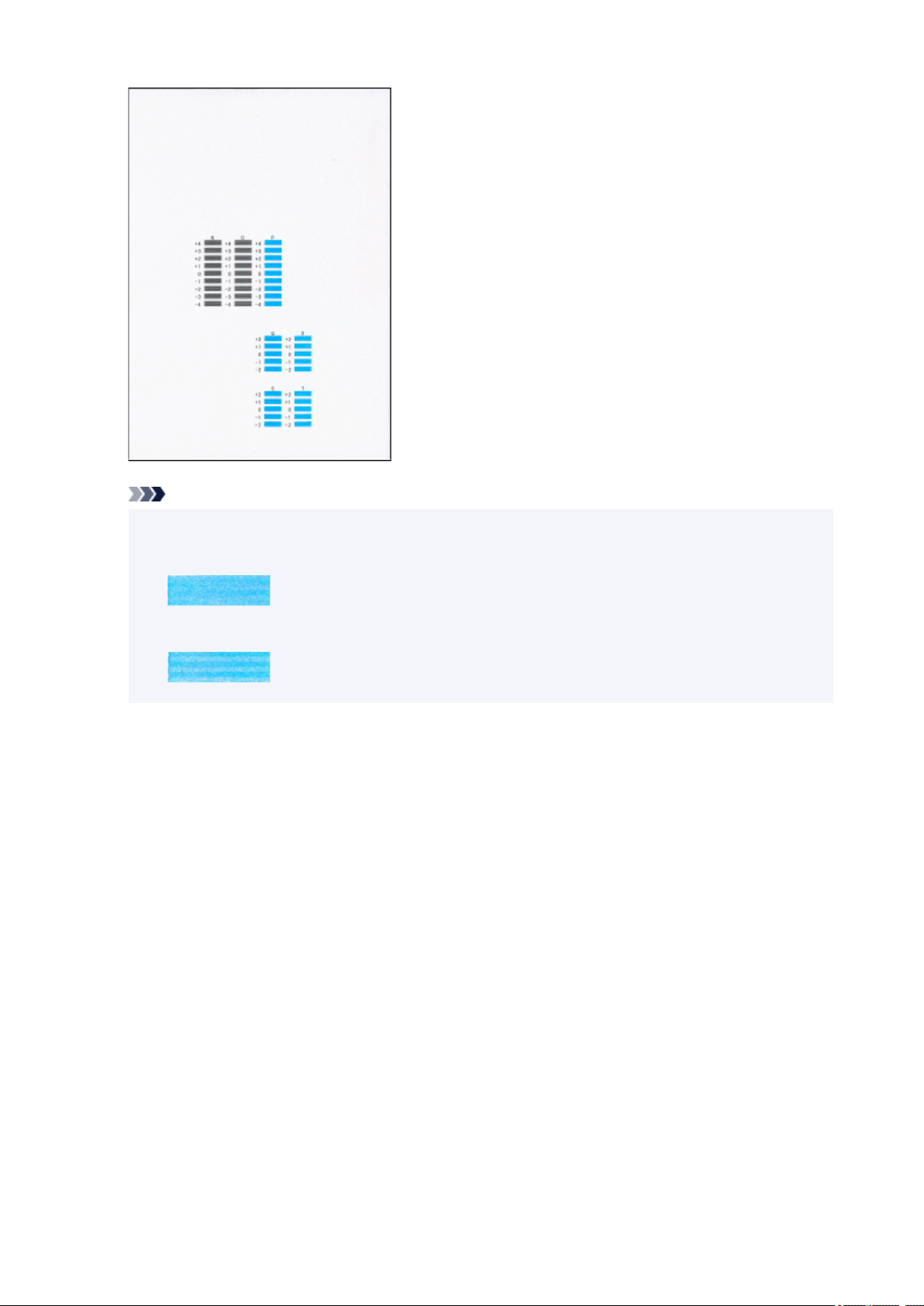
Note
• If all patterns look different, choose the pattern in which horizontal stripes are least noticeable.
Subtle horizontal stripes
Noticeable horizontal stripes
17. Repeat these steps for columns O to T.
18. When completion message appears, select OK.
100


Opening Remote UI for Maintenance
You can perform maintenance of printer and change the settings from a Remote UI.
The following is the procedure to open a Remote UI.
1. Open System Preferences, and select Printers & Scanners
2. Select your model from the printer list, and click Options & Supplies...
3. Click Show Printer Webpage... in General tab
Remote UI starts.
Note
• The password may have to be entered after Remote UI starts. In such a case, enter the password
and click OK. In case you do not know the password, click Passwords and cookies.
Related Topics
Cleaning the Print Heads
Adjusting Print Head Position
Checking Ink Status from Your Computer
Printing a Nozzle Check Pattern
Managing the Printer Power
Changing the Printer Operation Mode
Reducing the Printer Noise
102

Cleaning the Print Heads
The print head Cleaning and Deep Cleaning functions allow you to clear up clogged print head nozzles.
Perform print head Cleaning if printing results are not satisfactory or if a specific color fails to print, even
though there is enough ink.
Cleaning
1. Select Utilities from
Remote UI
2. Click Cleaning
Before performing Cleaning, check the following items:
Check whether the
printer is on and open the printer's cover.
Check the following items for each ink. Then, if necessary, perform Cleaning.
•
Is there ink remaining?
• Did you push in the ink completely until you heard a clicking sound?
• If the orange tape is there, has it been peeled off completely?
Any remaining tape will hinder ink output.
• Did you install the inks in their correct positions?
3. Perform Cleaning
Click Yes.
Print head Cleaning starts.
4. Complete Cleaning
Next, the message for Nozzle Check pattern printing is displayed.
5. Check the results
To check whether the print quality has improved, click Yes. To cancel the check process, click No.
If cleaning the head once does not resolve the print head problem, clean it once more.
Important
• Cleaning consumes a small amount of ink.
Cleaning the print head frequently will rapidly deplete your printer's ink supply. Perform Cleaning only
when necessary.
Deep Cleaning
Deep Cleaning is more thorough than Cleaning. Perform Deep Cleaning when two Cleaning attempts do
not resolve the print head problem.
1. Select Utilities from
Remote UI
103

2. Click Deep Cleaning
Before performing Deep Cleaning, check the following items:
Check whether the
printer is on and open the printer's cover.
Check the following items for each ink. Then, if necessary, perform Deep Cleaning.
•
Is there ink remaining?
• Did you push in the ink completely until you heard a clicking sound?
• If the orange tape is there, has it been peeled off completely?
Any remaining tape will hinder ink output.
• Did you install the inks in their correct positions?
3. Perform Deep Cleaning
Click Yes.
Print head Deep Cleaning starts.
4. Complete Deep Cleaning
Next, the message for Nozzle Check pattern printing is displayed.
5. Check the results
To check whether the print quality has improved, click Yes. To cancel the check process, click No.
Important
• Deep Cleaning consumes a larger amount of ink than Cleaning.
Cleaning the print head frequently will rapidly deplete your printer's ink supply. Perform Cleaning only
when necessary.
Note
• If there is no sign of improvement after Deep Cleaning, turn off the printer, wait 24 hours, and then
perform Deep Cleaning again. If there is still no sign of improvement, see "
Ink Does Not Come Out."
Related Topic
Printing a Nozzle Check Pattern
104

Adjusting Print Head Position
Any error in the print head installation position can cause color and line shifts. Adjusting the print head
position improves print results.
Print Head Alignment - Auto
1. Select Utilities from
Remote UI
2. Click Print Head Alignment - Auto
A message appears.
3. Load paper in printer
Load two sheets of A4 size or Letter size plain paper into the cassette.
4. Run head position adjustment
Check that the printer power is on, and then click Yes.
Head alignment starts. Proceed with the operations in accordance with the messages on the screen.
Important
• Do not open the scanning unit / cover while printing is in progress; otherwise, printing will stop.
Note
• You can print and check the current settings by clicking on Print the head alignment value.
105

Checking Ink Status from Your Computer
You can check the detailed information such as the remaining ink level and the FINE cartridge types of your
model.
If you select Printer status from
Remote UI, the ink status appears as an illustration.
Estimated ink levels
You can check the types and levels of ink.
When ink levels are running low or an error occurs because there is no ink, a notification icon will
appear.
Ink model number
You can look up the correct FINE cartridge for your printer.
Note
• To check the ink status, you can also display the pop-up menu of the Print dialog and select Supply
Levels.
106

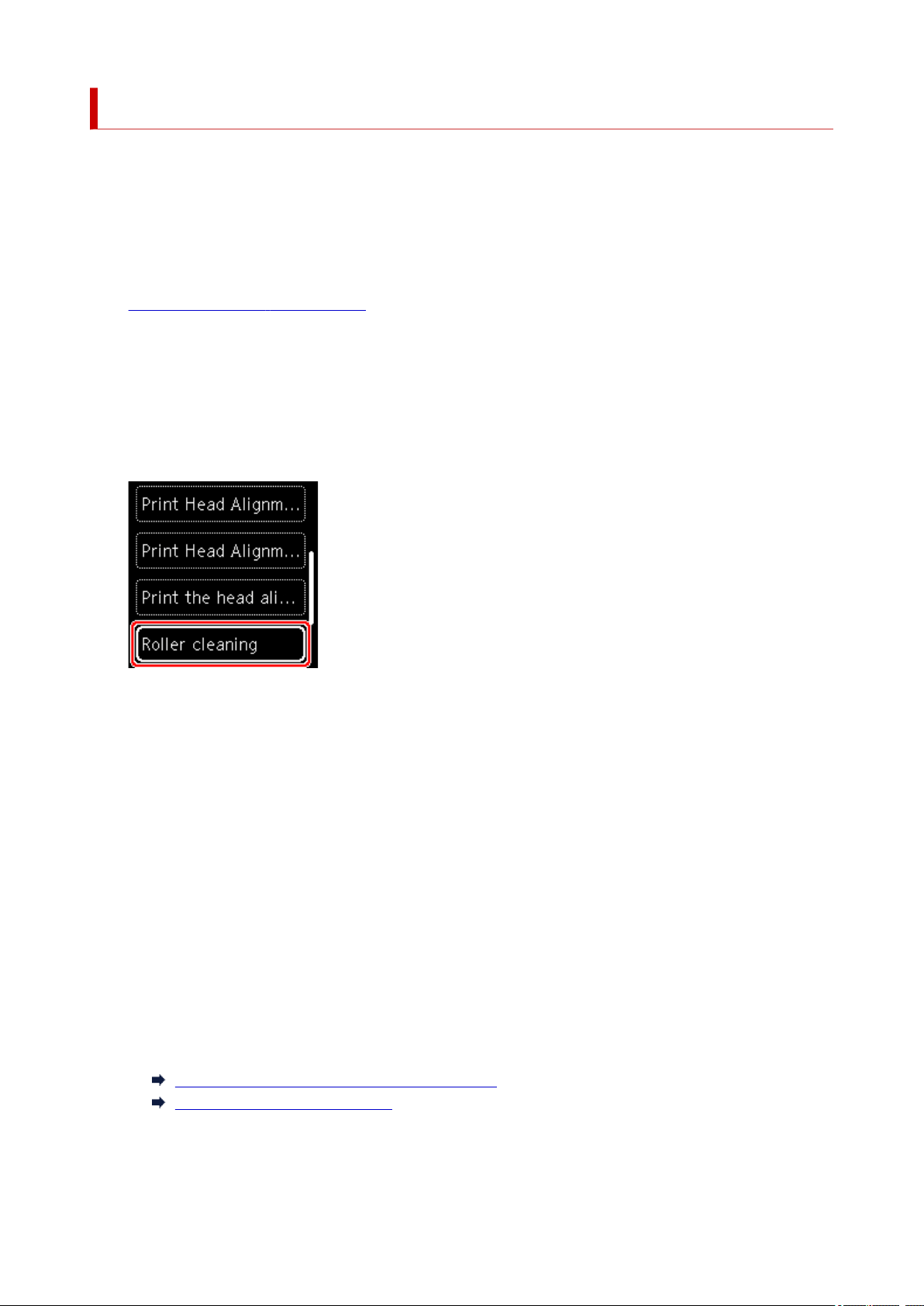
Cleaning Paper Feed Rollers
If the paper feed roller is dirty or paper powder is attached to it, paper may not be fed properly.
In this case, clean the paper feed roller. Cleaning will wear out the paper feed roller, so perform this only
when necessary.
You need to prepare: three sheets of A4 or Letter-sized plain paper
1.
Check that printer is turned on.
2. Press the OK button.
3. Select Maintenance.
4. Select Roller cleaning.
The confirmation screen will appear.
5. Select Yes.
6. Select Rear tray or Cassette to clean the paper feed roller.
7. Follow the message to remove any paper from the paper source.
If you clean the paper feed roller of cassette, remove any paper from the cassette, then push it back.
8. Press the OK button.
The paper feed roller will rotate as it is cleaned without paper.
9. Make sure that the paper feed roller has stopped rotating, then follow the message to load
the three sheets of A4 or Letter-sized plain paper.
Loading Plain Paper / Photo Paper in Rear Tray
Loading Plain Paper in Cassette
10. Press the OK button.
108

The printer starts cleaning. The cleaning will be complete when the paper is ejected.
11. When the completion message appears, select OK.
If the problem is not resolved after cleaning the paper feed roller, contact your nearest Canon service center
to request a repair.
109
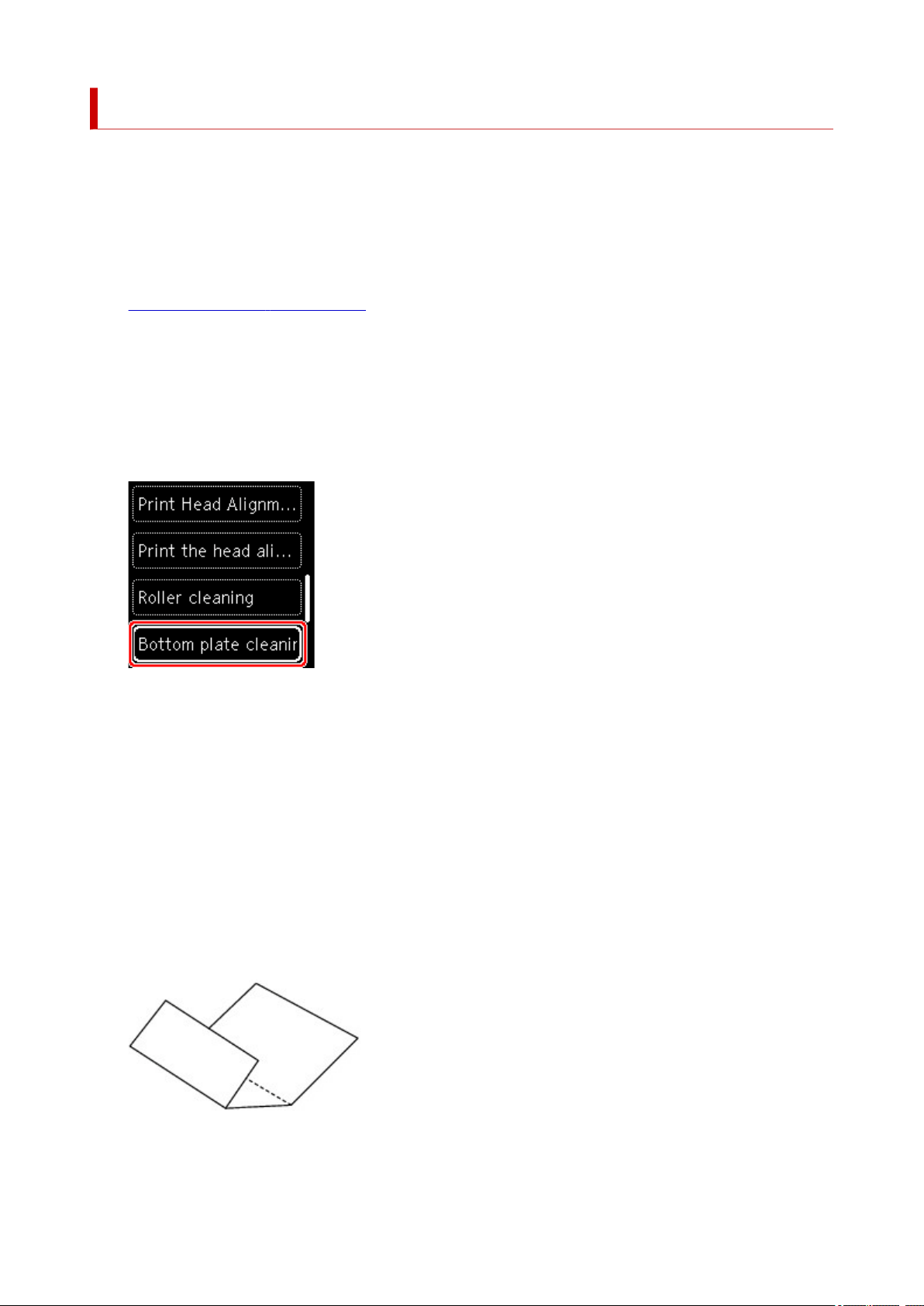
Cleaning Inside the Printer (Bottom Plate Cleaning)
Remove stains from the inside of the printer. If the inside of the printer becomes dirty, printed paper may get
dirty, so we recommend performing cleaning regularly.
You need to prepare: a sheet of A4 or Letter-sized plain paper*
* Be sure to use a new piece of paper.
1.
Check that printer is turned on.
2. Press the OK button.
3. Select Maintenance.
4. Select Bottom plate cleaning.
The confirmation screen will appear.
5. Select Yes.
6. Follow the message to remove any paper from the cassette, then press the OK button.
7. Fold a single sheet of A4 or Letter-sized plain paper in half widthwise, then unfold the
paper.
8. Fold one side of the opened paper in another half, aligning the edge with the center crease,
unfold the paper, then press the OK button.
110
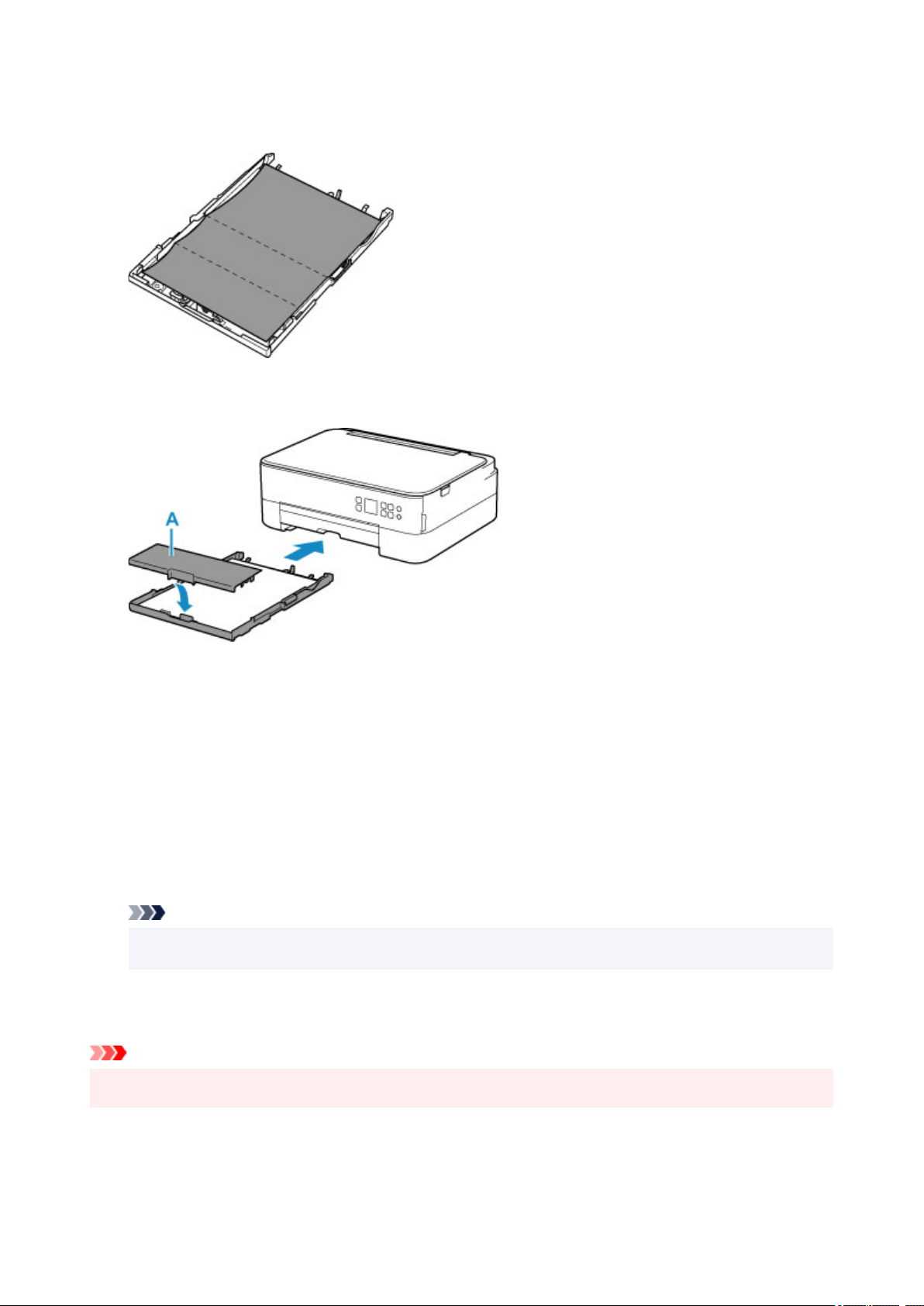
9. Load only this sheet of paper in the cassette with the ridges of the creases facing up and
the edge of the half with no crease facing to the far side.
10. Mount cassette cover (A) and insert cassette into printer.
11. Pull out the paper output tray.
12. Press the OK button.
The paper cleans the inside of the printer as it feeds through the printer.
Check the folded parts of the ejected paper. If they are smudged with ink, perform Bottom Plate Cleaning
again.
13. When the completion message appears, select OK.
Note
• When performing Bottom Plate Cleaning again, be sure to use a new piece of paper.
If the problem is not resolved after performing cleaning again, the protrusions inside the printer may be
stained. Wipe off any ink from the protrusions using a cotton swab or the like.
Important
• Be sure to turn off the power and unplug the power cord before cleaning the printer.
111
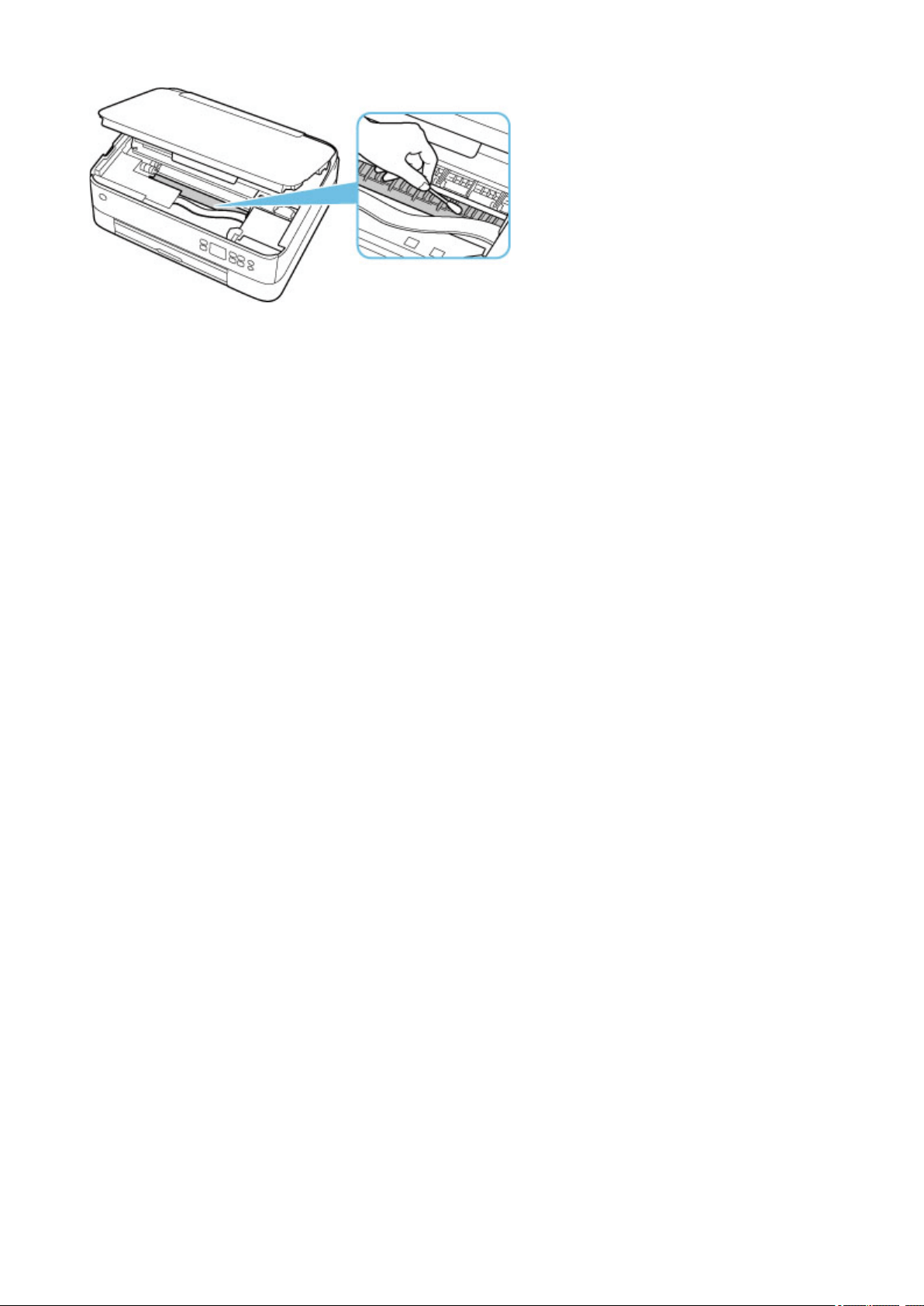
112

Overview
Safety
Safety Precautions
Regulatory Information
WEEE (EU & EEA)
Handling Precautions
Canceling Print Jobs
Legal Restrictions on Scanning/Copying
Printer Handling Precautions
Transporting Your Printer
When Repairing, Lending, or Disposing of the Printer
Keeping Print Quality High
Main Components and Their Use
Main Components
Power Supply
LCD and Operation Panel
Entering Numbers, Letters, and Symbols
Changing Settings
Changing Printer Settings from Your Computer (Windows)
Changing Printer Settings from Your Computer (macOS)
Changing Settings from Operation Panel
Specifications
113


Safety Precautions
Safety Precautions
• This manual contains important notices and safety precautions about your printer.
Do not use the printer in ways other than described in the accompanying manuals, as this may result
in fire, electric shock or other unexpected accidents.
Safety standard marks and declarations are only valid for the supported voltages and frequencies in
the applicable countries or regions.
Warning
• Users with cardiac pacemakers:
This product emits a low-level magnetic flux. If you feel abnormalities, please move away from the
product and consult your doctor.
• Do not use the printer in the following cases:
Stop use immediately, unplug the printer and call your local service representative to request repair.
Metal objects or liquids are spilt inside the printer.
The printer emits smoke, strange odors, or makes unusual noises.
The power cord or plug overheat or are broken, bent or damaged in any way.
• Failure to adhere to the following may result in fire, electric shock, or injury:
Do not place product close to the flammable solvents such as alcohol or thinner.
Do not open or modify the printer.
Use only the power cord/cables that came with your printer. Do not use these cables with other
devices.
Do not plug in to voltages or frequencies other than those specified.
Plug the power cord into the socket completely.
Do not plug in or unplug the power cord with wet hands.
Do not damage the power cord by twisting, bundling, tying, pulling or excessively bending it.
Do not place heavy objects on the power cord.
Do not connect multiple power cords to a single electrical outlet. Do not use multiple extension
cords.
Do not leave the printer plugged in during lightning storms.
Always unplug the power cord and cables when cleaning. Do not use flammable sprays or
liquids such as alcohol or thinners for cleaning.
Unplug the power cord once a month to check that it is not overheating, rusted, bent, scratched,
split, or otherwise damaged.
Caution
• Do not put your hands inside the printer while printing.
• Do not touch the print head or other metal parts immediately after printing.
• Ink
Keep ink out of reach of children.
If ink is accidentally licked or swallowed, rinse out your mouth and drink one or two glasses of
water. If irritation or discomfort occurs, obtain medical advice immediately.
115
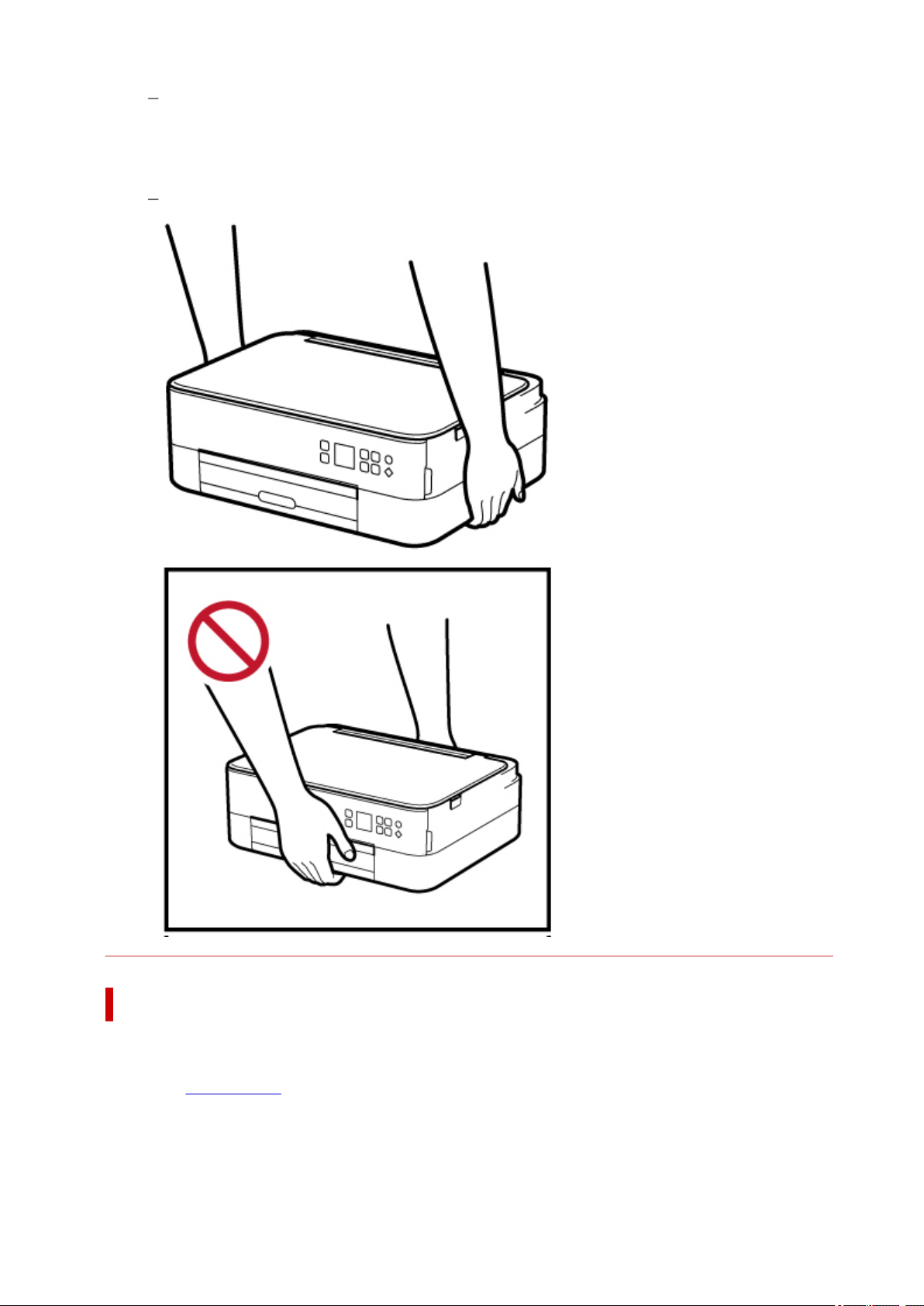
In case ink gets in contact with eyes, rinse with water immediately. In case ink gets in contact
with skin, wash with soap and water immediately. If irritation to eyes or skin persists, obtain
medical advice immediately.
• Moving the printer
Do not hold the printer by the cassette. Hold the printer by its sides and carry it with both hands.
General Notices
Choosing a Location
Refer to "
Specifications" in the Online manual for details on operating environment.
• Do not install the printer in a location that is unstable or subject to excessive vibration.
• Do not install the printer in locations that get very hot (direct sunlight, or close to a heating source),
very humid or dusty locations, or outdoors.
116

• Do not place the printer on a thick rug or carpet.
• Do not place the printer flush against a wall.
Power Supply
• Keep the area around the power outlet clear at all times so you can easily unplug the power cord if
necessary.
• Never remove the plug by pulling on the cord.
General Notices
• Do not tilt the printer, stand it on end, or turn it upside down. This may cause ink to leak.
• Do not place anything on top of the printer. Be especially careful to avoid metal objects such as
paper clips and staples, and containers holding flammable liquids such as alcohol or thinner.
• Be sure to observe the following when loading the original on the platen. Failure to observe the
following may cause the scanner to malfunction or the platen glass to break.
◦ Do not place any objects weighing 4.4 lb (2.0 kg) or more on the platen glass.
◦ Do not put any pressure of 4.4 lb (2.0 kg) or more on the platen glass, such as pressing down
the original.
• Do not attempt to open, disassemble or modify the FINE cartridges. Ink may leak and damage your
printer.
• Do not throw FINE cartridges in the fire.
117

Regulatory Information
Users in the U.S.A.
FCC Notice (U.S.A. Only)
For 120V, 60Hz model
Model Number: K10517 (Contains FCC Approved WLAN Module K30365, FCC Approved Bluetooth
K30375)
This device complies with Part 15 of the FCC Rules. Operation is subject to the following two conditions:
(1) This device may not cause harmful interference, and (2) this device must accept any interference
received, including interference that may cause undesired operation.
Note: This equipment has been tested and found to comply with the limits for a Class B digital device,
pursuant to Part 15 of the FCC Rules. These limits are designed to provide reasonable protection against
harmful interference in a residential installation. This equipment generates, uses and can radiate radio
frequency energy and, if not installed and used in accordance with the instructions, may cause harmful
interference to radio communications.
However, there is no guarantee that interference will not occur in a particular installation. If this equipment
does cause harmful interference to radio or television reception, which can be determined by turning the
equipment off and on, the user is encouraged to try to correct the interference by one or more of the
following measures:
• Reorient or relocate the receiving antenna.
• Increase the separation between the equipment and receiver.
• Connect the equipment into an outlet on a circuit different from that to which the receiver is
connected.
• Consult the dealer or an experienced radio/TV technician for help.
Use of a shielded cable is required to comply with Class B limits in Subpart B of Part 15 of the FCC Rules.
Do not make any changes or modifications to the equipment unless otherwise specified in the manual. If
such changes or modifications should be made, you could be required to stop operation of the equipment.
Changes or modifications not expressly approved by the party responsible for compliance could void the
user's authority to operate equipment.
This transmitter must not be co-located or operating in conjunction with any other antenna or transmitter.
The equipment complies with FCC radiation exposure limits for at uncontrolled equipment. This
equipment should be installed and operated with minimum distance at least 20cm between the radiator
and persons body (excluding extremities: hands, wrists, feet and ankles) and must not be colocated or
operated with any other antenna or transmitter.
Canon U.S.A., Inc.
One Canon Park
Melville, New York 11747
1-800-652-2666
118

Interference
Do not use the printer around medical equipment or other electronic devices. Signals from the printer may
interfere with the correct operation of these devices.
119

WEEE (EU&EEA)
This regulation is only for European Union and EEA (Norway, Iceland and Liechtenstein).
There is no information to inform here.
120


Legal Restrictions on Scanning/Copying
Scanning, printing, copying, or modifying copies of the following may be punishable under law.
This list is non-exhaustive. When in doubt, check with a local legal representative.
• Paper money
• Money orders
• Certificates of deposit
• Postage stamps (canceled or uncanceled)
• Identification badges or insignia
• Selective service or draft papers
• Checks or drafts issued by governmental agencies
• Motor vehicle licenses and certificates of title
• Traveler's checks
• Food stamps
• Passports
• Immigration papers
• Internal revenue stamps (canceled or uncanceled)
• Bonds or other certificates of indebtedness
• Stock certificates
• Copyrighted works or works of art, without the owner's consent
122
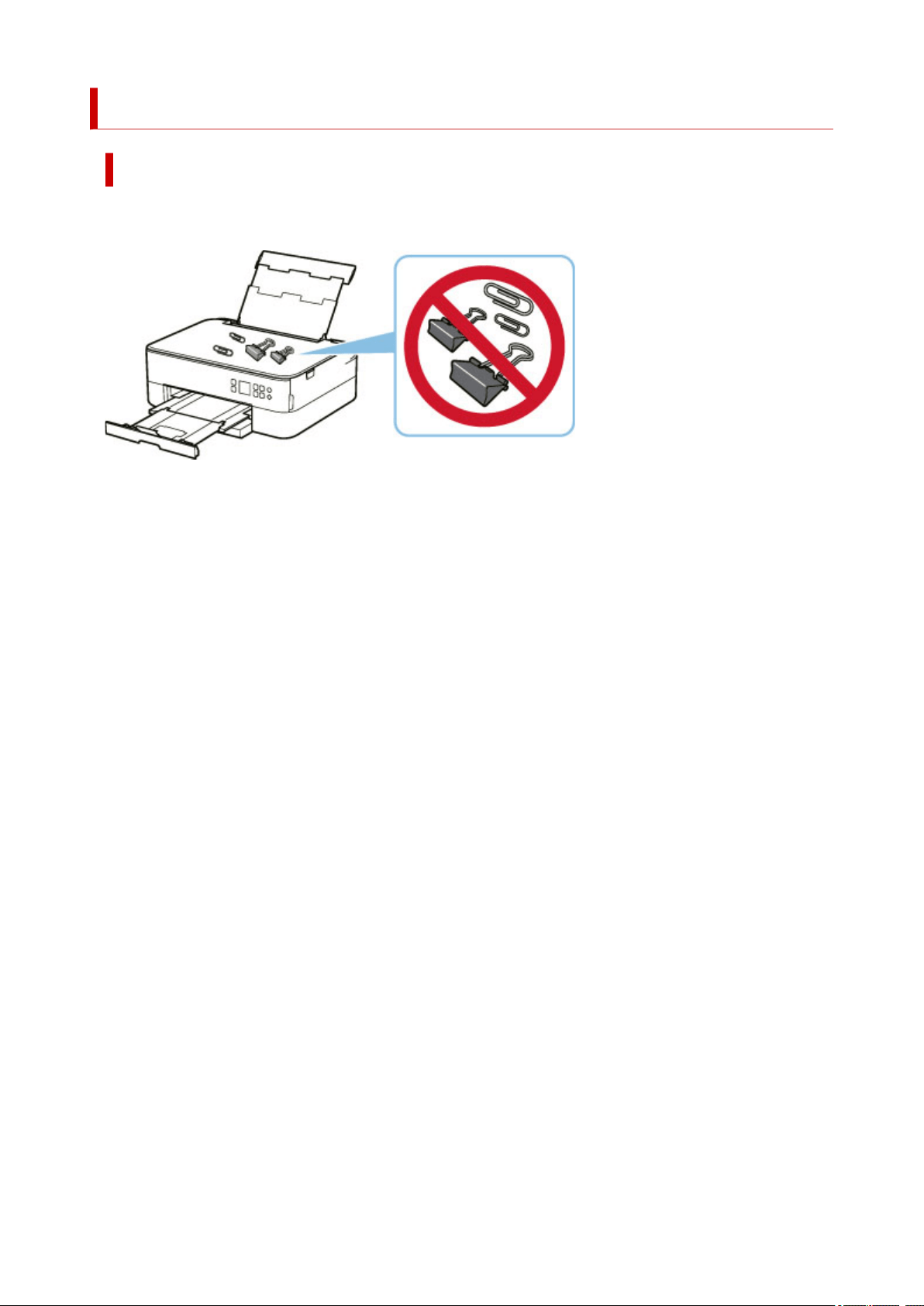
Printer Handling Precautions
Do not place any object on the document cover!
Do not place any object on the document cover. It will fall into the rear tray when the document cover is
opened and cause the printer to malfunction. Also, place the printer where objects will not fall on it.
123
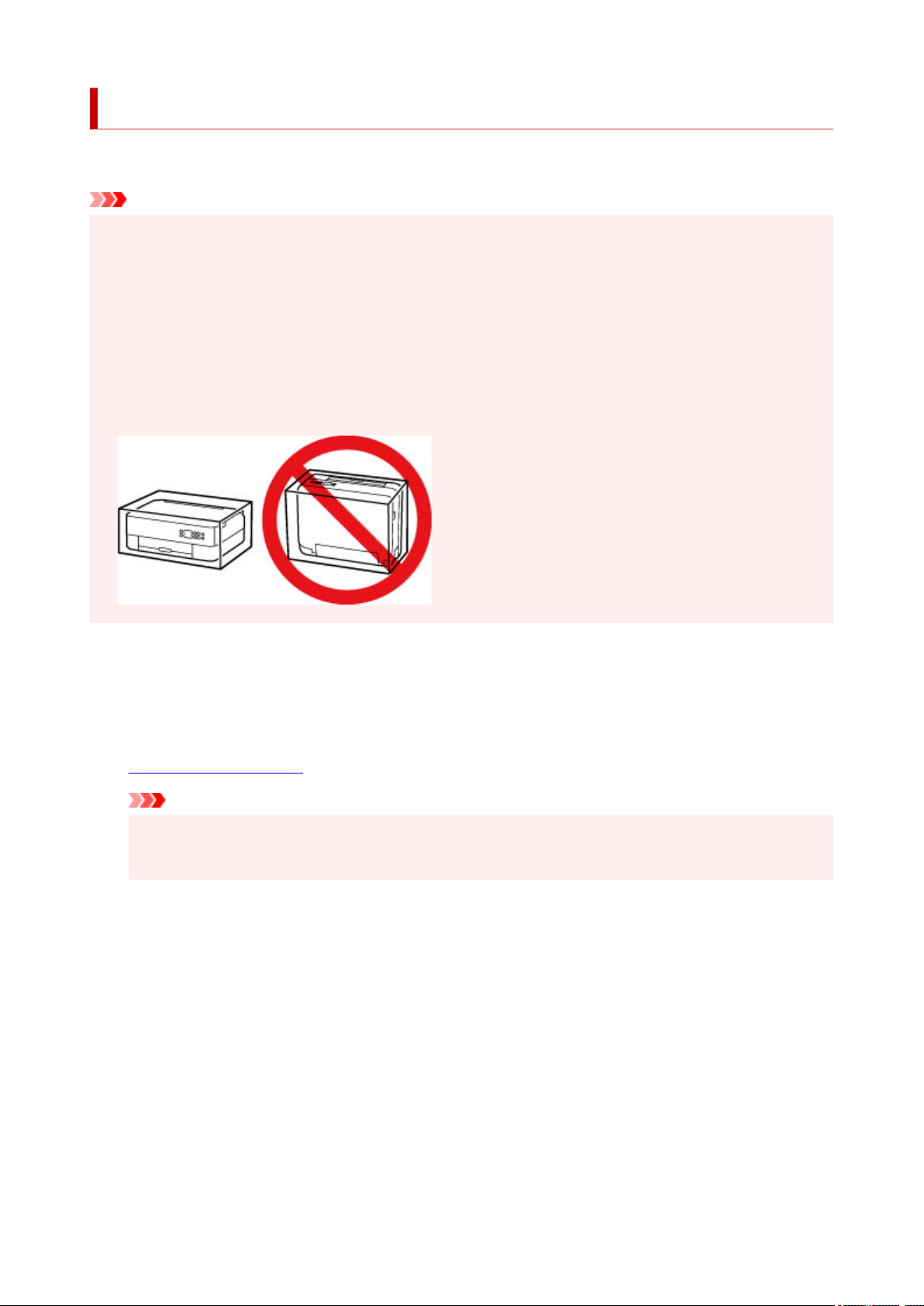
Transporting Your Printer
When relocating the printer for changing your living place or repairing it, make sure of the following.
Important
• Pack the printer in a sturdy box so that it is placed with its bottom facing down, using sufficient
protective material to ensure safe transport.
• With the print head and FINE Cartridge left installed in the printer, press the ON button to turn off the
power. This allows the printer to automatically cap the print head, thus preventing it from drying.
• After packing, do not tilt the box containing the printer or turn it on its side or upside down. Doing so
may cause the ink to leak during transport and cause damage to the printer.
• When a shipping agent is handling transport of the printer, have its box marked "THIS SIDE UP" to
keep the printer with its bottom facing down. Mark also with "FRAGILE" or "HANDLE WITH CARE".
1. Turn the printer off.
2. Close the operation panel.
3. Unplug the power cord.
Important
• Do not unplug the printer while the status bar is lit or flashing, or while a screen is displayed in the
LCD, as it may cause malfunction or damage to the printer, making the printer unable to print.
4. Retract the paper output tray and the paper output support.
5. Retract the paper support, and close the rear tray cover.
6. Shorten cassette.
7. Unplug the printer cable from the computer and from the printer, then unplug the power
cord from the printer.
8. Use adhesive tape to secure all the covers on the printer to keep them from opening during
transportation. Then pack the printer in the plastic bag.
124

9. Attach the protective material to the printer when packing the printer in the box.
125

When Repairing, Lending, or Disposing of the Printer
If you have entered personal data, passwords and/or other security settings on the printer, such information
may be stored in the printer.
When sending the printer for repair, lending or transferring the printer to another person, or disposing of the
printer, please be sure to follow the steps below in order to delete such information and prevent third parties
from accessing it.
• Press the OK button and select Device settings > Reset settings > Reset all > Yes.
126

Keeping Print Quality High
The key to printing with the optimal printing quality is to prevent the print head from drying or clogging.
Always observe the following rules for optimal printing quality.
Note
• Depending on the type of paper, ink may blur if you trace the printed area with a highlight pen or paint-
stick, or bleed if water or sweat comes in contact with the printed area.
Never unplug the power cord until the power is turned off!
If you press the ON button to turn off the power, the printer caps the print head (nozzles) automatically to
prevent from drying. If you unplug the power cord from the wall outlet while the status bar is lit/flashing or
a screen is displayed in the LCD, the print head will not be capped properly and this will cause drying or
clogging.
When
unplugging the power cord, check that the status bar goes off and the display in the LCD
disappears.
Print periodically!
Just as the tip of a felt pen becomes dry and unusable if it has not been used for a long time, even if it is
capped, the print head too, may become dried or clogged if the printer has not been used for a long time.
We recommend you to use the printer at least once a month.
127


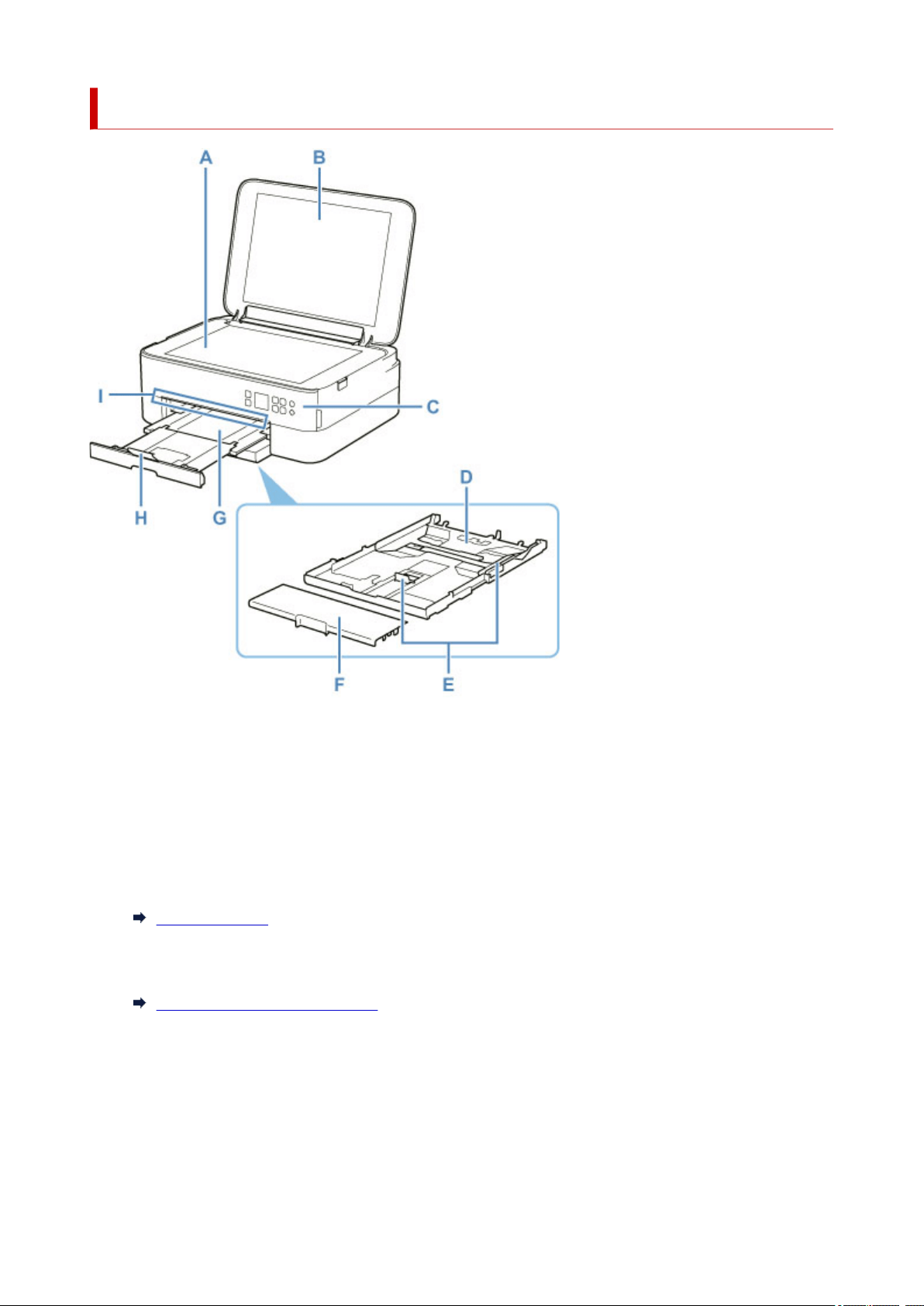
Front View
A: Platen
Load an original here.
B: Document Cover
Open to load an original on the platen.
C: Operation Panel
Use to change the settings of the printer or to operate it.
The operation panel can be tilted.
Operation Panel
D: Cassette
Load A4, B5, A5, or Letter-sized plain paper into the cassette, and insert it into the printer.
Loading Plain Paper in Cassette
E: Paper Guides
Align with right/left/front sides of the paper stack.
F: Cassette Cover
Detach to load paper in the cassette.
G: Paper Output Tray
Printed paper is ejected. Pull out it before printing.
130
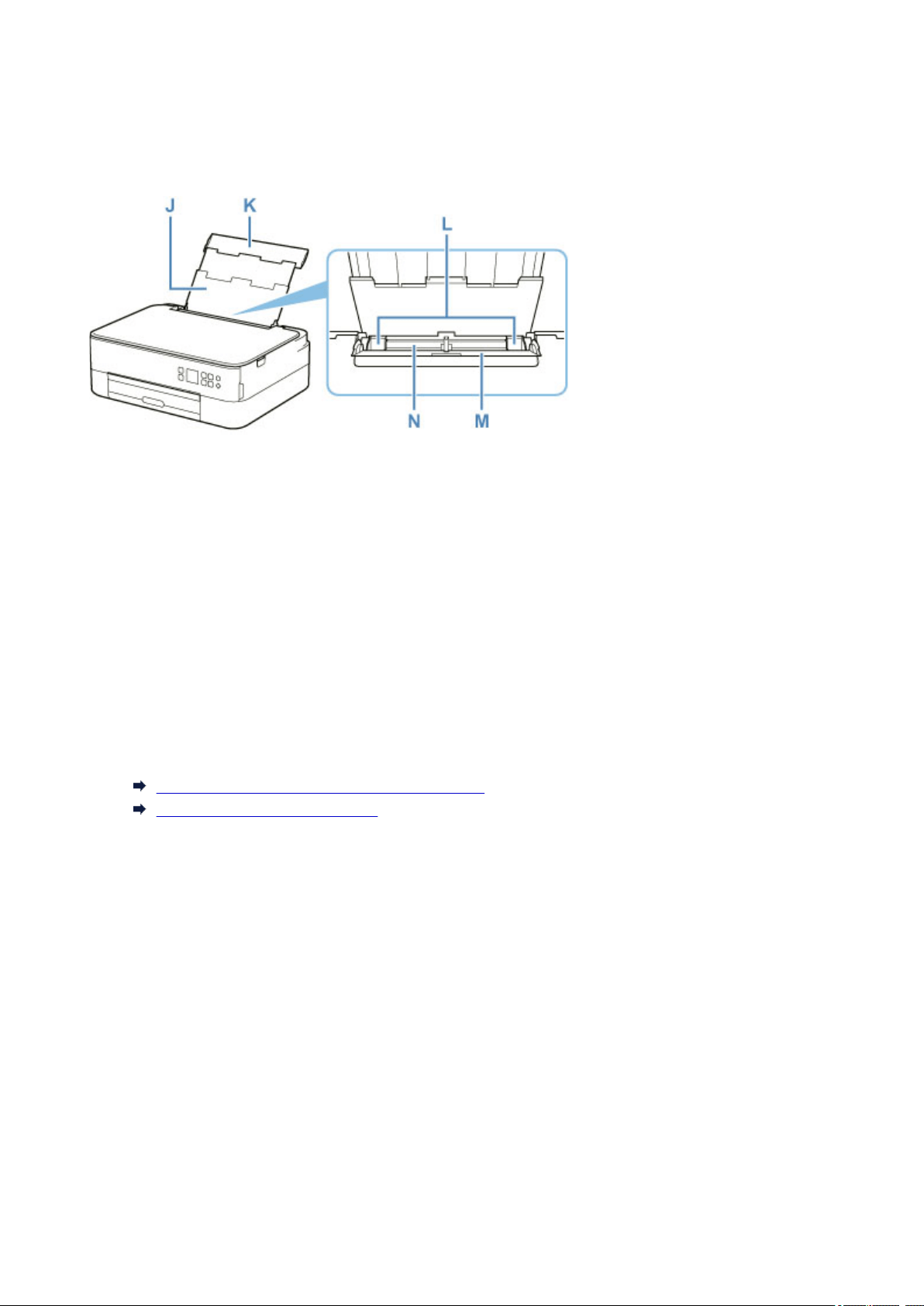
H: Paper Output Support
Open to support ejected paper.
I: Status Bar
Lights or flashes to indicate the printer is operating or when an error occurs.
J: Paper Support
Extend to load paper in the rear tray.
K: Rear Tray Cover
Open to load paper in the rear tray.
L: Paper Guides
Align with both sides of the paper stack.
M: Feed Slot Cover
Prevents anything from falling into the feed slot.
Open it to slide the paper guides, and close it before printing.
N: Rear Tray
Load paper here. Two or more sheets of the same size and type of paper can be loaded at the same
time, and fed automatically one sheet at a time.
Loading Plain Paper / Photo Paper in Rear Tray
Loading Envelopes in Rear Tray
131
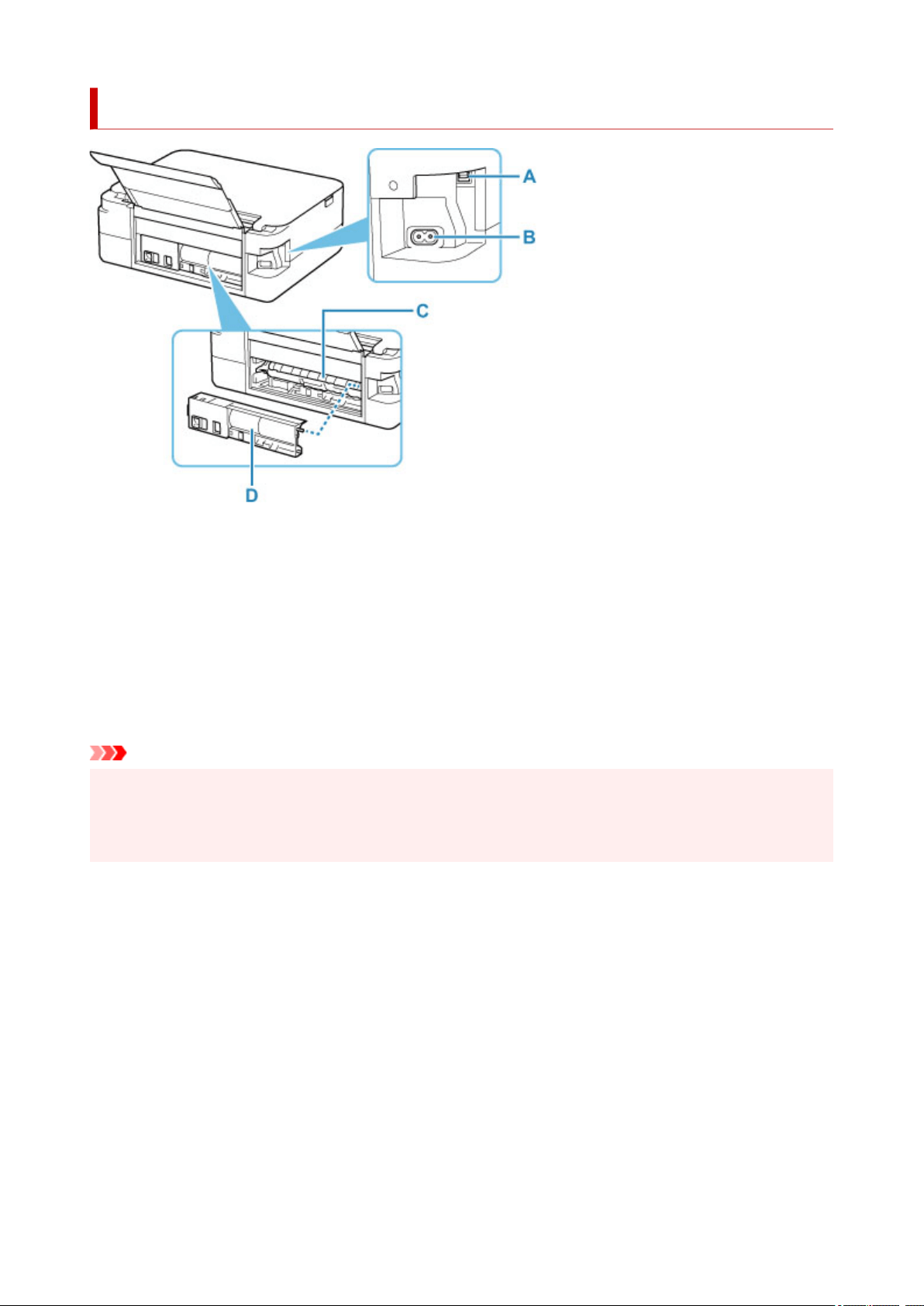
Rear View
A: USB Port
Plug in the USB cable to connect the printer with a computer.
B: Power Cord Connector
Plug in the supplied power cord.
C: Transport Unit Cover
Open when removing jammed paper.
D: Rear Cover
Detach when removing jammed paper.
Important
• Do not touch the metal casing.
• Do not plug in or unplug the USB cable while the printer is printing or scanning with the computer. This
can cause trouble.
132
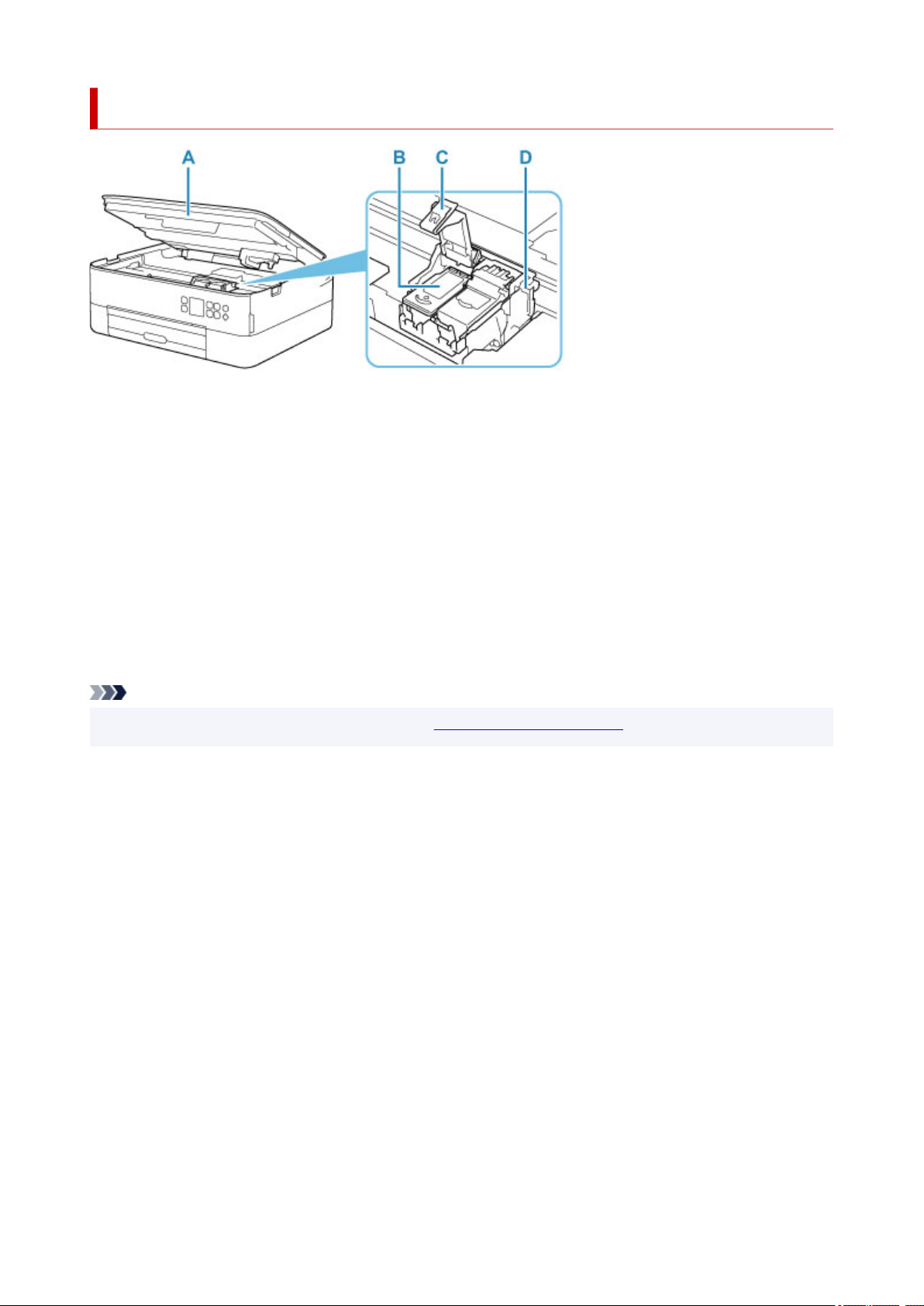
Inside View
A: Scanning Unit / Cover
Scans originals. Also, lift and open it to replace a FINE cartridge or to remove jammed paper inside the
printer.
B: FINE Cartridge (ink cartridges)
A replaceable cartridge that integrates print head and ink tank.
C: Ink Cartridge Locking Cover
Secures the installed FINE cartridge.
D: FINE Cartridge Holder
Install the FINE cartridge.
The color FINE cartridge should be installed into the left slot and the black FINE cartridge should be
installed into the right slot.
Note
• For details on replacing a FINE cartridge, see
Replacing a FINE Cartridge.
133
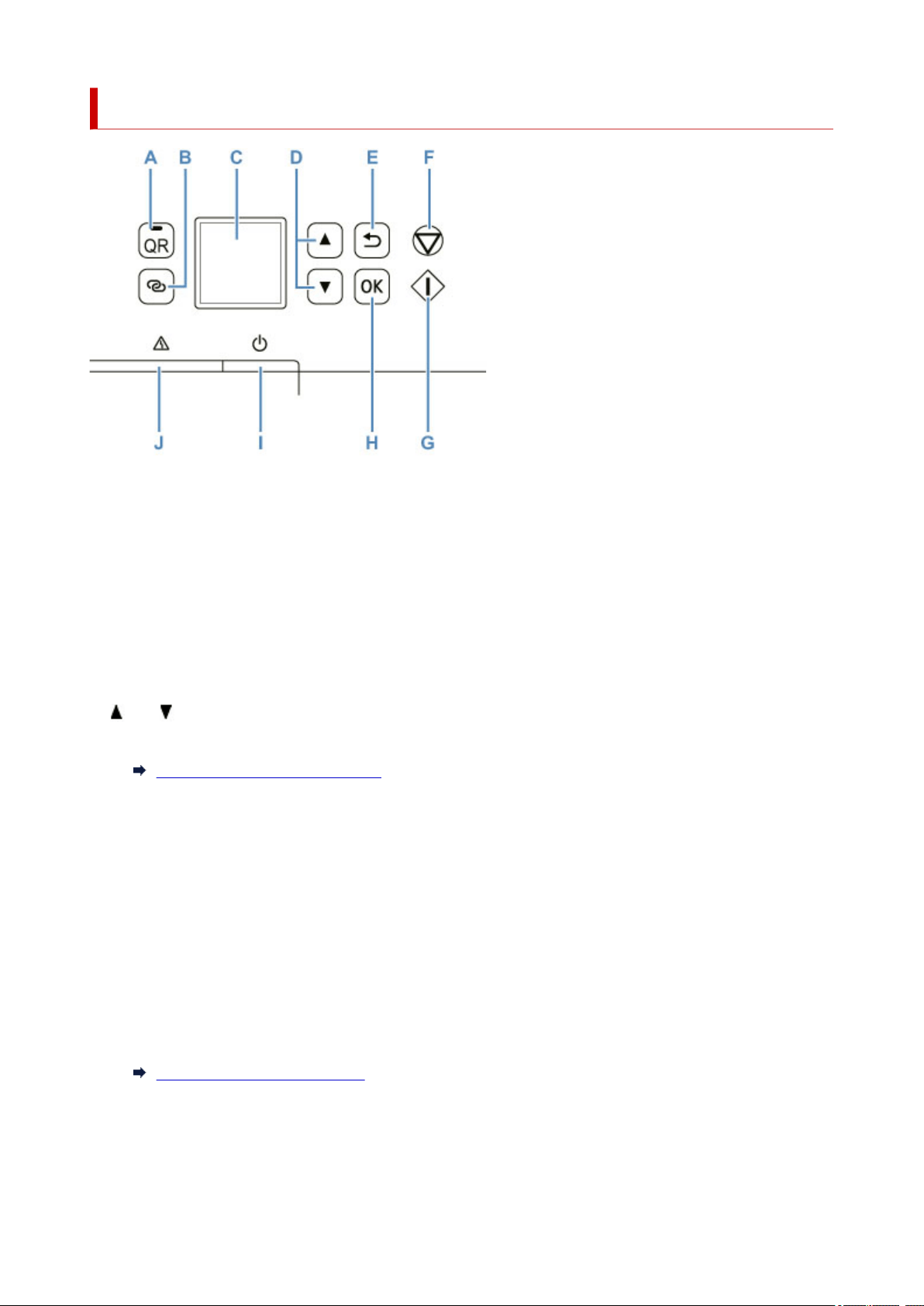
Operation Panel
A: QR button/QR lamp
When you press the QR button while the QR lamp is lit, the QR code will appear, giving you access to
an online manual that explains the function that is in operation. Cost of connecting to Internet is to be
born by the customer.
B: Wireless connect button
To set wireless router information in the printer directly from a smartphone or other such device (without
having to do any procedures at the router), hold down this button.
C: LCD (Liquid Crystal Display)
Displays messages, menu items, and the operational status.
D:
and buttons
Used to select a setting item. These buttons are also used for entering characters.
Selecting a Menu or Setting Item
E: Back button
Returns the LCD to the previous screen.
F: Stop button
Cancels operation when printing is in progress or when selecting a menu item.
G: Start button
Press this button to start printing or copying, and to confirm the characters entered.
H: OK button
Finalizes your selection of items. Also used to resolve errors.
I: ON button
Turns the power on or off. Before turning on the power, make sure that the document cover is closed.
Turning the Printer On and Off
J: Alarm lamp
Lights or flashes when an error occurs.
134


Checking that Power Is On
A screen appears in the LCD when the printer is turned on.
Even if the display in the LCD is off, if the status bar is lit, the printer is on.
Note
• It may take a while for the printer to start printing immediately after you turn on the printer.
• The display in the LCD will turn off if the printer is not operated for about 10 minutes.
To restore the display, either press a button on the operation panel or perform a print operation.
136
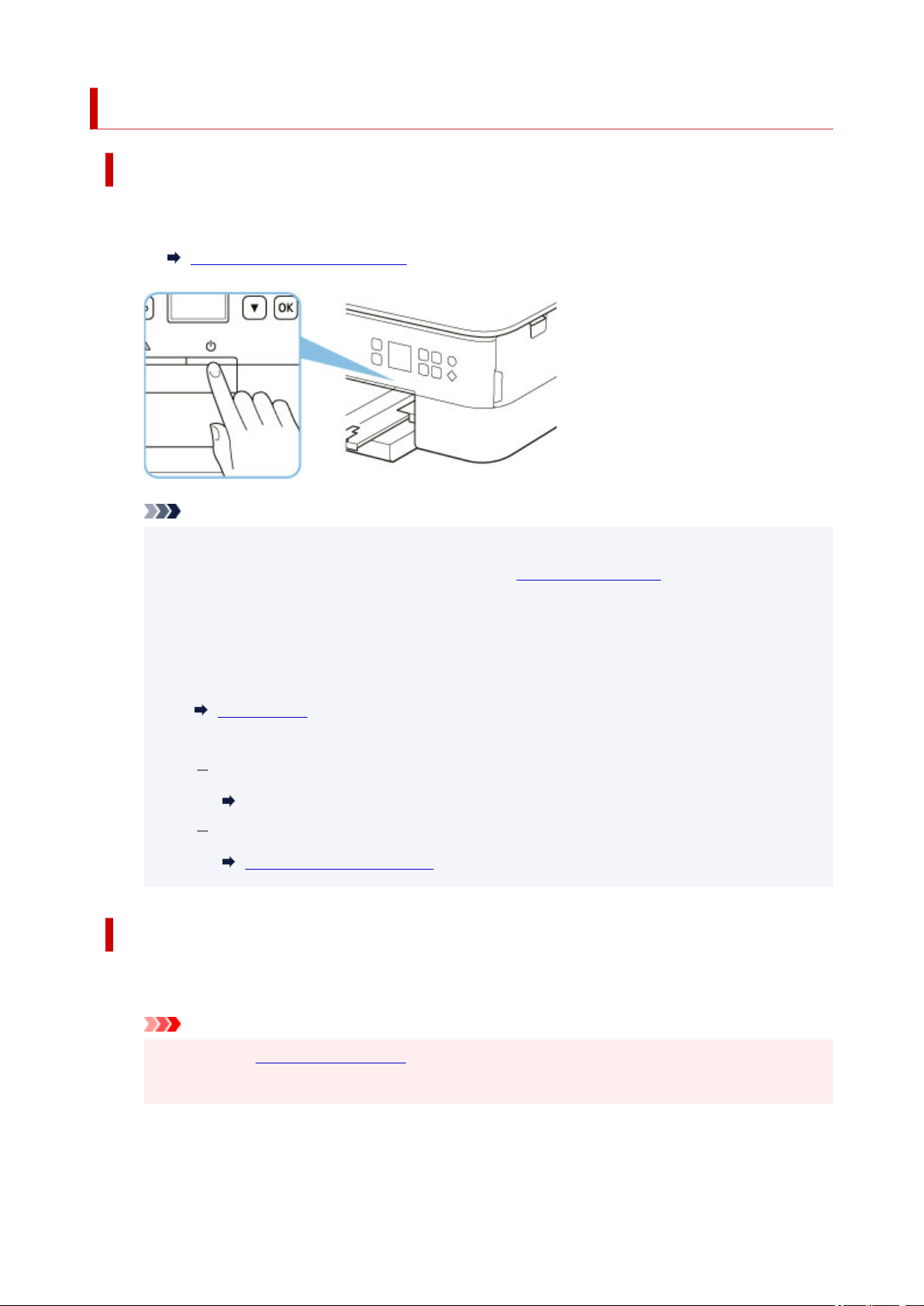
Turning the Printer On and Off
Turning on the printer
1. Press the ON button to turn on the printer.
Confirming that the Power Is On
Note
• It may take a while for the printer to start printing immediately after you turn on the printer.
• If an error message is displayed on the LCD, see
When Error Occurred.
• You can set the printer to automatically turn on when a print or scan operation is performed
from a computer connected by USB cable or wireless network. This feature is set to off by
default.
From the printer
ECO settings
From the computer
For Windows:
Managing the Printer Power
For macOS:
Managing the Printer Power
Turning off the printer
1. Press the ON button to turn off the printer.
Important
• When you
unplug the power cord after turning off the printer, be sure to confirm that the status
bar goes off and the display in the LCD disappears.
137

Note
• You can set the printer to automatically turn off when no operations are performed or no print
jobs are sent to the printer for a certain interval. This feature is set to on by default.
From the printer
ECO settings
From the computer
For Windows:
Managing the Printer Power
For macOS:
Managing the Printer Power
138

Checking the Power Plug/Power Cord
Unplug the power cord once a month to confirm that the power plug/power cord does not have anything
unusual described below.
• The power plug/power cord is hot.
• The power plug/power cord is rusty.
• The power plug/power cord is bent.
• The power plug/power cord is worn.
• The power plug/power cord is split.
Caution
• If you find anything unusual with the power plug/power cord described above,
unplug the power cord
and call for service. Using the printer with one of the unusual conditions above may cause a fire or an
electric shock.
139
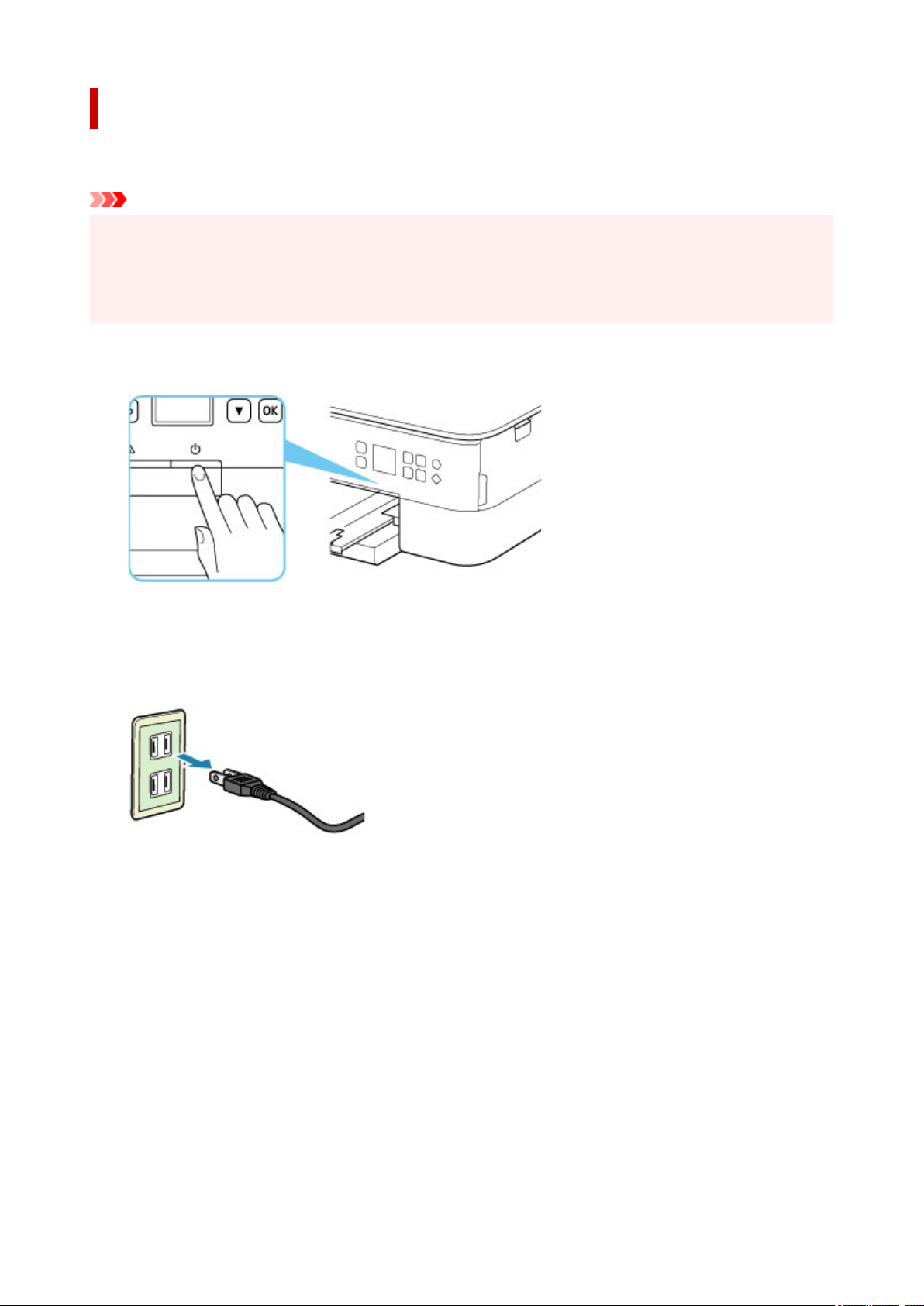
Unplugging the Printer
To unplug the power cord, follow the procedure below.
Important
• Press the ON button and confirm that the status bar goes off and the display in the LCD disappears
before unplugging the power cord. Unplugging the power cord while the status bar is lit/flashing or a
screen is displayed in the LCD may cause drying or clogging of the print head and print quality may be
reduced.
1. Press the ON button to turn the printer off.
2. Check that status bar goes off and display in LCD disappears.
3. Unplug the power cord.
The specification of the power cord differs depending on the country or region of use.
140
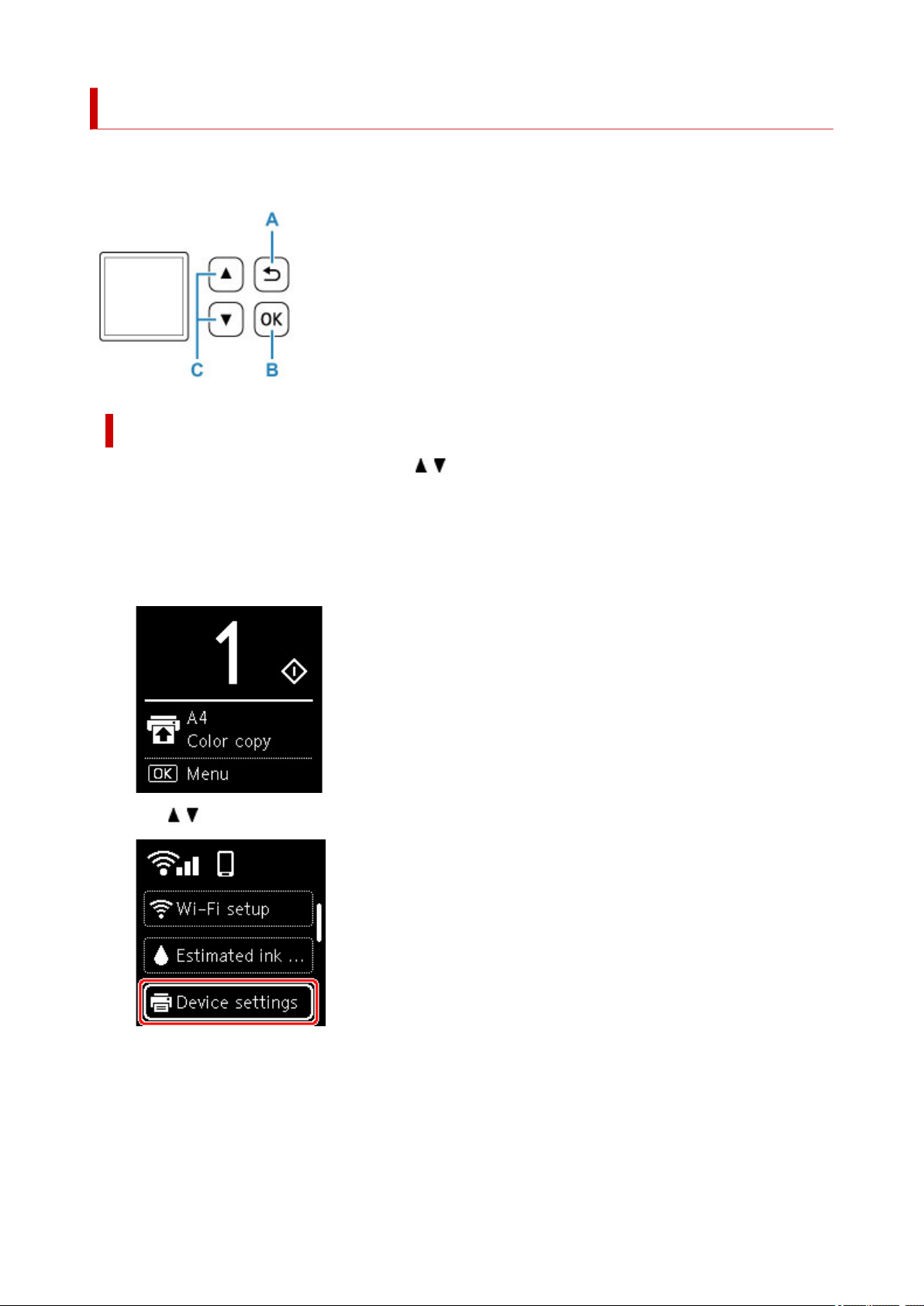
LCD and Operation Panel
Pressing the OK button (B) on the operation panel displays the menu screen, which enables you to perform
printer settings and maintenance.
Selecting a Menu or Setting Item
In a menu screen or settings screen, use the
button (C) to select an item or option, and then press
the OK button (B) to proceed with the procedure.
To return to the previous screen, press the Back button (A).
Example: Changing the setting for Prevent Abrasion.
1. Press OK button (B).
2. Use button (C) to select Device settings and press OK button (B).
3. Select Print settings and press the OK button (B).
141
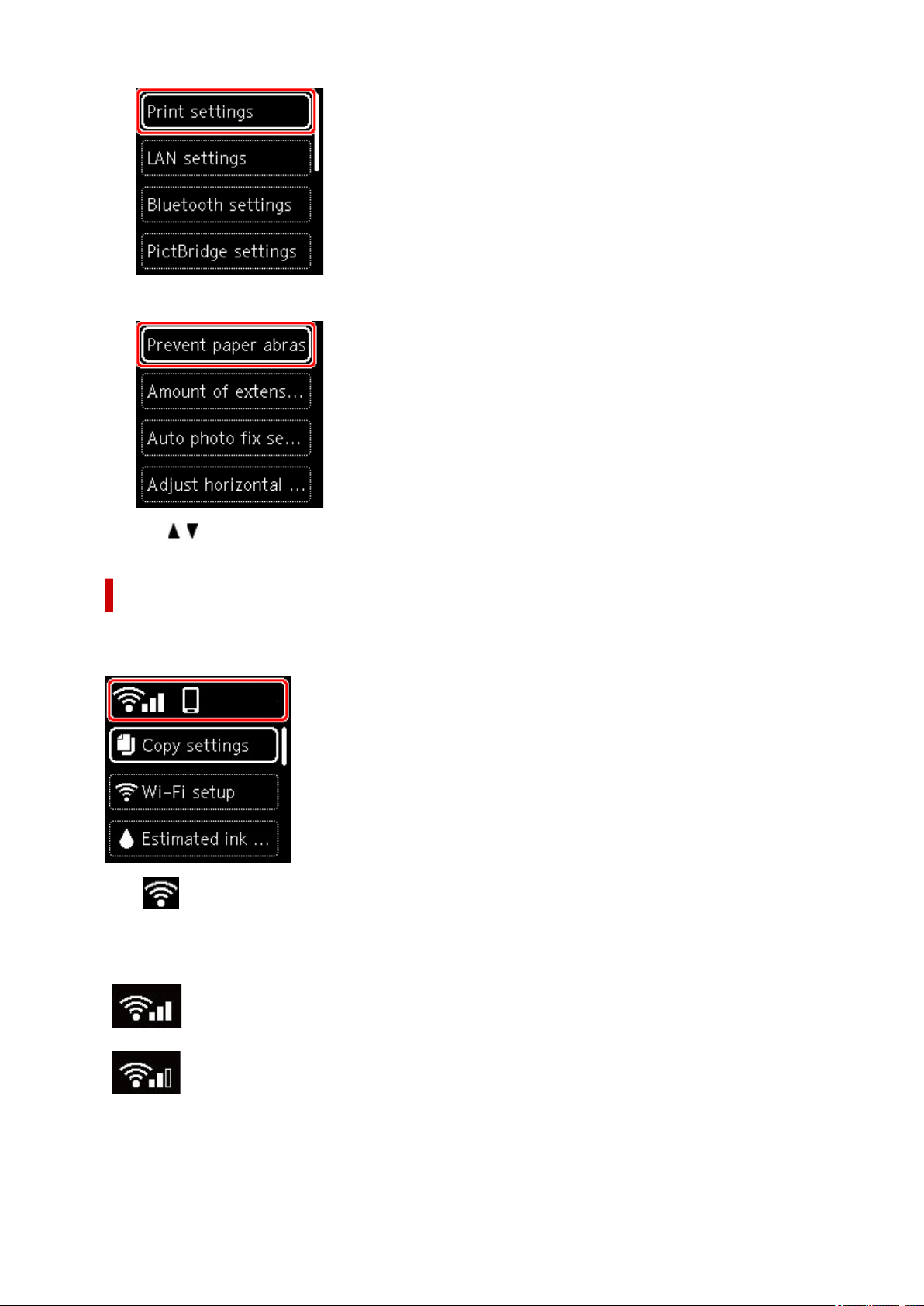
4. Select Prevent paper abrasion and press the OK button (B).
5. Use button (C) to change setting and press OK button (B).
Network Status Indication
When you press the OK button, icons depicting the Wi-Fi setting and the network status indicate by the
icon in the standby screen.
If the icon appears on the LCD, it indicates that Wi-Fi is enabled and the printer is connected to the
wireless router.
Depending on the signal state, the icon will change.
Signal strength: 81 % or more
You can use the
printer over Wi-Fi without any problems.
Signal strength: 51 % or more
The problem such as the printer cannot print may occur according to the network status. We recom-
mend placing the printer near the wireless router.
142

Signal strength: 50 % or less
The problem such as the printer cannot print may occur. Place the printer near the wireless router.
Wi-Fi is enabled but the printer is not connected to the wireless router.
Note
• Wireless Direct is enabled.
•
Wi-Fi and Wireless Direct are disabled.
143
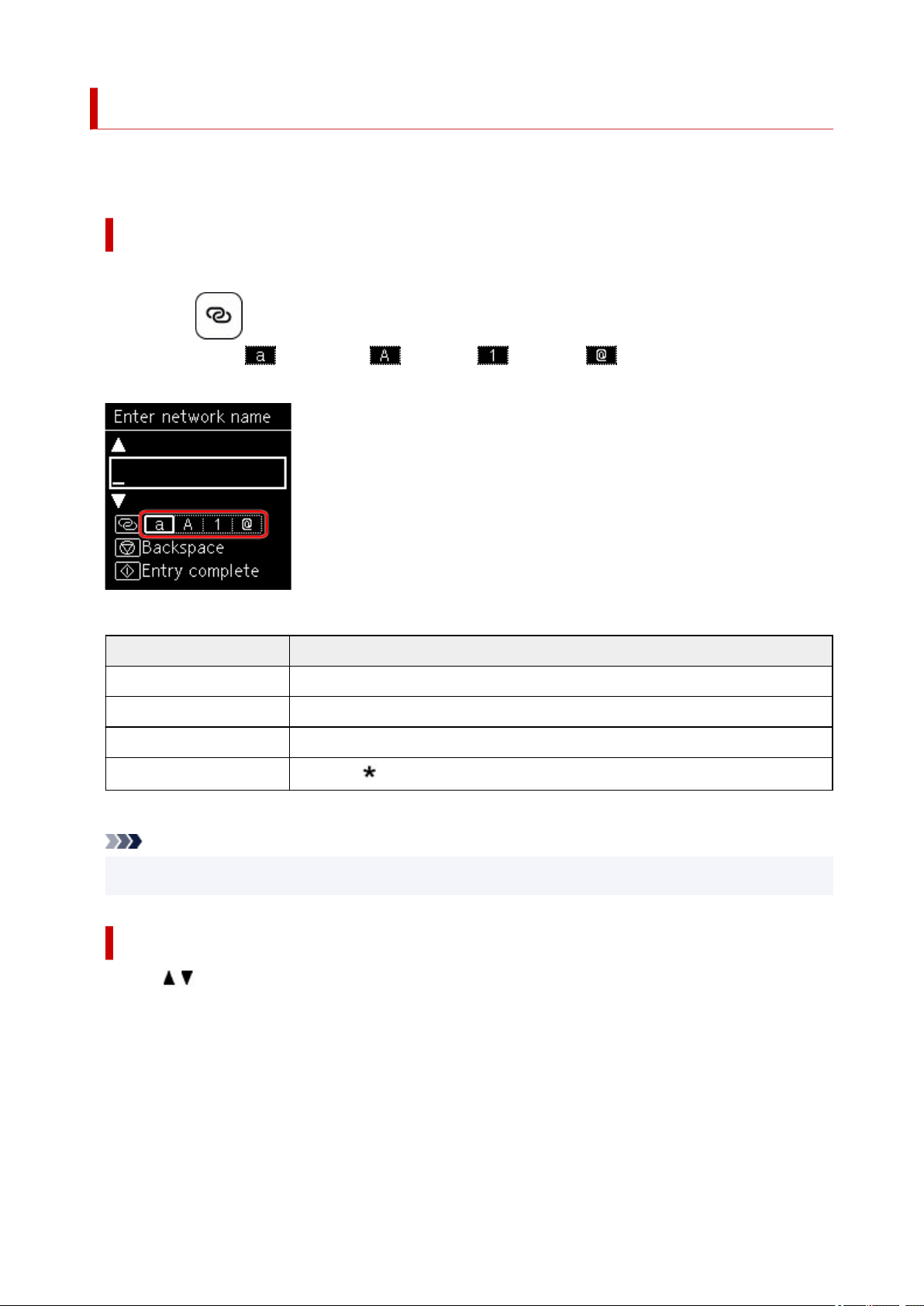
Entering Numbers, Letters, and Symbols
The buttons on the operation panel allow you to enter (or change) characters, numbers, or symbols when
setting up the network or making other settings.
Switching the Input Mode
The current input mode appears at the upper right corner of the LCD.
Pressing the
(Wireless connect) button on the operation panel toggles through the input modes in
the order lowercase
> uppercase > numeric > symbols , showing the first available
character.
The following shows available characters in each mode.
Mode Available characters
Lowercase abcdefghijklmnopqrstuvwxyz SP
Uppercase ABCDEFGHIJKLMNOPQRSTUVWXYZ SP
Numeric 1234567890 SP
Symbols
. @ - _ SP
# ! " , ; : ^ ` = / | ' ? $ % & + ( ) [ ] { } < > \
~
SP: Indicates a space.
Note
• Only the input modes or characters available for input appear in their respective screens.
Entering Numbers, Letters, and Symbols
Use the button to select a character and press the OK button to input it.
144
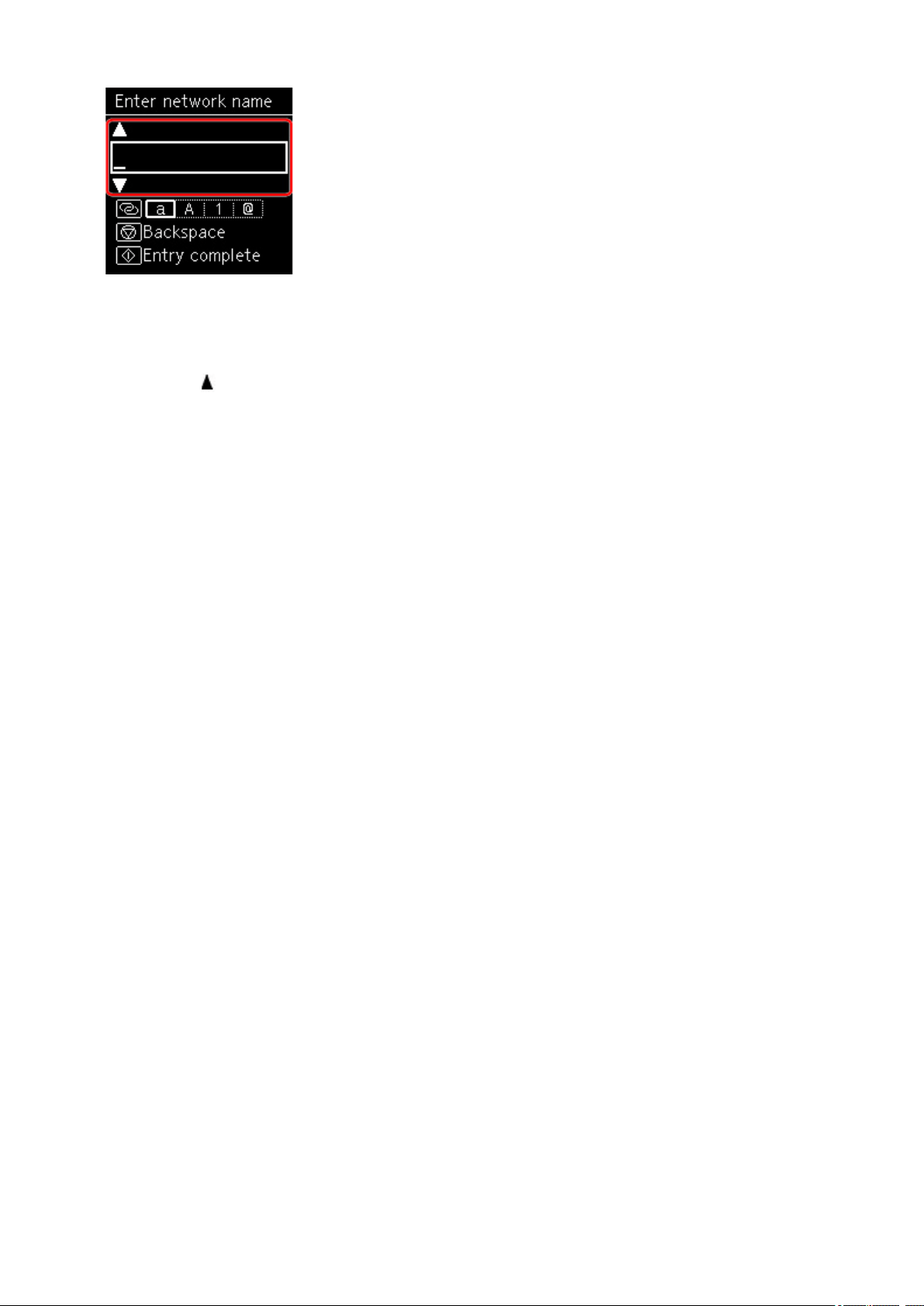
After all the characters have been input, press the Start button.
• To insert a space
Either press the OK button without selecting any character, or switch to the symbol mode and then
press the
button 5 times.
• To delete characters
Press the Stop button.
145



Managing the Printer Power
Printer power supply is operated from Remote UI.
Energy saving settings
Energy saving settings allow you to set Auto power off and Auto power on.
Auto power off is the function wherein the printer automatically turns itself off, when data is not sent or the
printer remains inactive for a certain period.
The Auto power on function automatically turns on the printer when data is received.
1. Selecting Printer settings from
Remote UI
2. Click Energy saving settings
3. Complete the following settings:
Auto power off
Specify the time from the list. Printer automatically turns itself off, when data is not sent within the
specified time or the printer has remained inactive.
Auto power on
When you check this check box, the printer automatically turns itself on when data is sent.
4. Apply the settings
Click OK.
The printer will operate with the changed settings hereafter.
148

Changing the Printer Operation Mode
If necessary, switch between various modes of printer operation.
1. Check whether the printer is on and select Printer settings from
Remote UI
2. If necessary, complete the following settings:
Print settings - Prevent paper abrasion
The printer can increase the gap between the print head and the paper during high-density printing
to prevent paper abrasion.
Check this check box to prevent paper abrasion.
Custom settings - Detect paper setting mismatch
If the check box is deselected, at the time of printing from PC, you can continue to print without the
message display even if the paper settings set in the Print dialog differs from the paper information
registered to the printer.
Ink drying wait time
You can set the length of the printer rest time until printing of the next page begins. The wait time
becomes longer as the value set in the list increases, and shorter as the value decreases.
If the paper gets stained because the next page is ejected before the ink on the printed page dries,
increase the ink drying wait time.
Reducing the ink drying wait time speeds up printing.
3. Apply the settings
Click OK.
The printer operates with the modified settings hereafter.
149

Changing Settings from Operation Panel
Changing Settings from Operation Panel
Setting Items on Operation Panel
Print settings
LAN settings
Bluetooth settings
PictBridge settings
Smartphone photo print settings
Other device settings
Language selection
Firmware update
Reset setting
Feed settings
Web service setup
ECO settings
Quiet setting
System information
150
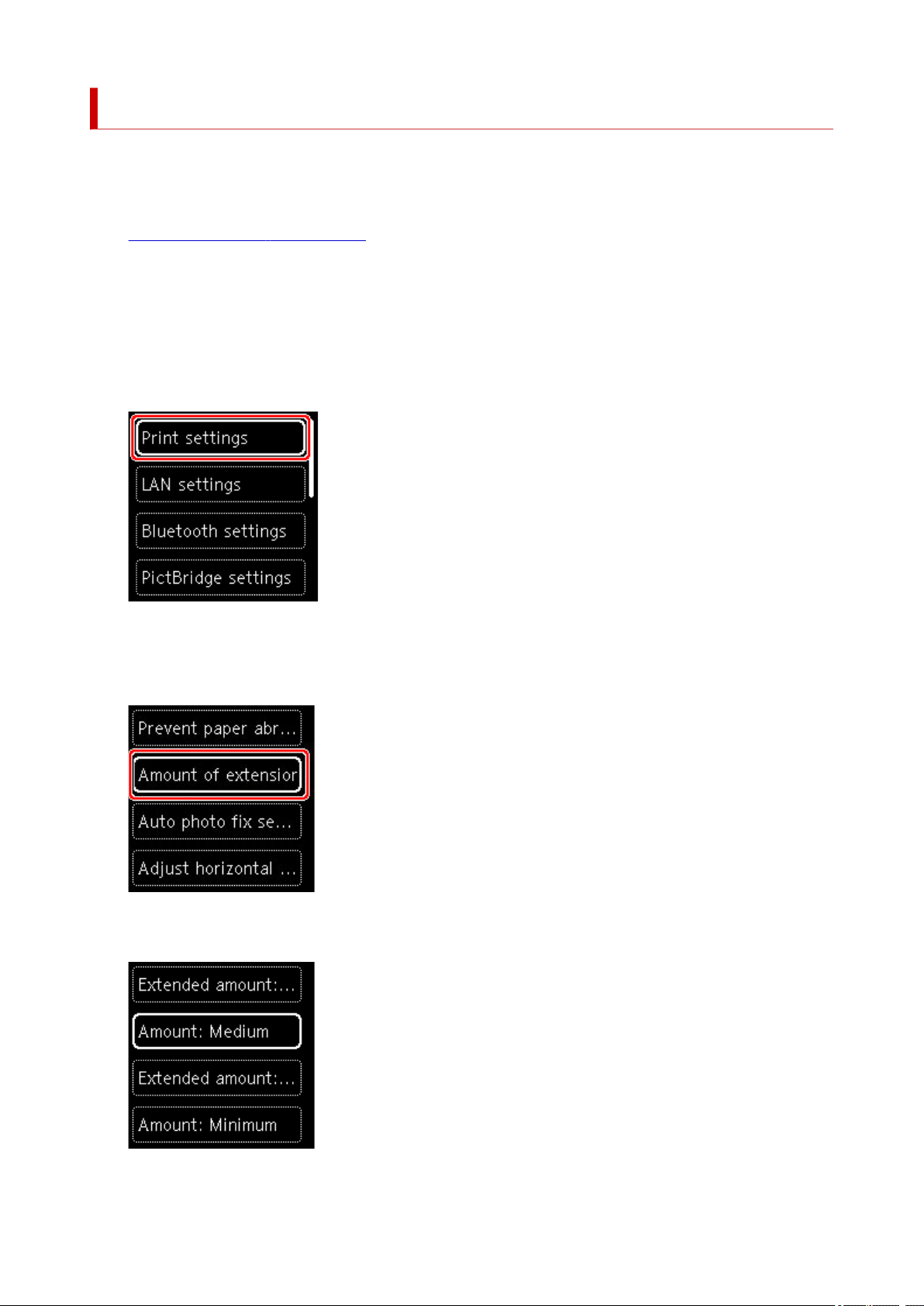
Changing Settings from Operation Panel
This section describes the procedure to change the settings in the Device settings screen, taking the steps
to specify Amount of extension as an example.
1.
Check that printer is turned on.
2. Press OK button.
3. Select Device settings.
4. Select a setting item to adjust.
The setting screen for the selected item is displayed.
5. Select a setting item.
6. Select a setting to specify.
For more on setting items on the operation panel:
151


Setting Items on Operation Panel
Items for Printer
Other device settings
Language selection
Web service setup
ECO settings
Quiet setting
Items for Paper/Printing
Print settings
Bluetooth settings
PictBridge settings
Smartphone photo print settings
Feed settings
Items for Maintenance/Management
LAN settings
Firmware update
Reset setting
System information
153

Print settings
Select this setting item from Device settings in the menu screen which appears when you press the OK
button.
• Prevent paper abrasion
Use this setting only if the print surface becomes smudged.
Important
• Be sure to set this back to OFF after printing since it may result in lower printing speed or lower
print quality.
• Amount of extension
Selects the amount of image that extends off the paper when printing in borderless (full).
When performing Borderless Printing, slight cropping may occur at the edges since the printed image is
enlarged to fill the whole page. You can change the width to be cropped from the borders of the original
image as needed.
Important
• Settings will become ineffective in the following situations:
PictBridge (Wi-Fi) compliant device
Note
• When performing settings from application software or the printer driver, these settings will be
prioritized.
• If printouts contain margins even though you are printing in Borderless, specifying Extended
amount: Large for this setting may help solve the problem.
• Auto photo fix setting
When ON is selected, you can select whether to print photos using the Exif information recorded in the
image files when Default* or On is selected in printing with a PictBridge (Wi-Fi) compliant device.
* When Default is selected for the print setting on the PictBridge (Wi-Fi) compliant device, select Auto
photo fix in PictBridge settings.
• Adjust horizontal print position
Adjusts the print position when the left/right margins are not aligned.
When the paper width is less than 8.03 in. (204 mm), you can adjust the left/right margins in increments
of 0.004 in. (0.1 mm) between -0.08 in. (-2 mm) and +0.08 in. (+2 mm) centered on the horizontal center
of the paper.
154
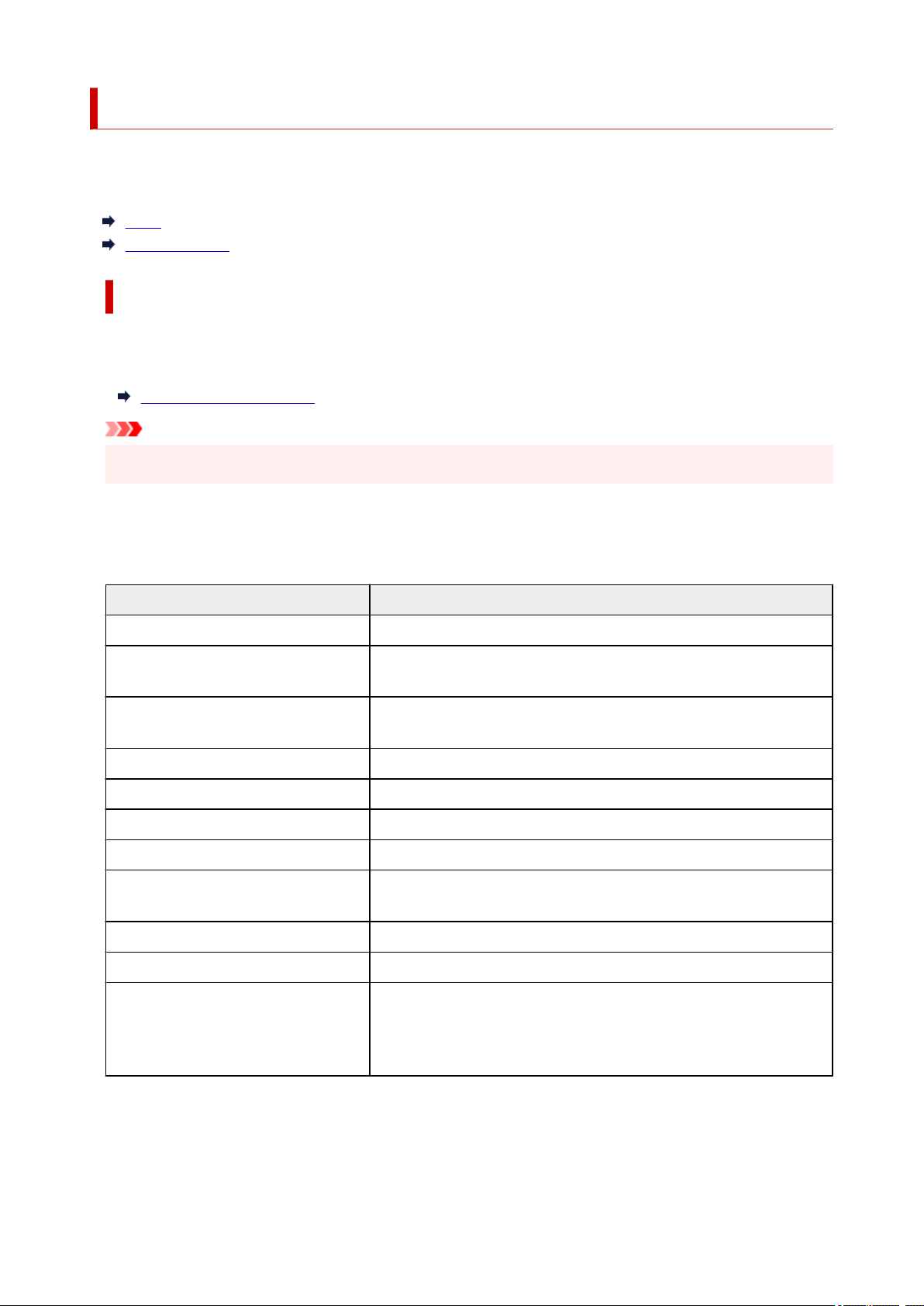
LAN settings
Select this setting item from Device settings in the menu screen which appears when you press the OK
button.
Wi-Fi
Wireless Direct
Wi-Fi
By selecting Wi-Fi from LAN settings, the following settings are available.
To print the LAN settings, select Print details in the LAN settings and select Yes.
Printing Network Settings
Important
• The network settings printout contains important information about your network. Handle it with care.
• Show setting info
The following setting items are displayed. (Some setting items are not displayed depending on the
printer settings.)
Items Setting
Connection Enabled/Enabled (disconnected)/Disabled
Network name (SSID) XXXXXXXXXXXXXXXX
XXXXXXXXXXXXXXXX (up to 32 characters)
Wi-Fi security Inactive/WEP(64bit)/WEP(128bit)/WPA-PSK(TKIP)/WPA-PSK(AES)/
WPA2-PSK(TKIP)/WPA2-PSK(AES)
Signal strength (%) XXX
IPv4 address XXX. XXX. XXX. XXX (12 characters)
IPv4 subnet mask XXX. XXX. XXX. XXX (12 characters)
IPv4 default gateway XXX. XXX. XXX. XXX (12 characters)
IPv6 link-local address XXXX: XXXX: XXXX: XXXX:
XXXX: XXXX: XXXX: XXXX (32 characters)
MAC address (Wi-Fi) XXX. XXX. XXX. XXX (12 characters)
Printer name XXXXXXXXXXXXXXX (up to 15 characters)
Bonjour service name XXXXXXXXXXXXX
XXXXXXXXXXXXX
XXXXXXXXXXXXX
XXXXXXXXXXXXX (up to 52 characters)
("XX" represents alphanumeric characters.)
The following settings are available on the Wi-Fi screen.
155

• Advanced mode
Enables/disables Wi-Fi.
• Wi-Fi setup
Selects the setup method for Wi-Fi connection.
◦ Easy wireless connect
Select if you specify the settings of the access point information to the printer directly from a
device (e.g. smartphone, or tablet) without operating the wireless router. Follow the on-screen
instructions of the connecting device for the setup procedure.
◦ Manual connect
Select when you perform settings for Wi-Fi manually using the operation panel of the printer.
◦ WPS (Push button method)
Select when you perform settings for Wi-Fi using a wireless router supporting a Wi-Fi Protected
Setup (WPS) push button method. Follow the on-screen instructions during setup.
◦ Other connection types
Manual connect (adv.)
Select when you perform settings for Wi-Fi manually. You can specify multiple WEP keys.
WPS (PIN code method)
Select when you perform settings for Wi-Fi using a wireless router supporting a Wi-Fi
Protected Setup (WPS) PIN code method. Follow the on-screen instructions during setup.
• Advanced
For details on each setting item:
Advanced
Wireless Direct
By selecting Wireless Direct from LAN settings, the following settings are available.
To print the LAN settings, select Print details in the LAN settings screen and select Yes.
Printing Network Settings
Important
• The network settings printout contains important information about your network. Handle it with care.
• Show setting info
The following setting items are displayed. (Some setting items are not displayed depending on the
printer settings.)
Note
• Select Show setting info to display a screen, allowing you to show or hide the password.
Items Setting
156

Connection Enabled (connected)/Disabled
Network name(SSID) DIRECT-XXXXXXXXX
XXXXXXXXXXXXXXXX (up to 32 characters)
Password XXXXXXXXXX (10 characters)
Wi-Fi security WPA2-PSK(AES)
No. of devices connected now XX/XX
IPv4 address XXX. XXX. XXX. XXX (12 characters)
IPv4 subnet mask XXX. XXX. XXX. XXX (12 characters)
IPv4 default gateway XXX. XXX. XXX. XXX (12 characters)
IPv6 link-local address XXXX: XXXX: XXXX: XXXX:
XXXX: XXXX: XXXX: XXXX (32 characters)
MAC address (Wi-Fi) XXX. XXX. XXX. XXX (12 characters)
Printer name XXXXXXXXXXXXXXX (up to 15 characters)
Bonjour service name XXXXXXXXXXXXX
XXXXXXXXXXXXX
XXXXXXXXXXXXX
XXXXXXXXXXXXX (up to 52 characters)
("XX" represents alphanumeric characters.)
The following settings are available in the Wireless Direct.
• Connect to smartphone
Enables to connect the smartphone to the printer by reading the QR code displayed on the LCD with
the smartphone, or also by manually obtaining the network name and password.
• Advanced mode
Enables/disables Wireless Direct.
• Change network name (SSID)
Changes the identifier (SSID/the printer's name displayed on a Wi-Fi Direct compatible device) for
Wireless Direct.
• Change password
Changes the password for Wireless Direct.
• Connection request confirmation
Selecting ON displays the confirmation screen when a Wi-Fi Direct compatible device is connecting
the printer.
• Advanced
For details on each setting item:
Advanced
157

Advanced
• Set printer name
Specifies the printer name. You can use up to 15 characters for the name.
Note
• You cannot use the same printer name as that already used for other LAN connected devices.
• You cannot use a hyphen for the initial or last character of the printer name.
• TCP/IP settings
Performs IPv4 or IPv6 setting.
• WSD setting
Setting items when you use WSD (one of the network protocols supported in Windows).
◦ Enable/disable WSD
Selects whether WSD is enabled or disabled.
Note
When this setting is enabled, the printer icon is displayed on the Network Explorer in
Windows.
◦ Optimize inbound WSD
Selecting Enable allows you to receive the WSD printing data faster.
◦ Timeout setting
Specifies the timeout length.
• Bonjour settings
Setting items when you use Bonjour.
◦ Enable/disable Bonjour
Selecting Enable allows you to use Bonjour to perform the network settings.
◦ Service name
Specifies the Bonjour service name. You can use up to 48 characters for the name.
Note
You cannot use the same service name as that already used for other LAN connected
devices.
• LPR protocol setting
Enables/disables the LPR setting.
• RAW protocol
Enables/disables RAW printing.
• LLMNR
158

Enables/disables LLMNR (Link-Local Multicast Name Resolution). Selecting Enable allows the printer
to detect printer's IP address from the printer name without a DNS server.
• IPP settings
Selecting Enable allows you to print via the network with the IPP protocol.
• PictBridge communication
Setting items for printing from a PictBridge (Wi-Fi) compliant device.
◦ Enable/disable communication
Selecting Enable allows you to print from a PictBridge (Wi-Fi) compliant device.
◦ Timeout setting
Specifies the timeout length.
• IPsec settings
Selecting Enable allows you to specify the IPsec security.
159

Other device settings
Select this setting item from Device settings in the menu screen which appears when you press the OK
button.
• Key repeat
When you select ON, numbers, characters and other choices can be displayed quickly by pressing the
holding the
button when you are entering the characters etc.
• ECO settings
ECO settings
• Quiet setting
Quiet setting
• Original removal reminder
Selects whether the printer will display the reminder screen in case you forget to remove the original
from the platen after scanning.
Important
• Depending on the type of original or the state of the document cover, forgetting to remove the
original may not be detected.
• Status bar settings
Change the display of the status bar.
◦ Advanced mode
Enables or disables the status bar display.
When Disable is selected, only the left end of the status bar will light up or flash.
◦ Brightness
Adjusts the brightness of the status bar.
• Wi-Fi pairing settings
In order to connect Canon PRINT Inkjet/SELPHY, multiple configurations will be performed.
◦ Enable/disable pairing
Set the printer's Wi-Fi pairing function to enable or disable.
◦ Allow/block additional pairing
On another function permit or prohibit Canon PRINT Inkjet/SELPHY pairing.
◦ Delete paired devices
Cancel all Canon PRINT Inkjet/SELPHY pairing.
160

Language selection
Changes the language for the messages and menus on the LCD.
Japanese / English / German / French / Italian / Spanish / Portuguese / Dutch / Danish / Norwegian /
Swedish / Finnish / Russian / Ukrainian / Polish / Czech / Slovene / Hungarian / Slovak / Croatian /
Romanian / Bulgarian / Turkish / Greek / Estonian / Latvian / Lithuanian / Simplified Chinese / Korean /
Traditional Chinese / Thai / Indonesian / Vietnamese
161

Firmware update
Select this setting item from Device settings in the menu screen which appears when you press the OK
button.
You can update the firmware of the printer, check the firmware version, or perform settings of a notification
screen, a DNS server and a proxy server.
Important
• When you use this function, make sure the printer is connected to the Internet.
Note
• Only Check current version is available when Disable is selected for Advanced mode of Wi-Fi in
LAN settings.
• Install update
Performs the firmware update of the printer. If you select Yes, the firmware update starts. Follow the on-
screen instructions to perform update.
Note
• If the firmware update is not complete, check the following and take an appropriate action.
Check the network settings such as a wireless router.
If Cannot connect to the server. is displayed on the LCD, select OK and try again after a
while.
• Check current version
You can check the current firmware version.
• Update notification setting
When ON is selected and the firmware update is available, the screen to inform you of the firmware
update is displayed on the LCD.
• DNS server setup
Performs settings for a DNS server. Select Auto setup or Manual setup. If you select Manual setup,
follow the display on the LCD to perform settings.
• Proxy server setup
Performs settings for a proxy server. Follow the display on the LCD to perform settings.
162

Reset setting
Select this setting item from Device settings in the menu screen which appears when you press the OK
button.
You can set the settings back to the default.
• Web service setup only
Sets the Web service settings back to the default.
• LAN settings only
Sets the LAN settings back to the default.
• Settings only
Sets the settings such as the paper size or media type back to the default.
• Reset all
Sets all settings you made to the printer back to the default. The administrator password specified by
Remote UI or IJ Network Device Setup Utility reverts to the default setting.
Note
• You cannot set the following setting items back to the default:
The language displayed on the LCD
The current position of the print head
CSR (Certificate Signing Request) for encryption method (SSL/TLS) setting
163

Feed settings
Select this setting item from Device settings in the menu screen which appears when you press the OK
button.
By registering the paper size and the media type loaded on the rear tray or in the cassette, you can prevent
the printer from misprinting by displaying the message before printing starts when the paper size or the
media type of the loaded paper differs from the print settings.
For details:
Paper Settings
Note
• For more on the proper combination of paper settings you can specify by the printer driver (Windows) or
on the LCD:
Paper Settings on the Printer Driver and the Printer (Media Type)
Paper Settings on the Printer Driver and the Printer (Paper Size)
• Rear tray paper settings
Registers the paper size and the media type you load on the rear tray.
• Cassette paper settings
Registers the paper size and the media type you load in the cassette.
Note
• Plain paper can only be loaded in the cassette.
• Detect paper width
Select Enable to automatically detect the paper size when paper is loaded.
• Detect paper setting mismatch
If you select Enable, the printer detects whether the paper size and the media type are identical with
those registered in Feed settings. If printing starts with the settings that do not match, an error
message is displayed on the LCD.
Note
• When Disable is selected, the settings in Feed settings is disabled.
164

Web service setup
Select this setting item from Web service setup in the menu screen which appears when you press the OK
button.
• Web service registration/Web service cancellation
Registers/Deletes Web service usage to use the printer device information to/from PIXMA/MAXIFY
Cloud Link.
• Web service connection setup
The following setting items are available.
◦ IJ Cloud Printing Center setup
Registers/Deletes the printer to/from Canon Inkjet Cloud Printing Center.
◦ Check Web service setup
Make sure whether the printer is registered to Canon Inkjet Cloud Printing Center.
• Issue registration code
In order to link the web service and printer, obtain the registration code from the service origin.
• DNS server setup
Performs settings for a DNS server. Select Auto setup or Manual setup. If you select Manual setup,
follow the display on the LCD to perform settings.
• Proxy server setup
Performs settings for a proxy server. Follow the display on the LCD to perform settings.
165
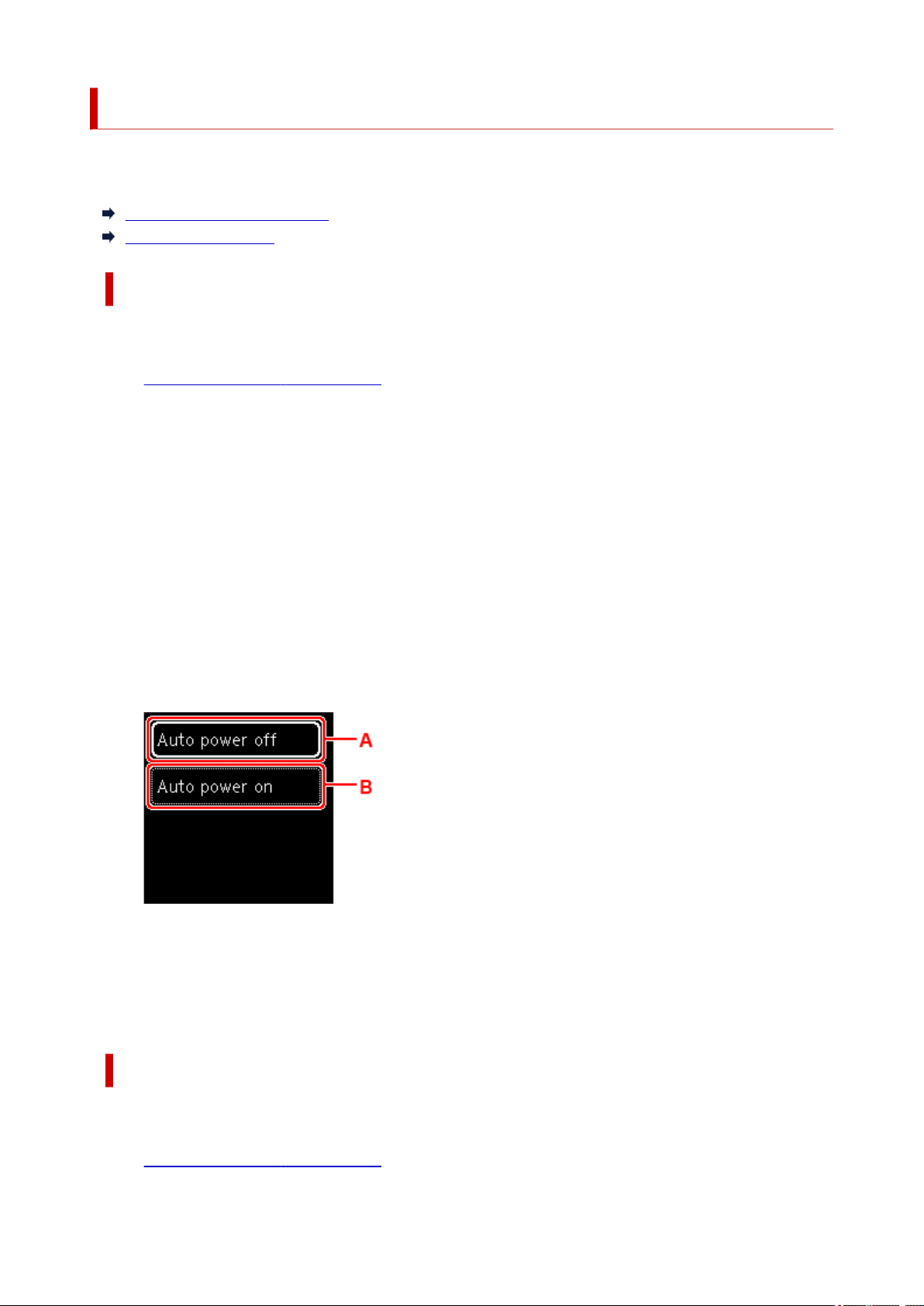
ECO settings
This setting allows you to use automatic duplex printing as a default to save paper and to turn on/off the
printer automatically to save electricity.
Using Power Saving Function
Using Duplex Printing
Using Power Saving Function
Follow the procedure below to use power saving function.
1.
Check that printer is turned on.
2. Press the OK button.
3. Select Device settings.
4. Select Other device settings.
5. Select ECO settings.
6. Select Energy saving settings.
7. Specify settings as necessary.
A: Specify the length of time to turn the printer off automatically when no operation is made or no
printing data is sent to the printer.
B: Selecting ON enables the printer to turn on automatically when a scanning command from a
computer or printing data is sent to the printer.
Using Duplex Printing
Follow the procedure below to use duplex printing.
1.
Check that printer is turned on.
166
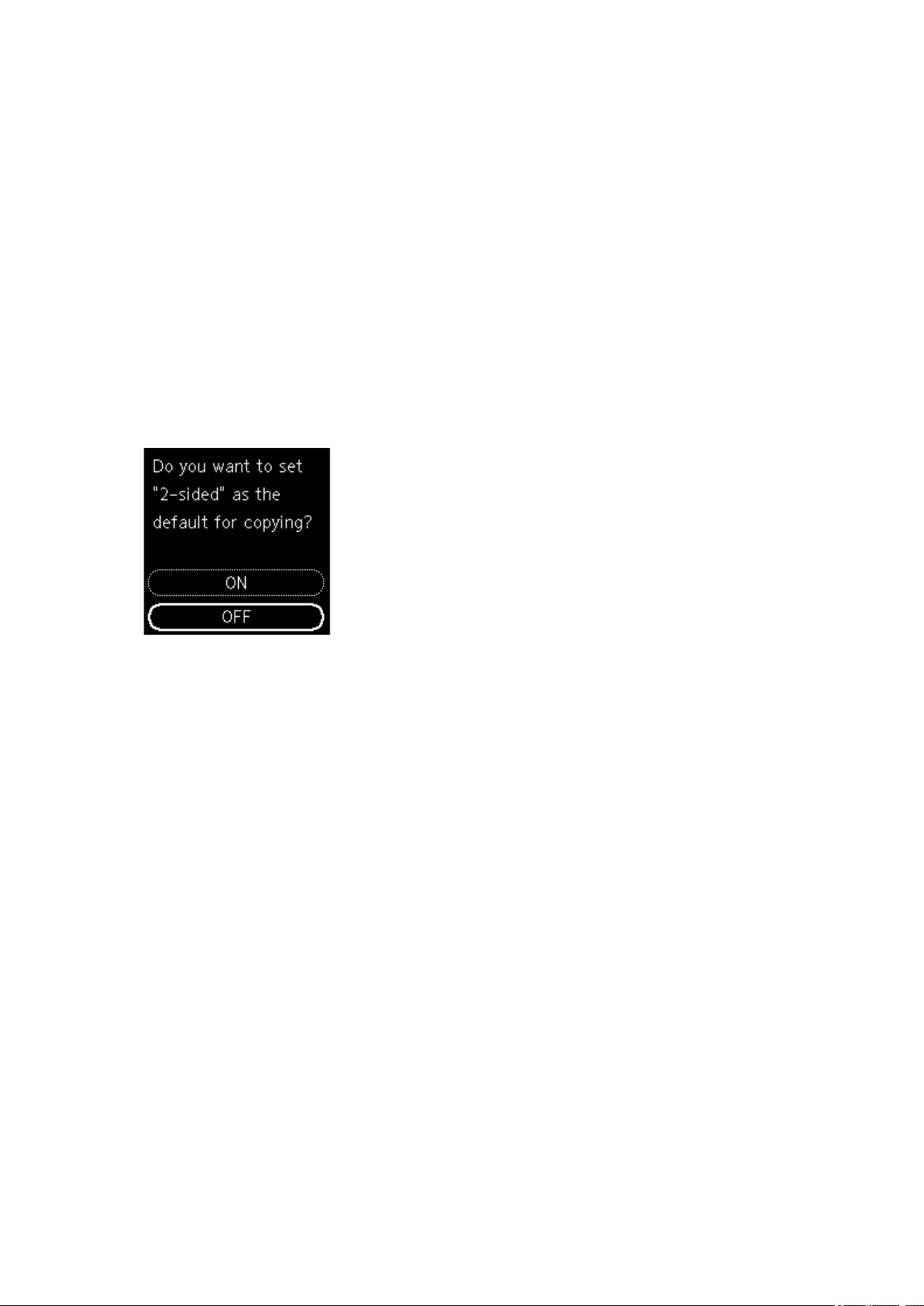
2. Press the OK button.
3. Select Device settings.
4. Select Other device settings.
5. Select ECO settings.
6. Select Two-sided print settings.
A confirmation screen will appear when the default setting for copying is set for two-sided
printing.
7. Select ON or OFF to turn on/off two-sided printing.
167

Quiet setting
Enables this function on the printer if you want to reduce the operating noise, such as when printing at night.
Follow the procedure below to perform setting.
1.
Check that printer is turned on.
2. Press the OK button.
3. Select Device settings.
4. Select Other device settings.
5. Select Quiet setting.
6. Select to turn it ON/OFF.
When Quiet setting is turned on, it is possible to reduce the operating noise while printing is in progress.
Important
• When Quiet setting is turned on, the operating speed will be slower compared to when it is turned off.
• This function may not be so effective depending on the printer's setting. Furthermore, certain noise,
such as when the printer is preparing for printing, is not reduced.
Note
• You can set the quiet mode from the operation panel of the printer or the printer driver. No matter how
you set the quiet mode, the mode is applied when you perform operations from the operation panel of
the printer or printing and scanning from the computer.
• For Windows, you can set the quiet mode from ScanGear (scanner driver).
168

System information
Select this setting item from System information in the menu screen which appears when you press the
OK button.
• Current version
Displays the current firmware version.
• Printer name
Displays the printer name currently specified.
• Serial number
Displays the printer serial number.
• MAC address (Wi-Fi)
Displays the MAC address for Wi-Fi.
• Root cert. thumbprint (SHA-1)
Shows the root certification thumbprint (SHA-1) of the printer.
Note
• If the password is set to the printer, the password may be requested.
• Root certificate thumbprint: SHA-256
Shows the root certification thumbprint (SHA-256) of the printer.
Note
• If the password is set to the printer, the password may be requested.
169

Specifications
General Specifications
Interface USB Port:
Hi-Speed USB *
Network Port:
Wi-Fi: IEEE802.11n / IEEE802.11g / IEEE802.11b
* A computer that complies with Hi-Speed USB standard is required. Since the
Hi-Speed USB interface is fully upwardly compatible with USB 1.1, it can be
used at USB 1.1.
USB and the network can be used at the same time.
Operating environment Temperature: 41 to 95 °F (5 to 35 °C)
Humidity: 10 to 90 % RH (no condensation)
* The performance of the printer may be reduced under certain temperature
and humidity conditions.
Recommended conditions:
Temperature: 59 to 86 °F (15 to 30 °C)
Humidity: 10 to 80 % RH (no condensation)
* For the temperature and humidity conditions of papers such as photo paper,
refer to the paper's packaging or the supplied instructions.
Storage environment Temperature: 32 to 104 °F (0 to 40 °C)
Humidity: 5 to 95 % RH (no condensation)
Power supply AC 100-240 V, 50/60 Hz
(The supplied power cord is only for the country or region you purchased.)
Power consumption Printing (Copy): 19 W or less *1
Standby (minimum): 0.9 W or less *1*2
OFF: 0.3 W or less
*1 USB connection to a PC, and Bluetooth settings enabled
*2 The wait time for standby cannot be changed.
External dimensions (W x D x H) Approx. 15.9 x 12.5 x 5.9 in. (Approx. 403 x 315 x 148 mm)
* With the Cassette and trays retracted.
Weight Approx. 13.8 lb (Approx. 6.3 kg)
* With the FINE cartridge installed.
170

Scan Specifications
Scanner driver Windows: TWAIN 1.9 Specification, WIA
Maximum scanning size A4/Letter, 8.5 x 11.7 in. (216 x 297 mm)
Optical resolution (horizontal x
vertical)
1200 x 2400 dpi *
* Optical Resolution represents the maximum sampling rate based on ISO
14473.
Gradation (Input / Output) Gray: 16 bit/8 bit
Color: RGB each 16 bit/8 bit
Network Specifications
Communication protocol SNMP, HTTP, TCP/IP (IPv4/IPv6)
Wi-Fi Supported Standards: IEEE802.11n / IEEE802.11g / IEEE802.11b
Frequency bandwidth: 2.4 GHz
Channel: 1-11 or 1-13
* Frequency bandwidth and available channels differ depending on country or
region.
Communication distance: Indoors 164 feet/50 m
* Effective range varies depending on the installation environment and location.
Security:
WEP (64/128 bits)
WPA-PSK (TKIP/AES)
WPA2-PSK (TKIP/AES)
Setup:
WPS (Push button configuration/PIN code method)
Easy wireless connect
Minimum System Requirements
Conform to the operating system's requirements when higher than those given here.
Windows
Operating System Windows 10, Windows 8.1, Windows 7 SP1
Note: Operation can only be guaranteed on a PC with pre-installed Windows
7 or later.
Amount of hard disk space re-
quired for installing the driver
1.5 GB or more
The necessary amount of hard disk space may be changed without notice.
171

macOS
Operating System macOS 10.12.6 - macOS 10.15
Other Supported OS
iOS, iPadOS, Android, Chrome OS
Some functions may not be available with the supported OS.
Refer to the Canon web site for details.
Information in this manual is subject to change without notice.
172


Supported Media Types
For best results, choose paper designed for how you are printing. A variety of paper for documents as well
as photos or illustrations is available from Canon. Use genuine Canon paper to print important photos, when
possible.
Media Types
Page Sizes
Paper Weight
Media Types
Genuine Canon paper
Note
• For warnings on use of the non-printable side, see each product's usage information.
• Page sizes and media types differ depending on the country or region where the paper is sold. For
details on page sizes and media types, access the Canon website.
• Genuine Canon paper is not available in some countries or regions. Note that in the United States,
Canon paper is not sold by model number. Instead, purchase paper by name.
Paper for printing documents:
• Canon Red Label Superior <WOP111>
• Canon Océ Office Colour Paper <SAT213>
• High Resolution Paper <HR-101N>
Paper for printing photos:
• Photo Paper Pro Platinum <PT-101>
• Glossy Photo Paper "Everyday Use" <GP-501/GP-508>
• Photo Paper Glossy <GP-701>
• Photo Paper Plus Glossy II <PP-201/PP-208/PP-301>
• Photo Paper Pro Luster <LU-101>
• Photo Paper Plus Semi-gloss <SG-201>
• Matte Photo Paper <MP-101>
Paper for making original goods:
• Photo Stickers (16 stickers per sheet) <PS-108>
• Photo Stickers (Free Cutting) <PS-208>
• Photo Stickers (Variety Pack) <PS-808>
• Restickable Photo Paper <RP-101>
• Removable Photo Stickers <PS-308R>
• Magnetic Photo Paper <MG-101/PS-508>
174

• Light Fabric Iron-on Transfers <LF-101>
• Dark Fabric Iron-on Transfers <DF-101>
• Double sided Matte Paper <MP-101D>
Paper other than genuine Canon paper
• Plain Paper (including recycled paper)
• Envelopes
• T-Shirt Transfers
• Greeting Card
• Card Stock
Paper Load Limit
Paper Settings on the Printer Driver and the Printer (Media Type) (Windows)
Note
• When printing photos saved on a PictBridge (Wi-Fi) compliant device, you must specify the page
size and media type.
Printing from Digital Camera
Page Sizes
You can use the following page sizes.
Note
• Page sizes and media types the printer supports differ depending on the OS you are using.
Standard sizes:
• Letter
• Legal
• A5
• A4
• B5
• KG/4"x6"(10x15)
• 5"x7"(13x18cm)
• 7"x10"(18x25cm)
• 8"x10"(20x25cm)
• L(89x127mm)
• 2L(127x178mm)
• Square 3.5"
• Square 5"
175

• Hagaki
• Hagaki 2
• Envelope Com 10
• Envelope DL
• Nagagata 3
• Nagagata 4
• Yougata 4
• Yougata 6
• Card 2.17"x3.58"
Special sizes
• Minimum size: 2.17 x 3.51 in. (55.0 x 89.0 mm)
• Maximum size: 8.50 x 26.61 in. (215.9 x 676.0 mm)
Paper Weight
You can use paper in the following weight range.
• Plain paper: From 17 to 28 lb (64 to 105 g /m
2
)
176
Paper Load Limit
This section shows the paper load limits of the rear tray, the cassette, and the paper output tray.
Paper Load Limits of Rear Tray and Cassette
Paper Load Limit of Paper Output Tray
Note
• Page sizes and media types differ depending on the country or region where the paper is sold. For
details on page sizes and media types, access the Canon website.
Paper Load Limits of Rear Tray and Cassette
Genuine Canon Paper
Paper for printing documents:
Media Name <Model No.> Rear Tray Cassette
Canon Red Label Superior <WOP111> A4: Approx. 100 sheets A4: Approx. 100 sheets
Canon Océ Office Colour Paper <SAT213> A4: Approx. 80 sheets A4: Approx. 80 sheets
High Resolution Paper <HR-101N>
*1 A4, B5, Letter: Approx. 80
sheets
N/A
Paper for printing photos:
Media Name <Model No.> Rear Tray
Photo Paper Pro Platinum <PT-101>*2
Glossy Photo Paper "Everyday Use" <GP-501/
GP-508>
*2
Photo Paper Glossy <GP-701>*2
Photo Paper Plus Glossy II <PP-201/PP-208/PP-301>*2
Photo Paper Pro Luster <LU-101>*2
Photo Paper Plus Semi-gloss <SG-201>*2
Matte Photo Paper <MP-101>
A4, Letter, 5"x7"(13x18cm), 8"x10"(20x25cm),
2L(127x178mm): 10 sheets
KG/4"x6"(10x15), L(89x127mm), Square 3.5", Square
5", Hagaki: 20 sheets
Paper for making original goods:
Media Name <Model No.> Rear Tray
Photo Stickers (16 stickers per sheet) <PS-108>
Photo Stickers (Free Cutting) <PS-208>
Photo Stickers (Variety Pack) <PS-808>
Restickable Photo Paper <RP-101>
Removable Photo Stickers <PS-308R>
Magnetic Photo Paper <MG-101/PS-508>
1 sheet
177
Light Fabric Iron-on Transfers <LF-101>
Dark Fabric Iron-on Transfers <DF-101>
Double sided Matte Paper <MP-101D>
Paper other than Genuine Canon Paper
Common Name Rear Tray Cassette
Plain Paper (including recycled paper)*1 Approx. 100 sheets (Legal:
10 sheets)
Approx. 100 sheets
Envelopes 10 envelopes N/A
T-Shirt Transfers A4: 1 sheet N/A
Greeting Card Letter, 7"x10"(18x25cm): 1
sheet
N/A
Card Stock A4, Letter: 1 sheet N/A
*1 Normal feeding at maximum capacity may not be possible with some types of paper, or under very high
or low temperature or humidity. In this case, load half the amount of paper or less.
*2 Feeding from a loaded stack of paper may leave marks on the printed side or prevent efficient feeding.
In this case, load one sheet at a time.
Paper Load Limit of Paper Output Tray
Genuine Canon Paper
Paper for printing documents:
Media Name <Model No.> Paper Output Tray
Canon Red Label Superior <WOP111>
Canon Océ Office Colour Paper <SAT213>
High Resolution Paper <HR-101N>
Approx. 50 sheets
Paper other than Genuine Canon Paper
Common Name Paper Output Tray
Plain Paper (including recycled paper) Approx. 50 sheets (Legal: 10 sheets)
When continuing printing with paper other than the above, we recommend removing already printed paper
from the paper output tray to avoid smearing or discoloration.
178

Unsupported Media Types
Do not use the following types of paper. Using such paper will cause not only unsatisfactory results, but also
the printer to jam or malfunction.
• Folded, curled, or wrinkled paper
• Damp paper
• Paper thinner than a postcard, including plain paper or notepad paper cut to a small size (when printing
on paper smaller than A5)
• Picture postcards
• Postcards
• Envelopes with a double flap
• Envelopes with an embossed or treated surface
• Envelopes whose gummed flaps are already moistened and adhesive
• Any type of paper with holes
• Paper that is not rectangular
• Paper bound with staples or glue
• Paper with an adhesive surface on the back such as label seal
• Paper decorated with glitter, etc.
179

Handling Paper
• Be careful not to rub or scratch the surfaces of any types of paper when handling.
• Hold the paper as closely as possible to its edges and try not to touch the printing surface. The print
quality may be degraded if the printing surface is smudged with sweat or oil that comes from your
hands.
• Do not touch the printed surface until the ink is dried. Even when the ink is dried, be careful not to touch
the printed surface as much as possible when handling. Due to the nature of the pigment ink, the ink on
the printed surface may be removed when being rubbed or scratched.
• Take out only the necessary number of paper from the package, just before printing.
• To avoid curling, when you do not print, put unused paper back into the package and keep it on a level
surface. And also, store it avoiding heat, humidity, and direct sunlight.
180
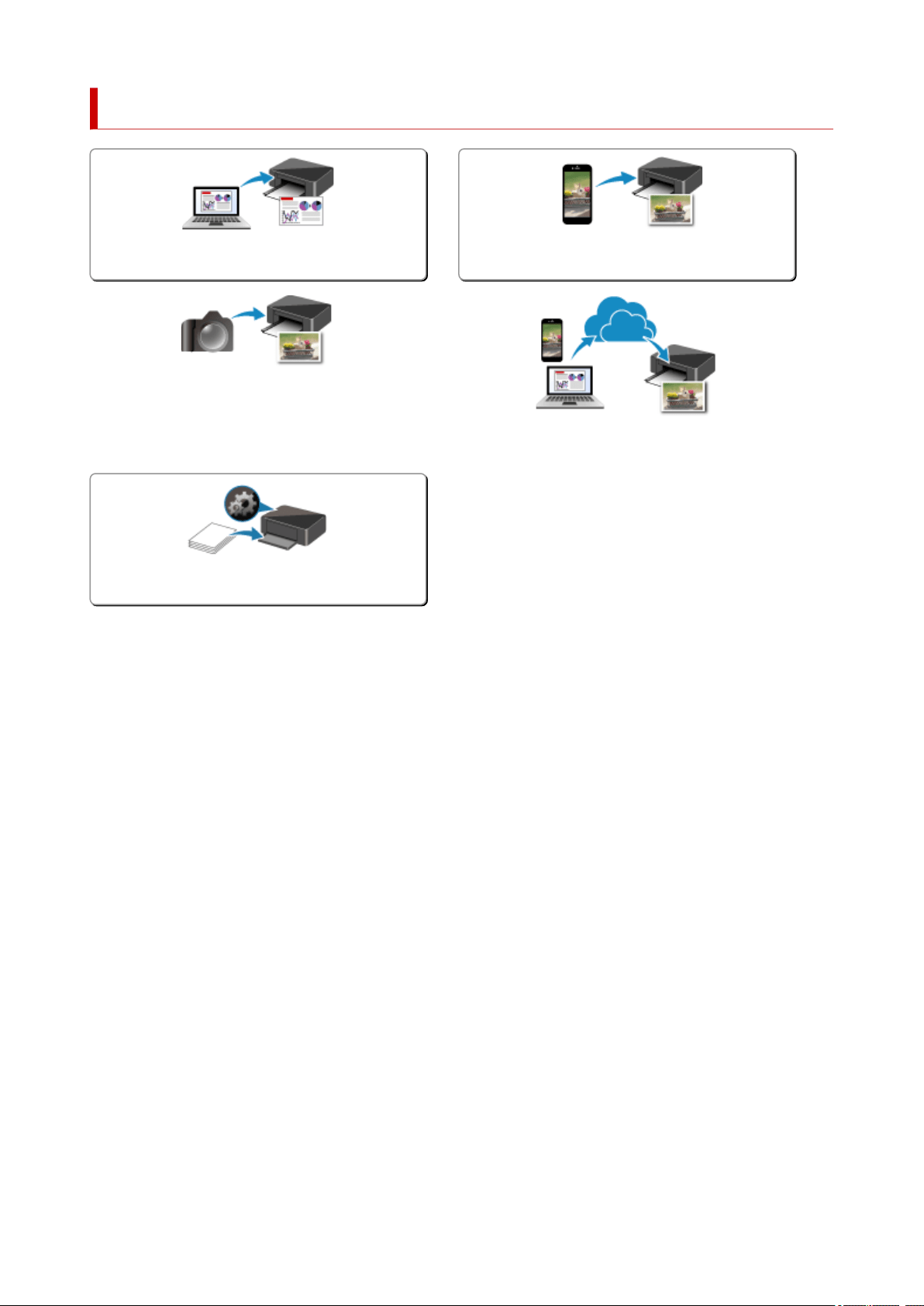



Printing
This printer is compatible with the macOS standard printing system (AirPrint).
You can start printing right away after connecting this printer to your Mac without installing any special
software.
Checking Your Environment
First, check your environment.
• AirPrint Operation Environment
Mac running the latest version of OS
• Requirement
The Mac and the printer must be connected by one of the following methods:
◦ Connected to the same network over a LAN
◦ Connected directly without wireless router (Direct Connection)
◦ Connected by USB
Print from a Mac
1.
Check that printer is turned on
Note
• If Auto power on is enabled, printer automatically turns itself on when receiving a print job.
2.
Load paper in printer
3. Select paper size and paper type from printer
Register the set paper size and paper type on the printer operation panel.
For instructions, see "
Paper Settings."
4. Start printing from your application software
The Print dialog opens.
5. Select printer
Select your model from the Printer list in the Print dialog.
184
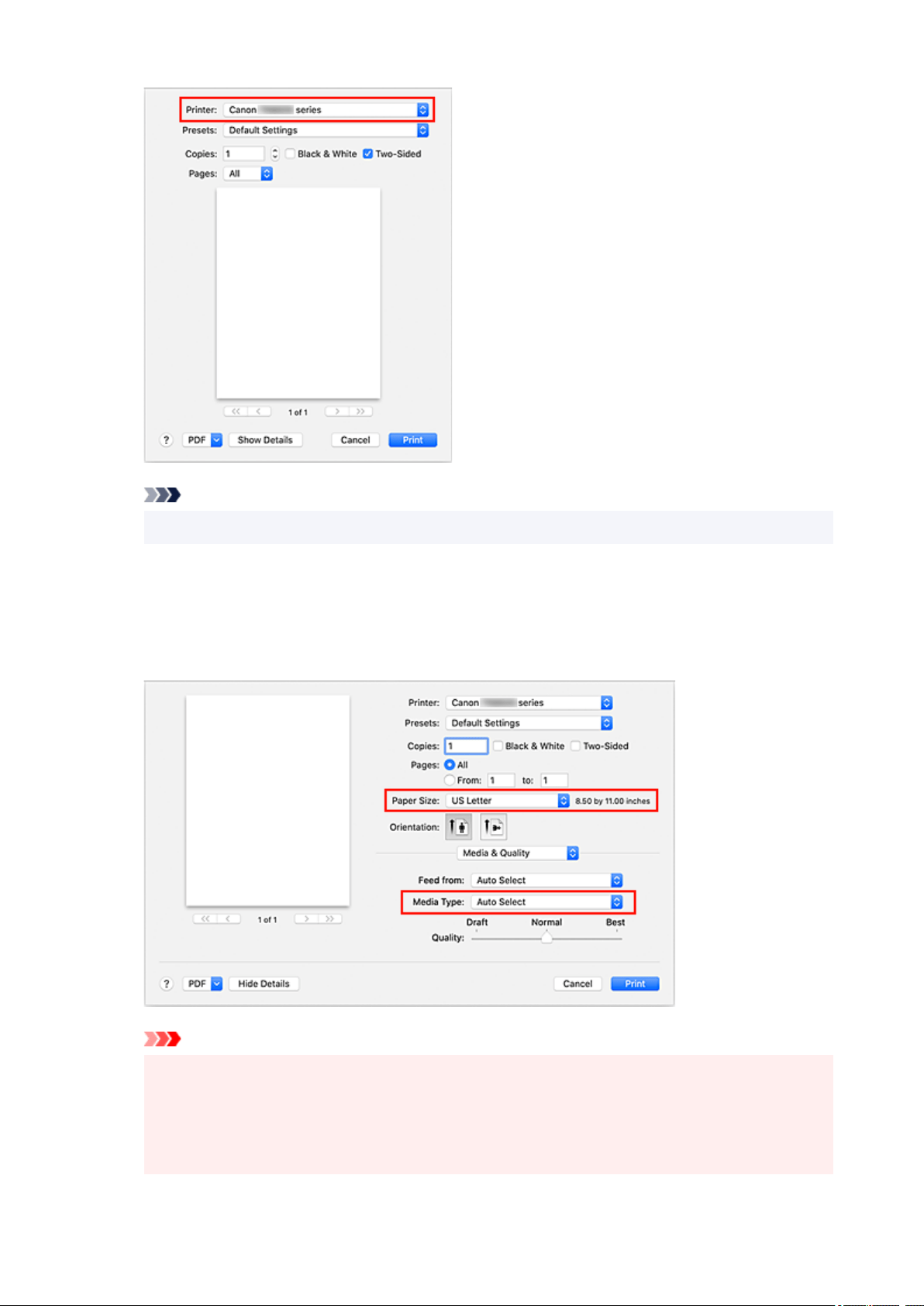
Note
• Click Show Details to switch the setup window to the detailed display.
6. Check print settings
Set items such as Paper Size to the appropriate size, as well as Feed from and Media Type from
Media & Quality of the pop-up menu.
Remove the Two-Sided check mark if you are not printing on both sides of the paper.
Important
• An error may occur if the paper size set in the print dialog is different from the paper size
registered on the printer. Select the correct items on the print dialog and the printer that
correspond to the paper being printed.
• If printing in A4, A5, JIS B5, or US Letter, set the desired feed position (Main Tray or Rear
Tray) from Feed from of the print dialog. If Auto Select is selected in Feed from, the feed
185
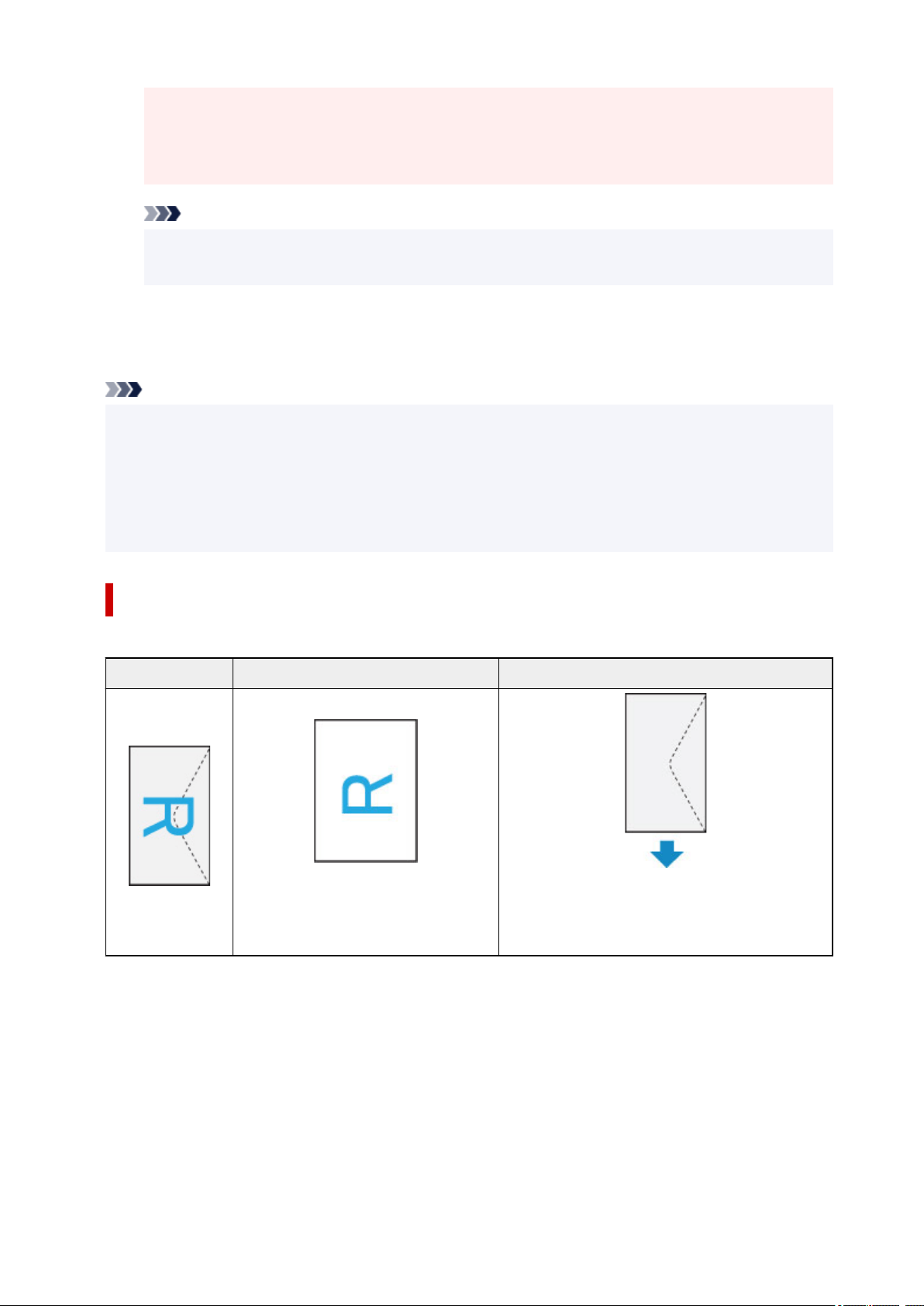
position differs depending on Media Type. If Media Type is set to plain paper, it is fed from the
cassette (main tray). If set to other types of paper, it is fed from the rear tray.
• If printing paper such as photo paper and postcards that cannot be printed on both sides,
uncheck the Two-Sided checkbox.
Note
• Use the Print dialog to set general print settings such as the layout and the print sequence.
For information about print settings, refer to macOS help.
7. Click Print
The printer prints according to the specified settings.
Note
• It can take the Wi-Fi a few minutes to get connected after the printer turns on. Print after checking
that the printer is connected to the network.
• You cannot print if Bonjour settings of printer are disabled. Check LAN settings of printer and enable
Bonjour settings.
• Refer to "Cannot Print Using AirPrint" for printing problems.
• The display of the settings screen may differ depending on the application software you are using.
Printing of Envelopes
For printing on the envelope from Mac, refer to the following.
Print result image Orientation of print data Orientation of loading envelope
The print data is rotated by 180 degrees
against the print result image.
Load the envelope in vertically with the address side
facing up so that the folded flap of the envelope will
be faced down on the right side.
186
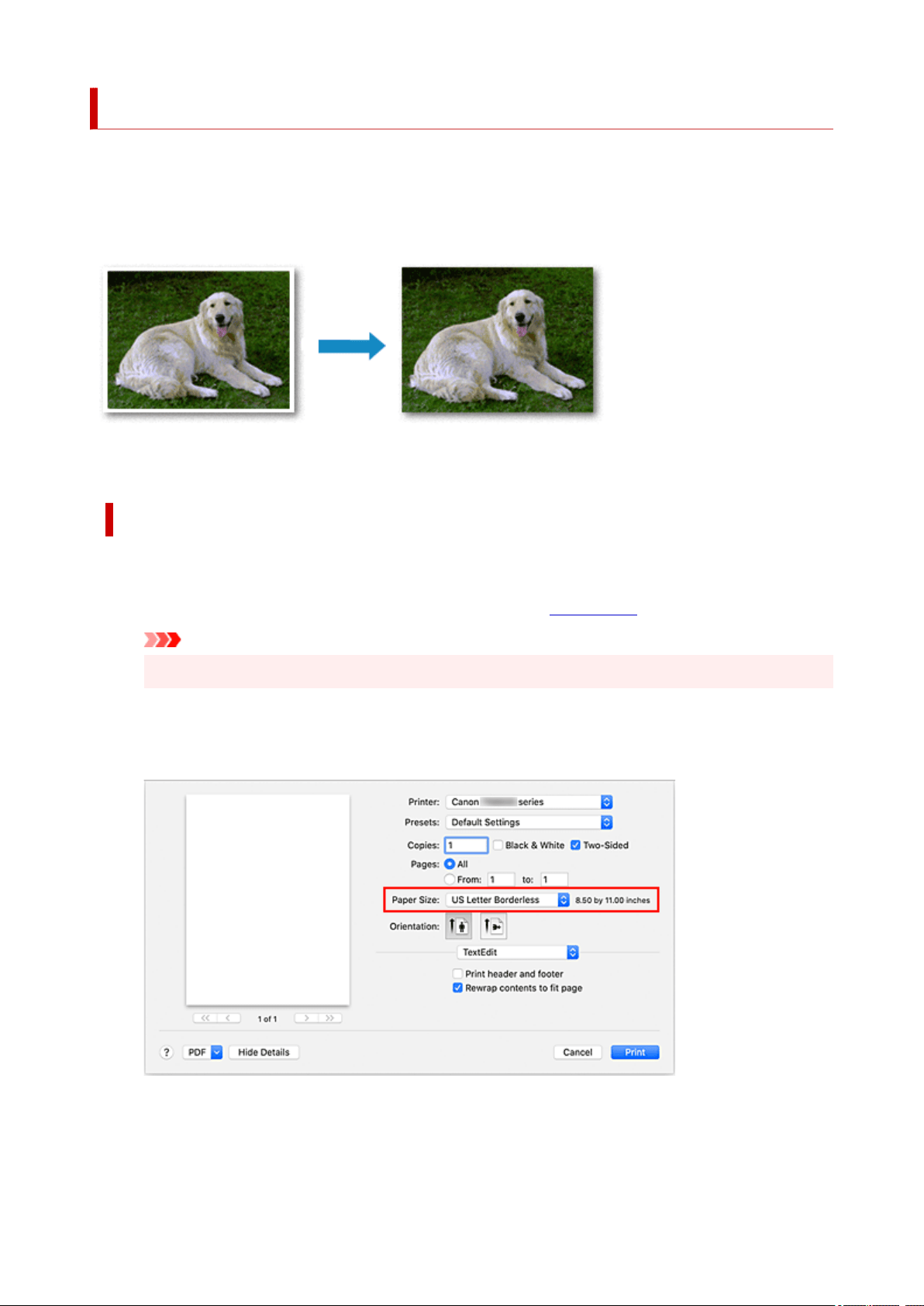
Perform Borderless Printing
The borderless printing function allows you to print data without any margin by enlarging the data so that it
extends slightly off the paper. In standard printing, margins are created around the document area.
However, in borderless printing function, these margins are not created. When you want to print data such
as a photo without providing any margin around it, set borderless printing.
The procedure for performing borderless printing is as follows:
Setting Borderless Printing
1. Set the Amount of extension on the printer operation panel
For information on how to set the amount of extension, see "
Print settings."
Important
• When the Extended amount: Large is set, the back side of the paper may become smudged.
2. Select sheet size for borderless printing
Select XXX Borderless for Paper Size from the print dialog.
3. Click Print
When you perform print, the data is printed without any margins on the paper.
187

Important
• Borderless printing only supports specific paper sizes. Make sure to select a paper size with the
wording "Borderless" from the Paper Size.
• Print quality may deteriorate or the sheet may be stained at the top and bottom depending on the
type of paper used.
• When the ratio of the height to the width differs from the image data, a portion of the image may not
be printed depending on the size of the media used.
In this case, crop the image data with an application software according to the paper size.
• When scaled printing or page layout printing is enabled, you cannot perform borderless printing.
Note
• The use of borderless printing is not recommended if Plain Paper is selected for Media Type in
Media & Quality.
Expanding the Range of the Document to Print
Setting a large amount of extension allows you to perform borderless printing with no problems. However,
the portion of the document extending off the paper range will not be printed and for this reason, the
subjects around the perimeter of a photo may not be printed.
If you are not satisfied with the borderless printing results, reduce the amount of extension in printer
operation panel.
Important
• When the amount of extension is decreased, an unexpected margin may be produced on the print,
depending on the size of the paper.
Note
• When the Amount: Minimum is set, image data will be printed in the full size. If you set this when
printing the address side of a postcard, the postal code of the sender is printed in the correct position.
188
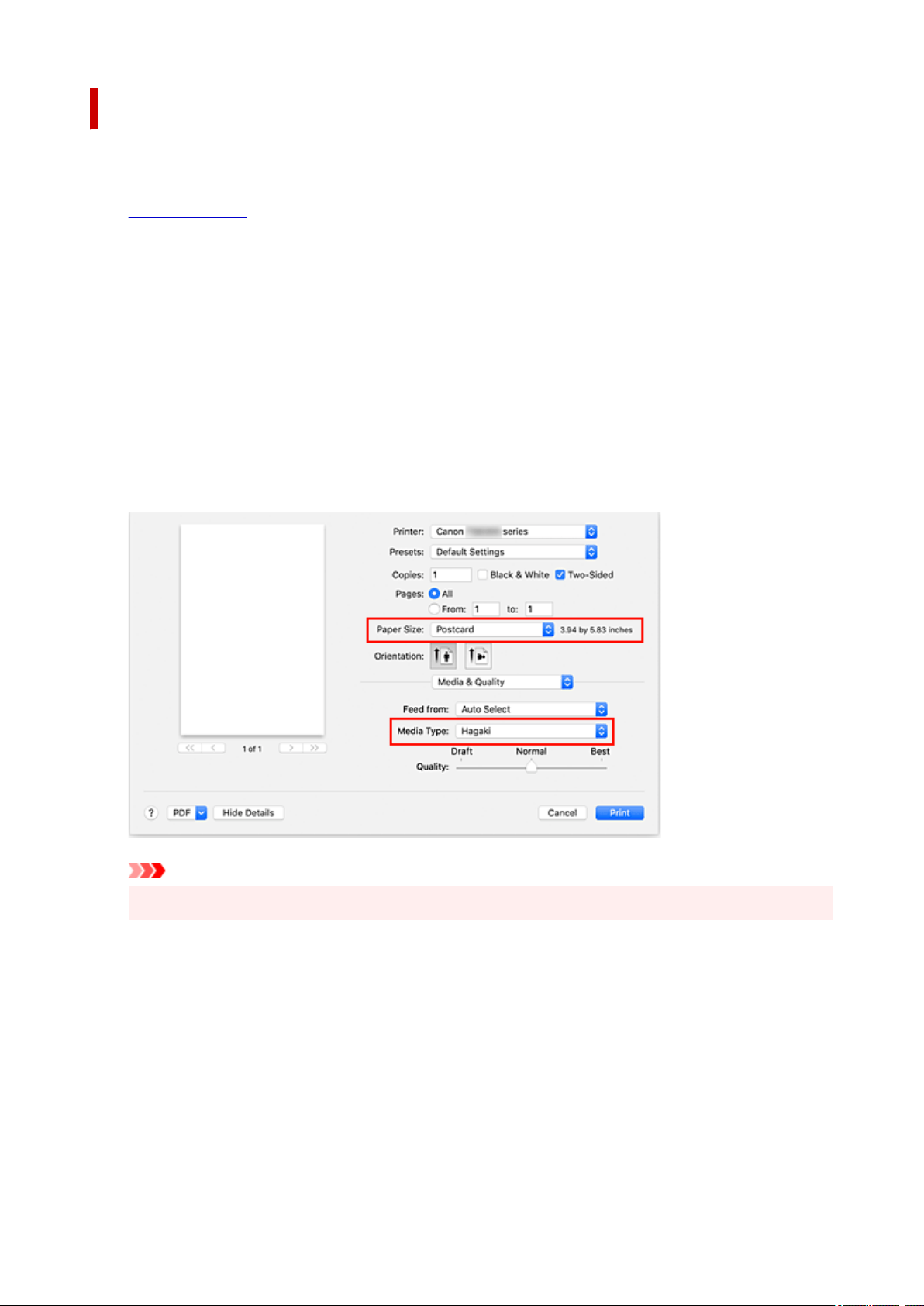
Printing on Postcards
This section describes the procedure for printing on postcards.
1.
Load postcards in printer
2. Select paper size and paper type from the printer
Register Hagaki (size) for paper size from the printer operation panel.
Also, register IJ Hagaki, Hagaki K, or Hagaki (type) for paper type, according to your purpose. When
you print on the address side, register Hagaki (type).
3. Select Paper Size and Media Type from the print dialog
Select Postcard or Postcard Borderless for Paper Size from the print dialog. When you print on the
address side, select Postcard.
Select Hagaki, Hagaki (A), Hagaki K, Hagaki K (A), Ink Jet Hagaki, Ink Jet Hagaki (A), for Media
Type from the print dialog.
Important
• This printer cannot print on postcards that have photos or stickers attached.
4. Uncheck Two-Sided
189
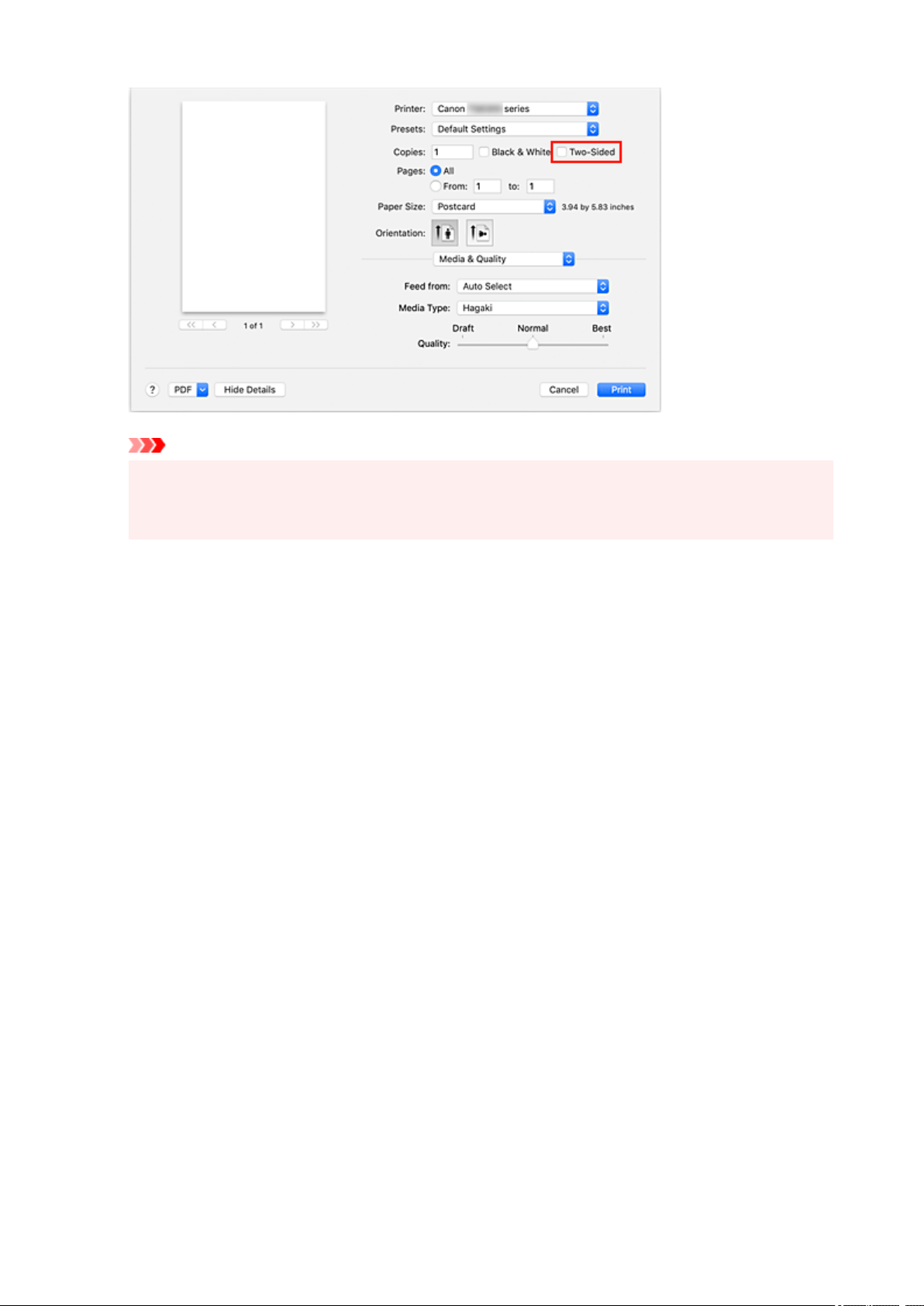
Important
• Two-sided printing is not possible for postcards, so remove the Two-Sided check mark. If you
print with the Two-Sided check mark on, the printing result may not be as you intended.
• You will get cleaner printing if you print the message side first and then print the address side.
5. Click Print
The printer prints according to the specified settings.
190

Adding Printer
Procedure for adding printer to your Mac is explained.
To re-add a printer that was deleted, open System Preferences -> Printers & Scanners, click + next to the
printer list, and then perform the procedure described below.
If your printer is connected via USB, and you connect the USB cable to a Mac, the printer is automatically
added. The below procedure is not necessary in this case.
1. Check whether Default is selected in the displayed dialog
Note
• It may take a little time for your printer to appear.
2. Select the printer
Select the printer listed as Bonjour Multifunction.
Note
• Check the following if printer does not appear.
Printer is on
Firewall function of the security software is off
Printer is either connected to the wireless router or directly connected to the PC (Direct
Connection)
3. Select Secure AirPrint from Use
4. Click Add
The printer is added to your Mac.
191

How to Open Printer Settings Screen
The settings screen of the printer can be displayed from your application software.
Opening the Page Setup Dialog
Use this procedure to set the page (paper) settings before printing.
1. Select Page Setup... from the File menu of the application software
The Page Setup dialog opens.
Opening the Print Dialog
Use this procedure to set the print settings before printing.
1. Select Print... from the File menu of the application software
The Print dialog opens.
192
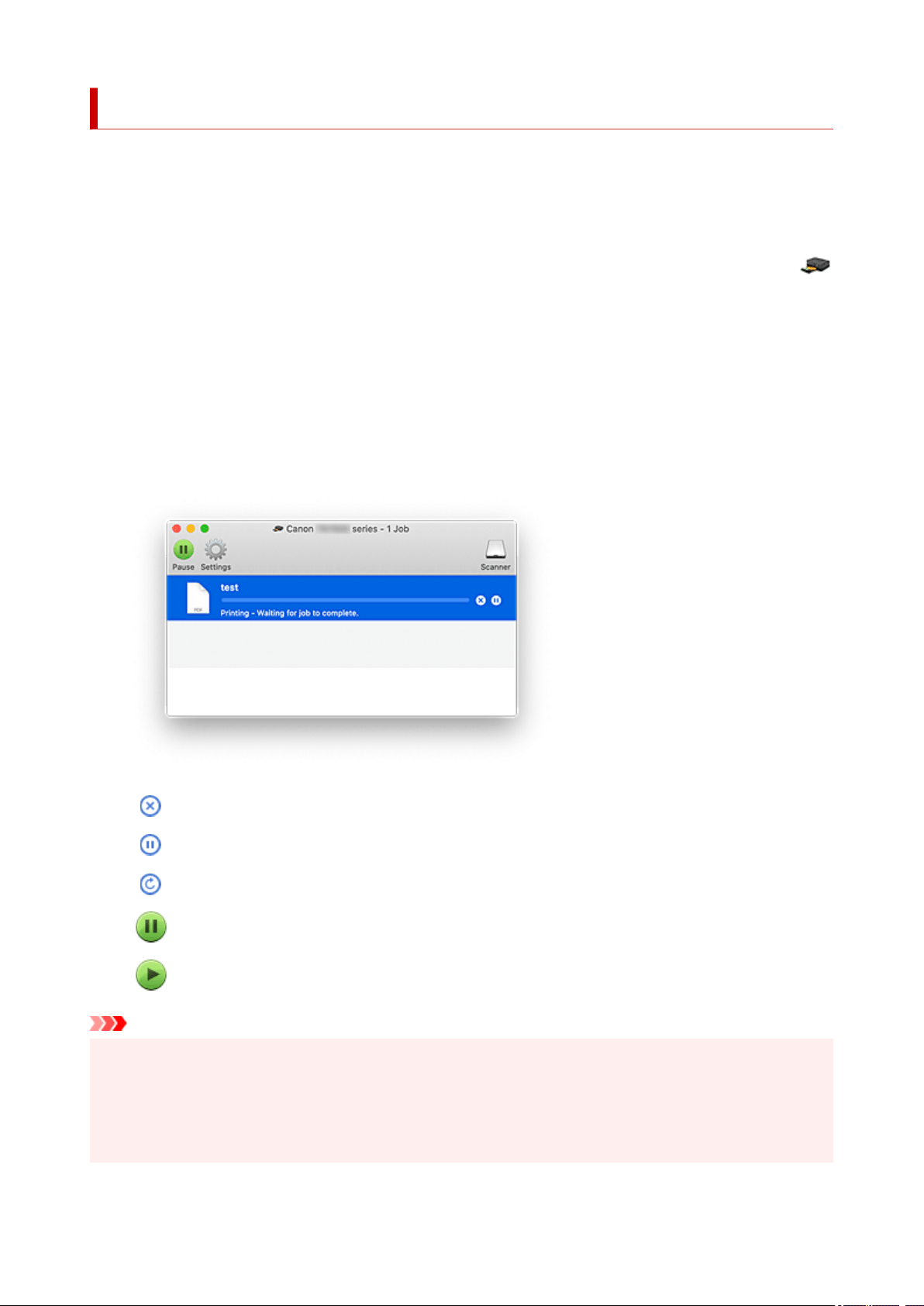
Displaying the Printing Status Screen
Check the print progress according to the following procedure:
1. Launch the printing status screen
• If the print data has been sent to the printer
The printing status screen opens automatically. To display the printing status screen, click the
(the printer icon) displayed on the Dock.
• If the print data has not been sent to the printer
Open System Preferences, and select Printers & Scanners.
To display the printing status screen, select your printer model from the printer list, and then click
Open Print Queue....
2. Check the printing status
You can check the name of the file being printed or ready for being printed.
Deletes the specified print job.
Stops printing the specified document.
Resumes printing the specified document.
Stops printing all documents.
Displayed only when printing of all documents is being stopped, and resumes printing all documents.
Important
• If an error occurs, an error message will appear on the printing progress confirmation screen.
• The content of the error message may differ depending on the OS version.
• The printer part names in the error message may differ from what is listed in this manual.
• If the content of the error message is difficult to understand, check the error message displayed on the
printer operation panel
.
193

Deleting the Undesired Print Job
If the printer does not start printing, canceled or failed print job data may be remaining.
Delete unnecessary print jobs from the print status check screen.
1. Open System Preferences, and select Printers & Scanners
2. Select your model, and then click Open Print Queue...
The print status check screen appears.
3. Select the unnecessary print job and click
(Delete)
The selected print jobs will be deleted.
194

Removing Printer That Is No Longer Required from List of
Printers
The printer that is no longer in use can be removed from the list of printers.
Before removing the printer, remove the cable connecting the printer and PC.
You cannot remove the printer if not logged in as the administrator. For information about an administrative
user, see Users & Groups from System Preferences.
1. Open System Preferences, and select Printers & Scanners
2. Delete printer from list of printers
Select the printer you wish to remove from the list of printers and click -.
Click Delete Printer when the confirmation message appears.
195

Printing Using Canon Application Software
Easy-PhotoPrint Editor Guide
196

Printing from Smartphone/Tablet
Printing from iPhone/iPad/iPod touch (iOS)
Printing from Smartphone/Tablet (Android)
197
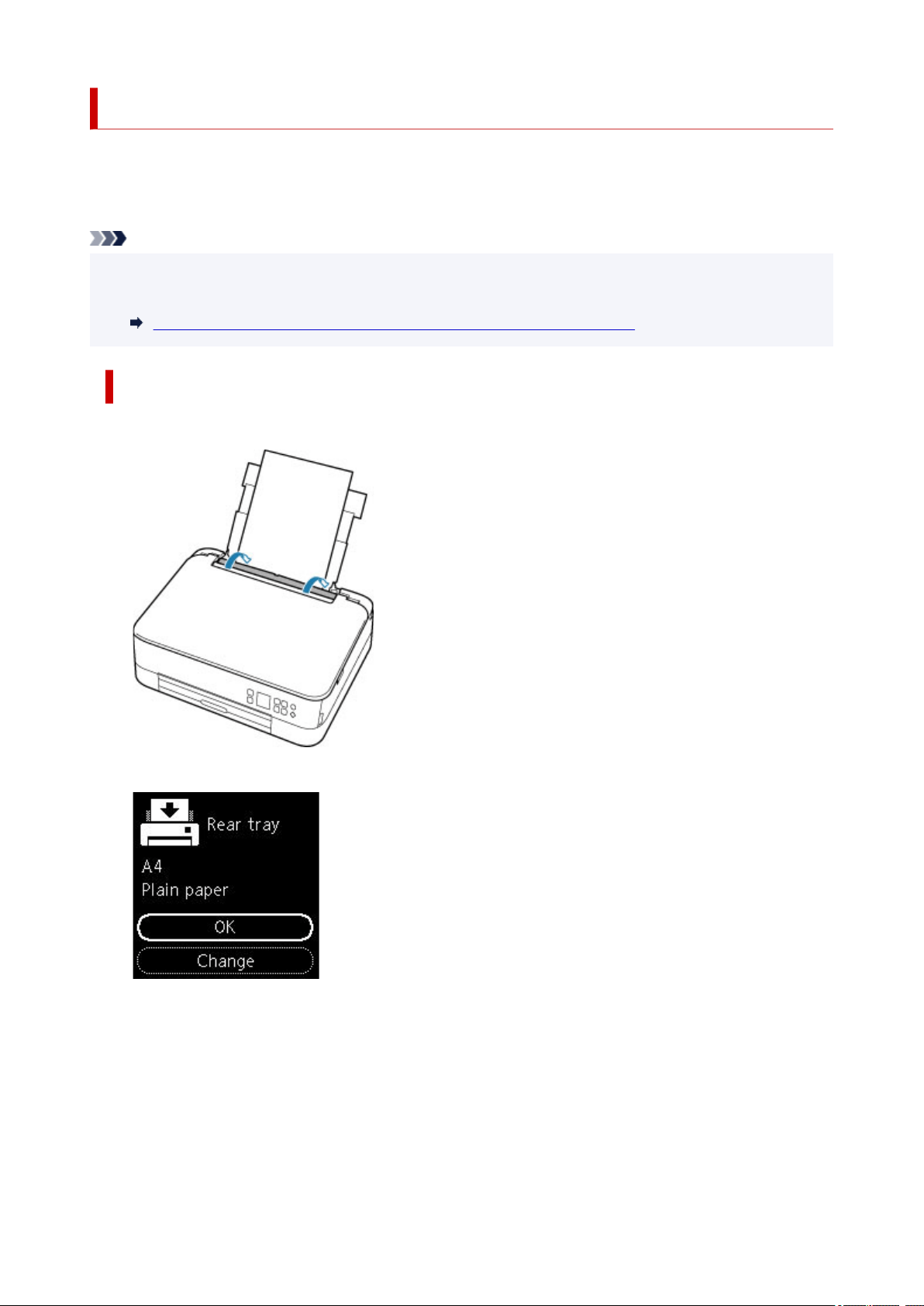
Paper Settings
By registering the paper size and the media type loaded on the rear tray or in the cassette, you can prevent
the printer from misprinting by displaying the message before printing starts when the paper size or the
media type of the loaded paper differs from the print settings.
Note
• The default display setting is different between, when you print from Smartphone/tablet, when you print
from Windows, and when you print from macOS.
Default Setting for Displaying the Message which Prevents Misprinting
After loading paper:
• When you close the feed slot cover:
The screen to register the rear tray paper information is displayed.
If the page size on the LCD matches the size of the paper loaded in the rear tray, select OK.
If not, select Change to change the setting in accordance with the size of the loaded paper.
198
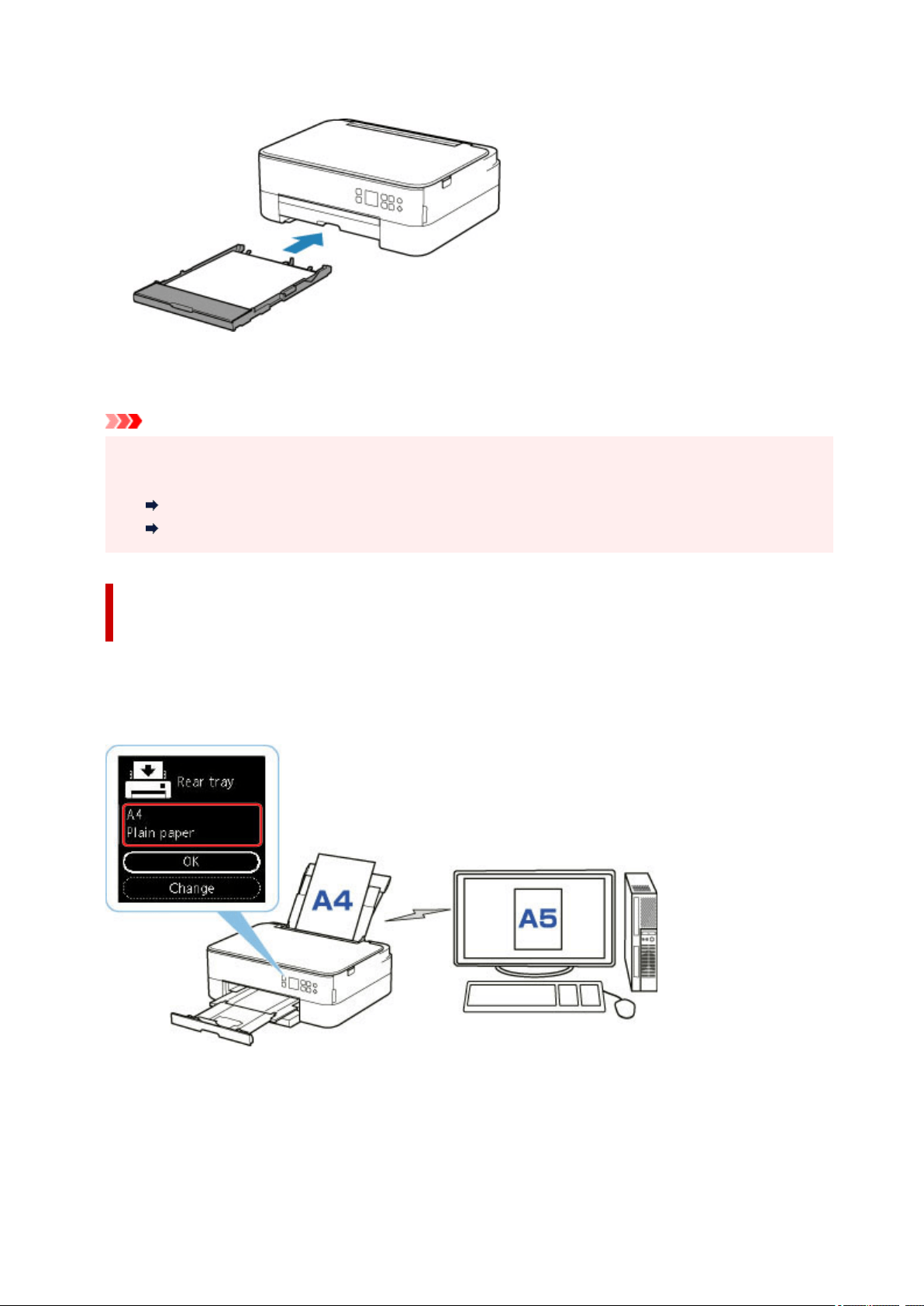
• When you insert the cassette:
Paper size is detected and set automatically in the printer.
* You can load only plain paper in the cassette.
Important
• For more on the proper combination of paper settings you can specify by the printer driver (Windows)
or on the LCD:
Paper Settings on the Printer Driver and the Printer (Media Type)
Paper Settings on the Printer Driver and the Printer (Paper Size)
When the paper settings for printing are different from the paper
information registered to the printer:
Ex:
• Paper settings for printing: A5
• Paper information registered to the printer: A4
When you start printing, a message will appear.
199

Check the message and select Next. When the screen to select the operation is displayed, select one of
the operations below.
Note
• Depending on the setting, the choices below may not be displayed.
Print on set paper
Select if you want to print on the paper loaded without changing the paper settings.
For example, when the paper setting for printing is A5 and the paper information registered to the
printer is A4, the printer starts printing on the paper loaded in the rear tray or in the cassette without
changing the paper size setting for printing.
Replace paper
Select if you want to print after replacing the paper of the rear tray or the cassette.
For example, when the paper size setting for printing is A5 and the paper information registered to
the printer is A4, you load A5 sized paper in the rear tray or in the cassette before you start printing.
The paper information registration screen is displayed after replacing the paper. Register the paper
information according to the paper that you loaded.
Note
• If you do not know what paper information to register to the printer, press the Back button when
the screen to select the operation is displayed.
• For more on the proper combination of paper settings you can specify by the printer driver
(Windows) or on the LCD:
Paper Settings on the Printer Driver and the Printer (Media Type)
Paper Settings on the Printer Driver and the Printer (Paper Size)
Cancel print
Cancels printing.
Select when you change the paper settings specified for printing. Change the paper settings and try
printing again.
Default Setting for Displaying the Message which Prevents Misprinting
• When you print from smartphone/tablet:
The message which prevents misprinting is enabled by default.
To change the setting:
200

Feed settings
• When you print from Windows:
The message which prevents misprinting is disabled by default.
To change the setting:
Changing the Printer Operation Mode
• When you print from macOS:
The message which prevents misprinting is enabled by default.
To change the setting:
Changing the Printer Operation Mode
Important
• When the message which prevents misprinting is disabled:
The printer starts printing even though the paper settings for printing and the paper information
registered to the printer are different.
201
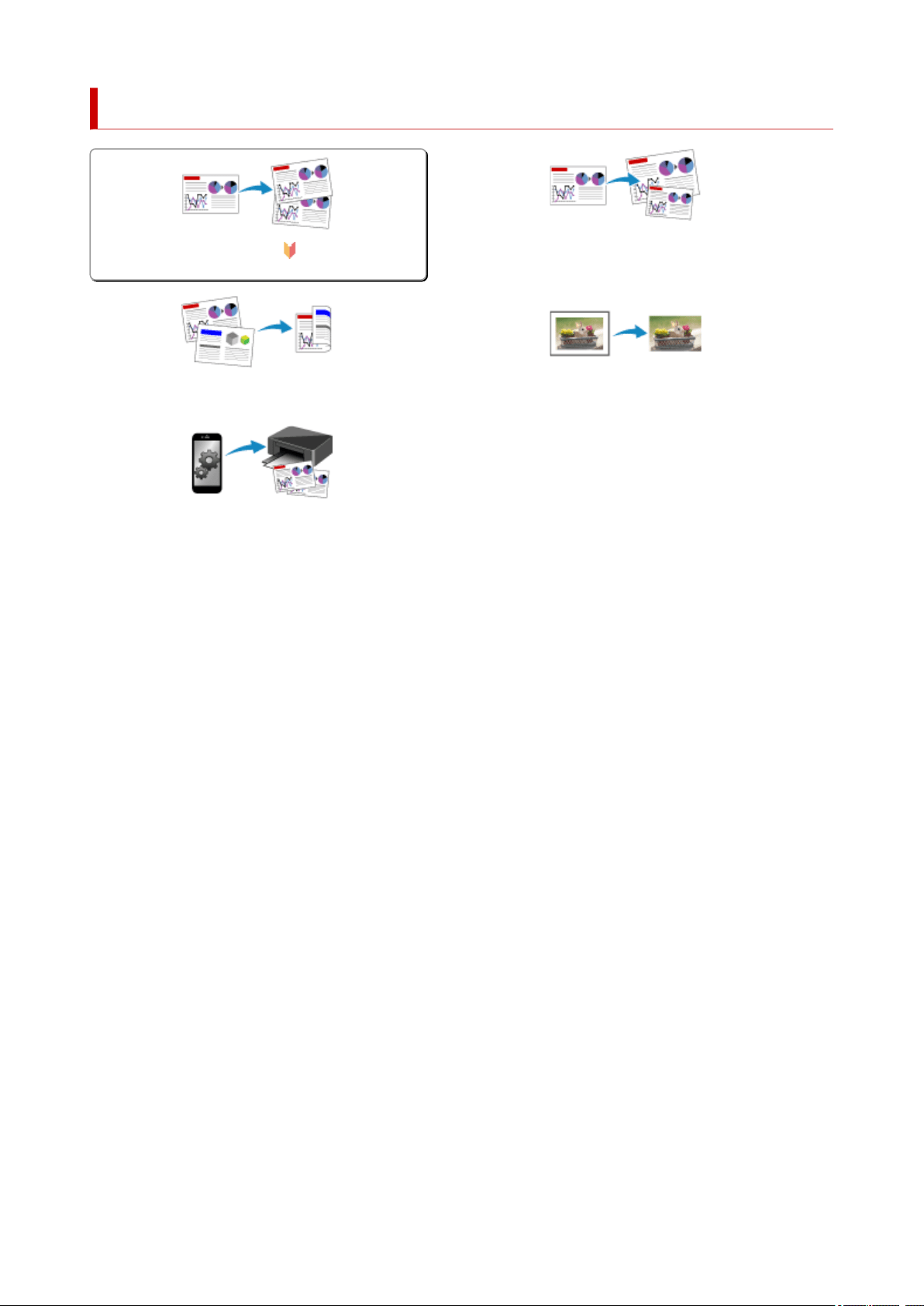
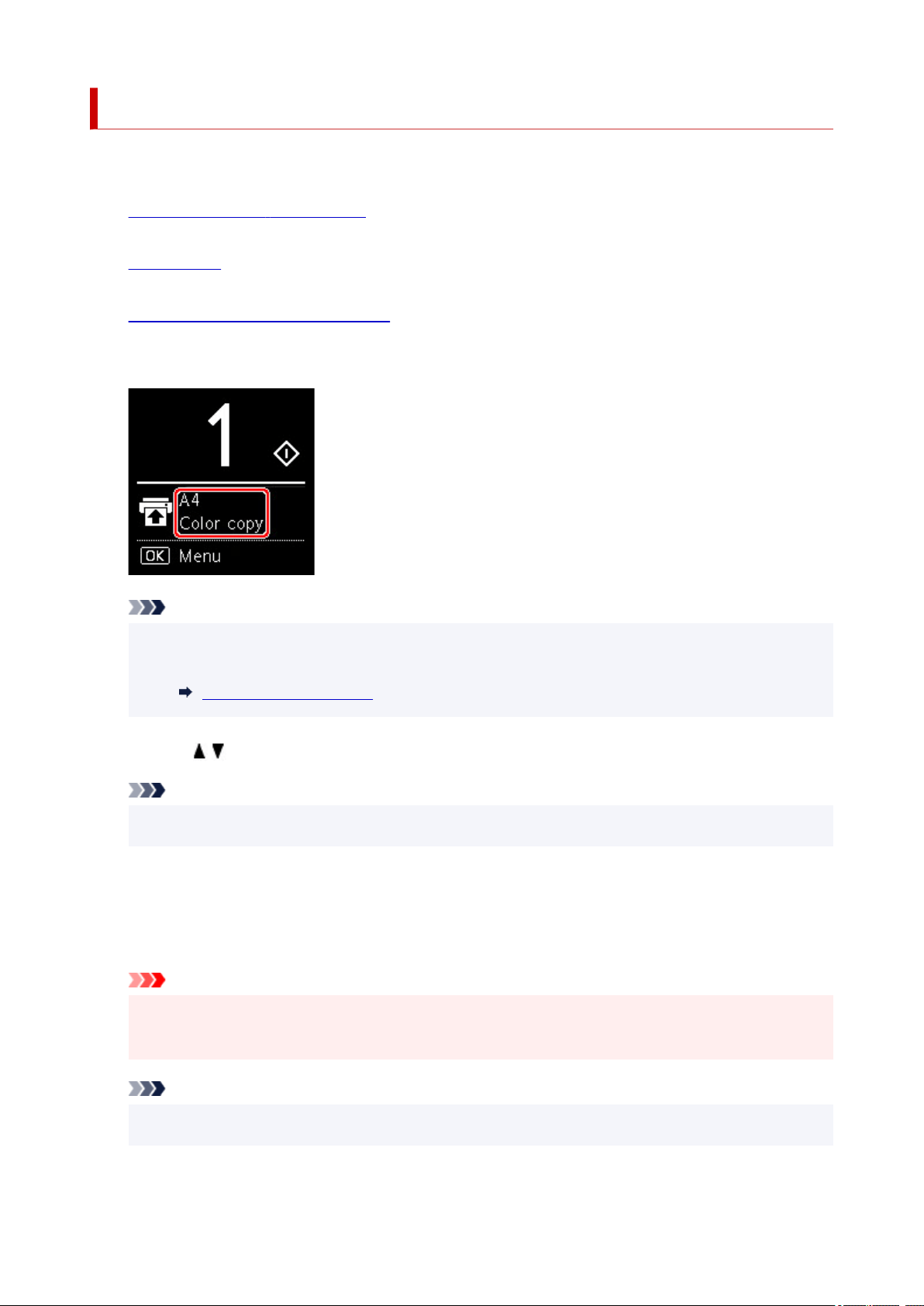
Making Copies
This section describes the basic procedure to perform standard copying.
1.
Check that printer is turned on.
2. Load paper.
3. Load original document on platen.
4. Confirm the page size and color mode.
Note
• To change the paper position, color mode and other settings, press the OK button. Select Copy
settings to display the desired setting item.
Setting Items for Copying
5. Use the button to specify the number of copies.
Note
• You can specify the number of copies even if you select Copies from Copy settings.
6. Press the Start button.
The printer starts copying.
Remove the original on the platen after copying is complete.
Important
• Do not open the document cover or remove the original while Copying... is displayed on the
screen.
Note
• To cancel copying, press the Stop button.
203
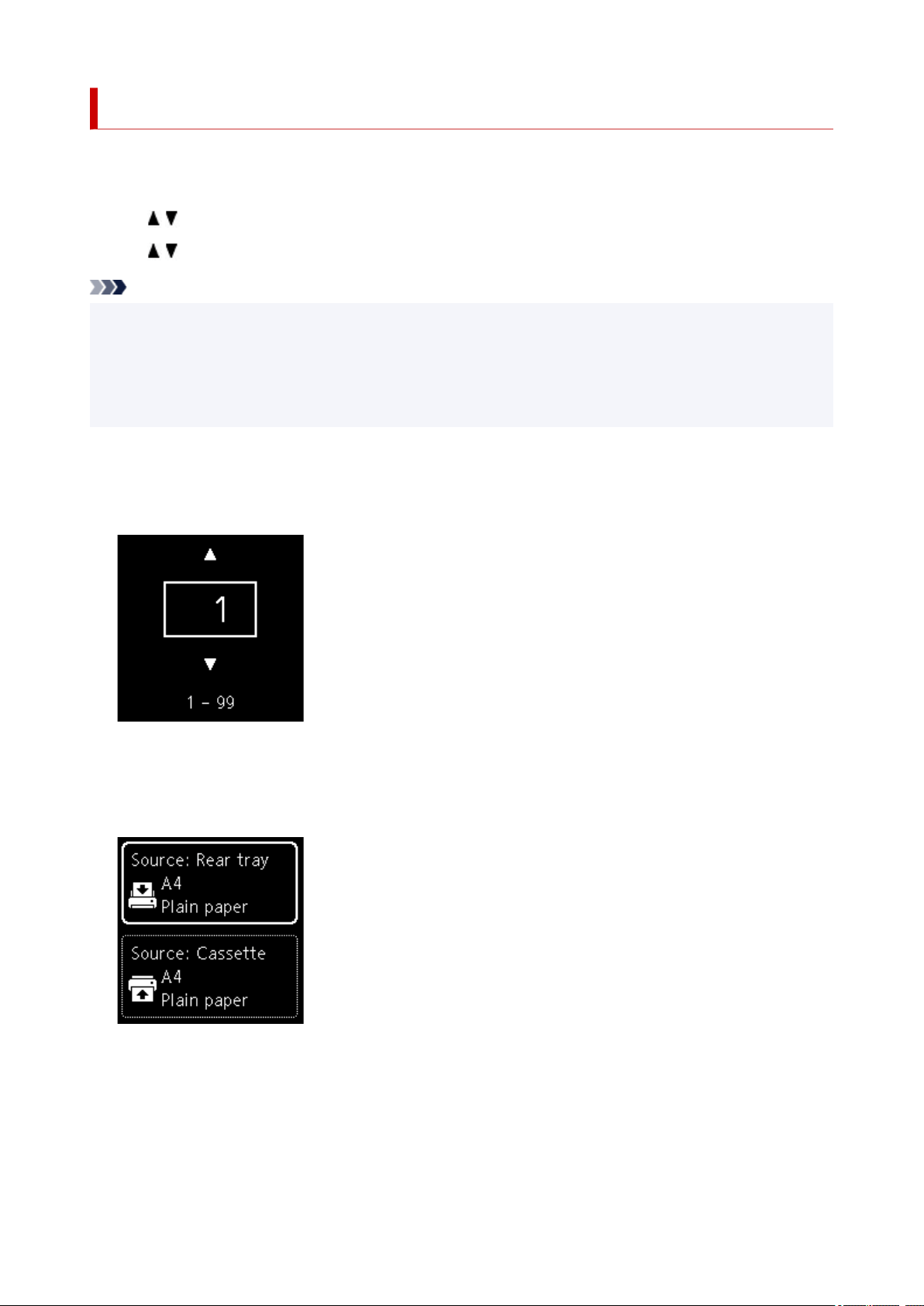
Setting Items for Copying
You can change the copy settings such as the page position, color mode, and intensity.
Press the OK button and select Copy settings.
Use the
button to set the number of copies, paper source, color mode, then press the OK button.
Use the
button to select Others when adjusting other settings, then press the OK button.
Note
• The setting currently specified appears in the selected state.
• Some settings cannot be specified in combination with the setting of other setting items or the copy
menu.
• The settings of the Intensity: Auto and print quality are retained even if the printer is turned off.
• Number of copies
Specify the number of copies.
Ex:
• Paper source
Select a paper source (rear tray/cassette) where paper is loaded.
Ex:
• Color mode
Select the color mode for copying (color copy/black & white copy).
• Others
◦ Two-Sided Copying
204

Select whether to perform duplex copying.
Two-Sided Copying
Note
This item appears when A4 or Letter is selected.
◦ Layout
Select whether to copy two pages onto a single page.
Copying Two Pages onto Single Page
Note
This item appears when A4 or Letter is selected.
• Copy intensity
Change the intensity (brightness).
Note
• If you select Intensity: Auto, load the original on the platen.
• Enlarge/Reduce
Select the reduction/enlargement method.
Reducing/Enlarging Copies
• Print quality
Select the print quality according to the original.
Note
• The Quality: Draft can be set when the paper type is normal paper.
205

Scanning from Computer (macOS)
Scanning According to Item Type or Purpose (IJ Scan Utility Lite)
IJ Scan Utility Lite Features
Scanning Easily (Auto Scan) Basics
Scanning Documents and Photos
Scanning Tips
Positioning Originals (Scanning from Computer)
Important
• Available functions and settings vary depending on your scanner or printer.
207

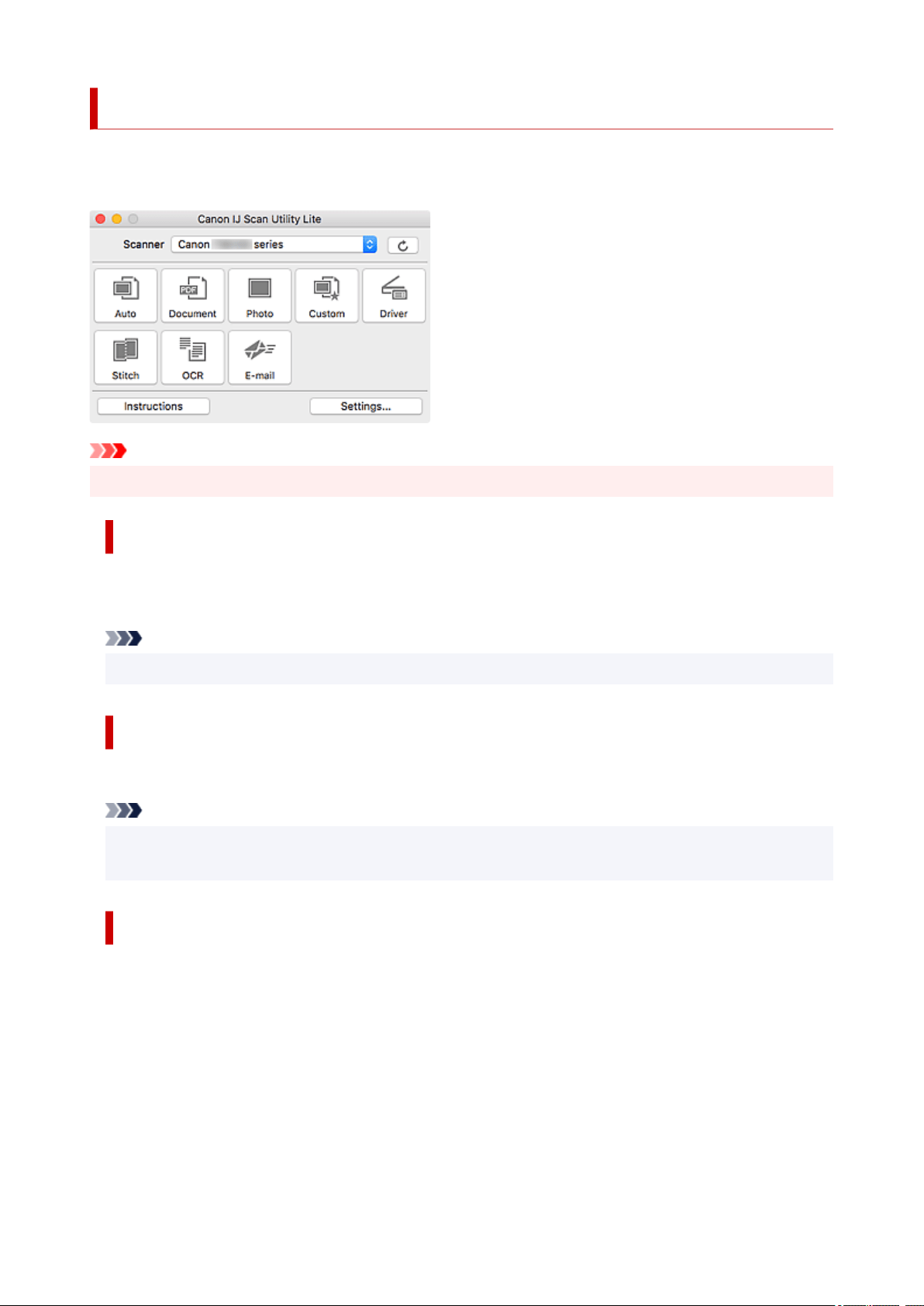
IJ Scan Utility Lite Features
Use IJ Scan Utility Lite to scan and save documents, photos, or other items at one time by simply clicking
the corresponding icon.
Important
• The displayed items and available functions vary depending on your scanner or printer.
Multiple Scanning Modes
Auto allows for one click scanning with default settings for various items. Document will sharpen text in a
document or magazine for better readability, and Photo is best suited for scanning photos.
Note
• For details on the IJ Scan Utility Lite main screen, see IJ Scan Utility Lite Main Screen.
Save Scanned Images Automatically
Scanned images are automatically saved to a preset folder. The folder can be changed as needed.
Note
• The default save folder is the Pictures folder.
• For how to specify a folder, see Settings Dialog.
Application Integration
Scanned images can be sent to other applications. For example, display scanned images in your favorite
graphics application, attach them to e-mails, or extract text from images.
209
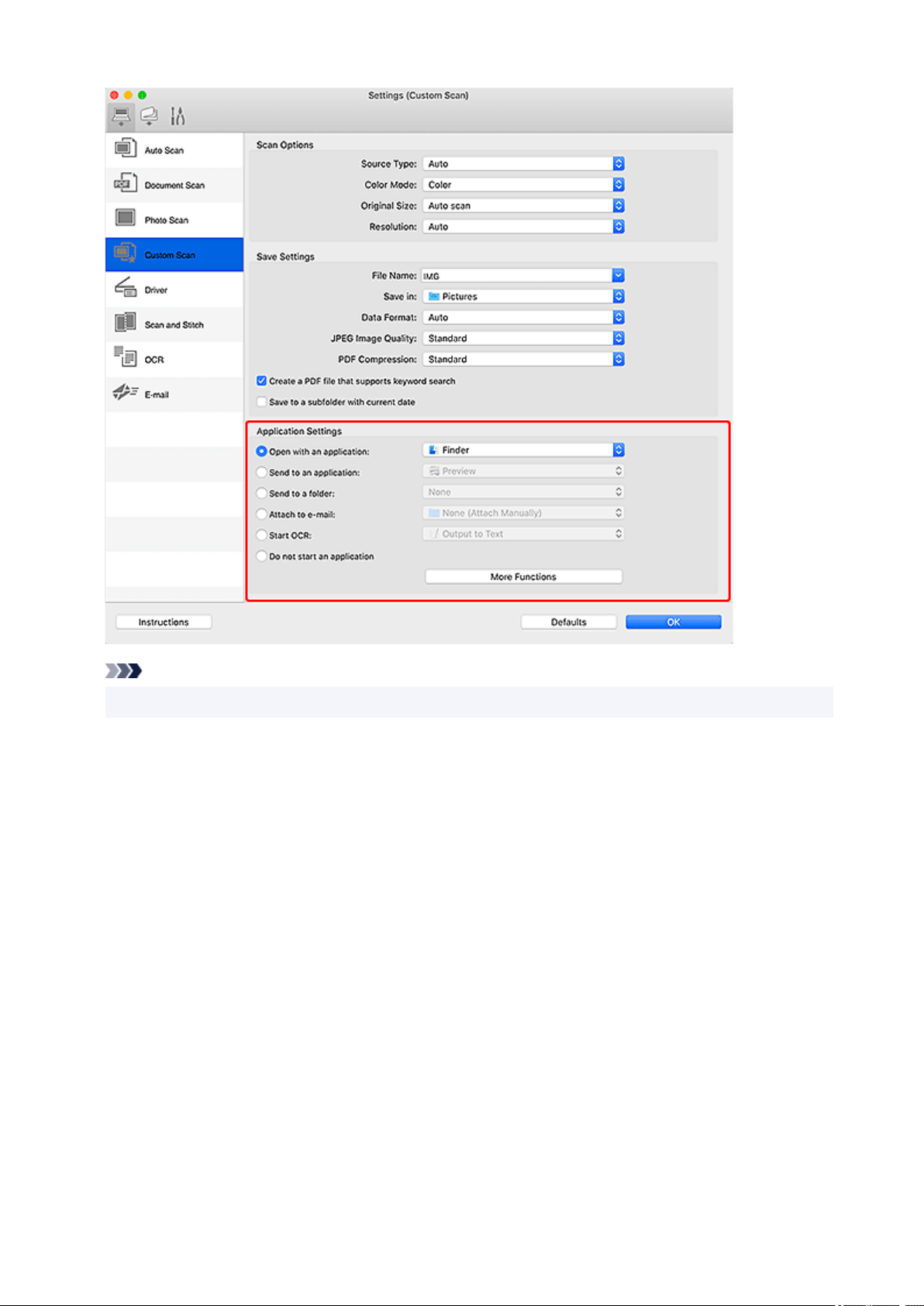
Note
• To set the applications to integrate with, see Settings Dialog.
210
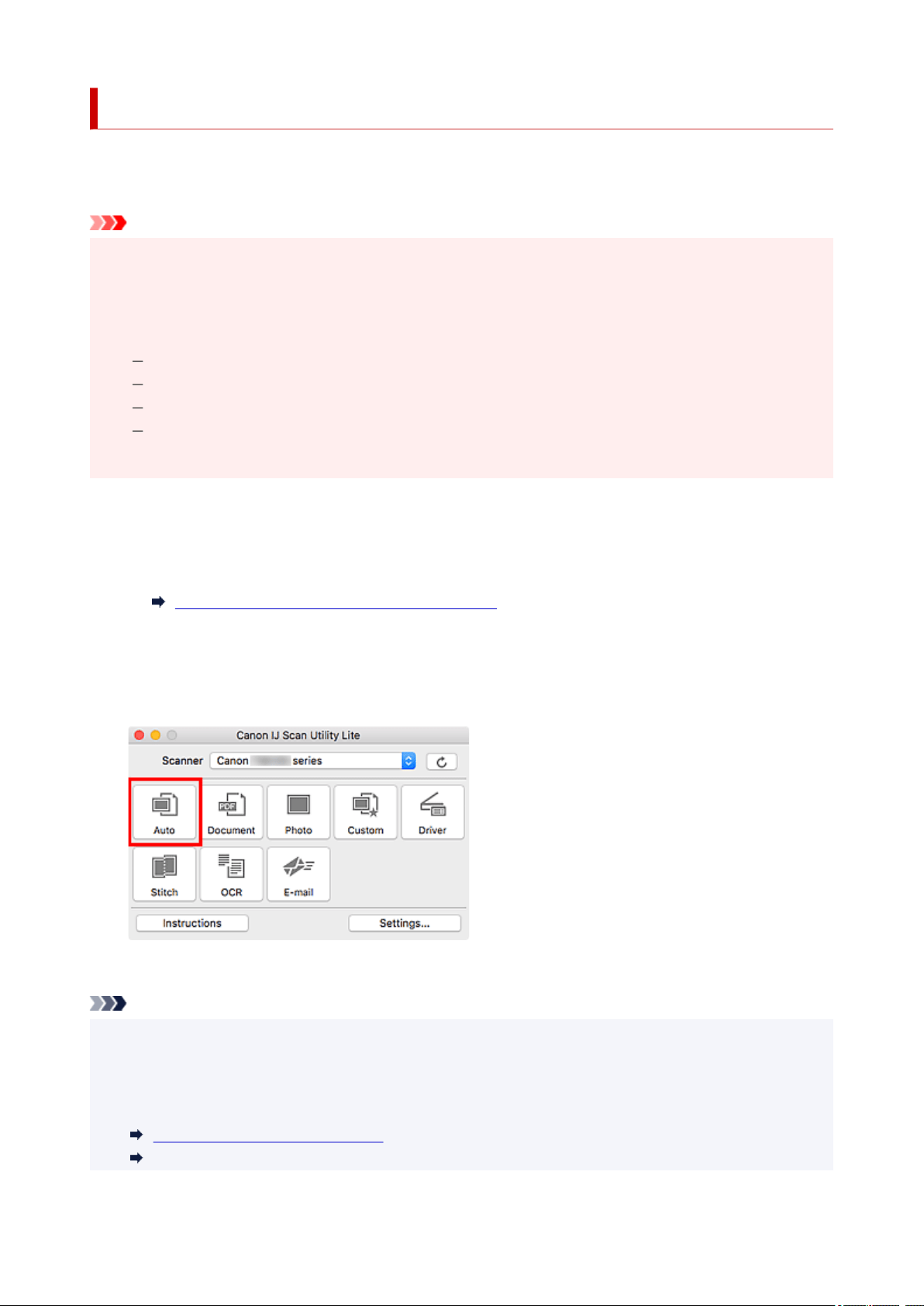
Scanning Easily (Auto Scan)
Auto Scan allows for automatic detection of the type of the item placed on the platen or ADF (Auto
Document Feeder).
Important
• This function is not supported depending on your model.
• The following types of items may not be scanned correctly. In that case, adjust the cropping frames
(selection boxes; scan areas) in the screen displayed by clicking Driver in the IJ Scan Utility Lite main
screen, and then scan again.
Photos with a whitish background
Items printed on white paper, hand-written text, business cards, and other unclear items
Thin items
Thick items
• When scanning two or more documents from the ADF, place documents of the same size.
1. Check that scanner or printer is turned on.
2. Place items on platen or ADF.
Positioning Originals (Scanning from Computer)
3. Start IJ Scan Utility Lite.
4. Click Auto.
Scanning starts.
Note
• To cancel the scan, click Cancel.
• Use the Settings (Auto Scan) dialog to set where to save the scanned images and to make advanced
scan settings.
• To scan a specific item type, see the following pages.
Scanning Documents and Photos
Scanning with Favorite Settings
211

Scanning Multiple Documents at One Time from the ADF (Auto Document Feeder)
212
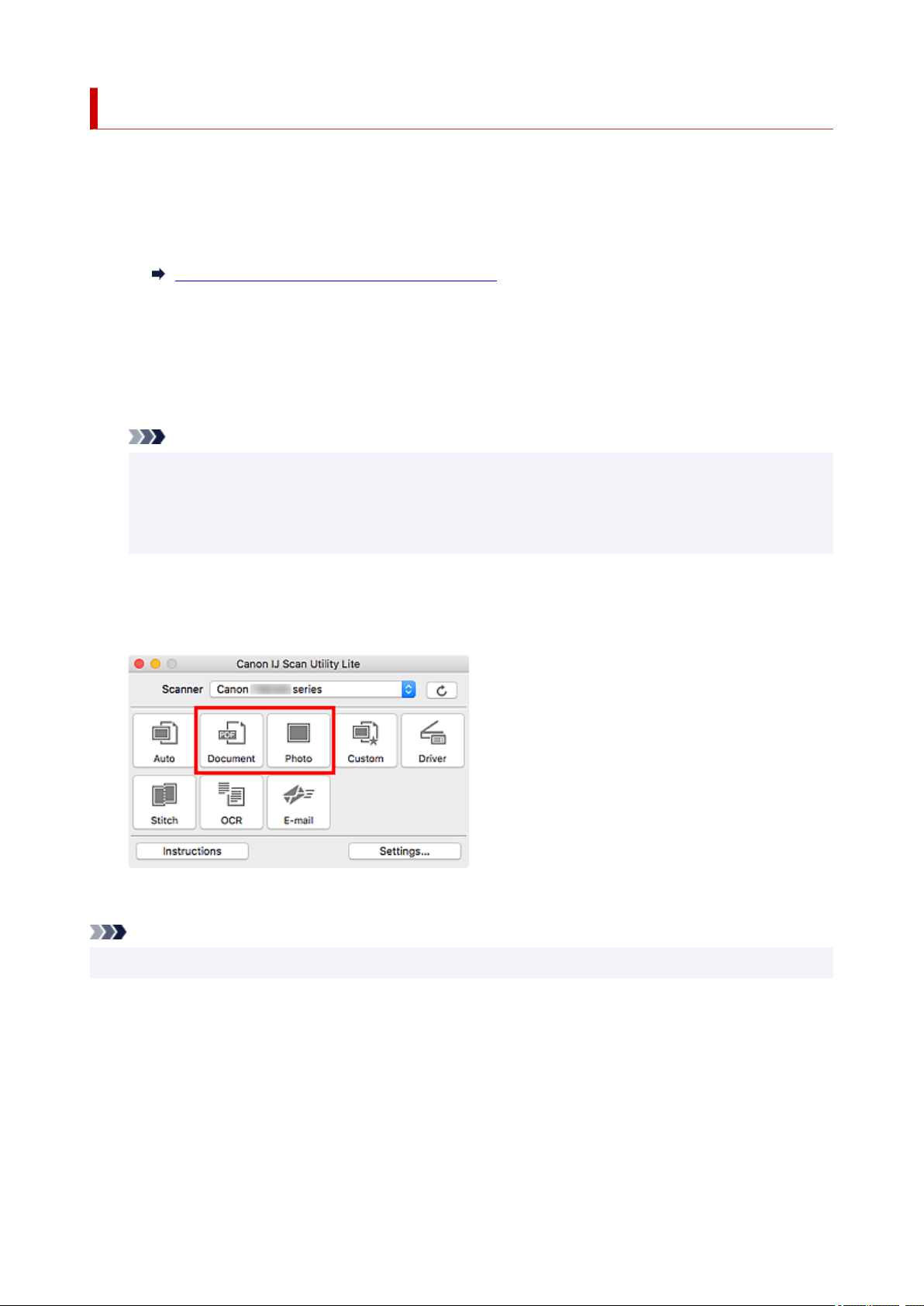
Scanning Documents and Photos
Scan items placed on the platen with settings suitable for documents or photos.
Save documents in formats such as PDF and JPEG, and photos in formats such as JPEG and TIFF.
1. Place the item on the platen.
Positioning Originals (Scanning from Computer)
2. Start IJ Scan Utility Lite.
3. To specify the paper size, resolution, PDF settings, etc., click Settings..., and then set each
item in the Settings dialog.
Note
• Once settings are made in the Settings dialog, the same settings can be used for scanning from
the next time.
• In the Settings dialog, specify image processing settings such as slant correction, set where to
save the scanned images, and more, as needed.
When setting is completed, click OK.
4. Click Document or Photo.
Scanning starts.
Note
• To cancel the scan, click Cancel.
213


Positioning Originals (Scanning from Computer)
This section describes how to load originals on the platen or ADF (Auto Document Feeder) for scanning. If
items are not placed correctly they may not be scanned correctly.
Important
• Be sure to observe the following when loading the original on the platen. Failure to observe the
following may cause the scanner to malfunction or the platen glass to break.
Do not place any objects weighing 4.4 lb (2.0 kg) or more on the platen glass.
Do not put any pressure of 4.4 lb (2.0 kg) or more on the platen glass, such as pressing down the
original.
• Close the document cover when scanning.
• Do not touch the operation panel buttons or LCD (Liquid Crystal Display) when opening/closing the
document cover. May result in unintended operation.
• When using a personal scanner in the upright position, the item type may not be detected automatically.
In that case, specify the item type in IJ Scan Utility and scan.
Placing Items (Platen)
Placing Documents (ADF (Auto Document Feeder))
Placing Items (When Using Stand)
Placing Items (Platen)
Place items as described below to scan by detecting the item type and size automatically.
Important
• Depending on your model, the function to scan by automatically detecting the item type and size
does not appear.
• When scanning by specifying the paper size, align an upper corner of the item with the corner at the
arrow (alignment mark) of the platen.
• Photos that have been cut to irregular shapes and items smaller than 1.2 inches (3 cm) square
cannot be cropped accurately when scanning.
• Reflective disc labels may not be scanned as expected.
• If scanned by detecting the item type and size automatically, the response may differ. In that case,
adjust the cropping frame (selection box) manually.
Photos, Postcards, Business Cards, and BD/DVD/CD Magazines, Newspapers, and Documents
Single item:
Place the item face-down on the platen, with 0.4 inch (1 cm)
or more space between the edges (diagonally striped area)
Place the item face-down on the platen and align an
upper corner of the item with the corner at the arrow
(alignment mark) of the platen. Portions placed on
the diagonally striped area cannot be scanned.
215
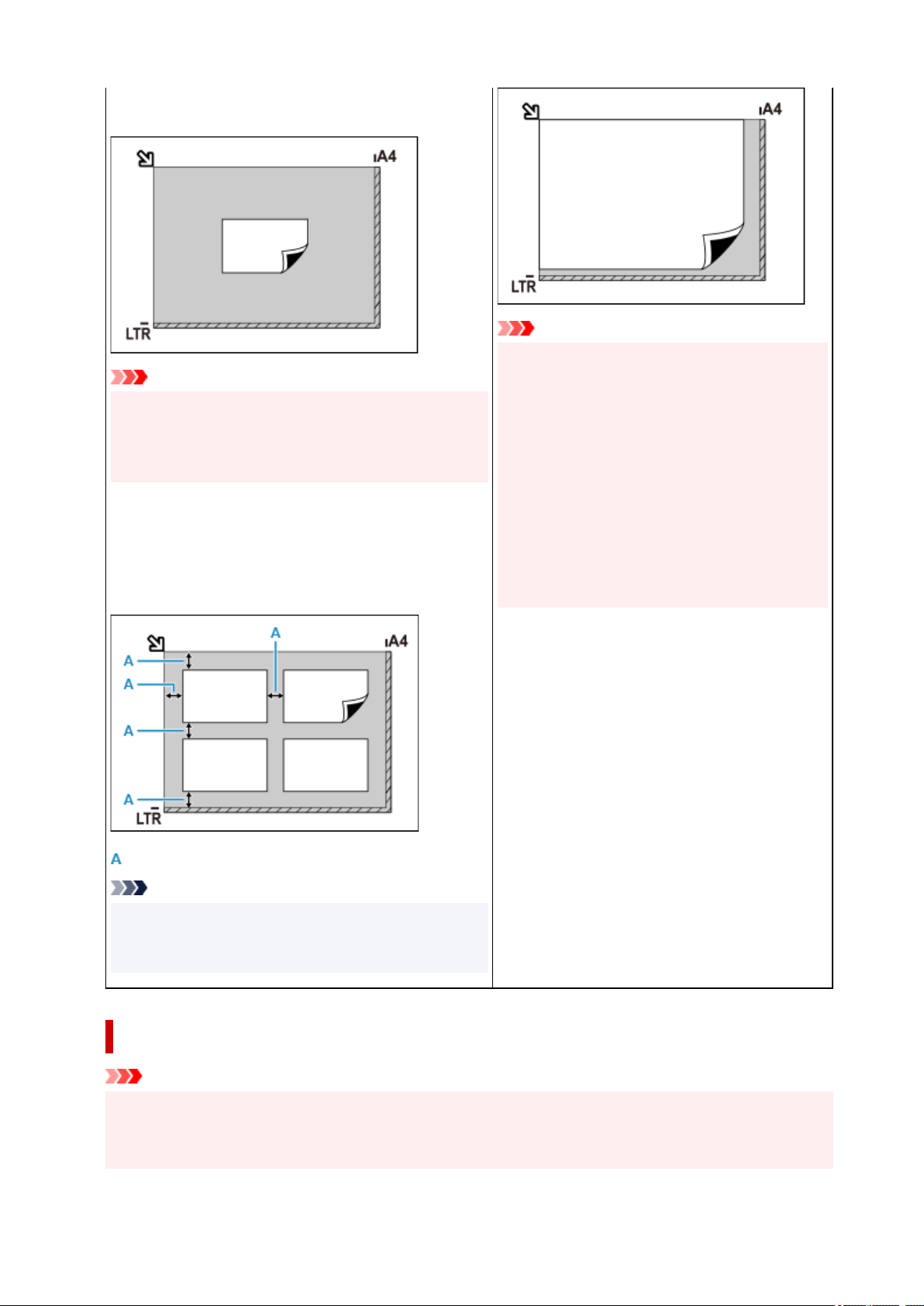
of the platen and the item. Portions placed on the diagonally
striped area cannot be scanned.
Important
• Large items (such as A4 size photos) that cannot be
placed away from the edges/arrow (alignment mark) of
the platen may be saved as PDF files. To save in a for-
mat other than PDF, scan by specifying the data format.
Multiple items:
Allow 0.4 inch (1 cm) or more space between the edges (di-
agonally striped area) of the platen and items, and between
items. Portions placed on the diagonally striped area cannot
be scanned.
: 0.4 inch (1 cm) or more
Note
• In IJ Scan Utility Lite, place up to 12 items.
• Positions of slanted items (10 degrees or less) are cor-
rected automatically.
Important
• Inkjet All-In-One printer:
For the portions in which items cannot be scan-
ned, click Home to return to the top page of the
Online Manual for your model and search for
"Loading Originals."
• Personal scanner:
For the portions in which items cannot be scan-
ned, click Home to return to the top page of the
Online Manual for your model and search for
"Items You Can Place & How to Place Items."
Placing Documents (ADF (Auto Document Feeder))
Important
• Place and align documents of the same size when scanning two or more documents.
• For supported document sizes when scanning from the ADF, click Home to return to the top page of
the Online Manual for your model and search for "Supported Originals."
216
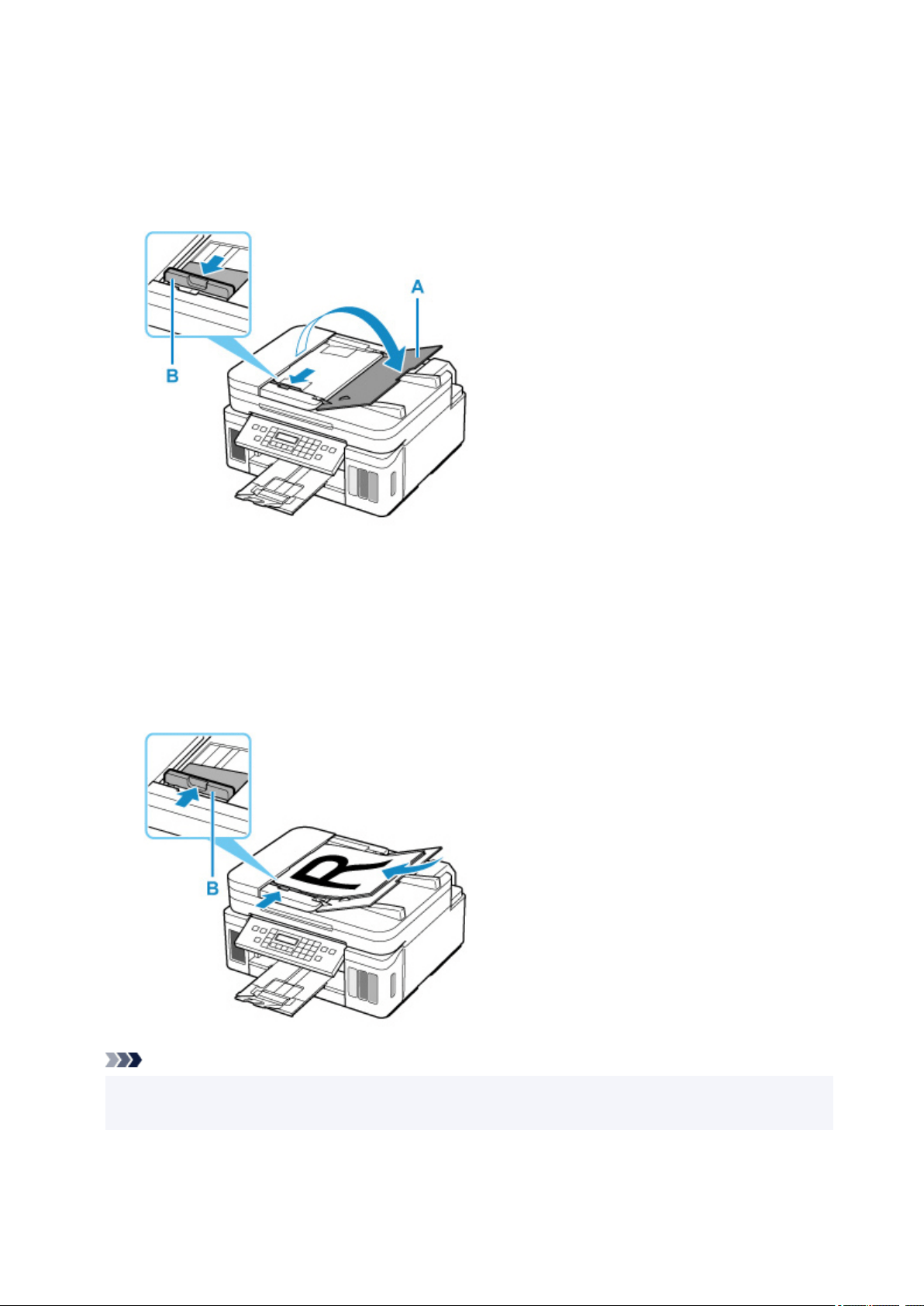
1. Make sure any original has been removed from platen.
2. Open document tray (A).
3. Slide the document guide (B) all the way out.
4. Load document with side to scan facing up in document tray.
Insert the document until it stops.
5. Adjust document guide (B) to match width of document.
Do not slide the document guide too hard against the document. The document may not be fed
properly.
Note
• When scanning duplex documents, place the front sides facing up. They will not be scanned correctly
if placed the other way around.
217
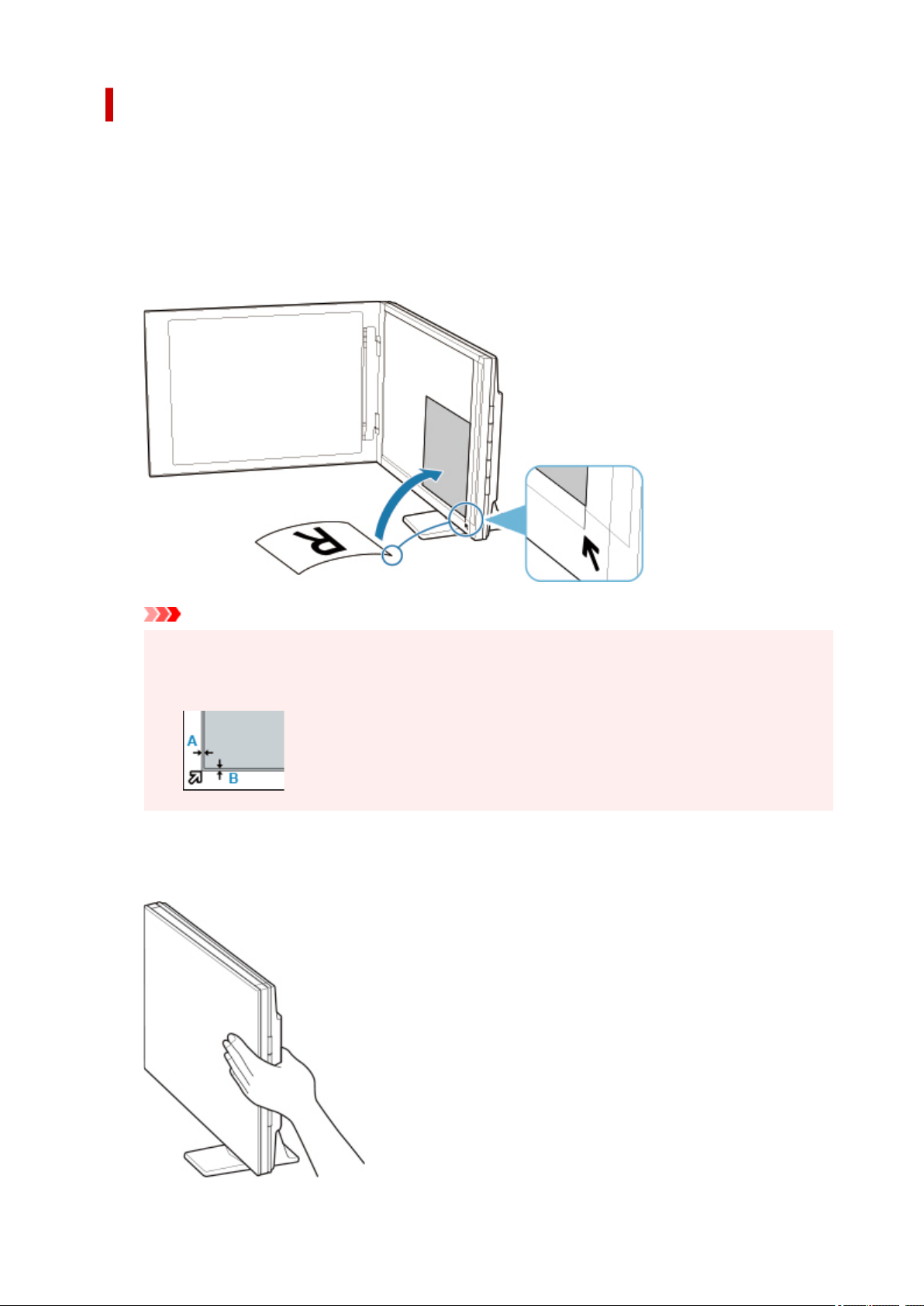
Placing Items (When Using Stand)
1. Place item on platen.
1. Open the document cover.
2. Place the item with the side to scan facing the platen, and then align it with the alignment
mark.
Important
• If you open the document cover wide, the scanner may fall over.
• Portions placed over (A) (0.094 inch (2.4 mm) from the left edge of the platen) or (B) (0.106 inch
(2.7 mm) from the front edge) cannot be scanned.
2. Gently close document cover.
While scanning, hold the document cover gently with your hand to keep it closed.
218

Important
• Keep these points in mind when using the scanner in the upright position.
Do not subject the scanner to vibration during operation. The correct image results may
not be obtained (for example, images may blur).
The item type may not be detected automatically. In that case, specify the item type in IJ
Scan Utility and scan.
219
Network
Cannot Find Printer on Network
Cannot Find Printer while Using Wi-Fi
Network Key (Password) Unknown
Cannot Print or Connect
For other questions about network, click here.
Print
Printer Does Not Print
Printouts Are Blank/Blurry or Fuzzy/Inaccurate or Bleeding Colors/Streaks or Lines
Printout Results Are Unsatisfactory
What to Do When Paper Is Jammed
Cannot Print or Connect
Installation
Failed to MP Drivers Installation (Windows)
Error
When Error Occurred
Message (Support Code) Appears
Frequently Asked Questions
Solve Problems
Printer Does Not Work
Printer Does Not Turn On
Printer Turns Off Unexpectedly or Repeatedly
Wrong Language Appears in LCD
LCD Is Off
USB Connection Problems
Cannot Communicate with Printer via USB
Printer Does Not Print
Copying/Printing Stops
Cannot Print Using AirPrint
Printer Prints Slowly
Ink Does Not Come Out
What to Do When Paper Is Jammed
Printer Does Not Pick up or Feed the Paper/"No Paper" Error
Automatic Duplex Printing Problems
Paper Does Not Feed from Paper Source Specified in Printer Driver (Windows)
Printout Results Are Unsatisfactory
220

Scanning Problems (Windows)
Scanning Problems (macOS)
Scan Results Are Unsatisfactory (Windows)
Scan Results Are Unsatisfactory (macOS)
Cannot Print/Scan from Smartphone/Tablet
Cannot Set Correctly (Network)
Cannot Find Printer During Setup
Cannot Find Printer while Using Wi-Fi
Printer Suddenly Stopped Working for Some Reason
Network Key (Password) Unknown
Forgot Administrator Password of Printer
Printer Cannot Be Used After Replacing Wireless Router or Changed Router Settings
Message Appears on Computer During Setup
Checking Network Information
Restoring to Factory Defaults
Cannot Set Correctly (Installation)
Failed to MP Drivers Installation (Windows)
Updating MP Drivers in Network Environment (Windows)
Error or Message Appears
When Error Occurred
Message (Support Code) Appears
List of Support Code for Error
Error Message Appears on PictBridge (Wi-Fi) Compliant Device
IJ Scan Utility Error Messages (Windows)
IJ Scan Utility Lite Error Messages (macOS)
ScanGear (Scanner Driver) Error Messages (Windows)
Operation Problems
Network Communication Problems
Printing Problems
Problems while Printing/Scanning from Smartphone/Tablet
Scanning Problems (Windows)
Scanning Problems (macOS)
Mechanical Problems
Installation and Download Problems
Errors and Messages
If You Cannot Solve a Problem
221
Network Settings and Common Problems
Here are frequently asked questions on network. Select a connection method you are using, or you want to
use.
Wireless LAN
Wireless Direct
Wireless LAN
Cannot Find Printer
Cannot Find Printer while Using Wi-Fi
Cannot Find Printer During Setup
Cannot Proceed beyond Printer Connection Screen (Cannot Find Printer Connected via USB)
Searching Printer by IP Address or Host Name During Setup
Error Occurs During Wi-Fi Setup
Detect Same Printer Name
Reconfiguration Method of Wi-Fi Connection
Cannot Print or Connect
Printer Suddenly Stopped Working for Some Reason
Printer Cannot Be Used After Replacing Wireless Router or Changed Router Settings
Cannot Access to Internet on Wi-Fi from Communication Device
Connecting Printer and Wireless Router Using Easy wireless connect
Cannot Connect Smartphone/Tablet to Wireless Router
Error Occurs During Wi-Fi Setup
Connects to Another Computer via LAN/Changes from USB to LAN Connection
Cannot Print or Connect
LAN Setting Tips/Changing LAN Settings
Network Key (Password) Unknown
Forgot Administrator Password of Printer
Checking Network Information
Restoring to Factory Defaults
Checking Wireless Router SSID/Key
Checking Wireless Router Network Name (SSID) for Smartphone/Tablet
Privacy Separator/SSID Separator/Network Separation Function
Default Network Settings
Connects to Another Computer via LAN/Changes from USB to LAN Connection
Printing Network Settings
Reconfiguration Method of Wi-Fi Connection
Checking Status Code
222

Printing/Scanning from Smartphone/Tablet
Connecting Printer and Wireless Router Using Easy wireless connect
Cannot Connect Smartphone/Tablet to Wireless Router
Checking Wireless Router Network Name (SSID) for Smartphone/Tablet
Setting Up Using Smartphone/Tablet
Cannot Print/Scan from Smartphone/Tablet
Cannot Find Printer from Smartphone/Tablet while Using Bluetooth
Downloading Canon PRINT Inkjet/SELPHY
Problems while Using Printer
Message Appears on Computer During Setup
Printer Prints Slowly
No Ink Level Appears in Printer Status Monitor (Windows)
Wireless Direct
Cannot Print or Connect
Printer Suddenly Stopped Working for Some Reason
Cannot Access to Internet on Wi-Fi from Communication Device
Cannot Print or Connect
LAN Setting Tips/Changing LAN Settings
Network Key (Password) Unknown
Forgot Administrator Password of Printer
Checking Network Information
Restoring to Factory Defaults
Default Network Settings
Printing Network Settings
Reconfiguration Method of Wi-Fi Connection
Checking Status Code
Printing/Scanning from Smartphone/Tablet
Cannot Print/Scan from Smartphone/Tablet
Cannot Find Printer from Smartphone/Tablet while Using Bluetooth
Downloading Canon PRINT Inkjet/SELPHY
Problems while Using Printer
Message Appears on Computer During Setup
Printer Prints Slowly
No Ink Level Appears in Printer Status Monitor (Windows)
223


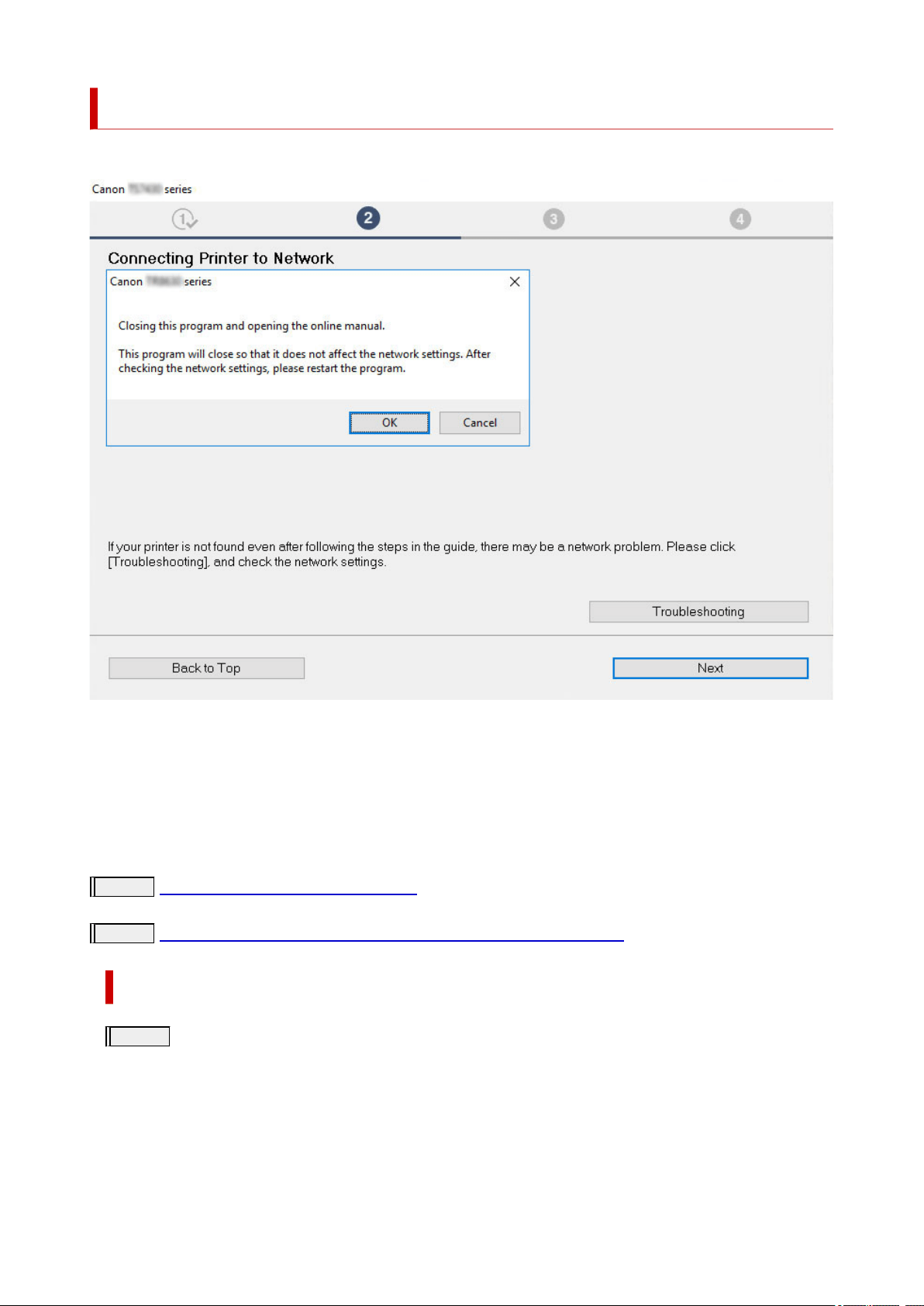
Cannot Find Printer During Setup
If you cannot find the printer on network during setup, check the following.
When you complete all the checking, try to set up from the beginning.
Items to check for Wi-Fi:
When connecting the printer to Wi-Fi, check/respond to all the items in [Step 1], and try to set up from the
beginning. If you still cannot set up the printer properly, try the items in [Step 2] and try to set up from the
beginning.
Step 1
Check the basic items for Wi-Fi
Step 2
Solve the problem, using IJ Network Device Setup Utility
Items to check for Wi-Fi
Step 1
Check the basic items for Wi-Fi
1. Check power status
Are printer
and network device (router, etc.) turned on?
Stop setting up, and check if the router (modem) is turned on and then check if the printer is turned on.
1. Check if network devices such as router are turned on.
If network devices are not turned on, turn on the power. If the network devices are on, turn them off and on again.
226
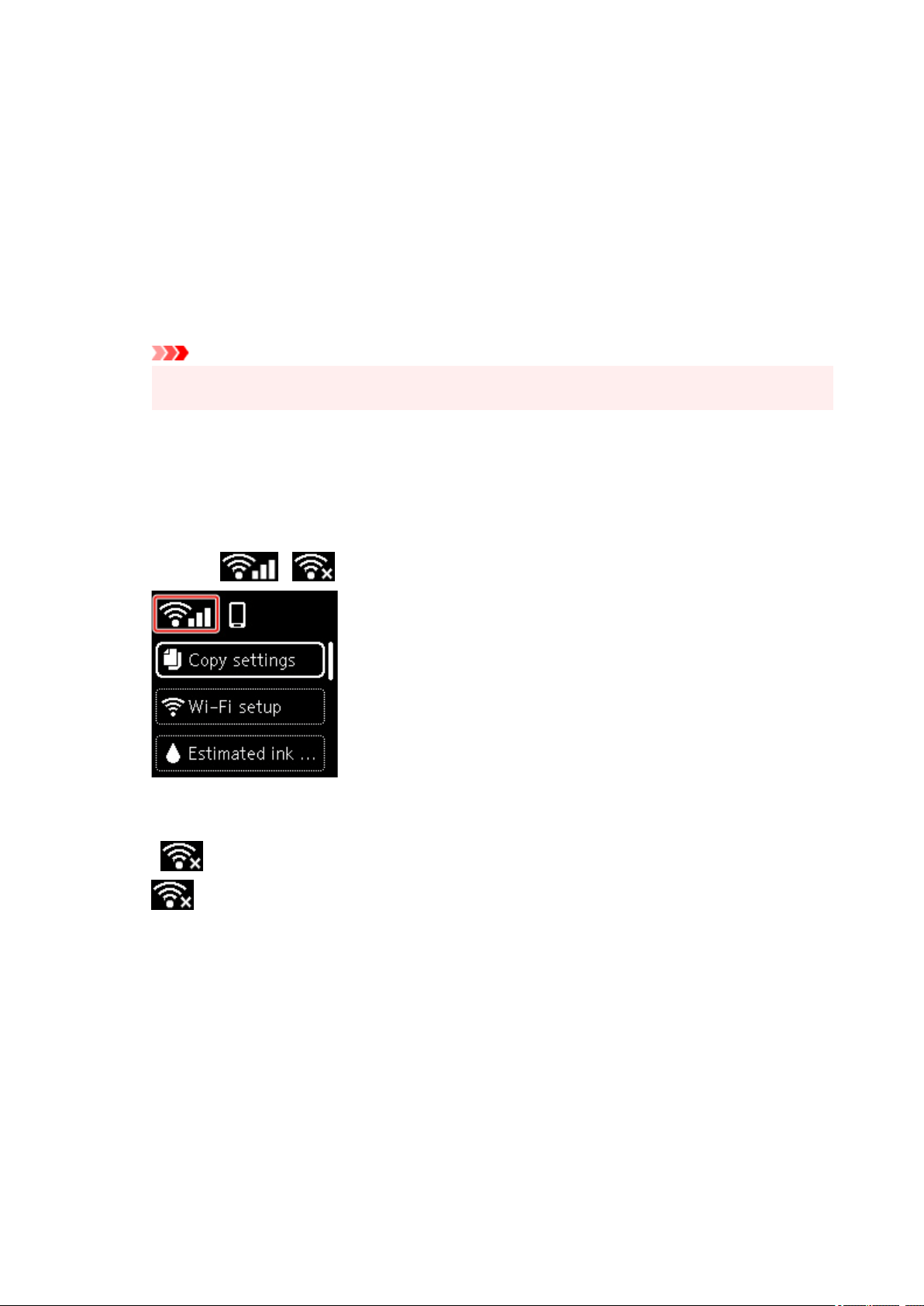
It may take a while for the network device to become ready for use once they are turned on.
Proceed once the network devices such as router are ready for use.
2. Check if the printer is turned on
If printer is not turned on, turn on the power. If the printer is on, turn them off and on again.
Proceed once you complete checking the power status above.
2. Check PC network connection
Can you view any web pages on your computer? Make sure the computer and network device (wireless router, etc.) are configured and the
computer is connected to the network.
If you cannot view web pages on your computer, check wireless router network connection settings, such as IP address filtering, MAC address
filtering, and DHCP function.
For more on checking the settings of the wireless router, refer to the instruction manual supplied with the wireless router or contact the
manufacturer.
Important
• Depending on the wireless router, note that different network name (SSID) is assigned for a bandwidth (2.4 GHz or 5 GHz) or its usage (for
PC or game machine), using alphanumeric characters at the end of network name (SSID).
Once you complete checking the wireless router, configure the network settings for your computer. For the procedures, refer to the instruction
manual supplied with the computer, or contact the manufacturer.
Once you complete setting up the wireless router and your computer, configure the settings on your computer in order to view web pages, using the
information of the wireless router.
Proceed once you complete checking the network connection above.
3. Check printer's Wi-Fi settings
Make sure the
or icon is displayed on the LCD when the OK button is pressed.
If icon is not displayed:
The printer is not set to use Wi-Fi. Turn on wireless communication on the printer.
If
icon is displayed:
icon indicates that the wireless router and the printer are not connected. Reconsider the locations of the wireless router and the printer.
• Checking the location of wireless router:
After checking the wireless router setting, make sure the printer is not placed too far away from the wireless router. The printer can be up 50
m (164 ft.) from the wireless router indoors if unobstructed. The printer is designed for indoor use. Make sure the printer is close enough to the
wireless router to be used.
Place the printer and wireless router where there are no obstacles between them. Wireless communication between different rooms or floors
is generally poor. Wireless communication can be impeded by building materials containing metal or concrete. If the printer cannot
communicate with the computer over a Wi-Fi due to a wall, place the printer and the computer in the same room.
In addition, if a device like a microwave oven that emits radio waves of the same frequency bandwidth as a wireless router is nearby, it may
cause interference. Place the wireless router as far away from interference sources as possible.
• Checking the location of printer:
Make sure that the printer is not placed behind an object. The printer may not be connected when placed behind a wall or on a shelf. Try to
place the printer in a location where there is no obstacle.
For details, see the instruction manual supplied with the wireless router or contact the manufacturer.
When you complete checking [Step 1] above, try to set up from the beginning.
227

If the printer cannot be detected after trying to set up from the beginning, proceed to [Step 2].
Step 2
Solve the Problem, Using IJ Network Device Setup Utility
Diagnose and repair the network connections using IJ Network Device Setup Utility.
Download IJ Network Device Setup Utility from the below page, and install it on your computer.
Checking Printer Connection Status Using IJ Network Device Setup Utility
Refer to below in regard to starting up IJ Network Device Setup Utility.
• For Windows:
Starting Up IJ Network Device Setup Utility
• For macOS:
Starting Up IJ Network Device Setup Utility
Once revised, try to set up from the beginning.
228
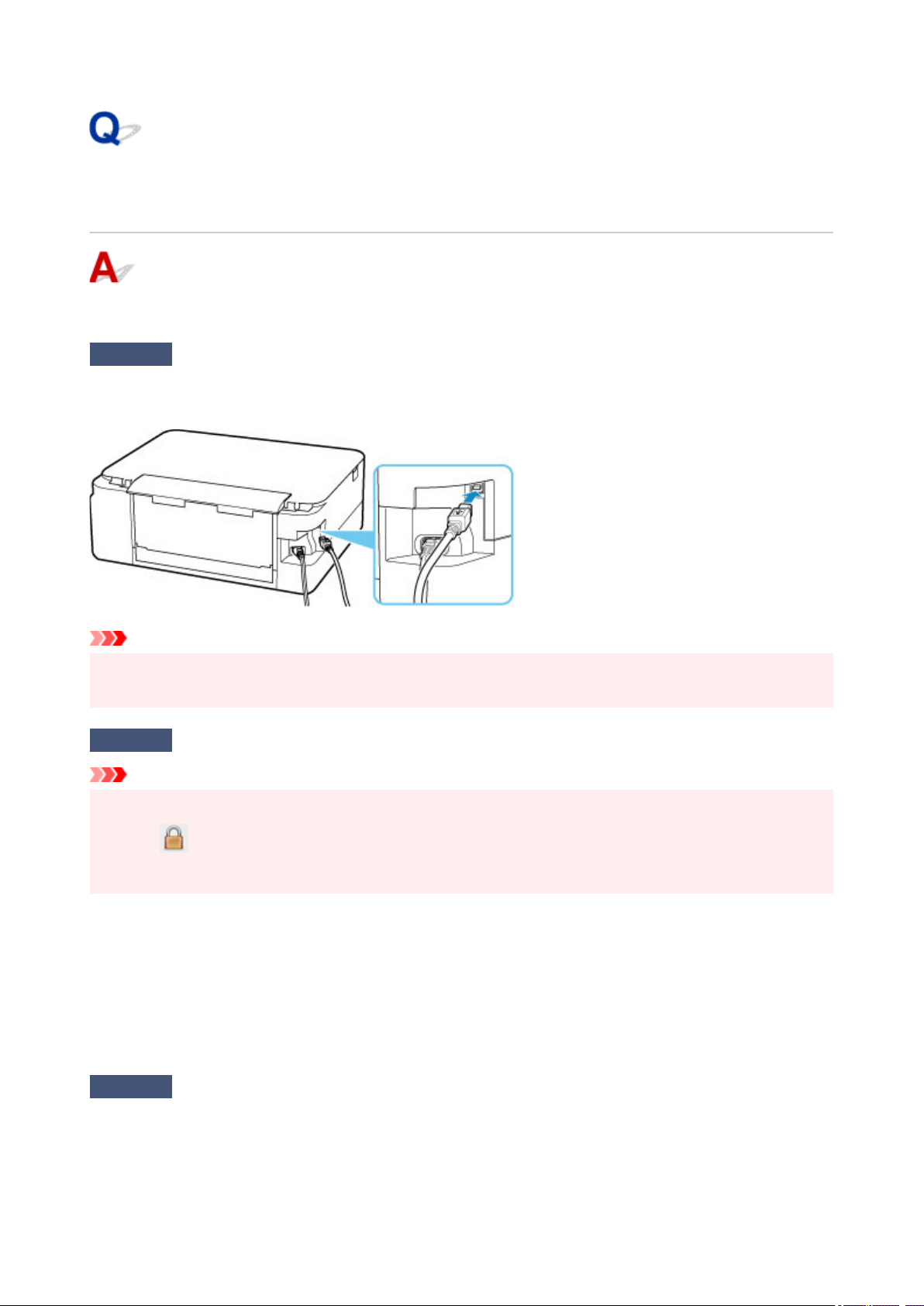
Cannot Proceed beyond Printer Connection Screen (Cannot Find
Printer Connected via USB)
If you cannot proceed beyond the Printer Connection screen, check the following.
Check1
Make sure USB cable is securely plugged in to printer and computer.
Connect the printer and the computer using a USB cable as the illustration below. The USB port is located at the
back of the printer.
Important
• Check the orientation and insertion angle of the "Type-B" connector and connect to the printer. The USB
Port is slightly diagonal. For details, refer to the instruction manual supplied with the USB cable.
Check2
Follow procedure below to connect printer and computer again.
Important
• For macOS, make sure the lock icon is on the lower left of the Printers & Scanners screen.
If the
icon (locked) is displayed, click the icon to unlock. (The administrator name and the password
are necessary to unlock.)
1. Unplug USB cable from printer and computer and connect it again.
2. Make sure no printer operation is in progress and turn off.
3. Turn on printer.
Check3
Follow the steps below to install MP Drivers again.
1. Download the latest MP Drivers.
229

2. Turn off printer.
3. Shut down computer.
After shutting down, restart your computer and install the latest MP Drivers downloaded in step 1.
230

Cannot Find Printer while Using Wi-Fi
First, make sure printer is turned on. Next, make sure that you can view any web page on the Internet with
your computer. After confirming the two, use the IJ Network Device Setup Utility to diagnose and repair
network status.
Select the link below to download IJ Network Device Setup Utility and install it.
Checking Printer Connection Status Using IJ Network Device Setup Utility
See below for starting up IJ Network Device Setup Utility.
• For Windows:
Starting Up IJ Network Device Setup Utility
• For macOS:
Starting Up IJ Network Device Setup Utility
If the problem persists after diagnosis and repair with IJ Network Device Setup Utility, check the following
items.
Check1
Check the icon on LCD.
The icon appears by pressing OK button.
If the icon is not displayed, from the setup menu select Device settings > LAN settings > Wi-Fi > Advanced
mode and then select Enable.
If the
icon is displayed, see the following check to make sure whether printer setup is complete or the
settings of wireless router to connect are correct.
Check2
Make sure printer setup is complete on the computer.
If it is not, click here and perform setup.
Check3
Make sure printer and wireless router network settings match.
Make sure the network settings of the printer (e.g. network name (SSID) or network key (password), etc.) are
identical with those of the wireless router.
To check the settings of the wireless router, refer to the instruction manual provided with it or contact its
manufacturer.
Note
• Use 2.4 GHz frequency band to connect to a wireless router. Match the network name (SSID) set for the
printer with that for 2.4 GHz frequency band of the wireless router.
231

To check the network name (SSID) set for the printer, display it using the operation panel of the printer or print
out the network setting information of the printer.
• Display on the LCD.
LAN settings
• Print the network settings.
Printing Network Settings
Check4
Make sure the printer is not placed too far away from the wireless router.
If the distance between the printer and wireless router is too far, wireless communication becomes poor. Place
the printer and wireless router close to each other.
Check5
Make sure wireless signal is strong. Monitor signal strength and move printer
and wireless router as necessary.
Place the printer and wireless router where there are no obstacles between them. Wireless communication
between different rooms or floors is generally poor. Wireless communication can be impeded by building
materials containing metal or concrete. If the printer cannot communicate with the computer over a Wi-Fi due to
a wall, place the printer and the computer in the same room.
In addition, if a device like a microwave oven that emits radio waves of the same frequency bandwidth as a
wireless router is nearby, it may cause interference. Place the wireless router as far away from interference
sources as possible.
Check the signal strength on the LCD.
LCD and Operation Panel
Check6
Make sure Enable bidirectional support is selected in the Ports sheet of the
Printer properties dialog box. (Windows)
If not, select it to enable bidirectional support.
Check7
Make sure security software's firewall is off.
If your security software's firewall is on, a message may appear warning you that Canon software is attempting
to access the network. If this warning message appears, set security software to always allow access.
If you are using any programs that switch between network environments, check their settings. Some programs
use a firewall by default.
Check8
If printer is connected to an AirPort Base Station via LAN, make sure you use
alphanumeric characters for network name (SSID). (macOS)
If the problem is not resolved, click here and redo setup.
232


Printer Suddenly Stopped Working for Some Reason
First, make sure printer is turned on. Next, make sure that you can view any web page on the Internet with
your computer. After confirming the two, use the IJ Network Device Setup Utility to diagnose and repair
network status.
Select the link below to download IJ Network Device Setup Utility and install it.
Checking Printer Connection Status Using IJ Network Device Setup Utility
See below for starting up IJ Network Device Setup Utility.
• For Windows:
Starting Up IJ Network Device Setup Utility
• For macOS:
Starting Up IJ Network Device Setup Utility
If the problem persists after diagnosis and repair with IJ Network Device Setup Utility, check the following
items.
Cannot Connect to a Printer after Network Configuration Changes
Cannot Connect to a Printer via Wireless LAN (Wi-Fi)
Cannot Connect to a Printer through Wireless Direct
Cannot Print/Scan through Network
Cannot Connect to a Printer after Network Configuration Changes
It may take a while for the computer to obtain an IP address, or you may need to restart your computer.
Make sure the computer has obtained a valid IP address, and try again to find the printer.
Cannot Connect to a printer via Wireless LAN (Wi-Fi)
Check1
Check the power status of printer, network devices (e.g. wireless router), and
smartphone/tablet.
• Turn on the printer or devices.
• If the power is already turned on, cycle the power switch.
• It may be necessary to resolve wireless router problems (e.g. update interval of a key, problems of DHCP
update interval, energy saving mode, etc.) or to update the wireless router firmware.
For details, contact the manufacturer of your wireless router.
234

Check2
Is the printer connected to the wireless router?
Use the icon on the LCD when OK button is pressed to check the connection status between the printer and
wireless router. If the icon is not displayed, Wi-Fi is disabled. Turn on wireless communication on the
printer.
Check3
Make sure the printer and wireless router network settings match.
Make sure the network settings of the printer (e.g. network name (SSID) or network key (password), etc.) are
identical with those of the wireless router.
Communication with a wireless router must be tuned to either the 2.4 GHz or 5 GHz frequency band. The
network name (SSID) of the 2.4 GHz frequency band and the network name (SSID) of the 5 GHz frequency
band cannot be used in combination.
Check the network name (SSID) set for the printer, and match it with the network name (SSID) of the correct
frequency band of the Wi-Fi router.
To check the settings of the wireless router, refer to the instruction manual provided with it or contact its
manufacturer.
To check the current network settings of the printer, print out the network setting information of the printer.
Printing Network Settings
Check4
Make sure the printer is not placed too far away from the wireless router.
If the distance between the printer and wireless router is too far, wireless communication becomes poor. Place
the printer and wireless router close to each other.
Check5
Make sure wireless signal is strong. Monitor signal status and move printer
and wireless router as necessary.
Place the printer and wireless router where there are no obstacles between them. Wireless communication
between different rooms or floors is generally poor. Wireless communication can be impeded by building
materials containing metal or concrete. If the printer cannot communicate with the computer over a Wi-Fi due
to a wall, place the printer and the computer in the same room.
In addition, if a device like a microwave oven that emits radio waves of the same frequency bandwidth as a
wireless router is nearby, it may cause interference. Place the wireless router as far away from interference
sources as possible.
Check the signal strength on the LCD.
LCD and Operation Panel
Check6
Make sure of the Wi-Fi channel numbers used for your computer.
You need to have the same Wi-Fi channel number that you are using for the wireless router as your computer.
It is normally set in the way that you can use all the Wi-Fi channels. However, when the channels that you are
using are restricted, the Wi-Fi channels do not match.
See the instruction manual provided with your computer and check the Wi-Fi channel number available for
your computer.
235

Check7
Make sure channel set on wireless router is a usable channel as confirmed in
the previous check.
If it is not, change the channel set on the wireless router.
Check8
Make sure security software's firewall is off.
If your security software's firewall is on, a message may appear warning you that Canon software is attempting
to access the network. If this warning message appears, set security software to always allow access.
If you are using any programs that switch between network environments, check their settings. Some
programs use a firewall by default.
Check9
If printer is connected to an AirPort Base Station via LAN, make sure you use
alphanumeric characters for network name (SSID). (macOS)
If the problem is not resolved, click here and redo setup.
• Positioning:
Make sure there are no obstacles between the printer and the wireless router.
Cannot Connect to a Printer through Wireless Direct
Check1
Check printer settings.
Select Device settings > LAN settings > Wireless Direct > Advanced mode in this order and enable it.
Check2
Check the settings of your device (smartphone/tablet).
Make sure Wi-Fi is enabled on your device.
For details, refer to your device's instruction manual.
Check3
Make sure printer is selected as connection for device (e.g. smartphone or
tablet).
Select the network name (SSID) for Wireless Direct specified for the printer as the connection destination for
devices.
Check the destination on your device.
For details, refer to your device's instruction manual or visit the manufacturer's website.
To check the network name (SSID) for Wireless Direct specified for the printer, display it using the operation
panel of the printer or print out the network setting information of the printer.
• Display on the LCD.
LAN settings
• Print the network settings.
236

Printing Network Settings
Check4
Have you entered the proper password specified for the Wireless Direct?
To check the password specified for the printer, display it using the operation panel of the printer or print out
the network setting information of the printer.
• Display on the LCD.
LAN settings
• Print the network settings.
Printing Network Settings
Check5
Make sure the printer is not placed too far away from the device.
If the distance between the printer and device is too far, wireless communication becomes poor. Place the
printer and device close to each other.
Check6
Make sure 5 devices are already connected.
Wireless Direct does not allow more than 5 devices to be connected.
Cannot Print/Scan through Network
Check1
Make sure the computer is connected to the wireless router.
For more on how to check the computer settings or connection status, see your computer instruction manual
or contact its manufacturer.
Check2
If MP Drivers are not installed, install them. (Windows)
Click here and install the MP Drivers.
Check3
Make sure wireless router does not restrict which computers and printers can
access it.
For more on connecting to and setting up your wireless router, see the wireless router instruction manual or
contact its manufacturer.
Note
• To check the MAC address or IP address of your computer, see
Checking Computer IP Address or MAC
Address.
237
Network Key (Password) Unknown
Use the IJ Network Device Setup Utility to diagnose and repair network status.
Select the link below to download IJ Network Device Setup Utility and install it.
Checking Printer Connection Status Using IJ Network Device Setup Utility
See below for starting up IJ Network Device Setup Utility.
• For Windows:
Starting Up IJ Network Device Setup Utility
• For macOS:
Starting Up IJ Network Device Setup Utility
If the problem persists after diagnosis and repair with IJ Network Device Setup Utility, check the following
items.
WPA/WPA2 or WEP Key Set for Wireless Router Unknown, Cannot Connect
Setting an Encryption Key
WPA/WPA2 or WEP Key Set for Wireless Router Unknown, Cannot
Connect
For more on setting up a wireless router, see the instruction manual provided with the wireless router or
contact its manufacturer. Make sure your computer can communicate with the wireless router.
Setting an Encryption Key
For more on setting up a wireless router, see the instruction manual provided with the wireless router or
contact its manufacturer. Make sure your computer can communicate with the wireless router.
Selecting WPA, WPA2, or WPA/WPA2 is recommended for security reason. If your wireless router is
compatible with WPA/WPA2, you can also use WPA2 or WPA.
• Using WPA/WPA2 (Windows)
The authentication method, Wi-Fi password, and dynamic encryption type must be identical among
the wireless router, the printer, and your computer.
Enter the Wi-Fi password configured on the wireless router.
238

Either TKIP (basic encryption) or AES (secure encryption) is selected automatically as the dynamic
encryption method.
For details, see If WPA/WPA2 Details Screen Appears.
Note
• This printer supports WPA/WPA2-PSK (WPA/WPA2-Personal) and WPA2-PSK (WPA2-
Personal).
• Using WEP
The length or format of the Wi-Fi password and authentication method must be identical among the
wireless router, the printer, and your computer.
To communicate with a wireless router that generates a password automatically, you must set the
printer to use the password generated by the wireless router.
◦ For Windows:
When the WEP Details screen appears after you click Search... on the Network Settings (Wi-Fi)
screen in IJ Network Device Setup Utility, follow the on-screen instructions to set the password
length, format, and the password to use.
For details, see If WEP Details Screen Appears.
Note
• If the printer is connected to an AirPort Base Station via LAN:
If the printer is connected to an AirPort Base Station via a LAN, check the settings in Wireless
Security of AirPort Utility.
Select 64 bit if WEP 40 bit is selected for password length in AirPort Base Station.
Select 1 for the password to use. Otherwise, computer will not be able to communicate with
printer via the wireless router.
239

Printer Cannot Be Used After Replacing Wireless Router or
Changed Router Settings
When you replace a wireless router, redo the network setup for the printer according to the replaced one.
Click here and perform setup.
Note
• IJ Network Device Setup Utility allows you to diagnose and repair the network status.
Select the link below to download IJ Network Device Setup Utility and install it.
Checking Printer Connection Status Using IJ Network Device Setup Utility
See below for starting up IJ Network Device Setup Utility.
For Windows:
Starting Up IJ Network Device Setup Utility
For macOS:
Starting Up IJ Network Device Setup Utility
If this does not solve the problem, see below.
Cannot Communicate with Printer After Enabling MAC/IP Address Filtering or Encryption Key on
Wireless Router
With Encryption On, Cannot Communicate with Printer After Changing Encryption Type at Wireless
Router
Cannot Communicate with Printer After Enabling MAC/IP Address
Filtering or Encryption Key on Wireless Router
Check1
Check wireless router setting.
To check the wireless router setting, see the instruction manual provided with the wireless router or contact its
manufacturer. Make sure the computer and the wireless router can communicate with each other under this
setting.
Check2
If filtering MAC addresses or IP addresses at wireless router, check that MAC
addresses or IP addresses for computer, network device, and printer are registered.
240

Check3
If using WPA/WPA2 key or a password, make sure encryption key for
computer, network device, and printer matches key set for wireless router.
The length or format of the Wi-Fi password and authentication method must be identical among the wireless
router, the printer, and your computer.
For details, see Setting an Encryption Key.
With Encryption On, Cannot Communicate with Printer After
Changing Encryption Type at Wireless Router
If you change the encryption type for the printer and it subsequently cannot communicate with the
computer, make sure the encryption type for the computer and the wireless router matches the type set
for the printer.
Cannot Communicate with Printer After Enabling MAC/IP Address Filtering or Encryption Key on
Wireless Router
241


Checking Network Information
Checking Printer IP Address or MAC Address
Checking Computer IP Address or MAC Address
Checking Communication Between the Computer, the Printer, and the Wireless Router
Checking Network Setting Information
Checking Printer IP Address or MAC Address
To check the printer's IP Address or MAC address, print out the network settings information or use the
operation panel to display it.
• Display on the LCD.
LAN settings
• Print the network settings.
Printing Network Settings
For Windows, you can check the network setting information on the computer screen.
Canon IJ Network Device Setup Utility Screen
Checking Computer IP Address or MAC Address
To check the IP Address or MAC address of your computer, follow the instructions below.
• For Windows:
1. Select Command Prompt from Start.
2. Enter "ipconfig/all" and press Enter.
The IP address and MAC address of your computer appear. If your computer is not connected to a
network, the IP address does not appear.
• For macOS:
1. Select System Preferences from Apple menu, and then click Network.
2. Make sure network interface used by computer is selected, and then click Advanced.
Make sure Wi-Fi is selected as network interface.
243

3. Click TCP/IP to check the IP address, or click Hardware to check the MAC address.
Checking Communication Between the Computer, the Printer, and the
Wireless Router
Perform a ping test to check if communication is taking place.
• For Windows:
1. Select Command Prompt from Start.
2. Type the ping command and press Enter.
The ping command is as follows: ping XXX.XXX.XXX.XXX
"XXX.XXX.XXX.XXX" is the IP address of the target device.
If communication is taking place, a message like the one shown below appears.
Reply from XXX.XXX.XXX.XXX: bytes=32 time=10ms TTL=255
If Request timed out appears, communication is not taking place.
• For macOS:
1. Start Network Utility as shown below.
Select Computer from Go menu of Finder, double-click Macintosh HD > System > Library >
CoreServices > Applications > Network Utility.
2. Click Ping.
3. Make sure Send only XX pings (XX are numbers) is selected.
4. Enter IP address of target printer or target wireless router in Enter the network
address to ping.
5. Click Ping.
"XXX.XXX.XXX.XXX" is the IP address of the target device.
A message such as the following appears.
64 bytes from XXX.XXX.XXX.XXX: icmp_seq=0 ttl=64 time=3.394 ms
64 bytes from XXX.XXX.XXX.XXX: icmp_seq=1 ttl=64 time=1.786 ms
64 bytes from XXX.XXX.XXX.XXX: icmp_seq=2 ttl=64 time=1.739 ms
--- XXX.XXX.XXX.XXX ping statistics ---
244

3 packets transmitted, 3 packets received, 0% packet loss
If "100% packet loss" appears, communication is not taking place. Otherwise, computer is
communicating with target device.
Checking Network Setting Information
To check the printer's network settings information, print out the network settings information or use the
operation panel to display it.
• Display on the LCD.
LAN settings
• Print the network settings.
Printing Network Settings
245

Restoring to Factory Defaults
Important
• Initialization erases all network settings on the printer, making printing or scanning operation from a
computer over a network impossible. To use the printer over a network again after restoring it to the
factory defaults, click here and redo setup.
Initialize the network setting using the printer's operation panel.
Reset setting
246


Cannot Print/Scan from Smartphone/Tablet
If you cannot print/scan from your smartphone/tablet, it is possible that your smartphone/tablet cannot
communicate with the printer.
Check the cause of your problem according to the connection method.
Cannot Communicate with Printer over Wireless LAN
Cannot Communicate with Printer while It Is in Wireless Direct
Note
• For problems on printing with other connection methods or more on performing settings of each
connection method:
Using PIXMA/MAXIFY Cloud Link
Printing from iOS Device (AirPrint)
Cannot Communicate with Printer over Wireless LAN
If your smartphone/tablet cannot communicate with the printer, check the following.
Check1
Check the power status of printer, network devices (e.g. wireless router), and
smartphone/tablet.
• Turn on the printer or devices.
• If the power is already turned on, cycle the power switch.
• It may be necessary to resolve wireless router problems (e.g. update interval of a key, problems of DHCP
update interval, energy saving mode, etc.) or to update the wireless router firmware.
For details, contact the manufacturer of your wireless router.
Check2
Check the settings of your device (smartphone/tablet).
Make sure Wi-Fi is enabled on your device.
For details, refer to your device's instruction manual.
Check3
Is the printer connected to the wireless router?
• Use the icon on the LCD to check the connection status between the printer and wireless router.
icon is displayed, when OK
button is pressed.
If the
icon is not displayed, Wi-Fi is disabled. Turn on wireless communication on the printer.
• Make sure the network settings of the printer (e.g. network name (SSID) or network key (password), etc.)
are identical with those of the wireless router.
To check the settings of the wireless router, refer to the instruction manual provided with it or contact its
manufacturer.
248

To check the current network settings of the printer, print out the network setting information of the
printer.
Printing Network Settings
Note
• If you have a computer, IJ Network Device Setup Utility allows you to diagnose and repair the network
status.
Select the link below to download IJ Network Device Setup Utility and install it.
Checking Printer Connection Status Using IJ Network Device Setup Utility
See below for starting up IJ Network Device Setup Utility.
For Windows:
Starting Up IJ Network Device Setup Utility
For macOS:
Starting Up IJ Network Device Setup Utility
Check4
Are network settings of your smartphone/tablet identical with those of wireless
router?
Make sure the network settings of the printer (e.g. network name (SSID) or network key (password), etc.) are
identical with those of the wireless router.
To check the settings of your smartphone/tablet, refer to the instruction manual provided with it.
If the network settings of your smartphone/tablet are not identical with those of the wireless router, change the
network settings of it to match with those of the wireless router.
Check5
Make sure the printer is not placed too far away from the wireless router.
If the distance between the printer and wireless router is too far, wireless communication becomes poor. Place
the printer and wireless router close to each other.
Check6
Make sure wireless signal is strong. Monitor signal status and move printer
and wireless router as necessary.
Place the printer and wireless router where there are no obstacles between them. Wireless communication
between different rooms or floors is generally poor. Wireless communication can be impeded by building
materials containing metal or concrete. If the printer cannot communicate with the computer over a Wi-Fi due
to a wall, place the printer and the computer in the same room.
In addition, if a device like a microwave oven that emits radio waves of the same frequency bandwidth as a
wireless router is nearby, it may cause interference. Place the wireless router as far away from interference
sources as possible.
Check the signal strength on the LCD.
LCD and Operation Panel
249

Cannot Communicate with Printer while It Is in Wireless Direct
If your smartphone/tablet cannot communicate with the printer in the Wireless Direct, check the following.
Check1
Check the power status of printer and other devices (smartphone or tablet).
Turn on the printer or devices.
If the power is already turned on, cycle the power switch.
Check2
Is Wireless Direct enabled?
From the setup menu, select Device settings > LAN settings > Wireless Direct > Advanced mode in this
order and enable it.
Check3
Check the settings of your device (smartphone/tablet).
Make sure Wi-Fi is enabled on your device.
For details, refer to your device's instruction manual.
Check4
Make sure printer is selected as connection for device (e.g. smartphone or
tablet).
Select the network name (SSID) for Wireless Direct specified for the printer as the connection destination for
devices.
Check the destination on your device.
For details, refer to your device's instruction manual or visit the manufacturer's website.
To check the network name (SSID) for Wireless Direct specified for the printer, display it using the operation
panel of the printer or print out the network setting information of the printer.
• Display on the LCD.
LAN settings
• Print the network settings.
Printing Network Settings
Check5
Have you entered the proper password specified for the Wireless Direct?
To check the password specified for the printer, display it using the operation panel of the printer or print out
the network setting information of the printer.
• Display on the LCD.
LAN settings
• Print the network settings.
Printing Network Settings
Check6
Make sure the printer is not placed too far away from the device.
250

If the distance between the printer and device is too far, wireless communication becomes poor. Place the
printer and device close to each other.
Check7
Make sure 5 devices are already connected.
Wireless Direct does not allow more than 5 devices to be connected.
251


Printer Does Not Print
Check1
Make sure printer is turned on.
Make sure the status bar or LCD is lit.
If not, make sure the printer is securely plugged in and press ON button to turn on.
Note
• If you are printing large data such as photos or other graphics, printing may take longer to start. Wait until
printing starts.
Check2
Make sure that the cassette is correctly inserted.
If there is an object under the printer, the cassette cannot be correctly inserted and paper may not be correctly
fed.
Make sure there are no objects under the printer and push the cassette flatly into the printer until it stops.
Loading Plain Paper in Cassette
Check3
Make sure printer is properly connected to computer.
If you are using a USB cable, make sure it is securely connected to both the printer and the computer. When the
USB cable is securely plugged in, check the following:
• If you are using a relay device such as a USB hub, disconnect it, connect the printer directly to the
computer, and retry the printing. If printing starts normally, there is a problem with the relay device. Contact
the vendor of the relay device.
• There could also be a problem with the USB cable. Replace the USB cable and retry the printing.
If you use the printer with a network connection, make sure the printer is correctly set up for network use.
Cannot Find Printer while Using Wi-Fi
Note
• IJ Network Device Setup Utility allows you to diagnose and repair the network status.
Select the link below to download IJ Network Device Setup Utility and install it.
Checking Printer Connection Status Using IJ Network Device Setup Utility
See below for starting up IJ Network Device Setup Utility.
For Windows:
Starting Up IJ Network Device Setup Utility
For macOS:
Starting Up IJ Network Device Setup Utility
253

Check4
Make sure paper settings match information set for rear tray or cassette.
If the paper settings do not match the information set for the rear tray or the cassette, an error message appears
on the LCD. Follow the instructions on the LCD to solve the problem.
Note
• You can select whether the message which prevents misprinting is displayed.
To change the message view setting when printing or copying using the printer's operation panel:
Feed settings
To change the message view setting when printing using the printer driver:
Changing the Printer Operation Mode (Windows)
Changing the Printer Operation Mode (macOS)
Check5
If printing from a computer, delete unnecessary print jobs.
• For Windows:
Deleting the Undesired Print Job
• For macOS:
Deleting the Undesired Print Job
Check6
Is your printer's printer driver selected when printing?
The printer will not print properly if you are using a printer driver for a different printer.
• For Windows:
Make sure "Canon XXX series" (where "XXX" is your printer's name) is selected in the Print dialog box.
Note
• If multiple printers are registered to your computer, set your printer as default printer to make the one
selected by default.
• For macOS:
Make sure your printer's name is selected in Printer in the Print dialog.
Note
• If multiple printers are registered to your computer, select Set as Default Printer from System
Preferences > Printers & Scanners for a printer to make the one selected by default.
Check7
Are you trying to print a large data file? (Windows)
If you are trying to print a large data file, it takes a long time to start printing.
If the printer does not start printing after a certain period of time, select On for Prevention of Print Data Loss on
the Print Options dialog box.
For details, refer to Page Setup Tab Description.
254

Important
• Selecting On for Prevention of Print Data Loss may reduce print quality.
• After printing is completed, select Off for Prevention of Print Data Loss.
Check8
If printing from your computer, restart the computer.
Restart the computer and try printing again.
255
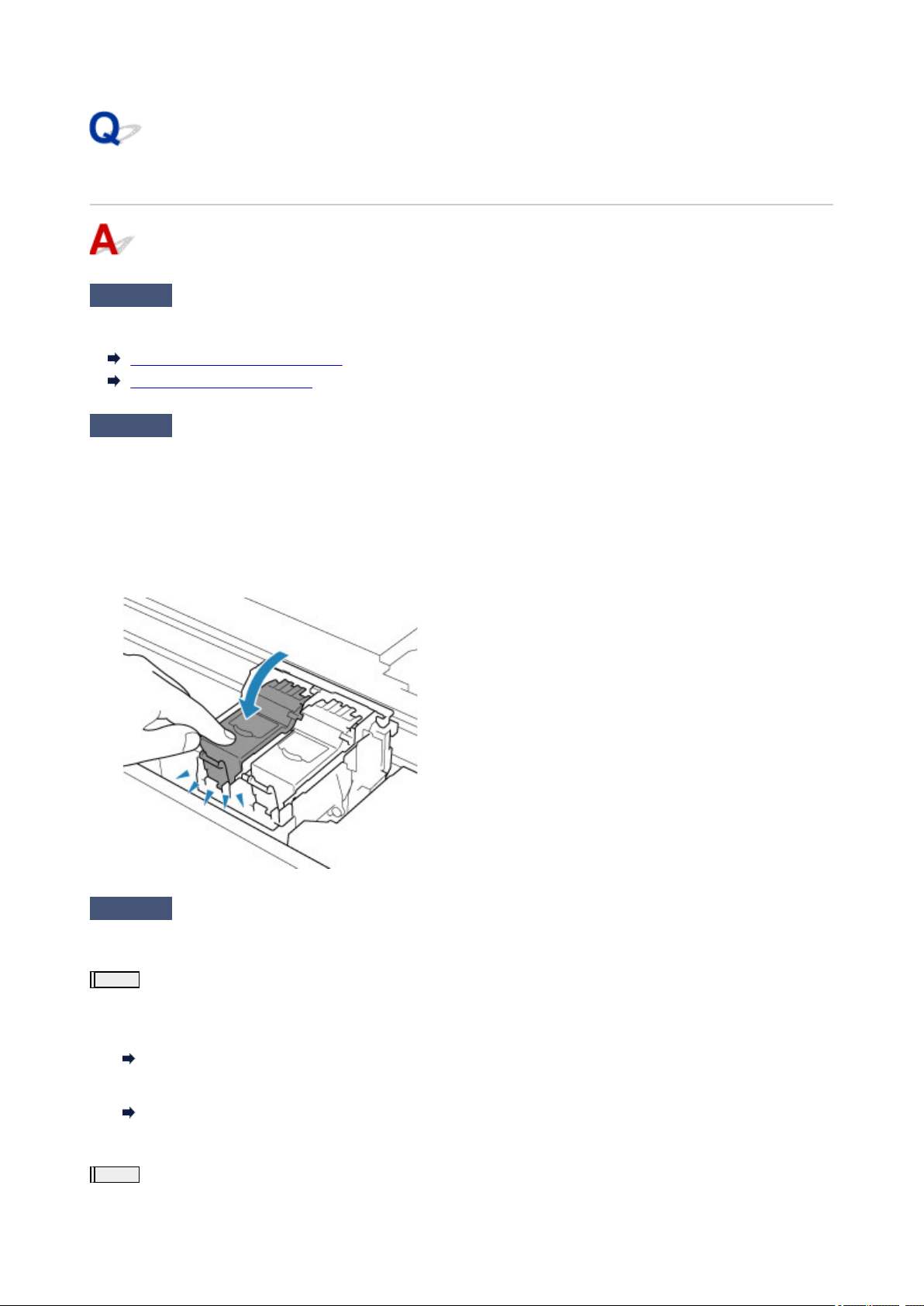
Ink Does Not Come Out
Check1
Make sure of the estimated ink levels in the FINE cartridges.
When a FINE cartridge runs out of ink, replace empty FINE cartridges with a new one.
Checking Ink Status on the LCD
Replacing a FINE Cartridge
Check2
Is the FINE cartridge installed properly?
• Check that there is no orange tape left on the FINE cartridge.
If the orange tape remains on the FINE cartridge, peel it off.
• If you do not close the ink cartridge locking cover correctly, ink may not be ejected correctly.
Open the scanning unit / cover to open the ink cartridge locking cover, and then close it.
Press down the ink cartridge locking cover until it clicks into place.
Check3
Are the print head nozzles clogged?
Print the nozzle check pattern to determine whether the ink ejects properly from the print head nozzles.
Step1
Print the nozzle check pattern.
After printing the nozzle check pattern, examine the pattern.
• For Windows:
Printing a Nozzle Check Pattern
• For macOS:
Printing a Nozzle Check Pattern
If the pattern is not printed correctly, go to the next step.
Step2
Clean the print head.
256

After cleaning the print head, print the nozzle check pattern and check the result.
• For Windows:
Clean the print head
• For macOS:
Clean the print head
If it does not improve, go to the next step.
Step3
Clean the print head again.
After cleaning the print head again, print the nozzle check pattern and check the result.
If it still does not improve, go to the next step.
Step4
Clean the print head deeply.
After cleaning the print head deeply, print the nozzle check pattern and check the result.
• For Windows:
Clean the print head deeply
• For macOS:
Clean the print head deeply
If it does not improve, turn off the printer for more than 24 hours without disconnecting the power plug, and go to the next step.
Step5
Clean the print head deeply again.
After cleaning the print head deeply again, print the nozzle check pattern and check the result.
If it still does not improve, go to the next step.
Step6
Replace the FINE cartridge.
If problem is not resolved after performing print head deep cleaning twice, the print head may be damaged, or ink may have run out. Replace
the FINE cartridge.
Replacing a FINE Cartridge
For details on printing the nozzle check pattern, print head cleaning, and print head deep cleaning, see If Printing
Is Faint or Uneven.
257

Printer Does Not Pick up or Feed the Paper/"No Paper" Error
Check1
Make sure paper is loaded.
Loading Paper
Check2
When loading paper, consider the following.
• When loading two or more sheets of paper, align the edges of the sheets before loading the paper.
• When loading two or more sheets of paper, make sure the paper stack does not exceed the paper load
limit.
However, paper may not feed correctly at the maximum capacity, depending on the type of paper or
environmental conditions (very high or low temperature and humidity). In such cases, reduce the amount of
paper you load at a time to less than half of the paper load limit.
• Always load the paper in portrait orientation, regardless of the printing orientation.
• When you load the paper on the rear tray, place the print side facing UP and align the right and left paper
guides with the paper stack.
Loading Paper
• In the cassette, be sure to load only plain paper.
• When you load the paper on the cassette, place the print side facing DOWN and align the right/left/front
paper guides with the paper stack.
Loading Paper
Check3
Is paper too thick or curled?
Unsupported Media Types
Check4
When loading envelopes, consider the following.
When printing on envelopes, see Loading Envelopes in Rear Tray, and prepare the envelopes before printing.
Once you have prepared the envelopes, load them in portrait orientation. If the envelopes are placed in
landscape orientation, they will not feed properly.
Check5
Make sure media type and paper size settings match with loaded paper.
Check6
Make sure that there are not any foreign objects in the rear tray.
258
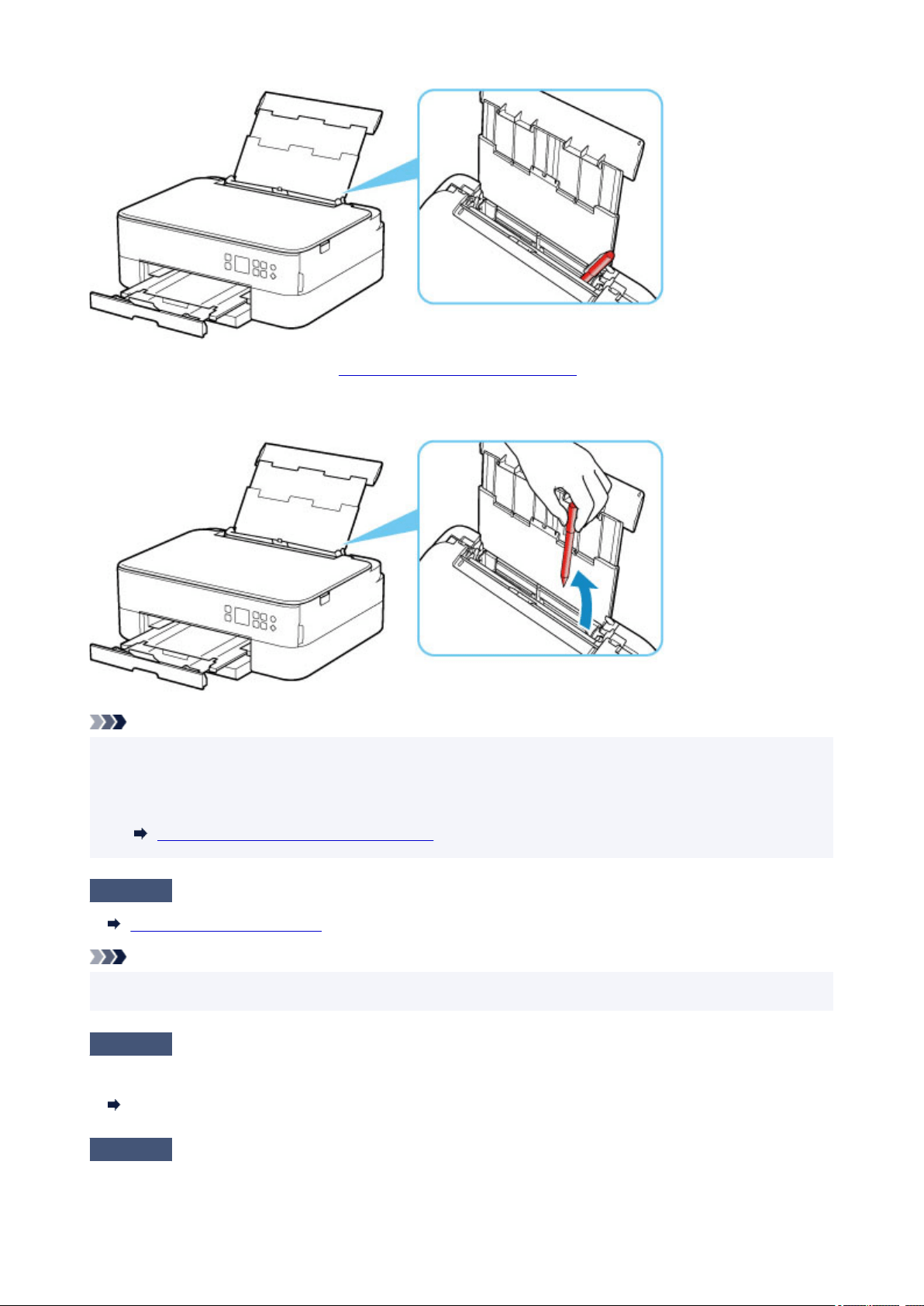
If the paper tears in the rear tray, see What to Do When Paper Is Jammed to remove it.
If there are any foreign objects in the rear tray, be sure to turn off the printer, unplug it from the power supply,
then remove the foreign object.
Note
• If the feed slot cover is opened, close it slowly.
• If the problem occurs immediately after removing the jammed paper from the rear side of the printer, see
below.
Removing Jammed Paper from Rear Side
Check7
Clean paper feed roller.
Cleaning Paper Feed Rollers
Note
• Cleaning the paper feed roller abrades it, so do this only when necessary.
Check8
If two or more sheets of paper feed from cassette at once, clean inside of
cassette.
Cleaning Cassette Pads
Check9
Are transport unit cover and rear cover attached properly?
259


Printout Results Are Unsatisfactory
If the print results are unsatisfactory due to white streaks, misaligned/distorted lines, or uneven colors, check
the paper and print quality settings first.
Check1
Do page size and media type settings match size and type of loaded paper?
If these settings do not match, it is not possible to obtain the proper result.
If you are printing a photograph or an illustration, an incorrect paper type setting may reduce the quality of the
printout color.
Also, if you print with an incorrect paper type setting, the printed surface may be scratched.
In borderless printing, uneven coloring may occur depending on the combination of the paper type setting and
the loaded paper.
The method for checking the paper and print quality settings differs depending on what you are using your printer
for.
• Copying/Printing
Check the settings using the operation panel.
Setting Items for Copying
• Printing from your computer
Check the settings using the printer driver.
Basic Printing Setup
• Printing from a PictBridge (Wi-Fi) compliant device
Check the settings on your PictBridge (Wi-Fi) compliant device or the operation panel.
PictBridge (Wi-Fi) Print Settings
PictBridge settings
• Printing from your smartphone/tablet using Canon PRINT Inkjet/SELPHY
Check the settings on Canon PRINT Inkjet/SELPHY.
Print Photos from Your Smartphone
Check2
Make sure appropriate print quality is selected (see list above).
Select a print quality suited to the paper and to what you are printing. If you notice blurs or uneven colors,
increase the print quality setting and retry the printing.
261

Note
• When printing from a PictBridge (Wi-Fi) compliant device, set the print quality setting using the operation
panel.
This setting cannot be made on the PictBridge (Wi-Fi) compliant device.
Check3
If problem is not resolved, check also the sections below.
See also the sections below:
Printouts Are Blank/Blurry or Fuzzy/Inaccurate or Bleeding Colors/Streaks or Lines
Colors Are Unclear
Lines Are Misaligned/Distorted
Paper Is Smudged / Printed Surface Is Scratched
Vertical Line Next to Image
Cannot Complete Printing
Part of Page Is Not Printed (Windows)
Lines Incomplete or Missing (Windows)
Images Incomplete or Missing (Windows)
Ink Blots / Paper Curl
Back of Paper Is Smudged
Uneven or Streaked Colors
262
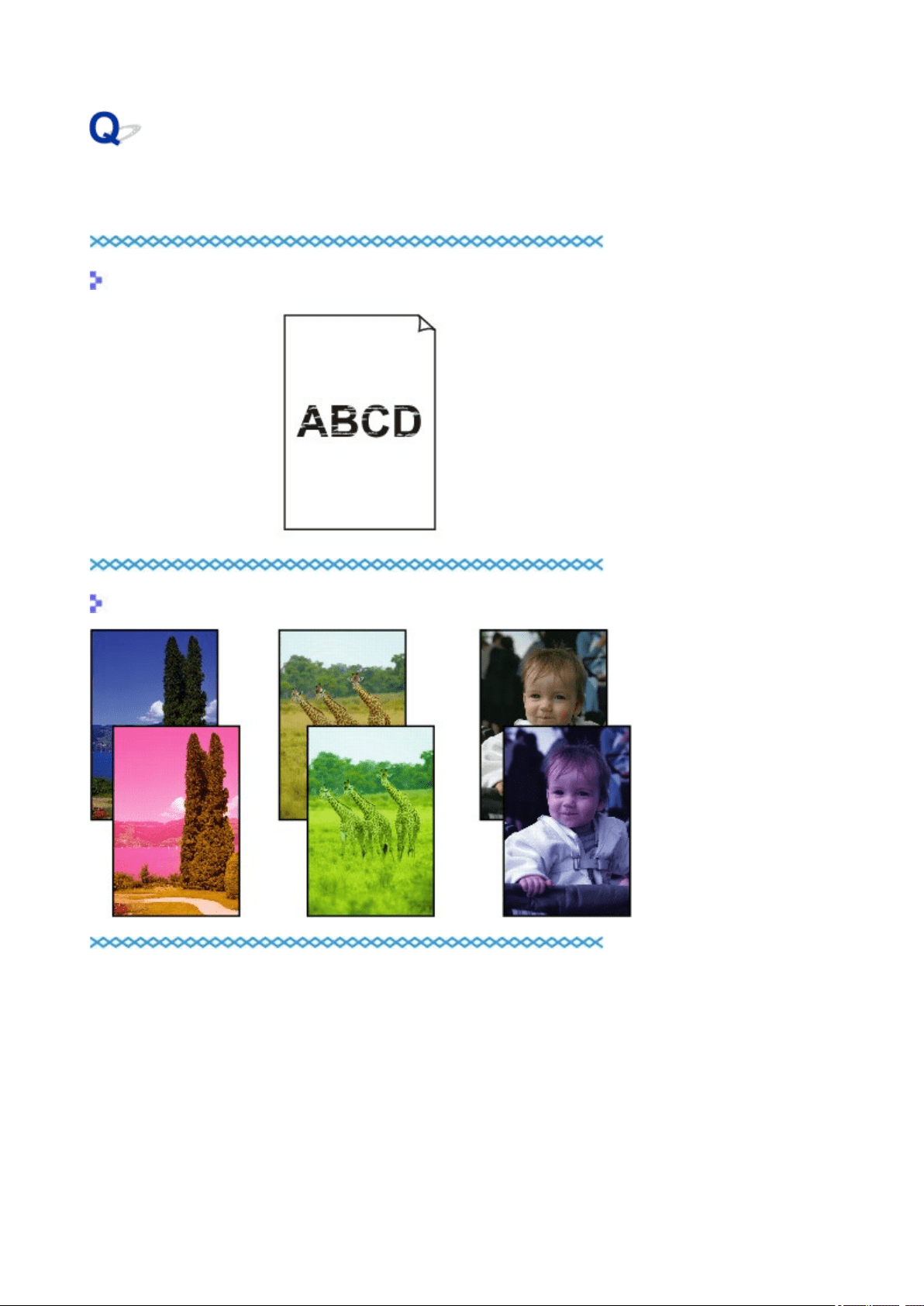
Printouts Are Blank/Blurry or Fuzzy/Inaccurate or Bleeding Colors/
Streaks or Lines
Printing Is Blurry
Colors Are Wrong
263
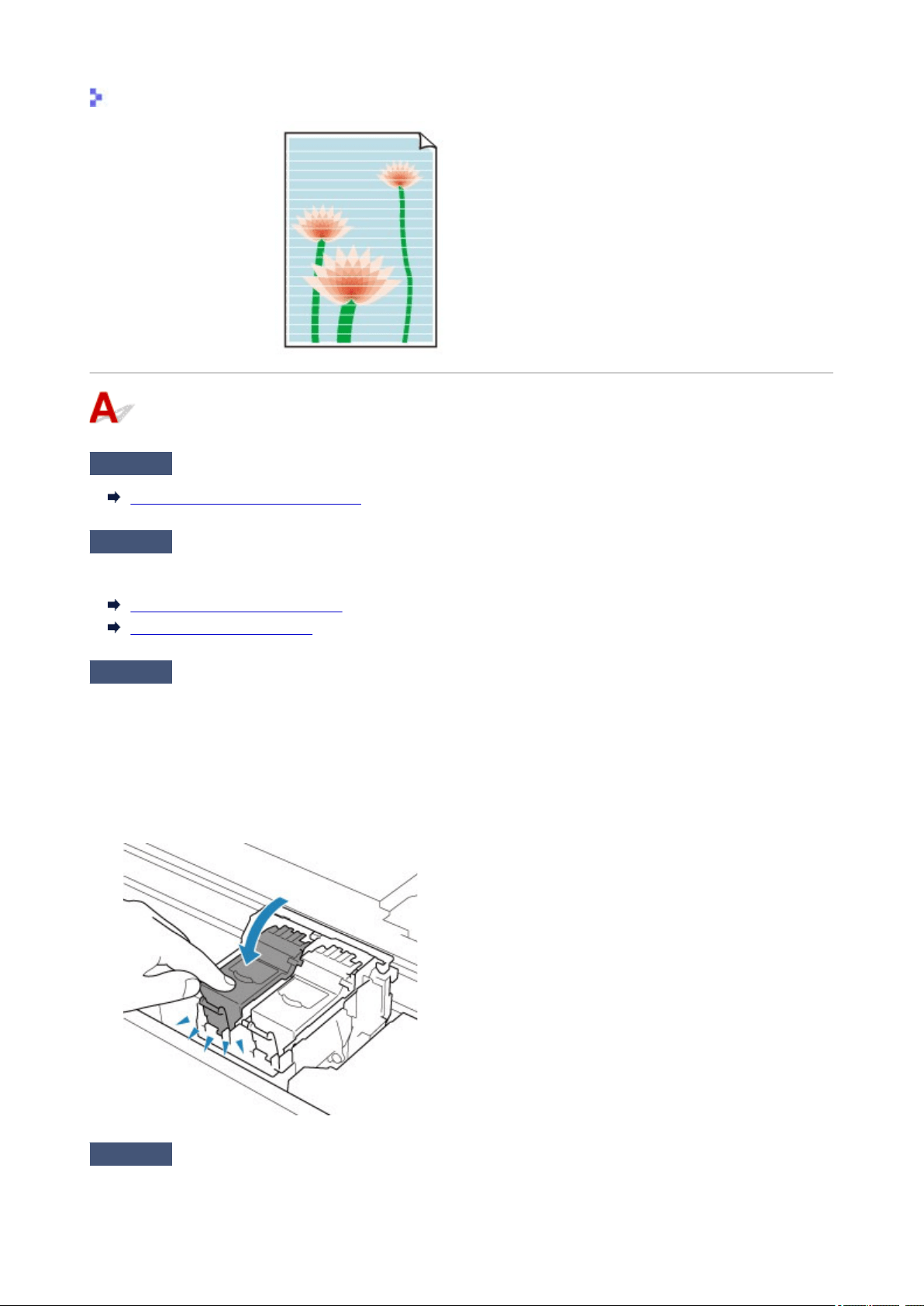
White Streaks Appear
Check1
Check paper and print quality settings.
Printout Results Are Unsatisfactory
Check2
Make sure of the estimated ink levels in the FINE cartridges.
When a FINE cartridge runs out of ink, replace empty FINE cartridges with a new one.
Checking Ink Status on the LCD
Replacing a FINE Cartridge
Check3
Is the FINE cartridge installed properly?
• Check that there is no orange tape left on the FINE cartridge.
If the orange tape remains on the FINE cartridge, peel it off.
• If you do not close the ink cartridge locking cover correctly, ink may not be ejected correctly.
Open the scanning unit / cover to open the ink cartridge locking cover, and then close it.
Press down the ink cartridge locking cover until it clicks into place.
Check4
Are the print head nozzles clogged?
264

Print the nozzle check pattern to determine whether the ink ejects properly from the print head nozzles.
Step1
Print the nozzle check pattern.
After printing the nozzle check pattern, examine the pattern.
• For Windows:
Printing a Nozzle Check Pattern
• For macOS:
Printing a Nozzle Check Pattern
If the pattern is not printed correctly, go to the next step.
Step2
Clean the print head.
After cleaning the print head, print the nozzle check pattern and check the result.
• For Windows:
Clean the print head
• For macOS:
Clean the print head
If it does not improve, go to the next step.
Step3
Clean the print head again.
After cleaning the print head again, print the nozzle check pattern and check the result.
If it still does not improve, go to the next step.
Step4
Clean the print head deeply.
After cleaning the print head deeply, print the nozzle check pattern and check the result.
• For Windows:
Clean the print head deeply
• For macOS:
Clean the print head deeply
If it does not improve, turn off the printer for more than 24 hours without disconnecting the power plug, and go to the next step.
Step5
Clean the print head deeply again.
After cleaning the print head deeply again, print the nozzle check pattern and check the result.
If it still does not improve, go to the next step.
Step6
Replace the FINE cartridge.
If problem is not resolved after performing print head deep cleaning twice, the print head may be damaged, or ink may have run out. Replace
the FINE cartridge.
Replacing a FINE Cartridge
For details on printing the nozzle check pattern, print head cleaning, and print head deep cleaning, see If Printing
Is Faint or Uneven.
Check5
When using paper with one printable surface, check the correct printable side
of the paper.
Printing on the wrong side of such paper may cause unclear prints or prints with reduced quality.
When you load paper on the rear tray, load paper with the printable side facing up. When you load paper in the
cassette, load paper with the printable side facing down.
265

Refer to the instruction manual supplied with the paper for detailed information on the printable side.
• When copying, see also the sections below:
Check6
Is platen glass dirty?
Clean the platen glass.
Cleaning Platen and Document Cover
Check7
Make sure original is properly loaded on platen.
When you load the original on the platen, load it with the side to be copied facing down.
Loading Originals
Check8
Is copy source a printed paper by printer?
If you use a printout done by this printer as the original, print quality may be reduced depending on the condition
of the original.
Print from the printer directly, or reprint from the computer if you can reprint from it.
266

Colors Are Unclear
Check1
Is nozzle check pattern printed properly?
Print the nozzle check pattern to determine whether the ink ejects properly from the print head nozzles.
Step1
Print the nozzle check pattern.
After printing the nozzle check pattern, examine the pattern.
• For Windows:
Printing a Nozzle Check Pattern
• For macOS:
Printing a Nozzle Check Pattern
If the pattern is not printed correctly, go to the next step.
Step2
Clean the print head.
After cleaning the print head, print the nozzle check pattern and check the result.
• For Windows:
Clean the print head
• For macOS:
Clean the print head
If it does not improve, go to the next step.
Step3
Clean the print head again.
After cleaning the print head again, print the nozzle check pattern and check the result.
If it still does not improve, go to the next step.
Step4
Clean the print head deeply.
After cleaning the print head deeply, print the nozzle check pattern and check the result.
• For Windows:
Clean the print head deeply
• For macOS:
Clean the print head deeply
If it does not improve, turn off the printer for more than 24 hours without disconnecting the power plug, and go to the next step.
Step5
Clean the print head deeply again.
After cleaning the print head deeply again, print the nozzle check pattern and check the result.
If it still does not improve, go to the next step.
Step6
Replace the FINE cartridge.
If problem is not resolved after performing print head deep cleaning twice, the print head may be damaged, or ink may have run out. Replace
the FINE cartridge.
267
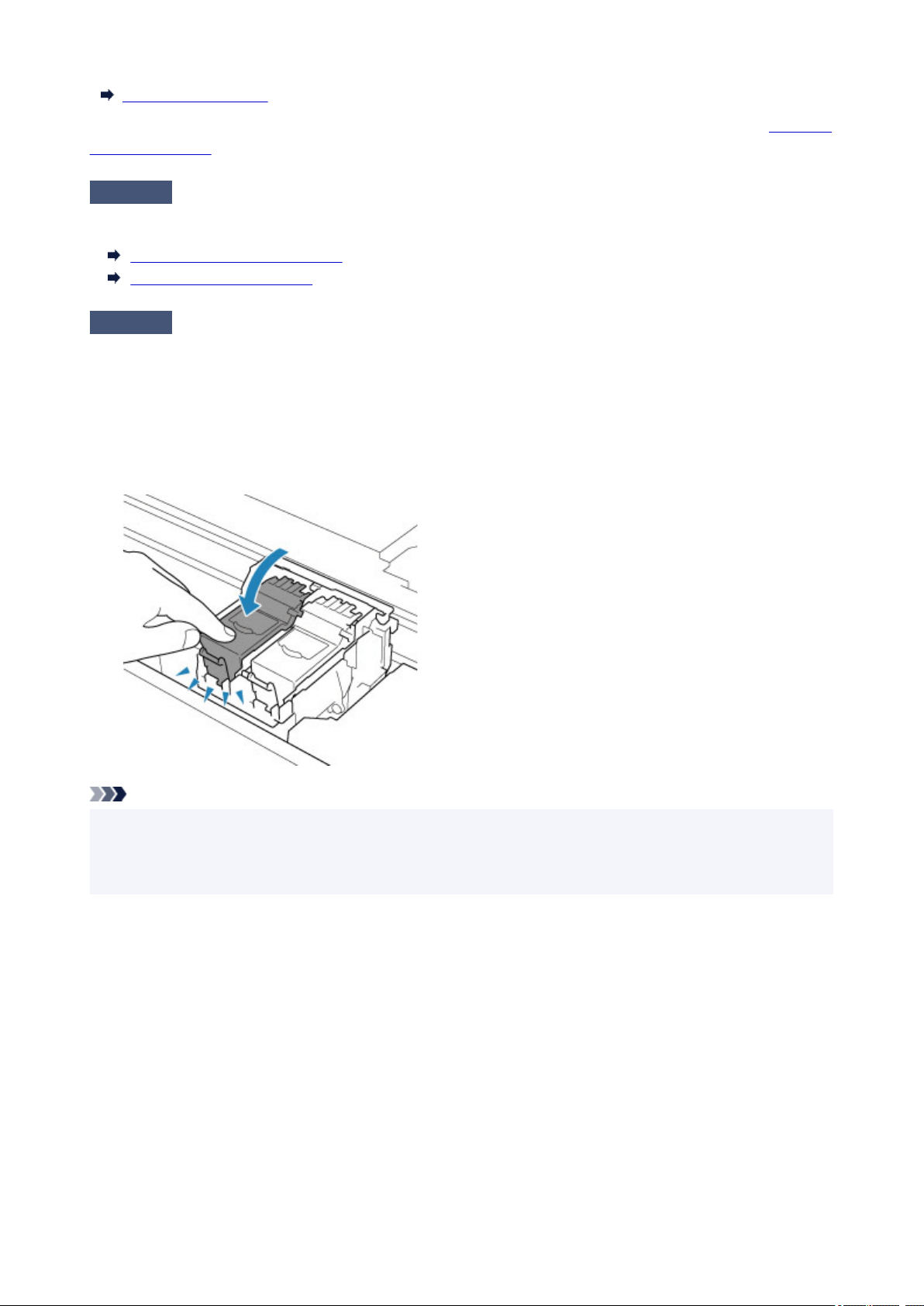
Replacing a FINE Cartridge
For details on printing the nozzle check pattern, print head cleaning, and print head deep cleaning, see If Printing
Is Faint or Uneven.
Check2
Make sure of the estimated ink levels in the FINE cartridges.
When a FINE cartridge runs out of ink, replace empty FINE cartridges with a new one.
Checking Ink Status on the LCD
Replacing a FINE Cartridge
Check3
Is FINE cartridge installed properly?
• Check that there is no orange tape left on the FINE cartridge.
If the orange tape remains on the FINE cartridge, peel it off.
• If you do not close the ink cartridge locking cover correctly, ink may not be ejected correctly.
Open the scanning unit / cover to open the ink cartridge locking cover, and then close it.
Press down the ink cartridge locking cover until it clicks into place.
Note
• Printed colors may not match screen colors due to basic differences in the methods used to produce
colors. Color control settings and environmental differences can also affect how colors appear on the
screen. Therefore, colors of printing results may be different from those on the screen.
268
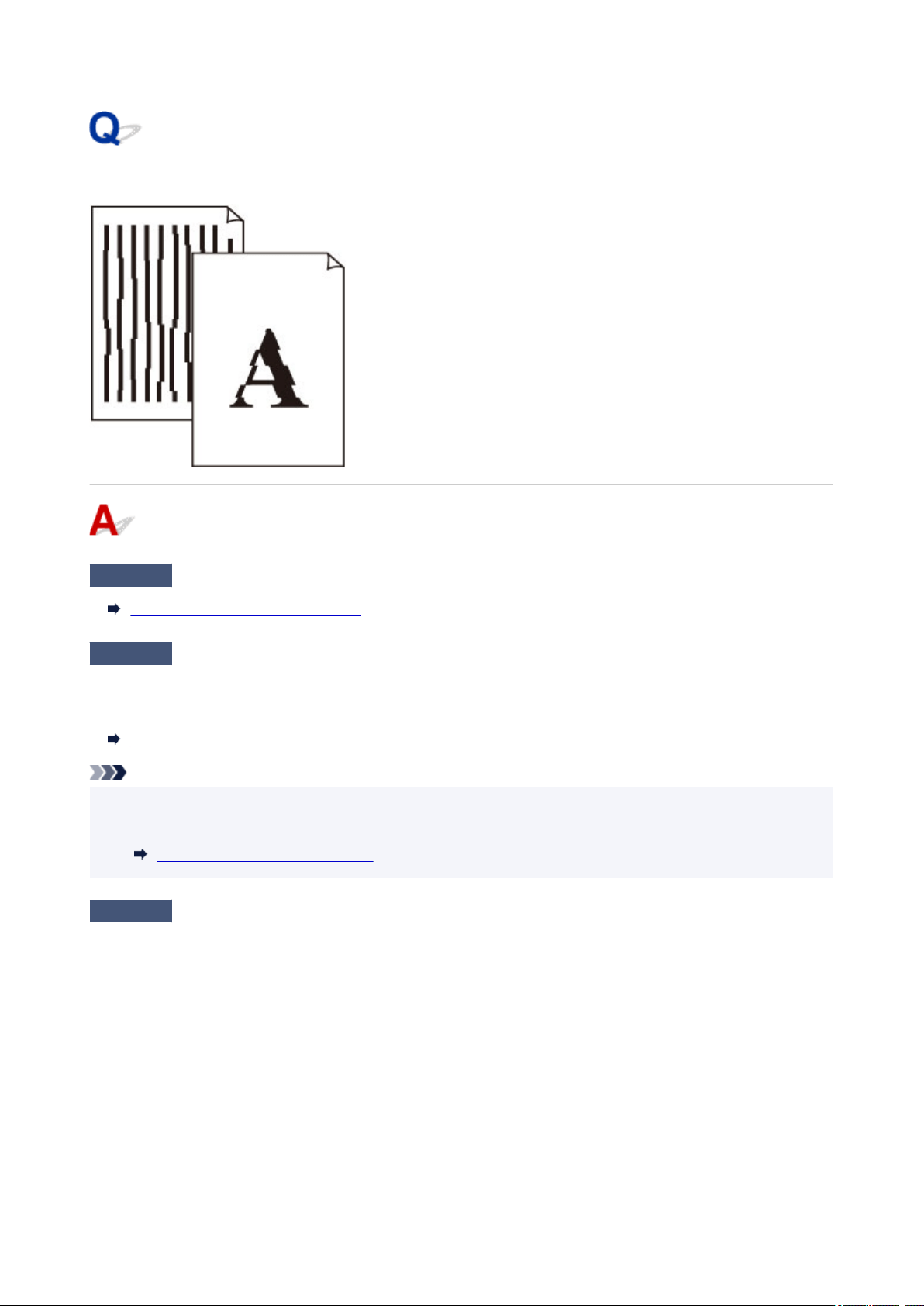
Lines Are Misaligned/Distorted
Check1
Check paper and print quality settings.
Printout Results Are Unsatisfactory
Check2
Perform print head alignment.
If printed lines are misaligned/distorted or print results are otherwise unsatisfactory, adjust the print head
position.
Aligning the Print Head
Note
• If the problem is not resolved after performing the print head alignment, perform print head alignment
manually.
Aligning the Print Head Manually
Check3
Increase print quality and try printing again.
Increasing the print quality using the operation panel or the printer driver may improve the print result.
269
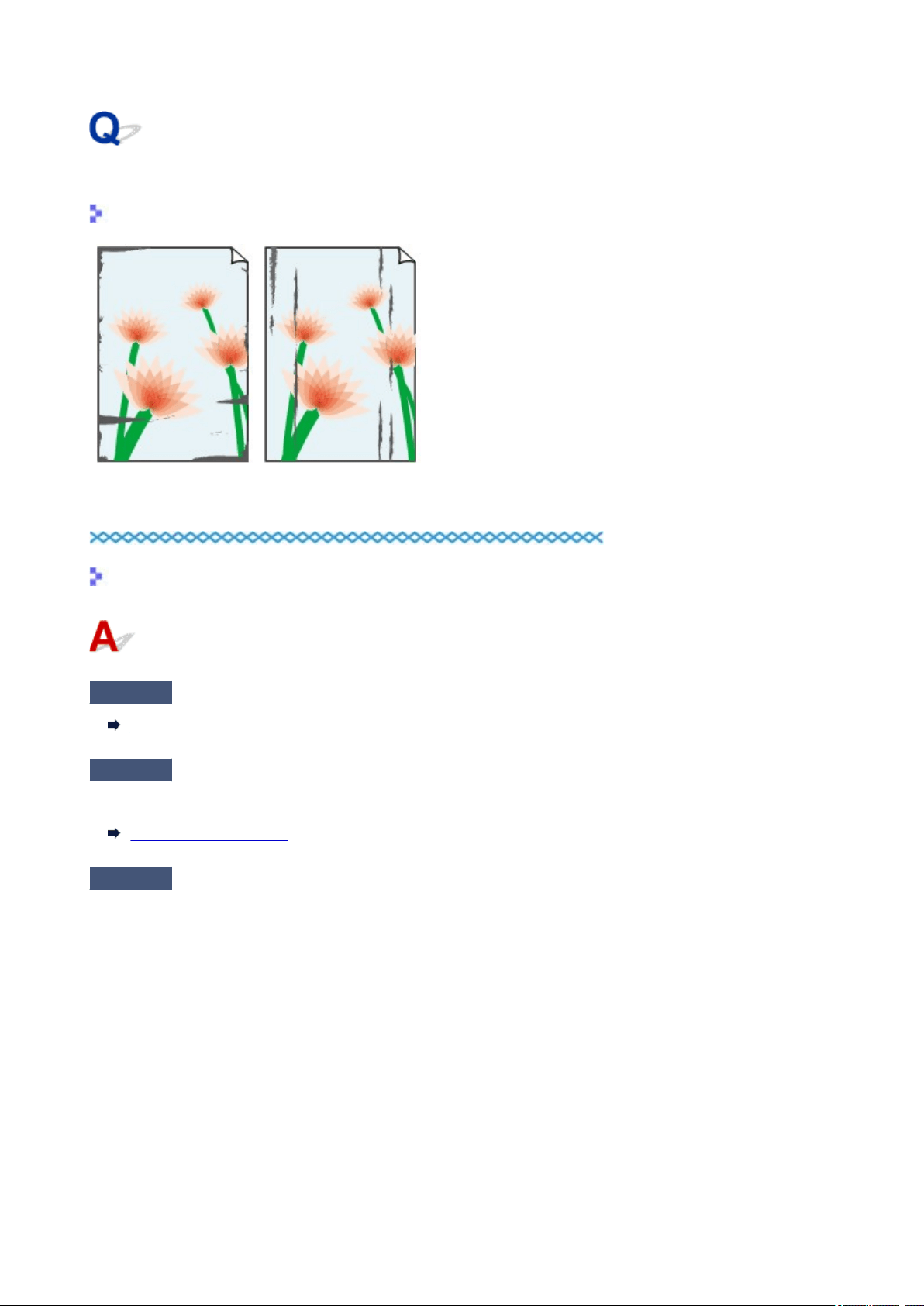
Paper Is Smudged / Printed Surface Is Scratched
Paper Is Smudged
Smudged Edges Smudged Surface
Printed Surface Is Scratched
Check1
Check paper and print quality settings.
Printout Results Are Unsatisfactory
Check2
Check paper type.
Make sure you are using the right paper for what you are printing.
Supported Media Types
Check3
Correct curl before loading paper.
When using Photo Paper Plus Semi-gloss
, even if the sheet is curled, load one sheet at a time as it is. Rolling
this paper in the opposite direction to flatten it may crack the paper surface and reduce the print quality.
We recommend putting unused paper back into the package and storing it flat.
• Plain Paper
Turn the paper over and reload it to print on the other side.
• Other Paper such as envelope
If the paper corners curl more than 0.1 in. / 3 mm (A) in height, the paper may smudge or may not feed
properly. Follow the instructions below to correct the paper curl.
270
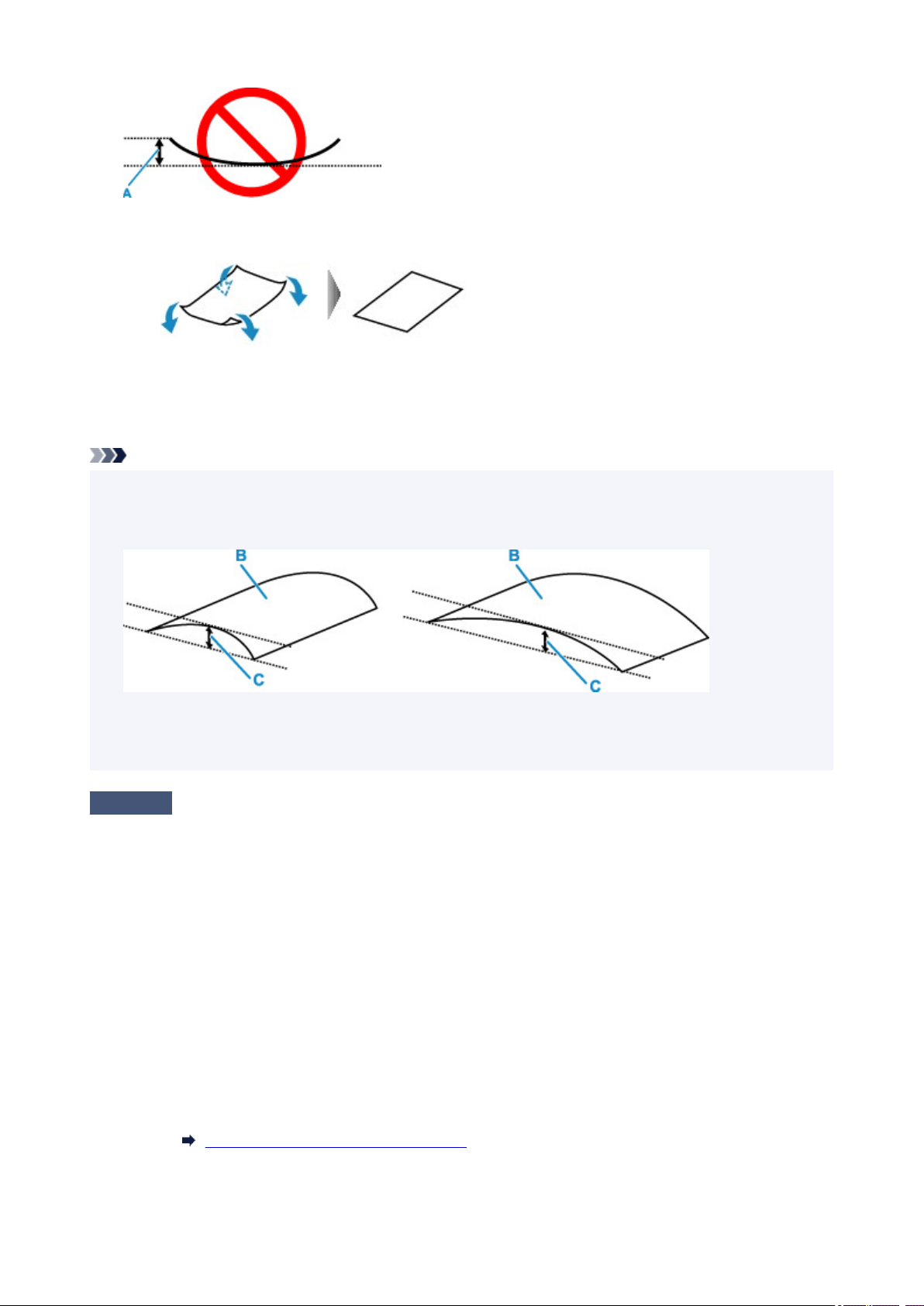
1. Roll up paper in opposite direction to paper curl as shown below.
2. Check that paper is now flat.
We recommend printing curl-corrected paper one sheet at a time.
Note
• Depending on paper type, the paper may smudge or may not feed properly even if it is not curled inward.
Follow the instructions below to curl the paper outward up to 0.1 in. / 3 mm (C) in height before printing.
This may improve the print result.
(B) Print side
We recommend feeding paper that has been curled outward one sheet at a time.
Check4
Set printer to prevent paper abrasion.
Adjusting the setting to prevent paper abrasion will widen the clearance between the print head and the paper. If
you notice abrasion even with the media type set correctly to match the paper, set the printer to prevent paper
abrasion using the operation panel or the computer.
This may reduce the print speed.
* Once you have finished printing, undo this setting. Otherwise, it will apply to subsequent print jobs.
• From operation panel
1. Press OK button on HOME screen.
2. Select Device settings > Print settings in this order, and then set Prevent paper
abrasion to ON.
Changing Settings from Operation Panel
271

• From computer (Windows):
1. Check that printer is turned on.
2. Open Canon IJ Printer Assistant Tool.
Opening the Maintenance Tool (Canon IJ Printer Assistant Tool)
3. Select Custom Settings.
4. Select Prevents paper abrasion check box and select OK.
5. Check message and select OK.
• From computer (macOS):
Adjust the setting to prevent paper abrasion from Remote UI.
Opening Remote UI for Maintenance
Check5
If brightness is set low, increase brightness setting and try printing again.
If you are printing with a low brightness setting on plain paper, the paper may absorb too much ink and become
wavy, causing paper abrasion.
• Printing from your computer (Windows)
Check the brightness setting in the printer driver.
Adjusting Brightness
• Copying
Setting Items for Copying
Check6
Is platen glass dirty?
Clean the platen glass.
Cleaning Platen and Document Cover
Check7
Is paper feed roller dirty?
Clean paper feed roller.
Cleaning Paper Feed Rollers
Note
• Cleaning the paper feed roller abrades it, so do this only when necessary.
Check8
Is inside of printer dirty?
During duplex printing, ink may stain the inside of the printer, smudging the printout.
Perform bottom plate cleaning to clean inside of printer.
Cleaning Inside the Printer (Bottom Plate Cleaning)
272

Note
• To prevent staining inside the printer, be sure to set the correct paper size.
Check9
Set longer ink drying time.
This allows the printed surface to dry, preventing smudges and scratches.
• For Windows:
1. Check that printer is turned on.
2. Open Canon IJ Printer Assistant Tool.
Opening the Maintenance Tool (Canon IJ Printer Assistant Tool)
3. Select Custom Settings.
4. Drag Ink Drying Wait Time slide bar to set the wait time and select OK.
5. Check message and select OK.
• For macOS:
Set the waiting time using Remote UI.
Opening Remote UI for Maintenance
273
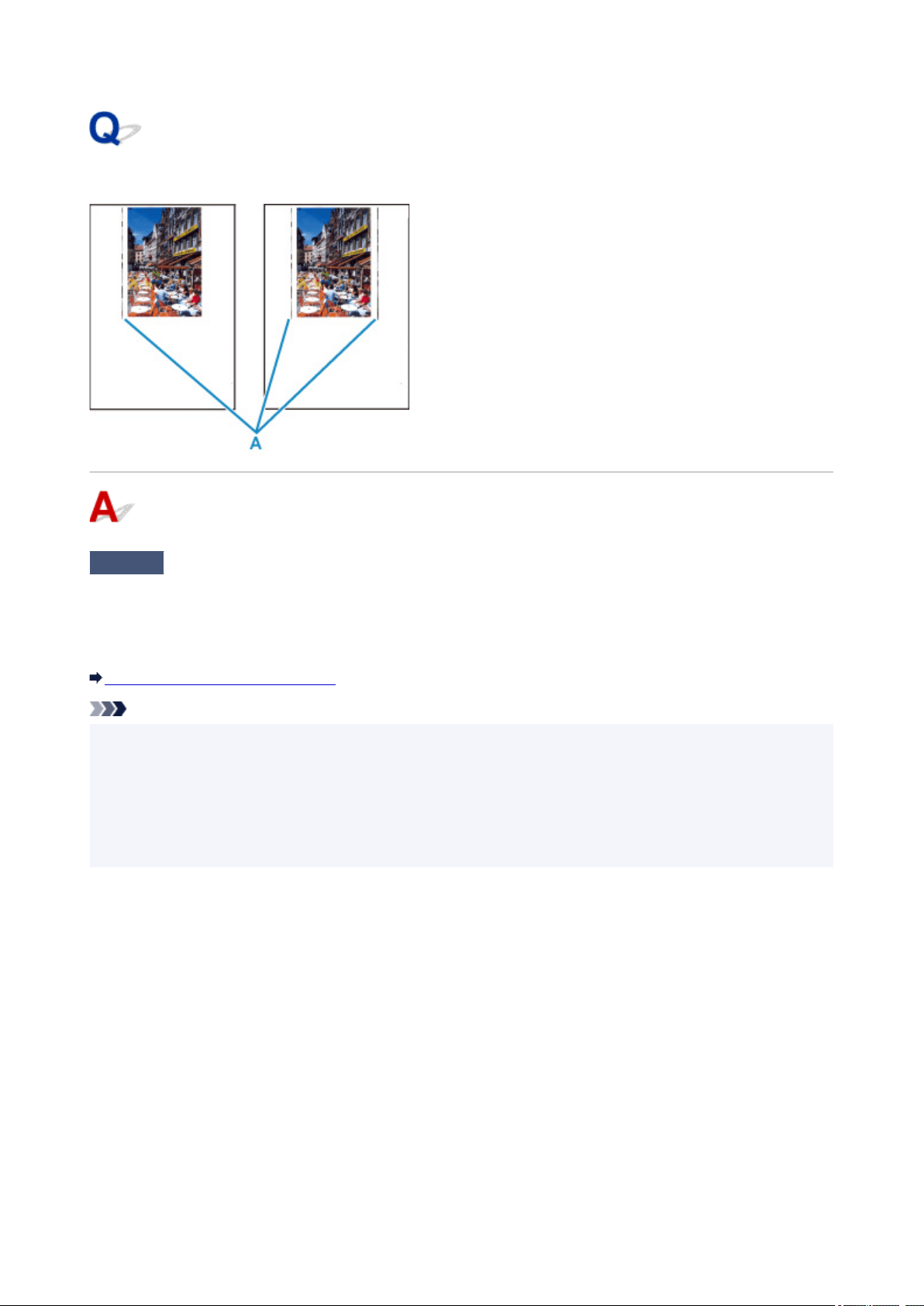
Vertical Line Next to Image
Check
Is loaded paper size correct?
If the loaded paper is larger than the size you specified, vertical lines (A) may appear in the left margin or the
both margin.
Set the paper size to match the loaded paper.
Printout Results Are Unsatisfactory
Note
• The direction or pattern of the vertical lines (A) may vary depending on the image data or the print setting.
• This printer performs automatic cleaning when necessary to keep printouts clean. A small amount of ink is
ejected for cleaning.
Although the ink is normally ejected onto the ink absorber at the outer edge of the paper, it may get onto
the paper if the loaded paper is larger than the set size.
274



Scanner Does Not Work
Check 1
Check that your scanner or printer is turned on.
Check 2
With network connection, check the connection status and reconnect as
needed.
Check 3
With USB connection, connect the USB cable to a different USB port on the
computer.
Check 4
If the USB cable is connected to a USB hub, remove it from the USB hub and
connect it to a USB port on the computer.
Check 5
Restart the computer.
Check 6
To scan from the printer's operation panel with USB connection, click Scan-
from-Operation-Panel Settings in the Settings (General Settings) dialog, and then
check that the following checkboxes are selected.
• Your scanner or printer
• Enables scanning from the operation panel
Check 7
If one or more ink cartridges/tanks is low on ink or empty, the device’s
functions could be suspended. If this occurs, follow the instructions for resolving the
1686 or 1688 support codes.
277

Scanner Driver Does Not Start
Check 1
Make sure the application software supports AirPrint.
Check 2
Select your scanner or printer on the application's menu.
Note
• The operation may differ depending on the application.
Check 3
Scan and save images with IJ Scan Utility Lite and open the files in your
application.
Check 4
Your scanner may be locked. (Personal scanners only)
If IJ Scan Utility Lite or the application is running, exit it. Slide the scanner lock switch to the release position
( ), then reconnect the USB cable.
278


Printer Does Not Turn On
Check1
Press ON button.
Check2
Make sure power plug is securely connected to printer, and then turn on again.
The Power Cord Connector is slightly diagonal.
Check3
Unplug printer, leave it for at least 2 minutes, and then plug it back in and turn
on again.
If this does not solve the problem, contact your nearest Canon service center to request a repair.
280

Printer Turns Off Unexpectedly or Repeatedly
Check
If printer is set to turn off automatically after a certain time, disable this setting.
If you have set the printer to turn off automatically after a specified time, the power will shut off by itself once that
time has elapsed.
• To disable the setting from the operation panel:
1. Check that printer is turned on.
2. Press OK button on HOME screen.
LCD and Operation Panel
3. Select Device settings and press the OK
button.
4. Select Other device settings and press the OK button.
5. Select ECO settings and press the OK button.
6. Select Energy saving settings and press the OK button.
7. Select Auto power off and press the OK button.
8. Select Never and press the OK button.
The setting to shut off the power automatically is disabled.
• To disable the setting from the computer:
For Windows, use Canon
IJ Printer Assistant Tool or ScanGear (scanner driver) to disable the setting.
Follow the procedure below to disable the setting using Canon IJ Printer Assistant Tool.
1. Open Canon IJ Printer Assistant Tool.
Opening the Maintenance Tool (Canon IJ Printer Assistant Tool)
2. Select Auto Power.
3. Select Disable for Auto Power Off.
281

4. Select OK.
5. Select OK on the displayed screen.
The setting to shut off the power automatically is disabled.
Note
• See below for details on how to disable the setting from ScanGear (scanner driver).
Scanner Tab
282

USB Connection Problems
Make sure of the checking item below when you find one of the followings.
• Printing or scanning is slow.
• Hi-Speed USB connection does not work.
• A message such as "This device can perform faster" appears. (Windows)
Note
• If your system environment does not support Hi-Speed USB, the printer operates at the slower speed of
Full-Speed or Low-Speed. In this case, the printer works properly but printing or scanning speed may
slow down due to the communication speed.
Check
Check following to make sure your system environment supports Hi-Speed USB
connection.
• Does the USB port on your computer support Hi-Speed USB connection?
• Does the USB cable or the USB hub support Hi-Speed USB connection?
Be sure to use a certified Hi-Speed USB cable. We recommend that the USB cable be no longer than 10
feet / 3 meters or so.
• Is the Hi-Speed USB driver working properly on your computer?
Make sure the latest Hi-Speed USB driver is working properly and obtain and install the latest version of the
Hi-Speed USB driver for your computer, if necessary.
Important
• For more information, contact the manufacturer of your computer, USB cable, or USB hub.
283
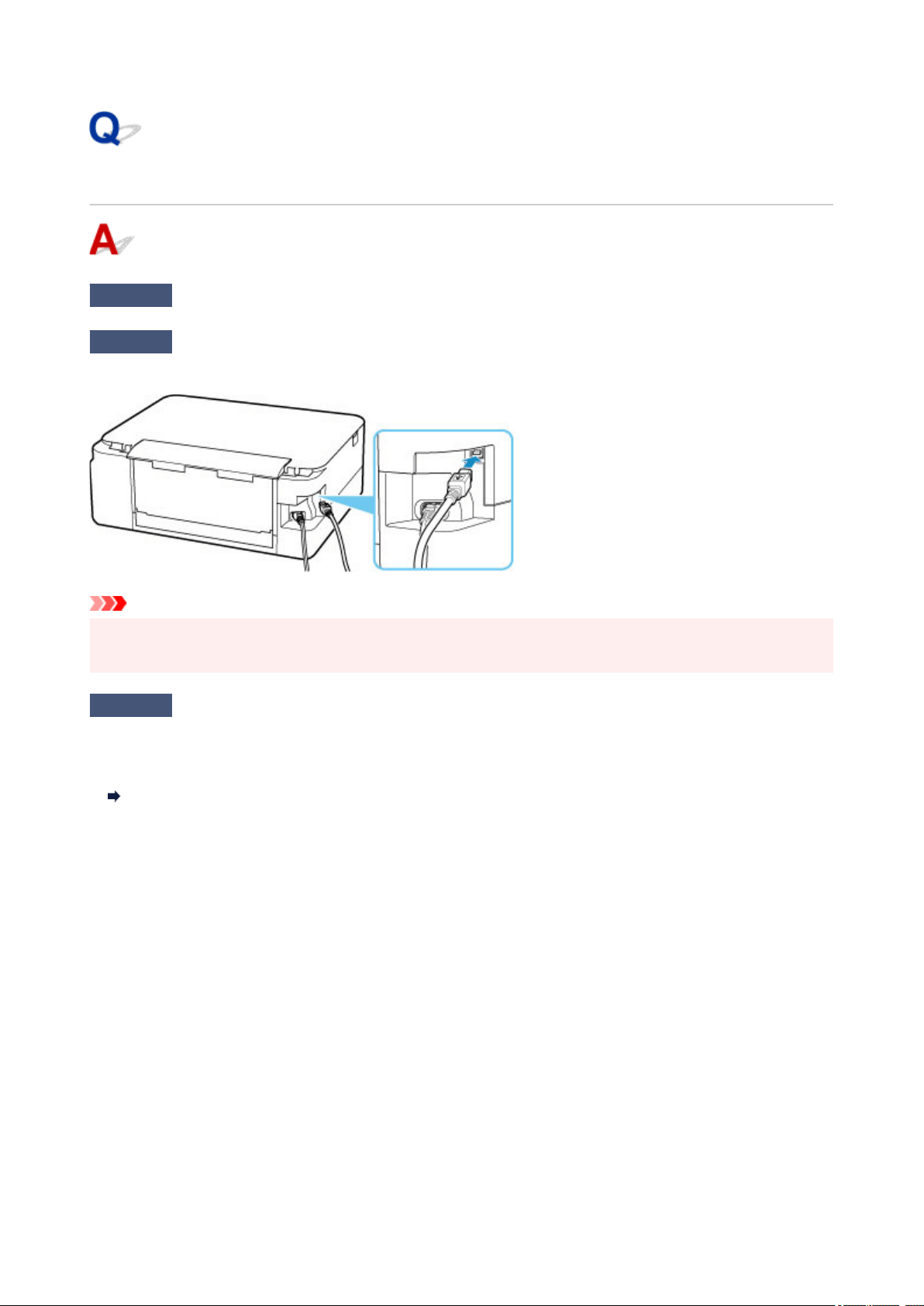
Cannot Communicate with Printer via USB
Check1
Make sure printer is turned on.
Check2
Connect USB cable properly.
As the illustration below, the USB port is at the back of the printer.
Important
• Check the orientation and insertion angle of the "Type-B" connector and connect to the printer. The USB
Port is slightly diagonal. For details, refer to the instruction manual supplied with the USB cable.
Check3
Make sure Enable bidirectional support is selected in the Ports sheet of the
Printer properties dialog box. (Windows)
If not, select it to enable bidirectional support.
Opening Printer Driver's Setup Screen
284

Wrong Language Appears in LCD
Follow the instructions below to select your language.
1. Press Back button repeatedly until the HOME screen is displayed.
2. Press OK button on HOME screen.
3. Press
button 3 times and press OK button.
4. Press
button 6 times and press OK button.
5. Use
button to select language for LCD and press OK button.
The desired language appears on the
LCD.
6. Press OK button.
285


Failed to MP Drivers Installation (Windows)
If the MP Drivers were not installed correctly, make sure that all Windows Updates have been applied. If
all Windows Updates have not been applied, apply all Windows Updates.
After confirming Windows Update, perform the following operations to install the MP Drivers.
1. Open screen to uninstall MP Drivers.
For Windows 10:
Select Settings > Apps.
For Windows 8.1 / Windows 7:
Select Control Panel > Programs and Features.
2. Check if there is "Canon XXX series MP Drivers" you want to install in list.
"XXX" is the model name.
3. If you find MP Drivers for printer you want to install, uninstall it.
If not found, proceed to the next step.
4. Restart computer.
After restarting, install the latest MP Drivers.
287

Updating MP Drivers in Network Environment (Windows)
Download the latest MP Drivers in advance.
Download the latest MP Drivers for your model on the download page of the Canon website.
After the download is completed, overwrite and install the new version of the MP Drivers according to the
specified installation procedure.
Note
• The network settings on the printer are not affected, so the printer can be used on the network without
redoing settings.
288

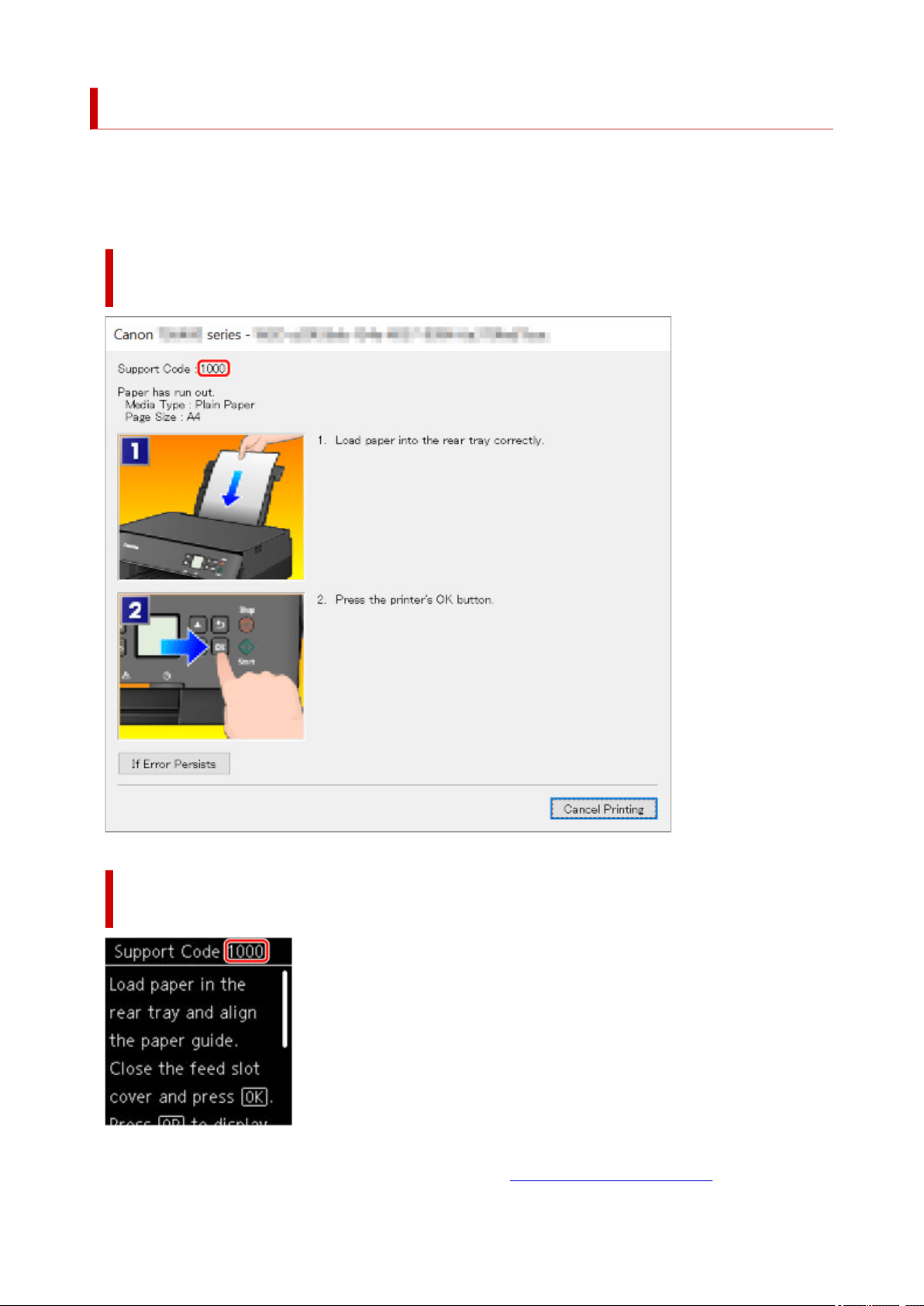
When Error Occurred
If an error occurs in printing, for example, if the paper runs out or jams, a troubleshooting message appears
automatically. For some errors, a support code (error number) is also displayed.
Take the appropriate action described in the message.
When a Support Code and a Message are displayed on the Computer
Screen (Windows):
When a Support Code and a Message are displayed on the Printer's
LCD:
For details on how to resolve errors with Support Codes, see List of Support Code for Error.
290


Message (Support Code) Appears
This section describes some of the messages that may appear.
Note
• A support code (error number) is displayed for some errors. For details on errors that have support
code, see
List of Support Code for Error.
If a message appears on the printer's LCD, see below.
Message Appears on Printer's LCD
If a message appears on the computer, see below.
Error Regarding Automatic Duplex Printing Is Displayed
Error Regarding Power Cord Being Unplugged Is Displayed (Windows)
Writing Error/Output Error/Communication Error (Windows)
Other Error Messages (Windows)
Message Appears on Printer's LCD
Check the message and take the appropriate action.
• Power was not turned off correctly the last time. Press when turning power off.
The printer may have been unplugged while the power was still on.
Press the printer's OK button to cancel the error.
See Unplugging the Printer to unplug the printer correctly.
• Cannot connect to the server. Please wait a while and try again.
The printer cannot connect to the server due to a communication error.
Press the printer's OK button to cancel the error and try again after a while.
Error Regarding Automatic Duplex Printing Is Displayed
Check
See Automatic Duplex Printing Problems and take the appropriate action.
Error Regarding Power Cord Being Unplugged Is Displayed (Windows)
The printer may have been unplugged while it was on.
Check the error message that appears on the computer and click OK.
The printer starts printing.
See
Unplugging the Printer to unplug the printer correctly.
292

Writing Error/Output Error/Communication Error (Windows)
Check1
If the status bar is off and nothing is displayed on printer's LCD, make sure
printer is plugged in and turn on.
Check2
Make sure printer is properly connected to computer.
If you are using a USB cable, make sure it is securely connected to both the printer and the computer. When
the USB cable is securely plugged in, check the following:
• If you are using a relay device such as a USB hub, disconnect it, connect the printer directly to the
computer, and retry the printing. If printing starts normally, there is a problem with the relay device.
Contact the vendor of the relay device.
• There could also be a problem with the USB cable. Replace the USB cable and retry the printing.
If you use the printer over a LAN, make sure the printer is correctly set up for network use.
Check3
Make sure MP Drivers are installed correctly.
Uninstall the MP Drivers following the procedure described in Deleting the Unnecessary MP Drivers and click
here to reinstall them.
Check4
When printer is connected to your computer with a USB cable, check device
status from your computer.
Follow the procedure below to check the device status.
1. Select Control Panel > Hardware and Sound > Device Manager.
Note
• If the User Account Control screen appears, select Continue.
2. Open USB Printing Support Properties.
Double-click Universal Serial Bus controllers and USB Printing Support.
Note
• If the USB Printing Support Properties screen does not appear, make sure the printer is
correctly connected to the computer.
Check2
Make sure printer is properly connected to computer.
3. Click General tab and check for a device problem.
If a device error is shown, see Windows Help to resolve it.
293

Other Error Messages (Windows)
Check
If an error message appears outside printer status monitor, check the
following:
• "Could not spool successfully due to insufficient disk space"
Delete any unnecessary files to increase the amount of free space on the disk.
• "Could not spool successfully due to insufficient memory"
Close other applications to increase the available memory.
If you still cannot print, restart your computer and retry the printing.
• "Printer driver could not be found"
Uninstall the MP Drivers following the procedure described in Deleting the Unnecessary MP Drivers and
click here to reinstall them.
• "Could not print Application name - File name"
Try printing again once the current job is complete.
294

List of Support Code for Error
Support code appears on the printer's LCD and your computer screen when errors occur.
A "support code" is an error number, and appears along with an error message.
When an error occurs, check the support code displayed on the printer's LCD and computer screen and take
the appropriate action in response.
Support Code Appears on Printer's LCD and Computer Screen
• 1000 to 1ZZZ
1000 1003 1200 1300 1303 1304
1309 1310 1313 1401 1403 1430
1485 15A1 15A2 1650 1651 1682
1684 1686 1687 1688 168D 1702
1703 1704 1705 1712 1713 1714
1715 1730 1731 1871 1890
• 2000 to 2ZZZ
2110 2113 2114 2120 2123 2500
2700
• 3000 to 3ZZZ
3002 3402 3403 3405 3407 3412
3413 3438 3439 3440 3441 3442
3443 3444 3445 3446 3447
• 4000 to 4ZZZ
4100 4103 4104 495A
• 5000 to 5ZZZ
5011 5012 5050 5100 5200 5205
5206 5400 5700 5B02 5B03 5B04
5B05 5B12 5B13 5B14 5B15 5C02
295

• 6000 to 6ZZZ
6000 6001 6004 6500 6502 6800
6801 6830 6831 6832 6833 6900
6901 6902 6910 6911 6930 6931
6932 6933 6936 6937 6938 6940
6941 6942 6943 6944 6945 6946
6951 6A80 6A81 6D01
• 7000 to 7ZZZ
7500 7600 7700 7800
• 8000 to 8ZZZ
8300
• A000 to ZZZZ
C000
Note
• For information on how to deal with paper jams, see
What to Do When Paper Is Jammed.
296

What to Do When Paper Is Jammed
If paper jams, remove it following the appropriate procedure as shown below.
• If you can see the jammed paper at the paper output slot or the rear tray:
1300
• If you cannot see the jammed paper at the paper output slot or the rear tray:
◦ If the paper fed from the cassette is jammed:
1303
◦ If the paper is jammed when performing automatic duplex printing:
1304
◦ If the paper is jammed as the printer pulled in the printed paper:
1313
◦ If the paper tears and you cannot remove it from the paper output slot or if the paper is jammed
inside the printer:
Paper Is Jammed inside Printer
• Cases other than above:
Other Cases
297
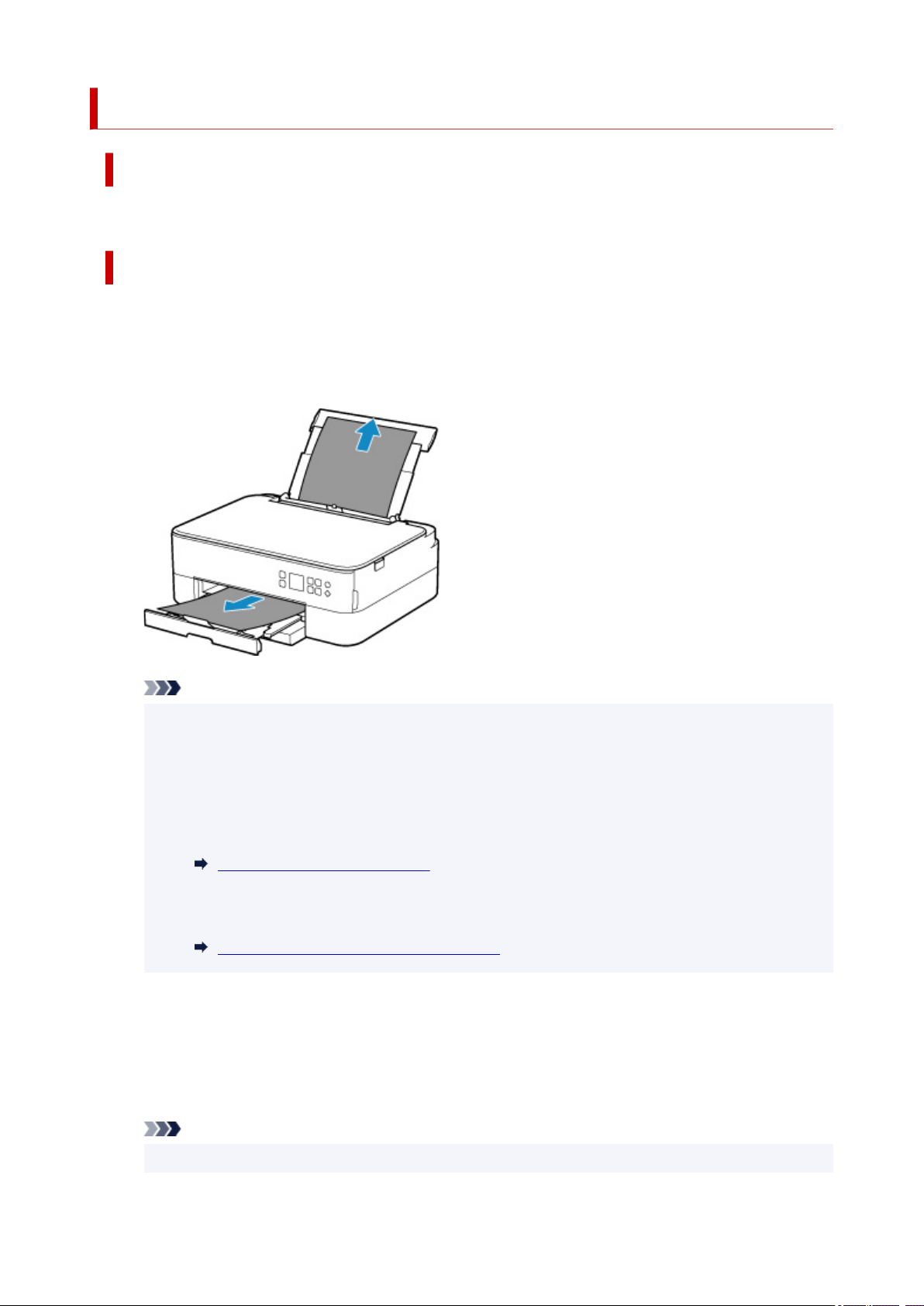
1300
Cause
Paper is jammed when feeding paper from rear tray.
What to Do
Remove the jammed paper following the instructions below.
1. Slowly pull out paper, either from paper output slot or from rear tray, whichever is easier.
Hold the paper with both hands, and pull it out slowly so as not to tear it.
Note
• If you cannot pull out the paper, turn the printer back on without pulling forcibly. The paper may
be ejected automatically.
• If paper becomes jammed during printing and you need to turn off the printer to remove it, press
the printer's Stop button to stop the printing before you turn off the printer.
• If the paper tears and you cannot remove the jammed paper from the paper output slot or the
rear tray, remove the paper from inside the printer.
Paper Is Jammed inside Printer
If you cannot remove the paper from inside the printer, try to pull the paper out from the rear
side of the printer.
Removing Jammed Paper from Rear Side
2. Reload paper and press the printer's OK button.
The printer resumes printing. Reprint the page you were printing if it was not printed properly due to
the paper jam.
If you turned off the printer in step 1, all jobs in the print queue are canceled. Redo the printing.
Note
• When reloading the paper, make sure you are using suitable paper and loading it correctly.
298

• We recommend using paper sizes other than A5 to print documents with photos or graphics. A5
paper may curl and jam as it leaves the printer.
If the measures above do not solve the problem, contact your nearest Canon service center to request a
repair.
299
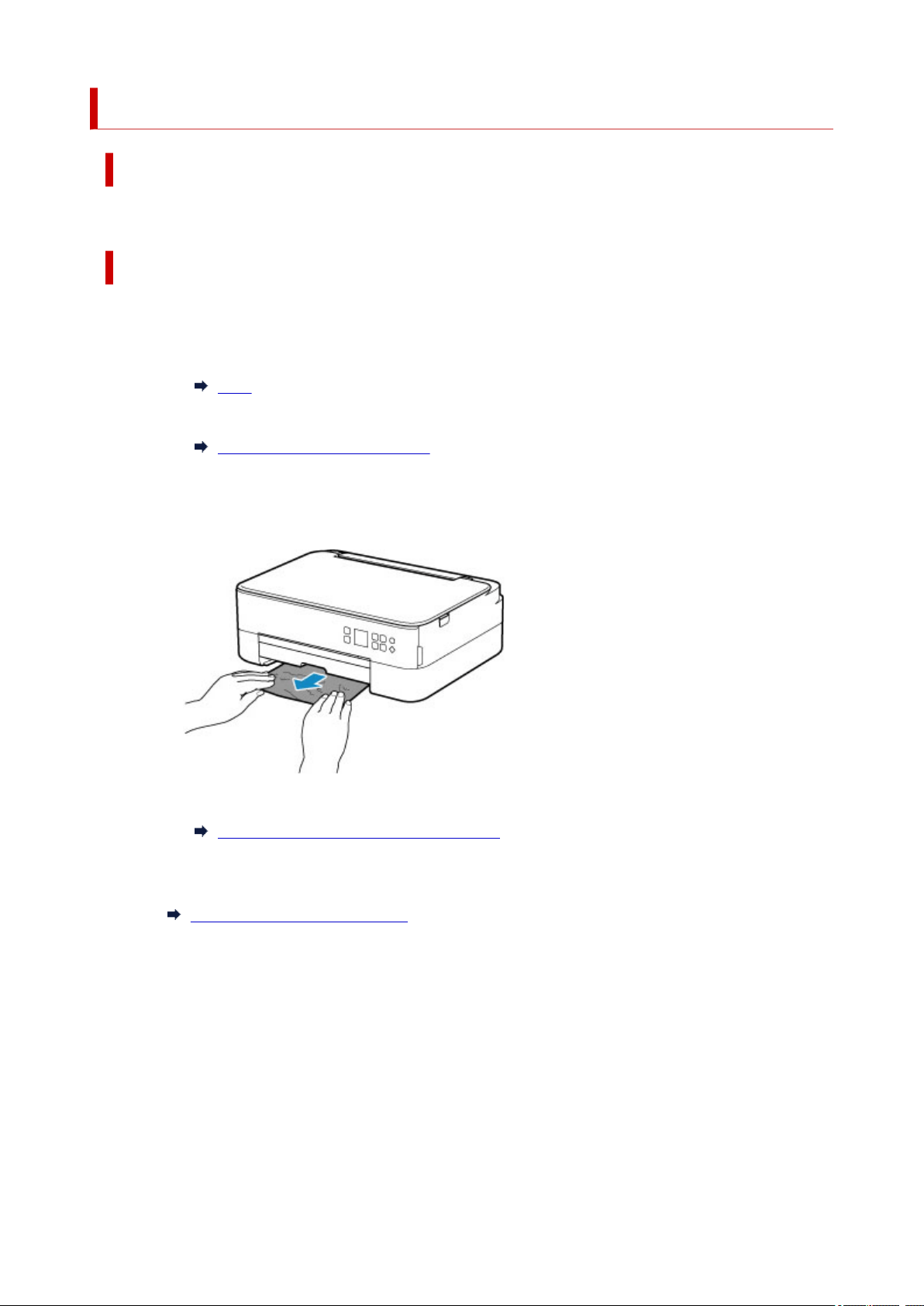
1303
Cause
Paper is jammed when feeding paper from cassette.
What to Do
1. Remove jammed paper.
• If the paper is jammed at the paper output slot:
1300
• If the paper is jammed inside the printer:
Paper Is Jammed inside Printer
• If the paper is jammed at the feed slot of the cassette:
After storing the paper output tray and the paper output support, pull out the cassette and
remove the jammed paper slowly with both hands.
• If the measures above do not solve the problem:
Removing Jammed Paper from Rear Side
2. Load paper in cassette properly.
Loading Plain Paper in Cassette
3. Press the printer's OK button.
The printer resumes printing. Reprint the page you were printing if it was not printed properly due to
the paper jam.
If the measures above do not solve the problem, contact your nearest Canon service center to request a
repair.
300
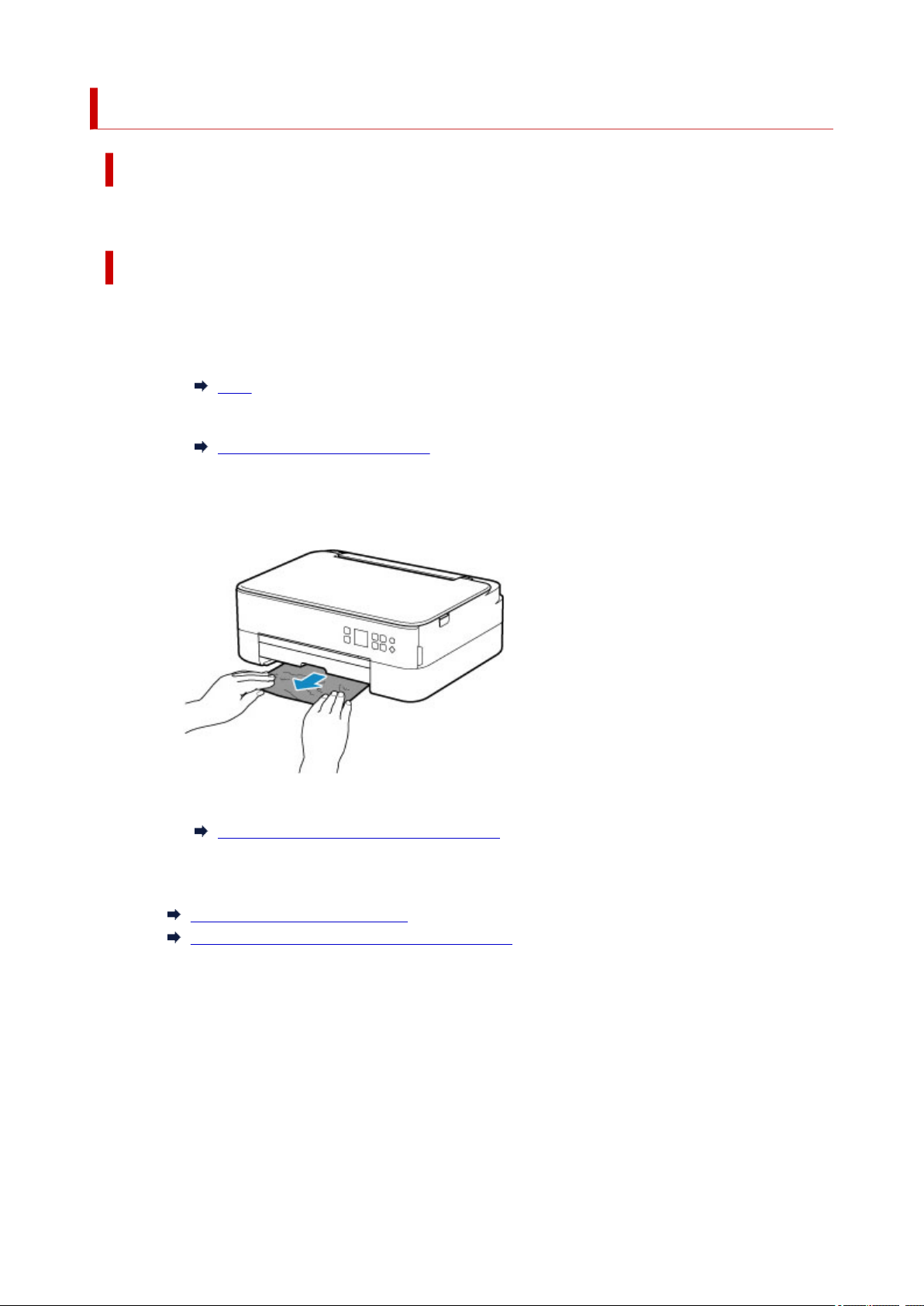
1304
Cause
Paper is jammed when performing automatic duplex printing.
What to Do
1. Remove jammed paper.
• If the paper is jammed at the paper output slot:
1300
• If the paper is jammed inside the printer:
Paper Is Jammed inside Printer
• If the paper is jammed at the feed slot of the cassette:
After storing the paper output tray and the paper output support, pull out the cassette and
remove the jammed paper slowly with both hands.
• If the measures above do not solve the problem:
Removing Jammed Paper from Rear Side
2. Load paper properly.
Loading Plain Paper in Cassette
Loading Plain Paper / Photo Paper in Rear Tray
3. Press the printer's OK button.
The printer resumes printing. Reprint the page you were printing if it was not printed properly due to
the paper jam.
If the measures above do not solve the problem, contact your nearest Canon service center to request a
repair.
301

1313
Cause
Paper is jammed as printer pulled in printed paper.
What to Do
Depending on where the paper is jammed, decide on the countermeasure.
• If the paper is jammed at the paper output slot:
1300
• If the paper is jammed inside the printer:
Paper Is Jammed inside Printer
• If the measures above do not solve the problem:
Removing Jammed Paper from Rear Side
302
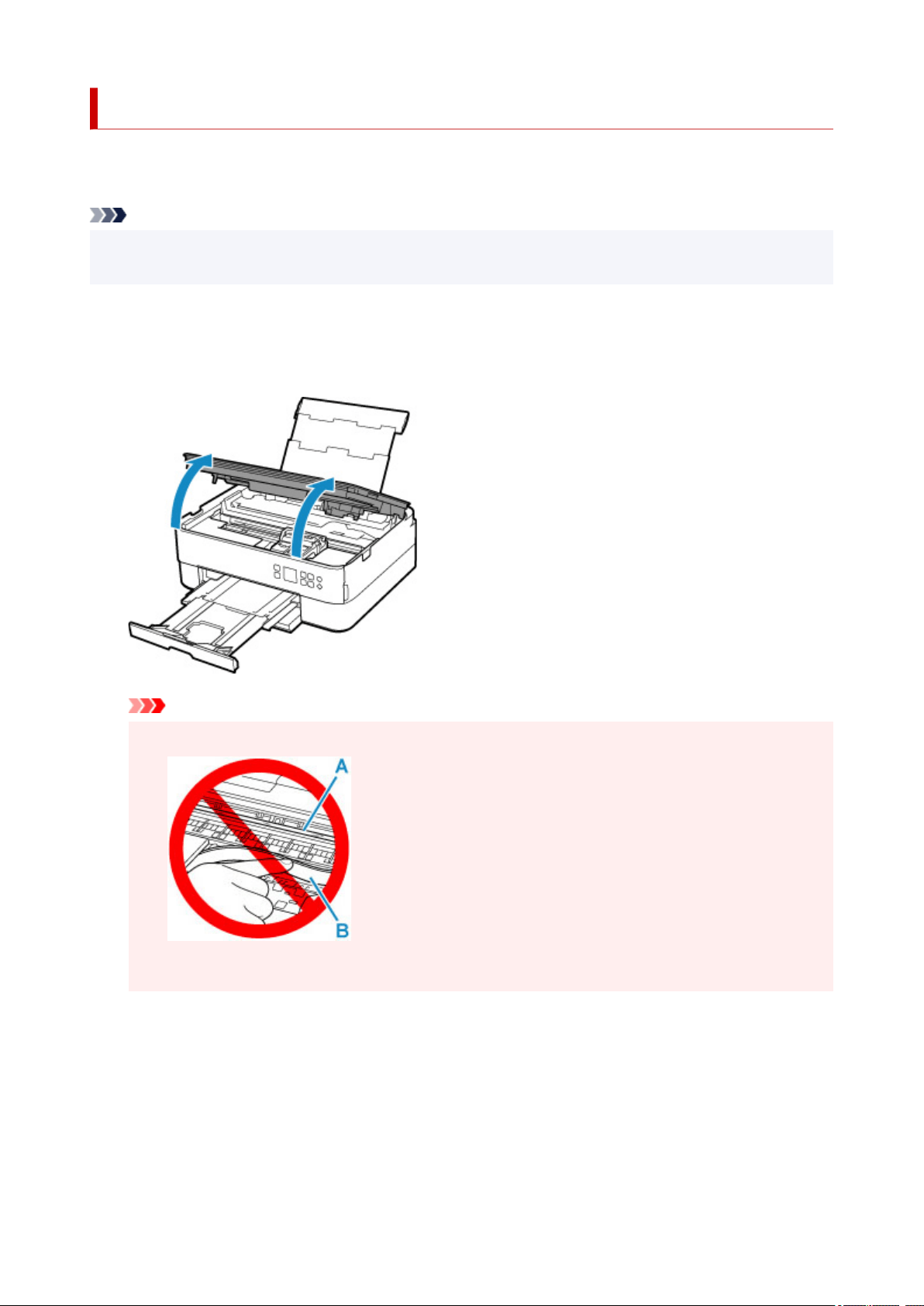
Paper Is Jammed inside Printer
If the jammed paper tears and you cannot remove the paper from the paper output slot or the feed slot, or if
the jammed paper remains inside the printer, remove the paper following the instructions below.
Note
• If paper becomes jammed during printing and you need to turn off the printer to remove it, press the
printer's Stop button to stop the printing before you turn off the printer.
1. Turn off the printer and unplug it.
2. Open scanning unit / cover.
Important
• Do not touch clear film (A) and white belt (B).
If you soil or scratch this part by touching it with paper or your hand, it could damage the printer.
3. Check if jammed paper is under FINE cartridge holder.
If the jammed paper is under the FINE cartridge holder, move the FINE cartridge holder to the far right or
left, whichever makes it easier to remove the paper.
When moving the FINE cartridge holder, hold the top of the FINE cartridge holder and slide it slowly to
the far right or left.
303
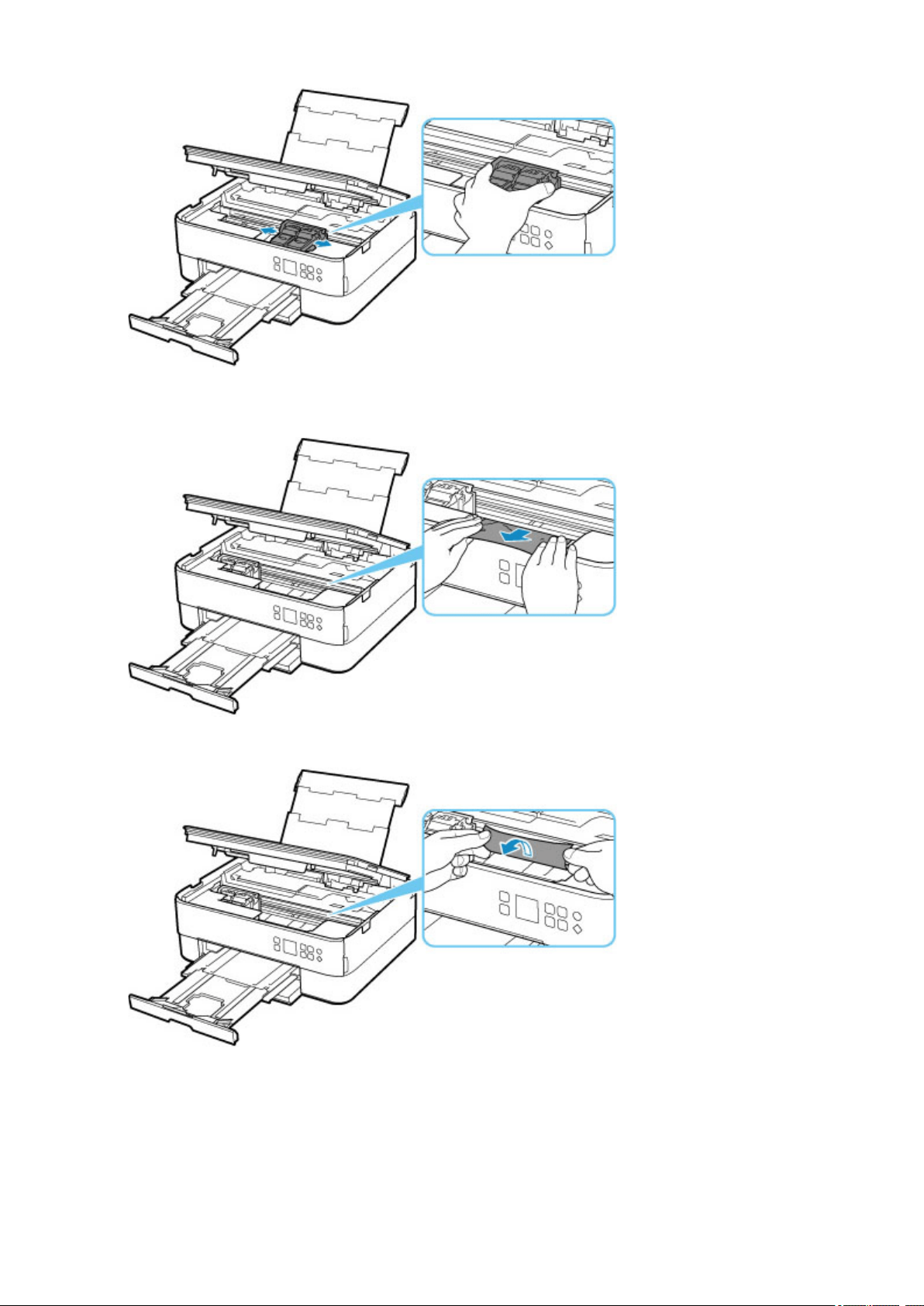
4. Hold jammed paper firmly in both hands.
If the paper is rolled up, pull out it.
5. Slowly pull out paper, so as not to tear it.
304
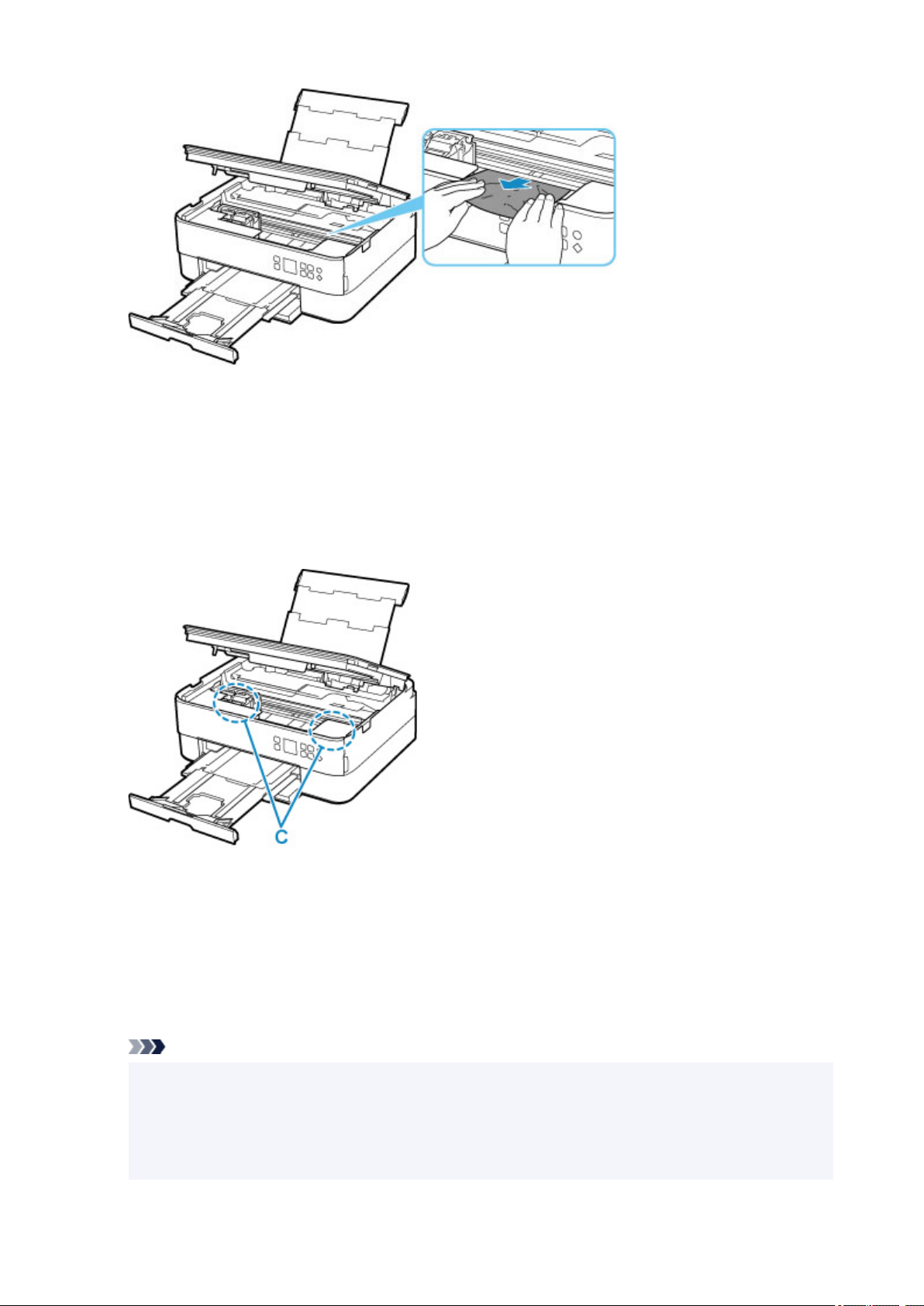
6. Make sure all jammed paper is removed.
If the paper tears when you pull out it, a bit of paper may remain in the printer. Check the following and
remove any remaining paper.
• Any paper left under the FINE cartridge holder?
• Any small bits of paper left in the printer?
• Any paper left in the left and right empty spaces (C) in the printer?
7. Close scanning unit / cover gently.
To close the scanning unit / cover, hold it up once, and then take it down gently.
8. Plug in the printer again and turn it back on.
All jobs in the print queue are canceled. Redo the printing.
Note
• When reloading the paper, make sure you are using suitable paper and loading it correctly.
If a paper jam message appears on the printer's LCD or on your computer screen when you
resume printing after removing all the jammed paper, there may be some paper still inside the
printer. Check the printer again for any remaining bits of paper.
305

If the measures above do not solve the problem, contact your nearest Canon service center to request a
repair.
306
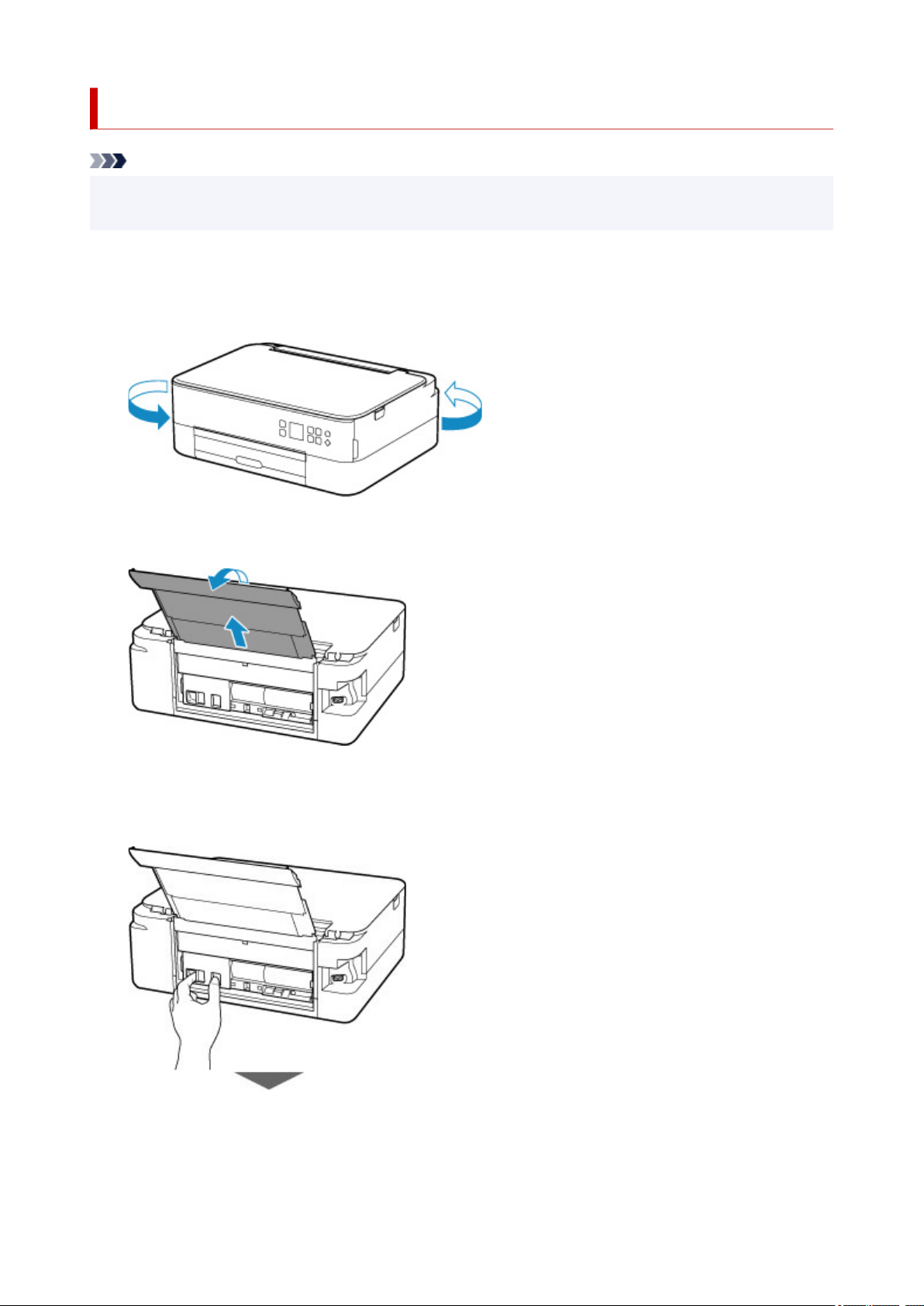
Removing Jammed Paper from Rear Side
Note
• If paper becomes jammed during printing and you need to turn off the printer to remove it, press the
printer's Stop button to stop the printing before you turn off the printer.
1. Make sure you have unplugged the power cord.
2. Rotate printer so that rear side of printer faces toward you.
3. Open rear tray cover and then pull up paper support.
4. Detach rear cover.
Pull out the rear cover.
307
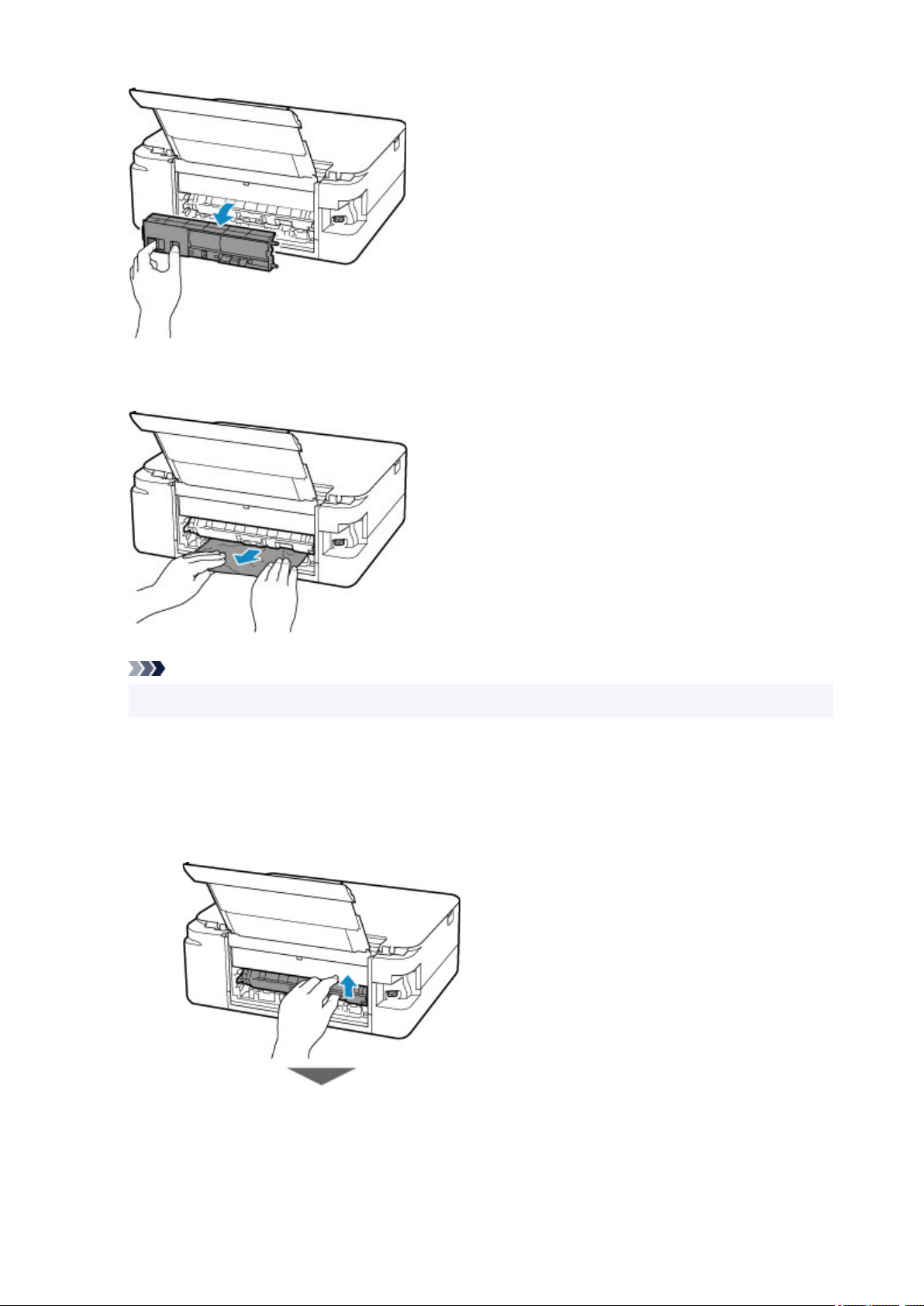
5. Slowly pull out paper.
Note
• Do not touch the inner parts of the printer.
If you were not able to remove the paper in this step, detach the transport unit cover and remove the
paper by following these steps.
1. Detach transport unit cover.
Lift up the transport unit cover and pull out it.
308
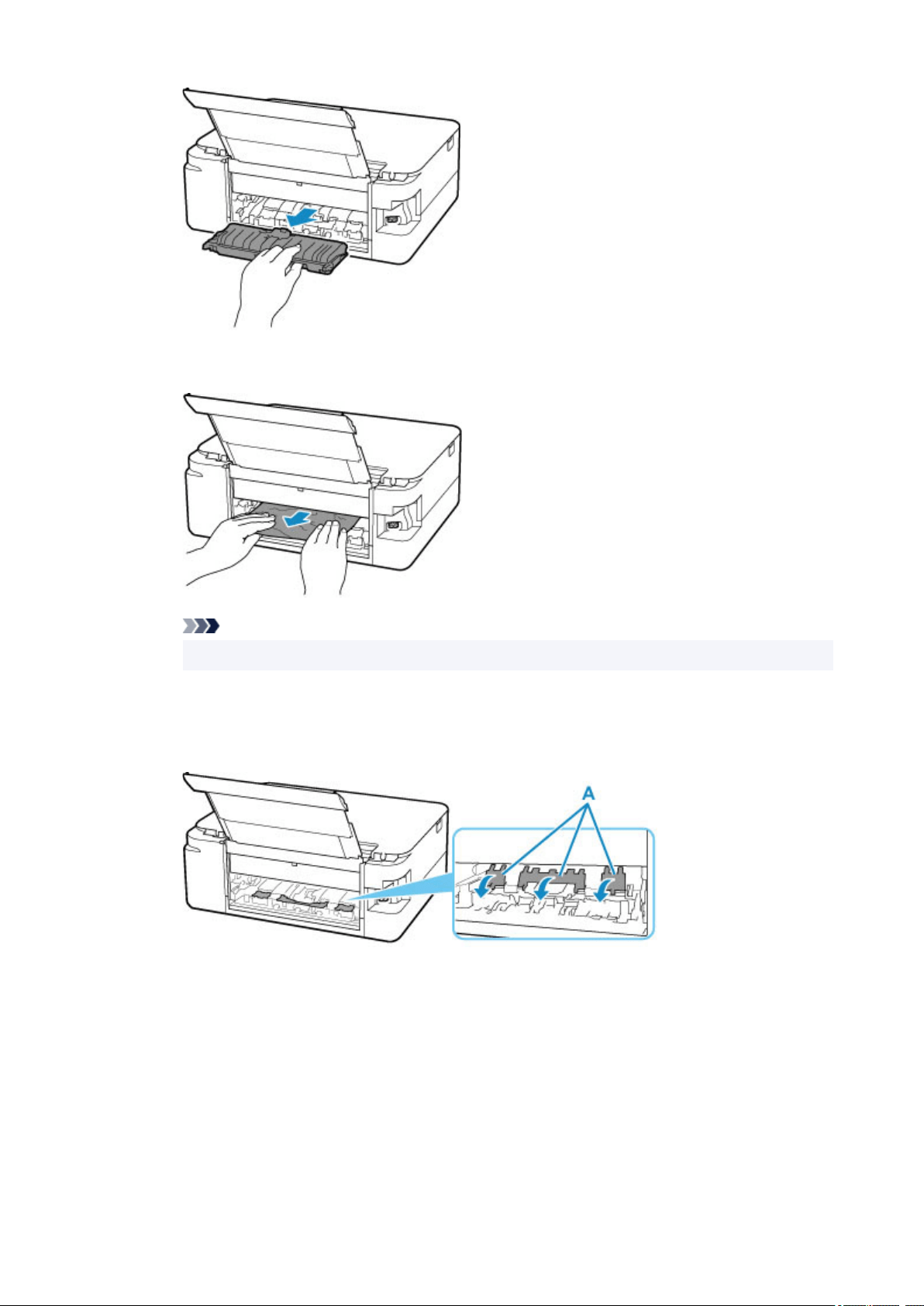
2. Slowly pull out paper.
Note
• Do not touch the inner parts of the printer.
3. Make sure all jammed paper is removed.
4. If parts (A) are raised, lower them toward you.
5. Attach transport unit cover.
Insert the transport unit cover slowly all the way into printer and take down the transport unit cover.
309
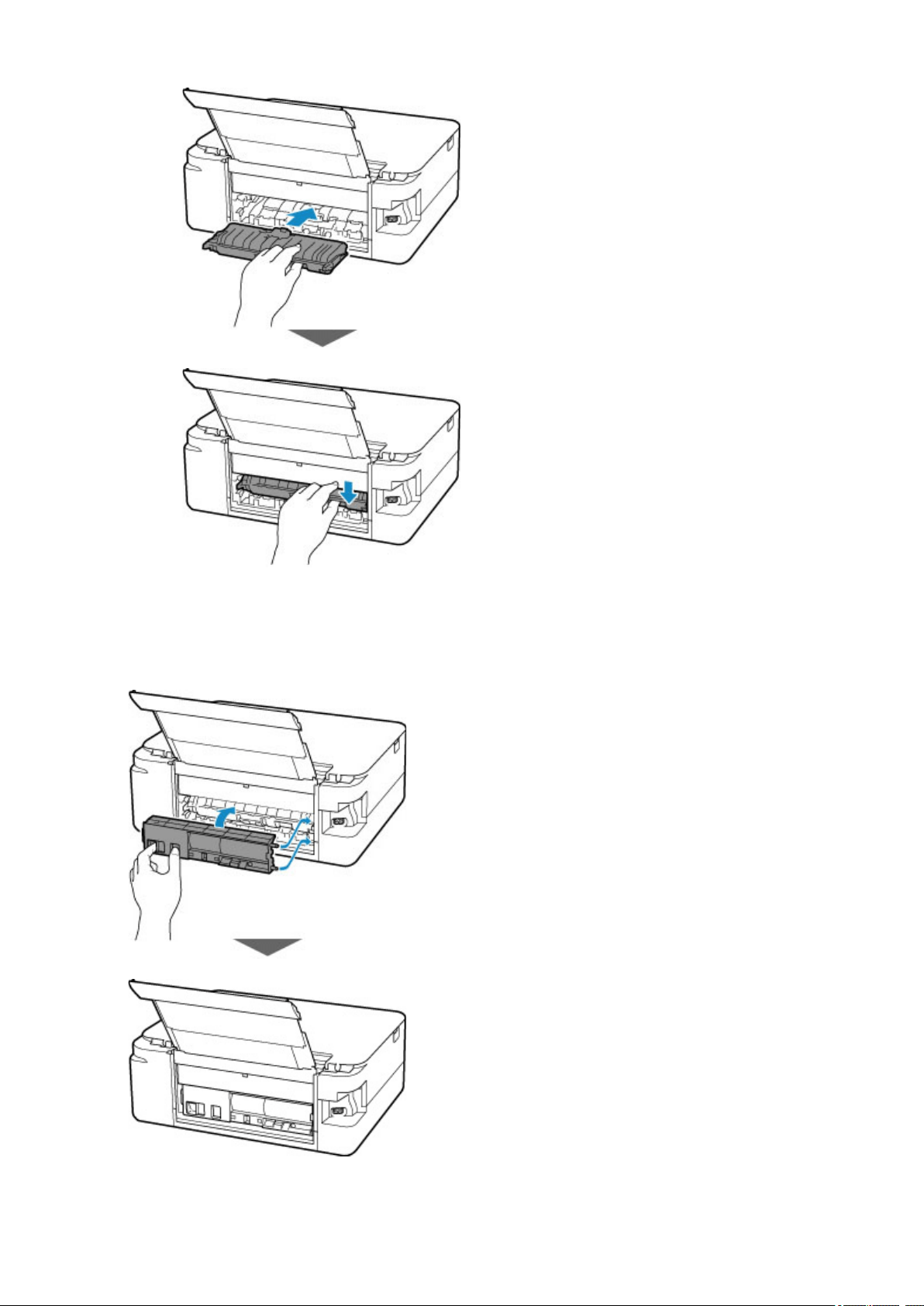
6. Attach rear cover.
Insert the projections of the right side of the rear cover into the printer, and then push the left side of the
rear cover until it is closed completely.
310

7. Plug in the printer again and turn it back on.
All jobs in the print queue are canceled. Redo the printing.
Note
• When reloading the paper, make sure you are using suitable paper and loading it correctly.
If the measures above do not solve the problem, contact your nearest Canon service center to request a
repair.
311
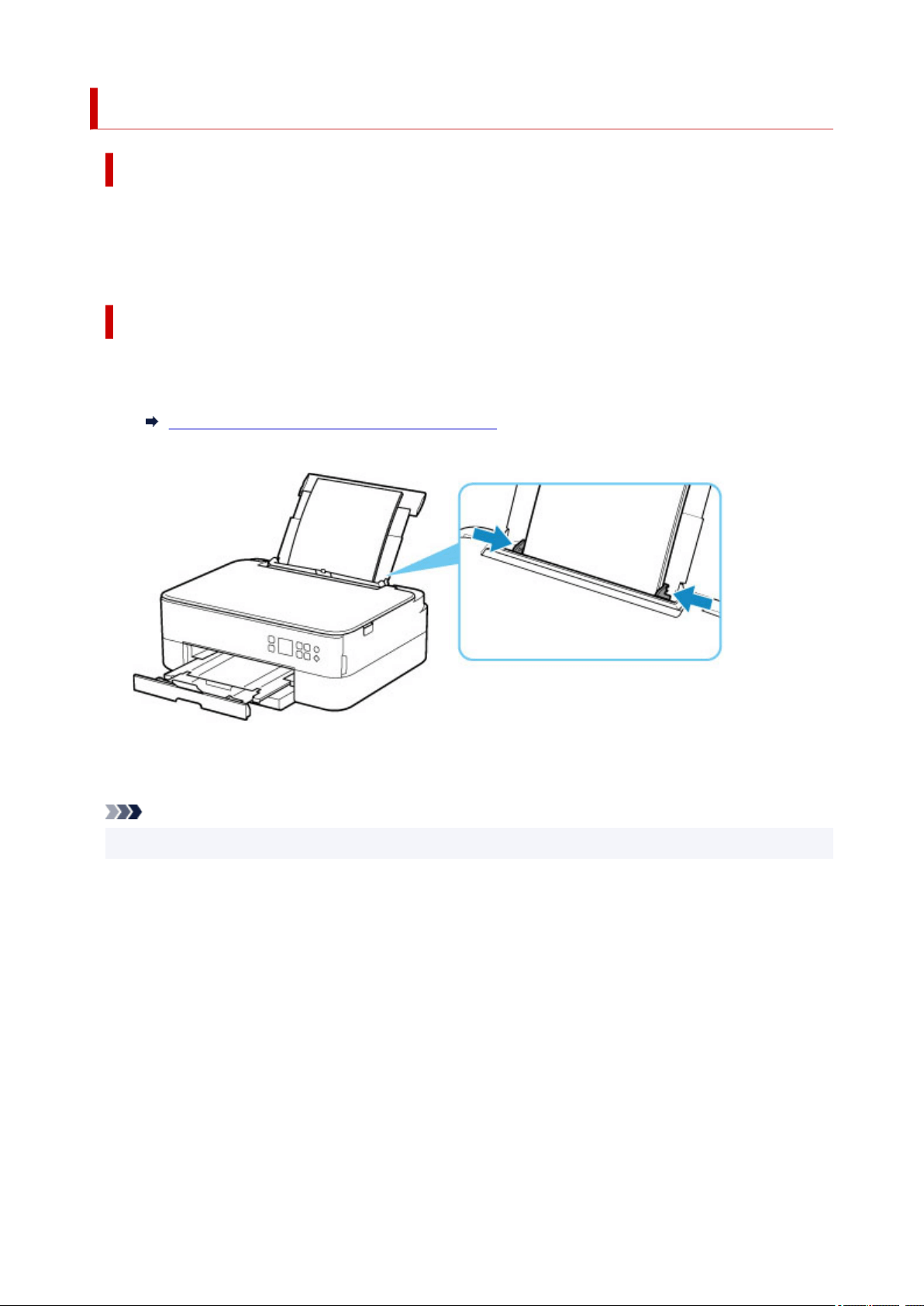
1000
Cause
Possible causes include the following.
• There is no paper in the rear tray.
• Paper is not loaded in the rear tray properly.
What to Do
Take the corresponding actions below.
• Load paper in the rear tray.
Loading Plain Paper / Photo Paper in Rear Tray
• Align the paper guides of the rear tray with both edges of the paper.
• Close the feed slot cover.
After carrying out the above measures, press the printer's OK button to cancel the error.
Note
• To cancel printing, press the printer's Stop button.
312
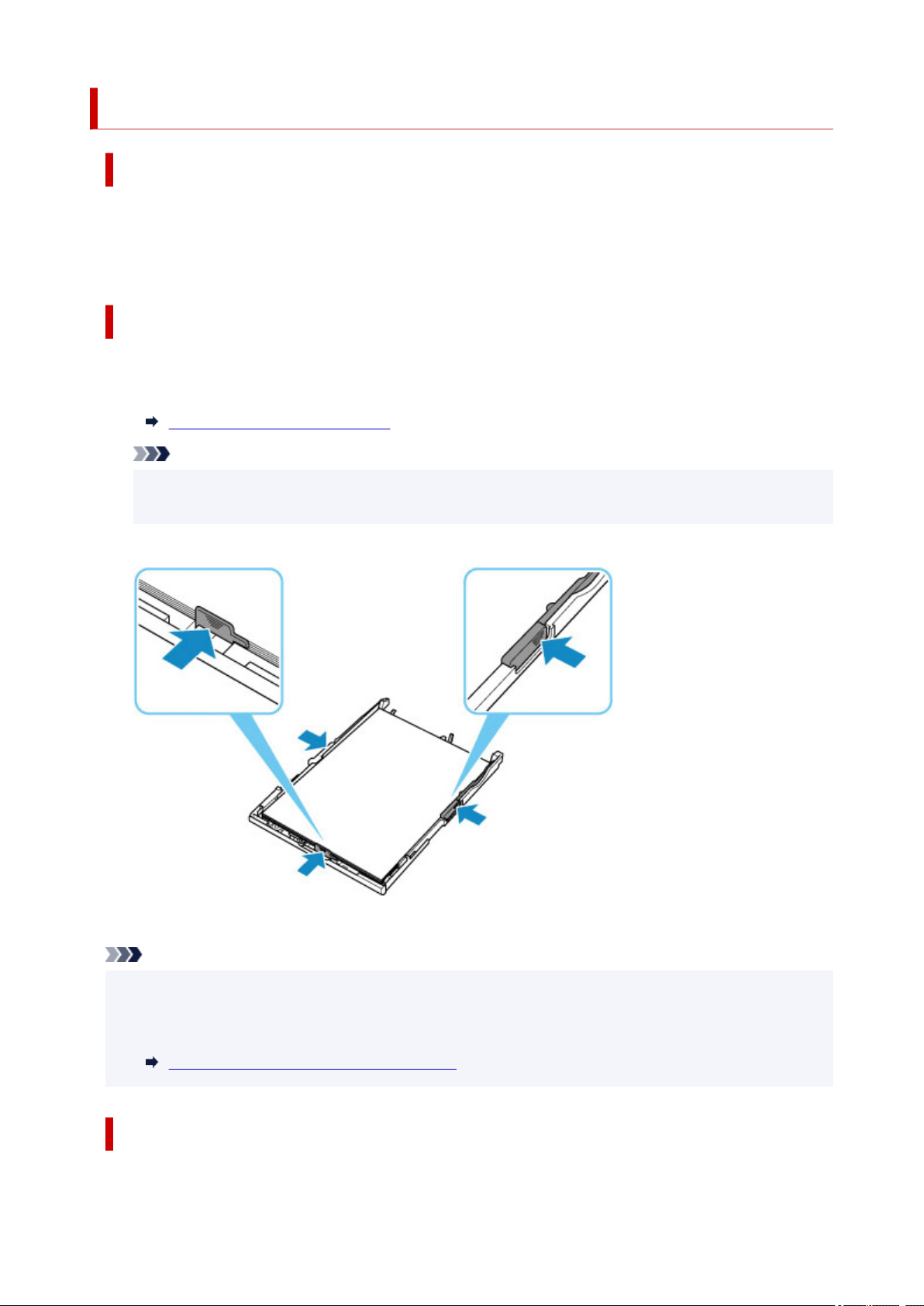
1003
Cause
Possible causes include the following.
• There is no paper in the cassette.
• Paper is not loaded in the cassette properly.
What to Do
Take the corresponding actions below.
• Load paper in the cassette.
Loading Plain Paper in Cassette
Note
• The loadable paper differs depending on the paper source. The loadable paper in the cassette is
A4, Letter, A5, or B5 size plain paper.
• Align the paper guides of the cassette with the edges of the paper.
After carrying out the above measures, press the printer's OK button to cancel the error.
Note
• To cancel printing, press the printer's Stop button.
• When the jammed paper is removed from the rear side of the printer, the transport unit cover may not
be installed correctly. Refer to the following page.
Removing Jammed Paper from Rear Side
No Paper in Cassette during Printer Setup
Load two or more sheets of A4 or Letter size plain paper in the cassette.
313
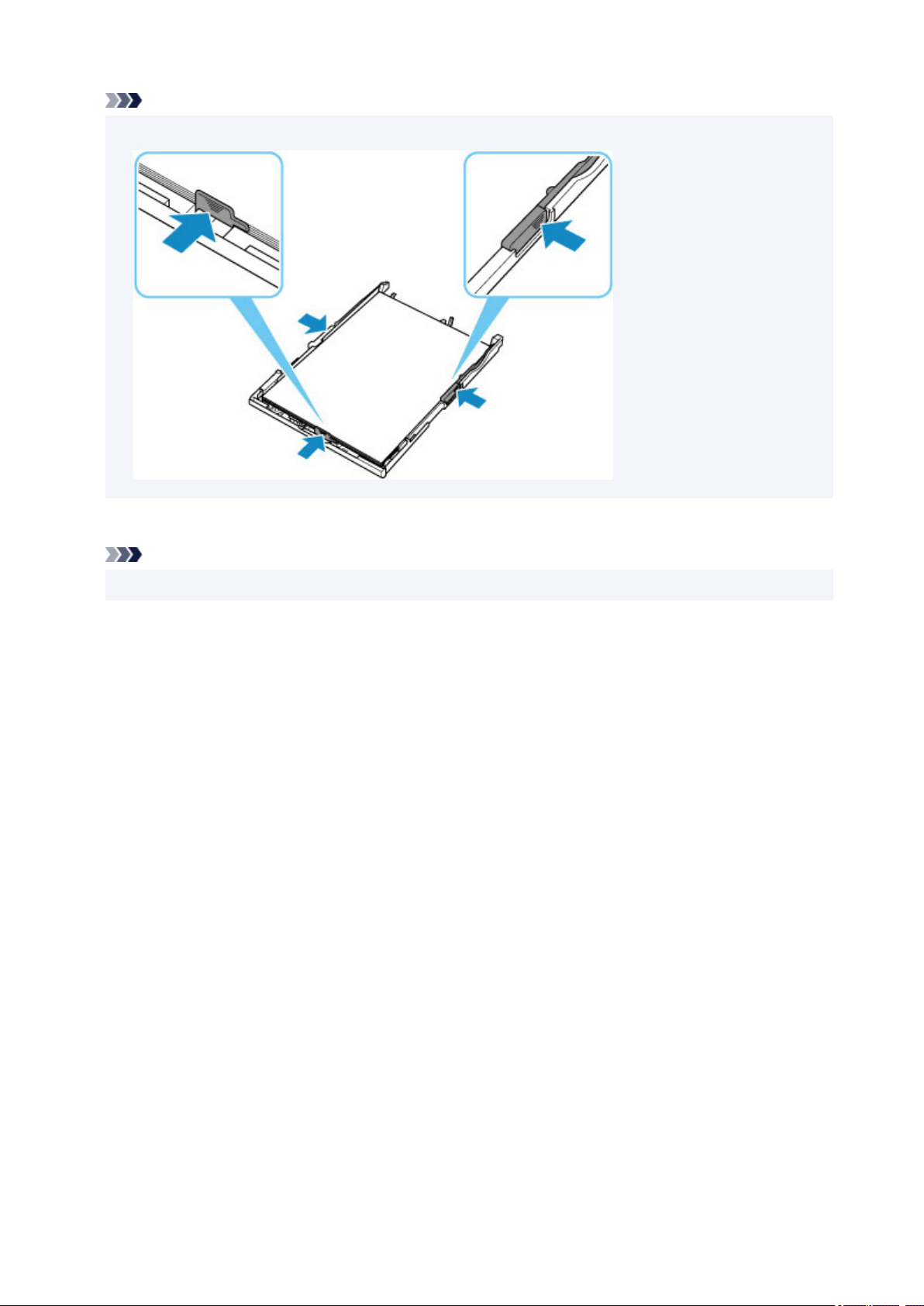
Note
• After loading the paper, align the paper guides of the cassette with the edges of the paper.
Press the printer's OK button to cancel the error.
Note
• If you are printing a print head alignment sheet during printer setup, do not cancel printing.
314

1200
Cause
Scanning unit / cover is open.
What to Do
Close the scanning unit / cover and wait for a while.
Do not forget to close it, such as after replacing FINE cartridges.
315

1401
Cause
FINE cartridge is not installed.
What to Do
Install the FINE cartridge.
If the error is not resolved, the FINE cartridge may be damaged. Contact your nearest Canon service
center to request a repair.
Note
• To cancel printing, press the printer's Stop button.
316

1430
Cause
FINE cartridge cannot be recognized.
What to Do
Remove the FINE cartridge and reinstall it.
If the error is not resolved, the FINE cartridge may be damaged. Replace the FINE cartridge with a new
one.
Replacing a FINE Cartridge
If this still does not solve the problem, contact your nearest Canon service center to request a repair.
317

1485
Cause
Appropriate ink cartridge is not installed.
What to Do
Printing cannot be executed because the ink cartridge is not compatible with this printer.
Install the appropriate ink cartridge.
If you want to cancel printing, press the printer's Stop button.
318

1650
Cause
The ink cartridge cannot be recognized.
What to Do
Printing cannot be executed because the ink cartridge may not be installed properly or may not be
compatible with this printer.
Install the appropriate ink cartridge.
If you want to cancel printing, press the printer's Stop button.
319

1651
Cause
The printer is still unable to communicate normally and cannot recognize the status of the ink cartridge.
Printing function is deactivated until the printer can communicate normally.
What to Do
Press the printer's Stop button to cancel printing.
Take action immediately to enable the printer to communicate normally, following the instructions below.
• Network Connectivity
Refer to the following page and check the connection status between the printer and the network.
Cannot Connect to a Printer via Wireless LAN (Wi-Fi)
• Web Service License Agreement Status
Print the network setting information of the printer and check "Web Service Status" (registration
status).
If it is not "Registered", select Web service setup > Web service registration in the printer menu,
and agree to the terms and conditions of the web service license.
Printing Network Settings
• Service Engagement Status
Refer to the following page and check the service contract status.
Confirm service contract
320


The 1686 support code signifies that the printer has detected an issue with one or more of your
ink cartridges.
What to Do
The action you should take to resume operating the printer depends upon which function(s) of the printer
you intend to use.
1. To PRINT or COPY
If you intend to PRINT or COPY, you should take one of the following steps:
(a) For each ink cartridge identified by the printer as having an issue, disable the function that detects the
level of ink remaining by pressing the Stop button on the printer for at least five (5) seconds and then
releasing it. If there is ink in the cartridge(s), you will be able to PRINT or COPY until the remaining ink is
depleted. Please note that image quality may be diminished if you PRINT or COPY when there is little ink
remaining in the cartridge(s).
OR
(b) Open the printer’s cover, replace each ink cartridge identified by the printer as having an issue, and
close the printer’s cover. Canon recommends the use of new, genuine Canon ink cartridges for optimal
image quality.
2. To SCAN or FAX
If you intend to SCAN (or FAX if your printer has that capability), you should take one of the following
steps:
(a) For each ink cartridge identified by the printer as having an issue, disable the function that detects the
level of ink remaining by pressing the Stop button on the printer for at least five (5) seconds and then
releasing it. You will be able to SCAN (or FAX if your printer has that capability) as long as all of the ink
cartridges remain installed in the printer.
OR
(b) Open the printer’s cover, replace each ink cartridge identified by the printer as having an issue, and
close the printer’s cover. Canon recommends the use of new, genuine Canon ink cartridges for optimal
image quality.
Note
• If the function for detecting the level of ink remaining in an ink cartridge is disabled, the ink cartridge
will be displayed in white on the touch screen (if the printer has a touch screen) when you check the
estimated remaining ink level.
1686
Cause
322
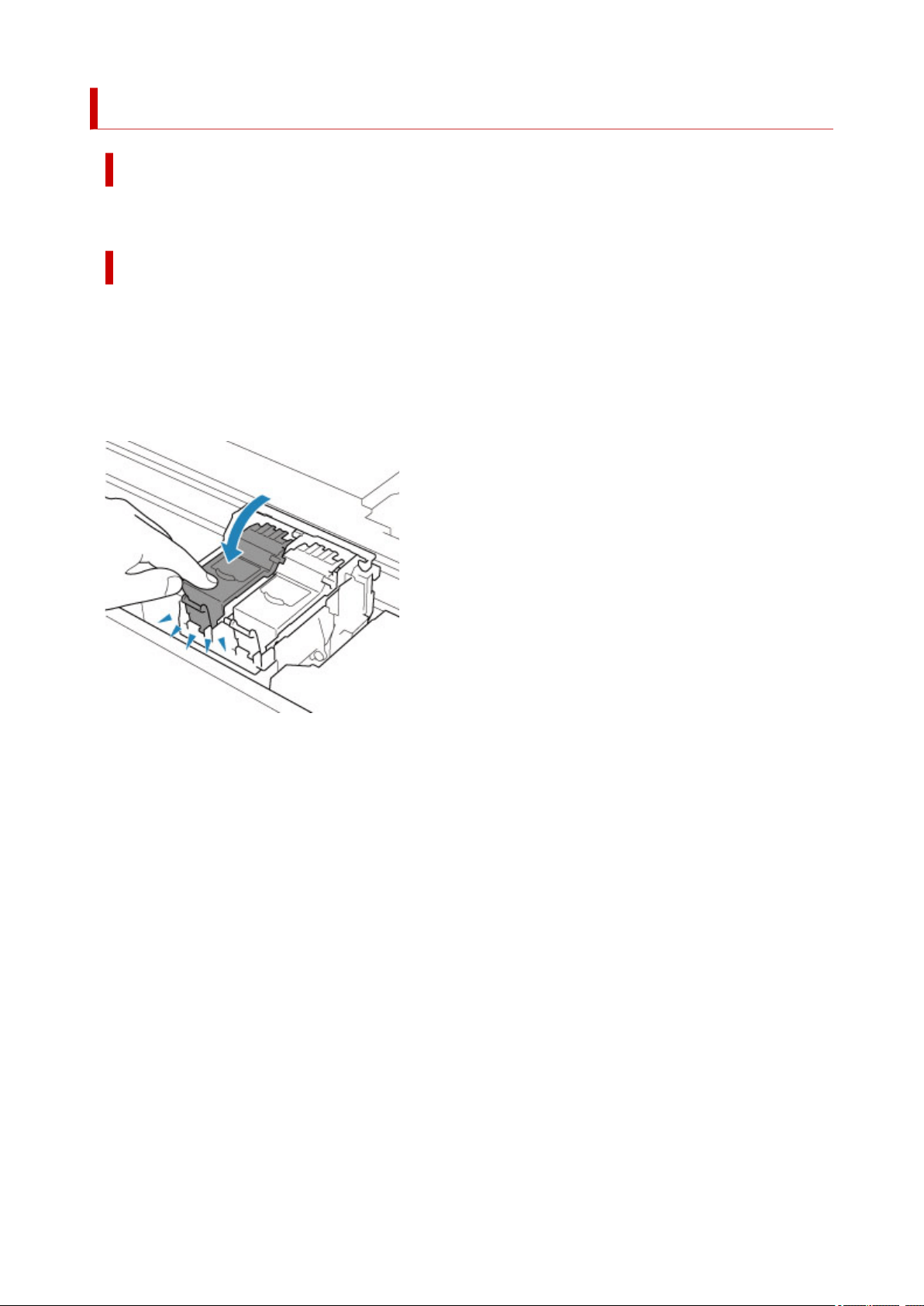
1687
Cause
FINE cartridge is not installed properly.
What to Do
Open the scanning unit / cover to open the ink cartridge locking cover, and then remove the FINE
cartridge.
Make sure that the FINE cartridges are compatible with this printer.
Then install the FINE cartridges again.
Press down the ink cartridge locking cover until it clicks into place.
After you install the FINE cartridge, close the scanning unit / cover.
323

The 1688 support code signifies that the printer has detected that one or more of your ink cartridges
is empty.
What to Do
The action you should take to resume operating the printer depends upon which function(s) of the printer
you intend to use.
1. To PRINT or COPY
If you intend to PRINT or COPY, you should take one of the following steps:
(a) For each ink cartridge identified by the printer as being empty, disable the function that detects the
level of ink remaining by pressing the Stop button on the printer for at least five (5) seconds and then
releasing it. If, due to individual usage factors, there is some residual amount of ink in the cartridge(s), you
will be able to PRINT or COPY until the remaining ink is depleted. Please note that image quality may be
diminished if you PRINT or COPY when there is little ink remaining in the cartridge(s).
OR
(b) Open the scanning unit / cover, replace each ink cartridge identified by the printer as being empty, and
close the scanning unit / cover. Canon recommends the use of new, genuine Canon ink cartridges for
optimal image quality.
2. To SCAN or FAX
If you intend to SCAN (or FAX if your printer has that capability), you should take one of the following
steps:
(a) For each ink cartridge identified by the printer as being empty, disable the function that detects the
level of ink remaining by pressing the Stop button on the printer for at least five (5) seconds and then
releasing it. You will be able to SCAN (or FAX if your printer has that capability) as long as the empty ink
cartridges remain installed in the printer.
OR
(b) Open the scanning unit / cover, replace each ink cartridge identified by the printer as being empty, and
close the scanning unit / cover. Canon recommends the use of new, genuine Canon ink cartridges for
optimal image quality.
Note
• If the function for detecting the level of ink remaining in an ink cartridge is disabled, the ink cartridge
will be displayed in white on the touch screen (if the printer has a touch screen) when you check the
estimated remaining ink level.
324
1688
Cause
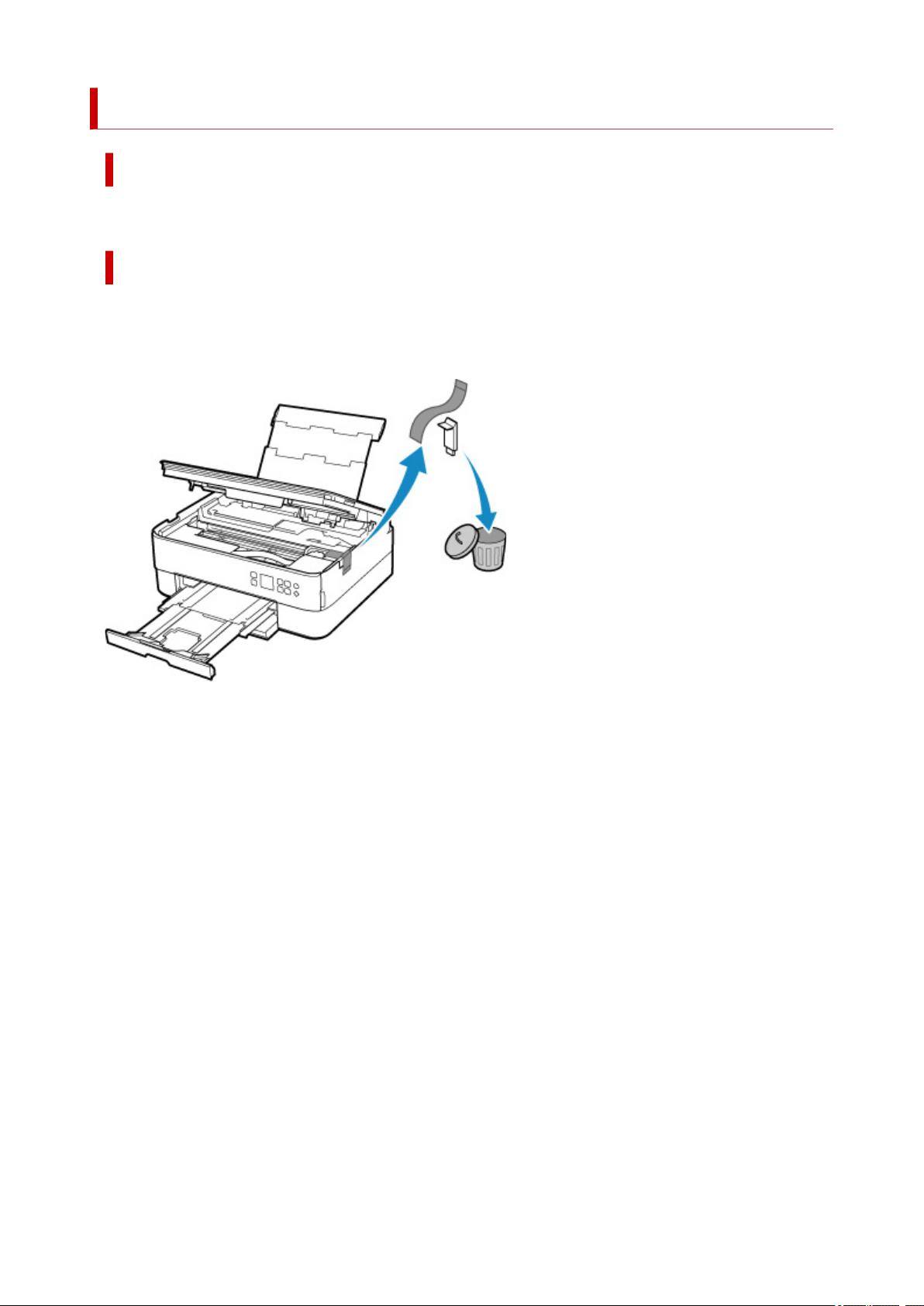
Shipping Tape etc. Are Still Attached (1890)
Cause
Shipping tape or protective material may still be attached to FINE cartridge holder.
What to Do
Open the scanning unit / cover and make sure that shipping tape and protective material have been
removed from the FINE cartridge holder.
If the shipping tape or protective material is still there, remove it and close the scanning unit / cover.
In the case of the first printer setup, click here, select your printer name on the page, and follow the
instructions.
325
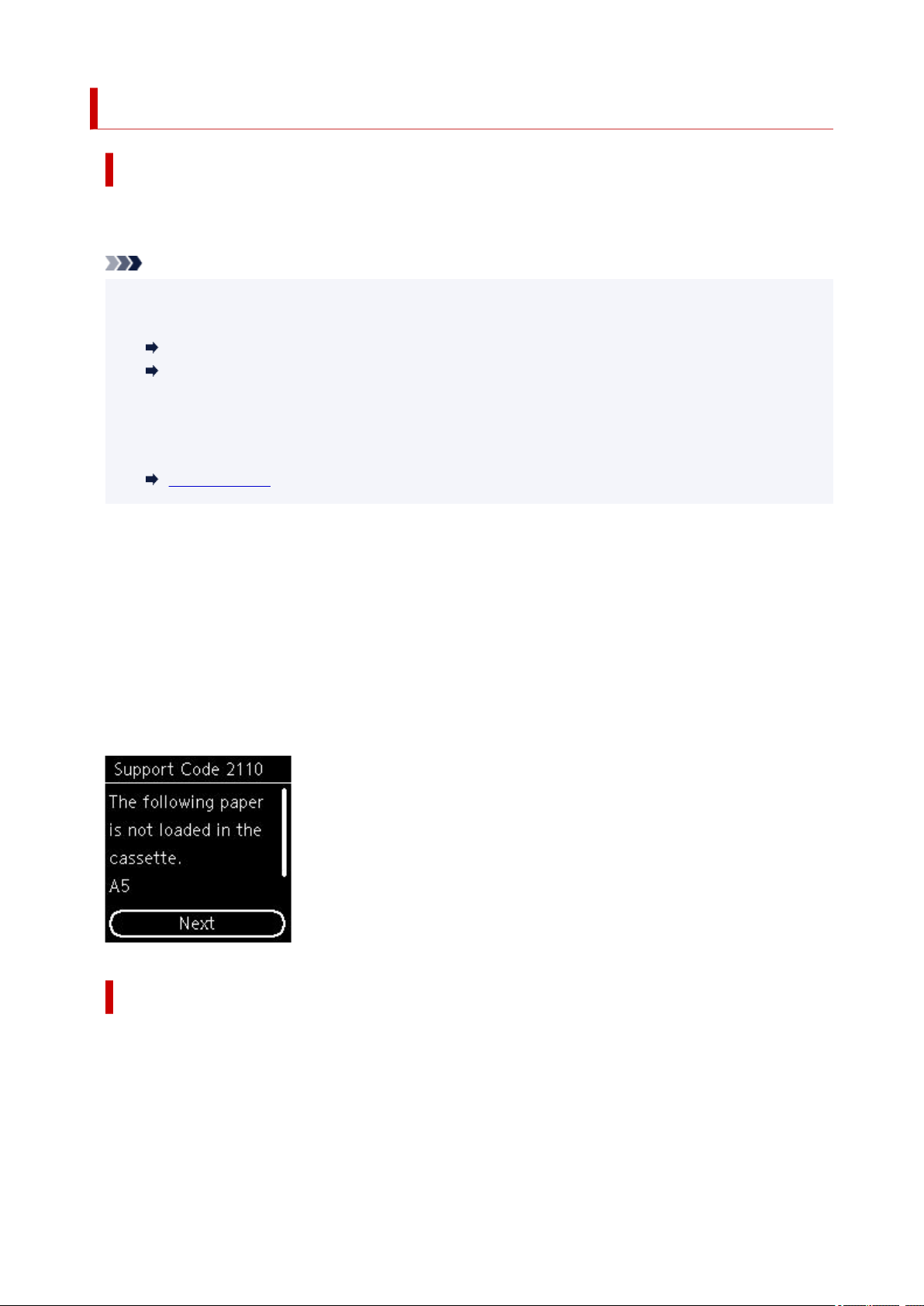
2110
Cause
Paper settings specified when printing/copying do not match the paper information for the cassette
registered on the printer.
Note
• For the appropriate combination of the paper settings specified on the printer driver and the paper
information registered on the printer, refer to the following.
Paper Settings on the Printer Driver and the Printer (Media Type) (Windows)
Paper Settings on the Printer Driver and the Printer (Paper Size) (Windows)
• For copying, make the paper settings for copying match the paper information for the cassette
registered on the printer.
• For how to register paper information on the printer, refer to the following.
Paper Settings
If the paper settings specified when printing differ from the paper information for the cassette registered
on the printer, the following message appears on the printer's LCD.
• Paper settings specified on the printer driver when printing:
Paper size: A5
Media type: Plain paper
• Paper information for the cassette registered on the printer:
Paper size: A4
Media type: Plain paper
What to Do
Press the printer's OK button to display the screen below.
326

Use the buttons to select the appropriate action and press the printer's OK button.
Note
• Depending on the settings, some of the options below may not be displayed.
Print on set paper
Select this option to print/copy on the loaded paper with the paper settings specified when printing/
copying.
For example, when the paper size specified when printing is A5 and the paper information for the
cassette is registered as A4, select this option to print on an A4 paper loaded in the cassette with the
A5 setting.
Replace paper
Select this option to print/copy after changing the paper in the cassette.
For example, when the paper size specified when printing is A5 and the paper information for the
cassette is registered as A4, select this option to print after changing the paper in the cassette with an
A5 paper.
After exchanging the paper and inserting the cassette, the paper information is automatically
registered in the printer according to the loaded paper.
Note
• If you do not know the paper size and media type to be loaded in the cassette, press the printer's
Back button. The paper size and media type are displayed.
• For the appropriate combination of the paper settings specified on the printer driver and the
paper information registered on the printer, refer to the following.
Paper Settings on the Printer Driver and the Printer (Media Type) (Windows)
Paper Settings on the Printer Driver and the Printer (Paper Size) (Windows)
Cancel print
Cancels printing/copying.
Select this option when you want to change the paper settings specified when printing/copying.
Change the paper settings and try printing/copying again.
Note
• You can configure the setting to hide the misprint prevention message. When set to hide the
message, printing/copying begins regardless of whether the paper settings specified when printing/
copying and the paper information of the cassette registered on the printer match.
327

To change whether to display the misprint prevention message when printing/copying without
using the printer driver:
Feed settings
To change whether to display the misprint prevention message when printing using the printer
driver:
Changing the Printer Operation Mode (Windows)
Changing the Printer Operation Mode (macOS)
328

2113
Cause
Paper settings specified when printing/copying do not match either the rear tray or the cassette paper
information registered on the printer.
Note
• For the appropriate combination of the paper settings specified on the printer driver and the paper
information registered on the printer, refer to the following.
Paper Settings on the Printer Driver and the Printer (Media Type) (Windows)
Paper Settings on the Printer Driver and the Printer (Paper Size) (Windows)
• For copying, make the paper settings for copying match either the rear tray or the cassette paper
information registered on the printer.
• For how to register paper information on the printer, refer to the following.
Paper Settings
If the paper source is set to be selected automatically and the paper settings specified when printing differ
from either the rear tray or the cassette paper information registered on the printer, the following message
appears on the printer's LCD.
• Paper settings specified on the printer driver when printing:
Paper size: A5
Media type: Plain paper
• Paper information for the rear tray and the cassette registered on the printer:
Paper size: A4
Media type: Plain paper
What to Do
Press the printer's OK button to display the screen below.
329

Use the buttons to select the appropriate action and press the printer's OK button.
Note
• Depending on the settings, some of the options below may not be displayed.
Print on set paper
Select this option to print/copy on the loaded paper with the paper settings specified when printing/
copying.
For example, when the paper size specified when printing is A5 and both the paper information for
the rear tray and the paper information for the cassette are registered as A4, select this option to print
on an A4 paper with the A5 setting.
Replace paper
Select this option to print/copy after changing the paper in the rear tray or the cassette.
For example, when the paper size specified when printing is A5 and both the paper information for
the rear tray and the paper information for the cassette are registered as A4, select this option to print
after changing the paper in the rear tray or the cassette with an A5 paper.
After changing the paper, if the paper information registration screen appears, register the paper
information on the printer according to the loaded paper.
Note
• If you do not know the paper size and media type to be loaded in the rear tray or cassette, press
the printer's Back button. The paper size and media type are displayed.
• For the appropriate combination of the paper settings specified on the printer driver and the
paper information registered on the printer, refer to the following.
Paper Settings on the Printer Driver and the Printer (Media Type) (Windows)
Paper Settings on the Printer Driver and the Printer (Paper Size) (Windows)
Cancel print
Cancels printing/copying.
Select this option when you want to change the paper settings specified when printing/copying.
Change the paper settings and try printing/copying again.
Note
• You can configure the setting to hide the misprint prevention message. When set to hide the
message, printing/copying begins regardless of whether the paper settings specified when printing/
copying and the paper information of the rear tray registered on the printer or the cassette match.
330

To change whether to display the misprint prevention message when printing/copying without
using the printer driver:
Feed settings
To change whether to display the misprint prevention message when printing using the printer
driver:
Changing the Printer Operation Mode (Windows)
Changing the Printer Operation Mode (macOS)
331
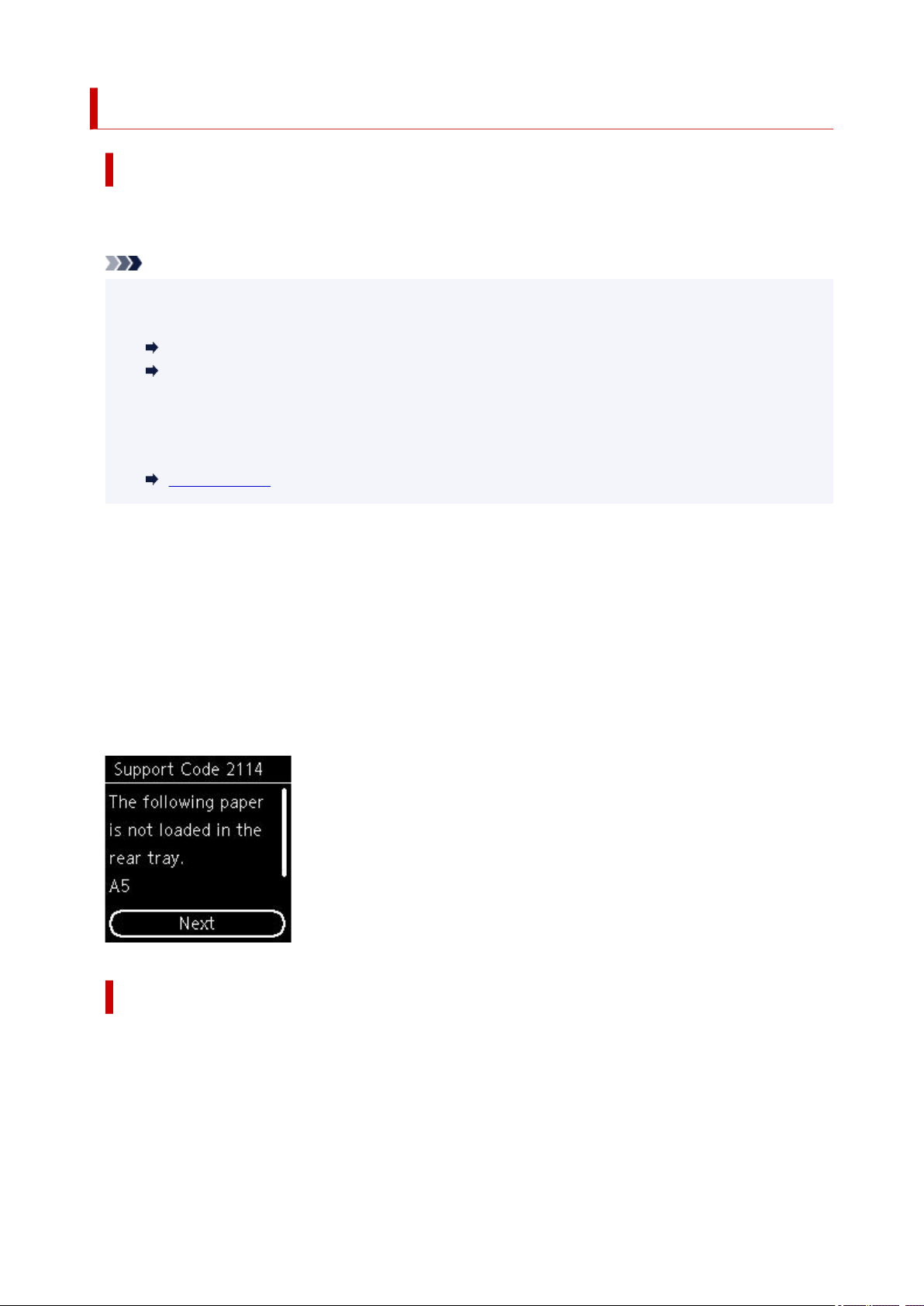
2114
Cause
Paper settings specified when printing/copying do not match the paper information for the rear tray
registered on the printer.
Note
• For the appropriate combination of the paper settings specified on the printer driver and the paper
information registered on the printer, refer to the following.
Paper Settings on the Printer Driver and the Printer (Media Type) (Windows)
Paper Settings on the Printer Driver and the Printer (Paper Size) (Windows)
• For copying, make the paper settings for copying match the paper information for the rear tray
registered on the printer.
• For how to register paper information on the printer, refer to the following.
Paper Settings
If the paper settings specified when printing differ from the paper information for the rear tray registered
on the printer, the following message appears on the printer's LCD.
• Paper settings specified on the printer driver when printing:
Paper size: A5
Media type: Plain paper
• Paper information for the rear tray registered on the printer:
Paper size: A4
Media type: Plain paper
What to Do
Press the printer's OK button to display the screen below.
332

Use the buttons to select the appropriate action and press the printer's OK button.
Note
• Depending on the settings, some of the options below may not be displayed.
Print on set paper
Select this option to print/copy on the loaded paper with the paper settings specified when printing/
copying.
For example, when the paper size specified when printing is A5 and the paper information for the rear
tray is registered as A4, select this option to print on an A4 paper loaded in the rear tray with the A5
setting.
Replace paper
Select this option to print/copy after changing the paper in the rear tray.
For example, when the paper size specified when printing is A5 and the paper information for the rear
tray is registered as A4, select this option to print after changing the paper in the rear tray with an A5
paper.
After changing the paper and closing the feed slot cover, the paper information registration screen for
the rear tray appears. Register the paper information on the printer according to the loaded paper.
Note
• If you do not know the paper size and media type to be loaded in the rear tray, press the printer's
Back button. The paper size and media type are displayed.
• For the appropriate combination of the paper settings specified on the printer driver and the
paper information registered on the printer, refer to the following.
Paper Settings on the Printer Driver and the Printer (Media Type) (Windows)
Paper Settings on the Printer Driver and the Printer (Paper Size) (Windows)
Cancel print
Cancels printing/copying.
Select this option when you want to change the paper settings specified when printing/copying.
Change the paper settings and try printing/copying again.
Note
• You can configure the setting to hide the misprint prevention message. When set to hide the
message, printing/copying begins regardless of whether the paper settings specified when printing/
copying and the paper information of the rear tray registered on the printer match.
333

To change whether to display the misprint prevention message when printing/copying without
using the printer driver:
Feed settings
To change whether to display the misprint prevention message when printing using the printer
driver:
Changing the Printer Operation Mode (Windows)
Changing the Printer Operation Mode (macOS)
334

4103
Cause
Cannot perform printing with current print settings.
What to Do
Press the printer's Stop button to cancel printing.
Change the print settings specified when printing and retry printing.
335

5011
Cause
Printer error has occurred.
What to Do
Turn off the printer and unplug it.
Plug in the printer again and turn it back on.
If this does not solve the problem, contact your nearest Canon service center to request a repair.
336

5012
Cause
Printer error has occurred.
What to Do
Turn off the printer and unplug it.
Plug in the printer again and turn it back on.
If this does not solve the problem, contact your nearest Canon service center to request a repair.
337

5100
Cause
Printer error has occurred.
What to Do
If you are printing, press the printer's Stop button to cancel printing, then turn off the printer.
Check the following:
• Make sure FINE cartridge holder motion is not impeded by protective material, jammed paper, etc.
Remove any impediment.
Important
• When clearing an impediment to FINE cartridge holder motion, be careful not to touch clear film
(A) or white belt (B).
If you soil or scratch this part by touching it with paper or your hand, it could damage the printer.
• Make sure the FINE cartridges are properly installed.
Press down the ink cartridge locking cover until it clicks into place.
Turn the printer back on.
If this does not solve the problem, contact your nearest Canon service center to request a repair.
338

5200
Cause
Printer error has occurred.
What to Do
Turn off the printer and unplug it.
After a while, plug in the printer again and turn it back on.
If this does not solve the problem, contact your nearest Canon service center to request a repair.
339

5B02
Cause
Printer error has occurred.
What to Do
Contact your nearest Canon service center to request a repair.
Note
• In the case of warnings or errors caused by remaining ink levels, the printer cannot print or scan.
340

6000
Cause
Printer error has occurred.
What to Do
If the paper is jammed, remove it depending on the jammed location and cause.
What to Do When Paper Is Jammed
Turn off the printer and unplug it.
Plug in the printer again and turn it back on.
If this does not solve the problem, contact your nearest Canon service center to request a repair.
341

C000
Cause
Printer error has occurred.
What to Do
Turn off the printer and unplug it.
Plug in the printer again and turn it back on.
If this does not solve the problem, contact your nearest Canon service center to request a repair.
342