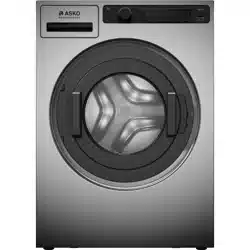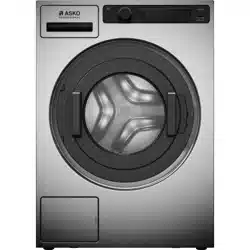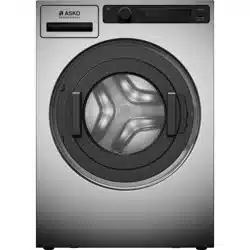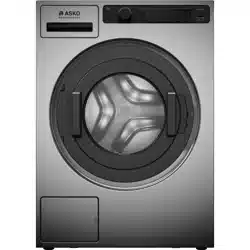
USER MANUAL
Washing machine
EN
WM75.C-P
WMC67XXP
Carefully read the instructions for use before using the washing machine.

3Introduction ................................................
4Safety precautions .....................................
8Washing machine description ..................
9Detergent compartment ............................
10Before using for the first time ...................
10Packaging ....................................................
10Transport protection ....................................
11Cleaning .......................................................
11Settings before first use ...............................
12Installation and connection ......................
12Positioning the washing machine ................
14Adjusting the feet .........................................
14
Moving the washing machine and transport
after installation ............................................
15Connection to water supply .........................
16Connecting to hot/cold water supply ...........
16Installing the drain hose ...............................
18Connecting to the power mains ...................
19Coin operation .............................................
20Tips before washing ..................................
20Laundry sorting ............................................
20Clothing ........................................................
20Laundry symbols .........................................
21Dyed cotton .................................................
21Unbleached linen .........................................
22Wool .............................................................
22Viscose and synthetic fibres ........................
22Reducing allergic reactions .........................
22Saving time and energy ...............................
22Economy and efficiency ..............................
22Detergents ...................................................
22Stains ...........................................................
23Washing process step by step (1-8) .........
23STEP 1: Sort the laundry ..............................
23STEP 2: Turn on the main switch. ................
23
STEP 3: Open the washing machine door
and insert the laundry ..................................
24
STEP 4: Add the detergent and the
conditioner. ..................................................
24STEP 5: Choose the program. .....................
27STEP 6: Choosing the program settings ......
28STEP 7: Start the wash .................................
29STEP 8: End of program ..............................
30Settings .......................................................
33Cleaning and maintenance .......................
33Cleaning the filter .........................................
34
Cleaning the detergent compartment and
door rubber gasket ......................................
35Cleaning the appliance exterior ...................
35
Cleaning the washing machine interior
against odours .............................................
35
Cleaning the rinsing holes (under the agitator
in the drum) ..................................................
37Errors – what to do? ..................................
41Manual opening of washing machine door ..
42Failure display ..............................................
45Service ........................................................
45Before calling a service technician ..............
46Technical information ................................
46Performance data ........................................
46Energy labelling ...........................................
46Technical information ...................................
47Program chart ............................................
47WMC6763PC ...............................................
49WMC6743PB ................................................
51WMC6742P ..................................................
53Adjustment of the displayed washing time ...
54Removal ......................................................
54Disposal / recycling of packaging ............
55Quick guide ................................................
55.....................................................................
Contents
Dear Customer,
We thank you for purchasing this quality ASKO product.
We hope it meets all your expectations. Scandinavian design combines pure lines, everyday
functionality, and high quality. These are the key characteristics of all our products, and the reason
why they are highly appreciated across the globe.
We kindly recommend you to read these instructions before using the appliance for the first time.
The instruction manual also includes information on how you can help protect the environment.
Link to the EU EPREL database
The QR code on the energy label supplied with the appliance provides a web link to the registration
of this appliance in the EU EPREL database. Keep the energy label for reference together with the
user manual and all other documents provided with this appliance. It is possible to find information
related to the performance of the product in the EU EPREL database using the link
https://eprel.ec.europa.eu and the model name and product number that you can find on the rating
plate of the appliance. For more detailed information about the energy label, visit
www.theenergylabel.eu.
The following symbols are used throughout the manual and they have the following meanings:
INFORMATION!
Information, advice, tip, or recommendation
WARNING!
Warning – general danger
ELECTRIC SHOCK!
Warning – danger of electric shock
HOT SURFACE!
Warning – danger of hot surface
DANGER OF FIRE!
Warning – danger of fire
Original instructions
See Quick guide on the last page.
3
Introduction

General
Please read the instruction manual and save it for future
reference.
• Please do not use the washing machine if you have not read
and understood these instructions or use first.
• Failure to observe the instructions for use or inappropriate use of
the washing machine may result in damage to the laundry or the
appliance, or injury to the user. Keep the instruction manual handy,
near the washing machine.
• Instructions for use are available on our website at www.asko.com.
• The appliance has to be connected to the water and power supply
by a trained expert.
• Any repair and maintenance pertaining to safety or performance
should be done by trained experts.
• To avoid hazard, damaged power cord may only be replaced by
the manufacturer, authorized service technician, or other
authorized person.
• After installation, the washing machine should stand still for two
hours before it is connected to the power mains.
• The washing machine may not be connected to the power mains
using an extension cord.
• Do not connect the washing machine to an electrical outlet
intended for an electric shaver or hair dryer.
• To connect the washing machine to water supply, make sure to
use the supplied water supply hose and gaskets. Water pressure
has to be between 0.1 and 1 MPa (approximately 1–10 kp/cm
2
,
1-10 bar, 10–100 N/cm
2
).
• Always use a new water supply hose to connect the appliance to
water supply; do not reuse an old water supply hose.
• After the washing cycle, close the water tap and pull out the
washing machine plug from the power socket.
If you have a washing machinewith a 3-phase connection, do not
pull the plug out of the power outlet.
4
Safety precautions
• Only use the washing machine for washing laundry, as described
in the instruction manual. The machine is not intended for dry
cleaning.
• In case of incorrect appliance connection, incorrect use, or
servicing by an unauthorized person, the user shall bear the cost
of any damage.
• Only use detergents intended for the washing machine!
• Only use agents for machine washing and care of laundry. We
shall not be responsible for any damages or discolouration of
gaskets and plastic parts resulting from incorrect use of bleaching
or colouring agents.
• Bleaches that contain chlorine can be replaced with oxygen-based
bleaches. Otherwise, a neutralization cycle should be performed
by running the Cotton program at the highest temperature. For
best results, use hydrogen peroxide or oxygen-based detergents.
• Do not use colourants (dyes) or bleaching substances (substances
for discolouration or removal of colourants) as they contain
sulphuric compounds that could cause corrosion.
• Excessive use of products containing chlorine compounds
increases the risk of premature failure of appliance components.
This depends on the concentration of chlorine, exposure time,
and temperature.
•
DANGER OF FIRE!
Do not use detergents that contain solvents as this could lead
to release of poisonous gases, damage to the machine, and
risk of fire and explosion.
• Before using the appliance for the first time, remove the transport
bolts and all other transport protection devices. See chapter
"BEFORE FIRST USE/Transport protection".
• The machine is not intended for use by persons (including
children) with physical or mental impairments, or persons with
lacking experience and knowledge. These persons should be
5
Safety precautions

instructed about the use of the appliance by a person responsible
for their safety.
• Emergency door opening tool is located on the back side of the
dispenser.
• Maximum washing capacity in kg is indicated on the rating plate
(or in the PROGRAM TABLE).
This appliance is intended to be used in household and similar
applications, such as:
• staff kitchen areas in shops, offices and other working
environments;
• farm houses;
• by clients in hotels, motels and other residential type environments;
• bed and breakfast type environments;
• areas for communal use in blocks of flats or in launderettes.
For appliances without plug, disconnection must be incorporated
in the fixed wiring in accordance with the wiring rules.
Child safety
• Do not allow small children to play with the washing machine.
• Before closing the washing machine door and running the
program, make sure there is nothing except laundry in the drum
(e.g. if a child climbed into the washing machine drum and closed
the door from the inside).
• Keep the detergent and conditioner out of reach of children.
• Activate the child lock. See chapter: SETTINGS
• Children of less than 3 years should be kept away unless
continuously supervised.
• The washing machine is made in compliance with all relevant
safety standards. This washing machine may be used by children
aged 8 years and above and by persons with reduced physical,
sensory or mental capabilities or lack of experience and
knowledge, but only if they are supervised during the use of the
appliance, if they have been provided relevant instructions
6
Safety precautions

regarding safe use of the washing machine, and if they understand
the hazards of inappropriate use. Make sure children do not play
with the appliance. Make sure the children do not clean the
washing machine or perform any maintenance tasks without
supervision.
Danger of hot surface
• At higher washing temperatures, the door glass will heat up. Be
careful to avoid burns. Make sure children do not play near the
door glass.
Water overflow protection
If the water level in the appliance rises above the normal level, then
the excessive water level protection will be activated.
It will shut off the water supply and start pumping out the water.
If the water level does not decrease in 60 seconds, the program will
be interrupted (see chapter "ERRORS – WHAT TO DO?").
Transporting/storage during the winter
If you transport or store the appliance in vehicles or rooms that are
not heated and where the temperature could drop to below freezing
point, please do the following:
• Clean the drain pump filter. See chapter "CLEANING AND
MAINTENANCE".
• Close the water supply to the washing machine, undo the water
supply hose from the water supply tap, and wait until the water
flows out of the tap and the hose.
• After the drain pump filter is emptied, there can still be a small
amount of water in the machine. This, however, does not affect
the quality and will not damage the appliance.
• If the washing machine is to be transported, transport protection
has to be re-installed before transport (see chapter "BEFORE
USING THE APPLIANCE FOR THE FIRST TIME").
SAVE THESE INSTRUCTIONS FOR FUTURE REFERENCE!
7
Safety precautions
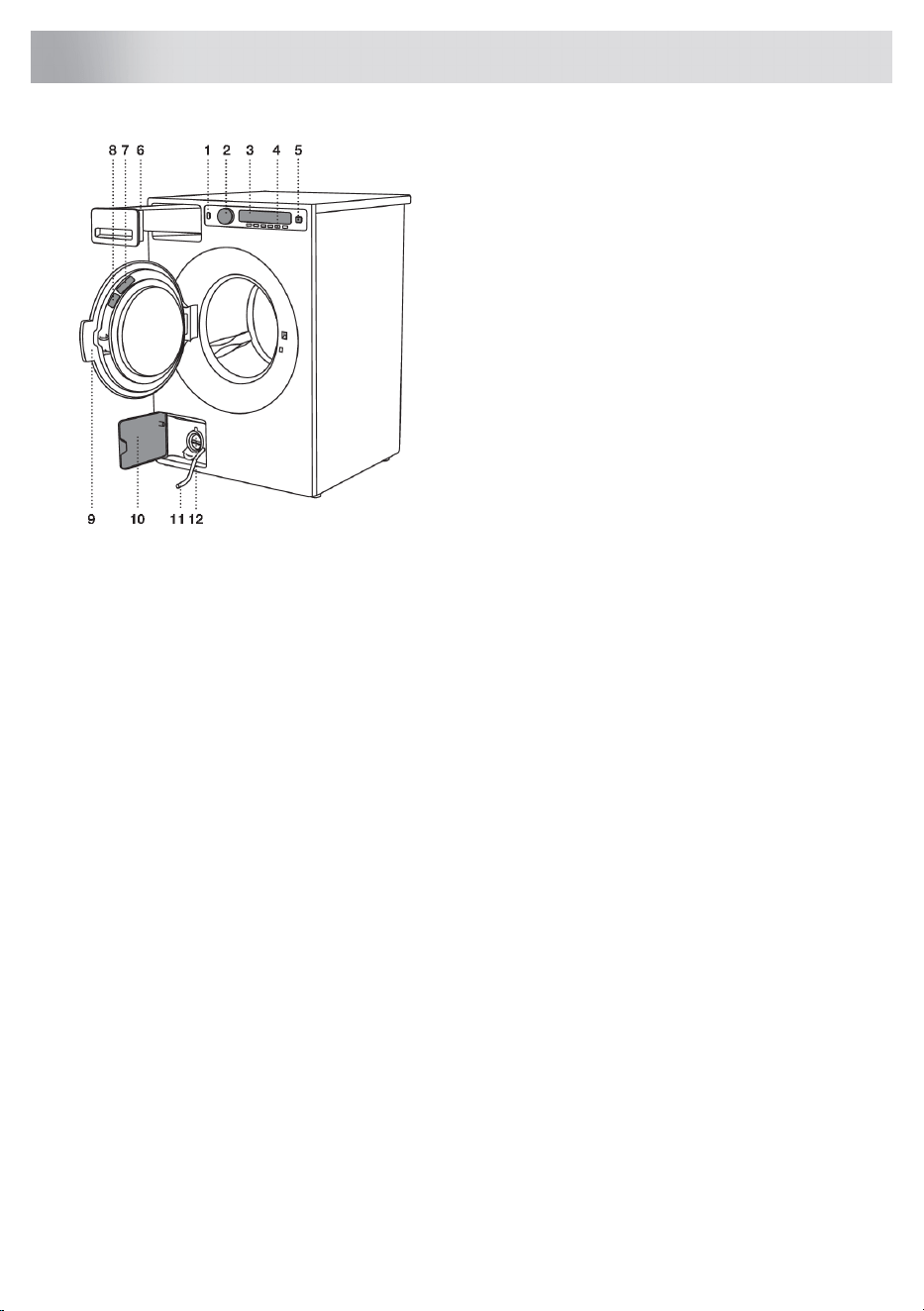
1. Main switch (ON/OFF)
2. Program selector knob
3. Display unit
4. Program settings buttons
5. Button (start/pause)
6. Detergent compartment
7. QR and AUID code (on the inside of the
washing machine door)
8. Rating plate with information about the
washing machine (on the inside of the
washing machine door)
9. Washing machine door
10. Drain filter cover
11. Water release hose
12. Drain filter pump (installed behind the drain
pump filter)
8
Washing machine description
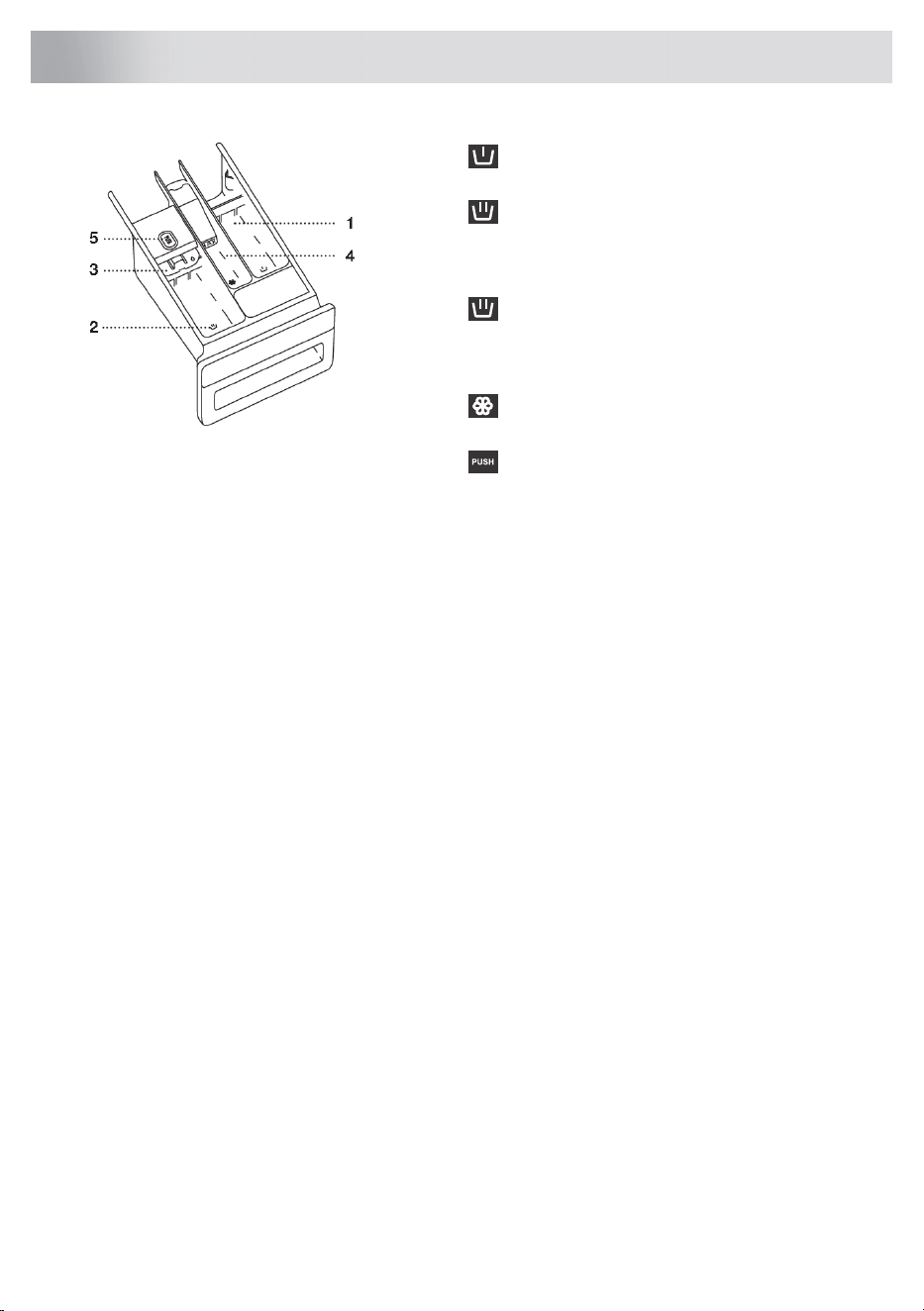
Prewash compartment1
Compartment for main wash liquid
detergent.
Use the foldable barrier (3).
2
Compartment for main wash powder
detergent.
Do not use the foldable barrier (3).
2
Softener / conditioner compartment4
Tab for detergent compartment removal5
9
Detergent compartment
Packaging
Remove all packaging.
Please sort the materials in compliance with local recommendations (see chapter "DISPOSAL").
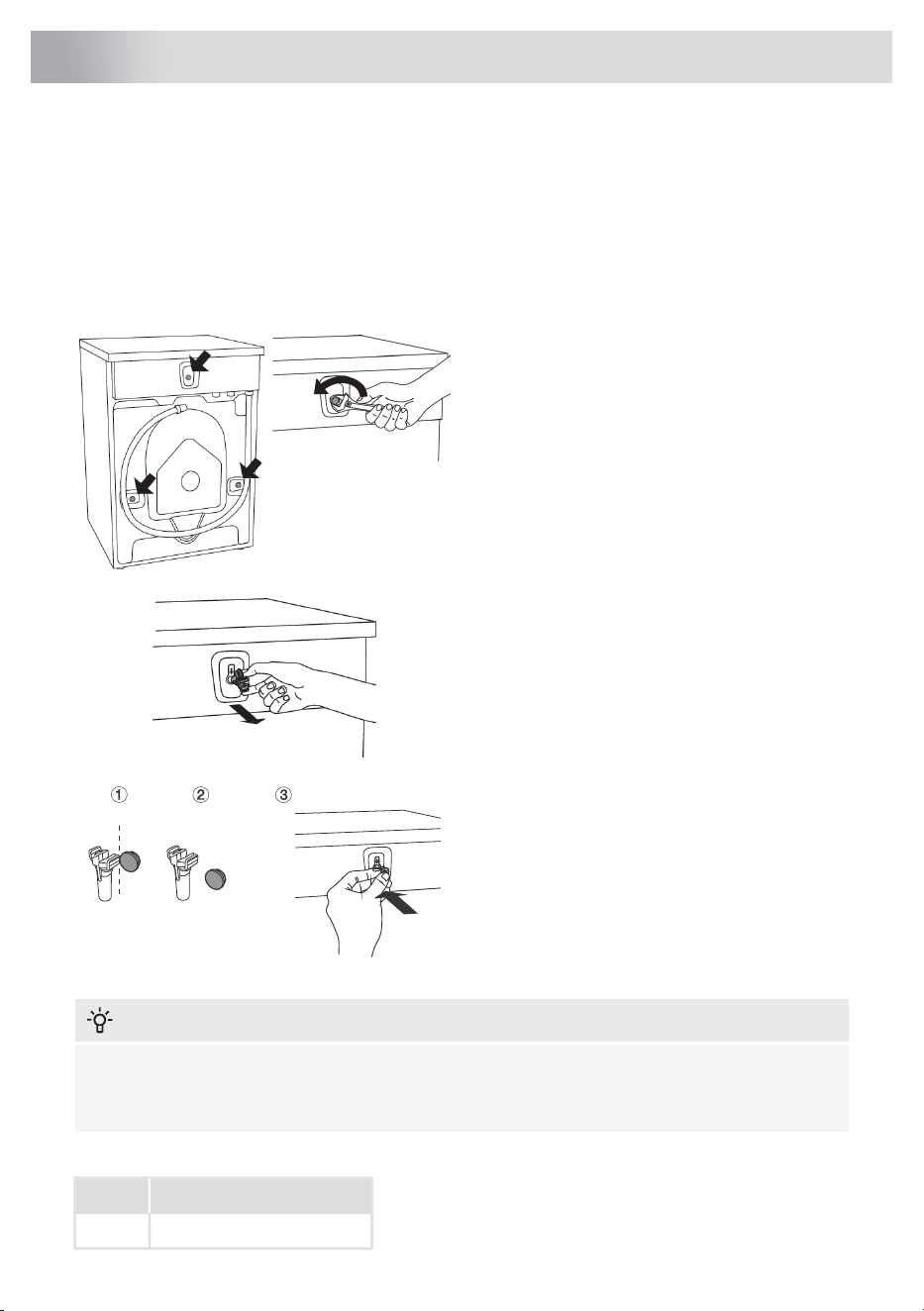
Transport protection
Before using the appliance, remove the three transport bolts and plastic plugs which protect the
appliance during transport.
1
Release and remove the bolts as shown in the
figures.
2
To remove the plastic plugs holding the bolts,
squeeze them and then pull them out.
3
Remove the caps from the plastic plugs. Push the
caps over the three holes in which the plastic plugs
were inserted. Save the bolts and plastic plugs if
you have to transport your washing machine in the
future.
INFORMATION!
If you wish to transport the washing machine, reinstall the bolts and plastic caps to lock the
machine. This will prevent any damage to the machine due to vibrations during transport. If you
have lost the transport bolts or plastic caps, replacements can be ordered at your dealer.
Please order three pieces of each item!
ID:Art. No.
Bolt270698
10
Before using for the first time
ID:Art. No.
Plastic cap (transport lock)551188
Cleaning
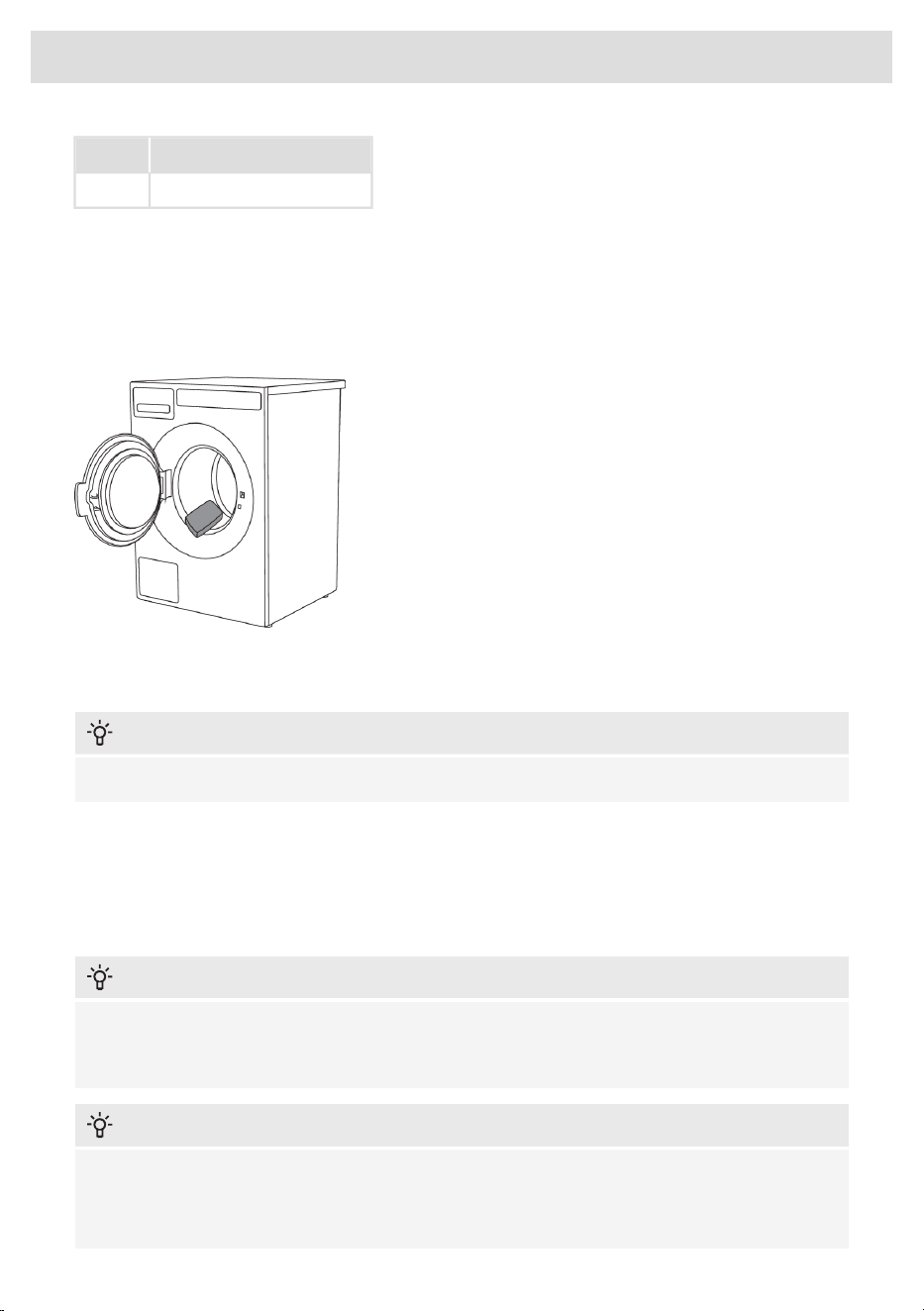
Disconnect the washing machine from the power mains and open the door. Clean the washing
machine drum with a damp cloth and a mild detergent.
In the case of a 3 phase connection of the appliance, switch off the main socket switch.
Connect the washing machine to the power mains and run the dedicated drum cleaning program.
See chapter "WASHING PROCESS; STEP BY STEP (1–8)" /STEP 5: CHOOSE THE PROGRAM.
INFORMATION!
No program can be started while the door is open.
Settings before first use
When the washing machine is connected (see chapter "INSTALLATION AND CONECTION") and
switched on for the first time, choose the preferred language:
For further washing process, see chapter "WASHING PROCESS STEP BY STEP".
INFORMATION!
The amount of detergent also depends on the hardness of water. For details, see the detergent
packaging. Please contact your local water supply company to check the water hardness in your
area.
INFORMATION!
Before the product is dispatched from the factory, every appliance is tested.
As a result, there may be some residual water left in the drain pump filter. This, however, does
not affect the quality and will not damage the appliance.
Table continued from last page
11
Before using for the first time
Positioning the washing machine
The washing machine can be installed as a built-in (integrated) or a free-standing unit. Place the
machine on a level surface so that the power outlet on the wall is accessible.
INFORMATION!
Before connecting the washing machine to the power mains, wait for at least 2 hours until it
reaches room temperature.
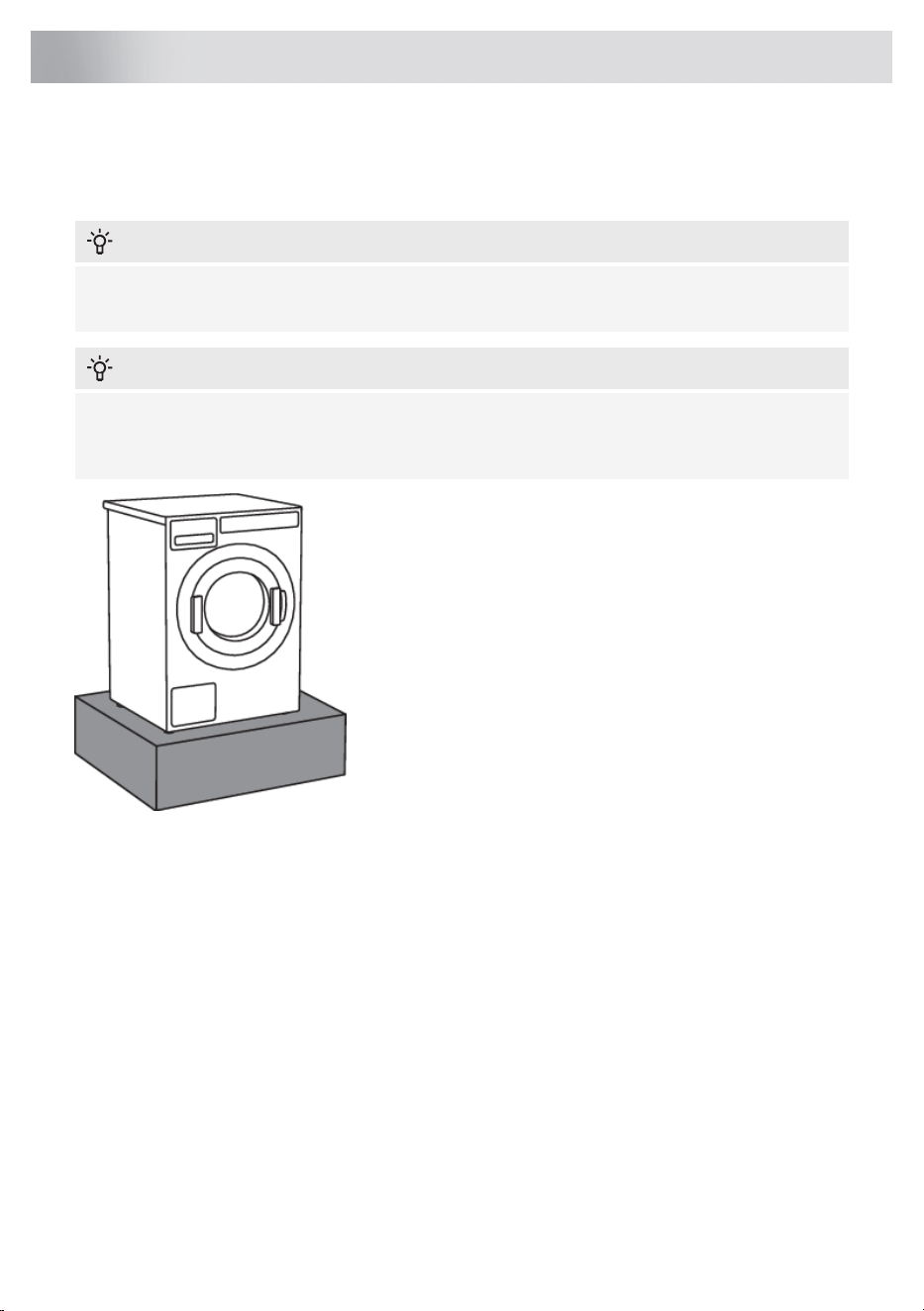
INFORMATION!
If the appliance is installed on a plinth or a similar structure, then the appliance must be fixed to
it, to avoid the risk of falling. ASKO original accessories are available for this purpose, complete
with fixing instructions.
Surface for positioning
The most suitable surface for installation is concrete. Unlike wooden floors or other floor coverings
with "soft" characteristics, concrete rarely vibrates during spinning.
*The washing machine must be installed in a vertical and stable position
*Do not place the washing machine on soft floor coverings, otherwise it will vibrate during spinning.
Built-in washing machine
The washing machine can be integrated under a worktop with a height of 900–950 mm. Leave 5 cm
of room around the entire appliance, including between the back edge of the upper cover and the
wall behind it.
12
Installation and connection
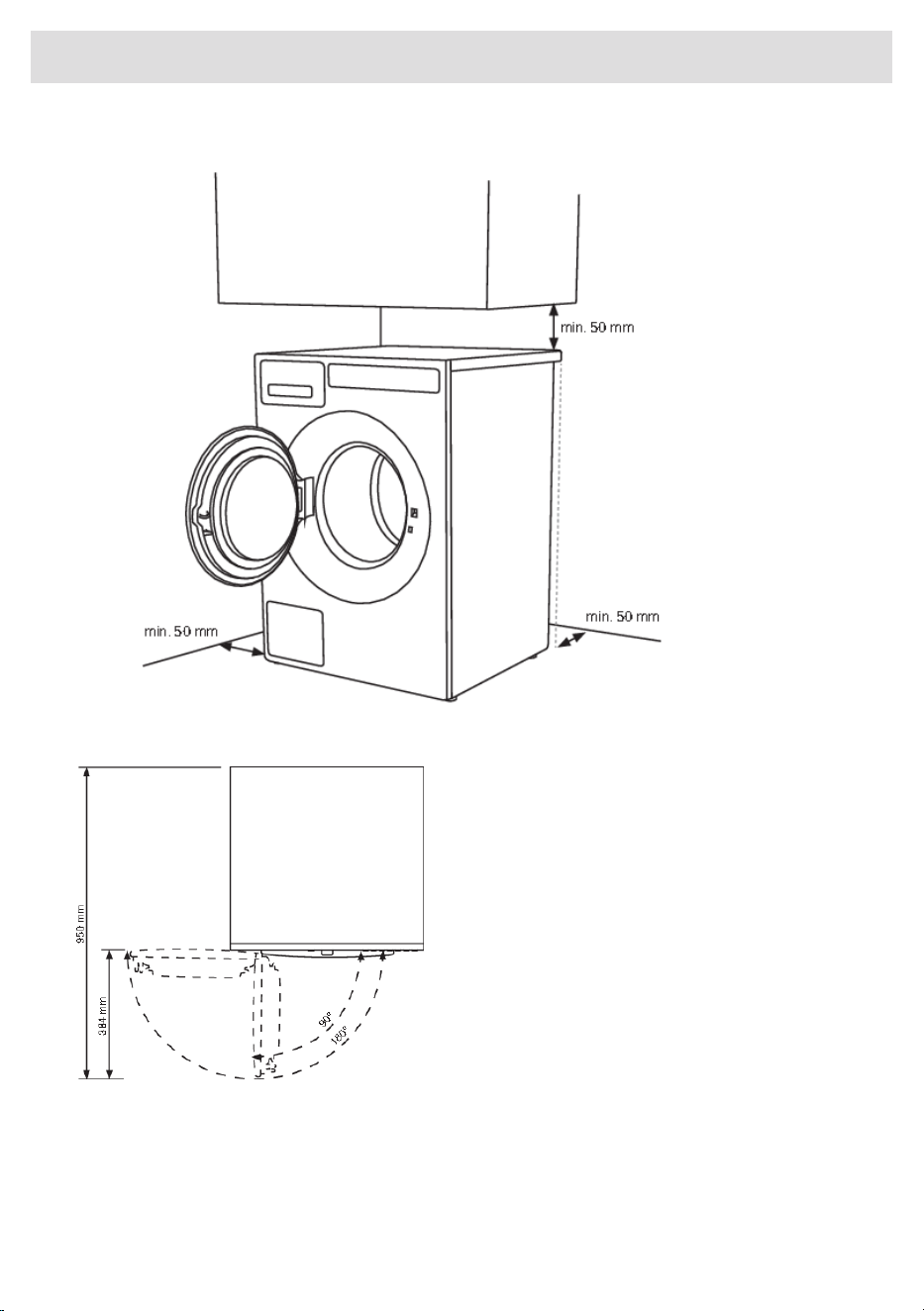
Washing machine installation clearances
Opening the washing machine door (top view)
13
Installation and connection
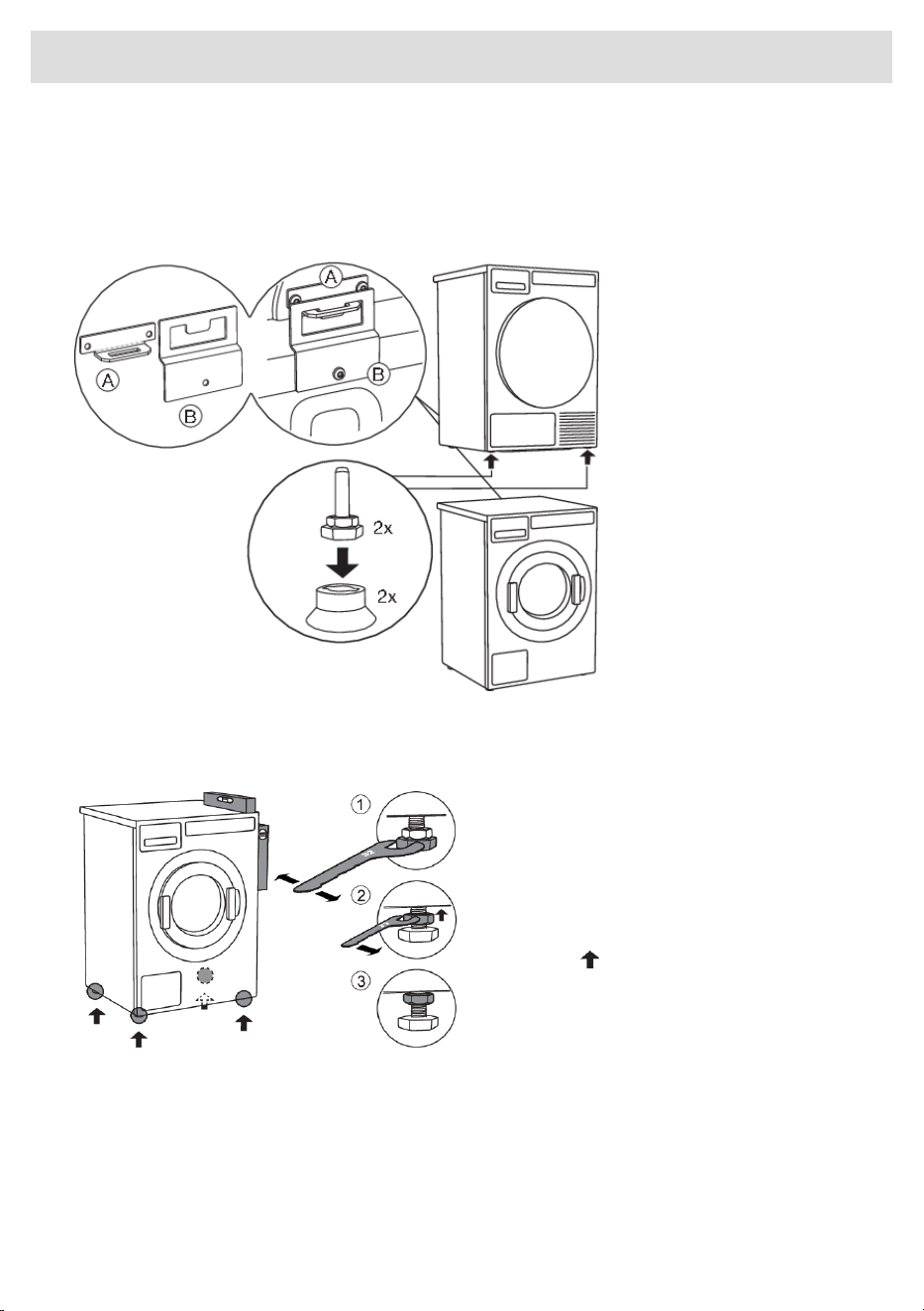
Stacking an ASKO dryer on top of an ASKO washing machine
To stack an ASKO dryer on top of a washing machine, use the extra vacuum feet and the tipping
guard (A+B), supplied in the cardboard box in the ASKO dryer drum.
Adjusting the feet
Place the washing machine so that it is stable.
1. Level the washing machine in longitudinal
and traverse direction by rotating the
adjustable feet (using a No. 32 spanner).
The feet allow levelling by +/- 1 cm.
2. When the appropriate height of feet is set,
use the wrench No. 17 to firmly fasten the
counter-nuts towards the bottom of the
appliance .
3. Tighten the jam nuts (counter nuts) to the end
position.
This will reduce washing machine noise,
vibration, movement etc. to minimum.
Moving the washing machine and transport after installation
If you are moving the washing machine without packaging, open the washing machine door and
pull the appliance by holding the washing assembly, as indicated in the figure.
14
Installation and connection
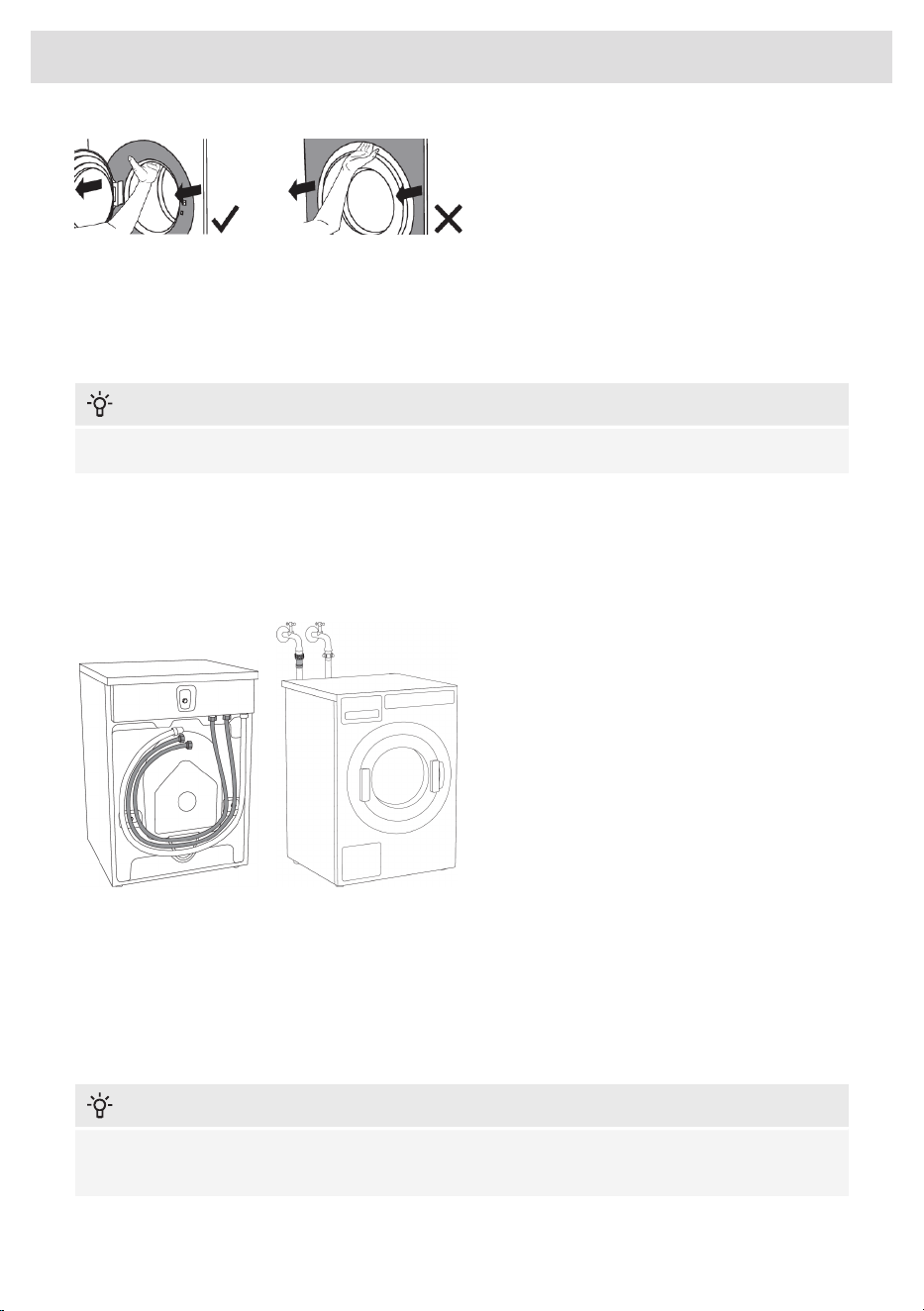
For any further moving of the appliance, use the transport rods (the washing machine drum has to
be blocked).
(See chapter TRANSPORT PROTECTION.)
Connection to water supply
INFORMATION!
The machine has to be connected to water supply by an adequately trained person.
Use the water supply hose to connect the appliance. Water pressure has to be between 0.1 and 1
MPa (approximately 1–10 kp/cm
2
, 1-10 bar, 10–100 N/cm
2
).
If the hoses are newly installed, we recommend rinsing them to remove any impurities. Otherwise,
these impurities could clog the filter in the water connection on the washing machine and thus cut
off the water supply.
The water intake hose has to be fastened firmly enough for the hose to have a good seal.
After connecting the hose, the seal must be checked for any leaks.
Only use the water supply hose supplied with the appliance. Do not use any used or other hoses.
A single check valve is included in the Set of documents, which must be installed to the cold water
supply hose (UK only).
INFORMATION!
If the connection on the supply hose is of different dimensions than the water tap (e.g. 3/4” →
1/2”), use an adapter.
15
Installation and connection
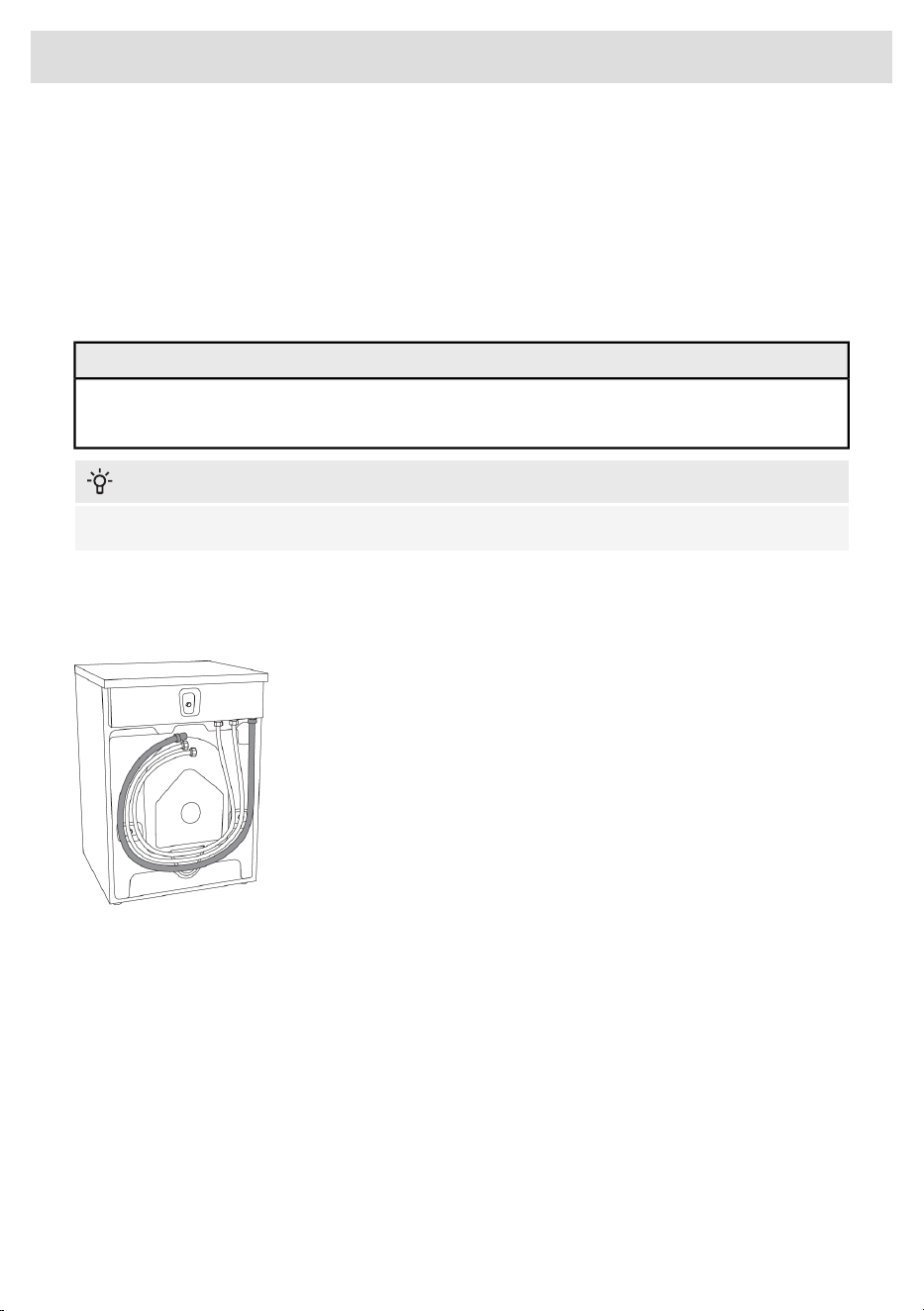
Connecting to hot/cold water supply
(Only available in some models)
If your appliance has connections for both hot and cold water, then connect one hose to the cold
water connection and the other hose to the hot water connection, as indicated on the back of the
appliance:
COLD = cold and HOT = hot.
Hot water is supplied for programs operating at 40 °C or more.
CAUTION!
Hot water connection:
The hot water temperature must not exceed 70°C (60°C in the UK (United Kingdom)).
INFORMATION!
Connecting to both hot and cold water will save time and electric energy when washing.
If your washing machine model has connections for both hot and cold water, and you only wish to
connect cold water, then the protective cap has to be (or remain) attached to the hot water connection.
Installing the drain hose
Upon delivery, the appliance has a drain hose attached. This drain hose must be connected to a
drain. Drain hose can also be attached to a wall drain with a trap; such trap should be properly
installed to allow cleaning. The height of the drain should be 600–900 mm above the floor. The lower
position (600 mm) is always recommended. Make sure the drain hose is not clipped or bent.
16
Installation and connection
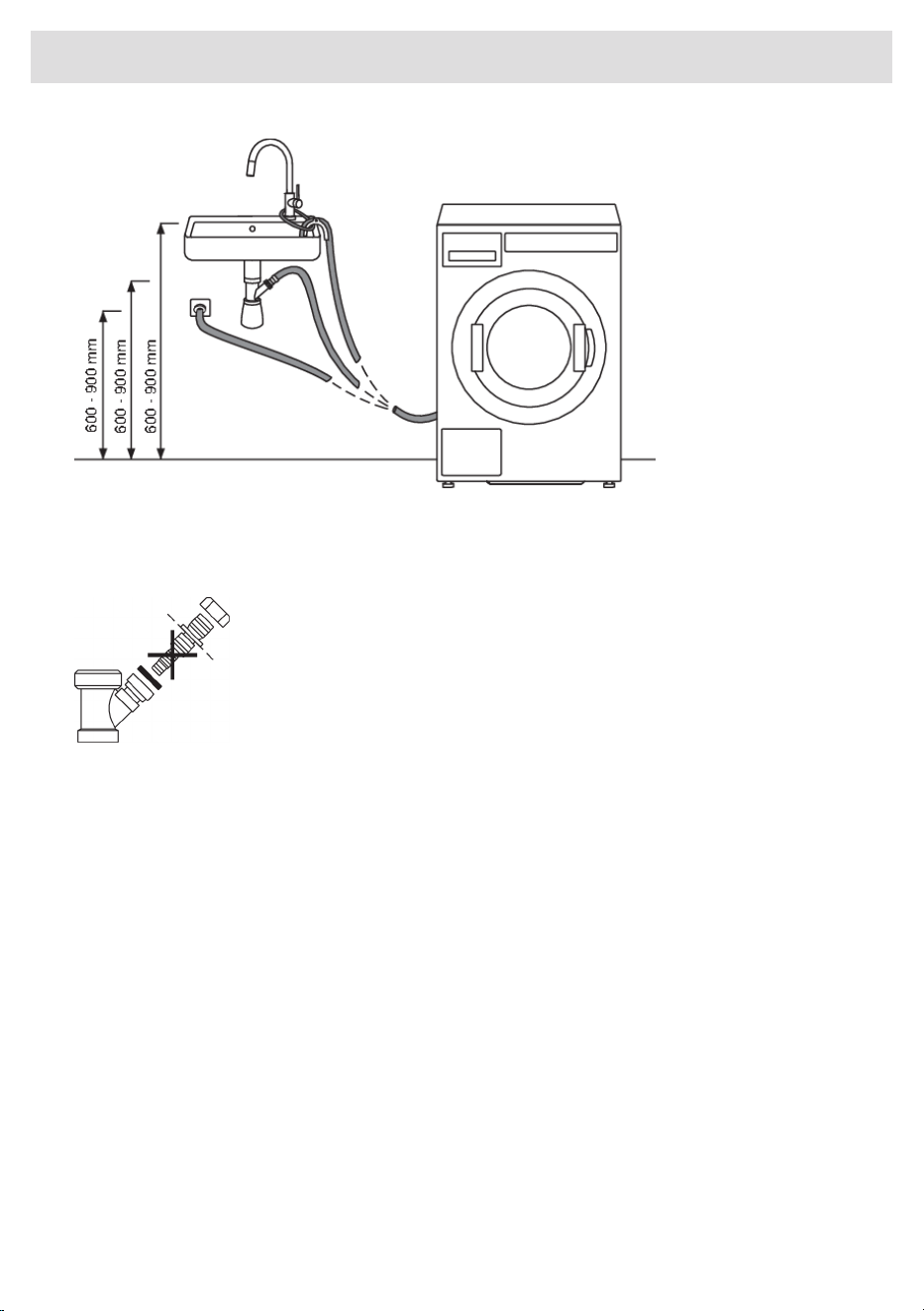
Drain hose can also be connected directly to the washbasin drain via a siphon. In this case, the
hose, should be 600–900 mm above the floor. Internal hose diameter should be at least 18 mm.
See figure.
At least 18 mm
17
Installation and connection
Connecting to the power mains
ELECTRIC SHOCK!
After installation, the washing machine should stand still for two hours before it is connected to
the power mains.
Connect the appliance to an earthed power outlet. After installation, the wall outlet should be freely
accessible. The outlet should be fitted with an earth contact (in compliance with the relevant
regulations).
If you have a washing machine with a 3-phase connection, the connection must be carried out by
a qualified and authorized specialist.
Connection upon delivery
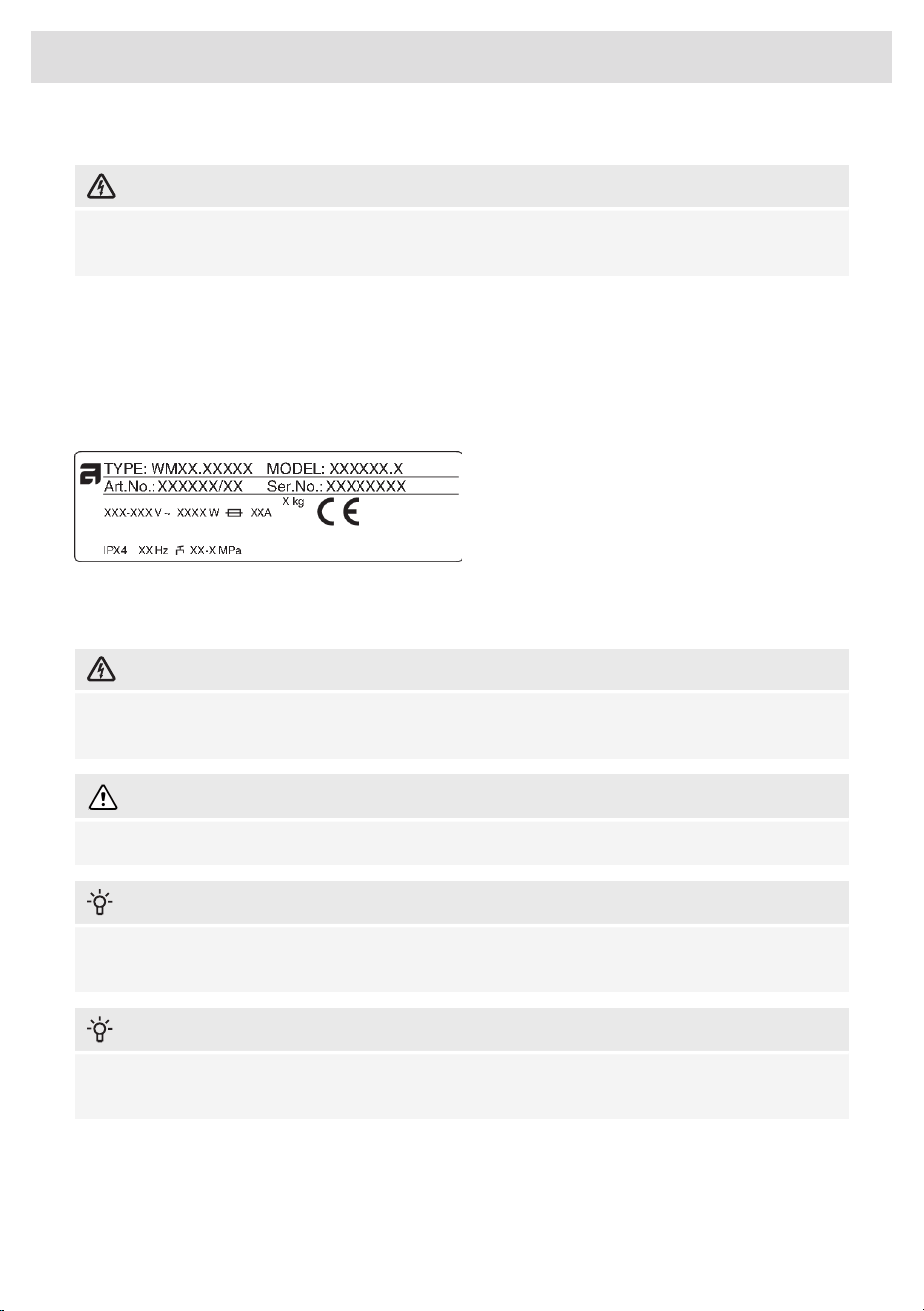
Information about your washing machine is indicated on the rating (type) plate.
Use the type A differential current protection switch.
ELECTRIC SHOCK!
We recommend using over-voltage protection to protect the appliance in case of a lightning
strike.
WARNING!
The washing machine may not be connected to the power mains using an extension cord.
INFORMATION!
Do not connect the washing machine to an electrical outlet intended for an electric shaver or hair
dryer.
INFORMATION!
Any repair and maintenance pertaining to safety or performance should be done by trained
experts.
18
Installation and connection

Coin operation
(Only available in some models)
The machine is prepared for coin operation.
Owner/distributor can find detailed informations in Service manual.
Such installation must be carried out by a qualified professional.
The coin meter shall be able to short circuit two signal lines for periods of up to 10 minutes.
This will allow the user to load the appliance, choose a program and start the program after inserting
the coins.
"Please pay to continue" appears on the display when the machine is started with the main power
switch (by pressing on button Start).
19
Installation and connection
This chapter includes several tips on how to prepare the laundry for washing.
Laundry sorting
Sort the laundry according to:
• how soiled it is,
• colour,
• material.
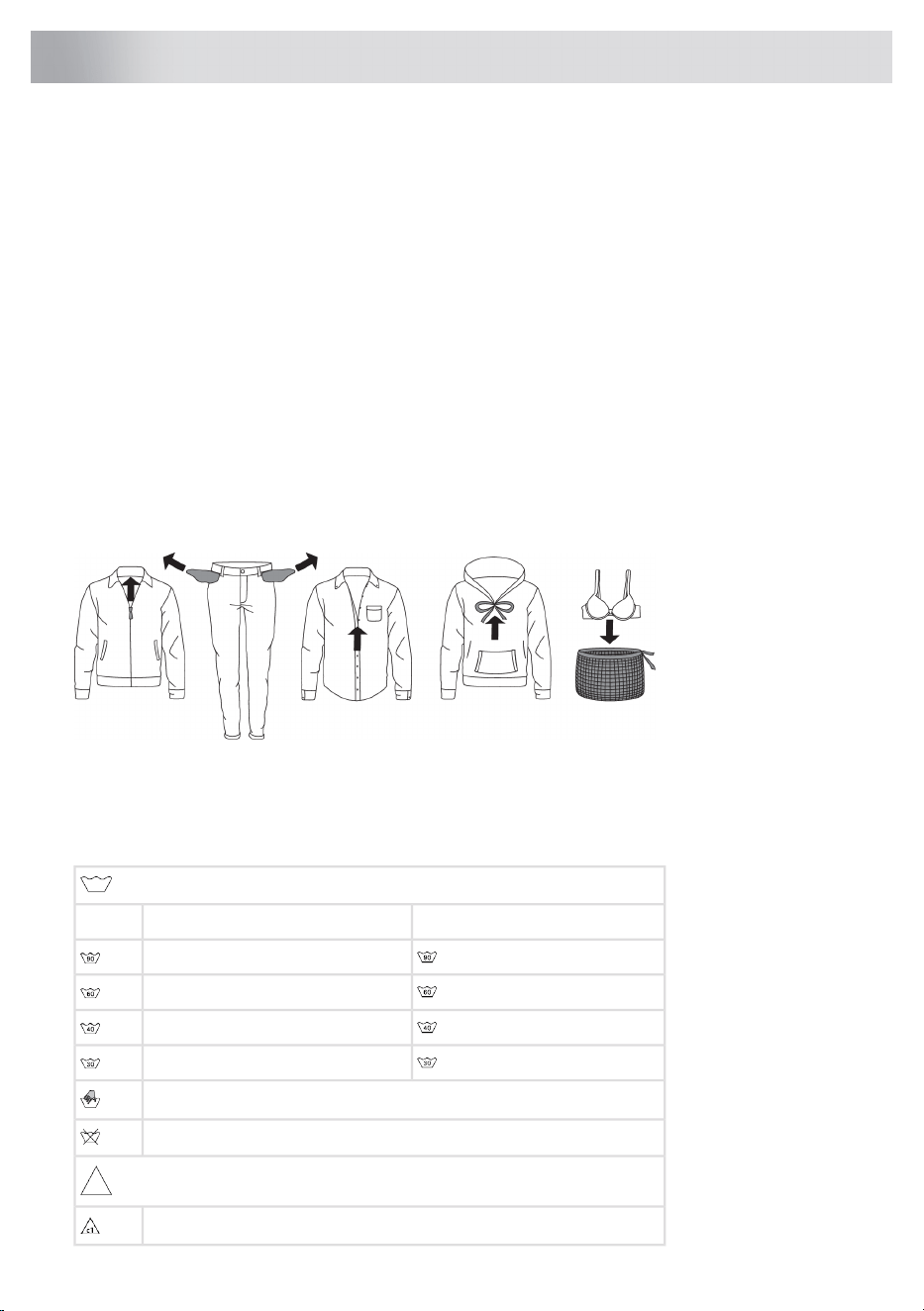
Clothing
1. Close the zips and hook-and-loop fasteners so that they do not damage the fabric.
2. New dyed items may contain excess dye; therefore, they have to be washed separately several
times.
3. Turn delicate items inside out. This will decrease the risk of tear and colour fading.
4. Place very sensitive clothes and small items in a special-purpose laundry washing bag.
5. Empty the pockets and turn them inside out.
Laundry symbols
Observe the laundry symbols.
Textile maintenance symbols:
Washing
DelicateNormal
Max. washing temperature 90 °C
Max. washing temperature 60 °C
Max. washing temperature 40 °C
Max. washing temperature 30 °C
Hand wash only
Do not wash
Bleaching
Bleaching in cool water
20
Tips before washing
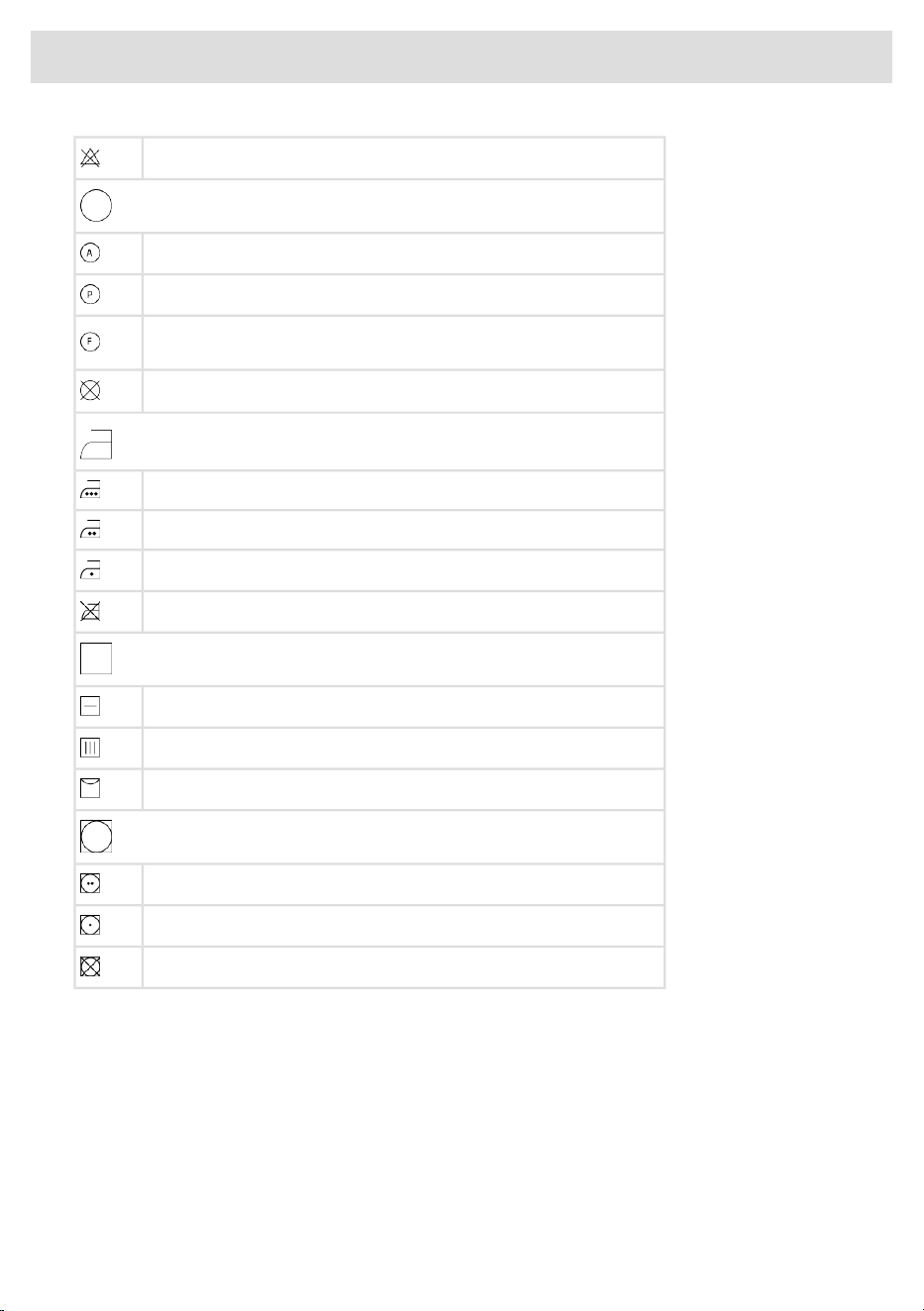
Bleaching not allowed
Dry cleaning
Dry cleaning with all agents
Perchloroethylene R11, R113, petroleum
Dry cleaning in kerosene, pure alcohol, and R113
Dry cleaning not allowed
Ironing
Ironing with a hot iron with a maximum temperature of 200 °C
Ironing with a hot iron with a maximum temperature of 150°C
Ironing with a warm iron with a maximum temperature of 110°C
Ironing not allowed
Natural drying
Drying on a flat surface
Drying without prior spinning
Drying on a clothes line or a hanger
Tumble drying
Drying at high temperatures
Drying at low temperatures
Tumble drying not allowed
Dyed cotton
Laundry made of dyed cotton which is to be washed at 60 °C should be first washed at a temperature
of 60 °C to remove the excess dye. If this is not done, there is danger of dye being washed out of
such items. To maintain the colour of the fabric, use bleach-free detergent.
Unbleached linen
Unbleached lining fabric should be washed at 60 °C with a detergent free of bleach or optical
bleaching agents. Heavily soiled linen laundry may be occasionally washed at higher temperatures,
but do not do this too often as heat could ruin the sheen and strength of linen clothing.
Table continued from last page
21
Tips before washing
Wool
These fabrics are intended for either machine or hand wash. The Wool Wash program is equally
gentle or even gentler than an actual hand wash.
Wool in particular is sensitive to washing and similar procedures.
Viscose and synthetic fibres
Materials made of viscose and some synthetic fibres are highly sensitive, and require a lot of space
in order not to crease.
INFORMATION!
Viscose and acetates are fragile when wet.
Reducing allergic reactions
The options include washing with the Allergy Program Cotton and Allergy Program Synthetics. These
programs can be used for people with sensitive skin, such as those suffering from allergies, or
small children.
Saving time and energy
Save time and energy by using the Quick program
Economy and efficiency
You can save a lot of energy by not using the programs operating at higher temperatures.
Choose the Quick program. This will save water and power.
Detergents
Detergents carrying the environment protection label are less harmful to the environment.
Only add the detergents in compliance with the recommendations by detergent manufacturers.
Recommended amount of washing detergent at certain loads and water hardness levels are specified
on the detergent packaging.
Stains
If your clothes are soiled with stubborn stains (blood, eggs, coffee, grass etc.), they should be
appropriately treated before the wash. Then, wash your laundry using the special programs (if your
washing machine has them).
Do not use any chemical substances or agents; only use the stain removing detergents.
When using bleaches or stain removal agents, there is danger of rust (corrosion) and
discolouration.
WARNING!
To protect the environment, we advise against using powerful chemicals.
22
Tips before washing
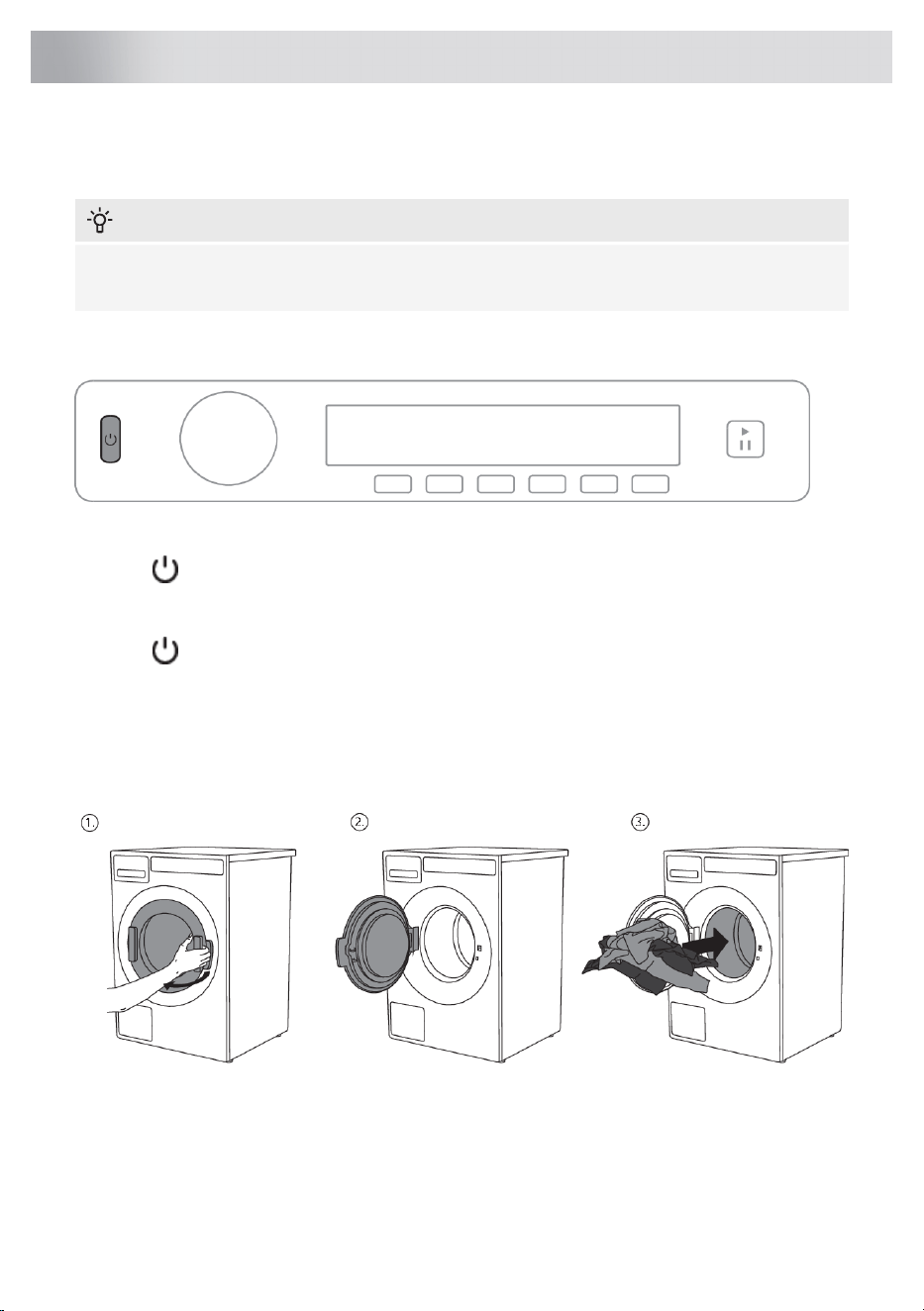
STEP 1: Sort the laundry
See chapter "TIPS BEFORE WASHING".
INFORMATION!
Use a washing net for underwire bras. Empty the pockets. Coins, nails etc. could damage the
machine and the fabric.
STEP 2: Turn on the main switch.
Turning on
Press the on/off button.
Switching off
Press the on/off button.
If the machine does not accept the on/off command correctly, wait for at least 8 seconds before
pressing any other button.
STEP 3: Open the washing machine door and insert the laundry
Open the washing machine door by pulling the handle towards you.
Place the laundry into the washing machine drum.
Before doing so, make sure the drum is empty.
Do not overload the drum!
If the washing machine drum is too full, the laundry will not be washed as thoroughly.
23
Washing process step by step (1-8)
STEP 4: Add the detergent and the conditioner.
Recommended amount of detergent is usually specified on the detergent packaging. When washing
a smaller amount of laundry, the amount of detergent used can be decreased.
Observe manufacturers' recommendations regarding the type of detergent suitable for certain
temperatures, load size, and water hardness.
Powder detergent
Add powder detergent into the main wash detergent compartment. If you have selected the Prewash
function, Heavy , MOP or Disinfection program, then add powder detergent to the prewash detergent
compartment.
INFORMATION!
We recommend adding the powder detergent immediately before the washing cycle. Otherwise,
make sure the detergent compartment is completely dry before adding the powder detergent,
as otherwise, the powder detergent may cake before the start of the washing process.
Liquid detergent
When using a liquid detergent, observe the detergent manufacturer's recommendations. When using
thick detergents, we recommend always using the laundry balls. Use the barrier (3) in the detergent
compartment; see figure in the chapter "Detergent compartment". Add the liquid detergent in the
front part of the detergent compartment (2).
Laundry ball or washing bag
If you are using a laundry ball or a washing bag, place it directly into the drum and choose a program
without any prewash.
INFORMATION!
An excessive amount of detergent will not improve washing results. Rather, it will lead to foaming
and increase the environmental impact. We recommend using less detergent. Only increase the
dosage if you are not satisfied with the washing results.
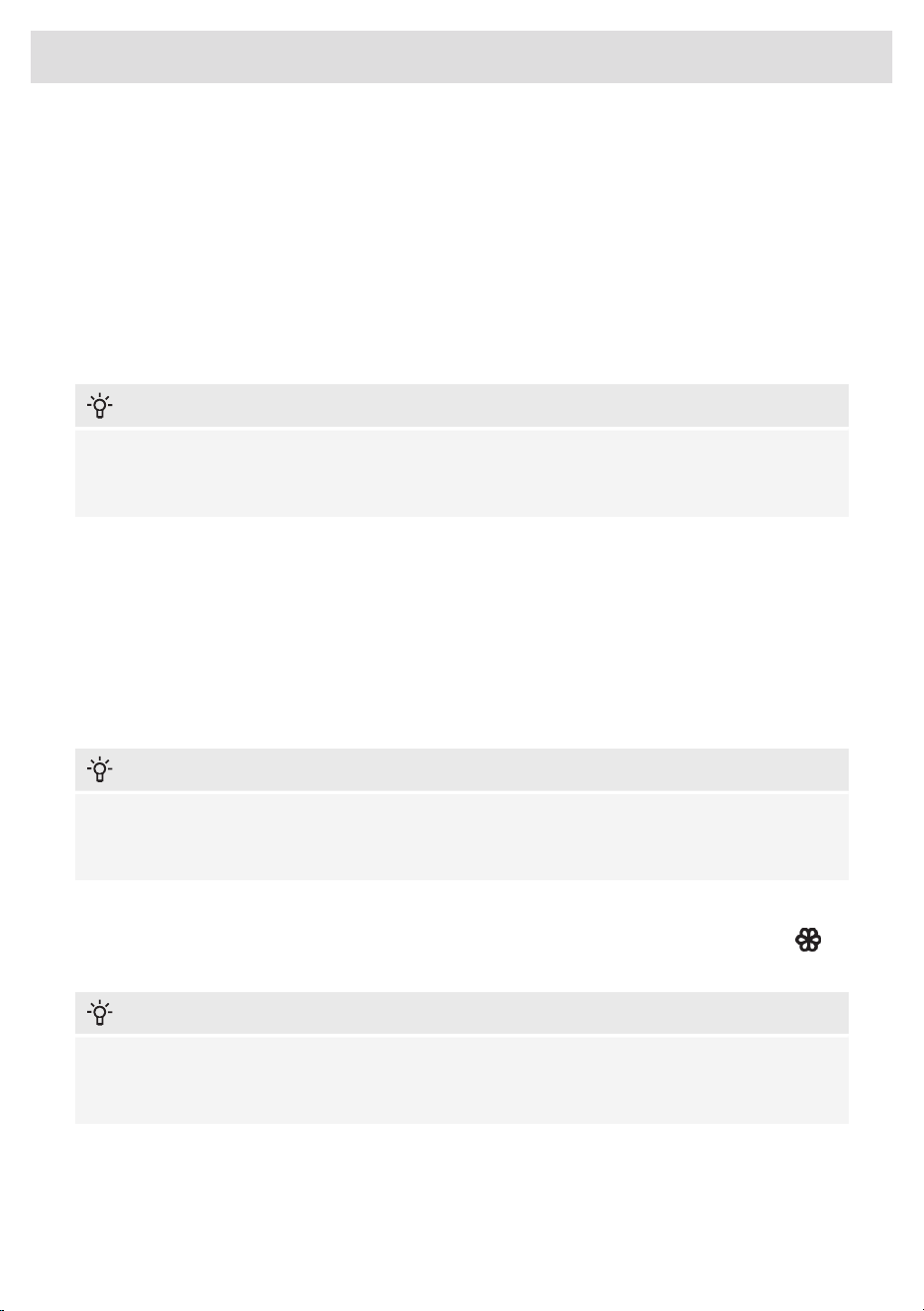
Conditioner
Pour the conditioner into the detergent compartment, into the compartment with the symbol .
Observe the recommendation on the conditioner packaging.
INFORMATION!
Do not fill the conditioner compartment over the max. indication (maximum indicated level).
Otherwise, the conditioner will be added to the washing machine drum too soon, leading to poorer
washing effect.
STEP 5: Choose the program.
The display shows the program name, water temperature and spin speed. The washing machine
has pre-selected programs when delivered from the factory. You can replace pre-selected programs.
24
Washing process step by step (1-8)
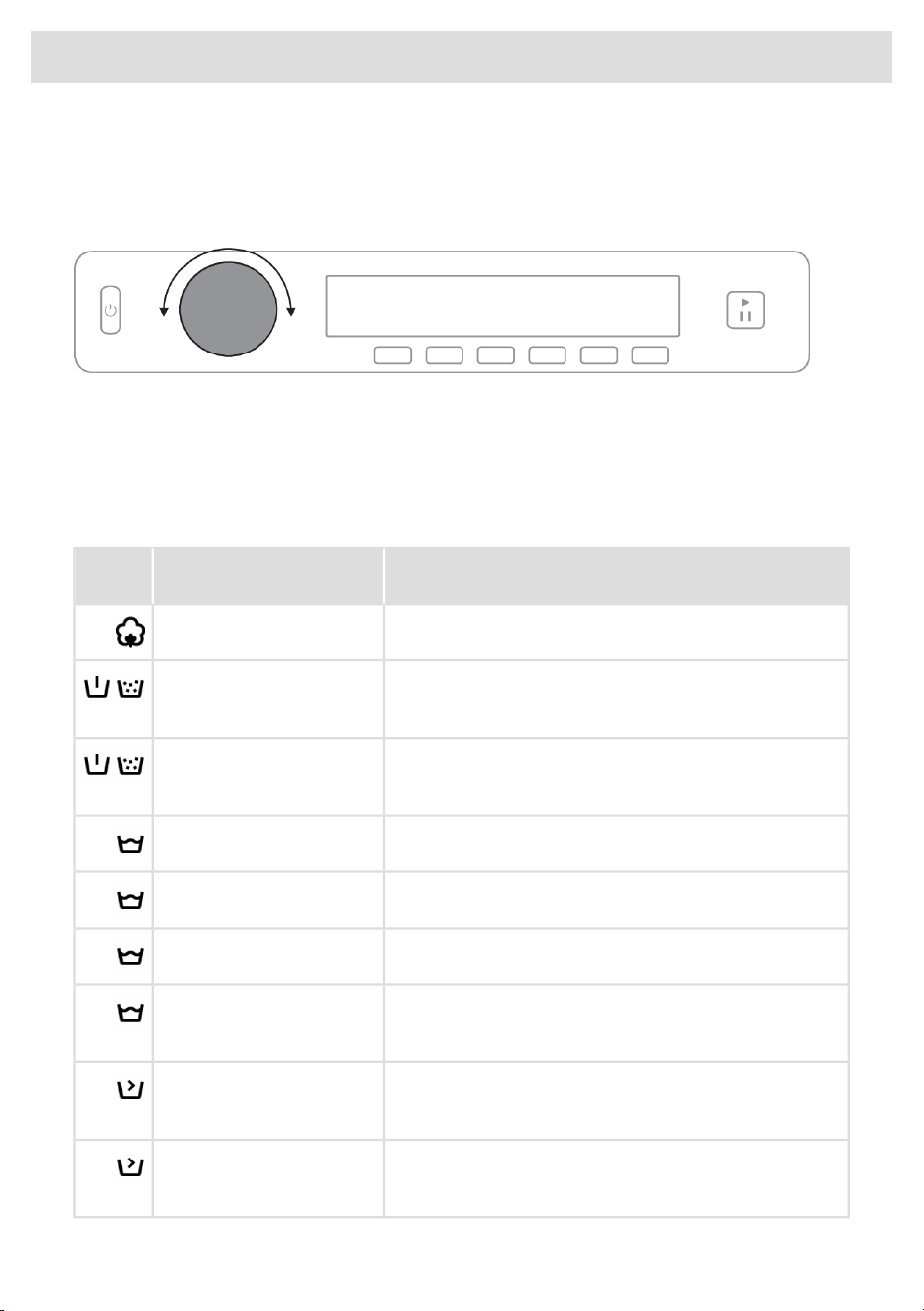
Contact the service department about which programs are available and how to change the
pre-selected programs or. See section: SETTINGS.
Choose the program by rotating the program selector knob in either direction. Confirm the program
selection by pressing the button under the program.
Choose the program depending on the type of laundry and how heavily soiled it is (see chapter
"TIPS BEFORE WASHING").
Estimated program duration will appear on the display.
Choose between the following programs:
(owner/distributor can change parameters and rename the program)
DescriptionPrograme (factory default
program)
Washing cycle, which is able to clean normally soiled cotton
laundry declared to be washable at 40°C or 60°C.
ECO 40-60
For heavily soiled laundry with dirt that needs to be fully
dissolved before the main wash. A prewash is used to do
this.
HEAVY 60°C
For heavily soiled laundry with dirt that needs to be fully
dissolved before the main wash. A prewash is used to do
this.
HEAVY 90°C
Program for normally to heavily soiled laundry, whites and
colours.
WHITE/COLOR 20°C
Program for normally to heavily soiled laundry, whites and
colours.
WHITE/COLOR 40°C
Program for normally to heavily soiled laundry, whites and
colours.
WHITE/COLOR 60°C
Programme for normally to heaviliy soiled laundry. 90 °C is
a good temperature for white and light-coloured cotton,
such as bed linen.
WHITE 90°C
Use this program for laundry that just need freshening up.
The lower the selected temperature, the shorter the program
time.
SUPER QUICK 40°C
Use this program for laundry that just need freshening up.
The lower the selected temperature, the shorter the program
time.
SUPER QUICK 60°C
25
Washing process step by step (1-8)
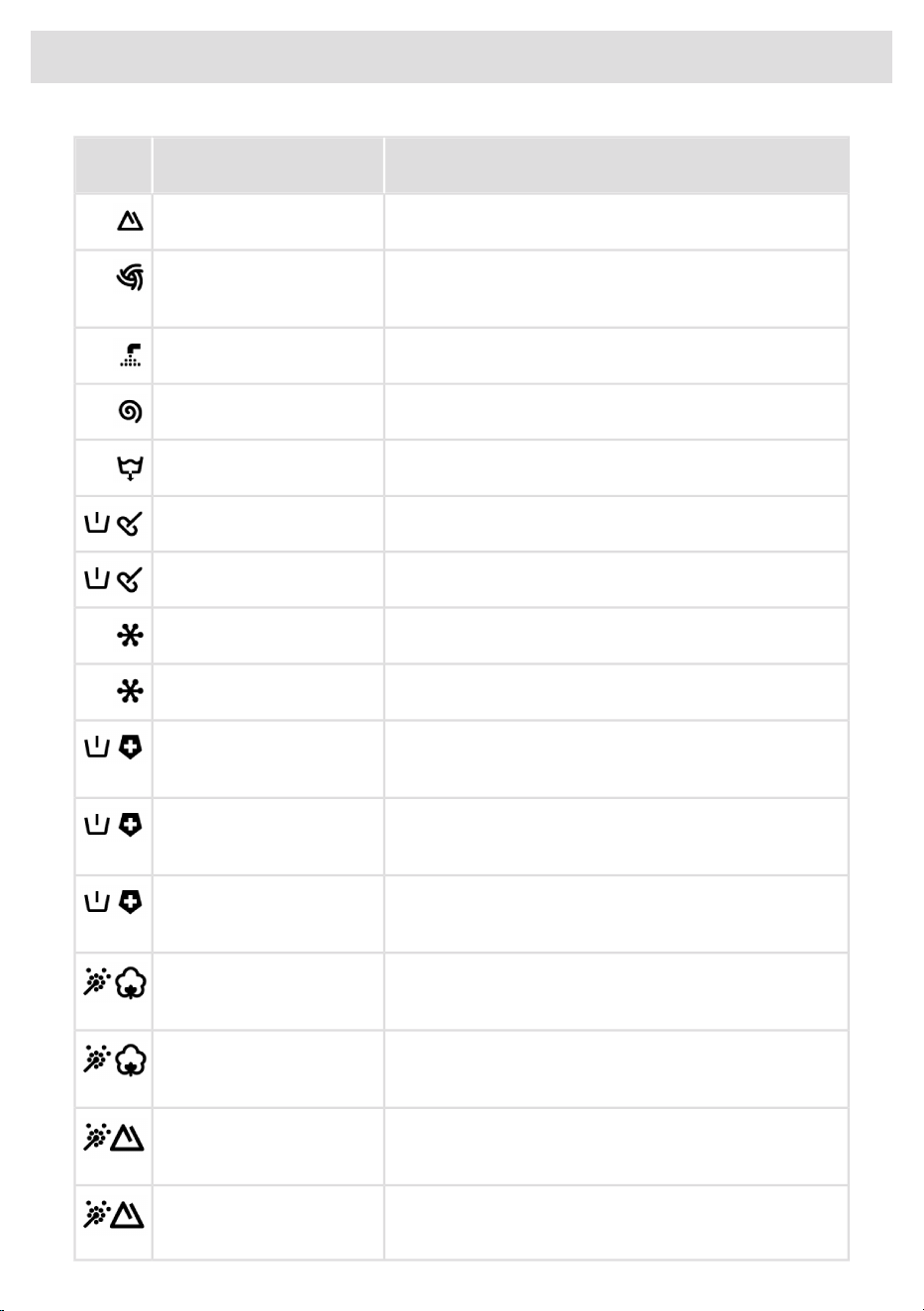
DescriptionPrograme (factory default
program)
Program for synthetics, delicate blended fabrics and
permanent press cotton. Suitable for shirts and blouses.
SYNTHETIC 40 °C
A gentle laundry program for wool, silk and garments that
should be washed by hand. This wash program has a short
spin.
WOOL/HAND 30°C
One cold rinse and a short spin cycle. Suitable for laundry
that just needs to be rinsed.
RINSE
Use this program when you only want to spin the load.SPIN
Use this program when you only want to drain the water
from the machine.
DRAIN
A program specially developed for cleaning mops.MOP 60°C
A program specially developed for cleaning mops.MOP 90°C
A program specially developed for cleaning microfibre
fabrics.
MICROFIBRE 40°C
A program specially developed for cleaning microfibre
fabrics.
MICROFIBRE 60°C
Programme where the temperature reached during the
main wash is maintained above 40 °C for 20 minutes.
Disinfection at this temperature requires special detergent.
DISINFECTION 40°C *
Programme where the temperature reached during the
main wash is maintained above 60 °C for 60 minutes.
Disinfection at this temperature requires special detergent.
DISINFECTION 60°C *
Programme where the temperature reached during the
main wash is maintained above 90 °C for 10 minutes.
Disinfection at this temperature requires special detergent.
DISINFECTION 90°C *
This program is used to wash normal to heavily soiled
clothes that require special care, such as clothes for people
with highly sensitive skin or skin allergies.
ALLERGY COTTON 60°C
This program is used to wash normal to heavily soiled
clothes that require special care, such as clothes for people
with highly sensitive skin or skin allergies.
ALLERGY COTTON 90°C
This program is used to wash clothes that require special
care, such as clothes for people with highly sensitive skin
or skin allergies.
ALLERGY SYNTHETIC 40°C
This program is used to wash clothes that require special
care, such as clothes for people with highly sensitive skin
or skin allergies.
ALLERGY SYNTHETIC 60°C
Table continued from last page
26
Washing process step by step (1-8)
DescriptionPrograme (factory default
program)
This program is used to clean the drum and to remove
detergent residue and bacteria. The drum must be empty.
CLEANING
Program slot that can be programmed for your needs.PROGRAMS A - J
See chapter: SETTINGS.
.
.
.
* Programs Disinfection (40 °C, 60 °C, 90 °C) cannot be canceled during washing program. Complete
cycle will be done.
STEP 6: Choosing the program settings
Using the program settings, the washing programs can be further adjusted to your wishes. See
chapter: SETTINGS.
(only appliance owner/distributor may change the settings)
Some program settings may not be available for your selected program.
Start delay
Choose the delayed start when you wish the washing program to start after a certain period of time
(from 1 h to 100 h after you press the Start button).
Use the Program selector knob to set the delay (from 1 hour to 100 hours in 1-hour steps).
Press the button to confirm your selection.
Start delay time + time remaining until the end of the washing program will be displayed. When the
countdown is over, the selected washing program will start .
To cancel the start delay, press the button Cancel.
Then press the Start button to start the program.
When Start delay time is once set, it is not possible to change it; the only possibility is to »Skip it«
and continue with chosen program.
INFORMATION!
If you have set the delayed start function and you are using liquid detergent, we do not recommend
choosing a programme with a pre-wash cycle.
Table continued from last page
27
Washing process step by step (1-8)
STEP 7: Start the wash
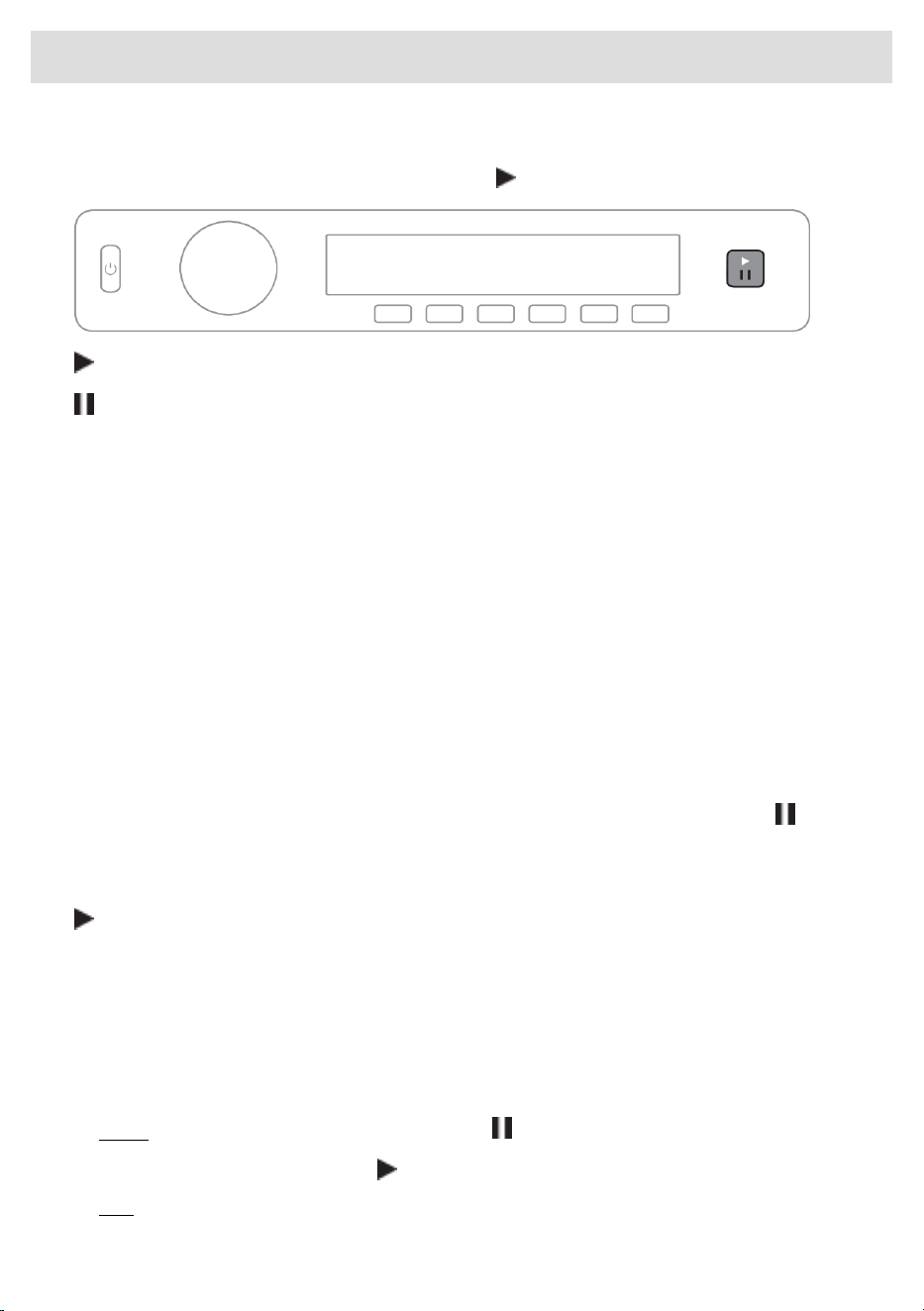
Close the washing machine door and press the Start /Pause button.
Start (pressed briefly – start/resume)
Pause (short press of the button - pause)
Stop (press and hold for 3 seconds – stop or cancel)
Remaining time
Depending on the selected program, anticipated washing time will be displayed in hours and minutes.
Actual washing time will depend on the selected program, load, type of laundry, spin speed etc.
Actual washing time may be longer or shorter than initially displayed.
Remaining time will be updated during the program duration, depending on the actual amount of
laundry and amount of water pumped into the machine. The last remaining time update takes place
before the final spinning cycle.
In case of uneven distribution of laundry, the time on the display will flash and it will not count down.
Once the laundry is evenly redistributed, the washing time will continue and it will stop flashing.
Adding or removing laundry after the start of the program
To add laundry during washing program, you must first select the enable/disable option. (See
chapter: SETTINGS).
To add or remove laundry during the progress of a washing program, use the Start/Pause button
to pause the program.
The door may be opened when the water is pumped from the machine (but not completely pumped
out). Then, add or remove the laundry. Close the door and continue the program. Press the Start
/Pause button.
The program will resume from the point at which it was interrupted.
If the door cannot be opened, it is possible that the temperature in the machine is too high, and you
won't be able to add the laundry.
Also, if the door cannot be opened, it is possible that the program has been running for too long and
any laundry added at that point would not be efficiently washed.
Pausing, stopping or changing the program
To pause the program, shortly press the Start/Pause button.
To resume a program, press the Start /Pause button again.
To stop the washing program, press the Start/Pause button and hold it for 3 seconds.
28
Washing process step by step (1-8)
Choose "Stop program". The program is canceled and the water is pumped out of the machine if
necessary. Only then will you be able to open the washing machine door. Use the Program selector
knob to select a new program. If necessary, add detergent, and then press the Start /Pause
button.
INFORMATION!
If the temperature in the drum is very high, then cooling procedure starts before program is
canceled.
A washing program can be paused by pressing the ON/OFF button.
The washing machine will switch off.
After the washing machine is switched on, press the Start button to resume the program.
INFORMATION!
Do not open the detergent compartment while the appliance is operating.
INFORMATION!
In some cases the door may be locked although no program is in progress (e.g. in case of an
error). To unlock the door, press the Start/Pause button and hold it for a while.
STEP 8: End of program
After the end of the washing program, the display will indicate that the program has been successfully
completed and that the door is unlocked.
Open the door towards you and remove the laundry from the washing machine.
Make sure the washing machine drum is empty.
If you do not take any action within 5 minutes after the end of the program, the display will switch
off to standby mode in order to save power.
The display will light up again if you press the ON/OFF button.
WARNING!
After the washing cycle, close the water tap and pull out the washing machine plug from the
power socket.
If you have a washing machine with a 3phase connection, do not pull the plug out of the power
outlet.
29
Washing process step by step (1-8)
Only appliance owner/distributor may change the settings!
(owner/distributor should check Service manual)
DescriptionSettingOn display
Setting affect all programsno Drain --> max. rpmMax. RPM
Setting of draining via valve or
pump, depending on the type of
appliance; in case of change, a
mechanical change on the
appliance is required.
Valve/DrainDrain
In the Disinfection programs and
in the Special programs; this
means displaying the actual
measured temperature in the
drum.
On/OffShow temp
By changing settings it is
possible to create and customize
your own program.
On each program (some
settings cannot be set on some
programs)
Change program
Program can be renamed!
On/Off
• Prewash
°C/°F0 --> max
• Change temperature
no Drain --> max. rpm
• Change spin RPM
On/Off
• Water Level
On/Off
• Anti-crease
Once the above changes are
done, you can save the program
Override existing/Save as new
• Save program
as a new program or overwrite
an existing program.
At max. rpm in the Spinning
phase
0 --> 300Spin time
Choose either °C or °F.°C/°FTemperature unit
Additional rinses to the program
are added.
On/OffSuper rinse
With enabled function payment
is requested, to be able to start
the program.
On/OffPayment system
On/Off3D sensor
30
Settings
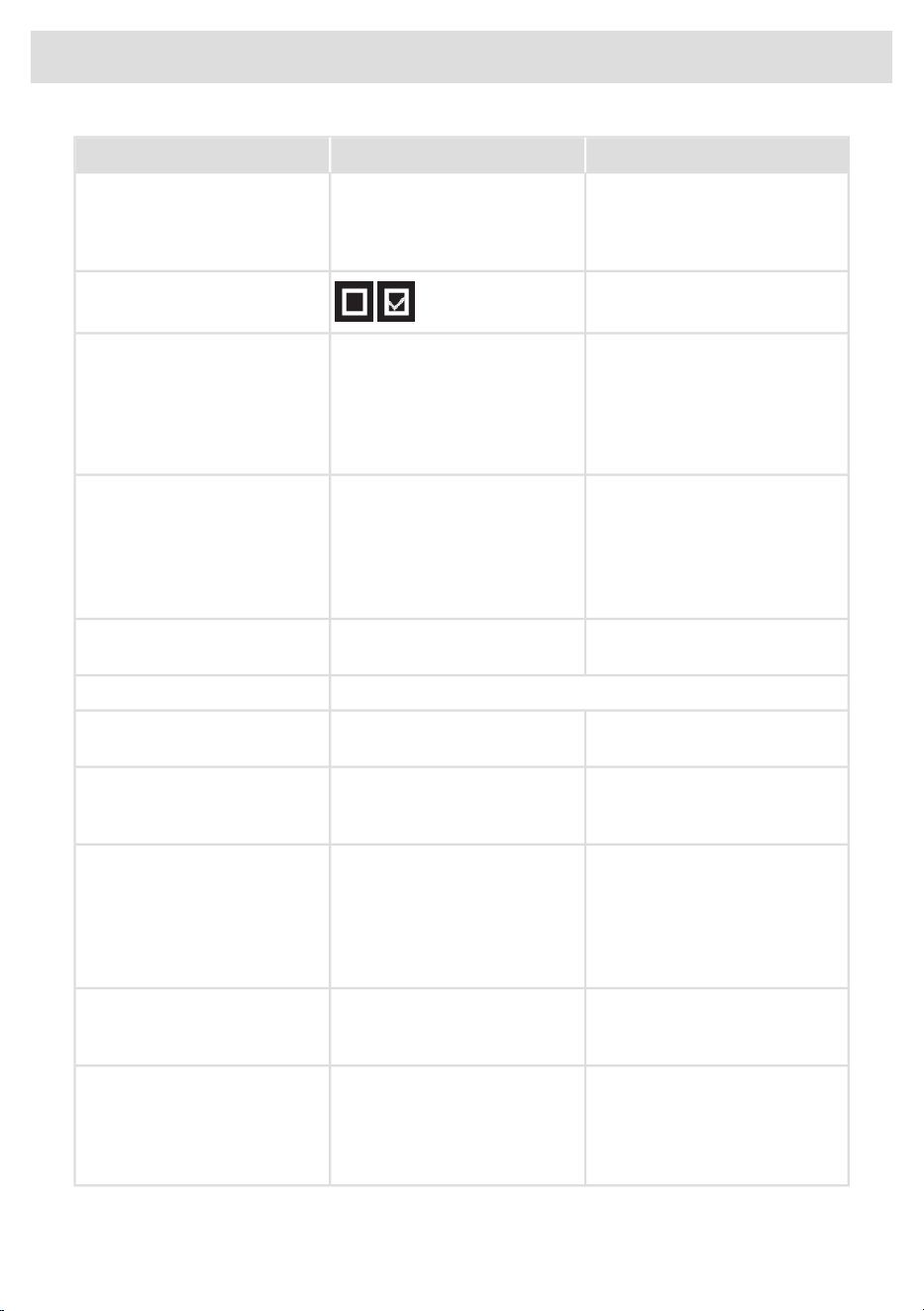
DescriptionSettingOn display
Choose between switching the
Child lock On or Off. When the
child lock is activated, no other
function can be selected.
On/OffChild Lock
Selected program will be shown
on display
/
Programmes
Select your language - press the
button under the flag
Set Language
• Select language: by rotating
the program selector knob
• Confirm language: by
pressing button under the
country flag
(from 0 to 5)On/OffTemporary language selection
If a temporary language is
selected, then the user can
temporarily select a language for
the time the machine is turned
on.
5 different sound levels can be
set. 0 means, sound is turned off.
0 --> 5Sound setting
Display settings:
5 different brightness levels can
be set.
1 --> 5
• Brightness
After turning the appliance on,
the introduction text can be
turned off, so that is not shown.
On/Off
• Display the logo
1h --> 100hOn/OffStart delay
Choose the delayed start when
you wish the program to start
after a certain time (from 1h to
100h, after you press the Start
button).
Program will be done without
heating step, water will not be
heated.
On/OffHeating steps
Sub menu for the program can
be disabled. User can not go to
sub menu. Program can be
started directly from the first level
of the menu.
On/OffDetailed view
Table continued from last page
31
Settings

DescriptionSettingOn display
User can pause the program and
select option "Add clothes", door
will be unlocked and user can
add laundry.
On/OffAdd clothes
Add Clothes function is available
in Wash phase on majority of the
programs.
Add clothes function is available
also on program Rinse (only
during first rinse on Rinse
program).
If water level is higher than
allowed to open door, water will
be pumped out.
If temp is higher than 50°C, them
add clothes option is not shown
when pausing the program.
Selection if appliance will go into
Standby after 5min or not.
No standby/NormStandby choice
By turning WiFi module On, the
energy consumption will increase
in standby mode.
WiFi settings
By changing settings it is
possible to create and customize
your own program.
Settings can be changed on
each program.
Programs A - J
Program can be renamed!
Table continued from last page
32
Settings
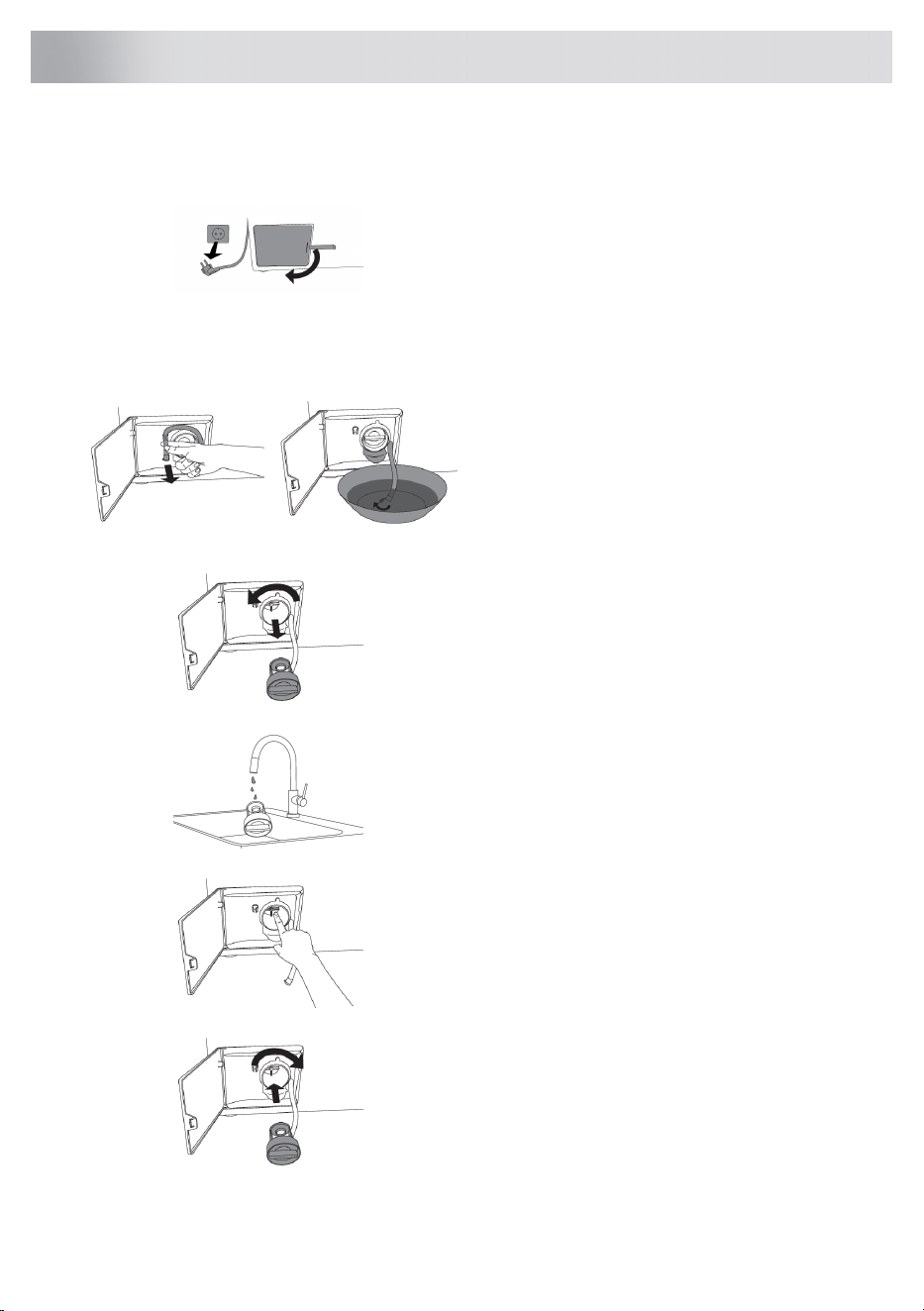
Cleaning the filter
The washing machine has a filter that will retain smaller objects such as coins, buttons, hair etc.
1
Before cleaning, drain the water from the washing
machine using the Drain program, and disconnect
the washing machine from the power mains.
Open the pump filter cover using appropriate
tools (emergency door opening tool is located on
the back side of the dispenser).
2
Release the water drain hose from the holder.
Before cleaning the filter, drain the water from the
washing machine by placing the end of the water
drain hose over a large shallow container and
opening the cap on the water drain hose.
3
Gradually rotate the filter in the counter-clockwise
direction and pull it out.
4
Clean the filter thoroughly under running water.
5
Remove all objects and impurities from the filter
housing and the impeller.
6
Replace the filter as shown in the figure and
fasten it by rotating in the clockwise direction. For
a good seal, the filter seal surface should be
clean.
Also re-install the drain hose.
33
Cleaning and maintenance
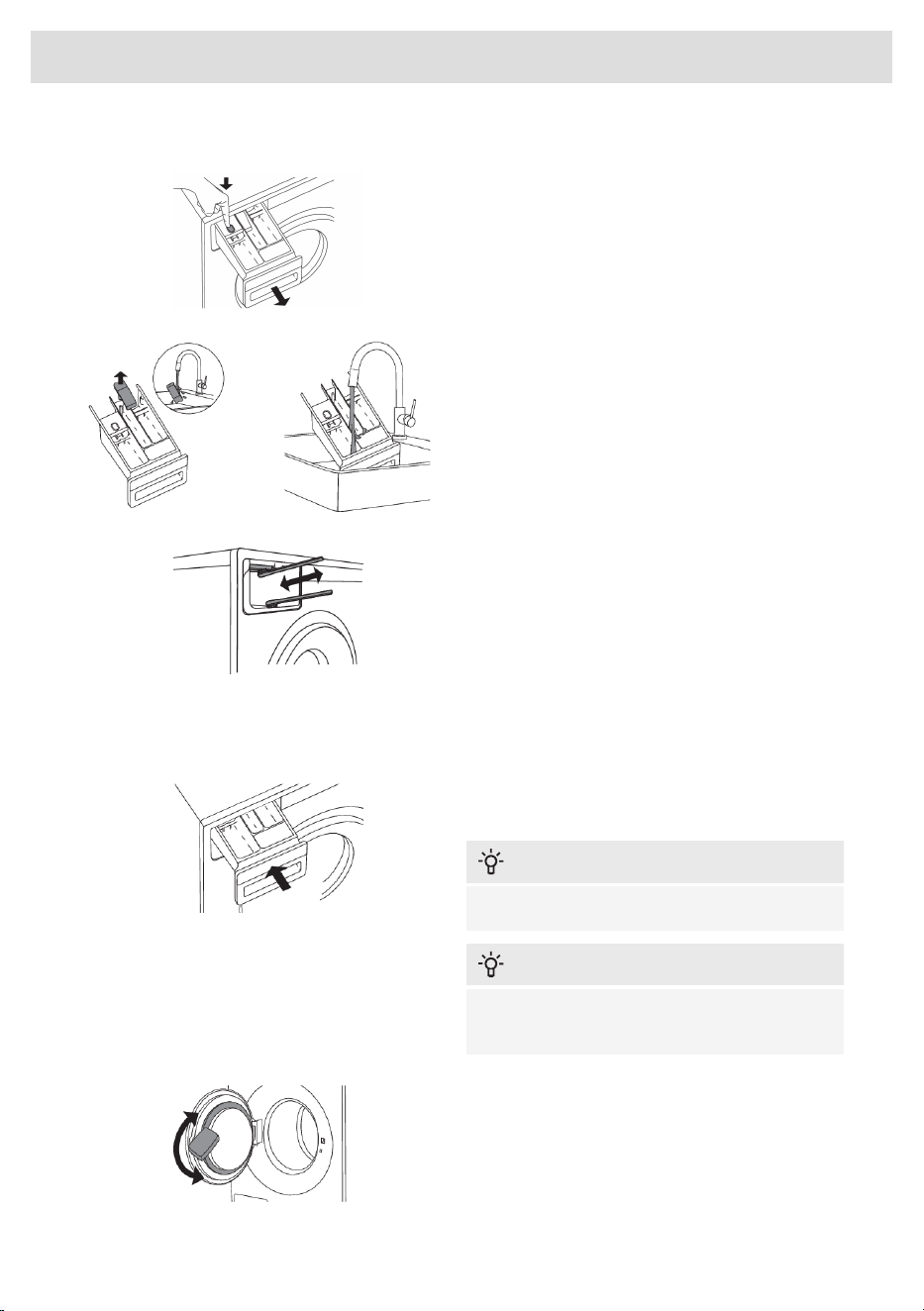
Cleaning the detergent compartment and door rubber gasket
1
Press the tab to completely remove the detergent
compartment from its housing.
2
Rinse and thoroughly clean the tray. You may
also remove the cap from the plug in the
conditioner compartment (A). Clean any residue
from the cap and tube.
Clean the detergent compartment (B) interior.
Replace the cap on the plug.
3
Use a brush to clean the nozzles on the upper
side of the detergent compartment housing.
After a washing program, nozzles that clean the
interior of the dispenser are automatically
switched on (only available in some models).
Use a brush to clean the lower part of the
detergent compartment housing.
4
Replace the detergent dispenser into its housing.
INFORMATION!
Close the detergent compartment!
INFORMATION!
Do not wash the detergent compartment in
the dishwasher!
5
After every wash, wipe the rubber door seal to
extend its useful life.
34
Cleaning and maintenance
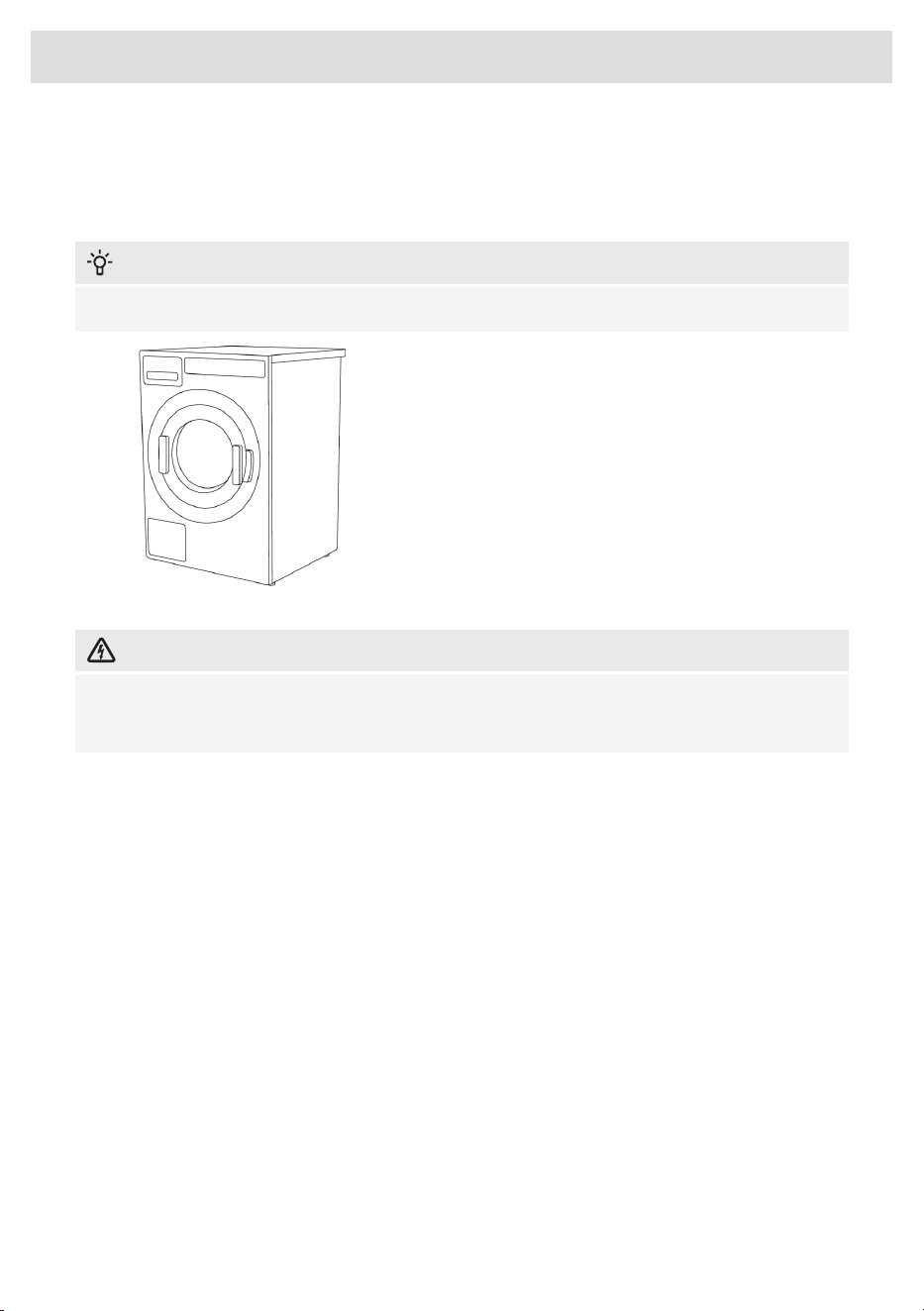
Cleaning the appliance exterior
Clean the appliance exterior and the display unit using a soft damp cotton cloth and water. Do not
use solvents or abrasive cleaners that could damage the appliance (please observe the
recommendations and warnings provided by the manufacturers of the cleaning agents).
INFORMATION!
Do not clean the washing machine with a jet of water!
ELECTRIC SHOCK!
Always disconnect the washing machine from the power mains before cleaning.
In the case of a 3 phase connection of the appliance, switch off the main socket switch.
Cleaning the washing machine interior against odours
Modern detergents often allow washing clothes at low temperatures. This means that residue may
accumulate in the washing machine, which in turn could cause odours.
To avoid such odorous, we recommend running the self-cleaning program (Drum-cleaning) once
per month. Use a small amount of powder detergent and do not put any laundry in the drum.
Cleaning the rinsing holes (under the agitator in the drum)
If you believe that objects like nails or paper clips fell into the washing machine drum, check the
area underneath the agitator. Such objects may rust (corrode) and cause stains on your clothes.
Nails and other sharp objects can also cause holes in the fabric.
Proceed as follows:
35
Cleaning and maintenance
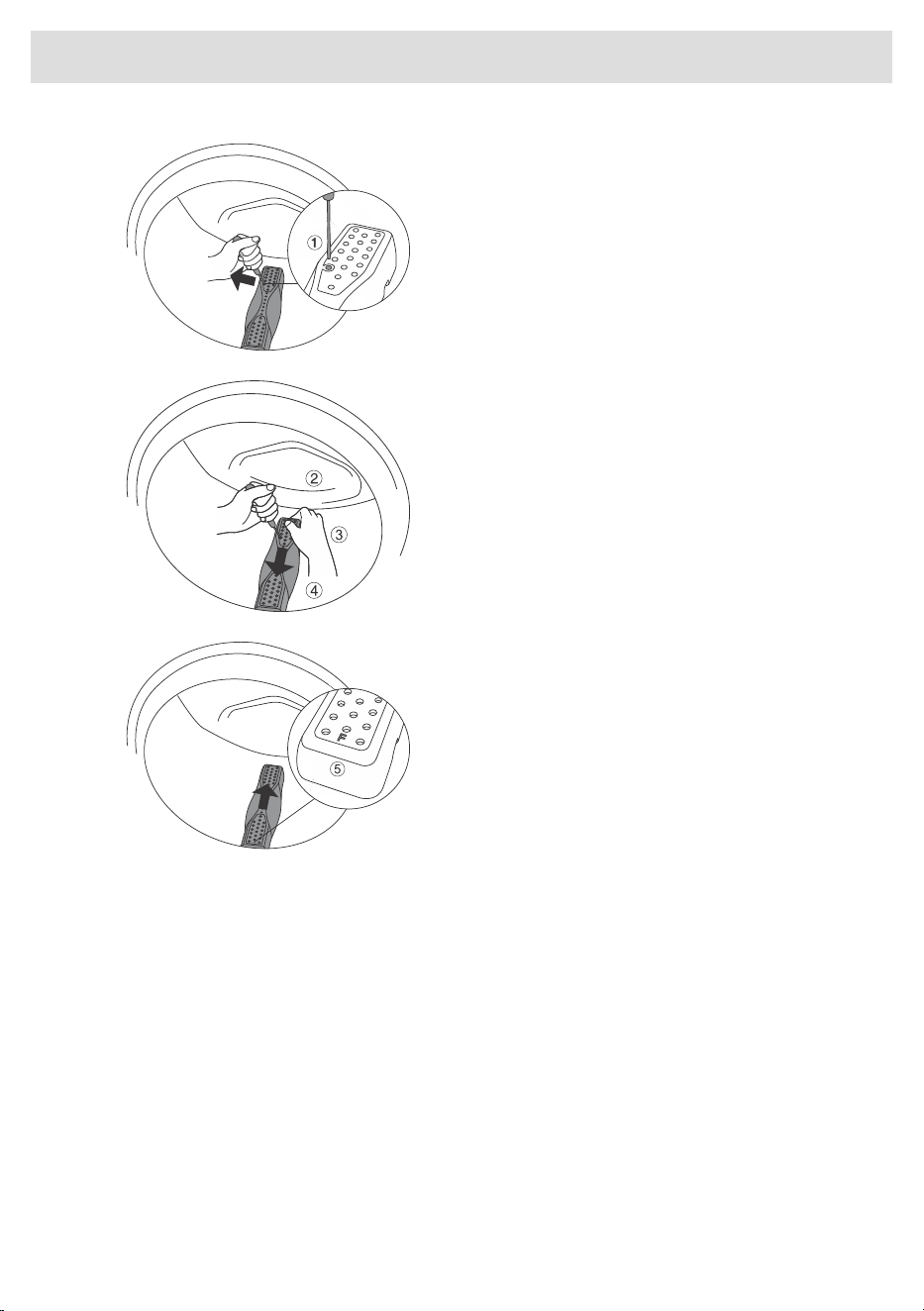
1
Insert a screwdriver or a similar tool into the slot
in the rib and carefully push it to the left.
2
Hold the rib with the other hand and pull it
towards you.
3
Lift the drum rib.
4
Remove any objects.
5
Place the rib into the installation slot indicated
with "F" towards you. Make sure all ribs are firmly
in place in their respective slots in the drum. Push
the rib inwards (as indicated by the arrow in the
figure) until it snaps.
If you are using hard water
If you are washing with hard water (causing limescale build-up), a greyish-white film may appear
on the washing machine drum. To remove this film, add vinegar (approximately 2 dl or sodium
bicarbonate “baking soda” (1 tablespoon or 15 g)) into the washing machine drum and select any
program with a temperature of 90 °C, or the Drum Cleaning program. See STEP 5: Choose the
program.
Repeat the process as necessary.
36
Cleaning and maintenance
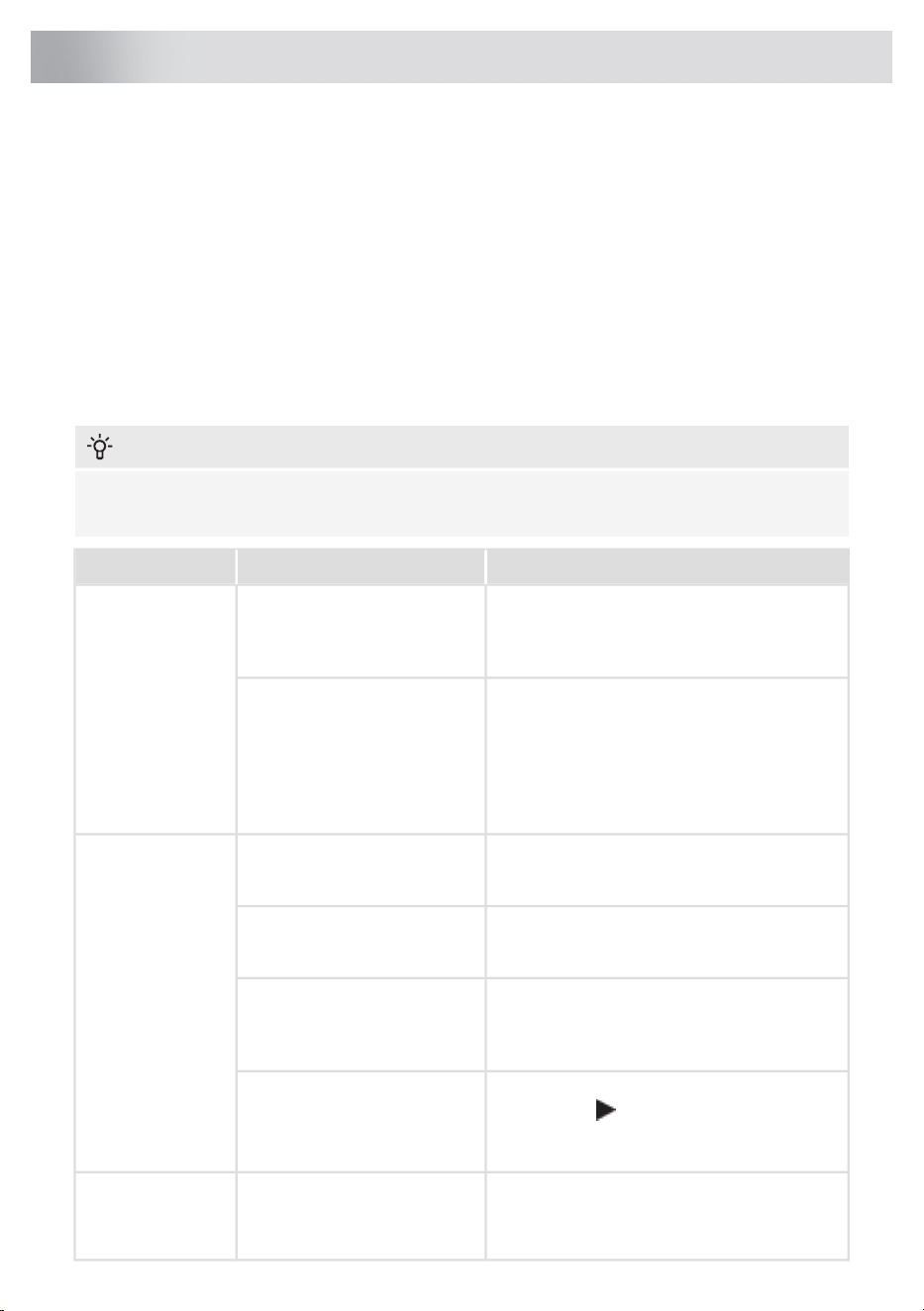
Disturbances from the environment (e.g. the power grid) may result in various error reports (see
Troubleshooting table). In such case:
• Switch off the appliance, wait for 1 minute, switch the appliance back on, and repeat the washing
program.
• If the error occurs again, call an authorized service unit.
• You will be able to solve most of the problems in appliance operation by yourself (see
Troubleshooting table).
• Repairs may only be carried out by an adequately trained person.
• Repair or any warranty claim resulting from incorrect connection or use of the washing machine
shall not be covered by the warranty. In such cases, the costs of repair shall be charged to the
user.
INFORMATION!
The warranty does not cover the errors or failures resulting from disturbances from the environment
(lightning strike, power grid failures, natural disasters etc.).
What to do?CauseProblem/error
Washing machine
door does not
open.
•• Drain the water using the Drain or
Spinning program. See "Step 5: Choose
the program".
Water level too high.
•• Wait for the water temperature to drop and
pump out the water. If you still cannot
Water temperature in the
washing machine is too
high. open the door, use the emergency door
opening tool (see chapter "ERRORS –
WHAT TO DO? / Manual opening of
washing machine door").
Washing program
is not in progress.
•• Check that the water supply is properly
connected and open.
The water in the inlet hose
is not open.
•• Firmly press on the washing machine door
until you hear two clicks when it is closed.
Washing machine door is
not properly closed.
•• Check if the plug is connected to the
power outlet and whether there is electric
current (or voltage) in the outlet.
There is no voltage in the
power outlet.
•• To cancel the delayed start function, press
the Start button and hold it for three
seconds.
Delayed start function has
been selected.
Washing time is
longer than
•• Program duration can be up to 60%
longer than initially anticipated in the
normal progress.
Low inlet water
temperature.
anticipated (the
time is regularly
37
Errors – what to do?

What to do?CauseProblem/error
•• Program time is extended due to the need
to redistribute the laundry in the drum.
UKS* (*unbalance system)
stability system engaged
due to unevenly distributed
laundry.
updated on the
display unit).
•• Washing machine needs more time
because the power mains voltage is too
low.
Low mains voltage.
•• Program time is extended by the duration
of the power supply failure.
Power supply failure.
Display does not
light up.
•• Check if the plug is connected to the
power outlet and whether there is electric
current (or voltage) in the outlet.
There is no voltage in the
appliance.
The wording on
the display unit is
•• Choose the preferred language (see
"STEP 5 / Settings / Choosing the
language").
You have not selected your
preferred language yet.
not in your
language.
Wet laundry
• Loosen and redistribute the laundry and
select the Drain or Spinning program.
• A small amount of laundry
will often be unevenly
distributed.
("unbalance" will
appear on display)
• Increase the amount of laundry in the
washing machine and restart the program
(see "STEP 7: Start the wash / Adding or
removing laundry after the start of the
program").
There are traces of
grease (or grease
•• Wash the laundry again. When your
laundry is this heavily soiled, add more
washing powder or use a liquid detergent
The laundry was very
greasy.
rolls) on the
clothes.
in combination with a more powerful
(longer) program.
There are still
stains on the
laundry.
•• Use a detergent that contains bleach.You used bleach-free liquid
detergent or powder
detergent for coloured
laundry.
•• Use special stain removers.You selected an unsuitable
program.
There are white
residues of
• Immediately rinse the laundry again.• This is not due to poor
rinsing by your washing
machine, but rather due to
• Use liquid detergents that do not contain
zeolites.
washing powder
on the laundry.
phosphate-free detergents
Table continued from last page
38
Errors – what to do?

What to do?CauseProblem/error
which contain ingredients
(zeolites) for water
• Try removing any residues with a brush.
softening. These
ingredients may be
deposited on the laundry.
There is powder
detergent left in
•• Clean the net on the water supply hose.Water pressure not high
enough.
the main wash
compartment of
• Choose higher water level or extra rinse
(see "STEP 6 / Choose program settings").
• Some washing powders
may stick strongly to the
detergent compartment if
it is empty.
the detergent
compartment.
• Wipe the detergent compartment before
adding the powder detergent.
There is
conditioner left in
• Make sure the plug cap in the conditioner
compartment of the detergent
compartment is positioned correctly.
• Plug cap is not positioned
correctly or it is clogged.
the conditioner
compartment of
• Clean the plug cap (see chapter
"CLEANING AND MAINTENANCE /
Cleaning the detergent compartment").
the detergent
compartment.
Odour in the
washing machine
drum.
•• Check if the filter is clean.Residues of fabric,
washing detergent, and
conditioner in the filter.
•• Choose a self-cleaning (Drum Cleaning)
program (see "STEP 5: Choose the
program").
Development of germs and
bacteria.
Machine is moving
during operation.
•• Level the feet (see chapter
"INSTALLATION AND CONNECTION /
Adjusting the feet").
Feet not adjusted correctly.
•• Remove the transport bolts (see chapter
"BEFORE USING THE APPLIANCE FOR
THE FIRST TIME /Transport protection").
Transport bolts not
removed.
Machine is moving
during spinning.
• The washing machine will automatically
decrease the spin speed if vibration is too
strong.
• Unevenly distributed
laundry or not enough
laundry.
• Increase the amount of laundry in the
washing machine and restart the program
(see "STEP 7: Start the wash / Adding or
removing laundry after the start of the
program").
Table continued from last page
39
Errors – what to do?

What to do?CauseProblem/error
Noisy (loud) drain
pump
• Make sure the drain pump filter is clean.• Drain pump filter is
clogged.
• Make sure the filter housing is clean.
• Filter housing and drain
pump impeller are
clogged.
(See chapter "CLEANING AND
MAINTENANCE/Cleaning the filter")
Table continued from last page
40
Errors – what to do?
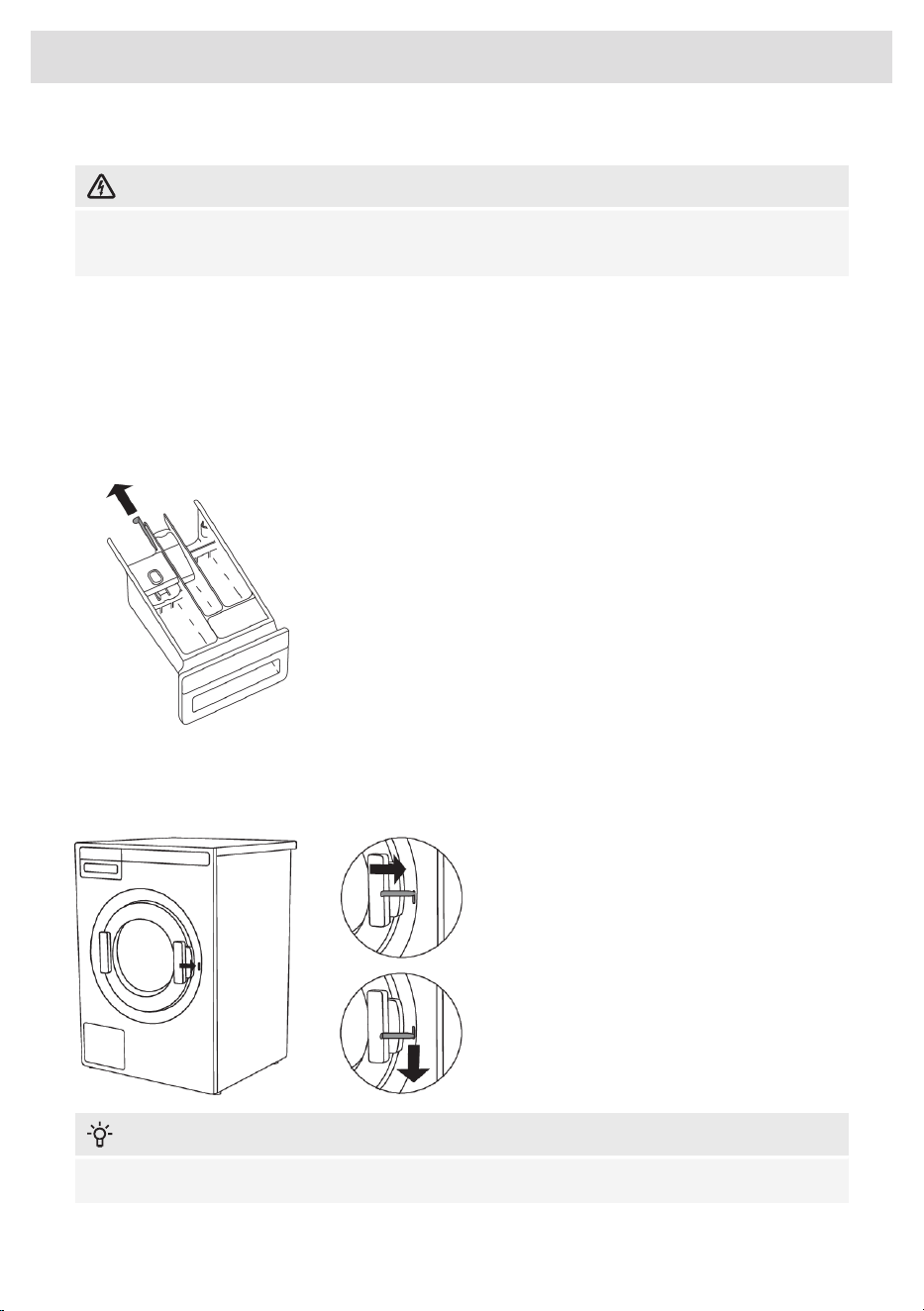
Manual opening of washing machine door
ELECTRIC SHOCK!
Washing machine door may be opened manually if the appliance is not connected to the power
mains and if the water has been pumped out of the machine.
A. Choose the Spinning or Drain program to pump the water from the machine. If this does not
work, water has to be drained from the washing machine drum manually. See chapter "Cleaning
the trap and drain pump" in the chapter "CLEANING AND MAINTENANCE".
B. Make sure the main switch is off and that the plug is disconnected from the power outlet.
If you have a washing machine with a 3phase connection, do not pull the plug out of the power
outlet.
C. Take the emergency door opening tool (found at the back of the detergent compartment) and
insert it into the upper part of the slot on the right-hand side of the washing machine door latch.
D. Press the key (key=the emergency door opening tool) downwards (all the way, until you hear a
click) to unlock the washing machine door. When the door is unlocked, open it by pulling towards
you.
INFORMATION!
If the washing machine door still cannot be opened, call a service technician.
41
Errors – what to do?
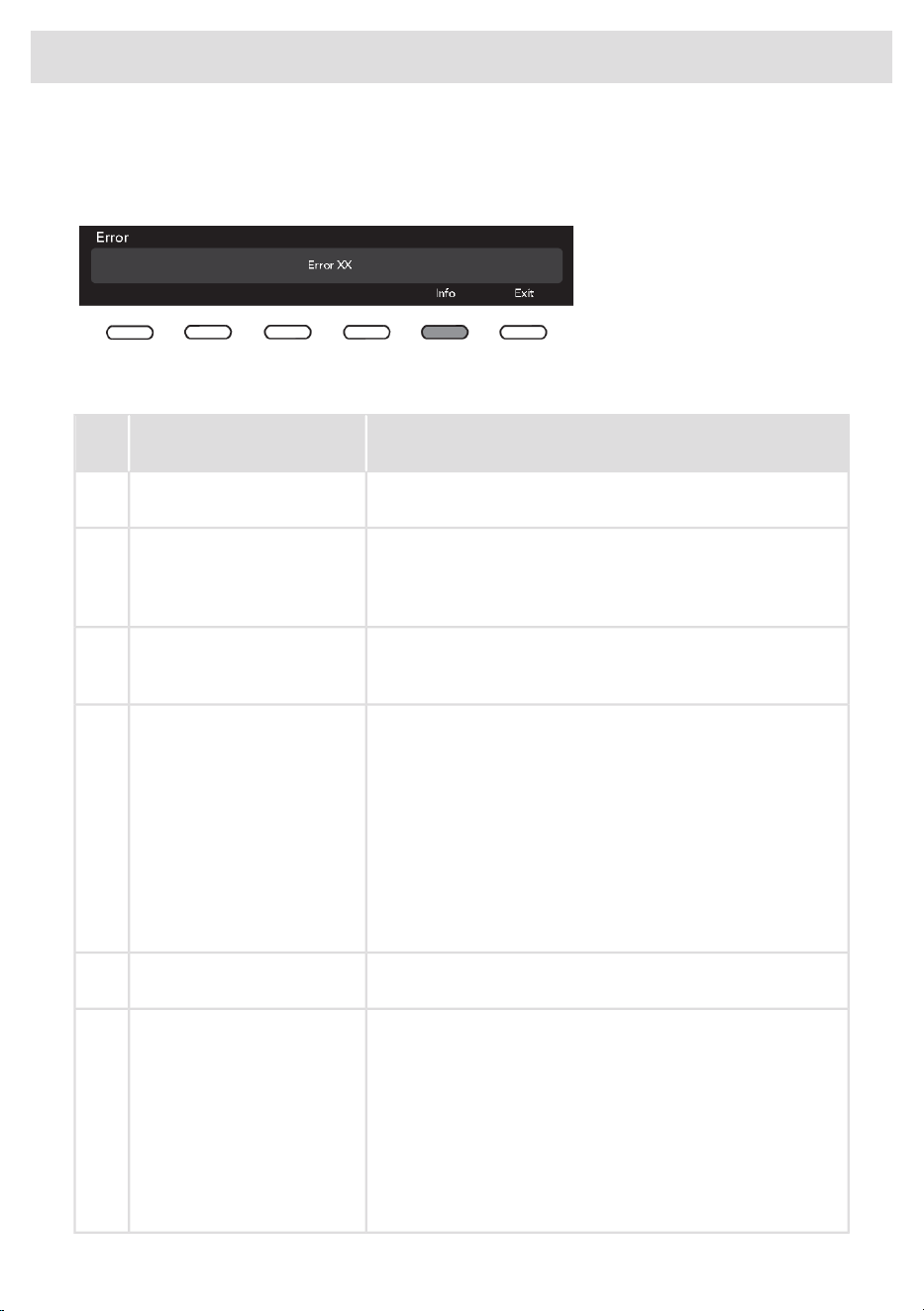
Failure display
In case of a failure while a program is in progress, the relevant Error XX is indicated on the display
unit.
Press the INFO button to display
the error description.
Switch off the appliance and turn
it back on.
Errors indicated on the display unit may include the following:
What to do?Error indication on the
display unit
Error
Restart the program. If the error reoccurs, call a service
technician.
Incorrect settingsE0
Temperature sensor failureE1
• Inlet water too cold. Repeat the washing program.
• If the appliance reports this error again, call a service
technician.
Turn the appliance OFF and then switch it again ON. Start
the program again. If the error reoccurs, call service
technician.
Door lock errorE2
Check the following:Water filling errorE3
• is the water inlet valve open,
• is the filter on the water inlet hose clean,
• is the water supply hose deformed (clipped, clogged
etc.),
• is the pressure in the water mains between 0.1 and 1 MPa
(1–10 bar).
Then, press the Exit button to resume the program.
If the error reoccurs, call a service technician.
Restart the program; if the error reoccurs, call a service
technician.
Water heating errorE6
Check the following:Water draining errorE7
• is the pump filter clean,
• is the drain hose clogged,
• is the drain clogged,
• is the drain hose fitted at the right height (see chapter on
drain hose installation in the instruction manual).
Then, press the Exit button again. If the error reoccurs, call
a service technician.
42
Errors – what to do?
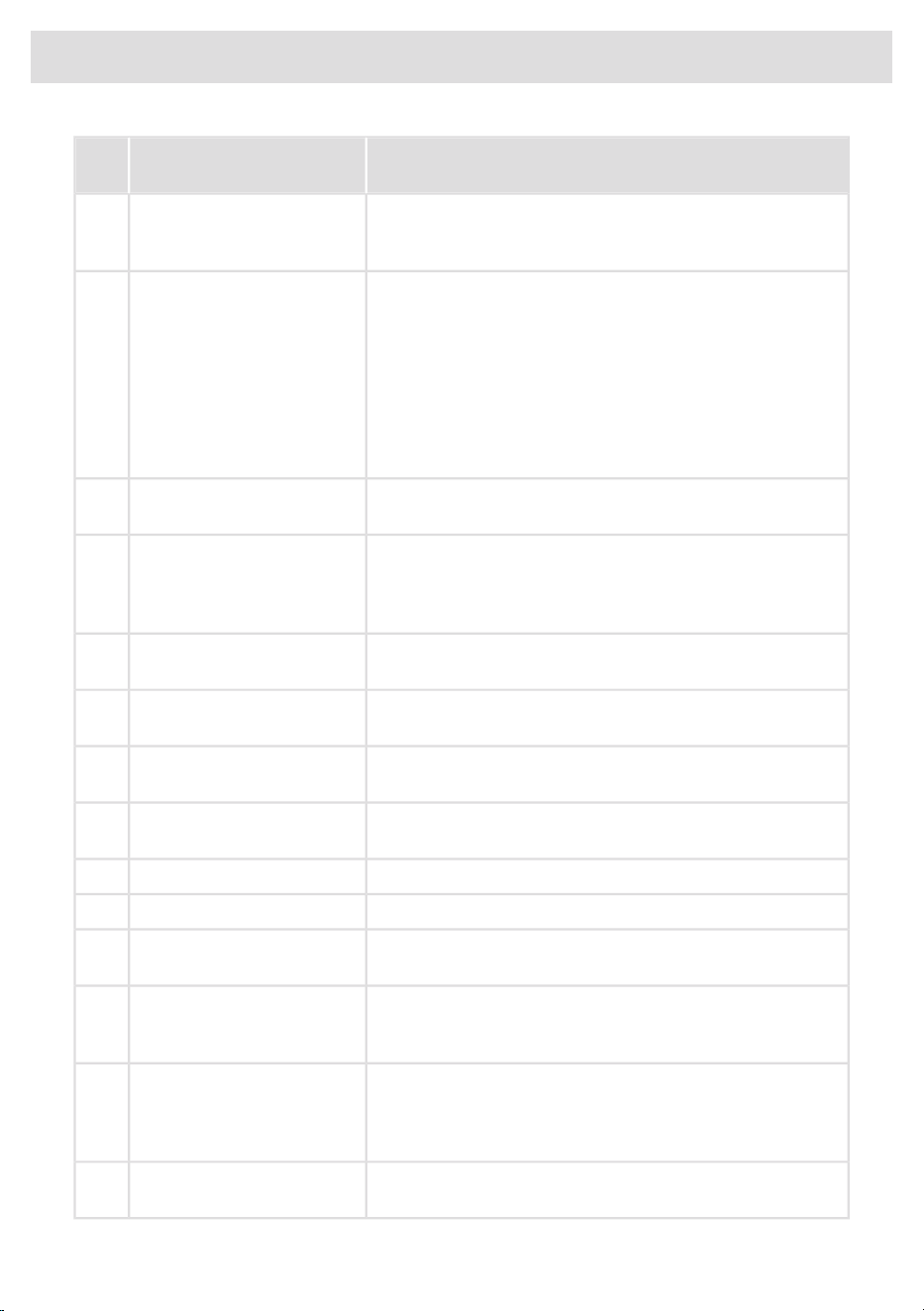
What to do?Error indication on the
display unit
Error
Turn the appliance OFF and then switch it again ON. Start
the program again. If the error reoccurs, call service
technician.
Water level sensor errorE10
If there is water in the drum that exceeds a certain level, and
an error is reported on the display unit, the washing program
will be interrupted and water will be pumped out of the
washing machine. Restart the programme. If the error
reoccurs, call a service technician.
OverflowE11
If there is water in the drum that exceeds a certain level, and
an error is reported on the display unit, while the washing
machine continues to add water, close the water tap and call
a service technician.
Restart the program; if the error reoccurs, call a service
technician.
Motor error / motor control
error
E12
Door is closed, but it cannot be unlocked. Turn off the washing
machine, then turn it back on. If the error reoccurs, call a
service technician. See instructions for opening the door –
chapter on manual door opening.
Error while unlocking the doorE23
Turn off the appliance and turn it back on. If the error
reoccurs, call a service technician.
Error in UI** and PMCU
communication.
E36
Call a service technician.PMCU/UI** software versions
are not compatible
E37
Restart the program. If the error reoccurs, call a service
technician.
Voltage value out of range.E40
Restart the program. If the error reoccurs, call a service
technician.
The value of frequency out of
range.
E41
Call service centre.EADBS communication error.E45
Manually distribute the laundry and run the spinning program.Unevenly distributed laundry.
Open and firmly close the door again to final position. If the
error reoccurs, call a service technician.
Unable to lock door
Message "Sterile Tube alert" is displayed every 40 completed
wash cycles. Use the self-cleaning program (DRUM
CLEANING); see STEP 5.
Warning – Self-cleaning
program
Wait for the process to finish. If no errors are shown after the
process, a new cycle can be run.
Preparing to door unlocking.
(press INFO): Draining must
be performed. Wait for door
unlocking.
Alert about reduced water flow in the pumping stage. Please
check user manuals.
Water drain system alert
** UI = (User Interface)
Table continued from last page
43
Errors – what to do?

Unevenly distributed laundry or lumps of laundry in the washing machine drum may cause problems
such as vibration and noisy operation. The washing machine will sense this and activate the UKS*
(*unbalance system).
Smaller loads (e.g. one towel, one sweater, one bathrobe etc.) or clothes made of materials with
special geometrical properties are virtually impossible to distribute evenly across the washing
machine drum (slippers, large items etc.). This results in several attempts to redistribute the laundry,
which in turn leads to longer program duration. In extreme cases of unfavourable conditions, the
program can be completed without the spinning cycle.
UKS* (* unbalance system) allows stable operation and extends the useful life of the appliance.
44
Errors – what to do?
Before calling a service technician
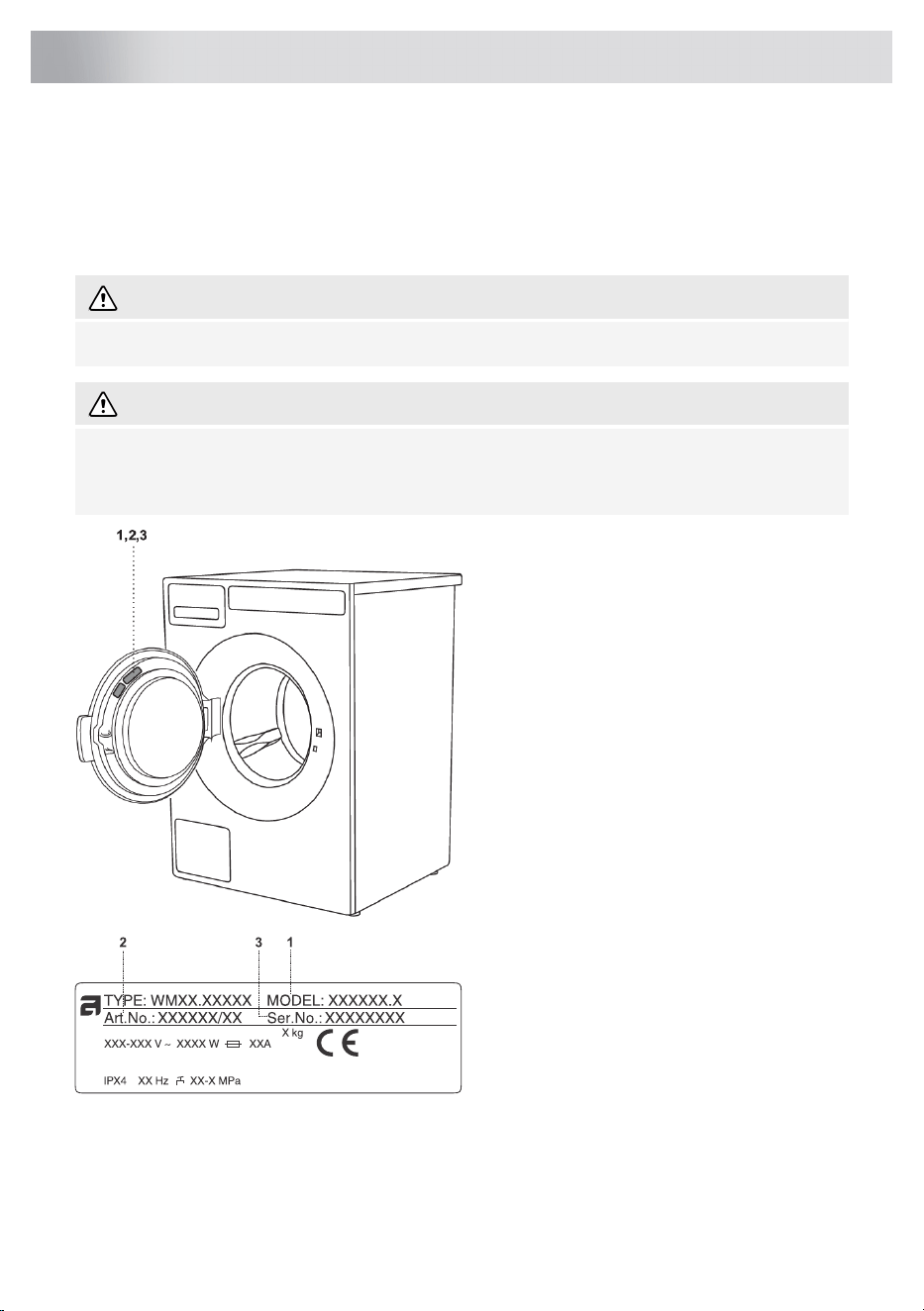
When you contact a service centre, please state the model (1), type (2), and serial number (3) of
your washing machine.
Model, type, and serial number are indicated on the rating (type) plate located on the washing
machine door casing.
WARNING!
In case of a failure, only use approved spare parts by authorized manufacturers.
WARNING!
Repair or any warranty claim resulting from incorrect connection or use of the washing machine
shall not be covered by the warranty. In such cases, the costs of repair shall be charged to the
user.
45
Service
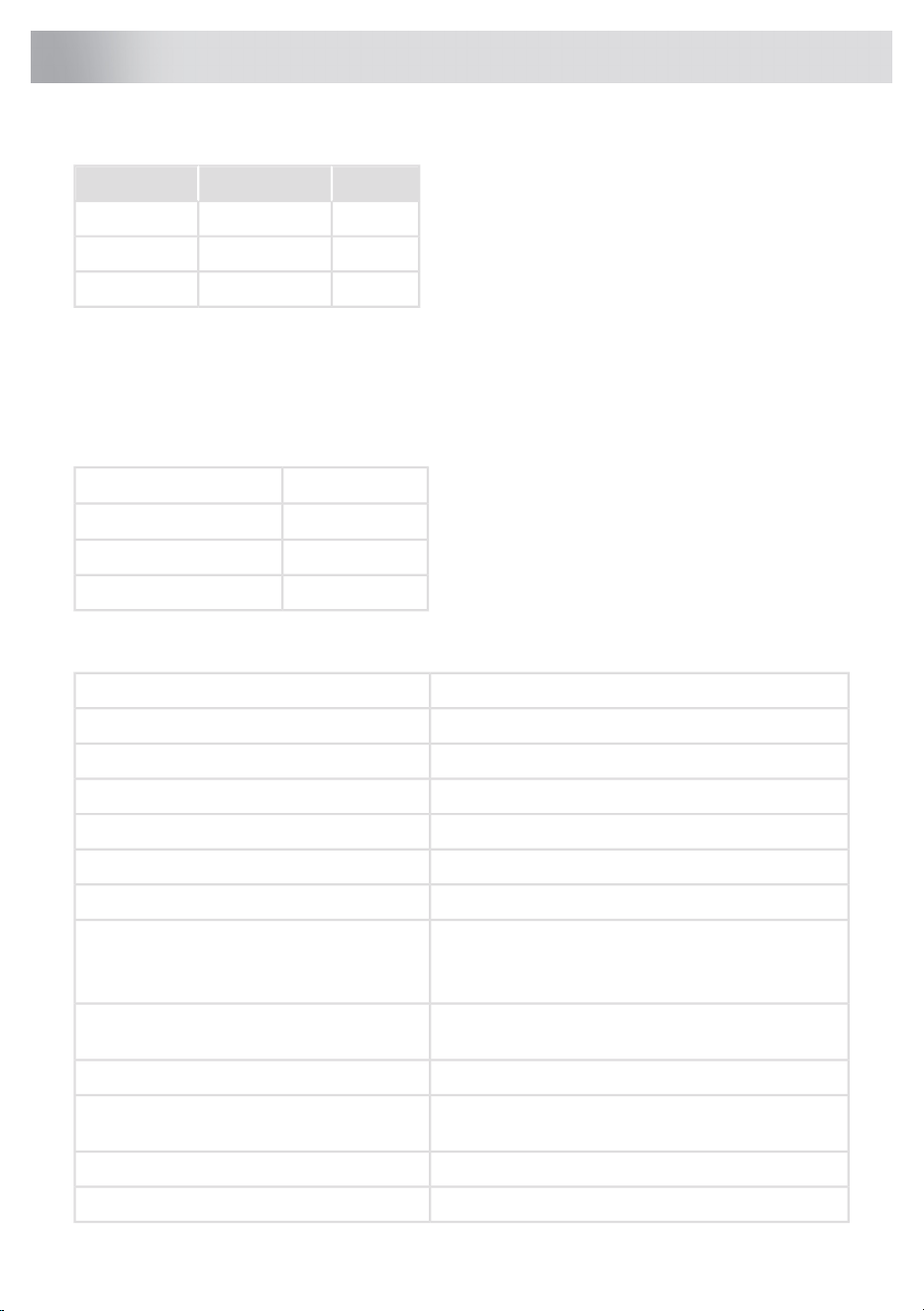
Performance data
Temp. °CMaximum loadProgram
7 /3,5* /2
1*)
kgEco 40-60
1*)
607 /3,5* kgWhite/Colour
2)
403,5 kgSynthetics
2)
1*)
PRODUCT INFORMATION SHEET According to EU-Regulation No. 2019/2014
2)
40 °C program for testing institutes. The 40 °C option has to be set.
* Half load
Energy labelling
EN 60456 /
1*)
European test standard
Eco 40-60
1*)
Washing program
Cold water 15 °CConnection
IEC-60704-2-4Noise testing method
Technical information
595 mmWidth
850 mmHeight
591 mmDepth
76,5 /77,0 /82,5 kg (depending on the model)Weight
60 lDrum volume
See rating plateRated power
See rating plateHeater power
0,1–1 MPaWater pressure
1–10 kp/cm
2
10–100 N/cm
2
< 70 dB re 20 µPaEmission sound pressure level in accordance
with EN ISO 11203
Stainless steelMaterial for the drum and dispenser
Hot-dip galvanized and powder coated sheet metal,
or stainless steel sheet (depending on model)
Housing material
1,5 m, pex hoseWater connection
1,6 m, polypropylene hoseDrain hose
46
Technical information
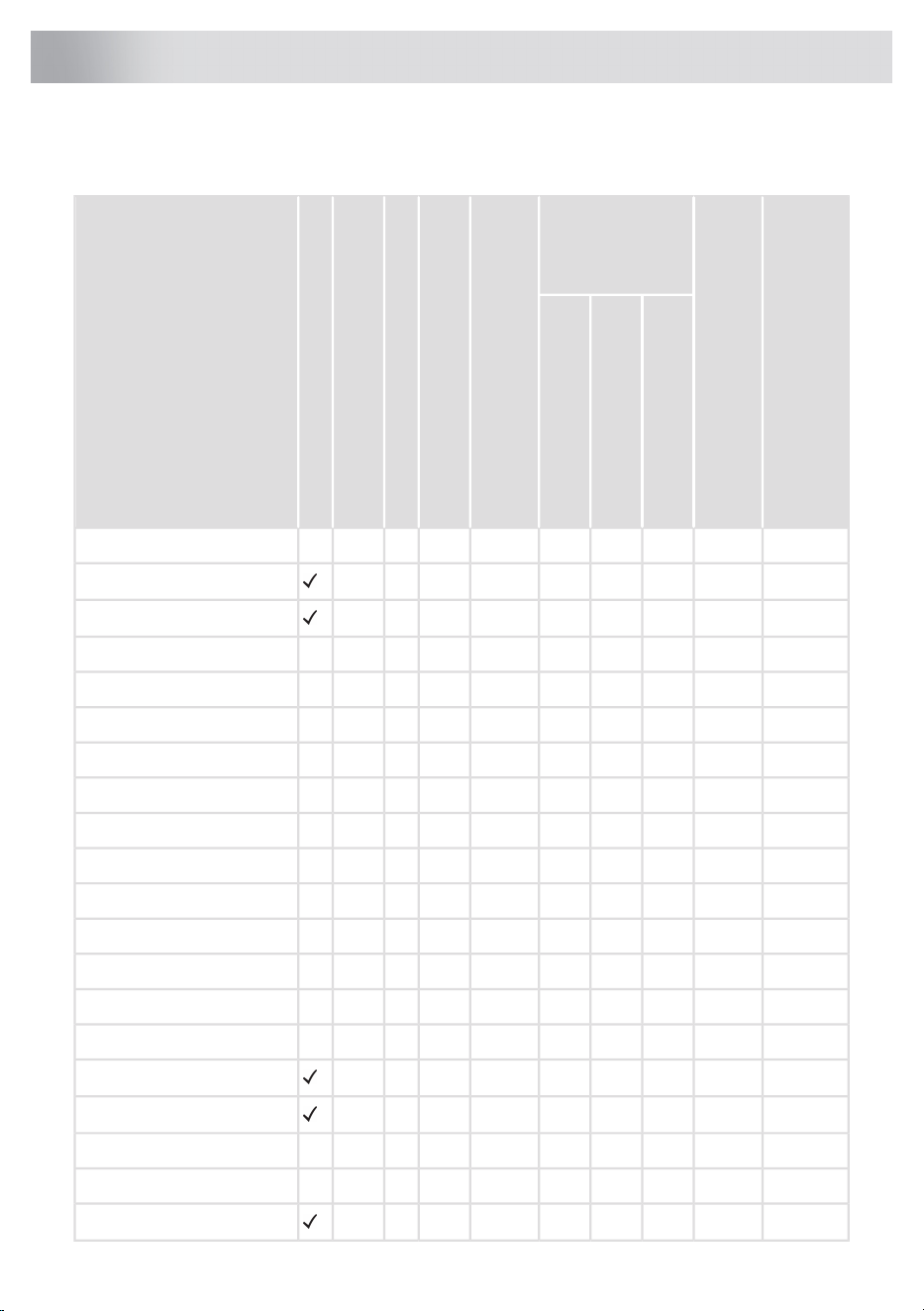
WMC6763PC
7kg_1600_3kW
Program duration
(approximately, in hours
and minutes)
Power consumption
(approximately, kWh)
Water
consumption
(approximately, in
litres)
Spinning speed
(rpm)
Maximum load
(kg)
Number of rinses
Temp. °C
Prewash
Program
Sum
Cold
Hot
2:550,904646160072Eco 40-60
1:401,307166516007360Heavy wash 60°C
2:102,307166516007390Heavy wash 90°C
0:400,145045516007220White/Color 20°C
0:490,46505016007240White/Color 40°C
0:591,30505016007260White/Color 60°C
0:590,72313116003,5260White/Color 60°C *
1:282,305849916007290White 90°C
0:350,30403288003,5240Super quick wash 40°C
0:400,70484088003,5260Super quick wash 60°C
0:400,194032812003,5240Synthetic 40°C
0:350,05353058003230Wool/Hand 30°C
0:220,071414160071Rinse
0:170,0616007/Spinning
0:010,01/7/Drain
1:301,207671516007360MOP 60°C
2:002,207671516007390MOP 90°C
0:550,265445916007240Microfibre 40°C
1:150,906253916007260Microfibre 60°C
1:350,806863516007340Disinfection 40°C
47
Program chart
Program duration
(approximately, in hours
and minutes)
Power consumption
(approximately, kWh)
Water
consumption
(approximately, in
litres)
Spinning speed
(rpm)
Maximum load
(kg)
Number of rinses
Temp. °C
Prewash
Program
Sum
Cold
Hot
2:251,507671516007360Disinfection 60°C
2:202,707671516007390Disinfection 90°C
2:301,208677916007460Allergy Cotton 60°C
3:002,808677916007490Allergy Cotton 90°C
1:400,355546912003,5340Allergy Synthetic 40°C
1:550,806354912003,5360Allergy Synthetic 60°C
1:101,1072639/390Cleaning
16007Program A
16007Program B
16007Program C
16007Program D
16007Program E
16007Program F
16007Program G
16007Program H
16007Program I
16007Program J
Table continued from last page
48
Program chart
WMC6743PB
7kg_1400_3kW
Program duration
(approximately, in hours
and minutes)
Power consumption
(approximately, kWh)
Water
consumption
(approximately, in
litres)
Spinning speed
(rpm)
Maximum load
(kg)
Number of rinses
Temp. °C
Prewash
Program
Sum
Cold
Hot
2:550,904646140072Eco 40-60
1:401,307166514007360Heavy wash 60°C
2:102,307166514007390Heavy wash 90°C
0:400,145045514007220White/Color 20°C
0:490,46505014007240White/Color 40°C
0:591,30505014007260White/Color 60°C
0:590,72313114003,5260White/Color 60°C *
1:282,305849914007290White 90°C
0:350,30403288003,5240Super quick wash 40°C
0:400,70484088003,5260Super quick wash 60°C
0:400,194032812003,5240Synthetic 40°C
0:350,05353058003230Wool/Hand 30°C
0:220,071414140071Rinse
0:170,0614007/Spinning
0:010,01/7/Drain
1:301,207671514007360MOP 60°C
2:002,207671514007390MOP 90°C
0:550,265445914007240Microfibre 40°C
1:150,906253914007260Microfibre 60°C
1:350,806863514007340Disinfection 40°C
49
Program chart
Program duration
(approximately, in hours
and minutes)
Power consumption
(approximately, kWh)
Water
consumption
(approximately, in
litres)
Spinning speed
(rpm)
Maximum load
(kg)
Number of rinses
Temp. °C
Prewash
Program
Sum
Cold
Hot
2:251,507671514007360Disinfection 60°C
2:202,707671514007390Disinfection 90°C
2:301,208677914007460Allergy Cotton 60°C
3:002,808677914007490Allergy Cotton 90°C
1:400,355546912003,5340Allergy Synthetic 40°C
1:550,806354912003,5360Allergy Synthetic 60°C
1:101,1072639/390Cleaning
14007Program A
14007Program B
14007Program C
14007Program D
14007Program E
14007Program F
14007Program G
14007Program H
14007Program I
14007Program J
Table continued from last page
50
Program chart
WMC6742P
7kg_1400_2kW
Program duration
(approximately, in hours
and minutes)
Power consumption
(approximately, kWh)
Water
consumption
(approximately, in
litres)
Spinning speed
(rpm)
Maximum load
(kg)
Number of rinses
Temp. °C
Prewash
Program
Sum
Cold
Hot
2:551,004646140072Eco 40-60
1:591,507166514007360Heavy wash 60°C
2:402,507166514007390Heavy wash 90°C
0:400,155045514007220White/Color 20°C
0:490,50505014007240White/Color 40°C
0:591,42505014007260White/Color 60°C
0:590,72313114003,5260White/Color 60°C *
1:522,505849914007290White 90°C
0:350,33403288003,5240Super quick wash 40°C
0:400,73484088003,5260Super quick wash 60°C
0:400,224032812003,5240Synthetic 40°C
0:350,05353058003230Wool/Hand 30°C
0:220,071414140071Rinse
0:170,0614007/Spinning
0:010,01/7/Drain
1:491,307671514007360MOP 60°C
2:302,407671514007390MOP 90°C
0:550,285445914007240Microfibre 40°C
1:341,106253914007260Microfibre 60°C
1:400,906863514007340Disinfection 40°C
51
Program chart
Program duration
(approximately, in hours
and minutes)
Power consumption
(approximately, kWh)
Water
consumption
(approximately, in
litres)
Spinning speed
(rpm)
Maximum load
(kg)
Number of rinses
Temp. °C
Prewash
Program
Sum
Cold
Hot
2:451,607671514007360Disinfection 60°C
2:402,907671514007390Disinfection 90°C
2:491,308677914007460Allergy Cotton 60°C
3:303,008677914007490Allergy Cotton 90°C
1:400,385546912003,5340Allergy Synthetic 40°C
2:050,876354912003,5360Allergy Synthetic 60°C
1:201,2572639/390Drum Cleaning
14007Program A
14007Program B
14007Program C
14007Program D
14007Program E
14007Program F
14007Program G
14007Program H
14007Program I
14007Program J
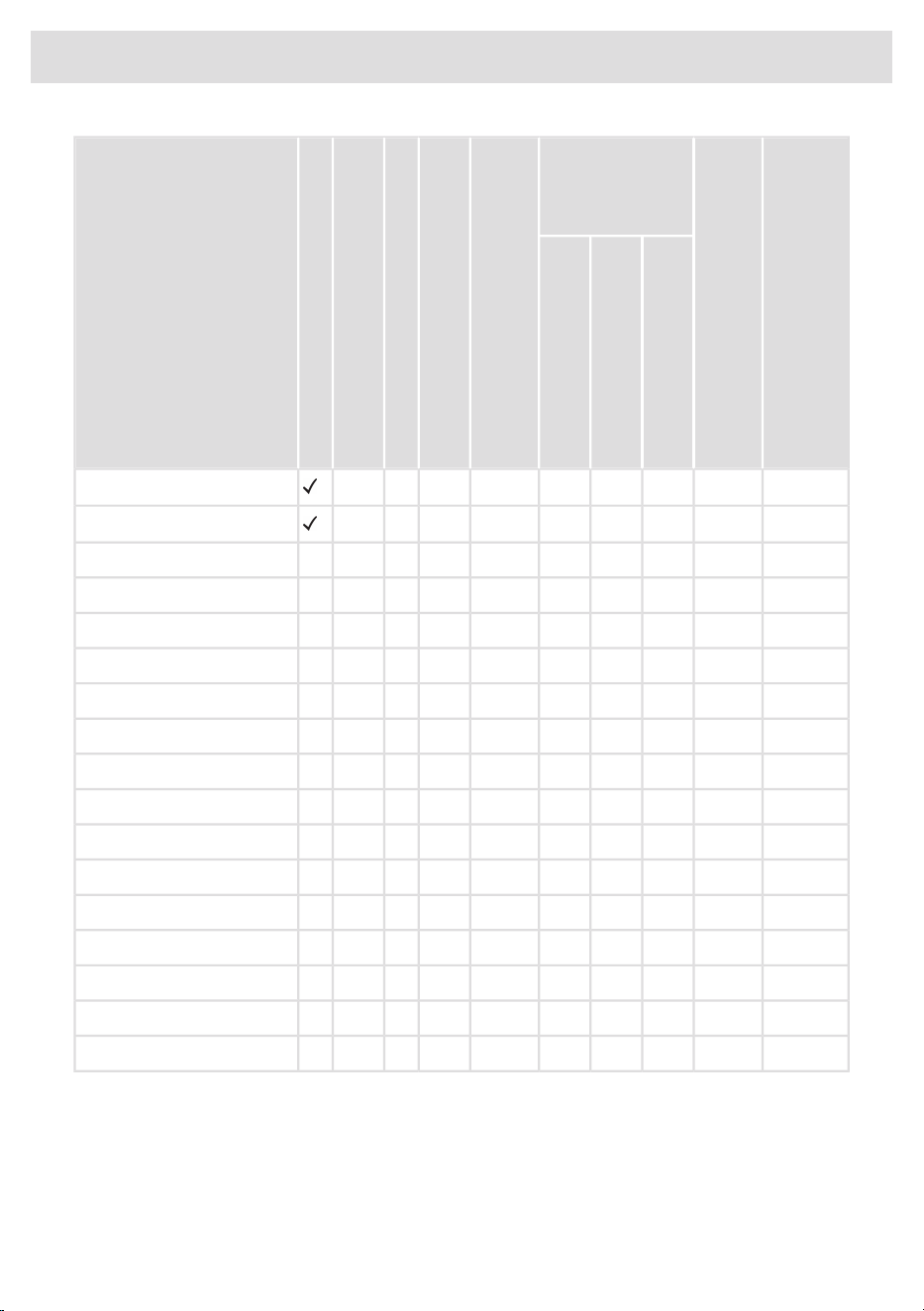
The above table includes several examples of the use of energy, water, and time for several different
program settings. Actual consumption or duration may vary depending on the water pressure, water
hardness, water inlet temperature, room temperature, weight and type of load, changes in power
Table continued from last page
52
Program chart

supply, and selected options or settings. In the examples specified here, the draining is set to Normal
and no additional options are selected.
Maximum or nominal load applies to laundry prepared pursuant to the IEC 60456 standard.
Setting possible on the program
* Half
Adjustment of the displayed washing time
Advanced technology allows the appliance to sense the amount of laundry and add the required
amount of water during the washing process. Depending on the washing load, washing time can
be longer or shorter and the time displayed will be adjusted accordingly.
Moreover, displayed washing time may change due to differences in inlet water temperature. At low
inlet water temperatures, washing time can be longer; at higher temperatures, it can be shorter.
Unevenly distributed laundry or lumps of laundry in the washing machine drum can cause problems
such as vibration and noisy operation. The appliance can sense such lumps and will try to redistribute
the laundry. Smaller loads (e.g. one towel, one sweater, one bathrobe etc.) or clothes made of
materials with special geometrical properties are virtually impossible to distribute evenly across the
washing machine drum (slippers, large items etc.). This results in several attempts to redistribute
the laundry, which in turn leads to longer program duration.
53
Program chart

Disposal / recycling of packaging
Our product packaging is made of environmentally friendly materials that can be recycled,
disposed of, or destroyed without any hazard to the environment. To this end, packaging materials
are labelled appropriately.
The symbol on the product or its packaging indicates that the product should not be treated as
normal household waste. Take the product to an authorized collection centre for waste electric and
electronic equipment processing.
When disposing of an appliance, at the end of its useful life, remove all power cords and destroy
the door latch and switch to prevent the door from locking or latching (child safety).
Correct disposal of the product will help prevent any negative effects on the environment and health
of people which could occur in case of incorrect product removal. For detailed information on removal
and processing of the product, please contact the relevant authority in charge of waste management,
your waste disposal service, or the store where you bought the product.
54
Removal
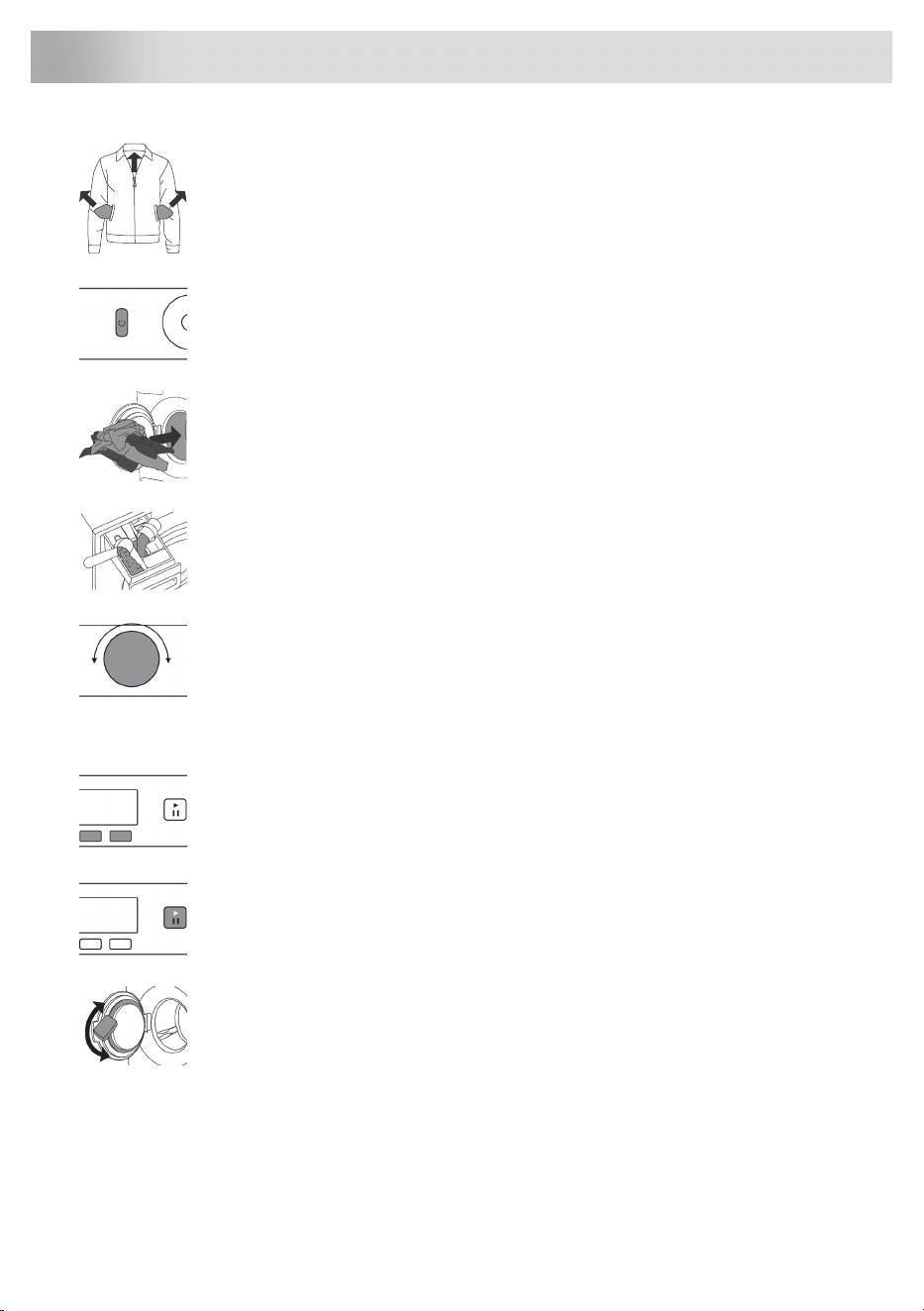
Sort the laundry.
Close the zippers. Empty the pockets and turn them inside out. Check the
laundry care symbols. Sort the laundry based on how heavily soiled it is, by
colour, and by material.
1.
Switch on the main ON/OFF switch
2.
Open the washing machine door and insert the laundry.
Before doing so, make sure the drum is empty.
3.
Add the detergent and the conditioner.
Recommended detergent amount is usually indicated on the packaging. For
smaller wash loads, use a smaller amount of detergent.
4.
Choose the washing program.
Turn the program selector knob to the desired washing program. Selected
program will be indicated on the display unit.
Maximum load is indicated on the rating plate (see PROGRAM TABLE in the
instruction manual).
5.
Choose the program settings
Program settings can be set for some programs. See chapter: SETTINGS
6.
Close the washing machine door and press the ”START” button.
Anticipated washing time, in hours and minutes, will be indicated on the display.
7.
End of program
Open the door and remove the laundry from the washing machine.
See chapter "CLEANING AND MAINTENANCE".
Close the door.
Switch off the main on/off switch.
Close the water tap and remove the power plug from the power socket (unless
you have a washing machine with a 3phase connection).
8.
55
Quick guide
820881
Gorenje, Partizanska 12, 3320 Velenje, Slovenija • www.asko.com
We reserve the right to make changes.
-a18