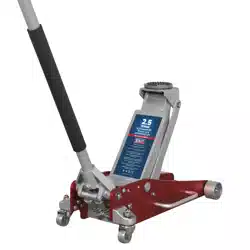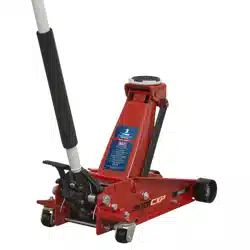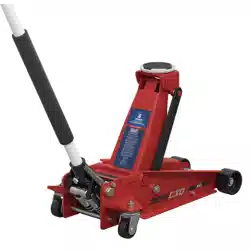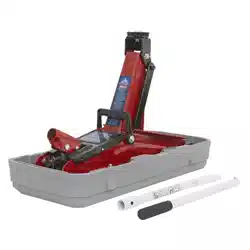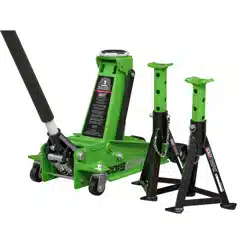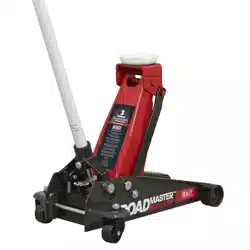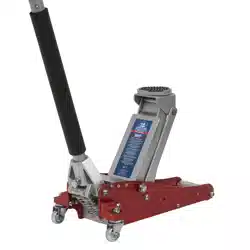
1.5TONNE ALUMINIUM/STEEL TROLLEY
JACK WITH ROCKET LIFT
MODEL NO: RJAS1500.V3
Thank you for purchasing a Sealey product. Manufactured to a high standard, this product will, if used according to these
instructions, and properly maintained, give you years of trouble free performance.
IMPORTANT: PLEASE READ THESE INSTRUCTIONS CAREFULLY. NOTE THE SAFE OPERATIONAL REQUIREMENTS, WARNINGS & CAUTIONS. USE
THE PRODUCT CORRECTLY AND WITH CARE FOR THE PURPOSE FOR WHICH IT IS INTENDED. FAILURE TO DO SO MAY CAUSE DAMAGE AND/OR
PERSONAL INJURY AND WILL INVALIDATE THE WARRANTY. KEEP THESE INSTRUCTIONS SAFE FOR FUTURE USE.
1. SAFETY
WARNING! Please note that the handle socket of this jack is retained under tension and must be released
before use. Caution should be taken when releasing, as the handle socket will suddenly raise to its upright
position if not controlled.
9 The user shall work only in accordance with this instruction manual.
9 The operator shall be provided with all necessary information about training and about pumping and
translating forces.
9 Ensure the jack is in sound condition and good working order. Take action for immediate repair or
replacement of damaged parts. Use genuine parts only. DO NOT modify the jack. The use of non-genuine
parts may be dangerous and will invalidate the warranty.
9 Locate the jack in a suitable, well lit working area.
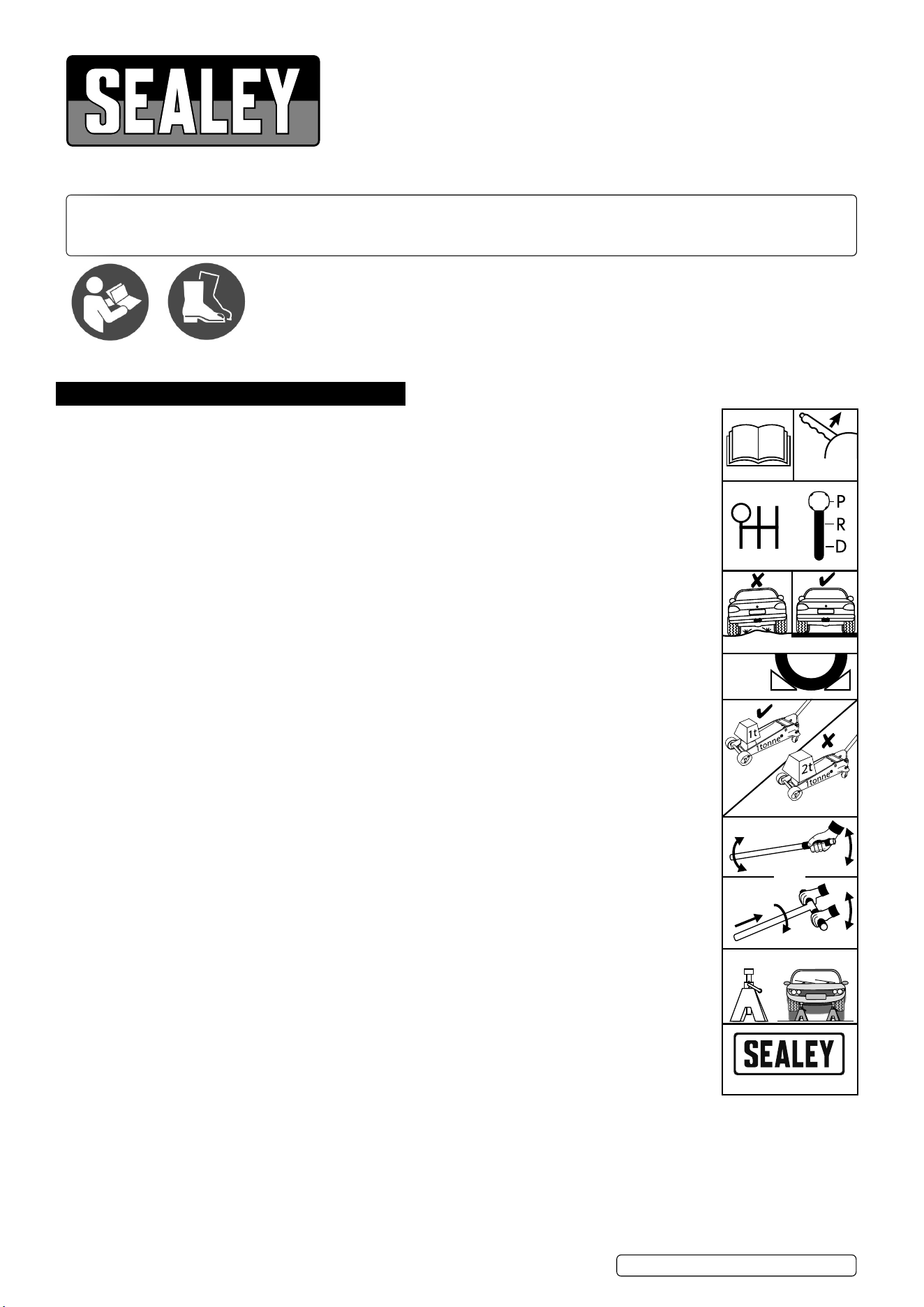
9 Keep working area clean and tidy and free from unrelated materials. Use jack on level and solid ground,
preferably concrete. Avoid tarmacadam as jack may sink in.
9 Chock wheels of vehicle.
9 Ensure the vehicle handbrake is engaged, engine is switched o and transmission is in gear (or “PARK”
if automatic).
9 Ensure minimum distance of 0.5m between vehicle and static objects such as doors, walls, etc. to allow
for vehicle tilting.
9 Ensure all non-essential persons keep a safe distance whilst the jack is in use.
9 Ensure there are no passengers in the vehicle.
9 It is necessary that the operator can watch the lifting device and the load during all movements.
9 Place jack under only those lifting points recommended by vehicle manufacturer (see vehicle handbook).
9 Check that the lifting point is stable and centred on the jack saddle.
9 Ensure the jack wheels are free to move and that there are no obstructions.
▲ DANGER: Use the jack for lifting only, NOT for supporting the lifted load.
9 Ensure there are no persons or obstructions beneath the vehicle before lowering.
9 It is not allowed to work under the raised load until it is secured by suitable means. Use suitable axle
stands under the vehicle before proceeding with any task.
9 Use a qualied person to lubricate and maintain the jack.
9 Ensure that only hydraulic jack oil is used in the jack.
8 DO NOT operate the jack if damaged.
8 DO NOT allow untrained persons to operate the jack.
8 DO NOT operate the jack when tired or under the inuence of drugs, alcohol or intoxicating medication.
8 DO NOT exceed the rated capacity of the jack.
8 DO NOT allow the vehicle to move during lifting or lowering, or use the jack to move the vehicle.
8 DO NOT jack vehicle if there is a risk of spillage of fuel, battery acid, or other dangerous substances.
8 DO NOT work under the vehicle until appropriately rated axle stands have been correctly positioned.
8 DO NOT use the jack for purposes other than that for which it is intended.
8 DO NOT top up hydraulic system with brake uid. Use hydraulic jack oil only. (Sealey Part No:
HJO500MLS or HJO5LS)
8 DO NOT adjust the safety overload valve.
9 When not in use store jack, fully lowered, in a safe, dry, childproof area.
9 If more than 400N of eort is generated in lifting, the eorts shall be lowered by an additional person.
9 Jacks shall be maintained and repaired in accordance with the manufacturer’s instructions. Such
maintenance and repair shall be carried out by qualied persons.
9 No modications shall be carried out which adversely aect the compliance of the jack with the standard.
9 Check the state of the markings and that the markings remain as the initial one.
Refer to
instructions
Wear safety
footwear
Original Language Version
© Jack Sealey Limited
RJAS1500.V3 Issue 2 (1,4) 13/09/23
1 3 5
2 4 R
TJL3
Chock
wheels
Never
exceed
jack capacity
Close
Raise
Lower
Lift & twist
to lower
OR
Use on a hard level floor
Apply
handbrake
www.sealey.co.uk
Use suitable axle stands
X2
Raise
2. INTRODUCTION
Made primarily for the motor racing enthusiast, this jack weighs in at just 14.74kg. Mix of steel and aluminium not only makes this
jack lightweight but incredibly strong. Large saddle with jacking pad. Rocket Lift with twin piston design enables saddle to be brought
up to jacking point with minimal pumps. Features a lifting bar for fast, lightweight pick-up.
3. SPECIFICATION
Model No: ................................................ RJAS1500.V3
Capacity: ......................................................... 1.5 Tonne
Length: ................................................................553mm
Maximum Chassis Height: ..................................134mm
Maximum Saddle Height: ....................................360mm
Minimum Saddle Height: .......................................90mm
Replacement Rubber Jack Pad: ..............................JP11
4. SET-UP
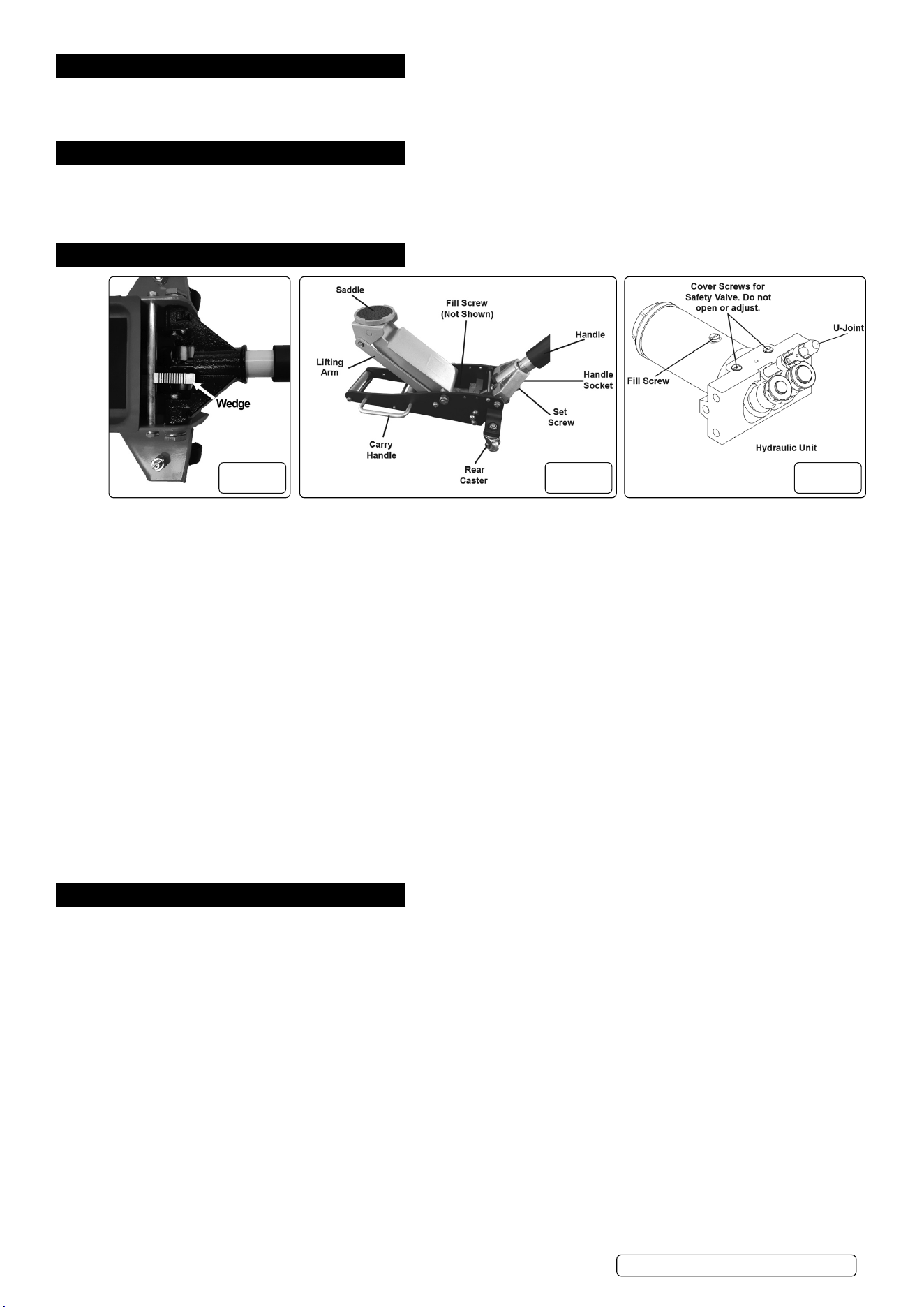
g.1 g.2 g.3
4.1. RELEASING THE RETAINING WEDGE (FIG.1)
4.1.1. Seek assistance from a second person if required.
4.1.2. Insert the lower handle section into the handle socket and secure with the retaining bolt to aid in releasing pressure in the handle socket.
4.1.3. Push down on the handle and hold down while removing the retaining wedge that is securing the handle socket in the down position.
4.1.4. Remove the wedge.
4.1.5. Gently and in a controlled manner slowly allow the lower handle section and handle socket to raise to their upright position.
4.1.6. Attach the upper handle to the lower handle.
4.1.7. Tighten the set screw.
4.2. ADDING HYDRAULIC FLUID
4.2.1. Remove the Fill Screw. DO NOT remove or loosen Safety Valve Cover Screws.
4.2.2. Add high grade hydraulic uid (sold separately) slowly until the uid reaches 1/4″ (6.5mm) below the top of the Fill Port. (Fig.3).
NOTE: DO NOT touch the Handle when adding hydraulic uid.
4.2.3. Replace Fill Screw.
4.3. BLEEDING
NOTE: BEFORE EACH USE OR IF JACK PERFORMANCE DECREASES, check for excessive air and proper hydraulic uid level in
Jack. If Jack appears not to be working properly, it may be necessary to purge its hydraulic system of excessive air as follows:
4.3.1. Loosen the Fill Screw.
4.3.2. Twist the Handle counter-clockwise to open the Valve.
4.3.3. Check uid level and, if necessary, top o according to Adding Hydraulic Fluid below.
4.3.4. Twist the Handle clockwise to close the Valve, then pump the Handle quickly several times.
4.3.5. Replace Fill Screw.
IMPORTANT: After bleeding the Jack, test the Jack for proper operation prior to its actual use.
4.3.6. If, after bleeding, the Jack does not appear to be working properly, DO NOT use it until repaired by a qualied service technician.
5. OPERATION
5.1. LIFTING
5.1.1. Park vehicle on a at, level, solid, surface safely away from oncoming trac. Turn o the vehicle’s engine. Place the vehicle’s
transmission in “PARK” (if automatic) or in its lowest gear (if manual). Set the vehicle’s emergency brake. Then chock the wheels that
are not being lifted.
5.1.2. Slowly twist the Handle counter-clockwise to lower the Jack. Once the Jack is fully lowered, twist the Handle rmly clockwise.
5.1.3. Carefully position the Jack’s Saddle under the vehicle manufacturer’s recommended lifting point. (See vehicle manufacturer’s owner’s
manual for location of frame lifting point.)
5.1.4. Pump the Handle until the top of the Saddle has nearly reached the vehicle’s lifting point. Position the Saddle directly under the
vehicle’s lifting point.
5.1.5. To lift the vehicle, pump the Handle. Use smooth, full strokes.
5.1.6. Select matching jack stands (sold separately) of appropriate capacity. Set the jack stands to the same height according to the
manufacturer’s instructions, making sure they lock securely into position.
5.1.7. Position the jack stands’ saddles under the vehicle manufacturer’s recommended support points.
WARNING! Ensure that the vehicle support points are fully seated in the saddles of both jack stands. Use a matched pair of jack
stands per vehicle to support one end only.
5.1.8. Slowly twist the Handle counter-clockwise to lower the vehicle onto the jack stands’ saddles.
5.1.9. Once the vehicle is fully seated on the jack stands, continue slowly lowering the Jack until it is completely lowered.
5.1.10. Remove the Jack and store safely out of the way.
Original Language Version
© Jack Sealey Limited
RJAS1500.V3 Issue 2 (1,4) 13/09/23
5.2. LOWERING
5.2.1. Carefully remove all tools, parts, etc., from under the vehicle.
5.2.2. Position the Jack’s Saddle under the lifting point. Turn the Handle rmly clockwise and raise vehicle high enough to clear the jack stands.
5.2.3. Carefully remove the jack stands.
5.2.4. Slowly turn the Handle counter-clockwise to lower the vehicle onto the ground.
5.2.5. Lower the Jack completely. Store the Jack indoors out of children’s reach.
6. MAINTENANCE
IMPORTANT: Only fully qualied personnel should attempt maintenance or repair.
Jacks shall be maintained and repaired in accordance with the manufacturer’s instructions. Such maintenance and repair shall be
carried out by qualied persons. No modications shall be carried out which adversely aect the compliance of the jack with the
standard. Check the state of the markings and that the markings remain as the initial one.
WARNING: TO PREVENT SERIOUS INJURY FROM TOOL FAILURE: DO NOT use damaged equipment. If abnormal noise or
vibration occurs, have the problem corrected before further use.
6.1. Before each use, inspect the general condition of the Jack, check for loose hardware, misalignment or binding of moving parts,
cracked or broken parts, and any condition that may aect its safe operation.
6.2. Before each use, thoroughly test the Jack for proper operation prior to its actual use. If the Jack appears not to be working properly,
follow Bleeding instructions in Section 4.
6.3. At least once every three years, change the hydraulic uid:
6.3.1. With the Jack fully lowered, remove the Fill Screw.
6.3.2. Tip the Jack over to allow the old hydraulic uid to drain out completely. Dispose of the old hydraulic uid in accordance with local
regulations.
6.3.3. With the Jack upright, ll the Hydraulic Unit with high grade hydraulic uid until the uid is 1/4″ below the top of the Fill Port.
6.3.4. Turn the Handle counter-clockwise to open the Release Valve.
6.3.5. Pump the Handle up and down quickly several times to purge air from the system.
6.3.6. Recheck uid level and re-ll as needed.
6.3.7. Replace the Fill Screw.
6.4. After each use, wipe with a clean cloth. Store the Jack indoors out of children’s reach.
7. TROUBLESHOOTING
WARNING: TO PREVENT SERIOUS INJURY: Use caution when troubleshooting a malfunctioning jack. Stay well clear of the
supported load. Completely resolve all problems before use. If the solutions presented in the Troubleshooting guide DO NOT solve the
problem, have a qualied technician inspect and repair the jack before use.
7.1. After the jack is repaired: Test it carefully without a load by raising and lowering it fully, checking for proper operation, BEFORE
RETURNING THE JACK TO OPERATION.
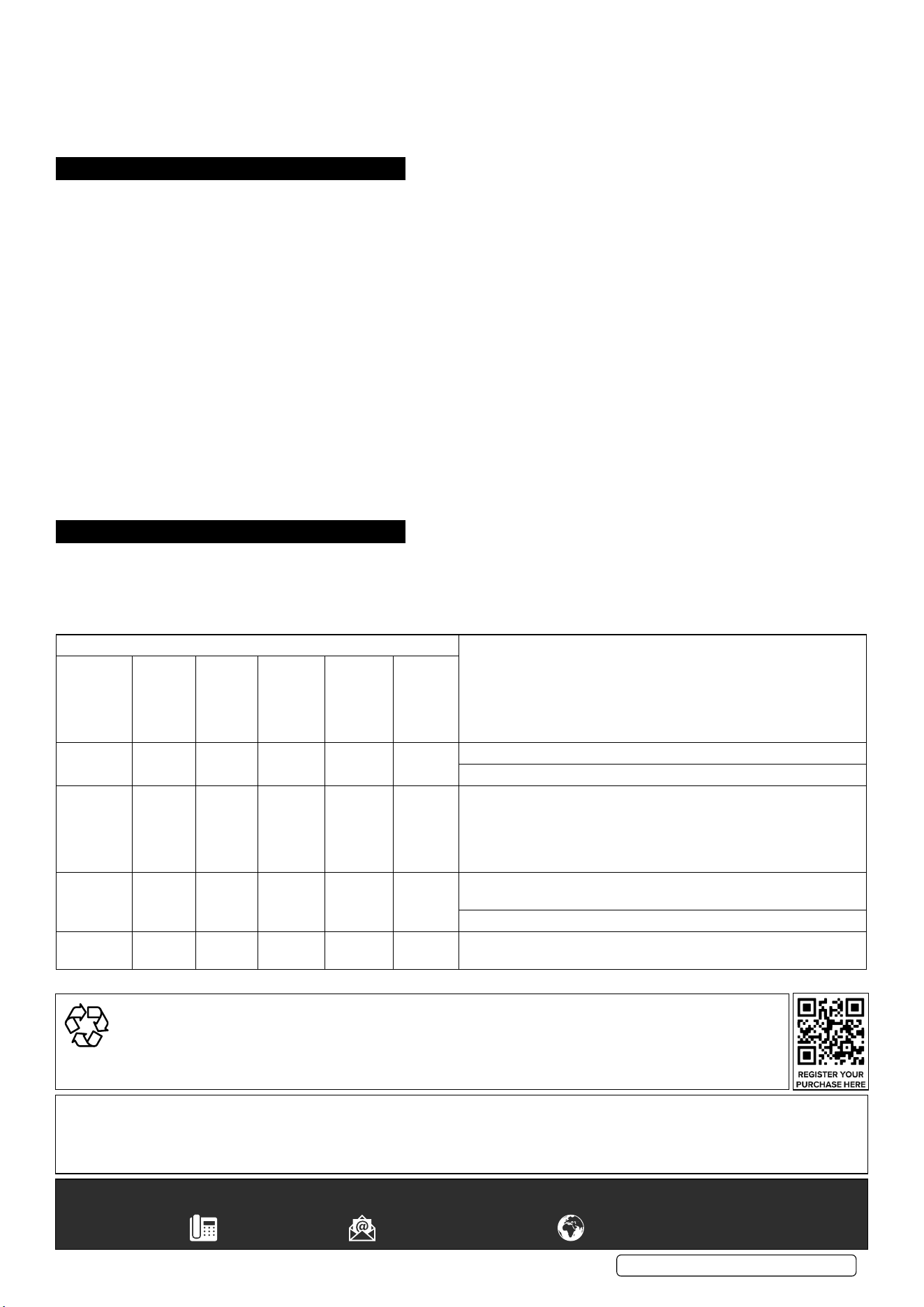
POSSIBLE SYMPTOMS
POTENTIAL SOLUTION
(Make certain that the Jack is not supporting a load while attempting
a solution.)
Jack will
not lift at
its weight
capacity
Saddle
lowers
under
load
Pump
stroke
feels
spongy
Saddle
will not
lift all the
way
Handle
moves up
when jack
is under
load
Fluid
leaking
from ll
plug
X X
Check that Release Valve is fully closed.
Jack may require bleeding - see instructions in section 4.
X X X
Valves may be blocked and may not close fully. To ush the valves:
1. Lower the Saddle and securely close the Release Valve.
2. Manually lift the saddle several inches.
3. Open the release valve by turning the Handle counter-clockwise
and force the saddle down as quickly as possible.
X X X
Jack may be low on hydraulic uid. Check uid level and rell if
needed - see instructions in section 4.
Jack may require bleeding - see instructions in section 4.
X
Unit may have too much hydraulic uid inside. Check uid level and
adjust if needed - see instructions in section 4.
Sealey Group, Kempson Way, Suffolk Business Park, Bury St Edmunds, Suffolk. IP32 7AR
01284 757500 sales@sealey.co.uk www.sealey.co.uk
Note: It is our policy to continually improve products and as such we reserve the right to alter data, specifications and component parts without prior
notice.
Important: No Liability is accepted for incorrect use of this product.
Warranty: Guarantee is 12 months from purchase date, proof of which is required for any claim.
ENVIRONMENT PROTECTION
Recycle unwanted materials instead of disposing of them as waste. All tools, accessories and packaging should be sorted,
taken to a recycling centre and disposed of in a manner which is compatible with the environment. When the product
becomes completely unserviceable and requires disposal, drain any fluids (if applicable) into approved containers and
dispose of the product and fluids according to local regulations.
Original Language Version
© Jack Sealey Limited
RJAS1500.V3 Issue 2 (1,4) 13/09/23