Featuring 24 chord
guide including:
• Majors
• Minors
• Flats
• Sharps
BEGINNERS
UKULELE
GUIDE
Martin Smith is a trademark of PDT Ltd.
Registered in the UK, USA and Worldwide
PDT Ltd.
Unit 4B Greengate Industrial Estate,
White Moss View, Middleton, Manchester.
M24 1UN, UK
Copyright PDT Ltd. © 2022
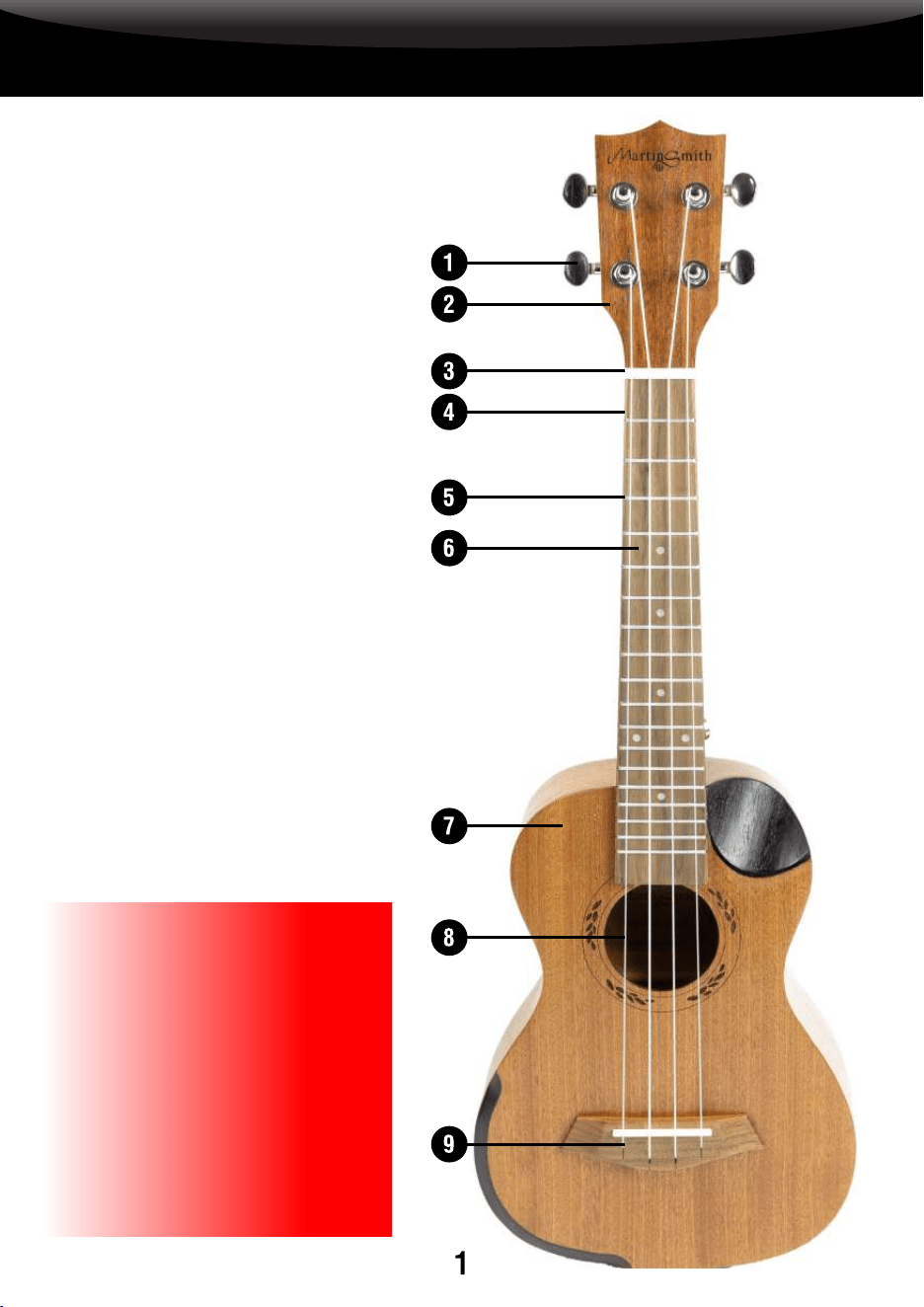
FUNCTIONS
1. Tuning Pegs
2. Headstock
3. Nut
4. Neck
5. Frets
6. Fretboard
7. Body
8. Strings
9. Bridge
Important Information
Nylon Strings may take
time to settle. This can
make the ukulele de-tune
more frequently when new.
This does not mean there
is a problem with your
ukulele.
TUNING THE UKULELE
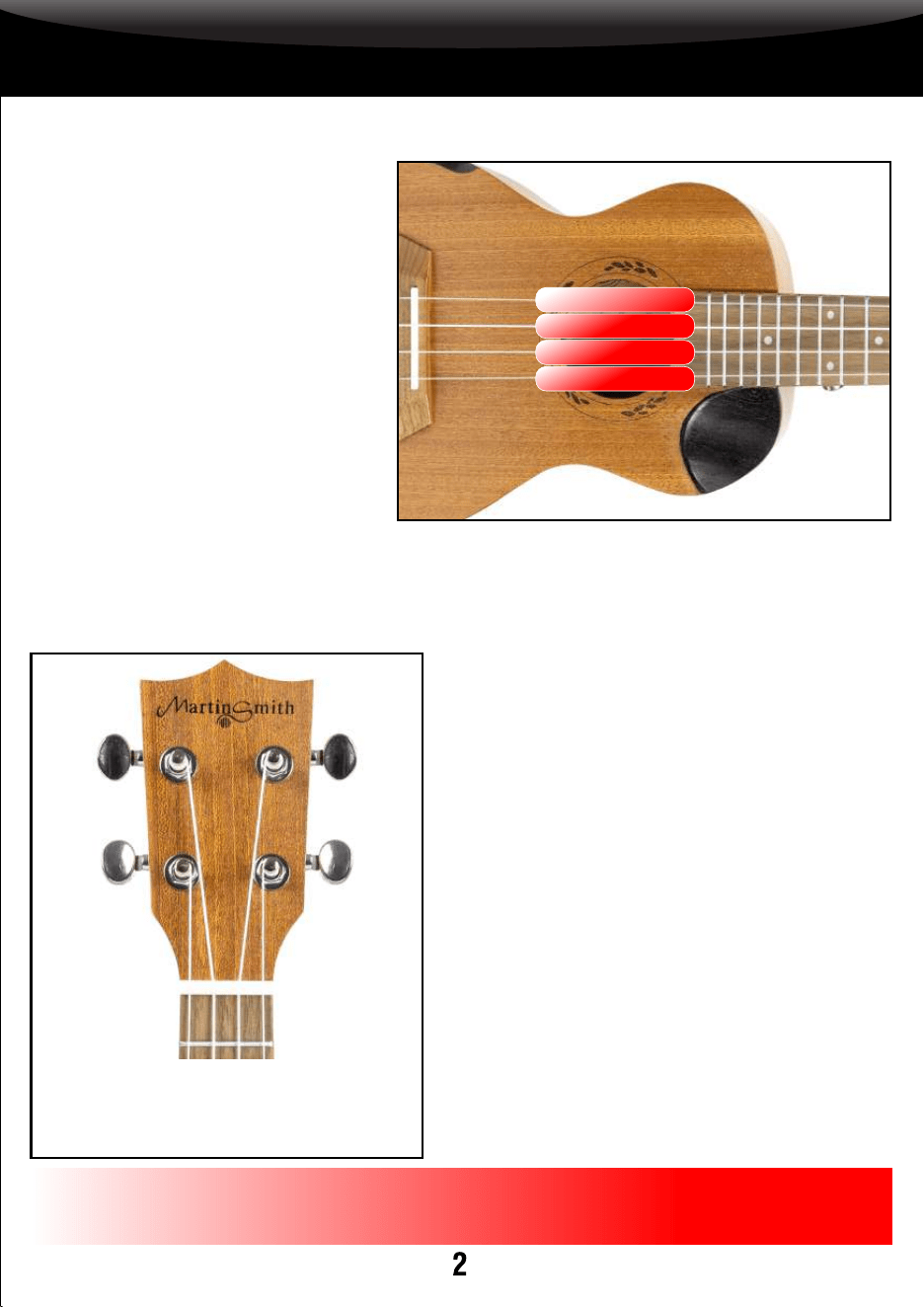
The ukulele can be tuned into various keys but the most popular tuning is:
The image on the right shows the
strings in order.
It is also worth remembering that the
1st string (A) is the bottom string
and the 4th string (G) is top
G C E A
G (4th String)
C (3rd String)
E (2nd String)
A (1st String)
TIP: Unlike many string instruments, these strings are not tuned in order of pitch. The C will be
a lower pitch than the G, but E will be a higher pitch then both G and C. If you get stuck, a
good idea is to visit www.youtube.com and type 'Ukulele Tuning' into the search bar for help
with pitch differences.
There are a number of ways you can tune each
string to the correct note. From using the G,C,E,A
keys on a piano, to pitch pipes and a tuning fork but
we advise using an electronic tuner. These small
devices pick up the sound when you pluck a string
and tell you what note you are playing.
Tightening the strings by tuning the relevant tuning
peg will increase the pitch. For example if you're
tuning the 4th string to G and the electronic tuner
shows F on the display when you pluck the string,
turn the tuning peg a small amount and then pluck
the string again. Repeat these steps until the tuner
display reads G. Once it does, that string is ready
and it's time to move onto the next one. See image
on left for tuning peg information.
4th
String
3rd
String
3rd String Anti-clockwise
4th String Anti-clockwise
2nd String Clockwise
1st String Clockwise
2nd
String
1st
String
Directions For Tightening
Don’t have a tuner? There are many helpful tuning videos available on Youtube.
Visit www.youtube.com and search ‘Ukulele Tuning’
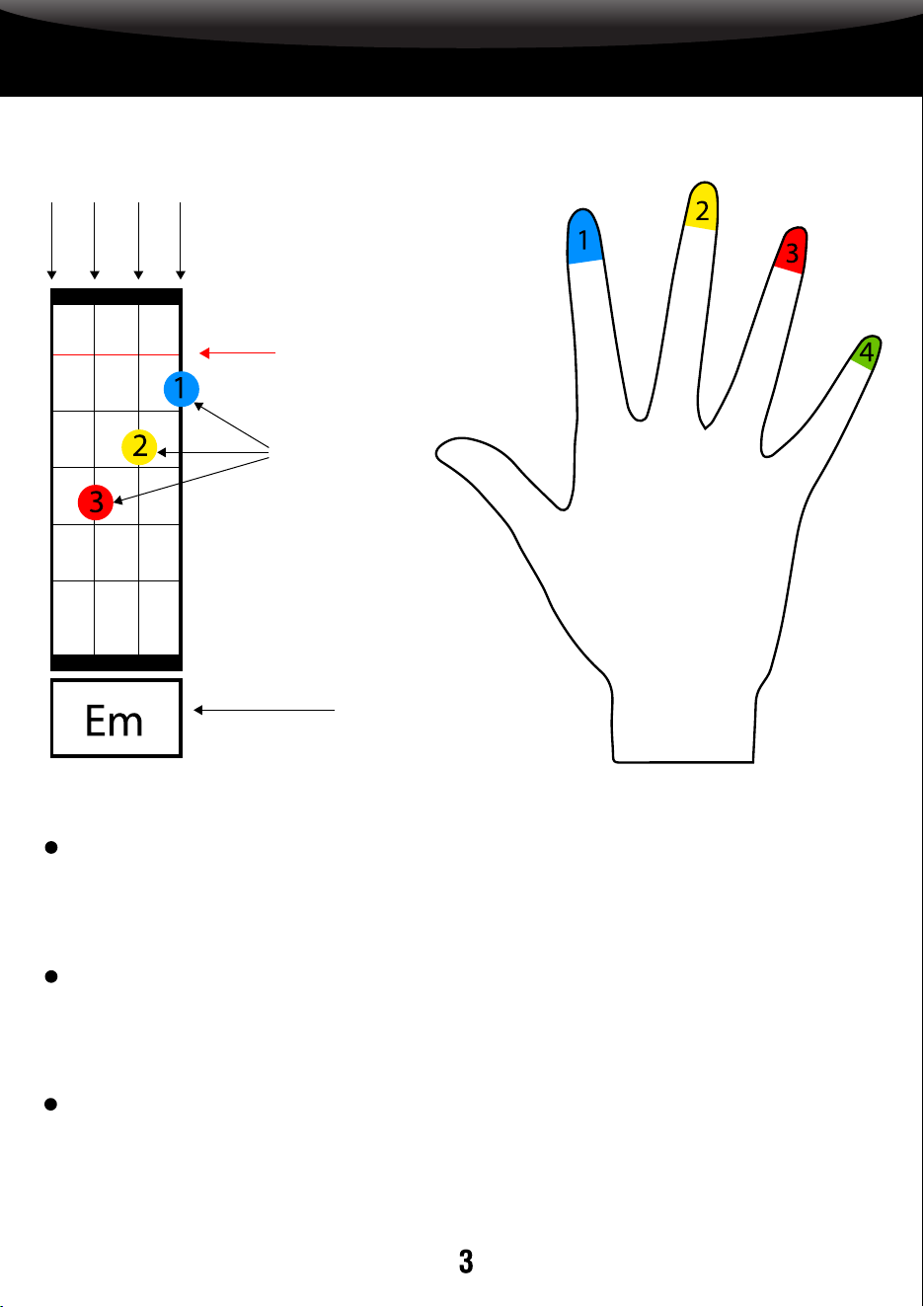
CHORD GUIDE
STRINGS
1st Fret
Fingers
Name of
Chord
This guide makes it easy to find the right chords to your
favourite songs!
Each of the chords are shown on a chord frame, with dots to
indicate where to place your finger.
Below each frame is the name of the chord played.
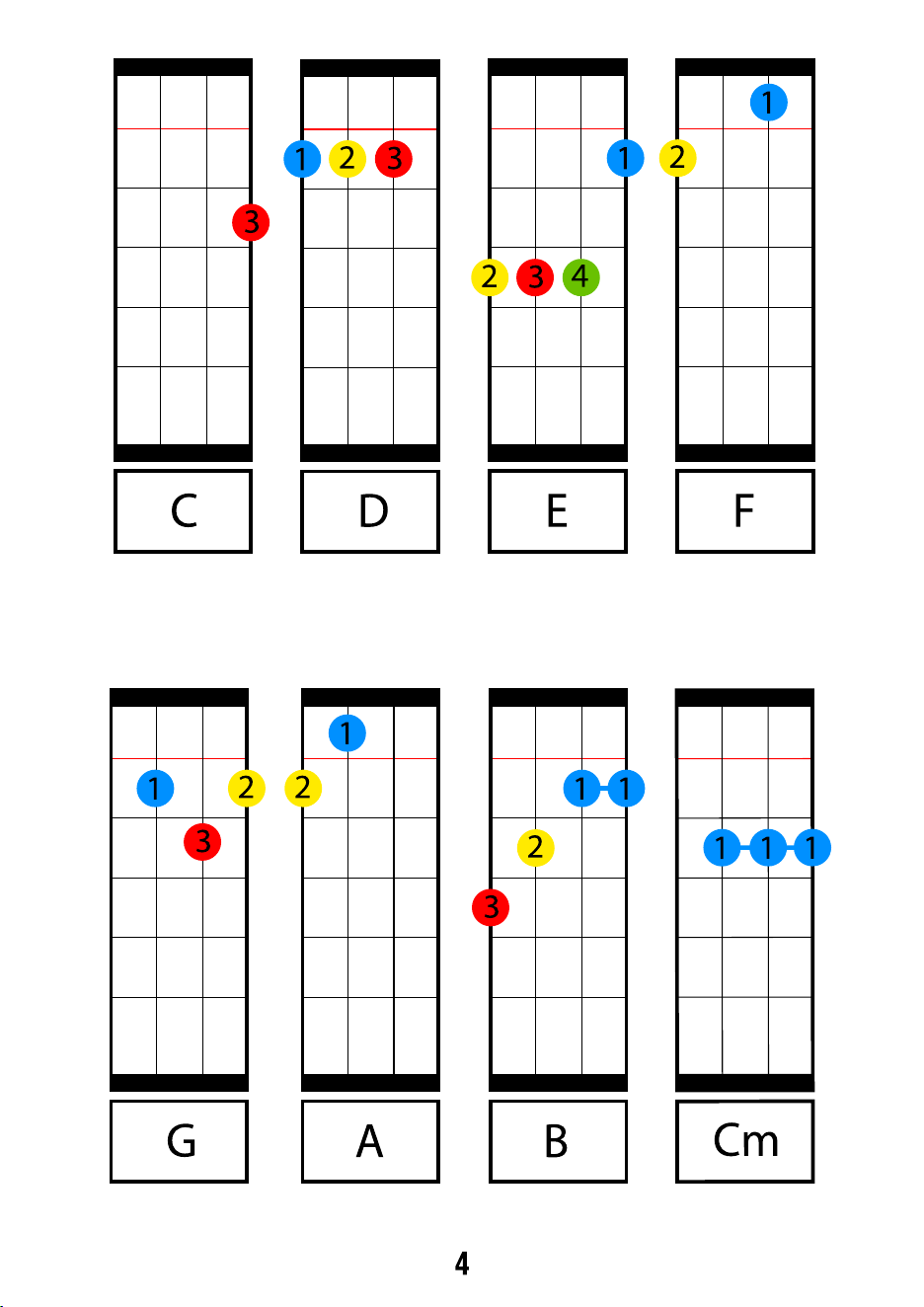
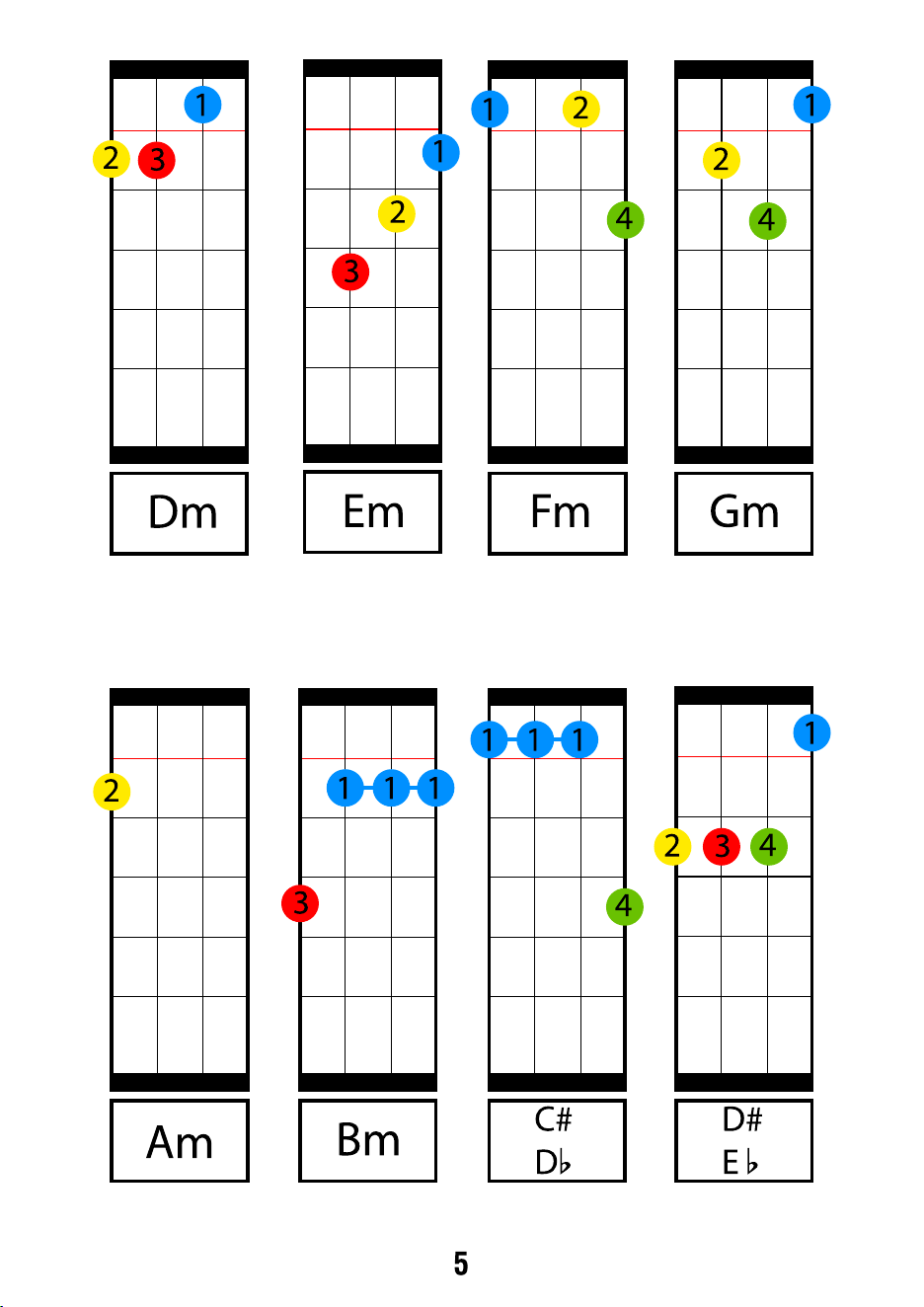
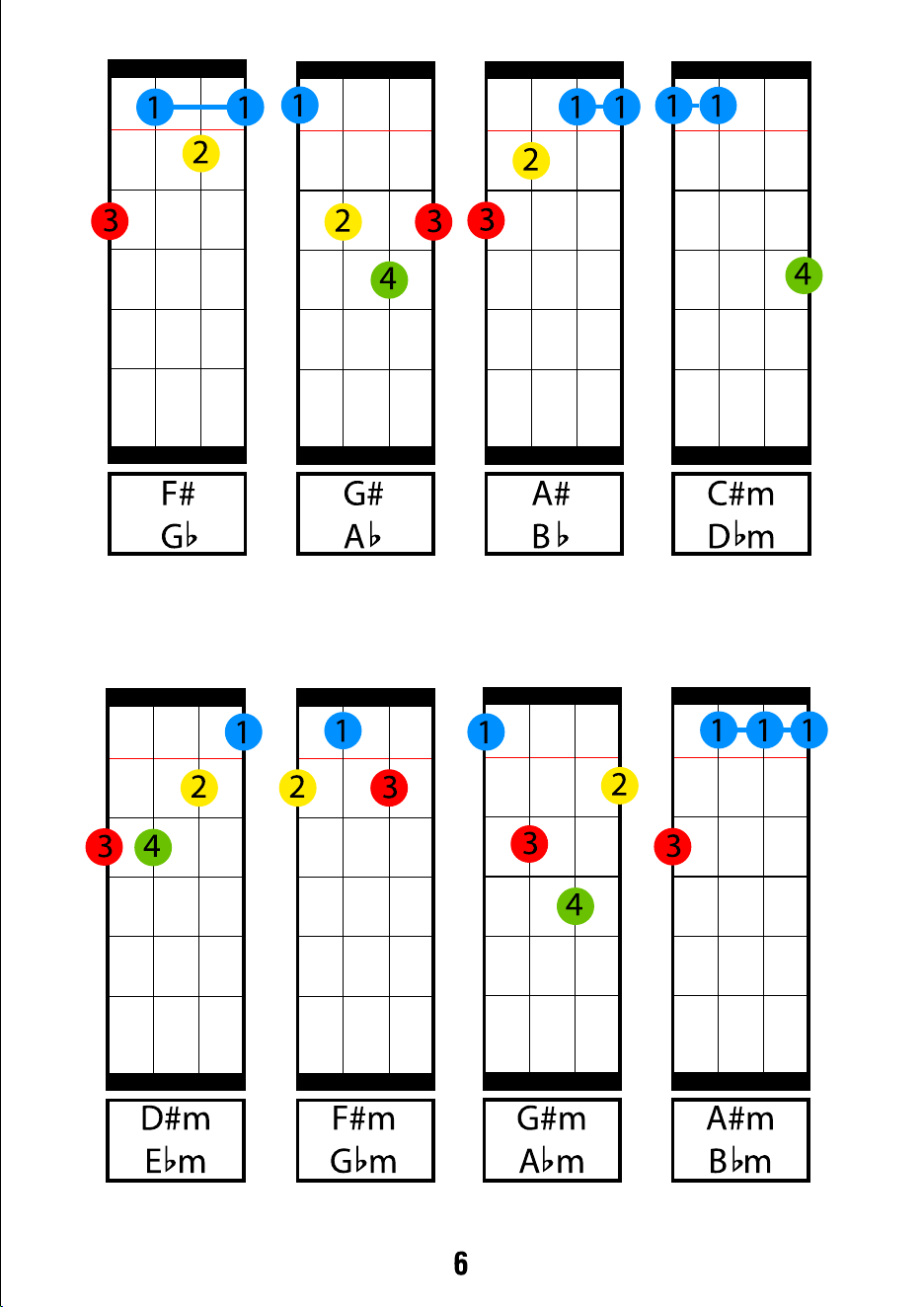
CHORD GUIDE
STRINGS
1st Fret
Fingers
Name of
Chord
This guide makes it easy to find the right chords to your
favourite songs!
Each of the chords are shown on a chord frame, with dots to
indicate where to place your finger.
Below each frame is the name of the chord played.
TUNING THE UKULELE
The ukulele can be tuned into various keys but the most popular tuning is:
The image on the right shows the
strings in order.
It is also worth remembering that the
1st string (A) is the bottom string
and the 4th string (G) is top
G C E A
G (4th String)
C (3rd String)
E (2nd String)
A (1st String)
TIP: Unlike many string instruments, these strings are not tuned in order of pitch. The C will be
a lower pitch than the G, but E will be a higher pitch then both G and C. If you get stuck, a
good idea is to visit www.youtube.com and type 'Ukulele Tuning' into the search bar for help
with pitch differences.
There are a number of ways you can tune each
string to the correct note. From using the G,C,E,A
keys on a piano, to pitch pipes and a tuning fork but
we advise using an electronic tuner. These small
devices pick up the sound when you pluck a string
and tell you what note you are playing.
Tightening the strings by tuning the relevant tuning
peg will increase the pitch. For example if you're
tuning the 4th string to G and the electronic tuner
shows F on the display when you pluck the string,
turn the tuning peg a small amount and then pluck
the string again. Repeat these steps until the tuner
display reads G. Once it does, that string is ready
and it's time to move onto the next one. See image
on left for tuning peg information.
4th
String
3rd
String
3rd String Anti-clockwise
4th String Anti-clockwise
2nd String Clockwise
1st String Clockwise
2nd
String
1st
String
Directions For Tightening
Don’t have a tuner? There are many helpful tuning videos available on Youtube.
Visit www.youtube.com and search ‘Ukulele Tuning’
FUNCTIONS
1. Tuning Pegs
2. Headstock
3. Nut
4. Neck
5. Frets
6. Fretboard
7. Body
8. Strings
9. Bridge
Important Information
Nylon Strings may take
time to settle. This can
make the ukulele de-tune
more frequently when new.
This does not mean there
is a problem with your
ukulele.

Featuring 24 chord
guide including:
• Majors
• Minors
• Flats
• Sharps
BEGINNERS
UKULELE
GUIDE
Martin Smith is a trademark of PDT Ltd.
Registered in the UK, USA and Worldwide
PDT Ltd.
Unit 4B Greengate Industrial Estate,
White Moss View, Middleton, Manchester.
M24 1UN, UK
Copyright PDT Ltd. © 2022