USER GUIDE
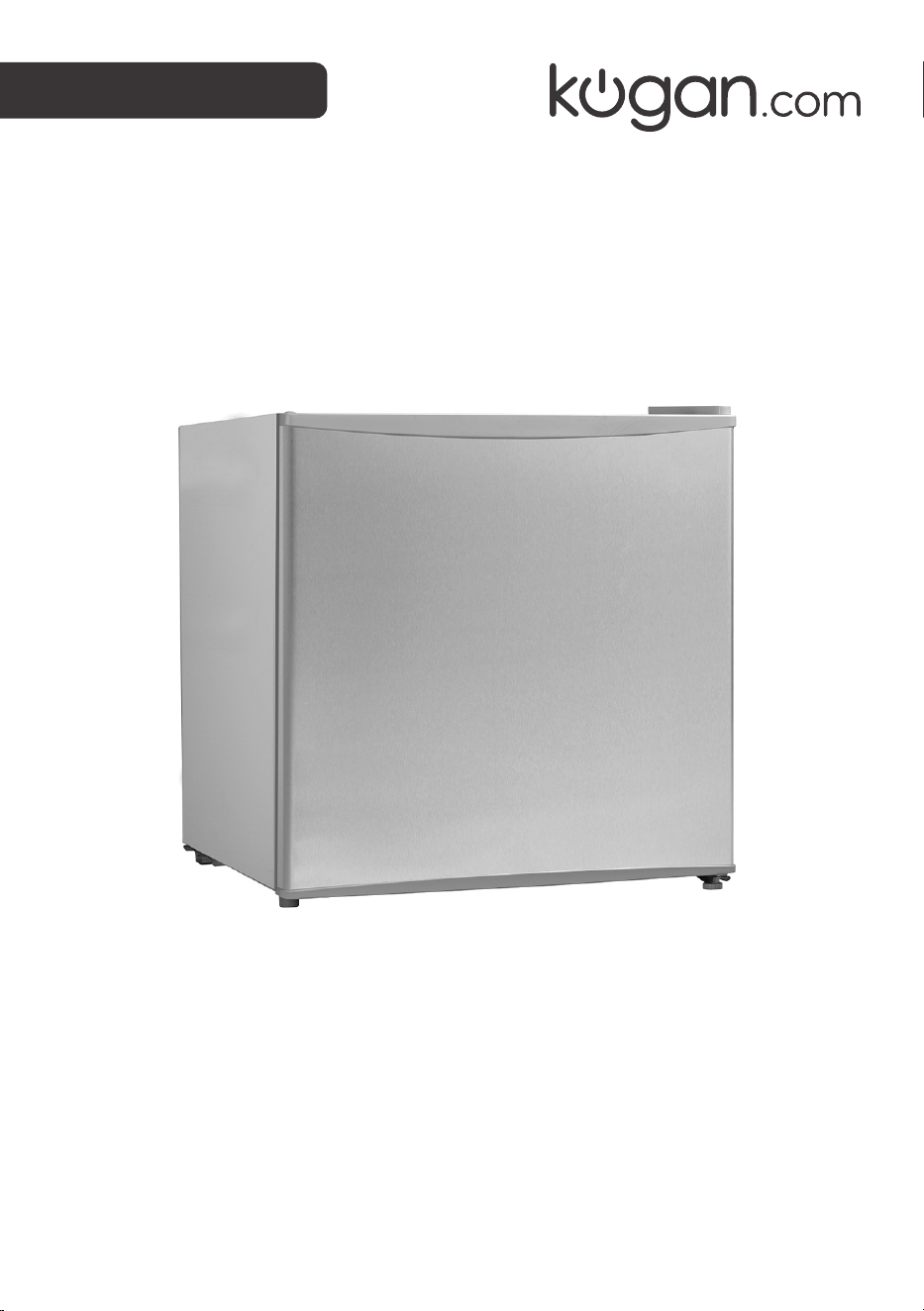
46L BAR FRIDGE
(KAM46LBRSFA, KAM46LBRSFB)

2
CONTENTS
THIS USER GUIDE COVERS THE FOLLOWING MODELS
Kogan 46L Bar Fridge - Stainless Steel (KAM46LBRSFA)
Kogan 46L Bar Fridge - Black (KAM46LBRSFB)
Safety and warnings ................... 03 - 04
Product overview ...................................05
Installation ..................................... 06 - 08
First time use ...................................09 - 10
Cleaning & maintenance ............... 11 - 13
Troubleshooting ...................................... 14
Specifications .......................................... 15
3
Thank you for buying this Kogan product. Please read all safety instructions before using
your bar fridge.
• Read this manual thoroughly before first use, even if you are familiar with this type of
product. The safety precautions enclosed herein reduce the risk of fire, electric shock and
injury when correctly adhered to.
• Make sure you understand all instructions and warnings.
• This appliance is only intended for use within a domestic environment only.
• Children should be supervised to ensure that they do not play with the appliance.
• If the power supply cord is damaged, it must be replaced by a Kogan.com technician or
similarly qualified person in order to avoid a hazard.
• Do not store explosive substances such as aerosol cans with flammable propellants inside.
• Unplug the appliance aer use and before carrying out any user maintenance.
• Keep all ventilation openings clear of obstructions.
• Do not use mechanical devices or other means to accelerate the defrosting process.
• Do not use extension cords.
• The refrigerant and cyclopentane foaming material used in this appliance is flammable.
• When unplugging the appliance from the power outlet, grasp the plug and pull on it. Do
not pull on the cord.
• Please use a dedicated power socket for this appliance. Do not share the outlet with other
appliances via a power board or double adapter.
• Do not disassemble or attempt to repair the refrigerator by yourself. Doing so will void the
warranty. Kogan.com is not liable for an appliance that has been tampered with.
• The gap between the refrigerator door and the cabinet is small. Do not put your hands in
this area to avoid having your fingers pinched.
• Do not touch or move items from the cooler compartment with wet hands.
• Do not allow animals or pets to climb into or onto the refrigerator.
• Do not place heavy objects on top of the refrigerator.
• Unplug the unit from the power outlet in the event of a power failure or when cleaning.
Avoid plugging the unit back within 5 minutes aer unplugging to avoid damage to the
compressor.
• The refrigerator should be used only for the storage of household foods and drinks. It is not
designed for storage of blood, drugs or other biological products.
• Do not store beer, beverages or other fluids contained in bottles or enclosed containers in
the cooler compartment of the refrigerator, as the bottles may crack due to the freezing
process.
• When the refrigerator is being disposed of, the doors should be removed and the power
cord should be cut.
SAFETY AND WARNINGS
WARNING: RISK OF FIRE / FLAMMABLE MATERIALS

4
Risk of Fire:
• If the refrigerant circuit should become damaged. Avoid open flames and sources of
ignition. Disconnect the appliance from the mains power. Thoroughly ventilate the room in
which the appliance is situated for several minutes.
Disposing:
• Old appliances should not simply be disposed of with normal household waste, but should
be delivered to a collection and recycling centre for electric and electronic equipment. A
symbol shown on the product, the instruction manual or the packaging shows that it is
suitable for recycling.
• Materials used inside the appliance are recyclable and are labelled with information
concerning this. By recycling materials or other parts from used devices you are making a
significant contribution to the protection of our environment.
• Information on appropriate disposal centres for used devices can be provided by your local
authority
SAFETY AND WARNINGS (cont’d)
5
PRODUCT OVERVIEW
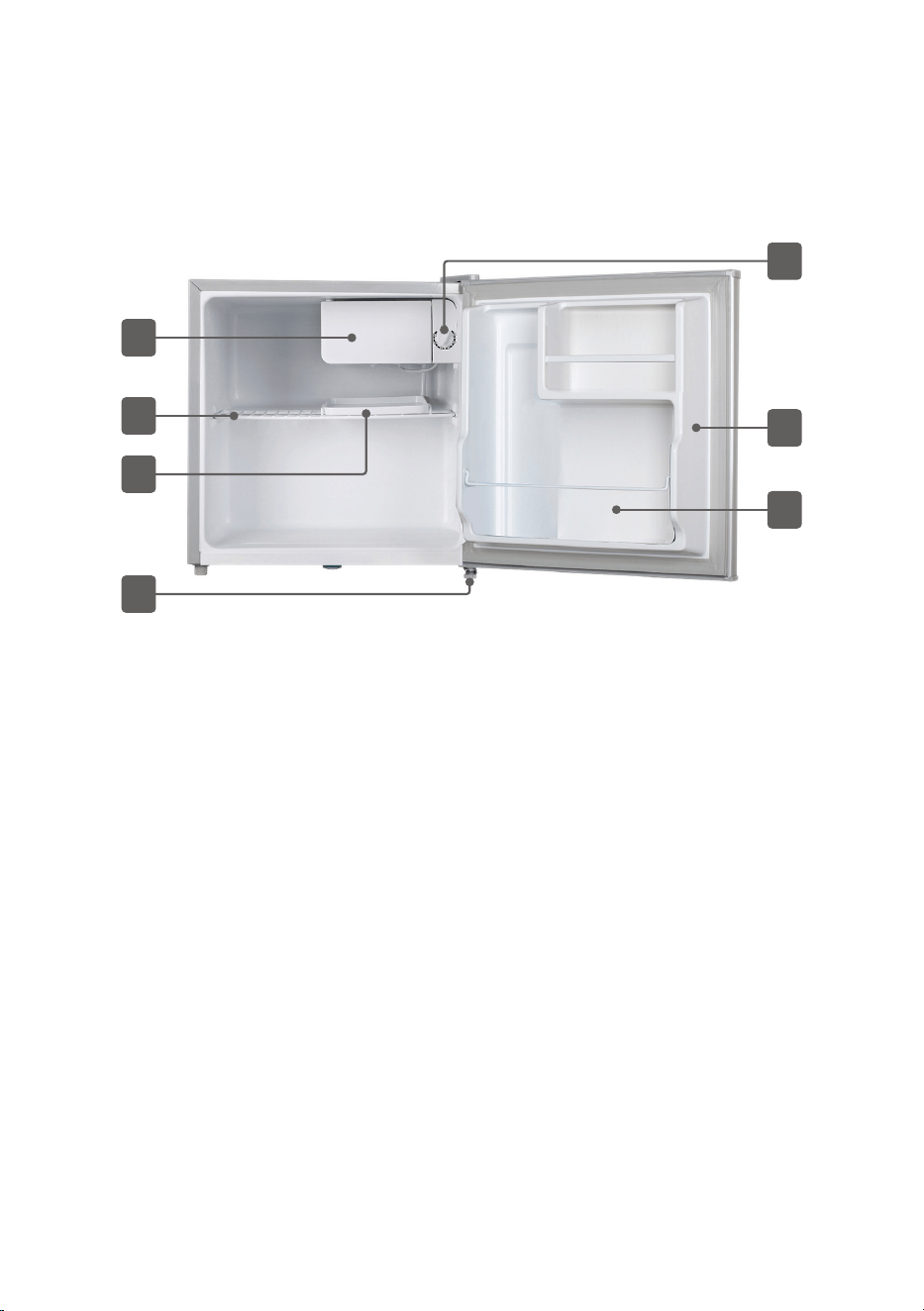
1 Thermostat
2 Cooler compartment
3 Steel wire shelf
4 Drain tray
5 Bar fridge door
6 Bottle rack
7 Adjustable foot
7
4
3
2
6
5
1
6
INSTALLATION
SELECTING A SUITABLE LOCATION
When selecting a position for your unit, ensure the floor is flat and firm, and
the room is well ventilated. Avoid placing your unit near a heat source (ie,
oven, radiator, or hot water system). Avoid direct sunlight as it may increase
the electrical consumption. Extreme cold temperatures may also cause the
unit to not perform correctly. This unit is not designed for use in a garage or
outdoors. Do not drape the unit with any covering.
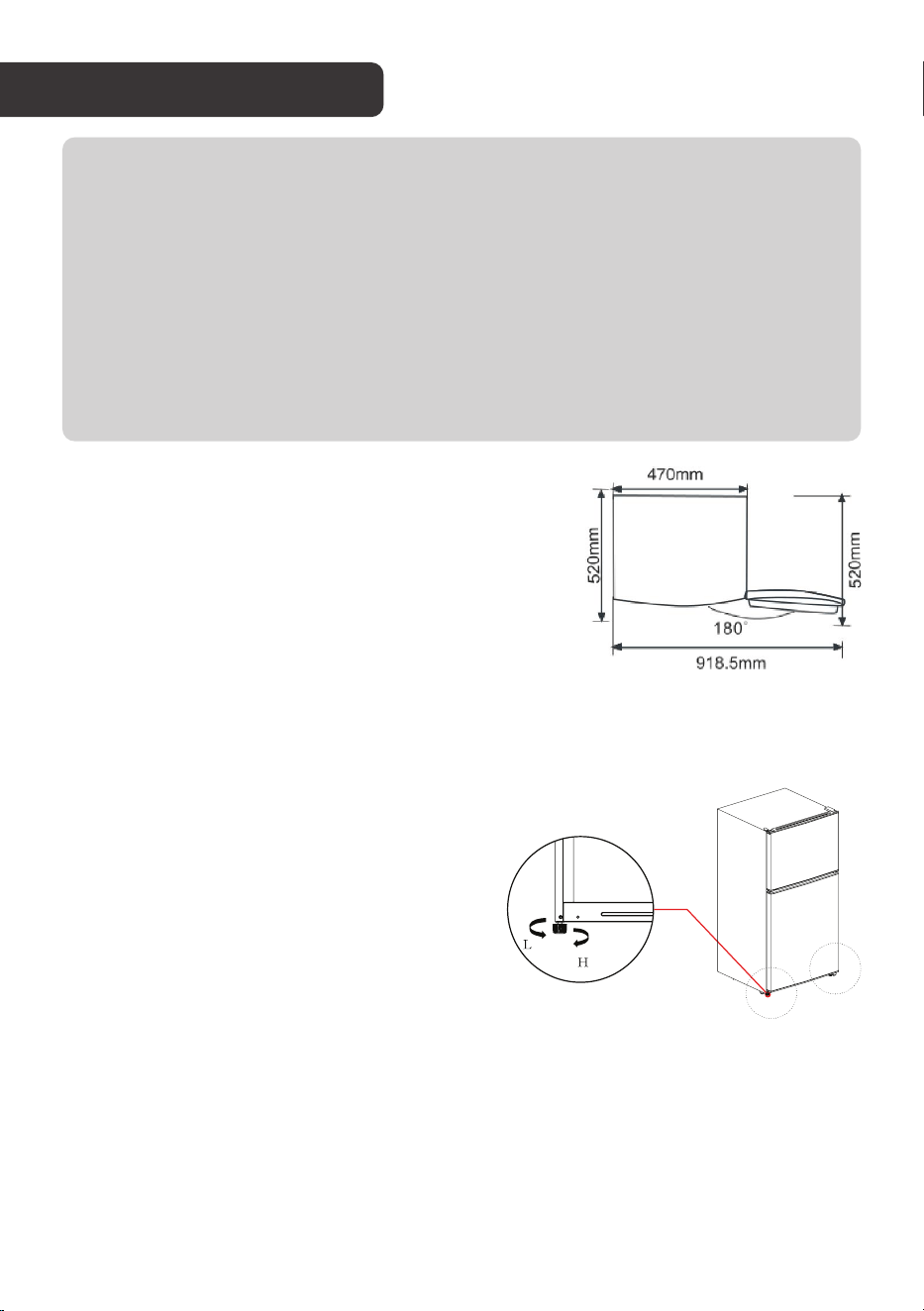
When installing the unit, ensure that 15cm of free space is allowed to the
left, right and rear of the unit, and 20cm at the top. This will allow cold air to
circulate around the unit and improve the efficiency of the cooling process.
1a. Door space requirements
The unit’s door must be able to open fully
as pictured (1a).
1b. Levelling the unit
To level the unit, adjust the two feet at
the front of the unit – turning clockwise
to extend and counter-clockwise to
reduce (1b). If the unit is not level, the
door and magnetic seal alignments
will not be covered properly, leading to
inefficient freezing performance. Ensure
that the feet all touch the ground before
use.
Figure 1a
Figure 1b
7
2. Reversing the door swing
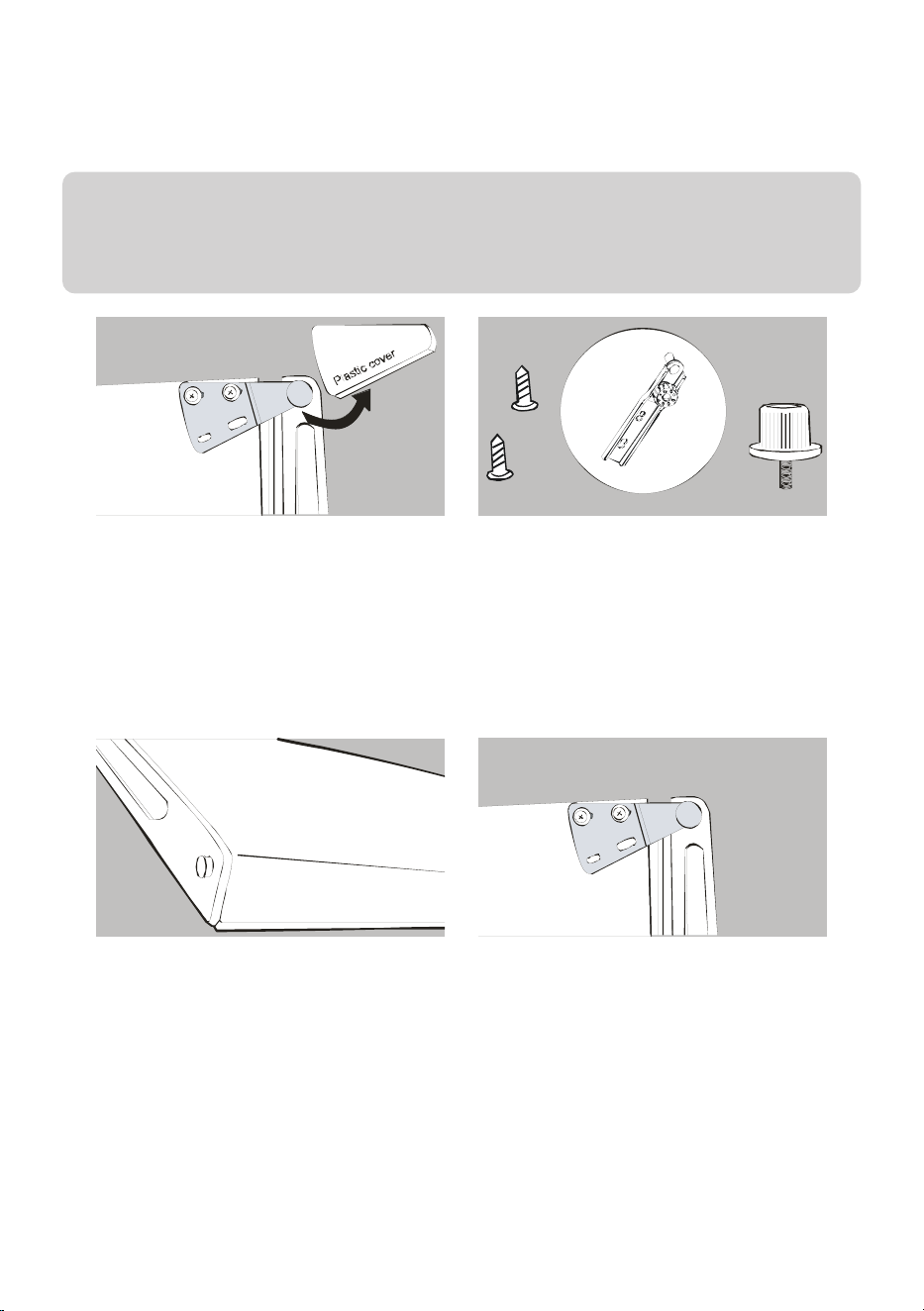
TOOLS REQUIRED
Phillips head screwdriver, flat-blade screwdriver, and hexagonal
spanner.
Step 2bStep 2a
a. Remove the plastic covering from the top door hinge, and unscrew
the two screws from the bottom bracket. Remove the foot from the
opposite side.
b. Place the pieces to one side for now.
Step 2c Step 2d
c. Slide the door down about 15cm and off the top hinge pin and then
lift it away from the fridge.
d. Remove the two screws from the top bracket and replace them on
the other side. You will need to remove the plastic caps from the
other side first.
8
INSTALLATION (cont’d)
Step 2e
Step 2f
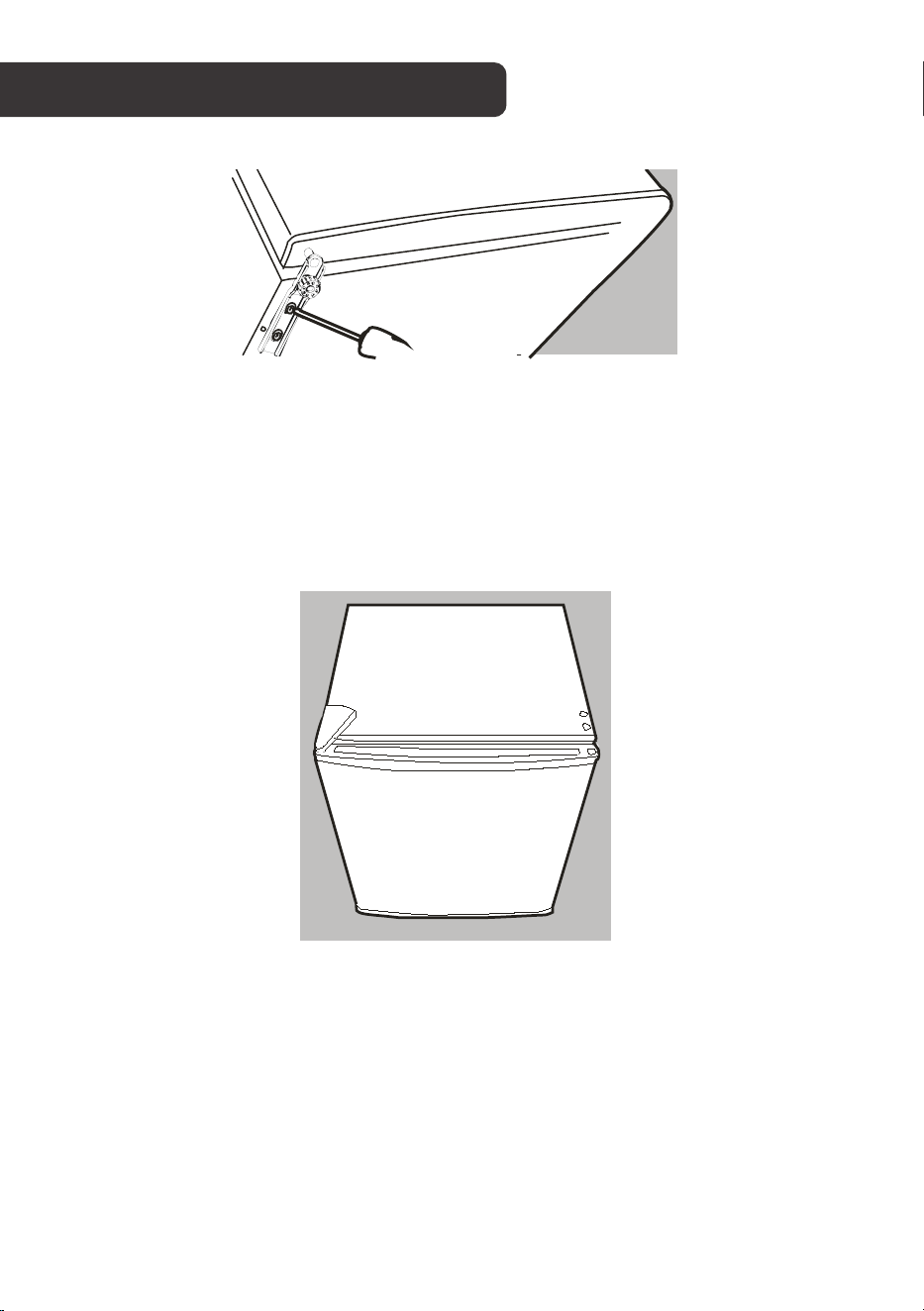
e. Slide the door back onto the top hinge, making sure it is facing the
right way up. Screw the bottom hinge into place on the new side.
Replace the other foot on the other side and then replace the plastic
covering by clicking it back into place on the door hinge.
f. Check that the door is aligned horizontally and vertically and that
the seals are closed on all sides before finally tightening the bottom
hinge.

9
FIRST TIME USE
POWER SOURCE AND GROUNDING
It’s recommended to use the vertical fridge on its own dedicated power
outlet for both convenience and safety. The power outlet must be
grounded.
Important! If the supply cord is damaged, it must be replaced by
Kogan.com or an authorised service agent on Kogan.com’s behalf. Cease
use and ensure the appliance is completely disconnected from the power
supply.
Cleaning before use
Wipe the inside of the unit with a weak solution of bicarbonate soda,
then rinse with warm water using a wrung-out cloth or sponge. Wash the
shelves and drawers in warm soapy water and dry completely
before replacing in the unit. Clean the exterior of the unit with a damp
cloth. Further cleaning instructions can be found on page 9.
Before using your unit
• Before initial start, keep the refrigerator still for half an hour before
connecting it to power supply.
• Do not use when the power cord is damaged or the plug is worn.
• Do not alter the power cord under any circumstances, so as to ensure
safe use.
• Do not put flammable, explosive, volatile and highly corrosive items in
the refrigerator to prevent damages to the product or fire accidents.
• Do not place flammable items near the refrigerator to avoid fires.
• This product is a household refrigerator and is only suitable for domestic
use.
• According to national standards, household refrigerators shall not be
used for other purposes, such as storage of blood, drugs or biological
products.
• Important! Before plugging in your fridge, you must check that you
have a power outlet which is compatible with the plug supplied on the
appliance lead.
Operation
• Before putting any fresh or frozen foods into the fridge, the fridge should
be left to run for 2-3 hours. If the temperature is especially high during

10
FIRST TIME USE (cont’d)
summer, wait up to 4 hours.
• All frozen food products that you purchase should be placed in the
cooler compartment as soon as possible to avoid the frozen food from
defrosting.
• Storage recommendation printed on the packaging of frozen food by the
manufacturers should always be followed.
• Ensure that the drawer doesn’t damage the refrigerant circuit.
Noise from your fridge
• You may notice that your fridge makes some unusual noises. This is
completely normal for refrigerators and freezers, and the noises are
caused by the circulation of the refrigerant liquid within the cooling
system.
Tips for keeping food within the fridge
• Cooked meats & fish should always be stored on a shelf above raw
meat/fish to avoid bacterial transfer. Keep raw meat/fish in a container
which is large enough to collect juices and cover properly, placing the
container on to the lowest shelf.
• Leave space around your food to allow air to circulate inside the unit.
• Ensure all parts of the appliance are kept cool.
• To prevent transfer of flavours and drying out, pack or cover the food
separately. Fruit and vegetables do not need to be wrapped.
• Always let pre-cooked food cool down before you place into the fridge.
This will help to maintain the internal temperature of the fridge.
• To prevent cold air from escaping the fridge, try to limit the number of
times you open the door.

11
CLEANING AND MAINTENANCE
WARNING! To avoid an electric shock, always unplug your fridge
before cleaning.
Cleaning the inner cabinet
• Caution: Before using any cleaning products, please read and follow
the manufacturer’s instructions and warnings to avoid any damage to
your fridge or personal injury.
• Upon installation of your new appliance, it is recommended that it be
cleaned thoroughly.
• Wash the inside with a damp warm cloth containing a water and
baking soda solution.
• The solution should be about 2 tablespoons of baking soda to 2L of
water.
• Wash the storage basket with a mild detergent solution.
• Be sure to keep the door seal clean to keep the unit running efficiently.
• The outside of the fridge should be cleaned with mild detergent and
warm water.
• Dry the interior and exterior with a soft cloth.
• The condenser coils should be carefully vacuumed when they are dusty
or dirty.
• It is recommended that the unit be cleaned each time it is defrosted to
help keep the unit odour free and running efficiently.
• Clean your door gasket seals every 3 months using the same warm
water solution described above.
Cleaning tips
• Condensation may appear on the outside of the unit. This may be
due to a change in room temperature. Wipe of any moisture residue.
If the problem continues, please contact a qualified technician for
assistance.
Care When Handling / Moving Your Unit
• Hold the unit around its sides or base when moving it. Under no
circumstances should it be lifted by holding the edges of the top
surface.

12
CLEANING AND MAINTENANCE
Servicing
• The unit should be serviced by an authorised engineer and only
genuine spare parts should be used. Under no circumstances
should you attempt to repair the unit yourself. Repairs carried out
by inexperienced persons may cause injury or serious malfunction.
Contact Kogan.com
Defrosting
• Unplug the power cord.
• Remove food and store it properly to avoid food spoilage.
• Clear the drainpipe.
• Place down trays to catch the water as the frost melts.
• You can let the unit defrost using the natural temperature of the room.
If there is a large amount of ice, an appropriate amount of hot water
can be used to speed up the melting process.
• Once defrosted, close the fridge and plug the unit back into a power
outlet.
• After a few hours, you are safe to return the food to the fridge.
Switching Off for Long Periods of Time
• When the unit is not in use for a long period of time, disconnect it from
the mains supply, empty all food and clean the appliance, leaving the
door ajar to prevent unpleasant smells.
Warm tips
• The refrigerator enclosure may emit heat during operation specially
in summer, this is caused by the radiation of the condenser, and it is a
normal phenomenon.
• Condensation phenomenon will be detected on the exterior surface
and door seals of the refrigerator when the ambient humidity is large.
This is a normal phenomenon, and the condensation can be wiped
away with a dry towel.
• Buzz will be generated by running compressor specially when starting
up or shutting down.
Tips for energy saving
• This appliance should be located in the coolest area of the room, away
13
from heat sources and heating ducts, as well as away from direct
sunlight.
• Let hot foods cool to room temperature before placing them in the
refrigerator. Overloading the fridge forces the compressor to run longer.
Foods that freeze too slowly may lose quality or spoil.
• Be sure to wrap foods properly and wipe containers dry before placing
them in the fridge. It will cut down on frost build-up.
• The storage bin should not be lined with aluminium foil, wax paper or
paper towelling. These liners will interfere with the cold air circulation,
making the appliance less efficient.
• Organise and label your food to reduce door openings and extended
searches. Remove as many items as needed at one time and then
close the door as soon as possible.
Disposal
• This marking indicates that this appliance should not be
disposed with other house-hold wastes. To prevent possible
harm to the environment or human health from uncontrolled
waste disposal, recycle it responsibly to promote the
sustainable reuse of material resources.
• Old units still have some residual value. An environmentally friendly
method of disposal will ensure that valuable raw materials can be
recovered and used again.
• The refrigerant used in your unit and insulation materials require
special disposal procedures. Ensure that none of the pipes on the back
of the unit are damaged prior to disposal.
• Up to date information concerning options of disposing of your old
unit and packaging from the new one can be obtained from your local
council office.
• When disposing of an old unit break of any old locks or latches and
remove the door as a safeguard.

14
BASIC TROUBLESHOOTING
Fridge isn’t operating
• Check that the fridge is plugged in
and connected to power.
• Check whether voltage is too low.
• Check that a fuse hasn’t blown or
circuit tripped.
Fridge is making strange odour
• Odourous foods should be closely
wrapped and sealed in containers.
• Ensure that the interior is clean.
Refer to cleaning instructions.
Fridge compressor is continuously
running
• It is normal for the fridge compressor
to operate for longer periods of time
when the ambient temperature is
higher (ie. Summer).
• Do not put too much food in the
fridge at one time.
• Do not put warm/hot foods into the
fridge.
• Try to minimise the frequency of the
door opening.
Illuminating light does not work
• Ensure the fridge is connected to
power.
• Check that the globe hasn’t blown.
Door seals aren’t tight
• Remove any foreign matter or liquids
on the seals.
The fridge door doesn’t close properly
• Ensure that food isn’t preventing the
door from closing.
• Ensure that the fridge is completely
level and feet adjusted to touch the
floor.
• Ensure the fridge door gaskets/seals
are clean.
Water pan overflows
• Doors not closed properly, resulting
increased defrosting.
• Too much food within the fridge, or
stored food contains too much water,
resulting in heavy defrosting.
The fridge is making loud noises
• It’s normal for the fridge to make
noises when refrigerant coolant is
being circulated.
• Check that the fridge is correctly
levelled.
Fridge body is hot
• Heat dissipation of the built-in
condenser into the body is normal.
Surface condensation
• Condensation on the exterior surface
and door seals is normal when the
ambient humidity is too high. It can
be wiped away with a clean towel.
For our full FAQ and troubleshooting guide,
head online to help.kogan.com

15
Capacity
Volume Total: 46L
Net: 45L
Dimensions
Dimensions (W x D x H): 475 x 444 x 495mm
Weight 14.15kg
Performance
Temperature Control Range 0.5 to 6degC
Power
Energy Consumption 221kWh per year
Energy Rating 1.5 Star
SPECIFICATIONS
Note:
• Design and specifications are subject to change without notice.
• Weight and dimension shown are approximate.

Need more information?
We hope that this user guide has given you the
assistance needed for a simple set-up. For the
most up-to-date guide for your product, as well
as any additional assistance you may require,
head online at help.kogan.com