CAUTION
Helpful Hints:
Use BN-LINK® Digital Thermostat to monitor the temperature of your terrarium. To property monitor the
temperature in your terrarium, it is recommended that you use one Thermostat per each 20 gallons (i.e.
use 2 Thermostats for a 40-gallon terrarium etc.). Most reptiles sold in pet shops are tropical species
(i.e.; boas, pythons, iguanas, water dragons etc.) requiring a minimum air temperature of 80° F (26.6° C).
The average house ranges from 65-75° F (18-2
4° C), and requires an additional heat source to keep the
terrarium in the safe 80-88 ° F (26.6-31 ° C) zone. Incandescent lamps, ceramic heat emitters, and heat
cables are also good additional heat sources.
Terrarium Top: The screen or glass top plays an important part in the overall temperature control of your
terrarium. If you are keeping desert type reptiles, small rodents or your terrarium is in a particularly
humid area, we recommend a full screen top. If you are keeping a
tropical species (i.e., iguanas, tree
frogs, tree agamids, etc...), we recommend using a glass top to cover a portion of the top of your
terrarium. This will trap a certain amount of humidity in the terrarium, which is necessary for most
tropical species. This will also help to increase the heat in your terrarium should it be placed in a
particularly cold area.
Cleaning: Make sure the BN-LINK® Reptile Heat Pad has been unplugged and cooled down before
cleaning the terrarium.
Please Read the Following Before Installing the BN-LINK® Reptile Heat
Pad
Any of the following situations constitutes improper use of the BN-LINK® Reptile Heat
Pad
andcan lead to stress cracks and/or other hazards:
A gravel or sand substrate deeperthan1.5inches (3.81cm)when the heat pad is on the bottom of the
tank or multiple BN-LINK® Reptile Heat Pads under one tank
Alarger sizeBN-LINK®ReptileHeatPadonasmaller tank;i.e.50-60gallonheatpadona30gallon
tank
or multiple BN-LINK® Reptile Heat Pads under one tank.
Placing the BN-LINK® Reptile Heat Pad inside of a terrarium.
Placingaheatbulb or ceramicheatemitterdirectlyovertheareawheretheBN-LINK®ReptileHeat
Pad
has been placed, resulting in a high build up of heat.
Anyother use notdescribed in thismanual is not coveredby thewarranty.
For indoor use only.
WARRANTY: the BN-LINK guarantees the material and workmanship of the BN-LINK® Reptile Heat Pad for
a period of one year
from date of purchase. If heat pad should fail during this time period, simply mail the heat
pad back to us with a note explaining failure. Please include your receipt. NO other warranty applies whether
expressed or implied.
VERY IMPORTANT INSTRUCTIONS
PLEASE READ!
Not following the provided instructions
voidsany and all warranties:
USE ON EXTERIOR OF TERRARIUM ONLY.
If anythingisunclear in thismanual please feel free to contactus forclarification. You can phone, e-mail or write us
at our address listed on the back of this manual.
CAUTION:
Do not use cedar products, ground corn cob, or walnut shells as a substrate with reptiles or
amphibians.
Do not place your terrarium where it will receiv
e direct sunlight.
If your house temperatures can rise above 80°F(26.6°C) we recommend you use a reptile thermo-
stat (i.e. BN-LINK® Thermostat) to shut off/control the heat output of the BN-LINK® Reptile Heat
Pad. If not using a reptile thermostat please unplug the BN-LINK® Reptile Heat Pad if your
inside house
temperatures rise above 80°F(26.6°C).
The BN-LINK® Reptile Heat Pad is not designed for use with water in any way. That means no
turtle
aquariums, fish tanks, paladariums, or any other situation where there is any water
(with or without gravel or other substrates) on the bottom of the cage.
INSTRUCTIONS
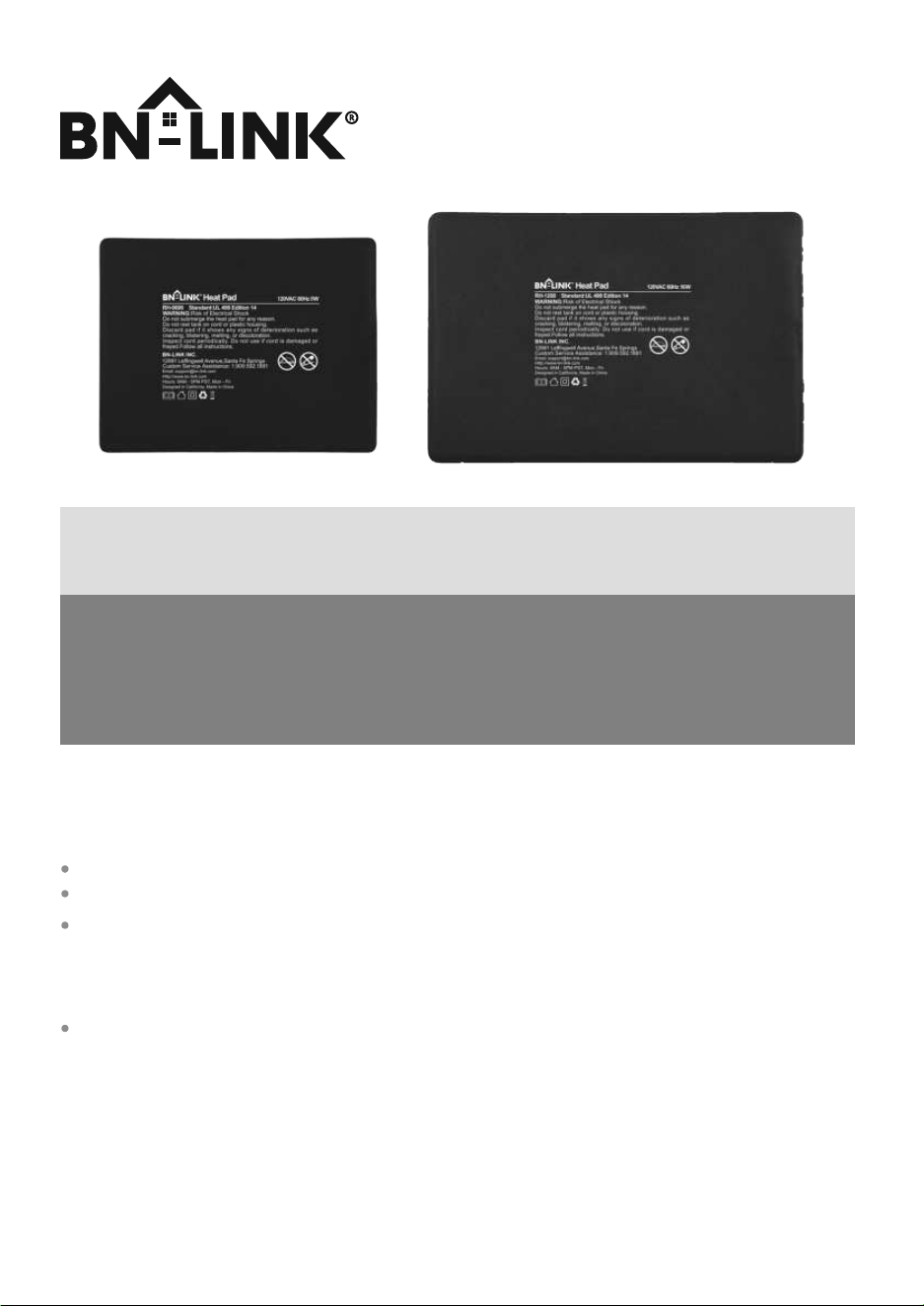
(S / M
/ L / XL)
BN-LINK INC.
12991 Leffingwell Avenue,Santa Fe Springs
Custom Service Assistance: 1.909.592.1881
Email: [email protected]
Http://www.bn-Iink.com
Hours: 9AM - 5PM PST, Mon - Fri
Designed in California, Made in China
Warning:
Risk of Electric Shock.
The BN-LINK ® Reptile Heat Pad is for indoor use
only.
INSTRUCTIONS: PLEASE READ CAREFULLY
Bottom Mounting:
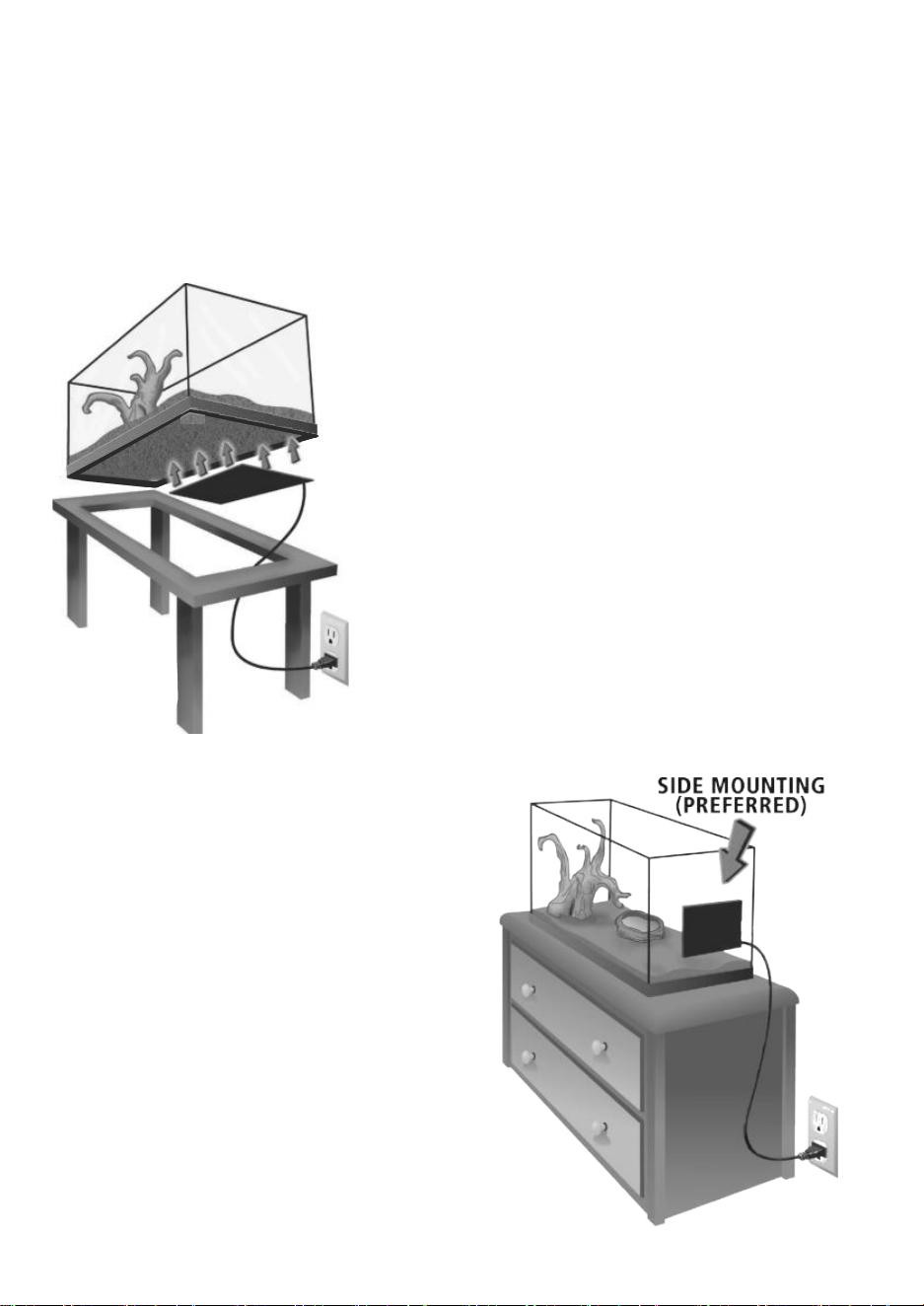
Clean the surface of the terrarium, peel adhesive paper off back of heat pad and “stick" the heat pad to
the bottom of your terrarium; remember to place heat pad on either the right or left side of terrarium and
gently rub heat pad to make firm contact. This allows one side of your terrarium to be warmer than the
other, providing a natural temperature gradient. The BN-LINK® Reptile Heat Pad must be stuck to the
terrarium. This
allows slightelevation of the terrarium thus allowing excessheat to escape (very import
Do not submerge the heat pad for any reason.
Do not rest tank on cord or plastic housing.
Discard pad if it shows any signs of deterioration such as cracking, blistering, melting, or
discoloration.
Follow all instructions.
Inspect cord periodically. Do not use if cord is damaged or frayed.
WARNING: Risk of Fire.
Never mount the BN-LINK® Reptile Heat Pad in a manner that would encapsulate heat
.
(i.e. mounting it on the bottom of a terrarium and then setting the terrarium directly on an
y
type of table or the floor/carpet). Always use the enclosed rubber feet to elevate you
r
terrarium thus allowing the heat to escape. If unsure of bottom mounting, the side mountin
g
of the BN-LINK® Reptile Heat Pad is the preferred application.
Placement of Terrarium:
Do not place on heat sensitive surfaces (i.e. antique furniture, plastic, etc...)
Do not place the terrarium where it may receive direct sunlight.
The BN-LINK® Reptile Heat Pad is to be used on standard glass aquariums only; using any
other type of cage will void the warranty.
Do not use the BN-LINK® Reptile Heat Pad on anything other than glass
terrariums: NO ACRYLIC cages
ant).
Moving or Detaching Heat Pad:
DO NOT remove theheat pad once it has been
attached to your terrarium.
REMOVAL of the heat pad once attached voids all
warranty as this can easily damage the internal wire
connections.
Side Mounting:
If your terrarium is located on any type of antique
stand or dresser or if there is fabric (i.e; tablecloth,
etc...) underneath your terrarium then side mount-
ing of the BN-LINK® Reptile Heat Pad is preferred.
To side mount, simply remove adhes
ive paper from
the back of the BN-LINK® Reptile Heat Pad and
"stick" to the lower right or left side of your terrarium
(see Diagram 2).
Substrate:
If the BN-LINK® Reptile Heat Pad is on the bottom
of the tank , you must use some type of substrate
material.
NO METAL cages
NO WOOD cages
NO PLASTIC cages
NO FOAM cages
NO FIBERGLASS cages
NO STONE cages
Hot Weather:
ALWAYS
unplug your BN-LINK® Reptile Heat Pad if the room temperature of your house
rises above 80°F (26.6°C). (Unless using a reptile thermostat to control the heat pad.)
Water Dish Placement, Substrate and Cleaning:
DO NOT PLACE WATER DISH ABOVE HEATER.
Avoid spilling or spraying water on glass where heat pad is attached; water spilled directly
on the glass where the heat pad is could
cause a stress crack. Note: If the bottom of your
terrarium can get wet this could cause a “stress crack" with this type of heat pad. Always use
a substrate that will absorb water and keep your water dish on the opposite side of the
terrarium from the BN-LINK® Reptile Heat Pad. Because of the many variables involved in
terrarium glass thickness, set up and husbandry, the BN-LINK does not guarantee against
stress crack* in your terrarium. To maximize against the possibility of st
ress cracks from
water spills, etc., then we recommend side mounting of the BN-LINK® Reptile Heat Pad.
(See Diagram 2).
This prevents snakes and burrowing reptiles from
pushing substrate aside and resting on top of the
glass directly above the heat pad,resulting in possi-
ble burns! Using newspaper, paper towels, or any
similarly light product in place of a substrate is
not appropriate with this kind of heat pad, and
such use will void any and all warranty and
release the BN-LINK from any liability for damage
to product, property, or animals. Also, some liners
or cage inserts have plastic or rubberized backings
that could melt; use such items with caution. When
using gravel or sand type substrates, it is important
to use no more than 1.5” (3.81cm) depth of grav-
el/sand type substrates.
Plug Heat Pad In:
The BN-LINK® Reptile Heat Pad is designed
to slowly heat glass, and then the air inside of
your terrarium. The heat pad will take a minimum of
six hours before you get an accurate temperature
reading in your terrarium. If your animal spends all
of its time near the heat pad It means that there is
not enough heat in the cage. Supplemental heal
should be added immediately.
Please Read the Following Instructions
Before Using the BN-LINK® Reptile Heat
Pad
Warning:
Risk of Electric Shock.
The BN-LINK ® Reptile Heat Pad is for indoor use
only.
INSTRUCTIONS: PLEASE READ CAREFULLY
Bottom Mounting:
Clean the surface of the terrarium, peel adhesive paper off back of heat pad and “stick" the heat pad to
the bottom of your terrarium; remember to place heat pad on either the right or left side of terrarium and
gently rub heat pad to make firm contact. This allows one side of your terrarium to be warmer than the
other, providing a natural temperature gradient. The BN-LINK® Reptile Heat Pad must be stuck to the
terrarium. This
allows slightelevation of the terrarium thus allowing excessheat to escape (very import
Do not submerge the heat pad for any reason.
Do not rest tank on cord or plastic housing.
Discard pad if it shows any signs of deterioration such as cracking, blistering, melting, or
discoloration.
Follow all instructions.
Inspect cord periodically. Do not use if cord is damaged or frayed.
WARNING: Risk of Fire.
Never mount the BN-LINK® Reptile Heat Pad in a manner that would encapsulate heat
.
(i.e. mounting it on the bottom of a terrarium and then setting the terrarium directly on an
y
type of table or the floor/carpet). Always use the enclosed rubber feet to elevate you
r
terrarium thus allowing the heat to escape. If unsure of bottom mounting, the side mountin
g
of the BN-LINK® Reptile Heat Pad is the preferred application.
Placement of Terrarium:
Do not place on heat sensitive surfaces (i.e. antique furniture, plastic, etc...)
Do not place the terrarium where it may receive direct sunlight.
The BN-LINK® Reptile Heat Pad is to be used on standard glass aquariums only; using any
other type of cage will void the warranty.
Do not use the BN-LINK® Reptile Heat Pad on anything other than glass
terrariums: NO ACRYLIC cages
ant).
Moving or Detaching Heat Pad:
DO NOT remove theheat pad once it has been
attached to your terrarium.
REMOVAL of the heat pad once attached voids all
warranty as this can easily damage the internal wire
connections.
Side Mounting:
If your terrarium is located on any type of antique
stand or dresser or if there is fabric (i.e; tablecloth,
etc...) underneath your terrarium then side mount-
ing of the BN-LINK® Reptile Heat Pad is preferred.
To side mount, simply remove adhes
ive paper from
the back of the BN-LINK® Reptile Heat Pad and
"stick" to the lower right or left side of your terrarium
(see Diagram 2).
Substrate:
If the BN-LINK® Reptile Heat Pad is on the bottom
of the tank , you must use some type of substrate
material.
NO METAL cages
NO WOOD cages
NO PLASTIC cages
NO FOAM cages
NO FIBERGLASS cages
NO STONE cages
Hot Weather:
ALWAYS
unplug your BN-LINK® Reptile Heat Pad if the room temperature of your house
rises above 80°F (26.6°C). (Unless using a reptile thermostat to control the heat pad.)
Water Dish Placement, Substrate and Cleaning:
DO NOT PLACE WATER DISH ABOVE HEATER.
Avoid spilling or spraying water on glass where heat pad is attached; water spilled directly
on the glass where the heat pad is could
cause a stress crack. Note: If the bottom of your
terrarium can get wet this could cause a “stress crack" with this type of heat pad. Always use
a substrate that will absorb water and keep your water dish on the opposite side of the
terrarium from the BN-LINK® Reptile Heat Pad. Because of the many variables involved in
terrarium glass thickness, set up and husbandry, the BN-LINK does not guarantee against
stress crack* in your terrarium. To maximize against the possibility of st
ress cracks from
water spills, etc., then we recommend side mounting of the BN-LINK® Reptile Heat Pad.
(See Diagram 2).
This prevents snakes and burrowing reptiles from
pushing substrate aside and resting on top of the
glass directly above the heat pad,resulting in possi-
ble burns! Using newspaper, paper towels, or any
similarly light product in place of a substrate is
not appropriate with this kind of heat pad, and
such use will void any and all warranty and
release the BN-LINK from any liability for damage
to product, property, or animals. Also, some liners
or cage inserts have plastic or rubberized backings
that could melt; use such items with caution. When
using gravel or sand type substrates, it is important
to use no more than 1.5” (3.81cm) depth of grav-
el/sand type substrates.
Plug Heat Pad In:
The BN-LINK® Reptile Heat Pad is designed
to slowly heat glass, and then the air inside of
your terrarium. The heat pad will take a minimum of
six hours before you get an accurate temperature
reading in your terrarium. If your animal spends all
of its time near the heat pad It means that there is
not enough heat in the cage. Supplemental heal
should be added immediately.
Please Read the Following Instructions
Before Using the BN-LINK® Reptile Heat
Pad

CAUTION
Helpful Hints:
Use BN-LINK® Digital Thermostat to monitor the temperature of your terrarium. To property monitor the
temperature in your terrarium, it is recommended that you use one Thermostat per each 20 gallons (i.e.
use 2 Thermostats for a 40-gallon terrarium etc.). Most reptiles sold in pet shops are tropical species
(i.e.; boas, pythons, iguanas, water dragons etc.) requiring a minimum air temperature of 80° F (26.6° C).
The average house ranges from 65-75° F (18-2
4° C), and requires an additional heat source to keep the
terrarium in the safe 80-88 ° F (26.6-31 ° C) zone. Incandescent lamps, ceramic heat emitters, and heat
cables are also good additional heat sources.
Terrarium Top: The screen or glass top plays an important part in the overall temperature control of your
terrarium. If you are keeping desert type reptiles, small rodents or your terrarium is in a particularly
humid area, we recommend a full screen top. If you are keeping a
tropical species (i.e., iguanas, tree
frogs, tree agamids, etc...), we recommend using a glass top to cover a portion of the top of your
terrarium. This will trap a certain amount of humidity in the terrarium, which is necessary for most
tropical species. This will also help to increase the heat in your terrarium should it be placed in a
particularly cold area.
Cleaning: Make sure the BN-LINK® Reptile Heat Pad has been unplugged and cooled down before
cleaning the terrarium.
Please Read the Following Before Installing the BN-LINK® Reptile Heat
Pad
Any of the following situations constitutes improper use of the BN-LINK® Reptile Heat
Pad
andcan lead to stress cracks and/or other hazards:
A gravel or sand substratedeeper than 1.5inches (3.81cm) when the heat pad is on the bottom of the
tank or multiple BN-LINK® Reptile Heat Pads under one tank
Alarger sizeBN-LINK®ReptileHeatPadonasmaller tank;i.e.50-60gallonheatpadona30gallon
tank
or multiple BN-LINK® Reptile Heat Pads under one tank.
Placing the BN-LINK® Reptile Heat Pad inside of a terrarium.
Placingaheatbulb or ceramicheatemitterdirectlyovertheareawheretheBN-LINK®ReptileHeat
Pad
has been placed, resulting in a high build up of heat.
Anyother use notdescribed in thismanual is not coveredby thewarranty.
For indoor use only.
WARRANTY: the BN-LINK guarantees the material and workmanship of the BN-LINK® Reptile Heat Pad for
a period of one year
from date of purchase. If heat pad should fail during this time period, simply mail the heat
pad back to us with a note explaining failure. Please include your receipt. NO other warranty applies whether
expressed or implied.
VERY IMPORTANT INSTRUCTIONS
PLEASE READ!
Not following the provided instructions
voidsany and all warranties:
USE ON EXTERIOR OF TERRARIUM ONLY.
If anythingisunclear in thismanual please feel free to contactus forclarification. You can phone, e-mail or write us
at our address listed on the back of this manual.
CAUTION:
Do not use cedar products, ground corn cob, or walnut shells as a substrate with reptiles or
amphibians.
Do not place your terrarium where it will receiv
e direct sunlight.
If your house temperatures can rise above 80°F(26.6°C) we recommend you use a reptile thermo-
stat (i.e. BN-LINK® Thermostat) to shut off/control the heat output of the BN-LINK® Reptile Heat
Pad. If not using a reptile thermostat please unplug the BN-LINK® Reptile Heat Pad if your
inside house
temperatures rise above 80°F(26.6°C).
The BN-LINK® Reptile Heat Pad is not designed for use with water in any way. That means no
turtle
aquariums, fish tanks, paladariums, or any other situation where there is any water
(with or without gravel or other substrates) on the bottom of the cage.
INSTRUCTIONS
(S / M
/ L / XL)
BN-LINK INC.
12991 Leffingwell Avenue,Santa Fe Springs
Custom Service Assistance: 1.909.592.1881
Email: [email protected]
Http://www.bn-Iink.com
Hours: 9AM - 5PM PST, Mon - Fri
Designed in California, Made in China