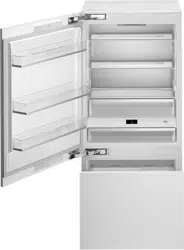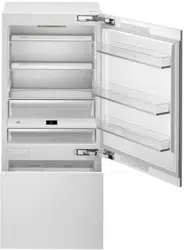

REF30BMB…N… Series
REF36BMB…N… Series
REF36FDB…N… Series
WWW.BERTAZZONI.COM
BERTAZZONI
EN
REFRIGERATOR
INSTALLATION MANUAL

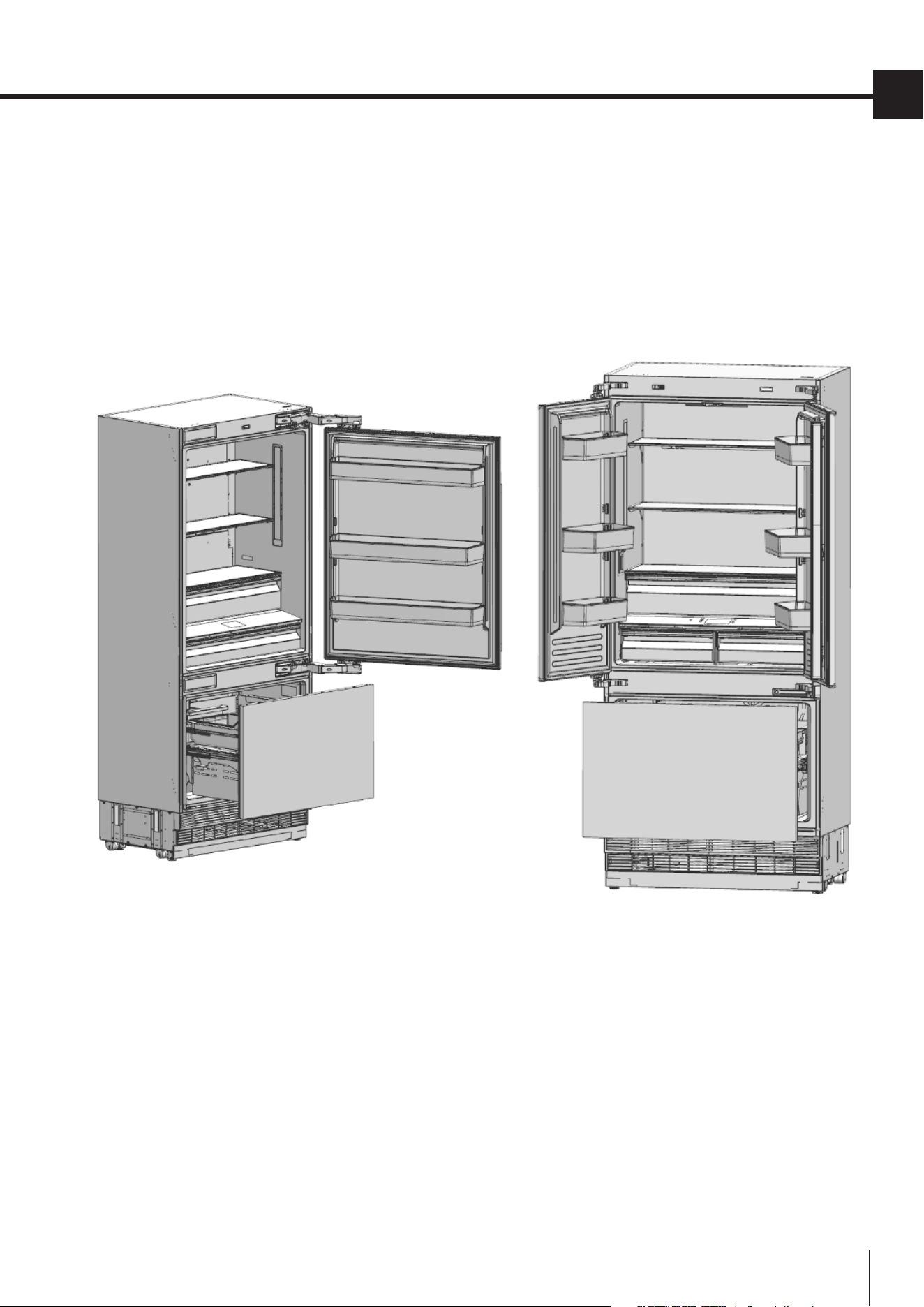
REF30BMB…N…
REF36BMB...N…
REF36FDB...N…
3
EN
4
CONTENTS
1. IMPORTANT INFORMATION 5
1.1 Symbols and Their Meanings ..............................................................................................................................................5
1.2 Disposing of the packing materials ...................................................................................................................................5
1.3 Climate class ............................................................................................................................................................................6
1.4 Product weight .........................................................................................................................................................................6
1.5 Food load bearing capacity of the doors ..........................................................................................................................6
2. BEFORE INSTALLATION 7
2.1 Installation location ................................................................................................................................................................7
2.2 Cabinetry ...................................................................................................................................................................................8
2.3 Ventilation .................................................................................................................................................................................8
2.4 Electrical Connection .............................................................................................................................................................8
2.5 Water Connection (where applicable) ...............................................................................................................................8
2.6 Tool list .......................................................................................................................................................................................8
2.7 Alternatives for installation .................................................................................................................................................9
2.8 Preparation for installation ..................................................................................................................................................9
2.9 Location of the Electrical Wiring .......................................................................................................................................10
2.10 Location of the Water System .........................................................................................................................................11
2.11 Product dimensions ...........................................................................................................................................................12
2.12 Unpacking ..............................................................................................................................................................................20
2.13 Removing the connectors on the side wall of the unit .............................................................................................21
2.14 Removing the Installation Hardware from the Freezer Compartment ...............................................................22
2.15 Removing the freezer drawer .........................................................................................................................................23
2.16 Removing the freezer door ..............................................................................................................................................23
2.17 Removing the lower and upper ventilation grill covers ...........................................................................................24
3. INSTALLATION INSTRUCTIONS 25
3.1 Before installation .................................................................................................................................................................25
3.2 Mounting the Anti-Tip Brackets ........................................................................................................................................25
3.3 Preparing the Water Hose and the Electrical Connection .........................................................................................28
3.4 Installation in the cabinet ....................................................................................................................................................28
3.5 Overlay panel installation and preparation ...................................................................................................................35
3.6 Hinge adjustment and reversing the door swing .........................................................................................................48
5
EN
1.1 Symbols and Their Meanings
Symbols used in the installation manual are as
follows.
Note
Important information or useful tips for use
Warning
Conditions that may damage the product or
aect its operation
Caution
Situations entailing a serious risk of injury
1.2 Disposing of the packing materials
The packing materials have been designed to
protect the product during transport.
The packing materials used for the product are not
harmful to the environment when disposed of and
they need to be recycled.
All plastic packing materials, bags, etc. must be
disposed of safely and kept out of the reach of
children.
Please return the packing materials to your dealer.
WARNING:
This installation manual is intended to
aid installation teams. The User Manual
provided with the product must also be
taken into account.
You may be seriously injured and your
product damaged if you ignore the warnings
provided in this manual. Please read the
following carefully.
WARNING:
R600a Refrigerant
This product contains R600a isobutane
refrigerant, which is a very eco-friendly
natural gas. However, it is also flammable.
Please heed the warnings below:
• If the product has been transported
horizontally, you must wait for a minimum
of 4 hours before plugging it in.
• The following instructions must be
followed during installation:
• The dimensions of the installation area
must be adequate.
• The dimensions, features and position of
the object used to support and secure the
product in said area must be suitable.
• Minimum clearances between product
parts and surrounding structures must
be adequate.
• Minimum dimensions and proper
positioning of ventilation holes must be
heeded.
• The product must be connected to a
non-GFCI protected dedicated circuit,
and there must be a suitable water line
connection (for models with ice maker
and water dispenser).
• The product must be able to be
disconnected from the power supply
after installation.
• The socket or fuse must be accessible,
so as to be able to shut o power to the
product.
• Extension cords and ungrounded (two-
prong) adapters may not be used.
CAUTION:
You must wear protective gloves and eye
protection when installing the product.
You must also wear hearing protection
when using a drill or similar tools.
CAUTION:
Make sure that the electrical circuit is
suitable for the product.
CAUTION:
The product must be installed by a qualified
technician according to the installation
instructions.
WARNING:
The product may tip over, because it is
quite heavy. Precautions must be taken to
prevent this from occurring.
The product's doors must be kept closed
until it reaches its destination; it must be
transported in the manner described in the
installation instructions.
1. IMPORTANT INFORMATION
REF30BMB…N…
REF36BMB...N…
REF36FDB...N…
6
1.3 Climate class
Climate range Ambient temperature of the room
This appliance has been designed to be
used in certain specific climates (ambient
temperatures ranges). It must not be used
outside of these ranges.
SN (Extended temperate) Between +50ºF (10ºC) and +90ºF (32ºC)
N (Temperate) Between +60ºF (16ºC) and +90ºF (32ºC)
ST (Subtropical) Between +60ºF (16ºC) and +100ºF (38ºC)
T (Tropical) Between +60ºF (16ºC) and +110ºF (43ºC)
1.4 Product weight
Category REF30BMBZPNV REF30BMBPNB REF36BMBZPNV REF36BMBPNB REF36FDBZPNV REF36FDBPNB
Product weight 342 lb (155 kg) 326 lb (148 kg) 373 lb (169 kg) 358 lb (162 kg) 355 lb (161 kg) 340 lb (154 kg)
Category REF30BMBZXNV REF30BMBXNB REF36BMBZXNV REF36BMBXNB REF36FDBZXNV REF36FDBXNB
Product weight 386 lb (175 kg) 370 lb (168 kg) 439 lb (199 kg) 424 lb (192 kg) 421 lb (191 kg) 406 lb (184 kg)
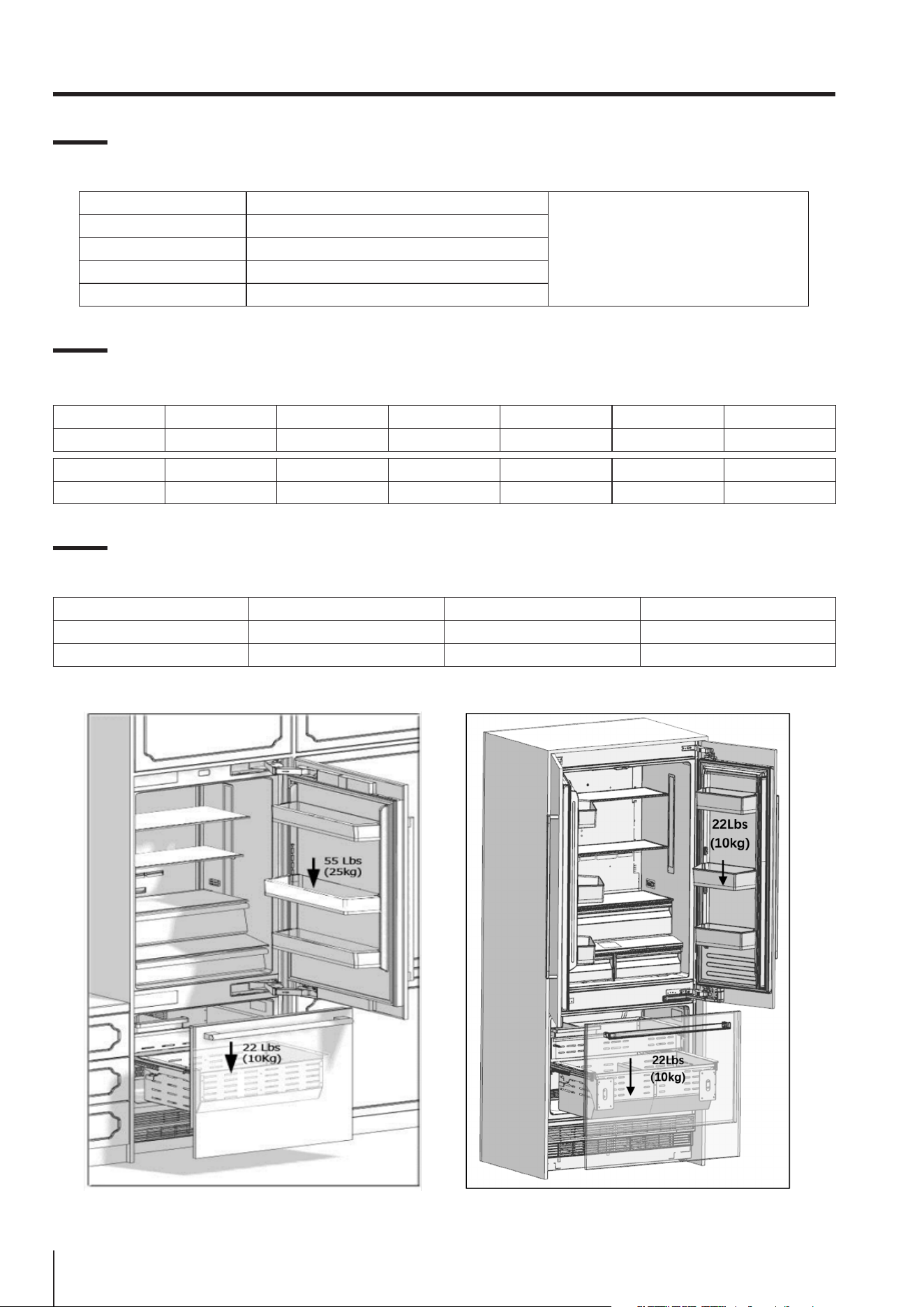
1.5 Food Load Bearing Capacity of the Doors
Max. load REF30BMB…N… REF36BMB...N… REF36FDB...N…
Fridge door 55 lb (25 kg) 55 lb (25 kg) 22 lb (10 kg)
Freezer drawer 22 lb (10 kg) 22 lb (10 kg) 22 lb (10 kg)
1. IMPORTANT INFORMATION
7
EN
2.1 Installation location
You must follow the instructions below:
> The floor on which the product is to be installed
must be capable of bearing 1,200 pounds (544 kg)
minimum.
> The kitchen floor and the bottom of the product
must be equally level. Otherwise, problems may
occur with the appliance's air flow.
> There must be no obstructions at the rear and on
the side walls of the product's installation location
that would prevent its installation.
> The electrical outlet must be in the correct place.
> The dimensions of the cabinet where the appliance
is to be installed must be in strict conformity with
the dimensions provided in the manual.
> Do not install the appliance adjacent to another
fridge/freezer. Otherwise, condensation and
damage may occur. (Please see "Dual-Fridge
Cabinet Installation" for detailed information).
> The level of the floor where the product is to be
installed must be checked with a bubble level.
> The installation location must not be exposed
to direct sunlight and must be away from heat
sources (ovens, radiators, etc.).
> The ambient temperature must be between 50°F
(10°C) and 110°F (43°C). Otherwise, malfunctions
may occur when the appliance is running.
> If it is not possible to avoid installing the product
near a heat source, the minimum clearances
provided below must be maintained between the
appliance and the given source:
• 1 1/4" (32 mm) from electric ranges or ovens
• 12" (305 mm) from gas or fuel-powered kitchen
ranges or ovens
Please heed the following rules:
> The electrical outlet or panel must be easily
accessible in case of an emergency; it must not be
hidden behind the product.
> Neither the plug nor the cable may touch the
back surface of the appliance. Otherwise, it may be
damaged by the appliance's vibrations.
> Do not connect other equipment plugs behind
this appliance.
If the humidity level is high where the appliance
is being used, its exterior surfaces may become
corroded.
To prevent corrosion, keep the installation room
dry and well-cleaned.
To prevent the risk of electric shock:
> Connect the plug to a grounded 3-prong outlet.
> Do not remove plug's grounding prong.
> Do not use adapters.
> Do not use extension cords.
CAUTION:
Failure to follow these instructions may
result in fire, electric shock or death.
Connecting the appliance's grounding
conductor in the wrong place may lead to
electric shock. Please have the grounding
checked by a qualified electrician or service
technician if you have any doubt about the
proper grounding of the appliance.
Installation, repairs and other procedures
performed by unqualified persons may
give rise to hazards. Before installing the
appliance, make sure that the voltage, load
and circuit current parameters on the data
plate are in compliance with the power
supply in your house.
The appliance is provided with a NEMA 5-15
P plug and a 3-prong power cord which is
in the UL list and ready to be connected to a
120 V, 60 Hz power supply. Fuse is 15 A. The
appliance must be connected to a 3-prong
socket. The plug must be installed only by a
licensed electrician.
If the electrical wiring or the electric power
supply of the house requires alteration, the
necessary procedures must be performed
by a qualified electrician.
CAUTION:
Do not install your refrigerator:
• in an outdoor space,
• in a location with dripping water,
• in a location where the temperature is
lower than 50°F (10°C).
2. BEFORE INSTALLATION
8
2.2 Cabinetry
Make sure that the cabinetry inside which you will
install the appliance has been securely mounted in
your kitchen.
Your cabinet must be properly secured to the
floor and to the wall using appropriate mounting
hardware.
For the best installation, clearances between the
cabinet and the appliance must be in compliance
with the measurements specified in the installation
instructions.
The side walls must be free of obstructions and
their surfaces must be flat. The minimum thickness
of the side walls must be 5/8" (16 mm).
The minimum thickness of the door panels to be
attached to the appliance must be ¾” (19 mm).
CAUTION:
There is a stainless steel door and stainless
kickplate option. Please consult your
Authorized Service Provider.
2.3 Ventilation
Ventilation openings where the air enters and exits
the unit must never be obstructed. The user is
responsible for periodically cleaning o the dust
and debris that can accumulate on the grill over
time.
2.4 Electrical Connection
> Never use an extension cord.
> The electrical outlet must be grounded and
checked by an authorized technician.
> The positioning of the electrical wiring must
comply with the measurements specified in the
manual.
CAUTION:
RISK OF ELECTRIC SHOCK
Electrical grounding is necessary. This
appliance is equipped with a three-prong
plug to protect you against possible electric
shocks.
• Do not remove the round grounding prong
from the plug.
• Do not use two-prong grounding adapters.
• Do not use an extension cord to supply
power to the product.
CAUTION:
Do not connect the grounding cable to the
gas line. Please have the grounding checked
by a qualified electrician if you are not sure
about the grounding of the appliance. Do
not install a fuse on the neutral line or on
the grounding circuit.
WARNING:
Please wait for 3-6 hour before connecting
the appliance to the power supply, in order
to protect it against possible damage. This
will allow the balance of the refrigerant and
the lubricants in the system to be restored.
2.5 Water Connection (where applicable)
> Water supply pressure must be within the range
specified in the manual.
> The location of the water line connection must
comply with the area measurements specified in
the manual.
Note:
A bypass plug is recommended for the
water filtering system if a reverse osmosis
system is used.
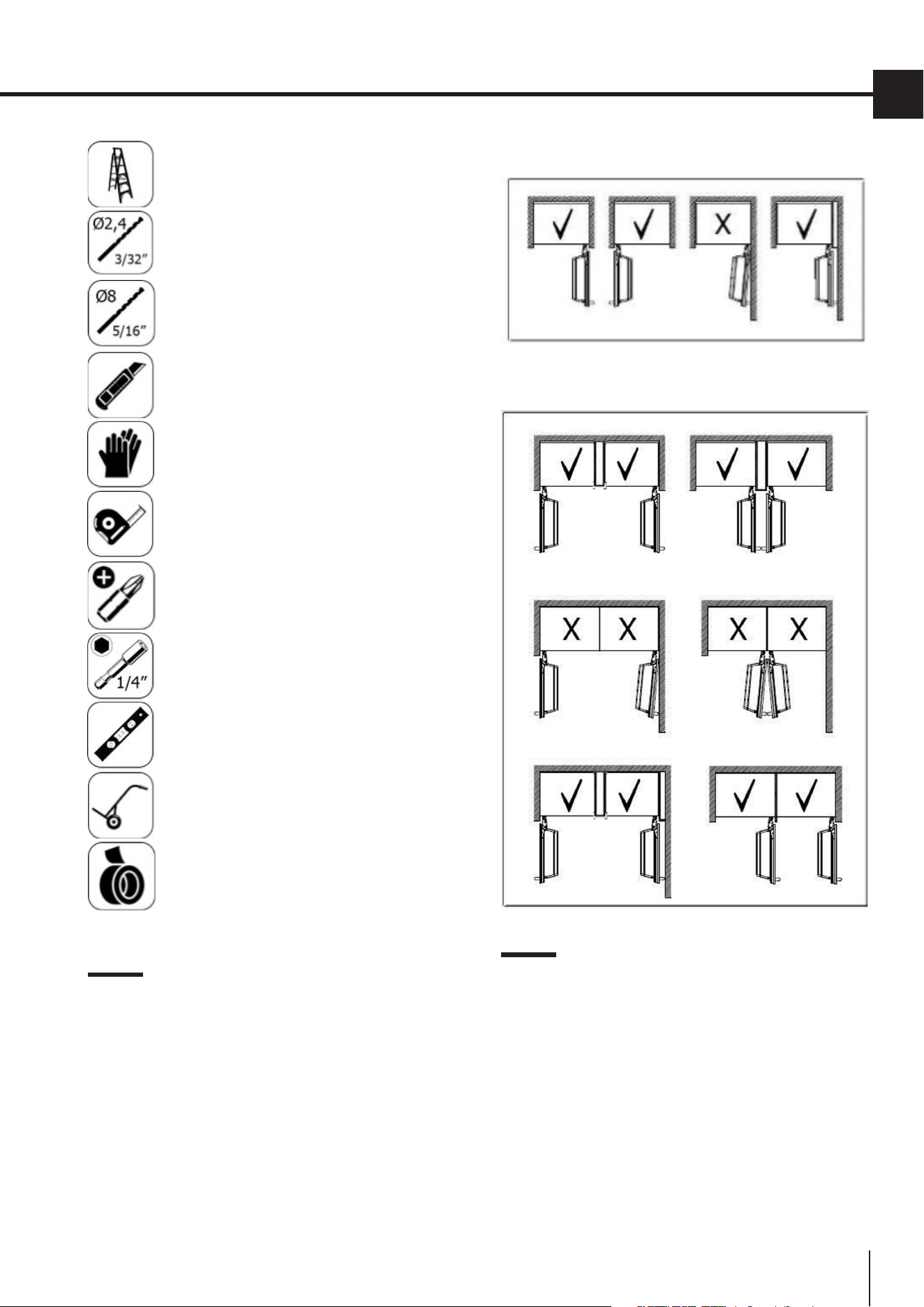
2.6 Tool List
The tools to be used when installing the product
are as follows:
Cordless drill
Safety goggles
½" wrench
Hammer
2. BEFORE INSTALLATION
9
EN
Ladder
Ø 2.4 drill bit
Ø 8.0 drill bit
Box cutter
Safety gloves
Tape measure
Phillips-head bit
¼" hex bit
Bubble level
Appliance dolly
Tape
2.7 Alternatives for Installation
The appliance can be installed in a variety of
ways depending on the kitchen design. It must be
installed in a location where it is certain that the
door can be opened and closed properly. If the
doors cannot open up to at least 90 degrees the
appliance drawers will not be able to be opened.
• Single-fridge cabinet placement methods
• Dual-fridge cabinet placement methods
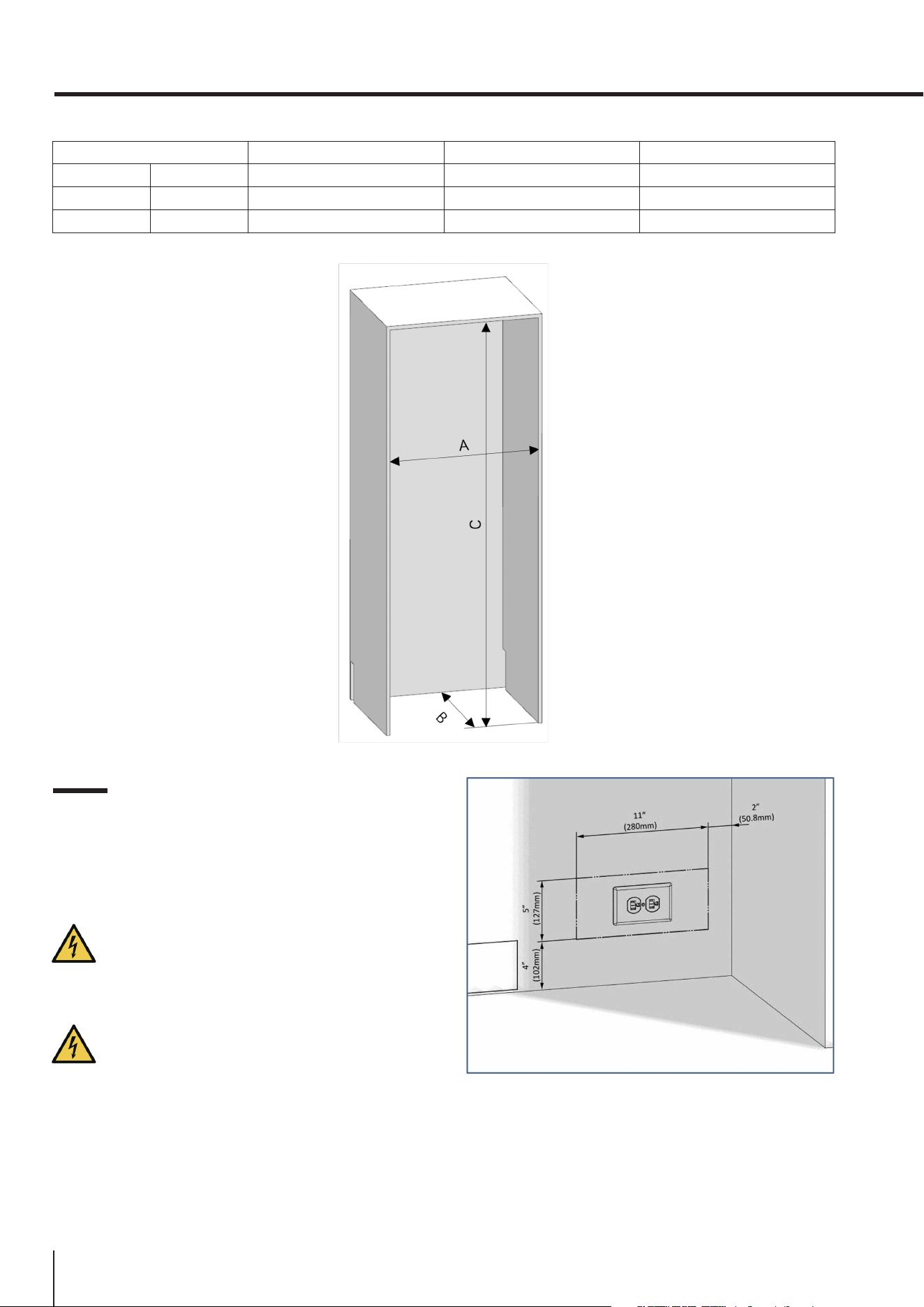
2.8 Preparation for Installation
The instructions below refer to a built-in
installation.
In a built-in installation, the appliance is installed
in a cabinet niche or framed in with panels.
Niche Dimensions
• The niche dimensions below must be checked
before beginning the installation.
10
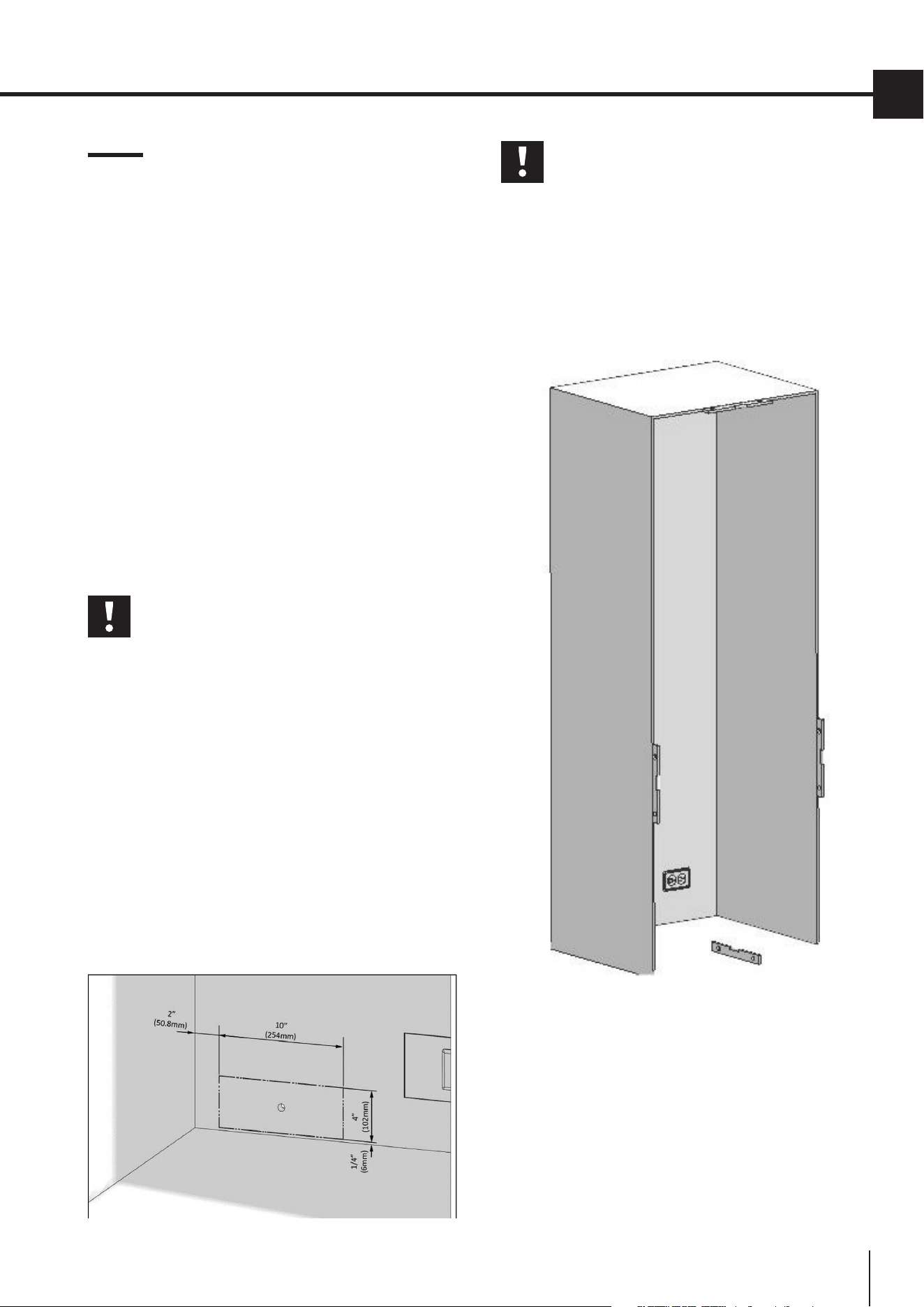
2.9 Location of the Electrical Wiring
The location of the electrical outlet in the cabinet
where the product is to be installed must be within
the area shown in the figure.
CAUTION:
Do not use extension cords or two-prong
adapters and do not remove the ground
terminal of the grounding cable.
CAUTION:
A qualified electrician must ensure that the
poles of the socket are connected correctly.
Verify that the grounding of the socket is
correct.
Category REF30BMB…N… REF36BMB...N… REF36FDB...N…
A width 30" (762 mm) 36" (914 mm) 36" (914 mm)
B depth 25" (635 mm) 25" (635 mm) 25" (635 mm)
C height 84" (2134 mm) 84" (2134 mm) 84" (2134 mm)
2. BEFORE INSTALLATION
11
EN
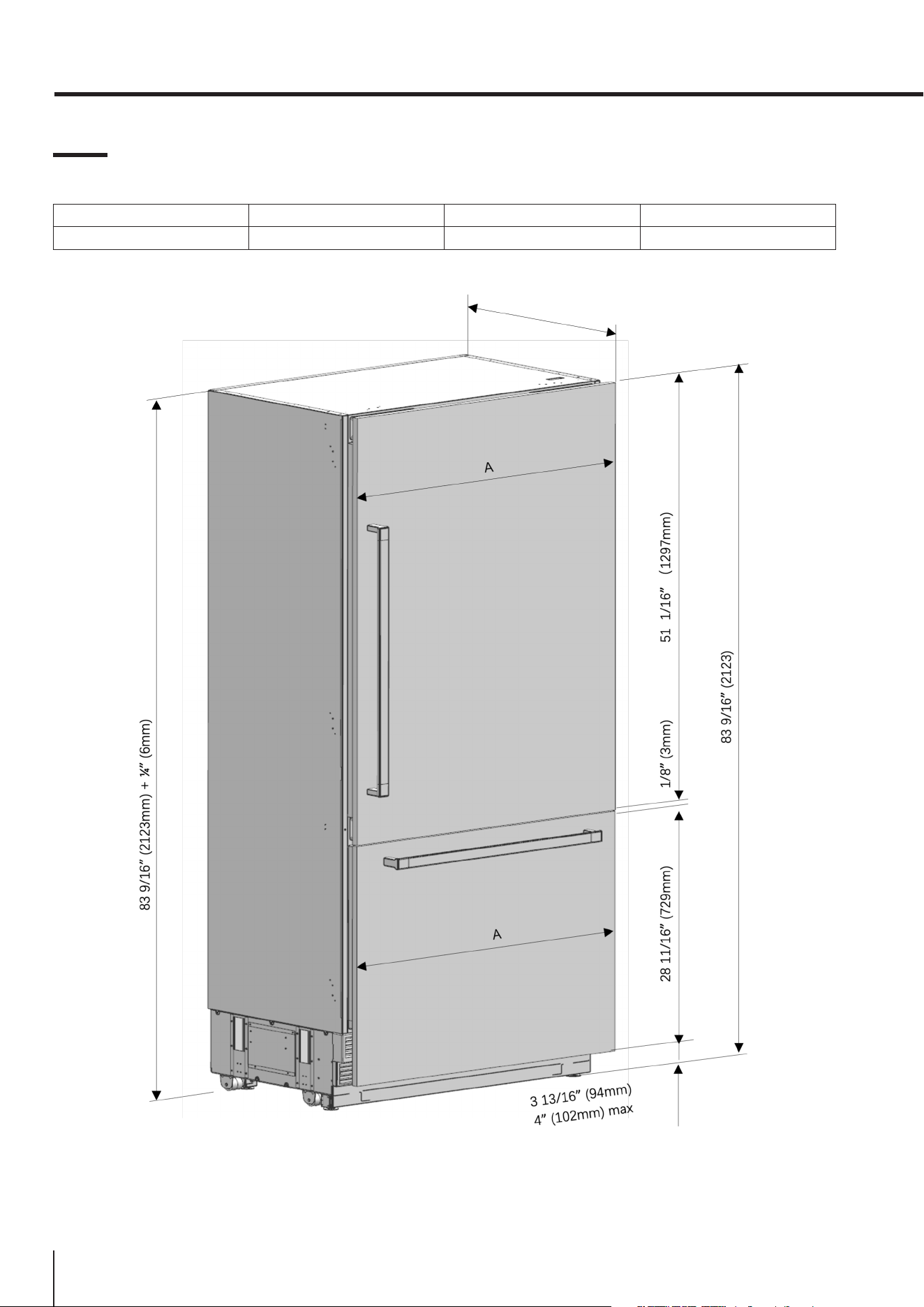
2.10 Location of the Water System
The water connected to the water supply must be
potable.
The location of the water line connection must be
within the area shown in the figure below.
The refrigerator's water system must be connected
to the house's main water supply.
The user must be able to switch it on/o using the
valve when necessary.
Objects that might pierce the water hoses or cause
them to twist must not be present where the water
line is installed.
The pressure of the water system must be between
25-80 psi (1.7-5.5 Bar).
If the water pressure exceeds 80 psi, install a
pressure limiting device or water impact protector
to the inlet valve. Do not install or operate the
appliance if it is possible for the water pressure to
exceed 120 psi.
WARNING:
Make sure that there is no water leakage
when establishing the water connections.
Otherwise, water may damage the cabinetry.
The water supply line must located in
the cabinet where the appliance is to be
installed.The user must be able to switch it
on/o using the valve when necessary. You
will need a hose with a minimum length of
60" (1.5 meters) and a diameter of ¼" for
the appliance's water connections during
installation. A connector that has a thread
with an external diameter of ¼" must be
used to connect the end of the hose to the
product.
Before completing the installation, make
sure that water flows and that there is no
water leakage.
WARNING:
• The level of the floor where the product
is to be installed must be checked with a
bubble level.
• The cabinet flanges must be checked
with a bubble level to ensure that they are
perfectly vertical.
• If the appliance is not perfectly level and
vertical, problems may arise with the
installation.
12
2. BEFORE INSTALLATION
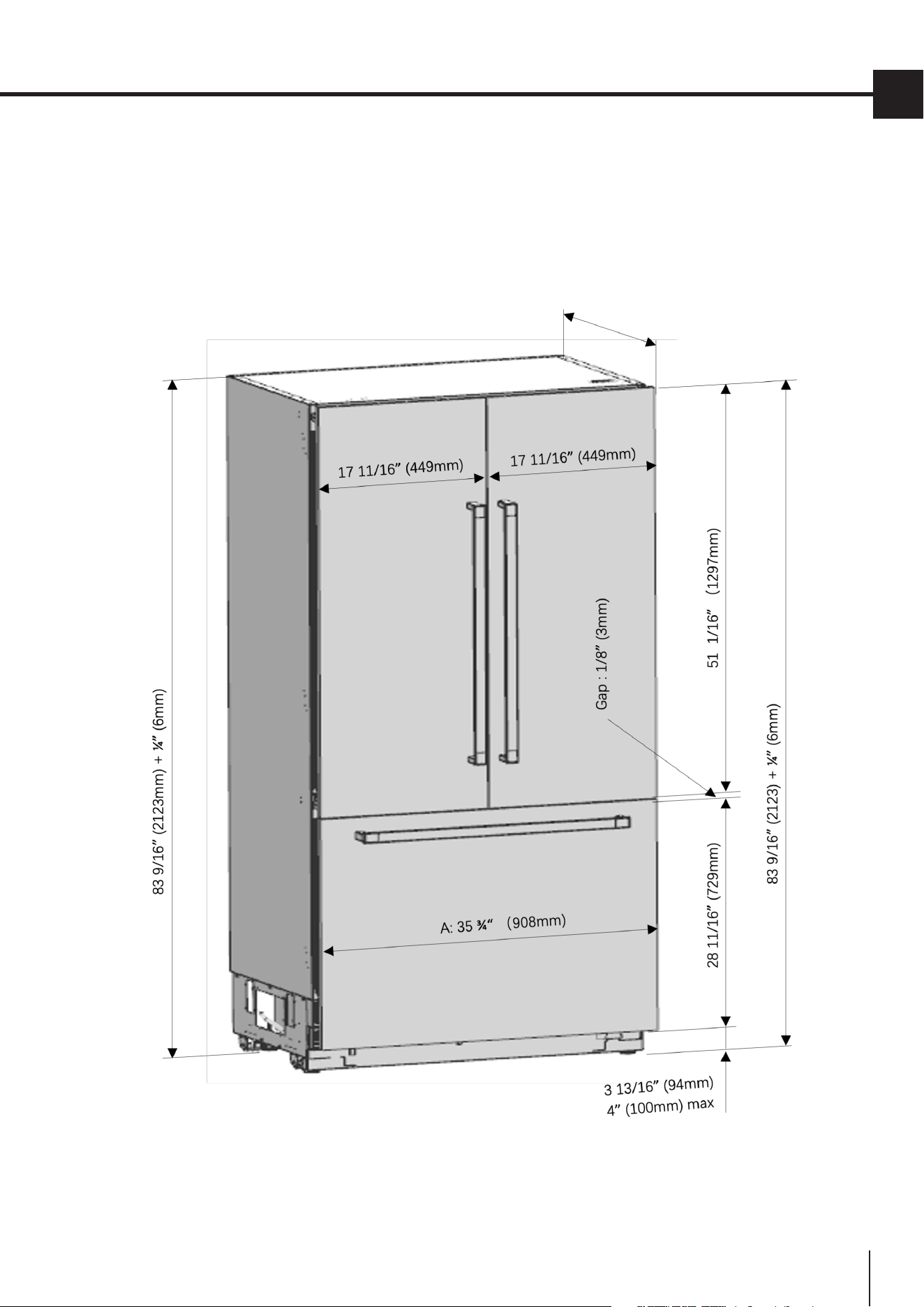
2.11 Product dimensions
Category REF30BMB…N… REF36BMB...N… REF36FDB...N…
A 29 3/4” (756 mm) 35 3/4” (908 mm) 35 3/4” (908 mm)
REF30BMB…N…
REF36BMB...N…
without panel: 23 5/16” (592 mm)
with panel: 24 ¼” (616 mm)
Adjustable feet
13
EN
REF36FDB...N…
without panel: 23 5/16” (592 mm)
with panel: 24 ¼” (616 mm)
Adjustable feet
Adjustable feet
14
2. BEFORE INSTALLATION
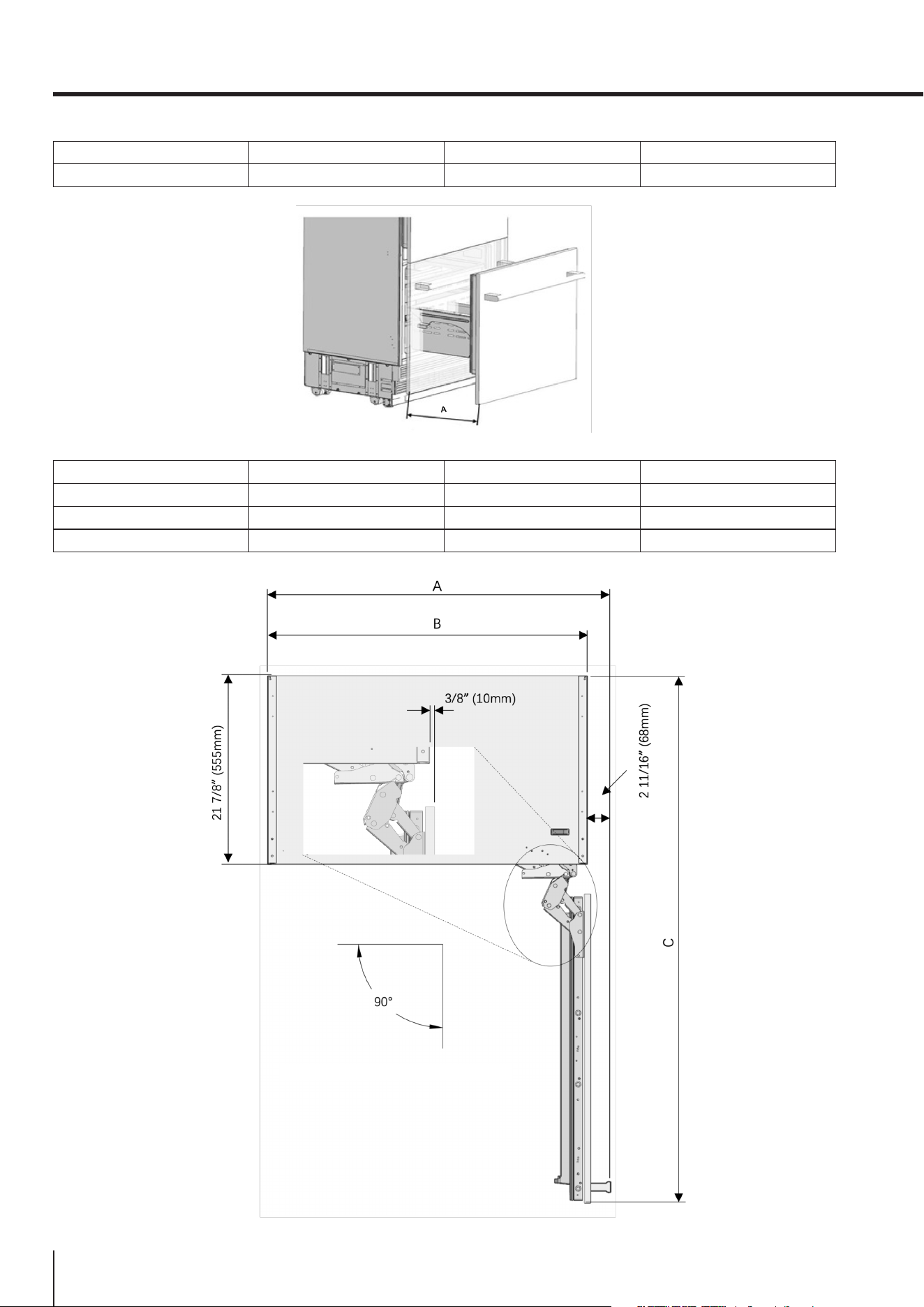
Category REF30BMB…N… REF36BMB...N… REF36FDB...N…
A 15 1/4" (388 mm) 15 1/4" (388 mm) 15 1/4" (388 mm)
Category REF30BMB…N… REF36BMB...N… REF36FDB...N…
A 32 7/16” (824 mm) 38 7/16” (976 mm) 41 1/8” (1044 mm)
B 29 3/4“ (756 mm) 35 3/4“ (908 mm) 35 3/4“ (908 mm)
C 55 1/16” (1398 mm) 61” (1550 mm) 42” (1067 mm)
Minimum distance to wall
90° door swing

15
EN
90° door swing
16
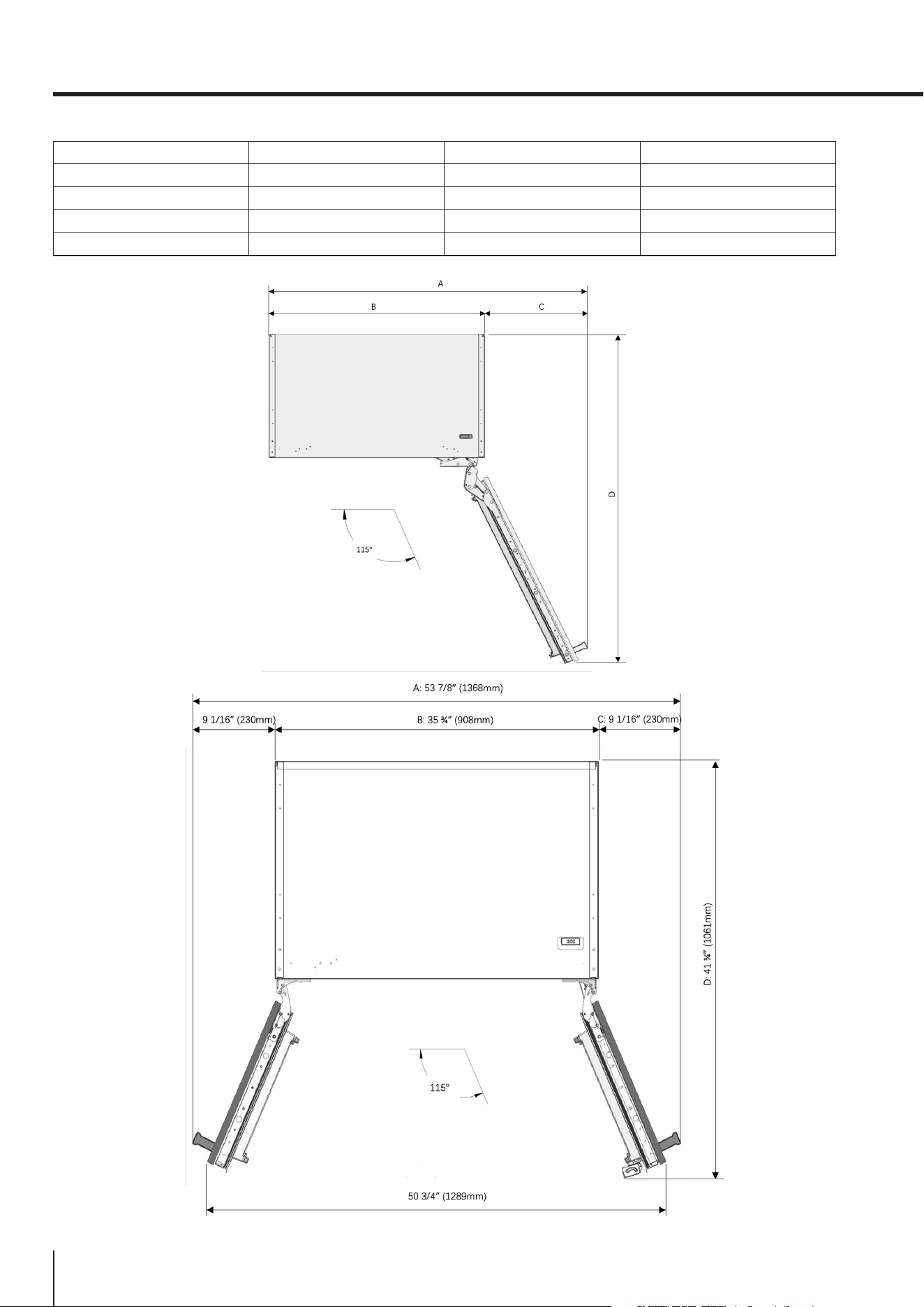
2. BEFORE INSTALLATION
Category REF30BMB…N… REF36BMB...N… REF36FDB...N…
A 44 3/8” (1127 mm) 54 3/4” (1391 mm) 53 7/8” (1368 mm)
B 29 3/4“ (756 mm) 35 3/4“ (908 mm) 35 3/4“ (908 mm)
C 14 5/8” (371 mm) 19” (483 mm) 9 1/16” (230 mm)
D 52 11/16” (1338 mm) 57 3/4” (1466 mm) 41 ¾” (1061 mm)
115° door swing
115° door swing
Minimum
distance to wall
Minimum
distance to wall

17
EN
Anti-tip bracket location
Space remaining
after installation
Minimum height
adjustment for
leveling
Front
Rear
18
2. BEFORE INSTALLATION
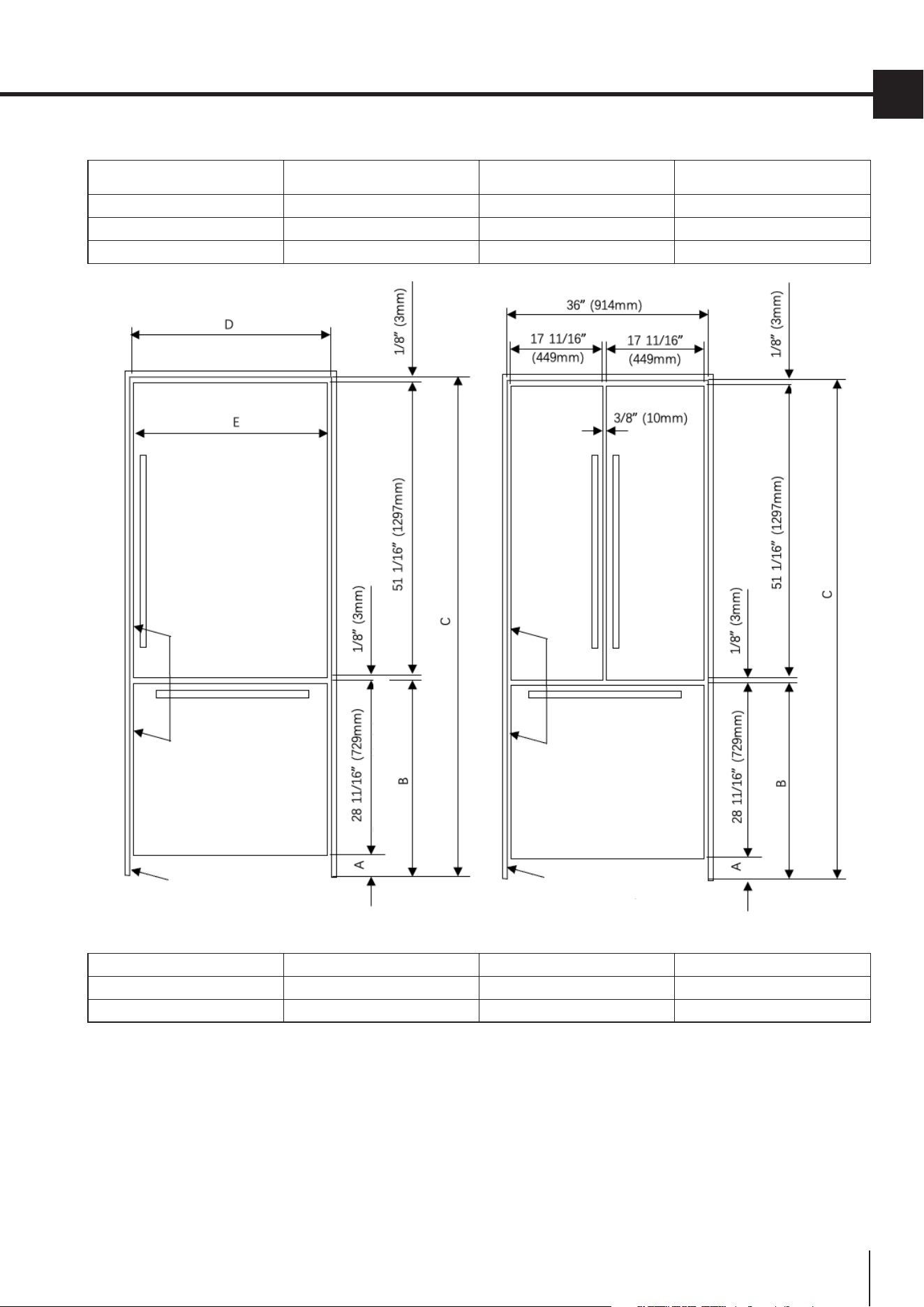
Gap: 1/8" (3 mm)
Gap: 1/8" (3 mm)
Gap: 1/8" (3 mm)
Gap: 1/8" (3 mm)
Gap: 1/8" (3 mm)
Gap: 3/8" (10 mm)
Gap: 1/8" (3 mm)
Gap: 1/8" (3 mm)
Gap: 1/8"
(3 mm)
REF30BMB…N…
REF36BMB...N…
REF36FDB...N…
19
EN
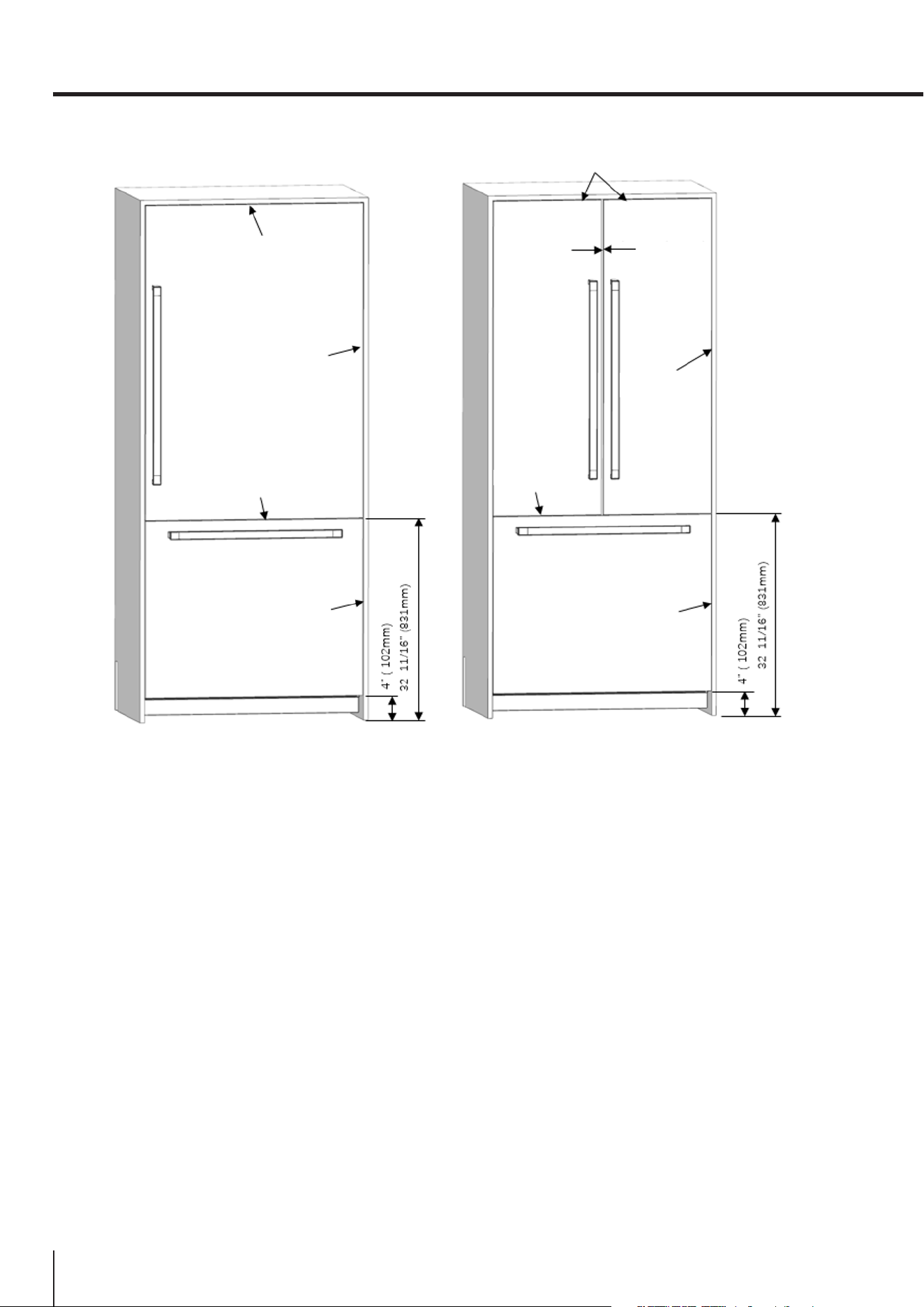
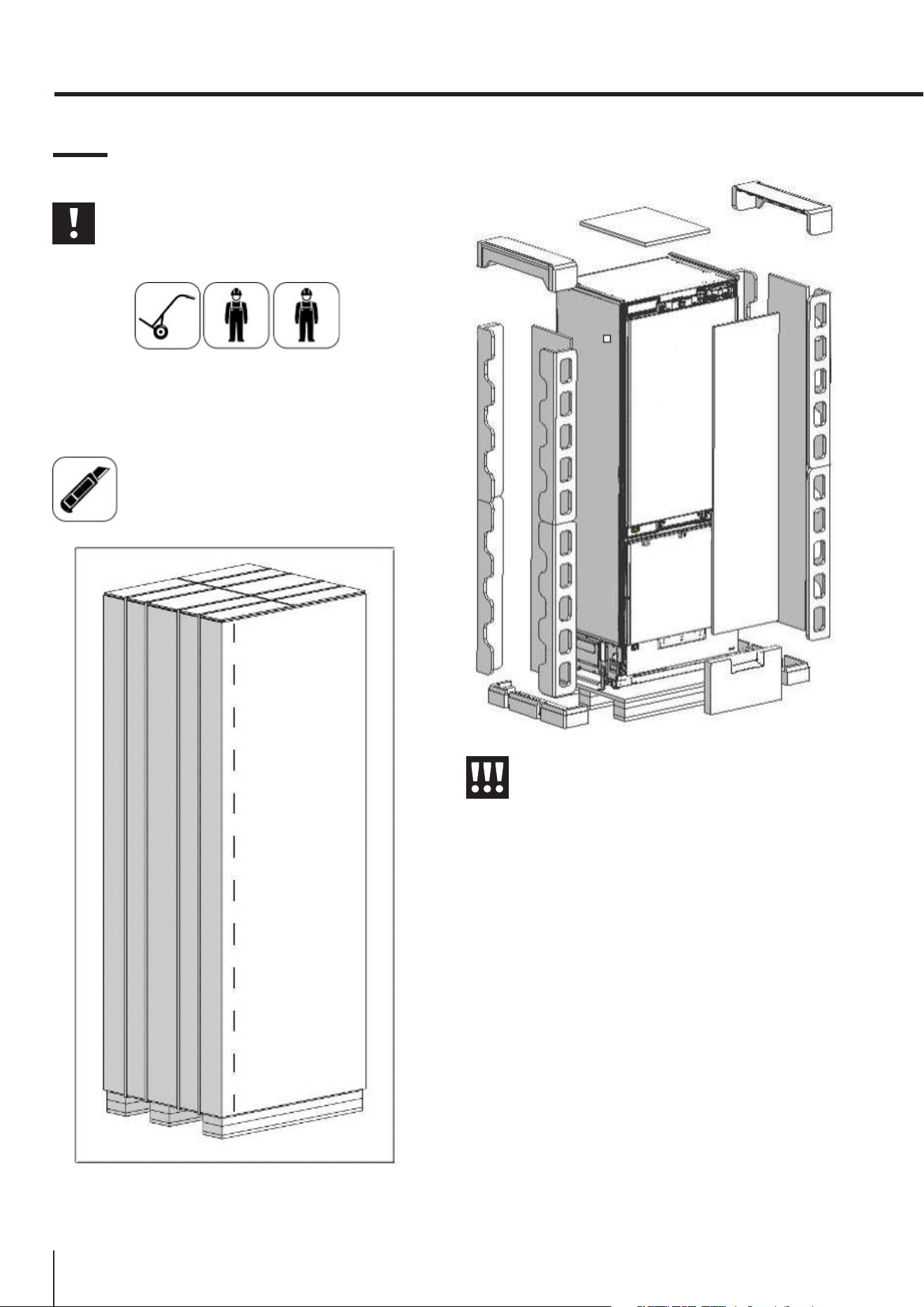
Height of the kitchen countertop based on the min./max. height of the cabinet;
A B C
standard 4” (102 mm) 32 11/16” (831 mm) 84” (2134 mm)
minimum 3 13/16”(97 mm) 32 1/2“ (826 mm) 83 13/16“ (2129 mm)
maximum 5 3/8“(137 mm) 34 1/16” (866 mm) 85 3/8“ (2169 mm)
Category REF30BMB…N… REF36BMB...N… REF36FDB...N…
D 30” (762 mm) 36” (914 mm) -
E 29 3/4” (756 mm) 35 3/4” (908 mm) -
Fridge panel height
Fridge panel height
Height of the kitchen countertop based on the min./max. height of the cabinet
A B C
standard 4” (102 mm) 32 11/16” (831 mm) 84” (2134 mm)
minimum 3 13/16”(97 mm) 32 1/2“ (826 mm) 83 13/16“ (2129 mm)
maximum 5 3/8“(137 mm) 34 1/16” (866 mm) 85 3/8“ (2169 mm)
Category REF30BMB…N… REF36BMB...N… REF36FDB...N…
D 30” (762 mm) 36” (914 mm) -
E 29 3/4” (756 mm) 35 3/4” (908 mm) -
Fridge panel height
Fridge panel height
Freezer panel height
Freezer panel height
Wooden door panel
Wooden cabinet panel
Wooden door panel
Wooden cabinet panel
20
2. BEFORE INSTALLATION
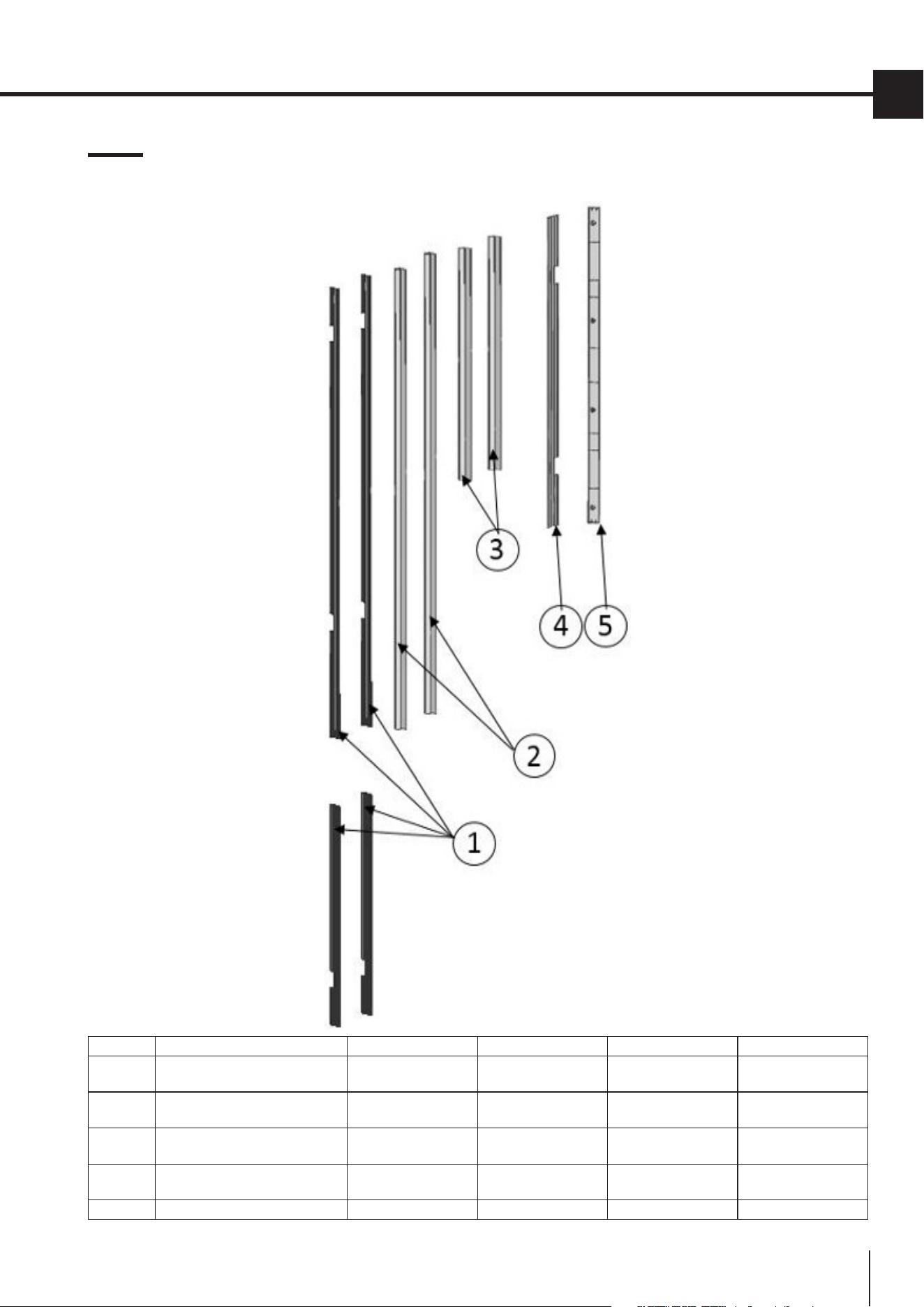
2.12 Unpacking
WARNING:
At least two people must carry the
refrigerator.
• Use a box cutter to remove the tape.
• Cut the cardboard packaging along the dotted
lines using a box cutter and remove it.
• Remove the polystyrene packing material.
CAUTION:
Do not remove the tape from the upper
door of the appliance until the refrigerator
is placed in the cabinet.
Tipping risk.
21
EN
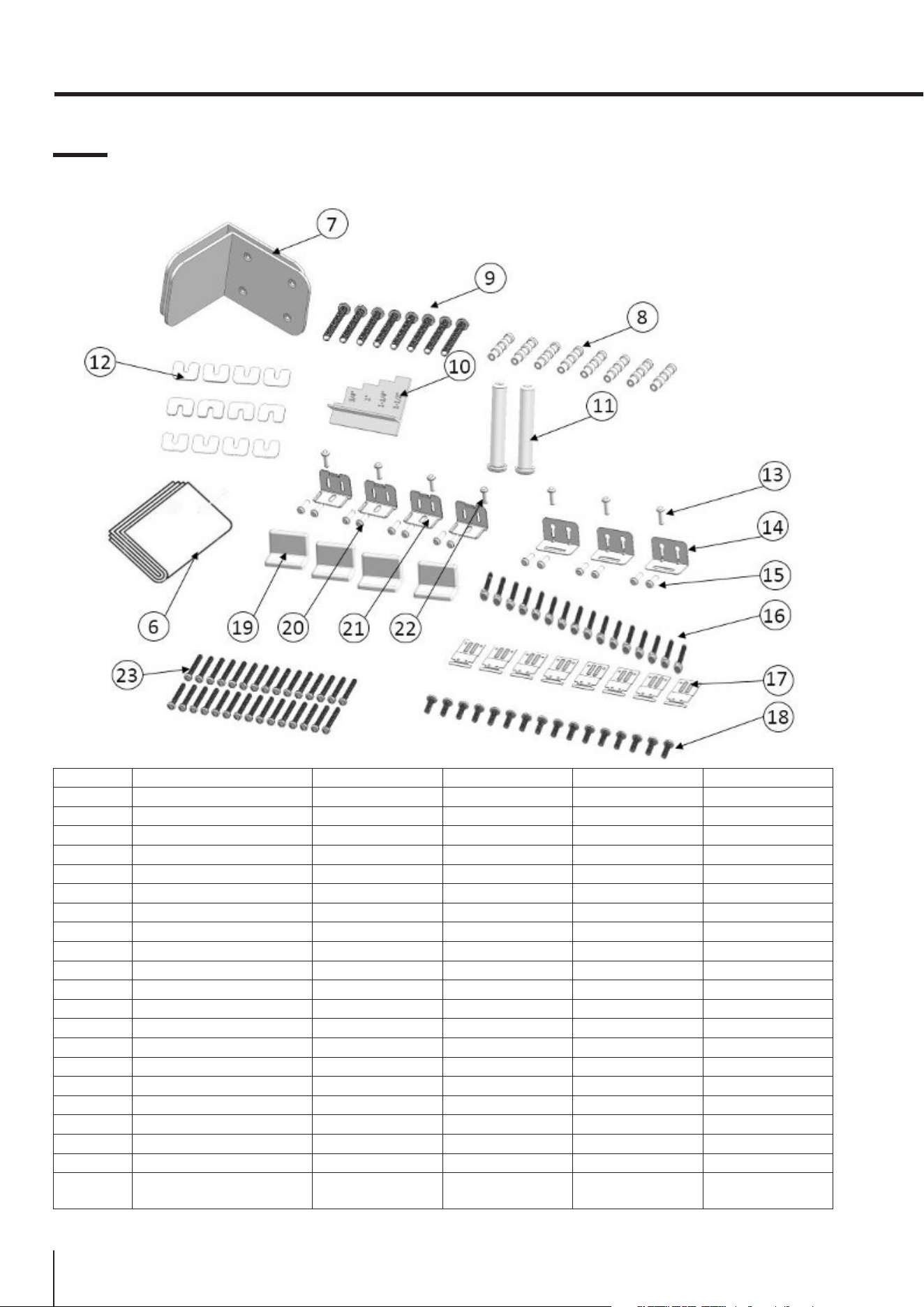
2.13 Removing the Connectors on the Side Wall of the Unit
No. Part name Specs REF30BMB…N… REF36BMB...N… REF36FDB...N…
1 Fridge trim, cabinet side
PVC extrusion, L =
617, L = 1,259
4 4 4
2 Fridge trim, door side
PVC extrusion, L =
1,136
2 2 4
3 Freezer trim, door side
PVC extrusion, L =
556
2 2 2
4 Fridge trim, top of cabinet
PVC extrusion, L =
762, L = 914
1 1 1
5 Cover for the freezer door top ABS 1 1 1
22
2. BEFORE INSTALLATION
2.14 Removing the Installation Hardware from the Freezer Compartment
No. Part name Specs REF30BMB…N… REF36BMB...N… REF36FDB...N…
6 Panel door template paper 1 1 1
7 Anti-tip bracket T4 galvanized steel 2 2 2
8 Wall anchors - 8 8 8
9 Anti-tip bracket screws M8*L60 8 8 8
10 Level adjustment part PS 1 1 1
11 90° limiting pins SUS 2 2 -
12 Freezer panel door washer ABS 9 9 9
13 Freezer door bracket screw ST M4.8x16 3 - -
14 Freezer door bracket T1 SUS 3 - -
15 Freezer door bracket screw M4*12 6 - -
16 Cabinet panel bracket screw M4*12 16 16 16
17 Cabinet panel bracket T1 galvanized steel 8 8 8
18 Cabinet panel bracket screw ST M4x14 16 16 16
19 Panel door bracket cover ABS 4 4 2
20 Panel door bracket screw M4*12 8 8 4
21 Panel door bracket T1 SUS 4 4 2
22 Panel door bracket screw ST M4x14 8 8 4
23
Panel door hanger bracket screw
ST M4x14 30 30 34
24
Freezer panel door bracket screw
ST M4.8x16 - 3 3
25 Freezer panel door bracket T1 SUS - 3 3
26
Freezer panel door top
bracket screw
M4*12 - 18 18
23
EN
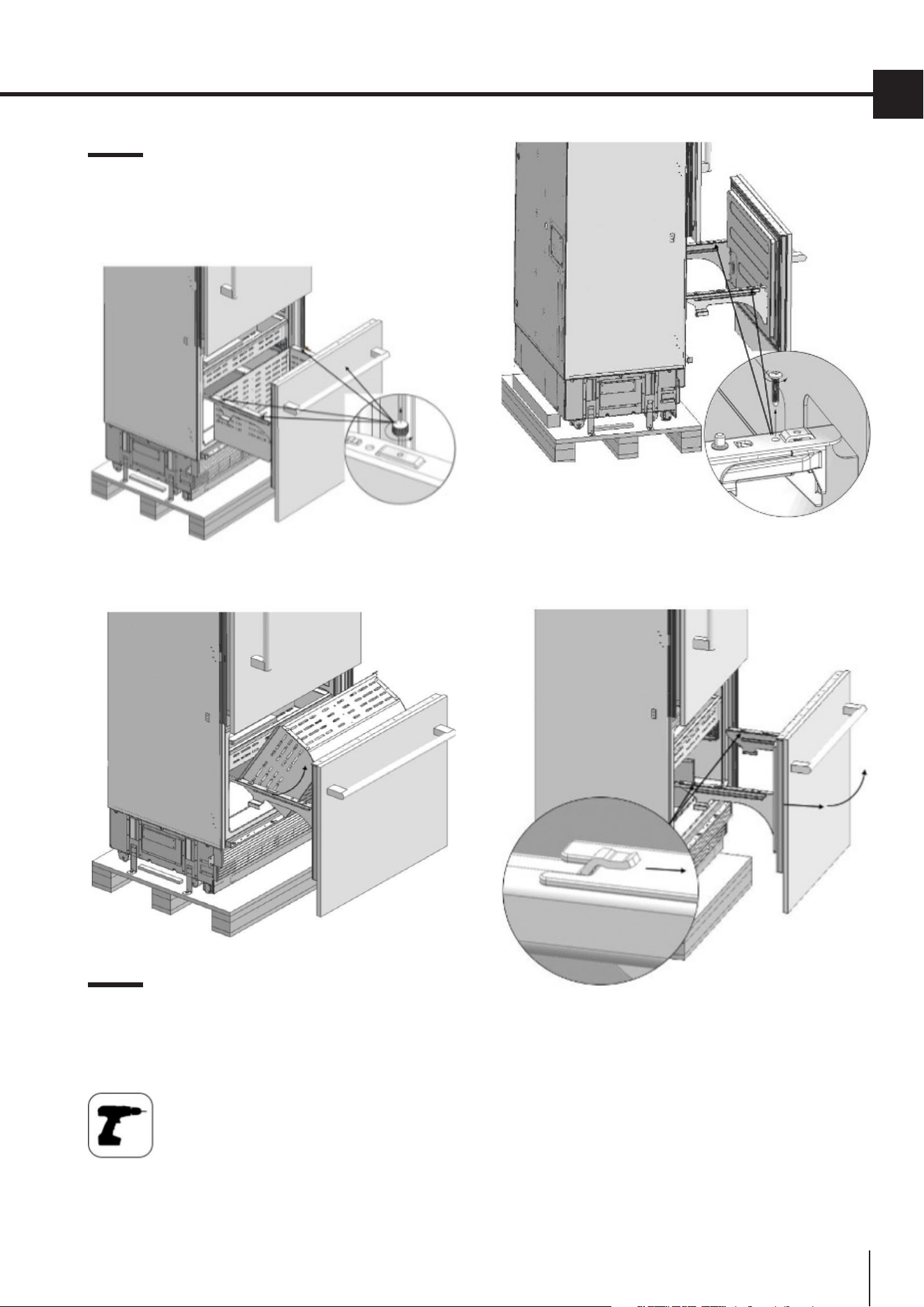
2.15 Removing the Freezer Drawer
• Remove it manually by removing the 4 knurled
screws.
• Remove the lower crisper.
2.16 Removing the Freezer Door
• Remove 2 screws near the front section that
connect the freezer the door to the rail.
• Pull the door outward to free it from the tabs at
the back and remove it.

24
2. BEFORE INSTALLATION
2.17 Removing the Lower and Upper
Ventilation Grill Covers
• Remove the 2 screws on the sides with a
screwdriver in order to remove the lower
ventilation grill cover.
• Remove the 2 screws on the sides with a
screwdriver in order to remove the upper
ventilation grill cover.
25
EN
3. INSTALLATION INSTRUCTIONS
3.1 Before Installation
Proceed with installation of the product according
to the instructions below. Be sure to take into
account national and local code requirements
regarding installations.
Please comply with the following:
• For the USA, The National Electrical Code, ANSI/
NFPA 70 (latest version)/State or Municipal
directives and/or regional directives.
• For Canada, The Canadian Electrical Code, C22.1
(latest version)/State or Municipal directives
and/or regional directives.
3.2 Mounting the Anti-Tip Brackets
WARNING:
If the unit cannot be secured to the
cabinetry (which in turn must be secured to
wall) to prevent tipping, make sure to use
the supplied anti-tip brackets in order to
prevent the appliance from tipping over.
WARNING:
Make sure that there is no electrical or
water connection in the adjacent cabinets
into which the mounting screws will be
screwed to secure the refrigerator.
WARNING:
Please remember to use the necessary
protective equipment when drilling holes in
the wall and performing the installation.
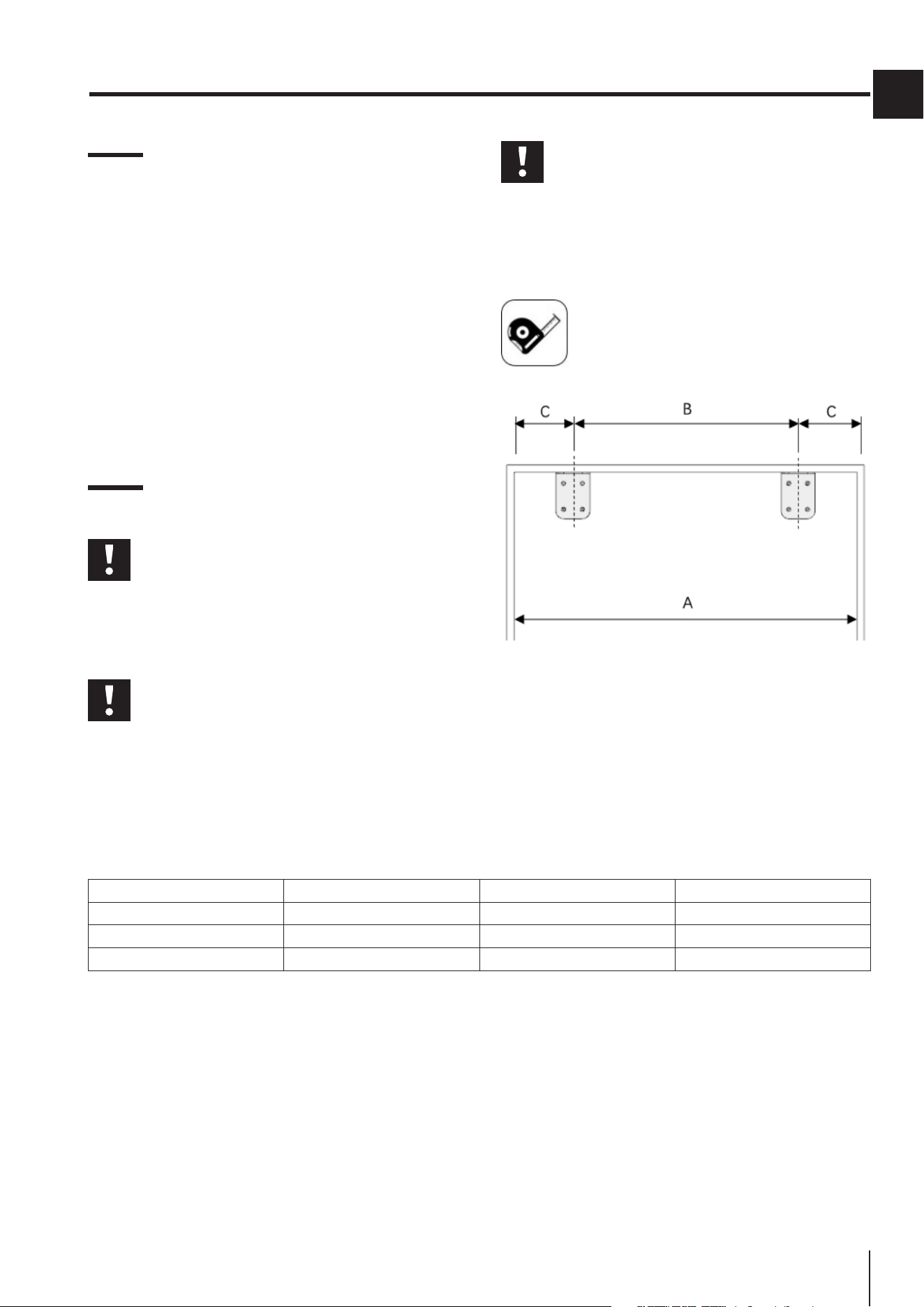
• Use a tape measure (7) to mark the wall for
installation of the anti-tip brackets.
Category REF30BMB…N… REF36BMB...N… REF36FDB...N…
A 30" (762 mm) 36" (914 mm) 36" (914 mm)
B 23 5/8" (600 mm) 23 5/8" (600 mm) 23 5/8" (600 mm)
C 3 3/16" (81 mm) 6 3/16" (157 mm) 6 3/16" (157 mm)
Anti-tip bracket, on the wall
26
3. INSTALLATION INSTRUCTIONS
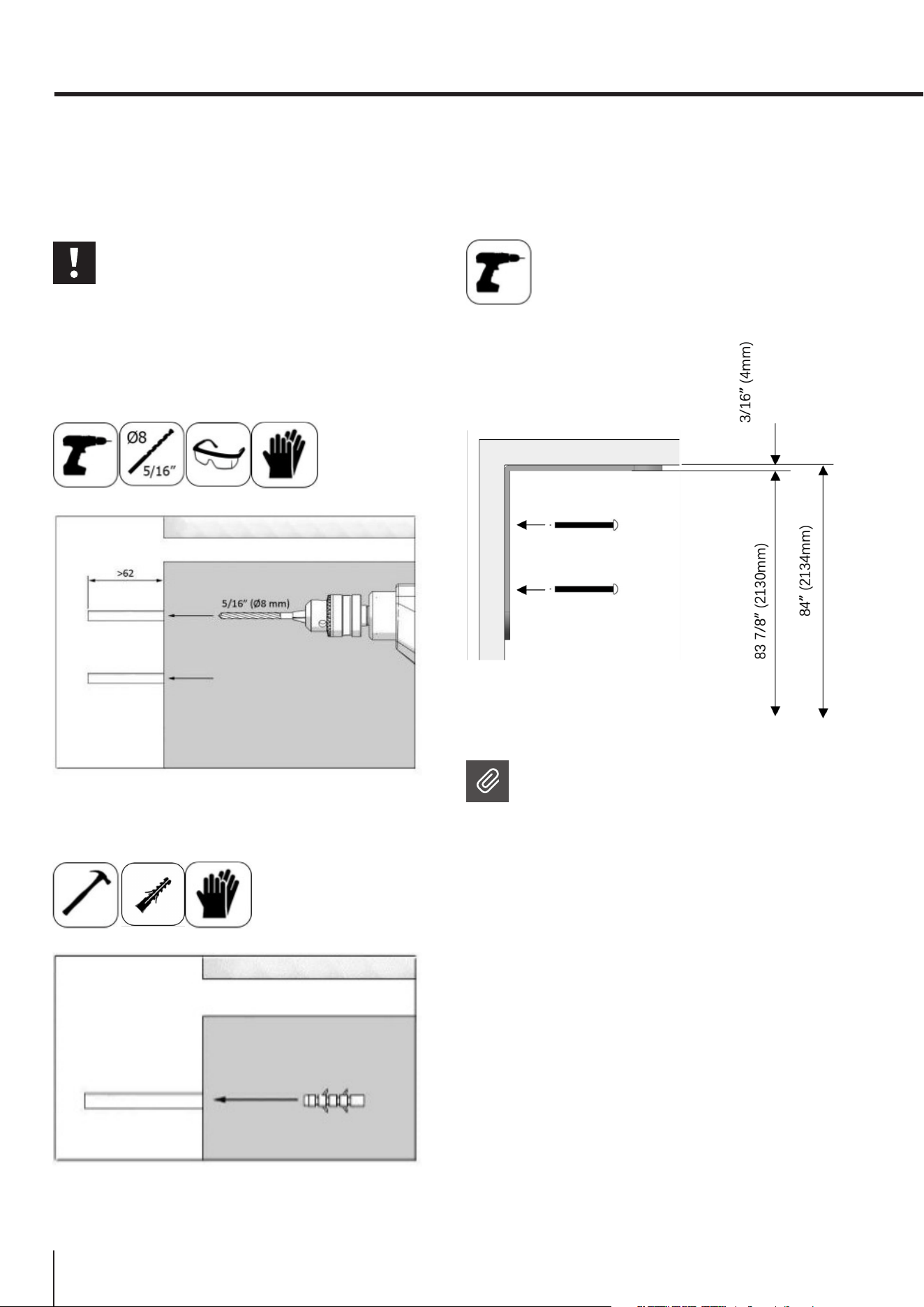
• For the most secure installation, use a stud-finder
to secure the anti-tip brackets in wall studs. If
no studs are present at the correct installation
location, follow the instructions below.
WARNING:
Always make sure that the area to be drilled
into is free of any waterlines or electrical
circuits, which could cause damage, injury,
or death.
• Use a drill to create holes for wall anchors (#8) at
the marked points. (5/16”, Ø8)
• Use a hammer to install the wall anchors (#8) if
no stud is present.
• Install the brackets (#7) in place, using 4 screws
for each.
You must use both (two) brackets to ensure that
the appliance is safely supported.
NOTE:
If you are not confident that the supplied
connectors and anti-tip brackets are
mounted on the wall as securely as they
should be, you can use alternative anti-tip
methods.
If there is a cabinet panel behind the back
wall of the refrigerator, make sure that it is
securely fastened to the wall. For this, you
need to be sure that the back wall of the
cabinet panel is axed to a wall stud.
Thickness
27
EN
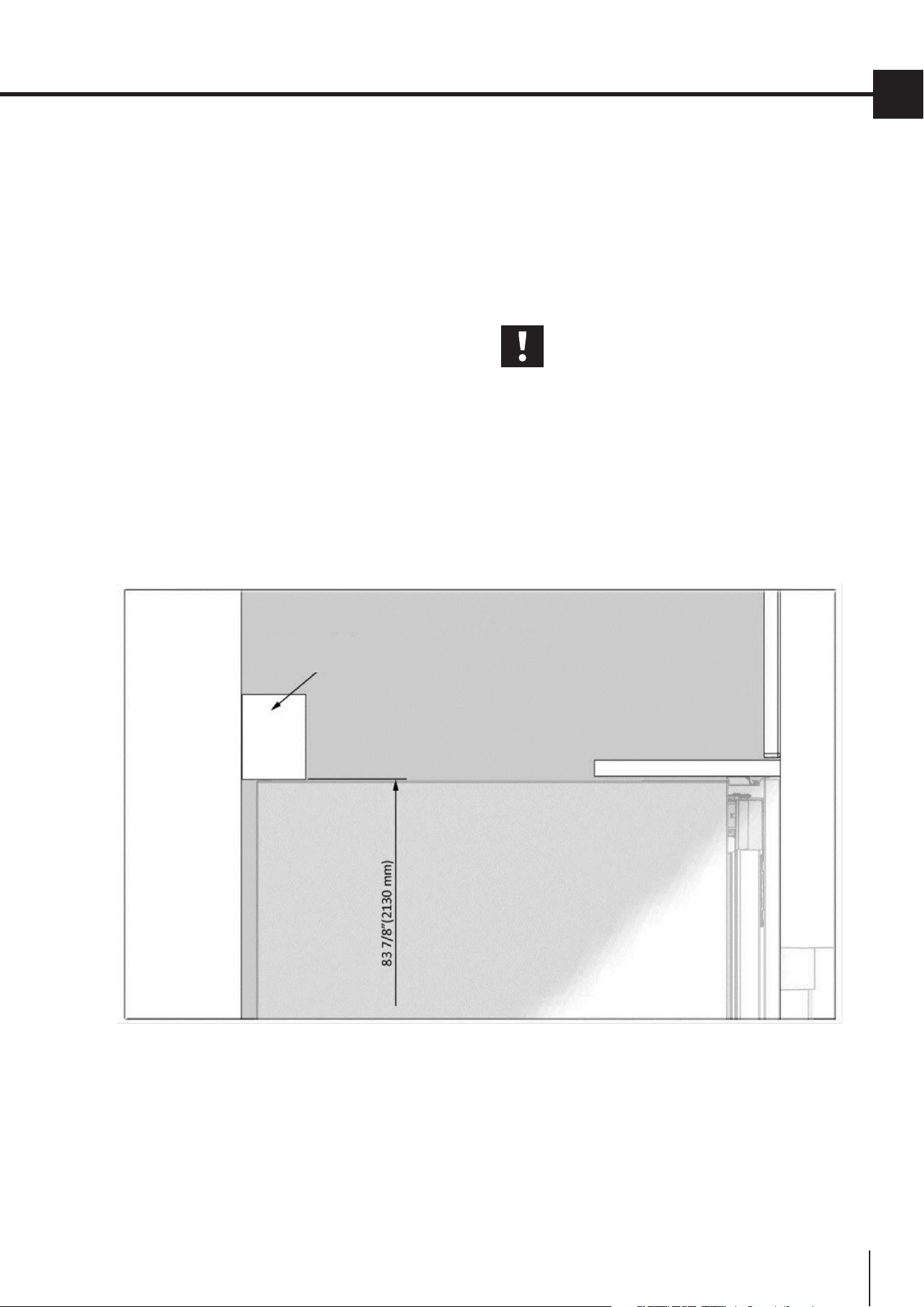
Alternative anti-tip method:
If the anti-tip brackets cannot be mounted securely,
you must use the alternative method below. For
this method, you can use wooden boards to avoid
the risk of tipping over.
They must be installed as illustrated in the figure
below.
There must be no clearance between the appliance
and the wooden support.
T minimum section dimensions of the wooden
support must be 3" x 4" (76 mm x 102 mm). T width
of the support must be equal to the clearance
where it will be installed. This can be achieved
using one 4” x 4” (102 mm x 102 mm) or two 2” x 4”
(51 mm x 102 mm) pieces of framing lumber.
The calculation of blocking depth is based on a
standard niche depth. If the depth of the niche is
greater than 24” (610 mm), ensure the blocking
overlaps the upper rear fridge body by 2” (51 mm).
Position the wooden support,mark the location on
the rear wall, select suitable screws and mount it
securely.
WARNING:
The quantity and type of screws or fasteners
to be used for axing wooden blocking
must be suitable for ensuring a secure
connection to the rear wall.
3” x 4”
(76 mm x 102 mm)
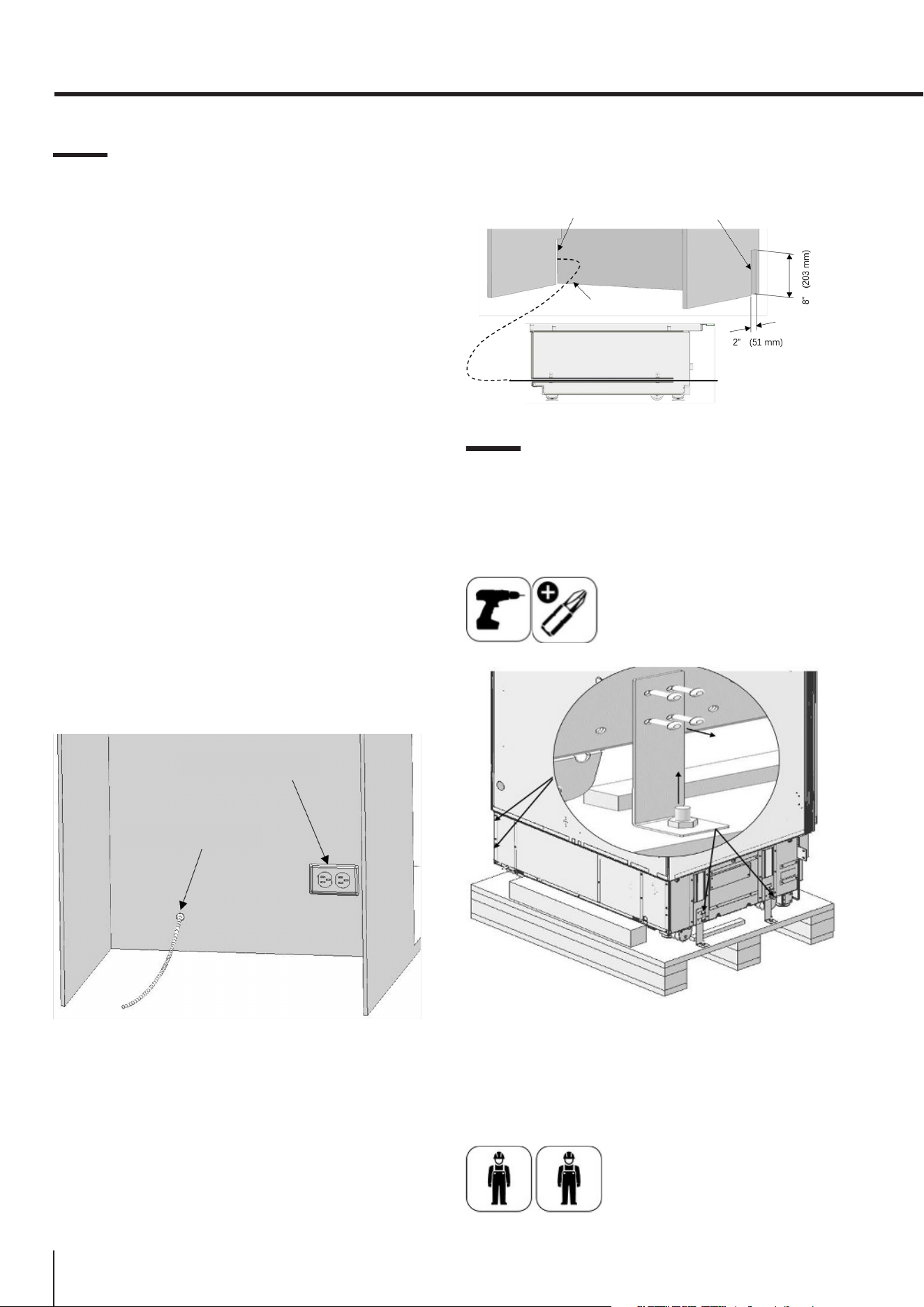
28
3. INSTALLATION INSTRUCTIONS
3.3 Preparing the Water Hose and the
Electrical Connection
Inspect all water connections for leaks. Water
leaks can cause significant damage over time.
It is recommended to use a ¼” water line with a
minimum length of 60" (1.5 meters) with a threaded
¼” female connector end. Before finishing the
installation, turn the water on to ensure that water
is flowing and that there are no leaks.
A connector that has a thread with an external
diameter of ¼" must be used to connect the end of
the hose to the product.
Allow for sucient slack in the water supply line,
providing a minimum of 10” of length from the
base of the unit once it is installed in the niche.
This provides some allowance for connections and
adjustments if needed.
The product must be connected to a 3-prong outlet
on a dedicated 15 amp circuit; local electrical and
building codes should be respected.
You can choose method A or method B below to
prevent the power cord from getting wedged in.
• Method A: Position the water hose and the power
supply connections on the back.
• Method B: Position the water hose and power
supply connections on the side.
3.4 Installation in the cabinet
Taking the Refrigerator from the Wooden Pallet
• Remove the brackets which secure the
refrigerator to the wooden pallet as shown below.
• Slowly tilt the refrigerator back and remove it
from the pallet, taking care not to damage the
underside of the unit. When transporting the unit,
always carry it from the sides to ensure that the
unit's feet remain on the base of the appliance
dolly.
Water line location
Power cord location
Water hose
Keep open for water line Keep for power cord
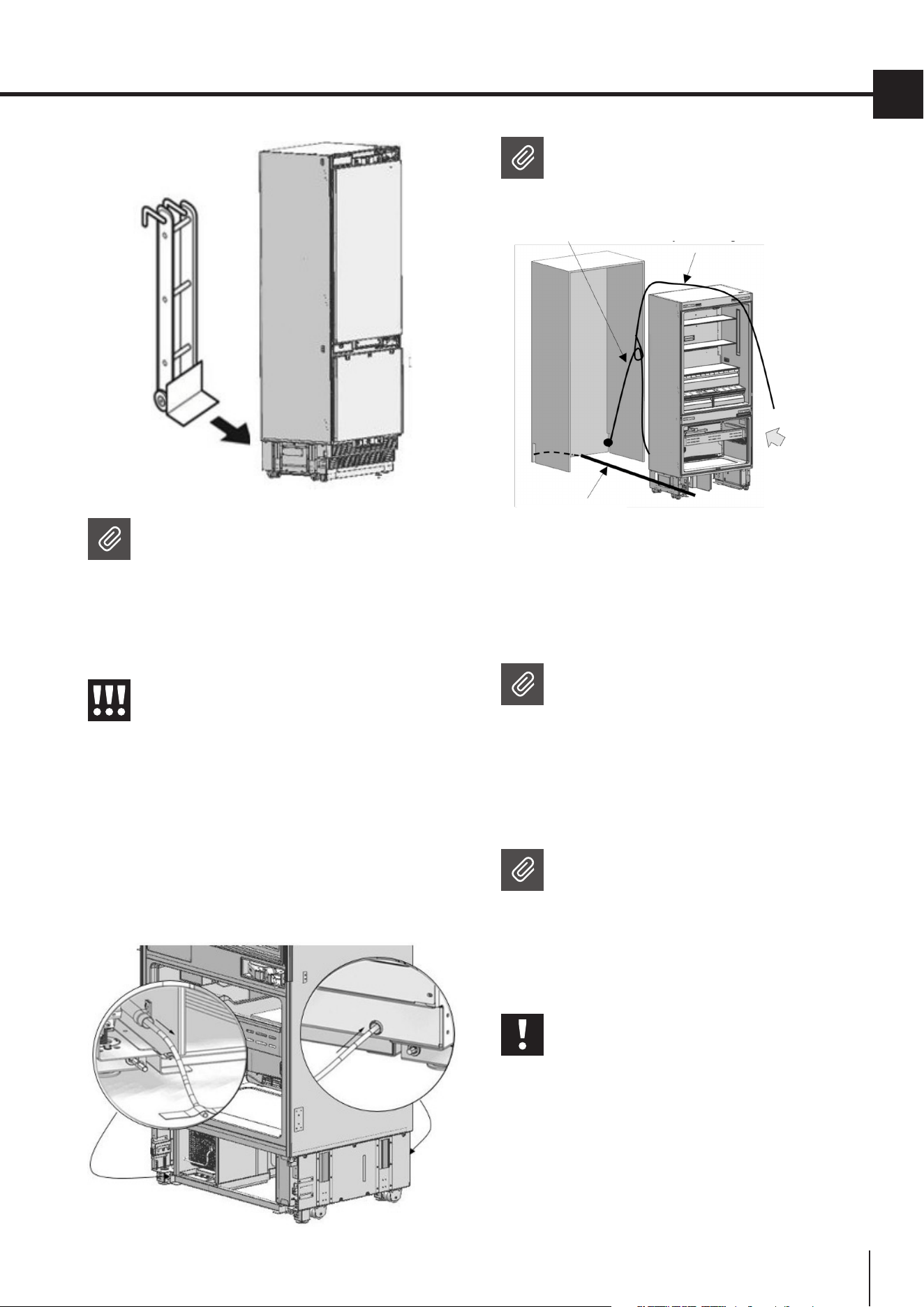
29
EN
NOTE:
Exercise extreme caution when handling
the unit, as the underside of the fridge has
components vital to its proper operation;
damage to these components could result
in a malfunction or potential leakage of
condensate and damage to floors.
CAUTION:
The risk of tipping over is high from this
point forward. You should not open the
doors until the product is placed into the
cabinet.
Placing the refrigerator into the cabinet niche.
• Insert the water supply hose into the channel
opening at the back of the unit and pull it through
to the front of the unit to ensure that the water
connection can be made once the unit is installed
in the niche.
NOTE:
Use the method below to prevent the cord
from getting wedged in.
Connect the electrical plug to the power
outlet. Turn on the unit to ensure it has power.
(To see if the product is operating, check if
the lamps in the freezer compartment are
on or o).
NOTE:
Protect the front edges of the cabinet niche
with masking tape; this will help protect
them from damage when pushing the unit
back into the niche. Use some packing tape
to secure the excess electrical cord to the
back of unit to prevent slack from catching
under the unit during installation.
NOTE:
The unit's plug must be accessible after
installation. If the plug is not accessible
after installation, the power must have
a dedicated circuit breaker which can be
accessed to cut power o using the main
switch.
WARNING:
Make sure that the power cord does not get
wedged in when placing the product.
• Push the product carefully towards the
cabinet to position it; the unit should slide
into the niche with relative ease. If you
experience resistance while placing the
product in the cabinet:
- The floor might be uneven.
- The adjustable feet might be loose (please
Power cord
Nylon cord
Move to wall
Water hose
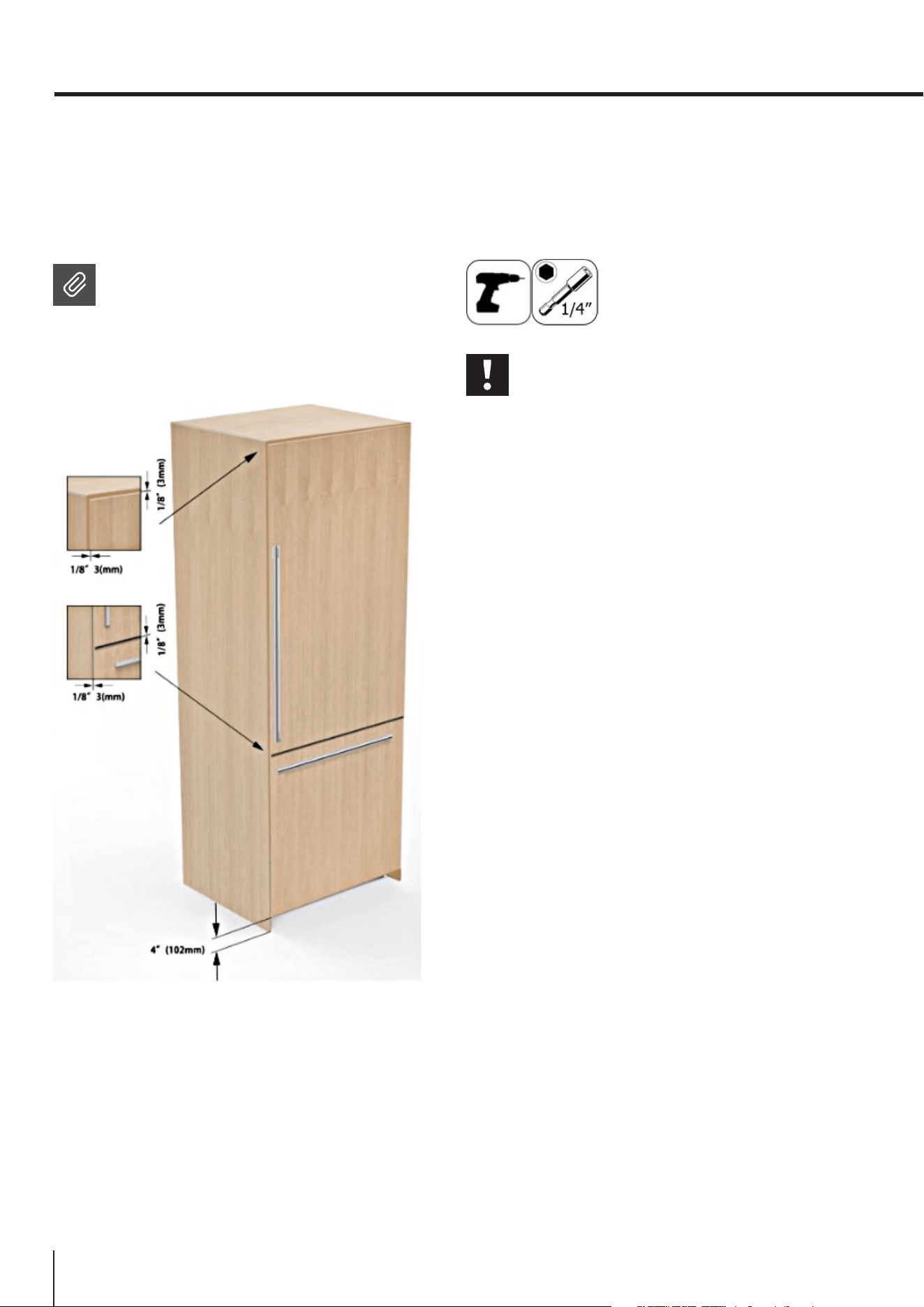
30
3. INSTALLATION INSTRUCTIONS
see the relevant section to learn how to
adjust the adjustable feet).
• You must attach the freezer door
temporarily to align the product before
placing it.
NOTE:
Use the upper edges of the fridge and
freezer doors to align the unit in the niche
opening.
Adjustment of other edges is explained in
the following pages.
Adjusting the height of the refrigerator within the
niche
• Use the adjustable leg mechanism to raise, lower
and level the unit in the niche as per the diagram
below.
WARNING:
Once the unit is pushed into the niche, raise
the front feet first; this will reduce the risk
of the unit tipping forward during the height
adjustment process.
The maximum height that the adjustable
feet can reach is 1 9/16" (40 mm).
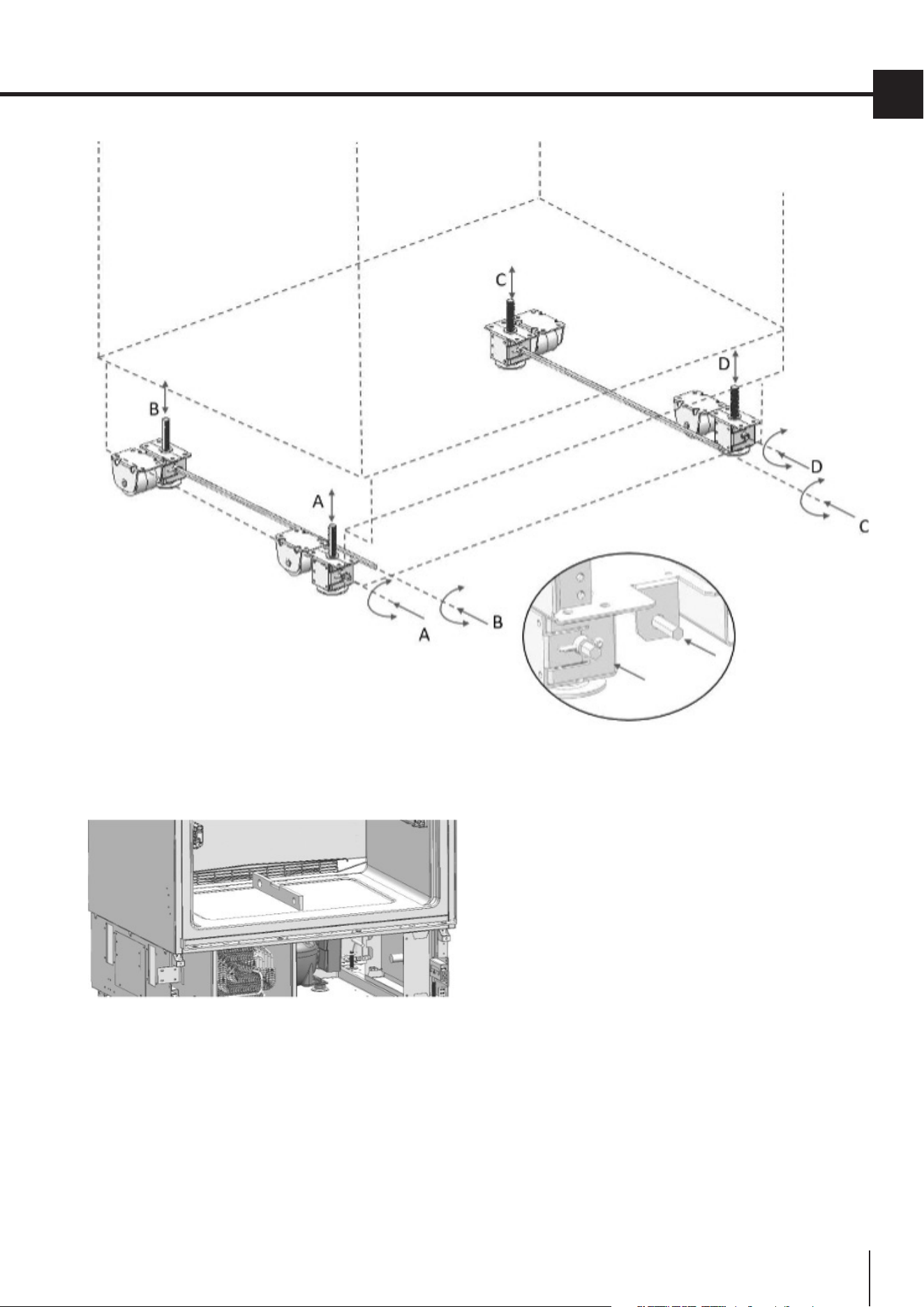
31
EN
• After adjusting the adjustable feet, check that the
appliance is level both side-to-side and back-to-
front by placing a level on the floor of the freezer
compartment (the drawer should be removed for
this).
Adjusting the refrigerator based on the cabinet
niche.
• For products with supplied stainless steel panel
doors, the position of the unit is adjusted so that
the door and the cabinet surface are flush and
a min. 1/8” distance from panels and gables is
ensured.
A/D –Turn the adjusting rod clockwise to lift the front
B/C –Turn the adjusting rod clockwise to lift the rear
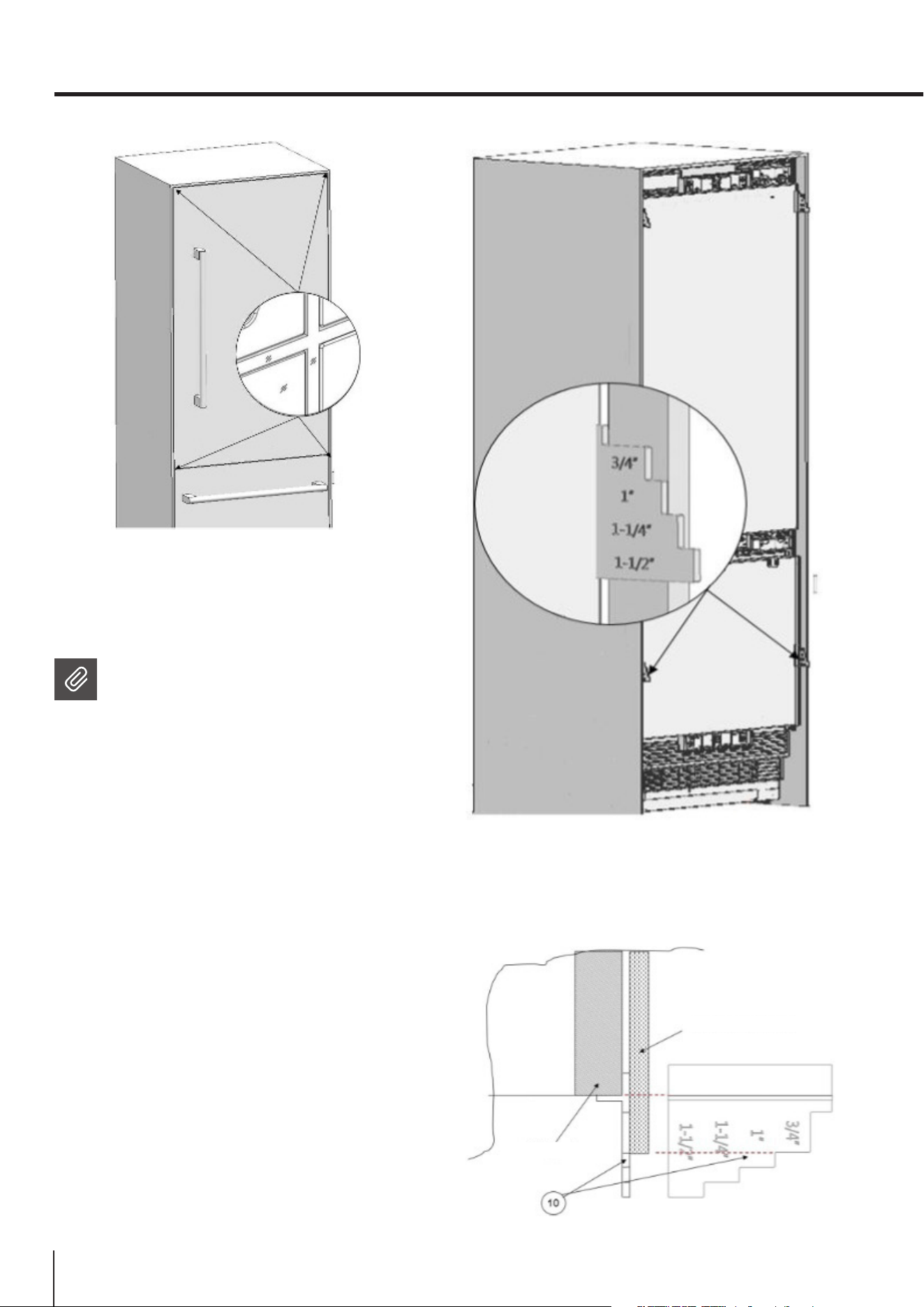
32
3. INSTALLATION INSTRUCTIONS
• For panel-ready units, the refrigerator should be
installed at a depth that takes into consideration
the custom overlay panel thickness, so as to
ensure a flush installation, if desired.
NOTE:
It is important to align the upper edge of
the freezer drawer when aligning the unit,
as its height and position are fixed. All of
the other panels can be adjusted using
the adjustment mechanisms built into the
mounting hardware. As shown below, an
installation depth template tool is provided
for your convenience.
• The position of the level adjustment part (#10)
must be adjusted based on the thickness of the
door. It can adjust the level for 4 dierent door
thicknesses.
Cabinet side panel
Refrigerator
33
EN
NOTE:
The niche must be designed to accommodate
the minimum depth requirement plus the
thicker door panel, if desired. Regardless
of door thickness, the maximum panel
weights must always be respected, or the
product warranty will be void.
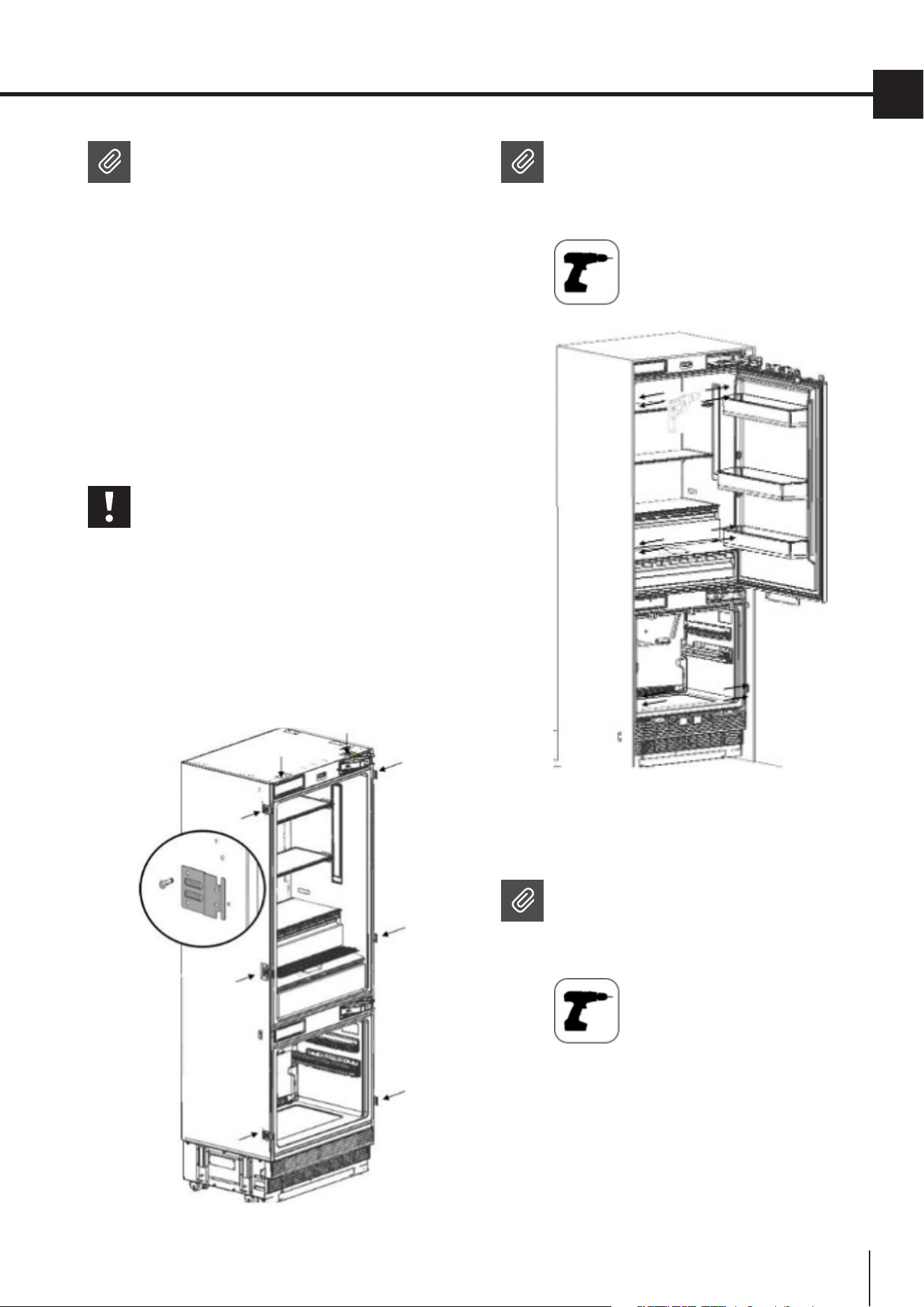
SCREWING IN THE SIDE BRACKETS
• Attach the side brackets to the cabinet using 12
screws (#11) for each bracket.
• Mount the brackets (#17) on the unit, with 2 on
the top and 3 on each side. Use screws (#18) to
tighten them in place.
• Use 12 long screws (#16) to join the unit to the
cabinet.
WARNING:
Before screwing the side brackets into the
cabinet gables, ensure the screw is shorter
than the gable thickness, otherwise the
finished side may be damaged.
Before beginning to screw on the side and
upper brackets, make sure that the unit is
connected to power,that water (if applicable)
is being supplied to the appliance and that
the water connection has been tested for
leaks.
NOTE:
Drilling a pilot hole in the side gable for
reference could make the mounting process
easier.
SECURING THE UPPER BRACKET
• Attach the upper bracket to the cabinet using 4
screws (#16).
NOTE:
Drilling a pilot hole in the side gable for
reference could make the mounting process
easier.
34
3. INSTALLATION INSTRUCTIONS
INSTALLING THE BOTTOM CABINET
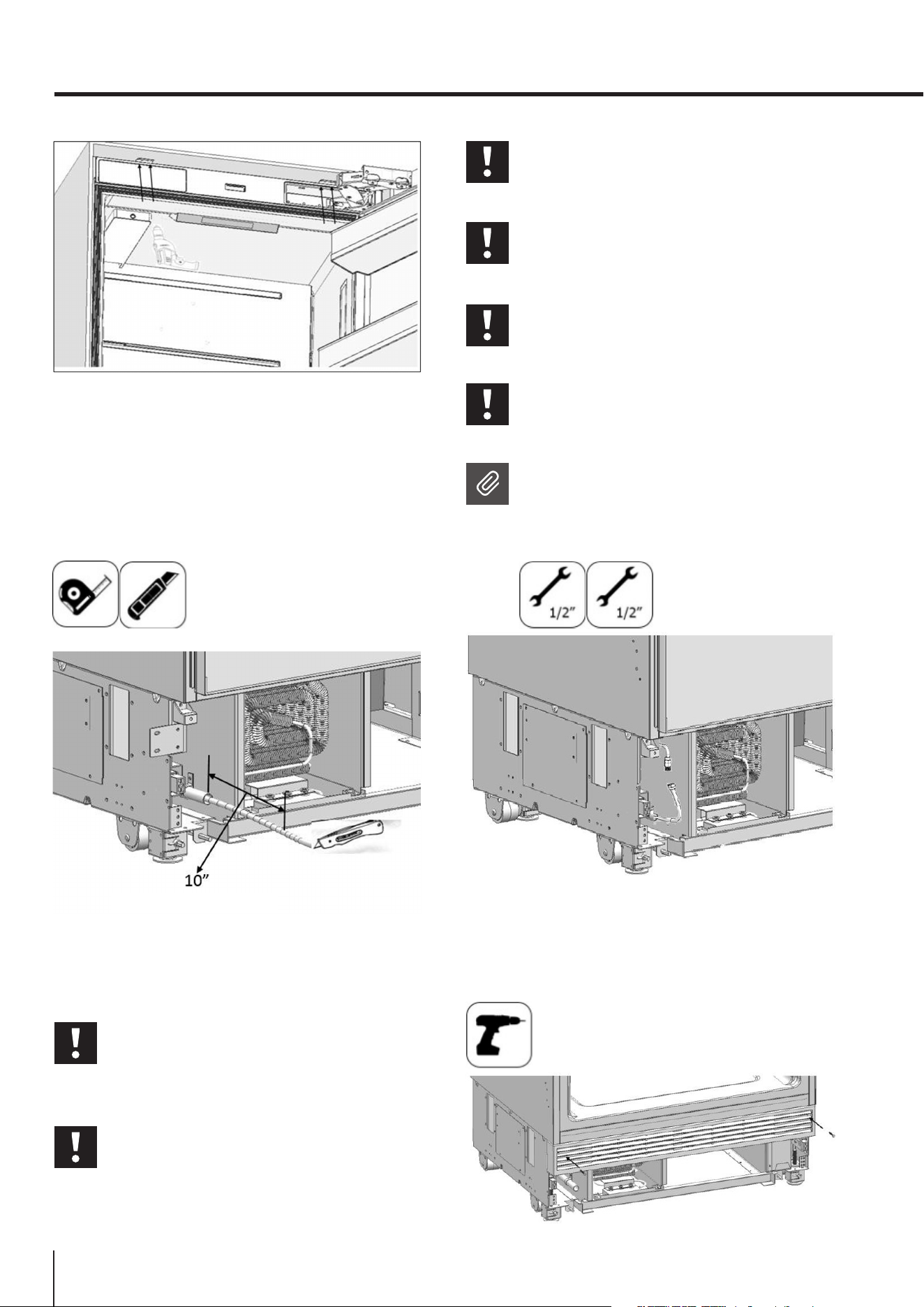
Complete the water connection
• Use a cutter to cut of any excess waterline
length, allowing sucient slack of 10” (254 mm)
to ensure an easy bend and clear connection,
with no tension or potential kinks in the supply
line that runs to the connector.
• Use 2 wrenches to firmly connect both the hose
that runs from the supply and the connection to
the valve on the refrigerator.
WARNING:
The hose that runs from the water supply
must be one piece. Do not use extension
hoses.
WARNING:
Make sure that the power is cut o
when establishing the appliance's water
connection.
WARNING:
The water valve must be closed when
connecting the water hose.
WARNING:
It is recommended to keep the water valve
accessible after product installation.
WARNING:
This appliance is suitable for use with a
cold potable water supply only.
WARNING:
The pressure of the water system must be
between 25-80 psi (1.7-5.5 Bar).
NOTE:
Once the connection is complete, you must
open the water valve and make sure that
there is no leakage.
ATTACHING THE UPPER VENT APERTURE
COMPONENT
• Use 2 screws to attach the upper vent aperture
component.
254 mm
35
EN
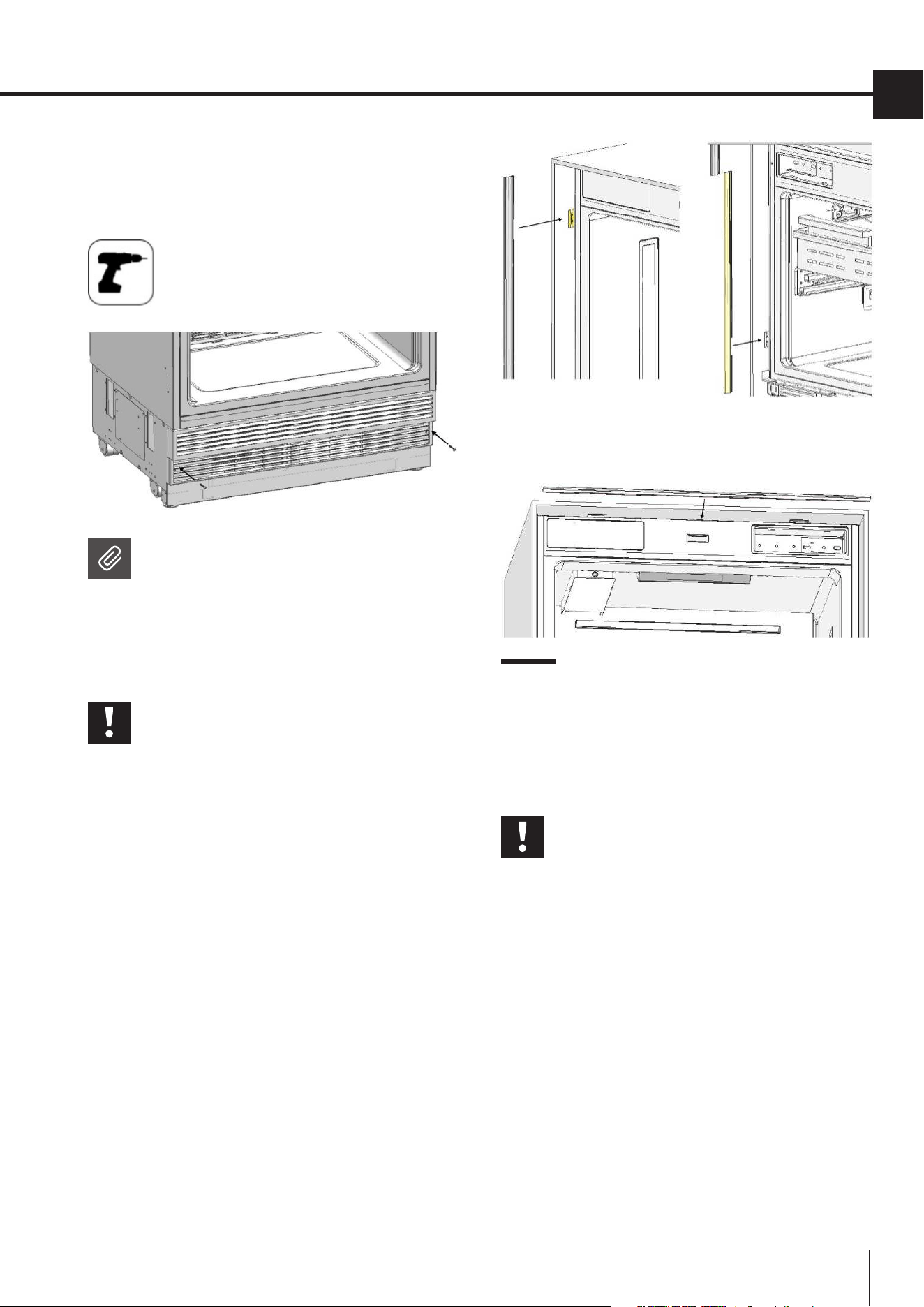
ATTACHING THE LOWER VENT APERTURE
ASSEMBLY
• Use 2 screws to attach the lower vent aperture
component.
NOTE:
The lower grill can be adjusted to
accommodate the cabinet toe kick. Also, a
piece of decorative cabinet toe kick material
can be axed to the lower grill to match the
cabinets, provided there is no obstruction
to vent grills and air flow.
WARNING:
If installing a one-piece cabinet toe kick
across the front of the fridge, you must
ensure proper air flow and no obstruction
to the vent grills.
ATTACHING THE DECORATIVE TRIM COVERS
• The decorative side trim is a soft plastic material
with a barbed end intended to be inserted
between the cabinet gable and the appliance
body (#1), onto the right/left connection brackets.
Some trimming may be required to ensure the
trim pieces can fit around the brackets; the
thickness of the barbed end may also require
trimming depending on the width of the gap
between the side body and the cabinet gable.
• Push in the finished trim (#4) on the upper
connection bracket.
3.5 Overlay Panel Installation and
Preparation
This section contains information about preparing
the cabinet doors and mounting them on the
product.
WARNING:
Maximum weights of the panels to be
mounted on the unit are as follows:
Bottom Mount Fridge Door: 35 lbs (16 kg)
French Door Fridge Doors: 26 lbs (12kg)
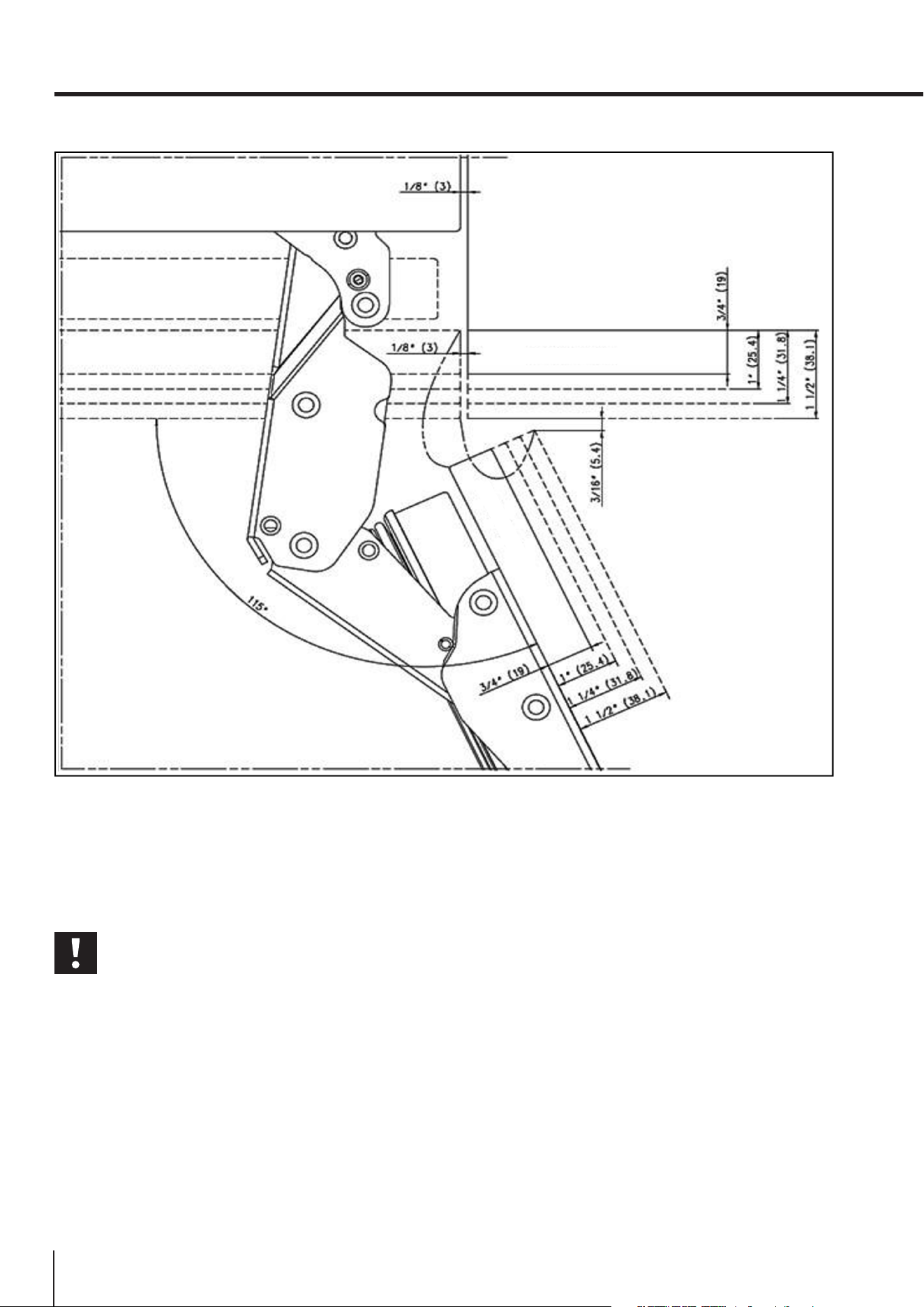
Freezer Door: 20 lbs (9 kg)
36
3. INSTALLATION INSTRUCTIONS
CHOOSING THE DOOR THICKNESS
• The door of your refrigerator can open to 115°
maximum. If you want the doors to open to this
degree, you can choose from the thicknesses
shown in the image above.
WARNING:
If the door thickness is more than 1½” (38
mm), the door should not open more than
90°. You must use a limiting pin on the
hinge.
A limiting pin is provided with the unit to prevent
the door from opening beyond 90° if necessary;
it can be installed on the hinge. Door thickness
allowances when using the limiting pin are shown
in the diagram below.
Cabinet front
Front panel
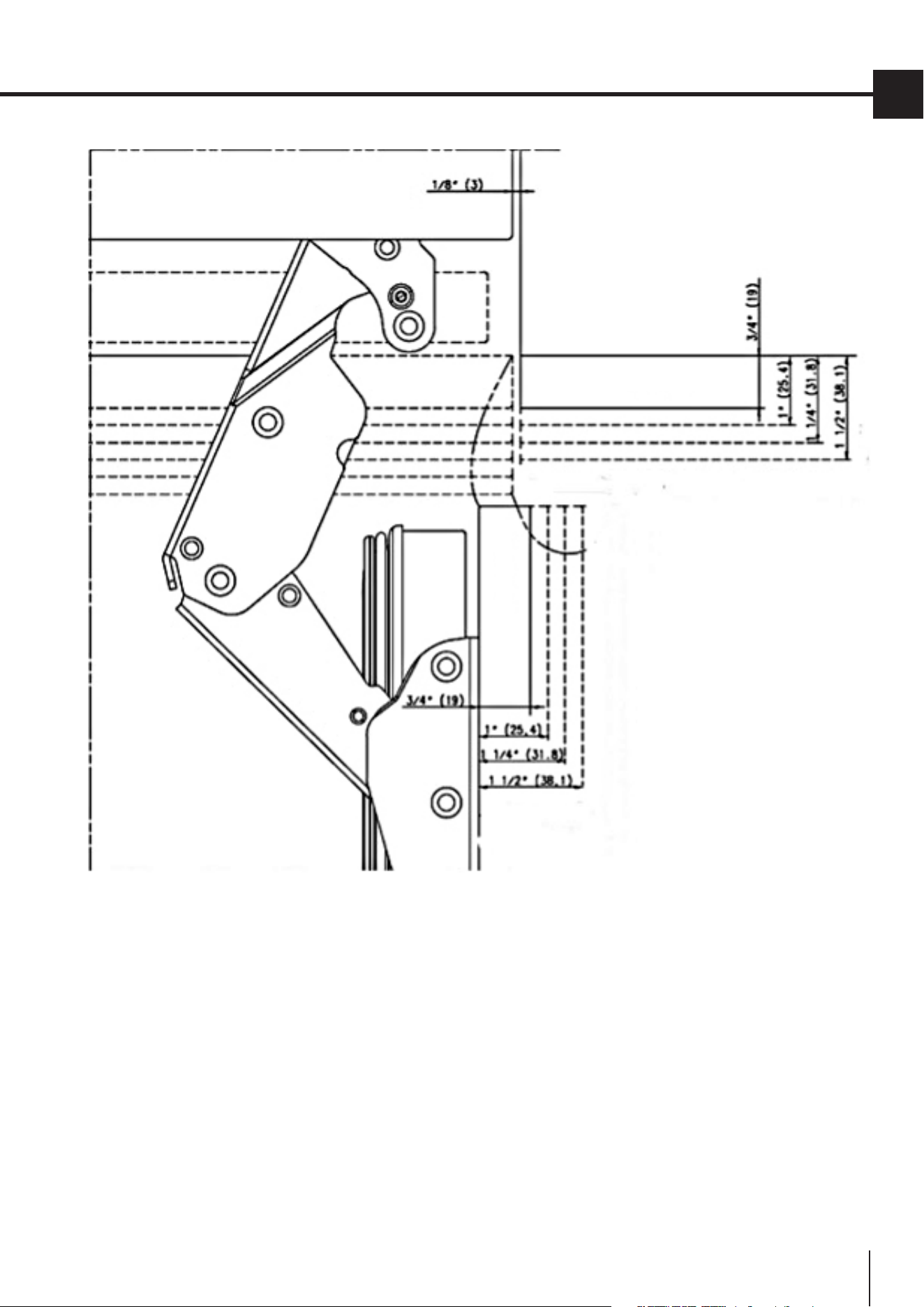
37
EN
Cabinet front
Front panel
38
3. INSTALLATION INSTRUCTIONS
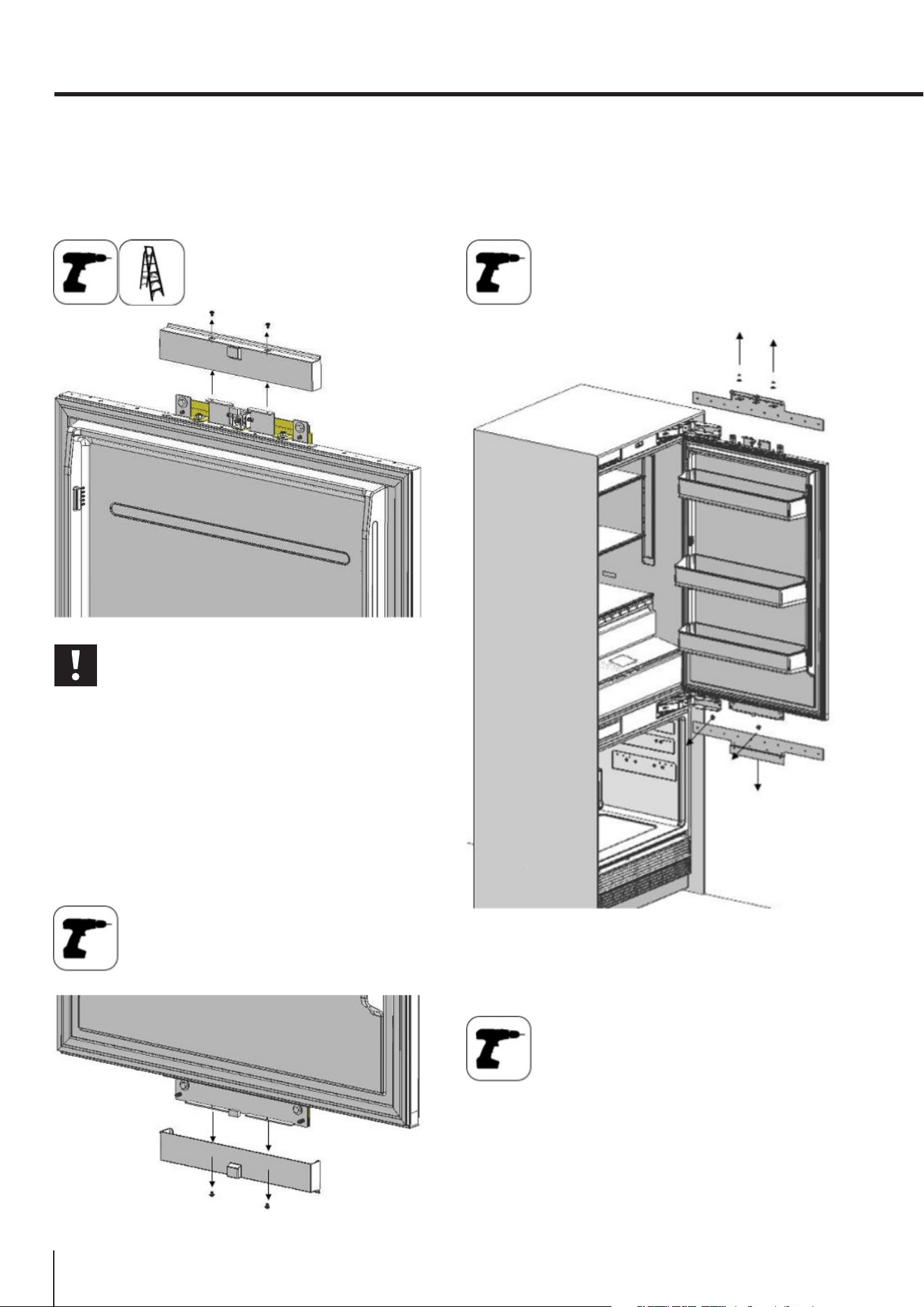
REMOVING THE OVERLAY PANEL MECHANISM
COVERS
• Remove the upper screws to remove the upper
cover.
WARNING:
There is a magnet on the cover door hanger
bracket. This is a functional component for
product operation, because it activates the
door open reed switch. Please ensure the
covers do not get switched; put each back
on the same bracket it was removed from.
The magnet should not be switched with
the lower cover.
• Remove the two screws to remove the door
hanger bracket for the lower mechanism cover.
REMOVING THE PANEL BRACKETS
• Remove the upper and lower adjustable panel
mounting brackets from the fridge door panel
adjustment mechanisms, as shown below.
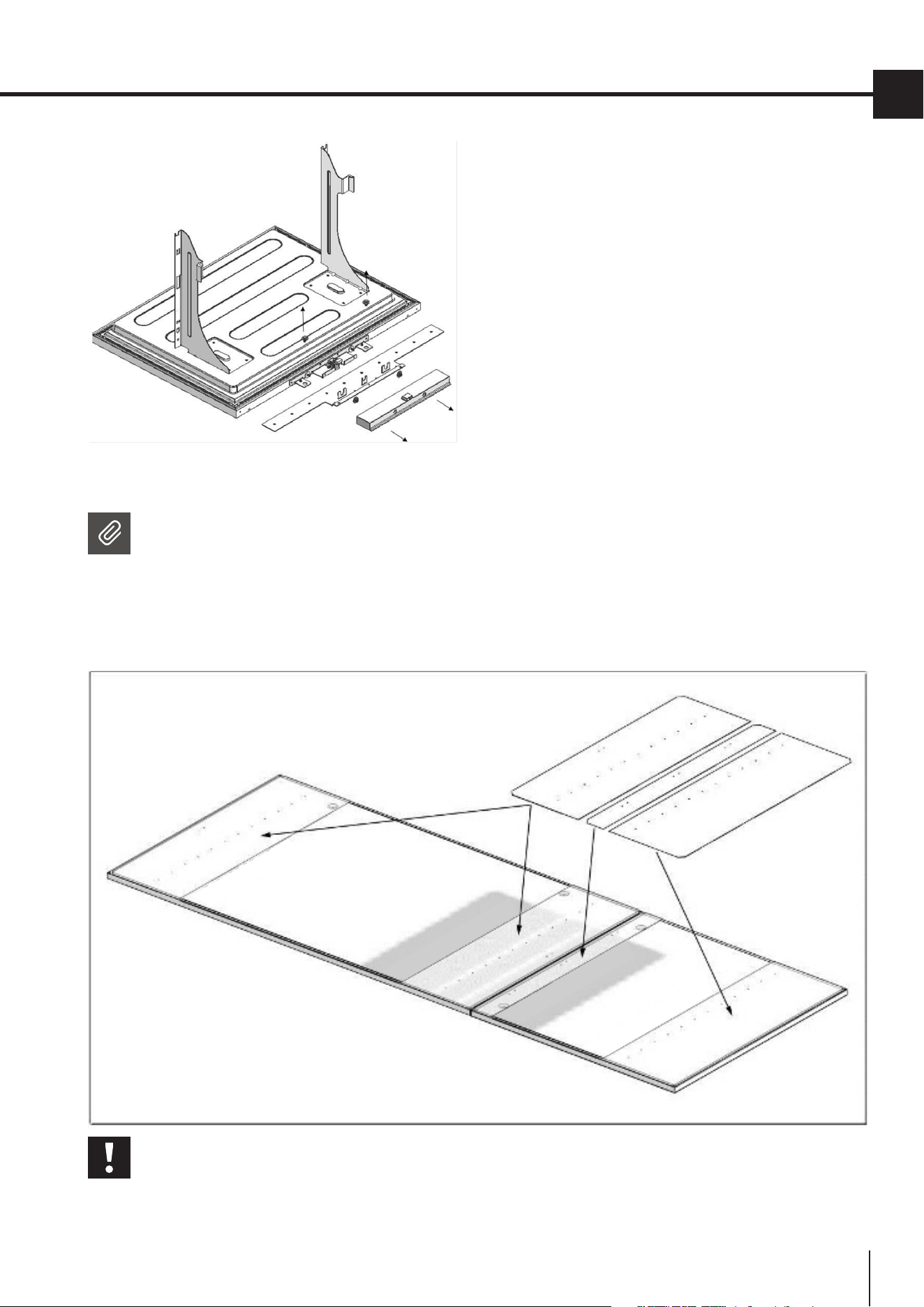
• Remove the covers for the panel adjustment
mechanisms from the lower part of the freezer
door along with the panel mounting brackets.
39
EN
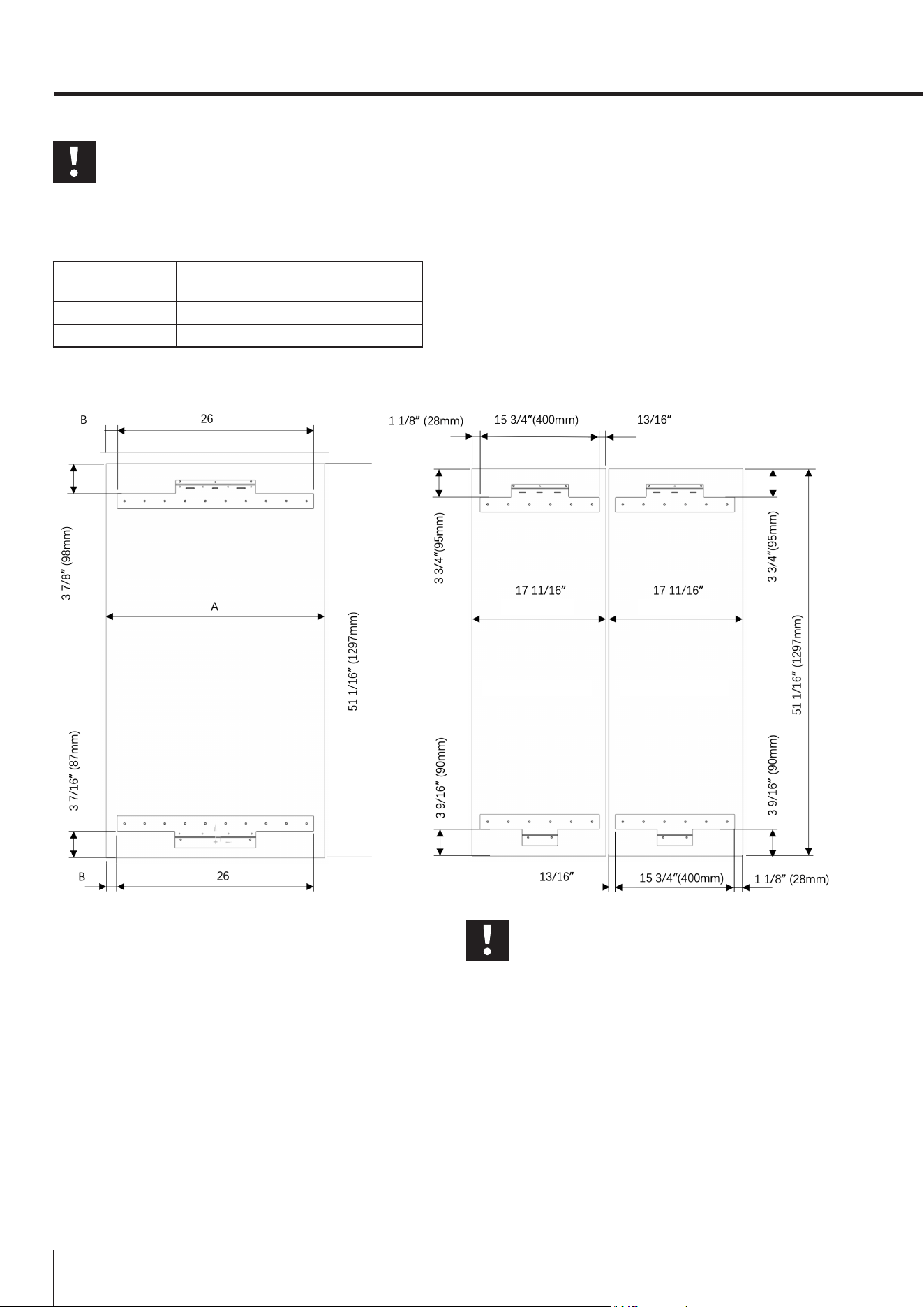
PREPARING THE OVERLAY PANELS
NOTE:
It is advisable to consider the dimensions of
both panels and the mounting location when
arranging the panel brackets on the overlay
panels (cabinet door). When marking, you
can use the door/drawer panel preparation
template (#6) provided with the product.
WARNING:
The handle mounting holes will have to be
adjusted based on the handles to be used in
the kitchen design.
Fresh food top
Fresh food bottom
Freezer top
Freezer bottom
40
3. INSTALLATION INSTRUCTIONS
WARNING:
The minimum door thickness must be ¾"
(19 mm).
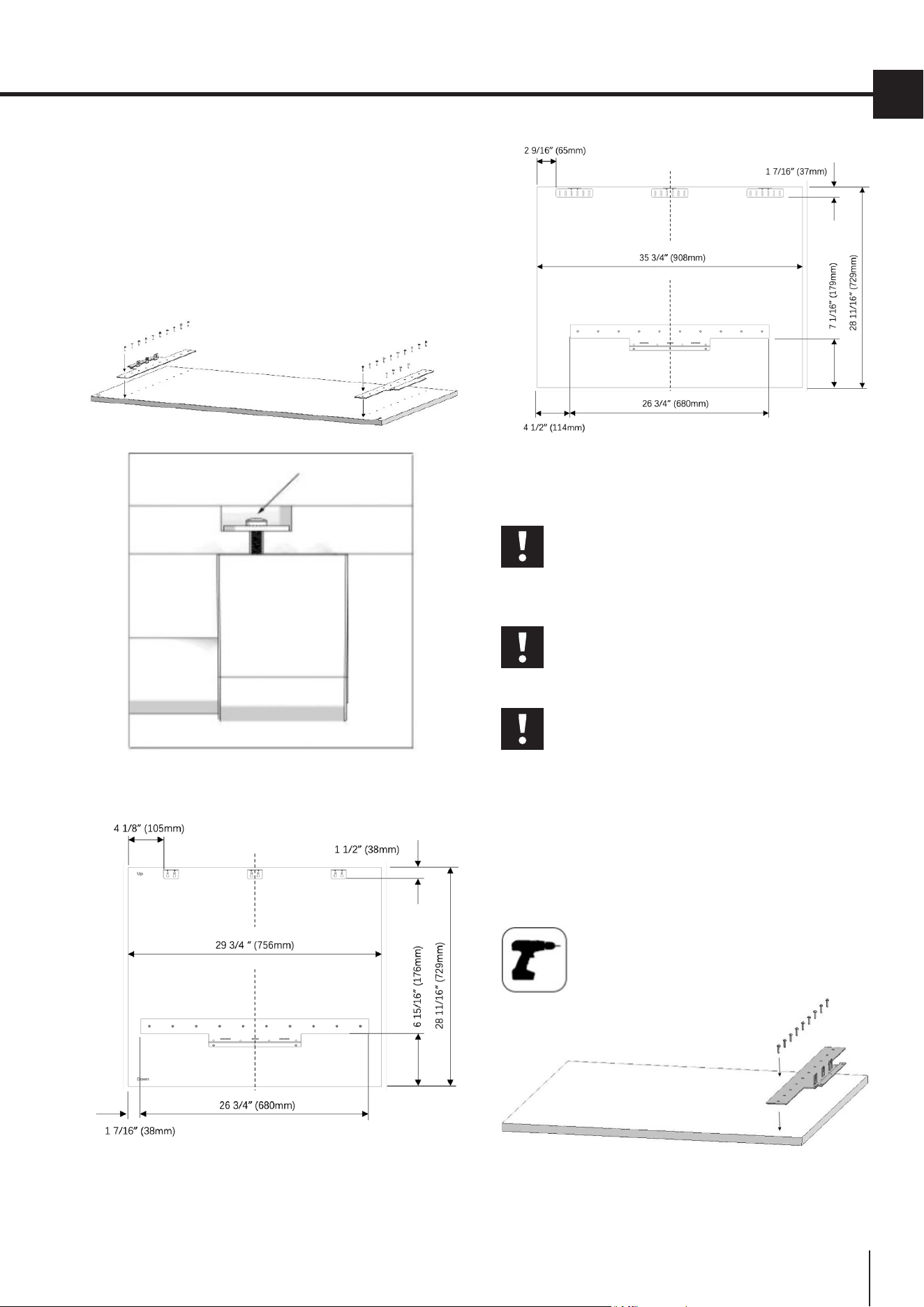
PREPARING THE FRIDGE DOOR PANEL
Category
30” built-in
bottom mount
36” built-in
bottom mount
A 29 3/4“ (756 mm) 35 3/4“ (908 mm)
B 1 1/2” (38 mm) 4 1/2” (114 mm)
30” & 36” BUILT-IN BOTTOM MOUNT
36” BUILT-IN FRENCH DOOR
WARNING:
• To prevent damage to the finished surface
of the panel, use screws suitable for the
door panel thickness.
• Install the panel brackets using screws
(#23). You can also use the template (#6)
provided with the product to align these
parts. It is recommended to keep this
template for future reference.
• The fridge door hanger sheet and fridge
door upper mechanism assembly must
be on the upper part of the door.
• Attach the door handle to the upper
door panel prior to installing the panel
on the fridge. Use handle hardware that
Right door Left door
(21 mm)
(449 mm) (449 mm)
(21 mm)
3/4" (680mm)
3/4" (680mm)
41
EN
will ensure a secure connection to the
panel and that will lie flush against or,
in any case, not protrude from the back
of the overlay panel. This may require
countersinking the handle hardware into
the back of the panel, as shown below.
The door handle mounting screws must
not protrude either.
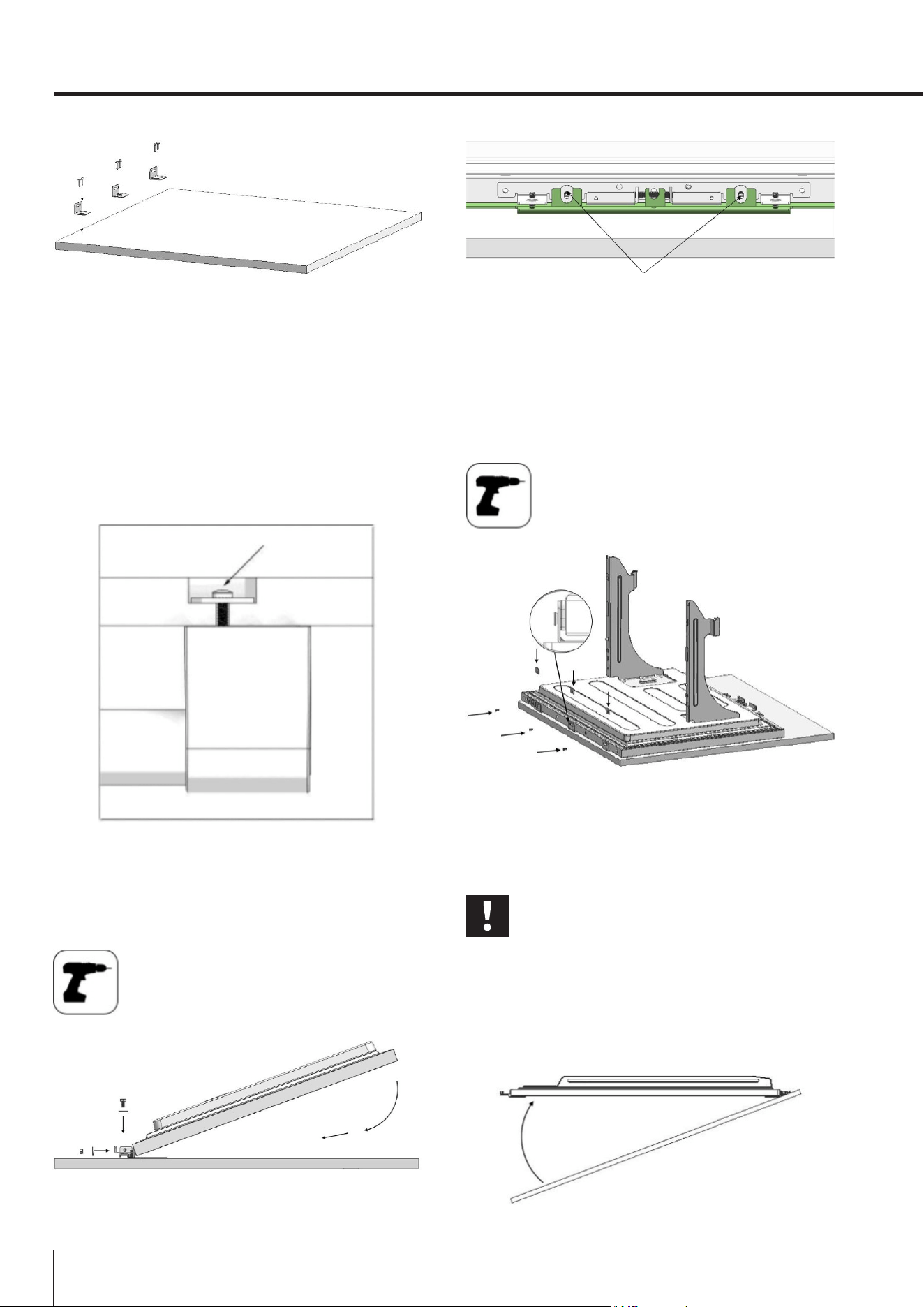
PREPARING THE FREEZER DRAWER PANEL
30” BUILT-IN BOTTOM MOUNT
36” BUILT-IN BOTTOM MOUNT
36” BUILT-IN FRENCH DOOR
WARNING:
The handle mounting holes will have to be
adjusted based on the handles to be used in
the kitchen design.
WARNING:
The minimum door thickness must be ¾"
(19 mm).
WARNING:
To prevent damage to the finished surface
of the panel, use screws suitable for the
door thickness.
• Install the lower panel bracket using the panel
screws (#23). You can also use the template (#6)
provided with the product to align these parts. It
is recommended to keep this template for future
reference.
• Attach the 3 upper metal “L” brackets (#4) using
2 screws (#15) for each, 6 in total.
42
3. INSTALLATION INSTRUCTIONS
• Attach the door handle to the panel prior to
installing the panel on the freezer. Use handle
hardware that will ensure a secure connection
to the panel and that will lie flush against or,
in any case, not protrude from the back of the
overlay panel. This may require countersinking
the handle hardware into the back of the panel.
The door handle mounting screws must not
protrude either.
• Position the panel in the mounting bracket.
• Replace the bracket screws at the top and screw
in but do not tighten, so as to lightly secure the
panel.
• Use 3 screws (#13) to secure the mounting
bracket. Washers (#12) are provided and can be
used as spacers to raise or lower the freezer panel
as required, based on the specific installation.
• Tighten the screws once the freezer drawer
panel is perfectly aligned on the freezer drawer.
Washers can be used as spacers to raise or
lower the freezer panel as required based on
installation.
Washers to be used are determined based on the
kitchen design.
WARNING:
You will find more washers than you
need in the cardboard packaging. You can
use however many your kitchen design
requires.
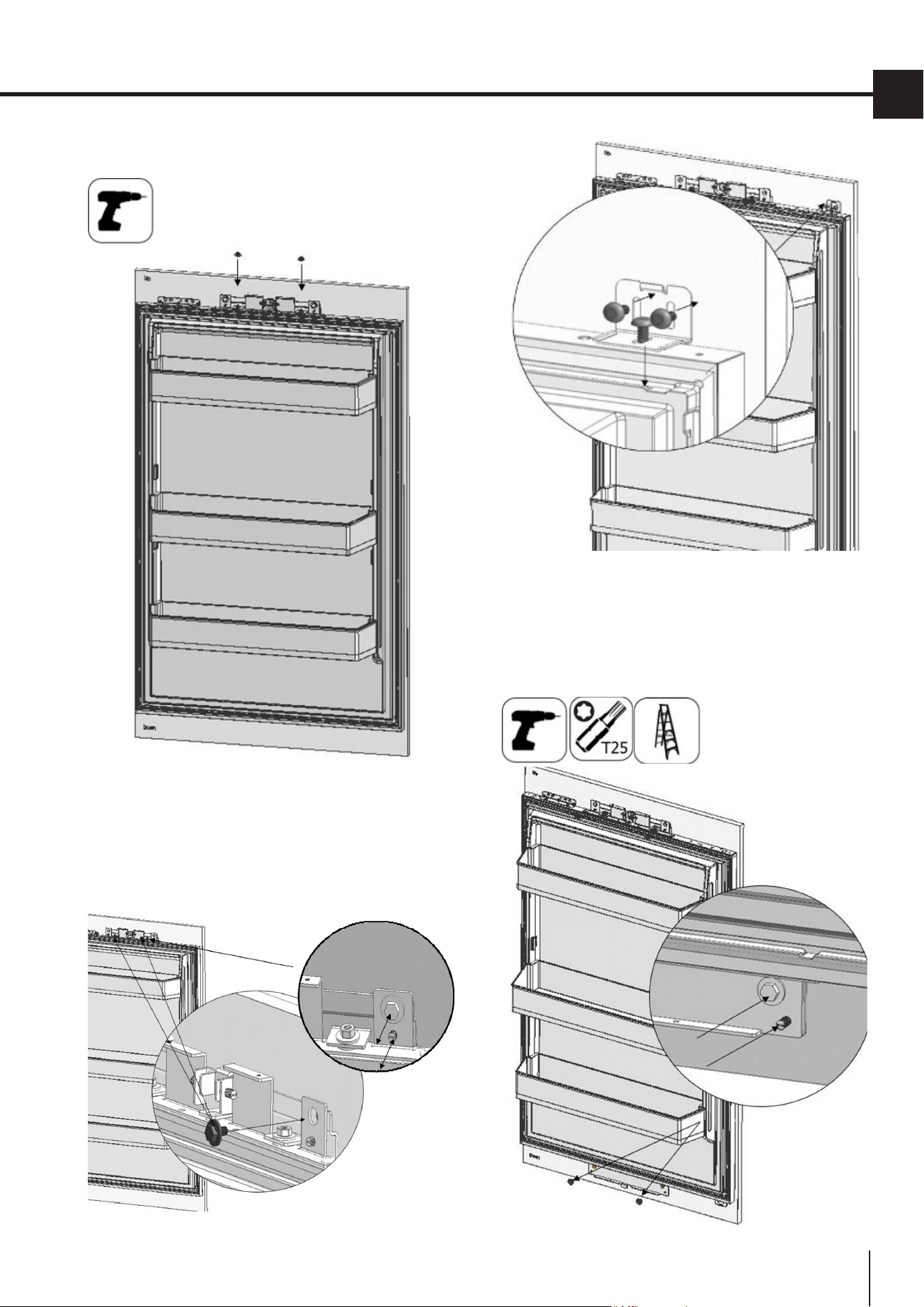
INSTALLING THE FRIDGE DOOR PANEL
1. Attach the cabinet door to the fridge door.
Holes are in line
43
EN
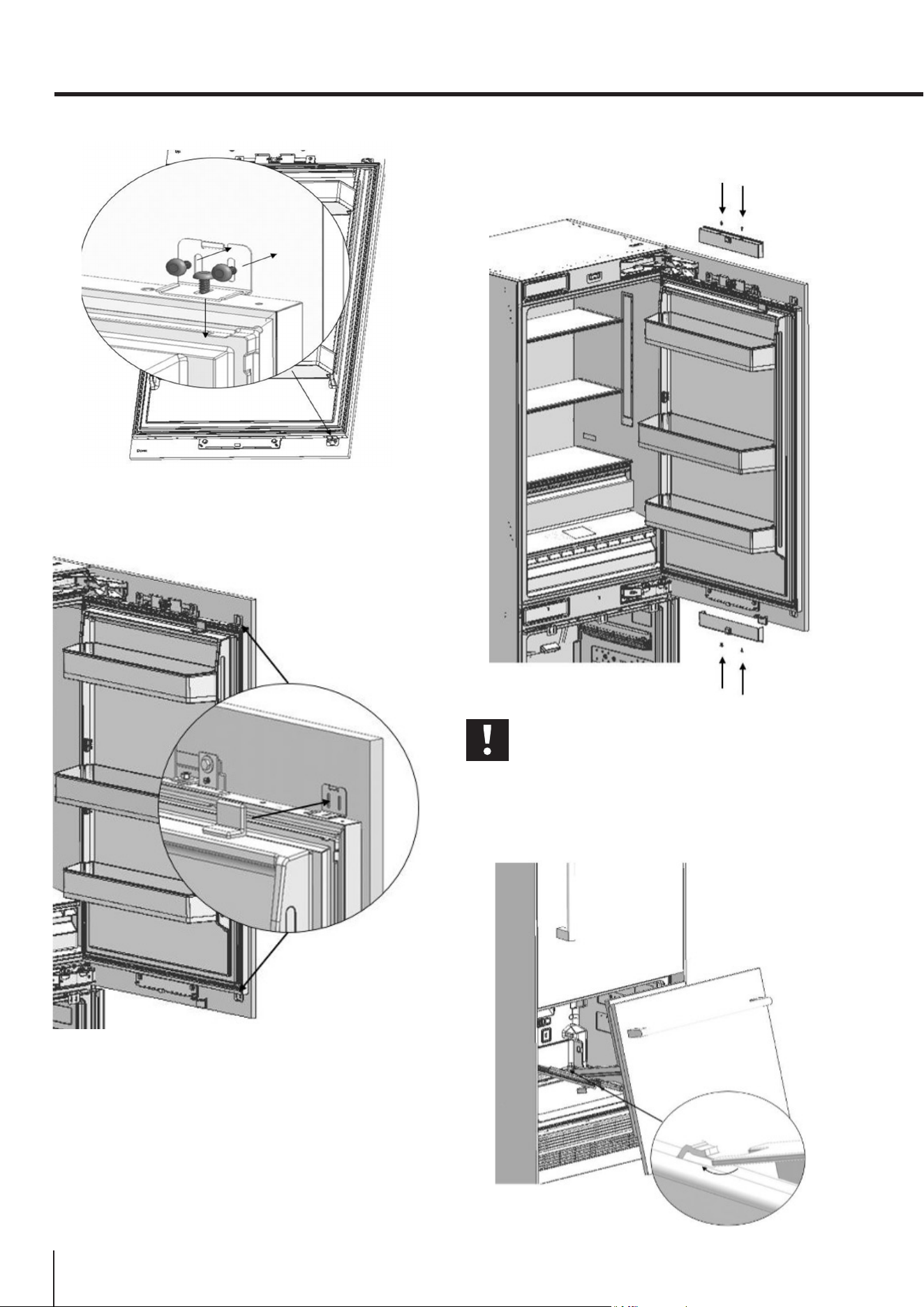
• Mount the two screws removed from here onto
the adjusting bolts.
• Adjust the upper part of the door using 2 screws
removed from the bracket (shown below)
together with 2 slotted screws.
• Use the bracket (#21) to join the door panel and
the fridge door, then use 2 screws (#20) and 1
screw (#22) to fasten them together.
• Adjust the lower part of the door using 2 screws
removed from the bracket (shown below)
together with 2 slotted screws.
• Use the bracket (#21) to join the door panel and
the fridge door, then use 2 screws (#20) and 1
screw (#22) to fasten them together.
44
3. INSTALLATION INSTRUCTIONS
• Snap the decorative cover (#19) over the bracket
as shown below.
• Use the 4 screws removed from here to secure
the upper/lower mounting bracket cover.
WARNING:
Always keep spare parts for future use,
as they may be needed to perform a door
swing change in the future.
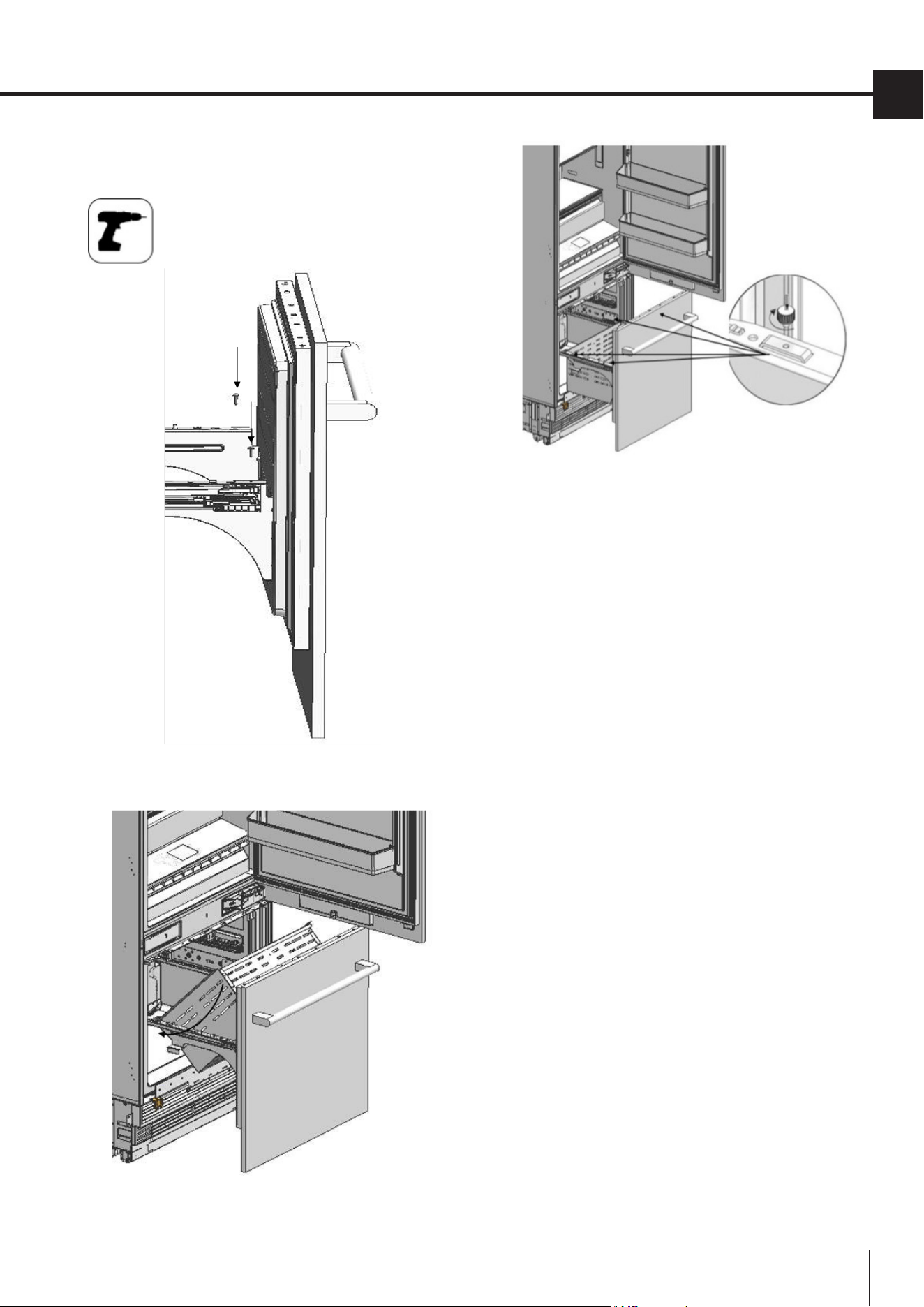
REINSTALLING THE FREEZER DRAWER DOOR
• Install the freezer door assembly onto the rails.
45
EN
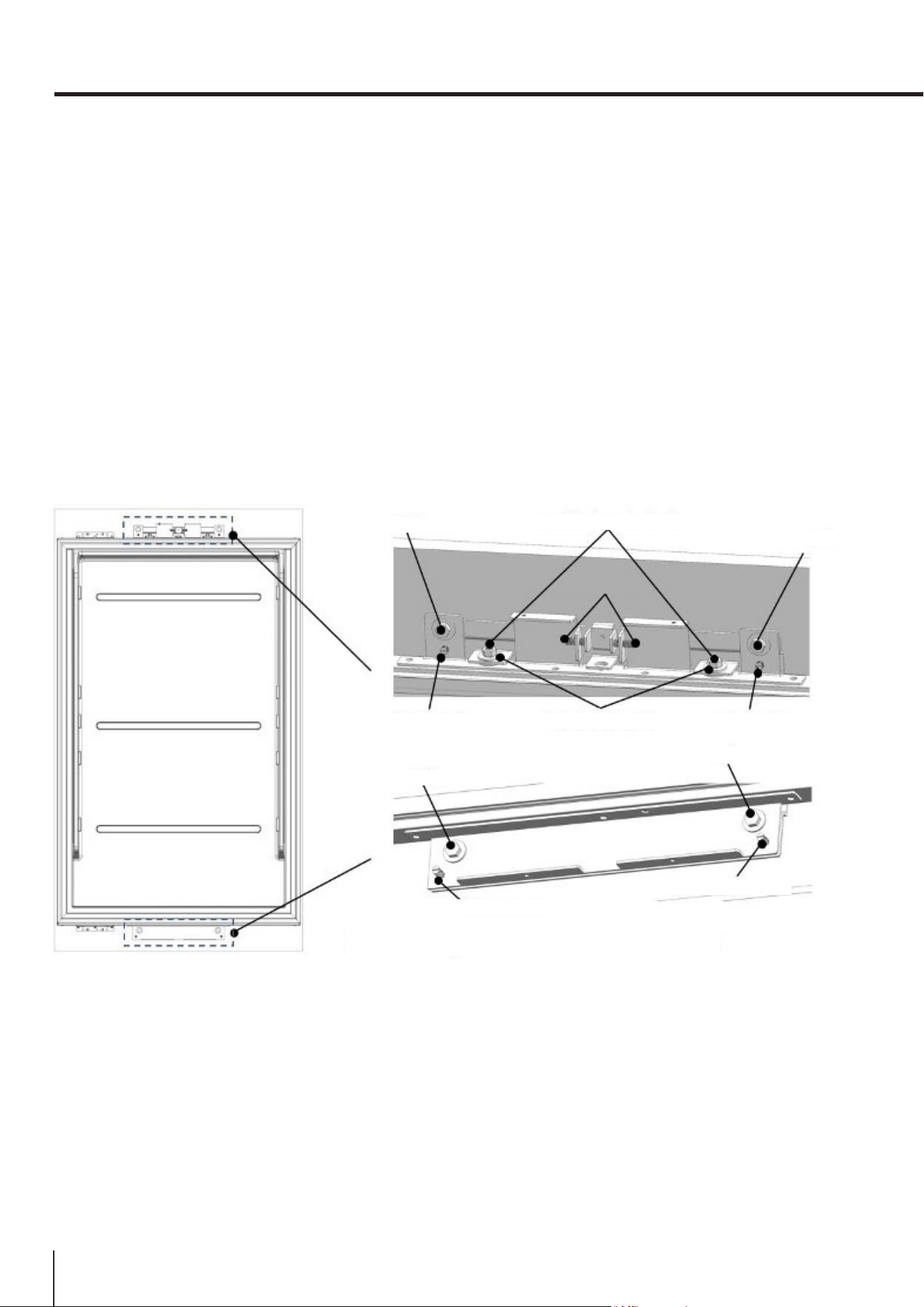
• Mount the freezer door assembly on the rails
using 2 screws.
• Reinstall the main freezer drawer on the rail and
tighten the provided thumbscrews.
46
3. INSTALLATION INSTRUCTIONS
ADJUSTING THE PANELS
If you need to adjust the door panels, please
refer to the illustrations below, which show the
adjustment mechanism.
ADJUSTING THE FRIDGE DOOR PANEL
1. Use the double-threaded height-adjustment
bolts to align the door panel.
2. Adjust set screw 1 (see the illustration) to shift
the panel from side to side.
Bolt
Double-threaded bolt
Bolt
Washer and nutSet screw 2 Set screw 2
Set screw 1
Bolt
Bolt
Set screw 2
Set screw 2
Panel-Adjustment Mechanisms
3. Engage set screw 2 (see the illustration) to shift
the panel forward/backward; engage the locking
bolt to secure the top part of the panel in place.
4. Engage set screw 3 (see the illustration) to shift
the panel forward/backward; engage the locking
bolt to secure the lower part of the panel in place.
5. Engage the locking bolt to secure the panel in
place.
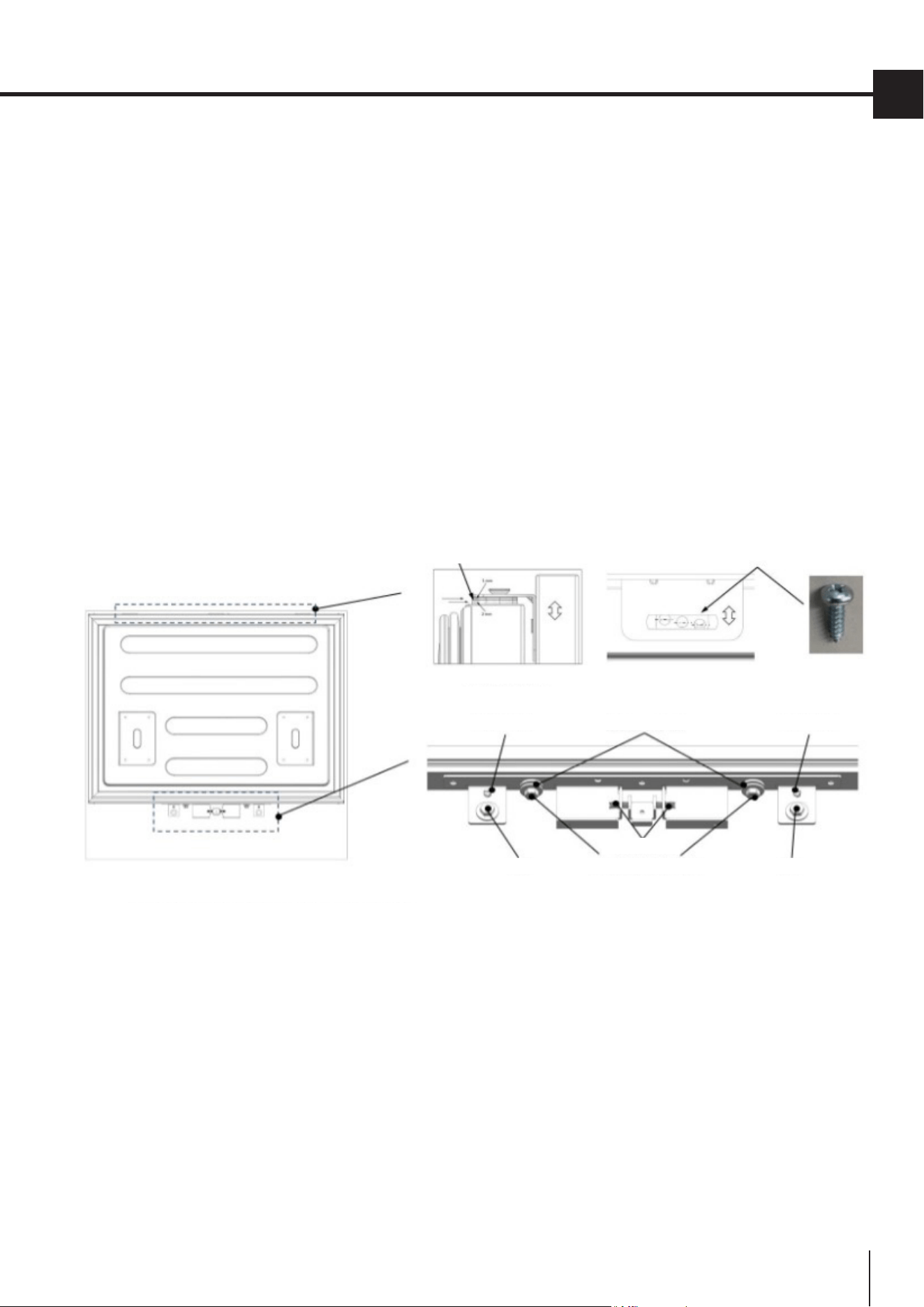
47
EN
ADJUSTING THE FREEZER DOOR PANEL
1. Use the freezer cabinet door adjustment washer
to align the top part of the door panel.
2. Adjust set screw 1 (see the illustration) to shift
the panel from side to side.
3. Select the mounting hole (see the illustration) to
shift the panel forward/backward, then screw in
the mounting screw to secure the panel in place.
4. Adjust set screw 2 (see the illustration) to shift
the panel forward/backward; engage the bolt to
secure the panel in place.
5. Adjust the double-threaded bolts securing the
lower part of the door panel.
6. Engage the locking bolt to secure the lower part
of the panel in place.
Panel-Adjustment Mechanisms
Bolt Bolt
Set screw 2 Set screw 2
Set screw 1
Washer and nut
Double-threaded bolt
Panel alignment
Freezer cabinet door adjustment washer
To shift panel forward/backward
Mounting screw
ST4.8x16
48
3. INSTALLATION INSTRUCTIONS
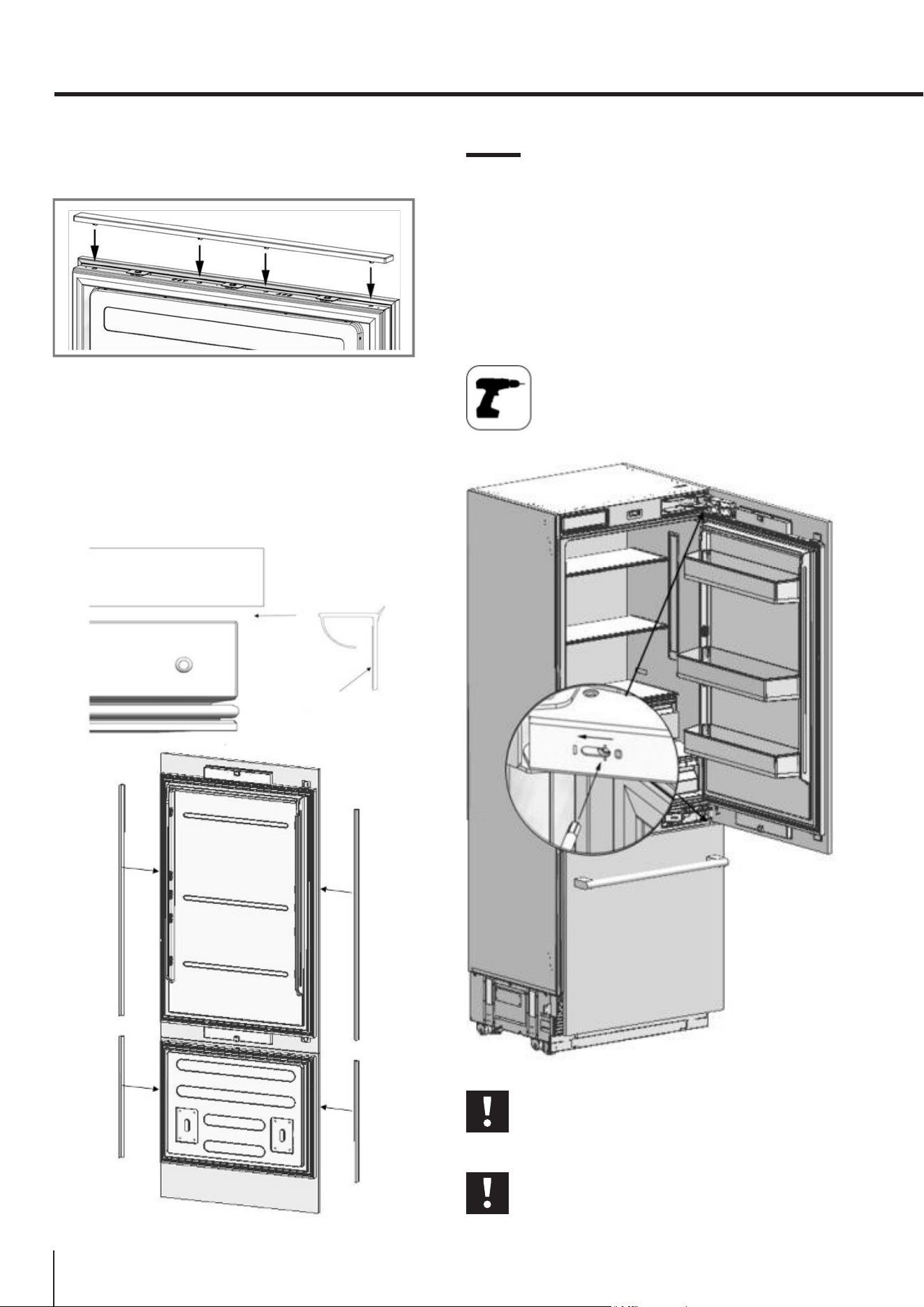
• Attach the decorative upper freezer drawer cover
(#5) using the tabs to secure it to the drawer.
• Attach the decorative side trim seals (#2) and
(#3) (optional). Note: side trim pieces may require
some trimming if gap is too small to allow them
to be pushed in; some force may be required.
Remove the protective film from the double-
sided tape to secure the trim to the front face of
the fridge cabinet.
3.6 Hinge Adjustment and Reversing
the Door Swing
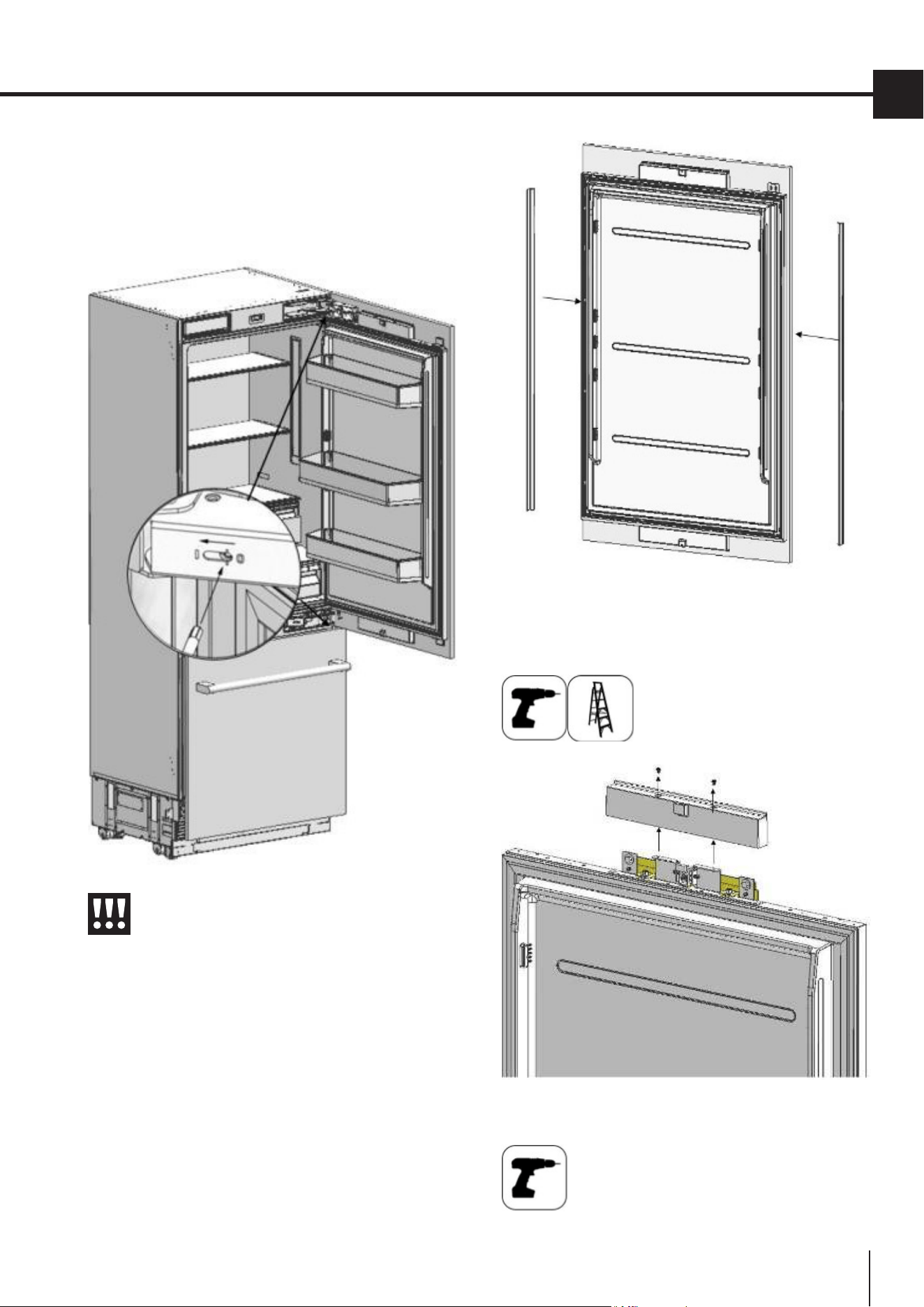
ADJUSTING THE SPRING TENSION OF THE HINGES
• Use a drill to adjust the tension of the upper and
lower hinges of the fridge door. Set the hinge
adjustment screw to position "I" from position
"O".
WARNING:
The door must be fully open during this
adjustment.
WARNING:
The hinge tension adjustment must be
Double-sided tape
49
EN
performed only after the door panel has
been adjusted.
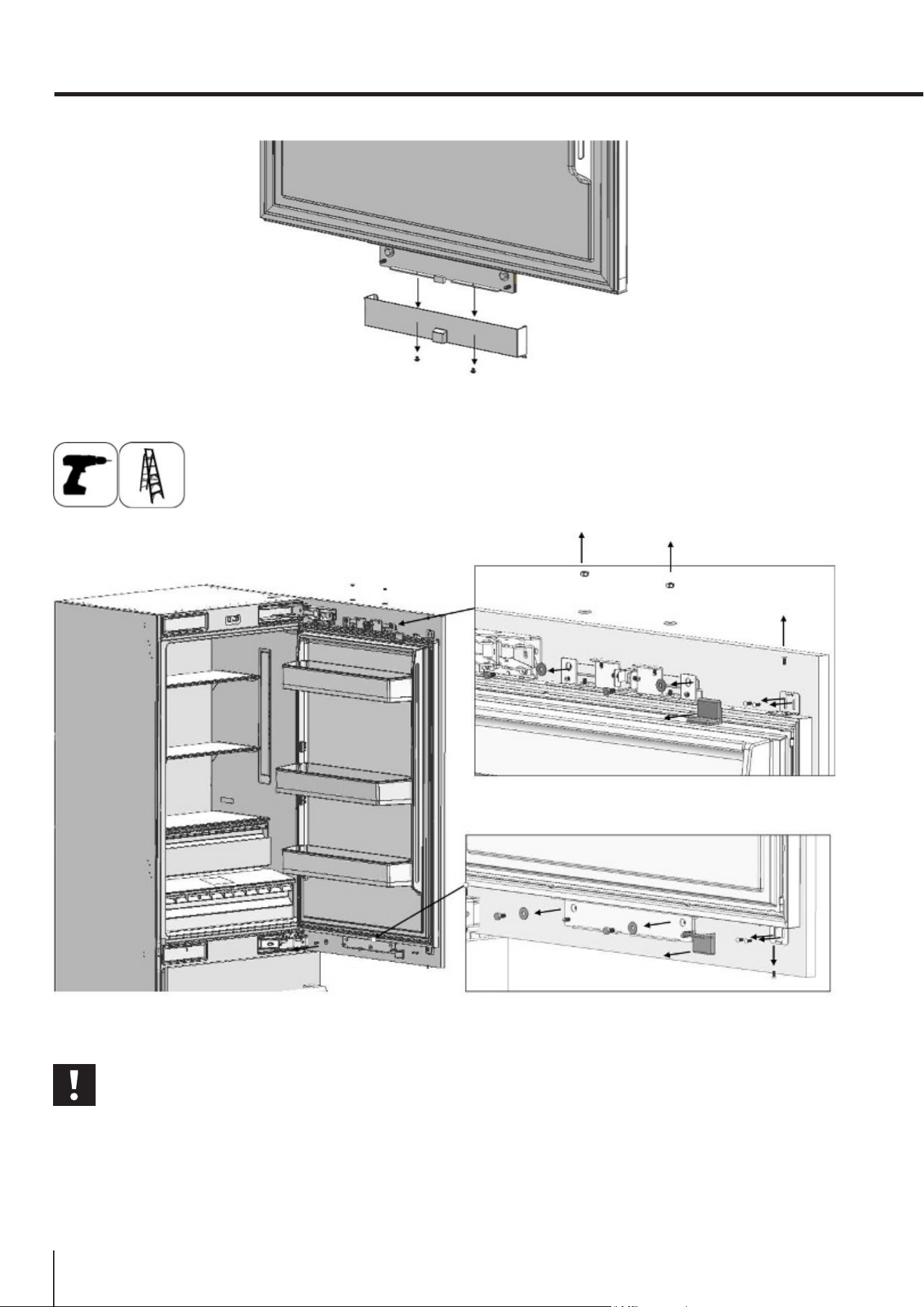
REMOVING THE FRIDGE DOOR PANEL
• Set the tension level of the hinge to "0".
CAUTION:
Failure to set the hinge to "0" before
continuing the installation may result in
injury.
• Remove the side closing seals.
• Loosen the 2 screws in the upper cover of the
fridge door and remove it.
• Take out the upper adjustment kits.
• Loosen the 2 screws in the lower cover of the
fridge door and remove it.
50
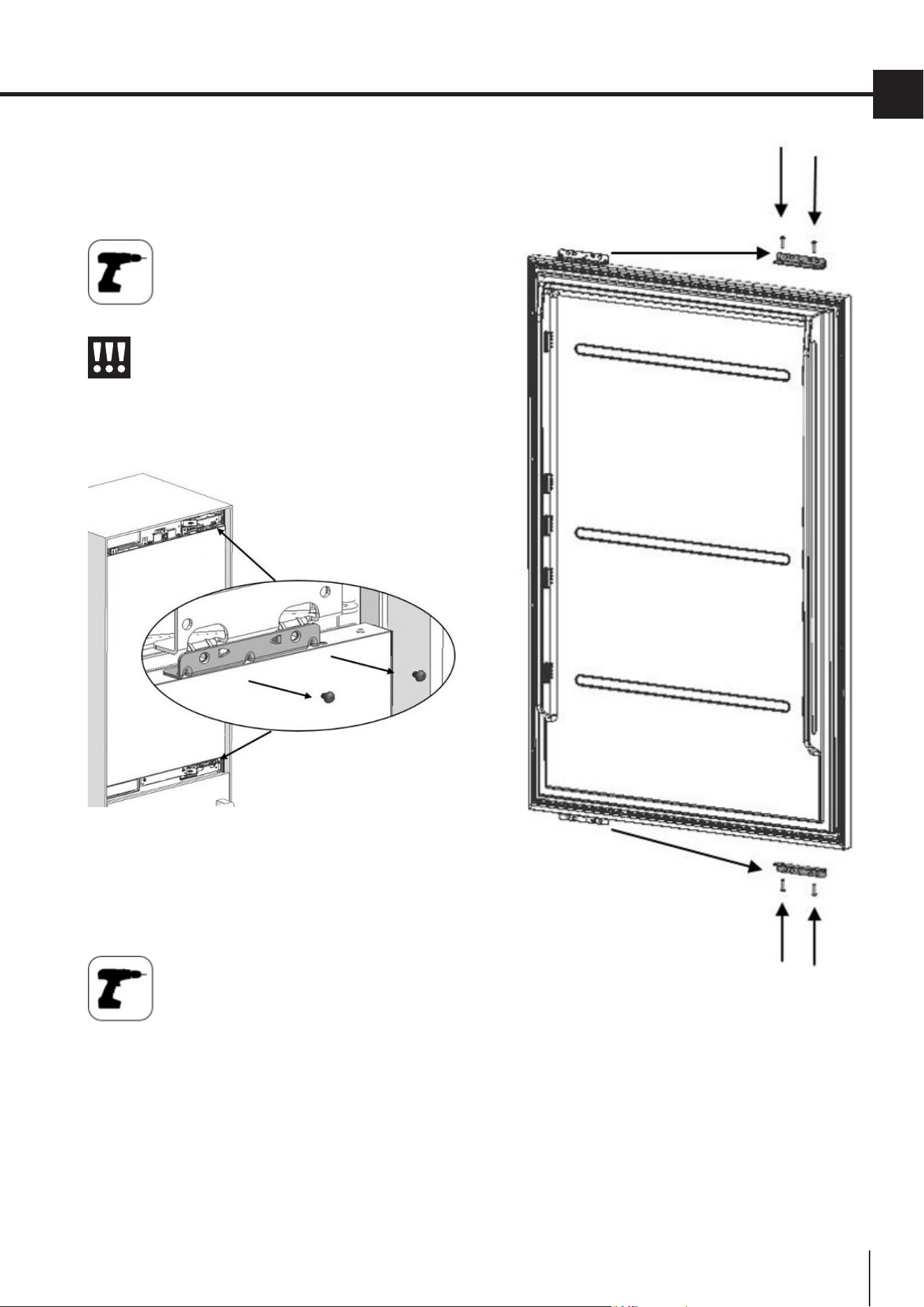
3. INSTALLATION INSTRUCTIONS
• Remove the lower and upper bracket screws from the fridge.
• Remove the screw from the upper and from the lower fridge mechanism.
WARNING:
The fridge door panel will be released when these screws are removed.
You must take measures to prevent the door from falling.
You can tape the cabinet door to the inner door or ask a second person to help.
• Take o the fridge cabinet door and lay it upside down on a table top.
• You must attach the cabinet door by rotating it 180° with respect to its current position.
51
EN
REMOVING AND PREPARING THE FRIDGE INNER
DOOR
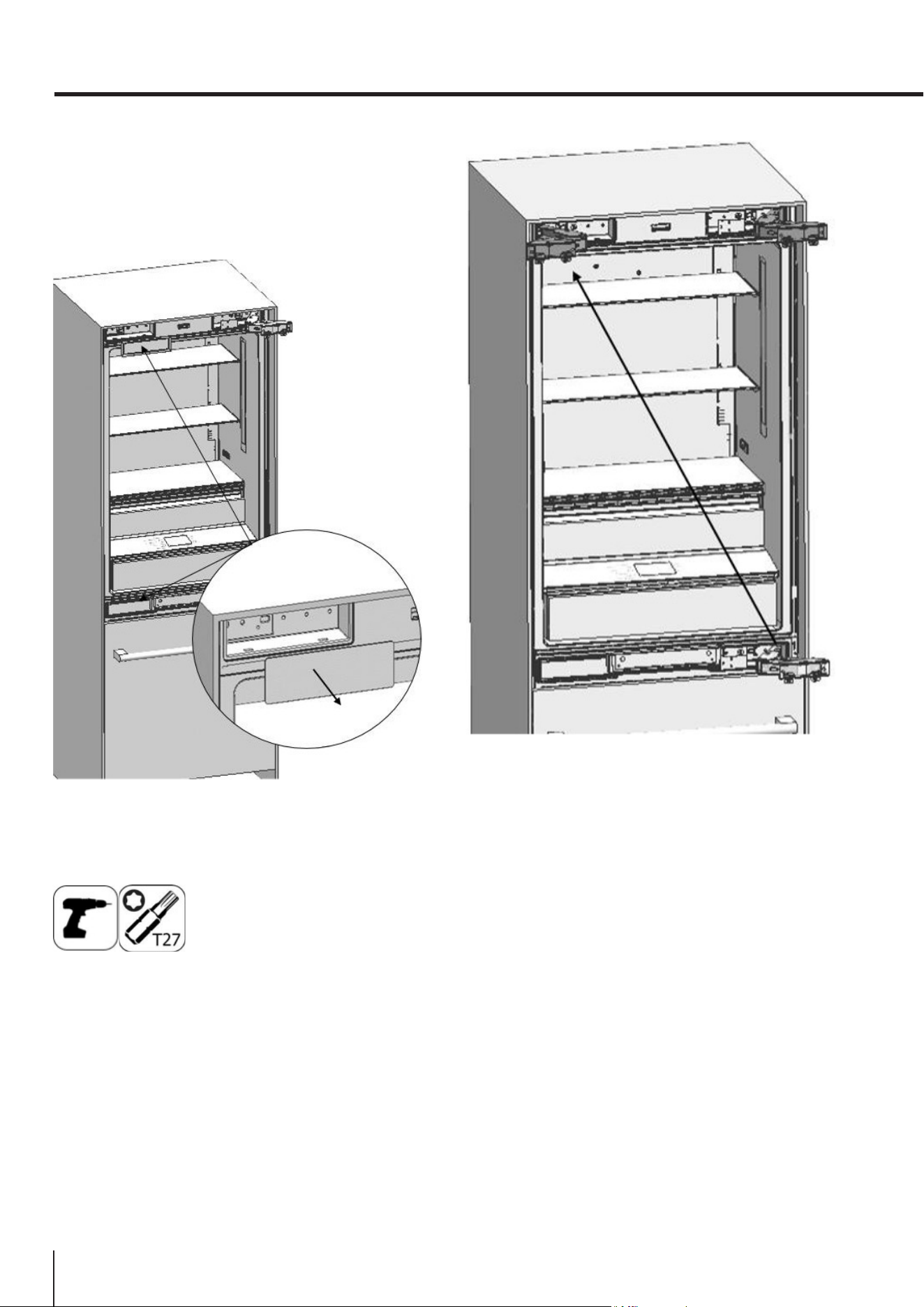
• Remove the hinge connection screws from the
hinge brackets.
CAUTION:
The door will be released when these
screws are removed. You must take
measures to prevent the door from falling.
You can tape the cabinet door to the inner
door or ask a second person to help.
• Take o the fridge door and lay it on a table top,
then remove the mounting components and
screw them to the opposite side of the door.
• Use 2 screws to attach the hanger sheet.
52
3. INSTALLATION INSTRUCTIONS
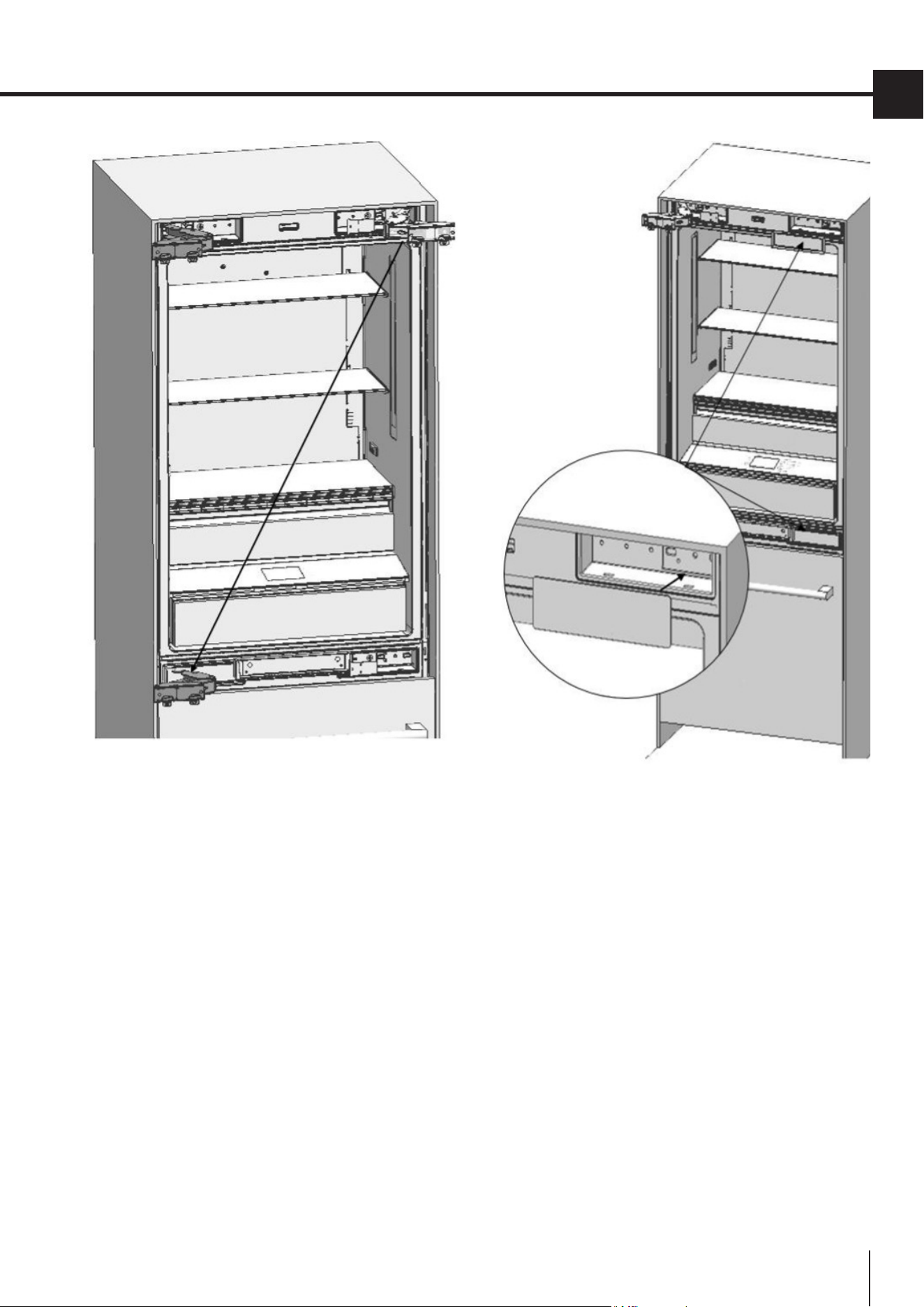
• Remove the upper right hinge by loosening its 2
screws and mount it in its slot on the lower left
side.
REVERSING THE HINGES
• Remove the hinge covers located on the other
side, where you will mount the hinges.
• Remove the screw cover and the screws securing
the hinges.
• Remove the lower right hinge by loosening its 2
screws and mount it in its slot on the upper left
side.
53
EN
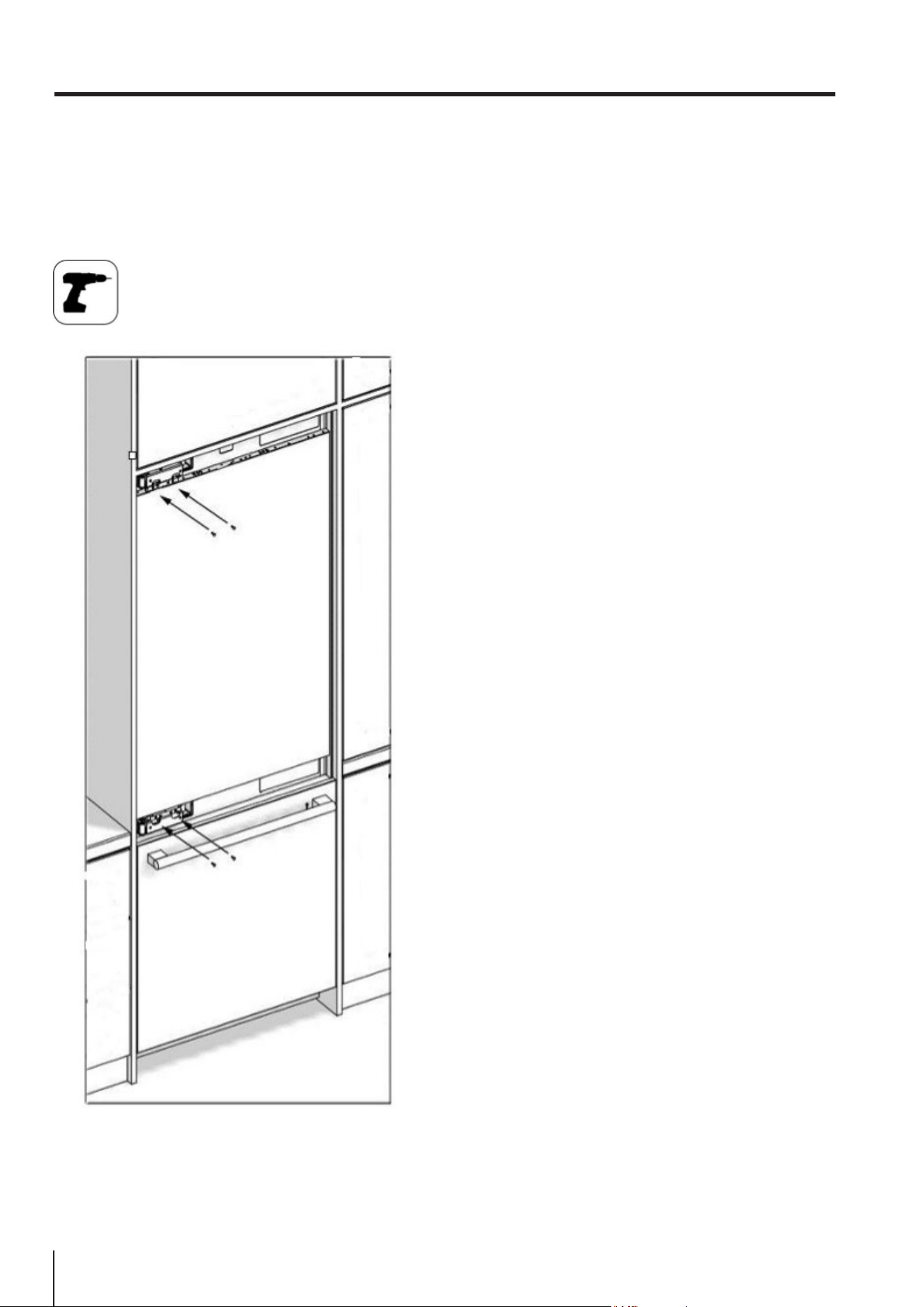
• Return the hinges' decorative screw caps to their
places.
• Return the hinge pocket cover to the opposite
side, where the hinges were removed.
54
3. INSTALLATION INSTRUCTIONS
REINSTALLING THE FRIDGE DOOR
• Place the fridge inner door on the refrigerator
using the door seal to help hold the door in place
and fasten it back onto the hinges using 4 screws.