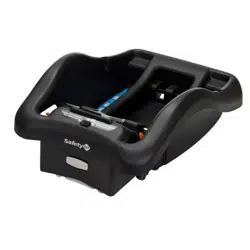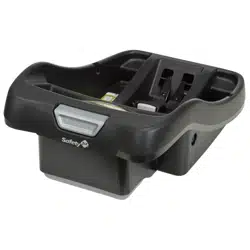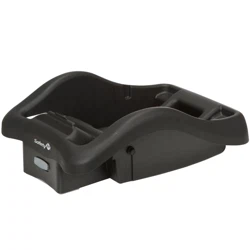
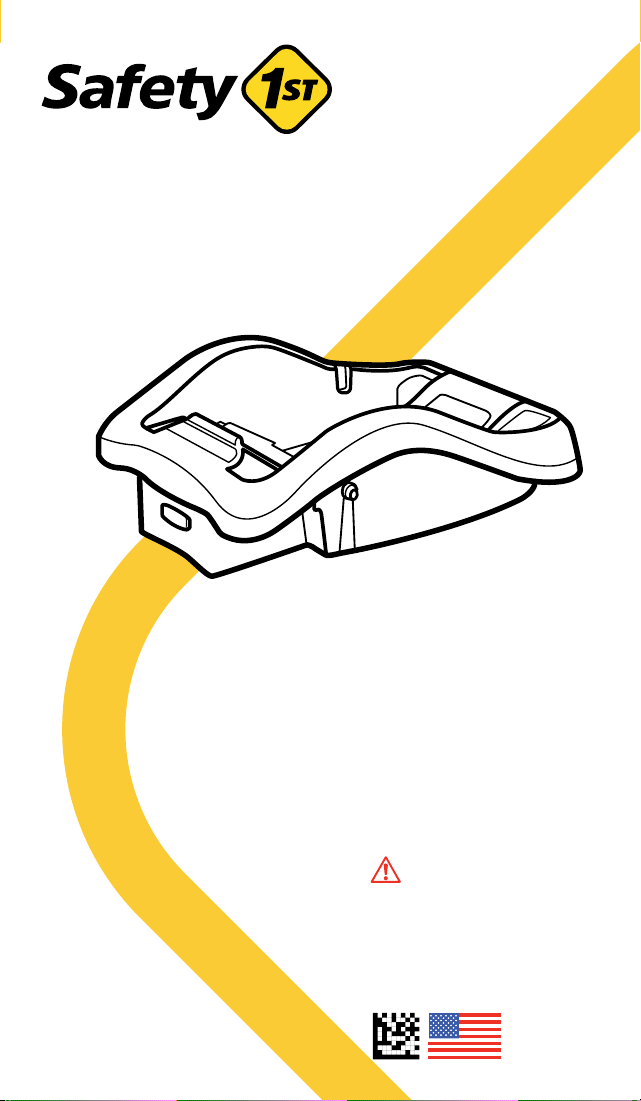
Car Seat Base
Compatible with Light ‘n Comfy 22, OnBoard 35LT
and Comfort 35 infant car seats
KEEP INSTRUCTIONS FOR FUTURE USE.
Read all instructions before
using this car seat base.
WARNING Failure to follow the
warnings on the labels and in the
instruction manual can result in
serious injury or death
to your child.
4358-8249A
6.8.22
www.safety1st.com

Quick NavigationOverview
Welcome to the Safety 1st family and
thank you for choosing this car seat base.
This manual will explain how to properly use and install the
base that is to be used with a compatible car seat carrier,
also known as a child restraint.
For important carrier use and install information,
refer to the instruction manual that came with your
compatible child restraint.
Your child’s safety is worth the time it will take
to read and follow these instructions.
Ready? Let’s go!
Page 1 will introduce you to the parts of the base.
Page 27 has our contact information. If at any point you
would like assistance, please feel free to reach out to us.
REAR-FACING
You must follow the weight and height
ranges called out in the instruction
manual that came with your compatible
car seat.
PAGE 2
Vehicle Belt
PAGE 13
Lower
Anchor Belt
PAGE 16
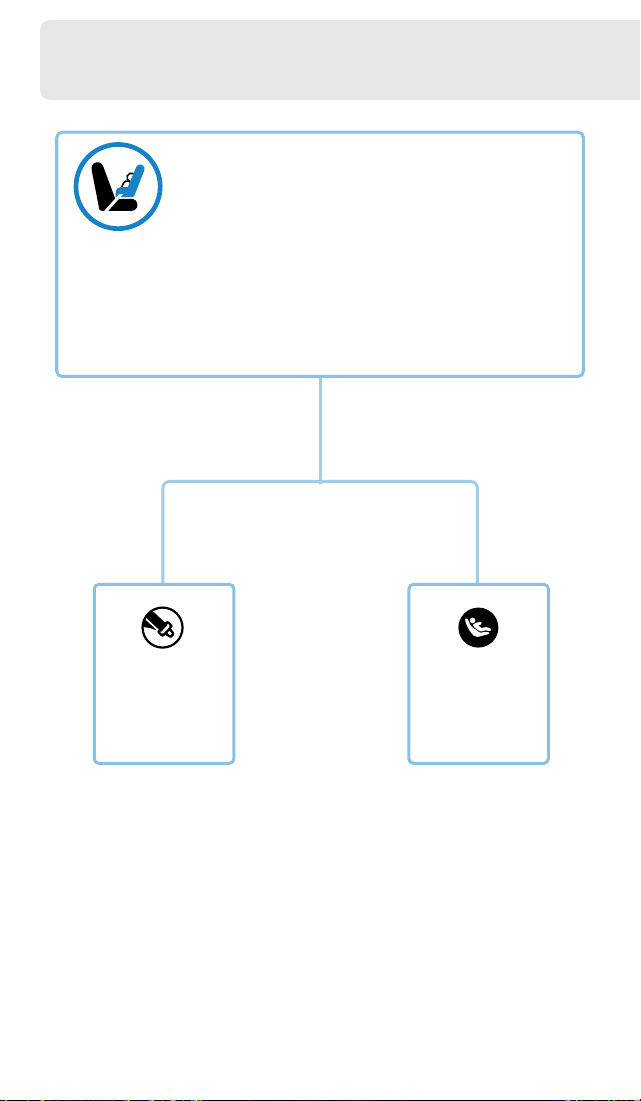
Quick NavigationOverview
Welcome to the Safety 1st family and
thank you for choosing this car seat base.
This manual will explain how to properly use and install the
base that is to be used with a compatible car seat carrier,
also known as a child restraint.
For important carrier use and install information,
refer to the instruction manual that came with your
compatible child restraint.
Your child’s safety is worth the time it will take
to read and follow these instructions.
Ready? Let’s go!
Page 1 will introduce you to the parts of the base.
Page 27 has our contact information. If at any point you
would like assistance, please feel free to reach out to us.
REAR-FACING
You must follow the weight and height
ranges called out in the instruction
manual that came with your compatible
car seat.
PAGE 2
Vehicle Belt
PAGE 13
Lower
Anchor Belt
PAGE 16

Contents
Getting Started
Parts of Base ...................................................................... 1
Rear-Facing Use Requirements ......................................... 2
Adjusting Base (On Select Models) ......................... 4
Choosing LATCH or Vehicle Belt
LATCH: Lower Anchor Use .................................................. 5
Vehicle Belts ...................................................................... 7
Rear-Facing Use with Base ....................................... 11
Vehicle Belt Install .............................................................. 13
LATCH: Lower Anchor Belt Install ........................................ 16
Safety Information
Replacement and Expiration of Car Seat ............................ 20
Child Restraint Use ............................................................... 21
Installation in Vehicle ............................................................ 21
Vehicle Seating Position ....................................................... 22
Registration and Safety Notices ............................................. 23
Additional Information
Warranty ............................................................................. 24
Replacement Parts List ........................................................ 26
Dorel Juvenile Group Information........................................... 27
© 2022 Dorel Juvenile. All Rights Reserved.
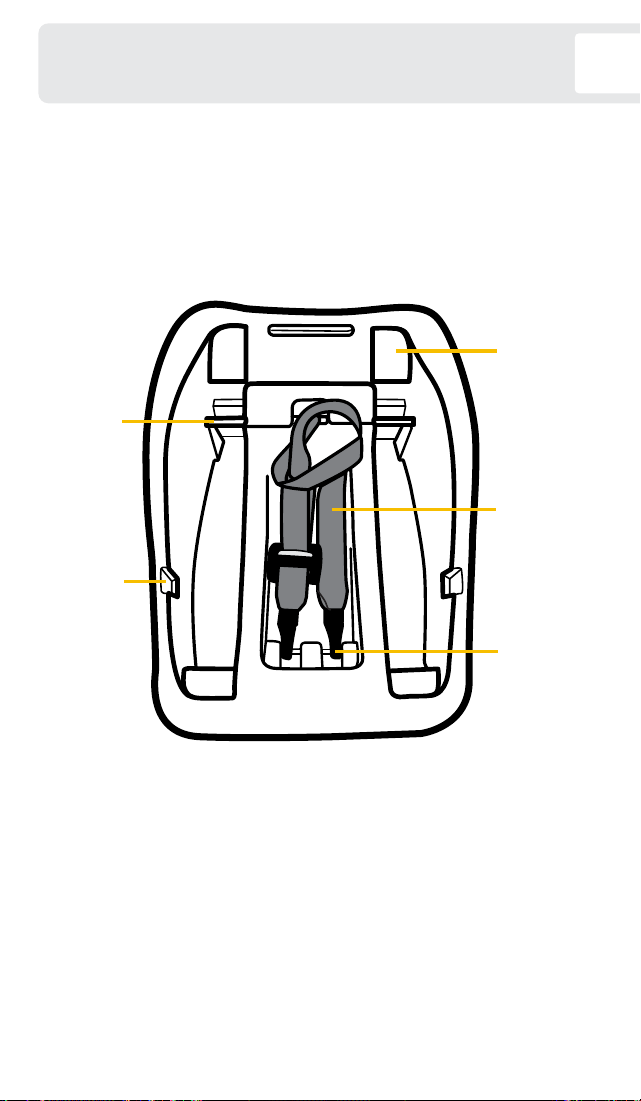
Base Belt
Path
Lock
Bars
LATCH:
Lower
Anchor
Belt
Base
Alignment
Slots
Lower
Anchor Belt
Storage
1
Parts of Base
Contents
Getting Started
Parts of Base ...................................................................... 1
Rear-Facing Use Requirements ......................................... 2
Adjusting Base (On Select Models) ......................... 4
Choosing LATCH or Vehicle Belt
LATCH: Lower Anchor Use .................................................. 5
Vehicle Belts ...................................................................... 7
Rear-Facing Use with Base ....................................... 11
Vehicle Belt Install .............................................................. 13
LATCH: Lower Anchor Belt Install ........................................ 16
Safety Information
Replacement and Expiration of Car Seat ............................ 20
Child Restraint Use ............................................................... 21
Installation in Vehicle ............................................................ 21
Vehicle Seating Position ....................................................... 22
Registration and Safety Notices ............................................. 23
Additional Information
Warranty ............................................................................. 24
Replacement Parts List ........................................................ 26
Dorel Juvenile Group Information........................................... 27
© 2022 Dorel Juvenile. All Rights Reserved.
Base Belt
Path
Lock
Bars
LATCH:
Lower
Anchor
Belt
Base
Alignment
Slots
Lower
Anchor Belt
Storage
1
Parts of Base

3
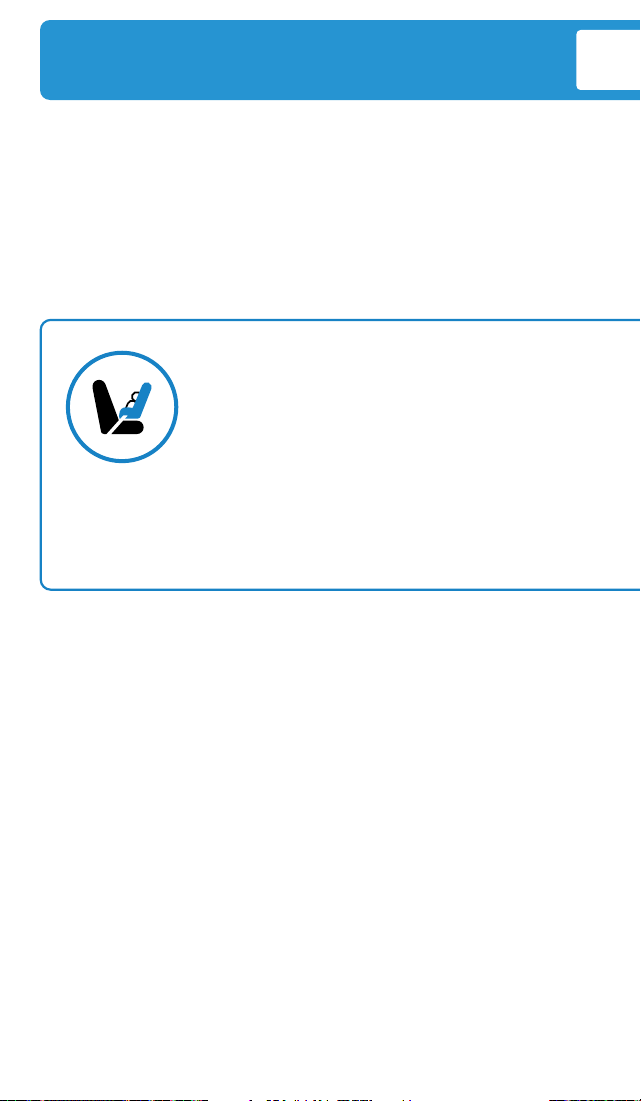
This base and compatible car seat can only be
used Rear-Facing.
Your child’s height, weight, and age determine how the car seat
should be placed in the vehicle.
Children vary widely in body size, shape, and temperament—
please consult your doctor before switching between
any types or modes of a car seat within the limits and fit
requirements of the car seat.
State Laws
Please be certain to follow your state’s laws
regarding car seat use.
American Academy of Pediatrics Recommendations
Infants and Toddlers
Should ride in a rear-facing car seat as long as possible, until
they reach the highest weight or height allowed by their seat.
Toddlers and Preschoolers
Once they are facing forward, children should use a forward-
facing car seat with a harness for as long as possible, until they
reach the height and weight limits for their seats.
School-Aged Children
Once they have outgrown their forward-facing car seat, children
should use a belt-positioning booster seat until the vehicle’s lap
and shoulder seat belt fits properly.
This is often when they have reached at least 4 feet 9 inches in
height and are 8 to 12 years old.
REAR-FACING
You must follow the weight and height
ranges called out in the instruction manual
that came with your compatible car seat.
If your child does not meet the criteria in the car seat
instruction manual, do not use this base or the car seat.
Older Children
All children younger than 13 years should be restrained in the
rear seats of vehicles for optimal protection.
Rear-Facing Use Requirements
2
3
This base and compatible car seat can only be
used Rear-Facing.
Your child’s height, weight, and age determine how the car seat
should be placed in the vehicle.
Children vary widely in body size, shape, and temperament—
please consult your doctor before switching between
any types or modes of a car seat within the limits and fit
requirements of the car seat.
State Laws
Please be certain to follow your state’s laws
regarding car seat use.
American Academy of Pediatrics Recommendations
Infants and Toddlers
Should ride in a rear-facing car seat as long as possible, until
they reach the highest weight or height allowed by their seat.
Toddlers and Preschoolers
Once they are facing forward, children should use a forward-
facing car seat with a harness for as long as possible, until they
reach the height and weight limits for their seats.
School-Aged Children
Once they have outgrown their forward-facing car seat, children
should use a belt-positioning booster seat until the vehicle’s lap
and shoulder seat belt fits properly.
This is often when they have reached at least 4 feet 9 inches in
height and are 8 to 12 years old.
REAR-FACING
You must follow the weight and height
ranges called out in the instruction manual
that came with your compatible car seat.
If your child does not meet the criteria in the car seat
instruction manual, do not use this base or the car seat.
Older Children
All children younger than 13 years should be restrained in the
rear seats of vehicles for optimal protection.
Rear-Facing Use Requirements
2
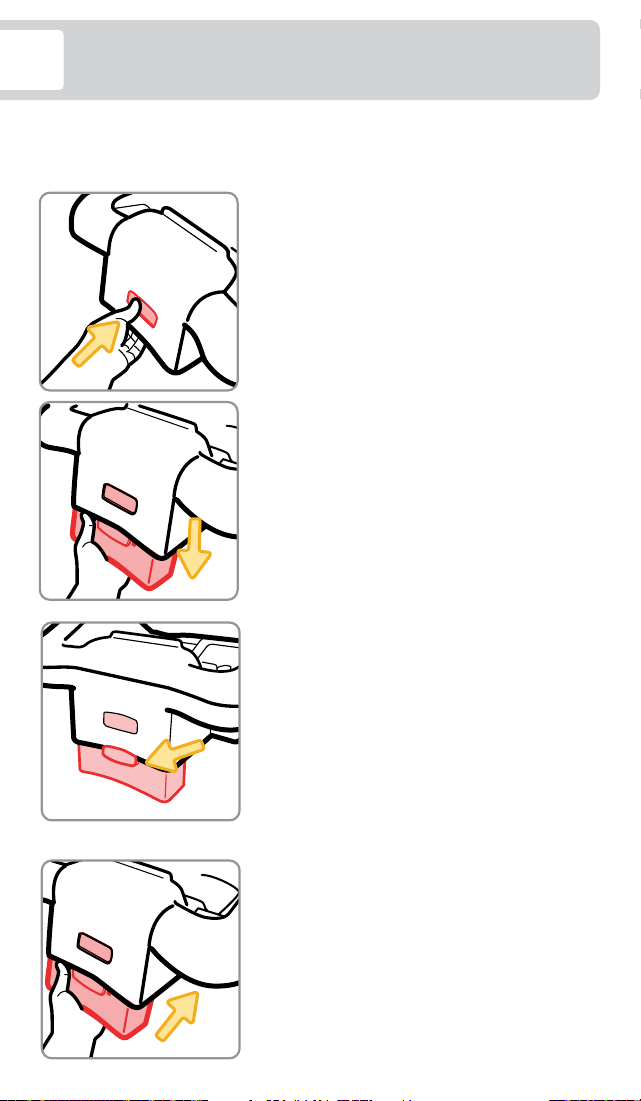
Adjusting Base (On Select Models)
4
To Lower Base Foot
Push in on the foot release button and
pull the foot all the way down.
To Store Base Foot
Pull the foot down and press in on the
release button.
Push the foot up into the base to the
locked position.
Lock the foot on the release button as
shown.
continued on next page
5
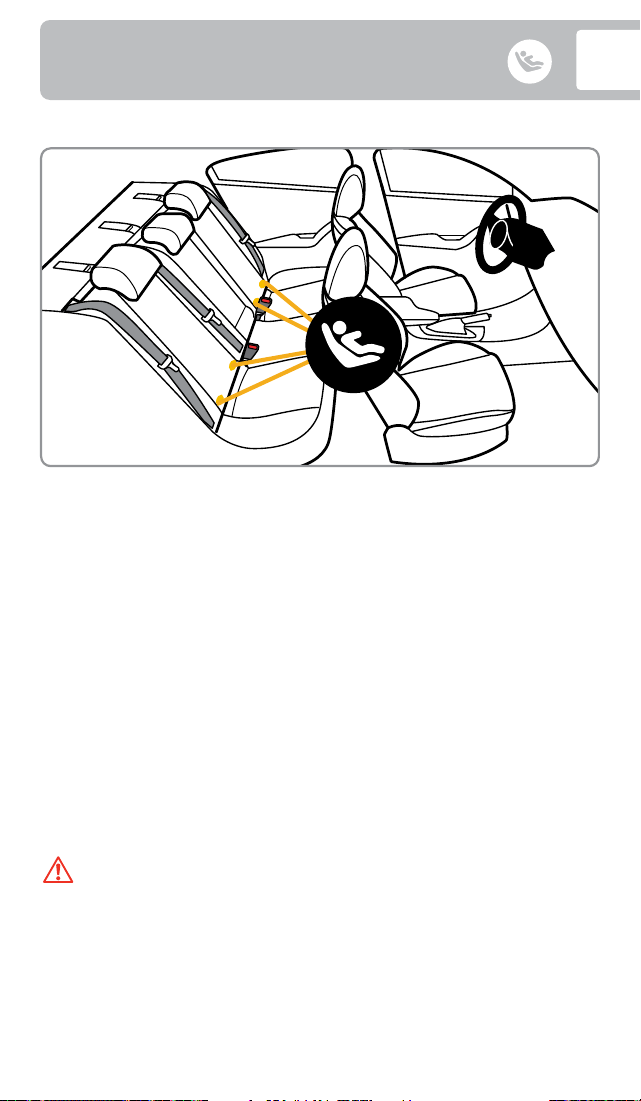
Your vehicle’s features may be considerably different
than those pictured here.
The lower anchors of LATCH (Lower Anchors and Tethers for
CHildren) is a universal system for installing car seats without using
vehicle seat belts.
The LATCH: lower anchor belt can only be used in vehicles that have
the lower anchor bars installed in designated seating positions. Most
vehicles manufactured after September 2002 are equipped with
LATCH: lower anchor bars.
Check your vehicle owner’s manual to see which seating positions
may be equipped with LATCH: lower anchor bars.
Do not use both the lower anchor belt and vehicle belt
at the same time.
LATCH: Lower Anchor Use
Depending on your model, you may have an adjustable base.
Adjusting Base (On Select Models)
4
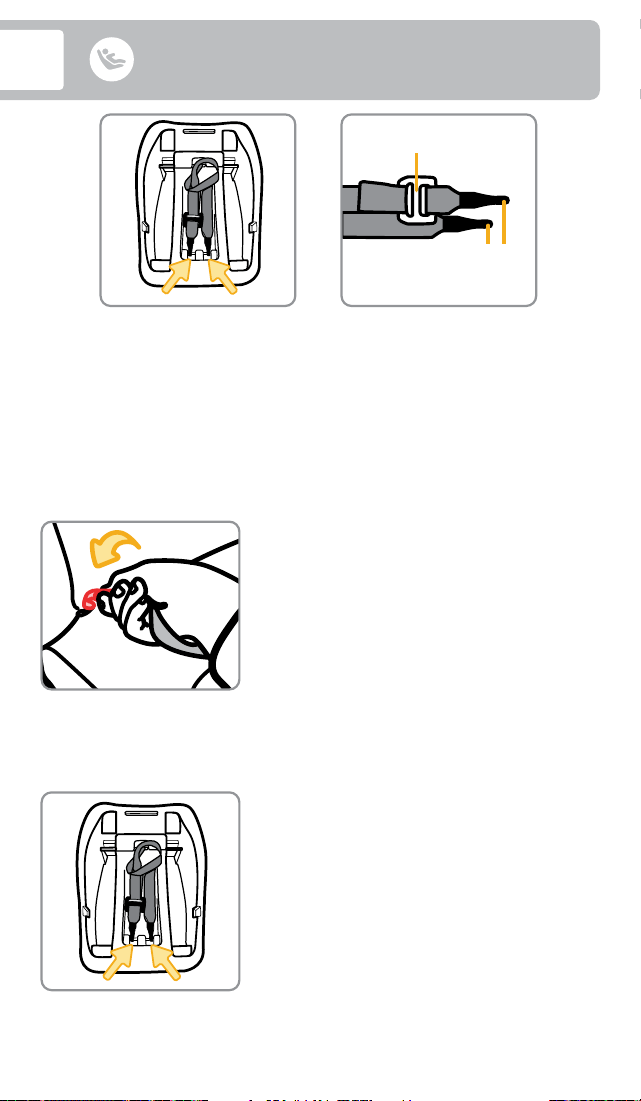
To Lower Base Foot
Push in on the foot release button and
pull the foot all the way down.
To Store Base Foot
Pull the foot down and press in on the
release button.
Push the foot up into the base to the
locked position.
Lock the foot on the release button as
shown.
continued on next page
5
Your vehicle’s features may be considerably different
than those pictured here.
The lower anchors of LATCH (Lower Anchors and Tethers for
CHildren) is a universal system for installing car seats without using
vehicle seat belts.
The LATCH: lower anchor belt can only be used in vehicles that have
the lower anchor bars installed in designated seating positions. Most
vehicles manufactured after September 2002 are equipped with
LATCH: lower anchor bars.
Check your vehicle owner’s manual to see which seating positions
may be equipped with LATCH: lower anchor bars.
Do not use both the lower anchor belt and vehicle belt
at the same time.
LATCH: Lower Anchor Use
Depending on your model, you may have an adjustable base.
76
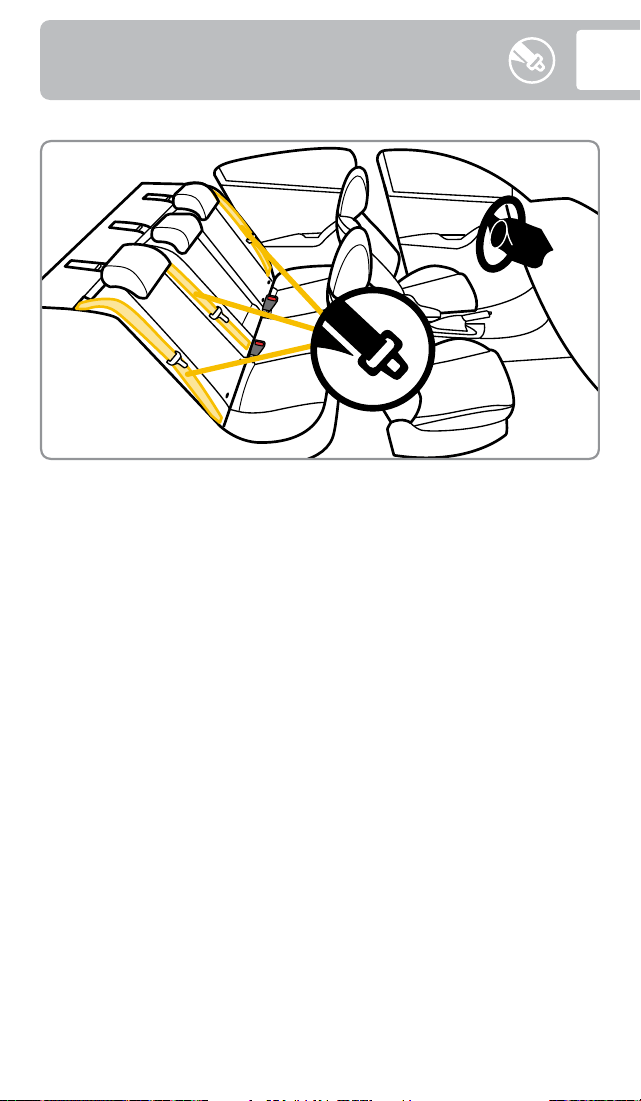
Your vehicle’s features may be considerably different
than those pictured here.
If LATCH: lower anchors are not an option, you must use the vehicle
seat belt system to install the car seat.
Not all vehicle belts and seating positions will work with
car seats.
Please go through the following steps to understand how to
lock a car seat with a vehicle belt.
Vehicle Belts
Lower Anchor
Hooks
Adjuster
Lower Anchor Belt
Storage Attachments
Lower Anchor Belt
Storage Attachments
Lower Anchor
Belt Parts
To Remove Lower Anchor Belt from Storage
Attachment on Base
Squeeze the spring lever on the hooks and remove the hooks from the
storage attachments.
To Store Lower Anchor Belt
When using the vehicle belts to install
or when the base is not installed in a
vehicle, the lower anchor belt must be
properly stored.
Attach the hooks to the storage
attachments in the base.
To Remove Lower Anchor Belt from
Vehicle’s Lower Anchor Bars
Remove the tension from the belt by
pushing down on the side of the base with
the adjuster. Then press the adjuster’s
button to loosen the belt.
Remove the hook from the anchor by squeezing the spring lever on
the hook, pushing the hook back into the seat bight, and rotating the
hook to the side. Then pull the hook out of the vehicle seat bight.
continued on next page
76
Your vehicle’s features may be considerably different
than those pictured here.
If LATCH: lower anchors are not an option, you must use the vehicle
seat belt system to install the car seat.
Not all vehicle belts and seating positions will work with
car seats.
Please go through the following steps to understand how to
lock a car seat with a vehicle belt.
Vehicle Belts
Lower Anchor
Hooks
Adjuster
Lower Anchor Belt
Storage Attachments
Lower Anchor Belt
Storage Attachments
Lower Anchor
Belt Parts
To Remove Lower Anchor Belt from Storage
Attachment on Base
Squeeze the spring lever on the hooks and remove the hooks from the
storage attachments.
To Store Lower Anchor Belt
When using the vehicle belts to install
or when the base is not installed in a
vehicle, the lower anchor belt must be
properly stored.
Attach the hooks to the storage
attachments in the base.
To Remove Lower Anchor Belt from
Vehicle’s Lower Anchor Bars
Remove the tension from the belt by
pushing down on the side of the base with
the adjuster. Then press the adjuster’s
button to loosen the belt.
Remove the hook from the anchor by squeezing the spring lever on
the hook, pushing the hook back into the seat bight, and rotating the
hook to the side. Then pull the hook out of the vehicle seat bight.
continued on next page
continued on next page
98
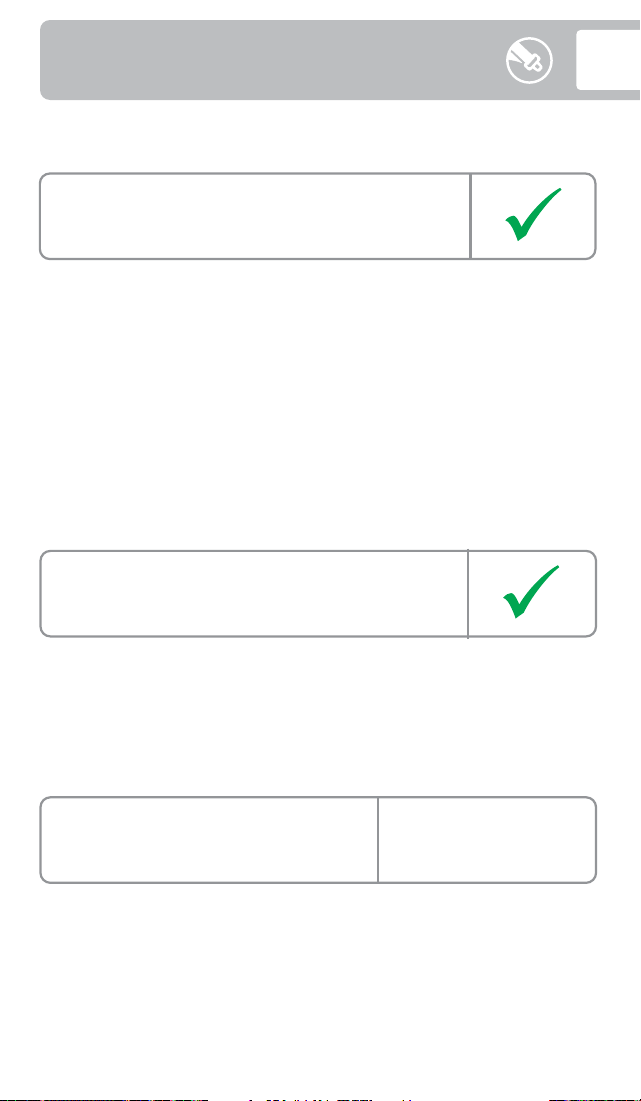
Automatic Locking Retractor
Emergency Locking Retractor
This retractor always locks.
It will automatically lock after slowly pulling the seat belt out at least
halfway and letting the belt go back into the retractor 1-2 in. (2.5-
5 cm).
If the retractor does not lock, it is most likely an Emergency Locking
Retractor. These retractors only lock during a sudden stop or collision.
You will need to determine if your seat belt’s latch plate can lock the
belt. See step 4, “Check Latch Plates”.
See Step 4, “Check
Latch Plates”.
Switchable Retractor
(most vehicles have this type)
This retractor can be switched to a locking mode.
You must have the retractor in the locking mode to use the seat
belt with this car seat.
Switching to locking mode: Slowly pull the shoulder belt all the way
out, then let it go back in 1-2 in. (2.5-5 cm).
As it goes back in, you will most likely hear a ratcheting sound.
Gently pull the belt to see if it has locked. You will not be able to pull
any more belt out if the lock has engaged.
Types of Retractors
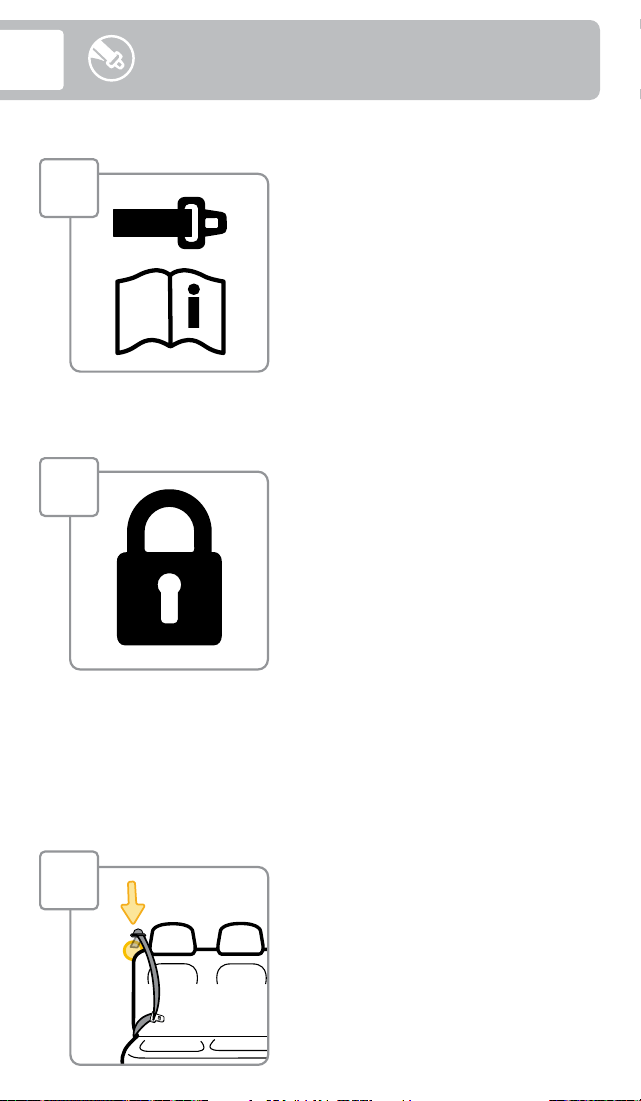
You Must Review Your
Vehicle Owner’s Manual
Your vehicle owner’s manual will let
you know which vehicle belts and
seating positions car seats can be
installed in.
Check How This Car Seat Will
Be Locked Into Place
The vehicle belt must not loosen
after tightening. This means there
needs to be a way to lock the vehicle
belt.
The ways this can be done are:
• By using the seat belt’s retractor,
see step 3; OR
• By using the seat belt’s latch plate,
see step 4.
Check Retractor
Retractors pull seat belts into stored
positions and lock the belt to hold
passengers in place.
See the next page for some common
types of vehicle belt retractors that
will work with this car seat.
1
2
3
continued on next page
98
Automatic Locking Retractor
Emergency Locking Retractor
This retractor always locks.
It will automatically lock after slowly pulling the seat belt out at least
halfway and letting the belt go back into the retractor 1-2 in. (2.5-
5 cm).
If the retractor does not lock, it is most likely an Emergency Locking
Retractor. These retractors only lock during a sudden stop or collision.
You will need to determine if your seat belt’s latch plate can lock the
belt. See step 4, “Check Latch Plates”.
See Step 4, “Check
Latch Plates”.
Switchable Retractor
(most vehicles have this type)
This retractor can be switched to a locking mode.
You must have the retractor in the locking mode to use the seat
belt with this car seat.
Switching to locking mode: Slowly pull the shoulder belt all the way
out, then let it go back in 1-2 in. (2.5-5 cm).
As it goes back in, you will most likely hear a ratcheting sound.
Gently pull the belt to see if it has locked. You will not be able to pull
any more belt out if the lock has engaged.
Types of Retractors
You Must Review Your
Vehicle Owner’s Manual
Your vehicle owner’s manual will let
you know which vehicle belts and
seating positions car seats can be
installed in.
Check How This Car Seat Will
Be Locked Into Place
The vehicle belt must not loosen
after tightening. This means there
needs to be a way to lock the vehicle
belt.
The ways this can be done are:
• By using the seat belt’s retractor,
see step 3; OR
• By using the seat belt’s latch plate,
see step 4.
Check Retractor
Retractors pull seat belts into stored
positions and lock the belt to hold
passengers in place.
See the next page for some common
types of vehicle belt retractors that
will work with this car seat.
1
2
3
10
Rear-Facing Use with Base
11
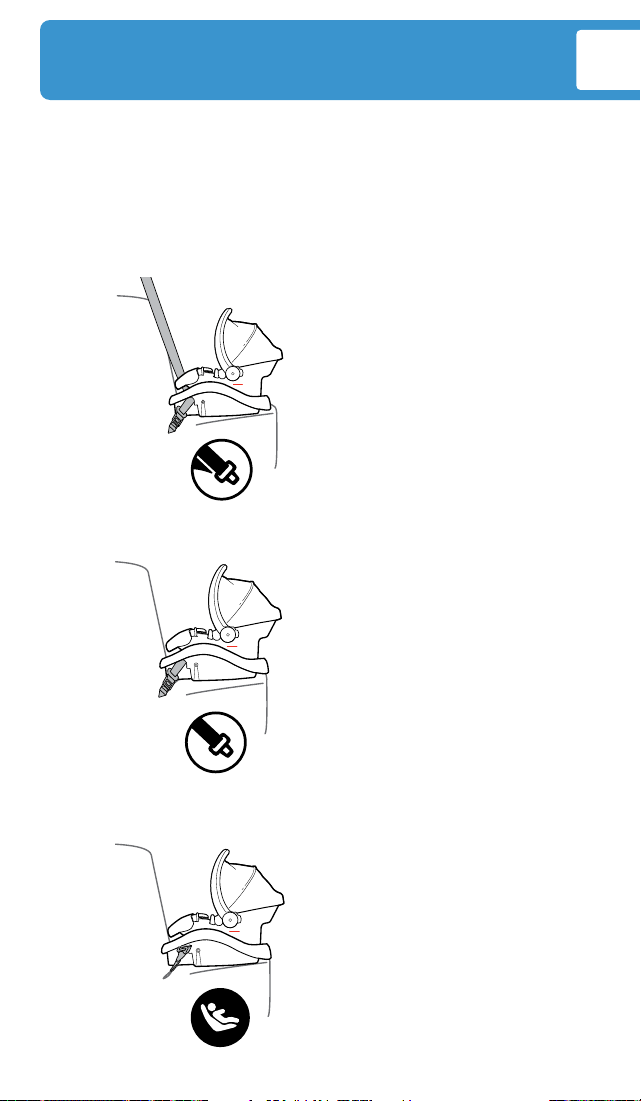
Lap/Shoulder Belt
Lap Belt
LATCH: Lower Anchor Belt
You must follow the weight and height ranges called
out in the instruction manual that came with your
compatible car seat.
Locking Latch Plate
Emergency Locking
Retractor with a
Sliding Latch Plate
Emergency Locking Retractor Lap Only Belt
Inflatable Seat Belts
Never Use With This Car Seat
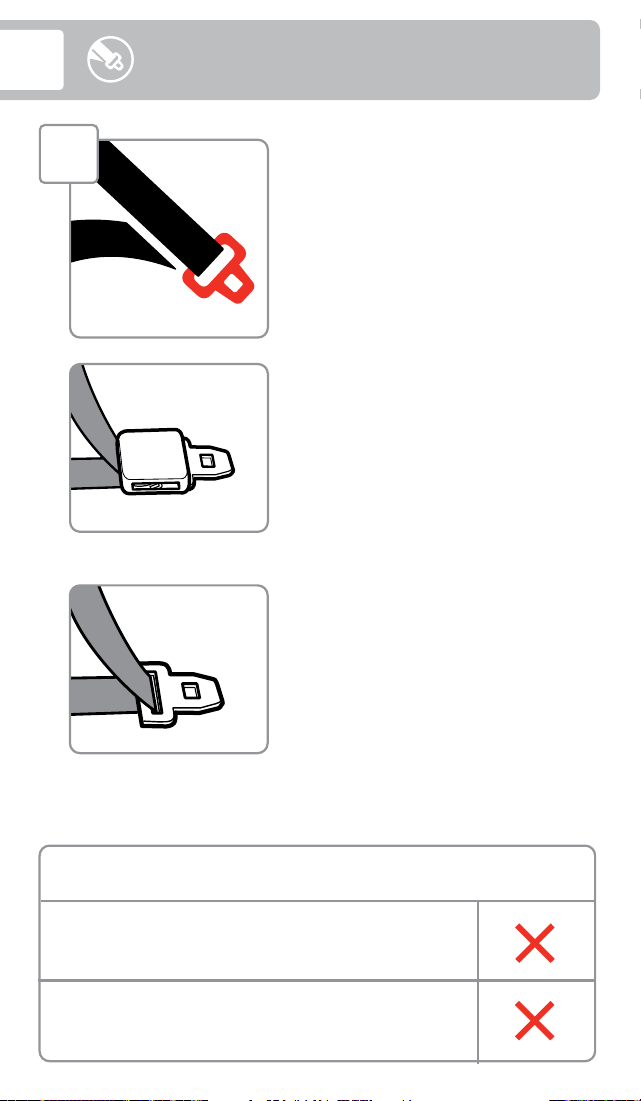
Check Latch Plates
Latch plates are the part of
the seat belt that goes into the
buckle.
To see if the latch plate locks:
1. Buckle Vehicle Belt
2. Firmly Tug Lap Portion of Seat Belt
While Pulling It Up
If the vehicle belt does not slide
through the latch plate, it’s locked.
If the latch plate slides up and down
the vehicle belt, it is a sliding latch
plate.
Sliding latch plates easily slip
between the lap and shoulder
portions of the belt.
If you have an Emergency Locking
Retractor with a Sliding Latch
Plate, you must use a locking clip.
Please contact us for one,
see page 26.
4
continued on next page
10
Rear-Facing Use with Base
11
Lap/Shoulder Belt
Lap Belt
LATCH: Lower Anchor Belt
You must follow the weight and height ranges called
out in the instruction manual that came with your
compatible car seat.
Locking Latch Plate
Emergency Locking
Retractor with a
Sliding Latch Plate
Emergency Locking Retractor Lap Only Belt
Inflatable Seat Belts
Never Use With This Car Seat
Check Latch Plates
Latch plates are the part of
the seat belt that goes into the
buckle.
To see if the latch plate locks:
1. Buckle Vehicle Belt
2. Firmly Tug Lap Portion of Seat Belt
While Pulling It Up
If the vehicle belt does not slide
through the latch plate, it’s locked.
If the latch plate slides up and down
the vehicle belt, it is a sliding latch
plate.
Sliding latch plates easily slip
between the lap and shoulder
portions of the belt.
If you have an Emergency Locking
Retractor with a Sliding Latch
Plate, you must use a locking clip.
Please contact us for one,
see page 26.
4
continued on next page
13
Vehicle Belt Install
12
1
2
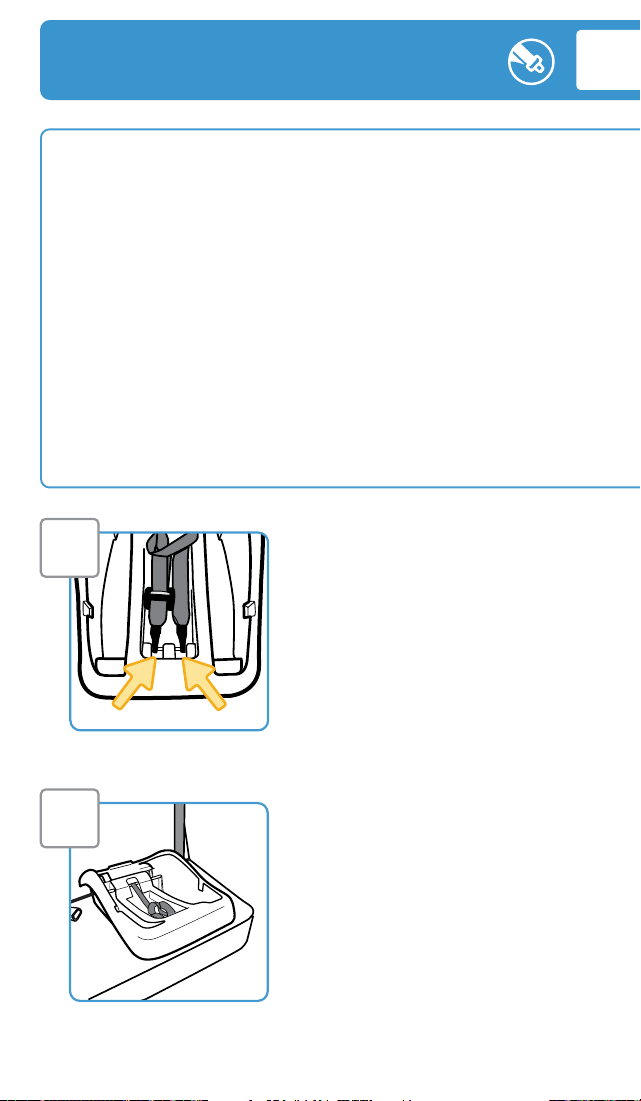
Store Lower Anchor Belt
Place Base Rear-Facing in
Vehicle
Center the base in the chosen
seating position.
Before you begin installing the base
into your vehicle, did you check:
Your child’s weight and height?
Refer to the instruction manual that came with your
compatible car seat
Your child’s fit?
Refer to the instruction manual that came with your
compatible car seat.
Never install a rear-facing child restraint in the
front seat of a vehicle equipped with an active
frontal airbag.
Do not use the lower anchor belt along with the vehicle lap
or lap/shoulder belt.
Check the vehicle belt or the lower anchor belt before each
use. Use only if the belt can be tightened properly and
locked securely in place.
Do not fasten multiple lower anchor hooks on the same
lower anchor bar in the vehicle.
The child restraint must be securely attached to the base.
Even when unoccupied, this child restraint must be firmly
secured to the vehicle with a lower anchor belt or with the
vehicle seat belt.
This child restraint must always face the rear of the
vehicle.
continued on next page
13
Vehicle Belt Install
12
1
2
Store Lower Anchor Belt
Place Base Rear-Facing in
Vehicle
Center the base in the chosen
seating position.
Before you begin installing the base
into your vehicle, did you check:
Your child’s weight and height?
Refer to the instruction manual that came with your
compatible car seat
Your child’s fit?
Refer to the instruction manual that came with your
compatible car seat.
Never install a rear-facing child restraint in the
front seat of a vehicle equipped with an active
frontal airbag.
Do not use the lower anchor belt along with the vehicle lap
or lap/shoulder belt.
Check the vehicle belt or the lower anchor belt before each
use. Use only if the belt can be tightened properly and
locked securely in place.
Do not fasten multiple lower anchor hooks on the same
lower anchor bar in the vehicle.
The child restraint must be securely attached to the base.
Even when unoccupied, this child restraint must be firmly
secured to the vehicle with a lower anchor belt or with the
vehicle seat belt.
This child restraint must always face the rear of the
vehicle.
continued on next page
1514
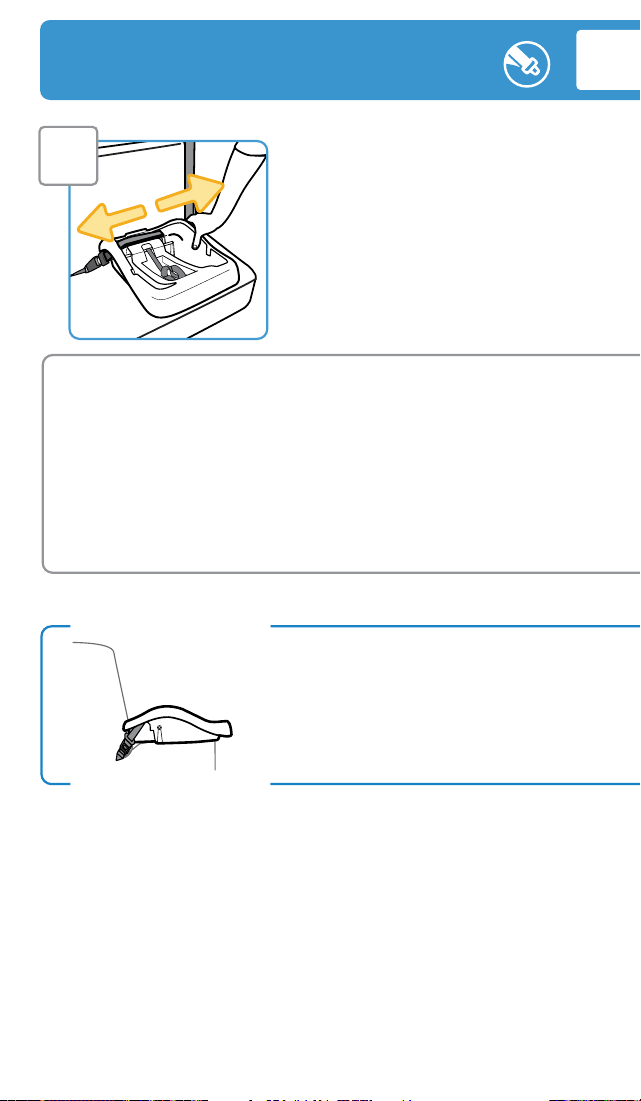
Check Belt Tightness
Hold the base at the Rear-Facing
Belt Path with your weaker hand.
Push and pull the base from side to
side. It should not move more than
1 in. (2.5 cm).
If it moves more than 1 in. (2.5 cm), you can try:
• Pulling the belt tighter; OR
• Reinstalling the base; OR
• Changing to a different seating location; OR
• Switching to LATCH: lower anchor belt installation if lower
anchors are available in your vehicle
7
Finished!
Check the tightness of the
install often to make sure it
has not loosened.
3
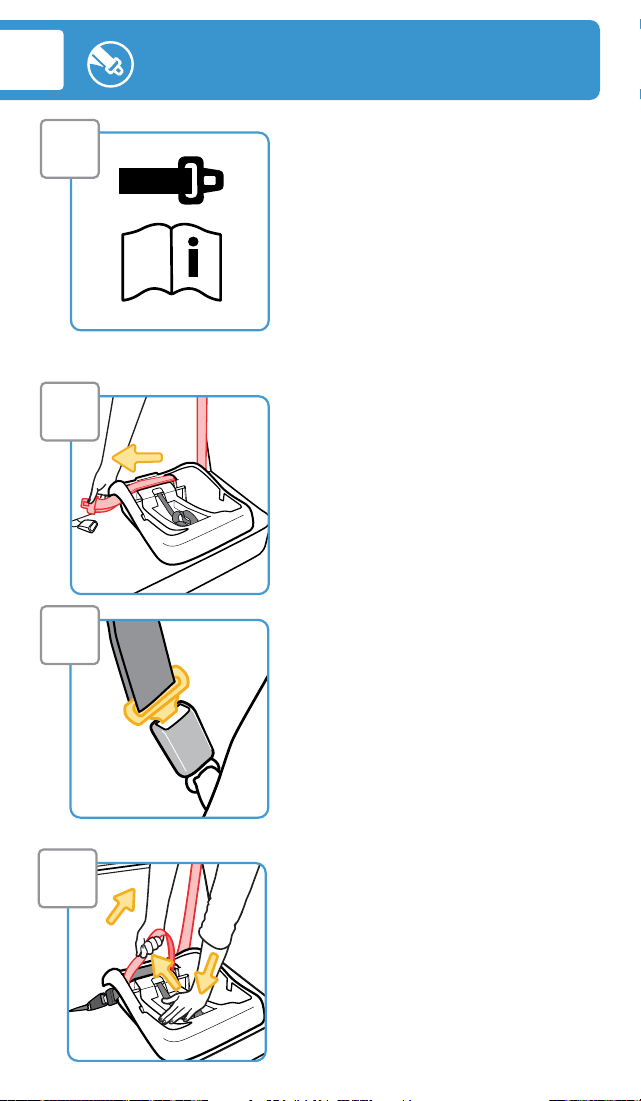
Check if Your Vehicle Belts Will
Work With This Car Seat
This is very important because not
all vehicle belts will work with car
seats.
Review pages 7-10 and your
vehicle owner’s manual to find out
what kind of vehicle belts you have
and how to lock a car seat in place.
Route Vehicle Lap or Lap/
Shoulder Belt Through Base
Belt Path
4
Buckle Vehicle Belt
If your car’s vehicle belt has a
switchable retractor, use it to lock the
vehicle belt.
For information about switchable
retractors, see page 9 or review your
vehicle owner’s manual.
5
Tighten Belt
Place your hand in the base. Firmly
push the base down and back
towards the vehicle seat back while
pulling the shoulder belt or the free
end of the lap belt to tighten.
6
1514
Check Belt Tightness
Hold the base at the Rear-Facing
Belt Path with your weaker hand.
Push and pull the base from side to
side. It should not move more than
1 in. (2.5 cm).
If it moves more than 1 in. (2.5 cm), you can try:
• Pulling the belt tighter; OR
• Reinstalling the base; OR
• Changing to a different seating location; OR
• Switching to LATCH: lower anchor belt installation if lower
anchors are available in your vehicle
7
Finished!
Check the tightness of the
install often to make sure it
has not loosened.
3
Check if Your Vehicle Belts Will
Work With This Car Seat
This is very important because not
all vehicle belts will work with car
seats.
Review pages 7-10 and your
vehicle owner’s manual to find out
what kind of vehicle belts you have
and how to lock a car seat in place.
Route Vehicle Lap or Lap/
Shoulder Belt Through Base
Belt Path
4
Buckle Vehicle Belt
If your car’s vehicle belt has a
switchable retractor, use it to lock the
vehicle belt.
For information about switchable
retractors, see page 9 or review your
vehicle owner’s manual.
5
Tighten Belt
Place your hand in the base. Firmly
push the base down and back
towards the vehicle seat back while
pulling the shoulder belt or the free
end of the lap belt to tighten.
6
continued on next page
LATCH: Lower Anchor Install
1716
Before you begin installing the base
into your vehicle, did you check:
Your child’s weight and height?
Refer to the instruction manual that came with your
compatible car seat
Your child’s fit?
Refer to the instruction manual that came with your
compatible car seat.
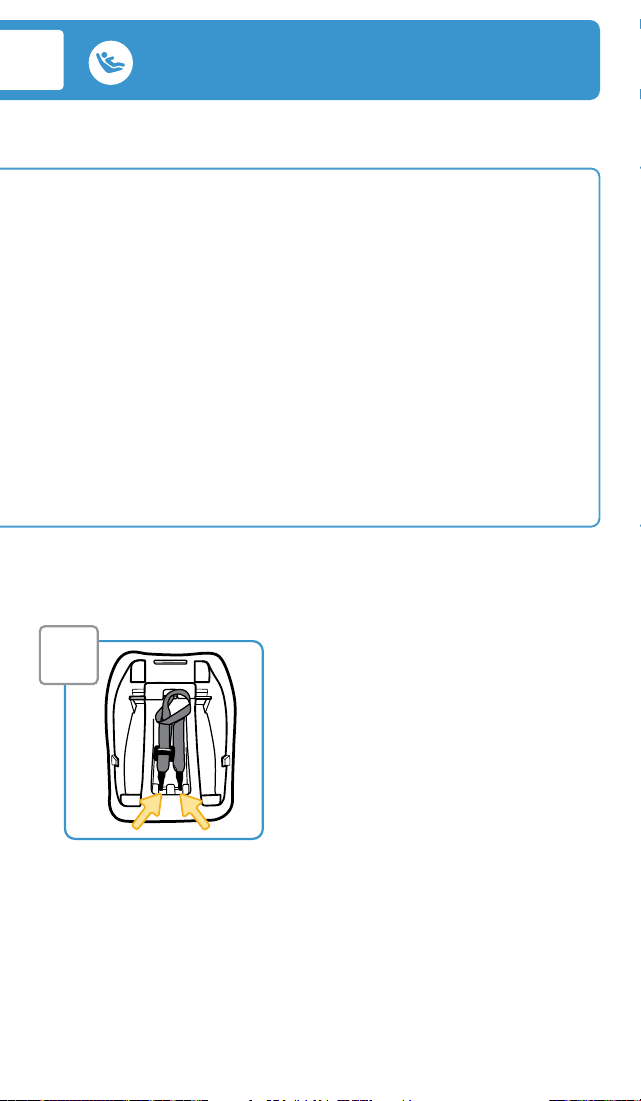
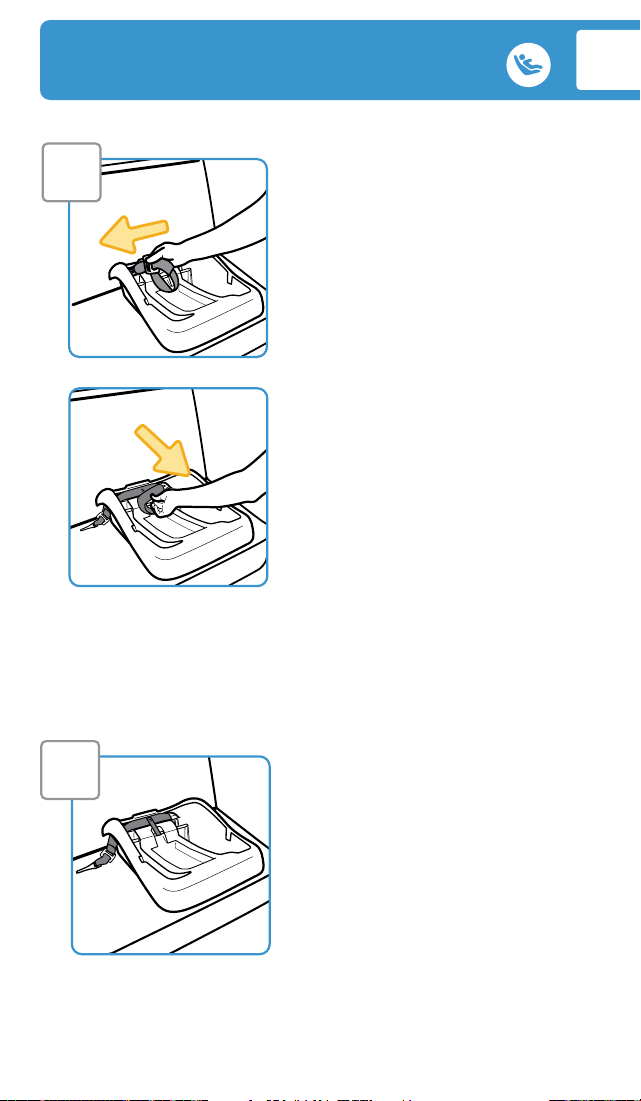
Remove Lower Anchor Belt
from Storage Attachments
1
Place Base Rear-Facing
in Back Seat
Center the base between the
vehicle’s lower anchors in the chosen
seating position.
Route Lower Anchor Belt
Through Base Belt Path
The adjuster can be on either side of
the car seat.
Do not twist belt.
2
3
LATCH: Lower Anchor Belt Install
continued on next page
LATCH: Lower Anchor Install
1716
Before you begin installing the base
into your vehicle, did you check:
Your child’s weight and height?
Refer to the instruction manual that came with your
compatible car seat
Your child’s fit?
Refer to the instruction manual that came with your
compatible car seat.
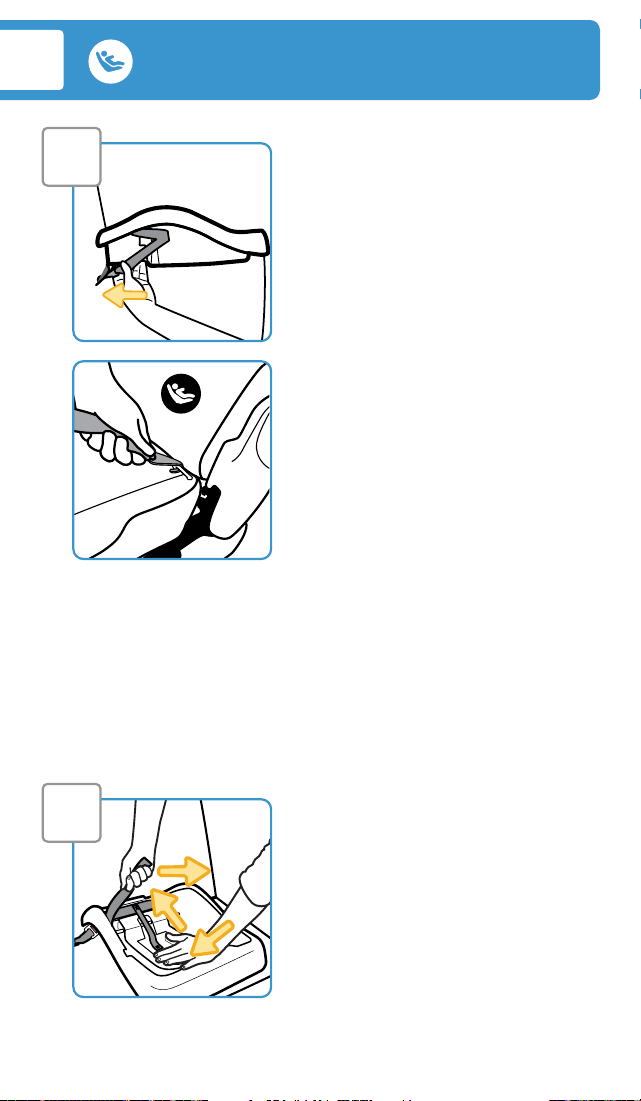
Remove Lower Anchor Belt
from Storage Attachments
1
Place Base Rear-Facing
in Back Seat
Center the base between the
vehicle’s lower anchors in the chosen
seating position.
Route Lower Anchor Belt
Through Base Belt Path
The adjuster can be on either side of
the car seat.
Do not twist belt.
2
3
LATCH: Lower Anchor Belt Install
1918
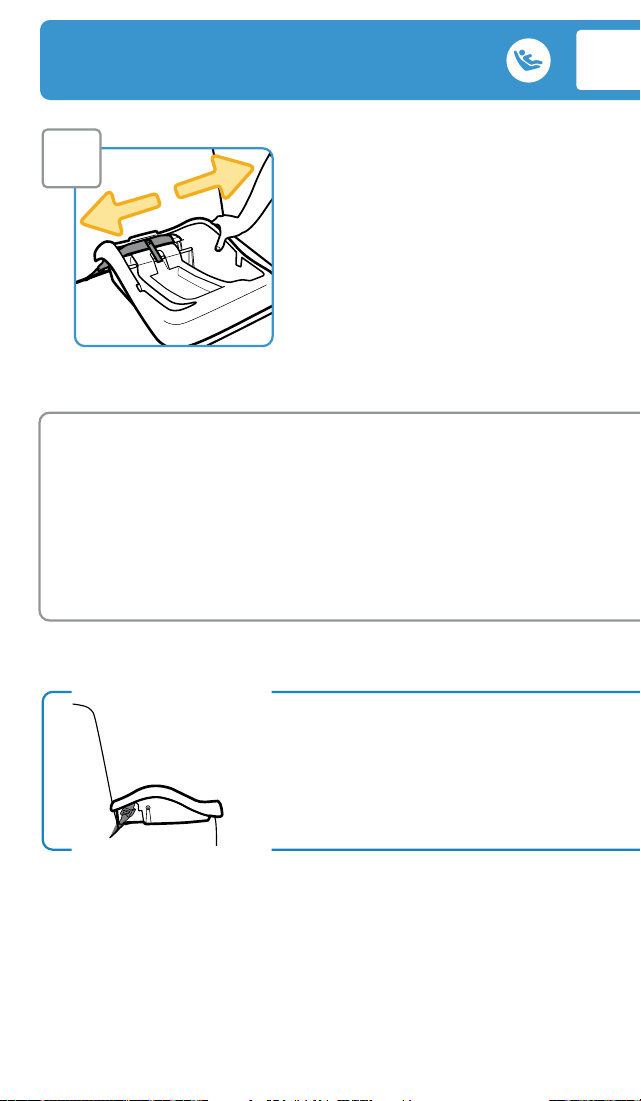
Check Belt Tightness
Hold the base at the Rear-Facing
Belt Path with your weaker hand.
Push and pull the base from side to
side. It should not move more than
1 in. (2.5 cm).
6
If it moves more than 1 in. (2.5 cm), you can try:
• Pulling the belt tighter; OR
• Reinstalling the base; OR
• Changing to a different seating location; OR
• Switching to vehicle belt installation
Finished!
Check the tightness of the
install often to make sure it
has not loosened.
Attach Lower Anchor
Hooks to Vehicle’s Lower
Anchors in Seat Bight
Review your vehicle owner’s manual
for LATCH: lower anchor locations
and lower anchor belt use.
Fasten one hook to one vehicle lower
anchor bar.
Then repeat for the second hook on
the other side of the base.
Tighten Belt
Place your hand in the base.
Firmly push the base down and back
towards the vehicle seat back while
pulling the free end of the belt
parallel with the Rear-Facing Belt
Path.
4
5
1
2
1918
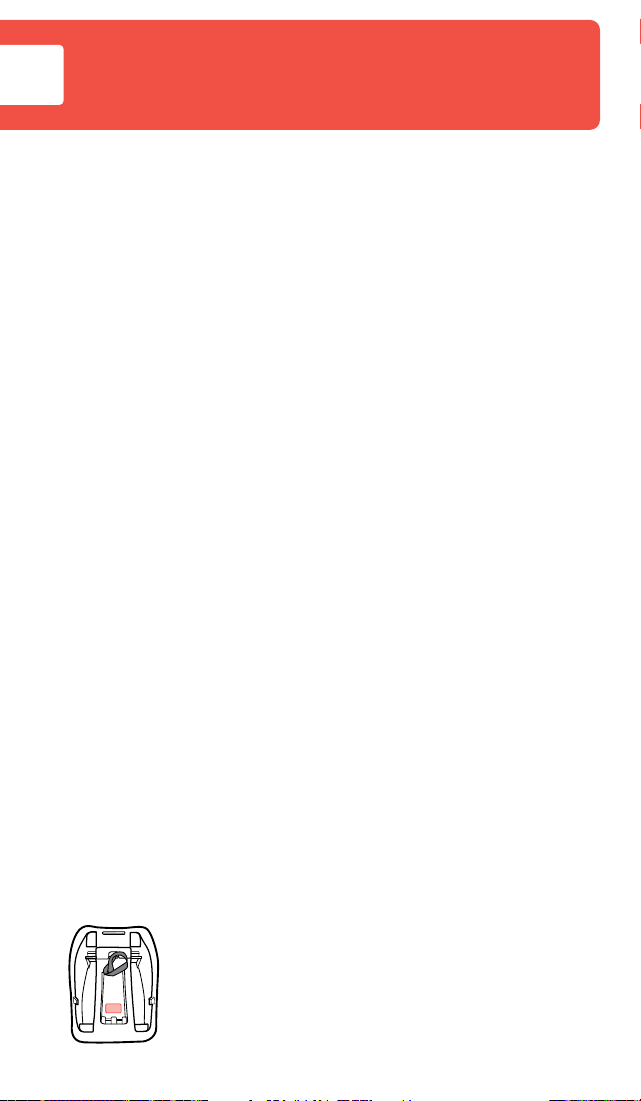
Check Belt Tightness
Hold the base at the Rear-Facing
Belt Path with your weaker hand.
Push and pull the base from side to
side. It should not move more than
1 in. (2.5 cm).
6
If it moves more than 1 in. (2.5 cm), you can try:
• Pulling the belt tighter; OR
• Reinstalling the base; OR
• Changing to a different seating location; OR
• Switching to vehicle belt installation
Finished!
Check the tightness of the
install often to make sure it
has not loosened.
Attach Lower Anchor
Hooks to Vehicle’s Lower
Anchors in Seat Bight
Review your vehicle owner’s manual
for LATCH: lower anchor locations
and lower anchor belt use.
Fasten one hook to one vehicle lower
anchor bar.
Then repeat for the second hook on
the other side of the base.
Tighten Belt
Place your hand in the base.
Firmly push the base down and back
towards the vehicle seat back while
pulling the free end of the belt
parallel with the Rear-Facing Belt
Path.
4
5
1
2
21
Replacement and Expiration
of Car Seat
20
Child Restraint Use
Never take your child out of the child restraint while the vehicle
is moving.
Never leave your child unattended. Placing your child in a hot
child restraint may result in burns.
Do not use a child restraint with damaged or missing parts.
Do not use a child restraint with cut, frayed or damaged
harnesses.
Do not substitute parts or try to modify the child restraint in any
way. Do not lubricate buckles and fasteners.
Do not use any child restraint accessory except those
approved by Dorel Juvenile Group.
Never allow any child to play with this child restraint;
it is not a toy.
Do not remove or cover up any of the warning labels or other
labels on the child restraint.
This child restraint has been certified for use in passenger
vehicles. Do not use in a boat, on a motorcycle or in a cargo van
or bus where there are no seat belts.
Read all instructions for additional warnings.
Installation in Vehicle
Check the vehicle belt or lower anchor belt before each use. Use
only if the belt can be tightened properly and locked securely in
place.
Even when unoccupied, this child restraint must be firmly
secured to the vehicle with a lower anchor belt or with the
vehicle seat belt. In a crash or sudden stop, an unsecured child
restraint could injure occupants.
Do not risk your child’s safety.
To keep your child as safe as possible, Dorel Juvenile Group strongly
recommends replacing the car seat even after a minor crash;
even if it was not occupied at the time.
Replacement After a Minor Crash
The National Highway Traffic Safety Administration states that for a
crash to be considered minor ALL of the following must be true:
• Vehicle able to drive away from the crash site; AND
• Vehicle door nearest the car seat was not damaged; AND
• No passengers were injured; AND
• Airbags did not deploy; AND
• There is no visible damage to the car seat.
If the crash your car seat was involved in meets ALL the criteria,
you may not need to replace the car seat.
If one or more of these criteria are not true or if you are uncertain
of any of your answers, replace the car seat immediately.
Replacement After a Moderate to Severe Crash
You must replace this car seat if it has been in a
moderate to severe car crash.
This car seat is intended to protect a child in a single crash.
During a crash, the car seat and all of its parts absorb crash energy
which can deform or weaken it. Damage is not always visible.
A damaged car seat must be replaced immediately.
Expiration
Do not use this base more than 8 years after the
date of manufacture.
You will find the manufacture date on the label
located on the top of the base.
21
Replacement and Expiration
of Car Seat
20
Child Restraint Use
Never take your child out of the child restraint while the vehicle
is moving.
Never leave your child unattended. Placing your child in a hot
child restraint may result in burns.
Do not use a child restraint with damaged or missing parts.
Do not use a child restraint with cut, frayed or damaged
harnesses.
Do not substitute parts or try to modify the child restraint in any
way. Do not lubricate buckles and fasteners.
Do not use any child restraint accessory except those
approved by Dorel Juvenile Group.
Never allow any child to play with this child restraint;
it is not a toy.
Do not remove or cover up any of the warning labels or other
labels on the child restraint.
This child restraint has been certified for use in passenger
vehicles. Do not use in a boat, on a motorcycle or in a cargo van
or bus where there are no seat belts.
Read all instructions for additional warnings.
Installation in Vehicle
Check the vehicle belt or lower anchor belt before each use. Use
only if the belt can be tightened properly and locked securely in
place.
Even when unoccupied, this child restraint must be firmly
secured to the vehicle with a lower anchor belt or with the
vehicle seat belt. In a crash or sudden stop, an unsecured child
restraint could injure occupants.
Do not risk your child’s safety.
To keep your child as safe as possible, Dorel Juvenile Group strongly
recommends replacing the car seat even after a minor crash;
even if it was not occupied at the time.
Replacement After a Minor Crash
The National Highway Traffic Safety Administration states that for a
crash to be considered minor ALL of the following must be true:
• Vehicle able to drive away from the crash site; AND
• Vehicle door nearest the car seat was not damaged; AND
• No passengers were injured; AND
• Airbags did not deploy; AND
• There is no visible damage to the car seat.
If the crash your car seat was involved in meets ALL the criteria,
you may not need to replace the car seat.
If one or more of these criteria are not true or if you are uncertain
of any of your answers, replace the car seat immediately.
Replacement After a Moderate to Severe Crash
You must replace this car seat if it has been in a
moderate to severe car crash.
This car seat is intended to protect a child in a single crash.
During a crash, the car seat and all of its parts absorb crash energy
which can deform or weaken it. Damage is not always visible.
A damaged car seat must be replaced immediately.
Expiration
Do not use this base more than 8 years after the
date of manufacture.
You will find the manufacture date on the label
located on the top of the base.
22
Registration and Safety Notices
23
Please complete the postage-paid registration card that came with
your child restraint, and send it to us. Child restraints could be recalled
for safety reasons. You must register this restraint to be reached in a
recall. Send your name, address, e-mail address if available and the
restraint’s model number and manufacturing date to:
Dorel Juvenile Group
2525 State Street
Columbus, IN 47201
or call 1-800-544-1108 or register online at
www.djgusa.com/registration/carseat/us.
For recall information, call the U.S. Government’s Vehicle
Safety Hotline at 1-888-327-4236 (TTY: 1-800-424-9153),
or go to www.NHTSA.gov.
If you don’t have the card or if your address
changes, you will find the model number,
manufacture date, and line code on the label
located on the top of the base.
Example of model number, line code, and manufacture date.
Vehicle Seating Position
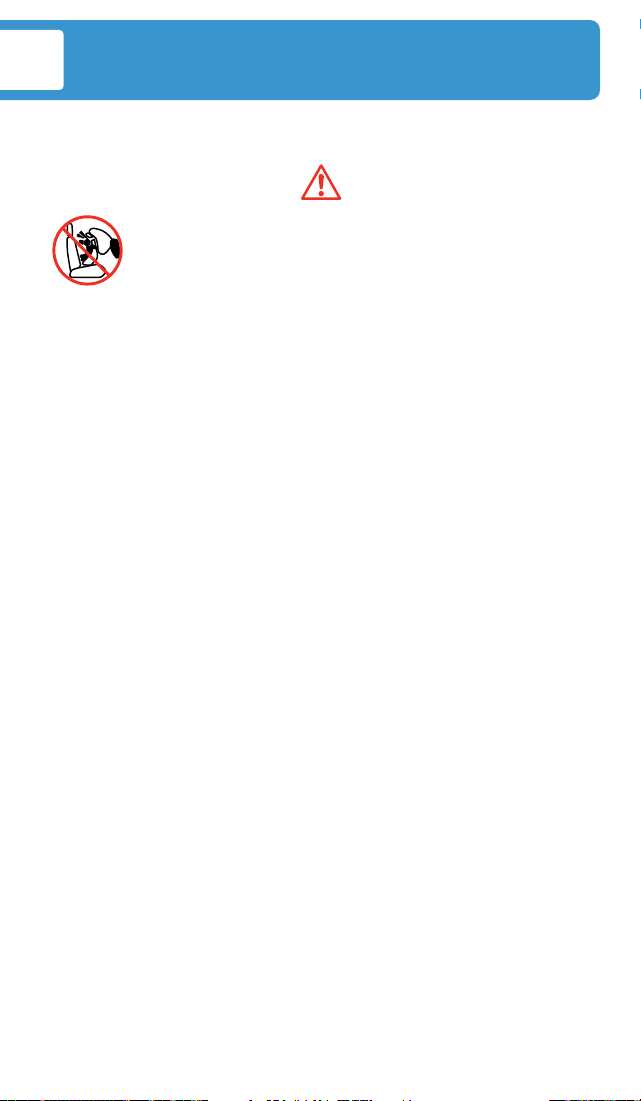
Never place a child rear-facing in a seating
position with an active frontal air bag.
Check the vehicle owner’s manual for more
information about air bag/child restraint use.
Use the child restraint only on vehicle seats that
face forward.
Do not use on seats that face the sides or rear of
the vehicle.
For vehicles without a back seat, refer to your vehicle owner’s
manual.
Children are safer when properly restrained
in rear seating positions than in the front
seating positions.
According to accident statistics, children in rear seating
positions are statistically safer, whether you have air bags,
advanced air bags, or no air bags at all.
If you are not sure where to place the car seat in your
vehicle: consult your vehicle owner’s manual, contact Dorel
Juvenile Group Consumer Care Department or visit your local Child
Passenger Inspection Station.
Go to http://www.safercar.gov/cpsApp/cps/index.htm to find your
closest station.
To avoid your child being seriously burned, take the following
precautions:
• Park in the shade or where sun does not directly hit the car seat.
• Cover the car seat with a sheet or blanket when not in use.
• Check for hot seat and buckles before placing child in car seat.
To help protect your vehicle seat’s upholstery from damage, use a
single layer towel underneath and behind car seat.
22
Registration and Safety Notices
23
Please complete the postage-paid registration card that came with
your child restraint, and send it to us. Child restraints could be recalled
for safety reasons. You must register this restraint to be reached in a
recall. Send your name, address, e-mail address if available and the
restraint’s model number and manufacturing date to:
Dorel Juvenile Group
2525 State Street
Columbus, IN 47201
or call 1-800-544-1108 or register online at
www.djgusa.com/registration/carseat/us.
For recall information, call the U.S. Government’s Vehicle
Safety Hotline at 1-888-327-4236 (TTY: 1-800-424-9153),
or go to www.NHTSA.gov.
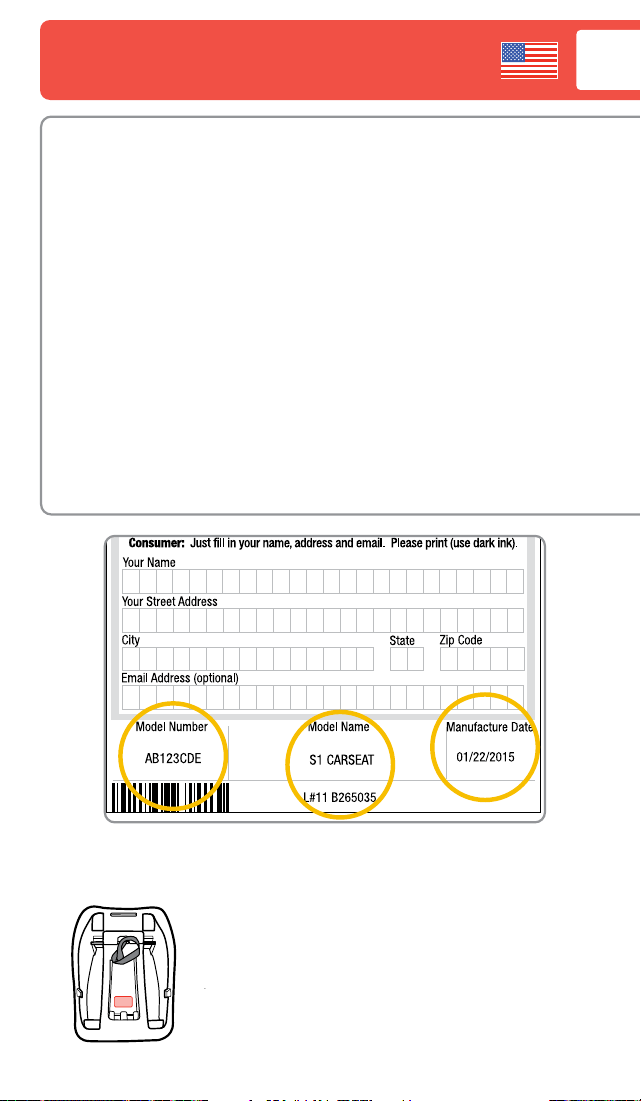
If you don’t have the card or if your address
changes, you will find the model number,
manufacture date, and line code on the label
located on the top of the base.
Example of model number, line code, and manufacture date.
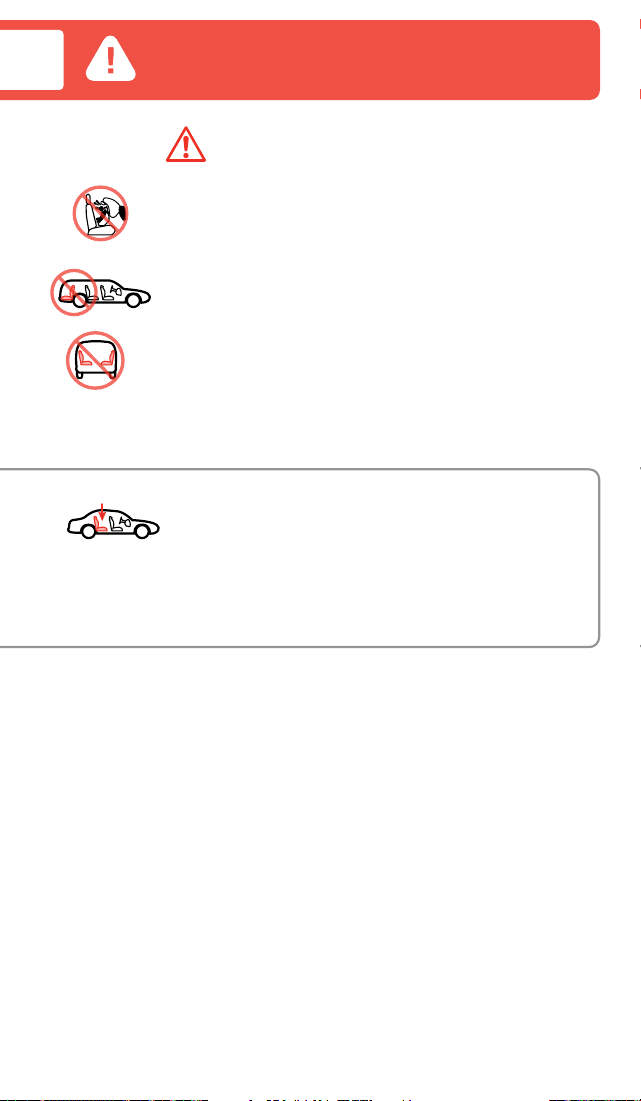
Vehicle Seating Position
Never place a child rear-facing in a seating
position with an active frontal air bag.
Check the vehicle owner’s manual for more
information about air bag/child restraint use.
Use the child restraint only on vehicle seats that
face forward.
Do not use on seats that face the sides or rear of
the vehicle.
For vehicles without a back seat, refer to your vehicle owner’s
manual.
Children are safer when properly restrained
in rear seating positions than in the front
seating positions.
According to accident statistics, children in rear seating
positions are statistically safer, whether you have air bags,
advanced air bags, or no air bags at all.
If you are not sure where to place the car seat in your
vehicle: consult your vehicle owner’s manual, contact Dorel
Juvenile Group Consumer Care Department or visit your local Child
Passenger Inspection Station.
Go to http://www.safercar.gov/cpsApp/cps/index.htm to find your
closest station.
To avoid your child being seriously burned, take the following
precautions:
• Park in the shade or where sun does not directly hit the car seat.
• Cover the car seat with a sheet or blanket when not in use.
• Check for hot seat and buckles before placing child in car seat.
To help protect your vehicle seat’s upholstery from damage, use a
single layer towel underneath and behind car seat.

25
Warranty
24
Dorel Juvenile Group, Inc. (DJG) warrants this product to
the original retail purchaser as follows: This product is
warranted against defective materials or workmanship for
one year from the date of original purchase.
An original receipt is required to validate your
warranty.
DJG will, at its option, provide replacement parts or replace
this product. DJG reserves the right to substitute if the part
or model has been discontinued.
To make a claim under this warranty, please contact our
Consumer Care Department by phone: 1-800-544-1108
or text: 1-812-652-2525. Our hours of operation are from
8:00 a.m. to 6:00 p.m. EST Monday through Thursday and
from 8:00 a.m. to 4:30 p.m. on Friday.
Proof of purchase is required and shipping charges
are the responsibility of the consumer.
Warranty Limitations:
This warranty does not include
damages which arise from misuse or abuse of this product.
Limitation of Damages:
The warranty and remedies
as set forth are exclusive and in lieu of all others, oral or
written, expressed or implied. In no event will DJG or the
dealer selling this product be liable to you for any damages,
including incidental or consequential damages, arising out
of the use or inability to use this product.
Limitation of warranties and other warranty terms
and state law rights:
Any implied warranties, including
implied warranties of the merchantability and fitness for
a particular purpose, shall be limited to the duration and
terms of the express written warranty.
Some states do not allow limitations as to how long
an implied warranty lasts or the exclusion or limitation
of incidental or consequential damages, so the above
limitations may not apply to you.
This warranty gives you specific legal rights, and you may
have other rights, which vary from state to state. Neither
DJG nor the dealer selling this product authorized any
person to create for it any other warranty, obligation, or
liability in connection with this product.

25
Warranty
24
Dorel Juvenile Group, Inc. (DJG) warrants this product to
the original retail purchaser as follows: This product is
warranted against defective materials or workmanship for
one year from the date of original purchase.
An original receipt is required to validate your
warranty.
DJG will, at its option, provide replacement parts or replace
this product. DJG reserves the right to substitute if the part
or model has been discontinued.
To make a claim under this warranty, please contact our
Consumer Care Department by phone: 1-800-544-1108
or text: 1-812-652-2525. Our hours of operation are from
8:00 a.m. to 6:00 p.m. EST Monday through Thursday and
from 8:00 a.m. to 4:30 p.m. on Friday.
Proof of purchase is required and shipping charges
are the responsibility of the consumer.
Warranty Limitations:
This warranty does not include
damages which arise from misuse or abuse of this product.
Limitation of Damages:
The warranty and remedies
as set forth are exclusive and in lieu of all others, oral or
written, expressed or implied. In no event will DJG or the
dealer selling this product be liable to you for any damages,
including incidental or consequential damages, arising out
of the use or inability to use this product.
Limitation of warranties and other warranty terms
and state law rights:
Any implied warranties, including
implied warranties of the merchantability and fitness for
a particular purpose, shall be limited to the duration and
terms of the express written warranty.
Some states do not allow limitations as to how long
an implied warranty lasts or the exclusion or limitation
of incidental or consequential damages, so the above
limitations may not apply to you.
This warranty gives you specific legal rights, and you may
have other rights, which vary from state to state. Neither
DJG nor the dealer selling this product authorized any
person to create for it any other warranty, obligation, or
liability in connection with this product.

Dorel Juvenile Group Information
27
Replacement Parts List
26
Thank you for choosing this car seat, also known as a child
restraint. The DJG family is committed to creating car seats
with the most comfort and convenience available today.
Remember, parents are a child’s first teachers and
examples. If you always buckle your seat belt, your child
will think it is the natural thing to do. Make it a firm rule
that the vehicle does not go until everyone is buckled up.
Make no exceptions.
No one can predict if use of a car seat will prevent injury or
death in a particular crash. However, when combined with
careful driving, proper use of a car seat can lower a child’s
risk of injury or death in most crashes.
If you have questions or any concerns with this car seat,
please contact our Consumer Care Department:
Call: 1-800-544-1108
Text:
1-812-652-2525
Website: www.
safety1st.com
Hours of Operation:
M-TH: 8:00 AM - 6:00 PM EST
FRI: 8:00 AM - 4:30 PM EST
Instructions
If requested color is not available,
similar color will be substituted.
Applicable tax and shipping &
handling will also be added.
For parts availability and questions,
Call: 1-800-544-1108
Text:
1-812-652-2525
Chat: www.safety1st.com
If you already know which parts you need,
you may complete your order with a credit card
by calling us at 1-800-544-1108.
We accept Visa or MasterCard.
Hours of Operation:
M-TH: 8:00 AM - 6:00 PM EST
FRI: 8:00 AM - 4:30 PM EST
Dorel Juvenile Group Information
27
Replacement Parts List
26
Thank you for choosing this car seat, also known as a child
restraint. The DJG family is committed to creating car seats
with the most comfort and convenience available today.
Remember, parents are a child’s first teachers and
examples. If you always buckle your seat belt, your child
will think it is the natural thing to do. Make it a firm rule
that the vehicle does not go until everyone is buckled up.
Make no exceptions.
No one can predict if use of a car seat will prevent injury or
death in a particular crash. However, when combined with
careful driving, proper use of a car seat can lower a child’s
risk of injury or death in most crashes.
If you have questions or any concerns with this car seat,
please contact our Consumer Care Department:
Call: 1-800-544-1108
Text:
1-812-652-2525
Website: www.
safety1st.com
Hours of Operation:
M-TH: 8:00 AM - 6:00 PM EST
FRI: 8:00 AM - 4:30 PM EST
Instructions
If requested color is not available,
similar color will be substituted.
Applicable tax and shipping &
handling will also be added.
For parts availability and questions,
Call: 1-800-544-1108
Text:
1-812-652-2525
Chat: www.safety1st.com
If you already know which parts you need,
you may complete your order with a credit card
by calling us at 1-800-544-1108.
We accept Visa or MasterCard.
Hours of Operation:
M-TH: 8:00 AM - 6:00 PM EST
FRI: 8:00 AM - 4:30 PM EST

Car Seat Base
Compatible with Light ‘n Comfy 22, OnBoard 35LT
and Comfort 35 infant car seats
KEEP INSTRUCTIONS FOR FUTURE USE.
Read all instructions before
using this car seat base.
WARNING Failure to follow the
warnings on the labels and in the
instruction manual can result in
serious injury or death
to your child.
4358-8249A
6.8.22
www.safety1st.com