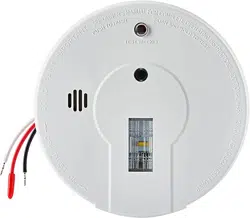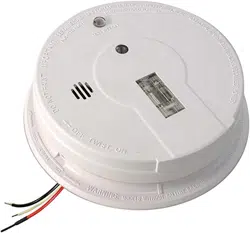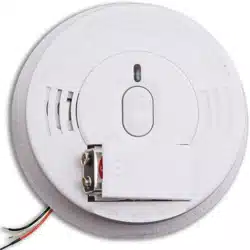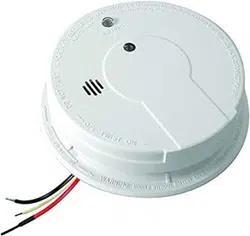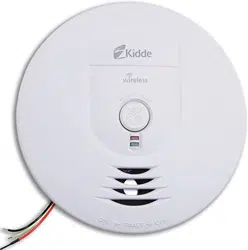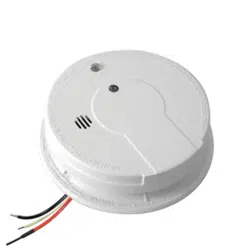

AC Wire-in Single and/or Multiple Station (up to 24 Devices) Ionization Smoke
Alarm with HUSH
TM
Control to temporarily silence nuisance alarms.
Models i12040A and i12080A have a 9-Volt Battery Back Up and the model
i12080A has a battery powered LED safety light.
Thank you for purchasing this smoke alarm. It is an important part of your family’s
home safety plan. You can trust this product to provide the highest quality safety pro-
tection. We know you expect nothing less when the lives of your family are at stake.
Kidde alarms and accessories CAN ONLY BE interconnected with other Kidde alarms
and accessories as well as specified brands and models of interconnect compatible
alarms. Connection of Kidde products to a non-specified manufacturer’s interconnect
system, or connection with non-specified equipment from another manufacturer into
an existing Kidde system could result in nuisance alarming, failure to alarm, or dam-
age to one or all of the devices in the interconnect system. Refer to the User Guide
supplied with each Kidde product for interconnect compatible models, brands, and
devices. Refer to the wiring instructions in section 3 for NFPA initiating device limits.
For models:
i12040A, i12080A
P/N 1220-7208-02 EN
i12040A
i12080A
For your convenience, write down the following information. If you call
our Consumer Hotline, these are the first questions you will be asked.
Smoke Alarm Model Number
(located on back of alarm):
Date Code (located on back of alarm): The
National Fire Protection Association (NFPA)
and the manufacturer recommend replacing
this alarm ten years from the date code.
Date of Purchase:
Where Purchased:
Smoke Alarm User Guide
1220-7208-02_EN_V2a.qxd:_ 2015.12.4 10:19 AM Page 1

This alarm detects products of combustion using the ionization technique. It
contains 0.9 microcurie of Americium 241, a radioactive material (see section 9).
Distributed under U.S. NRC License No. 32-23858-01E. Manufactured in compli-
ance with U.S. NRC safety criteria in 10 CFR 32.27. The purchaser is exempt
from any regulatory requirements. Do not try to repair the smoke alarm yourself.
Refer to the instructions in section 12 for service.
WARNING! THE BATTERY DOOR WILL NOT CLOSE UNLESS ALL THE
REQUIRED BATTERIES ARE PRESENT.
DISCONNECTION OR LOSS OF AC POWER AND REMOVAL OF BATTERIES
WILL RENDER THIS ALARM INOPERATIVE.
ELECTRICAL RATING: 120 VAC, 60HZ, 80mA maximum per alarm (maximum
80mA for originating unit with 24 devices interconnected).
IMPORTANT! READ ALL INSTRUCTIONS BEFORE INSTALLATION AND KEEP
THIS USER GUIDE NEAR THE ALARM FOR FUTURE REFERENCE.
CONTENTS OF THIS USER GUIDE
1 -- RECOMMENDED LOCATIONS FOR SMOKE ALARMS
2 -- LOCATIONS TO AVOID
3 -- INSTALLATION INSTRUCTIONS
4 -- OPERATION AND TESTING
5 -- NUISANCE ALARMS
6 -- MAINTENANCE
7 -- LIMITATIONS OF SMOKE ALARMS
8 -- GOOD SAFETY HABITS
9 -- NRC INFORMATION
10 -- NFPA PROTECTION STANDARD 72
11 -- CALIFORNIA STATE FIRE MARSHAL REQUIRED INFORMATION
12 -- SERVICE AND WARRANTY
1. RECOMMENDED LOCATIONS FOR ALARMS
• Locate the first alarm in the immediate area of the bedrooms. Try to monitor
the exit path as the bedrooms are usually farthest from the exit. If more than
one sleeping area exists, locate additional alarms in each sleeping area.
• Locate additional alarms to monitor any stairway as stairways act like chim-
neys for smoke and heat.
!
1220-7208-02_EN_V2a.qxd:_ 2015.12.4 10:19 AM Page 2
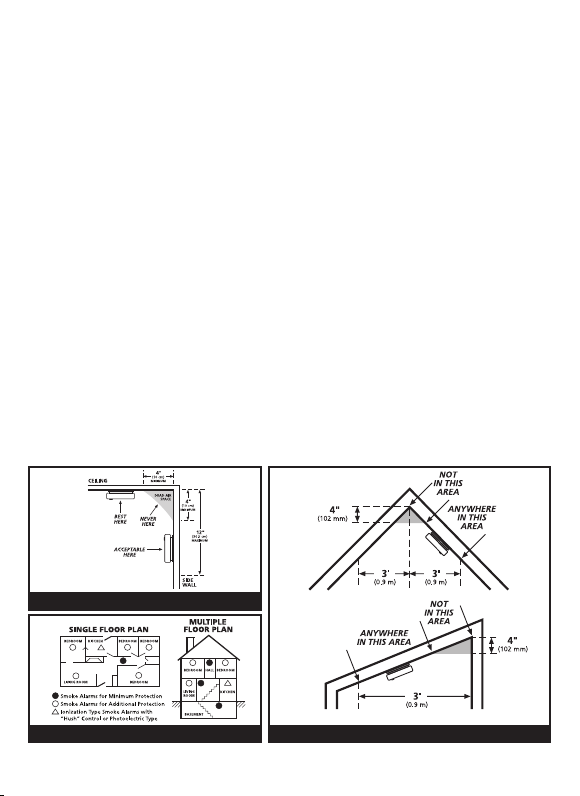
FIGURE 1
FIGURE 2 FIGURE 3
• Locate at least one alarm on every floor level.
• Locate an alarm in every sleeping room.
• Locate an alarm in every room where electrical appliances are operated (i.e.
portable heaters or humidifiers).
• Locate an alarm in every room where someone sleeps with the door closed.
The closed door may prevent an alarm not located in that room from waking
the sleeper.
• Smoke, heat, and combustion products rise to the ceiling and spread horizon-
tally. Mounting the smoke alarm on the ceiling in the center of the room
places it closest to all points in the room. Ceiling mounting is preferred in
ordinary residential construction.
• For mobile home installation, select locations carefully to avoid thermal
barriers that may form at the ceiling. For more details, see MOBILE HOME
INSTALLATION.
• When mounting an alarm on the ceiling, locate it at a minimum of 4” (10 cm)
from the side wall (see figure 1).
• When mounting the alarm on the wall, use an inside wall with the top edge
of the alarm at a minimum of 4” (10 cm) and a maximum of 12” (30.5 cm)
below the ceiling (see figure 1).
• Put smoke alarms at both ends of a bedroom hallway or large room if the
hallway or room is more than 30 ft (9.1 m) long.
1220-7208-02_EN_V2a.qxd:_ 2015.12.4 10:19 AM Page 3

• Install Smoke Alarms on sloped, peaked or cathedral ceilings at or within 3ft
(0.9m) of the highest point (measured horizontally). NFPA 72 states: “Smoke
alarms in rooms with ceiling slopes greater than 1 ft in 8 ft (.3m in 2.4 m) hor-
izontally shall be located on the high side of the room.” NFPA 72 states: “A
row of detectors shall be spaced and located within 3 ft (0.9m) of the peak of
the ceiling measured horizontally” (see figure 3).
MOBILE HOME INSTALLATION
Modern mobile homes have been designed and built to be energy efficient.
Install smoke alarms as recommended above (refer to RECOMMENDED LOCA-
TIONS and figures 1 and 2).
In older mobile homes that are not well insulated compared to present stan-
dards, extreme heat or cold can be transferred from the outside to the inside
through poorly insulated walls and roof. This may create a thermal barrier
which can prevent the smoke from reaching an alarm mounted on the ceiling.
In such units, install the smoke alarm on an inside wall with the top edge of the
alarm at a minimum of 4” (10 cm) and a maximum of 12” (30.5 cm) below the
ceiling (see figure 1).
If you are not sure about the insulation in your mobile home, or if you notice
that the outer walls and ceiling are either hot or cold, install the alarm on an
inside wall. For minimum protection, install at least one alarm close to the bed-
rooms. For additional protection, see SINGLE FLOOR PLAN in figure 2.
WARNING: TEST YOUR SMOKE ALARM OPERATION AFTER MOBILE
HOME VEHICLE HAS BEEN IN STORAGE AND AT LEAST ONCE A WEEK
DURING USE.
2. LOCATIONS TO AVOID
• In the garage. Products of combustion are present when you start your auto-
mobile.
• Less than 4” (10cm) from the peak of an “A” frame type ceiling.
• In an area where the temperature may fall below 40ºF (4.4˚C) or rise above
100ºF (37.8˚C), such as garages and unfinished attics.
• In dusty areas. Dust particles may cause nuisance alarm or failure to alarm.
• In very humid areas (Greater than 95% RH, non-condensing). Moisture or
steam can cause nuisance alarms.
• In insect-infested areas.
• Smoke alarms should not be installed within 3 ft (.9m) of the following: the
!
1220-7208-02_EN_V2a.qxd:_ 2015.12.4 10:19 AM Page 4

door to a kitchen, the door to a bathroom containing a tub or shower, forced
air supply ducts used for heating or cooling, ceiling or whole house ventilating
fans, or other high air flow areas.
• Kitchens. Normal cooking may cause nuisance alarms. If a kitchen alarm is
desired, it should have an alarm silence feature or be a photoelectric type.
• Near fluorescent lights. Electronic “noise” may cause nuisance alarms.
• Smoke alarms are not to be used with detector guards unless the combination
(alarm and guard) has been evaluated and found suitable for that purpose.
3. INSTALLATION INSTRUCTIONS
WIRING REQUIREMENTS
• This smoke alarm should be installed on a U.L. listed or recognized junction
box. All connections should be made by a qualified electrician and all wiring
used shall be in accordance with articles 210 and 300.3(B) of the U.S. National
Electrical Code ANSI/NFPA 70, NFPA 72 and/or any other codes having jurisdic-
tion in your area. The multiple station interconnect wiring to the alarms must
be run in the same raceway or cable as the AC power wiring. In addition, the
resistance of the interconnect wiring shall be a maximum of 10 ohms.
• The appropriate power source is 120 Volt AC Single Phase supplied from a
non-switchable circuit which is not protected by a ground fault interrupter.
• WARNING: This alarm cannot be operated from power derived from a square
wave, modified square wave or modified sine wave inverters. These types of
inverters are sometimes used to supply power to the structure in off grid
installations, such as solar or wind derived power sources. These power
sources produce high peak voltages that will damage the alarm.
WIRING INSTRUCTIONS FOR AC QUICK CONNECT HARNESS
CAUTION! TURN OFF THE MAIN POWER TO THE CIRCUIT BEFORE
WIRING THE ALARM.
• For alarms that are used as single station, DO NOT CONNECT THE RED WIRE
TO ANYTHING. Leave the red wire insulating cap in place to make certain that
the red wire cannot contact any metal parts or the electrical box.
• When alarms are interconnected, all interconnected units must be powered
from a single circuit.
• A maximum of 24 Kidde devices may be interconnected in a multiple station
arrangement. The interconnect system should not exceed the NFPA intercon-
nect limit of 12 smoke alarms and/or 18 alarms total (smoke, heat, carbon
monoxide, etc.). With 18 alarms interconnected, it is still possible to intercon-
!
!
1220-7208-02_EN_V2a.qxd:_ 2015.12.4 10:19 AM Page 5
nect up to a total of 6 remote signaling devices and/or relay modules.
• When mixing models which have battery backup (1275, 1276, 1285, 1296,
i12040, i12040A, i12060, i12060A, i12080, i12080A, i4618, i4618A, PE120,
P12040, PI2000, PI2010, KN-COPE-i, KN-SM-FM-i, KN-COSM-IB,
KN-COSM-IBA, HD135F, KN-COB-IC, KN-COP-IC, i12010S, i12010SCO,
RF-SM-ACDC) with models without battery backup, (1235, i12020, i12020A,
KN-COSM-I,120X, SM120X, CO120X, SL177i, SLED177i) be advised that the
models without battery backup will not respond during an AC power failure.
• The maximum wire run distance between the first and last unit in an intercon-
nected system is 1000 feet.
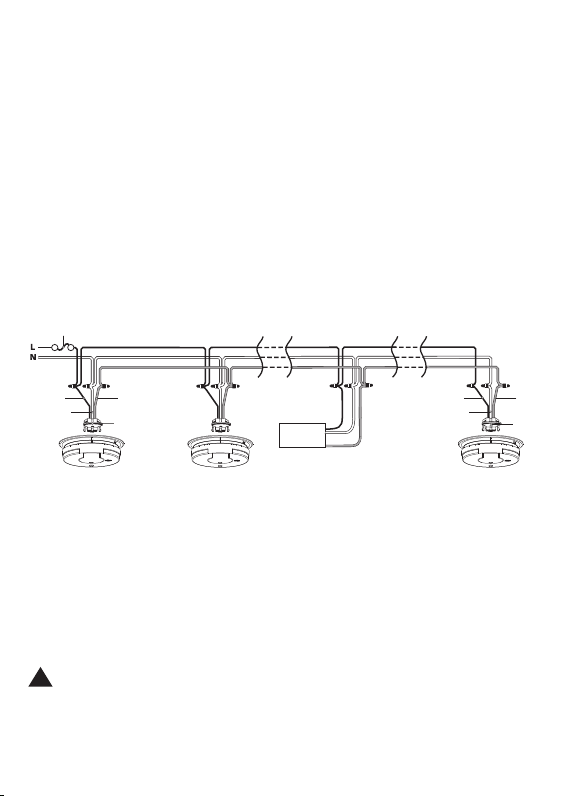
• Figure 4 illustrates interconnection wiring. Improper connection will result in
damage to the alarm, failure to operate, or a shock hazard.
• Make certain alarms are wired to a continuous (non-switched) power line.
NOTE: Use standard UL listed household wire (as required by local codes) avail-
able at all electrical supply stores and most hardware stores.
FIGURE 4 INTERCONNECT WIRING DIAGRAM
WIRES ON ALARM HARNESS CONNECTED TO
Black Hot Side of AC Line
White Neutral Side of AC Line
Red Interconnect Lines (Red Wires) of Other
Units in the Multiple Station Set up
BATTERY INSTALLATION
See MAINTENANCE (section 6) for battery installation.
CAUTION! IF THE BATTERY REMINDER FINGER(S) ARE NOT HELD
DOWN IN THE BATTERY COMPARTMENT BY THE BATTERY, THE BATTERY
DOOR WILL NOT CLOSE, THE AC QUICK CONNECTOR WILL NOT ATTACH
TO THE ALARM, AND THE ALARM WILL NOT ATTACH TO THE TRIM RING
(SEE SECTION 6, FIGURE 9).
FUSE OR CIRCUIT BREAKER
RED
BLACK
WHITE
B
LACK
WHITE
R
ED
CONNECTOR
CONNECTOR
Kidde
Relay Module
SM120X
First
Alarm
Additional
Alarm
Optional
Accessory
Additional
Alarm
!
1220-7208-02_EN_V2a.qxd:_ 2015.12.4 10:19 AM Page 6

MOUNTING INSTRUCTIONS
CAUTION: THIS UNIT IS SEALED. THE COVER IS NOT REMOVABLE!
1. Remove the trim ring from the back of the alarm by holding the trim ring and
twisting the alarm in the direction indicated by the “OFF” arrow on the alarm cover.
2. After selecting the proper smoke alarm location as described in section 1 and
wiring the AC QUICK CONNECT harness as described in the WIRING INSTRUC-
TIONS, attach the trim ring to the electrical box (see figure 5).
3. Use a screwdriver to punch out only the pair of holes in the trim ring that
match your type of electrical box or plaster ring. Mount the trim ring to the elec-
trical box, using the appropriate holes. NOTE: Use the circle, square and octagon
markings near each mounting hole in the trim ring to help you select the correct
mounting holes (see figure 5).
4. Pull the AC QUICK CONNECTOR through the center hole in the trim ring and
mount the ring, making sure that the mounting screws are positioned in the
small ends of the keyholes before tightening the screws (see figure 5).
5. Plug the AC QUICK CONNECTOR into the back of the alarm (see figure 6),
making sure that the locks on the connector snap into place. Then push the excess
wire back into the electrical box through the hole in the center of the trim ring.
6. If you have finished all the WIRING, BATTERY INSTALLATION AND TRIM RING
MOUNTING STEPS, you can install the alarm on the trim ring. Alignment marks
are provided on the side of the alarm and on the trim ring (see figure 7).
7. Install the alarm on the trim ring with the indicating marks aligned and rotate
the alarm in the direction of the “ON” arrow on the cover until the alarm snaps
in place (see figure 7).
8. Turn on the AC power. The green AC Power On Indicator should be lit when
the alarm is operating from AC power.
FIGURE 5 SELECT CORRECT MOUNTING HOLES ON TRIM RING
Rectangular
Plaster Ring
Circular
Plaster Ring
Octagonal
Electrical Box
!
1220-7208-02_EN_V2a.qxd:_ 2015.12.4 10:19 AM Page 7
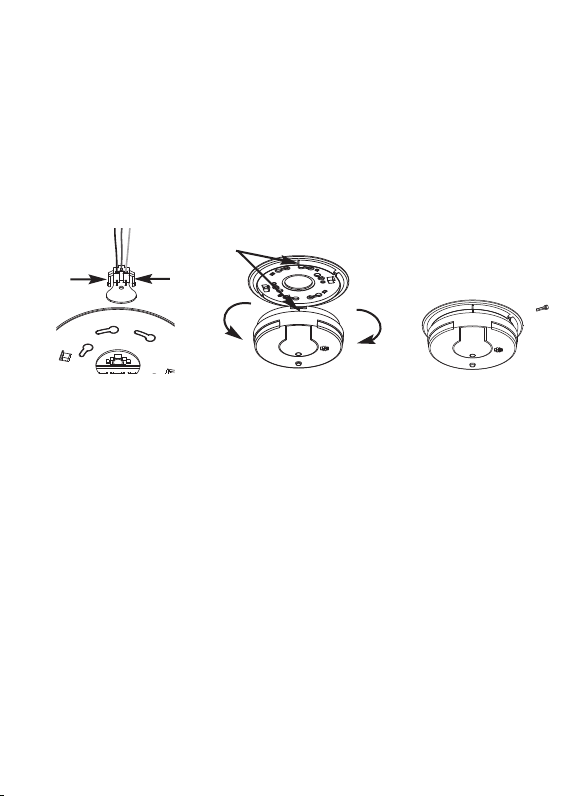
TAMPER RESIST LOCKING PIN: To make your smoke alarm tamper resistant, a
locking pin has been provided with your alarm. Using this pin will help deter
children and others from removing the alarm from trim ring. To use the pin,
insert it into the hole in the side of the alarm after the alarm has been installed
on the trim ring (see figure 8). NOTE: The tamper resist pin will have to be
removed in order to change the batteries. Use long nose pliers to pull the pin
out of the hole. It is now possible to remove the alarm from the trim ring.
After installation, TEST your alarm by pressing and holding the test/hush button
for several seconds. This should sound the alarm and activate the Safety Light.
4. OPERATION AND TESTING
OPERATION: The smoke alarm is operating once AC power is applied, fresh bat-
teries are installed and testing is complete. When the smoke alarm ionization
chamber senses products of combustion, the horn will sound a loud (85db)
temporal alarm (and the safety light will activate on model i12080A only) until
the sensing chamber is cleared of smoke particles.
HUSH
TM
CONTROL: The “HUSH” feature has the capability of temporarily desen-
sitizing the alarm circuit for up to 8 minutes. This feature is to be used only
when a known alarm condition, such as smoke from cooking, activates the
alarm. The smoke alarm is desensitized by pushing the “TEST / HUSH” button
on the smoke alarm cover. If the smoke is not too dense, the alarm will silence
immediately. The red LED will illuminate for 1.5 seconds every 8-10 seconds
while in hush. This indicates that the alarm is in a temporarily desensitized con-
dition. The smoke alarm will automatically reset after approximately 8 minutes
and sound the alarm if particles of combustion are still present. The “HUSH”
feature can be used repeatedly until the air has been cleared of the condition
causing the alarm. Pushing the Test / Hush button on the alarm will end the
hush period.
FIGURE 6 FIGURE 7 FIGURE 8
To remove AC
connector,
squeeze
locking arms
and pull
Alignment
marks
Tamper Resist
Locking Pin
Install
Remove
1220-7208-02_EN_V2a.qxd:_ 2015.12.4 10:19 AM Page 8

This alarm has a low battery HUSH feature. If the alarm is sounding a low bat-
tery warning chirp, you can silence this chirp for approximately 13 hours by
pressing the Test/Hush button.
NOTE: DENSE SMOKE WILL OVERRIDE THE HUSH CONTROL FEATURE AND
SOUND A CONTINUOUS ALARM.
CAUTION: BEFORE USING THE ALARM HUSH FEATURE, IDENTIFY THE
SOURCE OF THE SMOKE AND BE CERTAIN A SAFE CONDITION EXISTS.
SAFETY LIGHT: The model i12080A has a Safety Light feature. When the
smoke alarm ionization chamber senses smoke, the 85 db horn will sound and
the Safety Light will illuminate until the sensing chamber is cleared of smoke
particles.
NNOOTTEE:: TTHHEE SSAAFFEETTYY LLIIGGHHTT IISS NNOOTT IINNTTEENNDDEEDD TTOO SSAATTIISSFFYY TTHHEE
RREEQQUUIIRREEMMEENNTTSS FFOORR AAPPPPRROOVVEEDD IILLLLUUMMIINNAATTIIOONN UUNNDDEERR VVAARRIIOOUUSS
LLOOCCAALL CCOODDEESS.. VVEERRYY TTHHIICCKK AANNDD//OORR DDEENNSSEE SSMMOOKKEE MMAAYY OOBBSSCCUURREE
TTHHEE LLIIGGHHTT..
LED INDICATORS: This smoke alarm is equipped with red and green LED indica-
tors. The green LED (when illuminated) indicates the presence of AC power. The
red LED ( located under the Test / Hush button) has four modes of operation:
Standby Condition: The red LED will flash every 40 seconds to indicate
that the smoke alarm is operating properly.
Alarm Condition: When the alarm senses products of combustion and
goes into alarm, the red LED will flash one flash per
second. The flashing LED and pulsating alarm will
continue until the air is cleared.
WHEN UNITS ARE INTERCONNECTED, only the red LED
of the alarm which senses the smoke or is being tested
(the originating unit) will flash. All other units in the
interconnect system will sound an alarm but their red
LED’s will NOT be flashing.
Alarm Memory: This smoke alarm is equipped with an alarm memory, which
provides a visual indication when an alarm has been activated.
The red LED will illuminate for about 1.5 seconds every 20
seconds to indicate the memory condition.
The memory will
remain activated until pushing the test button resets it or will
time-out between 11 to 13 hours. In an interconnected installa-
tion only the memory of the originating alarm will be activated
.
Hush
®
mode: The red LED will illuminate for 1.5 seconds every 10
seconds, indicating the smoke alarm is in the Hush
®
mode.
!
1220-7208-02_EN_V2a.qxd:_ 2015.12.4 10:19 AM Page 9

Testing: Test by pushing the Test/Hush button on the cover and hold
it down for a minimum of 5 seconds. This will sound the
alarm if the electronic circuitry and horn are working. In an
interconnected installation all interconnected alarms should
sound when the Test/Hush button on any of the
interconnected alarm is pressed. If no alarm sounds, check
the fuse or circuit breaker supplying power to the alarm
circuit. Verify that the green LED is on. If the alarm still does
not sound, the alarm may have defective batteries or other
failure. DO NOT use an open flame to test your alarm. You
could damage the alarm or ignite combustible materials and
start a structure fire.
Note: When the alarm sounds the Safety Light on the model i12080A will also
illum
inate.
TEST THE ALARM WEEKLY TO ENSURE PROPER OPERATION. Erratic or low sound
coming from your alarm may indicate a defective alarm, and it should be
returned for service (see section 12).
5. NUISANCE ALARMS
Smoke alarms are designed to minimize nuisance alarms. Cigarette smoke will
not normally set off the alarm, unless the smoke is blown directly into the alarm.
Combustion particles from cooking may set off the alarm if the alarm is located
close to the cooking area. Large quantities of combustible particles are generat-
ed from spills or when broiling. Using the fan on a range hood which vents to
the outside (non-recirculating type) will also help remove these combustible
products from the kitchen.
These models are equipped with a "Hush" feature that is extremely useful in a
kitchen area or other areas prone to nuisance alarms. For more information,
refer to section 4 OPERATION AND TESTING.
If the alarm does sound, check for fires first. If a fire is discovered, get out and
call the fire department. If no fire is present, check to see if one of the reasons
listed in section 2 may have caused the alarm.
6. MAINTENANCE / TROUBLESHOOTING
ALARM REMOVAL
IF TAMPER RESIST PIN HAS BEEN USED, REFER TO TAMPER RESIST LOCK-
ING PIN IN SECTION 3 FOR PIN REMOVAL INSTRUCTIONS.
1220-7208-02_EN_V2a.qxd:_ 2015.12.4 10:19 AM Page 10
To replace the batteries, remove the alarm from the trim ring by rotating the
alarm in the direction of the “OFF” arrow on the cover (see section 3, figure 7).
To disconnect the AC power harness, squeeze the locking arms on the sides of
the Quick Connector while pulling the connector away from the bottom of the
alarm (see section 3, figure 6).
BATTERY INSTALLATION AND REMOVAL
To replace or install the batteries you must first remove the alarm from the trim
ring by following the ALARM REMOVAL instructions at the beginning of this sec-
tion. After alarm has been removed , you can open the battery door and install
or replace the battery. Battery installation instructions are provided on the inside
of the battery door.
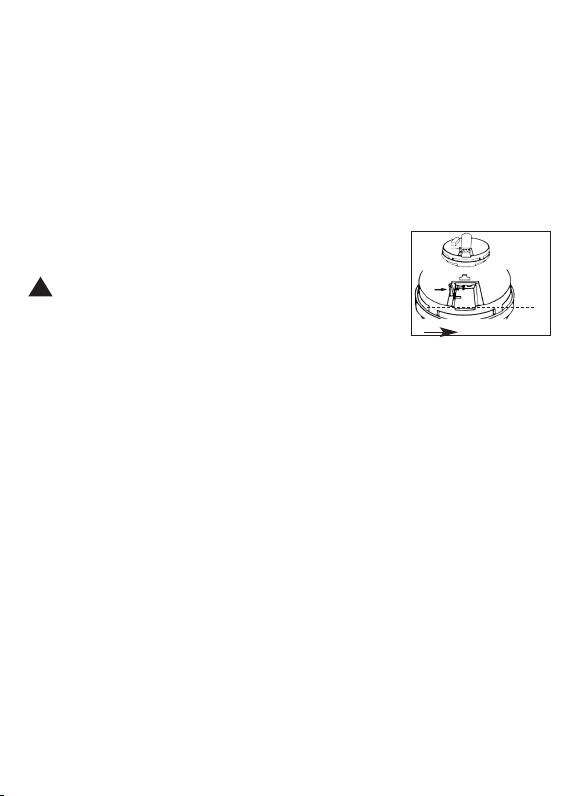
When installing the battery, press the battery reminder
finger down into the battery compartment and install
the battery (see figure 9).
CAUTION! IF THE BATTERY REMINDER FINGER(s)
ARE NOT HELD DOWN IN THE BATTERY COMPART-
MENT BY THE BATTERY, THE BATTERY DOOR WILL
NOT CLOSE, THE AC QUICK CONNECTOR WILL NOT
ATTACH TO THE ALARM, AND THE ALARM WILL
NOT ATTACH TO THE TRIM RING.
The i12040A and i12080A smoke alarms use a 9V backup battery (Carbon zinc
and alkaline batteries may be used). A fresh battery should last for one year
under normal operating conditions. These models have a low/missing battery
monitor circuit which will cause the alarm to “chirp” approximately every 30-40
seconds for a minimum of seven (7) days when the battery gets low. Replace the
battery(s) when this condition occurs.
USE ONLY THE FOLLOWING 9 VOLT BATTERIES FOR SMOKE ALARM
BATTERY REPLACEMENT.
Carbon-zinc type EVEREADY 1222; GOLD PEAK 1604P OR 1604S
Alkaline type ENERGIZER 522; DURACELL MN1604 OR MX1604;
GOLD PEAK 1604A PANASONIC 6AM6, 6AM-6, 6AM-6PI,
6AM6X, AND 6LR61 (GA)
NOTE: Do not use lithium batteries in this unit.
These batteries can be purchased at your local retailer.
The SAFETY LIGHT (model i12080A only) portion is powered by one (1) 9V
alkaline battery. Under normal (standby) conditions, the battery should last at
least one year and provide 15 minutes of light when the alarm is sounding.
FIGURE 9
!
1220-7208-02_EN_V2a.qxd:_ 2015.12.4 10:19 AM Page 11

NOTE: WEEKLY TESTING IS REQUIRED! If the Safety Light appears dim
during regular testing, replace both batteries immediately.
USE ONLY THE FOLLOWING 9 VOLT BATTERIES FOR FOR SAFETY LIGHT BAT-
TERY REPLACEMENT.
ENERGIZER 522; GOLD PEAK 1604A; DURACELL MN1604 OR MX1604;
PANASONIC 6AM6, 6AM-6, 6AM-6PI, 6AM6X, AND 6LR61 (GA)
WARNING! BE SURE TO FOLLOW BATTERY INSTALLATION INSTRUC-
TIONS PRINTED ON THE INSIDE OF THE BATTERY DOOR AND USE ONLY
THE BATTERIES SPECIFIED. USE OF DIFFERENT BATTERIES MAY HAVE A
DETRIMENTAL EFFECT ON THE SMOKE ALARM.
WARNING: THIS ALARM WILL “CHIRP” IF ABNORMAL OPERATION OF
THE SMOKE-SENSING CHAMBER IS DETECTED. THIS CHIRP WILL OCCUR
APPROXIMATELY 20 SECONDS AFTER THE RED LED FLASH. REPLACE THE
ALARM IF THIS CONDITION OCCURS.
The LED safety light cannot be replaced. If the LED Safety Light does not
function when the test button is pressed and you have already replaced
the battery powering the safety light then the alarm must be replaced.
CLEANING YOUR ALARM
YOUR ALARM SHOULD BE CLEANED AT LEAST ONCE A YEAR
To clean your alarm, remove it from the mounting bracket as outlined in the
beginning of this section. You can clean the interior of your alarm (sensing
chamber) by using compressed air or a vacuum cleaner hose and blowing or
vacuuming through the openings around the perimeter of the alarm. The out-
side of the alarm can be wiped with a damp cloth. After cleaning, reinstall your
alarm and test your alarm by using the Test/Hush button. If cleaning does not
restore the alarm to normal operation the alarm should be replaced.
!
!
1220-7208-02_EN_V2a.qxd:_ 2015.12.4 10:19 AM Page 12

7. LIMITATIONS OF SMOKE ALARMS
WARNING: PLEASE READ CAREFULLY AND THOROUGHLY
• NFPA 72 states: Life safety from fire in residential occupancies is based primarily
on early notification to occupants of the need to escape, followed by the
appropriate egress actions by those occupants. Fire warning systems for
dwelling units are capable of protecting about half of the occupants in poten-
tially fatal fires. Victims are often intimate with the fire, too old or young, or
physically or mentally impaired such that they cannot escape even when
warned early enough that escape should be possible. For these people, other
strategies such as protection-in-place or assisted escape or rescue are necessary.
• Leading authorities recommend that both ionization and photoelectric smoke
alarms be installed to help insure maximum detection of the various types of
fires that can occur within the home. Ionization sensing alarms may detect
invisible fire particles (associated with fast flaming fires) sooner than photo-
electric alarms. Photoelectric sensing alarms may detect visible fire particles
(associated with slow smoldering fires) sooner than ionization alarms.
•Abattery powered alarm must have a battery of the specified type, in good con-
dition and installed properly.
• AC powered alarms (without battery backup) will not operate if the AC power
has been cut off, such as by an electrical fire or an open fuse.
• Smoke alarms must be tested regularly to make sure the batteries and the
alarm circuits are in good operating condition.
• Smoke alarms cannot provide an alarm if smoke does not reach the alarm.
Therefore, smoke alarms may not sense fires starting in chimneys, walls, on
roofs, on the other side of a closed door or on a different floor.
• If the alarm is located outside the bedroom or on a different floor, it may not
wake up a sound sleeper.
• The use of alcohol or drugs may also impair one’s ability to hear the smoke
alarm. For maximum protection, a smoke alarm should be installed in each
sleeping area on every level of a home.
• Although smoke alarms can help save lives by providing an early warning of a
fire, they are not a substitute for an insurance policy. Home owners and
renters should have adequate insurance to protect their lives and property.
!
1220-7208-02_EN_V2a.qxd:_ 2015.12.4 10:19 AM Page 13

8. GOOD SAFETY HABITS
DEVELOP AND PRACTICE A PLAN OF ESCAPE
• Install and maintain fire extinguishers on every level of the home and in the
kitchen, basement and garage. Know how to use a fire extinguisher prior to
an emergency.
• Make a floor plan indicating all doors and windows and at least two (2)
escape routes from each room. Second story windows may need a rope or
chain ladder.
• Have a family meeting and discuss your escape plan, showing everyone what
to do in case of fire.
• Determine a place outside your home where you all can meet if a fire occurs.
• Familiarize everyone with the sound of the smoke alarm and train them to
leave your home when they hear it.
• Practice a fire drill at least every six months, including fire drills at night.
Ensure that small children hear the alarm and wake when it sounds. They
must wake up in order to execute the escape plan. Practice allows all occu-
pants to test your plan before an emergency. You may not be able to reach
your children. It is important they know what to do.
• Current studies have shown smoke alarms may not awaken all sleeping indi-
viduals, and that it is the responsibility of individuals in the household that are
capable of assisting others to provide assistance to those who may not be
awakened by the alarm sound, or to those who may be incapable of safely
evacuating the area unassisted.
WHAT TO DO WHEN THE ALARM SOUNDS
• Alert small children in the home.
• Leave immediately by your escape plan. Every second counts, so don’t waste
time getting dressed or picking up valuables.
• In leaving, don’t open any inside door without first feeling its surface. If hot, or
if you see smoke seeping through cracks, don’t open that door! Instead, use
your alternate exit. If the inside of the door is cool, place your shoulder against
it, open it slightly and be ready to slam it shut if heat and smoke rush in.
• Stay close to the floor if the air is smoky. Breathe shallowly through a cloth,
wet if possible.
• Once outside, go to your selected meeting place and make sure everyone is
there.
1220-7208-02_EN_V2a.qxd:_ 2015.12.4 10:19 AM Page 14

• Call the fire department from your neighbor’s home - not from yours!
• Don’t return to your home until the fire officials say that it is all right to do so.
There are situations where a smoke alarm may not be effective to protect
against fire. For instance:
- Smoking in bed.
- Leaving children unsupervised.
- Cleaning with flammable liquids, such as gasoline.
- Fires where the victim is intimate with a flaming initiated fire;
for example, when a person's clothes catch fire while cooking.
- Fires where the smoke is prevented from reaching the detector
due to a closed door or other obstruction.
- Incendiary fires where the fire grows so rapidly that an occupant's
egress is blocked even with properly located detectors
9. NRC INFORMATION
Ionization type smoke alarms use a very small amount of a radioactive element
in the sensing chamber to enable detection of visible and invisible combustion
products. The radioactive element is safely contained in the chamber and
requires no adjustments or maintenance. This smoke alarm meets or exceeds all
government standards. It is manufactured and distributed under license from
the U.S. Nuclear Regulatory Commission.
10. NFPA REQUIRED PROTECTION
The National Fire Protection Association’s Standard 72 provides the following
information:
Where required by other governing laws, codes, or standards for a specific type
of occupancy, approved single and multiple-station smoke alarms shall be
installed as follows:
(1) In all sleeping rooms and guest rooms.
(2)
Outside of each separate dwelling unit sleeping area, within 21 ft (6.4 m) of any
door to a sleeping room, with the distance measured along a path of travel.
(3) On every level of a dwelling unit, including basements.
(4) On every level of a residential board and care occupancy(small facility),
including basements and excluding crawl spaces and unfinished attics.
(5) In the living area(s) of a guest suite.
(6) In the living area(s) of a residential board and care occupancy(small facility).
Smoke Detection – Are More Smoke Alarms Desirable? The required number of
smoke alarms might not provide reliable early warning protection for those areas
1220-7208-02_EN_V2a.qxd:_ 2015.12.4 10:19 AM Page 15

separated by a door from the areas protected by the required smoke alarms. For
this reason, it is recommended that the householder consider the use of additional
smoke alarms for those areas for increased protection. The additional areas
include the basement, bedrooms, dining room, furnace room, utility room, and
hallways not protected by the required smoke alarms. The installation of the
smoke alarms in the kitchen, attic (finished or unfinished), or garage is normally
not recommended, as these locations occasionally experience conditions that can
result in improper operation.
This equipment should be installed in accordance with the National Fire Protection
Association’s Standard 72 (NFPA, Batterymarch Park, Quincy, MA 02269).
NOTIFY YOUR LOCAL FIRE DEPARTMENT AND INSURANCE COMPANY OF YOUR
SMOKE ALARM INSTALLATION.
11. CAUTION (AS REQUIRED BY THE CALIFORNIA STATE FIRE
MARSHAL)
“Early warning fire detection is best achieved by the installation of fire detection
equipment in all rooms and areas of the household as follows. A smoke alarm
installed in each separate sleeping area (in the vicinity of, but outside of the bed-
rooms), and heat or smoke detectors in the living rooms, dining rooms, bedrooms,
kitchens, hallways, attics, furnace rooms, closets, utility and storage rooms, base-
ments and attached garages”.
12. SERVICE AND WARRANTY
If after reviewing this user guide you feel that your smoke alarm is defective in any
way, do not tamper with the unit.
Return it for servicing to: KIDDE, 1016 Corporate Park Dr., Mebane, NC 27302.
1-800-880-6788 (See Warranty for in-warranty returns).
!
1220-7208-02_EN_V2a.qxd:_ 2015.12.4 10:19 AM Page 16

TEN YEAR LIMITED WARRANTY
Kidde warrants to the original purchaser that the enclosed smoke alarm (but not the
battery) will be free from defects in material and workmanship or design under normal
use and service for a period of ten years from the date of purchase. The obligation of
Kidde under this warranty is limited to repairing or replacing the smoke alarm or any
part which we find to be defective in material, workmanship or design, free of charge
to the customer, upon sending the smoke alarm with proof of date of purchase,
postage and return postage prepaid, to Warranty Service Department, Kidde, 1016
Corporate Park Dr., Mebane, NC 27302.
This warranty shall not apply to the smoke alarm if it has been damaged, modified,
abused or altered after the date of purchase or if it fails to operate due to improper
maintenance or inadequate AC or DC electrical power.
THE LIABILITY OF KIDDE OR ANY OF ITS PARENT OR SUBSIDIARY CORPORATIONS
ARISING FROM THE SALE OF THIS SMOKE ALARM OR UNDER THE TERMS OF THIS
LIMITED WARRANTY SHALL NOT IN ANY CASE EXCEED THE COST OF REPLACEMENT
OF SMOKE ALARM AND, IN NO CASE, SHALL KIDDE OR ANY OF ITS PARENT OR SUB-
SIDIARY CORPORATIONS BE LIABLE FOR CONSEQUENTIAL LOSS OR DAMAGES
RESULTING FROM THE FAILURE OF THE SMOKE ALARM OR FOR BREACH OF THIS OR
ANY OTHER WARRANTY, EXPRESS OR IMPLIED, EVEN IF THE LOSS OR DAMAGE IS
CAUSED BY THE COMPANY’S NEGLIGENCE OR FAULT.
Since some states do not allow limitations on the duration of an implied warranty or
do not allow the exclusion or limitation of incidental or consequential damages, the
above limitations or exclusions may not apply to you. While this warranty gives you
specific legal rights, you may also have other rights which vary from state to state.
Also, Kidde makes no warranty, express or implied, written or oral, including that of
merchantability or fitness for any particular purpose, with respect to the battery.
The above warranty may not be altered except in writing signed by both parties hereto.
separated by a door from the areas protected by the required smoke alarms. For
this reason, it is recommended that the householder consider the use of additional
smoke alarms for those areas for increased protection. The additional areas
include the basement, bedrooms, dining room, furnace room, utility room, and
hallways not protected by the required smoke alarms. The installation of the
smoke alarms in the kitchen, attic (finished or unfinished), or garage is normally
not recommended, as these locations occasionally experience conditions that can
result in improper operation.
This equipment should be installed in accordance with the National Fire Protection
Association’s Standard 72 (NFPA, Batterymarch Park, Quincy, MA 02269).
NOTIFY YOUR LOCAL FIRE DEPARTMENT AND INSURANCE COMPANY OF YOUR
SMOKE ALARM INSTALLATION.
11. CAUTION (AS REQUIRED BY THE CALIFORNIA STATE FIRE
MARSHAL)
“Early warning fire detection is best achieved by the installation of fire detection
equipment in all rooms and areas of the household as follows. A smoke alarm
installed in each separate sleeping area (in the vicinity of, but outside of the bed-
rooms), and heat or smoke detectors in the living rooms, dining rooms, bedrooms,
kitchens, hallways, attics, furnace rooms, closets, utility and storage rooms, base-
ments and attached garages”.
12. SERVICE AND WARRANTY
If after reviewing this user guide you feel that your smoke alarm is defective in any
way, do not tamper with the unit.
Return it for servicing to: KIDDE, 1016 Corporate Park Dr., Mebane, NC 27302.
1-800-880-6788 (See Warranty for in-warranty returns).
QUESTIONS OR FOR MORE INFORMATION
Call our Consumer Hotline at 1-800-880-6788 or contact
us at our website at www.kidde.com
Kidde, 1016 Corporate Park Drive, Mebane, NC 27302
Made in China
1220-7208-02_EN_V2a.qxd:_ 2015.12.4 10:19 AM Page 17