Refer to
Instruction
Manual
Wear safety
footwear
Wear protective
gloves
Thank you for purchasing a Sealey product. Manufactured to a high standard, this product will, if used according to these
instructions, and properly maintained, give you years of trouble free performance.
IMPORTANT: PLEASE READ THESE INSTRUCTIONS CAREFULLY. NOTE THE SAFE OPERATIONAL REQUIREMENTS, WARNINGS & CAUTIONS. USE
THE PRODUCT CORRECTLY AND WITH CARE FOR THE PURPOSE FOR WHICH IT IS INTENDED. FAILURE TO DO SO MAY CAUSE DAMAGE AND/OR
PERSONAL INJURY AND WILL INVALIDATE THE WARRANTY. KEEP THESE INSTRUCTIONS SAFE FOR FUTURE USE.
1. SAFETY
Disconnect jack from air supply before changing parts, servicing or performing any maintenance.
R WARNING! Ensure correct air pressure is maintained and not exceeded. Recommended pressure 116-145psi.
Keep air hose away from heat, oil and sharp edges. Check air hose for wear before each use, and ensure that all connections
are secure.
Ensure jack is kept clean and in good working order. Immediately repair or replace damaged parts.
Use recommended parts only. Incorrect parts may be dangerous and will invalidate the warranty.
Useaqualiedpersontolubricateandmaintainthejack.
Locate jack in a suitable, well lit work area. Keep area clean and tidy and free from unrelated materials.
Use jack on level & solid ground, preferably concrete. Avoid tarmacadam since jack may sink in.
Place wedges under wheels of vehicle (but ensure wheels of jack can freely move).
Ensure the vehicle handbrake is engaged (or in “PARKED” mode), and switch the engine off.
Ensure minimum distance of 0.5m between vehicle tilt & static objects such as doors, walls, etc.
Ensure all non essential persons keep a safe distance and that there are no passengers in the vehicle to be jacked up.
Place jack under vehicle manufacturer’s recommended jacking points (see vehicle handbook).
Check that the jacking point is stable and centred on the jack saddle and is free from grease or oil.
Ensure jack wheels are free to move and that there are no obstructions.
V DANGER: Use jack for lifting only, NOT for supporting the raised load. Use correctly rated axle stands under vehicle before
proceeding with task.
DO NOTusebrakeuidtotopupsystem.UseSealeyhydraulicoilonly.
DO NOT apply your body weight to the handle during jacking. The handle is only for moving the jack to and from the lifting location.
DO NOT operate the jack if parts are missing or damaged.
DO NOT exceed the rated capacity of the jack.
DO NOT allow the vehicle to move during lifting and do not use the jack to move the vehicle.
DO NOT jack a vehicle which may result in the spillage of fuel, battery acid, or dangerous substances.
DO NOT work under the vehicle until axle stands have been correctly positioned.
DO NOT use the jack for purposes other that than which it is designed for.
DO NOT adjust the safety overload valve.
DO NOT pull the hose from the air supply, and DO NOT direct air from the air hose at yourself or others.
Ensure there are no persons or obstructions beneath the vehicle before lowering.
When not in use disconnect jack from the air supply, and store in the lowered position in a safe, dry, childproof area.
R WARNING! Turn off air supply and de-pressurise the control nozzle before removing the pump unit from any installation or mobile
system.
Failure to comply with this instruction may damage the unit and will invalidate your warranty.
2. INTRODUCTION
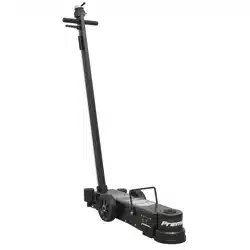
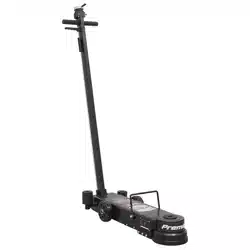
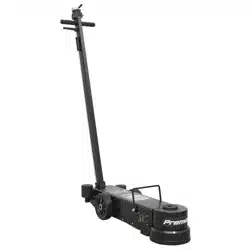
Ideal for workshop or roadside use, these jacks take the effort out of lifting heavy plant, tractors and commercial vehicles. For extra safety,
featuresdeadman’shandlewhichalsoaidscontrolledloweringspeed.Suppliedwithextensionsthatclosethegapbetweenthesaddleofthe
jack and the jacking point.
3. SPECIFICATION
Model no: .......................................................... YAJ15-30.V3
Maximum capacity: ................................................... 30tonne
Minimum saddle height: ............................................. 176mm
Maximum height (inc. extensions/capacity):
Stage 1 (mm/tonne): ................................................... 393/30
Stage 2 (mm/tonne): ................................................... 472/15
Piston stroke: ............................................................. 177mm
Extensions: ............................................................. 45/75mm
Chassis length: .......................................................... 483mm
15-30TONNE AIR OPERATED TELESCOPIC JACK
MODEL NO: YAJ15-30.V3
Maximum length: ...................................................... 1700mm
Width without wheels: ................................................ 176mm
Overall width: ............................................................. 276mm
Air consumption: ....................................................... 10.5cfm
Working pressure: .................................................116-145psi
Weight: ........................................................................ 42.5kg
Note: The maximum height shown may be extended by use of
the extension pins.
YAJ15-30.V3 Issue 2 (3) 12/04/21
Original Language Version
©JackSealeyLimited
4. ASSEMBLY
4.1. ATTACHING THE HANDLE
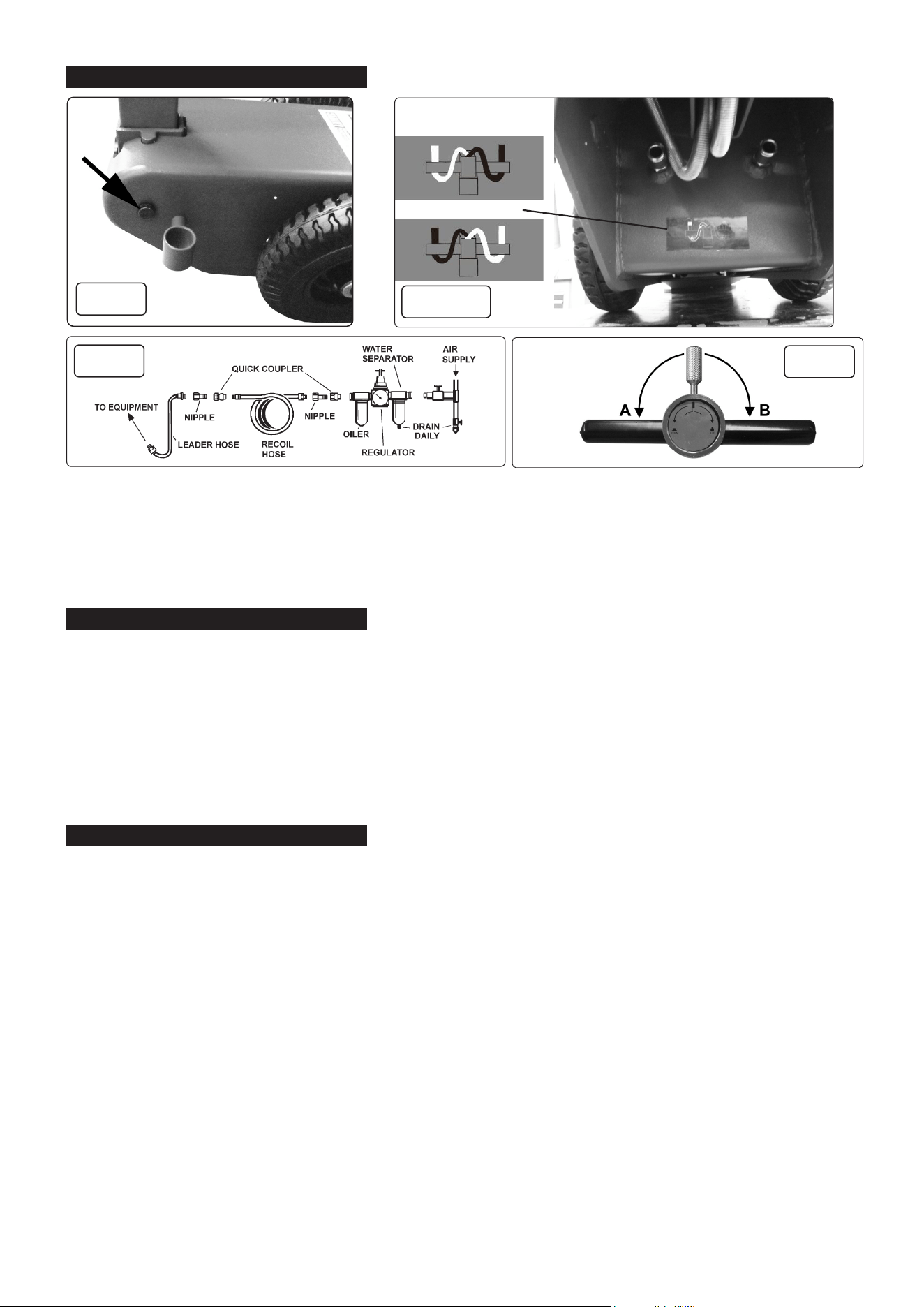
4.1.1. Removethecirclipfromeithersideofthelargepin(g.1).
4.1.2. Slideoutthepinandplacethehandleintotheopening.Slidethepinbackthroughthejack,liningupthehandleandthroughthe
otherside.Securewithcirclips.
4.2. AIR HOSES
4.2.1. Screwintheblackandclearhosesfromthehandleintothejack.Ensurethattheblackandclearhosesarewrappedaroundthe
handle, inserting as shown by the label positioned beneath the connection points on the jack (fig.1A). Position so as to not obstruct
the movement of the handle.
5. AIR SUPPLY
5.1. Ensure that the jack pneumatic switch is in the “off” position before connecting to the air supply.
5.2. Youwillrequireanairpressureofatleast116psi(max145psi)andanairowof10.5cfmtogetthebestperformancefromthisjack.
R WARNING! Ensure the air supply does not exceed 145psi while operating the jack.
Too high an air pressure and unclean air will shorten the products life due to excessive wear, and may be dangerous causing
possible damage and personal injury.
5.3. Drain the air tank daily. Water in the air line will damage the jack.
5.4. Cleantheairinletlterscreenweekly.
5.5. Keeptheairhosebetweenthecompressorandtheairjackasshortaspossible,andinstallanairlterandoiler(g.2).
5.6. Line pressure should be increased to compensate for unusually long air hoses (over 8 metres). The minimum hose diameter should
be3/8”I.D.andttingsmusthavethesameinsidedimensions.
5.7. Keep hose away from heat, oil and sharp edges. Check hoses for wear, and make certain that all connections are secure.
6. OPERATION
6.1. PREPARATION
6.1.1. Youwillrequireanairpressureofatleast116psi(max145psi)andanairowof10.5cfmtogetthebestperformancefromthejack.
6.1.2. Connect the air supply to the connector.
6.1.3. Setthehandletotherequiredangleusingthehandlereleaselevershowning.3A.Pulltheleverupwardstowardsthemain
handle. Move the handle to the required position and release the lever to lock it into position.
6.2. PURGING THE SYSTEM
6.2.1. Before using the jack, purge the hydraulic circuit in order to eliminate any possible air that may have entered the system during transit.
6.2.2. Push the control lever (fig.3) to the ‘down’ (fig.3A) position and hold it there for several seconds. Release the lever to the centre ‘hold’
position.
6.2.3. Now push the lever to the ‘up’ position (fig.3B) and hold it there until the jack is fully extended. Push the lever to the ‘down’ (fig.3A)
position and watch the jack as it retracts. The lowering movement should be smooth and without irregular stops.
6.2.4. Repeat the raising and lowering cycle until the movement is smooth. Once this has been achieved this indicates that all air has been
expelled.
6.3. USING THE JACK
R WARNING! ensure you have read and understood the safety instructions in chapter 1 before commencing work.
6.3.1. Position the jack under the vehicle manufacturer’s recommended jacking point (see vehicle handbook).
Note:Usetheextensionpinstogetthejackclosertothejackingpointbeforeengagingthejack.Seespecicationforcapacity
when using the extension pins.
6.3.2. Whilstholdingthemainjackhandleliftingisachievedbypushingthecontrollevertothe‘up’position(g.3B).
6.3.3. When the vehicle has reached the desired height release the control lever which will automatically return to the middle hold
positionstoppinganyfurtherairow,holdingthejackattheheighttowhichithasbeenraised.
6.3.4. Place axle stands correctly in position and ensure chapter 1 safety instructions are strictly applied before performing any work on
the vehicle.
Fig.1
Fig.1A
Fig.2
Fig.3
OR
Original Language Version
©JackSealeyLimited
YAJ15-30.V3 Issue 2 (3) 12/04/21
7. MAINTENANCE
V IMPORTANT:Onlyfullyqualiedpersonnelshouldattemptmaintenanceorrepair.
R WARNING! Disconnect jack from air supply before changing parts, servicing or performing any maintenance.
7.1. When the jack is not in use, the piston must be in the lowest position to minimise corrosion.
7.2. Keep the jack clean and lubricate all moving parts, and the air intake connector with air tool oil on a regular basis.
7.3. CHECKING THE OIL LEVEL
7.3.1. Fully lower jack.
7.3.2. Removethellerplug.Theoillevelshouldbelevelwiththeindicatorinsidethellerhole.
7.3.3. Topuptheoillevelifnecessarybutdonotoverllasthejackwillbecomeinoperative.Ifinadvertentlyoverlledtheexcessoil
should be poured off. After topping up or pouring off excess oil it may become necessary to purge air from the unit.
Seesection6.2.
Note:UseagoodqualityJackoil,suchasSEALEYHYDRAULICJACKOIL.
R WARNING! DO NOTusebrakeuid,oranyuidotherthanhydraulicjackuidasthismaycauseseriousdamagetothejackand
will invalidate the warranty!
7.4. Ensuretheairlterlocatedintheairvalveisclean.
7.5. Shouldthepistonnotriseandtheoilleveliscorrect,thismayindicateaproblemwithairseepingintothehydraulicvalvepassage.
Purgeanyairfromthesystem.See6.2.
7.6. Conrmthatthepistoncanrisetothehighestposition.
7.7. Before each use check for broken, cracked, bent, or loose parts. Or any visible damage to welds, piston, pump, saddle, air
connector, levers, frame and all parts including nuts, bolts, pins and other fasteners. If any suspect item is found, remove jack from
serviceandtakenecessaryactiontoxtheproblem.
7.8. DO NOT use the jack if believed to have been subjected to abnormal load or shock. Inspect and take appropriate action.
7.9. Afterayearofextensiveuse,theoilshouldbereplacedinordertoextendthelifeofthejack.Todraintheoil,removethellerplug
andvalve.MakesurethatnodirtisallowedtoenterthehydraulicsystemSee7.3.forrellinginstructions.
7.10. Periodically check the pump piston and piston rod for signs of corrosion. Clean exposed areas with a clean oiled cloth.
IMPORTANT: NO RESPONSIBILITY IS ACCEPTED FOR INCORRECT USE OF THE MACHINE.
Air/Hydraulicproductsareonlyrepairedbylocalserviceagents.Wehaveservice/repairagentsinallpartsoftheUK.DO NOT
return jacks to us.
Please telephone us on 01284 757500 to obtain the address and phone number of your local agent. If jack is under guarantee
please contact your dealer.
7.11. DECOMMISSIONING THE JACK
7.11.1. Should the jack become completely unserviceable and require disposal, draw off the oil into an approved container and dispose of
the jack and the oil according to local regulations.
8. TROUBLESHOOTING
PROBLEM POSSIBLE CAUSE REMEDY
Jack does not lift but pump is ok. 1. Oil exhausted.
2. Air in hydraulic system.
3. Defective suction or delivery valves.
4. Defective packing or O-ring.
5. Poor quality oil.
1.Supplyoil.
2. Drain air by opening cap plug of suction and delivery valves.
3. Clean clogged valve.
4. Replace.
5. Replace oil.
Air pump does not operate. 1.Insufcientcompressorpower.
2. Pump oil used up.
1. Use a larger compressor.
2.Findleakandrectify,rellwithoil.Rebuildandlubricateairvalve.
Jack stops before end of travel. 1.Hydraulicoilisinsufcient. 1.Supplyoil.
Jack Lowers or does not hold in
the raised position.
1. Defective suction delivery, release or
safety valve.
2. Defective piston packing.
1. Clean and adjust valve.
2. Replace packing.
Lifting is slow. 1. Air leakage due to worn servo-valve. 1. Replace servo-valve.
Pump continues to operate when
the air valves are closed.
1. Air valve will not close. 1. Replace Valve.
Original Language Version
©JackSealeyLimited
Sealey Group, Kempson Way, Suffolk Business Park, Bury St Edmunds, Suffolk. IP32 7AR
01284 757500 01284 703534 sales@sealey.co.uk www.sealey.co.uk
Note: It is our policy to continually improve products and as such we reserve the right to alter data, specifications and component parts without
prior notice. Please note that other versions of this product are available. If you require documentation for alternative versions, please email
or call our technical team on technical@sealey.co.uk or 01284 757505.
Important: No Liability is accepted for incorrect use of this product.
Warranty: Guarantee is 12 months from purchase date, proof of which is required for any claim.
ENVIRONMENT PROTECTION
Recycle unwanted materials instead of disposing of them as waste. All tools, accessories and packaging should be sorted, taken to
a recycling centre and disposed of in a manner which is compatible with the environment. When the product becomes completely
unserviceable and requires disposal, drain any fluids (if applicable) into approved containers and dispose of the product and fluids
according to local regulations.
YAJ15-30.V3 Issue 2 (3) 12/04/21