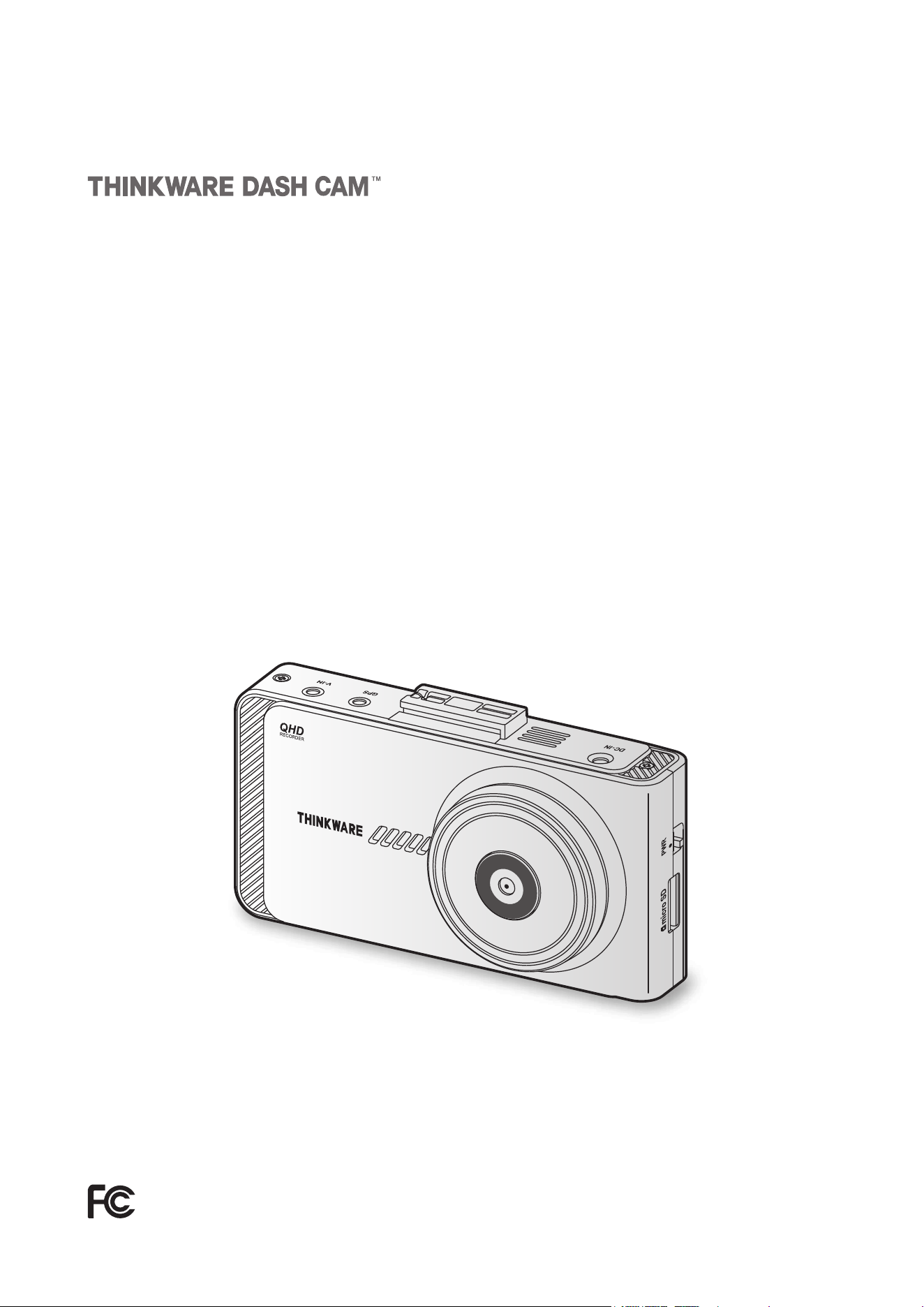
This product records videos while the vehicle is operating.
Read and follow the instructions in this guide to properly use and maintain the product.
User Guide
X800

Before using the product
About the product
This product records videos while the vehicle is operating. Use this product only for reference when
investigating incidents or road accidents. This product is not guaranteed to record or process cloud data
for all events. The device may not record accidents with impacts that are too minor to activate the impact
sensor or accidents with massive impacts that cause the vehicle’s battery voltage to deviate.
Video recording does not begin until the product is completely turned on (booted up). To ensure that all
vehicle events are recorded, wait until the product is completely booted up after turning it on, and then
begin operating the vehicle.
THINKWARE is not responsible for any loss caused by an accident, nor is it responsible for providing any
support regarding the outcome of an accident.
Depending on the vehicle's configuration or operating conditions, such as the installation of remote door
lock devices, ECU settings, or TPMS settings, some product features may not be supported, and different
firmware versions may influence the product's performance or features.
About the user guide
The information provided in the guide may change when the manufacturer updates its service policy. This
user guide is intended for THINKWARE X800 models only, and it may contain technical errors, editorial
errors, or missing information.
Copyrights
All rights for the content and maps in this guide are reserved by THINKWARE and are protected under
copyright laws. All unauthorized duplication, revision, publication, or distribution of this guide without
written consent from THINKWARE is prohibited and is eligible for criminal charges.
Registered trademarks
THINKWARE X800 is a registered trademark of THINKWARE.
Other product logos and service names in this guide are trademarks of the relevant companies.

FCC Compliance Statement
This device complies with part 15 of the FCC Rules. Operation is subject to the following two conditions: (1)
This device may not cause harmful interference, and (2) this device must accept any interference received,
including interference that may cause undesired operation.
FCC Statement
This equipment has been tested and found to comply with the limits for a Class A digital device, pursuant
to part 15 of the FCC Rules. These limits are designed to provide reasonable protection against harmful
interference when the equipment is operated in a commercial environment. This equipment generates,
uses, and can radiate radio frequency energy and, if not installed and used in accordance with the
instruction manual, may cause harmful interference to radio communications. Operation of this equipment
in a residential area is likely to cause harmful interference in which case the user will be required to
correct the interference at his own expense.
FCC Caution
Any changes or modifications (including the antenna) made to this device that are not expressly approved
by the manufacturer may void the user’s authority to operate the equipment.
Responsible Party – U.S. Contact Information
• Company Name : Thinkware Systems USA Inc.
• Company Address : 18021, Sky Park Circle, STE J2, Irvine, CA, 92614, USA
• E-mail : [email protected]

4
Contents
Safety information 5
1. Product overview 8
1.1 Included items 8
1.1.1 Standarditems 8
1.1.2 Accessories(soldseparately) 8
1.2 Part names 9
1.2.1 Frontcamera(mainunit)-frontview 9
1.2.2Frontcamera(mainunit)-rearview 10
1.2.3Rearcamera(optional) 10
1.3 Removing and inserting the memory card 11
2. Installing the product 12
2.1 Installing the front camera (main unit) 12
2.1.1 Selectinganinstallationlocation 12
2.1.2Securingtheproduct 12
2.1.3Connectingthepowercable 14
2.2 Installing the rear camera (optional) 17
2.2.1Selectinganinstallationlocation 17
2.2.2Securingtherearcamera 18
2.2.3Connectingtherearcameracable 19
2.3 Installing the external GPS module (optional) 20
3. Using recording features 21
3.1 Turning the product on or off 21
3.2 Turning the LCD on or off 21
3.3 Learning about LED indicators and file
storage locations 21
3.4 Using the continuous recording feature 22
3.5 Recording manually 22
3.6 Using parking mode 23
3.7 Using the Super night vision feature 24
3.8 About the screen layout 25
3.8.1Liveviewscreen 25
3.8.2Homescreen 26
3.9 Playing the videos 27
4. Using Advanced Driver Assistance
Systems (ADAS) (optional) 29
4.1 The lane departure warning system (LDWS) 30
4.2 The forward collision warning system (FCWS) 31
4.3 The urban forward collision warning system
(uFCWS) 32
4.4 The front vehicle start alert (FVSA) 32
5. Settings 33
5.1 Setting the camera 33
5.2 Setting recording features 33
5.3 Setting Advanced Driver Assistance Systems
(ADAS) 34
5.4 Configuring the system settings 35
6. Accessing the product information 36
6.1 Understanding the product features 36
6.2 Viewing the product information 36
6.3 Accessing and configuring the GPS 36
7. Using the PC viewer 37
7.1 System requirements 37
7.2 Learning about the PC viewer 37
7.2.1InstallingthePCviewer 37
7.2.2PCviewerscreenlayout(forWindows) 38
7.2.3PlayingrecordedvideosonthePC
viewer(forWindows) 39
7.2.4PCviewerscreenlayout(forMac) 40
7.2.5PlayingrecordedvideosonthePC
viewer(forMac) 41
8. Troubleshooting 42
9. Specifications 43
5
Safety information
Read the following safety information to properly use the product.
Safety symbols in this guide
"Warning" - Indicates a potential hazard which, if not avoided, may result in injury or death.
"Caution" - Indicates a potential hazard which, if not avoided, may result in minor injury or property damage.
"Note" - Provides useful information to help users better utilize the product’s features.
Safety information for proper use
Driving and product operation
• Do not operate the product while driving a vehicle. Distraction while driving may cause accidents and
result in injury or death.
• Install the product in places where the driver’s view is not obstructed. Obstruction of the driver’s vision
may cause accidents and result in injury or death. Check with your state and municipal laws before
mounting the product to the windshield.
• Audio recording is ON by default. Please check your municipal or state or country laws regarding privacy
to keep it on or off.

6
Power supply
• Do not operate or handle the power cable with wet hands. Doing so may result in electrocution.
• Do not use damaged power cables. Doing so may result in electrical fire or electrocution.
• Keep the power cable away from all heat sources. Failure to do so may cause the power cord insulation to
melt, resulting in electrical fire or electrocution.
• Use the power cable with the correct connector and make sure the power cable is connected securely
and is firmly in place. Failure to do so may result in electrical fire or electrocution.
• Do not modify or cut the power cable. Also, do not place heavy objects on the power cable or pull, insert,
or bend the power cable using excessive force. Doing so may result in electrical fire or electrocution.
• Use only genuine accessories from THINKWARE or an authorized THINKWARE dealer. THINKWARE does
not guarantee compatibility and normal operation of third-party accessories.
• When connecting the power cable to the product, ensure that the connection between the cable plug
and the power cable connector on the product is secure. If the connection is loose, the power cable may
become disconnected due to vehicle vibration. Video recording is not available if the power connector is
disconnected.
Children and pets
Ensure that the product is out of the reach of children and pets. If the product breaks, it may result in fatal
damage.

7
Other information about the product
Product management and operation
• Do not expose the product to direct sunlight or intense light. The lens or internal circuitry may fail
otherwise.
• Use the product at a temperature between 14°F and 140°F (-10°C to 60°C) and store the product at a
temperature between -4°F and 158°F (-20°C to 70°C). The product may not function as designed and some
permanent physical damages may result if it is operated or stored out of the specified temperature ranges.
Such damages are not covered by the warranty.
• Frequently check the product for the proper installation position. Impact caused by extreme road
conditions may alter the installation position. Ensure that the product is positioned as instructed in this
guide.
• Do not apply excessive force when pressing the buttons. Doing so may damage the buttons.
• Do not use chemical cleaners or solvents to clean the product. Doing so may damage plastic components
of the product. Clean the product using a clean, soft, and dry fabric.
• Do not disassemble the product or subject the product to impact. Doing so may damage the product.
Unauthorized disassembly of the product voids the product warranty.
• Handle with care. If you drop, mishandle, or expose the product to external shocks, it may cause damage
and/or result in the malfunction of the product.
• Do not attempt to insert foreign objects into the device. Doing so may damage the product.
• Avoid excessive humidity and do not allow any water to enter the product. Electronic components inside
the product may fail if exposed to humidity or water.
• Depending on the make and model of your car, the power may be constantly supplied to the dash cam
even when the ignition is turned off. Installation of the device to a continuously powered 12V outlet could
result in vehicle battery drainage.
• This device is designed to record video while the vehicle is in operation. The quality of the video might be
affected by weather conditions and the road environment, such as whether it is day or night, presence of
street lighting, entering/exiting tunnels, and the surrounding temperature.
• THINKWARE is NOT responsible for the loss of any recorded video during operation.
• Although the device was designed to withstand high-impact car collisions, THINKWARE does not
guarantee the recording of accidents when the device is damaged as a result of the accident.
• Keep the windshield and camera lens clean for optimal video quality. Particles and substances on the
camera lens or windshield may reduce the quality of the recorded videos.
• This device is intended to be used inside the vehicle only.
8
1. Product overview
1.1 Included items
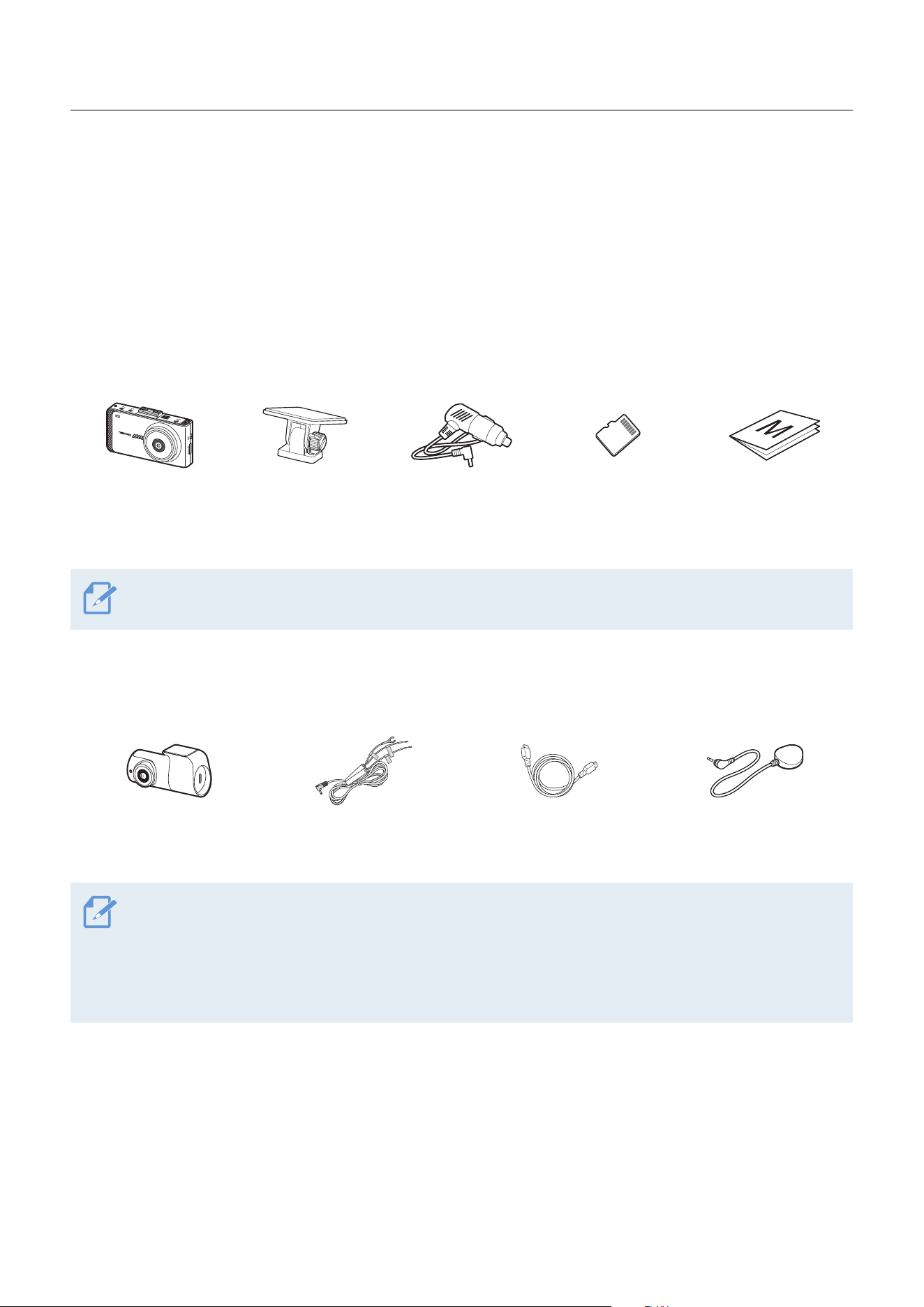
Ensure that all the items are included when you open the product box.
1.1.1 Standard items
Front camera
(main unit)
Mount Car charger
MicroSD
memory card
Warranty/
CS information
The standard items may change without prior notice.
1.1.2 Accessories (sold separately)
ACC
BATTERY
GND
Rear camera Hardwiring cable Rear camera cable External GPS receiver
• GPS reception may be affected by interference from the vehicle's windshield, particularly those treated
with anti-UV protective coating, or built-in defroster. It is recommended that an external GPS receiver is
used when the GPS signal is weak or when you cannot get a GPS signal.
• To connect the external GPS receiver to the front camera, carefully remove the front camera's GPS port
cover with a pry tool or a small flat-head screwdriver to access the port.
Product overview
9
1.2 Part names
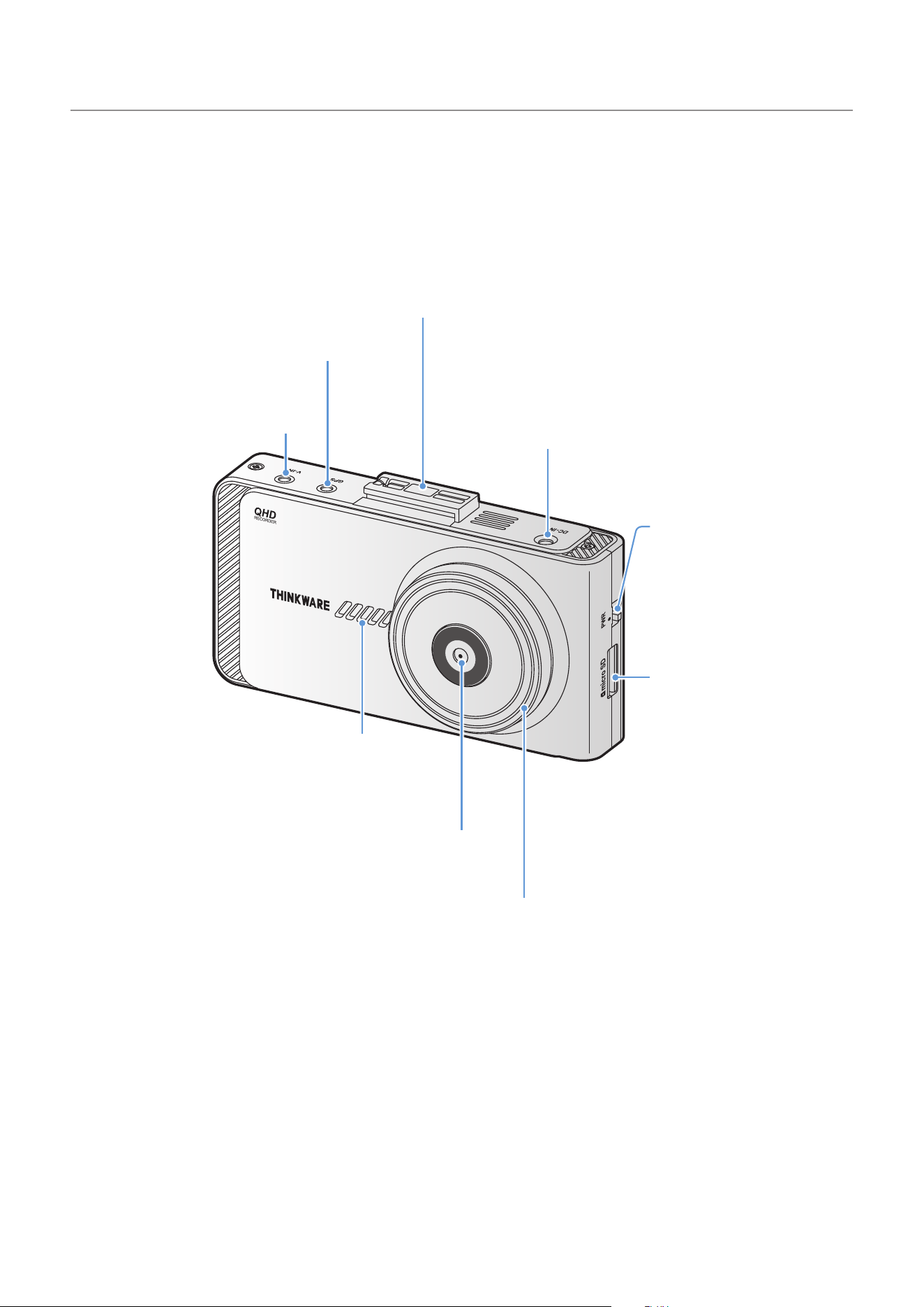
1.2.1 Front camera (main unit) - front view
Fixing bracket connector
Used to connect the fixing bracket.
V-IN input port
Used to connect the rear camera.
GPS connector
Used to connect the external GPS module
(optional) for additional features.
DC-IN power connector
Used to connect the power cable.
Front camera lens
Records the front view.
Security LED
Indicates that the video is being recorded.
Speaker
Outputs the voice guide and buzzer
sounds to indicate the product’s status.
Power switch
• Slide down to turn on the
product.
• Slide up to turn off the
product.
Memory card slot
Insert a memory card to
save recordings
Product overview
10
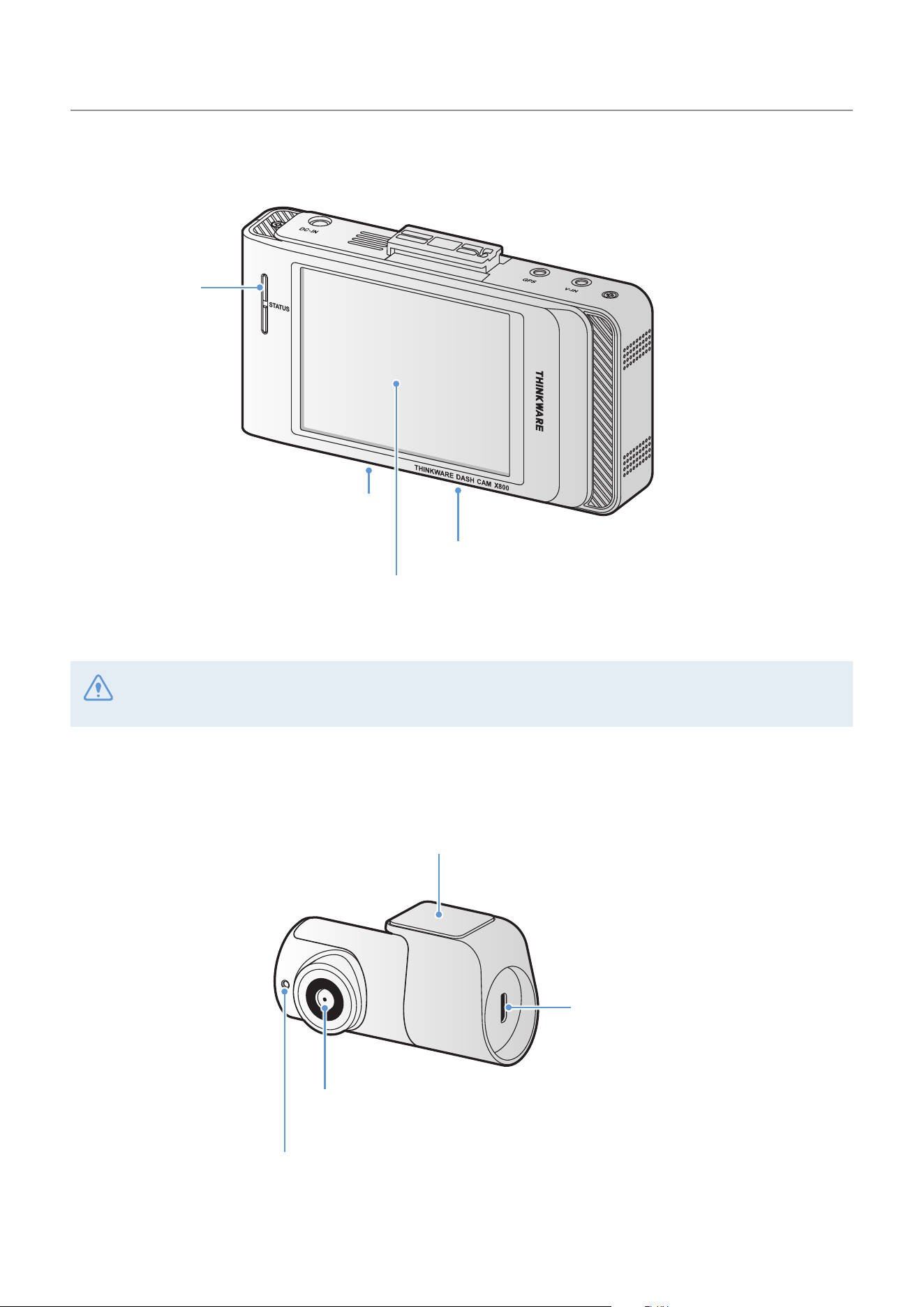
1.2.2 Front camera (main unit) - rear view
Reset button
Insert the tip of a sharp object to reset the product
when an error occurs.
Touchscreen
Used for setting the product or
viewing the recorded videos.
Microphone
Used for voice recording.
Status LED
Indicates the
operating status
of the product.
Gently touch the screen to make inputs on the touchscreen. The screen may be damaged if you apply
excessive force to the screen or if you touch the screen with a sharp object.
1.2.3 Rear camera (optional)
Adhesive fixing bracket
Used to fix the rear camera in the vehicle.
Rear camera lens
Records the rear view.
Security LED
Indicates that the video is being recorded.
Connection port
Used to connect the rear camera cable.
Product overview
11
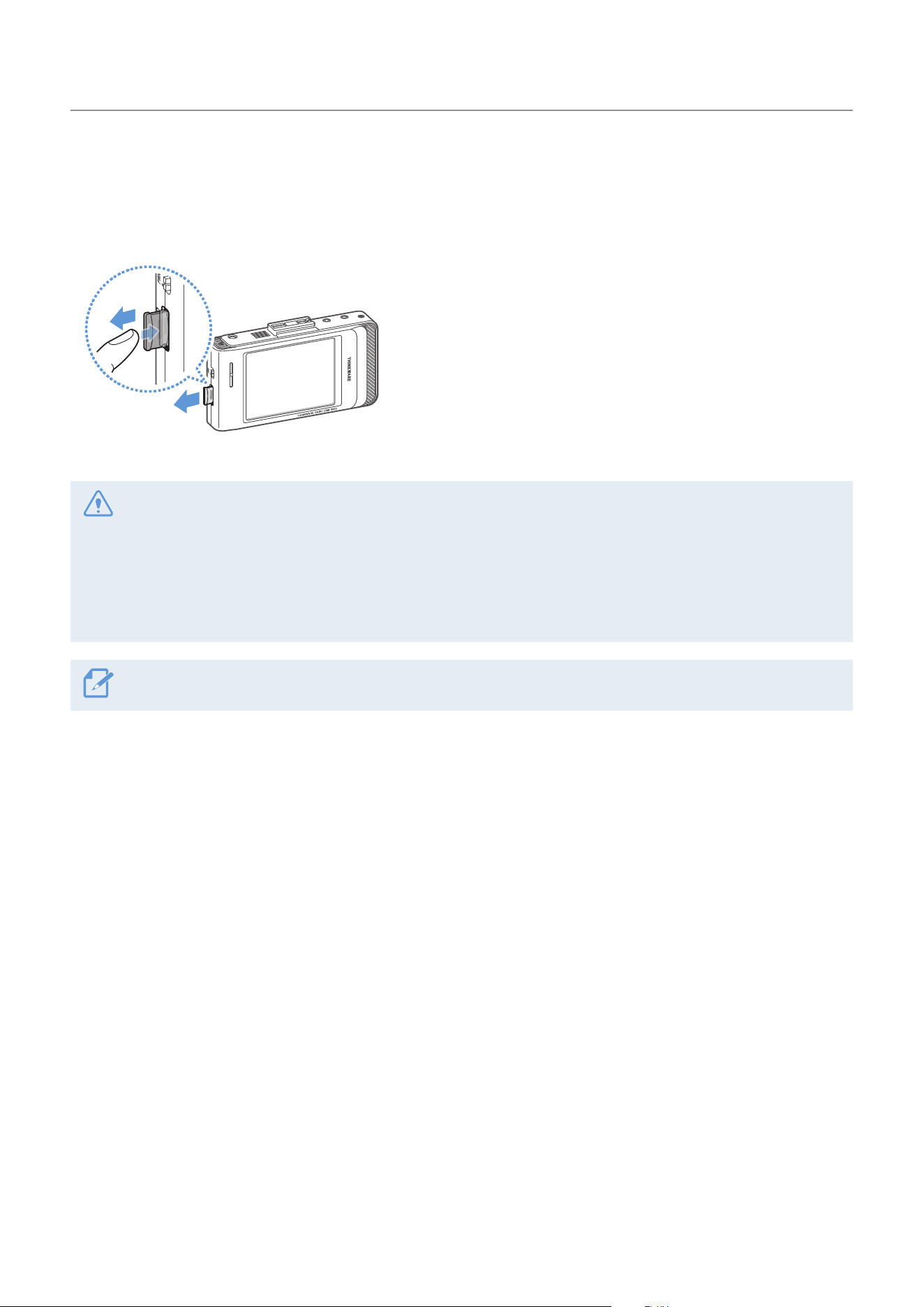
1.3 Removing and inserting the memory card
Follow the instructions to remove the memory card from the product or to insert the memory card into the
product.
Before removing the memory card, ensure that the product
is turned off. Gently push the bottom of the memory card
with your fingernail to release it, and then remove it from the
product.
To insert the memory card into the memory card slot, ensure
that the metal contacts on the memory card are facing toward
the lens of the product, and insert it into the slot until you hear
a click.
• Ensure that the product is turned off before removing the memory card. The recorded video files may be
corrupted or lost if you remove the memory card while the product is on.
• Ensure that the memory card is in the correct direction before inserting it into the product. The memory
card slot or the memory card may be damaged if it is inserted incorrectly.
• Use only authentic memory cards from THINKWARE. THINKWARE does not guarantee the compatibility and
normal operation of third-party memory cards.
To prevent loss of recorded video files, periodically back up the video files on a separate storage device.
12
2. Installing the product
2.1 Installing the front camera (main unit)
Follow the instructions to properly install the product.
2.1.1 Selecting an installation location
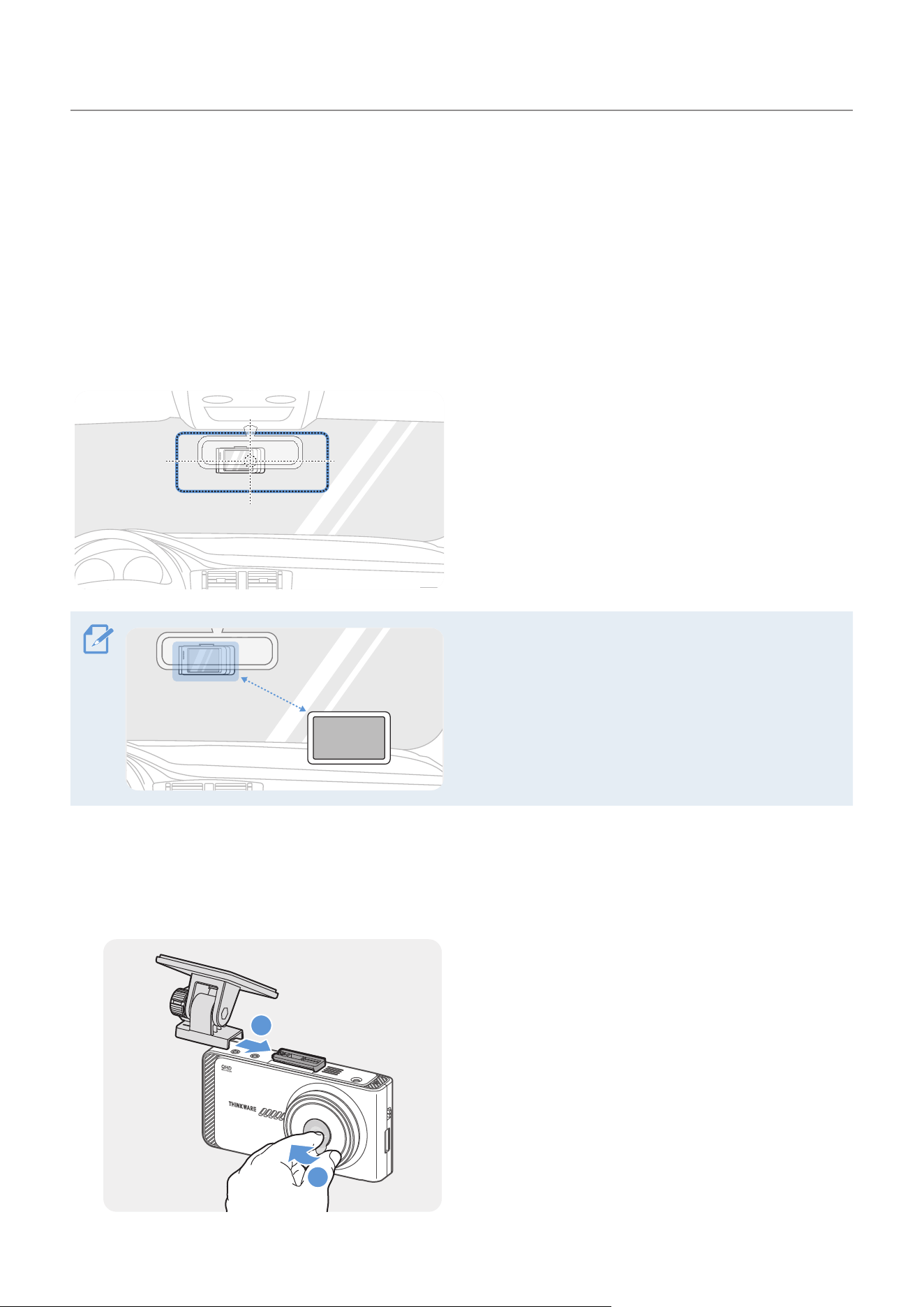
Select an installation location that can record the
entire view in front of the vehicle without obstructing
the driver’s vision. Ensure that the front camera lens
is located in the center of the windshield.
20 cm
If a GPS navigating device is installed on the dashboard,
its GPS reception may be affected depending on the
dashboard camera’s installation location.
Adjust the installation location of the GPS navigating
device to ensure that the two devices are separated by
at least 20 centimeters (approximately 8 inches).
2.1.2 Securing the product
Follow the instructions to secure the product at the installation location.
1
2
1
➊➊
➋➋
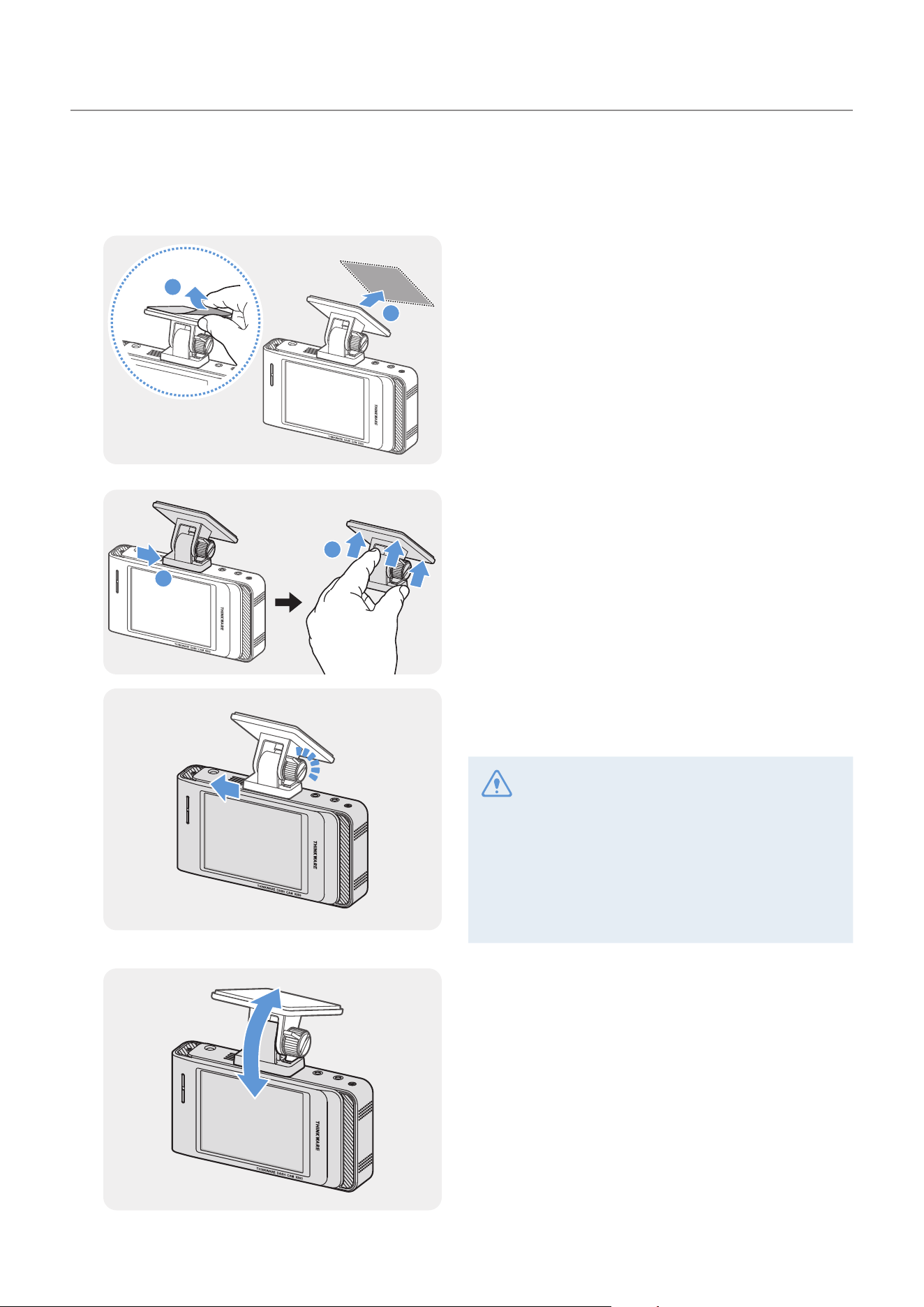
Align the mount to the mount rail on the product,
and then slide it until you hear a click (
➊➊
). Then,
carefully remove the protective film (
➋➋
).
Installing the product
13
2
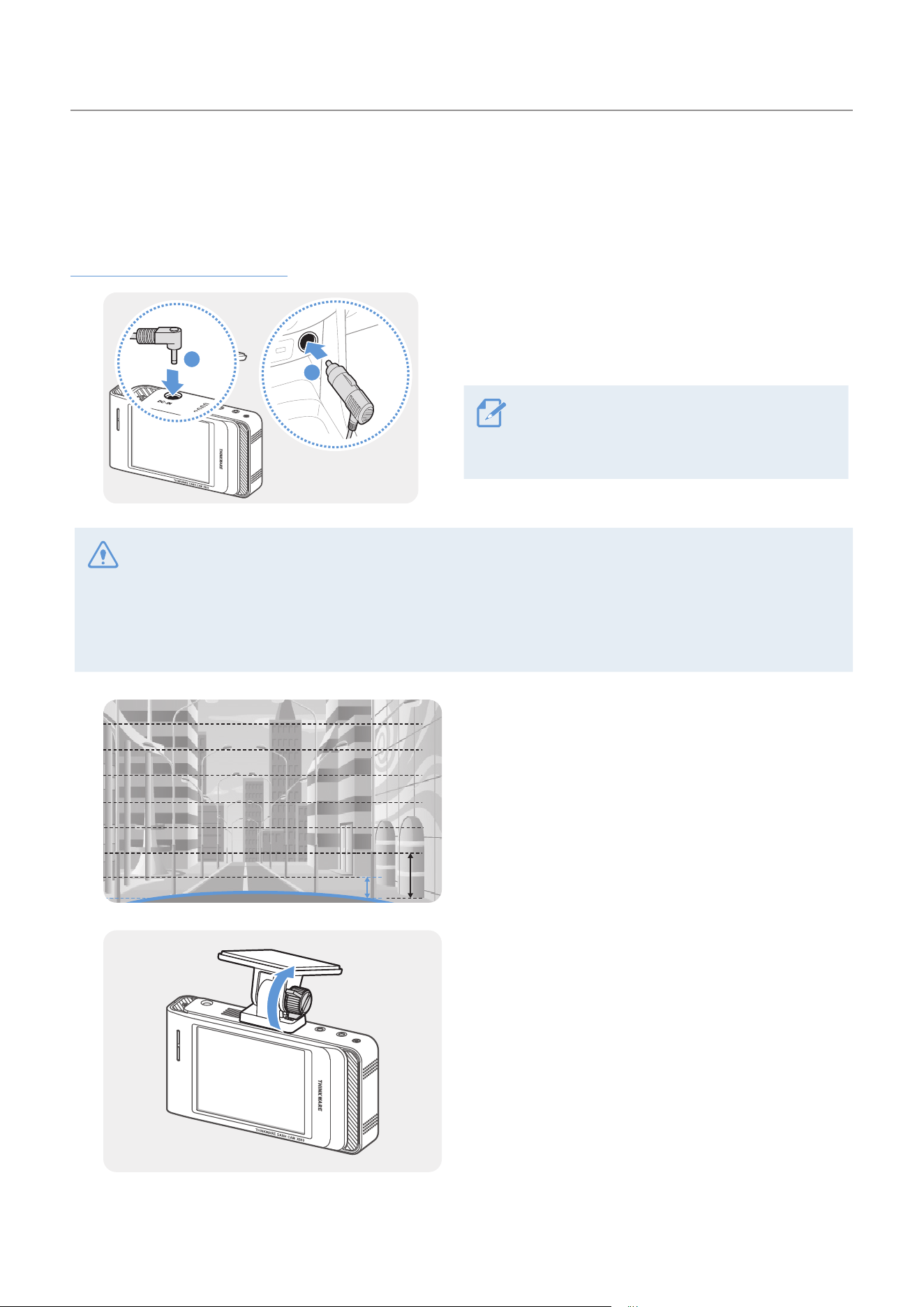
After determining the installation location, wipe the installation location on the windshield with a dry
cloth.
3
2
1
➊➊
➋➋
Remove the protective film from the adhesive mount,
and then press the mount to the installation location.
4
1
2
➊➊
➋➋
Remove the product from the mount and push the
mount against the windshield to ensure that the
mount is firmly fixed.
5
Align the product to the mount, and then slide it into
the locking position until you hear a click.
• The product may fall and be damaged during
vehicle operation if it is not firmly fixed to the
mount.
• If you need to remove the mount from the
windshield to alter the installation location,
be careful not to damage the windshield’s film
coat.
6
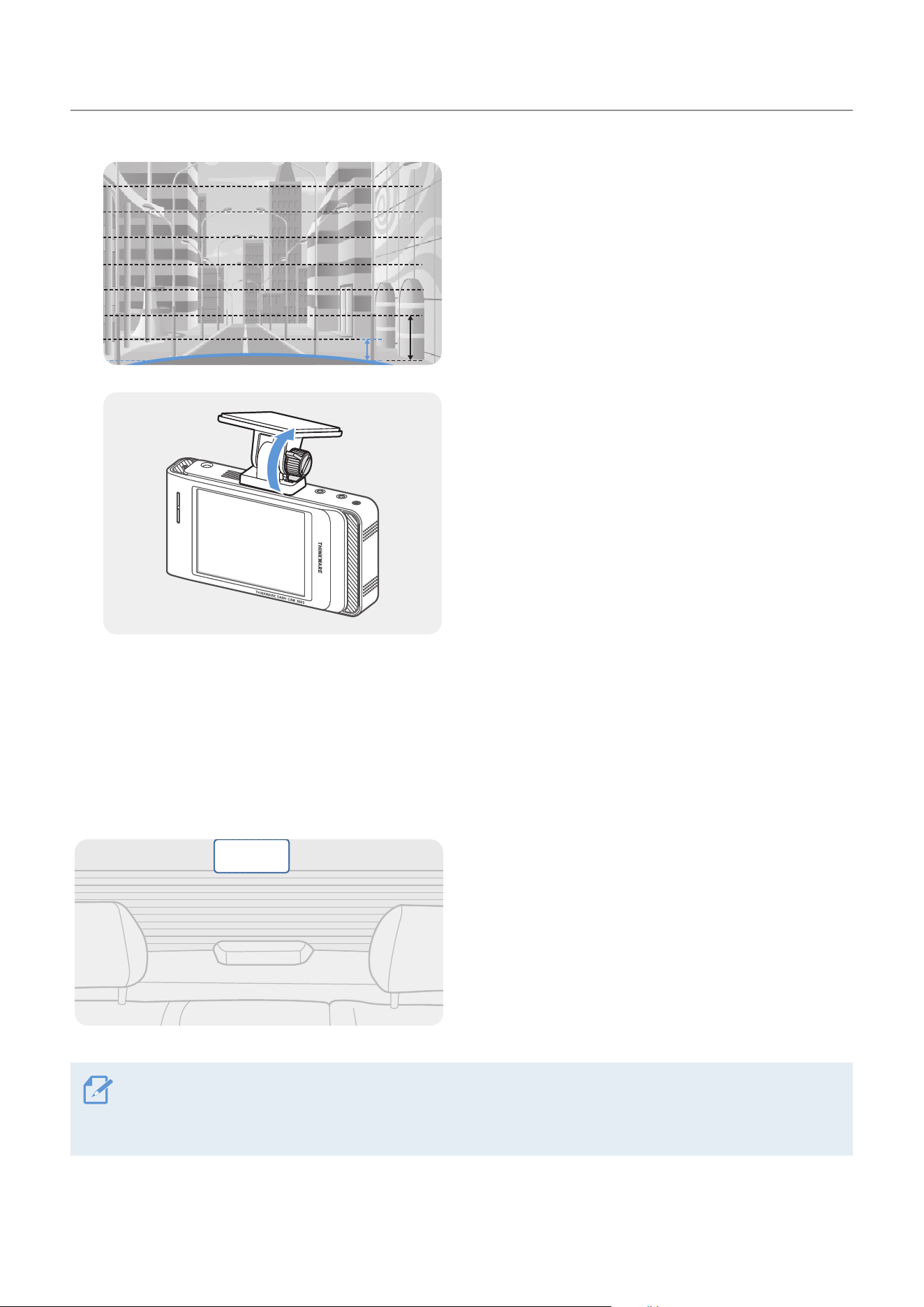
Set the vertical angle of the camera appropriately.
The camera angle must be adjusted again after the
installation is complete. Do not completely tighten
the fixing screw yet.
Installing the product
14
2.1.3 Connecting the power cable
When the engine and electrical accessories are turned off, connect the car charger or the continuous
power cable (optional) to the product.
Connecting the car charger
1
2
1
➊➊
➋➋
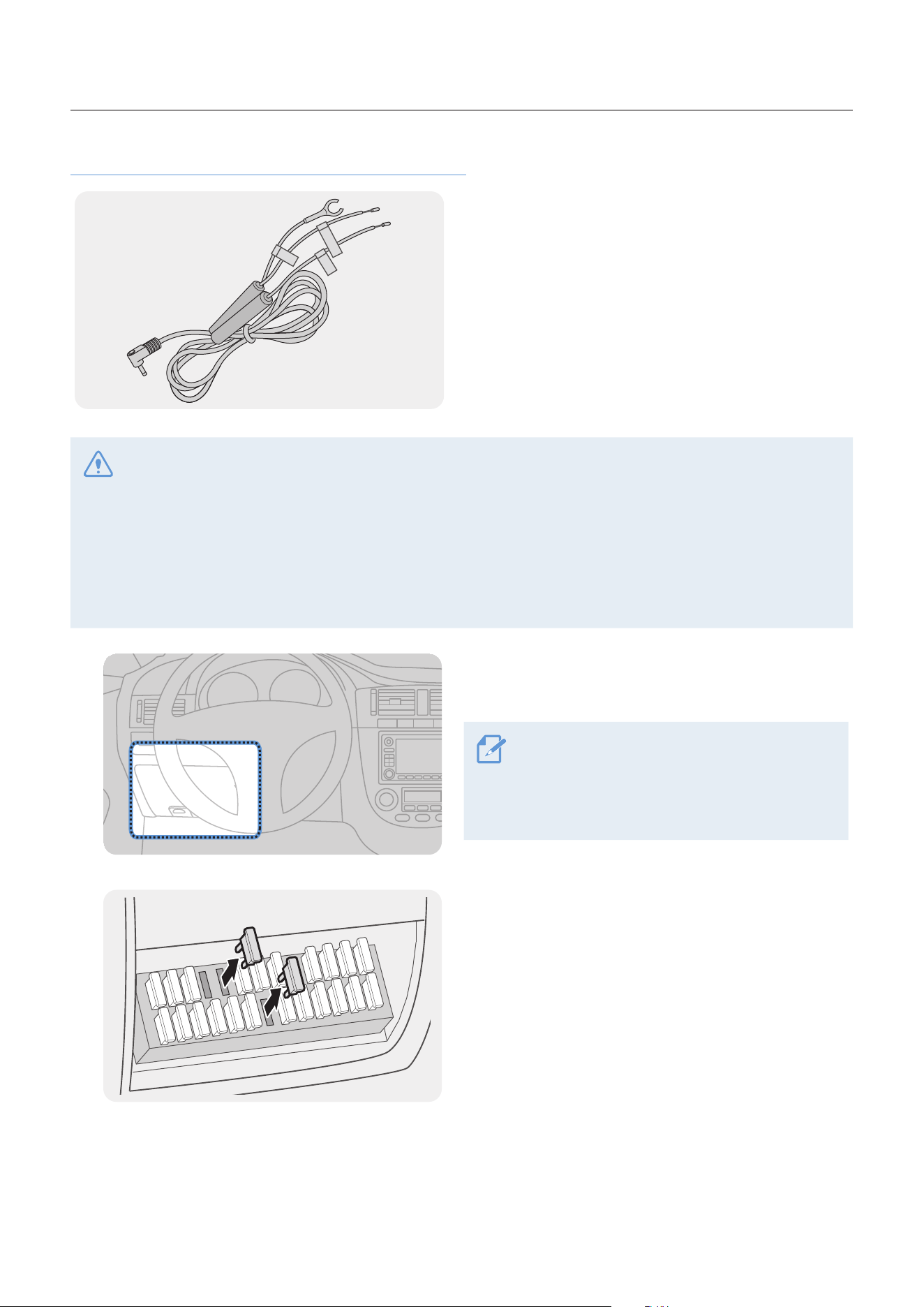
Connect the car charger to the product’s DC-IN
power port and insert the cigar jack into the vehicle’s
power socket.
The location and specifications of the
power socket may differ by vehicle make
and model.
• Use the authentic THINKWARE car charger. Use of third party power cables may damage the product and
result in electrical fire or electrocution due to the voltage difference.
• Do not cut or modify the power cable yourself. Doing so may damage the product or the vehicle.
• For safe driving, arrange the cables to prevent the driver's vision from being obstructed or interfering with
driving. For more information about arranging cables, visit www.thinkware.com.
2
1/8
1/4
Adjust the camera angle so that the hood of the
vehicle covers 1/4 - 1/8 of the screen while viewing
the live view on the LCD screen, as shown in the
image to the left.
3
Tighten the screw of the mount firmly.
Installing the product
15
Connecting the continuous power cable (optional)
ACC
BATTERY
GND
If you connect the product to the vehicle via the
continuous power cable, the camera continues
operating even when the vehicle is not operating
(parking mode). In parking mode, the camera detects
impacts to the vehicle and nearby motion and
records video.
For more information about parking mode, refer to
"3.6 Using parking mode" on page 23.
• The continuous power cable must be professionally installed in the vehicle by a trained mechanic. Contact
an authorized service center to connect the continuous power cable to the vehicle. If the product is not
installed properly, the product may be damaged or an electrical fire or electrocution may occur.
• Use the authentic THINKWARE continuous power cable only. Using other manufacturer’s cable may
damage the product or cause electrocution due to the voltage difference.
• When connecting the continuous power cable, pay special attention to wiring. If the wires are connected
incorrectly, the product or the vehicle may be damaged.
1
Find the vehicle’s fuse box. Usually the fuse box is
installed under the driver’s seat.
The location of the fuse box may differ
depending on the make and model of the
vehicle. For more information, refer to your
vehicle’s owner’s manual.
2
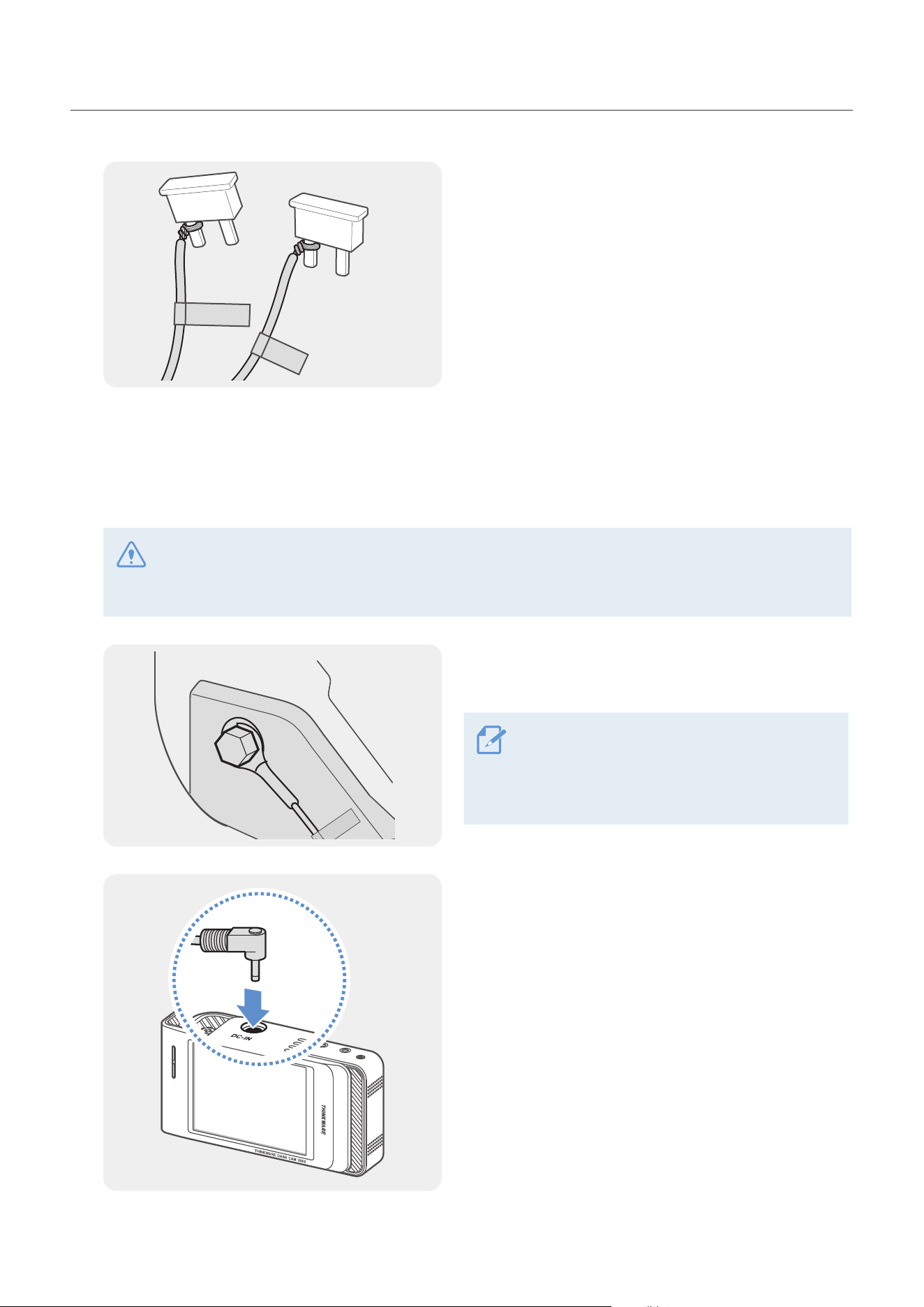
Open the fuse box, find the continuous power
terminal (which supplies power when the vehicle
is off) and the ACC terminal (which supplies power
when the ignition status is "ACC ON") by using an
electrical tester, and detach the fuses from the
terminals.
Installing the product
16
3
BATTERY
ACC
Connect the BATTERY wire to a fuse leg of the
continuous power terminal and connect the ACC
wire to a fuse leg of the normal (ACC) terminal.
4
Check the fuse panel’s input and output contact points by using an electrical tester.
5
Place the fuses back into their locations on the fuse panel, connecting each fuse leg with the wire to
the output contact point and taking care not to change the fuse position.
When you install the fuses on the fuse panel, the fuse legs for the BATTERY wire and the ACC wire
must be connected to the output terminals respectively. If the fuse leg with the wire is connected to an
input terminal, the product or vehicle may be damaged or electrical fire may result.
6
GND
Connect the ground wire (the GND wire) to a bolt
attached to a metallic part of the vehicle’s body.
Normally, the metallic bolt that you can
connect the ground wire to (the GND wire) is
fitted nearby fuse box or the driver seat’s door
interior.
7
Connect the continuous power cable to the product’s
DC-IN power connector and start the engine to make
sure the product operates normally.
Once the product is powered on, the LED indicator
and the voice guidance are turned on.
Installing the product
17
8
1/8
1/4
Adjust the camera angle so that the hood of the
vehicle covers 1/4 - 1/8 of the screen while viewing
the live view on the LCD screen, as shown in the
image to the left.
9
Tighten the screw of the mount firmly.
2.2 Installing the rear camera (optional)
Refer to the following instructions to properly install the rear camera.
2.2.1 Selecting an installation location
Select a location on the rear windshield where there
is no defrost grid wire and the camera can record
the entire rear view.
• For vehicles with a sunshade attached to the rear windshield, you must select a location where using the
sunshade will not interfere with camera operation.
• The adhesive part of the rear camera should not touch the defrost grid.
Installing the product
18
2.2.2 Securing the rear camera
Refer to the following instructions to secure the product to the installation location.
1
After determining the installation location, wipe the installation surface of the windshield with a dry
cloth.
Check the installation location before you secure the rear camera to the rear windshield. After
securing the rear camera to the windshield, it is hard to remove the camera or change the installation
location due to the strong adhesive.
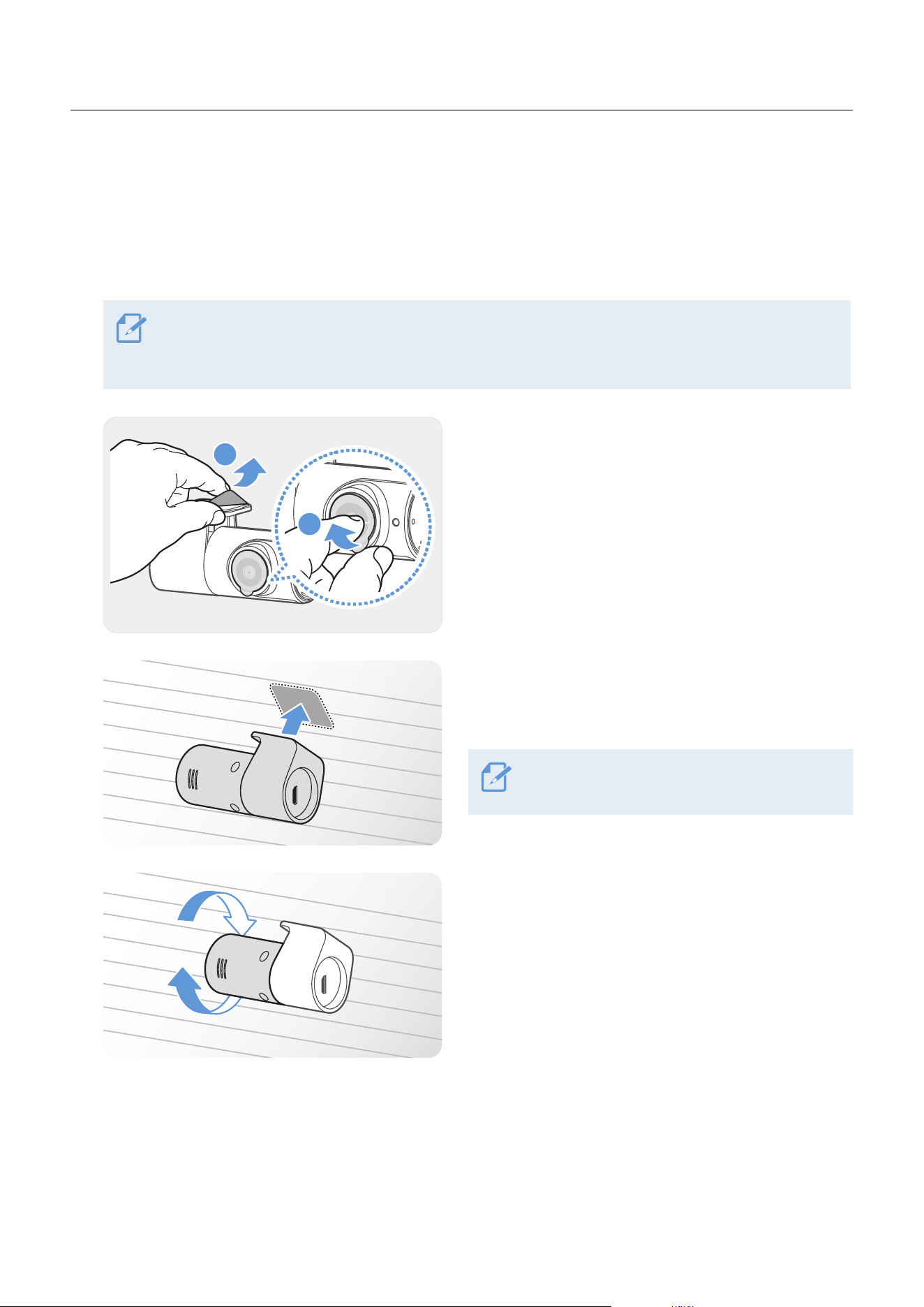
2
1
2
➊➊
➋➋
Remove the protective film from the adhesive mount
and camera lens.
3
THINKWARE
Attach the product with the THINKWARE logo facing
indoors and press the adhesive tape firmly to secure
the camera.
If the product is fixed in reverse, the rear view
will be recorded upside down.
4
THINKWARE
Adjust the camera’s vertical angle.
Installing the product
19
2.2.3 Connecting the rear camera cable
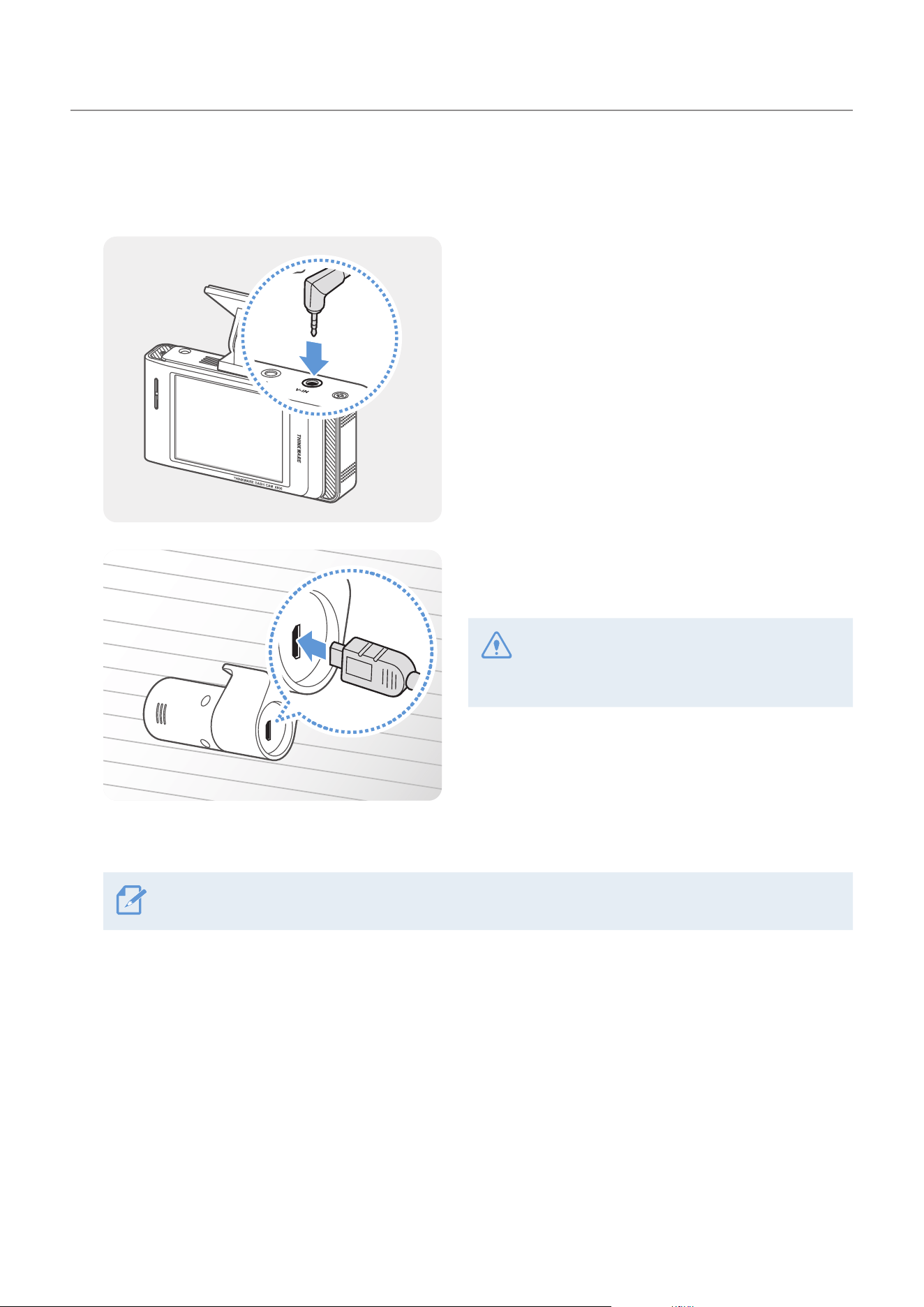
Power off the product and connect the rear camera cable to the front camera (main unit).
1
Connect one end of the rear camera cable to the
front camera’s V-IN port.
2
THINKWARE
Connect the other end of the rear camera cable to
the rear camera’s connection port.
For safe driving, arrange the cables to prevent
the driver’s vision from being obstructed or
interfering with driving.
3
Turn on the ACC or start the engine to check if the product is powered on. After the product is powered
on, the voice guidance will be turned on.
The product is powered on when the ACC mode is turned on or when the engine starts.
Installing the product
20
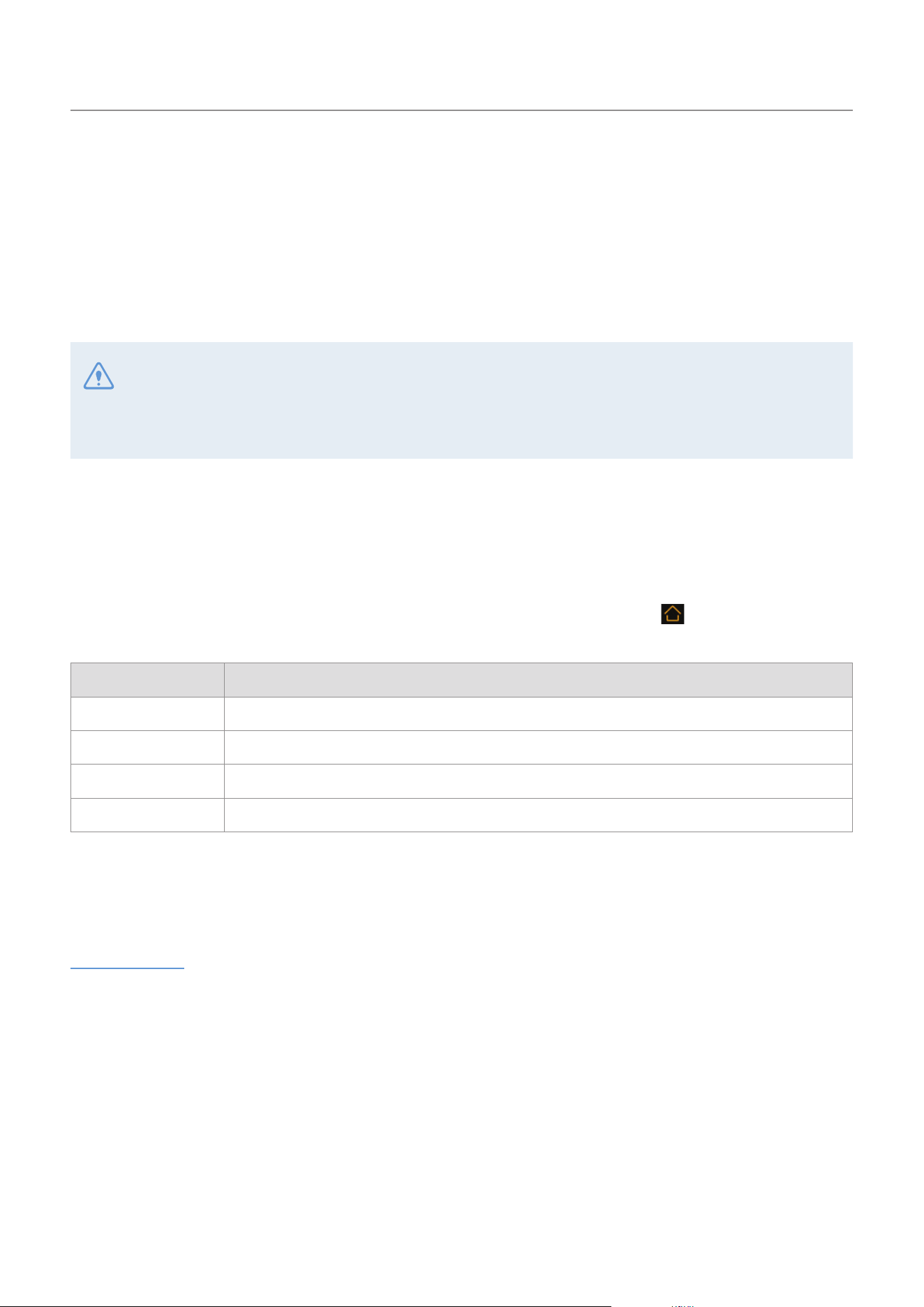
2.3 Installing the external GPS module (optional)
To activate the ADAS feature or record driving information (the speed and location), follow the instructions
and install the external GPS module on the upper part of the front windshield. Install the external GPS
module near the product, taking the module's cable length into account.
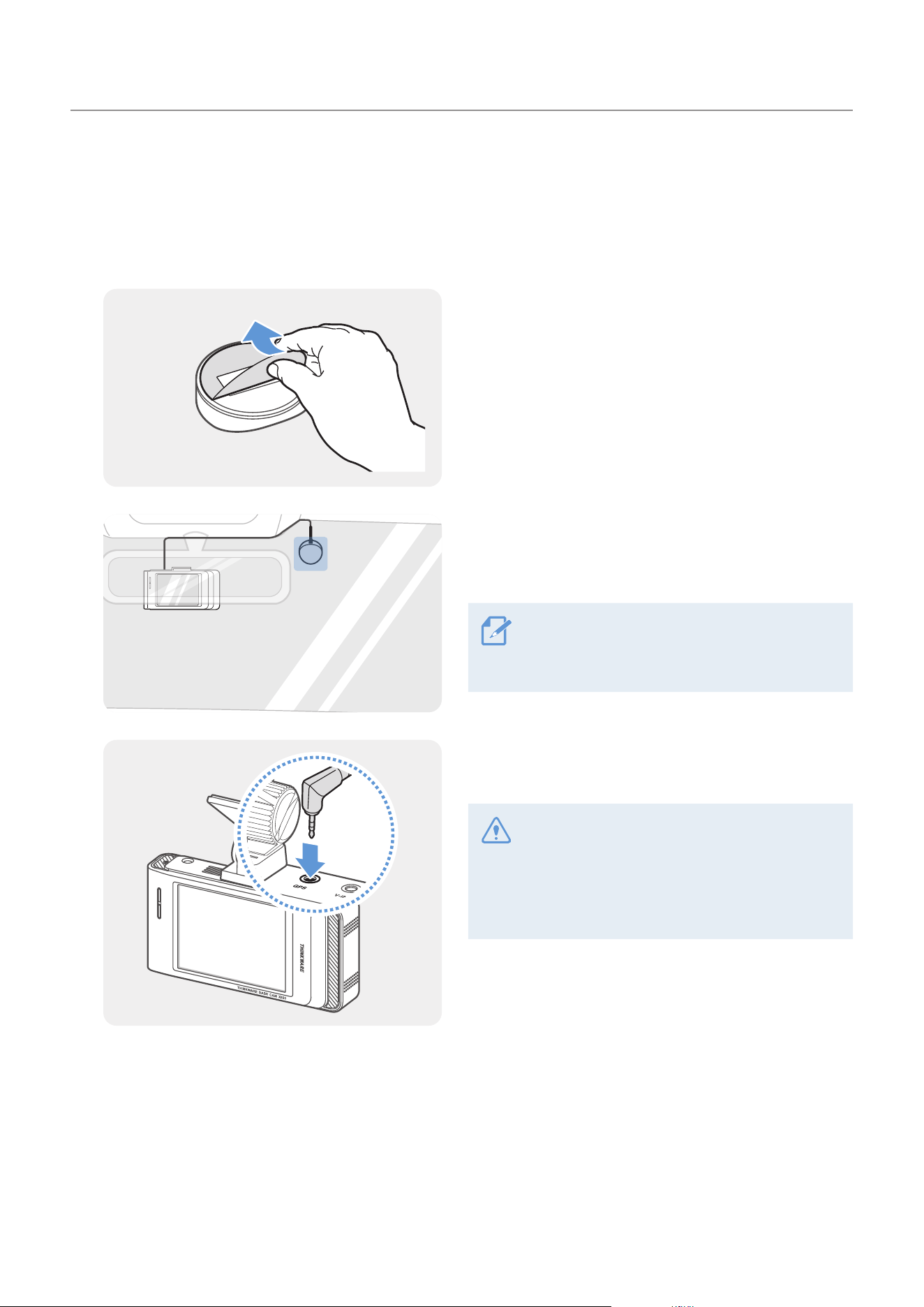
1
Remove the film from the back of the external GPS
module.
2
Attach the external GPS module's adhesive surface
to the upper part of the front windshield and press
the adhesive part firmly to secure it.
Before installation, make sure the external GPS
module's cable length is sufficient and check
the cable routing path.
3
Connect the external GPS module to the product’s
GPS connector.
Check the GPS connector location again
before connecting the module. If you connect
the external GPS module to the DC-IN power
connector, the pins inside the port may be
damaged.
4
Turn on the ACC or start the engine to check that the product is powered on. After the product is
powered on, the Status LED and the voice guide are turned on.
21
3. Using recording features
3.1 Turning the product on or off
The product is turned on automatically and continuous recording starts when you turn on the ACC or start
the engine.
• Wait until the product is completely booted up after turning it on, and then begin operating the vehicle. The
video recording does not begin until the product is completely turned on (booted up).
• If you want to turn off the product, slide up the Power switch. To turn the power on again, slide down the
Power switch.
3.2 Turning the LCD on or off
This product allows you to check recorded videos in real time on the LCD display by supporting the live
view feature.
You can set the time that the LCD will turn off automatically. Tap the Home menu (
) button on the Live
view screen
>
Settings
>
System Settings, and select the desired time from LCD Auto-Off.
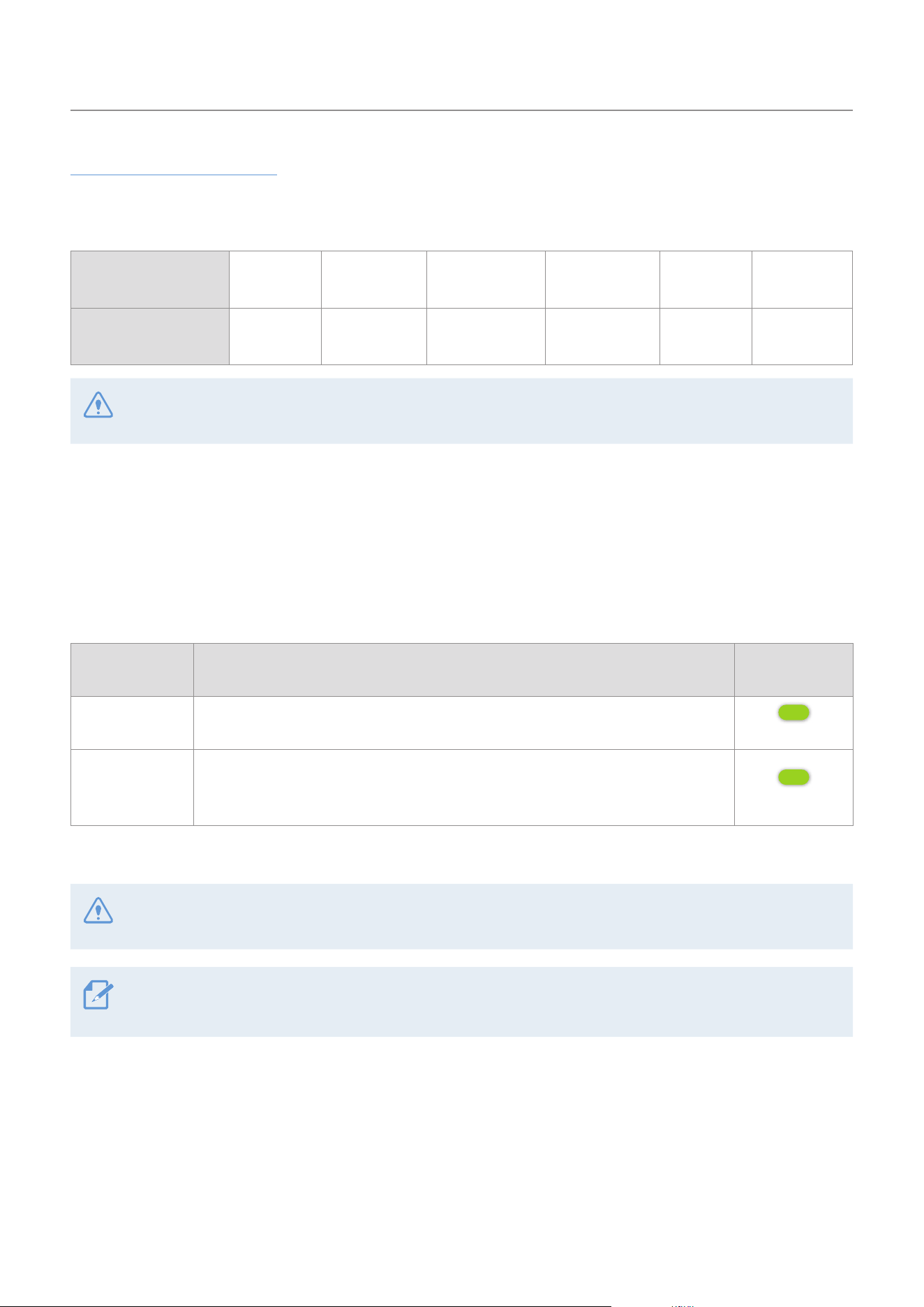
LCD Auto-Off option Operation description
30 sec. (default) The LCD will turn off automatically if you do not operate the product for 30 seconds.
1 min. The LCD will turn off automatically if you do not operate the product for 1 minute.
10 min. The LCD will turn off automatically if you do not operate the product for 10 minutes.
OFF The LCD is always on.
3.3 Learning about LED indicators and file storage locations
LED indicators
You can check the operating status, even when the LCD is turned off, by checking the LED indicators on the
rear of the product.
For more information about what the LED indicates in each recording mode, refer to the corresponding
section of the recording mode (the continuous recording, the manual recording, and parking mode recording).
Using recording features
22
Video file storage location
Videos are stored in the following folders according to their recording mode. The folder names displayed on
the screen and created in the memory card are as follows.
On the product screen Continuous
Continuous
Impact
Parking
recording
Parking
Impact
Manual
Recording
Saved
Videos
PC monitor
(in the memory card)
Driving Driving_Shock Parking Parking_Shock Manual Safety_Box
Play videos on the product or a computer only. If you play videos by inserting the memory card in devices
such as a smartphone or a tablet PC, the video files may be lost.
3.4 Using the continuous recording feature
Connect the power cable to the product’s DC-IN power port and then turn on the vehicle’s electrical
accessories or start the engine. The LED indicators and the voice guide are turned on, and the continuous
recording starts.
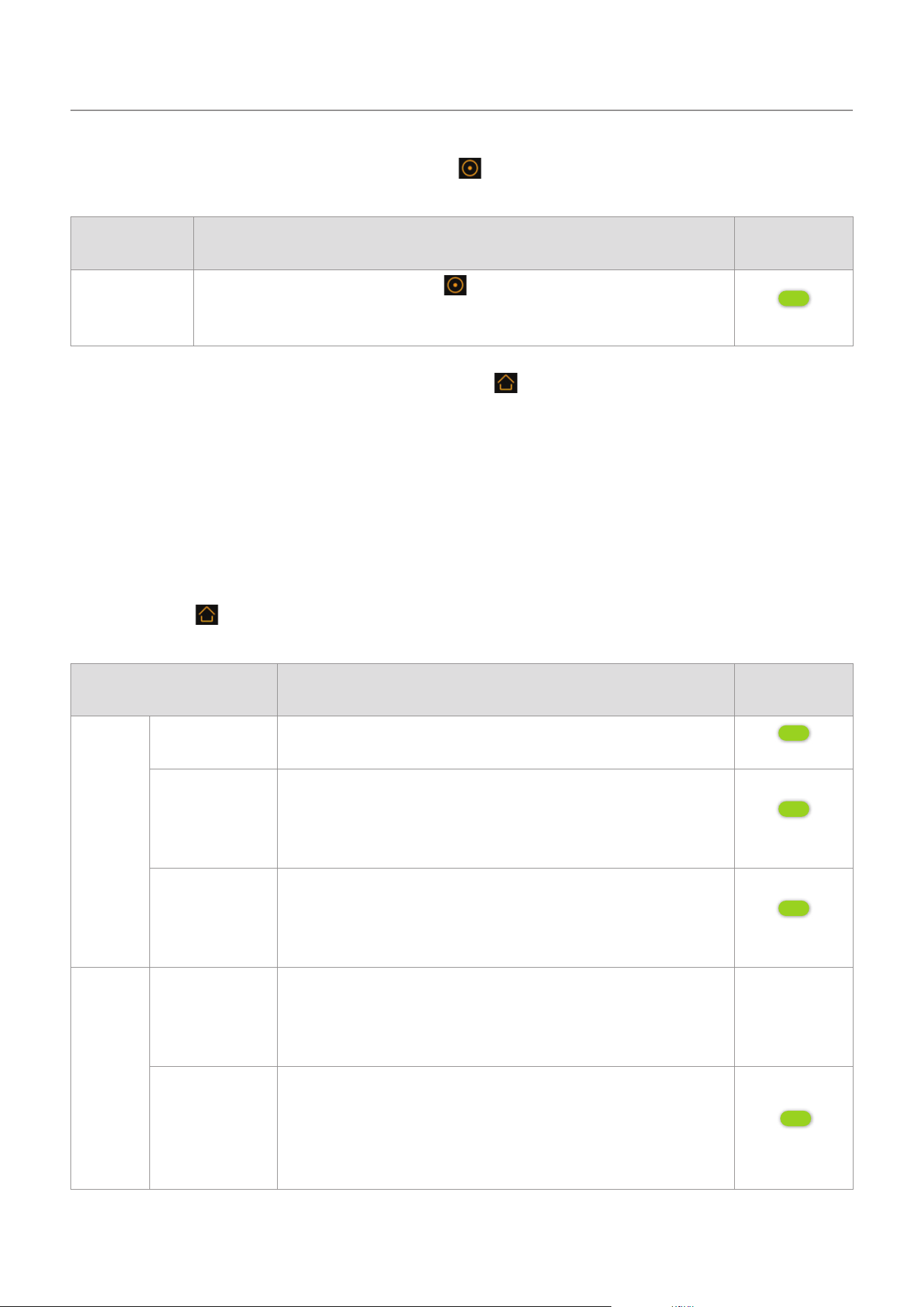
When the Live view screen is displayed, the continuous recording will start automatically.
Mode Operation description
Status LED
(STATUS)
Continuous
recording
During driving, videos are recorded in 1 minute segments and stored in the
Continuous folder.
(light on)
Incident
continuous
recording*
When an impact to the vehicle is detected, a video is recorded for 20 seconds,
from 10 seconds before the detection to 10 seconds after the detection, and
stored in the Continuous Impact folder.
(flickers)
* When an impact to the vehicle is detected during continuous recording, incident continuous recording starts with a
buzzer sound.
Wait until the product is completely booted up after turning it on, and then begin operating the vehicle. The
video recording does not begin until the product is completely turned on (booted up).
• When incident continuous recording starts, the buzzer sounds as a notification.
• To use all recording modes, you must insert a memory card into the product.
3.5 Recording manually
You can record a scene you want to capture while driving and store it as a separate file. Manually recorded
videos are stored in the Manual Recording folder to prevent important data loss due to insufficient storage.
Using recording features
23
To start manual recording, tap the manual recording ( ) button on the live view screen. Then, manual
recording will start with the voice guide.
Mode Operation description
Status LED
(STATUS)
Manual
recording
When you tap the manual recording (
) button, a video will be recorded for
20 seconds, from 10 seconds before to 10 seconds after pressing the button, and
stored in the Manual Recording folder.
(flickers)
To watch a manually recorded video, tap the Home menu (
) button on the Live view screen
>
File List
>
Manual recording, and select a video to play.
3.6 Using parking mode
When the product is connected to the vehicle via the continuous power cable, the operating mode is
switched to parking mode with the voice guide after the engine or electrical accessories are turned off.
(Default)
If you do not want to use parking mode or you want to change the mode settings, on the Live view screen,
tap Home menu (
) button
>
Settings
>
Rec. Settings. Refer to the following table to set the Parking Mode
options.
Option Operation description
Status LED
(STATUS)
Motion
Detection
No motion or
impact detected
Monitors movement in the area or impacts to the vehicle. Video
will be recorded only when motion or an impact is detected.
(flickers slowly)
Motion detected
When a moving object is detected while parking, a video is
recorded for 20 seconds, from 10 seconds before detection to
10 seconds after detection, And stored in the Parking recording
folder.
(flickers quickly)
Impact detected
When an impact is detected while parking, a video is recorded for
20 seconds, from 10 seconds before detection to 10 seconds after
detection, and stored in the Parking Impact folder. (The buzzer will
sound.)
(flickers quickly)
Time
Lapse
No impact
detected
A video is recorded at a rate of 2 fps for 10 minutes, compressed
into a 2-minute long file, and stored in the Parking recording folder.
Since the video file recorded with this option is small, you can
record a long video.
Off
Impact detected
When an impact is detected while parking, a video is recorded for
100 seconds at a rate of 2 fps, from the moment 50 seconds before
detection to 50 seconds after detection, and stored in the Parking
Impact folder after being compressed into a 20-second long file.
(The buzzer will sound.)
(flickers quickly)
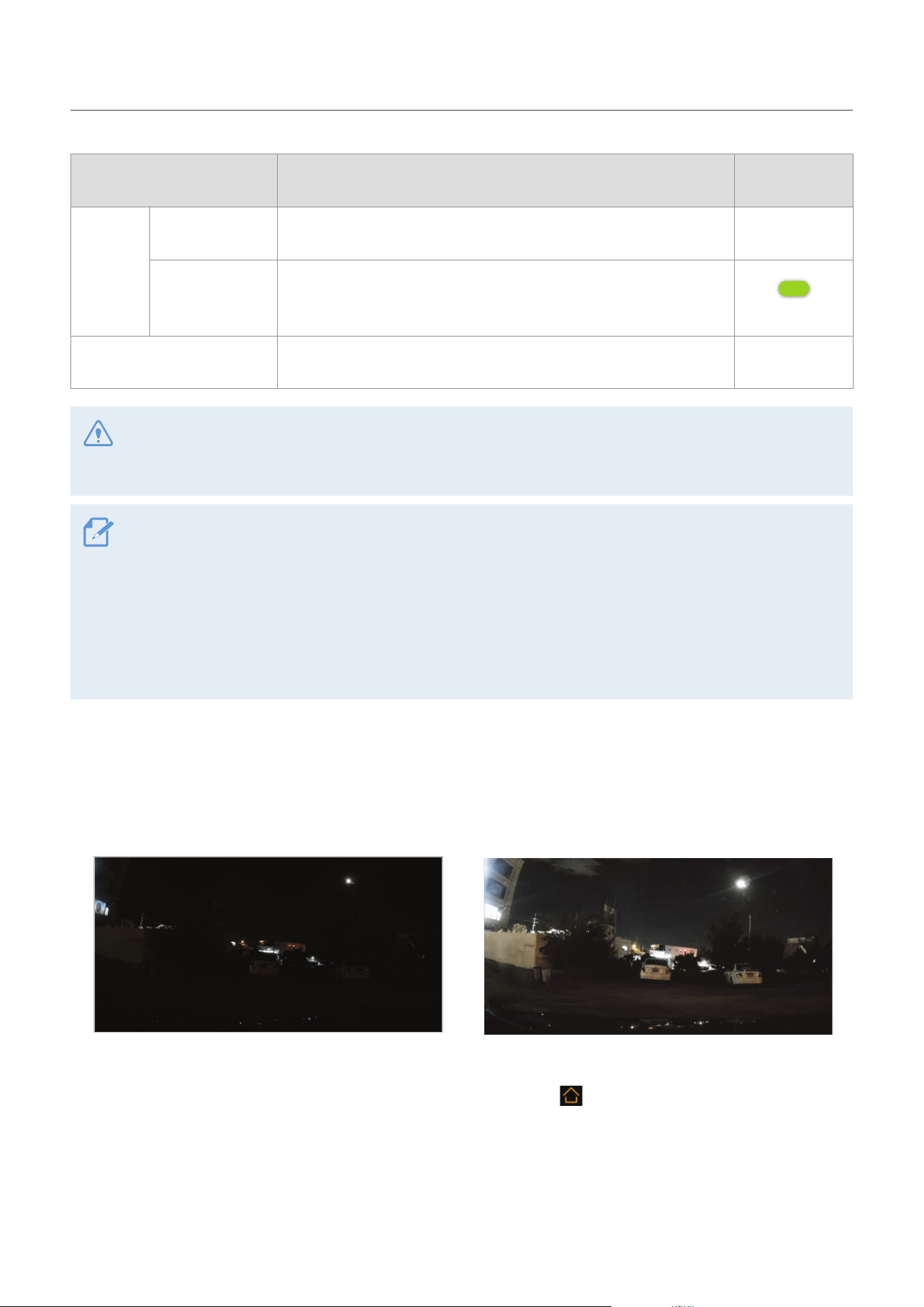
Using recording features
24
Option Operation description
Status LED
(STATUS)
Energy
saving
No impact
detected
Monitors movement in the area or impacts to the vehicle while
parking. Video will be recorded only when impact is detected.
Off
Impact detected
When an impact is detected while parking, a video is recorded for
20 seconds from within 1 second after detection and stored in the
Parking Impact folder. (The buzzer will sound.)
(flickers quickly)
OFF
The product is powered off when electric accessories and the
engine are turned off.
Off
If parking mode settings are changed, the videos in the Parking recording folder will be deleted. (The videos
in the Parking Impact folder will not be deleted.) To prevent data loss, back up all parking mode videos
before changing parking mode settings
• You cannot use Motion Detection, Time Lapse, or Energy Saving at the same time.
• Parking mode operates only when the continuous power cable is connected. For more information about
connecting to the continuous power cable, refer to "Connecting the continuous power cable (optional)".
• Depending on the battery charging status of the vehicle, the duration of parking mode may differ. If you
want to use parking mode for an extended period, check the battery level to prevent battery depletion.
• You can record bright and high resolution videos while parking at night by activating the Super night vision
feature.
3.7 Using the Super night vision feature
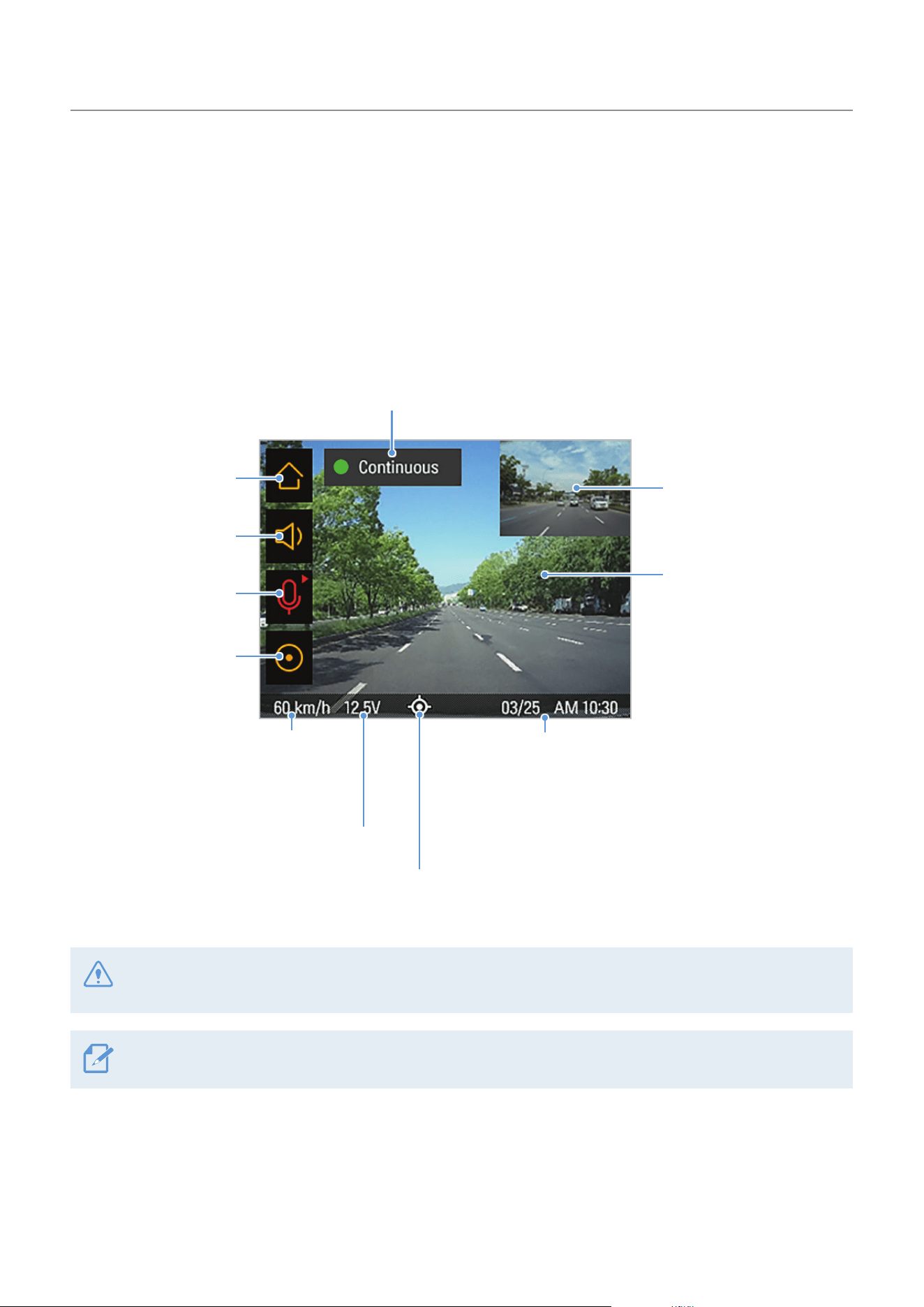
With the Super night vision feature, you can record videos that are brighter than videos recorded without
this feature. The Super night vision feature is enabled by image signal processing (ISP) to improve the
definition of videos recorded while driving or parking at night.
<When Super night vision is deactivated> <When Super night vision is activated>
1
To activate the Super night vision feature, tap the Home menu ( ) button on the Live view screen
>
Settings
>
Rec. Settings, and then tap the setting button next to Super Night Vision.
2
Select a check box of Continuous Mode or Parking Mode (or both) to apply the Super night vision feature.
Using recording features
25
3.8 About the screen layout
The followings are layout descriptions of the live view and home screens.
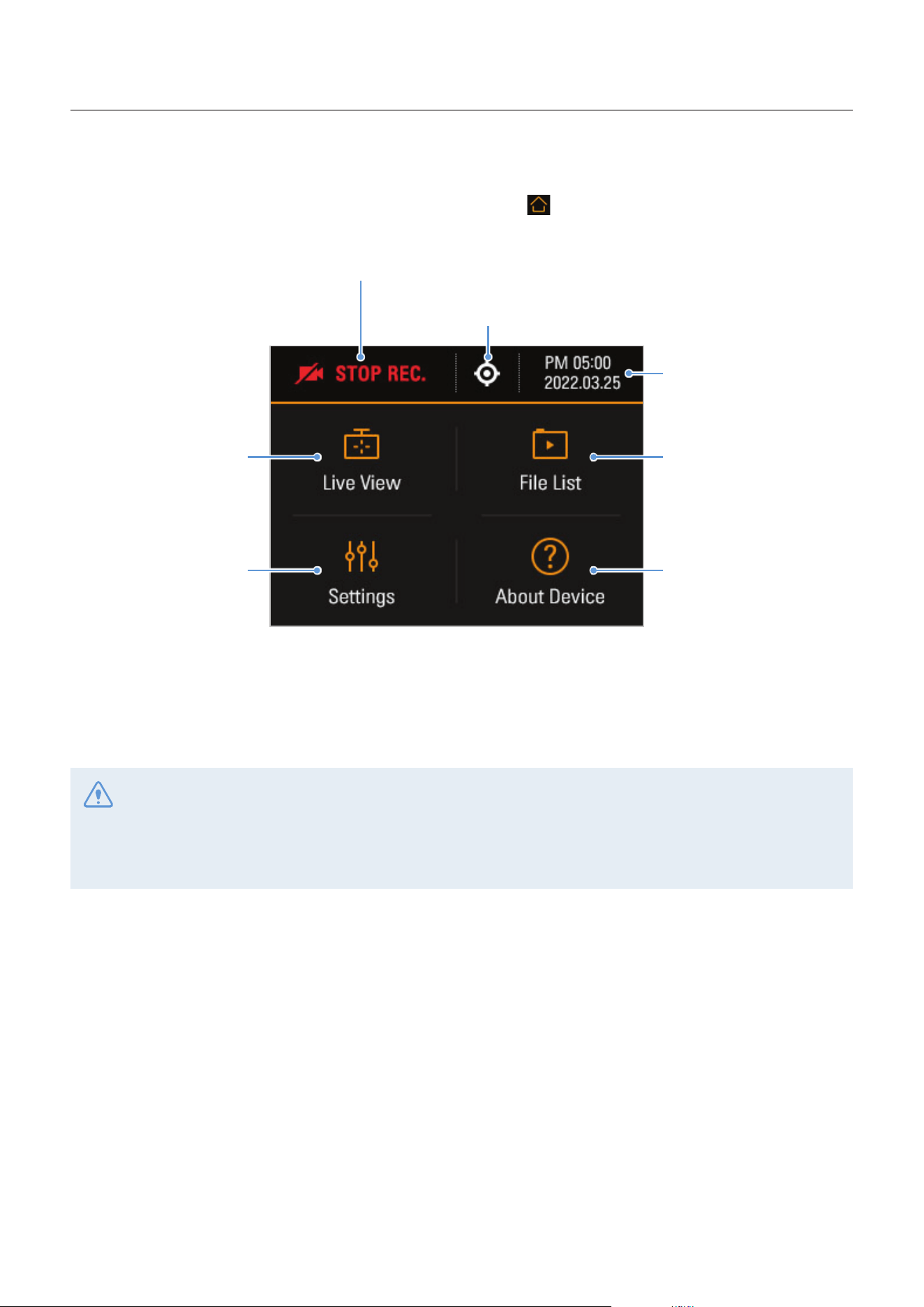
3.8.1 Live view screen
On the Live view screen, you can view the currently recorded video and operate the product by tapping on
the LCD display. When you turn on electrical accessories and start the engine, the Live view screen will be
displayed.
Displays the video that the
rear camera is recording
Displays the current recording status.
Displays the video that the
front camera is recording.
Tap the screen to hide or
display the Menu buttons.
Start manual recording.
Move to the Home
screen.
Turn on or off the voice
guidance.
Activate or deactivate
the voice recording
feature.
Displays the current vehicle voltage.
Displays the GPS icon when the external
GPS (optional) is installed.
Displays current driving speed
when the external GPS (optional)
is installed.
Displays the current date and time.
Wait until the product is completely booted up after turning it on, and then begin operating the vehicle. The
video recording does not begin until the product is completely turned on (booted up).
If you set LCD Auto-off to OFF, the screen will be kept on, and power consumption will increase.
Using recording features
26
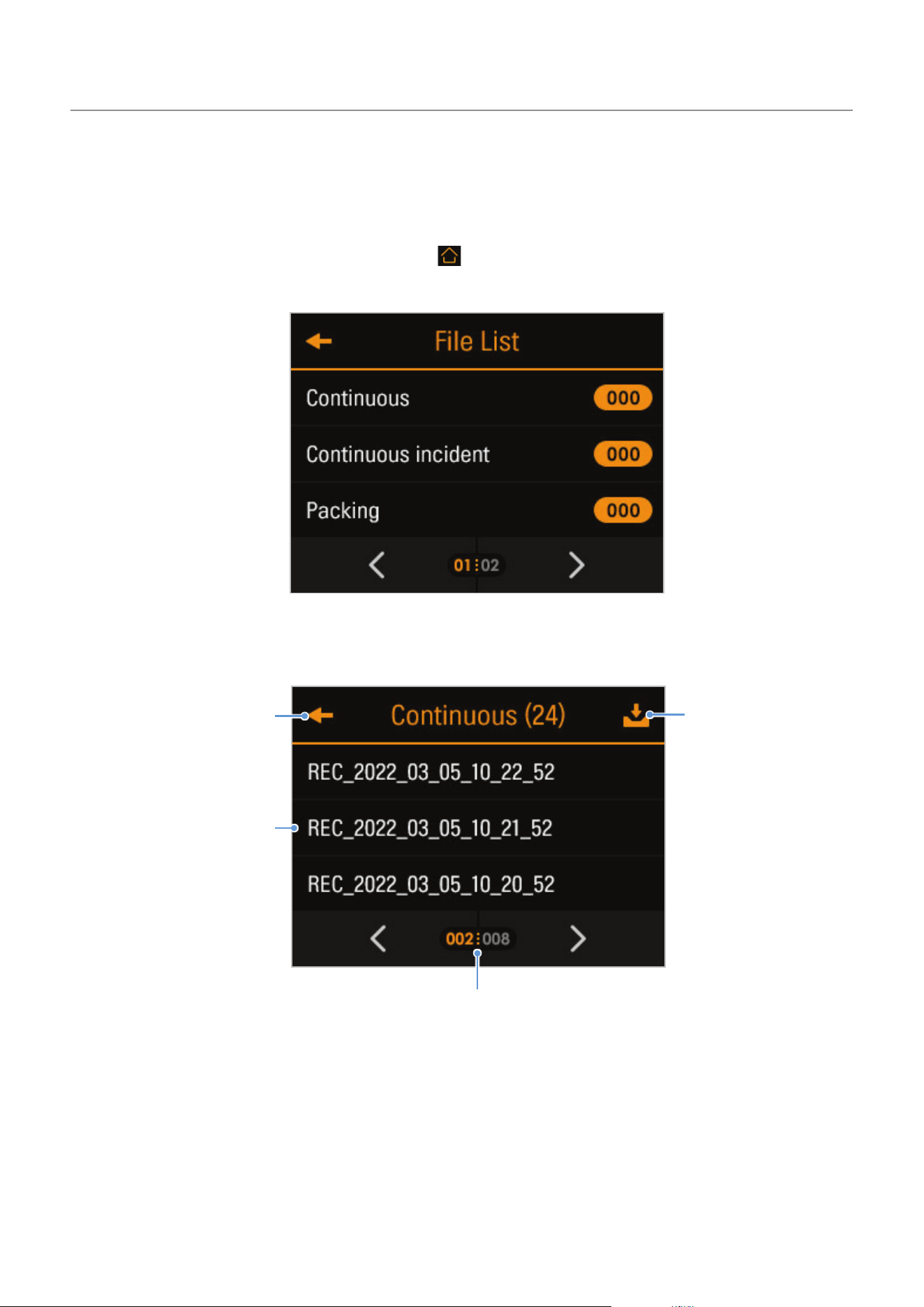
3.8.2 Home screen
You can move to the Home screen by tapping the Home menu (
) button on the Live view screen.
Displays the GPS icon when the external
GPS module (optional) is installed.
Displays the current recording status.
Displays the current date
and time.
View and play the
recorded videos.
(Refer to "3.9 Playing the
videos" on page 27.)
Move to the Live view
screen.
Product information and the
introduction to the product
features are provided.
(Refer to "6. Accessing the
product information" on
page 36.)
Configure the system
and features.
(Refer to "5. Settings"
on page 33.)
*optional
• Stop your vehicle in a safe location before operating the product.
• While operating the home screen, the product will stop recording.
• Play videos on the product or a computer only. If you play videos by inserting the memory card in devices
such as a smartphone or a tablet PC, the video files may be lost.
Using recording features
27
3.9 Playing the videos
You can play and watch recorded videos on your product. Follow the instructions to play the videos.
1
On the Live view screen, tap the Home menu ( ) button
>
File List. The number of videos categorized
by the recording mode will be displayed.
2
When you select a category, the video file list will appear. Select the video you want to play.
Move to the File list
screen.
Displays a list of
recorded videos.
Move the video to the
Archive.
Scroll through the list to search for a video file.
Using recording features
28
3
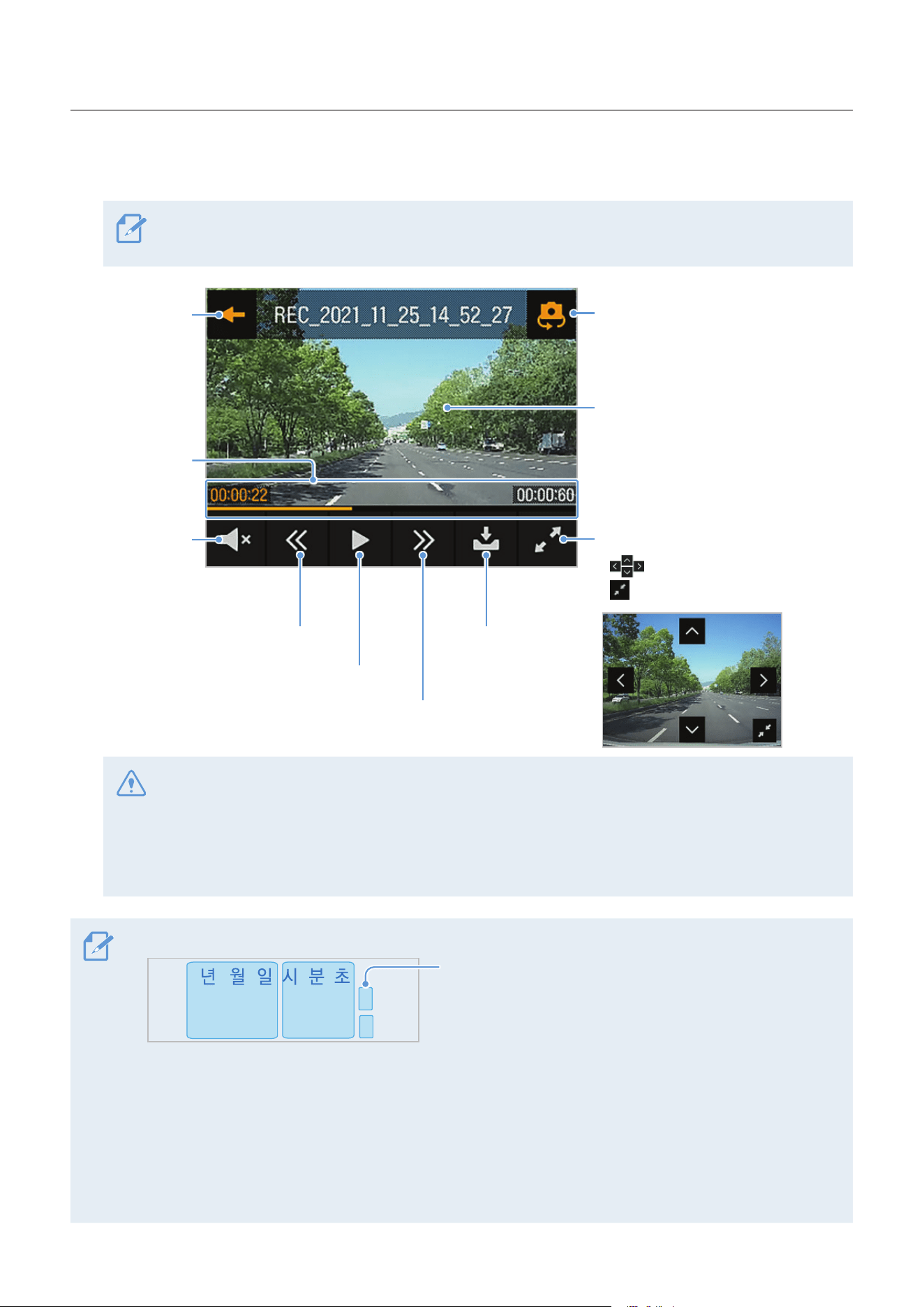
Tap a button on the playback screen to control the video player or other functions.
If you touch the playback area of the LCD display, the screen will be switched to full screen mode. To
exit full screen mode, touch the screen again.
Videos are played here.
Tap the screen to hide or display the
Menu buttons.
Magnify the current video by 3 times.
• : Move in the selected direction
•
: Close the magnification screen
Move to
the File list
screen.
Turn the
video sound
on or off.
Displays the
playback
status.
Play the previous file. Move the
current video
to the Archive.
Play or pause a video.
Play the next file.
Switch to the rear camera video view.
• While you are checking the video file list or playing a video, the product will stop recording.
• Play videos on the product or a computer only. If you play videos by inserting the memory card in
devices such as a smartphone or a tablet PC, the video files may be lost.
• During playback, vehicle license numbers may not be identified due to the relative speed of a vehicle
or lighting conditions.
• A file name is composed of the recording start date and time, and the recording option.
REC_2022_05_22_16_38_07_
F.MP4
REC_2022_05_22_16_37_07_R.MP4
Recording conditions
• F: Front camera
• R: Rear camera
• If the memory card storage gets shortened while recording, the previously recorded videos are deleted for
storage sufficiency. To prevent data loss, back up important videos on additional storage devices.
- When the continuous recording storage is insufficient: The oldest continuous recording file will be
deleted and replaced with a new video file.
Event video files (incident recording and manual recording files) will not be deleted.
- When the storage is insufficient (for event video files only): Event video files will be deleted
chronologically from oldest to most recent.
29
4. Using Advanced Driver Assistance Systems
(ADAS) (optional)
ADAS supports a lane departure warning system (LDWS), a forward collision warning system (FCWS), an
urban forward collision warning system (uFCWS), and a forward vehicle start alarm (FVSA).
To use ADAS, you must install the external GPS module (to provide vehicle location and operation
information). For more information, refer to "2.3 Installing the external GPS module (optional)" on page 20.
Use the authentic THINKWARE GPS module (optional). If you use another manufacturer's cable or GPS
module, the product may be damaged or result in electrical fire or electrocution due to the voltage
difference.
Identifying the vehicle type
On the Live view screen, tap the Home menu ( ) button
>
Settings
>
Road Safety Settings, and then
select a Vehicle Type among Sedan / SUV / Truck (Bus) under ADAS Features.
Setting the ADAS settings (auto calibration)
To enhance the ADAS feature's accuracy, follow the instructions to set the alignment on the ADAS settings
screen.
1
On the Live view screen, tap the Home menu ( ) button
>
Settings
>
Road Safety Settings, and then
tap View next to ADAS settings under ADAS Features.
2
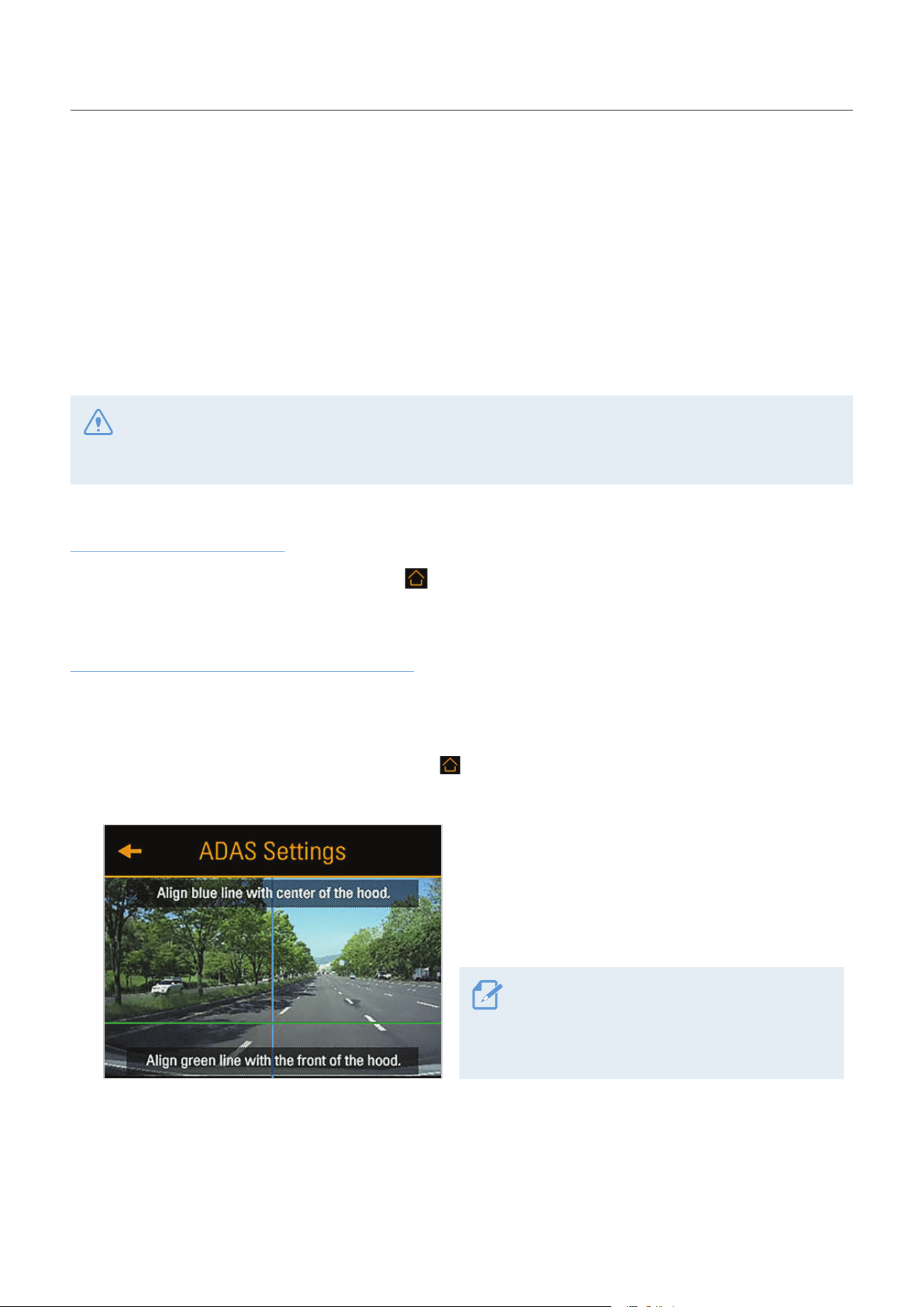
Adjust the product to align the blue line displayed
on the ADAS settings screen with the center of the
hood and the green line just above the hood. After
positioning the product, drive at 30 km/h for more
than 1 minute to finish the alignment.
When you align the ADAS settings screen, adjust
the product position within 7 cm of the default
installation location (where the camera lens is
located at the center of the front windshield).
You can use ADAS after the initial setup.
Using Advanced Driver Assistance Systems (ADAS) (optional)
30
4.1 The lane departure warning system (LDWS)
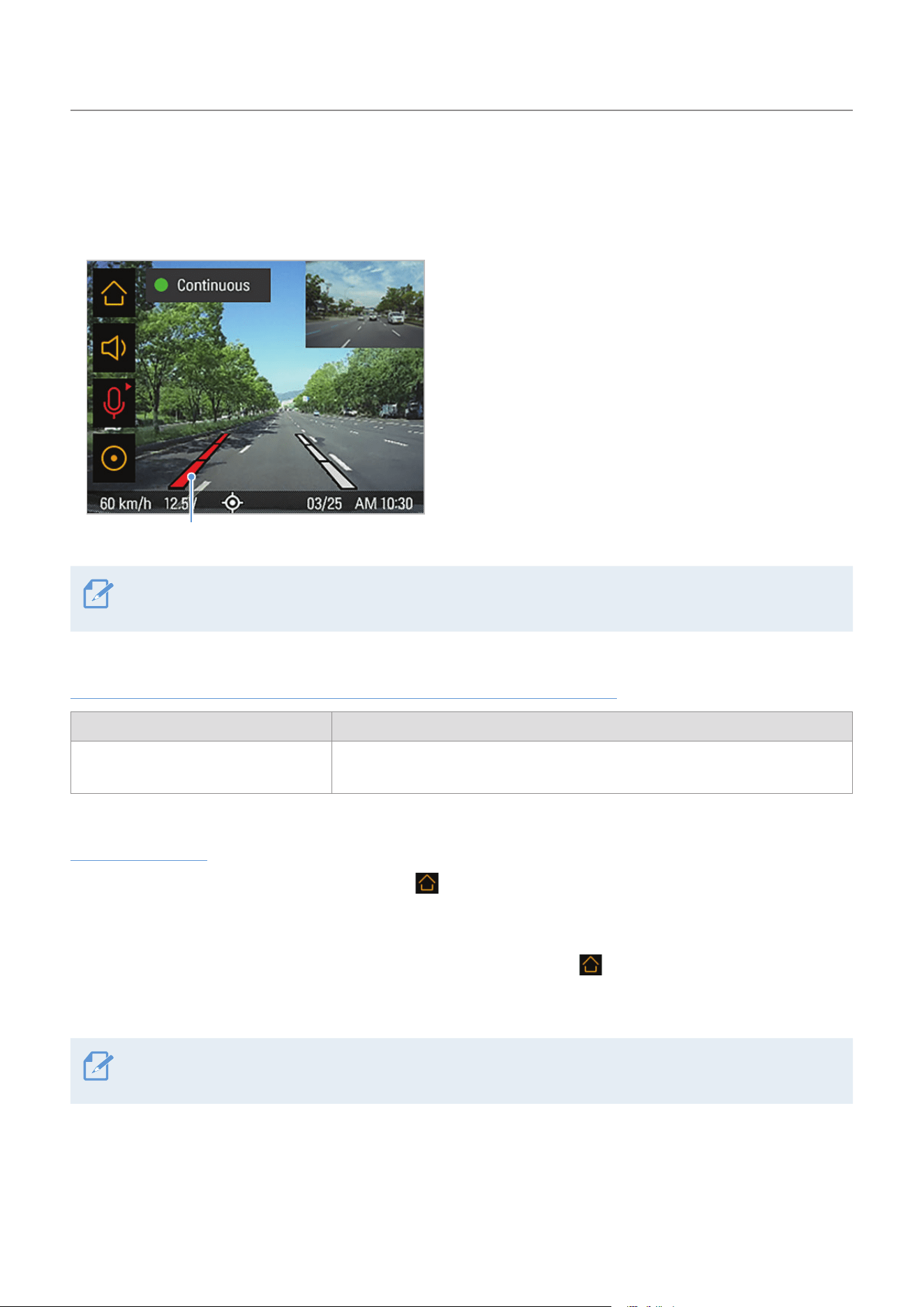
When the vehicle departs its lane, the LDWS detects the lane departure via the real-time video image and
warns the driver.
The departed lane is displayed in red.
The lane guide lines are displayed on the screen when
you activate the LDWS.
The voice guide warns you and a left or right lane
guide line will display in red when the vehicle enters
either lane.
The on-screen lane guide lines cannot be aligned. The guide lines may not perfectly match the actual lanes
due to the product installation angle, position, or winding roads.
Lane departure warning methods depending on optional accessories
Optional accessory Warning method
External GPS module
An alarm will sound when the turn signals are not turned on and the vehicle
leaves its lane at a GPS speed over 50 km/h.
Setting the LDWS
• To deactivate the LDWS, tap the Home menu ( ) button on the Live view screen
>
Settings
>
Road
Safety Settings, and then set LDWS (Lane Departure Warning) under ADAS Features to OFF. To set the
warning sensitivity, select a sensitivity option (Low / Mid / High).
• To change the lane departure detection speed, tap the Home menu (
) button on the Live view screen
>
Settings
>
Road Safety Settings, and then select a LDWS speed among 50km/60km/70km/80km under
ADAS Features.
If the vehicle is driving on a snow-covered road, in the rain at night, or on a damaged road, the LDWS may
not work as it does under normal conditions.
Using Advanced Driver Assistance Systems (ADAS) (optional)
31
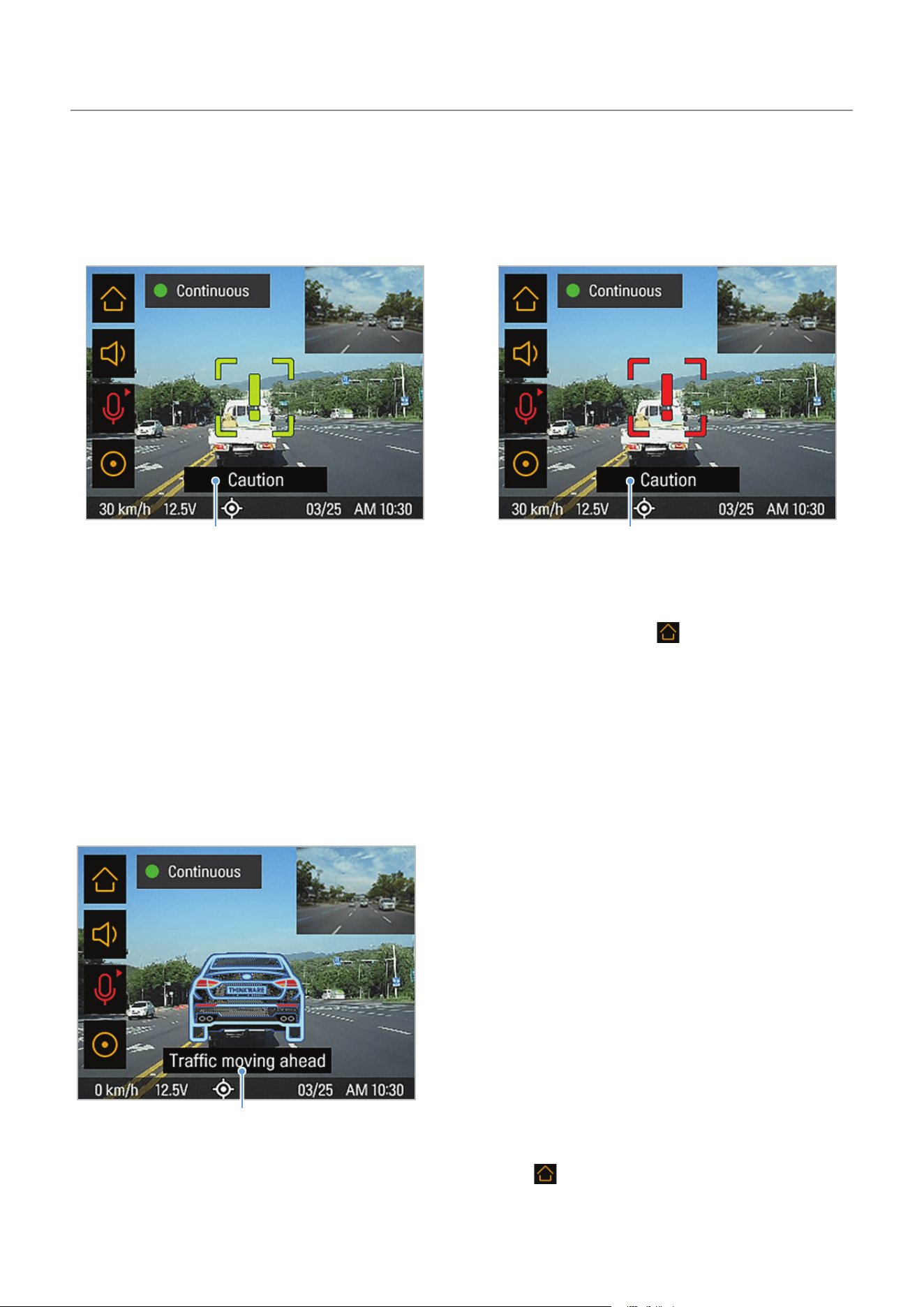
4.2 The forward collision warning system (FCWS)
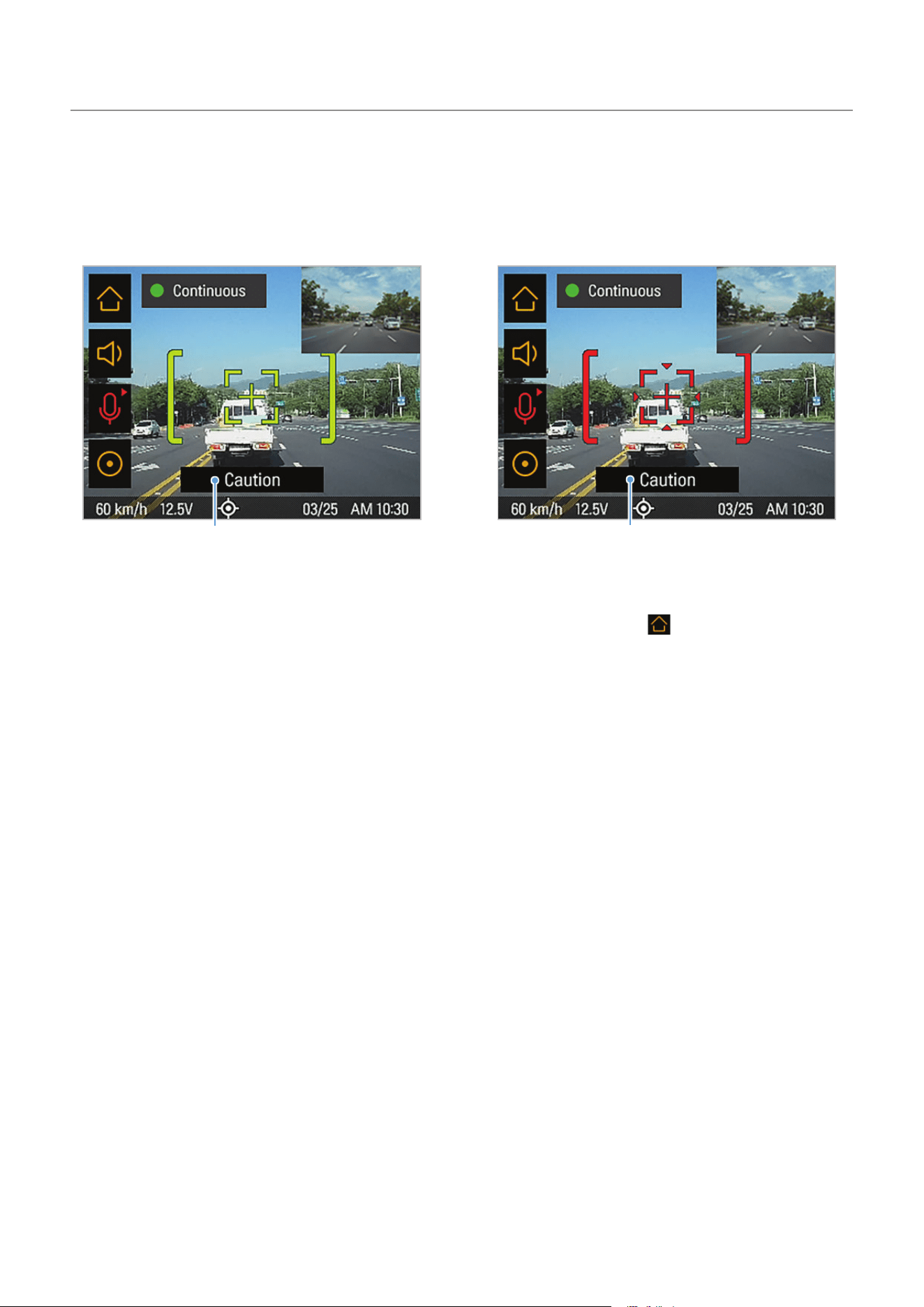
When the vehicle drives at 40 km/h or above, the FCWS will detect forward collision danger via the real-
time video image and warn the driver.
Preliminary forward collision warning: Displayed when
a preliminary collision hazard is detected.
Secondary forward collision warning: Displayed
when the distance to the vehicle ahead decreases
after a preliminary collision warning.
To deactivate the FCWS or change the warning sensitivity, tap the Home menu ( ) button on the Live view
screen
>
Settings
>
Road Safety Settings, and then tap the button next to FCWS (Forward Collision Warning)
under ADAS Features to switch the sensitivity option (Low/Mid/High) to set the detection sensitivity, or OFF
to deactivate the feature.
Using Advanced Driver Assistance Systems (ADAS) (optional)
32
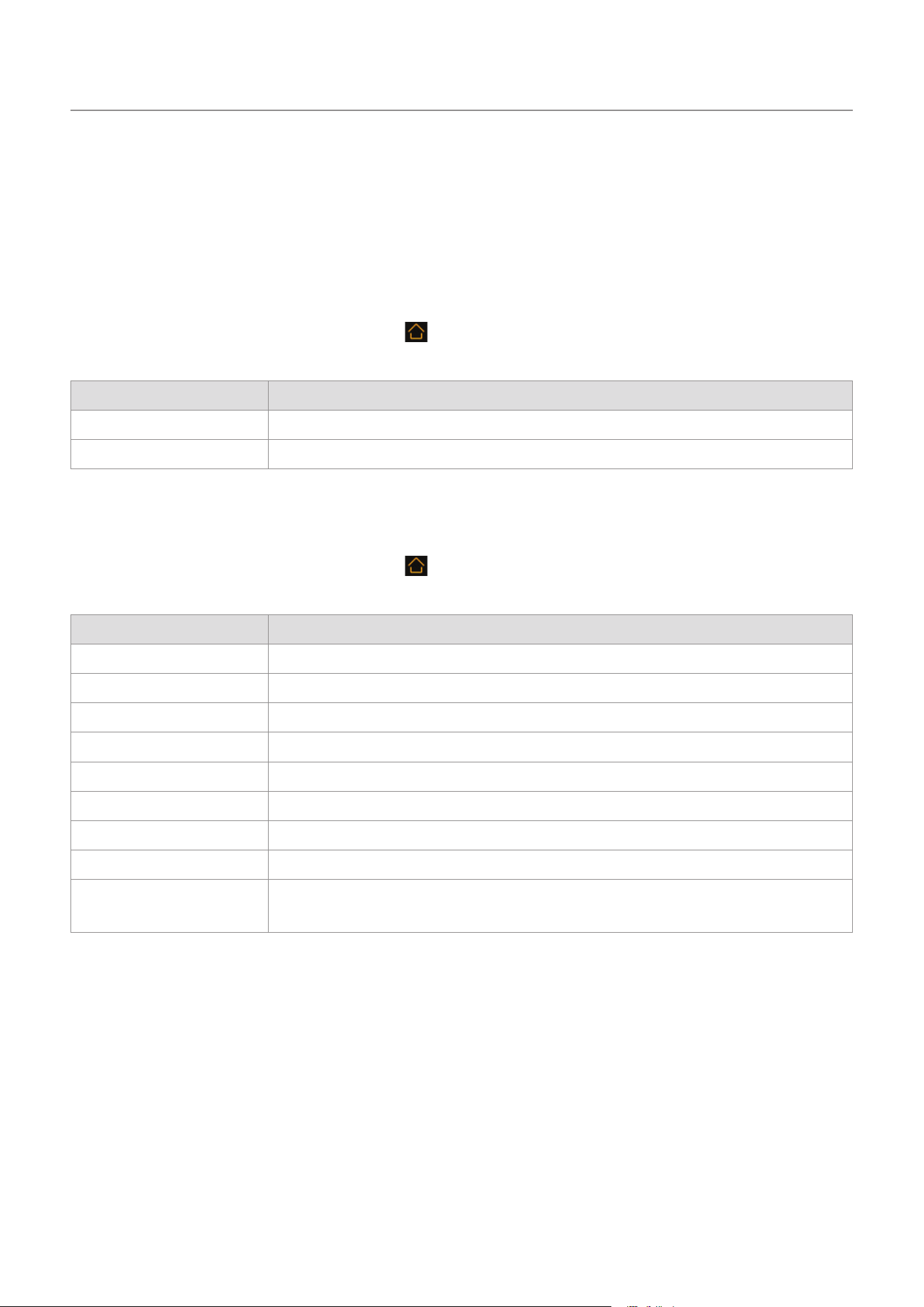
4.3 The urban forward collision warning system (uFCWS)
When the vehicle drives at 30 km/h or lower, the uFCWS will detect forward collision danger via the real-
time video image and warn the driver.
Preliminary low speed forward collision warning:
Displayed when a preliminary low speed collision
hazard is detected.
Secondary low speed forward collision warning:
Displayed when the distance to the vehicle ahead
decreases after a preliminary low speed collision
warning.
To deactivate the uFCWS or change the warning sensitivity, tap the Home menu ( ) button on the Live
view screen
>
Settings
>
Road Safety Settings, and then tap the button next to Low Speed FCWS under
ADAS Features to switch the sensitivity option (Low/Mid/High) to set the detection sensitivity, or OFF to
deactivate the feature.
4.4 The front vehicle start alert (FVSA)
The FVSA will detect the departure of the vehicle in front via the real-time video image and notify the driver.
An alarm is output 4 seconds after the vehicle ahead
has departed.
When the vehicle is stopped in traffic, this feature will
detect the departure of the vehicle in front and notify
the driver.
To deactivate the front vehicle start alarm, tap the Home menu (
) button on the Live view screen
>
Settings
>
Road Safety Settings, and then set FVDW (Front Vehicle Departure Warning) under ADAS
Features to OFF.
33
5. Settings
You can set the product features according to your needs and preferences using the settings menu.
5.1 Setting the camera
On the Live view screen, tap the Home menu ( ) button
>
Settings
>
Camera Settings to change the
dashboard camera settings.
Setting option Description
Brightness-Front Select a brightness level.
Reverse the rear view cam Select between ON/OFF.
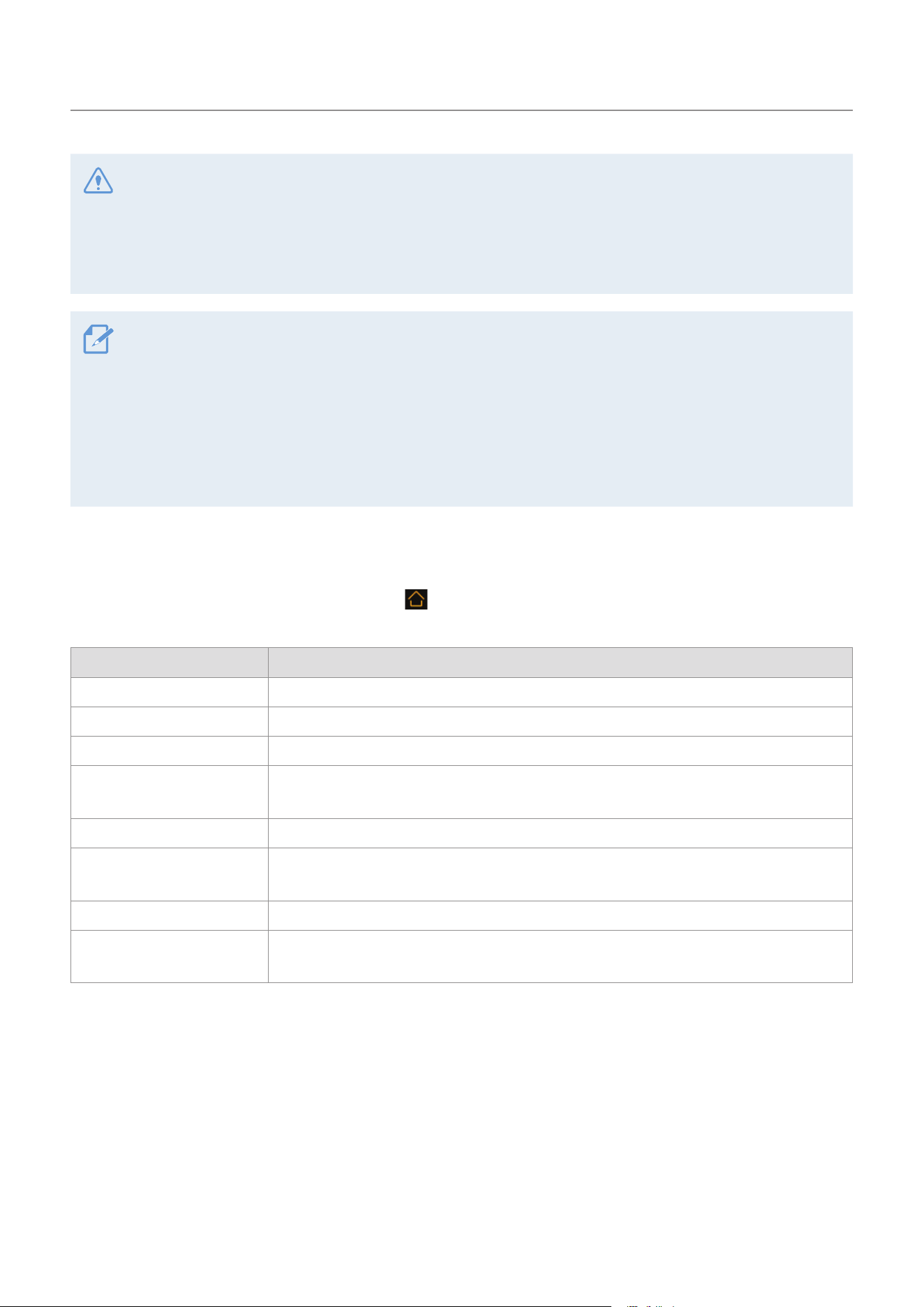
5.2 Setting recording features
On the Live view screen, tap the Home menu ( ) button
>
Settings
>
Rec. Settings to change the
recording settings.
Setting option Description
Cont. Sensitivity Select between Lowest/Low/Mid/High/Highest.
Super Night Vision Select between Continuous Mode/Parking Mode
Parking Mode Select between Motion Detection/Time Lapse/Energy Saving/OFF.
Parking Sensitivity Select between Lowest/Low/Mid/High/Highest.
Motion Sensitivity Select between Low/Mid/High.
Off Timer Select between 6 Hrs./12 Hrs./24 Hrs./48 Hrs./72 Hrs./OFF.
Battery Protection Select between ON/OFF.
Off Voltage Select between 12 V/24 V.
Wintertime Battery
Protection
Select between Nov/Dec/Jan/Feb/Mar.
Settings
34
• If the continuous impact detection sensitivity is too high, the product will record a video even when a
minor impact caused by the road condition and your driving is detected. This may shorten the memory
card’s life.
• If the continuous impact detection sensitivity is too low, the product may not record a video when a minor
accident occurs.
• The vehicle battery will not be charged while the vehicle is parked. If you record in parking mode for an
extended period, the vehicle’s battery may be depleted and you may not be able to start the vehicle.
• The Off Voltage setting is only available when Battery Protection is set to ON.
• If the Off voltage value is too low, the product may consume the battery completely depending on the
conditions like the vehicle type or temperature.
• For vehicles using a 12 V battery (most passenger vehicles), set the voltage to 12 V. For vehicles using the
24 V battery (like most trucks and large vehicles), set the voltage to 24 V.
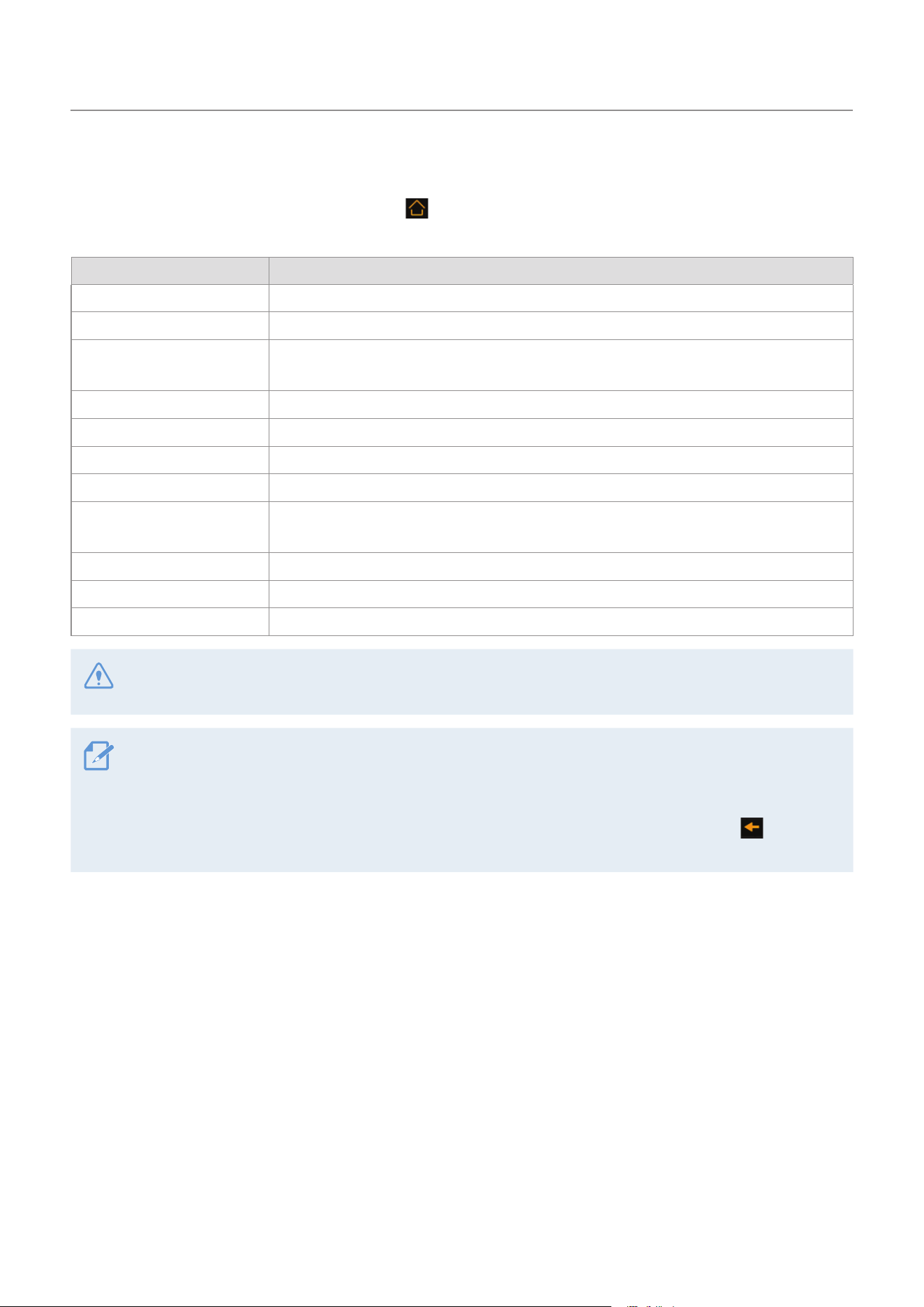
5.3 Setting Advanced Driver Assistance Systems (ADAS)
On the Live view screen, tap the Home menu ( ) button
>
Settings
>
Road Safety Settings to change the
road safety settings.
Setting option Description
Vehicle Type Select between Sedan/SUV/Truck (Bus).
ADAS Settings Adjust the location of the product according to the guidance on the display.
Initialize ADAS Tap Initialize ADAS to initialize the calibration settings for the ADAS.
LDWS (Lane Departure
Warning)
Select between Low/Mid/High/OFF.
LDWS speed Select between 50km/60km/70km/80km.
FCWS (Forward Collision
Warning)
Select between Low/Mid/High.
Low Speed FCWS Select between Low/Mid/High.
The front vehicle departure
warning
Select between ON/OFF.
Settings
35
5.4 Configuring the system settings
On the Live view screen, tap the Home menu ( ) button
>
Settings
>
System Settings to change the
system environment settings.
Setting option Description
Language Select between English/Français.
Volume Select a volume level.
Calibrate Touchscreen
Select the item and calibrate the touchscreen according to the guidance on the
display.
LCD Brightness Select a brightness level.
LCD Auto-off Select between 30 sec./10 min./Clock/OFF.
Security LED Select between Up-down/Blink/Random/OFF.
Set Date and Time Set year, month, and date manually.
Partition Settings
Select between Continuous Recording Priority (recommended)/Impact Recording
Priority/Parking Recording Priority/Driving Recording Only.
Use External Battery Select between ON/OFF.
Format Memory From the Format Memory menu, tap Format
>
Confirm.
Reset Settings From the Reset Settings menu, tap Reset Settings
>
Reset.
Do not disconnect power or remove the memory card from the product while formatting. Doing so may
cause serious damage to the data stored in the memory card.
• If you set LCD Auto-off to OFF, the screen will be kept on, and power consumption will increase.
• This product has a Format Free 2.0 function. You can save videos for a long time without needing to format
the memory card frequently.
• All the data stored in the memory card will be erased after formatting. Tap the Back button (
) to cancel
memory formatting.

36
6. Accessing the product information
New users may benefit from the basic product information that can be accessed from the Menu screen.
6.1 Understanding the product features
On the Live view screen, tap the Home menu ( ) button
>
About Device
>
Functions to view product
features. Brief information about the product's features is displayed on the screen.
6.2 Viewing the product information
On the Live view screen, tap the Home menu ( ) button
>
About Device
>
Device Info to view product
information. The following product information and the menus for initializing will be played on the screen.
• Product name • Firmware version • Memory capacity
6.3 Accessing and configuring the GPS
A GPS module is used to include the location data in the recorded videos. On the Live view screen, tap the
Home menu ( ) button
>
About Device
>
GPS Info to view the GPS features. The connection status, time
(UTC), vehicle speed, current elevation, and Horizontal Dilution of Precision (HDOP) are displayed on the
screen.
Tap the Reset button next to Reset GPS to initialize the GPS, and allow it to locate the current position.
Horizontal Dilution of Precision (HDOP)
HDOP is a value that refers to GPS deviation due to satellite positioning.

37
7. Using the PC viewer
You can view and manage the recorded videos and configure various product features on your PC.
7.1 System requirements
The following are the system requirements for running the PC viewer.
• Processor: Intel Core i5, or higher
• Memory: 4 GB or more
• Operatingsystem:Windows7orlater(64-bitisrecommended),macOSX10.8MountainLionorlater
• Other:DirectX9.0orhigher/MicrosoftExplorerversion7.0orhigher
The PC viewer will not operate properly on PC systems running an operating system other than those listed
in the system requirements.
7.2 Learning about the PC viewer
7.2.1 Installing the PC viewer
You can download the latest PC viewer software from the THINKWARE website (https://www.thinkware.
com/Support/Download).
The PC viewer installation file (setup.exe) is stored in the root folder of the memory card that is provided
with the product. Follow the instructions to install the PC viewer on your PC.
1
Insert the memory card into a memory card reader connected to your PC.
2
Move the installation file to the desktop, run it, and complete the installation according to the
instructions given in the installation wizard.
After the installation is complete, there will be a shortcut icon to Thinkware Dashcam Viewer.
Using the PC viewer
38
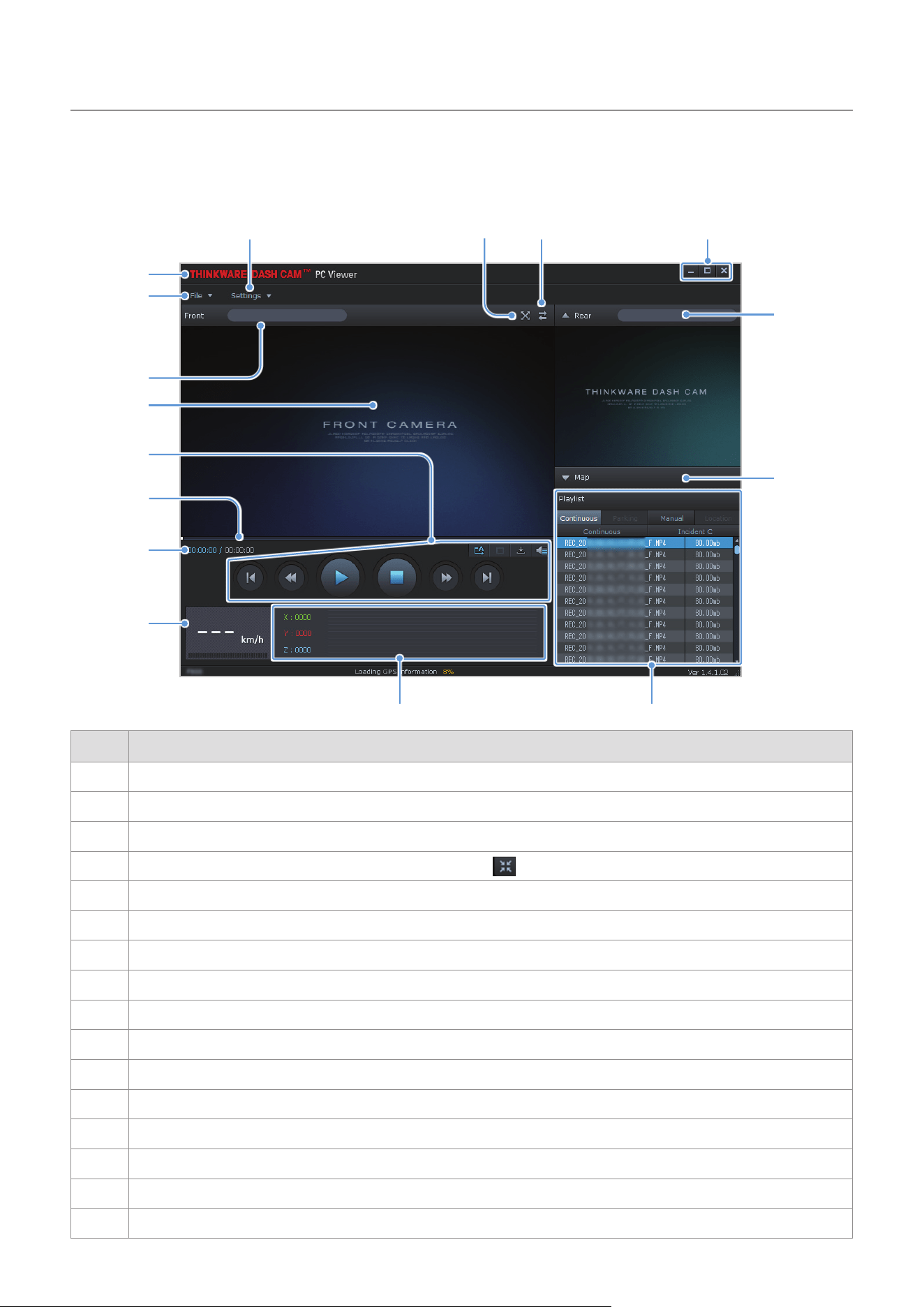
7.2.2 PC viewer screen layout (for Windows)
The following provides brief information about the PC viewer’s screen layout.
➋➋
➌➌
➍➍
➒➒
➊➊
➎➎ ➏➏
➓➓
➐➐
➑➑
Number Description
➊➊
Open a file, or save a video with a different name.
➋➋
Visit the THINKWARE website.
➌➌
View or configure the dashcam settings, and set the language for the PC viewer.
➍➍
Display the current video in full screen. Tap the Back ( ) button to return to the previous screen.
➎➎
Switch between the front and rear videos.
➏➏
Minimize, expand, or close the software.
➐➐
Display the recorded rear camera video.
➑➑
Display the map screen.
➒➒
Displays the playlist.
➓➓
Indicates the G sensor value at the time of recording.
Indicates the vehicle’s driving speed at the time of recording.
Displays the current and total running time of the current video.
Displays the progress of video playback.
Play or control a video.
Displays the current video.
Displays the video file name.
Using the PC viewer
39
7.2.3 Playing recorded videos on the PC viewer (for Windows)
Follow the instructions to play recorded videos.
1
Turn off the product and remove the memory card.
2
Insert the memory card into a memory card reader connected to your PC.
3
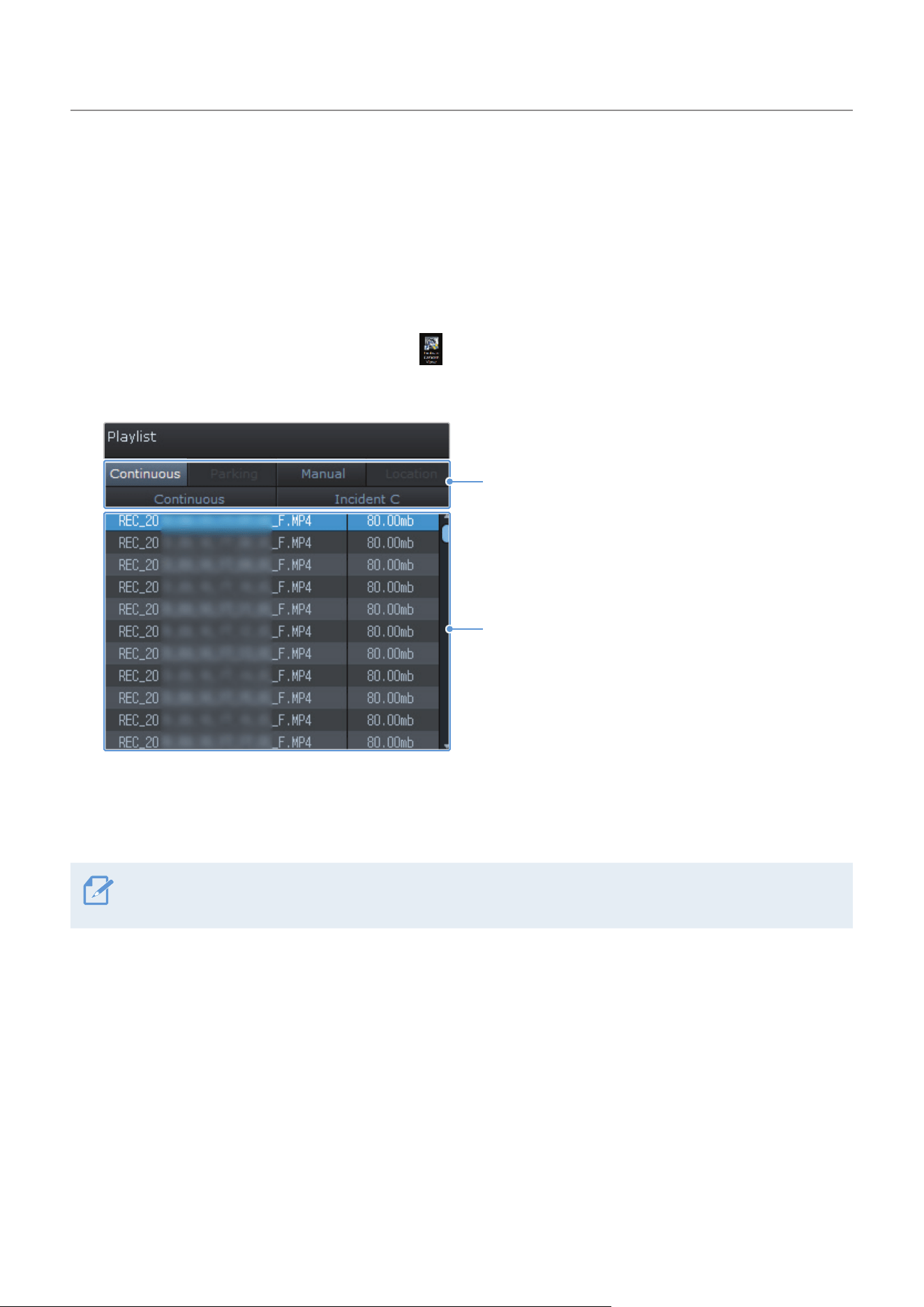
Double-click the shortcut to the PC viewer ( ) to open the program. The video files in the memory
card will be automatically added to the playlist in the bottom-right corner of the PC viewer screen. The
playlist section layout is as follows.
Select a folder.
Displays a list of videos
in the selected folder.
4
Double-click a video file after selecting a video folder, or click the Play (▶) button after selecting a
video file. The selected video file will be played.
If the video files on the memory card are not automatically added to the playlist when you run the PC viewer,
click File▼
>
Open, select the removable storage device for the memory card, and click Confirm.
Using the PC viewer
40
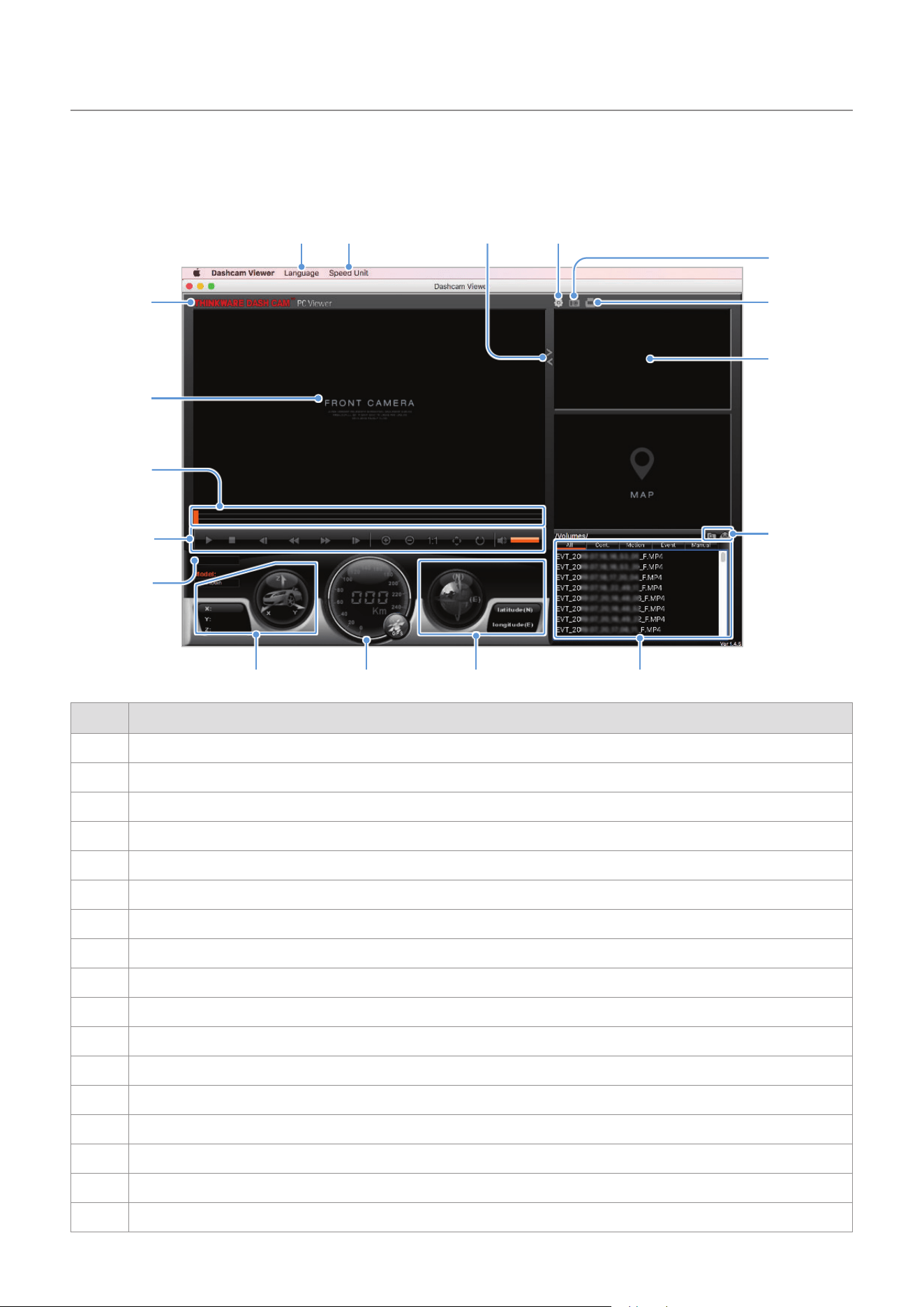
7.2.4 PC viewer screen layout (for Mac)
The following provides brief information about the PC viewer’s screen layout.
X800
➋➋ ➌➌
➍➍
➊➊
➎➎
➓➓
➑➑
➏➏
➒➒
➐➐
Number Description
➊➊
Visit the THINKWARE website.
➋➋
Set the language for the PC viewer.
➌➌
Set the speed unit.
➍➍
Switch between the front and rear videos.
➎➎
View or configure the dashcam settings.
➏➏
Save the current scene.
➐➐
Print the current scene.
➑➑
Displays the current rear video.
➒➒
Open a file, or save a video with a different name.
➓➓
Displays the playlist.
Displays the GPS information at the time of recording.
Indicates the vehicle’s driving speed at the time of recording.
Indicates the G sensor value at the time of recording.
Displays the current and total running time of the current video.
Play or control a video.
Displays the progress of video playback.
Displays the current front video. Right-click this pane to display the current video in full screen.
Using the PC viewer
41
7.2.5 Playing recorded videos on the PC viewer (for Mac)
Follow the instructions to play recorded videos.
1
Turn off the product and remove the memory card.
2
Insert the memory card into your Mac using a SD card reader or SD card adapter provided.
3
Open the PC viewer.
4
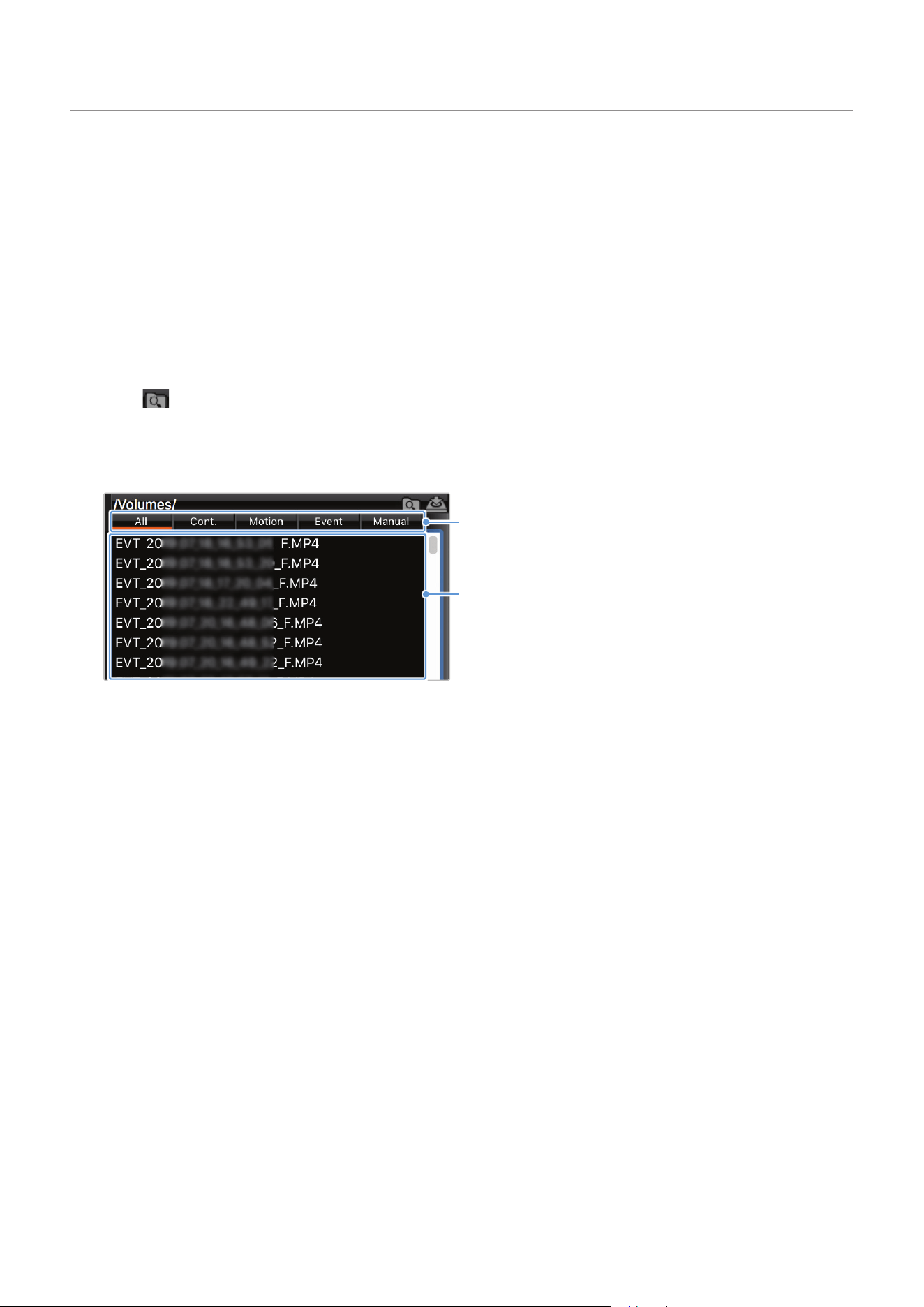
Click and locate the memory card.
The video files in the memory card will be automatically added to the playlist in the bottom-right
corner of the PC viewer screen. The playlist section layout is as follows.
X800
Displays a list of videos
in the selected folder.
Select a folder.
5
Double-click a video file after selecting a video folder, or click the Play (▶) button after selecting a
video file. The selected video file will be played.

42
8. Troubleshooting
The following table lists the problems users may encounter while using the product and measures to
resolve them. If the problem persists after taking the measures provided in the table, contact the customer
service center.
Problems Solution
Cannot power on the product
• Make sure the power cable (the optional hardwiring cable or the car charger)
is connected to the vehicle and the product properly.
• Check the vehicle’s battery level.
The product does not operate
even when touching the display.
Insert a pin into the Reset button pinhole on the side of the product to reset the
product. After resetting the product, the Settings screen and Video playback
screen will not disappear.
The voice guide and/or buzzer
do not sound.
Check if the volume is set to the minimum.
The video is unclear or hardly
visible.
• Ensure that the protective film on the camera lens has been removed. The
video may look unclear if the protective film is still on the camera lens.
• Check the installation location of the front or rear camera, turn on the product,
and then adjust the camera’s viewing angle.
The memory card cannot be
recognized.
• Ensure that the memory card has been inserted in the correct direction. Before
inserting the memory card, ensure that the metal contacts on the memory card
are facing toward the lens of the product.
• Turn off the power, remove the memory card, and then check to ensure that the
contacts in the memory card slot are not damaged.
• Ensure that the memory card is an authentic product distributed by
THINKWARE. THINKWARE does not guarantee compatibility and normal
operation of third-party memory cards.
The recorded video cannot be
played on a PC.
The recorded videos are stored as MP4 video files. Ensure that the video player
installed on your PC supports the playback of MP4 video files.
GPS signal cannot be received.
The GPS signal may not be received in out-of-service areas, or if the product is
located between tall buildings. Also, GPS signal reception may not be available
during storms or heavy rain. Try again on a clear day at a location that is known
to have a good GPS reception. It may take up to 5 minutes until GPS reception is
established.
Before contacting a service center
Please back up all important data stored in the memory card. The data in the memory card may be deleted
during repair. Every product requested for repair is regarded as a device that has had its data backed up.
The customer service center does not back up your data. THINKWARE is not responsible for any loss, such
as data loss.

43
9. Specifications
To see the product specifications, refer to the following table.
Item Specification Remarks
Model name X800
Dimension / Weight 100.3 x 55.5 x 29.8 mm Rear camera: 61 x 27 x 25 mm (optional)
Display panel 2.7" IPS LCD (320 x 240)
Memory microSD Memory card (UHS-I) 16 GB / 32 GB / 64 GB
Recording mode
Continuous Rec
Records videos in 1-minute segments (dual channels
are supported for recording the front and rear view)
Incident Rec
Records 10 seconds before and after the incident
(total 20 seconds)
Manual Rec
Records 10 seconds before and after manually
starting the recording (total 60 seconds)
Parking Rec (parking mode) Requires the hardwiring cable installation
Energy saving Parking Incident
Records 20 seconds after the event (When an
impact occurs on the G-sensor, it detects the part as
close as possible to the event point)
Super Night Vision Continuous Rec, Parking Rec
External battery pack interlocking
function
Displays i-Volt battery level and charging status
(LCD live view)
Camera sensor
SONY Exmor R STARVIS CMOS
Sensor
Rear camera: CMOS Sensor
Angle of view 150° (Diagonally) Rear camera: 160°
Video QHD (2560 x 1440)@30fps Rear camera: FHD (1920 x 1080)@30fps
Frame rate Maximum 30 fps Front/rear
Audio PCM (pulse code modulation) Front/rear
Acceleration sensor 3-axis acceleration sensor (3D, ±3G) 5 levels for sensitivity adjustment available
Rear camera V-IN port Micro USB 5-pin connector
GPS External GPS module (optional)
Supports ADAS features
(LDWS, FCWS, uFCWS, FVSA)
EXT. input port External battery pack (optional)
iVolt Connected (BAB-110) supported,
stereo socket 2.5 Ø / quadrupole
Power input DC 12 / 24 V supported Rear camera: DC 3.3 V
Power consumption 2CH: 4.7 W / 1CH: 2.7 W (mean)
Except for the fully charged supercapacitor /
the LCD OFF status
Auxiliary power unit Supercapacitor
LED indicators
• Front: Security LED
• Rear: Status LED, Rec LED (2 ea)
Alarm Built-in speakers Voice guide (buzzer sounds)
Operating
temperature
14 – 140℉ / -10 – 60℃
Storage temperature 14 – 140℉ / -10 – 60℃

https://www.thinkware.com
Ver. 1.0 (Feb. 2022)