1
1
15
19
25
27
28
1
1
15
19
25
27
28
2 3
2 3
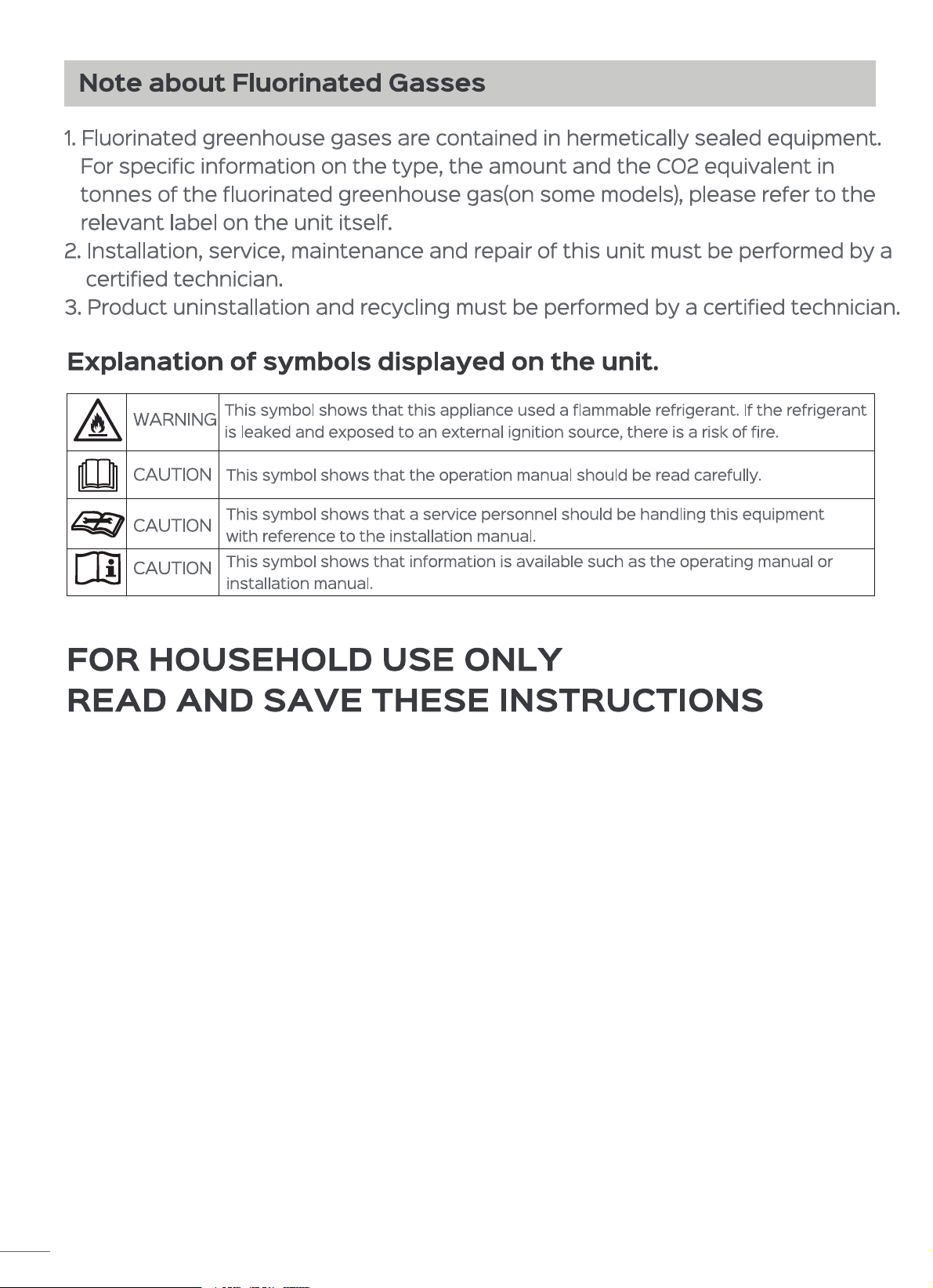
1. Transport of equipment containing flammable refrigerants
See transport regulations
2. Marking of equipment using signs
See local regulations
3. Disposal of equipment using flammable refrigerants
See national regulations.
4. Storage of equipment/appliances
The storage of equipment should be in accordance with the
manufacturer's instructions.
5. Storage of packed (unsold) equipment
Storage package protection should be constructed such that
mechanical damage to the equipment inside the package will not
cause a leak of the refrigerant charge. The maximum number of
pieces of equipment permitted to be stored together will be
determined by local regulations.
6. Information on servicing
1) Checks to the area
Prior to beginning work on systems containing flammable
refrigerants, safety checks are necessary to
ensure that the risk of ignition is minimised. For repair to the
refrigerating system, the following precautions shall be complied
with prior to conducting work on the system.
2) Work procedure
Work shall be undertaken under a controlled procedure so as to
minimise the risk of a flammable gas or vapour being present while
the work is being performed.
3) General work area
All maintenance staff and others working in the local area shall be
instructed on the nature of work being carried out. Work in confined
spaces shall be avoided. The area around the workspace shall be
sectioned off. Ensure that the conditions within the area have been
made safe by control of flammable material.
4) Checking for presence of refrigerant
The area shall be checked with an appropriate refrigerant detector
prior to and during work, to ensure the technician is aware of
potentially flammable atmospheres. Ensure that the leak detection
equipment being used is suitable for use with flammable
refrigerants, i.e. non-sparking, adequately sealed or intrinsically safe.
5) Presence of fire extinguisher
If any hot work is to be conducted on the refrigeration equipment or
any associated parts, appropriate fire extinguishing equipment shall
be available to hand. Have a dry powder or CO2 fire extinguisher
adjacent to the charging area.
6) No ignition sources
No person carrying out work in relation to a refrigeration system
which involves exposing any pipe work that contains or has
contained flammable refrigerant shall use any sources of ignition in
such a manner that it may lead to the risk of fire or explosion. All
possible ignition sources, including cigarette smoking, should be
kept sufficiently far away from the site of installation, repairing,
removing and disposal, during which flammable refrigerant can
6 7

1. Transport of equipment containing flammable refrigerants
See transport regulations
2. Marking of equipment using signs
See local regulations
3. Disposal of equipment using flammable refrigerants
See national regulations.
4. Storage of equipment/appliances
The storage of equipment should be in accordance with the
manufacturer's instructions.
5. Storage of packed (unsold) equipment
Storage package protection should be constructed such that
mechanical damage to the equipment inside the package will not
cause a leak of the refrigerant charge. The maximum number of
pieces of equipment permitted to be stored together will be
determined by local regulations.
6. Information on servicing
1) Checks to the area
Prior to beginning work on systems containing flammable
refrigerants, safety checks are necessary to
ensure that the risk of ignition is minimised. For repair to the
refrigerating system, the following precautions shall be complied
with prior to conducting work on the system.
2) Work procedure
Work shall be undertaken under a controlled procedure so as to
minimise the risk of a flammable gas or vapour being present while
the work is being performed.
3) General work area
All maintenance staff and others working in the local area shall be
instructed on the nature of work being carried out. Work in confined
spaces shall be avoided. The area around the workspace shall be
sectioned off. Ensure that the conditions within the area have been
made safe by control of flammable material.
4) Checking for presence of refrigerant
The area shall be checked with an appropriate refrigerant detector
prior to and during work, to ensure the technician is aware of
potentially flammable atmospheres. Ensure that the leak detection
equipment being used is suitable for use with flammable
refrigerants, i.e. non-sparking, adequately sealed or intrinsically safe.
5) Presence of fire extinguisher
If any hot work is to be conducted on the refrigeration equipment or
any associated parts, appropriate fire extinguishing equipment shall
be available to hand. Have a dry powder or CO2 fire extinguisher
adjacent to the charging area.
6) No ignition sources
No person carrying out work in relation to a refrigeration system
which involves exposing any pipe work that contains or has
contained flammable refrigerant shall use any sources of ignition in
such a manner that it may lead to the risk of fire or explosion. All
possible ignition sources, including cigarette smoking, should be
kept sufficiently far away from the site of installation, repairing,
removing and disposal, during which flammable refrigerant can
6 7

possibly be released to the surrounding space. Prior to work taking
place, the area around the equipment is to be surveyed to make sure
that there are no flammable hazards or ignition risks. No Smoking
signs shall be displayed.
7) Ventilated area
Ensure that the area is in the open or that it is adequately ventilated
before breaking into the system or conducting any hot work. A
degree of ventilation shall continue during the period that the work
is carried out. The ventilation should safely disperse any released
refrigerant and preferably expel it externally into the atmosphere.
Repair and maintenance to electrical components shall include initial
safety checks and component inspection procedures. If a fault exists
that could compromise safety, then no electrical supply shall be
connected to the circuit until it is satisfactorily dealt with. If the fault
cannot be corrected immediately but it is necessary to continue
operation, an adequate temporary solution shall be used. This shall
be reported to the owner of the equipment so all parties are advised.
Initial safety checks shall include:
That capacitors are discharged: this shall be done in a safe manner
to avoid possibility of sparking; That there no live electrical
components and wiring are exposed while charging, recovering or
purging the system; That there is continuity of earth bonding.
8) Checks to the refrigeration equipment
Where electrical components are being changed, they shall be fit for
the purpose and to the correct specification. At all times the
manufacturer's maintenance and service guidelines shall be followed.
If in doubt consult the manufacturer's technical department for
assistance. The following checks shall be applied to installations
using flammable refrigerants:
The charge size is in accordance with the room size within which the
refrigerant containing parts are installed;
The ventilation machinery and outlets are operating adequately and
are not obstructed;
If an indirect refrigerating circuit is being used, the secondary circuit
shall be checked for the presence of refrigerant; Marking to the
equipment continues to be visible and legible. Markings and signs that
are illegible shall be corrected;
Refrigeration pipe or components are installed in a position where
they are unlikely to be exposed to any substance which may corrode
refrigerant containing components, unless the components are co
nstructed of materials which are inherently resistant to being
corroded or are suitably protected against being so corroded.
9) Checks to electrical devices
Repair and maintenance to electrical components shall include initial
safety checks and component inspection procedures. If a fault exists
that could compromise safety, then no electrical supply shall be
connected to the circuit until it is satisfactorily dealt with. If the fault
cannot be corrected immediately but it is necessary to continue
operation, an adequate temporary solution shall be used. This shall
be reported to the owner of the equipment so all parties are advised.
Initial safety checks shall include:
That capacitors are discharged: this shall be done in a safe manner
to avoid possibility of sparking;
That there no live electrical components and wiring are exposed
while charging, recovering or purging the system; That there is
continuity of earth bonding.
7. Repairs to sealed components
1 ) During repairs to sealed components, all electrical supplies shall be
disconnected from the equipment 9)Checks to electrical devices7.
Repairs to sealed components being worked upon prior to any
removal of sealed covers, etc. If it is absolutely necessary to have an
electrical supply to equipment during servicing, then a permanently
operating form of leak detection shall be located at the most critical
point to warn of a potentially hazardous situation.
2) Particular attention shall be paid to the following to ensure that by
working on electrical components, the casing is not altered in such
a way that the level of protection is affected. This shall include
damage to cables, excessive number of connections, terminals not
made to original specification, damage to seals, incorrect fitting of
glands, etc. Ensure that apparatus is mounted securely. Ensure
that seals or sealing materials have not degraded such that they no
longer serve the purpose of preventing the ingress of flammable
atmospheres. Replacement parts shall be in accordance with the
manufacturer's specifications.
8 9

possibly be released to the surrounding space. Prior to work taking
place, the area around the equipment is to be surveyed to make sure
that there are no flammable hazards or ignition risks. No Smoking
signs shall be displayed.
7) Ventilated area
Ensure that the area is in the open or that it is adequately ventilated
before breaking into the system or conducting any hot work. A
degree of ventilation shall continue during the period that the work
is carried out. The ventilation should safely disperse any released
refrigerant and preferably expel it externally into the atmosphere.
Repair and maintenance to electrical components shall include initial
safety checks and component inspection procedures. If a fault exists
that could compromise safety, then no electrical supply shall be
connected to the circuit until it is satisfactorily dealt with. If the fault
cannot be corrected immediately but it is necessary to continue
operation, an adequate temporary solution shall be used. This shall
be reported to the owner of the equipment so all parties are advised.
Initial safety checks shall include:
That capacitors are discharged: this shall be done in a safe manner
to avoid possibility of sparking; That there no live electrical
components and wiring are exposed while charging, recovering or
purging the system; That there is continuity of earth bonding.
8) Checks to the refrigeration equipment
Where electrical components are being changed, they shall be fit for
the purpose and to the correct specification. At all times the
manufacturer's maintenance and service guidelines shall be followed.
If in doubt consult the manufacturer's technical department for
assistance. The following checks shall be applied to installations
using flammable refrigerants:
The charge size is in accordance with the room size within which the
refrigerant containing parts are installed;
The ventilation machinery and outlets are operating adequately and
are not obstructed;
If an indirect refrigerating circuit is being used, the secondary circuit
shall be checked for the presence of refrigerant; Marking to the
equipment continues to be visible and legible. Markings and signs that
are illegible shall be corrected;
Refrigeration pipe or components are installed in a position where
they are unlikely to be exposed to any substance which may corrode
refrigerant containing components, unless the components are co
nstructed of materials which are inherently resistant to being
corroded or are suitably protected against being so corroded.
9) Checks to electrical devices
Repair and maintenance to electrical components shall include initial
safety checks and component inspection procedures. If a fault exists
that could compromise safety, then no electrical supply shall be
connected to the circuit until it is satisfactorily dealt with. If the fault
cannot be corrected immediately but it is necessary to continue
operation, an adequate temporary solution shall be used. This shall
be reported to the owner of the equipment so all parties are advised.
Initial safety checks shall include:
That capacitors are discharged: this shall be done in a safe manner
to avoid possibility of sparking;
That there no live electrical components and wiring are exposed
while charging, recovering or purging the system; That there is
continuity of earth bonding.
7. Repairs to sealed components
1 ) During repairs to sealed components, all electrical supplies shall be
disconnected from the equipment 9)Checks to electrical devices7.
Repairs to sealed components being worked upon prior to any
removal of sealed covers, etc. If it is absolutely necessary to have an
electrical supply to equipment during servicing, then a permanently
operating form of leak detection shall be located at the most critical
point to warn of a potentially hazardous situation.
2) Particular attention shall be paid to the following to ensure that by
working on electrical components, the casing is not altered in such
a way that the level of protection is affected. This shall include
damage to cables, excessive number of connections, terminals not
made to original specification, damage to seals, incorrect fitting of
glands, etc. Ensure that apparatus is mounted securely. Ensure
that seals or sealing materials have not degraded such that they no
longer serve the purpose of preventing the ingress of flammable
atmospheres. Replacement parts shall be in accordance with the
manufacturer's specifications.
8 9

NOTE: The use of silicon sealant may inhibit the effectiveness of
some types of leak detection equipment.
Intrinsically safe components do not have to be isolated prior to
working on them.
8. Repair to intrinsically safe components
Do not apply any permanent inductive or capacitance loads to the
circuit without ensuring that this will not exceed the permissible
voltage and current permitted for the equipment in use. Intrinsically
safe components are the only types that can be worked on while live
in the presence of a flammable atmosphere. The test apparatus
shall be at the correct rating. Replace components only with parts
specified by the manufacturer. Other parts may result in the ignition
of refrigerant in the atmosphere from a leak.
9. Cabling
Check that cabling will not be subject to wear, corrosion, excessive
pressure, vibration, sharp edges or any other adverse environmental
effects. The check shall also take into account the effects of aging or
continual vibration from sources such as compressors or fans.
10. Detection of flammable refrigerants
Under no circumstances shall potential sources of ignition be used
in the searching for or detection of refrigerant leaks. A halide torch
(or any other detector using a naked flame) shall not be used.
11. Leak detection methods
The following leak detection methods are deemed acceptable for
systems containing flammable refrigerants. Electronic leak detectors
shall be used to detect flammable refrigerants, but the sensitivity
may not be adequate, or may need re-calibration. (Detection
equipment shall be calibrated in a refrigerant-free area.) Ensure that
the detector is not a potential source of ignition and is suitable for
the refrigerant used. Leak detection equipment shall be set at a
percentage of the LFL of the refrigerant and shall be calibrated to
the refrigerant employed and the appropriate percentage of gas
(25 % maximum) is confirmed. Leak detection fluids are suitable for
use with most refrigerants but the use of detergents containing
chlorine shall be avoided as the chlorine may react with the
refrigerant and corrode the copper pipe-work. If a leak is suspected,
all naked flames shall be removed/ extinguished.
If a leakage of refrigerant is found which requires brazing, all of the
refrigerant shall be recovered from the system, or isolated (by
means of shut off valves) in a part of the system remote from the
leak.
Oxygen free nitrogen (OFN) shall then be purged through the system
both before and during the brazing process.
12. Removal and evacuation
When breaking into the refrigerant circuit to make repairs or for any
other purpose conventional procedures shall be used. However, it is
important that best practice is followed since flammability is a
consideration. The following procedure shall be adhered to:
Remove refrigerant; Purge the circuit with inert gas; Evacuate; Purge
again with inert gas; Open the circuit by cutting or brazing.
The refrigerant charge shall be recovered into the correct recovery
cylinders. The system shall be flushed with OFN to render the unit
safe. This process may need to be repeated several times.
Compressed air or oxygen shall not be used for this task. Flushing
shall be achieved by breaking the vacuum in the system with OFN
and continuing to fill until the working pressure is achieved, then
venting to atmosphere, and finally pulling down to a vacuum. This
process shall be repeated until no refrigerant is within the system.
When the final OFN charge is used, the system shall be vented
down to atmospheric pressure to enable work to take place. This
operation is absolutely vital if brazing operations on the pipe-work
are to take place. Ensure that the outlet for the vacuum pump is
not close to any ignition sources and there is ventilation available.
13. Charging procedures
In addition to conventional charging procedures, the following
requirements shall be followed. Ensure that contamination of
different refrigerants does not occur when using charging
equipment. Hoses or lines shall be as short as possible to minimise
the amount of refrigerant contained in them.
Cylinders shall be kept upright.
Ensure that the refrigeration system is earthed prior to charging
the system with refrigerant.
Label the system when charging is complete (if not already).
Extreme care shall be taken not to overfill the refrigeration system.
10 11

NOTE: The use of silicon sealant may inhibit the effectiveness of
some types of leak detection equipment.
Intrinsically safe components do not have to be isolated prior to
working on them.
8. Repair to intrinsically safe components
Do not apply any permanent inductive or capacitance loads to the
circuit without ensuring that this will not exceed the permissible
voltage and current permitted for the equipment in use. Intrinsically
safe components are the only types that can be worked on while live
in the presence of a flammable atmosphere. The test apparatus
shall be at the correct rating. Replace components only with parts
specified by the manufacturer. Other parts may result in the ignition
of refrigerant in the atmosphere from a leak.
9. Cabling
Check that cabling will not be subject to wear, corrosion, excessive
pressure, vibration, sharp edges or any other adverse environmental
effects. The check shall also take into account the effects of aging or
continual vibration from sources such as compressors or fans.
10. Detection of flammable refrigerants
Under no circumstances shall potential sources of ignition be used
in the searching for or detection of refrigerant leaks. A halide torch
(or any other detector using a naked flame) shall not be used.
11. Leak detection methods
The following leak detection methods are deemed acceptable for
systems containing flammable refrigerants. Electronic leak detectors
shall be used to detect flammable refrigerants, but the sensitivity
may not be adequate, or may need re-calibration. (Detection
equipment shall be calibrated in a refrigerant-free area.) Ensure that
the detector is not a potential source of ignition and is suitable for
the refrigerant used. Leak detection equipment shall be set at a
percentage of the LFL of the refrigerant and shall be calibrated to
the refrigerant employed and the appropriate percentage of gas
(25 % maximum) is confirmed. Leak detection fluids are suitable for
use with most refrigerants but the use of detergents containing
chlorine shall be avoided as the chlorine may react with the
refrigerant and corrode the copper pipe-work. If a leak is suspected,
all naked flames shall be removed/ extinguished.
If a leakage of refrigerant is found which requires brazing, all of the
refrigerant shall be recovered from the system, or isolated (by
means of shut off valves) in a part of the system remote from the
leak.
Oxygen free nitrogen (OFN) shall then be purged through the system
both before and during the brazing process.
12. Removal and evacuation
When breaking into the refrigerant circuit to make repairs or for any
other purpose conventional procedures shall be used. However, it is
important that best practice is followed since flammability is a
consideration. The following procedure shall be adhered to:
Remove refrigerant; Purge the circuit with inert gas; Evacuate; Purge
again with inert gas; Open the circuit by cutting or brazing.
The refrigerant charge shall be recovered into the correct recovery
cylinders. The system shall be flushed with OFN to render the unit
safe. This process may need to be repeated several times.
Compressed air or oxygen shall not be used for this task. Flushing
shall be achieved by breaking the vacuum in the system with OFN
and continuing to fill until the working pressure is achieved, then
venting to atmosphere, and finally pulling down to a vacuum. This
process shall be repeated until no refrigerant is within the system.
When the final OFN charge is used, the system shall be vented
down to atmospheric pressure to enable work to take place. This
operation is absolutely vital if brazing operations on the pipe-work
are to take place. Ensure that the outlet for the vacuum pump is
not close to any ignition sources and there is ventilation available.
13. Charging procedures
In addition to conventional charging procedures, the following
requirements shall be followed. Ensure that contamination of
different refrigerants does not occur when using charging
equipment. Hoses or lines shall be as short as possible to minimise
the amount of refrigerant contained in them.
Cylinders shall be kept upright.
Ensure that the refrigeration system is earthed prior to charging
the system with refrigerant.
Label the system when charging is complete (if not already).
Extreme care shall be taken not to overfill the refrigeration system.
10 11

Prior to recharging the system it shall be pressure tested with OFN.
The system shall be leak tested on completion of charging but prior
to commissioning. A follow up leak test shall be carried out prior to
leaving the site.
14. Decommissioning
Before carrying out this procedure, it is essential that the
technician is completely familiar with the equipment and all its
detail. It is recommended good practice that all refrigerants are
recovered safely.
Prior to the task being carried out, an oil and refrigerant sample
shall be taken in case analysis is required prior to re-use of
reclaimed refrigerant. It is essential that electrical power is available
before the task is commenced.
a ) Become familiar with the equipment and its operation. b) Isolate
system electrically. c) Before attempting the procedure ensure
that: Mechanical handling equipment is available, if required, for
handling refrigerant cylinders;All personal protective equipment is
available and being used correctly; The recovery process is
supervised at all times by a competent person; Recovery equipment
and cylinders conform to the appropriate standards. d) Pump down
refrigerant system, if possible. e) If a vacuum is not possible, make
a manifold so that refrigerant can be removed from various parts of
the system. f) Make sure that cylinder is situated on the scales
before recovery takes place. g) Start the recovery machine and
operate in accordance with manufacturer's instructions. h) Do not
overfill cylinders. (No more than 80 % volume liquid charge).
i ) Do not exceed the maximum working pressure of thecylinder, even
temporarily. j) When the cylinders have been filled correctly and
the process completed, make sure that the cylinders and the
equipment are removed from site promptly and all isolation valves
on the equipment are closed off. k) Recovered refrigerant shall not
be charged into another refrigeration system unless it has been
cleaned and checked.
15. Labelling
Equipment shall be labelled stating that it has been de-
commissioned and emptied of refrigerant. The label shall be dated
and signed. Ensure that there are labels on the equipment stating
the equipment contains flammable refrigerant.
16. Recovery
When removing refrigerant from a system, either for servicing or
decommissioning, it is recommended good practice that all
refrigerants are removed safely. When transferring refrigerant into
cylinders, ensure that only appropriate refrigerant recovery
cylinders are employed. Ensure that the correct number of cylinders
for holding the total system charge is available. All cylinders to be
used are designated for the recovered refrigerant and labelled for
that refrigerant (i.e. special cylinders for the recovery of refrigerant).
Cylinders shall be complete with pressure relief valve and associated
shut-off valves in good working order. Empty recovery cylinders are
evacuated and, if possible, cooled before recovery occurs. The
recovery equipment shall be in good working order with a set of
instructions concerning the equipment that is at hand and shall be
suitable for the recovery of flammable refrigerants. In addition, a set
of calibrated weighing scales shall be available and in good working
order. Hoses shall be complete with leak-free disconnect couplings
and in good condition. Before using the recovery machine, check
that it is in satisfactory working order, has been properly maintained
and that any associated electrical components are sealed to prevent
ignition in the event of a refrigerant release. Consult manufacturer if
in doubt. The recovered refrigerant shall be returned to the
refrigerant supplier in the correct recovery cylinder, and the relevant
Waste Transfer Note arranged. Do not mix refrigerants in recovery
units and especially not in cylinders. If compressors or compressor
oils are to be removed, ensure that they have been evacuated to an
acceptable level to make certain that flammable refrigerant does not
remain within the lubricant. The evacuation process shall be carried
out prior to returning the compressor to the suppliers. Only electric
heating to the compressor body shall be employed to accelerate this
process. When oil is drained from a system, it shall be carried out
safely.
12 13

Prior to recharging the system it shall be pressure tested with OFN.
The system shall be leak tested on completion of charging but prior
to commissioning. A follow up leak test shall be carried out prior to
leaving the site.
14. Decommissioning
Before carrying out this procedure, it is essential that the
technician is completely familiar with the equipment and all its
detail. It is recommended good practice that all refrigerants are
recovered safely.
Prior to the task being carried out, an oil and refrigerant sample
shall be taken in case analysis is required prior to re-use of
reclaimed refrigerant. It is essential that electrical power is available
before the task is commenced.
a ) Become familiar with the equipment and its operation. b) Isolate
system electrically. c) Before attempting the procedure ensure
that: Mechanical handling equipment is available, if required, for
handling refrigerant cylinders;All personal protective equipment is
available and being used correctly; The recovery process is
supervised at all times by a competent person; Recovery equipment
and cylinders conform to the appropriate standards. d) Pump down
refrigerant system, if possible. e) If a vacuum is not possible, make
a manifold so that refrigerant can be removed from various parts of
the system. f) Make sure that cylinder is situated on the scales
before recovery takes place. g) Start the recovery machine and
operate in accordance with manufacturer's instructions. h) Do not
overfill cylinders. (No more than 80 % volume liquid charge).
i ) Do not exceed the maximum working pressure of thecylinder, even
temporarily. j) When the cylinders have been filled correctly and
the process completed, make sure that the cylinders and the
equipment are removed from site promptly and all isolation valves
on the equipment are closed off. k) Recovered refrigerant shall not
be charged into another refrigeration system unless it has been
cleaned and checked.
15. Labelling
Equipment shall be labelled stating that it has been de-
commissioned and emptied of refrigerant. The label shall be dated
and signed. Ensure that there are labels on the equipment stating
the equipment contains flammable refrigerant.
16. Recovery
When removing refrigerant from a system, either for servicing or
decommissioning, it is recommended good practice that all
refrigerants are removed safely. When transferring refrigerant into
cylinders, ensure that only appropriate refrigerant recovery
cylinders are employed. Ensure that the correct number of cylinders
for holding the total system charge is available. All cylinders to be
used are designated for the recovered refrigerant and labelled for
that refrigerant (i.e. special cylinders for the recovery of refrigerant).
Cylinders shall be complete with pressure relief valve and associated
shut-off valves in good working order. Empty recovery cylinders are
evacuated and, if possible, cooled before recovery occurs. The
recovery equipment shall be in good working order with a set of
instructions concerning the equipment that is at hand and shall be
suitable for the recovery of flammable refrigerants. In addition, a set
of calibrated weighing scales shall be available and in good working
order. Hoses shall be complete with leak-free disconnect couplings
and in good condition. Before using the recovery machine, check
that it is in satisfactory working order, has been properly maintained
and that any associated electrical components are sealed to prevent
ignition in the event of a refrigerant release. Consult manufacturer if
in doubt. The recovered refrigerant shall be returned to the
refrigerant supplier in the correct recovery cylinder, and the relevant
Waste Transfer Note arranged. Do not mix refrigerants in recovery
units and especially not in cylinders. If compressors or compressor
oils are to be removed, ensure that they have been evacuated to an
acceptable level to make certain that flammable refrigerant does not
remain within the lubricant. The evacuation process shall be carried
out prior to returning the compressor to the suppliers. Only electric
heating to the compressor body shall be employed to accelerate this
process. When oil is drained from a system, it shall be carried out
safely.
12 13
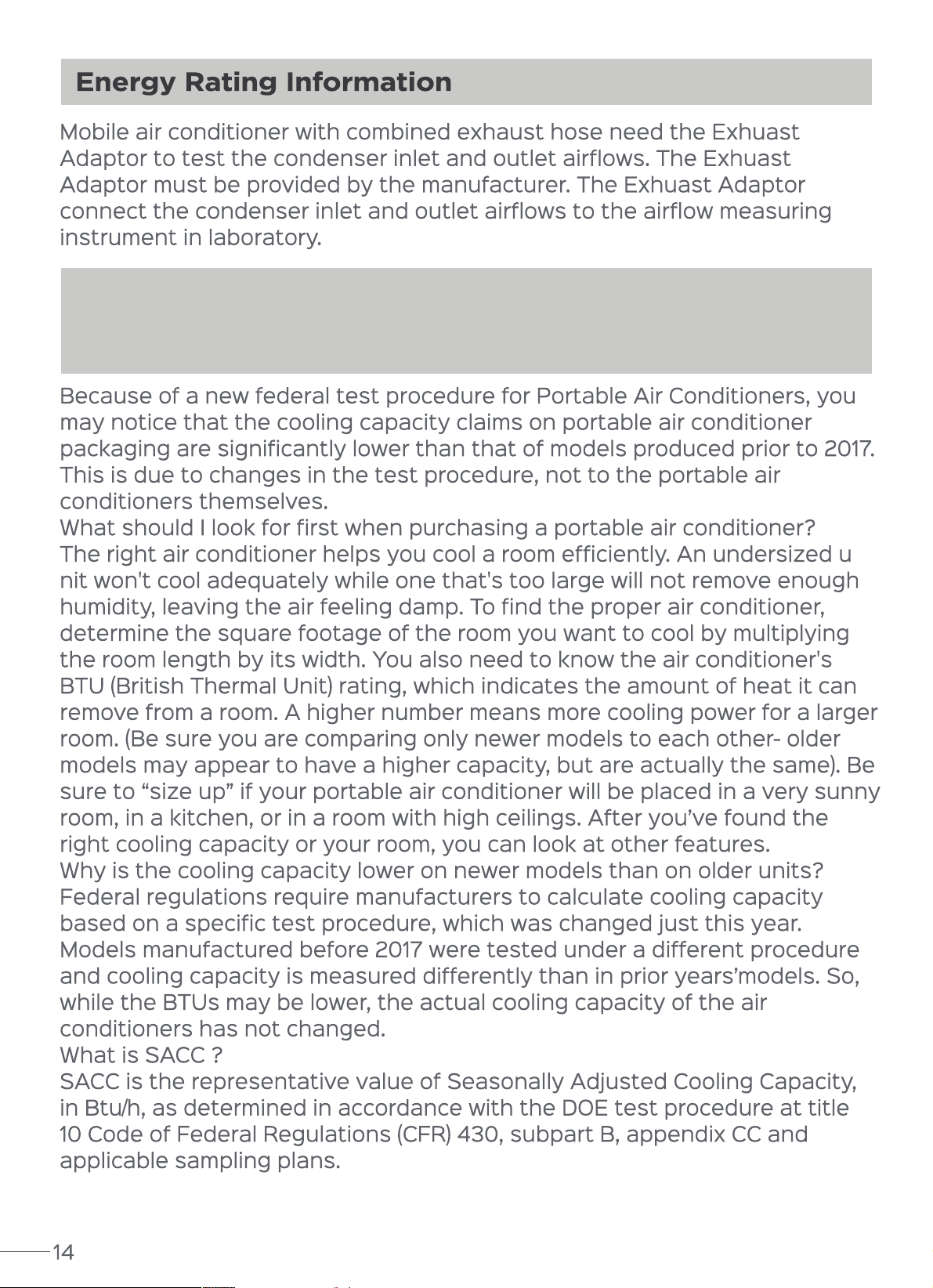
How to stay cool with a New Portable Air conditioner(For
the models comply with the requirements of Department
Of Energy in US)
How to stay cool with a New Portable Air conditioner(For
the models comply with the requirements of Department
Of Energy in US)
18 19
18 19
24 25
24 25
This equipment has been tested and found to comply with the limits for a Class
B digital device, pursuant to part 15 of the FCC Rules. These limits are designed
to provide reasonable protection against harmful interference in a residential
installation. This equipment generates, uses and can radiate radio frequency
energy and, if not installed and used in accordance with the instructions, may
cause harmful interference to radio communications. However, there is no
guarantee that interference will not occur in a particular installation. If this
equipment does cause harmful interference to radio or television reception,
which can be determined by turning the equipment off and on, the user is
encouraged to try to correct the interference by one or more of the following
measures:
Reorient or relocate the receiving antenna.
Increase the separation between the equipment and receiver.
Connect the equipment into an outlet on a circuit different from that to which
the receiver is connected.
Consult the dealer or an experienced radio/TV technician for help.
Changes or modifications not approved by the party responsible for
compliance could void user’s authority to operate the equipment.
28 29
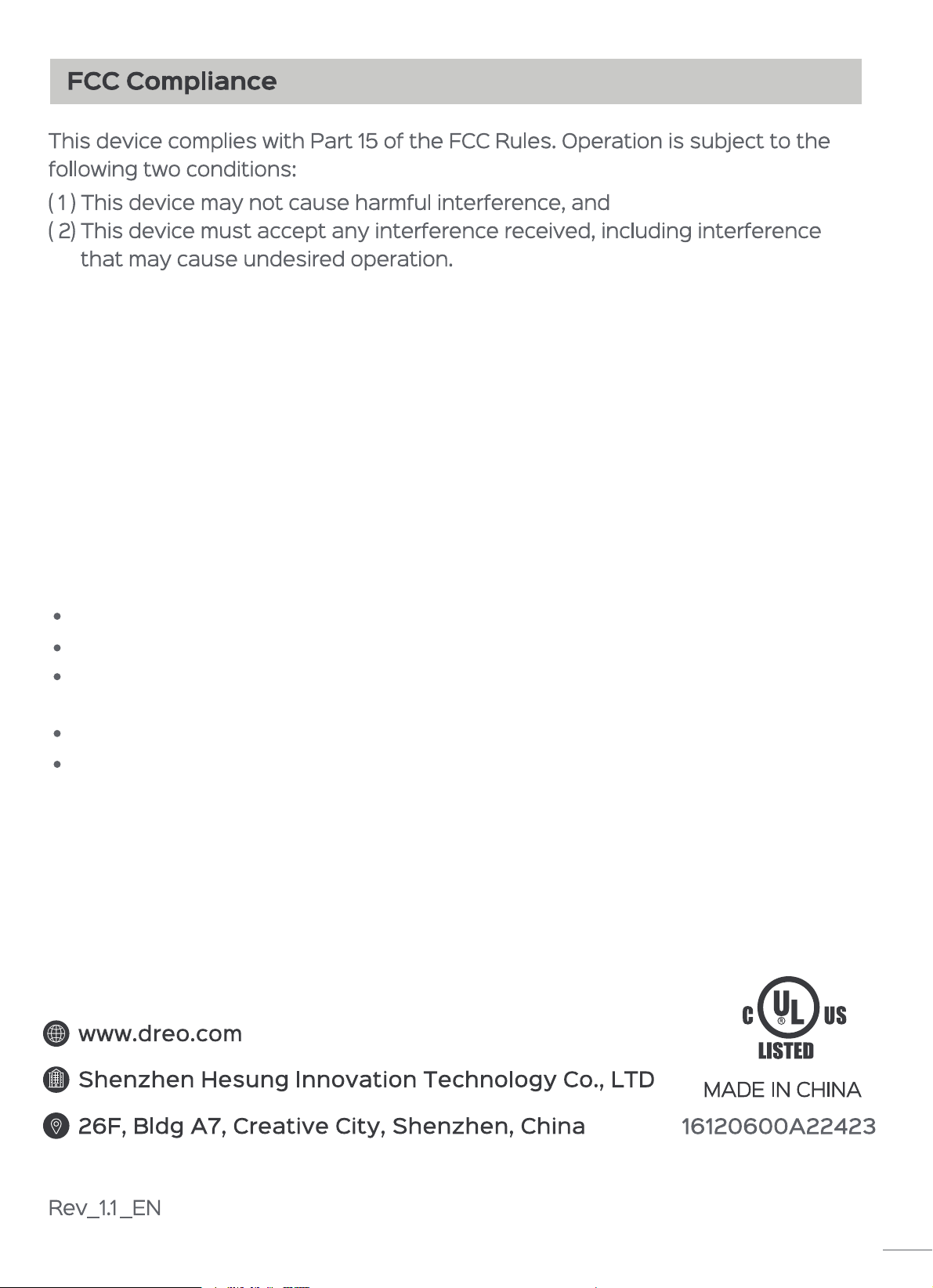
This equipment has been tested and found to comply with the limits for a Class
B digital device, pursuant to part 15 of the FCC Rules. These limits are designed
to provide reasonable protection against harmful interference in a residential
installation. This equipment generates, uses and can radiate radio frequency
energy and, if not installed and used in accordance with the instructions, may
cause harmful interference to radio communications. However, there is no
guarantee that interference will not occur in a particular installation. If this
equipment does cause harmful interference to radio or television reception,
which can be determined by turning the equipment off and on, the user is
encouraged to try to correct the interference by one or more of the following
measures:
Reorient or relocate the receiving antenna.
Increase the separation between the equipment and receiver.
Connect the equipment into an outlet on a circuit different from that to which
the receiver is connected.
Consult the dealer or an experienced radio/TV technician for help.
Changes or modifications not approved by the party responsible for
compliance could void user’s authority to operate the equipment.
28 29