
Network Camera
User Manual

Iniaves on the Use of Video Products
Thank you for choosing Hikvision products.
Technology aects every aspect of our life. As a high-tech company, we are increasingly aware of
the role technology plays in improving business eciency and quality of life, but at the same me,
the potenal harm of its improper usage. For example, video products are capable of recording
real, complete and clear images. This provides a high value in retrospect and preserving real-me
facts. However, it may also result in the infringement of a third party's legimate rights and
interests if improper distribuon, use and/or processing of video data takes place. With the
philosophy of "Technology for the Good", Hikvision requests that every end user of video
technology and video products shall comply with all the applicable laws and regulaons, as well as
ethical customs, aiming to jointly create a beer community.
Please read the following iniaves carefully:
●
Everyone has a reasonable expectaon of privacy, and the installaon of video products should
not be in conict with this reasonable expectaon. Therefore, a warning noce shall be given in
a reasonable and eecve manner and clarify the monitoring range, when installing video
products in public areas. For non-public areas, a third party's rights and interests shall be
evaluated when installing video products, including but not limited to, installing video products
only aer obtaining the consent of the stakeholders, and not installing highly-invisible video
products.
●
The purpose of video products is to record real acvies within a specic me and space and
under specic condions. Therefore, every user shall rst reasonably dene his/her own rights in
such specic scope, in order to avoid infringing on a third party's portraits, privacy or other
legimate rights.
●
During the use of video products, video image data derived from real scenes will connue to be
generated, including a large amount of biological data (such as facial images), and the data could
be further applied or reprocessed. Video products themselves could not disnguish good from
bad regarding how to use the data based solely on the images captured by the video products.
The result of data usage depends on the method and purpose of use of the data controllers.
Therefore, data controllers shall not only comply with all the applicable laws and regulaons and
other normave requirements, but also respect internaonal norms, social morality, good
morals, common pracces and other non-mandatory requirements, and respect individual
privacy, portrait and other rights and interests.
●
The rights, values and other demands of various stakeholders should always be considered when
processing video data that is connuously generated by video products. In this regard, product
security and data security are extremely crucial. Therefore, every end user and data controller,
shall undertake all reasonable and necessary measures to ensure data security and avoid data
leakage, improper disclosure and improper use, including but not limited to, seng up access
Network Camera User Manual
i

control, selecng a suitable network environment (the Internet or Intranet) where video
products are connected, establishing and constantly opmizing network security.
●
Video products have made great contribuons to the improvement of social security around the
world, and we believe that these products will also play an acve role in more aspects of social
life. Any abuse of video products in violaon of human rights or leading to criminal acvies are
contrary to the original intent of technological innovaon and product development. Therefore,
each user shall establish an evaluaon and tracking mechanism of their product applicaon to
ensure that every product is used in a proper and reasonable manner and with good faith.
Network Camera User Manual
ii

Legal Informaon
©2021 Hangzhou Hikvision Digital Technology Co., Ltd. All rights reserved.
About this Manual
The Manual includes instrucons for using and managing the Product. Pictures, charts, images and
all other informaon hereinaer are for descripon and explanaon only. The informaon
contained in the Manual is subject to change, without noce, due to rmware updates or other
reasons. Please nd the latest version of this Manual at the Hikvision website ( hps://
www.hikvision.com/ ).
Please use this Manual with the guidance and assistance of professionals trained in supporng the
Product.
Trademarks
and other Hikvision's trademarks and logos are the properes of
Hikvision in various jurisdicons.
Other trademarks and logos menoned are the properes of their respecve owners.
Disclaimer
TO THE MAXIMUM EXTENT PERMITTED BY APPLICABLE LAW, THIS MANUAL AND THE PRODUCT
DESCRIBED, WITH ITS HARDWARE, SOFTWARE AND FIRMWARE, ARE PROVIDED "AS IS" AND "WITH
ALL FAULTS AND ERRORS". HIKVISION MAKES NO WARRANTIES, EXPRESS OR IMPLIED, INCLUDING
WITHOUT LIMITATION, MERCHANTABILITY, SATISFACTORY QUALITY, OR FITNESS FOR A PARTICULAR
PURPOSE. THE USE OF THE PRODUCT BY YOU IS AT YOUR OWN RISK. IN NO EVENT WILL HIKVISION
BE LIABLE TO YOU FOR ANY SPECIAL, CONSEQUENTIAL, INCIDENTAL, OR INDIRECT DAMAGES,
INCLUDING, AMONG OTHERS, DAMAGES FOR LOSS OF BUSINESS PROFITS, BUSINESS
INTERRUPTION, OR LOSS OF DATA, CORRUPTION OF SYSTEMS, OR LOSS OF DOCUMENTATION,
WHETHER BASED ON BREACH OF CONTRACT, TORT (INCLUDING NEGLIGENCE), PRODUCT LIABILITY,
OR OTHERWISE, IN CONNECTION WITH THE USE OF THE PRODUCT, EVEN IF HIKVISION HAS BEEN
ADVISED OF THE POSSIBILITY OF SUCH DAMAGES OR LOSS.
YOU ACKNOWLEDGE THAT THE NATURE OF THE INTERNET PROVIDES FOR INHERENT SECURITY
RISKS, AND HIKVISION SHALL NOT TAKE ANY RESPONSIBILITIES FOR ABNORMAL OPERATION,
PRIVACY LEAKAGE OR OTHER DAMAGES RESULTING FROM CYBER-ATTACK, HACKER ATTACK, VIRUS
INFECTION, OR OTHER INTERNET SECURITY RISKS; HOWEVER, HIKVISION WILL PROVIDE TIMELY
TECHNICAL SUPPORT IF REQUIRED.
YOU AGREE TO USE THIS PRODUCT IN COMPLIANCE WITH ALL APPLICABLE LAWS, AND YOU ARE
SOLELY RESPONSIBLE FOR ENSURING THAT YOUR USE CONFORMS TO THE APPLICABLE LAW.
ESPECIALLY, YOU ARE RESPONSIBLE, FOR USING THIS PRODUCT IN A MANNER THAT DOES NOT
INFRINGE ON THE RIGHTS OF THIRD PARTIES, INCLUDING WITHOUT LIMITATION, RIGHTS OF
PUBLICITY, INTELLECTUAL PROPERTY RIGHTS, OR DATA PROTECTION AND OTHER PRIVACY RIGHTS.
YOU SHALL NOT USE THIS PRODUCT FOR ANY PROHIBITED END-USES, INCLUDING THE
Network Camera User Manual
iii

DEVELOPMENT OR PRODUCTION OF WEAPONS OF MASS DESTRUCTION, THE DEVELOPMENT OR
PRODUCTION OF CHEMICAL OR BIOLOGICAL WEAPONS, ANY ACTIVITIES IN THE CONTEXT RELATED
TO ANY NUCLEAR EXPLOSIVE OR UNSAFE NUCLEAR FUEL-CYCLE, OR IN SUPPORT OF HUMAN
RIGHTS ABUSES.
IN THE EVENT OF ANY CONFLICTS BETWEEN THIS MANUAL AND THE APPLICABLE LAW, THE LATTER
PREVAILS.
Network Camera User Manual
iv
Symbol Convenons
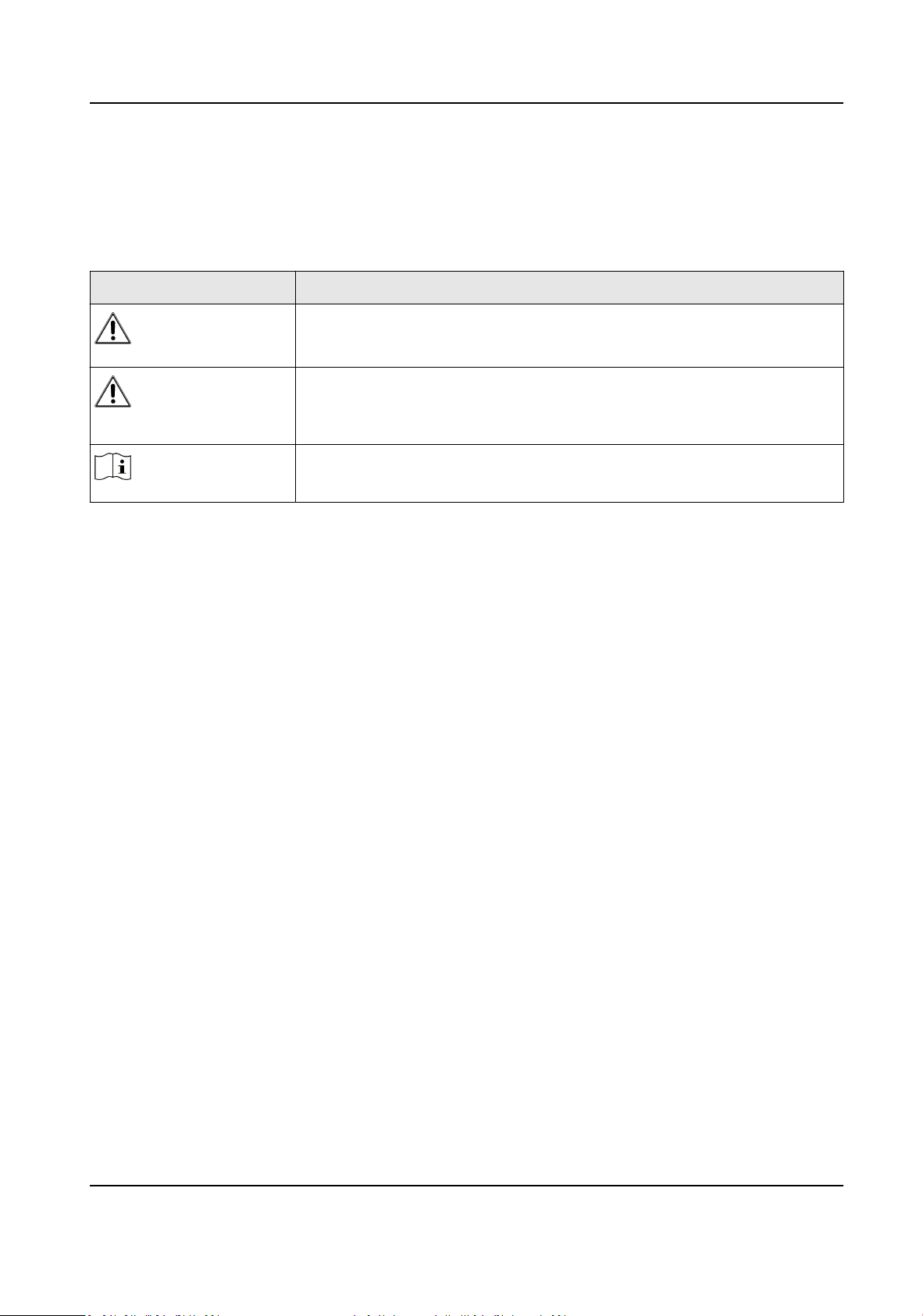
The symbols that may be found in this document are dened as follows.
Symbol Descripon
Danger
Indicates a hazardous situaon which, if not avoided, will or could
result in death or serious injury.
Cauon
Indicates a potenally hazardous situaon which, if not avoided, could
result in equipment damage, data loss, performance degradaon, or
unexpected results.
Note
Provides addional informaon to emphasize or supplement
important points of the main text.
Network Camera User Manual
v

Safety Instrucon
These instrucons are intended to ensure that user can use the product correctly to avoid danger
or property loss.
Laws and Regulaons
●
The device should be used in compliance with local laws, electrical safety regulaons, and re
prevenon regulaons.
Electricity
●
In the use of the product, you must be in strict compliance with the electrical safety regulaons
of the naon and region.
●
The equipment shall not be exposed to dripping or splashing and that no objects lled with
liquids, such as vases, shall be placed on the equipment.
●
Provide a surge suppressor at the inlet opening of the equipment under special condions such
as the mountain top, iron tower, and forest.
●
CAUTION: To reduce the risk of re, replace only with the same type and rang of fuse.
●
The equipment must be connected to an earthed mains socket-outlet.
●
An appropriate readily accessible disconnect device shall be incorporated external to the
equipment.
●
An appropriate overcurrent protecve device shall be incorporated external to the equipment,
not exceeding the specicaon of the building.
●
An all-pole mains switch shall be incorporated in the electrical installaon of the building.
●
Ensure correct wiring of the terminals for connecon to an AC mains supply.
●
The equipment has been designed, when required, modied for connecon to an IT power
distribuon system.
Baery
●
Do not ingest baery. Chemical burn hazard!
●
This product contains a coin/buon cell baery. If the coin/buon cell baery is swallowed, it
can cause severe internal burns in just 2 hours and can lead to death.
●
Keep new and used baeries away from children.
●
If the baery compartment does not close securely, stop using the product and keep it away
from children.
●
If you think baeries might have been swallowed or placed inside any part of the body, seek
immediate medical aenon.
●
CAUTION: Risk of explosion if the baery is replaced by an incorrect type. Dispose of used
baeries according to the instrucons.
●
ATTENTION: IL Y A RISQUE D'EXPLOSION SI LA BATTERIE EST REMPLACÉE PAR UNE BATTERIE DE
TYPE INCORRECT. METTRE AU REBUT LES BATTERIES USAGÉES CONFORMÉMENT AUX
INSTRUCTIONS.
Network Camera User Manual
vi

●
Improper replacement of the baery with an incorrect type may defeat a safeguard (for
example, in the case of some lithium baery types).
●
Do not dispose of the baery into re or a hot oven, or mechanically crush or cut the baery,
which may result in an explosion.
●
Do not leave the baery in an extremely high temperature surrounding environment, which may
result in an explosion or the leakage of ammable liquid or gas.
●
Do not subject the baery to extremely low air pressure, which may result in an explosion or the
leakage of ammable liquid or gas.
●
+ idenes the posive terminal(s) of equipment which is used with, or generates direct current.
- idenes the negave terminal(s) of equipment which is used with, or generates direct current.
Fire Prevenon
●
No naked ame sources, such as lighted candles, should be placed on the equipment.
●
The serial port of the equipment is used for debugging only.
Hot Surface Prevenon
●
CAUTION: Hot parts! Burned ngers when handling the parts. Wait one-half hour
aer switching o before handling parts. This scker is to indicate that the marked item can be
hot and should not be touched without taking care. For device with this scker, this device is
intended for installaon in a restricted access locaon, access can only be gained by service
persons or by users who have been instructed about the reasons for the restricons applied to
the locaon and about any precauons that shall be taken.
Installaon
●
Install the equipment according to the instrucons in this manual.
●
To prevent injury, this equipment must be securely aached to the oor/wall in accordance with
the installaon instrucons.
●
Never place the equipment in an unstable locaon. The equipment may fall, causing serious
personal injury or death.
Power Supply
●
The input voltage should conform to IEC60950-1 standard: SELV (Safety Extra Low Voltage) and
the Limited Power Source. Refer to the appropriate documentaon for detailed informaon.
●
The power source should meet limited power source or PS2 requirements according to IEC
60950-1 or IEC 62368-1 standard.
●
DO NOT connect mulple devices to one power adapter, to avoid over-heang or re hazards
caused by overload.
●
Make sure the plug is properly connected to the power socket.
Network Camera User Manual
vii

White Light Illuminator (If supported)
●
Possibly hazardous opcal radiaon emied from this product.
●
DO NOT stare at operang light source. May be harmful to the eyes.
●
Wear appropriate eye protecon or DO NOT turn on the white light when you assemble, install
or maintain the camera.
Transportaon
●
Keep the device in original or similar packaging while transporng it.
System Security
●
The installer and user are responsible for password and security conguraon.
Maintenance
●
If the product does not work properly, please contact your dealer or the nearest service center.
●
We shall not assume any responsibility for problems caused by unauthorized repair or
maintenance.
●
A few device components (e.g., electrolyc capacitor) require regular replacement. The average
lifespan varies, so periodic checking is recommended. Contact your dealer for details.
Cleaning
●
Please use a so and dry cloth when clean inside and outside surfaces of the product cover. Do
not use alkaline detergents.
Using Environment
●
When any laser equipment is in use, make sure that the device lens is not exposed to the laser
beam, or it may burn out.
●
DO NOT expose the device to high electromagnec radiaon or dusty environments.
●
For indoor-only device, place it in a dry and well-venlated environment.
●
DO NOT aim the lens at the sun or any other bright light.
●
Make sure the running environment meets the requirement of the device. The operang
temperature shall be -30 °C to 60 °C (-22 °F to 140 °F), and the operang humidity shall be 95%
or less (no condensing).
●
DO NOT place the camera in extremely hot, cold, dusty or damp locaons, and do not expose it
to high electromagnec radiaon.
Emergency
●
If smoke, odor, or noise arises from the device, immediately turn o the power, unplug the
power cable, and contact the service center.
Network Camera User Manual
viii

Time Synchronizaon
●
Set up device me manually for the rst me access if the local me is not synchronized with
that of the network. Visit the device via Web browse/client soware and go to me sengs
interface.
Reecon
●
Make sure that no reecve surface is too close to the device lens. The IR light from the device
may reect back into the lens causing reecon.
Network Camera User Manual
ix

Contents
Chapter 1 System Requirement .................................................................................................. 1
Chapter 2 Device Acvaon and Accessing ................................................................................. 2
2.1 Acvate the Device via SADP ................................................................................................. 2
2.2 Acvate the Device via Browser ............................................................................................. 2
2.3 Login ...................................................................................................................................... 3
2.3.1 Plug-in Installaon ........................................................................................................ 3
2.3.2 Admin Password Recovery ............................................................................................ 4
2.3.3 Illegal Login Lock ........................................................................................................... 5
Chapter 3 Live View .................................................................................................................... 6
3.1 Live View Parameters ............................................................................................................. 6
3.1.1 Enable and Disable Live View ........................................................................................ 6
3.1.2 Adjust Aspect Rao ....................................................................................................... 6
3.1.3 Live View Stream Type .................................................................................................. 6
3.1.4 Select the Third-Party Plug-in ....................................................................................... 6
3.1.5 Light .............................................................................................................................. 7
3.1.6 Count Pixel .................................................................................................................... 7
3.1.7 Start Digital Zoom ......................................................................................................... 7
3.1.8 Auxiliary Focus .............................................................................................................. 7
3.1.9 Lens Inializaon .......................................................................................................... 8
3.1.10 Quick Set Live View ..................................................................................................... 8
3.1.11 Lens Parameters Adjustment ...................................................................................... 8
3.2 Set Transmission Parameters ................................................................................................. 9
Chapter 4 Video and Audio ....................................................................................................... 11
4.1 Video Sengs ...................................................................................................................... 11
4.1.1 Stream Type ................................................................................................................ 11
4.1.2 Video Type .................................................................................................................. 12
Network Camera User Manual
x

4.1.3 Resoluon ................................................................................................................... 12
4.1.4 Bitrate Type and Max. Bitrate ..................................................................................... 12
4.1.5 Video Quality .............................................................................................................. 12
4.1.6 Frame Rate .................................................................................................................. 13
4.1.7 Video Encoding ........................................................................................................... 13
4.1.8 Smoothing ................................................................................................................... 15
4.2 ROI ....................................................................................................................................... 15
4.2.1 Set ROI ........................................................................................................................ 15
4.3 Audio Sengs ...................................................................................................................... 16
4.3.1 Audio Encoding ........................................................................................................... 16
4.3.2 Audio Input ................................................................................................................. 16
4.3.3 Audio Output .............................................................................................................. 16
4.3.4 Environmental Noise Filter .......................................................................................... 17
4.4 Two-way Audio .................................................................................................................... 17
4.5 Display Sengs .................................................................................................................... 17
4.5.1 Scene Mode ................................................................................................................ 17
4.5.2 Video Standard ........................................................................................................... 20
4.5.3 Local Video Output ..................................................................................................... 20
4.6 OSD ...................................................................................................................................... 20
4.7 Set Privacy Mask .................................................................................................................. 21
Chapter 5 Video Recording and Picture Capture ........................................................................ 22
5.1 Storage Sengs ................................................................................................................... 22
5.1.1 Set New or Unencrypted Memory Card ...................................................................... 22
5.1.2 Set FTP ........................................................................................................................ 24
5.1.3 Set NAS ....................................................................................................................... 25
5.2 Video Recording ................................................................................................................... 25
5.2.1 Record Automacally .................................................................................................. 25
5.2.2 Record Manually ......................................................................................................... 26
Network Camera User Manual
xi

5.2.3 Playback and Download Video .................................................................................... 27
5.3 Capture Conguraon .......................................................................................................... 27
5.3.1 Capture Automacally ................................................................................................ 27
5.3.2 Capture Manually ........................................................................................................ 28
5.3.3 View and Download Picture ........................................................................................ 28
Chapter 6 Event and Alarm ....................................................................................................... 29
6.1 Basic Event ........................................................................................................................... 29
6.1.1 Set Moon Detecon .................................................................................................. 29
6.1.2 Set Video Tampering Alarm ........................................................................................ 31
6.1.3 Set Excepon Alarm .................................................................................................... 32
6.2 Smart Event .......................................................................................................................... 33
6.2.1 Detect Audio Excepon ............................................................................................... 33
6.2.2 Set Defocus Detecon ................................................................................................. 34
6.2.3 Detect Scene Change .................................................................................................. 34
6.2.4 Set Intrusion Detecon ............................................................................................... 34
6.2.5 Set Line Crossing Detecon ......................................................................................... 36
6.2.6 Set Region Entrance Detecon ................................................................................... 37
6.2.7 Set Region Exing Detecon ....................................................................................... 38
6.2.8 Set Object Removal Detecon .................................................................................... 39
6.2.9 Set Unaended Baggage Detecon ............................................................................ 40
6.2.10 Draw Area ................................................................................................................. 41
6.2.11 Set Size Filter ............................................................................................................. 41
Chapter 7 Network Sengs ...................................................................................................... 43
7.1 TCP/IP ................................................................................................................................... 43
7.1.1 Mulcast Discovery ..................................................................................................... 44
7.2 SNMP ................................................................................................................................... 44
7.3 Port Mapping ....................................................................................................................... 45
7.3.1 Set Auto Port Mapping ................................................................................................ 45
Network Camera User Manual
xii

7.3.2 Set Manual Port Mapping ........................................................................................... 45
7.3.3 Set Port Mapping on Router ....................................................................................... 46
7.4 Port ...................................................................................................................................... 47
7.5 Access to Device via Domain Name ..................................................................................... 47
7.6 Set Network Service ............................................................................................................. 48
7.7 Set Open Network Video Interface ...................................................................................... 49
7.8 Set ISUP ................................................................................................................................ 49
7.9 Access Camera via Hik-Connect ........................................................................................... 50
7.9.1 Enable Hik-Connect Service on Camera ...................................................................... 50
7.9.2 Set Up Hik-Connect ..................................................................................................... 51
7.9.3 Add Camera to Hik-Connect ........................................................................................ 52
Chapter 8 Arming Schedule and Alarm Linkage ......................................................................... 54
8.1 Set Arming Schedule ............................................................................................................ 54
8.2 Linkage Method Sengs ...................................................................................................... 54
8.2.1 Trigger Alarm Output .................................................................................................. 54
8.2.2 FTP/NAS/Memory Card Uploading ............................................................................. 55
8.2.3 Send Email .................................................................................................................. 56
8.2.4 Nofy Surveillance Center .......................................................................................... 57
8.2.5 Trigger Recording ........................................................................................................ 57
8.2.6 Audible Warning ......................................................................................................... 57
Chapter 9 System and Security ................................................................................................. 58
9.1 View Device Informaon ...................................................................................................... 58
9.2 Search and Manage Log ....................................................................................................... 58
9.3 Import and Export Conguraon File .................................................................................. 58
9.4 Export Diagnose Informaon ............................................................................................... 58
9.5 Reboot ................................................................................................................................. 59
9.6 Restore and Default ............................................................................................................. 59
9.7 Upgrade ............................................................................................................................... 59
Network Camera User Manual
xiii

9.8 View Open Source Soware License .................................................................................... 60
9.9 Time and Date ...................................................................................................................... 60
9.9.1 Synchronize Time Manually ........................................................................................ 60
9.9.2 Set NTP Server ............................................................................................................ 60
9.9.3 Synchronize Time by Satellite ..................................................................................... 61
9.9.4 Set DST ........................................................................................................................ 61
9.10 Set RS-232 .......................................................................................................................... 61
9.11 Security .............................................................................................................................. 61
9.11.1 Authencaon .......................................................................................................... 62
9.11.2 Set IP Address Filter .................................................................................................. 62
9.11.3 Set HTTPS .................................................................................................................. 63
9.11.4 Set QoS ...................................................................................................................... 64
9.11.5 Set IEEE 802.1X ......................................................................................................... 64
9.11.6 Search Security Audit Logs ........................................................................................ 64
9.11.7 SSH ............................................................................................................................ 65
9.12 User and Account ............................................................................................................... 65
9.12.1 Set User Account and Permission ............................................................................. 65
9.12.2 Online Users .............................................................................................................. 66
Chapter 10 Allocate VCA Resource ............................................................................................ 67
Appendix A. Device Command .................................................................................................. 68
Appendix B. Device Communicaon Matrix .............................................................................. 69
Appendix C. FAQ ....................................................................................................................... 70
Network Camera User Manual
xiv

Chapter 1 System Requirement
Your computer should meet the requirements for proper vising and operang the product.
Operang System Microso Windows XP SP1 and above version
CPU 2.0 GHz or higher
RAM 1G or higher
Display 1024×768 resoluon or higher
Web Browser For the details, see Plug-in Installaon
Network Camera User Manual
1

Chapter 2 Device Acvaon and Accessing
To protect the security and privacy of the user account and data, you should set a login password
to acvate the device when access the device via network.
Note
Refer to the user manual of the soware client for the detailed informaon about the client
soware acvaon.
2.1 Acvate the Device via SADP
Search and acvate the online devices via SADP soware.
Before You Start
Access www.hikvision.com to get SADP soware to install.
Steps
1.
Connect the device to network using the network cable.
2.
Run SADP soware to search the online devices.
3.
Check Device Status from the device list, and select Inacve device.
4.
Create and input the new password in the password eld, and conrm the password.
Cauon
We highly recommend you create a strong password of your own choosing (using a minimum of
8 characters, including upper case leers, lower case leers, numbers, and special characters) in
order to increase the security of your product. And we recommend you reset your password
regularly, especially in the high security system, reseng the password monthly or weekly can
beer protect your product.
5.
Click OK.
Device Status changes into Acve.
6.
Oponal: Change the network parameters of the device in Modify Network Parameters.
2.2 Acvate the Device via Browser
You can access and acvate the device via the browser.
Steps
1.
Connect the device to the PC using the network cables.
2.
Change the IP address of the PC and device to the same segment.
Network Camera User Manual
2
Note
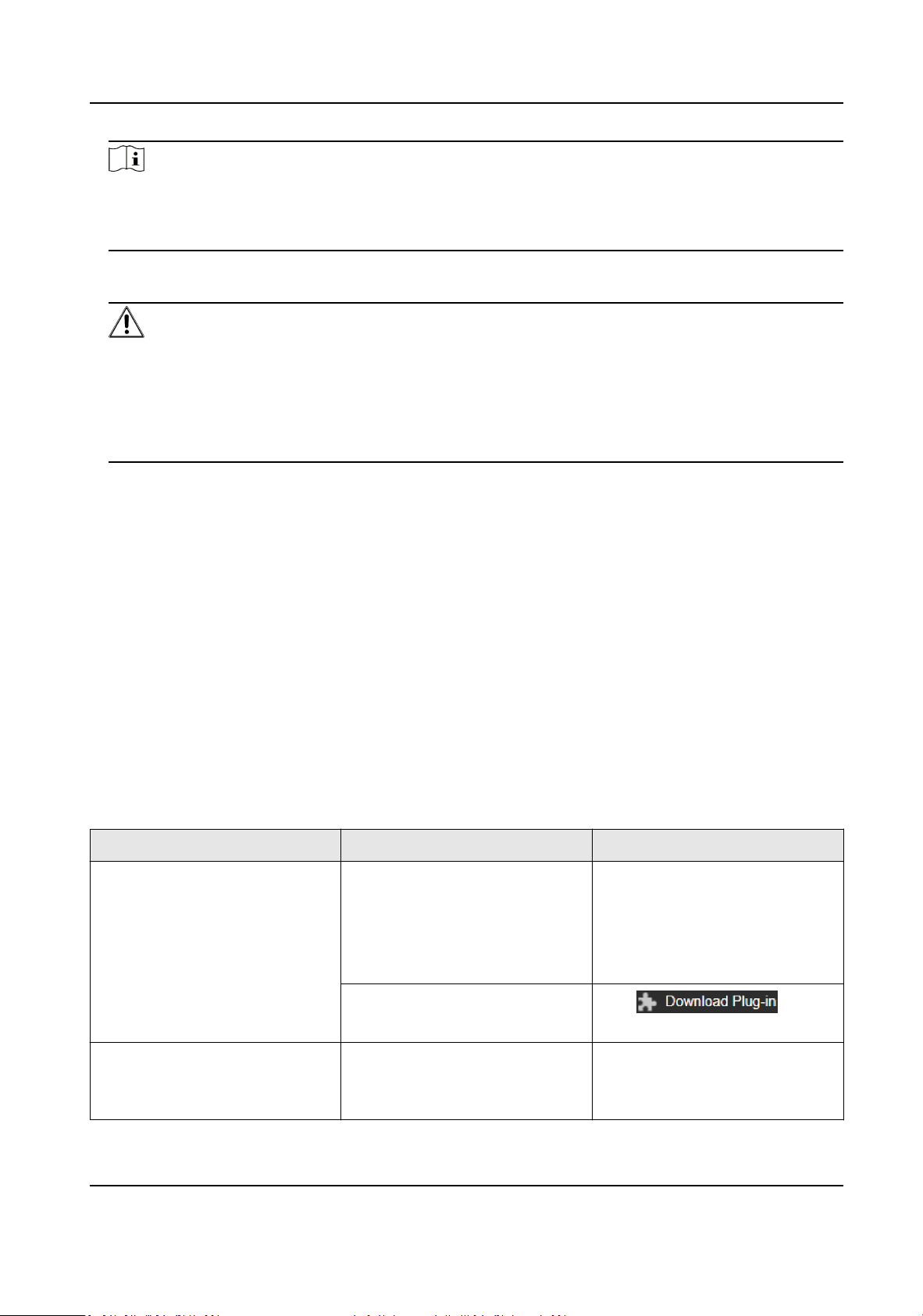
The default IP address of the device is 192.168.1.64. You can set the IP address of the PC from
192.168.1.2 to 192.168.1.253 (except 192.168.1.64). For example, you can set the IP address of
the PC to 192.168.1.100.
3.
Input 192.168.1.64 in the browser.
4.
Set device acvaon password.
Cauon
We highly recommend you create a strong password of your own choosing (using a minimum of
8 characters, including at least three of the following categories: upper case leers, lower case
leers, numbers, and special characters) in order to increase the security of your product. And
we recommend you reset your password regularly, especially in the high security system,
reseng the password monthly or weekly can beer protect your product.
5.
Click OK.
6.
Input the acvaon password to log in to the device.
7.
Oponal: Go to Conguraon → Network → Basic → TCP/IP to change the IP address of the
device to the same segment of your network.
2.3 Login
Log in to the device via Web browser.
2.3.1 Plug-in Installaon
Certain operaon systems and web browser may restrict the display and operaon of the camera
funcon. You should install plug-in or complete certain sengs to ensure normal display and
operaon. For detailed restricted funcon, refer to the actual device.
Operang System Web Browser Operaon
Windows
●
Internet Explorer 8+
●
Google Chrome 57 and
earlier version
●
Mozilla Firefox 52 and earlier
version
Follow pop-up prompts to
complete plug-in installaon.
●
Google Chrome 57+
●
Mozilla Firefox 52+
Click
to
download and install plug-in.
Mac OS
●
Google Chrome 57+
●
Mozilla Firefox 52+
●
Mac Safari 16+
Plug-in installaon is not
required.
Network Camera User Manual
3

Operang System Web Browser Operaon
Go to Conguraon →
Network → Advanced Sengs
→ Network Service to enable
WebSocket or Websockets for
normal view. Display and
operaon of certain funcons
are restricted. For example,
Playback and Picture are not
available. For detailed
restricted funcon, refer to the
actual device.
Note
The camera only supports Windows and Mac OS system and do not support Linux system.
2.3.2 Admin Password Recovery
If you forget the admin password, you can reset the password by clicking Forget Password on the
login page aer compleng the account security sengs.
You can reset the password by seng the security queson or email.
Note
When you need to reset the password, make sure that the device and the PC are on the same
network segment.
Security Queson
You can set the account security during the acvaon. Or you can go to Conguraon → System →
User Management , click Account Security Sengs, select the security queson and input your
answer.
You can click Forget Password and answer the security queson to reset the admin password when
access the device via browser.
Email
You can set the account security during the acvaon. Or you can go to Conguraon → System →
User Management , click Account Security Sengs, input your email address to receive the
vericaon code during the recovering operaon process.
Network Camera User Manual
4

2.3.3 Illegal Login Lock
It helps to improve the security when accessing the device via Internet.
The admin user can set the login aempts with the wrong password. When your login aempts
with the wrong password reach the set mes, the device is locked.
Go to Conguraon → System → Security → Security Service , and enable Enable Illegal Login
Lock, and set the illegal login aempts.
Network Camera User Manual
5

Chapter 3 Live View
It introduces the live view parameters, funcon icons and transmission parameters sengs.
3.1 Live View Parameters
The supported funcons vary depending on the model.
3.1.1 Enable and Disable Live View
This funcon is used to quickly enable or disable live view of the channel.
●
Click to start the live view.
●
Click to stop the live view.
3.1.2 Adjust Aspect Rao
Steps
1.
Click Live View.
2.
Click to select the aspect rao.
●
refers to 4:3 window size.
●
refers to 16:9 window size.
●
refers to original window size.
●
refers to self-adapve window size.
●
refers to original rao window size.
3.1.3 Live View Stream Type
Select the live view stream type according to your needs. For the detailed informaon about the
stream type selecon, refer to Stream Type .
3.1.4 Select the Third-Party Plug-in
When the live view cannot display via certain browsers, you can change the plug-in for live view
according to the browser.
Steps
1.
Click Live View.
2.
Click to select the plug-in.
Network Camera User Manual
6

-
When you access the device via Internet Explorer, you can select Webcomponents or
QuickTime.
-
When you access the device via the other browsers, you can select Webcomponents,
QuickTime, VLC or MJPEG.
3.1.5 Light
Click
to turn on or turn o the illuminator.
3.1.6 Count Pixel
It helps to get the height and width pixel of the selected region in the live view image.
Steps
1.
Click to enable the funcon.
2.
Drag the mouse on the image to select a desired rectangle area.
The width pixel and height pixel are displayed on the boom of the live view image.
3.1.7 Start Digital Zoom
It helps to see a detailed informaon of any region in the image.
Steps
1.
Click to enable the digital zoom.
2.
In live view image, drag the mouse to select the desired region.
3.
Click in the live view image to back to the original image.
3.1.8 Auxiliary Focus
It is used for motorized device. It can improve the image if the device cannot focus clearly.
For the device that supports ABF, adjust the lens angle, then focus and click ABF buon on the
device. The device can focus clearly.
Click
to focus automacally.
Note
●
If the device cannot focus with auxiliary focus, you can use Lens Inializaon , then use auxiliary
focus again to make the image clear.
●
If auxiliary focus cannot help the device focus clearly, you can use manual focus.
Network Camera User Manual
7

3.1.9 Lens Inializaon
Lens inializaon is used on the device equipped with motorized lens. The funcon can reset lens
when long me zoom or focus results in blurred image. This funcon varies according to dierent
models.
Click to operate lens inializaon.
3.1.10 Quick Set Live View
It oers a quick setup of PTZ, display sengs, OSD, video/audio and VCA resource sengs on live
view page.
Steps
1.
Click to show quick setup page.
2.
Set PTZ, display sengs, OSD, video/audio and VCA resource parameters.
-
For PTZ sengs, see
Lens Parameters Adjustment .
-
For display sengs, see
Display Sengs .
-
For OSD sengs, see
OSD .
-
For audio and video sengs, see
Video and Audio .
-
For VCA sengs, see
Allocate VCA Resource .
Note
The funcon is only supported by certain models.
3.1.11 Lens Parameters Adjustment
It is used to adjust the lens focus, zoom and iris.
Zoom
●
Click
, and the lens zooms in.
●
Click , and the lens zooms out.
Focus
●
Click , then the lens focuses far and the distant object gets clear.
●
Click , then the lens focuses near and the nearby object gets clear.
PTZ Speed
●
Slide to adjust the speed of the pan/lt movement.
Network Camera User Manual
8

Iris
●
When the image is too dark, click to enlarge the iris.
●
When the image is too bright, click to stop down the iris.
3.2 Set Transmission Parameters
The live view image may be displayed abnormally according to the network condions. In dierent
network environments, you can adjust the transmission parameters to solve the problem.
Steps
1.
Go to Conguraon → Local .
2.
Set the transmission parameters as required.
Protocol
TCP
TCP ensures complete delivery of streaming data and beer video quality, yet the real-me
transmission will be aected. It is suitable for the stable network environment.
UDP
UDP is suitable for the unstable network environment that does not demand high video
uency.
MULTICAST
MULTICAST is suitable for the situaon that there are mulple clients. You should set the
mulcast address for them before selecon.
Note
For detailed informaon about mulcast, refer to .
HTTP
HTTP is suitable for the situaon that the third-party needs to get the stream from the
device.
Play Performance
Shortest Delay
The device takes the real-me video image as the priority over the video uency.
Balanced
The device ensures both the real-me video image and the uency.
Fluent
The device takes the video uency as the priority over teal-me. In poor network
environment, the device cannot ensures video uency even the uency is enabled.
Network Camera User Manual
9

Custom
You can set the frame rate manually. In poor network environment, you can reduce the
frame rate to get a uent live view. But the rule informaon may cannot display.
3.
Click OK.
Network Camera User Manual
10

Chapter 4 Video and Audio
This part introduces the conguraon of video and audio related parameters.
4.1 Video Sengs
This part introduces the sengs of video parameters, such as, stream type, video encoding, and
resoluon.
Go to seng page: Conguraon → Video/Audio → Video .
4.1.1 Stream Type
For device supports more than one stream, you can specify parameters for each stream type.
Main Stream
The stream stands for the best stream performance the device supports. It usually oers the
best resoluon and frame rate the device can do. But high resoluon and frame rate usually
means larger storage space and higher bandwidth requirements in transmission.
Sub Stream
The stream usually oers comparavely low resoluon opons, which consumes less bandwidth
and storage space.
Other Streams
Steams other than the main stream and sub stream may also be oered for customized usage.
Set Custom Video
You can set up addional video streams if required. For custom video streams, you can preview
them, but cannot record or play back them.
Steps
Note
●
The funcon is only supported by certain camera models.
●
Aer restoring the device (not restore to default sengs), quanty of custom video streams and
their names are kept, but the related parameters are restored.
1.
Click to add a stream.
2.
Change the stream name as needed.
Network Camera User Manual
11

Note
Up to 32 leers and symbols (except &, <, >, ', or ") are allowed for the stream name.
3.
Customize the stream parameters (resoluon, frame rate, max. bitrate, video encoding).
4.
Oponal: Add stream descripon as needed.
5.
Oponal: If a custom stream is not needed, click to delete it.
6.
Click Save.
4.1.2 Video Type
Select the content (video and audio) that should be contained in the stream.
Video
Only video content is contained in the stream.
Video & Audio
Video content and audio content are contained in the composite stream.
4.1.3 Resoluon
Select video resoluon according to actual needs. Higher resoluon requires higher bandwidth and
storage.
4.1.4 Bitrate Type and Max. Bitrate
Constant Bitrate
It means that the stream is compressed and transmied at a comparavely xed bitrate. The
compression speed is fast, but mosaic may occur on the image.
Variable Bitrate
It means that the device automacally adjust the bitrate under the set Max. Bitrate. The
compression speed is slower than that of the constant bitrate. But it guarantees the image
quality of complex scenes.
4.1.5 Video Quality
When Bitrate Type is set as Variable, video quality is congurable. Select a video quality according
to actual needs. Note that higher video quality requires higher bandwidth.
Network Camera User Manual
12

4.1.6 Frame Rate
The frame rate is to describe the frequency at which the video stream is updated and it is
measured by frames per second (fps).
A higher frame rate is advantageous when there is movement in the video stream, as it maintains
image quality throughout. Note that higher frame rate requires higher bandwidth and larger
storage space.
4.1.7 Video Encoding
It stands for the compression standard the device adopts for video encoding.
Note
Available compression standards vary according to device models.
H.264
H.264, also known as MPEG-4 Part 10, Advanced Video Coding, is a compression standard. Without
compressing image quality, it increases compression rao and reduces the size of video le than
MJPEG or MPEG-4 Part 2.
H.264+
H.264+ is an improved compression coding technology based on H.264. By enabling H.264+, you
can esmate the HDD consumpon by its maximum average bitrate. Compared to H.264, H.264+
reduces storage by up to 50% with the same maximum bitrate in most scenes.
When H.264+ is enabled, Max. Average Bitrate is congurable. The device gives a recommended
max. average bitrate by default. You can adjust the parameter to a higher value if the video quality
is less sasfactory. Max. average bitrate should not be higher than max. bitrate.
Note
When H.264+ is enabled, Video Quality, I Frame Interval, Prole and SVC are not congurable.
H.265
H.265, also known as High Eciency Video Coding (HEVC) and MPEG-H Part 2, is a compression
standard. In comparison to H.264, it oers beer video compression at the same resoluon, frame
rate and image quality.
Network Camera User Manual
13

H.265+
H.265+ is an improved compression coding technology based on H.265. By enabling H.265+, you
can esmate the HDD consumpon by its maximum average bitrate. Compared to H.265, H.265+
reduces storage by up to 50% with the same maximum bitrate in most scenes.
When H.265+ is enabled, Max. Average Bitrate is congurable. The device gives a recommended
max. average bitrate by default. You can adjust the parameter to a higher value if the video quality
is less sasfactory. Max. average bitrate should not be higher than max. bitrate.
Note
When H.265+ is enabled, Video Quality, I Frame Interval, Prole and SVC are not congurable.
I-Frame Interval
I-frame interval denes the number of frames between 2 I-frames.
In H.264 and H.265, an I-frame, or intra frame, is a self-contained frame that can be independently
decoded without any reference to other images. An I-frame consumes more bits than other
frames. Thus, video with more I-frames, in other words, smaller I-frame interval, generates more
steady and reliable data bits while requiring more storage space.
SVC
Scalable Video Coding (SVC) is the name for the Annex G extension of the H.264 or H.265 video
compression standard.
The objecve of the SVC standardizaon has been to enable the encoding of a high-quality video
bitstream that contains one or more subset bitstreams that can themselves be decoded with a
complexity and reconstrucon quality similar to that achieved using the exisng H.264 or H.265
design with the same quanty of data as in the subset bitstream. The subset bitstream is derived
by dropping packets from the larger bitstream.
SVC enables forward compability for older hardware: the same bitstream can be consumed by
basic hardware which can only decode a low-resoluon subset, while more advanced hardware
will be able decode high quality video stream.
MPEG4
MPEG4, referring to MPEG-4 Part 2, is a video compression format developed by Moving Picture
Experts Group (MPEG).
Network Camera User Manual
14

MJPEG
Moon JPEG (M-JPEG or MJPEG) is a video compression format in which intraframe coding
technology is used. Images in a MJPEG format is compressed as individual JPEG images.
Prole
This funcon means that under the same bitrate, the more complex the prole is, the higher the
quality of the image is, and the requirement for network bandwidth is also higher.
4.1.8 Smoothing
It refers to the smoothness of the stream. The higher value of the smoothing is, the beer uency
of the stream will be, though, the video quality may not be so sasfactory. The lower value of the
smoothing is, the higher quality of the stream will be, though it may appear not uent.
4.2 ROI
ROI (Region of Interest) encoding helps to discriminate the ROI and background informaon in
video compression. The technology assigns more encoding resource to the region of interest, thus
to increase the quality of the ROI whereas the background informaon is less focused.
4.2.1 Set ROI
ROI (Region of Interest) encoding helps to assign more encoding resource to the region of interest,
thus to increase the quality of the ROI whereas the background informaon is less focused.
Before You Start
Please check the video coding type. ROI is supported when the video coding type is H.264 or H.
265.
Steps
1.
Go to Conguraon → Video/Audio → ROI .
2.
Check Enable.
3.
Select Stream Type.
4.
Select Region No. in Fixed Region to draw ROI region.
1) Click Draw Area.
2) Click and drag the mouse on the view screen to draw the xed region.
3) Click Stop Drawing.
Network Camera User Manual
15
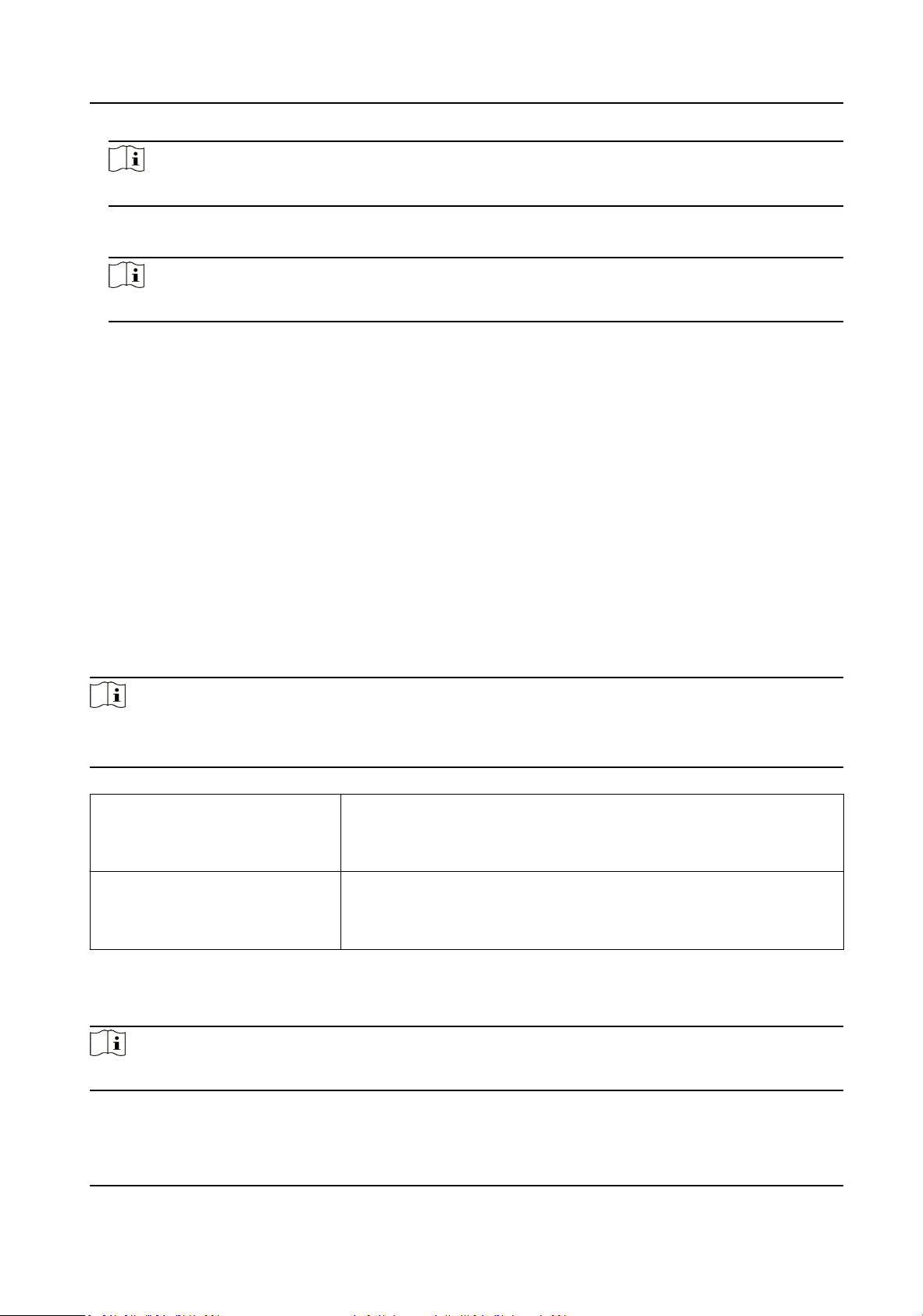
Note
Select the xed region that needs to be adjusted and drag the mouse to adjust its posion.
5.
Input the Region Name and ROI Level.
6.
Click Save.
Note
The higher the ROI level is, the clearer the image of the detected region is.
7.
Oponal: Select other region No. and repeat the above steps if you need to draw mulple xed
regions.
4.3 Audio Sengs
It is a funcon to set audio parameters such as audio encoding, environment noise ltering.
Go to the audio sengs page: Conguraon → Video/Audio → Audio .
4.3.1 Audio Encoding
Select the audio encoding compression of the audio.
4.3.2 Audio Input
Note
●
Connect the audio input device as required.
●
The audio input display varies with the device models.
LineIn Set Audio Input to LineIn when the device connects to the audio
input device with the high output power, such as MP3,
synthesizer or acve pickup.
MicIn Set Audio Input to MicIn when the device connects to the audio
input device with the low output power, such as microphone or
passive pickup.
4.3.3 Audio Output
Note
Connect the audio output device as required.
Network Camera User Manual
16

It is a switch of the device audio output. When it is disabled, all the device audio cannot output.
The audio output display varies with the device modes.
4.3.4 Environmental Noise Filter
Set it as OFF or ON. When the funcon is enabled, the noise in the environment can be ltered to
some extent.
4.4 Two-way Audio
It is used to realize the two-way audio funcon between the monitoring center and the target in
the monitoring screen.
Before You Start
●
Make sure the audio input device (pick-up or microphone) and audio output device (speaker)
connected to the device is working properly. Refer to specicaons of audio input and output
devices for device connecon.
●
If the device has built-in microphone and speaker, two-way audio funcon can be enabled
directly.
Steps
1.
Click Live View.
2.
Click on the toolbar to enable two-way audio funcon of the camera.
3.
Click
, disable the two-way audio funcon.
4.5 Display Sengs
It oers the parameter sengs to adjust image features.
Go to Conguraon → Image → Display Sengs .
4.5.1 Scene Mode
There are several sets of image parameters predened for dierent installaon environments.
Select a scene according to the actual installaon environment to speed up the display sengs.
Image Adjustment
By adjusng the Brightness, Saturaon, Contrast and Sharpness, the image can be best displayed.
Network Camera User Manual
17

Exposure Sengs
Exposure is controlled by the combinaon of iris, shuer, and photo sensibility. You can adjust
image eect by seng exposure parameters.
In manual mode, you need to set Exposure Time, Gain and Slow Shuer.
Day/Night Switch
Day/Night Switch funcon can provide color images in the day mode and turn on ll light in the
night mode. Switch mode is congurable.
Day
The image is always in color.
Night
The supplement light will be enabled to ensure clear live view image at night.
Auto
The camera switches between the day mode and the night mode according to the illuminaon
automacally.
Scheduled-Switch
Set the Start Time and the End Time to dene the duraon for day mode.
Note
Day/Night Switch funcon varies according to models.
Rotate
When this funcon is enabled, the live view will rotate 90° counterclockwise. For example, 1280 ×
720 is rotated to 720 × 1280.
Enabling this funcon can change the eecve range of monitoring in the vercal direcon.
Note
This funcon is supported under certain sengs.
BLC
If you focus on an object against strong backlight, the object will be too dark to be seen clearly. BLC
(backlight compensaon) compensates light to the object in the front to make it clear. If BLC mode
is set as Custom, you can draw a red rectangle on the live view image as the BLC area.
Network Camera User Manual
18

WDR
The WDR (Wide Dynamic Range) funcon helps the camera provide clear images in environment
with strong illuminaon dierences.
When there are both very bright and very dark areas simultaneously in the eld of view, you can
enable the WDR funcon and set the level. WDR automacally balances the brightness level of the
whole image and provides clear images with more details.
Note
When WDR is enabled, some other funcons may be not supported. Refer to the actual interface
for details.
HLC
When the bright area of the image is over-exposed and the dark area is under-exposed, the HLC
(High Light Compression) funcon can be enabled to weaken the bright area and brighten the dark
area, so as to achieve the light balance of the overall picture.
White Balance
White balance is the white rendion funcon of the camera. It is used to adjust the color
temperature according to the environment.
DNR
Digital Noise Reducon is used to reduce the image noise and improve the image quality. Normal
and Expert modes are selectable.
Normal
Set the DNR level to control the noise reducon degree. The higher level means stronger
reducon degree.
Expert
Set the DNR level for both space DNR and me DNR to control the noise reducon degree. The
higher level means stronger reducon degree.
Defog
You can enable the defog funcon when the environment is foggy and the image is misty. It
enhances the subtle details so that the image appears clearer.
Network Camera User Manual
19

Mirror
When the live view image is the reverse of the actual scene, this funcon helps to display the
image normally.
Select the mirror mode as needed.
Note
The video recording will be shortly interrupted when the funcon is enabled.
4.5.2 Video Standard
Video standard is an ability of a video card or video display device that denes the amount of
colors that are shown and the resoluon. The two most common video standard used are NTSC
and PAL. In NTSC, 30 frames are transmied each second. Each frame is made up of 525 individual
scan lines. In PAL, 25 frames are transmied each second. Each frame is made up of 625 individual
scan lines. Select video signal standard according to the video system in your country/region.
4.5.3 Local Video Output
If the device is equipped with video output interfaces, such as BNC, CVBS, HDMI, and SDI, you can
preview the live image directly by connecng the device to a monitor screen.
Select the output mode as ON/OFF to control the output.
4.6 OSD
You can customize OSD (On-screen Display) informaon such as device name, me/date, font,
color, and text overlay displayed on video stream.
Go to OSD seng page: Conguraon → Image → OSD Sengs . Set the corresponding
parameters, and click Save to take eect.
Displayed Informaon
Set camera name, date, week, and their related display format.
Text Overlay
Set customized overlay text on image.
OSD Parameters
Set OSD parameters, such as Display Mode, OSD Size, Font Color, and Alignment.
Network Camera User Manual
20

4.7 Set Privacy Mask
The funcon blocks certain areas in the live view to protect privacy. No maer how the device
moves, the blocked scene will never be seen.
Steps
1.
Go to privacy mask seng page: Conguraon → Image → Privacy Mask .
2.
Check Enable Privacy Mask.
3.
Click Draw Area. Drag the mouse in the live view to draw a closed area.
Drag the corners of the area Adjust the size of the area.
Drag the area Adjust the posion of the area.
Click Clear All Clear all the areas you set.
4.
Click Stop Drawing.
5.
Click Save.
Network Camera User Manual
21

Chapter 5 Video Recording and Picture Capture
This part introduces the operaons of capturing video clips and snapshots, playback, and
downloading captured les.
5.1 Storage Sengs
This part introduces the conguraon of several common storage paths.
5.1.1 Set New or Unencrypted Memory Card
Before You Start
Insert a new or unencrypted memory card to the device. For detailed installaon, refer to Quick
Start Guide of the device.
Steps
1.
Go to Conguraon → Storage → Storage Management → HDD Management .
2.
Select the memory card.
Note
If an Unlock buon appears, you need to unlock the memory card rst. See Detect Memory
Card Status for details.
3.
Click Format to inialize the memory card.
When the Status of memory card turns from Uninialized to Normal, the memory card is ready
for use.
4.
Oponal: Encrypt the memory card.
1) Click Encrypted Format.
2) Set the encrypon password.
3) Click OK.
When the Encrypon Status turns to Encrypted, the memory card is ready for use.
Note
Keep your encrypon password properly. Encrypon password cannot be found if forgoen.
5.
Oponal: Dene the Quota of the memory card. Input the percentage for storing dierent
contents according to your needs.
6.
Click Save.
Network Camera User Manual
22

Detect Memory Card Status
The device detects the status of Hikvision memory card. You receive nocaons when your
memory card is detected abnormal.
Before You Start
The conguraon page only appears when a Hikvision memory card is installed to the device.
Steps
1.
Go to Conguraon → Storage → Storage Management → Memory Card Detecon .
2.
Click Status Detecon to check the Remaining Lifespan and Health Status of your memory card.
Remaining Lifespan
It shows the percentage of the remaining lifespan. The lifespan of a memory card may be
inuenced by factors such as its capacity and the bitrate. You need to change the memory
card if the remaining lifespan is not enough.
Health Status
It shows the condion of your memory card. There are three status descripons: good, bad,
and damaged. You will receive a nocaon if the health status is anything other than good
when the Arming Schedule and Linkage Method are set.
Note
It is recommended that you change the memory card when the health status is not "good".
3.
Click R/W Lock to set the permission of reading and wring to the memory card.
-
Add a Lock
a. Select the Lock Switch as ON.
b. Enter the password.
c. Click Save
-
Unlock
●
If you use the memory card on the device that locks it, unlocking will be done automacally
and no unlocking procedures are required on the part of users.
●
If you use the memory card (with a lock) on a dierent device, you can go to HDD
Management to unlock the memory card manually. Select the memory card, and click
Unlock. Enter the correct password to unlock it.
-
Remove the Lock
a. Select the Lock Switch as OFF.
b. Enter the password in Password Sengs.
c. Click Save.
Network Camera User Manual
23

Note
●
Only admin user can set the R/W Lock.
●
The memory card can only be read and wrien when it is unlocked.
●
If the device, which adds a lock to a memory card, is restored to the factory sengs, you can
go to HDD Management to unlock the memory card.
4.
Set Arming Schedule and Linkage Method. See Set Arming Schedule and Linkage Method
Sengs for details.
5.
Click Save.
5.1.2 Set FTP
You can congure the FTP server to save images which are captured by events or a med snapshot
task.
Before You Start
Get the FTP server address rst.
Steps
1.
Go to Conguraon → Network → Advanced Sengs → FTP .
2.
Congure FTP sengs.
Server Address and Port
The FTP server address and corresponding port.
User Name and Password
The FTP user should have the permission to upload pictures.
If the FTP server supports picture uploading by anonymous users, you can check Anonymous
to hide your device informaon during uploading.
Directory Structure
The saving path of snapshots in the FTP server.
Picture Filling Interval
For beer picture management, you can set the picture ling interval from 1 day to 30 days.
Pictures captured in the same me interval will be saved in one folder named aer the
beginning date and ending date of the me interval.
Picture Name
Set the naming rule for captured pictures. You can choose Default in the drop-down list to
use the default rule, that is, IP address_channel number_capture me_event type.jpg (e.g.,
10.11.37.189_01_20150917094425492_FACE_DETECTION.jpg). Or you can customize it by
adding a Custom Prex to the default naming rule.
3.
Click Upload Picture to enable uploading snapshots to the FTP server.
4.
Click Test to verify the FTP server.
5.
Click Save.
Network Camera User Manual
24

5.1.3 Set NAS
Take network server as network disk to store the record les, captured images, etc.
Before You Start
Get the IP address of the network disk rst.
Steps
1.
Go to NAS seng page: Conguraon → Storage → Storage Management → Net HDD .
2.
Click HDD No.. Enter the server address and le path for the disk.
Server Address
The IP address of the network disk.
File Path
The saving path of network disk les.
Mounng Type
Select le system protocol according to the operaon system.
Enter user name and password of the net HDD to guarantee the security if SMB/CIFS is
selected.
3.
Click Test to check whether the network disk is available.
4.
Click Save.
5.2 Video Recording
This part introduces the operaons of manual and scheduled recording, playback, and
downloading recorded les.
5.2.1 Record Automacally
This funcon can record video automacally during congured me periods.
Before You Start
Select Trigger Recording in event sengs for each record type except Connuous. See Event and
Alarm for details.
Steps
1.
Go to Conguraon → Storage → Schedule Sengs → Record Schedule .
2.
Check Enable.
3.
Select a record type.
Note
The record type varies according to dierent models.
Network Camera User Manual
25

Connuous
The video will be recorded connuously according to the schedule.
Moon
When moon detecon is enabled and trigger recording is selected as linkage method, object
movement is recorded.
Alarm
When alarm input is enabled and trigger recording is selected as linkage method, the video is
recorded aer receiving alarm signal from external alarm input device.
Moon | Alarm
Video is recorded when moon is detected or alarm signal is received from the external
alarm input device.
Moon & Alarm
Video is recorded only when moon is detected and alarm signal is received from the
external alarm input device.
Event
The video is recorded when congured event is detected.
4.
Set schedule for the selected record type. Refer to Set Arming Schedule for the seng
operaon.
5.
Click Advanced to set the advanced sengs.
Overwrite
Enable Overwrite to overwrite the video records when the storage space is full. Otherwise
the camera cannot record new videos.
Pre-record
The me period you set to record before the scheduled me.
Post-record
The me period you set to stop recording aer the scheduled me.
Stream Type
Select the stream type for recording.
Note
When you select the stream type with higher bitrate, the actual me of the pre-record and post-
record may be less than the set value.
6.
Click Save.
5.2.2 Record Manually
Steps
1.
Go to Conguraon → Local .
Network Camera User Manual
26

2.
Set the Record File Size and saving path to for recorded les.
3.
Click Save.
4.
Click in the live view interface to start recording. Click to stop recording.
5.2.3 Playback and Download Video
You can search, playback and download the videos stored in the local storage or network storage.
Steps
1.
Click Playback.
2.
Set search condion and click Search.
The matched video les showed on the ming bar.
3.
Click to play the video les.
-
Click
to clip video les.
-
Double click the live view image to play video les in full screen. Press ESC to exit full screen.
Note
Go to Conguraon → Local , click Save clips to to change the saving path of clipped video les.
4.
Click on the playback interface to download les.
1) Set search condion and click Search.
2) Select the video les and then click Download.
Note
Go to Conguraon → Local , click Save downloaded les to to change the saving path of
downloaded video les.
5.3 Capture Conguraon
The device can capture the pictures manually or automacally and save them in congured saving
path. You can view and download the snapshots.
5.3.1 Capture Automacally
This funcon can capture pictures automacally during congured me periods.
Before You Start
If event-triggered capture is required, you should congure related linkage methods in event
sengs. Refer to
Event and Alarm for event sengs.
Steps
1.
Go to Conguraon → Storage → Schedule Sengs → Capture → Capture Parameters .
2.
Set the capture type.
Network Camera User Manual
27

Timing
Capture a picture at the congured me interval.
Event-Triggered
Capture a picture when an event is triggered.
3.
Set the Format, Resoluon, Quality, Interval, and Capture Number.
4.
Refer to Set Arming Schedule for conguring schedule me.
5.
Click Save.
5.3.2 Capture Manually
Steps
1.
Go to Conguraon → Local .
2.
Set the Image Format and saving path to for snapshots.
JPEG
The picture size of this format is comparavely small, which is beer for network
transmission.
BMP
The picture is compressed with good quality.
3.
Click Save.
4.
Click near the live view or play back window to capture a picture manually.
5.3.3 View and Download Picture
You can search, view and download the pictures stored in the local storage or network storage.
Steps
1.
Click Picture.
2.
Set search condion and click Search.
The matched pictures showed in the le list.
3.
Select the pictures then click Download to download them.
Note
Go to Conguraon → Local , click Save snapshots when playback to change the saving path of
pictures.
Network Camera User Manual
28

Chapter 6 Event and Alarm
This part introduces the conguraon of events. The device takes certain response to triggered
alarm. Certain events may not be supported by certain device models.
6.1 Basic Event
6.1.1 Set Moon Detecon
It helps to detect the moving objects in the detecon region and trigger the linkage acons.
Steps
1.
Go to Conguraon → Event → Basic Event → Moon Detecon .
2.
Check Enable Moon Detecon.
3.
Oponal: Highlight to display the moving object in the image in green.
1) Check Enable Dynamic Analysis for Moon.
2) Go to Conguraon → Local .
3) Set Rules to Enable.
4.
Select Conguraon Mode, and set rule region and rule parameters.
-
For the informaon about normal mode, see
Normal Mode .
-
For the informaon about expert mode, see
Expert Mode .
5.
Set the arming schedule and linkage methods. For the informaon about arming schedule
sengs, see
Set Arming Schedule . For the informaon about linkage methods, see Linkage
Method Sengs .
6.
Click Save.
Expert Mode
You can congure dierent moon detecon parameters for day and night according to the actual
needs.
Steps
1.
Select Expert Mode in Conguraon.
2.
Set parameters of expert mode.
Scheduled Image Sengs
OFF
Image switch is disabled.
Auto-Switch
Network Camera User Manual
29
The system switches day/night mode automacally according to environment. It displays
colored image at day and black and white image at night.
Scheduled-Switch
The system switches day/night mode according to the schedule. It switches to day mode
during the set periods and switches to night mode during the other periods.
Sensivity
The higher the value of sensivity is, the more sensive the moon detecon is. If scheduled
image sengs is enabled, the sensivity of day and night can be set separately.
3.
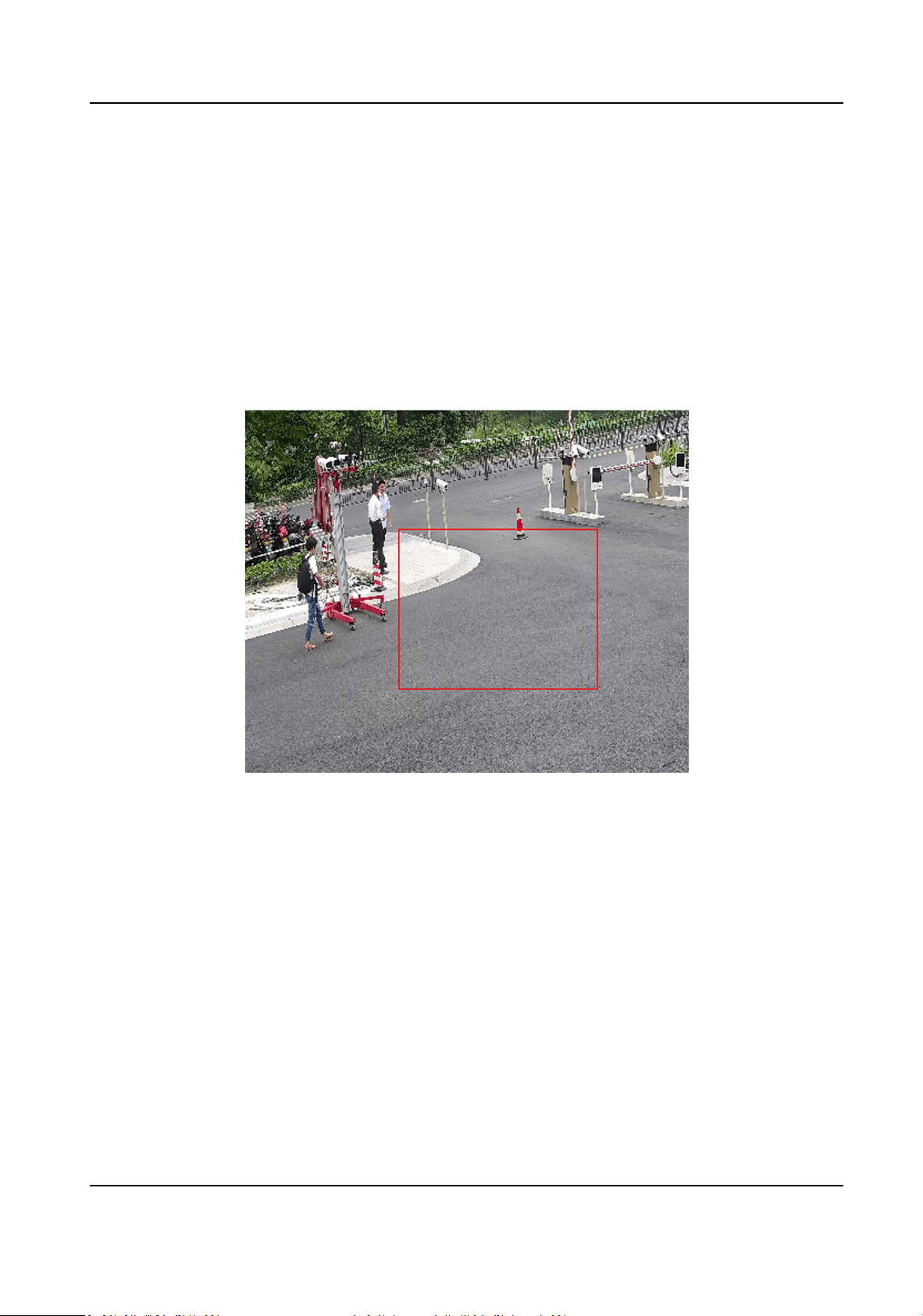
Select an Area and click Draw Area. Click and drag the mouse on the live image and then release
the mouse to nish drawing one area.
Figure 6-1 Set Rules
Stop Drawing Finish drawing one area.
Clear All Delete all the areas.
4.
Click Save.
5.
Oponal: Repeat above steps to set mulple areas.
Normal Mode
You can set moon detecon parameters according to the device default parameters.
Steps
1.
Select normal mode in Conguraon.
Network Camera User Manual
30

2.
Set the sensivity of normal mode. The higher the value of sensivity is, the more sensive the
moon detecon is. If the sensivity is set to 0, moon detecon and dynamic analysis do not
take eect.
3.
Click Draw Area. Click and drag the mouse on the live video, then release the mouse to nsh
drawing one area.
Figure 6-2 Set Rules
Stop Drawing Stop drawing one area.
Clear All Clear all the areas.
4.
Oponal: You can set the parameters of mulple areas by repeang the above steps.
6.1.2 Set Video Tampering Alarm
When the congured area is covered and cannot be monitored normally, the alarm is triggered and
the device takes certain alarm response acons.
Steps
1.
Go to Conguraon → Event → Basic Event → Video Tampering .
2.
Check Enable.
3.
Set the Sensivity. The higher the value is, the easier to detect the area covering.
4.
Click Draw Area and drag the mouse in the live view to draw the area.
Stop Drawing Finish drawing.
Clear All Delete all the drawn areas.
Network Camera User Manual
31

Figure 6-3 Set Video Tampering Area
5.
Refer to Set Arming Schedule for seng scheduled me. Refer to Linkage Method Sengs for
seng linkage method.
6.
Click Save.
6.1.3 Set Excepon Alarm
Excepon such as network disconnecon can trigger the device to take corresponding acon.
Steps
1.
Go to Conguraon → Event → Basic Event → Excepon .
2.
Select Excepon Type.
HDD Full The HDD storage is full.
HDD Error Error occurs in HDD.
Network Disconnected The device is oine.
Network Camera User Manual
32

IP Address Conicted The IP address of current device is same as that of other device in
the network.
Illegal Login Incorrect user name or password is entered.
3.
Refer to
Linkage Method Sengs for seng linkage method.
4.
Click Save.
6.2 Smart Event
Note
●
For certain device models, you need to enable the smart event funcon on VCA Resource page
rst to show the funcon conguraon page.
●
The funcon varies according to dierent models.
6.2.1 Detect Audio Excepon
Audio excepon detecon funcon detects the abnormal sound in the scene, such as the sudden
increase/decrease of the sound intensity, and some certain acons can be taken as response.
Steps
1.
Go to Conguraon → Event → Smart Event → Audio Excepon Detecon .
2.
Select one or several audio excepon detecon types.
Audio Loss Detecon
Detect sudden loss of audio track.
Sudden Increase of Sound Intensity Detecon
Detect sudden increase of sound intensity. Sensivity and Sound Intensity Threshold are
congurable.
Note
●
The lower the sensivity is, the more signicant the change should be to trigger the
detecon.
●
The sound intensity threshold refers to the sound intensity reference for the detecon. It is
recommended to set as the average sound intensity in the environment. The louder the
environment sound, the higher the value should be. You can adjust it according to the real
environment.
Sudden Decrease of Sound Intensity Detecon
Detect sudden decrease of sound intensity. Sensivity is congurable.
3.
Refer to Set Arming Schedule for seng scheduled me. Refer to Linkage Method Sengs for
seng linkage methods.
4.
Click Save.
Network Camera User Manual
33

Note
The funcon varies according to dierent models.
6.2.2 Set Defocus Detecon
The blurred image caused by lens defocus can be detected. If it occurs, the device can take linkage
acons.
Steps
1.
Go to Conguraon → Event → Smart Event → Defocus Detecon .
2.
Check Enable.
3.
Set Sensivity. The higher the value is, the more easily the defocus image can trigger the alarm.
You can adjust the value according to the actual environment.
4.
For the linkage method sengs, refer to Linkage Method Sengs .
5.
Click Save.
Note
The funcon is only supported by certain models. The actual display varies with models.
6.2.3 Detect Scene Change
Scene change detecon funcon detects the change of the scene. Some certain acons can be
taken when the alarm is triggered.
Steps
1.
Go to Conguraon → Event → Smart Event → Scene Change Detecon .
2.
Click Enable.
3.
Set the Sensivity. The higher the value is, the more easily the change of scene can be detected.
But the detecon accuracy is reduced.
4.
Refer to
Set Arming Schedule for seng scheduled me. Refer to Linkage Method Sengs for
seng linkage method.
5.
Click Save.
Note
The funcon varies according to dierent models.
6.2.4 Set Intrusion Detecon
It is used to detect objects entering and loitering in a pre-dened virtual region. If it occurs, the
device can take linkage acons.
Network Camera User Manual
34
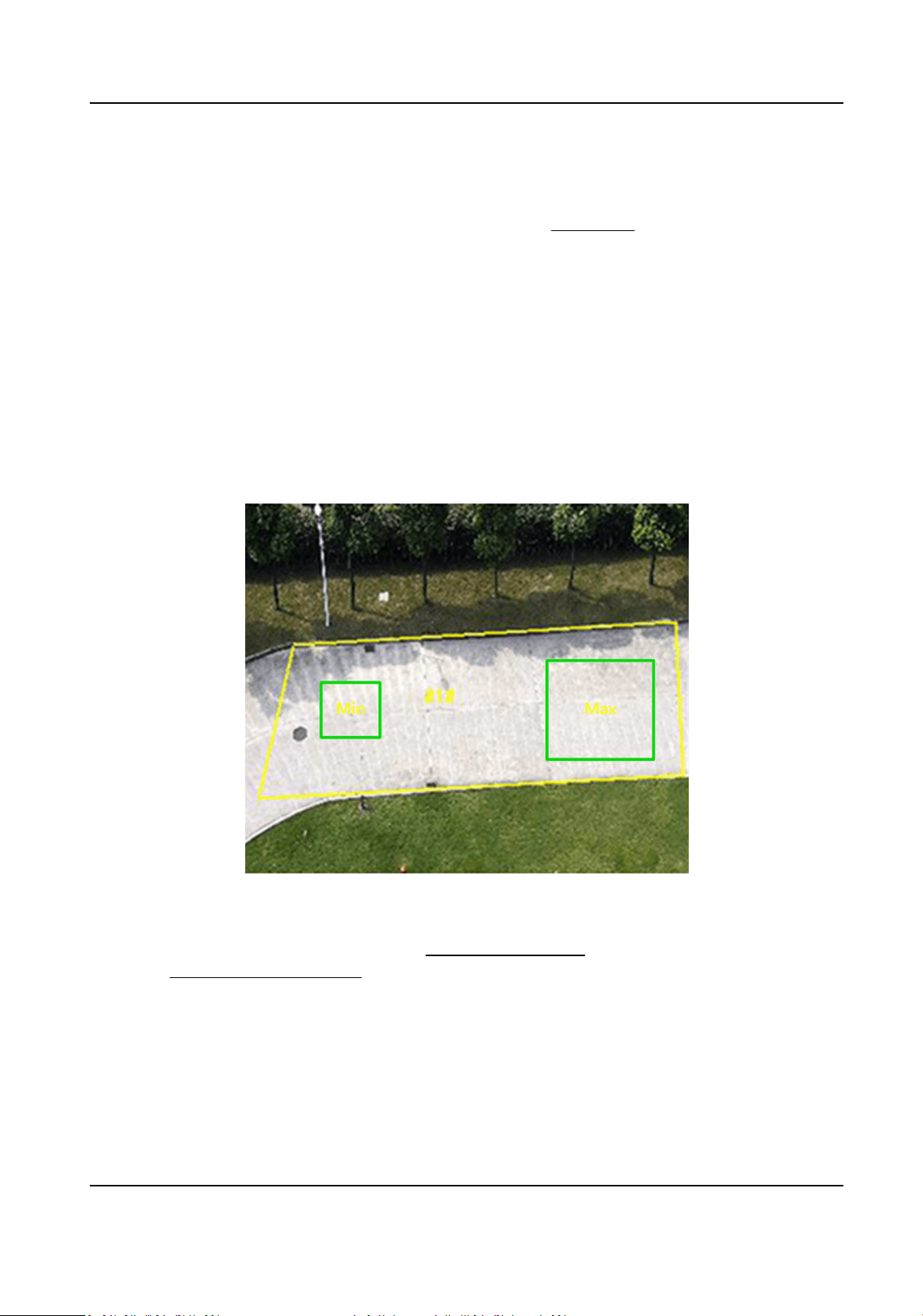
Steps
1.
Go to Conguraon → Event → Smart Event → Intrusion Detecon .
2.
Check Enable.
3.
Select a Region. For the detecon region sengs, refer to Draw Area .
4.
Set rules.
Sensivity Sensivity stands for the percentage of the body part of an acceptable target
that enters the pre-dened region. Sensivity = 100 - S1/ST × 100. S1 stands for
the target body part that goes across the pre-dened region. ST stands for the
complete target body. The higher the value of sensivity is, the more easily the
alarm can be triggered.
Threshold Threshold stands for the threshold for the me of the object loitering in the
region. If the me that one object stays exceeds the threshold, the alarm is
triggered. The larger the value of the threshold is, the longer the alarm triggering
me is.
Figure 6-4 Set Rule
5.
Oponal: You can set the parameters of mulple areas by repeang the above steps.
6.
For the arming schedule sengs, refer to Set Arming Schedule . For the linkage method sengs,
refer to Linkage Method Sengs .
7.
Click Save.
Network Camera User Manual
35

6.2.5 Set Line Crossing Detecon
It is used to detect objects crossing a pre-dened virtual line. If it occurs, the device can take
linkage acons.
Steps
1.
Go to Conguraon → Event → Smart Event → Line Crossing Detecon .
2.
Check Enable.
3.
Select one Line and set the size lter. For the size lter sengs, refer to Set Size Filter .
4.
Click Draw Area and a line with an arrow appears in the live video. Drag the line to the locaon
on the live video as desired.
5.
Set rules.
Direcon It stands for the direcon from which the object goes across the line.
A<->B: The object going across the line from both direcons can be detected and
alarms are triggered.
A->B: Only the object crossing the congured line from the A side to the B side
can be detected.
B->A: Only the object crossing the congured line from the B side to the A side
can be detected.
Sensivity It stands for the percentage of the body part of an acceptable target that goes
across the pre-dened line. Sensivity = 100 - S1/ST × 100. S1 stands for the
target body part that goes across the pre-dened line. ST stands for the complete
target body. The higher the value of sensivity is, the more easily the alarm can
be triggered.
Network Camera User Manual
36
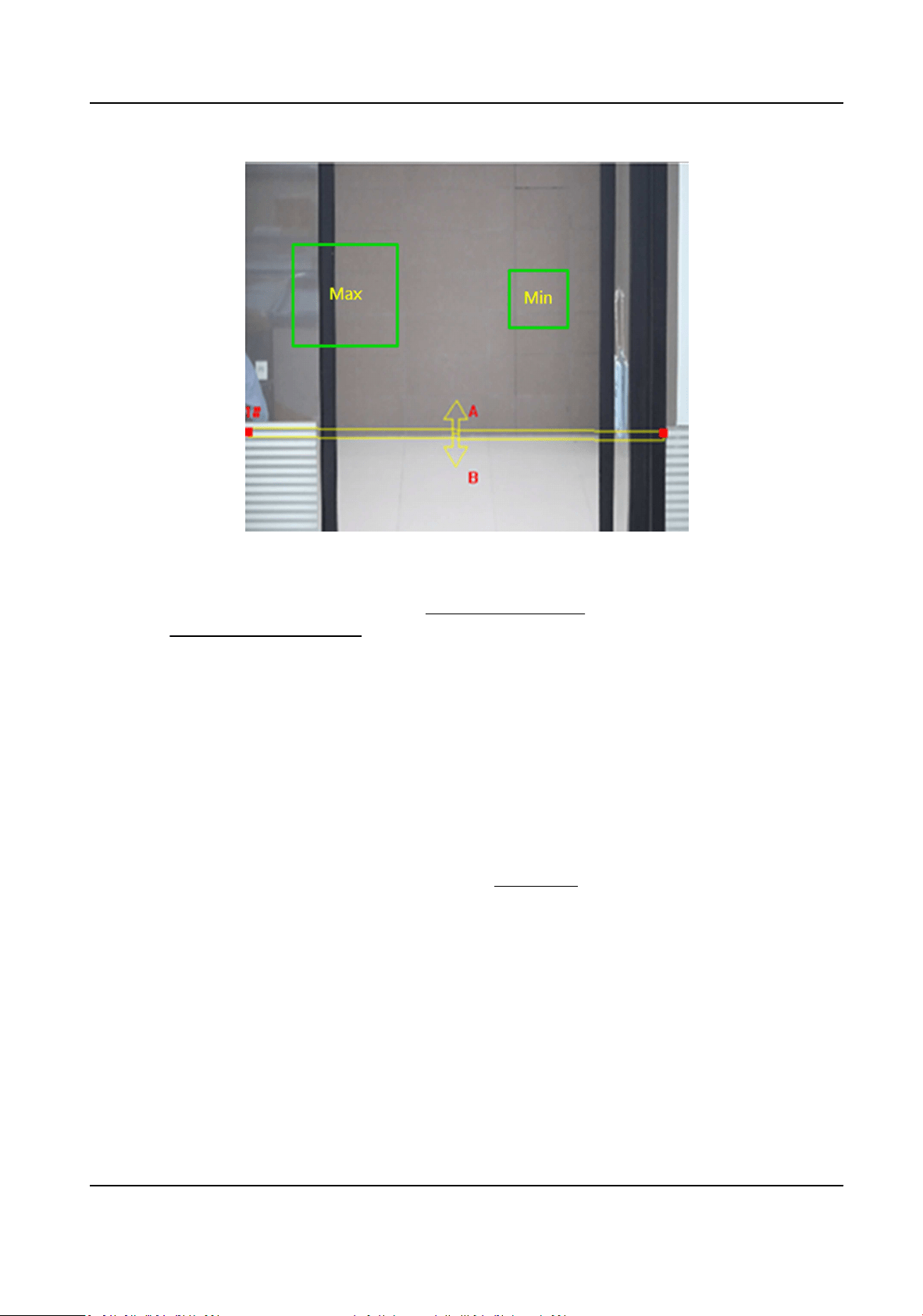
Figure 6-5 Set Rule
6.
Oponal: You can set the parameters of mulple areas by repeang the above steps.
7.
For the arming schedule sengs, refer to Set Arming Schedule . For the linkage method sengs,
refer to Linkage Method Sengs .
8.
Click Save.
6.2.6 Set Region Entrance Detecon
It is used to detect objects entering a pre-dened virtual region from the outside place. If it occurs,
the device can take linkage acons.
Steps
1.
Go to Conguraon → Event → Smart Event → Region Entrance Detecon .
2.
Check Enable.
3.
Select one Region. For the region sengs, refer to
Draw Area .
4.
Set sensivity.
Sensivity It stands for the percentage of the body part of an acceptable target that goes
across the pre-dened region. Sensivity = 100 - S1/ST × 100. S1 stands for the
target body part that goes across the pre-dened region. ST stands for the
complete target body. The higher the value of sensivity is, the more easily the
alarm can be triggered.
Network Camera User Manual
37

Figure 6-6 Set Rule
5.
Oponal: You can set the parameters of mulple areas by repeang the above steps.
6.
For the arming schedule sengs, refer to Set Arming Schedule . For the linkage method sengs,
refer to Linkage Method Sengs .
7.
Click Save.
6.2.7 Set Region Exing Detecon
It is used to detect objects exing from a pre-dened virtual region. If it occurs, the device can take
linkage acons.
Steps
1.
Go to Conguraon → Event → Smart Event → Region Exing Detecon
2.
Check Enable.
3.
Select one Region. For the detecon region sengs, refer to
Draw Area .
4.
Set sensivity.
Sensivity It stands for the percentage of the body part of an acceptable target that goes
across the pre-dened region. Sensivity = 100 - S1/ST × 100. S1 stands for the
target body part that goes across the pre-dened region. ST stands for the
complete target body. The higher the value of sensivity is, the more easily the
alarm can be triggered.
Network Camera User Manual
38

Figure 6-7 Set Rule
5.
Oponal: You can set the parameters of mulple areas by repeang the above steps.
6.
For the arming schedule sengs, refer to Set Arming Schedule . For the linkage method sengs,
refer to Linkage Method Sengs .
7.
Click Save.
6.2.8 Set Object Removal Detecon
It detects whether the objects are removed from the pre-dened detecon region, such as the
exhibits on display. If it occurs, the device can take linkage acons and the sta can take measures
to reduce property loss.
Steps
1.
Go to Conguraon → Event → Smart Event → Object Removal Detecon .
2.
Check Enable.
3.
Select a Region. For the region sengs, see
Draw Area .
4.
Set the rule.
Sensivity It stands for the percentage of the body part of an acceptable target that leaves
the pre-dened region.
Sensivity = 100 – S1/ST*100
S1 stands for the target body part that leaves the pre-dened region. ST stands
for the complete target body.
Example: If you set the value as 60, a target is possible to be counted as a
removed object only when 40 percent body part of the target leaves the region.
Network Camera User Manual
39

Threshold The threshold for the me of the objects removed from the region. If you set the
value as 10, alarm is triggered aer the object disappears from the region for
10s.
5.
Oponal: Repeat the above steps to set more regions.
6.
For the arming schedule sengs, see Set Arming Schedule . For the linkage method sengs, see
Linkage Method Sengs .
7.
Click Save.
Note
The funcon is only supported by certain models. The actual display varies with the models.
6.2.9 Set Unaended Baggage Detecon
It is used to detect the objects le over in the pre-dened region. Linkage methods can be
triggered aer the object is le and stays in the region for a set me period.
Steps
1.
Go to Conguraon → Event → Smart Event → Unaended Baggage Detecon .
2.
Check Enable.
3.
Select one Region. For the detecon region sengs, refer to Draw Area .
4.
Set rules.
Sensivity Sensivity stands for the percentage of the body part of an acceptable target
that enters the pre-dened region. Sensivity = 100 - S1/ST × 100. S1 stands for
the target body part that goes across the pre-dened region. ST stands for the
complete target body. The higher the value of sensivity is, the more easily the
alarm can be triggered.
Threshold It stands for the me of the objects le in the region. Alarm is triggered aer the
object is le and stays in the region for the set me period.
Network Camera User Manual
40
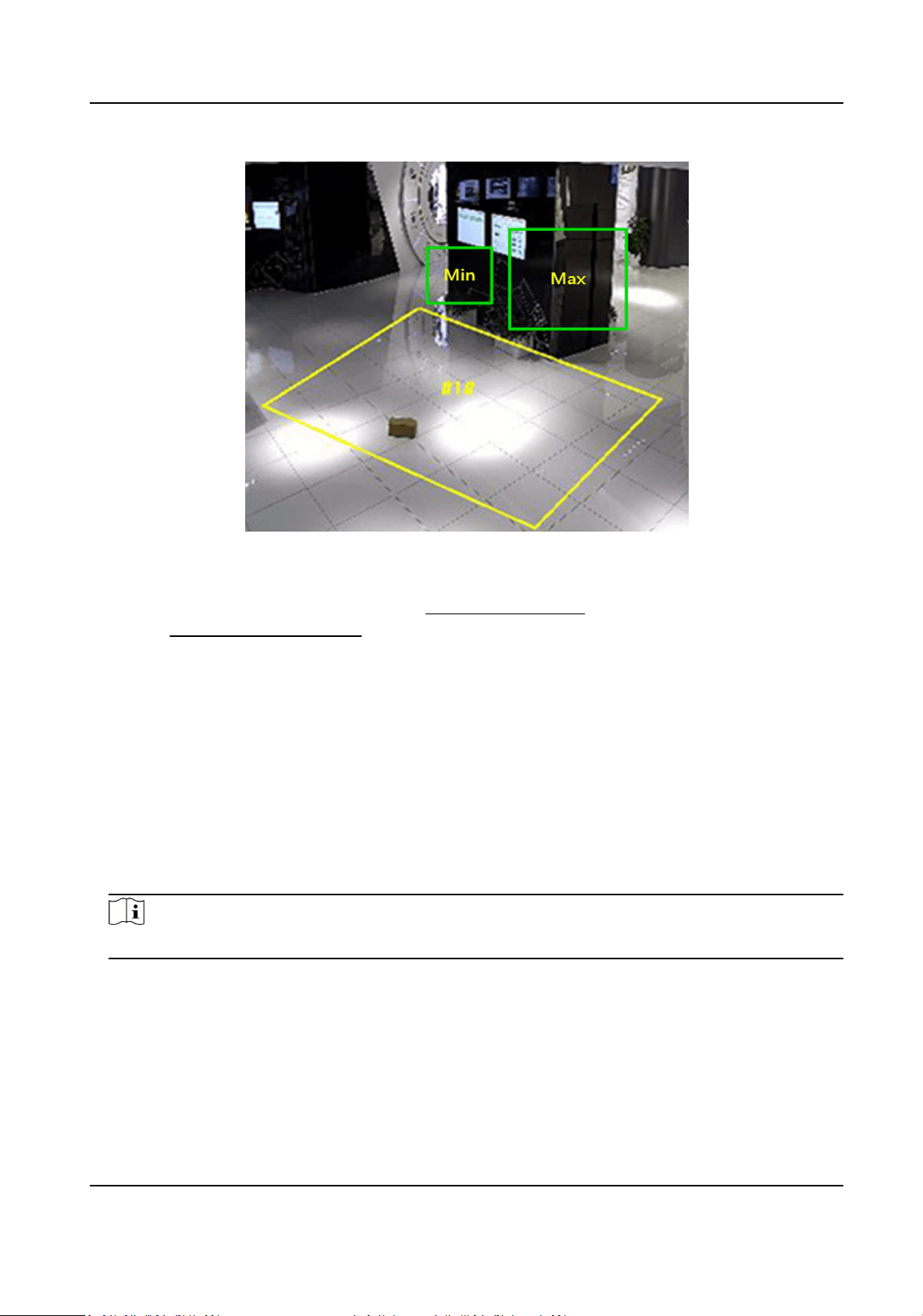
Figure 6-8 Set Rule
5.
Oponal: You can set the parameters of mulple areas by repeang the above steps.
6.
For the arming schedule sengs, refer to Set Arming Schedule . For the linkage method sengs,
refer to Linkage Method Sengs .
7.
Click Save.
6.2.10 Draw Area
This secon introduces the conguraon of area.
Steps
1.
Click Draw Area.
2.
Click on the live view to draw the boundaries of the detecon region, and right click to complete
drawing.
3.
Click Save.
Note
Click Clear All to clear all pre-dened areas.
6.2.11 Set Size Filter
This part introduces the seng of size lter. Only the target whose size is between the minimum
value and maximum value is detected and triggers alarm.
Network Camera User Manual
41

Steps
1.
Click Max. Size, and drag the mouse in the live view to draw the maximum target size.
2.
Click Min. Size, and drag the mouse in the live view to draw the minimum target size.
3.
Click Save.
Network Camera User Manual
42

Chapter 7 Network Sengs
7.1 TCP/IP
TCP/IP sengs must be properly congured before you operate the device over network. IPv4 and
IPv6 are both supported. Both versions can be congured simultaneously without conicng to
each other.
Go to Conguraon → Network → Basic Sengs → TCP/IP for parameter sengs.
NIC Type
Select a NIC (Network Interface Card) type according to your network condion.
IPv4
Two IPv4 modes are available.
DHCP
The device automacally gets the IPv4 parameters from the network if you check DHCP. The
device IP address is changed aer enabling the funcon. You can use SADP to get the device IP
address.
Note
The network that the device is connected to should support DHCP (Dynamic Host
Conguraon Protocol).
Manual
You can set the device IPv4 parameters manually. Input IPv4 Address, IPv4 Subnet Mask, and
IPv4 Default Gateway, and click Test to see if the IP address is available.
IPv6
Three IPv6 modes are available.
Route Adversement
The IPv6 address is generated by combining the route adversement and the device Mac
address.
Note
Route adversement mode requires the support from the router that the device is connected
to.
DHCP
The IPv6 address is assigned by the server, router, or gateway.
Manual
Network Camera User Manual
43

Input IPv6 Address, IPv6 Subnet, IPv6 Default Gateway. Consult the network administrator for
required informaon.
MTU
It stands for maximum transmission unit. It is the size of the largest protocol data unit that can
be communicated in a single network layer transacon.
The valid value range of MTU is 1280 to 1500.
DNS
It stands for domain name server. It is required if you need to visit the device with domain
name. And it is also required for some applicaons (e.g., sending email). Set Preferred DNS
Server and Alternate DNS server properly if needed.
Dynamic Domain Name
Check Enable Dynamic Domain Name and input Register Domain Name. The device is
registered under the register domain name for easier management within the local area
network.
Note
DHCP should be enabled for the dynamic domain name to take eect.
7.1.1 Mulcast Discovery
Check the Enable Mulcast Discovery, and then the online network camera can be automacally
detected by client soware via private mulcast protocol in the LAN.
7.2 SNMP
You can set the SNMP network management protocol to get the alarm event and excepon
messages in network transmission.
Before You Start
Before seng the SNMP, you should download the SNMP soware and manage to receive the
device informaon via SNMP port.
Steps
1.
Go to the sengs page: Conguraon → Network → Advanced Sengs → SNMP .
2.
Check Enable SNMPv1, Enable SNMP v2c or Enable SNMPv3.
Note
The SNMP version you select should be the same as that of the SNMP soware.
Network Camera User Manual
44

And you also need to use the dierent version according to the security level required. SNMP v1
is not secure and SNMP v2 requires password for access. And SNMP v3 provides encrypon and
if you use the third version, HTTPS protocol must be enabled.
3.
Congure the SNMP sengs.
4.
Click Save.
7.3 Port Mapping
By seng port mapping, you can access devices through the specied port.
Before You Start
When the ports in the device are the same as those of other devices in the network, refer to Port
to modify the device ports.
Steps
1.
Go to Conguraon → Network → Basic Sengs → NAT .
2.
Select the port mapping mode.
Auto Port Mapping Refer to
Set Auto Port Mapping for detailed informaon.
Manual Port Mapping Refer to
Set Manual Port Mapping for detailed informaon.
3.
Click Save.
7.3.1 Set Auto Port Mapping
Steps
1.
Check Enable UPnP™, and choose a friendly name for the camera, or you can use the default
name.
2.
Select the port mapping mode to Auto.
3.
Click Save.
Note
UPnP™ funcon on the router should be enabled at the same me.
7.3.2 Set Manual Port Mapping
Steps
1.
Check Enable UPnP™, and choose a friendly name for the device, or you can use the default
name.
2.
Select the port mapping mode to Manual, and set the external port to be the same as the
internal port.
3.
Click Save.
Network Camera User Manual
45

What to do next
Go to the router port mapping sengs interface and set the port number and IP address to be the
same as those on the device. For more informaon, refer to the router user manual.
7.3.3 Set Port Mapping on Router
The following sengs are for a certain router. The sengs vary depending on dierent models of
routers.
Steps
1.
Select the WAN Connecon Type.
2.
Set the IP Address, Subnet Mask and other network parameters of the router.
3.
Go to Forwarding → Virtual Severs , and input the Port Number and IP Address.
4.
Click Save.
Example
When the cameras are connected to the same router, you can congure the ports of a camera as
80, 8000, and 554 with IP address 192.168.1.23, and the ports of another camera as 81, 8001, 555,
8201 with IP 192.168.1.24.
Figure 7-1 Port Mapping on Router
Network Camera User Manual
46

Note
The port of the network camera cannot conict with other ports. For example, some web
management port of the router is 80. Change the camera port if it is the same as the management
port.
7.4 Port
The device port can be modied when the device cannot access the network due to port conicts.
Cauon
Do not modify the default port parameters at will, otherwise the device may be unaccessible.
Go to Conguraon → Network → Basic Sengs → Port for port sengs.
HTTP Port
It refers to the port that access the device through the browser. You should enter the port No.
aer the IP address. For example, when the HTTP port is modied to 81, you need to enter
hp://192.168.1.64:81 in the browser for browser login.
HTTPS Port
It refers to the port of browser cercate access. Cercate vericaon is required when
accessing the device through the browser, and the security level is high.
RTSP Port
It refers to the port of real me streaming protocol.
Server Port
It refers to the port on which the client adds the device.
7.5 Access to Device via Domain Name
You can use the Dynamic DNS (DDNS) for network access. The dynamic IP address of the device can
be mapped to a domain name resoluon server to realize the network access via domain name.
Before You Start
Registraon on the DDNS server is required before conguring the DDNS sengs of the device.
Steps
1.
Refer to TCP/IP to set DNS parameters.
2.
Go to the DDNS sengs page: Conguraon → Network → Basic Sengs → DDNS .
3.
Check Enable DDNS and select DDNS type.
DynDNS
Dynamic DNS server is used for domain name resoluon.
Network Camera User Manual
47

NO-IP
NO-IP server is used for domain name resoluon.
4.
Input the domain name informaon, and click Save.
5.
Check the device ports and complete port mapping. Refer to Port to check the device port , and
refer to Port Mapping for port mapping sengs.
6.
Access the device.
By Browsers Enter the domain name in the browser address bar to access the device.
By Client Soware Add domain name to the client soware. Refer to the client manual for
specic adding methods.
7.6 Set Network Service
You can control the ON/OFF status of certain protocol as desired.
Steps
Note
This funcon varies according to dierent models.
1.
Go to Conguraon → Network → Advanced Sengs → Network Service .
2.
Set network service.
WebSocket & WebSockets
WebSocket or WebSockets protocol should be enabled if you use Google Chrome 57 and its
above version or Mozilla Firefox 52 and its above version to visit the device. Otherwise, live
view, image capture, digital zoom, etc. cannot be used.
If the device uses HTTP, enable WebSocket.
If the device uses HTTPS, enable WebSockets.
When you use WebSockets, select the Server Cercate.
Note
Complete cercate management before selecng server cercate. Refer to for detailed
informaon.
SDK Service & Enhanced SDK Service
Check Enable SDK Service to add the device to the client soware with SDK protocol.
Check Enable Enhanced SDK Service to add the device to the client soware with SDK over
TLS protocol.
When you use Enhanced SDK Service, select the Server Cercate.
Network Camera User Manual
48

Note
●
Complete cercate management before selecng server cercate. Refer to for detailed
informaon.
●
When set up connecon between the device and the client soware, it is recommended to
use Enhanced SDK Service and set the communicaon in Arming Mode to encrypt the data
transmission. See the user manual of the client soware for the arming mode sengs.
TLS (Transport Layer Security)
The device oers TLS1.1, TLS1.2 and TLS1.3. Enable one or more protocol versions according
to your need.
Bonjour
Uncheck to disable the protocol.
3.
Click Save.
7.7 Set Open Network Video Interface
If you need to access the device through Open Network Video Interface protocol, you can
congure the user sengs to enhance the network security.
Steps
1.
Go to Conguraon → Network → Advanced Sengs → Integraon Protocol .
2.
Check Enable Open Network Video Interface.
3.
Click Add to congure the Open Network Video Interface user.
Delete Delete the selected Open Network Video Interface user.
Modify Modify the selected Open Network Video Interface user.
4.
Click Save.
5.
Oponal: Repeat the steps above to add more Open Network Video Interface users.
7.8 Set ISUP
When the device is registered on ISUP plaorm (formerly called Ehome), you can visit and manage
the device, transmit data, and forward alarm informaon over public network.
Steps
1.
Go to Conguraon → Network → Advanced Sengs → Plaorm Access .
2.
Select ISUP as the plaorm access mode.
3.
Select Enable.
4.
Select a protocol version and input related parameters.
5.
Click Save.
Register status turns to Online when the funcon is correctly set.
Network Camera User Manual
49
7.9 Access Camera via Hik-Connect
Hik-Connect is an applicaon for mobile devices. Using the App, you can view live image, receive
alarm nocaon and so on.
Before You Start
Connect the camera to network with network cables.
Steps
1.
Get and install Hik-Connect applicaon by the following ways.
-
Visit
hps://appstore.hikvision.com to download the applicaon according to your mobile
phone system.
-
Visit the ocial site of our company. Then go to Support → Tools → Hikvision App Store .
-
Scan the QR code below to download the applicaon.
Note
If errors like "Unknown app" occur during the installaon, solve the problem in two ways.
●
Visit hps://appstore.hikvision.com/stac/help/index.html to refer to the troubleshoong.
●
Visit hps://appstore.hikvision.com/ , and click Installaon Help at the upper right corner of
the interface to refer to the troubleshoong.
2.
Start the applicaon and register for a Hik-Connect user account.
3.
Log in aer registraon.
4.
In the app, tap "+" on the upper-right corner and then scan the QR code of the camera to add
the camera. You can nd the QR code on the camera or on the cover of the Quick Start Guide of
the camera in the package.
5.
Follow the prompts to set the network connecon and add the camera to your Hik-Connect
account.
For detailed informaon, refer to the user manual of the Hik-Connect app.
7.9.1 Enable Hik-Connect Service on Camera
Hik-Connect service should be enabled on your camera before using the service.
You can enable the service through SADP soware or Web browser.
Network Camera User Manual
50

Enable Hik-Connect Service via Web Browser
Follow the following steps to enable Hik-Connect Service via Web Browser.
Before You Start
You need to acvate the camera before enabling the service.
Steps
1.
Access the camera via web browser.
2.
Enter plaorm access conguraon interface. Conguraon → Network → Advanced Sengs
→ Plaorm Access
3.
Select Hik-Connect as the Plaorm Access Mode.
4.
Check Enable.
5.
Click and read "Terms of Service" and "Privacy Policy" in pop-up window.
6.
Create a vericaon code or change the old vericaon code for the camera.
Note
The vericaon code is required when you add the camera to Hik-Connect service.
7.
Save the sengs.
Enable Hik-Connect Service via SADP Soware
This part introduce how to enable Hik-Connect service via SADP soware of an acvated camera.
Steps
1.
Run SADP soware.
2.
Select a camera and enter Modify Network Parameters page.
3.
Check Enable Hik-Connect.
4.
Create a vericaon code or change the old vericaon code.
Note
The vericaon code is required when you add the camera to Hik-Connect service.
5.
Click and read "Terms of Service" and "Privacy Policy".
6.
Conrm the sengs.
7.9.2 Set Up Hik-Connect
Steps
1.
Get and install Hik-Connect applicaon by the following ways.
-
Visit
hps://appstore.hikvision.com to download the applicaon according to your mobile
phone system.
-
Visit the ocial site of our company. Then go to Support → Tools → Hikvision App Store .
Network Camera User Manual
51

-
Scan the QR code below to download the applicaon.
Note
If errors like "Unknown app" occur during the installaon, solve the problem in two ways.
●
Visit hps://appstore.hikvision.com/stac/help/index.html to refer to the troubleshoong.
●
Visit hps://appstore.hikvision.com/ , and click Installaon Help at the upper right corner of
the interface to refer to the troubleshoong.
2.
Start the applicaon and register for a Hik-Connect user account.
3.
Log in aer registraon.
7.9.3 Add Camera to Hik-Connect
Steps
1.
Connect your mobile device to a Wi-Fi.
2.
Log into the Hik-Connect app.
3.
In the home page, tap "+" on the upper-right corner to add a camera.
4.
Scan the QR code on camera body or on the Quick Start Guide cover.
Note
If the QR code is missing or too blur to be recognized, you can also add the camera by inpung
the camera's serial number.
5.
Input the vericaon code of your camera.
Note
●
The required vericaon code is the code you create or change when you enable Hik-Connect
service on the camera.
●
If you forget the vericaon code, you can check the current vericaon code on Plaorm
Access conguraon page via web browser.
6.
Tap Connect to a Network buon in the popup interface.
7.
Choose Wired Connecon or Wireless Connecon according to your camera funcon.
Wireless
Connecon
Input the Wi-Fi password that your mobile phone has connected to, and
tap Next to start the Wi-Fi connecon process. (Locate the camera within 3
meters from the router when seng up the Wi-Fi.)
Network Camera User Manual
52

Wired
Connecon
Connect the camera to the router with a network cable and tap Connected
in the result interface.
Note
The router should be the same one which your mobile phone has connected to.
8.
Tap Add in the next interface to nish adding.
For detailed informaon, refer to the user manual of the Hik-Connect app.
Network Camera User Manual
53

Chapter 8 Arming Schedule and Alarm Linkage
Arming schedule is a customized me period in which the device performs certain tasks. Alarm
linkage is the response to the detected certain incident or target during the scheduled me.
8.1 Set Arming Schedule
Set the valid me of the device tasks.
Steps
1.
Click Arming Schedule.
2.
Drag the me bar to draw desired valid me.
Note
Up to 8 periods can be congured for one day.
3.
Adjust the me period.
-
Click on the selected me period, and enter the desired value. Click Save.
-
Click on the selected me period. Drag the both ends to adjust the me period.
-
Click on the selected me period, and drag it on the me bar.
4.
Oponal: Click Copy to... to copy the same sengs to other days.
5.
Click Save.
8.2 Linkage Method Sengs
You can enable the linkage funcons when an event or alarm occurs.
8.2.1 Trigger Alarm Output
If the device has been connected to an alarm output device, and the alarm output No. has been
congured, the device sends alarm informaon to the connected alarm output device when an
alarm is triggered.
Steps
1.
Go to Conguraon → Event → Basic Event → Alarm Output .
2.
Set alarm output parameters.
Automac Alarm For the informaon about the conguraon, see
Automac Alarm .
Manual Alarm For the informaon about the conguraon, see
Manual Alarm .
3.
Click Save.
Network Camera User Manual
54

Manual Alarm
You can trigger an alarm output manually.
Steps
1.
Set the manual alarm parameters.
Alarm Output No.
Select the alarm output No. according to the alarm interface connected to the external alarm
device.
Alarm Name
Edit a name for the alarm output.
Delay
Select Manual.
2.
Click Manual Alarm to enable manual alarm output.
3.
Oponal: Click Clear Alarm to disable manual alarm output.
Automac Alarm
Set the automac alarm parameters, then the device triggers an alarm output automacally in the
set arming schedule.
Steps
1.
Set automac alarm parameters.
Alarm Output No.
Select the alarm output No. according to the alarm interface connected to the external alarm
device.
Alarm Name
Custom a name for the alarm output.
Delay
It refers to the me duraon that the alarm output remains aer an alarm occurs.
2.
Set the alarming schedule. For the informaon about the sengs, see Set Arming Schedule .
3.
Click Copy to… to copy the parameters to other alarm output channels.
4.
Click Save.
8.2.2 FTP/NAS/Memory Card Uploading
If you have enabled and congured the FTP/NAS/memory card uploading, the device sends the
alarm informaon to the FTP server, network aached storage and memory card when an alarm is
triggered.
Network Camera User Manual
55

Refer to Set FTP to set the FTP server.
Refer to Set NAS for NAS conguraon.
Refer to Set New or Unencrypted Memory Card for memory card storage conguraon.
8.2.3 Send Email
Check Send Email, and the device sends an email to the designated addresses with alarm
informaon when an alarm event is detected.
For email sengs, refer to Set Email .
Set Email
When the email is congured and Send Email is enabled as a linkage method, the device sends an
email nocaon to all designated receivers if an alarm event is detected.
Before You Start
Set the DNS server before using the Email funcon. Go to Conguraon → Network → Basic
Sengs → TCP/IP for DNS sengs.
Steps
1.
Go to email sengs page: Conguraon → Network → Advanced Sengs → Email .
2.
Set email parameters.
1) Input the sender's email informaon, including the Sender's Address, SMTP Server, and
SMTP Port.
2) Oponal: If your email server requires authencaon, check Authencaon and input your
user name and password to log in to the server.
3) Set the E-mail Encrypon.
●
When you select SSL or TLS, and disable STARTTLS, emails are sent aer encrypted by SSL or
TLS. The SMTP port should be set as 465.
●
When you select SSL or TLS and Enable STARTTLS, emails are sent aer encrypted by
STARTTLS, and the SMTP port should be set as 25.
Note
If you want to use STARTTLS, make sure that the protocol is supported by your email server.
If you check the Enable STARTTLS while the protocol is not supported by your email sever,
your email is sent with no encrypon.
4) Oponal: If you want to receive nocaon with alarm pictures, check Aached Image. The
nocaon email has 3 aached alarm pictures about the event with congurable image
capturing interval.
5) Input the receiver's informaon, including the receiver's name and address.
6) Click Test to see if the funcon is well congured.
3.
Click Save.
Network Camera User Manual
56

8.2.4 Nofy Surveillance Center
Check Nofy Surveillance Center, the alarm informaon is uploaded to the surveillance center
when an alarm event is detected.
8.2.5 Trigger Recording
Check Trigger Recording, and the device records the video about the detected alarm event.
For recording sengs, refer to Video Recording and Picture Capture
8.2.6 Audible Warning
Aer enabling Audible Warning and seng Audible Alarm Output, the built-in speaker of the
device or connected external speaker plays warning sounds when an alarm happens.
For audible alarm output sengs, refer to Set Audible Alarm Output .
Note
The funcon is only supported by certain camera models.
Set Audible Alarm Output
When the device detects targets in the detecon area, audible alarm can be triggered as a
warning.
Steps
1.
Go to Conguraon → Event → Basic Event → Audible Alarm Output .
2.
Select Sound Type and set related parameters.
-
Select Prompt and set the alarm mes you need.
-
Select Warning and its contents. Set the alarm mes you need.
-
Select Custom Audio. You can select a custom audio le from the drop-down list. If no le is
available, you can click Add to upload an audio le that meets the requirement. Up to three
audio les can be uploaded.
3.
Oponal: Click Test to play the selected audio le on the device.
4.
Set arming schedule for audible alarm. See
Set Arming Schedule for details.
5.
Click Save.
Note
The funcon is only supported by certain device models.
Network Camera User Manual
57

Chapter 9 System and Security
It introduces system maintenance, system sengs and security management, and explains how to
congure relevant parameters.
9.1 View Device Informaon
You can view device informaon, such as Device No., Model, Serial No. and Firmware Version.
Enter Conguraon → System → System Sengs → Basic Informaon to view the device
informaon.
9.2 Search and Manage Log
Log helps locate and troubleshoot problems.
Steps
1.
Go to Conguraon → System → Maintenance → Log .
2.
Set search condions Major Type, Minor Type, Start Time, and End Time.
3.
Click Search.
The matched log les will be displayed on the log list.
4.
Oponal: Click Export to save the log les in your computer.
9.3 Import and Export Conguraon File
It helps speed up batch conguraon on other devices with the same parameters.
Enter Conguraon → System → Maintenance → Upgrade & Maintenance . Choose device
parameters that need to be imported or exported and follow the instrucons on the interface to
import or export conguraon le.
9.4 Export Diagnose Informaon
Diagnose informaon includes running log, system informaon, hardware informaon.
Go to Conguraon → System → Maintenance → Upgrade & Maintenance , and click Diagnose
Informaon to export diagnose informaon of the device.
Network Camera User Manual
58

9.5 Reboot
You can reboot the device via browser.
Go to Conguraon → System → Maintenance → Upgrade & Maintenance , and click Reboot.
9.6 Restore and Default
Restore and Default helps restore the device parameters to the default sengs.
Steps
1.
Go to Conguraon → System → Maintenance → Upgrade & Maintenance .
2.
Click Restore or Default according to your needs.
Restore Reset device parameters, except user informaon, IP parameters and video format
to the default sengs.
Default Reset all the parameters to the factory default.
Note
Be careful when using this funcon. Aer reseng to the factory default, all the
parameters are reset to the default sengs.
9.7 Upgrade
Before You Start
You need to obtain the correct upgrade package.
Cauon
DO NOT disconnect power during the process, and the device reboots automacally aer upgrade.
Steps
1.
Go to Conguraon → System → Maintenance → Upgrade & Maintenance .
2.
Choose one method to upgrade.
Firmware Locate the exact path of the upgrade le.
Firmware Directory Locate the directory which the upgrade le belongs to.
3.
Click Browse to select the upgrade le.
4.
Click Upgrade.
Network Camera User Manual
59

9.8 View Open Source Soware License
Go to Conguraon → System → System Sengs → About Device , and click View Licenses.
9.9 Time and Date
You can congure me and date of the device by conguring me zone, me synchronizaon and
Daylight Saving Time (DST).
9.9.1 Synchronize Time Manually
Steps
1.
Go to Conguraon → System → System Sengs → Time Sengs .
2.
Select Time Zone.
3.
Click Manual Time Sync..
4.
Choose one me synchronizaon method.
-
Select Set Time, and manually input or select date and me from the pop-up calendar.
-
Check Sync. with computer me to synchronize the me of the device with that of the local
PC.
5.
Click Save.
9.9.2 Set NTP Server
You can use NTP server when accurate and reliable me source is required.
Before You Start
Set up a NTP server or obtain NTP server informaon.
Steps
1.
Go to Conguraon → System → System Sengs → Time Sengs .
2.
Select Time Zone.
3.
Click NTP.
4.
Set Server Address, NTP Port and Interval.
Note
Server Address is NTP server IP address.
5.
Click Test to test server connecon.
6.
Click Save.
Network Camera User Manual
60

9.9.3 Synchronize Time by Satellite
Note
This funcon varies depending on dierent devices.
Steps
1.
Enter Conguraon → System → System Sengs → Time Sengs .
2.
Select Satellite Time Sync..
3.
Set Interval.
4.
Click Save.
9.9.4 Set DST
If the region where the device is located adopts Daylight Saving Time (DST), you can set this
funcon.
Steps
1.
Go to Conguraon → System → System Sengs → DST .
2.
Check Enable DST.
3.
Select Start Time, End Time and DST Bias.
4.
Click Save.
9.10 Set RS-232
RS-232 can be used to debug device or access peripheral device. RS-232 can realize communicaon
between the device and computer or terminal when the communicaon distance is short.
Before You Start
Connect the device to computer or terminal with RS-232 cable.
Steps
1.
Go to Conguraon → System → System Sengs → RS-232 .
2.
Set RS-232 parameters to match the device with computer or terminal.
3.
Click Save.
9.11 Security
You can improve system security by seng security parameters.
Network Camera User Manual
61

9.11.1 Authencaon
You can improve network access security by seng RTSP and WEB authencaon.
Go to Conguraon → System → Security → Authencaon to choose authencaon protocol
and method according to your needs.
RTSP Authencaon
Digest and digest/basic are supported, which means authencaon informaon is needed when
RTSP request is sent to the device. If you select digest/basic, it means the device supports
digest or basic authencaon. If you select digest, the device only supports digest
authencaon.
RTSP Digest Algorithm
MD5, SHA256 and MD5/SHA256 encrypted algorithm in RTSP authencaon. If you enable the
digest algorithm except for MD5, the third-party plaorm might not be able to log in to the
device or enable live view because of compability. The encrypted algorithm with high strength
is recommended.
WEB Authencaon
Digest and digest/basic are supported, which means authencaon informaon is needed when
WEB request is sent to the device. If you select digest/basic, it means the device supports digest
or basic authencaon. If you select digest, the device only supports digest authencaon.
WEB Digest Algorithm
MD5, SHA256 and MD5/SHA256 encrypted algorithm in WEB authencaon. If you enable the
digest algorithm except for MD5, the third-party plaorm might not be able to log in to the
device or enable live view because of compability. The encrypted algorithm with high strength
is recommended.
Note
Refer to the specic content of protocol to view authencaon requirements.
9.11.2 Set IP Address Filter
IP address lter is a tool for access control. You can enable the IP address lter to allow or forbid
the visits from the certain IP addresses.
IP address refers to IPv4.
Steps
1.
Go to Conguraon → System → Security → IP Address Filter .
2.
Check Enable IP Address Filter.
3.
Select the type of IP address lter.
Forbidden IP addresses in the list cannot access the device.
Network Camera User Manual
62

Allowed Only IP addresses in the list can access the device.
4.
Edit the IP address lter list.
Add Add a new IP address or IP address range to the list.
Modify Modify the selected IP address or IP address range in the list.
Delete Delete the selected IP address or IP address range in the list.
5.
Click Save.
9.11.3 Set HTTPS
HTTPS is a network protocol that enables encrypted transmission and identy authencaon,
which improves the security of remote access.
Steps
1.
Go to Conguraon → Network → Advanced Sengs → HTTPS .
2.
Check Enable .
3.
Click Delete to recreate and install cercate.
Create and install self-signed cercate Refer to
Create and Install Self-signed Cercate
Create cercate request and install
cercate
Refer to
Install Authorized Cercate
4.
Click Save.
Create and Install Self-signed Cercate
Steps
1.
Check Create Self-signed Cercate.
2.
Click Create.
3.
Follow the prompt to enter Country/Region, Hostname/IP, Validity and other parameters.
4.
Click OK.
Result
The device will install the self-signed cercate by default.
Install Authorized Cercate
If the demand for external access security is high, you can create and install authorized cercate
via HTTPS protocol to ensure the data transmission security.
Steps
1.
Select Create cercate request rst and connue the installaon.
2.
Click Create.
Network Camera User Manual
63

3.
Follow the prompt to input Country/Region, Hostname/IP, Validity and other parameters.
4.
Click Download to download the cercate request and submit it to the trusted authority for
signature.
5.
Import cercate to the device.
-
Select Signed cercate is available, start the installaon directly. Click Browse and Install to
import the cercate to the device.
-
Select Create the cercate request rst and connue the installaon. Click Browse and
Install to import the cercate to the device.
6.
Click Save.
9.11.4 Set QoS
QoS (Quality of Service) can help improve the network delay and network congeson by seng
the priority of data sending.
Note
QoS needs support from network device such as router and switch.
Steps
1.
Go to Conguraon → Network → Advanced Conguraon → QoS .
2.
Set Video/Audio DSCP, Alarm DSCP and Management DSCP.
Note
Network can idenfy the priority of data transmission. The bigger the DSCP value is, the higher
the priority is. You need to set the same value in router while conguraon.
3.
Click Save.
9.11.5 Set IEEE 802.1X
You can authencate user permission of the connected device by seng IEEE 802.1X.
Go to Conguraon → Network → Advanced Sengs → 802.1X , and enable the funcon.
Select protocol and version according to router informaon. User name and password of server are
required.
9.11.6 Search Security Audit Logs
You can search and analyze the security log les of the device so as to nd out the illegal intrusion
and troubleshoot the security events.
Network Camera User Manual
64

Steps
Note
This funcon is only supported by certain camera models.
1.
Go to Conguraon → System → Maintenance → Security Audit Log .
2.
Select log types, Start Time, and End Time.
3.
Click Search.
The log les that match the search condions will be displayed on the Log List.
4.
Oponal: Click Export to save the log les to your computer.
9.11.7 SSH
Secure Shell (SSH) is a cryptographic network protocol for operang network services over an
unsecured network.
Go to Conguraon → System → Security → Security Service , and check Enable SSH.
The SSH funcon is disabled by default.
Cauon
Use the funcon with cauon. The security risk of device internal informaon leakage exists when
the funcon is enabled.
9.12 User and Account
9.12.1 Set User Account and Permission
The administrator can add, modify, or delete other accounts, and grant dierent permission to
dierent user levels.
Cauon
To increase security of using the device on the network, please change the password of your
account regularly. Changing the password every 3 months is recommended. If the device is used in
high-risk environment, it is recommended that the password should be changed every month or
week.
Steps
1.
Go to Conguraon → System → User Management → User Management .
2.
Click Add. Enter User Name, select Level, and enter Password. Assign remote permission to
users based on needs.
Administrator
Network Camera User Manual
65

The administrator has the authority to all operaons and can add users and operators and
assign permission.
User
Users can be assigned permission of viewing live video, seng PTZ parameters, and changing
their own passwords, but no permission for other operaons.
Operator
Operators can be assigned all permission except for operaons on the administrator and
creang accounts.
Modify Select a user and click Modify to change the password and permission.
Delete Select a user and click Delete.
Note
The administrator can add up to 31 user accounts.
3.
Click OK.
9.12.2 Online Users
The informaon of users logging into the device is shown.
Go to Conguraon → System → User Management → Online Users to view the list of online
users.
Network Camera User Manual
66

Chapter 10 Allocate VCA Resource
VCA resource oers you opons to enable certain VCA funcons according to actual needs. It helps
allocate more resources to the desired funcons.
Steps
1.
Go to Conguraon → System → System Sengs → VCA Resource .
2.
Select desired VCA funcon.
3.
Save the sengs.
Note
Some VCA funcons are mutually exclusive. When certain funcon or funcons are selected and
saved, others will not be hidden.
Network Camera User Manual
67

Appendix A. Device Command
Scan the following QR code to get device common serial port commands.
Note that the command list contains the commonly used serial port commands for all Hikvision
network cameras.
Network Camera User Manual
68

Appendix B. Device Communicaon Matrix
Scan the following QR code to get device communicaon matrix.
Note that the matrix contains all communicaon ports of Hikvision network cameras.
Network Camera User Manual
69

Appendix C. FAQ
Scan the following QR code to nd the frequently asked quesons of the device.
Note that some frequently asked quesons only apply to certain models.
Network Camera User Manual
70

UD25485B