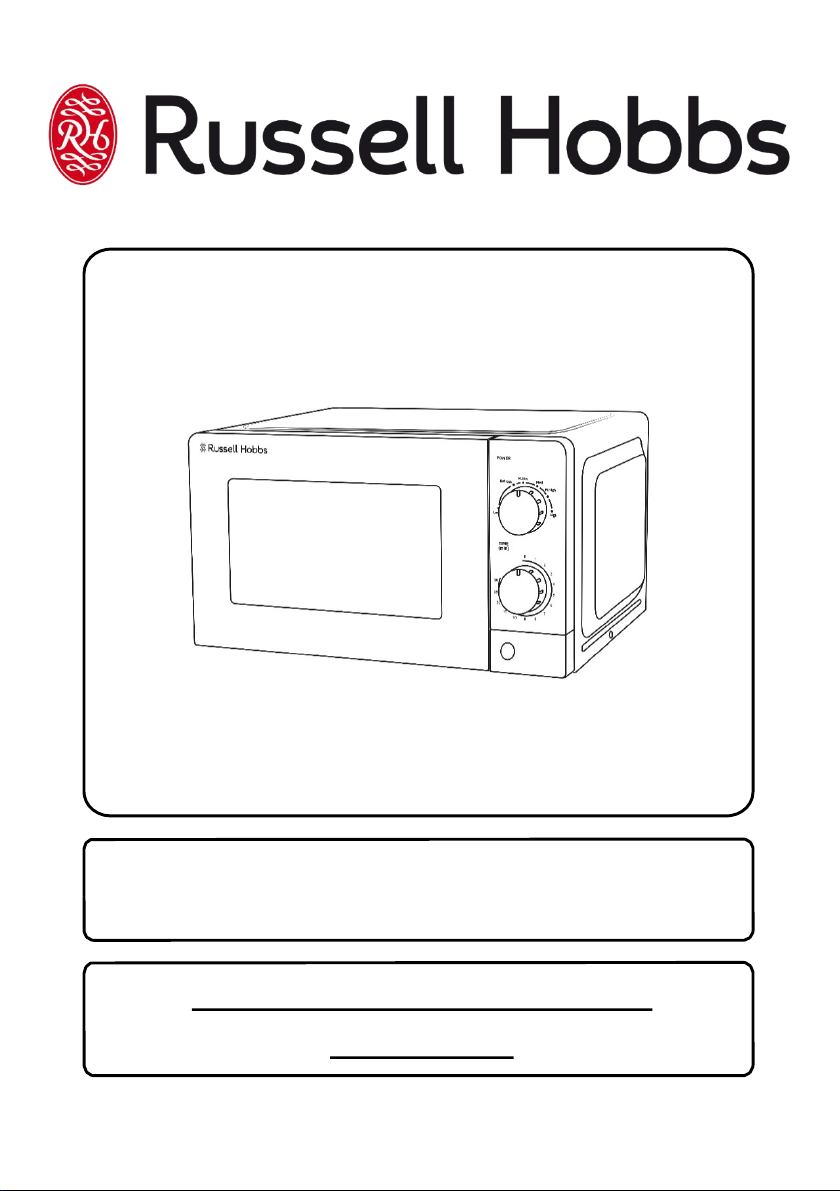
Model Number:
RHM1701B-MR
Compact Manual Microwave
User Guide
PLEASE RETAIN FOR FUTURE
REFERENCE
For Customer Services & Spare Parts please call 0345 209 7461
Or visit us at mda.russellhobbs.com
Page(s)
SAFETY INSTRUCTIONS 3-10
ABOUT YOUR MICROWAVE 11-12
PRODUCT INFORMATION 13
UNPACKING THE MICROWAVE 14
PRODUCT OVERVIEW 15
MICROWAVE OVEN INSTALLATION 16-17
TURNTABLE INSTALLATION 18-19
CONTROL PANEL 20
HOW TO USE THE MICROWAVE 21
COOKING TIPS 22
CLEANING THE MICROWAVE 23
PROBLEM SOLVING 24-27
GUARANTEE & CUSTOMER SERVICES 28
SPARE PARTS 29
CONNECTION TO THE MAINS SUPPLY 30-31
DISPOSAL 32
CONTENTS
2
SAFETY INSTRUCTIONS
IMPORTANT SAFETY INSTRUCTIONS
READ CAREFULLY AND KEEP FOR FUTURE REFERENCE
WARNING:
• This appliance is intended to be used in the household and
general domestic applications. It is not intended to be used in
industrial or commercial applications.
• Do not attempt to operate this appliance with the door open, as
open door operation can result in harmful exposure to
microwave energy.
• This appliance can be used by children aged from 8 years and
above and persons with reduced physical, sensory or mental
capabilities or lack of experience and knowledge if they have
been given supervision or instruction concerning use of the
appliance in a safe way and understand the hazards involved.
Children shall not play with the appliance. Cleaning and user
maintenance shall not be made by children without supervision.
• If the door or door seals are damaged, or the hinges and latches
are broken or loosened, the oven must not be operated until it
has been repaired by a competent person.
• It is hazardous for anyone other than a competent person to
carry out any service or repair operation that involves the
removal of a cover which gives protection against exposure to
microwave energy.
• Liquids and other foods must not be heated in sealed containers
since they are liable to explode.
3
SAFETY INSTRUCTIONS
READ CAREFULLY AND KEEP FOR FUTURE REFERENCE
WARNING:
• A minimum clearance of 7.5cm is required between the
oven and any adjacent walls. Leave a minimum clearance
of 30cm above the oven.
• Use only cookware and utensils that are approved for
use in a microwave oven.
• When heating food in plastic or paper containers, keep
an eye on the oven due to the possibility of ignition.
• This microwave is intended for heating food and
beverages only. The drying of food or clothing and
heating of warming pads, wheat bags, slippers, sponges,
damp cloth and similar is extremely dangerous and may
lead to risk of injury, ignition or fire.
• If materials inside the oven smoke or catch fire, keep the
oven door closed to stifle the flames, turn the oven off at
the wall switch, or shut the power off at the fuse or
circuit-breaker panel. If smoke is emitted , switch off or
unplug the appliance and keep the door closed in order
to stifle any flames.
• Microwave heating of beverages can result in delayed
eruptive boiling, therefore care must be taken when
handling the container.
4
SAFETY INSTRUCTIONS
READ CAREFULLY AND KEEP FOR FUTURE REFERENCE
WARNING:
• The contents of feeding bottles and baby food jars shall
be stirred or shaken and the temperature checked
before consumption, in order to avoid burns. Do not
heat baby bottles with the teat left on. Remove it if
replacing the bottle back into the oven.
• Eggs in their shell and whole hard-boiled eggs should not
be heated in microwave ovens since they may explode,
even after microwave heating has ended.
• The oven should be cleaned regularly and any food
deposits removed.
• Failure to maintain the oven in a clean condition,
especially if liquid is left under the turntable, could lead
to deterioration of the surface that will adversely affect
the life of the appliance that may result in a hazardous
condition.
• The appliance shall not be cleaned with a steam cleaner.
• Metallic containers for food and beverages are not
allowed during microwave cooking.
• The microwave oven should be used freestanding only
and must not be built-in or used in a cabinet.
5
SAFETY INSTRUCTIONS
READ CAREFULLY AND KEEP FOR FUTURE REFERENCE
WARNING:
• Use this appliance only for its intended use as described in the
manual. Do not use corrosive chemicals or vapors in this
appliance. This type of oven is specifically designed to heat,
cook or dry food. It is not designed for industrial or laboratory
use.
• If the supply cord is damaged, it must be replaced by the
manufacturer, its service agent or similarly qualified persons in
order to avoid a hazard.
• To avoid fire, electric shock, or injury, never immerse the
microwave, cord, or plug in water or liquid.
• Do not use attachments not recommended by the manufacturer.
Only use thermometers approved for use in microwaves.
• The appliance and its accessible parts may become hot during
use. Care should be taken to avoid touching heating elements.
• Do not leave the microwave oven unattended while you are
using it.
• Do not use the microwave when it is empty. This could damage
the oven.
• Do not use metal pans, dishes with metal handles or anything
with a metal trim inside the microwave. Do not use paper
covered wire twist-ties on plastic bags.
• Never put objects into the openings on the outer case.
6
SAFETY INSTRUCTIONS
READ CAREFULLY AND KEEP FOR FUTURE REFERENCE
WARNING:
• Food containing a mixture of fat and water (for example,
stock) should stand for 30 to 60 seconds in the oven
after it has been turned off. This is to allow the mixture
to settle and to prevent it from bubbling when a spoon is
placed in it, or a stock cube is added.
• When heating or cooking food or liquid, remember that
there are certain foods (such as, jam, Christmas pudding,
and mincemeat) which heat up very quickly.
• Do not cook any food surrounded by a membrane, such
as egg yolks, potatoes, chicken livers, sausages, ready
meals and so on without piercing them several times
with a fork.
• Do not try to deep-fry foods in this microwave oven.
• Do not overcook food.
• Please remember that as food or liquids heat up, they
will release steam or may be spitting. Never cover any
container fully, always leave a gap for steam to escape.
• Do not use plastic containers when heating or cooking
foods that contain a lot of fat or sugar.
7
SAFETY INSTRUCTIONS
READ CAREFULLY AND KEEP FOR FUTURE REFERENCE
WARNING:
• Always have the glass tray and turntable support in place
when using the microwave oven.
• Do not cook food directly on the glass tray. Put food on a
suitable plate or in a bowl before putting it in the oven.
• Please use suitable oven gloves when removing items from the
oven to avoid burning yourself.
• Do not use melamine dishes as they contain a material which
will absorb microwave energy. This may cause the dishes to
crack or burn, and will slow down the cooking speed.
• Do not use the microwave oven for heating utensils, plates or
dishes.
• Do not cook using a container with a restricted opening, such
as bottles, as they may explode.
• Before you clean your microwave oven, turn it off and unplug it.
• If smoke is observed, switch off or unplug the appliance and
keep the door closed in order to stifle any flames.
• Do not use the cavity for storage purposes. Do not leave paper
products, cooking utensils, or food in the cavity when not in
use.
8
SAFETY INSTRUCTIONS
READ CAREFULLY AND KEEP FOR FUTURE REFERENCE
WARNING:
• Keep the inside of the oven clean. When food or liquids stick to
the oven walls, wipe with a damp cloth. We recommend that
you do not use harsh detergent or abrasives.
• On the right hand wall of the cavity is the wave guide cover,
microwaves are passed through this to enable your food to
cook. It is important that this wave guide cover is kept clean
at all times. To do this wipe with mild detergent and water,
then dry.
• You should clean the outside of the oven with a damp cloth. Do
not allow water to seep into the ventilation openings.
• Do not use harsh abrasive cleaners or sharp metal scrapers to
clean the oven door glass since they can scratch the surface,
which may result in shattering of the glass.
• If steam builds up inside or around the outside of the oven
door, wipe with a soft cloth. This may happen when the
microwave oven is used in humid conditions.
• Pierce foods with heavy skins such as potatoes, whole
squashes, apples and chestnuts before cooking.
• The appliance is not intended to be operated by means of an
external timer or separate remote-control system.
• Please secure the turntable before you move the appliance to
avoid damages.
9
SAFETY INSTRUCTIONS
READ CAREFULLY AND KEEP FOR FUTURE REFERENCE
WARNING:
• Regularly remove the glass turntable to clean it, wash it
in warm soapy water or a dishwasher. Regularly clean
the turntable support and oven floor. Simply wipe the
bottom surface of the oven with mild detergent and
water, then dry. You can wash the turntable support in
mild soapy water.
• This appliance is a Group 2 Class B equipment. Group 2
equipment: group 2 contains all ISM RF equipment in
which radio-frequency energy in the frequency range 9
kHz to 400 GHz is intentionally generated and used or
only used locally, in the form of electromagnetic
radiation, inductive and/or capacitive coupling, for the
treatment of material, for inspection/analysis purposes,
or for transfer of electromagnetic energy. Class B
equipment is equipment suitable for use in locations in
residential environments and in establishments directly
connected to a low voltage power supply network which
supplies buildings used for domestic purposes.
10
ABOUT YOUR MICROWAVE
Thank you for purchasing your Russell Hobbs microwave
oven.
The Russell Hobbs RHM1701B-MR has been designed with
style and practicality in mind. This attractive appliance is
simple and easy to use with its 700 watts of microwave
power, providing you quick and convenient cooking in your
home. With two simple control dials, you simply set your
desired power level & time, and the microwave cooks your
food to perfection.
The Russell Hobbs RHM1701B-MR has a 17 litre cavity
capacity, which comfortably fits a standard dinner plate
and the glass turn-table is removable for easy cleaning, and
is dishwasher safe.
Additional features of the RHM1701B-MR Russell Hobbs
microwave include 5 microwave power levels to choose
from, so you can ensure all your food is cooked to the
perfect temperature. It also has a useful defrost setting, so
your frozen foods can be defrosted quick and easy.
11
ABOUT YOUR MICROWAVE
How do microwaves work?
Microwaves are high-frequency electromagnetic waves
similar to radio waves. While radio waves may vary in
length from one metre to many kilometres, microwaves are
very short (less than 12.5 centimetres.)
Microwaves do not make any heat themselves but cause
water molecules in food to vibrate.
This vibration produces heat that cooks the food. This is
why your food will come out of the microwave piping hot,
when your utensils inside the oven stay much cooler. The
microwaves do not stay in the air or in the food when you
open the microwave oven door.
The microwave oven will work using an ordinary household
electrical socket. Inside the microwave oven is the
magnetron, which turns the electrical energy into
microwaves.
Microwaves cannot travel through metal, so the inside of
the oven is lined with metal. The door is lined with a fine
metal mesh which stops microwaves getting through. This
means that when the microwave oven door is shut, there is
no possibility that microwaves can be released.
12
PRODUCT INFORMATION
13
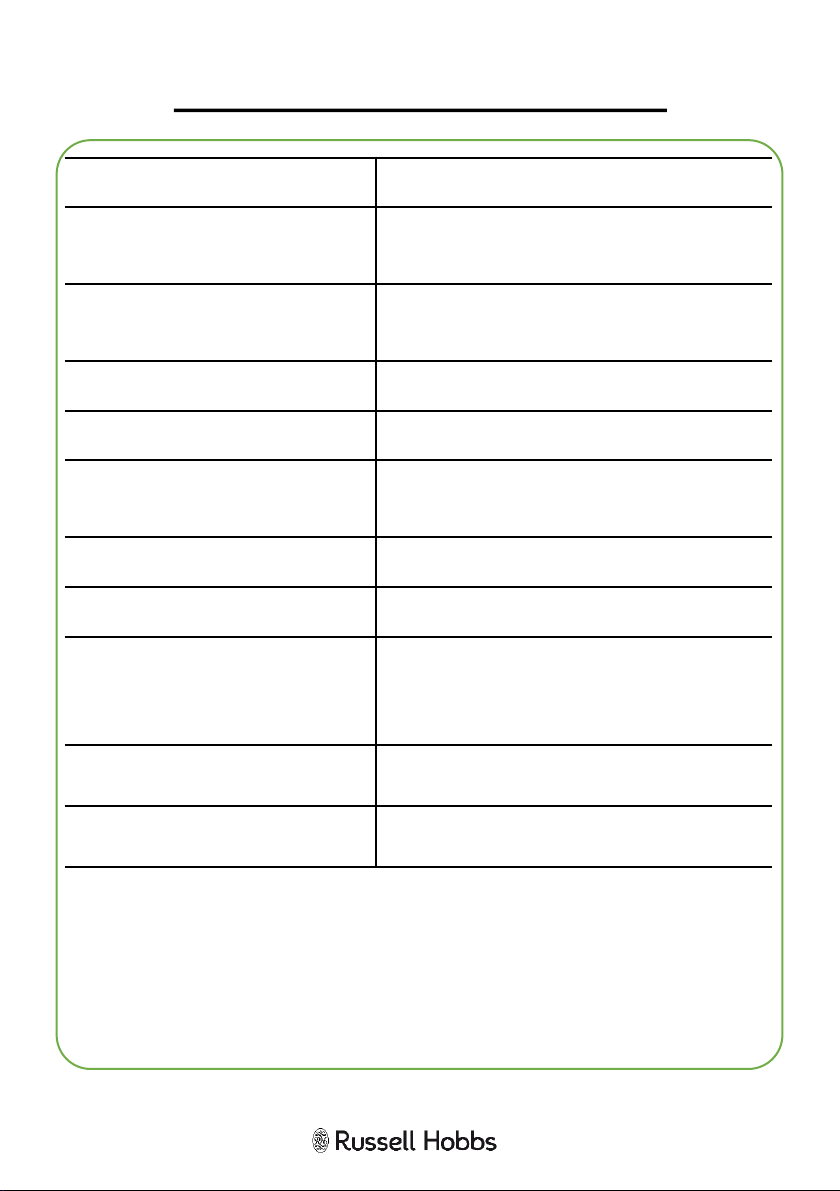
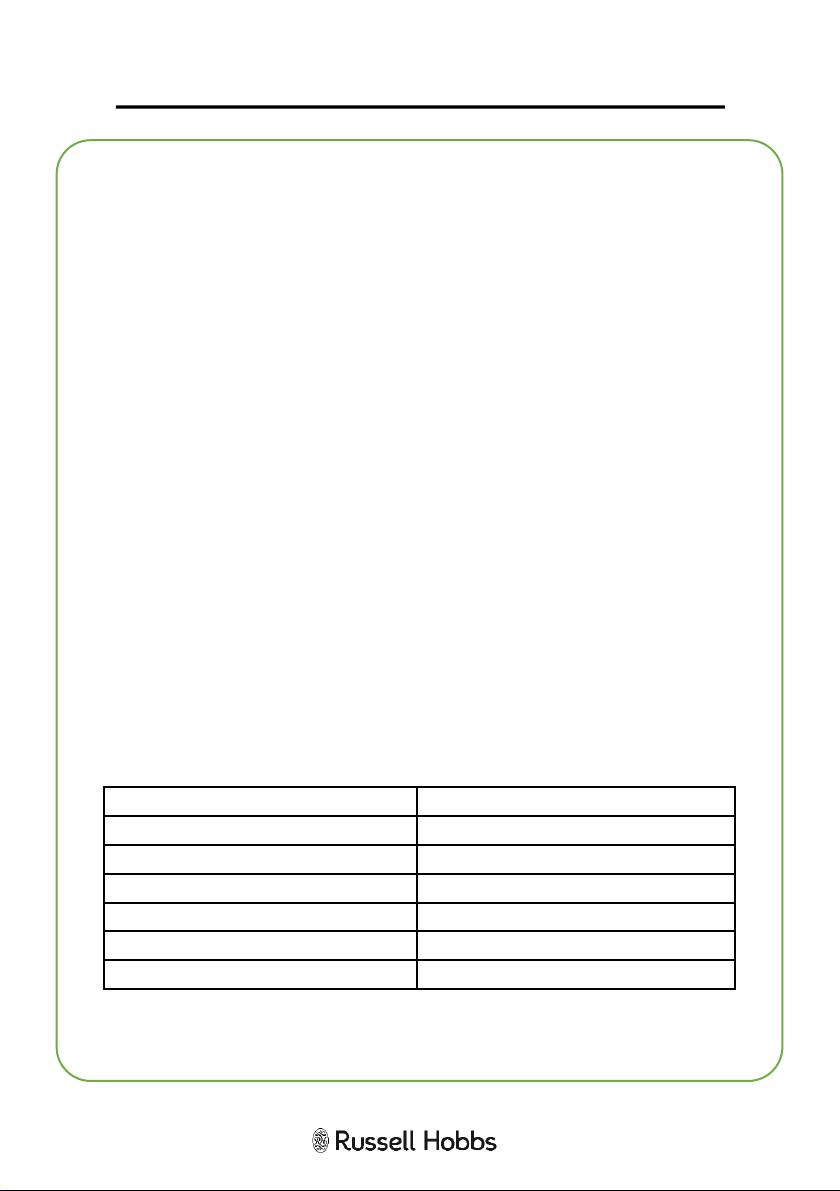
Rated Voltage 230-240V/50Hz
Rated Input Power
(Microwave)
1100W
Rated Output Power
(Microwave)
700W
Oven Capacity (litres) 17*
Turntable Diameter 24.5cm
External Dimensions
(H x W x D)
24.3 x 44.6 x 33.8 (cm)
Net Weight; Approx 9.4Kg
Number of Power Levels 5 + defrost
Accessories Included
Turntable coupling
Turntable roller ring
Glass turntable
Spec code RHM1701B-MR
MIN code 111943301
*Internal volume is calculated by measuring maximum width,
depth and height. Actual capacity for holding food is less.
UNPACKING THE MICROWAVE
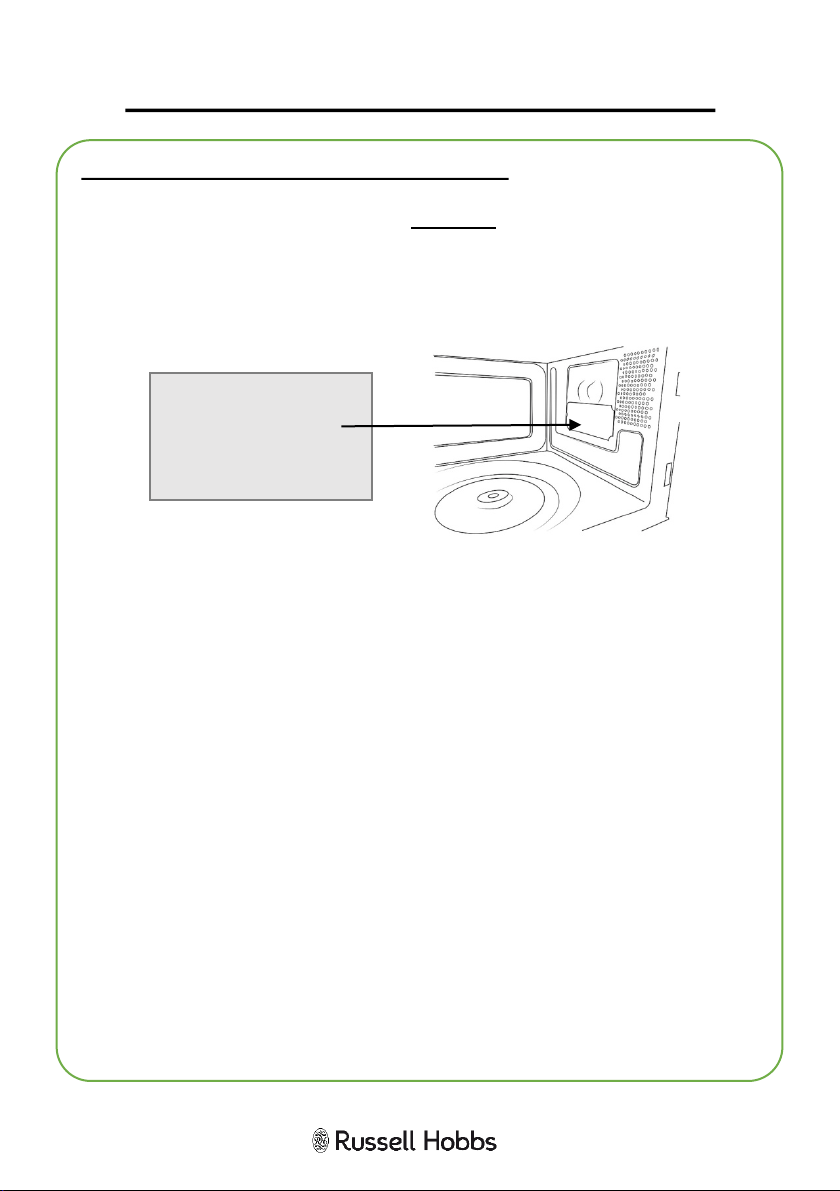
Before you use your microwave oven
1. Remove all the packaging. Do not remove the large piece
of mica board from the right hand side of the cavity wall
(Refer to the below image). This is called a wave-guide
cover and allows the microwaves to pass through to cook
the food.
14
Please ensure you keep this cover clean at all times by
wiping with a damp cloth. Do not remove/place in a
dishwasher.
2. Check the oven after unpacking for any visual damage
such as:
A misaligned door
Damage to the door
Dents or holes in the door window and screen
Dents in the inside
If you can see any damage do not use the oven, please
contact Customer Service team on 0345 209 7461.
This microwave oven must be put on a horizontal surface
that is strong enough to support its weight.
The oven must be placed away from high temperatures and
steam.
Do not put anything on the top of the microwave oven.
PRODUCT OVERVIEW
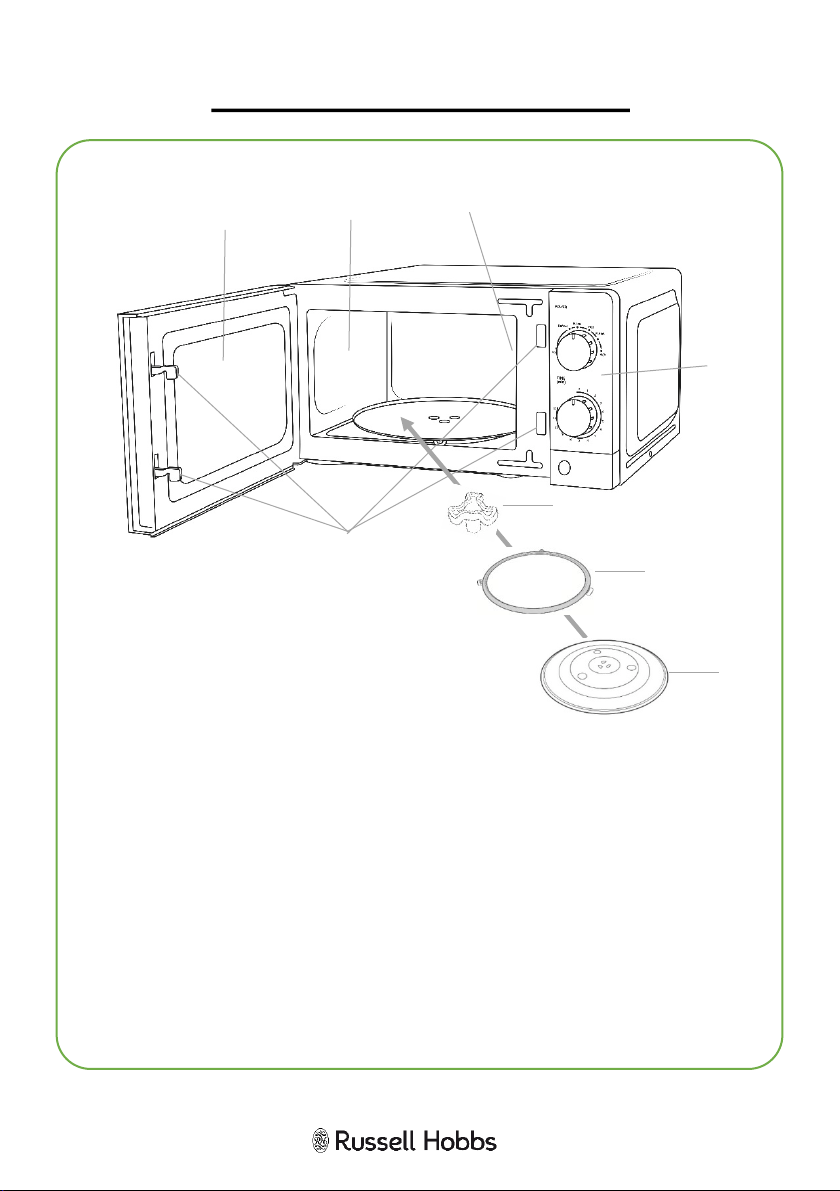
1. Door safety lock system
2. Oven window
3. Oven cavity
4. Wave guide cover (do
not remove)
5. Control panel - dials
6. Turntable coupling
7. Roller ring
8. Glass turntable
15
1
2
3
4
5
7
8
6
MICROWAVE OVEN INSTALLATION
• Place the oven as far away from radios and televisions as
possible. Using the oven may cause interference with the
reception.
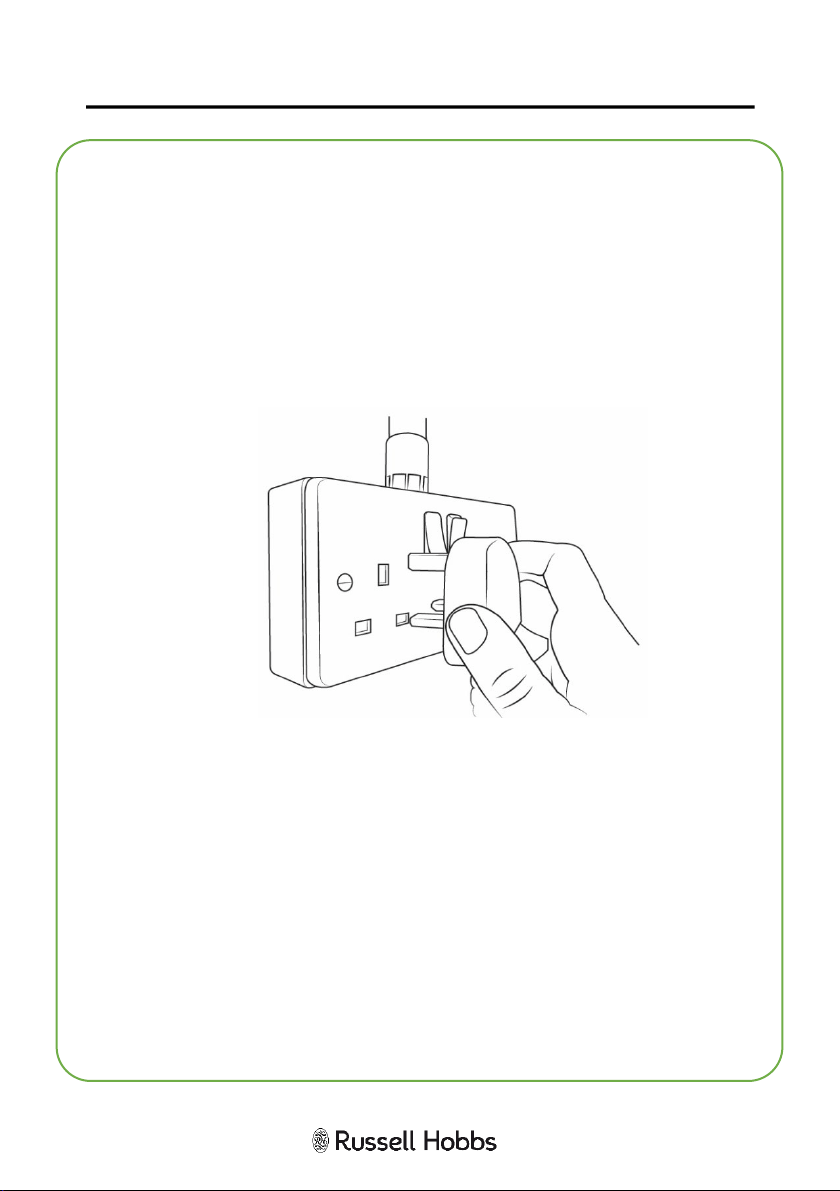
• Plug the oven into a suitable 13 amp mains socket, make
sure the voltage is the same as on the rating label (do
not use extension cables or mains socket adaptors.)
16
• The microwave oven should be used freestanding only
and must not be built-in or used in a cabinet.
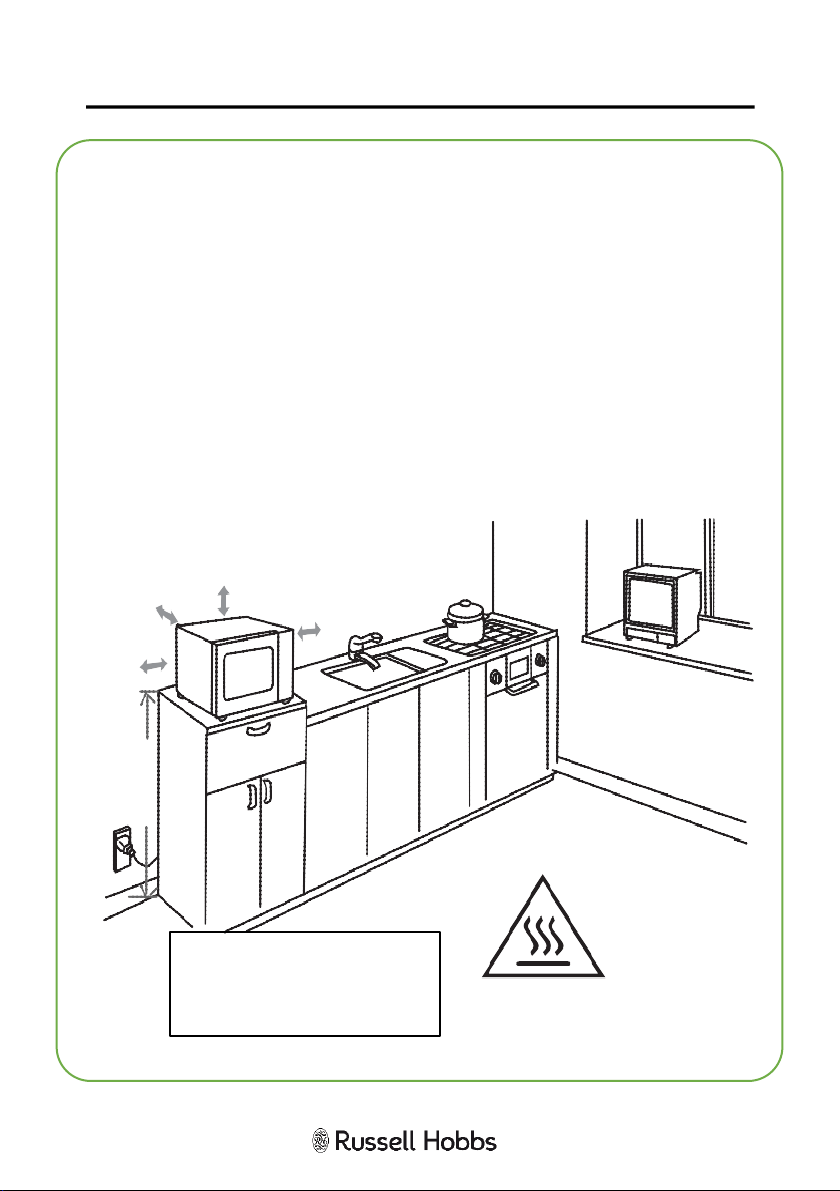
• Select a level surface that provides enough space for the
outlet vents.
MICROWAVE OVEN INSTALLATION
The minimum installation height is 85cm.
A minimum clearance of 7.5cm is required between the
oven and any adjacent walls. Leave a minimum clearance of
30cm above the oven.
WARNING:
DO NOT install the oven over a cooker or other heat or
steam producing appliance as this will damage the
microwave oven.
17
30cm
7.5cm
7.5cm
7.5cm
Min 85cm
DO NOT obstruct
the ventilation
from the microwave
TURNTABLE INSTALLATION
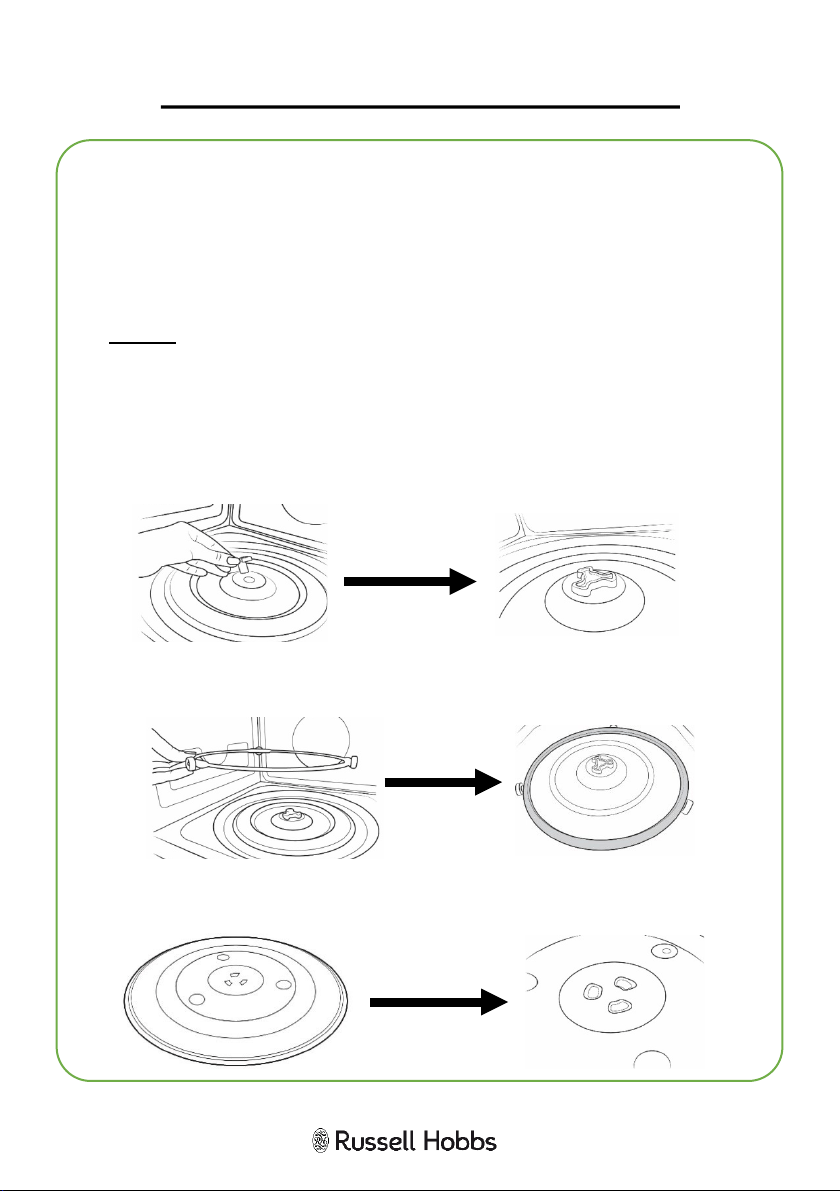
• Before first use, check that any securing tape and all
packaging has been removed from the glass tray and
turntable ring assembly.
• These parts must never be restricted from rotating.
• Never place the glass tray upside down.
• To assemble the turntable, follow the steps below in
number order.
18
STEP 1) The turntable coupling should slot into the centre
of microwave
STEP 2) The turntable ring slots into the indents in the
microwave base
STEP 3) The glass tray should align with the turntable
coupling
TURNTABLE INSTALLATION
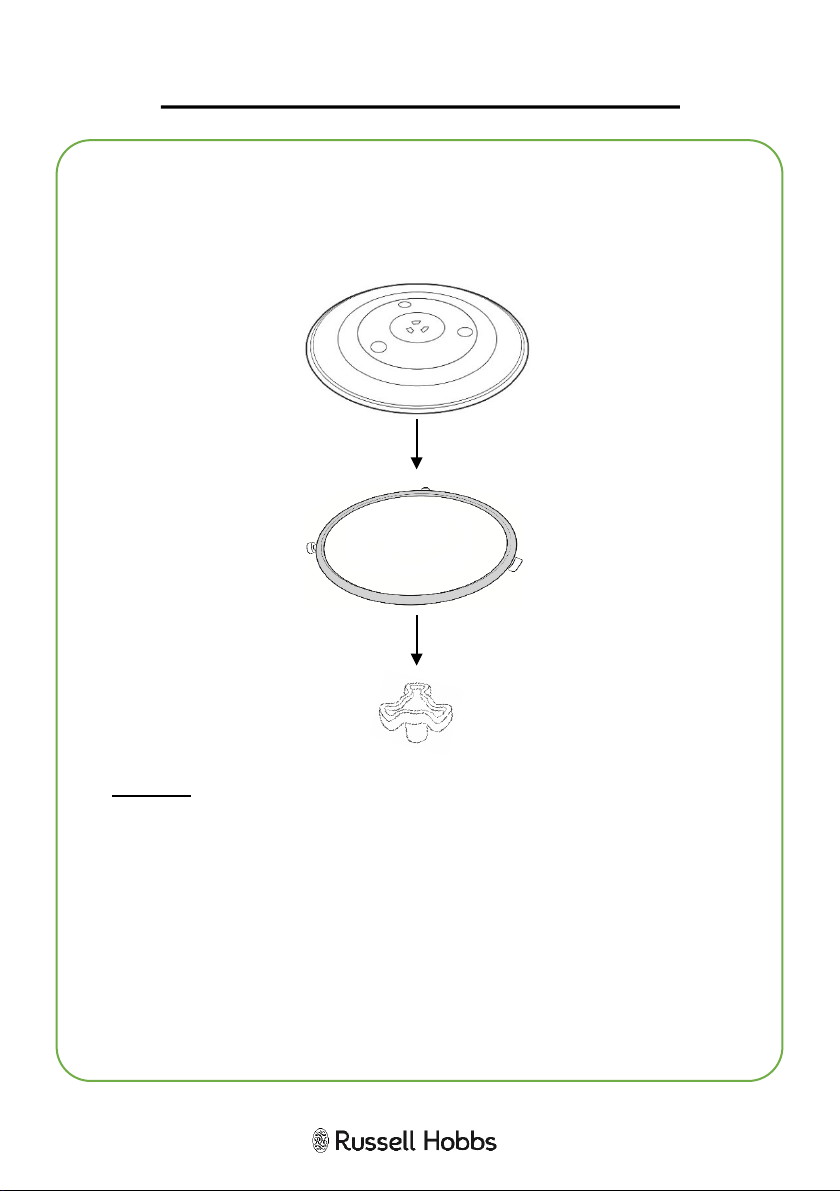
The glass tray, turntable ring, and turntable coupling
assembly must always be used during cooking (as
shown below).
19
• Do not place the food directly onto the glass tray,
always place on or in suitable microwaveable cookware.
Please check that crockery is microwave safe before
using.
• If the glass tray or turntable ring assembly has been
damaged in any way, please contact Customer Service
team on 0345 209 7461.
CONTROL PANEL
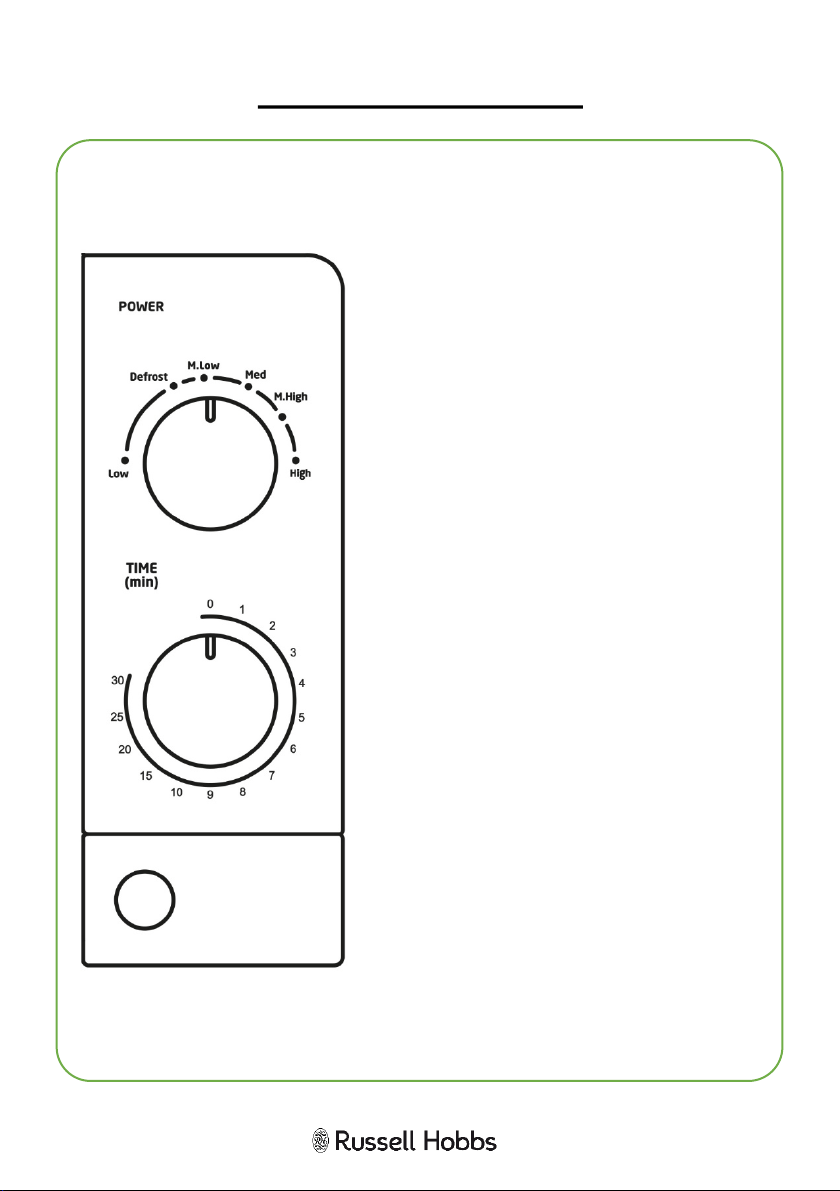
POWER DIAL
There are 6 power levels including a
defrost function, selected using the
power control dial.
The lower the power setting, the
slower the microwave will heat the
food. Make sure you follow
guidelines on packaging when
selecting a setting.
To defrost food, set the arrow on the
dial to ‘DEFROST’.
TIME DIAL
Turn the dial clockwise to increase
the time set. You can set your
cooking time for up to 30 minutes.
The line on the dial will indicate how
many minutes you have selected.
When the time has ran out, the
microwave will produce a ‘ping’
noise to alert you that cooking has
completed.
Important note:
To cook for less than 2 minutes, turn
the TIMER dial past 2 minutes and
then return it to the time required
20
HOW TO USE THE MICROWAVE
• Put the food to be cooked or defrosted in a suitable microwave safe
container, cover the food with a suitable cover or with microwave safe
cling film (pierce the film with a fork).
• Put the container into the microwave oven and close the door.
• Choose the power level you want by turning the POWER dial.
• Choose the cooking time in minutes by turning the TIME dial. Follow the
manufacturers guidelines on the pack. The maximum time is 30 minutes.
• If you want to cook for a time less than 2 minutes, turn the TIME dial
past 2 minutes and then return it to the time required.
• As soon as the timer has been set the microwave will start to cook or
defrost the food.
• Cooking or defrosting can be interrupted at any time to stir or check the
food cooking progress, by opening the door. The microwave oven will
automatically continue the cycle with the remaining time, when the
door is closed.
• After the cooking time is finished, a bell will sound and the microwave
oven will automatically turn off.
• Allow the food to stand for 30 seconds to 1 minute and stir any liquids
before serving.
• If there is time remaining on the dial, rotate the dial back to ‘0’. The
microwave bell will sound.
WARNING: Do not use the oven when empty or for warming plates.
Always keep the oven cavity, door assembly and waveguide cover clean
21
POWER Equivalent Power
Low 20%
Defrost 42%
M.Low 52%
Med 73%
M.High 88%
High 100%
COOKING TIPS
Defrosting tips
Microwaves penetrate around 4cm into most food. To maximize
defrosting effectiveness follow the below guidelines:
1. For thick foods, turn regularly during operation in order to defrost
evenly.
2. If food weighs over 500g, it is advised to turn at least 2 times.
3. Defrosted food should be consumed as soon as possible, it is not
advisable to put back into the fridge or freeze again.
Cooking tips - The following may affect cooking results:
Food arrangement
If possible, thicker bits of food should be placed around the outside of
the dish and the thinner parts toward the centre, spread out as evenly
as possible. Do not overlap food if possible as this could result in
uneven cooking results.
Cooking time
If you are unsure of cooking times it is advisable to start with a short
cooking time and monitor cooking progress before adding further time.
Overcooking could lead to a risk of fire. Ensure food is cooked
thoroughly before consuming.
Cooking food evenly
Foods such as meat should be turned frequently to ensure more even
cooking results. If the food is liquid based, stirring during the cooking
time is advisable.
Allow standing time
When the microwave has stopped cooking, leave the food to rest for an
adequate length of time to allow for cooking completion and cooling.
22
CLEANING THE MICROWAVE
• Before you clean the oven, turn it off and unplug it.
• Keep the inside of the oven clean. When food or liquids stick to the
oven walls, wipe with a damp cloth. We recommend that you do not
use harsh detergent or abrasives.
• On the right hand side wall of the cavity is the wave guide cover,
microwaves are passed through this to enable your food to cook. It
is important that this wave guide cover is kept clean at all times. To
do this wipe with mild detergent and water, then dry.
• You should clean the outside of the oven with a damp cloth. Do not
allow water to seep into the ventilation openings.
• Do not allow the control panel to become wet. Clean with a soft,
damp cloth. Do not use detergents, abrasives or spray-on cleaners
on the control panel.
• If steam builds up inside or around the outside of the oven door,
wipe with a soft cloth. This may happen when the microwave oven
is used in humid conditions.
• Regularly remove the glass turntable to clean it, and wash it in warm
soapy water. Regularly clean the turntable support and oven floor.
Simply wipe the bottom surface of the oven with mild detergent and
water, then dry. You can wash the turntable support in mild soapy
water.
• When removing the turntable support of the oven, make sure you
put it back properly.
• If the inside of the oven smells, put a cup of water with the juice and
skin of one lemon in a deep microwave bowl. Microwave it for three
minutes, wipe thoroughly and then dry with a soft cloth.
• Failure to maintain the oven in a clean condition, especially if liquid
is left under the turntable, could lead to deterioration of the surface
that will adversely affect the life of the appliance that may result in a
hazardous condition.
23
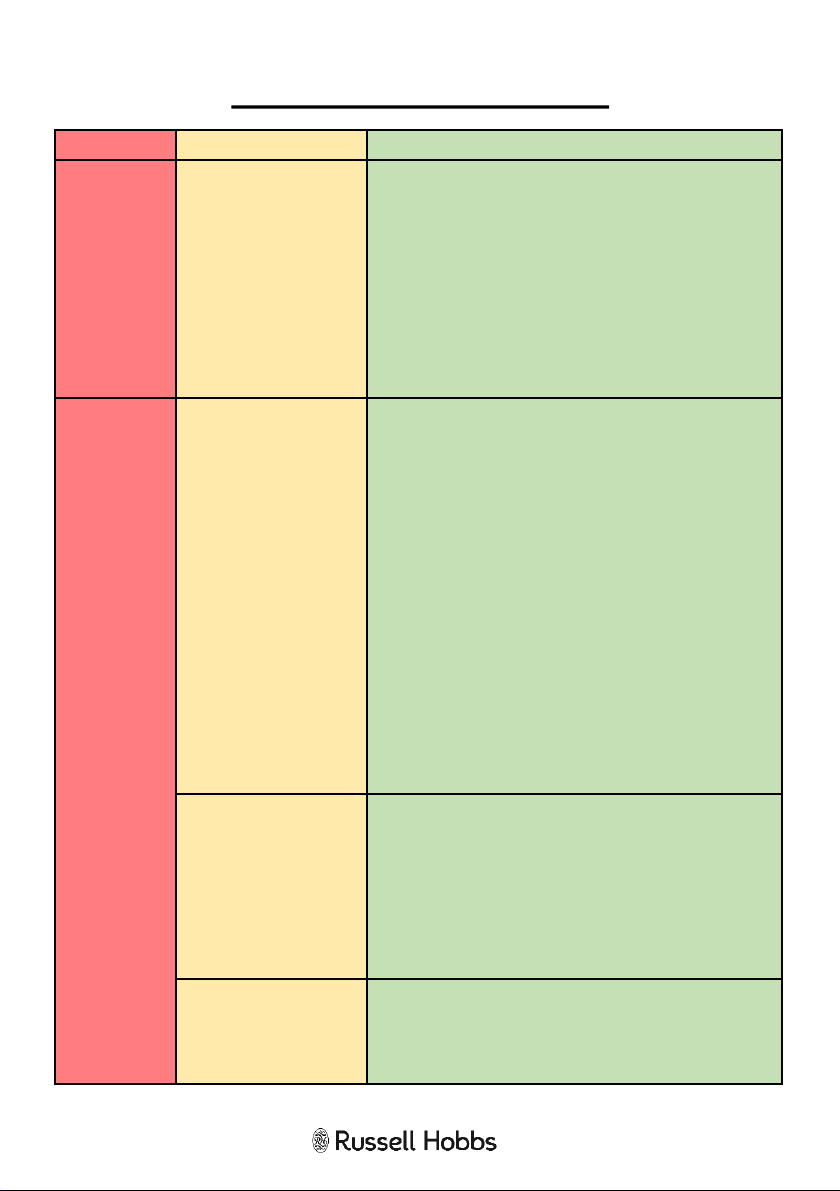
PROBLEM SOLVING
The microwave oven may cause interference to your radio, TV or similar
equipment. If this happens, you can stop the interference by moving the radio,
TV or equipment as far away from your microwave oven as possible.
24
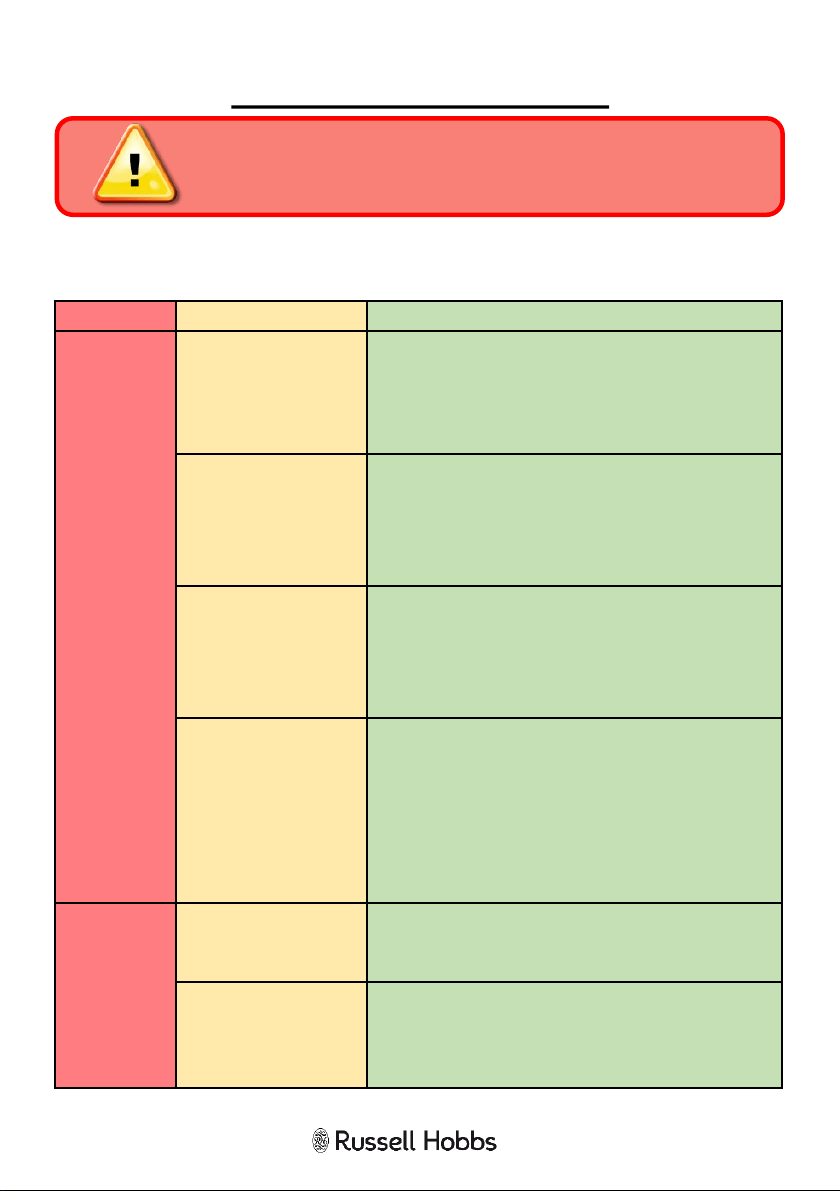
WARNING: To reduce the risk of personal injury,
always unplug the microwave before performing
maintenance or trouble shooting checks.
Problem Potential reason
Potential solution
If the
microwave
doesn’t
work
1. Microwave is not
plugged in
Make sure the plug is plugged in securely
into the mains and the plug is switched on. If
it is not, remove the plug from the socket,
wait 10 seconds and plug it in again securely.
2. Plug is not
working
The plug socket that the microwave is
plugged into may have become faulty. Plug
the microwave into another known good
plug socket, ensure that the socket is turned
on and check if the microwave now works.
3. The plug has a
blown fuse or the
mains circuit has a
blown fuse/tripped
fuse
Check the plug for a blown circuit fuse or a
tripped main circuit breaker. If these seem to
be working properly, test the socket with
another appliance.
4. Microwave has
developed a fault
Contact customer services to talk through
the problem to see if any solution for the
fault can be found. If not and the product is
within its warranty period, then the
microwave should be returned to the retailer
it was purchased from for a replacement or
refund.
If the
microwave
power will
not work
1. Door is not
closed
Make sure the door is securely closed.
Otherwise, the microwave will not engage or
operate.
2. The power has
not been set/the
timer dial has not
been turned
Set the microwave power by turning the
‘Power’ dial. Turn the time dial to the
required time and the microwave should
start
PROBLEM SOLVING
25
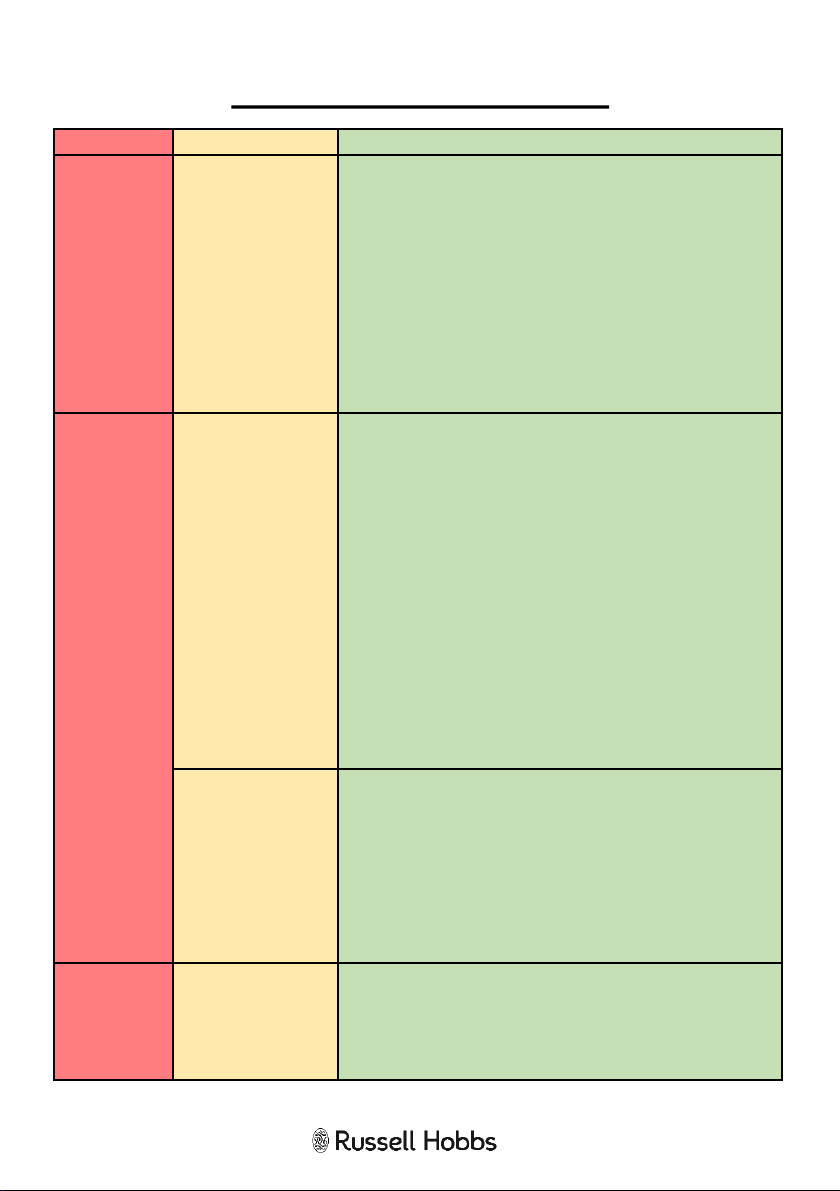
Problem Potential reason
Potential solution
Not heating
Magnetron not
working
The component that produces the
microwaves is called a magnetron, if food is
not being heated or is 'luke' warm then it is
likely this component has developed a fault.
If the microwave is within its warranty
period, please contact customer services for
further advice or take the microwave back to
the retailer it was purchased from for a
refund or replacement.
Sparking
1. Burnt on food
debris
Spillages or splashes can burn and catch fire,
all food that is put into the microwave
should be appropriately covered. All spillages
or splashes must be cleaned, and all areas of
microwave cleaned after each use.
Burnt on food debris in the microwave, on
the wave guide and the behind the wave
guide can cause the microwave to 'spark'.
This is because burnt on debris can be
focused on by the microwaves and spark.
Microwaves must be thoroughly cleaned
after every use to ensure no food is burnt on
to any part of the microwave.
2. Metal or foil
No metal or foil should be put inside a
microwave as it can cause 'sparking' which
can damage the microwave.
The only metal accessories that should be
used inside the microwave are the ones
supplied by the manufacturer.
3. Pressure build up
in food
Food with none porous skins (potatoes for
example), must be pierced to allow steam to
escape. As the build up of pressure can cause
food to burst and create a 'fire hazard‘.
PROBLEM SOLVING
26
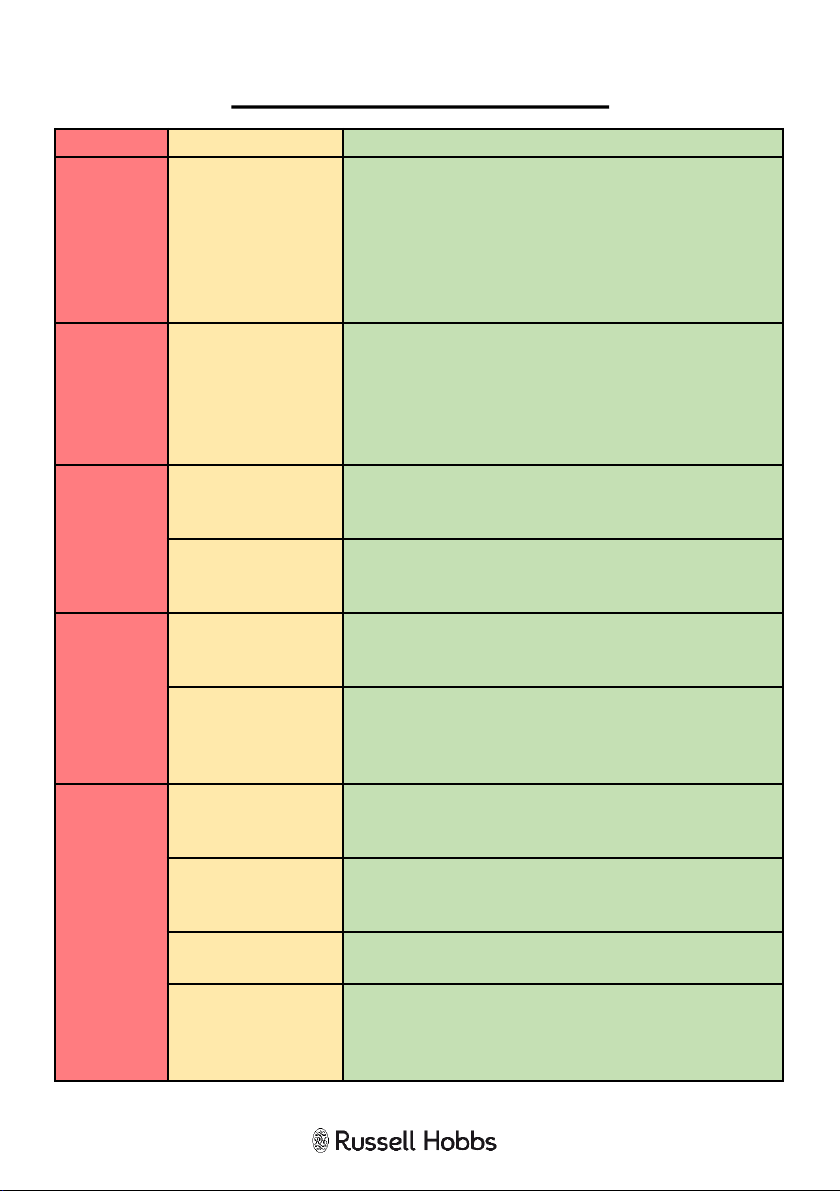
Problem Potential reason
Potential solution
Heat spots
Operated empty or
with no moisture
Microwaves cannot be run empty, microwaves need
moisture to operate correctly.
If microwaves are operated empty or are used to
heat up plates (this is not permitted), the
microwaves can focus on a single point inside the
microwave. This can cause a heat spot, which can
cause the area to become deformed, warped or
start to melt.
If microwaves are operated empty or to heat up
foreign objects this will void the warranty.
Condensation
or excess
water
1. Food that is
being cooked
By the very nature of how a microwave works, it
‘excites’ the water molecules in the food it is
heating, causing them to move about and generate
heat from within the food. Often when the food
heats up it reaches the point where steam is
released. Dependent on the food type being heated
(and its water content level), the length of time
being heated for – and so the amount of steam
generated – it is inevitable that some of the steam
will condense and form back into water droplets
within the microwave cavity. This can usually be
found on the inner walls or most commonly on the
back of the glass door. If not cleaned up, these
droplets can start to form small ‘pools’ of water.
2. Cooling vents
covered
Cooling vents allow the heat and steam to escape
from the microwave. These cannot be covered as it
can cause excessive water to settle inside the
microwave or the microwave to overheat.
The installation instructions in the instruction
manual must be followed or the warranty will be
void.
Paint
damage/
peeling
Maintenance
If the microwave is within its warranty period,
please contact customer services for further advice
or take the microwave back to the retailer it was
purchased from for a refund or replacement.
PROBLEM SOLVING
27
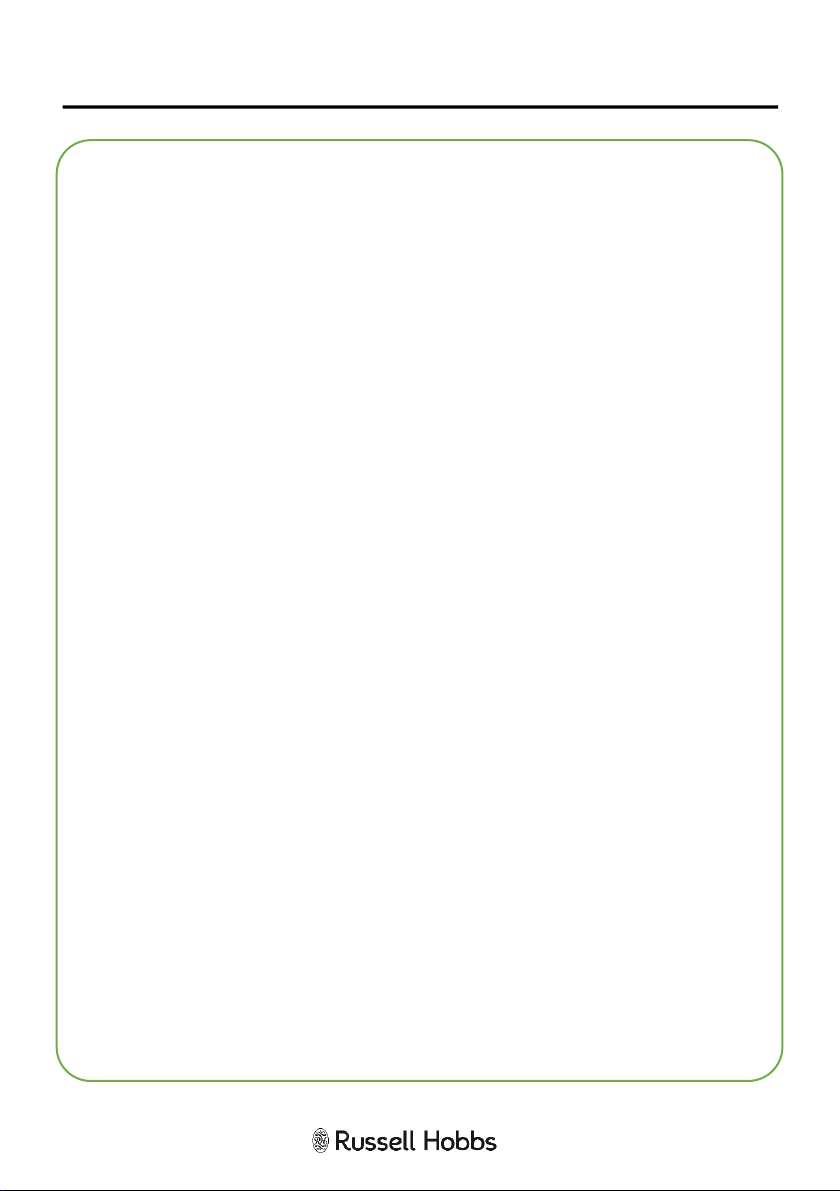
Problem Potential reason Potential solution
Light not
working
Bulb not working
Due to the construction of microwaves and certain
'dangerous' components inside, the light bulb can only
be changed by a qualified service engineer.
If the microwave is within its warranty period, please
contact customer services for further advice or take the
microwave back to the retailer it was purchased from
for a refund or replacement
Over heating
Cooling vents
covered
Cooling vents allow the heat and steam to escape from
the microwave. These cannot be covered as it can
cause excessive water to settle inside the microwave or
the microwave to overheat.
The installation instructions in the manual must be
followed or the warranty will be void.
Too noisy
1. Glass turntable
fitted incorrectly
Check that the glass turntable has been placed
correctly on the turntable and is not hitting the
walls/doors of the microwave during operation.
2. Dishes/plate are
too large for the
microwave
Check that the dishes/plates are the correct size for the
microwave and that they are not hitting the walls/door
of microwave during operation.
Door not
shutting/
locking
1. Glass turntable
fitted incorrectly
Check that the glass turntable has been placed
correctly on the turntable and is not stopping the door
from shutting correctly.
2. Latches have
become deformed
If the microwave is within its warranty period, please
contact customer services for further advice or take the
microwave back to the retailer it was purchased from
for a refund or replacement.
Turntable
not rotating
1. Turntable coupling
not fitted or tape not
removed
Check that the turntable coupling is fitted correctly and
the transportation tape has been removed.
2. Turntable roller
ring not fitted or
fitted incorrectly
Check that the coupling has be placed under the
turntable and that it is position correctly.
3. Glass turntable
fitted incorrectly
Check that the glass turntable has been placed
correctly on the turntable.
4. Turntable has
developed a fault
If the microwave is within its warranty period, please
contact customer services for further advice or take the
microwave back to the retailer it was purchased from
for a refund or replacement.
GUARANTEE & CUSTOMER SERVICES
At Russell Hobbs, we take all our customer feedback seriously.
Feel free to contact our Customer Service Team on
0345 209 7461
who will be more than happy to assist you.
This product is guaranteed for 12 months from the date
of the original purchase. If any defect arises due to faulty
materials or workmanship, the faulty product must be
returned to the place of purchase.
Refund or replacement is at the discretion of the retailer.
The following conditions apply:
• The product must be returned to the retailer with the
original proof of purchase.
• The product must be installed and used in accordance
with the instructions contained in this instruction
guide and any other instructions for use which are
supplied.
• It must be used for domestic purposes only and for its
intended use.
• This warranty does not cover wear and tear, damage,
misuse or consumable parts.
28
SPARE PARTS
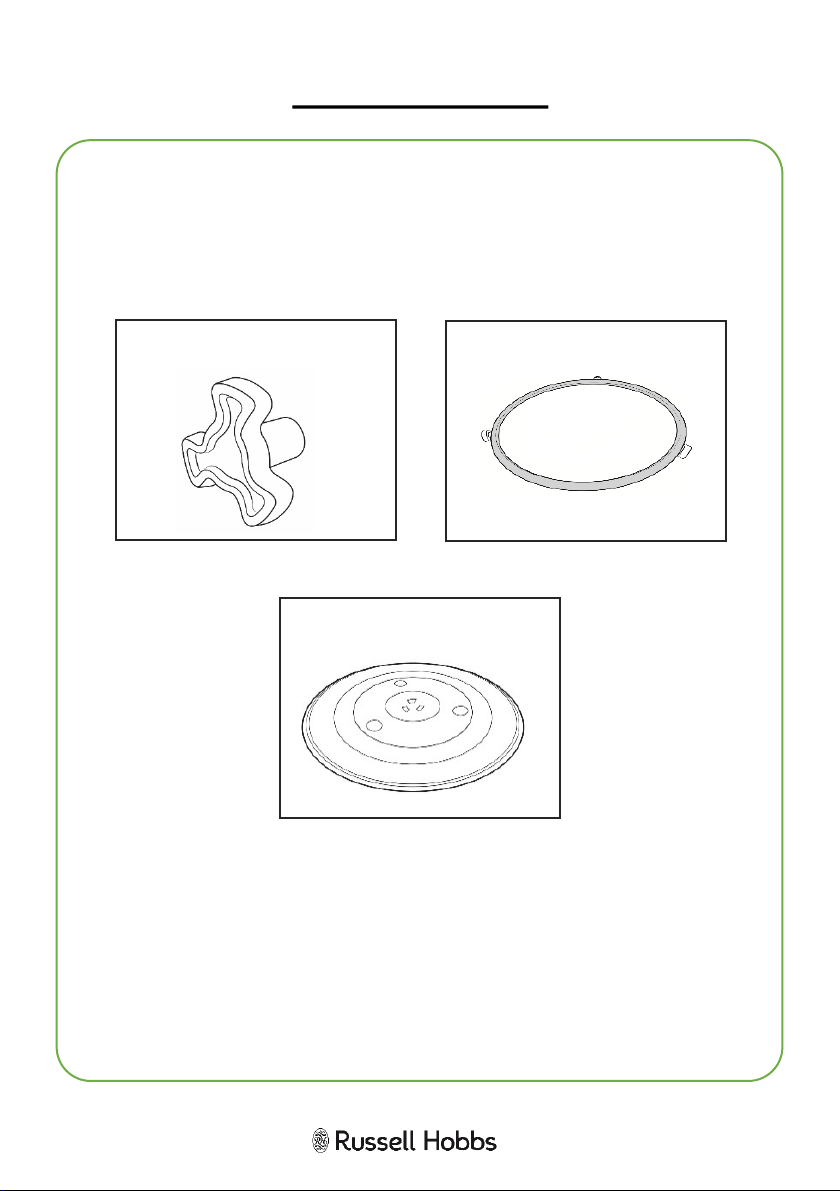
To check the availability of the following spare parts, simply
contact our friendly Customer Service team on 0345 209 7461.
29
Turntable ring
Glass turntable
Turntable coupling
CONNECTION TO THE MAINS SUPPLY
WARNING- THIS APPLIANCE MUST BE EARTHED
This appliance is designed to operate from a mains supply of
230-240V~ 50Hz.
Check that the voltage marked on the product corresponds with
your supply voltage.
This product is fitted with a moulded 13A plug complying with
BS1363. If this plug is unsuitable or needs to be replaced, refer to
customer services as it should only be replaced by a qualified
engineer.
To replace the 13amp fuse, remove the plug from the socket,
remove the fuse cover near the pins of the plug, remove the fuse
and replace with 13amp fuse. Refit the fuse cover and plug the
unit back into the power supply.
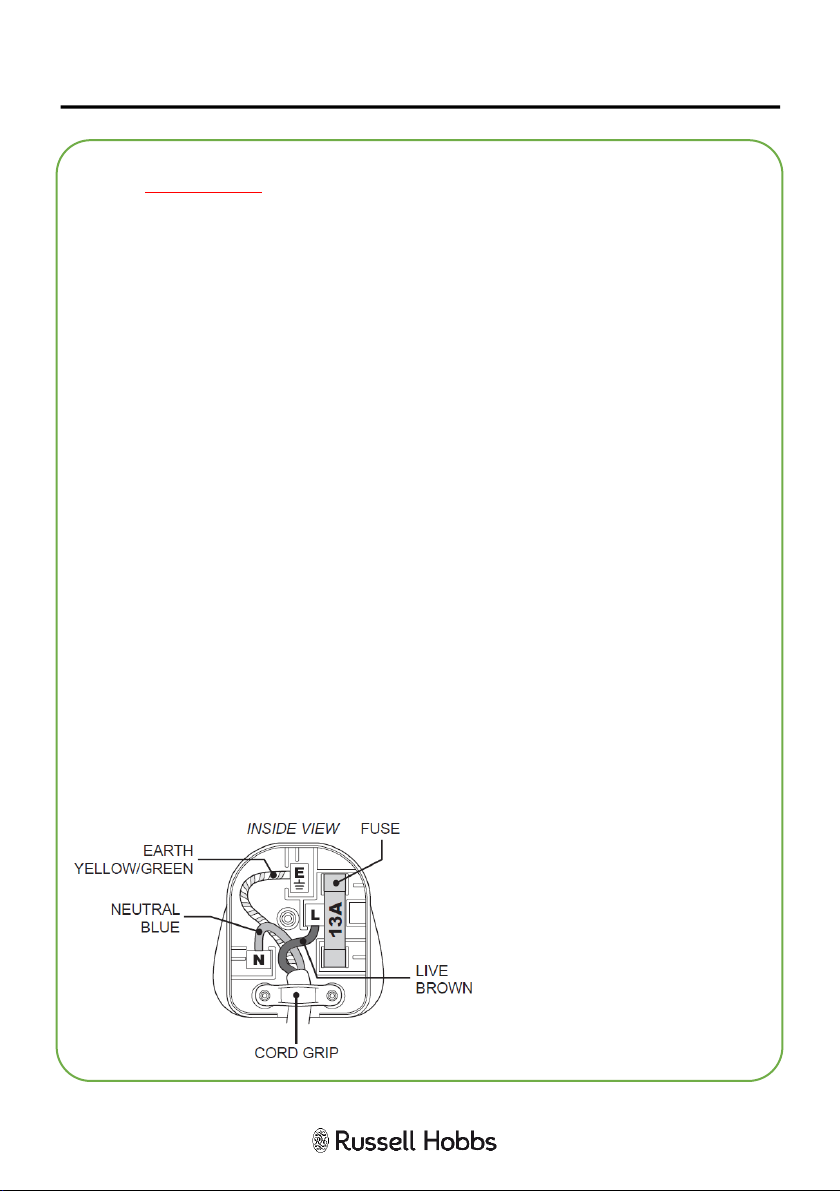
Important: The wires in the mains lead are coloured in
accordance with the following code:
30
GREEN/YELLOW – EARTH
BLUE – NEUTRAL
BROWN – LIVE
CONNECTION TO THE MAINS SUPPLY
For UK use only – PLUG
• As the colours of the wires in the mains lead of this
appliance may not correspond with the coloured markings
identifying the terminals in your plug, proceed as follows:
• The GREEN/YELLOW wire is the EARTH and must be
connected to the terminal which is marked with the letter
E or by the earth symbol or coloured GREEN or
GREEN/YELLOW.
• The BLUE wire is the NEUTRAL and must be connected to
the terminal marked with the letter N or coloured BLACK.
• The BROWN wire is the LIVE wire and must be connected
to the terminal marked with the letter L or coloured RED.
• Always ensure that the plug cord grip is fastened
correctly.
• If a 13A (BS1363) fused plug is used it must be fitted with
a 13amp fuse conforming to BS1362 and be BSI or ASTA
approved.
If the fuse cover is lost the plug must not be used until a
replacement is obtained from an electrical supplier.
If you need to remove the plug, cut it from the mains lead
and dispose of it. NEVER attempt to re-use this plug or insert
it into a socket outlet, as there is a very great risk of electrical
shock.
31
Made by Product Care Trading Limited under license from Spectrum
Brands (UK) Limited. Product Care Trading Limited, Wigan, WN2 4AY/ PCT
(NI) Ltd, Belfast, BT5 5AD. Russell Hobbs is the registered trademark of
Spectrum Brands (UK) Ltd.
Russell Hobbs Support: call 0345 209 7461 or visit: mda.russellhobbs.com
Produced for: Wm Morrison Supermarkets PLC, Gain Lane, Bradford, BD3
7DL/Morrisons, Fitzwilliam Hall, Dublin, D02 T292.
The ‘wheelie bin’ symbol is known as the 'Crossed-out wheelie bin Symbol'.
When this symbol is marked on a product/batteries, it means that the
product/batteries should not be disposed of with your general household
waste. Only discard electrical/electronic/battery items in separate
collection schemes, which cater for the recovery and recycling of materials
contained within. Your co-operation is vital to ensure the success of these
schemes and for the protection of the environment. For your nearest
disposal facility, visit www.recycle-more.co.uk or ask in store for details.
SEDEX – Connecting businesses and their global suppliers to share ethical
data and enabling improvement in ethical performance. Visit
www.sedex.org.uk for further information.
We reserve the right, due to possible changes to design, to alter the
instruction manual without prior notice.
Revision 1.3