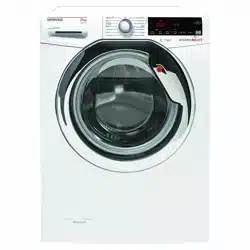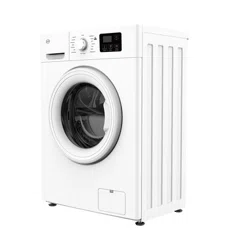
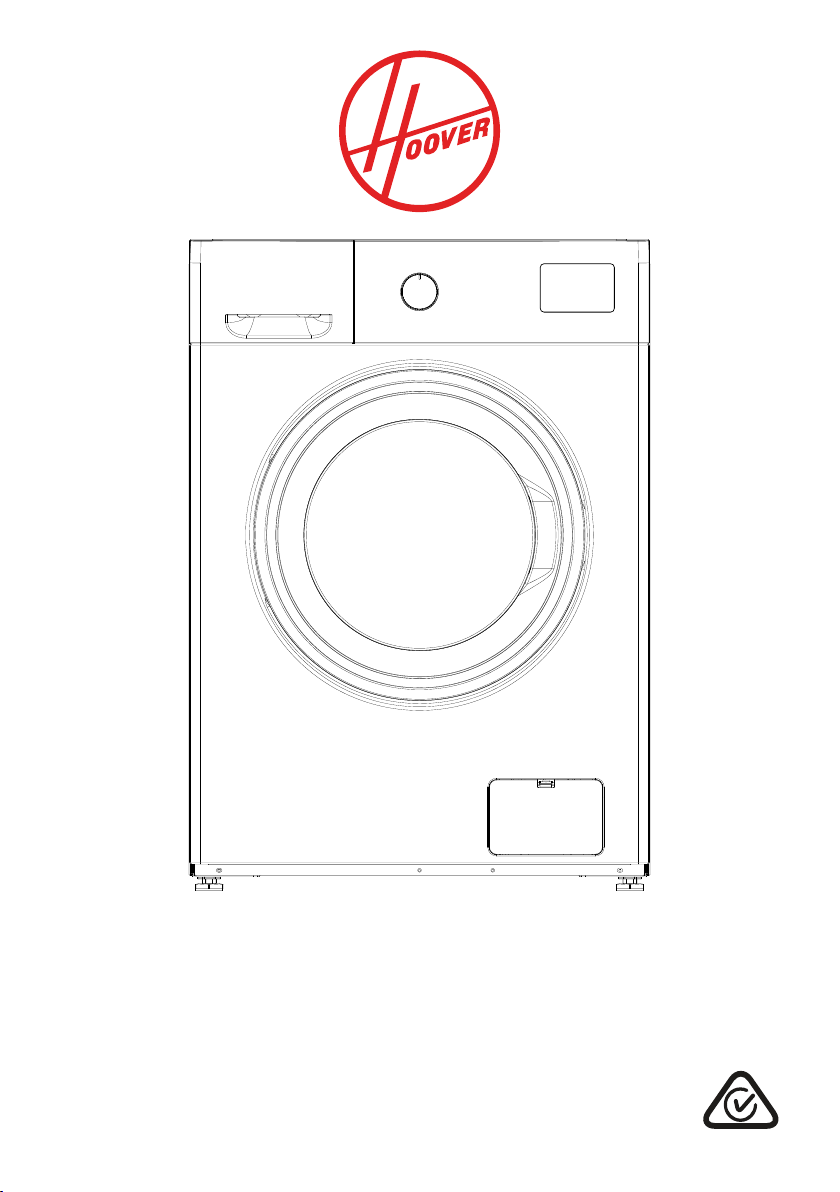
6 kg Front Load Washing Machine
INSTRUCTION MANUAL
MODEL: HV-LFL6
After Sales Support
(AU) 1300 886 649 (NZ) 0800 836 761 | tempo.org/support
2
Contents
03 General Safety Instructions
07 Unpacking
08 Product Overview
10 Installation
17 Instructions
25 FAQs and Troubleshooting Guide
28 Other Useful Information
After Sales Support
(AU) 1300 886 649 (NZ) 0800 836 761 | tempo.org/support
3
General Safety Instructions
Electrical safety and cord handling
• Voltage: Before connecting and turning on the appliance, ensure the electrical
voltage and circuit frequency correspond to those indicated on the appliance rating
label.
• Power supply system: Make sure the power supply system (current, power voltage
and wire) at your home can meet the normal loading requirements of electrical
appliances.
• WARNING! Only connect the washing machine to a grounded (earthed) electrical
outlet. Do not overload the wall outlet, as overloading can result in fire or electric
shock. Insert the power plug securely.
• Protect from moisture: To avoid electric shock, fire and malfunction, do not install
this machine in a damp place. Do not pull out or insert the plug with wet hands or
bare feet. Do not expose the appliance, cord or plug to rain, moisture or other liquid.
• Power cord: Do not kink or damage the power cord, and position it out of the way so
no one steps on or places anything on the cord or against it.
WARNING! Do not use the machine if the cord or plug is damaged to avoid an
electric shock, short circuit or fire. If the cord is damaged, it must be replaced by the
manufacturer’s service agent or a properly qualified person in order to avoid a hazard.
IMPORTANT SAFETY INSTRUCTIONS
READ CAREFULLY AND KEEP FOR FUTURE REFERENCE
Read this manual thoroughly before first use, even if you are familiar with this type
of product. The safety precautions enclosed herein reduce the risk of fire, electric
shock and injury when correctly adhered to. Keep the manual in a safe place for
future reference, along with any warranty information and your purchase receipt. If
applicable, pass these instructions on to the next owner of the appliance. Always
follow basic safety precautions and accident prevention measures when using
an electrical appliance, including the following:
Pay particular attention to safety advice following the words:
DANGER, WARNING and CAUTION.
These words are used to alert you to a potential hazard that can seriously injure
you and others. The instructions will tell you how to reduce the chance of injury
and let you know what can happen if the instructions are not followed.
DANGER means that failure to read this safety statement may result in severe
personal injury or death.
WARNING means that failure to read this safety statement may result in
extensive product damage or serious personal injury.
CAUTION means that failure to read this safety statement may result in
minor or moderate personal injury, property or equipment damage.
After Sales Support
(AU) 1300 886 649 (NZ) 0800 836 761 | tempo.org/support
4
General Safety Instructions (Cont.)
• CAUTION! Do not connect the appliance to the power supply using a power adaptor
or extension cord. Use of an extension cord does not guarantee the required safety.
• Winding the cord: If winding the power cord, avoid tight bends as this could damage
the cord.
• After use: Always unplug the appliance and turn off the water after use.
• Disconnect: Unplug the washing machine from the power supply before cleaning,
servicing, maintenance or moving the appliance. Pull by the plug, not by the cord.
• Keep openings clear: Do not insert any objects into ventilation or similar openings.
• No timer: The appliance is not intended to be operated by means of an external timer
or separate remote control system.
• RCD: Unless your home is already fitted with a residual current device (safety switch),
we recommend installing an RCD with a rated residual operating current not exceeding
30 mA to provide additional safety protection when using electrical appliances. See
your electrician for professional advice.
Installation
• WARNING! This appliance is extremely heavy. Transport with care! A team lift
or mechanical aid is required when moving the machine. Do not hold the washing
machine by the door or any other protruding part while lifting or transporting it.
• Freestanding use only: This appliance is not to be built in.
• Do NOT install the appliance:
– outdoors or in a damp or wet environment (such as a bathroom)
– in areas where caustic or explosive gases are present
– near open flames or heat sources
– behind a lockable door, a sliding door or a door with a hinge on the opposite side to
that of the washer in such a way that a full opening of the washer door is restricted.
• Installation surface: This washing machine must be installed on a flat, even and stable
ground to avoid overturning during use or maintenance. Do not place it on carpet. If the
machine must be positioned on carpet, place a plastic mat underneath the machine
and make sure any ventilation openings in the base are not obstructed.
• Clearances: Ensure that there is a distance of at least 200 mm between the appliance
and any external heat sources, such as appliances containing heating elements.
• Installation: Make sure that all water and electrical connections are made by
qualified persons only, observing local safety regulations and following the installation
instructions in this manual (refer to “Installation”, pages 10–16). Do not use the
appliance until it is fully installed.
• Water connection: This machine has only one inlet for water (cold). Do not connect it
to the hot water supply. Connect the machine to the water mains using new hose sets.
Do not reuse old hose sets. The required water pressure is 0.02 MPa (min.) to 0.8 MPa
(max.)

After Sales Support
(AU) 1300 886 649 (NZ) 0800 836 761 | tempo.org/support
5
General Safety Instructions (Cont.)
• Drainage: Do not allow the water drained out of the appliance to accumulate.
• Electrical connection: During installation, the power cord must not be excessively or
dangerously bent or flattened. The plug must be accessible after installation.
• Ventilation openings: Do not cover any air inlet or exhaust openings.
• Misuse: Improper installation or faulty use may result in the risk of fire, electric shock
and/or injury. We accept no liability for any eventual damages or injury caused by
improper installation, misuse or noncompliance with these instructions.
Usage conditions and restrictions
• Domestic use only: This appliance is intended for indoor domestic use only, which
includes use in households, staff kitchen areas in shops, offices, in farm houses and
in other working environments, use by clients in hotels, motels, bed and breakfast
establishments, and in areas for communal use in blocks of flats and other residential
type environments. It is NOT suitable for commercial or industrial use.
• Intended purpose: This washing machine is designed for washing domestic quantities
of textiles suitable for machine-washing. Do not use the machine for anything other
than its intended purpose, and only use it as described in this manual.
• No outdoor use: Do not operate the appliance outdoors.
• Usage restriction: This appliance is not intended for use by persons (including
children) with reduced physical, sensory or mental capabilities, or lack of experience
and knowledge, unless they have been given supervision or instruction concerning use
of the appliance by a person responsible for their safety.
• Children: Supervise children to ensure they do not play with the appliance. Close
supervision is necessary when any appliance is used by or near children. Do not allow
children (or anyone else) to climb up and sit on top of the washing machine.
• Handling: Handle the washing machine with care. Do not place or store flammable
items or heavy objects on top of the machine. Do not sit on the top cover.
• Door handling: Handle the door with care. Do not lean against the machine door.
Do not let children swing from the door. Do not close the door with excessive force.
If you find it difficult to close the door, please check and ensure that the clothes are
properly loaded and well distributed.
• Before loading the washing machine, make sure that:
– no young child or pet has climbed into the drum
– the water inlet hose is properly connected and the tap is turned on
– all pockets of clothing to be washed are empty. Hard, sharp objects such as coins,
safety pins, paper clips, bra wires, nails, screws or stones can cause extensive
damage to the appliance and block the pump. Any damage or malfunction resulting
from foreign objects is not covered by your warranty and may lead to expensive
repairs.
• Do NOT wash the following items in the washing machine:
– rain jackets, raincoats, fishing coats and similar waterproof clothes or covers
After Sales Support
(AU) 1300 886 649 (NZ) 0800 836 761 | tempo.org/support
6
General Safety Instructions (Cont.)
– carpets or floor rugs
– underwire bras (damage to the appliance can result if metal reinforcements come
loose during the washing cycle)
- clothes that have any residues of flammable materials, as this may result in fire or
explosion. For example, articles that have been cleaned in, washed in, soaked in,
or dabbed with industrial chemicals, or combustible or explosive substances (such
as wax, oil, paint, petrol, alcohol, degreasers, dry-cleaning solvents, kerosene, etc.).
Items containing such substances must be washed by hand or rinsed thoroughly
before they may be machine-washed.
• Flammable, explosive or toxic substances must not be used as washing
detergents or for cleaning the machine.
• Capacity: Do not overload the washer; its maximum capacity is 6 kg (max. weight of
dry wash load).
• Water intake: Never refill the water by hand during washing.
• After use: After the program is finished, wait until the drum has stopped spinning and
the door lock icon is no longer lit before opening the door. If water is still visible, do not
attempt to open the door. Do not add or remove clothes while the drum is spinning.
• Disconnect the water and power supplies after use.
CAUTION: Hot!
• During a hot wash, the door window may become hot. Do not touch it, and ensure to
keep children and pets away from the machine during operation.
• Be careful of burning when the machine drains hot washing water.
Cleaning and maintenance
• Disconnect: Before cleaning or carrying out maintenance, always unplug the
appliance from the power supply.
• CAUTION! After each wash, clean the door and the door seals and remove any
threads, lint or foreign objects. Also check the detergent drawer and clean out
detergent residues. Regularly clean the power plug to remove dust and dirt and avoid
contact failure. Cleaning and user maintenance shall not be carried out by children
without supervision. Do not spray the machine with water.
• CAUTION! Cleaning the inside of your washing machine regularly is particularly
important if you frequently use a cold wash cycle, especially if you also use a
fabric softener. Liquid detergents can cause detergent scum to build up around the
outside of the drum, which cold water will not remove and which can cause bacteria,
unpleasant odours, and eventually soiling of your wash load.
• Do not open the housing: The washing machine has no user-serviceable parts
contained within. Do not attempt to repair, dismantle or modify it.
• Service: Only have the appliance serviced by authorised service personnel. Service
or repairs carried out by inexperienced or unqualified persons may cause injury and/
or make more serious repairs to the appliance necessary.
After Sales Support
(AU) 1300 886 649 (NZ) 0800 836 761 | tempo.org/support
7
Unpacking
Unpacking the washing machine
CAUTION: EXTREMELY HEAVY!
• A team lift or mechanical aid is required when moving this appliance.
• Keep the washing machine as upright as possible during transportation.
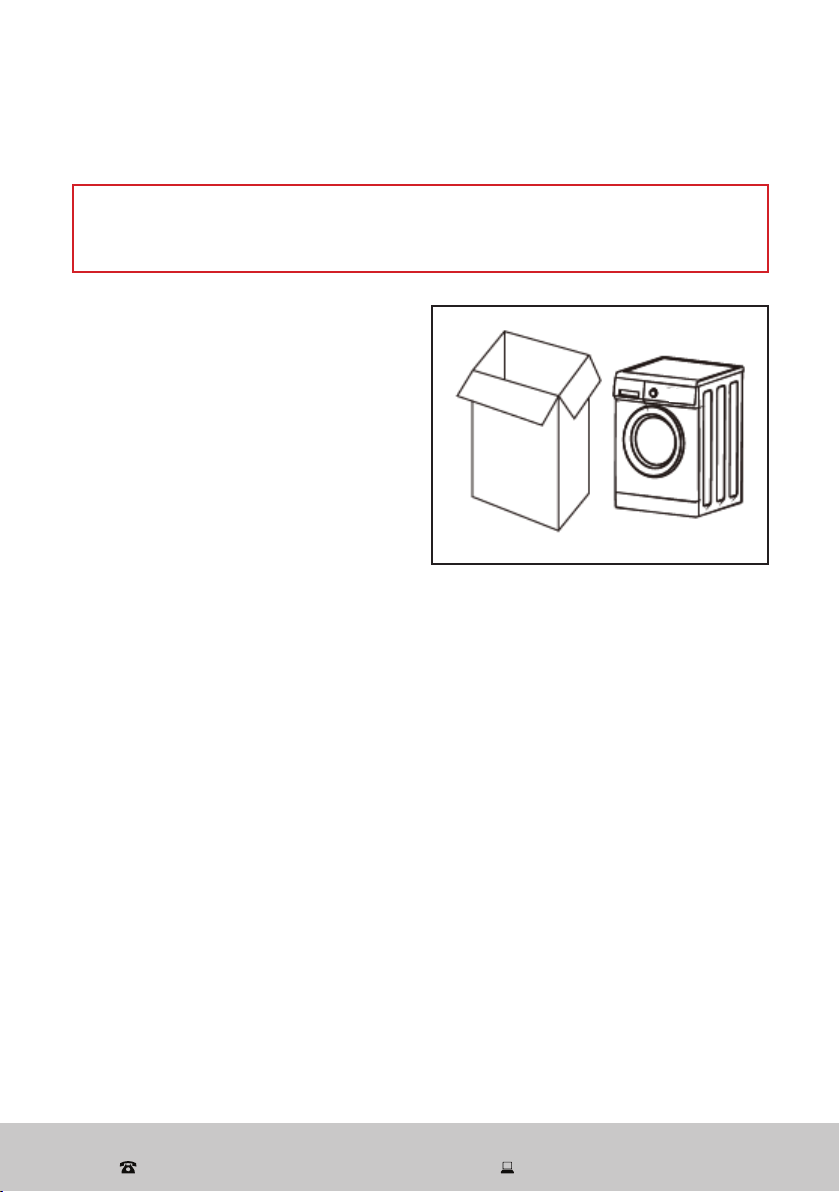
• This product has been packaged to
protect it against transportation damage.
Remove all packaging materials from
around the appliance and inside the
drum, including the foam base (Fig. 1).
• Keep the original packaging carton
and materials in a safe place. It will
help prevent any damage if the product
needs to be transported in the future,
and you can use it to store the appliance
when it is not in use. In the event that
the carton is to be disposed of, please
recycle all packaging materials where possible.
• Plastic wrapping can be a suffocation hazard for babies and young children, so
ensure all packaging materials are out of their reach and disposed of safely.
• Remove any tapes securing the power supply cord and drain hose and all accessory
parts from the drum.
• If you notice any water drops on the packaging bags or the door glass, do not be
alarmed. This is normal as the appliance is fully checked in the factory before it is
being packaged for transport.
Checking the package contents
• Check all parts of the package against the scope of delivery list on the following
pages and ensure you have received all items.
• Check the washing machine for any damage from transportation. Unwind the power
cord to its full length and inspect it for damage. Do not use the appliance if the
appliance or its cord has been damaged or is not working properly. In case of
damage, of if anything is missing, please contact our after sales support centre for
advice on examination, repair or return of the damaged product.
• Read this manual to familiarise yourself with all the parts and operating principles
of the washing machine. Pay particular attention to the safety instructions on the
previous pages.
Fig. 1
After Sales Support
(AU) 1300 886 649 (NZ) 0800 836 761 | tempo.org/support
8
Product Overview
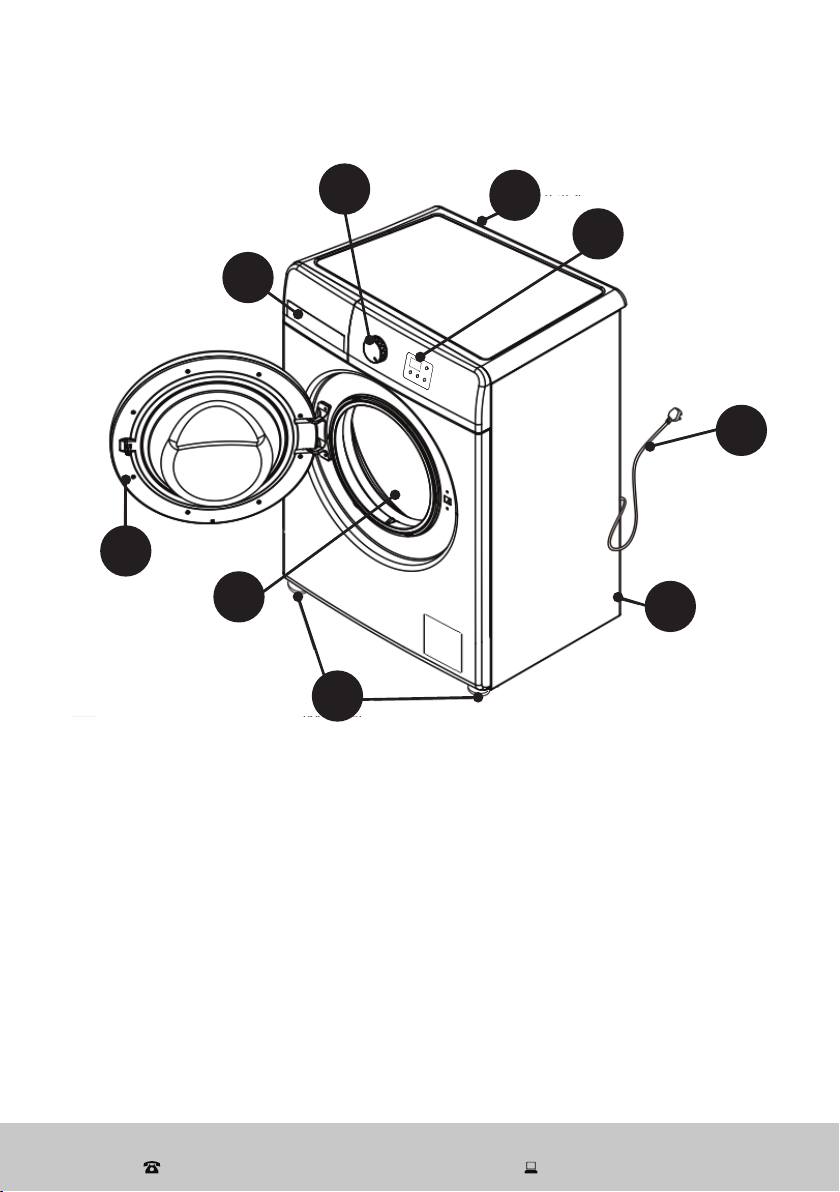
Scope of delivery
A Front Load Washing Machine
1 Door
2 Interior drum
3 Adjustable feet
4 Body
5 Power cord
6 Control panel
7 Program dial
8 Inlet valve (back)
9 Detergent drawer
1
2
3
4
5
6
8
9
7
E:\产品开发\XQG60\4-包装资料\16-六视图\480内桶平台\60-1016P(DP)六视图.dwg, 2022-07-18 15:33:01, Adobe PDF
After Sales Support
(AU) 1300 886 649 (NZ) 0800 836 761 | tempo.org/support
9
Product Overview (Cont.)
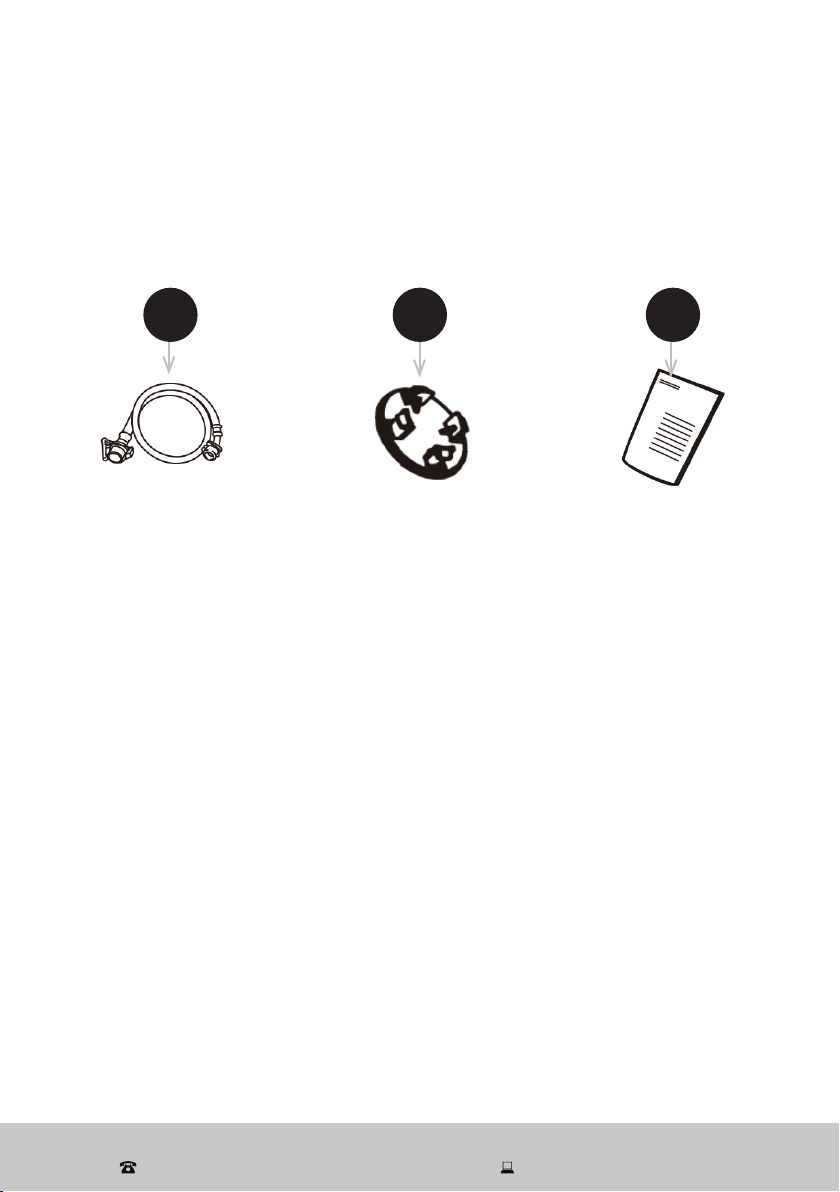
B Other inclusions
10 Inlet hose
11 Transit hole caps (4)
12 Instruction manual
13 Warranty certificate (not shown)
NOTE: Due to continued product improvement, images and illustrations in this
manual may vary slightly from the product purchased. All images in this manual are for
reference purposes only. Parts are not necessarily pictured to scale.
12
1110
After Sales Support
(AU) 1300 886 649 (NZ) 0800 836 761 | tempo.org/support
10
Installation
Removing the transit bolts
WARNING!
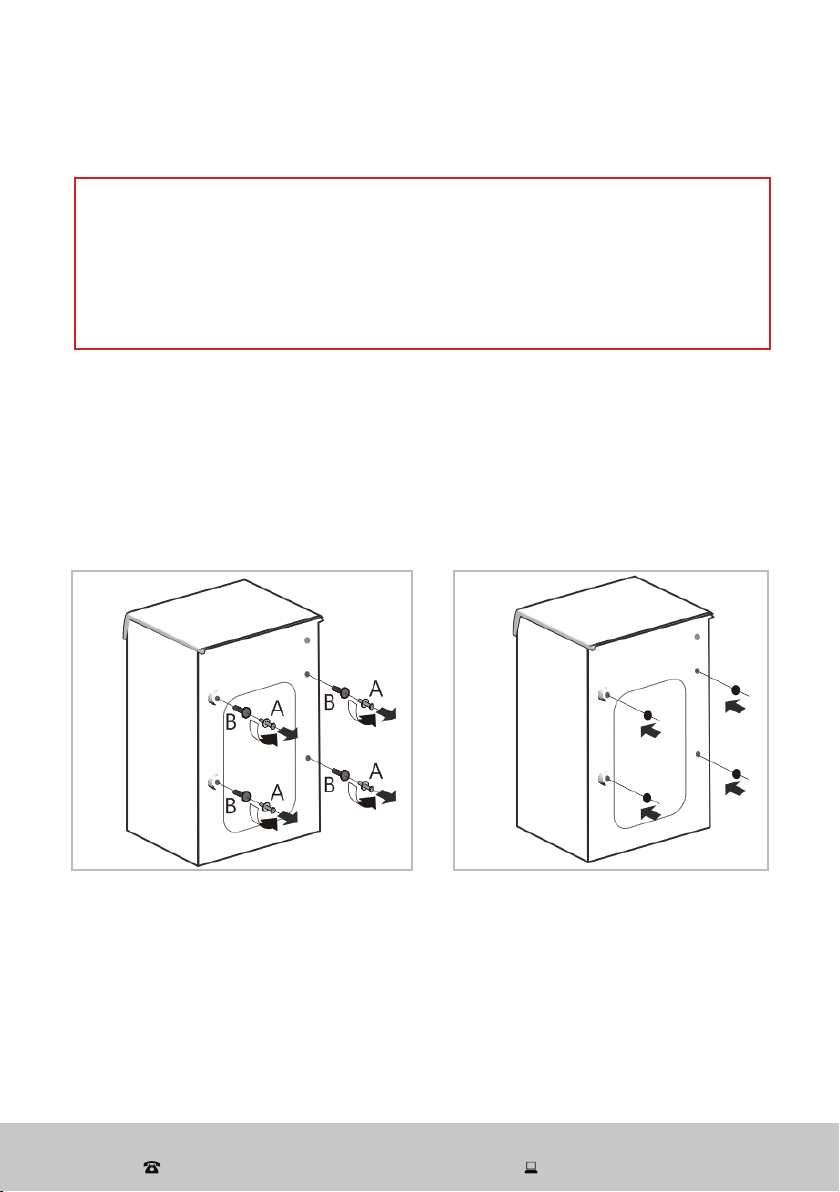
• Before installing the washing machine, you must remove the transit bolts from the
back of the housing and cover the holes with the transit hole caps provided.
• The bolts hold the drum in place during transport but they must be removed
before use so the drum can move during the wash and spin cycles.
Leaving the bolts installed will result in strong shock and noise during use,
malfunction and serious damage to the machine.
• Open the package, remove the packaging base and move the washing machine to
the installation location.
• Dismantle the four transit bolts (B), rubber pads and plastic rods (A) from the back
of the machine (Fig. 2a). Please note, if the transit bolts are not removed, they may
cause intense vibrations, noise and other issues.
• Keep the bolts in a safe place; you will need them again if you ever want to move the
machine in the future.
• Cover the holes with the supplied transit hole caps (Fig. 2b).
Fig. 2a Fig. 2b
After Sales Support
(AU) 1300 886 649 (NZ) 0800 836 761 | tempo.org/support
11
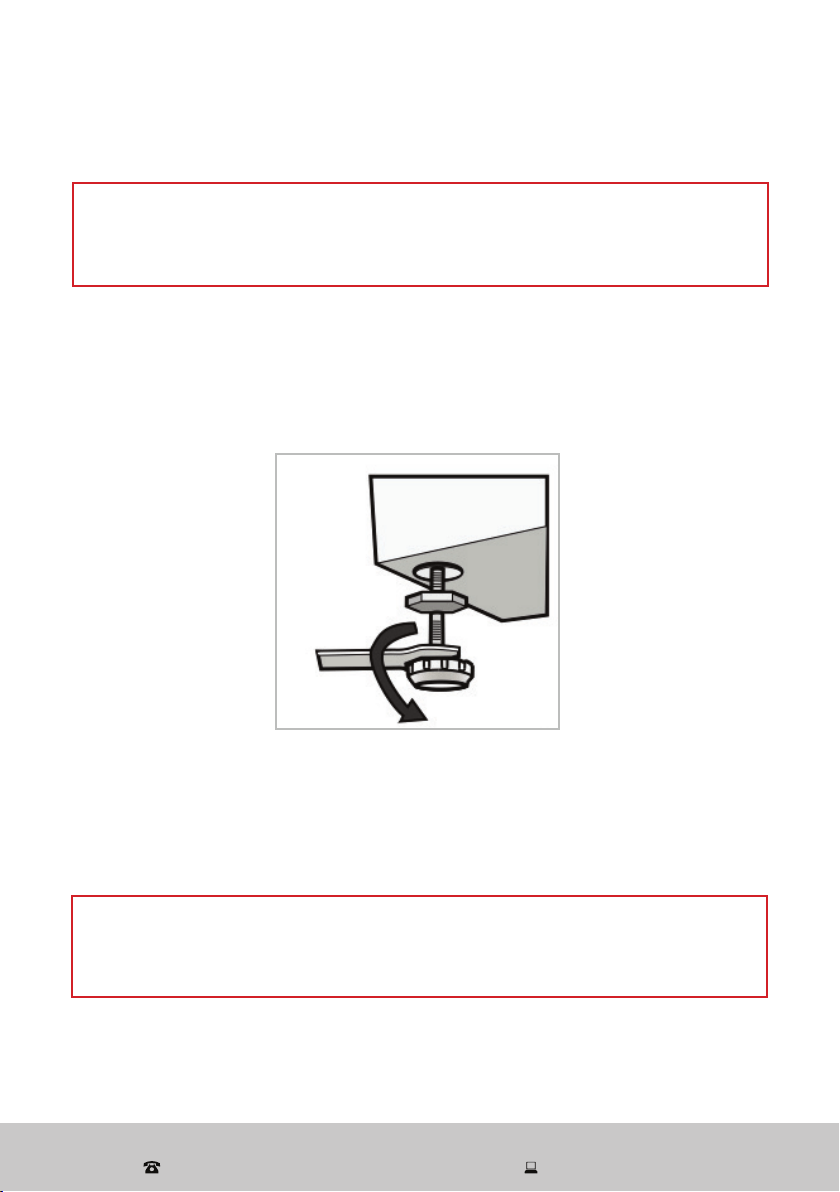
WARNING!
• Stability is important to prevent the washing machine from moving during operation.
• Make sure that the machine does not stand on the power cord.
Fig. 3
Selecting the location
Before installing the appliance, make sure the
location meets the following requirements:
• A concrete floor is the most suitable installation
surface for a washing machine,
being far less prone to vibration during the
spin cycle than wooden floorboards or a
carpeted surface.
• The machine must be level and securely
positioned. It must be protected from direct
sunlight, water and weather.
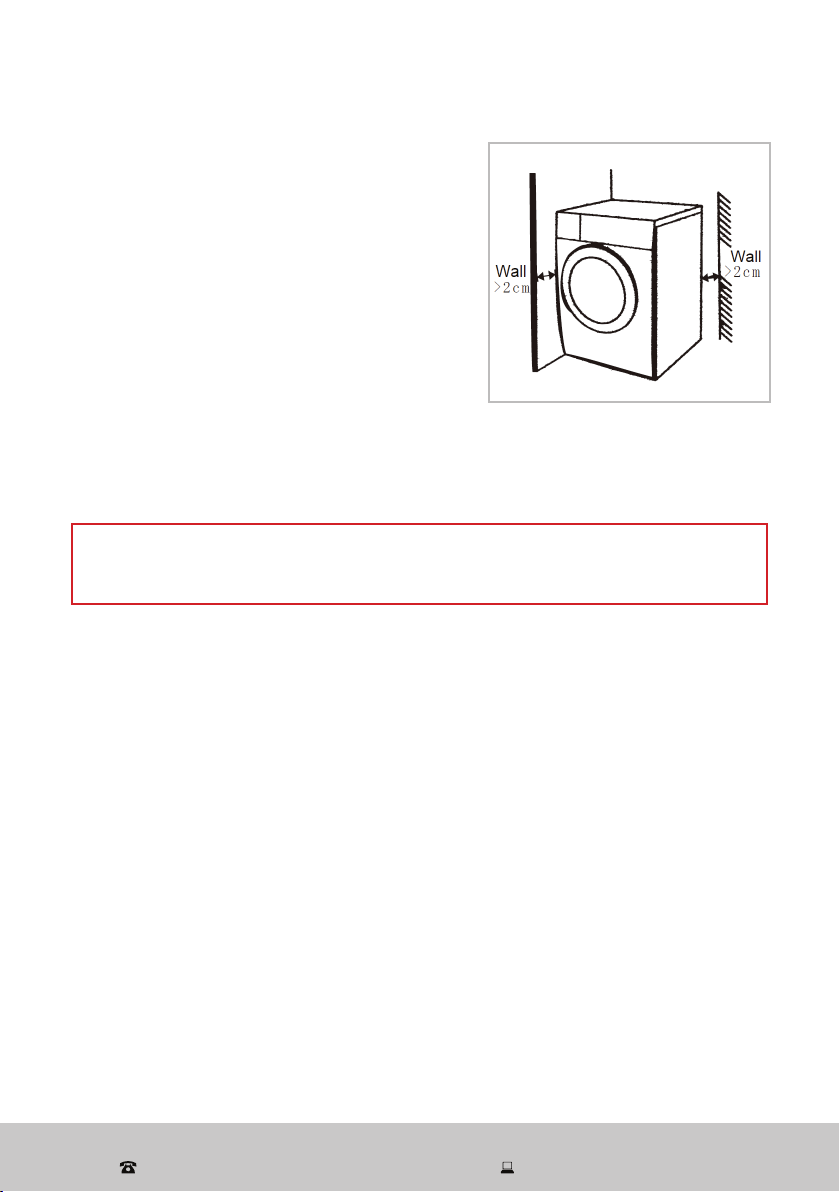
• The distance between the machine and wall must be more than 2 cm (Fig. 3).
• To avoid vibrations during spinning, the machine should not be installed on soft floor
coverings. If the appliance must be placed on a carpeted surface, place a plastic mat
underneath and ensure any ventilation openings in the base are not obstructed.
Installation (Cont.)
After Sales Support
(AU) 1300 886 649 (NZ) 0800 836 761 | tempo.org/support
12
Installation (Cont.)
Levelling the machine
Place the machine on solid, dry and level ground. The machine must stand perfectly
level on all four feet to ensure safe and proper operation. Incorrect installation may
cause vibrations and noise, and may cause the machine to move about.
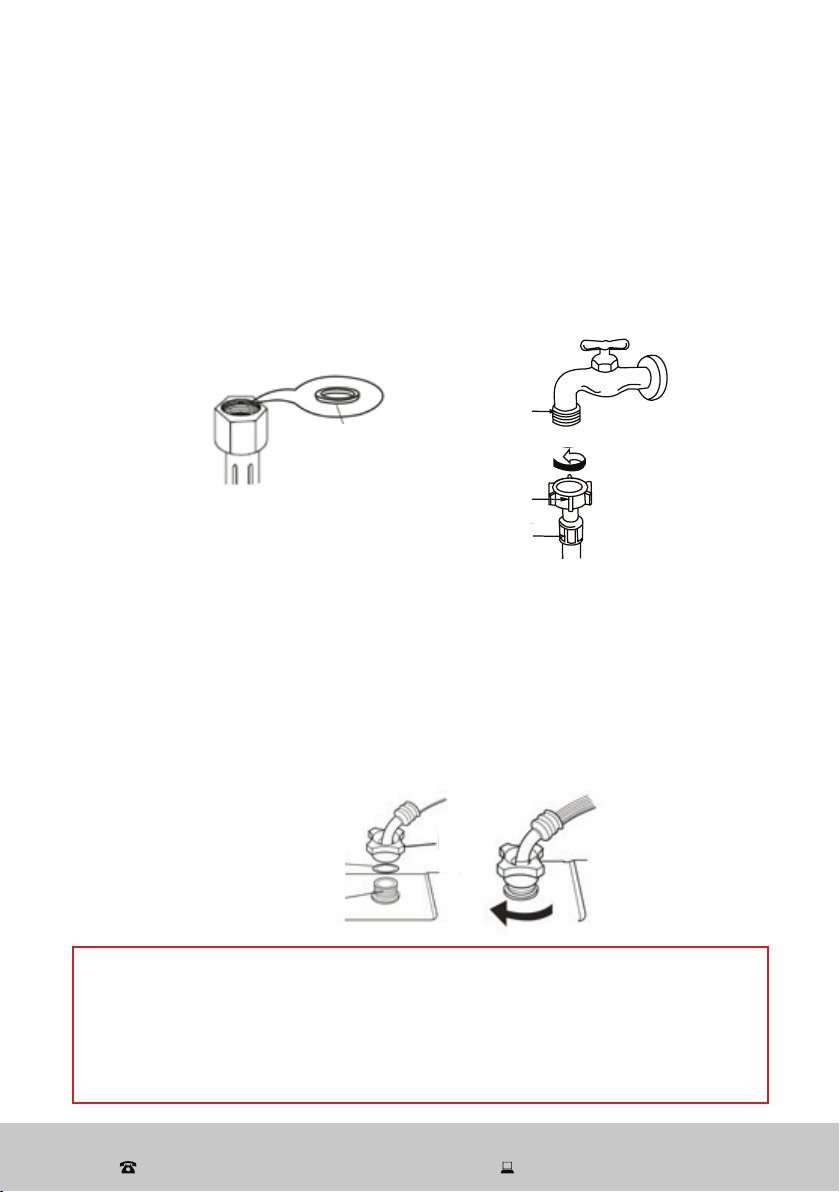
To determine whether levelling is necessary, place a spirit level on top of the washer
and hold it upright against the housing to identify any inclinations. If the machine
needs levelling, proceed as follows (Fig. 4):
WARNING!
It is very important to level the washing machine carefully, especially if your floor is
uneven. Failure to do so may result in the machine shaking and moving during the
spin cycle, or out-of-balance problems.
WARNING!
The lock nuts on all four feet must be screwed tightly against the housing, otherwise
the machine may vibrate noisily during operation.
• Loosen the lock nut with a spanner, turning it anticlockwise to loosen.
• Adjust the foot by hand until it makes close contact with the floor. Turn it
clockwise to lower the foot or anticlockwise to raise it.
• When the machine is level, use a spanner to turn the lock nut in a clockwise
direction to tighten.
Fig. 4
After Sales Support
(AU) 1300 886 649 (NZ) 0800 836 761 | tempo.org/support
13
Installation (Cont.)
Connecting the water inlet hoses
The water inlet hose is supplied separately, and need to be installed to your cold water
tap following the instructions below.
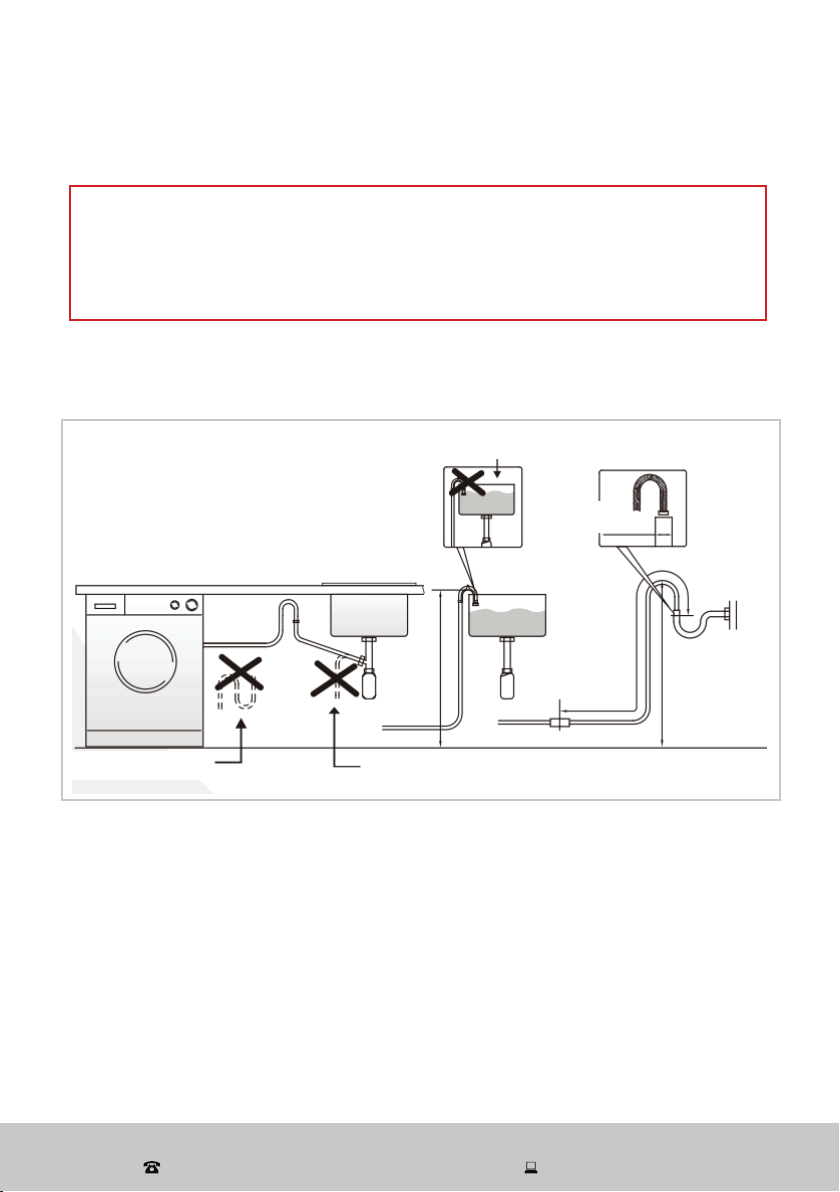
• Check and ensure that the sealing gaskets are firmly in place in the joints of the water
tap end (Fig. 5).
• Attach the straight ends of the hose to your water tap. Tighten the coupling nuts
securely by hand (Fig. 6).
IMPORTANT!
• This machine has only one inlet for water (cold). Do not connect it to the hot water
supply.
• Connect the machine to the water mains using new hose sets. Do not reuse old
hose sets.
• The required water pressure is 0.02 MPa (min.) to 0.8 MPa (max.)
• Before connecting the curved end of the hose to the corresponding inlet valve of the
washer, check and ensure that the sealing gasket is firmly in place.
• Connect the inlet valve nuts of the hose to the water inlet connections at the top of
the washing machine (Fig. 7). Tighten the nut securely by hand, turning it clockwise
while holding the hose. (To detach the water supply hose, turn the nut anticlockwise
after turning the tap off.)
• Turn on the tap and check for leaks. Tighten the nuts firmly if there is any leakage. If
your water pressure is strong, close the water tap completely, then open it slightly.
Fig. 5
Sealing gasket
Tap
Tap end
Inlet hose
Twist
Fig. 6
Sealing gasket
Inlet valve joint
Inlet
valve
nut
Fig. 7
After Sales Support
(AU) 1300 886 649 (NZ) 0800 836 761 | tempo.org/support
14
Installing the drain hose
WARNING!
• Do not kink or protract the drain hose.
• Position the drain hose properly in order to prevent water spillage onto the floor
and potential damage.
• Never immerse the end of the drain hose in water.
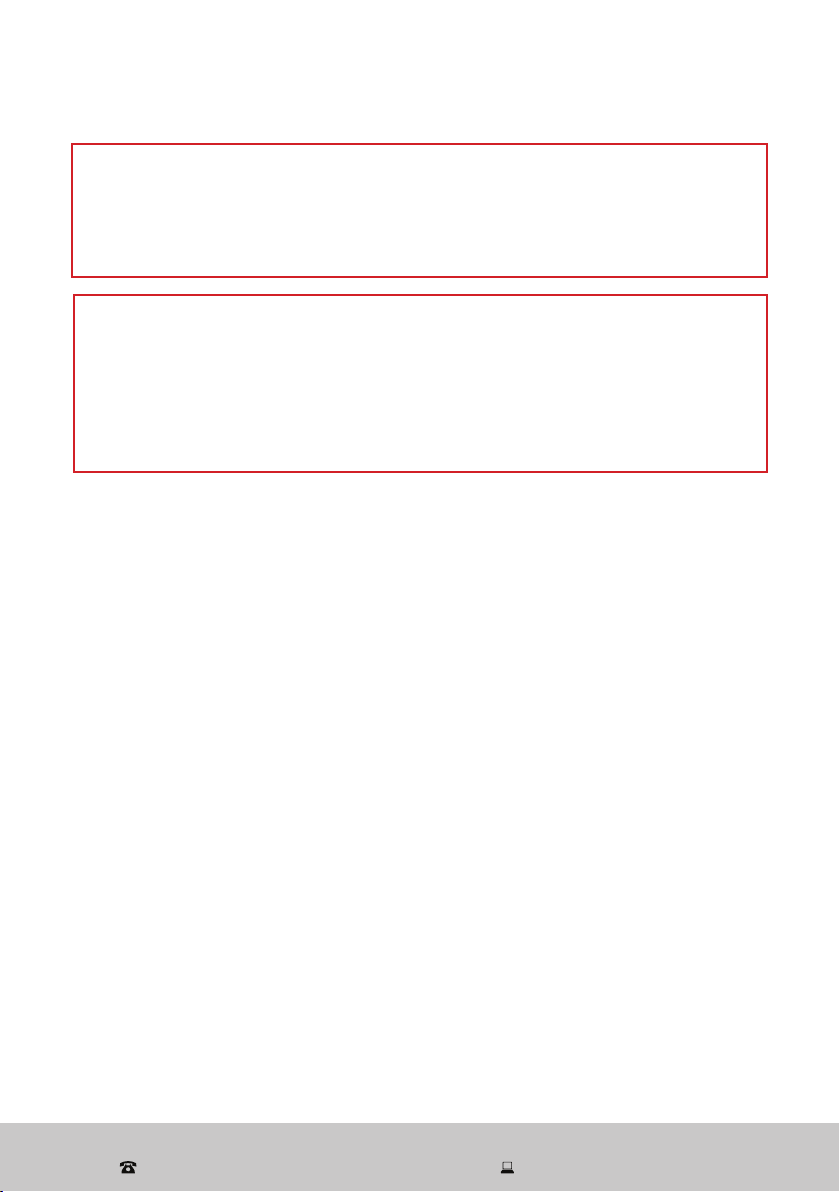
The drain hose is installed at the back of the machine. For drainage of the washing
water, you can install the other end of the hose two different ways: either directly into a
laundry sink or into a standpipe (Fig. 8).
Installation (Cont.)
• If the spigot outlet has not been used before, remove any blanking plug that may
be in place.
• Push the drain hose onto the spigot and secure with a clip, if required.
• Ensure a loop is formed in the drain hose to prevent waste from the sink entering
the washing machine.
• When discharging into a standpipe, ensure that the top of the standpipe is no more
than 85 cm and no less than 50 cm above floor level.
• If required, the drain hose may be extended to a length of 2.6 m.
The end of the drain hose
cannot be immersed in water
Minimum
4 cm
The drain hose
cannot be bent
The end of the drain hose cannot be
connected in this position
Minimum 50 cm
Maximum 85 cm
Maximum 1 m
Can be extended
by up to 2.6 m
Fig. 8
After Sales Support
(AU) 1300 886 649 (NZ) 0800 836 761 | tempo.org/support
15
Installation (Cont.)
WARNING!
• Never lay down the drain hose as water will be discharged.
• Be sure the drain hose is properly routed so it will not kink or lift off the sink.
• Leave the drain hose affixed to the back of the machine.
FROST PROTECTION
• Do not install the washing machine in places where temperatures drop to below
0°C. The reliability of the electronic control unit may be impaired at temperatures
below freezing point, and the machine’s inlet valve and draining systems may get
damaged as frozen hoses may burst or split.
• If temperatures drops to below 0°C, transfer it to an area with a warmer ambient
temperature before use and ensure no residual water is frozen in hoses and pipes.
After Sales Support
(AU) 1300 886 649 (NZ) 0800 836 761 | tempo.org/support
16
WARNING! This appliance must be earthed.
In the event of a malfunction or breakdown, earthing will reduce the risk of an
electric shock by providing a path of least resistance for the electric current.
This appliance is equipped with a cord having an equipment-earthing conductor
and an earthing plug. The plug must be plugged into an appropriate outlet that is
installed and earthed in accordance with all local standards and requirements.
Do not modify the plug under any circumstances. If the plug does not fit your
outlet, consult a licensed electrician and have the outlet changed.
Electrical connection
Installation (Cont.)
Power supply system
• Make sure the power supply system (current, power voltage and wire) at your home
can meet the normal loading requirements of electrical appliances. The electrical
voltage and circuit frequency are listed on the appliance rating label.
• WARNING! Only connect the washing machine to a single, grounded (earthed)
electrical outlet. Do not overload the outlet, as overloading can result in fire or electric
shock. Insert the power plug securely. Do not use a power adaptor or extension cord.
Electrical installation advice
• To avoid electric shock, fire and malfunction, do not install this machine in a damp
place. Do not pull out or insert the plug with wet hands or bare feet. Do not expose
the appliance, cord or plug to rain, moisture or other liquid.
• Do not kink or damage the power cord, and position it out of the way so no one steps
on or places anything on the cord or against it.
• Ensure the washer is unplugged from the power supply before installation. The plug
must be accessible after installation.
• CAUTION! Do not use a power adaptor or extension cord.
• Unless your home is already fitted with a residual current device (safety switch), we
recommend installing an RCD with a rated residual operating current not exceeding
30 mA to provide additional safety protection when using electrical appliances. See
your electrician for professional advice.
• All electrical connections must be made by qualified personnel, and all instructions in
this manual as well as local safety regulations must be observed.
After Sales Support
(AU) 1300 886 649 (NZ) 0800 836 761 | tempo.org/support
17
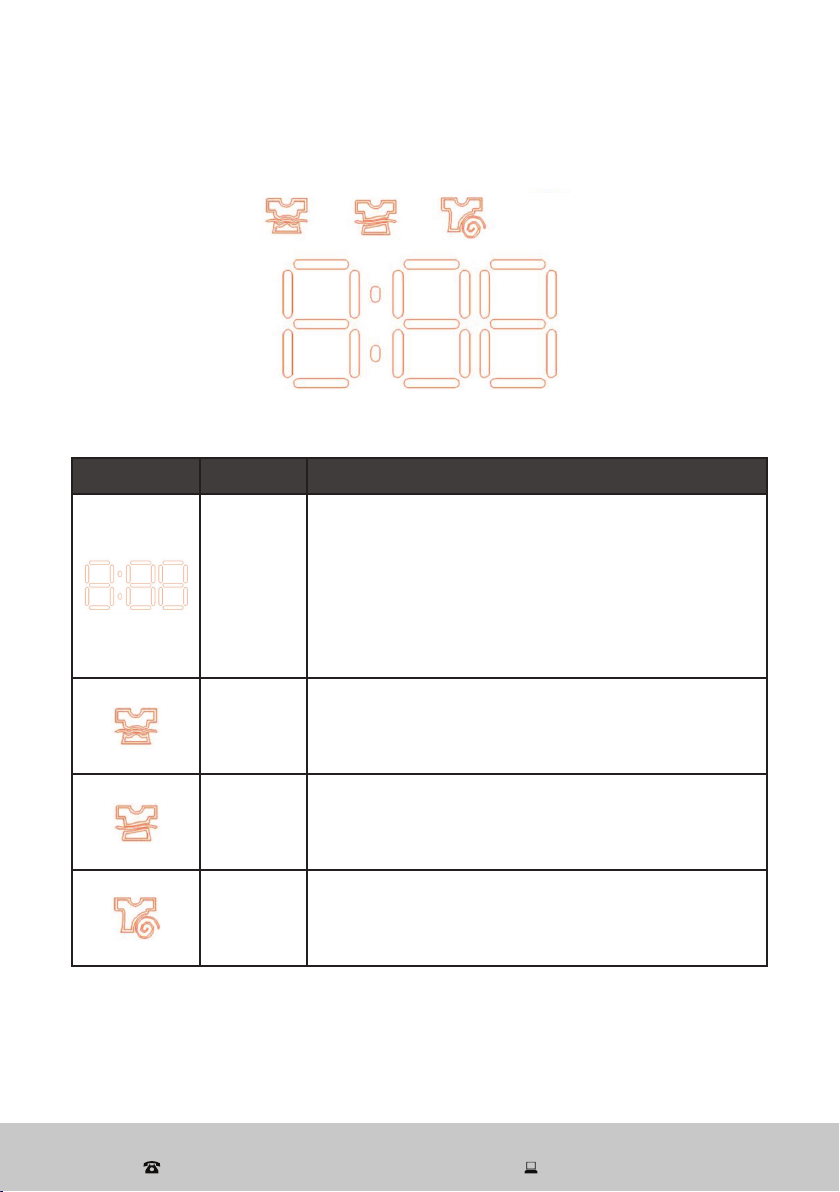
1 Program dial
Turn the program dial (knob) clockwise or anticlockwise to switch on the machine and
select the required wash program (see pages 19-20 for details of the programs). Once
you press the Start/Pause button and the machine starts running, the program cannot be
changed.
2 Water Temperature button
Use this button to change a program’s default temperature (if available).
Additionally, you can press and hold the Water Temperature button for 2 seconds to
activate the child lock function. “CL” will appear on the display, indicating that all buttons
and knob operations are ineffective. If any buttons are pressed when the child lock is active,
“CL” will appear again. To cancel the child lock, press and hold the Water Temperature
button again. Please note, you can only activate the child lock after the washing cycle has
started. It will release automatically after the washing program has finished.
3 Delay function
Press the Water Temperature button and Spin Speed button at the same time to set
a delay time for your wash load, between 1 and 24 hours. Press the buttons repeatedly
to cycle through the options. To cancel the delay, set a 24-hour delay, then press these
buttons again. Alternatively, turn the program dial to change the program. Please note, any
delay should be added after selecting the desired program, and before pressing the Start/
Pause button.
4 Spin Speed button
Use this button to change a program’s default spin speed (if available).
5 Start/Pause button
Press this button to start/pause the cycle. Additionally, you can press and hold this button
for two seconds to add clothes midway through a cycle. You will need to wait for the water
to drain and the heat to dissipate before the door will unlock (approx. 2 minutes).
6 Power button
Press this button to turn this appliance on and off.
7 Display screen
Shows the settings, time remaining, options, codes, etc. (see page 18 for details).
Instructions
598
844.7
黑色
Intensive
Power
Water Temperature Spin Speed
Long press for 2
seconds: Child Lock
Long press for 2
seconds: Spin
Long press for 2
seconds: Add Washing
Start/Pause
Delay
Control panel (Fig. 9) (not to scale)
1 2 3 4 5 6 7
After Sales Support
(AU) 1300 886 649 (NZ) 0800 836 761 | tempo.org/support
18
Instructions (Cont.)
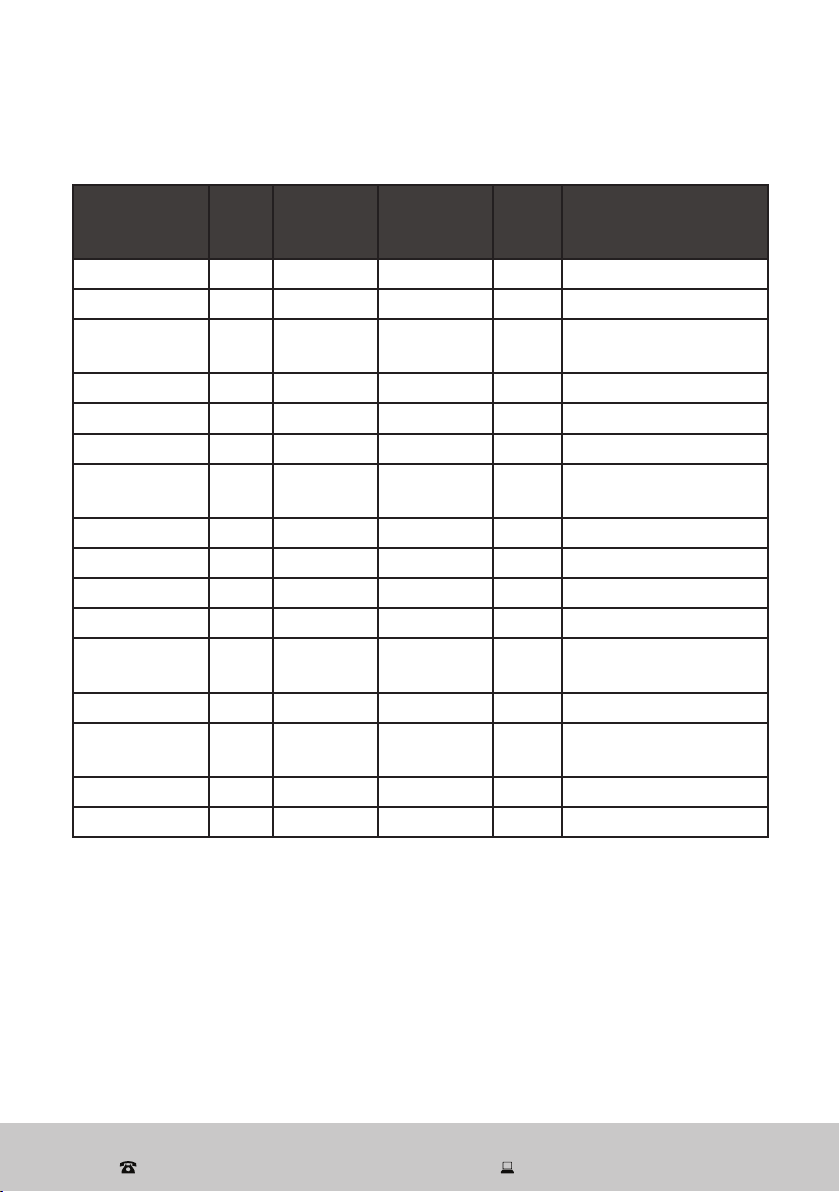
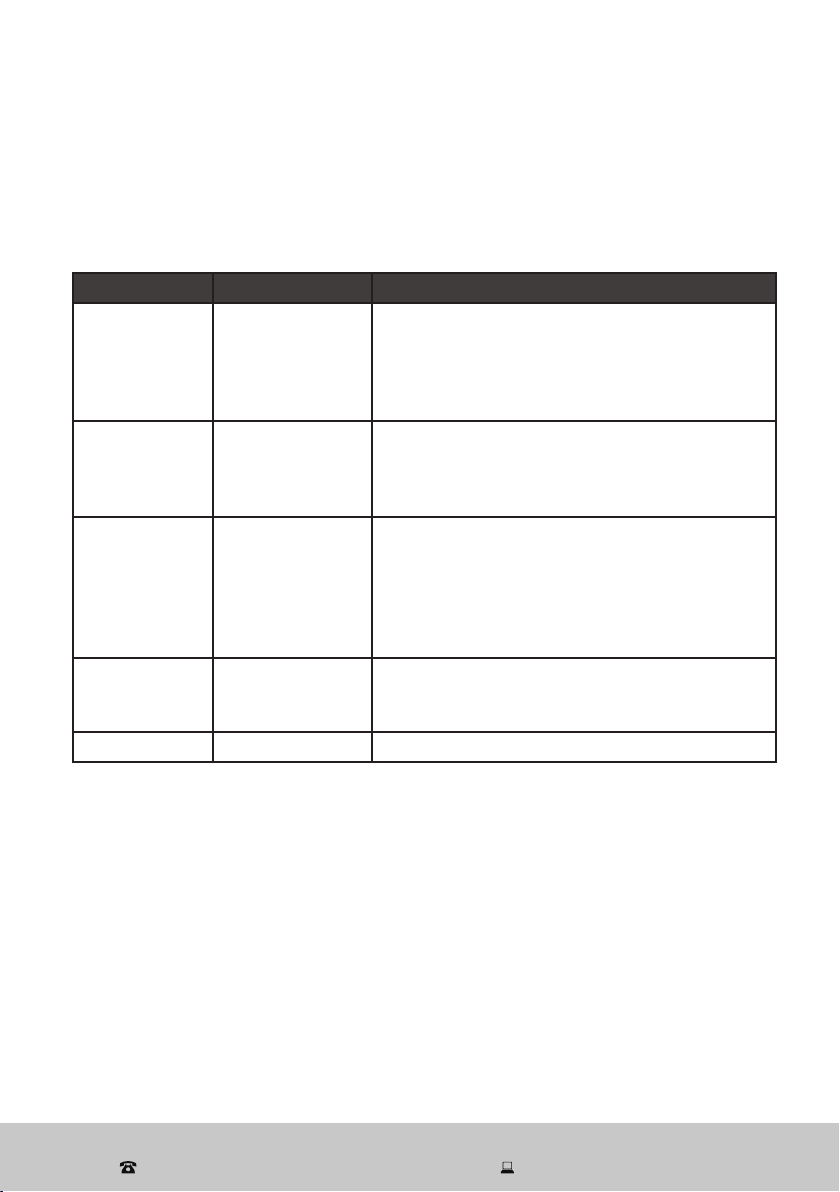
Display icons (Fig. 10)
Table 1: Display icons
Icon Meaning Description
Digital
display
Shows the time, delay time, speed, temperature data
and error codes.
For example, when a program is selected, it will show
the running time. If you want to see the temperature or
speed, press the corresponding button. The value will
be displayed for three seconds. If there is no further
operation within this period, the display will rever to
showing the time.
Wash
When applicable:
– Illuminates when the machine is in operation.
– Stays brightly lit when the program is paused.
– Turns off when the program is finished.
Rinse
When applicable:
– Illuminates when the machine is in operation.
– Stays brightly lit when the program is paused.
– Turns off when the program is finished.
Spin
When applicable:
– Illuminates when the machine is in operation.
– Stays brightly lit when the program is paused.
– Turns off when the program is finished.
After Sales Support
(AU) 1300 886 649 (NZ) 0800 836 761 | tempo.org/support
19
Table 2: Default wash programs
Program
Max.
Load
(kg)
Time
(hr:min)
(A)
Temp.
(°C)
(B)
Rinse
Times
Spin Speed (rpm)
Mixed 4 1:01/1:16 40/20 2 0/600/800/1000
Intensive (D)
6 3:47 40 3 0/600/800/1000/1200
Cotton 6
1:22/1:42/
2:02/2:17
20/40/60/85 2 0/600/800/1000
20°C (C)
3 0:54 20 2 0/600/800/1000
Gentle 3 0:45/1:00 20/40 2 0/600
Wool 3 0:42 20 2 0/600
Night 4
0:54/1:04/
1:24
20/40/60 2 0/600/800
Antibacterial 4 2:00 85 2 0/600/800/1000
Drum Clean - 1:30 85 2 800
Rinse + Spin 6 0:17 - 1 0/600/800/1000
Spin 6 0:11 - - 0/600/800/1000
Kids Wear 4
1:12/1:22/
1:42/1:57
20/40/60/85 3 0/600/800/1000
Shirts 4 0:56/1:02 20/40 2 0/600/800/1000
Underwear 3
1:13/1:23/
1:43
20/40/60 2 0/600
Quick30’ 2 0:30 20 2 0/600/800
Quick15’ 2 0:15 20 2 0/600/800
NOTES
(A) The running times are for the default programs and are for reference purposes only.
The actual running times may be different depending on the type and weight of your wash
load and the washing temperature.
(B) The temperatures are the default temperatures. Actual water temperatures may differ
slightly (+/-5°C) from the declared cycle temperature.
(C) The standard 20°C wash program is suitable for cleaning normally soiled cotton laundry.
It is the most efficient program in terms of combined energy and water consumptions for
washing that type of cotton laundry.
(D) This program (Intensive, Temp. is“40°C”, Spin Speed is“1200rpm”, The program test time
is 238min) is the one recommended for a normally soiled load equal to the rated capacity.
Instructions (Cont.)
After Sales Support
(AU) 1300 886 649 (NZ) 0800 836 761 | tempo.org/support
20
Instructions (Cont.)
Wash program suitability details
Mixed: This program is suitable for cotton and/or synthetic fabrics.
Intensive: This program is suitable for extra dirty cotton and/or synthetic fabrics.
Cotton: These programs are suitable for cotton clothing or linen.
20°C: This program is best suited to machine-washable clothes containing down. It is
also
suitable for cleaning normally soiled cotton laundry, and is the most efficient program in
terms of combined energy and water consumptions for washing that type of cotton laundry.
Gentle: This program is suitable for cotton and/or synthetic fabrics requiring a more
gentle wash.
Wool: This program is suitable for machine-washable wool fabrics.
Night: This program is suitable for cotton, linen and/or synthetic fabrics, and does not
have a spin function during the wash and rinse cycles - it only has one final spin at the
end, making it a quieter program more suitable to nighttime washes.
Antibacterial: This wash program is suitable for items that may be washed in very hot
(85°C) water.
Drum Clean: This hot water drum clean program is recommended for use every three
months to clean the inside of the wash drum.
Rinse + Spin: This program is suitable for cotton and/or synthetic fabrics that require a
quick refresh. It does not require any detergent, as it will only rinse the items, not clean
them completely.
Spin: This program is suitable for cotton and/or synthetic fabrics that need a quick
refresh. It will only spin these items, not wash or rinse them. It therefore does not require
any detergent or water.
Kids Wear: Recommended for children’s clothing (made of cotton) that are in need of
thorough cleaning and odour removal.
Shirts: Shirts made of cotton/synthetic fabric(s).
Underwear: Underwear items made from cotton/synthetic fabrics.
Quick30’: Clothes or towels that are not very dirty, but are in need of a quick refresh.
This cycle can be used for items that are more dirty than those washed using the
Quick15’ program.
Quick15’: Clothes or towels that are not very dirty, but are in need of a quick refresh.
This program should be used on less dirty items than those washed using the Quick30’
program.
After Sales Support
(AU) 1300 886 649 (NZ) 0800 836 761 | tempo.org/support
21
Before first use
Instructions (Cont.)
Door lock
• The door of the front load washing machine locks automatically when the machine is
working. It cannot be opened without first pausing the wash program. To unlock the
door, press the Start/Pause button. The door will unlock after approx. 2 minutes.
• The door will not unlock when the temperature inside the drum is above a certain
threshold, and/or when the water is above a certain level.
• At the end of a wash program, the door will unlock after two minutes.
• Suds may flow out of the open door if it is opened during the wash cycle. Beware of
suds escaping from the machine and have a cloth/towel ready for catching spills.
CAUTION!
• Make sure the washing machine is properly and securely installed before using it.
• Before using the washing machine for washing clothes, run a complete washing
cycle without clothes, using the drum clean program.
CAUTION!
• For your safety, do not press the Start/Pause button and remove your wash load
while the machine is running, or when the power supply is cut off. The water
temperature may be high and it may scald you. The door will automatically unlock
at the end of a wash program when the temperature of the drum has cooled down.
• Do not attempt to open the door forcibly. Doing so is unsafe and will cause
damage to the locking mechanism.
Before using the washing machine for the first time, please review the following important
points and make sure that:
• All transit bolts are removed.
• The washing machine is stable and level. If necessary, adjust the levelling feet to
stabilise the machine (see page 12).
• The water supply hose is properly installed (see page 13) and the water tap is open.
• The power plug is firmly inserted into a nearby power point and power is switched
on to the outlet.
• The drain hose is properly installed and secured into the laundry sink or a standpipe
(see pages 14-15).
• Before using the washing machine for the first time, run a complete drum clean
program without laundry items and without any detergent.
After Sales Support
(AU) 1300 886 649 (NZ) 0800 836 761 | tempo.org/support
22
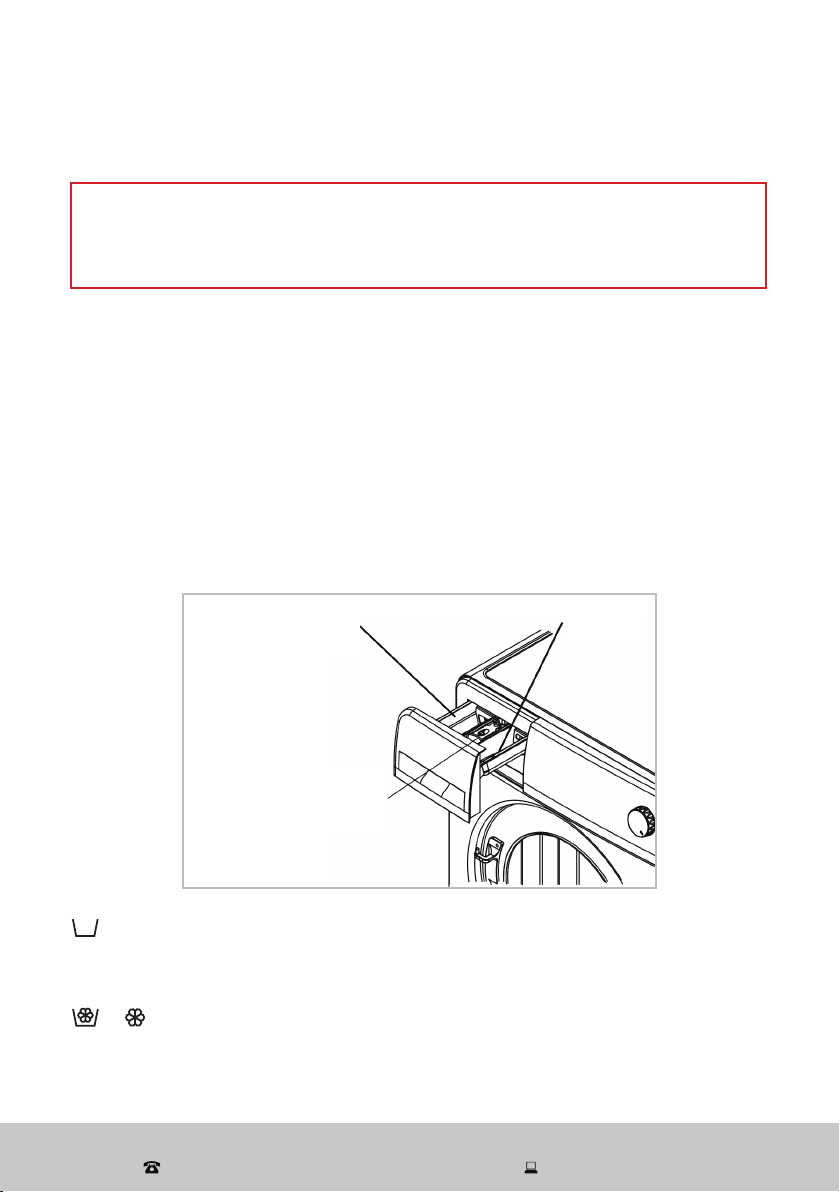
or II The detergent compartments on the left and right side of the drawer are for
low-sudsing detergent for the main wash (left) and prewash (right). If you are
using powder detergent, you dissolve it in some water before adding it to
one of the two compartments.
or The middle compartment is for fabric softener. It will be dispersed through
the washing during the last rinse cycle. Concentrated fabric softeners
should be diluted as required. Do not exceed the maximum level mark.
Detergent recommendations
• Only use low-sudsing detergent and clothing care preparations that are
suitable for use in a front load washing machine, or in a top and front load
machine. Detergents for top load machines are unsuitable because they tend to
produce too many suds, which may cause overflowing from the detergent drawer.
• Use detergent in the amounts recommended on the detergent packaging. Dosage
depends on your amount of washing, the degree of soiling, water hardness and
the washing performance of your detergent. Using too little detergent will give poor
washing results, but too much will affect rinse performance and may cause overflow
of suds, which could interfere with machine operation. Do not overfill detergent!
• Pull open the detergent dispenser drawer and add detergent, as illustrated (Fig. 11)
and described below.
WARNING!
• Do not use flammable and explosive or toxic solvents, petrol, alcohol or other
chemicals in the machine.
• Keep detergents and clothing care preparations out of reach of children.
Instructions (Cont.)
II
Fig. 11
Liquid
detergent/
bleach
Fabric
softener
Pre-wash
detergents

After Sales Support
(AU) 1300 886 649 (NZ) 0800 836 761 | tempo.org/support
23
Instructions (Cont.)
Before each wash
• Before loading the washing machine
- Ensure that the washer is stable, level and properly connected to the power supply.
- Check that no young child or pet has climbed into the drum.
- Ensure that the water inlet hose and the drain hose are properly connected.
- Ensure that the drain hose is securely connected into the drain spout or sink.
• When loading the machine
- Empty all pockets of clothing to be washed. Hard, sharp objects such as coins,
safety pins, paper clips, bra wires, nails, screws or stones can cause extensive
damage to the appliance and block the pump. Any damage or malfunction
resulting from foreign objects is not covered by your warranty and may lead to
expensive repairs.
- Turn items with zippers inside out, close zippers, hooks and eyelets, fasten
buckles and tie fabric belts. This will also help reduce impact noise when the
items hit against the turning drum.
- Brush dirt, sand or pet hair off clothes and turn pockets inside out. Pretreat stains.
- Turn items that pill easily inside out.
- Sort your washing into appropriate loads: whites, darks, cottons, synthetics,
woollens, etc. Place small or delicate items into a wash bag for protection.
- Put your washing in the machine, loading items uniformly in the drum. For best
results, include both larger and smaller items in a wash.
- Do not overload the washer; the maximum dry washing capacity is 6 kg.
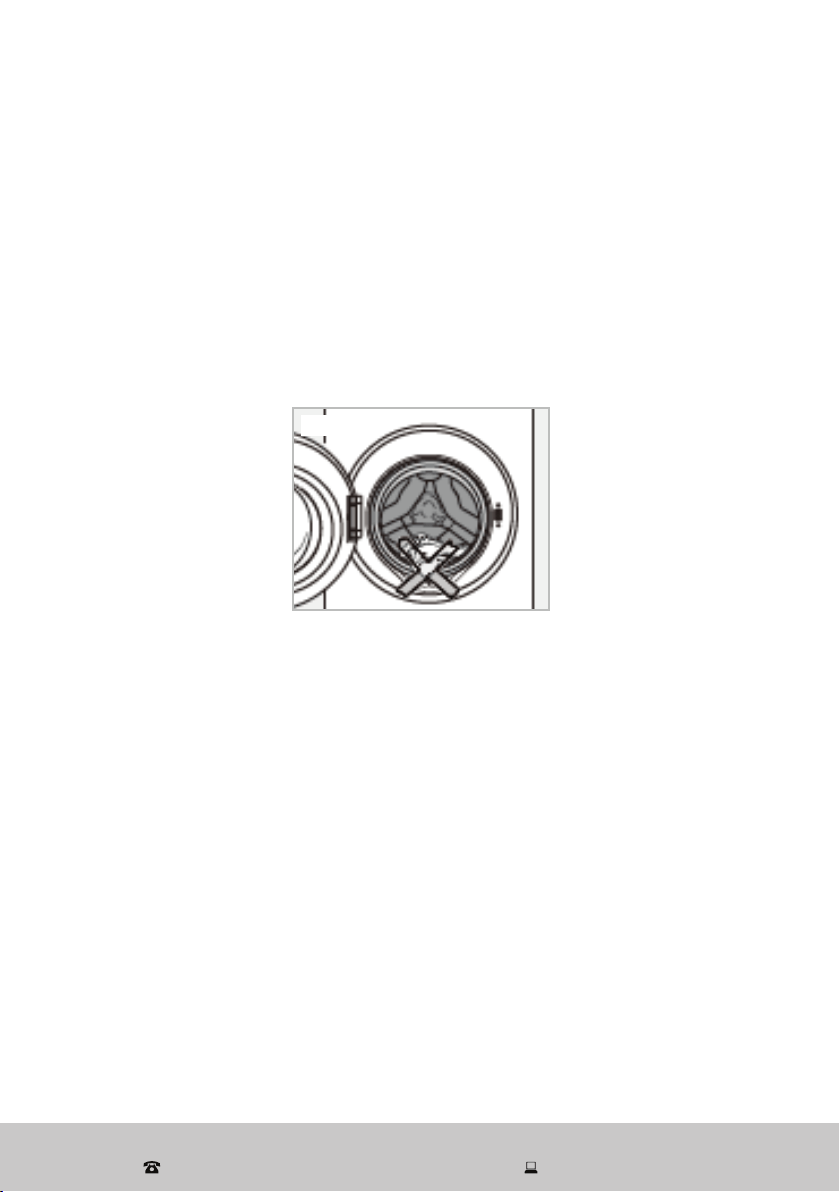
- When closing the appliance door prior to starting the unit, ensure that items are
not jammed in the door.
• CAUTION: Do NOT wash the following items in the washing machine:
- Jackets, raincoats, sleeping bags, fishing coats and similar clothes.
- Carpets or floor rugs.
- Underwire bras – instead, ensure these are placed in a closed garment bag before
washing in the machine.
- Clothes that have any residues of flammable materials, as this may result in fire
or explosion. For example, articles that have been cleaned in, washed in, soaked
in, or dabbed with industrial chemicals, or combustible or explosive substances
(such as wax, oil, paint, petrol, alcohol, degreasers, dry-cleaning solvents,
kerosene, etc.). Items containing such substances must be washed by hand or
rinsed thoroughly before machine-washing them.
- Single items, as this can cause unbalance problems during the wash or spin cycles.
We suggest you always add a few more items to the wash to avoid such problems.
- Items such as ties, suits, evening attire; silk or fur attire; or anything else labelled
unsuitable for machine-washing. Always check the garment label (see page 28).
Instructions (Cont.)
After Sales Support
(AU) 1300 886 649 (NZ) 0800 836 761 | tempo.org/support
24
Instructions (Cont.)
Step-by-step washing instructions
1. Connect: Plug the machine in, switch on power to the outlet and open the water tap.
2. Load: Open the door of the washer and load the machine following the guidelines
on the previous page.
Mixing both large and small items gives better wash results and also helps
distribute the load evenly during spinning. You will achieve the most efficient energy
and water use when washing a full load. However, do not overload the machine as
this causes creases and reduces cleaning efficiency.
When your washing is properly loaded in the machine, close the door and ensure
that no items are caught in the door (Fig. 12).
3. Add detergent: Pull out the detergent dispenser and add detergent as required,
then close the dispenser (see page 22 for instructions).
4. Select a program: Rotate the Program dial to switch on the washing machine
and select the required program. Always check your clothing labels for
recommended wash and care instructions (see page 28).
5. Start: Press the Start/Pause button.
6. Finish: At the end of the wash program, the buzzer will sound to alert you that
the program has finished. The machine will change into standby mode after
several minutes of inactivity. Press the power button. Unplug the washing machine
from the power supply and close the water tap.
Note: if the wash cycle has been paused, the machine will not automatically
switch off after any length of inactivity.
7. Unload: Open the door and unload the washing machine. We recommend you
leave the door slightly ajar so the drum can dry properly and to prevent mould
and odour development.
Fig. 12
Instructions (Cont.)
After Sales Support
(AU) 1300 886 649 (NZ) 0800 836 761 | tempo.org/support
25
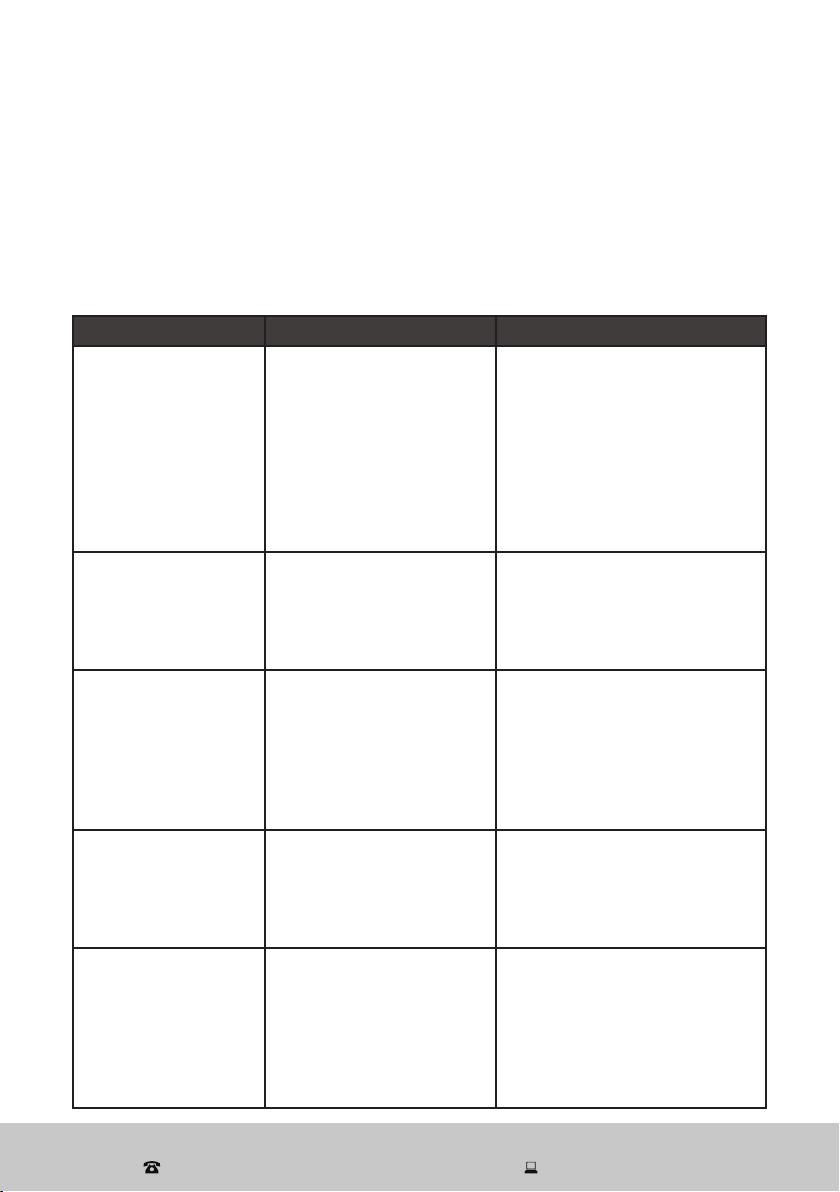
FAQs and Troubleshooting Guide
When the following problems occur, the microcomputer inside the washer will detect
the abnormal condition, display an error message and the washer will stop operating. If
after your remedial action the problem persists, please contact our after sales support
centre for advice or to book a service.
Table 3: Error messages
Error message Possible cause Solution
[ E01 ]
No water
• Ensure the tap is open.
• Check the water inlet valve filter and ensure it
is clean, unblocked and undamaged.
• Ensure the drain hose is properly fitted.
• Check for a water stoppage in your area.
[ E02 ]
Door lock alarm
• Ensure the door is properly locked.
• If a garment is caught in the door, place it
inside the drum and lock the door properly.
• If the door lock is damaged, call for a service.
[ E03 ]
Continuous
drainage
• Check and ensure the drain hose is not
squashed or kinked.
• Check and ensure the drain hose filter is
unblocked.
• Check and ensure that nothing is caught in
and blocking the drain hose.
[ E04 ]
Water
overflowing
• Ensure the water inlet is undamaged.
• If the water sensor malfunctions, call for a
service.
[ E06 ]
Heater problem Call for a service.
After Sales Support
(AU) 1300 886 649 (NZ) 0800 836 761 | tempo.org/support
26
FAQs and Troubleshooting Guide (Cont.)
Not all unusual incidents you may encounter with your washing machine are faults, or
cause for concern. Check in the list below what issues may arise and why. Also check
in the table on the previous page for solutions to problems that may be resolved without
the need for a service call.
If none of the solutions offered below and on the previous page help you solve the
problem, please contact our after sales support centre.
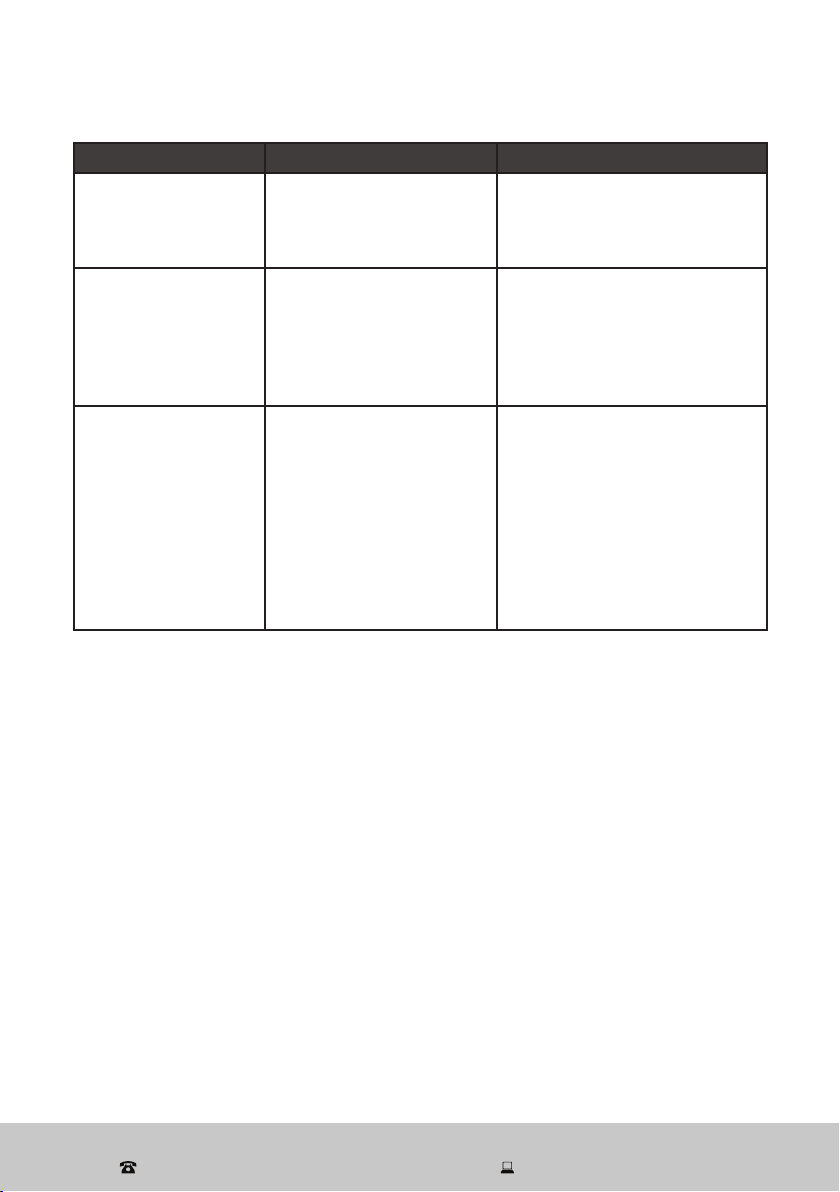
Table 4: Troubleshooting
Problem Possible cause Solution
The washing machine
does not start up.
• The door is not closed
properly, or items are
caught up in the door.
• The plug is not firmly
plugged in.
• Have you selected a
program and pressed
the Start/Pause button?
• The water tap is closed.
• Check and ensure no items
are caught in the door, then
close the door properly and
restart.
• Ensure you have properly
inserted the plug, selected
a program and pressed the
Start/Pause button.
• Ensure the water tap is open.
The door cannot be
opened.
• The machine’s safety
protection design is
working.
• The water temperature
is still too high.
• Wait a few moments after
the end of a program before
opening the door.
• Wait until the water has
cooled.
No water
• The water tap is closed.
• Water is frozen in the
supply hose.
• The water inlet valve
filter is blocked.
• There is a water
stoppage in your area.
• Ensure the tap is open.
• See page 32 for solving water
freezing issues.
• Ensure the water inlet valve
filter is clean and unblocked.
• Restart when the water is back.
Water leakage
• The water supply hose
or drain hose are not
tightly connected.
• The drain hose is
blocked.
• Check and ensure both
hoses are securely
connected.
• Check and ensure the drain
hose is not blocked.
Abnormal noise
• The transport bolts have
not been removed.
• The machine is installed
on an uneven or unstable
floor.
• A loose object is knocking
against the drum walls.
• Make sure the transport bolts
have been removed.
• Make sure the machine is
installed on a solid, level floor.
• Ensure to check pockets
before the wash and remove
any coins, hairpins, etc.
After Sales Support
(AU) 1300 886 649 (NZ) 0800 836 761 | tempo.org/support
27
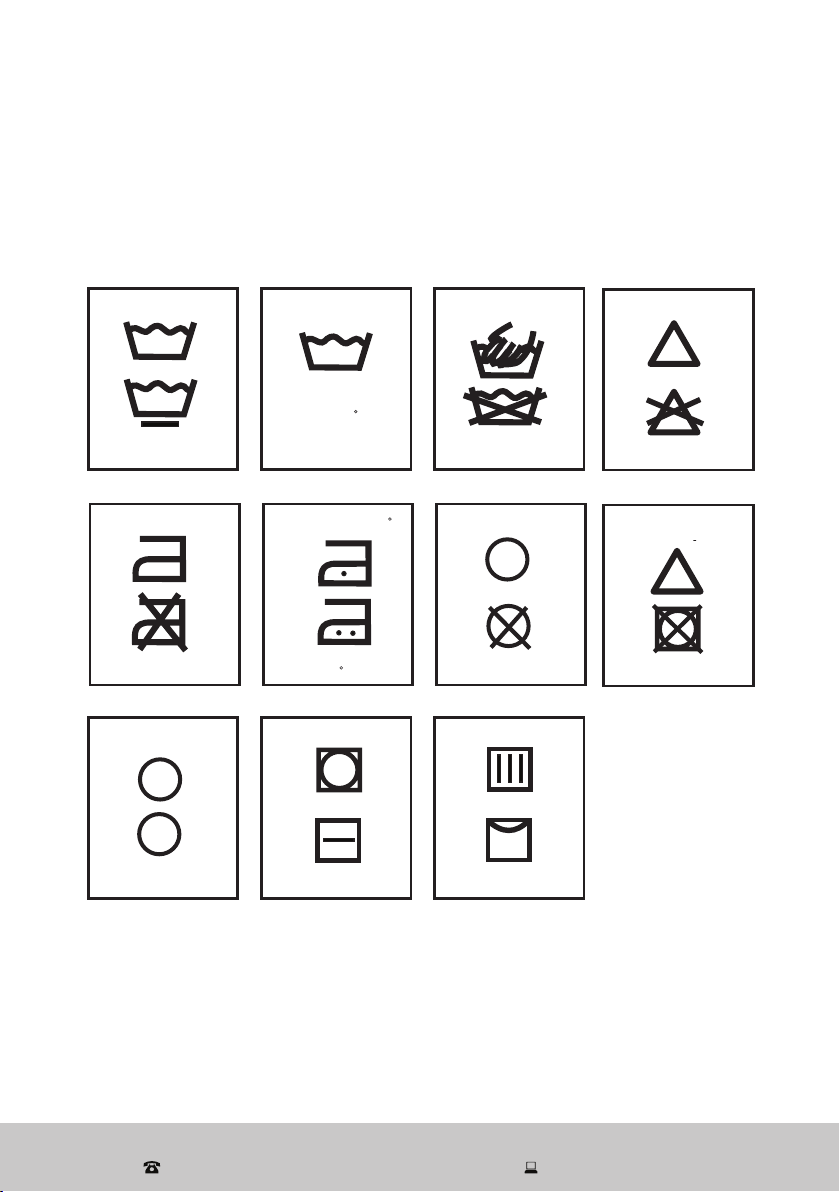
FAQs and Troubleshooting Guide (Cont.)
Problem Possible cause Solution
There is too much
foam in the drum.
• Have you used a low-
foam detergent designed
for use in front-load
washing machines?
• Only use appropriate, low-
foam detergents.
There is a rubber
smell coming from
the drum.
• Because rubber parts
are used in the washing
machine, there can be
a rubber smell at the
beginning.
• This smell should dissipate
naturally. If there are other
unpleasant odours in the
drum, please use the Drum
Clean program (see pages
19-20).
There are variations
in the time remaining
• During spinning, if the
clothes are off center, the
spin time will increase
appropriately to correct
this phenomenon.
• If the water pressure
is too low, the inflow
time will increase
appropriately.
• No action is needed. The
spinning of the drum should
redistribute clothes evenly
to reduce this effect and
rebalance the load.
• No action is needed. If this
continues to occur, increase
the water pressure to
between the prescribed limits
(see page 13).
After Sales Support
(AU) 1300 886 649 (NZ) 0800 836 761 | tempo.org/support
28
Fig. 13
Other Useful Information
Normal wash
Gentle wash
40
Warm wash
(max 40 )
C
ash
ash
Hand w
Do not w
Bleach
Do not bleach
Dr
Dr
Drip dry
Line/hang to dry
Dry flat
Tumble dry
normal
A
F
y clean normal cycle
with any
solvent
y clean normal cycle
petroleum
solvent only
Iron
Do not iron
Warm iron.medium
(max 150 )
C
Cool iron(max 110 )
C
Dry clean
Do not dry clean
Garment care symbols
When choosing a wash program, check for any labels in your clothes and follow the
instructions. Below are some commonly used symbols and explanations what they mean.
CC
Do not tumble dry
Chlorine bleach
may be
used
Handwash
After Sales Support
(AU) 1300 886 649 (NZ) 0800 836 761 | tempo.org/support
29
Other Useful Information (Cont.)
Cleaning and care
To prolong the service life of the washing machine, keep it in good condition and
perform regular maintenance.
WARNING!
For any type of cleaning and maintenance, make sure the washing machine is
disconnected from the mains power supply and the water tap is closed.
Cleaning the cabinet (when required)
• Use a soft cloth to wipe any water or dirt off the washer housing.
• To remove dirt and stains, use a mild detergent solution and a damp cloth. Squeeze
it almost dry to avoid leaving water residues.
Cleaning the drum (every month)
• Make sure all laundry items are removed from the drum, then wipe it clean with a
soft dry or damp cloth.
• If you notice any rust residues left inside the drum from washing items with metal
parts (such as buttons or zippers), wipe the residues off immediately with chlorine-
free detergent. Never use steel wool.
• To remove dirt and/or detergent residues and scum build-up from the inside and
outside of the washing machine’s drum, run the Drum Clean program without any
clothes or detergent.
WARNING!
Do not use any solvents, alcohol, harsh chemicals, alkaline or abrasive cleaning
agents, or sharp objects, to avoid damaging the surface. Do not spray water directly
onto the washer housing.
CAUTION!
Cleaning the inside of your washing machine regularly is particularly important if
you frequently use a cold wash cycle, especially if you also use a fabric softener.
Liquid detergents can cause detergent scum to build up around the outside of the
drum, which cold water will not remove and which can cause bacteria, unpleasant
odours, and eventually soiling of your wash load.
After Sales Support
(AU) 1300 886 649 (NZ) 0800 836 761 | tempo.org/support
30
Other Useful Information (Cont.)
Cleaning the door seal and glass (after each wash)
After each wash:
• Wipe the glass and seal to remove lint and stains. A build-up of lint can cause leaks.
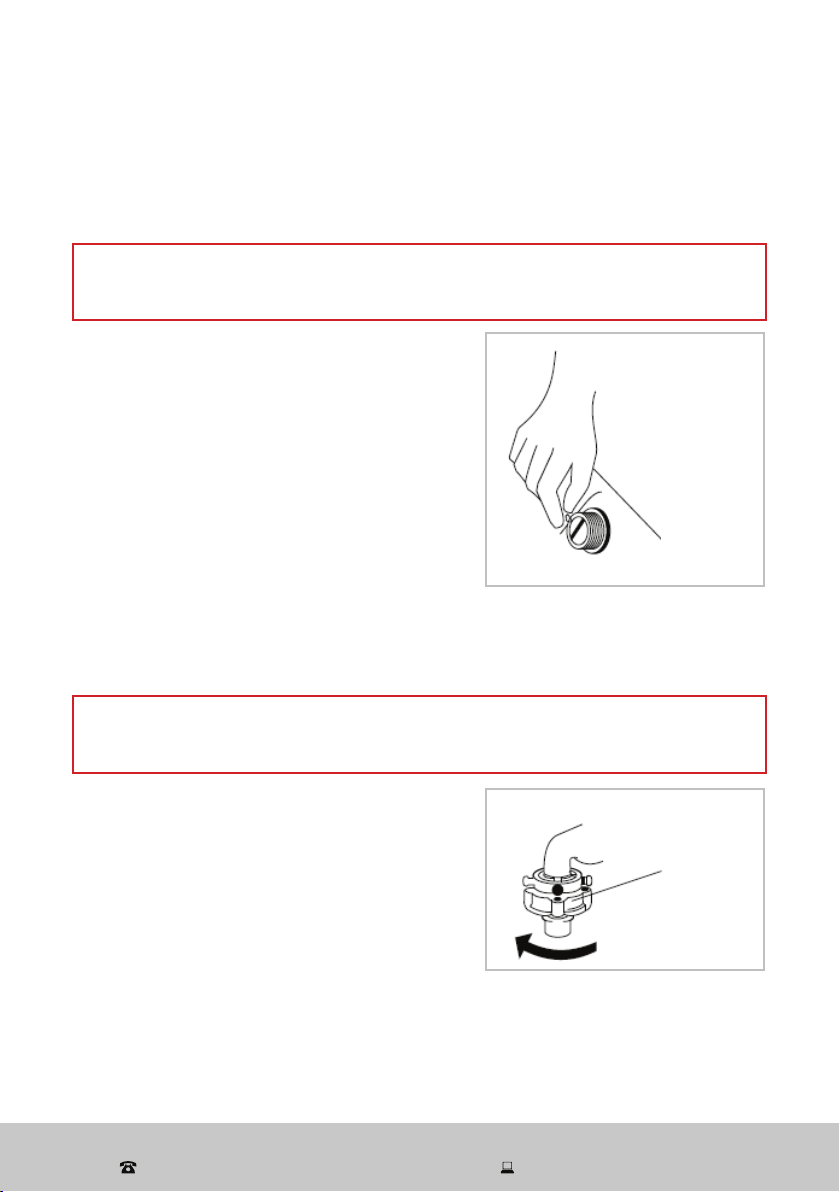
• Check for coins, buttons and other small objects in the seal creases (Fig. 15) and
remove them.
• Leave the door slightly ajar so the inside can dry properly. This will also help prevent
the development of mould or odours.
Cleaning the detergent drawer (when required)
Remove detergent residue regularly. The detergent dispenser may be removed for
cleaning.
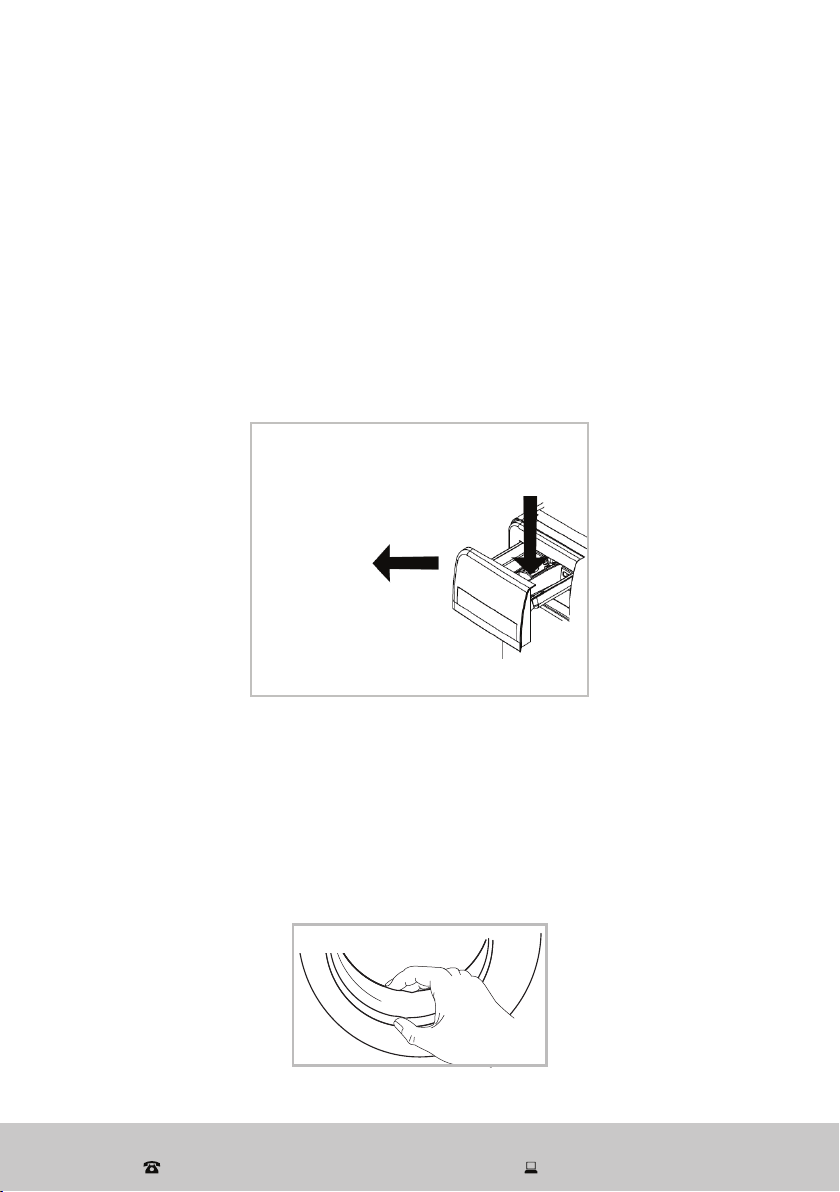
• Pull open the dispenser drawer until you feel a resistance. Press down the release
catch and at the same time pull the drawer right out of the machine (Fig. 14).
• Clean the drawer using a brush and warm water.
• Use a bottle brush to remove detergent residues from inside the housing.
• Wipe all parts dry with a clean cloth, then reinstall the drawer back into its space.
NOTE: Do not use any solvents, alcohol, harsh chemicals, alkaline or abrasive
cleaning agents, or sharp objects, to avoid damaging the surface.
Fig.14
Fig. 15
Press down
Pull out
After Sales Support
(AU) 1300 886 649 (NZ) 0800 836 761 | tempo.org/support
31
Cleaning the water inlet valve
To avoid blockage of the filter at the water tap or hose after long time use, we
recommend you clean these filters every 6 months, or more often if there are frequent
interruptions to the water supply.
Other Useful Information (Cont.)
CAUTION!
Before cleaning the water inlet valve, make sure you have turned off the water
supply at the tap.
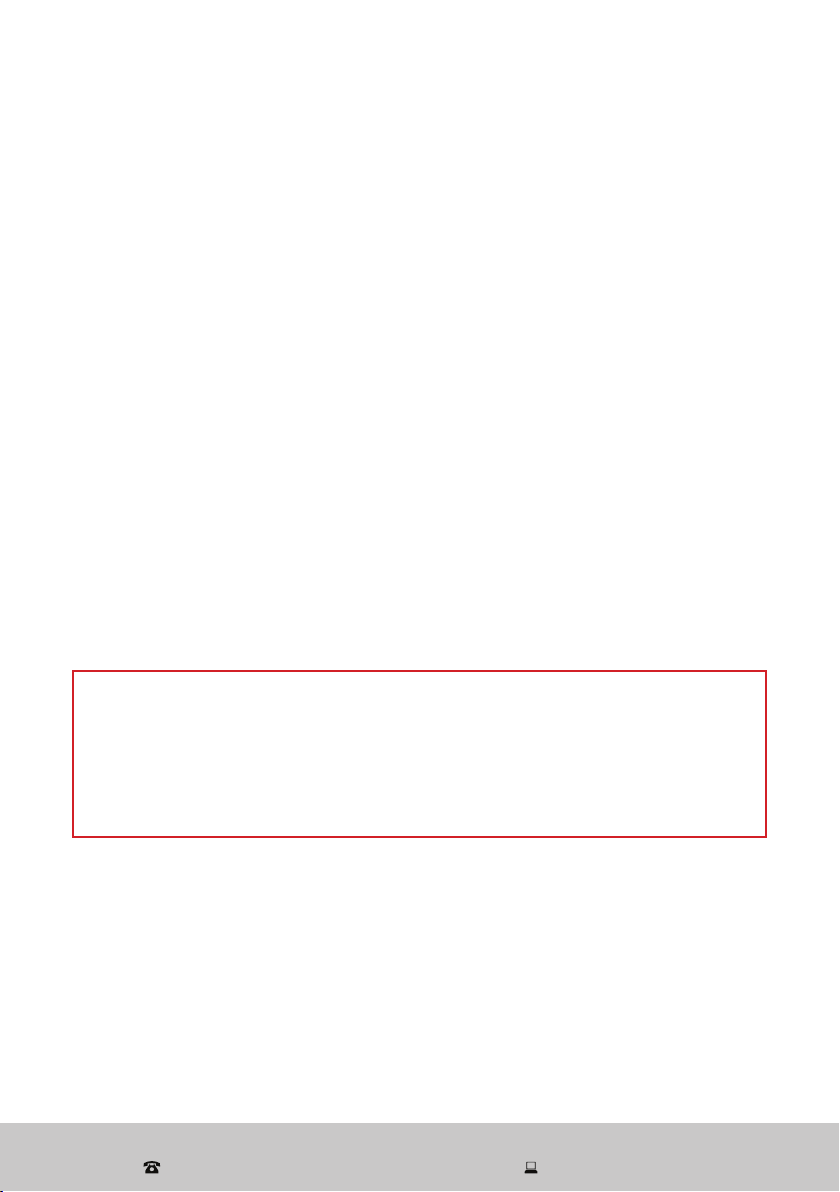
• Disconnect the water supply hose from the
washing machine.
• Take the filter screen out of the inlet valve
(Fig. 16)
• Clean the filter with a soft brush, then assemble
the cleaned filter back into the valve.
• Reconnect the water supply hose to the water
tap on your wall and to the water inlet valve at
the back of the washing machine. For more
detailed connection instructions, please refer to
page 13.
Fig. 16
Fig. 17
Cleaning the universal coupling
In order to avoid blockages to the universal coupling, please clean it every six
months, as described below.
CAUTION!
Before cleaning the water inlet valve, make sure you have turned off the water
supply at the tap.
• Remove the water supply hose from the
universal coupling.
• Unscrew the fastener (Fig. 17)
• Rinse the interior of the fastener with water.
• Re-install the clean fastener and water supply
hose.
Inlet valve
Fastener
After Sales Support
(AU) 1300 886 649 (NZ) 0800 836 761 | tempo.org/support
32
Other Useful Information (Cont.)
WARNING!
• For any type of cleaning and maintenance, make sure the washing machine is
disconnected from the mains power supply and the water tap is closed.
• Do not open the pump filter cover during the course of a wash program.
• If you are checking the drain pump after a hot water wash, take particular care
as any residual water in the machine may be hot. Wait until the water has cooled
down to avoid burns.
Drain pump maintenance
In order to avoid blockages created by excess lint, threads or items such as bobby
pins, coins, etc., check the drain pump filter regularly, especially if the machine fails to
drain the water or spin properly, or if you notice any unusual noises during the drain or
spin cycles. We recommend you clean the filter every month, or when there is a fault
and the error code [ E03 ] is displayed on the screen.
Freezing conditions
If the washing machine is exposed to temperatures below 0°C, you should take
certain precautions to prevent water freezing in the pipes.
1. Turn off the water tap.
2. Unscrew the water inlet hose.
3. Unhook the drain hose from the rear support and position the end of this hose and
that of the inlet hose in a bowl. Run the spin program.
4. Disconnect the appliance.
5. Reconnect the inlet hose and reposition the drain hose.
6. When you intend to start the machine up again, make sure that the room
temperature is above 0°C.
If the temperature drop was unexpected and water has frozen in the water supply
hose, proceed as follows:
1. Wrap a hot towel around the water tap and the water supply hose joint.
2. Disconnect the water supply hose and soak it in a tub of hot water of approximately
50°C.
3. Pour about 2-3 litres of hot water (approximately 50°C) into the drum of the
washing machine.
4. When all frozen water has thawed, reconnect the water supply hose, open the tap
and start the machine to check whether all blockages have been removed.
After Sales Support
(AU) 1300 886 649 (NZ) 0800 836 761 | tempo.org/support
33
Other Useful Information (Cont.)
WARNING!
Make sure to reinstall the drain pump filter and close the cover panel securely,
otherwise water may leak.
CAUTION: If you are checking the drain pump after a hot water wash, wait until any
residual water has cooled to a safe level.
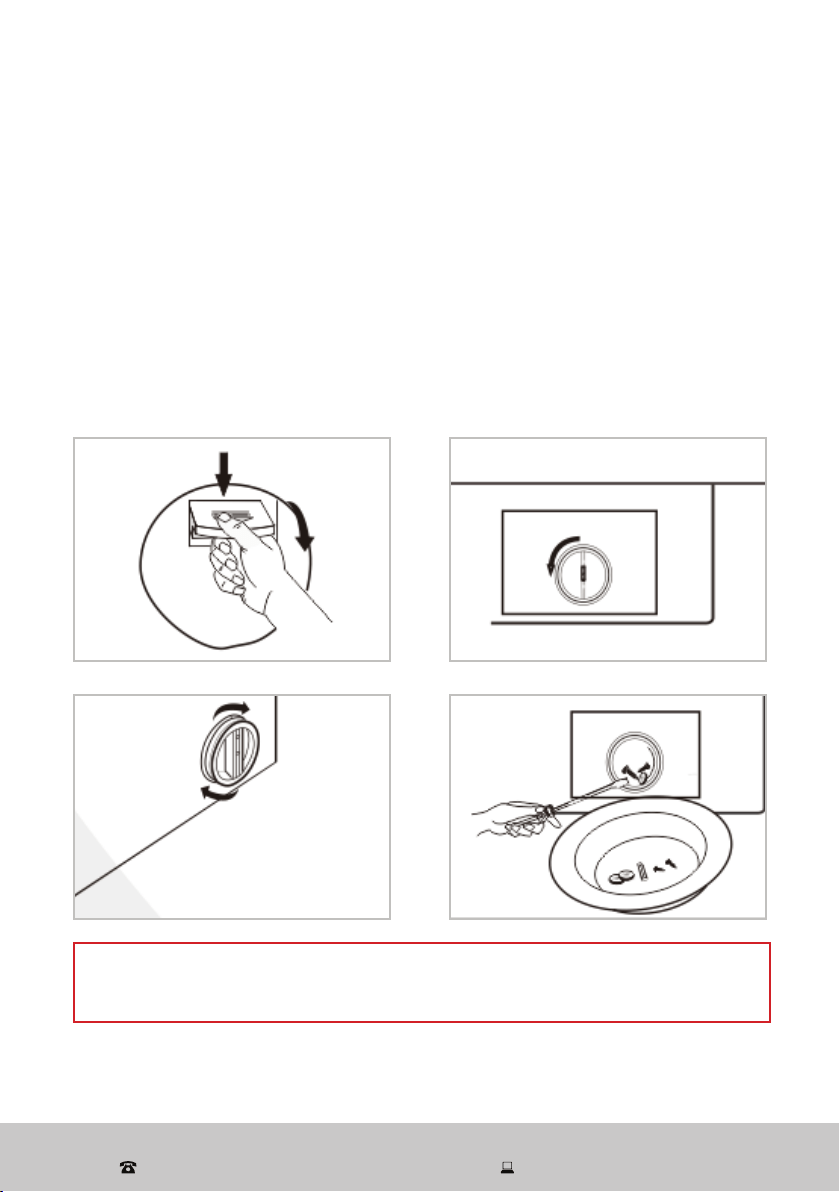
1. Open the lower cover (Fig. 18).
2. Place a container underneath the drain pump filter when removing it, and always
keep a rag nearby to dry up any water spillage.
3. Remove the filter, unscrewing it anticlockwise (Fig. 19 and Fig. 20). Any residual
water will drain out.
4. Remove any foreign objects. Clean the filter carefully with water and a soft brush
(Fig. 21).
5. Screw the filter plug back into position, and close the decorative cover.
6. Close the pump filter cover and secure it with the screw.
Fig. 18
Fig. 20
Fig. 19
Fig. 21
After Sales Support
(AU) 1300 886 649 (NZ) 0800 836 761 | tempo.org/support
34
Storage
If the appliance is not going to be used for an extended period of time, please unplug
the machine from the power supply and disconnect all hoses. Clean the machine and
filters as described on the previous pages. Let the machine air-dry thoroughly, then
store it in the original packaging in a dry location, out of reach of children.
Service and repair
If the appliance is damaged, do not attempt to repair it yourself. If it requires repair or
service, contact our after sales support centre to arrange for examination and repair.
Specifications and technical parameters
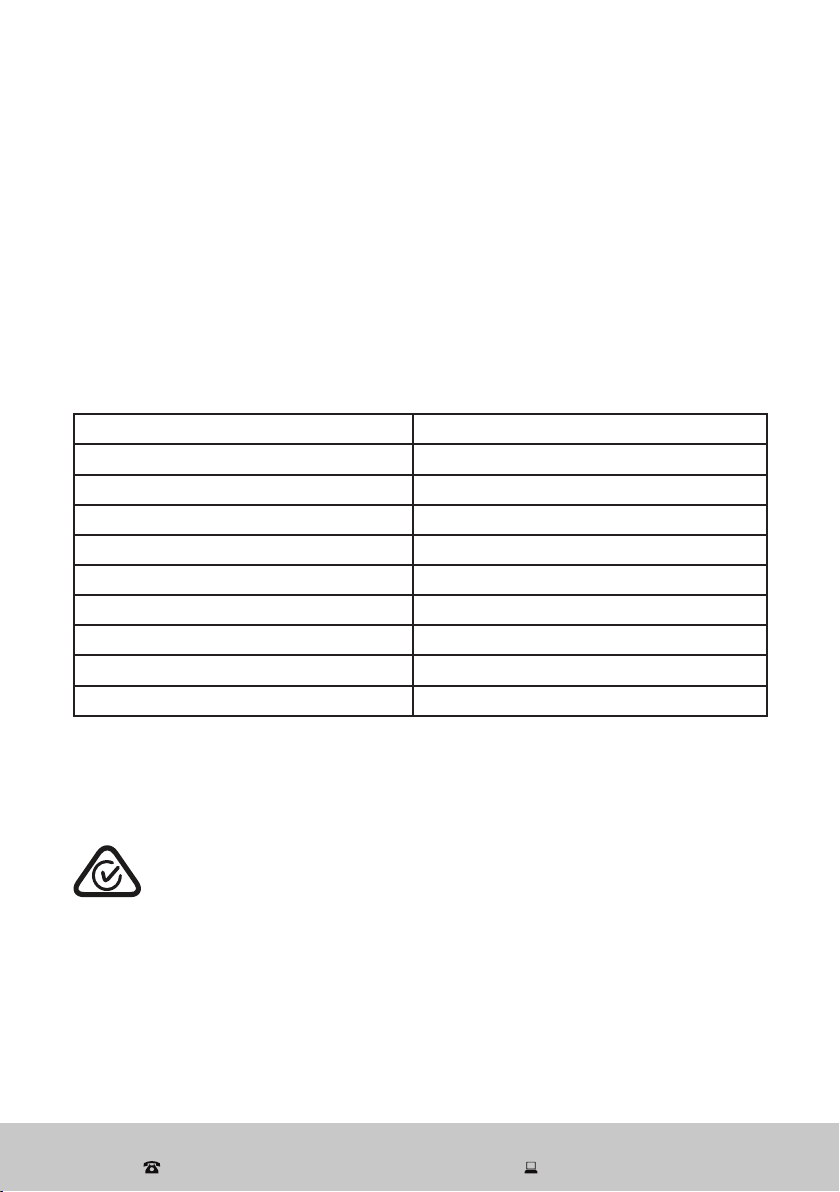
Rated capacity (washing/spinning) 6 kg
Rated voltage and frequency 220–240 V~ 50 Hz
Washing and heating input power 2000 W
Spin input power 250 W
Washing noise level 60 dB(A)
Spin noise level 75 dB(A)
Water pressure 0.05 MPa – 0.85 MPa
Liquid ingress protection IPX4
Weight 47 kg
Dimensions 598 mm (W) x 445 mm (D) x 845 mm (H)
Other Useful Information (Cont.)
Compliance
This appliance has been fully tested and meets all requirements as set out by
standards AS/NZS 60335.1 and AS/NZS 60335.2.7
The RCM Mark (Regulatory Compliance Mark) indicates that the product
complies with the relevant guidelines of the ACMA as well as corresponding
government requirements for the safety of electrical devices.
E209
After Sales Support
(AU) 1300 886 649 (NZ) 0800 836 761 | tempo.org/support
35
Responsible disposal
Packaging materials are recyclable. Please dispose of them
responsibly for recycling.
At the end of its working life, do not throw this appliance out
with your household waste. Electrical and electronic products
contain substances that can have a detrimental effect on the
environment and human health if disposed of inappropriately.
Observe any local regulations regarding the disposal of
electrical consumer goods and dispose of it appropriately for
recycling.
Contact your local authorities for advice on recycling facilities
in your area. Or find recycling scheme services listed on Planet
Ark’s website at www.recyclingnearyou.com.au, or call Planet
Ark on 1300 733 712.
Other Useful Information (Cont.)
After Sales Support
(AU) 1300 886 649 (NZ) 0800 836 761 | tempo.org/support
36
After Sales Support
(AU) 1300 886 649 (NZ) 0800 836 761 | tempo.org/support
Warranty returns
Should you for any reason need to return this product for
a warranty claim, make sure to include all accessories with
the product.
Product does not work?
If you encounter problems with this product, or if it fails to
perform to your expectations, make sure to contact our
After Sales Support Centre on 1300 886 649 for advice.
Instruction Manual Revision Index
IM-V1.0 November 2022
Please read the manual
It will help you get the
best out of your product.
Still have questions?
Call after sales support
1300 886 649
Or visit www.tempo.org