SAFETY AND INSTRUCTION MANUAL
PLEASE READ CAREFULLY
*Subject to registering your Extended Guarantee online at www.towerhousewares.co.uk.
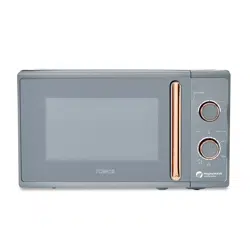
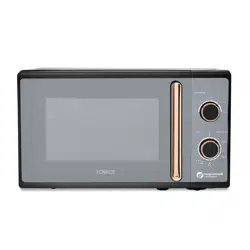
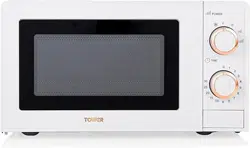
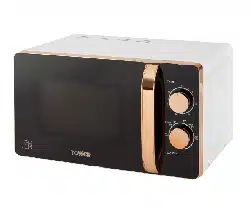
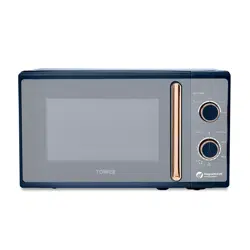
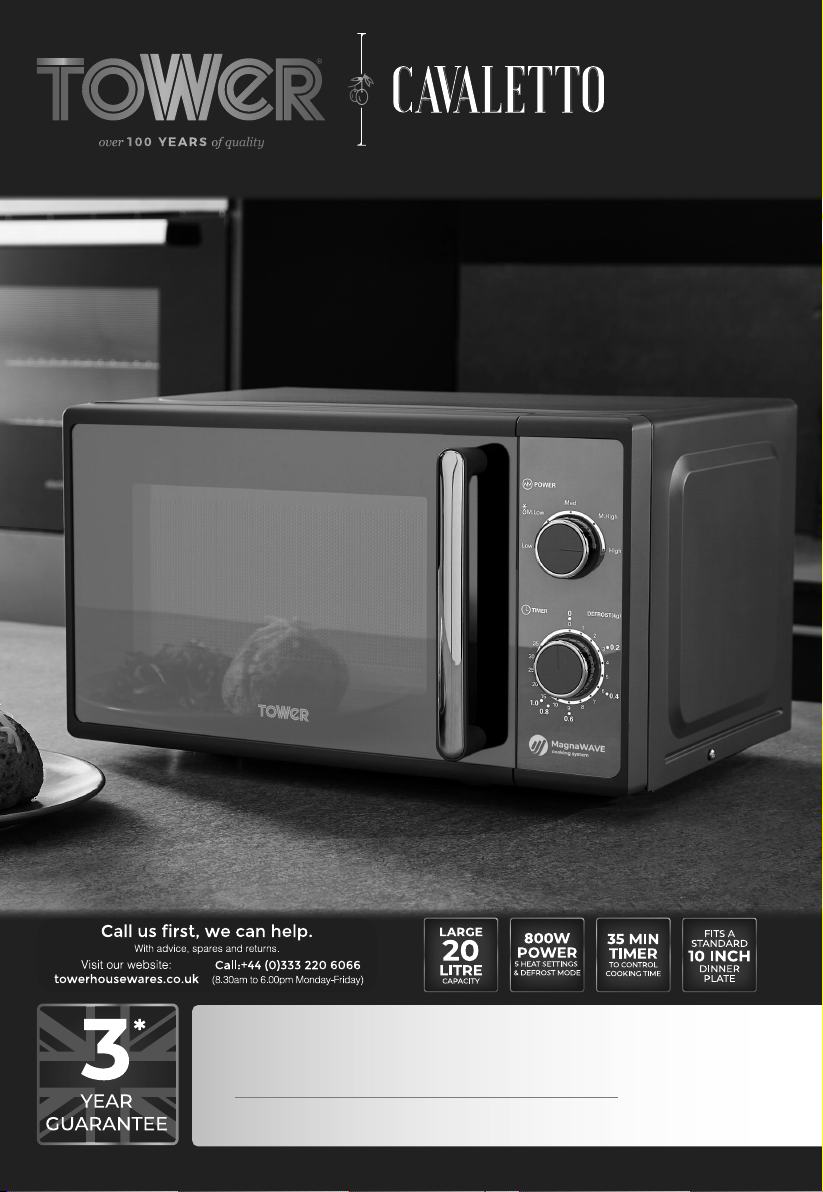
T24038 Applicable to all colour variants
20L 800W Microwave
2
This box contains:
Instruction Manual
Microwave Oven
Roller Ring
Glass Turntable
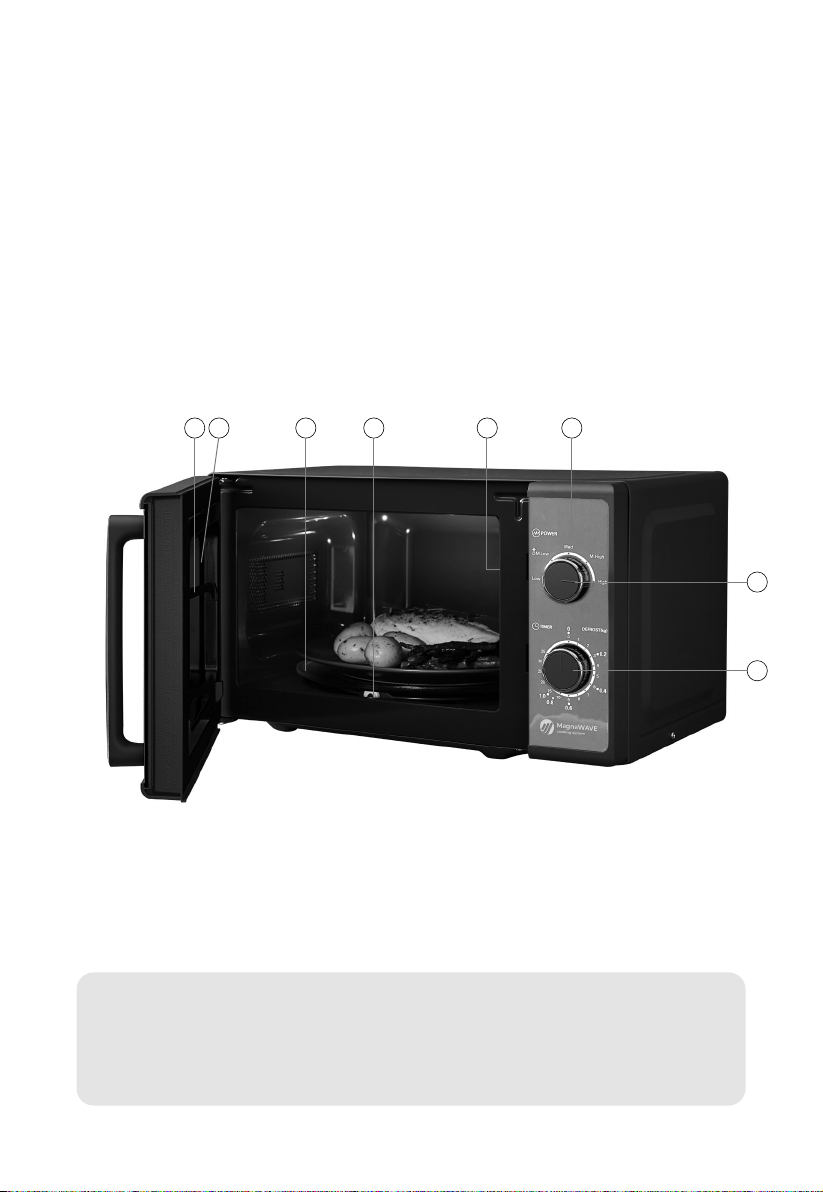
1. Door Safety Lock System
2. Oven Window
3. Glass Turntable
4. Roller Ring
5. Wave Guide
6. Control Panel
7. Power Level Dial
8. Cooking Time Dial
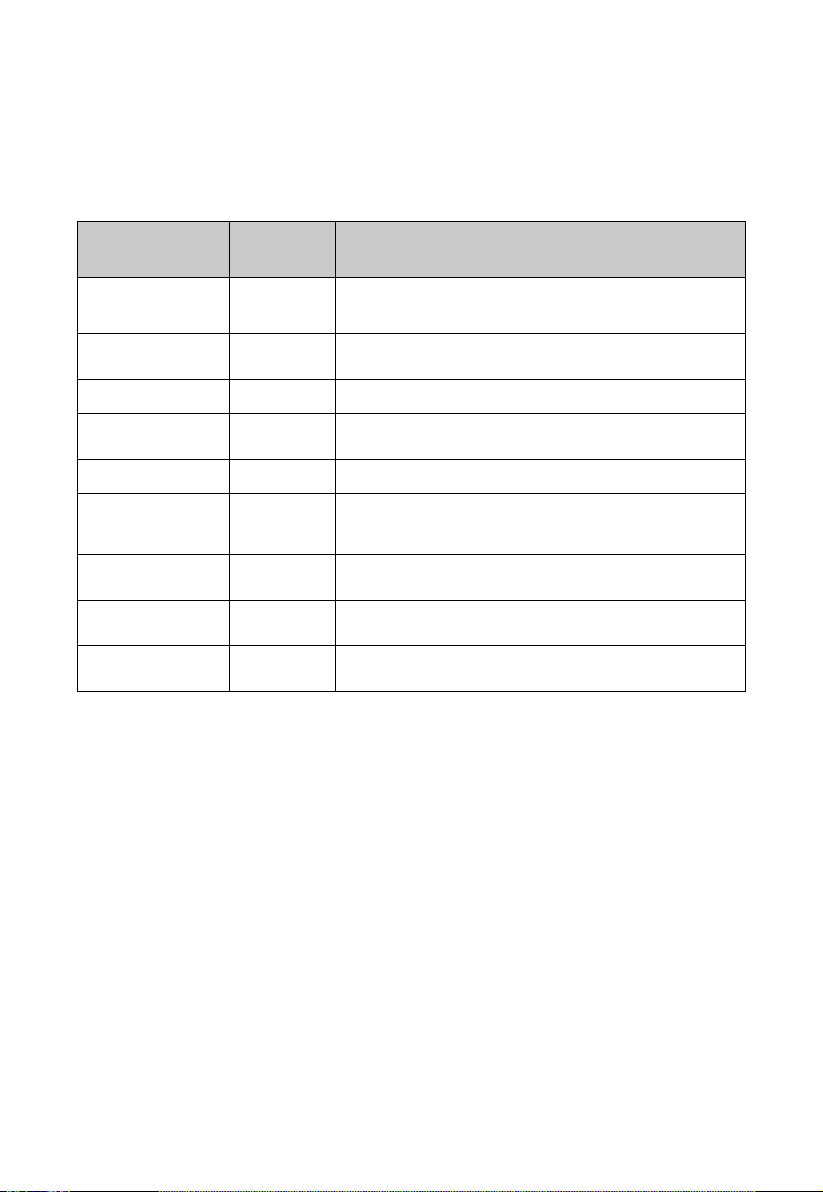
Specifications:
Model: T24038 Applicable to all colour variants
Rated Voltage: 230-240V ~50Hz
Input: 1200-1270W
Output: 750-800W
Microwave Frequency: 2450MHz
Technical Data:
1 2 3 4 5 6
7
8
3
Wiring Safety for UK Use Only
IMPORTANT
As the colours in the mains lead of this
appliance may not correspond with the
coloured markings identifying the terminals in
your plug, please proceed as follows:
The wires in the mains lead are labelled in
accordance with the following code:
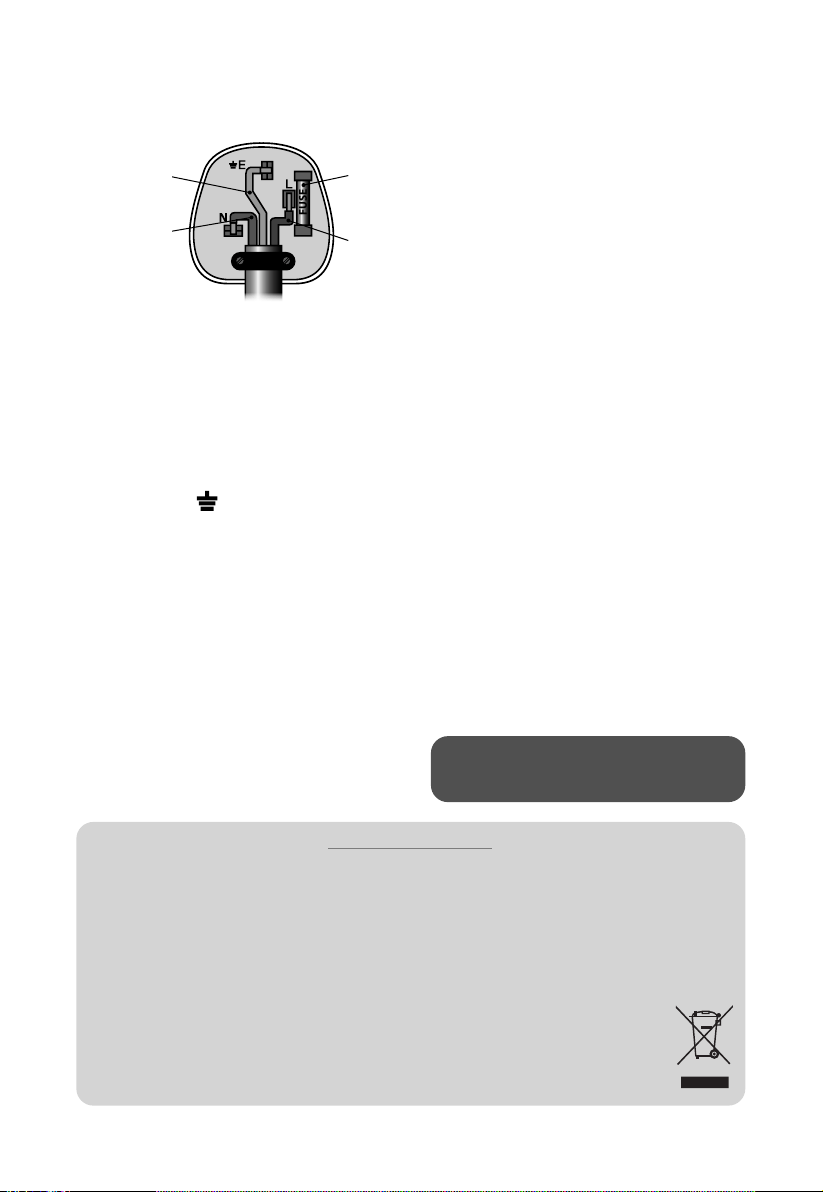
Blue neutral [N] Brown live [L] Green/
Yellow [EARTH]
Plug Fitting Details (Where Applicable).
The wire labelled blue is the neutral and must
be connected to the terminal marked [N].
The wire labelled brown is the live wire and
must be connected to the terminal marked [L].
The wire labelled green/yellow must be
connected to the terminal marked with the
letter [E].
On no account must either the brown or
the blue wire be connected to the [EARTH]
terminal.
Always ensure that the cord grip is fastened
correctly.
The plug must be fitted with a fuse of the same
rating already fitted and conforming to BS 1362
and be ASTA approved.
If in doubt consult a qualified electrician who
will be pleased to do this for you.
Non-Rewireable Mains Plug.
If your appliance is supplied with a non-
rewireable plug fitted to the mains lead and
should the fuse need replacing, you must use an
ASTA approved one (conforming to BS 1362 of
the same rating).
If in doubt, consult a qualified electrician who
will be pleased to do this for you.
If you need to remove the plug - disconnect it
from the mains - then cut it off of the mains
lead and immediately dispose of it in a safe
manner. Never attempt to reuse the plug or
insert it into a socket outlet as there is a danger
of an electric shock.
FUSE
Earth
(Green/Yellow)
Fuse
Neutral
(Blue)
Live
(Brown)
WARNING:
This appliance MUST be earthed!
DISPOSAL OF THE UNIT
Appliances bearing the symbol shown here may not be disposed of in domestic rubbish.
You are required to dispose of old electrical and electronic appliances like this separately.
Please visit www.recycle-more.co.uk or www.recyclenow.co.uk for access to information about the
recycling of electrical items.
Please visit www.weeeireland.ie for access to information about the recycling of
electrical items purchased in Ireland.
The WEEE directive, introduced in August 2006, states that all electrical items must be
recycled, rather than taken to landfill.
Please arrange to take this appliance to your local Civic Amenity site for recycling,
once it has reached the end of its life.

4
• Check that the voltage
of the main circuit
corresponds with the
rating of the appliance
before operating.
• If the supply cord or
appliance is damaged,
stop using the appliance
immediately and
seek advice from the
manufacturer, its service
agent or a similarly
qualified person.
• WARNING! DO NOT
let the cord hang over
the edge of a table or
counter, serious injury
may result from the
microwave being pulled
off the counter where
it may be grabbed by
children or become
entangled with the user.
• DO NOT carry the
appliance by the power
cord.
• DO NOT pull the plug
out by the cord as this
may damage the plug
and/or the cable.
• Switch off at the wall
socket then remove the
plug from the socket
when not in use or
before cleaning.
• The use of accessory
attachments is not
recommended by the
appliance manufacturer
apart from those
supplied with this
product. DO NOT use
extension cords with the
appliance.
• Switch off and unplug
after use and before
cleaning.
• Close supervision is
necessary when any
appliance is used by or
near children.
• Children should not play
with the appliance.
• This appliance can
be used by children
aged from 8 years and
above and persons with
reduced physical, sensory
or mental capabilities or
lack of experience and
knowledge if they have
been given supervision
or instruction concerning
use of the appliance in a
safe way and understand
the hazards involved.
• Cleaning and user
maintenance should
not be undertaken
by children without
supervision. Please read
these notes carefully
BEFORE using your
Tower appliance
Please read these notes carefully BEFORE using your
Tower appliance
Important Safety Information:

5
• Take care when any
appliance is used near
pets.
• DO NOT use this product
for anything other than
its intended use.
CAUTIONS
• DO NOT operate the
microwave with the door
open due to the safety
interlocks built into
the door mechanism.
It is important not
to tamper with the
safety interlocks (safety
interlocks automatically
switch off any cooking
activity when the
door is opened). This
could result in harmful
exposure to excessive
microwave energy.
• DO NOT place any object
(such as kitchen towels,
napkins, etc.) between
the microwave front face
and the door or allow
food or cleaner residue
to accumulate on sealing
surfaces. Doing so will
void the warranty.
• DO NOT operate
the microwave if
it is damaged. It is
particularly important
that the microwave door
closes properly and that
there is no damage to
the door hinges, latches,
door seals and sealing
surfaces.
• DO NOT operate the
microwave if it is rusty.
• Please ensure cooking
times are correctly set,
small amounts of food
require shorter cooking
or heating time. Over
cooking may result in the
food catching on fire and
subsequent damage to
the microwave.
• When heating liquids,
e.g. soups, sauces and
beverages in your
microwave, avoid using
straight sided containers
with narrow necks.
Stir the liquid before
placing the container
in the microwave and
again halfway through
the heating time. After
heating, let it stand,
stir or shake it again
carefully and check
the temperature of it
before consuming to
avoid burns (especially,
contents of feeding
bottles and baby food
jars).
• An exhaust outlet is
located on the top,
bottom or side of the
microwave. Don’t block
the outlet. It could result
in damage to your
microwave and poor
cooking results.

6
• DO NOT operate the
microwave when empty.
It is best to leave a
glass of water in the
microwave when not in
use. The water will safely
absorb all microwave
energy if the microwave
is accidentally started.
• Improper use could
result in damage to the
microwave.
• DO NOT use wooden
containers and ceramic
containers that have
metallic (e.g. gold or
silver) inlays. Always
remove metal twist ties.
Check that the utensils
are suitable for use in the
microwave before use.
They may heat up and
char. NEVER use metal
objects in the microwave,
as they may arc and
cause serious damage.
• DO NOT rinse the glass
turntable by placing it in
water just after cooking.
This may cause breakage
or damage.
• Before cooking pierce
the skin of potatoes,
apples or any such fruit
or vegetables. They could
burst.
• DO NOT cook eggs
in their shell. Eggs in
their shell and whole
hardboiled eggs should
not be heated in
microwave since they
may explode, even after
microwave heating has
ended. Pressure will
build up inside the egg
which will burst.
• DO NOT attempt
deep fat frying in your
microwave. This could
result in a sudden boil
over of hot liquid.
• If smoke is observed,
switch off or disconnect
the microwave from the
power supply and keep
the microwave door
closed in order to stifle
any flames. It can cause
serious damage such as
fire or electric shock.
• When food is heated or
cooked in disposable
containers made of
plastic, paper or other
combustible materials
keep an eye on the
microwave and check it
frequently.
• The microwave should
be cleaned regularly
and any food deposits
should be removed.
Failure to maintain the
microwave in a clean
condition could lead
to deterioration of the
surface. This could
adversely affect the
life of the appliance
and possibly result in a
hazardous situation.

7
• We DO NOT recommend
the use of microwave
popcorn in bags. Many
of these produce PFOA
chemicals, which have
been identified as a
potential carcinogen.
Instead we recommend
using a microwave-
approved bowl and lid.
Should you choose to do
so, ALWAYS follow exact
directions given by each
manufacturer for their
popcorn products.
• NOTE: The use of non-
compliant materials will
void your warranty.
• DO NOT leave the oven
unattended while corn
is being popped. If
corn fails to pop after
the suggested times,
discontinue cooking.
Never attempt to
pop leftover kernels.
Overcooking could result
in the corn catching fire.
• DO NOT use harsh
abrasives cleaners or
sharp metal scrapers
to clean the microwave
door glass. They can
scratch the surface,
which may result in the
glass shattering.
• After cooking, containers
used in the microwave
will be very hot. Use
gloves to take out the
food and avoid steam
burns by directing steam
away from the face and
hands.
• This appliance is
intended to be used in
household and similar
applications such as:
Staff kitchen areas in
shops, offices and other
working environments,
farm houses, by clients in
hotels, motels and other
residential environments,
bed & breakfast type
environments.
• The microwave oven is
intended for heating
food and beverages.
Drying of food or
clothing and heating of
warming pads, slippers,
sponges, damp cloth and
similar may lead to risk of
injury, ignition or fire.
• The door or outer surface
may get hot when the
appliance is operating.
• In the unlikely event
the appliance develops
a fault, stop using
it immediately and
seek advice from the
Customer Support Team:
+44 (0) 333 220 6066
8
Before First Use:
Read all instructions and safety information carefully before first use. Please retain this information
for future reference.
1. Take out all the packing. If there is a safe film over the oven, tear it off before use. Check
carefully for damage. If any, immediately notify the place of purchase.
2. Clean the glass turntable with a damp cloth or sponge.
3. Microwave ovens must be placed under dry and non-corrosive environments and kept away
from heat and humidity, such as a gas burner or water tank.
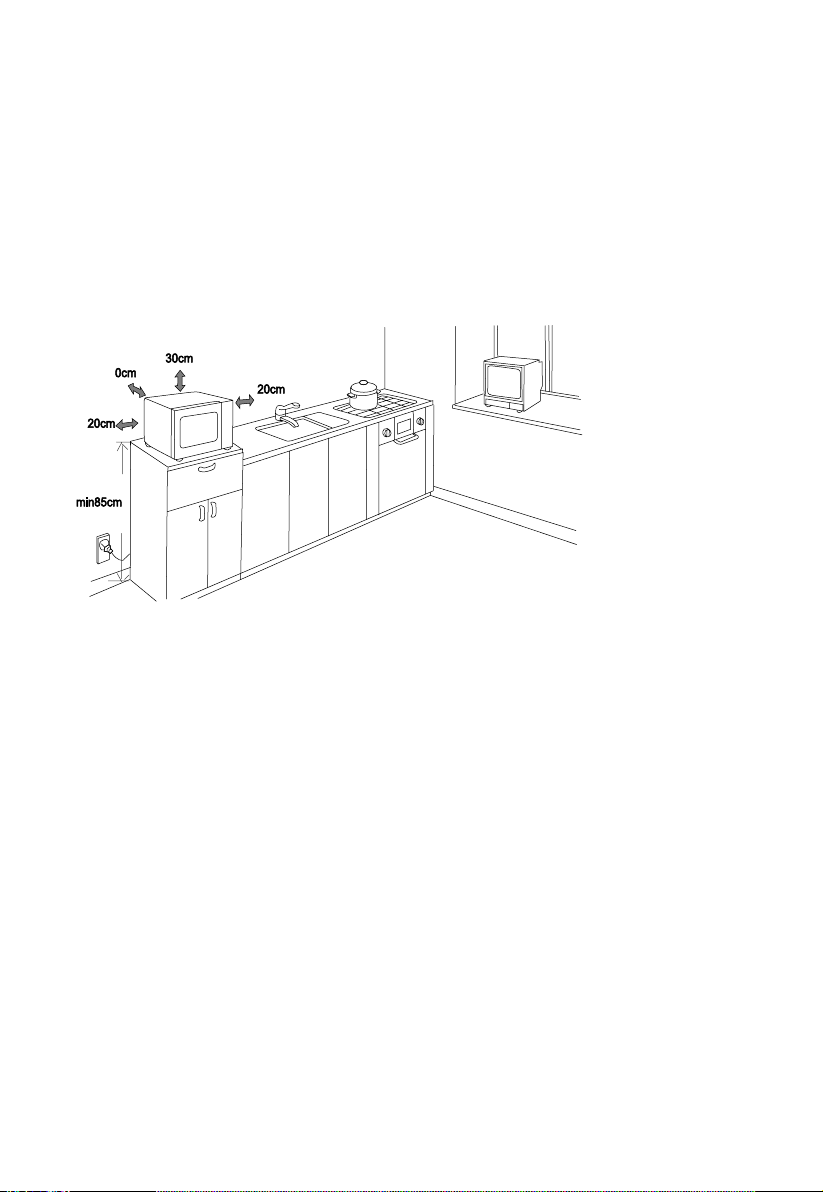
4. To ensure sufficient ventilation, the following distances should be observed:
At least cm from the microwave to 20
the side of the wall, and at least 30cm above the microwave.The minimum installation height
for the microwave should be 85cm.
5. The oven should be positioned away from TVs, radios or antennae, as the microwaves may
cause disturbances to their picture or sound.
6. The appliance must be positioned so that the plug is accessible, and has a good grounding in
case of leakage. A ground loop can be formed to avoid electric shock.
7. The microwave oven must be operated with the door closed.
8. The microwave oven must not be placed in a cabinet.
9. The microwave oven is intended to be used free-standing.
Note: During first use the microwave oven may emit an odour and slightly smoke. This is due to
manufacturing residue or oil on the heat element or oven cavity. This is normal and should not occur
after several uses. Keep doors and windows open to ensure good ventilation. It is recommended to
place a cup of water on the turntable set high and operate the microwave oven several times to help
clean the microwave of residue.
10. Check that there is no damage to the cord or any visible damage to the body.
11. Your appliance is now ready for normal use.
12. Dispose of the packaging in a responsible manner.
Using Your Appliance
1. Door lock: The microwave door must be properly closed in order for the appliance to operate.
2. Oven window: Allows the user to see the cooking status.
3. Roller ring: The glass turntable sits on its wheels. It supports the turntable and helps it to
balance when rotating. Do not use the microwave without the roller ring.
4. Rotating axis: The glass turntable sits on the axis; the motor underneath it makes the
turntable rotate.
5. Glass turntable: The dish/plate sits on the glass turntable, its rotation during operation helps to
cook food evenly.
CAUTION: Place the rotating ring inside the microwave first, then fit the turntable onto the rotating
axis, making sure it is properly installed.
The rear surface of appliance shall be placed against a wall.
9
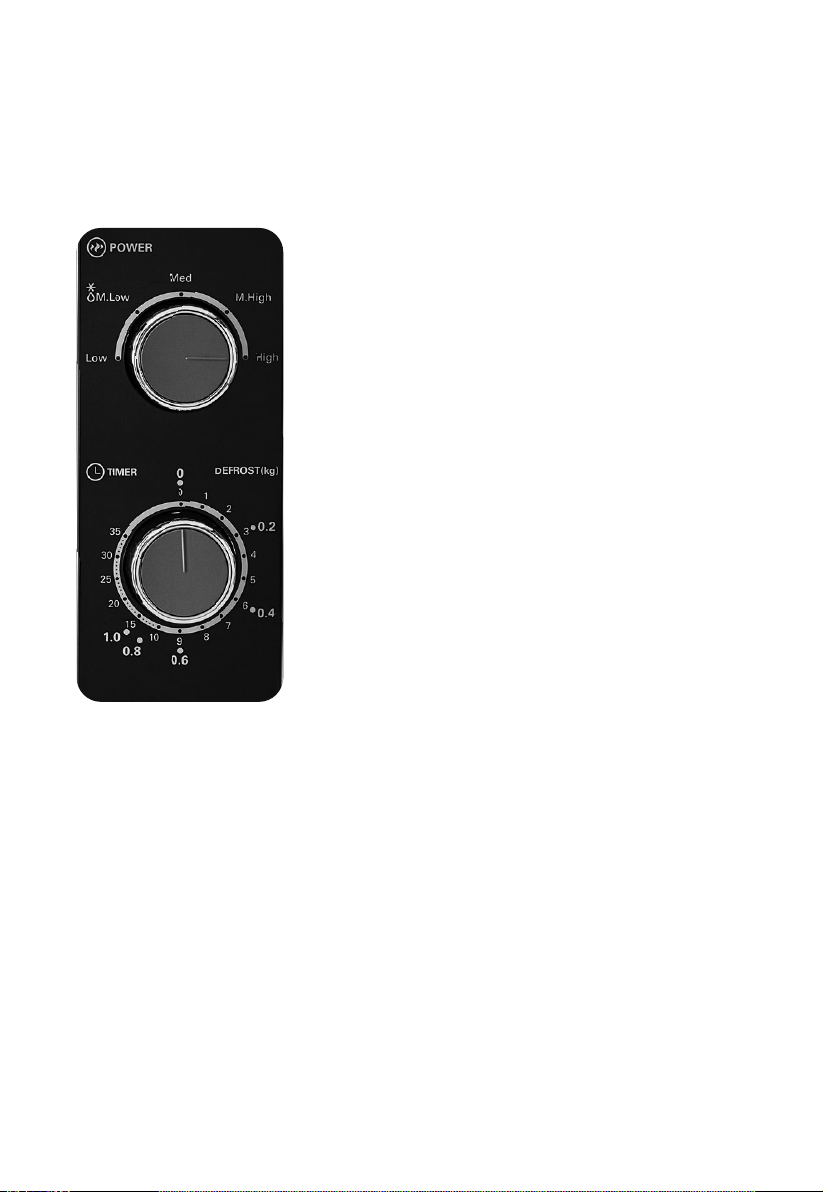
Control panel operation:
The control panel consists of two function operations, a timer dial and a power dial.
Power Dial:
There are five power levels to choose from when operating the
microwave. Turn the power selection dial clockwise to increase
the microwave’s power level. The power levels are as follows:
Power Setting Description
100% High Reheating, milk,
boiling water,
steaming vegetables,
drinks
77% M.High Rice, fish, chicken,
minced meat
55% Medium Stewing, fish
33% M.Low / Defrost Soup, stew, soften
butter, defrosting
17% Low Keep warm, soften ice
cream
Intelligent Defrost Function:
This unit is equipped with an intelligent defrost function, making
for easy and accurate defrosting. The highlighted weights
around the outer edge of the timer are weight indicators for use
with the Intelligent Defrost function, and are represented in kg.
Each figure is located next to the indicator for the time it will
take to defrost that volume of food, in minutes.. For instance,
0.2kg (200g) of frozen food will typically take about 3 minutes to
defrost, 0.4kg (400g) will take 6 minutes, and so on.
To defrost food using the Intelligent Defrost function, set the
power dial to Medium low, and use the timer dial to select the
appropriate weight for the amount of food you are defrosting.
Timer Dial:
The manual timer dial allows you to select your required cooking time, from 0 – 35 minutes.
To start a cooking session:
Place the food in the oven and close the door.
Turn the power selection dial to select a power level.
Use the timer dial to set a cooking time.
When cooking is complete, a bell will ring and the light inside the microwave will turn off.
Stop/Cancel
Open the door or return the timer to zero.
Note: As soon as the timer dial is turned, the microwave starts cooking. When cooking food for less
than 2 minutes, rotate the timer past the 2 minute mark, then turn it back to the correct required
time.
CAUTION: Always return the timer to the ‘0’ position when not using the microwave. To stop the
cooking process at any time, open the door by the handle.
Note: Cooking results depend on factors such as the shape and size of food, personal preference,
and even how you happen to place food in the oven.
6. Control panel: Used to select functions when operating the microwave.
7. Door Handle: Use to open the door or to pause the cooking process.
10
Utensils guideline:
It is strongly recommended to only use containers which are suitable and safe for microwave
cooking. Generally speaking, containers made of heat-resistant ceramic, glass or plastic are suitable
for microwave cooking. Never use metal containers for microwave cooking and combination
cooking as sparks are likely to occur and there is a risk of fire or injury. When cooking microwave
meals, always check the packaging to see which parts are microwave safe. Use the below table as
reference:
Material
Microwave
Safe
Notes
Heat-resistant
ceramic
Yes
Never use ceramics that are decorated with a metal rim or
are glazed.
Heat-resistant
plastic
Yes
Cannot be used for extended periods of time when micro-
wave cooking.
Heat-resistant glass Yes
Plastic film Yes
Not to be used when cooking meat or chops, as the high
temperature may damage the film.
Grill rack No
Metal container No
Never to be used in the microwave. Microwaves cannot
penetrate through metal. Microwaving with a metal
container can result in fire.
Lacquer No
Poor heat resistance. Cannot be used for high temperature
cooking.
Bamboo wood and
paper
No
Poor heat resistance. Cannot be used for high temperature
cooking.
Cling film Yes
Cling film can be used as long as it is pierced to let steam
escape, and is not touching the food.
CAUTION:
There are a number of accessories available on the market. Before you buy, make sure they are
suitable for microwave use. When you put food into the Microwave, ensure that the food supports
and/or covering do not come in direct contact with any of the internal walls or the ceiling of the
cavity since discolouration may take place.
• Some plastics are heat-proof only up to certain temperatures. Check carefully!
• Always remove the lids of jars and containers, including takeaway food containers, before you
cook them in your microwave. If the lids are not removed, steam and pressure can build up
inside and cause an explosion even after microwave cooking has stopped.
• Do not use straight sided containers with narrow necks when heating liquid. Use extreme care
when inserting a spoon or other utensils into the container.
Assessing if the Food is Fully Cooked:
The colour and firmness of food help to determine whether it is done.
The following signs show that the food is ready:
• Steam coming out from all parts of food, not just the edge
• Joints of poultry can be moved easily
• Pork or poultry show no signs of blood
• Fish is opaque and can be sliced easily with a fork

11
CAUTION!
• Turn the food over during operation to ensure uniform cooking.
• Defrosting will usually take longer than regular microwave cooking.
• The defrosting process can be considered complete when the food can be cut with a knife.
• Microwave power penetrates around 4cm into most foods
• Defrosted food should be consumed as soon as possible. DO NOT re-freeze defrosted food or
put it in the fridge.
Cooking tips:
The following factors may affect the cooking result:
Food arrangement:
Place thicker foods towards the outside of the dish with the thinner foods towards the centre.
Spread them evenly and avoid overlapping if possible.
Cooking time length:
Begin cooking on a shorter time setting and evaluate the food after it times out. Extend the time as
necessary. Over cooking may result in burnt food and smoke.
Piercing:
Food such as potatoes, fish, chicken and sausages all need to be pierced in several places before
cooking, so that steam does not build up and cause the food to explode.
Cooking food evenly:
Food such as chicken, burgers or steak should be turned once during cooking.
Depending on the type of food, if applicable, stir from the outside to the centre of the dish once or
twice during cooking.
Allow standing time:
Once the cooking time has finished, allow food to stand in the microwave for a few minutes. This
allows the food to complete its cooking cycle and to cool down naturally.
Browning dish:
When using a browning dish or self-heating container, always place a heat-resistant insulator, such
as a porcelain plate under it. This will help prevent damage to the turntable and rotating ring.
Microwave safe plastic wrap:
When cooking food with high fat content, do not allow the plastic wrap to come into contact with
food as it may melt.
Microwave safe plastic cookware:
Some microwave safe plastic cookware might not be suitable for cooking foods with high fat and
sugar content. The preheating time specified in the dish instruction manual must not be exceeded.
12
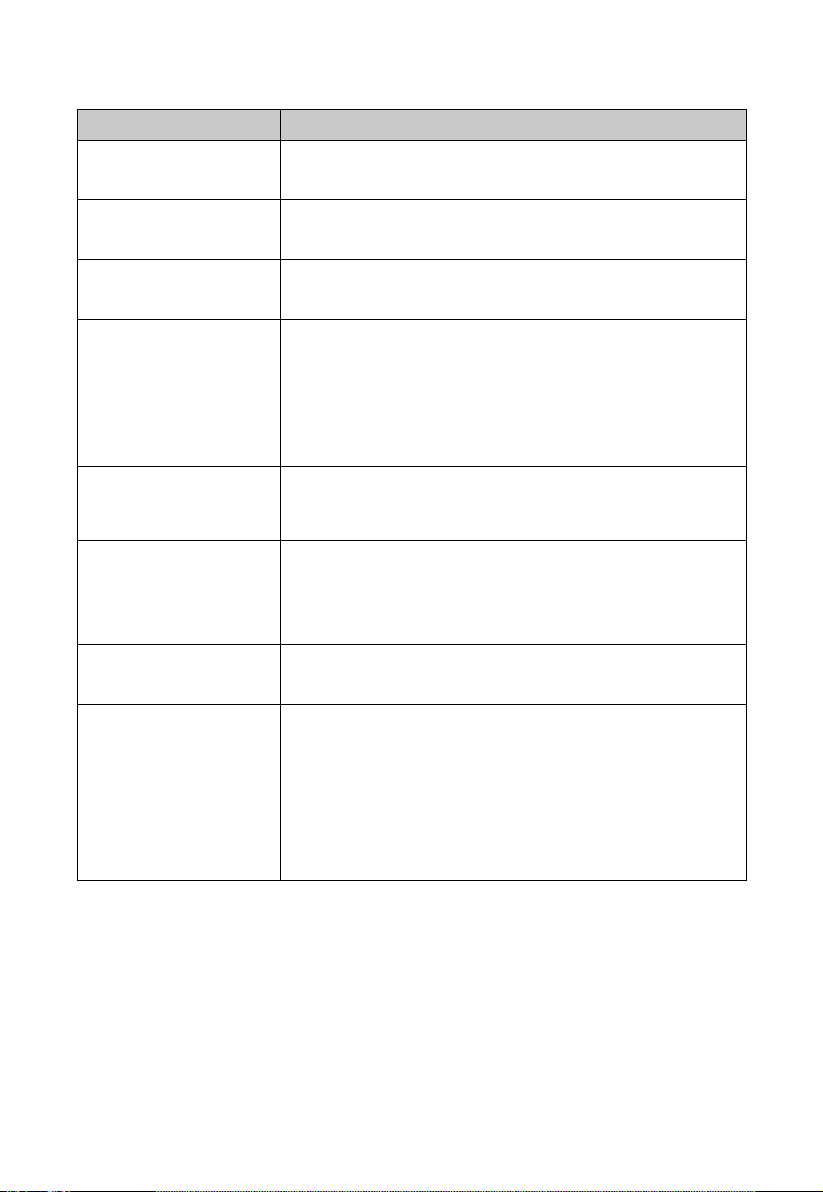
Troubleshooting:
Questions Answers
Is it normal for the glass
turntable to turn in either
direction?
Yes. The glass turntable can rotate clockwise or
anti-clockwise, depending on the rotation of the motor when the
cooking cycle starts.
Can I operate my
microwave whilst it is
empty?
No, never run it empty or with a very small load for a long period of
time as this will damage the microwave.
Can I open the door whilst
the microwave is running?
You can open the door at any point during cooking.
The microwave energy will automatically switch off when the door
is opened, and the time setting will pause until the door is closed.
Why is my microwave
sparking?
If you see sparks in your microwave, turn it off immediately. Sparks
can be caused by:
metal or aluminium foil that touches the interior of the microwave,
metal from a closing strip or tableware with metallic edges,
recycled paper that contains small metal particles and aluminium
foil that is not correctly covering the food.
Remove anything from the microwave that may contain metal.
Refer to the Utensils Guideline in this manual for reference of what
containers are microwave safe.
I am trying to cook eggs
and they are popping. What
do I do?
When you bake or poach eggs, the yolk can pop due to a build-
up of steam inside the yolk membrane. Pierce the yolk with a
toothpick before cooking. Never cook eggs without first piercing
their shells.
My microwave is taking
longer to cook food than
the cooking guide says.
Variations in the size, shape and weight of your food can affect
cooking times.
Cooking guide times and heat settings should be used as
suggestions to help prevent over-cooking. If you find the cooking
time or temperature is not suited to your ingredients, adjust
accordingly.
Can I operate my
microwave without the
glass turntable?
No. If you remove the glass turntable you will get poor cooking
results. Ensure that all dishes used in the microwave fit correctly
onto the glass turntable.
What does standing
time mean and why is it
recommended?
Standing time means that food should be removed from the
microwave and allowed to ‘stand’ for an additional time to let it
finish cooking.
This is important because with microwave cooking, the heat is held
in the food, not in the oven. Many foods build up enough internal
heat to allow the cooking process to continue, even after the food
is removed from the oven. Standing time for joints of meat, large
vegetables and cakes is to allow the inside to cook completely,
without overcooking the outside.
Most directions on microwavable food will note how much
standing time is required.

13
Servicing safeguards - Microwave radiation
It is hazardous for anyone, other than a qualied service technician, to carry out any service for repairing
operation which involves removal of any cover which gives protection against exposure to microwave energy.
The temperature of accessible surfaces may be high when the appliance is operating.
The high voltage capacitor remains charged after disconnection; short the negative terminal of a H.V capacitor
to the oven chassis (use a screwdriver) to discharge before touching.
Magnetron
High voltage transformer
High voltage capacitor
High voltage diode
High voltage fuse
The following conditions may cause undue microwave exposure during servicing.
Improper tting of magnetron;
Improper matching of door interlock, door hinge and door;
Improper tting of switch support;
Door, door seal or enclosure has been damaged.
Cleaning & Care
• The microwave should be cleaned regularly and any food deposits removed.
• Remove the power cord from the wall outlet before cleaning. Don’t immerse the appliance in
water or other fluids when cleaning.
• Failure to maintain the microwave in a clean condition could lead to deterioration of the
surface. This could adversely affect the life of the appliance and possibly result in a hazardous
situation.
• Never use hard detergent, gasoline, abrasive powder or metal brush to clean any part of the
appliance.
• Do not remove the waveguide cover.
• After lengthy use, it is possible for odours to emit from the microwave.
The following 2 points are some methods to remove odours or unpleasant smells:
• Place several lemon slices in a cup, then heat with high Micro Power for 2-3 min.
• Put some orange peel into the microwave, and then heat them with high Micro Power for 1
minute.
NEVER IMMERSE THE MICROWAVE, CORD, OR PLUG IN WATER OR ANY OTHER LIQUID.
Tips for cleaning
If the seal of the microwave is dirty, it may stop the door from closing properly. Keep the seal clean.
Spicy sauces such as ketchup and mustard, or salty dishes such as salted meat, contain ingredients
that can erode the surface. After use, you should always clean the oven interior.
Residue of food from spillovers or splatters will attract microwave energy causing it to burn on. This
could reduce the efficiency of the microwave and may cause bad odours.
Details for cleaning door seals, cavity and adjacent parts:
• Exterior: Wipe the enclosure with a damp soft cloth
• Door: Using a damp soft cloth, wipe clean the door and window. Wipe the door seals and
adjacent parts to remove any spills. Wipe the control panel with a slightly dampened soft cloth.
• Interior walls: Wipe clean the interior with a damp soft cloth. Wipe clean the waveguide cover
to remove any food remnants.
• Glass turntable / Rotation ring / Rotation axis: Wash with mild soap water. Rinse with clean
water and allow to dry thoroughly.
Note: Do not remove the waveguide cover during cleaning.
Make sure the waveguide cover is installed correctly and has not been damaged during cooking.
Note: Make sure to thoroughly dry the cavity after every use. Failing to do so will damage the interior,
potentially allow rust to form, and void the warranty.


thank you!
We hope you enjoy your appliance for many years.
This product is guaranteed for 12 months from the date of original purchase.
If any defect arises due to faulty materials of workmanship, the faulty products must be returned to
the place of purchase.
Refund or replacement is at the discretion of the retailer.
The Following Conditions Apply:
The product must be returned to the retailer with proof of purchase or a receipt.
The product must be installed and used in accordance with the instructions contained in this
instruction guide.
It must be used only for domestic purposes.
It does not cover wear and tear, damage, misuse or consumable parts.
Tower has limited liability for incidental or consequential loss or damage.
This guarantee is valid in the UK and Eire only.
The standard one year guarantee is only extended to the maximum available for each particular
product upon registration of the product within 28 days of purchase. If you do not register the
product with us within the 28 day period, your product is guaranteed for 1 year only.
To validate your extended warranty, please visit
www.towerhousewares.co.uk and register with us online.
Please note that length of extended warranty offered is dependent on product type and that each
qualifying product needs to be registered individually in order to extend its warranty past the
standard 1 year.
Extended warranty is only valid with proof of purchase or receipt.
Your warranty becomes void should you decide to use non Tower spare parts.
Spare parts can be purchased from
www.towerhousewares.co.uk
Should you have a problem with your appliance, or need any spare parts,
please call our Customer Support Team on:
+44 (0) 333 220 6066
YEAR
GUARANTEE
3
1221.V1