Operating Instructions
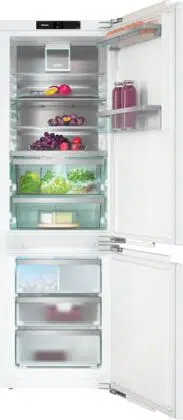
Bottom-mount Unit
To prevent accidents and machine damage, read these instructions
before installation or use.
en - US/CA M.-Nr. 11 930 740
Contents
2
IMPORTANT SAFETY INSTRUCTIONS ............................................................ 5
Caring for the environment .............................................................................. 15
Installation.......................................................................................................... 16
Installation location ............................................................................................. 16
Side-by-side combinations ............................................................................ 17
Climate class .................................................................................................. 17
Ventilation....................................................................................................... 18
Cabinet doors...................................................................................................... 19
–Weight of the door panel ............................................................................. 19
Calculation of cabinet door size ..................................................................... 19
Installation dimensions........................................................................................ 23
Installation in a tall cabinet/side view............................................................. 23
Connections and ventilation........................................................................... 24
Limiting the opening angle of the appliance doors ............................................. 25
Water connection ................................................................................................ 26
Information on the plumbed-water connection.............................................. 26
Water supply .................................................................................................. 27
Lead-free certificate ............................................................................................ 29
Electrical connection ........................................................................................... 30
Saving energy .................................................................................................... 31
Guide to the appliance...................................................................................... 32
Status display...................................................................................................... 34
Using the appliance........................................................................................ 34
Settings mode ........................................................................................... 35
Adjusting the interior fittings................................................................................ 37
Using the door-shelf fine adjustment ............................................................. 37
Repositioning the door shelf with fine adjustment......................................... 37
Moving the door shelf/bottle shelf.................................................................. 37
Clipping the egg trays on ............................................................................... 38
Adjusting or removing the bottle holder......................................................... 38
Moving the shelf/shelf with lighting................................................................ 38
Moving the adjustable shelf with pivotable glass shelf (FlexiTray) ................. 39
Using the bottle rack in the dividing plate...................................................... 39
Removing and reinserting the organization box............................................. 39
Inserting the adapters for the baking tray ...................................................... 40
Moving the carbon filter ................................................................................. 40
Optional accessories........................................................................................... 41
Contents
3
Switching on and off ......................................................................................... 42
Before using for the first time.............................................................................. 42
Connecting the appliance .............................................................................. 42
Filling and inserting the water container for the humidifier ............................ 42
Switching on the appliance ................................................................................. 42
Switching off the appliance................................................................................. 43
Turning off the refrigerator section separately................................................ 43
To note when switching off for longer periods of time ................................... 44
The correct temperature................................................................................... 45
Temperature display ............................................................................................ 46
Setting the temperature in the refrigerator/freezer sections................................ 46
Possible temperature settings........................................................................ 46
Using Automatic SuperCool and SuperFreeze ............................................... 48
Selecting additional settings............................................................................ 50
Explanation of the different settings.................................................................... 50
Party mode ................................................................................................. 50
Vacation mode.......................................................................................... 50
Switching the safety lock function/ on .................................................. 51
Sabbath mode ............................................................................................ 52
Information on Sabbath mode .................................................................... 52
Changing the time before the door alarm is triggered ............................... 53
Miele@home................................................................................................... 53
Changing the volume of the alarms and audible signals/..................... 55
Adjusting the display brightness ............................................................... 55
Switching off Demo mode........................................................................... 56
Resetting the settings to their default settings......................................... 56
Information .................................................................................................. 56
Carbon-filter change indicator................................................................... 56
Cleaning mode ......................................................................................... 57
Temperature and door alarm............................................................................ 58
Storing food in the refrigerator section........................................................... 60
Different storage zones ....................................................................................... 61
Food which is not suitable for storage in the fridge zone ................................... 62
Notes on buying food.......................................................................................... 62
Storing food correctly.......................................................................................... 62
Storing food in the PerfectFresh Active zone ................................................. 63
PerfectFresh Active zone..................................................................................... 63
Contents
4
Humidity-controlled compartment ..................................................................... 63
Humidifier................................................................................................... 65
Dry compartment ................................................................................................ 66
Freezing and storing food................................................................................. 68
What happens when you freeze fresh food?....................................................... 68
Maximum freezing capacity ........................................................................... 68
Storing frozen food.............................................................................................. 68
Home freezing ..................................................................................................... 69
Storage time for frozen food................................................................................ 70
Cooling drinks quickly ......................................................................................... 71
Making ice cubes .............................................................................................. 72
Switching the ice-cube maker on and off ..................................................... 72
Defrosting........................................................................................................... 74
Cleaning and care ............................................................................................. 75
Cleaning agents................................................................................................... 75
Preparing the refrigeration appliance for cleaning .............................................. 76
Cleaning the interior of the appliance ................................................................. 77
Cleaning accessories by hand or in the dishwasher........................................... 77
Removing, dismantling, and cleaning accessories ............................................. 78
Cleaning the door seal ........................................................................................ 87
Cleaning the ventilation gaps .............................................................................. 87
After cleaning ...................................................................................................... 87
Frequently Asked Questions ............................................................................ 88
The interior lighting is not working ...................................................................... 99
Causes of noises ............................................................................................... 101
Customer Service.............................................................................................. 102
Contact in the event of a fault ............................................................................. 102
Appliance warranty and product registration ...................................................... 102
IMPORTANT SAFETY INSTRUCTIONS
5
This refrigeration appliance complies with current safety require-
ments. Inappropriate use can, however, lead to personal injury and
material damage.
Please read the operating and installation instructions carefully be-
fore using the refrigeration appliance for the first time. They con-
tain important information on safety, installation, use, and mainte-
nance. This is to protect yourself from injury, and from damaging
your refrigeration appliance.
Miele expressly and strongly advises that you read and follow the
instructions in the chapter on installing the refrigeration appliance
as well as in the “IMPORTANT SAFETY INSTRUCTIONS”.
Miele cannot be held liable for injury or damage caused by non-
compliance with these instructions.
Keep these instructions in a safe place and pass them on to any
future owner.
Appropriate use
This appliance is intended for use in domestic households and
similar residential environments such as
–staff kitchen areas in shops, offices and other working environ-
ments
–farm houses and by clients in hotels, motels and other residential
type environments
–bed and breakfast type environments
–catering and similar non-retail applications.
This appliance is not intended for use outdoors, in damp environ-
ments or in places exposed to rain.
IMPORTANT SAFETY INSTRUCTIONS
6
This appliance is intended for domestic use only for cooling and
storing food and drink as well as for storing deep frozen food, freez-
ing fresh food and for making ice. Any other usage is not supported
by the manufacturer and could be dangerous.
This refrigeration appliance is not suitable for storing and keeping
cool medicines, blood plasma, laboratory preparations, or other simi-
lar substances or products that are subject to the Medical Device Di-
rective. Incorrect use of the refrigeration appliance for such purposes
may cause deterioration of the items stored. The refrigeration appli-
ance is also not suitable for use in areas where there is a risk of ex-
plosion.
Miele cannot be held liable for damage resulting from incorrect or
improper use or operation.
This refrigeration appliance may only be used by people (including
children) with reduced physical, sensory, or mental capabilities or
lack of experience and knowledge if they are supervised while using
it.
The refrigeration appliance may only be used by these people with-
out supervision if they have been shown how to use it in a safe way
and recognize and understand the consequences of incorrect opera-
tion.
Safety with children
Children should be supervised in the vicinity of the appliance.
Children ages eight and up may only use the appliance even with-
out supervision if they have been shown how to use it in a safe man-
ner, and if they are able to recognize and understand the potential
risks of improper use.
Children must not clean or service the appliance unless they are
under supervision.
To reduce the risk of injury, do not allow children to play in, on or
near the appliance.
IMPORTANT SAFETY INSTRUCTIONS
7
Ensure that any packing material is disposed of safely and kept
out of the reach of children. DANGER of suffocation!
Technical safety
The coolant circuit has been checked for leaks. The refrigeration
appliance complies with statutory and regulatory requirements.
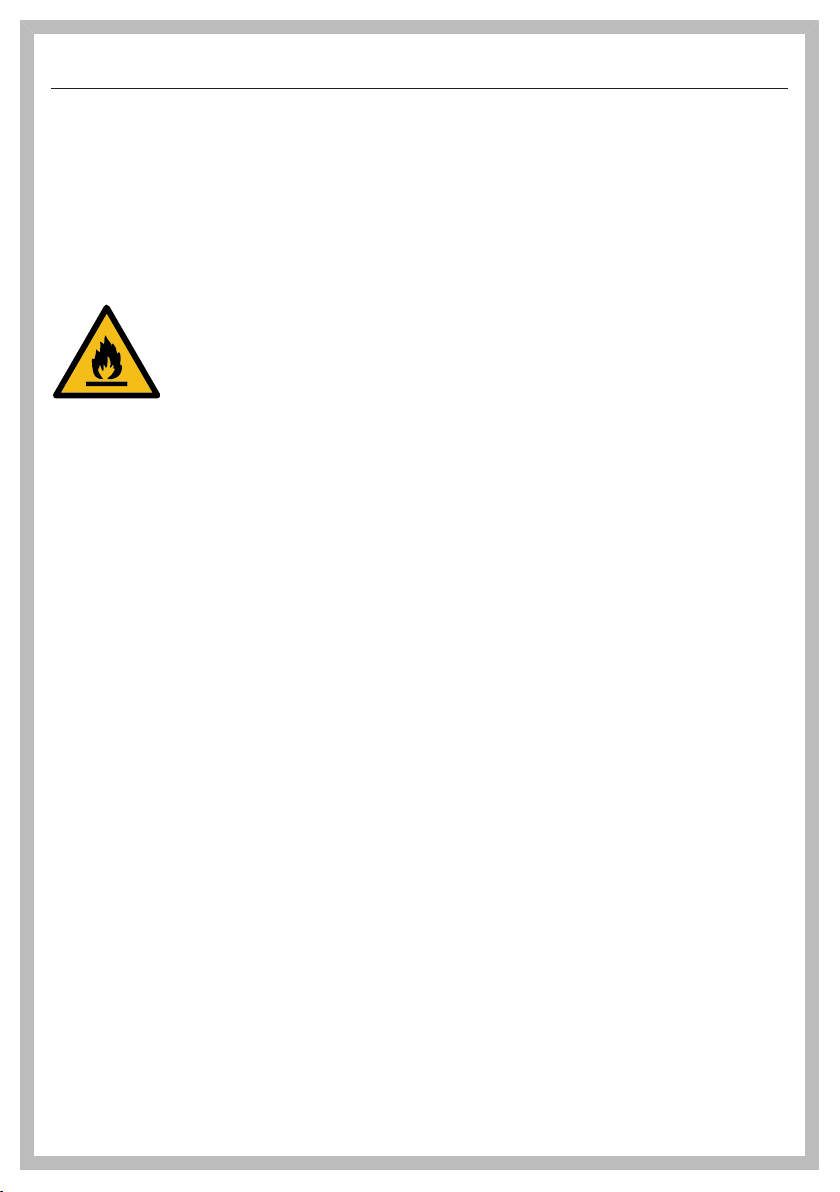
The symbol is located on the compressor and indicates the dan-
ger of inflammable materials. Do not remove the label.
WARNING! This refrigeration appliance contains the coolant Isobu-
tane (R600a), a natural gas which is environmentally friendly, but
flammable. Although it is combustible, it does not damage the ozone
layer and does not contribute to the greenhouse effect.
The use of this coolant has, however, led to a slight increase in the
noise level of the appliance. In addition to the noise of the compres-
sor, you might be able to hear the coolant flowing around the cooling
circuit. Unfortunately, this cannot be avoided, but it does not affect
the performance of the refrigeration appliance.
WARNING! When transporting and installing the refrigeration appli-
ance, ensure that no parts of the cooling circuit are damaged.
Splashes of coolant can damage the eyes.
In the event of damage:
- Avoid open flames or anything which creates a spark.
- Disconnect the refrigeration appliance from the power supply.
- Ventilate the room where the refrigeration appliance is located for
several minutes.
- Contact Miele Customer Service.
IMPORTANT SAFETY INSTRUCTIONS
8
The more coolant there is in a refrigeration appliance, the larger
the room it should be installed in. In the event of a leakage, if the ap-
pliance is in a small room, there is the danger of a combustible gas/
air mixture building up. For every 11g of coolant, at least 1m
3
of
room space is required. The amount of coolant in the refrigeration
appliance is stated on the data plate inside the appliance.
To avoid the risk of damage to the appliance, make sure that the
connection data (fuse rating, frequency and voltage) on the data
plate corresponds to the household supply.
Check that this is the case before connecting the appliance. Consult
a qualified electrician if in any doubt.
The electrical safety of the appliance can only be guaranteed
when correctly grounded. It is essential that this standard safety re-
quirement is met. If in any doubt please have the electrical installa-
tion tested by a qualified electrician.
Temporary or permanent operation on an autonomous power sup-
ply system or a power supply system that is not synchronized with
the grid power supply (e.g., island networks, back-up systems) is
possible. A prerequisite for operation is that the power supply sys-
tem complies with national and local codes.
The function and operation of the protective measures provided in
the domestic electrical installation and in this Miele product must
also be maintained in isolated operation or in operation that is not
synchronized with the grid power supply, or these measures must be
replaced by equivalent measures in the installation.
If the power cord supplied is damaged, it must only be replaced
by an original part to prevent a hazard for the user. Miele can only
guarantee the safety of the appliance when original Miele parts are
used.
Do not connect the appliance to the electrical supply with a power
bar or extension cord. These are a fire hazard and do not guarantee
the required safety of the appliance.
IMPORTANT SAFETY INSTRUCTIONS
9
If moisture gets into electrical components or into the power cord,
it could cause a short circuit. Therefore, do not operate the machine
in areas where there may be moisture or splashing water (e.g.,
garages, laundry rooms).
This appliance must not be installed and operated in mobile in-
stallations (e.g. on a ship).
Do not use a damaged appliance. It could be dangerous. Check
the appliance for visible signs of damage.
For safety reasons, this appliance may only be used after it has
been built in.
The machine must be disconnected from the power supply during
installation, maintenance, and repair work, and installation work on
the fresh water connection. The machine is only completely isolated
from the power supply when:
- the fuses have been switched off, or
- the circuit breaker has been removed completely, or
- the power cord has been unplugged. Pull on the plug and not on
the power cord when disconnecting it from the power supply.
Unauthorized installation, maintenance, and repairs, or a faulty
fresh water connection can cause considerable danger for the user.
Installation, maintenance, and repairs, installation work on the fresh
water connection, and all repairs on the ice/water outlet must only
ever be carried out by a Miele authorized technician.
The ice cube maker must only be connected to a cold water line.
Miele cannot be held liable for damage caused by a faulty con-
nection to the fresh water supply.
Any manufacturer's warranty may be void if the appliance is not
repaired by a Miele approved service technician.
IMPORTANT SAFETY INSTRUCTIONS
10
Faulty components must only be replaced by genuine Miele re-
placement parts. Miele can only guarantee the safety standards of
the appliance when Miele replacement parts are used.
This refrigeration appliance is supplied with a special bulb to cope
with particular conditions (e.g., temperature, moisture, chemical re-
sistance, abrasion resistance, and vibration). This bulb must only be
used for the purpose for which it is intended. The bulb is not suitable
for room lighting. Replacement bulbs may only be installed by an au-
thorized technician or by Miele Customer Service.
Proper installation
When installing the refrigeration appliance, it is a mandatory re-
quirement to follow the installation instructions supplied with it.
Two people are required to install the appliance.
Change the door hinging (if necessary) as described in these in-
stallation instructions.
Only install the refrigeration appliance in a solid, rectangular, and
level housing unit, positioned on an even and level floor.
Correct use
This refrigeration appliance is designed for use within specific am-
bient temperatures (climate range). Do not use in ambient tempera-
tures for which it is not designed. The climate range is stated on the
data plate in the interior cabinet of the refrigeration appliance. A
lower ambient temperature will cause the compressor to switch off
for longer periods, meaning that the refrigeration appliance is unable
to maintain the required temperature.
WARNING! DANGER of overheating! Do not cover or block the air
vents. This can impair the efficiency of the appliance, increase the
power consumption and cause damage to the appliance.
IMPORTANT SAFETY INSTRUCTIONS
11
If storing food which contains a lot of fat or oil in the appliance,
make sure that it does not come into contact with plastic compo-
nents as this could cause stress cracks or break the plastic.
Risk of fire and explosion. Do not store any explosive materials or
products containing flammable propellants (e.g., spray cans) in the
appliance. Electrical components can cause flammable mixes of
gases to ignite.
WARNING! Risk of explosion. Do not operate any electrical equip-
ment (e.g., an electric ice-cream maker) inside the refrigeration appli-
ance. Risk of sparking and explosion.
Risk of injury and damage. Do not store cans or bottles containing
carbonated drinks or liquids which could freeze in the freezer sec-
tion. Otherwise they could burst.
Risk of injury and damage. When chilling drinks in the freezer sec-
tion, make sure that bottles are not left in for more than one hour.
Otherwise they could burst.
Risk of injury. Never handle frozen food or the metal parts of the
appliance with wet hands. Your hands may freeze to the frozen food
or to the metal.
Risk of injury. Do not take ice cubes out with your bare hands and
never place ice cubes or ice pops in your mouth straight from the
freezer section. The very low temperature of the frozen food can
cause frost burn to the lips and tongue.
Do not refreeze partially or fully defrosted food. Consume de-
frosted food as soon as possible, as it will lose its nutritional value
and spoil if left for too long. Defrosted food may only be refrozen af-
ter it has been cooked.
IMPORTANT SAFETY INSTRUCTIONS
12
When eating stored food, there is a danger of food poisoning.
Storage times will depend on several factors, including the freshness
and quality of the food, as well as the temperature at which it is
stored. Observe the manufacturer's “use-by” dates and storage in-
structions.
Accessories and parts
Use only genuine original Miele parts. If parts or accessories from
other manufacturers are used, the warranty may become invalid.
Miele will guarantee to supply functional spare parts for a mini-
mum of 10years and up to 15years following the discontinuation of
your refrigeration appliance.
Cleaning and maintenance
Do not use any oil or grease on the door seals.
They can cause the seals to deteriorate over time.
WARNING! DANGER of injury and damage!
Do not use any mechanical or other types of aids which are not rec-
ommended by the manufacturer to accelerate the defrosting
process.
Never use a steam cleaner to clean the appliance.
The steam can reach the electrical components and cause a short
circuit.
Sharp edged or pointed objects will damage the evaporator, caus-
ing irreversible damage to the appliance. Do not use sharp edged or
pointed objects to
- remove frost or ice,
- separate frozen foods or remove ice trays.
Never place electric heaters or candles in the appliance to defrost
it. These can damage the plastic parts.
IMPORTANT SAFETY INSTRUCTIONS
13
Do not use defrosting sprays or de-icers, as they could contain
substances which could damage the plastic parts or which might
cause the build-up of gases and pose a danger to health.
Transport
To avoid damage to the appliance, always transport it upright and
in its packaging.
Risk of injury and damage. The refrigeration appliance is very
heavy and must be transported by two people.
Disposal of your old appliance
DANGER. Risk of child entrapment!
Children could become trapped in the machine and could suffocate.
- Remove the machine doors.
- Remove the drawers.
- Leave the adjustable shelves in the machine so children cannot
easily climb inside.
DANGER of electric shock!
- Cut the plug off the power cord.
- Cut the power cord off the old appliance.
Dispose of them separately from the appliance.
Ensure that the appliance is not stored in the vicinity of gasoline or
inflammable gases and liquids during and after disposal.
WARNING! Make sure that the coolant pipework is not damaged
during disposal to avoid uncontrolled leakage of oil and coolant (see
data plate for coolant type).
If your old refrigeration appliance has a door lock, destroy it. This
will prevent the risk of children playing accidentally locking them-
selves in and endangering their lives.
IMPORTANT SAFETY INSTRUCTIONS
14
Splashes of coolant can cause damage to the eyes. Be careful not
to damage any part of the pipework while awaiting disposal, e.g. by
- puncturing the coolant channels in the evaporator,
- kinking any pipework,
- scratching the surface coating.
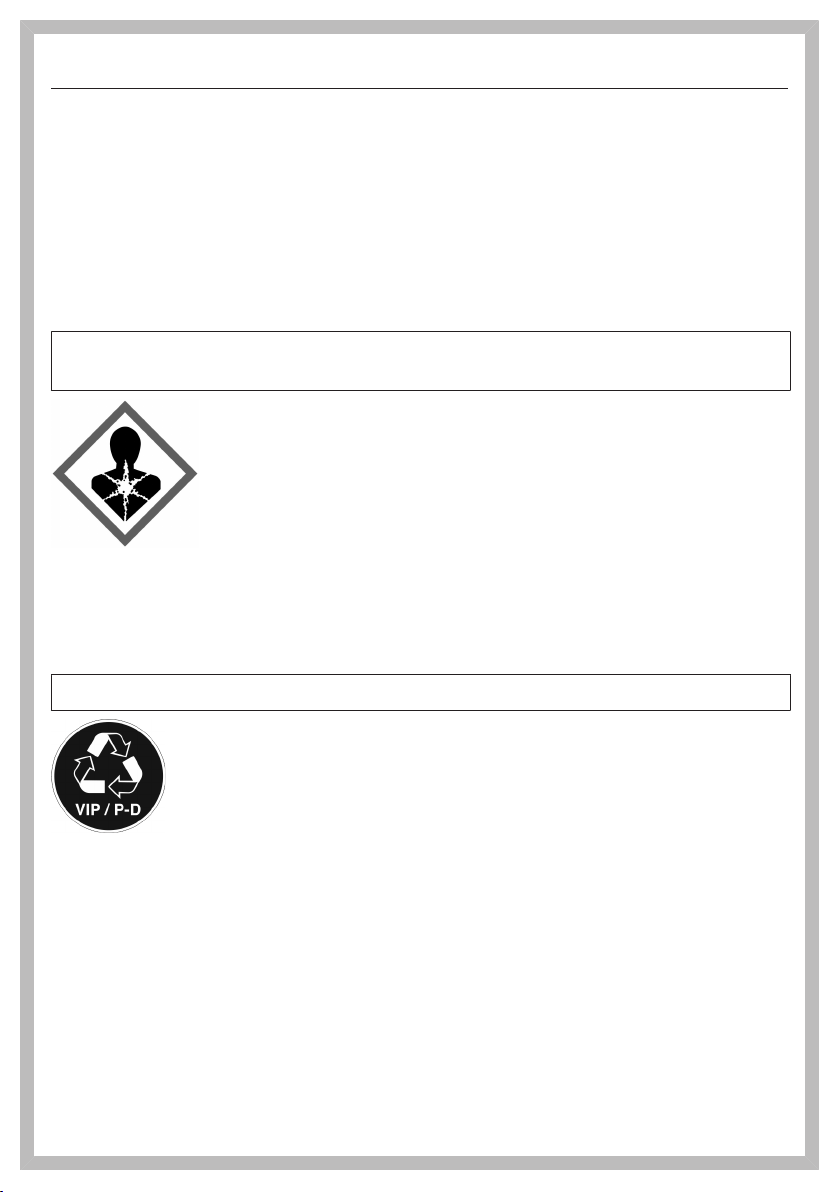
Symbol on the compressor (depending on model)
This information is only relevant for recycling. There is no risk during normal oper-
ation.
The oil in the compressor can be fatal if swallowed or if it pene-
trates the airways.
Symbol on the rear of the appliance (depending on model)
This label or a similar one is only relevant for recycling. Do not remove the lable.
This information refers to the foamed-in panels in the door and/or
the housing.
Caring for the environment
15
Disposal of packaging material
The packaging is designed to protect
the appliance from damage during
transportation. The packaging materials
used are selected from materials which
are environmentally friendly for disposal
and should be recycled.
Ensure that any plastic wrappings,
bags, etc. are disposed of safely and
kept out of the reach of children. Return
the packaging to your dealer.
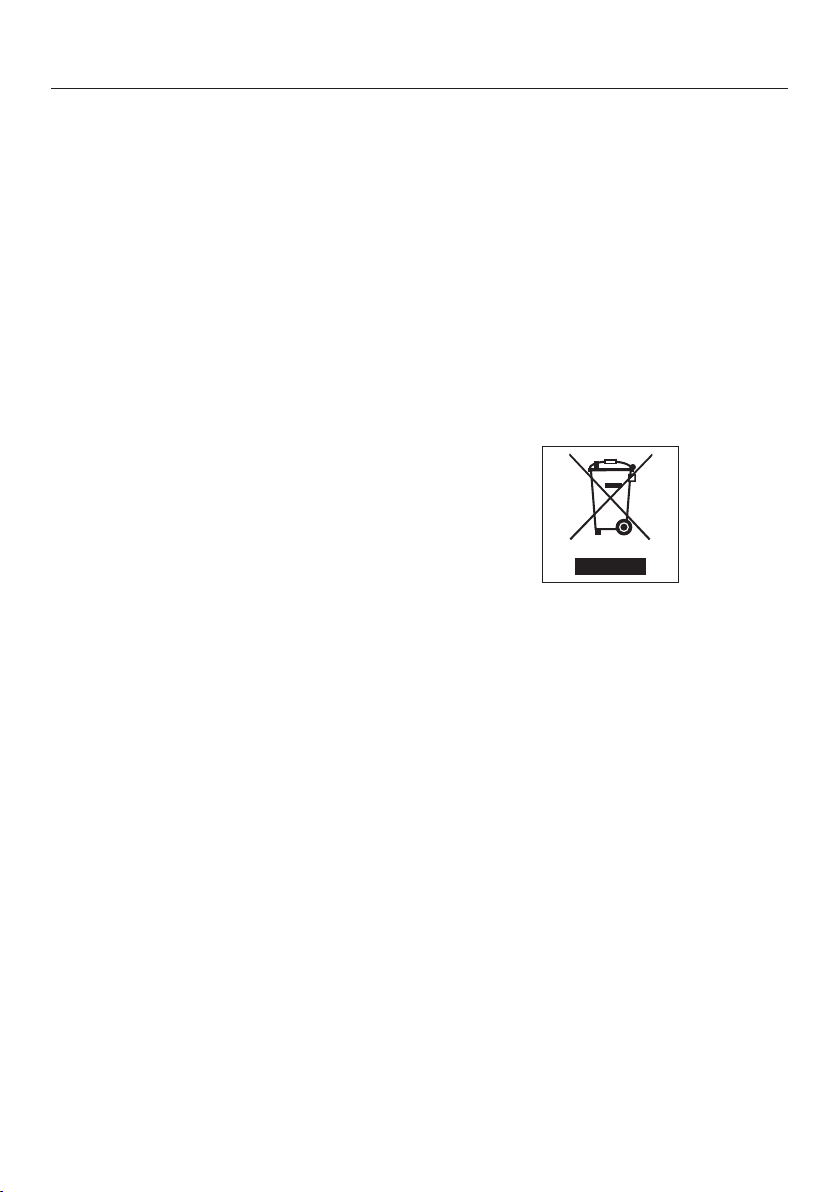
Disposing of your old appli-
ance
Electrical and electronic appliances
contain many valuable materials. They
also contain certain materials, com-
pounds, and components which were
essential for their correct functioning
and safety. These could be hazardous
to your health and to the environment if
disposed of with household trash or if
handled incorrectly. Please do not,
therefore, dispose of your old appliance
with household trash.
Follow the local regulations or the dis-
posal of appliances. Instead, please
make use of officially designated collec-
tion and disposal points to dispose of
and recycle electrical and electronic ap-
pliances. By law, you are solely respon-
sible for deleting any personal data
from the appliance prior to disposal.
Take care not to damage your refrigera-
tion appliance’s pipework before or dur-
ing transportation to an authorized col-
lection depot.
This is to ensure that coolant in the
cooling circuit and oil in the compressor
is contained, and will not leak into the
environment.
Installation
*INSTALLATION*
16
Installation location
WARNING! Risk of damage and
injury due to the refrigeration appli-
ance tipping over.
This refrigeration appliance is very
heavy and can tip forward when the
door is open.
Keep the appliance door(s) closed
until the refrigeration appliance has
been built in. The refrigeration appli-
ance must be secured in its building-
in niche in accordance with the oper-
ating and installation instructions.
Fire hazard and risk of damage
from appliances that give off heat.
Appliances that give off heat can
catch fire and set fire to the refrigera-
tion appliance.
This refrigeration appliance must not
be installed underneath a cooktop.
Fire hazard and risk of damage
from open flames.
Open flames can set fire to the refrig-
eration appliance.
Keep open flames (such as a candle)
away from the refrigeration appli-
ance.
This appliance should be installed in a
dry, well-ventilated room.
When deciding where to install your re-
frigeration appliance, please bear in
mind that it will use more energy if in-
stalled near to a heater, a range, or an-
other appliance that gives off heat.
Avoid direct sunlight.
The higher the ambient temperature,
the longer the compressor runs and the
higher the energy consumption is.
When installing the appliance, please
note:
- IMPORTANT! The power plug must
be easily accessible so that the appli-
ance can be disconnected from the
mains quickly in an emergency. It
must not be behind the back of the
appliance.
- The plug and power cord must not
touch the back of the appliance as
they could be damaged by vibrations
from the appliance.
- Do not plug other appliances into
electrical outlets behind this appli-
ance.
Installation
*INSTALLATION*
17
Risk of damage due to high hu-
midity.
In environments with high humidity,
condensation can build up on exter-
nal refrigeration-appliance panels.
This condensate can cause corrosion
on external appliance panels.
Install the refrigeration appliance in a
dry and/or air-conditioned room with
sufficient ventilation.
After installation please make sure
that the appliance door(s) closes
(close) properly and the refrigeration
appliance is installed in accordance
with these installation instructions.
The specified ventilation specifica-
tions must be observed.
Side-by-side combinations
Risk of damage due to conden-
sation on external appliance panels.
In environments with high humidity,
condensation can build up on exter-
nal appliance panels, which can
cause corrosion.
Do not place different refrigeration
appliances directly next to or on top
of one other.
Exception: your refrigeration appliance
can be installed next to another refriger-
ation appliance with an integrated heat-
ing unit if each appliance is built into a
separate niche. Please contact your
dealer for specific information about
which combinations will work with your
refrigeration appliance.
Climate class
This refrigeration appliance is designed
for use within specific ambient temper-
atures (climate range). Do not use in
ambient temperatures for which it is not
designed. The climate range is stated
on the data plate in the interior cabinet
of the refrigeration appliance.
Climate class Ambient temper-
ature
SN 50 to 90°F/
+10 to +32°C
N 60 to 90°F/
+16 to +32°C
ST 60 to 100°F/
+16to +38°C
T 60 to 109°F/
+16to +43°C
A lower ambient temperature leads to
the compressor switching off for longer
periods. This can cause the internal
temperature in the refrigeration appli-
ance to rise with the risk of food deteri-
orating and going off.

Installation
*INSTALLATION*
18
Ventilation
WARNING! Fire hazard and risk
of damage due to insufficient ventila-
tion.
If the refrigeration appliance is not
ventilated sufficiently, the compres-
sor will run more frequently and for
longer periods. This causes in-
creased energy consumption and an
increased compressor operating
temperature, which can result in
damage to the compressor.
Please ensure that there is adequate
ventilation around the refrigeration
appliance.
It is essential to observe the required
ventilation gaps.
The ventilation gaps must never be
obstructed.
They must also be cleaned on a reg-
ular basis to remove dust.
There must be a gap of at least
½inch (13mm) between the back of
the appliance and the rear wall. If this
gap is not maintained, this will result
in increased energy consumption.
Air at the back of the refrigeration appli-
ance gets warm. The appliance housing
unit must therefore be constructed to
allow sufficient space for ventilation
(see “Installation dimensions” and the
installation instructions provided).
- To ensure ventilation an air channel of
a minimum 1 1/2" (40mm) depth
must be provided at the back of the
appliance.
- The ventilation slits in the toe-kick, in
the cabinet and under the top of the
cabinet must provide a total
passage volume of at least 31"²
(200cm
2
) to allow the warm air to
dissipate unimpeded.
- If you wish to fit a grille in the ventila-
tion openings, the ventilation open-
ings must be larger than 31"²
(200cm
2
). The passage volume of
31"² (200cm
2
) is the total area of the
opening slits in the grille.
- Important! The larger the ventilation
slits, the more economically the ap-
pliance will work.
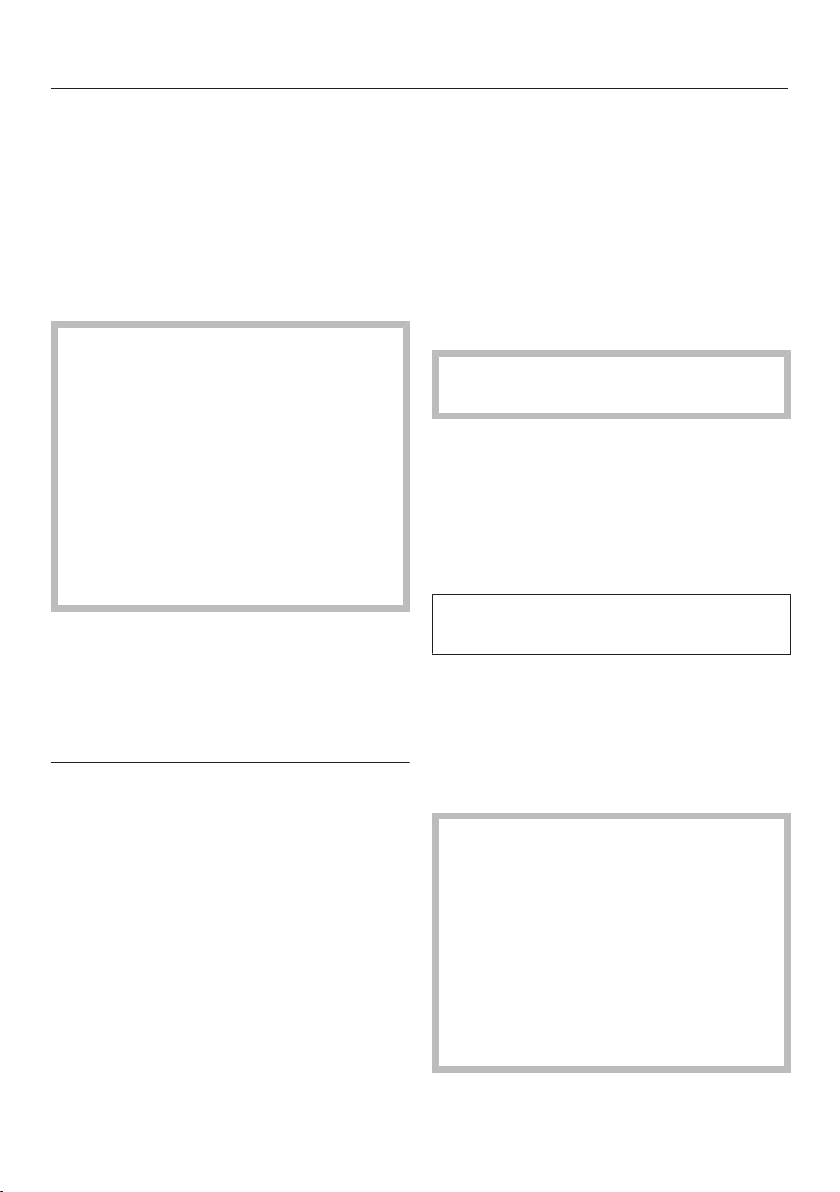
Lower ventilation slit
The appliance can be ventilated via the
cabinet plinth with the ventilation grille
supplied or with a minimum ventilation
opening of 31 in
2
cross-section area.
When using the grille supplied, please
proceed as follows:
Cut an opening in plinth as shown
in the diagram.
Place ventilation grille in the open-
ing.
Push snap fasteners into the venti-
lation grille from behind until the
hooks touch the plinth.
Reinstall the plinth with the ventilation
grille.
Installation
*INSTALLATION*
19
Cabinet doors
An upper cabinet door for the refrigera-
tor section and a lower cabinet door for
the freezer section are required.
The cabinet doors must be at least
5/8“ (16mm) / 3/4” (19mm) thick.
–Weight of the door panel
If the door panel is too heavy
damage can occur.
Installing a door panel which is heav-
ier than the maximum permitted
weight could damage the hinges.
This can cause subsequent func-
tional problems.
Before installing the door panel, en-
sure that the weight of the door
panel does not exceed the maximum
permitted weight.
The maximum permissible weights of
the door panels in lb (kg) are:
Appliance Upper
door
panel
Lower
door
panel
KFN(S) 7795 D 39.7 (18) 26.5 (12)
Calculation of cabinet door size
The width of the cabinet door de-
pends on the style of the kitchen and
the gap between the unit door panels.
When calculating the height of the
cabinet door, remember that the top
edge of the door must be at the same
height as that of the doors of the adja-
cent units.
The cabinet door must be fitted cor-
rectly and not under tension.
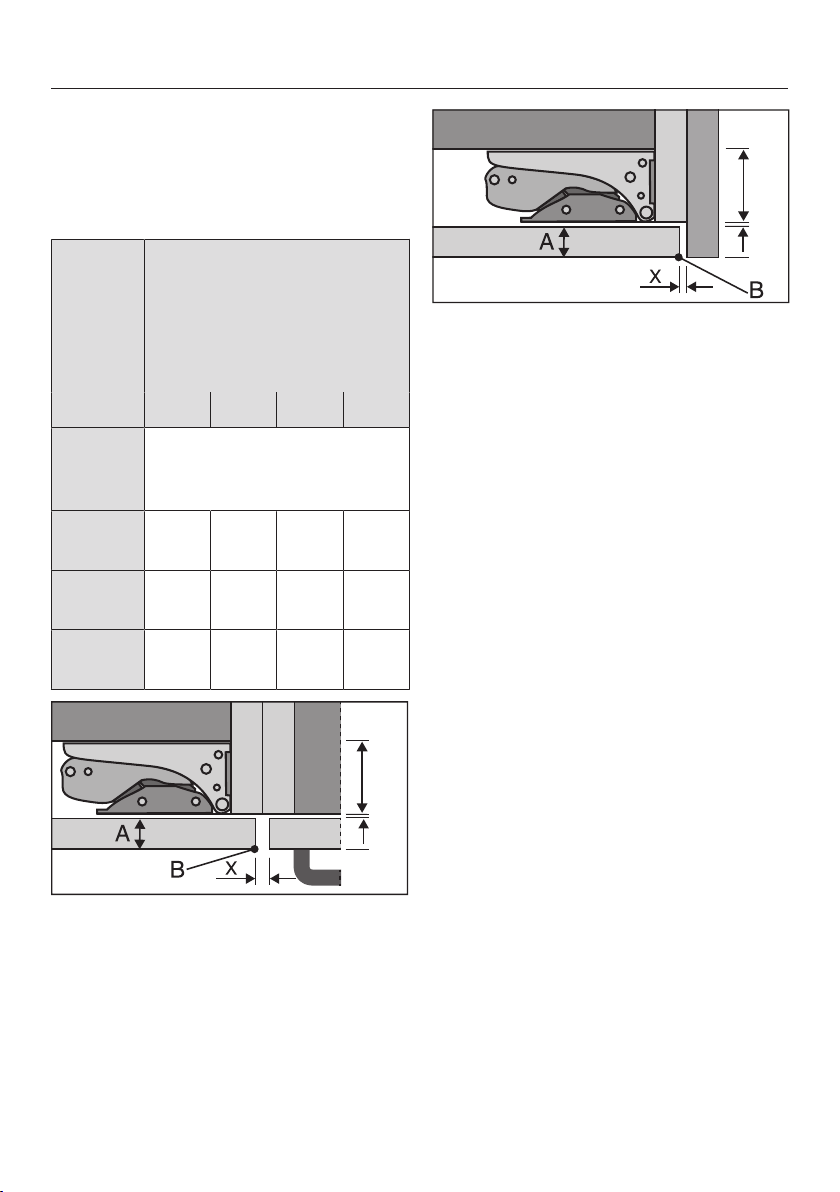
Horizontal and vertical gaps
Depending on the style of kitchen cabi-
netry, the thickness and edge radius of
the custom door panel and the gap that
runs around the door, vertically and hor-
izontally, are specified.
It is essential to pay attention to the
following:
- Horizontal gap
The gap between the door panel and
the housing-unit door above or below it
must be at least 1/8" (3mm).
- Vertical gap
If the gap between the refrigeration-
appliance door panel and the adjoin-
ing housing-unit door or wall on the
hinged side is too small, the appli-
ance door could collide with the ad-
joining housing-unit door or wall
when opened.
It may be necessary to adjust the
size of this gap to suit the thickness
and edge radius of the door panel.
Installation
*INSTALLATION*
20
This must be taken into consideration
when planning your kitchen and when
replacing an old refrigeration appliance
with a new one to ensure the installation
conditions required are met.
Door
panel
thick-
ness
A [in
(mm)]
Gap X[in (mm)]
for different edge radiiB
R0 R1.2 R2 R3
≥5/8"-
3/4"
(16–19)
min. 1/8" (3)
13/16"
(20)
3/16"
(5)
3/16"
(4)
3/16"
(4)
1/8"
(3.5)
13/16"
(21)
3/16"
(5.5)
3/16"
(5)
3/16"
(4.5)
3/16"
(4)
7/8" (22) 1/4"
(6.5)
1/4"
(6)
3/16"
(5.5)
3/16"
(5)
PP
PP
Adjoining housing-unit door
A=Door-panel thickness
B=Edge radius
X=Gap
PP
PP
Adjoining side wall
A=Door-panel thickness
B=Edge radius
X=Gap
Tip: Fit a spacer between the housing-
unit body and the side wall. This way
you will get a sufficiently wide gap.
Tip: Please also see the diagram and
information on the following pages on
calculating the cabinet door height.
Installation
*INSTALLATION*
21
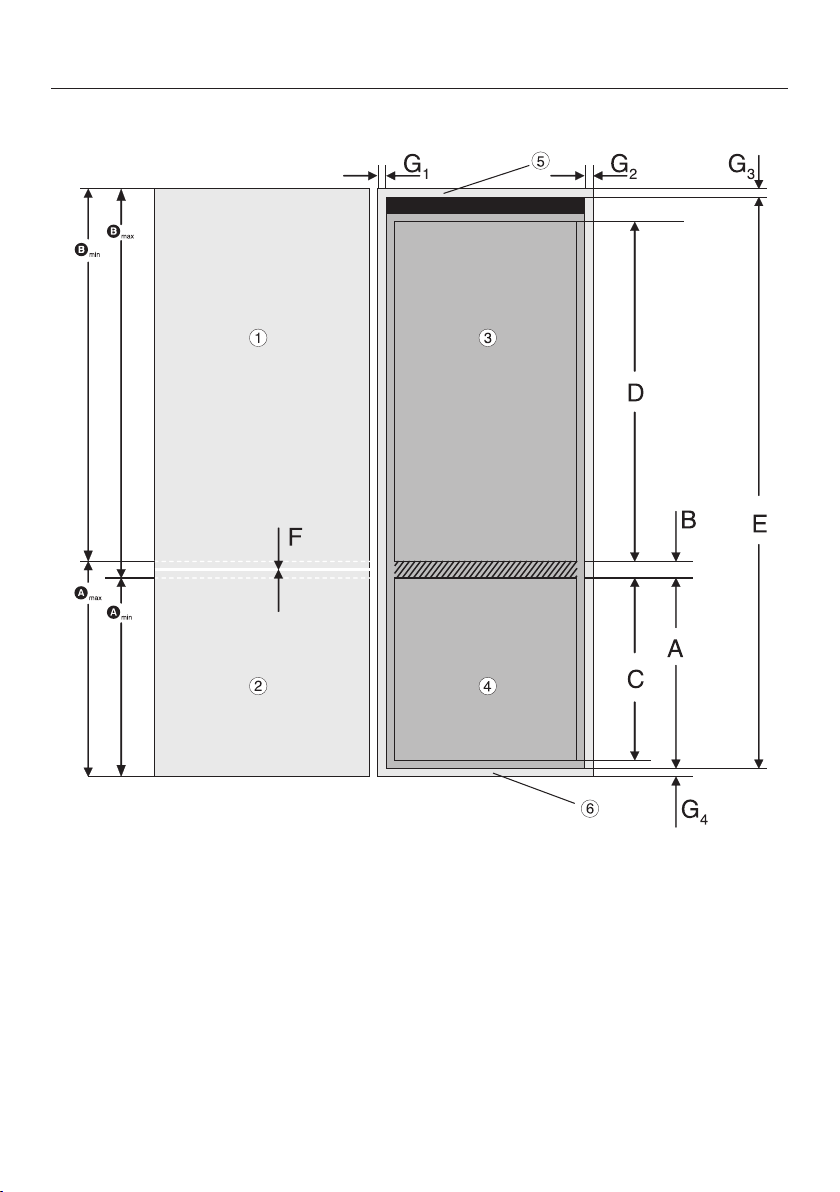
Cabinet door dimensions
min
/
max
height of freezer section cabinet door
min
/
max
height of refrigerator section cabinet door
Refrigerator section cabinet door
Freezer section cabinet door
Refrigerator section appliance door
Freezer section appliance door
Fitted unit cover panel
Fitted unit cabinet base
Installation
*INSTALLATION*
22
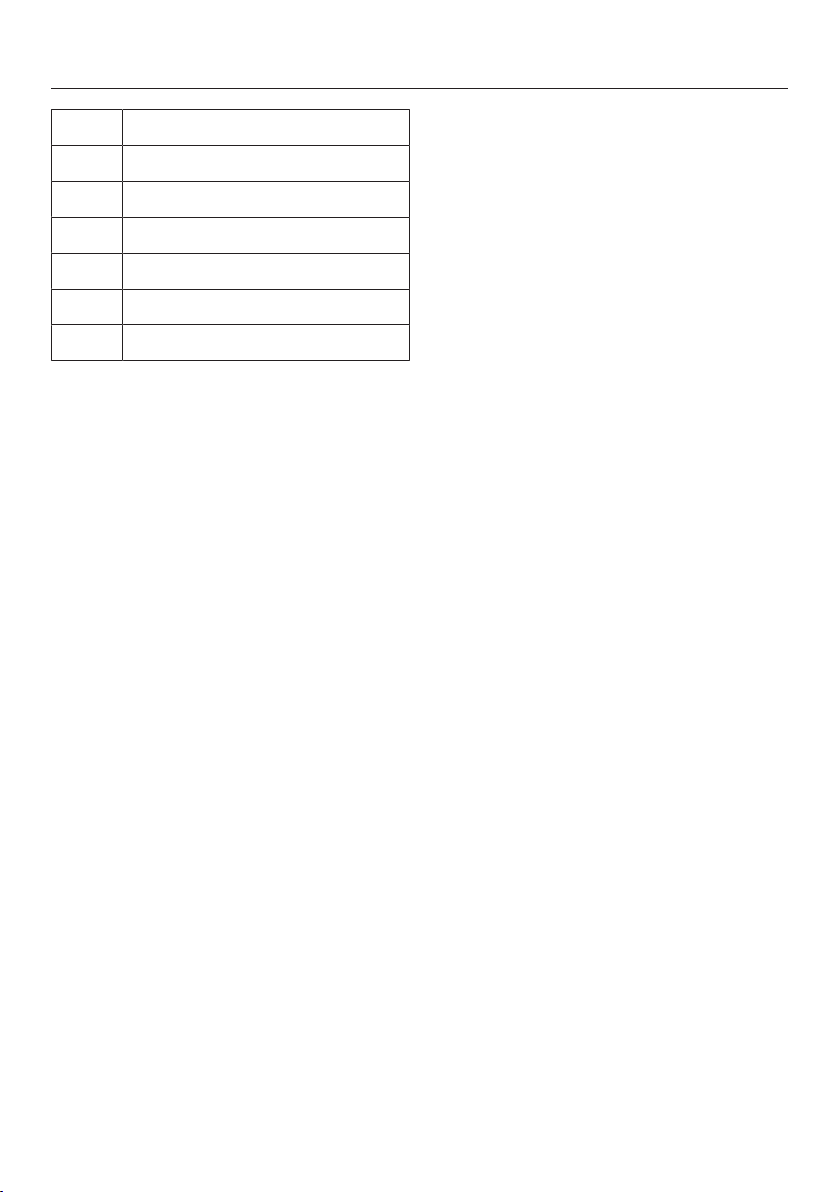
A 27 3/8" (695mm)
B 9/16" (15mm)
C 24 3/4" (629mm)
D 38 15/16" (989mm)
E 70 3/8" (1788mm)
F approx. 1/8" (3mm)
G
1-4
3/4" (19mm)
Calculating the height of the cabinet
doors
These examples are based on the fol-
lowing measurements, which may vary
depending on the design of the kitchen:
- The horizontal gap between cabinet
doors and is F=approx.
1/8" (3mm). This gap must be within
the hatched area (see drawing).
- The thickness of the cover panel
and the base of the fitted unit is
usually 3/4" (19mm).
–Height of freezer section cabinet
door
1. The freezer section cabinet door
must be at least A=273/8"
(695mm) to cover the bottom section
of the appliance.
2. To cover the front of the cabinet floor
panel, add the height of the cabi-
net base to height A:
min
=A+G
4
= 281/8" (714mm).
3. The height of the cabinet door may
need to be altered depending on the
adjacent kitchen units:
max
=A+G
4
+D- 1/8" (3mm)
=289/16'' (726mm).
–Height of refrigerator section cabi-
net door
This height is calculated on the basis of
the freezer section cabinet door
height:
1. Height of freezer section cabinet
door=
max
:
min
=A+G
3
+G
4
-
max
-
1/8“ (3mm)
=43 3/16” (1097mm)
2. Height of freezer section cabinet
door=
min
:
max
=A+G
3
+G
4
-
min
-
1/8“ (3mm)
=43 11/16” (1109mm)
Installation
*INSTALLATION*
23
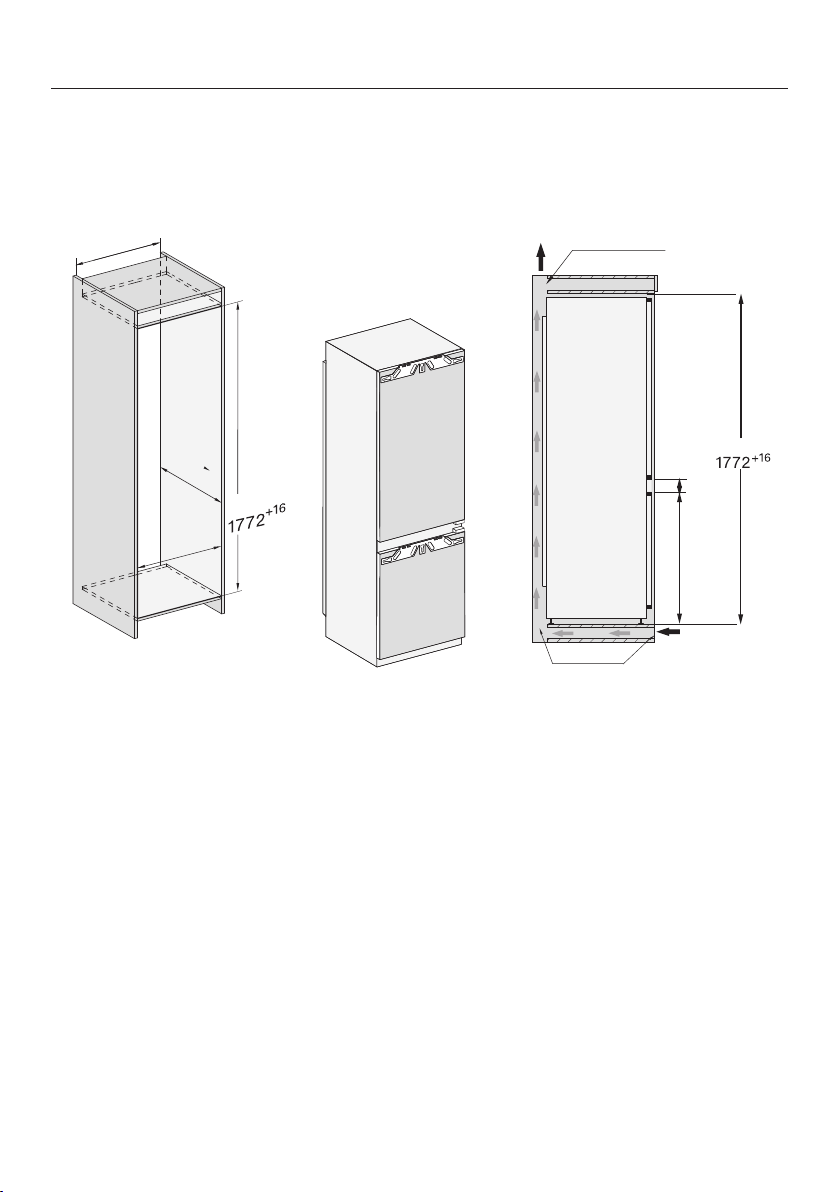
Installation dimensions
Installation in a tall cabinet/side view
All dimensions are given in inches (mm).
560
+10
≥500
≥550*
≥19 11/16"
≥21 11/16*
22 1/16"
+3/8"
69 3/4"
+5/8"
≥200cm²
≥0,2 ft²
≥200cm²
≥0,2 ft²
69 3/4"
+5/8"
695
15
19/32"
27 3/8"
* The declared energy consumption was achieved with a niche depth of
221/16"(560mm). The refrigeration appliance is fully capable of functioning at a
niche depth of 215/8"(550mm) but will consume slightly more energy.
Before installation, ensure the housing-unit dimensions are the correct size.
Installation
*INSTALLATION*
24
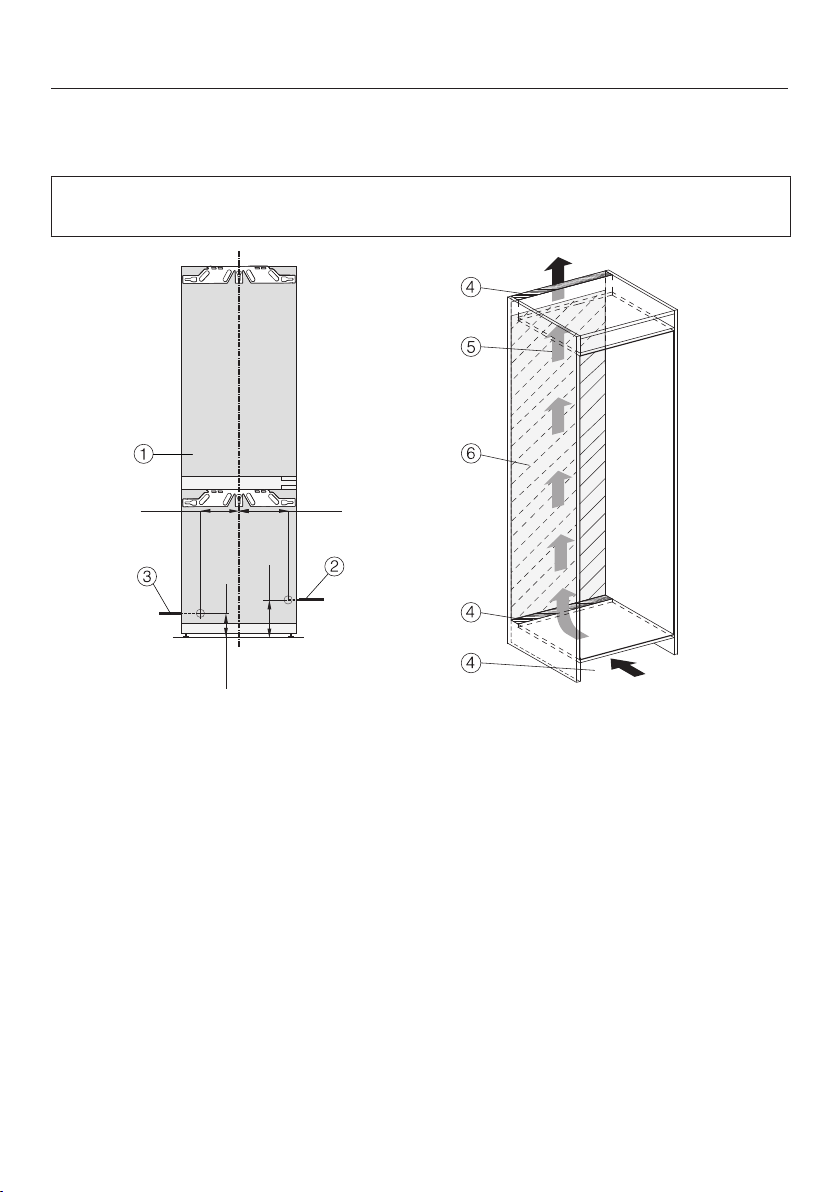
Connections and ventilation
All dimensions are given in inches (mm).
The specified ventilation cross-sections must be adhered to in order to ensure
the correct functioning of the refrigeration appliance.
225
145
5 11/16"
8 7/8"
2 3/16"
213
3/8"
55
8
8
a
Front view
b
Power cord, length=7' 2" (2,200mm)
A longer power cord is available to order from Miele Customer Service.
c
Water connection, length = 6' 6" (2,000mm)
d
Ventilation cut-out min. 31"² (200cm²)
e
Ventilation
f
No connections permitted in the rear panel
Installation
*INSTALLATION*
25
Limiting the opening angle of
the appliance doors
The door hinges are set to enable the
appliance doors to be opened wide.
If the opening angle of the doors needs
to be limited to approx. 90°, the hinge
can be adjusted to accommodate this.
The locking pins for limiting the door
opening must be installed before the
appliance is installed.
The refrigerator-section door must be
taken off in order to insert the pins into
the upper hinge of the freezer-section
door (see the installation instructions
provided).
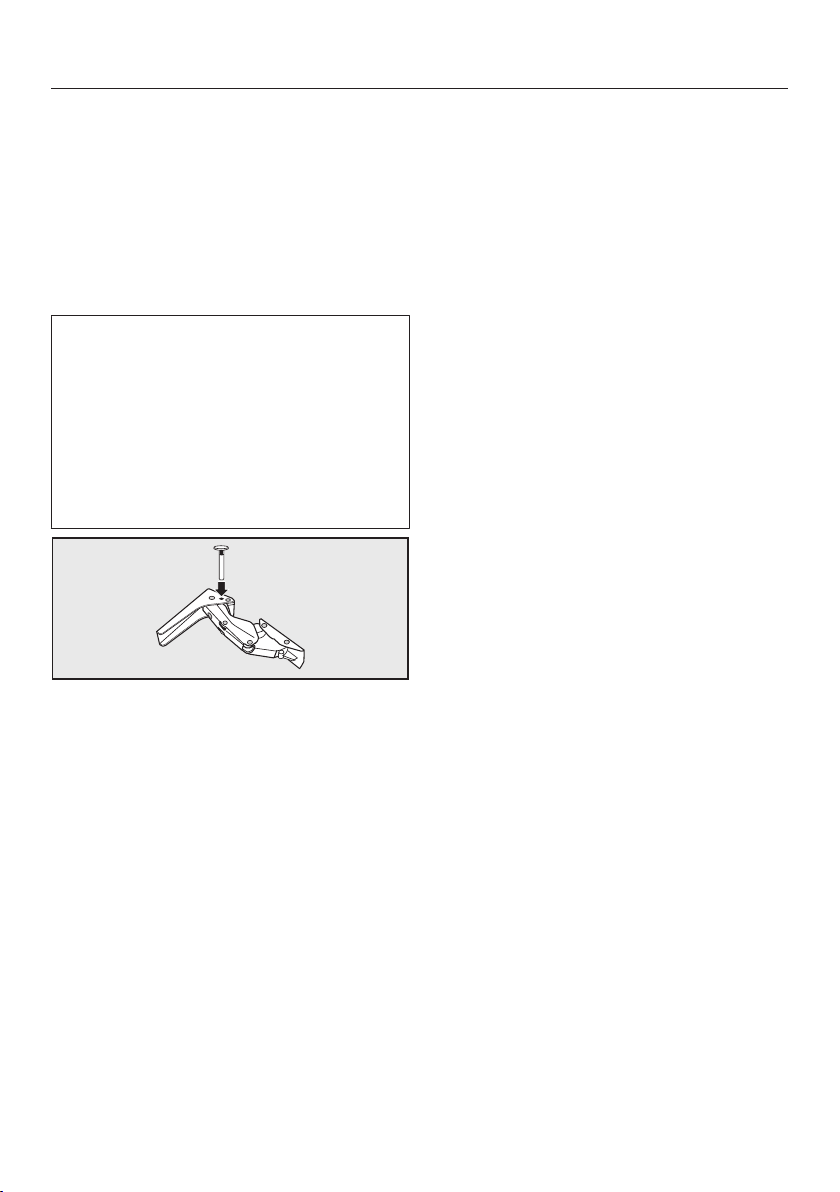
Insert the locking pins supplied for
limiting the door opening into the
hinges from above.
This will limit the opening angles of the
appliance doors to approx. 90°.
Installation
*INSTALLATION*
26
Water connection
Information on the plumbed-water
connection
Risk of injury and appliance
damage if appliance is not con-
nected properly.
Failing to connect the appliance
properly can result in personal injury
and/or material damage.
The appliance may only be con-
nected to the plumbed-water con-
nection by qualified specialists.
Disconnect the refrigeration ap-
pliance from the power supply before
connecting it to the water supply.
Close the shut-off valve before con-
necting the refrigeration appliance to
the water supply.
WARNING! Risk to health and
risk of damage due to contaminated
water!
The quality of the incoming water
must conform to the requirements for
drinking water in the country where
the refrigeration appliance is being
used.
Connect the refrigeration appliance
to the drinking-water supply.
This appliance meets the requirements
of IEC61770 and EN61770.
Connection to the water supply must
comply with the applicable regula-
tions in the country where the appli-
ance is being installed. All appliances
and systems used to supply water to
the refrigeration appliance must also
comply with the applicable regula-
tions in the respective country.
For correct functioning (dispensing rate,
size of ice cubes, noise level) the water
connection pressure needs to be be-
tween 21.7psi and 90psi (1.5bar and
6.2bar).
If the water connection pressure ex-
ceeds 90psi (6.2bar), a pressure re-
ducing valve must be fitted.
The water supply line and the inlet sole-
noid valve on the refrigeration appliance
are suitable for a water connection
pressure of up to 145psi (10bar).
Use fresh water to ensure that the
quality of the ice cubes remains high.
Connect the stainless steel hose to
the fresh-water supply and avoid
connection to a water supply in
which the water might stagnate.
Only use the hose supplied. The
hose must not be shortened, ex-
tended, or replaced by a different
hose. Dispose of old hoses.
The hose must only be replaced by
an original Miele spare part. The
food-grade hose is available to order
from the Miele online shop, from
Miele Customer Service, or from your
local Miele dealer.
Installation
*INSTALLATION*
27
A shut-off valve must be provided be-
tween the hose and the plumbed-water
connection to ensure that the water
supply can be cut off if necessary.
Make sure that the shut-off valve is
still accessible after the appliance
has been installed.
Water supply
Ensure that the connections are tight
and leak-proof.
Risk of damage to the hose.
The water supply from the shut-off
valve to the ice-cube maker has
been interrupted.
Do not bend or damage the hose.
A shut-off valve with a metric
R3/4thread must be incorporated
when connecting to the water supply.
The solenoid valve is located at the
back of the refrigeration appliance on
the bottom right. It also has a metric
R3/4thread.
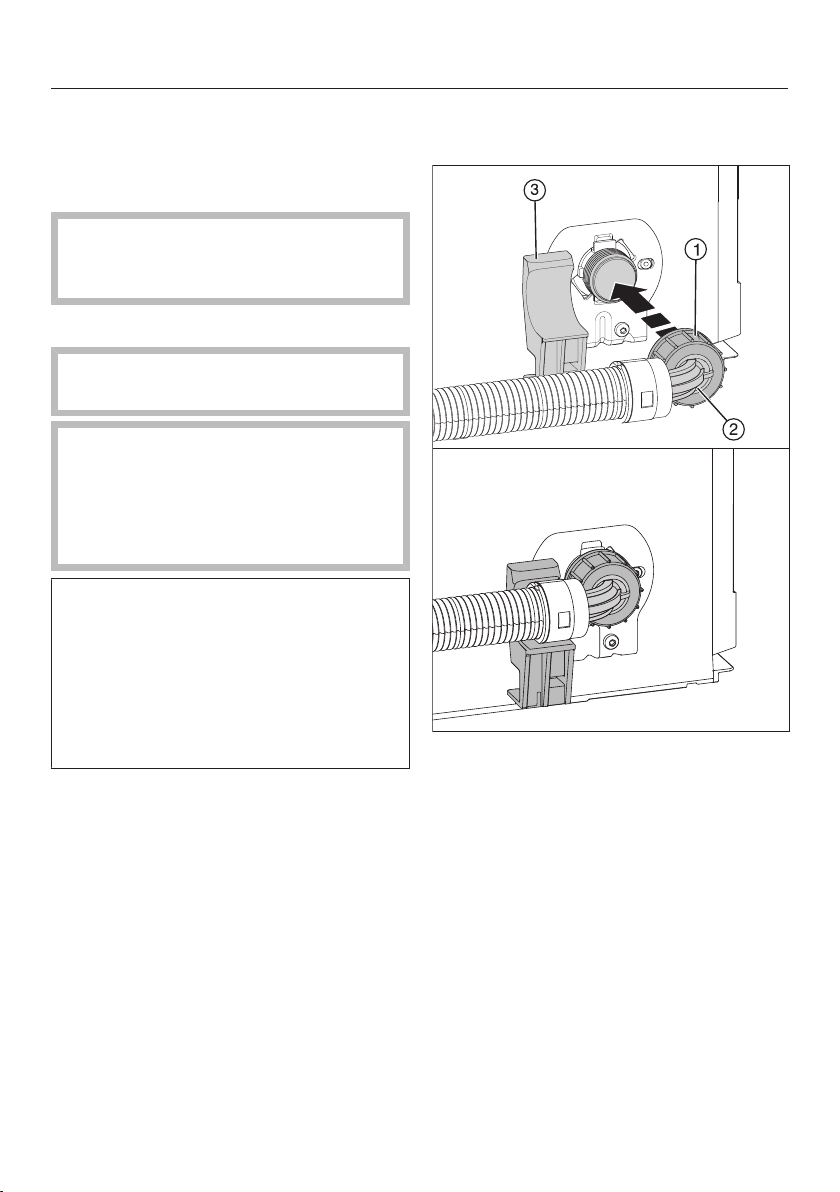
–Connecting the hose to the refriger-
ation appliance
Pull the cover off the thread of the so-
lenoid valve.
Position the angled end of the
hose horizontally on the holder
and hold onto it securely.
Screw the nut onto the thread by
hand until it is securely in place.
Installation
*INSTALLATION*
28
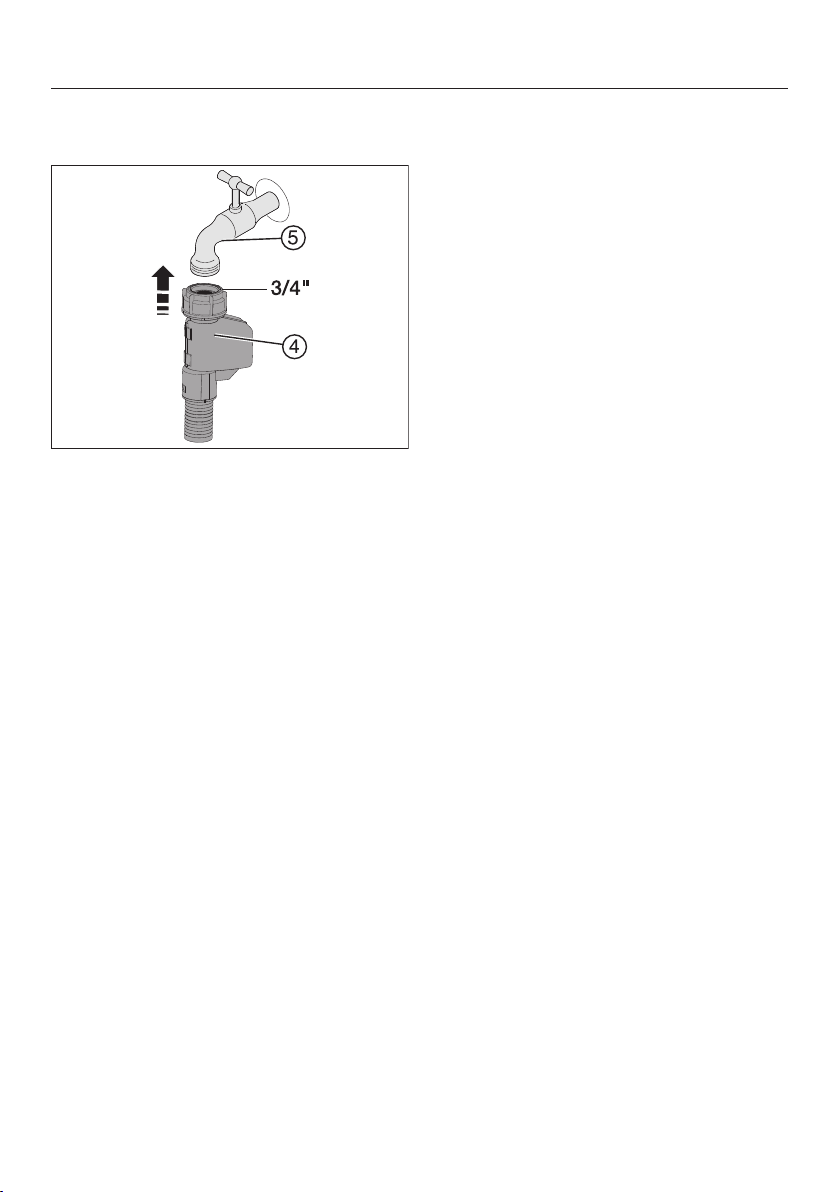
–Connecting the hose to the shut-off
valve
Connect the nut to the shut-off
valve.
–Checking the plumbed-water con-
nection
Test the water connection for leaks be-
fore installing the appliance in the
niche.
Slowly open the shut-off valve and
check the screw connections.
Installation
*INSTALLATION*
29
Lead-free certificate
This product F 1413 Vi (KIMSDF18US) is tested and certified by WQA against
NSF/ANSI 372 for "lead free" compliance.
Miele & Cie. KG
Carl-Miele-Straße 29
D-33332 Gütersloh
Lead free certificate
35
This product is tested and certified by WQA against NSF/ANSI 372 for “lead free”
compliance.
Miele & Cie. KG
Carl-Miele-Strasse 29
D-33332 Gütersloh
Installation
*INSTALLATION*
30
Electrical connection
The refrigeration appliance must only be
connected to a grounded outlet using
the power cord supplied.
The outlet must be easily accessible af-
ter the refrigeration appliance has been
installed. If the outlet is not easily ac-
cessible, ensure that a suitable means
of disconnection is provided on the in-
stallation side for each pole.
Risk of fire from overheating.
Connecting the refrigeration appli-
ance to a power bar or to an exten-
sion cord can overload the cord.
For safety reasons, do not use a
power bar or an extension cord.
The electrical installation must comply
with VDE0100.
For safety reasons, we recommend us-
ing a type residual current device
(RCD) in the assigned electrical installa-
tion for connecting the refrigeration ap-
pliance.
If the power cord is damaged, it must
only be replaced with a specific cord of
the same type (available from Miele
Customer Service). For safety reasons,
such replacement may only be carried
out by a qualified technician or Miele
Customer Service.
These operating instructions and the
data plate indicate the nominal power
consumption and the appropriate fuse
rating. Compare this information with
the data of the on-site electrical con-
nection.
If in any doubt, consult a qualified elec-
trician.
Temporary or permanent operation on
an autonomous power supply system or
a power supply system that is not syn-
chronized with the grid power supply
(e.g., island networks, back-up sys-
tems) is possible. A prerequisite for op-
eration is that the power supply system
complies with the specifications of
EN50160 or an equivalent standard.
The function and operation of the pro-
tective measures provided in the do-
mestic electrical installation and in this
Miele product must also be maintained
in isolated operation or in operation that
is not synchronized with the grid power
supply, or these measures must be re-
placed by equivalent measures in the
installation. As described, for example,
in the current version of VDE-AR-E
2510-2.
Connecting the appliance
Insert the electrical plug into the back
of the refrigeration appliance.
Make sure that the electrical plug has
clicked into position correctly.
Insert the electrical plug of the refrig-
eration appliance into the socket.
The refrigeration appliance is now con-
nected to the electricity supply.
Saving energy
31
How to save energy:
Installation
location
The refrigeration appliance has to cool more often at higher am-
bient temperatures and consumes more energy in the process.
Therefore, you should:
- Install the refrigeration appliance in a well-ventilated room.
- Do not install the refrigeration appliance near to a heat source
(heater element, range).
- Protect the refrigeration appliance from direct sunlight.
- Ensure an ideal ambient temperature of 68°F (20°C).
- Clean the ventilation gaps on a regular basis to remove any
dust.
Temperature
setting
The colder the temperature, the higher the energy consumption.
The following settings are recommended:
- 39 to 41°F (4 to 5°C) in the refrigerator section.
- PerfectFresh Active zone just above 32°F (0°C).
- 0°F (-18°C) in the freezer section.
Use Energy consumption is increased by heat input and impeded air
circulation. Therefore, you should:
- Only open the appliance door(s) when necessary and for as
short a time as possible. Arrange the food in such a way that
makes it easy to find in the appliance.
- Always close the appliance door(s) properly after opening
them.
- Allow hot food and drinks to cool down before placing them in
the refrigeration appliance.
- Store food well packaged or covered.
- Do not overfill the compartments to allow air to circulate.
- Place frozen food in the refrigerator section to defrost.
- Keep drawers and shelves arranged as they were when the
appliance was delivered.
Guide to the appliance
32
Guide to the appliance
33
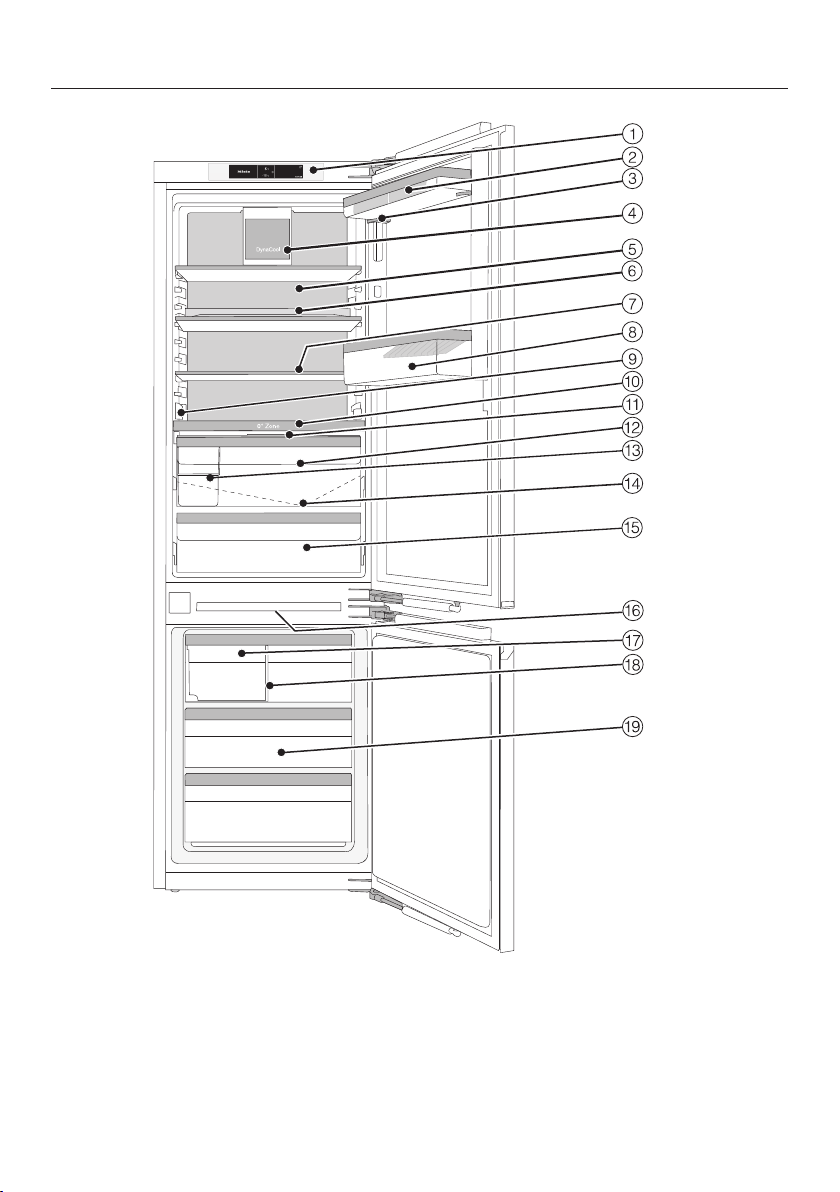
a
Display
b
Egg tray
c
Door shelf with fine adjustment
d
Fan with lighting
e
Dry back wall
f
Adjustable shelf with pivotable glass shelf (FlexiTray)
g
Adjustable shelf with lighting (FlexiLight 2.0)
h
Bottle shelf with bottle holder
i
Space for a baking tray (ComfortSize)
j
Dividing plate with bottle rack; with humidifier and water container for the hu-
midity-controlled compartment
k
Lid for setting the moisture level in the humidity-controlled compartment
l
Humidity-controlled compartment for fruit and vegetables (PerfectFresh Active
zone)
m
Organization box
n
Condensate channel and drain hole
o
Dry compartment with low temperature for food which goes off quickly (Per-
fectFresh Active zone)
p
Freezer-section ceiling lighting
q
Ice-cube maker with integrated ice cube tray and light
r
Ice-cube drawer with adjustable partition
s
Freezer drawers
Guide to the appliance
34
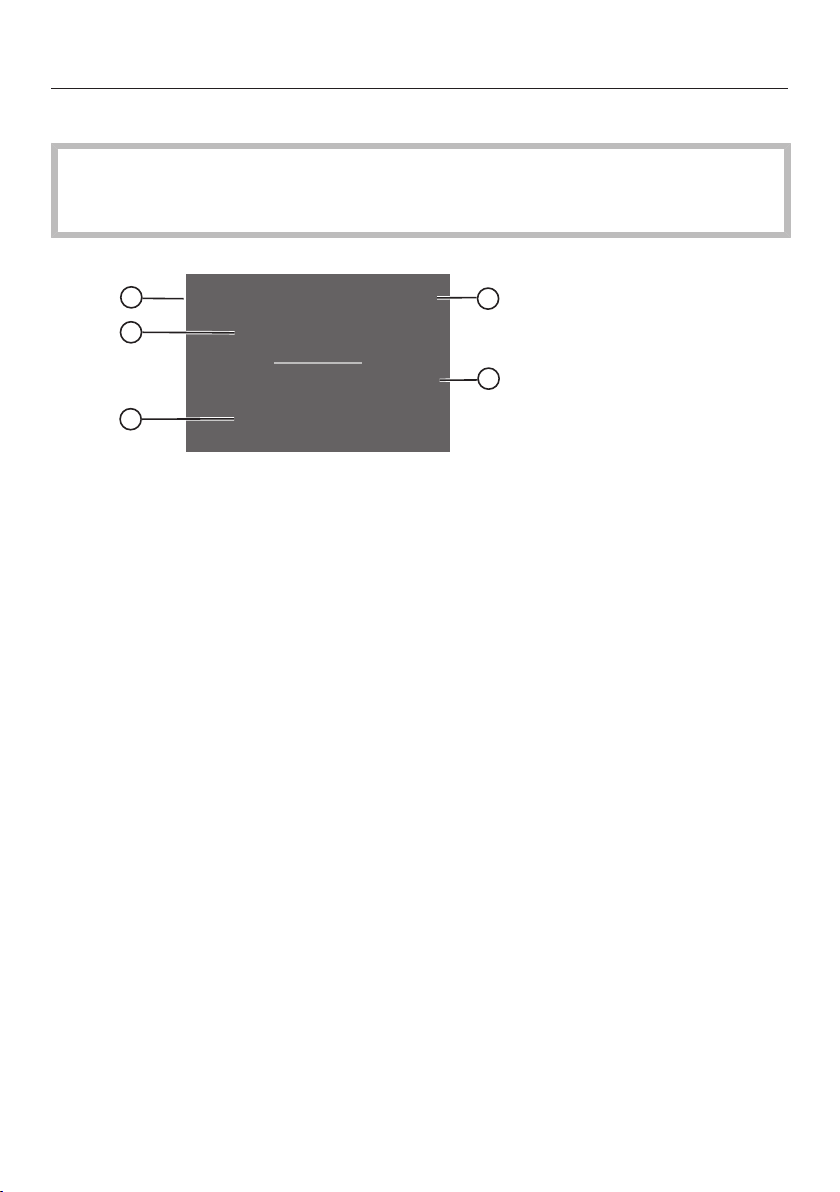
Status display
The touch display can be scratched by pointed or sharp objects, e.g., pens.
Only touch the display with your fingers.
If your fingers are cold, the touch display may not react.
°F
40
0
°F
1
2
3
4
5
a
Temperature display for the refrigerator section
b
Temperature display for freezer section
c
Settings mode sensor control
for adjusting various settings in Settings mode
d
Display for Miele@home connection status
(only visible when the Miele@home function has been set up)
e
Demo-mode display
(only visible when the Demo-mode function has been switched on)
Using the appliance
Touch the area/symbol you want on the status display.
Swipe left or right across the display until the value/symbol you want is shown in
the middle.
Tap on the option you want on the display to confirm.
The selected value/symbol will light up orange (except for a few exceptions).
To leave the Settings level, tap on or OK.
Guide to the appliance
35
Settings mode
In Settings mode, you can select the following appliance functions and alter their
settings to some extent:
Symbol Function Factory
default
Switching the Party-mode function on or off
(see “Selecting additional settings”)
Off
Switching the Vacation-mode function on or off
(see “Selecting additional settings”)
Off
Switching the ice-cube maker on and off
(see “Making ice cubes”)
Off
/ Switching the system lock on or off
(see “Selecting additional settings”)
(Off)
Switching the refrigeration appliance off
(see “Switching on and off”)
Switching the Sabbath-mode function on or off
(see “Selecting additional settings”)
Off
Calling up information on the Sabbath-mode function
(see “Selecting additional settings”)
––
Changing the time before the door alarm is triggered
(see “Selecting additional settings”)
1:00
Adjusting the temperature in the PerfectFresh Active
zone
(see “The correct temperature”)
5
Switching the humidifier on or off or adjusting its inten-
sity (see “Storing food in the PerfectFresh Active zone”)
Off
Setting up the Miele@home function for the first time,
activating and deactivating WiFi,
or resetting the network configuration
(see “Selecting additional settings”)
APP
Guide to the appliance
36
/
Switching the keypad tone on or off On
/ Changing the volume of the alarms and audible signals
or switch them off entirely
(see “Selecting additional settings”)
On
/level5
Changing the display brightness
(see “Selecting additional settings”)
Level4
°C / °F Changing the temperature unit
(°Celsius or °Fahrenheit)
°C
Switching the Demo-mode function off
(only visible when switched on)
(see “Selecting additional settings”)
Off
Resetting to default settings
(see “Selecting additional settings”)
––
Calling up information (model identifier and serial num-
ber) about your refrigeration appliance
(see “Selecting additional settings”)
––
Switching on the reminder to change the
carbon filter (see “Optional accessories”)
(see “Selecting additional settings”)
Off
Setting the cleaning position of the ice-cube tray
(only appears if the ice-cube maker is switched on) (see
“Cleaning and care”).
––
Switching Cleaning mode on or off
(see “Cleaning and care”)
Off
Guide to the appliance
37
Adjusting the interior fittings
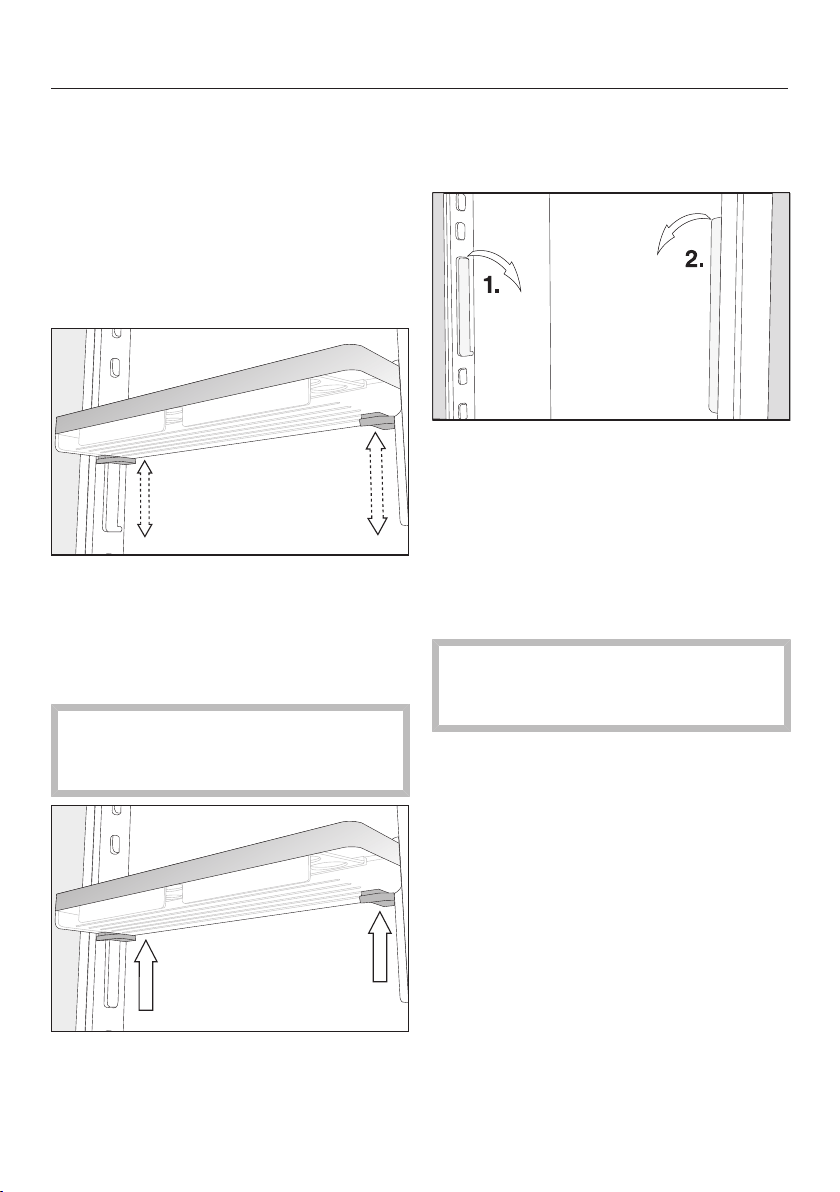
Using the door-shelf fine adjustment
Use the fine adjustment if you need
greater height clearance on the door
shelf/bottle shelf.
You can change the height of the door
shelf while it is loaded.
Hold the door shelf in both hands,
press the gray buttons on both sides
under it and move it.
Repositioning the door shelf with fine
adjustment
Only move the door/bottle shelves in
the appliance door when they are
empty.
Take hold of the sides of the door
shelf with both hands so that you are
touching each of the gray buttons un-
derneath it.
Press the gray buttons at the same
time and slide the door shelf up and
off the guide rails.
Remove the guide rail from the lugs
and move it to the desired position.
Move the second guide rail parallel to
the first rail.
Push the shelf down onto the guide
rails.
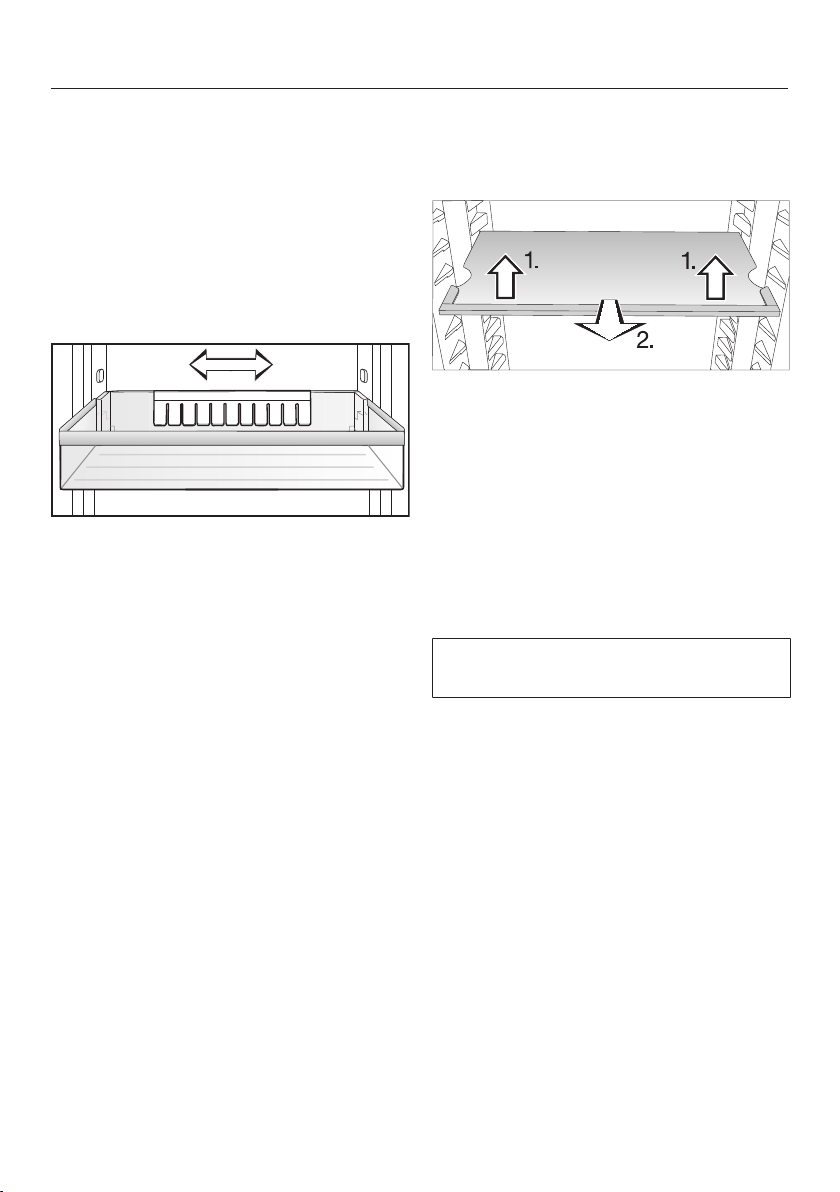
Moving the door shelf/bottle shelf
Only move the door/bottle shelves in
the appliance door when they are
empty.
Push the door/bottle shelves upward,
then remove them by pulling them
forward.
Replace the door/bottle shelves at
the required height.
Guide to the appliance
38
Clipping the egg trays on
Clip the egg trays onto the rear edge
of the door shelf.
Adjusting or removing the bottle
holder
The non-slip fins of the bottle holder
make bottles more secure when you
open and close the appliance door.
The bottle holder can be moved left or
right to create more room for drink car-
tons.
The bottle holder can be removed com-
pletely, e.g., for cleaning:
Pull the bottle holder up to remove it.
Moving the shelf/shelf with lighting
The shelves can be adjusted according
to the height of the food.
Raise the shelf slightly at the front
and pull it forward a little.
Lift it until the notches at the side are
in line with the shelf supports. The
shelf can then be raised or lowered to
the required level.
Push the shelf in.
Make sure that the shelf with lighting
clicks into position.
Stops prevent the shelves from being
dislodged by mistake.
Guide to the appliance
39
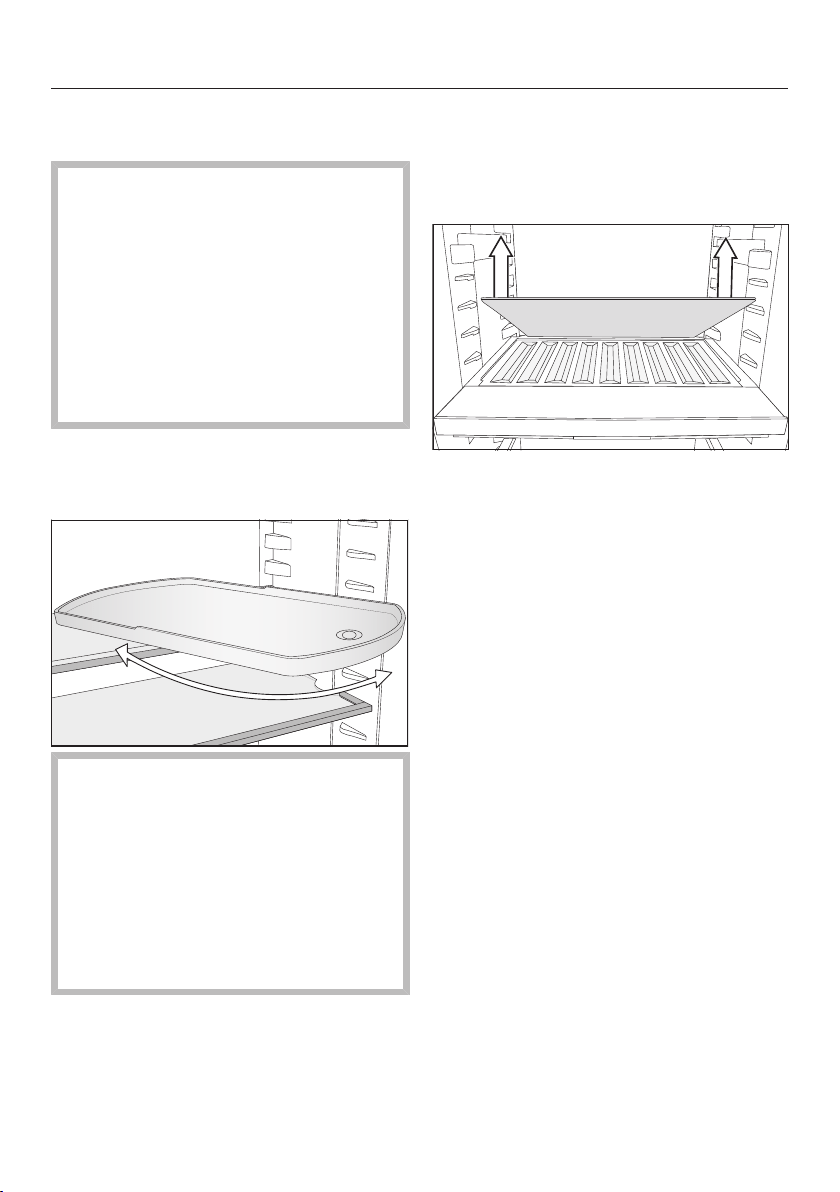
Moving the adjustable shelf with piv-
otable glass shelf (FlexiTray)
Risk of damage caused by load-
ing too much food and not distribut-
ing items evenly.
Loading too much food and not dis-
tributing items evenly can damage
the pivotable glass shelf.
Do not exceed the maximum load
size of 17.6 lb (8kg). Arrange food
items evenly across the full surface
of the shelf.
The pivotable glass shelf can be turned
180° clockwise, improving access to
the food placed at the back.
Danger of injury from dropping
the glass shelf.
The pivotable glass shelf can come
out when removing the adjustable
shelf, causing the glass shelf to drop
out of the tray and break.
Keep hold of the pivotable glass
shelf when removing the adjustable
shelf.
You can move the adjustable shelf with
pivotable glass shelf as you wish.
Using the bottle rack in the dividing
plate
In the dividing plate, either the bottle
rack or the glass shelf can be used.
Remove the glass shelf at the back of
the dividing plate and keep it in a safe
place.
Place the bottles as far back as pos-
sible with the bases at the back of
the appliance.
Tip: If the bottles hang over the edge of
the bottle rack, adjust the bottom bottle
shelf by moving it upward.
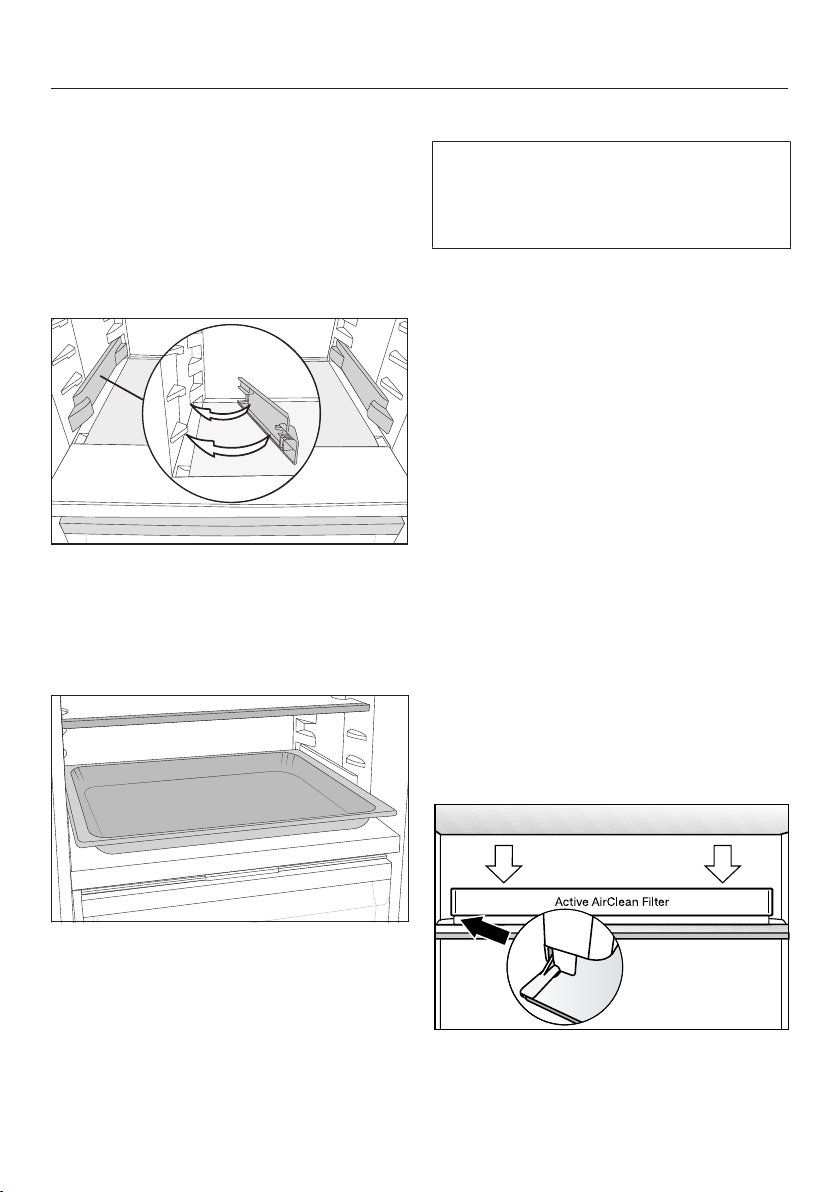
Removing and reinserting the organi-
zation box
The additional organization box in the
PerfectFresh Active zone makes it eas-
ier for you to organize your food.
Lift the box at the rear first when you
want to remove it.
To reinsert the organization box in the
drawer, place the front section in first.
Guide to the appliance
40
Inserting the adapters for the baking
tray
The supplied adapters enable you to in-
sert a baking tray in your refrigerator
section with ease. The baking tray can
be no more than 183/8"(466mm)
wide, 147/16"386mm) deep, and
2"(50mm) high.
Snap the adapters into place on the
lowermost shelf supports on the side
walls of the refrigerator section.
Open the appliance door as far as it
will go.
Place the baking tray on the adapters
in the refrigerator section and slide it
in as far as it will go.
Tip: Let the baking tray cool down to
room temperature before putting it in
the refrigerator section.
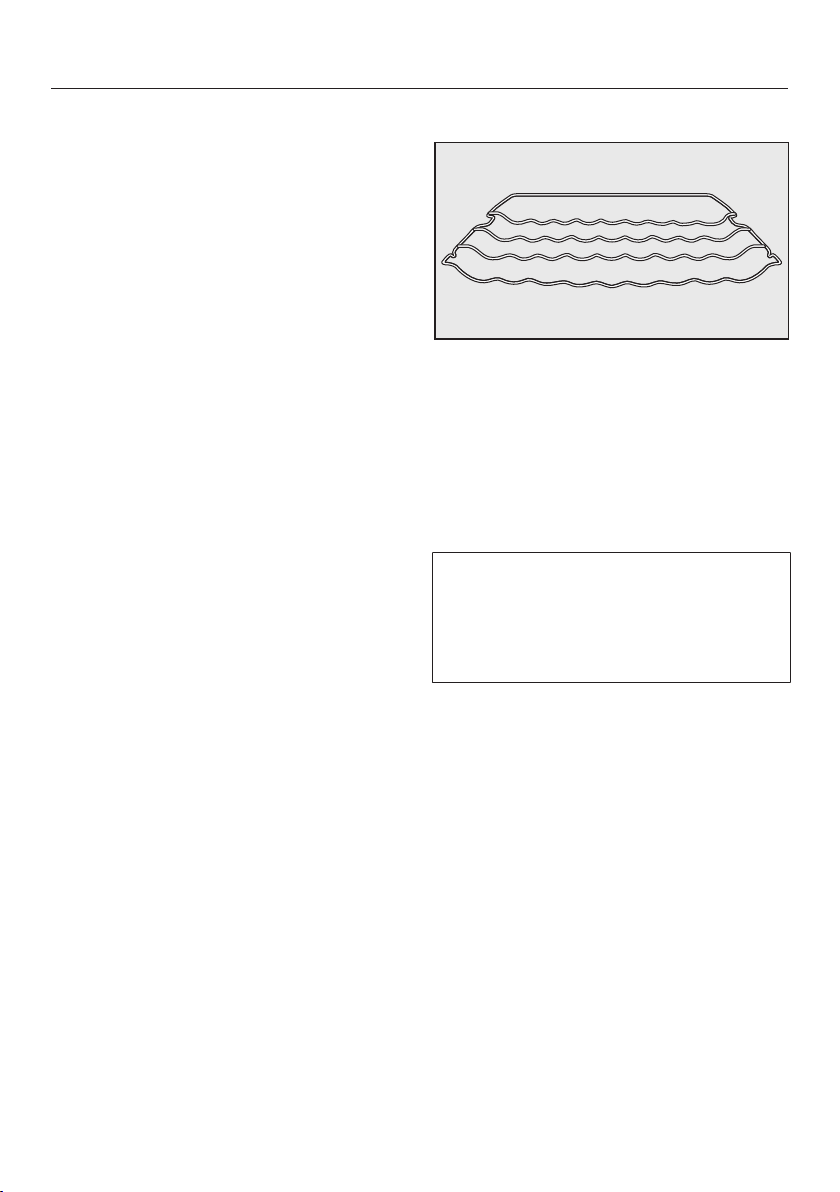
Moving the carbon filter
KKF-FS carbon filters with holder (Ac-
tive AirClean) are available as optional
accessories (see “Optional acces-
sories”).
When you are storing very strong-
smelling food (e.g., cheese):
- Place the holder with the carbon fil-
ters on the adjustable shelf where this
food is being kept.
- Change the carbon filters sooner if
necessary.
- Use more carbon filters (with holders)
in the appliance (see “Optional ac-
cessories”).
The holder for the carbon filters sits on
a protective strip at the back of the ad-
justable shelf.
To move the carbon filter, pull the
holder up and off the protective strip.
Then pull the protective strip off the
shelf.
Reinstall it on the shelf you wish to
use it on.
Reinstall the holder on the protective
strip.
Guide to the appliance
41
Optional accessories
A range of useful Miele accessories and
care products are available for your ap-
pliance.
KKF-FS carbon filter with holder (Ac-
tive AirClean)
Carbon filters neutralize unpleasant
odors in the refrigerator section for im-
proved air quality.
KKF-RF replacement filters
(ActiveAirClean)
Replacement filters to fit the holder are
available. We recommend replacing the
carbon filters every 6months.
Bottle rack
Bottles can be stored horizontally using
the bottle rack to save space.
The bottle rack can be placed at differ-
ent positions in the appliance.
Organization box
For a description, see “Guide to the ap-
pliance – Adjusting the interior fittings”.
Optional accessories can be ordered
from the Miele webshop. These prod-
ucts can also be ordered from Miele
(see the end of these operating in-
structions) or your Miele dealer.
Switching on and off
42
Before using for the first time
Remove all packaging material and
protective film.
Clean the inside of the appliance and
the accessories (see “Cleaning and
care”).
Connecting the appliance
Connect the refrigeration appliance to
the electricity supply as described in
“Electrical connection”.
Mielewill then appear on the appliance
display, followed by.
Filling and inserting the water con-
tainer for the humidifier
Fill the water container for the humid-
ifier with fresh drinking water (see
“Storing food in the PerfectFresh Ac-
tive zone – Humidity-controlled com-
partment”).
Place the water container in the divid-
ing plate between the refrigerator
section and PerfectFresh Active zone
(see “Storing food in the PerfectFresh
Active zone – Humidity-controlled
compartment”).
Switching on the appliance
Open the appliance door.
Tap on the display.
The refrigeration appliance will start to
cool and the interior lighting will come
on when the appliance door is opened.
When the set freezer temperature is
reached, the
symbol disappears,
the temperature display of the freezer
section lights up constantly and the
alarm stops.
If the alarm annoys you, tap
.
The alarm will stop.
The refrigeration appliance will gradually
reach the preset temperatures.
To enable the temperature to get suf-
ficiently cold inside the refrigeration
appliance, allow the appliance to run
for a few hours. Do not place food in
the refrigeration appliance until it has
reached the preset temperature.
Do not place food in the freezer sec-
tion until it has reached the preset
temperature (min. 0°F/-18°C).
Switching on and off
43
Switching off the appliance
You can only switch the entire refrigera-
tion appliance off in Settings mode.
Tap.
Swipe left or right until is shown in
the middle.
Tap.
The cooling and interior lighting are
switched off.
will appear in the display.
Please note: the refrigeration appli-
ance is not disconnected from the
power supply when it is switched off.
Turning off the refrigerator section
separately
The refrigerator section can be
switched off without having to switch
off the freezer section. This is useful,
e.g., while of vacation.
Touch the temperature display for the
refrigerator section.
Swipe right until is shown in the
middle.
Tap.
The temperature display for the refriger-
ator section will go out. will appear in
the display.
The refrigerator section will be turned
off.
The temperature display for the freezer
section remains lit up.
Switching the refrigerator section
back on again separately
Tap in the temperature display for
the refrigerator section.
Tap.
The refrigerator section switches back
on.
Switching on and off
44
To note when switching off for longer
periods of time
If, during a long absence, the refrig-
eration appliance is switched off but
not cleaned and the door is left shut,
there is a danger of bacteria building
up inside the appliance.
It is essential to clean the refrigera-
tion appliance.
If the refrigeration appliance is not go-
ing to be used for a longer period of
time, observe the following:
Turn the appliance off.
Unplug the appliance’s electrical plug
or switch off the breaker.
Take the water container for the hu-
midifier out of the appliance, empty it,
then clean and dry it.
Empty the ice-cube drawer.
Risk of damage to the ice-cube
maker.
If the water supply is cut off while the
ice-cube maker is still in use, the wa-
ter-intake pipe can freeze up.
Turn the ice-cube maker off if the
water supply is interrupted (e.g.,
while on vacation).
Close the water-supply shut-off valve.
Clean the refrigeration appliance and
leave the door open to air the appli-
ance and avoid odors building up in-
side.
It is also advisable to carry out the last
two instructions if you are switching
the refrigerator section off for a longer
period of time.
The correct temperature
45
It is very important to set the correct
temperature to ensure the shelf life of
food. Reducing the temperature re-
duces the growth rate of microorgan-
isms. Food does not spoil as quickly.
The temperature in the appliance will
rise:
- the more often the appliance door is
opened and the longer it is kept open
- the more food that is stored in it
- the warmer the food is that is being
put into it
- the higher the ambient temperature
surrounding the refrigeration appli-
ance is. This refrigeration appliance is
designed for use within specific am-
bient temperatures (climate range).
Do not use in ambient temperatures
for which it is not designed.
...in the freezer section
To freeze fresh food, a temperature of
0°F (-18°C) is required. This will prolong
the storage life of your food and retain
its quality.
As soon as the temperature rises above
14°F (-10°C), the bacteria become ac-
tive in the food again so it cannot be
kept as long. For this reason, partially
defrosted or defrosted food must not be
re-frozen. Food may be re-frozen once it
has been cooked (boiled or roasted), as
the high temperatures achieved when
cooking destroy most bacteria.
The correct temperature
46
Temperature display
In normal operation, the temperature
display shows the current average
refrigerator section temperature and
the maximum freezer section tem-
perature.
Depending on the ambient temperature
and the temperature setting, it can take
the appliance a few hours to reach the
temperature required and for this tem-
perature to then be shown as a con-
stant temperature on the display.
Setting the temperature in the
refrigerator/freezer sections
Touch the temperature display for the
section you want to change.
Swipe left or right until the tempera-
ture you want is shown in the middle.
Tap on the temperature you want to
confirm.
The temperature display will then
change back to the current refrigerator
and freezer temperature in the refrigera-
tion appliance.
Possible temperature settings
- Refrigerator section: 37 to 48°F
(3to9°C)
- Freezer section: 5 to 15°F
(-15to-26°C)
Adjusting the PerfectFresh Active
zone temperature
The temperature in the PerfectFresh Ac-
tive zone is automatically maintained
between 32and37°F (0and3°C).
However, if you would like it to be
warmer or colder, e.g., when storing
fish, you can adjust the temperature
slightly in increments.
Tap.
Swipe left or right until is shown in
the middle.
Tap.
Swipe left or right until the setting you
want (1: lowest temperature; 9: high-
est temperature) is shown in the mid-
dle.
Tap on the setting you want to con-
firm.
The default setting for the tempera-
ture is5.
Under certain circumstances, a set-
ting from1 to4 can cause negative
temperatures to be reached. This can
cause food to freeze.
Check the temperature setting.
The correct temperature
47
If you change the temperature set-
ting:
Check the temperature display after a
few hours. It will take this long for an
accurate reading to be given.
- Wait for approx.6hours if the refrig-
eration appliance is not very full.
- Wait for approx.24hours if the refrig-
eration appliance is full.
If, after this time, the temperature is still
too high or too low:
Adjust the temperature again.
Using Automatic SuperCool and SuperFreeze
48
Automatic SuperCool
When switched on, the Automatic Su-
perCool function can be used to
rapidly reduce the temperature in the
refrigerator section to its lowest set-
ting (depending on the ambient tem-
perature). The refrigeration appliance
will work at full power and lower the
temperature. Select this function for
the rapid chilling of large amounts of
fresh food or drink.
When the Automatic SuperCool func-
tion is switched on, the appliance
may make more noise than usual.
The Automatic SuperCool function
should be switched on 4hours before
placing food or drinks in the refrigera-
tor section.
The Automatic SuperCool function
will switch itself off automatically after
approx. 12hours. The appliance will
then run at normal power again.
Tip: To save energy, you can switch the
Automatic SuperCool function off
yourself once food and drinks are suffi-
ciently chilled.
Switching Automatic SuperCool on
and off
Touch the temperature display for the
refrigerator section.
Touch to switch the Automatic Su-
perCool function on and off again.
When the Automatic SuperCool func-
tion is switched on, will light up or-
ange.
Tap on the temperature display to
leave the Settings level.
Using Automatic SuperCool and SuperFreeze
49
SuperFreeze
When switched on, the SuperFreeze
function can be used to rapidly re-
duce the temperature in the freezer
section to its lowest setting (depend-
ing on the ambient temperature). The
refrigeration appliance will work at full
power and lower the temperature. Se-
lect this function before freezing fresh
food. Fresh food will be frozen quickly,
so that the nutritional value, vitamin
content, appearance, and taste are
maintained.
When the SuperFreeze function is
switched on, the appliance may make
more noise than usual.
SuperFreeze should be switched on
approx. 6hours before placing food
in the freezer section.
When freezing the maximum amount
of food, the SuperFreeze function
should be switched on 24hours be-
forehand.
The SuperFreeze function will
switch itself off automatically after a
maximum of 72hours. The appliance
will then run at normal power again.
The exact amount of time will vary ac-
cording to how much fresh food is
placed in the freezer.
Tip: To save energy, you can switch the
SuperFreeze function off yourself once
food and drinks are sufficiently chilled.
You do not need to switch on the Su-
perFreeze function:
- When you place food that is al-
ready frozen in the freezer.
- If you are only freezing up to 4.4Ib
(2kg) of fresh food daily.
Switching SuperFreeze on and off
Touch the temperature display for the
freezer section.
Tap to switch the SuperFreeze
function on and off again.
When the SuperFreeze function is
switched on, will light up orange.
Tap on the temperature display to
leave the Settings level.
Selecting additional settings
50
Explanation of the different
settings
Only the settings that require further ex-
planation are described below.
The door alarm and other warnings
are automatically suppressed when
you are in Settings mode.
Party mode
The Party-mode function is recom-
mended if you wish to chill or freeze
large amounts of fresh food or drink
quickly or want to make ice cubes.
Tip: Switch on the Party-mode func-
tion approx. 4hours before placing
food and drinks in the appliance.
When Party mode is switched on, the
following are switched on automatically:
- the Automatic SuperCool and Super-
Freeze functions
- the ice-cube maker (ice cubes will be
produced)
Party mode cannot be switched on
if the refrigerator section is switched
off or if Vacation mode is switched
on.
The Party-mode function will switch
itself off automatically after approx.
24hours. However, you can switch
the Party-mode function off early at
any time.
Vacation mode
The Vacation-mode function is
useful when you go on vacation, for
example, if you do not wish to switch
off the refrigerator section completely
or do not need a high degree of cool-
ing.
If Vacation mode is switched on, this
will be indicated on the status display. It
can be switched off via the status dis-
play or Settings mode.
The refrigerator section is regulated at a
temperature of 59°F (15°C), which auto-
matically sets the temperature in the
PerfectFresh Active zone to between
48and53°F (9and12°C). The refrigera-
tor section remains in operation while
saving energy.
The freezer section remains switched
on at the previously set temperature.
Food which does not go off quickly
can be stored in the refrigeration ap-
pliance for some time at this moderate
refrigerator temperature. Energy con-
sumption is lower than in normal oper-
ation.
This also prevents the build-up of
odors and bacteria which can occur if
the refrigerator section is switched off
and the appliance door is closed.
Selecting additional settings
51
Health risk caused by decom-
posing food.
The usability and quality of food in
the refrigerator section may deterio-
rate if the temperature remains above
37°F (4°C) for an extended period.
Only ever switch on the Vacation-
mode function for a limited pe-
riod.
Do not store any temperature-sensi-
tive food which spoils easily, such as
fruit, vegetables, fish, meat, and
dairy products, during this time.
Switching the safety lock function/
on
When the safety lock function is
switched on, it protects the refrigeration
appliance from being switched off unin-
tentionally and being adjusted uninten-
tionally by unauthorized persons, e.g.,
children.
Tap.
Swipe left or right until is shown in
the middle.
Tap.
When the safety lock function is
switched on, will light up orange.
Close the appliance door. Only then
will the safety lock function be ac-
tive.
Deactivating the safety lock func-
tion/ temporarily
If you want to adjust the temperature,
for example, you can deactivate the
safety lock function temporarily:
Touch the temperature display for the
section you want to adjust.
Touch for approx. 6seconds.
The display switches to the temperature
controls.
Now select the required settings.
Closing the appliance door will reacti-
vate the safety lock function.
Switching the safety lock function/
off completely
Tap.
Touch for approx. 6seconds.
Swipe left or right until is shown in
the middle.
Tap.
When the safety lock function is
switched off, will light up.
Selecting additional settings
52
Sabbath mode
The appliance features a Sabbath mode
for the purposes of religious obser-
vance.
If Sabbath mode is switched on, this
will be indicated on the status display.
The display switches off after 3sec-
onds.
When Sabbath mode is switched
on, you cannot make any settings on
your refrigeration appliance.
Ensure that the appliance doors are
properly closed, as audible and visual
alarms are turned off.
The Sabbath-mode function will
switch off automatically after approx.
120hours.
When Sabbath mode is switched on,
the following are deactivated:
- the interior lighting when the appli-
ance door is opened
- all audible and visual signals
- temperature display
All other functions switched on previ-
ously remain activated.
Health risk caused by decom-
posing food.
As power failures are not indicated
while Sabbath mode is active,
food may be exposed to increased
temperatures for a certain period of
time. This will reduce the storage life
of the food.
If there is a power failure during Sab-
bath mode, check the quality of
the food.
Switching Sabbath mode off
Tap on the black display.
will appear on the display.
Tap.
lights up orange.
Tap on the symbol in Settings
mode.
When Sabbath mode is switched off,
the symbol will light up white.
Information on Sabbath mode
This product is certified by Star-K, an
international institute for kosher certifi-
cation.
You can find the Star-K certification ver-
sion here.
Selecting additional settings
53
Changing the time before the door
alarm
is triggered
You can set how quickly the door alarm
should sound after an appliance door
has been opened.
Tap.
Swipe left or right until
is shown
in the middle.
Tap
.
Swipe left or right until the time you
want between 30seconds and 3min-
utes 30seconds is shown in the mid-
dle.
Tap on the setting you want to con-
firm.
Miele@home
Your refrigeration appliance is
equipped with an integrated WiFi
module.
Networking is deactivated at the fac-
tory.
To use this feature, you will need:
- a WiFi network
- the Miele app
- a Miele user account You can create
a user account via the Miele app.
The Miele app will guide you as you
connect your refrigeration appliance to
your home WiFi network.
Once the refrigeration appliance is con-
nected to your WiFi network, you can
use the app to carry out the following
activities, for example:
- Call up information on the operating
status of your refrigeration appliance.
- Change the settings on your refriger-
ation appliance.
Connecting your refrigeration appliance
to your WiFi network will increase en-
ergy consumption, even when the ap-
pliance is switched off.
Make sure that the signal of your
WiFi network is sufficiently strong in
the place where you want to set up
your refrigeration appliance.
Selecting additional settings
54
Availability of the WiFi connection
The WiFi connection shares a frequency
range with other appliances (including
microwave ovens and remote control
toys). This can cause sporadic or even
complete connection failures. There-
fore, the availability of featured func-
tions cannot be guaranteed.
Miele@home availability
The ability to use the Miele app de-
pends on the availability of the
Miele@home service in your country.
The Miele@home service is not avail-
able in every country.
For information about availability,
please visit www.miele.com.
Miele App
The Miele App is available to download
free of charge from the Apple App
Store
®
or from the Google Play Store™.
Setting up Miele@home for the first
time
Tap.
Swipe left or right until is shown in
the middle.
Tap.
Tap on the connection method you
wish to use (app or WPS).
After you have successfully logged in,
will appear on the status display.
If a connection could not be created,
will appear.
In this case, start the process again.
Deactivating or activating the WiFi
connection
Tap.
Swipe left or right until is shown in
the middle.
Tap.
Tap to deactivate the WiFi connec-
tion.
will appear on the display.
Tap to reactivate the WiFi connec-
tion.
Tap to exit the menu level.
When the WiFi connection is active,
will light up on the status display.
Selecting additional settings
55
Resetting the network configuration
Tap.
Swipe left or right until is shown in
the middle.
Tap.
Swipe right until is shown in the
middle.
Tap.
TapOK.
All entered settings and values for
Miele@home are reset to the default
settings.
The WiFi connection has been deacti-
vated. will go out on the status dis-
play.
Reset the network configuration if
you are disposing of or selling your
refrigeration appliance, or if you are
putting a used refrigeration appliance
into operation. All personal data is
removed from the refrigeration appli-
ance. This will also ensure that a pre-
vious owner is no longer able to ac-
cess the refrigeration appliance.
Changing the volume of the alarms
and audible signals/
You can change the volume of the
alarms and audible signals (e.g., in the
event of a door alarm or a fault mes-
sage). Alternatively, you can switch the
alarms and audible signals off if you
find them annoying.
Tap.
Swipe left or right until is shown in
the middle.
Tap.
Swipe left or right until the volume
you want is shown in the middle.
Confirm the volume you want by tap-
ping on the segment bar.
When the alarms and audible signals
are switched off, will appear.
Adjusting the display brightness
You can adjust the display brightness to
the lighting conditions in the room.
Tap.
Swipe left or right until is shown in
the middle.
Tap.
Swipe left or right until the brightness
you want is shown in the middle.
Confirm the brightness you want by
tapping on the segment bar.
Selecting additional settings
56
Switching off Demo mode
Demo mode allows the refrigeration
appliance to be presented in the show-
room without the cooling system being
switched on. Do not activate this setting
for domestic use.
If Demo mode has been switched on
as a default setting, will show on the
status display.
Tap.
Tap.
Swipe left or right until is shown in
the middle.
Tap.
After Demo mode has been switched
off, the refrigeration appliance shuts
down and must be switched on again.
Resetting the settings to their default
settings
All settings made on the refrigeration
appliance will be reset to default set-
tings (for settings; see “Guide to the ap-
pliance”).
Tap.
Swipe left or right until is shown in
the middle.
Tap.
will appear on the display.
Touch OK.
The refrigeration appliance shuts down
and must be switched on again.
Information
Appliance data (model identifier and
serial number) is shown on the display.
Tip: This data is important when report-
ing an appliance fault to Miele Cus-
tomer Service (see “Customer Ser-
vice”).
Carbon-filter change indicator
After inserting the carbon filter (optional
accessory), you must activate the car-
bon-filter change indicator in Set-
tings mode.
The carbon-filter change indicator
on the status display will remind you
to replace the carbon filter approx. ev-
ery 6months (see “Cleaning and care
– Replacing the carbon filters”).
Selecting additional settings
57
Cleaning mode
Cleaning mode makes it easier to
clean the refrigerator section (see
“Cleaning and care”). The interior
lighting remains switched on, even
though the refrigerator section is
switched off. The audible signal will
stop and the symbols on the display
will also go out.
If Cleaning mode is switched on,
this will be indicated on the status dis-
play.
After cleaning, Cleaning mode must
be switched off. If the appliance door is
closed for more than 10minutes,
Cleaning mode switches itself off
automatically.
Temperature and door alarm
58
Health risk caused by decom-
posing food.
If the temperature in the freezer re-
mains above 0°F (-18°C) for a long
time, the frozen food may start to de-
frost. This will reduce the storage life
of the food.
Check whether the frozen food has
started to defrost. If it has, use the
food as soon as possible or cook it
before freezing it again.
Temperature alarm
The refrigeration appliance has been
equipped with a warning system so
that the temperature in the freezer
section cannot rise unnoticed.
If the temperature in the freezer section
becomes too warm,
will light up red
in the freezer-section temperature dis-
play.
An alarm will also sound until the cause
of the alarm is rectified or the alarm is
switched off.
The temperature the appliance is set at
determines the temperature the appli-
ance recognizes as being too warm.
The audible and visual signals may be
activated in the following situations:
- You switch on the refrigeration ap-
pliance and the temperature in a
temperature zone differs greatly
from the set temperature.
- A lot of warm room air enters the
freezer section when you are rear-
ranging or taking out frozen food.
- You are freezing large amounts of
food at once.
- You are freezing warm food.
- There was a power failure.
- The refrigeration appliance has a
fault.
Before you switch the temperature
alarm off, you must determine the
cause and rectify it.
If the alarm disturbs you, it can be
turned off early.
Tap
.
The alarm message is confirmed:
goes out and the alarm stops.
The start screen appears in the display:
the warmest temperature recorded in
the freezer section will flash for about
1minute in the display. Then the tem-
perature display will change to the cur-
rent temperature in the freezer section.
Temperature and door alarm
59
Door alarm
The refrigeration appliance is
equipped with a warning system to
avoid increased energy consumption
and food becoming warm if the appli-
ance door is left open.
If an appliance door is left open for a
longer period of time,
will light up
yellow on the relevant temperature dis-
play. An alarm will also sound.
You can change the time before the
door alarm is triggered. However, the
door alarm can also be turned off (see
“Selecting additional settings”).
The alarm will stop and
will go out
on the display as soon as the door is
closed.
Turning the door alarm off early
If the alarm disturbs you, it can be
turned off early.
Touch and hold
in the display for
a few seconds.
The alarm tone will stop and the
symbol will go out.
If the appliance door is not closed, the
alarm will sound again after 3minutes.
Storing food in the refrigerator section
60
Do not load more than a maximum of
35lb (16kg) of food in the appliance
door.
Risk of fire from electrical appli-
ances.
Operating electrical devices in the
appliance can cause sparks to form.
Do not operate any electrical devices
inside the appliance.
Risk of explosion due to
flammable mixes of gases.
Electrical components can cause
flammable mixes of gases to ignite.
Do not store any explosive materials
or products containing flammable
propellants (e.g., spray cans) in the
appliance. The spray cans in ques-
tion can be identified by the contents
printed on the can or by a flame
symbol. Electrical components can
cause escaping gases to ignite.
Risk of damage due to greasy or
oily foods.
If storing food which contains a lot of
fat or oil in the refrigeration appliance
or the appliance door, make sure
that it does not come into contact
with plastic components as this
could cause stress cracks or break
the plastic.
Make sure that no fat or oil leaks
onto the plastic parts of the refrigera-
tion appliance.
If there is insufficient air circulation,
the cooling performance will de-
crease and energy consumption will
increase.
To allow air to circulate efficiently, do
not pack food too closely together in
the appliance.
Do not cover the fan in the rear wall
of the appliance.
Storing food in the refrigerator section
61
Different storage zones
Due to natural air circulation, there are
different temperature zones in the re-
frigerator section.
Cold, heavy air sinks to the lowest sec-
tion of the refrigeration section. Make
use of the different zones when placing
food in the appliance.
This appliance has DynamicCooling,
which helps to keep an even tempera-
ture when the fan is running. When
DynamicCooling is turned on, the dif-
ference between the various zones is
less pronounced.
Warmest area
The warmest area in the refrigerator
section is in the top section of the door.
Use this for storing butter so that it re-
mains spreadable and cheese so that it
retains its flavor.
Coldest area
The coldest area in the refrigerator sec-
tion is directly above the PerfectFresh
Active zone dividing plate and at the
back of the appliance. The temperature
in the PerfectFresh Active zone com-
partments is even colder.
Use these areas in the refrigerator sec-
tion and in the PerfectFresh Active zone
for all delicate and highly perishable
food, e.g.,:
- fish, meat, poultry
- cold cuts, ready-made meals
- dishes or baked goods containing
eggs or cream
- fresh dough, cake mixtures, pizza
dough, or pie dough
- raw-milk cheese and other raw-milk
products
- pre-packed vegetables
- other fresh food (with a label stating it
should be kept at a temperature of
approx. 39°F [4°C])
Storing food in the refrigerator section
62
Food which is not suitable for
storage in the fridge zone
Not all food is suitable for refrigeration
at temperatures below 40°F (5°C) be-
cause it is sensitive to cold.
Foods which are sensitive to cold in-
clude:
- pineapples, avocados, bananas,
pomegranates, mangoes, melons,
papayas, passion fruit, citrus fruits
such as lemons, oranges, mandarins,
grapefruits
- fruit (which is not yet ripe)
- eggplant, cucumbers, potatoes, pep-
pers, tomatoes, zucchini
- hard cheeses (e.g., Parmesan)
Notes on buying food
The freshness of the food when it is first
placed in the appliance is the most im-
portant factor for how long it stays
fresh.
Take into account the use-by date and
the correct storage temperature.
Time out of the fridge, e.g., transporting
food in a warm car, should be kept to a
minimum.
Storing food correctly
Ensure that food stored in the refrigera-
tor section is in packaging or covered
properly (some exceptions apply in the
PerfectFresh Active zone). This will pre-
vent food odors from affecting other
food, stop food from drying out, and
also prevent any cross-contamination
of bacteria. This is particularly important
when storing meat products. Make sure
that food such as raw meat and fish in
particular does not come into contact
with other food.
By ensuring that the temperature set-
tings are correct and by taking appro-
priate hygiene measures, you can pro-
long the storage life of your food con-
siderably. This prevents food waste.
Storing food in the PerfectFresh Active zone
63
PerfectFresh Active zone
The PerfectFresh Active zone satisfies
the requirements of a chill compart-
ment to DINEN62552:2020.
The PerfectFresh Active zone provides
ideal storage conditions for fruit, veg-
etables, fish, meat, and dairy products.
Food stays fresh considerably longer
while retaining both flavor and vitamins.
The temperature in the PerfectFresh Ac-
tive zone is controlled automatically and
maintained at 32to37°F (0to3°C).
While lower than the temperature in a
standard refrigerator section, this is the
optimum temperature range for storing
fresh food which is not sensitive to
cold.
The humidity level in the PerfectFresh
Active zone can also be regulated to
suit the food being stored. If the humidi-
fier is switched on, water vapor is
supplied to the stored fruit and vegeta-
bles. The humidifier switches on ap-
proximately every 90minutes and each
time the appliance door is opened.
Food retains its own moisture if stored
at a higher humidity and so does not
dry out as quickly.
Remember that the fresher the food
when it is placed in the appliance, the
longer it will stay fresh.
Take food out of the PerfectFresh Ac-
tive zone approx.30to60minutes be-
fore using it. The aroma and taste do
not fully develop until the food has
reached room temperature.
Humidity-controlled compart-
ment
| |
The upper humidity-controlled com-
partment has a temperature of 32 to
37°F (0to3°C), and the humidity level
is increased depending on the position
of the compartment lid: not in-
creased or increased.
Low humidity
When the setting is used, the humid-
ity-controlled compartment becomes a
dry compartment (see “Dry compart-
ment”).
Increased humidity
When this setting is used, the compart-
ment is suitable for storing fruit and
vegetables.
Increased moisture in the humidity-
controlled compartment can cause a
build-up of condensate.
If you find that too much condensate
has formed and this is affecting the
food, proceed as follows:
Wipe off any condensate with a
cloth.
Open the compartment lid by moving
it to the low humidity position.
Switch the humidifier off.
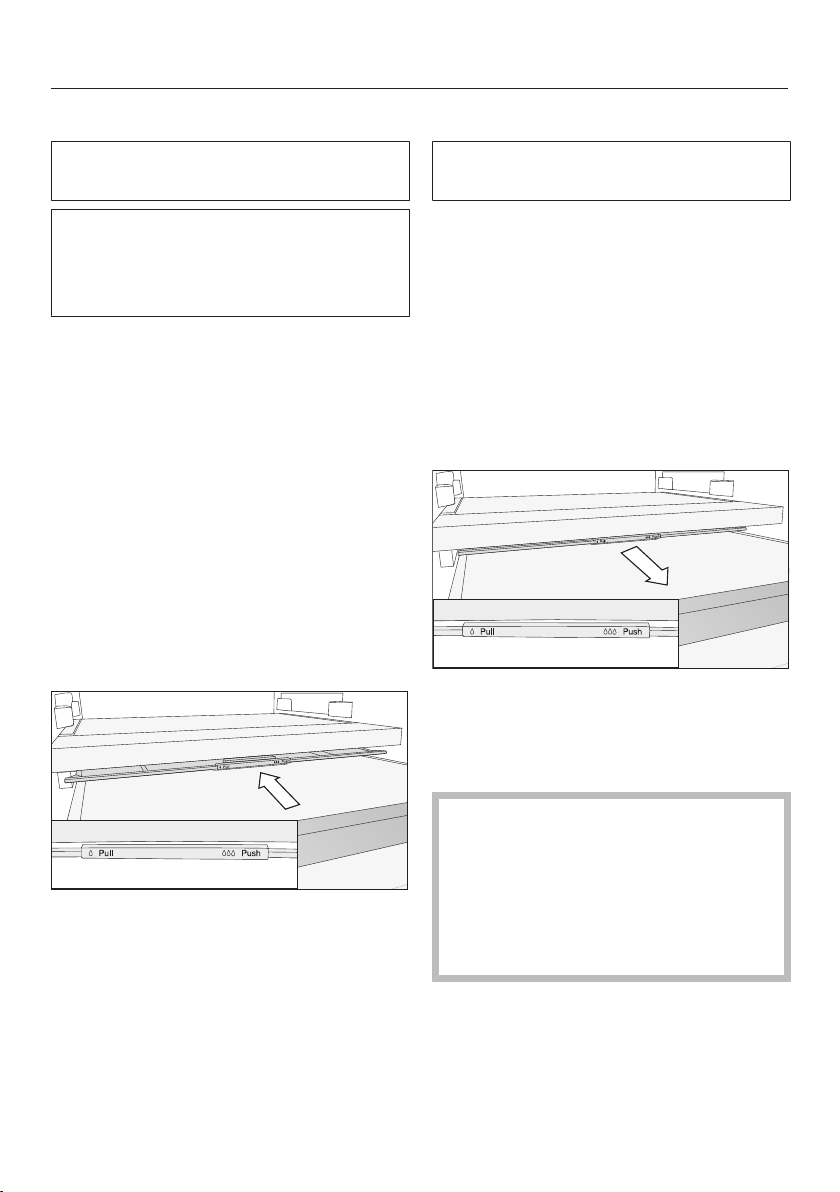
Storing food in the PerfectFresh Active zone
64
Selecting increased humidity
When the setting is used, the hu-
midifier should be switched on.
The energy consumption does in-
crease slightly when the humidifier
is switched on. The appliance may
also make more noise than usual.
Tap.
Swipe left or right until is shown in
the middle.
Tap.
Swipe left until the humidifier intensity
you want (1: low humidity; 3: maxi-
mum humidity) is shown in the mid-
dle.
Tap the setting you want to confirm.
The symbol lights up orange.
Open the drawer of the humidity-con-
trolled compartment.
Slide the compartment lid backward
as far as it will go.
The compartment lid is closed and the
humidity remains in the compart-
ment.
Selecting low humidity
When the setting is used, the humid-
ifier should be switched off.
Tap.
Swipe left or right until is shown in
the middle.
Tap.
Swipe right and tap.
The symbol lights up white.
Open the drawer of the humidity-con-
trolled compartment.
Pull the compartment lid forward as
far as it will go.
The compartment lid is open and the
humidity drops.
If the food is higher than the edge of
the drawer, pushing in the drawer
may alter the position of the com-
partment lid, causing it to close.
When filling the drawer, take care to
ensure that the food does not touch
the compartment lid.
Storing food in the PerfectFresh Active zone
65
Humidifier
When the humidifier is switched on,
water vapor is supplied to the fruit and
vegetables stored in the humidity-con-
trolled compartment each time the ap-
pliance door is opened and approxi-
mately every 90minutes. The water
vapor provides additional humidity in
the humidity-controlled compartment.
The humidifier and its water container
are located in the dividing plate be-
tween the refrigerator section and Per-
fectFresh Active zone.
Check and pay attention to the follow-
ing before switching the humidifier on
(see “Selecting additional settings”):
- The water container must have been
cleaned, filled with water, and in-
serted securely.
- The lid for the humidity-controlled
compartment must be closed
(setting).
The water in the water container
should last for approx. 4months.
The water container will only need to
be refilled if the humidifier is no longer
producing any water vapor.
Risk of damage due to incor-
rectly filled water container.
Liquids containing sugar can dam-
age the humidifier.
Use only fresh drinking water to fill
the water container.
Risk to health due to contami-
nated water.
Using contaminated water can lead
to poisoning.
Use only fresh drinking water to fill
the water container.
Risk to health due to contami-
nated water.
Bacteria can develop in water which
has been sitting in the water con-
tainer for too long. This poses a risk
to your health.
Clean the water container for the hu-
midifier and fill it with fresh drinking
water if the refrigeration appliance,
the refrigerator section, or the humid-
ifier has been switched off for an ex-
tended period of time (more than
2days).
Clean the water container for the hu-
midifier and fill it with fresh drinking
water if Vacation mode has been
switched on for an extended period
of time (more than 2weeks).
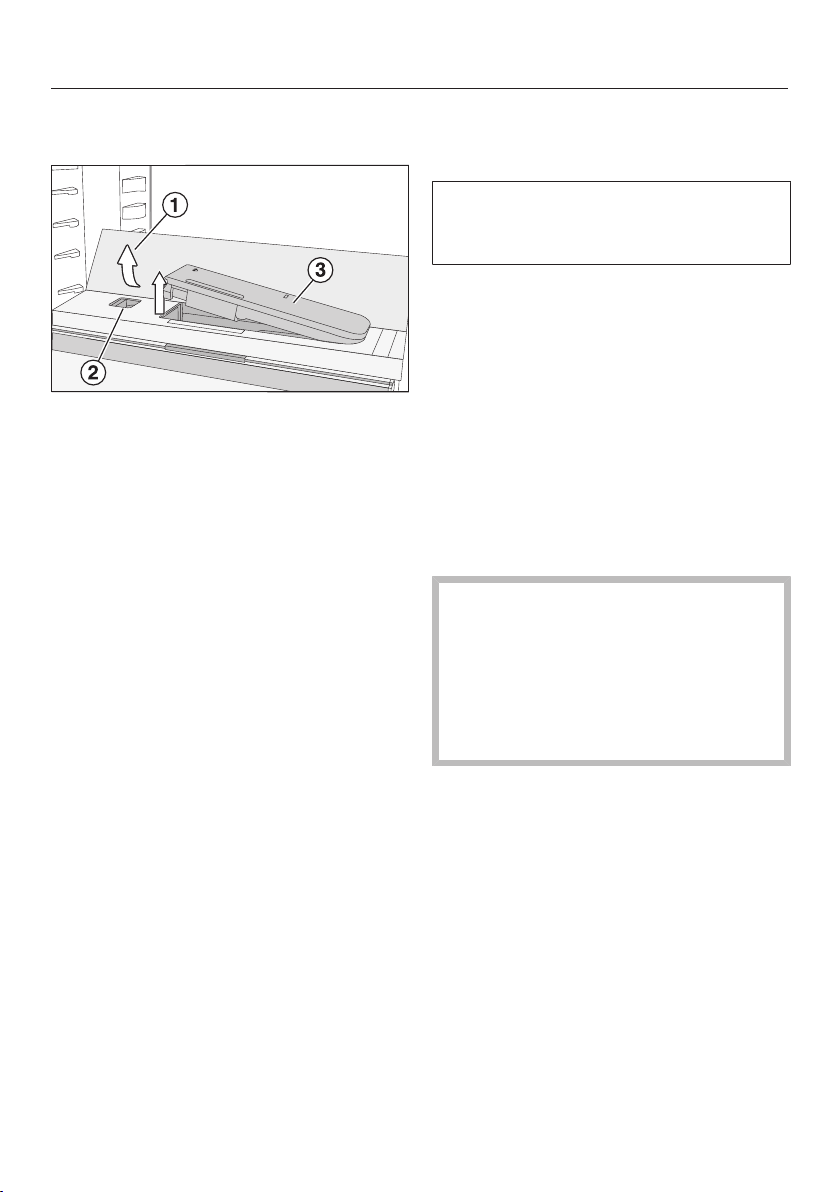
Storing food in the PerfectFresh Active zone
66
Filling the water container for the hu-
midifier
Press on the outer corners at the
back of the glass shelf.
The glass shelf will lift up at the front.
Lift up the shelf and fold it back.
The glass shelf will stand upright.
Push the slider to the left.
The water container will spring out of
the recess.
Remove the water container and fill it
up to the marker with drinking water.
Reinsert the water container.
Fold the glass shelf back down.
Dry compartment
|
The lower dry compartment has a
temperature of 32to 37°F (0to 3°C)
and the humidity is not increased.
The dry compartment is suitable for
storing perishable foods such as:
- fresh fish and shellfish
- meat, poultry, and sausage
- deli salads
- dairy products such as yogurt,
cheese, cream, etc.
- Any type of food can in fact be stored
in this compartment, as long as it is
packaged.
Please note that foods rich in protein
deteriorate faster than others.
Shellfish, for example, deteriorates
faster than fish, and fish deteriorates
faster than meat.
Always keep these foods covered or
wrapped.
Storing food in the PerfectFresh Active zone
67
Observe the following tips if you find that food you have stored does not keep
well (e.g., food becomes limp or wilts after only being stored for a short time):
Only place fresh food in the appliance as the initial condition of the food is cru-
cial to maintaining freshness.
Clean the compartments in the PerfectFresh Active zone before storing food in
them.
Very wet food should be dried off before storing it.
Do not store food which is sensitive to cold in the PerfectFresh Active zone (see
“Storing food in the refrigerator section – Food which is not suitable for storage
in the refrigerator section”).
Select the correct PerfectFresh Active compartment for the food as well as the
correct position for the compartment lid (low humidity or humidity in-
creased).
An increased humidity level in the humidity-controlled compartment is
achieved with the moisture present in the food being stored if the food is stored
unwrapped. The more food stored in the compartment, the higher the humidity.
Do not overfill the compartments.
If you find that too much condensate has formed when using the setting and
this is affecting the food:
- Wipe off any condensate with a cloth.
- Place a rack or similar item in the compartment so that excess moisture can
drain away.
- Open the compartment lid by moving it to the low humidity position and
switch the humidifier off.
If the humidity level is too low despite the setting, wrap the food in airtight
packaging.
If you think that the temperature in the PerfectFresh Active zone is too high or
too low, try regulating it slightly first by changing the temperature in the refrigera-
tor section by 1or2°F. If ice crystals start to form on the floor of the Perfect-
Fresh Active compartments, increase the temperature as otherwise the cold
temperature will damage the food.
If adjusting the temperature in the refrigerator section does not remedy the prob-
lem, adjust the temperature in the PerfectFresh Active zone (see “The correct
temperature”).
Freezing and storing food
68
Always observe USDA food safety
guidelines.
Risk of fire from electrical appli-
ances.
Operating electrical devices in the
appliance can cause sparks to form.
Do not operate any electrical devices
inside the appliance.
What happens when you freeze
fresh food?
Health risk caused by decom-
posing food.
If the temperature in the freezer re-
mains above 0°F (-18°C) for a long
time, the frozen food may start to de-
frost. This will reduce the storage life
of the food.
Check whether the frozen food has
started to defrost. If it has, use the
food as soon as possible or cook it
before freezing it again.
Fresh food should be frozen as quickly
as possible so that the nutritional value
of the food, its vitamin content, appear-
ance, and flavor are maintained.
If food is frozen quickly, the cells have
less time to lose moisture, so they
shrink significantly less. As there is not
so much moisture loss, it is easier for
the food to reabsorb it during the de-
frosting process, and very little water
collects around the defrosted food.
Maximum freezing capacity
To ensure that fresh food placed in the
freezer freezes through to the core as
quickly as possible,
the maximum freezing capacity must
not be exceeded. The maximum freez-
ing capacity for freezing within a 24-
hour period is given on the data plate:
“Freezing capacity...lbs/24hrs”.
Storing frozen food
When buying frozen food to store in
your freezer, make sure to check:
- that the packaging is not damaged
- the expiration date
- that the temperature at which the
frozen food is being stored in the
shop is 0°F (-18°C) or colder
Where possible, transport frozen food
in an insulated bag and then store it
quickly in the refrigeration appliance.

Freezing and storing food
69
Home freezing
Before placing food in the freezer
When freezing more than 4.4 lb (2kg)
of fresh food, switch on the Super-
Freeze function for 6hours before
placing the food in the freezer.
When freezing even larger amounts of
food, switch on the SuperFreeze
function for 24hours before plac-
ing the food in the freezer.
This helps frozen food which is already
stored in the freezer to stay frozen.
Only freeze food that is fresh and in
good condition.
Please note that some food is not suit-
able for freezing. These include, for
example, vegetables that are usually
eaten raw, such as lettuce or radishes.
Tip: To retain color, taste, aroma, and
vitamin C, vegetables should be
blanched before they are frozen. To do
so, place them portion by portion into
boiling water for 2–3minutes. Then, re-
move and plunge the vegetables into
ice-cold water to cool quickly. Leave
the vegetables to drain.
Packaging food for freezing
Freeze food in portions.
Tip: Use suitable packaging to avoid
freezer burn (such as freezer contain-
ers).
Expel as much air as possible from
the packaging and close it tightly.
Label the packaging with the con-
tents and the date of freezing.
Placing food in the freezer
Risk of damage due to heavy
loads.
Loading food which is too heavy can
cause damage to the freezer draw-
ers/glass shelves.
Do not exceed the relevant maximum
load:
Freezer drawer = 26Ib (12kg)
Glass shelf = 77lb (35kg)
Unfrozen food should not touch
frozen food as this will cause the
frozen food to begin to thaw.
To prevent food sticking together
when frozen, make sure that the
packaging and containers are dry.
To ensure that food freezes through to
the core quickly, do not exceed the
following packaging and container
sizes:
- fruit and vegetables:
max. 2.2lb (1kg)
- meat: max. 5.5lb (2.5kg)
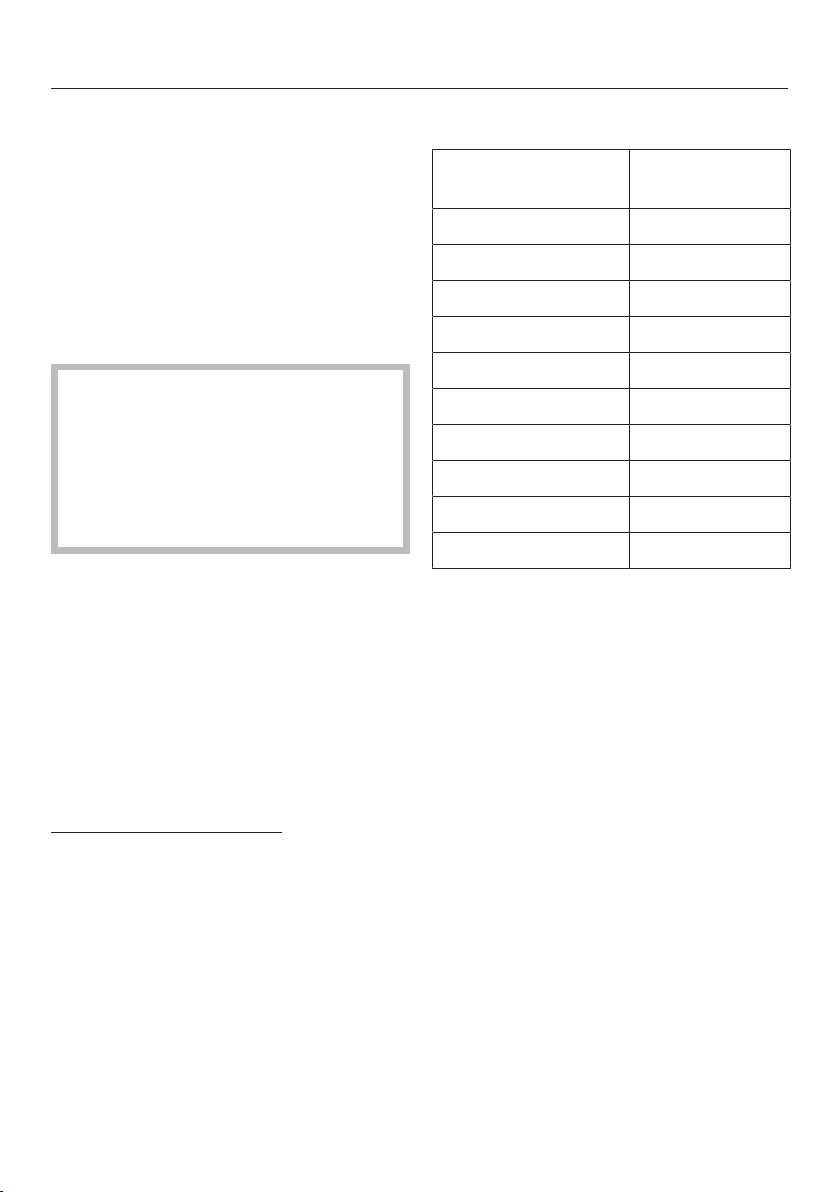
Freezing and storing food
70
–Freezing small amounts of food
Place the food in the upper freezer
drawers.
Place the food flat in the bottom of
the upper freezer drawers so that it
freezes through to the core as quickly
as possible.
–Freezing the maximum amount of
food (see data plate)
If the ventilation slots are obstructed,
the cooling performance will de-
crease and energy consumption will
increase.
When placing food in the freezer,
make sure that the ventilation slots
are not blocked.
Tip: You can expand the space avail-
able in the freezer section. If you wish to
freeze large items, such as turkey or
game, you can remove the glass plates
between the freezer drawers.
Remove the upper freezer drawers.
Place the food flat on the upper glass
plates so that it freezes through to the
middle as quickly as possible.
Once the food has frozen:
Switch the SuperFreeze function
off.
Place the frozen food in the freezer
drawers and push them back in.
Storage time for frozen food
Food group Storage time
(Months)
Ice cream 2to6
Bread, baked goods 2to6
Cheese 2to4
Fish, oily 1to2
Fish, lean 1to5
Sausage, ham 1to3
Game, pork 1to12
Poultry, beef 2to10
Vegetables, fruit 6to18
Herbs 6to10
The storage times given are guidelines only.
Where the storage time given on the
packaging differs, follow the advice on
the packaging.
By keeping the freezer section at a con-
stant temperature of 0°F (-18°C) and
taking appropriate hygiene measures
you can maximize the storage life of
your food and avoid food waste.
Freezing and storing food
71
Cooling drinks quickly
To cool drinks quickly in the refrigerator
section, switch on the Automatic Su-
perCool function.
If you want to cool a large amount of
drinks, or if you want to cool drinks in
the freezer section, select Party mode
in Settings mode.
When cooling drinks quickly in the
freezer, make sure bottles are not left in
for more than one hour. Otherwise
they could burst.
Making ice cubes
72
Check and pay attention to the follow-
ing before switching the ice-cube maker
on:
- The ice-cube maker must be clean.
- The refrigeration appliance must be
switched on.
- The ice-cube drawer contains an ad-
justable partition. You can adjust the
size of the area in which the ice
cubes will collect depending on the
amount of ice you require.
- The drawer area below the ice-cube
maker must be empty.
- Ice cubes can only be made when
the ice-cube drawer is completely
closed.
Risk to health due to contami-
nated water.
Bacteria can develop in water which
has been sitting in the water-supply
lines for too long. This poses a risk to
your health.
Throw away the first 3 batches of ice
cubes made after the ice-cube
maker is started up, as the water will
have been used for the initial rinsing
of the water-supply line.
This applies to the initial commis-
sioning as well as when using the
ice-cube maker again after it has
been switched off for an extended
period of time (more than 5days).
When using the appliance for the first
time, it can take up to 24hours for the
first ice cubes to drop out of the ice-
cube maker and collect in the drawer.
After the ice-cube maker has been
turned off and on again, it can take up
to 6hours for this process to be com-
pleted.
Only make normal domestic quantities
of ice cubes with the ice-cube maker.
The ice-cube maker can make up to
approx. 2.6 lb (1.2kg) of ice cubes in
24hours.
The amount of ice cubes made by the
appliance depends on the temperature
in the freezer section. The lower the
temperature, the more ice cubes
are produced.
Switching the ice-cube
maker on and off
Tap.
Swipe left or right until is shown in
the middle.
Tap.
will light up orange when the ice-
cube maker is switched on.
Once the freezer section has cooled
down to its set temperature, the ice-
cube maker will fill with water.
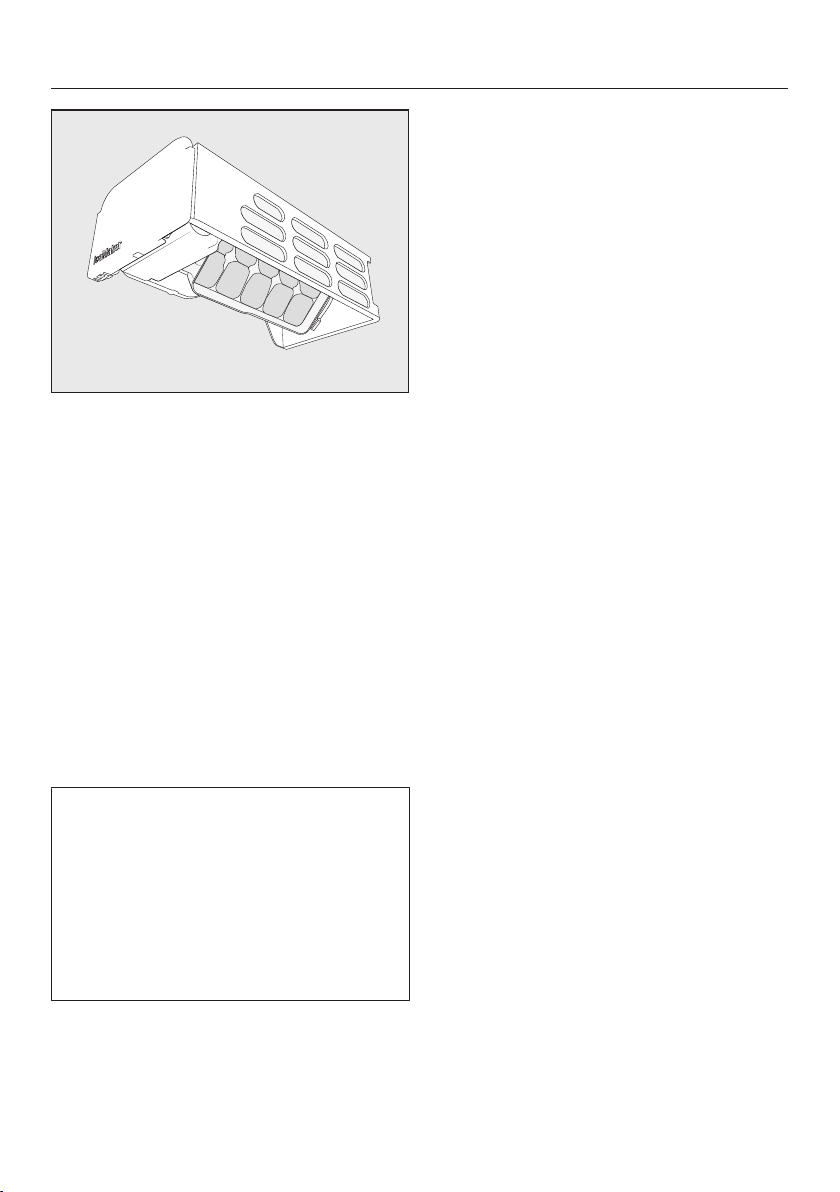
Making ice cubes
73
As soon as ice cubes are produced,
they will empty automatically from the
integrated ice-cube tray and into the
drawer. The ice-cube tray cannot be re-
moved.
Ice-cube production is halted automati-
cally when the ice-cube drawer is full.
The drawer will not fill up to the top
edge.
Tip: Empty the ice-cube drawer at regu-
lar intervals, or if you have not pro-
duced any ice for more than a week.
This will ensure that you always have
fresh ice and the ice cubes will not form
a clump.
The ice-cube maker can be turned off
independently of the freezer section if
you do not want to make any ice
cubes.
If the ice-cube maker is switched off,
food up to a maximum height of
4" (10cm) can be placed in the ice-
cube drawer and frozen.
Defrosting
74
WARNING! DANGER of injury
and damage!
Do not use any mechanical or other
types of aids which are not recom-
mended by the manufacturer to ac-
celerate the defrosting process.
Refrigerator section and
PerfectFresh Active zone
The refrigerator section and the
PerfectFresh Active zone defrost auto-
matically.
The condensate drains through a chan-
nel and drain hole into an evaporation
system at the back of the refrigeration
appliance. The warmth generated by
the compressor causes the condensate
to evaporate automatically.
Keep the condensate channel and
drain hole clean to enable this. The
condensate must always be able to
drain properly.
Freezer section
The appliance is equipped with a
“NoFrost” system. The freezer defrosts
automatically.
The moisture generated in the appli-
ance collects on the condenser and is
automatically defrosted and evaporates
periodically.
This automatic defrosting system en-
ables the Freezer Zone to remain per-
manently ice-free. However, the food
stored in the freezer will not defrost.
Cleaning and care
75
WARNING! DANGER of electric
shock!
Unplug the appliance or trip the cir-
cuit breaker.
WARNING! Fire hazard!
Do not damage the coolant
pipework.
The data plate located inside the inte-
rior cabinet of the refrigeration appli-
ance must not be removed. It contains
information which is required in the
event of a service call.
Do not let water get into the elec-
tronic or the lighting.
Risk of damage due to moisture
penetration.
The steam from a steam cleaner can
damage plastic and electrical com-
ponents.
Do not use a steam cleaner to clean
the refrigeration appliance.
Cleaning water must not get into the
drain hole.
Cleaning agents
Cleaning and care products used in
the interior cabinet of the refrigera-
tion appliance must be food safe.
To avoid damaging the surfaces of your
appliance, do not use the following:
- cleaning agents containing soda, am-
monia, acids, or chloride
- cleaning agents containing limescale
remover
- abrasive cleaning agents, such as
scouring powder, scouring liquid, or
pumice stones
- cleaning agents containing solvents
- stainless steel cleaners
- dishwasher cleaning agents
- oven sprays
- glass cleaners
- hard, abrasive sponges and brushes,
such as pot scrubbers
- eraser sponges
- sharp metal scrapers
We recommend using a clean sponge,
lukewarm water with a little liquid dish
soap to clean the surfaces of the appli-
ance.
Cleaning and care
76
Preparing the refrigeration ap-
pliance for cleaning
Cleaning the refrigerator section
only:
Switch Cleaning mode on. The
cooling system in the refrigerator sec-
tion is switched off, but the interior
lighting remains switched on.
Tap.
Swipe left or right until is shown
in the middle.
Tap.
To leave this Settings level, tap.
If Cleaning mode is switched on,
this will be indicated on the status dis-
play.
Take any food out of the refrigerator
section and store it in a cool place.
Take out any removable accessories
for cleaning (see “Removing, disman-
tling, and cleaning accessories”).
Cleaning the freezer section/the en-
tire refrigeration appliance:
Turn the appliance off.
appears in the display and the cool-
ing system is switched off.
Take any food out of the freezer sec-
tion/refrigeration appliance and store
it in a cool place.
Take out any removable accessories
for cleaning (see “Removing, disman-
tling, and cleaning accessories”).
Cleaning and care
77
Cleaning the interior of the ap-
pliance
Clean the appliance regularly, or at
least once a month.
If soiling is left on for any length of
time, it may become impossible to
remove under certain circumstances.
Surfaces may become discolored or
damaged.
It is therefore best to remove any
soiling immediately.
Clean the interior with a clean
sponge, lukewarm water, and a little
liquid dish soap.
After cleaning, wipe with clean water
and dry with a soft cloth.
Clean the condensate channel and
drain hole frequently using a cotton
swab or similar item to ensure that
condensate can drain away freely.
Leave the door open to air the refrig-
eration appliance sufficiently for a
short while and to prevent odor build-
up.
Cleaning accessories by hand
or in the dishwasher
The following components must be
cleaned by hand only:
- the stainless steel trims or strips
- door shelf with fine adjustment
- the plastic parts of the adjustable
shelf with pivotable glass shelf (Flexi-
Tray)
- adjustable shelf with printing
- the dividing plate and bottle rack
- all drawers and compartment lids
(these vary depending on model)
- the flexible bottle rack (available as
an optional accessory)
- the organization box
The following components are dish-
washer-safe:
Risk of damage due to high dish-
washer temperatures.
Parts of the refrigeration appliance
may become unusable, e.g., deform,
if they are washed in the dishwasher
at more than 130°F (55°C).
For dishwasher-safe components, al-
ways select dishwasher programs
with a maximum temperature of
130°F (55°C).
Contact with natural dyes from car-
rots, tomatoes, and ketchup, etc., may
discolor the plastic parts in the dish-
washer. This discoloration does not af-
fect the stability of the parts.
- bottle holder, egg tray
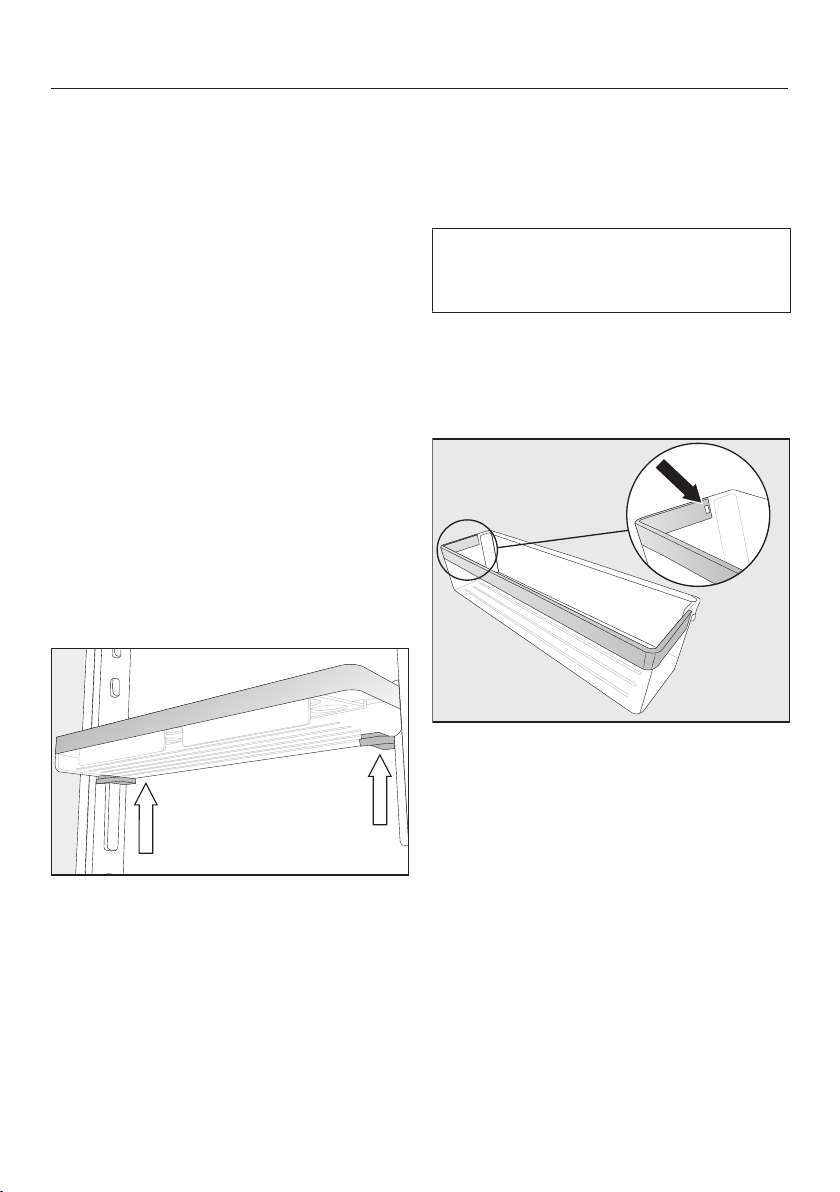
Cleaning and care
78
- shelves and bottle shelves in the ap-
pliance door (without stainless steel
trim)
- door shelf with fine adjustment
- the adjustable shelves (without the
strips or printing)
- the glass shelves (without trim)
- the partition for the ice-cube drawer
- the 2pieces that make up the water
container for the humidifier
- the adapters for the baking tray
- the holder for the carbon filter (avail-
able as an optional accessory)
Removing, dismantling, and
cleaning accessories
Removing the door shelf with fine ad-
justment
Hold the door shelf in both hands,
press the gray buttons on both sides
under it, and slide it up off the guide
rails.
Remove the guide rail from the lugs.
Once you have cleaned it, move the
guide rail to the desired position and
place the second guide rail parallel to
the first rail on the opposite side.
Push the shelf back down onto the
guide rails.
Dismantling the door shelf/bottle
shelf
Remove the stainless steel trim before
cleaning the door shelf/bottle rack in a
dishwasher.
To remove the stainless steel trim, pro-
ceed as follows:
Place the door shelf/bottle rack on
the countertop.
Press the retainer out of the recess.
The entire section of stainless steel
trim will now come off the shelf.
After cleaning, reattach the stainless
steel trim to the shelf by following the
same procedure in reverse.
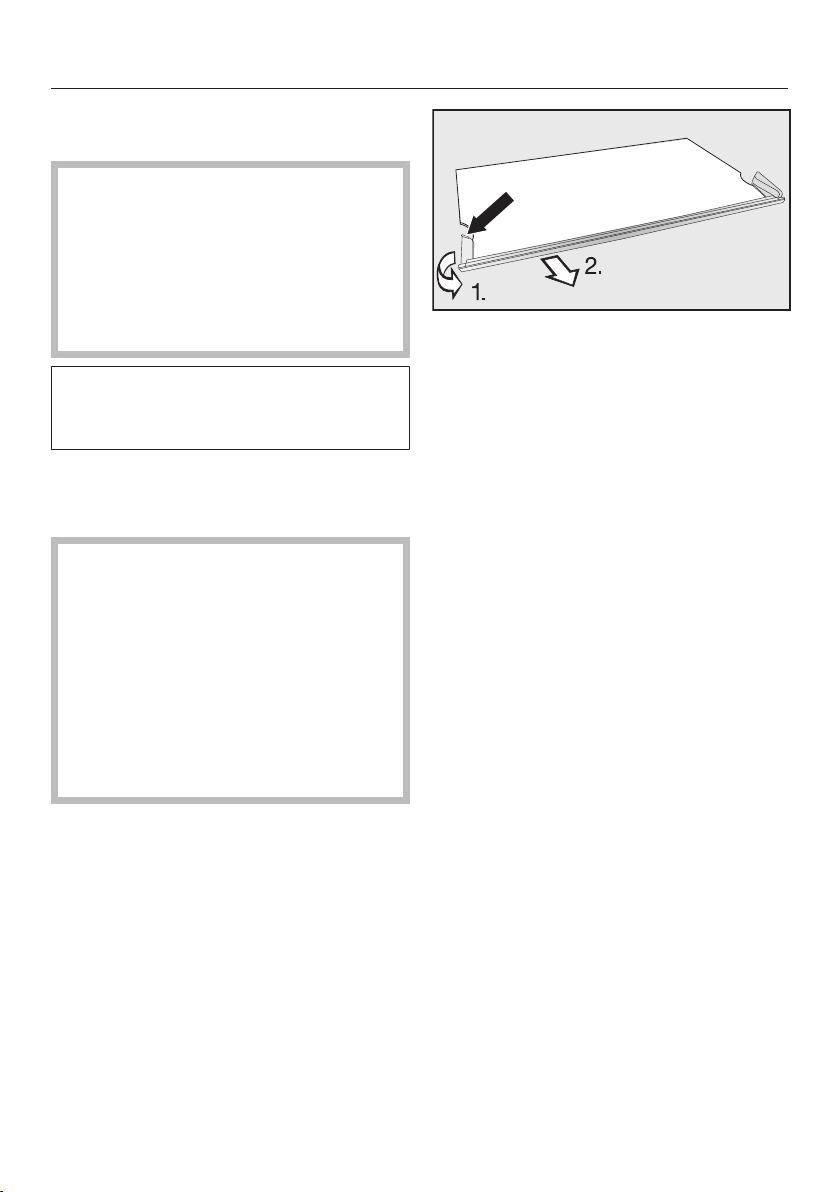
Cleaning and care
79
Dismantling the adjustable shelf/ad-
justable shelf with lighting
Risk of damage as a result of in-
correct cleaning.
The stainless steel trim with LED
lighting will be damaged if you place
it in water for cleaning.
Clean the stainless steel trim with
LED lighting with a damp cloth.
Remove the stainless steel trim or
stainless steel trim with LED lighting
before cleaning the adjustable shelf.
Place the adjustable shelf on a soft
surface (e.g., a dish towel) with the
top side facing downward.
Risk of damage as a result of in-
correct handling.
When you remove the stainless steel
trim with LED lighting, the metal con-
tacts can be damaged.
These contacts in the front left cor-
ner supply power to the LED lighting.
Ensure that you always loosen the
other side from the contacts (metal
discs) first.
Grasp the plastic surround on the
left-hand side of the stainless steel
trim at its rearmost point.
1. Pull the plastic surround from the ad-
justable shelf and
2. pull the trim off at the same time.
Then do the same on the opposite
side.
After cleaning, reattach the stainless
steel trim by following the same pro-
cedure in reverse.
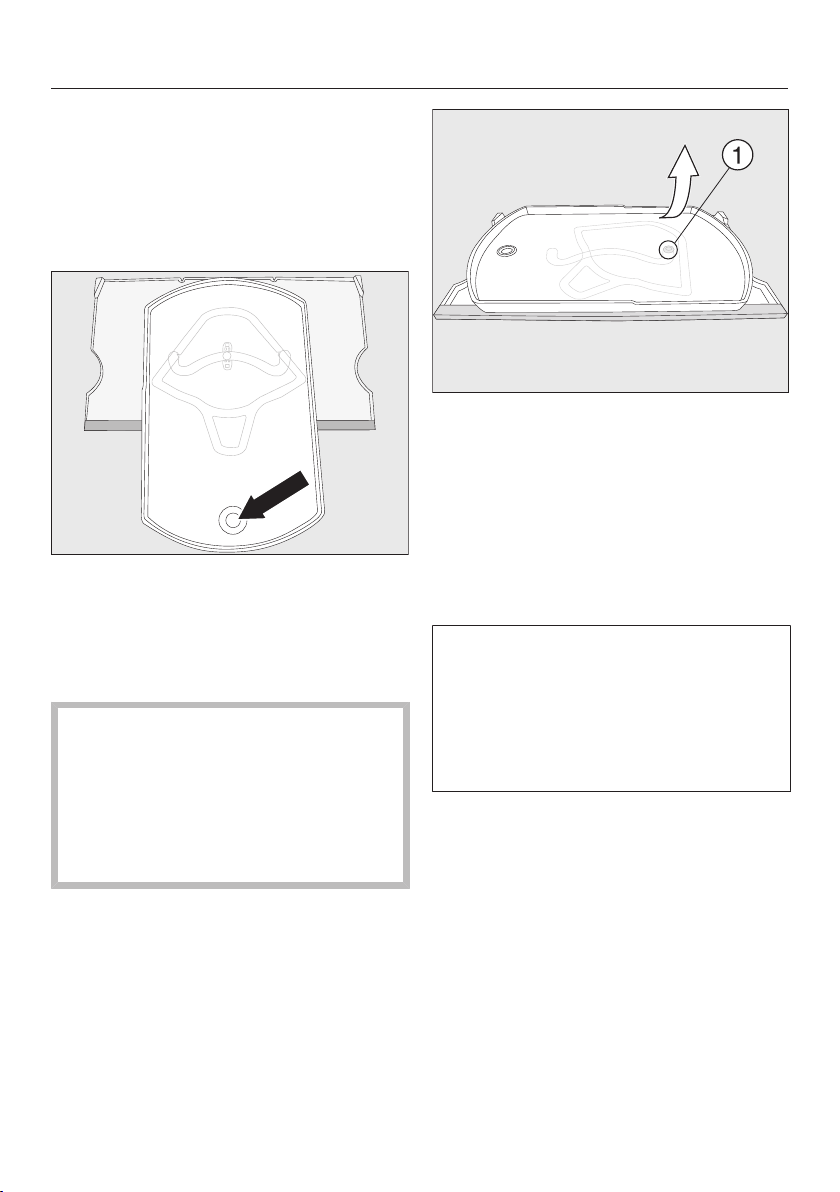
Cleaning and care
80
Dismantling the adjustable shelf with
pivotable glass shelf (FlexiTray)
Place the adjustable shelf with piv-
otable glass shelf on a countertop
covered with a soft material (e.g., a
dish towel).
Bring the tray to the front. Use the
opening to lift the glass shelf from un-
derneath and remove it.
Move the tray back to its original po-
sition resting on the adjustable shelf.
The tray can only be detached from
the adjustable shelf once it has been
returned to its original position and is
resting on the adjustable shelf. The
fastener must be sitting in the circu-
lar recess at the end of the runner
guide.
Take a firm hold of the top right of the
bottom adjustable shelf and pull the
tray firmly off the adjustable shelf.
The fastener on the tray comes loose
from the circular recess at the end of
the runner guide.
You can now dismantle all the parts and
clean them.
Underneath the plastic shelf, there is a
glass panel which is held in place with
retainers on the outer edge of the
adjustable shelf.
The glass panel can also be removed
for cleaning as described below:
Move the shelf so that the stainless
steel trim is at the back and the front
edge hangs over the countertop
slightly.
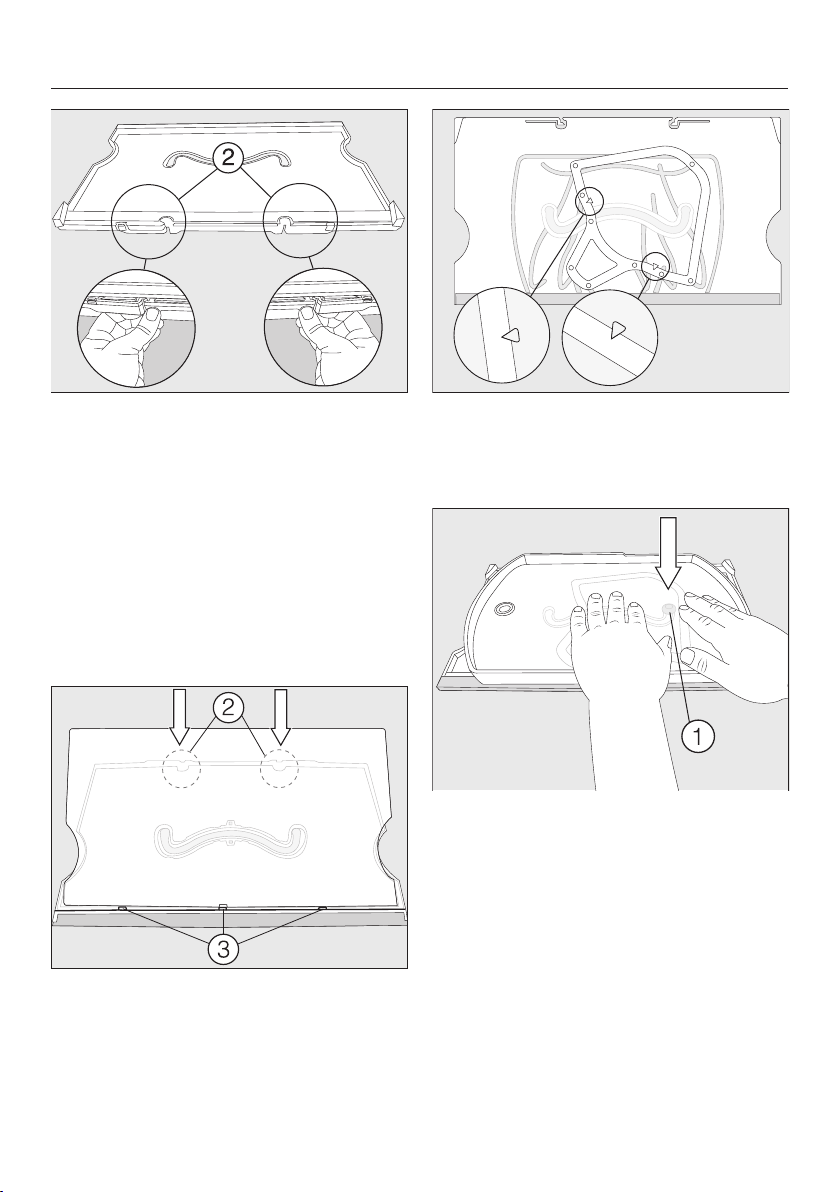
Cleaning and care
81
Release the retainers and lift the
shelf up.
The glass panel comes loose. Both
parts can now be cleaned.
Assembling the adjustable shelf with
pivotable glass shelf (FlexiTray)
Put the plastic adjustable shelf down
on the countertop so that the recess
is at the top and the stainless steel
trim is at the front.
Place the glass panel in the
grooves and then secure it in the
retainers.
Turn over the shelf so that the plastic
surface is facing upward.
Place the frame on the adjustable
shelf so that the arrows on the ad-
justable shelf line up with the re-
cesses on the frame.
Take hold of the tray with the fastener
facing downward and push the fas-
tener firmly into the circular recess at
the end of the runner guide.
Place the glass shelf in the tray.
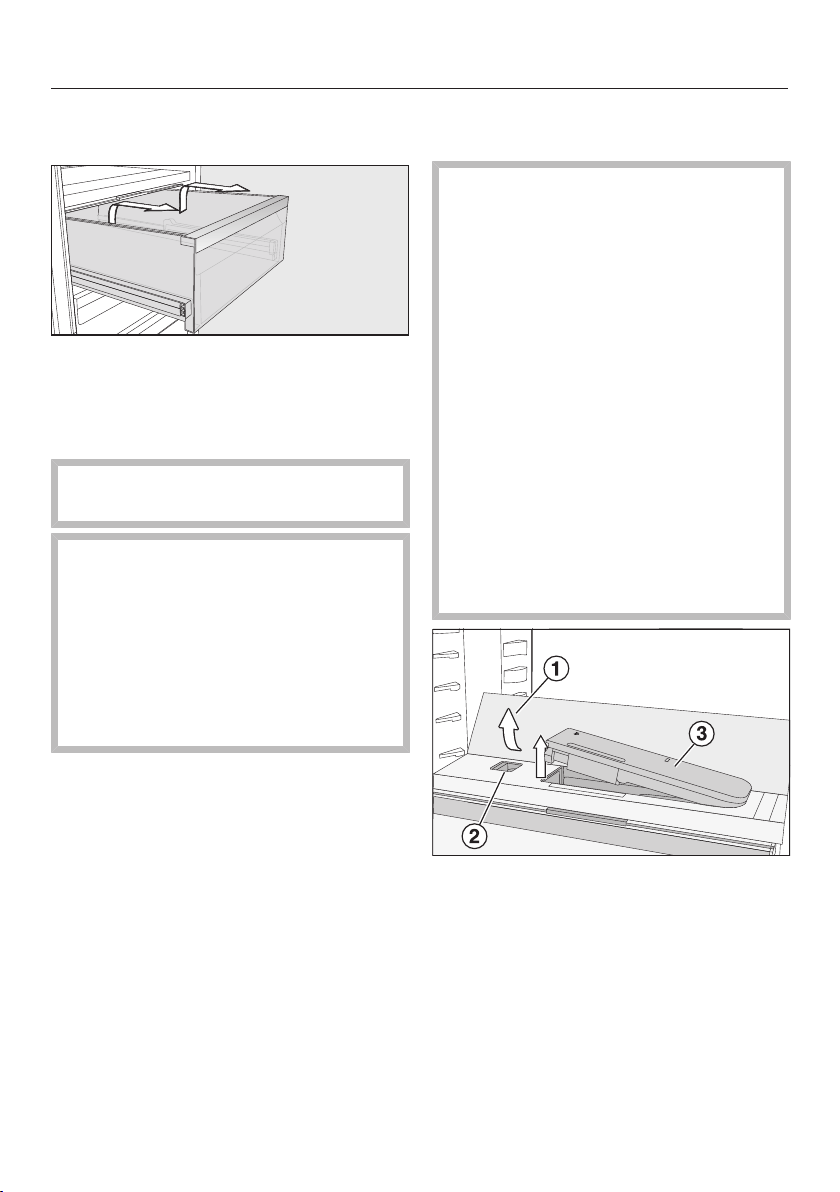
Cleaning and care
82
Removing the drawers from the re-
frigerator section
Pull the drawer out as far as it will go.
Holding the sides of the drawer at the
back, lift it up and then forward and
out.
Push the telescopic runners back in
again to avoid damaging them.
Risk of damage as a result of in-
correct cleaning.
The telescopic runners contain a
special lubricant which can be
washed out during cleaning, damag-
ing the rails.
Wipe the telescopic runners with a
damp cloth to clean them.
Replacing the drawers
Place the drawer on the fully re-
tracted telescopic runners.
Push the drawer into the refrigeration
appliance until it clicks into position.
Removing and dismantling the water
container for the humidifier
Risk to health due to contami-
nated water.
Bacteria can develop in water which
has been sitting in the water con-
tainer for too long. This poses a risk
to your health.
Clean the water container for the hu-
midifier and fill it with fresh drinking
water if the refrigeration appliance,
the refrigerator section, or the humid-
ifier has been switched off for an ex-
tended period of time (more than
2days).
Clean the water container for the hu-
midifier and fill it with fresh drinking
water if Vacation mode has been
switched on for an extended period
of time (more than 2weeks).
Press on the outer corners at the
back of the glass shelf.
The glass shelf will lift up at the front.
Lift up the shelf and fold it back.
The glass shelf will stand upright.
Push the slider to the left.
The water container will spring out of
the recess.
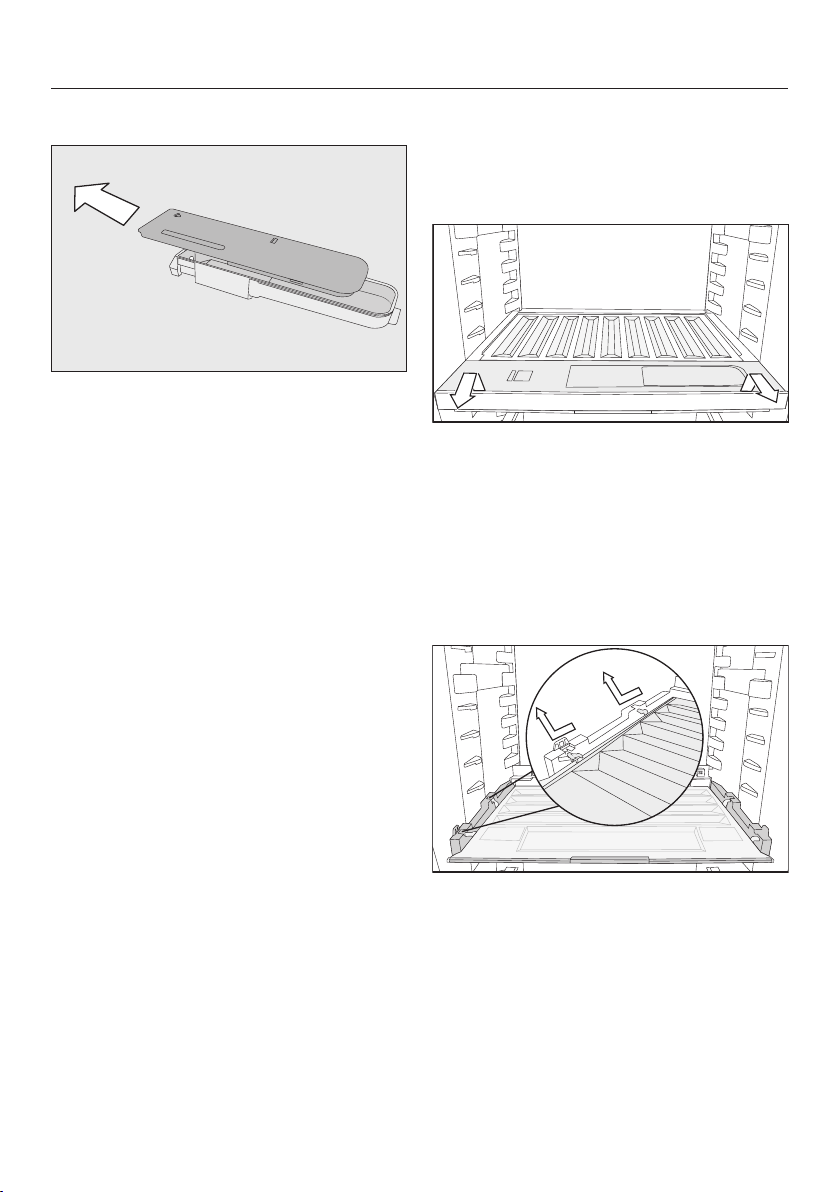
Cleaning and care
83
Remove the water container.
Separate the water container into its
2pieces and clean them by hand or
in the dishwasher.
Reinsert the water container.
Fold the glass shelf back down.
Removing the dividing plate and bot-
tle rack
Remove the glass shelves at the front
and back of the dividing plate.
Lift the bottle rack at the front and
pull it out.
After cleaning, slide the bottle rack all
the way in and push it down.
Place the glass shelves back on the
dividing plate.
Removing the compartment lid
Lift the lid at the front and pull it out.
After cleaning, slide the compartment
lid back in again.
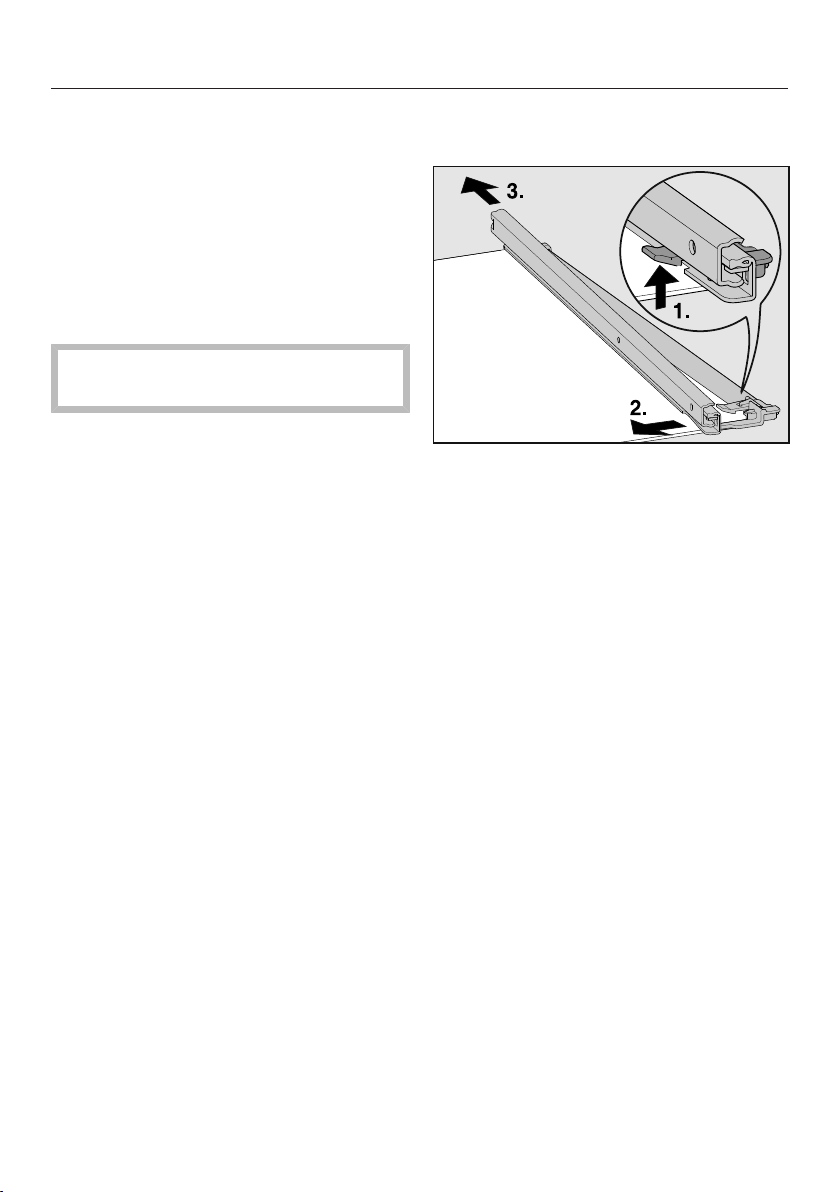
Cleaning and care
84
Removing the drawers and glass
shelves from the freezer section
Removing the drawer on telescopic
runners
Pull the drawer out as far as it will go.
Holding the sides of the drawer at the
back, lift it up and then forward and
out.
Push the telescopic runners back in
again to avoid damaging them.
Replacing the drawer
Place the drawer on the fully re-
tracted telescopic runners.
Push the drawer into the freezer sec-
tion until it clicks into position.
Removing the bottom drawer
Pull the drawer forward and out.
Removing a glass shelf
Pull the glass shelf and telescopic
runners out.
Removing the telescopic runners
from the glass shelf
To remove the telescopic runners:
1. Push the catch upward.
2. Push the telescopic runner to the
side.
3. Then pull the telescopic runner off to
the rear.
Pull off the protective trim at the front
and back of the shelf.
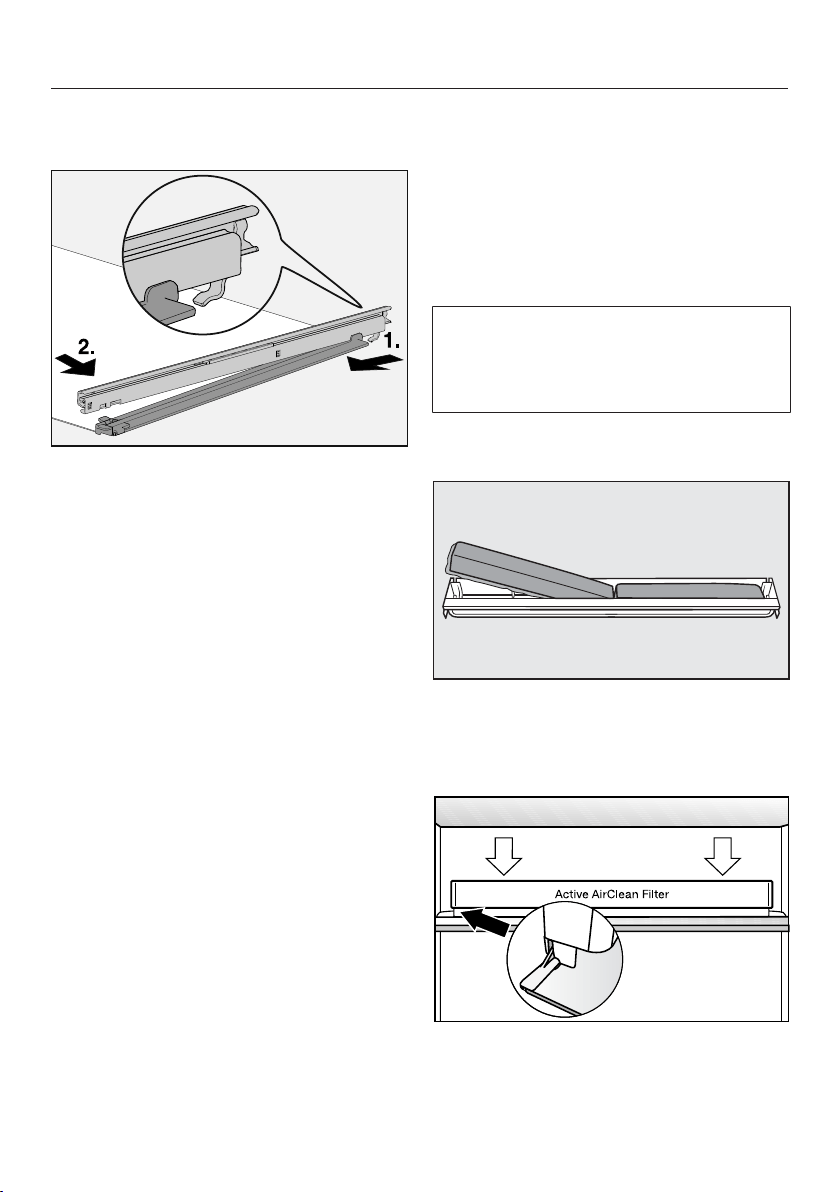
Cleaning and care
85
After cleaning the shelf, reattach the
protective trim.
To attach the telescopic runners to
the shelf:
1. Hook the telescopic runner on at the
rear.
2. Then clip the catches into position at
the front.
Replacing the carbon filters (optional
accessories)
Replace the carbon filters in the holder
around every 6months.
The symbol on the status display re-
minds you that the carbon filter needs
to be changed.
Replacement KKF-RFcarbon filters
can be obtained from Miele Customer
Service, from your dealer, or from
Miele’s website.
Pull the carbon filter holder upward to
remove it from the adjustable shelf.
Remove both carbon filters and place
the new filters with the surrounding
edge pointing downward in the
holder.
Place the holder in the middle of the
protective strip at the back of the ad-
justable shelf so that it clicks into po-
sition.
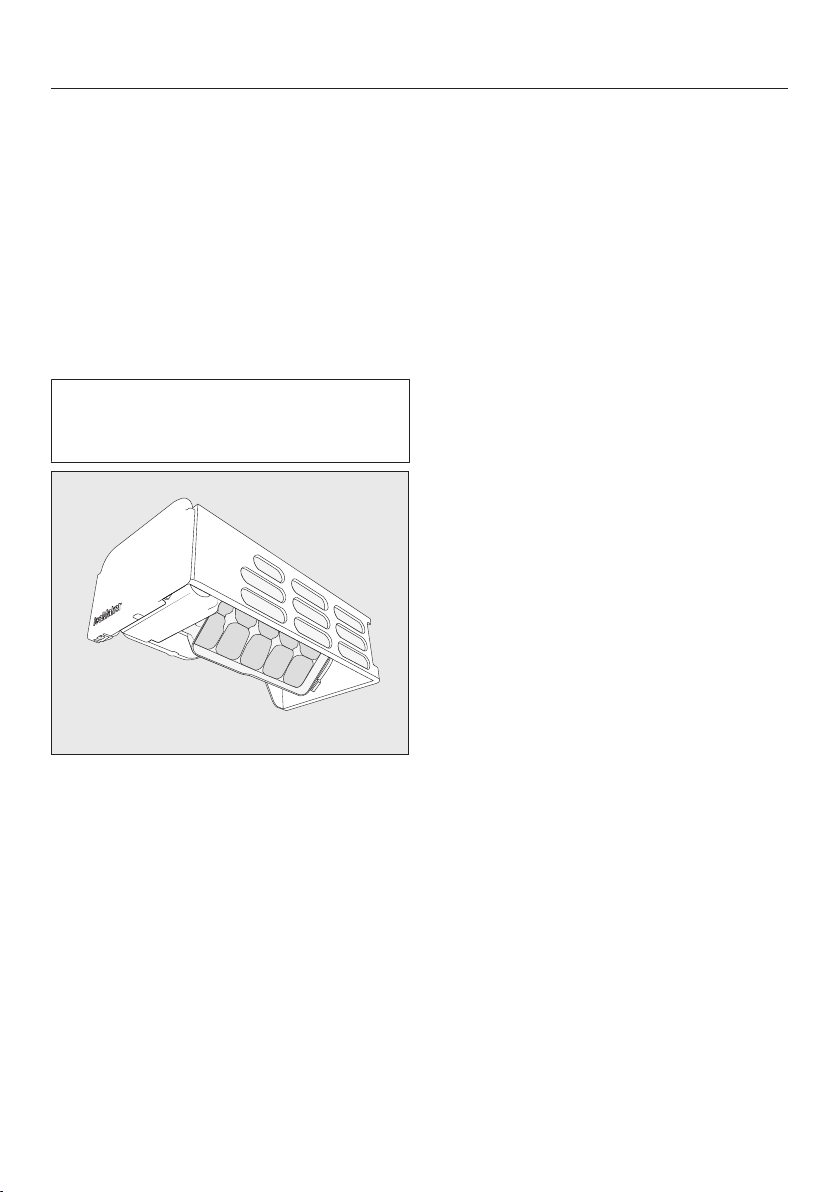
Cleaning and care
86
Touch the symbol on the display
to confirm that the filters have been
replaced.
The “Replace carbon filter” reminder
will go out on the display and the
counter will be reset.
The symbol will go out on the status
display.
Cleaning the ice-cube tray
The ice-cube tray cannot be removed
and therefore has to be moved into
the cleaning position.
Clean the ice-cube tray:
- Before switching off the ice-cube
maker for a long period of time.
- Regularly, to remove ice and water
residues.
Selecting the cleaning position for
the ice-cube tray
Before selecting the cleaning position
for the ice-cube tray, check the follow-
ing:
- The ice-cube maker is switched on.
- The ice-cube drawer is empty and in
position.
Tap.
Swipe left or right until is shown in
the middle.
Tap.
It will take some time to move the ice-
cube tray into the cleaning position.
If the ice-cube drawer is full, will ap-
pear on the display. The process will
stop and and the ice-cube tray will re-
turn to its original position.
Empty the ice-cube drawer and start
the process again.
Once the ice-cube tray has stopped
moving, the symbol will appear on
the display.
To leave this Settings level, tap.
Remove the ice-cube drawer.
Clean the ice-cube tray and the ice-
cube drawer with lukewarm water
and liquid dish soap. Wipe thoroughly
with clean water and dry with a cloth.
Insert the ice-cube drawer back into
the appliance.
After cleaning, tap.
You will hear the ice-cube tray return to
its original position.
Cleaning and care
87
Cleaning the door seal
Risk of damage as a result of in-
correct cleaning.
If you treat the door seal with oil or
grease, it can become porous.
Do not use oil or grease on the door
seal.
The door seals should be cleaned
regularly with clean water, and then
wiped dry with a soft cloth.
Cleaning the ventilation gaps
A build-up of dust will increase the en-
ergy consumption of the appliance.
The ventilation gaps should be
cleaned on a regular basis with a
brush or vacuum cleaner (you could
use a Miele Vacuum Cleaner dust
brush, for example).
After cleaning
Replace all shelves and accessories
in the appliance.
Switch the refrigeration appliance
back on, if necessary.
If you have activated the refrigerator
section’s Cleaning mode:
Tap on the status display.
Tap again.
When Cleaning mode is switched off,
the symbol will light up white.
The refrigerator section will start cooling
again.
Switch the SuperFreeze function
on for a while so that the freezer sec-
tion can cool down quickly.
Switch on the Automatic SuperCool
function for a while so that the re-
frigerator section can cool down
quickly.
Place food in the refrigerator section.
Once the temperature in the freezer
section is cold enough, you can place
the food in the freezer drawers and
return the drawers to the freezer.
Switch off the SuperFreeze func-
tion as soon as the temperature in the
freezer section is a constant 0°F
(-18°C) or colder.
Close the appliance doors.
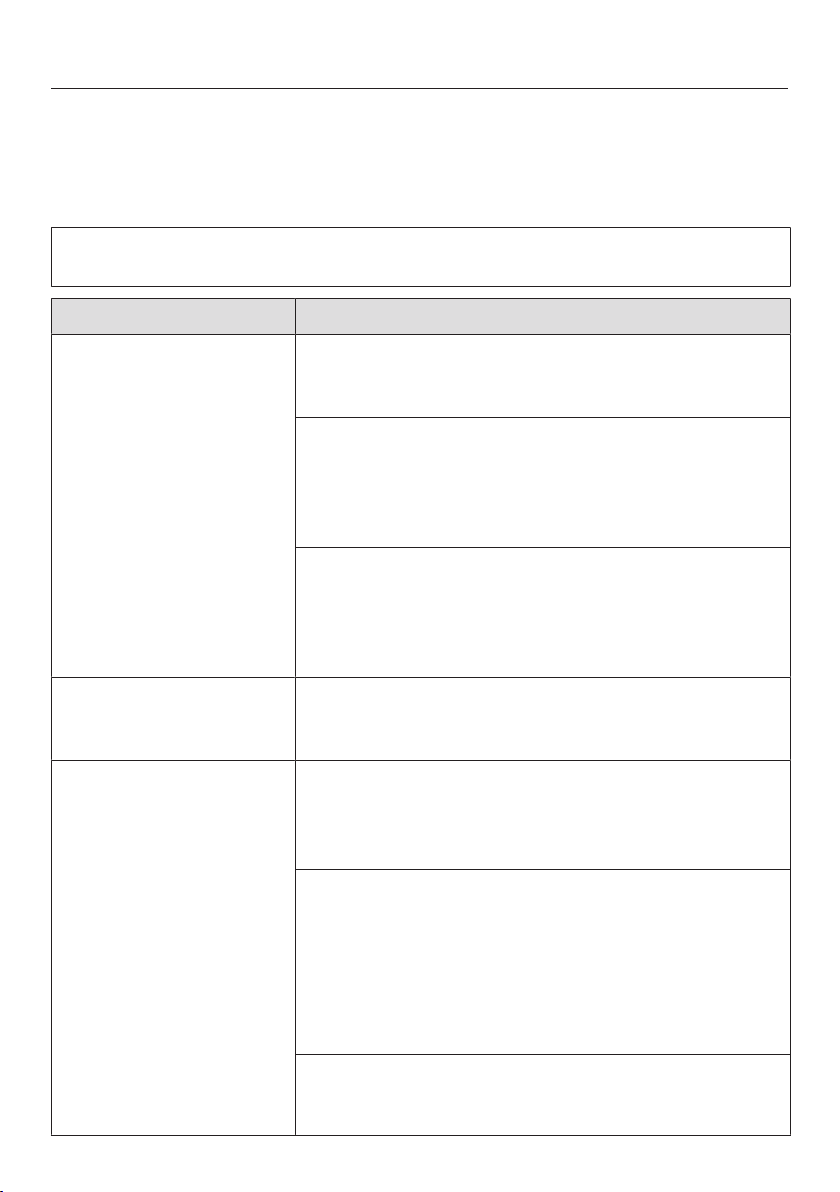
Frequently Asked Questions
88
With the help of the following guide minor faults in the performance of the ma-
chine, some of which may result from incorrect operation, can be remedied with-
out contacting the Service Department.
This guide may help you to find the reason for the fault, and how to correct it.
To prevent cold from escaping, open the appliance doors as little as possible un-
til the fault has been corrected.
Problem Possible cause and solution
The refrigeration appli-
ance is not getting cold
and the interior lighting
does not come on when
the appliance door is
opened.
The refrigeration appliance is not switched on and
the symbol is lit up on the display.
Turn the refrigeration appliance on.
The electrical plug is not properly plugged into the
socket.
Insert the electrical plug into the socket. If the re-
frigeration appliance is switched off, will appear
on the display.
The fuse has tripped. There could be a fault with the
appliance, the household electrical wiring, or another
appliance.
Contact a qualified electrician or Miele Customer
Service.
The compressor runs
continuously.
Not a fault. To save energy, the compressor runs at
a lower speed when less cooling is required. This
increases the compressor run time.
The compressor is turn-
ing on more frequently
and for longer periods
of time; the temperature
in the refrigeration ap-
pliance is too low.
The ventilation gaps are obstructed or dusty.
Do not block the ventilation gaps.
Clean the ventilation gaps on a regular basis to re-
move any dust.
The appliance doors have been opened too fre-
quently or a large amount of fresh food has been put
in all at once for storage or freezing.
Only open the appliance doors when necessary
and for as short a time as possible.
After a while, the temperature will return to normal by
itself.
The appliance doors are not closed properly. A thick
layer of ice may have already formed in the freezer
section.
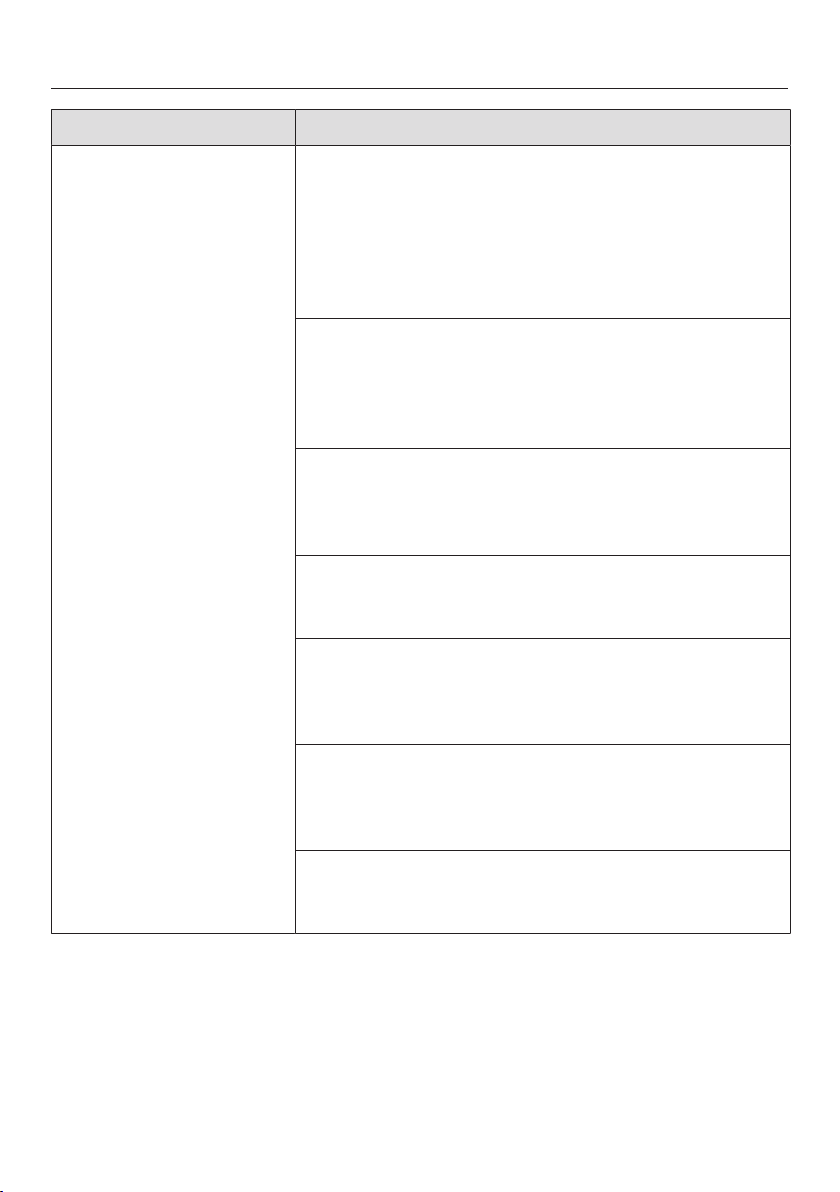
Frequently Asked Questions
89
Problem Possible cause and solution
Close the appliance doors.
After a while, the temperature will return to normal by
itself.
If a thick layer of ice has already formed, this will af-
fect cooling and increase energy consumption.
Defrost the appliance and clean it.
The ambient temperature is too high. The higher the
ambient temperature, the longer the compressor
runs.
See the information in the section on “Installation –
Installation location”.
The appliance was not properly installed in the niche.
Install the refrigeration appliance in the niche as
described in the installation instructions supplied
with it.
The temperature setting in the refrigeration appliance
is too low.
Correct the temperature setting.
A large amount of food was put in for freezing all at
once.
See the information in the section on “Freezing
and storing food”.
The Automatic SuperCool function is still turned
on.
Switch off the Automatic SuperCool function
earlier to save energy.
The SuperFreeze function is still switched on.
Switch off the SuperFreeze function earlier to
save energy.

Frequently Asked Questions
90
Problem Possible cause and solution
The compressor comes
on less and less often
and for shorter periods
of time. The tempera-
ture in the appliance
rises.
This is not a fault. The temperature setting is too
high.
Correct the temperature setting.
Check the temperature again after 24hours.
The food begins to thaw.
The ambient temperature is too low for this appli-
ance.
If the ambient temperature is too low, the compres-
sor will run less frequently. This may cause the
freezer to become too warm.
See the information in the section on “Installation –
Installation location”.
Increase the ambient temperature.
Ice or condensation has
built up inside the re-
frigeration appliance.
The appliance door may
not close correctly.
The door seal has come out of its groove.
Check that the door seal is correctly positioned in
the groove.
The door seal is damaged.
Check whether the door seal is damaged.
The door seal is dam-
aged or needs to be re-
placed.
No tools are required to change the door seal.
Change the door seal. A replacement is available
from Technical Service.
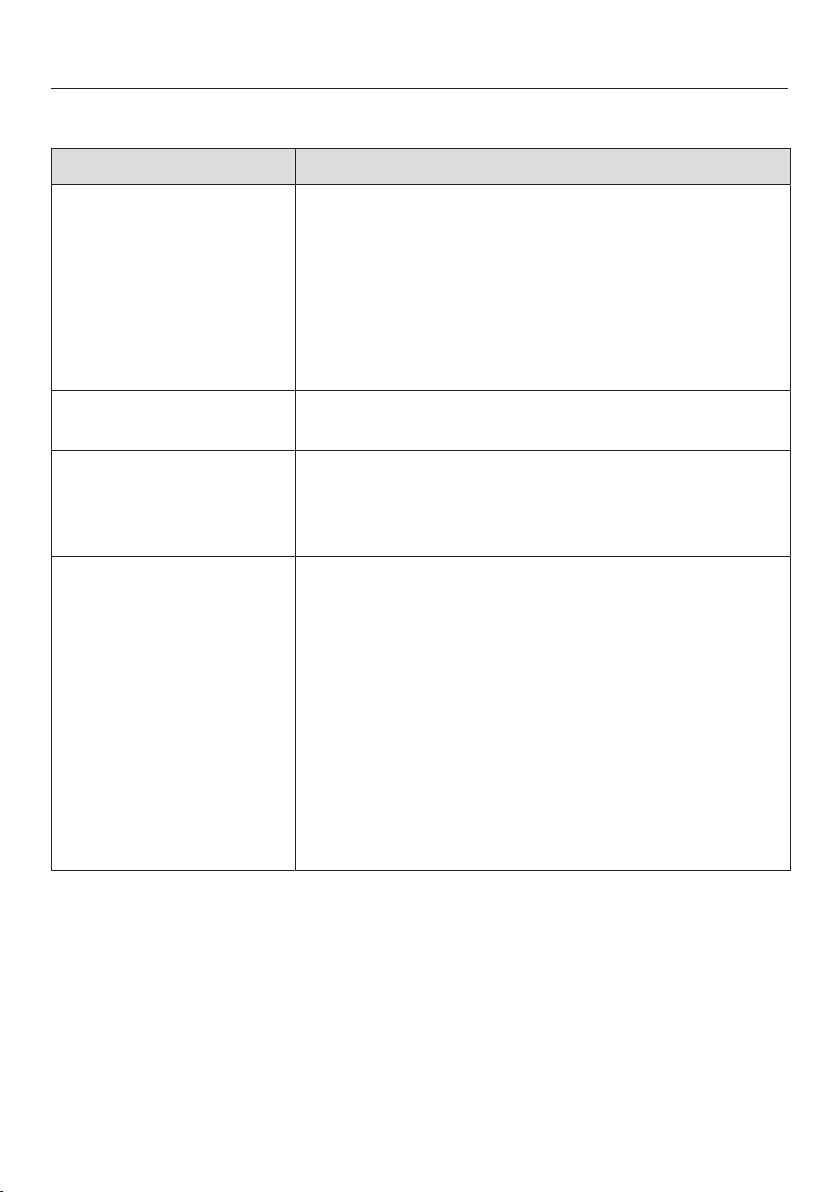
Frequently Asked Questions
91
Other problems
Problem Possible cause and solution
The food is affected by
the setting in the hu-
midity-controlled com-
partment.
There is too much condensate in the humidity-con-
trolled compartment.
Wipe off any condensate with a cloth.
Place a rack or similar item in the compartment so
that excess moisture can drain away.
Open the compartment lid by moving it to the low
humidity position and switch the humidifier
off.
The floor of the refriger-
ator section is wet.
The drain hole is blocked.
Clean the condensate channel and the drain hole.
Food has frozen to-
gether or to the wall.
The food packaging was not dry when loaded in the
freezer.
Use a blunt instrument (such as a spoon handle) to
carefully pry them apart.
An alarm does not
sound even though the
appliance door has
been open for a long
time.
This is not a fault. The alarm has been switched off in
Settings mode. If you want to switch the acoustic
alarm back on again:
Tap.
Swipe left or right until is shown in the middle.
Tap.
Swipe left or right until the volume you want is
shown in the middle.
Confirm the volume you want by tapping on the
segment bar.
When the alarms and audible signals are switched
on, will appear.
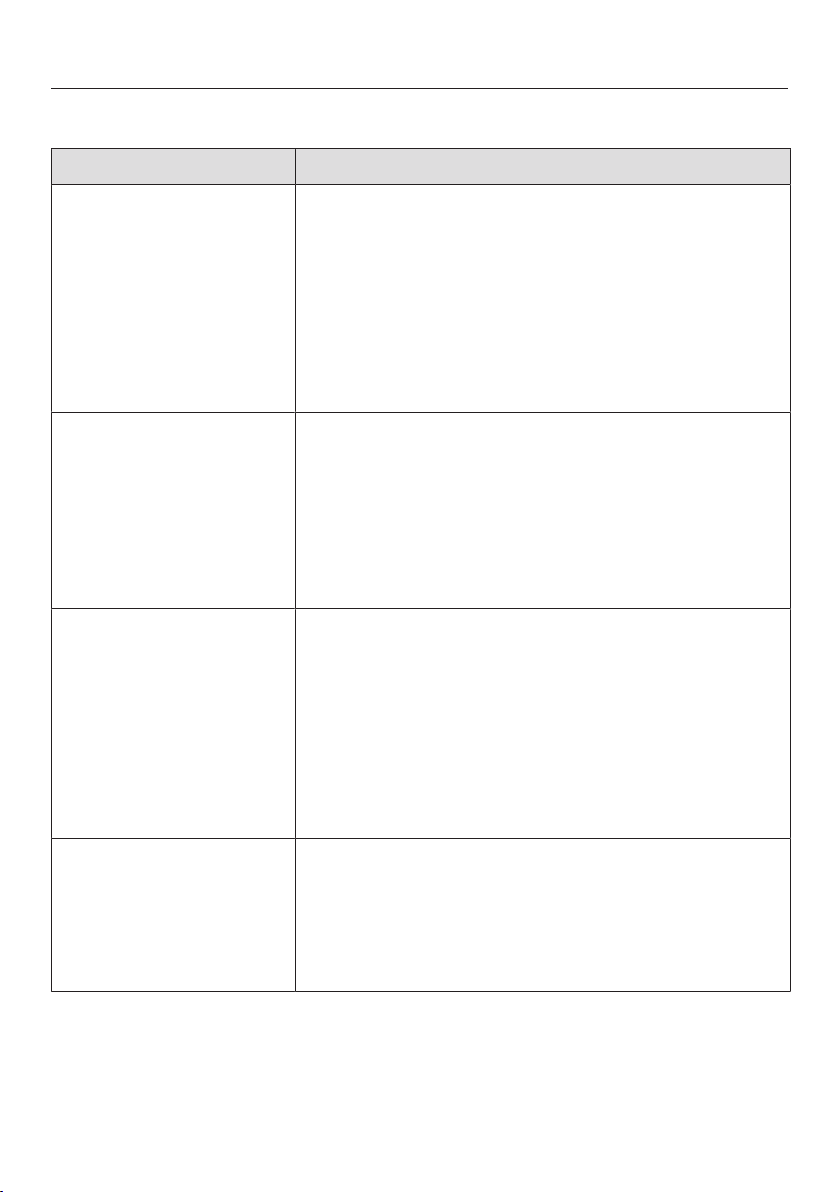
Frequently Asked Questions
92
Messages in the display
Message Possible cause and solution
lights up on the
status display,
the refrigeration
appliance does
not get cold even
though the con-
trols and the inte-
rior lighting are
working.
Demo mode has been activated.
Tap.
Tap.
Swipe left or right until is shown in the middle.
Tap.
After Demo mode has been switched off, the refrig-
eration appliance shuts down and must be switched
on again.
is lit up on the
display and the
appliance cannot
be used.
The Cleaning mode function is still switched on.
Switch the Cleaning mode function off again by
tapping on on the status display.
Tap again.
When Cleaning mode is switched off, the symbol
will light up white.
The refrigeration appliance will start cooling again.
Nothing is visible on the
display. The display is
completely blank.
Sabbath mode is switched on: the interior lighting
is switched off and the appliance is cooling down.
Tap on the black display.
will appear on the display.
Tap.
lights up orange.
When Sabbath mode is switched off, the symbol
will light up white.
is lit up on the
display and the
appliance cannot
be used.
The safety lock function has been activated.
Unlock the refrigeration appliance temporarily or
switch the safety lock function off completely (see
“Selecting additional settings – Deactivating the
safety lock function/ temporarily/switching
off completely”).
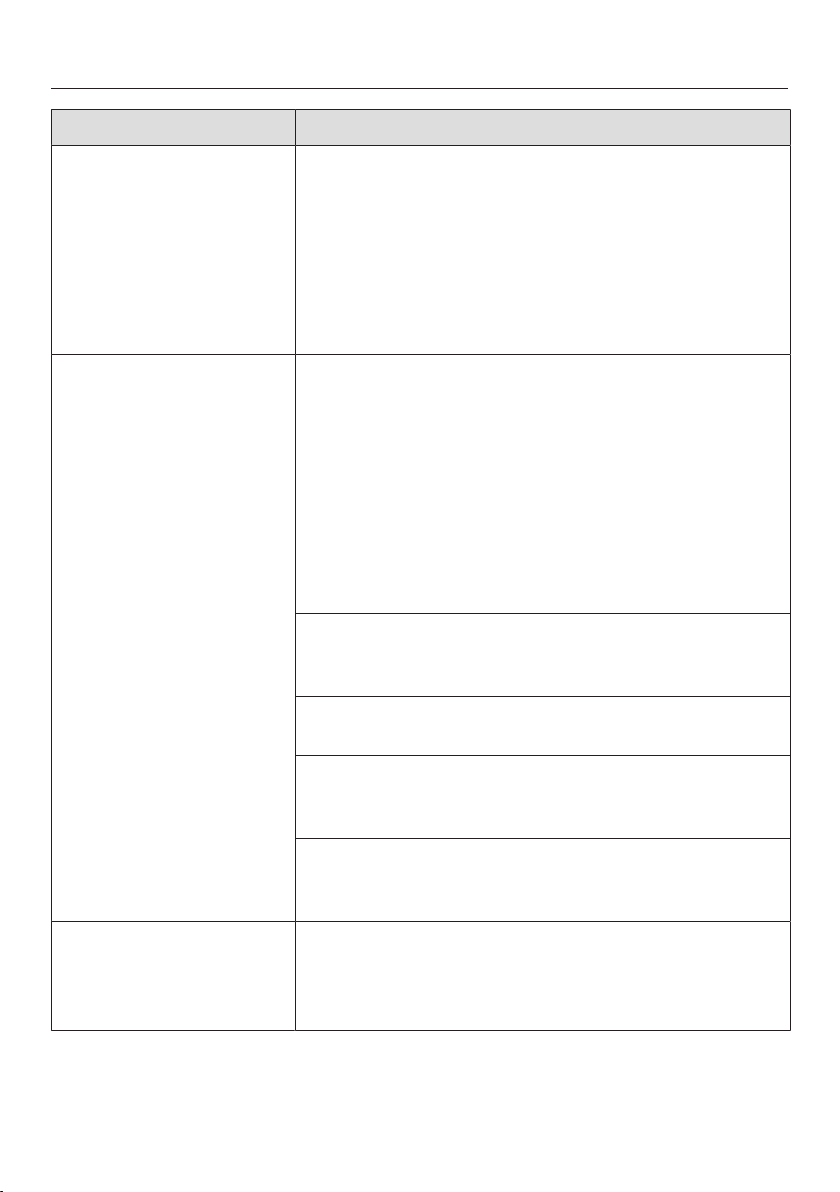
Frequently Asked Questions
93
Message Possible cause and solution
The symbol lights up
on the status display
and an audible signal
also sounds.
The carbon-filter change indicator reminds you
that the carbon filter needs to be changed.
Replace the carbon filter in the holder (see “Clean-
ing and care – Replacing the carbon filters (op-
tional accessories)”) and touch the symbol on
the display to confirm that you have changed the
carbon filter.
The symbol will go out on the status display.
lights up yellow
in the display and
an alarm also
sounds.
The ice-cube drawer is not in the refrigeration appli-
ance. An audible signal sounds after closing the ap-
pliance door.
Tap on the display.
The alarm message is confirmed and the audible sig-
nal stops.
The current temperature will appear in the display
again.
Replace the drawer correctly in the refrigeration
appliance or switch the ice-cube maker off.
The plumbed-water connection was not installed.
Make sure that the plumbed-water connection was
installed correctly.
The water-supply line is not open.
Open the shut-off valve.
There is a kink in the hose.
Check the hose; if it is faulty, it must only be re-
placed by an original Miele spare part.
The water-connection pressure is too low.
Check that the water-connection pressure is be-
tween 21.7 and 90psi (1.5 and 6.2bar).
lights up yellow
in the display and
an audible signal
sounds.
The drawer for the ice-cube maker is full.
Remove the drawer and empty it.
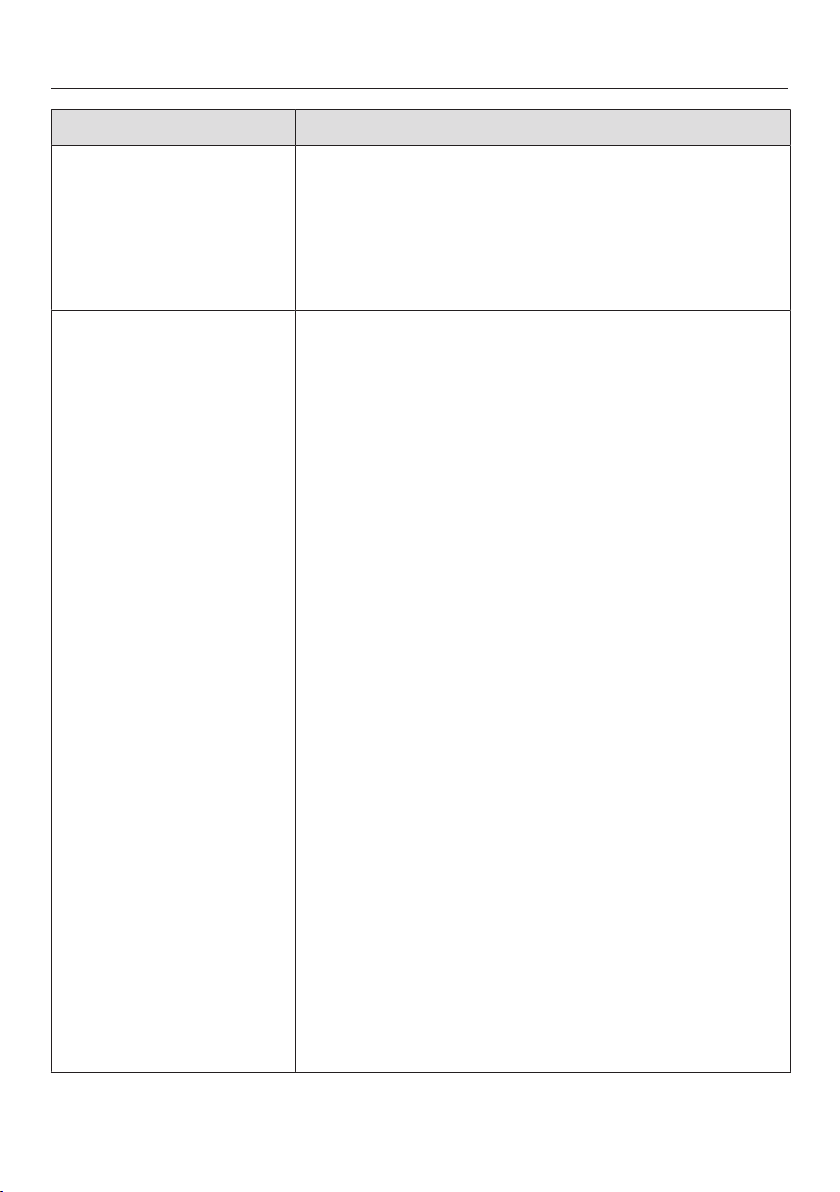
Frequently Asked Questions
94
Message Possible cause and solution
lights up yellow in
the temperature display
for the refrigerator sec-
tion and/or the freezer
section and an alarm
also sounds.
The door alarm has been activated.
Touch and hold
in the display for a few sec-
onds.
The alarm tone will stop and the
symbol will go
out.
Close the relevant appliance door.
lights up red in the
freezer-section temper-
ature display and an
alarm also sounds.
The temperature alarm has been activated; the tem-
perature in the freezer section has risen higher or
fallen lower than the temperature set.
Possible reasons for this include:
– The appliance door was opened too frequently.
– A large quantity of fresh food has been placed
in the freezer without switching on the Super-
Freeze function.
– A prolonged power failure has occurred.
– The refrigeration appliance has a fault.
Tap
.
The alarm message is confirmed:
goes out and
the alarm stops.
The warmest temperature recorded in the freezer
section will flash for about 1minute in the display.
Then the temperature display will change to the cur-
rent temperature in the freezer section.
You can exit from the flashing temperature display
early:
Touch the temperature display for the freezer sec-
tion.
The warmest temperature displayed will disappear.
The display will then revert to showing the current
temperature in the freezer section.
Rectify the cause of the alarm.
Depending on the temperature displayed, you
should check whether food in the freezer has
started to thaw or has defrosted. If it has, cook it
before freezing it again.
Frequently Asked Questions
95
Message Possible cause and solution
lights up red in the
display and an alarm
also sounds.
Indication of an interruption to the power supply: the
temperature in the freezer section over the last few
days or hours has risen too high because of a power
failure.
Tap
.
The fault message is confirmed:
goes out and the alarm will stop.
The warmest temperature recorded in the freezer
section will flash for about 1minute on the tempera-
ture display for the freezer section. Then the temper-
ature display will change to the current temperature
in the freezer section.
You can exit from the flashing temperature display
early:
Touch the temperature display for the freezer sec-
tion.
The warmest temperature displayed will disappear.
The display will then revert to showing the current
temperature in the freezer section. The appliance will
go back to the last temperature setting when the
power is restored.
Rectify the cause of the alarm.
Depending on the temperature displayed, you
should check whether food in the freezer has
started to thaw or has defrosted. If it has, cook it
before freezing it again.
Frequently Asked Questions
96
Message Possible cause and solution
lights up red in
the display and a
fault code F with
numbers may ap-
pear. An alarm
will also sound.
There is a fault.
Tap on the display to switch the alarm off.
Contact Miele Customer Service.
To report the fault, you need the fault code and also
the model identifier and serial number of your refrig-
eration appliance. You can access this information on
the display.
To do this, touch on the display.
The appliance data required will be shown on the
display.
Confirm with OK to exit the information display and
the fault code will be shown again on the display.
The refrigeration appliance can be switched off di-
rectly from the fault-message display.
There is an appliance fault: this display always has
priority over any settings which have just been se-
lected.
An appliance fault has priority over any current door
and/or temperature alarms displayed.
lights up red in the
display and an alarm
also sounds.
There is a fault with the ice-cube maker.
Tap
on the display to switch the alarm off.
Contact Miele Customer Service.
The ice-cube maker can also be switched off in Set-
tings mode.
Frequently Asked Questions
97
Problems with the humidifier
Problem Possible cause and solution
The humidifier is not
supplying moisture to
the food in the Perfect-
Fresh Active zone.
The humidifier is not switched on.
Tap on the symbol in Settings mode.
The compartment lid has been pulled forwards to the
“Low humidity” setting.
Push the compartment lid backward so that the
“Increased humidity” setting is selected.
There is not enough water in the water container.
Fill the water container with fresh drinking water.
The water container is not installed correctly.
Insert the water container, making sure it clicks
into position correctly.
There is dirt in front of the humidifier.
Clean the humidifier and water container.
Problems with the ice cube maker
Problem Possible cause and solution
You cannot turn the ice
cube maker on.
The appliance is not connected to the power supply
or is not switched on.
Reconnect to the power supply and switch the ap-
pliance back on.
The ice-cube maker is
not producing any ice
cubes.
The refrigeration appliance or ice-cube maker is not
switched on.
Switch the refrigeration appliance and the ice-
cube maker on.
The water intake is not open or has not been vented.
Open the water intake.
Check that the water intake has been vented.
The ice-cube maker drawer is not closed properly.
Push the drawer all the way in.
The appliance door has been opened too frequently,
causing the compressor to turn on more often and
the ice-cube maker has iced up.
Frequently Asked Questions
98
Problem Possible cause and solution
Only open the appliance door when necessary and
for as short a time as possible.
The temperature in the freezer section is too high.
Select a lower temperature.
The water-connection pressure is too low.
Check that the water-connection pressure is be-
tween 21.7psi and 90psi (1.5and 6.2bar).
Remember that it can take up to 24hours for the
production of ice cubes to commence.
The ice cubes have an
unpleasant odor or fla-
vor.
The ice-cube maker is in constant use and needs to
be cleaned regularly.
Rinse the ice-cube maker and water-intake pipe
regularly. The first three batches of ice cubes
should be thrown away and not consumed.
The ice-cube maker is rarely used. If you do not use
it very often, ice cubes that are stored for a long pe-
riod can absorb the taste and smell of other items.
Empty the ice-cube drawer if you are not going to
use the ice-cube maker for a long period of time.
Rinse the ice-cube maker and water-intake pipe
regularly. The first three batches of ice cubes
should be thrown away and not consumed.
There are unsealed food packages in the freezer sec-
tion. Ice can absorb the taste and smell of unsealed
food.
Store only sealed food in the freezer section.
The ice-cube drawer is dirty.
If necessary, clean the ice-cube drawer.
Frequently Asked Questions
99
The interior lighting is not working
Risk of electric shock due to exposed, live electrical components.
When removing the lighting cover, there is a risk of coming into contact with live
electrical components.
Do not remove the lighting cover. The LED lighting may only be repaired or re-
placed by Customer Service.
Risk of injury from LED lighting.
This lighting corresponds to risk group RG2. If the cover is defective, there is a
risk of eye injury.
If the lighting cover is defective, do not look from a close range directly into the
lighting with optical instruments (e.g., magnifying glass or similar).
Problem Possible cause and solution
The interior lighting is
not working.
The refrigeration appliance has not been turned on.
Turn the refrigeration appliance on.
Sabbath mode is switched on: the display is dark
and the refrigeration appliance is cooling.
Tap on the black display.
will appear on the display.
Tap.
lights up orange.
Tap on the symbol in Settings mode.
When Sabbath mode is switched off, the symbol
will light up white.
To avoid overheating, the interior lighting switches it-
self off automatically after approximately 15minutes
if the appliance door is left open. If this is not the
cause, there is a fault.
Contact Miele Customer Service.
Frequently Asked Questions
100
Problem Possible cause and solution
The LED lighting on one
of the adjustable
shelves is not working.
The shelf is not sitting correctly on the shelf sup-
ports.
Check that the shelf is positioned correctly on the
shelf supports. The shelf has metal contacts at the
front left corner which supply power to the LED
lighting.
Push in the shelf until it clicks into position.
The LED lighting on the stainless steel trim is faulty.
Replace the stainless steel trim with LED lighting.
A replacement is available from Miele Customer
Service.
The LED lighting is not
working on any of the
shelves.
Liquid has been spilt onto the LED lighting on one of
the shelves or into the contact openings on the left-
hand shelf supports.
The safety shut-off mechanism has switched off the
LED lighting on all the shelves.
Wipe the stainless steel trim with LED lighting with
a damp cloth and dry it or leave it outside the re-
frigeration appliance to dry.
Ensure that the contacts are clean and dry before
replacing the shelves with LED lighting.
Push in the shelf until it clicks into position.
Close the appliance door.
When the door is opened again, the interior lighting
will come on.
If this does not happen, there is a fault.
Contact Miele Customer Service.
Causes of noises
101
Normal
noises
Cause
Brrrrr... A humming noise is made by the motor (compressor). This noise
can get louder for brief periods when the motor switches on.
Blub, blub... A gurgling noise can be heard when the coolant circulates
through the pipes.
Click... Clicking sounds occur whenever the thermostat switches the
motor on or off.
Sssrrrrr... You can sometimes just hear the sound of the fan inside the ap-
pliance.
Crack... A cracking sound can be heard when materials expand inside
the appliance.
Please bear in mind that a certain amount of noise is unavoidable (from the com-
pressor and the coolant circulating through the system).
Noises Cause and solution
Rattling,
clinking
The appliance is uneven. Realign the appliance using a level by
raising or lowering the adjustable feet underneath the refrigera-
tion appliance.
For niches of 55'' (140cm) and more: place the stabilizing rods
supplied underneath the appliance base.
Drawers, baskets, or shelves are jiggling or are stuck. Check all
removable parts and reinsert them correctly if required.
Bottles or containers are touching each other. Separate them a
little.
Customer Service
102
Contact in the event of a fault
In the event of a fault which you cannot
remedy yourself, please contact your
Miele dealer or Miele Customer Service.
You can book a Miele Service Call on-
line at www.miele.com/service.
Contact information for Miele Cus-
tomer Service can be found at the end
of this document.
Please quote the model identifier and
serial number of your appliance (SN)
when contacting Miele Customer Ser-
vice. Both pieces of information can be
found on the data plate.
You will find the data plate inside your
appliance.
Displaying appliance informa-
tion
This can be found in Settings mode un-
der Information (see “Selecting addi-
tional settings”) or on the data plate in-
side the refrigeration appliance.
Appliance warranty and prod-
uct registration
You can register your product and/or
view the manufacturer´s warranty terms
and conditions for Miele appliances and
vacuum cleaners at
www.mieleusa.com.
9 Independence Way
Princeton, NJ 08540
www.mieleusa.com
U.S.A.
Miele, Inc.
National Headquarters
Please have the model and serial number
of your appliance available when
contacting Customer Service.
Canada
Importer
Miele Limited
Headquarters and Miele Centre
Customer Support
Phone: 888-99-MIELE (64353)
161 Four Valley Drive
Vaughan, ON L4K 4V8
www.miele.ca
Customer Care Centre
Phone:
1-800-565-6435
905-532-2272
International Headquarters
Miele & Cie. KG
Carl-Miele-Straße 29
33332 Gütersloh
Germany

M.-Nr. 11 930 740 / 00en - US/CA
KFN 7795 D
