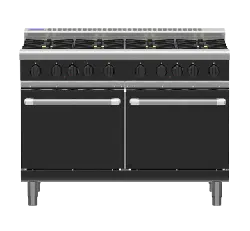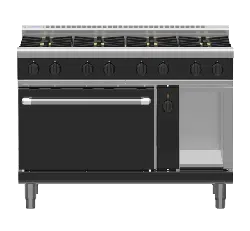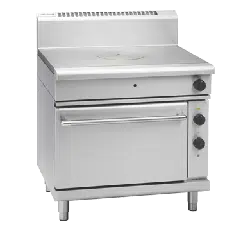

Installation and Operation Manual
RN8110GE RNB8110GE
RNL8110GE RNLB8110GE
RN8110GEC RNB8110GEC
RNL8110GEC RNLB8110GEC
Gas Target Top Range
Electric Ovens
Date Purchased
Serial Number
Dealer
Service Provider
229244-24
For use in GB & IE

The reproduction or copying of any part of this manual by any means whatsoever is strictly forbidden unless authorized previously in
writing by the manufacturer.
In line with policy to continually develop and improve its products, Moffat Ltd. reserves the right to change the specifications and
design without prior notice.
© Copyright Moffat Ltd. August 2017.
MANUFACTURED BY
Moffat Limited
Rolleston 7675
New Zealand
INTERNATIONAL CONTACTS
AUSTRALIA
Moffat Pty Limited
Web: www.moffat.com.au
E.Mail: [email protected]
Main Office: (tel) +61 (03) 9518 3888
(fax) +61 (03) 9518 3833
Service: (tel): 1800 622 216
Spares: (tel): 1800 337 963
Customer Service: (tel): 1800 335 315
(fax): 1800 350 281
CANADA
Serve Canada
Web: www.servecanada.com
E.Mail: [email protected]
Sales: (tel): 800 551 8795 (Toll Free)
Service: (tel): 800 263 1455 (Toll Free)
NEW ZEALAND
Moffat Limited
Web: www.moffat.co.nz
E.Mail: [email protected]
Main Office: (tel): 0800 663328
UNITED KINGDOM
Blue Seal
Web: www.blue-seal.co.uk
E.Mail: [email protected]
Sales: (tel): +44 121 327 5575
(fax): +44 121 327 9711
Spares: (tel): +44 121 322 6640
(fax): +44 121 327 9201
Service: (tel): +44 121 322 6644
(fax): +44 121 327 6257
UNITED STATES
Moffat
Web: www.moffat.com
Sales: (tel): 1800 551 8795 (Toll Free)
(fax): +1 336 661 9546
Service: (tel): 866 673 7937 (Toll Free)
(tel): +1 336 661 1556
(fax): +1 336 661 1660
REST OF WORLD
Moffat Limited
Web: www.moffat.co.nz
E.Mail: [email protected]

Contents
Waldorf Gas Target Top Range Electric Ovens
RN(L)(B)8110GE Gas Target Top Range Electric Static Oven.
RN(L)(B)8110GEC Gas Target Top Range Electric Convection Oven.
Introduction .............................................................................................. 2
Specification .............................................................................................. 3
Model Numbers Covered in this Specification
General
Gas Supply Requirements
Gas Connection
Electrical Supply Requirements
Electrical Connection
Dimensions ................................................................................................ 7
Installation ................................................................................................ 8
Installation Requirements
Unpacking
Location
Clearances
Assembly
Rear Rollers Fitting
Gas Connection
Electrical Connection
Commissioning
Operation ................................................................................................. 13
Operation Guide
Description of Controls
Lighting Pilot Burner (Target Top)
Lighting Main Burner (Target Top)
Oven
Cleaning and Maintenance ...................................................................... 16
General
After Each Use
Daily Cleaning
Weekly Cleaning
Periodic Maintenance
Fault Finding ............................................................................................ 18
Wiring Schematic .................................................................................... 19
RN8110GE
RN8110GEC
Gas Conversion and Specifications ......................................................... 22
Conversion Procedure
Gas Specifications
Replacement Parts List ........................................................................... 28
Introduction
2
We are confident that you will be delighted with your WALDORF Gas Target Top Range Electric Oven, and
it will become a most valued appliance in your commercial kitchen.
To ensure you receive the utmost benefit from your new Waldorf appliance, there are two important things
you can do.
Firstly:
Please read the instruction book carefully and follow directions given. The time taken will be well spent.
Secondly:
If you are unsure of any aspect of the installation, instructions or performance of your appliance,
contact your WALDORF dealer promptly. In many cases a phone call could answer your question.
CE Only:
These instructions are only valid if the country code appears on the appliance. If the code does not
appear on the appliance, refer to the supplier of this appliance to obtain the technical instructions for
adapting the appliance to the conditions for use in that country.
GREAT CARE MUST BE TAKEN BY THE OPERATOR TO USE THE EQUIPMENT SAFELY TO GUARD IT AGAINST RISK OF
FIRE.
T
HE APPLIANCE MUST NOT BE LEFT ON UNATTENDED.
I
T IS RECOMMENDED THAT A REGULAR INSPECTION IS MADE BY A COMPETENT SERVICE PERSON TO ENSURE
CORRECT AND SAFE OPERATION OF YOUR APPLIANCE IS MAINTAINED.
DO NOT
STORE OR USE GASOLINE OR OTHER FLAMMABLE VAPOURS OR LIQUIDS IN THE VICINITY OF THIS
OR ANY OTHER APPLIANCE.
DO NOT SPRAY AEROSOLS IN THE VICINITY OF THIS APPLIANCE WHILE IT IS IN OPERATION.
Warning
This appliance is for professional use and is only to be used by qualified
persons.
Only authorised service persons are to carry out installation, servicing or gas
conversion operations.
Components having adjustments protected (e.g. paint sealed) by the
manufacturer should not be adjusted by the user / operator.
DO NOT operate the appliance without the legs supplied fitted.
Caution
IMPROPER INSTALLATION, ADJUSTMENT, ALTERATION, SERVICE OR MAINTENANCE CAN CAUSE PROPERTY
DAMAGE, INJURY OR DEATH. READ THE INSTALLATION, OPERATING AND MAINTENANCE INSTRUCTIONS
THOROUGHLY BEFORE INSTALLING OR SERVICING THIS APPLIANCE.
Warning
INSTRUCTIONS
TO BE FOLLOWED IN THE EVENT THE USER SMELLS GAS ARE TO BE POSTED IN A PROMINENT
LOCATION. THIS INFORMATION SHALL BE OBTAINED BY CONSULTING THE LOCAL GAS SUPPLIER.
Warning

Specifications
3
Model Numbers Covered in this Specification
RN[1]8110GE Gas Target Top Range Electric Static Oven - 900 mm.
RN[1]8110GEC Gas Target Top Range Electric Convection Oven - 900 mm.
NOTE:
[1]: - Model Options;
- - Standard.
L - Low Back.
B - Bold Front.
LB - Low Back and Bold Front.
General
A commercial heavy duty, gas fired Target Top Range / Electric Oven, having a high output, two
stage double-ring cast iron burner offering accurate temperature control and infinitely variable heat
with the heat radiating out from the centre of the Target Top. The Main Burner is located
underneath removable cast target top plates.
With heavy duty, high efficiency electric static or convection oven options, fitted with a 900mm,
6.5kW electric static oven and a 6.6kW Convection Oven created for compact modular kitchens.
Both ovens are fitted with 4.5kW bottom element and 2.0kW top element. The Convection oven is
fitted with a 100W oven fan motor.
Specifications
4
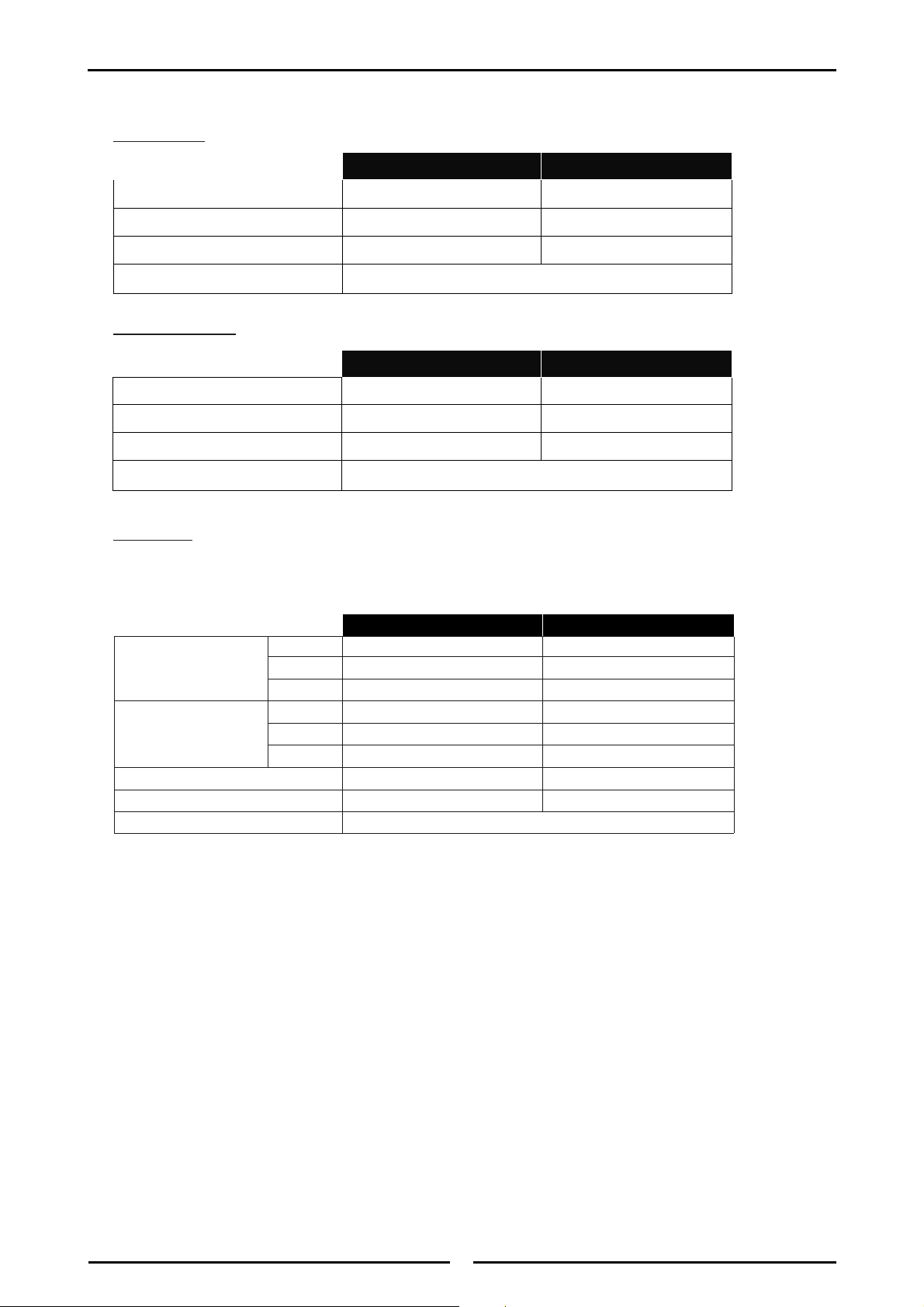
Gas Supply Requirements
- Australia:
- New Zealand:
- UK Only:
Category: II
2H3P.
Flue Type: A
1.
* Measure burner operating pressure at target top hob manifold test point with target top burner
(Inner and Outer Ring) operating at full setting. Operating pressure is ex-factory set through
appliance regulator and not to be adjusted, apart from when carrying out gas conversion, if
required. (Refer to ‘Gas Conversion’ section for details).
Natural Gas LP Gas (Propane)
Input Rate (N.H.G.C.)
45 MJ/hr 45 MJ/hr
Gas Supply Pressure 1.13 - 3.40 kPa 2.75 - 4.50 kPa
Burner Operating Pressure (*)
1.0 kPa 2.60 kPa
Gas Connection
3
/
4
” B.S.P. Male
Natural Gas (G20) Propane (G31)
Heat Input (nett)
Nominal
11.5 kW 11.5 kW
Reduced
4.7 kW 7.9 kW
Gas Rate (nett)
Nominal
1.22 m
3
/hr 0.89 kg/hr
Reduced
0.50 m
3
/hr 0.61 kg/hr
Supply Pressure 20 mbar 37 mbar
Burner Operating Pressure (*) 9.9 mbar 26.8 mbar
Gas Connection
3
/
4
” B.S.P. Male
Pilot
200W 200W
Pilot
0.02 m
3
/hr 0.02 kg/hr
Natural Gas LP Gas
Input Rate (N.H.G.C.)
45 MJ/hr 45 MJ/hr
Gas Supply Pressure 1.13 - 3.40 kPa 2.75 - 4.50 kPa
Burner Operating Pressure (*)
1.0 kPa 2.60 kPa
Gas Connection
3
/
4
” B.S.P. Male
Specifications
5
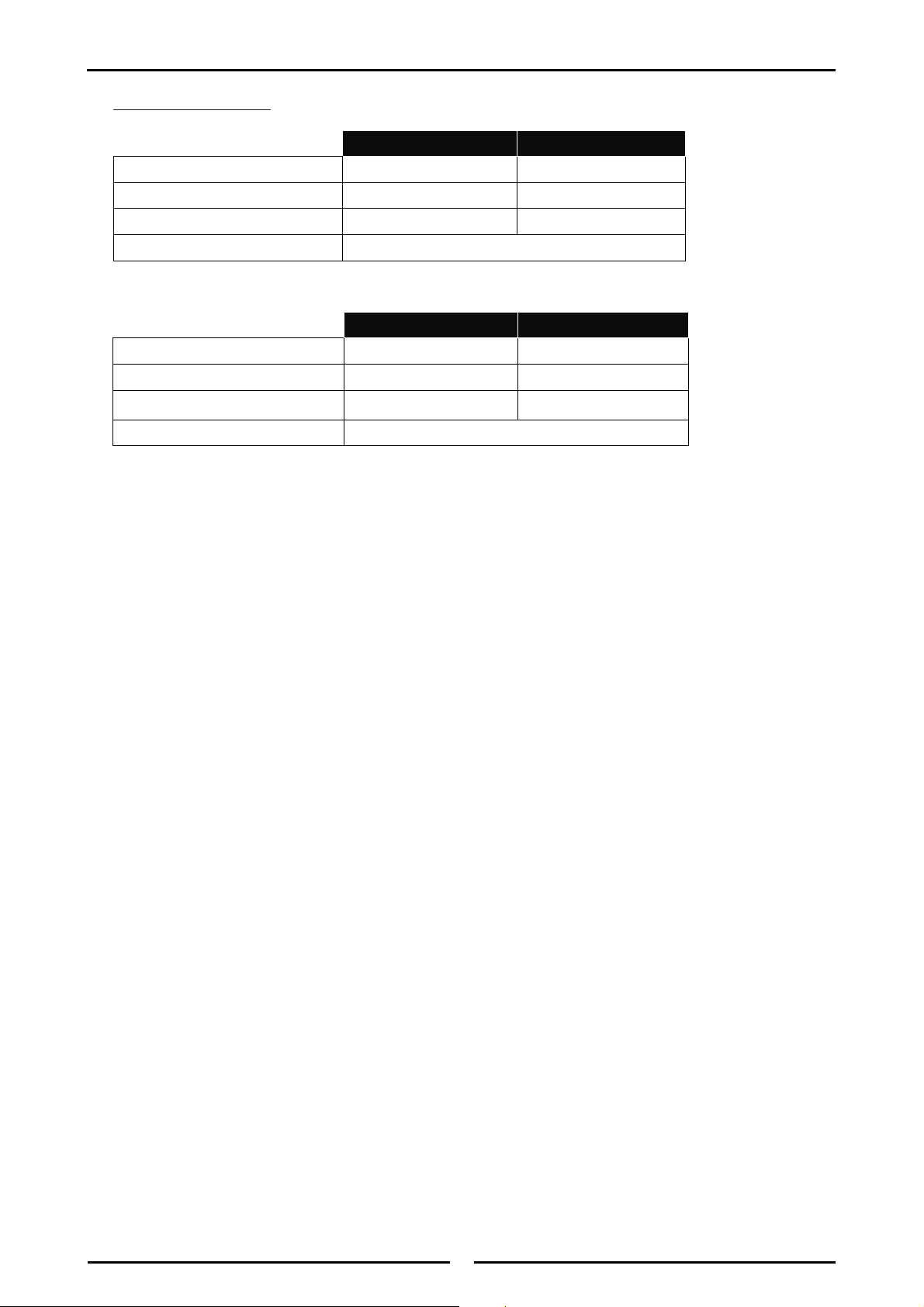
- All Other Markets:
NOTE:
(**) Measure burner operating pressure at target top hob manifold test point with target
top burner (Inner and outer ring) operating at full setting.
NAT, LPG & Butane Only - Operating pressure is ex-factory set and is not to be
adjusted, apart from when converting between gasses, if required.
TOWN GAS Only - Burner operating pressure is to be adjusted using adjustable gas
regulator supplied. Town Gas Option is only available with specific ex-factory built
Town Gas models, which can also be converted to any other gas. Standard models can
only be converted between Nat. Gas, LP Gas and Butane, but not Town Gas.
Refer to ‘Gas Conversion and Specifications' section of this manual for further
details.
Gas Connection
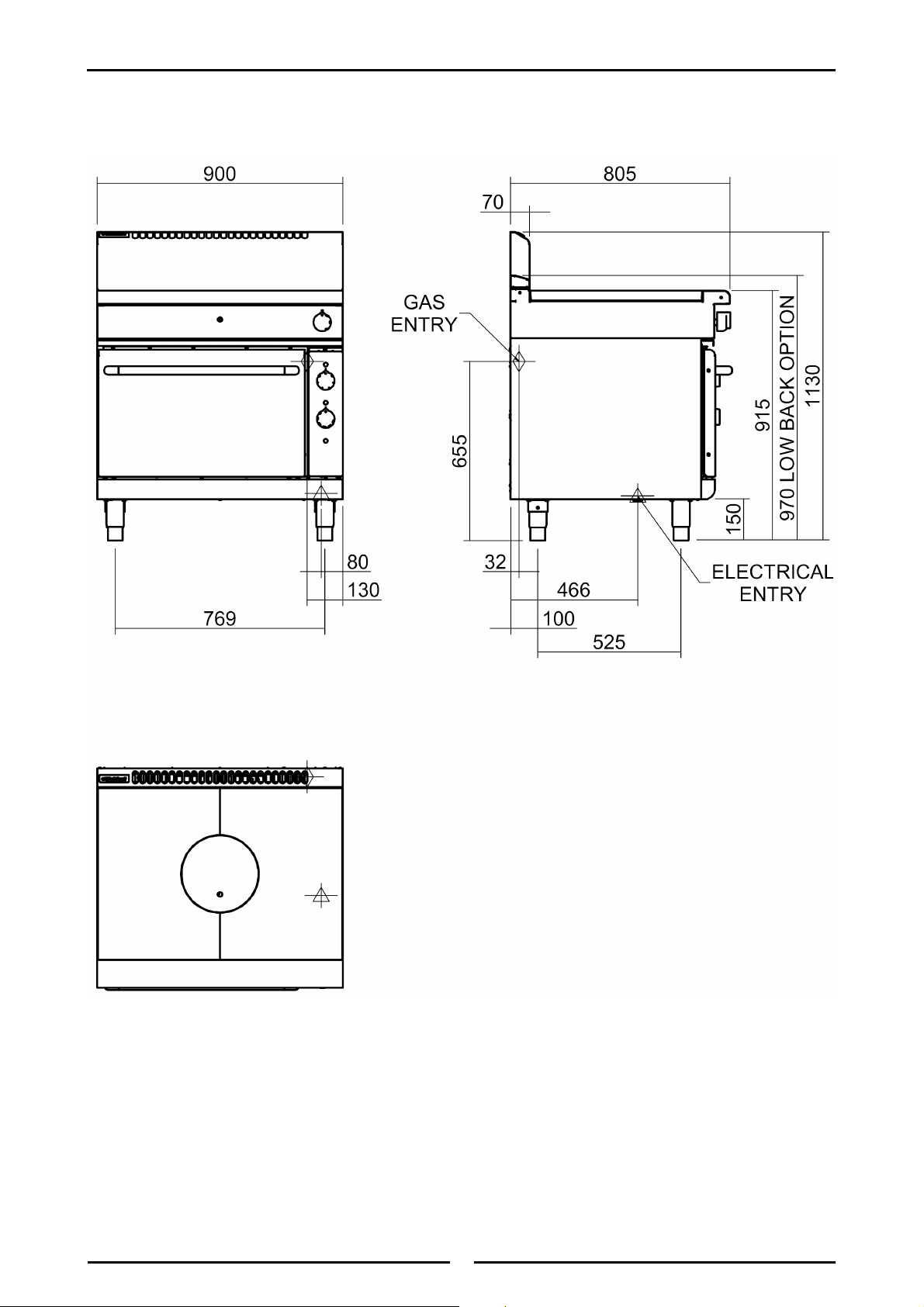
Gas supply connection point is located at rear of the appliance, 130mm from right hand side, 32mm
from rear, 655mm from floor and is reached from beneath appliance. An optional underside connec-
tion is available. (Refer to the ‘Dimensions’ section).
Connection is ¾" BSP male thread.
Natural Gas Town Gas (**)
Input Rate (N.H.G.C.)
45 MJ/hr 45 MJ/hr
Gas Supply Pressure 1.13 - 3.40 kPa 0.75 - 1.50 kPa
Burner Operating Pressure (*) 0.95 kPa 0.63 kPa
Gas Connection
3
/
4
” B.S.P. Male
LP Gas (Propane) Butane
Input Rate (N.H.G.C.)
45 MJ/hr 45 MJ/hr
Gas Supply Pressure 2.75 - 4.50 kPa 2.75 - 4.50 kPa
Burner Operating Pressure (*)
2.60 kPa 2.60 kPa
Gas Connection
3
/
4
” B.S.P. Male
Specifications
6
Electrical Supply Requirements
Electrical Connection
Electrical supply connection point is located at rear of appliance, 80mm from right hand side, 466mm
from rear and 150mm from floor.
When connecting a this electric appliance to mains supply, ensure that the following is carried out:-
An isolating switch is fitted within 2m of appliance, but not on appliance and in such a position
that user does not have to reach across cooking surface.
Supply cord shall be oil-resistant, sheathed flexible cable and not lighter than ordinary
polychloroprene or other equivalent synthetic elastomer sheathed cord (as per AS / NZS 3191
part 2.10.11. or IEC 60245-IEC-57) e.g. HO5 RN-F Type.
Branch supply line shall be individually overload protected to correct current rating and supply
chord shall be protected against any mechanical or thermal damage.
A grommet is fitted around wiring entry hole into appliance.
All wiring connections must be tight.
Refer to appropriate wiring standards for size of cable to be supplied to an appliance for current
drawn on that line.
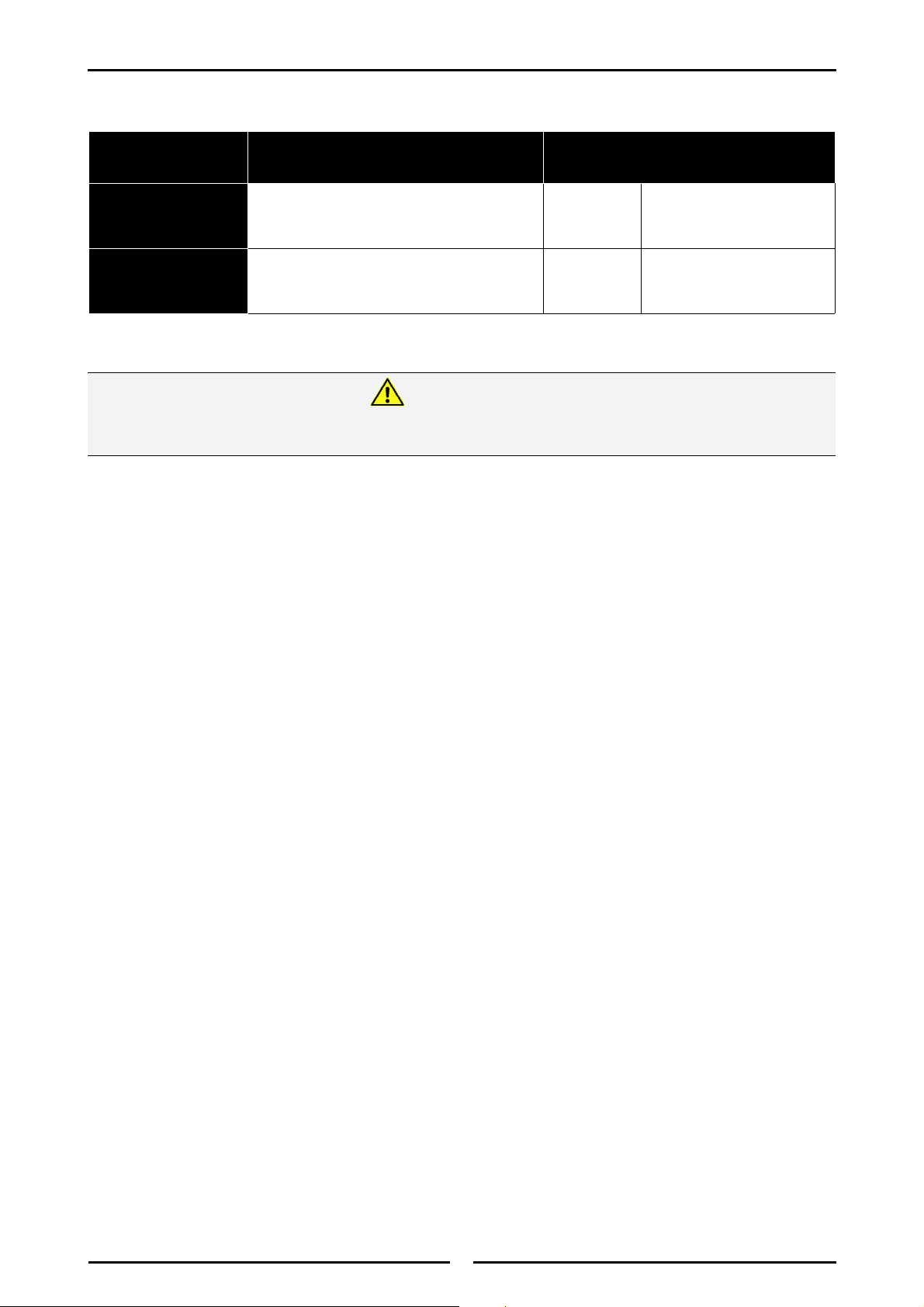
MODEL
1-Phase Connection
1P+N+E, 230-240V
3-Phase Connection
3P+N+E, 400-415V
RN8110GE
6.5 kW,
26.6 Amps @ 235 V
6.5 kW
L1 - 8.2 Amps
L2 - 9.2 Amps
L3 - 9.2 Amps
RN8110GEC
6.8 kW,
27.9 Amps @ 235 V
6.8 kW
L1 - 9.5 Amps
L2 - 9.2 Amps
L3 - 9.2 Amps
THIS APPLIANCE MUST BE EARTHED. IF SUPPLY CORD IS DAMAGED, IT MUST BE REPLACED BY A SUITABLY
QUALIFIED PERSON IN ORDER TO AVOID A HAZARD.
Warning
Dimensions
7
RN(L)8110GE / GEC

Installation
8
Installation Requirements
NOTE:
It is most important that this appliance is installed correctly and that operation is correct
before use. Installation shall comply with local gas, electrical and health and safety
requirements.
This appliance shall be installed with sufficient ventilation to prevent the occurrence of
unacceptable concentrations of health harmful substances in the room, the appliance is
installed in.
Waldorf Target Top Range Electric Ovens are designed to provide years of satisfactory service, and correct
installation is essential to achieve the best performance, efficiency and trouble-free operation.
This appliance must be installed in accordance with National installation codes and in addition, in
accordance with relevant National / Local codes covering gas, electrical and fire safety.
Australia / New Zealand: - AS/NZS5601 - Gas Installations.
- AS / NZS3000 - Wiring Rules.
United Kingdom: - Gas Safety (Installation & Use) Regulations 1998.
- BS6173 - Installation of Catering Appliances.
- BS5440 1 & 2 - Installation Flueing & Ventilation.
- BS7671 - Requirements for Electrical Installation.
Ireland: - IS 820 - Non - Domestic Gas Installations.
Installations must be carried out by qualified persons only. Failure to install equipment to
relevant codes and manufacturer’s specifications shown in this section will void the warranty.
Components having adjustments protected (e.g. paint sealed) by manufacturer are only
to be adjusted by an authorised service agent. They are not to be adjusted by the installation
person.
Unpacking
Remove all packaging and transit protection from appliance including all protective plastic
coating from exterior stainless steel panels.
Check equipment and parts for damage. Report any damage immediately to carrier and distributor.
Report any deficiencies to distributor who supplied the appliance.
Check available gas and electrical supply is correct to as shown on rating plate located on front right
hand corner of bottom sill.
Location
1. Installation must allow for a sufficient flow of fresh air for combustion air supply.
2. Installation must include adequate ventilation means, to prevent dangerous build up of combustion
products.
3. Never directly connect a ventilation system to appliance flue outlet.
4. Any gas burning appliance requires adequate clearance and ventilation for optimum and trouble-free
operation. Minimum installation clearances shown overleaf are to be adhered to.
5. Position appliance in its approximate working position.
6. All air for burner combustion is supplied from beneath appliance. Legs must always be fitted and no
obstructions placed on underside or around base of appliance, as obstructions will cause incorrect
operation and / or failure of appliance.
Combustion Air Requirements:
RN8110GE RN8110GEC
Natural Gas 12m
3
/hr 12m
3
/hr
LPG 12m
3
/hr 12m
3
/hr
Town Gas 12m
3
/hr 12m
3
/hr
Installation
9
7. Components having adjustments protected (e.g. paint sealed) by manufacturer are only to be
adjusted by an authorised service agent. They are not to be adjusted by the installation person.
NOTE: Do not obstruct or block appliances flue. Never directly connect a ventilation system to
appliance flue outlet.
Clearances
NOTE: Only non-combustible materials can be used in close proximity to this appliance.
* Side clearances can be 50mm when adjacent surface is at least 100mm below cooking surface.
Assembly
This model is delivered completely assembled. Ensure that legs
are securely attached.
NOTE:
This appliance is fitted with adjustable feet to
enable it to be positioned securely and level on
uneven floors. This should be carried out on
completion of gas connection. Refer to 'Gas
Connection Section'.
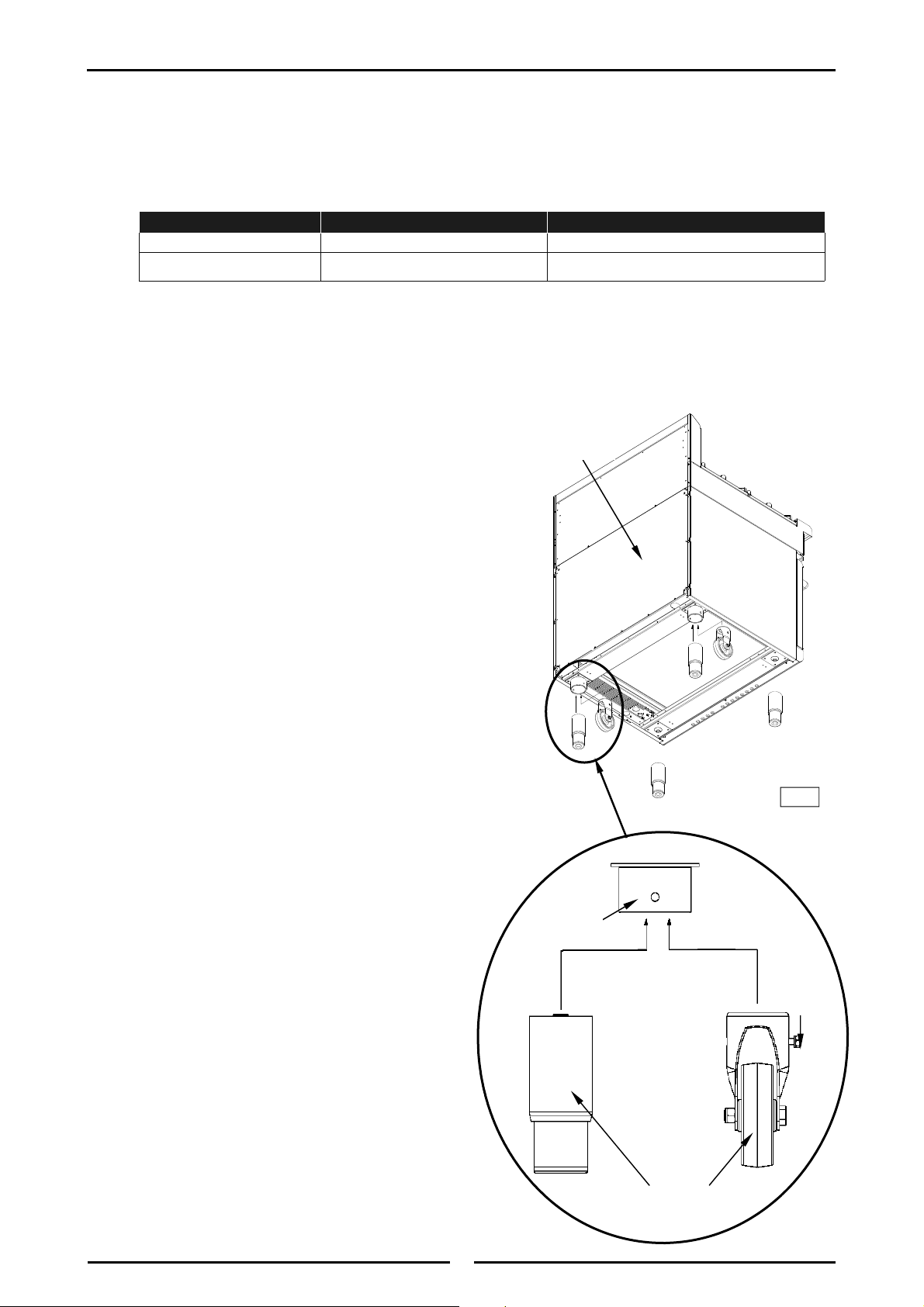
This appliance can also be fitted with rear rollers to
enable appliance to be easily moved for
positioning and cleaning purposes. If desired,
these rollers are supplied in packaging, with
appliance. See below for fitting instructions.
Optional Accessories (Refer to Replacement Parts
List)
Plinth Kit. For installation details, refer to instructions
supplied with each kit.
Fitting Rear Rollers.
1. Raise appliance from floor by approx. 75mm
using suitable lifting equipment (i.e. Palletiser /
Forklift) to allow rear adjustable feet to be
removed.
2. Unscrew and remove both rear adjustable feet
from rear leg housings.
3. Fit rear roller to rear leg housing and align
screw hole in side of rear leg housing with
threaded hole in rear roller.
4. Secure rear roller to leg support with bolt
supplied and tighten bolt using a 10mm A/F
spanner.
5. Fit second roller and tighten.
6. Lower appliance back to floor and adjust front
adjustable feet to level appliance.
Fig 1
Appliance
Base
Adjustable
Foot
Rear Roller
Assy
Rear Leg
Housing
Roller
Locating Bolt
Combustible Surface Non Combustible Surface
Left / Right Hand Side 50mm 0mm
Rear 50mm 0mm
Installation
10
Gas Connection
NOTE: ALL GAS FITTING MUST ONLY BE CARRIED OUT BY AN QUALIFIED SERVICE PERSON.
1. It is essential that gas supply is correct for appliance to be installed and that adequate supply
pressure and volume are available. The following checks should be made before installation:-
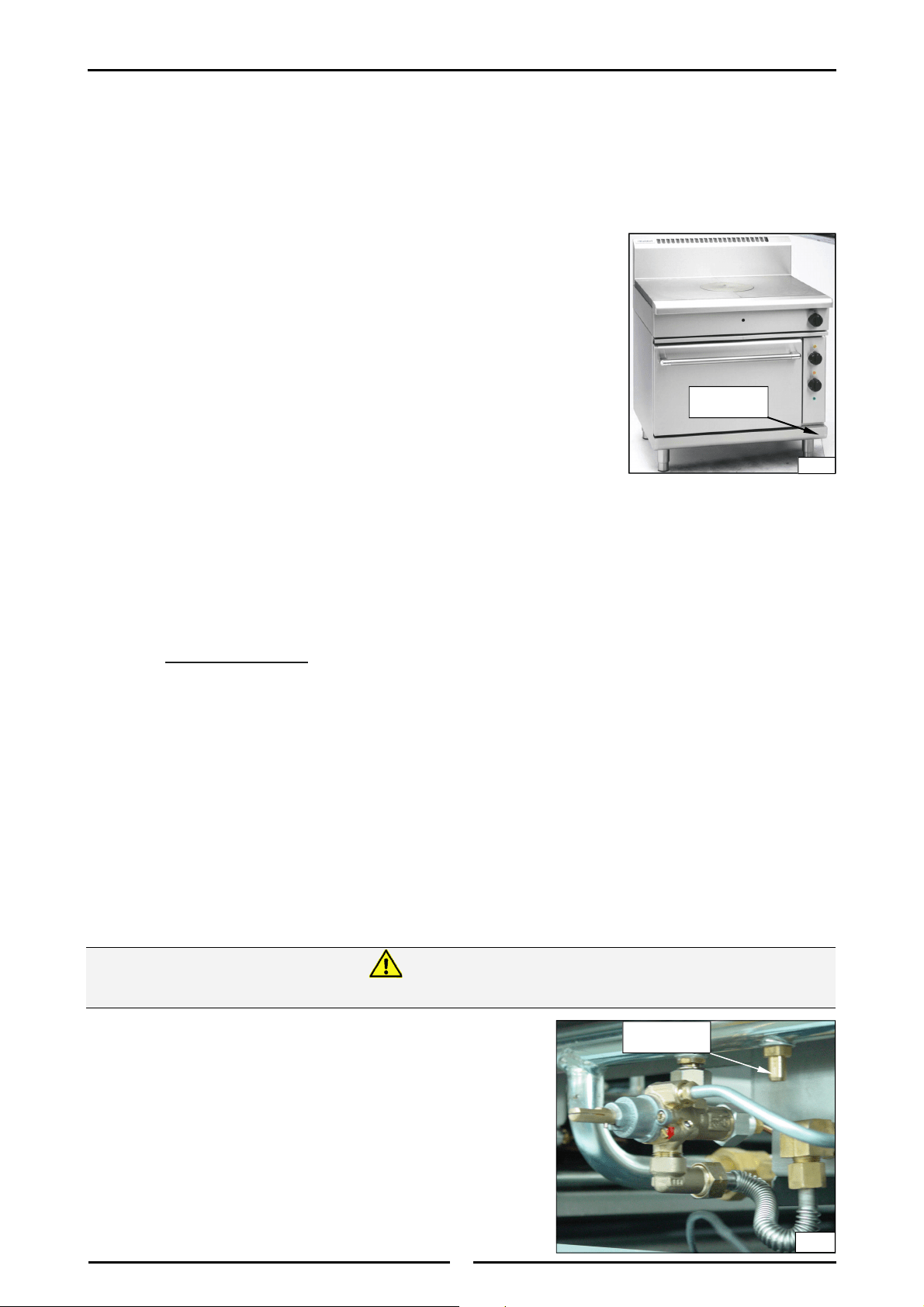
a. Gas Type the appliance has been supplied for is shown on
coloured stickers located above gas connection and onrating
plate. Check this is correct for gas supply the appliance is being
installed for. Gas conversion procedure is detailed in this
manual.
b. Supply Pressure required for this appliance is shown in
‘Specifications’ section in this manual. Check gas supply to
ensure adequate supply pressure exists.
c. The Input Rate of this appliance is shown on Rating Plate and
in ‘Specifications’ section in this manual. Input rate should be
checked against available gas supply line capacity. Particular
note should be taken if appliance is being added to an
existing installation.
NOTE: It is important that adequately sized piping runs directly to connection joint on appliance
with as few tees and elbows as possible to give maximum supply volume.
2. Fit gas regulator supplied, into gas supply line as close to appliance as possible.
NOTE: Gas pressure regulator provided with this appliance is convertible between Natural Gas and
LPG as per ‘Gas Conversion Section’ in this manual.
Ensure regulator is converted to correct gas type that appliance will operate on.
Regulator outlet pressure is fixed ex-factory for gas type that regulator is converted to and it
is NOT to be adjusted.
Regulator connections are
3
/
4
" BSP female.
Connection to appliance is
3
/
4
" BSP male.
(Refer to ‘Specifications’ section for gas supply location dimensions).
NOTE: A Manual Isolation Valve must be fitted to individual appliance supply line.
3. Correctly locate appliance into its final operating position and using a spirit level, adjust legs so that
appliance is level and at correct height.
4. Connect gas supply to appliance. A suitable joining compound which resists breakdown action of
LPG must be used on every gas line connection, unless compression fittings are used.
5. Check gas operating pressure is as shown in ‘Specifications’ section.
6. Check all gas connections for leakages using soapy water or other gas detecting equipment.
NOTE: Measure burner operating pressure at target top
hob manifold test point with target top burner (Inner
and outer ring) operating at full setting.
7. Verify operating pressure remains correct.
Rating Plate
Location
Fig 2
Fig 3
Manifold Test
Point
DO NOT USE A NAKED FLAME TO CHECK FOR GAS LEAKAGES.
Warning
Installation
11
Electrical Connection
NOTE: ALL ELECTRICAL CONNECTIONS MUST ONLY BE CARRIED OUT BY A QUALIFIED
PERSON.
Each appliance should be connected to an adequately
protected power supply and isolation switch mounted
adjacent to, but not behind appliance. This switch must be
clearly marked and readily accessible in case of fire.
1. Check electricity supply is correct as shown on Rating
Plate attached to lower front hand side of front sill
panel.
2. Supply terminal connections are located at rear of
appliance. Refer to ‘Electrical Connections’ in
‘Dimensions’ section of manual.
3. Open oven door and remove oven control panel to
allow connection access for electrical supply.
4. Connect mains supply to L1, L2 and L3 connection
terminals. Refer to 'Electrical Supply Requirements'
section for connection details.
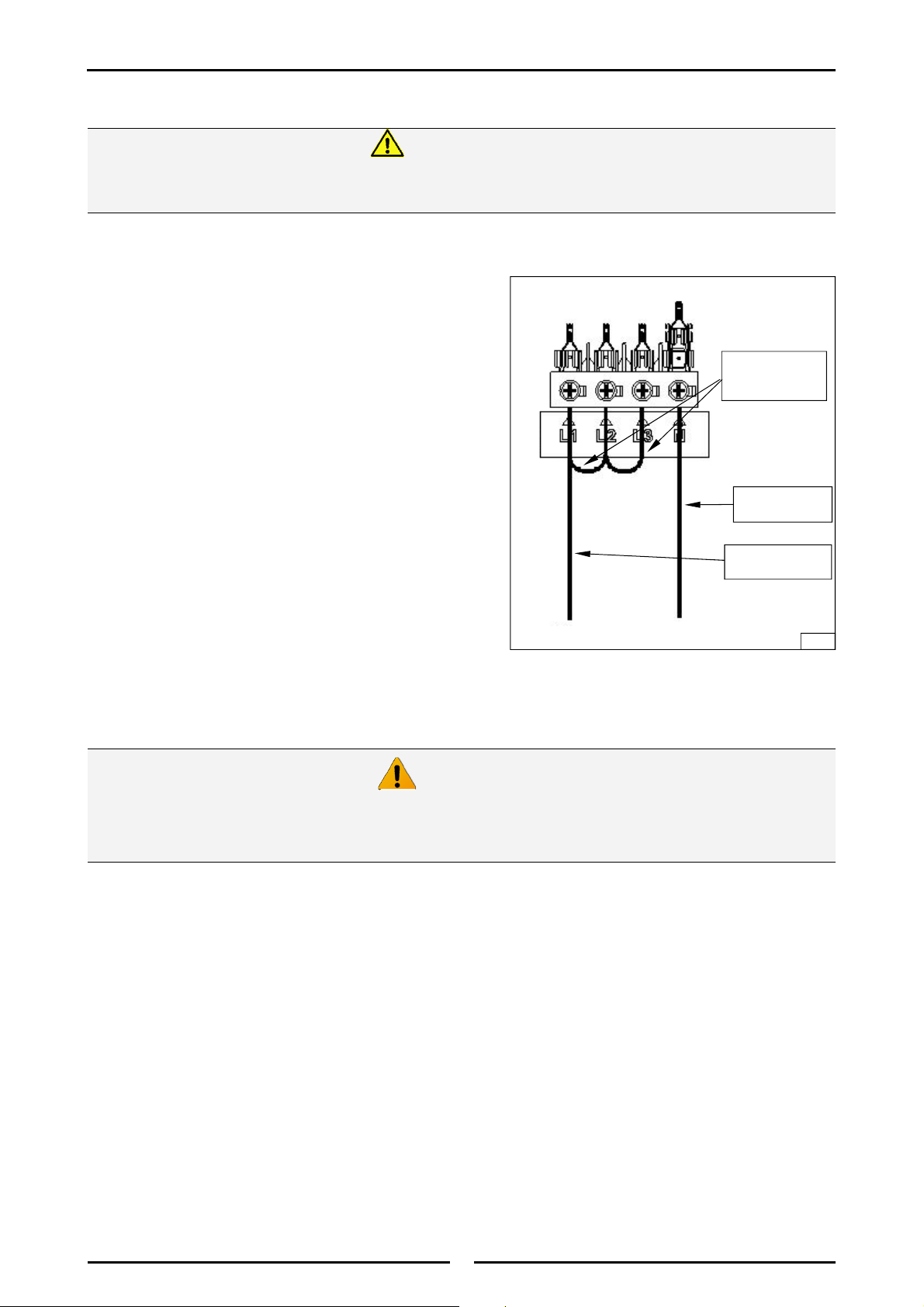
NOTE: This appliance can be converted from 3 Phase to Single Phase supply by connecting single
phase input to L1 and adding a bridge wire between L1, L2 and L3 connections, (refer to Fig
3 overleaf and information shown in 'Electrical Supply Requirements Table' in
'Specifications' Section).
5. Connect neutral and earth conductors to neutral stud and earth stud respectively.
6. For all connections ensure conductors are secure and appropriately terminated.
7. Tighten cable gland to secure against tension on cable.
8. Check that the polarity of each connection is correct to the mains connection terminals markings on
the appliance.
NOTE:
Appliance must be earthed.
Fixed wiring installations must incorporate an all-pole disconnection switch.
9. Correctly locate appliance into its final operating position and using a spirit level, adjust legs so that
appliance is level and at correct height.
10. Connect power supply to appliance.
11. Check electrical supply is within input rating specification, refer to ‘Specifications’ section).
Neutral supply
connection to N
Phase supply
connection to L1
P
N
Fig 4
Add bridging
wires between
L1, L2 and L3.
THIS APPLIANCE MUST BE EARTHED. IF SUPPLY CORD IS DAMAGED, IT MUST BE REPLACED BY A SUITABLY
QUALIFIED PERSON IN ORDER TO AVOID A HAZARD.
Warning
Changing supply from 3 phase to single phase will increase electrical current
loading on supply cable. Ensure supply cable used is of a sufficient size for
current loading, refer to 'Electrical Supply Requirements' table.
Caution

Installation
12
Commissioning
1. Before leaving the new installation;
a. Check the following functions in accordance with operating instructions specified in ‘Operation’
section of this manual.
Light the Target Top Pilot Burner.
Light the Target Top Main Burner.
Check the Target Top Low Fire Burner operation.
Check the Target Top High Fire Burner operation.
Check the Oven Heating.
Check the Oven Thermostat operation.
Check the Oven Fan operation (GEC models only).
Check current draw and loading for equipment. Refer specification section for correct
electrical requirements.
Check all connections are correct and that all cover panels have been re-fitted.
Ensure that this instruction manual is left with appliance.
Ensure that all relevant details and contacts have been added to front of this manual.
b. Ensure operator has been instructed in areas of correct lighting, operation, and shutdown
procedure for appliance.
2. This manual must be kept by the owner for future reference, and a record of
Date of Purchase,
Date of Installation
and
Serial Number of Appliance
recorded and kept with this manual.
(These details can be found on Rating Plate attached to front right hand corner of
bottom sill. Refer to ‘Gas Connection’ section).
NOTE:
If for some reason it is not possible to get appliance to operate correctly, turn ‘Off’
electrical power and gas supply and contact supplier of this appliance.
Make sure that electrical and gas supply are turned ‘Off’ before any service or maintenance
work is carried out on appliance.
Operation
13
Operation Guide
1. Waldorf appliances have been designed to provide simplicity of operation and 100% safety
protection.
2. Improper operation is almost impossible, however bad operation practices can reduce the life of the
appliance and produce a poor quality product. To use this appliance correctly please read the
following sections carefully:-
Lighting the Pilot Burner (Target Top).
Lighting the Main Burner (Target Top).
Oven.
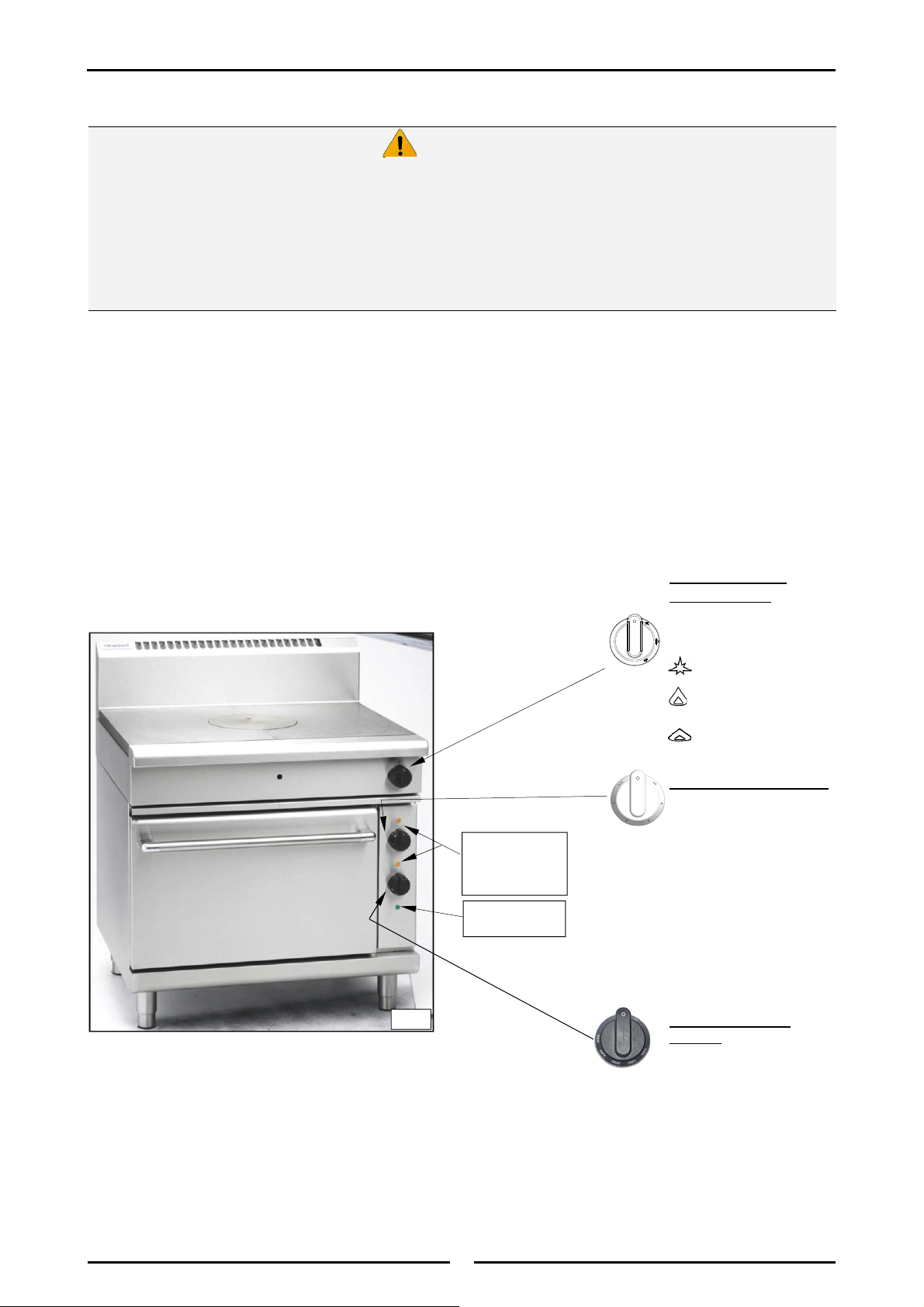
Description of Controls
Heating Indicator
Lamps (Amber)
for Top &
Bottom Elements
Power Indicator
Lamp (green)
Target Top Gas
Control Knob
๐ OFF Position
PILOT Burner
HIGH Flame
LOW Flame
Oven Top Heat Control
๐ OFF Position
LOW Position
1 Position
2 Position
3 Position
4 Position
HIGH Position
Oven Thermostat
Control
๐ OFF Position
Temperature
Graduations 50°C to
320°C
Fig 5
This appliance is for professional use and is only to be used by qualified
persons.
Only authorised service persons are to carry out installation, servicing or gas
conversion operations.
Components having adjustments protected (e.g. paint sealed) by the
manufacturer should not be adjusted by the user / operator.
Caution
Operation
14
Lighting Pilot Burner (Target Top)
1. Remove centre casting with casting removal tool.
2. Depress control knob and rotate anti-clockwise to ‘PILOT’ position.
3. With control knob depressed, manually light pilot burner located in front of main burner.
4. Hold in control knob for approximately 10 to 15 seconds, then release.
5. Pilot burner should remain alight. If not repeat Items 2 to 4 above until pilot burner lights.
Lighting Main Burner (Target Top)
1. Ensure pilot burner is alight by checking through hole in centre of front control panel or by removing
centre casting with casting removal tool.
2. Rotate gas control knob anti-clockwise to position marked ‘HIGH’.
3. Main burner will now ignite automatically off pilot burner.
4. Once lit main burner will be burning at full rate. For a lower heat turn gas control knob fully anti-
clockwise to ‘LOW’ position.
5. Also for intermediate heat, position gas control knob between ‘HIGH’ and ‘LOW’ positions.
NOTE: Always set gas control knob to ‘HIGH’ position when lighting main burner. If pilot burner
goes out during normal operation wait 5 minutes before re-lighting.
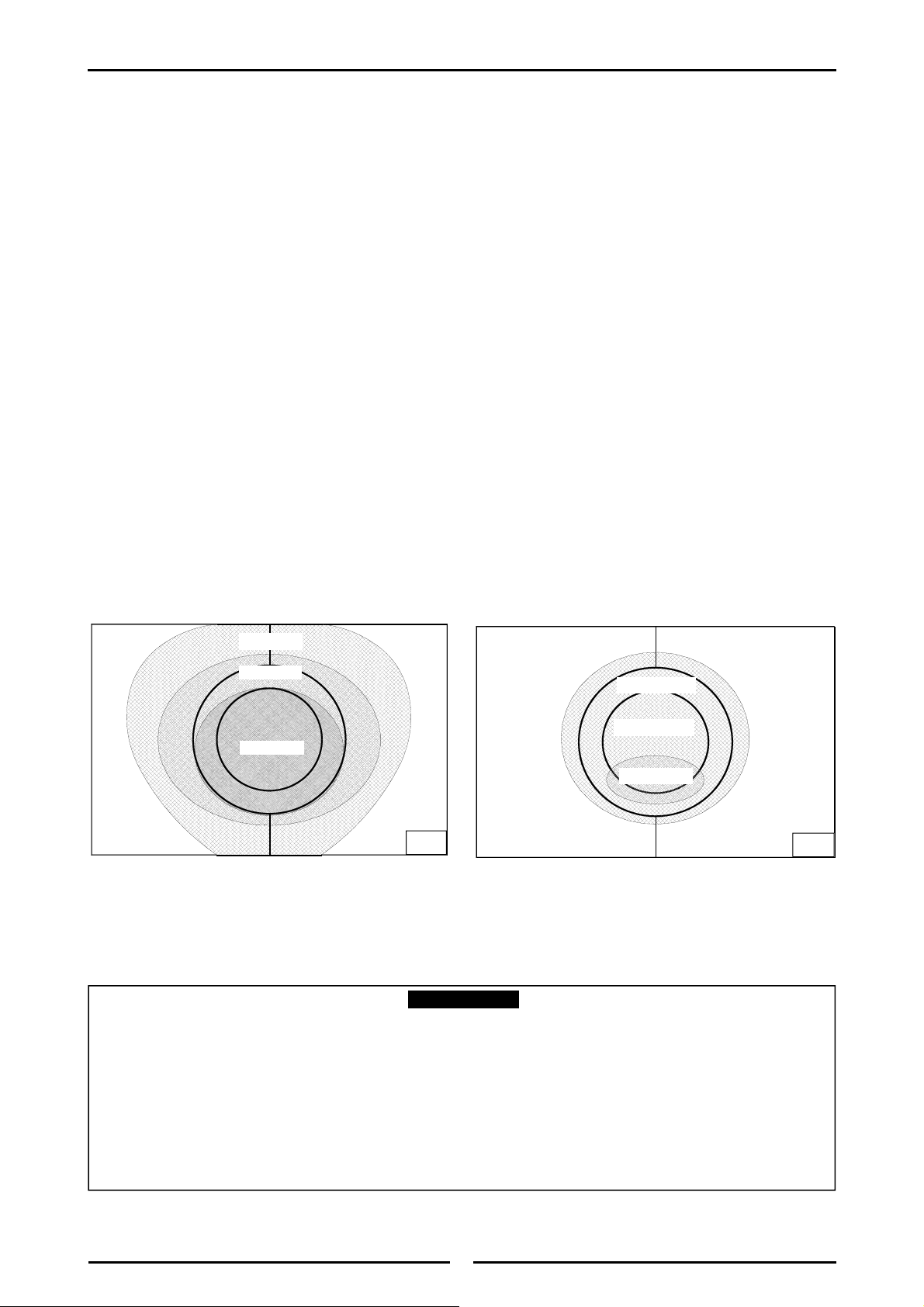
6. The cast iron work surface has a heat pattern that can be used effectively by positioning cooking
pans etc. appropriately according to heat requirement.
350 / 400
300 / 350
250 / 300
200 / 250
Heat Pattern for Target Top on full heat (°C)
Heat Pattern for Target Top on Low Heat (°C)
200 / 250
150 / 200
250 / 300
Fig 6
Fig 7
Should any abnormal operation like;
- ignition problems,
- abnormal burner flame,
- burner control problems,
- partial or full loss of burner flame in normal operation, be noticed, appliance requires
IMMEDIATE service by a qualified service person and should not be used until such service is
carried out.
IMPORTANT

Operation
15
Oven
The oven is fitted with top and bottom elements. The thermostat maintains overall oven
temperature. Top element is further controlled by oven top heat control. Convection ovens
(RN8110GEC) are fitted with a circulation fan.
NOTE: The Thermostat on static oven provides overall control of temperature within oven by
controlling both elements, whereas Oven Top Heat Control provides a means of balancing
distribution of heat between top and bottom of oven.
Place oven racks in desired position.
Preheat:
Preheat oven by selecting desired temperature, and turning oven top heat control (Refer to Fig 5 on
earlier page) to a maximum of 2. When desired temperature is reached, amber neon will go out.
Cooking:
When desired temperature has been reached, load oven with product and set oven top heat control
to desired setting.
NOTE: When oven top heat control is set to a high setting, proportionally more heat is produced at
top of oven. (This can be used for browning, etc, during cooking operation). With oven top
heat control set on a low setting, less heat is produced from top oven elements. (This mode
is used for general baking purposes to prevent cakes, etc, from getting too brown and crisp
on top, but allow cake to cook through).
To obtain more top heat during cooking, turn oven top heat control to a higher position. (The higher
the setting, the more top heat).
Turning ‘OFF’ the Oven:
a. Turn oven top heat control to ‘O’ off position. Top heating will be turned ‘OFF’ and upper heating
indicator lamp (Amber) will extinguish.
b. Turn thermostat control knob to ‘O’ off position and lower heating indicator lamp (Amber) will
extinguish. Oven is now turned ‘OFF’.
DO NOT USE aluminium foil or trays directly on cast iron sole plate(s).
NEVER block or cover openings on each side of sole plate(s).
! IMPORTANT

Cleaning and Maintenance
16
General
Clean the Target Top / Range regularly. A clean appliance looks better, will last longer and will
perform better. Carbonised grease on cooking surface will hinder transfer of heat from cooking
surface to food. This will result in loss of cooking efficiency.
DO NOT use water on Target Top while this item is still hot as warping and cracking may
occur. Allow Target Top / Range to cool down and then remove for cleaning.
NOTE:
DO NOT use abrasive detergents, strong solvents or caustic detergents as they could
corrode or damage the target top / range.
In order to prevent rust forming on Target Top, ensure that any detergent or cleaning
material has been completely removed after each cleaning. Appliance should be switched
‘On’ briefly to ensure Target Top becomes dry.
To keep your Target Top / Range clean and operating at peak efficiency, follow procedures shown
below:-
After Each Use
Clean Target Top / Range with a stiff nylon brush or a flexible spatula to remove any build up of
carbon.
Daily Cleaning
1. Thoroughly clean splash back, interior and exterior surfaces of Target Top / Range with hot water, a
mild detergent solution and a soft scrubbing brush.
2. Clean control panel with a damp cloth lightly moistened with a solution of mild detergent and water.
Wipe dry with a clean dry cloth.
3. Brush Target Top (cast iron) with a soft bristled brush followed by wiping with a cloth to prevent
accumulation of carbon.
4. Remove drip tray and clean with a mild anti bacterial detergent and hot water solution using a soft
bristled brush. Dry drip tray thoroughly with a dry cloth.
5. Dry Target Top / Range thoroughly with a dry cloth and polish with a soft dry cloth.
Weekly Cleaning
NOTE:
If Target Top / Range usage is very high, we recommend that weekly cleaning procedure is
carried out more frequently.
Ensure protective gloves are worn during cleaning process.
DO NOT use harsh abrasive detergents, strong solvents or caustic detergents as they will
damage Target Top / Range.
DO NOT use water on Target Top / Range while it is still hot as cracking may occur. Allow
castings to cool and remove for cleaning.
Always turn off the electrical and gas supply before cleaning.
This appliance is not water proof.
Do not use water jet spray to clean interior or exterior of this appliance.
Caution
Cleaning and Maintenance
17
Target Top
a. This should be kept clean of any build up of spillage’s of food. Provided cast iron work surface is
regularly used it will maintain itself in good condition with no special cleaning required.
b. Clean food residue and spillage from channels around centre casting and main plates before use.
c. DO NOT use water on castings while they are still hot as cracking may occur. Should it
be necessary to clean castings, allow castings to cool and then remove for cleaning. Clean using
a soft cloth moistened with a mild detergent and hot water solution and a scrubbing brush. Dry
thoroughly with a dry cloth.
d. Remove drip tray and clean with a mild anti bacterial detergent and hot water solution using a
soft bristled brush. Dry drip tray thoroughly with a dry cloth.
Stainless Steel Surfaces
a. Clean exterior surfaces of Target Top / Range with hot water, a mild detergent solution and a
soft scrubbing brush. Note that gas control knobs are a push fit onto gas control valve spindles
and can be removed to allow cleaning of front control panel.
b. Baked on deposits or discolouration may require a good quality stainless steel cleaner or stainless
steel wool. Always apply cleaner when appliance is cold and rub in direction of grain.
c. To remove any discoloration, use an approved stainless steel cleaner or stainless steel wool.
Always rub in direction of the grain.
d. Remove drip trays and clean with a mild anti bacterial detergent and hot water solution using a
soft bristled brush. Dry drip trays thoroughly with a dry cloth before re-fitting.
e. Dry all components thoroughly with a dry cloth and polish with a soft dry cloth.
Periodic Maintenance
NOTE: All maintenance operations should only be carried out by a qualified service person.
To achieve the best results, cleaning must be regular and thorough and all controls and mechanical parts
should be checked and adjusted periodically by a qualified service person. If any small faults occur, have
them attended to promptly. Don't wait until they cause a complete breakdown. It is recommended that
the appliance is serviced every 6 months.
Gas Control Valve Re-Greasing
The gas control valve should be dismantled and greased every 6 months to ensure correct operation
of the gas control valve.
To carry out this operation;-
a. Remove gas control knobs from gas tap spindles by pulling
knobs away from control panel.
b. Remove drip tray from appliance.
c. Remove two screws on underside of control panel, securing
control panel to hob.
d. Remove control panel from front of appliance.
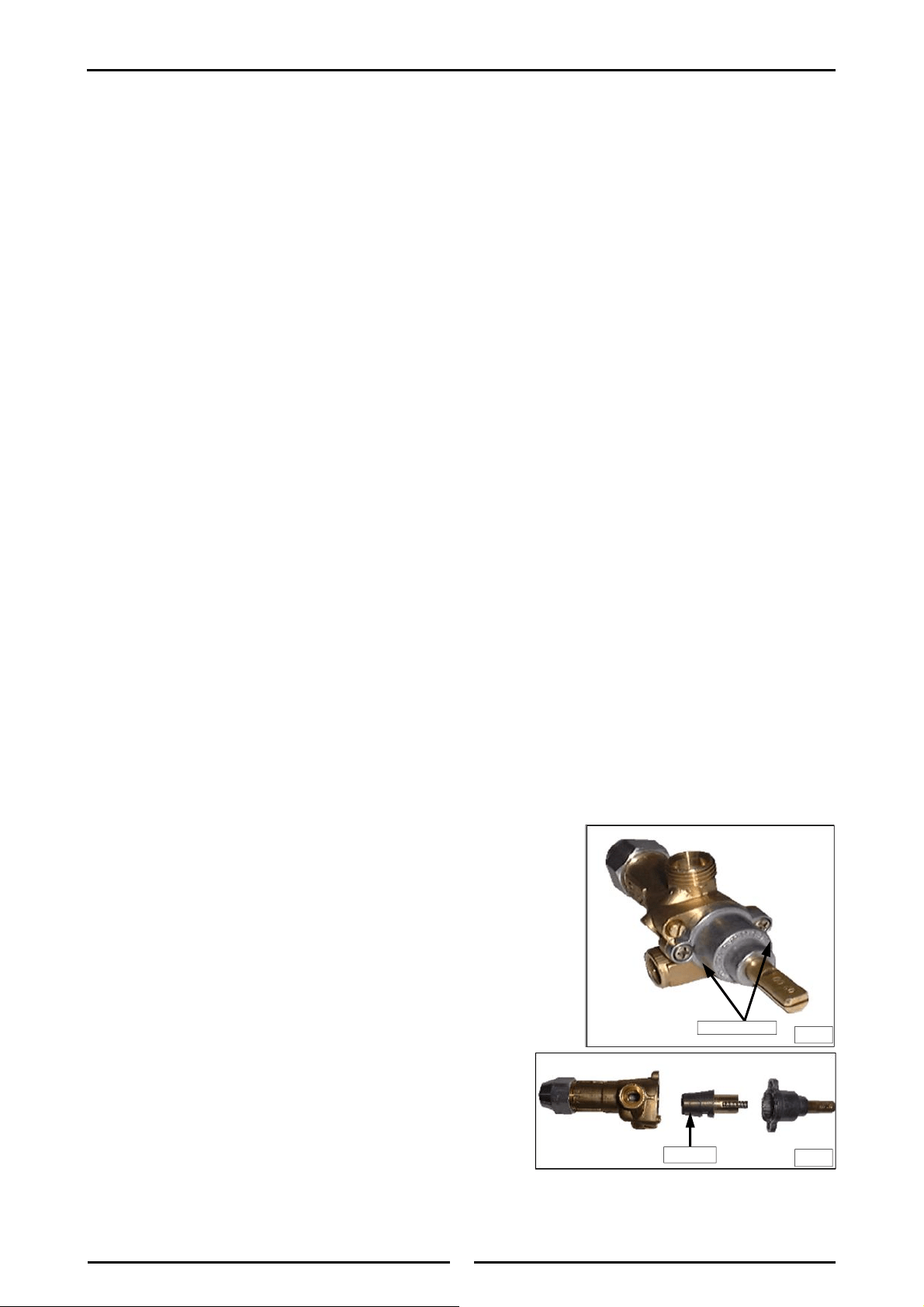
e. Remove 2 screws holding shaft plate to gas control body and
remove control shaft and plate. (See Fig 8). Note
orientation of shaft for correct re-assembly.
f. Using needle nose pliers or similar, pull out gas control
spindle, again noting its orientation.
g. Apply a suitable high temperature gas cock grease or
lubricant such as ROCOL - A.S.P (Anti scuffing paste) /
Dry Moly Paste to outside of spindle. (See Fig 9).
h. Replace spindle and re-assemble gas control valve in
reverse order.
i. Refit control panel to appliance and secure with 2
screws.
j. Refit knobs to gas control valve spindles.
Two Screws
Fig 8
Spindle
Fig 9

Fault Finding
18
This section provides an easy reference guide to the more common problems that may occur during
operation of your appliance. The fault finding guide in this section is intended to help you correct, or at
least accurately diagnose problems with your equipment.
Although this section covers most common problems reported, you may encounter a problem not covered
in this section. In such instances, please contact your local authorised service agent who will make every
effort to help you identify and resolve the problem. Please note that the service agent will require the
following information:-
Model Trade Name and Serial Number of Appliance. (Both can be found on Technical
Data Plate located on appliance).
NOTE: Components having adjustments protected (e.g. paint sealed) by the manufacturer, are only
to be adjusted by an authorised service agent. They are not to be adjusted by an
unauthorised service person.
Fault Possible Cause Remedy
Pilot won’t light. No gas supply.
Blocked pilot injector.
Ensure gas isolation valve is turned
‘On’, and bottles are not empty.
Call service provider.
Pilot goes out when gas control
knob released.
Releasing knob before thermo-
couple has heated.
Pilot flame too small.
- Gas pressure too low.
- Partially blocked pilot injector.
Thermocouple connection to gas
control is loose or faulty.
Thermocouple faulty.
Hold knob in for at least 20
seconds following ignition of pilot.
Clean or replace pilot injector.
Tighten thermocouple connection.
Inspect and replace if not in good
working order.
Call service provider.
Element does not work when
turned ‘ON’.
Check individual fuses located
behind control panel.
Check for an electrical short by
checking there is NO continuity
between any "phase in" line and
metal appliance body itself.
Check for item failing (element,
control etc) by using a multi-
meter as shown on following
pages.
Replace blown fuse.
Call service provider.
Call service provider.
Main burner will not light. Incorrect supply pressure.
Faulty gas control.
Call service provider.
Complete power failure of
appliance.
Check fuse connection at the
mains supply.
Ensure that the fuse size is
correct to carry the load.
Check for an electrical short to
the appliance.
Replace blown fuse.
Carry out continuity and resistance
check on appliance.
Call service provider.
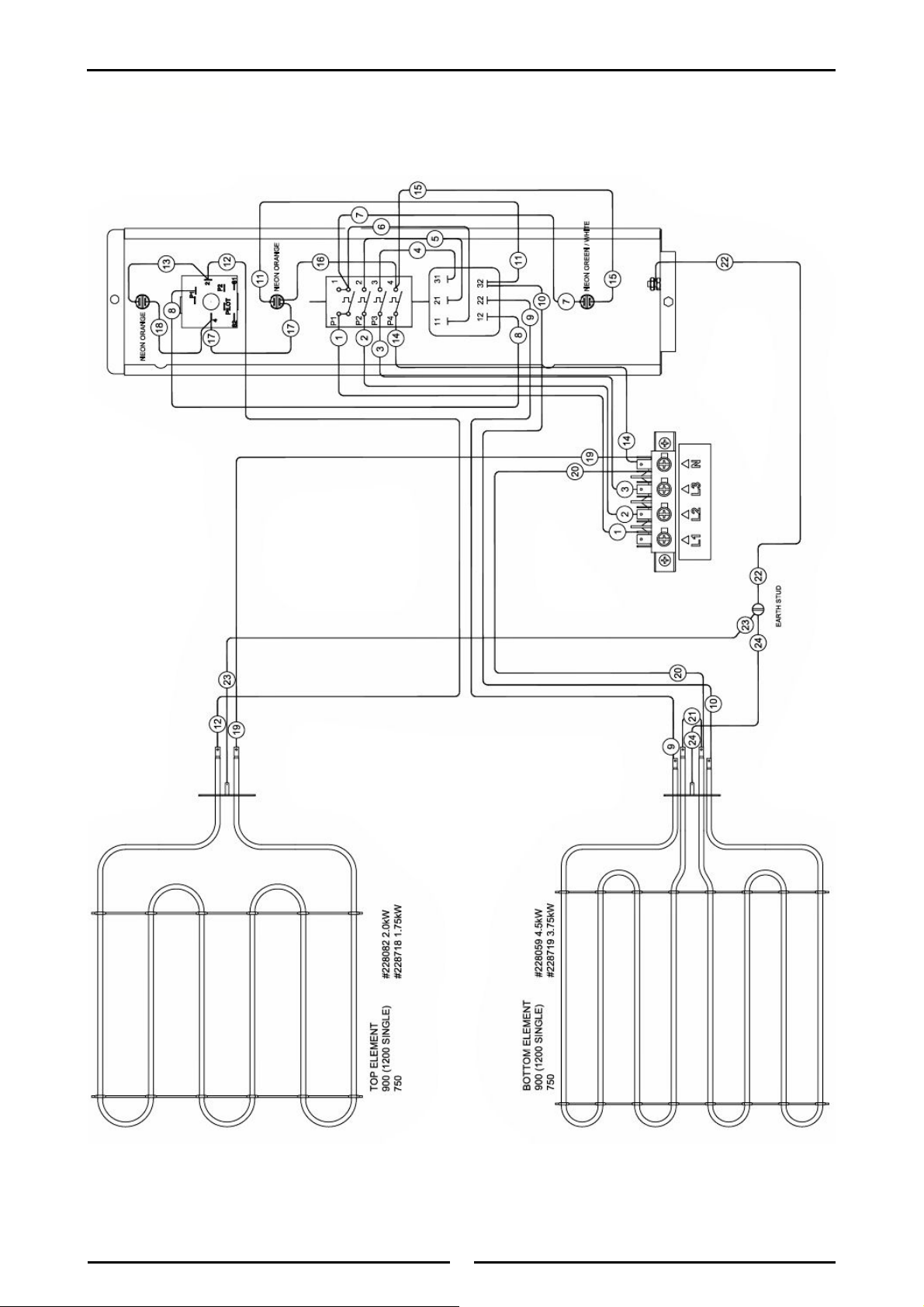
Wiring Schematic
19
RN8110GE
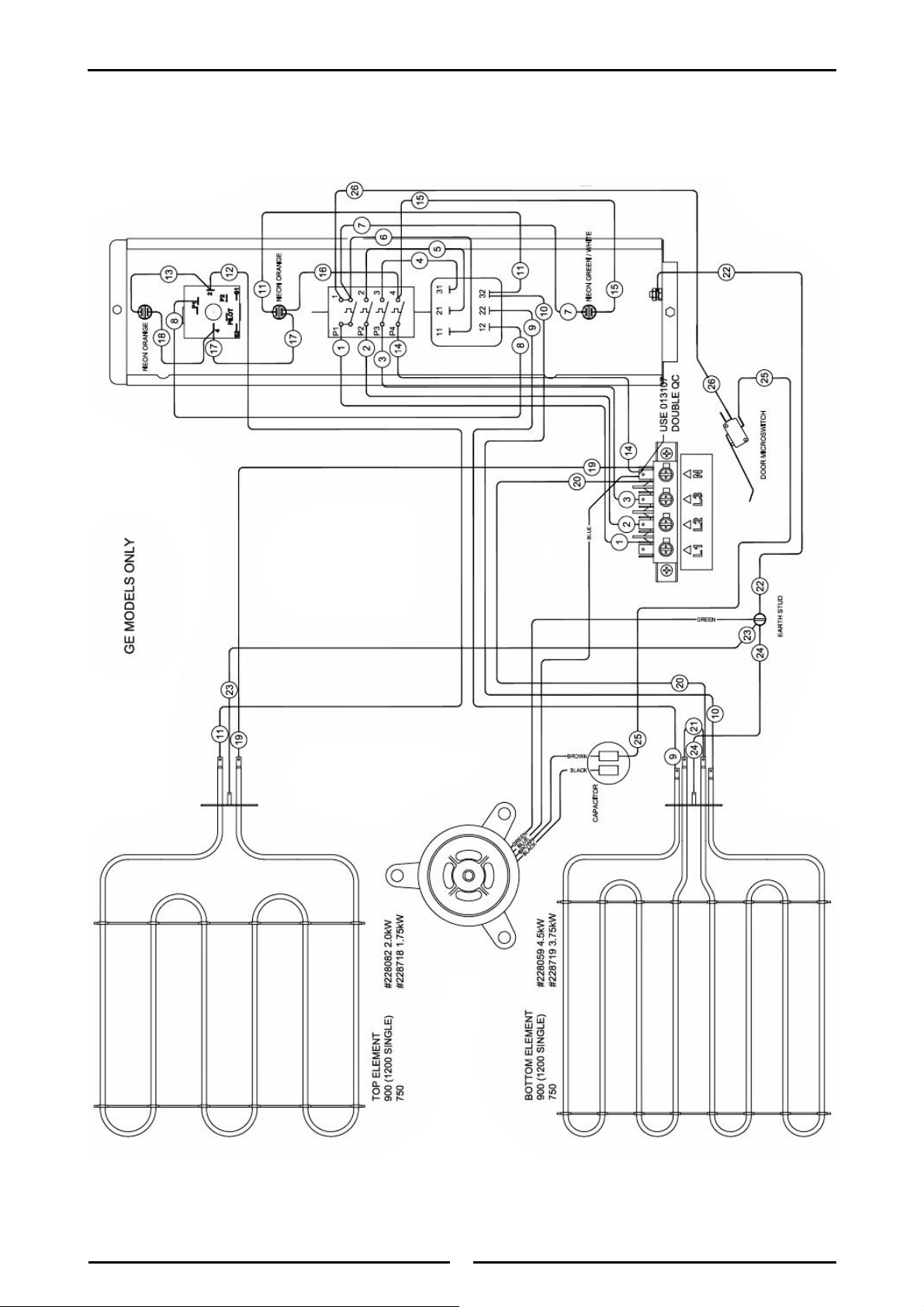
Wiring Schematic
20
RN8110GEC
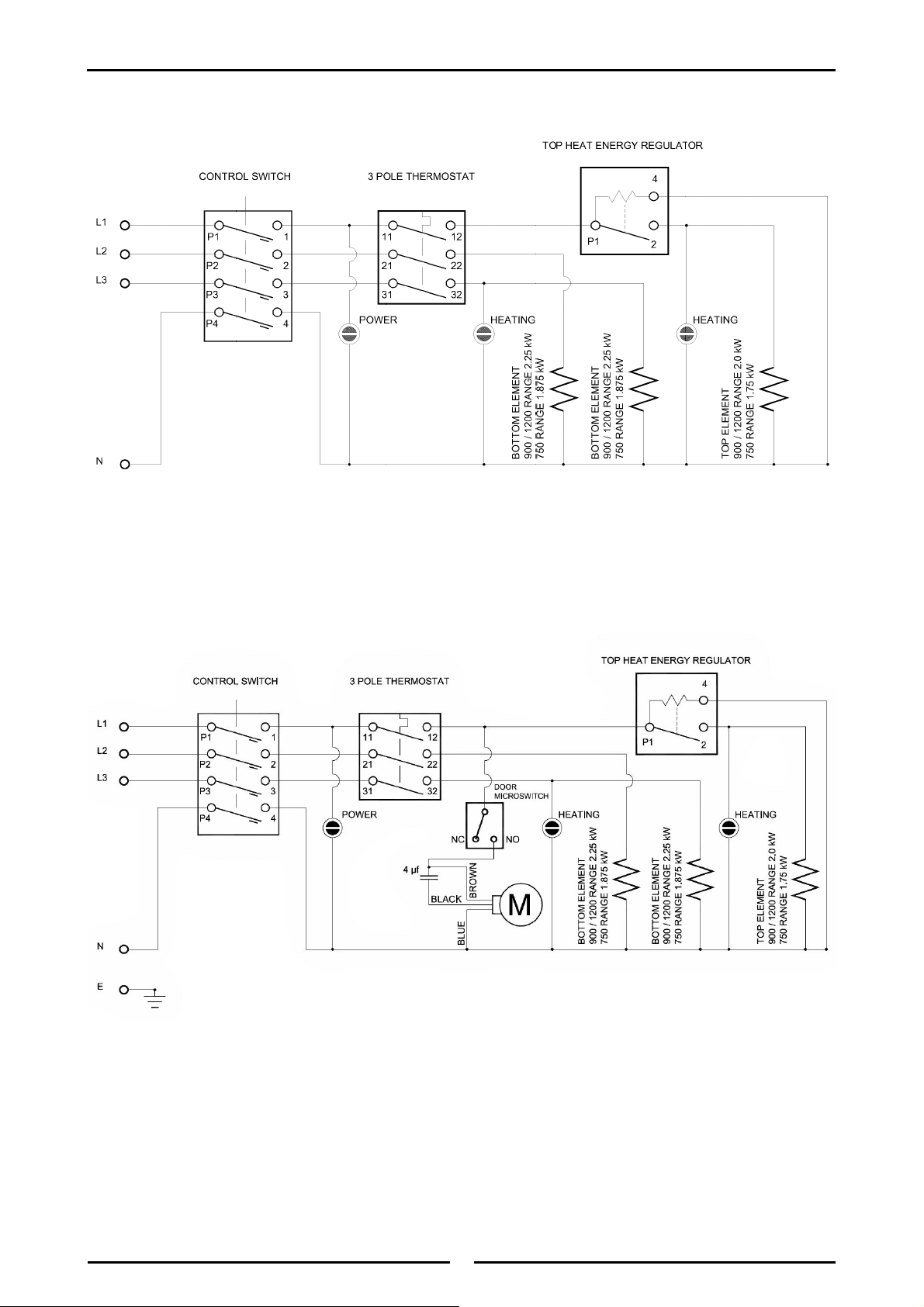
Wiring Schematic
21
Wiring Layout for Static Oven
Wiring Layout for Convection Oven
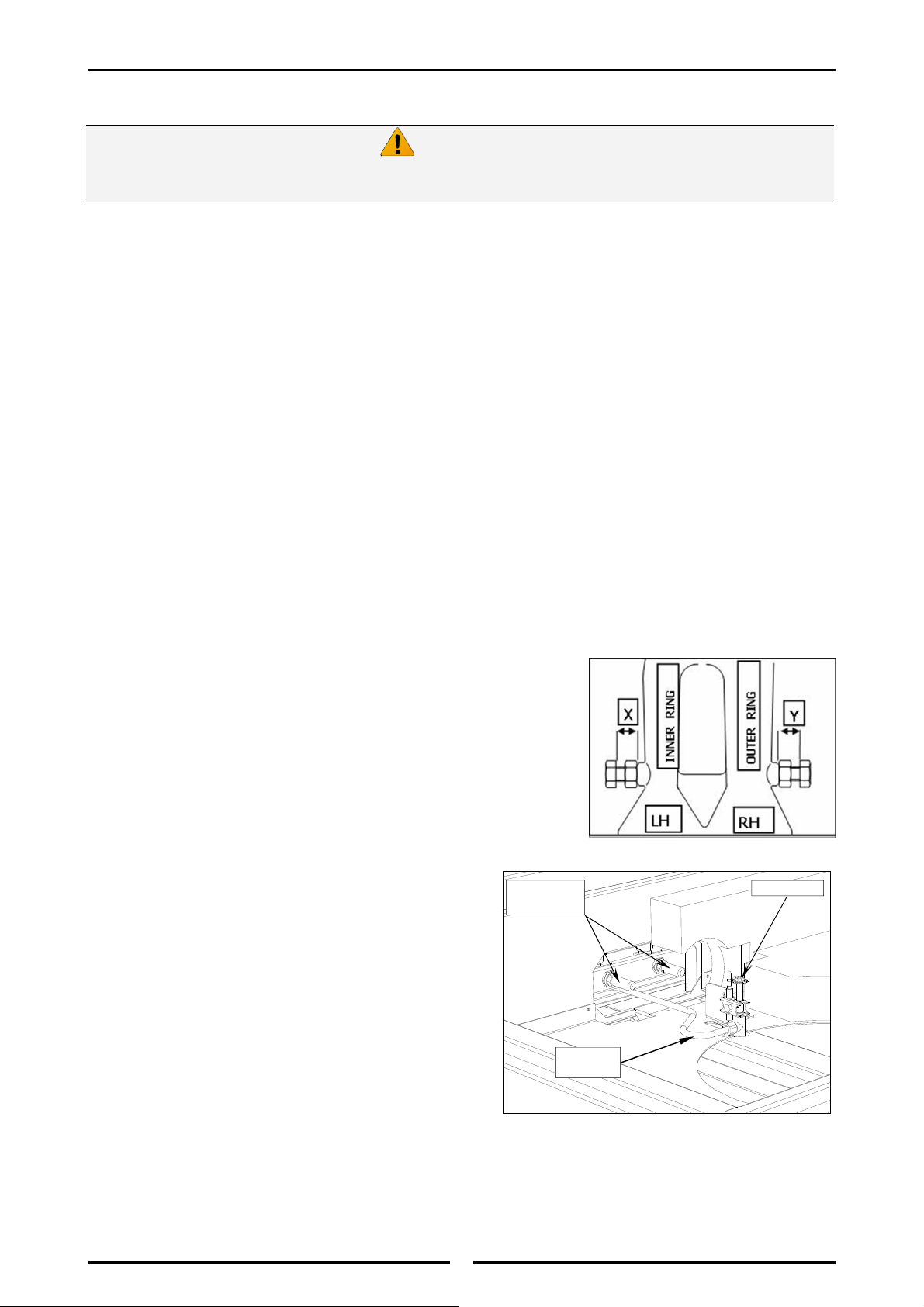
Gas Conversion and Specifications
22
Conversion Procedure
NOTE:
These conversions should only be carried out by qualified persons. All connections must
be checked for leaks before re-commissioning appliance.
Adjustment of components that have adjustments / settings sealed (e.g. paint sealed) can
only be adjusted in accordance with the following instructions and shell be re-sealed
before re-commissioning this appliance.
For all relevant gas specifications refer to ‘Gas Specification Tables’ at rear of this section.
Remove the following:-
Control knob from the target top control panel.
Centre casting.
Two half plate castings.
Two front fire bricks.
R/H main fire brick.
Main Burner Injectors
1. Remove main burner to reveal inner and outer ring injectors.
2. Remove injectors and replace with correct size injectors as
shown in ‘Gas Specifications Tables’ at rear of this section.
3. Refit main burner to target top.
NOTE: Ensure main burner is pulled fully towards front of unit
before tightening 2 main burner securing screws.
4. Set burner aeration screws ‘X’ and ‘Y’ for correct gas type
aeration, as shown in 'Gas Specifications Tables’ at rear of this
section.
Pilot Burner
1. Disconnect gas supply tube from base of pilot
burner.
2. Remove pilot burner and thermo couple retaining
plate.
3. Remove pilot burner from mounting bracket.
4. Remove injector and spring from pilot burner and
replace with correct size injector as shown in ‘Gas
Specifications Tables’ at rear of this section.
5. Refit pilot burner to retaining bracket - ensuring
pilot burner ports are at same height as thermo-
couple.
Ensure Appliance is isolated from gas and electrical supplies before
commencing servicing.
Caution
Main Burner
Injectors
Pilot Burner
Gas Supply
Tube
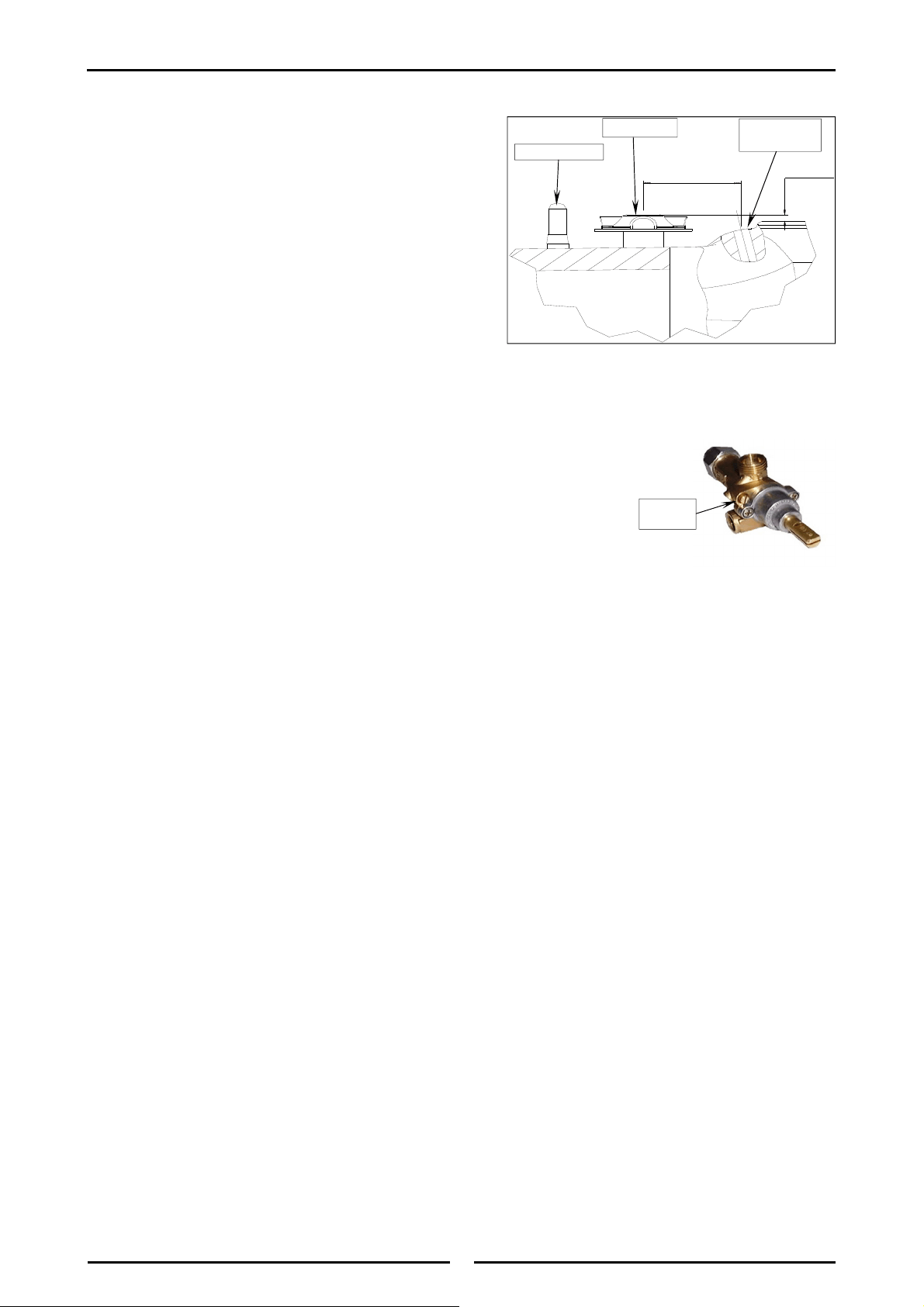
Gas Conversion and Specifications
23
NOTE: Ensure pilot burner and thermocouple are
correctly located and pilot burner aligns
with main burner ignition port. (Refer to
figure opposite for correct fitting and
alignment dimensions).
Re-connect gas supply tube to pilot burner.
Refit RH main fire brick.
Refit 2 front fire bricks.
Refit 2 half plate castings - ensure they are
correctly interlocked.
Refit centre casting.
Refit front control panel and control knob.
Low Fire Adjustment
NOTE: Adjust low fire adjustment screw on gas control valve to as
shown in ‘Gas Specifications Tables’ at rear of this section.
1. Light main burner and check flame size on simmer (LOW) position.
NOTE: 'Low Fire Screw' should be sealed with coloured paint on
completion of low fire adjustment.
Low Fire
Screw
Main Burner
Ignition Port
Pilot Burner
Thermocouple
18± 2.0
2± 2.0
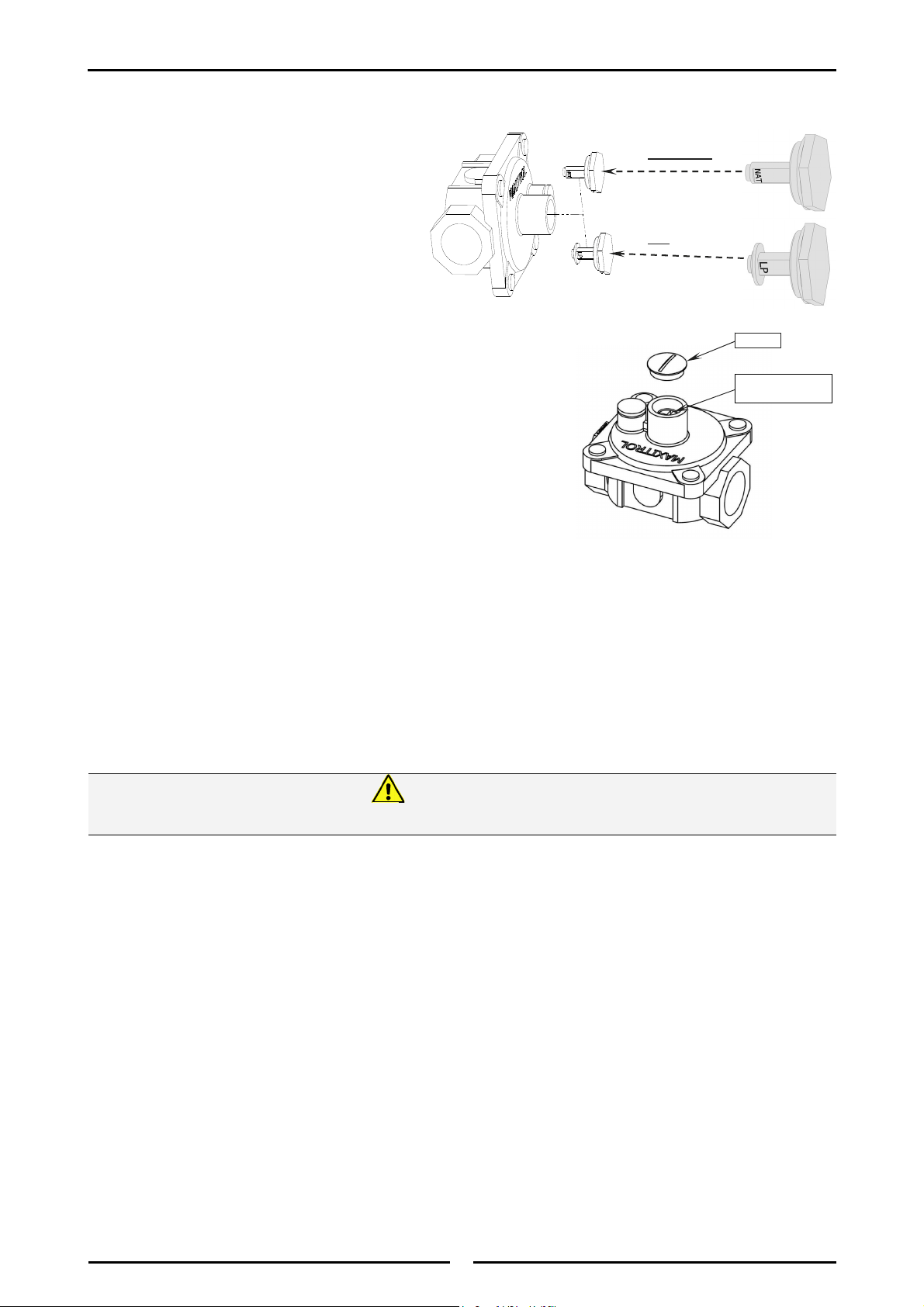
Gas Conversion and Specifications
24
Gas Regulator
- NAT Gas / LPG / Butane Only.
NOTE: Gas regulator supplied is
convertible between Natural
Gas and LP Gas, but it’s outlet
pressure is fixed ex-factory and
is NOT to be adjusted.
- Town Gas Only.
1. Remove slotted cap from regulator.
2. Turn ‘On’ gas supply and appliance.
3. Adjust pressure adjusting screw to achieve correct burner
operating pressure.
NOTE: Measure operating pressure at manifold test point
with two burners operating at 'High Flame' setting.
4. Verify operating pressure remains correct (Re-adjust
regulator if required).
5. Screw cap nut back onto regulator.
Gas Type Identification Label
On completion of gas conversion, replace gas type identification label located at:-
- Rear of appliance, above gas connection.
- Beside the rating plate.
Commissioning
Before leaving the installation;
1. Check all gas connections for leakage using soapy water or other gas detecting equipment.
2. Carry out a ‘Commissioning’ check of appliance as shown in Installation Section of this manual.
3. Ensure any paint sealed components are re-sealed on completion of adjustments.
NOTE, Pin rotated
for Natural Gas
NOTE, Pin rotated
for LPG
Pressure Adjusting
Screw
Cap Nut
DO NOT USE A NAKED FLAME TO CHECK FOR GAS LEAKAGES.
Warning
Gas Conversion and Specifications
25
Gas Specifications
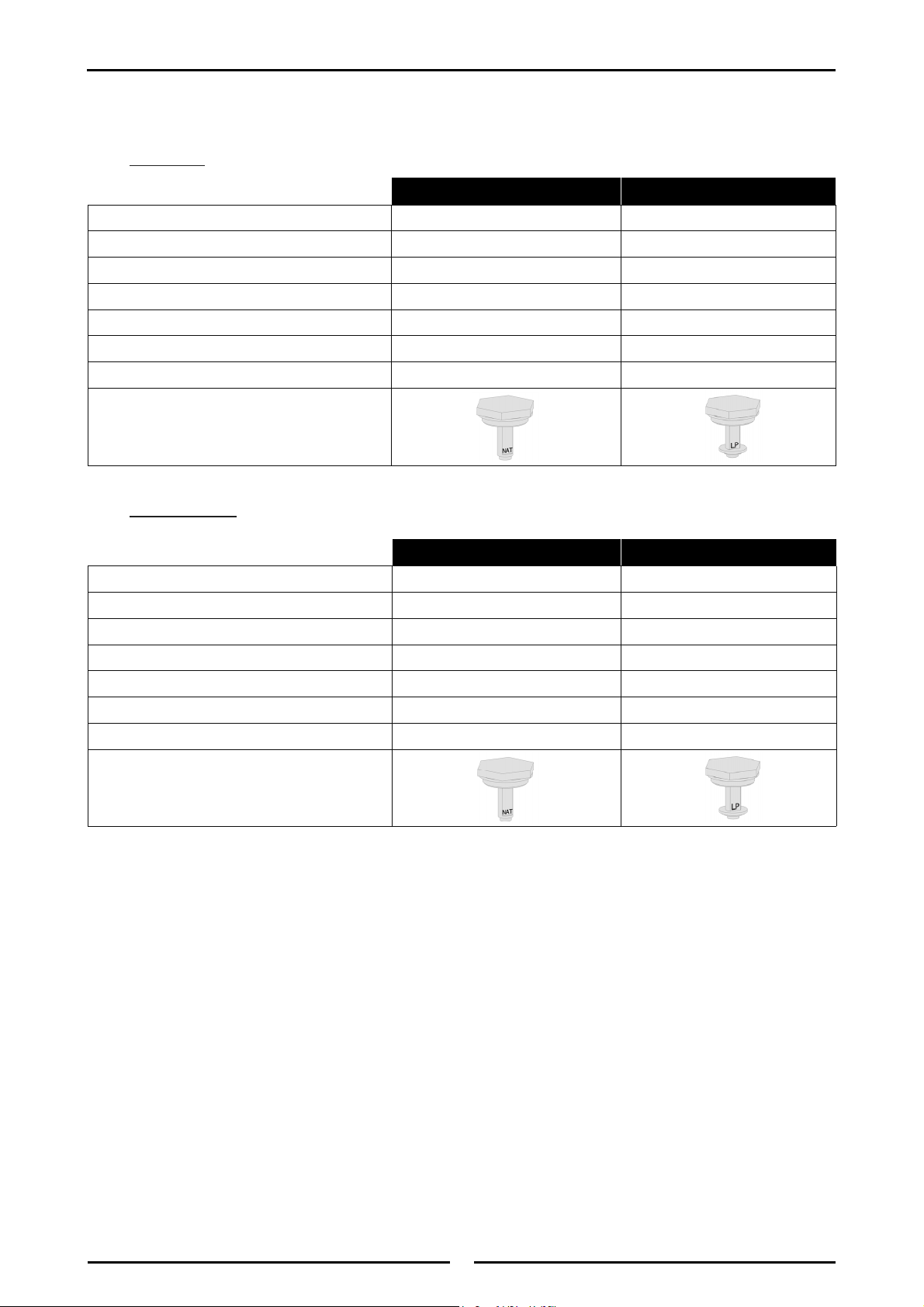
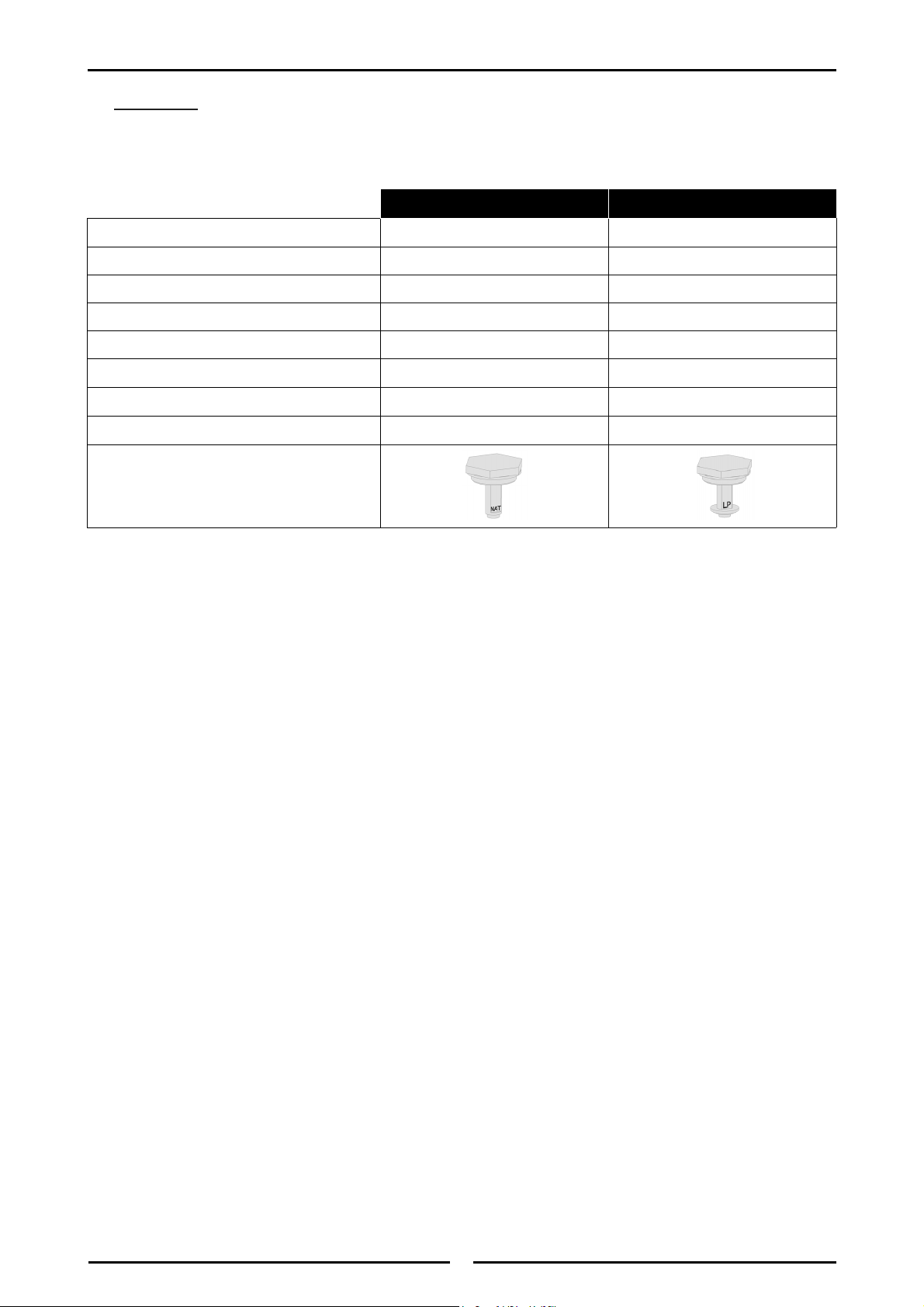
- Australia:
- New Zealand:
* Measure burner operating pressure at target top hob manifold test point with target top burner
(Inner and outer ring) operating at full setting. Operating pressure is ex-factory set through
appliance regulator and not to be adjusted, apart from when carrying out gas conversion, if
required. (Refer to details in this section for information).
Natural Gas LP Gas (Propane)
Main Burner Injector (Inner Ring) Ø 1.70mm Ø 1.10mm
Main Burner Injector (Outer Ring) Ø 2.60mm Ø 1.55mm
Pilot Burner Injector 0.35 0.25
Burner Aeration Screw X (Inner) 25mm 25mm
Burner Aeration Screw Y (Outer) 28mm 28mm
Low Fire Adjustment 2
1
/
2
turns out (ccw) 1 turn out (ccw)
Operating Pressure 1.0 kPa (*) 2.6 kPa (*)
Gas Regulator Cap Screw
Natural Gas LP Gas (Propane)
Main Burner Injector (Inner Ring) Ø 1.70mm Ø 1.10mm
Main Burner Injector (Outer Ring) Ø 2.60mm Ø 1.55mm
Pilot Burner Injector 0.35 0.25
Burner Aeration Screw X (Inner) 25mm 25mm
Burner Aeration Screw Y (Outer) 28mm 28mm
Low Fire Adjustment 2
1
/
2
turns out (ccw) 1 turn out (ccw)
Operating Pressure 1.0 kPa (*) 2.6 kPa (*)
Gas Regulator Cap Screw
Gas Conversion and Specifications
26
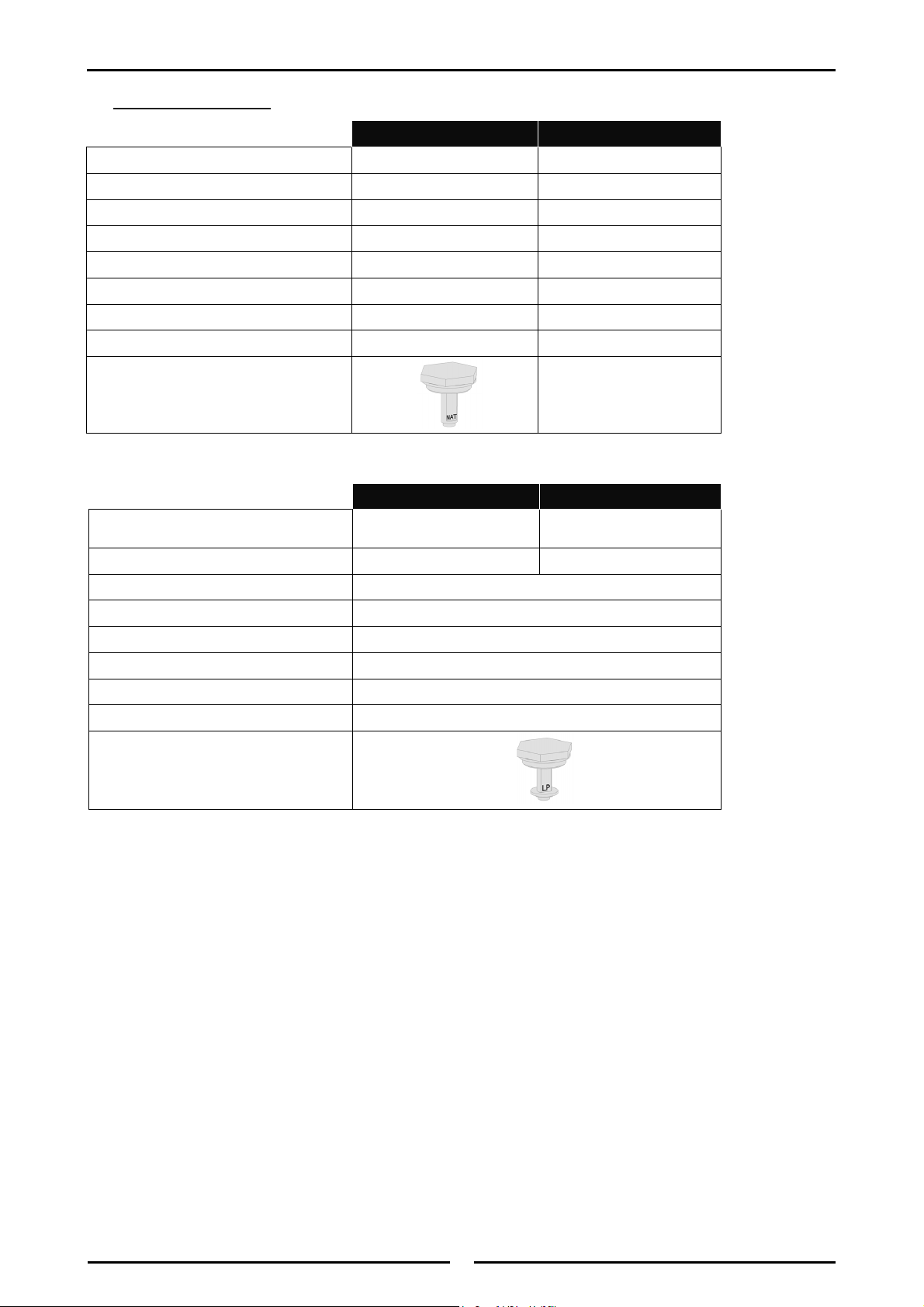
- UK Only:
Category: II
2H3P.
Flue Type: A
1.
* Measure burner operating pressure at target top hob manifold test point with target top burner
(Inner and outer ring) operating at full setting. Operating pressure is ex-factory set through
appliance regulator and not to be adjusted, apart from when carrying out gas conversion, if
required. (Refer to details in this section for information).
Natural Gas (G20) Propane (G31)
Main Burner Injector (Inner Ring) Ø 1.70mm Ø 1.10mm
Main Burner Injector (Outer Ring) Ø 2.60mm Ø 1.55mm
Pilot Burner Injector 0.35 0.25
Burner Aeration Screw X (Inner) 25mm 20mm
Burner Aeration Screw Y (Outer) 28mm 25mm
Low Fire Adjustment 2
1
/
2
turns out (ccw)
1¾ turn out (ccw)
Supply Pressure 20 mbar 37 mbar
Burner Operating Pressure (*) 9.9 mbar (*) 26.8 mbar (*)
Gas Regulator Cap Screw
Gas Conversion and Specifications
27
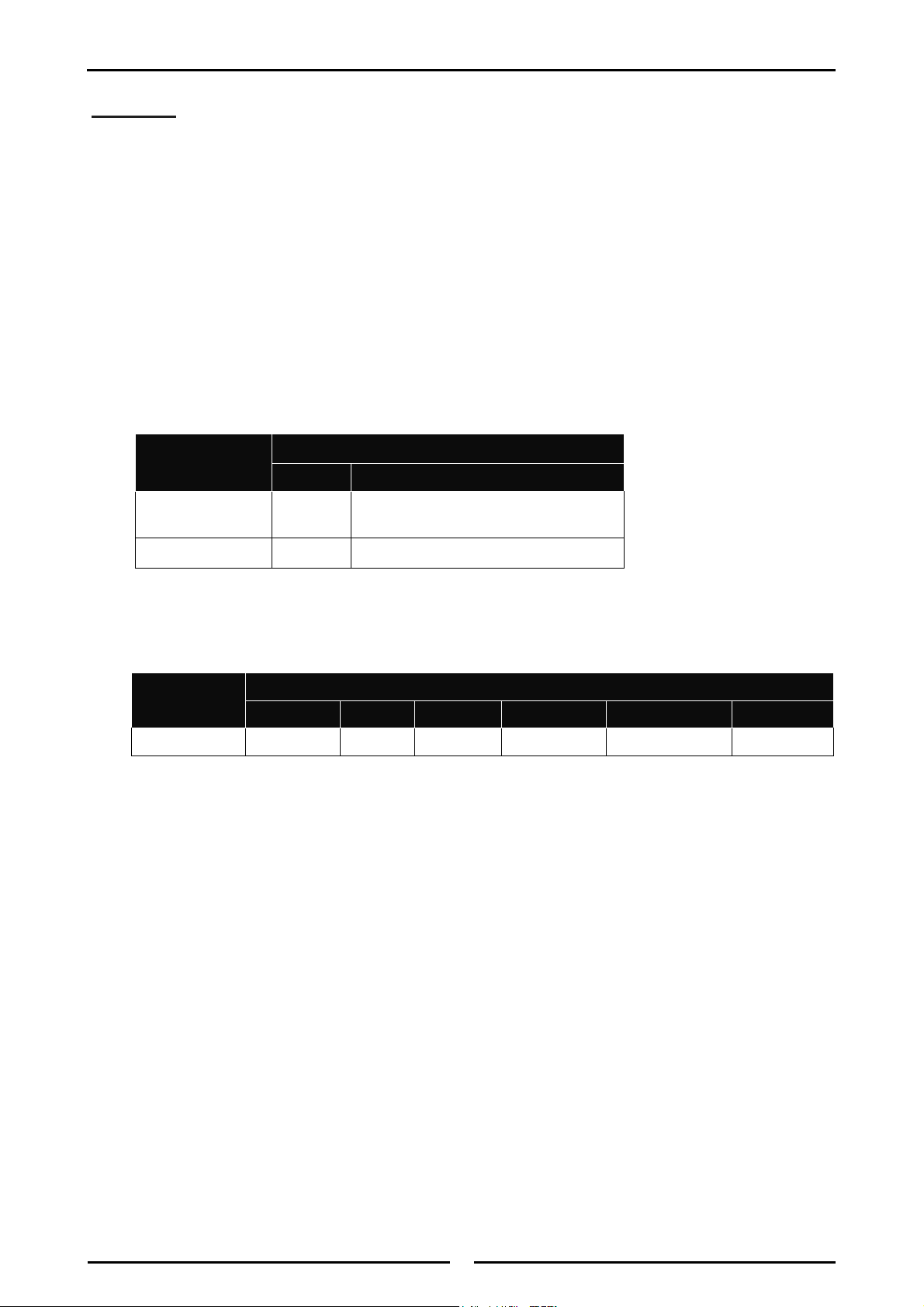
- All Other Markets:
NOTE:
(*) Measure burner operating pressure at target top hob manifold test point with target top burner
(Inner and Outer Ring) operating at full setting.
NAT, LPG & Butane Only - Operating pressure is ex-factory set and is not to be adjusted, apart from
when converting between gasses, if required.
(**) TOWN GAS Only - Burner operating pressure is to be adjusted using adjustable gas regulator
supplied. Town Gas Option is only available with specific ex-factory built Town Gas models, which
can also be converted to any other gas. Standard models can only be converted between Nat. Gas,
LP Gas and Butane, but not Town Gas.
Refer to ‘Gas Conversion and Specifications' section of this manual for further details.
Natural Gas Town Gas (**)
Main Burner Injector (Inner Ring) Ø 1.70mm Ø 4.20mm
Main Burner Injector (Outer Ring) Ø 2.60mm Ø 6.30mm
Pilot Injector 0.35 0.70
Burner Aeration Screw X (Inner) 25mm 20mm
Burner Aeration Screw Y (Outer) 28mm 22mm
Low Fire Adjustment 2
1
/
2
turns out (ccw) Blank - 1
1
/
2
turns out (ccw)
Supply Pressure 1.13 - 3.40 kPa 0.75 - 1.50 kPa
Burner Operating Pressure (*) 1.0 kPa 0.63 kPa
Gas Regulator Cap Screw
Adjustable Regulator
(Adjust to Burner Operating
Pressure specified)
LP Gas (Propane) Butane
Main Burner Injector (Inner Ring) Ø 1.10mm Ø 1.00mm
Main Burner Injector (Outer Ring) Ø 1.55mm Ø 1.45mm
Pilot Injector 0.25
Burner Aeration Screw X (Inner) 25mm
Burner Aeration Screw Y (Outer) 28mm
Low Fire Adjustment 1 turn out (ccw)
Supply Pressure 2.75 - 4.50 kPa
Burner Operating Pressure (*) 2.6 kPa
Gas Regulator Cap Screw

Replacement Parts List
28
Replacement Parts List
When ordering replacement parts, please quote part number and description as listed below. If part
required is not listed below, request part by description and quote model number and serial number which
is shown on rating plate.
Target Top
Controls
228853 Target Top Burner Kit.
230511 Pilot Burner Kit.
235347 Thermocouple Kit.
017800 Gas Control Valve
227384 Gas Control Knob
229699 Gas Control Valve (Town Gas).
229693 Gas Control Knob (Town Gas).
031170 Injector Inner Ring (Nat) Ø 1.70mm.
031110 Injector Inner Ring (LPG) Ø 1.10mm.
031100 Injector Inner Ring (Butane) Ø 1.00mm.
031420 Injector Inner Ring (Town Gas) Ø 4.20mm.
031260 Injector Outer Ring (Nat) Ø 2.60mm.
031155 Injector Outer Ring (LPG) Ø 1.55mm.
031145 Injector Outer Ring (Butane) Ø 1.45mm.
031630 Injector Outer Ring (Town Gas) Ø 6.30mm.
227985 Pilot Injector (Nat) 0.35.
227984 Pilot Injector (LPG / Butane) 0.25.
232310 Pilot Injector (Town Gas) 0.70.
Oven
228691 Oven Top Element 1.75kW. (750 Ovens).
228690 Oven Bottom Element 3.75kW. (750 Ovens).
228082 Oven Top Element 2kW. (900 - 1200 Ovens).
228059 Oven Bottom Element 4.5kW. (900 - 1200 Ovens).
228704 Door Spring Kit.
229021 Terminal Block Mains.
227399 Control Knob Thermostat 50°C - 300°C.
229146 Thermostat 50 - 300°C.
229145 Switch (4-pole).
013989 Energy Regulator.
227398 Control Knob HI/LO Heat.
Convection Oven Only
228938 Oven Door Microswitch.
010909 Motor Capacitor 4µf.
228116 Fan.
019479K Motor Kit.
IMPORTANT:
Only genuine authorized replacement parts should be used for servicing and repair of
this appliance. Instructions supplied with parts should be followed when replacing
components.
For further information and servicing instructions, contact your nearest authorized
service branch (contact details are as shown on reverse of front cover of this manual).
Replacement Parts List
29
General
227012 Centre Casting.
227013 Half Plate Casting.
014997 Casting Removal Tool.
227892 Side Rack LH.
227893 Side Rack RH.
227896 Oven Rack.
228571 Index Mark Moulding.
227963 Neon Orange.
227962 Neon Green.
227850 Leg (150 mm) Adjustable.
229674 Rear Roller Assy.
Accessories
228800 Ranges 900 mm Plinth Kit.
Gas Regulator
Gas Conversion Kits
NOTE: (*) Town Gas Option is only available with specific ex-factory built Town Gas models, which
can also be converted to any other gas. Standard models can only be converted between
Nat. Gas, LP Gas and Butane, but not Town Gas.
Gas Type
Gas Regulators
Part No.
Description
Nat. Gas
LPG, Butane
228531
Town Gas 230185 ¾” BSP F/F Adjustable.
¾” BSP F/F Convertible.
Model
Gas Type to Convert to
Nat. Gas LPG Butane
RN8110G
231972 231971 231973
Town Gas
N/A (*)
Nat. Gas (UK)
231972
LPG (UK)
231971