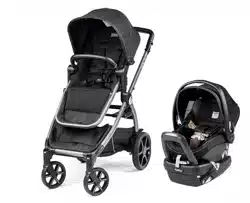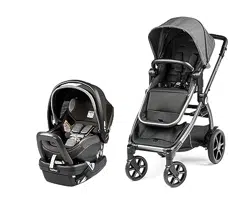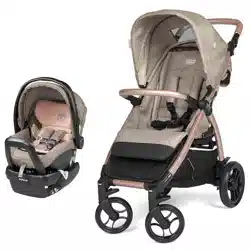
Booklet 50
U.S.A./CANADA
EN Instructions for use
ES Instrucciones de uso
FR Notice d’emploi
3
2
1
6
5
4
3
2
1
9
8
h
7
1
2
1
2
10
11
12
15
14
1
2
3
4
5
13
18
17
16
x
20
21
19
1
1
2
24
23
22
1
1
2
2
27
x
26
25
30
29
28
33
32
31
- 13 -
Booklet 50
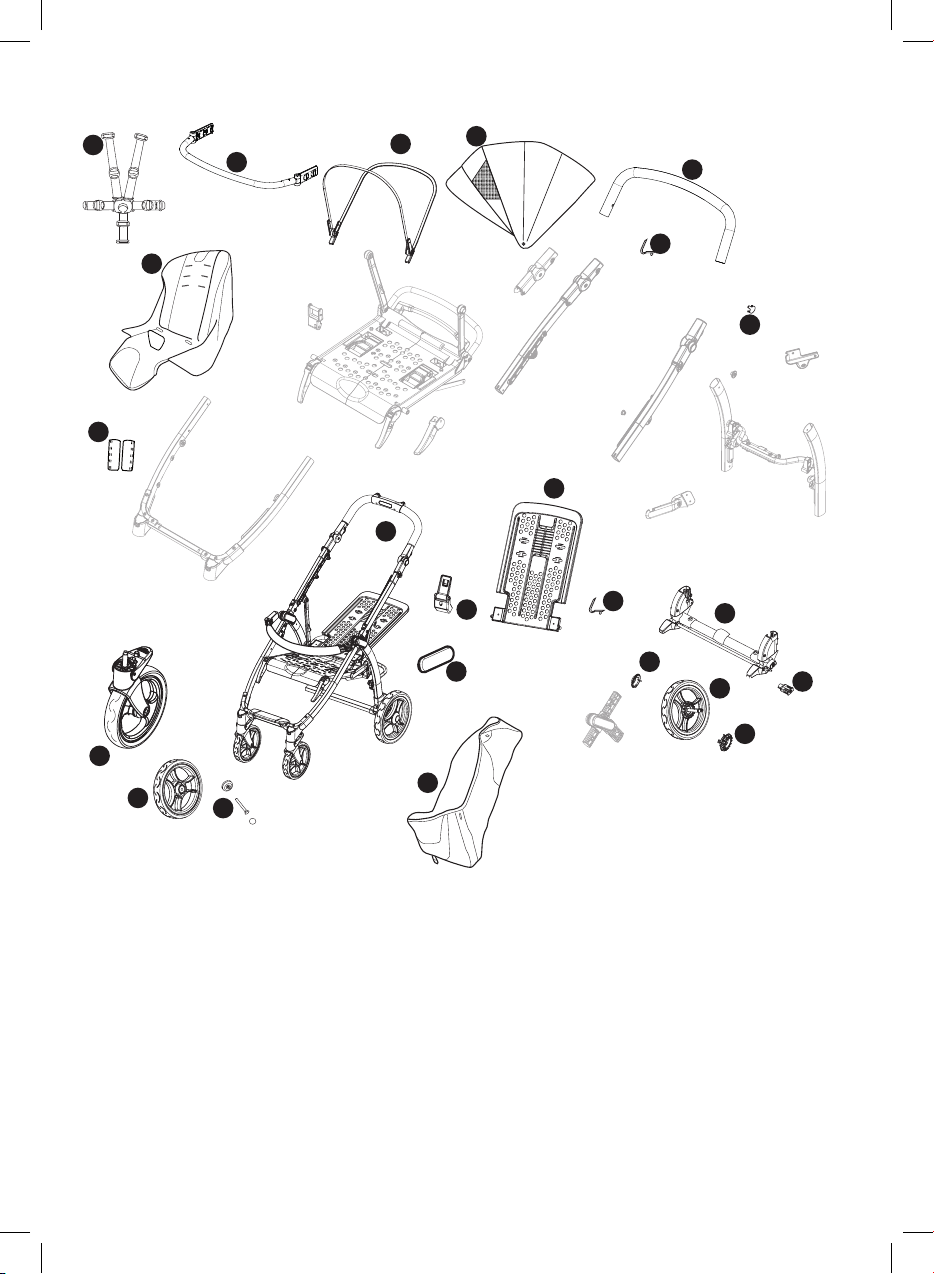
1) BSPPBF00*
2) ERSH5N00-SH01RT01
3) BCAPBF00*
4) SPST6232KN
5) SAPI7614KJN
6) SPST7255N
7) ARPI0730L89NGR
8) SPST7309N
9) MUCI5P22N
10) ASPI0248L50N
11) ITP17NAN*
12) MMMO0025D
13) SAPI0679*
14) SAPI7303JXN
15) SAPI7613KJNN
16) MMST0087N
SPST7303N
MMRA0007
MMCA0007L30
17) ARPI0700N
18) SPST7605N
19) SPST7603JKNPEG
20) BSAPBFNA*
21) SPST7301N
22) SAPI10154*
15
14
4
5
7
19
6
8
9
10
13
16
17
18
20
3
21
2
11
1
22
12
12
EN Spare parts available in different colours to be specified when ordering.
ES Repuestos disponibles en otros colores que se especificarán en el pedido.
FR Pièces de rechange disponibles en plusieurs couleurs à spécifier dans la demande.
- 14 -
EN_English
Thank you for choosing a Peg-Pérego
product.
WARNING
_ CAREFULLY READ INSTRUCTIONS
AND KEEP FOR FUTURE USE.
_ THE CHILD’S SAFETY COULD BE PUT
AT RISK IF THE INSTRUCTIONS ARE
NOT FOLLOWED.
_ THIS PRODUCT IS DESIGNED FOR
CHILDREN WHOSE MAXIMUM
WEIGHT IS 50 POUNDS (22.7 KG)
AND WHOSE MAXIMUM HEIGHT IS
43 INCHES (110 CM). THIS SHOPPER
BASKET IS DESIGNED TO CARRY A
MAXIMUM WEIGHT OF 11 POUNDS
(5 KG). ANY POACH OR POCKET
PROVIDED WITH THIS UNIT IS
DESIGNED TO CARRY A MAXIMUM
WEIGHT OF 0.44 POUNDS (0.2 KG).
_ THIS ITEM WAS DESIGNED FOR
USE IN COMBINATION WITH 1 PEG-
PÉREGO GANCIOMATIC “PRIMO
VIAGGIO 4•35” - “PRIMO VIAGGIO
4•35 NIDO”CAR SEAT (GROUP 0+).
_
BEFORE USE CHECK THAT THE
“PRIMO
VIAGGIO 4•35” - “PRIMO VIAGGIO
4•35 NIDO”
CAR SEAT (GROUP 0+) IS
CORRECTLY FIXED TO THE ITEM.
_ DO NOT PUT HOT DRINKS IN
THE DRINK-HOLDER, NOR ITEMS
WEIGHING MORE THAN 0,5 KG (1 LBS).
_ WARNING: THE MAXIMUM WEIGHT
ALLOWED TO HANG FROM THE
HANDLEBAR IS 5 LBS (2.2 KG)
_ WARNING: DO NOT APPLY GREATER
WEIGHTS TO THE HANDLEBAR
THAN THOSE SPECIFIED BY THE
MANUFACTURER SO AS NOT TO
COMPROMISE THE STABILITY AND
SAFETY OF THE PRODUCT
_ FAILURE TO FOLLOW
MANUFACTURER’S SPECIFICATIONS
OR USE OF ACCESSORIES OTHER
THAN THOSE APPROVED BY THE
MANUFACTURER MAY CAUSE THE
UNIT TO BECOME UNSTABLE.
_ WARNING: AVOID
SERIOUS INJURY FROM FALLING
OR SLIDING OUT. ALWAYS USE
COMPLETE 5 POINT SEAT BELT.
_ WARNING: NEVER
LEAVE YOUR CHILD UNATTENDED.
_ ALWAYS USE ALL THE BRAKES
WHENEVER PARKED.
_ TO AVOID SERIOUS INJURY, WHEN
MAKING ADJUSTMENTS ENSURE
THE CHILD’S BODY IS CLEAR OF ALL
MOVING PARTS.
_ ALL OPERATING AND ASSEMBLY
PROCEDURES SHOULD BE
PERFORMED BY AN ADULT.
_ DO NOT LIFT THE STROLLER BY
GRIPPING THE FRONT BAR. THE
FRONT BAR IS NOT DESIGNED TO
WITH STAND LOADS.
_ ENSURE THAT THE STROLLER IS
OPENED CORRECTLY AND LOCKED
IN POSITION OF USE.
_ CHECK TO MAKE SURE THAT THE
CAR SEAT OR THE BABY CARRIAGE
IS CORRECTLY FASTENED TO THE
STROLLER (WHERE APPLICABLE).
_ DO NOT DRIVE THIS PRODUCT
AROUND STAIRS OR STEPS; CARE
MUST BE TAKEN IF UNIT IS USED ON
STAIRS OR ESCALATORS.
_ DO NOT USE THE PRODUCT IF IT
HAS BROKEN OR MISSING PARTS.
_ DO NOT USE NEAR FIRE OR
EXPOSED FLAME.
_ WARNING: KEEP
CHILDREN AWAY WHILE OPENING
AND CLOSING TO AVOID TRAPPING
OR INJURY
_ WARNING:
DO
NOT ADD ANY MATTRESS ARE NOT
APPROVED BY THE MANUFACTURER.
_ WARNING: DO
NOT MAKE ANY ALTERATIONS
OR MODIFICATIONS TO THE
STROLLER WITH PRODUCTS NOT
SUPPLIED BY THE MANUFACTURER
AS THIS MAY CAUSE INSTABILITY
OR STRUCTURAL DEMAGE NOT
COVERED UNDER WARRANTY.
NOTICE
THIS ARTICLE MEETS OR EXCEEDS
ALL REQUIREMENTS COVERED IN
ASTM F833 STANDARD AND LATEST
REVISIONS.
The images referring to the textile details
may differ from the collection purchased.

- 15 -
For more information, consult our website:
www.pegperego.com
INSTRUCTIONS
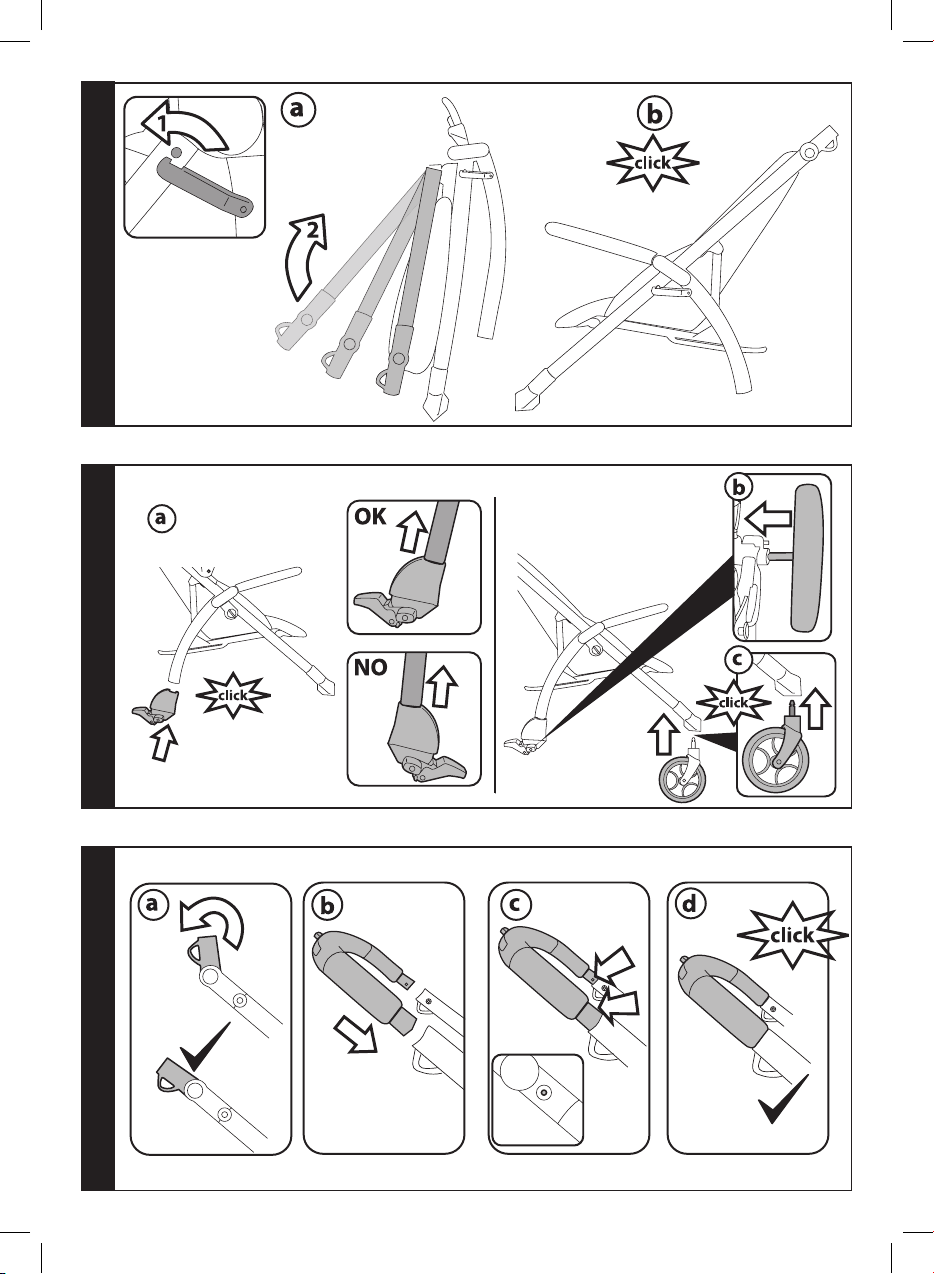
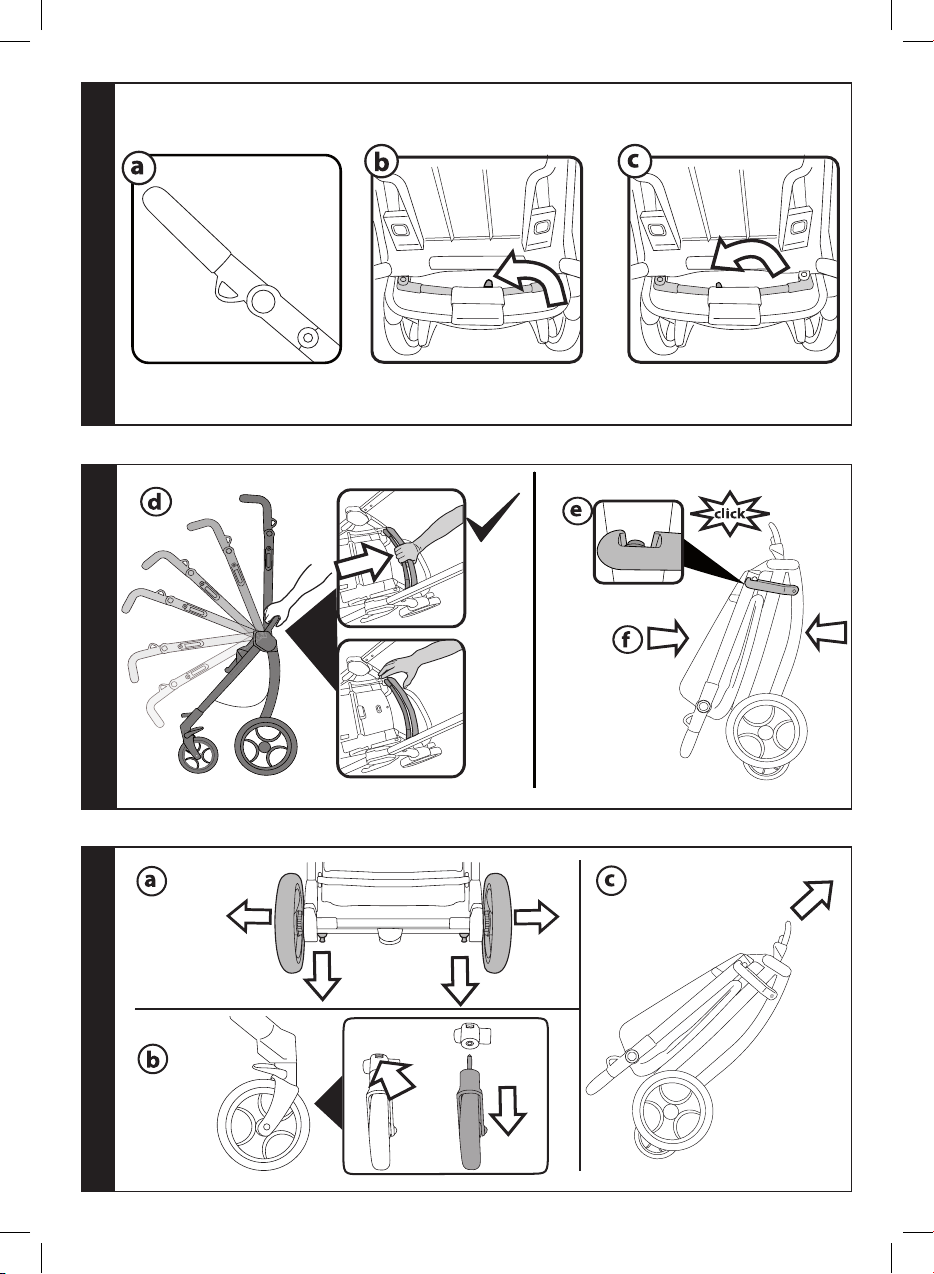
1 OPENING: Before opening the frame, remove
(without using blades) any die-cut cardboard.
WARNING:
_ DO NOT PULL OR FORCE THE FASTENER
BEYOND ITS LIMIT.
_ DO NOT USE THE FASTENER AS A CARRY
HANDLE OR TO CARRY WEIGHTS.
DO NOT HANG BAGS OR OTHER ACCESSORIES
TO THIS FEATURE.
Press down the side fastener, hold the upper
section of the handle and rotate it towards
you until the frame is fully opened (fig_a).
Open frame (fig_b).
The frame is properly opened when the
attachment on the base clicks into place, as
shown.
2 FITTING THE WHEELS: Slot the uprights into
the rear wheel crosspiece (fig_a), ensuring
that it is facing the right way, then push the
rear wheels on and make sure that they click
into place (fig_b). To mount the front wheels,
fit them into the uprights until they lock into
place (fig_c).
3 ATTACHING THE MAIN HANDLE: if the handle
tube faces upwards, align it with the stroller
(Fig_a).
Fasten the handle to the frame as shown in
the figure (Fig_b).
To complete the operation, press the two
side buttons on the handle (Fig_c) to ensure
the handle pushes in all the way, until it clicks
into place (Fig_d).
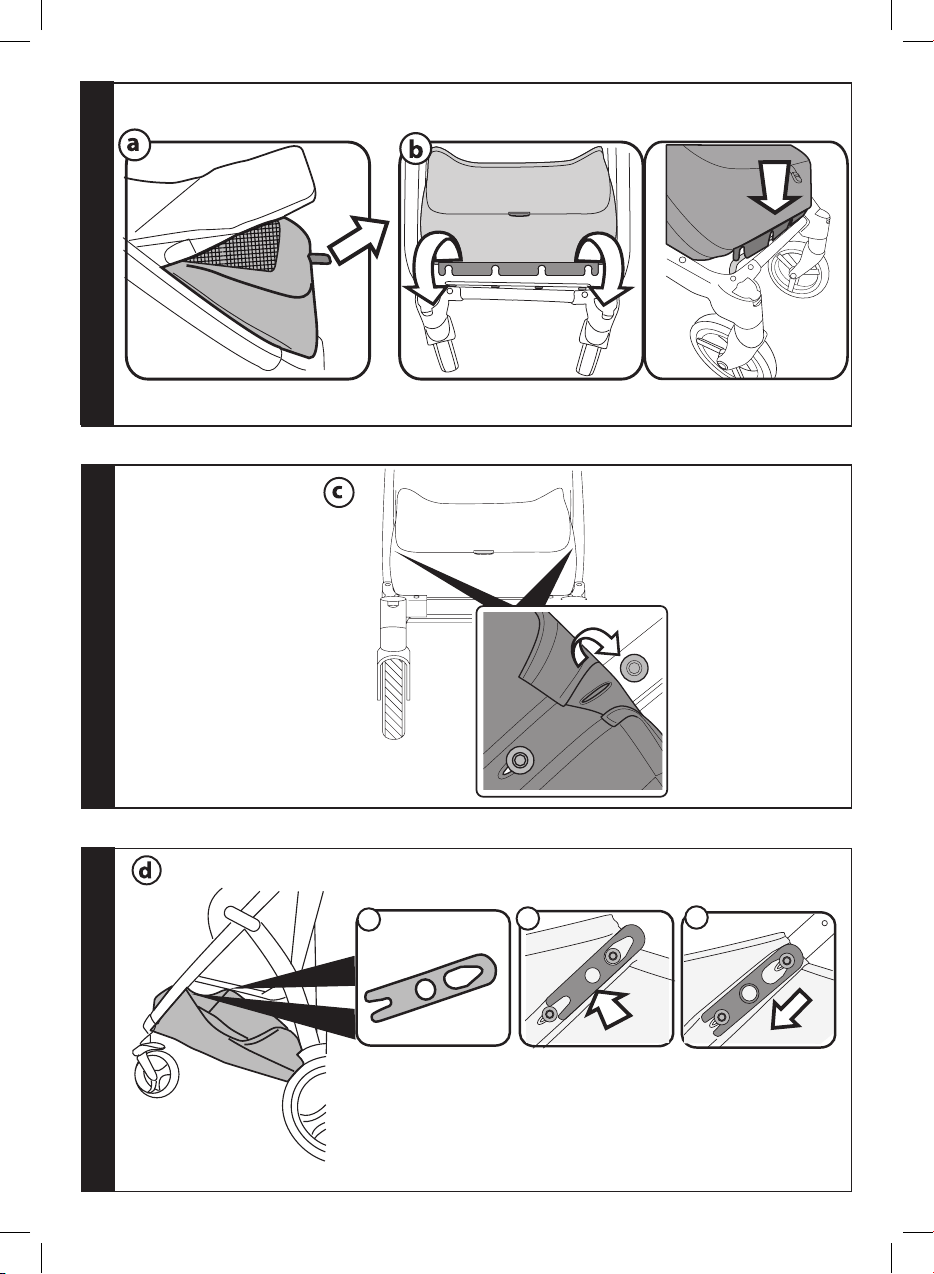
4 BASKET ASSEMBLY: to facilitate basket
assembly, pull the tab outwards and lift as
shown in the figure (fig_a).
Slip the basket flap into the slot along the
front bar of the chassis (Fig_b).
5 Fasten the basket eyelets to the buttons on
each side of the frame.
6 To complete the basket attachment
procedure for the front part, you are required
to insert the supplied tie (fig_1) as follows:
position it between the basket and buttons,
as shown (fig_2) and use your finger to
push downwards, so as to complete the
attachment procedure (fig_3).
Repeat the same procedure for the other side
of the basket.
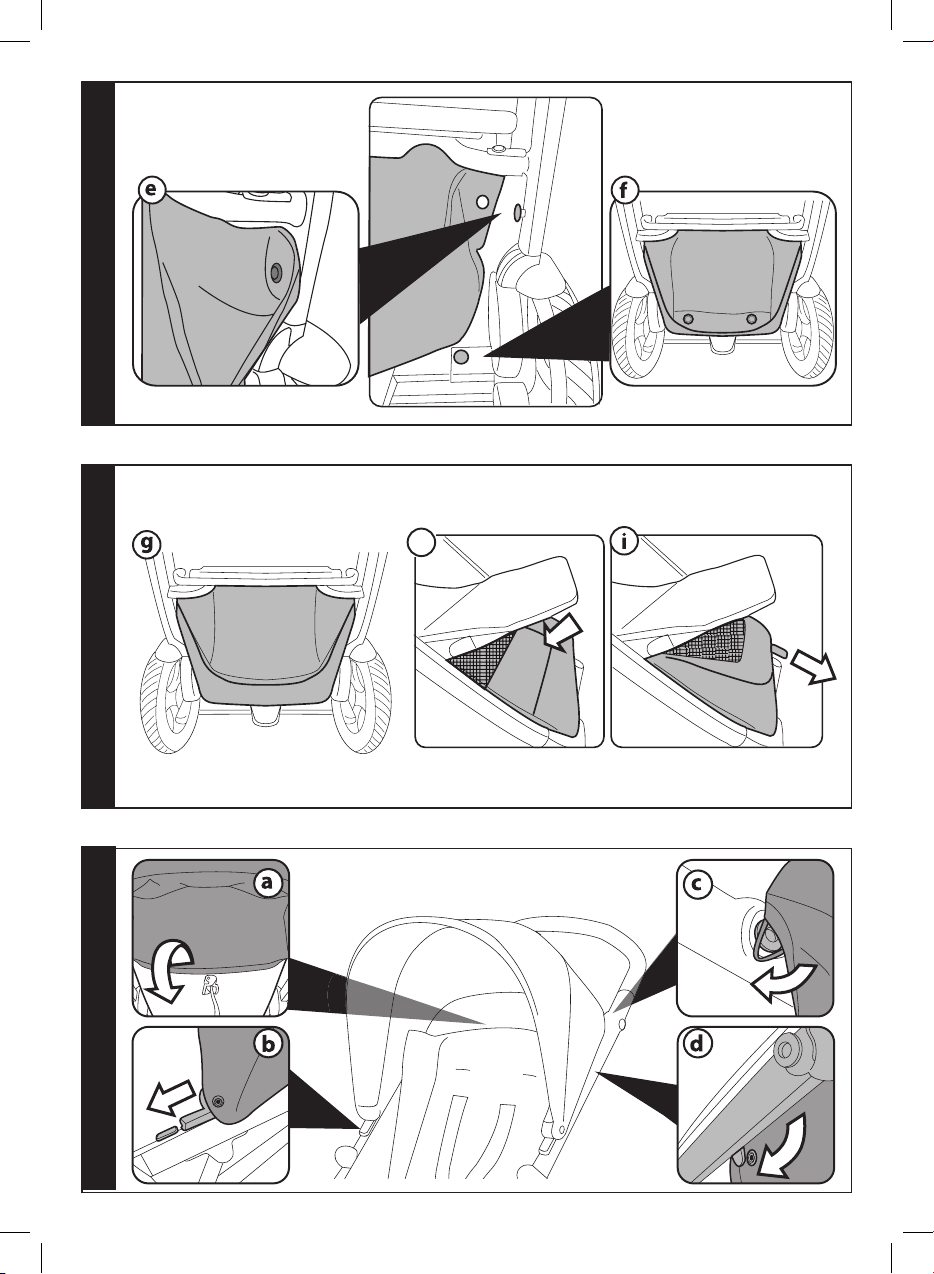
7 Attaching the rear part of the basket.
Remove the card from the rear bar.
Fasten the upper basket eyelet to the button
on each side of the frame (Fig_e).
Fasten the basket’s two lower eyelets to the
two buttons on the rear bar of the frame
(Fig_f).
8 Basket fastened correctly (fig_g).
Lastly, re-position the footrest, pressing
inward with your hand as shown in the figure
(fig_h).
It is possible to increase the basket capacity
by pulling the tab outwards (fig_i).
WARNING! If you do not hook the basket on
correctly, as shown, the basket will be unable
to support the weight of loads placed in it.
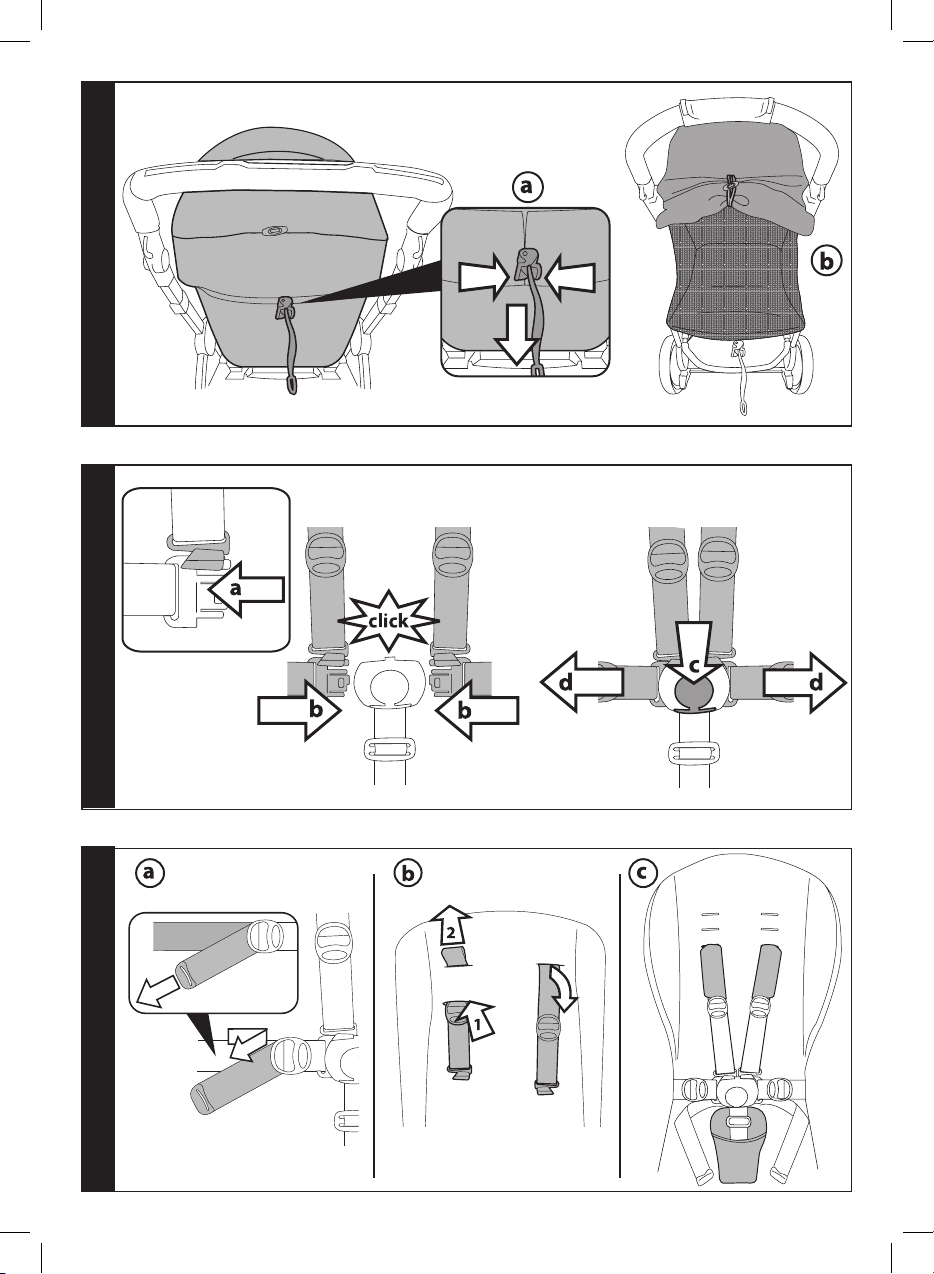
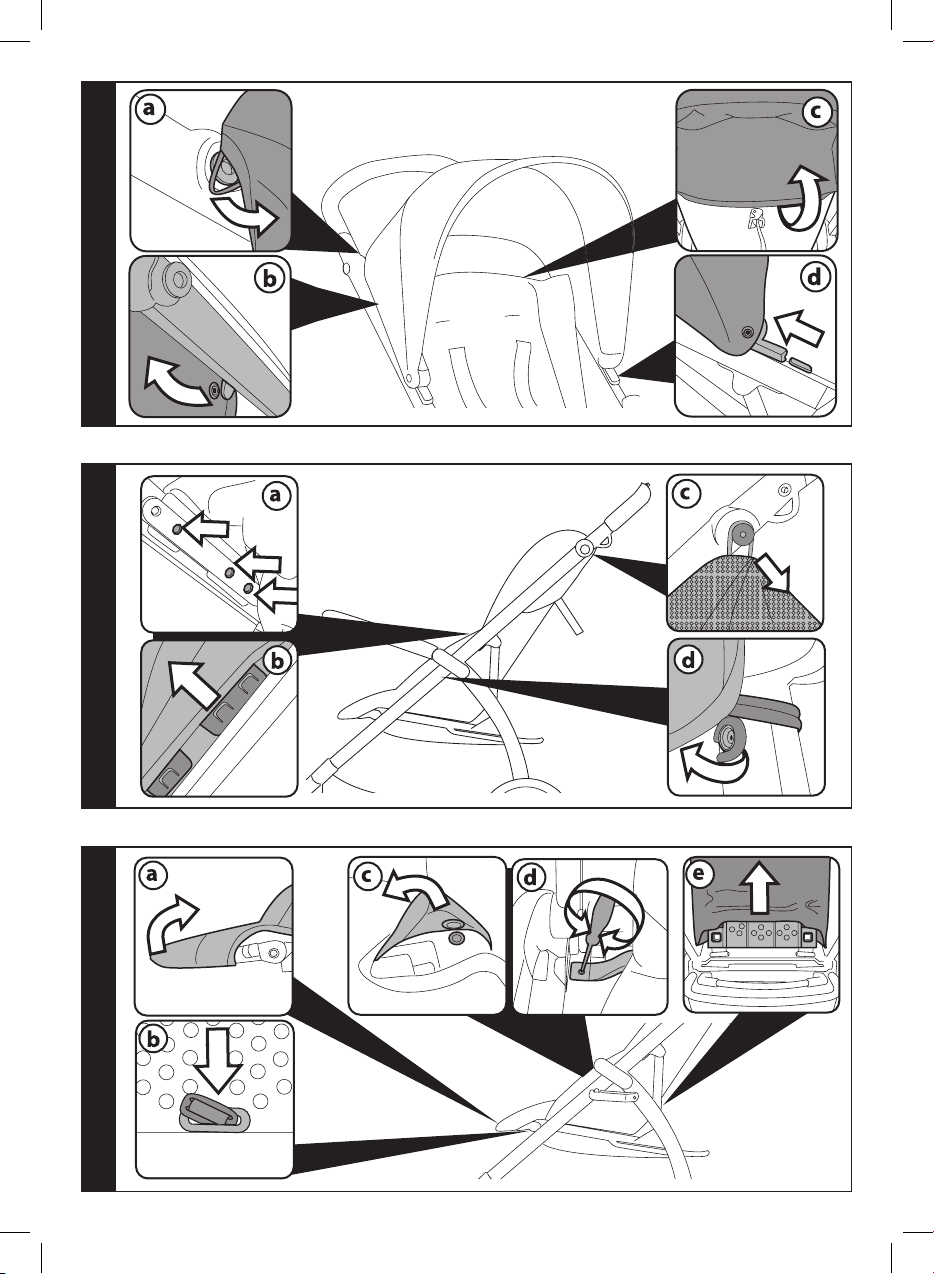
9 HOOD: Fasten the back of the hood with the
Velcro strip (fig_a), insert the hood fasteners
into their slots (fig_b), secure to the buttons
inside the handlebar with the rubber band
(fig_c) and button the hood to the side of the
frame (fig_d).
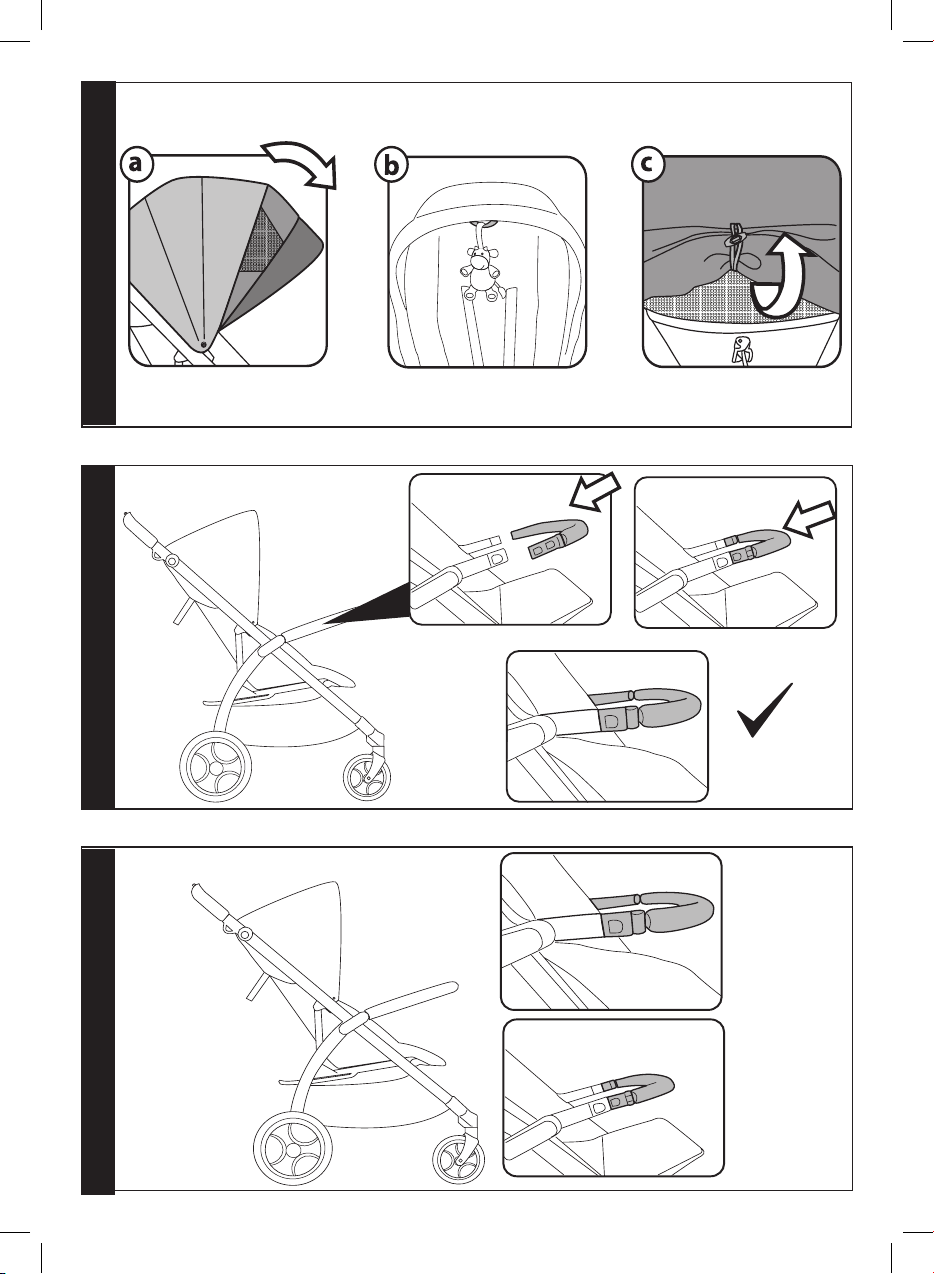
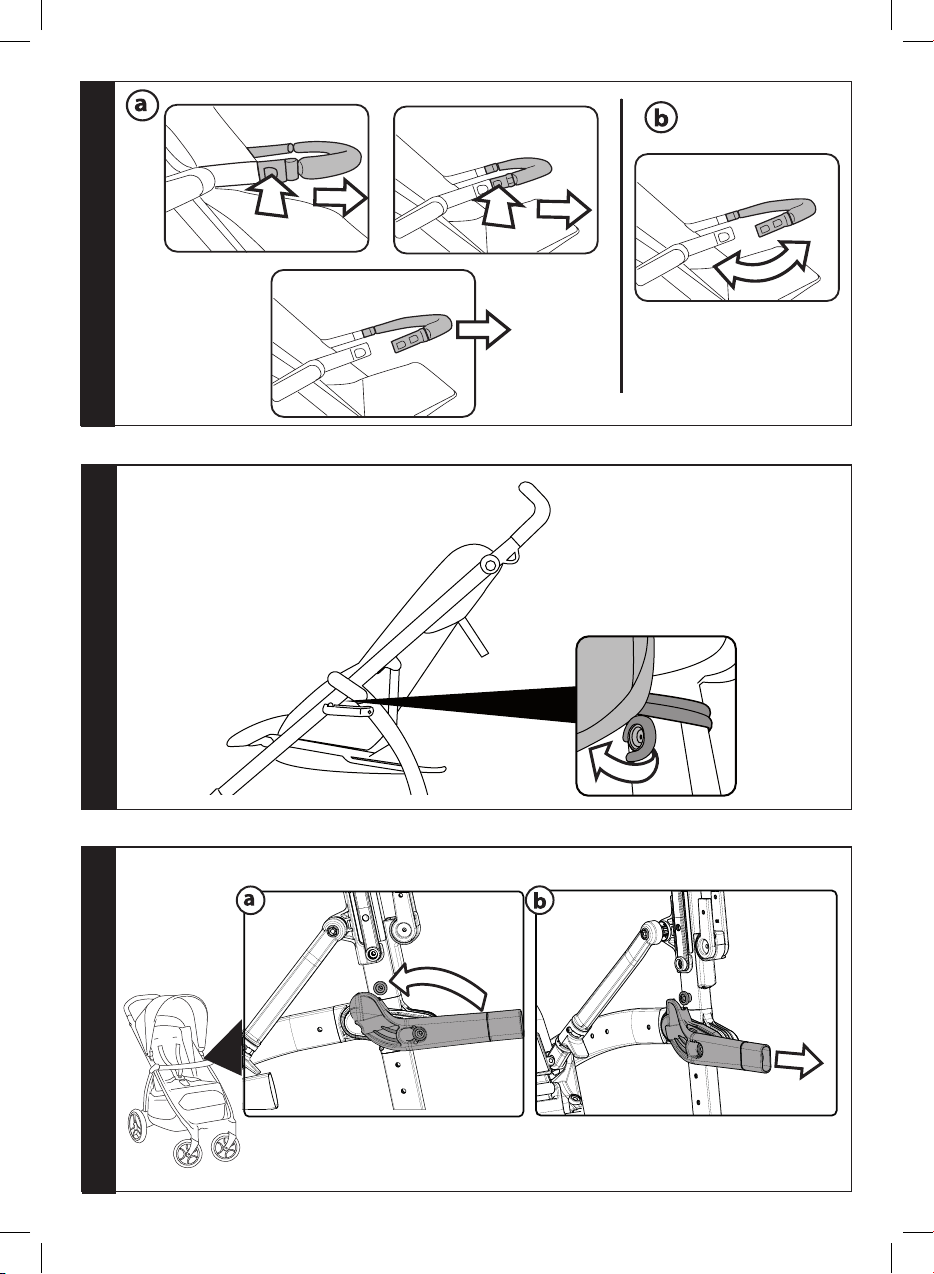
10 Supplied with two parasol sections. To open,
pull forwards (fig_a).
The hood includes a loop to be used to hang
your child's favourite toy (fig_b). You can
detach the Velcro, roll up the back of the
hood and fasten it at the top with the rubber
band, so as to allow for greater ventilation
when using with the backrest down (fig_c).
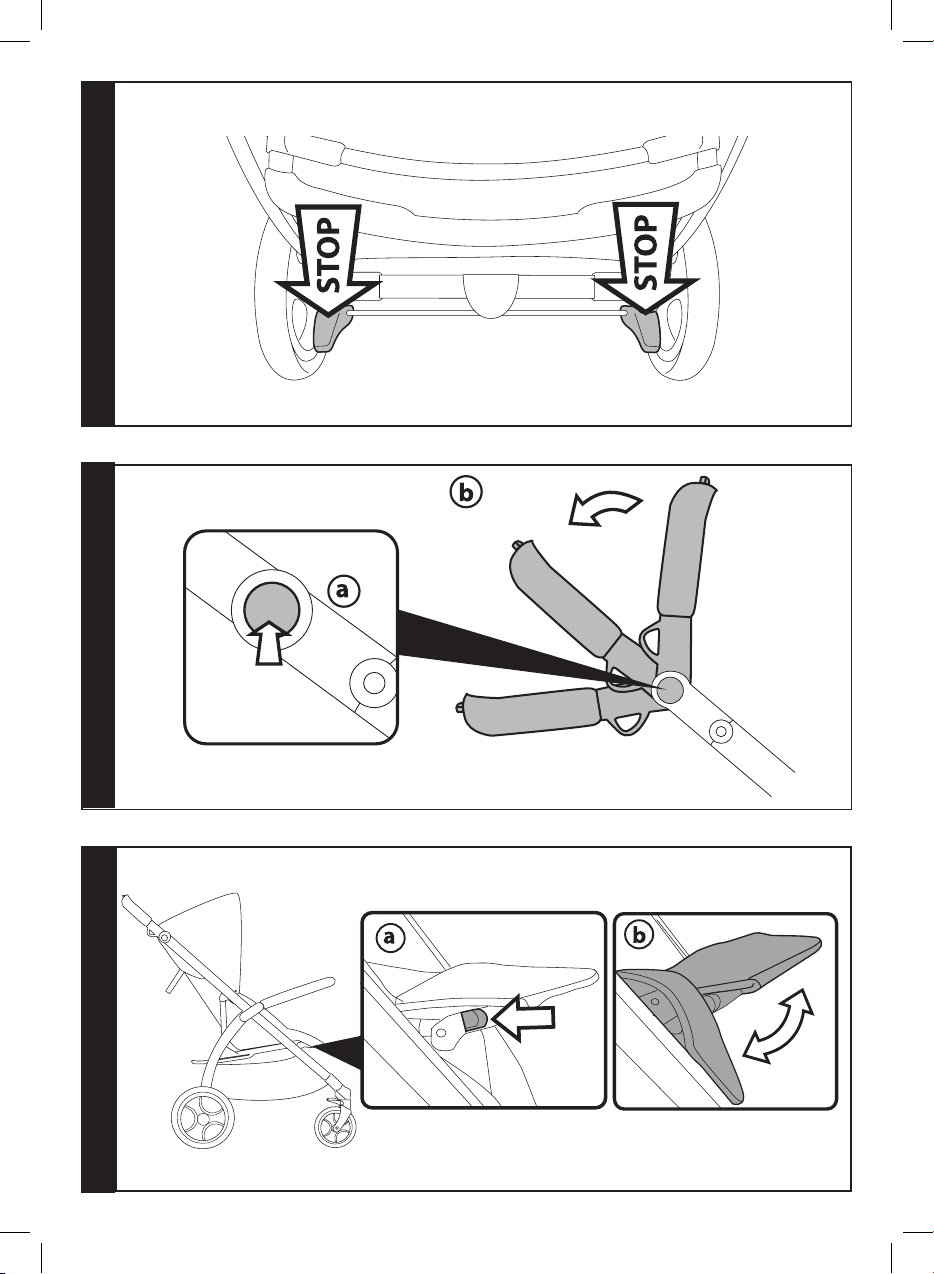
11 FRONT BAR: insert the front bar as per the
sequence shown in the figure.
12 It can be adjusted into 2 positions:
POSITION 1: to use
POSITION 2: to attach the car seat
13 To remove the front bar, press down on the
buttons from both sides, as per the sequence
shown and remove (fig_a).
It is possible to open the front bar on one
side only, so as to facilitate the child's entry
and exit (fig_b).
WARNING: The front bar has not been
designed to support the child’s weight; the
front bar has not been designed to lift the
seat with the child's weight. The front bar
does not replace the seat belt.
14 Before releasing the armrest, unfasten the
elastic from the cover on both sides.
15 Slightly close the chassis.
Rotate the armrest to unfasten it from the
cap, as shown in figure (fig.a).
To completely remove the armrest, pull it
outwards on both sides (fig.b).
Finally reattach the cover elastics to the
chassis.
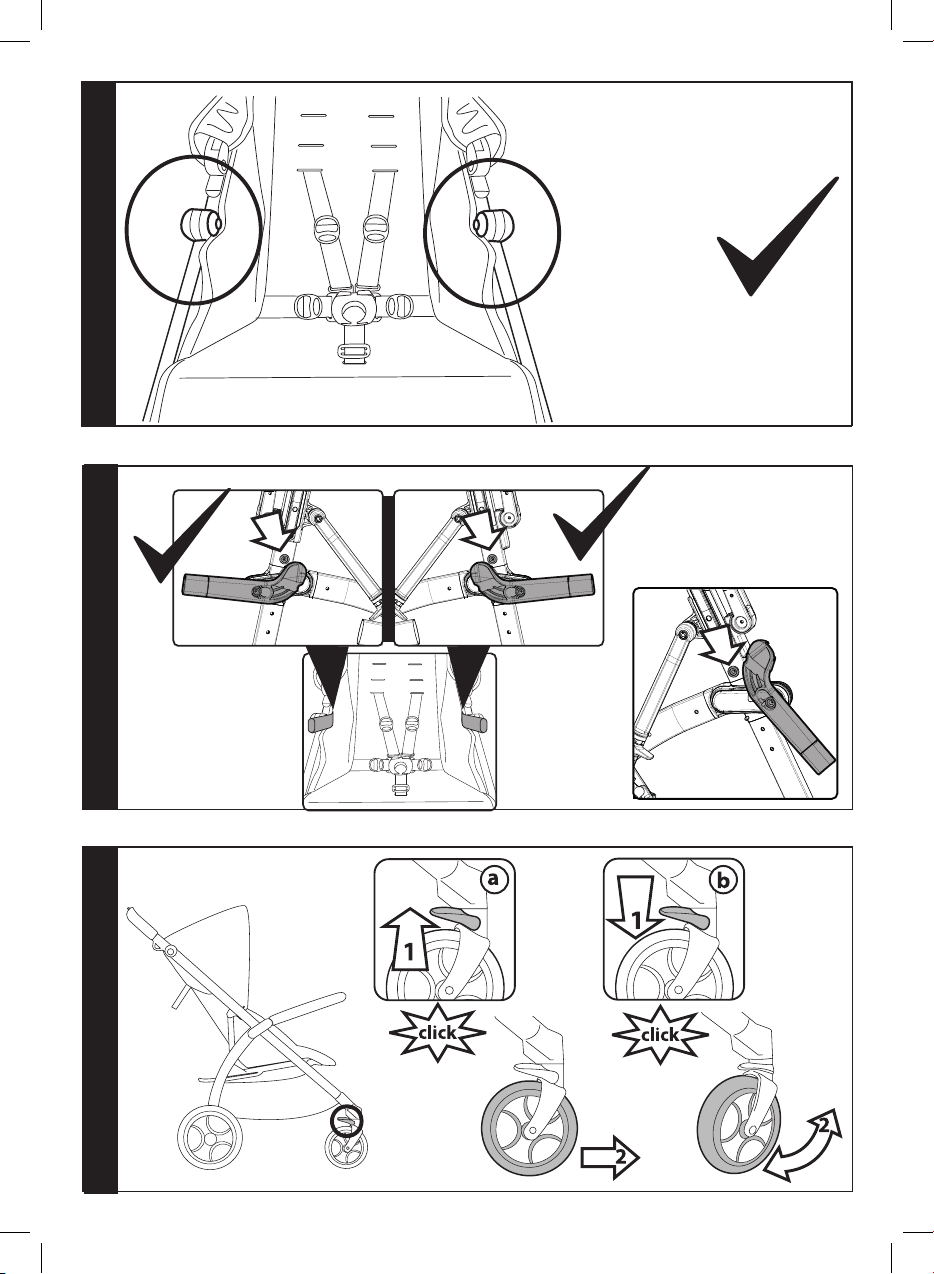
16 Chassis without armrests. Keep the armrests
for a future use.
17 To reattach the armrests, proceed in reverse
sense. Pay attention to the attachment
direction.
When attaching the armrest, keep an eye on
the button, because it must be in front of the
armrest and not behind, as shown.
Attach the armrests to the chassis as shown.
18 FIXED OR SWIVELING FRONT WHEELS: Lift the
levers to prevent the wheels from swiveling
(fig_a) and lower them to allow the wheels to
swivel (fig_b). On uneven surfaces, the wheels
should be set to their fixed position.
19 BRAKE: Press the lever down to apply the

- 16 -
brake on the chassis and lift it to release the
brake.
20 ADJUSTABLE HANDLEBAR: To adjust the
height of the handlebar, press both of the
side buttons at the same time (fig_a) and
swing it into the desired position (fig_b), then
release the buttons.
21 FOOTREST: before adjusting the foot rest,
ensure its cover is accurately fitted; if it isn’t,
fit it accordingly. To lower the footrest push
the two levers downwards and then push
the footrest downwards (fig_a); to raise the
footrest lift it upwards (fig_b).
It can be adjusted into several positions.
22 ADJUSTING THE BACKREST: to lower the
backrest, press the clip and the backrest will
move down to the desired position.
To raise the backrest, press the clip and lift
the backrest to the desired height.
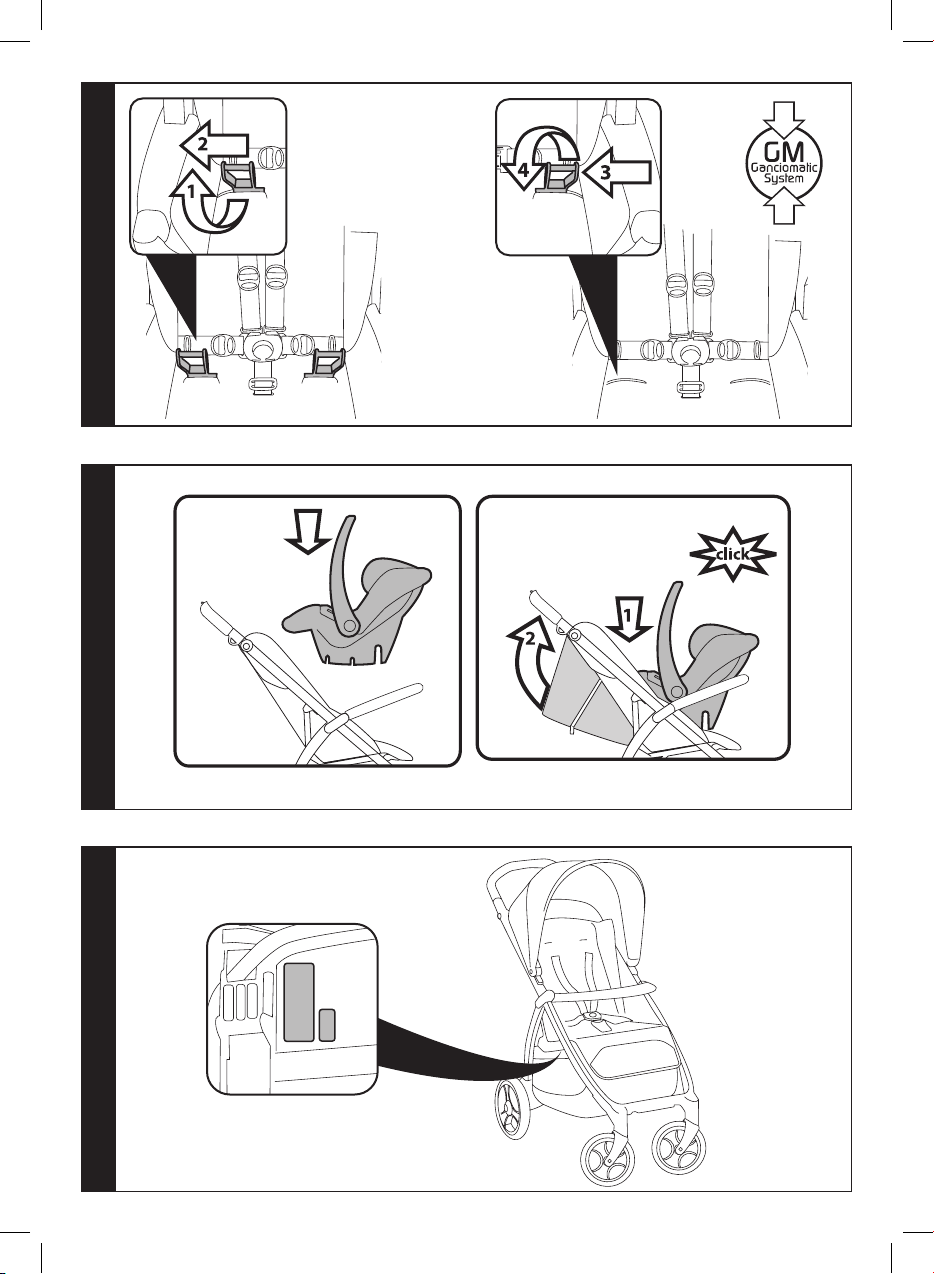
23 FIVE POINT SAFETY HARNESS: to fasten it,
push the two waist strap buckles (with the
shoulder straps attached – arrow_a) into
the leg divider until they click into place
(arrow_b). To unfasten it, press the round
button in the centre of the buckle (arrow_c)
and pull the waist straps out (arrow_d).
24 To tighten the waist strap, pull on both sides
in the direction of the arrow (arrow_a). To
loosen it, move it in the opposite direction.
To adjust the height, slip the belts through
the eyelet in the fabric (fig_b) and position
them in the most suitable eyelet.
The seat belts are fitted with shoulder pads
and crotch straps (fig_c).
25 FOLDING UP: To fold up the stroller, we
recommend ensuring the front wheels swivel,
closing the hood, removing the car seat when
fastened.
Align the handlebar and frame as shown in
the figure (fig_a).
Rotate the safety lever to the left (fig_b) and
pull the internal handle towards yourself (fig_c).
26 Allow the handlebar to fall in on itself until
fully folded (fig_d).
The frame is folded correctly when the
side fastener automatically locks (fig_e).
Otherwise, gently press down on the frame
(fig_f).
The stroller is free-standing when folded.
27 For greater compactness, it is possible to
remove the wheels.
To remove the rear wheels: pull the pivot
outwards and remove the wheel as shown in
the figure (fig_a).
To remove the front wheels: press the tab as
shown, and remove the wheel (fig_b).
TRANSPORT: the stroller can be carried
comfortably locking the front wheels and
grasping the main handle (fig_c).
28 REMOVABLE ITEMS: to remove the hood, take
the elastic off from the buttons on the inside
of the handlebar (fig_a), detach the press
studs the sides of the chassis (fig_b), detach
the Velcro strip from the backrest (fig_c) and
remove the attachments of the hood from
their positions on the chassis (fig_d).
29 To remove the seat fabric, press in the holes
on the inside of the chassis (fig_a); remove,
from the side of the seat, the rigid flap of the
chassis fabric ((fig_b), unfasten the elastic
of the net from the side buttons inside the
handlebar (fig_c) and unfasten the elastics
from the buttons inside the chassis (fig_d).
30 From the front, remove the lining from the
foot platform (fig_a), remove the leg divider
strap from under the seat (fig_b), unbutton
the seat fabric (fig_c), unscrew the waist belt
on the side (fig_d) and remove the seat fabric
from the backrest (fig_e).
GANCIOMATIC SYSTEM
The Ganciomatic System offers a fast,
practical means of fastening a Primo Viaggio
4.35 - Primo Viaggio 4.35 nido car seat
(sold separately) to the stroller, using the
Ganciomat attachments.
31 GANCIOMATIC HOOKS ON THE STROLLER:
to lift the stroller's Ganciomatic hooks, pull
back the fabric at the corners of the seat.
Lift the two Ganciomatic hooks which will
automatically move outwards.
_ To lower the hooks, proceed in the opposite
order.
32 Booklet 50 + Primo Viaggio
To fasten the car seat to the stroller:
_ Lock the stroller brakes;
_ Lift the stroller's Ganciomatic hooks:
_ Extend the front bar into position 2 (see point
12).
_ If in place, remove the hood from the stroller
and fully lower the backrest. Once the seat
has been fastened, lift the backrest to the
maximum height .
_ Position the car seat, mum-facing, on the
Ganciomatic hooks and press down until they click.
_ To release the car seat from the stroller please
read the instructions book
SERIAL NUMBERS
33 Information about the production date can
be found on the Booklet 50.
_ The product name, production date and serial
number of the chassis.
This information is required for any
complaints.
THE ORIGINAL ACCESSORY
PEG-PÉREGO
Peg-Pérego accessories are designed as a
useful, practical means of simplifying the

- 17 -
lives of parents. Discover all your product’s
accessories on: www.pegperego.com
CLEANING AND MAINTENANCE
Cleaning must only be carried out by adults.
PRODUCT MAINTENANCE: protect from the
weather: water, rain, or snow; prolonged
and continuous exposure to bright sunlight
may give rise to colour changes of various
different materials; store this product in a dry
place.
CLEANING THE SEAT: periodically clean all
plastic parts with a damp cloth. Do not use
solvent or similar cleaning products; keep
all metal parts dry to prevent rusting; keep
moving parts clean (adjustment mechanisms,
locking mechanisms, wheels, ...) and free of
dust and sand and, if necessary, lubricate with
light machine oil.
CLEANING THE RAIN CANOPY: wash with
a sponge and soapy water; do not use
detergents.
CLEANING FABRIC PARTS: Brush the fabric
parts to remove dust.
• When washing, closely follow the instructions
stated on the label sewn into the cover.
• Do not use chlorine bleach.
• Do not iron.
• Do not dry clean.
• Do not remove stains with solvents.
• Do not tumble dry.
PEG-PÉREGO S.p.A.
Peg Pérego can make changes at any time to
the models described in this publication for
technical or commercial reasons.
PEG-PÉREGO
AFTER-SALES SERVICE
If any parts of the item get lost or damaged,
only use genuine Peg Pérego spare parts.
For any repairs, replacements, information
on the products and sales of genuine spare
parts and accessories, contact the Peg
Pérego Assistance Service and state the serial
number of the product, if present.
USA
tel. 800.671.1701
fax 260.471.6332
call us toll free 1.800.671.1701
website www.pegperego.com
CANADA
tel. 905.839.3371
fax 905.839.9542
call us toll free 1.800.661.5050
website www.pegperego.com
ES_Español
Le agradecemos haber elegido un producto Peg-Pérego.
ADVERTENCIA
_ IMPORTANTE: LEER ATENTAMENTE
ESTAS INSTRUCCIONES Y
CONSERVARLAS PARA UNA FUTURA
UTILIZACIÓN.
_
SI NO SE SIGUEN ESTAS
INSTRUCCIONES, SE PODRÍA
ARRIESGAR LA SEGURIDAD DEL NIÑO.
_ DISEÑADO PARA UN NIÑO CON UN
PESO MÁXIMO DE 22.7 KG Y UNA
ALTURA MÁXIMA DE 110 CM. LA
CESTILLA HA SIDO REALIZADA PARA
SOPORTAR UN PESO MÁXIMO DE 5
KG. LOS POSIBLES PORTABEBIDAS
QUE VAN CON ESTE PRODUCTO
ESTÁN CONCEBIDOS PARA SOPORTAR
EL PESO MÁXIMO ESPECIFICADO EN
EL PORTABEBIDAS EN CUESTIÓN.
CUALQUIER BOLSA ENTREGADA
JUNTO AL PRODUCTO ESTÁ
REALIZADA PARA SOPORTAR UN
PESO MÁXIMO DE 0,2 KG.
_ ESTE ARTÍCULO SE HA DISEÑADO
PARA USARSE JUNTO CON UNA SILLA
DE AUTO “PRIMO VIAGGIO 4•35” -
“PRIMO VIAGGIO 4•35 NIDO” (GRUPO
0+) PEG-PÉREGO GANCIOMATIC.
_ ANTES DE USAR LA SILLA DE AUTO
“PRIMO VIAGGIO 4•35” - “PRIMO
VIAGGIO 4•35 NIDO” (GRUPO
0+) ASEGÚRESE DE QUE ESTÉ
CORRECTAMENTE ENGANCHADA AL
ARTÍCULO.
_ NO PONGA BEBIDAS CALIENTES EN
EL PORTA BEBIDAS, NI OBJETOS QUE
PESEN MÁS DE MEDIO KILO.
_ ADVERTENCIA: EL PESO MÁXIMO DEL
BOLSO QUE SE COLOCA EN EL ASA
(SE CUELGA) ES DE 5 LBS (2,2 KG)
_ ADVERTENCIA: NO COLOQUE EN
EL ASA PESOS SUPERIORES A LOS
INDICADOS POR EL FABRICANTE,
PARA NO PERJUDICAR LA
ESTABILIDAD NI LA SEGURIDAD DEL
ARTÍCULO (PRODUCTO)
_ SI NO SE RESPETAN LAS
INDICACIONES ESPECIFICADAS O SI
SE USAN ACCESORIOS DIFERENTES
- 18 -
DE LOS HOMOLOGADOS POR EL
FABRICANTE, EL PRODUCTO PUEDE
SER INESTABLE.
_ ADVERTENCIA:
PARA EVITAR LESIONES GRAVES POR
CAÍDAS O SI ESCAPA EL NIÑO DE
LA SILLA DE PASEO, USAR SIEMPRE
UN CINTURÓN DE SEGURIDAD DE 5
PUNTOS COMPLETO.
_ ADVERTENCIA:
NO DEJAR NUNCA AL NIÑO SIN
VIGILANCIA.
_ USAR SIEMPRE TODOS LOS
DISPOSITIVOS DE BLOQUEO CADA
VEZ QUE LA SILLA DE PASEO NO ESTÉ
EN MOVIMIENTO.
_ PARA EVITAR LESIONES GRAVES,
ASEGURARSE DE QUE EL NIÑO NO
PUEDA MOVERSE PELIGROSAMENTE
MIENTRAS SE REGULA EL PRODUCTO.
_ TODAS LAS OPERACIONES DE
ENSAMBLAJE DEBE REALIZARLAS
SOLO UN ADULTO.
_ NO LEVANTAR LA SILLA DE PASEO
COGIÉNDOLA POR LA BARRA FRONTAL.
LA BARRA FRONTAL NO HA SIDO
CONCEBIDA PARA SOPORTAR PESOS.
_ ASEGURARSE DE QUE LA
SILLA DE PASEO ESTÉ ABIERTA
CORRECTAMENTE Y BLOQUEADA EN
LA POSICIÓN CORRECTA PARA SU
UTILIZACIÓN.
_ ASEGURARSE DE QUE LA SILLA
DE AUTO O EL COCHECITO ESTÉN
ENGANCHADOS CORRECTAMENTE A
LA SILLA DE PASEO.
_ NO USAR LA SILLA DE PASEO CERCA
DE ESCALERAS O ESCALONES;
PRESTAR ATENCIÓN CUANDO SE
UTILIZA EN ESCALERAS O ESCALERAS
MECÁNICAS.
_ NO UTILIZAR EL PRODUCTO SI
PRESENTA PARTES DAÑADAS O SI
FALTA ALGUNA PARTE.
_ NO USAR EN PRESENCIA DE LLAMAS
O FUENTES DE CALOR.
_ ADVERTENCIA:
DURANTE LAS OPERACIONES DE
APERTURA Y CIERRE, COMPRUEBE
QUE EL NIÑO ESTÉ SUFICIENTEMENTE
ALEJADO, PARA EVITAR QUE QUEDE
ATRAPADO O HERIDO
_ ADVERTENCIA:
NO AÑADIR UN COLCHÓN NO
APROBADO POR EL FABRICANTE.
_ ADVERTENCIA:
NO ALTERE NI MODIFIQUE EL
COCHECITO CON PRODUCTOS NO
PROVISTOS POR EL FABRICANTE,
YA QUE PODRÍAN PROVOCAR
INESTABILIDAD O DAÑOS
ESTRUCTURALES NO CUBIERTOS POR
LA GARANTÍA.
AVISO
ESTE PRODUCTO CUMPLE O NEBASA
CON TODOS LOS REQUISITOS
ESTABLECIDOS POR LA NORMA ASTM
F833 Y ULTERIORES REVISIONES.
Las imágenes referidas a los detalles
textiles pueden diferir de la colección
comprada.
Consulte nuestro sitio web para obtener
más información:www.pegperego.com
INSTRUCCIONES DE USO
1 APERTURA: Antes de abrir el bastidor, quitar
todos los cartones troquelados, si los hay, sin
utilizar cuchillas.
ADVERTENCIA:
_ NO TIRE NI FUERCE EL GANCHO DE CIERRE
MÁS ALLÁ DE SU FINAL DE CARRERA.
_ NO UTILICE EL GANCHO DE CIERRE COMO
ASIDERO DE TRANSPORTE NI PARA
ENGANCHAR PESOS.
NO CUELGUE BOLSOS NI OTROS ACCESORIOS
EN ESTA PIEZA.
Presione hacia abajo el gancho de cierre
lateral, sujetar los extremos superiores del
tirador y girarlos hasta abrir el carrito por
completo (fig_a). Carrito abierto (fig_b).
La apertura correcta se produce cuando
se percibe el encastre, correspondiente al
enganche de la base; ver la figura.
2 MONTAJE DE LAS RUEDAS: introducir la
ruedas traseras en los montantes (fig_a),
prestando atención a hacerlo en la dirección
correcta. Por último, enganchar las ruedas
traseras (fig_b) hasta oír el clic. Para montar
las ruedas delanteras, colocarlas en los
montantes hasta percibir el encastre (fig_c).
3 ENGANCHE DE LA AGARRADERA: si el tubo
de la agarradera está orientado hacia arriba,
alinearlo a la silla de paseo (Fig_a).
Engancharlo al chasis como en la figura
(Fig_b).
Para completar el enganche, es necesario

- 19 -
pulsar los dos botones laterales de la
agarradera (Fig_c) con el fin de empujarla a
fondo, hasta percibir el encastre (Fig_d).
4 MONTAJE DE LA CESTA: para facilitar el
enganche de la cesta, tire de la lengüeta
hacia fuera y levántela como se muestra en la
imagen (Fig_a).
Enganche el alerón de la cesta en la ranura
a lo largo de la barra delantera del chasis
(Fig_b).
5 Enganche lateralmente los ojales de la cesta a
los botones del chasis en ambos lados.
6 Para completar el enganche de la cesta
en la parte anterior hay que introducir el
listón (Fig_1) entregado con el producto del
siguiente modo: colóquelo entre la cesta y
los botones como se muestra en la imagen
(Fig_2) y, presionando con el dedo hacia
abajo, engánchelo completamente (Fig_3).
Siga el mismo procedimiento en el otro lado
de la cesta.
7 Enganche de la cesta en la parte posterior.
Retire el cartón de la barra posterior.
Enganche el ojal superior de la cesta al botón
del chasis en ambos lados (Fig_e).
Enganche los dos ojales inferiores de la cesta
a los dos botones de la barra posterior del
chasis (Fig_f).
8 Cesta enganchada correctamente (Fig_g).
Para terminar, vuelva a colocar el reposapiés
presionando con la mano hacia dentro como
se muestra en la imagen (Fig_h).
Es posible aumentar la capacidad de la cesta
tirando de la lengüeta hacia el exterior (Fig_i).
ADVERTENCIA! Si la cesta no se engancha
correctamente tal y como aquí se indica, la
cesta no sostendrá el peso de los objetos que
se introducirán en ella.
9 CAPOTA: Pegue la capota a la parte
trasera con el velcro (fig_a), introduzca los
enganches de la capota en los alojamientos
correspondientes (fig_b), fije el elástico a
los botones colocados en la parte interior
del asa (fig_c) y, para terminar, abotónela
lateralmente en el chasis (fig_d).
10 La capota cuenta con dos secciones parasol.
Para abrirlos, tire de ellos hacia adelante
(fig_a).
La capota está dotada de un ojal para colgar
el juguete preferido (fig_b). Es posible
despegar el velcro y enrollar la parte posterior
de la capota fijándola en la parte superior con
el elástico para permitir una mejor ventilación
durante el uso con el respaldo bajado (fig_c).
11 BARRA FRONTAL: coloque la barra frontal
siguiendo la secuencia ilustrada.
12 Se puede regular en 2 posiciones.:
POSICIÓN 1: de uso
POSICIÓN 2: para enganchar la silla para auto.
13 Para sacar la barra frontal, presione los
botones de ambos lados siguiendo la
secuencia ilustrada y extráigala (fig_a).
Es posible abrir la barra frontal solo de un
lado para facilitar la entrada y la salida del
niño (fig_b).
ADVERTENCIA! La barra frontal no está
diseñada para soportar el peso del niño; la
barra frontal no está diseñada para levantar el
asiento con el peso del niño. La barra frontal
no sustituye al cinturón de seguridad.
14 Antes de desenganchar el reposabrazos,
desenganche el elástico del tapizado en
ambos lados.
15 Cierre ligeramente el chasis. Gire el
reposabrazos para retirarlo del cabezal.
Consulte la imagen (fig_a).
Tire de él hacia usted para desengancharlo
por completo. Realice la misma operación en
el otro lado (fig_b). Para terminar, vuelva a
enganchar los elásticos del tapizado al chasis.
16 Chasis sin reposabrazos. Guarde los
reposabrazos para usarlos en el futuro.
17 Para volver a enganchar los reposabrazos,
siga estas instrucciones en sentido contrario.
Preste atención al sentido de enganche.
Preste atención al botón al enganchar el
reposabrazos, ya que debe estar delante del
reposabrazos y no en la parte posterior, como
se muestra en la imagen.
Engánchelos al chasis como se muestra en la
imagen.
18 RUEDAS DELANTERAS FIJAS O PIVOTANTES:
levantar las palancas para que las ruedas
queden fijas (fig_a), bajar las palancas para
que las ruedas giren (fig_b). En terrenos
difíciles, se aconseja el uso de las ruedas fijas.
19 FRENO: presionar la palanca de freno
para bloquear el chasis y alzarlarla para
desbloquearlo.
20 MANILLAR REGULABLE: para regular la altura
del manillar, presionar simultáneamente los
botones laterales (fig_a) y girar el manillar
en la posición deseada (fig_b). Soltar los
botones.
21 REPOSAPIÉS: antes de regular el reposapiés,
compruebe que el saco correspondiente
esté calzado en sus soportes, y cálcelo si no
lo está. Para bajarlo, empujar hacia abajo las
dos palancas (fig. a). Para alzarlo, empujar el
reposapiés hacia arriba (fig. b).
Es posible regularla en varias posiciones.
22 REGULACIÓN DEL RESPALDO: para reclinarlo,
pulse el clip y baje el respaldo hasta la altura
deseada.
Para enderezarlo, pulse el clip y alce el
respaldo hasta la altura deseada.
23 CINTURÓN DE SEGURIDAD DE 5 PUNTOS:
Para engancharlo, introducir las dos hebillas
del cinturón ventral (con los tirantes
enganchados como muestra la flecha_a) en
la tira entrepiernas hasta oír el clic (flecha_b).
Para desengancharlo, pulsar el botón
redondo colocado en el centro de la hebilla
(flecha_c) y tirar hacia afuera del cinturón

- 20 -
ventral (flecha_d).
24 Para ajustar la correa de la cintura, tirar
de ambos lados en el sentido de la flecha
(flecha_a); para aflojarla, deslizarla en sentido
contrario.
Para ajustar la altura, introduzca los tirantes
en la abertura del tapizado (fig_b) y
ubíquelos en las aberturas más apropiadas.
Los cinturones de seguridad están equipados
con tirantes y correa de entrepierna (fig_c).
25 CIERRE: para cerrar la silla de paseo es
preferible fijar las ruedas delanteras, cerrar la
capota si está en uso y desenganchar la silla
para auto si está enganchada.
- Alinee el asa con el chasis de la silla de
paseo como se muestra en la imagen (fig_a);
Gire la palanca de seguridad hacia la
izquierda (fig_b) y tire de la manija interior
hacia usted (fig_c).
26 Deje caer el asa hacia adelante hasta el cierre
completo (fig_d). El chasis está cerrado
correctamente si el gancho lateral se ha
enganchado automáticamente (fig_e). En
caso contrario, comprima levemente el chasis
(fig_f).
La silla de paseo cerrada se mantiene de pie
sola.
27 Para una mayor compacidad, es posible
extraer todas las ruedas. Para extraer las
ruedas traseras: tirar del perno hacia fuera y
sacar la rueda como indica la figura (Fig_a).
Para extraer las ruedas delanteras: presionar
la lengüeta como en la figura y extraer la
rueda (Fig_b).
TRANSPORTE: la silla se puede transportar
cómodamente, manteniendo fijas las ruedas
delanteras, sosteniéndola por el tirador
central (fig_c).
28 EXTRACCIÓN DEL TAPIZADO: para extraer
el tapizado de la capota, retire el elástico de
los botones que están en la parte interior del
asa (fig_a), desabotónela de los laterales del
chasis (fig_b), despegue el velcro del respaldo
(fig_c) y extraiga los acoplamientos de la
capota de sus alojamientos (fig_d).
29 Para extraer el tapizado de la silla, ejerza
presión en los orificios de la parte interior
del chasis (fig_a); extraiga de los laterales
del asiento la lengüeta rígida del tapizado,
para sacarlo del chasis (fig_b), desenganche
el elástico de la red de los botones laterales
presentes en la parte interior del asa (fig_c) y
desenganche los elásticos de los botones que
están en la parte interior del chasis (fig_d).
30 Extraiga el tapizado por adelante para sacarlo
del reposapiés (fig_a), retire de abajo del
asiento la correa de la entrepierna (fig_b),
desabotone el tapizado para sacarlo del
asiento (fig_c), desenrosque lateralmente
la correa de la cintura (fig_d) y extraiga el
tapizado del respaldo (fig_e).
SISTEMA GANCIOMATIC
Ganciomatic System es el sistema práctico y
rápido que le permite enganchar a la silla de
paseo, gracias a los enganches Ganciomat,
las sillas para auto Primo Viaggio 4.35 - Primo
Viaggio 4.35 nido, que se compran por
separado.
31
ACOPLAMIENTOS GANCIOMATIC DEL COCHECITO:
Para alzar los acoplamientos Ganciomatic del
cochecito, levante el tapizado en los ángulos
del asiento.
Alce los dos acoplamientos Ganciomatic
que se desplazarán automáticamente hacia
afuera.
_ Para bajar los acoplamientos, realice las
operaciones inversas.
32 Booklet 50 + Primo Viaggio
Para enganchar la silla para auto a la silla de
paseo hay que:
_ Frenar el cochecito;
_ Alzar los acoplamientos Ganciomatic del
cochecito;
_ Prolongue la barra frontal hasta la posición 2
(ver punto 12).
_ Si están colocados, retire la capota del
cochecito y baje completamente el respaldo.
Cuando está enganchado el asiento, lleve el
respaldo hasta su altura máxima.
_ Colocar la silla de auto dirigida con vista a la
mamá, en los acoplamientos Ganciomatic, y
empujarla hacia abajo hasta oír un “clic”.
_ Para desenganchar la silla de auto
del cochecito, consulte su manual de
instrucciones.
NÚMEROS DE SERIE
33 Booklet 50, incluye información relativa a la
fecha de producción del mismo.
_ Nombre del producto, fecha de producción y
numeración del carrito.
Estas informaciones son indispensables en
caso de reclamación.
THE ORIGINAL ACCESSORY
PEG-PÉREGO
Los accesorios Peg-Pérego han sido
concebidos como una ayuda útil y práctica
destinada a simplificar la vida de padres y
madres. Descubra todos los accesorios para
su producto Peg-Pérego en
www.pegperego.com
LIMPIEZA Y MANTENIMIENTO
Las operaciones de limpieza siempre deben
realizarse por personas adultas.
MANTENIMIENTO DEL PRODUCTO: proteger
contra agentes atmosféricos (agua, lluvia o

- 21 -
FR_Français
Merci d’avoir choisi un produit Peg-Pérego.
MISE EN GARDE
_ LIRE CES INSTRUCTIONS AVEC
ATTENTION ET LES CONSERVER
POUR TOUTE RÉFÉRENCE FUTURE.
_ LA SÉCURITÉ DE VOTRE ENFANT
POURRAIT ÊTRE MENACÉE SI CES
INSTRUCTIONS NE SONT PAS
RESPECTÉES.
_ CE PRODUIT A ETE CONÇU POUR DES
ENFANTS DONT LE POIDS N’EXCEDE
PAS 22.7 KG (50 LIVRES) ET LA
TAILLE NE DEPASSE PAS 110 CM (43
POUCES). LE PANIER A ETE CONÇU
POUR SUPPORTER DES CHARGES
MAXIMALES DE 5 KG (11 LIVRES).
LES POCHETTES OU SACS FOURNIS
AVEC CE PRODUIT ONT ETE CONÇUS
POUR SUPPORTER DES CHARGES
MAXIMALES DE 0,2 KG (0,44 LIVRES).
_ CET ARTICLE A ÉTÉ CONÇU POUR
ÊTRE UTILISÉ AVEC UN SIÈGE-AUTO
“PRIMO VIAGGIO 4•35” - “PRIMO
VIAGGIO 4•35 NIDO” GANCIOMATIC
DE PEG-PÉREGO (GROUPE 0+).
_ AVANT TOUTE UTILISATION,
VEUILLEZ CONTRÔLER QUE LE
SIÈGE-AUTO “PRIMO VIAGGIO
4•35” - “PRIMO VIAGGIO 4•35
NIDO” (GROUPE 0+) EST FIXÉ
CORRECTEMENT À L’ARTICLE.
_ IL EST DÉCONSEILLÉ DE METTRE
UN BIBERON OU UNE BOUTEILLE
CONTENANT UNE BOISSON CHAUDE
ET PESANT PLUS D' 0,5 KG DANS LE
PORTE-BIBERON.
_ AVERTISSEMENT: LE POIDS
MAXIMUM ADMIS DANS LE SAC
À APPLIQUER (SUSPENDRE) À LA
POIGNÉE EST DE 5 LBS (2,2 KG)
_ AVERTISSEMENT: NE PAS APPLIQUER
À L’ANSE DES POIDS SUPÉRIEURS À
CEUX DÉCLARÉS PAR LE FABRICANT
POUR NE PAS COMPROMETTRE
LA STABILITÉ ET LA SÉCURITÉ DE
L’ARTICLE (PRODUIT)
_ LE DEFAUT D’OBSERVATION DES
SPECIFICATIONS DU FABRICANT
nieve). Una exposición contínua y prolongada
al sol podría causar cambios de color de
muchos materiales. Conservar este producto
en un lugar seco. Realizar controles e
intervenciones de mantenimiento habituales
en las partes principales.
LIMPIEZA DEL CHASIS: Limpiar
periódicamente las partes de plástico con
un paño húmedo sin usar solventes u otros
productos similares. Mantener secas todas las
partes de metal para prevenir la oxidación.
Mantener limpias todas las partes móviles
(dispositivo de regulación, de enganche,
ruedas...) quitando el polvo o la arena y, en
caso necessario, engrasarlas con aceites
ligeros.
LIMPIEZA DE LAS PARTES DE TEJIDO:
Cepillar las partes de tejido para protegerlas
del polvo.
• Para el lavado atenerse a la etiqueta cosida a
la bolsa del producto.
• No utilizar lejía a base de cloro.
• No planchar.
• No lavar en seco.
• No eliminar las manchas con disolventes.
• No secar en secadoras con tambor rotativo.
PEG-PÉREGO S.p.A
Peg-Pérego podrá aportar en cualquier
momento modificaciones a los modelos
que se describen en el presente manual por
razones técnicas o comerciales.
SERVICIO DE ASISTENCIA
PEG-PÉREGO
En caso de que se pierdan o se dañen partes
del producto, utilizar sólo repuestos originales
Peg-Pérego. Para eventuales reparaciones,
sustituciones, informaciones sobre los
productos, venta de recambios originales y
accesorios, póngase en contacto con el Servicio
de Asistencia Peg Perego indicando, si está
presente, el número de serie del producto.
USA
tel. 800.225.1558 (Español)
fax 260.471.6332
call us toll free 1.800.225.1558 (Español)
website www.pegperego.com
- 22 -
OU L’EMPLOI D’ACCESSOIRES NON
APPROUVES PAR LE FABRICANT PEUT
AFFECTER LA STABILITE DU PRODUIT.
_
MISE EN GARDE
:
POUR ÉVITER DE GRAVES BLESSURES
SUITE À LA CHUTE OU AU GLISSEMENT
DE L’ENFANT DU PRODUIT, TOUJOURS
UTILISER UNE CEINTURE DE SÉCURITÉ
À 5 POINTS COMPLÈTE.
_
MISE EN GARDE
:
NE JAMAIS LAISSER L’ENFANT SANS
SURVEILLANCE.
_ TOUJOURS ACTIONNER LES FREINS
LORSQUE LE PRODUIT EST A L’ARRET.
_ POUR ÉVITER DE GRAVES BLESSURES
LORS DU RÉGLAGE DU PRODUIT,
S’ASSURER QUE LES MEMBRES DE
L’ENFANT NE SONT PAS EN CONTACT
AVEC DES PIÈCES EN MOUVEMENT.
_ L’ENSEMBLE DES PROCÉDURES DE
MONTAGE ET D’UTILISATION DOIT
ÊTRE EFFECTUÉ PAR UN ADULTE
_ NE PAS SOULEVER LA POUSSETTE
PAR LA BARRE FRONTALE. ELLE N’A
PAS ÉTÉ CONÇUE POUR SUPPORTER
DES CHARGES.
_ S’ASSURER QUE LA POUSSETTE
EST CORRECTEMENT OUVERTE
EST BLOQUÉE DANS LA POSITION
CONVENANT À SON UTILISATION.
_ CONTRÔLER QUE LE SIÈGE ENFANT
OU LE LANDAU EST CORRECTEMENT
ACCROCHÉ À LA POUSSETTE.
_ NE PAS UTILISER CE PRODUIT
À PROXIMITÉ DE MARCHES OU
D’ESCALIERS; PRÊTER ATTENTION À LA
MANIPULATION DU PRODUIT DANS
DES ESCALIERS OU DES ESCALATORS.
_ NE PAS UTILISER LE PRODUIT SI DES
PIÈCES SONT MANQUANTES OU
CASSÉES.
_ NE PAS UTILISER PRÈS DU FEU OU
D’UNE FLAMME DIRECTE.
_ MISE EN GARDE
:
PENDANT LES OPÉRATIONS
D’OUVERTURE ET DE FERMETURE
VEILLER À CE QUE L’ENFANT SOIT
ÉLOIGNÉ POUR ÉVITER TOUT RISQUE
DE COINCEMENT OU DE BLESSURE
_
MISE EN GARDE
:
NE PAS AJOUTER DE MATELAS QUI
NE SOIT PAS APPROUVÉ PAR LE
FABRICANT.
_
MISE EN GARDE
:
NE PAS ALTÉRER OU MODIFIER LA
POUSSETTE AVEC DES PRODUITS
FOURNIS PAR LE FABRICANT CAR
CELA POURRAIT RENDRE LE PRODUIT
INSTABLE OU PROVOQUER DES
DOMMAGES STRUCTURELS NON
COUVERTS PAR LA GARANTIE.
REMARQUE
CET ARTICLE REMPLIT LES
CONDITIONS REQUISES PAR LA
NORME ASTM F833 ET RÉVISIONS
RÉCENTES OU SATISFAIT À DES
CONDITIONS PLUS SÉVÈRES.
Les images se référant aux détails textiles
pourraient être différentes de la collection
achetée.
Pour de plus amples informations,
consulter notre site Internet :
www.pegperego.com
INSTRUCTIONS D’UTILISATION
1 OUVERTURE : Avant d'ouvrir le châssis, le cas
échéant, retirer (sans utiliser de lames) tous
les éléments en carton. AVERTISSEMENTS :
_ NE PAS TIRER OU FORCER LE CROCHET DE
FERMETURE AU-DELÀ DE LA FIN DE COURSE.
_ NE PAS UTILISER LE CROCHET DE FERMETURE
COMME POIGNÉE DE TRANSPORT OU POUR Y
SUSPENDRE DES POIDS.
NE PAS SUSPENDRE SACS OU AUTRES
ACCESSOIRES À CETTE PIÈCE.
Appuyer vers le bas sur le crochet de
fermeture latéral, saisir les extrémités
supérieures de l'anse et les tourner vers soi
jusqu'à ce que le chariot soit complètement
ouvert (fig_a). Chariot ouvert (fig_b).
L’ouverture correcte est confirmée par le
déclic, qui correspond à l’accrochage de la
base, voir figure.
2 MONTAGE ROUES : insérer la barre des roues
arrière dans les montants (fig_a) en veillant
au sens d’introduction correct, puis accrocher
les roues arrière (fig_b) jusqu’au déclic. Pour
monter les roues avant, les enfiler sur les
montants jusqu'au déclic (fig_c).

- 23 -
3 FIXATION DE L'ANSE : si le tube de l'anse est
tourné vers le haut l'aligner avec la poussette
(Fig_a).
Le fixer au châssis comme sur la figure
(Fig_b).
Pour compléter le montage, il faut appuyer
sur les deux boutons se trouvant sur les côtés
de l'anse (Fig_c) pour amener l'anse jusqu'au
fond, jusqu'au déclic (Fig_d).
4 MONTAGE DU PANIER: pour faciliter la
fixation du panier, tirer la languette vers
l’extérieur et la soulever comme sur la figure
(Fig_a).
Accrocher l’ailette du panier dans la fissure
située le long de la barre avant du châssis
(Fig_b).
5 Accrocher latéralement les œillets du panier
sur les boutons des deux côtés du châssis.
6 Pour compléter la fixation du panier à l’avant,
il faut introduire la barrette (Fig_1) fournie
avec, de la manière suivante:
la positionner entre le panier et les boutons
comme cela est montré (Fig_2) et en
appuyant avec le doigt vers le bas, l’accrocher
complètement (Fig_3).Effectuer la même
opération de l’autre côté du panier.
7 Fixation du panier à l’arrière.
Ôter le carton de la barre arrière.
Accrocher l’œillet supérieur du panier sur le
bouton du châssis, des deux côtés (Fig_e).
Accrocher les deux œillets inférieurs du
panier sur les deux boutons de la barre
arrière du châssis (Fig_f).
8 Panier fixé correctement (Fig_g).
Pour finir, repositionner le repose-pied en
appuyant avec la main vers l’intérieur comme
sur la figure (Fig_h).
Il est possible d’augmenter la capacité du
panier en tirant la languette vers l’extérieur
(Fig_i).
AVERTISSEMENTS! Si le panier n’est pas
accroché correctement selon les indications,
le panier ne peut pas supporter le poids des
charges qui seront placées à l’intérieur.
9 CAPOTE: fixer la capote à l’arrière avec le
velcro (fig_a), enfiler les fixations de la capote
dans les logements prévus à cet effet (fig_b),
fixer avec l’élastique sur les boutons placés
à l’intérieur de l’anse (fig_c) et pour finir, la
boutonner latéralement sur le châssis (fig_d).
10 Elle est munie de deux pans pare-soleil. Pour
l’ouvrir, tirer vers l’avant (fig_a).
La capote est dotée d'un œillet auquel
suspendre son jouet préféré (fig_b). Il est
possible de détacher le velcro et d’enrouler la
partie arrière de la capote en la fixant en haut
avec l’élastique pour permettre une meilleure
aération pendant l’utilisation avec le dossier
baissé (fig_c).
11 BARRE FRONTALE: introduire la barre frontale
selon la séquence indiquée sur la figure.
12 Elle peut être réglée dans 2 positions:
POSITION N° 1 : d'utilisation
POSITION N° 2: pour la fixation du siège-
auto.
13 Pour enlever la barre frontale, appuyer sur les
boutons des deux côtés et l’enlever selon la
séquence illustrée (fig_a).
Il est possible d’ouvrir la barre frontale d'un
côté uniquement pour faciliter l'installation
et le retrait de l'enfant (fig_b).
AVERTISSEMENTS : la barre frontale n’est pas
conçue pour supporter le poids de l’enfant;
la barre frontale n’est pas conçue pour
soulever l’assise avec le poids de l’enfant. La
barre frontale ne remplace pas le harnais.
14 Avant de décrocher l’accoudoir, défaire
l’élastique de la housse des deux côtés.
15 Fermer légèrement le chariot. Faire tourner
l’accoudoir pur le detacher du capuchon,
Comme indiqué à la figure (fig_a).
Tirer vers soi l’accoudoir pour le retirer
complètement. Répéter l’opération de l’autre
côté (fig_b). Enfin raccrocher les elastiques de
la housse au chariot.
16 Chariot sans accoudoirs. Garder les
accoudoirs pour de futures utilisations.
17 Pour raccrocher les accoudoirs procéder
dans l’autre vers. Faire attention au vers
d’enclenchement.
Lorsqu’on accroche l’accoudoir, faire
attention au bouton car il doit se trouver
devant l’accoudoir et non pas derrière,
comme indiqué.
Les accrocher comme indiqué.
18 ROUES AVANT PIVOTANTES OU FIXES : relever
les leviers pour bloquer les roues (fig_a), les
baisser pour les rendre pivotantes (fig_b). Sur
terrains difficiles, il est conseillé d’utiliser les
roues fixes.
19 FREIN : appuyer sur le levier de frein pour
bloquer le châssis. Pour débloquer le châssis,
procéder à l’opération inverse.
20 POIGNÉE RÉGLABLE : pour régler la hauteur
de la poignée, appuyer simultanément sur
les boutons latéraux (fig_a) et tourner la
poignée dans la position souhaitée (fig_b),
puis relâcher les boutons.
21 REPOSE-PIEDS: avant de régler le repose-
pieds, vérifier que la housse du repose-pieds
soit enfilée sur les supports correspondants,
dans le cas contraire, l'enfiler. Pour abaisser
le repose-pieds, déplacer vers le bas les deux
petits leviers et baisser le repose-pieds. vers
le bas (fig. a); pour le relever, le pousser vers
le haut (fig. b).
Elle peut être réglée sur plusieurs positions.
22 RÉGLAGE DU DOSSIER : pour l'incliner, il est
nécessaire d'appuyer sur la pince. Le dossier
s'incline alors à la hauteur souhaitée.
Pour relever le dossier, appuyer sur la pince
et relever le dossier à la hauteur souhaitée.
23 CEINTURE DE SÉCURITÉ À 5 POINTS : pour
l’accrocher, enclencher les deux boucles

- 24 -
de la ceinture ventrale (bretelles attachées,
flèche_a) dans la sangle d’entrejambes
jusqu’au déclic (flèche_b). Pour la décrocher,
appuyer sur le bouton rond situé au centre
de la boucle (flèche_c) et tirer la ceinture
ventrale vers l’extérieur (flèche_d).
Pour la desserrer, procéder à l’opération
contraire.
24 Pour régler la hauteur, enfiler les bretelles
dans l'œillet de la housse (fig_b) et les
placer dans les œillets les plus appropriés.
Les ceintures de sécurité sont équipées
d’épaulières et de sangle entrejambes (fig_c).
25 FERMETURE: pour fermer la poussette, il
est préférable que les roues avant soient
pivotantes, fermer la capote si elle est
montée et décrocher le siège-auto s’il est
accroché. Aligner l’anse avec le châssis de
la poussette comme sur la figure (fig_a);
Tourner le levier de sécurité vers la gauche
(fig_b) et tirer vers soi la poignée intérieure
(fig_c).
26 Laisser tomber à l’avant l’anse jusqu’à ce
qu’elle se ferme complètement (fig_d).
Le chariot s’est fermé correctement
si le crochet latéral s’est accroché
automatiquement (fig_e). Dans le cas
contraire, comprimer légèrement le châssis
(fig_f).
Une fois fermée, la poussette reste debout
toute seule.
27 Pour qu’elle soit plus compacte, il est possible
d’extraire toutes les roues.
Pour extraire les roues arrière : tirer le goujon
vers l’extérieur et extraire la roue comme cela
est montré sur la figure (fig_a).
Pour extraire les roues avant : appuyez sur
la languette comme le montre la figure, et
extraire la roue (fig_b).
TRANSPORT : la poussette peut être
facilement transportée, avec les roues avant
fixes, par sa poignée centrale (fig_c).
28 DÉHOUSSAGE : pour déhousser la capote,
détacher l'élastique des boutons situés à
l'intérieur de l'anse (fig_a), la déboutonner
sur les côtés du châssis (fig_b), détacher le
velcro du dossier (fig_c) et les fixations de la
capotes des sièges (fig_d).
29 Pour enlever la housse, appuyer dans les
trous placés à l'intérieur du châssis (fig_a) ;
enlever sur les côtés du siège, la languette
rigide de la housse du châssis (fig_b),
détacher l'élastique du filet des boutons
latéraux situés à l'intérieur de l'anse (fig_c) et
détacher les élastiques des boutons situés à
l'intérieur du châssis (fig_d).
30 Enlever la housse du marchepied (fig_a),
enlever la sangle entre-jambe depuis le
dessous de l’assise (fig_b), déboutonner la
housse du siège (fig_c), dévisser sur les côtés
la sangle ventrale (fig_d) et enlever la housse
par le dossier (fig_e).
GANCIOMATIC SYSTEM
Le Ganciomatic System est le système
pratique et rapide qui permet d’accrocher à
la poussette, grâce aux fixations Ganciomatic,
les sièges-autos Primo Viaggio 4.35 - Primo
Viaggio 4.35 nido, vendus séparément.
31 FIXATIONS GANCIOMATIC DE LA
POUSSETTE :
Pour soulever les fixations Ganciomatic de la
poussette, soulever la housse au niveau des
angles du siège.
Soulever les deux fixations Ganciomatic
qui se déplaceront automatiquement vers
l'extérieur.
32 Booklet 50 + Primo Viaggio
Pour accrocher le siège-auto à la poussette, il
convient de:
_ Relever les fixations Ganciomatic de la
poussette ;
_ Allonger la barre frontale dans la position n°
2 (voir point 12).
_ S’ils sont montés, enlever la capote de la
poussette et baisser entièrement le dossier.
Une fois le siège accroché, soulever le dossier
jusqu’à la hauteur maximale .
_ Placer le siège-auto, côté maman, sur les
fixations Ganciomatic et le pousser vers le
bas jusqu'au déclic.
_ Pour détacher le siège-auto de la poussette,
consulter son manuel d’instructions.
NUMÉROS DE SÉRIE
33 Des informations relatives à la date de
production figurent sur Booklet 50:
_ Nom du produit, date de production et
numéro de châssis.
Ces informations sont indispensables en cas
de réclamation.
THE ORIGINAL ACCESSORY
PEG-PÉREGO
Les accessoires Peg-Pérego ont été conçus
en tant que support utile et pratique pour
simplifier la vie des parents. Découvrez tous
les accessoires consacrés à votre produit
Peg-Pérego sur le site www.pegperego.com
NETTOYAGE ET ENTRETIEN
Les opérations de nettoyage doivent être
effectuées uniquement par un adulte.
ENTRETIEN DE L’ARTICLE: protéger l’article
des agents atmosphériques (eau, pluie ou
neige); une exposition continue et prolongée
au soleil pourrait entraîner un changement
de couleur de nombreux matériaux; ranger
cet article dans un lieu sec.
NETTOYAGE DU SIÈGE: nettoyer régulièrement
les pièces en plastique à l’aide d’un linge

- 25 -
humide; ne pas utiliser de solvants ou autres
produits similaires. Veiller à ce que toutes les
pièces métalliques restent sèches pour prévenir
la formation de rouille. Maintenir le bon état
de propreté de toutes les pièces mobiles
(mécanismes de réglage, mécanismes de
fixation, roues, etc.) en enlevant poussière ou
sable; graisser avec une huile légère si nécessaire.
NETTOYAGE DE L’HABILLAGE PLUIE: utiliser
une éponge et de l’eau savonneuse; ne pas
utiliser de détergents.
NETTOYAGE DES ÉLÉMENTS EN TISSU:
brosser les éléments en tissu pour éliminer la
poussière.
• Pour le lavage, suivre les instructions figurant
sur l’étiquette cousue sur la sacoche du
produit.
• ne pas blanchir au chlore ;
• ne pas repasser ;
• ne pas laver à sec ;
• ne pas utiliser de solvants pour enlever les
taches ;
• ne pas sécher dans un sèche-linge à tambour
rotatif.
PEG-PÉREGO S.p.A.
Peg-Pérego se réserve le droit de procéder
à tout moment à des modifications sur les
modèles décrits dans cet ouvrage, pour des
raisons de nature technique ou commerciale.
SERVICE D’ASSISTANCE
PEG-PÉREGO
En cas de perte de pièces ou de rupture de
l'une d'elles, utiliser exclusivement des pièces
de rechange originales Peg-Pérego. Pour
toute réparation, remplacement, informations
sur les produits, vente de pièces détachées
d’origine et accessoires, contactez le service
après-vente Peg Pérego en indiquant, si
présent, le numéro de série du produit.
CANADA
tél. 905.839.3371
fax 905.839.9542
call us toll free: 1.800.661.5050
site Internet www.pegperego.com
Declaration of conformity
- Product name: BOOKLET 50
- Product reference number: IPMS* / IP12*
- Reference Standards (origin): ASTM F833-15
16 CFR, 1500 & 1501, 15 USC 1278a & 2057c
SOR/2016-167 CPSIA 2008
- Declaration of conformity La PegPerego S.p.A.
dichiara sotto la propria responsabilità che l’ articolo
in oggetto è stato sottoposto a test di collaudo
interni e omologato secondo le normative vigenti
presso laboratori esterni ed indipendenti.
- Date and place of issue: Arcore, November 2018
PegPerego S.p.A. Via De Gasperi, 50 20862 Arcore
(MB), ITALY
Declaration du conformitè
- Denomination du produit: BOOKLET 50
- Identication du produit: IPMS* / IP12*
- Standard du referiment (origin): ASTM F833-15
16 CFR, 1500 & 1501, 15 USC 1278a & 2057c
SOR/2016-167 CPSIA 2008
- Declaration du conformitè: La PegPerego S.p.A.
dichiara sotto la propria responsabilità che l’ articolo
in oggetto è stato sottoposto a test di collaudo
interni e omologato secondo le normative vigenti
presso laboratori esterni ed indipendenti.
- Date et lieu du publication: Arcore, novembre
2018. PegPerego S.p.A. Via De Gasperi, 50 20862
Arcore (MB), ITALY
Declaración de conformidad
- Denominación del producto: BOOKLET 50
- Código de identicación del producto: IPMS* / IP12*
-
Normativas de referencia (origen):
ASTM F833-15
16 CFR, 1500 & 1501, 15 USC 1278a & 2057c
SOR/2016-167 CPSIA 2008
- Declaración de conformidad: La PegPerego S.p.A.
dichiara sotto la propria responsabilità che l’ articolo
in oggetto è stato sottoposto a test di collaudo
interni e omologato secondo le normative vigenti
presso laboratori esterni ed indipendenti.
- Fecha y lugar de expedición: Arcore, noviembre
de 2018.
PegPerego S.p.A. Via De Gasperi, 50 20862 Arcore
(MB), ITALY
EN_English
FR_Français
ES_Español

- 26 -

- 27 -
FINA1801I292
Booklet 50
Conforms to
ASTM F833
Safety Standards
PEG PEREGO S.p.A.
VIA DE GASPERI 50 20862 ARCORE MB ITALIA
tel. 0039 039 60881 fax 0039 039 615869
Servizio Post Vendita - After Sale:
tel. 0039 039 6088213 fax: 0039 039 3309992
PEG PEREGO U.S.A. Inc.
3625 INDEPENDENCE DRIVE FORT WAYNE INDIANA 46808
phone 260 482 8191 fax 260 484 2940
Call us toll free: 1 800 671 1701
PEG PEREGO CANADA Inc.
585 GRANITE COURT PICKERING ONTARIO CANADA L1W3K1
phone 905 839 3371 fax 905 839 9542
Call us toll free: 1 800 661 5050
www.pegperego.com
WARNING
AVOID SERIOUS INJURY FROM FALLING OR SLIDING OUT.
ALWAYS USE COMPLETE 5 POINT SEAT BELT.
ADVERTENCIA
EVITE LESIÓNES DE CAIDAS O DESLIZAMIENTOS HACIA FUERA.
SIEMPRE UTILIZE EL CINTURON COMPLETO DE 5 PUNTOS.
MISE EN GARDE
EVITER UNE BLESSURE SÉRIEUSE DUE À UNE CHUTE OU À UN GLISSEMENT.
TOUJOURS UTILISER LA CEINTURE DE SÉCURITÉ À 5 POINTS COMPLÈTE.
All of the intellectual property rights for the contents of this instruction manual belong to PEG PEREGO S.p.A. and are
protected by the laws in force.
Todos los derechos de propiedad intelectual sobre los contenidos de este manual de instrucciones pertenecen a PEG
PEREGO S.p.A. y están protegidos por las leyes vigentes.
Tous les droits de propriété intellectuelle relatifs au contenu de ce manuel appartiennent à PEG PEREGO SpA et sont
protégés par la loi.