

en
2
Futher information and explanations are
available online:
Table of contents
1 Safety ............................................4
1.1 General information....................4
1.2 Intended use...............................4
1.3 Restriction on user group...........4
1.4 Safe installation ..........................5
1.5 Safe use .....................................7
1.6 Safe cleaning and mainten-
ance............................................9
2 Preventing material damage .....11
3 Environmental protection and
saving energy.............................11
3.1 Disposing of packaging ...........11
3.2 Saving energy...........................11
3.3 Energy saving mode ................12
4 Installation and connection.......12
4.1 Unpacking the appliance .........12
4.2 Scope of delivery......................12
4.3 Requirements for the install-
ation location ............................13
4.4 Water drain hose......................13
4.5 Aligning the appliance..............16
4.6 Connecting the appliance to
the electricity supply.................16
5 Familiarising yourself with
your appliance............................17
5.1 Appliance .................................17
5.2 Control panel............................18
6 Display ........................................19
7 Buttons .......................................22
8 Dryness level..............................25
8.1 Changing the dryness level......25
8.2 Adjusting the dryness level ......25
9 Programmes ...............................26
9.1 Automatic programmes............26
9.2 Timed programmes..................27
10 Accessories..............................29
11 Laundry.....................................30
11.1 Preparing the laundry .............30
12 Basic operation ........................30
12.1 Switching on the appliance ....30
12.2 Setting a programme .............30
12.3 Loading laundry......................30
12.4 Starting the programme .........31
12.5 Adding laundry .......................31
12.6 Cancelling the programme ....31
12.7 Unloading the laundry ............31
12.8 Switching off the appliance ....31
12.9 Fluff filter .................................31
12.10 Condensation container .......33
13 Childproof lock.........................34
13.1 Activating the childproof
lock.........................................34
13.2 Deactivating the childproof
lock.........................................34
14 Basic settings...........................35
14.1 Overview of the basic set-
tings........................................35
14.2 Changing the basic set-
tings........................................36
15 Appliance care .........................36
15.1 Preparing the appliance for
the appliance care pro-
gramme .................................36

en
3
15.2 Preparing the condensation
container for the appliance
care programme.....................37
15.3 Starting the appliance care
programme.............................37
15.4 Running the basic appli-
ance care programme on
the appliance..........................37
15.5 Preparing the appliance for
the intensive appliance
care programme.....................39
15.6 Running the intensive appli-
ance care programme ...........39
15.7 Ending the intensive appli-
ance care programme ...........41
16 Cleaning and servicing............42
16.1 Tips on cleaning and care .....42
16.2 Moisture sensor......................42
16.3 Condensation container fil-
ter ...........................................43
17 Troubleshooting.......................44
18 Transportation, storage and
disposal ....................................49
18.1 Preparing the appliance for
transportation .........................49
18.2 Disposing of old appliance ....49
19 Customer Service.....................50
19.1 Product number (E-Nr.) and
production number (FD).........50
20 Consumption values................51
21 Technical data ..........................52
en Safety
4
1 Safety
Observe the following safety instructions.
1.1 General information
¡ Read this instruction manual carefully.
¡ Keep the instruction manual and the product information safe
for future reference or for the next owner.
¡ Do not connect the appliance if it has been damaged in transit.
1.2 Intended use
Only use this appliance:
¡ For drying and freshening up fabrics that are washed with water
and suitable for dryers.
¡ In private households and in enclosed spaces in a domestic en-
vironment.
¡ Up to an altitude of max. 4000m above sea level.
1.3 Restriction on user group
This appliance may be used by children aged 8 or over and by
people who have reduced physical, sensory or mental abilities or
inadequate experience and/or knowledge, provided that they are
supervised or have been instructed on how to use the appliance
safely and have understood the resulting dangers.
Do not let children play with the appliance.
Cleaning and user maintenance must not be performed by chil-
dren unless they are being supervised.
Keep children under the age of 3 years and pets away from the
appliance.

Safety en
5
1.4 Safe installation
Take note of the safety instructions when installing the appliance.
WARNING‒Risk of electric shock!
Incorrect installation is dangerous.
▶ Connect and operate the appliance only in accordance with the
specifications on the rating plate.
▶ Connect the appliance to a power supply with alternating cur-
rent only via a properly installed socket with earthing.
▶ The protective conductor system of the domestic electrical in-
stallation must be properly installed. The installation must have
a sufficiently large cross section.
▶ When using a residual current circuit breaker, only use a type
with the mark.
▶ Never equip the appliance with an external switching device,
e.g. a timer or remote control.
▶ Never connect the appliance to a circuit that is regularly
switched on and off by the energy supplier.
▶ When the appliance is installed, the mains plug of the power
cord must be freely accessible. If free access is not possible, an
all-pole isolating switch must be installed in the permanent elec-
trical installation according to the installation regulations.
▶ When installing the appliance, check that the power cable is not
trapped or damaged.
If the insulation of the power cord is damaged, this is dangerous.
▶ Never let the power cord come into contact with hot appliance
parts or heat sources.
▶ Never let the power cord come into contact with sharp points or
edges.
▶ Never kink, crush or modify the power cord.
WARNING‒Risk of fire!
It is dangerous to use an extended power cord and non-approved
adapters.
▶ Do not use extension cables or multiple socket strips.
▶ Only use adapters and power cords approved by the manufac-
turer.

en Safety
6
▶ If the power cord is too short and a longer one is not available,
please contact an electrician to have the domestic installation
adapted.
WARNING‒Risk of injury!
The high weight of the appliance may result in injury when lifted.
▶ Do not lift the appliance on your own.
If this appliance is not correctly installed in a washer-dryer stack,
the installed appliance may fall.
▶ Only stack the dryer on a washing machine using the connec-
tion kit from the dryer manufacturer
→"Accessories", Page29. No other installation method is per-
mitted.
▶ Do not install the appliance in a washer-dryer stack if the dryer
manufacturer does not offer a suitable connection kit.
▶ Do not install appliances from different manufacturers and with
varying depths and widths in a washer-dryer stack.
▶ Do not install a washer-dryer stack on a platform; the appli-
ances may tip over.
WARNING‒Risk of suffocation!
Children may put packaging material over their heads or wrap
themselves up in it and suffocate.
▶ Keep packaging material away from children.
▶ Do not let children play with packaging material.
CAUTION‒Risk of injury!
The appliance may vibrate or move when in use.
▶ Place the appliance on a clean, even, solid surface.
▶ Align the appliance using the appliance feet and a spirit level.
If hoses and power cords have been laid incorrectly, this causes a
tripping hazard.
▶ Lay hoses and power cords in such a way that there is no risk
of tripping.
If the appliance is moved by holding onto protruding components,
such as the appliance door, the parts may break off.
▶ Do not move the appliance by holding onto protruding parts.

Safety en
7
CAUTION‒Risk of cutting!
Touching sharp edges on the appliance may lead to cuts.
▶ Do not touch the sharp edges on the appliance.
▶ Wear protective gloves when installing and transporting the ap-
pliance.
1.5 Safe use
WARNING‒Risk of electric shock!
If the appliance or the power cord is damaged, this is dangerous.
▶ Never operate a damaged appliance.
▶ Never pull on the power cord to unplug the appliance. Always
unplug the appliance at the mains.
▶ If the appliance or the power cord is damaged, immediately un-
plug the power cord or switch off the fuse in the fuse box.
▶ Call customer services. →Page50
An ingress of moisture can cause an electric shock.
▶ Only use the appliance in enclosed spaces.
▶ Never expose the appliance to intense heat or humidity.
▶ Do not use steam- or high-pressure cleaners, hoses or sprays
to clean the appliance.
WARNING‒Risk of harm to health!
Children can lock themselves in the appliance, thereby putting
their lives at risk.
▶ Do not install the appliance behind a door as this may obstruct
the appliance door or prevent it from opening.
▶ With redundant appliances, unplug the power cord. Then cut
through the cord and damage the lock on the appliance door
beyond repair so that the appliance door will no longer close.
WARNING‒Risk of suffocation!
Children may breathe in or swallow small parts, causing them to
suffocate.
▶ Keep small parts away from children.
▶ Do not let children play with small parts.
en Safety
8
WARNING‒Risk of explosion!
If there is coal dust or flour in the air around the appliance, this
may cause an explosion.
▶ Keep the area around the appliance clean during operation.
WARNING‒Risk of poisoning!
Condensation water from this appliance is not suitable for drinking
and may be contaminated with fluff.
▶ Do not drink or reuse the condensation water from the appli-
ance.
Detergents and care products may result in poisoning if con-
sumed.
▶ If accidentally swallowed, seek medical advice.
▶ Keep detergents and care products out of the reach of children.
WARNING‒Risk of fire!
The refrigerant R290 in this appliance is environmentally friendly
yet combustible and may ignite if it comes into contact with open
flames or ignition sources.
▶ Keep naked flames and ignition sources away from the appli-
ance.
WARNING‒Risk of explosion!
If there is any residual material left in the fluff filter, this may ignite
during the drying process.
▶ Clean the fluff filter regularly.
Highly flammable objects such as lighters or matches may ignite
during the drying process.
▶ Remove all highly flammable objects from any pockets in your
laundry before the drying process.
Unwashed laundry that has come into contact with solvents, oil,
wax, wax remover, paint, grease or stain remover may ignite when
drying is in progress.
▶ Do not place laundry in this appliance to be dried if the laundry
has not been washed first.

Safety en
9
▶ Rinse the laundry thoroughly with warm water and detergent be-
fore drying it in the machine.
▶ Do not use the appliance if industrial chemicals have been used
to clean the laundry beforehand.
WARNING‒Risk of fire!
If drying is interrupted early, the laundry is not cooled sufficiently
and may ignite.
▶ Do not interrupt the drying programme early.
▶ If drying is interrupted early, remove the laundry immediately
and spread it out.
CAUTION‒Risk of injury!
The covering plate may break if you stand on or climb onto the
appliance.
▶ Do not stand on or climb onto the appliance.
The appliance may tip over if you sit on or lean against the open
door.
▶ Do not sit on or lean against the appliance door.
▶ Do not place any objects on the appliance door.
Reaching into the drum while it is still turning may cause hand in-
juries.
▶ Wait for the drum to come to a complete stop before reaching
inside.
1.6 Safe cleaning and maintenance
Take note of the safety instructions when cleaning and performing
maintenance work on the appliance.
WARNING‒Risk of electric shock!
Incorrect repairs are dangerous.
▶ Repairs to the appliance should only be carried out by trained
specialist staff.
▶ Only use genuine spare parts when repairing the appliance.
▶ If the power cord of this appliance is damaged, it must be re-
placed by the manufacturer, the manufacturer's Customer Ser-
vice or a similarly qualified person in order to prevent any risk.

en Safety
10
An ingress of moisture can cause an electric shock.
▶ Do not use steam- or high-pressure cleaners, hoses or sprays
to clean the appliance.
WARNING‒Risk of injury!
The use of non-original spare parts and non-original accessories
is dangerous.
▶ Only use the manufacturer's original spare parts and original ac-
cessories.
WARNING‒Risk of poisoning!
Poisonous fumes may be given off if you use cleaning agents that
contain solvents.
▶ Do not use cleaning agents that contain solvents.

Preventing material damage en
11
2 Preventing material
damage
Follow these instructions to avoid ma-
terial damage and damage to the ap-
pliance.
ATTENTION!
The functionality of the appliance
may be impaired if you use the
wrong quantity of fabric softener, de-
tergent, care product or cleaning
agent.
▶ Follow the dosage recommenda-
tions from the manufacturer.
Exceeding the maximum load capa-
city impairs the function of the appli-
ance.
▶ Observe the maximum load capa-
city for each programme and do
not exceed it.
→"Programmes", Page26
The function of the appliance may be
impaired if the appliance overheats.
▶ During operation, keep the air inlet
on the appliance clear.
▶ Make sure that the area is ad-
equately ventilated.
Light objects such as hair and fluff
may be sucked into the air inlet on
the appliance during operation and
impair the function of the appliance.
▶ Keep the area around the appli-
ance clean during operation.
▶ Keep light objects away from the
appliance.
Foam and foam rubber may deform
or melt during the drying process.
▶ Do not dry laundry that contains
foam or foam rubber.
Unsuitable cleaning products may
damage the surfaces of the appli-
ance.
▶ Do not use harsh or abrasive de-
tergents.
▶ Do not use cleaning products with
a high alcohol content.
▶ Do not use hard scouring pads or
cleaning sponges.
▶ Clean the appliance with nothing
but water and a soft, damp cloth.
▶ Remove all detergent residue,
spray residue or other residues im-
mediately if they come into contact
with the appliance.
3 Environmental protec-
tion and saving energy
3.1 Disposing of packaging
The packaging materials are environ-
mentally compatible and can be re-
cycled.
▶ Sort the individual components by
type and dispose of them separ-
ately.
3.2 Saving energy
If you follow these instructions, your
appliance will use less power.
Operate the appliance in a well-vent-
ilated room and keep the air inlet on
the appliance clear.
a
If air exchange is impeded, this ex-
tends the programme duration and
increases energy consumption.
Spin the laundry in the washing ma-
chine before drying.
a
If the laundry is excessively damp,
this extends the programme dura-
tion and increases energy con-
sumption.
en Installation and connection
12
Observe the programme's maximum
load capacity.
→"Programmes", Page26
a
If the maximum load is exceeded,
this extends the programme dura-
tion and increases energy con-
sumption.
After drying, clean the fluff filter
→Page31.
a
If the fluff filter is dirty, this reduces
the air flow in the appliance, ex-
tends the programme duration and
increases energy consumption.
3.3 Energy saving mode
If you do not use the appliance for an
extended period, it automatically
switches to energy-saving mode. All
displays go out and Start/ Reload
flashes.
Energy-saving mode ends when you
use the appliance again.
4 Installation and con-
nection
4.1 Unpacking the appliance
ATTENTION!
Objects remaining in the drum that
are not designed for operation with
the appliance may cause material
damage and damage to the appli-
ance.
▶ Remove these objects, along with
all supplied accessories, from the
drum before starting the appliance.
1. Remove any packaging and pro-
tective covers completely from the
appliance.
→"Disposing of packaging",
Page11
2. Check the appliance for visible
damage.
3. Open the appliance door.
→"Basic operation", Page30
4. Remove any accessories from the
drum.
5. Close the appliance door.
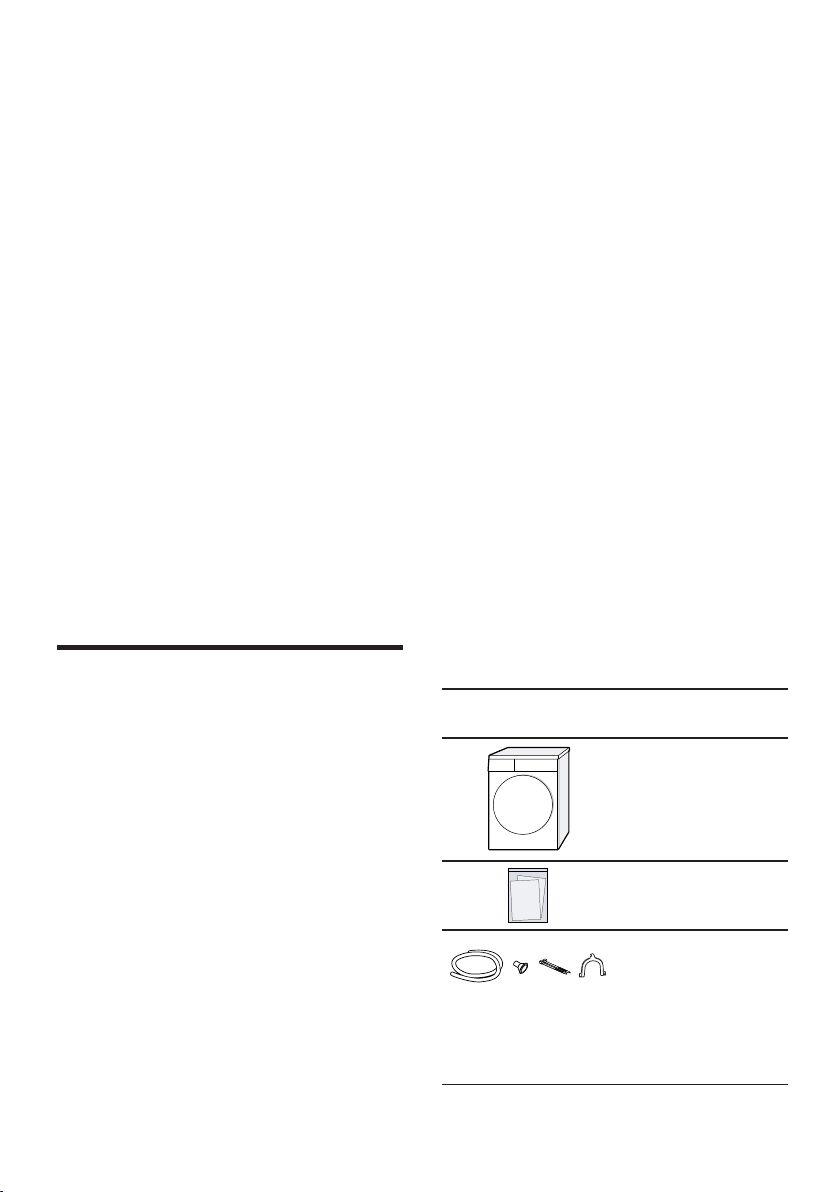
4.2 Scope of delivery
After unpacking all parts, check for
any damage in transit and complete-
ness of the delivery.
ATTENTION!
If the appliance is operated with in-
complete or defective accessories,
the appliance may not be able to op-
erate properly, or this may result in
material damage or damage to the
appliance.
▶ Do not operate the appliance with
incomplete or defective accessor-
ies.
▶ Replace the accessories in ques-
tion before operating the appli-
ance.
→"Accessories", Page29
Included with
the appliance
Description
Tumble dryer
Accompanying
documents
Water drain hose
with connection
adapter, fixing
material and el-
bow.
→"Water drain
hose", Page13
Installation and connection en
13
4.3 Requirements for the in-
stallation location
ATTENTION!
If the appliance is tilted at an angle
greater than 40°, residual water may
leak out of the appliance and cause
material damage.
▶ Tilt the appliance carefully.
▶ Transport the appliance in an up-
right position.
If residual water in the appliance
freezes, this may cause damage to
the appliance.
▶ Do not install or operate this appli-
ance anywhere that is liable to ex-
perience frost or outdoors.
If the appliance is operated immedi-
ately after transportation, the refriger-
ant contained in the appliance may
result in damage to the appliance.
▶ Immediately after transporting the
appliance, leave it to rest for two
hours before putting it into opera-
tion.
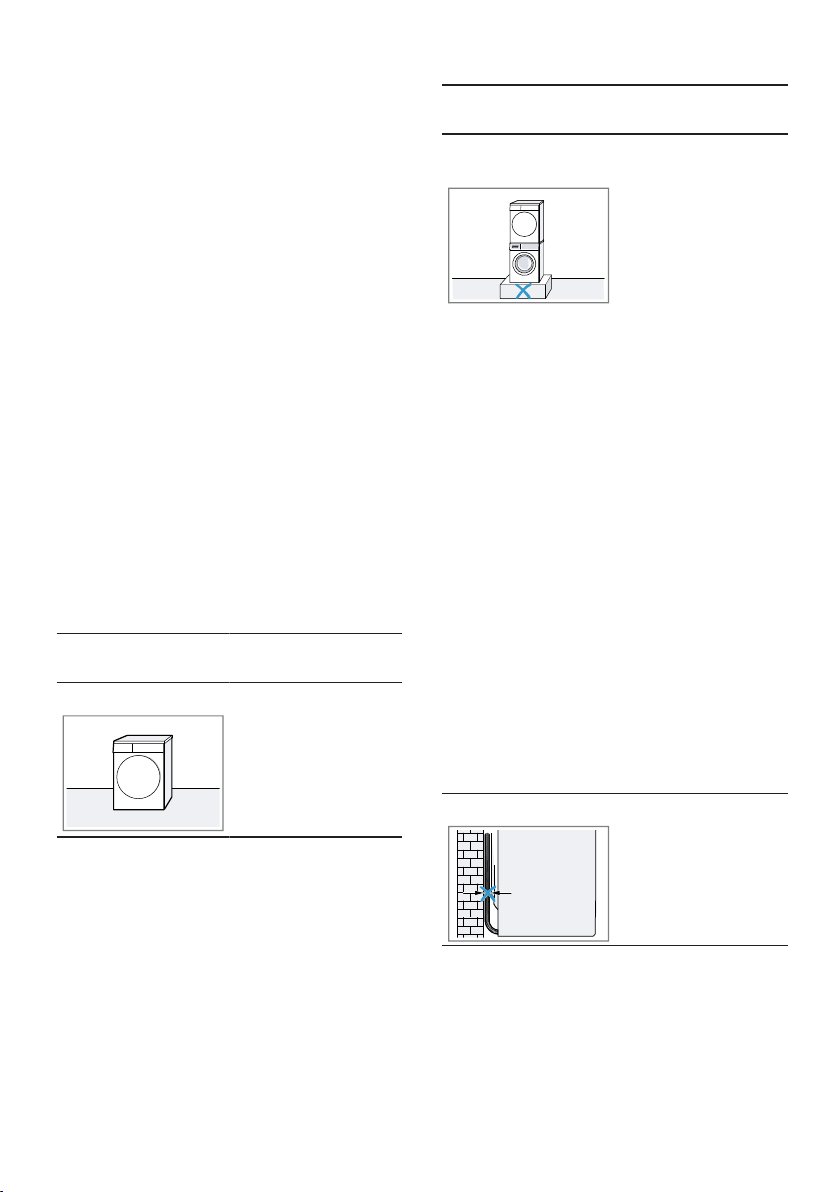
Installation loca-
tion
Requirements
On the floor Place the appli-
ance on a clean,
level and firm
surface.
Align the appli-
ance
→Page16.
Installation loca-
tion
Requirements
In a washer-dryer
stack
Only use the ori-
ginal connection
set from the
dryer manufac-
turer when set-
ting up this appli-
ance in a
washer-dryer
stack.
→"Accessories",
Page29
→"Accessories",
Page29
This appliance
must only be
stacked on a
washing machine
from the same
manufacturer.
The depth and
width of this ap-
pliance must cor-
respond with the
dimensions of
the washing ma-
chine.
Do not place the
washer-dryer
stack on a plat-
form.
Against a wall Do not trap the
hoses between
the wall and the
appliance.
4.4 Water drain hose
Condensation forms during drying,
which your appliance uses for auto-
matic cleaning. Use the water drain
en Installation and connection
14
hose to drain away excess condens-
ation directly into the waste water
system.
Notes
¡ Operate this appliance using the
water drain hose provided. If you
connect the water drain hose
→Page14, you do not have to
regularly empty the condensation
container →Page33.
¡ You can order this optional
→"Accessories", Page29 from
our customer service.
Connecting the water drain hose
If you do not want to regularly empty
the appliance's condensation con-
tainer, connect the water drain hose.
ATTENTION!
When operating the appliance
without the water drain hose being
connected properly, liquid may leak
out of the connecting piece.
▶ Before operating the appliance,
connect the water drain hose prop-
erly to the connecting piece.
Requirements
¡ The appliance and the accessory
have been unpacked.
→"Unpacking the appliance",
Page12
¡ The appliance is installed at the in-
stallation location.
→"Requirements for the installa-
tion location", Page13
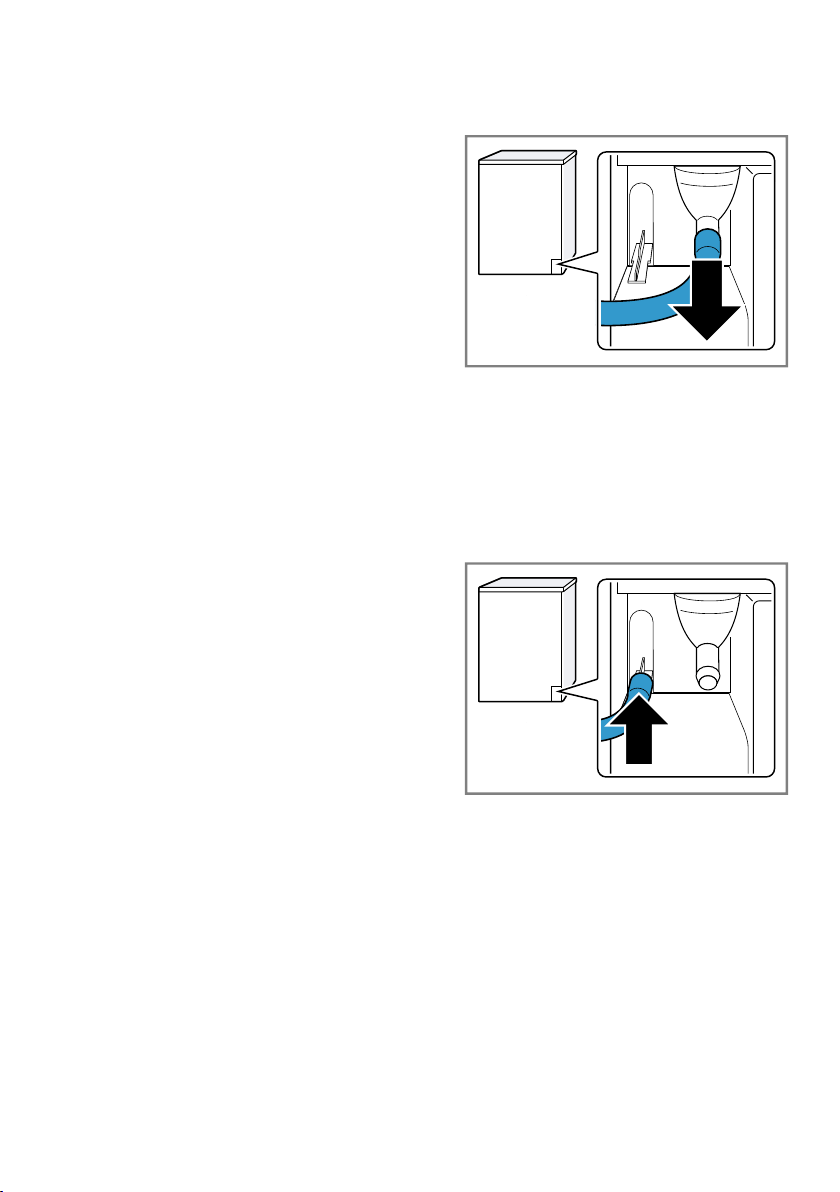
1. Pull out the condensation hose
from the connecting piece.
The condensation hose is connec-
ted to the connecting piece at the
factory.
Note:When removing the con-
densation hose, liquid may leak
out of the connecting piece.
2. Push the condensation hose into
the holder.
Installation and connection en
15
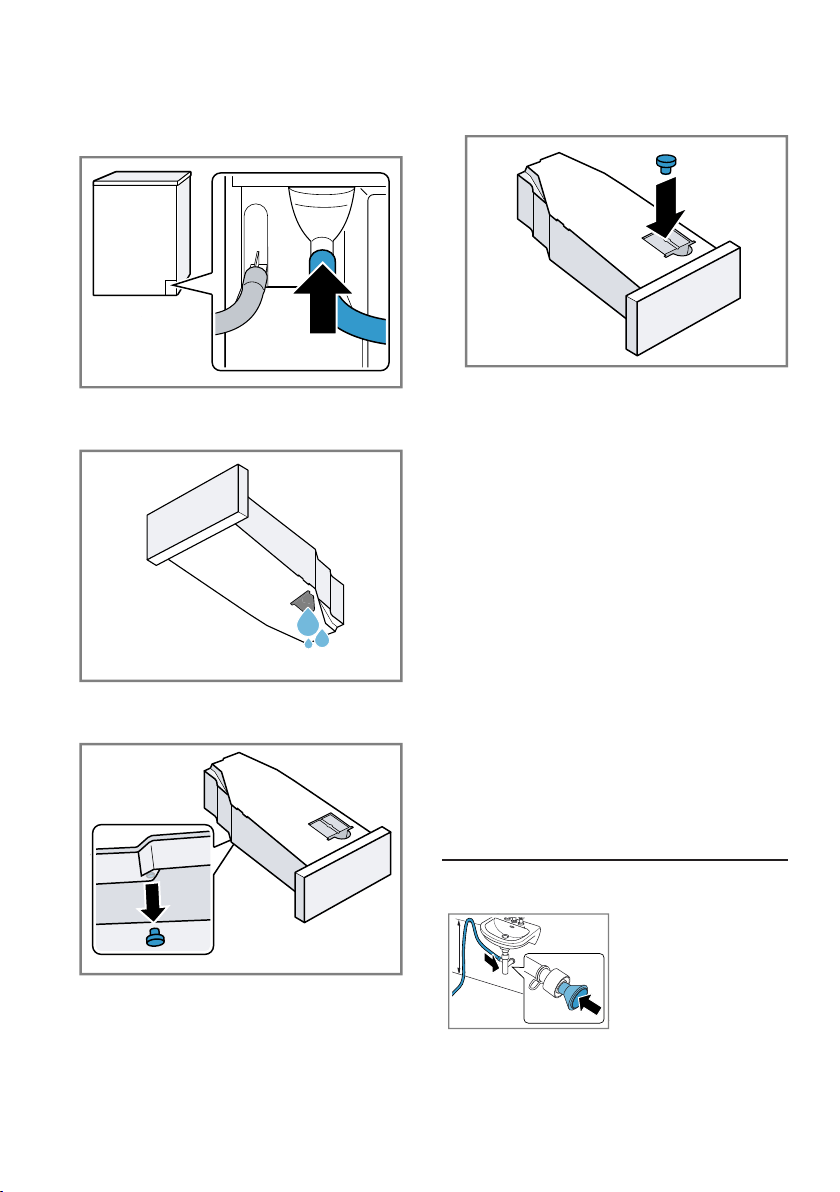
3. Push the water drain hose as far
as it will go into the connecting
piece.
4. Empty the condensation container
→Page33.
5. Remove the stopper on the under-
side.
6. Insert the stopper into the recess
in the top.
7. Insert the condensation container
→Page34.
8. Connect the appliance to the water
outlet.
→"Water outlet connection types",
Page15
Tip:To collect condensation in the
condensation container again (e. g. if
you change where the appliance is
located), carry out these steps in re-
verse order.
Water outlet connection types
ATTENTION!
In the event of a blocked or covered
outlet, accumulated wastewater can
flow back into the appliance.
▶ Before operating the appliance, en-
sure that the wastewater drains
away quickly and eliminate any
blockages.
Drainage into a
siphon.
Secure the con-
nection point with
a (12-22 mm)
hose clamp.
Secure the water
drain hose with a
hose guide at a
height of at least
80 cm and no
more than 100
cm.
en Installation and connection
16
Note:You can
use the Y-distrib-
utor →Page29
to connect the
water drain hose
of an additional
appliance, such
as a washing
machine, to the
same siphon out-
let.
Drainage into a
wash basin.
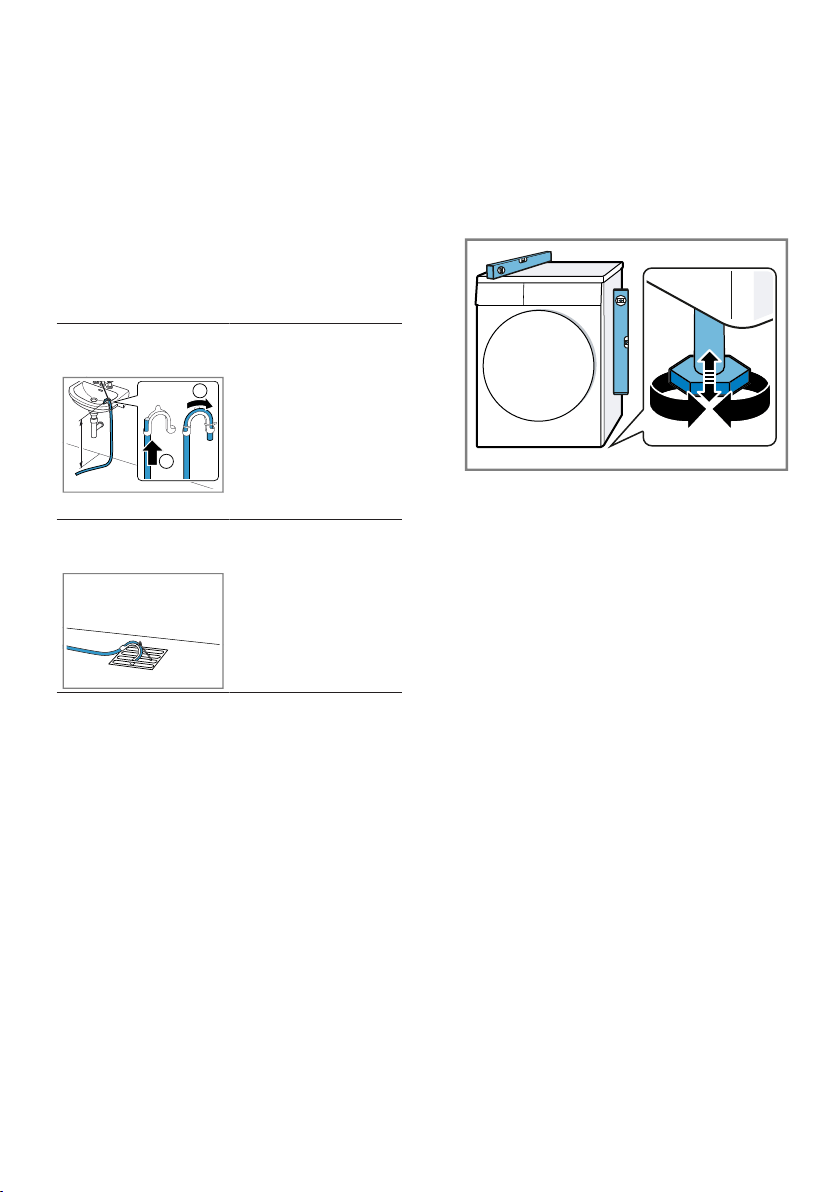
1
2
Push the water
drain hose fully
through the and
secure it using
fixing material.
Secure the elbow
at a height of no
more than 100
cm.
Drainage into a
gully.
Push the water
drain hose fully
through the and
secure it using
fixing material.
Secure the elbow
to the gully.
4.5 Aligning the appliance
In order to reduce vibrations and
noises, align the appliance correctly.
▶ To align the appliance, turn the ap-
pliance feet. Check that the appli-
ance is level using a spirit level.
All appliance feet must stand firmly
on the ground.
4.6 Connecting the appliance
to the electricity supply
1. Insert the mains plug of the appli-
ance's power cable in a socket
nearby.
The connection details of the appli-
ance can be found under Tech-
nical data →Page52.
2. Check the mains plug is inserted
properly.
Familiarising yourself with your appliance en
17
5 Familiarising yourself with your appliance
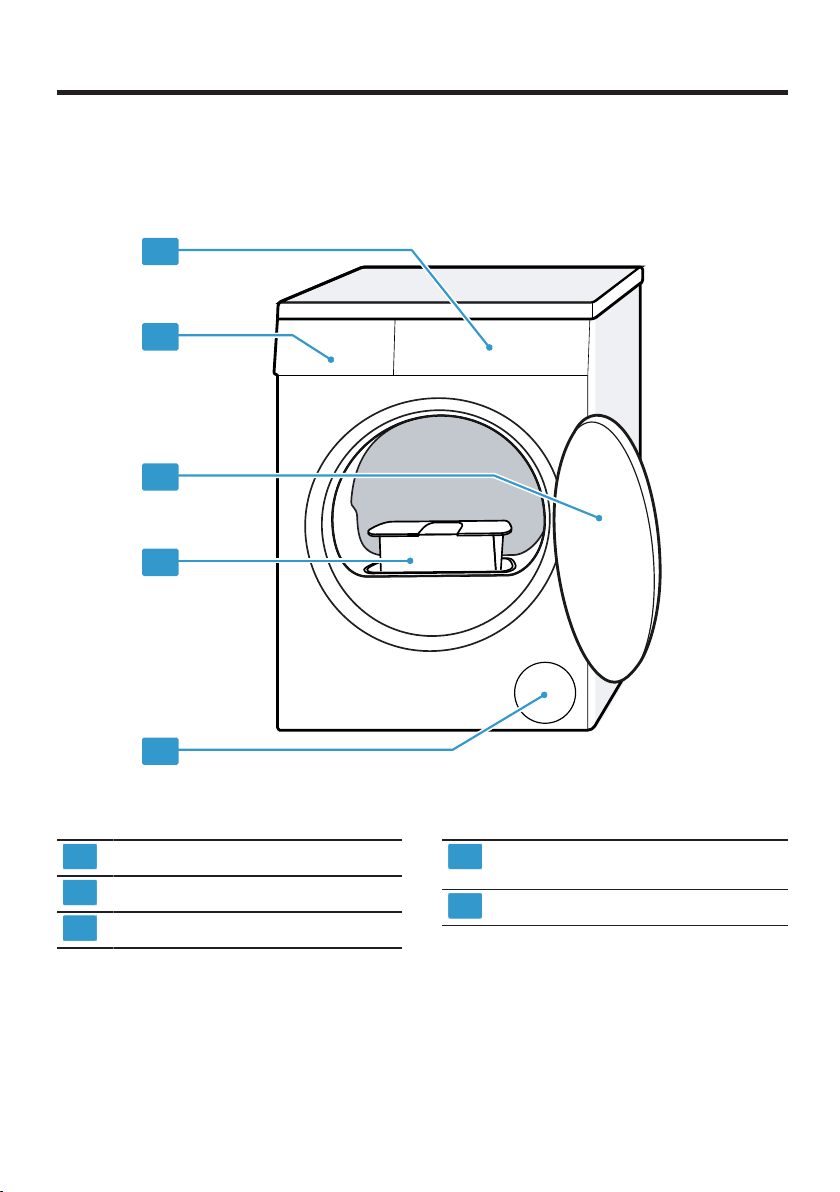
5.1 Appliance
You can find an overview of the parts of your appliance here.
1
2
3
4
5
On certain models, specific details such as the colour and shape may differ
from those pictured.
1
Air inlet
2
Fluff filter →Page31
3
Door
4
Condensation container
→Page33
5
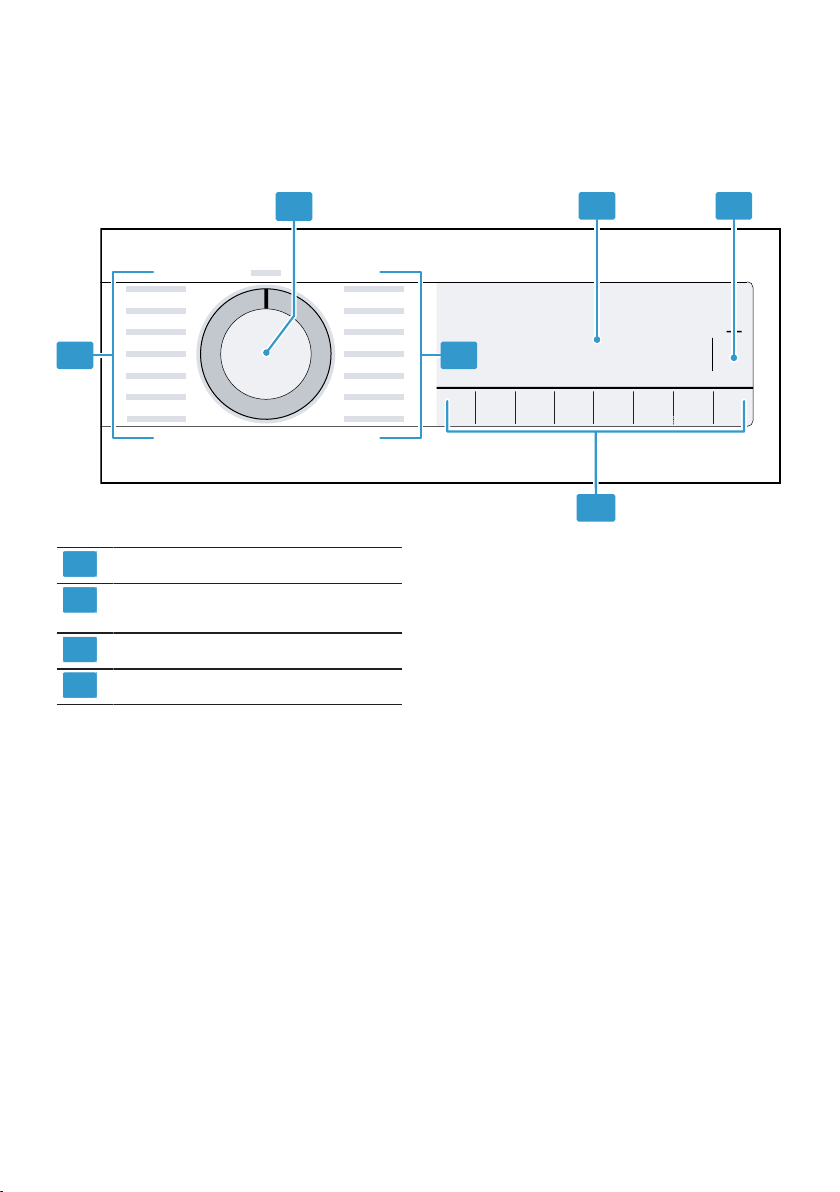
Control panel →Page18
Display en
19
6 Display
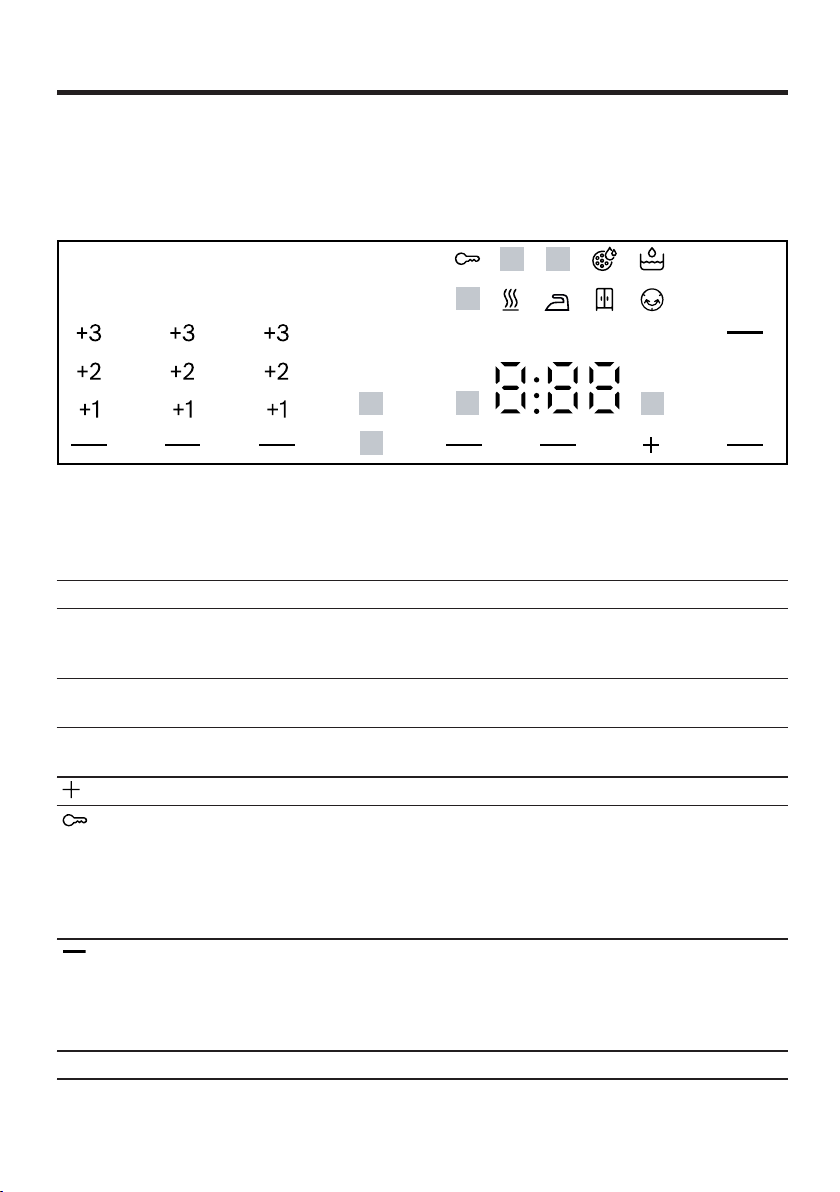
The display shows the current settings, options or relevant information.
Example: Display
Display Designation Description
0:40
1
Programme dura-
tion/programme
time remaining
Approximate expected programme dura-
tion or programme time remaining.
1:25 Timed programme The timed programme is set.
→"Timed programmes", Page27
9,0kg
1
Recommended
load
The maximum load capacity for the selec-
ted programme in kg.
0:45
1
"Ready in" time
→"Buttons", Page24
Childproof lock ¡ lights up: The childproof lock is activ-
ated.
¡ flashes: The childproof lock is activated
and the appliance has been operated.
→"Deactivating the childproof lock",
Page34
(Start/Re-
load)
Start/Pause Start, cancel or pause
¡ Lights up: The programme is running
and can be cancelled or paused.
¡ Flashes: The programme can be star-
ted or continued.
1
Example
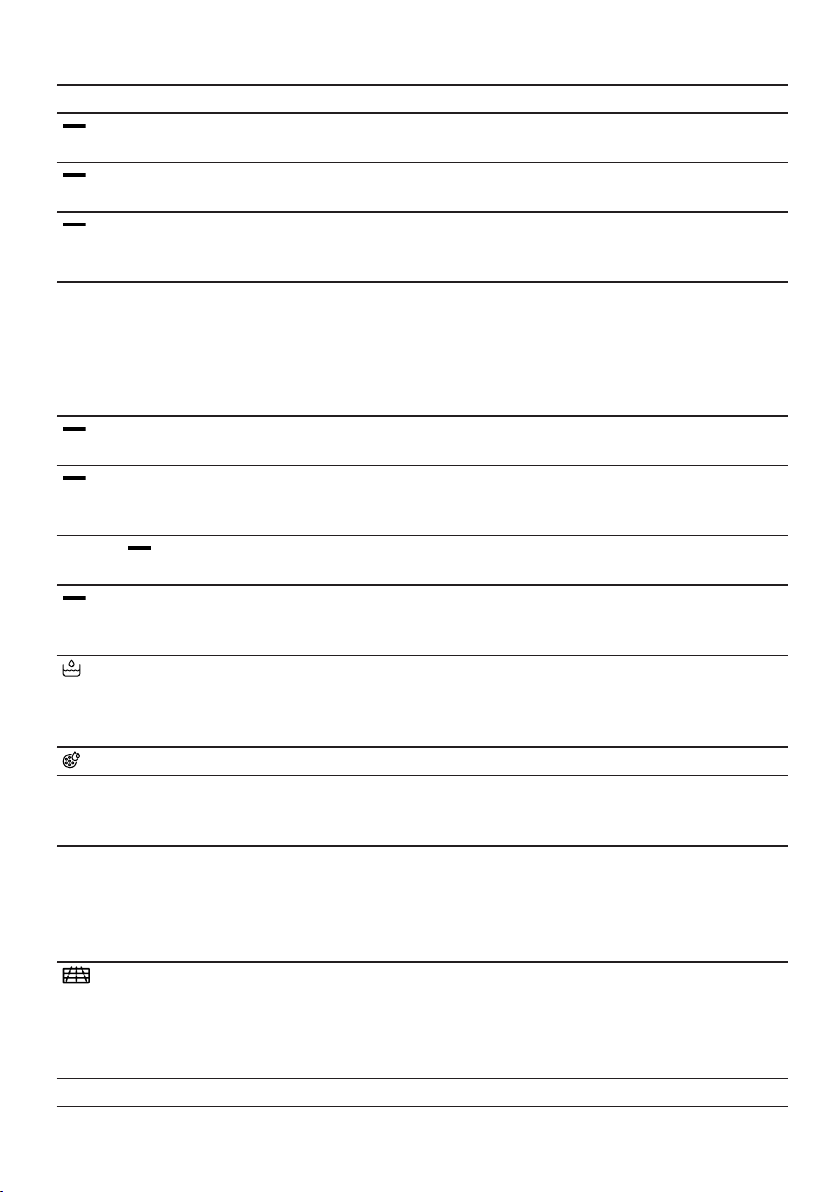
en Display
20
Display Designation Description
(Iron Dry) Dryness level: Iron
Dry
The dryness level is activated.
→"Buttons", Page23
(Cupboard
Dry)
Dryness level:
Cupboard Dry
The dryness level is activated.
→"Buttons", Page23
(Cupboard
Dry Plus)
Dryness level:
Cupboard Dry
Plus
The dryness level is activated.
→"Buttons", Page22
+1
+2
+3
Dryness level ad-
justed
The adjusted dryness level is activated.
→"Buttons", Page22
→"Buttons", Page23
→"Buttons", Page23
(Reduced
Ironing)
Crease-reduction
function
The crease-reduction function is activated.
→"Buttons", Page23
(Low Heat) Gentle drying Gentle drying is activated for delicate fab-
rics.
→"Buttons", Page23
4.5 kg
(Half Load)
Half load Half load is activated.
→"Buttons", Page24
(Mute) Quiet drying Quiet drying with no audible signals is ac-
tivated.
→"Buttons", Page24
Condensation
container
Empty the condensation container
→Page33.
Insert the condensation container
→Page34.
Fluff filter
Clean the fluff filter →Page31.
CrE Basic appliance
care programme
Run the basic appliance care programme.
→"Running the basic appliance care pro-
gramme on the appliance", Page37
Hot Cooling process The laundry is cooled while the drum is
rotating, in order to avoid damage to the
laundry. The process can be cancelled by
opening the door.
Note:Do not change the programme.
Automatic self-
cleaning
The automatic self-cleaning function rinses
the appliance's heat exchanger.
Note:Do not remove the condensation
container and do not interrupt the pro-
gramme.
1
Example
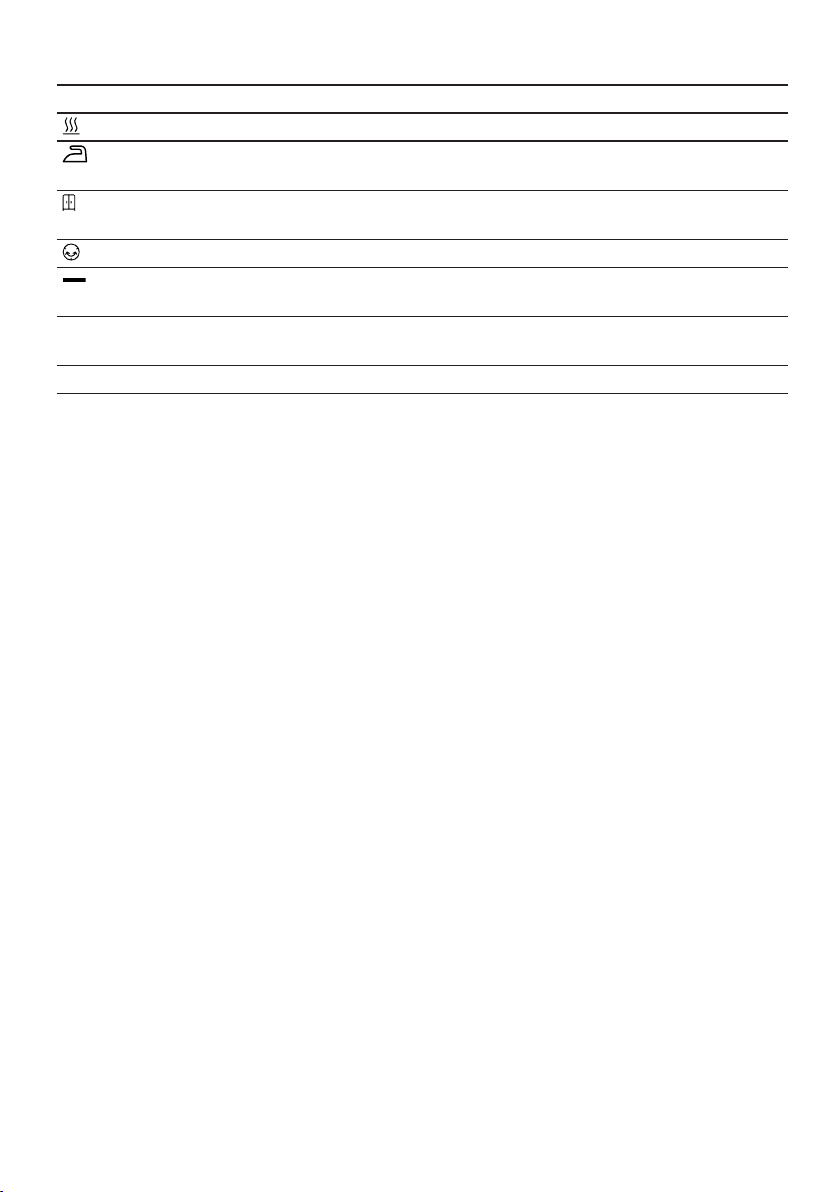
Display en
21
Display Designation Description
Drying Programme status
Dryness level: Iron
Dry
Programme status
Dryness level:
Cupboard Dry
Programme status
Anti-crease Programme status
(Start/ Re-
load)
Pause Programme status
End End of pro-
gramme
Programme status
1
Example

en Buttons
22
7 Buttons
Below is an overview of the buttons and their setting options.
Button Selection Description
Start/ Reload ¡ Start
¡ Cancel
¡ Pause
Start, cancel or pause
the programme.
3 sec. ¡ Activate
¡ Deactivate
Activate or deactivate the
childproof lock.
Disable the control panel
to prevent unwanted or
accidental operation.
If the childproof lock is
activated and the appli-
ance has been switched
off, the childproof lock
remains activated.
→"Childproof lock",
Page34
Cupboard Dry Plus ¡ Cupboard Dry Plus
¡ +1
¡ +2
¡ +3
¡ Selecting Cupboard
Dry Plus activates
the dryness level.
The dryness level
defines how damp or
dry the laundry is after
the programme ends.
→"Dryness level",
Page25
¡ The dryness level can
be adjusted by select-
ing +1 , +2 or +3 .
→"Adjusting the dry-
ness level", Page25

Buttons en
23
Button Selection Description
Cupboard Dry ¡ Cupboard Dry
¡ +1
¡ +2
¡ +3
¡ Selecting Cupboard
Dry activates the dry-
ness level.
The dryness level
defines how damp or
dry the laundry is after
the programme ends.
→"Dryness level",
Page25
¡ The dryness level can
be adjusted by select-
ing +1 , +2 or +3 .
→"Adjusting the dry-
ness level", Page25
Iron Dry ¡ Iron Dry
¡ +1
¡ +2
¡ +3
¡ Selecting Iron Dry ac-
tivates the dryness
level.
The dryness level
defines how damp or
dry the laundry is after
the programme ends.
→"Dryness level",
Page25
¡ The dryness level can
be adjusted by select-
ing +1 , +2 or +3 .
→"Adjusting the dry-
ness level", Page25
Reduced Ironing ¡ Activate
¡ Deactivate
Activate or deactivate the
crease-reduction func-
tion.
Once the programme
has ended, the drum
moves the laundry at
regular intervals for 60
minutes to prevent
creasing.
Low Heat ¡ Activate
¡ Deactivate
Activate or deactivate
gentle drying.
The temperature is re-
duced for delicate fab-
rics, e.g. polyacrylic or
elastane.
The programme duration
is extended.

en Buttons
24
Button Selection Description
Finish in ¡ Programme end
¡ Programme length
¡ Set the programme
end.
The programme dura-
tion is already in-
cluded in the set num-
ber of hours.
Once the programme
has started, the pro-
gramme duration is
displayed.
¡ Set the programme
duration for timed pro-
grammes.
→"Timed pro-
grammes", Page27
Mute ¡ Activate
¡ Deactivate
Activate or deactivate the
audible signal after the
programme ends.
Half Load ¡ Activate
¡ Deactivate
Dry individual items of
laundry or small loads of
laundry.

Dryness level en
25
8 Dryness level
Each automatic programme has a specified dryness level. The dryness level
defines how dry or damp your laundry is after the programme ends.
Dryness level Laundry Drying result
Cupboard Dry
Plus
Multi-layered, thick laundry
that does not dry readily.
The laundry is dry.
Cupboard
Dry
Normal, single-layered
laundry.
The laundry is dry.
Iron Dry Normal, single-layered
laundry
The laundry is still a little damp
after drying.
To prevent creasing after drying,
iron the laundry or hang it up.
8.1 Changing the dryness
level
For some automatic programmes,
you can change the dryness level so
that your laundry will be drier or more
damp.
1. Set an automatic programme.
→"Automatic programmes",
Page26
a The display shows the specified
dryness level.
2. Press Cupboard Dry , Cupboard
Dry Plus or Iron Dry .
a The display shows: (Cupboard
Dry), (Cupboard Dry Plus) or
(Iron Dry)
8.2 Adjusting the dryness
level
If the laundry feels too damp after it
has been dried to a particular dry-
ness level, you can adjust the dry-
ness level.
1. Set an automatic programme.
→"Automatic programmes",
Page26
a The display shows the specified
dryness level.
2. Press Cupboard Dry Plus , Cup-
board Dry or Iron Dry .
a The display shows: "+1" , "+2" or
"+3" .
en Programmes
26
9 Programmes
You can dry your fabrics using either an automatic programme or a timed pro-
gramme.
9.1 Automatic programmes
Automatic programmes are pro-
grammes in which humidity sensors
measure the residual moisture in the
laundry during the drying cycle. The
programme only ends once the set
dryness level is reached.
Each automatic programme has a
dryness level →Page25. The dry-
ness level defines how dry or damp
the laundry is after the programme
ends.
Tips
¡ Select the dryness level according
to the type of fabric or the desired
drying result.
→"Dryness level", Page25
¡ The laundry's care labels provide
you with additional information
about programme selection.
Programme Description Max. load
(kg)
Cottons Dry hard-wearing, heat-resistant fabrics
made of cotton or linen.
9,0
Cottons Eco Dry hard-wearing, heat-resistant fabrics
made of cotton or linen.
Energy-saving programme.
9,0
Easy Care Dry items made of synthetic materials or
blended fabrics.
3.5
Mixed Load Dry items made of cotton and synthetics. 3.0
Duvet Dry clothing, pillows, quilts or bedspreads
filled with synthetic fibres.
Note:Dry large items of laundry, blankets
or pillows individually.
2.5
Delicates Dry delicate items made of satin, synthet-
ics or blended fabrics.
2.0
Down Wear Dry clothing, bedspreads or eiderdowns
stuffed with down.
Notes
¡ Dry large items of laundry, such as
blankets or sleeping bags individually.
¡ Once the programme has ended, shake
the items of laundry to distribute the
stuffing and eliminate any pockets of
moisture.
1.5

Programmes en
27
Programme Description Max. load
(kg)
Hygiene Plus Dry hard-wearing, heat-resistant fabrics
made of cotton or linen.
Note:Particularly suitable for strict hy-
giene requirements.
4.0
Sportswear Dry self-drying sportswear made of per-
formance fibres, microfibres and synthet-
ics.
1.5
Shirts Suitable for shirts and blouses made of
cotton, linen, synthetics or blended fab-
rics.
Note:For optimal drying results, dry a
maximum of 5 shirts or 5 blouses at the
same time.
Once the laundry is dry, iron it or hang it
up. The residual moisture is then distrib-
uted evenly.
1.5
Super Quick 40' Dry items made of synthetics and light
cotton.
2.0
Towels Dry hard-wearing, heat-resistant towels
and dressing gowns made of cotton or
linen.
6.0
9.2 Timed programmes
Timed programmes are programmes with a defined or adjustable programme
duration. The programme ends once this time has elapsed, even if the laundry
is still not dry, for example. Timed programmes are suitable for drying individual
items of laundry or thin fabrics.
Tip:The laundry's care labels provide you with additional information about pro-
gramme selection.
Timed program Description Max. load
(kg)
Wool Finish Dry machine-washable items made of
wool or containing wool.
Note:The laundry becomes fluffier but not
dry.
Remove laundry once the programme has
ended and allow it to dry.
0.5

en Programmes
28
Timed program Description Max. load
(kg)
Timed Program Warm Dry all types of fabric except for wool and
silk.
Suitable for pre-dried or slightly damp
laundry and for drying off multi-layered,
thick laundry.
3.0

Accessories en
29
10 Accessories
Use original accessories. These have
been made especially for your appli-
ance.
Note:Some accessories are avail-
able in other colours. Contact
→"Customer Service", Page50.
Use Order number
Connection kit To save space, stack the
appliance on a suitable
washing machine of the
same width and depth
and that is from the
same manufacturer.
WTZ27410
Connection kit with pull-
out worktop
To save space, stack the
appliance on a suitable
washing machine of the
same width and depth
and that is from the
same manufacturer.
The pull-out worktop
makes it easier to load
and unload the appli-
ance.
WTZ27400
Y-distributor Connect the water drain
hose of an additional ap-
pliance to the same si-
phon outlet.
15000490
Appliance care product Spare part for the intens-
ive appliance care func-
tion.
00311829
Platform Install the appliance at a
raised height so that it
can be easily loaded and
unloaded.
WTZPW20D

en Laundry
30
11 Laundry
Note:You can find further information
in the digital instruction manual by
scanning the QR code in the table of
contents or on www.bosch-
home.com.
11.1 Preparing the laundry
ATTENTION!
Objects remaining in the laundry may
damage the laundry and the drum.
▶ Remove all items from any pock-
ets in your laundry before using
the appliance.
▶ To protect your appliance and the
laundry, prepare the laundry be-
forehand.
– Empty any pockets
– Brush sand out of all collars and
pockets
– Close bed covers and cushion
covers
– Close all zips, Velcro fasteners,
hooks and eyes
– Tie cloth belts, apron strings,
etc. together or use a laundry
bag.
– Remove curtain hooks and lead
strips or use a mesh laundry
bag
– Use a mesh laundry bag for
small items of laundry, such as
children's socks
– Separate items of laundry and
shake them out, or observe the
programme description
– Spin the laundry before drying
operation
12 Basic operation
operation
Note:You can find further information
in the digital instruction manual by
scanning the QR code in the table of
contents or on www.bosch-
home.com.
12.1 Switching on the appli-
ance
Requirement:The appliance has
been correctly installed and connec-
ted.
→"Installation and connection",
Page12
▶ Turn the programme selector to a
programme.
Note:The lighting for the drum goes
out automatically.
12.2 Setting a programme
1. Turn the programme selector and
set the required programme.
→"Programmes", Page26
2. If required, adjust the programme
settings.
12.3 Loading laundry
Note:To prevent creasing, take note
of the maximum load for the
→"Programmes", Page26.
Requirement:The laundry is pre-
pared.
→"Laundry", Page30
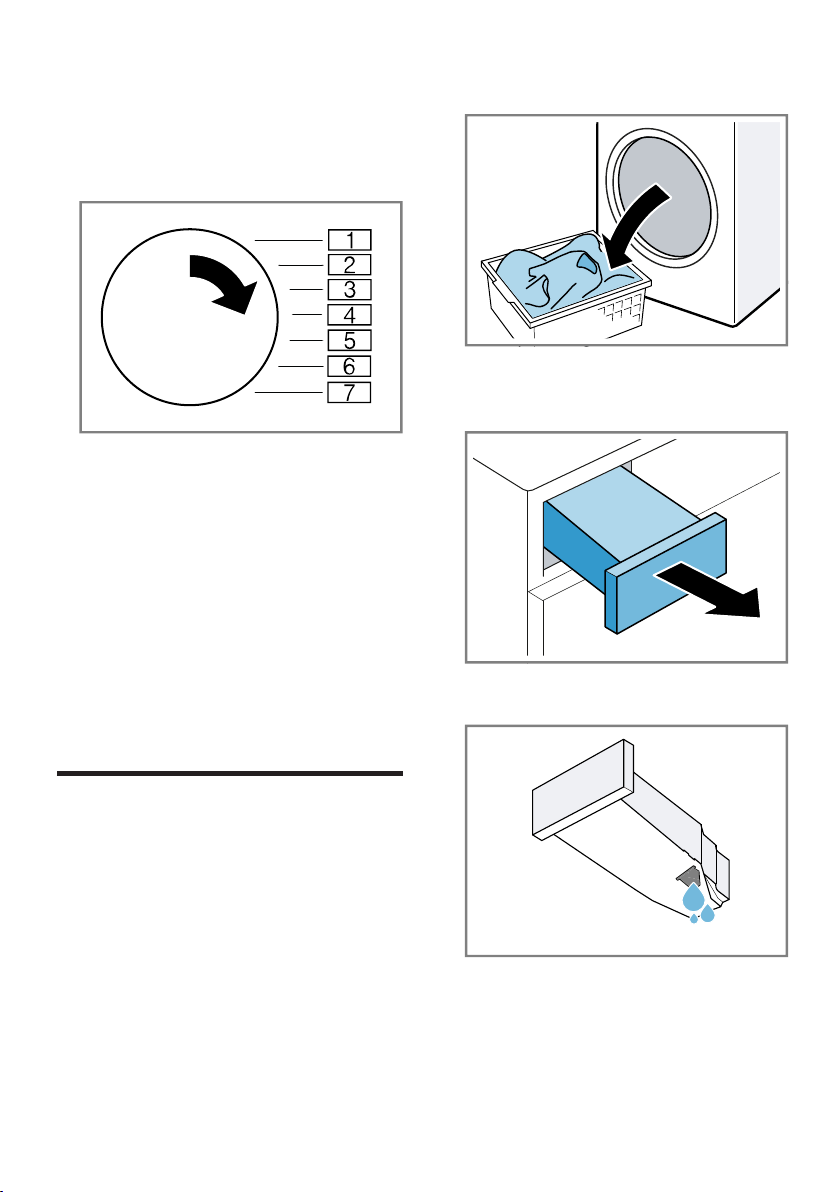
1. Open the door.
Make sure that the drum is empty.
2. Place the laundry in the drum.
3. Close the door.
Ensure that there is no laundry
trapped in the door.
operation en
31
12.4 Starting the programme
Note:If you want to change the time
until the programme ends, set the
"Ready in" time first.
▶ Press Start/ Reload .
a The display shows either the pro-
gramme duration or the "Ready in"
time.
a After the programme has ended,
the display shows: "End" .
12.5 Adding laundry
After the programme starts, you can
remove or add laundry at any time.
1. Press Start/ Reload .
The cooling process starts auto-
matically after approx. 30 seconds
and cools down the laundry while
the drum is rotating. If you want to
avoid or cancel the cooling pro-
cess, open the door.
→"Display", Page20
2. Open the appliance door.
3. Add or remove laundry.
4. Close the appliance door.
5. Press Start/ Reload .
12.6 Cancelling the pro-
gramme
1. Press Start/ Reload .
The cooling process starts auto-
matically after approx. 30 seconds
and cools down the laundry while
the drum is rotating. If you want to
avoid or cancel the cooling pro-
cess, open the door.
→"Display", Page20
2. Open the appliance door.
3.
Remove the laundry →Page31.
12.7 Unloading the laundry
1. Open the appliance door.
2. Remove the laundry.
12.8 Switching off the appli-
ance
▶ Turn the programme selector to
Off .
12.9 Fluff filter
During drying, fluff from the laundry is
collected in the fluff filter. The fluff fil-
ter protects the appliance from fluff.
Cleaning the fluff filter
If the drying programme has finished
or the display shows a notification
while the appliance is in operation,
clean the fluff filter.
Note:If you do not clean the appli-
ance as described, the appliance's
functionality may be impaired.
Requirements
¡ The display shows the following
after drying: "End"
¡ or during operation: .
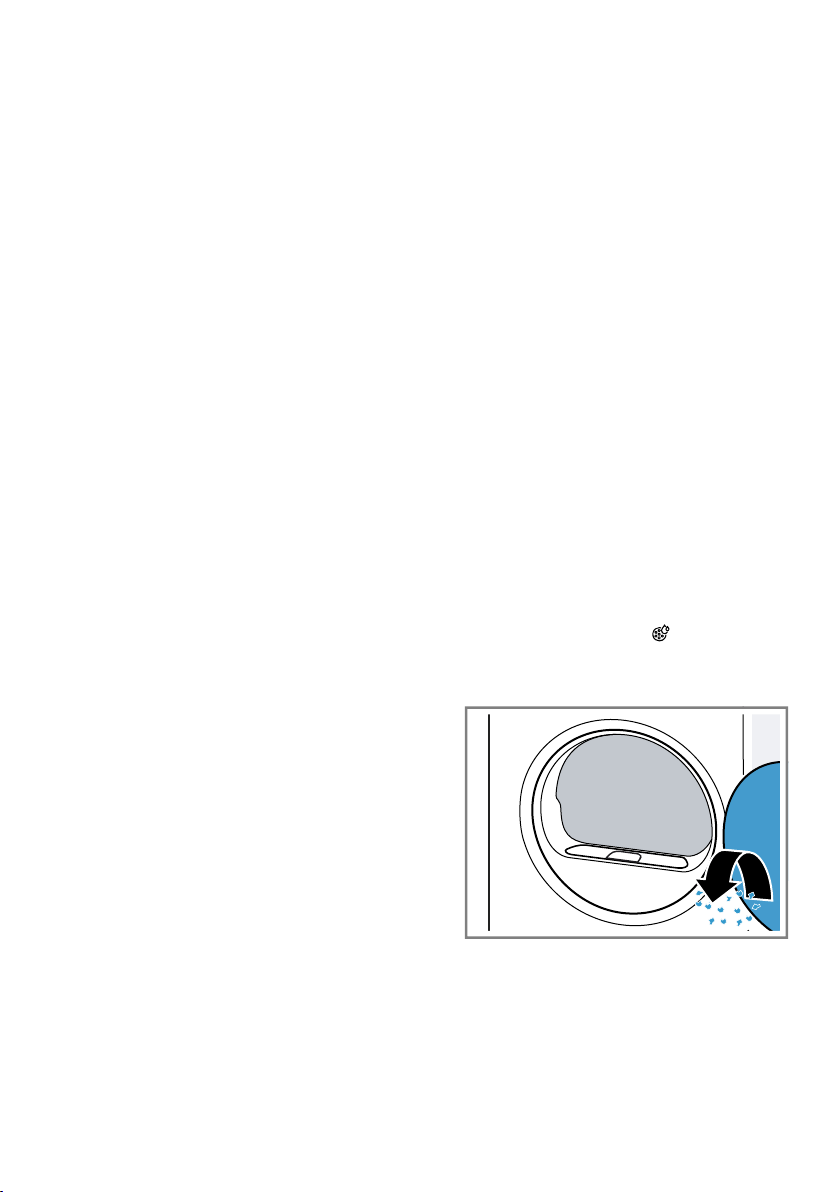
1. Open the door.
2. Remove the fluff from the door.
en operation
32
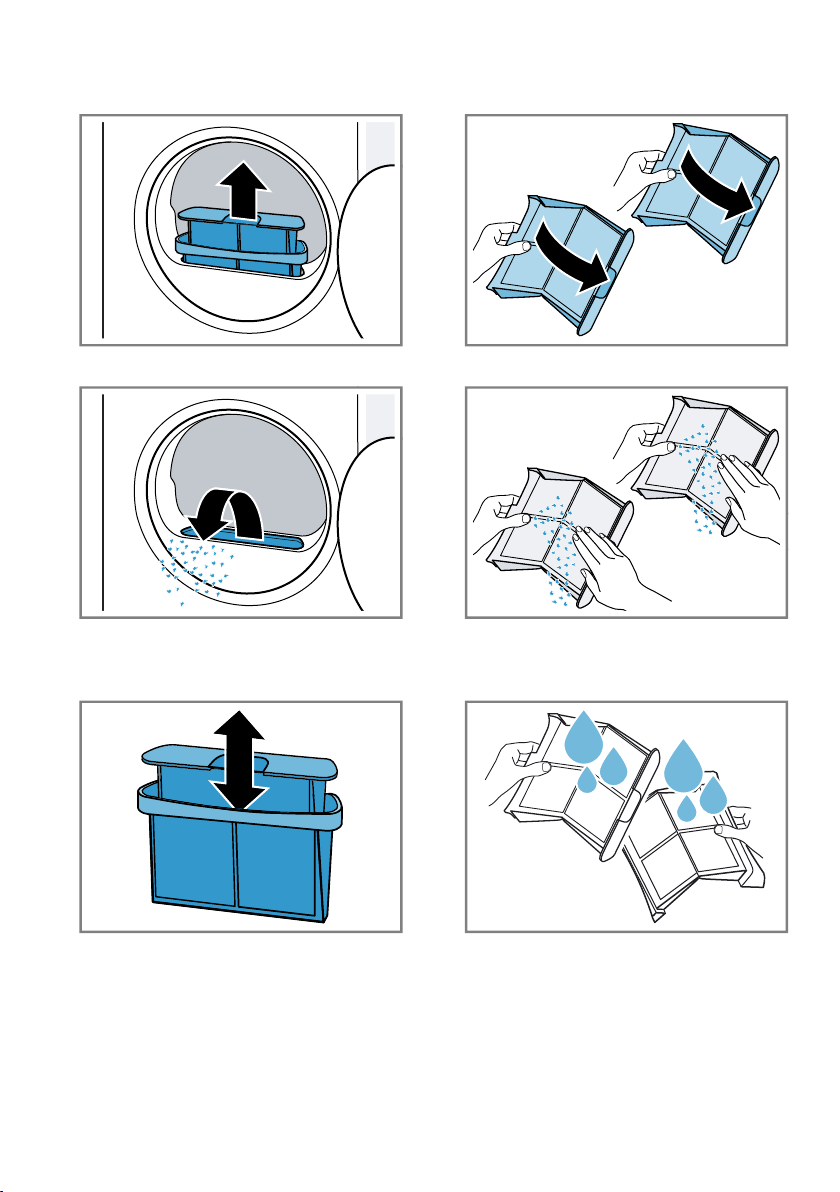
3. Remove the two-part fluff filter.
4. Remove the fluff from the recess.
Ensure that no fluff falls into the air
channel.
5. Disconnect the two-part fluff filter.
6. Open the two fluff filters.
7. Remove the fluff.
8. Clean the two fluff filters thoroughly
under warm, running water and
then dry them off.
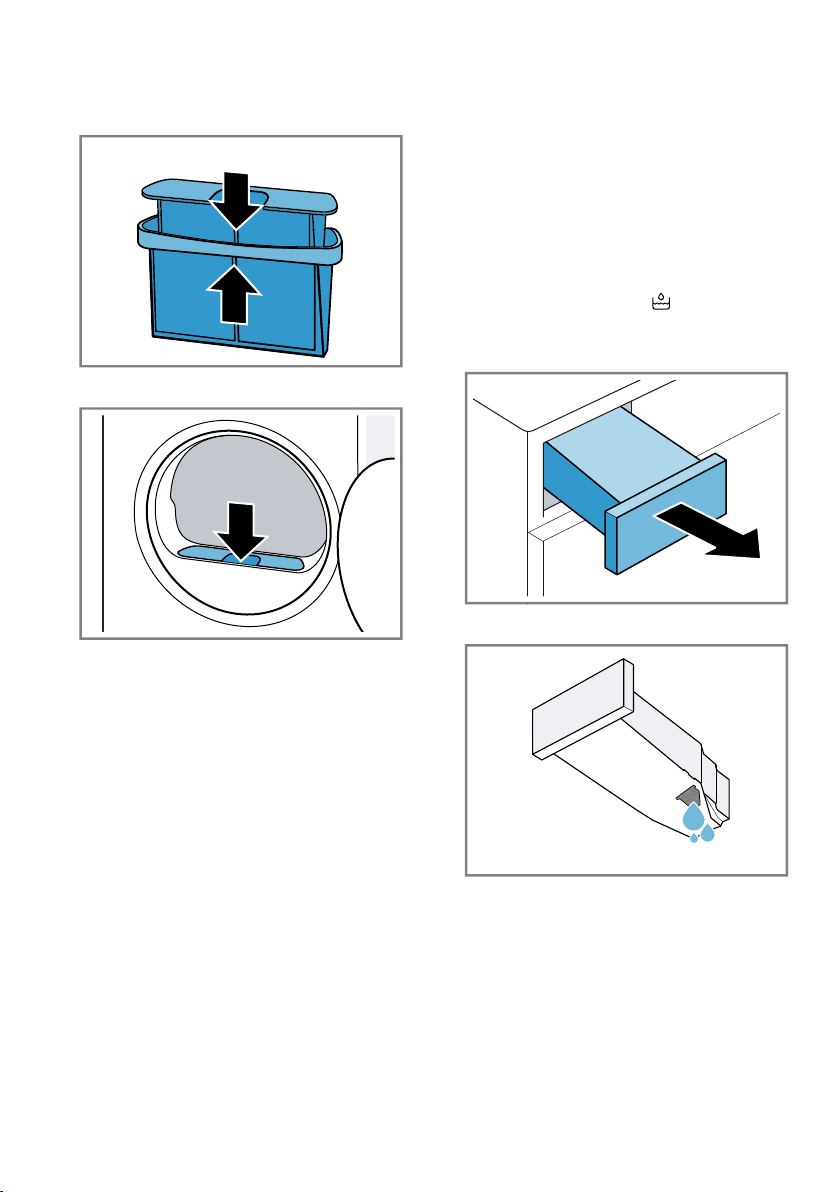
operation en
33
9. Close the two fluff filters and put
them together.
10. Insert the two-part fluff filter.
11. Close the door.
12.10 Condensation con-
tainer
Condensation forms during drying,
which your appliance uses for auto-
matic cleaning. By default, the con-
densation is collected in the appli-
ance's condensation container.
Note:Operate this appliance using
the water drain hose provided. If you
connect the water drain hose
→Page14, you do not have to regu-
larly empty the condensation con-
tainer →Page33.
Emptying the condensation
container
If the drying programme has finished
or the display shows a notification
while the appliance is in operation,
empty the condensation container.
Requirements
¡ The display shows the following
after drying: "End"
¡ or during operation: .
1. Pull out the condensation con-
tainer, keeping it level.
2. Empty the condensation container.
Check the condensation container
filter →Page43 regularly and
clean the filter if it is dirty.
Make sure that you insert the con-
densation container before operat-
ing the appliance.
→"Inserting the condensation con-
tainer", Page34
en Childproof lock
34
Inserting the condensation
container
Requirement:The condensation con-
tainer →Page33 is removed from
the appliance.
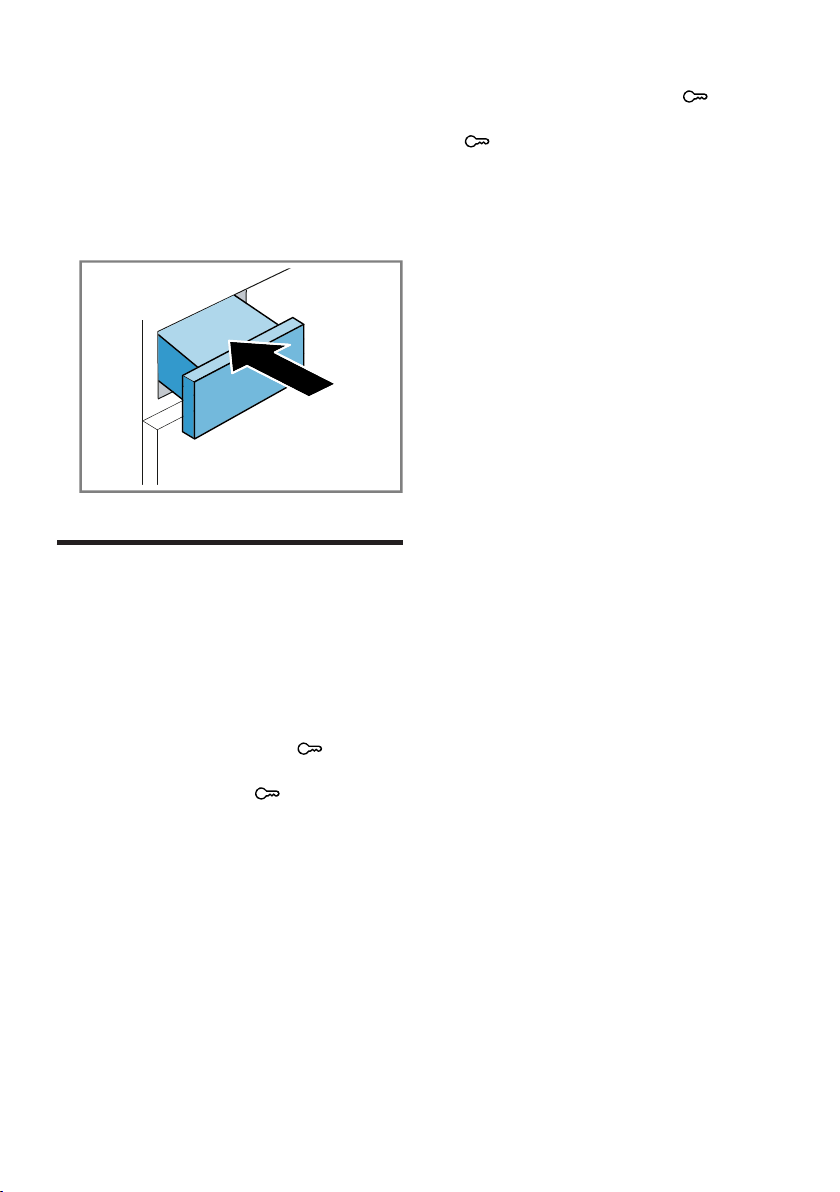
▶ Push the condensation container
in as far as it will go.
13 Childproof lock
Secure your appliance against being
operated unintentionally using the
controls.
13.1 Activating the childproof
lock
▶ Press and hold the two 3 sec.
buttons for approx. 3seconds.
a The display shows .
a The controls are locked.
a The childproof lock remains active
even after the appliance has been
switched off and in the event of a
power failure.
13.2 Deactivating the child-
proof lock
Requirement:To deactivate the
childproof lock, the appliance must
be switched on.
▶ Press and hold the two 3 sec.
buttons for approx. 3seconds.
a goes out in the display.
Basic settings en
35
14 Basic settings
You can configure the basic settings for your appliance to meet your needs.
14.1 Overview of the basic settings
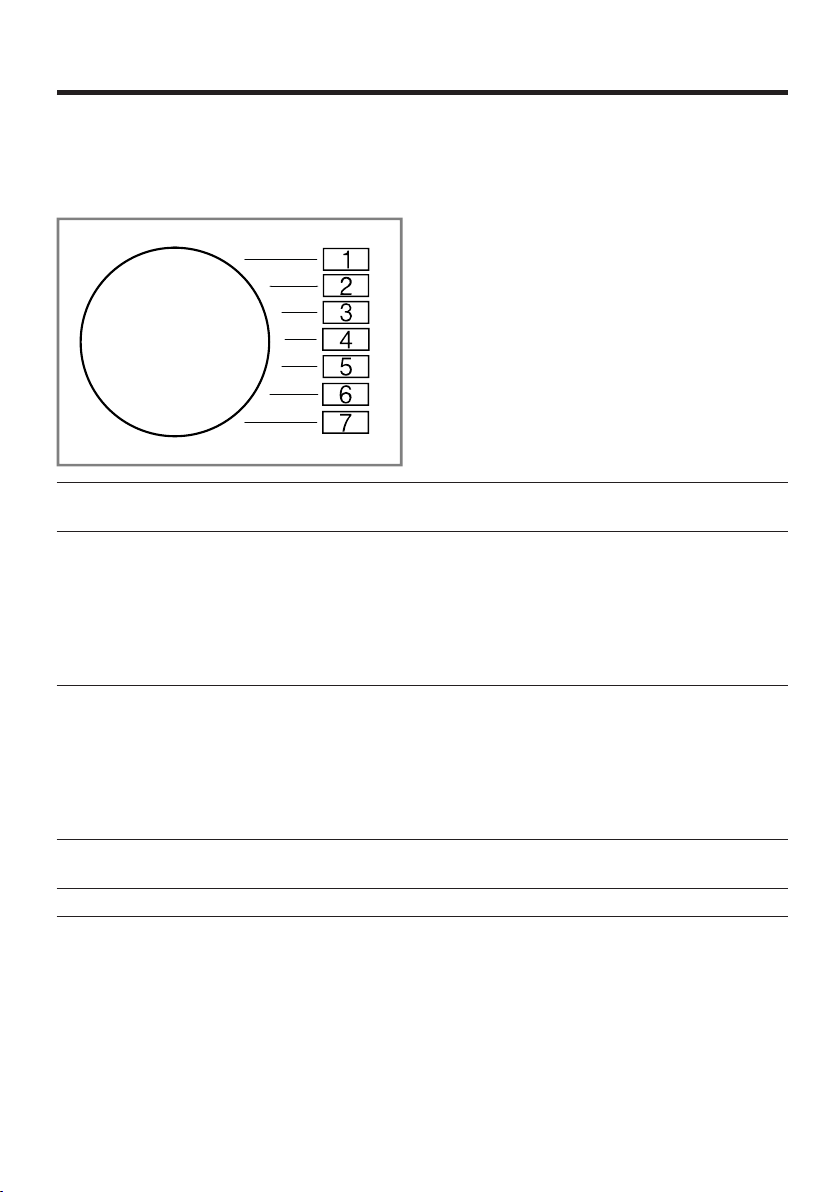
Basic setting Programme
position
Value Description
End signal 2 0 (off)
1 (quiet)
2 (me-
dium)
3 (loud)
4 (very
loud)
Set the volume of the signal at the
end of the programme.
Button signal 3 0 (off)
1 (quiet)
2 (me-
dium)
3 (loud)
4 (very
loud)
The volume of the audible signal
emitted when the buttons are
pressed.
Programme
counter
5 42
1
Display the number of started pro-
grammes.
1
Example
en Appliance care
36
14.2 Changing the basic set-
tings
1. Set the programme selector to po-
sition 1.
2. Press Iron Dry and, at the same
time, turn the programme selector
to position2.
a The display shows the current
value.
3. Set the programme selector to the
required position.
→"Overview of the basic settings",
Page35
4. To change the value, press Finish
in .
5. To save the changes, switch off
the appliance.
15 Appliance care
15.1 Preparing the appliance
for the appliance care
programme
The appliance must be prepared be-
fore basic or intensive appliance care
is carried out.
Requirement:The fluff filter has been
cleaned.
→"Cleaning the fluff filter", Page31.
1. Remove the laundry.
2. Close the appliance door.
3. Pull out the condensation con-
tainer, keeping it level.
4. Empty the condensation container
→Page33.
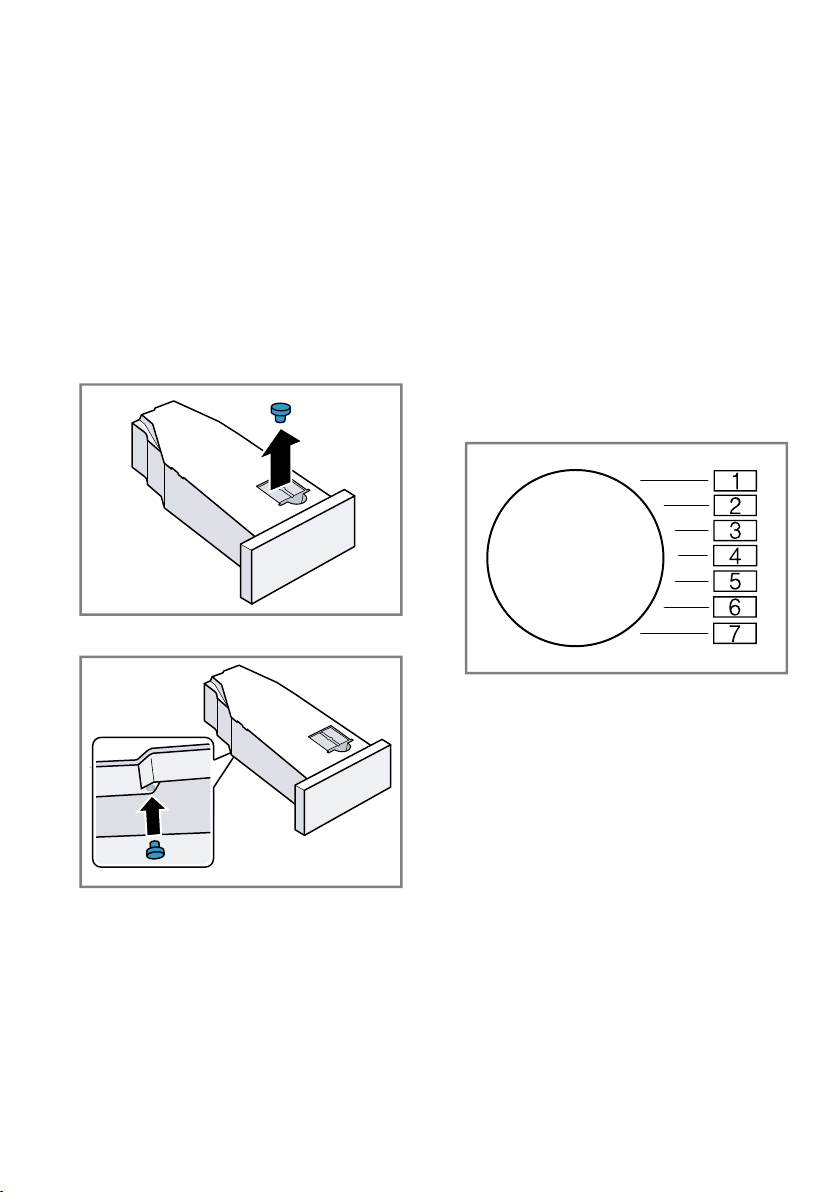
Appliance care en
37
15.2 Preparing the condensa-
tion container for the ap-
pliance care programme
Note:If the condensation is drained
using the drain hose, the condensa-
tion container must be prepared be-
fore the basic or intensive appliance
care programme.
→"Water drain hose", Page13
1. Remove the stopper from the re-
cess in the condensation con-
tainer.
2. Insert the plug from below.
a The condensation container is
ready for the appliance care pro-
gramme.
Note:If the condensation is drained
using the drain hose, perform the
above-mentioned steps after the ba-
sic or intensive appliance care pro-
gramme in the reverse order.
15.3 Starting the appliance
care programme
Requirements
¡ The appliance is ready to run the
appliance care programme.
→"Preparing the appliance for the
appliance care programme ",
Page36.
¡ The condensation container is
ready for the appliance care pro-
gramme.
→"Preparing the condensation
container for the appliance care
programme", Page37.
1. Set the programme to position1.
2. Press and hold Iron Dry .
3. Set the programme to position4.
4. Release Iron Dry .
a "CP1" and the programme dura-
tion alternate on the display.
15.4 Running the basic appli-
ance care programme on
the appliance
To remove any light soiling, you can
run a basic appliance care pro-
gramme.
Note:After a certain period of use,
the appliance automatically recom-
mends that you run the basic appli-
ance care programme. Before the
start and end of the programme, the
display shows the note "CrE" for 5
en Appliance care
38
seconds. The note is shown re-
peatedly until the basic appliance
care programme has been run com-
pletely.
Requirements
¡ The appliance is ready to run the
appliance care programme.
→"Preparing the appliance for the
appliance care programme ",
Page36.
¡ The appliance care programme
has started.
→"Starting the appliance care pro-
gramme", Page37
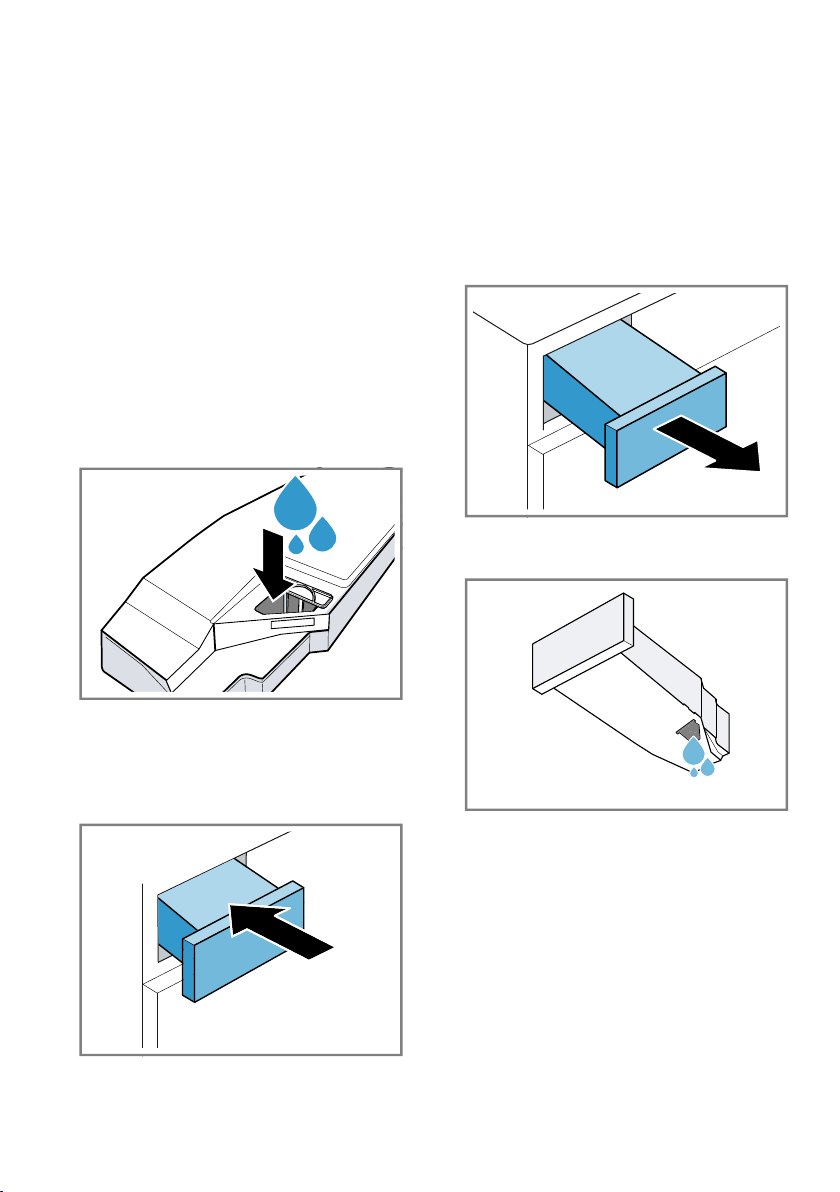
1. Add approx. 1½ litres of hot tap
water into the condensation con-
tainer.
Hold the full condensation con-
tainer level so that no liquid spills
out.
2. Insert the condensation container
so that it locks into place.
3. Press Start/ Reload .
a The appliance care programme
starts and an audible signal
sounds.
a "End" appears on the display
once the appliance care pro-
gramme has ended and an aud-
ible signal sounds.
4. Pull out the condensation con-
tainer, keeping it level.
5. Empty the condensation container
→Page33.
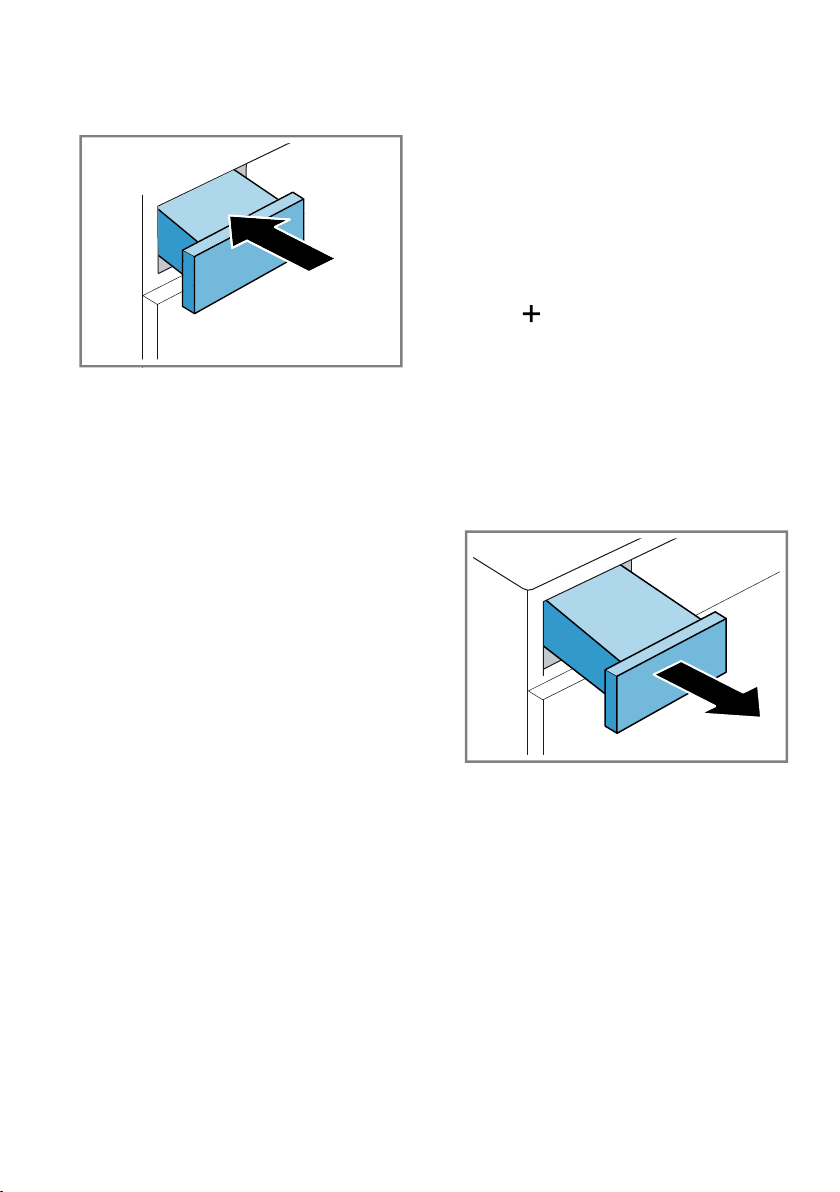
Appliance care en
39
6. Insert the condensation container
so that it locks into place.
a The appliance care programme
has been completed.
Note:If the condensate water has
been drained from the machine via
the drain hose, please follow the
steps in
→"Preparing the condensation con-
tainer for the appliance care pro-
gramme", Page37 in reverse order,
after both the intensive and regular
cleaning processes.
15.5 Preparing the appliance
for the intensive appli-
ance care programme
If the appliance is not used for more
than one month, stubborn dirt or
odours may occur. To remove this,
you can run an intensive appliance
care programme.
Note:The intensive appliance care
programme runs for approximately 4
hours. The programme may take
longer if you do not carry out the ne-
cessary steps in good time while the
programme is running.
Once it has started, the intensive ap-
pliance care programme should not
be cancelled.
Requirements
¡ The appliance is ready to run the
appliance care programme.
→"Preparing the appliance for the
appliance care programme ",
Page36
¡ The appliance care programme
has started.
→"Starting the appliance care pro-
gramme", Page37
▶ Press .
a "CP2" and the programme dura-
tion alternate on the display.
15.6 Running the intensive
appliance care pro-
gramme
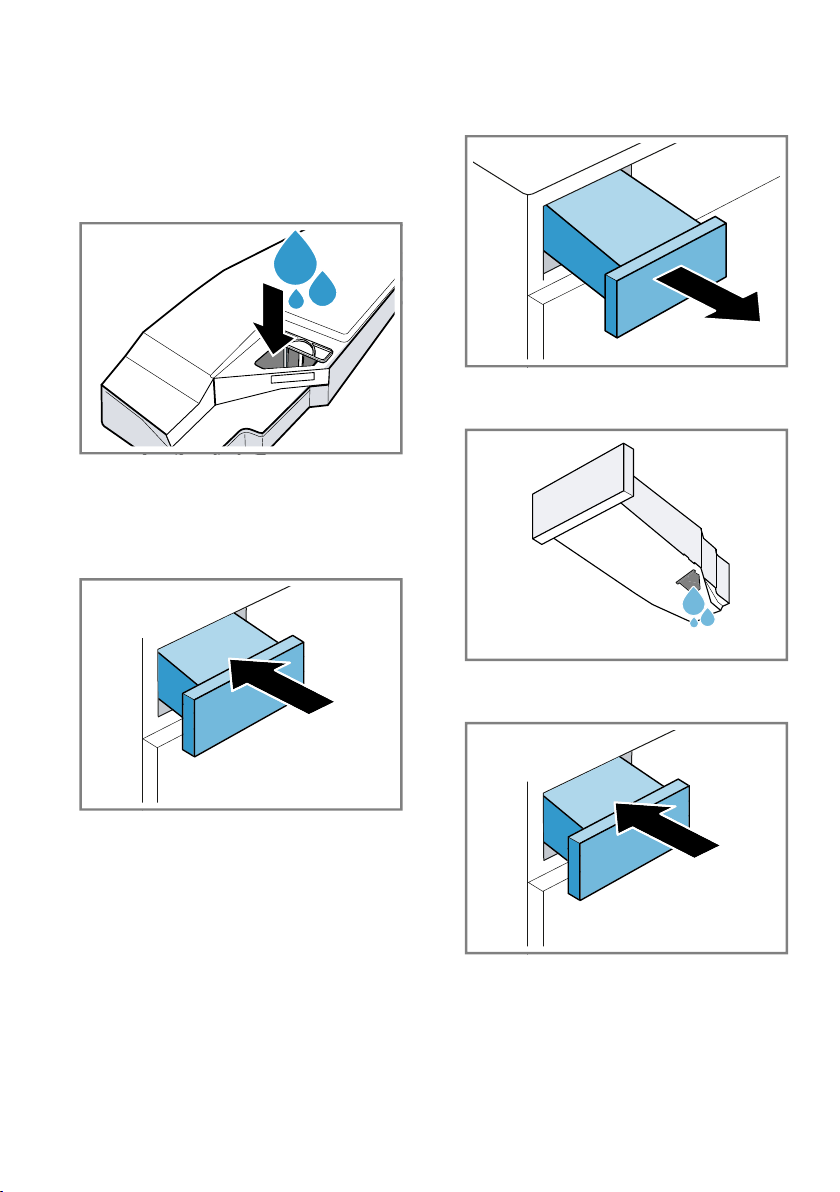
1. Pull out the condensation con-
tainer horizontally and empty it.
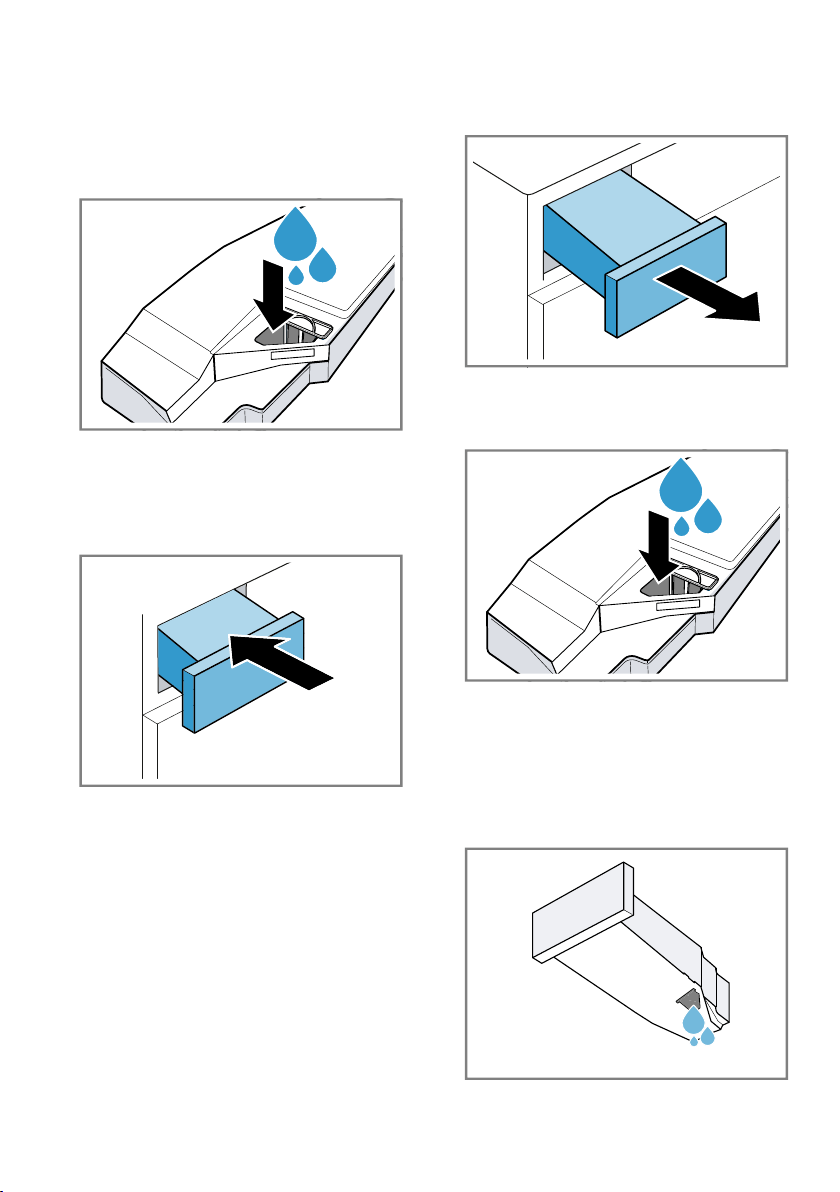
en Appliance care
40
2. Pour a bottle of the original appli-
ance care product
→"Accessories", Page29 and ap-
prox.1½litres of warm tap water
into the condensation container.
Hold the full condensation con-
tainer level so that no liquid spills
out.
3. Insert the condensation container
so that it locks into place.
4. Press Start/ Reload . The appli-
ance care programme starts and
an audible signal sounds.
After around 3hours, the appli-
ance pauses the appliance care
programme and the remaining pro-
gramme duration flashes on the
display.
5. Pull out the condensation con-
tainer horizontally and empty it.
6. Add approx. 1½ litres of hot tap
water into the condensation con-
tainer.
Hold the full condensation con-
tainer level so that no liquid spills
out.
7. Carefully tip and empty the con-
densation container horizontally in
order to remove any remaining ori-
ginal care product.
Appliance care en
41
15.7 Ending the intensive ap-
pliance care programme
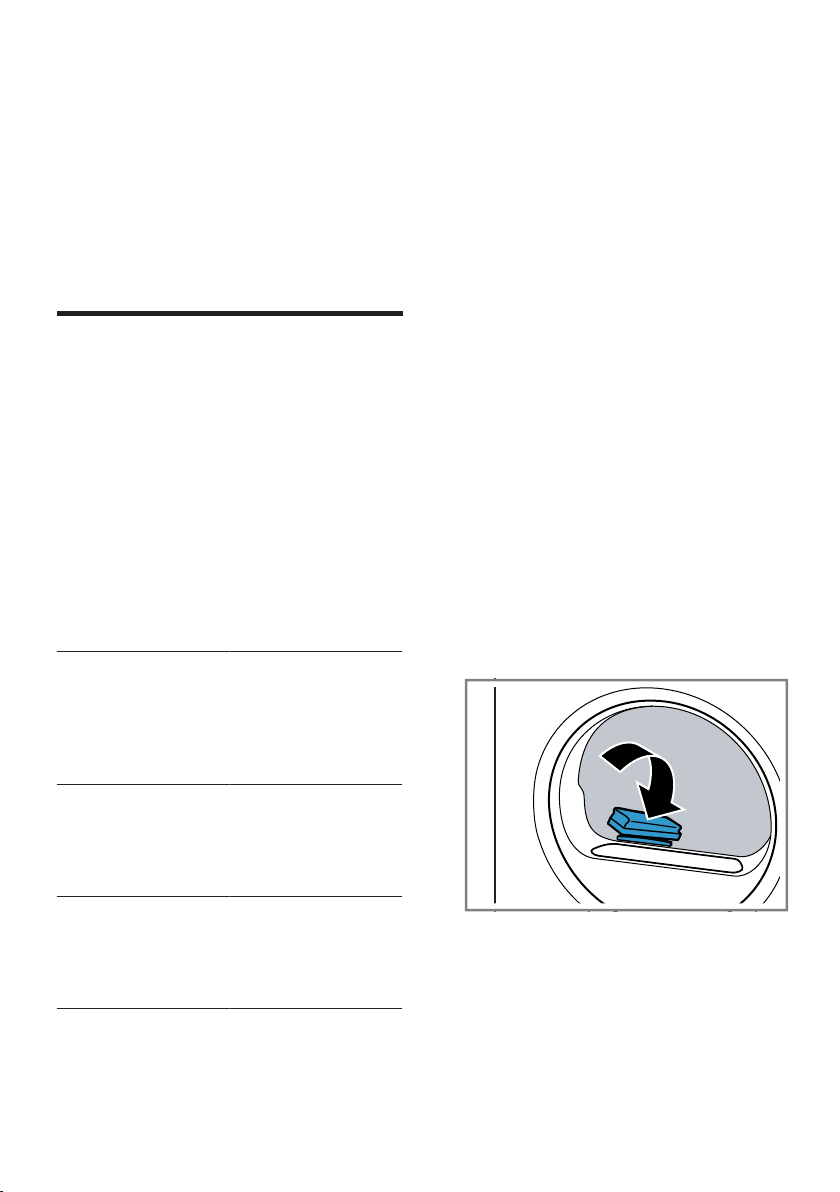
1. Add approx. 1½ litres of hot tap
water into the condensation con-
tainer.
Hold the full condensation con-
tainer level so that no liquid spills
out.
2. Insert the condensation container
so that it locks into place.
3. Press Start/ Reload .
a The appliance care programme is
resumed. "End" appears on the
display and a signal tone sounds
once the appliance care pro-
gramme has ended.
4. Pull out the condensation con-
tainer, keeping it level.
5. Empty the condensation container
→Page33.
6. Insert the condensation container
so that it locks into place.
7. Switch off the appliance.
→"Switching off the appliance",
Page31
a The appliance care programme
has been completed.
en Cleaning and servicing
42
Note:If the condensate water has
been drained from the machine via
the drain hose, please follow the
steps in
→"Preparing the condensation con-
tainer for the appliance care pro-
gramme", Page37 in reverse order,
after both the intensive and regular
cleaning processes.
16 Cleaning and servi-
cing
To keep your appliance working effi-
ciently for a long time, it is important
to clean and maintain it carefully.
Note:You can find further information
in the digital instruction manual by
scanning the QR code in the table of
contents or on www.bosch-
home.com.
16.1 Tips on cleaning and
care
Wipe down the
housing and the
controls with
nothing but water
and a damp
cloth.
This ensures the
parts of the appli-
ance will remain
clean and hy-
gienic.
Remove all de-
tergent residue,
spray residue or
other residues
immediately.
Fresh deposits
are easier to re-
move without
leaving any
residue.
Leave the appli-
ance door open
after use.
This allows the
residual water to
dry, reducing
odours in the ap-
pliance.
16.2 Moisture sensor
The moisture sensor in this appliance
measures how damp the laundry is
during the drying cycle. The appli-
ance changes the duration of the
automatic programme depending on
the residual moisture in the laundry.
Cleaning the moisture sensor
Over time, residue from limescale,
detergents and care products can
build up on the moisture sensor.
Clean the moisture sensor regularly.
ATTENTION!
Hard or rough objects may damage
the moisture sensor.
▶ Do not use hard or rough objects,
abrasive cleaning products or steel
wool for cleaning.
Note:If you do not clean the appli-
ance as described, the appliance's
functionality may be impaired.
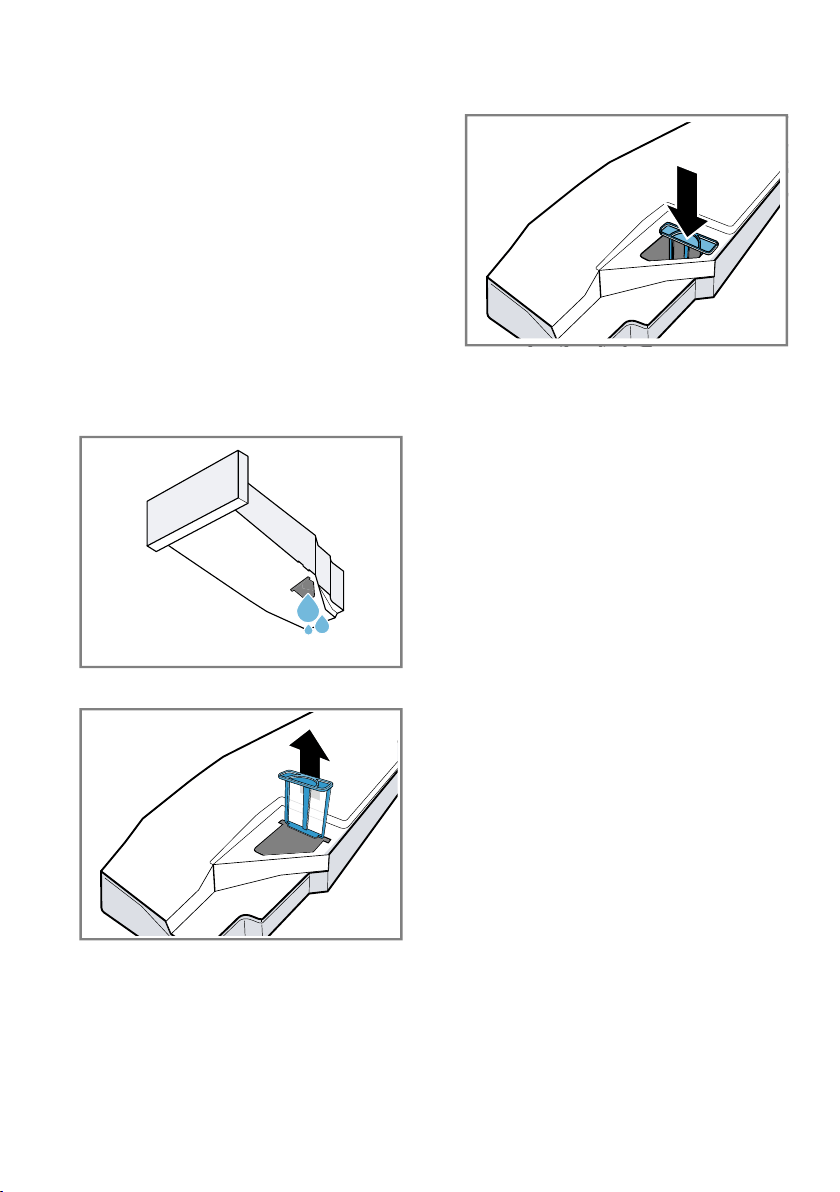
1. Open the door.
2. Clean the moisture sensor with a
sponge.
Cleaning and servicing en
43
16.3 Condensation container
filter
During drying, fluff from the laundry
gets into the condensation. The filter
in the condensation container pro-
tects the appliance from fluff.
Clean the filter for the
condensation tank.
The filter is cleaned automatically
when the condensation container is
emptied. Check the filter regularly
and clean the filter if it is dirty.
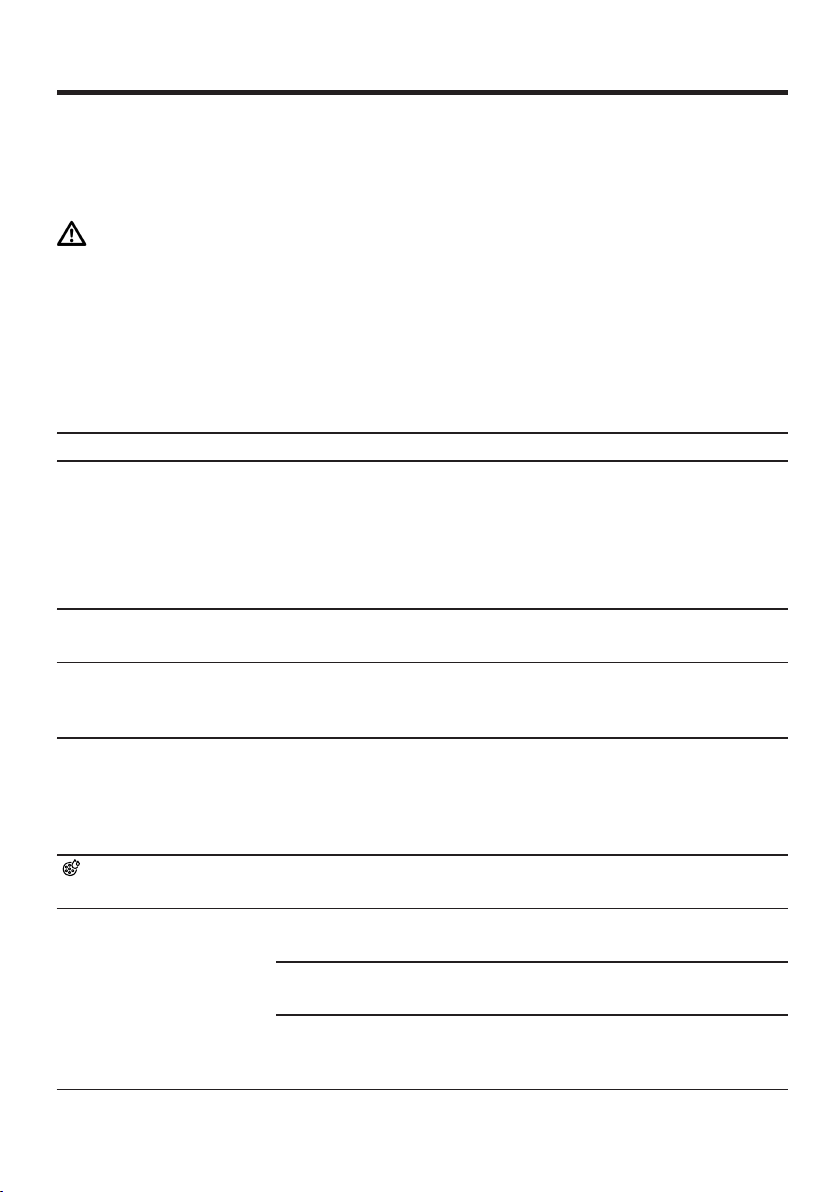
1. Empty the condensation container
→Page33.
2. Remove the filter.
3. Clean the filter under warm, run-
ning water or in the dishwasher.
4. Slide in the filter as far as it will go.
5. Insert the condensation container
→Page34.
en Troubleshooting
44
17 Troubleshooting
You can rectify minor faults on your appliance yourself. Read the troubleshoot-
ing information before contacting after-sales service. This will avoid unneces-
sary costs.
WARNING
Risk of electric shock!
Incorrect repairs are dangerous.
▶ Repairs to the appliance should only be carried out by trained specialist
staff.
▶ Only use genuine spare parts when repairing the appliance.
▶ If the power cord of this appliance is damaged, it must be replaced by the
manufacturer, the manufacturer's Customer Service or a similarly qualified
person in order to prevent any risk.
Fault Cause and troubleshooting
"Hot" and the drum
rotates.
Cooling process active.
1. Not a fault.
2. Do not change the programme during the cooling
process.
Note:The cooling process takes up to 10 minutes.
You can continue to operate the appliance.
Humming noise. Compressor active.
▶ Not a fault – normal operating noise.
The display goes out
and Start/ Reload
flashes.
Energy-saving mode is active
▶ Press any button.
a The symbol lights up again.
"CrE" After a period of operation, the appliance automatic-
ally recommends that you run the basic appliance
care programme.
▶
→"Running the basic appliance care programme
on the appliance", Page37
Fluff filter is soiled.
▶
→"Cleaning the fluff filter", Page31
The appliance is not
working.
The mains plug of the power cord is not plugged in.
▶ Connect the appliance to the power supply.
The circuit breaker in the fuse box has tripped.
▶ Check the circuit breaker in the fuse box.
There has been a power cut.
▶ Check whether the lighting in your kitchen or other
appliances are working.
Troubleshooting en
45
Fault Cause and troubleshooting
Appliance paused, but
the drum is rotating.
Cooling process active.
▶ Not a fault – no action required.
Creasing. The load is too large.
▶ Observe the maximum load capacity of the
→"Programmes", Page26.
The laundry lies in the drum for too long after drying.
1. Remove the laundry from the drum as soon as the
drying programme has finished.
2. Spread the items of laundry for cooling.
Unsuitable programme for the type of fabric.
▶ Set the suitable programme for the type of fabric.
→"Programmes", Page26
Easy-Care fabrics are dried for too long.
▶
→"Changing the dryness level", Page25.
▶
→"Adjusting the dryness level", Page25.
Anti-Creasenot activated.
▶ Activate the Anti-Crease function.
→"Buttons", Page23
and programme
terminated.
Condensation tank filled.
1.
→"Emptying the condensation container", Page33.
2.
→"Inserting the condensation container", Page34.
3.
→"Starting the programme", Page31.
Water drain hose is caught or jammed.
1. Ensure that the water drain hose is not kinked or
trapped.
2. Route the water drain hose without kinks.
Water drain hose is not connected correctly.
▶ Ensure that the water drain hose is connected cor-
rectly.
→"Connecting the water drain hose", Page14
Water drain hose is blocked.
▶ Rinse the water drain hose with tap water.
The filter for the condensation tank is soiled.
▶
→"Clean the filter for the condensation tank.",
Page43.
Condensation in the
condensation tank
even though the water
drain hose is connec-
ted.
The appliance uses condensation for the automatic
self-cleaning.
▶ Not a fault – no action required.
Water drain hose is not connected correctly.
en Troubleshooting
46
Fault Cause and troubleshooting
Condensation in the
condensation tank
even though the water
drain hose is connec-
ted.
▶ Ensure that the water drain hose is connected cor-
rectly.
→"Connecting the water drain hose", Page14
The programme does
not start.
Childproof lock is activated.
▶
→"Deactivating the childproof lock", Page34
You have not pressedStart/ Reload .
▶ Press Start/ Reload .
No programme set.
1.
→"Setting a programme", Page30.
2.
→"Starting the programme", Page31.
The length of the pro-
gramme changes dur-
ing the drying cycle.
The programme operation is optimised electronically.
This may change the programme duration.
▶ Not a fault – no action required.
Pumping noise. Condensation pump active.
▶ Not a fault – normal operating noise.
Buzzing noise. Compressor ventilation active.
▶ Not a fault – normal operating noise.
The drying time is too
long.
Fluff filter is soiled.
▶
→"Cleaning the fluff filter", Page31
The ambient temperature is greater than 30 °C.
▶ Ensure that the ambient temperature is lower than
30 °C.
The ambient temperature is lower than 15 °C.
▶ Ensure that the ambient temperature is above 15
°C.
Insufficient air circulation at the appliance's installation
location.
▶ Ventilate the appliance's installation location.
Appliance air inlet is blocked.
▶ Ensure that the air inlet on the appliance is kept
clear.
Heat exchanger is soiled.
▶
→"Running the basic appliance care programme
on the appliance", Page37
Troubleshooting en
47
Fault Cause and troubleshooting
Automatic self-cleaning function rinses the appliance's
heat exchanger.
1. Not a fault.
2. Do not pull out the condensation tank.
3. Do not cancel the programme.
Water is leaking from
the appliance.
Appliance is not correctly aligned.
▶
→"Aligning the appliance", Page16
Water drain hose is not connected correctly.
▶ Ensure that the water drain hose is connected cor-
rectly.
→"Connecting the water drain hose", Page14
The laundry is too
damp.
Unsuitable programme for the type of fabric.
▶ Set a timed programme for the subsequent drying.
→"Programmes", Page26
There has been a power cut.
▶ Check whether the lighting in your kitchen or other
appliances are working.
The load is too large.
▶ Observe the maximum load capacity of the
→"Programmes", Page26.
After the end of the programme, warm laundry feels
damper than it actually is.
1. Remove the laundry from the drum as soon as the
drying programme has finished.
2. Spread the items of laundry for cooling.
Unsuitable dryness level set.
▶
→"Changing the dryness level", Page25.
Drying target not adjusted.
▶
→"Adjusting the dryness level", Page25.
Load too small.
▶ Set a timed programme for the subsequent drying.
→"Programmes", Page26
Moisture sensor dirty.
▶
→"Cleaning the moisture sensor", Page42.
The drying process is interrupted and the condensa-
tion tank has been filled.
1.
→"Emptying the condensation container", Page33.
2.
→"Inserting the condensation container", Page34.
3.
→"Starting the programme", Page31.


Transportation, storage and disposal en
49
18 Transportation, stor-
age and disposal
You can find out here how to prepare
your appliance for transportation and
storage. You will also find out how to
dispose of old appliances.
18.1 Preparing the appliance
for transportation
ATTENTION!
If the appliance is operated immedi-
ately after transportation, the refriger-
ant contained in the appliance may
result in damage to the appliance.
▶ Immediately after transporting the
appliance, leave it to rest for two
hours before putting it into opera-
tion.
Tip:The appliance may contain re-
sidual water, which may drip out of it
when transported. The appliance
should be transported upright.
Requirements
¡ The condensation container is
emptied. Emptying the condensa-
tion container →Page33
¡ The appliance has been switched
on.
→"Switching on the appliance",
Page30
1.
Set any programme →Page30.
2.
Start the programme →Page31
and wait 5 minutes.
a The condensation is drained.
3. Switch off the appliance.
→"Switching off the appliance",
Page31
4. Remove the water drain hose from
the connection point.
→"Water outlet connection types",
Page15
5. Secure the water drain hose on the
appliance against unintentional
loosening.
Ensure that you do not bend the
water drain hose.
6. Empty the condensation container
→Page33.
7. Insert the condensation container
→Page34.
8. Disconnect the appliance's mains
plug from the power supply.
a The appliance is now ready to be
transported.
18.2 Disposing of old appli-
ance
Valuable raw materials can be re-
used by recycling.
WARNING
Risk of harm to health!
Children can lock themselves in the
appliance, thereby putting their lives
at risk.
▶ Do not install the appliance behind
a door as this may obstruct the ap-
pliance door or prevent it from
opening.
▶ With redundant appliances, unplug
the power cord. Then cut through
the cord and damage the lock on
the appliance door beyond repair
so that the appliance door will no
longer close.
WARNING
Risk of fire!
The refrigerant R290 used in this ap-
pliance is environmentally friendly. It
is however flammable and may ignite
if appliances are not disposed of
properly.
▶ Dispose of the appliance properly.
▶ Do not damage the tubing of the
refrigerant circuit.
en Customer Service
50
1. Unplug the appliance from the
mains.
2. Cut through the power cord.
3. Dispose of the appliance in an en-
vironmentally friendly manner.
Information about current disposal
methods are available from your
specialist dealer or local authority.
This appliance is la-
belled in accordance
with European Directive
2012/19/EU concerning
used electrical and elec-
tronic appliances (waste
electrical and electronic
equipment - WEEE).
The guideline determ-
ines the framework for
the return and recycling
of used appliances as
applicable throughout
the EU.
19 Customer Service
If you have any queries on use, are
unable to rectify faults on the appli-
ance yourself or if your appliance
needs to be repaired, contact Cus-
tomer Service.
Function-relevant genuine spare parts
according to the corresponding Eco-
design Order can be obtained from
Customer Service for a period of at
least 10 years from the date on
which your appliance was placed on
the market within the European Eco-
nomic Area.
Note:Under the terms of the manu-
facturer's warranty the use of Cus-
tomer Service is free of charge.
Detailed information on the warranty
period and terms of warranty in your
country is available from our after-
sales service, your retailer or on our
website.
If you contact Customer Service, you
will require the product number (E-
Nr.) and the production number (FD)
of your appliance.
The contact details for Customer Ser-
vice can be found in the enclosed
Customer Service directory or on our
website.
19.1 Product number (E-Nr.)
and production number
(FD)
You can find the product number (E-
Nr.) and the production number (FD)
on the appliance's rating plate.
Depending on the model, the rating
plate is located:
¡ On the inside of the door.
¡ On the inside of the maintenance
flap.
¡ On the rear of the appliance.
Make a note of your appliance's de-
tails and the Customer Service tele-
phone number to find them again
quickly.
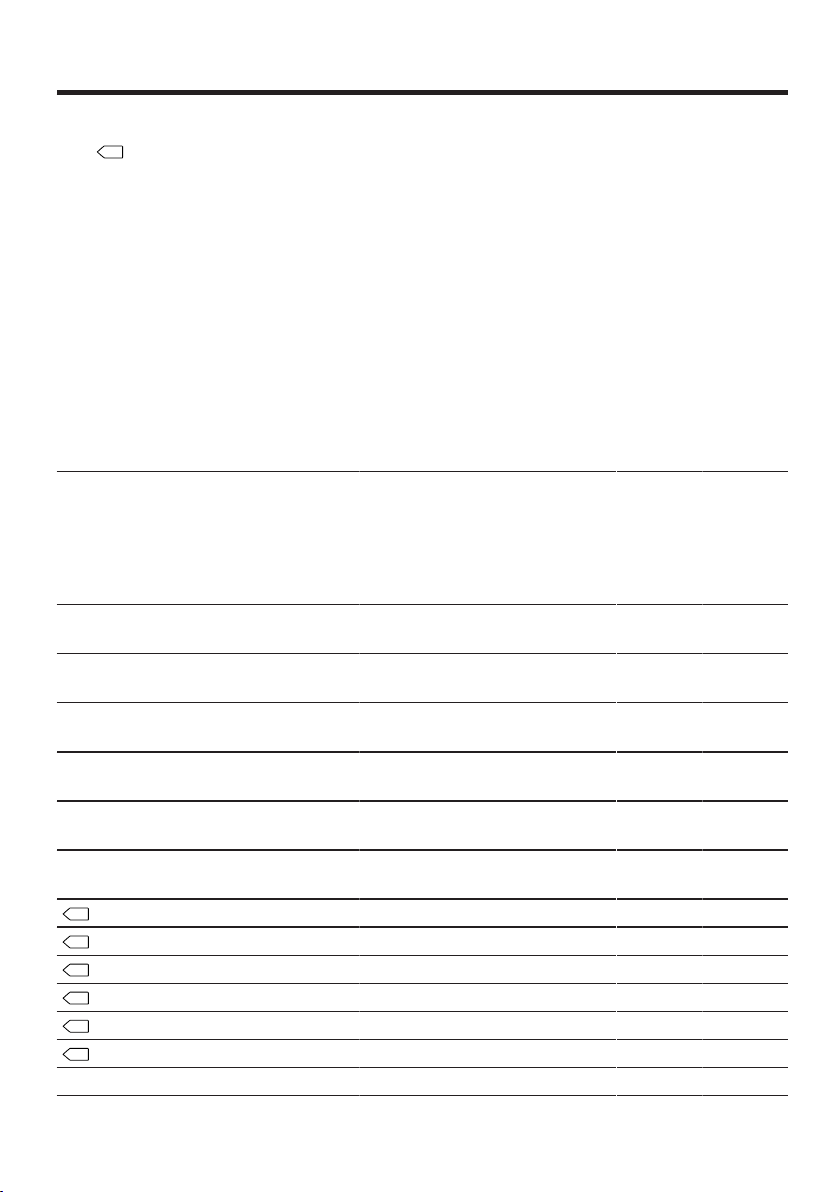
Consumption values en
51
20 Consumption values
The Cottons Eco programme
(denoted by the arrow symbol) is
suitable for drying cotton laundry with
a normal dampness level, and is the
most efficient programme for drying
damp cotton laundry in terms of com-
bined energy consumption.
The consumption values for this pro-
gramme that are declared on the en-
ergy label refer to a moisture content
of the laundry of 60%.
The values specified for other pro-
grammes are indicative only and
were determined in accordance with
the applicable standard EN61121.
The actual values may deviate from
the indicated values depending on
the type of fabric, composition of
laundry to be dried, residual moisture
in the fabric, set degree of dryness,
amount of laundry being loaded, en-
vironmental conditions and the activ-
ation of additional functions.
The expected programme dura-
tion/"Ready in" time that is shown on
the appliance display when selecting
the programme is based on the spin
speed in the washing machine of
1000 rpm when the appliance is de-
livered.
Programme Final
mois-
ture
level
(%)
Load
(kg)
Spin
speed
(rpm)
Initial
mois-
ture
level
(%)
Pro-
gramm
e dura-
tion
(h:min)
Energy
con-
sump-
tion
(kWh/
cycle)
Cottons + Cupboard
Dry
-1,5 9,0 1400 50 2:59 2,07
Cottons + Cupboard
Dry
-1,5 4,5 1400 50 2:16 1,42
Cottons + Cupboard
Dry
-1,5 9,0 1000 60 3:19 2,36
Cottons + Cupboard
Dry
-1,5 4,5 1000 60 2:27 1,58
Cottons + Cupboard
Dry
-1,5 9,0 800 70 3:39 2,65
Cottons + Cupboard
Dry
-1,5 4,5 800 70 2:38 1,74
Cottons Eco 0,0 9,0 1400 50 2:38 1,77
Cottons Eco 0,0 4,5 1400 50 1:51 1,09
Cottons Eco 0,0 9,0 1000 60 2:56 2,05
Cottons Eco 0,0 4,5 1000 60 2:01 1,25
Cottons Eco 0,0 9,0 800 70 3:14 2,34
Cottons Eco 0,0 4,5 800 70 2:12 1,41
Cottons + Iron Dry 12,0 9,0 1400 50 1:47 1,19
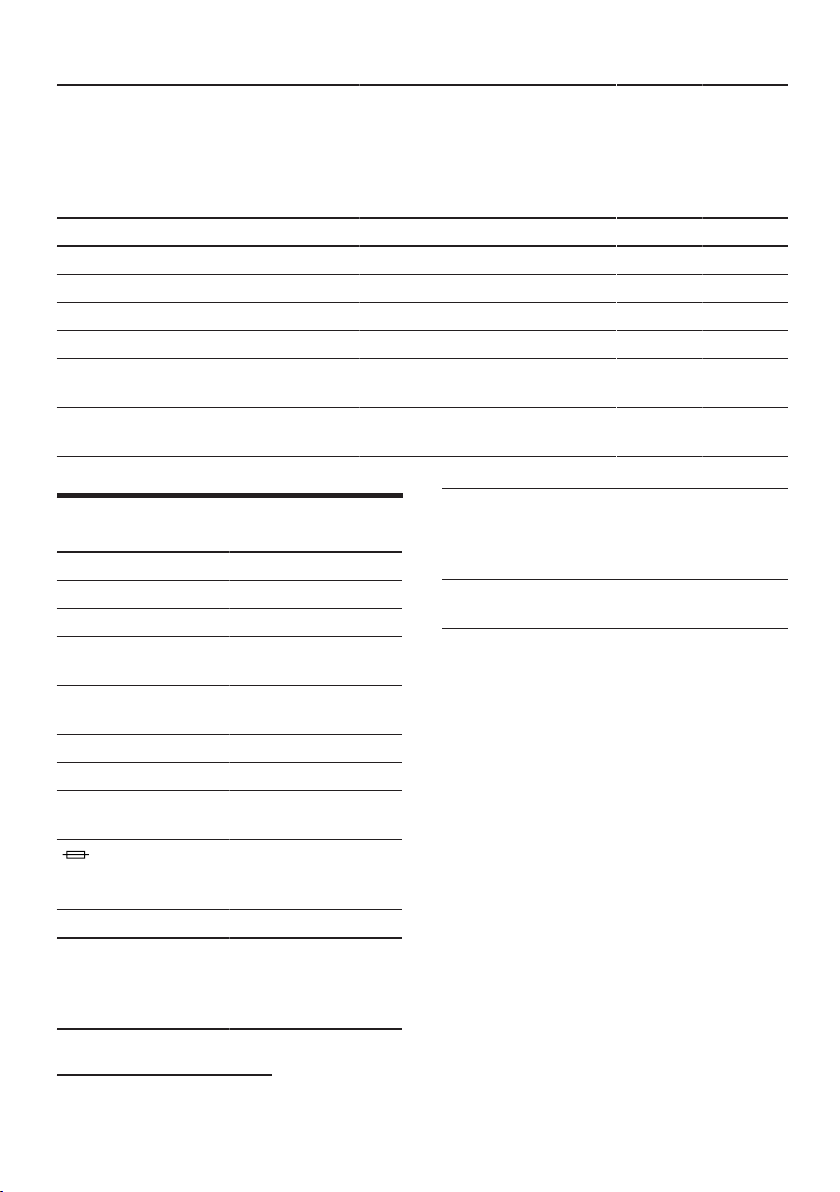
en Technical data
52
Programme Final
mois-
ture
level
(%)
Load
(kg)
Spin
speed
(rpm)
Initial
mois-
ture
level
(%)
Pro-
gramm
e dura-
tion
(h:min)
Energy
con-
sump-
tion
(kWh/
cycle)
Cottons + Iron Dry 12,0 4,5 1400 50 1:12 0,70
Cottons + Iron Dry 12,0 9,0 1000 60 2:07 1,49
Cottons + Iron Dry 12,0 4,5 1000 60 1:23 0,87
Cottons + Iron Dry 12,0 9,0 800 70 2:28 1,79
Cottons + Iron Dry 12,0 4,5 800 70 1:34 1,03
Easy Care + Cup-
board Dry
2,0 3,5 800 40 1:00 0,55
Easy Care + Cup-
board Dry
2,0 3,5 600 50 1:09 0,67
21 Technical data
Appliance height 84,2cm
Appliance width 59,8cm
Appliance depth 61,3cm
Appliance depth
with door closed
64,8cm
Appliance depth
with door open
109.6cm
Weight 56,4kg
Maximum load 9,0kg
Mains voltage 220-240V,
50Hz
Minimum in-
stallation protec-
tion
10A
Nominal power 800W
Power consump-
tion
¡ Off mode:
0,15 W
¡ Left-on mode:
0,50W
Ambient temper-
ature
¡ Minimum:
5°C
¡ Maximum:
35°C
Length of the
power cord
145cm
This product contains light sources
from energy efficiency class F. These
light sources are available as a spare
part and must only be replaced by
trained specialist staff.
You can find more information about
your model online at
https://eprel.ec.europa.eu/
1
. This web
address is linked to the official EU
EPREL product database. Please
then follow the instructions on
searching for the model. The model
identifier is made up of the charac-
ters before the slash in the product
number (E-Nr.) on the rating plate. Al-
ternatively, you can also find the
model identifier in the first line of the
EU energy label.
1
Only applies to countries in the European Economic Area

Thank you for buying a
Bosch Home Appliance!
Register your new device on MyBosch now and profit directly from:
• Expert tips & tricks for your appliance
• Warranty extension options
• Discounts for accessories & spare-parts
• Digital manual and all appliance data at hand
• Easy access to Bosch Home Appliances Service
Free and easy registration – also on mobile phones:
www.bosch-home.com/welcome
Looking for help?
You'll find it here.
Expert advice for your Bosch home appliances, help with problems
or a repair from Bosch experts.
Find out everything about the many ways Bosch can support you:
www.bosch-home.com/service
Contact data of all countries are listed in the attached service direct-
ory.
*9001704807*
9001704807 (020406)
en
BSH Hausgeräte GmbH
Carl-Wery-Straße 34
81739 München, GERMANY
www.bosch-home.com
A Bosch Company
Valid within Great Britain:
Imported to Great Britain by
BSH Home Appliances Ltd.
Grand Union House
Old Wolverton Road
Wolverton, Milton Keynes
MK12 5PT
United Kingdom