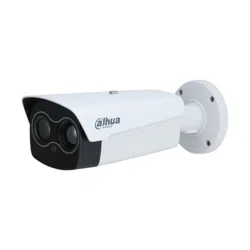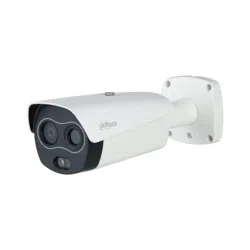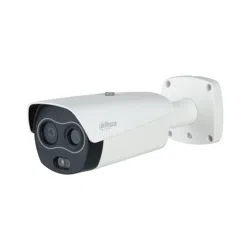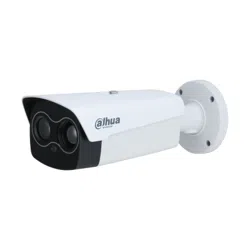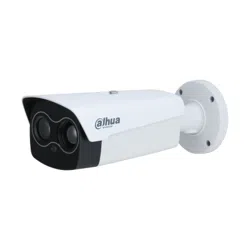

Thermal Hybrid Bullet Camera
Web Operation Manual
V1.0.0

I
Foreword
General
This manual introduces the characteristics, basic configurations, daily operation and maintenance of
the thermal camera (hereinafter referred to as "the Camera"). Read carefully before using the device,
and keep the manual safe for future reference.
Safety Instructions
The following signal words might appear in the manual.
Signal Words Meaning
Indicates a high potential hazard which, if not avoided, will
result in death or serious injury.
Indicates a medium or low potential hazard which, if not
avoided, could result in slight or moderate injury.
Indicates a potential risk which, if not avoided, could result
in property damage, data loss, reductions in performance,
or unpredictable results.
Electrostatic Sensitive Devices.
Indicates a device that is sensitive to electrostatic discharge.
Indicates dangerous high voltage.
Take care to avoid coming into contact with electricity.
Indicates a laser radiation hazard.
Take care to avoid exposure to a laser beam.
Provides methods to help you solve a problem or save time.
Provides additional information as a supplement to the text.
Revision History
Version Revision Content Release Time
V1.0.0 First release. June 2022
Privacy Protection Notice
As the device user or data controller, you might collect the personal data of others such as their face,
fingerprints, and license plate number. You need to be in compliance with your local privacy
protection laws and regulations to protect the legitimate rights and interests of other people by
implementing measures which include but are not limited: Providing clear and visible identification
to inform people of the existence of the surveillance area and provide required contact information.
About the Manual
●
The manual is for reference only. Slight differences might be found between the manual and the
product.

II
●
We are not liable for losses incurred due to operating the product in ways that are not in
compliance with the manual.
●
The manual will be updated according to the latest laws and regulations of related jurisdictions.
For detailed information, see the paper user’s manual, use our CD-ROM, scan the QR code or visit
our official website. The manual is for reference only. Slight differences might be found between
the electronic version and the paper version.
●
All designs and software are subject to change without prior written notice. Product updates
might result in some differences appearing between the actual product and the manual. Please
contact customer service for the latest program and supplementary documentation.
●
There might be errors in the print or deviations in the description of the functions, operations
and technical data. If there is any doubt or dispute, we reserve the right of final explanation.
●
Upgrade the reader software or try other mainstream reader software if the manual (in PDF
format) cannot be opened.
●
All trademarks, registered trademarks and company names in the manual are properties of their
respective owners.
●
Please visit our website, contact the supplier or customer service if any problems occur while
using the device.
●
If there is any uncertainty or controversy, we reserve the right of final explanation.

III
Table of Contents
Foreword
........................................................................................................................................................................................................I
1 Product Introduction
.......................................................................................................................................................................... 1
1.1 Overview
........................................................................................................................................................................................ 1
1.2 Features
.......................................................................................................................................................................................... 1
1.3 Functions
....................................................................................................................................................................................... 1
2 Configuration Flow
.............................................................................................................................................................................. 6
3 Device Initialization
............................................................................................................................................................................ 7
3.1 Initialing Device
.......................................................................................................................................................................... 7
3.2 Changing IP Address
................................................................................................................................................................ 9
3.2.1 Changing One IP Address
........................................................................................................................................... 9
3.2.2 Changing IP Addresses in Batches
....................................................................................................................... 12
3.3 Logging in to Web Page
....................................................................................................................................................... 13
3.4 Resetting Password
................................................................................................................................................................ 14
4 Basic Operation
................................................................................................................................................................................... 17
4.1 Logging in to Device
.............................................................................................................................................................. 17
4.2 Configuring Local Parameters
.......................................................................................................................................... 18
4.3 Configuring Camera Parameters
..................................................................................................................................... 20
4.3.1 Configuring Image Parameters
............................................................................................................................. 20
4.3.1.1 Configuring Visible Channel
........................................................................................................................ 20
4.3.1.1.1 Configuring Working Mode
............................................................................................................... 21
4.3.1.1.2 Configuring Image Parameters
........................................................................................................ 21
4.3.1.1.3 Configuring Exposure Parameters
................................................................................................. 23
4.3.1.1.4 Configuring Backlight Parameters
................................................................................................. 24
4.3.1.1.5 Configuring White Balance Parameters
...................................................................................... 25
4.3.1.1.6 Configuring Day/Night Parameters
............................................................................................... 26
4.3.1.1.7 Configuring Illuminator Parameters
............................................................................................. 27
4.3.1.1.8 Configuring Defog Parameters
........................................................................................................ 28
4.3.1.2 Configuring Thermal Channel
..................................................................................................................... 28
4.3.2 Correcting Defective Pixels
...................................................................................................................................... 33
4.3.3 Configuring Encode
..................................................................................................................................................... 33
4.3.3.1 Configuring Encode Parameter
.................................................................................................................. 33
4.3.3.2 Configuring Overlay
......................................................................................................................................... 35
4.3.3.2.1 Configuring Privacy Masking
............................................................................................................ 35
4.3.3.2.2 Configuring Channel Title
.................................................................................................................. 36
4.3.3.2.3 Configuring Time Title
.......................................................................................................................... 36

IV
4.3.3.2.4 Configuring Location
............................................................................................................................ 37
4.3.3.2.5 Configuring Font Properties
............................................................................................................. 38
4.3.3.2.6 Configuring Picture Overlay
.............................................................................................................. 38
4.3.3.2.7 Configuring Voltage Information
................................................................................................... 39
4.3.3.3 Configuring ROI
.................................................................................................................................................. 39
4.3.4 Configuring Audio
........................................................................................................................................................ 40
4.3.4.1 Setting Audio Parameters
............................................................................................................................. 40
4.3.4.2 Setting Alarm Tone
........................................................................................................................................... 41
4.4 Configuring Network
............................................................................................................................................................. 41
4.4.1 TCP/IP
.................................................................................................................................................................................. 41
4.4.2 Port
....................................................................................................................................................................................... 44
4.4.3 PPPoE
.................................................................................................................................................................................. 46
4.4.4 DDNS
................................................................................................................................................................................... 46
4.4.5 Email
.................................................................................................................................................................................... 47
4.4.6 UPnP
.................................................................................................................................................................................... 49
4.4.7 SNMP
................................................................................................................................................................................... 50
4.4.8 Bonjour
.............................................................................................................................................................................. 52
4.4.9 Multicast
............................................................................................................................................................................ 52
4.4.10 Register
........................................................................................................................................................................... 53
4.4.11 QoS
.................................................................................................................................................................................... 54
4.4.12 Platform Access
........................................................................................................................................................... 54
4.4.12.1 P2P
.......................................................................................................................................................................... 54
4.4.12.2 ONVIF
.................................................................................................................................................................... 55
4.4.12.3 RTMP
...................................................................................................................................................................... 55
4.4.13 Basic Service
................................................................................................................................................................. 56
4.5 Configuring PTZ
....................................................................................................................................................................... 57
4.5.1 Configuring Preset
....................................................................................................................................................... 58
4.5.2 Configuring Tour Group
............................................................................................................................................ 58
4.5.3 Configuring Scan
........................................................................................................................................................... 59
4.5.4 Configuring Pattern
..................................................................................................................................................... 60
4.6 Configuring Event
................................................................................................................................................................... 61
4.6.1 Configuring Alarm Linkage
..................................................................................................................................... 61
4.6.1.1 Setting Alarm-in
................................................................................................................................................. 61
4.6.1.2 Alarm Linkage
...................................................................................................................................................... 62
4.6.1.2.1 Adding schedule
...................................................................................................................................... 62
4.6.1.2.2 Record Linkage
......................................................................................................................................... 63
4.6.1.2.3 Snapshot Linkage
................................................................................................................................... 64
4.6.1.2.4 Alarm-out Linkage
.................................................................................................................................. 64

V
4.6.1.2.5 Email Linkage
............................................................................................................................................ 65
4.6.1.2.6 Audio Linkage
........................................................................................................................................... 65
4.6.1.2.7 Warning light
............................................................................................................................................ 65
4.6.1.3 Subscribing Alarm
............................................................................................................................................. 65
4.6.1.3.1 Alarm Types
............................................................................................................................................... 65
4.6.1.3.2 Subscribing Alarm Information
....................................................................................................... 66
4.6.2 Configuring Exception
............................................................................................................................................... 67
4.6.2.1 Configuring SD Card Exception
.................................................................................................................. 67
4.6.2.2 Configuring Network Exception
................................................................................................................. 68
4.6.2.3 Configuring Burn Alarm
................................................................................................................................. 68
4.6.3 Configuring Video Detection
.................................................................................................................................. 69
4.6.3.1 Configuring Motion Detection
.................................................................................................................... 69
4.6.3.2 Configuring Video Tampering
.................................................................................................................... 71
4.6.4 Configuring Audio Detection
................................................................................................................................. 71
4.6.5 Configuring Disarming
.............................................................................................................................................. 72
4.7 Managing Storage
................................................................................................................................................................... 73
4.8 Managing System
.................................................................................................................................................................... 74
4.8.1 General
............................................................................................................................................................................... 74
4.8.1.1 Basic
.......................................................................................................................................................................... 74
4.8.1.2 Date & Time
........................................................................................................................................................... 74
4.8.1.3 Positioning System
........................................................................................................................................... 75
4.8.2 Account
.............................................................................................................................................................................. 76
4.8.2.1 User
........................................................................................................................................................................... 76
4.8.2.1.1 Adding User
............................................................................................................................................... 76
4.8.2.1.2 Resetting Password
............................................................................................................................... 79
4.8.2.2 Adding User Group
........................................................................................................................................... 79
4.8.2.3 ONVIF User
............................................................................................................................................................ 80
4.8.3 Peripheral Management
........................................................................................................................................... 81
4.8.3.1 Configuring Heater
........................................................................................................................................... 81
4.8.3.2 Configuring Serial Port
................................................................................................................................... 81
4.8.4 Manager
............................................................................................................................................................................ 82
4.8.4.1 Requirements
...................................................................................................................................................... 82
4.8.4.2 Maintenance
......................................................................................................................................................... 82
4.8.4.3 Import/Export
...................................................................................................................................................... 83
4.8.4.4 Default
..................................................................................................................................................................... 84
4.8.5 Upgrade
............................................................................................................................................................................. 84
4.9 Viewing System Information
............................................................................................................................................. 85
4.9.1 Version
............................................................................................................................................................................... 85

VI
4.9.2 Online User
....................................................................................................................................................................... 85
4.10 Configuring Log
..................................................................................................................................................................... 86
4.10.1 Log
..................................................................................................................................................................................... 86
4.10.2 Remote Log
................................................................................................................................................................... 86
5 Live
............................................................................................................................................................................................................. 88
5.1 Live Page
...................................................................................................................................................................................... 88
5.2 Setting Encode
.......................................................................................................................................................................... 88
5.3 Live View Function Bar
.......................................................................................................................................................... 89
5.4 Window Adjustment Bar
...................................................................................................................................................... 89
5.4.1 Adjustment
...................................................................................................................................................................... 89
5.4.2 Zoom and Focus
............................................................................................................................................................ 90
5.4.3 Image Adjustment
........................................................................................................................................................ 91
5.4.4 PTZ Control
...................................................................................................................................................................... 92
5.4.5 PTZ Function
................................................................................................................................................................... 92
5.5 Real-time Spot Temperature Monitoring
.................................................................................................................... 93
6 Record
...................................................................................................................................................................................................... 95
6.1 Playback
....................................................................................................................................................................................... 95
6.1.1 Playing Back Video
....................................................................................................................................................... 95
6.1.2 Clipping Video
................................................................................................................................................................ 97
6.1.3 Downloading Video
..................................................................................................................................................... 98
6.2 Setting Record Control
......................................................................................................................................................... 99
6.3 Setting Record Plan
................................................................................................................................................................ 99
6.4 Setting Storage
...................................................................................................................................................................... 101
7 Picture
................................................................................................................................................................................................... 104
7.1 Playback
.................................................................................................................................................................................... 104
7.1.1 Playing Back Picture
................................................................................................................................................. 104
7.1.2 Downloading Picture
............................................................................................................................................... 105
7.2 Setting Snapshot Parameters
......................................................................................................................................... 106
7.3 Setting Snapshot Plan
........................................................................................................................................................ 107
7.4 Setting Storage
...................................................................................................................................................................... 107
8 AI
.............................................................................................................................................................................................................. 108
8.1 Configuring IVS
...................................................................................................................................................................... 108
8.1.1 Global Configuration
............................................................................................................................................... 108
8.1.2 Rule Configuration
.................................................................................................................................................... 109
8.2 Configuring Call Detection
.............................................................................................................................................. 112
8.2.1 Global Configuration
............................................................................................................................................... 112
8.2.2 Rule Configuration
.................................................................................................................................................... 112
8.3 Configuring Smoking Detection
................................................................
................................................................... 113

VII
8.3.1 Global Configuration
............................................................................................................................................... 113
8.3.2 Rule Configuration
.................................................................................................................................................... 114
8.4 Configuring Cold Hot Spot
............................................................................................................................................... 115
8.5 Configuring Fire Warning
................................................................................................................................................. 116
8.5.1 Configuring Fire Warning Rule
........................................................................................................................... 116
8.5.2 Configuring Smoke Detection Rule
.................................................................................................................. 117
8.5.3 Configuring Smoke and Fire Detection Mode
............................................................................................. 119
8.6 Configuring PIP
...................................................................................................................................................................... 120
8.7 Configuring Thermal Map Acquisition
...................................................................................................................... 120
9 Configuring Temperature Measurement
............................................................................................................................ 122
9.1 Configuring Rule
................................................................................................................................................................... 122
9.1.1 Configuring Parameters
......................................................................................................................................... 122
9.1.2 Configuring Temperature Contrast
.................................................................................................................. 124
9.2 Configuring Temperature
................................................................................................................................................ 125
9.3 Configuring Global Configuration
............................................................................................................................... 125
10 Viewing Report
.............................................................................................................................................................................. 128
11 Security
.............................................................................................................................................................................................. 129
11.1 Security Status
..................................................................................................................................................................... 129
11.2 System Service
..................................................................................................................................................................... 130
11.2.1 802.1x
............................................................................................................................................................................ 130
11.2.2 HTTPS
............................................................................................................................................................................ 131
11.3 Attack Defense
.................................................................................................................................................................... 132
11.3.1 Firewall
......................................................................................................................................................................... 132
11.3.2 Account Lockout
...................................................................................................................................................... 132
11.3.3 Anti-DoS Attack
....................................................................................................................................................... 133
11.4 CA Certificate
....................................................................................................................................................................... 134
11.4.1 Installing Device Certificate
............................................................................................................................... 134
11.4.1.1 Creating Certificate
..................................................................................................................................... 134
11.4.1.2 Applying for and Importing CA Certificate
..................................................................................... 134
11.4.1.3 Installing Existing Certificate
................................................................................................................. 135
11.4.2 Installing Trusted CA Certificate
..................................................................................................................... 136
11.5 A/V Encryption
.................................................................................................................................................................... 137
11.6 Security Warning
................................................................................................................................................................ 138
Appendix 1 Cybersecurity Recommendations
..................................................................................................................... 139

1
1 Product Introduction
1.1 Overview
Thermal Hybrid Bullet Camera is based on requirements such as temperature measurement, fire
prevention, safety protection and night vision. This product can help you view videos, videotape an
object, test temperature, warn the potential fire, track a cold/hot spot and analyze a special behavior.
This product is widely used in energy industry, transportation, building, power system, public
security, government, enterprises, and other fields (such as science, education, culture and health).
You can use the product alone or with other storage devices to provide solutions for
safety/intelligence city, production safety, safety protection of residential buildings and public area
safety.
1.2 Features
●
Safe and stable.
●
With a full embedded system, this Camera can implement all-day monitoring in a stable way.
●
A long detection distance.
●
Wide monitoring range and long detection distance. Used for surveillance of wide range and
long distance.
●
Strong detection ability.
●
With night vision ability, this Camera can clearly distinguish different objects in the dark and can
tell camouflage and hidden objects.
●
Strong anti-interference ability.
●
This Camera can get rid of interference of light intensity under backlight or strong light
environment.
●
Adaptive capacity to complex environment.
●
Applicable to such environment as smoke, smog, rain, snow, and dust which will block your eyes
and is very confusing in colors.
1.3 Functions
Live
Table 1-1 Function description
Function Description
Live
You can view both the visible images and thermal images.
You can use thermal images to identify an object, and then use visible
images to view more details of the object.

2
Function Description
PTZ operation
For those cameras with PTZ, you can use the PTZ to operate the
cameras to enlarge the surveillance range and identify details of an
object. For bullet cameras, you can set a bullet camera’s PTZ functions
such as preset, tour and pattern.
Voice intercom
For cameras with voice intercom function, you can talk indoors with a
person near the outdoor monitor to facilitate problem solution.
Snapshot
When viewing live video, you can capture an abnormal image for
further check and handling.
Local recording
When viewing live video, you can record abnormal images for further
check and handling.
Real-time reports
For cameras with temperature measurement, you can check the
real-time temperature data of your monitoring area.
Real-time spot
temperature
measurement
For cameras with temperature measurement, you can check the
real-time temperature data of any point in your monitoring area.
Laser ranging
For cameras with laser ranging, you can measure the distance
between the camera and the object in the middle of the image.
Additional functions
●
Switch video bit stream or streaming protocol.
●
The visible image will be adjusted to the relevant location when
you zoom in or out the thermal image.
●
Mark information that you need in the surveillance image.
●
Check whether there is any alarm output.
●
Magnify part of the surveillance image. Or, scroll the mouse to
zoom the whole surveillance image.
●
You can adjust focus manually on the web page.
●
Set a smart rule. When an alarm is triggered, you can track the
target manually.
●
Adjust display effect of the surveillance images.
●
Enable or disable the intelligent rule display.
Playback
Table 1-2 Description of playback function
Function Description
Manual recording
When playing back a video, you can record the key information of the
previous video for further check and handling.
Planned recording After you set a recording plan, the system will record automatically.
Video playback and
download
●
Play back a video to find some valuable video fragments.
●
Download the valuable video fragments for further judgment.
Picture playback Play back the captured pictures to find something valuable.
Recoding linkage When there is an alarm, the system will take videos automatically.
Report
You need to follow certain rules such as time sequence to check history data of temperature saved in
the Camera Micro SD card.

3
Alarm
●
Set prompting mode (sound, for example) based on the alarm type.
●
View alarm information.
Account Management
Table 1-3 Function description
Function Description
Management of user
group
●
Add, edit or delete an account group.
●
Manage user permissions based on user groups.
User Management
●
Add, edit or delete a user account.
●
Set the user permissions.
Change password Change users’ password.
Peripheral Management
You can manage your camera’s peripheral such as heater, fill light and wiper.
Smart Thermal
Table 1-4 Function description
Function Description
IVS
●
Both visible channel and thermal channel have intelligent rules.
●
When an alarm is triggered, the system performs linkages such
as recording, alarm output, sending email, and snapshot.
●
Supports adding detection area and exclusion area.
●
You can set the tracking mode in the linked tracking function.
Call Detection
●
Available in visible channel.
●
When an alarm is triggered, the system performs linkages such
as recording, alarm output, sending email, and snapshot.
Smoking Detection
●
Available in visible channel.
●
When an alarm is triggered, the system performs linkages such
as recording, alarm output, sending email, and snapshot.
Fire Warning
●
Available in thermal channel.
●
When an alarm is triggered, the system performs linkages such
as recording, alarm output, sending email, audio, alarm light,
and snapshot.
Smoke Detection
●
Available in visible channel.
●
When an alarm is triggered, the system performs linkages such
as recording, alarm output, sending email, and snapshot.
Cold/hot spot tracking
●
Available in thermal channel.
●
According to different colors, displays cold spots and hot spots
of the surveillance scene in real time .
●
When an alarm is triggered, the system performs linkages such
as recording, alarm output, sending email, audio, alarm light,
and snapshot.

4
Function Description
Picture in picture
●
Available in visible channel.
●
You can put the thermal image into the visible image.
Thermal map acquisition
●
Grasp temperature of every pixel on thermal images.
●
You can export the heat map
Event
Table 1-5 Function description
Function Description
Video detection
●
Motion detection and video tampering detection.
●
When an alarm is triggered, the system performs linkages
such as recording, alarm output, sending email, and
snapshot.
Audio detection
●
Audio input abnormal detection and intensity change
detection.
●
When an alarm is triggered, the system performs linkages
such as recording, alarm output, sending email, and
snapshot.
Temperature alarm
●
When temperature satisfies the alarm conditions of
temperature testing rules, an alarm is triggered.
●
When an alarm is triggered, the system performs linkages
such as recording, alarm output, sending email, and
snapshot.
Alarm settings
●
An alarm is triggered when there is an alarm from an external
device.
●
When an alarm is triggered, the system performs linkages
such as recording, alarm output, sending email, and
snapshot.
Abnormality
●
SD card error, network disconnection, illegal access, and
burning warning.
●
When SD card error or illegal access is triggered, the system
links alarm output and sending email.
●
When network disconnection alarm is triggered, the system
links recording and alarm output.
●
When the lens is directly to the sunlight and almost burnt,
burning warning is triggered.
Temperature Measuring Settings
This function is available on select model.

5
Table 1-6 Function description
Function Description
Temperature measuring
rules
●
Supports measuring spot, line, polygon and ellipse’s average
temperature, maximum temperature and minimum
temperature.
●
Supports outputting alarm based on different conditions.
●
Supports setting different alarm output conditions to
different objects that need to be measured.
Temperature contrast
●
Supports temperature contrast of different objects that
needs to be measured.
●
Supports outputting alarm based on different conditions.
●
Supports setting different alarm output conditions to
different temperature contrast rules.
Heat map
Supports outputting real-time heat map information. Then, you
can do the further analysis through the heat map tools.
Additional functions
●
Supports enabling or disabling temperature testing rules.
●
Supports enabling or disabling isotherm.
●
Supports enabling or disabling color code articles.

6
2 Configuration Flow
For the device configuration flow, see Figure 2-1. For details, see Table 2-1. Configure the device
according to the actual situation.
Figure 2-1 Configuration flow
Table 2-1 Description of flow
Configuration Description Reference
Login
Open IE browser and enter IP
address to log in to the web page,
The camera IP address is
192.168.1.108 by default.
"4.1 Logging in to
Device"
Initialization
Initialize the camera when you use
it for the first time.
"3 Device
Initialization"
Basic parameters
Camera
Parameters
Configure image parameters,
encoder parameters, and audio
parameters to ensure the image
quality.
"4.2 Configuring
Local Parameters"
Date & time
Set date and time to ensure the
recording time is correct.
"4.8.1.2 Date & Time"
IP address
Change IP address according to
network planning for the first use or
during network adjustment.
"4.4.1 TCP/IP"
Subscribe
alarm
Subscribe alarm event. When the
subscribed alarm is triggered, the
system will record the alarm on the
alarm tab.
"4.6.1.3 Subscribing
Alarm"
AI AI rules
Configure the necessary detection
rules, such as face detection and
IVS.
"8 AI"

7
3 Device Initialization
3.1 Initialing Device
Device initialization is required for the first-time use. This manual is based on the operation on the
web page. You can also initialize device through ConfigTool, NVR, or platform devices.
●
To ensure the device safety, keep the password properly after initialization and change the
password regularly.
●
When initializing device, keep the PC IP and device IP in the same network.
Step 1 Open IE browser, enter the IP address of the device in the address bar, and then press the
Enter key.
The IP is 192.168.1.108 by default.
Figure 3-1 Region Setting
Step 2 Select the area, language, and video standard according to the actual situation, and then
click
Next
.

8
Figure 3-2 Time zone setting
Step 3 Configure the time parameters, and then click
Next
.
Figure 3-3 Password setting
Step 4 Set the password for admin account.
Table 3-1 Description of password configuration
Parameter Description
Username The default username is admin.
Password The password must consist of 8 to 32 non-blank characters and
contain at least two types of characters among upper case, lower
case, number, and special character (excluding ' " ; : &). Set a high
security level password according to the password security notice.
Confirm password

9
Parameter Description
Reserved email
Enter an email address for password resetting, and it is selected by
default.
When you need to reset the password of the admin account, a
security code for password resetting will be sent to the reserved
email address.
Step 5 Click
Next
, and then
P2P
page is displayed.
Figure 3-4 P2P
3.2 Changing IP Address
Change Camera IP address and ensure it is fitted to the actual network segment to get the Camera
access network.
You can change one or several IP addresses through ConfigTool. You can also log in the web client
to modify IP addresses.
3.2.1 Changing One IP Address
When there are only a few Cameras or the login passwords of Cameras are different, you can change
only one IP address at one time. This section uses changing IP address on web page as an example.
Step 1 Log in to the web page.
Step 2 Select >
Network
>
TCP/IP
.
Step 3 Configure TCP/IP parameters.

10
Figure 3-5 TCP/IP
Table 3-2 Description of TCP/IP parameters
Parameter Description
Host Name Enter the host name, and the maximum length is 15 characters.

11
Parameter Description
ARP/Ping
Click to enable ARP/Ping to set IP address service. Get the
camera MAC address, and then you can change and configure the
device IP address with ARP/ping command.
This is enabled by default. During restart, you will have no more than
2 minutes to configure the device IP address by a ping packet with
certain length, the server will be turned off in 2 minutes, or it will be
turned off immediately after the IP address is successfully configured.
If this is not enabled, the IP address cannot be configured with ping
packet.
A demonstration of configuring IP address with ARP/Ping.
1. Keep the camera that needs to be configured and the PC within
the same local network, and then get a usable IP address.
2. Get the MAC address of the camera from device label.
3. Open command editor on the PC and enter the following
command.
4. Restart the camera.
5. Check the PC command line, if information such as
Reply from
192.168.0.125…
is displayed, the configuration succeeds, and
you can turn it off then.
6. Enter http://(IP address) in the browser address bar to log in.
NIC
Select the Ethernet card that need to be configured, and the default
one is
Wire
.
Mode
The mode that the camera gets IP:
●
Static
Configure
IP Address
,
Subnet Mask
, and
Default Gateway
manually, and then click
Save
, the login page with the configured
IP address is displayed.
●
DHCP
When there is DHCP server in the network, select
DHCP
, and the
camera acquires IP address automatically.

12
Parameter Description
MAC Address Displays host MAC address.
IP Version Select
IPv4
or
IPv6
.
IP Address
When you select
Static
in
Mode
, enter the IP address and subnet
mask that you need.
●
IPv6 does not have subnet mask.
●
The default gateway must be in the same network segment with
the IP address.
Subnet Mask
Default Gateway
Preferred DNS IP address of the preferred DNS
Alternate DNS IP address of the alternate DNS
Step 4 Click
Apply
.
3.2.2 Changing IP Addresses in Batches
When there are several Cameras or the login passwords of Cameras are the same, you can modify
several IP address at the same time through the ConfigTool.
Prerequisites
●
You have obtained the installation package of ConfigTool. To obtain the installation package, you
can consult technical support staffs.
●
You have achieved network communication between PC (which is with ConfigTool) and the
Camera.
Procedure
Step 1 Click .
Step 2 Click
Search Settings.
Step 3 Set the network segment of the Camera, admin and password. Then click
Save
.
After the search, the system displays Cameras that have been searched.
Default user name and password are both admin.
Step 4 Select cameras whose IP address needs to be changed and click
Batch Modify IP
.

13
Figure 3-6 Change IP address
Step 5 Configure IP address.
●
DHCP mode: When there is a DHCP server in the network, set the
Mode
as
DHCP
and
the Camera obtains IP addresses from the DHCP server automatically.
●
Manual mode: Set
Mode
as
Static
and enter
Starting IP
,
Subnet Mask
and
Gateway
.
Then, IP addresses of Cameras are incrementally modified from the start IP address.
If you select the
Same IP
checkbox, the IP address of the devices will be set to the same
one.
Step 6 Click
OK
.
3.3 Logging in to Web Page
After you have changed the IP addresses, you can log in to the web page of the Camera through a
browser to operate, configure and maintain.
Background Information
To log in to the Camera in a smooth way, you need to make sure that the PC connected to the
Camera satisfies the following requirements.
Procedure
Step 1 Open Chrome browser, enter the IP address of the camera (192.168.1.108 by default) in the
address bar and press the Enter key.

14
Figure 3-7 Login
Step 2 Enter the username and password, and then click
Login.
●
The default user is admin. The password is the one that was configured during initial
settings.
●
It will prompt you to install plug-in for the first system login. Please download and
install plug-in according to the prompt.
●
Functions of different Cameras might vary, and the actual product shall prevail.
Step 3 Click at the left-upper corner of the page to display the home page.
Click
Logout
on the upper right corner to exit the page.
3.4 Resetting Password
When you need to reset the password for the admin account, there will be a security code sent to
the entered email address which can be used to reset the password.
Prerequisites
You have enabled password resetting service. For details, see "3.4 Resetting Password".
Procedure
Step 1 Open IE browser, enter the IP address of the device in the address bar and press Enter.

15
Figure 3-8 Log in to the Camera
Step 2 Click
Forgot Password?
, and then you can reset the password through the email address
that is set during the initialization.
Step 3 Reset the password.
Scan the QR code, and the security code will be sent to the email address you have already
fulfilled. Enter the security code.
●
Reset the password in time when you receive the security code, because the security
code will be invalid within 24 hours.
●
If you get security codes twice but do not use them, when you get the security code for
the third time, the system will prompt failure. To solve this problem, you need to
restore your Camera to default settings or wait 24 hours to get a new one.
Figure 3-9 Reset the password
Step 4 Click
Next
.
Step 5 Enter a new password and confirm it.
The password must consist of 8 to 32 non-blank characters and contain at least two types
of characters among upper case, lower case, number, and special character (excluding ' " ; :
&). Set a password with high security level according to the prompt of the password’s
security level.

16
Step 6 Click
Save
.
The login page is displayed.

17
4 Basic Operation
This chapter introduces the basic operation of the Camera, including device login, configuration of
local parameters, camera parameters and network, management of event, storage and system, and
viewing system information and log information.
4.1 Logging in to Device
Procedure
Step 1 Open Chrome browser, enter the IP address of the camera (192.168.1.108 by default) in the
address bar and press the Enter key.
Figure 4-1 Login
Step 2 Enter the username and password, and then click
Login.
●
The default user is admin. The password is the one that was configured during initial
settings. For details, see "3.4 Resetting Password".
●
It will prompt you to install plug-in for the first system login. Please download and
install plug-in according to the prompt.
Step 3 Click at the left-upper corner of the page to display the home page.
Figure 4-2 Main page
Table 4-1 Description of main page
No. Name Description
1 Displays the main page.
2
Subscribe alarm. For details, see "4.6.1.3 Subscribing Alarm".
3 Set the skin.
4 Set the language.

18
No. Name Description
5
●
Select
Restart
, and the camera restarts.
●
select
Logout
to go to the login page.
The system will sleep automatically after idling for a period
of time.
6 Set the basic parameters.
7 /
Click to enter full screen mode, and click to exit full
screen mode.
8 Main page
Click to display more modules.
●
Live: View the real-time monitoring image.
●
AI: Configure AI functions of the camera.
●
Camera: Configure camera parameters, including image
parameters, encoder parameters, and audio parameters.
●
PTZ: Configure the PTZ functions, including preset, tour,
scan and pattern.
●
Event: Configure general events, including alarm linkage
exception, video detection, and audio detection.
●
System: Configure the basic parameters of the system,
manage users, peripheral, and maintain and upgrade
device.
●
Record: Play back or download recorded video.
●
Picture: Play back or download image files.
●
Security: Check the device security status and set security
functions.
●
Report: Search the AI event report and system report.
4.2 Configuring Local Parameters
You can select protocol and configure the storage path for live snapshot, live record, playback
snapshot, playback download, and video clips.
Step 1 Select >
Local
.

19
Figure 4-3 Local
Step 2 Click
Browse
to select the storage path for live snapshot, live record, playback snapshot,
playback download, and video clips.
Table 4-2 Description of local parameter
Parameter Description
Protocol
You can select the network transmission protocol as needed, and the
options are
TCP
,
UDP
and
Multicast
.
Before selecting
Multicast
, make sure that you have set the
Multicast
parameters.
Live Record
The recorded video of live page.
The default path is
C:\Users\admin\WebDownload\LiveRecord.
Admin in the path refers
to the account being
used.
Playback
Download
The downloaded video of playback page.
The default path is
C:\Users\admin\WebDownload\PlaybackRecor
d.
Video Clips
The clipped video of playback page.
C:\Users\admin\WebDownload\VideoClips.
Live Snapshot
The snapshot of live page.
The default path is
C:\Users\admin\WebDownload\LiveSnapshot.

20
Parameter Description
Playback Snapshot
The snapshot of playback page.
The default path is
C:\Users\admin\WebDownload\PlaybackSnaps
hot.
Step 3 Click
Save
.
4.3 Configuring Camera Parameters
This section introduces the camera setting, including image parameters, encoder parameters, and
audio parameters.
You can go to the
Camera
page through two ways.
●
Log in to the main page, and click
Camera
.
●
Log in to the web page, click , and then select
Camera
.
Camera parameters of different devices might vary.
4.3.1 Configuring Image Parameters
Configure the parameters such as image, exposure, backlight, and WB.
4.3.1.1 Configuring Visible Channel
Configure camera parameters of visible channel to improve the scene clarity, and ensure that
surveillance goes properly. Adjust the image parameters to ensure proper surveillance.
Select >
Camera
>
Image
>
Image
, and then select
1
in
Channel
. Select the working mode
(self-adaptive or customized scene) and profile (day, night, or general)).
Figure 4-4 Image-Visible

21
4.3.1.1.1 Configuring Working Mode
Select the working mode as needed, including self-adaptive mode and customized scene mode.
Step 1 Select >
Camera
>
Image
>
Image
Step 2 Select the working mode.
●
Self-adaptive: The camera will adjust the image according to the environment. If you
select
Self-adaptive
, skip to Step5.
●
Customized scene: You can select the profile as needed. Select the profile in
Time Plan
Setting
and drag the slide block to set certain time as the selected profile. For example,
set 8:00–18:00 as day, and 0:00–8:00 and 18:00–24:00 as night. If you select
Customized Scene
, do Step3–Step5.
Step 3 Select the profile
You can select the profile from
General
,
Day
, and
Night
.
Step 4 Configure the time plan.
You can configure the time plan for each day of a month.
Figure 4-5 Time plan setting
1) Click
Time Plan Setting
or .
2) Click the profile type, such as
General
, and the drag the mouse on the time bar to set
the period to use general profile. For
Day
and
night
, the operations are the same.
Day profile is set by default, click
Delete
or
Clear
, and then configure the time plan as
needed.
3) (Optional) Click
Copy
, select months, and then click
Apply
.
The configured time plan is copied to the selected months.
Step 5 Click
Apply
.
4.3.1.1.2 Configuring Image Parameters
You can configure image parameters as needed, including brightness, contrast, saturation,
sharpness, sharpness suppression gamma, flip, and mirror.
Step 1 Select >
Camera
>
Image
>
Image
.
Step 2 Configure image parameters.

22
Figure 4-6 Image
Table 4-3 Description of picture parameters
Parameter Description
Style
Select the picture style from soft, standard and vivid.
●
Soft: Default image style, displays the actual color of the image.
●
Standard: The hue of the image is weaker than the actual one, and
contrast is smaller.
●
Vivid: The image is more vivid than the actual one.
Brightness
Changes the value to adjust the image brightness. The higher the
value is, the brighter the image will be, and the smaller the darker. The
image might be hazy if the value is configured too big.
Contrast
Changes the contrast of the image. The higher the value is, the more
the contrast will be between bright and dark areas, and the smaller
the less. If the value is set too big, the dark area would be too dark and
bright area easier to get overexposed. The image might be hazy if the
value is set too small.
Saturation
Makes the color deeper or lighter. The higher the value is, the deeper
the color will be, and the lower the lighter. Saturation value does not
change image brightness.
Sharpness
Changes the sharpness of image edges. The higher the value is, the
clearer the image edges will be, and if the value is set too big, image
noises are more likely to appear.
Sharpness Suppression The bigger the value, the stronger the sharpness suppression.
Gamma
Changes the image brightness and improves the image dynamic
range in a non-linear way. The higher the value is, the brighter the
image will be, and the smaller the darker.
Flip
Changes the display direction of the picture, see the options below.
●
0°: Normal display.
●
90°: The picture rotates 90° clockwise.
●
180°: The picture rotates 90° counterclockwise.
●
270°: The picture flips upside down.
For some models, please set the resolution to be 1080p or lower
when using 90° and 180°. For details, see "4.3.3 Configuring Encode".
Mirror
Click , and the image will display with left and right side
reversed.

23
Step 3 Click
Apply
.
4.3.1.1.3 Configuring Exposure Parameters
Configure iris and shutter to improve image clarity.
Cameras with true WDR do not support long exposure when WDR is enabled in
Backlight
.
Step 1 Select >
Camera
>
Image
>
Exposure
.
Step 2 Configure exposure parameters.
Figure 4-7 Exposure
Table 4-4 Description of exposure parameters
Parameter Description
Anti-flicker
You can select from 50 Hz, 60 Hz and Outdoor.
●
50 Hz: When the electric supply is 50 Hz, the system adjusts the
exposure according to ambient light automatically to ensure that
there is no stripe appears.
●
60 Hz: When the electric supply is 60 Hz, the system adjusts the
exposure according to ambient light automatically to ensure that
there is no stripe appears.
●
Outdoor: You can select any exposure mode as needed.

24
Parameter Description
Mode
Device exposure modes.
●
Auto: Adjusts the image brightness according to the actual
condition automatically.
●
Gain Priority: When the exposure range is normal, the system
prefers the configured gain range when auto adjusting according
to the ambient lighting condition. If the image brightness is not
enough and the gain has reached upper or lower limit, the system
adjusts shutter value automatically to ensure the image at ideal
brightness. You can configure gain range to adjust gain level when
using gain priority mode.
●
Shutter priority: When the exposure range is normal, the system
prefers the configured shutter range when auto adjusting
according to the ambient lighting condition. If the image
brightness is not enough and the shutter value has reached upper
or lower limit, the system adjusts gain value automatically to
ensure the image at ideal brightness.
●
Manual: Configure gain and shutter value manually to adjust image
brightness.
When the
Anti-flicker
is set to
Outdoor
, you can select
Auto
,
Gain
priority
,
Shutter priority
or
Manual
in the
Mode
list.
Shutter
When selecting
Shutter Priority
or
Manual
in
Mode
, you can set
Shutter. Set the effective exposure time. The smaller the value, the
shorter the exposure time will be.
Gain
When selecting
Gain Priority
or
Manual
in
Mode
, you can set Gain.
With minimum illumination, the camera increases Gain automatically to
get clearer images.
Auto Iris
This configuration is available only when the camera is equipped with
auto-iris lens.
●
When auto iris is enabled, the iris size changes automatically
according to the ambient lighting condition, and the image
brightness changes accordingly.
●
When auto iris is disabled, the iris stays at full size and does not
change no matter how ambient lighting condition changes.
3D NR
Works with multi-frame (no less than 2 frames) images and reduces
noise by using the frame information between previous and latter
frames.
Level
This configuration is available only when the 3D NR is enabled.
The higher the level is, the better the result will be.
Step 3 Click
Apply
.
4.3.1.1.4 Configuring Backlight Parameters
You can select backlight mode from Off, BLC, WDR, and HLS.
Step 1 Select >
Camera
>
Image
>
Backlight
.

25
Step 2 Configure backlight parameters.
Figure 4-8 Backlight
Table 4-5 Description of backlight parameters
Backlight mode Description
BLC
Enable BLC, the camera can get clearer image of the dark areas on the
target when shooting against light. You can enable or disable
Customized
mode.
●
When you enable
Customized
mode, the system auto adjusts
exposure only to the set area according to ambient lighting condition
to ensure the image of the set area at ideal brightness.
●
When you disable
Default
mode, the system adjusts exposure
according to ambient lighting condition automatically to ensure the
clarity of the darkest area.
WDR
The system dims bright areas and compensates dark areas to ensure the
clarity of all the area. The higher the value is, the brighter the dark will be,
but the more the noise will be.
There might be a few seconds of video loss when the device is switching
to WDR mode from other mode.
HLC
Enable HLC when extreme strong light is in the environment (such as toll
station or parking lot), the camera will dim strong light, and reduce the
size of Halo zone to lower the brightness of the whole image, so that the
camera can capture human face or car plate detail clearly. The higher the
value is, the more obvious the HLC effect will be.
Step 3 Click
Apply
.
4.3.1.1.5 Configuring White Balance Parameters
WB function makes the image color display precisely as it is. When in WB mode, white objects would
always display white color in different environments.
Step 1 Select >
Camera
>
Image
>
WB
.
Step 2 Configure WB parameters.

26
Figure 4-9 WB
Table 4-6 Description of WB parameters
WB mode Description
Auto
The system compensates WB according to color temperature to
ensure color precision.
Natural
The system auto compensates WB to environments without artificial
light to ensure color precision.
Street Lamp
The system compensates WB to outdoor night scene to ensure color
precision.
Indoor
The system auto compensates WB to indoor environments to ensure
color precision.
ATW
The system auto compensates WB when the camera is tracking
targets.
Outdoor
The system auto compensates WB to most outdoor environments
with natural or artificial light to ensure color precision.
Manual
Configure red and blue gain manually; the system auto compensates
WB according to color temperature.
Step 3 Click
Apply
.
4.3.1.1.6 Configuring Day/Night Parameters
Configure the display mode of the image. The system switches between color and black-and-white
mode according to the actual condition.
Step 1 Select >
Camera
>
Image
>
WB
.
Step 2 Configure day and night parameters.
Figure 4-10 Day/Night

27
Table 4-7 Description of day and night parameters
Parameter Description
Type
Select the type from
Electronic
and
ICR
.
●
ICR: Switch day and night through a light filter.
●
Electronic: Switch day and night through the image processing
methods.
Mode
You can select device display mode from
Color
,
Auto
, and
B/W
.
Day/Night configuration is independent from profile management
configuration.
●
Color
: The system displays color image.
●
Auto
: The system switches between color and black-and-white
display according to the actual condition.
●
B/W
: The system displays black-and-white image.
Sensitivity
This configuration is available only when you set
Auto
in
Mode
.
You can configure camera sensitivity when switching between color
and black-and-white mode.
Delay
This configuration is available only when you set
Auto
in
Mode
.
You can configure the delay when camera switching between color and
black-and-white mode. The lower the value is, the faster the camera
switches between color and black-and-white mode.
Step 3 Click
Apply
.
4.3.1.1.7 Configuring Illuminator Parameters
This configuration is available only when the device is equipped with illuminator.
Step 1 Select >
Camera
>
Image
>
Illuminator
.
Step 2 Configure illuminator parameters.
Figure 4-11 illuminator
Table 4-8 Description of illuminator parameters
Parameter Description
Mode
Manual
Adjust the brightness of illuminator manually, and
then the system will supply illuminator to the
image accordingly.
Auto
The system adjusts the illuminator intensity
according to the ambient lighting condition.
Step 3 Click
Apply
.

28
4.3.1.1.8 Configuring Defog Parameters
The image quality is compromised in foggy or hazy environment, and defog can be used to improve
image clarity.
Step 1 Select >
Camera
>
Image
>
Defog
.
Step 2 Configure defog parameters.
Figure 4-12 Defog
Table 4-9 Description of defog parameters
Defog Description
Manual
Configure function intensity manually, and then the system adjusts image
clarity accordingly. Set the intensity higher when the image is not clear.
Auto The system adjusts image clarity according to the actual condition.
Off Defog function is disabled.
Step 3 Click
Apply
.
4.3.1.2 Configuring Thermal Channel
Configure a specific scenario where you use the camera, including indoor scenario, outdoor scenario,
and adaptive scenario. You can choose a scenario you need, and configure and check the scenario.
Step 1 Select >
Camera
>
Image
>
Image
.
Step 2 Select
2
in
Channel
.
Step 3 Select the working mode.
●
Self-adaptive: The camera will adjust the image according to the environment. If you
select
Self-adaptive
, skip to Step5.
●
Customized scene: You can select the profile as needed. Select the profile in
Time Plan
Setting
and drag the slide block to set certain time as the selected profile. For example,
set 8:00–18:00 as day, and 0:00–8:00 and 18:00–24:00 as night. If you select
Customized Scene
, do Step3–Step5.
Step 4 Select the scene type, profile and colorization.
The image is for reference only, and might differ from the actual page.

29
Figure 4-13 Image (thermal)
Table 4-10 Description of defog parameters
Parameter Description
Scene Type
Select the duplicate frame and set the frequently used video
parameter as the user-defined scene. Or, you can select the
default scene and set the display of the thermal image.
●
Low Dynamic
: Thermal images will be displayed based on
the configuration of low dynamic scene.
●
High Dynamic
: Thermal images will be displayed based on
the configuration of high dynamic scene.
●
Auto
: Thermal images will be displayed based on the
configuration of auto scene
●
None
: Do not set the scene.
Profile
Normal
,
Day
and
Night
can be selected.

30
Parameter Description
Colorization
Add color to the thermal image and use color to indicate the
temperature. "White glow" is the default color.
●
White glow: Lighter when the temperature is higher in gray
image.
●
Black glow: Lighter when the temperature is lower in gray
image.
●
Fusion: Color is concentrated on the range of purple-
red-yellow. More purple when the temperature is lower and
more yellow when the temperature is higher.
●
Rainbow: Color is concentrated on the range of blue-
green-red-yellow. Bluer when the temperature is lower and
more yellow when the temperature is higher.
●
Golden autumn: Color is concentrated on the range of red-
yellow. Redder when the temperature is lower and more
yellow when the temperature is higher.
●
Midday: Color is concentrated on the range of blue-
green-red-yellow. Bluer when the temperature is lower and
more yellow when the temperature is higher.
●
Iron oxide red: Its color range is similar to that of Midday,
but its brightness is lower than Midday.
●
Amber: It’s mainly represented as brown. Brighter when the
temperature is higher.
●
Boulder: Color is concentrated on the range of purple - red-
yellow-green- blue. More purple when the temperature is
lower and bluer when the temperature is higher.
●
The setting sun: Color is concentrated on the range of blue-
red- yellow. Bluer when the temperature is lower and more
yellow when the temperature is higher.
●
Ice and fire: In color image, high temperature objects show
red and low temperature objects show blue. Ice and fire is
usually used to give a warning.
●
Oil painting: Color is concentrated on the range of
purple-blue-green- yellow-red. More purple when the
temperature is lower and redder when the temperature is
higher.
●
Pomegranate: It’s mainly represented as wine red. Brighter
when the temperature is higher.
●
Green jade: It’s mainly represented as aquamarine. Brighter
when the temperature is higher.
Step 5 (Optional) Configure the advanced parameters.
When the scene cannot meet the scene requirements, configure the advanced parameters
manually.

31
Table 4-11 Advanced parameter description
Classification Parameter Description
Basic Settings
Brightness
Change the overall image brightness through linear
mode. The bigger the value is, the brighter the image
will be, and the smaller the darker.
Contrast
Changes the contrast of the image. The higher the value
is, the more the contrast will be between bright and dark
areas, and the smaller the less. If the value is set too big,
the dark area would be too dark and bright area easier to
get overexposed. The image might be hazy if the value is
set too small.
Sharpness
Change the sharpness of image edges. The larger the
value, the more obvious the image edge.
Do not make the value too large to prevent image noise.
DDE
Makes the details of the image clear. The bigger the
value is, the clearer the details will be.
Digital Zoom
Enlarge the thermal image according to the zoom time
you have set.
Mirror
Open the mirror image and the monitor image will
reverse from left to right.
Flip
Changes the display direction of the picture, see the
options below.
●
0°: Normal display.
●
90°: The picture rotates 90° clockwise.
●
180°: The picture rotates 90° counterclockwise.
●
270°: The picture flips upside down.
For some models, please set the resolution to be 1080p
or lower when using 90° and 180°. For details, see "4.3.3
Configuring Encode".

32
Classification Parameter Description
Fusion Mode
Displays the image with the gray scale information of
the visible channel, and marks temperatures with color
palettes, which makes the image of the thermal channel
clearer.
●
Original
: Displays the image of the thermal channel.
●
Warm Color
: Combines the data of the visible
channel and the thermal channel, and displays the
image in warm color.
●
Cold Color
: Combines the data of the visible
channel and the thermal channel, and displays the
image in cold color.
●
Fusion Rate
: It ranges from 0 to 100. The larger the
value, the larger the proportion of the visible
channel.
●
Dual-lens Calibration Adjustment
: You can adjust
the misaligned images through direction keys.
●
Speed
: The moving speed of the lens when
adjusting the image.
To get a better fusion effect, keep the distance 3 m
between the Camera and the targets.
Noise
Reduction
2D NR
Compares one frame to the next and removes any
oddity that does not appear in each frame.
The larger the value is, the fuzzier the image will be.
Basic 3D NR
Removes the grainy fuzzy appearances of low light
images, will handle moving objects without leaving tails
behind, and in low light, it makes an image clearer and
sharper.
●
Basic 3D NR: The module handles noise reduction.
●
Advanced 3D NR: The back-end program handles
noise reduction.
Generally, you can select
2D NR
and
Basic 3D NR
. If the
image is not clear, select
Advanced 3D NR
, and
configure the parameters.
Gain settings
Auto Gain The larger the gain value, the more unstable the image.
Gain Mode
Low-temperature mode, high-temperature mode and
auto mode are contained.
FFC Settings FFC Mode
Method of correcting the shutter.
●
Auto: According to the switch period that you have
configured, the shutter will be corrected regularly.
●
Manual: Correct the shutter by yourself.

33
Classification Parameter Description
FFC Period
You can configure this parameter only when
FFC Mode
is set to be
Auto
.
Adjust time gap of correcting the shutter automatically.
Do FFC
Click
Do FFC
to trigger the shutter correcting for this
time.
Step 6 Click
Apply
.
4.3.2 Correcting Defective Pixels
When there are a few defective pixels to be corrected, you can correct then manually.
Step 1 Select >
Camera
>
Image
>
Defective Pixel Correction
.
Step 2 Click to enable the function.
Step 3 Select the calibration mode. Generally, you can select
Picture
, and for the image with
defective pixels that appears occasionally, select
Video
.
Step 4 Click on the right side of the image.
Step 5 Click a defective pixel in the image, and is displayed near the defective pixel.
Step 6 Roll the mouse wheel to zoom in the image.
Step 7 Click the defective pixel again, and overlaps the defective pixel.
Step 8 Click
Calibration Confirmed
.
Step 9 Click
Setting
.
Step 10 Click
Save
.
To correct multiple defective pixels at the same time, calibrate one defective pixel, repeat
Step1–Step8, and then do Step9–Step10.
4.3.3 Configuring Encode
4.3.3.1 Configuring Encode Parameter
Configure video stream parameters, such as compression, resolution, frame rate, bit rate type, bit
rate, I frame interval, SVC, and watermark.
Step 1 Select >
Camera
>
Encode
>
Encode
.
Step 2 Select the channel.
●
Select
1
in
Channel
to set the parameters of visible channel.
●
Select
2
in
Channel
to set the parameters of thermal channel.
Step 3 Configure encode parameters.

34
Figure 4-14 Encode
Table 4-12 Description of encode parameters
Parameter Description
Sub Stream
Click to enable sub stream, it is enabled by default.
You can enable multiple sub streams simultaneously.
Compression
Select encode mode.
●
H.264
: Main profile encode mode. Compared with H.264B, it
requires smaller bandwidth.
●
H.264H
: High profile encode mode. Compared with H.264, it
requires smaller bandwidth.
●
H.264B
: Baseline profile encode mode. It requires smaller
bandwidth.
●
H.265
: Main profile encode mode. Compared with H.264, it
requires smaller bandwidth.
●
MJPEG
: When under this mode, the image requires high bit rate
value to ensure clarity, you are recommended to set the
Bit Rate
value to the biggest value in the
Reference Bit Rate
.
Resolution
The resolution of the video. The higher the value is, the clearer the
image will be, but the bigger the required bandwidth will be.
Frame Rate (FPS)
The number of frame in one second of video. The higher the value is,
the clearer and smoother the video will be.
Bit Rate Type
The bit rate control type during video data transmission. You can
select bit rate type from:
●
CBR
(Constant Bit Rate): The bit rate changes a little and keeps
close to the defined bit rate value.
●
VBR
(Variable Bit Rate): The bit rate changes as monitoring
scene changes.
The
Bit Rate Type
can be only be set as
CBR
when
Encode Mode
is
set as
MJPEG
.

35
Parameter Description
Quality
This parameter can be configured only when the
Bit Rate Type
is set
as
VBR
.
The better the quality is, but the bigger the required bandwidth will
be.
Reference Bit Rate
The most suitable bit rate value range recommended to user
according to the defined resolution and frame rate.
Bit Rate
This parameter can be configured only when the
Bit Rate Type
is set
as
CBR
.
Select bit rate value in the list according to actual condition.
I Frame Interval
The number of P frames between two I frames, and the
I Frame
Interval
range changes as
FPS
changes.
It is recommended to set
I Frame Interval
twice as big as
FPS
.
SVC
Scaled video coding, is able to encode a high quality video bit
stream that contains one or more subset bit streams. When sending
stream, to improve fluency, the system will quit some data of related
lays according to the network status.
●
1: The default value, which means that there is no layered
coding.
●
2, 3 and 4: The lay number that the video stream is packed.
Watermark
You can verify the watermark to check if the video has been
tampered.
Watermark String
Step 4 Click
Apply
.
4.3.3.2 Configuring Overlay
Configure overlay information, and it will be displayed on the
Live
page.
4.3.3.2.1 Configuring Privacy Masking
You can enable this function when you need to protect the privacy of some area on the image.
Step 1 Select >
Camera
>
Encode
>
Overlay
.
Step 2 Select the channel.
●
Select
1
in
Channel
to set the parameters of visible channel.
●
Select
2
in
Channel
to set the parameters of thermal channel.
Step 3 Click the
Privacy Masking
tab.
Step 4 Click next to
Enable
.
Step 5 Click
Add
, and then drag the block to the area that you need to cover.
●
You can draw four blocks at most.
●
Click
Clear
to delete all the area boxes; you can also just select one block, and click
to delete it.
Step 6 Adjust the size of the rectangle to protect the privacy.

36
Figure 4-15 Privacy masking
Step 7 Click
Apply
.
4.3.3.2.2 Configuring Channel Title
You can enable this function when you need to display channel title on the image.
Step 1 Select >
Camera
>
Encode
>
Overlay
.
Step 2 Select the channel.
●
Select
1
in
Channel
to set the parameters of visible channel.
●
Select
2
in
Channel
to set the parameters of thermal channel.
Step 3 Click the
Channel Title
tab.
Step 4 Click next to
Enable
.
Step 5 Enter the title in
Input Texture
.
Step 6 Move the title box to the position that you want in the image.
Figure 4-16 Channel title
Step 7 Click
Apply
.
4.3.3.2.3 Configuring Time Title
You can enable this function when you need to display time on the image.
Step 1 Select >
Camera
>
Encode
>
Overlay
.
Step 2 Select the channel.
●
Select
1
in
Channel
to set the parameters of visible channel.
●
Select
2
in
Channel
to set the parameters of thermal channel.
Step 3 Click the
Time Title
tab.
Step 4 Click next to
Enable
.
Step 5 (Optional) Click next to
Week Display
, and then the week information displays on

37
the image.
Step 6 Move the time box to the position that you want in the image.
Figure 4-17 Time title
Step 7 Click
Apply
.
4.3.3.2.4 Configuring Location
You can enable this function if you need to display text on the image.
Text overlay and picture overlay cannot work at the same time, and the IPC that connects to mobile
NVR with private protocol would display GPS information as priority.
Step 1 Select >
Camera
>
Encode
>
Overlay
.
Step 2 Select the channel.
●
Select
1
in
Channel
to set the parameters of visible channel.
●
Select
2
in
Channel
to set the parameters of thermal channel.
Step 3 Click the
Location
tab.
Step 4 Click next to
Enable
.
Step 5 Enter the location information, and then select alignment. The text is displayed on the
video image.
Click to add the text overlay, and you can add 13 lines at most.
Step 6 Move the text box to the position that you want in the image.
Figure 4-18 Location
Step 7 Click
Apply
.

38
4.3.3.2.5 Configuring Font Properties
You can enable this function if you need to adjust the font size on the image.
Step 1 Select >
Camera
>
Encode
>
Overlay
.
Step 2 Click the
Font properties
tab.
Step 3 Select color and size of the font as needed.
You can customize the color.
Figure 4-19 Font properties
Step 4 Click
Apply
.
4.3.3.2.6 Configuring Picture Overlay
You can enable this function if you need to display picture information on the image.
Text overlay and picture overlay cannot work at the same time.
Step 1 Select >
Camera
>
Encode
>
Overlay
.
Step 2 Select the channel.
●
Select
1
in
Channel
to set the parameters of visible channel.
●
Select
2
in
Channel
to set the parameters of thermal channel.
Step 3 Click the
Picture Overlay
tab.
Step 4 Click next to
Enable
.
Step 5 Click
Upload
, and then select the picture to be overlaid.
The picture is displayed on the video image.
Step 6 Move the overlaid picture to the position that you want in the image.
Figure 4-20 Picture overlay
Step 7 Click
Apply
.

39
4.3.3.2.7 Configuring Voltage Information
After enabling voltage information, the image displays the voltage information when the voltage is
abnormal.
Step 1 Select >
Camera
>
Encode
>
Overlay
.
Step 2 Select the channel.
●
Select
1
in
Channel
to set the parameters of visible channel.
●
Select
2
in
Channel
to set the parameters of thermal channel.
Step 3 Click the
Voltage Info
tab.
Step 4 Click next to
Enable
.
After enabling voltage information, picture overlay will be disabled.
Figure 4-21 Voltage information
Step 5 Click
Apply
.
4.3.3.3 Configuring ROI
Select ROI (region of interest) on the image and configure the image quality of ROI, and then the
selected image is display at defined quality.
Step 1 Select >
Camera
>
Encode
>
ROI
.
Step 2 Select the channel.
●
Select
1
in
Channel
to set the parameters of visible channel.
●
Select
2
in
Channel
to set the parameters of thermal channel.
Step 3 Click next to
Enable
.
Step 4 Click
Add
, and then adjust and drag the rectangle on the image, and then configure the
image quality of ROI.
●
You can draw 4 area boxes at most.
●
The higher the image quality value is, the better the quality will be.
●
Click
Clear
to delete all the area boxes; select one box, and then click to delete it.

40
Figure 4-22 ROI
Step 5 Click
Apply
.
4.3.4 Configuring Audio
You can configure audio parameters and alarm audio.
4.3.4.1 Setting Audio Parameters
This section introduces audio parameters, including encode mode, sampling frequency, audio in
type, and noise filter.
Step 1 Select >
Camera
>
Audio
>
Audio
.
Step 2 Click next to
Enable
in
Main Stream
or
Sub Stream
.
Please carefully activate the audio acquisition function according to the actual
requirements of the application scenario.
Step 3 Configure audio parameters.
Table 4-13 Description of audio parameters
Parameter Description
Audio Input Type
You can select audio input type from:
●
LineIn
: Requires external audio device.
●
Mic
: Not require external audio device.
Audio Encoding
You can select audio encode mode from
PCM
,
G.711A
,
G.711Mu
, and
AAC
.
The configured audio encode mode applies to audio and intercom.
You are recommended to use the default mode.
Sampling Frequency
Sampling number per second. The higher the sampling frequency is,
the more the sample in a second will be, and the more accuracy the
restored signal will be.
Noise Filter Enable this function, and the system auto filters ambient noise.
Microphone Volume Adjusts microphone volume.
Speaker Volume Adjusts speaker volume.
Step 4 Click
Apply
.

41
4.3.4.2 Setting Alarm Tone
You can record or upload alarm audio file. The audio file will be played when the alarm is triggered.
Procedure
Step 1 Select >
Camera
>
Audio
>
Alarm Tone
.
Step 2 Click
Add
.
Step 3 Configure the audio file.
●
Select
Record
, enter the audio name in the input box, and then click
Record
.
●
Select
Upload
, click
Browse
to select the audio file to be uploaded, and then click
Upload
.
●
The camera supports recording audio file in .pcm format only. Recording is only
supported by select models.
●
You can upload audio files in .pcm, .wav2, .mp3, or .aac format.
●
You can edit and delete the recorded and upload files:
◇
Edit audio file
Click to edit the file name.
◇
Delete audio file
Click to delete the file name.
Figure 4-23 Add alarm tone
Related Operations
●
Play audio file
Click to play the file name.
●
Download audio file
Click to download the file name.
4.4 Configuring Network
4.4.1 TCP/IP
You can configure IP address and DNS (Domain Name System) server and so on according to
network planning.
Prerequisites
The camera has connected to the network.

42
Procedure
Step 1 Select >
Network
>
TCP/IP
.
Step 2 Configure TCP/IP parameters.
Figure 4-24 TCP/IP
Table 4-14 Description of TCP/IP parameters
Parameter Description
Host Name Enter the host name, and the maximum length is 15 characters.

43
Parameter Description
ARP/Ping
Click to enable ARP/Ping to set IP address service. Get the
camera MAC address, and then you can change and configure the
device IP address with ARP/ping command.
This is enabled by default. During restart, you will have no more than
2 minutes to configure the device IP address by a ping packet with
certain length, the server will be turned off in 2 minutes, or it will be
turned off immediately after the IP address is successfully configured.
If this is not enabled, the IP address cannot be configured with ping
packet.
A demonstration of configuring IP address with ARP/Ping.
1. Keep the camera that needs to be configured and the PC within
the same local network, and then get a usable IP address.
2. Get the MAC address of the camera from device label.
3. Open command editor on the PC and enter the following
command.
4. Restart the camera.
5. Check the PC command line, if information such as
Reply from
192.168.0.125…
is displayed, the configuration succeeds, and
you can turn it off then.
6. Enter http://(IP address) in the browser address bar to log in.
NIC
Select the Ethernet card that need to be configured, and the default
one is
Wire
.
Mode
The mode that the camera gets IP:
●
Static
Configure
IP Address
,
Subnet Mask
, and
Default Gateway
manually, and then click
Save
, the login page with the configured
IP address is displayed.
●
DHCP
When there is DHCP server in the network, select
DHCP
, and the
camera acquires IP address automatically.
MAC Address Displays host MAC address.

44
Parameter Description
IP Version
Select
IPv4
or
IPv6
.
IP Address
When you select
Static
in
Mode
, enter the IP address and subnet
mask that you need.
●
IPv6 does not have subnet mask.
●
The default gateway must be in the same network segment with
the IP address.
Subnet Mask
Default Gateway
Preferred DNS IP address of the preferred DNS
Alternate DNS IP address of the alternate DNS
Step 3 Click
Apply
.
4.4.2 Port
Configure the port numbers and the maximum number of users (includes web, platform client, and
mobile phone client) that can connect to the device simultaneously.
Step 1 Select >
Network
>
TCP/IP
.
Step 2 Configure port parameters.
●
0–1024, 1900, 3800, 5000, 5050, 9999, 37776, 37780–37880, 39999, 42323 are occupied
for specific uses.
●
Do not use the same value of any other port during port configuration.
Figure 4-25 Port
Table 4-15 Description of port parameters
Parameter Description
Max Connection
The max number of users (web client, platform client or mobile
phone client) that can connect to the device simultaneously. The
value is 10 by default.

45
Parameter Description
TCP Port Transmission control protocol port. The value is 37777 by default.
UDP Port User datagram protocol port. The value is 37778 by default.
HTTP Port Hyper text transfer protocol port. The value is 80 by default.
RTSP Port
●
Real time streaming protocol port, and the value is 554 by
default. If you play live view with QuickTime, VLC or Blackberry
smart phone, the following URL format is available.
●
When the URL format requiring RTSP, you need to specify
channel number and bit stream type in the URL, and also
username and password if needed.
●
When playing live view with Blackberry smart phone, you need to
turn off the audio, and then set the codec mode to H.264B and
resolution to CIF.
URL format example:
rtsp://username:password@ip:port/cam/realmonitor?channel=1&sub
type=0
Among that:
●
Username: The username, such as admin.
●
Password: The password, such as admin.
●
IP: The device IP, such as 192.168.1.112.
●
Port: Leave it if the value is 554 by default.
●
Channel: The channel number, which starts from 1. For example,
if you are using channel 2, then the channel=2.
●
Subtype: The bit stream type; 0 means main stream (Subtype=0)
and 1 means sub stream (Subtype=1).
Example: If you require the sub stream of channel 2 from a certain
device, then the URL should be:
rtsp://admin:[email protected]:554/cam/realmonitor?channel=21&=
1
If username and password are not needed, then the URL can be:
rtsp://ip:port/cam/realmonitor?channel=11&=0
RTMP Port
Real Time Messaging Protocol. The port that RTMP provides service. It
is 1935 by default.
HTTPS Port HTTPS communication port. It is 443 by default.
Step 3 Click
Apply
.
The configuration of
Max Connection
takes effect immediately, and others will take effect
after reboot.

46
4.4.3 PPPoE
Point-to-Point Protocol over Ethernet, is one of the protocols that device uses to connect to the
internet. Get the PPPoE username and password from the internet service provider, and then set up
network connection through PPPoE, the camera will acquire a WAN dynamic IP address.
Prerequisites
●
The camera has connected to the network.
●
You have gotten the account and password from Internet Service Provider.
Procedure
Step 1 Select >
Network
>
PPPoE
.
Step 2 Click , and then enter username and password.
●
Disable UPnP while using PPPoE to avoid possible influence.
●
After making PPPoE connection, the device IP address cannot be modified through
web page
Figure 4-26 PPPoE
Step 3 Click
Apply
.
The success prompt box is displayed, and then the real-time WAN IP address is displayed.
You can visit camera through the IP address.
4.4.4 DDNS
Properly configure DDNS, and then the domain name on the DNS server matches your IP address
and the matching relation refreshes in real time. You can always visit the camera with the same
domain name no matter how the IP address changes.
Prerequisites
Check the type of DNS server supported by the camera.
Step 1 Select >
Network
>
DDNS
.
●
Third party server might collect your device information after DDNS is enabled.
●
Register and log in to the DDNS website, and then you can view the information of all
the connected devices in your account.
Step 2 Click to enable the function.

47
Step 3 Configure DDNS parameters.
Figure 4-27 DDNS
Table 4-16 Description of DDNS parameters
Parameter Description
Type The name and web address of the DDNS service provider, see the
matching relationship below:
●
CN99 DDNS web address: www.3322.org
●
NO-IP DDNS web address: dynupdate.no-ip.com
●
Dyndns DDNS web address: members.dyndns.org
Server Address
Domain Name The domain name you registered on the DDNS website.
Test
Only when selecting
NO-IP DDNS
type, you can click
Test
to check
whether the domain name registration is successful.
Username Enter the username and password that you got from the DDNS server
provider. You need to register an account (includes username and
password) on the DDNS server provider's website.
Password
Interval
The update cycle of the connection between the device and the server,
and the time is 10 minutes by default.
Step 4 Click
Apply
.
Result
Open the browser on PC, enter the domain name at the address bar, and then press Enter, the login
page is displayed.
4.4.5 Email
Configure email parameter and enable email linkage. The system sends email to the defined address
when the corresponding alarm is triggered.
Step 1 Select >
Network
>
Email
.
Step 2 Click to enable the function.
Step 3 Configure email parameters.

48
Figure 4-28 Email
Table 4-17 Description of email parameters
Parameter Description
SMTP Server SMTP server address
For details, see Table 4-18.
Port
The port number of the SMTP
server.
Username The account of SMTP server.
Password The password of SMTP server.
Anonymous Click , and the sender's information is not displayed in the email.
Sender Sender’s email address.
Encryption Type
Select from
None
,
SSL
and
TLS
.
For details, see Table 4-18.
Subject
Enter maximum 63 characters in Chinese, English, and Arabic
numerals. Click to select title type, including
Device Name
,
Device ID
, and
Event Type
, and you can set maximum 2 titles.
Attachment Select the check box to support attachment in the email.
Receiver
●
Receiver’s email address. Supports 3 addresses at most.
●
After entering the receiver's email address, the
Test
button is
display. Click
Test
to test whether the emails can be sent and
received successfully.
Health Mail
The system sends test mail to check if the connection is successfully
configured. Click and configure the
Sending Interval
, and then
the system sends test mail as the set interval.
For the configuration of major mailboxes, see Table 4-18.

49
Table 4-18 Description of major mailbox configuration
Mailbox SMTP server Authentication Port Description
gmail
smtp.gmail.c
om
SSL 465
You need to enable SMTP service
in your mailbox.
TLS 587
Step 4 Click
Apply
.
4.4.6 UPnP
UPnP (Universal Plug and Play) is a protocol that establishes mapping relation between local area
and wide area networks. This function enables you to visit local area device through wide area IP
address.
Prerequisites
●
Make sure the UPnP service is installed in the system.
●
Log in the router, and configure WAN IP address to set up internet connection.
●
Enable UPnP in the router.
●
Connect your device to the LAN port of the router.
●
Select >
Network
>
TCP/IP
, in
IP Address
, enter the local area IP address of the router or
select
DHCP
and acquires IP address automatically.
Procedure
Step 1 Select >
Network
>
UPnP
.
Step 2 Click next to
Enable
, and there are two mapping modes:
Custom
and
Default
.
●
Select
Custom
, click and then you can change external port as needed.
●
Select
Default
, and then the system finishes mapping with unoccupied port
automatically, and you cannot edit mapping relation.
Figure 4-29 UPnP
Step 3 Click
Apply
.
Open web browser on PC, enter http:// wide area IP address: external port number, and
then you can visit the local area device with corresponding port.

50
4.4.7 SNMP
SNMP (Simple Network Management Protocol), which can be used to enable software such as MIB
Builder and MG-SOFT MIB Browser to connect to the camera and manage and monitor the camera.
Prerequisites
●
Install SNMP monitoring and managing tools such as MIB Builder and MG-SOFT MIB Browser.
●
Get the MIB file of the matched version from technical support.
Procedure
Step 1 Select >
Network
>
SNMP
.
Step 2 Select SNMP version to enable SNMP.
●
Select
V1
, and the system can only process information of V1 version.
●
Select
V2
, and the system can only process information of V2 version.
●
Select
V3
, and then
V1
and
V2
become unavailable. You can configure username,
password and authentication type. It requires corresponding username, password and
authentication type to visit your device from the server.
Using
V1
and
V2
might cause data leakage, and
V3
is recommended.
Step 3 In
Trap Address
, enter the IP address of the PC that has MIB Builder and MG-SOFT MIB
Browser installed, and leave other parameters to the default.
Figure 4-30 SNMP

51
Table 4-19 Description of SNMP parameters
Parameter Description
SNMP Port The listening port of the software agent in the device.
Read Community, Write
Community
The read and write community string that the software agent
supports.
You can enter number, letter, underline and dash to form the
name.
Trap Address
The target address of the Trap information sent by the software
agent in the device.
Trap Port
The target port of the Trap information sent by the software agent
in the device.
Send Keep-alive Packet
Select the checkbox, and then set the period. During the
configured period, the system checks whether the camera is
online.
Read-only Username
Set the read-only username accessing device, and it is
public
by
default.
You can enter number, letter, and underline to form the name.
Read/Write Username
Set the read/write username access device, and it is
private
by
default.
You can enter number, letter, and underline to form the name.
Authentication Type
You can select from
MD5
and
SHA
. The default type is
MD5
.
Authentication Password It should be no less than 8 digits.
Encryption Type The default is CBC-DES.
Encryption Password It should be no less than 8 digits.
Step 4 Click
Apply
.
Result
View device configuration through MIB Builder or MG-SOFT MIB Browser.
1. Run MIB Builder and MG-SOFT MIB Browser.
2. Compile the two MIB files with MIB Builder.
3. Load the generated modules with MG-SOFT MIB Browser.
4. Enter the IP address of the device you need to manage in the MG-SOFT MIB Browser, and then
select version to search.
5. Unfold all the tree lists displayed in the MG-SOFT MIB Browser, and then you can view the
configuration information, video channel amount, audio channel amount, and software version.
Use PC with Windows and disable SNMP Trap service. The MG-SOFT MIB Browser will display prompt
when alarm is triggered.

52
4.4.8 Bonjour
Enable this function, and the OS and clients that support Bonjour would find the camera
automatically. You can have quick visit to the camera with Safari browser.
Bonjour is enabled by default.
Procedure
Step 1 Select >
Network
>
Bonjour
.
Step 2 Click , and then configure server name.
Figure 4-31 Bonjour
Step 3 Click
Apply
.
Result
In the OS and clients that support Bonjour, follow the steps below to visit the network camera with
Safari browser.
1. Click
Show All Bookmarks
in Safari.
2. Enable
Bonjour
. The OS or client automatically detects the network cameras with Bonjour
enabled in the LAN.
3. Click the camera to visit the corresponding web page.
4.4.9 Multicast
When multiple users are viewing the device video image simultaneously through network, it might
fail due to limited bandwidth. You can solve this problem by setting up a multicast IP (224.0.1.0–
238.255.255.255) for the camera and adopt the multicast protocol.
Procedure
Step 1 Select >
Network
>
Multicast
.
Step 2 Select the channel.
●
Select
1
in
Channel
to set the parameters of visible channel.
●
Select
2
in
Channel
to set the parameters of thermal channel.
Step 3 Click , and enter IP address and port number.

53
Figure 4-32 Multicast
Table 4-20 Description of multicast parameters
Parameter Description
Multicast Address
The multicast IP address of
Main Stream
/
Sub Stream
is 224.1.2.4
by default, and the range is 224.0.0.0–239.255.255.255.
Port
The multicast port of corresponding stream:
Main Stream
: 40000;
Sub Stream1
: 40016;
Sub Stream2
: 40032, and all the range is
1025–65500.
Step 4 Click
Apply
.
Result
On the
Live
page, select
RTSP
in
Multicast
, and then you can view the video image with multicast
protocol.
4.4.10 Register
After you enable this function, when the camera is connected into Internet, it will report the current
location to the specified server which acts as the transit to make it easier for the client software to
access the camera.
Step 1 Select >
Network
>
Register
.
Step 2 Click , and then configure server name.
Figure 4-33 Register
Table 4-21 Description of register parameters
Parameter Description
Server Address The IP address or domain name of the server to be registered.
Port The port for registration.
Sub-Device ID The custom ID for the camera.
Step 3 Click
Apply
.

54
4.4.11 QoS
You can solve problems such as network delay and congestion with this function. It helps to assure
bandwidth, reduce transmission delay, packet loss rate, and delay jitter to improve experience.
0–63 means 64 degrees of priority; 0 for the lowest and 63 the highest.
Step 1 Select >
Network
>
QoS
.
Step 2 Configure QoS parameters.
Figure 4-34 QoS
Table 4-22 Description of QoS parameters
Parameter Description
Real-time Monitor
Configure the priority of the data packets that used for network
surveillance. 0 for the lowest and 63 the highest.
Command
Configure the priority of the data packets that used for configure or
checking.
Step 3 Click
Apply
.
4.4.12 Platform Access
4.4.12.1 P2P
P2P (peer-to-peer) technology enables users to manage devices easily without requiring DDNS, port
mapping or transit server.
Scan the QR code with your smart phone, and then you can add and manage more devices on the
mobile phone client.
Step 1 Select >
Network
>
Platform Access
>
P2P
.

55
Figure 4-35 P2P
●
When P2P is enabled, remote management on device is supported.
●
When P2P is enabled and the device accesses to the network, the status shows online.
The information of the IP address, MAC address, device name, and device SN will be
collected. The collected information is for remote access only. You can cancel
Enable
selection to reject the collection.
Step 2 Log in to mobile phone client and tap
Device management
.
Step 3 Tap
+
at the upper-right corner.
Step 4 Scan the QR code on the
P2P
page.
Step 5 Follow the instructions to finish the settings.
4.4.12.2 ONVIF
The ONVIF verification is enabled by default, which allows the network video products (including
video recording device and other recording devices) from other manufacturers to connect to your
device.
ONVIF is enabled by default.
Step 1 Select >
Network
>
Platform Access
>
ONVIF
.
Step 2 Click next to
ONVIF Verification
.
Figure 4-36 ONVIF
Step 3 Click
Apply
.
4.4.12.3 RTMP
Through RTMP, you can access a third-party platform (such as Ali and YouTube) to realize video live
view.

56
●
RTMP can be configured by admin only.
●
RTMP supports the H.264, H.264 B and H.264H video formats, and the AAC audio format only.
Step 1 Select >
Network
>
Platform Access
>
RTMP
.
Step 2 Click .
Make sure that the IP address is trustable when enabling RTMP.
Step 3 Configure RTMP parameters.
Figure 4-37 RTMP
Table 4-23 Description of RTMP parameters
Parameter Description
Stream Type
The stream for live view. Make sure that the video format is H.264,
H.264 B and H.264H, and the audio format is AAC.
Address Type
●
Non-custom
: Enter the server IP and domain name.
●
Custom
: Enter the path allocated by the server.
IP Address
When selecting
Non-custom
, you need to enter server IP address
and port.
●
IP address
: Support IPv4 or domain name.
●
Port
: Keep the default value.
Port
Custom Address
When selecting
Custom
, you need to enter the path allocated by
the server.
Step 4 Click
Apply
.
4.4.13 Basic Service
Configure the IP hosts (devices with IP address) that are allowed to visit the device. Only the hosts in
the trusted sites list can log in to the web page. This is to enhance network and data security.
Step 1 Select >
Network
>
Basic Service
.
Step 2 Enable the basic service according to the actual needs.

57
Figure 4-38 Basic service
Table 4-24 Description of basic service parameters
Function Description
SSH
You can enable SSH authentication to perform safety
management.
Multicast/Broadcast Search
Enable this function, and then when multiple users are viewing
the device video image simultaneously through network, they
can find your device with multicast/broadcast protocol.
CGI
Enable the function, and then other devices can access through
this service. The function is enabled by default.
Onvif
Genetec
Mobile Push Notification
Enable this function, and then the system will send the snapshot
that was taken when alarm is triggered to your phone, this is
enabled by default.
Private Protocol
Authentication Mode
Select the authentication mode from
Security Mode
and
Compatible Mode
. Security mode is recommended.
RTSP Login Mode
Real Time Streaming Protocol, is to secure transmission of
streaming media.
Step 3 Click
Apply
.
4.5 Configuring PTZ
You can go to the
PTZ
page through two ways.
●
Log in to the main page, and click
PTZ
.
●
Log in to the web page, click , and then select
PTZ
.

58
4.5.1 Configuring Preset
By configuring presets, the camera can store parameters such as PTZ’s horizontal angle, inclination
angle, and the lens focal length under the current situation to the Camera. If you need those
parameters later, you can quickly adopt them and adjust the PTZ and camera to those locations.
Procedure
Step 1 Select >
PTZ
>
Preset
.
Figure 4-39 Preset
Step 2 Set the speed, and click the direction button to move the camera to the surveillance
direction that you need.
Step 3 Click
Add Preset
to set the current position as a preset.
The added preset is displayed in the list.
Step 4 Click the preset name to edit the name.
Step 5 Click to save the preset.
Related Operations
●
Delete a preset: Click to delete the corresponding preset.
●
Delete all presets: Click
Clear
to delete all presets.
4.5.2 Configuring Tour Group
Configure tour and the PTZ camera repeats performing tours among the configured presets after
configuration.
Prerequisites
Configure several presets in advance.
Procedure
Step 1 Select >
PTZ
>
Tour Group
.

59
Figure 4-40 Tour group
Step 2 Click
Add Tour Group
, and then you can click the group name to edit the name.
Step 3 Select the tour group, and then click
Add Preset
to set the current position as a preset.
Repeat the operation to add more presets.
Step 4 Set the stay time. It ranges from 15 s–3600 s.
Step 5 Click
Apply
.
Step 6 Click to start the tour.
●
The ongoing tour stops if any operation is made to the PTZ.
●
Click to stop the tour.
Related Operations
●
Delete a tour group: Click to delete the corresponding tour group.
●
Delete all added tour groups: Click
Clear
to delete all added tour groups.
4.5.3 Configuring Scan
The camera scans on the horizontal direction between the left and right borders.
Procedure
Step 1 Select >
PTZ
>
Scan
.

60
Figure 4-41 Scan
Step 2 Click
Add Scan
, and the click the scan name to edit the name.
Step 3 Set the left and right border.
1) Through the direction button, move the camera to the left border that you want and
click in
Left Limit
.
2) Through the direction button, move the camera to the right border that you want and
click in
Right Limit
.
Step 4 Click to start the scan.
Click to stop the scan.
Related Operations
●
Delete a scan: Click to delete the corresponding scan.
●
Delete all added scans: Click
Clear
to delete all scans.
4.5.4 Configuring Pattern
By configuring pattern, you can record continuously your operation to the PTZ and record the
moving pattern of the camera’s lens. The Camera will make the location where the recording begins
as the beginning point, and move back and forward automatically following the preset movement
pattern.
Procedure
Step 1 Select >
PTZ
>
Pattern
.

61
Figure 4-42 Pattern
Step 2 Click
Add Pattern
, and then click the pattern name to edit the name.
Step 3 Click , and then adjust the direction and speed as needed.
Step 4 Click to stop recording.
Step 5 Click to start the pattern.
Click to stop the pattern.
Related Operations
●
Delete a pattern: Click to delete the corrensponding pattern.
●
Delete all added patterns: Click
Clear
to delete all patterns.
4.6 Configuring Event
You can go to the
Event
page through two ways.
●
Log in to the main page, and click
Event
.
●
Log in to the web page, click , and then select
Event
.
4.6.1 Configuring Alarm Linkage
4.6.1.1 Setting Alarm-in
When an alarm is triggered by the device connected to the alarm-in port, the system performs the
defined alarm linkage.
Step 1 Select >
Event
>
Alarm
.
Step 2 Click next to
Enable
to enable alarm linkage.

62
Figure 4-43 Alarm linkage
Step 3 Select an alarm-in port and a sensor type.
●
Sensor Type: NO or NC.
●
Anti-Dither: Only record one alarm event during the anti-dither period.
Step 4 Select the schedule and arming periods and alarm linkage action. For details, see "4.6.1.2
Alarm Linkage".
If the exiting schedules cannot meet the scene requirement, you can click
Add Schedule
to add new schedule. For details, see "4.6.1.2.1 Adding schedule".
Step 5 Click
Apply
.
4.6.1.2 Alarm Linkage
When configuring alarm events, click
Event Linkage
, and then select alarm linkages (such as record,
snapshot). When the corresponding alarm is triggered in the configured arming period, the system
will alarm.
Figure 4-44 Alarm linkage
4.6.1.2.1 Adding schedule
Configure arming schedule. The system only performs corresponding linkage action in the
configured period.
Step 1 Click
Add Schedule
next to
Schedule
.
Step 2 Click
Time Plan Table
.
You can add multiple tables, and they will be displayed in the
Schedule
list.

63
Step 3 Click the table to name to edit the name.
Step 4 Set the arming periods.
Green indicates that the period is armed.
1) Press the left mouse button and drag on the time bar to select the period.
Figure 4-45 Add schedule
2) Click the selected period, enter the specific time in the text box of start time and end
time.
Figure 4-46 Set specific time
3) (Optional) Click
Copy
, select the days, and then click
Apply
to copy the current plan to
the selected days..
Step 5 Click
Apply
.
4.6.1.2.2 Record Linkage
The system can link record channel when an alarm event occurs. After alarm, the system stops
recording after an extended time period according to the
Post-Record
setting.

64
Prerequisites
●
After the corresponding alarm type (
General
,
Motion
, or
Alarm
) is enabled, the record channel
links recording. For details, see "6.3 Setting Record Plan".
●
Enable auto record mode, the record linkage will take effect. For details, see "6.2 Setting Record
Control".
Setting Record Linkage
On the
Alarm
page, click to enable record linkage, select the channel as needed, and set
Post-Record
to set alarm linkage and record delay.
After
Post-Record
is configured, alarm recording continues for an extended period after the alarm
ends.
Figure 4-47 Record linkage
4.6.1.2.3 Snapshot Linkage
After snapshot linkage is configured, the system can automatically alarm and take snapshots when
an alarm is triggered.
Prerequisites
After the corresponding alarm type (
General
,
Motion
, or
Alarm
) is enabled, the snapshot channel
links capturing picture. For details, see "6.3 Setting Record Plan".
Setting Record Linkage
On the
Alarm
page, click to enable snapshot linkage, and select the channel as needed.
Figure 4-48 Snapshot linkage
4.6.1.2.4 Alarm-out Linkage
When an alarm is triggered, the system can automatically link with alarm-out device.
On the
Alarm
page, click to enable alarm-out linkage, select the channel as needed, and then
configure
Post alarm
.
When alarm delay is configured, alarm continues for an extended period after the alarm ends.
Figure 4-49 Alarm-out linkage

65
4.6.1.2.5 Email Linkage
When an alarm is triggered, the system will automatically send an email to users.
Email linkage takes effect only when SMTP is configured. For details, see "4.4.5 Email".
Figure 4-50 Email linkage
4.6.1.2.6 Audio Linkage
When an alarm is triggered, the system can automatically produce audio for warning.
On the
Alarm
page, click to enable alarm-out linkage, and then set the play count and audio
file.
Figure 4-51 Alarm-out linkage
4.6.1.2.7 Warning light
When an alarm is triggered, the system can automatically produce light for warning.
On the
Alarm
page, click to enable alarm-out linkage, set the mode, stay time, and then click
time
to set the arming periods.
Figure 4-52 Alarm-out linkage
4.6.1.3 Subscribing Alarm
4.6.1.3.1 Alarm Types
For alarm types and preparations of alarm events, see Table 4-25.
Table 4-25 Description of alarm types
Alarm Type Description Preparation
Motion Detection
An alarm is triggered when
moving object is detected.
Motion detection is enabled. For
details, see "4.6.3.1 Configuring
Motion Detection".
Disk Full
An alarm is triggered when the
free space of SD card is less than
the configured value.
The SD card no space function is
enabled. For details, see "4.6.2.1
Configuring SD Card Exception".

66
Alarm Type Description Preparation
Disk Error
An alarm is triggered when there
is failure or malfunction in the SD
card.
SD card failure detection is enabled.
For details, see "4.6.2.1 Configuring
SD Card Exception".
Video Tampering
An alarm is triggered when the
camera lens is covered or there is
defocus in video images.
Video tampering is enabled. For
details, see "4.6.3.2 Configuring
Video Tampering".
External Alarm
An alarm is triggered when there
is external alarm input.
The device has alarm input port
and external alarm function is
enabled. For details, see "4.6.1.1
Setting Alarm-in".
Security Exception
The alarm is triggered when the
device detects malicious attack.
Voltage detection is enabled. For
details, see "11.1 Security Status".
Audio Detection
An alarm is triggered when there
is audio connection problem.
Abnormal audio detection is
enabled. For details, see "4.6.4
Configuring Audio Detection".
AI Event
An alarm is triggered when
intelligent rule is triggered.
Enable IVS, call detection, smoking
detection, and other intelligent
functions.
Fire
An alarm is triggered when the
device detects fire.
Enable fire detection. For details,
see ."8.5 Configuring Fire Warning".
Burn Alarm
An alarm is triggered when the
lens aims directly to the sun and
will be burnt.
Enable burn alarm. For details,
see."4.6.2.3 Configuring Burn
Alarm".
Voltage Detection
An alarm is triggered when the
device detects abnormal voltage
input.
Voltage detection is enabled. For
details, see "4.3.3.2.7 Configuring
Voltage Information".
4.6.1.3.2 Subscribing Alarm Information
You can subscribe alarm event. When a subscribed alarm event is triggered, the system records
detailed alarm information at the right side of the page.
Functions of different devices might vary.
Step 1 Click at the right-upper corner of the main page.

67
Figure 4-53 Alarm (subscription)
Step 2 Click next to
Alarm
.
Step 3 Select alarm type according to the actual need. For details, see "4.6.1.3.1 Alarm Types" .
The system prompts and records alarm information according to actual conditions.
When the subscribed alarm event is triggered and the alarm subscription page is not
displayed, a number is displayed on , and the alarm information is recorded
automatically. Click to view the details in the alarm list. You can click
Clear
to clear
the record.
Step 4 Click next to
Play Alarm Tone
, and select the tone path.
The system will play the selected audio file when the selected alarm is triggered.
4.6.2 Configuring Exception
Abnormality includes SD card, network, illegal access, voltage detection, and security exception.
Only the device with SD card has the abnormality functions, including
No SD card
,
Low SD card
space
, and
SD card error
.
4.6.2.1 Configuring SD Card Exception
In case of SD card exception, the system performs alarm linkage. The event types include
No SD card
,

68
Low SD card space
, and
SD card error
. Functions might vary with different models.
Step 1 Select >
Event
>
Exception
>
SD Card Exception
.
Step 2 Click to enable the SD card detection functions.
When enabling
Low SD card space
, set the free space. When the remaining space of SD
card is less than this value, the alarm is triggered.
Figure 4-54 SD card exception
Step 3 Set alarm linkage actions. For details, see "4.6.1.2 Alarm Linkage".
Step 4 Click
Apply
.
4.6.2.2 Configuring Network Exception
In case of network abnormality, the system performs alarm linkage. The event types include
Offline
and
IP Conflict
.
Step 1 Select >
Event
>
Exception
>
Network Exception
.
Step 2 Click to enable the network detection function.
Figure 4-55 Network exception
Step 3 Set alarm linkage actions. For details, see "4.6.1.2 Alarm Linkage".
Step 4 Click
Apply
.
4.6.2.3 Configuring Burn Alarm
When the lens aims directly to the sun and will be burnt, an alarm is triggered.
Step 1 Select >
Event
>
Exception
>
Burn Alarm
.
Step 2 Click to enable the burn alarm function.

69
Step 3 Set the sensitivity and energy threshold.
Figure 4-56 Burn alarm
Step 4 Set alarm linkage actions. For details, see "4.6.1.2 Alarm Linkage".
Step 5 Click
Apply
.
4.6.3 Configuring Video Detection
Check whether there are considerable changes on the video by analyzing video images. In case of
any considerable change on the video (such as moving object, fuzzy image), the system performs an
alarm linkage.
4.6.3.1 Configuring Motion Detection
The system performs an alarm linkage when a moving object appears in the image and its moving
speed reaches the configured sensitivity.
●
If you enable motion detection and smart motion detection simultaneously, and configure the
linked activities, the linked activities take effect as follows:
◇
When motion detection is triggered, the camera will record and take snapshots, but other
configured linkages such as sending emails, PTZ operation will not take effect.
◇
When smart motion detection is triggered, all the configured linkages take effect.
●
If you only enable motion detection, all the configured linkages take effect when motion
detection is triggered.
Step 1 Select >
Event
>
Video Detection
>
Motion Detection
.
Step 2 Select the channel.
●
Select
1
in
Channel
to set the parameters of visible channel.
●
Select
2
in
Channel
to set the parameters of thermal channel.
Step 3 Click to enable the motion detection function.

70
Figure 4-57 Motion detection
Step 4 Set the detection area.
1) Click
Setting
next to
Area
.
2) Select a color and set the region name. Select an effective area for motion detection in
the image and set sensitivity and threshold.
●
The whole image is the detection are by default. Select a color to set different
detection parameters for each region.
●
Sensitivity: Sensitive degree of outside changes. It is easier to trigger the alarm with
higher sensitivity.
●
Threshold: Effective area threshold for Motion Detection. The smaller the threshold
is, the easier the alarm is triggered.
●
The whole video image is the effective area for Motion Detection by default.
●
The red line in the waveform indicates that the Motion Detection is triggered, and
the green one indicates that there is no motion detection. Adjust sensitivity and
threshold according to the waveform.
Figure 4-58 Area
3) Click
OK
.
Step 5 Set arming periods and alarm linkage action. For details, see "4.6.1.2 Alarm Linkage".
If the exiting schedules cannot meet the scene requirement, you can click
Add Schedule
to add a new schedule. For details, see "4.6.1.2.1 Adding schedule".
Anti-dither: After the
Anti-dither
time is set, the system only records one motion detection

71
event in the period.
Step 6 Click
Apply
.
4.6.3.2 Configuring Video Tampering
The system performs alarm linkage when the lens is covered or video output is mono-color screen
caused by light and other reasons.
Step 1 Select >
Event
>
Video Detection
>
Video Tampering
.
Step 2 Click to enable the video tempering function.
Figure 4-59 Video tampering
Step 3 Set arming periods and alarm linkage action. For details, see "4.6.1.2 Alarm Linkage".
If the exiting schedules cannot meet the scene requirement, you can click
Add Schedule
to add a new schedule. For details, see "4.6.1.2.1 Adding schedule".
Step 4 Click
Apply
.
4.6.4 Configuring Audio Detection
The system performs alarm linkage when vague voice, tone change, or rapid change of sound
intensity is detected.
Step 1 Select >
Event
>
Video Detection
>
Audio Detection
.
Step 2 Set parameters.
●
Input abnormal: Click next to
Audio Abnormal
, and the alarm is triggered when
the system detects abnormal sound input.
●
Intensity change: Click next to
Intensity Change
, and then set
Sensitivity
and
Threshold
. The alarm is triggered when the system detects that the sound intensity
exceeds the configured threshold.
◇
It is easier to trigger the alarm with higher sensitivity or smaller threshold. Set a high
threshold for noisy environment.
◇
The red line in the waveform indicates audio detection is triggered, and the green
one indicates no audio detection. Adjust sensitivity and threshold according to the

72
waveform.
Figure 4-60 Audio detection
Step 3 Set arming periods and alarm linkage action. For details, see "4.6.1.2 Alarm Linkage".
If the exiting schedules cannot meet the scene requirement, you can click
Add Schedule
to add a new schedule. For details, see "4.6.1.2.1 Adding schedule".
Step 4 Click
Apply
.
4.6.5 Configuring Disarming
After configuring disarming, the system will not perform any linkage action, and no alarm records
will still be generated.
Step 1 Select >
Event
>
Video Detection
>
Audio Detection
.
Step 2 Enable or disable disarming as needed..
●
Click to enable disarming. and then select the linkage actions.
●
Click to disable disarming. and then enable disarming by period and set the
disarming period.

73
Figure 4-61 Disarming
Step 3 (Optional) Enable disarming by period and set the disarming period.
Step 4 (Optional) Set arming periods. For details, see "4.6.1.2 Alarm Linkage".
If the exiting schedules cannot meet the scene requirement, you can click
Add Schedule
to add a new schedule. For details, see "4.6.1.2.1 Adding schedule".
Green indicates that the period with disarming enable.
Step 5 Select alarm linkage actions as needed.
You can select the linkage action from
Alarm-out Port
,
Send Email
,
Audio Linkage
,
Warning Light
.
The system will not perform the selected linkage actions when an alarm is triggered; and
perform the unselected linkage actions when an alarm is triggered.
Step 6 Click
Apply
.
4.7 Managing Storage
Displays the information of the local SD card. You can set it as read only or read & write; you can also
hot swap and format SD card.
Functions might vary with different models.
Select >
Storage
.
●
Click
Read-Only
, and then the SD card is set to read only.
●
Click
Read & Write
, and then the SD card is set to read & write.
●
Click
Hot Swap
, and then you can pull out the SD card.
●
Click
Format
, and you can format the SD card.
When reading SD card on PC, if the SD card capacity is much less than the nominal capacity, you
need to format the SD card. Then the data in SD card will be cleared, and the SD card is formatted
to be private file system. The private file system can greatly improve SD card multimedia file
read/write performance. Download Diskmanager from Toolbox to read the SD card. For details,
contact after-sales technicians.

74
Figure 4-62 Local
4.8 Managing System
4.8.1 General
4.8.1.1 Basic
You can configure device name, language and video standard.
Step 1 Select >
System
>
General
>
Basic
.
Step 2 Configure general parameters.
Figure 4-63 Basic
Table 4-26 Description of general parameters
Parameter Description
Name Enter the device name.
Video Standard
Select video standard from
PAL
and
NTSC
.
Step 3 Click
Apply
.
4.8.1.2 Date & Time
You can configure date and time format, time zone, current time, DST (Daylight Saving Time) or NTP
server.
Step 1 Select >
System
>
General
>
Date & Time
.
Step 2 Configure date and time parameters.

75
Figure 4-64 Date and time
Table 4-27 Description of date and time parameters
Parameter Description
Date Format Configure the date format.
Time
●
Manually Setting
: Configure the parameters manually.
●
NTP
: When selecting NTP, the system then syncs time with the
internet server in real time.
You can also enter the IP address, time zone, port, and interval of a
PC which installed NTP server to use NTP.
Time Format
●
Configure the display format of date and time. You can select from
12-Hour
or
24-Hour
.
Time Zone Configure the time zone that the camera is at.
Current Time
Configure system time.
Click
Sync PC
, and the system time changes to the PC time.
DST
Enable DST as needed.
Click , and configure start time and end time of DST with
Date
or
Week
.
Step 3 Click
Apply
.
4.8.1.3 Positioning System
Enter the camera’s location information (longitude, latitude, altitude, and installation height) to
remind you where your camera locates.
Also, automatically sent to the management platform, the location information can be viewed on
the platform to help the platform operator track your camera.
Step 1 Select >
System
>
General
>
Positioning System
.
Step 2 Enter the longitude, latitude, altitude, and installation height of the camera.

76
Figure 4-65 Date and time
Step 3 Click
Apply
.
4.8.2 Account
You can manage users, such as add, delete, or edit them. Users include admin, added users and
ONVIF users.
Managing users and groups are only available for administrator users.
●
The max length of the user or group name is 31 characters which consists of number, letter,
underline, dash, dot and @.
●
The password must consist of 8 to 32 non-blank characters and contain at least two types of
characters among upper case, lower case, number, and special character (excluding ' " ; : &).
●
You can have 18 users and 8 groups at most.
●
You can manage users through single user or group, and duplicate usernames or group names
are not allowed. A user can only be in one group at a time, and the group users can own
authorities within group authority range.
●
Online users cannot edit their own authority.
●
There is one admin by default which has highest authority.
●
Select
Anonymous Login
, and then log in with only IP address instead of username and
password. Anonymous users only have preview authorities. During anonymous login, click
Logout
, and then you can log in with other username.
4.8.2.1 User
4.8.2.1.1 Adding User
You are admin user by default. You can add users, and configure different authorities.
Procedure
Step 1 Select >
System
>
Account
>
User
.
Step 2 Click
Add User
.

77
Figure 4-66 Add user (system)
Figure 4-67 Add user (Restricted Login)
Step 3 Configure user parameters.

78
Table 4-28 Description of user parameters (1)
Parameter Description
Username User’s unique identification. You cannot use existed user name.
Password Enter password and confirm it again.
The password must consist of 8 to 32 non-blank characters and contain
at least two types of characters among upper case, lower case, number,
and special character (excluding ' " ; : &).
Confirm Password
Group The group that users belong to. Each group has different authorities.
Remark Describes the user.
System
Select permissions as needed.
It is recommended to give fewer permissions to normal users than
premium users.
Live Select the live view permission to be enabled.
Search Select the playback and snapshot permissions to be enabled.
Restricted Login
Set the PC address that allows the defined user to log in to the camera
and the validity period and time range. You can log in to web with the
defined IP in the defined time range of validity period.
●
IP address: You can log in to web through the PC with the set IP.
●
Validity period: You can log in to web in the set validity period.
●
Time Range: You can log in to web in the set time range.
Set as following:
1. Enable
IP Address
, and then select IP type and set the IP address.
◇
IP Address: Enter the IP address of the host to be added.
◇
IP segment: Enter the start address and end address of the host
to be added.
2. Enable
Validity Period
, and then set the start time and end time.
3. Enable
Period
, and then click
Time
to set the period that allows
login. For details, see Step4 in "4.6.1.2.1 Adding schedule".
Step 4 Click
Apply
.
The newly added user is displayed in the user name list.
Related Operations
●
Edit user information
Click to edit password, group, memo or permissions.
For admin user, you can only change the password.
●
Click to delete the added users. Admin user cannot be deleted.
Admin user cannot be deleted.

79
4.8.2.1.2 Resetting Password
Enable the function, and you can reset password by clicking
Forget password?
on the login page.
For details, see "3.4 Resetting Password".
Step 1 Select >
System
>
Account
>
User
Step 2 Click next to
Enable
in
Password Reset
.
If the function is not enabled, you can only reset the password by resetting the camera.
Step 3 Enter the associated email address.
Figure 4-68 User
Step 4 Click
Apply
.
4.8.2.2 Adding User Group
You have two groups named admin and user by default, and you can add new group, delete added
group or edit group authority and memo.
Procedure
Step 1 Select >
System
>
Account
>
Group
.
Step 2 Click
Add
.
Step 3 Enter the group name and memo, and then select group permissions.
Figure 4-69 Add group
Step 4 Click
Apply
.
The newly added group displays in the group name list.

80
Related Operations
●
click to edit password, group, memo or authorities.
●
Click to delete the added users. Admin user cannot be deleted.
The admin group and user group cannot be deleted.
4.8.2.3 ONVIF User
You can add, delete ONVIF user, and change their passwords.
Procedure
Step 1 Select >
System
>
Account
>
ONVIF User
.
Step 2 Click
Add
.
Step 3 Configure user parameters.
Figure 4-70 Add ONVIF user
Table 4-29 Description of ONVIF user parameters
Parameter Description
Username User’s unique identification. You cannot use existed username.
Password Enter password and confirm it again.
The password must consist of 8 to 32 non-blank characters and
contain at least two types of characters among upper case, lower
case, number, and special character (excluding ' " ; : &).
Confirm Password
Group Name
The group that users belong to. Each group has different
authorities.
Step 4 Click
OK
.
The newly added user displays in the username list.
Related Operations
●
click to edit password, group, memo or authorities.
For admin account, you can only change the password.
●
Click to delete the added users. Admin user cannot be deleted.

81
The admin account cannot be deleted.
4.8.3 Peripheral Management
4.8.3.1 Configuring Heater
Step 1 Select >
System
>
Peripheral
>
Heater
.
Step 2 Select the heater type to be
Unit Device Heater
.
This is supported by some select models.
Step 3 Set the heating mode.
●
Auto
: Set the start temperature and stop temperature as the temperature range for
heater to start, and then click
Apply
. When the sensor temperature is in the range, then
heater works automatically.
●
Manual
: When you think it’s cold enough and you want to let the camera work in a
warm condition, you can select the mode to be
Manual
, click , and then click
Apply
.
Figure 4-71 Heater
Step 4 Click
Apply
.
4.8.3.2 Configuring Serial Port
Set the serial port of the external device.
Step 1 Select >
System
>
Peripheral
>
Serial Port
.
Step 2 Configure parameters.

82
Figure 4-72 Serial port settings
Table 4-30 Description of serial port settings parameters
Parameter Description
IP Address
Enter the corresponding device address, it is
1
by default.
Make sure that the address is the same as the device address; otherwise you
cannot control the device.
Baud Rate Configure device baud rate, it is
9600
by default.
Data Bit
It is
8
by default.
Stop Bit
It is
1
by default.
Parity It is none by default.
Step 3 Click
Apply
.
4.8.4 Manager
4.8.4.1 Requirements
To make sure the system runs normally, maintain it as the following requirements:
●
Check surveillance images regularly.
●
Clear regularly user and user group information that are not frequently used.
●
Change the password every three months. For details, see "4.8.2 Account".
●
View system logs and analyze them, and process the abnormity in time.
●
Back up the system configuration regularly.
●
Restart the device and delete the old files regularly.
●
Upgrade firmware in time.
4.8.4.2 Maintenance
You can restart the system manually, and set the time of auto reboot and auto deleting old files. This
function is disabled by default.
Step 1 Select >
System
>
Manager
>
Maintenance
.
Step 2 Configure auto maintain parameters.
●
Restart system:

83
Click next to
Auto Reboot
in
Restart System
, and set the reboot time, the
system automatically restarts as the set time every week.
●
Delete old files
Click next to
Auto Delete
in
Delete Old Files
, and set the time, the system
automatically deletes old files as the set time. The time range is 1 to 31 days.
When you enable and confirm the
Auto Delete
function, the deleted files cannot be
restored. Operate it carefully.
●
Emergency maintenance
Enable AOL, and the system can be recovered with troubleshooting tools.
Figure 4-73 Maintenance
Step 3 Click
Apply
.
4.8.4.3 Import/Export
●
Export the system configuration file to back up the system configuration.
●
Import system configuration file to make quick configuration or recover system configuration.
Step 1 Select >
System
>
Manager
>
Import/Export
.
Step 2 Import and export.
●
Import: Select local configuration file, and click
Import File
to import the local system
configuration file to the system.
●
Export: Click
Export Configuration file
to export the system configuration file to local
storage.

84
Figure 4-74 Import/Export
4.8.4.4 Default
Restore the device to default configuration or factory settings.
This function will restore the device to default configuration or factory setting.
Be careful when doing operations such as “default” and “factory default”. The operations will result in
data loss.
Select >
System
>
Manager
>
Default
.
●
Click
Default
, and then all the configurations except IP address and account are reset to default.
●
Click
Factory Default
, and all the configurations are reset to factory settings.
Figure 4-75 Default
4.8.5 Upgrade
Upgrading to the latest system can refine camera functions and improve stability.
If wrong upgrade file has been used, restart the device; otherwise some functions might not work
properly.
Step 1 Select >
System
>
Upgrade
.

85
Figure 4-76 Upgrade
Step 2 Select an upgrading method you need and upgrade the system.
●
File Upgrade
1. Click
Browse
, and upload upgrade file.
The upgrade file should be a .bin file.
2. Click
Upgrade
to start the process.
●
Online upgrade
Only when this thermal camera and your computer are both connected to network, can
online upgrading be implemented.
Detect your system version.
◇
Auto detection: Click to enable
Auto Check for Updates
. The version is
detected automatically.
◇
Manual detection: Click
Manual Check
, and the system begins to check the version
information.
4.9 Viewing System Information
You can view the information, including version, log and online user, and back up or clear log.
4.9.1 Version
Select >
System Info
>
Version
to view device information such as hardware, system version,
and web version.
4.9.2 Online User
Select >
System Info
>
Online User
to view all the current users logging in to web.

86
4.10 Configuring Log
4.10.1 Log
You can view and back up logs.
Step 1 Select >
Log
>
Log
.
Step 2 Configure the start time and end time, and then select the log type.
The start time should be later than January 1st, 2000, and the end time should be earlier
than December 31, 2037.
The log type includes All, System, Setting, Data, Event, Record, Account, and Safety.
●
System
: Includes program start, abnormal close, close, program reboot, device
closedown, device reboot, system reboot, and system upgrade.
●
Setting
: Includes saving configuration and deleting configuration file.
●
Data
: Includes configuring disk type, clearing data, hot swap, FTP state, and record
mode.
●
Event
(records events such as video detection, smart plan, alarm and abnormality):
includes event start and event end.
●
Record
: Includes file access, file access error, and file search.
●
Account
: Includes login, logout, adding user, deleting user, editing user, adding group,
deleting group, and editing group.
●
Security
: Includes password resetting and IP filter.
Step 3 Click
Search
.
●
Click or click a certain log, and then you can view the detailed information in
Details
area.
●
Click
Backup
, and then you can back up all found logs to local PC.
Figure 4-77 Log
4.10.2 Remote Log
Configure remote log, and you can get the related log by accessing the set address.

87
Step 1 Select >
Log
>
Remote Log
.
Step 2 Click to enable remote log function.
Step 3 Set address, port and device number.
Step 4 Click
Apply
.
Figure 4-78 Remote log

88
5 Live
This section introduces the layout of the page and function configuration.
5.1 Live Page
Log in to the web page, and the live view page is displayed..
Pages might vary with different models.
Figure 5-1 Live
Table 5-1 Description of function bar
No. Function Description
1 Channel list
Displays all channels. You can select the channel as needed
and set the stream type.
2
Image adjustment
Adjustment operations in live viewing. For details, see "5.4
Window Adjustment Bar".
3
4 Live view Displays the real-time monitoring image.
5 Live view function bar
Functions and operations in live viewing. For details, see
Table 5-2.
5.2 Setting Encode
Click , and then select the stream as needed.

89
Figure 5-2 Encode bar
●
Main Stream
: It has large bit stream value and image with high resolution, but also requires large
bandwidth. This option can be used for storage and monitoring. For details, see "4.3.3.1
Configuring Encode Parameter".
●
Sub Stream
: It has small bit stream value and smooth image, and requires less bandwidth. This
option is normally used to replace main stream when bandwidth is not enough. For details, see
"4.3.3.1 Configuring Encode Parameter".
●
means the current stream is main stream; means the current stream is sub stream.
5.3 Live View Function Bar
For the live view function bar, see Table 5-2.
Table 5-2 Description of live view function bar
Icon Function Description
Mark
Click to select the pen color, and then click to mark a
target on the video image.
Force Alarm
Display alarm sound state.
Click the icon to enable or disable the alarm sound forcibly.
Record
Click the icon to record video, and it will be saved to the
configured storage path.
About viewing or configuring storage path, see "4.2 Configuring
Local Parameters".
Talk Click the icon to enable or disable the audio take.
5.4 Window Adjustment Bar
5.4.1 Adjustment
This section introduces the adjustment of image. For details, see Table 5-3.

90
Table 5-3 Description of adjustment bar
Icon Function Description
AI Rule
Click the icon, and then select
Enable
to
display AI rules and detection box; select
Disable
to stop the display. It is enabled
by default.
Optical Axis Calibration
It is used for adjusting lens position
during production. Do not click it.
Window Layout
When view multi-channel image, you
can select display layout.
5.4.2 Zoom and Focus
Click
Zoom and Focus
at the lower-left corner of
Live
page to adjust focal length to zoom in or out
video image; by adjusting focus manually, automatically or within a certain area, you can change
image clarity or correct adjusting errors.
The focus would adjust automatically after zooming in or out.
Figure 5-3 Zoom and focus
Table 5-4 Description of zoom and focus parameter
Parameter Description
Zoom Speed
Changes the focal length of the camera to zoom in or out the image.
1. Set the speed value. The
Zoom Speed
is the adjustment range in
one click. The larger the value is, the more the image would zoom
in or out in one click.
2. Click or hold
+
or
–
button, or drag the slider to adjust zoom.

91
Parameter Description
Focus Speed
Adjusts the optical back focal length to make the image clearer.
1. Set the speed value. The
Focus Speed
is the adjustment range in
one click. The larger the value is, the more the adjustment in one
click.
2. Click or hold
+
or
–
button, or drag the slider to adjust focus.
Auto Focus
Adjusts image clarity automatically.
Do not make any other operation during auto focus process.
Reset
Restores focus to default value and corrects errors.
You can restore the focus if the image has poor clarity or has been
zoomed too frequently.
Refresh Get the latest zoom setting of the camera.
Area Focus
Focus on the subject of a selected area.
Click
Area Focus
, and then select an area in the image, the camera
performs auto focus in that area.
5.4.3 Image Adjustment
Click
Image Adjustment
at the lower-left corner of
Live
page, and click
+
or
–
button, or drag to
adjust image parameters, including brightness, contrast, hue, and saturation.
The adjustment is only available on the web page, and it does not adjust the camera parameters.
Figure 5-4 Image adjustment
●
(Brightness adjustment): Adjusts the overall image brightness, and changes the value when
the image is too bright or too dark. The bright and dark areas will have equal changes.
●
(Contrast adjustment): Changes the value when the image brightness is proper but contrast
is not enough.
●
(Saturation adjustment): Adjusts the image saturation, this value does not change image
brightness.

92
●
(Hue adjustment): Makes the color deeper or lighter. The default value is made by the light
sensor, and it is recommended.
Click
Reset
to restore focus to default value.
You can restore the zoom if the image has poor clarity or has been zoomed too frequently.
5.4.4 PTZ Control
You can rotate the external PTZ device, zoom image, and adjust iris through PTZ control.
On the
Live
page, click the
PTZ Control
on the lower left corner to adjust the current video screen.
Figure 5-5 PTZ control
Table 5-5 Description of PTZ control functions
Function Description
Control device toward eight directions, including up, down, left,
right, left up, right up, left down and right down. Click , and then
select an area in the monitor frame, the PTZ will rotate and zoom
quickly to the specified area.
Speed: The speed value changes device rotate speed. The bigger
the value is, the faster the device rotates. For example, the rotation
with a speed of 8 is much faster than that of 1.
5.4.5 PTZ Function
●
PTZ function is available when the camera is connecting with an external PTZ camera.
●
You can view the configuration result on the live view of the external PTZ camera.
On the
Live
page, click the
PTZ Function
on the lower left corner of the page. Before using PTZ
function, see "4.5 Configuring PTZ" to configure PTZ function.

93
Figure 5-6 PTZ function
Table 5-6 Description of PTZ functions
Parameter Description
Scan
Configure the scan number. Click
Start
, and the device will scan back
and forth at a certain speed according to the set boundary. Click
Stop
to
finish scan.
Preset
Configure preset number, and then click
View
to position the device to
the corresponding point. The preset contains PTZ's horizontal angle, tilt
angle, lens focal length and other parameters.
Tour
Configure tour number. Click
Start
and the device automatically rotates
back and forth in the order of the set preset points. Click
Stop
to finish
tour.
Pattern
Configure pattern number. Click
Start
and the device automatically
rotates back and forth according to the set operating record. Click
Stop
to finish pattern. The operation record includes the manual operations
that the performed to the PTZ, and the changes in focus and zoom.
Pan
Click
Start
, and then the Camera starts continuous 360° rotation in a
horizontal way at a certain speed.
Go to
Configure horizontal angle, vertical angel and zoom. Click
Go to
to
pinpoint to a point.
5.5 Real-time Spot Temperature Monitoring
View the real-time temperature of any spot on the image.
Only Cameras with temperature-monitoring function support this function, and the actual product
shall prevail.
Click any position of the video image and click. Then the real-time temperature of this spot is
displayed.

94
Figure 5-7 Real-time spot temperature monitoring

95
6 Record
This section introduces the functions and operations of video playback.
6.1 Playback
6.1.1 Playing Back Video
This section introduces the operation of video playback.
Prerequisites
●
This function is available on the camera with SD card.
●
Before playing back video, configure record time range, record storage method, record schedule
and record control. For details, see "6.2 Setting Record Control", "6.3 Setting Record Plan", and
"6.4 Setting Storage".
Procedure
Step 1 Select
Record
>
Search Video
.
Step 2 Select the channel, the record type, and record time, and then click
Search
.
●
Click
All
, and select the record type from the drop-down list, you can select from
All
,
General
,
Event
,
Alarm
, and
Manual
.
When selecting
Event
as the record type, you can select the specific event types, such
as
Motion Detection
,
Video Tamper
and
Scene Changing
.
●
The dates with blue dots indicate there are videos recorded on those days.
Figure 6-1 Search video
Step 3 Point to the searched video, and then click to play back the selected video.
The video playback page is displayed.

96
Figure 6-2 Video playback
Table 6-1 Description of video playback page
No Function Description
1 Recorded video list
Displays all searched recorded video files. Click any files
to play back it.
Click
Back
at the upper-left corner to go to the
Search
Video
page.
2
Digital Zoom
You can zoom video image of the selected area through
two operations.
●
Click the icon, and then select an area in the video
image to zoom in; right-click on the image to
resume the original size. In zoom in state, drag the
image to check other area.
●
Click the icon, and then scroll the mouse wheel in
the video image to zoom in or out.
AI Rule
Click , and then select
Enable
to display AI rules and
detection box; select
Disable
to stop the display. It is
enabled by default.
AI rules is valid only when you enabled the rule during
recording.
Play control bar
Controls playback.
●
: Click the icon to play back the previous
recorded video in the recorded video list.
●
: Click the icon to slow down the playback.
●
: Click the icon to stop playing back recorded
videos.
The icon changes to , click the icon to play back
recorded videos.
●
: Click the icon to speed up the playback.
●
: Click the icon to play back the next recorded
video in the recorded video list.
●
: Click the icon to play the next frame.

97
No Function Description
Sound
Controls the sound during playback.
●
: Mute mode.
●
: Vocal state. You can adjust the sound.
Snapshot
Click to capture one picture of the current image,
and it will be saved to the configured storage path.
About viewing or configuring storage path, see "4.3
Configuring Camera Parameters".
Video clip
Click , and clip a certain recorded video and save it.
For details, see "6.1.2 Clipping Video".
Full Screen
Click , and the image is displayed in full-screen
mode; double-click the image or press Esc button to exit
full-screen mode.
3 Progress bar
Displays the record type and the corresponding period.
●
Click any point in the colored area, and the system
will play back the recorded video from the selected
moment.
●
Each record type has its own color, and you can see
their relations in
Record Type
bar
6.1.2 Clipping Video
Step 1 Click .
Step 2 Drag the clipping box on the progress bar to select the start time and end time of the
target video
Figure 6-3 Clipping video
Step 3 Click
OK
to download the video.
Step 4 Select the download format and storage path.
Figure 6-4 Clipping video

98
Step 5 Click
Start Download
.
The playback stops and the clipped file is saved in the configured storage path. For details
of storage path, see "4.3 Configuring Camera Parameters".
6.1.3 Downloading Video
Download videos to a defined path. You can download a single video, or download them in batches.
●
Playback and downloading at the same time is not supported.
●
Operations might vary with different browsers.
●
For details of viewing or setting storage path, see "4.3 Configuring Camera Parameters".
Step 1 Select
Record
>
Search Video
.
Step 2 Select the channel, the record type, and record time, and the click
Search
.
Step 3 Select the videos to be downloaded.
●
Select at the upper-right corner of each video file to select one or multiple videos.
●
Select next to
Select All
to select all searched videos.
Figure 6-5 Selecting video file
Step 4 Click
Download
.
Step 5 Select the download format and storage path.
Figure 6-6 Downloading video
Step 6 Click
Start Download
.
The downloaded files are saved in the configured storage path. For details of storage path,

99
see "4.3 Configuring Camera Parameters".
6.2 Setting Record Control
Set parameters such as pack duration, pre-event record, disk full, record mode, and record stream.
Step 1 Click
Record
in the main page, and then click the
Record Control
tab.
Figure 6-7 Record control
Step 2 Set parameters.
Table 6-2 Description of record control parameters
Parameter Description
Max Duration The time for packing each video file.
Pre-Record
The time to record the video in advance of a triggered alarm event.
For example, if the pre-event record is set to be 5 s, the system
saves the recorded video 5 s before the alarm is triggered.
When an alarm or motion detection links recording, and the
recording is not enabled, the system saves the video data within
the pre-event record time to the video file.
Record Mode
When you select
Manual
, the system starts recording; when you
select
Auto
, the system starts recording in the configured time
period of record plan.
Record Stream
Select record stream, including
Main Stream
and
Sub Stream
.
Step 3 Click
Apply
.
6.3 Setting Record Plan
After the corresponding alarm type (
Normal
,
Motion
, and
Alarm
) is enabled, the record channel
links recording.
Set certain days as holiday, and when the
Record
is selected in the holiday schedule, the system
records video as holiday schedule defined.
Step 1 Click
Record
on the main page, and then click the
Time Plan
tab.

100
Figure 6-8 Time plan
Step 2 Set record plan.
Green represents normal record plan (such as timing recording); yellow represents motion
record plan (such as recording triggered by intelligent events); red represents alarm record
plan (such as recording triggered by alarm-in). Select a record type, such as
Normal
, and
directly press and drag the left mouse button to set the time period for normal record on
the timeline.
●
Click
Copy
next to a day, and select the days that you want to copy to in the prompt
page, you can copy the configuration to the selected days. Select the
Select All
check
box to select all day to copy the configuration.
●
You can set 6 time periods per day.
Step 3 Click
Apply
.
Step 4 Click
Holiday
to set holidays.
Figure 6-9 Time plan
Step 5 Click to enable the holiday configuration, and select the days that you need to set
as holiday
Click
Clear
to cancel the selection.

101
When holiday schedule setting is not the same as the general setting, holiday schedule
setting is prior to the general setting. For example, with holiday schedule enabled, if the
day is holiday, the system snapshots or records as holiday schedule setting; otherwise, the
system snapshots or records as general setting.
Step 6 Click
OK
.
6.4 Setting Storage
This section introduces the configuration of the storage method for the recorded videos.
Step 1 Select
Record
>
Storage
.
Figure 6-10 Live
Step 2 Select the storage method that you need for different types of recorded videos.
Table 6-3 Description of storage parameters
Parameter Description
Event Type
Select from
Scheduled
,
Motion Detection
and
Alarm
.
Disk Full
Recording strategy when the disk is full.
●
Overwrite
: Cyclically overwrite the earliest video when the disk is
full.
●
Stop
: Stop recording when the disk is full.
Storage Method
Select from
Local storage
and
Network storage
●
Local storage
: Save the recorded videos in the internal SD card.
Local storage
is displayed only on models that support SD card.
●
Network storage
: Save the recorded videos in the FTP server or
NAS.
Step 3 Configure network storage parameters. Do this step when selecting
Network storage
in
Storage Method
.

102
●
FTP
Figure 6-11 FTP
Table 6-4 Description of FTP parameters
Parameter Description
Server IP The IP address of the FTP server.
Port The port number of the FTP server.
Username The username to log in to the FTP server.
Password The password to log in to the FTP server.
Storage Path The destination path in the FTP server.
Directory Structure
Set the directory structure, and you can select
Use Level 1
Directory
,
Use Level 2 Directory
, and
Use Level 3 Directory
Level 1 Directory
Set the Level 1 directory name, and you can select from
Device
name
,
Device IP
, and
Custom
.
When you select
Custom
, please enter the custom directory.
Level 2 Directory
Set the Level 2 directory name, and you can select from
File Type
,
Date
,
File Type_Channel Number
, and
Custom
.
When you select
Custom
, please enter the custom directory.
Level 3 Directory

103
Parameter Description
Urgently store to local
Click , and when the FTP server does not work, all the files are
saved to the internal SD card.
●
NAS
Figure 6-12 NAS
Table 6-5 Description of NAS parameters
Parameter Description
Server IP The IP address of the NAS server.
Storage Path The destination path in the NAS server.
Username
When selecting
SMB
protocol, you are required to enter
username and password. Enter them as needed.
Password
Step 4 Click
Apply
.

104
7 Picture
This section introduces the related functions and operations of picture playback.
7.1 Playback
7.1.1 Playing Back Picture
This section introduces the operation of picture playback.
Prerequisites
●
This function is available on the camera with SD card.
●
Before playing back picture, configure snapshot time range, snapshot storage method, snapshot
plan. For details, see"7.3 Setting Snapshot Plan".
Procedure
Step 1 Select
Record
>
Picture Query
.
Step 2 Select the channel, the snapshot type, and snapshot time, and then click
Search
.
●
Click
All
, and select the record type from the drop-down list, you can select from
All
,
General
,
Event
, and
Alarm
.
When selecting
Event
as the snapshot type, you can select the specific event types,
such as
Motion Detection
,
Video Tamper
and
Scene Changing
.
●
The dates with blue dots indicate there are snapshots on those days.
Figure 7-1 Picture query
Step 3 Point to the searched picture, and then click to play back the selected picture.
The picture playback page is displayed.

105
Figure 7-2 Picture playback
Table 7-1 Description of playback page
No Function Description
1 Snapshot list
Displays all searched snapshots. Click any files to play back
it.
Click
Back
at the upper-left corner to go to the
Picture
Query
page.
2 Manual display
●
Click to display the previous snapshot in the
snapshot list.
●
Click to display the nest snapshot in the snapshot
list.
3 Slide show
Click to display the snapshots list one by one in
slide show mode.
4 Full screen
Click , and the snapshot is displayed in full-screen
mode; double-click the image or press Esc button to exit
full-screen mode.
7.1.2 Downloading Picture
Download pictures to a defined path. You can download a single picture, or download them in
batches.
●
Operations might vary with different browsers.
●
For details of viewing or setting storage path, see "4.3 Configuring Camera Parameters".
Step 1 Select
Picture
>
Picture Query
.
Step 2 Select the channel, the snapshot type, and snapshot time, and then click
Search
.
Step 3 Select the pictures to be downloaded.
●
Select at the upper-right corner of each picture file to select one or multiple
pictures.
●
Select next to
Select All
to select all searched pictures.

106
Figure 7-3 Selecting picture file
Step 4 Click
Download
.
Step 5 Select the download format and storage path.
Figure 7-4 Downloading picture
Step 6 Click
Start Download
.
The downloaded pictures are saved in the configured storage path. For details of storage
path, see "4.3 Configuring Camera Parameters".
7.2 Setting Snapshot Parameters
Set the snapshot parameters, including type, size, quality and Interval.
Step 1 Select
Picture
>
Snapshot
.
Step 2 Select the channel and set the parameters.

107
Figure 7-5 Snapshot
Table 7-2 Description of snapshot parameters
Parameter Description
Type
You can select from
Scheduled
and
Event
.
●
Scheduled
: Capture images in configured period. For details, see
●
Event
: Capture images when configured event is triggered, such as
Motion Detection
,
Video Tamper
and
Scene Changing
.
Make sure that you have enable the corresponding event detection and
the snapshot function.
Size It is same with the resolution of the main stream.
Quality Set the quality of the snapshot. The higher the value, the better the quality.
Interval
Set the frequency of snapshot. You can select
Custom
to set the frequency
as needed.
Step 3 Click
Apply
.
7.3 Setting Snapshot Plan
According to the configured snapshot plan, the system enables or disables snapshot at
corresponding time. For detailed operation, see "6.3 Setting Record Plan".
7.4 Setting Storage
Set the storage method for the snapshot. For detailed operation, see "6.4 Setting Storage".

108
8 AI
8.1 Configuring IVS
This section introduces the requirements of scene selection, global configuration and rule
configuration.
Requirements of scene selection:
●
The target should occupy no more than 10% of the whole image.
●
The pixel of the target should be no less than 10×10; the pixel of abandoned object should be no
less than 15×15 (CIF image); the width and height of the target should be no more than 1/3 that
of the image; it is recommended that the height of the target should be set to 10% of the image
height.
●
The brightness difference of the target and the background should be no less than 10 gray levels.
●
The target should be continuously present in the image for no less than 2 seconds, and the
moving distance should be larger its width and no less than 15 pixels (CIF image) at the same
time.
●
Try to reduce the scene complexity as much as condition allowed; it is not recommended to use
Intelligence Behavior Analysis in scenes with intensive targets, changing lighting conditions or
small difference between target temperature and scene temperature.
●
For thermal channel, try not to monitor scenes with glass. For visual channel, try not to monitor:
scenes with reflective surfaces such as glass, bright ground or water; scenes that disturbed by
tree branches, shadows or winged insects; scenes that against light or under direct light
exposure. Control image proportion of objects that are with high relative ambient temperature.
8.1.1 Global Configuration
Configure global rules for IVS. You can draw the detection area and exclusion areas. When the
configured rules is triggered in the detection areas (out of the exclusion areas), an alarm will be
triggered. For the thermal channel, you can also configure the sensitivity.
Step 1 Select
AI
>
AI Config
>
Smart Plan
.
Step 2 Click next to
IVS
to enable IVS of the corresponding channel.
●
Channel 1 is visible channel.
●
Channel 2 is thermal channel.
Step 3 Click
Next
.
Step 4 Click the
Global Config
tab.
Step 5 Select the channel.
●
Select
1
in
Channel
to set the global parameters of visible channel.
●
Select
2
in
Channel
to set the global parameters of thermal channel.
Step 6 Add a detection area or an exclusion area.
1) Click to draw a detected area on surveillance image. The whole image is the
detection area by default, drag corners of the detection area to adjust the area.
2) Click to draw an exclusion area on surveillance image. Right-click to finish drawing.

109
●
Select the exclusion area, and then click to delete the exclusion area.
●
An exclusion area takes effect only when it has been drawn in the detection area
●
Multiple exclusion areas can be drawn in the detected area.
Step 7 (Optional) Configure the global sensitivity. The higher the value, the easier the actions can
be detected.
This step is only available on the thermal channel.
Step 8 Click
Apply
.
8.1.2 Rule Configuration
Set rule for IVS, including tripwire and intrusion.
Prerequisites
You have finished global configuration. For details, see "8.1.1 Global Configuration".
Background Information
For the functions and applications of the rules, see Table 8-1. This section uses configuring tripwire
as an example.
Table 8-1 Description of IVS functions
Rule Description Applicable Scene
Tripwire
When the target crosses tripwire from
the defined motion direction, an
alarm is triggered, and then the
system performs configured alarm
linkages.
Scenes with sparse targets
and no occlusion among
targets, such as the perimeter
protection of unattended
area.
Intrusion
When the target enters, leaves, or
appears in the detection area, an
alarm is triggered, and the system
performs configured alarm linkages.
Procedure
Step 1 Select
AI
>
AI Config
>
Smart Plan
.
Step 2 Click next to
IVS
to enable IVS of the corresponding channel, and then click
Next
.
Step 3 Click the
Rule Config
tab.
Step 4 Click
Add Rule
, and then select
Tripwire
from the drop-down list.
Click the name, and you can edit the rule name; the rule is enabled by default.
Figure 8-1 Tripwire

110
Step 5 Click to draw rule line in the image. Right-click to finish drawing.
For requirements of drawing rules, see Table 8-2. After drawing rules, drag corners of the
detection area or detection line to adjust the area range.
Figure 8-2 Draw rules
Table 8-2 Description of IVS analysis
Rule Description
Tripwire Draw a detection line.
Intrusion
Draw a detection area.
●
During the detection of abandoned object, the alarm is also
triggered if pedestrian or vehicle stays for a long time. If the
abandoned object is smaller than pedestrian and vehicle, set
the target size to filter pedestrian and vehicle or properly
extend the duration to avoid false alarm triggered by transient
staying of pedestrian.
●
During the detection of crowd gathering, false alarm might be
triggered by low installation height, large percentage of single
person in an image or obvious target occlusion, continuous
shaking of the camera, shaking of leaves and tree shade,
frequent opening or closing of retractable door, or dense traffic
or people flow.
Step 6 (Optional) Click other icons at the right side of the image to filter targets in the image.
●
Click to draw the minimum size of the target, and click to draw the
maximum size of the target. Only when the target size is between the maximum size
and the minimum size, can the alarm be triggered.
●
Click , and then press and hold the left mouse button to draw a rectangle, the pixel
size is displayed.
●
Click to delete the detection line.
Step 7 Configure rule parameters for IVS.

111
Figure 8-3 Configure rule parameters
Table 8-3 Description of IVS parameters
Parameter Description
Direction
Set the direction of rule detection.
●
When setting tripwire, select
A->B
,
B->A
, or
A<->B
.
●
When setting intrusion, select
Enter
,
Exit
, or
Both
.
Action
When setting intrusion action, select
Appears
or
Cross
.
Target Filter
Click to enable this function.
●
When you select
Human
as the alarm target, an alarm will be
triggered when the system detects that persons trigger the rule.
●
When you select
Motor Vehicle
as the alarm target, alarm will be
triggered when the system detects that vehicle triggers the rule.
Duration
●
For abandoned object, the duration is the shortest time for
triggering an alarm after an object is abandoned.
●
For missing object, the duration is the shortest time for triggering
an alarm after an object is missing.
●
For parking detection, crowd gathering, or loitering detection,
the duration is the shortest time for triggering an alarm after an
object appears in the area.
Sensitivity
●
For fast moving, sensitivity is related to the triggering speed.
Lower sensitivity requires faster moving speed to trigger the
alarm.
●
For crowd gathering, sensitivity is related to the alarm triggering
time. It is easier to trigger the alarm with higher sensitivity.
Step 8 Set arming periods and alarm linkage action. For details, see "4.6.1.2 Alarm Linkage".
Click
+ Event Linkage
to set the linkage action.
Step 9 Click
Apply
.
To view alarm information on the alarm subscription tab, you need to subscribe relevant
alarm event. For details, see "4.6.1.3.2 Subscribing Alarm Information".

112
8.2 Configuring Call Detection
Configure the rule for calling in the visible channel. When a call action is detected, an alarm is
triggered., and the system performs linkages such as recording, alarm output, sending email, and
snapshot.
8.2.1 Global Configuration
Configure global rules for call detection. You can draw the detection area and exclusion areas. When
the configured rules is triggered in the detection areas (out of the exclusion areas), an alarm will be
triggered.
Call detection and IVS cannot be enabled at the same time.
Step 1 Select
AI
>
AI Config
>
Smart Plan
.
Step 2 Click next to
Call Detection
in
CAM 1
.
Step 3 Click
Next
.
Step 4 Click the
Global Config
tab.
Step 5 Add a detection area or an exclusion area.
1) Click to draw a detected area on surveillance image. The whole image is the
detection area by default, drag corners of the detection area to adjust the area.
2) Click to draw an exclusion area on surveillance image. Right-click to finish drawing.
●
Select the exclusion area, and then click to delete the exclusion area.
●
An exclusion area takes effect only when it has been drawn in the detection area
●
Multiple exclusion areas can be drawn in the detected area.
Step 6 Click
Apply
.
8.2.2 Rule Configuration
Configure the rule for call detection, such as drawing rules and set linkage actions.
Prerequisites
You have finished global configuration. For details, see "8.2.1 Global Configuration".
Procedure
Step 1 Select
AI
>
AI Config
>
Smart Plan
.
Step 2 Click next to
Call Detection
to enable the call detection function.
Step 3 Click
Next
.
Step 4 Click the
Rule Config
tab.
Step 5 Click to enable the call detection function.
Step 6 Click to draw a detected area on surveillance image. The whole image is the detection
area by default, drag corners of the detection area to adjust the area.
Step 7 (Optional) Click other icons at the right side of the image to filter targets in the image.
●
Click to draw the minimum size of the target, and click to draw the

113
maximum size of the target. Only when the target size is between the maximum size
and the minimum size, can the alarm be triggered.
Step 8 Set the interval and sensitivity.
●
Interval: The time that calling behavior lasts. When the camera detects the calling time
beyond the configured value, an alarm is triggered.
●
Sensitivity: The larger the value is, the more sensitive the call detection is. However,
setting the value too large might cause false alarm.
Figure 8-4 Configure call detection
Step 9 Set arming periods and alarm linkage action. For details, see "4.6.1.2 Alarm Linkage".
Click
+ Event Linkage
to set the linkage action.
Step 10 Click
Apply
.
To view alarm information on the alarm subscription tab, you need to subscribe relevant
alarm event. For details, see "4.6.1.3.2 Subscribing Alarm Information".
8.3 Configuring Smoking Detection
8.3.1 Global Configuration
Configure global rules for smoking detection. You can draw the detection area and exclusion areas.
When the configured rules is triggered in the detection areas (out of the exclusion areas), an alarm

114
will be triggered.
Background Information
Smoking detection and IVS cannot be enabled at the same time.
Procedure
Step 1 Select
AI
>
AI Config
>
Smart Plan
.
Step 2 Click next to
Smoking Detection
in
CAM 2
.
Step 3 Click
Next
.
Step 4 Click the
Global Config
tab.
Step 5 Add a detection area or an exclusion area.
1) Click to draw a detected area on surveillance image. The whole image is the
detection area by default, drag corners of the detection area to adjust the area.
2) Click to draw an exclusion area on surveillance image. Right-click to finish drawing.
●
Select the exclusion area, and then click to delete the exclusion area.
●
An exclusion area takes effect only when it has been drawn in the detection area
●
Multiple exclusion areas can be drawn in the detected area.
Step 6 Click
Apply
.
8.3.2 Rule Configuration
Configure the rule for smoking detection, such as drawing rules and set linkage actions.
Prerequisites
You have finished global configuration. For details, see "8.2.1 Global Configuration".
Procedure
Step 1 Select
AI
>
AI Config
>
Smart Plan
.
Step 2 Click next to
Smoking Detection
to enable the call detection function.
Step 3 Click
Next
.
Step 4 Click the
Rule Config
tab.
Step 5 Click to enable the call detection function.
Step 6 Click to draw a detected area on surveillance image. The whole image is the detection
area by default, drag corners of the detection area to adjust the area.
Step 7 (Optional) Click other icons at the right side of the image to filter targets in the image.
●
Click to draw the minimum size of the target, and click to draw the
maximum size of the target. Only when the target size is between the maximum size
and the minimum size, can the alarm be triggered.
Step 8 Set the interval and sensitivity.
●
Interval: The time that smoking behavior lasts. When the camera detects the smoking
time beyond the configured value, an alarm is triggered.
●
Sensitivity: The larger the value is, the more sensitive the smoking detection is.
However, setting the value too large might cause false alarm.

115
Figure 8-5 Configure smoking detection
Step 9 Set arming periods and alarm linkage action. For details, see "4.6.1.2 Alarm Linkage".
Click
+ Event Linkage
to set the linkage action.
Step 10 Click
Apply
.
To view alarm information on the alarm subscription tab, you need to subscribe relevant
alarm event. For details, see "4.6.1.3.2 Subscribing Alarm Information".
8.4 Configuring Cold Hot Spot
After enabling
Cold Hot Spot
, spot with the highest temperature and spot with the lowest
temperature are displayed with different colors.
Step 1 Select
AI
>
AI Config
>
Smart Thermal
.
Step 2 Click
Edit
in
Cold Hot Spot
.
Step 3 Click to enable the function.
Step 4 Select the hot spot color and cold spot color.
●
Auto: The hot spot color is red, and the cold spot color is blue by default.
●
Manual: You can customized the colors for the hot spot and cold spot.
Step 5 Click
Apply
.

116
Figure 8-6 Cold hot spot
8.5 Configuring Fire Warning
Configure the fire warning, including fire warning rule, smoke detection rule, and smoke and fire
detection mode.
8.5.1 Configuring Fire Warning Rule
When the camera detects a fire, an alarm is triggered and then system performs linkages such as
recording, alarm output, sending email, audio, alarm light, and snapshot.
Step 1 Select
AI
>
AI Config
>
Smart Thermal
.
Step 2 Click
Edit
in
Fire
.
Step 3 Click the
Fire
tab.
Step 4 Click to enable the function.

117
Figure 8-7 Fire warning
Step 5 Select the fire warning mode as needed.
Step 6 Draw the detection area, and configure the sensitivity.
Click then color in , set the area name, and then drag the mouse on the
image.
●
The higher the sensitivity is, the easier a fire will be triggered.
●
Th whole image is the detection area by default. You can draw multiple detection areas.
Step 7 Set the anti-dither period.
The camera only records one alarm event during the anti-dither period.
Step 8 Set arming periods and alarm linkage action. For details, see "4.6.1.2 Alarm Linkage".
Click
+ Event Linkage
to set the linkage action.
Step 9 Click
Apply
.
To view alarm information on the alarm subscription tab, you need to subscribe relevant
alarm event. For details, see "4.6.1.3.2 Subscribing Alarm Information".
8.5.2 Configuring Smoke Detection Rule
After configuring smoke detection rule, when the visible channel detects smoke, an alarm is
triggered, and the system performs linkages such as recording, alarm output, sending email, audio,
alarm light, and snapshot.
Step 1 Select
AI
>
AI Config
>
Smart Thermal
.

118
Step 2 Click
Edit
in
Fire
.
Step 3 Click the
Smoke Detection
tab.
Step 4 Click to enable the function.
Figure 8-8 Smoke detection
Step 5 Click
Add
, draw the detection area on the image, and then set eh sensitivity.
When the camera detects smoke in the detection areas, the target box flashes, which will
stop the PTZ operation
●
Only one detection area can be added.
●
The larger the value is, the higher the sensitivity will be. The default value is
recommended.
Step 6 Configure the advanced parameters.

119
Table 8-4 Configure advanced parameters
Parameters Description
Min Duration
When the smoke lasts longer than the configured value, an alarm is
triggered.
Repeat Alarm Time
The system will filter the repetitive alarms, and only one alarm will be
triggered during the configured period.
Target Filter Threshold The larger the value is, the easier the static smoke will be detected.
False Alarm Filter
Enable this function , filter the objects causing false alarm, such as
water drop and stains.
Step 7 Set arming periods and alarm linkage action. For details, see "4.6.1.2 Alarm Linkage".
Click
+ Event Linkage
to set the linkage action.
Step 8 Click
Apply
.
To view alarm information on the alarm subscription tab, you need to subscribe relevant
alarm event. For details, see "4.6.1.3.2 Subscribing Alarm Information".
8.5.3 Configuring Smoke and Fire Detection Mode
Step 1 Select
AI
>
AI Config
>
Smart Thermal
.
Step 2 Click
Edit
in
Fire
.
Step 3 Click the
Smoke and Fire Detection Mode
tab.
Figure 8-9 Smoke and Fire Detection Mode
Table 8-5 Smoke and fire detection mode
Parameter Description
Fire or smoke
When the visible channel detects smoke or the thermal channel detects
heat, an alarm will be triggered.
Fire Only When the thermal channel detects heat, an alarm will be triggered.
Smoke Only When the visible channel detects smoke, an alarm will be triggered.
Fire and Smoke
When the visible channel detects smoke and the thermal channel
detects heat at the same time, an alarm will be triggered.
●
Fire or smoke: Enable heat detection and smoke detection at the same time. When
either of the two is triggered, an alarm is triggered.
●
Fire only: When heat detection is triggered, an alarm is triggered.
●
Smoke only: When smoke detection is triggered, an alarm is triggered.
●
Fire and smoke: Enable heat detection and smoke detection at the same time. When
both of the two are triggered, an alarm is triggered.
Step 4 Click
Apply
.
To view alarm information on the alarm subscription tab, you need to subscribe relevant
alarm event. For details, see "4.6.1.3.2 Subscribing Alarm Information".

120
8.6 Configuring PIP
Overlay the thermal image on the visible image.
Step 1 Select
AI
>
AI Config
>
Smart Thermal
.
Step 2 Click
Edit
in
PIP
.
Step 3 Click to enable the function.
Figure 8-10 PIP
Step 4 Click the blue box on the image, and drag it to adjust the box. You can drag any corner of
the box to adjust the size.
Step 5 Click
Apply
.
8.7 Configuring Thermal Map Acquisition
Grasp temperature of every pixel on thermal images, and you can export the heat map.
Step 1 Select
AI
>
AI Config
>
Smart Thermal
.
Step 2 Click
Edit
in
Thermal Map Acquisition
.
Figure 8-11 Thermal map acquisition
Step 3 Configure the parameters.
●
Frame
: The frame of the thermal map that you can acquire.
●
Get Mode
◇
Single Frame: Acquires thermal map by single frame. There is interval between the
previous frame and next frame.
◇
Continuous: Acquires thermal map by continuous frame. There is no interval
between the previous frame and next frame.
Step 4 Click
Export Heat Map
.


122
9 Configuring Temperature Measurement
Temperature measurement is available on selected models.
9.1 Configuring Rule
Configure temperature measurement rules, and when alarm conditions are met, an alarm will be
triggered.
9.1.1 Configuring Parameters
Step 1 Select
Temperature Measurement
>
Rule
>
Parameters
.
Figure 9-1 Configuring parameters
Step 2 Select the drawing tools, including spot, line, polygon, rectangle, and ellipse.
After selecting the tool, the corresponding rule is displayed in
Measurement Rule
. Click
the name, and you can edit it; click to disable the corresponding rule.
Step 3 Draw then rules.
●
Select spot as the drawing tool, and you can click a position on the surveillance image
and a spot is formed.
●
Select line, rectangle or ellipse as the drawing tool, and you can hold the left mouse
button to draw rules on the surveillance image.
●
Select polygon as the drawing tool, and you can hold the left mouse button to draw
rules you need on the surveillance image. Right-click to end your drawing.
●
Select a rule that you have drawn, and then click
Redraw Rule
, you can delete the rule

123
and draw a new one.
●
You can draw 12 rule at most.
Step 4 Click
Alarm
to configure the parameters.
Table 9-1 Alarm parameter description
Parameter Description
Config Enable the configuration.
Target Radiation
Coefficient
Radiation coefficient of targets that are shot by this Camera. Ranges
from 0.5–1.
Target Distance
Distance from the camera to targets that are shot. Ranges from 0–10000
m.
Target Reflection
Temperature
Temperature of targets that are shot by this Camera. Ranges from -50 °C
to 327.7 °C.
Alarm-out Port Enable alarm out.
Alarm Condition
Set the alarm condition: Alarm result + alarm condition + Alarm
threshold temperature/temperature slope.
●
Alarm result: The display items of temperature.
◇
Select spot as the drawing tool, and average temperature and
temperature slope will be displayed.
◇
Select line, rectangle, ellipse or polygon as the drawing tool, and
maximum/minimum/average temperature, temperature slope
and temperature difference are displayed.
Temperature difference means the difference between
maximum and minimum temperatures under rules that you
have set; temperature slope means temperature’s varying rate
under rules you have set.
●
Alarm condition:
Below
,
Match
and
Above
.
●
Alarm threshold temperature: The temperature that triggers alarm,
and it ranges from–40 °C to 550 °C.
You can set this value when you select alarm result as
Max
,
Min
,
Average Temperature
, or
Temperature Difference
.
●
Temperature slope: The temperature difference in each minute, and
it ranges from–600 °C/min to 600 °C/min.
You can set this value when you select
Alarm Results
as
Slope
.
Temperature Error
Set a temperature error value and if the alarm threshold temperature or
temperature slope is within the value you have set, linked alarms will
still be triggered. Ranges from–10 °C to 10 °C.
Temperature
Duration
You can set a lasting time of abnormal temperature after which alarms
will be triggered. Ranges from 0–1000 s.
Step 5 Click
Apply
.
After configuration, you can view the temperature change under the configured rules on
the live image.

124
9.1.2 Configuring Temperature Contrast
Compares temperature of spots, lines or area that you have selected and displays comparison results
on the image.
Prerequisites
You have configured at least two temperature measurement rules. For details, see "9.1.1 Configuring
Parameters".
Procedure
Step 1 Select
Temperature Measurement
>
Rule
>
Temperature Contrast
.
Figure 9-2 Temperature contrast
Step 2 Click
Add
to add a temperature comparison group.
Step 3 Click to enable the temperature comparison group, and then configure the
parameters.
The temperature comparison group is enabled by default.
Table 9-2 Temperature comparison group
Parameter Description
Temp Different Select the targets for contrast.
Alarm Condition
Set the alarm condition: Alarm result + alarm condition + Alarm
threshold temperature.
●
Alarm result: Select from the following three options to
determine a standard of triggering an alarm..
◇
Average temperature: Compare average temperatures of
two rules.
◇
Maximum temperature: Compare maximum temperatures
of two rules.
◇
Minimum temperature: Compare minimum temperatures
of two rules.
When one of the two rules is a spot, both maximum
temperature and minimum temperature are actually
average temperature.
●
Alarm condition:
Below
,
Match
and
Above
.
●
Alarm threshold temperature: The temperature that triggers
alarm, and it ranges from–40 °C to 550 °C.
Step 4 Click
Apply
.

125
After configuration, you can view the temperature contrast results on the live image.
9.2 Configuring Temperature
Configure temperature alarm rules, and when alarm conditions are met, an alarm will be triggered.
Prerequisites
You have configured temperature measurement rules. For details, see "9.1.1 Configuring
Parameters".
Procedure
Step 1 Select
Temperature Measurement
>
Temperature
.
Step 2 Click to enable the temperature alarm.
Figure 9-3 Temperature alarm
Step 3 Configure the parameters. For details, see "4.6.1 Configuring Alarm Linkage".
Step 4 Click
Apply
.
9.3 Configuring Global Configuration
You can enable temperature measurement, isotherm and color code.
Background Information
●
Temperature Switch: A switch with which you can enable or disable temperature testing rules.
Enable the
Temperature Switch
and the temperature testing rules you have set will be
displayed on surveillance images.
●
Isotherm: Used to highlight an object in images of high brightness. Isotherm is based on median
temperature, with highest temperature and lowest temperature as its range. The part of an
object whose temperature is higher than floor temperature will be represented in a bright color
and the part of an object whose temperature is lower than floor temperature will be represented
in a black/white color.

126
●
Color Code: Enable this function, and a color code is displayed on the right side of surveillance
images to show change of color between minimum temperature and maximum temperature.
Procedure
Step 1 Select
Temperature Measurement
>
Global Configuration
.
Step 2 Set the parameters.
Figure 9-4 Global configuration
Table 9-3 Global configuration
Parameter Description
Temperature Enable the temperature measurement function.
Temperature Unit Includes °C and °F
。
Relative Humidity
Relative humidity of environment, and it ranges from 0 RH–
100 % RH.
Atmosphere Temperature
Temperature of the environment, and it ranges from–50 °C to
327.7 °C.
Target Radiation Coefficient
Set radiation coefficient of targets that are shot by this
Camera. Ranges from 0.5–1
Target Distance
Distance from the Camera to targets that are shot, and it
ranges from 0 m–10000 m.
Target Reflection Temperature
Temperature of targets that are shot by this Camera. Ranges
from–50 °C to 327.7 °C.
Isotherm
After enabling this function, make sure that make sure that
floor temperature≤ median temperature≤ ceiling
temperature≤ saturation temperature.
Min Temperature
●
When gain mode is under low-temperature mode, value
ranges from–40 °C to 150 °C.
●
When gain mode is under high-temperature mode, value
ranges from–40 °C to 600 °C.

127
Parameter Description
Medium Temperature
●
When gain mode is under low-temperature mode, value
ranges from–40 °C to 160 °C.
●
When gain mode is under high-temperature mode, value
ranges from–40 °C to 600 °C.
Max Temperature
●
When gain mode is under low-temperature mode, value
ranges from–40 °C to 160 °C.
●
When gain mode is under high-temperature mode, value
ranges from–40 °C to 600 °C.
Saturation Temperature
●
When gain mode is under low-temperature mode, value
ranges from–40°C to 160 °C.
●
When gain mode is under high-temperature mode, value
ranges from–40 °C to 600 °C.
Color Code
Enable this function, and a color code will be displayed on the
right side of the image.
Step 3 Click
Apply
.

128
10 Viewing Report
The report displays the average temperature change of the selected spot, line, and area. This
function is only available on cameras supporting temperature measurement.
Prerequisites
You have configured temperature measurement rules. For details, see "9.1.1 Configuring
Parameters".
Procedure
Step 1 Log in to the web page, and then select
Report
.
Step 2 et the conditions for searching and click
Search
.
The corresponding report is displayed.

129
11 Security
11.1 Security Status
Background Information
Detect the user and service, and scan the security modules to check the security status of the camera,
so that when abnormality appears, you can process it timely.
●
User and service detection: Detect login authentication, user status, and configuration security to
check whether the current configuration conforms to recommendation.
●
Security modules scanning: Scan the running status of security modules, such as audio/video
transmission, trusted protection, securing warning and attack defense, not detect whether they
are enabled.
Procedure
Step 1 Select
Security
>
Security Status
.
Step 2 Click
Rescan
to scan the security status of the camera.
Figure 11-1 Security Status
Related Operations
After scanning, different results will be displayed with different color. Yellow indicates that the
security modules are abnormal, and Green indicates that the security modules are normal.
1. Click
Details
to view the details of the scanning result.
2. Click
Ignore
to ignore the exception, and it will not be scanned in next scanning.
Click
Joint Detection
, and the exception will be scanned in next scanning.
3. Click
Optimize
, and the corresponding page is displayed, and you can edit the configuration to
clear the exception.

130
Figure 11-2 Security Status
11.2 System Service
11.2.1 802.1x
Cameras can connect to LAN after passing 802.1x authentication.
Step 1 Select
Security
>
System Service
>
802.1x
.
Step 2 Select the NIC name as needed, and click to enable it.
Step 3 Select the authentication mode, and then configure parameters.
●
PEAP: Protected EAP protocol.
1. Select PEAP as the authentication mode.
2. Enter the username and password that has been authenticated on the server.
3. Click next to CA certificate, and select the trusted CA certificate in list.
If there is no certificate in the list, click
Certificate Management
at the left
navigation bar. For details, see "11.4.2 Installing Trusted CA Certificate".
Figure 11-3 802.1x (PEAP)
●
TLS: Transport Layer Security. It is applied in two communication application programs
to guarantee the security and integrity of the data.
1. Select TLS as the authentication mode.
2. Enter the username.
3. Click next to CA certificate, and select the trusted CA certificate in list.
If there is no certificate in the list, click
Certificate Management
at the left

131
navigation bar. For details, see "11.4.2 Installing Trusted CA Certificate".
Figure 11-4 802.1x (TLS)
Step 4 Click
Apply
.
11.2.2 HTTPS
Create a certificate or upload an authenticated certificate, and then you can log in through HTTPS
with your PC. The HTTPS can protect page authenticity on all types of websites, secure accounts, and
keep user communications, identity, and web browsing private.
Procedure
Step 1 Select
Security
>
System Service
>
HTTPS
.
Step 2 Click to enable it.
Step 3 Select the certificate.
If there is no certificate in the list, click
Certificate Management
at the left navigation bar.
For details, see
Figure 11-5 HTTPS
Step 4 Click
Apply
.

132
11.3 Attack Defense
11.3.1 Firewall
Configure firewall to limit access to the camera.
Step 1 Select
Security
>
Attack Defense
>
Firewall
.
Step 2 Click to enable the firewall function.
Figure 11-6 Firewall
Step 3 Select the mode:
Allowlist
and
Blocklist
.
●
Allowlist
: Only when the IP/MAC of your PC in the allow list, can you access the camera.
Ports are the same.
●
Blocklist
: When the IP/MAC of your PC is in the block list, you cannot access the camera.
Ports are the same.
Step 4 Click
Add
to add the host IP/MAC address to
Allowlist
or
Blocklist
, and then click
OK
.
Figure 11-7 Firewall
Step 5 Click
Apply
.
Related Operations
●
Click to edit the host information.
●
Click to delete the host information.
11.3.2 Account Lockout
If you consecutively enter a wrong password more than the configured value, the account will be

133
locked.
Step 1 Select
Security
>
Attack Defense
>
Account Lockout
.
Step 2 Configure the login attempt and lock time for device account and ONVIF user.
●
Login attempt: Upper limit of login attempts. If you consecutively enter a wrong
password more than the configured value, the account will be locked.
●
Lock time: The period during which you cannot login after the login attempts reaches
upper limit.
Figure 11-8 Account lockout
Step 3 Click
Apply
.
11.3.3 Anti-DoS Attack
You can enable
SYN Flood Attack Defense
and
ICMP Flood Attack Defense
to defend the device
against Dos attack.
Step 1 Select
Security
>
Attack Defense
>
Anti-DoS Attack
.
Step 2 Select
SYN Flood Attack Defense
or
ICMP Flood Attack Defense
to defend the device
against Dos attack.
Figure 11-9 Anti-DoS attack

134
11.4 CA Certificate
11.4.1 Installing Device Certificate
Create a certificate or upload an authenticated certificate, and then you can log in through HTTPS
with your PC.
11.4.1.1 Creating Certificate
Creating certificate in the device.
Step 1 Select
Security
>
CA Certificate
>
Device Certificate
.
Step 2 Click
Install Device Certificate
.
Step 3 Select
Create Certificate
, and click
Next
.
Step 4 Enter the certificate information.
Figure 11-10 Certificate information (1)
Step 5 Click
Create and install certificate
.
After the certificate is created successfully, you can view the created certificate on the
Device Certificate
page.
Related Operations
●
Click
Enter Edit Mode
, you can edit the custom name of the certificate.
●
Click to download the certificate.
●
Click to delete the certificate.
11.4.1.2 Applying for and Importing CA Certificate
Import the third-party CA certificate to the camera.
Step 1 Select
Security
>
CA Certificate
>
Device Certificate
.

135
Step 2 Click
Install Device Certificate
.
Step 3 Select
Apply for CA Certificate and Import (Recommended)
, and click
Next
.
Step 4 Enter the certificate information.
Figure 11-11 Certificate information (2)
Step 5 Click
Create and Download
.
Save the request file to your PC.
Step 6 Apply the CA certificate from the third-party certificate authority.
Step 7 Import the signed CA certificate.
1) Save the CA certificate to the PC.
2) Do Step1 to Step3, and click
Browse
to select the signed CE certificate.
3) Click
Install and Import
.
After the certificate is created successfully, you can view the created certificate on the
Device Certificate
page.
●
Click
Recreate
to create the request file again.
●
Click
Import Later
to import the certificate next time.
Related Operations
●
Click
Enter Edit Mode
, you can edit the custom name of the certificate.
●
Click to download the certificate.
●
Click to delete the certificate.
11.4.1.3 Installing Existing Certificate
Import the existing third-party certificate to the camera. When apply for the third-party certificate,
you also need to apply for the private key file and private key password.
Step 1 Select
Security
>
CA Certificate
>
Device Certificate
.
Step 2 Click
Install Device Certificate
.
Step 3 Select
Install Existing Certificate
, and click
Next
.
Step 4 Click
Browse
to select the certificate and private key file, and enter the private key
password.

136
Figure 11-12 Certificate and private key
Step 5 Click
Import and Install
.
After the certificate is created successfully, you can view the created certificate on the
Device Certificate
page.
Related Operations
●
Click
Enter Edit Mode
, you can edit the custom name of the certificate.
●
Click to download the certificate.
●
Click to delete the certificate.
11.4.2 Installing Trusted CA Certificate
CA certificate is a digital certificate for the legal identity of the camera. For example, when the
camera accesses the LAN through 802.1x, the CA certificate is required.
Step 1 Select
Security
>
CA Certificate
>
Trusted CA Certificates
.
Step 2 Click
Install Trusted Certificate
.
Step 3 Click
Browse
to select the certificate.
Figure 11-13 Installing trusted certificate
Step 4 Click
OK
.
After the certificate is created successfully, you can view the created certificate on the
Trusted CA Certificate
page.
Related Operations
●
Click
Enter Edit Mode
, you can edit the custom name of the certificate.
●
Click to download the certificate.
●
Click to delete the certificate.

137
11.5 A/V Encryption
The device supports audio and video encryption during data transmission.
You are recommended to enable A/V Encryption function. There might be safety risk if this function
is disabled.
Step 1 Select
Security
>
A/V Encryption
.
Step 2 Configure the parameters.
Figure 11-14 A/V encryption
Table 11-1 A/V encryption parameter
Area Parameter Description
Private Protocol
Enable
Enables stream frame encryption by
using private protocol.
There might be safety risk if this
service is disabled.
Encryption Type Use the default setting.
Update Period of Secret Key
Secret key update period.
Value range: 0–720 hours. 0 means
never update the secret key.
Default value: 12.
RTSP over TLS
Enable
Enables RTSP stream encryption by
using TLS.
There might be safety risk if this
service is disabled.
Select a device certificate
Select a device certificate for RTSP
over TLS.
Certificate Management
For details about certificate
management, see "11.4.1 Installing
Device Certificate".
Step 3 Click
Apply
.

138
11.6 Security Warning
When security exception event is detected, the camera sends a warning to remind you to process it
timely, to avoid security risk.
Step 1 Select
Security
>
Security Warning
.
Step 2 Click next to
Enable
to enable security warning.
Step 3 Configure the parameters.
Figure 11-15 Security warning
Step 4 Set arming periods and alarm linkage action. For details, see "4.6.1.2 Alarm Linkage".
Click
+ Event Linkage
to set the linkage action.
Step 5 Click
Apply
.

139
Appendix 1 Cybersecurity Recommendations
Mandatory actions to be taken for basic device network security:
1.
Use Strong Passwords
Please refer to the following suggestions to set passwords:
●
The length should not be less than 8 characters.
●
Include at least two types of characters; character types include upper and lower case letters,
numbers and symbols.
●
Do not contain the account name or the account name in reverse order.
●
Do not use continuous characters, such as 123, abc, etc.
●
Do not use overlapped characters, such as 111, aaa, etc.
2.
Update Firmware and Client Software in Time
●
According to the standard procedure in Tech-industry, we recommend to keep your device
(such as NVR, DVR, IP camera, etc.) firmware up-to-date to ensure the system is equipped with
the latest security patches and fixes. When the device is connected to the public network, it is
recommended to enable the“auto-check for updates” function to obtain timely information
of firmware updates released by the manufacturer.
●
We suggest that you download and use the latest version of client software.
"Nice to have" recommendations to improve your device network security:
1.
Physical Protection
We suggest that you perform physical protection to device, especially storage devices. For
example, place the device in a special computer room and cabinet, and implement well-done
access control permission and key management to prevent unauthorized personnel from
carrying out physical contacts such as damaging hardware, unauthorized connection of
removable device (such as USB flash disk, serial port), etc.
2.
Change Passwords Regularly
We suggest that you change passwords regularly to reduce the risk of being guessed or cracked.
3.
Set and Update Passwords Reset Information Timely
The device supports password reset function. Please set up related information for password
reset in time, including the end user’s mailbox and password protection questions. If the
information changes, please modify it in time. When setting password protection questions, it is
suggested not to use those that can be easily guessed.
4.
Enable Account Lock
The account lock feature is enabled by default, and we recommend you to keep it on to
guarantee the account security. If an attacker attempts to log in with the wrong password several
times, the corresponding account and the source IP address will be locked.
5.
Change Default HTTP and Other Service Ports
We suggest you to change default HTTP and other service ports into any set of numbers between
1024–65535, reducing the risk of outsiders being able to guess which ports you are using.
6.
Enable HTTPS
We suggest you to enable HTTPS, so that you visit Web service through a secure communication
channel.
7.
MAC Address Binding
We recommend you to bind the IP and MAC address of the gateway to the device, thus reducing

140
the risk of ARP spoofing.
8.
Assign Accounts and Privileges Reasonably
According to business and management requirements, reasonably add users and assign a
minimum set of permissions to them.
9.
Disable Unnecessary Services and Choose Secure Modes
If not needed, it is recommended to turn off some services such as SNMP, SMTP, UPnP, etc., to
reduce risks.
If necessary, it is highly recommended that you use safe modes, including but not limited to the
following services:
●
SNMP: Choose SNMP v3, and set up strong encryption passwords and authentication
passwords.
●
SMTP: Choose TLS to access mailbox server.
●
FTP: Choose SFTP, and set up strong passwords.
●
AP hotspot: Choose WPA2-PSK encryption mode, and set up strong passwords.
10.
Audio and Video Encrypted Transmission
If your audio and video data contents are very important or sensitive, we recommend that you
use encrypted transmission function, to reduce the risk of audio and video data being stolen
during transmission.
Reminder: encrypted transmission will cause some loss in transmission efficiency.
11.
Secure Auditing
●
Check online users: we suggest that you check online users regularly to see if the device is
logged in without authorization.
●
Check device log: By viewing the logs, you can know the IP addresses that were used to log in
to your devices and their key operations.
12.
Network Log
Due to the limited storage capacity of the device, the stored log is limited. If you need to save the
log for a long time, it is recommended that you enable the network log function to ensure that
the critical logs are synchronized to the network log server for tracing.
13.
Construct a Safe Network Environment
In order to better ensure the safety of device and reduce potential cyber risks, we recommend:
●
Disable the port mapping function of the router to avoid direct access to the intranet devices
from external network.
●
The network should be partitioned and isolated according to the actual network needs. If
there are no communication requirements between two sub networks, it is suggested to use
VLAN, network GAP and other technologies to partition the network, so as to achieve the
network isolation effect.
●
Establish the 802.1x access authentication system to reduce the risk of unauthorized access to
private networks.
●
Enable IP/MAC address filtering function to limit the range of hosts allowed to access the
device.