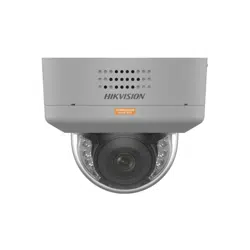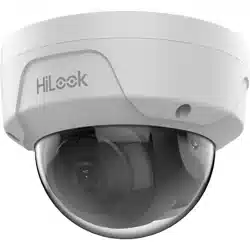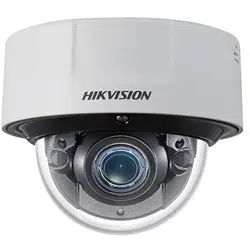

iDS-2CD7xxG0-xxxxx
Network Bullet Camera
User Manual

iDS-2CD7xxG0-xxxxx Network Bullet Camera User Manual
UM iDS-2CD7xxG0-xxxxx 021021NA 2
Legal Information
© 2021 Hangzhou Hikvision Digital Technology Co., Ltd. All rights reserved.
About this Manual
The Manual includes instructions for using and managing the Product. Pictures, charts, images and all
other information hereinafter are for description and explanation only. The information contained in the
Manual is subject to change, without notice, due to firmware updates or other reasons. Please find the
latest version of this Manual at the Hikvision website (https://www.hikvision.com/).
Please use this Manual with the guidance and assistance of professionals trained in supporting the
Product.
Trademarks
and other Hikvision trademarks and logos are the properties of Hikvision in various
jurisdictions.
Other trademarks and logos mentioned are the properties of their respective owners. : The terms
HDMI and HDMI High-Definition Multimedia Interface, and the HDMI Logo are trademarks or registered
trademarks of HDMI Licensing Administrator, Inc. in the United States and other countries.
Disclaimer
TO THE MAXIMUM EXTENT PERMITTED BY APPLICABLE LAW, THIS MANUAL AND THE PRODUCT DESCRIBED, WITH
ITS HARDWARE, SOFTWARE AND FIRMWARE, ARE PROVIDED “AS IS” AND “WITH ALL FAULTS AND ERRORS.”
HIKVISION MAKES NO WARRANTIES, EXPRESS OR IMPLIED, INCLUDING WITHOUT LIMITATION, MERCHANTABILITY,
SATISFACTORY QUALITY, OR FITNESS FOR A PARTICULAR PURPOSE. THE USE OF THE PRODUCT BY YOU IS AT YOUR
OWN RISK. IN NO EVENT WILL HIKVISION BE LIABLE TO YOU FOR ANY SPECIAL, CONSEQUENTIAL, INCIDENTAL, OR
INDIRECT DAMAGES, INCLUDING, AMONG OTHERS, DAMAGES FOR LOSS OF BUSINESS PROFITS, BUSINESS
INTERRUPTION, OR LOSS OF DATA, CORRUPTION OF SYSTEMS, OR LOSS OF DOCUMENTATION, WHETHER BASED ON
BREACH OF CONTRACT, TORT (INCLUDING NEGLIGENCE), PRODUCT LIABILITY, OR OTHERWISE, IN CONNECTION WITH
THE USE OF THE PRODUCT, EVEN IF HIKVISION HAS BEEN ADVISED OF THE POSSIBILITY OF SUCH DAMAGES OR LOSS.
YOU ACKNOWLEDGE THAT THE NATURE OF THE INTERNET PROVIDES FOR INHERENT SECURITY RISKS, AND
HIKVISION SHALL NOT TAKE ANY RESPONSIBILITIES FOR ABNORMAL OPERATION, PRIVACY LEAKAGE OR OTHER
DAMAGES RESULTING FROM CYBER-ATTACK, HACKER ATTACK, VIRUS INFECTION, OR OTHER INTERNET SECURITY
RISKS; HOWEVER, HIKVISION WILL PROVIDE TIMELY TECHNICAL SUPPORT IF REQUIRED.
YOU AGREE TO USE THIS PRODUCT IN COMPLIANCE WITH ALL APPLICABLE LAWS, AND YOU ARE SOLELY
RESPONSIBLE FOR ENSURING THAT YOUR USE CONFORMS TO THE APPLICABLE LAW. ESPECIALLY, YOU ARE
RESPONSIBLE, FOR USING THIS PRODUCT IN A MANNER THAT DOES NOT INFRINGE ON THE RIGHTS OF THIRD
PARTIES, INCLUDING WITHOUT LIMITATION, RIGHTS OF PUBLICITY, INTELLECTUAL PROPERTY RIGHTS, OR DATA
PROTECTION AND OTHER PRIVACY RIGHTS. YOU SHALL NOT USE THIS PRODUCT FOR ANY PROHIBITED END-USES,
INCLUDING THE DEVELOPMENT OR PRODUCTION OF WEAPONS OF MASS DESTRUCTION, THE DEVELOPMENT OR
PRODUCTION OF CHEMICAL OR BIOLOGICAL WEAPONS, ANY ACTIVITIES IN THE CONTEXT RELATED TO ANY NUCLEAR
EXPLOSIVE OR UNSAFE NUCLEAR FUEL-CYCLE, OR IN SUPPORT OF HUMAN RIGHTS ABUSES.
IN THE EVENT OF ANY CONFLICTS BETWEEN THIS MANUAL AND THE APPLICABLE LAW, THE LATTER PREVAILS.
Symbol Conventions
The symbols that may be found in this document are defined as follows.

iDS-2CD7xxG0-xxxxx Network Bullet Camera User Manual
UM iDS-2CD7xxG0-xxxxx 021021NA 3
Symbol
Description
Danger
Indicates a hazardous situation which, if not avoided, will or could result in death or
serious injury.
Caution
Indicates a potentially hazardous situation which, if not avoided, could result in
equipment damage, data loss, performance degradation, or unexpected results.
Provides additional information to emphasize or supplement important points of the
main text.
Safety Instruction
These instructions are intended to ensure that user can use the product correctly to avoid danger or
property loss.
Laws and Regulations
The device should be used in compliance with local laws, electrical safety regulations, and fire prevention
regulations.
Transportation
• Keep the device in original or similar packaging while transporting it.
Power Supply
• The input voltage should conform to IEC60950-1 standard: SELV (Safety Extra Low Voltage) and the
Limited Power Source. Refer to the appropriate documentation for detailed information.
• Make sure the plug is properly connected to the power socket.
• DO NOT connect multiple devices to one power adapter, to avoid overheating or fire hazards caused by
overload.
System Security
• The installer and user are responsible for password and security configuration and its settings.
Battery
• Improper use or replacement of the battery may result in explosion hazard.
• Replace with the same or equivalent type only. Dispose of used batteries in conformance with the
local codes.
Maintenance
• If the product does not work properly, please contact your dealer or the nearest service center. We
shall not assume any responsibility for problems caused by unauthorized repair or maintenance.
• A few device components (e.g., electrolytic capacitor) require regular replacement. The average
lifespan varies, so periodic checking is recommended. Contact your dealer for details.

iDS-2CD7xxG0-xxxxx Network Bullet Camera User Manual
UM iDS-2CD7xxG0-xxxxx 021021NA 4
Environment
• Make sure the running environment meets the requirement of the device. The operating temperature
shall be -30° to 60° C (-22° to 140° F), and the operating humidity shall be 95% or less, non-condensing.
• When any laser equipment is in use, make sure that the device lens is not exposed to the laser beam,
or it may burn out.
• Do not expose the device to high electromagnetic radiation or dusty environments.
• For indoor-only device, place it in a dry and well-ventilated environment.
• Do not aim the lens at the sun or any other bright light.
Emergency
• If smoke, odor, or noise arises from the device, immediately turn off the power, unplug the power cable,
and contact the service center.
Time Synchronization
• Set up camera time manually for the first time access if the local time is not synchronized with that of
the network. Visit the camera via Web browse/client software and go to time settings interface.

iDS-2CD7xxG0-xxxxx Network Bullet Camera User Manual
UM iDS-2CD7xxG0-xxxxx 021021NA 5
Contents
Symbol Conventions.......................................................................................................................................... 2
Safety Instruction ............................................................................................................................................. 3
Contents ........................................................................................................................................................... 5
Chapter 1 System Requirements .................................................................................................................... 10
Chapter 2 Device Activation and Accessing ................................................................................................... 11
Activate the Device via SADP ...................................................................................................................... 11
Activate the Device via Browser ................................................................................................................ 11
Login ............................................................................................................................................................ 12
Plug-in Installation ........................................................................................................................ 12
Admin Password Recovery ............................................................................................................ 13
Illegal Login Lock ............................................................................................................................................ 13
Chapter 3 Live View ........................................................................................................................................ 14
Live View Parameters .................................................................................................................................. 14
Enable and Disable Live View ....................................................................................................... 14
Adjust Aspect Ratio ....................................................................................................................... 14
Live View Stream Type ................................................................................................................... 14
Select Third-Party Plug-in ............................................................................................................ 14
Window Division ............................................................................................................................. 15
Light ............................................................................................................................................... 15
Count Pixel ..................................................................................................................................... 15
Start Digital Zoom .......................................................................................................................... 15
Auxiliary Focus ............................................................................................................................... 15
Lens Initialization .......................................................................................................................... 15
Quick Set Live View ........................................................................................................................ 16
Lens Parameters Adjustment ....................................................................................................... 16
Conduct 3D Positioning ................................................................................................................. 17
Set Transmission Parameters .................................................................................................................... 17
Set Smooth Streaming ................................................................................................................................ 18
Chapter 4 Video and Audio ............................................................................................................................. 20
Video Settings ............................................................................................................................................. 20
Stream Type ................................................................................................................................... 20
Video Type ...................................................................................................................................... 20
Resolution ...................................................................................................................................... 21
Bitrate Type and Max. Bitrate ........................................................................................................ 21
Video Quality .................................................................................................................................. 21
Frame Rate ..................................................................................................................................... 21
Video Encoding .............................................................................................................................. 21
Smoothing ...................................................................................................................................... 22
ROI ................................................................................................................................................................ 22
Set ROI ............................................................................................................................................ 23
Set Face Tracking ROI .................................................................................................................... 23
Set Target Tracking ROI ................................................................................................................. 24
Set License Plate Tracking ROI ..................................................................................................... 24
Display Info. on Stream ............................................................................................................................... 24
Audio Settings ............................................................................................................................................. 25
Audio Encoding .............................................................................................................................. 25
Audio Input ..................................................................................................................................... 25

iDS-2CD7xxG0-xxxxx Network Bullet Camera User Manual
UM iDS-2CD7xxG0-xxxxx 021021NA 6
Audio Output .................................................................................................................................. 25
Environmental Noise Filter ............................................................................................................ 25
Two-Way Audio ........................................................................................................................................... 25
Display Settings .......................................................................................................................................... 26
Scene Mode .................................................................................................................................... 26
Image Parameters Switch ............................................................................................................. 28
Video Standard .............................................................................................................................. 28
Local Video Output ........................................................................................................................ 28
OSD ............................................................................................................................................................... 29
Set Privacy Mask ......................................................................................................................................... 29
Overlay Picture ............................................................................................................................................ 29
Set Target Cropping .................................................................................................................................... 30
Chapter 5 Video Recording and Picture Capture ............................................................................................ 31
Storage Settings ......................................................................................................................................... 31
Set Memory Card ............................................................................................................................ 31
Set FTP ............................................................................................................................................ 32
Set NAS ........................................................................................................................................... 33
eMMC Protection ............................................................................................................................ 34
Set Cloud Storage .......................................................................................................................... 34
Video Recording .......................................................................................................................................... 34
Record Automatically .................................................................................................................... 34
Record Manually ............................................................................................................................ 35
Set Lite Storage ............................................................................................................................. 36
Playback and Download Video ...................................................................................................... 36
Capture Configuration ................................................................................................................................ 37
Capture Automatically ................................................................................................................... 37
Capture Manually ........................................................................................................................... 37
View and Download Pictures ........................................................................................................ 38
Chapter 6 Events and Alarms .......................................................................................................................... 39
Basic Event .................................................................................................................................................. 39
Set Motion Detection ..................................................................................................................... 39
Set Video Tampering Alarm ........................................................................................................... 41
Set PIR Alarm .................................................................................................................................. 42
Set Exception Alarm ...................................................................................................................... 42
Set Alarm Input .............................................................................................................................. 43
Set Video Quality Diagnosis .......................................................................................................... 43
Set Vibration Detection ................................................................................................................. 44
Smart Event ................................................................................................................................................. 44
Detect Audio Exception ................................................................................................................. 45
Set Defocus Detection .................................................................................................................. 45
Detect Scene Change .................................................................................................................... 46
Set Face Detection ........................................................................................................................ 46
Set Video Loss ............................................................................................................................... 46
Set Intrusion Detection ................................................................................................................. 47
Set Line Crossing Detection ......................................................................................................... 48
Set Region Entrance Detection .................................................................................................... 49
Set Region Exiting Detection ........................................................................................................ 49
Set Unattended Baggage Detection ............................................................................................ 50
Set Object Removal Detection ...................................................................................................... 51

iDS-2CD7xxG0-xxxxx Network Bullet Camera User Manual
UM iDS-2CD7xxG0-xxxxx 021021NA 7
Draw Area ....................................................................................................................................... 52
Set Size Filter ................................................................................................................................. 52
Chapter 7 Network Settings ............................................................................................................................ 53
TCP/IP........................................................................................................................................................... 53
Multicast ........................................................................................................................................ 53
Multicast Discovery ....................................................................................................................... 54
SNMP ............................................................................................................................................................ 54
Set SRTP ....................................................................................................................................................... 54
Port Mapping................................................................................................................................................ 55
Set Auto Port Mapping ................................................................................................................... 55
Set Manual Port Mapping .............................................................................................................. 55
Set Port Mapping on Router .......................................................................................................... 56
Port ............................................................................................................................................................... 56
Access to Device via Domain Name ........................................................................................................... 57
Access to Device via PPPoE Dial Up Connection ....................................................................................... 58
Wireless Dial ................................................................................................................................................ 58
Set Wireless Dial ............................................................................................................................ 59
Set White List ................................................................................................................................. 59
Wi-Fi ............................................................................................................................................................. 60
Connect Wi-Fi Manually ................................................................................................................ 60
Connect Wi-Fi Automatically ........................................................................................................ 60
Set Network Service .................................................................................................................................... 63
Set ONVIF ...................................................................................................................................................... 63
Set Alarm Server .......................................................................................................................................... 64
Access Camera via Hik-Connect ................................................................................................................ 64
Enable Hik-Connect Service on Camera ....................................................................................... 65
Set Up Hik-Connect ....................................................................................................................... 66
Add Camera to Hik-Connect .......................................................................................................... 67
Chapter 8 Arming Schedule and Alarm Linkage .............................................................................................. 68
Set Arming Schedule ................................................................................................................................... 68
Linkage Method Settings ............................................................................................................................ 68
Trigger Alarm Output ...................................................................................................................... 68
FTP/NAS/Memory Card Uploading ................................................................................................ 69
Send E-mail .................................................................................................................................... 69
Notify Surveillance Center ............................................................................................................ 70
Trigger Recording .......................................................................................................................... 70
Flashing Light ................................................................................................................................ 71
Audible Warning ............................................................................................................................. 71
Chapter 9 System and Security ....................................................................................................................... 73
View Device Information ............................................................................................................................. 73
Search and Manage Log ............................................................................................................................. 73
Simultaneous Login .................................................................................................................................... 73
Import and Export Configuration File ......................................................................................................... 73
Export Diagnose Information ...................................................................................................................... 73
Reboot ......................................................................................................................................................... 73
Restore and Default .................................................................................................................................... 74
Upgrade ....................................................................................................................................................... 74
View Open Source Software License ......................................................................................................... 74
Time and Date .............................................................................................................................................. 74

iDS-2CD7xxG0-xxxxx Network Bullet Camera User Manual
UM iDS-2CD7xxG0-xxxxx 021021NA 8
Synchronize Time Manually ........................................................................................................... 75
Set NTP Server ................................................................................................................................ 75
Synchronize Time by Satellite ....................................................................................................... 75
Set DST ........................................................................................................................................... 76
Set RS-485 ................................................................................................................................................... 76
Set RS-232 ................................................................................................................................................... 76
External Device ............................................................................................................................................ 77
Supplement Light Settings ........................................................................................................... 77
Security ........................................................................................................................................................ 77
Authentication ............................................................................................................................... 77
Set IP Address Filter ...................................................................................................................... 78
Set HTTPS ....................................................................................................................................... 78
Set QoS ........................................................................................................................................... 79
Set IEEE 802.1x ............................................................................................................................... 79
Control Timeout Settings .............................................................................................................. 79
Search Security Audit Logs ........................................................................................................... 80
Security Reinforcement ................................................................................................................ 80
Certificate Management ............................................................................................................................. 80
Create Self-Signed Certificate ...................................................................................................... 80
Create Certificate Request ........................................................................................................... 81
Import Certificate ........................................................................................................................... 81
Install Server/Client Certificate .................................................................................................... 81
Install CA Certificate ...................................................................................................................... 82
Enable Certificate Expiration Alarm .............................................................................................. 82
User and Account ........................................................................................................................................ 82
Set User Account and Permission ................................................................................................ 82
Simultaneous Login ....................................................................................................................... 83
Online Users ................................................................................................................................... 83
Chapter 10 Allocate VCA Resource ................................................................................................................. 84
Face Capture ............................................................................................................................................... 84
Set Face Capture ........................................................................................................................... 84
Overlay and Capture ...................................................................................................................... 85
Face Capture Algorithms Parameters .......................................................................................... 86
Set Shield Region ........................................................................................................................... 87
Road Traffic ................................................................................................................................................. 87
Set Vehicle Detection .................................................................................................................... 87
Set Mixed-Traffic Detection Rule .................................................................................................. 88
Uploading Pictures Settings ......................................................................................................... 89
Camera Settings ............................................................................................................................ 89
Import or Export Blacklist & Whitelist .......................................................................................... 89
Multi-Target-Type Detection ..................................................................................................................... 90
Set Multi-Target-Type Detection Rule ......................................................................................... 90
Overlay and Capture ...................................................................................................................... 90
Multi-Target-Type Detection Algorithm Parameters ................................................................... 91
Set Shield Region ........................................................................................................................... 92
Face Counting ............................................................................................................................................. 92
Set Face Counting Detection Rule ............................................................................................... 92
Overlay and Capture ...................................................................................................................... 93
Face Counting Algorithm Parameters .......................................................................................... 94

iDS-2CD7xxG0-xxxxx Network Bullet Camera User Manual
UM iDS-2CD7xxG0-xxxxx 021021NA 9
View Face Counting Result ........................................................................................................... 94
Queue Management .................................................................................................................................... 94
Set Regional People Queuing-Up .................................................................................................. 95
Set Waiting Time Detection .......................................................................................................... 95
Queue Management Statistics ..................................................................................................... 96
Counting ...................................................................................................................................................... 97
Set Counting .................................................................................................................................. 97
View Counting Statistics ............................................................................................................... 98
Hard Hat Detection ...................................................................................................................................... 98
Set Hard Hat Detection .................................................................................................................. 99
Face Comparison and Modeling ................................................................................................................. 99
Face Comparison ........................................................................................................................... 99
Face Modeling .............................................................................................................................. 102
Chapter 11 Open Platform ............................................................................................................................. 103
Set Open Platform ..................................................................................................................................... 103
Chapter 12 Set EPTZ ...................................................................................................................................... 104
Chapter 13 Smart Display .............................................................................................................................. 105
Appendix A: Device Command ....................................................................................................................... 106
Appendix B: Device Communication Matrix ................................................................................................... 107

iDS-2CD7xxG0-xxxxx Network Bullet Camera User Manual
UM iDS-2CD7xxG0-xxxxx 021021NA 10
Chapter 1 System Requirements
Your computer should meet the requirements for proper visiting and operating the product.
• Operating System: Microsoft Windows XP SP1 and above version
• CPU: 2.0 GHz or higher
• RAM: 1 GB or more
• Display: 1024×768 resolution or higher
• Web Browser: Internet Explorer 8.0 or above version, Mozilla Firefox 30.0 to 51, or Google Chrome
31 to 51.

iDS-2CD7xxG0-xxxxx Network Bullet Camera User Manual
UM iDS-2CD7xxG0-xxxxx 021021NA 11
Chapter 2 Device Activation and Accessing
To protect the security and privacy of the user account and data, you should set a login
password to activate the device when access the device via network.
See the software client user manual for details about the client software activation.
Activate the Device via SADP
Search and activate the online devices via SADP software.
Before You Start
Access www.hikvision.com to get SADP software to install.
Steps
1. Connect the device to network using the network cable.
2. Run SADP software to search the online devices.
3. Check Device Status from the device list, and select Inactive Device.
4. Create and input the new password in the password field, and confirm the password.
STRONG PASSWORD RECOMMENDED − We highly recommend that you create a strong
password of your own choosing (using a minimum of eight characters, including at least
three of the following categories: upper case letters, lower case letters, numbers, and
special characters) in order to increase the security of your product. We also recommend
that you reset your password regularly. Especially in high security systems, resetting the
password monthly or weekly can better protect your product.
Proper configuration of all passwords and other security settings is the responsibility of the
installer and/or end-user.
5. Click OK. Device Status changes into Active.
6. Optional: Change the network parameters of the device in Modify Network Parameters.
Activate the Device via Browser
You can access and activate the device via a browser.
Steps
1. Connect the device to the PC using the network cables.
2. Change the IP address of the PC and device to the same segment.
The default IP address of the device is 192.168.1.64. You can set the IP address of the PC
from 192.168.1.2 to 192.168.1.253 (except 192.168.1.64). For example, you can set the IP
address of the PC to 192.168.1.100.

iDS-2CD7xxG0-xxxxx Network Bullet Camera User Manual
UM iDS-2CD7xxG0-xxxxx 021021NA 12
3. Input 192.168.1.64 in the browser.
4. Set device activation password.
STRONG PASSWORD RECOMMENDED − We highly recommend that you create a strong
password of your own choosing (using a minimum of eight characters, including at least
three of the following categories: upper case letters, lower case letters, numbers, and
special characters) in order to increase the security of your product. We also recommend
that you reset your password regularly. Especially in high security systems, resetting the
password monthly or weekly can better protect your product.
Proper configuration of all passwords and other security settings is the responsibility of the
installer and/or end-user.
5. Click OK.
6. Input the activation password to log in to the device.
7. Optional: Go to Configuration →Network →Ba si c →TCP/IP to change the IP address of the device to the
same segment of your network.
Login
Log in to the device via a Web browser.
Plug-in Installation
Certain operation systems and Web browsers may restrict the display and operation of the camera
function. You should install plug-in or complete certain settings to ensure normal display and operation.
For detailed restricted function, refer to the actual device.
Operating
System
Web Browser
Operation
Windows
• Internet Explorer 8+
• Google Chrome 57 and earlier version
• Mozilla Firefox 52 and earlier version
Follow pop-up prompts to complete plug-in
installation.
• Google Chrome 57+
• Mozilla Firefox 52+
Click to download and install
plug-in.
Mac OS
• Google Chrome 57+
• Mozilla Firefox 52+
• Mac Safari 16+
Plug-in installation is not required.
Go to Configuration → Network → Advanced
Settings → Network Service to enable WebSocket
or Websockets for normal view. Display and
operation of certain functions are restricted. For
example, Playback and Picture are not available.
For detailed restrictions, refer to actual device.
The camera supports only Windows and Mac OS system and does not support Linux system.

iDS-2CD7xxG0-xxxxx Network Bullet Camera User Manual
UM iDS-2CD7xxG0-xxxxx 021021NA 13
Admin Password Recovery
If you forget the admin password, you can reset the password by clicking Forget Password on the login
page after completing the account security settings.
You can reset the password by setting the security question or e-mail.
When you need to reset the password, make sure that the device and the PC are on the
same network segment.
Security Question: You can set the account security during the activation, or you can go to
Configuration → System → User Management, click Account Security Settings, select the
security question, and input your answer.
You can click Forget Password and answer the security question to reset the admin
password when accessing the device via a browser.
Email: You can set the account security during the activation, or you can go to Configuration
→ System → User Management, click Account Security Settings, and input your e-mail
address to receive the verification code during the recovering operation process.
Illegal Login Lock
It helps to improve security when accessing the device via the Internet.
The admin user can set the login attempts with the wrong password. When your login attempts with the
wrong password reach the set number of times, the device locks.
Go to Configuration → System → Security → Security Service, and enable Enable Illegal Login Lock, and set
the number of illegal login attempts.

iDS-2CD7xxG0-xxxxx Network Bullet Camera User Manual
UM iDS-2CD7xxG0-xxxxx 021021NA 14
Chapter 3 Live View
Introduction to live view parameters, function icons, and transmission parameters settings.
Live View Parameters
The supported functions vary by model.
Enable and Disable Live View
This function is used to quickly enable or disable live view of all channels.
• Click to start live view of all channels.
• Click to stop live view of all channels.
Adjust Aspect Ratio
Steps
1. Click Live View.
2. Click to select the aspect ratio.
• : 4:3 window size
• : 16:9 window size
• : Original window size
• : Self-adaptive window size
• : Original ratio window size
Live View Stream Type
Select the live view stream type according to your needs. For detailed information about the stream type
selection, refer to Stream Type.
Select Third-Party Plug-in
When the live view cannot display via certain browsers, you can change the plug-in for live view according
to the browser.
1. Click Live View.
2. Click to select the plug-in.
When you access the device via Internet Explorer, you can select Webcomponents or QuickTime. When
you access the device via other browsers, you can select Webcomponents, QuickTime, VLC, or MJPEG.

iDS-2CD7xxG0-xxxxx Network Bullet Camera User Manual
UM iDS-2CD7xxG0-xxxxx 021021NA 15
Window Division
• : 1 × 1 window division
• : 2 × 2 window division
• : 3 × 3 window division
• : 4 × 4 window division
Light
Click to turn on or turn off the illuminator.
Count Pixel
Use to get the height and width pixel of the selected region in the live view image.
Steps
1. Click to enable the function.
2. Drag the mouse on the image to select a desired rectangle area.
The width pixel and height pixel are displayed on the bottom of the live view image.
Start Digital Zoom
Use to see a detailed information of any region in the image.
Steps
1. Click to enable the digital zoom.
2. In the live view image, drag the mouse to select the desired region.
3. Click in the live view image to go back to the original image.
Auxiliary Focus
Use for motorized device to improve the image if the device cannot focus clearly.
For devices that support ABF, adjust the lens angle, then focus and click the ABF button on the device.
The device can focus clearly.
Click to focus automatically.
If the device cannot focus with auxiliary focus, you can use Lens Initialization, then use
auxiliary focus again to make the image clear.
If auxiliary focus cannot help the device focus clearly, you can use manual focus.
Lens Initialization

iDS-2CD7xxG0-xxxxx Network Bullet Camera User Manual
UM iDS-2CD7xxG0-xxxxx 021021NA 16
Lens initialization is used on devices equipped with a motorized lens. The function can reset the lens
when long time zoom or focus results in blurred image. This function varies by model.
• Manual Lens Initialization: Click to operate lens initialization.
• Auto Lens Initialization: Go to Configuration → System → Maintenance → Lens Correction to enable this
function. You can set the arming schedule, and the device will correct the lens automatically during
the configured time periods.
Quick Set Live View
Offers quick setup of PTZ, display settings, OSD, video/audio, and VCA resource settings on live view page.
Steps
1. Click to show quick setup page.
2. Set PTZ, display settings, OSD, video/audio, and VCA resource parameters.
• For PTZ settings, see Lens Parameters Adjustment.
• For display settings, see Display Settings.
• For OSD settings, see OSD.
• For audio and video settings, see Video and Audio.
• For VCA settings, see Allocate VCA Resource.
This function is supported only by certain models.
Lens Parameters Adjustment
It is used to adjust the lens focus, zoom, and iris.
• Zoom
Click , and the lens zooms in.
Click , and the lens zooms out.
• Focus
Click , then the lens focuses far and the distant object gets clear.
Click , then the lens focuses near and the nearby object gets clear.
• PTZ Speed
Slide to adjust the speed of the pan/tilt movement.
• Iris

iDS-2CD7xxG0-xxxxx Network Bullet Camera User Manual
UM iDS-2CD7xxG0-xxxxx 021021NA 17
When the image is too dark, click to enlarge the iris.
When the image is too bright, click to stop down the iris.
Conduct 3D Positioning
3D positioning relocates the selected area to the image center.
Steps
1. Click to enable the function.
2. Select a target area in live image.
• Left click on a point on live image: the point is relocated to the center of the live image with no
zooming in or out effect.
• Hold and drag the mouse to a lower right position to frame an area on the live. The framed area is
zoomed in and relocated to the center of the live image.
• Hold and drag the mouse to an upper left position to frame an area on the live. The framed area is
zoomed out and relocated to the center of the live image.
3. Click the button again to turn off the function.
Set Transmission Parameters
The live view image may be displayed abnormally according to the network conditions. In different
network environments, you can adjust the transmission parameters to solve the problem.
Steps
1. Go to Configuration → Local.
2. Set the transmission parameters as required.
• Protocol
- TCP
TCP ensures complete delivery of streaming data and better video quality, yet the real-time
transmission will be affected. It is suitable for a stable network environment.
- UDP
UDP is suitable for an unstable network environment that does not demand high video fluency.
- MULTICAST
Multicast is suitable for situations where there are multiple clients. You should set the
multicast address for them before selection.
For detailed information about multicast, refer to Multicast.
- HTTP

iDS-2CD7xxG0-xxxxx Network Bullet Camera User Manual
UM iDS-2CD7xxG0-xxxxx 021021NA 18
HTTP is suitable for situations in which a third-party needs to get the stream from the device.
• Play Performance
- Shortest Delay
The device takes the real-time video image as the priority over the video fluency.
- Balanced
The device ensures both the real-time video image and the fluency.
- Fluent
The device takes the video fluency as the priority over real-time. In a poor network environment,
the device cannot ensures video fluency even if the fluency is enabled.
- Custom
You can set the frame rate manually. In a poor network environment, you can reduce the frame
rate to get a fluent live view. But the rule information may not display.
3. Click OK.
Set Smooth Streaming
This function tackles latency and network congestion caused by unstable network condition, and keeps
the live view stream on the Web browser or the client software smooth.
Before You Start
Add the device to your client software and select NPQ protocol in client software before configuring the
smooth streaming function.
Be sure that the Bitrate Type is selected as Constant and SVC is selected as OFF before enabling the
function. Go to Configuration → Video/Audio → Video to set the parameters.
Steps
1. Go to the settings page: Configuration → Network → Advanced Settings → Smooth Streaming.
2. Check Enable Smooth Streaming.
3. Select the mode for smooth streaming.
• Auto: The resolution and bitrate are adjusted automatically, with resolution taking priority. The
upper limits of these two parameters will not exceed the values you set on the Video page. Go to
Configuration → Video/Audio → Video, set the Resolution and Max. Bitrate before you enable the
smooth streaming function. In this mode, the frame rate will adjust to the maximum value
automatically.
• Resolution Priority: The resolution stays the same as the set value on the Video page, and the
bitrate will be adjusted automatically. Go to Configuration → Video/Audio → Video, set the Max.
Bitrate before you enable smooth streaming function. In this mode, the framerate will be adjusted to
the maximum value automatically.

iDS-2CD7xxG0-xxxxx Network Bullet Camera User Manual
UM iDS-2CD7xxG0-xxxxx 021021NA 19
• Error Correction: The resolution and bitrate stay the same as the set values on Video page. The
mode is used to correct the data error during transmission to ensure the image quality. You can set
the Error Correction Proportion within range of 0–100.
When the proportion is 0, the data error will be corrected by data retransmission. When the
proportion is higher than 0, the error data will be corrected via redundant data that is added to the
stream and data retransmission. The higher the value, the more redundant date will be generated,
the more data error would be corrected, but a larger bandwidth would be required. When the
proportion is 100, the redundant data will be as large as the original data, and twice the bandwidth
is required.
Be sure the bandwidth is sufficient in the Error Correction mode.
4. Save the settings.

iDS-2CD7xxG0-xxxxx Network Bullet Camera User Manual
UM iDS-2CD7xxG0-xxxxx 021021NA 20
Chapter 4 Video and Audio
This part introduces the configuration of video and audio related parameters.
Video Settings
This section introduces video parameter settings such as stream type, video encoding, and resolution.
1. Go to setting page: Configuration → Video/Audio → Video.
Stream Type
For devices that support more than one stream, you can specify parameters for each stream type.
• Main Stream: This stream stands for the best stream performance the device supports. It usually offers
the best resolution and frame rate the device can do. But high resolution and frame rate usually
means larger storage space and higher bandwidth requirements in transmission.
• Sub Stream: This stream usually offers comparatively low resolution options, which consumes less
bandwidth and storage space.
• Other Streams: Steams other than the main stream and sub stream may also be offered for customized
usage.
• Set Custom Video: You can set up additional video streams if required. For custom video streams, you
can preview them, but cannot record or play them back.
Steps
The function is supported only by certain camera models.
After restoring the device (not restore to default settings), quantity of custom video
streams and their names are kept, but the related parameters are restored.
1. Click to add a stream.
2. Change the stream name as needed.
Up to 32 letters and symbols (except &, <, >, ', or ") are allowed for the stream name.
3. Customize the stream parameters (resolution, frame rate, max. bitrate, video encoding).
4. Optional: Add stream description as needed.
5. Optional: If a custom stream is not needed, click to delete it.
6. Click Save.
Video Type
Select the content (video and audio) that should be contained in the stream.

iDS-2CD7xxG0-xxxxx Network Bullet Camera User Manual
UM iDS-2CD7xxG0-xxxxx 021021NA 21
• Video: Only video content is contained in the stream.
• Video & Audio: Video content and audio content are contained in the composite stream.
Resolution
Select video resolution according to actual needs. Higher resolution requires more bandwidth and storage.
Bitrate Type and Max. Bitrate
• Constant Bitrate: The stream is compressed and transmitted at a comparatively fixed bitrate. The
compression speed is fast, but mosaic may occur on the image.
• Variable Bitrate: The device automatically adjusts the bitrate under the set Max. Bitrate. The
compression speed is slower than that of the constant bitrate, but it guarantees the image quality of
complex scenes.
Video Quality
When Bitrate Type is set as Variable, video quality is configurable. Select a video quality according to
actual needs. Note that higher video quality requires higher bandwidth.
Frame Rate
Frame rate is the frequency the video stream is updated and is measured in frames per second (fps).
A higher frame rate is advantageous when there is movement in the video stream, as it maintains image
quality throughout. Note that higher frame rates require higher bandwidth and larger storage space.
Video Encoding
The compression standard the device uses for video encoding.
Available compression standards vary by model.
• H.264: H.264, also known as MPEG-4 Part 10, Advanced Video Coding, is a compression standard.
Without compressing image quality, it increases compression ratio and reduces the size of video files
more than MJPEG or MPEG-4 Part 2.
• H.264+: H.264+ is an improved compression coding technology based on H.264. By enabling H.264+,
you can estimate the HDD consumption by its maximum average bitrate. Compared to H.264, H.264+
reduces storage by up to 50% with the same maximum bitrate in most scenes.
When H.264+ is enabled, Max. Average Bitrate is configurable. The device gives a recommended max.
average bitrate by default. You can adjust the parameter to a higher value if the video quality is less
satisfactory. Max. average bitrate should not be higher than max. bitrate.
When H.264+ is enabled, Video Quality, I Frame Interval, Profile and SVC are not configurable.
• H.265: H.265, also known as High Efficiency Video Coding (HEVC) and MPEG-H Part 2, is a compression
standard. In comparison to H.264, it offers better video compression at the same resolution, frame rate
and image quality.

iDS-2CD7xxG0-xxxxx Network Bullet Camera User Manual
UM iDS-2CD7xxG0-xxxxx 021021NA 22
• H.265+: H.265+ is an improved compression coding technology based on H.265. By enabling H.265+,
you can estimate the HDD consumption by its maximum average bitrate. Compared to H.265, H.265+
reduces storage by up to 50% with the same maximum bitrate in most scenes.
When H.265+ is enabled, Max. Average Bitrate is configurable. The device gives a recommended max.
average bitrate by default. You can adjust the parameter to a higher value if the video quality is less
satisfactory. Max. average bitrate should not be higher than max. bitrate.
With H.265+ enabled, Video Quality, I Frame Interval, Profile, and SVC are not configurable.
• I-Frame Interval: I-frame interval defines the number of frames between two I-frames.
In H.264 and H.265, an I-frame, or intra frame, is a self-contained frame that can be independently
decoded without any reference to other images. An I-frame consumes more bits than other frames.
Thus, video with more I-frames, in other words, smaller I-frame interval, generates more steady and
reliable data bits while requiring more storage space.
• SVC: Scalable Video Coding (SVC) is the name for the Annex G extension of the H.264 or H.265 video
compression standard.
The objective of the SVC standardization is to enable encoding of a high-quality video bitstream that
contains one or more subset bitstreams that can themselves be decoded with a complexity and
reconstruction quality similar to that achieved using the existing H.264 or H.265 design with the same
quantity of data as in the subset bitstream. The subset bitstream is derived by dropping packets from
the larger bitstream.
SVC enables forward compatibility for older hardware: the same bitstream can be consumed by basic
hardware, which can only decode a low-resolution subset, while more advanced hardware will be able
decode high quality video stream.
• MPEG4: MPEG4, refers to MPEG-4 Part 2, a video compression format developed by Moving Picture
Experts Group (MPEG).
• MJPEG: Motion JPEG (M-JPEG or MJPEG) is a video compression format in which intraframe coding
technology is used. Images in MJPEG format is compressed as individual JPEG images.
• Profile: This function means that under the same bitrate, the more complex the profile, the higher the
quality of the image, and the requirement for network bandwidth is also higher.
Smoothing
This refers to the smoothness of the stream. The higher the smoothing value, the better the stream
fluency, though the video quality may be lower. The lower the smoothing value, the higher the stream
quality, though it may appear not fluent.
ROI
ROI (Region of Interest) encoding helps to discriminate the ROI and background information in video
compression. The technology assigns more encoding resource to the region of interest, thus to increase
the quality of the ROI whereas the background information is less focused.

iDS-2CD7xxG0-xxxxx Network Bullet Camera User Manual
UM iDS-2CD7xxG0-xxxxx 021021NA 23
Set ROI
ROI (Region of Interest) encoding helps to assigns more encoding resource to the region of interest, thus
to increase the quality of the ROI whereas the background information is less focused.
Before You Start
Please check the video coding type. ROI is supported when the video coding type is H.264 or H.265.
Steps
1. Go to Configuration → Video/Audio → ROI.
2. Check Enable.
3. Select Stream Type.
4. Select Region No. in Fixed Region to draw ROI region.
1) Click Drawing.
2) Click and drag the mouse on the view screen to draw the fixed region.
3) Click Stop Drawing.
Select the fixed region that needs to be adjusted and drag the mouse to adjust its position.
5. Input the Region Name and ROI Level.
6. Click Save.
The higher the ROI level, the clearer the image of the detected region.
7. Optional: Select other region no. and repeat the above steps if you need to draw multiple fixed regions.
Set Face Tracking ROI
When the face tracking function is enabled in ROI and a face appears in the live picture, the image of the
face is clearer than that of the surrounding area.
Steps
1. Go to the ROI setting page: Configuration → Video/Audio → ROI.
2. Check Enable Face Tracking.
3. Select ROI Level in Dynamic Region.
ROI level means image quality enhancing level. The larger the value, the better the quality.
4. Click Save.

iDS-2CD7xxG0-xxxxx Network Bullet Camera User Manual
UM iDS-2CD7xxG0-xxxxx 021021NA 24
Set Target Tracking ROI
The moving target is clearer than other areas in live image or recordings after enabling the function.
Before You Start
Go to Configuration → PTZ → Smart Tracking to complete the smart tracking settings.
Steps
1. Go to Configuration → Video/Audio → ROI.
2. Check Enable Target Tracking.
3. Set ROI Level for target tracking. The higher the value, the clearer the target.
4. Click Save.
Set License Plate Tracking ROI
When the license plate tracking ROI function is enabled and the license plate appears in the live picture,
the image of the license plate is than that of the surrounding area.
Steps
1. Go to the ROI setting page: Configuration → Video/Audio → ROI.
2. Check Enable License Plate Tracking.
3. Select ROI Level in Dynamic Region.
ROI level means the image quality enhancing level. The larger the value, the better the
image quality.
4. Click Save.
Display Info. on Stream
The information of the objects (e.g., human, vehicle, etc.) is marked in the video stream. You can set rules
on the connected rear-end device or client software to detect the events including line crossing,
intrusion, etc.
Steps
1. Go Configuration → Video/Audio → Display Info. on Stream to the setting page.
2. Check Enable Dual-VCA.
3. Click Save.

iDS-2CD7xxG0-xxxxx Network Bullet Camera User Manual
UM iDS-2CD7xxG0-xxxxx 021021NA 25
Audio Settings
This function sets audio parameters such as audio encoding and environment noise filtering. Go to the
audio settings page: Configuration → Video/Audio → Audio.
Audio Encoding
Select the audio encoding compression of the audio.
Audio Input
Connect the audio input device as required.
The audio input display varies by model.
LineIn
Set Audio Input to LineIn when the device connects to the audio input device with high
output power such as an MP3, synthesizer, or active pickup.
MicIn
Set Audio Input to MicIn when the device connects to an audio input device with low
output power such as a microphone or passive pickup.
Audio Output
Connect the audio output device as required.
This switchs the device audio output. You can adjust the output volume as required. When it is disabled,
device audio does not provide output. The audio output display varies by device model.
Environmental Noise Filter
Set to OFF or ON. When the function is enabled, the environment noise can be filtered to some extent.
Two-Way Audio
Use to realize the two-way audio function between the monitoring center and the target in the monitoring
screen.
Before You Start
• Make sure the audio input device (pick-up or microphone) and audio output device (speaker)
connected to the device are working properly. See audio input and output device specifications for
connection.
• If the device has a built-in microphone and speaker, two-way audio function can be enabled directly.
Steps
1. Click Live View.
2. Click on the toolbar to enable the two-way audio function of the camera.
3. Click
and select , move the slider to adjust the volume.

iDS-2CD7xxG0-xxxxx Network Bullet Camera User Manual
UM iDS-2CD7xxG0-xxxxx 021021NA 26
4. Click , disable the two-way audio function.
Display Settings
This offers the parameter settings to adjust image features. Go to Configuration → Image → Display
Settings.
Click Default to restore settings.
Scene Mode
There are several sets of image parameters predefined for different installation environments. Select a
scene according to the actual installation environment to speed up the display settings.
• Image Adjustment: By adjusting the Brightness, Saturation, Hue, Contrast, and Sharpness, the image
can be best displayed.
• Exposure Settings: Exposure is controlled by the combination of iris, shutter, and photo sensibility.
You can adjust image effect by setting exposure parameters.
In manual mode, you need to set Exposure Time, Gain, and Slow Shutter.
• Focus: It offers options to adjust the focus mode and the minimum focus distance.
Focus Mode
Auto: The device focuses automatically as the scene changes. If you cannot get a well-focused
image under auto mode, reduce light sources in the image and avoid flashing lights.
Semi-auto: The device focuses once after the PTZ and lens zooming. If the image is clear, the focus
does not change when the scene changes.
Manual: You can adjust the focus manually on the live view page.
Min. Focus Distance: When the distance between the scene and lens is shorter than the Min. Focus
Distance, the lens does not focus.

iDS-2CD7xxG0-xxxxx Network Bullet Camera User Manual
UM iDS-2CD7xxG0-xxxxx 021021NA 27
• Day/Night Switch
Day/Night Switch function can provide color images in te day mode and black/white images in night
mode. Switch mode is configurable.
Day: The image is always in color.
Night: The image is always black/white.
Auto: The camera automatically switches between day mode and the night mode according to the
illumination.
• Scheduled-Switch: Set the Start Time and the End Time to define the duration for day mode.
• Triggered by Alarm Input: Two trigger modes are available: Day and Night. For example, if the trigger
mode is Night, the image turns black and white when the device receives an alarm input signal.
Day/Night Switch function varies by model.
• Grey Scale: You can choose the range of the Grey Scale as [0-255] or [16-235].
• Rotate: When enabled, the live view will rotate 90 ° counterclockwise. For example, 1280 × 720 is
rotated to 720 × 1280.
Enabling this function can change the effective range of monitoring in the vertical direction.
• Lens Distortion Correction: For devices equipped with a motorized lens, image may appear distorted to
some extent. Enable this function to correct the distortion.
This function is supported only by certain devices equipped with a motorized lens.
The edge of image will be lost if this function is enabled.
• BLC: If you focus on an object against a strong backlight, the object will be too dark to be seen clearly.
BLC (backlight compensation) compensates light to the object in the front to make it clear. If BLC mode
is set as Custom, you can draw a red rectangle on the live view image as the BLC area.
• WDR: The WDR (Wide Dynamic Range) function helps the camera provide clear images in environments
with strong illumination differences.
When there are both very bright and very dark areas simultaneously in the field of view, you
can enable the WDR function and set the level. WDR automatically balances the brightness
level of the whole image and provides clear images with more details.
When WDR is enabled, other functions may not be supported. Refer to actual interface.
• HLC: When the bright area of the image is over-exposed and the dark area is under-exposed, the HLC
(High Light Compression) function can be enabled to weaken the bright area and brighten the dark
area, so as to achieve the light balance of the overall picture.
• White Balance: White balance is the white rendition function of the camera. It is used to adjust the
color temperature according to the environment.

iDS-2CD7xxG0-xxxxx Network Bullet Camera User Manual
UM iDS-2CD7xxG0-xxxxx 021021NA 28
• DNR: Digital Noise Reduction is used to reduce the image noise and improve the image quality. Normal
and Expert modes are selectable.
Normal: Set the DNR level to control the noise reduction. Use a higher level for more reduction.
Expert: Set the DNR level for both space DNR and time DNR to control the noise reduction degree. A
higher level means stronger reduction degree.
• Defog: You can enable the defog function when the environment is foggy and the image is misty. It
enhances the subtle details so that the image appears clearer.
• EIS: Increase the stability of video image by using jitter compensation technology.
• Mirror: When the live view image is reverse of actual scene, this function displays the image normally.
Select the mirror mode as needed.
The video recording will be shortly interrupted when the function is enabled.
Image Parameters Switch
The device automatically switches image parameters in set time periods.
Go to image parameters switch setting page: Configuration → Image → Image Parameters Switch, and set
parameters as needed.
• Set Scheduled-Switch: Switch the image to the linked scene mode automatically in certain time
periods.
Steps
1. Check Scheduled-switch.
2. Select and configure the corresponding time period and linked scene mode.
For Linked Scene configuration, refer to Scene Mode.
3. Click Save.
Video Standard
Video standard sets the video card or video display device to define the amount of colors shown and the
resolution. The two most common video standard are NTSC and PAL. In NTSC, 30 frames are transmitted
each second, with each frame made of 525 scan lines. In PAL, 25 frames are transmitted each second,
with each frame made up 625 scan lines. Select video signal standard according to system in your country.
Local Video Output
If the device has video output interfaces such as BNC, CVBS, HDMI, and SDI you can preview the live image
directly by connecting the device to a monitor screen.
Select the output mode as ON/OFF to control the output.

iDS-2CD7xxG0-xxxxx Network Bullet Camera User Manual
UM iDS-2CD7xxG0-xxxxx 021021NA 29
OSD
You can customize OSD (On-screen Display) information such as device name, time/date, font, color, and
text overlay displayed on video stream.
Go to OSD setting page: Configuration → Image → OSD Settings. Set the corresponding parameters, and
click Save to take effect.
• Character Set: Select character set for displayed information. If Korean is required to displayed on
screen, select EUC-KR. Otherwise, select GBK.
• Displayed Information: Set camera name, date, week, and their related display format.
• Text Overlay: Set customized overlay text on image.
• OSD Parameters: Set OSD parameters, such as Display Mode, OSD Size, Font Color, and Alignment.
Set Privacy Mask
The function blocks certain areas in the live view to protect privacy. No matter how the device moves, the
blocked scene will never be seen.
Steps
1. Go to privacy mask setting page: Configuration → Image → Privacy Mask.
2. Check Enable Privacy Mask.
3. Click Draw Area. Drag the mouse in the live view to draw a closed area.
• Drag the Corners of the Area: Adjust the size of the area.
• Drag the Area: Adjust the position of the area.
• Click Clear All: Clear all the areas you set.
4. Click Stop Drawing.
5. Click Save.
Up to four areas are supported for setting.
Overlay Picture
Overlay a customized picture on live view.
Before You Start
The overlay picture has to be in 24-bit BMP format, and the maximum picture size is 128 x 128 pixels.

iDS-2CD7xxG0-xxxxx Network Bullet Camera User Manual
UM iDS-2CD7xxG0-xxxxx 021021NA 30
Steps
1. Go to picture overlay setting page: Configuration → Image → Picture Overlay.
2. Click Browse to select a picture, and click Upload.
The picture with a red rectangle will appear in live view after successfully uploading.
3. Check Enable Picture Overlay.
4. Drag the picture to adjust its position.
5. Click Save.
Set Target Cropping
You can crop the image, transmit, and save only the images of the target area to save transmission
bandwidth and storage.
Steps
1. Go to Configuration → Video/Audio → Target Cropping.
2. Check Enable Target Cropping and set Third Stream as the Stream Type.
After enabling target cropping, the third stream resolution cannot be configured.
3. Select a Cropping Resolution. A red frame appears in the live view.
4. Drag the frame to the target area.
5. Click Save.
Only certain models support target cropping, and the function varies by model.
Some functions may be disabled after enabling target cropping.

iDS-2CD7xxG0-xxxxx Network Bullet Camera User Manual
UM iDS-2CD7xxG0-xxxxx 021021NA 31
Chapter 5 Video Recording and Picture Capture
This section introduces capturing video clips and snapshots, playback, and downloading captured files.
Storage Settings
This part introduces the configuration of several common storage paths.
Set Memory Card
To store files to memory card, make sure you insert and format the memory card in advance.
Before You Start
Insert the memory card to the camera. For detailed installation, refer to
Quick Start Guide
of the camera.
Steps
1. Go to Configuration → Storage → Storage Management → HDD Management.
2. Select the memory card, and click Format to start initializing the memory card. The Status of memory
card turns to Normal from Uninitialized, which means the memory card can be used normally.
3. Optional: Define the Quota of the memory card. Input the quota percentage for different content
according to your need.
4. Click Save.
Detect Memory Card Status
Detects the memory card status of Hikvision memory card. You receive notifications when your memory
card is detected to be abnormal.
Before You Start
Memory card should be installed to the device.
Steps
1. Go to Configuration → Storage → Storage Management → Memory Card Detection.
2. Click Status Detection to check the Remaining Lifespan and Health Status of your memory card.
• Remaining Lifespan: It shows the percentage of the remaining lifespan. The lifespan of a memory
card may be influenced by factors such as its capacity and the bitrate. You need to change the
memory card if the remaining lifespan is not enough.
• Health Status: It shows the condition of your memory card. There are three status descriptions: good,
bad, and damaged. You will receive a notification if the health status is anything other than good
when the Arming Schedule and Linkage Method are set.
It is recommended that you change the memory card if the health status is not “good.”

iDS-2CD7xxG0-xxxxx Network Bullet Camera User Manual
UM iDS-2CD7xxG0-xxxxx 021021NA 32
3. Click R/W Lock to set the reading and writing authority of the memory card.
1) Add a LockSelect the Lock Switch as ON.
2) Enter the password.
3) Click Save.
Unlock
• If you use the memory card on the camera that locks it, unlocking will be done automatically and no
unlocking procedures are required on the part of users.
• If you use the memory card (with a lock) on a different camera, you can go to HDD Management
interface to unlock the memory card manually. Select the memory card, and click the Unlock button
shown next to the Format button. Then enter the correct password to unlock it.
4. Remove the LockSelect the Lock Switch as OFF.
5. Enter the password in Password Settings.
6. Click Save.
Only admin user can set the R/W Lock.
The memory card can only be read and write when it is unlocked.
If the camera, which adds a lock to a memory card, is restored to the factory settings, you
can go to HDD Management interface to unlock the memory card.
7. Set Arming Schedule and Linkage Method. Refer to Set Arming Schedule and Linkage Method Settings
for details.
8. Click Save.
Set FTP
You can configure the FTP server to save images which are captured by events or a timed snapshot task.
Before You Start
Get the FTP server address first.
Steps
1. Go to Configuration → Network → Advanced Settings → FTP.
2. Configure FTP settings.
• FTP Protocol: FTP and SFTP are selectable. The files uploading is encrypted by using SFTP protocol.
• Server Address and Port: The FTP server address and corresponding port.

iDS-2CD7xxG0-xxxxx Network Bullet Camera User Manual
UM iDS-2CD7xxG0-xxxxx 021021NA 33
• User Name and Password: The FTP user should have the permission to upload pictures.
If the FTP server supports picture uploading by anonymous users, you can check Anonymous to
hide your device information during uploading.
• Directory Structure: The saving path of snapshots in the FTP server.
• Picture Filing Interval: For better picture management, you can set the picture filing interval from 1
day to 30 days. Pictures captured in the same time interval will be saved in one folder named for
the beginning date and ending date of the time interval.
Picture Name
Set the naming rule for captured pictures. You can choose Default in the drop-down list to use the default
rule, that is, IP address_channel number_capture time_event type.jpg (e.g.,
10.11.37.189_01_20150917094425492_FACE_DETECTION.jpg). Or you can customize it by adding a Custom
Prefix to the default naming rule.
1. Check Upload Picture to enable uploading snapshots to the FTP server.
2. Check Enable Automatic Network Replenishment.
Upload to FTP/Memory Card/NAS in Linkage Method and Enable Automatic Network
Replenishment should both be enabled simultaneously.
3. Click Test to verify the FTP server.
4. Click Save.
Set NAS
Take network server as network disk to store the record files, captured images, etc.
Before You Start
Get the IP address of the network disk first.
Steps
1. Go to NAS setting page: Configuration → Storage → Storage Management → Net HDD.
2. Click HDD No. Enter the server address and file path for the disk.
• Server Address: The IP address of the network disk.
• File Path: The saving path of network disk files.
Mounting Type
Select file system protocol according to the operation system.
Enter user name and password of the net HDD to guarantee the security if SMB/CIFS is selected.
1. Click Test to check whether the network disk is available.

iDS-2CD7xxG0-xxxxx Network Bullet Camera User Manual
UM iDS-2CD7xxG0-xxxxx 021021NA 34
2. Click Save.
eMMC Protection
If you enable eMMC protection, the lifespan of the eMMC is displayed.
Set Cloud Storage
It helps to upload the captured pictures and data to the cloud. The platform requests picture directly from
the cloud for picture and analysis. The function is supported only by certain models.
Steps
CAUTION! If cloud storage is enabled, the pictures are preferentially stored in the cloud
storage server.
1. Go to Configuration → Storage → Storage Management → Cloud Storage.
2. Check Enable Cloud Storage.
3. Set basic parameters.
• Protocol Version: The protocol version of the cloud storage server.
• Server IP: The IP address of the cloud storage server. It supports IPv4 address.
• Server Port: The port of the cloud storage server. 6001 is the default port and you are not
recommended to edit it.
• User Name and Password: The user name and password of the cloud storage server.
• Picture Storage Pool ID: The ID of the picture storage region in the cloud storage server. Make sure
storage pool ID and the storage region ID are the same.
4. Click Test to test the configured settings.
5. Click Save.
Video Recording
This part introduces the operations of manual and scheduled recording, playback, and downloading
recorded files.
Record Automatically
This function can record video automatically during configured time periods.
Before You Start
Select Trigger Recording in event settings for each record type except Continuous. See Event and Alarm
for details.

iDS-2CD7xxG0-xxxxx Network Bullet Camera User Manual
UM iDS-2CD7xxG0-xxxxx 021021NA 35
Steps
1. Go to Configuration → Storage → Schedule Settings → Record Schedule.
2. Check Enable.
3. Select a record type.
The record types vary by model.
• Continuous: The video will be recorded continuously according to the schedule.
• Motion: When motion detection is enabled and trigger recording is selected as linkage method,
object movement is recorded.
• Alarm: When alarm input is enabled and trigger recording is selected as linkage method, the video is
recorded after receiving alarm signal from external alarm input device.
• Motion | Alarm: Video is recorded when motion is detected or alarm signal is received from the
external alarm input device.
• Motion & Alarm: Video is recorded only when motion is detected and alarm signal is received from
the external alarm input device.
• Event: The video is recorded when configured event is detected.
4. Set schedule for the selected record type. Refer to Set Arming Schedule for the setting operation.
5. Click Advanced to set the advanced settings.
• Overwrite: Enable Overwrite to overwrite the video records when the storage space is full. Otherwise
the camera cannot record new videos.
• Pre-record: The time period you set to record before the scheduled time.
• Post-record: The time period you set to stop recording after the scheduled time.
• Stream Type: Select the stream type for recording.
When you select a stream type with a higher bitrate, the actual time of the pre-record and
post-record may be less than the set value.
• Recording Expiration: The recordings are deleted when they exceed the expired time. The expired
time is configurable. Note that once the recordings are deleted, they cannot be recovered.
6. Click Save.
Record Manually
Steps
1. Go to Configuration → Local.

iDS-2CD7xxG0-xxxxx Network Bullet Camera User Manual
UM iDS-2CD7xxG0-xxxxx 021021NA 36
2. Set the Record File Size and saving path to for recorded files.
3. Click Save.
4. Click to start recording. Click to stop recording.
Set Lite Storage
After lite storage is enabled, the video stream frame rate and bitrate can be reduced to lengthen the
storage time of the memory card when there is no moving object in the monitoring scenario.
Steps
1. Go to Configuration → Storage → Storage Management → Lite Storage.
2. Check Enable and set the level. The higher the level, the larger the frame rate and bitrate, and the
shorter the recommended storage time.
3. Set the storage time. The device automatically calculates the bitrate and offers the recommended
storage time according to the memory card space and level. You are recommended to set the storage
time to the device recommended time.
If lite storage is enabled, an unformatted memory card will be formatted automatically.
The displayed available space of the memory card is assigned by default according to
Percentage of Record in Storage → Storage Management → Quota. You can adjust it as
required.
Only certain device models support this function.
Playback and Download Video
You can search, playback, and download the videos stored in the local storage or network storage.
Steps
1. Click Playback.
2. Set search condition and click Search. Matching video files show on the timing bar.
3. Click
to play the video files.
Click to clip video files.
Click to play video files in full screen. Press ESC to exit full screen.
Go to Configuration → Local, click Save clips to to change the saving path of clipped video
files.
4. Click on the playback interface to download files.
1) Set search condition, and click Search.

iDS-2CD7xxG0-xxxxx Network Bullet Camera User Manual
UM iDS-2CD7xxG0-xxxxx 021021NA 37
2) Select the video files and then click Download.
Go to Configuration → Local, click Save downloaded files to to change the saving path of
downloaded video files.
Capture Configuration
The device can capture the pictures manually or automatically and save them in configured saving path.
You can view and download the snapshots.
Capture Automatically
This function can capture pictures automatically during configured time periods.
Before You Start
If event-triggered capture is required, configure related linkage methods in event settings. Refer to Event
and Alarm for event settings.
Steps
1. Go to Configuration → Storage → Schedule Settings → Capture → Capture Parameters.
2. Set the capture type.
• Timing: Capture a picture at the configured time interval.
• Event-Triggered: Capture a picture when an event is triggered.
3. Set the Format, Resolution, Quality, Interval, and Capture Number.
4. Refer to Set Arming Schedule for configuring schedule time.
5. Click Save.
Capture Manually
Steps
1. Go to Configuration → Local.
2. Set the Image Format and saving path to for snapshots.
• JPEG: The picture size of this format is comparatively small, which is better for network transmission.
• BMP: The picture is compressed with good quality.
3. Click Save.
4. Click
near the live view or play back window to capture a picture manually.

iDS-2CD7xxG0-xxxxx Network Bullet Camera User Manual
UM iDS-2CD7xxG0-xxxxx 021021NA 38
View and Download Pictures
You can search, view, and download the pictures stored in the local storage or network storage.
Steps
1. Click Picture.
2. Set search condition and click Search. Matching pictures show in the file list.
3. Select the pictures then click Download to download them.
Go to Configuration → Local, click Save snapshots when playback to change the saving path
of pictures.

iDS-2CD7xxG0-xxxxx Network Bullet Camera User Manual
UM iDS-2CD7xxG0-xxxxx 021021NA 39
Chapter 6 Events and Alarms
This section introduces configuring events. The device takes certain responses to triggered alarms.
Basic Event
Set Motion Detection
Motion detection detects moving objects in the detection region and triggers linked actions.
Steps
1. Go to Configuration → Event → Basic Event → Motion Detection.
2. Check Enable Motion Detection.
3. Optional: Highlight to display the moving object in the image in green.
1) Check Enable Dynamic Analysis for Motion.
2) Go to Configuration → Local.
3) Set Rules to Enable.
4. Select Configuration Mode, and set rule region and rule parameters.
• For information about normal mode, see Normal Mode.
• For information about expert mode, see Expert Mode.
5. Set the arming schedule and linkage methods. For the information about arming schedule settings,
see Set Arming Schedule. For the information about linkage methods, see Linkage Method Settings.
6. Click Save.
Expert Mode
You can configure the motion detection parameters of day/night switch according to the actual needs.
Steps
1. Select expert mode in Configuration.
2. Set parameters of expert mode.
• Day/Night Switch
- OFF: Day/night switch is disabled.
- Day/Night Auto-Switch: The system switches day/night mode automatically according to
environment. It displays colored image at day and black and white image at night.
- Day/Night Scheduled-Switch: The system switches day/night mode according to the schedule.

iDS-2CD7xxG0-xxxxx Network Bullet Camera User Manual
UM iDS-2CD7xxG0-xxxxx 021021NA 40
It switches to day mode during the set periods and switches to night mode during the other
periods.
• Sensitivity: The higher the sensitivity value, the more sensitive the motion detection. If the
sensitivity is set to 0, motion detection and dynamic analysis do not take effect.
• Proportion: The proportion that a moving object occupies in the drawn area. When the size of the
object exceeds the set proportion, motion detection is triggered.
3. Select an Area and click Draw Area. Click and drag the mouse on the live video, then release the mouse
to finish drawing one area.
• Stop Drawing: Finish drawing one area.
• Clear All: Delete all the areas.
Figure 6-1 Set Rules
4. Optional: Repeat the above steps to set multiple areas.
Normal Mode
You can set motion detection parameters according to the device default parameters.
Steps
1. Select normal mode in Configuration.
2. Set the sensitivity of normal mode. The higher the sensitivity value, the more sensitive the motion
detection. If the sensitivity is set to 0, motion detection and dynamic analysis do not take effect.
3. Click Draw Area. Click and drag the mouse on the live video, then release the mouse to finfish drawing
one area.
• Stop Drawing: Stop drawing one area.
• Clear All: Clear all the areas.

iDS-2CD7xxG0-xxxxx Network Bullet Camera User Manual
UM iDS-2CD7xxG0-xxxxx 021021NA 41
Figure 6-2 Set Rules
4. Optional: You can set the parameters of multiple areas by repeating the above steps.
Set Video Tampering Alarm
When the configured area is covered and cannot be monitored normally, the alarm is triggered and the
device takes certain alarm response actions.
Steps
1. Go to Configuration → Event → Basic Event → Video Tampering.
2. Check Enable.
3. Set the Sensitivity. The higher the value is, the easier to detect the area covering.
4. Click Draw Area and drag the mouse in the live view to draw the area.
• Stop Drawing: Finish drawing.
• Clear All: Delete all the drawn areas.

iDS-2CD7xxG0-xxxxx Network Bullet Camera User Manual
UM iDS-2CD7xxG0-xxxxx 021021NA 42
Figure 6-3 Set Video Tampering Area
5. Refer to Set Arming Schedule for setting scheduled time. Refer to Linkage Method Settings for setting
linkage method.
6. Click Save.
Set PIR Alarm
A PIR (Passive Infrared) alarm is triggered when an intruder moves within the detector’s field of view. The
heat energy dissipated by a person or any other warm blooded creature such as a dog, cat, etc. can be
detected.
Steps
Only certain models support PIR alarm.
1. Go to Configuration → Advanced Configuration → Basic Event → PIR Alarm.
2. Check Enable PIR Alarm.
3. Refer to Set Arming Schedule for setting scheduled time. Refer to Linkage Method Settings for setting
linkage method.
4. Click Save.
Set Exception Alarm
Exceptions such as network disconnection can trigger the device to take corresponding action.
Steps

iDS-2CD7xxG0-xxxxx Network Bullet Camera User Manual
UM iDS-2CD7xxG0-xxxxx 021021NA 43
1. Go to Configuration → Event → Basic Event → Exception.
2. Select Exception Type.
• HDD Full: The HDD storage is full.
• HDD Error: Error occurred in HDD.
• Network Disconnected: The device is offline.
• IP Address Conflicted: The current device’s IP address is same as that of another device in the
network.
• Illegal Login: Incorrect user name or password entered.
3. Refer to Linkage Method Settings for setting linkage method.
4. Click Save.
Set Alarm Input
Alarm signal from an external device triggers corresponding actions of the current device.
Before You Start
Make sure the external alarm device is connected. See Quick Start Guide
for cable connections.
Steps
1. Go to Configuration → Event → Basic Event → Alarm Input.
2. Check Enable Alarm Input Handing.
3. Select Alarm Input NO. and Alarm Type from the drop-down list. Edit the Alarm Name.
4. Refer to Set Arming Schedule for setting scheduled time. Refer to Linkage Method Settings for setting
linkage method.
5. Click Copy to... to copy the settings to other alarm input channels.
6. Click Save.
Set Video Quality Diagnosis
If the device video quality is abnormal and the alarm linkage is set, the alarm will trigger automatically.

iDS-2CD7xxG0-xxxxx Network Bullet Camera User Manual
UM iDS-2CD7xxG0-xxxxx 021021NA 44
Steps
1. Go to Configuration → Event → Basic Event → Video Quality Diagnosis.
2. Select Diagnosis Type.
3. Set the corresponding parameters.
• Alarm Detection Interval: The time interval to detect the exception.
• Sensitivity: The higher the value is, the more easily the exception will be detected, and the higher
possibility of misinformation would be.
• Alarm Delay Times: The device uploads the alarm when the alarm reaches the set number of times.
4. Check Enable, and the selected diagnosis type will be detected.
5. Set arming schedule. See Set Arming Schedule.
6. Set linkage method. See Linkage Method Settings.
7. Click Save.
The function is supported only by certain models. The actual display varies with models.
Set Vibration Detection
It is used to detect whether the device is vibrating. The device reports an alarm and triggers linkage
actions if the function is enabled.
Steps
1. Go to Configuration → Event → Basic Event → Vibration Detection.
2. Check Enable.
3. Drag the slider to set the detection sensitivity. You can also enter number to set the sensitivity.
4. Set the arming schedule. See Set Arming Schedule.
5. Set the linkage method. See Linkage Method Settings.
6. Click Save.
The function is supported only by certain models. The actual display varies by model.
Smart Event
For certain device models, you need to enable the smart event function on VCA Resource
page first to show the function configuration page.
The function varies by model.

iDS-2CD7xxG0-xxxxx Network Bullet Camera User Manual
UM iDS-2CD7xxG0-xxxxx 021021NA 45
Detect Audio Exception
Audio exception detection function detects the abnormal sound in the surveillance scene such as the
sudden increase/decrease of the sound intensity, and certain actions can be taken in response.
Steps
1. Go to Configuration → Event → Smart Event → Audio Exception Detection.
2. Select one or several audio exception detection types.
• Audio Loss Detection: Detect sudden loss of audio track.
• Sudden Increase of Sound Intensity Detection: Detect sudden increase of sound intensity.
Sensitivity and Sound Intensity Threshold are configurable.
The lower the sensitivity, the more significant the change must be to trigger the detection.
The sound intensity threshold refers to the sound intensity reference for detection. It is
recommended to set it to the average sound intensity in the environment. The louder the
environment sound, the higher the value should be. Adjust it according to the real
environment.
• Sudden Decrease of Sound Intensity Detection: Detect sudden decrease of sound intensity.
Sensitivity is configurable.
3. Refer to Set Arming Schedule for setting scheduled time. Refer to Linkage Method Settings for setting
linkage methods.
4. Click Save.
The function varies by model.
Set Defocus Detection
A blurred image caused by lens defocus can be detected. If it occurs, the device can take linkage actions.
Steps
1. Go to Configuration → Event → Smart Event → Defocus Detection.
2. Check Enable.
3. Set Sensitivity. The higher the value is, the more easily the defocus image can trigger the alarm. You
can adjust the value according to the actual environment.
4. For the linkage method settings, refer to Linkage Method Settings.
5. Click Save.
The function is supported only by certain models. The actual display varies with models.

iDS-2CD7xxG0-xxxxx Network Bullet Camera User Manual
UM iDS-2CD7xxG0-xxxxx 021021NA 46
Detect Scene Change
This detects change of the surveillance scene. Certain actions can be taken when the alarm is triggered.
Steps
1. Go to Configuration → Event → Smart Event → Scene Change Detection.
2. Click Enable.
3. Set the Sensitivity. The higher the value, the more easily the change of scene can be detected. But
detection accuracy is reduced.
4. Refer to Set Arming Schedule for setting scheduled time. Refer to Linkage Method Settings for setting
linkage method.
5. Click Save.
The function varies according to different models.
Set Face Detection
Helps detect a face in the detection region. If a face is detected, the device triggers the linkage actions.
Steps
1. Go to Configuration → Event → Smart Event → Face Detection.
2. Check Enable Face Detection.
3. Optional: Highlight to display the face in the image.
1) Check Enable Dynamic Analysis for Face Detection.
2) Go to Configuration → Local, set Rules to Enable.
4. Set Sensitivity. The lower the sensitivity, the face profile or unclear face is more difficult to detect.
5. Set the arming schedule and linkage methods. For the information about arming schedule settings,
see Set Arming Schedule. For the information about linkage methods, see Linkage Method Settings.
6. Click Save.
Set Video Loss
This function can detect the video signal loss in time and trigger the linkage action.
Steps
1. Go to Configuration → Event → Basic Event → Video Loss.
2. Check Enable.

iDS-2CD7xxG0-xxxxx Network Bullet Camera User Manual
UM iDS-2CD7xxG0-xxxxx 021021NA 47
3. See Set Arming Schedule for setting scheduled time. See Linkage Method Settings for setting linkage
method.
4. Click Save.
Set Intrusion Detection
Detects objects entering and loitering in a pre-defined virtual region, after which the device can take
linkage actions.
Steps
1. Go to Configuration → Event → Smart Event → Intrusion Detection.
2. Check Enable.
3. Select a Region. For the detection region settings, refer to Draw Area.
4. Set rules.
• Sensitivity: Percentage of the body part of an acceptable target that enters the pre-defined region.
Sensitivity = 100 - S1/ST × 100. S1 is the target body part that crosses the pre-defined region. ST is
the complete target body. The higher the sensitivity value, the more easily the alarm is triggered.
• Threshold: The threshold for the time the object loiters in the region. If the time the object stays
exceeds the threshold, the alarm is triggered. The larger the value, the longer the alarm trigger time.
• Object: You can specify the object type to be detected.
Figure 6-4 Set Rule
5. Optional: You can set the parameters of multiple areas by repeating the above steps.
6. For arming schedule settings, see Set Arming Schedule. For linkage method settings, see Linkage
Method Settings.
7. Click Save.

iDS-2CD7xxG0-xxxxx Network Bullet Camera User Manual
UM iDS-2CD7xxG0-xxxxx 021021NA 48
Set Line Crossing Detection
Detects objects crossing a pre-defined virtual line. If it occurs, the device can take linkage actions.
Steps
1. Go to Configuration → Event → Smart Event → Line Crossing Detection.
2. Check Enable.
3. Select one Line and set the size filter. For the size filter settings, refer to Set Size Filter.
4. Click Draw Area and a line with an arrow appears in the live video. Drag the line to the location on the
live video as desired.
5. Set rules.
• Direction: The direction from which an object goes across the line.
• A<->B: An object going across the line from both directions can be detected and alarms are
triggered.
• A->B: Only n object crossing the configured line from the A side to the B side will be detected.
• B->A: Only an object crossing the configured line from the B side to the A side will be detected.
• Sensitivity: Percentage of body part of an acceptable target that crosses the pre-defined line.
Sensitivity = 100 - S1/ST × 100. S1 is the target body part that crosses the pre-defined line. ST is the
complete target body. The higher the sensitivity value, the more easily the alarm is triggered.
• Object: Specify the object type to be detected and the device will detect only that object type.
Figure 6-5 Set Rule
6. Optional: You can set the parameters of multiple areas by repeating the above steps.
7. For the arming schedule settings, refer to Set Arming Schedule. For the linkage method settings, refer
to Linkage Method Settings.

iDS-2CD7xxG0-xxxxx Network Bullet Camera User Manual
UM iDS-2CD7xxG0-xxxxx 021021NA 49
8. Click Save.
Set Region Entrance Detection
Use to detect objects entering a pre-defined virtual region. If it occurs, the device can take linkage
actions.
Steps
1. Go to Configuration → Event → Smart Event → Region Entrance Detection.
2. Check Enable.
3. Select one Region. For the region settings, refer to Draw Area.
4. Select the detection target. Human and Vehicle are available. If the detection target is not selected, all
detected targets will be reported, including humans and vehicles.
Figure 6-6 Set Rule
5. Optional: You can set the parameters of multiple areas by repeating the above steps.
6. For the arming schedule settings, refer to Set Arming Schedule. For the linkage method settings, refer
to Linkage Method Settings.
7. Click Save.
Set Region Exiting Detection
Detects objects exiting from a pre-defined virtual region. If it occurs, the device can take linkage actions.
Steps
1. Go to Configuration → Event → Smart Event → Region Exiting Detection.
2. Check Enable.
3. Select one Region. For the detection region settings, refer to Draw Area.

iDS-2CD7xxG0-xxxxx Network Bullet Camera User Manual
UM iDS-2CD7xxG0-xxxxx 021021NA 50
4. Select the detection target. Human and Vehicle are available. If the detection target is not selected, all
detected targets will be reported, including humans and vehicles.
Figure 6-7 Set Rule
5. Optional: You can set the parameters of multiple areas by repeating the above steps.
6. For the arming schedule settings, refer to Set Arming Schedule. For the linkage method settings, refer
to Linkage Method Settings.
7. Click Save.
Set Unattended Baggage Detection
Use to detect objects left in a pre-defined region. Linkage methods can be triggered if an object is left
and stays in the region for a set time period.
Steps
1. Go to Configuration → Event → Smart Event → Unattended Baggage Detection.
2. Check Enable.
3. Select one Region. For the detection region settings, refer to Draw Area.
4. Set rules.
• Sensitivity: Percentage of body part of an acceptable target that enters a pre-defined region.
Sensitivity = 100 - S1/ST × 100. S1 is the target body part that crosses the pre-defined region. ST is
the complete target body. The higher the sensitivity value, the more easily the alarm is triggered.
• Threshold: The time of the objects left in the region. Alarm is triggered if the object is left and stays
in the region for the set time period.

iDS-2CD7xxG0-xxxxx Network Bullet Camera User Manual
UM iDS-2CD7xxG0-xxxxx 021021NA 51
Figure 6-8 Set Rule
5. Optional: You can set the parameters of multiple areas by repeating the above steps.
6. For the arming schedule settings, refer to Set Arming Schedule. For the linkage method settings, refer
to Linkage Method Settings.
7. Click Save.
Set Object Removal Detection
Detects whether objects are removed from a pre-defined detection region such as exhibits on display. If it
occurs, the device can take linkage actions and the staff can take measures to reduce property loss.
Steps
1. Go to Configuration → Event → Smart Event → Object Removal Detection.
2. Check Enable.
3. Select a Region. For the region settings, see Draw Area.
4. Set the rule.
• Sensitivity (Range [1-100]): Percentage of body part of an acceptable target that leaves the pre-
defined region. Sensitivity = 100 – S1/ST*100 S1 is the target body part that leaves the pre-defined
region. ST is the complete target body.
EXAMPLE: If you set the value as 60, a target will be counted as a removed object only when 40
percent body part of the target leaves the region.
• Threshold: Range [5–100s], the threshold for the time of the objects removed from the region. If you
set the value as 10, alarm is triggered after the object disappears from the region for 10s.

iDS-2CD7xxG0-xxxxx Network Bullet Camera User Manual
UM iDS-2CD7xxG0-xxxxx 021021NA 52
Figure 6-9 Set Rule
5. Optional: Repeat the above steps to set more regions.
6. For the arming schedule settings, see Set Arming Schedule. For the linkage method settings, see
Linkage Method Settings.
7. Click Save.
The function is supported only by certain models. The actual display varies by model.
Draw Area
This section introduces the configuration of area.
Steps
1. Click Draw Area.
2. Click on the live view to draw the boundaries of the detection region, and right click to complete
drawing.
3. Click Save.
Click Clear All to clear all pre-defined areas.
Set Size Filter
This part introduces setting the size filter. Only a target whose size is between the minimum value and
maximum value is detected and triggers alarm.
Steps
1. Click Max. Size, and drag the mouse in the live view to draw the maximum target size.
2. Click Min. Size, and drag the mouse in the live view to draw the minimum target size.
3. Click Save.

iDS-2CD7xxG0-xxxxx Network Bullet Camera User Manual
UM iDS-2CD7xxG0-xxxxx 021021NA 53
Chapter 7 Network Settings
TCP/IP
TCP/IP settings must be properly configured before you operate the device over a network. IPv4 and IPv6
are both supported. Both versions can be configured simultaneously without conflicting with each other.
1. Go to Configuration → Basic Configuration → Network → TCP/IP for parameter settings.
• NIC Type: Select a NIC (Network Interface Card) type according to your network.
• IPv4: Two IPv4 modes are available.
• DHCP: The device automatically gets the IPv4 parameters from the network if you check DHCP. The
device IP address is changed after enabling the function. You can use SADP to get the device IP
address.
The network that the device is connected to should support DHCP (Dynamic Host
Configuration Protocol).
• Manual: You can set the device IPv4 parameters manually. Input IPv4 Address, IPv4 Subnet Mask, and
IPv4 Default Gateway, and click Test to see if the IP address is available.
• IPv6: Three IPv6 modes are available.
• Route Advertisement: The IPv6 address is generated by combining the route advertisement and the
device Mac address.
Route advertisement mode requires support from the router that the device is connected to.
• DHCP: The IPv6 address is assigned by the server, router, or gateway.
• Manual: Input IPv6 Address, IPv6 Subnet, IPv6 Default Gateway. Consult the network administrator for
required information.
• MTU (Maximum Transmission Unit): The size of the largest protocol data unit that can be
communicated in a single network layer transaction.
The valid MTU value range is 1280 to 1500.
• DNS (Domain Name Server): Required if you need to visit the device with a domain name. It is also
required for some applications (e.g., sending e-mail). Set Preferred DNS Server and Alternate DNS
server properly if needed.
Multicast
Multicast is a group communication where data transmission is addressed to a group of destination
devices simultaneously. After setting multicast, you can send the source data efficiently to multiple
receivers.
1. Go to Configuration → Network → Basic Settings → Multicast for the multicast settings.

iDS-2CD7xxG0-xxxxx Network Bullet Camera User Manual
UM iDS-2CD7xxG0-xxxxx 021021NA 54
• IP Address: Address of multicast host
• Stream Type: Stream type of the multicast source
• Video Port: Video port of the selected stream
• Audio Port: Audio port of the selected stream
• FEC Port: FEC port of the selected stream
• FEC Ratio: Ratio of forward error correction
Multicast Discovery
Check the Enable Multicast Discovery, and then the online network camera can be automatically detected
by client software via private multicast protocol in the LAN.
SNMP
You can set the SNMP network management protocol to get the alarm event and exception messages in
network transmission.
Before You Start
Before setting the SNMP, download the SNMP software and receive the device information via the SNMP
port.
Steps
1. Go to the settings page: Configuration → Network → Advanced Settings → SNMP.
2. Check Enable SNMPv1, Enable SNMP v2c or Enable SNMPv3.
The SNMP version you select should be the same as that of the SNMP software.
You also need to use the different version according to the security level required. SNMP v1
is not secure and SNMP v2 requires password for access. SNMP v3 provides encryption and if
you use the third version, HTTPS protocol must be enabled.
3. Configure the SNMP settings.
4. Click Save.
Set SRTP
The Secure Real-time Transport Protocol (SRTP) is a Real-time Transport Protocol (RTP) Internet protocol,
intended to provide encryption, message authentication, and integrity, and replay attack protection to
the RTP data in both unicast and multicast applications.
Steps
1. Go to Configuration → Network → Advanced Settings → SRTP.

iDS-2CD7xxG0-xxxxx Network Bullet Camera User Manual
UM iDS-2CD7xxG0-xxxxx 021021NA 55
2. Select Server Certificate.
3. Select Encrypted Algorithm.
4. Click Save.
Only certain device models support this function.
If the function is abnormal, check if the selected certificate is abnormal in certificate
management.
Port Mapping
By setting port mapping, you can access devices through the specified port.
Before You Start
When the ports in the device are the same as those of other devices in the network, refer to Port to modify
the device ports.
Steps
1. Go to Configuration → Network → Basic Settings → NAT.
2. Select the port mapping mode.
• Auto Port Mapping: Refer to Set Auto Port Mapping for detailed information.
• Manual Port Mapping: Refer to Set Manual Port Mapping for detailed information.
3. Click Save.
Set Auto Port Mapping
Steps
1. Check Enable UPnP™, and choose a friendly name for the camera, or use the default name.
2. Select the port mapping mode to Auto.
3. Click Save.
Enable the UPnP™ function on the router at the same time.
Set Manual Port Mapping
Steps
1. Check Enable UPnP™, and choose a friendly name for the device, or use the default name.
2. Select the port mapping mode to Manual, and set the external port to be the same as the internal port.
3. Click Save.

iDS-2CD7xxG0-xxxxx Network Bullet Camera User Manual
UM iDS-2CD7xxG0-xxxxx 021021NA 56
What To Do Next
Go to the router port mapping settings interface and set the port number and IP address to be the same as
those on the device. For more information, see the router user manual.
Set Port Mapping on Router
The following settings are for a specific router. Settings vary by router.
Steps
1. Select the WAN Connection Type.
2. Set the IP Address, Subnet Mask and other network parameters of the router.
3. Go to Forwarding → Virtual Servers, and input the Port Number and IP Address.
4. Click Save.
Example: When the cameras are connected to the same router, you can configure the ports of
a camera as 80, 8000, and 554 with IP address 192.168.1.23, and the ports of another
camera as 81, 8001, 555, 8201 with IP 192.168.1.24.
Figure 7-1 Port Mapping on Router
The network camera port cannot conflict with other ports. For example, for some routers the
Web management port is 80. Change the camera port if it is the same as the management
port.
Port
The device port can be modified when the device cannot access the network due to port conflicts.
CAUTION! Do not modify the default port parameters at will, otherwise the device may be
inaccessible. Go to Configuration → Network → Basic Settings → Port for port settings.

iDS-2CD7xxG0-xxxxx Network Bullet Camera User Manual
UM iDS-2CD7xxG0-xxxxx 021021NA 57
• HTTP Port: Port through which the browser accesses the device. For example, when the HTTP Port is
modified to 81, you need to enter http://192.168.1.64:81 in the browser for login.
• HTTPS Port: Port through which the browser accesses the device with certificate. Certificate
verification is required to ensure secure access.
• RTSP Port: Real-time streaming protocol port.
• SRTP Port: Secure real-time transport protocol port.
• Server Port: Port through which the client adds the device.
• Enhanced SDK Service Port: Port through which the client adds the device. Certificate verification is
required to ensure the secure access.
• WebSocket Port: TCP-based full-duplex communication protocol port for plug-in free preview.
• WebSockets Port: TCP-based full-duplex communication protocol port for plug-in free preview.
Certificate verification is required to ensure secure access.
Enhanced SDK Service Port, WebSocket Port, and WebSockets Port are supported only by
certain models.
For device models that support that function, go to Configuration → Network → Advanced
Settings → Network Service to enable it.
Access to Device via Domain Name
You can use Dynamic DNS (DDNS) for network access. The dynamic IP address of the device can be mapped
to a domain name resolution server to realize the network access via domain name.
Before You Start
Registration on the DDNS server is required before configuring the DDNS settings of the device.
Steps
1. Refer to TCP/IP to set DNS parameters.
2. Go to the DDNS settings page: Configuration → Network → Basic Settings → DDNS.
3. Check Enable DDNS and select DDNS type. DynDNS Dynamic DNS server is used for domain name
resolution.
NO-IP
NO-IP server is used for domain name resolution.
1. Input the domain name information, and click Save.
2. Check the device ports and complete port mapping. Refer to Port to check the device port, and refer to
Port Mapping for port mapping settings.
3. Access the device.

iDS-2CD7xxG0-xxxxx Network Bullet Camera User Manual
UM iDS-2CD7xxG0-xxxxx 021021NA 58
• By Browser: Enter the domain name in the browser address bar to access the device.
• By Client Software: Add domain name to the client software. Refer to the client manual for specific
adding methods.
Access to Device via PPPoE Dial Up Connection
This device supports the PPPoE auto dial-up function. The device gets a public IP address by ADSL dial-up
after the device is connected to a modem. You need to configure the PPPoE parameters of the device.
Steps
1. Go to Configuration → Network → Basic Settings → PPPoE.
2. Check Enable PPPoE.
3. Set the PPPoE parameters.
• Dynamic IP: After successful dial-up, the dynamic IP address of the WAN is displayed.
• User Name: User name for dial-up network access.
• Password: Password for dial-up network access.
• Confirm: Input your dial-up password again.
4. Click Save.
5. Access the device.
• By Browsers: Enter the WAN dynamic IP address in the browser address bar to access the device.
• By Client Software: Add the WAN dynamic IP address to the client software. Refer to the client
manual for details.
The obtained IP address is dynamically assigned via PPPoE, so the IP address always
changes after rebooting the camera. To solve the inconvenience of the dynamic IP, you
need to get a domain name from the DDNS provider (e.g., DynDns.com). Refer to Access to
Device via Domain Name for detailed information.
Wireless Dial
Data of audio, video, and image can be transferred via a 3G/4G wireless network.
The function is supported only by certain device models.

iDS-2CD7xxG0-xxxxx Network Bullet Camera User Manual
UM iDS-2CD7xxG0-xxxxx 021021NA 59
Set Wireless Dial
The built-in wireless module offers dial-up access to the Internet for the device.
Before You Start
Get a SIM card, and activate 3G/4G services. Insert the SIM card into the corresponding slot.
Steps
1. Go to Configuration → Network → Advanced Settings → Wireless Dial.
2. Check to enable the function.
3. Click Dial Parameters to configure and save the parameters.
4. Click Dial Plan. See Set Arming Schedule for detailed information.
5. Optional: Set White List. See Set White List for detailed information.
6. Click Dial Status.
• Click Refresh: Refresh the dial status.
• Click Disconnect: Disconnect the 3G/4G wireless network.
When the Dial Status turns to Connected, it means a successful dial.
7. Access the device via the IP Address of the computer in the network.
• Input the IP address in the browser to access the device.
• Add the device in client application. Select IP/Domain, and input IP address and other parameters to
access the device.
Set White List
Add the administrator’s mobile phone number to the white list to receive alarm message from the device.
Steps
1. Go to white list settings page: Configuration → Advanced Configuration → Wireless Dial → White List.
2. Check Enable SMS Alarm.
3. Click
in the white list.
1) Input the mobile phone number to receive alarm message.
2) Check Reboot via SMS.
3) Select the events, and the mobile phone can receive the alarm message when the event happens.

iDS-2CD7xxG0-xxxxx Network Bullet Camera User Manual
UM iDS-2CD7xxG0-xxxxx 021021NA 60
4) Click Save.
5) Optional: Repeat the steps above to set multiple recipients.
• : Modify the white list parameters.
• : Delete the white list that already set.
• Send Test SMS: Send a message to the mobile phone for test.
4. Click Save.
Wi-Fi
Connect the device to a wireless network by setting Wi-Fi parameters.
This function is supported only by certain device models.
Connect Wi-Fi Manually
Before You Start
Refer to the user manual of wireless router or AP to set SSID, key, and other parameters.
Steps
1. Go to TCP/IP settings page: Configuration → Network → Basic Configuration → TCP/IP.
2. Select Wlan to set the parameters. Refer to TCP/IP for detailed configuration.
For stable use of Wi-Fi, it is not recommended to use DHCP.
3. Go to Wi-Fi settings page: Configuration → Network → Advanced Configuration → Wi-Fi.
4. Set and save the parameters.
1) Click Search.
2) Select a SSID, which should be the same as that of wireless router or AP. The parameters of the
network is automatically shown in Wi-Fi.
3) Select the Network Mode as Manage.
4) Input the key to connect the wireless network. The key should be that of the wireless network
connection you set on the router.
What To Do Next
Go to TCP/IP settings page: Configuration → Network → Basic Configuration → TCP/IP, and click Wlan to
check the IPv4 Address and log in the device. See Login for detailed information.
Connect Wi-Fi Automatically
The device can connect the Wi-Fi automatically via WPS or QSS protocols, which both support PBC mode
and PIN mode.

iDS-2CD7xxG0-xxxxx Network Bullet Camera User Manual
UM iDS-2CD7xxG0-xxxxx 021021NA 61
Use PBC
Set PBC to connect Wi-Fi automatically. PBC refers to Push-Button-Configuration, in which the user simply
has to push a button, either an actual or virtual one (as the Connect button on the configuration interface
of the IE browser), on both the Access Point (and a registrar of the network) and the new wireless client
device.
Before You Start
The operation should be done within 120 seconds, otherwise the connection will fail.
Steps
1. Go to TCP/IP settings page: Configuration → Network → Basic Configuration → TCP/IP.
2. Select Wlan to set the parameters. Refer to TCP/IP for detailed configuration.
For stable use of Wi-Fi, it is not recommended to use DHCP.
3. Go to Wi-Fi settings page: Configuration → Network → Advanced Configuration → Wi-Fi.
4. Set Wi-Fi parameters.
1) Check Enable WPS.
2) Select PBC connection.
3) Check on the Wi-Fi router to see if there is a WPS button. If yes push the button and you will see the
indicator near the button start flashing, which means the WPS function of the router is enabled. For
detailed operation, please see the router’s user guide.
4) Push the WPS button to enable the function on the camera. If there is not a WPS button on the
camera, you can also click the virtual button to enable the PBC function on the Web interface.
5) Click Connect.
5. Click Save.
6. Set PBC code for wireless router or AP.
• Press the WPS or QSS button on the wireless router or AP within 120 seconds to complete the
connection.
• Refer to the user guide of the router or AP to set PBC code.
7. Go to TCP/IP setting page: Configuration → Network → Basic Configuration → TCP/IP, and click Wlan to
check the IPv4 Address and log in the device.
• Input the IP address in the browser to access the device.
• Add the device in client application. Select IP/Domain, and input IP address and other parameters to
access the device.

iDS-2CD7xxG0-xxxxx Network Bullet Camera User Manual
UM iDS-2CD7xxG0-xxxxx 021021NA 62
Use PIN on Device
The device can automatically connect the network by setting the device PIN code parameters in wireless
router or AP via WPS or QSS protocols.
Steps
1. Go to TCP/IP settings page: Configuration → Network → Basic Configuration → TCP/IP.
2. Select Wlan to set the parameters. Refer to TCP/IP for detailed configuration.
For stable use of Wi-Fi, it is not recommended to use DHCP.
3. Go to Wi-Fi setting page: Configuration → Network → Advanced Configuration → Wi-Fi.
4. Check Enable WPS.
5. Click Generate to generate a device PIN code.
6. Refer to the wireless router’s user manual or AP to input the code to the router or AP.
7. Go to TCP/IP settings page: Configuration → Network → Basic Configuration → TCP/IP, and click Wlan to
check the IPv4 Address and log in the device.
• Input the IP address in the browser to access the device.
• Add the device in client application. Select IP/Domain, and input IP address and other parameters to
access the device.
Use PIN on Router
The device can automatically connect the network by setting the PIN code of wireless router or AP in
device via WPS or QSS protocols.
Before You Start
Get the PIN code and SSID of the router or AP.
Steps
1. Go to TCP/IP settings page: Configuration → Network → Basic Configuration → TCP/IP.
2. Select Wlan to set the parameters. Refer to TCP/IP for detailed configuration.
For stable use of Wi-Fi, it is not recommended to use DHCP.
3. Go to Wi-Fi settings page: Configuration → Network → Advanced Configuration → Wi-Fi.
4. Set Wi-Fi parameters.
1) Check Enable WPS.
2) Select Use router PIN code.
3) Enter the PIN code and SSID from the router side in the SSID and Router PIN code field.

iDS-2CD7xxG0-xxxxx Network Bullet Camera User Manual
UM iDS-2CD7xxG0-xxxxx 021021NA 63
4) Click Connect.
5. Click Save.
6. Go to TCP/IP setting page: Configuration → Network → Basic Configuration → TCP/IP, and click Wlan to
check the IPv4 Address and log in the device.
• Input the IP address in the browser to access the device.
• Add the device in client application. Select IP/Domain, and input IP address and other parameters to
access the device.
Set Network Service
You can control the ON/OFF status of certain protocols as desired.
Steps
This function varies according to different models.
1. Go to Configuration → Network → Advanced Settings → Network Service.
2. Set network service.
• WebSocket & WebSockets: WebSocket or WebSockets protocol should be enabled if you use Google
Chrome 57 and its above version or Mozilla Firefox 52 and its above version to visit the device.
Otherwise, live view, image capture, and digital zoom function cannot be used.
- If the device uses HTTP, enable WebSocket.
- If the device uses HTTPS, enable WebSockets and select the server certificate.
• SDK Service & Enhanced SDK Service: Check Enable SDK Service to add the device to the client
software with SDK protocol. Check Enable Enhanced SDK Service to add the device to the client
software with SDK over TLS protocol.
If you enable Enhanced SDK Service, you should select the server certificate.
When setting up connection between the device and the client software, it is
recommended to use Enhanced SDK Service and set the communication in Arming Mode to
encrypt the data transmission.
• TLS (Transport Layer Security): The device offers TLS1.1 and TLS1.2. Enable one or more protocol
versions according to your need.
3. Click Save.
Set ONVIF
If you need to access to the device through ONVIF protocol, you can configure the ONVIF user to enhance
the network security.

iDS-2CD7xxG0-xxxxx Network Bullet Camera User Manual
UM iDS-2CD7xxG0-xxxxx 021021NA 64
Steps
1. Go to Configuration → Network → Advanced Settings → Integration Protocol.
2. Check Enable ONVIF.
3. Click Add to configure the ONVIF user.
• Delete: Delete the selected ONVIF user.
• Modify: Modify the selected ONVIF user.
4. Click Save.
5. Optional: Repeat the steps above to add more ONVIF users.
Set Alarm Server
The device can send alarms to destination IP address or host name through HTTP, HTTPS, or ISUP protocol.
The destination IP address or host name should support HTTP, HTTP, or ISUP data transmission.
Steps
1. Go to Configuration → Network → Advanced Settings → Alarm Server.
2. Enter Destination IP or Host Name, URL, and Port.
3. Select Protocol.
HTTP, HTTPS, and ISUP are selectable. It is recommended to use HTTPS, as it encrypts the
data transmission during communication.
4. Click Test to check if the IP or host is available.
5. Click Save.
Access Camera via Hik-Connect
Hik-Connect is a mobile device application. Use the app to view live image, receive alarm notification, etc.
Before You Start
Connect the camera to network with network cables.
Steps
1. Get and install Hik-Connect application by the following ways.
• Visit https://appstore.hikvision.com to download the application according to your mobile phone
system.
• Visit the official site of our company. Then go to Support → Tools → Hikvision App Store.

iDS-2CD7xxG0-xxxxx Network Bullet Camera User Manual
UM iDS-2CD7xxG0-xxxxx 021021NA 65
• Scan the QR code below to download the application.
If errors such as “Unknown app” occur during the installation, solve the problem in two ways.
Visit https://appstore.hikvision.com/static/help/index.html to refer to the troubleshooting.
Visit https://appstore.hikvision.com/, and click Installation Help at the upper right corner of
the interface to refer to the troubleshooting.
2. Start the application and register for a Hik-Connect user account.
3. Log in after registration.
4. In the app, tap “+” on the upper-right corner, and then scan the QR code of the camera to add the
camera. You can find the QR code on the camera or on the cover of the Quick Start Guide of the camera
in the package.
5. Follow the prompts to set the network connection and add the camera to your Hik-Connect account.
For detailed information, refer to the Hik-Connect app user manual.
Enable Hik-Connect Service on Camera
Hik-Connect service should be enabled on your camera before using the service. You can enable the
service through SADP software or a Web browser.
Enable Hik-Connect Service via Web Browser
Follow the following steps to enable Hik-Connect Service via Web Browser.
Before You Start
You need to activate the camera before enabling the service.
Steps
1. Access the camera via a Web browser.
2. Enter platform access configuration interface, Configuration → Network → Advanced Settings →
Platform Access.
3. Select Hik-Connect as the Platform Access Mode.
4. Check Enable.
5. Click and read “Terms of Service” and “Privacy Policy” in the pop-up window.

iDS-2CD7xxG0-xxxxx Network Bullet Camera User Manual
UM iDS-2CD7xxG0-xxxxx 021021NA 66
6. Create a verification code or change the old verification code for the camera.
The verification code is required when you add the camera to Hik-Connect service.
7. Save the settings.
Enable Hik-Connect Service via SADP Software
This part introduce how to enable Hik-Connect service via SADP software of an activated camera.
Steps
1. Run SADP software.
2. Select a camera and enter Modify Network Parameters page.
3. Check Enable Hik-Connect.
4. Create a verification code or change the old verification code.
The verification code is required when you add the camera to Hik-Connect service.
5. Click and read “Terms of Service” and “Privacy Policy.”
6. Confirm the settings.
Set Up Hik-Connect
Steps
1. Get and install Hik-Connect application by the following ways.
• Visit https://appstore.hikvision.com to download the application according to your mobile phone
system.
• Visit the official site of our company. Then go to Support → Tools → Hikvision App Store.
• Scan the QR code below to download the application.
If errors such as “Unknown app” occur during the installation, solve the problem in two ways.
Visit https://appstore.hikvision.com/static/help/index.html to refer to the troubleshooting.
Visit https://appstore.hikvision.com/, and click Installation Help at the upper right corner of
the interface to refer to the troubleshooting.

iDS-2CD7xxG0-xxxxx Network Bullet Camera User Manual
UM iDS-2CD7xxG0-xxxxx 021021NA 67
2. Start the application and register for a Hik-Connect user account.
3. Log in after registration.
Add Camera to Hik-Connect
Steps
1. Connect your mobile device to a Wi-Fi.
2. Log into the Hik-Connect app.
3. In the home page, tap “+” on the upper-right corner to add a camera.
4. Scan the QR code on camera body or on the Quick Start Guide
cover.
If the QR code is missing or too blurry to be recognized, you can also add the camera by
inputting the camera’s serial number.
5. Input the verification code of your camera.
The required verification code is the code you create or change when you enable Hik-
Connect service on the camera.
If you forget the verification code, you can check the current verification code on Platform
Access configuration page via web browser.
6. Tap Connect to a Network button in the popup interface.
7. Choose Wired Connection or Wireless Connection according to your camera function.
• Wireless Connection: Input the Wi-Fi password that your mobile phone has connected to, and tap
Next to start the Wi-Fi connection process. (Locate the camera within 3 meters from the router
when setting up the Wi-Fi.)
• Wired Connection: Connect the camera to the router with a network cable and tap Connected in the
result interface.
The router should be the same one that your mobile phone has connected to.
8. Tap Add in the next interface to finish adding.
For detailed information, refer to the Hik-Connect app user manual.

iDS-2CD7xxG0-xxxxx Network Bullet Camera User Manual
UM iDS-2CD7xxG0-xxxxx 021021NA 68
Chapter 8 Arming Schedule and Alarm Linkage
Arming schedule is a customized time period in which the device performs certain tasks. Alarm linkage is
the response to the detected certain incident or target during the scheduled time.
Set Arming Schedule
Set the valid time of the device tasks.
Steps
1. Click Arming Schedule.
2. Drag the time bar to draw desired valid time.
Up to eight periods can be configured for one day.
3. Adjust the time period.
• Click on the selected time period, and enter the desired value. Click Save.
• Click on the selected time period. Drag the both ends to adjust the time period.
• Click on the selected time period, and drag it on the time bar.
4. Optional: Click Copy to... to copy the same settings to other days.
5. Click Save.
Linkage Method Settings
You can enable the linkage functions when an event or alarm occurs.
Trigger Alarm Output
If the device has been connected to an alarm output device, and the alarm output No. has been configured,
the device sends alarm information to the connected alarm output device when an alarm is triggered.
Steps
1. Go to Configuration → Event → Basic Event → Alarm Output.
2. Set alarm output parameters.
• Automatic Alarm: For the information about the configuration, see Automatic Alarm.
• Manual Alarm: For the information about the configuration, see Manual Alarm.
3. Click Save.
Manual Alarm
You can trigger an alarm output manually.

iDS-2CD7xxG0-xxxxx Network Bullet Camera User Manual
UM iDS-2CD7xxG0-xxxxx 021021NA 69
Steps
1. Set the manual alarm parameters.
• Alarm Output No.: Select the alarm output no. according to the alarm interface connected to the
external alarm device.
• Alarm Name: Custom a name for the alarm output.
• Delay: Select Manual.
2. Click Manual Alarm to enable manual alarm output.
3. Optional: Click Clear Alarm to disable manual alarm output.
Automatic Alarm
Set the automatic alarm parameters, then the device triggers an alarm output automatically in the set
arming schedule.
Steps
1. Set automatic alarm parameters.
• Alarm Output No.: Select the alarm output No. according to the alarm interface connected to the
external alarm device.
• Alarm Name: Custom a name for the alarm output.
• Delay: It refers to the time duration that the alarm output remains after an alarm occurs.
2. Set the alarming schedule. For the information about the settings, see Set Arming Schedule.
3. Click Copy to… to copy the parameters to other alarm output channels.
4. Click Save.
FTP/NAS/Memory Card Uploading
If you have enabled and configured the FTP/NAS/memory card uploading, the device sends the alarm
information to the FTP server, network attached storage and memory card when an alarm is triggered.
Refer to Set FTP to set the FTP server. Refer to Set NAS for NAS configuration.
Refer to Set Memory Card for memory card storage configuration.
Send E-mail
Check Send Email, and the device sends an email to the designated addresses with alarm information
when an alarm event is detected.
For e-mail settings, refer to Set Email.

iDS-2CD7xxG0-xxxxx Network Bullet Camera User Manual
UM iDS-2CD7xxG0-xxxxx 021021NA 70
Set E-mail
When the e-mail is configured and Send Email is enabled as a linkage method, the device sends an e-mail
notification to all designated receivers if an alarm event is detected.
Before You Start
Set the DNS server before using the E-mail function. Go to Configuration → Network → Basic Settings →
TCP/IP for DNS settings.
Steps
1. Go to e-mail settings page: Configuration → Network → Advanced Settings → Email.
2. Set e-mail parameters.
1) Input the sender’s e-mail information, including the Sender’s Address, SMTP Server, and SMTP Port.
2) Optional: If your e-mail server requires authentication, check Authentication and input your user
name and password to log in to the server.
3) Set the E-mail Encryption.
• When you select SSL or TLS, and disable STARTTLS, emails are sent after encrypted by SSL or
TLS. The SMTP port should be set as 465.
• When you select SSL or TLS and Enable STARTTLS, emails are sent after encrypted by STARTTLS,
and the SMTP port should be set as 25.
If you want to use STARTTLS, make sure that the protocol is supported by your e-mail server.
If you check the Enable STARTTLS while the protocol is not supported by your e-mail sever,
your e-mail is sent with no encryption.
4) Optional: If you want to receive notification with alarm pictures, check Attached Image. The
notification email has three attached alarm pictures about the event with configurable image
capturing interval.
5) Input the receiver’s information, including the receiver’s name and address.
6) Click Test to see if the function is well configured.
3. Click Save.
Notify Surveillance Center
Check Notify Surveillance Center, the alarm information is uploaded to the surveillance center when an
alarm event is detected.
Trigger Recording
Check Trigger Recording, and the device records the video about the detected alarm event. For recording
settings, refer to Video Recording and Picture Capture.

iDS-2CD7xxG0-xxxxx Network Bullet Camera User Manual
UM iDS-2CD7xxG0-xxxxx 021021NA 71
Flashing Light
After enabling Flashing Light and setting the Flashing Light Alarm Output, the light flashes when an alarm
event is detected.
Set Flashing Alarm Light Output
When events occur, the flashing light on the device can be triggered as an alarm.
Steps
1. Go to Configuration → Event → Basic Event → Flashing Alarm Light Output.
2. Set Flashing Duration, Flashing Frequency, and Brightness.
• Flashing Duration: The time that the flashing lasts when one alarm happens.
• Flashing Frequency: The rate at which the light flashes. High Frequency, Medium Frequency, Low
Frequency, and Normally On are selectable.
• Brightness: The brightness of the light.
3. Set the arming schedule. See Set Arming Schedule for details.
4. Click Save.
Only certain device models support the function.
Audible Warning
After enabling Audible Warning and setting Audible Alarm Output, the built-in speaker of the device or
connected external speaker plays warning sounds when an alarm happens.
For audible alarm output settings, refer to Set Audible Alarm Output.
NOTE The function is supported only by certain camera models.
Set Audible Alarm Output
When the device detects targets in the detection area, audible alarm can be triggered as a warning.
Steps
1. Go to Configuration → Event → Basic Event → Audible Alarm Output.
2. Select Sound Type and set related parameters.
• Select Prompt and set the alarm times you need.
• Select Warning and its contents. Set the alarm times you need.
• Select Custom Audio. You can select a custom audio file from the drop-down list. If no file is
available, you can click Add to upload an audio file that meets the requirement. Up to three audio
files can be uploaded.

iDS-2CD7xxG0-xxxxx Network Bullet Camera User Manual
UM iDS-2CD7xxG0-xxxxx 021021NA 72
3. Optional: Click Test to play the selected audio file on the device.
4. Set arming schedule for audible alarm. See Set Arming Schedule for details.
5. Click Save.
The function is supported only by certain device models.

iDS-2CD7xxG0-xxxxx Network Bullet Camera User Manual
UM iDS-2CD7xxG0-xxxxx 021021NA 73
Chapter 9 System and Security
This section is an introduction to system maintenance, system settings, and security management, and
explains how to configure relevant parameters.
View Device Information
You can view device information, such as Device No., Model, Serial No., and Firmware Version. Enter
Configuration → System → System Settings → Basic Information to view the device information.
Search and Manage Log
Log helps locate and troubleshoot problems.
Steps
1. Go to Configuration → System → Maintenance → Log.
2. Set search conditions Major Type, Minor Type, Start Time, and End Time.
3. Click Search. The matched log files will be displayed on the log list.
4. Optional: Click Export to save the log files in your computer.
Simultaneous Login
The administrator can set the maximum number of users logging into the system through a Web browser
simultaneously.
1. Go to Configuration → System → User Management, click General and set Simultaneous Login.
Import and Export Configuration File
It helps speed up batch configuration on other devices with the same parameters.
1. Enter Configuration → System → Maintenance → Upgrade & Maintenance. Choose device parameters
that need to be imported or exported and follow the instructions on the interface to import or export
configuration file.
Export Diagnose Information
Diagnose information includes running log, system information, hardware information.
1. Go to Configuration → System → Maintenance → Upgrade & Maintenance, and click Diagnose
Information to export diagnose information of the device.
Reboot
You can reboot the device via a browser.
1. Go to Configuration → System → Maintenance → Upgrade & Maintenance, and click Reboot.

iDS-2CD7xxG0-xxxxx Network Bullet Camera User Manual
UM iDS-2CD7xxG0-xxxxx 021021NA 74
Restore and Default
Restore and Default helps restore the device parameters to the default settings.
Steps
1. Go to Configuration → System → Maintenance → Upgrade & Maintenance.
2. Click Restore or Default according to your needs.
• Restore: Reset device parameters, except user information, IP parameters, and video format to the
default settings.
• Default: Reset all the parameters to the factory default.
Be careful when using this function. After resetting to the factory default, all the
parameters are reset to the default settings.
Upgrade
Before You Start
CAUTION! You need to obtain the correct upgrade package.
DO NOT disconnect power during the process, and the device reboots automatically
after upgrade.
Steps
1. Go to Configuration → System → Maintenance → Upgrade & Maintenance.
2. Choose one upgrade method.
• Firmware: Locate the exact path of the upgrade file.
• Firmware Directory: Locate the directory which the upgrade file belongs to.
3. Click Browse to select the upgrade file.
4. Click Upgrade.
View Open Source Software License
1. Go to Configuration → System → System Settings → About Device, and click View Licenses.
Time and Date
You can configure time and date of the device by configuring time zone, time synchronization, and
Daylight Saving Time (DST).

iDS-2CD7xxG0-xxxxx Network Bullet Camera User Manual
UM iDS-2CD7xxG0-xxxxx 021021NA 75
Synchronize Time Manually
Steps
1. Go to Configuration → System → System Settings → Time Settings.
2. Select Time Zone.
3. Click Manual Time Sync..
4. Choose one time synchronization method.
• Select Set Time, and manually input or select date and time from the pop-up calendar.
• Check Sync. with computer time to synchronize the time of the device with that of the local PC.
5. Click Save.
Set NTP Server
You can use NTP server when accurate and reliable time source is required.
Before You Start
Set up a NTP server or obtain NTP server information.
Steps
1. Go to Configuration → System → System Settings → Time Settings.
2. Select Time Zone.
3. Click NTP.
4. Set Server Address, NTP Port, and Interval.
Server Address is NTP server IP address.
5. Click Test to test server connection.
6. Click Save.
Synchronize Time by Satellite
This function varies by device.
Steps
1. Enter Configuration → System → System Settings → Time Settings.
2. Select Satellite Time Sync.
3. Set Interval.

iDS-2CD7xxG0-xxxxx Network Bullet Camera User Manual
UM iDS-2CD7xxG0-xxxxx 021021NA 76
4. Click Save.
Set DST
If the region where the device is located adopts Daylight Saving Time (DST), you can set this function.
Steps
1. Go to Configuration → System → System Settings → DST.
2. Check Enable DST.
3. Select Start Time, End Time and DST Bias.
4. Click Save.
Set RS-485
RS-485 is used to connect the device to an external device. You can use RS-485 to transmit the data
between the device and the computer or terminal when the communication distance is too long.
Before You Start
Connect the device and computer or terminal with an RS-485 cable.
Steps
1. Go to Configuration → System → System Settings → RS-485.
2. Set the RS-485 parameters.
You should keep the parameters of the device and the computer or terminal all the same.
3. Click Save.
Set RS-232
RS-232 can be used to debug device or access peripheral device. RS-232 can realize communication
between the device and computer or terminal when the communication distance is short.
Before You Start
Connect the device to computer or terminal with an RS-232 cable.
Steps
1. Go to Configuration → System → System Settings → RS-232.
2. Set RS-232 parameters to match the device with computer or terminal.
3. Click Save.

iDS-2CD7xxG0-xxxxx Network Bullet Camera User Manual
UM iDS-2CD7xxG0-xxxxx 021021NA 77
External Device
For devices that support external devices, including the supplement light, wiper on the housing, and the
LED light, you can control them via the Web browser when it is used with the housing. External devices
vary by model.
• Brightness: Adjust Low Beam Brightness and High Beam Brightness according to the actual scene.
• Timing: The LED light will be turned on by the schedule you set. You should set Start Time and End Time.
• Auto: The LED light will be turned on according to the environment illumination.
Supplement Light Settings
You can set supplement light and refer to the actual device for relevant parameters.
• Smart Supplement Light: Smart supplement light avoids overexposure when the supplement light is on.
• Supplement Light Mode: Can be selected if the device supports a supplement light.
• IR Mode: IR light is enabled.
• White Light Mode: White light is enabled.
• Mix Mode: Both IR light and white light are enabled.
• Off: Supplement light is disabled.
• Brightness Adjustment Mode
Auto: The brightness adjusts according to the actual environment automatically.
Manual: You can drag the slider or set value to adjust the brightness.
Security
You can improve system security by setting security parameters.
Authentication
You can improve network access security by setting RTSP and WEB authentication.
1. Go to Configuration → System → Security → Authentication to choose authentication protocol and
method according to your needs.
• RTSP Authentication: Digest and digest/basic are supported, which means authentication information
is needed when an RTSP request is sent to the device. If you select digest/basic, it means the device
supports digest or basic authentication. If you select digest, the device supports only digest
authentication.
• RTSP Digest Algorithm: MD5, SHA256, and MD5/SHA256 encrypted algorithm in RTSP authentication. If
you enable the digest algorithm except for MD5, a third-party platform might not be able to log in to

iDS-2CD7xxG0-xxxxx Network Bullet Camera User Manual
UM iDS-2CD7xxG0-xxxxx 021021NA 78
the device or enable live view because of compatibility. An encrypted algorithm with high strength is
recommended.
• WEB Authentication: Digest and digest/basic are supported, which means authentication information
is needed when a Web request is sent to the device. If you select digest/basic, it means the device
supports digest or basic authentication. If you select digest, the device supports only digest
authentication.
• WEB Digest Algorithm: MD5, SHA256, and MD5/SHA256 encrypted algorithm in Web authentication. If
you enable the digest algorithm except for MD5, the third-party platform might not be able to log in to
the device or enable live view because of compatibility. An encrypted algorithm with high strength is
recommended.
Refer to the specific content of protocol to view authentication requirements.
Set IP Address Filter
IP address filter is a tool for access control. You can enable the IP address filter to allow or forbid visits
from certain IP addresses.
IP address refers to IPv4.
Steps
1. Go to Configuration → System → Security → IP Address Filter.
2. Check Enable IP Address Filter.
3. Select the type of IP address filter.
• Forbidden: IP addresses in the list cannot access the device.
• Allowed: Only IP addresses in the list can access the device.
4. Edit the IP address filter list.
• Add: Add a new IP address or IP address range to the list.
• Modify: Modify the selected IP address or IP address range in the list.
• Delete: Delete the selected IP address or IP address range in the list.
5. Click Save.
Set HTTPS
HTTPS is a network protocol that enables encrypted transmission and identity authentication, which
improves the security of remote access.
Steps
1. Go to Configuration → Network → Advanced Settings → HTTPS.

iDS-2CD7xxG0-xxxxx Network Bullet Camera User Manual
UM iDS-2CD7xxG0-xxxxx 021021NA 79
2. Check Enable to access the camera via HTTP or HTTPS protocol.
3. Check Enable HTTPS Browsing to access the camera only via HTTPS protocol.
4. Select the Server Certificate.
5. Click Save.
If the function is abnormal, check if the selected certificate is abnormal in Certificate
Management.
Set QoS
QoS (Quality of Service) can help improve the network delay and network congestion by setting the priority
of data sending.
QoS needs support from the network device such as router and switch.
Steps
1. Go to Configuration → Network → Advanced Configuration → QoS.
2. Set Video/Audio DSCP, Alarm DSCP and Management DSCP.
Network can identify the priority of data transmission. The larger the DSCP value, the higher
the priority. You must set the same value in the router while configuring.
3. Click Save.
Set IEEE 802.1x
IEEE 802.1x is a port-based network access control. It enhances the security level of the LAN/WLAN. When
devices connect to the network with IEEE 802.1x standard, authentication is needed.
1. Go to Configuration → Network → Advanced Settings → 802.1x, and enable the function. Set Protocol and
EAPOL Version according to router information.
• Protocol: EAP-LEAP, EAP-TLS, and EAP-MD5 are selectable
• EAP-LEAP and EAP-MD5: If you use EAP-LEAP or EAP-MD5, the authentication server must be
configured. Register a user name and password for 802.1X in the server in advance. Input the user
name and password for authentication.
• EAP-TLS: If you use EAP-TLS, input Identify, Private Key Password, and upload CA Certificate, User
Certificate, and Private Key.
• EAPOL Version: The EAPOL version must be identical with that of the router or the switch.
Control Timeout Settings
If this function is enabled, you will be logged out when you make no operation (not including viewing live
image) to the device via a Web browser within the set timeout period.

iDS-2CD7xxG0-xxxxx Network Bullet Camera User Manual
UM iDS-2CD7xxG0-xxxxx 021021NA 80
1. Go to Configuration → System → Security → Advanced Security to complete settings.
Search Security Audit Logs
You can search and analyze the security log files of the device so as to find out illegal intrusions and
troubleshoot security events.
Steps
This function is supported only by certain camera models.
1. Go to Configuration → System → Maintenance → Security Audit Log.
2. Select log types, Start Time, and End Time.
3. Click Search. The log files that match the search conditions will be displayed on the Log List.
4. Optional: Click Export to save the log files to your computer.
Security Reinforcement
Security reinforce enhances network security. With the function enabled, risky functions, protocols, and
ports of the device are disabled and more secured alternative functions, protocols and ports are enabled.
1. Go to Configuration → System → Security → Advanced Security.
2. Check Security Reinforcement.
3. Click Save.
Certificate Management
This manages server/client certificates and CA certificate, and sends an alarm if the certificates are close
to expiration date or are expired/abnormal.
Create Self-Signed Certificate
Steps
1. Click Create Self-signed Certificate.
2. Follow the prompt to enter Certificate ID, Country, Hostname/IP, Validity, and other parameters.
The certificate ID should be digits or letters and be no more than 64 characters.
3. Click OK.
4. Optional: Click Export to export the certificate, or click Delete to delete the certificate to recreate a
certificate, or click Certificate Properties to view the certificate details.

iDS-2CD7xxG0-xxxxx Network Bullet Camera User Manual
UM iDS-2CD7xxG0-xxxxx 021021NA 81
Create Certificate Request
Before You Start
Select a self-signed certificate.
Steps
1. Click Create Certificate Request.
2. Enter the related information.
3. Click OK.
Import Certificate
Steps
1. Click Import.
2. Click Create Certificate Request.
3. Enter the Certificate ID.
4. Click Browser to select the desired server/client certificate.
5. Select the desired import method and enter the required information.
6. Click OK.
7. Optional: Click Export to export the certificate, or click Delete to delete the certificate to recreate a
certificate, or click Certificate Properties to view the certificate details.
Up to 16 certificates are allowed.
If certain functions are using the certificate, it cannot be deleted.
You can view the functions that are using the certificate in the functions column.
You cannot create a certificate that has the same ID as that of the existing certificate nor
import a certificate that has the same content as that of the existing certificate.
Install Server/Client Certificate
Steps
1. Go to Configuration → System → Security → Certificate Management.
2. Click Create Self-signed Certificate, Create Certificate Request and Import to install server/client
certificate.
• Create Self-Signed Certificate: Refer to Create Self-signed Certificate

iDS-2CD7xxG0-xxxxx Network Bullet Camera User Manual
UM iDS-2CD7xxG0-xxxxx 021021NA 82
• Create Certificate Request: Refer to Create Certificate Request
• Import Certificate: Refer to Import Certificate
Install CA Certificate
Steps
1. Click Import.
2. Enter the Certificate ID.
3. Click Browser to select the desired server/client certificate.
4. Select the desired import method and enter the required information.
5. Click OK.
Up to 16 certificates are allowed.
Enable Certificate Expiration Alarm
Steps
1. Check Enable Certificate Expiration Alarm. If enabled, you will receive an email or the camera links to
the surveillance center that the certificate will expire soon, or is expired or abnormal.
2. Set the Remind Me Before Expiration (day), Alarm Frequency (day) and Detection Time (hour).
If you set the reminding day before expiration to 1, then the camera will remind you the day
before the expiration day. 1 to 30 days are available. Seven days is the default reminding
days.
If you set the reminding day before expiration to 1, and the detection time to 10:00, and the
certificate will expire in 9:00 the next day, the camera will remind you at 10:00 the first day.
3. Click Save.
User and Account
Set User Account and Permission
The administrator can add, modify, or delete other accounts, and grant different permission to different
user levels.
CAUTION! To increase security of using the device on the network, please change the
password of your account regularly. Changing the password every three months is
recommended. If the device is used in a high-risk environment, it is recommended
that the password be changed monthly or weekly.

iDS-2CD7xxG0-xxxxx Network Bullet Camera User Manual
UM iDS-2CD7xxG0-xxxxx 021021NA 83
Steps
1. Go to Configuration → System → User Management → User Management.
2. Click Add. Enter User Name, select Level, and enter Password. Assign remote permission to users
based on needs.
• Administrator: The administrator has the authority for all operations and can add users and
operators and assign permission.
• User: Users can be assigned permission to view live video, set PTZ parameters, and change their
own passwords, but no permissions for other operations.
• Operator: Operators can be assigned all permissions except for operations on the administrator and
creating accounts.
- Modify: Select a user and click Modify to change the password and permission.
- Delete: Select a user and click Delete.
The administrator can add up to 31 user accounts.
3. Click OK.
Simultaneous Login
The administrator can set the maximum number of users simultaneously logging into the system through
a Web browser.
1. Go to Configuration → System → User Management.
2. Click General.
3. Set Simultaneous Login.
Online Users
The information of users logging into the device is shown.
1. Go to Configuration → System → User Management → Online Users to view the list of online users.

iDS-2CD7xxG0-xxxxx Network Bullet Camera User Manual
UM iDS-2CD7xxG0-xxxxx 021021NA 84
Chapter 10 Allocate VCA Resource
VCA resource offers options to enable certain VCA functions according to actual needs. It helps allocate
more resources to the desired functions.
Steps
1. Go to Configuration → System → System Settings → VCA Resource.
2. Select desired VCA function.
3. Save the settings.
Some VCA functions are mutually exclusive. When certain function or functions are selected
and saved, others will not be hidden.
Face Capture
The device can capture the face that appears in the configured area, and the face information will be
uploaded with the captured picture as well.
For device that supports face capture, you need to enable the function in VCA Resource.
Refer to Allocate VCA Resource for details.
Face capture is supported only by certain models.
Set Face Capture
The face that appears in the configured area can be captured.
Before You Start
To enable the function, go to VCA Resource and select Face Capture. Steps
1. Go to Configuration → Face Capture.
2. For shield region settings, refer to Set Shield Region.
3. Select Rule and check Rule.
4. Click to draw the detection area. It is recommended that the drawn area occupies 1/2 to 2/3 of the
live view image.
5. Click and draw a rectangle based on the pupil distance of the face on the live view.

iDS-2CD7xxG0-xxxxx Network Bullet Camera User Manual
UM iDS-2CD7xxG0-xxxxx 021021NA 85
Figure 10-1 Set Face Capture
The device will detect if there is a human face in the area by the set minimum pupil distance.
6. For the arming schedule settings, refer to Set Arming Schedule. For the linkage method settings, refer
to Linkage Method Settings.
7. Click Save.
8. For overlay and capture settings, refer to Overlay and Capture. For advanced parameters settings, refer
to Face Capture Algorithms Parameters.
Result
You can view and download captured face images in Picture. See View and Download Picture for details.
Overlay and Capture
Choose to configure capture parameters and the information you want to display on stream and picture.
• Display VCA info. on Stream: Display smart information on stream, including the target and rules
information.
• Display Target info. on Alarm Picture: Overlay the alarm picture with target information.
• Target Picture Settings: Custom, Head Shot, Half-Body Shot, and Full-Body Shot are selectable.
If you select Custom, you can customize width, head height, and body height as required.
You can check Fixed Value to set the picture height.
• Background Picture Settings: Comparing to target picture, background picture is the scene image
offers extra environmental information. You can set the background picture quality and resolution. If
the background image need to be uploaded to surveillance center, check Background Upload.
• People Counting Overlay: Select flow overlay type. Select the daily reset time. Click Manual Reset if you
want to reset right now.
• Camera: You can set Device No. and Camera Info. for the camera, which can be overlaid on captured
picture.

iDS-2CD7xxG0-xxxxx Network Bullet Camera User Manual
UM iDS-2CD7xxG0-xxxxx 021021NA 86
• Text Overlay: You can check desired items and adjust their order to display on captured pictures by
. The content of Device No. and Camera Info should be on the same page.
Face Capture Algorithms Parameters
Use to set and optimize the parameters of the algorithm library for face capture.
1. Go to Configuration → Face Capture → Advanced Configuration → Parameters.
• Face Capture Version: It lists the version of the algorithms library.
• Detection Parameters
- Generation Speed: The speed to identify a target. The higher the value, the faster the target will
be recognized. Setting the value quite low, and if there is a face in the configured area from the
start, this face will not be captured. It can reduce the misinformation of the faces in wall
painting or posters. The default value of 3 is recommended.
- Sensitivity: The sensitivity to identify a target. The higher the value, the easier a face will be
recognized, and the higher the possibility of misinformation. The default value of 3 is
recommended.
• Capture Parameters
- Best Shot: The best shot after target leaves the detection area.
- Capture Times: Times a face will be captured during its stay in the configured area. The default
value is 1.
- Capture Interval: The frame interval to capture a picture. If you set the value as 1, which is the
default value, it means the camera captures the face in every frame.
- Capture Threshold: Quality of face to trigger capture and alarm. Higher value means better
quality must be met to trigger capture and alarm.
- Quick Shot: Define quick shot threshold and max. capture interval.
- Quick Shot Threshold: Quality of face to trigger quick shot.
- Face Exposure: Check checkbox to enable face exposure.
- Reference Brightness: The reference brightness of a face in the face exposure mode. If a face is
detected, the camera adjusts the face brightness according to the value set. The higher the
value, the brighter the face.
- Minimum Duration: The minimum duration the camera exposures the face. The default value is 1
minute.
If face exposure is enabled, make sure WDR is disabled, and manual iris is selected.

iDS-2CD7xxG0-xxxxx Network Bullet Camera User Manual
UM iDS-2CD7xxG0-xxxxx 021021NA 87
- Face Filtering Time: Time interval between the camera detecting a face and taking a capture
action. If the detected face stays in the scene for less than the set filtering time, capture will
not be triggered. For example, if the face filtering time is set as 5 seconds, the camera will
capture the detected face if the face stays in the scene for 5 seconds.
The face filtering time (longer than 0s) may increase the possibility of the actual capture
times less than the set value above.
- Restore Default: Click Restore to restore all the settings in advanced configuration to the
factory default.
Set Shield Region
The shield region allows you to set the specific region in which the set smart function rule is invalid.
Steps
1. Select Shield Region.
2. Click to draw shield area. Repeat this step above to set more shield regions.
3. Optional: Click to delete the drawn areas.
4. Click Save.
Road Traffic
Motor vehicles, non-motor vehicles, and pedestrians can be detected and captured when they enter the
set lane to realize rapid detection and comprehensive surveillance of the targets on road.
Only certain device models support this function.
Set Vehicle Detection
The vehicle that enters the set lane can be detected and the picture of the vehicle and its license plate
can be captured and stored. Alarm will be triggered and capture can be uploaded.
Before You Start
1. Go to Configuration → System → System Settings → VCA Resources.
2. Select Road Traffic.
Steps
1. Go to Configuration → Road Traffic → Detection Configuration.
2. Select Vehicle Detection as detection type.
3. Check Enable.
4. Select the lane number.

iDS-2CD7xxG0-xxxxx Network Bullet Camera User Manual
UM iDS-2CD7xxG0-xxxxx 021021NA 88
5. Click and drag the lane line to set its position, or click and drag the line end to adjust the length and
angle of the line.
6. Adjust the zoom ratio of the camera so that the size of the vehicle in the image is close to that of the
red frame. Only the position of red frame is adjustable.
Only one license plate can be captured at a time for each lane.
7. Select Region and Country/Region.
8. Select the license plate information upload mode.
• Entrance/Exit: The license plate information of the detected vehicle will be uploaded when the
vehicle passes the detection area and triggers the detection in entrance/exit.
• City Street: The license plate information of the detected vehicle will be uploaded when the vehicle
passes the detection area and triggers the detection in city streets.
• Alarm Input: It means the input alarm will trigger a license plate capture and recognition action.
When Alarm Input is selected, the alarm input A<-1 will automatically be assigned to trigger
vehicle detection and its alarm type is always No. If the A<-1 alarm input is used to trigger
vehicle detection, it can not be used for other basic events. When Alarm Input is selected
and saved, previously configured linkage method for A<-1 will be canceled.
9. Select the Detection mode.
10. Check Remove Duplicated License Plates and set the Time Interval. The default time interval is 4
minutes.
Up to eight license plates are supported.
11. Set arming schedule and linkage method. For the arming schedule settings, refer to Set Arming
Schedule. For the linkage method settings, refer to Linkage Method Settings.
12. Click Save.
Set Mixed-Traffic Detection Rule
The motor vehicles, non-motor vehicles, and pedestrians that enter the set lane can be detected, and the
picture of targets can be captured and stored. Alarm will be triggered and capture can be uploaded.
Before You Start
1. Go to Configuration → System → System Settings → VCA Resources.
2. Select Road Traffic.
Steps
1. Go to Configuration → Road Traffic → Detection Configuration.

iDS-2CD7xxG0-xxxxx Network Bullet Camera User Manual
UM iDS-2CD7xxG0-xxxxx 021021NA 89
2. Select Mixed-Traffic Detection as detection type.
3. Check Enable.
4. Select the lane number.
5. Select Region and Country/Region.
6. Set arming schedule and linkage method. For the arming schedule settings, refer to Set Arming
Schedule. For the linkage method settings, refer to Linkage Method Settings.
7. Click Save.
Uploading Pictures Settings
You can set the image parameters of the captured images in vehicle detection and mixed-traffic
detection.
1. Go to Configuration → Road Traffic → Picture.
• Picture Quality: The larger the value, the clearer the picture, but more storage space is also required.
• Picture Size: The larger the value, the more storage space is needed, and the level of network
transmission requirement is also higher.
• Overlay: You can overlay camera, device, or vehicle information on the captured image and click
to adjust the order of overlay texts. For camera settings, go to Configuration → Road Traffic → Camera
to set relevant parameters and click Save.
Camera Settings
You can set the parameters of each camera for better management.
1. Go to Configuration → Road Traffic → Camera to set relevant parameters, and click Save.
Import or Export Blacklist & Whitelist
You can import and export the blacklist and whitelist, and check the list content in this interface.
Steps
1. Click Browse to open the PC local directory.
2. Find the Blacklist & Whitelist file and click to select it. Click Open to confirm.
The file to import should correspond with the file template that is required by the camera.
You are recommended to export an empty Blacklist & Whitelist file from the camera as the
template and fill in the content.The file should be in .xls format and the cell format should
be text.
3. Click Import to import the selected file.

iDS-2CD7xxG0-xxxxx Network Bullet Camera User Manual
UM iDS-2CD7xxG0-xxxxx 021021NA 90
4. Click Export to open the PC local directory.
5. Select a directory in your PC local directory.
6. Name the file in the file name text filed.
7. Click Save.
Multi-Target-Type Detection
Multi-Target-Type Detection is to detect, capture, and upload data of targets of multiple types such as
human face, human body, and vehicle.
Certain models require enabling Multi-Target-Type Detection on VCA Resource page first.
Set Multi-Target-Type Detection Rule
After setting the multi-target-type detection rules and algorithm parameters, the device captures targets
of multiple types and triggers linkage actions automatically.
Steps
1. Go to Configuration → Multi-Target-Type Detection → Rule.
2. Check Rule.
3. Click , and draw a detection area on live image.
4. Enter the min. pupil distance in the text field, or click to draw min. pupil distance.
Min. Pupil Distance
The min. pupil distance refers to the minimum area between two pupils, and is basic for the device to
recognize a face.
1. Set arming schedule. See Set Arming Schedule.
2. Set linkage method. See Linkage Method Settings.
3. Click Save.
What To Do Next
Go to Picture to search and view the captured pictures.
1. Go to Smart Display to see currently captured target pictures.
Overlay and Capture
Choose to configure capture parameters and the information you want to display on stream and picture.
• Display VCA info. on Stream: Display smart information on stream, including the target and rules
information.

iDS-2CD7xxG0-xxxxx Network Bullet Camera User Manual
UM iDS-2CD7xxG0-xxxxx 021021NA 91
• Display Target info. on Alarm Picture: Overlay the alarm picture with target information.
• Target Picture Settings: Custom, Head Shot, Half-Body Shot, and Full-Body Shot are selectable.
If you select Custom, you can customize width, head height, and body height as required.
You can check Fixed Value to set the picture height.
• Background Picture Settings: Comparing to target picture, background picture is the scene image
offers extra environmental information. You can set the background picture quality and resolution. If
the background image need to be uploaded to surveillance center, check Background Upload.
• People Counting Overlay: Select flow overlay type. Select the daily reset time. Click Manual Reset if you
want to reset right now.
• Camera: You can set Device No. and Camera Info. for the camera, which can be overlaid on captured
picture.
• Text Overlay: You can check desired items and adjust their order to display on captured pictures by
. The content of Device No. and Camera Info should be on the same page.
Multi-Target-Type Detection Algorithm Parameters
Use to set and optimize the parameters of the algorithm library for Multi-Target-Type Detection.
1. Go to Configuration → Multi-Target-Type Detection → Advanced Configuration for configuration.
• HMS Version: The current algorithm version, which cannot be edited.
• Restore Defaults: Click Restore to restore all the settings in advanced configuration to the factory
default.
• Detection Parameters
- Generation Speed: The speed of deciding whether an object in detection area is a target or not.
The higher the value, the faster the target will be detected. The default value is recommended.
- Sensitivity: The sensitivity of recognizing a target. The higher the value, the easier a target will
be recognized, and the higher the possibility for misinformation. The default value is
recommended.
• Capture Parameters
- Best Shot
> Capture Threshold: The quality of face to trigger capture and alarm. Higher value means better
quality must be met to trigger capture and alarm.
- Face Exposure: Enable the function, and the device automatically adjusts exposure level when
human faces appear in the scene.
- Reference Brightness: The reference brightness of a face in face exposure mode. If a face in
the actual scene is brighter than the set reference brightness, the device lowers the exposure

iDS-2CD7xxG0-xxxxx Network Bullet Camera User Manual
UM iDS-2CD7xxG0-xxxxx 021021NA 92
level. If a face in the actual scene is darker than the set reference, the device increases the
exposure level.
- Minimum Duration: The extra time the device keeps the face exposure level after the face
disappears in the scene.
- Face Filtering Time: Time interval between the camera detecting a face and taking a capture
action. If the detected face stays in the scene for less than the set filtering time, capture will
not be triggered. For example, if the face filtering time is set as 5 seconds, the camera will
capture the detected face if the face stays in the scene for 5 seconds.
Set Shield Region
The shield region allows you to set the specific region in which the set smart function rule is invalid.
Steps
1. Select Shield Region.
2. Click to draw shield area. Repeat this step above to set more shield regions.
3. Optional: Click to delete the drawn areas.
4. Click Save.
Face Counting
Face counting detection can remove duplicate faces and calculate the number of objects that enter or
exit a certain configured area.
For certain device models, you need to select Face Counting on VCA Resource page first.
Only certain camera models support this function.
Set Face Counting Detection Rule
After setting the face counting detection rules and algorithm parameters, the device captures targets
and triggers linkage actions automatically.
Steps
1. Go to Configuration → Face Counting → Rule.
2. Check Rule.
3. Enter the min. pupil distance in the text field, or click to draw the min. pupil distance. The distance
of the drawn pupil will be displayed on the box below the live view.
• Min. Pupil Distance: The min. pupil distance refers to the minimum square size composed by the area
between two pupils, and it is the basic standard for a camera to identify a target.
4. Enter the max. pupil distance in the text field, or click to draw the max. pupil distance.

iDS-2CD7xxG0-xxxxx Network Bullet Camera User Manual
UM iDS-2CD7xxG0-xxxxx 021021NA 93
• Max. Pupil Distance: The max. pupil distance refers to the maximum square size composed by the
area between two pupils, and it is the basic standard for a camera to identify a target.
5. Click to draw the detection area. Draw an area by left-clicking end-points in the live view window,
and right-clicking to finish the area drawing.
6. Click to draw the detection line. The arrow shows entering direction, you can click to change the
direction.
• If the target crosses the counting area along the entering direction and crosses the detection line,
then it is counted as the entering number.
• If the target crosses the counting area along the exiting direction and crosses the detection line,
then it is counted as the exiting number.
7. Click and to draw region A and B. Make sure the two areas don't overlap. You can click to
change the direction.
• If the target enters from A region to B region, then it is counted as the entering number.
• If the target enters from B region to A region, then it is counted as the exiting number.
8. Set arming schedule. See Set Arming Schedule.
9. Set linkage method. See Linkage Method Settings.
Overlay and Capture
Choose to configure capture parameters and the information you want to display on stream and picture.
• Display VCA info. on Stream: Display smart information on stream, including the target and rules
information.
• Display Target info. on Alarm Picture: Overlay the alarm picture with target information.
• Target Picture Settings: Custom, Head Shot, Half-Body Shot, and Full-Body Shot are selectable.
If you select Custom, you can customize width, head height and body height as required.
You can check Fixed Value to set the picture height.
• Background Picture Settings: Comparing to target picture, background picture is the scene image
offers extra environmental information. You can set the background picture quality and resolution. If
the background image needs to be uploaded to surveillance center, check Background Upload.
• People Counting Overlay: Select flow overlay type. Select the daily reset time. Click Manual Reset if
you want to reset right now.
• Camera: You can set Device No. and Camera Info. for the camera, which can be overlaid on captured
picture.
• Text Overlay: You can check desired items and adjust their order to display on captured pictures by
. The content of Device No. and Camera Info should be on the same page.

iDS-2CD7xxG0-xxxxx Network Bullet Camera User Manual
UM iDS-2CD7xxG0-xxxxx 021021NA 94
Face Counting Algorithm Parameters
It is used to set and optimize the parameters of the algorithm parameters for Face Counting.
These functions vary according to different models.
• Face Capture Mode: Current algorithm version, which cannot be edited.
• Best Shot: The best shot after the target leaves the detection area.
• Capture Times: Capture times a face will be captured during its stay in the configured area. The
default value is 1.
• Capture Threshold: Quality of face to trigger capture and alarm. Higher value means better quality
should be met to trigger capture and alarm.
• Face Exposure: The device adjusts the face brightness when it detects face in the image.
• Reference Brightness: The reference brightness of a face in the face exposure mode. If a face is
detected, the camera adjusts the face brightness according to the value you set. The higher the
value, the brighter the face.
• Min. Duration: The minimum duration the camera exposes the face.
If face exposure is enabled, make sure WDR is disabled and manual iris is selected.
• Real-Time Update Data: After enabled, the real-time people counting data will be uploaded to the
platform.
• Data Statistics Cycle: Select the data statistics cycle as required.
• Algorithm Validity: The higher the value, the more difficult it is to detect the target, but the higher
the detection accuracy.
• Restore Defaults: Click Restore to restore all the settings in advanced configuration to the factory
defaults.
View Face Counting Result
Steps
1. Go to Application.
2. Set search condition and click Counting. Matched results are shown in Face Picture Comparison
Statistics and People Counting Statistics area.
Queue Management
Use to count queuing-up people number and waiting time of each person.
Queue management is supported only by certain models.

iDS-2CD7xxG0-xxxxx Network Bullet Camera User Manual
UM iDS-2CD7xxG0-xxxxx 021021NA 95
Set Regional People Queuing-Up
Use to count queuing-up persons in defined regions. Alarms are triggered when the alarm threshold
condition and the alarm trigger are both met.
Before You Start
To enable the function, go to VCA Resource, and select Queue Management.
Steps
1. Go to Configuration → Queue Management.
2. Select Regional People Queuing-Up.
3. Click Add Region to draw the detection area and set Region Name and Alarm Interval. Repeat this step
above to set more areas.
• Alarm Interval: During the set alarm interval, alarms of the same type only trigger one notification.
Figure 10-2 Set Regional People Queuing-Up
4. Optional: Check OSD to display the region name and its real-time queuing-up people number.
5. Set Alarm threshold. An alarm is triggered when the alarm threshold condition is met.
6. For the arming schedule settings, refer to Set Arming Schedule. For the linkage method settings, refer
to Linkage Method Settings.
7. Click Save.
Set Waiting Time Detection
It is used to count the waiting time of each person that enters the detection area. Alarms are triggered
when the alarm threshold condition and the alarm trigger are both met.
Before You Start
To enable the function, go to VCA Resource, and select Queue Management.

iDS-2CD7xxG0-xxxxx Network Bullet Camera User Manual
UM iDS-2CD7xxG0-xxxxx 021021NA 96
Steps
1. Go to Configuration → Queue Management.
2. Select Waiting Time Detection.
3. Click Add Region to draw the detection area and set Region Name, and Alarm Interval. Repeat this step
above to set more areas.
• Alarm Interval: During the set alarm interval, alarms of the same type trigger only one notification
Figure 10-3 Set Waiting Time Detection
4. Set Alarm threshold. An alarm is triggered when the alarm threshold condition is met.
5. For the arming schedule settings, refer to Set Arming Schedule. For the linkage method settings, refer
to Linkage Method Settings.
6. Click Save.
7. Optional: Enable Display POS Information and Rule in Configuration →Local. The detection area and the
time people staying in the detection area can be viewed on the live view.
Queue Management Statistics
Queue management supports data analysis and report output.
Before You Start
For queue management settings, refer to Set Regional People Queuing-Up and Set Waiting Time Detection.
• Select Queuing-Up Time Analysis and Regional Comparison to compare queuing-up people number of
different regions.
• Select Queuing-Up Time Analysis and Multi-Level Comparison to compare queuing-up people number
of different waiting time levels.
• Select Queue Status Analysis and Regional Comparison to compare the time and duration that a queue
stays at a certain length in different regions.

iDS-2CD7xxG0-xxxxx Network Bullet Camera User Manual
UM iDS-2CD7xxG0-xxxxx 021021NA 97
• Select Queue Status Analysis and Multi-Level Comparison to compare the time and duration of the
queue at different queue length levels.
Steps
With an on-board memory card installed, the device can save up to one month’s data. With
no memory card installed, the device can save only up to one week’s data.
1. Select the analysis mode.
• Queuing-Up Time Analysis: Queuing-Up time analysis calculates people number of different waiting
time levels.
• Queue Status Analysis: Queue status analysis calculates the time and duration that a queue stays a
certain length.
2. Select Statistic Type. Regional Comparison. Multiple regions and one level can be selected for analysis,
and an analysis chart can be drawn.
Multi-Level Comparison
Multiple levels and regions can be selected for analysis, and one analysis chart is drawn for each region.
1. Check one or more regions.
2. Set the queue length level. Check one or more desired range checkboxes and input values.
3. Select Report Type and Statistics Time.
4. Click Counting to generate the report.
Counting
Calculates the number of people entering or exiting a certain configured area.
Counting is supported only by certain models.
Set Counting
Use to calculate the objects entering and exiting the region, alarm events, and upload data.
Steps
1. Go to Configuration → Counting.
2. Check Enable Counting.
3. Optional: Check Enable OSD Overlay, and the real-time number of people entering and exiting the
region is displayed on the live video.
The overlay information counts only the number of the current day. The number is cleared
when the device is restarted or midnight comes. You can also click to clear the number
manually.

iDS-2CD7xxG0-xxxxx Network Bullet Camera User Manual
UM iDS-2CD7xxG0-xxxxx 021021NA 98
4. Set the detection line and the objects across the line will be detected and counted.
• : Draw a detection line.
• : Delete the detection line.
• : Change the direction.
Figure 10-4 Set Counting
5. For the arming schedule settings, refer to Set Arming Schedule. For the linkage method settings, refer
to Linkage Method Settings.
6. Click Save.
View Counting Statistics
You can view and export the counting statistics stored in device or memory card.
Before You Start
Go to Set Counting to set queue management first.
Steps
1. Go to Application.
2. Select Report Type.
3. Select Statistics Type.
4. Select Start Time.
5. Click Counting.
6. Optional: Click Export to export the counting statistics. The counting statistics can be viewed in table,
line chart, and bar chart.
Hard Hat Detection
Detects targets in the set monitoring region who do not wear a hard hat and triggers an alarm.

iDS-2CD7xxG0-xxxxx Network Bullet Camera User Manual
UM iDS-2CD7xxG0-xxxxx 021021NA 99
Only certain device models support the function.
Set Hard Hat Detection
Before You Start
1. Go to Configuration → System → System Settings → VCA Resources to enable Hard Hat Detection.
Steps
1. Go to Configuration → Hard Hat Detection, and check Enable Hard Hat Detection.
2. Optional: Set Target Generation Speed. It refers to the target generation speed of the face entering the
detection region. The greater the value, the quicker the generation speed.
3. Set detection region.
1) Select detection region.
2) Click Draw Area, and click and draw the endpoints of the region in the live view image.
3) Right click to finish the drawing.
• Click Stop Drawing: Finish drawing the region.
• Click Clear All: Draw the region again.
4. For the arming schedule settings, refer to Set Arming Schedule. For the linkage method settings, refer
to Linkage Method Settings.
5. Click Save.
Face Comparison and Modeling
For certain device models, you need to enable Multi-Target-Type Detection or Face Capture on VCA
Resource page first.
Face Comparison
Face comparison serves the purpose of face recognition by comparing the captured faces with those in
the face picture library.
Set Face Picture Library
Face picture library is used to store modeled human faces and information.
Steps
1. Go to Configuration → Face Picture Library.
2. Create a face picture library.
1) Click to add a face picture library.

iDS-2CD7xxG0-xxxxx Network Bullet Camera User Manual
UM iDS-2CD7xxG0-xxxxx 021021NA 100
2) Input library name, threshold and remarks.
• Threshold: Face similarity higher than set threshold triggers face picture comparison alarm
uploading.
3) Click OK.
4) Optional: Modify face picture library. Select library, click , and change related parameters.
5) Optional: Delete a library. Select the desired library and click .
3. Add face pictures to the library.
The picture format should be JPEG and the size no larger than 300 KB per file.
• Add One Face Picture: Click Add and upload the face picture with detailed face information.
• Import Face Pictures in Batch: Click Import and select picture path.
When you import face pictures in batch, the picture name is saved as the face name. For
other face information, modify one-by-one manually.
The verification code for exporting and importing should be a combination of 8 to 16 digits,
containing numerics, upper case and lower case letters.
4. Optional: Modify face information.
1) Select a face picture library.
2) Select the target face picture. You can use the search function to locate the picture by inputting
search conditions, such as, name and gender, and click Search.
3) Click Modify.
4) Edit detailed information.
Face picture is not allowed to change.
5) Click OK.
5. Create models for each face picture in library.
Modeling process builds up face model for each face picture. Face model is required for
face picture comparison to take effect.
• Modeling: Select one or more face pictures, and click Modeling.
• Batch Modeling: Select a face picture library, and click Batch Modeling.
6. Optional: Repeat to create more face libraries.
7. Click Save.

iDS-2CD7xxG0-xxxxx Network Bullet Camera User Manual
UM iDS-2CD7xxG0-xxxxx 021021NA 101
Set Face Picture Comparison
The function compares captured pictures with face pictures in library and outputs comparison result.
Comparison result can trigger certain actions when arming schedule and linkage method are set.
Before You Start
You should first create a face picture library and add face pictures. See Set Face Picture Library.
Steps
1. Go to Configuration → Comparison and Modeling → Face Comparison and Modeling.
2. Select Face Picture Comparison.
3. Check Enable Face Picture Comparison.
4. Select a face picture library as the reference.
5. Optional: Check Report Face Comparison Information During Multi-Target-Type Capture Alarm, if you
want to receive face comparison information during multi-target-type capture alarm.
6. Select desired face information to upload.
7. Select a face comparison mode.
• Best Comparison: The device captures and compares the target face continuously when the face
target stays in the detection area, and uploads the best scored face picture and related alarm
information when the target face leaves the area.
• Quick Comparison: The device captures and compares the target face when the face grading
exceeds the set Face Grading Threshold for Capture.
• Face Grading Threshold for Capture: The face grading threshold for the device to judge whether to
capture and upload the face or not.
• Max. Capture Interval: The max. interval between two captures when the target is in the detection
area. The camera takes the capture when it reaches the max. interval even if the face grading does
not reach the set threshold.
• Quick Setup Mode: Select the mode according to actual using scenarios. In custom mode, you can
set Comparison Timeout and Comparison Times.
8. Set arming schedule. See Set Arming Schedule.
9. Set linkage method. See Linkage Method Settings.
View Face Comparison Result
Steps
1. Go to Application.
2. Set search condition and click Counting. Matches show in Face Picture Comparison Statistics area.

iDS-2CD7xxG0-xxxxx Network Bullet Camera User Manual
UM iDS-2CD7xxG0-xxxxx 021021NA 102
Face Modeling
Face modeling serves the purpose of collecting face pictures, creating face models, and uploading data
to the surveillance center.
Before You Start
Face Capture or Multi-Target-Type detection should be configured for face picture collection. See Face
Capture or Multi-Target-Type Detection for configuration instructions.
Steps
1. Go to Configuration → Comparison and Modeling → Face Comparison and Modeling.
2. Select Face Modeling to start.
3. Check Enable Face Modeling.
4. Set parameters for modeling.
• Report Face Modeling Information in Multi-Target-Type Capture Alarm: When a person triggers the
multi-target-type detection, the alarm information includes the face modeling information of the
detected face if checked.
• Quick Capture: The device starts face modeling when it detects a face that scores higher than the
set face grading threshold for capture.
• Face Grading Threshold for Capture: The face grading threshold for the device to judge whether to
capture and upload the face or not. Higher value means better picture quality.
• Max. Capture Interval: The max. interval between two captures when the target is in the detection
area. The camera takes the capture when it reaches the max. interval even if the face grading does
not reach the set threshold.
5. Set arming schedule. See Set Arming Schedule.
6. Set linkage method. See Linkage Method Settings.

iDS-2CD7xxG0-xxxxx Network Bullet Camera User Manual
UM iDS-2CD7xxG0-xxxxx 021021NA 103
Chapter 11 Open Platform
Open platform allows you to install a third-party application to develop and run its functions and services.
Only certain device models support this function.
Set Open Platform
1. Go to Configuration → Open Platform.
Before installing the application, read the Disclaimer at the bottom and make sure that the
application you want to install fits the following conditions.
Each application has its own exclusive name.
Application’s flash memory space is less than device’s available flash memory space.
Application’s memory and computing power is less than device’s available memory and
computing power.
2. In Install Apps, click Browse and select the imported application package.
3. Click Import to complete the installation.
Figure 11-1 Open Platform
Installed applications and information are displayed in Application List such as application
name, operation, version, memory used, flash used, company, status, and license.
4. Optional: Set application.
• : Export log
• : Set permission
• : Delete the application
• : Enable or disable the application
5. Optional: In application display, click Browse and import the application certificate.

iDS-2CD7xxG0-xxxxx Network Bullet Camera User Manual
UM iDS-2CD7xxG0-xxxxx 021021NA 104
Chapter 12 Set EPTZ
EPTZ (Electronic PTZ) is a high-resolution function that digitally zooms and pans into portions of the image,
with no physical camera movement.
Before You Start
If you want to use the EPTZ function, make sure you have select the Fourth Stream in the live view. Fourth
stream and EPTZ must both be enabled simultaneously.
Steps
1. Go to Configuration → EPTZ.
2. Check Enable EPTZ.
3. Check Fourth Stream.
4. Select the Application. Patrol and Auto-tracking are selectable.

iDS-2CD7xxG0-xxxxx Network Bullet Camera User Manual
UM iDS-2CD7xxG0-xxxxx 021021NA 105
Chapter 13 Smart Display
Displays captured pictures when enabling smart functions.
Layout Preview
Click and select Layout Preview. Select the contents according to your needs. When you select real-time
analysis, you can select the contents only for real-time analysis.
Detection Attribute
Click and select Detection Attribute. When you enable this function, the attribute information of target
analysis can be displayed and the information you select will be displayed in the attribute analysis area.

iDS-2CD7xxG0-xxxxx Network Bullet Camera User Manual
UM iDS-2CD7xxG0-xxxxx 021021NA 106
Appendix A: Device Command
Scan the following QR code to get device common serial port commands.
Note that the command list contains the commonly used serial port commands for all Hikvision network
cameras.

iDS-2CD7xxG0-xxxxx Network Bullet Camera User Manual
UM iDS-2CD7xxG0-xxxxx 021021NA 107
Appendix B: Device Communication Matrix
Scan the following QR code to get device communication matrix.
Note that the matrix contains all communication ports of Hikvision network cameras.

iDS-2CD7xxG0-xxxxx Network Bullet Camera User Manual
UM iDS-2CD7xxG0-xxxxx 021021NA 108